Lives and Legacies

Category: Lewis Family

  • Wish You Were Here: Historical Documentation Through Postcards

    Postcards were a staple of vacations.  Collected and sent back to friends and family so they could be part of your adventures. Many of us can remember trying to pick up postcards on the first day of vacation to get them in the mail quickly so they would arrive back home before you. 

    Postcards were created in the mid-nineteenth century, and through the decades, they were mass-produced with popular scenic images and were inexpensive, so many people picked up postcards to document their vacations rather than taking pictures.    Their popularity and collectability mean that boxes and boxes of old postcards can be found in antique stores and flea markets. 

    While postcards are amusing souvenirs and a source of nostalgia, they can also offer us important insights into the evolution of historic sites and cities.  Postcards of Kenmore have helped us document the restoration of the house, the development of the property, and past interpretations, even providing documentation of collection items for which we may not have records.

    For your enjoyment, I’ve selected some of my favorite postcards to showcase how they’ve documented the historical restoration and interpretation of Kenmore.

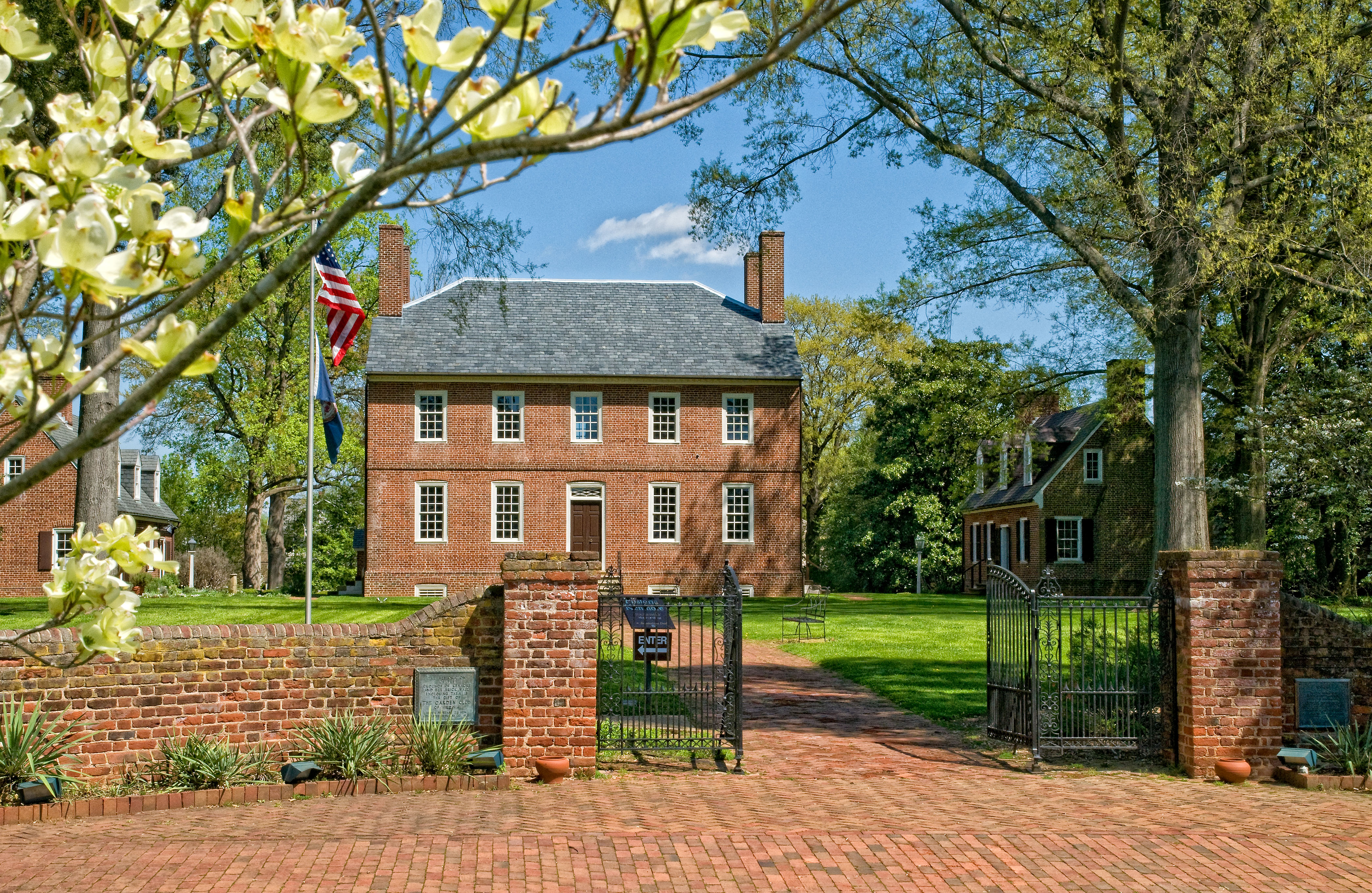
    Exterior: Pre-Restoration

    Kenmore has always been quite the showpiece, even when it was privately owned.  One of the earliest postcards of Kenmore’s exterior is dated 1908, as indicated by the postmark.  The Howard family owned the house until it was acquired by E.G. Heflin around 1914. 

    The postcard shows the house from the Washington Avenue side (west elevation) and provides a glimpse of the properties before any restoration work.  The old kitchen can be seen on the north side of the house, while the exact date it was built is unknown; we know it was built in the late 1880s or early 1890s.  It was torn down in 1929. 
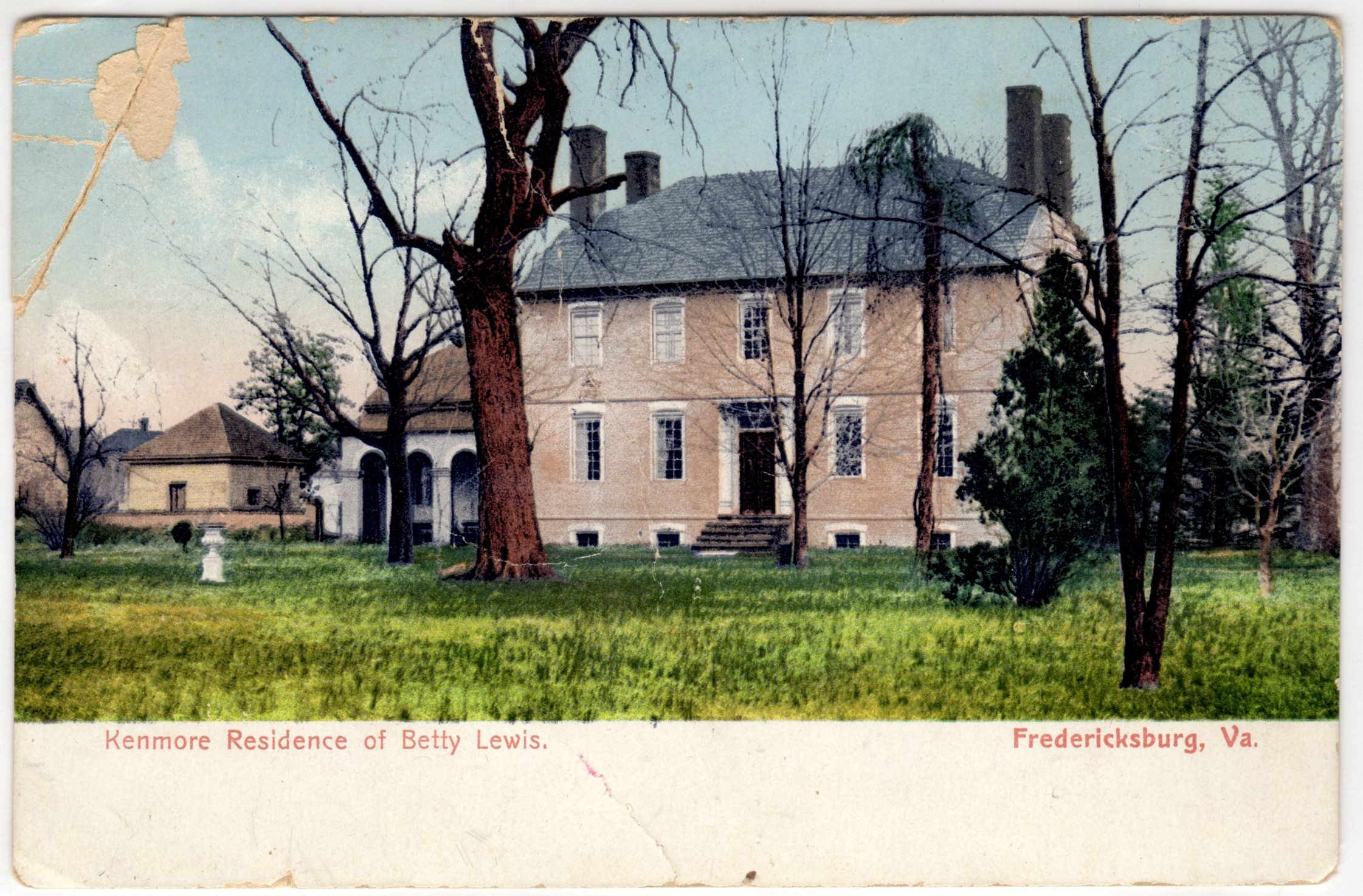
    Additionally, the exterior brick has been painted, along with the lintel, which was removed in 1929. We can see the paintwork better in the second color postcard. 

    Interior

    Entrance Hall

    One of the earliest postcards we have of the entrance hall, around 1923.    One of the most notable things is the plasterwork on the ceiling.  If you see current pictures of the entrance, you will notice that this plasterwork no longer exists.  The plasterwork was done by former resident William Key Howard, Jr., when he was restoring the original ceiling in the other rooms.    In 1930, the Association decided to remove the plasterwork because it was not original to the Lewis family.  Mr. Howard Jr. was not happy when he found out that the plasterwork had been destroyed and called it an act of vandalism. 

    Additionally, we can see next to the tall case clock a door that leads into the drawing room, which no longer exists.  It was decided that this was not the original placement, and the door was moved directly across from the office door in 1930. 

    Chamber/NW room, first floor

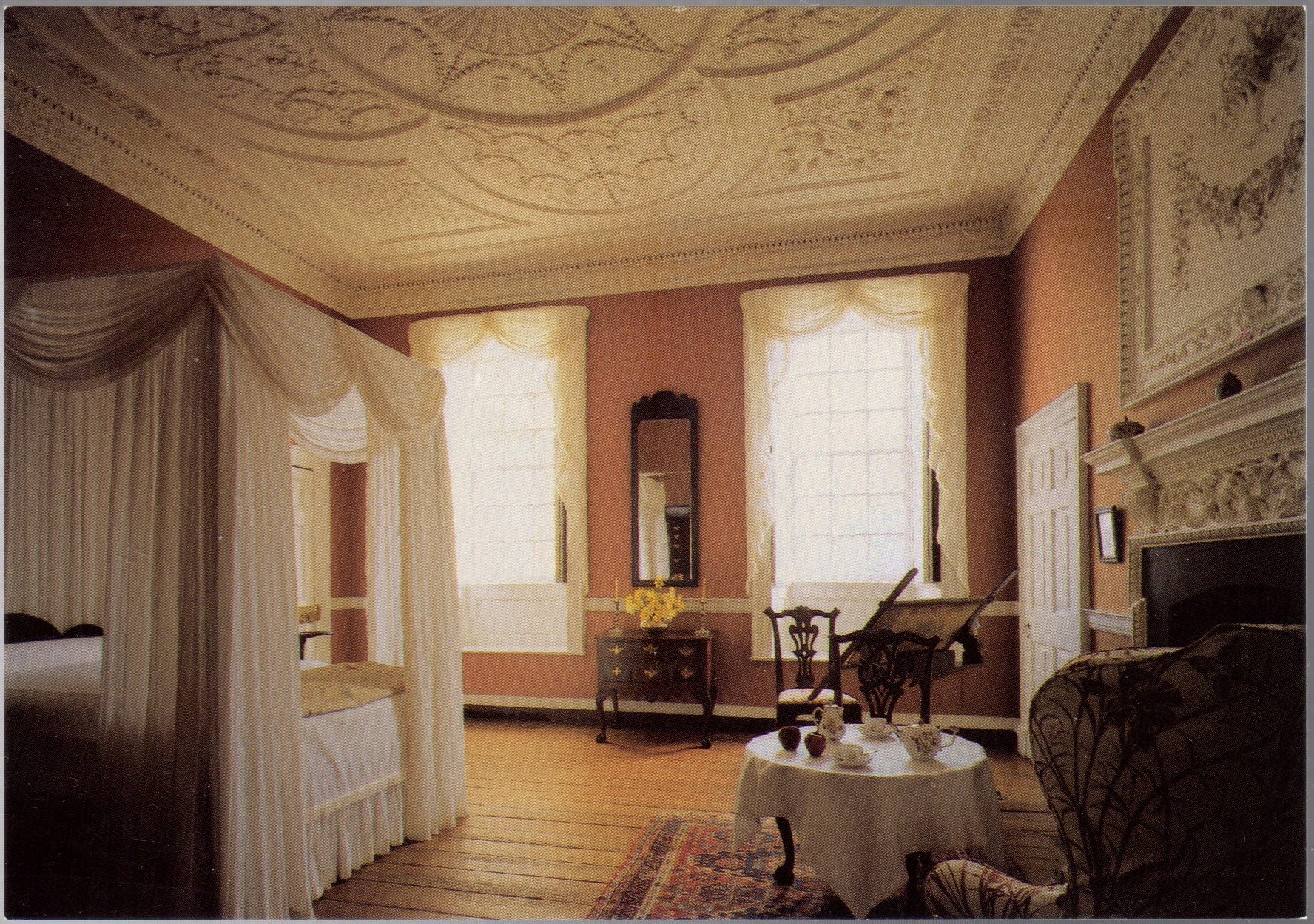
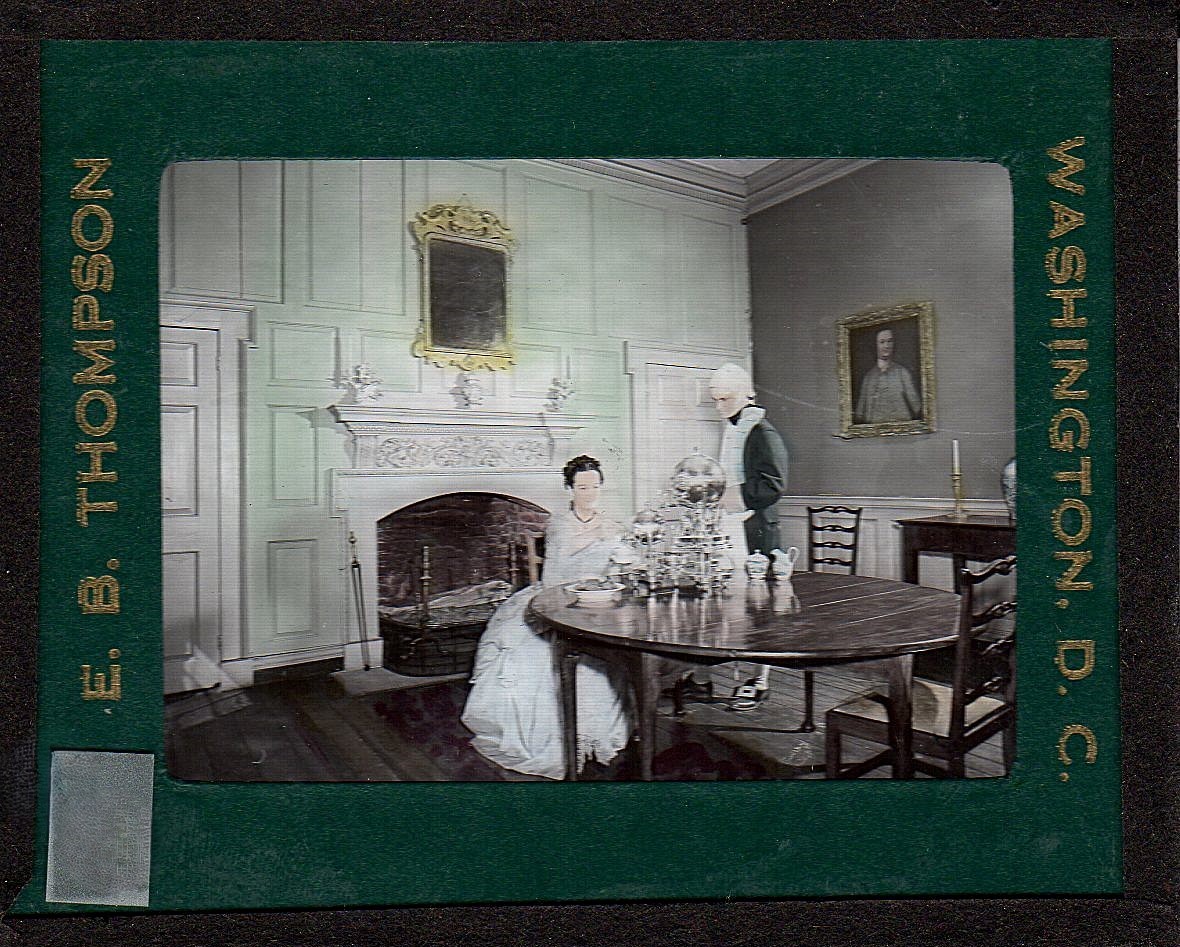
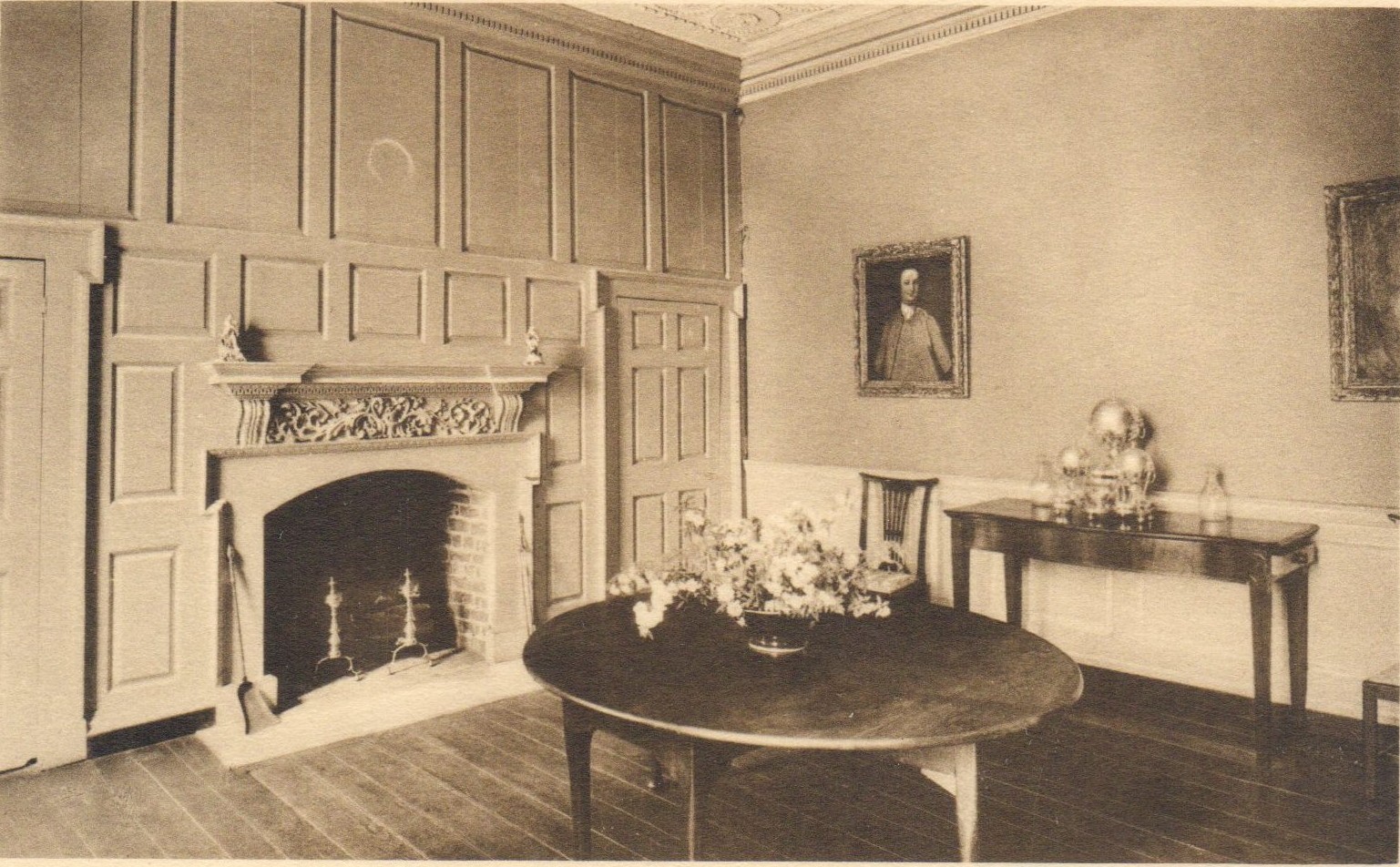
    While we currently interpret the NW room on the first floor as the chamber, the ladies referred to it as the Dining Room. We can see a round table, a sideboard, two chairs, and two portraits, plus a large silver tea urn.   The postcard dates from the late 1930s because we know from our records that most of these pieces were donated in 1935.  We still have all these objects in the collection, but the only things currently on display to the public are the round table in the dining room and the chairs in the drawing room.  All other pieces are in storage. 
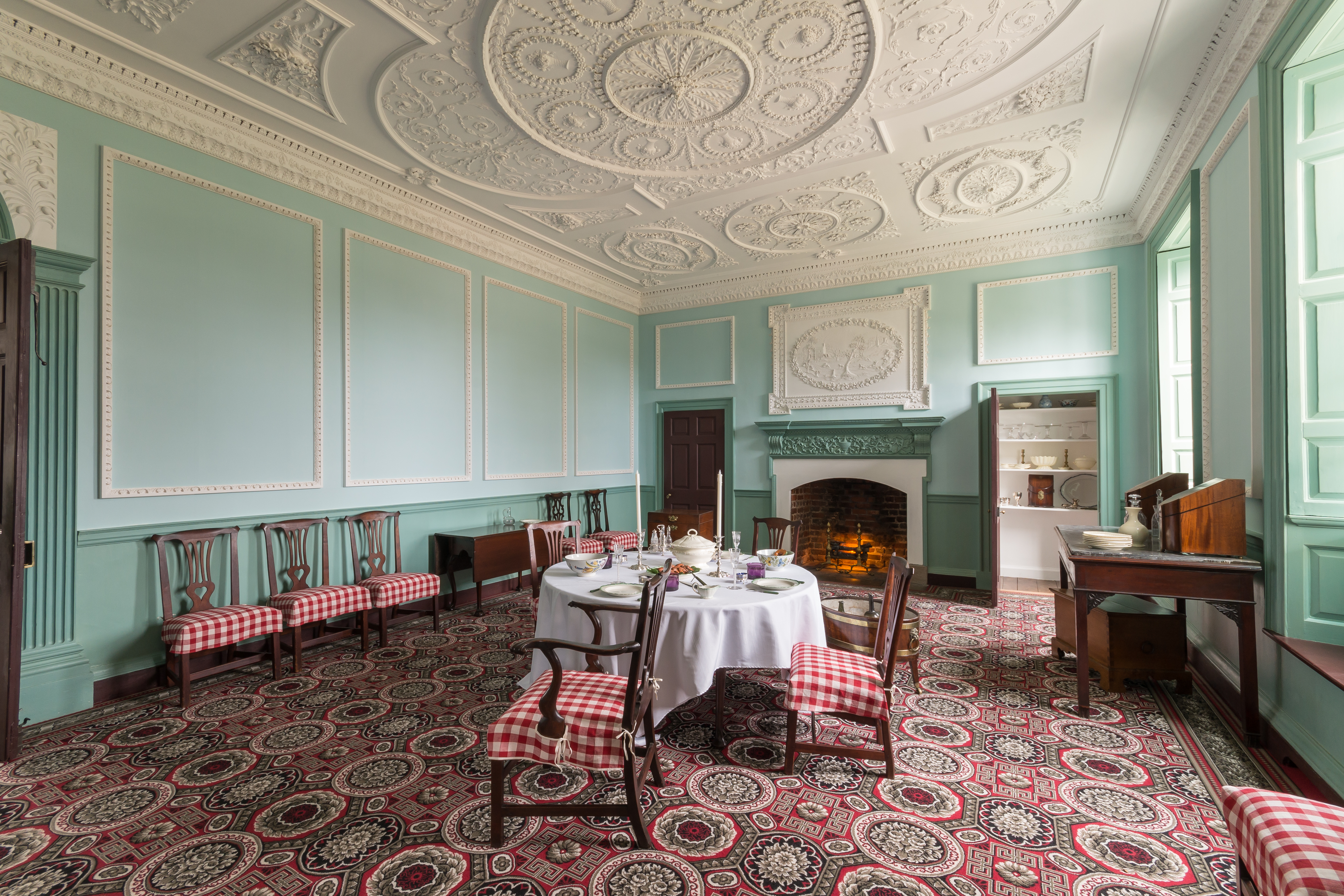
    Dining Room/NE room, first floor

    We currently refer to the NE room on the first floor as the dining room.  It has undergone many changes, with Gothic arches added to the closets during the 19th century, and has been restored to its original shape.   Not everything in the postcard is still in our collection, but you can see the square table still on display in the dining room, and Betty’s portrait is now in the drawing room. 

    On the left is the Dining Room during the Howard occupation around the 1890s, and on the right, the Dining Room today
    The Dining Room after the Kenmore Association’s restoration, c. 1940s

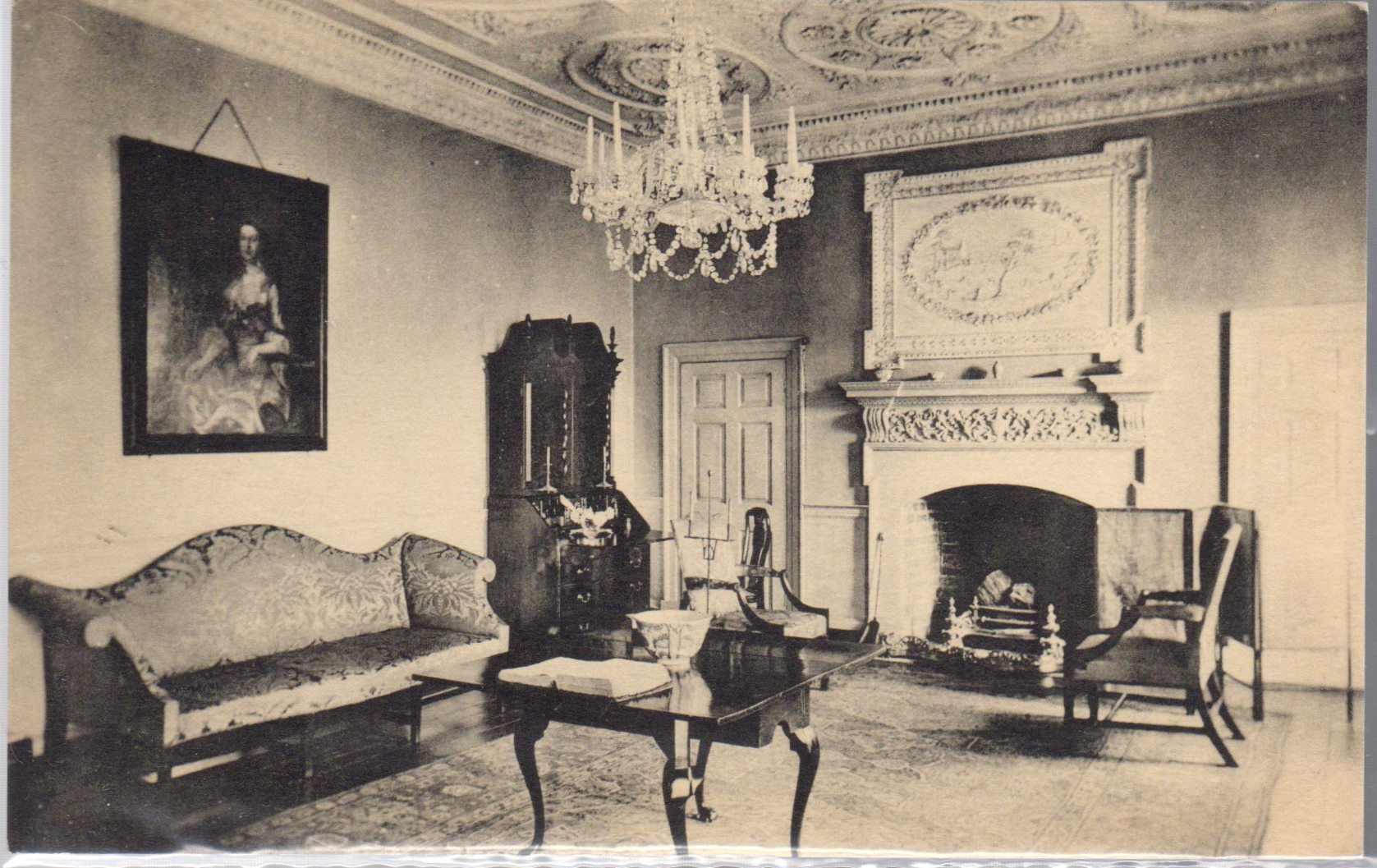
    Drawing Room/SE room, first floor

    The drawing room was previously known as the library and also served as a chamber for a while in the 1980s.  By the window, you can see Betty’s desk in the older postcard (c.1940s), which is still on display, but in the chamber.  We still have the tea set on display where it was in the chamber, but it is currently in storage.

    On the left is the Drawing Room during the Howard occupation around the 1890s, and on the right is the Drawing Room now

    Office/SW room, first floor

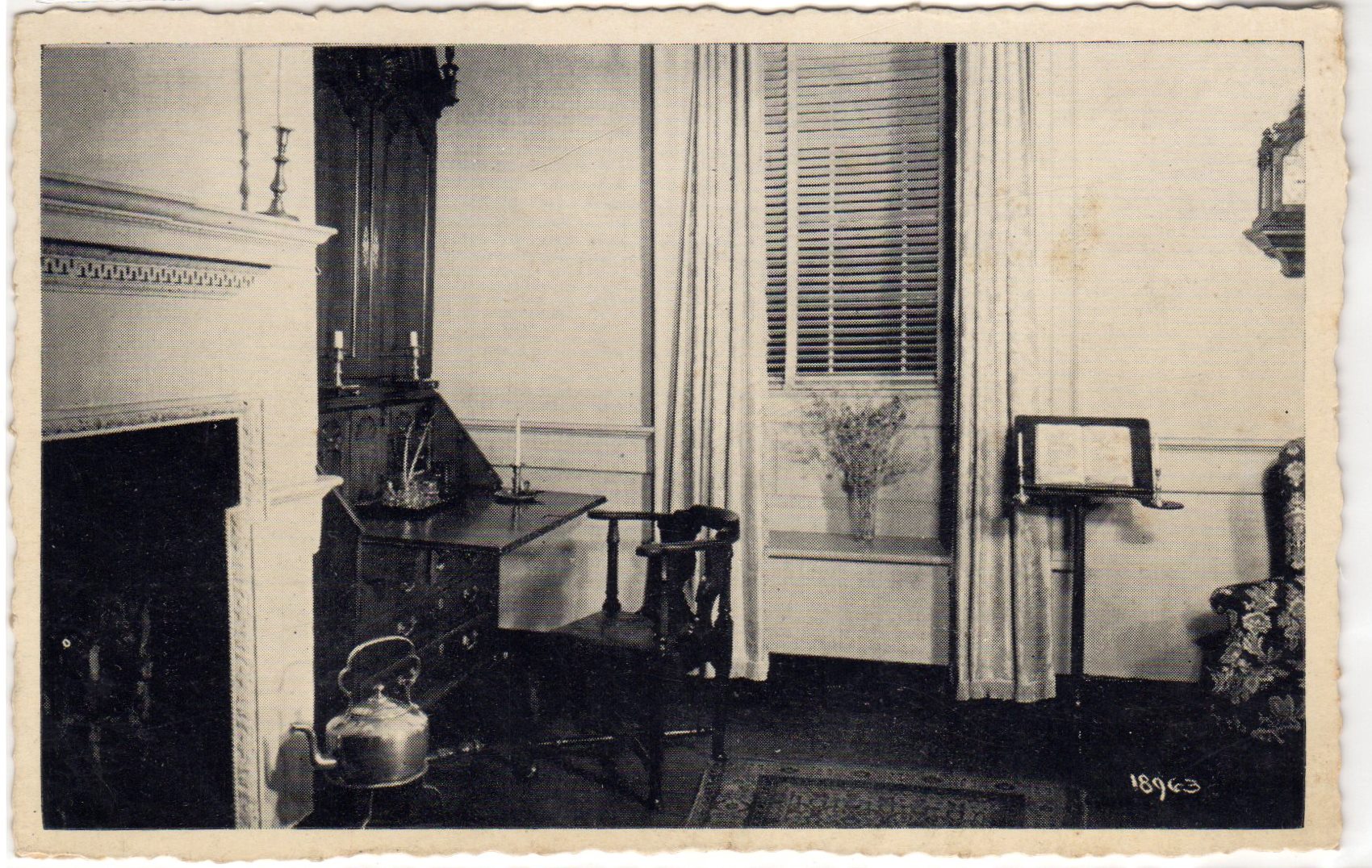
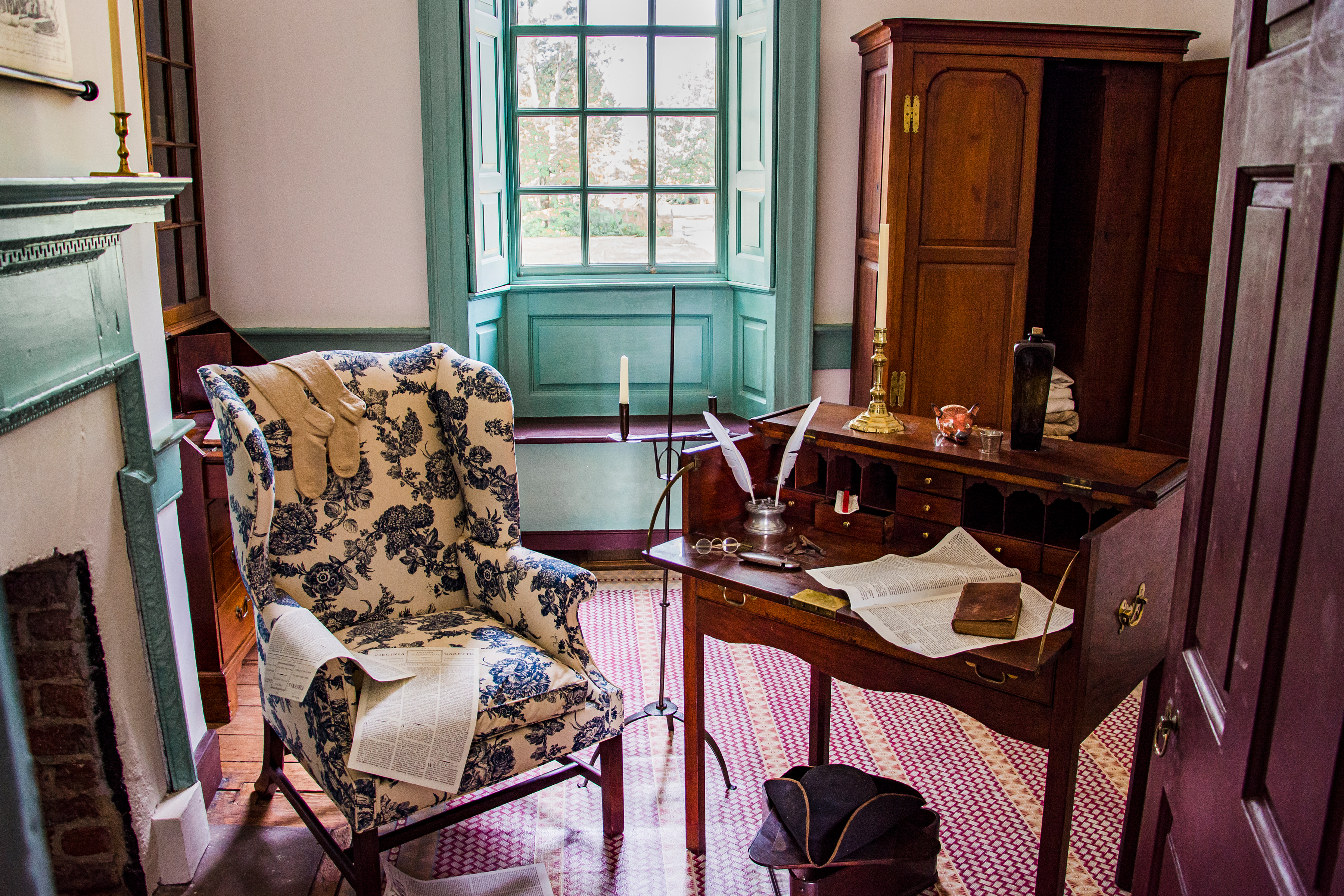
    Fielding’s office has been displayed as a sitting room and a kids’ room.  We don’t have many of the objects in the postcards still in the collection, except the corner chair, which now has a check seat, and the music stand, which is too fragile at the moment for display.
    2nd floor

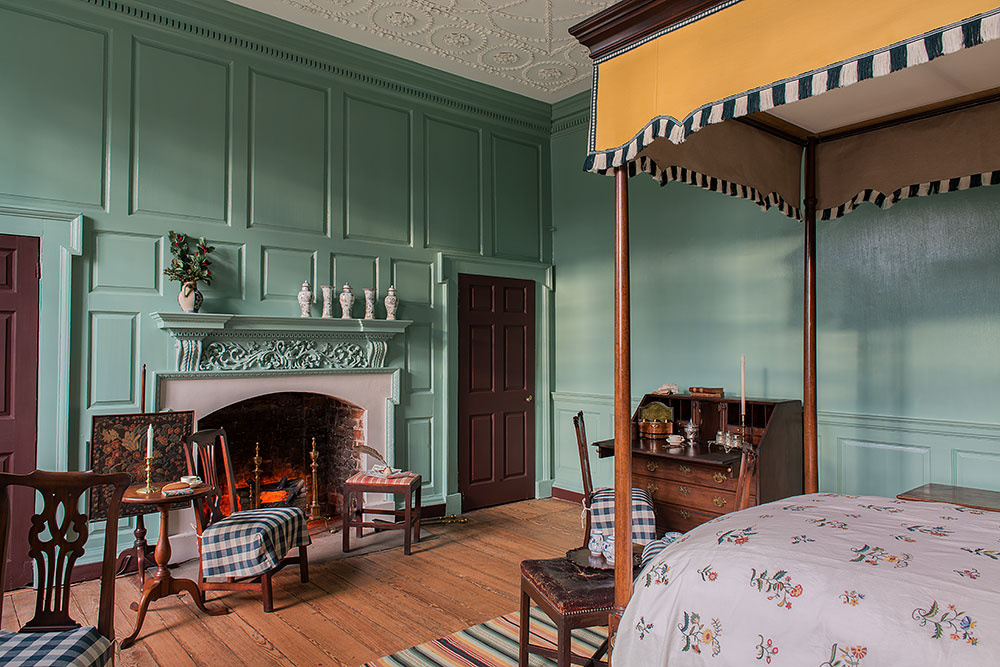
    We currently do not offer tours of the upstairs area because we don’t put too much stress on our lovely plaster ceilings.  The Kenmore Association interpreted the upstairs as individual bedrooms for the family, which is not the most historically accurate version.

    Hallway/ 2nd floor

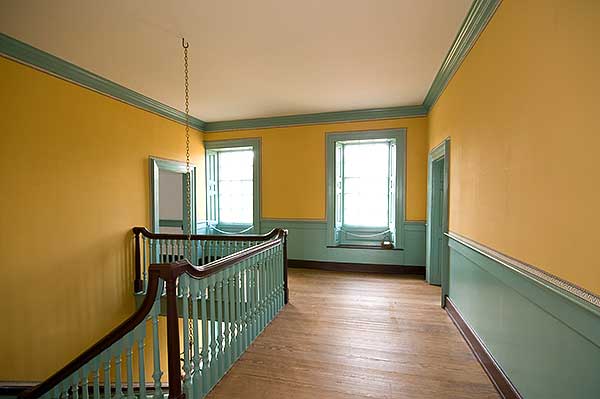
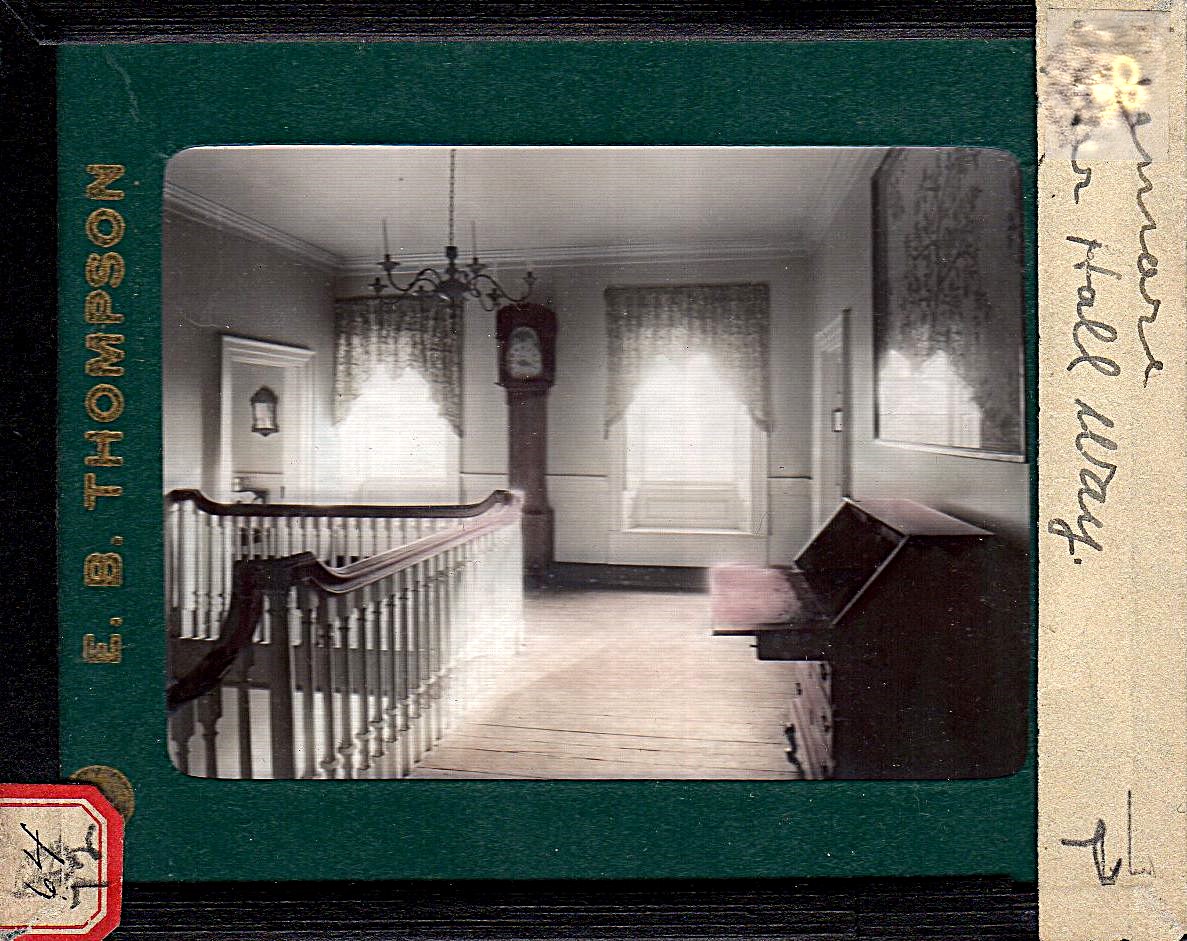
    Besides the paint color, the hallways upstairs remain structurally the same.  The ladies have Betty’s desk on display, with the Hammond quilt above.  We still have the Hammond quilt; fortunately, we removed it from the frame, but it is a massive quilt and is not currently on display. However, it is in excellent condition.  As for the tall case clock, chandelier, and curtains, they have been lost to history.

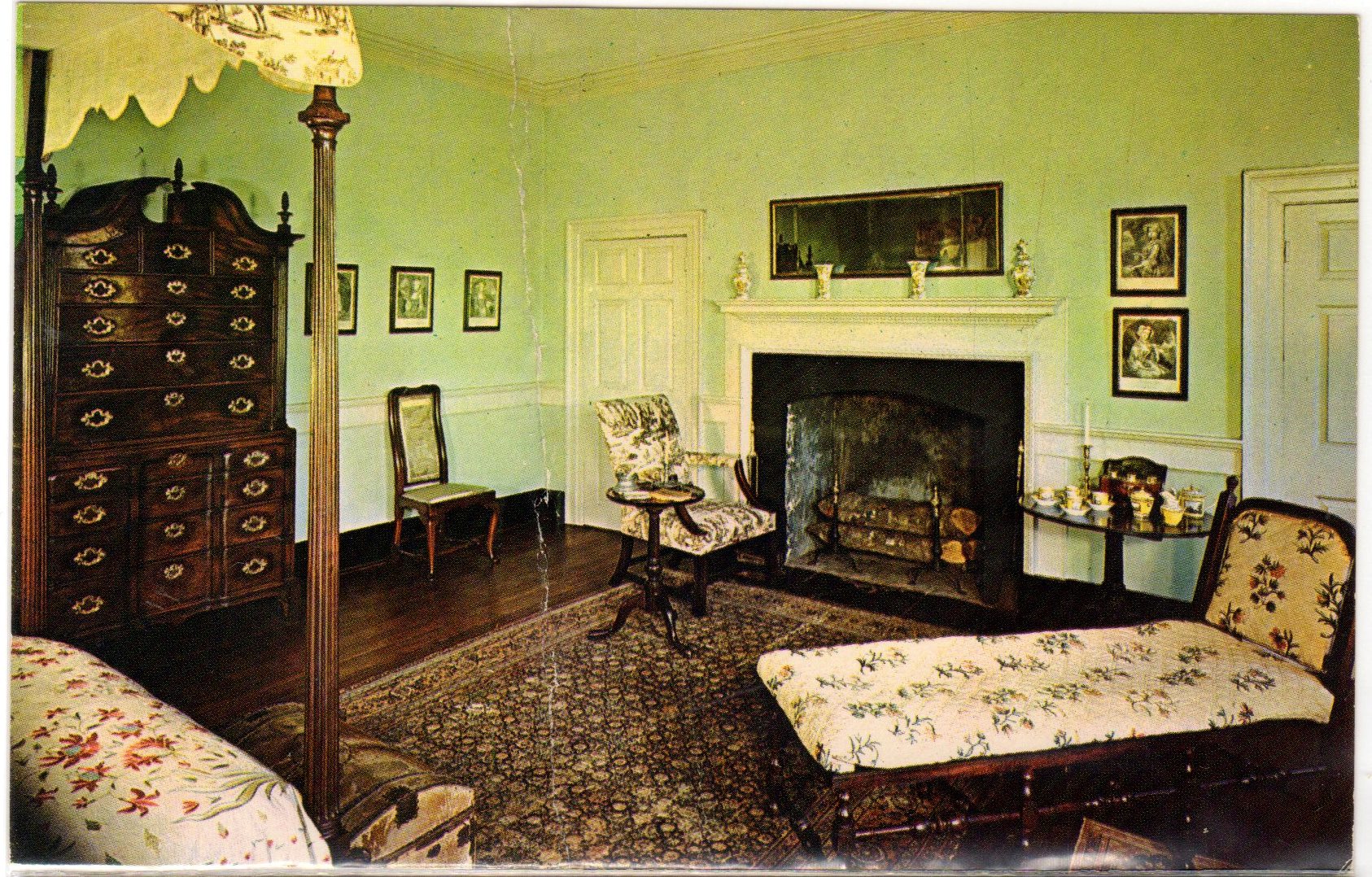
    “Mary Washington Bedroom”/NE room/2nd floor

    We have no evidence that Mary ever had a dedicated bedroom at Betty’s house, and it seems unlikely with the size of the Lewis family.  We do still have some of the pieces in the collection. The tea box is currently on display in the chamber, and the yellow tea set has been displayed intermittently over the years.  The two calendar prints hung on the wall are now downstairs in the drawing room.  Lastly, the chaise lounge was loaned to the foundation by the Metropolitan Museum of Art in the 1930s (subsequently purchased in 1968) and is currently in storage, as there is no evidence that the Lewis family owned many northern furniture pieces.
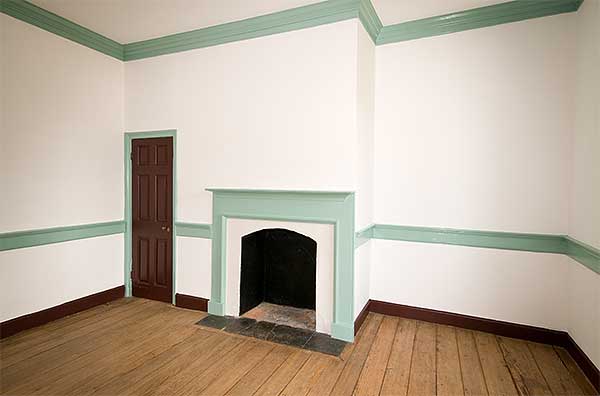
    “Mary’s Bedroom” is currently storage with temporary covering to protect the original floors.

    “Guest Bedroom”/NW room/2nd floor

    Much like “Mary’s bedroom,” it is very unlikely that the Lewis family had a “guest room,” with as large as the family was, it would have been a waste of space.  The bed still resides in our collection, disassembled and in storage. 

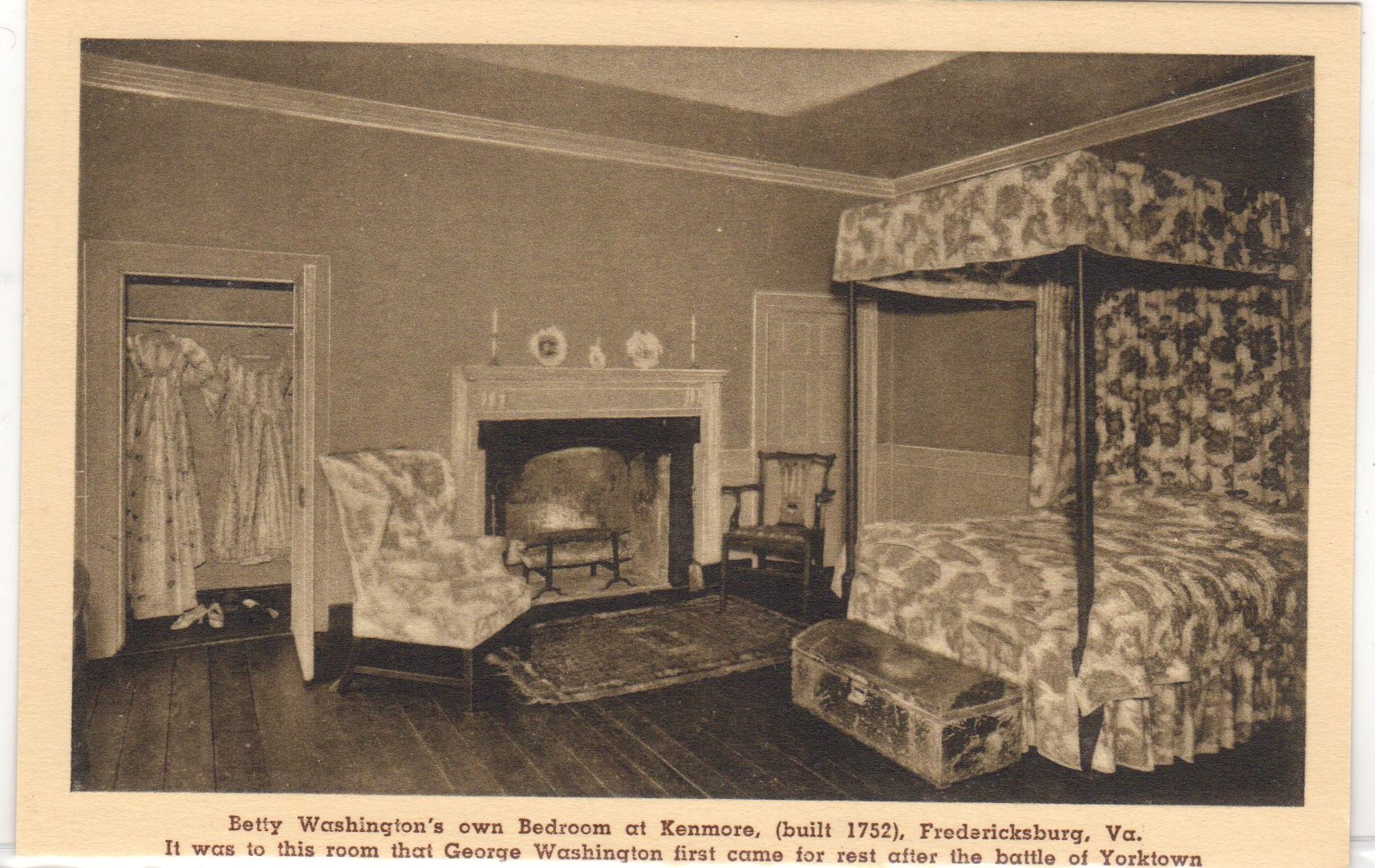
    “Betty’s bedroom”/SE room/2nd floor

    Again, during the Lewis occupation in the 18th century, individual bedrooms were not common, except for the head of the family.  Not many of the objects in the postcard are still in our collection, except for the bed, which is now in the chamber downstairs, and the William Walker, Jr. armchair, which is currently off display, but we do have another one in the dining room.
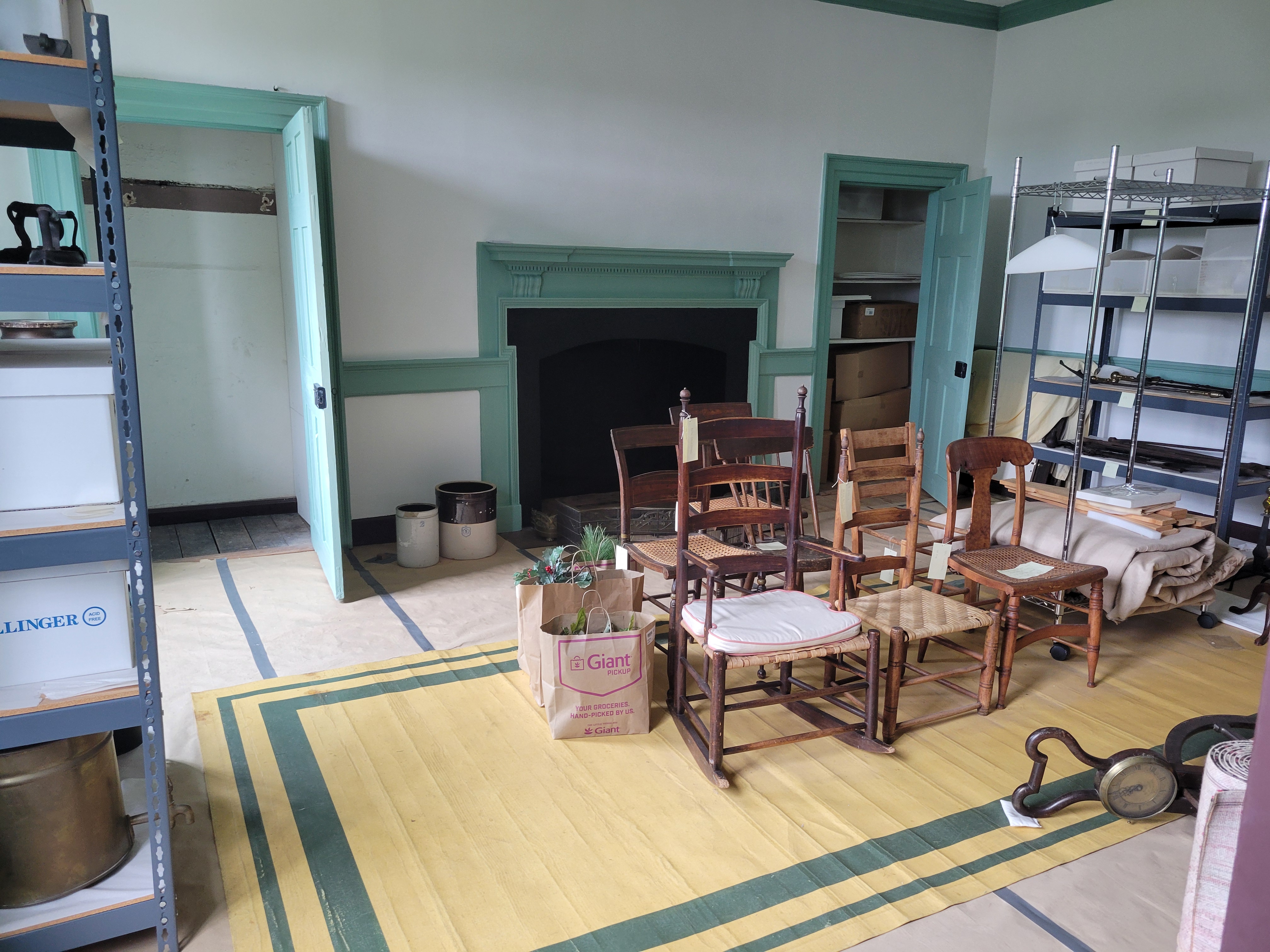
    “Betty’s bedroom (2nd floor SE) is currently used as storage…and some Twelfth Night decorations

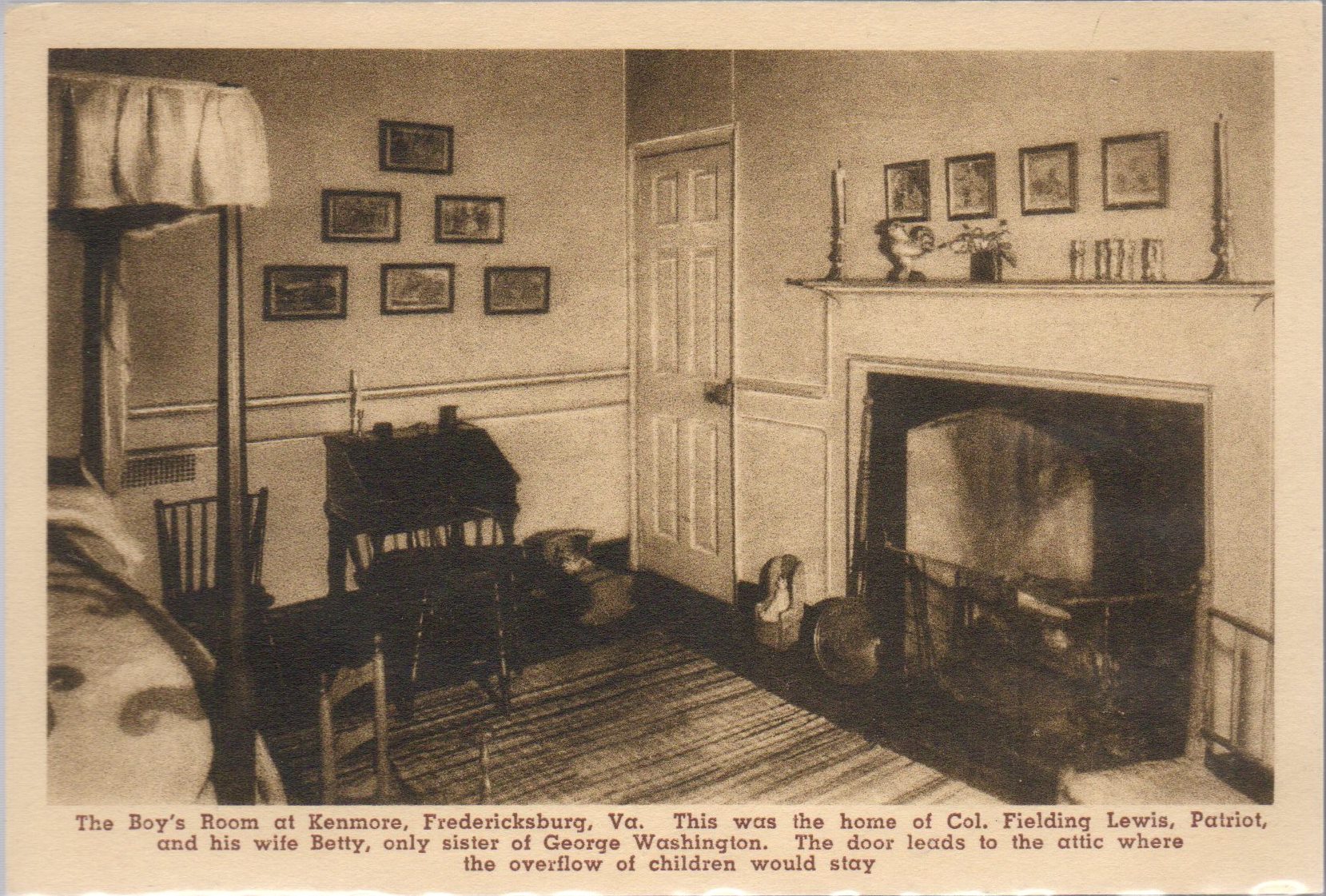
    “Boy’s Room”/SW room/2nd floor

    The last room upstairs is smaller than the other rooms and has access to the attic.  The ladies used this as the boys’ room, but as we discussed, with the other rooms, it is unlikely that this was accurate.  We do still have many of the pieces’ pictures, but the only one currently on display is the slant-top desk in the Visitors Center. 

    Heather Baldus

    Collections Manager
  • New Kids on the Block: The 20th-Century Houses of Kenmore Court

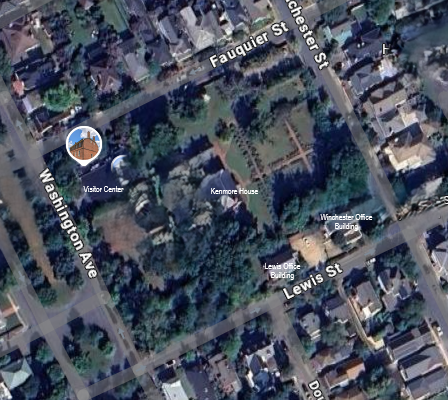
    When you visit Historic Kenmore today, you will find a preserved city block with gardens and pathways reaching from front to back. The tranquil estate is only interrupted by two other houses along Lewis Street, hidden behind a tree line. These buildings remain the only surviving evidence of a time when Kenmore’s block was almost swallowed up by modern developments.

    Although we have spoken at length on this blog about how Kenmore was saved from being turned into apartments (here, here, and here), we have not yet covered the houses that had, in fact, already gone up before Mrs. Emily Fleming and “Miss Annie” Fleming-Smith had even begun their fundraising.

    In 1914, Kenmore was sold by the Howard family, the last private residents of Kenmore, to Elmer “Peck” Heflin, a prolific land developer in Fredericksburg. By the end of the year, Heflin had already subdivided Kenmore into several lots and began to sell them off.

    A newspaper advertisement placed by Heflin in The Daily Star, November 1914.

    His goal was ultimately to turn the Kenmore block into a picturesque and modern housing development complete with single-family houses, apartments, driveways, and a parkway. This was illustrated for all of Fredericksburg to see in another newspaper ad from 1921 (Heflin, 1921). Heflin’s vision for the court was a 20th century city developer’s dream, squeezing as many lots as he could get into the space and ensuring that automobiles could have access to the entire area. Cutting edge, efficient, and shockingly modern.

    “Kenmore Court” plans with “Kenmore Residence” at the center, The Daily Star, January 1921

    By the time this advertisement ran, at least two of the proposed twenty lots had already been built on and three more had been sold to future homeowners. The earliest developments were done along the 1200 block of Winchester Street (which runs along the top of the illustrated plan).

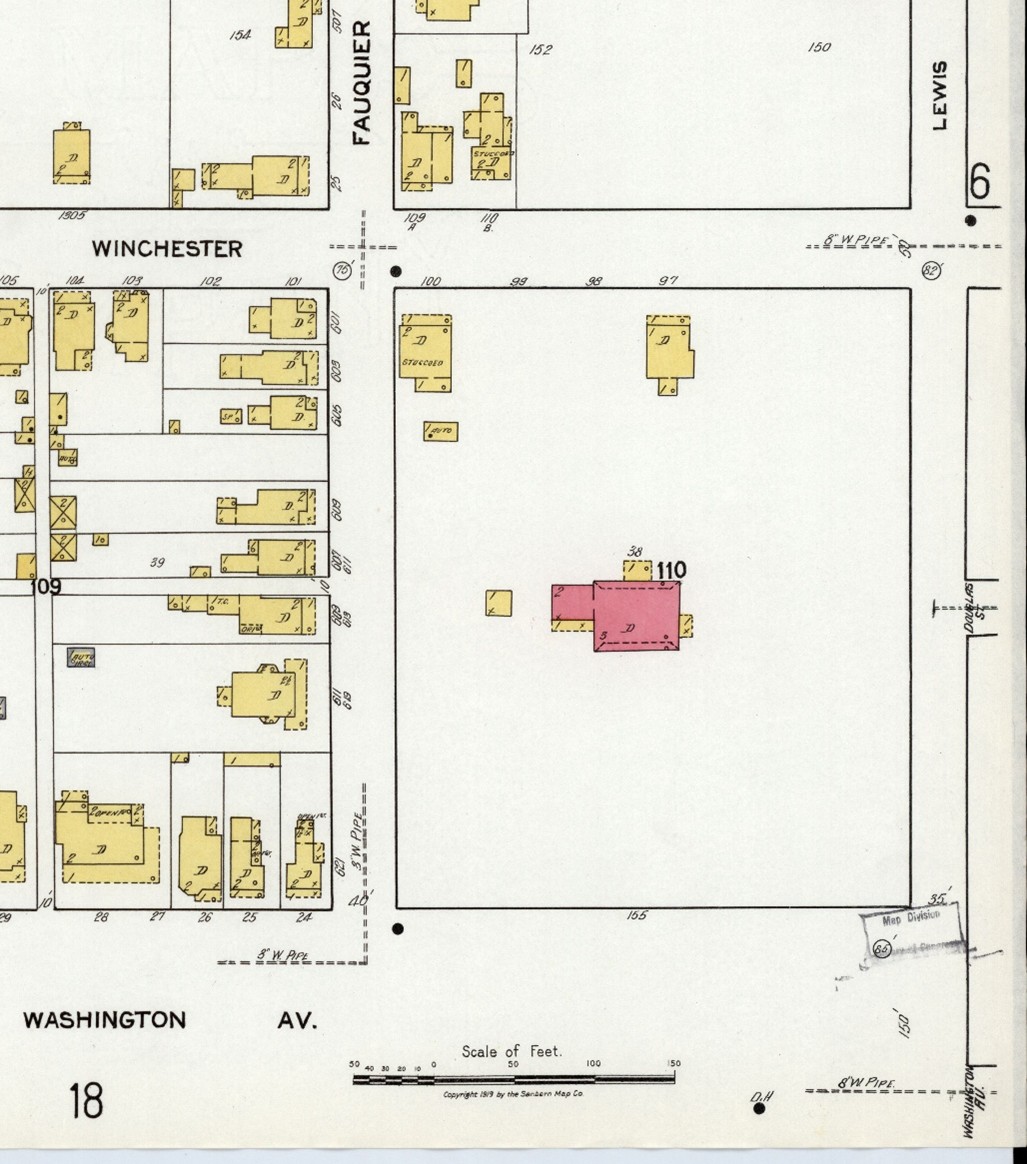
    A fire insurance map from 1919 showing the two new houses and Kenmore. (Sanborn Map Co., 1919).

    It was possibly this very newspaper ad with the proposed plan, seen by Mrs. Fleming and Miss Annie, that shocked them into action to save Kenmore before it was too late. However, even though they had finished their payments to Heflin by 1925 and officially owned the Kenmore mansion, they had yet to undo the sales that had already been made.

    Between 1919 and 1927, another five houses went up along Winchester St. and an additional one along Lewis St. The lots in the 1200 block of Winchester were now completely filled.

    A fire insurance map from 1927 showing the Kenmore block with nine total houses and a now preserved Kenmore listed as “(Shrine)”. (Sanborn Map Cp., 1927)

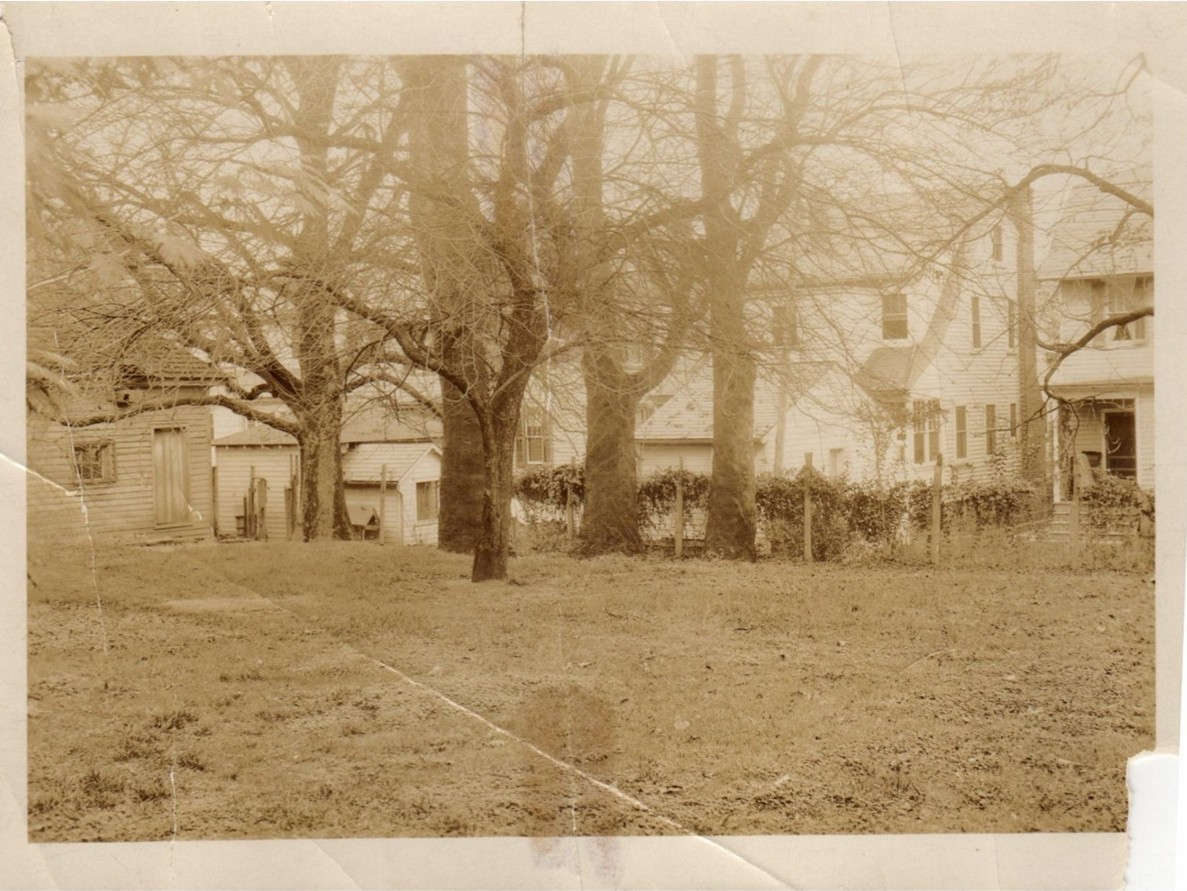
    Although the Kenmore Association now owned the Kenmore great house and had successfully saved it from demolition, they also valued the physical beauty that the surrounding land had potential for. The new houses were taking up space that could be gardens, reminiscent of what the original grounds may have looked like. But now, they only contained a view into several family’s backyards.

    Kenmore Gardens Pre-Restoration as seen from the portico of the Kenmore great house, photo from the George Washington Foundation Collection.

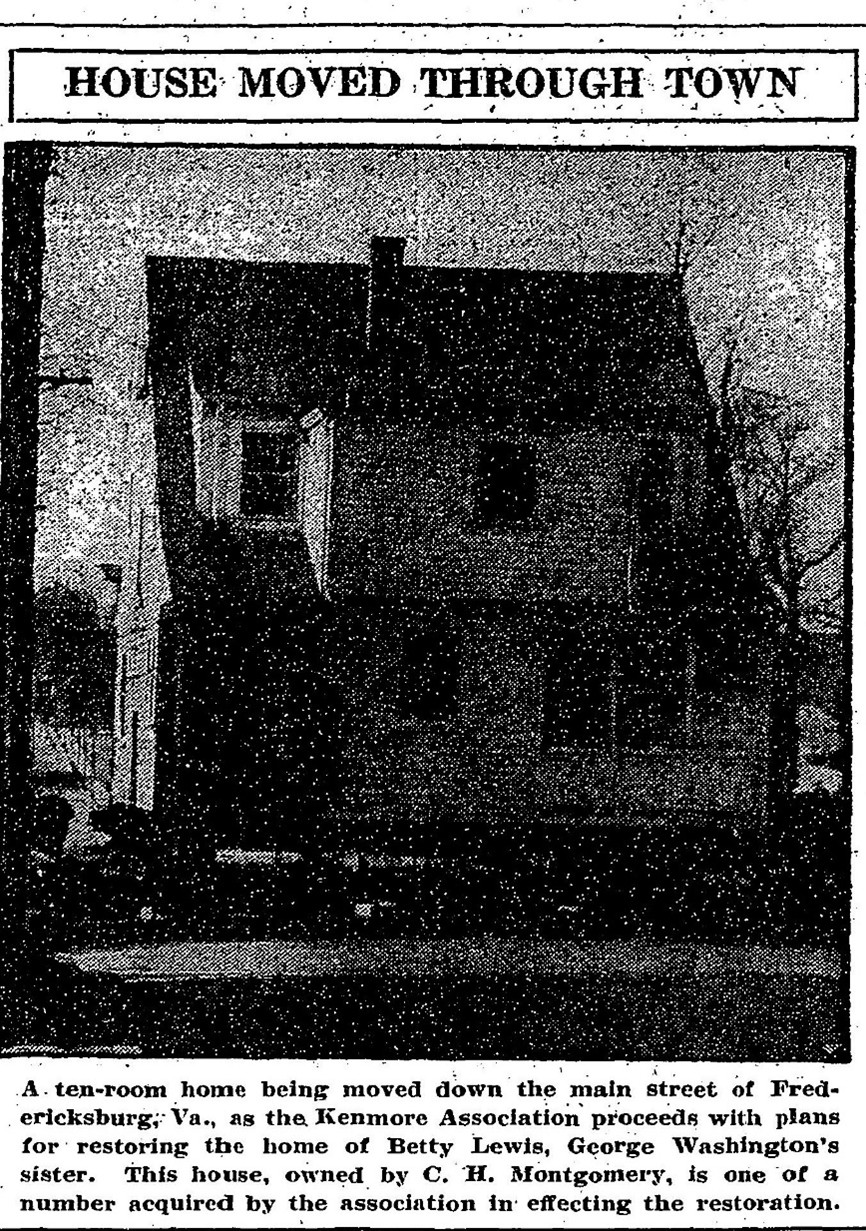
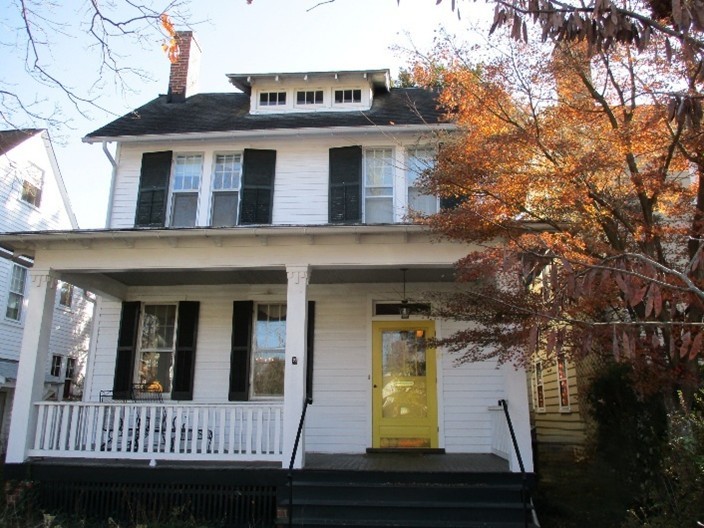
    The Kenmore Auxiliary for the Reclaiming of Land formed to buy back the sold lots (Whidden, 1972). By 1930 they had already purchased two of the houses, 1206 and 1208 Winchester, and two empty lots on Cornell Street, just a few blocks north. By 1931, the houses were physically moved from Winchester St. to Cornell St.

    “House Moved Through Town” article appeared in the Washington Post, Dec. 1930.

    The Kenmore Association continued to rent these houses out for some time to tenants, generating extra income to help with Kenmore’s preservation process, until they eventually sold the homes to private owners. These Cornell St. houses still exist to this day. Few changes have been made from their historical exteriors.

    With the assistance of donations from individuals and foundations all over the country, the Kenmore Association was able to raise enough money to make offers to three other homeowners along the 1200 block of Winchester St., all of whom accepted. Most of Winchester St. belonged to the Association by the end of the decade (Whidden, 1972). The houses continued to be rented out to tenants through 1940. Unfortunately, after that year we have not yet discovered what happen to the Winchester St. houses, but they no longer exist on the revised 1947 fire insurance map and are presumed to have been demolished around 1941 or ‘42.

    A fire insurance map from 1947 showing revisions made between 1927 and then. (Sanborn Map Co., 1948)

    You notice that there are still three houses remaining on the block alongside the Kenmore great house. These holdouts remained for many years as private residences. Two of these houses, 605 Lewis St. and 1200 Winchester St., can still be seen today.

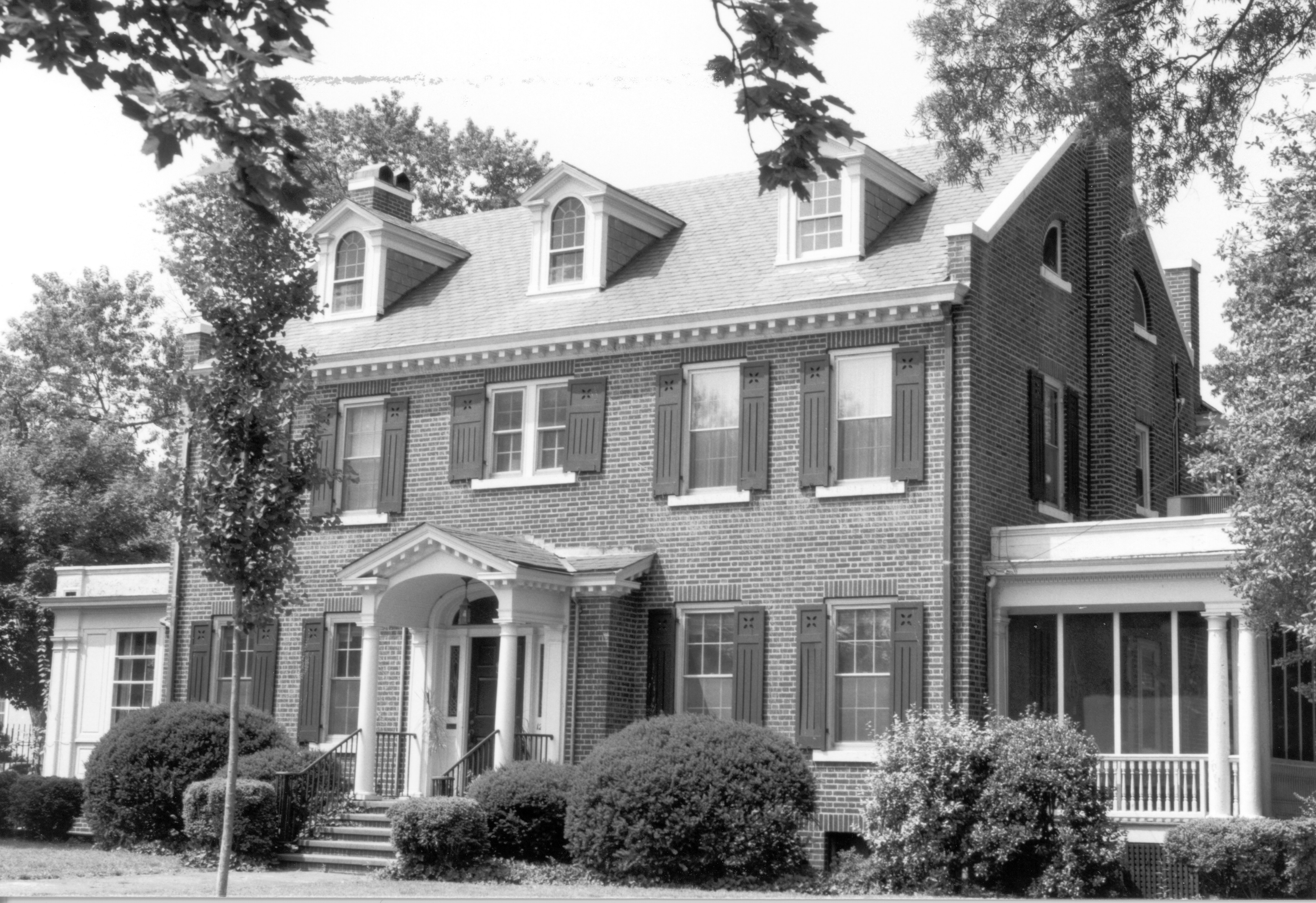
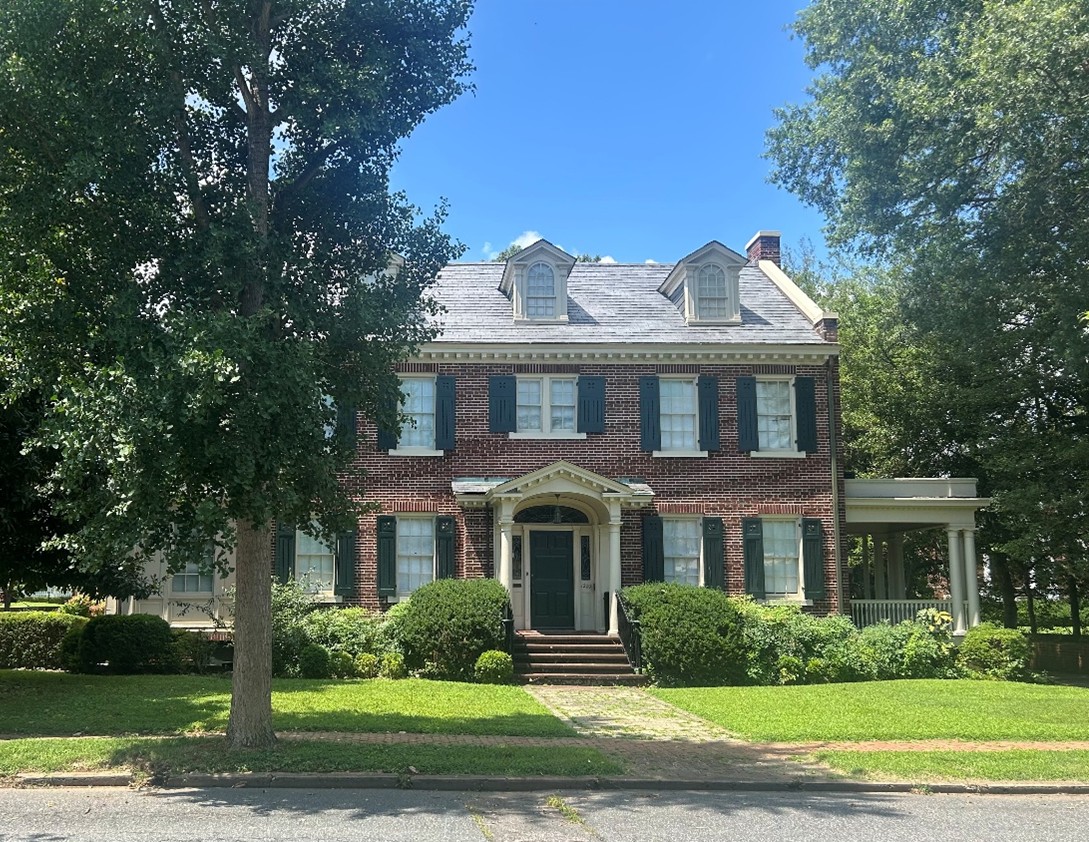
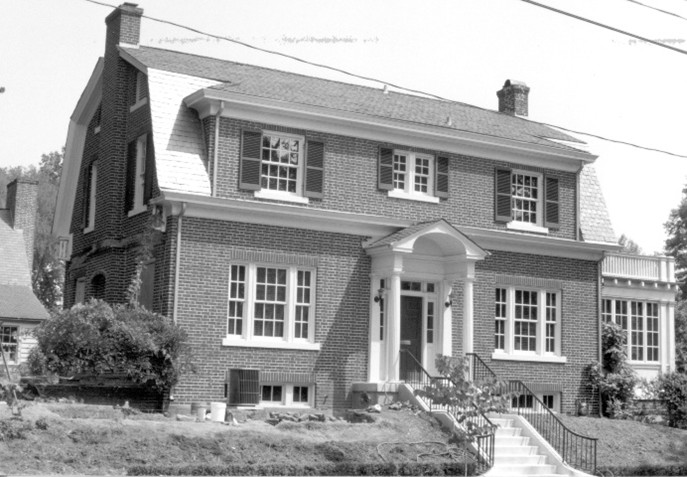
    1200 Winchester St. is a large brick façade building that was originally constructed for Dr. Frank Pratt. Dr. Pratt used to treat patients in the building’s basement and lived in the house until his passing in 1964. He founded the Pratt Medical Group in 1937, which still exists today with several locations in Fredericksburg and Spotsylvania (Obituary, 1969). His house was sold in 1991 by the last private owners, the Westfall family, to the Kenmore Association and has become one of the main office buildings on the site.

    605 Lewis St. has a very similar story to 1200 Winchester. Another brick structure, it was built for William Lacy who lived there with his wife Norah, daughter Celia, and sister-in-law Celia Goolrick. Lacy was a pharmacist who passed away in 1933, leaving his home to his wife. She and her sister continued living in the house until both had passed by 1965 (Obituary, 1965). The building was sold to the Kenmore Association in 1992 and converted to offices as well.

    The house I’ve saved for last has quickly become my favorite, since it’s the one that sparked my interest in this subject in the first place. While visiting a small antique shop in central New York of all places, I stumbled on a postcard with an image of 1216 Winchester St., also known as the Wilson House.

    The Wilson House on a postcard, circa 1921-1941. From the George Washington Foundation Collection.

    The Wilson house was the only Stucco house of the bunch, constructed in the prairie style. It was owned by Thomas Wilson, co-founder of Wilson Bros. Lumber. He, his wife Temple, Daughter Esther, and granddaughter Janet all lived in the house in 1930. By 1940, it had become a boarding house that rented out space to tenants and visitors. It had at least three units inside of it.

    The Wilson house sat on the corner of Fauquier and Winchester streets, blocking Kenmore’s new brick wall originally meant to extend around the block, until 1971. I don’t know what changed that year, whether it was a death or shift in the family or if the money finally became too good of an offer to refuse, but the Wilson family finally sold their home to the Kenmore Association, who promptly had it razed (Whidden, 1972). The brick wall was never full finished, and the area where this beautiful house once stood is now used as a service lot.

    There are countless other things that could be said about these missing structures that haunt the property. The stories of the people who lived in them. A debate about whether these modern homes were worthy of preservation as well. The archaeological damage that their construction likely caused. So on and so forth. One thing is certain though: the grounds of Kenmore hold history. Not just of the Lewis family, but of the Pratts, the Wilsons, the Lacys, the Franklins, the Coxes, the Joneses, and the countless others who once lived on this city block.

    Sarah Alden

    Manager of Visitor Services and Interpretation


    Bibliography

    City of Fredericksburg. (2025). 806 Cornell St. Fredericksburg: Fredericksburg Information Technology.

    City of Fredericksburg. (2025). 808 Cornell St. Fredericksburg: Fredericksburg Information Technology.

    Heflin, E. (1921, January 24). Modern Homes. The Daily Star, 28(180), 4.

    Lots on Beautiful Kenmore Court. (1914, November 12). The Daily Star, 22(119), 2. Fredericksburg, VA.

    Obituary. (1965, May 19). Mrs. W. J. Lacy Dies in Atlanta, Rites Thursday. The Free Lance-Star, p. 5.

    Obituary. (1969, May 10). Monday Rites for Mrs. Pratt. The Free Lance-Star.

    Sanborn Map Co. (1912, July 12). Fire Insurance Maps Online. Retrieved from Historical Information Gatherers: https://fims-historicalinfo-com.ezproxy.virginiamemory.com/FIMSSD.aspx?m=09021_1912

    Sanborn Map Co. (1919, October 31). Fire Insurance Maps Online. Retrieved from Historical Information Gatherers: https://fims-historicalinfo-com.ezproxy.virginiamemory.com/FIMSSD.aspx?m=09021_1919

    Sanborn Map Co. (1948, June 7). Fire Insurance Maps Online. Retrieved from Historical Information Gatherers: https://fims-historicalinfo-com.ezproxy.virginiamemory.com/FIMSSD.aspx?m=09021_1947

    Sanborn Map Cp. (1927, May 27). Fire Insurance Maps Online. Retrieved from Historical Information Gatherers: https://fims-historicalinfo-com.ezproxy.virginiamemory.com/FIMSSD.aspx?m=09021_1927

    Stanton, G. (2011, February 21). 15th US Census, 1930. Fredericksburg City Enumeration District 107-1 Upper Ward. Retrieved from Fredericksburg Research Resources: https://resources.umwhisp.org/Fredericksburg/census/fbg1930ED107-1.htm

    Stanton, G. (2014, November 28). 16th U. S. Census, Virginia, Fredericksburg (Upper Ward), S.D. 1, ED No. 107-3. Enumerated Beginning 2 April 1940. Retrieved from Fredericksburg Research Resources: https://resources.umwhisp.org/Fredericksburg/census/fbg1940ED107-3.htm

    Whidden, R. W. (1972). Kenmore 1752: Fifty Years as a National Shrine. Richmond, VA: Whittet & Shepperson.

  • Lovely Linoleum and Other Historic Floor Coverings – Two Hot Takes

    Linum (“Flax”) and oleum (“oil”) – Fashionable and Affordable

    As a Historic Preservation student at the University of Mary Washington, I’ve grown to appreciate almost all aspects of materiality. Over the past four years, my education has taught me to look closely at the built environment around me.

    Two years ago, I stumbled across a book about mid-century kitchens, which discussed modern flooring’s ugly duckling: linoleum. From this, I developed an appreciation for linoleum and vinyl flooring and an equal obsession with spotting them.

    Most people wouldn’t put Linoleum at the top of their list of favored materials. After all, historically, it’s been labeled as cheap, tacky, and ugly. However, linoleum has been an important part of modern living since the late 19th century. While the patterns most people initially thought of weren’t very attractive (that one red brick style), their initial creation changed the game for durable materials in a household and single-handedly became a hospital favorite.

    Linoleum was first invented by Frederick Walton in Chiswick, England, when he discovered that oxidized linseed oil could replace rubber when mixing the oil with cork and other fibers. This process was sped up by heating the oil with lead and zinc, which formed a sticky paste that would be mixed with sawdust or cork to keep the cloth from becoming tacky. Shortly after receiving a patent in 1864, Walton opened the American Linoleum Manufacturing Company on Staten Island, New York, in 1872, with the nearby town named Linoliumville in its honor.

    Fred Walton, creator of Linoleum

    The genius of linoleum was/is its durability and ability to be mass-produced cheaply. Additionally, the material could be customized using pigments to create virtually any pattern, which aided in its early popularity in homes. Early linoleum was commonly produced in printed, marbled, inlaid, or plain patterns, with these distinct designs often serving as time machines to gauge when the flooring was installed. Putting aside the aesthetics, linoleum is most likely to be seen in high-traffic areas, such as hallways, kitchens, and mudrooms, due to its long-term durability.

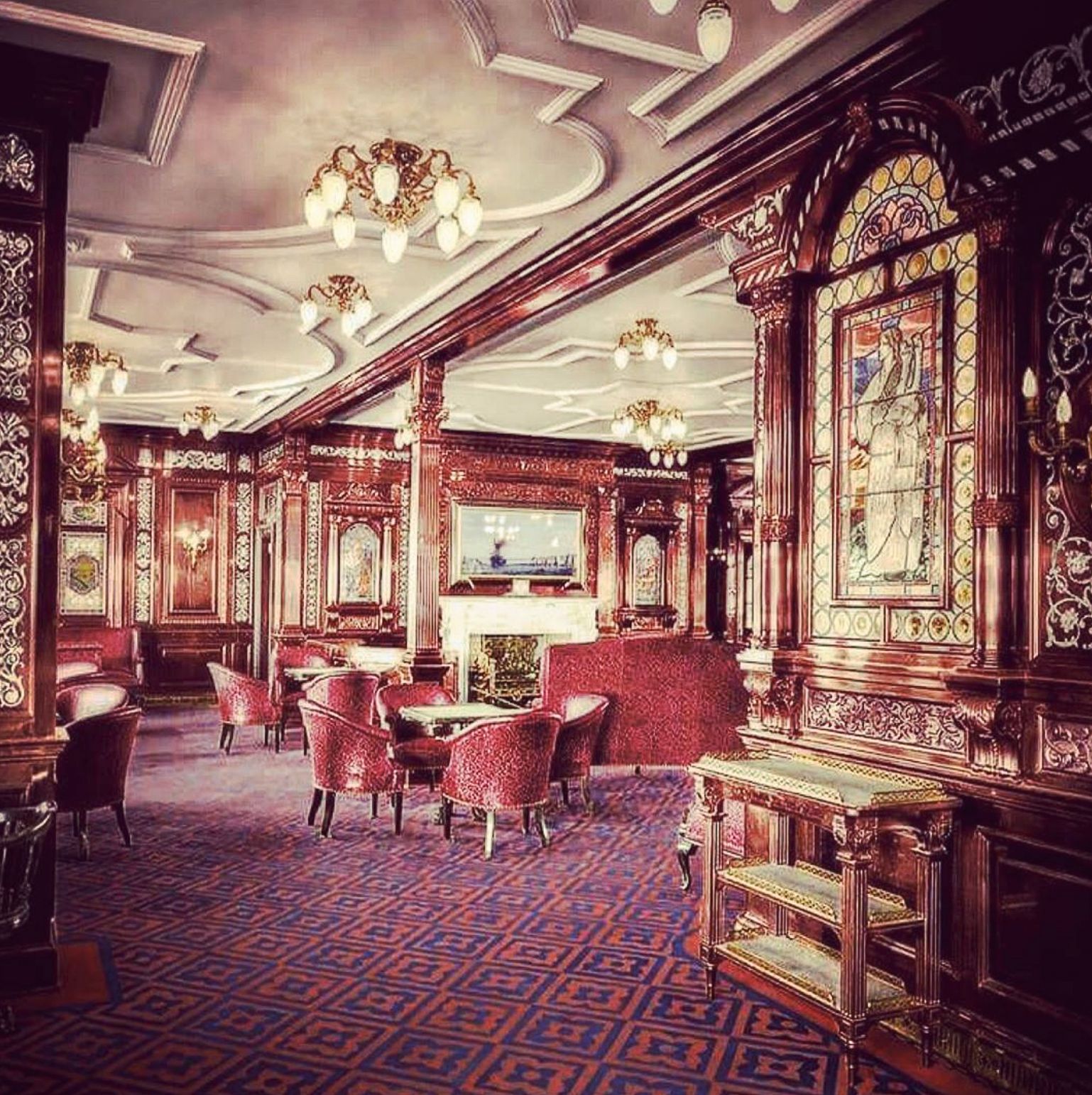
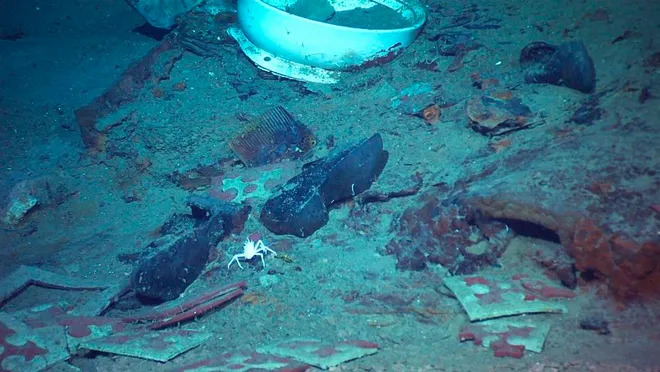
    A well-installed linoleum is waterproof and surprisingly antibacterial, which is why, since its invention, linoleum has been commonly used in hospitals. The flooring was also popular among naval vessels in the early twentieth century, with battleships and luxury cruisers taking advantage of the material. In fact, the RMS Titanic used inlaid linoleum flooring for a significant portion of its decks, which can be seen in past photos and even on the sea floor today.

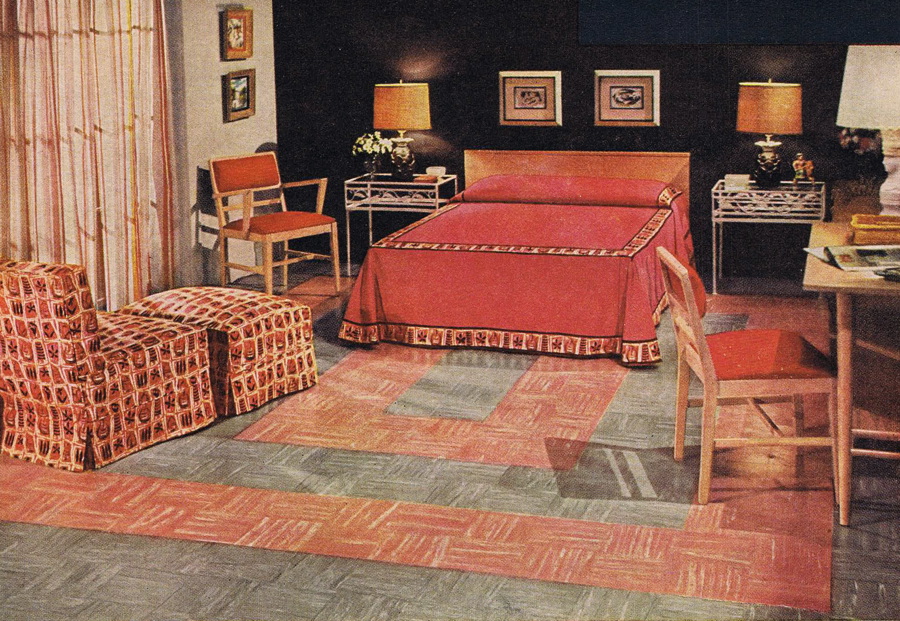
    The manufacturing boom of the mid-twentieth century brought modern materials and technologies to the average household, including the popularization of linoleum in common spaces. Kitchens and high-traffic areas would continue to have the flooring material. However, living rooms, eating spaces, and even walls would start to display colorful and flashy patterns. This popularity would be short-lived, as the 1950s brought vinyl flooring, an extremely similar product, but was pushed as a newer and more “fashionable” alternative to linoleum.

    An image of a bedroom from a 1952 advertisement for linoleum flooring

    Despite the initial falloff, linoleum has made a surprising comeback in homes within the last few years. It’s understandable, as per square foot, the material is very affordable and easy to clean, not to mention that rising interest in the conservation of historic homes has led to the preservation and replication of historic linoleum. Most often, the damage to the material features is rips and cracks, which are easily repaired with patching and a fresh coat of sealant.

    I don’t write any of this intending that you agree with me. However, I believe that linoleum reflects the best of modern materiality. It’s low-cost, eco-friendly, durable, and easy to customize, allowing lower-income homes to decorate their spaces economically and colorfully. While spotting linoleum in older buildings may be rare due to being covered with changing fashion trends (we are all familiar with carpet over beautiful hardwood floors), preserving it is just as important as any other part of the built environment.


    Helena Samson

    Fleming Smith Scholar, UMW Class of 2025


    Linoleum’s Forebearer “Fancy Pattern-Cloth” – Eighteenth Century Floorcloths

    The future of home restoration and preservation will involve saving certain building materials, such as wood, stone, brick, and decorative elements, like linoleum. While humble and even ridiculed (you know the pattern), linoleum will eventually be treasured as a lasting historical remnant, helping future preservationists add context and depth to restorations.

    Classic linoleum, everyone seemed to have despite not wanting to admit it.

    Unfortunately, in eighteenth-century historical preservation, we are rarely lucky enough to find samples of the predecessor of linoleum, the floorcloth. The floorcloth was a relatively common floor covering in eighteenth-century Virginia homes. It was made from woven cloth, usually heavy and sturdy, like linen or cotton canvas. This canvas was then stretched, several layers of oil paint applied, and covered in varnish. This floorcloth could be painted in any fashionable design, as seen in John Carwitham’s book published in 1739, with the replica marble being one of the favorites. 

    Like linoleum, floorcloth was prized because it was customizable, durable, easily cleaned, and repairable. It could also be cut down and used in other areas like kitchens or closets after it lost its fashionability or was replaced with carpet. It was so versatile that it basically reused itself out of existence.

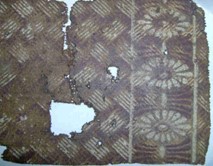
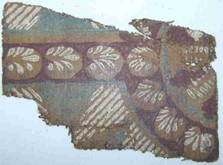
    While no known complete examples of eighteenth-century floorcloths exist, bits and pieces have been found, offering insight into their construction and functionality in the home. Coincidentally, here at Kenmore, we found remnants of a floorcloth under the floorboards in the attic during a period of restoration in 1989. Small samples from the remnants were taken for analysis:

    Base layer – yellow preparatory layers of lead white and yellow ochre ground in linseed oil. The uneven distribution of the large, clumped pigments suggests it was hand-ground paint.

    Black paint is found in the third layer above the ground coatings with remnants of plant resin varnish, followed by a green design layer. This could mean the black paint was the original design, and it was repainted after varnish and the green design were put on top.

    Green-painted areas – made up of white lead, Prussian blue, yellow ochre, and calcium carbonate.

    White paint – composed primarily of white lead and calcium carbonate

    We can draw a few conclusions from this paint analysis. One, the floorcloth was well used but eventually worked its way down the list of favored household furnishings, whether from wear and tear or fashionability. Either way, it was ultimately rolled up and stored out of sight, and lucky for us, forgotten.

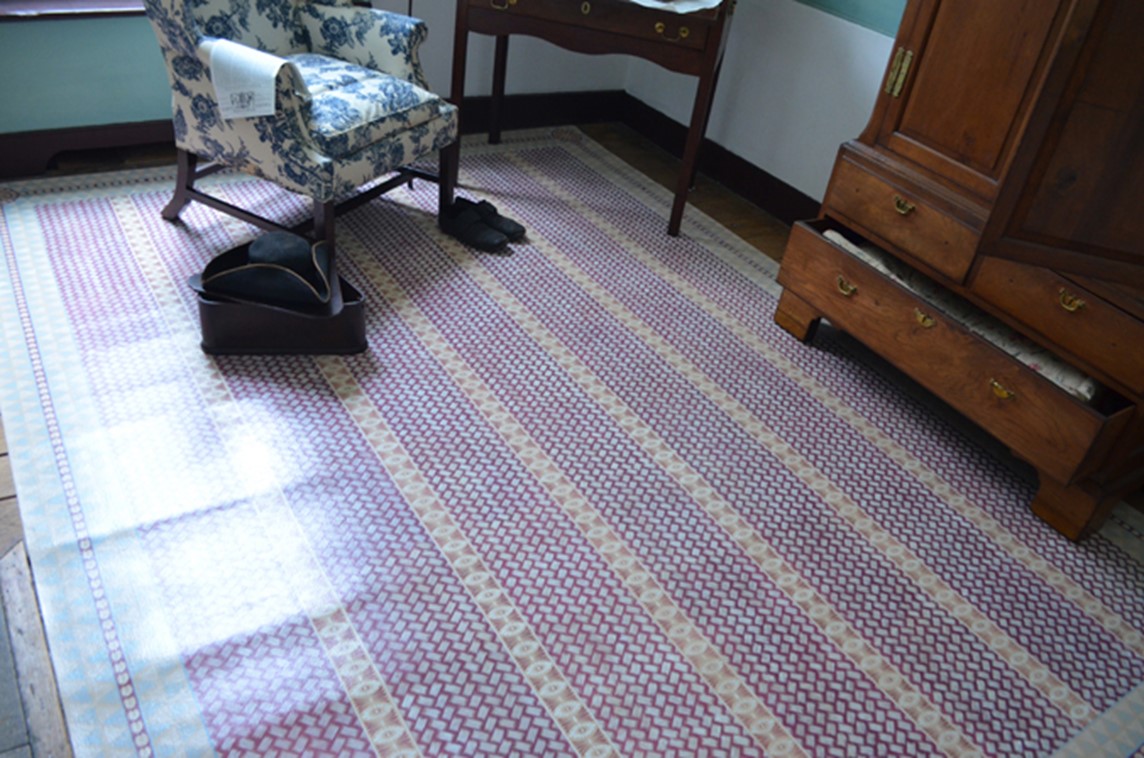
    Second, the white paint sample did not contain zinc white, which was used after 1840, and the green paint sample did not contain chrome green, which means it was likely produced before 1816, when chrome yellow pigments were commercially available. So, while we can’t verify that it was a Lewis family floorcloth, it is a very early example of the floor covering. It inspired the floorcloth reproduced for Fielding’s office in Kenmore, which you can read about in our previous post, “What Was Old Is New Again”.

    Beautiful reproduction floorcloth hand-painted by Black Dog Gallery, Yorktown.

    Today, thanks to linoleum, we can choose affordable, durable, and even fashionable flooring materials. Linoleum is the evolution of floorcloths with similar goals and functionality. However, while floorcloths didn’t usually survive, linoleum will follow us through history and deserves to be preserved even if it leads to awkward questions about style and décor.

    Oh, there will be questions.

     Heather Baldus

    Collections Manager


    Bibliography

    Kaldewei, G. (2000). Linoleum: History, design, Architecture, 1882-2000. Hatje Cantz ; Distribution in the US, DAP, Distributed Art Publishers.

    Garcia, K. (2023, December 6). Caring for 100-year old linoleum. Tenement Museum. https://www.tenement.org/blog/fun-with-linoleum-no-really/

    Houseman, C. (2020, September 11). Titanic’s linoleum. Encyclopedia Titanica Message Board. https://www.encyclopedia-titanica.org/community/threads/titanics-linoleum.52676/

    NPS. (n.d.). https://www.nps.gov/orgs/1739/upload/treatment-guidelines-2017-part2-reconstruction-restoration.pdf

    Landreau, A.N. (1976). America underfoot: A history of floor coverings from colonial times to the present. Published for the Smithsonian Institution Traveling Exhibition Service by the Smithsonian Institution Press.

    Weissman, J.R., & Lavitt, W. (1994). Labors of love: America’s textiles and Needlework, 1650-1930. Wings Book: Distributed by Outlet Book Co.

    Buck, Susan L. Floorcloth Fragments Cross-Section Microscopy Report, Kenmore, Fredericksburg, Virginia. (2006)

  • Slides That Saved Kenmore

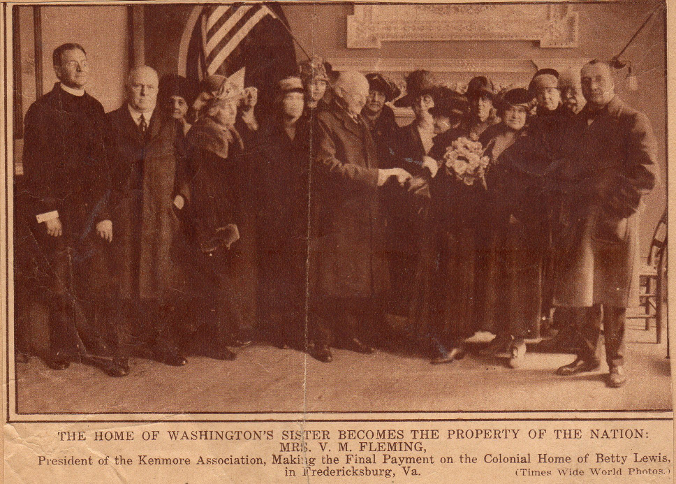
    On January 1, 1925, a group of well-dressed women in hats and long fur coats assembled at Kenmore to hand over the final $1,000 payment and gain full possession of the house and land.  This meeting was the culmination of thirty-two months of persistent work and determination by the ladies of The Kenmore Association to save the historic property from destruction.

    The incredible work in saving Kenmore was beginning for the ladies. Undoubtedly, a house as large and old as Kenmore would require a substantial amount of money for restoration and upkeep.   Until the sale to the Kenmore Association, the house had been a residence for several different families, each leaving a unique imprint on the building.  Unfortunately, these alterations needed to be reversed to restore Kenmore to its original state when Fielding and Betty Lewis first inhabited the house around 1775.

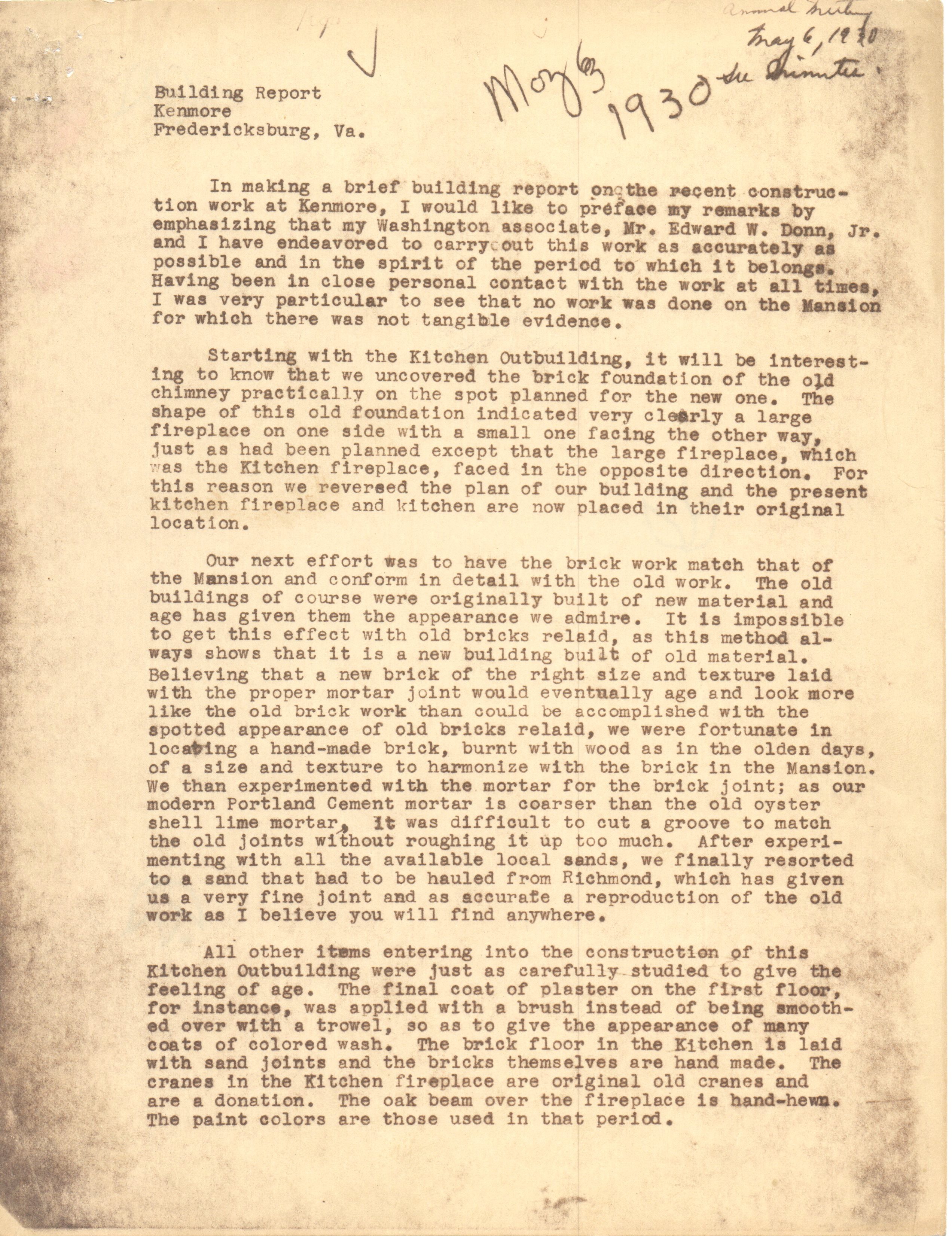
    By 1930, the Kenmore Association had made significant progress in restoring Kenmore. Major projects included removing the modern attached kitchen, updating wiring and plumbing, and restoring windows, brickwork, and ornamental plasterwork, all completed for $19,372.57. (Mesick, 1992) This figure did not include the ongoing refurnishing of the house, highlighting the scale of the task.

    How was the Kenmore Association able to finance this costly restoration and refurnishing? These ladies knew how to raise money. In 1927, they established a restoration fund and began soliciting contributions.  

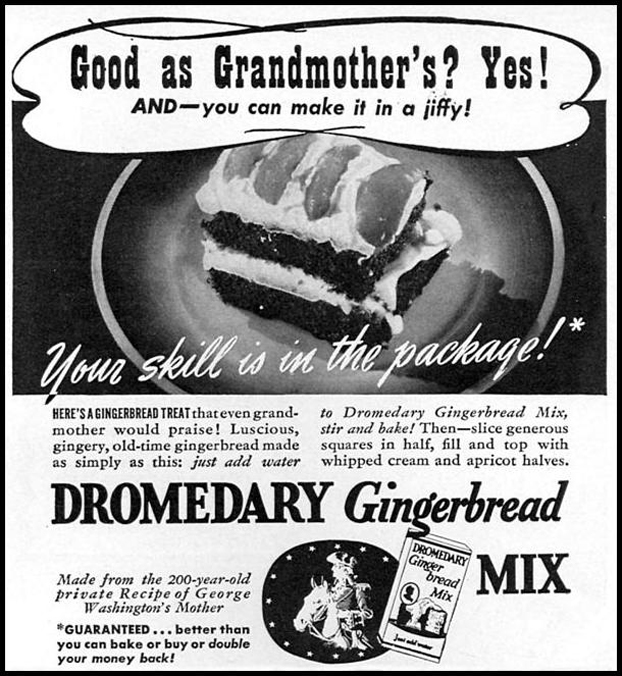
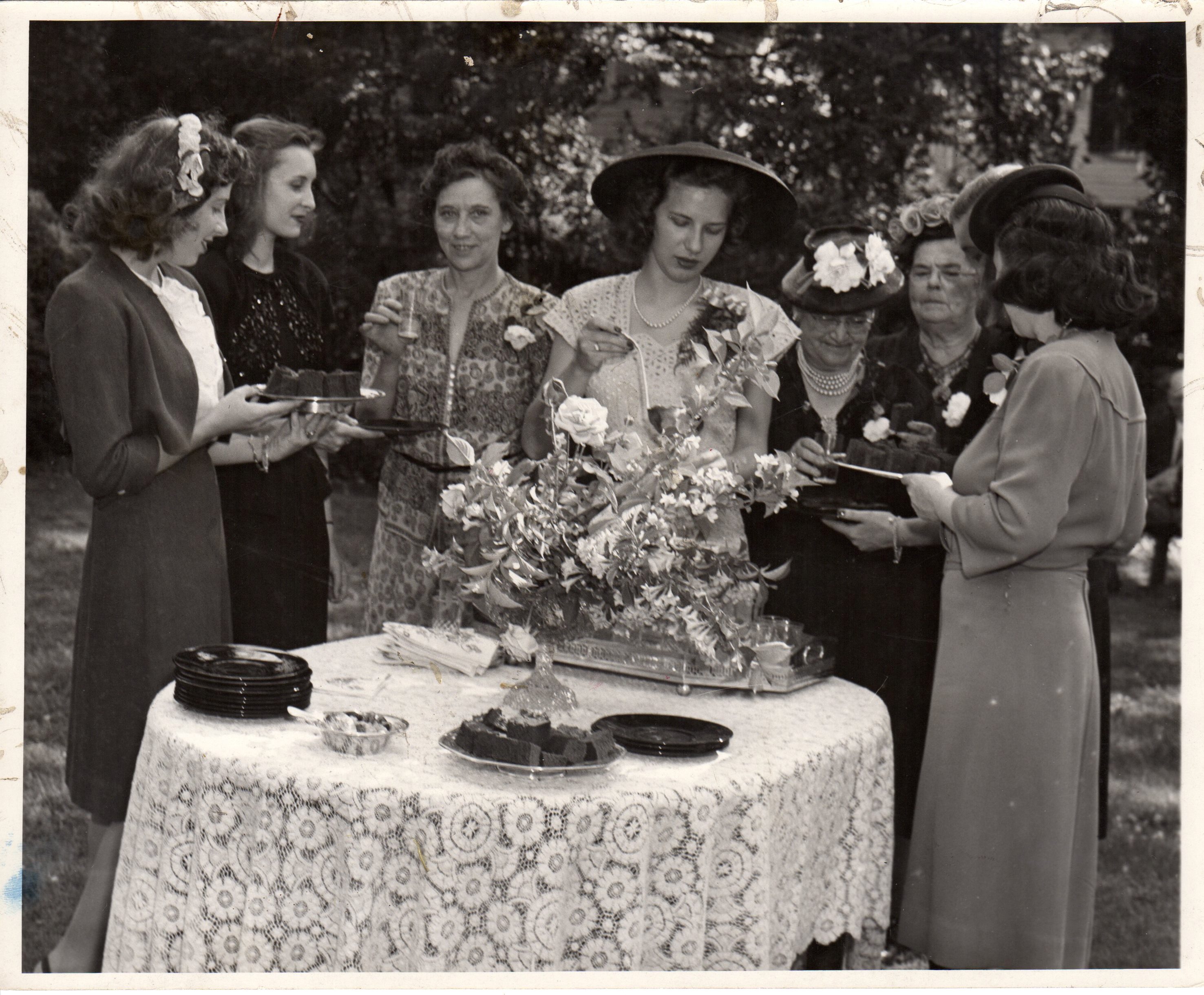
    We previously discussed the amazing partnership between Mrs. Smith secured with the Dromedary Cake Mix Company and their boxed gingerbread.   The arrangement allowed Dromedary to produce gingerbread mixes based on Mary Washington’s recipe.  In exchange, the Kenmore Association got all the gingerbread they could serve to visitors.  The company also donated mixes to be sold by the Association and various chapters of the Daughters of the American Revolution (DAR) for 25 cents a box.  The Association got half the money realized from these sales minus the shipping costs. 

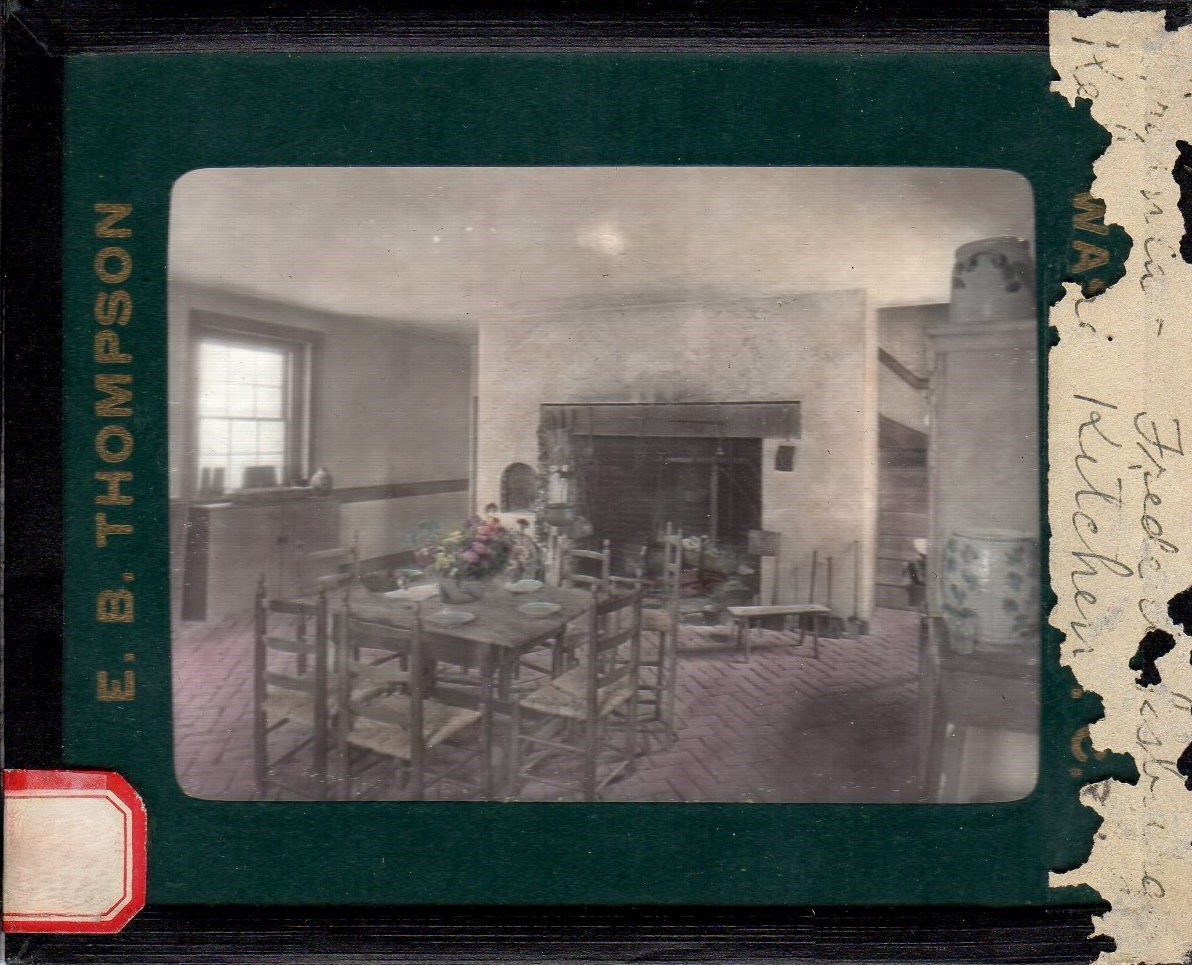
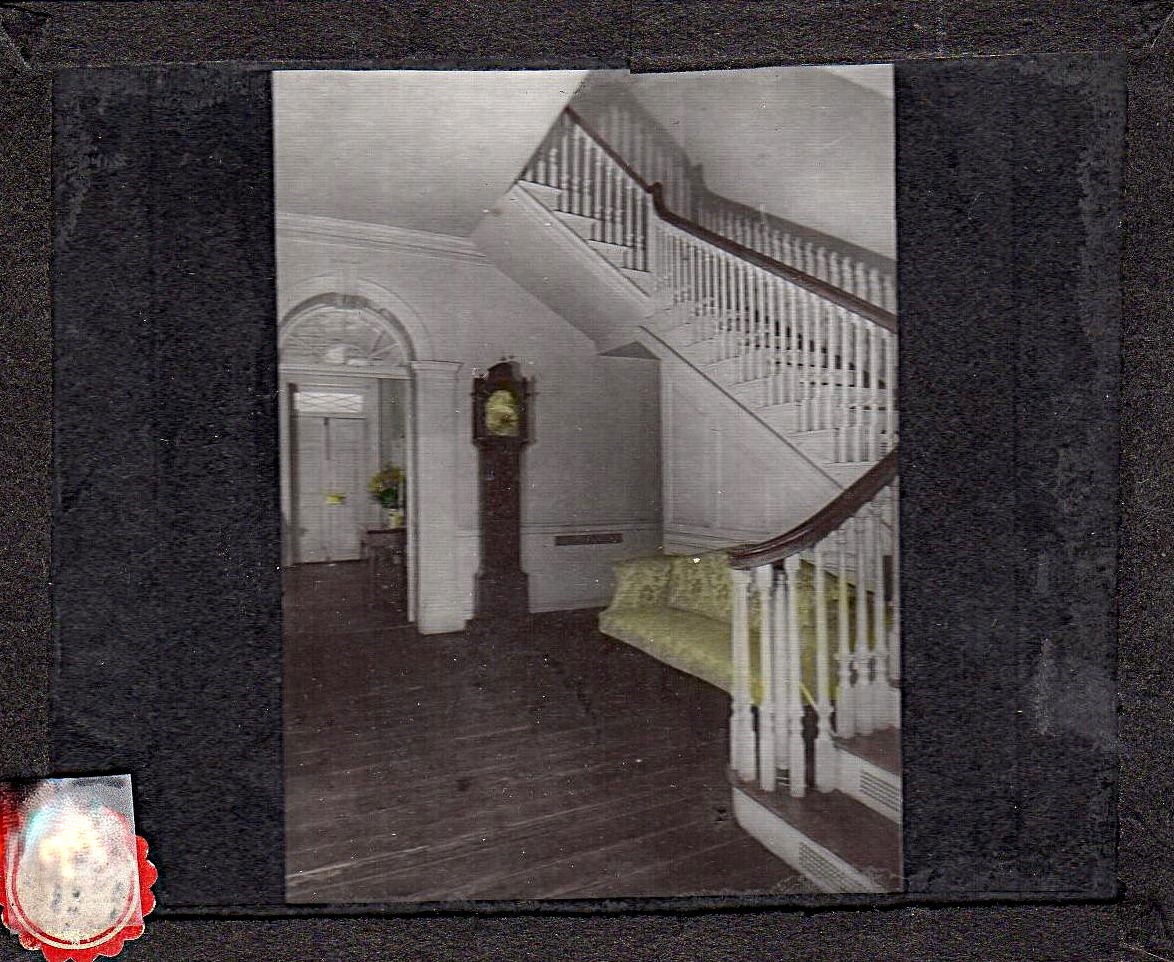
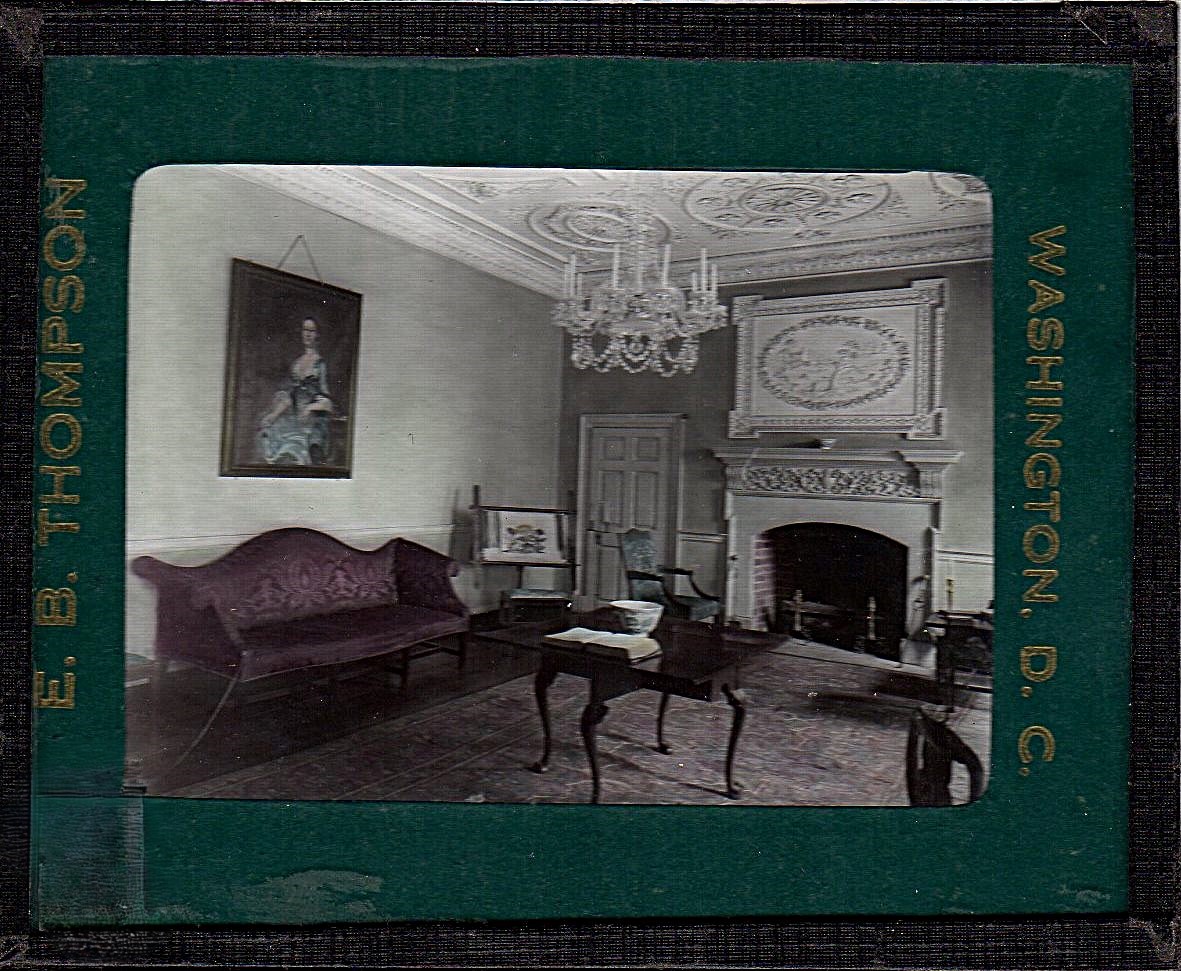
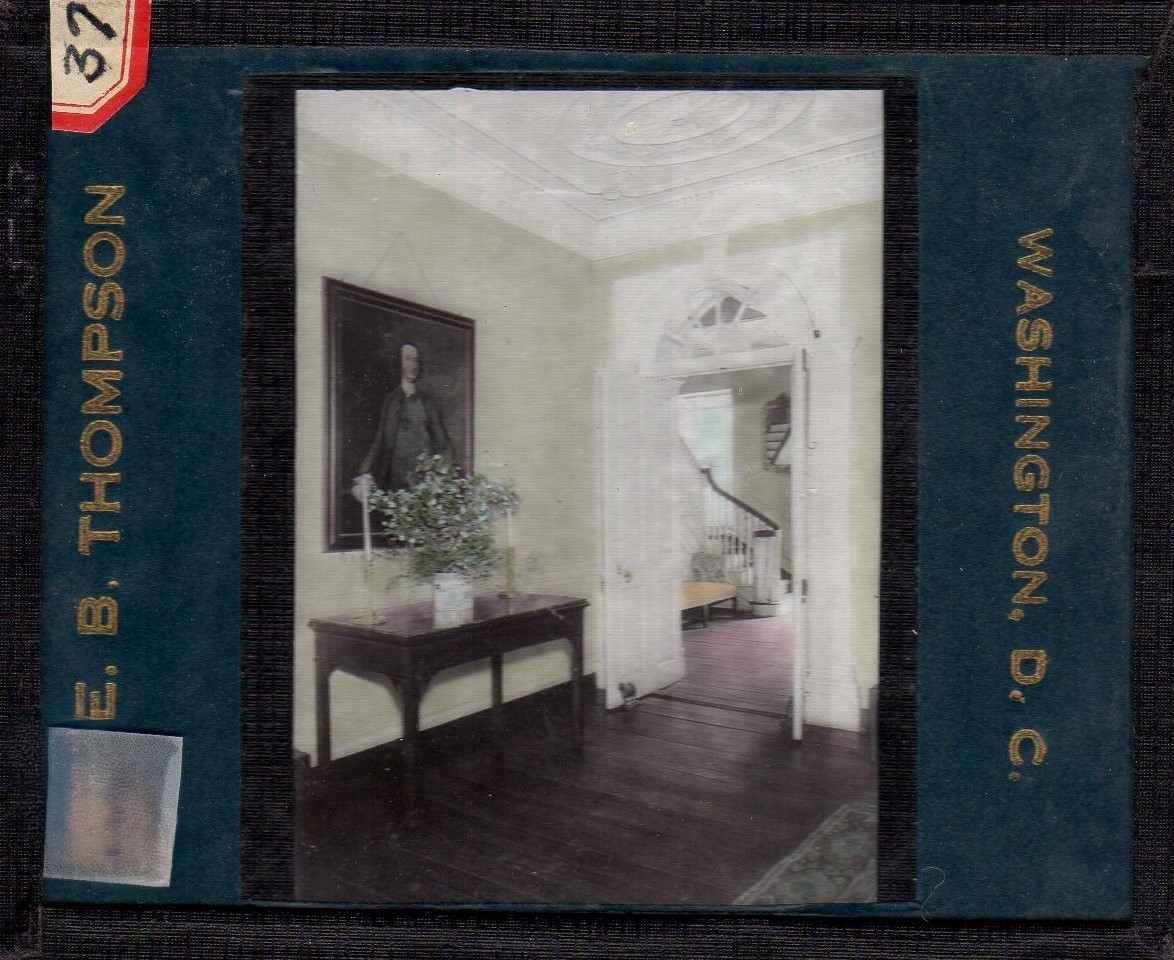
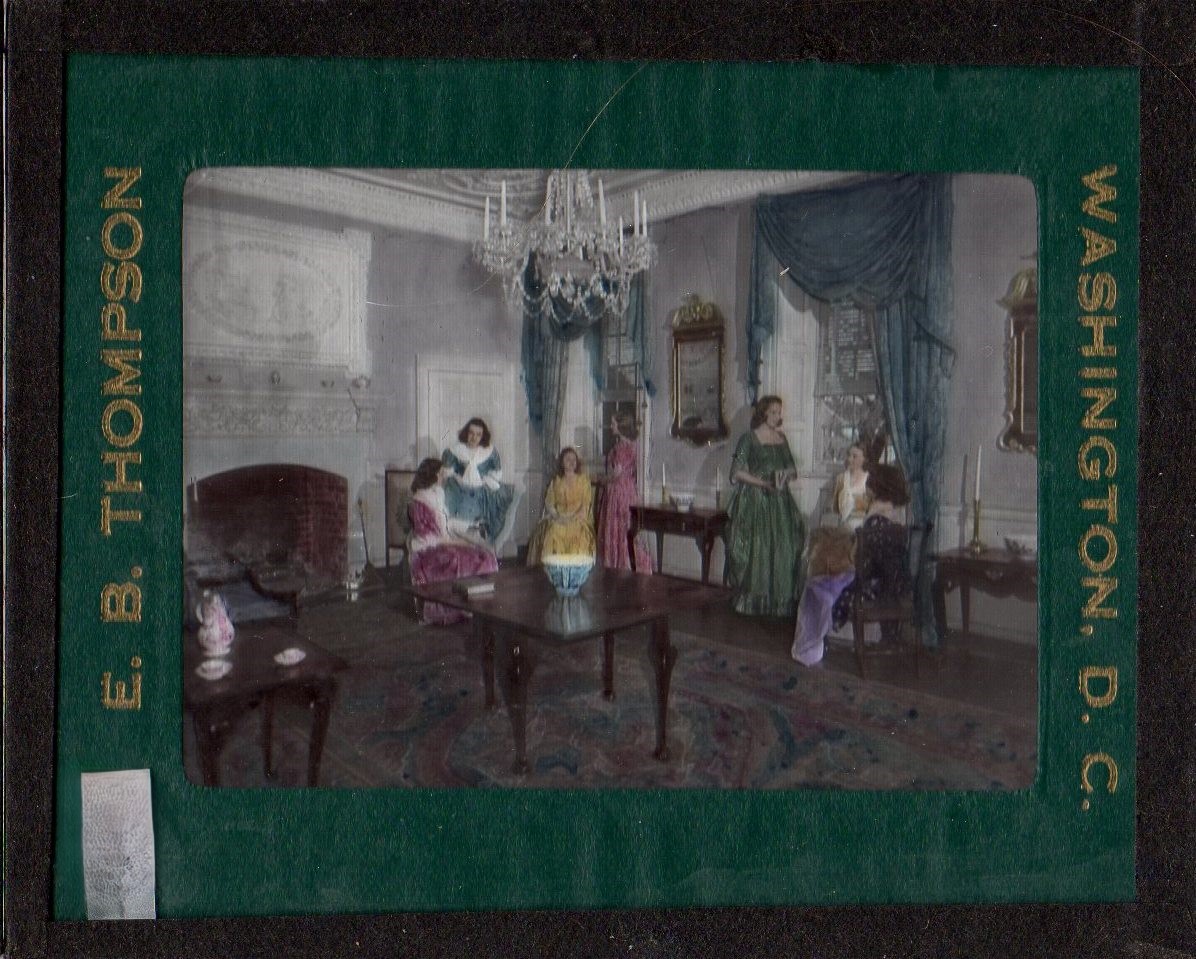
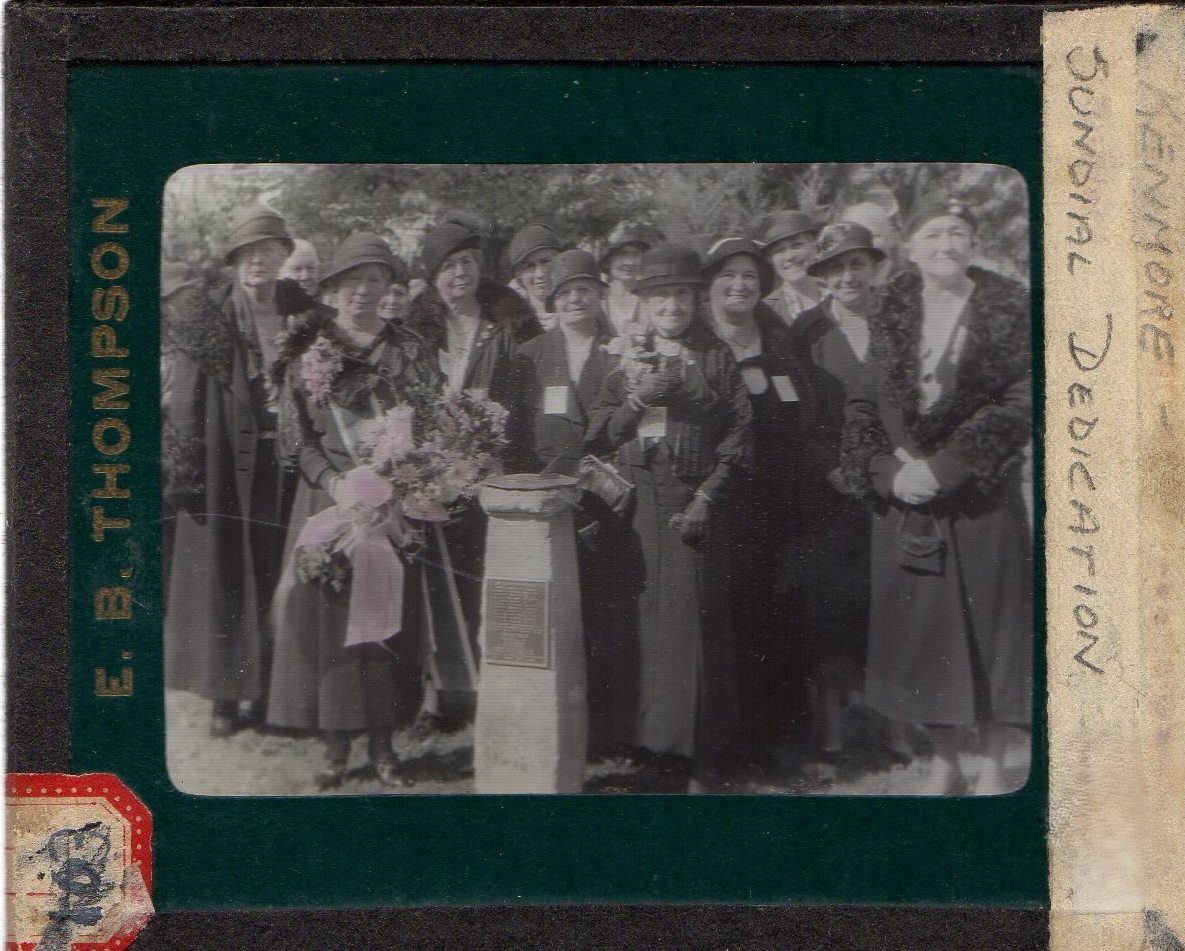
    To help the various DAR chapters across the U.S. sell gingerbread, the Kenmore Association developed a visual program using the Bauch & Lomb Balopticon and trays of glass slides. Mrs. Smith worked with Mrs. Louise du Pont Crowninshield to select various photographers to assist in the project, including the well-known E.B. Thompson of Washington, D.C.  This was no inexpensive program to develop with balopticons running around $77 a piece and slides costing $1 to $3 per slide of which we have over three hundred. 

    This program featured black-and-white and colored glass slides documenting the restoration and refurnishing of Kenmore and its gardens. Its goal was twofold. First, it showed the groups the product of their previous fundraising efforts, and second, it gave them an understanding of the house, property, and its goals for the future. Groups from all over the country wrote to Mrs. Smith requesting that she send out the program, which consisted of the balopticon and a set of glass slides for their meetings.  Sometimes, Mrs. Smith would even join the program herself, presenting and answering questions about upcoming projects. 

    These glass slide presentations were eventually updated into paper guidebooks, films, and postcards featuring up-to-date Kenmore images. The slides were packed away in the closet for the last eighty-plus years, and now offer us a great source of documentation for the early years of The Kenmore Association and the restoration of Kenmore.

    Heather Baldus

    Collections Manager


    Sources

    Mesick, C.W. (1992). Kenmore Historic Structure Report. Albany

  • An Image Captured: The Development of Photography through Lewis Family Descendants

    One of my favorite historical objects in the collection are photographs.  Not particularly for artistic reasons, but as a documentation of a moment, a time, a person, a world that no longer exists.  During the Victorian era (1837-1901), there were extraordinary developments in the field of photography. In a span of forty years, photographs went from complicated metal plates, harsh chemicals, and long exposure times to inexpensive images on cardboard that could be taken, processed, and given to the sitter in minutes. 

    We have many pictures in our collection, and we can trace the development of photography through images of Lewis family descendants. 

    A Pleasant View of Burgundy

    The widely accepted creator of photography as we know it was French inventor Joseph Nicéphore Niépce.  He produced the first surviving photograph around 1826 showing the scene from his window in Burgundy.  After Niepce’s death, his former associate, Louis-Jacques-Mandé Daguerre, continued improving Niepce’s photographic process, introducing the “daguerreotype” in 1839. (The University of Texas Austin, 2024)  To create an early daguerreotype, a polished silver-plated copper sheet was treated with iodine vapor to make it light-sensitive. After exposure, the plate would be developed with mercury vapor and fixed with sodium chloride.  This was a tedious and complex process that required the subject to remain entirely still for three to fifteen minutes. (Stewart, 2018) (The Library of Congress, 2024) (Department of Photographs, 2004) The process was amended and, by the 1850s, used large glass-plate negatives, allowing for a crisper picture and a much shorter exposure time. (Department of Photographs, 2004)

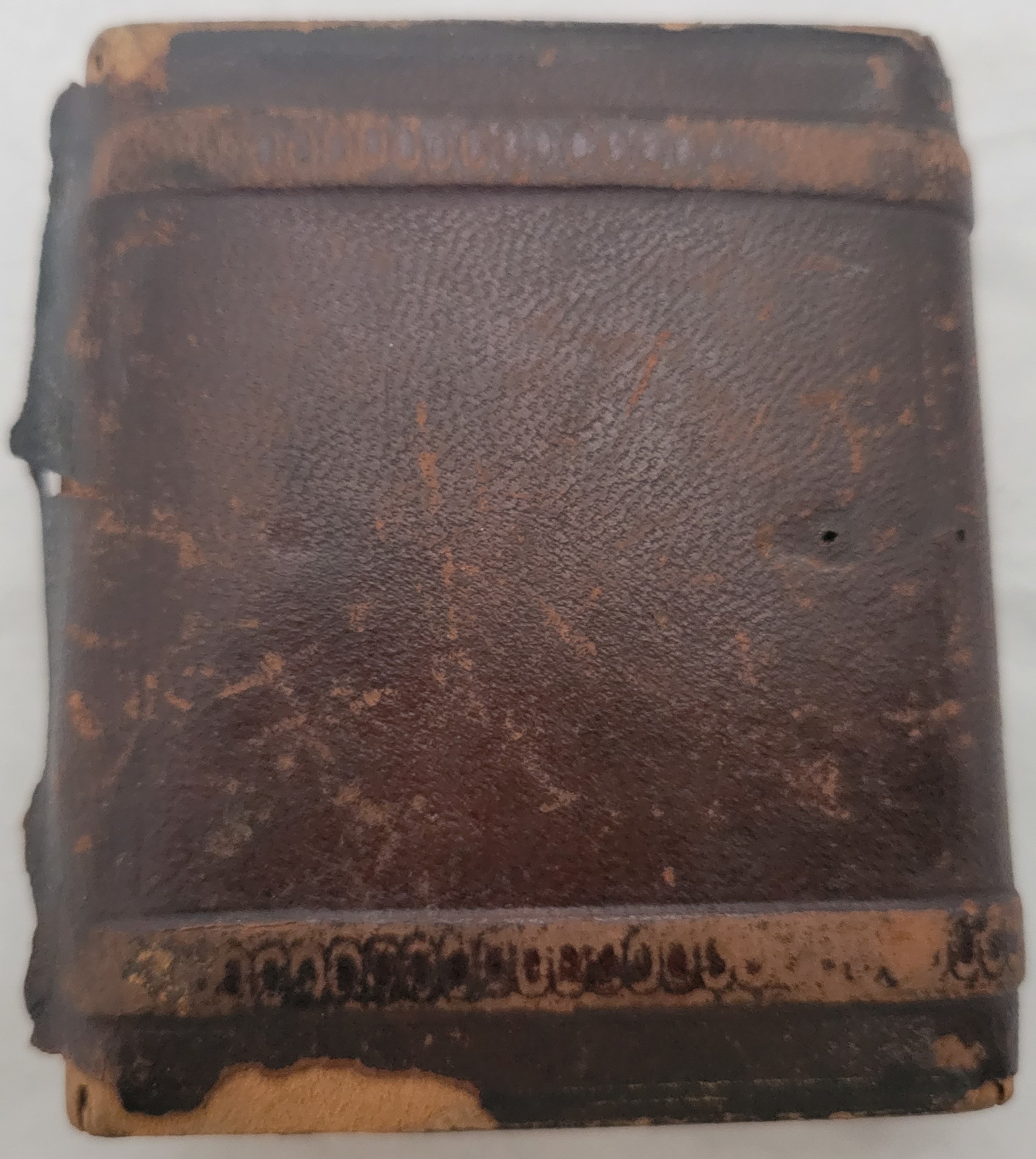
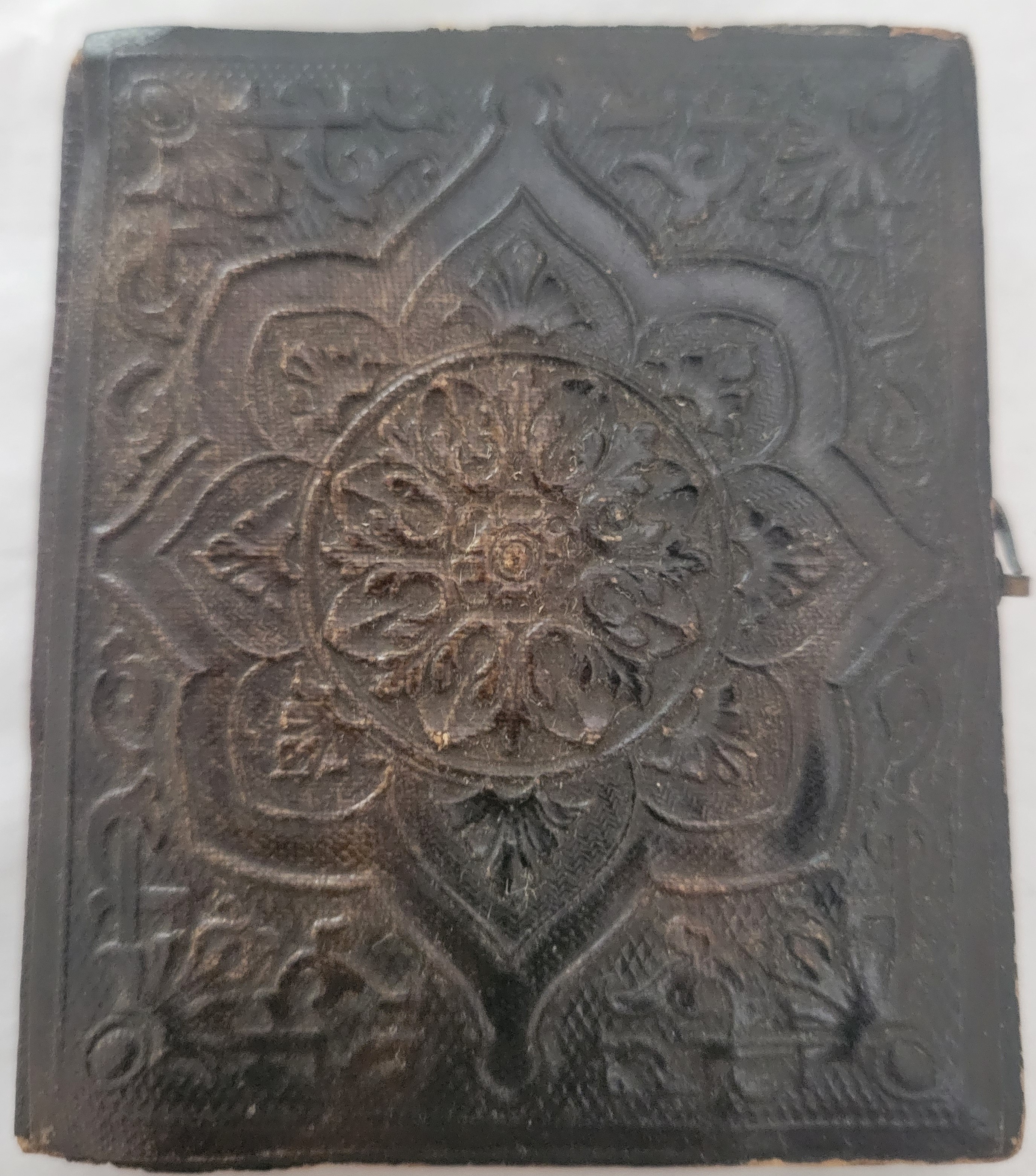
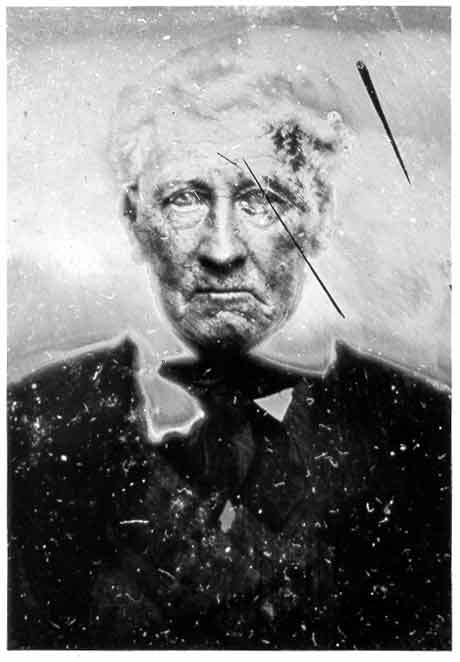
    We have three daguerreotypes in the collection dating circa 1850s.  They are all portraits housed in elaborate leather cases with gilt-metal frames.  The larger photograph is called a sixth-plate daguerreotype portrait of John Taliaferro Lewis (1785-1862), who was the grandson of Charles Lewis, Fielding Lewis’s brother.  John was a Methodist minister and lived at “Stepney” near Manassas.  Through his wife, Francis Tasker Ball, he became the owner of “Portici,” also near Manassas. The two smaller ninth-plate daguerreotypes are both portraits of Ellen Lewis Nye (1834-1886), the granddaughter of Howell Lewis, the ninth son of Fielding and Betty.  She married Anselm Tupper Nye, and they resided in Ohio, where they were both buried.

    Images for Loved Ones

    The daguerreotype was soon replaced in popularity by the ambrotype and tintype, which were both cheaper and easier to develop. (Harding, 2013). 

    An ambrotype is comprised of an underexposed glass negative placed against a dark background. The dark backing material creates a positive image. They were sold in either cases or ornate frames to provide an attractive product and to protect the negative with a cover glass and brass mat. (Library of Congress, 2024)

    We have three ambrotypes in the collection: a landscape and two portraits.  The landscape dates to circa 1855 and shows a group of people gathered around Washington’s tomb at Mount Vernon. Two of the figures were Thomas Coatsworth (1821-1887) and his wife Electra Weller Coatsworth (1832-1869). It is housed in an embossed leather case.

    One portrait is of John Taliaferro Lewis and is almost identical to his daguerreotype. The other portrait is of Daingerfield Lewis (1785-1862).  It dates from the same time and is held in a leather case. Daingerfield Lewis was the son of Captain George Lewis, the fourth son of Fielding and Betty, who served in the Continental Army under his uncle George Washington.

    Tintypes became especially popular because the photographer could take a picture and develop it within just a few minutes. It was called the new “instant photo.”  This “instant photo” could be found at fairs, carnivals, and on the boardwalk, not just professional studios. Due to the tintype price, weight, and unbreakable nature, they became extremely popular during the Civil War because soldiers were able to mail them back to loved ones. (Stewart, 2018)

    The three tintypes in the collection are a group of siblings, two brothers, and one sister (there were eight total siblings).  George Lewis (1832-1883), Fielding Lewis (1839 – 1863) and Betty Fitzhugh Lewis (1847-1920).  Their father was Howell Lewis Jr. (1808-1883), the son of Howell Lewis and grandson of Fielding and Betty.  Howell Lewis Jr. was one of the earliest settlers of Henry County, Missouri, and established Lewis Station (now called Lewis, Missouri).  There is not much information on the siblings besides the basics.  George Lewis, the eldest, was born in West Virginia, died in Nevada, and is buried at the Lewis Station Cemetery.  Fielding Lewis was born in Missouri and died young during his service with the Confederate army in Texas.  Betty Fitzhugh Lewis was born in Missouri as well; he married Milton D Finks, had at least three children, and is buried in Calhoun cemetery.

    Paper, Cardboard, and Formality

    By the later part of the nineteenth century, paper photos mounted on cardboard became more popular. Carte-de-visite became quite a fad after carte portraits of Queen Victoria with her husband and children were published. (Harding, 2013).  Part of why they became popular is they were cheaper to produce because multiple images (eight) could be taken with the same photographic plate, cut into small portraits, and mounted to heavy cardboard. (The Editors of Encyclopedia Britannica, 1998) 

    Two of our carte-de-visites are portraits of two young ladies around 1860.  One is Ellen Lewis Nye, who previously appeared in daguerreotype around the same time.  The second is Mary Ellen Lewis Hogan (1834-1874), who was the daughter of Howell Lewis, Jr. and sister to George, Fielding, and Betty Lewis.  She was born in West Virginia, married Robert Henderson Hogan, and is buried in Illinois.   

    The carte-de-visite was gradually superseded by the cabinet card, which remained popular until the introduction of the Kodak Box Brownie camera in 1900. (City Gallery, 2005)  The cabinet card marked a transition from more formal portraiture to amusing, personal, and even candid images.  They were taken in studios that were equipped with lights, props, and sometimes even hair and makeup. The average price was around $1.50 for a dozen cards, which is around $45 today. (Salvesen, 2021)

    Our cabinet cards date from 1850 to 1897 and are portraits of three females who, like all the others, are descendants of the Lewis family.  The oldest is of Francis Fielding Lewis Gwathmey (1808-1888), and it was taken around 1850, putting her in her early forties.  Her father was Howell Lewis, son of Fielding and Betty and sister to Howell Lewis Jr.  Francis married Rev. John “Parson” Blair and had twelve children, of which only three outlived her.  She is buried in Richmond, Virginia. 

    We have another picture of Ellen Lewis Nye, who has previously been represented in daguerreotype and carte-de-visite.  The card was taken in 1885, shortly before her death. The last one is Virginia Tayloe Lewis (1842-1916), taken during the Christmas season of 1897.  She was born in Washington, D.C., at The Octagon House.  She was the daughter of Captain Henry Howell Lewis and great-granddaughter to Fielding and Betty. 

    Money and the Magic Lantern

    This is a brief history of photography seen through the descendants of the Lewis family. But make no mistake, these are not the only important pictures in our collection.  There are still trays of glass slides that belong to a curious device called the “lanterna magica,” which became an invaluable tool that, along with gingerbread, helped restore Kenmore.

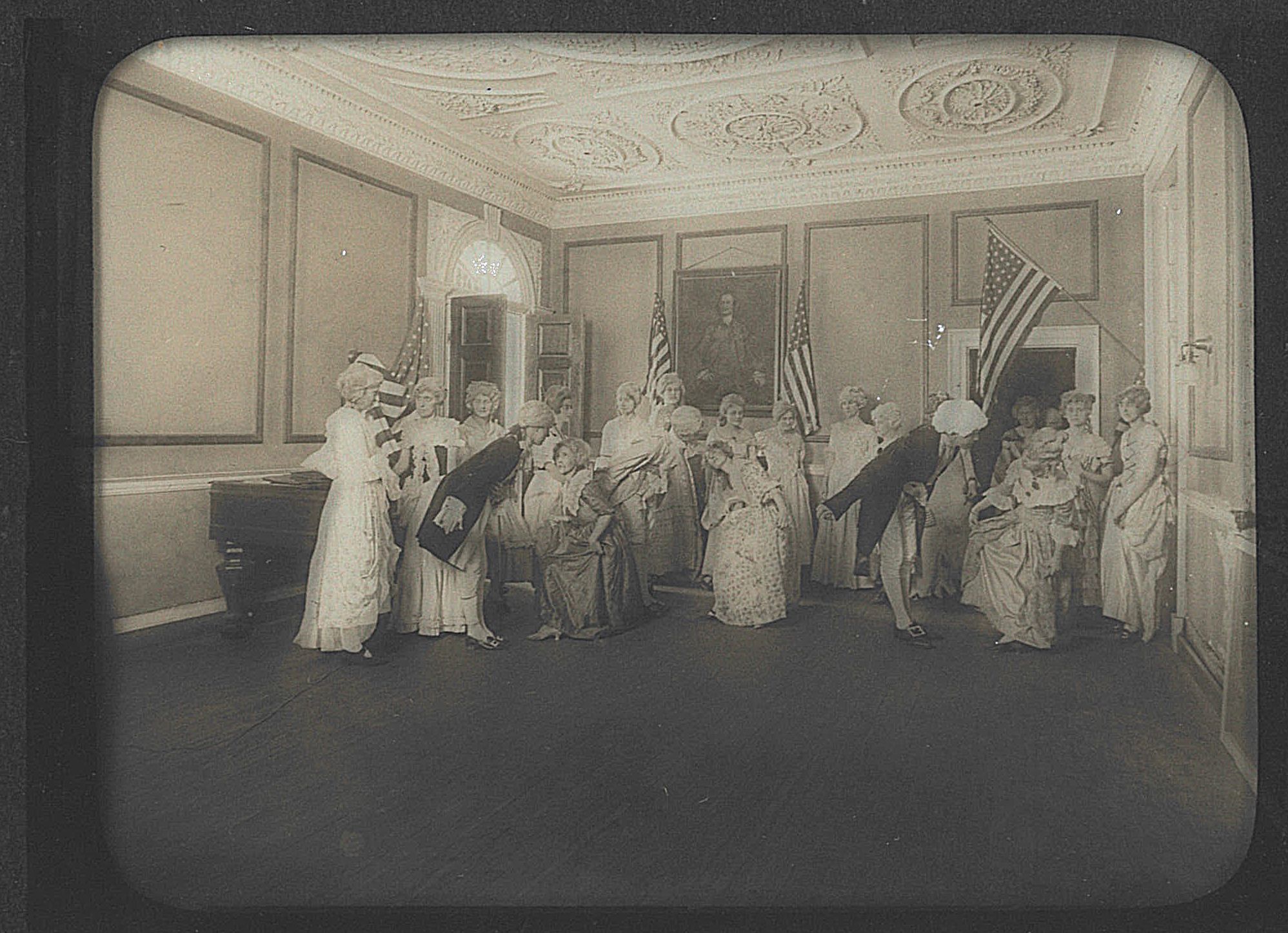
    Magic lantern glass slide of Kenmore before the restoration

    Heather Baldus

    Collections Manager


    Bibliography

    City Gallery. (2005). Cabinet Card. Retrieved from City Gallery: http://www.city-gallery.com/learning/types/cabinet_card/index.php

    Department of Photographs. (2004, October). The Daguerreian Era and Early American Photography on Paper, 1839–60. Retrieved from The Metropolitan Museum of Art: https://www.metmuseum.org/toah/hd/adag/hd_adag.htm

    Harding, C. (2013, June 27). How to spot a carte de visite (late 1850s–c.1910). Retrieved from The National Science and Media Museum: https://blog.scienceandmediamuseum.org.uk/find-out-when-a-photo-was-taken-identify-a-carte-de-visite/

    Harding, C. (2013, May 25). How to spot a ferrotype, also known as a tintype (1855–1940s). Retrieved from The National Science and Media Museum: https://blog.scienceandmediamuseum.org.uk/find-out-when-a-photo-was-taken-identify-ferrotype-tintype/

    Library of Congress. (2024). Liljenquist Family Collection of Civil War Photographs. Retrieved from Library of Congress: https://www.loc.gov/collections/liljenquist-civil-war-photographs/articles-and-essays/ambrotypes-and-tintypes/

    Salvesen, B. (2021, June 28). The Return of Cabinet Cards. Retrieved from Los Angeles County Museum of Art: https://unframed.lacma.org/2021/06/28/return-cabinet-cards

    Stewart, J. (2018, December 31). Tintype Photography: The Vintage Photo Technique That’s Making a Comeback. Retrieved from My Modern Met: https://mymodernmet.com/tintype-photography/

    The Editors of Encyclopedia Britannica. (1998, July 20). Carte-de-visite. Retrieved from Encyclopedia Britannica: https://www.britannica.com/technology/carte-de-visite

    The Library of Congress. (2024). The Daguerreotype Medium. Retrieved from The Library of Congress: https://www.loc.gov/collections/daguerreotypes/articles-and-essays/the-daguerreotype-medium/

    The University of Texas Austin. (2024). The Henry Ranson Center. Retrieved from The University of Texas Austin: https://www.hrc.utexas.edu/niepce-heliograph/

  • Family Ties: An American Princess

    The George Washington Foundation believes the Washington and Lewis families’ story is worth protecting for future generations. We are in contact with many descendants of the Washingtons and Lewises who have assisted the foundation in presenting the families’ legacies by adding to our collections and archives. We decided to explore the ancestors and descendants interesting tales and life accounts, using the artifacts and documents in our collections as a starting point.   

    The first person in our spotlight is Catherine Dangerfield Willis, who was born in Virginia, lived on the Florida frontier, became a historic preservationist, and became a Princess of the Second Empire because of her Washington relation.

    Virginia Native and Washington Descendant

    Catherine Daingerfield Willis was born in Fredericksburg in 1803. She was the daughter of Colonel Byrd Charles Willis and his wife Mary (née Lewis) Willis. From her maternal family side, Catherine was the great-granddaughter of Fielding and Betty Lewis and the great-grandniece of George Washington. (Glenn, 2014)

    Catherine married Atcheson Gray at an early age, around 13 to 17 years old; accounts vary. The newlywed couple resided at their father-in-law’s house, Wakefield (yes, George’s birthplace). (Unknown, 2004)  Sadly, their marriage was cut short when Atcheson died of malaria less than a year after their union, along with their first child. (Bellet, 1976)

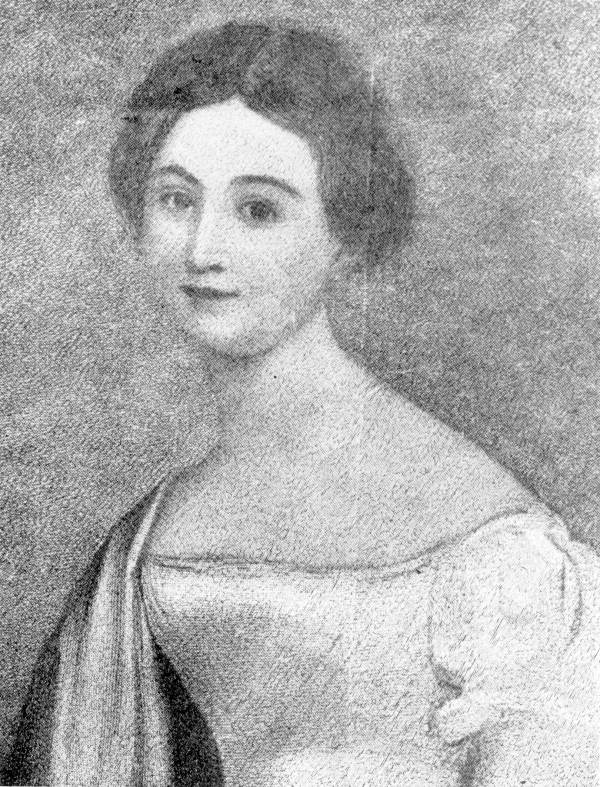
    Catherine Daingerfield Willis Gray Murat, watercolor generously donated to GWF by Mrs. Lucy Robb Winston Works and family.

    The Florida Frontier

    After being widowed, Catherine and her family moved south to Tallahassee, the recently christened capital of the Florida Territory (Florida didn’t become a state until 1845) (Gannon, 2003). It had previously been an important Apalachee settlement which had been abandoned after it was burned to the ground by Andrew Jackson in 1818 during the first part of the Seminole Wars. (Smith, 2023) When Catherine and her family took up residence in Tallahassee in the 1820s, it was a rough place and had a reputation as an outlaw frontier town. Men carried guns and knives to protect themselves from the many duels, brawls, and knife fights that were common in the city. The eminent Ralph Waldo Emerson (a noted friend of Prince Murat) traveled to Tallahassee in 1827 and called it “a grotesque place…rapidly settled by public officers, land speculators, and desperadoes.” (Downes, 1956)

    The less-than-stellar reviews of the city didn’t stop the Legislative Council from building three crude log huts for their official meetings. (Gannon, 2003)  There was even the establishment of a city police force in 1826 to combat lawlessness. The police force consisted of only one guy, a City Marshal, but it still counts. (Tallahassee Police Department, 2023)

    In this primitive but developing city, a love story blossomed between Catherine and an exiled French prince.   

    A quick look at the tumultuous life of Charles Louis Napoleon Achille Murat

    Achille Murat was born in the Hôtel de Brienne in Paris to Caroline Bonaparte, Grand Duchess of Berg, Queen of Naples, and sister to Napoleon Bonaparte, Emperor of the French  By 1815, after his uncle’s second exile and the execution of his father Joachim Murat, the family fled to Austria. (Burnett, 1996)

    When Achille turned twenty-one, he emigrated to the United States, landing in New York and immediately applying for naturalization. (Niles, 1823)  Additionally, he renounced all European titles and citizenship. (Brandon, 1944)  Before long, he made his way down to Florida to get in on some of the land deals in the newly acquired territory. His first stop was St. Augustine, where he purchased land and established a plantation called “Parthenope,” which utilized slave labor to grow oranges, sugar cane, cotton, and tobacco. (Roberts, 2004) (Bellet, 1976)

    Prince Murat immediately on arrival in America applied for naturalization and renouncing his European titles.

    While in St. Augustine, he developed a reputation for being a little eccentric. He liked to sit naked in the local Moses Creek during the sweltering Florida summers. (Hanna, 1948)  He was obsessed with eating all different kinds of animals, like turkey buzzards, owls, alligators, and rattlesnakes. (Roberts, 2004)  Finally, he disliked bathing and changing his clothes while living in a humid subtropical climate, and he “washed his feet only after he wore out his shoes.” (Hanna, 1948)

    Home of Prince Murat, which was built around 1790 – Saint Augustine, Florida

    Shortly before he met and married Catherine, he purchased another plantation named “Lipona,” which would be his primary residence in the US until his death. 

    A Marriage Between the Bonaparte’s and Washington’s and Entertaining Europe

    In 1826, Catherine Daingerfield Willis Gray married the ex-prince of Naples and nephew of Napoleon Bonaparte, Achille Murat. Catherine’s father was initially against the match because of the Bonaparte and Murat families’ opposition to the union. Luckily, the Bonaparte’s and Murat’s were made aware that Caroline was the great-grandniece of George Washington, and the family warmly welcomed her. (Bellet, 1976)

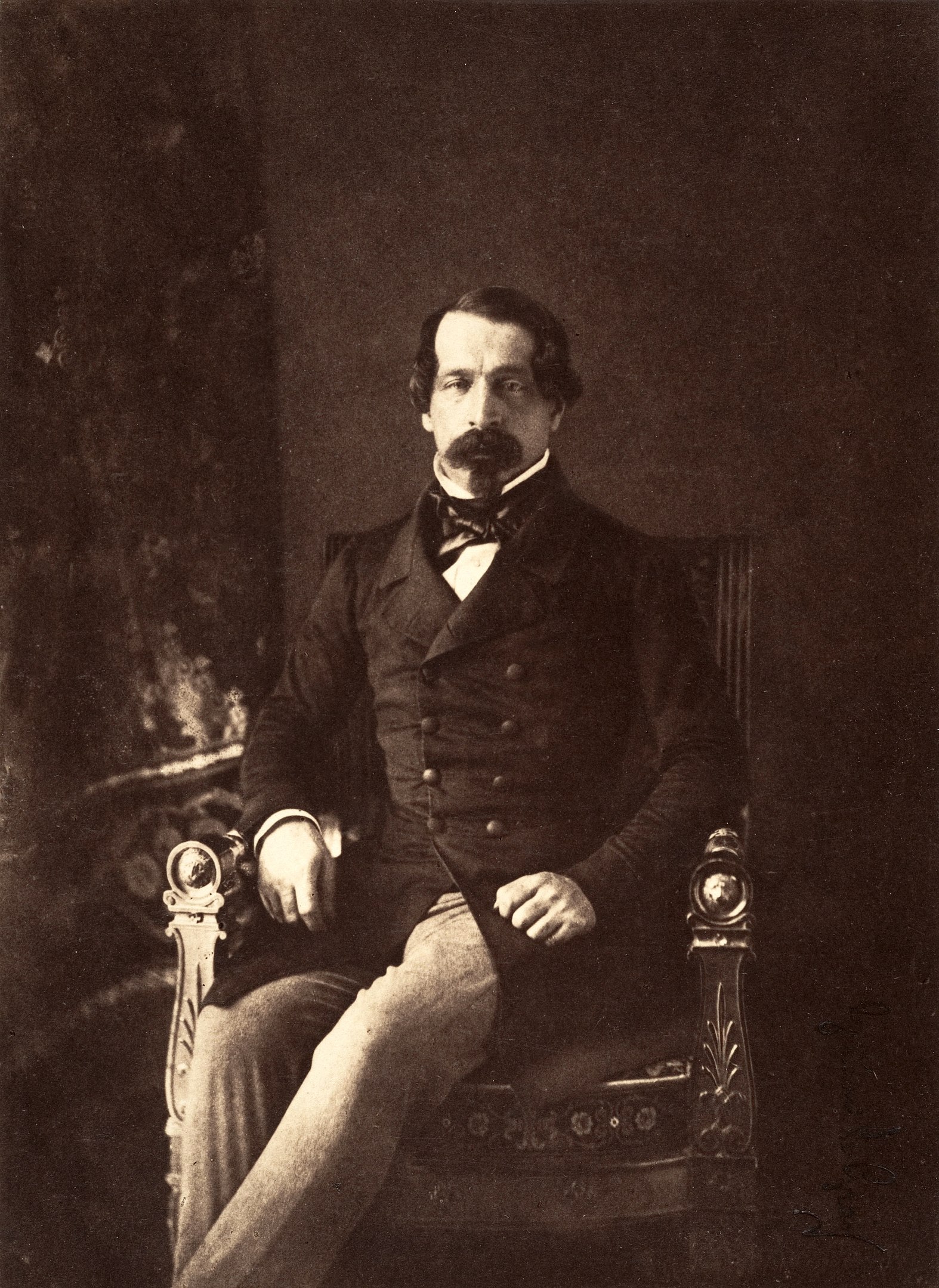
    The couple lived at Lipona outside of Tallahassee until the July Revolution of 1830 in Paris when Charles X abdicated, and Louis Philippe was selected as King. The Murats traveled to Europe as Achille tried to press claims to restore the families’ money and lands, but he failed. (Bellet, 1976)  The couple moved to London, where they spent a few years in high society. Catherine became a favorite of Louis Napoleon (who would become the first President and then Emperor of France, Napoleon III). While in London, Catherine even attended and was given a seat in Westminster Abbey for the coronation of William IV of the United Kingdom. (Bellet, 1976)

    Coronation of William IV, 8 September 1831

    Return to America

    Around 1835, the pair returned to America and set up residence just outside New Orleans, where Achille attempted to run a sugarcane plantation and practice law, both of which failed. (Hare, 2002) . They returned to Florida to their plantation Lipona, which he had mortgaged to the bank and subsequently lost due to nonpayment, requiring the couple to move to a smaller property. (Hanna, 1948) 

    Achille died in 1847, leaving his widow in a precarious financial situation, having acquired massive debt during his life. After the death of her husband, Catherine purchased a cotton plantation named Bellevue (now part of the Tallahassee Museum). She successfully managed the property and, after ten years, had paid all of Achille’s debts. (Sandler, 1999)

    Bellevue Plantation

    When Napoleon III became Emperor in 1852, Catherine was pronounced French royalty and Princess of the Second Empire, which granted her an annuity from the French government and allowed her to use the livery of France. (Bellet, 1976)

    Catherine Daingerfield Willis Gray Murat, Princess of the Second Empire

    Preservation and the Mount Vernon Ladies Association

    In 1853, Ann Pamela Cunningham founded the Mount Vernon Ladies Association (MVLA) to preserve and restore George Washington’s Mount Vernon. There had been other failed attempts by owner John Augustine Washington to sell the property to the US government and the state of Virginia, and even vile rumors of it being looked at by “speculators” to turn it into a resort hotel. Seeing the state of the property belonging to one of the most beloved founding fathers, Cunningham was able to make a deal with Washington after much discussion to sell the property (house, outbuildings, and 202 acres) to the Association for $200,000 (around 7 to 8 million dollars today).  (West, 1999)

    To raise money, Cunningham created a nationwide network of women by appointing one lady from each state as a vice regent to assist in fundraising. (Grabitske, 2004)  In Florida, the daughter of the territorial governor, Ellen Call Long, was asked to become the state regent. She declined but suggested Catherine because of her family ties and influence. Catherine enthusiastically took on the role of vice-regent. She raised $3791.25, which was no small feat, with the entire population of Florida in 1860 being 144,424 people. (United States Census Bureau, 2021)  The MVLA raised the funds and paid off the purchase price within two years despite The Panic of 1857 and the economic recession just before the beginning of the Civil War. (Casper, 2008) (Huston, 1987) Mount Vernon was saved and continues to be owned and maintained by the Association, as it is overseen by a board of regents of ladies from 27 states. (George Washington’s Mount Vernon, 2024)

    Meeting of the Mount Vernon Ladies Association, 1870s (Mount Vernon Ladies Association)

    The Final Resting Place of an American Princess

    Princess Catherine Murat died in August 1867 at her plantation, Bellevue. She is buried beside her husband, Prince Achille Murat, in the Tallahassee Episcopal Cemetery. They had no children.

    Heather Baldus

    Collections Manager

    References

    Bellet, L. P. (1976). Some Prominent Virginia Families, Volumes 1-2. Clearfield.

    Brandon, E. E. (1944). A Pilgrimage of Liberty. Lawhead Press.

    Burnett, G. (1996). Florida’s Past: People and Events That Shaped the State. Pineapple Press.

    Casper, S. E. (2008). Sarah Johnson’s Mount Vernon : the forgotten history of an American shrine. New York: Hill and Wang.

    Downes, A. J. (1956). The Legendary Visit of Emerson to Tallahassee. The Florida Historical Quarterly, 334-338.

    Gannon, M. (2003). Florida A Short History. University Press of Florida.

    George Washington’s Mount Vernon. (2024). About Mount Vernon. Retrieved from George Washington’s Mount Vernon: https://www.mountvernon.org/about/

    Glenn, J. (2014). The Washingtons. Volume 1: Seven Generations of the Presidential Branch. Savas Publishing.

    Grabitske, D. M. (2004). First Lady of Preservation: Sarah Sibley and the Mount Vernon Ladies Association. Minnesota History, 407-416.

    Hanna, A. J. (1948). A Prince in Their Midst: The Adventurous Life of Achille Murat on the American Frontier. University of Oklahoma Press.

    Hare, J. (2002). Tallahassee: A Capital City History. ‎ Arcadia Publishing.

    Huston, J. L. (1987). The panic of 1857 and the coming of the Civil War. Baton Rouge: Louisiana State University Press.

    Niles, H. (1823). Niles’ Weekly Register, p. 272.

    Roberts, D. (2004). Dream state : eight generations of swamp lawyers, conquistadors, Confederate daughters, banana Republicans, and other Florida wildlife. New York City: New York: Free Press.

    Sandler, R. (1999, October 23). The Princess Who Saved Mount Vernon. The Free-Lance Star, pp. 3-4.

    Smith, S. (2023, Apirl 1). Exploring Tallahassee’s April History Day By Day. Retrieved from WFSU Public Media: https://wfsu.org/local-routes/2023-04-01/exploring-tallahassees-april-history-day-by-day/

    Tallahassee Police Department. (2023, December 27). Retrieved from Wikipedia: https://en.wikipedia.org/wiki/Tallahassee_Police_Department

    United States Census Bureau. (2021, April 26). Historical Population Change Data (1910-2020). Retrieved from United States Census Bureau: https://web.archive.org/web/20210429012609/https://www.census.gov/data/tables/time-series/dec/popchange-data-text.html

    Unknown. (2004, November 27). Grand mansion is lost to time. Fredericksburg, Virginia, United States of America: The Free-Lance Star.

    West, P. (1999). Domesticating History: The Political Origins of America’s House Museums . Smithsonian Books.

  • Bane of the Washingtons Part II: The Deaths of Lawrence, Fielding, and Samuel

    Welcome back to our 3-Part Blog charting tuberculosis in the extended Washington Family. If you are new to this series, Part I examined how the disease works, charted its history, and explained standard courses of treatments in the 1700s. You can find the blog here, and we encourage a review of the “Treatment” section. In Part II, we will begin to look at the family members who suffered from the disease and how this impacted their lives and those around them.

    Lawrence Washington (1718-1752, aged 33/34):

    Lawrence Washington Source: Mount Vernon

    Perhaps the best-known case of tuberculosis in the Washington family pertains to Lawrence Washington. George’s eldest half-brother, credited as serving as a role model, died of the disease in 1752, which subsequently laid the foundations for George to inherit Mount Vernon and become the Father of His Country. Behind this, however, lies one of the more clear timelines for the devastation the disease.

                Lawrence may have contracted tuberculosis during his service in the War of Jenkins’ Ear (served 1740-1742) or after his return to Virginia in 1742. Certainly, he had developed severe enough symptoms, particularly a cough, by the end of 1748, to cause him to take a leave of absence from the House of Burgesses. He resumed his duties in the spring of 1749, but his illness forced him home for a final time in May. That same month, George wrote hoping for news that his brother’s cough had improved and that he had “given over the thoughts of leaving Virginia.”1 Lawrence could not provide his brother with the news he desired, and sailed to England in the summer of that year to consult with physicians. Lawrence returned in November with little encouragement, but set out for Berkeley Springs in July 1750, to take the waters. George accompanied his brother on this venture, but they did not stay long.

    By 1751, Lawrence had exhausted any hope of finding a cure at home and his doctors recommended visiting a warmer climate. Following this advice, Lawrence and George sailed for Barbados on 25 September and arrived on 2 November. Shortly after their arrival, George recorded that a doctor came “to pass his opinion on [his] brother’s disorder, which he did in a favorable light, giving great assurances that…a cure might be effectually made.”2 George mentions little else of Lawrence’s condition in his journal, a month of course went undocumented as George had smallpox, and he returned to Virginia alone in December.

    Lawrence, having not found the relief he hoped for, decided to try Bermuda and journeyed there after George left. In an April 1752, letter to a friend, Lawrence referred to Bermuda as his “last refuge, where [he] must receive [his] final sentence.”3 Describing himself as “a criminal condemned, though not without hopes of a reprieve,”4 Lawrence followed his doctor’s treatment plan by “abstaining from flesh of every sort, all strong liquors, and by riding as much [he] could bear.”5 His doctor advised to take what benefit he could from the climate as another winter in Virginia would surely kill him. While Lawrence remained somewhat hopeful in this letter, he soon wrote again about his “unhappy state of health”6 and expressed the belief that, if it should worsen, he would “hurry home to [his] grave.”7 Evidently, Lawrence soon resigned himself to his impending death as he returned to Mount Vernon and set his affairs in order with the aid of his half-siblings and stepmother. He died on 26 July 1752.

    Upon Lawrence’s death, he left behind his wife Anne Fairfax and daughter Sarah. Three other children had already died all under the age of two. Infant mortality frequently occurred in the 1700s, so it proves impossible to know what caused each death. However, it remains a possibility that they contracted tuberculosis from their father, which then killed them quicker due to their age and weaker immune systems, or left them vulnerable to secondary infections. Sarah would suffer a similar fate in 1754, aged four, and her mother, having married into the Lee family, would die in 1761, aged thirty-three. These deaths allowed George to inherit Mount Vernon.

    Fielding Lewis (1725-1781, aged 56):

    Fielding Lewis

    The husband of Betty Washington and the mind behind Kenmore, Fielding Lewis served his country during the war by funding various supply and defense lines. One of the richest men in Virginia, Fielding had the ability to provide aid and, as the brother-in-law of the commander-in-chief, could hardly stay out of the conflict. While his efforts did much for the cause, Fielding drew the short straw by spending nearly all of his money. Accounts of Fielding Lewis’ death often insinuate a connection to the stress of losing his fortune. While this certainly put him under strain, and would not have helped his health, Fielding’s case of tuberculosis meant that he would have died regardless of his financial status.

    Tracing tuberculosis in Fielding’s life proves more difficult than that of Lawrence. Mentions of Fielding as ailing exist for several years prior to his death. However, with no description, one can hardly say if this references tuberculosis or some other affliction. Like many, he frequented Berkeley Springs and even purchased property there. Fielding recorded little of his visits, but his interests lay in the spring’s supposed medicinal benefits and, to that end, undertook an annual August trip from 1772 onwards. Throughout the war, Fielding held the rank of colonel and, though he never received a formal posting, oversaw Fredericksburg’s gun manufactory and the defense of the Rappahannock. This position required no military action and had strong connections to his background as a merchant. However, the choice of assignment may have derived from knowledge that he would never be well enough to effectively command troops. Then again, Fielding was in his fifties and had no military experience. In any case, the position reflected a strategic choice that played to Fielding’s strengths and lessened the impact of field inexperience and ill health.

    If Fielding hoped for a peaceful death, he would not receive it. In the summer of 1781, with the British encroaching on Fredericksburg, the Lewis household and Mary Washington fled. At this stage, Fielding’s health had significantly deteriorated, leaving him an invalid confined to his home. A sudden evacuation by carriage would have done little to ease his discomfort as the household hurried to another property in Frederick County, Virginia. Once there, Fielding focused on putting his affairs in order and likely did not have the strength to visit nearby Berkeley Springs. The news of the Yorktown victory undoubtedly brought some emotional respite, but it proved short-lived as Fielding died mid-December 1781. The location of his burial site on the Frederick County property remains unknown. Fielding’s death brought immense grief to his widow, Betty Washington, who had lost her brother Samuel to the same disease only three months earlier.   

    Samuel Washington (1734-1781, aged 46):

     Samuel Washington Source: Mount Vernon

    The second son of Augustine Washington and Mary Ball, Samuel grew up at Ferry Farm with his full-siblings. Said to have suffered from tuberculosis for most of his life, it remains unknown where, when, and from whom he contracted it. However, by visiting Lawrence in July 1752, to help put his half-brother’s affairs in order, seventeen-year-old Samuel certainly faced exposure. Samuel died at his home Harewood, near Charles Town, West Virginia, in September 1781, shortly before the victory at Yorktown. The home itself lies conveniently close to Berkeley Springs, which may indicate that its location and Samuel’s move from Stafford County, Virginia, derived from a desire for easy access to the springs and their reputed health benefits.

    Despite dying just shy of age forty-seven, Samuel famously married five times. His final wife, Susannah Perrin Holden (1753–1783, m. 1778), survived him, and the fourth, Anne Steptoe (1737–1777, m. 1764), died of complications from a smallpox inoculation. However, the deaths of his first three wives, Jane Champe (1724–1755, m. 1754), Mildred Thornton (roughly 1741–1762, m. 1756), and Lucy Chapman (1743–1763, m. 1762), have long been associated with tuberculosis.

    All three experienced rapid declines in health after their marriages to Samuel, and in correlation with several pregnancies. Pregnancy and childbirth proved extremely dangerous during this period, so these deaths could simply be tragic examples. However, as pregnancy exacerbates tuberculosis, the common interpretation remains that the women contracted the disease from Samuel, saw it worsen at an alarming rate due to pregnancy, and the strain of one or more births on top of the disease made it impossible to recover. Regarding his children, several died quite young, which may mirror the fate of Lawrence’s children, and three of his sons who reached adulthood would ultimately die of the disease. 

    Coming Up

                In our final blog on tuberculosis, we will be taking a look at how the disease impacted the next generation of the extended Washington family and those they enslaved. This will be coming out on June 28th.

    Emma Schlauder

    Research Archaeologist


    Bibliography

    2-7 Anderson, Alicia K. & Lynn A. Price (editors) 2018     George Washington’s Barbados Diary: 1751-52. University of Virginia Press, Charlottesville, VA.

    1 Chernow, Ron 2010     Washington: A Life. Penguin Books Ltd, London, UK.

    Felder, Paula S. 1998     Fielding Lewis and the Washington Family: A Chronicle of 18th Century Fredericksburg. The American History Company.

    Glen, Justin 2014     The Washingtons: A Family History, Vol 1, Seven Generations of the Presidential Branch. Savas Beatie LLC, El Dorado Hills, CA.

  • Liberty vs. The King: National Identities in Two Lewis Family Drinking Vessels

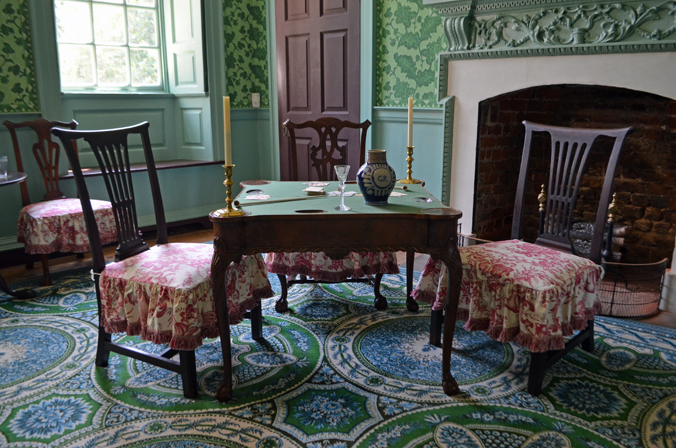
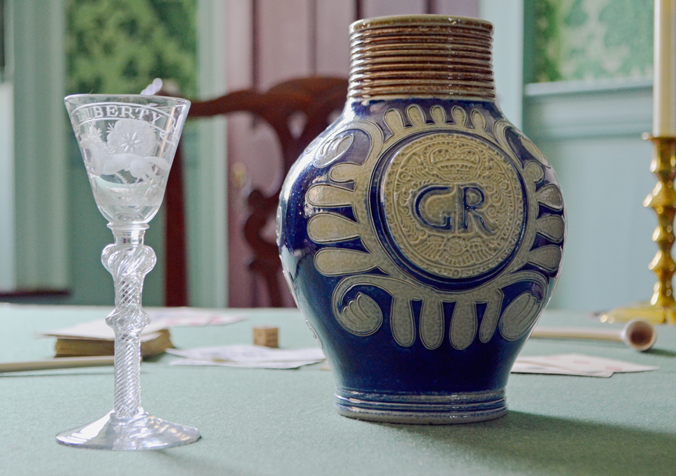
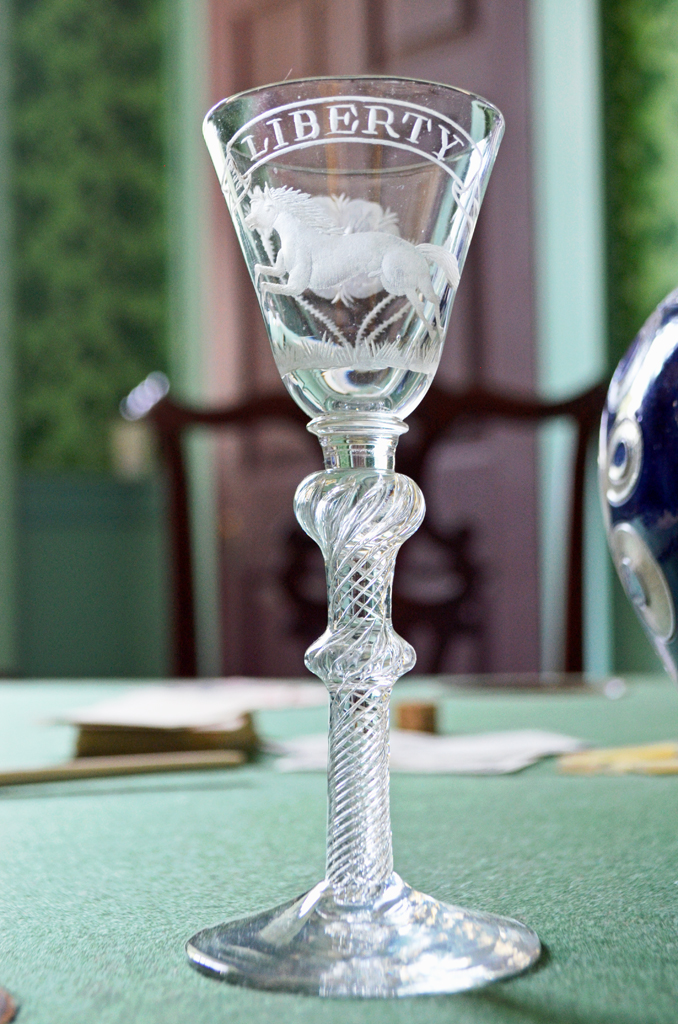
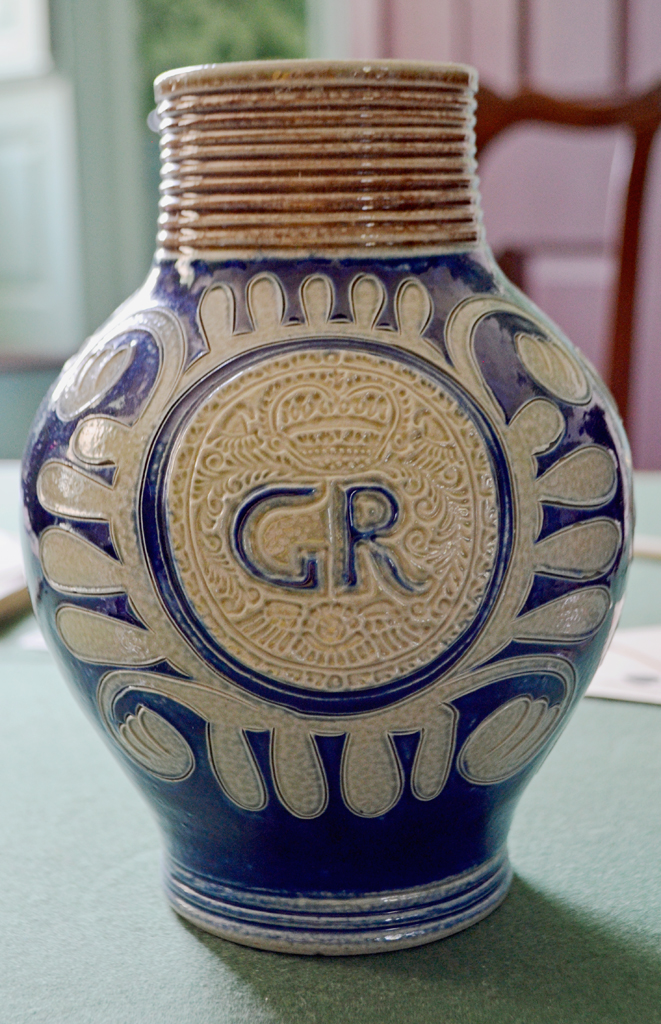
    Visitors to Kenmore’s Drawing Room may have noticed an unusual pairing of glassware and ceramic pieces displayed on the gaming table – a beautiful, air-twist stem wine glass sitting next to a Westerwald pottery jug. At first glance, this small vignette may simply appear to depict a wine jug at the ready, waiting to fill the glasses of those seated for the card game. But a closer inspection reveals that there’s more to the story.

    The gaming table in Historic Kenmore’s Drawing Room.
    Air-twist stem wine glass sitting next to a Westerwald pottery jug on the gaming table.

    In addition to its delicate air twists and balusters, the cup of the wine glass is etched with intricate designs. On one side, there’s a rose, and on the other is the word “Liberty.” The rose refers to the Scottish House of Stuart and their exiled claimant to the Scottish throne, the Bonnie Prince Charlie. The word “Liberty”, in this case, refers to the Jacobite Uprising of 1745 – 1746, in which the Scottish clans attempted to overthrow the English king and re-install the Bonnie Prince, thereby ending the English occupation of Scotland. The Uprising ended in a bloodbath for the Scottish forces at Culloden Moor, and the Bonnie Prince remained in exile for the rest of his life. The defeat at Culloden ushered in a period of extreme violence and repression of Scottish Highland culture known today as the Clearances. Thousands of Scots were forced from their homes and prosecuted in English courts for crimes against the Crown. Those found guilty were often sentenced to “transportation,” which meant they were crowded onto prison ships and sent to the American colonies.

    The stoneware jug is decorated in typical Westerwald-style cobalt blue glaze patterns, with the addition of a sprigged central medallion bearing the letters “GR.” Those initials stand for Georgius Rex, the Latin for King George of Britain, probably George III in this case. Westerwald ceramics produced in what is now Germany for export to Britain in the 18th century were often decorated with the GR emblem in honor of King George. Most British households, including young George Washington’s home at Ferry Farm, would have had a piece or two exhibiting the GR motif.

    Both items are included in Kenmore’s furnishings today because fragments of similar pieces were found archaeologically on the site during excavations in the 1990s, so we know that both were used by the Lewis family at very nearly the same time. The juxtaposition of their messages, though, illustrates what a very strange and confusing time the Lewis family were living in. Literally up until the very eve of the American Revolution, Fielding Lewis saw himself very much as a proper English subject. His business relied almost entirely on good relations with English counterparts. He built Kenmore to emulate in every way the proper English manor house, and apparently he owned ceramics that honored King George.

    Almost overnight, however, the Lewis’s world completely changed. They were no longer English subjects, but rather traitors to the Crown. Fielding’s income and business were gone, and his very English house was now a liability. Those transported Jacobites living in the American colonies, many of them neighbors to the Lewises like Hugh Mercer, were among those who advocated for war with Britain. The symbols and ideals of the Jacobite Uprising were adopted into the American revolutionary movement. And so our placement of the Liberty glass next to the GR jug on the gaming table is both a wink and a nod to the idea of rebellion hidden in plain sight, and a recognition of the complicated times in which the Lewis’s found themselves.

    Celebrate the 245th anniversary of liberty from the King during the Fourth of July at George Washington’s Ferry Farm from 10 a.m. to 4 p.m., Sunday, July 4, 2021! Tour the Washington house, learn about archaeology at Ferry Farm, enjoy a patriotic flag retirement ceremony at 1:00 p.m., interact with historic reenactors, listen to festive music, view living history demonstrations and theatre performances, make crafts, play games, and enjoy other activities for the whole family. $5.00 per car for a combined parking and event admission pass. Advance purchase of parking and event admission pass is strongly encouraged. Visit kenmore.org/events to learn more and purchase pass.

    Meghan Budinger
    Aldrich Director of Curatorial Operations

  • Stories that Demand to be Told: Fielding Lewis and the Bray School for Educating Enslaved Children

    During the 18th century, the city of Fredericksburg was described as “a considerable town of trade, furnishing the country around.”[1] As such, it was deemed a rather important town and was the site of one of two schools for enslaved children established in Virginia during the Colonial period. The school was located somewhere downtown, likely near St. George’s Church. Two of the trustees in charge of operating the school were the Reverends James Marye, Sr. and later his son James Marye, Jr. Another trustee was none other than Historic Kenmore’s own, Fielding Lewis.

    The school was funded and established by a group of English clergymen and philanthropists known as the Associates of Dr. Bray. Thomas Bray was an Anglican minister who had grown up without wealth. Due to his family’s financial situation, Bray found certain doors, specifically education, closed to him. Through his time in the ministry, however, he was able to gain the knowledge needed to become a great influence and practitioner of philanthropy. Towards the end of his life, he established The Associates of the Reverend Dr. Bray. Its eventual goal was to create avenues of religious and secular education for black children. While never condemning slavery, Bray felt that the souls of enslaved people needed to be saved in the Anglican faith. In order to be able to worship properly, they would need to be able to read and write. By the end of the 18th century, the Bray Associates had founded 41 libraries, donated over 22,000 books to different Anglican parishes in the colonies, and established a handful of schools across British North America.

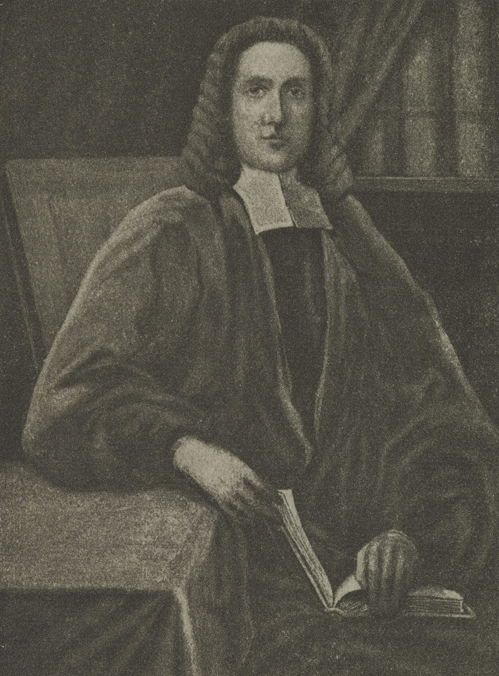
    Thomas Bray as depicted in The Founders: Portraits of Persons Born Abroad Who Came to the Colonies in North America Before the Year 1701; With an Introduction, Biographical Outlines and Comments on the Portraits. E 187.5 .B69. Special Collections, University of Virginia, Charlottesville, Va. Credit: encyclopediavirginia.org

    The first Bray Associates colonial school was established in 1758 in Philadelphia. Pennsylvania’s Quaker population was decidedly anti-slavery even in the 18th century so Philadelphia already had a sizable population of free blacks. By 1780, the state of Pennsylvania completed the process of gradual emancipation and did not allow slavery, though there were loopholes in the law, one of which allowed President George Washington to use enslaved men and women at the executive mansion situated in Philadelphia. Slavery in an urban setting like Philadelphia looked different than on plantations in southern colonies. Most urban enslaved people typically performed domestic labor. This meant different expectations for enslaved people in cities, i.e. knowing how to read and write was more important. Due to these circumstances, the Bray school in Philadelphia operated quite successfully. A location for the school was procured without much effort, and a schoolmistress was also easy to come by. The school’s trustees reported full enrollment to the Bray Associates throughout its operation. The school was so successful that it reopened after the American Revolution, and the Bray Associates opened two additional schools in Philadelphia during the 19th century.

    After the school in Philadelphia was established, the Associates were eager to create additional schools in the colonies. At this time, Benjamin Franklin was in London and became an Associate. He suggested several potential locations and even trustees for the next school. This second school was established in 1760 in Williamsburg. The Associates sought an enrollment number of 30, and the school opened with 24 pupils. The trustees deemed this quite successful and thought the number was a fair amount for one schoolmistress to manage. In fact, the trustees had a difficult time finding a schoolmistress at all. Their solution was that the Associates would provide additional funding for a few years but, in turn, the Associates encouraged the trustees to find charitable citizens in the town to help supplement the endowment.

    The Bray-Digges House in its original location on Prince George Street, c. 1928
    Credit: Special Collections, John D. Rockefeller Jr. Library, The Colonial Williamsburg Foundation
    . Credit: The Colonial Williamsburg Foundation [PDF]

    Another issue at the Williamsburg school was that pupils, even those who belonged to the small free black population in town, were unable to attend regularly. They often stayed for no longer than it took to gain basic reading and writing knowledge. The goal of the Bray Associates, however, was to bring black children to the Anglican faith. This could not be realized if they left school too soon. The trustees attempted to draw up formal rules and a desired curriculum that would encourage the children to remain in the school longer, but it didn’t help the situation.

    The Williamsburg school operated for a little over 13 years and was closed in 1774. The closure likely stemmed from the financial difficulties of securing a new schoolmistress after the first one had passed away as well as from the frustration over the lack of returning students year-to-year. There was not an overall lack of students, however, because a report in 1769 said the school still had a full 30 enrolled.

    Due to the measured success of the Williamsburg school, the Associates began to search for other southern towns in which to continue their mission. Fredericksburg was suggested by a local minister and the supplies for the school were sent in 1764. From the start, Rev. James Marye, Sr., and Fielding Lewis were pessimistic about the school’s outlook. When the idea was presented to prominent members of the town, there was no enthusiasm. Nonetheless, in September of 1765, Fielding Lewis sent a letter to the Bray Associates informing them that the school had been opened the previous April.

    There are three letters (14 September 1765, 31 October 1768, and 1 February 1772) written by Fielding to the Bray Associates that survive. They provide what little information we have about the Bray school in Fredericksburg. It appears that Fielding followed the rules and curriculum that the Williamsburg school had established. It also seems as though he faced similar problems to the Williamsburg school. He had a difficult time securing a schoolmistress for the low wages offered. Unlike Williamsburg, the Bray Associates did not offer additional money. Again, enslaved children were only permitted to attend until basic literacy was obtained, and then they were removed back to work by their owners. The school in Fredericksburg struggled with enrollment numbers. It opened to 16 pupils and dropped to nine by 1768 with only four of those attending in summer. A smaller population of black children (whether enslaved or free) and even less support from local slave owners probably affected the school’s attendance more than Williamsburg. In Fielding’s final letter to the Associates, he stated “learning them to read is rather a disadvantage to the owners, we having had some examples of that sort.” These concerns hint at what led to Virginia passing extremely restrictive ‘slave codes,’ which included a law forbidding enslaved people to be taught to read and write, throughout the 18th and 19th centuries.

    Virginia historical marker W-109 at the original site of the Bray School. Credit: Virginia Department of Historic Resources

    It is unfortunate that more information regarding the Bray schools throughout the colonies did not survive. What is clear though is that these schools led to the literacy of a significant number of enslaved and free blacks throughout the colonies. Recently, Colonial Williamsburg determined that the building that housed the school is still intact and had been moved to William & Mary’s campus. They added a historical marker honoring the school and the children who attended it. As we gain knowledge and rediscover the past, stories like those of the enslaved and free children who gained a new foothold in a literate world are stories that demand to be told.

    Elizabeth Hosier
    Manager of Interpretation and Visitor Services


    [1] Oscar H. Darter, Colonial Fredericksburg and Neighborhood in Perspective, (New York: Twayne Publishers, 1957), 62-63.

  • More Than Meets the Eye: What Their Portraits Say About the Lewis Family

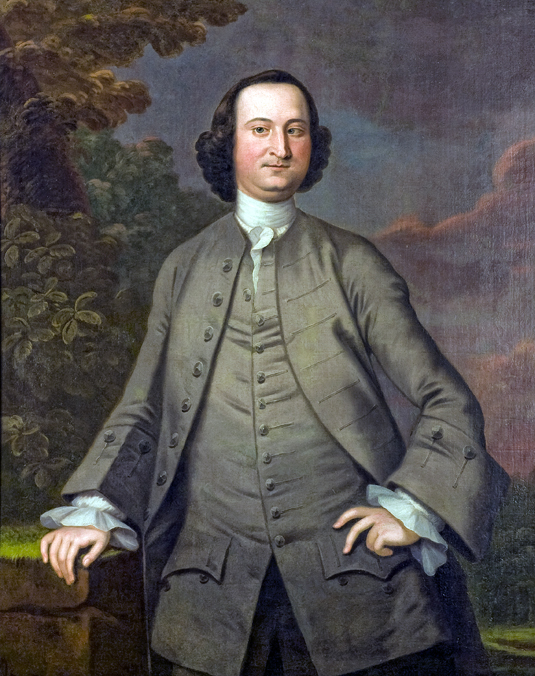
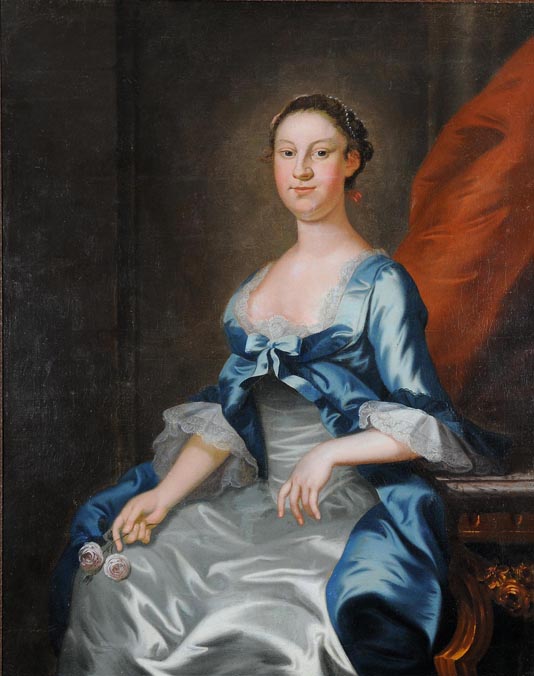
    On walls of the Historic Kenmore’s drawing room hang two large portraits of a man and a woman.  The man is an older gentleman in a serene outdoor setting, looking quite dignified and sober in a brownish knee-length jacket, knee breeches and long waistcoat. His eyes rest on the portrait viewer, one hand on moss-covered rocks, the other on his hip, and his head turned slightly to his left.  Across the room, the woman sits at a slight profile with her head turned to her left to face the portrait viewer. She wears a billowing blue and white dress and holds two pink roses in her right hand while her left arm casually sits on a marble top table. She is indoors with what appear to be some drapes billowing behind her. The man and woman are Fielding Lewis and Betty Washington Lewis, the owners of Kenmore.

    Fielding and Betty’s portraits were commissioned by the couple and painted by prolific colonial artist John Wollaston in the 1750s.  On the surface, these paintings are just two genial portraits that provide us with visual records of the heads of the family. Through the subtle symbolism, however, they also tell a larger story of how Fielding and Betty wished to be portrayed publically to their contemporaries as well as to posterity.

    Portraits first became a popular mode of expression for the aristocracy and the wealthy during the Renaissance.  These paintings were usually large scale affairs meant to be displayed and seen by the public.  The paintings depicted people with expensive goods, fine cloth, rare flowers, and exotic pets. Whether the portraits’ subjects actually owned these items was less important than the suggestion including the items made. In fact, these paintings were filled with symbolism–images, objects, or colors representing ideas and that allow the artist to go beyond the obvious to create links between otherwise different concepts.  A color can depict character, a flower personality and a fabric economic status.[1]

    Through symbolism, portraits were used to reflect social status, wealth, success, power and cultural refinement.  A portrait’s details were integral to the story of the painting and many factors had to be taken into account.  Aspects such as artist, style, background, color, fabric, and accessories all needed to be discussed to create the portrayal desired by the patron.[2]

    Centuries after the Renaissance, the importance of portraiture as a record of status and position in society had not changed and the custom had become more popular outside of the aristocracy as well as outside of Europe.  Even in faraway British North America, the wealth of the gentry, or upper class, desired portraits to show their status and position. Fielding Lewis and Betty Washington Lewis, members of the gentry with a wealthy business in Atlantic World trade, were no exception. Mr. and Mrs. Lewis wanted to portray themselves as socially refined not only to cement their place in the community but to allow for a continued rise in their status.  Accordingly, they sat for portraits by John Wollaston.

    Fielding Lewis (c. 1753-1758) by John Wollaston.

    The most noticeable thing about Fielding’s portrait is the muted colors used in the background and in his clothing.  One of the most visually striking symbols in portraits was the colors used to represent the subject.  While color may not have inherent meaning, it can be made meaningful through context.  The colors in the background, clothing, and accessories all relate to the overall message or story being told by the artist. The browns, greens, and beiges in Fielding’s portrait create a natural and relaxed atmosphere.  The nature background is a stylized classical bucolic setting that helps strike a balance between Fielding’s muted clothing palette and the landscape setting.  The woodland glen signifies a natural sincerity that, when mixed with the brown and beige of his ensemble, creates the feeling of calmness, reliability, dependability and an earthy richness.  All of these traits are important for a successful merchant.  Fielding was telling visitors to his house that he was a person they could do business with and trust.[3]

    Betty Lewis (1750) by John Wollaston. Credit: Mount Vernon Ladies’ Association.

    Betty’s portrait uses color, context, fabric and an accessory to illustrate her own geniality and her family’s affluence, for not only as a Lewis but as a Washington as well.  The background around Betty, who is at the center of the portrait, offers hints of this grandeur with brown walls and a heavy brown billowing curtain creating a frame of luxurious richness.  To add to the opulence, Betty is poised with her arm resting on an ornate Rococo-style marble top table with heavily carved gold legs.  The portrait conveys that she can afford such ornamental comforts.  Next to the table, Betty in her flowy blue and white satin dress with a pair of roses resting on her right knee is the focus.  Blue was a popular color for ladies and was common in many portraits painted by Wollaston. The color gives the sitter not only an air of peace and calmness but also of restraint and intelligence. The satin denotes a luxury and fashion available to only those with means. Meanwhile, the pink rose tells of Betty’s grace, beauty and gentility.  Overall, the portrait depicts a sophisticated and refined 18th century woman, a wife and mother who adds balance and depth to her husband’s trustworthiness and professionalism.[4]

    Fielding and Betty did not stop with portraits of themselves.  About twenty years after sitting for John Wollaston, they commissioned famed painter Charles Willson Peale to produce several portraits of their offspring.  There are two in Kenmore’s collection.

    John Lewis (c. 1775) by Charles Willson Peale.

    One of these Peale portraits depicts John Lewis, the eldest son of Fielding and his first wife, Catharine who sits with one hand on his hip and one hand on a book.  The posture gives John a sense of self-assurance and capability.  Unlike his father’s subdued color palette, John’s jacket and waistcoat are an amazing red with gold detailing.  The red paired with the gold creates warmth but also projects a sense of power, strength and confidence.  The book in his the left hand gives an air of knowledge and awareness.

    Fielding Lewis Jr (c. 1775) by Charles Willson Peale.

    The second Peale portrait in the collection depcits Fielding Lewis Jr., the eldest son of Fielding and Betty, striking a very traditional pose with a hand tucked in his jacket and a slight tilt of the head.  The pose is welcoming, kind and is the embodiment of a thoughtful young gentleman.  Much like his father he chose a subdued color palette with an earthy reddish-brown jacket and goldish yellow waistcoat, which convey a sense of reliability, stability and affability.  The brown background adds a natural simplicity with soothing warmth.   Additionally, like his brother, there is a well-read book by his side indicating a sense of learning and mindfulness.  This portrait’s symbolism reflects the more aspirational messages in these paintings as Fielding, Jr. struggled with money problems for most of his life and even ended up in debtors’ prison.

    Later portraits in Kenmore’s collection contain other fascinating symbolism that tells the stories of the paintings’ subjects. These portraits visually record family history or emphasize familial connections.

    Eleanor Rosalie Tucker (1818) by unknown artist.

    This 19th century portrait of Eleanor Rosalie Tucker, the great granddaughter of Fielding and Betty, is painted in characteristic neoclassical style with direct lighting, soft features, rosy cheeks and a roundness of the face.  The white muslin gown gives the young girl a purity and serenity beyond her years.  The halo surrounding the sitter represents her delicacy and gives her an otherworldliness. This is appropriate as, sadly, she was painted for this portrait on her deathbed in 1818.

    The Wallace Family (c. 1856-1862) by John Adams Elder. A loan courtesy of Mrs. W. Wallace Morton, Jr.

    Finally, this portrait of the Wallace family painted in the mid-Victorian period is quite a unique painting in our collection with a fascinating twist to its symbolism.  The portrait has a traditional composition but at the center is a large leashed bird in mid-flight.  This bird is a rebus, a puzzle device used to visually depict words and/or phrases.  They are used extensively in heraldry to hint at the name of the bearer.  This painting’s bird rebus is attached to a young girl named Mary Byrd Wallace, the great, great granddaughter of Fielding and Betty Lewis.

    Portraits are sometimes the only visual representation we may have of a historic figure.  These portraits do more than capture a person’s appearance, however.  The wealthy and socially important also used portraits and their symbolism to emphasize their wealth and high status.  Portraits also visually recorded family history or emphasized familial connections.  For the Lewis family, like everything in their house and like their house itself, their portraits revealed how they saw themselves and, perhaps more importantly, how they wanted others to see them whether in the 18th or the 21st centuries.

    Heather Baldus
    Collections Manager


    [1] “Faces of a New Nation: American Portraits of the 18th and early 19th centuries”, The Metropolitan Museum of Art Bulletin, Summer 2003: 11

    [2] Crown, Carol. The New Encyclopedia of Southern Culture, Vol. 23, University of North Carolina Press, 2013: 150-151.

    [3] Centeno, Carlos. “Lose the Color Symbolism Chart: The Unpredictable Meanings of Color,” July 6 2016. https://medium.com/@carlitocenteno/lose-the-color-symbolism-chart-the-unpredictable-meanings-of-color-edc81db6541e; “Faces of a New Nation,” 13
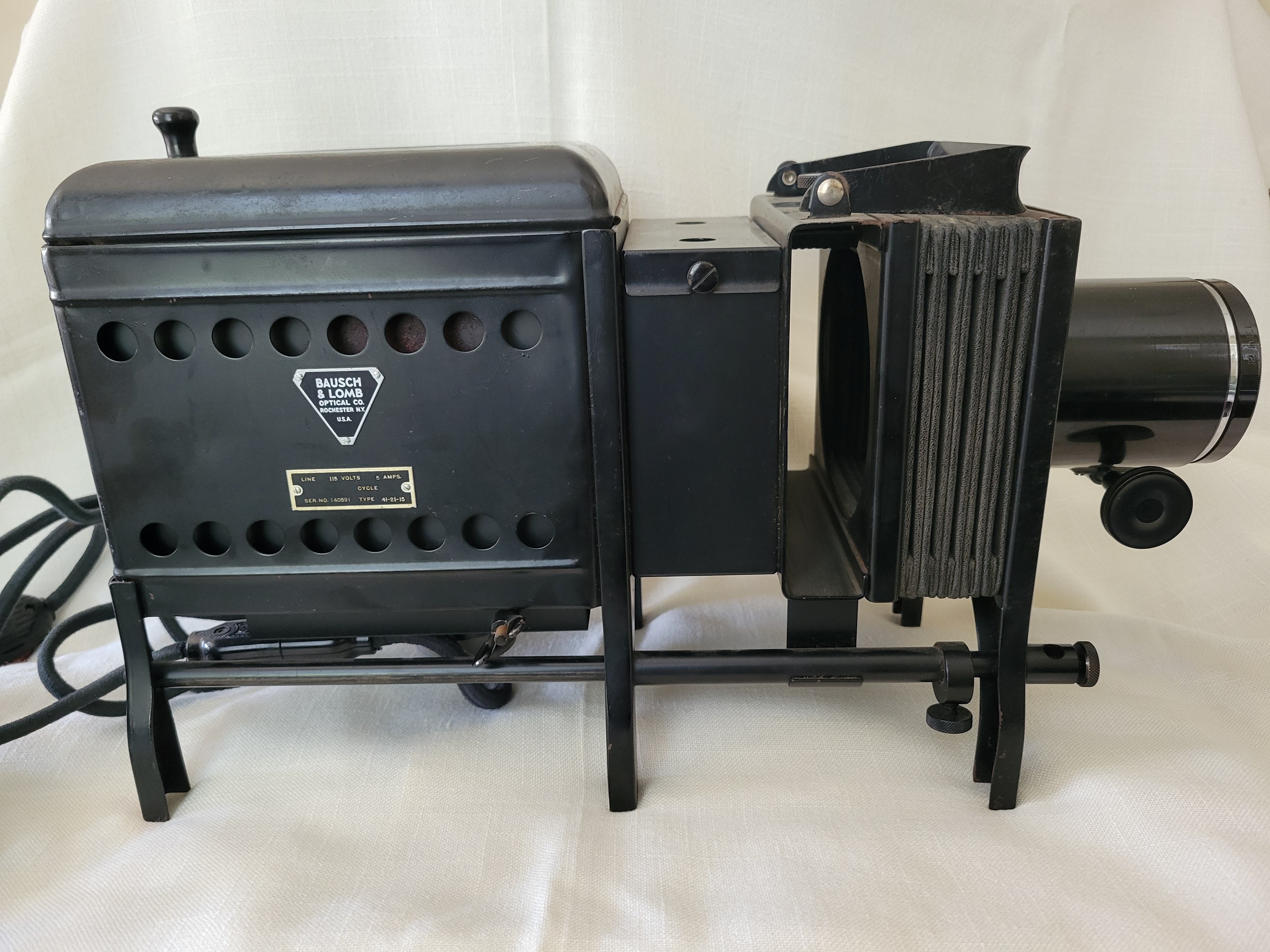
    [4] “British and American Grand Master Portraits of the 1700s”, National Gallery of Art. https://www.nga.gov/features/slideshows/british-and-american-grand-manner-portraits-of-the-1700s.html; Centeno; De la Tour, Charlotte. Le langage des fleurs, 1819: 58; Hooper, Lucy. The Lady’s Book of Flowers and Poetry, 1846: 248.