Lives and Legacies

Tag: archaeological dig

  • 2026 Dig season begins at Ferry Farm, Boyhood Home of George Washington 

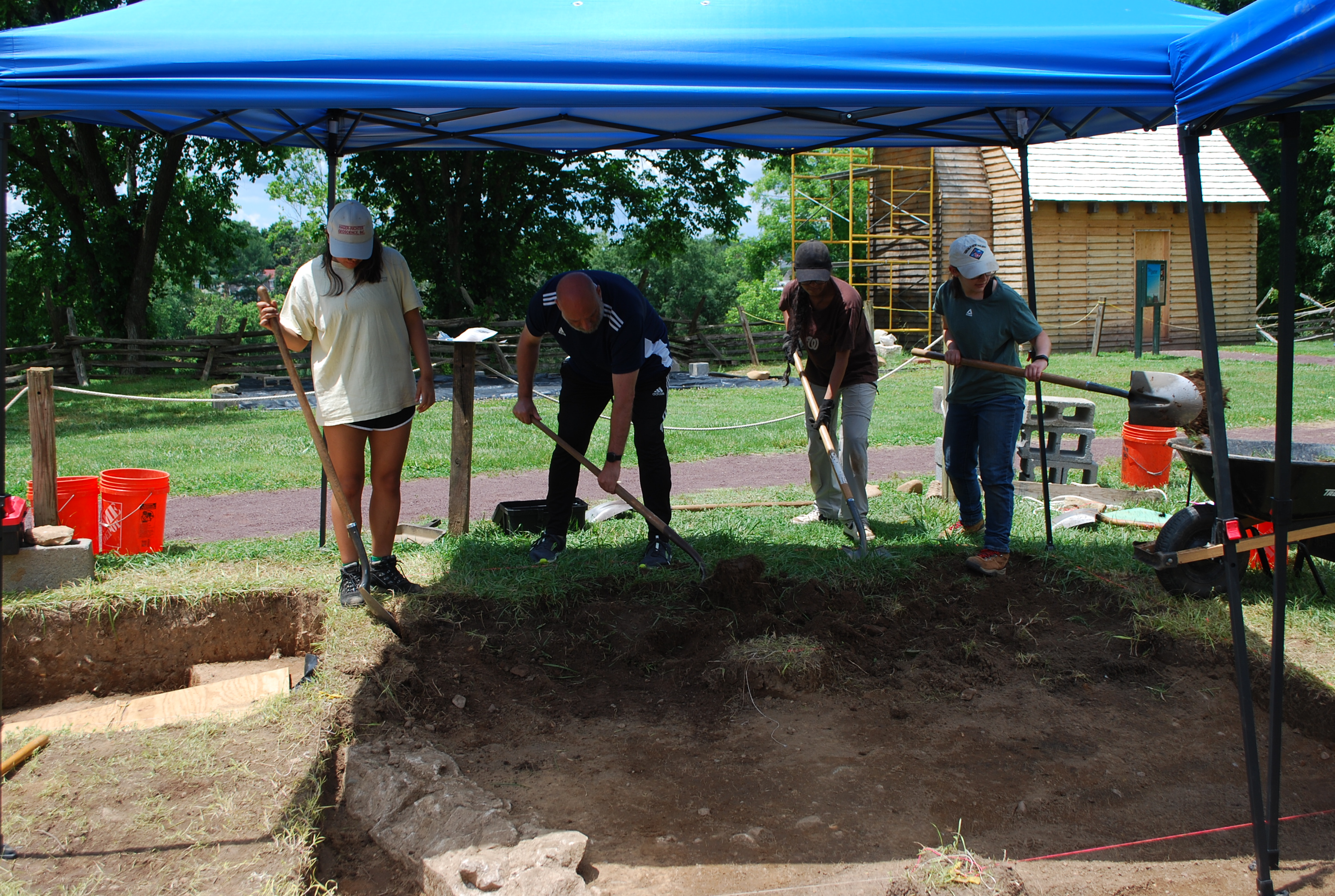
    Beginning on Monday, April 27th and continuing for the next 11 weeks, archaeologists will once again be outside working onsite at Ferry Farm, George Washington’s Boyhood Home. Our current excavations are centered on an eighteenth-century kitchen located on the north side of the work yard approximately 50 feet from the main house.  This wood-framed building, 16’ by 16’ in plan with an Aquia stone foundation and full cellar, would have been a hub of activity on the farm landscape and understanding its place within this landscape is important to our interpretation of life on the Washington farm.  
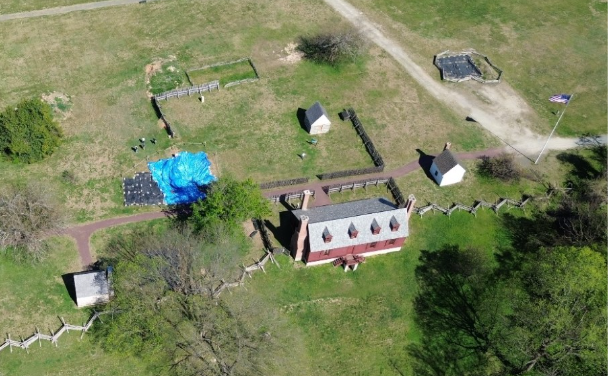
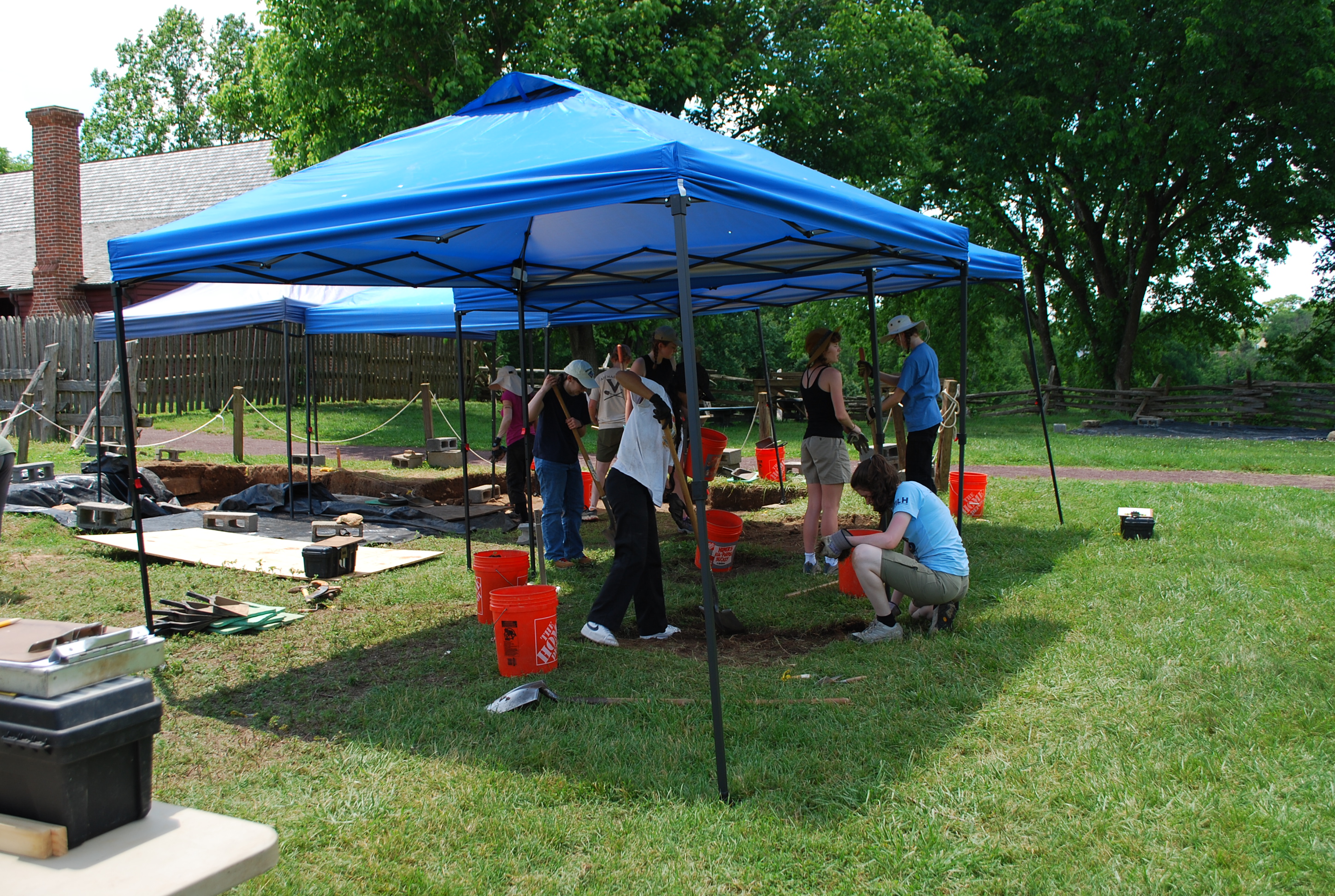
    Figure 1. Our kitchen site is located beneath the blue tarp just northeast of the main house.

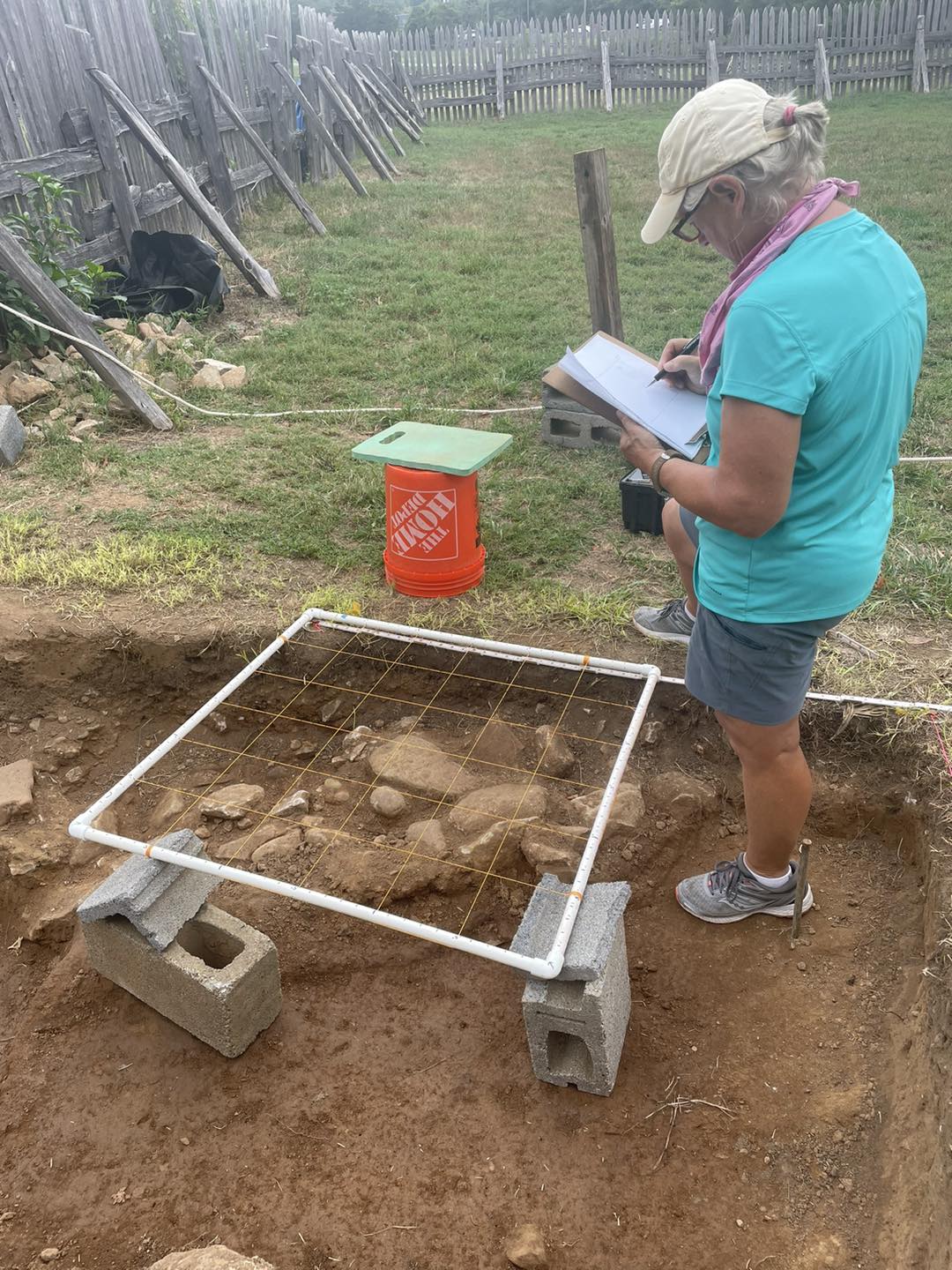
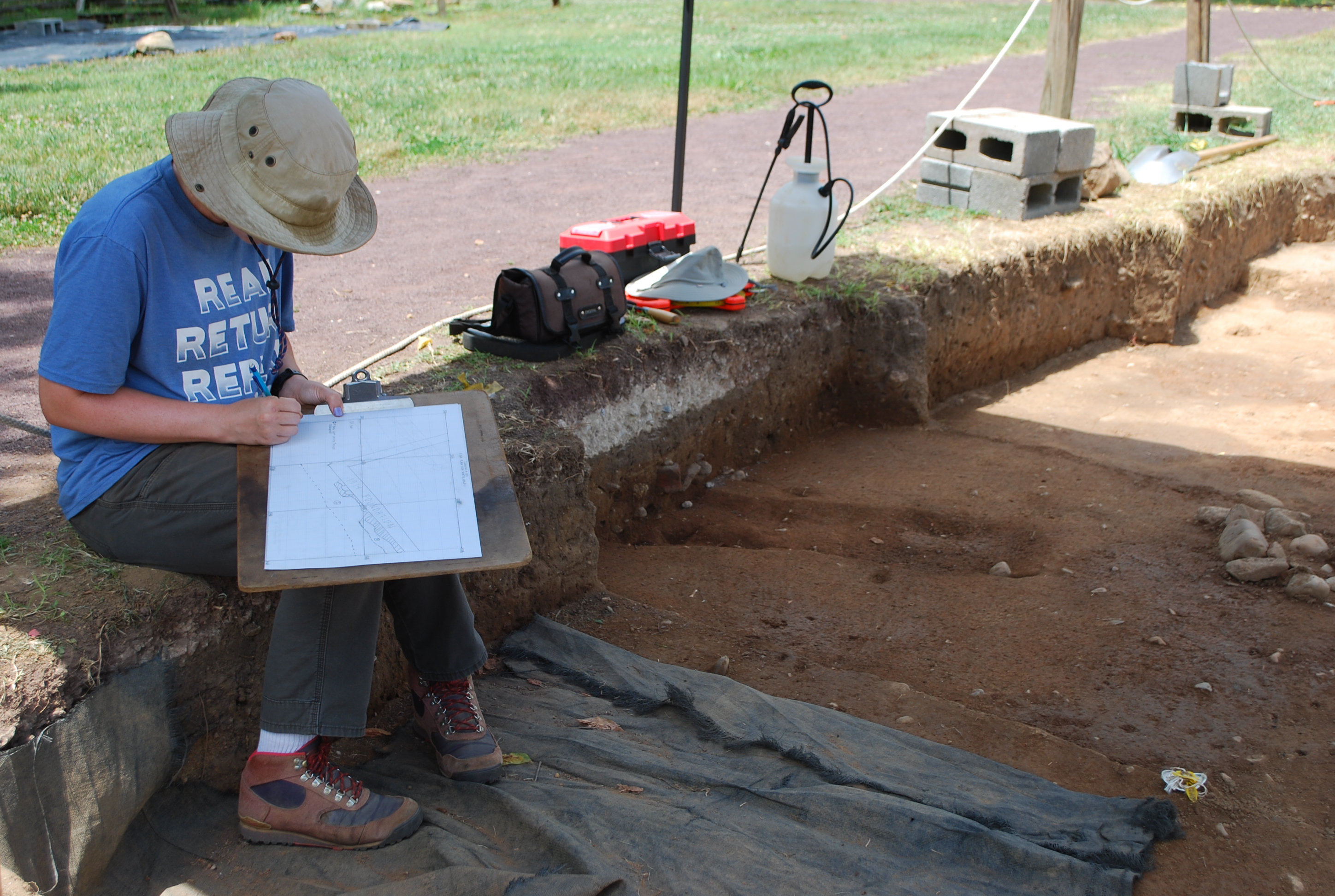
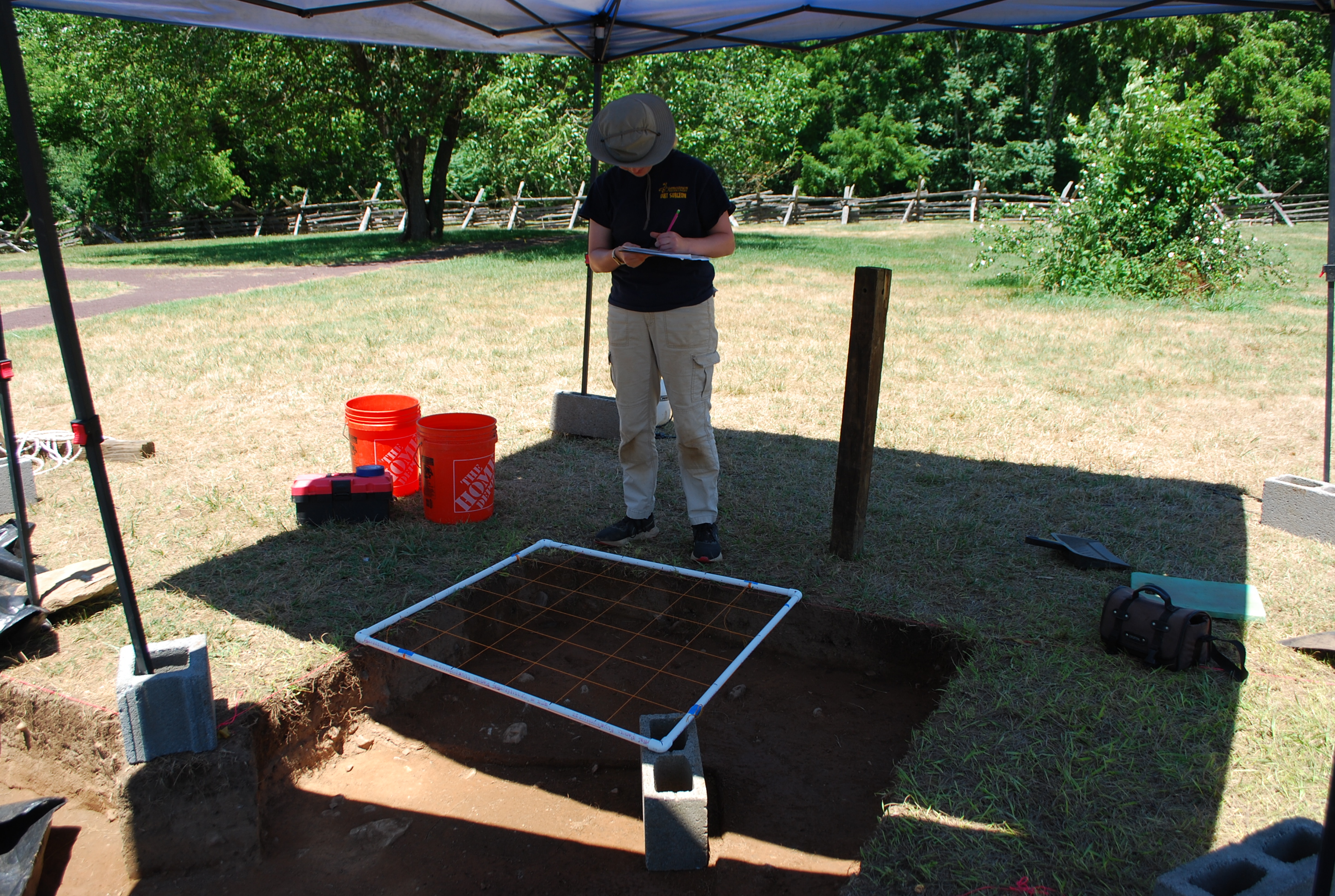
    We began last year’s excavation season by uncovering and exposing the entirety of the site, which had been sealed 28 years ago with a protective layer of sand. Exposed was a 16’ square stone foundation to a cellar filled with burnt household and architectural debris. For our excavation plan, we divided the cellar fill into four quadrants and were able to excavate two of them down to the level of the cellar floor over the course of our season. One of the quadrants had previously been excavated in the 1990s, leaving one more quadrant to dig this summer.  
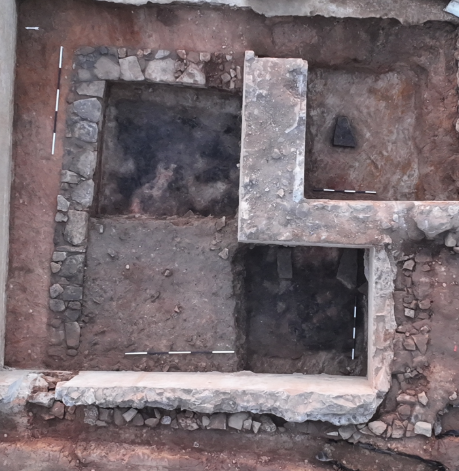
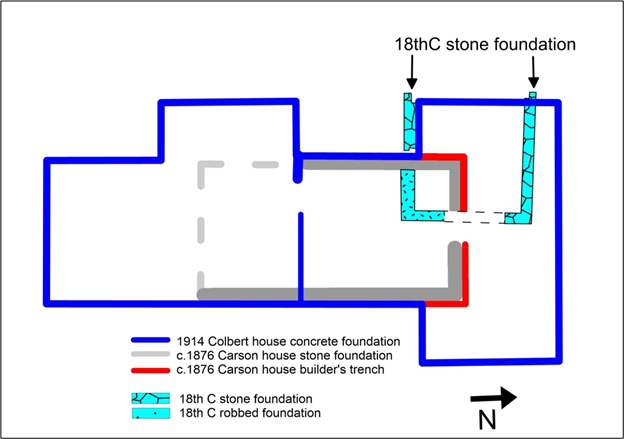
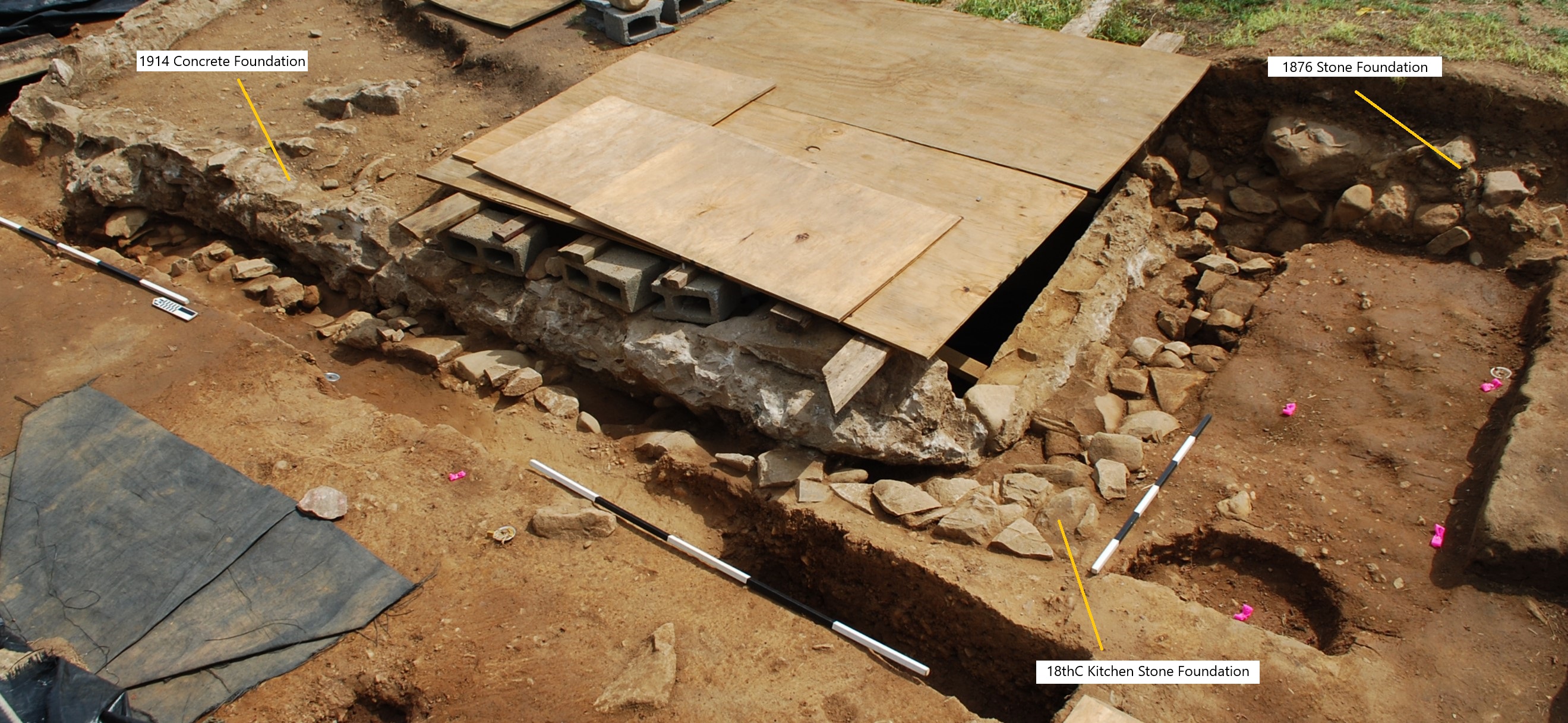
    Figure 2. The eighteenth-century kitchen stone wall foundation, intruded upon by twentieth- century concrete foundations.

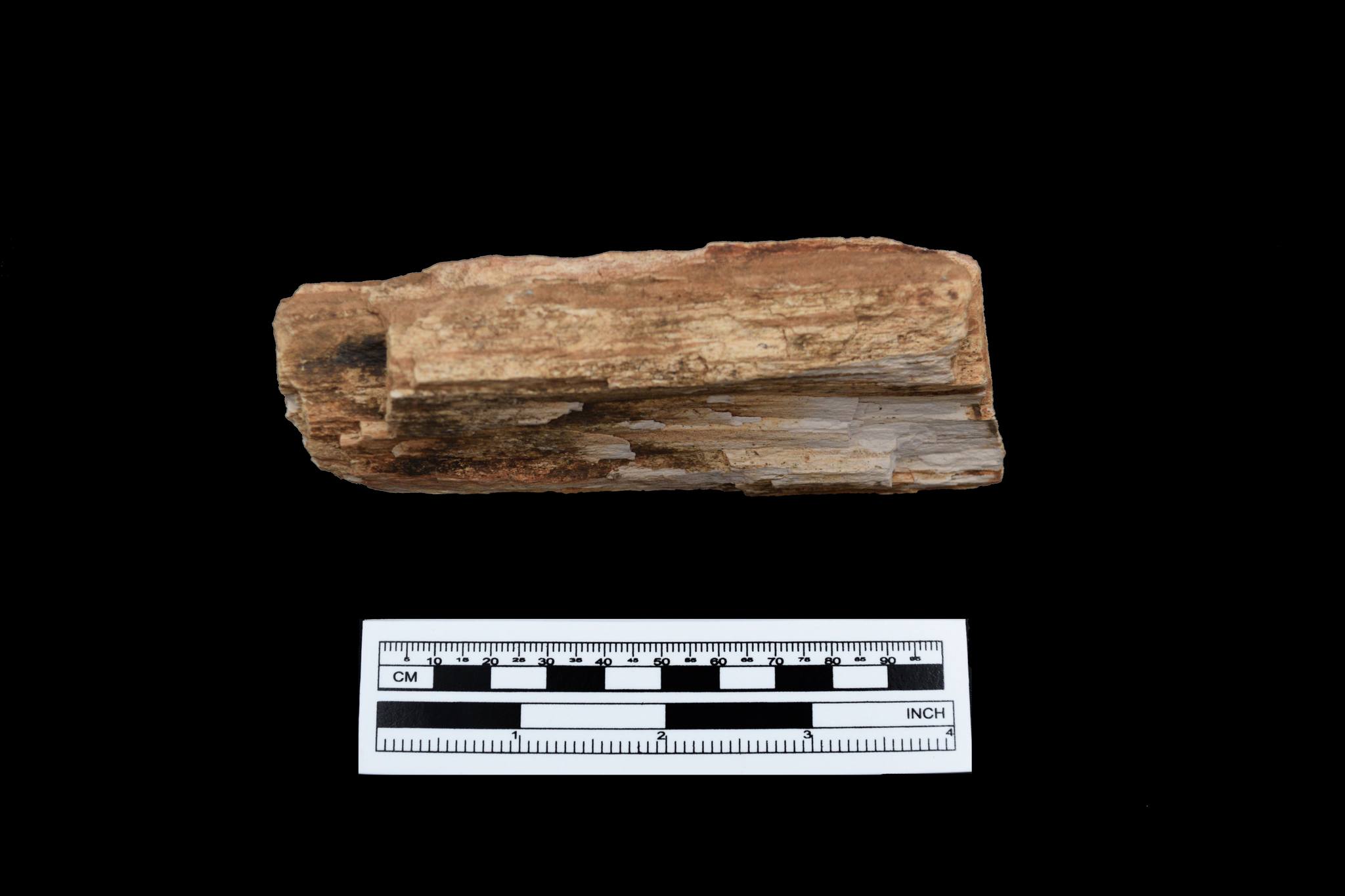
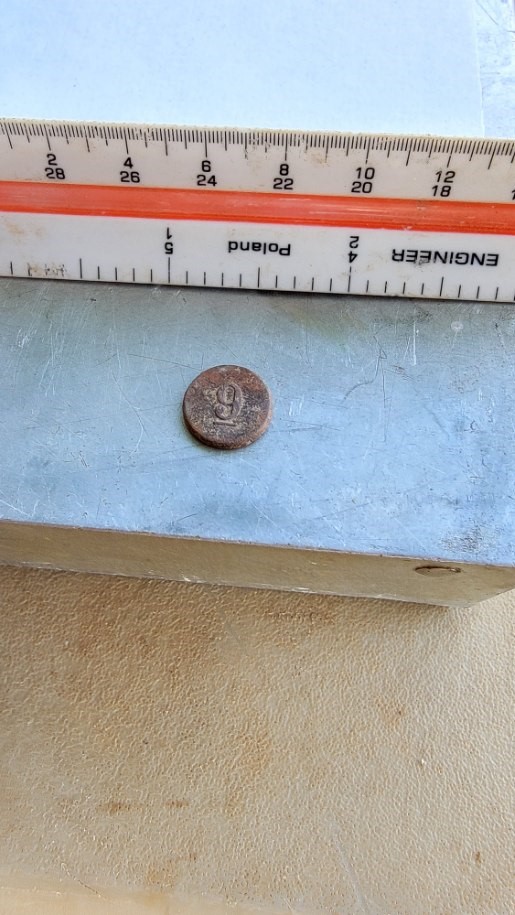
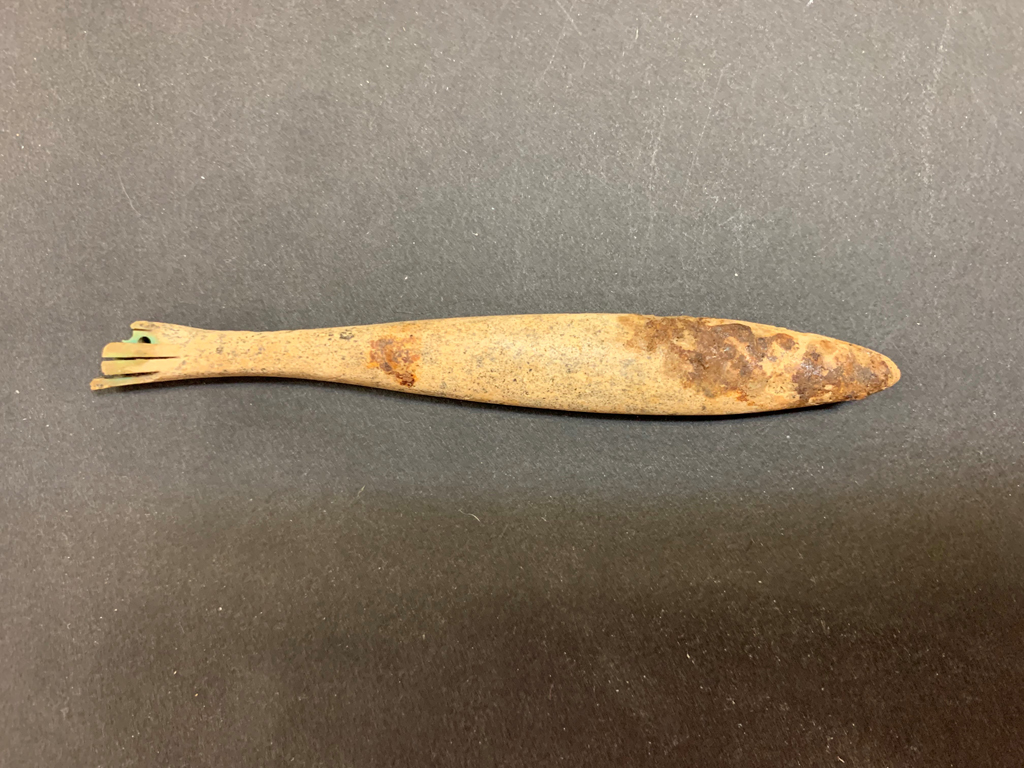
    From the burned fill came an unexpected bounty of artifacts. Hundreds of fragments of glass wine bottles and ceramic storage containers were sifted through our screens, along with buckets of burned architectural debris such as plaster, mortar, and wrought nails of all sizes.  A smaller number of more delicate artifacts also surprisingly survived, such as straight pins, animal bones, leaded tableware glass, buttons, box hinges, small copper drawer pulls, and even a concentrated deposit of eggshells! 
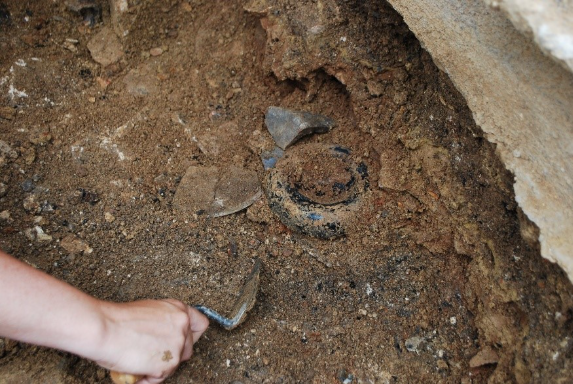
    Figure 3. A large wine bottle base being excavated out of the kitchen cellar fill. 

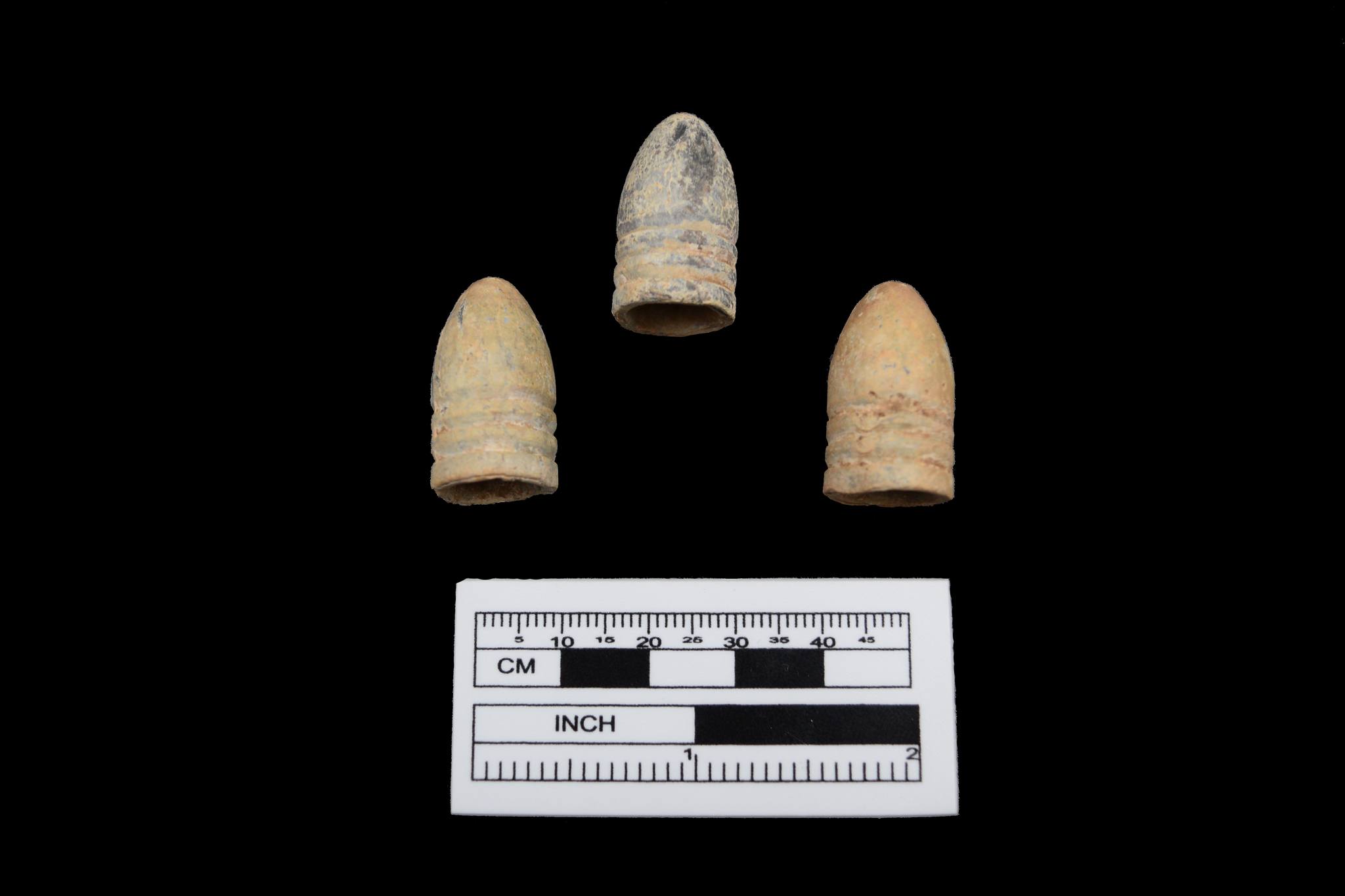
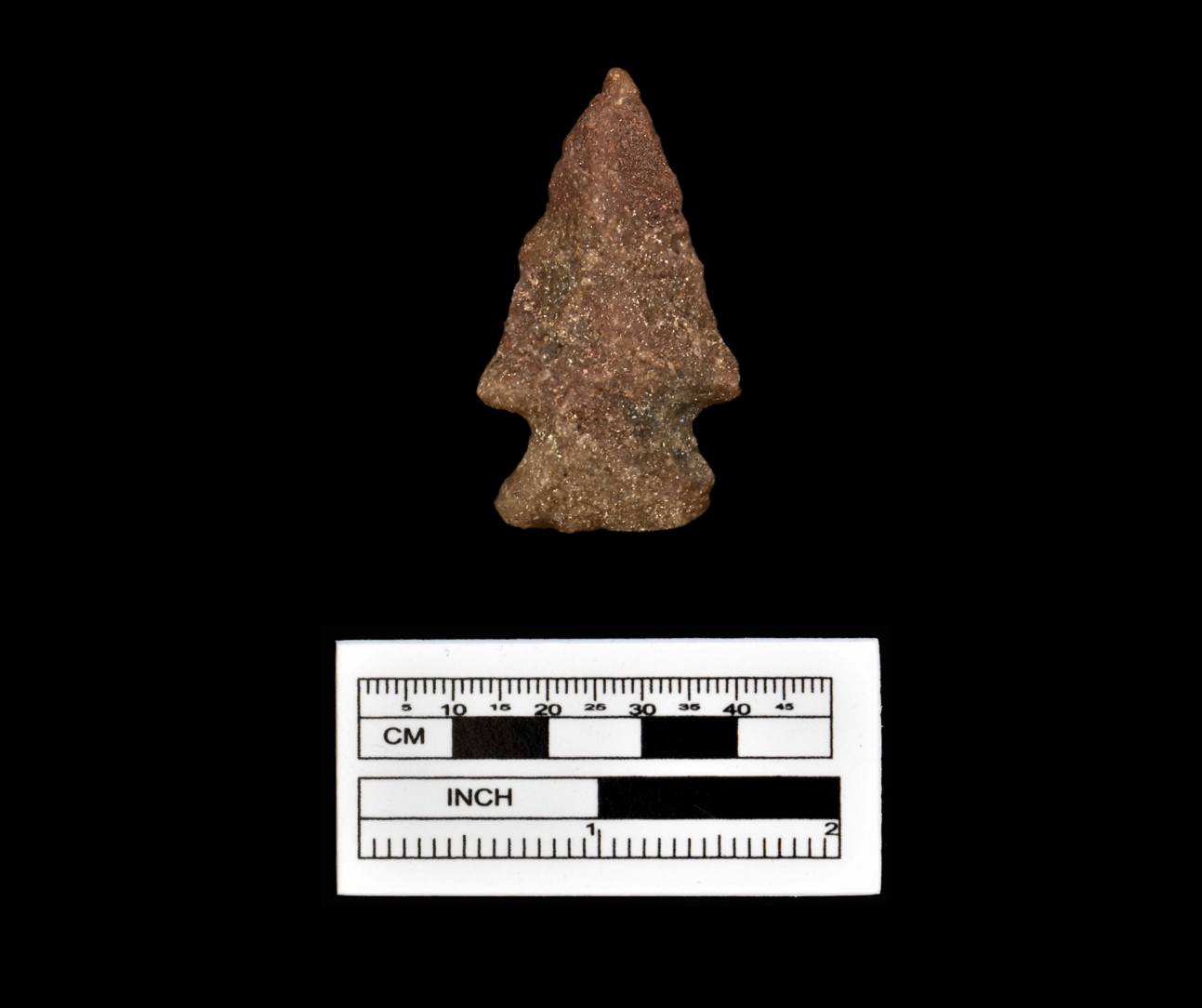
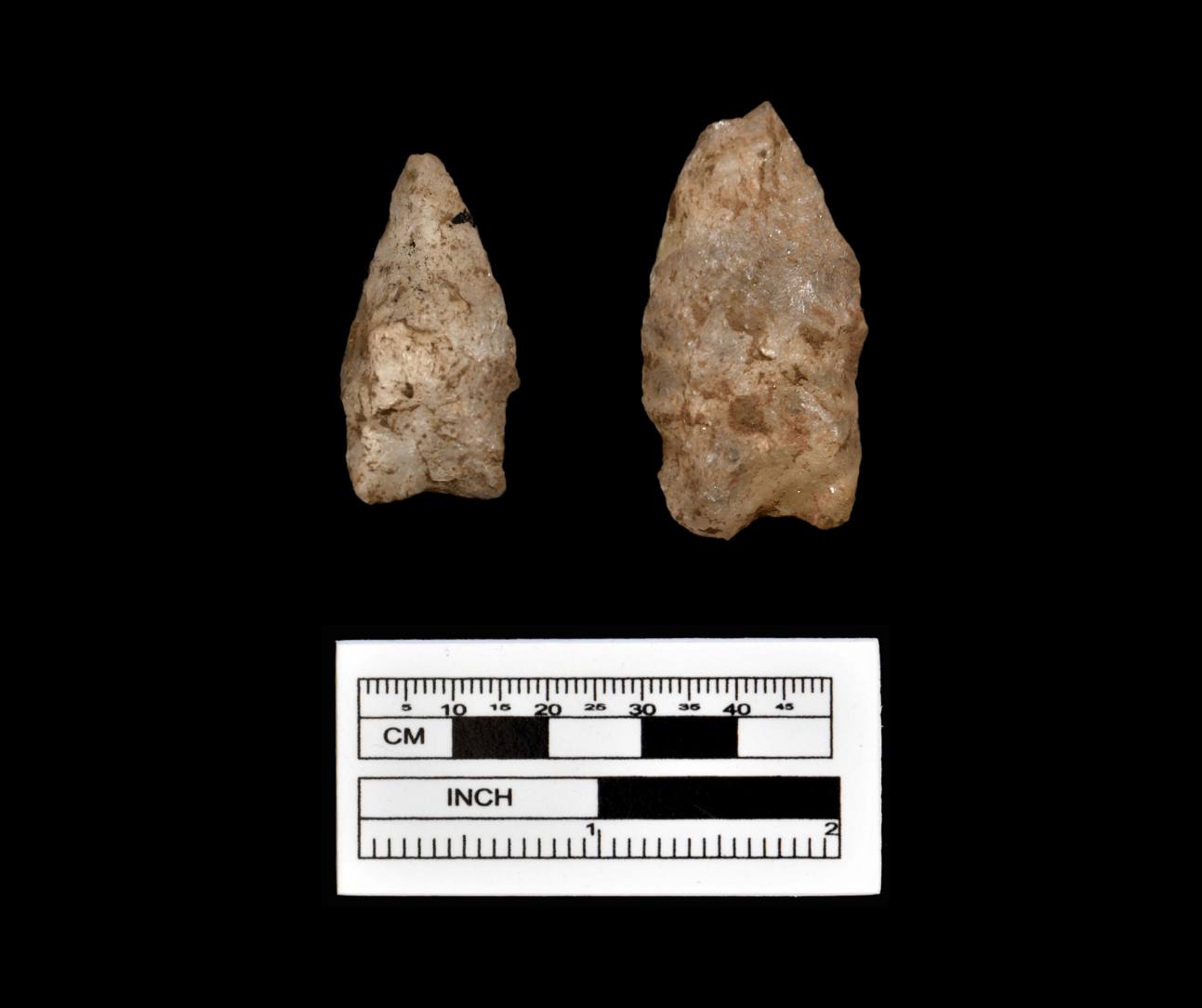
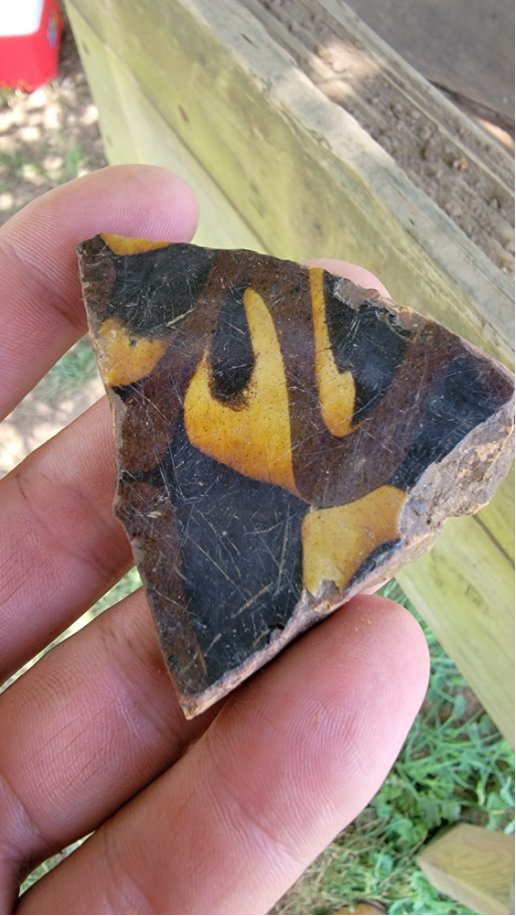
    Excavation also continued outside of and around the kitchen foundation as we searched for additional clues to the architectural footprint of the building. From these units we found artifacts ranging in age from 6500 BC to modern day. Native American projectile points and flint-knapping debitage, colonial-era ceramics, Civil War bullets, and twentieth-century household remains were all dug up in the various soil layers covering this part of the site.      

    Our archaeology lab has been very busy for the last nine months cleaning and sorting all the artifacts that were found last summer.  Understanding the types of artifacts found will aid in our interpretation of how the building was used, its construction details, its role in the farm landscape, and, hopefully, the date it burned down! 
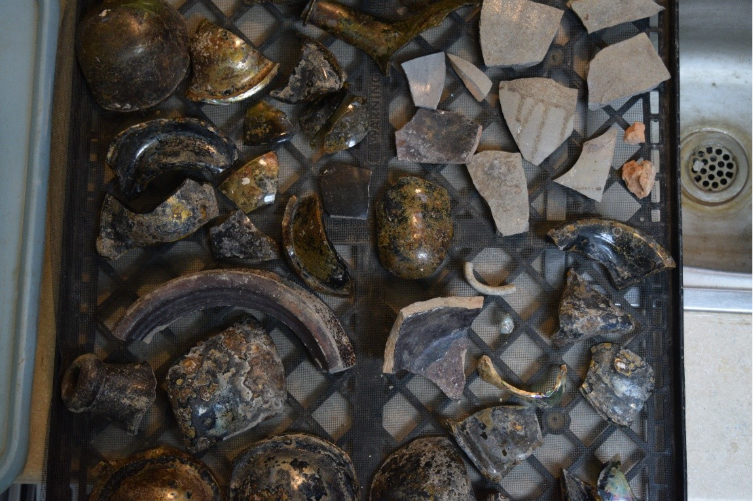
    Figure 4. Glass wine bottles and stoneware crocks are washed and dried in the lab before being sorted and catalogued. 

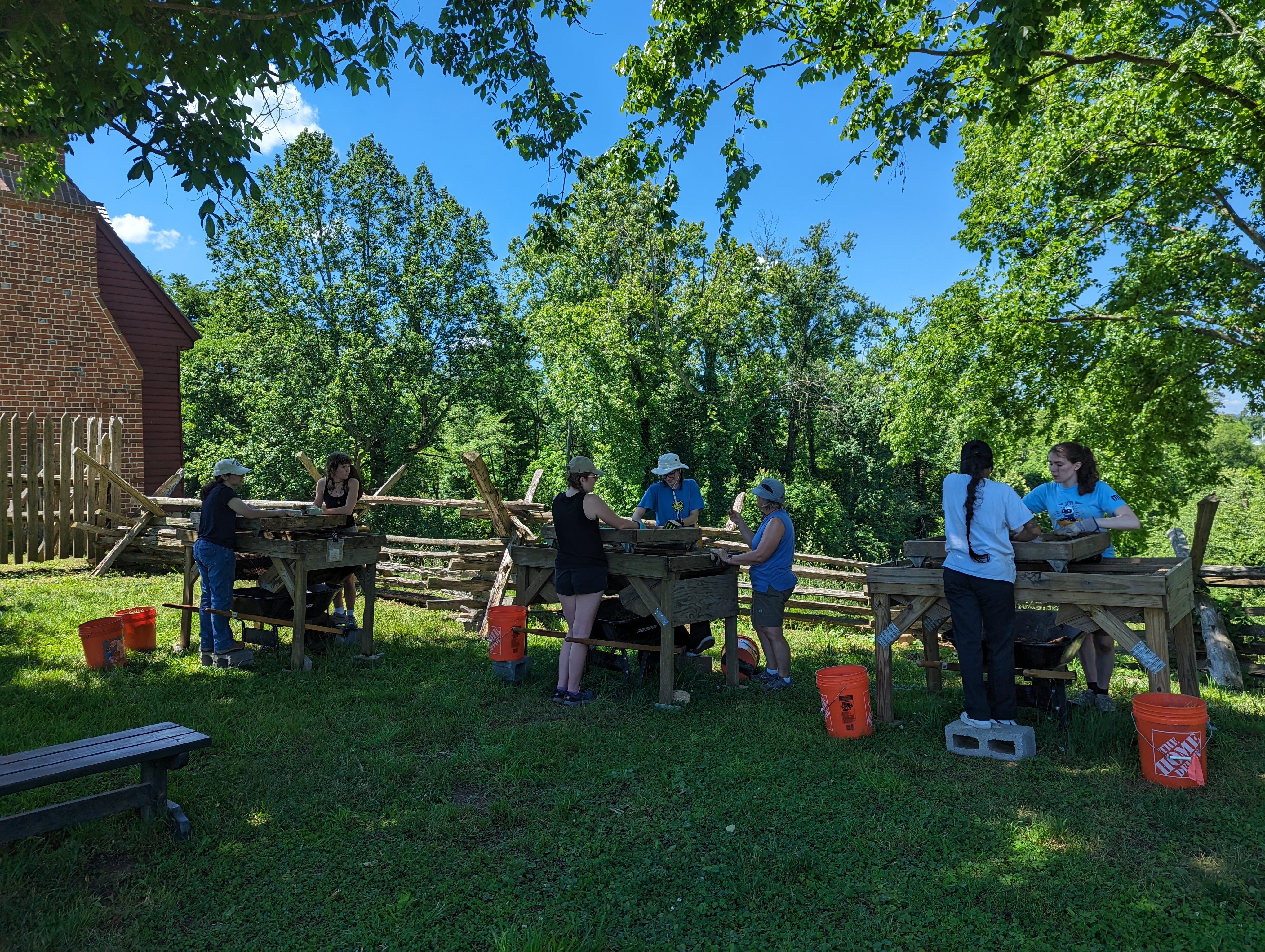
    Our field crew will be on site weekdays from April 27th to July 10th.  Once again students from the University of South Florida will be here to learn the basics of archaeology field work during the months of May and June. We welcome all visitors to ask questions and enjoy the opportunity to help us sift for artifacts!  

    Judy Jobrack and Danielle Arens

    GWF Archaeologists

  • Meet the Crew 2025

    We are heading into the final stretch of this year’s exploration of the 18th-century kitchen at George Washington’s Ferry Farm, and it definitely hasn’t disappointed! The finds are getting bigger and better as we continue excavating deeper into the cellar and expand our look into the surrounding area. We have made a ton of progress that wouldn’t have been possible without the help of our crew of the George Washington Foundation staff, interns, and University of South Florida field school students. While there are still a few weeks before the official end of the dig on July 11. Just in case you missed them, here are some quick introductions and fun finds from the 2025 field school and crew.

    Left to right: Judy, Danielle, Abby, Sarah, Alaina, Alaina S., Sofia, Addie

    Field School

    “Hi, my name is Alaina Scapicchio, and I am a Ph.D. candidate in the Department of History at the University of South Florida. This is my third summer digging at Ferry Farm. My favorite moment of the summer was excavating a partially intact pig jaw!” 

    -Alaina

    “Hi! My name is Addie, I am a history and anthropology student at the University of South Florida. My favorite artifact to find are the animal bones.”

    -Addie

    “Hi, my name is Alaina. I am studying history at USF. My favorite part of the field school was digging in the kitchen because of how many cool artifacts we found. My favorite artifact was the piece of the Bartmann jug!”

    -Alaina

    “Sofia Almeida is a first-year History PhD student at the University of South Florida. Her research focuses on historic cemeteries, public history, and memory. One of her favorite parts of field school was digging in the kitchen cellar. One of her favorite artifacts this season was a decorated fragment of Staffordshire ceramic.”

    -Sofia

    GWF Interns

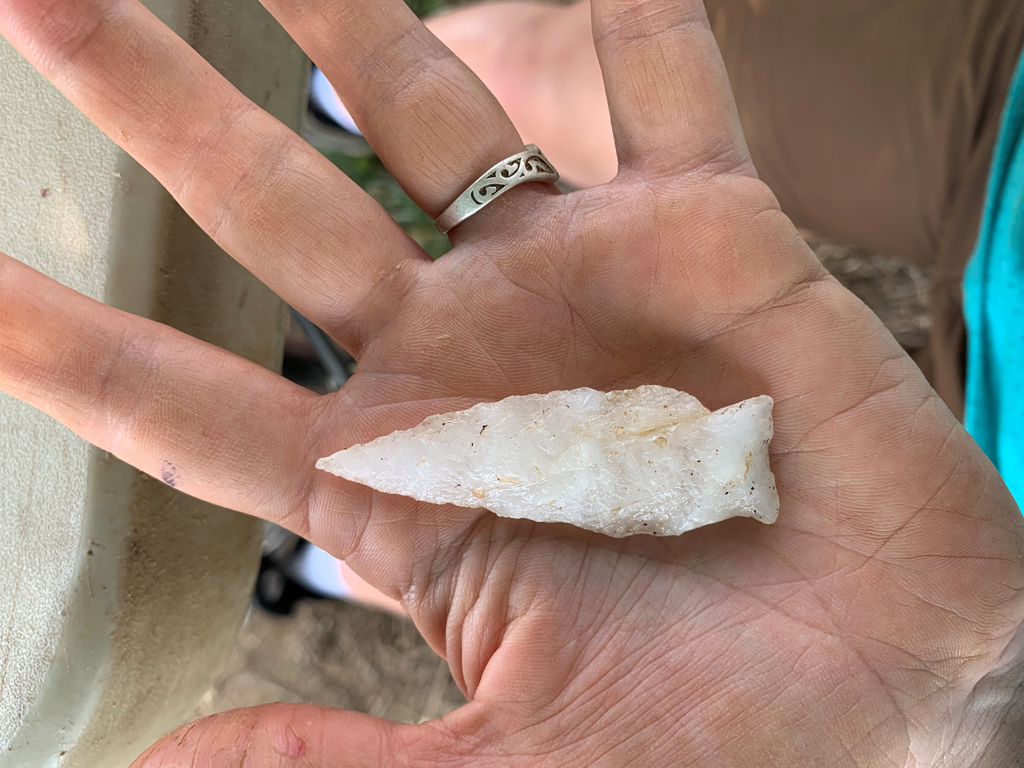
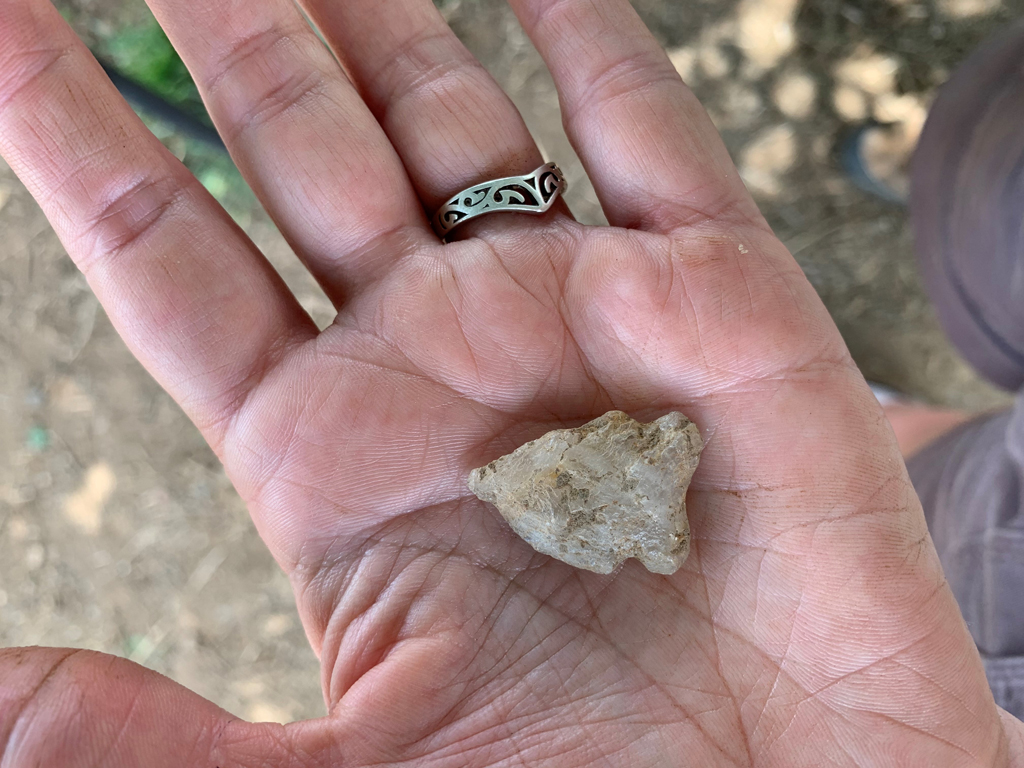
    “Hey! My name is Abby! I am a recent graduate from UVA and am planning to pursue a career in archaeology. I enjoy reading and playing Ultimate Frisbee in my free time. My favorite artifact that I helped find this season was a projectile point with jagged edges.”

    -Abby

    “Hey all, my name’s Max Puckett. I’m a senior at the University of Mary Washington, currently pursuing a BA in Historic Preservation. In my spare time, I like to cook, research, and read. I’ve really loved this field season so far- we are pulling out a ton of interesting and exciting artifacts.”

    -Max

    Sarah came to Ferry Farm as a VCU student in the summer of 2014 and has been in over half a dozen summer digs since then. This year’s dig is very special to her because it is focused on the cellar of the Washington kitchen. Her favorite artifacts from this dig are the ones that can actually be paired and mended with each other because much of what collapsed in the kitchen fire was left in place and not scattered or missing.

    -Sara

    GWF Staff  

    I have been involved with the Ferry Farm Archaeology Department since 2012, when my youngest twins graduated from high school. I started out as a volunteer but then took on a part-time position cataloguing artifacts from the summer digs, which then turned into a full-time job as a lab assistant.  I have been co-field director since 2019.  I have a BA in Anthropology and an MA in Historical Archaeology, with past jobs in cultural resource management and historic sites, such as Mount Vernon.  Though I really enjoy pulling out the handfuls of wine bottle necks and bases, I do find it more awe-inspiring when we pick out the tiniest and fragile eggshell fragments among the rubble and debris inside the kitchen cellar.

    -Judy Jobrack

    “Hello! I’m Danielle, and I have been at Ferry Farm since 2022, first as an intern and then lab assistant and co-field director. As a UMW Historic Preservation alum, I love all things old, both above ground and below, so this year’s dig has been particularly exciting with all the architectural bits we have been finding. With that said, I think my favorite artifact so far has been a brass/copper button –metal with verdigris is just so cool!”

    -Danielle Arens

    Though some of our crew is leaving, the rest of us will be digging every weekday until July 11, so be sure to come say hi and see what new things we have uncovered!


    Danielle Arens

    GWF Archaeologist


  • One Man’s Trash is Another Man’s TPQ: Modern Materials in Archaeological Excavations

    Archaeology is trash. There, I said it. Before you call Mr. Jones and have me thrown in a pit of snakes, let me explain. Generally speaking, archaeology focuses on understanding the past through the items that people left behind, i.e., their trash.  Most of the things we find are left around because they were broken or no longer needed. Disposal of these items looked much different before modern garbage collection as we know it today. Rather than trashcans and landfills, trash was often thrown outside of the home or workspace near windows and doors or any other designated disposal areas. These areas, also known as middens, usually have a high number of artifacts and are top-tier when it comes to understanding a site. So, in other words, archaeology is trash, and we love it.

    Most people can get behind the archaeologists saving the trash that’s hundreds or thousands of years old, but things are a little different when it comes to saving more modern materials like plastic.  When visitors or volunteers see things like plastic bottle caps or food wrappers in our bags to bring back to the lab, they usually have a few questions. Like, “Did you mean to keep this?” Or “Why are you keeping this trash?” Here at Ferry Farm, we don’t pick favorites, every bit of trash can tell us something about the site and how it has been used.

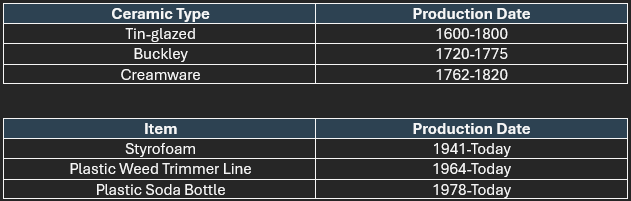
    One-way modern materials can help us understand a site is by helping us determine the Terminus Post Quem (TPQ), or “time after which,” of a layer. The TPQ is determined by identifying the earliest production date of the most recently produced item. For layers deposited before the widespread use of plastics, ceramics are usually used for determining the TPQ because they are datable (temporally, not romantically) since most have very specific production dates, and they also hold up pretty well under ground. For example, when looking at the ceramics in a layer with tin-glazed wares, Buckley, and creamware, the TPQ would be 1762 since that is the earliest production date of the most recently produced ceramic (creamware).  All the items in the layer had to have been deposited after that date.

    The same idea works with modern synthetic materials like plastics, which are usually found at sites that have been used within the last 100 years.  If there were to be some plastic soda bottles, weed eater line, and styrofoam in a layer, the TPQ would be 1978. While these materials may also be items you have in your home, not thought to be worth collecting and preserving, their presence in a layer helps provide a date. They can also tell us if an earlier layer was disturbed.

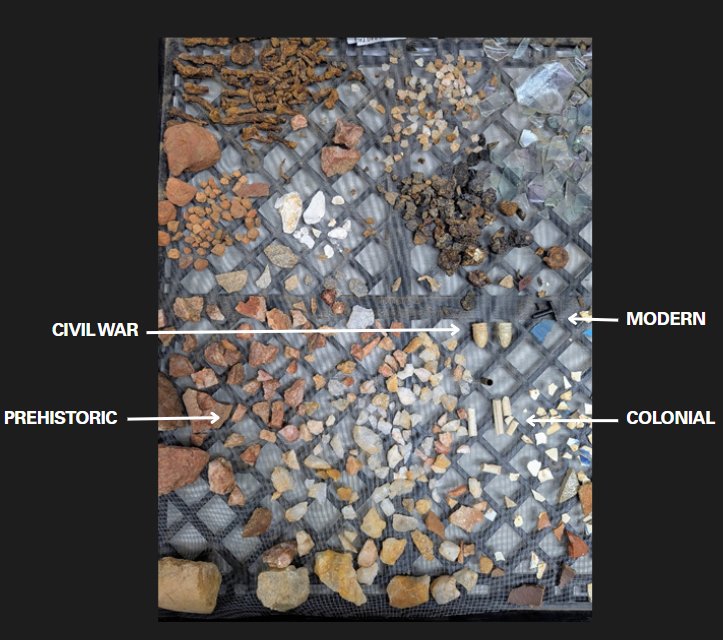
    When archaeologists talk about disturbed layers, we aren’t judging their emotional state or love of 2000s heavy metal.  Instead, when a layer is described as disturbed, that means there was some sort of activity happening after the initial deposition that affected that layer. During last season’s dig, there were layers with a mix of colonial, prehistoric, and modern materials that indicated that the area was disturbed by some subsequent activity. The information gathered by the presence of modern materials is important for the interpretation of the site and its use over time. 

    Example of a disturbed layer– Artifacts include prehistoric flakes and fire-cracked rock, colonial items like tobacco pipe stems, Civil War Minie balls, and modern-day plastics

    Now that we know why we keep this so-called modern trash.  Here are a few examples of how the presence of these items helped our archaeologists understand a part of our site.

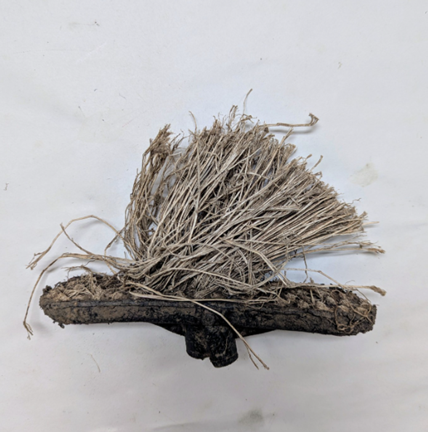
    My favorite example happened during last year’s dig. One of our crew, Abbie, was preparing a feature for photographs and had to keep clipping pesky hairlike roots that were in the way. After a bit of excavating, it turns out the “roots” were bristles from a plastic broom. The broom dated the feature fill to the late 20th century and got to the root of the hairy soil issue.

    Pesky broom in feature

    Our staff has numerous examples of these modern materials being used to help identify previous archaeology as well, from candy wrappers at the bottom of shovel test pits and trenches to an entire trowel! While things like plastic trash bags and food containers aren’t the most exciting to find, they play a part in interpreting the history of activities on the site.

    Once something is left behind, it becomes part of the archaeological record, whether it was 10,000 years ago or yesterday’s lunch.  What does your trash say about you?


    Danielle Arens

    GWF Archaeologist

  • That’s A Wrap! Ferry Farm’s Dig Season Recap

    October just happens to be Virginia Archaeology Month, and what better way to celebrate than to recap this summer’s excavation at George Washington’s Boyhood Home at Ferry Farm.

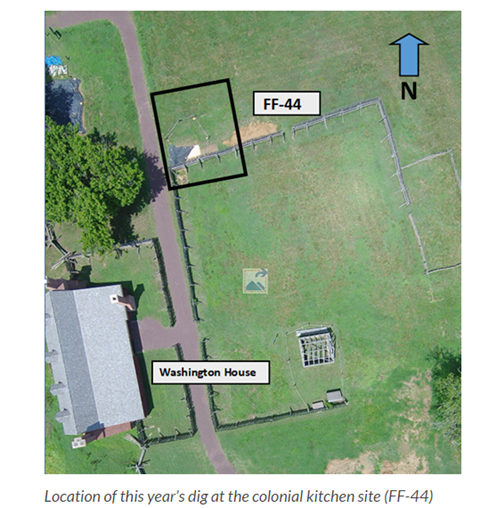
    You might remember from our dig preview, that this year’s dig (FF-44) focused on the continued exploration of the 18th-century kitchen site located just northeast of the main house. In 2023, our limited investigations uncovered just a small section of the kitchen’s stone foundation and cellar, giving us a sneak preview of the conditions and parameters of future site work. Armed with this knowledge, our aims this year were to uncover more of the original foundation walls of the kitchen cellar, to uncover additional architectural evidence of the kitchen outbuilding, and explore the surrounding landscape for features. So, did we do it?

    Location of the 18th century kitchen foundation in relation to two later farmhouses dating to 1876 and 1914. 

    We did! But before we get to the fun discoveries, let’s go over how we got there. As far as sites go here at Ferry Farm, this one has been through a lot. Not only did the original 16’ by 16’ kitchen building burn and collapse in on itself in the middle of the 18th century, but it also had two subsequent farmhouses built on top of it that were either moved, damaged in a fire, or demolished all within the last 150 years. A previous archaeology project on the site introduced another element of complexity in understanding the depositional sequence of fills on the earlier 18th-century site, which had obviously been heavily disturbed by all these later events.

    All this led to an interesting excavation. Since a significant portion of the site had previously been excavated in the 1990s, a sizable amount of our site time was spent re-excavating backfilled archaeology units with the purpose of exposing unexcavated layers around the site. Not only would these unexcavated layers allow us to gather new data, but it would also give us the opportunity to better understand the findings as recorded in the earlier reports.

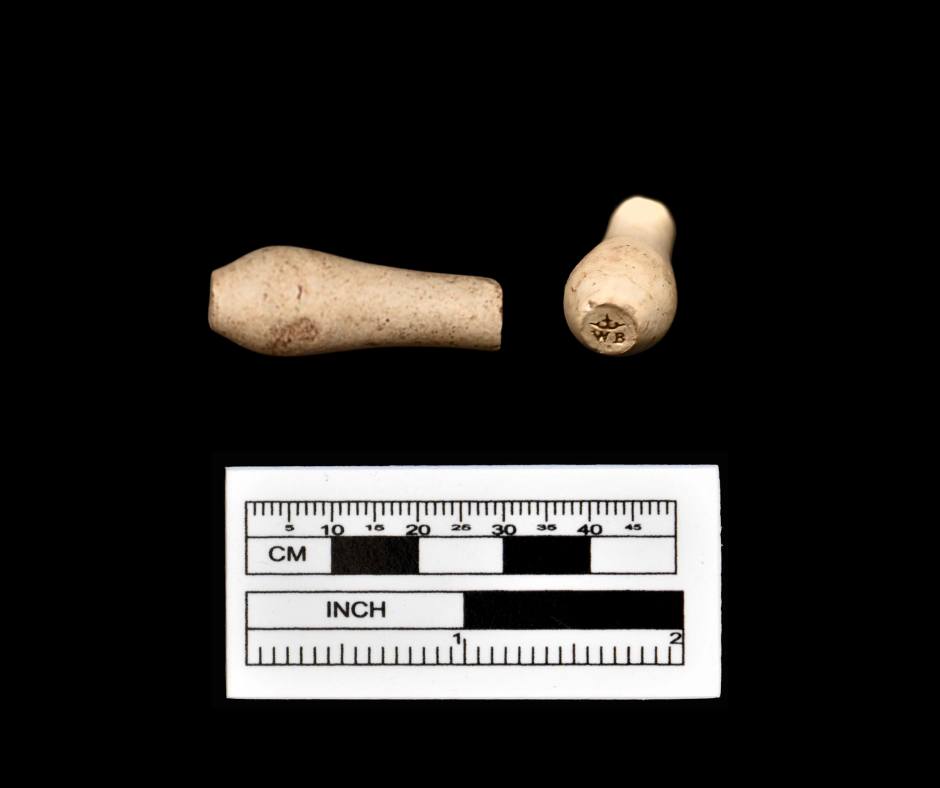
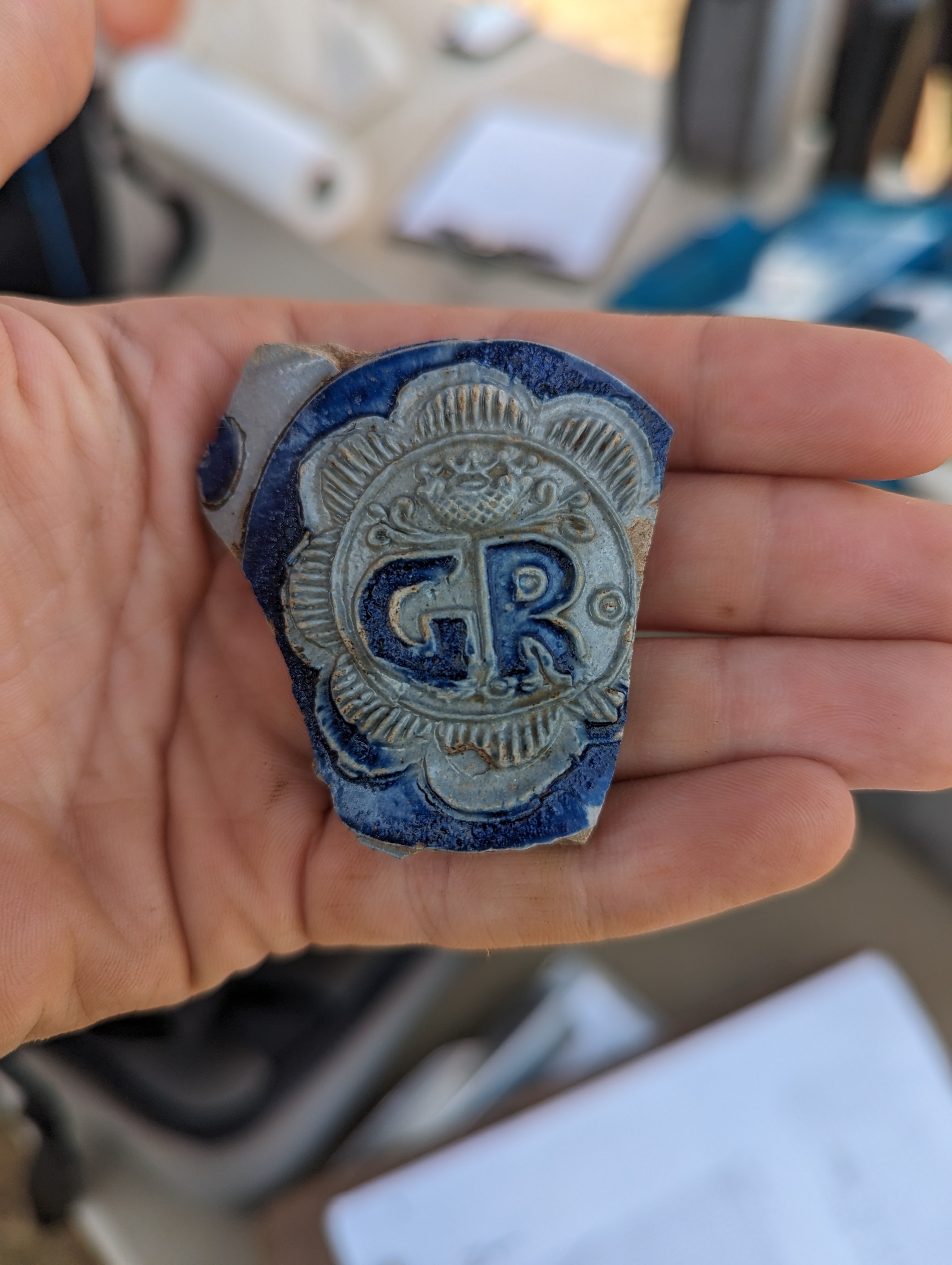
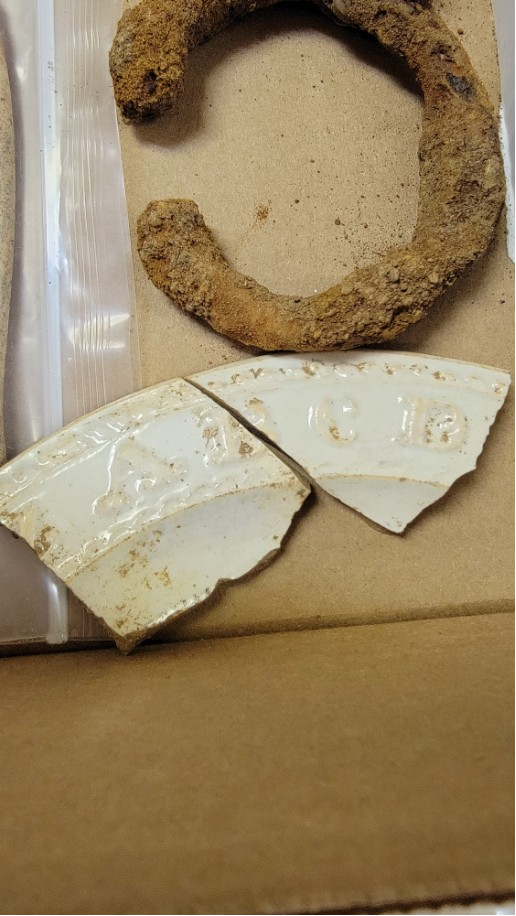
    With the help of our wonderful field school students and interns, we opened a total of twenty-seven 5’x5’ units across the kitchen site. Sifting through the dirt, hundreds of artifacts were found dating to all occupations of Ferry Farm. Super cool finds that date to the 18th-century period of use for the kitchen included tobacco pipe fragments, wine bottle sherds, and a variety of ceramics, including English stoneware, Chinese porcelain, and a German Westerwald ‘GR’ sherd. The prehistoric Native American occupations of the site were represented by an unusually high number of projectile points found (8 and counting!), dating to both the Early Archaic (8000 BC – 6500 BC) and Early Woodland (1100 BC – 500 BC) periods.  Civil War bullets came up in our screens, of course, as did 20th-century plastic, tools, toys, and bottle caps.

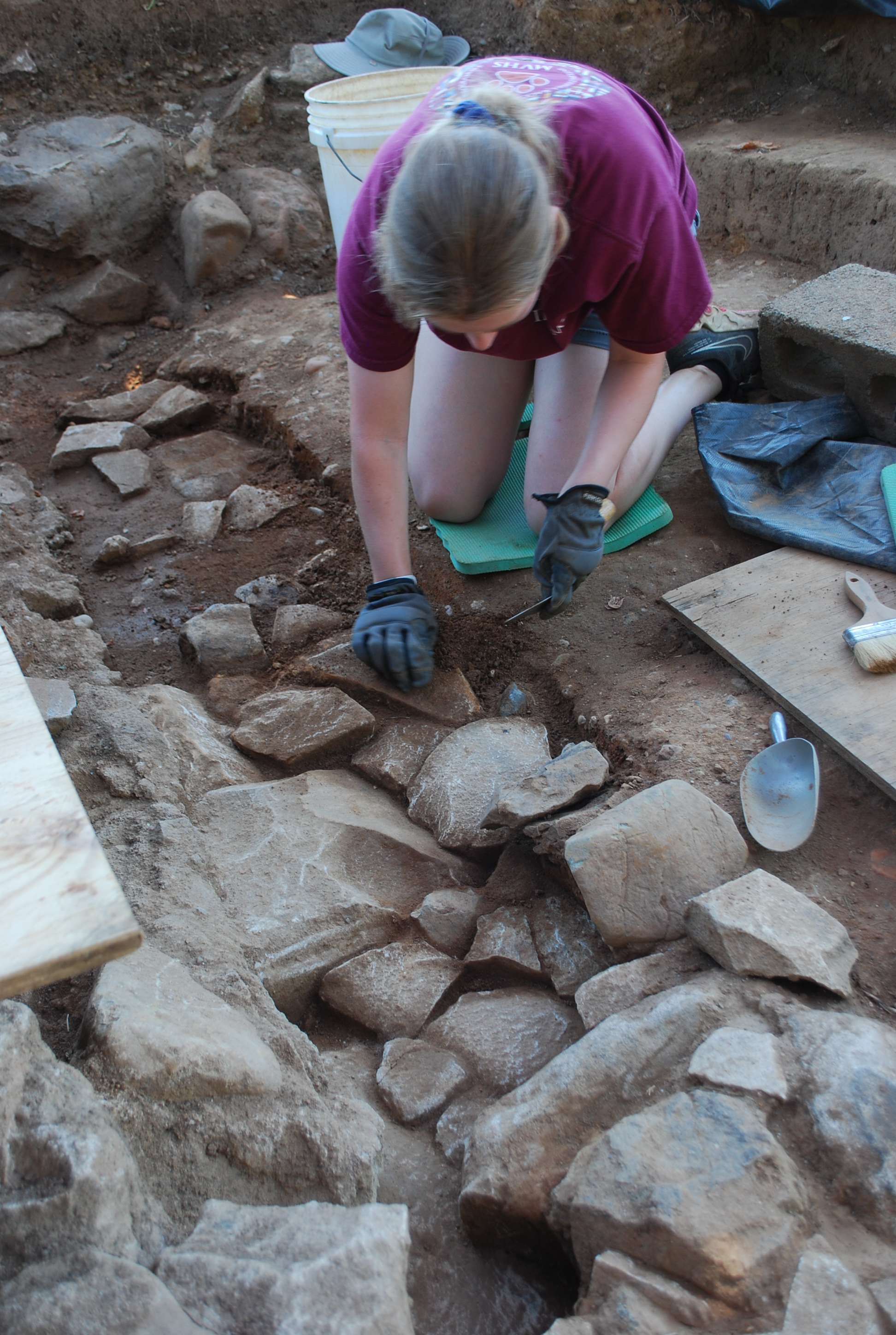
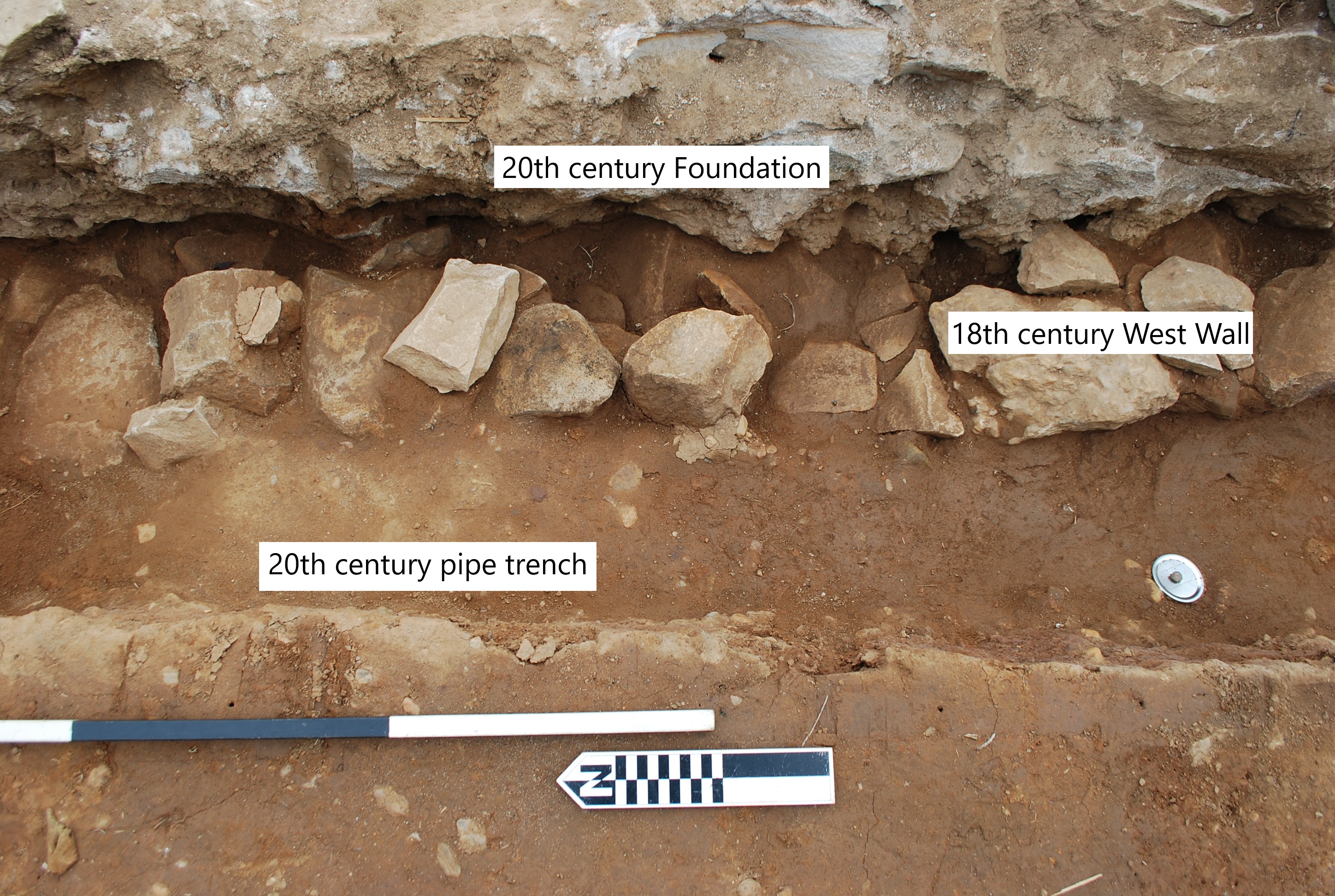
    But when it comes to finds, our most exciting discovery did not turn up in our sifting screens.  In fact, it was discovering that the western foundation wall of the kitchen cellar, thought to have been demolished, still survived!  During the 1990s excavations, the archaeologists did not see this portion of the stone foundation and assumed the construction of the 1914 Colbert house had destroyed it. Fortunately for us, it was hiding under a 20th century utility pipe and trench and lay directly adjacent to the Colbert concrete foundation. Now we have all four foundation walls that we hope to fully uncover next year.

    Exposed south and west stone walls of the colonial kitchen lie adjacent to and just outside of the 1914 concrete foundation wall.  
    West wall of colonial kitchen that was hiding under the pipe trench

    Our excavation units surrounding the kitchen foundation have not, as of yet, exposed additional building features associated with the kitchen outbuilding, such as foundations or fireplaces. That search will continue next year as we continue taking those units down and expanding our site area. Features exposed in the 1990s dig, but not excavated by them or us, such as possible post holes and trash middens, also await our return in 2025, when we plan on finishing their excavation.

    Each year’s excavation is built on the work accomplished in the previous years.  With the incredible amount of work done this past summer of exposing the original kitchen foundation, as well as the later farmhouse foundations, removing old fill, and opening up the adjacent landscape, we are looking forward to expanding our investigations of the kitchen site next year.  Stay tuned as we unravel the mysteries that are here at Ferry Farm, George Washington’s Boyhood Home.


    Danielle Arens and Judy Jobrack

    GWF Archaeology Field Directors

  • We’re Digging! – A Preview of 2022 Archeological Excavations at Ferry Farm

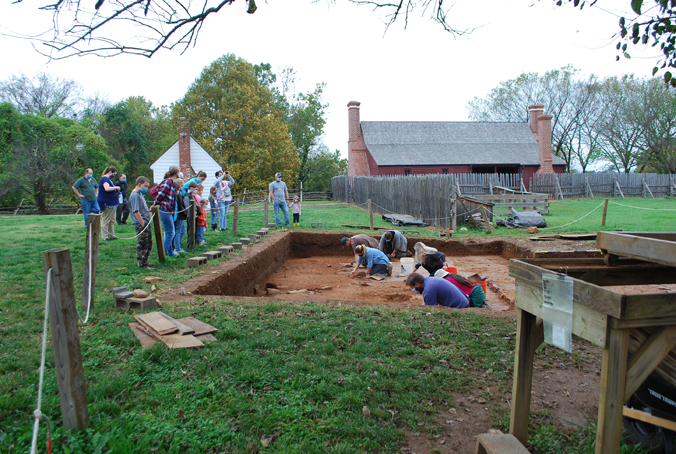
    Field archaeologists will once again be working outdoors at George Washington’s Boyhood Home at Ferry Farm from May 16th through July 29th.  Work hours will be Monday through Friday, 8 am to 4 pm.  The excavation site, located on the east side of the Washington House, is accessible to the public, and our staff will be happy to explain what we have been finding every day and what we hope to learn from this year’s dig.  Visitors can even help us sift our dirt and look for artifacts! 

    Visitors enjoy a turn at the sifting screen.

    The archaeological exploration of the Ferry Farm site has been ongoing for many years with great success.  The discovery of the two-story cellared home of the Washington family was announced in 2008, with its historic reconstruction completed in 2018.  Additional archaeological investigations around the house site have resulted in the identification of multiple outbuildings and work areas, adding to our analysis and recreation of the eighteenth-century farm landscape.  This summer, we will see two new outbuildings go up on the grounds – the enslaved quarters to the north of the house and a storage building in the work yard to the east.  Both buildings and their locations were found by means of our archaeological digs.

    Location of the 2022 archaeological dig at Ferry Farm.

    The site of this year’s dig is an extension of last year’s, during which we found a possible post-in-the-ground structure in the work yard area of the farm.  Opening up new units on the southern end of the dig site will allow us to determine the full size of this structure.   Artifacts found in the surrounding units are still being processed and analyzed and will help us determine the function of the building.

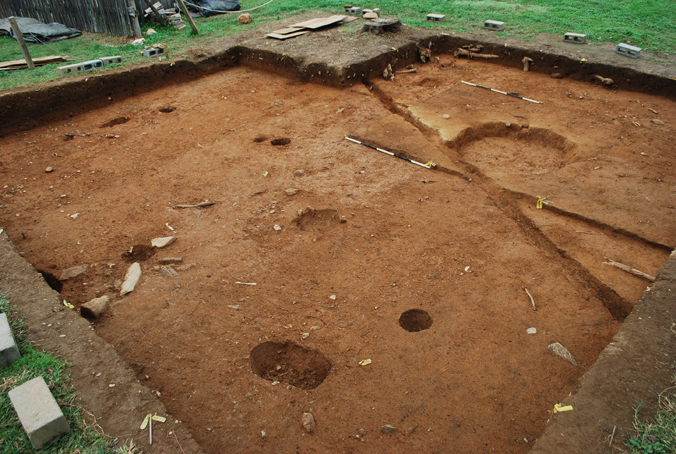
    Overall view of the 2021 dig shows modern utility trenches and eighteenth-century oval postholes.

    So be sure to stop by the dig when visiting Ferry Farm this summer and find out what we have learned so far from our excavations!

    Archaeologists cleaning the site in the Washington House workyard.
    Judy Jobrack

    Archaeology Field Director

  • “Have you found anything today?”: A Review of the 2021 Archaeological Excavation at Ferry Farm

    “Have you found anything today?” was (and always is) the most-asked question posed by our daily visitors who stopped by our archaeological site at George Washington’s Ferry Farm this summer. Everyone wants to understand what is going on in the very large square hole we have made in the lawn.  “Yes, we find something every day,” our crew happily answered, while showing the visitors all the small bits of ceramics, glass, metals, and other artifacts sifted out of the dirt that day. Not only did we find hundreds of artifacts during the course of the summer dig, but we also hope we found a building!

    This year’s archaeological dig at Ferry Farm began on June 7 and ended on August 21.  We opened twelve new 5-foot by 5-foot square units and reopened six previously excavated units just south of and adjacent to last year’s excavation site. Our site is located within the Washington house work yard, where activities such as food preparation and cooking, washing laundry, animal husbandry, dairying, household storage and wig maintenance took place.

    The direction of this year’s dig was prompted by the discovery during last season’s excavation of two large rectangular postholes with similar alignments and measuring ten feet from each other.

    Two postholes about 10-feet apart at the end of last year’s excavation.

    Finding additional postholes of similar size and properly distanced from each other would enable us to determine if our postholes were part of a fence line or one side of a post-in-the-ground building.

    After a lot of hard work, we uncovered two similar postholes on the same line as the first two. Unfortunately, we did not find a parallel line of postholes representing the opposite side of a building within the limits of our dig.

    Four postholes in a line at the end of this year’s excavations.

    The abundance of artifacts found on the north side of the posthole line, and the contrasting lack of artifacts to the south of them, indicates the presence of some physical barrier substantial enough to create a division preventing artifacts from passing. Our plan for next season is to hopefully expand the excavation block to the south and the west because that is where associated posts would be located. If there are no matching posthole features, we know we have a fence. If it is a building, we want to get the proper dimensions of that structure, which in turn will help determine its function on the landscape.

    Now that this year’s dig is over, our staff and volunteers are busy in the lab washing and cataloging the artifacts we found this season. As usual, we collected artifacts ranging from present day plastics to thousand-year-old prehistoric tools. Although our total artifact count was not as numerous as in former dig years, we did manage to find some interesting items.

    Our total wig curler count of over 200 continues to grow with the addition of seven wig curler fragments this year.  This may not necessarily sound like a lot, but the amount of curlers found this season alone surpasses the number most other domestic colonial sites have in Virginia.  Thirty wig curler fragments have been found within the 30-foot by 45-foot excavation block dug between from the years 2019 to 2021 in the work yard.

    Approximate Ferry Farm work yard area excavated between 2019 and 2021.

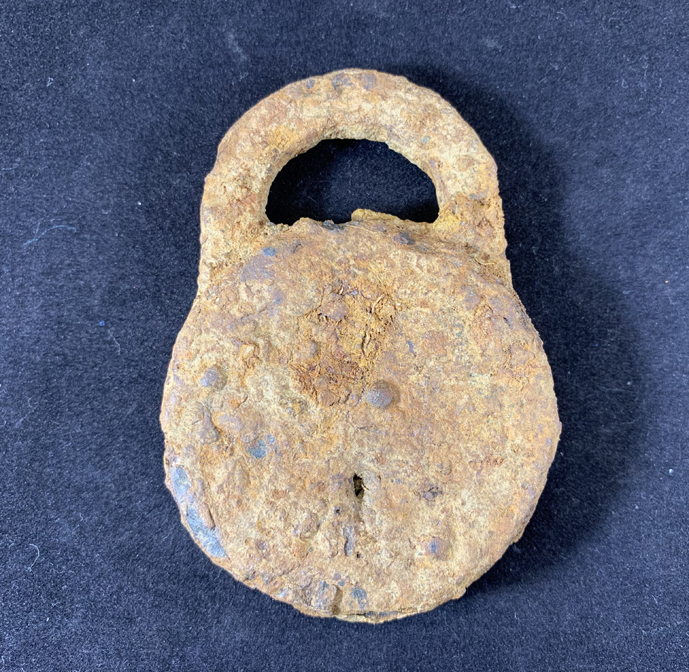
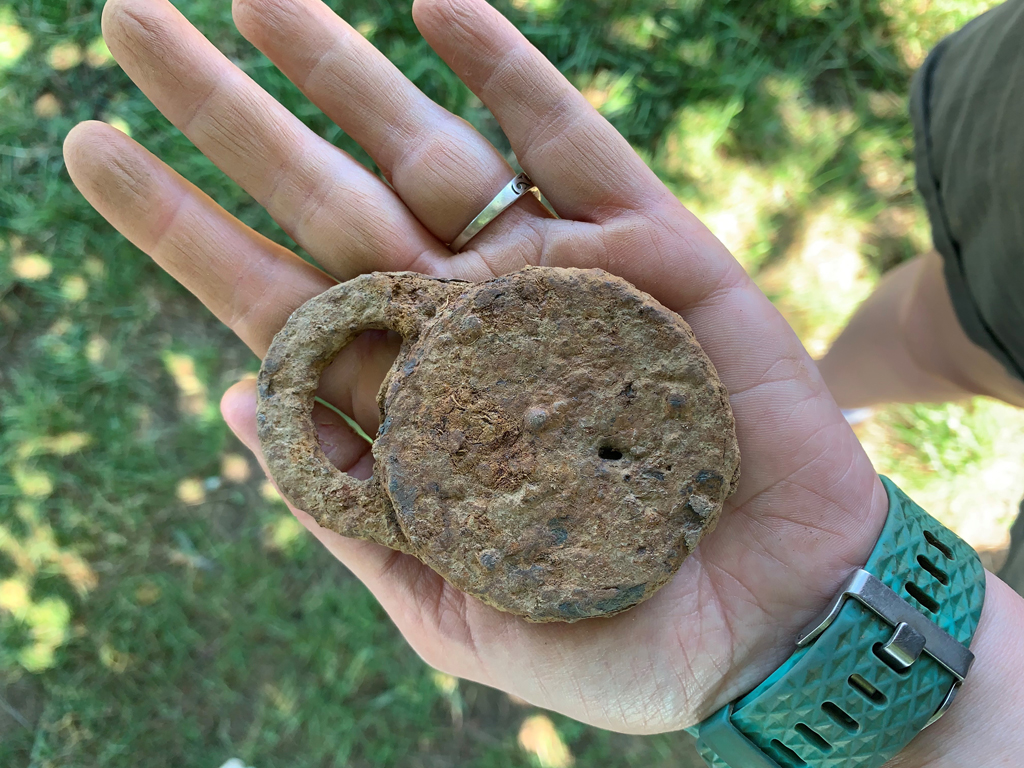
    Other artifacts of interest include a bone-handled toothbrush, children’s toys, a round rusty lock, delicate Chinese porcelain cup fragments, projectile points, buttons, and the rim of an alphabet plate.

    The prettiest artifact prize goes to our blue paste gem button. Research has not yet started on this little gem, but we suspect it dates to the 18th century.

    Blue paste gem button

    For now, the excavation site is once again covered with tarp for protection against the winter elements until we open it again next year. Here on Lives & Legacies, we’ll keep you up-to-date about what we found this summer as we spend the next several months researching these 2021 artifacts in the lab.

    Judy Jobrack, Archaeologist
    Elyse Adams, Archaeologist
    Co-Field Directors

  • A Day at the Dig at George Washington’s Ferry Farm [Video]

    In this video, spend a day with the archaeologists digging at George Washington’s Ferry Farm this summer.

  • We’re Still Digging!: An Update on 2021’s Archaeological Excavation at Ferry Farm [Photos]

    The 2021 archaeological dig season at George Washington’s Ferry Farm is over two-thirds complete. Here’s a collection of photos taken in the field of a few artifacts discovered thus far.  You can read an overview of our expectations and goals for this year’s dig here.  Visitors can ask archaeologists questions and observe their work Monday through Friday at Ferry Farm. The dig continues until August 20.

    Elyse Adams, Archaeologist
    Co-Field Director

  • We’re Digging!: A Preview of 2021’s Archaeological Excavation at Ferry Farm

    Visitors to George Washington’s Ferry Farm will once again be able to meet and talk to our staff archaeologists as they work at our archaeological dig this summer. The dig opened this past Monday, June 7 and runs through Friday, August 20. Archaeologists dig Monday through Friday.
    Approximate location of the 2021 archaeological dig at Ferry Farm.

    The dig is located on the east side of the Washington house in the work yard.  The work yard is where the everyday activities associated with the running of an 18th-century household took place. These activities including food preparation, cooking and cleaning, washing laundry, animal husbandry, dairying, household storage and wig maintenance.  Eventually showing and interpreting these activities as well as incorporating our findings into Ferry Farm’s history are the reasons we dig.

    We are looking for the remains of outbuildings in this area of the site.  Luckily for us, last fall we uncovered a large post mold and hole which we suspect is a structural part of one such outbuilding. This first week we are opening up multiple 5’x5’ units to the south of our posthole feature in anticipation of finding more of this structure.   

    Large post mold and hole located at the southern edge of the 2020 site.

    Our crew will consist of four paid interns in addition to Elyse Adams and myself as co-site directors.  COVID-19 has again eliminated the possibility of university archaeology students joining us for a six-week field school this year, but we hope they can finally return next year. 

    The 2021 dig will be located directly beneath our visitor’s feet in this photo.

    Over the next 12 weeks, we’ll post some of our more interesting discoveries during on Ferry Farm’s Facebook and Instagram so everyone can stay up-to-date our progress.  When you visit Ferry Farm, please stop by the excavation site to ask questions and watch us at work. We are happy to share our daily findings and explain the process of digging into the Washington family’s past!

    Judy Jobrack, Archaeologist
    Co-field Director

  • We Really Dig History!: 2020 Excavation at Ferry Farm

    After a delay of five months due to the COVID-19 pandemic, archaeological excavations in the Washington house work yard at George Washington’s Ferry Farm got underway in mid-August and finished on October 30.  Despite the cancellation of a planned spring field school with archaeological students from the University of South Florida, a crew of four paid interns and two college students helped make up the labor difference and our work commenced.

    Our 2020 project continued last year’s exploration of the Washington-era work yard.  This area located to the east of the house is where the everyday activities of a busy colonial household took place.  Permanent structures such as a kitchen, dairy, smokehouse, storage sheds, office, laundry, temporary workspaces, and landscape features like gardens were concentrated in this area near the house but out of view of the public eye and the formal riverfront side of the house. Evidence of these buildings and work areas, in conjunction with the trash generated from their associated daily activities, is of the utmost importance in our planned authentic recreation of Ferry Farm’s Washington-era landscape. 

    Location of the 2019-2020 archaeological dig.

    In addition to reopening the unfinished 2019 excavation site, we opened fourteen new 5 foot x 5 foot units directly north, revealing a total of 800 square feet. Our approach to excavating was the same as in previous years – remove the 20th century layers, then the 19th century layers, and so on, across the entire site, allowing us to view related features at the same time.

    2019 and 2020 excavation site.
    Visitors to the site interact with the excavators.

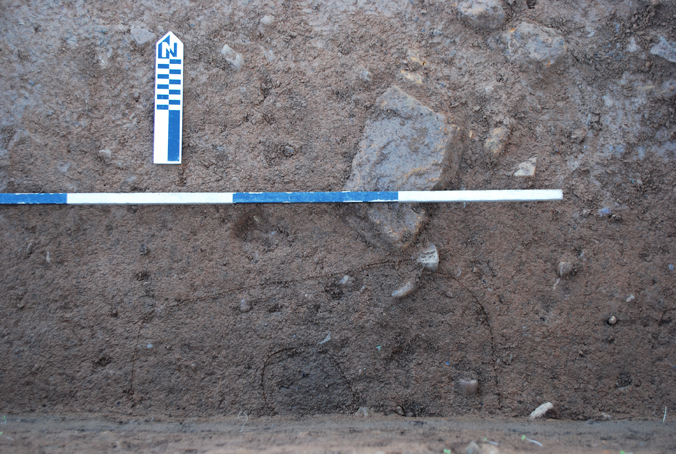
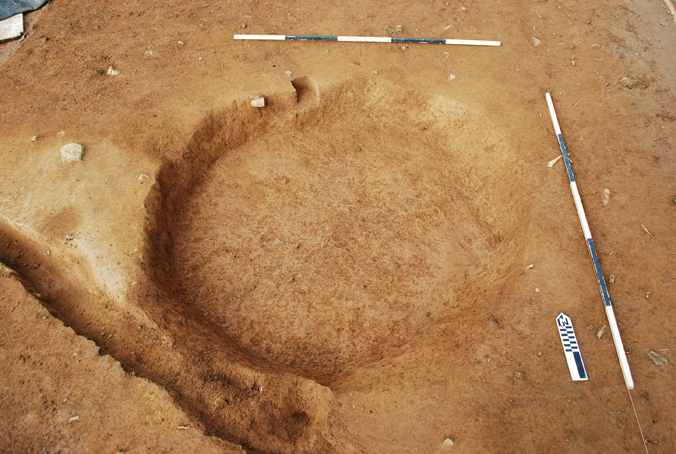
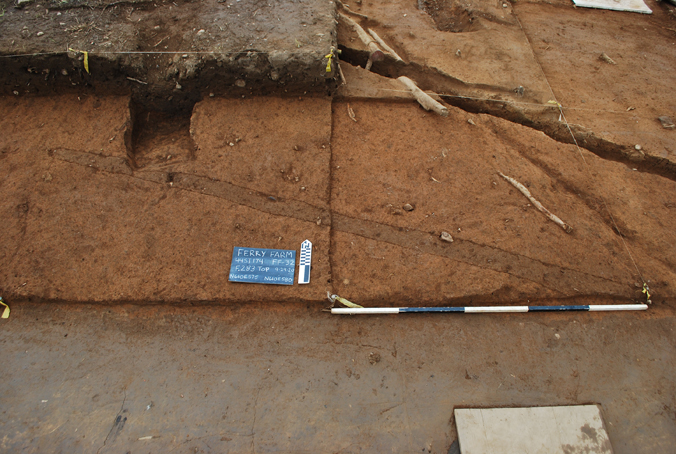
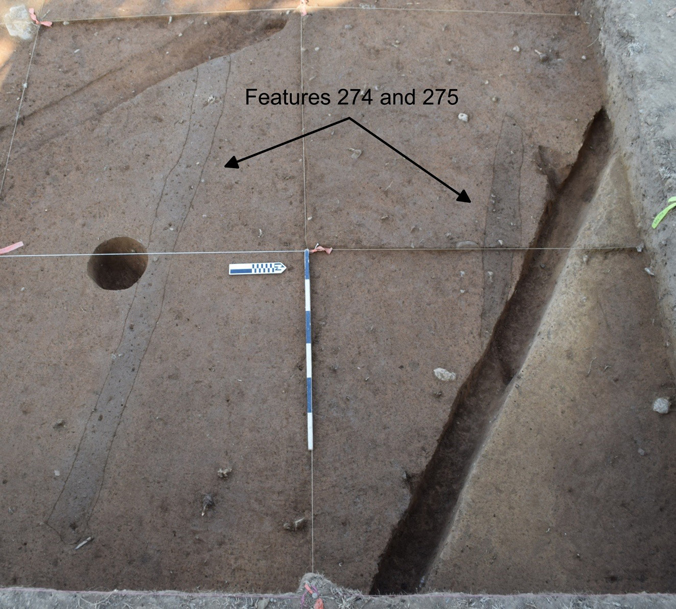
    We uncovered numerous new features dating from the 20th century back into prehistoric Native American times. Modern gas and electric lines crisscrossed the site on their way to a now-demolished early 20th century house. They cut through multiple historic layers and sometimes through intact earlier features.  Eighteenth century features we excavated included a large, circular, flat-bottomed pit, 5 feet in diameter. The pit’s purpose is still under investigation. A 10-foot long linear feature, obviously related to last year’s still unknown Features 274 and 275, was also found just to their northwest, adding to their mystery.

    Feature 285 – Historic large circular pit with a 5’ diameter
    Feature 283 – Historic linear feature, similar to Features 274 and 275 found in 2019
    2019 Features 274 and 275

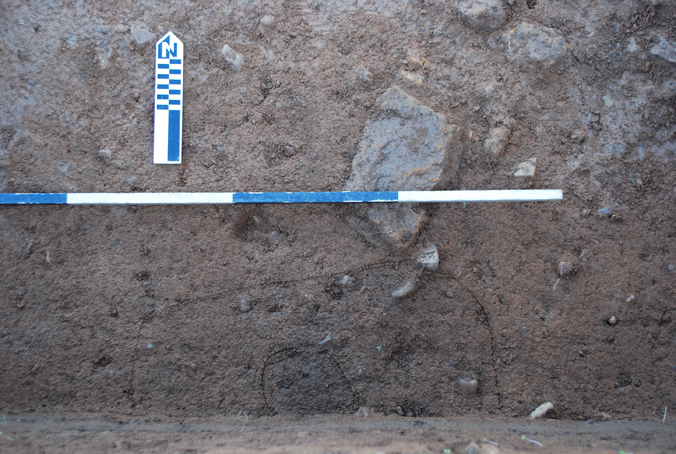
    An especially exciting discovery this year was uncovering a large post mold and post hole in the southern end of the site.  The posthole indicates the presence of a post-in-ground structure and excavations next year will try to reveal more of this building. Adding another outbuilding to the Washington landscape would be very exciting.

    Feature 288 – Post mold and Posthole located at southern edge of the site

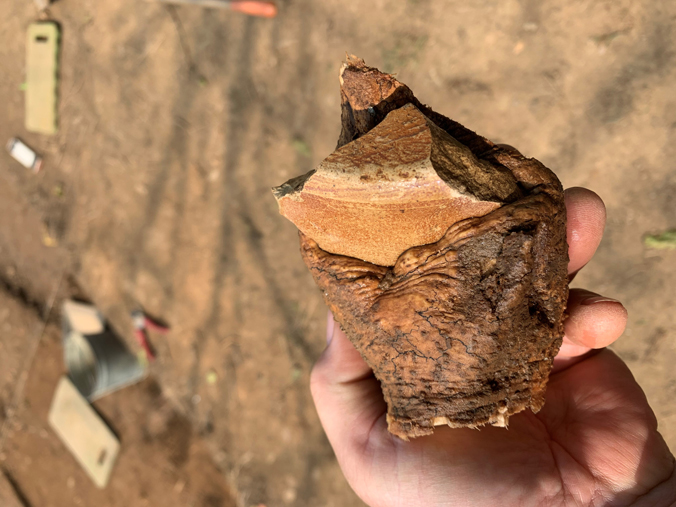
    Hundreds of artifacts, of course, were collected during our three-month dig, including wig curler fragments, Native American projectile points, and Civil War bullets. We also found lots of historic ceramics and glass and architectural items, including this stoneware pot base fragment wrapped within a large tree root pictured below. 

    Stoneware fragment encased within a root.
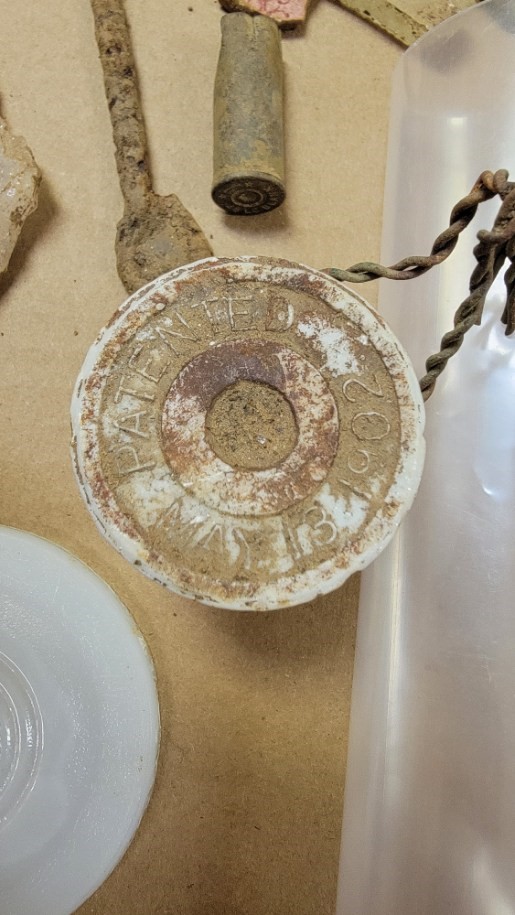
    A sample of artifacts found one day ranging in age from the 21st century to the Prehistoric era.
    One of eighteen wig curlers found during this year’s dig.

    The upcoming winter months will be spent washing and cataloging all the artifacts recovered across the site, drawing the features and site maps, and writing reports. The site is securely covered for the season and will wait for us until the next dig starts, hopefully in the spring.

    Judy Jobrack, Archaeologist
    Co-Field Director