This summer out on the dig site, one of our archaeology interns sometimes wore a t-shirt that read “archaeologist (n): one who digs history.” In this album, you’ll see this year’s excavation crew — field director Steve Lenik, assistant field director Elyse Adams, interns Reagan Andersen, Cheyenne Johnson, and Aileen Kelly, and field school students from Georgia Southern University and the University of South Florida — doing just that!
Read a summary of the work done during the 2018 dig at Ferry Farm here.
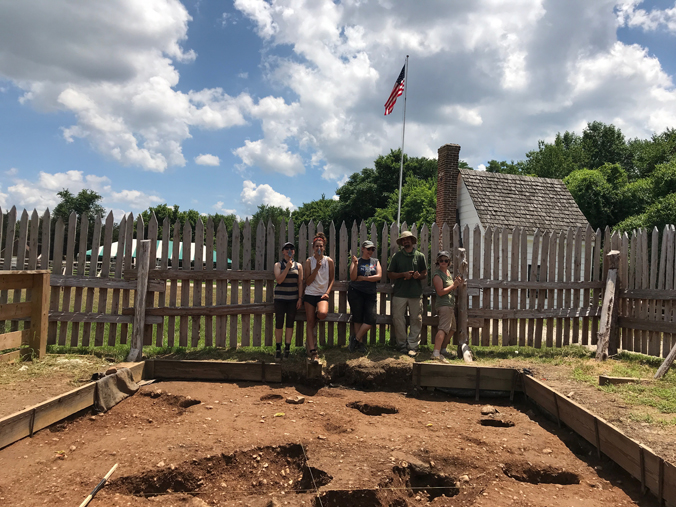
The dig team! (l-r) Reagan Andersen, Cheyenne Johnson, Aileen Kelly, Steve Lenik, Elyse Adams
Working in the Work Yard.
Steve about to take an overhead picture.
Shade is valuable.
Elyse and Alieen spray water on the excavation area. This helps them see archaeological features better.
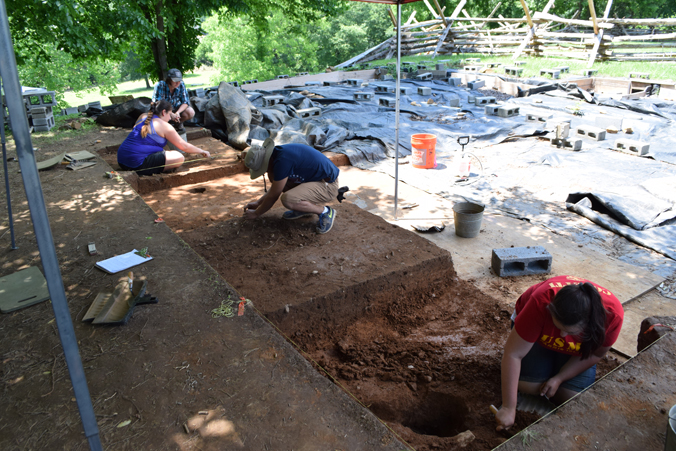
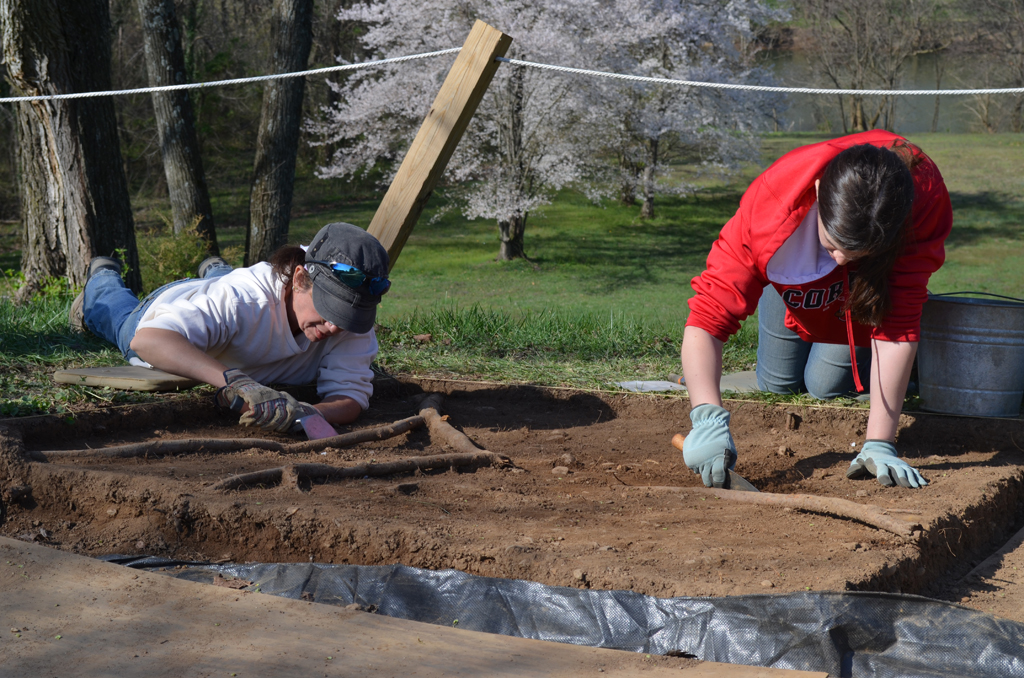
Field school students excavate the North Yard.
Sifting excavated soil.
A festive Aileen, Cheyenne, and Reagan celebrating the 4th of July at Ferry Farm!
Archaeological excavations at George Washington’s Ferry Farm have occurred nearly every summer since The George Washington Foundation purchased the property in 1996. The summer of 2017, when the majority of the replica Washington house construction was underway, was the major exception. The archaeological site was proved too close to ongoing construction so excavations were put on hold until the summer of 2018.
This year, a five person crew consisting of a field director Steve Lenik, assistant field director Elyse Adams, and interns Reagan Andersen, Cheyenne Johnson, and Aileen Kelly worked from April to July on the Ferry Farm property. For five weeks, an additional seven students from Georgia Southern University and the University of South Florida came to Ferry Farm for a field school, to learn the basics of excavation and lab work.
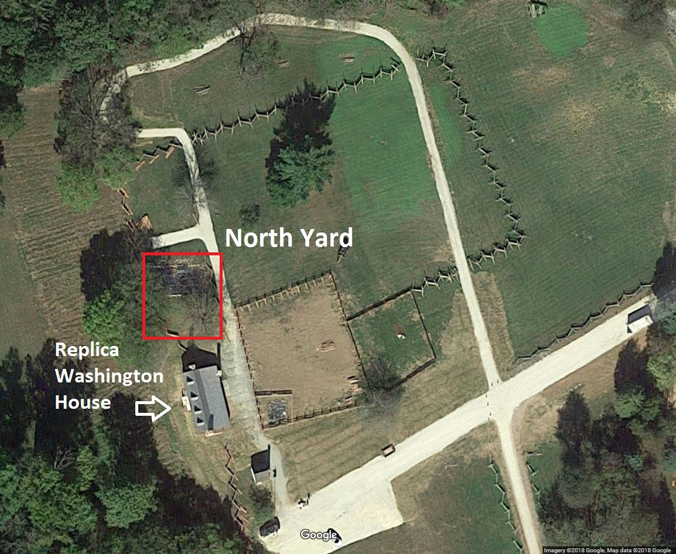
The North Yard
We investigated two areas. The first, an area at the crest of the ridge to the north of the replica house, was the North Yard. This yard lies between the Washington House and a slave quarter that was completely excavated in previous years. The purpose of digging in this area was to find evidence about who controlled this space. Was it the domain of those who lived in the Washington House or of the enslaved population who lived in the quarter?
Excavations are not yet complete in this area, but we discovered that this space was relatively clean compared to the Work Yard and areas immediately behind the Washington house, where a lot of trash and debris from daily 18th century activities were found during past excavations. The lack of trash and debris in the North Yard was likely because, in colonial times, this was part of the property visible from Fredericksburg and therefore was well-kept A public space like this one would have likely fallen under the control of those who lived in the Washington house.
Field school students excavating the North Yard.
We were also looking for evidence of any other outbuildings and gardens, in order to accurately recreate the landscape of the farm as it was in the 1700s. We discovered evidence of large trees that lived on the landscape during the 18th century in this area. This discovery will allow archaeologists to look even closer into the use of this space with the goal of re-creating it as it was in the time of the Washingtons.
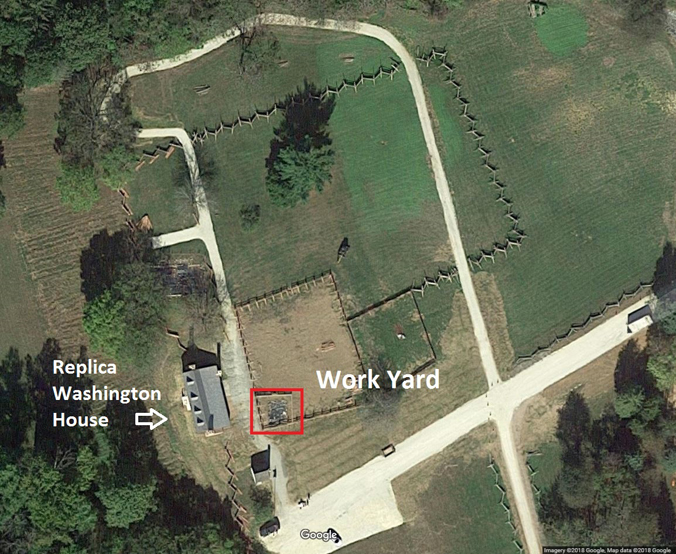
The Work Yard
The second area we investigated during this summer’s dig was behind the Washington house in the Work Yard, which is exactly what it sounds like—a space for work to be done on a farm in the 1700s. This space is special to our research here at Ferry Farm. Much of this space was excavated already in past years, yielded a treasure trove of artifacts and information, and was then filled back in once excavations were complete.
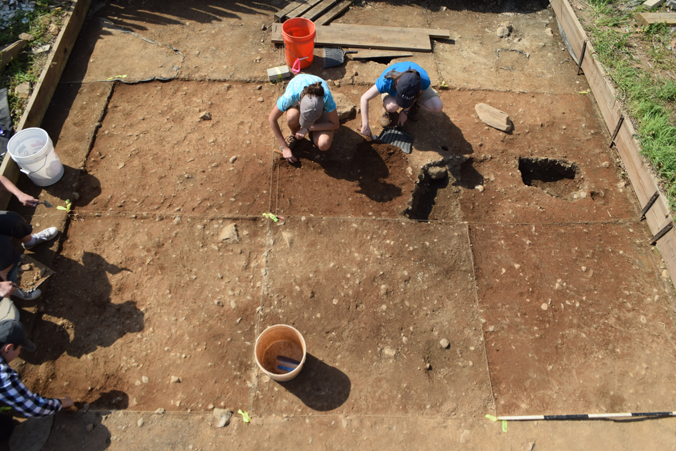
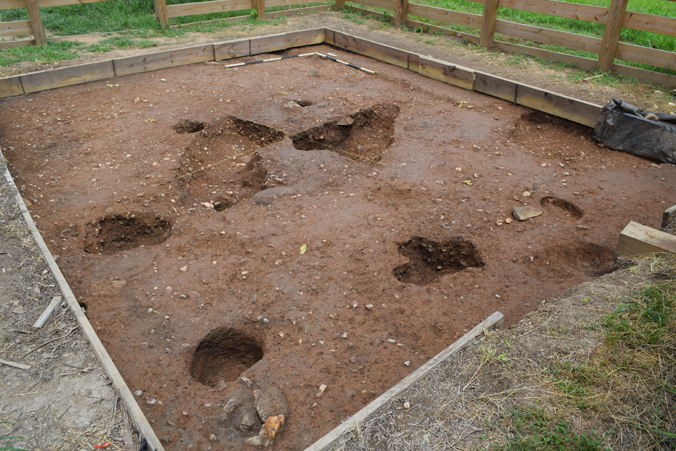
One small area just behind the house was left to excavate, however, and that’s where we worked this summer. We discovered large stains in the soil, very deep in the ground. They were made during the colonial era but, as yet, we do not know why. This area was originally thought to be a cellar, but as excavations continued, we began to notice a series of pits instead. Analysis is still ongoing and artifacts excavated in this space are still being processed so we don’t have answers to any of our questions yet.
Field crew exposing the large soil stain of possible cellar at the start of the 2018 excavations.Final photo of the Work Yard pits at the end of the 2018 excavations.
Nevertheless, our minds were racing with possible explanations of these pits and we couldn’t help but wonder if they were somehow related to Ferry Farm’s collection of at least 215 wig curlers—very unusual finds for a Virginia farm—that were excavated above or around this space.
It’s far too soon to tell, we don’t have any complete answers, and we still aren’t finished excavating the Work Yard, but this area already is proving important to the Ferry Farm story. Once we understand the landscape and complete the Work Yard excavations, the 18th century outbuildings that have been identified and that once stood in this space will be replicated just like the main house.
The dig team! (l-r) Reagan Andersen, Cheyenne Johnson, Aileen Kelly, Steve Lenik, Elyse Adams
Future excavations will continue to yield the information we need to replicate the entire boyhood landscape of George Washington’s home. Every bit of information, no matter how small the tree root or how tiny the artifact, is pertinent to the understanding and accurate interpretation of this important landscape, and to understanding the lives of all who have lived and worked here. We look forward to many more years of discovery, and many more summers of digging into the history of the Washington Farm.
Elyse Adams, Archaeologist
Assistant Field Director
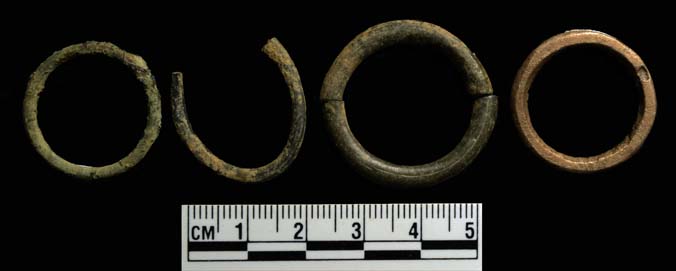
What do you think curtains look like after hundreds of years in Virginia’s soils? Naturally, the cloth portions of such tasteful textiles quickly erode away. But archaeologists do occasionally discover curtain rings. It’s likely that brass rings such as these became separated from their stylish drapery due to cloth tearing or – occasionally – because the ring itself breaks (see third ring from left in photo below).
Possible curtain rings recovered by archaeologists at Ferry Farm. These are made from solid brass. Such rings supported bed curtains, wall hangings, and window curtains.
These archaeological gems from the soils that surround Washington’s boyhood home provide details regarding the Washington family’s decisions about the furnishing of their home. Drapery provided privacy, embellished an otherwise drab surface, enhanced warmth, and allowed occupants to control the amount of sunlight in a room. Despite these contributions to comfort and elegant style, window curtains remained somewhat uncommon in colonial households during the second quarter of the 18th century, when documents demonstrate that the Washington home had curtains.
Curtains and wall hangings were noted in Augustine Washington’s 1743 probate inventory (see photo below). This document was created after Augustine, George’s father, died. It listed his possessions and their value. Probate inventories were created by gentlemen from the neighborhood who assessed the value of the recently deceased’s possessions for estate and tax purposes. Benjamin Berryman, Hancock Lee, and Adam Reid performed this task for the Washingtons in 1743.
The window hangings recorded in Augustine’s probate in the hall back room, which served as Augustine and Mary’s bed chamber, were almost twice as expensive as those found in the parlor room. They were valued at two shillings six pence for a single window curtain. The probate inventory also notes two additional sets of fine curtains under the heading “linen.” These were even more expensive than those within the home’s rooms. One pair was composed of silk while the other was made from cotton.
This detail from Augustine Washington’s 1743 probate inventory indicates that the hall back room had two window hangings valued at 8 shillings.
While the assemblage of curtain rings excavated at Ferry Farm may appear modest, it is worth noting that Foundation archaeologists have excavated over 900 five-ft.-by-five-ft. excavation squares! That’s well over 22,000 square feet of soil screened.[1] Every inch of soil is screened through ¼-inch mesh screen and artifacts from all time periods are cleaned, cataloged, and curated at Ferry Farm. It is only through such a thorough and extensive excavation strategy, that any evidence for brass rings that supported wall and window hangings can be discovered.
If Ferry Farm was the homestead of a less famous family (whose records were less diligently preserved) or the home of a family who lacked the income level to warrant a probate inventory, these excavated rings would be the sole evidence of the existence of wall hangings, window hangings, or bed curtains. The few rings recovered from these extensive excavations alone allow us to infer that this family had hangings. Just how these rings were employed is not known with certainty using the material record alone but these archaeological remains alongside the probate inventory provide an exceptional opportunity for Foundation scholars to understand the mid-18th century Washingtons.
The presence of brass rings at Ferry Farm illustrates the importance of thorough excavation to recover small finds artifacts. Together with the probate inventory, these rings allow archaeologists, curators, and material culture specialists to compare – and to appreciate – what the Washingtons owed in 1743 versus what was preserved in the ground after hundreds of years.
Laura Galke, Archaeologist
Site Director/Small Finds Analyst
[1]Most excavation units extend to a depth of about one foot, though some proceed to even greater depths.
Further reading Muraca, David, John Coombs, Phil Levy, Laura Galke, Paul Nasca and Amy Muraca
2011 Small Finds, Space, and Social Context: Exploring Agency in Historical Archaeology. Northeast Historical Archaeology 40:1-20.
We have a unique situation here at the Ferry Farm Archaeology Lab. One of our volunteers, who has spent hundreds of hours washing, sorting and labeling excavated artifacts, is oddly enough, also partially responsible for creating some of those artifacts in the first place!
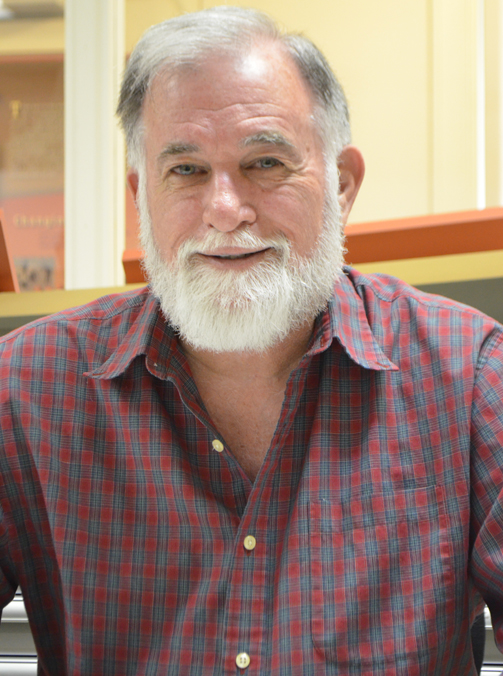
Robert Bailey
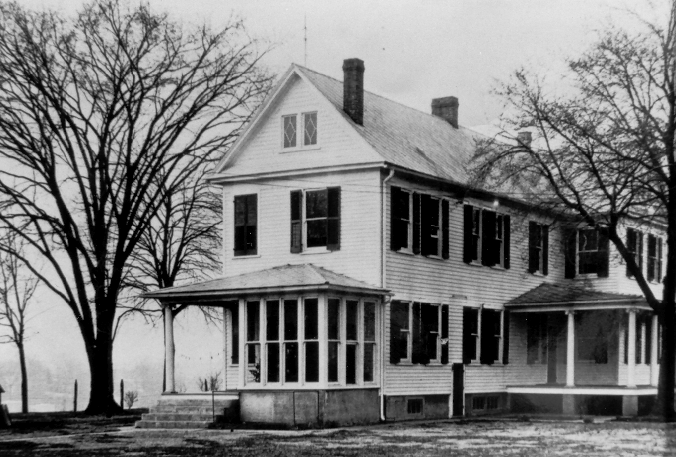
Robert Bailey, his father Ray, mother Peggy and older brother Ray Jr., lived here at Ferry Farm from the late spring of 1957 until August of 1959. His parents rented what was referred to as the “Colbert house,” a large three-story home built in 1914 by James Colbert, a farmer and businessman.
Colbert House
Robert was only five years old when he moved to Ferry Farm. He vividly remembers playing in the many barns, running through the fields and woods that surrounded the farmhouse, and swimming in the stream that runs alongside the historic Ferry Road on hot summer days. He and his brother also showed visitors stopping to see George Washington’s boyhood home around the property and invited them to sign the guest book located inside the small late 19th century building called the Surveyor’s Shed.
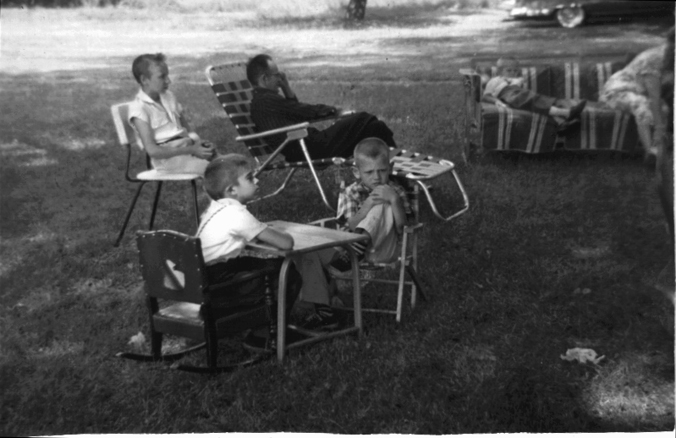
Robert as a child (foreground left in the rocker) in the Colbert House back yard.
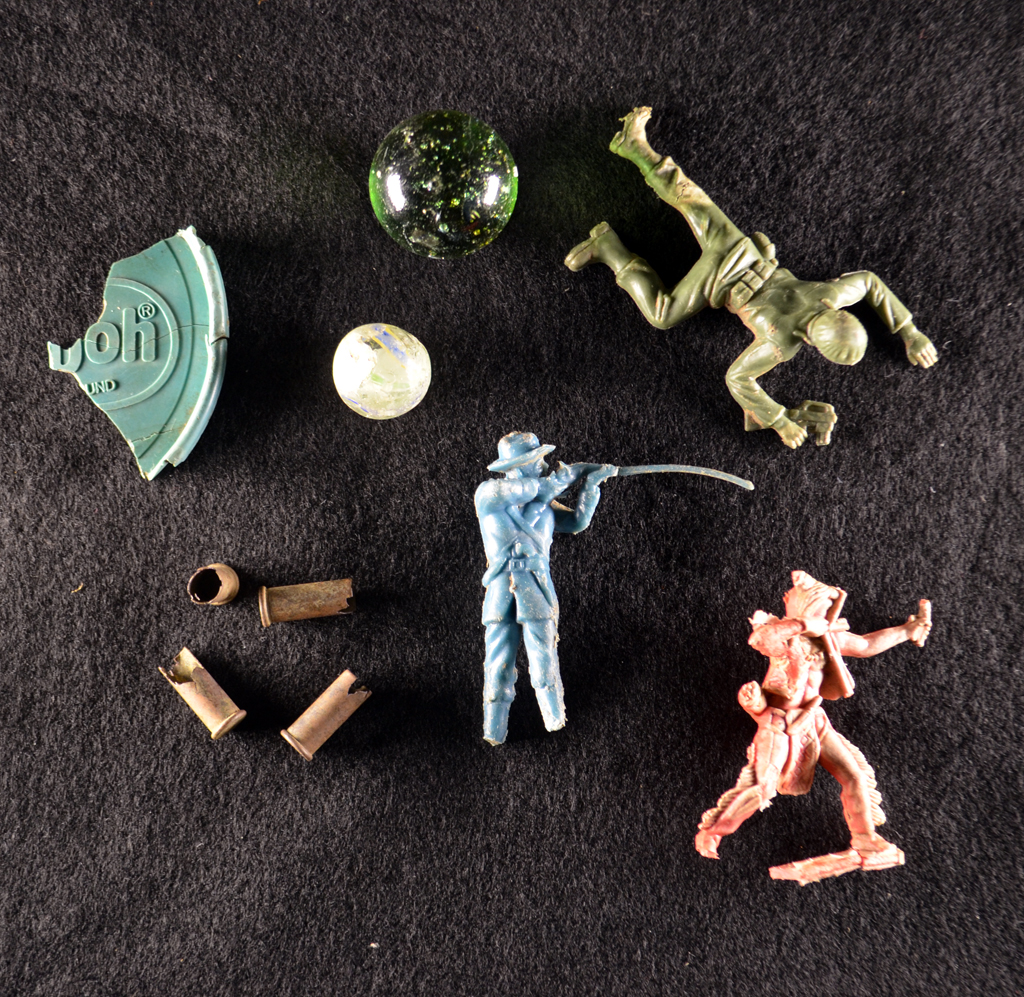
He also remembers playing with lots of toys typical of the time, most notably glass marbles, plastic army men, toy cars and trucks, and especially a new toy called Play Doh, a wallpaper cleaner compound that had just been reinvented as a moldable clay product for children.
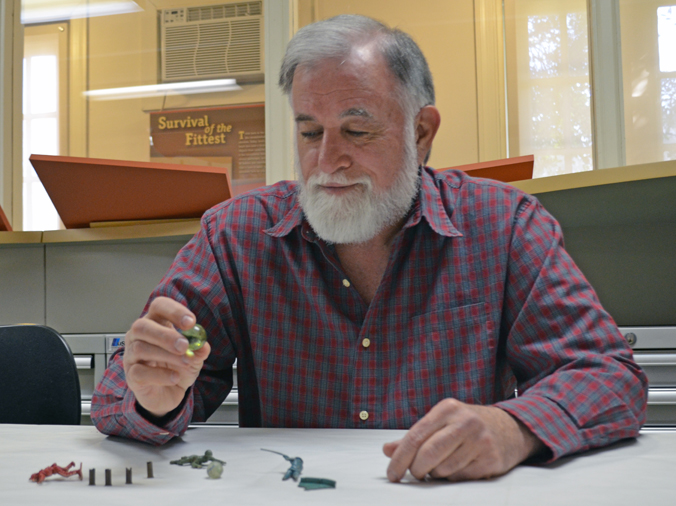
Collection of 20th century items excavated at Ferry Farm. Clockwise from left: portion of a Playdoh canister lid, marbles including a large green shooter, green plastic army man, red plastic Indian, blue plastic Civil War soldier, four .22 caliber shelling casings.
Over 800 toy-related artifacts have been excavated and catalogued in our artifact database. As a collection, these toys span all time periods, from colonial clay marbles, to Civil War-era dice, to a Cold War-era Sputnik ring, and most recently, Dora the Explorer sunglasses! We have also catalogued fragments of bicycle parts, dominoes, board game pieces, dolls, plastic figurines, toy guns and planes, toy cars and trucks, and dishes and tea sets.
Of course, Robert and his brother were not the only children who lived on or visited this site. Other children lived in the Colbert house before and after the Baileys resided there, and hundreds have visited the site on field trips and for special events, such as our annual Fourth of July celebration.
Robert cannot say with any certainty that any of the marbles he has washed in the lab once belonged to him, but the conversations that those marbles start are an important part of the oral and archaeological history of the site. Robert Bailey has participated in the Foundation’s oral history program with a detailed accounting of his memories of the house and grounds. Because he experienced living at Ferry Farm, he can tell us about not only the events and activities his family took part in, but also of the perceptions that visitors to the farm had about the importance of this site as Washington’s boyhood home.
Another vivid childhood memory that often comes to Robert’s mind is of his mother shooting at the black snakes that appeared in and around the house and yard. According to Robert, one day a snake came out of a hole in an old gnarled tree located near the Surveyor’s Shed. His mother dutifully brought out her rifle and proceeded to, as Robert says, “blast away” at the snake. Despite the countless number of bullets expended, she missed and the snake eventually slithered back into its hole.
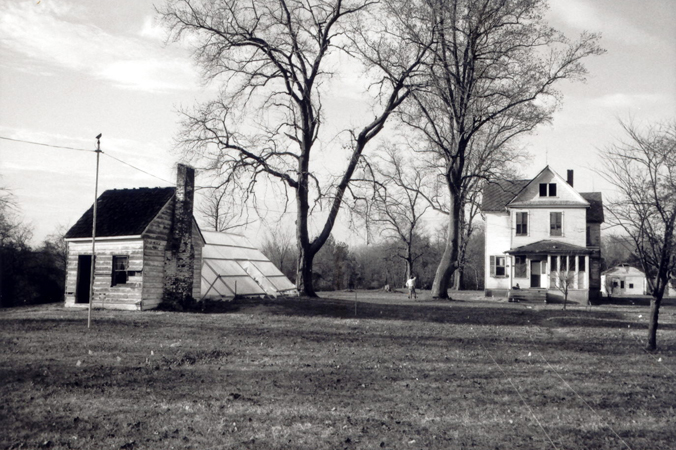
Surveyor’s Shed in the foreground left with Colbert House in the background right.
While washing artifacts in the wet lab, Robert has come across a lot of .22 shell casings. Just this past week he washed seven. Each time one appears in an artifact bag, Robert chuckles and says “this shell casing might be one that my mom shot at the snake in the tree – and missed!”
Robert looks over some of the 20th century items excavated at Ferry Farm that, who knows, might have belonged to him in his youth.
Sixty years have passed since the Bailey family first came to live at Ferry Farm, but the past certainly comes full circle and is alive again when Robert empties another artifact bag onto the tray and begins to sort its contents. His connection with our archaeological site provides staff with many opportunities to record and analyze more about Ferry Farm in the 20th century. Robert’s deep commitment to helping preserve George Washington’s boyhood history, combined with his own unique insights, creates a new understanding about Ferry Farm for Robert too.
Robert’s history lies mostly in the topmost soil layers of the site as not enough time has passed to deeply bury his things. Although Robert’s lost marbles and plastic army men are mixed in with excavated toys dropped by other boys and girls, it’s fun to hear him say “I wonder if this was mine?”
Last week, another archaeological excavation season began at George Washington’s Ferry Farm. Here are some scenes from the first week of digging.
Orientation for the dig staff.
Laura Galke, dig site director, explains how to properly complete a context register form, which helps track where an artifact was found.
Moving equipment to the dig site.
Dry screens ready for use.
Munsell books, pens, sharpies, scissors, chaining pins, plumb bobs, line levels, trowels, string and duct tape AKA archaeology supplies!
All the wheelbarrows!
Gathering shovels. Shovels are important.
Did we mention shovels are important?
The dig site is waiting.
Dig, dig, dig.
Rooting out the artifacts
Scraping dirt into a dust pan to be screened.
Brooms and buckets.
Documenting the work is crucial to excavating properly.
On weekdays, see Ferry Farm’s archaeologists working at the excavation site from now through late-June or, if you can’t visit before June, spend a day on the dig site by watching the video below.
Each summer. students from the University of South Florida attend a field school at George Washington’s Ferry Farm to learn practical aspects of archaeological excavations. This is what they said about their experience.
On weekdays, see Ferry Farm’s archaeologists at work on the excavation site from now through mid-June.
Each summer, archaeologists from across the United States come to George Washington’s Ferry Farm for about two months of excavations on and around the site of Washington’s boyhood home. These are their stories.
On weekdays, see Ferry Farm’s archaeologists at work on the excavation site from now through mid-June.