Lives and Legacies

Tag: archaeologist

  • These Are A Few Of My Favorite (Broken) Things: Cobalt Blue Decanter Stopper

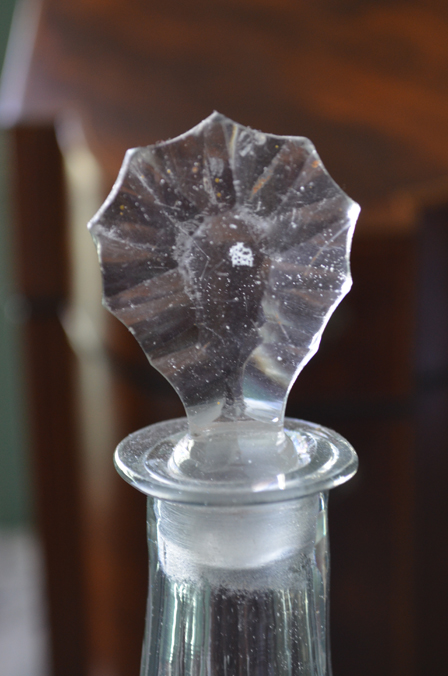
    Archaeologists are somewhat unique in their appreciation for all things broken, mostly due to the coveted information discarded items can tell us about those who died long ago.  However, occasionally a fragment is unearthed which is both informative and beautiful.  Such is the case with a lovely cobalt blue decanter stopper excavated on the grounds of Historic Kenmore.  Made from leaded glass to increase clarity, it seems quite heavy when placed in the hand.  Six carefully hand-cut flutes adorn each side and when held up to a light it exhibits violet-colored highlights that accent the piece perfectly.  Just the stopper alone is beautiful. Imagine how striking the entire decanter would have looked! Conveniently enough, that’s my job!
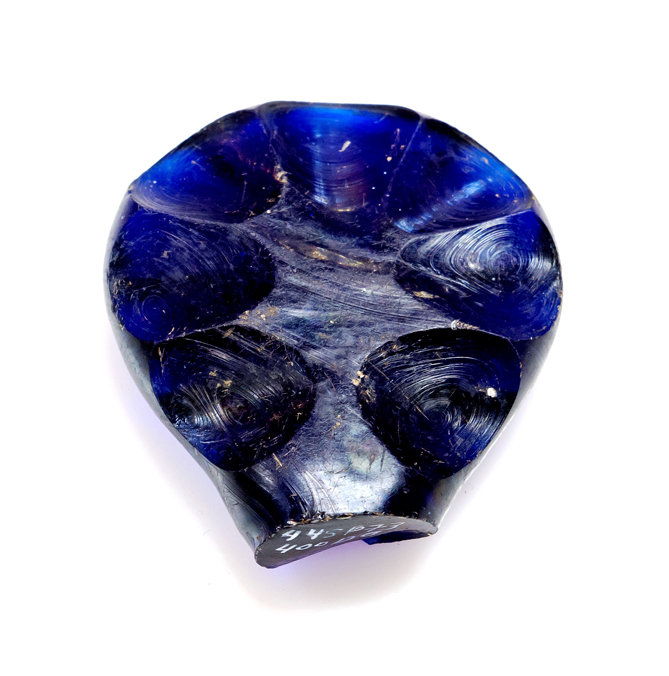
    Cobalt Stopper

    During the late 18th century, the decanter and its stopper graced one of the rooms at Kenmore and held either fortified wine like Madeira, Port, and Sherry or a stiffer spirit such as rum or gin.  It may have been part of a set and adorned with gold gilding that spelled out which heady beverage was contained within. I picture the decanter being picked up by one of the Lewis family’s enslaved servants on a dark night and a glint of purple from deep within the cobalt bottle shining as it reflects off of a candle while dark burgundy Madeira is poured forth into a waiting cup.

    All musings aside, however, the reality is that this stopper (which I am clearly obsessed with) also teaches us about how Fielding Lewis and his family lived.  The decanter was a showy piece meant for display.  It could be argued that, while it was a functional vessel, its primary purpose was to emphasize the wealth of the family and to impress guests.

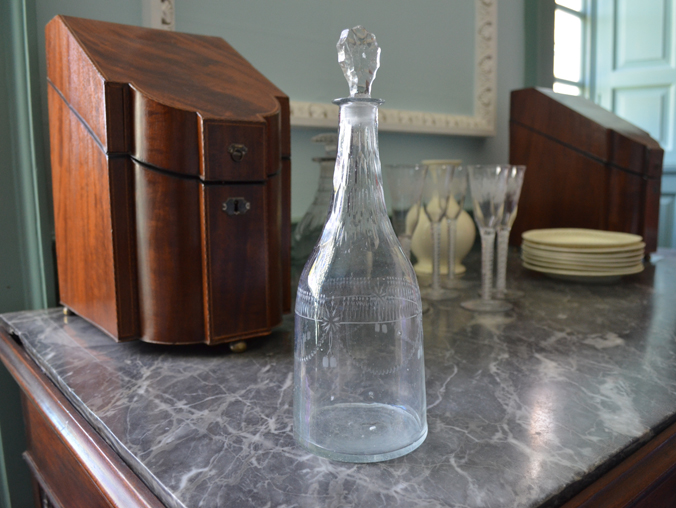
    For us today, the stopper has a practical use. Meghan Budinger, Kenmore’s curator, was able to locate a similar vessel using the excavated stopper as a guide. While the decanter on display in Kenmore’s dining room is clear instead of cobalt blue, its shape and design closely match the cobalt decanter and stopper owned by the Lewises.  Meghan continues her search for a blue decanter.
    Kenmore Decanter (2)

    Still, visitors and obsessed archaeologists alike may marvel at its beauty.  In fact, most of the ceramics and glass in that room have archaeological equivalents that have informed Meghan’s choices.  Thus, when asked by visitors why we have selected the beautiful tablewares before them, we can confidently answer that it is not just because they are pretty (so very, very pretty!) but also because, thanks to the archaeological record, we know the Lewis family owned pieces like them!
    Kenmore Decanter (1)

    You can see the clear glass decanter that is based on the cobalt blue stopper while also learning more about their ceramic cousins and about how archaeology has informed the choices of objects displayed inside Kenmore on a new specialty tour of the house called “Posh Pots and Decadent Dishes: The Lewis Family Life through their Ceramics.” Learn more about this new tour here. If antique glass is more your style, you can read more about Kenmore’s “Beautiful Glass” on The Rooms at Kenmore blog here.

    Mara Kaktins, Archaeologist
    Ceramics & Glass Specialist
  • Video: UV Light in Museums

    Ultraviolet light is an important and useful tool within the museum world. In this video, we show you how archaeologists and curators use UV light in their work with artifacts and historic objects.


  • Photos: It’s Spring. Let’s Dig!

    Dig Site Opens (15)

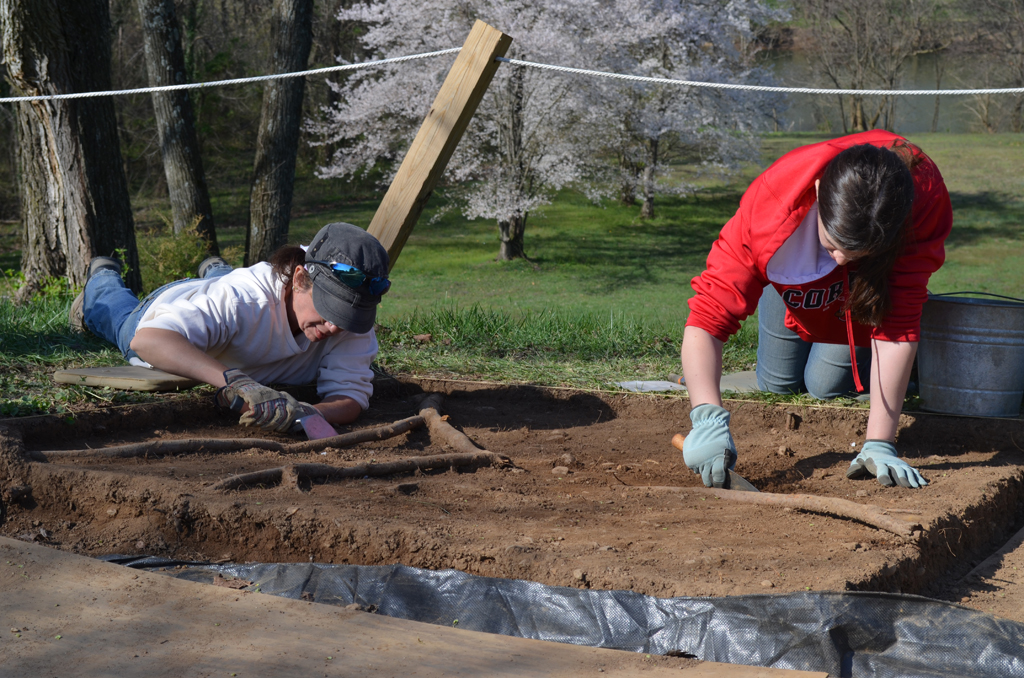
    Last week, another archaeological excavation season began at George Washington’s Ferry Farm. Here are some scenes from the first week of digging.

    On weekdays, see Ferry Farm’s archaeologists working at the excavation site from now through late-June or, if you can’t visit before June, spend a day on the dig site by watching the video below.

    Learn more about Ferry Farm archaeology here.

  • Video: Inside the Archaeology Lab – Labeling Artifacts

    Archaeologists spend much more of their time working to determine the significance of an object than actually finding the object through excavation. This analytical work is done in an archaeology lab, where t is vital to keep the artifacts organized. This video shows how artifacts are labeled to help make sure nothing gets lost.

    Learn more about archaeology at Ferry Farm at http://bit.ly/1Ob37in.

  • Video: Tricks of the Trade – Archaeology Lab Edition

    Sometimes, it can be a challenge to precisely identify an artifact. When faced with this challenge, archaeologists working in the lab put their five senses to work and call upon some interesting ‘tricks of the trade’ to make those difficult identifications.

    Learn more about archaeology and being an archaeologist during Archaeology Day at Ferry Farm on Monday, February 15 from 10:00 a.m. – 4:00 p.m. Visit http://www.ferryfarm.org for event details.

  • After Digging: What Happens in the Archaeology Lab?

    Intro to Lab (3)
    Artifacts excavated at George Washington’s Ferry Farm.

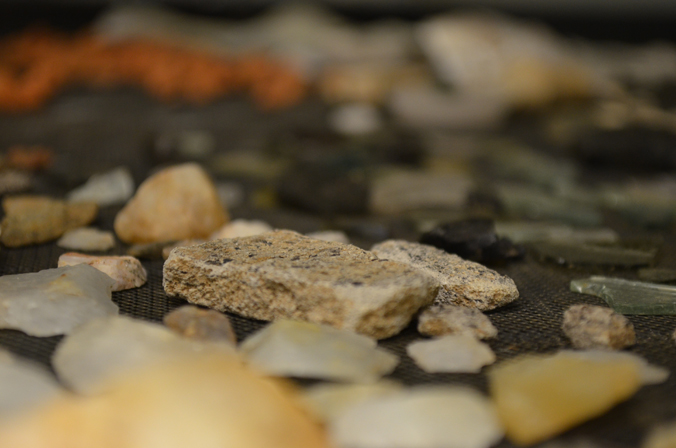
    Here at Ferry Farm for the last 13 years, professional archaeologists have been exploring the local landscape, digging hundreds of excavation units in their quest to reveal the history of all those who lived here, including, of course, the Washington family.  Their investigative efforts have resulted in a multitude of artifacts dating from the earliest prehistoric Native American occupation of this riverine site, through the Colonial and Civil War periods, all the way to a 1990s occupation of the farm.

    So, what happens to all the artifacts that are uncovered and dug up with trowels and shovels? All of those items are important pieces to the puzzle of reconstructing the history of this site, but only if they are cleaned up and recognizable.  That is the purpose of the archaeology lab here at George Washington’s Ferry Farm.   With the help of both professional staff and dedicated volunteers, every single artifact that has come out of the ground is washed, dried, identified, labelled, and, finally, catalogued into a searchable computer database.

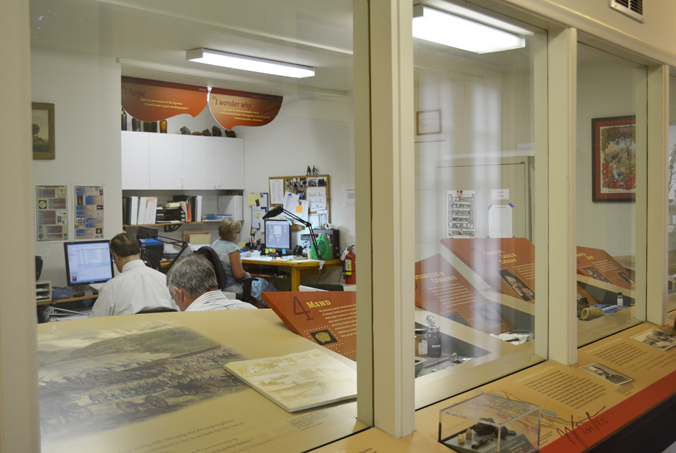
    The archaeology lab is located within the Ferry Farm Visitor Center which houses museum exhibits, storage rooms for the artifacts, and other administrative offices.  Visitors making their way through the exhibits can check out our lab spaces through large windows, allowing them a peek into our work spaces and giving them the ability to see the different processes the artifacts go through.

    Intro to Lab (1)
    The visitor’s view of the Archaeology Lab.

    While archaeological excavations at Ferry Farm take place every year, actual digging occurs only three months out of the year.  Artifact processing and analysis in the lab goes on for 12 months out of the year.  Archaeologists often say that “1 day in the field equals 3 days in the lab” and, in general, that adage is true.  Once the artifact bags come into the lab, it can be six months to one year or more before an entire artifact collection is completely processed.

    So where does it all start? Well, in the wet lab…

    Wet Lab

    Intro to Lab (4)
    Where artifacts are washed inside the Wet Lab.

    The wet lab is a small room where the artifacts are washed and dried.  It is fitted out with two sinks – the artifacts are washed only with water – and a countertop to provide space for the washing process.  Toothbrushes, dental picks, pipe cleaners, washtubs, and other cleaning tools are handily arranged for easy access by the staff.

    The washing process is pretty straightforward.  The artifacts, covered with dirt from the field excavation, are poured out of the bag onto a tray.  The washer separates the different items on the tray and proceeds to carefully wash them with a tooth brush and water.  After a quick rinse, the washed items are placed on a tray covered with mesh and the tray is placed in a drying rackThe washing process can be seen in this video. The artifacts stay on the drying racks for at least a week to make sure they are completely dried before being bagged.  Large windows allow visitors to watch this process and to see the “treasures from the earth” as they are uncovered and completely revealed, often for the first time in 200 years or more!

    Dry Lab

    Intro to Lab (2)
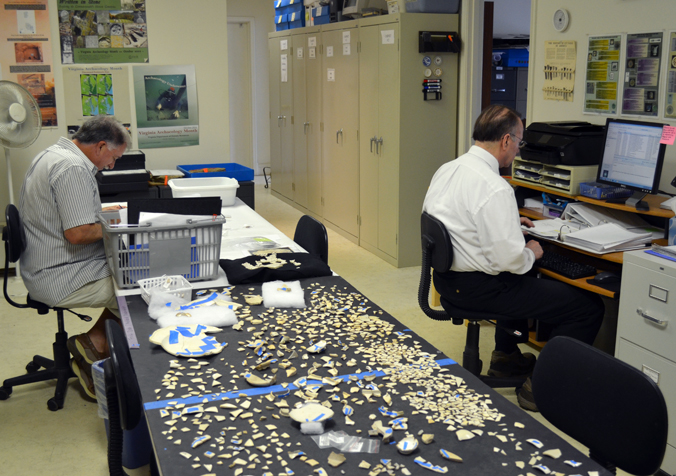
    Volunteers work in the Dry Lab.

    The dry lab is a larger space containing desk space for the staff, the small finds cabinets, and long tables used for labeling and other projects.  It is here that the dried artifacts are placed into acid-free plastic bags, catalogued, and then labelled by the staff and volunteers.  Our staff spends quite a bit of time cataloguing the artifacts, which involves identifying, counting, measuring, and weighing all the artifacts.  The cataloging process can be seen in this video. Each artifact is labeled with identifying information and the address of the exact location where it was found on the site.  Research is always an ongoing activity as identifying and dating specific artifacts helps in understanding Ferry Farm’s past and the people who once occupied this ground.

    Time is also spent on the mending, conservation, and analysis of artifact collections. The small finds cabinets contain hundreds of unique artifacts that are studied because of their personal relationships to the individuals that lived here.  Long term projects, such as our current white-salt glazed ceramic mending, take place in the dry lab space, where a table covered with hundreds of ceramic sherds awaits matching. And as with the wet lab, museum visitors can look through the windows and observe all the projects being currently worked on.

    Having an archaeology lab on site is very convenient for the archaeologists that work at Ferry Farm as it allows them easy access to the artifacts at all stages of their processing.  Future plans for Ferry Farm rely on knowing what has been found here and weaving together that data with the historical record.  It also gives the public an exciting chance to see all the work that goes into getting the artifacts ready for further research.

    Judy Jobrack, Archaeologist
    Assistant Lab Supervisor

  • Video: Inside the Archaeology Lab – Cataloging Artifacts

    Archaeologists spend much more of their time working to determine the significance of an object than actually finding the object through excavation. This analytical work is done in an archaeology lab. First, artifacts must be washed, which you can see here. Then, the artifacts are cataloged as the video below shows.

    Learn more about archaeology at Ferry Farm here.

  • Video: Inside the Archaeology Lab – Washing Artifacts

    Archaeologists spend much more of their time working to determine the significance of an object than actually finding the object through excavation. This analytical work is done in an archaeology lab. Before analysis can begin, the newly uncovered artifacts have to be thoroughly washed. This video shows how.

    Learn more about archaeology at Ferry Farm here.

  • Video: A Day at the Dig

    In this video, spend a day with the archaeologists as they excavate at George Washington’s Ferry Farm.

    Learn more about Ferry Farm archaeology at
    http://kenmore.org/ferryfarm/archaeology/ff_arch.html

  • Meet the Archaeologists: Field School Edition

    Each summer. students from the University of South Florida attend a field school at George Washington’s Ferry Farm to learn practical aspects of archaeological excavations. This is what they said about their experience.

    On weekdays, see Ferry Farm’s archaeologists at work on the excavation site from now through mid-June.