Lives and Legacies

Tag: artifact

  • Show Horse: How Colonial Horse and Rider Looked Their Best

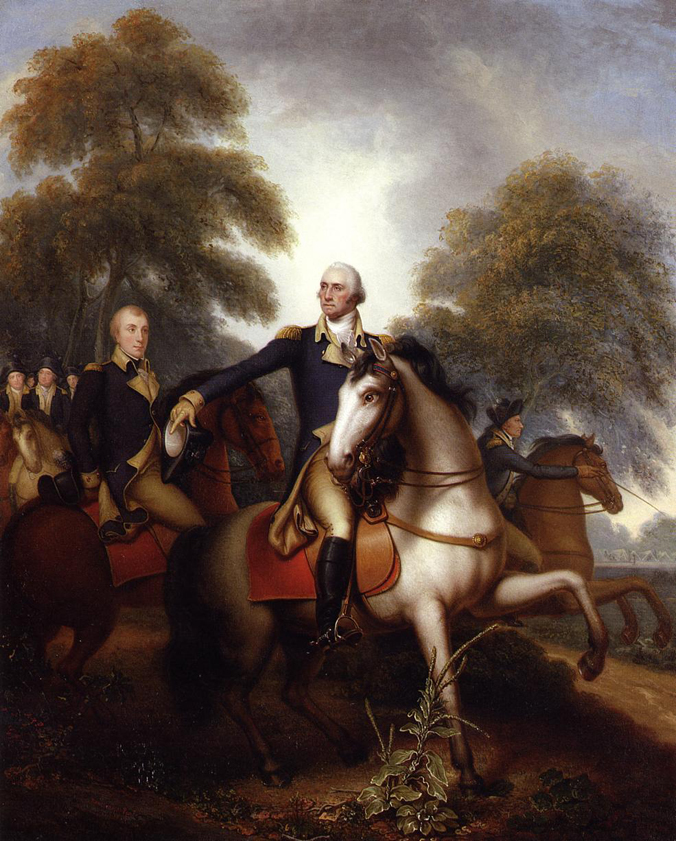
    "Washington Before Yorktown" by Rembrandt Peale (1823) Public domain. Courtesy: The Athenaeum/Wikipedia
    “Washington Before Yorktown” by Rembrandt Peale (1823) Public domain. Courtesy: The Athenaeum/Wikipedia

    Editor’s Note: This is the first of two posts inspired by this year’s Summer Olympics. This week, it’s an equestrian-inspired post from Archaeologist Laura Galke, who briefly looks at some of the ornaments found on 18th century horse tack.

    What an impressive sight the Washingtons made as they rode their horses with bridles and straps embellished with these shiny brass decorations.  Today, people who study these decorations refer to them as “mounts” or “leather ornaments.”  They were used to ornament the leather straps, nosebands, harnesses, and reins of horses. Individual riders enjoyed these, but they also could adorn steeds that pulled carriages.  About twenty of these ornaments have been found during recent excavations at Ferry Farm.
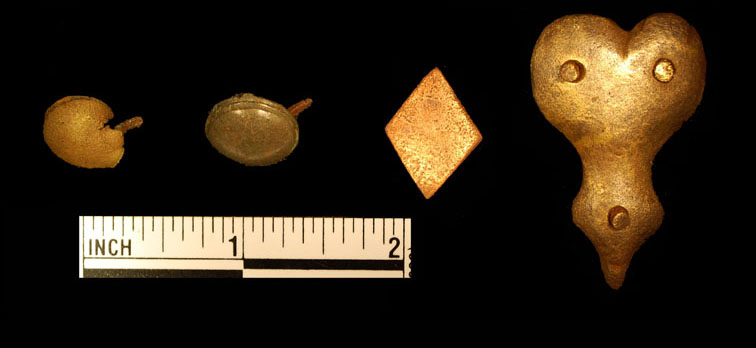
    Ferry Farm leather ornaments dating from the 1700s. The Harwoods, Strothers or the Washingtons may have purchased these.
    Ferry Farm leather ornaments dating from the 1700s. The Harwoods, Strothers or the Washingtons may have purchased these.

    Colonial Virginians, including George Washington, took pride in owning horses. Adorning their stallions with such flashy decorations attracted attention to their owners as they journeyed through the streets, on the ferries, and along the trails of Colonial Virginia and beyond.  It was also a great way to draw attention to a favorite steed or an elegant carriage in a public setting. Unlike household adornments – which were esteemed by an intimate circle of family, friends, and enslaved attendants – investments in these leather ornaments were appreciated by a wider audience as rider and horse proudly paraded about the colony and region.
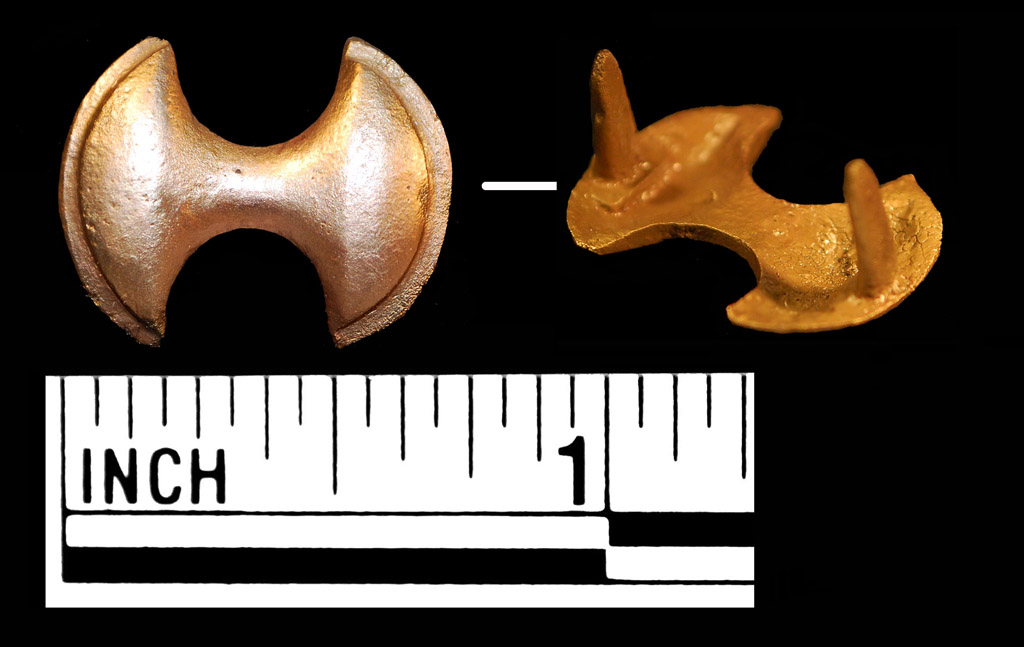
    This copper-alloy mount dates from the mid-to-late 1700s.
    This copper-alloy mount dates from the mid-to-late 1700s.

    In Colonial households, men typically purchased these showy trimmings. Indeed, they bought most things associated with the stable: horses or transportation.  Horse milliners were the source for such tack.  However, purchases related to the health of livestock, such as medicine, was the responsibility of women.
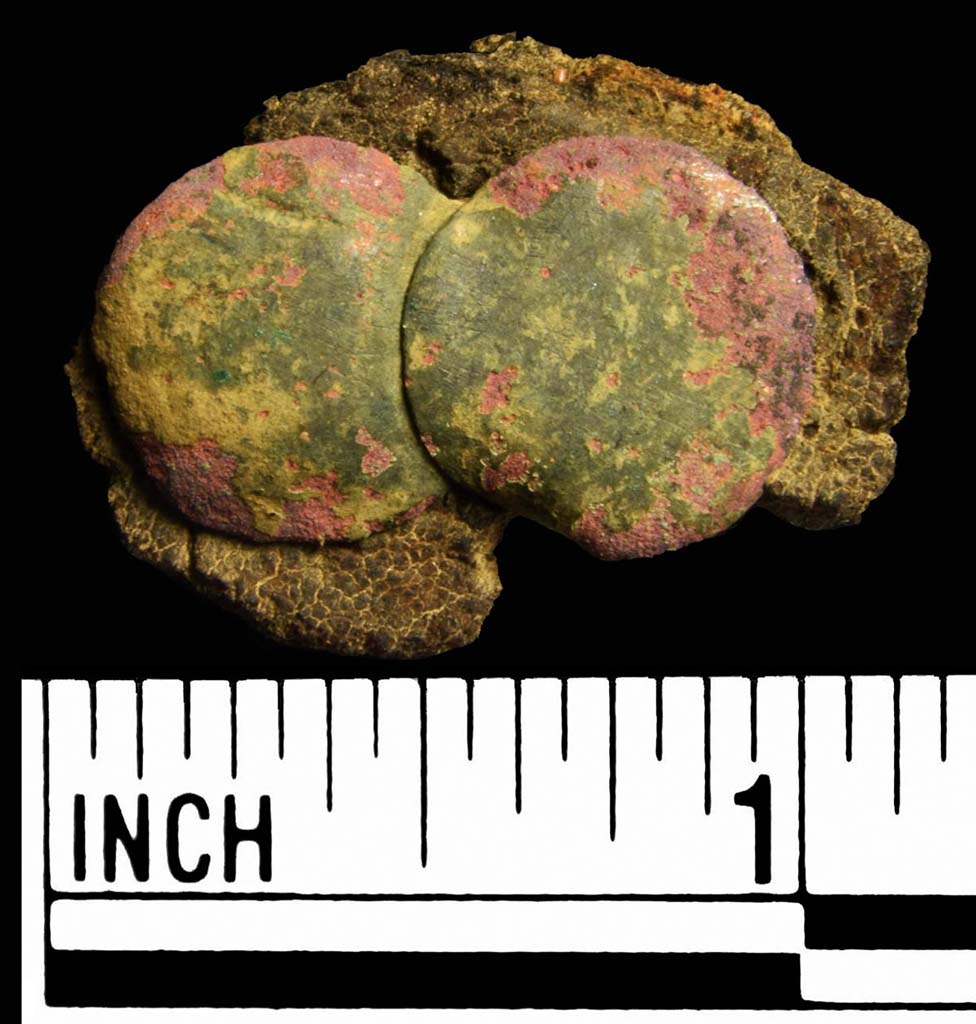
    Copper naturally repels the bacteria that break down organic materials such as leather. These mid-to-late 1700s Washington family ornaments have actually preserved a small portion of the original leather straps they adorned.
    Copper naturally repels the bacteria that break down organic materials such as leather. These mid-to-late 1700s Washington family ornaments have actually preserved a small portion of the original leather straps they adorned.

    George Washington was an accomplished rider praised by Thomas Jefferson as “the best horseman of his age, and the most graceful figure that could be seen on horseback.”  Leather ornaments and mounts like those excavated at Ferry Farm helped to create that graceful appearance for George and all horse-loving Virginians.

    Laura Galke, Archaeologist
    Site Director/Small Finds Analyst

    Further Reading

    Cofield, Sara Rivers
    2008  A Preliminary Study of 17th– and 18th-Century Leather Ornaments from Maryland.  Maryland Archaeology 44(2):12-27.  Available online http://www.jefpat.org/research.html

    Griffiths, Nick
    2004  Harness Pendants and Associated Fittings.  In The Medieval Horse and its Equipment, c. 1150 – c. 1450, edited by John Clark, pp. 61-71.  The Boydell Press, Woodbridge.

    McBane, Susan
    1992  The Illustrated Guide to Horse Tack.  David and Charles.  Milanostampa, Brunel House Newton Abbot Devon.

    Noel Hume, Ivor
    1991  A Guide to Artifacts of Colonial America.  Vintage Books, New York.

    Vickery, Amanda
    2009  Behind Closed Doors: At Home in Georgian England.  Yale University Press, New Haven.
  • Video: Inside the Archaeology Lab – Mending with Archival Glue

    In this video, we discuss the importance of using archival glue to mend artifacts and demonstrate the process used to make this special glue.

    For information about the safe use of these chemicals, visit http://www.collectioncare.org/MSDS/b72MSDS.pdf

  • Video: Inside the Archaeology Lab – ‘Vesselization’

    In this video, we show you how archaeologists piece together artifacts in order to learn about the object and, most importantly, the people who used the object.

  • These Are A Few Of My Favorite (Broken) Things: Cobalt Blue Decanter Stopper

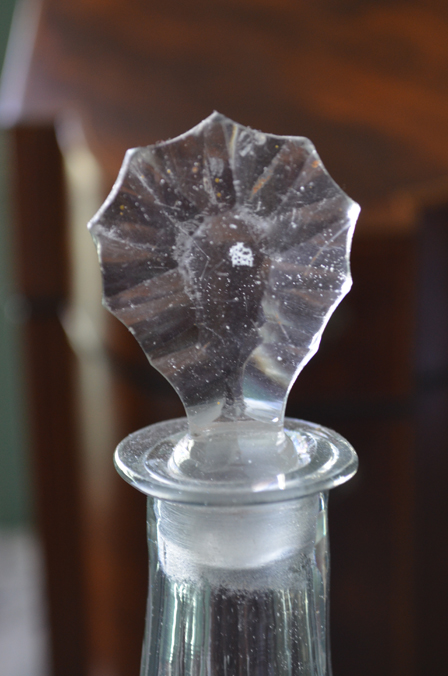
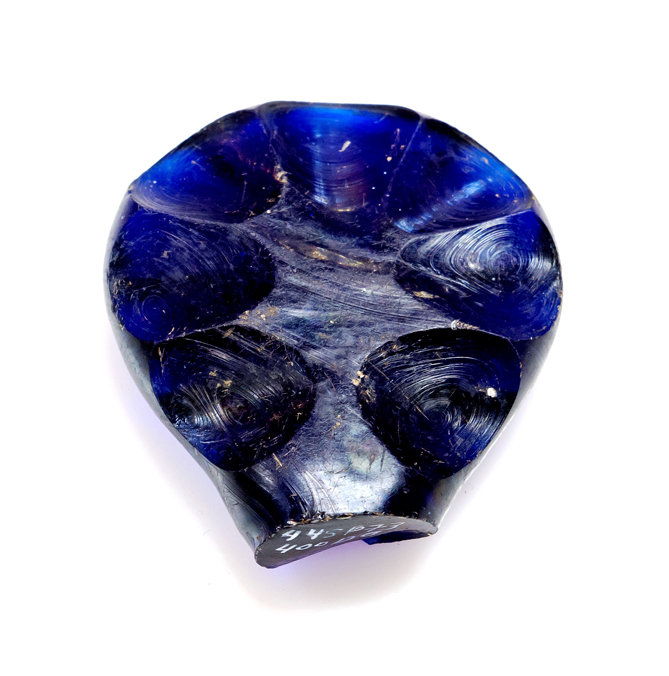
    Archaeologists are somewhat unique in their appreciation for all things broken, mostly due to the coveted information discarded items can tell us about those who died long ago.  However, occasionally a fragment is unearthed which is both informative and beautiful.  Such is the case with a lovely cobalt blue decanter stopper excavated on the grounds of Historic Kenmore.  Made from leaded glass to increase clarity, it seems quite heavy when placed in the hand.  Six carefully hand-cut flutes adorn each side and when held up to a light it exhibits violet-colored highlights that accent the piece perfectly.  Just the stopper alone is beautiful. Imagine how striking the entire decanter would have looked! Conveniently enough, that’s my job!

    Cobalt Stopper

    During the late 18th century, the decanter and its stopper graced one of the rooms at Kenmore and held either fortified wine like Madeira, Port, and Sherry or a stiffer spirit such as rum or gin.  It may have been part of a set and adorned with gold gilding that spelled out which heady beverage was contained within. I picture the decanter being picked up by one of the Lewis family’s enslaved servants on a dark night and a glint of purple from deep within the cobalt bottle shining as it reflects off of a candle while dark burgundy Madeira is poured forth into a waiting cup.

    All musings aside, however, the reality is that this stopper (which I am clearly obsessed with) also teaches us about how Fielding Lewis and his family lived.  The decanter was a showy piece meant for display.  It could be argued that, while it was a functional vessel, its primary purpose was to emphasize the wealth of the family and to impress guests.

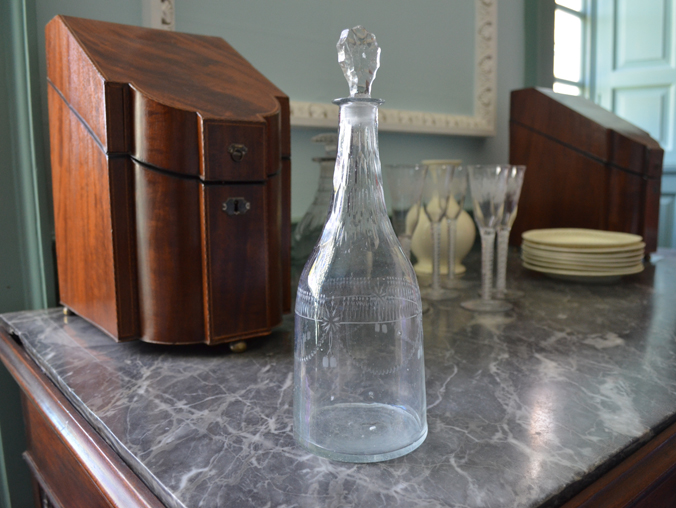
    For us today, the stopper has a practical use. Meghan Budinger, Kenmore’s curator, was able to locate a similar vessel using the excavated stopper as a guide. While the decanter on display in Kenmore’s dining room is clear instead of cobalt blue, its shape and design closely match the cobalt decanter and stopper owned by the Lewises.  Meghan continues her search for a blue decanter.

    Kenmore Decanter (2)

    Still, visitors and obsessed archaeologists alike may marvel at its beauty.  In fact, most of the ceramics and glass in that room have archaeological equivalents that have informed Meghan’s choices.  Thus, when asked by visitors why we have selected the beautiful tablewares before them, we can confidently answer that it is not just because they are pretty (so very, very pretty!) but also because, thanks to the archaeological record, we know the Lewis family owned pieces like them!

    Kenmore Decanter (1)

    You can see the clear glass decanter that is based on the cobalt blue stopper while also learning more about their ceramic cousins and about how archaeology has informed the choices of objects displayed inside Kenmore on a new specialty tour of the house called “Posh Pots and Decadent Dishes: The Lewis Family Life through their Ceramics.” Learn more about this new tour here. If antique glass is more your style, you can read more about Kenmore’s “Beautiful Glass” on The Rooms at Kenmore blog here.

    Mara Kaktins, Archaeologist
    Ceramics & Glass Specialist

  • Video: Tricks of the Trade – Archaeology Lab Edition

    Sometimes, it can be a challenge to precisely identify an artifact. When faced with this challenge, archaeologists working in the lab put their five senses to work and call upon some interesting ‘tricks of the trade’ to make those difficult identifications.

    Learn more about archaeology and being an archaeologist during Archaeology Day at Ferry Farm on Monday, February 15 from 10:00 a.m. – 4:00 p.m. Visit http://www.ferryfarm.org for event details.

  • Masonic Pipe in 3D

    139_Masonic_pipe_NO_SCALE.gif
    Click on the photo for to link to a 3D image the you can zoom, rotate, and manipulate.

    Recently, a 3D image of a smoking pipe was added to the Virtual Curation Lab, an online project of Virginia Commonwealth University.  You can view rotate, zoom, and manipulate the image by clicking the photo above or by clicking here.  The smoking pipe was discovered within the fill of the main cellar of the Washington family house at George Washington’s Ferry Farm, his boyhood home.  The pipe features the square and compass and twin pillars that distinguish this as a masonic pipe.  Such motifs were very popular.  The masonic symbols faced the smoker and fluting characterized that portion visible to surrounding friends.  The design elements used suggest that this pipe was likely made in the northeast of England sometime between 1770-1810, in places like Hull.

    George Washington was initiated as an apprentice mason on November 4, 1752, passed to fellow craft on March 3, 1753, and became a master mason on August 4, 1753. He achieved all of these masonic ranks at Fredericksburg Lodge No. 4.  While it is certainly possible the masonic pipe belonged to George, he was one of four notable masons associated with Ferry Farm.  The other three were Fielding Lewis, Hugh Mercer, and George Weedon, who each may also have left this specimen behind in the archaeological record.

    The Virtual Curation Laboratory (VCL) at Virginia Commonwealth University, headed by Dr. Bernard K. Means, scanned this pipe bowl in three dimensions.  3D scanning provides two types of digital models: a three-dimensional image to be viewed on a monitor and, with the use of a special 3D printer, a plastic replica of the item.  Replicas can be printed at a larger scale, allowing details to be viewed more easily.  VCL has used the technology to scan bones from extinct passenger pigeons, allowing researchers from around the nation to compare these known digital models to bird bones in their own assemblages so that they can identify passenger pigeons in their collection.

    Scanning
    The pipe bowl being scanned in 3D.

    Three-dimensional scanning allows The George Washington Foundation to provide greater public access to fragile artifacts both on the Internet virtually and as 3D printed copies that visitors can see and hold.  Making 3D images available online allows more people to see these artifacts than could ever visit Washington’s boyhood home.  We can even make these digital files available to researchers on the web, allowing others to 3D print them wherever in the world they may be.  In the field, 3D replicas allow staff to engage visitors, showing them (for example) a wig hair curler or tobacco pipe, then inviting them to guess how the object was used in the past.

    Lauren
    3D replicas allow Ferry Farm archaeologist Lauren Volkers to share rare and unique artifacts with visitors when the archaeological dig site is open.

    Fragile ceramic sherds can be printed in plastic, allowing visitors to mend the pieces together as an educational exercise.  Such access allows the original objects to be on exhibit while simultaneously allowing maximum access to the replicas physically and digitally.

    Vivian
    Archaeologist Vivian Hite uses a 3D printed plastic replica of the masonic pipe to engage young visitors.

    Laura Galke, Archaeologist
    Site Director/Small Finds Analyst

  • Tallio! Fox Hunting at Christmas

    Although Fielding Lewis certainly built a home capable of hosting the elaborate Christmas celebrations popular in 18th century Virginia, Historic Kenmore probably never saw occasions on such a lavish scale, with the possible exception of the family’s first Christmas in the house in December 1775.  If the family hosted the traditional Christmas celebration, Fielding and Betty would have welcomed lots of friends and family, serving them fancy dinners and entertaining them with dancing and music. They and their guests might have enjoyed fox hunts as well.

    Virginians regularly included fox hunts as part of their Christmas celebrations.[1]  In an era long before environmental conservation, colonial Virginians viewed foxes as pests that endangered livestock, which is why they hunted them so relentlessly.[2]  Additionally, during hunts, gentry men like George Washington could show off their hunting dogs and their skill at horseback riding while chasing foxes through the countryside.

    George Washington loved fox hunting. In the year 1768, for example, he went on fox hunts 40 different times.  These hunts often lasted hours.  On a March day in 1768, he caught “a fox with a bobd Tail & cut Ears, after 7 hours chase.

    George owned numerous hunting dogs and “helped develop the breed known as the American Foxhound.”  These hounds chased the fox and hunters on horseback chased the hounds.  The chase required galloping horses to jump over streams, bushes, and fences and riders to duck under low-hanging tree limbs.  Fox hunting allowed wealthy Virginians to show-off their horse riding skills and George was widely considered an excellent horseman.

    Hunters also wore special clothes.  George went hunting in “a blue riding frock and scarlet waistcoat threaded with gold lace and topped by a black velvet cap.  He wore high boots and carried a . . . riding crop.”[2]    He wore cuff links that said “tallio” on them – that’s what hunters would shout when they found a fox.  These cufflinks were unearthed by archaeologists at George Washington’s Ferry Farm and their discovery hint at George’s interest in fox hunting even in his younger years.  He also hung paintings of fox hunts on the walls of his home at Mount Vernon.

    TallioCufflinks
    Cufflinks discovered in the parlor root cellar and yard of the Washington House at Ferry Farm show a fox running across grassy rolling hills with the word “tallio” engraved above. This is a popular 18th century motif.

    Like the George’s paintings at Mount Vernon, Fielding Lewis included foxes in the decor of his home. At Kenmore, the Lewis children were always reminded of the sneaky ways of foxes when they looked at a picture above the Dining Room fireplace.  The plaster image illustrates the Aesop’s fable known as “The Fox and the Crow.”

    Fox Crow Overmantle (1)
    This plaster over-mantle in Historic Kenmore’s dining room depicts the Aesop’s Fable known as “The Fox and the Crow.”

    One day a fox saw a crow flying with a piece of cheese in its beak and settle on a branch of a tree.  “That’s for me!’ said Master Fox, and he walked up to the foot of the tree.

    “Good-day, Mistress Crow,” he cried, “How well you are looking today; how shiny your feathers; how bright your eyes.  Your voice must be more beautiful than that of other birds.  Won’t you, please, sing me a song that I may know you are the Queen of Birds?

    The crow, quite happy to hear such praise, began to sing her best – “Caw, Caw, Caw”, but when she opened her beak, the piece of cheese dropped to the ground and was snapped up by Master Fox.

    Fox Crow Overmantle (2)
    A close-up view of the over-mantle shows Mistress Crow dropping her cheese to be scooped up by Master Fox.

    “Aha, Mistress Crow,” said he.  “That was what I wanted.  In exchange for your cheese I will give you some advice for the future: “Beware of false flattery.”

    This Christmas, some sneaky foxes have found their way into Kenmore.

    Fox in Kemore 2
    A sneaky fox hiding somewhere inside Kenmore.

    During the holiday season, younger visitors can help us look for them in a special scavenger hunt and learn about the colonial Christmas custom of fox hunting.

    Zac Cunningham
    Manager of Educational Programs

    [1] Philip Vickers Fithian, Journal & Letters of Philip Vickers Fithian, 1773-1774: A Plantation Tutor of the Old Dominion, ed Hunter Dickinson Farish (Williamsburg, Va., 1943), entry for Dec. 18, 1773: 44

    [2] Jane Carson, Colonial Virginians at Play, Williamsburg, VA: Colonial Williamsburg Foundation, 1998: 62-64

    [3] Ron Chernow, Washington: A Life, New York: Penguin Press, 2010: 124-5.

  • A ‘Link’ Between the Washingtons and William and Mary

    William III sleeve link
    Close-up of a mid-1700s sleeve link recovered at Ferry Farm. It features the image of King William III.

    This cuff link or ‘sleeve button’ – made in the mid 1700s – was recovered by archaeologists from George Washington’s boyhood home at Ferry Farm.  It is one of the earliest examples of the Washington family’s resistance to King George III.  What makes this sleeve button so interesting is the man depicted:  King William III, who ruled England with Queen Mary.  This sleeve link was made two generations after the death of this monarch.  Nonetheless one of the Washington brothers wore this politically provocative accessory.  What made William III, a monarch who died in 1702, an attractive choice for colonial apparel during the mid-1700s?  The answer resides in this sleeve link’s political dimensions and reflects the Washington family’s early resistance to Crown policy.

    November is an appropriate time to remember the polemical reign of William and Mary:  they were married on November 4, 1677 and William landed at Torbay, England, November 5, 1688 to begin battles against the supporters of King James II, then ruler of England.  When the unpopular James fled to France with his wife and young son (heir to the throne) parliament met and, after some deliberation, offered the monarchy to William and Mary.  Individual rights, representative government, and justified rebellion became associated with the rule of William and Mary and were part of annual celebrations held for this sovereign pair for generations.  Popular items such as coins, playing cards, plates, mugs, and pamphlets reinforced these connotations throughout their reign and beyond.

    Cuff links, such as the William III link from Ferry Farm, were popular fashion accessories throughout the 1700s.  Made from a molded glass ‘gem’ (see photo) originally situated within a copper-alloy setting (not shown), this sleeve button featured King William III’s silhouette.  It was modeled after coins that depicted the English monarch beginning in the mid-1690s (see image).  At that time, the king’s profile, along with his name “Gulielmus” (in Latin) followed by the initials “D. G.” – an abbreviation of the Latin dei gratia (by the grace of god [King]) – were prominently featured on currency.

    William III coin
    A 1697 sixpence featuring King William III. This silhouette (and text) inspired the design of the mid 1700s sleeve link from Ferry Farm.

    Beginning in the mid-1700s, when the Washingtons wore their William III sleeve link, tensions were growing between Britain and her North American colonies, incited by the colonists’ concern over the policies of King George III.  The Sugar Act and the Stamp Act taxed American colonists, even though they had no representation in parliament.

    Colonists asserted that this was a violation of their rights under the English Bill of Rights (enacted in 1689 under the reign of William and Mary).  Thanks to a popular campaign that originally began in the 1690s, William and Mary came to represent the right of subjects to resist a king who was abusing power, and this narrative proved to be enduring.  In fact, colonists supported this narrative with other figures in English history.  As the Washingtons were looking to William and Mary to legitimize their resistance to King George III, Thomas Jefferson took as his role model Oliver Cromwell, whose rebellion resulted in regicide and who was considered particularly militant by the colonists.  While the Washingtons owned cufflinks to celebrate William and Mary, Jefferson owned a miniature depicting the far more revolutionary Cromwell.

    Regardless, William III thus became a symbol for American colonists in general, and the Washington family in particular, as momentum grew to resist crown powers during the mid-1700s.  By wearing this sleeve link, the Washingtons proclaimed their enduring support for representative government.  And, we all know where that led—the American Revolution and birth of the United States, whose first president grew up at Ferry Farm.

    Laura Galke, Archaeologist
    Site Director/Small Finds Analyst

    Additional Reading

    Cofield, Sara Rivers
    2012  Linked Buttons of the Middle Atlantic, 1670-1800.  Journal of Middle Atlantic Archaeology 28:99-116.

    Greene, Jack P.
    1992  The Glorious Revolution and the British Empire 1688-1783.  In The Revolution of 1688-1689:  Changing Perspectives, edited by Lois G. Schwoerer.  Cambridge University Press, New York, pp. 260-271.

    McConnel, James Richard Redmond
    2012  The 1688 Landing of William of Orange at Torbay: Numerical Dates and Temporal Understanding in Early Modern England.  The Journal of Modern History 84(3):539-571.

    McConville, Brendan
    2006 The King’s Three Faces: The Rise and Fall of Royal America, 1688-1776.  University of North Carolina Press, Chapel Hill.

    Schwoerer, Lois G.
    1990  Celebrating the Glorious Revolution, 1689-1989.  Albion: A Quarterly Journal Concerned with British Studies.  22(1):1-20.

    1989  Images of Queen Mary II, 1689-95. Renaissance Quarterly, 42(4):717-748.

    1977  Propaganda in the Revolution of 1688-89.  The American Historical Review 82(4):843-874.

    Weil, Rachel J.
    1992  The Politics of Legitimacy: Women and the Warming-pan Scandal.  In The Revolution of 1688-1689: Changing Perspectives.  Cambridge University Press, New York, pp. 65-82.

    Wieldraaijer, Matthijs
    2010  Good Government and Providential Delivery:  Legitimations of the 1672 and 1688/89 Orangist Revolutions

  • In Search of Mary’s Mug

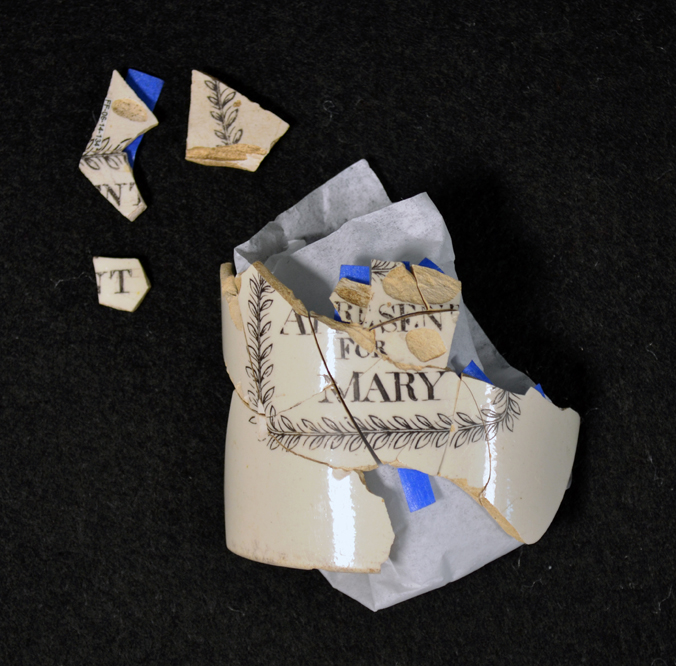
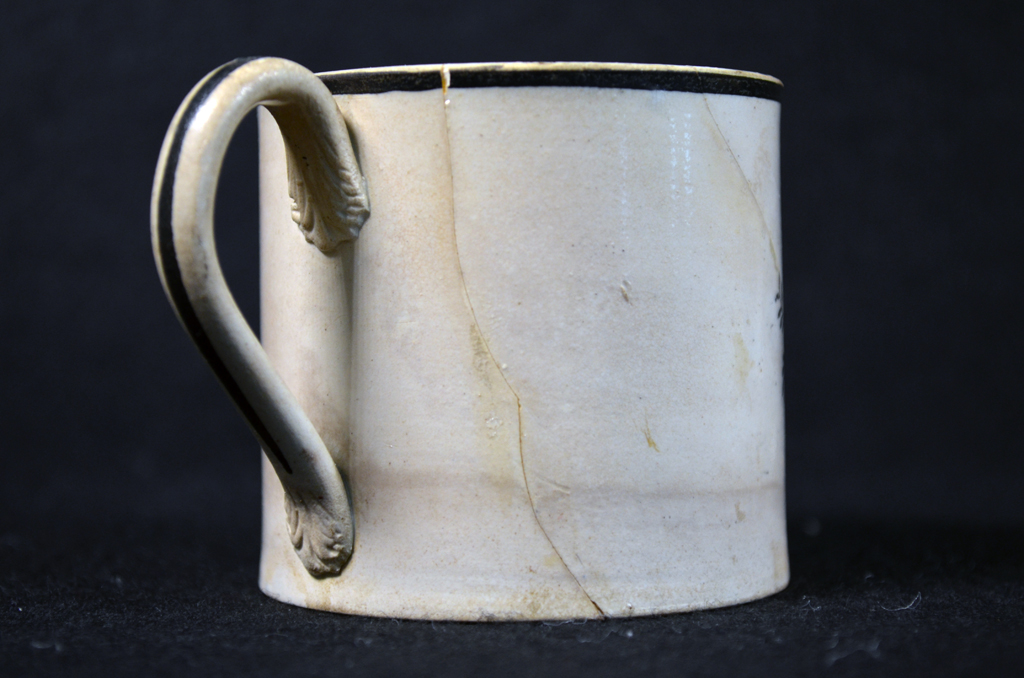
    Child Mugs (0)
    Child’s mug that reads “A Present for Mary” unearthed at George Washington’s Ferry Farm.

    Archaeologists are always trying to link artifacts with the actual people who lived at the sites we study.  As such, we get very excited when we find artifacts with people’s names on them.  It makes our job easy, right?  So, imagine our elation when a small creamware cup bearing the words “A Present For Mary” in black transfer print was unearthed at George Washington’s Ferry Farm.  People immediately assumed it must have belonged to George’s mother Mary Washington, the most famous Mary to live here.  However, upon closer inspection this theory totally unraveled.  The small cup was in fact a child’s mug manufactured long after Mary had grown up and, for that matter, probably after her death.  It could never have been owned by Mary Washington.  What seemed an open and shut case got a little more interesting.

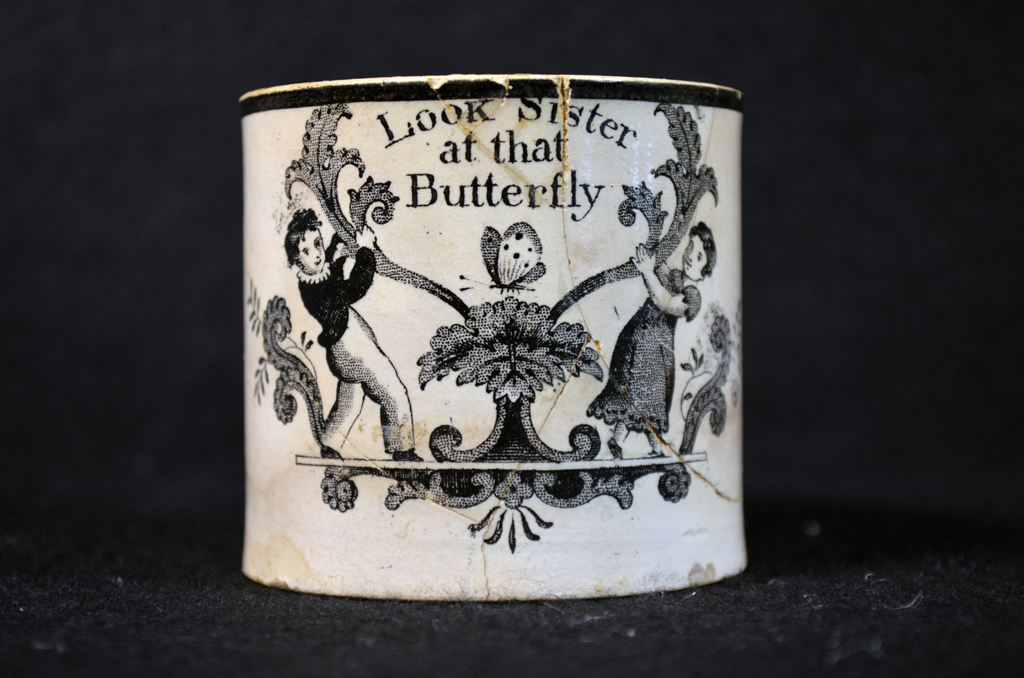
    First off, what was a child’s mug?  Well, it was a common and inexpensive small mug given to children as a reward for learning, doing well in Sunday school, or general good behavior.  The mugs were fairly small and decorated with the child’s name, bible verses, images of play, or references to learning.  Inspiration for these decorations came from the popular children’s books of the time.  A few common sayings found on these mugs were:

    A gift for___.
    A present for ___.
    A trifle for ____.
    A present for a good girl/boy.
    A present for writing well.
    A reward for industry.

    Child Mugs (2)

    Child Mugs (3)
    Example of a complete mended pearlware child’s mug with a whimsical phrase illustrated in black transferprint.

    These mugs were similar to christening mugs, which are still common gifts today.  While they have the same shape and are given to children, the two types of cup differ in material and purpose.  A child’s mug was mass-produced in factories and made of relatively cheap ceramic.  It would have been sold for a few pennies.  In contrast, a christening mug was a fancier gift, often made of far more expensive silver or porcelain.  Similar to our fine china today, these christening mugs weren’t meant for everyday use like the more ordinary child’s mugs.  Indeed, excavated child’s mugs often exhibit extensive use wear from being handled by children.

    Ceramic child’s cups were manufactured starting in the late 1700s and remained abundant by the mid-1800s.  Their rise in popularity coincided with the emergence of a more modern concept of childhood. Prior to the 19th century, children were treated like tiny adults or pre-adults.  They dressed like adults and the few toys that did exist reinforced social roles and instructed children how to perform adult tasks.  It wasn’t until the 1800s that childhood became distinct from adulthood.  With this change, children became a new marketing demographic with books, toys, and ceramics targeted just at them.

    In our efforts to find more fragments of the mystery Mary mug, we scoured the Ferry Farm artifact database and not only discovered more of her mug but also sherds from three other child’s mugs!  While two of these do not contain complete names, one pearlware mug clearly reads “A Present For Billy”.

    Child Mugs (1)
    Pearlware and Creamware sherds representing, clockwise, at least four child’s mugs. All include the phrase “A Present For…” Two names are visible. ‘Mary’ can be seen on far right mug in grouping 2 and the partial name ‘Billy’ is exhibited on the lower middle sherd marked 3.

    Unfortunately, the dates during which these mugs were manufactured fall within a fifty year gap in our knowledge of who exactly was living at Ferry Farm.  From the late 18th century to the first quarter of the 19th century, an absentee owner rented the land to tenants. Information on just who those tenants were has been lost to time.  In a sense, this makes the discovery of the mugs even more special.  Although we’ll probably never precisely know the Mary and Billy the mugs belonged to, we now know that two children with those names lived and played here.  Anonymous no more, these simple sherds are likely all the evidence there is to proclaim their time at Ferry Farm.  While the children may have been sad upon breaking their mugs, we’re very happy to have what remains and hope to one day expand upon their stories.

    Lauren Jones, Archaeologist
    Archaeology Lab Technician

    Mara Kaktins, Archaeologist
    Ceramics & Glass Specialist

  • After Digging: What Happens in the Archaeology Lab?

    Intro to Lab (3)
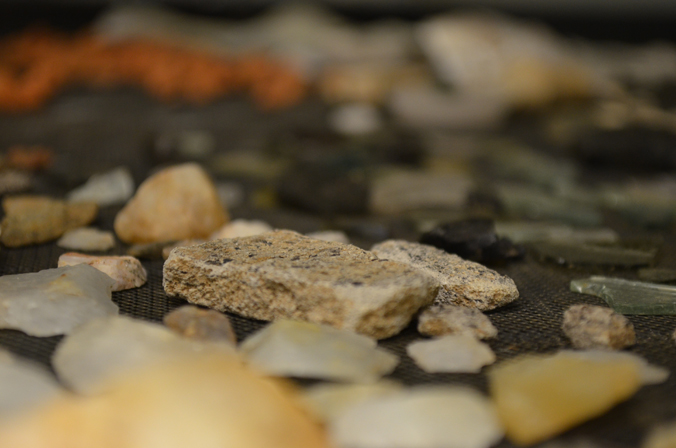
    Artifacts excavated at George Washington’s Ferry Farm.

    Here at Ferry Farm for the last 13 years, professional archaeologists have been exploring the local landscape, digging hundreds of excavation units in their quest to reveal the history of all those who lived here, including, of course, the Washington family.  Their investigative efforts have resulted in a multitude of artifacts dating from the earliest prehistoric Native American occupation of this riverine site, through the Colonial and Civil War periods, all the way to a 1990s occupation of the farm.

    So, what happens to all the artifacts that are uncovered and dug up with trowels and shovels? All of those items are important pieces to the puzzle of reconstructing the history of this site, but only if they are cleaned up and recognizable.  That is the purpose of the archaeology lab here at George Washington’s Ferry Farm.   With the help of both professional staff and dedicated volunteers, every single artifact that has come out of the ground is washed, dried, identified, labelled, and, finally, catalogued into a searchable computer database.

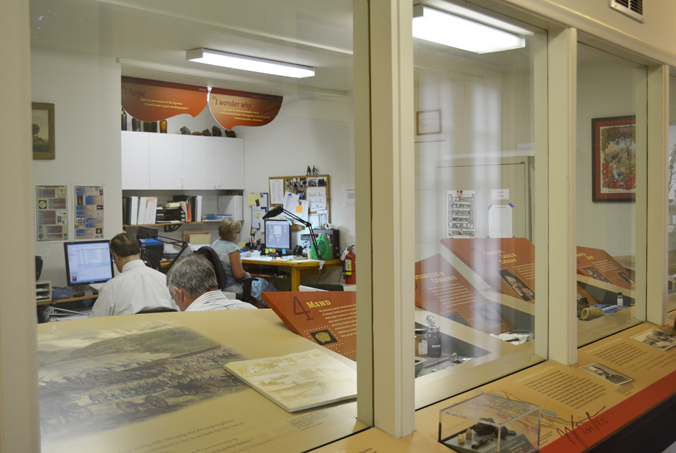
    The archaeology lab is located within the Ferry Farm Visitor Center which houses museum exhibits, storage rooms for the artifacts, and other administrative offices.  Visitors making their way through the exhibits can check out our lab spaces through large windows, allowing them a peek into our work spaces and giving them the ability to see the different processes the artifacts go through.

    Intro to Lab (1)
    The visitor’s view of the Archaeology Lab.

    While archaeological excavations at Ferry Farm take place every year, actual digging occurs only three months out of the year.  Artifact processing and analysis in the lab goes on for 12 months out of the year.  Archaeologists often say that “1 day in the field equals 3 days in the lab” and, in general, that adage is true.  Once the artifact bags come into the lab, it can be six months to one year or more before an entire artifact collection is completely processed.

    So where does it all start? Well, in the wet lab…

    Wet Lab

    Intro to Lab (4)
    Where artifacts are washed inside the Wet Lab.

    The wet lab is a small room where the artifacts are washed and dried.  It is fitted out with two sinks – the artifacts are washed only with water – and a countertop to provide space for the washing process.  Toothbrushes, dental picks, pipe cleaners, washtubs, and other cleaning tools are handily arranged for easy access by the staff.

    The washing process is pretty straightforward.  The artifacts, covered with dirt from the field excavation, are poured out of the bag onto a tray.  The washer separates the different items on the tray and proceeds to carefully wash them with a tooth brush and water.  After a quick rinse, the washed items are placed on a tray covered with mesh and the tray is placed in a drying rackThe washing process can be seen in this video. The artifacts stay on the drying racks for at least a week to make sure they are completely dried before being bagged.  Large windows allow visitors to watch this process and to see the “treasures from the earth” as they are uncovered and completely revealed, often for the first time in 200 years or more!

    Dry Lab

    Intro to Lab (2)
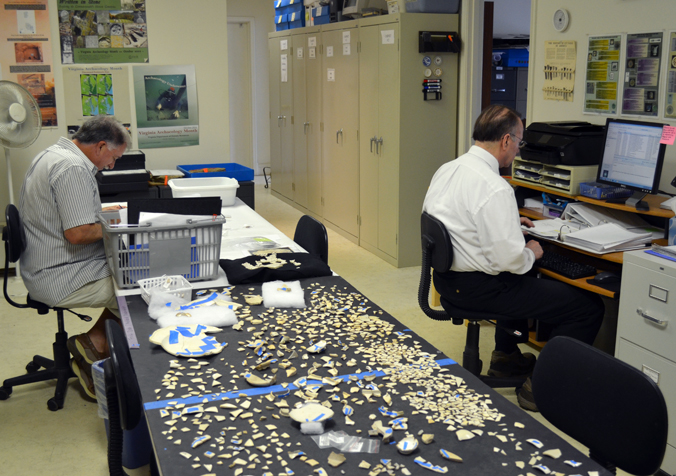
    Volunteers work in the Dry Lab.

    The dry lab is a larger space containing desk space for the staff, the small finds cabinets, and long tables used for labeling and other projects.  It is here that the dried artifacts are placed into acid-free plastic bags, catalogued, and then labelled by the staff and volunteers.  Our staff spends quite a bit of time cataloguing the artifacts, which involves identifying, counting, measuring, and weighing all the artifacts.  The cataloging process can be seen in this video. Each artifact is labeled with identifying information and the address of the exact location where it was found on the site.  Research is always an ongoing activity as identifying and dating specific artifacts helps in understanding Ferry Farm’s past and the people who once occupied this ground.

    Time is also spent on the mending, conservation, and analysis of artifact collections. The small finds cabinets contain hundreds of unique artifacts that are studied because of their personal relationships to the individuals that lived here.  Long term projects, such as our current white-salt glazed ceramic mending, take place in the dry lab space, where a table covered with hundreds of ceramic sherds awaits matching. And as with the wet lab, museum visitors can look through the windows and observe all the projects being currently worked on.

    Having an archaeology lab on site is very convenient for the archaeologists that work at Ferry Farm as it allows them easy access to the artifacts at all stages of their processing.  Future plans for Ferry Farm rely on knowing what has been found here and weaving together that data with the historical record.  It also gives the public an exciting chance to see all the work that goes into getting the artifacts ready for further research.

    Judy Jobrack, Archaeologist
    Assistant Lab Supervisor