Lives and Legacies

Tag: Betty Washington

  • Bane of the Washingtons: Deaths in the Next Generation and Amongst the Enslaved

    Welcome back to our 3-Part Blog charting tuberculosis (TB) in the extended Washington Family. If you are new to this series, Part I examined how the disease works, charted its history and explained standard courses of treatments in the 1700s. Part II looked at victims from George’s generation, including his brothers Lawrence and Samuel and brother-in-law Fielding Lewis. You can find those blogs here and here. In our final entry, we will continue to look at individuals who suffered from the disease and see more evidence of how the disease stayed within a family. 

    George Steptoe Washington (1771-1809, aged 37)

    George Steptoe Washington Source: MESDA

    As covered in Part 2, George’s brother Samuel died of tuberculosis, as did several of his sons, including George Steptoe Washington. A product of his father’s fourth marriage to Anne Steptoe, George Steptoe became an orphan at age ten. He and his siblings then fell under the care of their uncle, George Washington. George Steptoe would go on to marry Lucy Payne, the sister of Dolly Madison. Like his father, the point of infection cannot be determined but is likely derived from a family member. George Steptoe certainly faced exposure to TB via his father from the moment of his birth but may have caught it later in life. Regardless, his health experienced a serious decline sometime after 1800, and he ultimately traveled to Augusta, Georgia, in search of health benefits. He died there on January 10, 1809.

    George Augustine Washington (1759-1793, aged 34) & Frances “Fanny” Bassett (1767-1796, aged 29): George Augustine was another nephew of George Washington through his youngest brother Charles and quickly became his uncle’s favorite. He joined the Mount Vernon household in the early 1780s but had already experienced several periods of ill health that forced him to take leaves of absence from the battlefield. A diagnosis of tuberculosis soon came, leading George Washington to take an involved interest in his nephew’s health. Despite having witnessed the lack of improvement made by his brother Lawrence during such ventures, George funded trips to Berkeley Springs, Barbados, and Bermuda for George Augustine. He returned in May 1785 “in better health than when he set out, but not quite recovered.”1
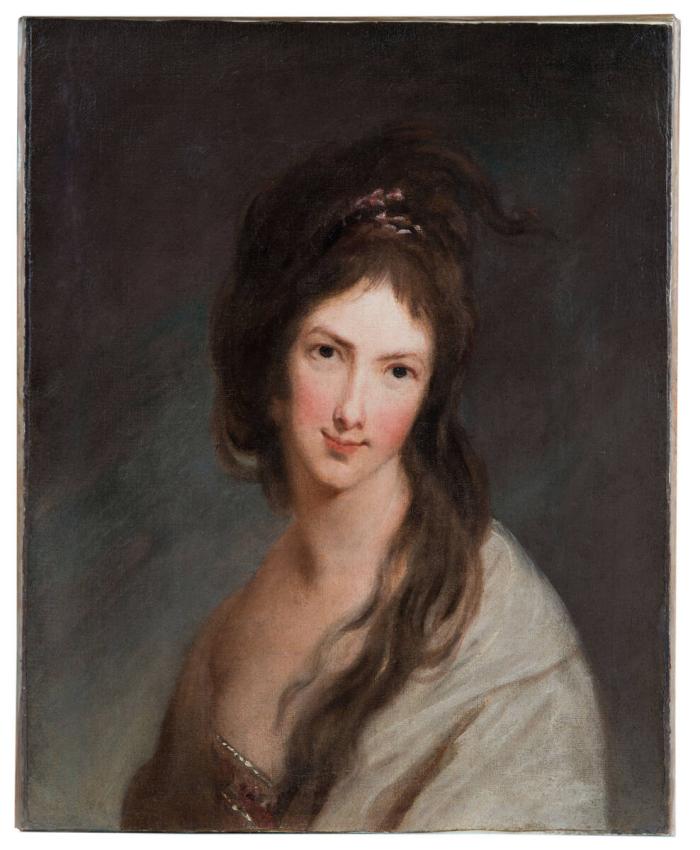
    Fanny Bassett Source: Mount Vernon

    During George Augustine’s absence, Frances “Fanny” Bassett, Martha Washington’s favorite niece, officially joined the household. Upon his return, the two quickly formed an attachment and married on October 15, 1785. George Augustine later became the manager of Mount Vernon, but his health steadily declined, leading his uncle to describe him as “a shadow of what he was.”2 Despite barely being able to ride, George Augustine traveled to Berkeley Springs in October 1791 but would be bedridden and coughing up blood by August 1792. After battling the disease for over ten years, he finally succumbed in 1793. His death “had been long expected,”3 but nevertheless caused his uncle to feel “it very keenly.”4

    The death of her husband left Fanny a young widow with three very young children. Unlike many in that situation, she retained a comfortable lifestyle. As the beloved niece of George and Martha, she always had a home at Mount Vernon and frequently served as an additional hostess. Regardless, she did not remain a widow for long and married Tobias Lear, secretary to her uncle, in August 1795. Sadly, she passed less than a year later, in March 1796, with Lear lamenting, “The Partner of my life is no more!”5 Thought to have died of TB, Fanny likely contracted it from George Augustine during their marriage.

    Charlotte (~1770-unknown, aged 27+): Charlotte served as an enslaved seamstress at Kenmore and later at Betty Washington’s final home, Millbrook. She first appears, aged eleven, in the 1781 probate inventory following the death of Fielding Lewis. Few details about her life exist apart from the record of a son, George, and another baby in a document from 1797. However, Charlotte clearly held an important position within Betty Washington’s household, given the medical records we have.

    Bill for Charlotte’s medical treatments

    Charlotte took ill at Millbrook in 1796 with some form of respiratory complaint. Rather than care for Charlotte personally, Betty sent for the doctor seven times over the year. Charlotte underwent throat examinations and notably received treatment with mercury tablets and ammonia liniment for the chest. The former served as a common cure, which “purged” the body of any imbalances, while the latter mimicked early Vicks VapoRub by opening the airways. None of these treatments would have been pleasant, and the mercury certainly did more harm than good, but Charlotte recovered nonetheless. However, Betty Washington Lewis’ death in 1797 prompted the division of her enslaved staff. In an all-too-common occurrence, Charlotte and her son went to different properties (no mention of the baby exists). They likely saw little of each other after this or never met again. At age twenty-seven, we know Charlotte resided on a property owned by Charles Carter in Frederick County, Virginia. After this, she disappears from the record.

    The true nature of Charlotte’s illness remains a mystery. She certainly suffered from a respiratory ailment and received treatment in line with that given to tuberculosis patients. Nevertheless, we cannot conclusively diagnose it as TB or determine if it ever affected her again. Despite this, her story reflects an important aspect of life in eighteenth-century Virginia and a failing of history. An interest in keeping the enslaved healthy enough to work existed, but the actual health of an enslaved individual often went undocumented. We only know of Charlotte’s illness due to the bill sent by the doctor listing dates and treatments. Even this reflects a rarity as the lady of the household generally oversaw medical treatment for the enslaved rather than a physician. Considering the widespread nature of TB, its higher prominence in poor and minority communities, enslaved living and working conditions, and the high death rates recorded amongst Philadelphia’s free Black population in the early 1800s, the disease likely accounted for a high number of deaths within Virginia’s enslaved population. Sadly, we may never know how many individuals died of the disease or its impact on their lives.

    You can read the full details of Charlotte’s treatment and life here.

    Hercules Posey (~1754-1812, aged roughly 64)
    Hercules Posey Source: Mount Vernon

    One Black individual known to have died of tuberculosis was Hercules Posey. Hercules came to Mount Vernon in 1767 after his previous enslaver, John Posey, failed to pay a mortgage owed to Washington. Having served as a ferryman for Posey, Hercules initially took up the same position. By 1786, he had moved on to the position of cook, for which he is best known. Highly skilled in his culinary abilities, Hercules counted amongst the nine enslaved individuals the Washingtons brought with them to Philadelphia in 1790. Early 1797, however, found Hercules working as a laborer at Mount Vernon, and he acted to self-emancipate in February. In doing so, Hercules left behind at least three children, Richmond, Evey, and Delia, who he shared with his late wife, Alice. Due to Alice’s status as a dower slave, none of their children would receive their freedom in Washington’s will.

    After his escape, Hercules made his way to New York City, where he again worked as a chef. He died on May 15, 1812, with the cause given as TB, and his grave lies in the Second African Burying Ground in Lower Manhattan. Given the span of time between his escape to freedom and death, he possibly contracted the disease after leaving Mount Vernon. Then again, it remains entirely possible that he became ill while enslaved in Virginia or Philadelphia. In this case, he either suffered with an active case for many years, with periods of waxing and waning or had a dormant case that reactivated later in life.

    Others: Additional members of the extended Washington family contracted the disease as time went on, and the same goes for the enslaved. However, an interesting aspect of tuberculosis is that far more individuals may have had it but remained unaware. As covered in Part I, TB can go dormant by walling itself off in the lungs. Minor symptoms would have appeared at the time of infection, but those pauses when the disease goes dormant. Depending on how long it remained active and how severe, the TB may have gone unnoticed or been misdiagnosed. If the disease never reactivated, a person could live a full life and never know they had it.

    Today, we diagnose tuberculosis through symptom analysis and testing. Multiple successful treatments additionally exist to help people overcome the disease. For the 1700s, however, symptoms alone provided the diagnosis, and the dormant phase served as the only successful reprieve from the disease. The fact that our modern technology and medical knowledge would have saved many of the people covered in this 3-part blog appears evident. Nonetheless, it remains unclear just how many people in the extended Washington family actually contracted TB. This then raises the question, if TB testing had existed in the 1700s, would individuals such as George and Betty Washington have turned up positive?

    Emma Schlauder

    Research Archaeologist


    Bibliography

    Anderson, Alicia K. & Lynn A. Price (editors) 2018     George Washington’s Barbados Diary: 1751-52. University of Virginia Press, Charlottesville, VA.

    Budinger, Meghan & Mara Kaktins 2020    Charlotte and the Mercury Pills. Lives & Legacies Blog, The George Washington Foundation <https://livesandlegaciesblog.org/2020/06/17/charlotte-and-the-mercury-pills/&gt;. Accessed April 11 2023.

    Chernow, Ron 2010     Washington: A Life. Penguin Books Ltd, London, UK.

    5 Eliassen, Meredith, Tobias Lear. Digital Encyclopedia of George Washington’s Mount Vernon, George Washington’s Mount Vernon < https://www.mountvernon.org/library/digitalhistory/digital-encyclopedia/article/tobias-lear/&gt;. Accessed April 11 2023.

    1-4 Fore, Samuel K. George Augustine Washington (ca. 1759-1793). Digital Encyclopedia of George Washington’s Mount Vernon, George Washington’s Mount Vernon < https://www.mountvernon.org/library/ digitalhistory/digital-encyclopedia/article/george-augustine-washington-ca-1759-1793/>. Accessed April 11 2023.

    Glen, Justin 2014     The Washingtons: A Family History, Vol 1, Seven Generations of the Presidential Branch. Savas Beatie LLC, El Dorado Hills, CA.

    Lenhart, Chelsea  Hercules. Digital Encyclopedia of George Washington’s Mount Vernon, George Washington’s Mount Vernon < https://www.mountvernon.org/library/digitalhistory/digital-encyclopedia/ article/hercules/>. Accessed 11 April 2023.

    Rankin-Hill, Lesley M.  1997     A Biohistory of 19th-Century Afro-Americans: The Burial Remains of a Philadelphia Cemetery. Bergin & Garvey, Westport, CT.
  • “To Rendezvous at Fredericksburgh”: The Washington-Lewis Family, Fredericksburg, and the World War of 1754-1763: Part I

    Editor’s Note: As the two-hundred-sixty-ninth anniversary of the skirmish of Jumonville Glen approaches this Sunday, May 28th, some recent and exciting discoveries have occurred at the battlefield.  The National Park Service (NPS) released an announcement this week stating that after a four-week archeological investigation, objects have been found to verify the location of the first skirmish, Jumonville Glen, of the French and Indian War.  Archeologists found a multitude of artifacts, including several eighteenth-century musket balls.    

    Check out the links for more information:

    NPS :Recent archaeology project uncovers first shots of the French and Indian War

    Archaeological dig in Fayette confirms location of Jumonville Glen skirmish

    Scientists find 1754 ballistics of first shots fired in French and Indian War

    On to the the history…


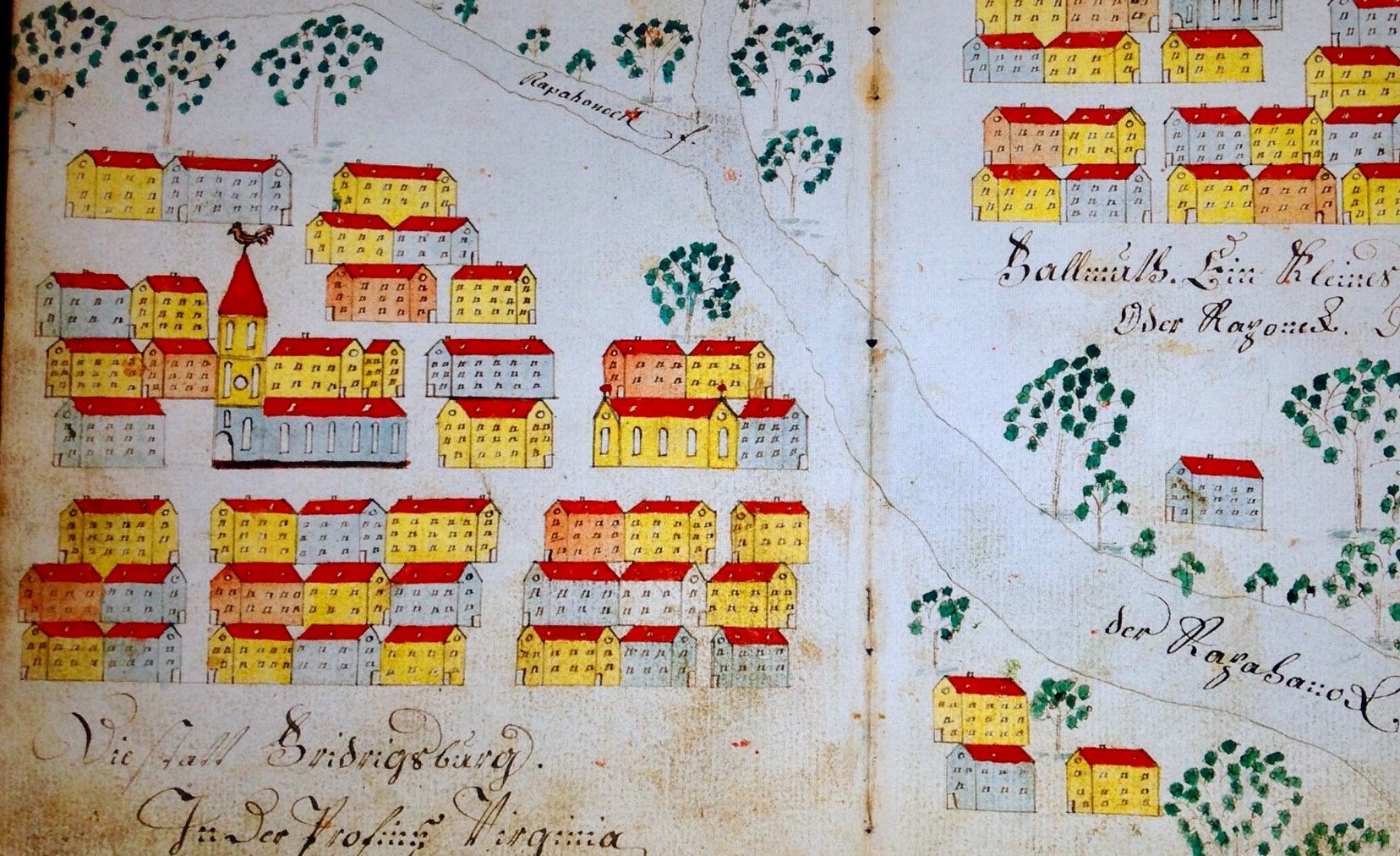
    Figure 1. Detail of a highly stylized depiction of Fredericksburg, VA by Fench soldier Georg Daniel Flohr, who visited in 1782. Despite the use of artistic license, the illustration conveys Flohr’s perception of the 18th Century town as a “rather large” port with “intense boat traffic.” Source: Account of the Land and Sea Expedition in America of the Acclaimed DeuxPonts Regiment from 1780 to 1784

    Crowding out the fresh spring air of a wooded countryside, the acidic scent of aerosolized gunpowder began to sting the interior of a nervous 22-year-old’s nostrils. His ears rang from the shock of dozens of nearby explosions. Smoke clouded his vision, and sensory overload likely clouded his judgment. Soon-to-be-familiar sounds followed rapidly: scurried movement, intense chatter, and groans of agony. Yet, the inexperienced youth had to make decisions on behalf of the crowd around him. He found himself at the center of a new form of chaos: the opening volleys of a world war.

    Lieutenant Colonel George Washington’s Virginia soldiers had just fired into a French military camp near the Monongahela River in western Pennsylvania at a moment (May 28th, 1754) when peace among European empires and Native American nations sat at a precarious equilibrium. Over the past several months, French forces had been busy erecting Fort Duquesne at the Forks of the Ohio River (the site of modern-day Pittsburgh, PA). Royal Governor Robert Dinwiddie of Virginia considered this commercially and strategically significant location part of the British Empire and sent Washington to the area to help re-establish British control. This was the context in which Washington’s Virginians and a party of Mingo warriors came upon the ill-fated French camp in a ravine soon to be known by the infamous moniker of “Jumonville’s Glen.”[1]

    After the first shots rang out around the glen, things only got worse. Washington’s cocommander, Tannagrison (a Seneca politician leading the party of Mingos), summarily executed the French officer in command, Ensign Joseph Coulon de Villiers, Sieur de Jumonville, and events escalated from there. In fact, this frontier skirmish grew into a world war that would not only give rise to the North America of the Revolutionary Era, but would forever alter the power dynamics of entire globe. Consider the growth of the British Empire, two centuries of exploitation and resistance in India, the birth of the United States, the creation of independent republics in Latin America, the French Revolution, English colonization of Australia, the American Civil War, the Assassination of Archduke Ferdinand, the rise of the Axis Powers, the Vietnamese independence movements of the 20th Century, and even the
    War on Terror. The conflict that Washington and Tannagrison started at Jumonville’s Glen, known as the“Seven Years’ War” or the “French and Indian War” (1754-1763), shaped all these events, along with countless others. And as residents of the Fredericksburg region, the Washingtons and Lewises sat at a crossroads of this worldwide upheaval.

    As the 250th anniversary of American nationhood approaches, understanding the Seven Years’ War’s social, martial, and political context is perhaps more important than ever. In anticipation of future posts related to this subject, I hope what is below will introduce you to how the stories of those associated with Kenmore and Ferry Farm intertwined with the larger story of the war.

    We’ll start with George. As an officer commissioned in the provincial (colonial) Virginia Regiment, George Washington not only helped initiate the Seven Years’ War but saw his first real military service at places like Fort Necessity or as a volunteer aid-de-camp in the ill-fated Braddock Expedition of 1755, where he nearly died during the famous British defeat at Battle of the Monongahela. Of course, historians have worn countless pens, pencils, and keyboards recording Washington’s involvement in the early stages of the war and documenting the future Commander-in-Chief’s first brushes with combat. However, George’s duties increasingly involved more independent responsibility after 1755. These events came on the heels of George’s formal relocation from his mother, Mary Washington’s, residence at Ferry Farm to his late half-brother’s estate at Mount Vernon.

    The two years that followed George Washington’s more well-known deeds at the Monongahela produced circumstances similar to those he would contend with during the American War for Independence (1775-1783). Throughout 1756 and 1757, the Virginia Regiment had to defend a string of small, isolated forts along Virginia’s vulnerable frontier to the west of the Blue Ridge Mountains.[3] The task of managing poorly-supplied posts that stretched from Winchester, VA, to the vicinity of modern-day Martinsville, VA, presented George with the opportunity to develop three aspects of leadership that would define his work in future years: military administration over vast geographical territory, long-term strategic planning, and the sustaining of volunteer troops despite strained logistical resources.

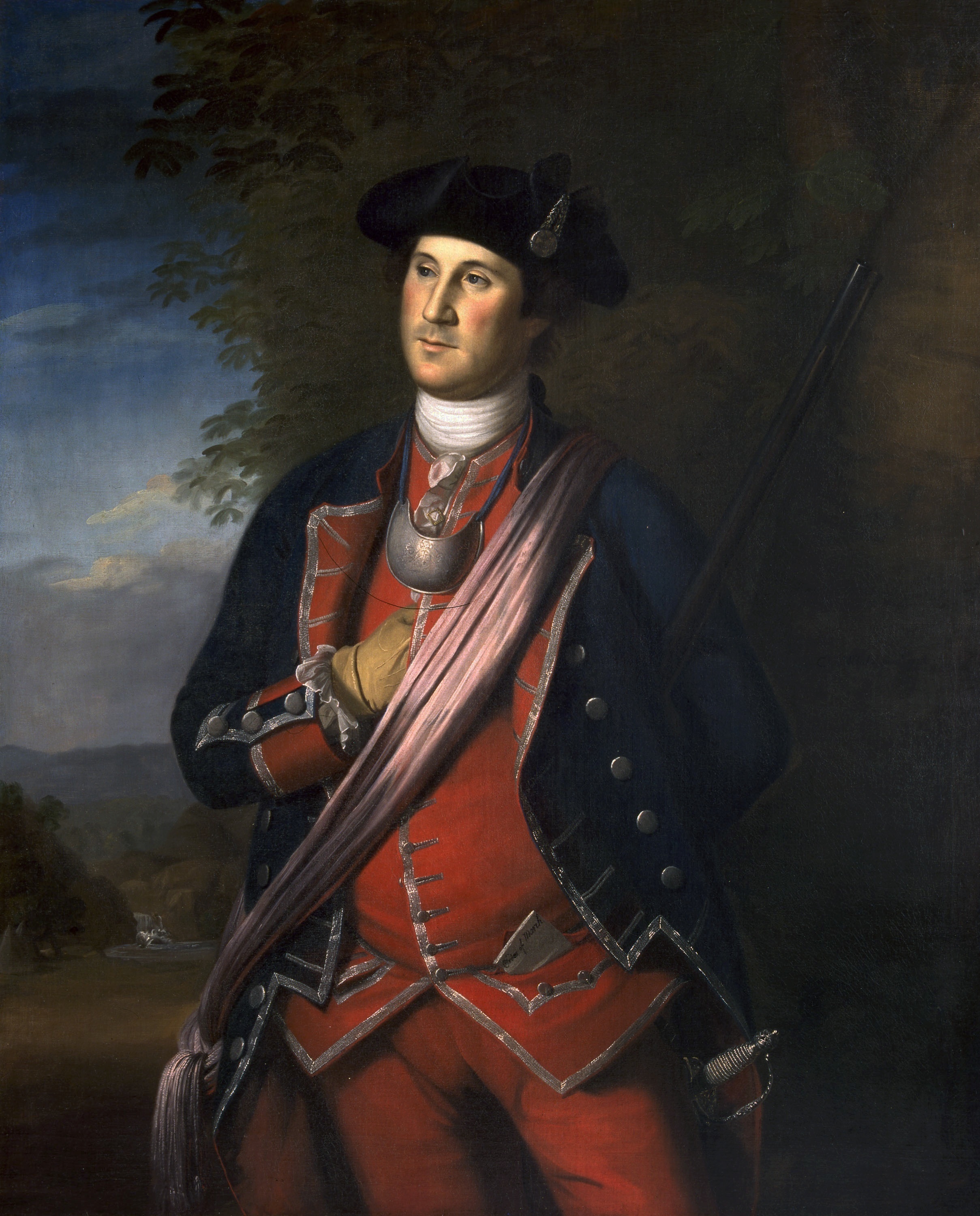
    Figure 2: a 1772 portrait Charles Wilson Peal depicting Washington in a uniform similar to those worn by officers of the Virginia Regiment Source:Washington and Lee University

    During a tour of Virginia’s frontier forts, the “bad regulation of the militia; the disorderly proceedings of the Garrisons; and the unhappy circumstances of the Inhabitants” shocked the young officer.[4] Washington filled his correspondence of this era with phrases such as “inconceivable trouble” and “unhappy Juncture” as he recorded innumerable instances of paucity, civilian death, and desertion.[5]

    Washington’s struggles continued into 1758 when the Virginia Regiment became involved in the Forbes Expedition, a laborious campaign that eventually resulted in the British capture of Fort Duquesne. Around that time, the needs of sick veterans of the past three years of fighting, marching, and garrison duty presented further challenges. None other than Fielding Lewis, a young Fredericksburg merchant and husband of George’s sister Betty, agreed to contract with his brother-in-law to provide for Virginia’s ill. That June, for instance, Lewis sent the material for 60 blankets to “Colo. Washington for the Country Dr.”[6]

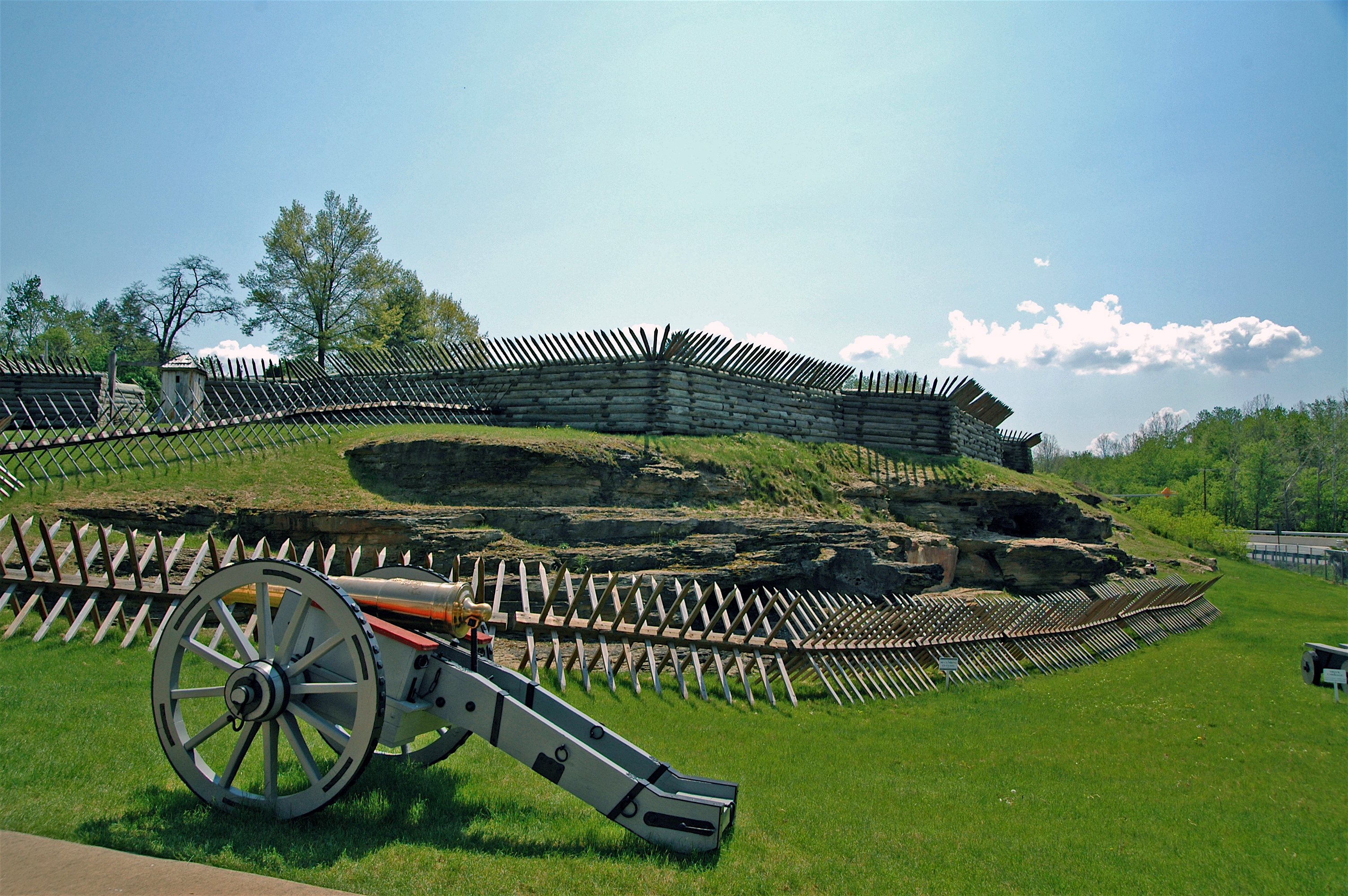
    Figure 3: View of reconstructed fortifications at Fort Ligonier, the centerpiece of the 1758 Battle of Loyalhanna, an important part of the Forbes Expedition. Source: Jeff Kubina via flickr

    As a businessman with a growing family, Fielding Lewis must have had more reason than most to fear the potential adverse effects of world war upon his trans-Atlantic commercial ventures. However, as British fortunes began to change for the better, Lewis reaped the benefits of citizenship in a growing empire. Before the war’s end, he was conducting a lucrative speculation business at a fair in Fredericksburg.[7] Lewis’s success eventually provided the means to commission the construction of Historic Kenmore.

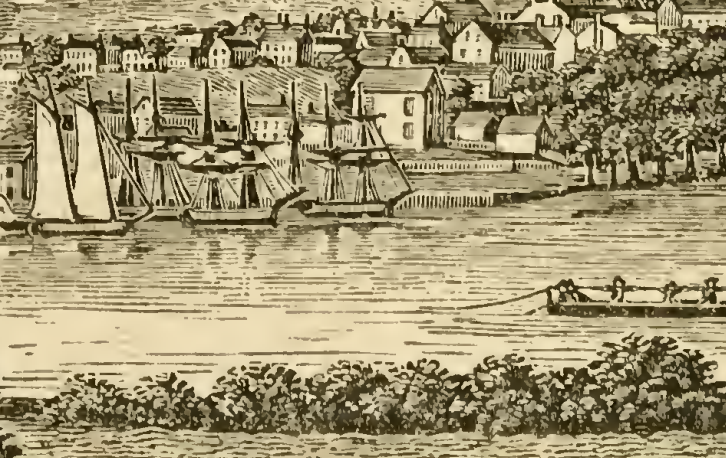
    Figure 4: Detail of an 1845 illustration of Fredericksburg as seen from Ferry Farm, showing tall ships by the town’s wharves.. Fielding and his father John invested in several merchant vessels, the towering masts of which were once common parts of Fredericksbrug’s cityscape. Source: Internet Archive

    Of course, learning about wealthy and influential men like Washington and Lewis is easy. However, countless individuals of all social standings played a part in the drama of the Seven Years’ War. Part II of this post will explore how those on the Homefront coped with world war and how the conflict transformed the community of Fredericksburg in ways still visible today.

    Stay tuned.

    Ethan Knick,

    School and Youth Programs Manager


    [1]David Lee Preston, Braddock’s Defeat: The Battle of the Monongahela and the Road to Revolution (Oxford University Press, 2015), 26-28.

    Fred Anderson, Crucible of War: The Seven Years’ War and the Fate of Empire in British North America, 1754-1766 (Knopf Doubleday Publishing Group, 2007), 18-23.

    [2] Preston, Braddock’s Defeat, 28-29.

    [3] George Washington, The Papers of George Washington: Colonial Series, vol. 4:November 1756 – October 1757, (University Press of Virginia, 1983).

    George Washington, The Papers of George Washington: Colonial Series, vol. 5: October 1757-September 1758, (University Press of Virginia, 1983).

    [4] George Washington, “Founders Online: From George Washington to Robert Dinwiddie, 9 November 1756” (University of Virginia Press), accessed February 7, 2023, http://founders.archives.gov/documents/Washington/02-04-02-0001-0001.

    [5] George Washington, “Founders Online: From George Washington to Robert Dinwiddie, 11 July 1757” (University of Virginia Press), accessed February 2, 2023, http://founders.archives.gov/documents/Washington/02-04-02-0193.

    [6] Fielding Lewis, “Founders Online: To George Washington from Fielding Lewis, 10 June 1758” (University of Virginia Press), accessed February 6, 2023, http://founders.archives.gov/documents/Washington/02-05-02-0154.

    [7] Martha Saxton, The Widow Washington: The Life of Mary Washington (Farrar, Straus and Giroux, 2019), 192.

    George Washington, “Founders Online: Cash Accounts, 1761” (University of Virginia Press), accessed January 30, 2023, http://founders.archives.gov/documents/Washington/02-07-02-0001.

  • A Gift Across the Seas: Betty Washington’s Silver Tea Set from Her Uncle Joseph Ball

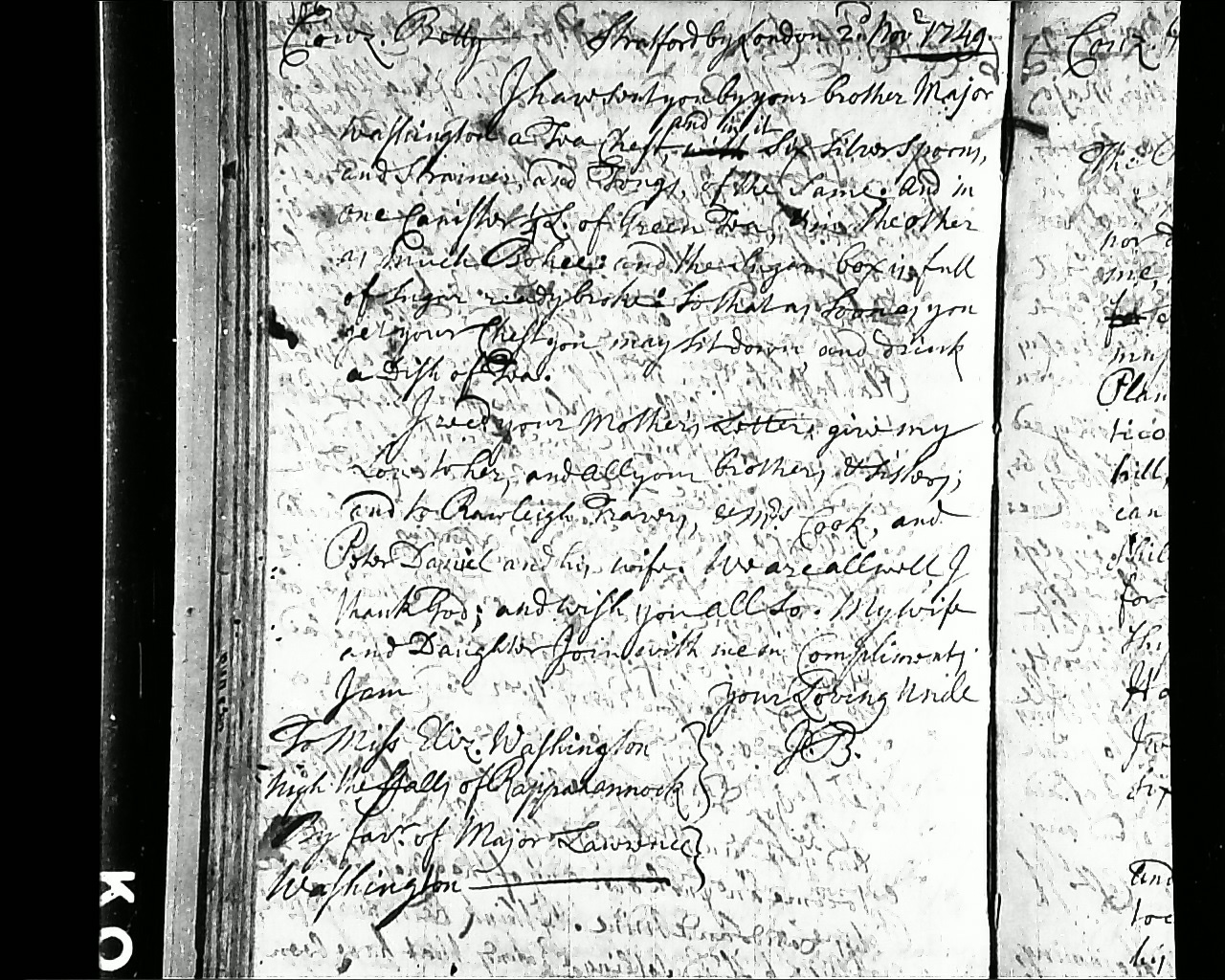
    Couz. Betty                                                     Stratford by London 2nd [Nov] 1749
                I have sent you by your brother Major Washington a Tea Chest; and in it Six Silver Spoons, and Strainer, and Tongs, of the Same. And in one Canister 1/2 L. [pound] of Green Tea, in The other a Pinch Bohee: and the Sugar box is full of Sugar ready broke: So that as Soon as you get your Chest you may Sit down and drink a Dish of Tea.
                I read your Mother’s letter, give my Love to her, and all your brothers, & sisters; and to Rawleigh Travers, & Mrs. Cook, and Peter Daniel and his wife. We are all well I thank God; and wish you allso. My wife and Daughter Join with me in Compliments.
    I am                                                                                                               Your Loving Uncle
                                                                                                                                  J.B
    To Miss Eliz. Washington                                                                                                                              
    nigh the Falls of Rappahannock
    By [fav.] of Major Lawrence Washington

    In 1749, one year before her marriage to Fielding Lewis, Betty Washington received a valuable gift – a silver tea set and other tea equipment – from her Uncle Joseph Ball in England. Tea equipment at this time was still expensive and the tea ceremony was reserved for upper class individuals. By providing Betty with equipment for such an important ceremony, Joseph Ball was helping prepare his niece for success in the gentry class. He provided silver teaspoons, a strainer, tongs, and a tea canister– four of the necessary pieces of equipment for the tea ceremony. Other items needed for the ceremony included a teapot, slop bowl, milk or cream container, sugar container, cups, and saucers.[i] Mary Washington provided these pieces for Betty while she lived at Ferry Farm, using them to teach her daughter how to host the important ceremony.

    The tea ceremony was a popular social event in 18th-century American culture. First and foremost, hosting or attending a tea party was a symbol of class.[ii] It was typical for gentry class individuals to participate in this leisure activity as a way to deepen or forge relationships within their community. Only an individual who was part of this class could afford the time and money required to learn the social graces and equip the table for the ceremony. The Washingtons worked hard to project an image of gentility through their material consumption. Participation in the tea ceremony was essential for this image. Mary took the time to “bequeath gentry-level domestic culture and etiquette to her children,” keeping them in leisure class circles.[iii]

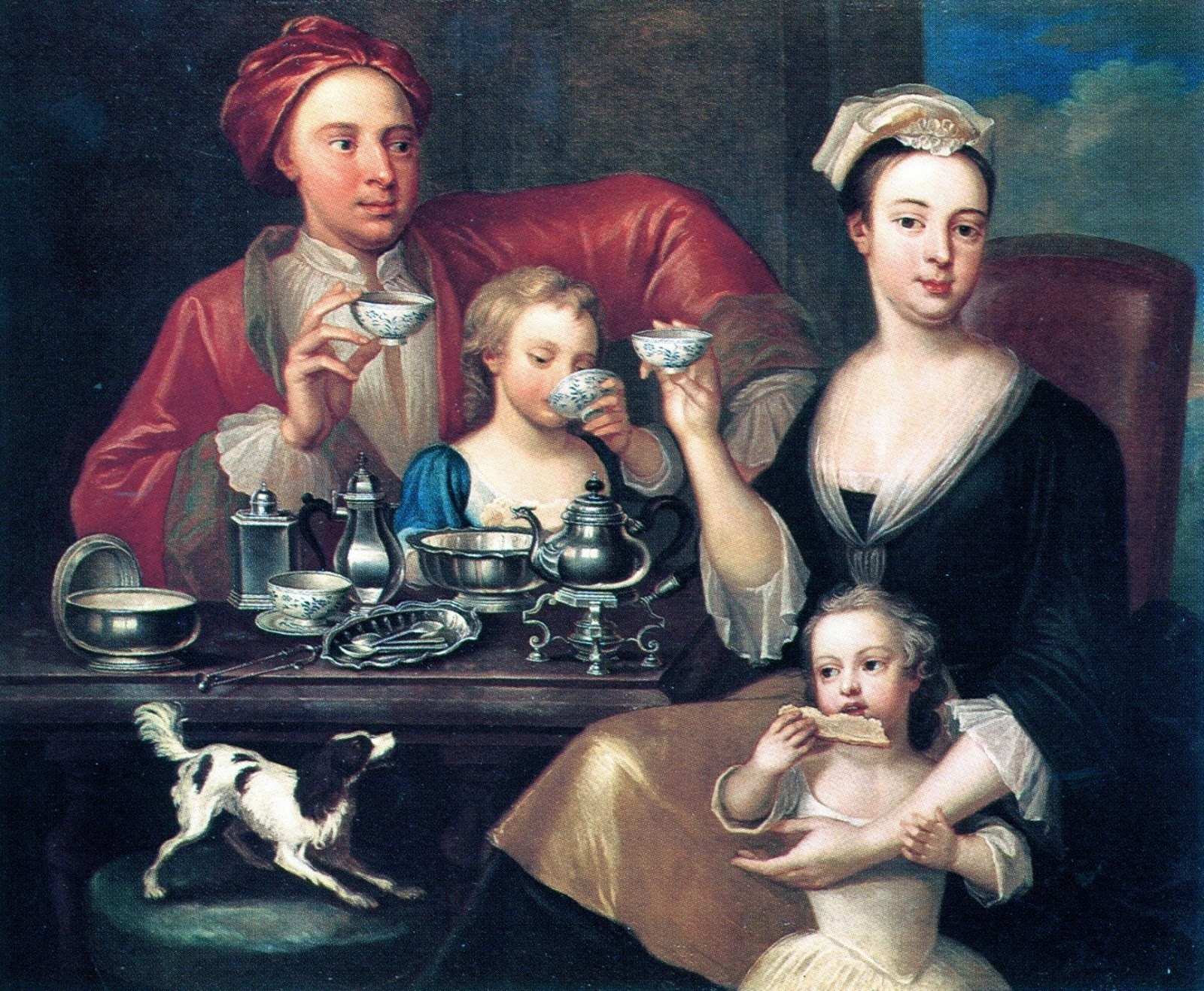
    An English Tea Party (c. 1730) by Joseph Van Aken. Credit: Wikipedia

    Within the leisure class the tea ceremony was considered, “as much an instrument of sociability as was a bit of music or conversation.”[iv] With its rules that dictated everything from table arrangement and conversation to order of events, the ceremony was complex. Mastery of the ceremony, especially for women, was key to one’s reputation within social circles. Mary and Betty Washington used the intricate event to maintain the family’s social standing and to interview suitors for Betty. As the oldest daughter, Betty was trained for this ceremony from a young age. She would likely have been the host of numerous tea parties at Ferry Farm before her marriage. Perhaps even using the silver tea set from her uncle during some of the events.

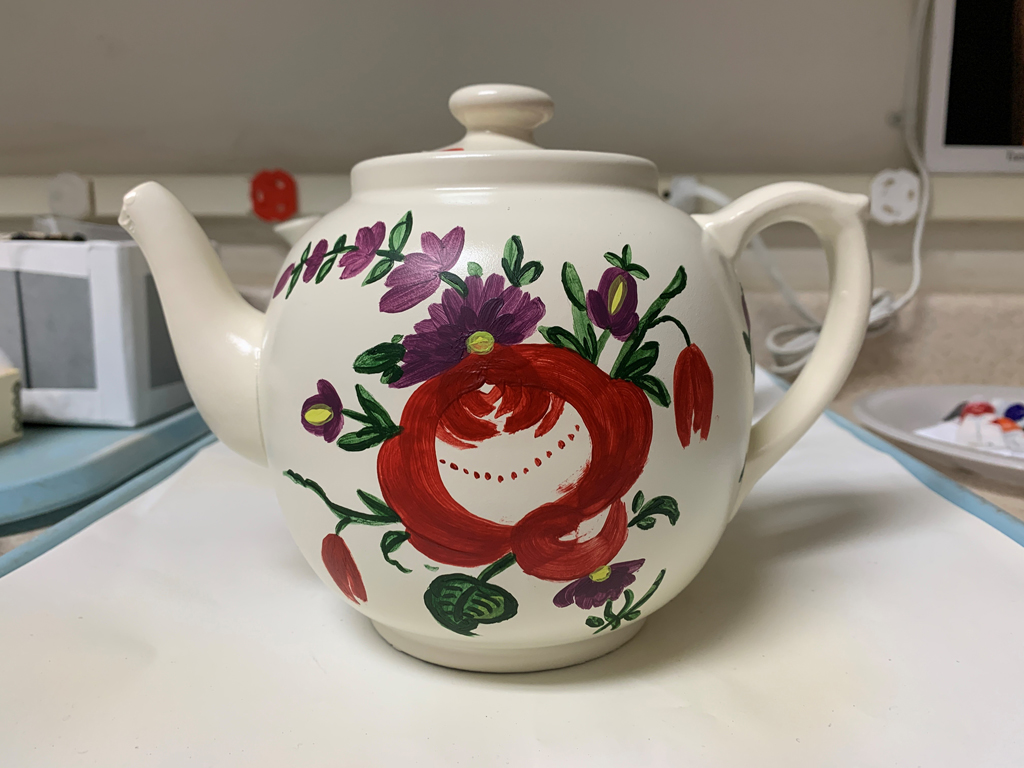
    Replica teapot.

    The social custom of the tea ceremony revolved around the teapot, thus earning it a spot at the center of the tray or tea table.[v] The archaeology department at Ferry Farm recently produced a replica teapot for display in an upcoming exhibit on 18th-century tea practices. This replica will serve as the centerpiece for the exhibit and be surrounded by archaeological artifacts and contemporary examples representative of the Washington family’s tea practices. The exhibit can be viewed through one of the windows into the Archaeology Lab starting December 1. Add George Washington’s Ferry Farm to your list of places to visit during the holiday season to see this small tea exhibit!

    Gillian Both, UMW ‘22
    Fall Fleming Smith Scholar


    [i] Rodris Roth, Tea Drinking in 18th-Century America: Its Etiquette and Equipage (Washington: Tea Trade Mart Publishing Co., 2017), 24.

    [ii] Ibid., 1.

    [iii] Laura J. Galke, “The Mother of the Father of Our Country: Mary Ball Washington’s Genteel Domestic Habits,” in Northeast Historical Archaeology 38 (2009): 33.

    [iv] Roth, 23.

    [v] Roth, 49.

  • When a Spoon is More Than a Spoon: The Initialed Teaspoon of Betty Washington

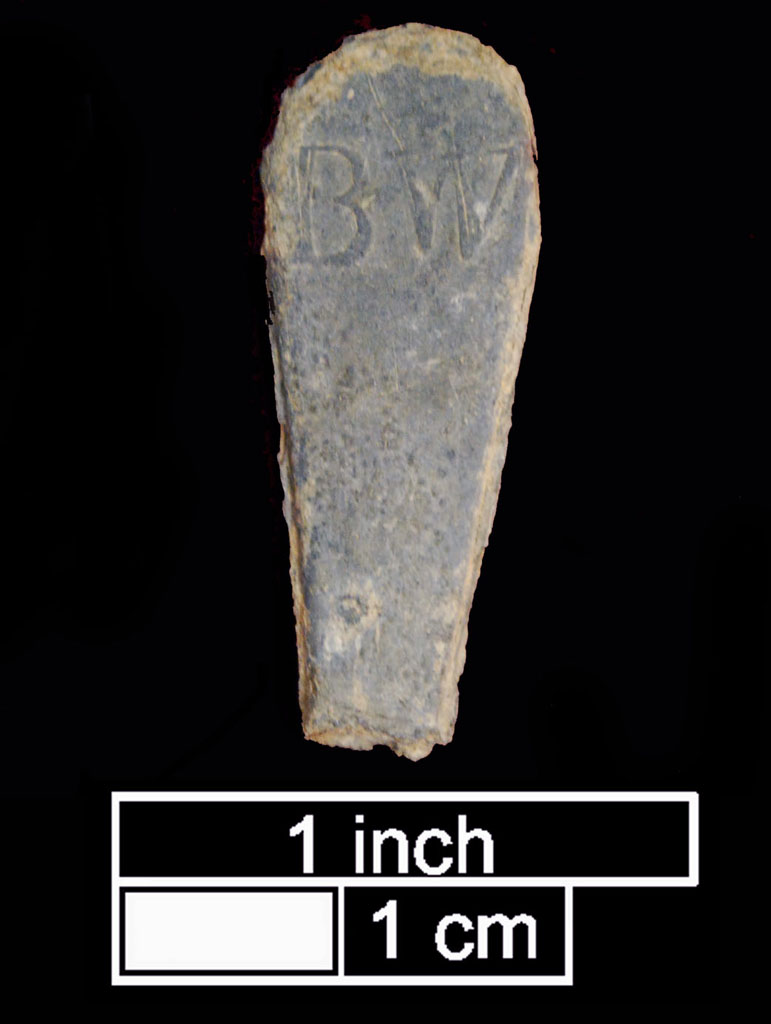
    One of the most exciting and important discoveries archaeologists have made at Ferry Farm is a pewter teaspoon baring the initials B.W.  It belonged to Betty Washington.  This spoon was part of a set that trained her to oversee the extremely important tea ceremony.

    Serving tea in the 18th century was more than an act of providing a mid-afternoon refreshment or a small meal to family and guests.  Tea time, with its prescribed social behaviors and ritualistic customs of service, symbolized gentility and civility, and was an expression of social class.[1]  As an imported good, tea was initially an expensive commodity used only by the upper and middle classes of society.  In addition to the tea, a proper hostess also had to purchase the accouterments of the tea ceremony, such as teapots, cups and saucers, slop and sugar bowls, milk jugs, silverware, and a suitable tea table for presentation.  The cost of these accessories, as well as the time and decorous social habits needed to prepare, serve, and entertain family and guests, meant that the tea ceremony was more a custom of the elite leisure classes, who had the time and money to do such things. 

    As a restricted custom, the tea ceremony transformed into an indicator of class and gentility, and consequently, its “social and cultural significance increased enormously.”[2]  Rules governing the behavior of the participants, including the host, family and guests, were understood by all and represented learned standards of civility. Politeness and courtesy were important, and deference was made to the hostess in terms of the pace and content of conversation.  Even the act of serving tea was ceremonial in nature. Seated at her tea table, the hostess made, poured, and distributed an individualized cup of tea for each guest, who received it in a gracious manner.  It was a “small personal ceremony” that “epitomized the giving that was at the heart of hospitality.”[3]

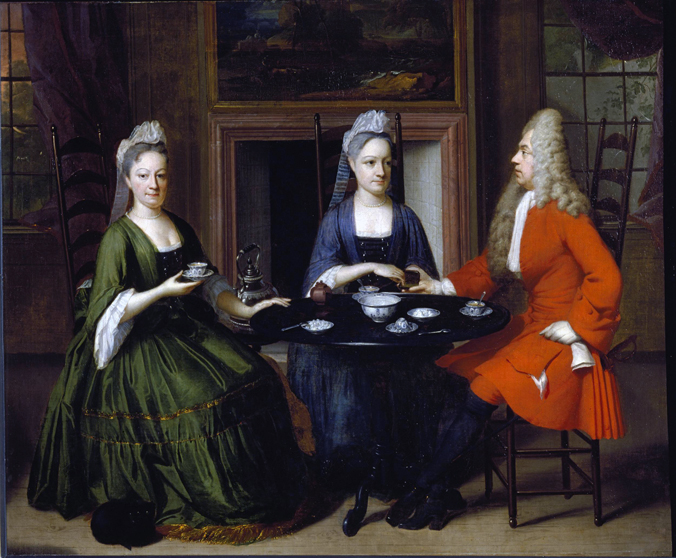
    Two ladies and an officer seated at tea (1715) by unknown artist.
    Credit: Victoria and Albert Museum.

    The tea ceremony was a gendered activity almost exclusively performed by and associated with the women of the household, who selected the teaware that they used in the ceremony[4] A household’s leading female figure, often the wife or oldest daughter, predominantly oversaw the service of tea to family members and guests, emphasizing her position of authority within the household and the gathered social circle.  As such, women used the opportunity to express their gentility and respectability.[5]

    Teatime also supplied a moment to maintain and cultivate important social ties within the community.[6]  Neighbors, business and political associates, and potential suitors met over a convivial small meal and discussed important matters.

    Teatime was also an opportunity to teach the younger generation, especially girls, how to act and behave during this social encounter.[7] As a future wife in charge of her household, it was essential for women, such as Mary Washington’s daughter Betty, to know how to successfully conduct this unique social custom and be able to demonstrate her inclusion and influence in the community elite.[8]  Betty was trained in the art of tea making, as is evidenced by the archaeological presence of a pewter teaspoon bearing her initials at Ferry Farm.  Monogrammed just for Betty, the teaspoon was part of a beginners tea set used by a young lady to train for many future tea times to come.

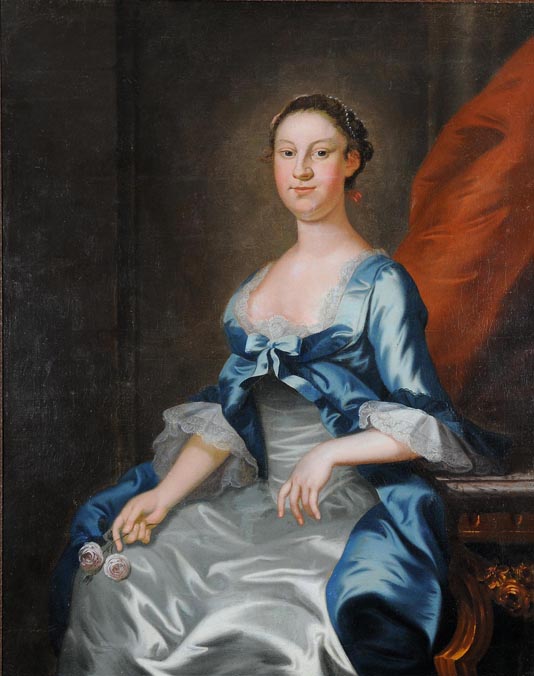
    Betty Washington Lewis (1750) by John Wollaston. Credit: Mount Vernon Ladies’ Association.

    Betty’s uncle Joseph Ball also sent her a silver tea set when she was a teenage girl, further enforcing her future role.[9]  The importance of properly entertaining guests with such tea equipage cannot be overstated, but in addition to this, Betty’s learning how to elegantly serve tea was a must for her prospects as the future wife of a well-off gentleman.  One can imagine a teenage Betty serving tea gracefully to her future husband, Fielding Lewis, having practiced diligently with her pewter and silver tea sets.

    Mara Kaktins, Archaeologist
    Ceramics & Glass Specialist


    [1] Woodruff Smith, Consumption and the Making of Respectability, 1600-1800 (New York: Routledge, 2002), 173; Amanda Vickery, Behind Closed Doors: At Home in Georgian England (New Haven: Yale University Press, 2009), 275.

    [2] Smith, 172.

    [3] Vickery, 273.

    [4] Annie Gray, “‘The Proud Air of an Unwilling Slave’: Tea, Women and Domesticity, c.1700-1900,” in Historical and Archaeological Perspectives on Gender Transformations: From Private to Public, ed. Suzanne M. Spencer-Wood,  23-43 (New York: Springer, 2013), 28; Smith, 174.

    [5] Smith, 173.

    [6] Ibid.

    [7] Smith, 174.

    [8] Laura Galke, “The Mother of the Father of Our Country: Mary Ball Washington’s Genteel Domestic Habits, Northeast Historical Archaeology 38 (2009): 29-48.

    [9] Paula Felder, Fielding Lewis and the Washington Family: A Chronicle of Eighteenth-Century Fredericksburg. (Fredericksburg, VA: The American History Publishing Company, 1998), 68.

  • More Than Meets the Eye: What Their Portraits Say About the Lewis Family

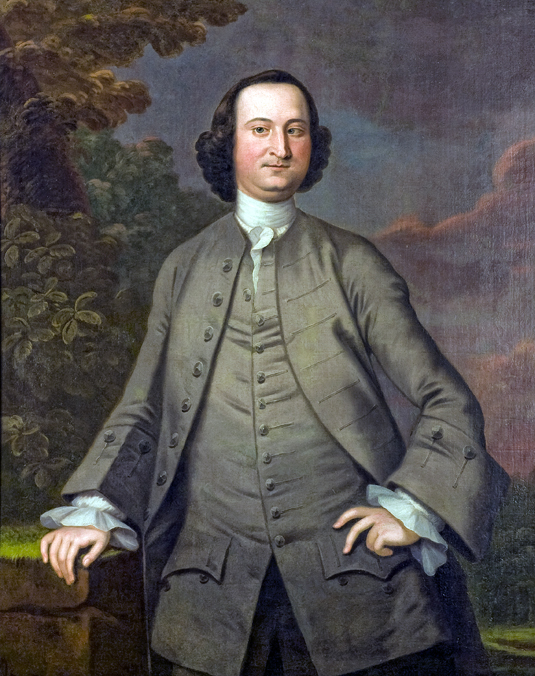
    On walls of the Historic Kenmore’s drawing room hang two large portraits of a man and a woman.  The man is an older gentleman in a serene outdoor setting, looking quite dignified and sober in a brownish knee-length jacket, knee breeches and long waistcoat. His eyes rest on the portrait viewer, one hand on moss-covered rocks, the other on his hip, and his head turned slightly to his left.  Across the room, the woman sits at a slight profile with her head turned to her left to face the portrait viewer. She wears a billowing blue and white dress and holds two pink roses in her right hand while her left arm casually sits on a marble top table. She is indoors with what appear to be some drapes billowing behind her. The man and woman are Fielding Lewis and Betty Washington Lewis, the owners of Kenmore.

    Fielding and Betty’s portraits were commissioned by the couple and painted by prolific colonial artist John Wollaston in the 1750s.  On the surface, these paintings are just two genial portraits that provide us with visual records of the heads of the family. Through the subtle symbolism, however, they also tell a larger story of how Fielding and Betty wished to be portrayed publically to their contemporaries as well as to posterity.

    Portraits first became a popular mode of expression for the aristocracy and the wealthy during the Renaissance.  These paintings were usually large scale affairs meant to be displayed and seen by the public.  The paintings depicted people with expensive goods, fine cloth, rare flowers, and exotic pets. Whether the portraits’ subjects actually owned these items was less important than the suggestion including the items made. In fact, these paintings were filled with symbolism–images, objects, or colors representing ideas and that allow the artist to go beyond the obvious to create links between otherwise different concepts.  A color can depict character, a flower personality and a fabric economic status.[1]

    Through symbolism, portraits were used to reflect social status, wealth, success, power and cultural refinement.  A portrait’s details were integral to the story of the painting and many factors had to be taken into account.  Aspects such as artist, style, background, color, fabric, and accessories all needed to be discussed to create the portrayal desired by the patron.[2]

    Centuries after the Renaissance, the importance of portraiture as a record of status and position in society had not changed and the custom had become more popular outside of the aristocracy as well as outside of Europe.  Even in faraway British North America, the wealth of the gentry, or upper class, desired portraits to show their status and position. Fielding Lewis and Betty Washington Lewis, members of the gentry with a wealthy business in Atlantic World trade, were no exception. Mr. and Mrs. Lewis wanted to portray themselves as socially refined not only to cement their place in the community but to allow for a continued rise in their status.  Accordingly, they sat for portraits by John Wollaston.

    Fielding Lewis (c. 1753-1758) by John Wollaston.

    The most noticeable thing about Fielding’s portrait is the muted colors used in the background and in his clothing.  One of the most visually striking symbols in portraits was the colors used to represent the subject.  While color may not have inherent meaning, it can be made meaningful through context.  The colors in the background, clothing, and accessories all relate to the overall message or story being told by the artist. The browns, greens, and beiges in Fielding’s portrait create a natural and relaxed atmosphere.  The nature background is a stylized classical bucolic setting that helps strike a balance between Fielding’s muted clothing palette and the landscape setting.  The woodland glen signifies a natural sincerity that, when mixed with the brown and beige of his ensemble, creates the feeling of calmness, reliability, dependability and an earthy richness.  All of these traits are important for a successful merchant.  Fielding was telling visitors to his house that he was a person they could do business with and trust.[3]

    Betty Lewis (1750) by John Wollaston. Credit: Mount Vernon Ladies’ Association.

    Betty’s portrait uses color, context, fabric and an accessory to illustrate her own geniality and her family’s affluence, for not only as a Lewis but as a Washington as well.  The background around Betty, who is at the center of the portrait, offers hints of this grandeur with brown walls and a heavy brown billowing curtain creating a frame of luxurious richness.  To add to the opulence, Betty is poised with her arm resting on an ornate Rococo-style marble top table with heavily carved gold legs.  The portrait conveys that she can afford such ornamental comforts.  Next to the table, Betty in her flowy blue and white satin dress with a pair of roses resting on her right knee is the focus.  Blue was a popular color for ladies and was common in many portraits painted by Wollaston. The color gives the sitter not only an air of peace and calmness but also of restraint and intelligence. The satin denotes a luxury and fashion available to only those with means. Meanwhile, the pink rose tells of Betty’s grace, beauty and gentility.  Overall, the portrait depicts a sophisticated and refined 18th century woman, a wife and mother who adds balance and depth to her husband’s trustworthiness and professionalism.[4]

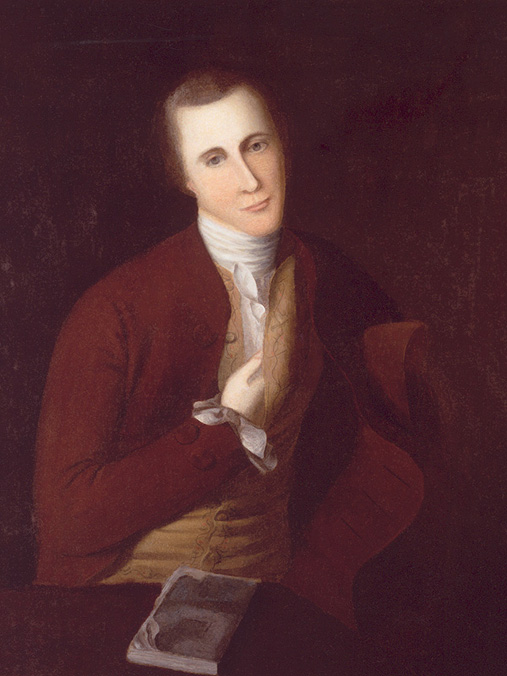
    Fielding and Betty did not stop with portraits of themselves.  About twenty years after sitting for John Wollaston, they commissioned famed painter Charles Willson Peale to produce several portraits of their offspring.  There are two in Kenmore’s collection.

    John Lewis (c. 1775) by Charles Willson Peale.

    One of these Peale portraits depicts John Lewis, the eldest son of Fielding and his first wife, Catharine who sits with one hand on his hip and one hand on a book.  The posture gives John a sense of self-assurance and capability.  Unlike his father’s subdued color palette, John’s jacket and waistcoat are an amazing red with gold detailing.  The red paired with the gold creates warmth but also projects a sense of power, strength and confidence.  The book in his the left hand gives an air of knowledge and awareness.

    Fielding Lewis Jr (c. 1775) by Charles Willson Peale.

    The second Peale portrait in the collection depcits Fielding Lewis Jr., the eldest son of Fielding and Betty, striking a very traditional pose with a hand tucked in his jacket and a slight tilt of the head.  The pose is welcoming, kind and is the embodiment of a thoughtful young gentleman.  Much like his father he chose a subdued color palette with an earthy reddish-brown jacket and goldish yellow waistcoat, which convey a sense of reliability, stability and affability.  The brown background adds a natural simplicity with soothing warmth.   Additionally, like his brother, there is a well-read book by his side indicating a sense of learning and mindfulness.  This portrait’s symbolism reflects the more aspirational messages in these paintings as Fielding, Jr. struggled with money problems for most of his life and even ended up in debtors’ prison.

    Later portraits in Kenmore’s collection contain other fascinating symbolism that tells the stories of the paintings’ subjects. These portraits visually record family history or emphasize familial connections.

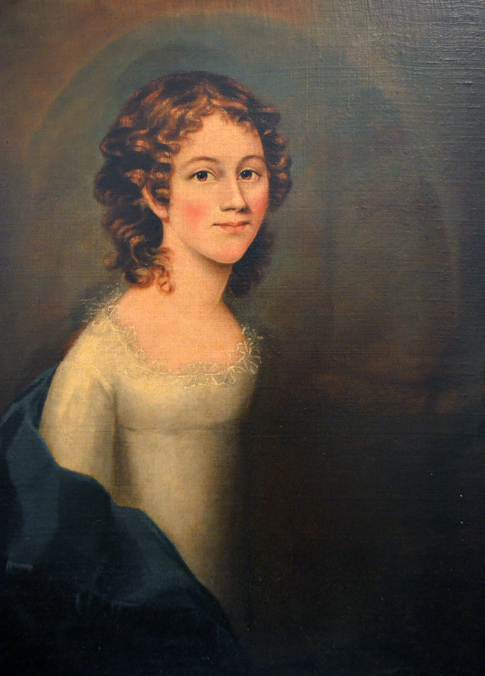
    Eleanor Rosalie Tucker (1818) by unknown artist.

    This 19th century portrait of Eleanor Rosalie Tucker, the great granddaughter of Fielding and Betty, is painted in characteristic neoclassical style with direct lighting, soft features, rosy cheeks and a roundness of the face.  The white muslin gown gives the young girl a purity and serenity beyond her years.  The halo surrounding the sitter represents her delicacy and gives her an otherworldliness. This is appropriate as, sadly, she was painted for this portrait on her deathbed in 1818.

    The Wallace Family (c. 1856-1862) by John Adams Elder. A loan courtesy of Mrs. W. Wallace Morton, Jr.

    Finally, this portrait of the Wallace family painted in the mid-Victorian period is quite a unique painting in our collection with a fascinating twist to its symbolism.  The portrait has a traditional composition but at the center is a large leashed bird in mid-flight.  This bird is a rebus, a puzzle device used to visually depict words and/or phrases.  They are used extensively in heraldry to hint at the name of the bearer.  This painting’s bird rebus is attached to a young girl named Mary Byrd Wallace, the great, great granddaughter of Fielding and Betty Lewis.

    Portraits are sometimes the only visual representation we may have of a historic figure.  These portraits do more than capture a person’s appearance, however.  The wealthy and socially important also used portraits and their symbolism to emphasize their wealth and high status.  Portraits also visually recorded family history or emphasized familial connections.  For the Lewis family, like everything in their house and like their house itself, their portraits revealed how they saw themselves and, perhaps more importantly, how they wanted others to see them whether in the 18th or the 21st centuries.

    Heather Baldus
    Collections Manager


    [1] “Faces of a New Nation: American Portraits of the 18th and early 19th centuries”, The Metropolitan Museum of Art Bulletin, Summer 2003: 11

    [2] Crown, Carol. The New Encyclopedia of Southern Culture, Vol. 23, University of North Carolina Press, 2013: 150-151.

    [3] Centeno, Carlos. “Lose the Color Symbolism Chart: The Unpredictable Meanings of Color,” July 6 2016. https://medium.com/@carlitocenteno/lose-the-color-symbolism-chart-the-unpredictable-meanings-of-color-edc81db6541e; “Faces of a New Nation,” 13

    [4] “British and American Grand Master Portraits of the 1700s”, National Gallery of Art. https://www.nga.gov/features/slideshows/british-and-american-grand-manner-portraits-of-the-1700s.html; Centeno; De la Tour, Charlotte. Le langage des fleurs, 1819: 58; Hooper, Lucy. The Lady’s Book of Flowers and Poetry, 1846: 248.

  • Family Leaders Guiding a Younger Generation: George and Betty’s Letters

    George Washington was the oldest of Augustine and Mary Washington’s five children. The next oldest was daughter Betty, who was born 14 months after George and was his only sister.

    George and Betty are immensely important to us at George Washington’s Ferry Farm & Historic Kenmore. They spent their formative years at Ferry Farm and Betty called Kenmore home for two decades.  As main characters in our historic sites’ stories, we often ponder what their relationship as siblings was like.

    The only way to gauge George and Betty’s relationship is through two dozen letters they wrote to each other between 1779 and 1796.  As we saw in our first post about the two letters Betty wrote to George during the Revolutionary War, theirs was a complex relationship of sibling love and camaraderie strained by intermittent conflict.  The wartime letters revealed a sadness over extended absences and stress from the tensions and difficulties of George’s wartime position as the new nation’s leader.

    This second post in our multi-part examination of George and Betty’s sibling relationship deals with their roles as leaders of the Washington and Lewis families.  They were the eldest of the Washington siblings and, after 1781, Betty was the widowed matriarch of the Lewises.  In these roles, Betty and George both cared for and guided a brood of children, grandchildren, step-children, nieces, and nephews.  In fact, of their twenty-four surviving letters, thirteen of them deal substantially with the life of some younger member of the extended Washington-Lewis families.  Most of these 13 letters focused on niece Harriot Washington, whose saga we’ve previously written about here and here.  The others dealt with Robert and Howell Lewis, both sons of Betty and nephews of George, who each became his secretaries for a time.

    Robert Lewis was 20-years-old when Uncle Washington was inaugurated president on April 30, 1789.  Robert saw opportunity in George’s position and apparently requested, through Betty, that he might work for the new president.  Uncle Washington replied to Betty with an offer for Robert to be one of his secretaries, writing “I have thought it probable that I may have occasion for a young person in my family of a good disposition, who writes a good hand, and who can confine himself a certain reasonable number of hours in the 24 to the recording of letters in books.”  George warned that Robert’s pay “cannot be great as there are hundreds [of others] who would be glad to come in)” but, if he was okay with a relatively small salary, George would “be very glad to give him the preference.”  In fact, Robert was paid $300 per year, the smallest amount among Washington’s secretaries.  Since Robert was family, however, he could reside with the Washingtons in New York “at no expence (except in the article of clothing) as he will be one of the family and live as we do.”  George desired to know immediately if Robert would accept the offer and, if so, would his nephew accompany Martha “(and at her expence, as she will want somebody to accompany her) when I send my horses back [to Virginia] after I am fixed in New York.”  Robert himself enthusiastically replied to this offer, writing “I shall ever consider myself under a thousand obligations for the proffered post, and think the confinement you speak off rather a pleasure, and hope from my assiduous attention to merit that station.”  Robert Lewis worked as secretary for George until early 1791, when he returned home to get married.

    Roughly a year and a half later Robert’s younger brother Howell Lewis, who was at that time also age 20, was offered a secretarial position by President Washington.  George wrote to Betty on April 8, 1792, proposing…

    If your Son Howell is living with you, and not usefully employed in your own Affairs; and should incline to spend a few months with me, as a writer in my Office (if he is fit for it) I will allow him at the rate of Three hundred dollars a year, provided he is diligent in discharging the duties of it from breakfast until dinner—Sundays excepted.

    This sum will be punctually paid him and I am particular in declaring beforehand what I require, and what he may expect, that there may be no disappointment, or false expectations on either side. He will live in the family in the same manner his brother Robert did. If the offer is acceptable he must hold himself in readiness to come on immediately upon my giving him notice.

    I take it for granted that he writes a fair & legible hand, otherwise he would not answer my purpose; as it is for recording letters, and other papers I want him. That I may be enabled to judge of his fitness let him acknowledge the receipt of this letter with his own hand, and say whether he will accept the offer here made him, or not. If he does, & I find him qualified from the specimen he gives in his letter I will immediately desire him to come on which he must do without a moments delay, or I shall be obliged to provide another instead of him.

    Betty replied to George, reporting that Howell was away at the time but that she had dispatched George’s offer to him and expected an answer in two weeks’ time.  She worried that Howell’s “very Slender Education” and “his Fathers Death at so Early a Period has been a great disadvantage to him” for he was “left without any Person of Age and Judgement” to guide him.  Howell, Betty said, had to rely on only himself to improve his lot in life and was “not very well informd.”  She closed by praising her son’s “exceeding Good disposition,” felt that “the employment you have design’d for him not difficult,” and he could serve George satisfactorily.

    Howell accepted the position, writing to his Uncle Washington that “I consider myself extremely favour’d by your proposal of a birth in your family & shall chearfully accept it provided my probation is deemed satisfactory—I lament that I have not been more attentive to the improvement of my writing tho hope that I shall soon be qualified to do the business for which you mean to enploy me.”

    Howell soon set out to join the President in Philadelphia, the national capital since late 1790, carrying another letter from Betty for George with him.  She wrote

    You will receive this by Howell, who seems Very happy In the thought of becoming One of your family,1 I sincerely wish he may be Equal to the task you desire for him, he has Promis’d me to Indeaver to Please, and by Close application to improve him self, it is with Infinite Pleasure to my self that he has a Prospect of geting in a Place where he may receive so much advantage to him self, his Fortune being very small there is little Prospect of happiness in this world without thay Can get into Busness of some sort.

    In a letter to Charles Carter of Ludlow, Washington revealed that, in actuality, he had “no real want . . . of Howell Lewis” but had offered him the work because “he was spending his time rather idly” and was very slenderly provided for by his father.”  George thought that “by taking him under my care, I might impress him with ideas, and give him a turn to some pursuit or other that might be serviceable to him hereafter.”  Howell worked as secretary until July 1793, when his uncle tapped him to be manager at Mount Vernon.

    So, as might be expected between the eldest siblings of a family, much of the correspondence and relationship between Betty and George Washington focused on their respective and extended families’ offspring.  George and Betty were the family leaders and propriety dictated that they work together when necessary to provide for and guide these children, grandchildren, stepchildren, nieces, and nephews to success in life.  As we have seen, earlier with Harriot, and now with Robert and Howell, nearly half of Betty and George’s surviving letters and thus their relationship dealt in some fashion with matters concerning the Washington and Lewis families’ younger generations.

    Zac Cunningham
    Manager of Educational Programs

  • Where Are the Human Remains?: Fielding and Betty Lewis

    You might remember the discovery of Richard III’s grave under a Leicester parking lot back in 2012 and how shocking it was that a former King of England’s gravesite had been lost. For archaeologists, missing gravesites aren’t that uncommon.

    When put into perspective, it’s not surprising that we can’t locate the graves of many famous Virginians, including some members of the Washington and Lewis families. In Fredericksburg fires, flooding, war, and neglect have all contributed to the loss of historic graves and other important sites during our nearly 300 year history.

    Professional and amateur researchers alike have dedicated years of their lives to gathering the lost history of Fredericksburg, including lost graves of famous Virginians. Thanks to this dedication, we have saved possible sites for the future. This includes George Washington’s Ferry Farm itself. Can you believe there was almost a Walmart built directly on top of the Washington house cellar before it was discovered?!

    In the Washington edition of “Where Are the Human Remains?” we talked about Mildred Washington, George’s youngest sister who died before the age of 2.  She is the only known family member to be buried somewhere at Ferry Farm. In this edition, we will discuss the remains and burial locations of Fielding and Betty Lewis.

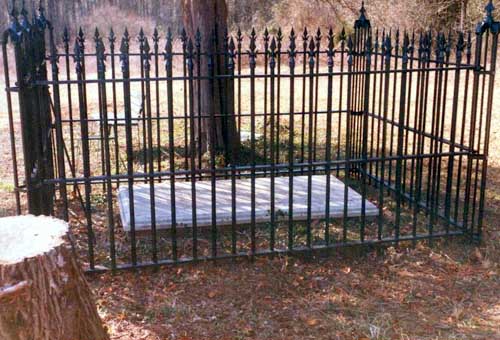
    The approximate location of Betty Lewis’s grave is actually known.[1] She struggled financially after Fielding’s death in late 1781 and, following the Revolutionary War, it was especially difficult for Betty to keep Kenmore afloat. Eventually, she went to live on small farm outside Fredericksburg called Millbrook where she spent the rest of her life. Betty passed away, however, while visiting her daughter, Betty Carter in 1797.  She was buried at her daughter’s home, Western View Plantation in Culpeper County, Virginia. The gravestone in the photograph was added later, so the exact location of the Betty’s burial site isn’t known for sure, but it is somewhere on the property.

    Portrait of Betty Washington Lewis by John Wollaston, c. 1755. Credit: Mount Vernon Ladies Association
    Betty Washington Lewis’s grave stone. Credit: Trice Glancy / FindaGrave.com
    Burial site of Betty Washington Lewis. Credit: Marvin Sport / FindaGrave.com

    So, what about Fielding Lewis? The short answer, again, is that we aren’t sure. We have an idea but it may not be what you think or may have heard! Local lore mentions St. Georges Church as the location of Fielding’s grave, as he was a vestryman there. However, he is most likely NOT buried in this location.

    Portrait of Fielding Lewis by John Wollaston, c. 1755.

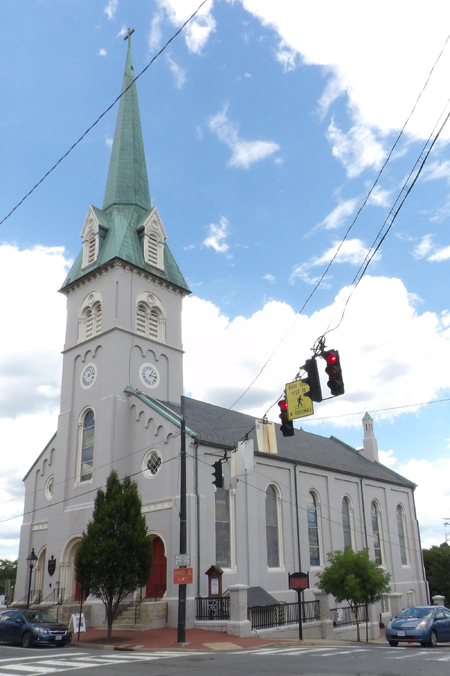
    St. Georges Episcopal Church in downtown Fredericksburg is a local icon, seen in several paintings as one of the tallest buildings in our town’s skyline. The church’s first structure was built in 1730, and the Lewis family would attend services in this wooden structure. Then, with the major fire in Fredericksburg in 1807, the replacement of the original church building with a more substantial brick building in 1815, and further alterations to the layout of the church over the years, it’s understandable that burial sites and other features around the church were lost.

    St. George’s Episcopal Church. Credit: Virginia Department of Historic Resources

    Furthermore, if you have taken any local ghost tours of Fredericksburg, you may have heard the story of Fielding and three of his grandchildren being buried “under the church steps”. This particular tale came from a book called The Ghosts of Fredericksburg… and nearby environs by L. B. Taylor, Jr.  Over 30 years ago, this book was used to create the script for Fredericksburg’s annual Ghostwalk sponsored by the University of Mary Washington Historic Preservation Club. While it’s clear that the author spent a great deal of time collecting stories about ghostly Virginia locations, it should be noted that there aren’t any sources or citations listed in the book.  Taylor was a storyteller, and his main focus was ghostly tales, not historical facts. As a result, we now have this chilling, but likely untrue information, intertwined with the Lewis family history.

    In reality, like wife Betty, Fielding died far away from Fredericksburg on a property he owned located in what is Frederick County around Winchester, Virginia today. In a letter written by one of his children, Robert, to his sister Betty Carter, Robert tried to convince his sister to move to the area, stating; “You would be in the neighborhood where the venerated remains of our dear decd. Father lie.”[2] While this indicates Fielding’s burial is in Fredrick County, the exact location was never recorded.

    Elyse Adams, Archaeologist
    Co-Field Director / Archaeology Lab Technician


    [1] Find a Grave, database and images (https://www.findagrave.com : accessed 26 May 2020), memorial page for Elizabeth “Betty” Washington Lewis (20 Jun 1733–31 Mar 1797), Find a Grave Memorial no. 22154, citing Western View Plantation, Culpeper, Culpeper County, Virginia, USA ; Maintained by Find A Grave.

    [2] Letter from Robert Lewis to Betty Lewis Carter, 1826 quoted in Paula Felder, Fielding Lewis and the Washington Family: A Chronicle of 18th Century Fredericksburg, American History Company, 1999: 300n10

  • Fielding and Betty Lewis Married 270 Years Ago Today

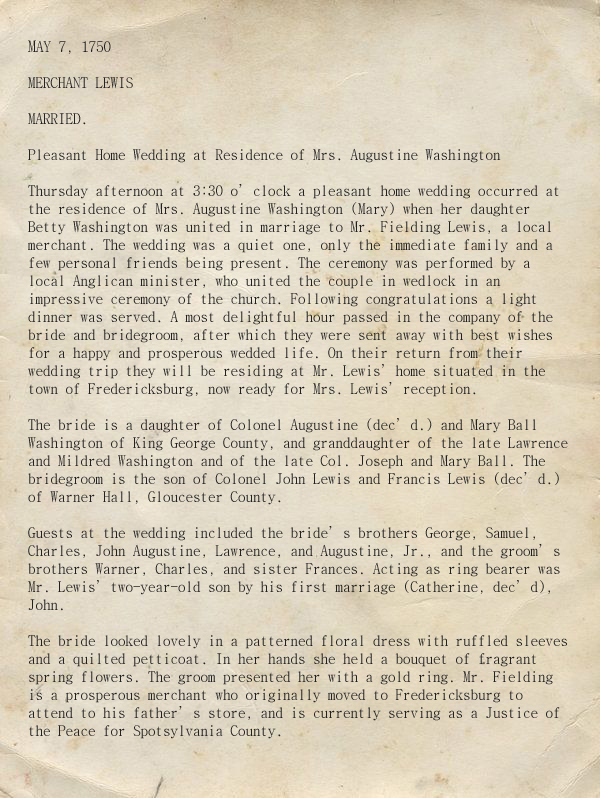
    Fielding and Betty Washington Lewis were married on this date in 1750 and would have celebrated their 270th wedding anniversary this year. In honor of their anniversary, we’ve taken some creative liberty and have created a fictional newspaper announcement of their nuptials.

    At the time of their wedding, Betty Washington was sixteen years old, almost seventeen, and Fielding was twenty four, a widow and father. Save for the date on which it occurred — May 7, 1750 — we have no other historical details about the ceremony nor who actually attended. Still, it’s an auspicious date we like to remember in some fashion each year.

    For a general historical discussion of 18th century weddings, read “A Colonial Wedding”.

    Betty and Fielding wedding

  • Betty Washington’s Cookbooks

    In the 18th century, more women began to publish cookbooks.  Previously, writing or compiling such books was the domain professional cooks or chefs, who were men.  Two of these women and their books, Hannah Glasse’s The Art of Cookery, Made Plain and Easy and Eliza Smith’s The Compleat Housewife, or, Accomplished Gentlewoman’s Companion, ended up in Betty Washington Lewis’s personal library.  She no doubt referenced these two useful books as much as I have referenced them in my blog posts about cooking here, here, and here.  Both Glasse and Smith were part of an innovative movement to create guide books on cooking for common people in a common language without pretense.

    Cookbooks on the Probate
    The “Compleat House Wife” and “Glasses Cookery” listed on the probate inventory made following Fielding Lewis’s death in 1782.

    Hannah Glasse was born in London in 1708 and had her first book Compleat Confectioner published in 1742. Her second book The Art of Cookery was published in 1747.  This book on cookery was so popular that it went through ten editions before her death in 1770.  It was reissued another sixteen times after 1770, including two American editions in 1805 and 1812. The book’s commercial success did not translate to personal success for Glasse, however.  Unfortunate business decisions eventually led to her declaring bankruptcy, selling the copyright to The Art of Cookery, and being sent to debtor’s jail.

    Hannah Glasse's 'Art of Cookery' frontispiece
    The frontispiece of Hannah Glasse’s The Art of Cookery Made Plain and Easy. Credit: Wikipedia

    Eliza Smith and her life are shrouded in mystery and, unfortunately, not much is known about her. She wrote only one book, The Compleat Housewife, or, Accomplished Gentlewoman’s Companion, which went through eighteen editions and became the first cook book published in Colonial America in 1742.  According to her own account, what she presented in the book was from her own experience.  Her recipes and tips came from a “space of thirty years and upwards during which time I have been constantly employed in fashionable and noble families.”

    Eliza Smith's 'The Compleat Housewife' frontispiece
    Frontispiece of Eliza Smith’s The Compleat Housewife: or Accomplish’d Gentlewoman’s Companion. Credit: Wikipedia

    When these two ladies were writing in the mid-18th century, more people were residing in urban areas as part of the emerging middle and gentry classes.  These new relatively or very affluent groups were desperate to keep up with fashions, manners, and lifestyle of the aristocracy.

    This often meant the middle-class housewife needed assistance with how to run a household or plan multi-course meals to keep her from committing embarrassing social faux paus.  The old commercial cook books were usually unhelpful since they were written by grand chefs for other cooks working in courts or mansions with large kitchen staffs. These books were filled with technical language and extravagant recipes with expensive ingredients.

    New writers like Glasse and Smith became popular because they offered practical advice, common sense recipes, and organization.  They wrote their books to help average middle and gentry class homes with small staffs, basic cooking equipment, and a limited budget. As Glasse stated, she wrote her book “in so full and plain a manner, that most ignorant Person, who can read, will know how to do Cookery well”[1] She only hoped her book would “answer the ends I intend it for; which is to improve the servants, and save the ladies a great deal of trouble.”[2]  Eliza Smith had a similar goal, writing that her book would be a guide for the housewife where “the receipts [recipes] are all suitable to English constitutions…wholesome, toothsome, all practicable and easy to be performed; here are those proper for a frugal, and also for a sumptuous table.”[3]

    Indeed, both women’s recipes had simple instructions, accessible ingredients, easy and practical help with weights, measurements, and cooking times.  Recipes had no French vocabulary, no complicated patisserie, and no confusing directions. They were just simple, delicious dishes any housewife could make or have servants make without formal culinary training.  Eliza Smith offered over a dozen different types of stew with everything from beef to eel and her pancake and apple fritter recipes sound delicious! Hannah Glasse included over 20 different types of pies, an easy and lovely syllabub, and even the first recorded recipe for curry.

    'To make a Currey the India Way' from Hannah Glasse
    Recipe for curry from Glasse’s “The Art of Cookery”. Credit: Wikipedia

    The 18th century middle or gentry class housewife and her staff, e.g. Betty and enslaved cook Rachel, could use these books to create meals that no longer consisted of just boiled meat and a vegetable. Now, they could create a range of dishes that would not be out of place on the table of a Lord or Lady.  Betty could have dinners prepared for the week, plan special dishes for a party, or undertake extravagant desserts for her Christmastime table.  All would delight guests who were using the same books.

    The Art of Cookery and The Compleat Housewife democratized cooking, which is something Betty Washington Lewis, sister of the first American president, would have appreciated.

    Heather Baldus
    Collections Manager

    [1] Hannah Glasse, The Art of Cookery Made Plain and Easy, T. Maiden for A. Lemoine & J. Roe, 1802: pg 3

    [2] Hannah Glasse, The Art of Cookery Made Plain and Easy, J. Rivington and Sons [and 25 others], 1788: pg 4

    [3] Eliza Smith, The Compleat Housewife: or, Accomplished Gentlewoman’s Companion, J. and J. Pemberton, 1739: Preface

  • Lecture – Betty Washington Lewis and Women’s Health [Video]

    On Tuesday, May 1, 2018, Dr. Kelly Brennan Arehart, Manager of Interpretation & Visitor Services at The George Washington Foundation, presented a lecture titled “Betty Washington Lewis and Women’s Health.” Betty Washington Lewis gave birth to 11 children; a feat almost unheard of today.  Kelly explored Betty’s  journey from childhood to womanhood, from maiden to mother, and medical challenges that 18th century women faced.  A cradle to grave examination of women’s heath tells us of the strength and resilience of Betty Washington Lewis and other women who endured at time without anesthetics or knowledge of germs.

    Join us at the library on Tuesday, May 8, 2018 for “Coinage and Credit: The Economy of Colonial Virginia,” a lecture about the business and trade of Fredericksburg merchant Fielding Lewis presented by David Arehart, a site supervisor at Colonial Williamsburg.  Talk begins at 7:00 p.m. The lecture is FREE and hosted at the Central Rappahannock Regional Library at 1201 Caroline Street, Fredericksburg, Virginia. To learn more, visit http://www.kenmore.org or livesandlegaciesblog.org.