Lives and Legacies

Tag: Boston Tea Party

  • Spilling the Tea: The Boston Tea Party at 250

    Author’s Note: This blog contains hyperlinks to primary documents related to the event.
    Figure 1: 250th Logo (Boston Tea Party Ships and Museum)

    Intro

    This year marks the 250th anniversary of the Boston Tea Party (Figure 1). Hailed as a defining moment in the quest for American independence and an act of patriotism, the event has inspired commemorations in many forms, and it remains a vital part of the American History curriculum. I, for one, thought it the epitome of achievement that I had the date memorized in kindergarten. Like much of our founding history, however, the story retains an element of myth. So, what exactly is the truth behind this event?  

    The Story

    A general account of the Boston Tea Party tells how patriotic Bostonians, angered by unfair taxes, boarded three ships in Boston Harbor on December 16, 1773. Disguised as members of the Mohawk or Narragansett tribes, Samuel Adams led the Sons of Liberty in protest by throwing crates of the King’s tea overboard. This act helped unite the colonies against Britain and started the chain of events that ended in the “Shot Heard Round the World” on Lexington Green on the morning of April 19, 1775, following Paul Revere’s ride.

    Sound familiar? In truth, this account covers the basics. It provides the “who,” “what,” “when,” “where,” and “why.” Nonetheless, it only scratches the surface of the complex event we know as the Boston Tea Party. To unpack this, let us look at what led to the event, how it happened, and the initial response.

    Truth of the Tax

    Taxes and tea sit at the heart of this story. The taxes that the colonies took issue with went into effect starting in the 1760s, with the ultimate goal of lessening the debt incurred by Britain during the Seven Years’ War. However, this set a new precedence as Britain had never taxed the colonists directly, and the passing of these tax laws occurred without consulting the colonies. The formal chant of “no taxation without representation” first appeared in 1768, and while the lack of representation presented a key reason for displeasure, the impact of taxes on merchants served as another.

    While the Tea Act of 1773 served as the catalyst for the Boston Tea Party, the Tea Tax had existed since 1767. Introduced under the Townshend Acts, the tax remained the only one in effect upon the Act’s repeal in 1770. General dislike for the tax persisted, but the Tea Act took the issue to another level. In an aim to bail out the East India Company (EIC), the Act granted a monopoly over the tea trade by opening the colonial market to the company as the sole supplier, waived their tax payment in favor of those paid by colonists, and mandated that only EIC company agents (consignees) could sell the tea (Figure 2). Many perceived this as a restriction on business, as merchants could no longer source tea from Britain and smugglers, freedom of choice and rights.  In truth, the protests against the tax and Tea Act occurred as a matter of principle since the cost of tea actually dropped, with consumers now able to buy directly from a supplier who faced no additional costs.

    Figure 2: EIC Seal (East India Company)

    Build Up

    With the Boston Tea Party story often told in a bubble, it appears as an impulsive act, but far more happened behind the scenes. By the end of 1773, displeasure with the Tea Act made attempts of preventing the unloading of tea and boycotts of its purchase common. When DartmouthBeaver, and Eleanor anchored at Griffin’s Wharf (November 28-December 15), locals had expected their arrival since October and had spent November demanding the resignations of the consignees. Many foresaw the risk of tensions coming to a head, including Abigail Adams, who, on December 5, wrote that “the Tea that bainfull weed is arrived…The flame is kindled…Great will be the devastation if not timely quenched or allayed by some more Lenient Measures.”

    After successfully chasing the consignees out of town, Bostonians urged Francis Rotch, whose family owned two of the ships, to depart without unloading the cargo. The Sons of Liberty stationed a guard at the docks to ensure that the tea remained onboard while Rotch decided. In response, Royal Governor Thomas Hutchinson ordered Rotch to unload the cargo within the standard twenty days of arrival or forfeit it and the ships. Rotch thus found himself in an impossible situation as Hutchinson and customs refused to let him leave while the Sons would accept nothing less.

    December 16th

    Many awoke on December 16, knowing the crisis would come to a head. The date marked the deadline for unloading Dartmouth’s cargo, and Rotch would make one final attempt to plead his case to both sides. Hutchinson and customs refused to budge, which further incensed Bostonians when Rotch reported that the tea would not be leaving. This announcement came as Samuel Adams headed a meeting at the Old South Meeting House (Figure 3).
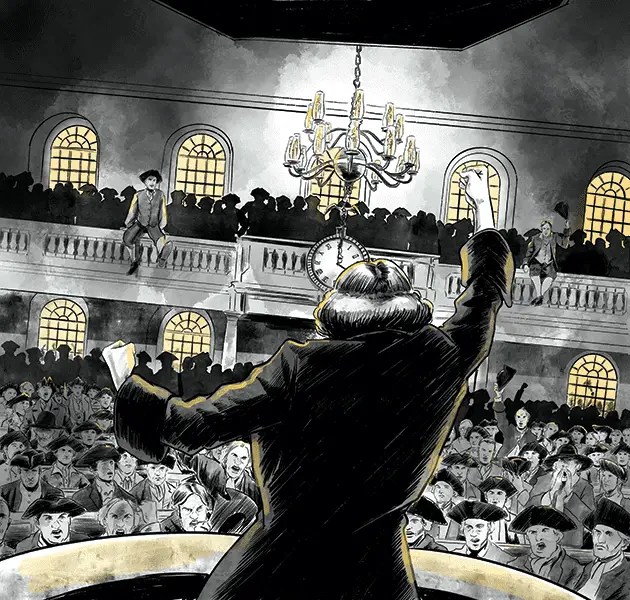
    Figure 3: Adams’ Speech at Old South (Revolutionary Spaces)

    Serving as a leading figure within the Sons of Liberty, Adams had led many of the meetings and attacks that occurred almost daily in the buildup to the 16th. This particular meeting drew 5,000-7,000 people who clamored to hear the latest developments in the tea crisis. When Rotch’s news broke, Adams stated, “This meeting can do nothing further to save the country.” While often billed as a signal to start the Tea Party, doubt remains over the statement’s significance. According to eyewitness accounts, many stayed another 15 minutes, and Adams tried to prevent people from leaving before the meeting concluded.

    Regardless of intent, hundreds of people made their way to Griffin’s Wharf. Along the way, some donned disguises that mimicked Native Americans. These disguises served both practical and symbolic purposes. First, donning a disguise shielded the identity of individuals carrying out the illegal acts, even if no one mistook them for actual tribal members. Secondly, the choice of a Native American-inspired look embraced an allegory of America and linked Indigenous resistance to colonization with the colonists’ struggle against Britain (Figure 4).
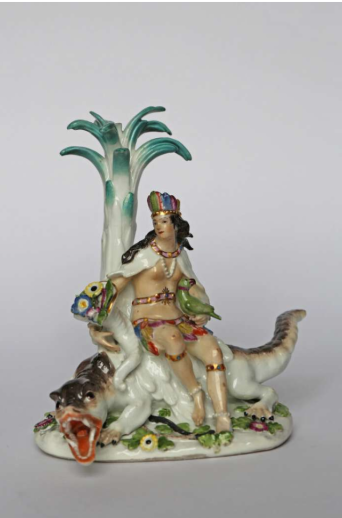
    Figure 4: “Allegory of the Continent of America,” c. 1750 (The Clark Museum)

    Interestingly, Adams never claimed or denied involvement with the Tea Party, yet, in contrast to popular depictions, he did not appear at the harbor that night. Instead, he remained at Old South. Of the participants, only the identities of 116 are known, and only one faced arrest.

    The day after, Samuel’s cousin, John Adams, described the event as “the most magnificent Movement of all. There is a Dignity, a Majesty, a Sublimity in this last Effort of the Patriots that I greatly admire. The People should never rise without doing something to be remembered—something notable And striking. This Destruction of the Tea is so bold, so daring, so firm, intrepid and inflexible, and it must have so important Consequences, and so lasting, that I cant but consider it as an Epocha in History.

    Reactions

    Despite a post-independent America enshrining the Boston Tea Party in glory, most initial reactions proved far less enthusiastic than that of John Adams. The name “Boston Tea Party” did not emerge until the 1820s, and even then, “Party” referred to a group of people rather than something celebratory. Instead, mentions of the event usually identified it by what happened, such as “the destruction of the tea” (Figure 7).
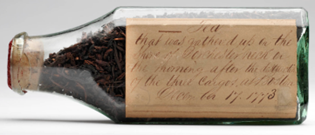
    Figure 7: “Tea that was gathered up on the shore of Dorchester Neck on the morning after the destruction of the three cargos at Boston; December 17, 1773” (MHS)

    While Parliament’s taxes made many colonists unhappy, they also valued their right to private property. In the case of the Boston Tea Party, the ships that the Sons of Liberty trespassed on belonged to Americans, while the EIC owned the destroyed tea. The King and Parliament had no direct connection to the ships or their cargo. As such, many viewed the attack as one on private property rather than a true strike against Parliament. Those who spoke out against it included Founding Fathers. Benjamin Franklin felt “truly concern’d…that there should seem to any a Necessity for carrying Matters to such Extremity, as, in a Dispute about Publick Rights, to destroy private Property.” Meanwhile, George Washington supported taking a stand against taxation and felt the cause of Boston equated to the cause of America, but ultimately could not “approve their cond[uc]t in destroyg the Tea.”

    Impact

    In the short run, the Boston Tea Party did little to fan the flames of independence. It inspired a few more boycotts (i.e., the Annapolis, Edenton, and Yorktown Tea Parties) and furthered a decline in consumption, but the British response to the event served as the primary catalyst. By punishing all of Boston, and by extension, Massachusetts Bay Colony, rather than just those responsible, the British infringed upon the rights of the colonists. Under the Coercive (nicknamed “Intolerable”) Acts, the British closed the harbor, demanded Bostonians pay damages to the EIC, imposed martial law, and required citizens to house, or quarter, members of the military on their property at their own expense (Figure 8).

    Figure 8: “The Bostonians in Distress;” 1774 Satire of the Boston Port Act (LoC)

    Those living in the twelve other colonies did not take well to this, as they feared the implementation of these acts in their homes. In response, the First Continental Congress met in Philadelphia from September to October 1774. While some delegates saw the issue as a Massachusetts one, others pressed the need to take a stand against the overreaches of Parliament and sympathized with Massachusetts. They concluded Congress by issuing their Declaration and Resolves, which listed objections to Parliament and confirmed their commitment to a trade boycott. However, when news of Lexington & Concord broke in April 1775, and Massachusetts found itself at war, the other colonies quickly had to decide which side they would take.

    Legacy

    Two hundred fifty years on, the Boston Tea Party remains an iconic event in American history and a pivotal moment in the founding of the country (Figure 9). While not wholly embraced as such upon its occurrence, the retelling of the event over time came to enshrine it in lore and leave out details that complicated the narrative. This shows that one cannot study a singular event without contextualizing it within the bigger picture. Nevertheless, John Adams’ belief that the “Destruction of the Tea” would become an epoch in history proved correct.

    Figure 9: Robinson Tea Chest – 1 of 2 surviving chests (Boston Tea Party Ships and Museum)

    Emma Schlauder

    Research Archaeologist


    Bibliography

    Adams, Abigail. Abigail Adams to Mercy Otis Warren, 5 December 1773. Letter. From National Archives, Adams Papershttps://founders.archives.gov/documents/Adams/04-01-02-0065 (accessed Nov 13, 2023).

    Adams, John. [December 1773]. Diary. From National Archives, Adams Papers. https://founders.archives.gov/documents/Adams/01-02-02-0003-0008 (accessed Nov. 13, 2023).

    “Boston Tea Party History.” Boston Tea Party Ships & Museum (website). https://www.bostonteapartyship.com/boston-tea-party-history (accessed Nov. 14, 2023).

    Cooper, Samuel. To Benjamin Franklin from Samuel Cooper, 17 December 1773. Letter. From National Archives, Franklin Papershttps://founders.archives.gov/documents/Franklin/01-20-02-0266 (accessed Nov. 13, 2023).

    “Declaration and Resolves of the First Continental Congress.” American Battlefields Trust (website). https://www.battlefields.org/learn/primary-sources/declaration-and-resolves-first-continental-congress (accessed Nov. 14, 2023).

    Franklin, Benjamin. From Benjamin Franklin to the Massachusetts House Committee of Correspondence, 2 February 1774. Letter. From National Archives, Franklin Papers. https://founders.archives.gov/documents/Franklin/01-21-02-0023 (accessed Nov. 13, 2023).

    ““Made one of the celebrated Tea Party in Boston harbor:” Remembering the Boston Tea Party in 1826.” American Battlefields Trust (website). https://www.battlefields.org/learn/primary-sources/made-one-celebrated-tea-party-boston-harbor (accessed Nov. 14, 2023).

    ““No Taxation Without Representation:” The Evolution of the Historic Phrase.” American Battlefields Trust (website). https://www.battlefields.org/learn/articles/no-taxation-without-representation (accessed Nov. 14, 2023).

    “Participants in the Boston Tea Party.” Boston Tea Party Ships & Museum (website). https://http://www.bostonteapartyship.com/participants-in-the-boston-tea-party#participant-list (accessed Nov. 14, 2023).

    Schiff, Stacy. The Revolutionary Samuel Adams. New York: Little, Brown and Company, 2022. “Tea Act.” American Battlefields Trust (website). https://www.battlefields.org/learn/primary-sources/tea-act (accessed Nov. 14, 2023).

     “The Boston Tea Party.” Massachusetts Historical Society (website). https://www.masshist.org/revolution/teaparty.php (accessed Nov 14, 2023).

    “The Final Straw.” Boston Tea Party Ships & Museum (website). https://www.bostonteapartyship.com/the-final-straw (accessed Nov 14, 2023).

    “The Intolerable Acts.” Boston Tea Party Ships & Museum (website). https://www.bostonteapartyship.com/the-intolerable-acts (accessed Nov 14, 2023).

    The Massachusetts Gazette; and the Boston Post-Boy and Advertiser. “Philadelphia, September 29. Extract of a letter from London, August 4.” From Massachusetts Historical Society. https://www.masshist.org/database/viewer.php?pid=2&old=1&mode=nav&ft+Coming% &nbsp 20of%20the%20American%20Revolution&item_id=434 (accessed Nov. 13, 2023).

    “The Secret Plan.” Boston Tea Party Ships & Museum (website). https://www.bostonteapartyship.com/the-secret-plan (accessed Nov 14, 2023).

    “Townshend Act.” American Battlefields Trust (website). https://www.battlefields.org/learn/primary-sources/townshend-act (accessed Nov. 14, 2023).

    Washington, George. From George Washington to George William Fairfax, 10–15 June 1774. Letter. From National Archives, Washington Papershttps://founders.archives.gov/documents/Washington/02-10-02-0067 (accessed November 13, 2023).
  • Coffee: A Revolutionary Drink

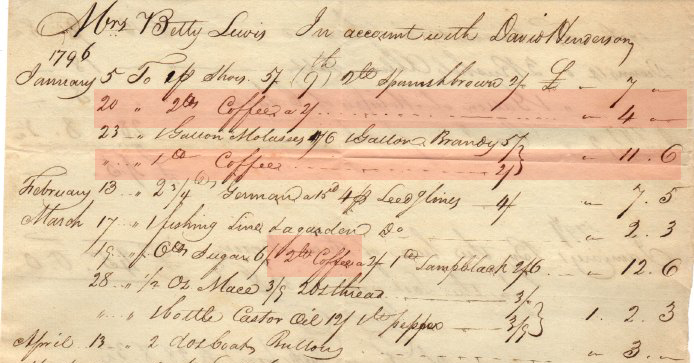
    The history of coffee is long and complex and can never be fully explored in a single blog post, however, because of my admiration for the caffeinated beverage I wanted to learn how the colonist utilized coffee.  Fortunately, in the collections at Kenmore, we not only have a selection of 18th century coffeepots and cups but also original records for coffee purchases made by the Lewis family.  These objects give us a tangible record of coffee in the colonial home but this post will also explore how the drink became popular in the colonies, how the colonials made their morning brew, and how a tax made coffee a revolutionary drink earning it the nickname “King of the American breakfast table”.[1]

    ms 856 copy
    Betty Washington Lewis made three purchases of coffee in January and March 1796.

    The Basics

    Coffee plants are flowering shrubs that produce berries which are harvested, peeled, dried, roasted, ground and, eventually, brewed to produce the cup of dark brown liquid that helps most of us get through the day.[2]

    Coffee, tea, and chocolate were introduced into North America almost simultaneously in the later part of the 1600s.[3]  By the mid-1700s, coffee and tea were becoming staple drinks for early Americans. [4]

    The easiest way to get a cup of coffee in Colonial America was the coffee-house, which usually was a mixture of café, tavern, and inn.  Coffee-houses tended to offer more than just a strong cup of java and had ale, wine, spirits, or even tea available. [5]  Even Fredericksburg had its own coffeehouse.  As local historian Paula Felder notes, “In 1751, Charles Julian of Norfolk, a baker, opened a coffee house and was granted an ordinary license.  When he joined the new Masonic lodge in 1756, the meetings were held ‘at brother Julian’s’ until the lodge meetings were moved to the new Town House in 1763.  The coffee house remained a prominent gathering place for many years. A ceremonial luncheon was given here in honor of George Washington in February 1784 on his first visit after the Revolutionary War.”  However, coffee-houses were not always a socially acceptable place for everyone. Nor were they always the most convenient way to get that much sought after cup of java.  As the desire for coffee heightened, it made its way into the homes showing up on the breakfast table, in-between meals, and after dinners.[6]

    How to Make a Colonial Cup

    In the 1700s, when you purchased coffee from your local merchant it most likely was in the form of bags of green beans.  The burden of turning those beans into the perfect cup of coffee was on the consumer.

    Roasting

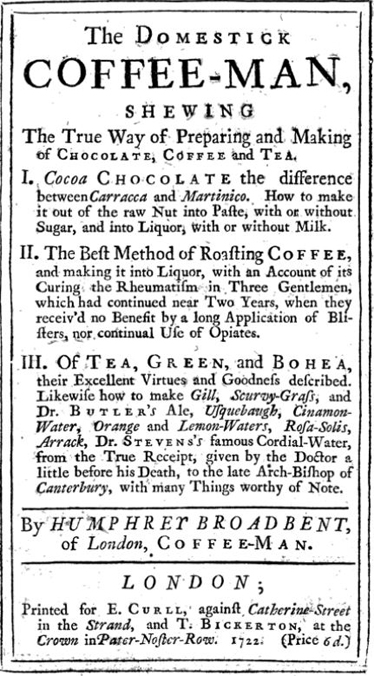
    Domestick Coffee Man
    Title page of Humphrey Broadbent’s The Domestick Coffee-man published in 1722.

    The first step was roasting the green beans to a dark brown. Humphrey Broadbent, writer of The Domestick Coffee-man, explained how to properly roast the beans, “Particular Care ought to be taken in Roasting the Berries, for without doubt in that, Depends much of goodness of them Berries.  I hold it best to Roast them in an Iron Vessel full of little Holes, made to turn on a Spit over a Charcoal Fire, keeping them continually Turning, and sometimes Shaking them that they do not Burn, and when they are taken out of the Vessel, spread’em on some Tin or Iron Plate ‘till the Vehemency of the Heat is Vanished.”[7]

    If you had a more primitive set up and didn’t have a roasting spit you could place them in a frying pan, known as a spider, or iron kettle in the hearth.  When the beans are heated, they slowly turn yellow, release steam, expand in size, and darken.  Once they begin to crackle, they are ready to be cooled.[8]

    Grinding

    By the early 18th century in Europe, coffee grinders were quite common and inexpensive.  These grinders were based on the original spice grinder. However, in the colonies, most people used a mortar and pestle to pound the beans into a coarse powder.[9]

    Brewing

    There were two different methods of brewing that were popular: boiling and infusion.  Broadbent helpfully explained the difference to the novice coffee drinker who wished to become a connoisseur.

    “The common way of making this Liquor, is, to put an Ounce of Powder, to a Quart of Water and so let it Boil till the Head is Boyled down; but this is a very silly way…if Coffee be but very little too much Boiled it is Spoiled, and grows either Flat or Sour, but if by long Custom you will not part from your Boiling, let it not Boil above a Minute.”[10]

    Broadbent much preferred infusion, stating “Put the Quantity of Powder you intend, into your pot then pour Boiling-Hot Water upon the aforsaid Powder, and let if stand to infuse Five Minutes before the Fire.”[11]

    To get that lovely cup of coffee in the 1700s, you just needed to purchase the beans, roast them, grind them, and then boil them.

    Equipment

    As the drinking of coffee moved from the coffee-house to people’s homes, a group of tableware became associated with the drink.  Central to this tableware was the coffeepot and cups.  One of the earliest representations of these items is found in a 1674 woodcut showing an English coffeehouse where men are drinking from porcelain cups without handles and coffee is being served from a metal or earthenware jug.  Later, a print from 1710 shows coffeepots with a long straight spout and small annular porcelain bowls cups.[12]  Initially, these coffees pots and cups looked quite similar to the ones used to serve tea but, over time, they began to differ in appearance to what we today would recognize as two distinct serving sets.

    The prevailing but inconclusive theory as to why the two pots changed shape is that the countries of origin of each drink played a part in the style of the tablewares.  Essentially, coffeepots and cups resembled those used in Arabic coffee houses while tea pots and tea cups resembled those used in Chinese tea rituals.[13]

    Revolutionary Coffee

    We know how colonial Americans made coffee and how they drank coffee but how did coffee become a revolutionary drink that Americans, who were once English, came to prefer over tea, Britain’s national drink?  The answer, in a word, is taxes.  The Tea Act of 1773 was created by the British government to bailout the financially troubled East India Company (EIC). [14]  The government told the Company that they could ship tea directly to the colonies, duty-free.  The EIC would get rid of loads of tea that was piling up in their London storerooms.  Colonists would get tea that was cheaper than the illegal stuff smuggled in.  Everyone should have been happy.  But everyone wasn’t.  The tea the Company was selling to the colonists would still be taxed under the Townshend Acts.  If the colonists purchased it, they would be indirectly accepting Parliament’s right of taxation without representation.[15]

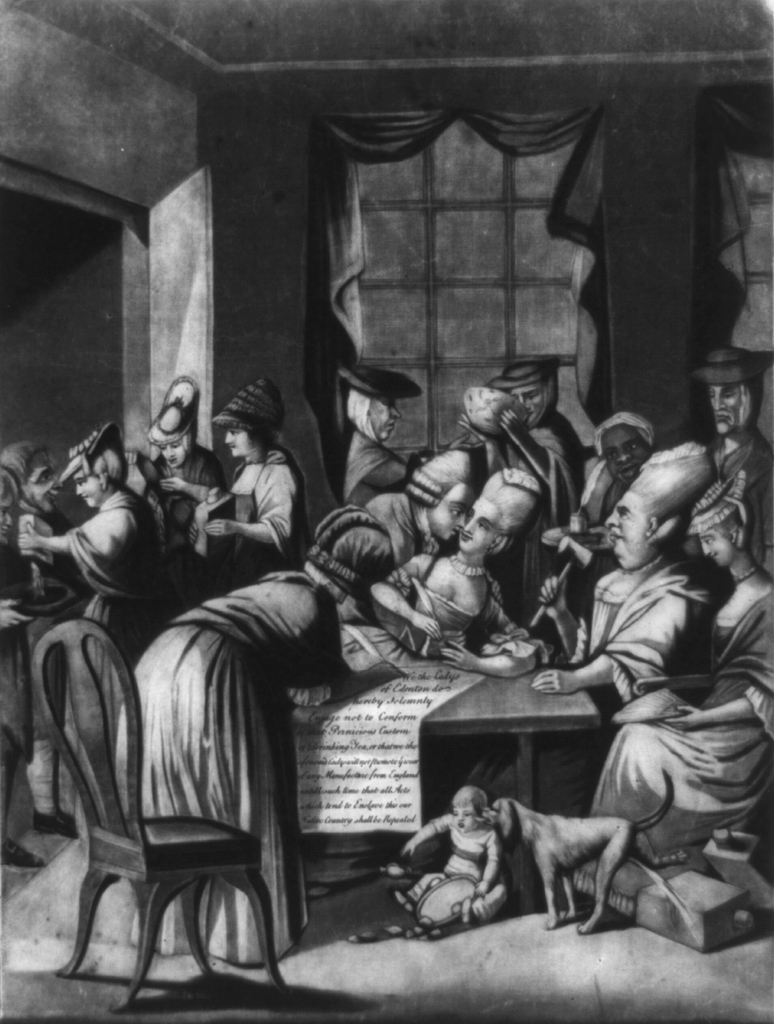
    Tea became an emblem of British oppression and a boycott of the drink became a revolutionary act.  Rejecting British culture, patriotic associations gave less than hospitable “tea parties” in Boston and Yorktown for merchants who continued to sell the politically incorrect brew.[16]  Whether politicians or housewives, Americans up and down the colonies joined the boycott and vowed to never serve tea in their homes.[17]

    A Society of Patriotic Ladies
    “A society of patriotic ladies, at Edenton in North Carolina” printed for R. Sayer & J. Bennett on March 25, 1775 in London. This satirical print shows American women pledging to boycott English tea in response to Continental Congress resolution in 1774 to boycott English goods. Credit: Library of Congress.

    As John Adams wrote to his wife, “Tea must be universally renounced and I must be weaned, and the sooner the better.”[18]  However, the colonists still needed their caffeine and coffee stepped up to do its patriotic duty.  Consumption of coffee soared and played a small role in the creation of a new American identity. More than a drink, it became a sign of independence and unity in the midst of revolution and upheaval.[19]

    Heather Baldus
    Collections Manager

    Sources

    Breen, T. H. The Marketplace of Revolution. Oxford: University Press, 2004

    Broadbent, Humphery. The Domestick Coffee-Man, Shewing The True Way of Preparing and Making of Chocolate, Coffee, and Tea. London, 1722

    Clark, F. (2009) Chocolate and other Colonial Beverages, in Chocolate: History, Culture, and Heritage (eds L. E. Grivetti and H.-Y. Shapiro), John Wiley & Sons, Inc., Hoboken, NJ, USA

    Felder, Paula. “George Washington’s Fredericksburg: The Fredericksburg Scene in 1755,” Map in the Free Lance-Star, July 3, 2004.

    Goodwin, Mary. “The Coffee House Historical Report, Block 17, Building 34: The Coffee-House of the 17th and 18th Centuries,” Colonial Williamsburg Foundation Library Research Report Series – 0050 (1956): http://research.history.org/DigitalLibrary/View/index.cfm?doc=ResearchReports%5CRR0050.xml#p12

    Jamieson, Ross W. “The Essence of Commodification: Caffeine Dependencies in Early Modern World.” Journal of Social History, Vol 35, No2 (2001): 269-294


    Regelski, Christina, “The Revolution of American Drinking,” http://ushistoryscene.com/article/american-drinking/

    Root, Waverly et al., Eating in America (New York: Ecco, 1981)

    Smith, Andrew F., The Oxford Encyclopedia of Food and Drink in America 2nd edition (Oxford University Press, 2013, p 266

    Ukers, William H. All About Coffee. England: The Tea and Coffee Trade Journal Company, 1922

    Ukers, W.H. “The Early Preparation of Coffee.” The Wisconsin Magazine of History, Vol 2 (1919): 353-356

    Witkowski, Terrence H. “Colonial Consumers in Revolt: Buyer Values and Behavior during Nonimportation Movement, 1764-1776,”Journal of Consumer Research Vol. 16, No. 2 (Sep., 1989), pp. 216-226

    [1] Ukers, 107

    [2] Ibid, 133

    [3] Ibid, 105

    [4] Regelski, http://ushistoryscene.com/article/american-drinking/

    [5] Goodwin, http://research.history.org/DigitalLibrary/View/index.cfm?doc=ResearchReports%5CRR0050.xml#p12

    [6] Felder, GW’s Fredericksburg; Ukers, 689

    [7] Broadbent, p 8-9

    [8] Ukers, “Early Preparation of Coffee”, 354

    [9] Ukers, 695

    [10] Broadbent, p 11

    [11] Broadbent, p 11

    [12] Jamieson, 285

    [13] Ukers, 602; Jamieson, 285

    [14] Breen, T.H. pg 298-301

    [15] Ibid, pg 235-239

    [16] Clark, p 276

    [17] Root, p 127

    [18] Smith, p 266

    [19] Witkowski, p 218

  • Some Tax Myths… Busted!

    Benjamin Franklin once wrote that “Nothing is certain except death and taxes.” And with the deadline to pay the federal income tax only days away it would be difficult to disagree with the founding father. However in the 200 years since the American Revolution, a few popular misconceptions attach themselves to that universal truth. This blog post will debunk two such highly-repeated but highly-inaccurate tax myths.

    The Closet Tax

    The misconception that early Americans were taxed for the number of closets in their homes has been repeated so many times that almost everyone has heard it somewhere at some time. The pervasiveness of a story, however, does not make it true.  No records show any of the 13 colonies or early states had a closet tax.

    How did this myth originate?  There are two likely culprits.  First, most historic homes seem to lack closets but that is simply a modern impression.  In the 18th century, closets were not used to store clothes. That practice became popular after the Civil War. Instead, clothes were kept in a trunk or a clothes press and this leaves bedrooms woefully lacking in closet space to modern eyes. Despite our notions, 18th century homes, like wizards who arrive exactly when they mean to, had just as many closets as early American homeowners wanted.

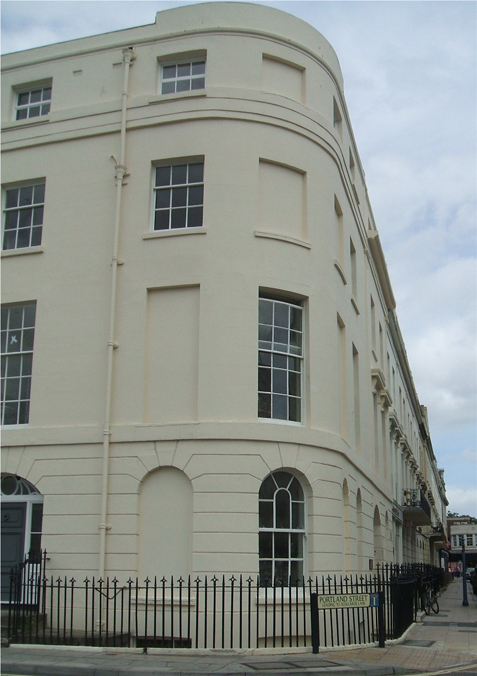
    The other culprit in creating the closet tax myth may be England’s window tax. From 1696 until 1851, England taxed the number of windows in homes as a way to tax individuals proportionately to their wealth because it was thought that more windows meant a larger home and more wealth.  A similar logic – more closets meant more wealth – is said to explain the mythical closet tax. The window tax ultimately affected architecture in England and resulted in homes with fewer windows.  The same thing is claimed to have resulted from the faux closet tax.  Both Virginia (in 1781) and Pennsylvania (1798) tried a window tax, unsuccessfully, but there was never a closet tax.

    Bricked Up Windows
    As a result of the window tax, many homeowners in England bricked up their windows to reduce their tax burden. This house was constructed in 1830 on Portland Street in Southampton. Credit: Gary Blunt / Wikimedia Commons

    This cartoon from an 1850 edition of the British satircal magazine Punch advocated for the repeal of the window tax. Indeed, repeal finally took place in July 1851. Credit: Wellcome Library, London.
    This cartoon from an 1850 edition of the British satircal magazine Punch advocated for the repeal of the window tax. Indeed, repeal finally took place in July 1851. Credit: Wellcome Library, London.

    The Boston Tea Party

    It is sometimes claimed the Boston Tea Party was a protest against tea’s rising cost.  Actually, the Tea Act made tea cheaper for colonists.  In 1770, Lord North, the new Prime Minister, repealed all of the Townshend Duties, except for the one on tea. He also passed the Tea Act of 1773 which allowed the East India Company to sell tea directly to the colonies, dropping the price of tea well below that of smuggled Dutch tea even with the small tax included. To Parliament, repealing all the duties except the small one on tea seemed perfect. The action did away with measures the colonists disliked, enacted an alternative that was much cheaper, encouraged English/colonial shipping, and used something colonists already bought.

    In spite of all of this, it was not a welcome measure with some colonists like the Sons of Liberty, a radical group of Boston merchants. Colonists were not forced to spend their money on tea and its tax. They could even refuse ships that held the tea from entering their ports. Most other colonies protested the Tea Act through boycott. Massachusetts’s Royal Governor Thomas Hutchinson, however, ordered a tea-filled ship be allowed into the harbor despite the insistence of Bostonians. This act by the governor speaks more directly to the motives of the Sons of Liberty on that evening in December 1773.

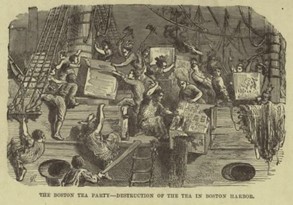
    "Americans throwing Cargoes of the Tea Ships into the River, at Boston," engraving by W.D. Cooper in The History of North America. London: E. Newbury, 1789. Credit: Library of Congress / Wikimedia Commons
    “Americans throwing Cargoes of the Tea Ships into the River, at Boston,” engraving by W.D. Cooper in The History of North America published in London in  1789. Credit: Library of Congress / Wikimedia Commons

    The governor’s disregard for the people’s wishes and the reaction of the Son of Liberty were indicative of a long-standing animosity between the two. While motives were varied, numerous, and complex; the Sons of Liberty were not protesting the oppressive cost of tea when they tossed it into Boston Harbor.

    Joe Ziarko
    Manager of Interpretation & Visitor Services