Lives and Legacies

Tag: buttons

  • Behind the Glass at Ferry Farm’s Archaeology Lab

    The observer stands behind glass and watches. The one being watched picks up the object with her bare hands turns it carefully to see every angle, then sets it down to record data into her computer. Then she washes her hands, unwraps another object – and eats it!

    Visitors to George Washington’s Ferry Farm can explore more than the museum gallery, or the Washington House replica, or newly constructed Quarter and Cellar outbuildings. They can tap into their people-watching curiosities and observe real archaeologists in a laboratory researching, washing objects, making labels, cataloguing, repairing ceramics – and even eating lunch!

    One extraordinary thing about Ferry Farm is that its archaeology lab is viewable and accessible to the public. The mysteries of history lie out in the open, sitting out on tables or in trays ready to be washed and categorized. Like zoo-goers, visitors are mesmerized by the goings-on behind the glass, and likewise, our archaeologists love interacting with the public, glad to answer questions or even pose for a picture.
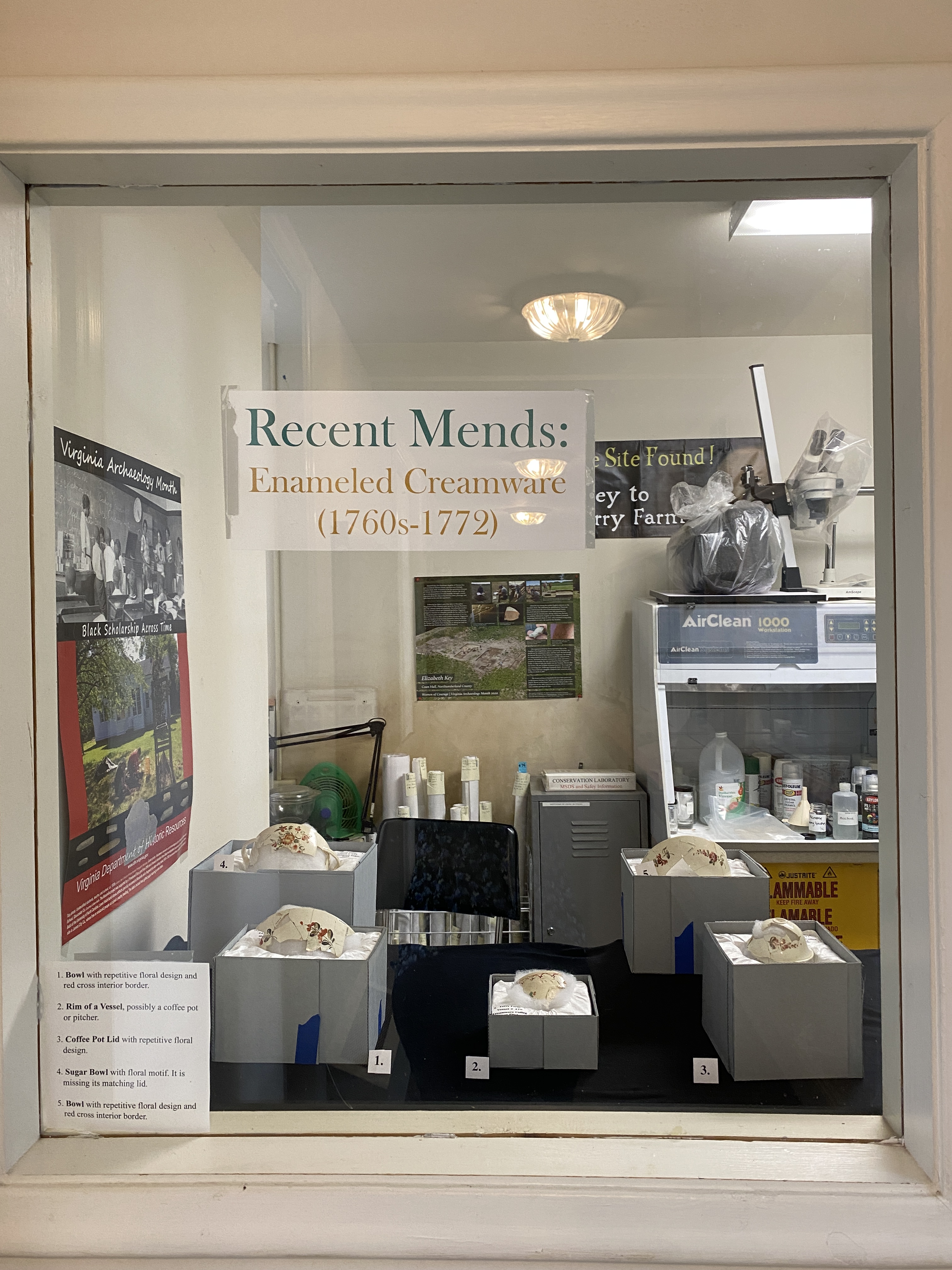
    Recent mends of enameled creamware behind one of several Archaeology Lab observation windows.

    It may be an interesting coincidence, but as Mary Washington drives the story of Ferry Farm and Historic Kenmore was saved by a group of intrepid women, Ferry Farm’s archaeology laboratory is also dominated by women who are passionate about what they do and more than willing to share their findings with guests and professional peers. Who are these interesting women, and what exactly happens in the lab? Its main inhabitants are Lab Supervisor Mara Kaktins and Field Directors Judy Jobrack and Danielle Arens. Also, part of the team (but not in the fishbowl) are Research Archaeologist Emma Schlauder and Director of Archaeology Dave Muraca. Dave, the only man in the department, led the team that discovered the foundation of the Washington House.

    There would be no lab work if there was no field work, and every summer for about 11 weeks, a carefully planned dig occurs on the grounds of George Washington’s Boyhood Home. Rich in artifacts, the land has yielded over 800,000 since the 1990’s. Finds date from indigenous, colonial, Civil War, and a sequence of farms throughout the 20th century. As Dave Muraca has said, “I would never recommend having a Civil War battle on your archaeological site. There are five successive farms out there, one on top of each other. In that way, it’s very complicated and hard to take apart.” That said, the fieldwork is not easy, but incredibly, each season, they find thousands of artifacts that will need to be mapped, processed, washed, bagged, catalogued in the database, labeled, stored, and researched.
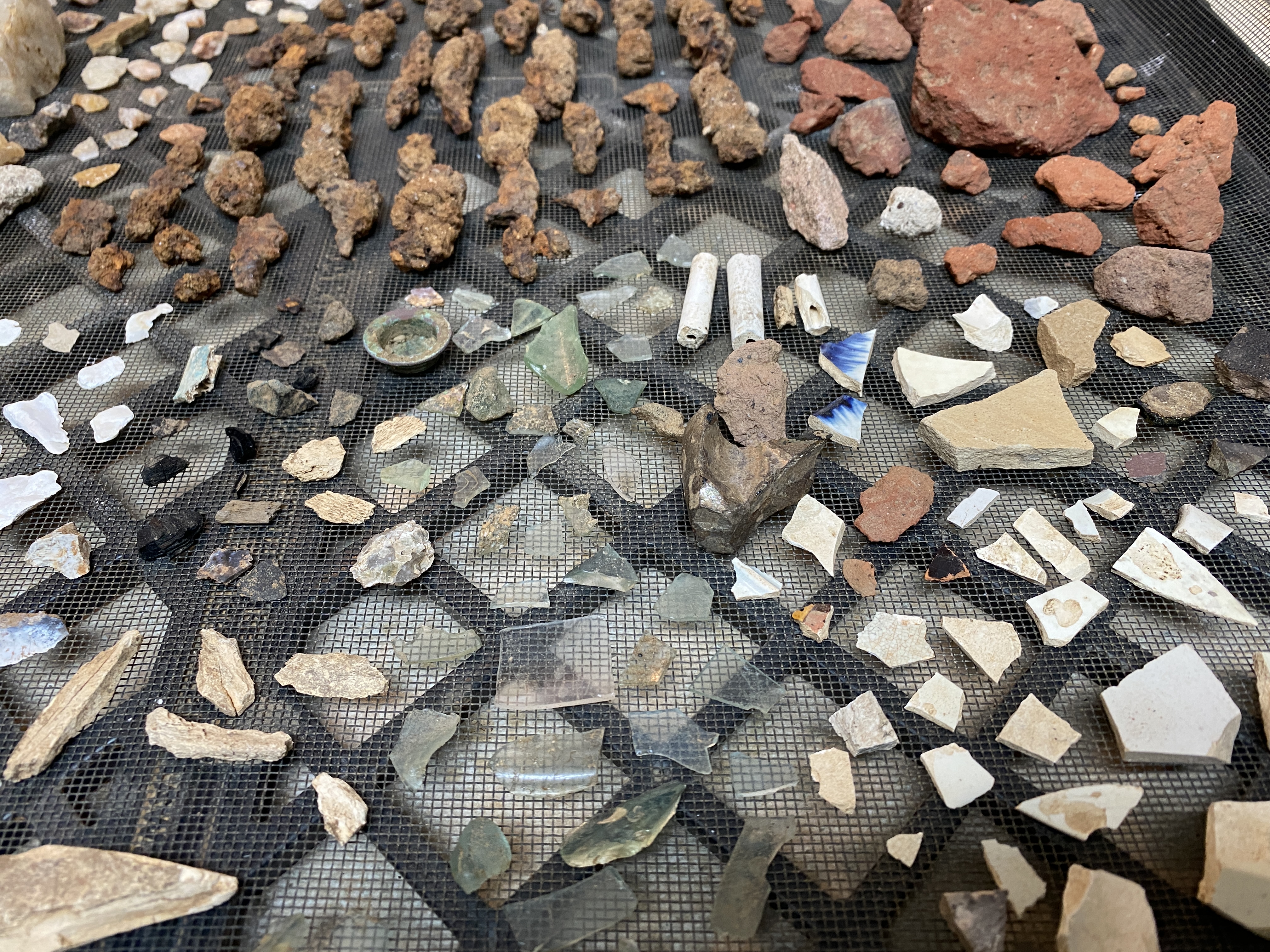
    Washed artifacts waiting to be bagged and catalogued.

    Typical finds include ceramic sherds, window glass shards, architectural pieces, household items, mortar, sandstone, personal items, pipes, wig curlers, buttons, personal adornment, and indigenous and faunal (animal remains). Objects popular with the public include a Masonic pipe bowl, cufflinks engraved with foxes and “Tally O,” a chamber pot, and even 20th-century items that indicate children used to live on-site, such as Matchbox cars, a toy motorcycle, or a doll’s head. Observers are also surprised to learn that 21st-century trash is catalogued because it was unearthed, and someday that too will be a part of Ferry Farm’s history.

    It’s important to note that Ferry Farm doesn’t dig exhaustively. While archaeologists are certainly concerned with the past, they also make concessions for the future, leaving areas untouched for future generations to dig using as-yet not invented technology. Ground penetrating radar has not been used much because of all that has happened on the land since Washingtons’ time. The main emphasis is feature-chasing – looking for structures such as the Washington House, cellar, kitchen, the Quarter, and more. No land feature will be recreated without knowing exactly where it stood.

    A unique quality of Ferry Farm’s Archaeology Department is that lab and field duties are not segregated; the same amazing team works both in the lab and field. This creates an intimacy with the artifacts that may not be present elsewhere. One day in the field equals three working days in the lab, processing, interpreting, and analyzing all the data from the artifacts. The first step is turning the field data into a format that’s digestible for record-keeping, end-of-year reports, and future Ferry Farm archaeologists. In the field, a site grid in five-foot increments is established and laid out to track where the finds are. Within that grid, context numbers are assigned to specific soil layers and features. A context is essentially a 5’ x 5’ address that notes the horizontal and vertical location of artifacts, noting spatial distribution where items are concentrated. In the lab, context maps are made from each grid unit, and the maps are put together to create the stratigraphy of a dig site.

    Leaded glass takes on a blue hue under UV light.

    Artifacts that come in are brought to the Wet Lab and washed with water in a tub or colander using tools such as toothbrushes, pipe cleaners, or dental picks. One might wonder if there are special precautions for handling artifacts, and interestingly, controversy swirls over whether artifacts should be handled with gloves or not. Rubber gloves are worn during lengthy washings to keep hands from getting too waterlogged. It turns out wearing gloves for analysis proves more damaging since touch sensitivity is reduced and gloves are prone to ripping. Items being examined have been surrounded by the elements for years, so oils from hands are not likely to harm artifacts any further.

    Next to the Wet Lab is the Conservation Lab, where acetone might be used to remove glue from previously mended artifacts. It’s equipped with a vent hood for fumes and the archaeologists wear masks for safety. They often create tableware replicas for the Washington House display, which might require the use of spray paint.

    Very well-designed and equipped, the lab was created by archaeologists for archaeologists. Their equipment includes a light table, a Dremel, a fine water screen for the field, and a UV light to identify leaded glass. For further testing, the department may contract out to other labs, such as the University of Eastern Michigan, with DART mass spectrometry capable of identifying organic materials.

    After artifacts are entered into the database and bagged with tiny labels indicating their project number and context, they are either put in the study collection or housed in cabinets or a storage room. With almost a million artifacts in the collection, the boxes stacked in the storage room resemble a miniature version of the ending scene in Raiders of the Lost Ark.
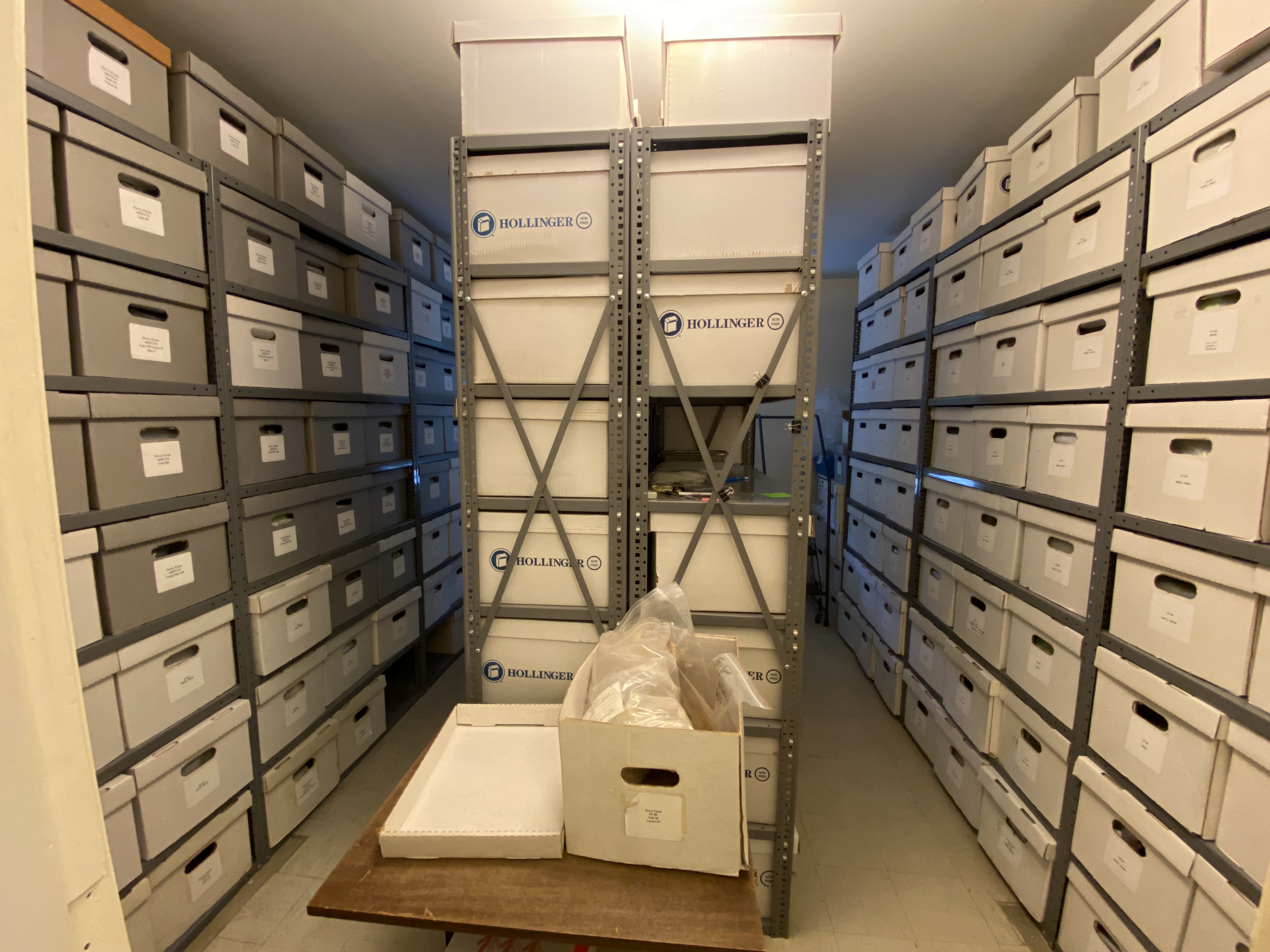
    Boxes of artifacts stacked in the storage room resemble a miniature version of the ending scene in Raiders of the Lost Ark.

    While one cannot put a value on tiny sherds of 18th-century ceramics, a rusted hinge, or an old button, Kaktins says, “Everything is priceless because of the information gleaned from it.” Archaeology at Ferry Farm is the driving force behind the stories shared with visitors. It informs where the buildings go, reveals the long-forgotten secrets of inhabitants, and intrigues visitors as they glimpse into the past.

    Lori Pikkaart

    Marketing & Communications Manager

  • No Buttons for the Ladies

    Whilst I costume actors, living historians, and myself from time to time in 18th century clothing, I find myself puzzled about the stark difference between the closures and attachments of ladies’ and men’s garb.  I have to lace myself into my stays, tie on layers of padding and petticoats around my waist, and finally pin my gown closed.  Men have the enjoyment of a few buttons on their breeches and waistcoat, but that is it.  It frequently makes me grumpy how long it takes me to dress in comparison to my male counterpart.  I did not understand this phenomenon, until recently. 

    To put 18th century clothing closures into perspective, you had hooks and eyes, buttons, and ties/laces.  Thomas Hancock created elastic for gloves, suspenders, and stockings in the 1820s, but it struggled to withstand heat and last through time.  The elastic we know and love in our garments today did not come around until the early 1900s.[1]  The modern zipper was patented in 1917 and was used mainly on boots and tobacco pouches.  It took another 20 years before the technology even made it to mass produced clothing.[2]  By comparison, the button first becomes functional over decorative around 1,000 BCE in Asia.  Buttons would eventually travel the Mediterranean during the crusades into European territories around the late 11th century CE.[3]  So George Washington did not have a zipper on his pants or elastic on his socks, but he definitely had buttons on his coat.   

    A eye from a hook and eye set. Source: Ferry Farm Archaeological Collections

    Hooks and eyes were sometimes used for gown closures for women in the 18th century.  They were not used as much as pins were because of the rigidity in size it created for the garment. 

    We have buttons from men’s garments in the archaeological collections here at Ferry Farm.  We also see buttons all around male portraiture in our curatorial collection.  The ladies, however, are stuck with laces, ribbons, and pins.  And boy, do we have the pins to prove it in the archaeology collections. 

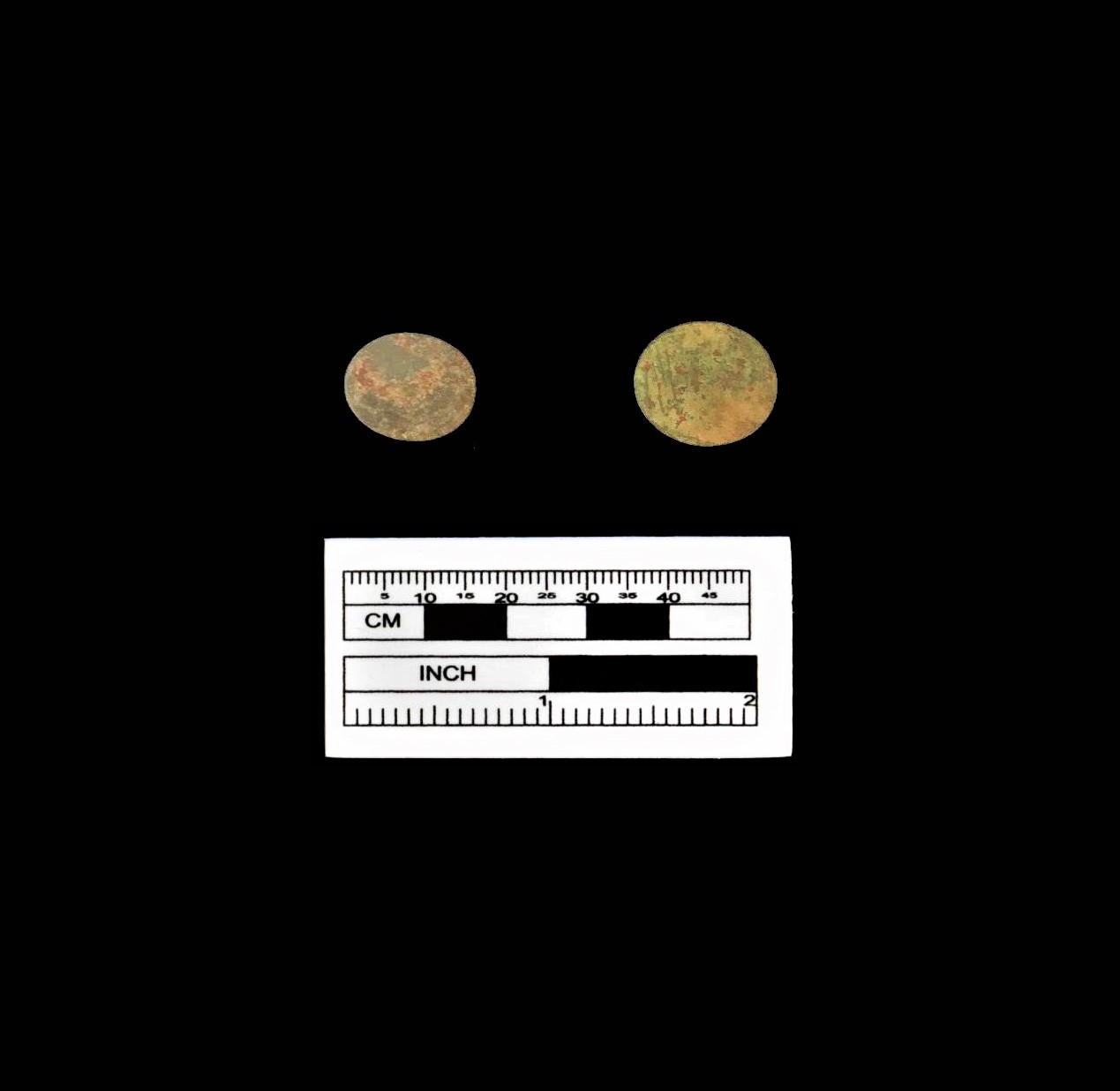
    Two metal buttons most likely from men’s garments.  Source: Ferry Farm Archaeological Collections
    Bone buttons Source: Ferry Farm Archaeological Collections
    Pins were used for pinning jackets closed and keeping caps pinned to your hair.  They were a necessary part of dressing. Source: Ferry Farm Archaeological Collections

    A small sample of the large collection of brass dress pins found at Ferry Farm.  Pins were not used for sewing, as basting before sewing was the regular practice.  Pins were used for pinning jackets closed and keeping caps pinned to your hair.  They were a necessary part of dressing.

    The answer to why this phenomenon is how it is hit me one day after rewatching a lecture given by a former staff member entitled “Betty Washington Lewis and Women’s Health.”  Dr. Kelly Brennen Arehart spoke about maternity wardrobes and how women wore their everyday clothing throughout pregnancy.  For my contemporary mind, this was shocking, but the more I thought about it the more it made sense. 

    Women go through a lot of fluctuations in body shape, weight, and proportions in their lifetime.  Between hitting puberty and development of curves, to many pregnancies, to the changes of menopause, women’s bodies go through so much.  Of course in between all of the big changes, there are also changes to the female body based on time in her menstrual cycle, metabolism fluctuations, or periods of eating more or less or different types of food that all change the body’s shape and size.  Unlike today, women of the past could not just go to the shop and buy a pair of pants in the size up.  Clothing was incredibly expensive and time consuming to make before sewing machines and mass production come into play.  In the 18th century, even the highest classes of women did not have the money or the time to go buy or have new clothing made when they gained a few pounds or got pregnant.  It was a matter of adjusting the clothing they already had.  And that is exactly what ties, pins, and laces allowed women to do. 

    The lacing, pinning, and tying made clothing far more adjustable compared to the rigidity of buttons.  Women tied their petticoats looser and simply covered the wider gap in the side with their jacket or gown.  Stays were either loosened significantly by the laces or they were left unlaced at the bottom entirely, especially in cases of late term pregnancies.  On top of the stays, jackets could be pinned further out to allow for more room in the bust and waist, or a stomacher could be added in the center opening of the jacket to expand the top even further.

    Whether these closures were intentionally created to be adjustable or if it was just a byproduct of lacking clothing technology, I am not entirely sure.  But the idea that buttons were only used on men’s not so fluctuating bodies (for the most part) says something.  A button is sewn down and cannot be easily moved or adjusted on a regular basis.  Once a button is sewn into place, there is no room for variation in body shape, unless one wanted to move the buttons every time he ate a large meal the previous day. 

    Even though Betty Washington Lewis had Charlotte, who we believe to be an enslaved woman acting as the seamstress of the Lewis household, Betty was pregnant on and off for twenty years.  If Charlotte or another enslaved seamstress had to make a maternity wardrobe for Betty every time she was with child, the seamstress would have no time to do any other tasks whatsoever.  It was not economical with precious time or expensive cloth for women to need new clothes every few weeks. 

    So to tie all this together, I am still not happy that it is so inconvenient for me to dress myself in 18th century clothing, but I understand why getting dressed was this way.  The adjustability of women’s clothing was so intentionally created to conform to their bodies in any season it was in.  It also opens my eyes to why pins were so important.  Without them, a woman could not dress. 

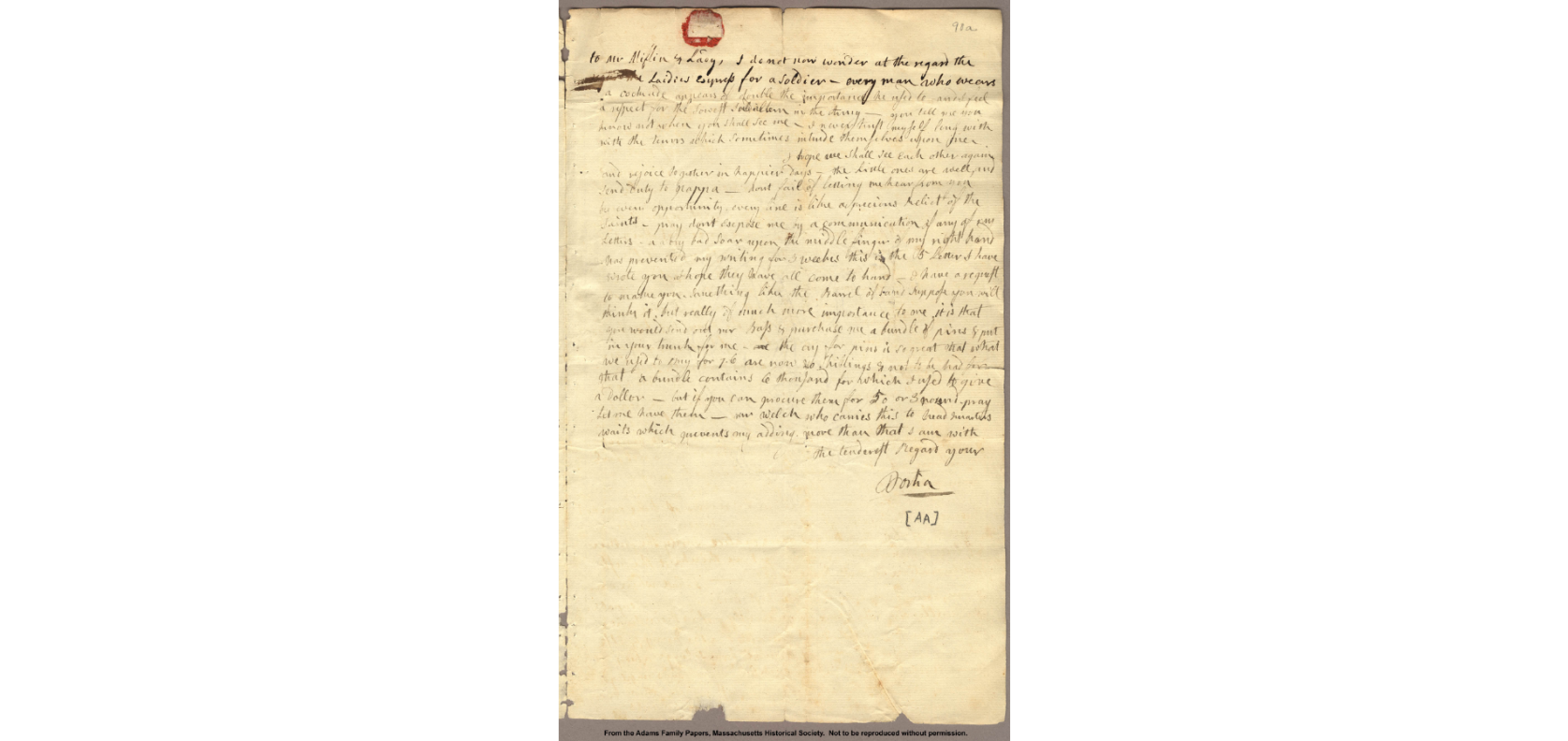
    Letter from Abigail to John Adams, June 14, 1775.  Source: Massachusetts Historical Society

    …I have a request to make you. Something like the Barrel of Sand suppose you will think it, but really of much more importance to me. It is that you would send out Mr. Bass and purchase me a bundle of pins and put in your trunk for me. The cry for pins is so great that what we used to Buy for 7.6 are now 20 Shillings and not to be had for that. A bundle contains 6 thousand for which I used to give a Dollor, but if you can procure them for 50 [shillings] or 3 pound, pray let me have them. Mr. Welch who carries this to head Quarters waits which prevents my adding more than that I am with the tenderest Regard

    your

    Portia


    Allison Ellis

    Manager of Public Programs


    [1] “Questions About Elastic,” Maggie May Clothing, Accessed July 10, 2023, https://maggiemayfashions.com/questions-about-elastic-2/.

    [2] Ninette Dean, “The Up and Down History of the Zipper,” The Smithsonian Libraries and Archives, Accessed July 10, 2023, https://blog.library.si.edu/blog/2010/05/03/the-up-an-down-history-of-the-zipper/.

    [3] Caroline Stone, “The Westward Journeys of Buttons,” AramcoWorld, Accessed July 10, 2023, https://www.aramcoworld.com/Articles/November-2020/The-Westward-Journeys-of-Buttons.

  • Paste Gems: It’s the Real Thing (Almost!)

    The majority of what crosses my desk everyday as I catalog artifacts are items that would be difficult, if not impossible, to ascribe to any one person who lived on the land we call Ferry Farm. Architectural debris (brick, mortar, plaster, nails), food remains (oyster shell, animal and fish bones, eggshells (!)), broken household objects (glass bottles, wineglasses, dinner plates, storage crocks), and modern garbage (plastic – so much of it!), when found on site, are all interesting artifacts in and of themselves and can answer specific research questions. At the same time, they all attest to the mundane, collective aspects of everyday life on a farm that has been occupied off and on for over 250 years.  Every once in a while, however, an artifact is caught in the field sifting screen or the lab wash bucket that puts a smile on your face and causes you to excitedly announce to the rest of the crew, “Look what I found – a gem!” Then, you think “I wonder who it belonged to?”

    sf1947
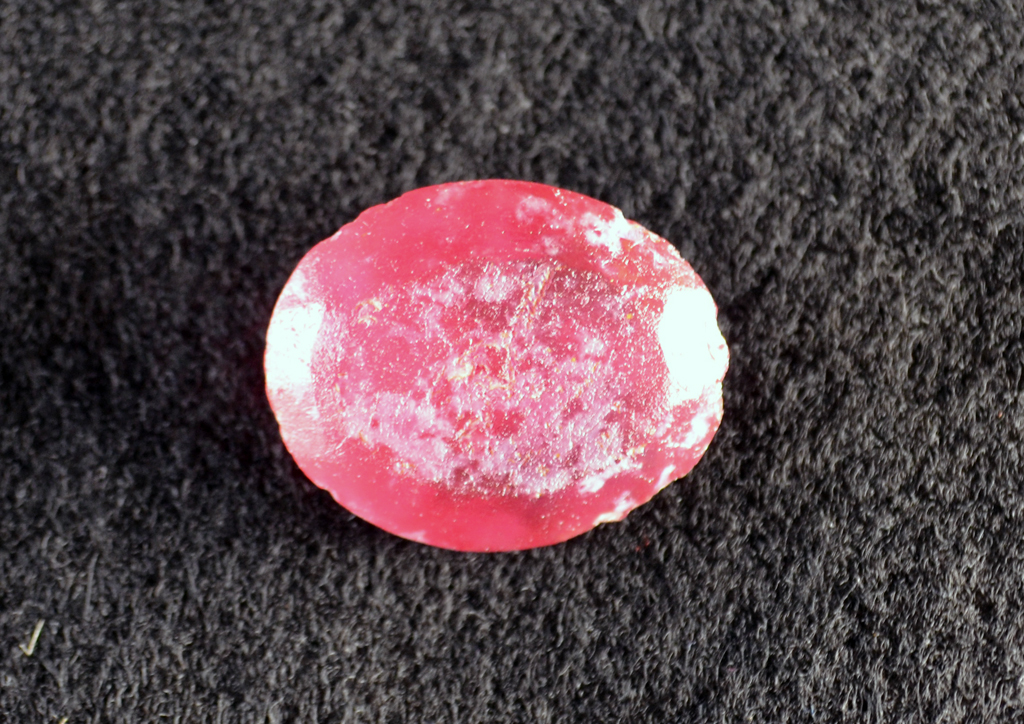
    An oval, faceted red paste gem that probably came from a piece of jewelry. (SF 1947)

    Gemstones and jewelry are definitely exciting finds on any archaeological site, but at Ferry Farm we are more likely to find bits of jewelry and clothing fasteners decorated with imitation or “paste” gems.  Paste gems are molten leaded glass pressed into gem-like molds and then polished to look like the real thing.  With the better quality pastes, the facets could even be cut and polished.  They were available in any color imaginable by adding metallic oxides during their manufacture. Their color could also be enhanced or changed by attaching colored foils to the undersides of the gem.   Paste gems were usually set in closed, versus open-backed, settings to protect the foil backing from tarnishing.

    sf1948
    This colorless paste gem is cut in a style similar to the “brilliant cut,” a popular diamond cut during the 18th century, and would have been set in a closed setting for either a piece of jewelry, a button, or a buckle. (SF 1948)

    The use of paste gems was popular from the 17th through the early 19th centuries because they were so versatile and economical. Pastes were available in a wide selection of colors that imitated any precious or semi-precious gemstone.  Because they were created in molds, they also came in a multitude of sizes and shapes, such as circles, triangles, squares, octagons and hexagons.  The jeweler could then cut the gems to fit together in closely-set arrangements not always possible with real stones.  Improvements in the quality of the glass during the 18th century heralded gems with added brilliance and allowed greater flexibility in cutting and using the paste stones in detailed settings. Despite being imitations, pastes were highly desired in and of themselves by both the middle class and the wealthy.

    sfs-212-215-230
    Three similar rectangular faceted gems in blue and green. (SFs 212, 215, 230)

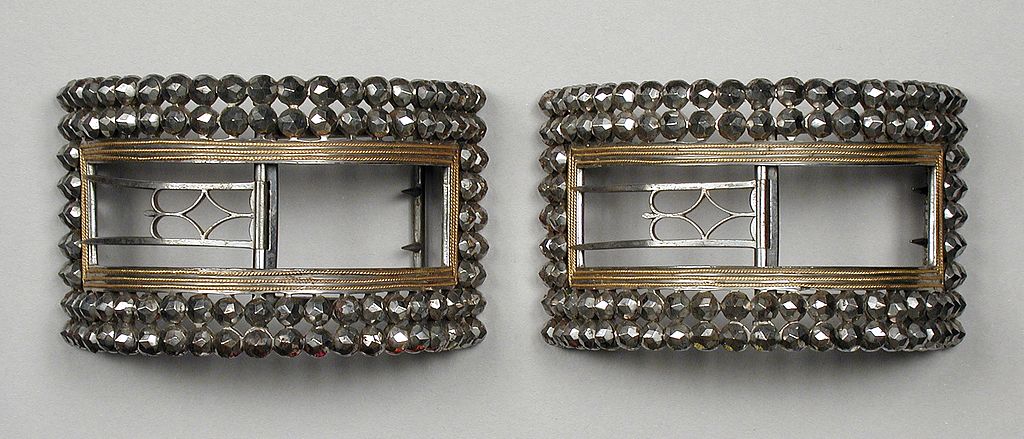
    Just like real stones, paste gems were set in all kinds of jewelry and items of personal adornment worn by both men and women.  Necklaces, brooches, rings, bracelets, and earrings were all decorated with paste gems.  Clothing fasteners, such as buckles, buttons, sleeve buttons, were also set with pastes.  Buckles used to fasten a wide variety of clothing articles, such as hats, shoes, girdles, stocks, and gloves, were very fashionable items to be set with paste gems.  One advantage of using pastes over real stones is that it was certainly easier to replace a lost buckle set with pastes than one set with real diamonds!

    mans-shoe-buckles-c-1777-1785
    Pair of man’s steel and gilt wire shoe buckles, England, circa 1777-1785. Public domain. Credit: Los Angeles County Museum of Art / Costume Council Fund / Wikipedia

    Paste gems found at Ferry Farm have come in a range of colors – green, red, pink, aqua, blue, black, and colorless – as well as shapes.  Figure (SF#1947) is an oval, faceted red paste gem that probably came from a piece of jewelry.  Figure (SF# 212, 215, 230) shows three similar rectangular faceted gems in blue and green.  The colorless paste gem in Figure (SF#1948), cut in a style similar to the “brilliant cut,” a popular diamond cut during the 18th century, would have been set in a closed setting for either a piece of jewelry, a button, or a buckle.

    sf234
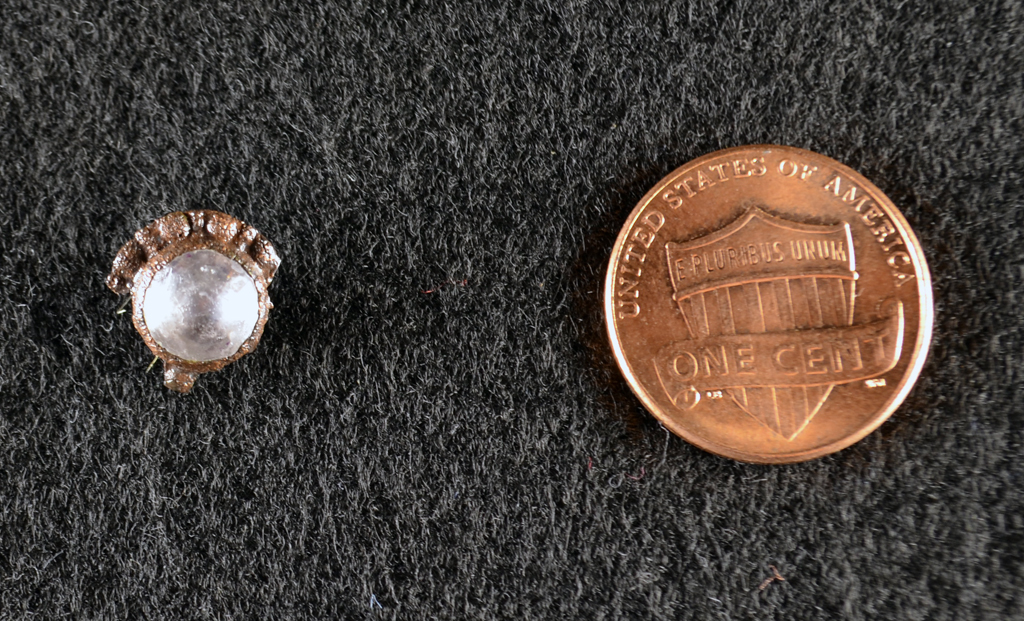
    Sleeve button with its colorless glass inset. (SF 234)

    Sometimes the paste gem is still found within its setting, such as the sleeve button with its colorless glass inset seen above (SF#234) but, more often than not, finding a paste gem in its original, complete setting is a rare occurrence. Figure (SF#1971) is a fragment of a copper alloy shoe buckle with two empty settings for paste gems.

    sf1971
    Fragment of a copper alloy shoe buckle with two empty settings for paste gems. (SF 1971)

    Who did these gems and their settings belong to?  Distinctive style changes in gem shapes and jewelry settings help establish when certain pieces were in fashion.  Knowing changes in clothing fashions through time and recognizing when certain types of clothing fasteners, such as shoe buckles and sleeve buttons, were popular also help us focus our research.   We can assume that whoever was sporting these gems was trying to be stylish and fashionable in their time by adding a little “bling” and glitter to their wardrobe.  For as long as people have been traditionally adorning themselves with real gemstones in jewelry, there has always been that goal to create comparable imitations to swap out the real thing.  These special artifacts found at Ferry Farm are a reflection of these stylistic changes.

    Judy Jobrack, Archaeologist
    Assistant Archaeology Lab Supervisor

    Further Reading

    Pointon, Marcia. Brilliant Effects: A Cultural History of Gem Stones & Jewelry.  New Haven: Yale University Press, 2009.

    White, Carolyn. American Artifacts of Personal Adornment, 1680-1820. Lanham: AltaMira Press, 2005.