Lives and Legacies

Tag: Cherry Tree Myth

  • “We encampt here on the banks of the Rappahannock. Oh, it is beautiful country.”

    A Personal Look At Civil War Soldiers As Told Through Artifacts

    Ferry Farm is most well-known as the Boyhood home of George Washington. While our primary emphasis of interpretation and research has focused on young George and his family’s life on this farm, Ferry Farm has many other stories to tell. The American Civil War had a major impact on the Ferry Farm community, changing both the landscape and the lives of those who lived here. This blog will look at how our archaeological efforts have brought to light artifacts that reflect the experiences of the soldiers that were stationed on the “old Washington Farm.”   
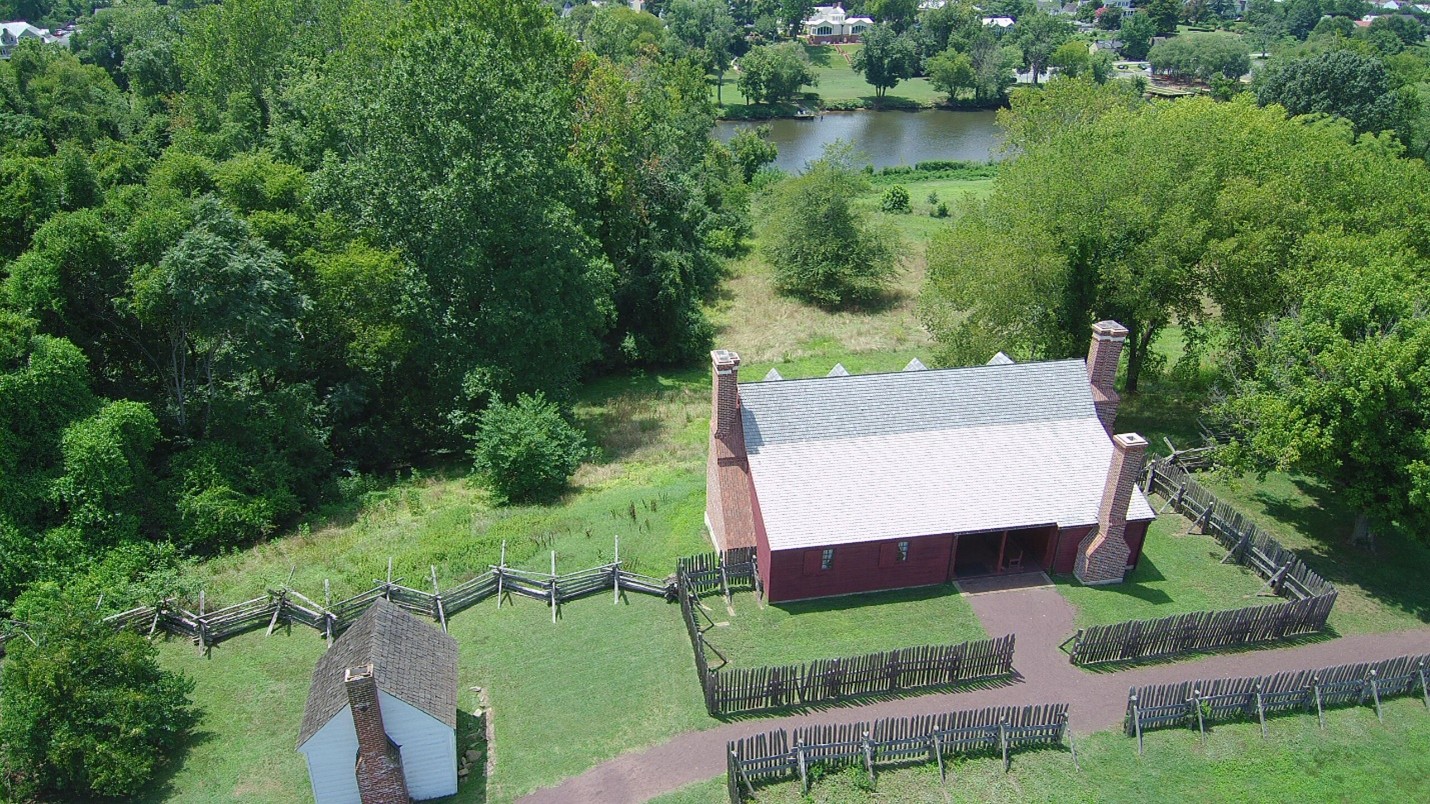
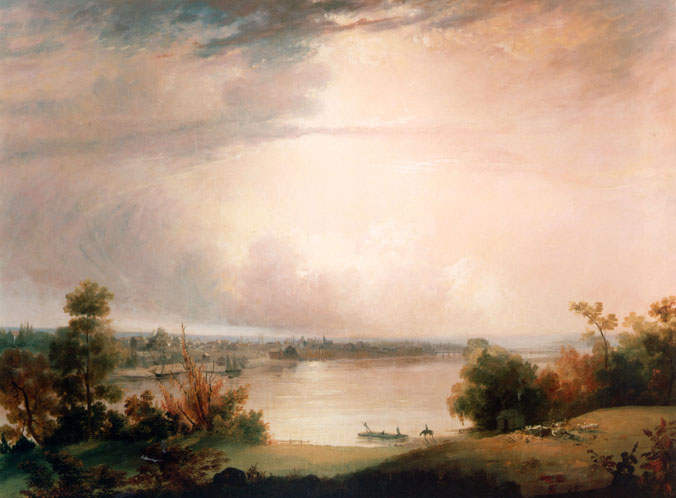
    The Washington house and its outbuildings gradually fell into disrepair until by the mid-1830s there was no trace of them on the landscape. But the soldiers still knew the significance of the site. In April 1862, the Civil War came full force to Fredericksburg and to Ferry Farm. Federal Forces took over and occupied the City of Fredericksburg behind the retreating Confederate Army.  Encampments and gun emplacements were established all along our side of the river and throughout Stafford County as the army set about maintaining control of the city across the river. Engineers were set to the task of rebuilding the railroad bridge and erecting pontoon bridges, including one at the end of Ferry Road.

    Looking over Fredericksburg by Alfred R. Waud

    This spring deployment and the military occupation of Ferry Farm was relatively quiet and uneventful. There is no evidence of a large, formal camp at Ferry Farm, but soldiers were stationed here to protect one of the pontoon bridges that ran from the bottom land of Ferry Farm across to the city of Fredericksburg. In August of 1862, the army suddenly retreated from the city and the surrounding countryside to defend Washington, D.C.

    In November of the same year, the full force of the Union Army returned to Stafford County in preparation for the retaking of Fredericksburg and their expected march to take over Richmond. Instead, the Federals suffered a devastating defeat at the Battle of Fredericksburg in December and retreated to the north side of the river for winter camp. Now, Ferry Farm was being used more actively as a staging ground for multiple troop movements, bivouacs for soldiers guarding the pontoon bridges, and as a defensive line for the Federal troops.

      A defensive trench, or rifle pit, with an adjoining berm to protect soldiers from gunfire originating on the Fredericksburg side of the river, was dug across the edge of the upper river terrace, stretching north-south from the edge of the stream gully through the remains of the Washington house. A small extension on the south end of the trench was dug out to connect it to the now-exposed cellar.

    Artifacts found within the cellar trench fill reflect the extensive use of the house ruins by soldiers during both occupations. In the spring and summer, they used the farmhouse as their headquarters, writing on the plaster walls and leaving graffiti in pencil and charcoal on hundreds of plaster fragments that have been excavated and preserved.
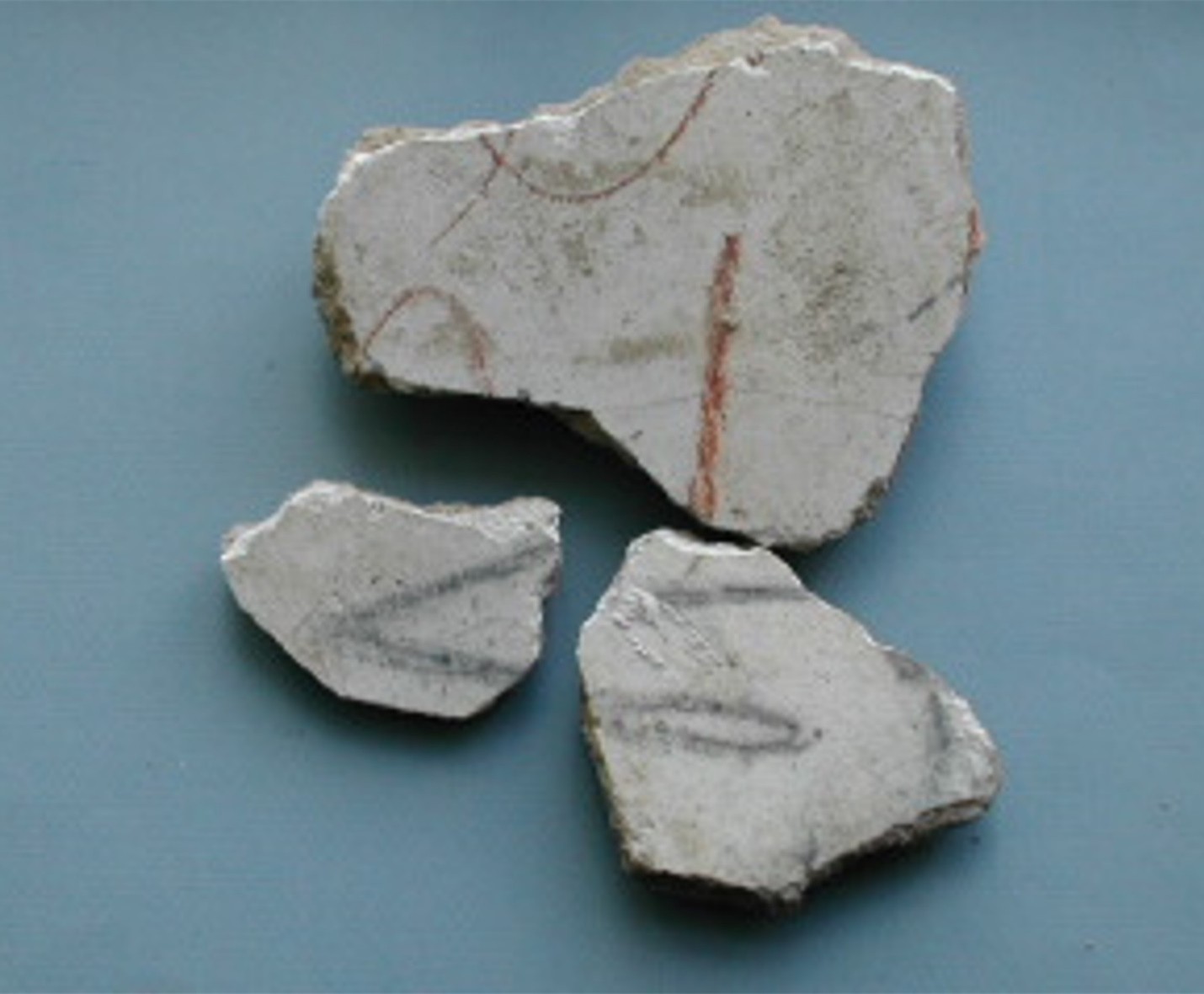
    Plaster fragments with graffiti

    Various artifacts were abandoned when they left, including canteens, bullets, gun parts, and writing tools. But this blog isn’t about buttons, bullets, and buckles. It’s about the items the soldiers found more dear. Objects they made or relied on for small comforts.

    So, on a more personal level, what was everyday life like for the Union soldiers stationed here during the Civil War? When they weren’t directly experiencing the brutal and intense combat fighting on the front, it was a routine-filled life of constant drilling, standing watches, maintaining equipment, and finding imaginative ways to entertain themselves in the camps. But camp life had its own struggles and hardships. Poor shelter, food, and hygiene, along with low immunity rates to communicable diseases, all contributed to high rates of sickness and disease. Add to that boredom and homesickness, and camp life was a private’s first test of survival.

    It was very important for the soldiers to recognize that they were standing on the very ground that their hero, George Washington, once stood on. Those sentiments were expressed in a speech by Private Edwin Jones of the 6th Wisconsin when he said, “We are assembled on sacred soil…It was while living on this plantation, under the direction and blessed with the teaching of a noble mother, that George Washington learned those lessons…fitting him for leadership in war and peace, to lay the foundation of the mighty Nation that we today are fighting to preserve.”

    On a more personal note, we know soldiers spent a lot of idle time playing games among themselves. Dice, card games, chess, checkers, and gambling were all very popular, and remnants of these activities are found on all Civil War sites. At Ferry Farm, we have a collection of gaming pieces, including this bone die and a gaming piece crafted from a Minié ball, which could have been used to play chess, checkers, or as markers in a game of chance.

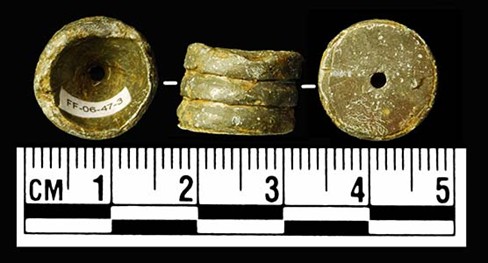
    And we can’t forget about the importance of music in camp life. Music was a common and welcome pastime activity for troops. Fiddles, guitars, fifes, harmonicas, and accordions all came out at night to entertain the soldiers who relished listening to songs about home and the worries of war. Jaw harps were inexpensive and easily portable, which made them very popular with soldiers. Our jaw harps, one of which was recovered from the civil war trench, is of the style known as a Gloucester type, one of the most common designs in America during Colonial times and after the Revolution.
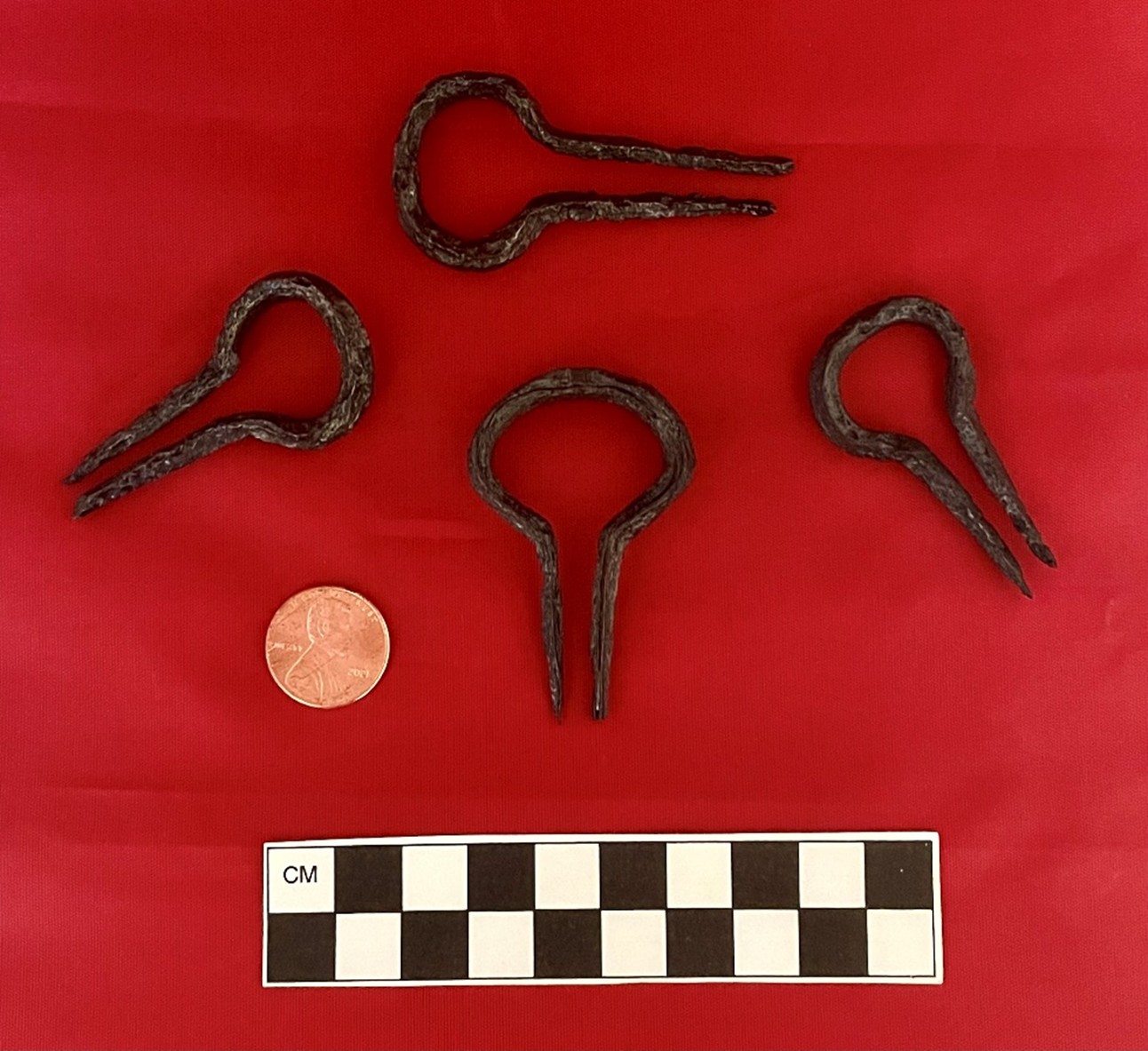
    “Gloucester type” jaw harp

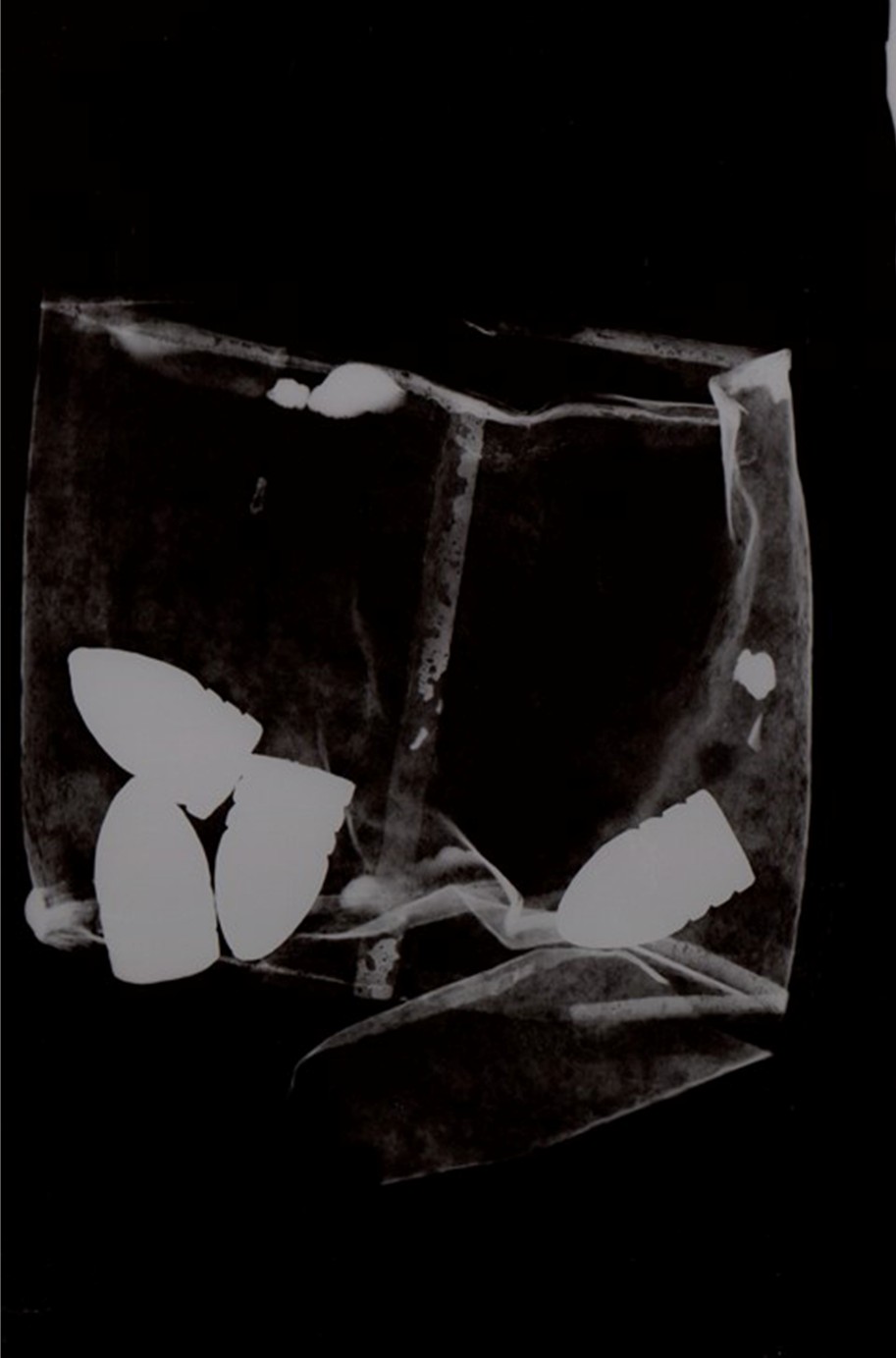
                Nothing is normal about wartime. Many people were forced to improvise, and it’s very hard to determine why a soldier placed four unfired Minié balls in this tin can, which was revealed through X-ray. Did he lose his ammo case? Was it just idle behavior? Were these bullets saved to be turned into gaming pieces? This is the type of artifact that raises more questions than answers.

    Literacy – Ink Bottle/Pen nib:

    Literacy among Civil War soldiers was very high, and much of what we know about daily camp life comes from the letters written and received by the soldiers themselves. Letter-writing to loved ones at home allowed the soldier to keep up with local news, forward monetary and business instructions to those left running the household or farm, and relay war news to their family.

                A complete ink bottle and pen nib recovered from the site evidences the desire for correspondence, both official and personal. The ink bottle itself was found in the Bray cellar hole, which the Union soldiers used as a defensive dugout to avoid Confederate sharp shooters. We can just picture a group of soldiers huddled down inside the cellar, building a small campfire to stay warm, and writing letters home to their families. Was it a hasty departure that left this bottle in the cellar, or perhaps the owner expected to return but didn’t. As archaeologists, we can’t answer all these questions, but we know it was used during the Civil War by a Union soldier and was found in a location many soldiers never wanted to be stuck in.

    This particular ink bottle is an ‘umbrella’ shape, one of the most ubiquitous ink bottle forms from this era. The bottle was typically meant for single use and would have been made in one of the numerous American glasshouses present during the 19th century. It was then filled with ink, affixed with a label, and marketed for single use.
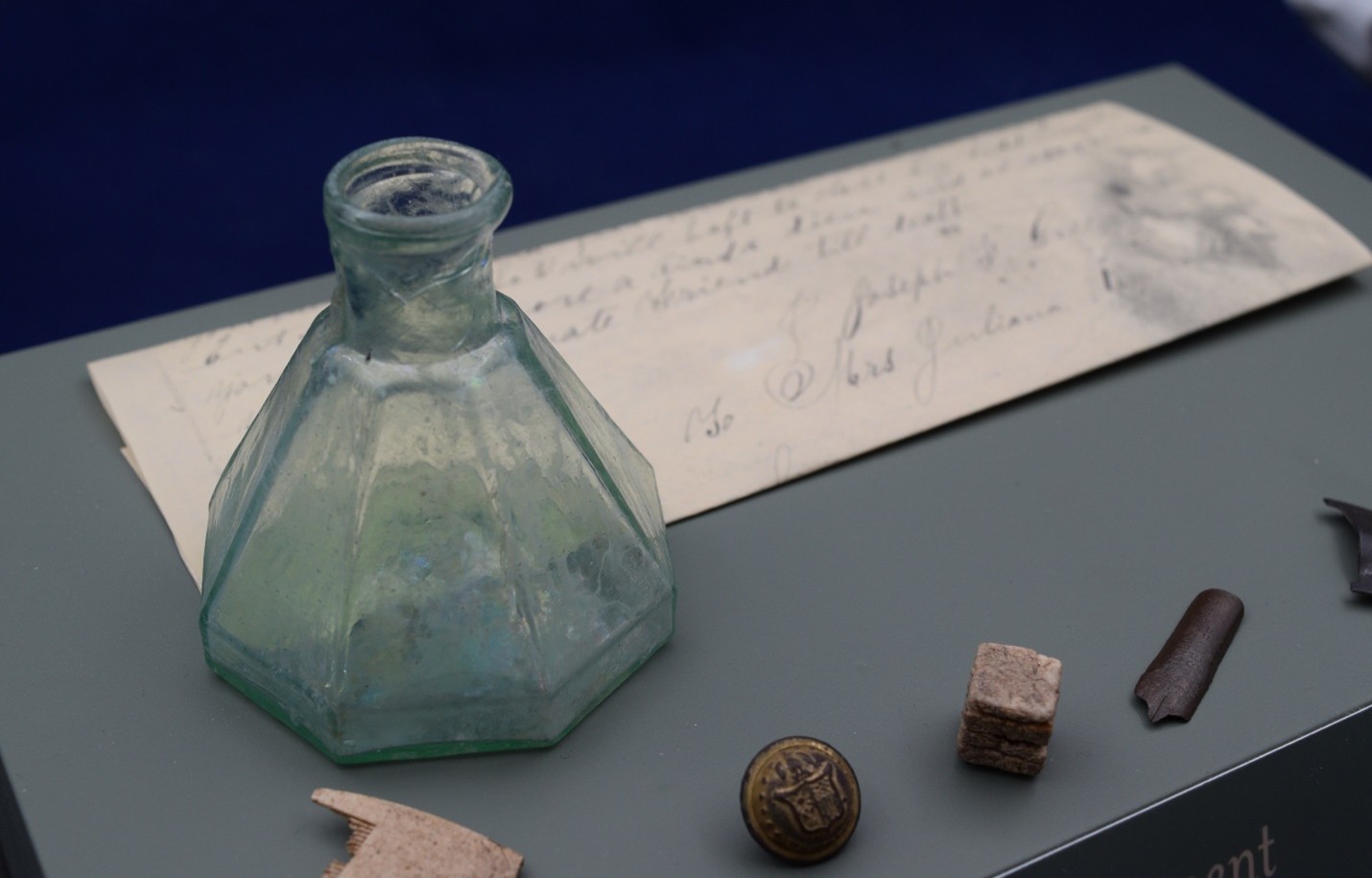
    “umbrella” shaped ink bottle and small pen nib

    This small pen nib is stamped with a maker’s mark and style name. The Esterbrook Company started making nibs, including the “Relief” style, in 1858 in Camden, New Jersey, and became one of the largest manufacturers of this product in the US. The nib was part of a dip pen, which consisted of a handle made of various materials and the replaceable nib.

    The first evidence of self-care in the trenches takes the form of a small double-sided bone comb. Combs were made from an assortment of materials, including bone, ivory, gutta perch, and steel, and were used for grooming the moustache and hair. But their fine teeth were also handy in capturing the pesky lice that were endemic to camp life among men marching and living together in close quarters. This comb would have been an essential component of any soldier’s personal kit.

    small double-sided bone comb

    Our second evidence of self-care is this intriguing bottle. It is not so much interesting because of what it is – it’s a very common medicine style bottle for the mid-19th century– but rather what’s inside. Clearly visible within the bottle is a hard black substance, and for years, we’ve wondered what the substance may be.
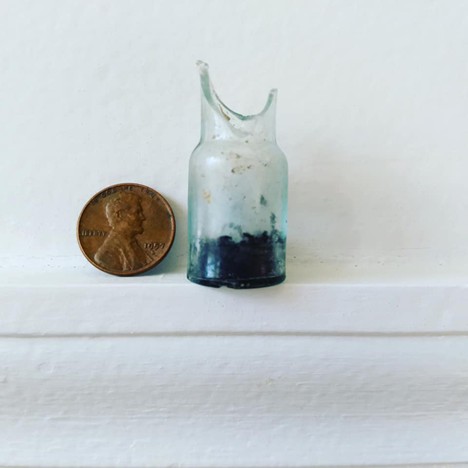
    Mercury bottle, mercury was used for a variety of medicinal reasons at the time

    So we chipped off a little fragment of the substance and sent it to Ruth Ann Armitage, our chemist friend at Eastern Michigan University. The sample was analyzed using scanning electron microscopy to map out specifically what elements were present in the sample. Our sample was also run through DART (direct in real time) mass spectrometry. This technique is good at detecting organic components within a substance.

                Almost immediately, Dr Armitage responded, and we weren’t disappointed: “Did you know there’s mercury in this?”  Nope, we did not.

    However, this discovery was not too surprising given the use of mercury in many medicines for thousands of years. Nowadays, it’s common knowledge that you shouldn’t drink mercury…or touch it…or inhale it, but for a long time, mercury was seen as a potent healing metal, and it was readily rubbed on skin, consumed, and vaporized for immediate effect on the lungs.

    And while all these treatments using mercury did little to address the body’s underlying medical problem, mercury did cause an immediate bodily response, which convinced people it was working to cure their ailments. When applied topically, it burned. When introduced into the body, it caused a person to sweat, salivate, and have diarrhea. The mucous membranes also went into overdrive, leading many to believe that the bad stuff in your system making you sick was being purged by the mercury. The reality, of course, was that the body was trying desperately to rid itself of poison.

    So, if the residue inside our bottle was medicine, what was its exact formula? All we can say at this point is that it was mercury-based and that it could have been in either liquid or pill form. Common Civil War-era uses for mercury-based medicines were for treating skin sores and lacerations, internal and external parasite infections, syphilis, and constipation, to name but a few. On a side note, an almost identical bottle also containing mercury was found across the river in Fredericksburg at a site that was well known to be a Union field hospital. It was found in a knapsack discarded in a trench that included amputated limbs.

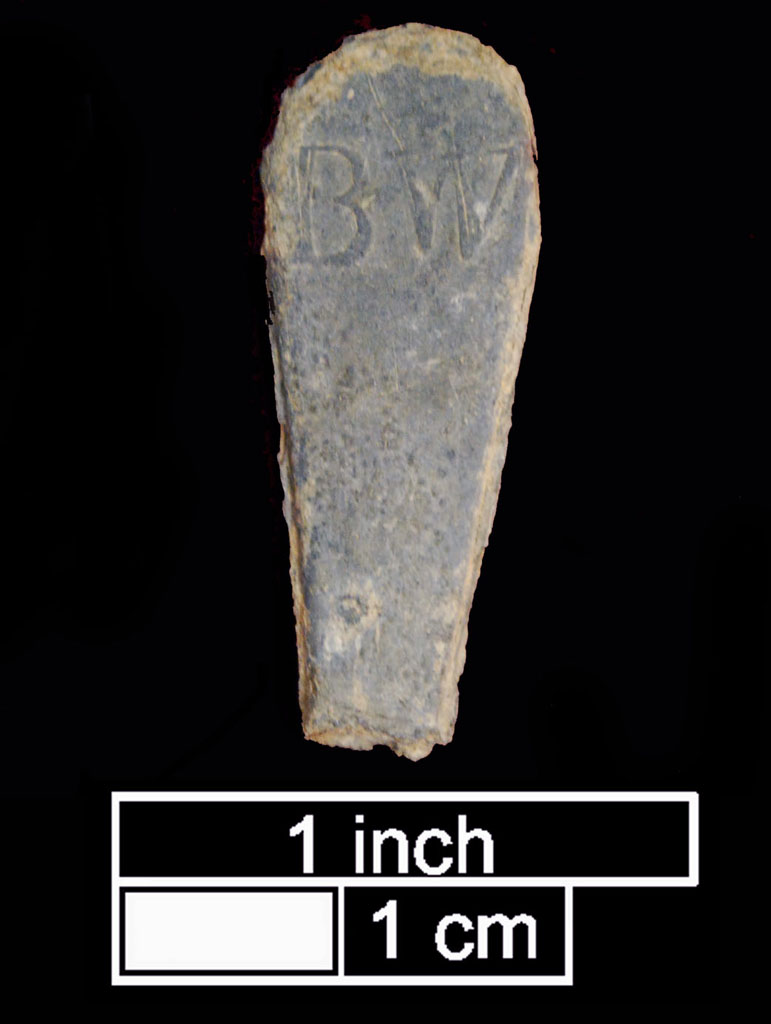
    Lastly, we’d like to highlight one of our favorite artifacts, a tiny hatchet about two and a half inches long, recovered from the bottom of the Civil War trench. For such a diminutive object, it speaks quite loudly to our local history in Fredericksburg, Virginia. Initially, earlier archaeologists at Ferry Farm assumed it was a pewter toy souvenir given out or sold in 1932, when our country and Fredericksburg celebrated the 200th anniversary of George’s birth. Indeed, cheap pewter toys were very popular during this time period.

    A recent reexamination of all the artifacts from the context where the hatchet was found revealed that nothing from that stratum had any 20th-century artifacts in it, nor did the two strata above it. In fact, the youngest artifacts from these strata were all mid-19th century. Additionally, although the archaeologists who excavated the hatchet didn’t know it at the time, the excavation unit from which the hatchet came sat right inside the Civil War-era trench.

    This revelation shut the door on our ‘it’s a 20th-century souvenir’ narrative but opened the door to an even cooler one.  A close examination of the hatchet showed that it didn’t have mold seams, which are always present on cast pewter toys. Furthermore, for some reason, it had one smooth side and one textured side, leading us to believe that it was handmade, not machine-cast. This was supported by a thorough internet search to find an identical toy hatchet, which came up empty, further supporting our new theory that this piece was a one of a kind. The textured side resembled the grain of wood, so we surmised it had been cast in a simple hand-carved wooden mold. All of these clues, combined with its location within a Civil War trench, made us suspect that the hatchet was crafted by a soldier, likely from a lead Minié ball. The hatchet is likely ‘trench art’, which is defined as objects of art either made by soldiers, POWs, or by civilians to create mementos of the war experience.

    To further support our identification of the hatchet as trench art, we took the artifact to the Virginia Department of Historic Resources, where Katherine Ridgeway analyzed it using XRF, or X-ray fluorescence analysis. This non-destructive technique determines the composition of metal. We also brought along a few Minié balls recovered from the same unit for comparison. It turned out that what we thought was a pewter hatchet was actually a lead hatchet with a similar compositional profile to Minié balls, which are mostly lead with trace amounts of other metals such as tin and nickel.

    One can just imagine a bored Union soldier whittling the mold and then melting down some of his bullets to pour into it. He likely chose the hatchet form because of the famous cherry tree story, in which young George Washington owned up to hacking his father’s cherry tree with a hatchet by proclaiming, ‘I cannot tell a lie.’ The soldier would have been well-versed in the Washington cherry tree myth at Ferry Farm, created by Mason Locke Weems in his first biography of Washington, published in 1800. By the 1860s, the story was nationally known. Additionally, letters Union soldiers wrote while encamped at Ferry Farm indicate they knew the site’s connection to Washington. They even went so far as to send home cherry seeds for their families.
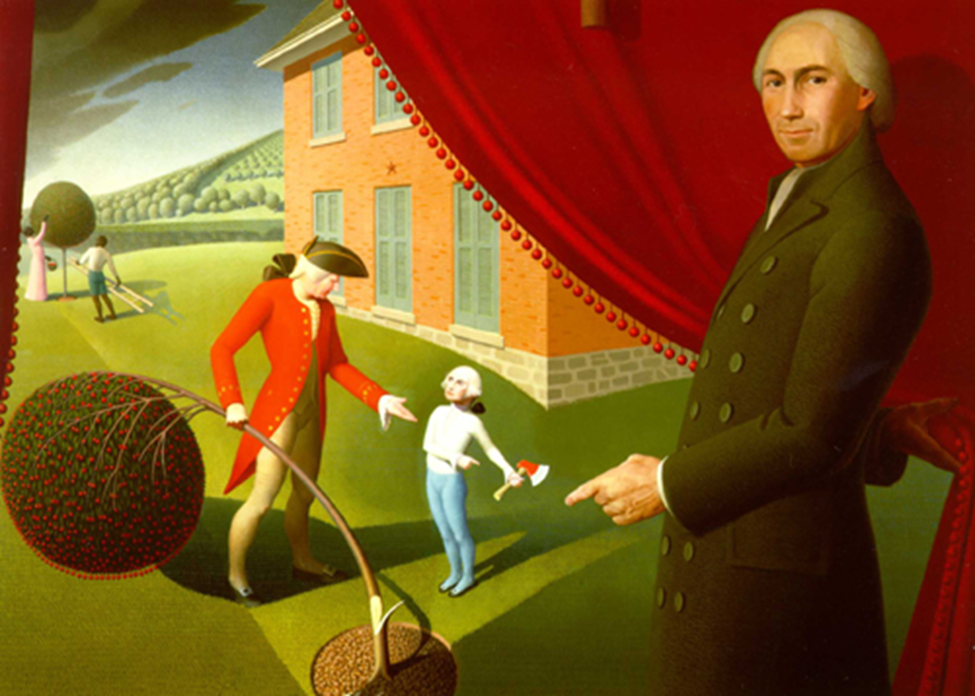
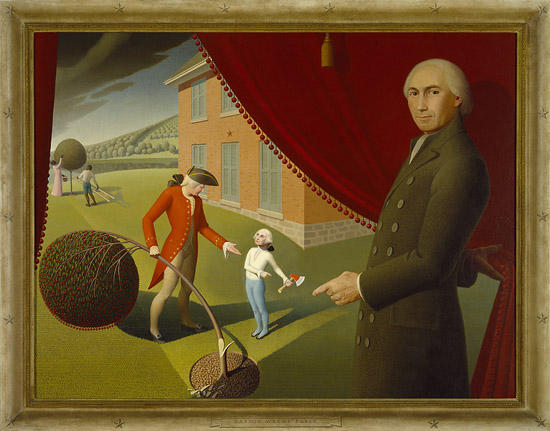
    Grant Wood — Parson Weems’ Fable (1939)

    While the identification of the hatchet is now secured, we have so many more questions. Who was this soldier? How many hatchets did he make, and why did this one come to be left behind in his trench? Was it a souvenir for himself, or did he send one home to his family, or share with fellow soldiers?  Did he survive the war? Unfortunately, these are mysteries that will likely never be solved, but that make for great pondering.

    Mara Kaktins, Archaeologist and Lab Manager

    Judy Jobrack, Archaeology Co-Field Director

  • I Cannot Tell a Lie But I Can Tell a Fable: Aesop’s Fables and the Cherry Tree Tale

    If you’ve been to Historic Kenmore, you’ve likely been awestruck at the beauty of the plaster ceilings throughout the first floor. Although the identity of “The Stucco Man” is lost to history, he left behind a lesson above the fireplace in the Dining Room. The plaster work inlay there depicts several stories from Aesop’s fables, easiest to recognize is “The Fox and The Crow.”

    Aesop's Fox and Crow in Dining Room
    Plaster inlay depicting the Aesop’s Fable “The Fox and The Crow” above the fireplace in Kenmore’s Dining Room.

    Fables are as old as time itself. A type of story passed down in folklore, the fable appears all over the world and is often the stuff of myth, legend, or flat out falsehood. When exactly people began telling fables can’t be pinpointed. They appear in ancient Egypt, India, Rome, Greece, and many other early civilizations.

    Fables appear across religious boundaries too. They are prevalent in Christianity, Judaism, and Islam. These stories lend themselves to religious teachings because throughout history, fables were used to teach lessons and morals to children by pointing to a flaw or weakness in human behavior. These stories usually have characters who are not human; mainly animals that speak and behave like humans.

    Aesop, one of the most famous authors of fables, came from Ancient Greece and his fables have become so widely published that the man himself has become sort of legend. Aesop lived sometime around the 6th century BCE. There are over 700 stories accredited to him today, but we can’t truly be sure if he actually wrote any of them.

    Aesop has become a sort of fable himself. What little information about Aesop we have comes from an episodic called The Aesop Romance. According to this work of fiction, he was a Greek slave who was very clever. People like Aristotle wrote about Aesop’s cleverness being so great that he was able to overcome his enslavement and position himself in the company of kings.

    The stories known as Aesop’s Fables have changed a lot over the centuries.  They have been published countless times, each version a bit different than the last. Many editions have a completely different set of stories. This is because, again, no one is really sure what is or isn’t an Aesop’s fable.

    That has not stopped his stories from being used by almost every generation since to teach children moral lessons. In fact, a lot of familiar phrases come from the morals of Aesop’s fables. Anyone who has listened to the soundtrack from the Broadway musical Hamilton might recognize the line “I swear your pride will be the death of us all. Beware, it goeth before the fall.” This is the lesson from “The Eagle and the Cockerels,” a fable about two roosters who fought constantly. When it looked as though one had finally beaten the other, he crowed to tell the world of his victory, but an Eagle swooped down and took him. The once defeated rooster was now the king of the farm.  There are also stories that we all have learned that are attributed to Aesop that you may not realize, like: “The Tortoise and the Hare”; “The Ants and the Grasshopper”; and “The Wolf in Sheep’s Clothing.”

    Aesop’s fables were used during George Washington life to teach children as well. In fact, Aesop’s Fables by Sir Roger L’Estrange appears in two different inventories of Washington’s books, once in 1759, and again in 1764. Moreover, when doing the inventory in 1759, the book is listed twice meaning that George Washington owned a copy as did his step-son John “Jacky” Parke Custis.

    When inventory was done again in 1783, both copies are gone. Jacky’s copy was probably at his own estate, Abingdon, which was destroyed but would have rested on the property of Reagan National Airport today. Jacky died in 1781 from a camp disease he contracted at Yorktown and his probate inventory lists his copy of the fables, showing it was still part of his library at his death. Conversely, we do not know where George Washington’s copy went.

    While George learned much of his genteel behavior from his famous penmanship exercise of The Rules of Civility and Decent Behavior, we can also guess the lessons of Aesop’s fables impacted his life. Certainly, these fables were read and taught throughout his childhood in school and at home. The Rules of Civility focused more on proper physical behavior whereas the fables focused on moral behavior.

    Later in his life, as Washington grew from boy to man to legend, he too became inspiration for myths and parables that would teach lessons to others. The most famous of these stories was created by Parson Mason Weems about young George cutting down a cherry tree.  Even today visitors to Ferry Farm are sometimes surprised to hear this story is a made up tale to teach children not to lie.

    Parson Weems' Fable
    “Parson Weems’ Fable” (1939) by Grant Wood. Credit: Amon Carter Museum of American Art / Wikipedia

    Interestingly, an Aesop’s fable entitled “Mercury and the Woodman” has the same lesson. In this story, a woodman loses his axe in a pool of water. The Greek god Mercury comes and pulls a golden axe from the water, but the Woodman tells the god that it is not his axe. Mercury then pulls a silver axe from the water; again the Woodman denies owning such an axe. Finally, Mercury pulls the ordinary axe from the water and the Woodman takes the axe as his own. Mercury is impressed with the Woodman’s honesty and lack of greed, so as a reward; he gives the Woodman the gold and silver axes.

    The Woodman’s story spreads through town and several others attempt to summon Mercury by losing their axes. When they all greedily claim the golden axe, Mercury hits them over their heads and refuses to give any of them their own axes back.  As you can see, not only does this fable have the same moral (honesty is the best policy) as the cherry tree myth, Weems even used the same hand tool! Perhaps, this Aesop’s fable was the real muse for writing the cherry tree tale?

    Elizabeth Hosier
    Manager of Interpretation and Visitor Services


    References and Further Reading:

    “19 Everyday Expressions That Came from Aesop.” Mental Floss. September 03, 2014. Accessed January 18, 2019. http://mentalfloss.com/article/58530/19-everyday-expressions-came-aesop.

    An Ornate, 1551 Edition of Aesop’s Fables. Accessed January 18, 2019. https://wlu.edu/office-of-lifelong-learning/online-programs/from-the-collections/aesops-fables.

    Carlson, Greg. “Fables.” Creighton University. Accessed January 18, 2019. https://www.creighton.edu/aesop/.

    Clayton, Edward W. “Aesop’s Fables.” Internet Encyclopedia of Philosophy. Accessed January 18, 2019. https://www.iep.utm.edu/aesop/.

    “Custis, John Parke of Fairfax, VA 2/20/1782 — Elite.” GUNSTON HALL PLANTATION PROBATE INVENTORY DATABASE. Accessed January 18, 2019. http://www.gunstonhall.org/library/probate/wbvaxxtl.htm

    “Founders Online: Appendix D. Inventory of the Books in the Estate, C.1759.” National Archives and Records Administration. Accessed January 18, 2019. https://founders.archives.gov/documents/Washington/02-06-02-0164-0026#GEWN-02-06-02-0164-0026-fn-0002

    “Founders Online: List of Books at Mount Vernon, 1764.” National Archives and Records Administration. Accessed January 18, 2019. https://founders.archives.gov/documents/Washington/02-07-02-0216#GEWN-02-07-02-0216-fn-0008.

    “Search Results for Aesop.” Library of Congress. Accessed January 18, 2019. https://www.loc.gov/search/?in=&q=Aesop&new=true&st=

    Weems, Mason Locke, and Peter S. Onuf. The Life of Washington. Armonk, NY: M.E. Sharpe, 1996.

  • A History of Trees at Ferry Farm

    Cherry TreeThe moment anyone mentions trees and George Washington, you probably think of the famous Cherry Tree Story. However, this tale of young George taking a hatchet to his father’s cherry tree and, when confronted about the act, asserting “I cannot tell a lie” is probably just that — a story meant to demonstrate the integrity of the Father of Our Country. In reality, the trees of Ferry Farm have a much more fascinating history. Their story reflects, on a small local scale, vast environmental changes in eastern North America and shifting American attitudes toward the environment throughout the 18th, 19th, and 20th centuries.
    Today, we see wilderness as a good thing that needs protected and preserved. But in the 1700s, Europeans settlers saw wilderness as a bad thing. Preeminent environmental historian William Cronon notes, Europeans described wilderness as “’deserted,’ ‘savage,’ ‘desolate,’ ‘barren’—in short, a ‘waste,’.” People did not look at forests, deserts, or mountains as places to protect and visit. Instead, they were places to be feared and tamed.

    The opposite of wilderness was the managed landscape of Europe. In cities, towns, and farms, Europeans tried to control nature and make it follow humanity’s rules.  These efforts to tame the wilderness were transplanted to colonial plantations in the Americas.

    The first step in building a plantation and taming the wilderness was clearing the land for farming. Huge numbers of trees were cut down to do this.  On top of that, trees were cut down to make almost everything people of the 1700s and 1800s used and owned.  Furthermore, they were also cut down to do many everyday tasks.

    Throughout the 18th and 19th centuries, the wood from trees was…

    • used as the main architectural building material in houses, most other structures, farm buildings, fences, and more
    • used to build ships, boats, ferries, bridges, carriages and wagons that moved people and things from place to place
    • used to make everyone’s furniture (beds, chairs, tables, desks, cabinets, and trunks) as well as many household items and farming tools
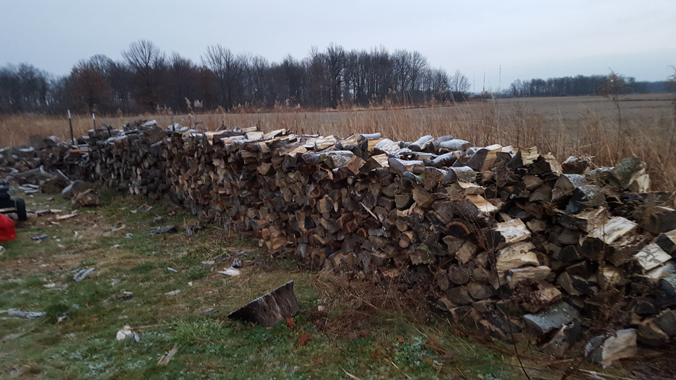
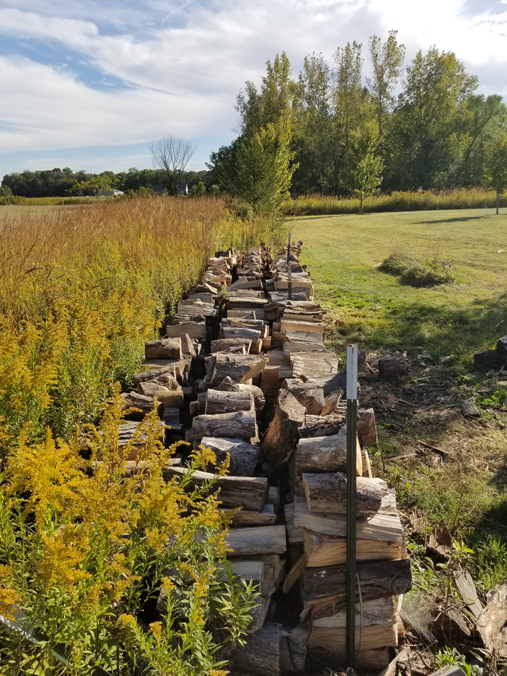
    • used as fuel for the fires needed to cook, heat, and even to make candles and soap. A colonial home needed at least 40 cords of wood for heating and cooking over the course of a year.

    5 cords of Firewood 1
    Five cords of firewood. A colonial home used 8 or 9 times this amount in a year for just heating and cooking. Credit: Chris Stevenson

    5 cords of Firewood 2
    Credit: Chris Stevenson

    According to the U.S. Forest Service, the area that would become the United States had just over 1 billion acres of forest before European settlement.  By 1910, the U.S. had a total of just over 700 million acres.  The 300 million acres of trees cut down was mostly in the eastern portion of the country.

    These large scale trends can be seen on a small scale at Ferry Farm.  The European settlers who lived here, including the Washingtons, cut down a significant number of trees but not so many that there weren’t still quite a few standing when John Gadsby Chapman painted Ferry Farm’s landscape in 1833.

    1830s
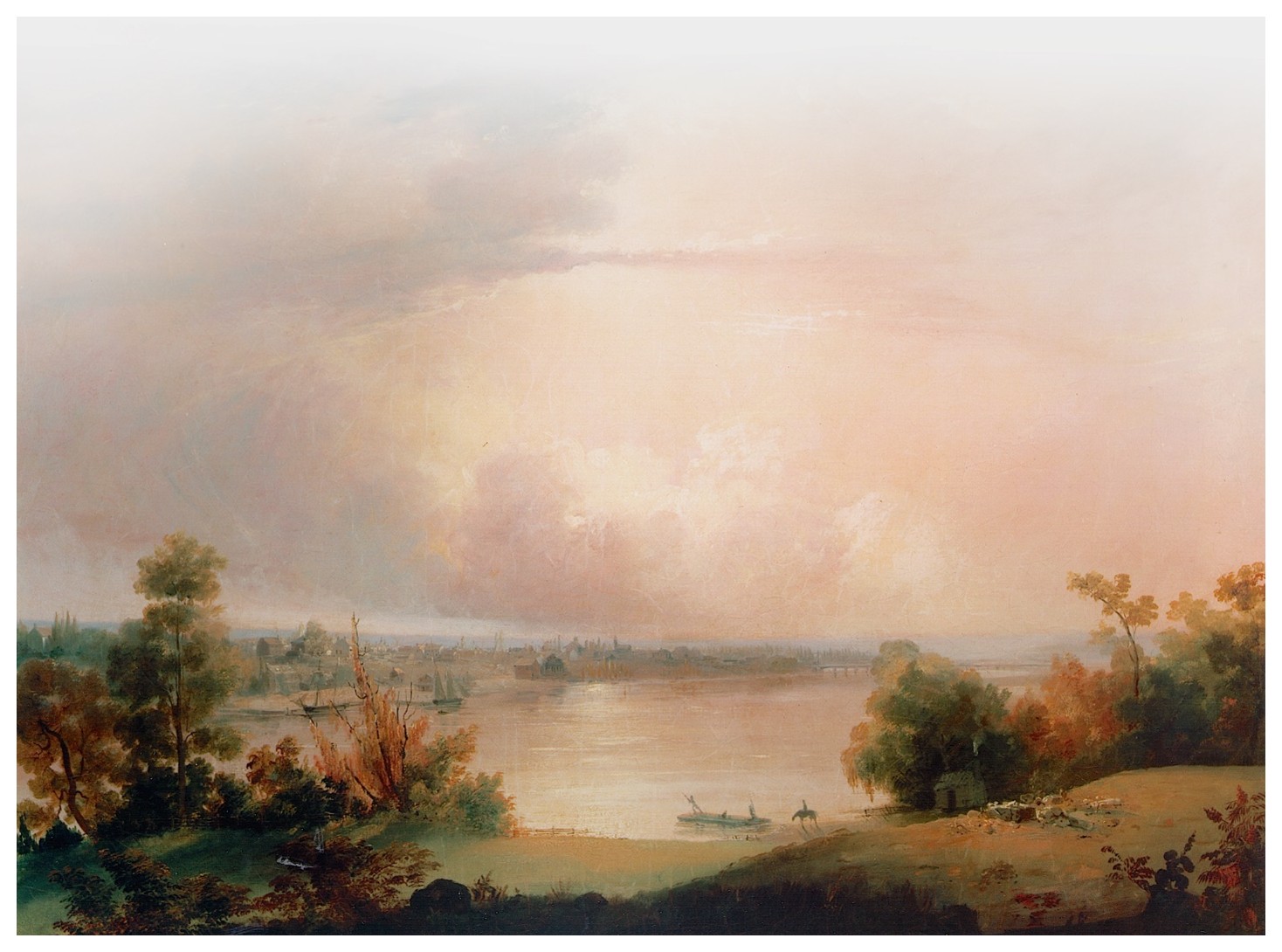
    “The Old Mansion of the Washington Family” (1833) by John Gadsby Chapman shows the foundation stones of the house where George grew up at Ferry Farm and trees along the riverbank.

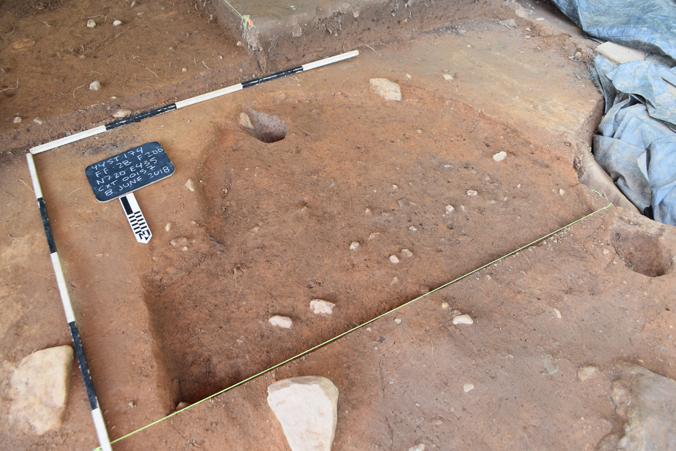
    We also have archaeological evidence showing the locations of trees during the Washington era.  This past summer in the yard north of the Washington house replica archaeologists uncovered “soil stains” left after trees fell in the past.  Soil stains are where the soil is a slightly different color than surrounding areas and indicate where people filled in holes created by uprooted trees. In other words, such soil stains indicate that a tree once stood there.

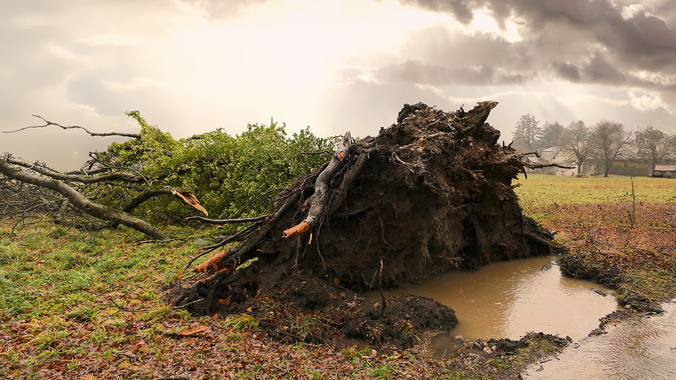
    Uprooted Tree
    A tree uprooted by a storm. Credit: ykaiavu / Pixabay

    In some cases, our archaeologists found that the holes were filled in multiple episodes, indicating that the soil settled and new dirt was later added or the person filling the hole borrowed different dirt of different colors from multiple locations. By excavating the soil from these soil stains and analyzing the artifacts, we can tell around when the holes were filled.

    Soil Stain
    Soil stain marking the site of an 18th and 19th century tree on the landscape at George Washington’s Ferry Farm.

    One very large tree left the sizable soil stain – almost 5ft x 5ft – pictured above.  Based on artifacts found in its soil, the hole was filled during the mid-19th century.  We can tell by the size of the stain that the tree was quite mature. Together, these facts are evidence of a tree that grew just 40 feet north of the original Washington house during the time George and his family lived at Ferry Farm. This discovery gives us another detail about the landscape so it can eventually be accurately recreated just as we did the main house.

    Finally, Ferry Farm archaeologists learned from these tree features and from the lack of other features in this yard that the area was well-kept. In the 18th century, this portion of the landscape was probably well-maintained because it was visible from Fredericksburg across the river.

    This tree fell sometime in the 19th century and it was not the only one at Ferry Farm or across the country. Indeed, deforestation at Ferry Farm and nationwide grew more rapid and widespread in the 1800s as “clearing of forest land in the East between 1850 and 1900 averaged 13 square miles every day for 50 years; the most prolific period of forest clearing in U.S. history.”

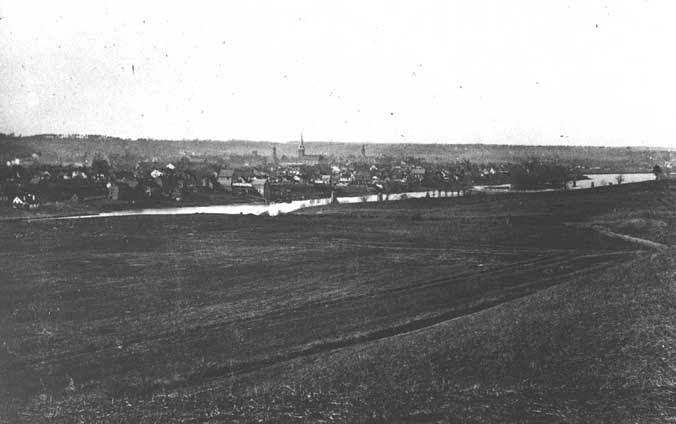
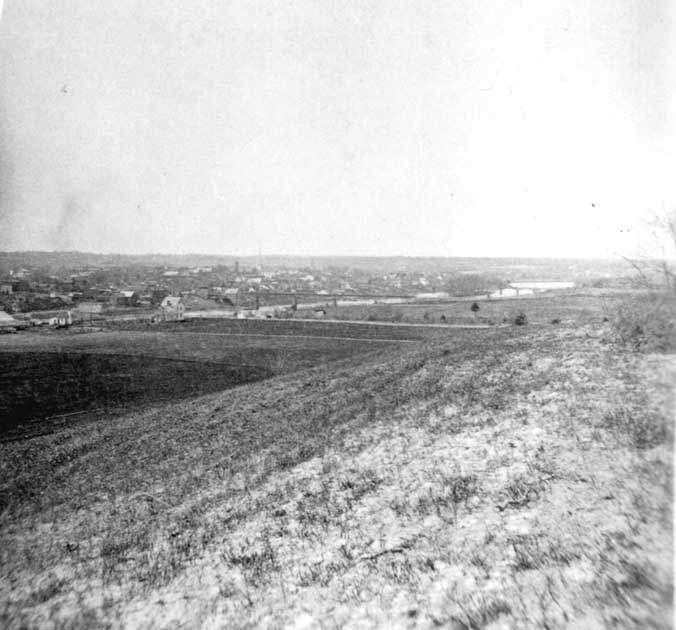
    In the 1860s, the Civil War exacerbated deforestation at Ferry Farm and throughout Stafford County.  Hundreds of thousands of Union Army soldiers radically altered the local environment to get the wood they needed for cooking and heating, to help build their fortifications and pontoon bridges, and even to build shelters.  During winter lulls in fighting, 18th and 19th century armies did not camp in tents. The soldiers built small log cabins.  By war’s end, Ferry Farm and Stafford County were nearly treeless as seen in the two photos of Ferry Farm below taken in the decades after the war ended.

    1870s
    View of Ferry Farm property in the 1870s.

    1880s
    View of the Ferry Farm property in the 1880s

    While deforestation sped up in the 1800s, that century also began a changing of people’s attitudes toward the environment.  As Cronon explains, “The wastelands that had once seemed worthless had for some people come to seem almost beyond price. That Thoreau in 1862 could declare wildness to be the preservation of the world suggests the sea change that was going on. Wilderness had once been the antithesis of all that was orderly and good—it had been the darkness, one might say, on the far side of the garden wall—and yet now it was frequently likened to Eden itself.” Wilderness was to be treasured, not feared.

    As the 19th century turned into the 20th, wilderness, nature, and the environment were increasingly seen as special and deserving of protection and preservation, sparking the creation of national and state parks, government agencies like the Forest Service, private conservation groups such as the Sierra Club, and, in 1872, the very first Arbor Day.

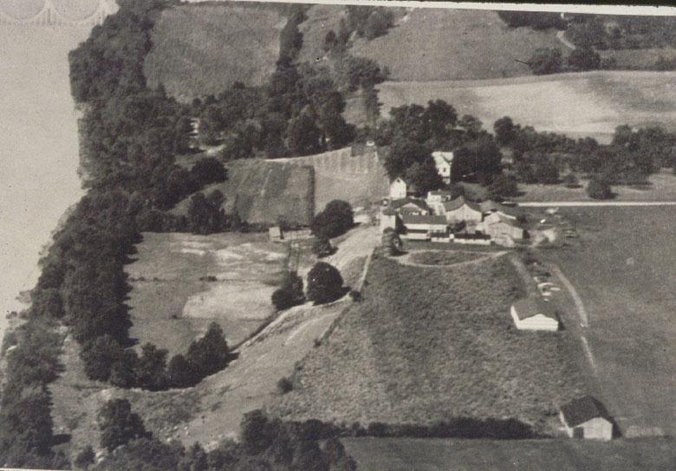
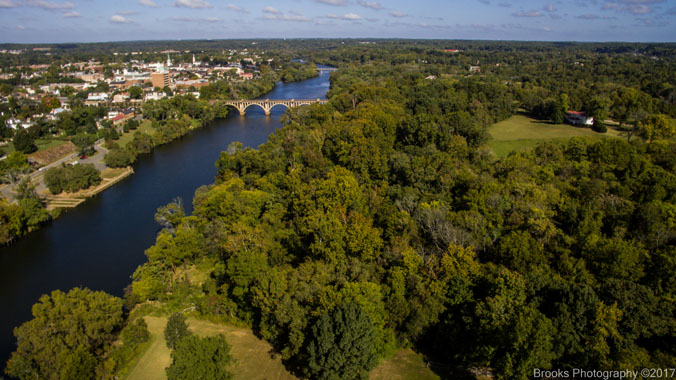
    We can see the impact of new attitudes toward the environment at Ferry Farm in photos below. The top one from the 1930s, a period of intense conservation efforts nationwide, shows trees starting to appear once again while the other from 2017 shows trees on a portion of Ferry Farm stretching out as far as the eye can see to the north.

    1930
    Aerial view of Ferry Farm taken in 1930.

    2017
    Aerial view of a portion of Ferry Farm and points north taken in 2017. Credit: Joe Brooks / Eagle One Photography

    The early 20th century saw the nadir of American deforestation in 1910. But since that year, forest acres in the U.S. have largely held steady [PDF].  The new conservation ethic symbolized in the practice of planting trees to replace those cut down, the reduced use of wood as a building material and fuel source, the need for less farm land, and the movement of people from rural to urban areas (all of which present their own challenges to the environment) have provided a reprieve for America’s forests.

    While George’s mythical chopping of the Cherry Tree is the most well-known tale about trees at Ferry Farm, the more important and fascinating story is how the 300 hundred year history of trees at Ferry Farm reflects broader post-settlement environmental changes in North America and how the Americans who made those changes grew to see the world differently.

    Zac Cunningham
    Manager of Educational Programs

    Elyse Adams, Archaeologist
    Archaeology Lab Technician

  • Ten Cool But Rarely-Exhibited Artifacts Found at Ferry Farm

    When you enter a museum you’re surrounded by cool stuff.  Be it paintings, fossils, or ancient artifacts, they’re all special items that you’d be hard pressed to find elsewhere.  But what if I told you that the cool objects you see on display in a museum are a mere fraction of what most museums actually have in their collections?  There is just never enough room, even for the biggest museums, to display everything.  Additionally, some items are just too delicate to make available to the public.  This is one of the reasons I love my job.  My fellow archaeologists and I get a daily backstage pass to all the incredibly cool things excavated at George Washington’s Ferry Farm.  Here’s our list of “Ten Cool But Rarely-Exhibited Artifacts Found at Ferry Farm.” Be sure to click on any of the photos for more detailed views of the artifacts.

    Wine Bottle Seal
    wine-bottle-seal
    Starting in the 17th century if you were a wealthy gentleman or tavern owner chances are you ordered at least a few custom wine bottles complete with your personal seal.  The seals were stamped in various ways, such as with names, initials, symbols, crests, and dates.  Archaeologists love them because they’re ‘talky,’ meaning the artifact yields lots of information.  A fragmentary bottle seal was found here in 2004 and bears the incomplete name of its owner. The letters visible are either a capital “I” or “J” (the English used the letter I for J), and below that are the letters “-bin”.   These few letters might refer to someone in the Corbin family, an extensive Virginia family with local ties. With a little investigation, perhaps we can flush out who was the mystery guest that brought his own bottle of wine for a visit to Ferry Farm!

    Lead Whistle
    lead-whistle
    Instruments and toys tend to grab our imagination because they make us think about who used them and how the object got lost to time and archaeology.  In our collection we have a simple lead whistle, measuring 1 7/8” long and 3/8” in diameter, with “U.S.A.” stamped on the side.  It’s cheaply made out of lead, which was a very inexpensive material that has, for obvious reasons, been phased out of the toy industry.  In the “Good Ol’ Days”, no one thought twice about making an instrument you put in your mouth out of lead.  Maybe it’s a good thing that the person who owned the whistle lost it.

    Chunkey Stone
    chunkey-stone
    Fun to say.  Fun to play.  Basically a prehistoric rock doughnut, this hand-ground stone was used in a Mississippian Indian game called “Chunkey.”  Warriors rolled disc-shaped stones across the ground and threw spears as close to the stone as possible.  Similar to the Italian game of bocce, but unlike the Italians who threw wooden balls, Chunkey players threw spears, which is pretty awesome.  It’s a bit of a mystery as to how it got to Ferry Farm because there is no evidence that Chunkey was played in eastern Virginia, however some of these gaming stones have been excavated in Maryland and Northern Virginia.   It is also possible that one of Ferry Farm’s colonial inhabitants collected this exotic looking artifact for their cabinet of curiosities.

    “Joseph” bottle fragment
    joseph-bottle-fragment
    Normally broken bottle glass would have trouble finding its way onto any top ten list, but this fragment is one of a kind.  Its owner inscribed his name “Joseph” and the date “174?” into the body of the bottle. That’s not an easy or common thing to do.  The inscription is carved in an elegant and beautiful form indicating a gentry status for its owner.  While no occupant of Ferry Farm was named Joseph, Mary Ball Washington’s older brother bore that name.

    Joseph Ball, though living in England, was heavily involved with Ferry Farm.  He absentee owned and operated a neighboring plantation.  Joseph was lavish in both his gifts and advice to the Washingtons.  He gave Betty, George’s sister, a beautiful silver tea set just before she married.  He offered Mary advice on how to keep George out of the Royal Navy when a plan was hatched to put the then 13-year-old onboard a ship. And maybe, just maybe, he sent over a special bottle of wine with his name engraved on it for the Washington family.

    Lead Toy Hatchet
    toy-hatchet
    More lead toys?  Yep.  This little beauty has special significance to Ferry Farm because of the cherry tree myth.  The 3-inch lead hatchet appears to be a souvenir made during the 20th century, possibly dropped during 1932’s anniversary celebration of George Washington’s birth.  Keepsakes associated with George and the cherry tree abound in Fredericksburg.  Previous private owners of Ferry Farm were known to capitalize on the history of the property, often selling fragments of the ‘original cherry tree’ and cherry seeds to visitors. This hatchet is an obvious symbol recalling the cherry tree story that is so closely associated with Washington’s childhood.

    Milk Glass Darning Egg
    darning-egg
    Recovered completely intact from an old burrow belonging to a groundhog, this artifact had multiple uses on a 19th and 20th century homestead.  The glass egg was a darning aid used to fill out a sock while it was repaired or could be placed in a henhouse to encourage the ladies to lay eggs in a particular spot. There is also a persistent myth that these eggs were used to kill snakes. The snake would eat the glass egg, it was believed, which would then shatter inside them.  This line of reasoning ignores the fact that snakes hunt by detecting chemical signatures of their prey and that snakes can’t really see the egg-like shape of our artifact because of their poor vision.  But it’s a story that highlights the mythology that surrounds some objects once they fade into obscurity.

    Tambour Hook
    tambour-hook
    The tambour hook falls into the category of artifacts that are a little too fragile to display.  Made of carved bone and metal, this exceptional object was used by a gentlewoman, probably George’s sister Betty, to adorn fabric with elaborate embroidery.  Recovered from the bottom-most soil level of the Washingtons’ root cellar where it was deposited sometime between 1741 and 1760, the carved designs that cover the bone handle feature a parrot, leaves, flowing vines, and numerous flowers and represent some of the most popular embroidery themes of the time.  This hook helps demonstrates the fashionability of the Washington women, which contradicts the portrait painted by many modern biographers.

    Pewter Teaspoon with Betty Washington’s Initials
    teaspoon-fragment-with-betty-initials-1
    Betty had some of the coolest artifacts and this one literally has her name on it.  It was customary for tea to be dispensed by the wife or by the oldest daughter in the house and Betty, as the only daughter, was clearly groomed in this ceremony as is evidenced by her own teaspoons.  Pewter, an alloy containing a number of different metals including lead (yes, more lead), wasn’t as fancy as silver but the fact that it’s customized makes it special.  This tea set appears to be part of a “practice” set that Betty used before her uncle gave her a silver tea set  around her 16th birthday.

    Bartmann or Bellarmine Jug/Bottle
    bartmann-bottle-1
    Who doesn’t want to drink out of a jug exhibiting the large face of a crazy bearded man?  I do, and if you were a colonist in the 1700s and early 1800s, you did as well.  Originating in Germany, these face jugs depicted a ‘wild man’ of the woods character popular in Eastern European folklore. By the time these vessels made it to the English market that aspect seems to have been forgotten.  Subsequently, the English created their own story behind the bearded man revolving around their dislike for a similarly-bearded and unpopular anti-protestant cardinal by the name of Robert Bellarmine.  For more about this artifact, read this blog post.

    Repaired Creamware Cherry and Flower Punchbowl
    punchbowl
    This artifact is cool for so many reasons.  A beautiful bowl adorned with graceful hand painted flowers and cherries (remember, we love those here), it also exhibits a complicated and tortured use-life while highlighting the importance of punch drinking in the eighteenth century.  Written about here, this bowl was owned by Mary Washington, George’s mother.  Punch bowls vary in size and this one would have been called a ‘sneaker’, which denotes a bowl small enough for guests to take turns sipping out of it before passing it to the next person.  Mary clearly loved the bowl so much that, when it broke sometime between 1765 and 1772, she had it repaired with glue.  Although the hide or cheese-based glue used would not have resulted in a vessel capable of holding punch again, she could display it on her mantle or in her china cabinet…Oh, and the glaze? It has lead in it.

    Laura Galke, Site Director/Small Finds Analyst
    Judy Jobrack, Assistant Lab Supervisor
    Mara Kaktins, Ceramics & Glass Specialist
    Melanie Marquis, Lab Supervisor
    Dave Muraca, Director of Archaeology