Lives and Legacies

Tag: clothing

  • No Buttons for the Ladies

    Whilst I costume actors, living historians, and myself from time to time in 18th century clothing, I find myself puzzled about the stark difference between the closures and attachments of ladies’ and men’s garb.  I have to lace myself into my stays, tie on layers of padding and petticoats around my waist, and finally pin my gown closed.  Men have the enjoyment of a few buttons on their breeches and waistcoat, but that is it.  It frequently makes me grumpy how long it takes me to dress in comparison to my male counterpart.  I did not understand this phenomenon, until recently. 

    To put 18th century clothing closures into perspective, you had hooks and eyes, buttons, and ties/laces.  Thomas Hancock created elastic for gloves, suspenders, and stockings in the 1820s, but it struggled to withstand heat and last through time.  The elastic we know and love in our garments today did not come around until the early 1900s.[1]  The modern zipper was patented in 1917 and was used mainly on boots and tobacco pouches.  It took another 20 years before the technology even made it to mass produced clothing.[2]  By comparison, the button first becomes functional over decorative around 1,000 BCE in Asia.  Buttons would eventually travel the Mediterranean during the crusades into European territories around the late 11th century CE.[3]  So George Washington did not have a zipper on his pants or elastic on his socks, but he definitely had buttons on his coat.   

    A eye from a hook and eye set. Source: Ferry Farm Archaeological Collections

    Hooks and eyes were sometimes used for gown closures for women in the 18th century.  They were not used as much as pins were because of the rigidity in size it created for the garment. 

    We have buttons from men’s garments in the archaeological collections here at Ferry Farm.  We also see buttons all around male portraiture in our curatorial collection.  The ladies, however, are stuck with laces, ribbons, and pins.  And boy, do we have the pins to prove it in the archaeology collections. 
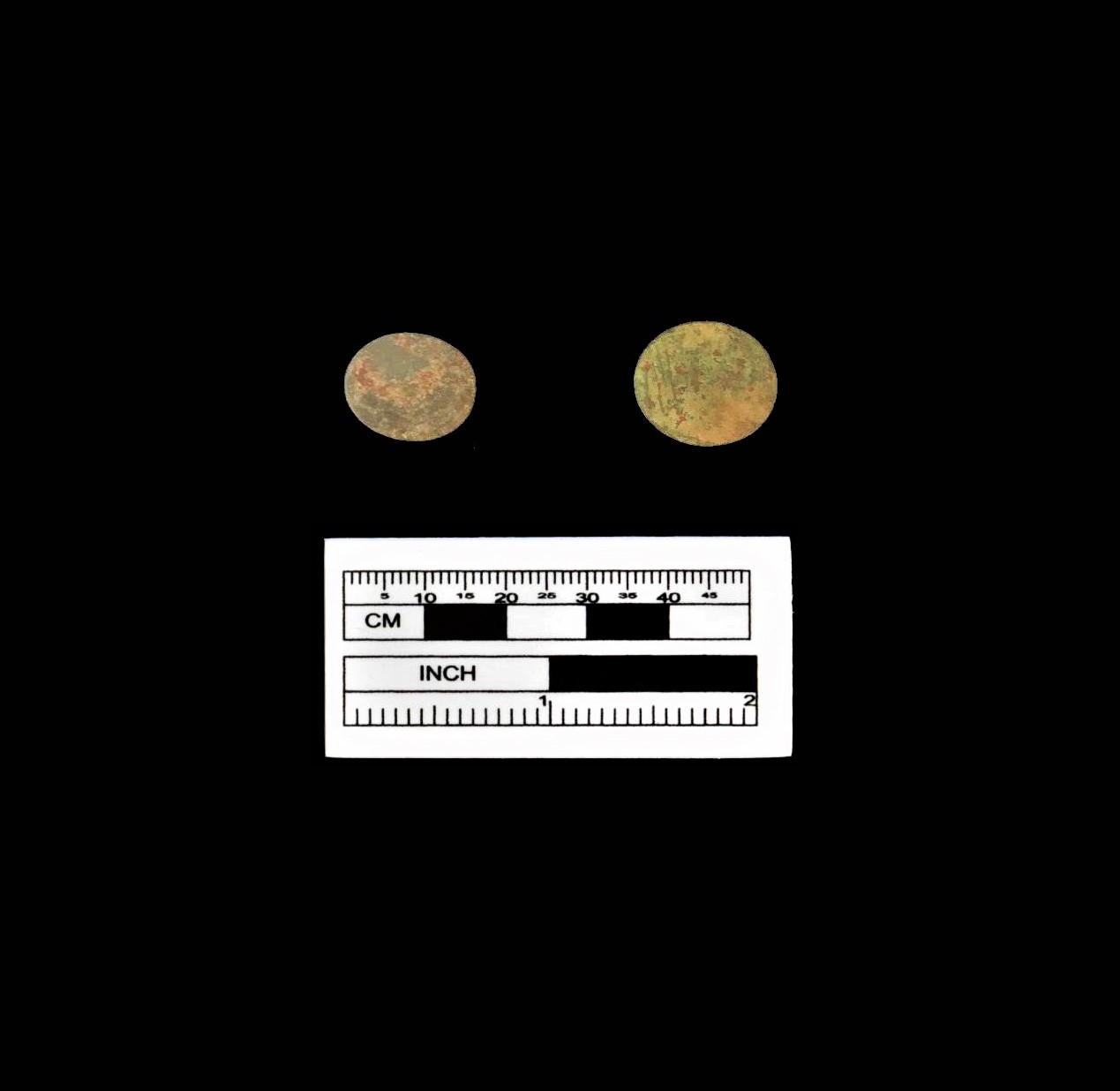
    Two metal buttons most likely from men’s garments.  Source: Ferry Farm Archaeological Collections
    Bone buttons Source: Ferry Farm Archaeological Collections
    Pins were used for pinning jackets closed and keeping caps pinned to your hair.  They were a necessary part of dressing. Source: Ferry Farm Archaeological Collections

    A small sample of the large collection of brass dress pins found at Ferry Farm.  Pins were not used for sewing, as basting before sewing was the regular practice.  Pins were used for pinning jackets closed and keeping caps pinned to your hair.  They were a necessary part of dressing.

    The answer to why this phenomenon is how it is hit me one day after rewatching a lecture given by a former staff member entitled “Betty Washington Lewis and Women’s Health.”  Dr. Kelly Brennen Arehart spoke about maternity wardrobes and how women wore their everyday clothing throughout pregnancy.  For my contemporary mind, this was shocking, but the more I thought about it the more it made sense. 

    Women go through a lot of fluctuations in body shape, weight, and proportions in their lifetime.  Between hitting puberty and development of curves, to many pregnancies, to the changes of menopause, women’s bodies go through so much.  Of course in between all of the big changes, there are also changes to the female body based on time in her menstrual cycle, metabolism fluctuations, or periods of eating more or less or different types of food that all change the body’s shape and size.  Unlike today, women of the past could not just go to the shop and buy a pair of pants in the size up.  Clothing was incredibly expensive and time consuming to make before sewing machines and mass production come into play.  In the 18th century, even the highest classes of women did not have the money or the time to go buy or have new clothing made when they gained a few pounds or got pregnant.  It was a matter of adjusting the clothing they already had.  And that is exactly what ties, pins, and laces allowed women to do. 

    The lacing, pinning, and tying made clothing far more adjustable compared to the rigidity of buttons.  Women tied their petticoats looser and simply covered the wider gap in the side with their jacket or gown.  Stays were either loosened significantly by the laces or they were left unlaced at the bottom entirely, especially in cases of late term pregnancies.  On top of the stays, jackets could be pinned further out to allow for more room in the bust and waist, or a stomacher could be added in the center opening of the jacket to expand the top even further.

    Whether these closures were intentionally created to be adjustable or if it was just a byproduct of lacking clothing technology, I am not entirely sure.  But the idea that buttons were only used on men’s not so fluctuating bodies (for the most part) says something.  A button is sewn down and cannot be easily moved or adjusted on a regular basis.  Once a button is sewn into place, there is no room for variation in body shape, unless one wanted to move the buttons every time he ate a large meal the previous day. 

    Even though Betty Washington Lewis had Charlotte, who we believe to be an enslaved woman acting as the seamstress of the Lewis household, Betty was pregnant on and off for twenty years.  If Charlotte or another enslaved seamstress had to make a maternity wardrobe for Betty every time she was with child, the seamstress would have no time to do any other tasks whatsoever.  It was not economical with precious time or expensive cloth for women to need new clothes every few weeks. 

    So to tie all this together, I am still not happy that it is so inconvenient for me to dress myself in 18th century clothing, but I understand why getting dressed was this way.  The adjustability of women’s clothing was so intentionally created to conform to their bodies in any season it was in.  It also opens my eyes to why pins were so important.  Without them, a woman could not dress. 
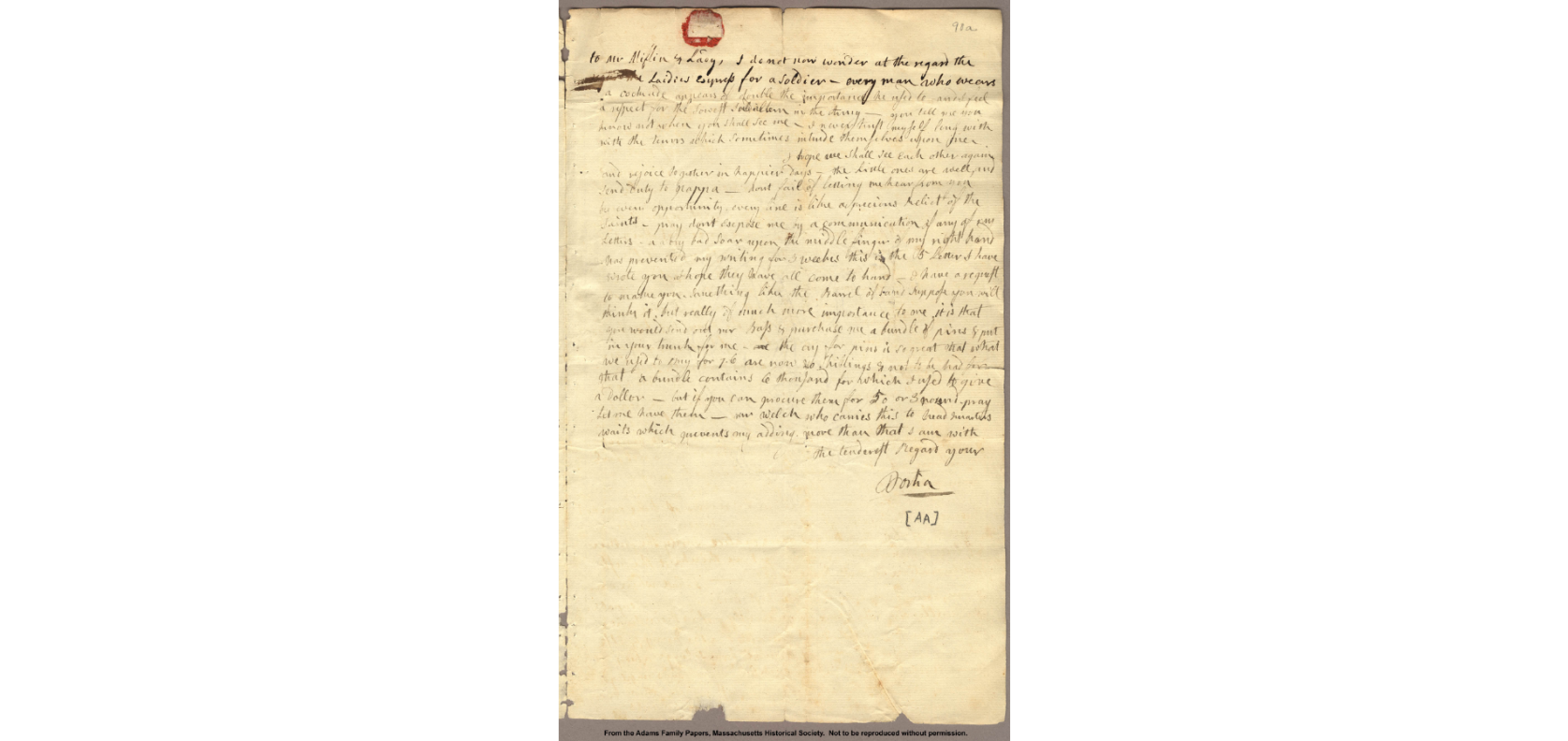
    Letter from Abigail to John Adams, June 14, 1775.  Source: Massachusetts Historical Society

    …I have a request to make you. Something like the Barrel of Sand suppose you will think it, but really of much more importance to me. It is that you would send out Mr. Bass and purchase me a bundle of pins and put in your trunk for me. The cry for pins is so great that what we used to Buy for 7.6 are now 20 Shillings and not to be had for that. A bundle contains 6 thousand for which I used to give a Dollor, but if you can procure them for 50 [shillings] or 3 pound, pray let me have them. Mr. Welch who carries this to head Quarters waits which prevents my adding more than that I am with the tenderest Regard

    your

    Portia


    Allison Ellis

    Manager of Public Programs


    [1] “Questions About Elastic,” Maggie May Clothing, Accessed July 10, 2023, https://maggiemayfashions.com/questions-about-elastic-2/.

    [2] Ninette Dean, “The Up and Down History of the Zipper,” The Smithsonian Libraries and Archives, Accessed July 10, 2023, https://blog.library.si.edu/blog/2010/05/03/the-up-an-down-history-of-the-zipper/.

    [3] Caroline Stone, “The Westward Journeys of Buttons,” AramcoWorld, Accessed July 10, 2023, https://www.aramcoworld.com/Articles/November-2020/The-Westward-Journeys-of-Buttons.
  • Stay Informed About Historical Undergarments

    You have probably seen an enormous amount of corsetry imagery in your life. Whether it was the scene in Gone with the Wind where Mammy is lacing Scarlet into her corset as she holds onto the bedpost or a social media post about waist training using a modern piece of shapewear. Needless to say, you probably think that corsetry was restricting, painful, and dangerous for all women in the 18th, 19th, and 20th centuries. Enter me, a corsetry enthusiast, here to break the wall of misconceptions surrounding women’s boned undergarments. 

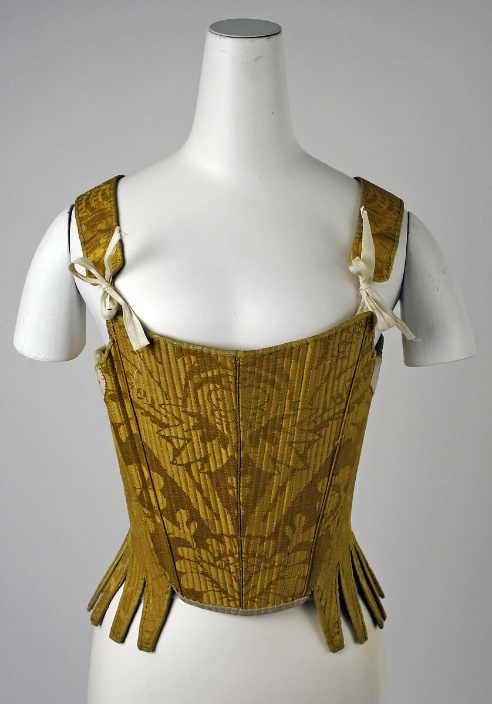
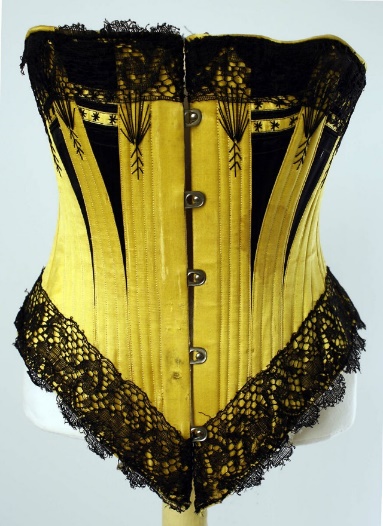
    I would like to start by differentiating between stays and corsets. Stays are the fully or partially boned shaping garments worn by women in the 18th century. Stays gave support to the bust and created an inverted conical shape by holding the shoulders back, trimming the waist, and supporting the mantua, or gown. Stays can be laced in the front, back, or both. Corsets became fashionable in the early to the mid-19th century. Corsets give the more famous hourglass shape, are laced in the back, and fastened in the front with hooks. I will be focusing on 18th-century stays, but know that many misconceptions about stays and corsets fall into similar categories. Some differences are the spark to the misconceptions, though. 

    Early 18th Century silk stays in collections of the Metropolitan Museum of Art

    1880s Silk Corset in the collection of the Metropolitan Museum of Art

    Take everything you think you know about stays and throw it out the window. The most common misconceptions about historical boned shapewear can be debunked if you step outside of the 21st century’s media-driven view of corsetry.

    Weren’t stays painful and hazardous to women’s health? No, actually. This misconception comes from the idea that women tight-laced their stays, meaning they pulled the laces tighter to force waste reduction. Most women did not practice tight lacing. Additionally, the boning was made of baleen (whalebone), which looks rigid but is quite flexible and molds to the wearer’s body over time. Stays were meant to be supportive, not restrictive. Organs were not squeezed, and ribs were not broken. Think of stays as a garment, not unlike a modern bra: snug, supportive, but wearable in an everyday setting. Women were able to work, eat, and breathe in their stays. It was probably more likely you would faint from the smells in the street than you would from the tightness of your stays in the 1700s. 

    1777 Satire of fashion print, British Museum

    Women of all classes in society wore stays. From the lowest of working classes to the highest of nobility, everyone wore them. You were not considered properly dressed without your stays on. Materials differed based on what you could afford, but some iteration was necessary for every woman. Working women often wore stays without straps so as not to restrict any movement of the arms or shoulders. Wealthier women who were not doing physical labor tended to enjoy the extra support the straps gave.

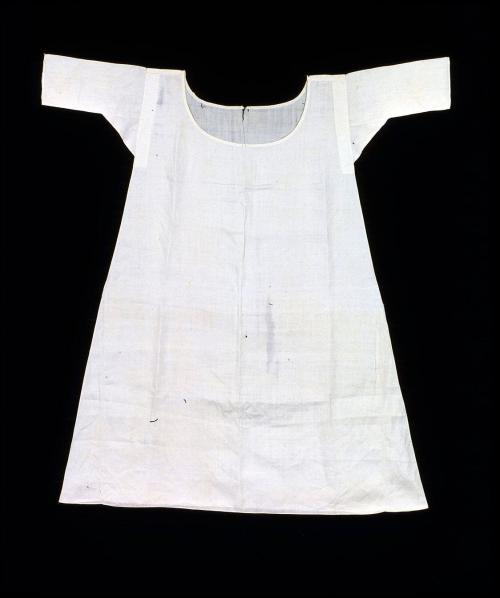
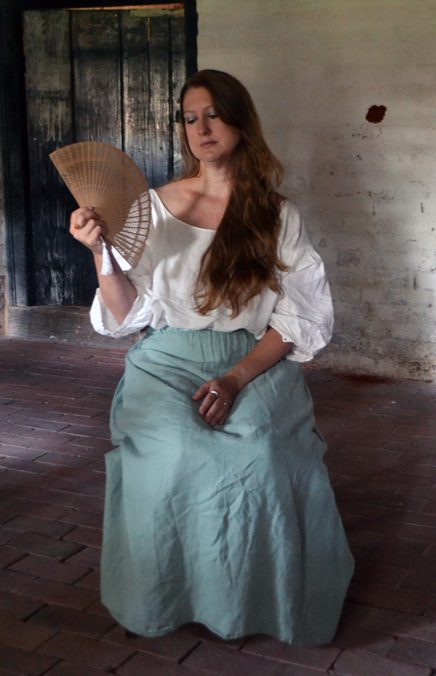
    Stays were not worn up against the skin. No matter what the covers of romance novels or the saucy scenes in period dramas portray, there was always a layer of clothing between the woman and her support garment. Laundry was not as simple as throwing everything into a machine and hitting start in the 18th century. Therefore, women wore foundational garments called shifts that were washed frequently and protected outer garments like gowns and stays that were not washed as often. A shift was a nightgown-like garment usually made of linen. This was considered your base layer. It absorbed sweat and oils, protecting the rest of the clothing and stays from the elements of the body. 

    Linen shift in the collections of Colonial Williamsburg

    Stays were never laced in a crossed pattern; they were always spiral laced.    That crisscross lacing that you see so often was not commonly used until 19th-century corsets. Spiral lacing was achieved by anchoring one end of the lacing chord at either the top or bottom and running it in a circular pattern through the offset laces until the other end of the stays were reached, then it was anchored off at that other end. This is a common mistake made in period films. If it isn’t spiral laced, it isn’t the 18th century. 

    Spiral-laced early 18th Century linen stays in the collection of the Metropolitan Museum of Art
    Cross-laced 1890s silk corset in the collection of the Metropolitan Museum of Art

    Another lacing myth is that women in the upper classes were the ones who wore back-lacing stays, and women in the lower classes wore front or front and back-lacing stays. This idea came to be from the thought that women needed help to get into back-lacing stays; therefore, they needed a servant or enslaved person to place them in while lower-class or poorer women could lace their own stays in the front. Experts know this is not true as stays in fancier fabrics, like silk, worn by wealthier women are often front lacing, and stays in common fabrics, like linen, are often back lacing and vice versa with no real correlation. This tells us that the lacings of stays were not exclusive to class. I can also confirm that this was most likely the case as I have worn and laced my own back lacing stays by myself. It is not a magic trick or due to any extreme flexibility. I do what I was shown: lace the stays loosely in front, then spin them around, so the lacing is on my back and tightens them up. Simple, fast, and effective. 

    Something surprising that I learned while constructing my stays is that stays were not made by the milliner or mantua maker. Stays were most frequently made by a specialty staymaker or the tailor. That’s right, and this is such a specific and complicated garment to construct that it was often made by a specific craftsman. It took many years for someone to master the art of stay-making. Despite mantua making and millinery work being a female dominated trade in the 18th century, stay making and tailoring was a male-dominated trade. It took a lot of strength to process the whalebone, a job more suited to men. Next time you hear an actress from a period drama complain about how tight the corsetry was and how she could barely breathe, know that her corset was most likely not fitted properly and made historically; therefore, it just did not fit. Stays were made to fit the wearer, which would take an enormous amount of time to do for a film’s costumes. Premade corsets are bound to be uncomfortable to wear. Staymakers knew exactly how to fit a set of stays to the wearer, an art that is now nearly lost to time. 

    1780s stays from the Victoria & Albert Museum Collections (linen)
    1780s stays from the Victoria & Albert Museum Collections (silk)

    Stepping back into our 21st-century lenses, what can you see? Do you see oppressed women fainting in the street or strong women working in their homes and out in the world going about their business? I hope this has made you think twice about regarding corsetry as the worst garment ever to grace the body, but also about appreciating the women who wore them and what they did to get us to where we are today. 

    Allison Ellis

    Manager of Public Programs

  • Drawers, Knickers, or Pants: Why Do We Call Them That?

    There truly is a National Day for absolutely everything and even a National Underwear Day! That’s right! Undergarments have their own appreciation day and, to be precise, it was August 5.  At first glance, National Underwear Day may seem rather silly but actually we probably don’t give enough thought to the importance of underwear. Before August ends, we want to remedy that by taking a look at underwear from a historical perspective.  Have you ever wondered why there are so many names for our various undergarments? It turns out that all the names we have for underwear today are rooted in the past.

    Cooling in Basement
    Woman in a shift and petticoat.

    Underwear as we know it today didn’t really get its start until the 1800s.  Prior to that, people like the Washingtons and the Lewises actually didn’t wear much at all under their numerous layers of clothing.  Women wore nothing under their shifts (which were loose-fitting, waistless dresses that acted as the first layer of a woman’s wardrobe and were sometimes the outer layer in hot weather or workday situations).  Men’s shirts were initially similar to shifts in that they were all-purpose – base layer, outer layer, sleep shirts, etc.  But, men were actually the ones who began the trend toward true undergarments.

    In Washington’s day, men wore breeches on the outside, but they also wore a similar lighter weight garment underneath, which came to be known as “drawers.” Why drawers, you ask? The prevailing theory is that the name comes from the fact that early versions of this undergarment were actually two separate legs that had to be “drawn” up and tied in place, hence why we still refer to underwear as “pairs” even though they are single garments now – “a pair of drawers”, “a pair of underwear.”

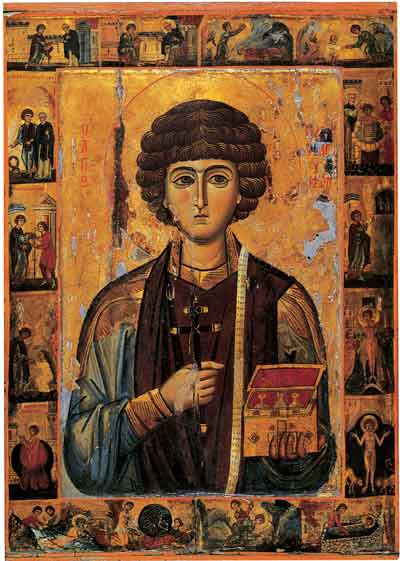
    St Panteleimon
    Icon of saint Panteleimon (Saint Catherine’s Monastery, Mount Sinai) dating from the 13th century. Credit: Wikipedia

    Eventually, women adopted men’s undergarments for themselves, with some modifications.  This is the point where the ubiquitous term “pants” has its beginnings.  “Pantaloons”, “pants”, and “panties” all come from the same remarkable origin, a Catholic saint, martyred in the 1st century A.D. named Saint Pantaleon. Now, Saint Pantaleon had nothing to do with pants himself but centuries after his death, he became a focus of religious zealotry in Venice, Italy, where many men wore a peculiar type of breeches that were rather poofy.  Because the men who were also a part of the cult of Saint Pantaleon wore these same poofy breeches, they came to be known as “pantalones.”  Additionally, because of their rather flamboyant behavior and dress, pantalones became the stereotypical way to depict Venetian characters in comedic plays, which travelled across Europe.  Eventually the most distinctive characteristic of these comedic characters, the poofy breeches, became iconic and took on the name “pantaloons.”

    Interestingly, pantaloons became a popular fashion accessory among women in France, as an undergarment that was intentionally meant to be seen under slightly shorter dresses.  When the fashion reached England, it was primarily among men, and eventually the word “pantaloons” was shortened to “pants” and applied to any outerwear bottoms generally.  Among women, they remained undergarments, which got continually shorter and smaller as the centuries passed, and are now referred to with the diminutive “panties.”

    The Italian Comedians by Antoine Watteau
    “The Italian Comedians” (c1720) by Antoine Watteau shows several characters in costumes with pantaloons typical of commedia dell’arte theater popular in European from the 16th to the 18th centuries. Credit: National Gallery of Art

    Alice Manfield, Guide Alice, Mt Buffalo c1900
    Portrait of Alice Manfield (Guide Alice) (1878-1960), mountain guide, naturalist, chalet owner, photographer, and early feminist figure based at Mt Buffalo, Victoria, Australia. Photographer: Unknown. Credit: State Library of Victoria.

    And now the term “knickers.” Although this name for both male and female underwear got its start in the United States, its current usage is much more common in Great Britain.  In 1809, Washington Irving wrote A History of New York under the pen name Dietrich Knickerbocker.  Knickerbocker was depicted in newspaper illustrations wearing loose-fitting, almost baggy, breeches tied or buckled at the knee.  This style of knee breeches had become highly fashionable among young men in America, and the press surrounding the book and Knickerbocker himself added to the trend.  Eventually, the style became known as “knickerbockers” but the breeches weren’t an undergarment.  Men wore them to play sports (one of the first professional baseball teams was called the New York Knickerbockers, and knickerbockers were standard baseball uniforms well into the 20th century) and for casual wear.

    Knickers or Drawers
    Kncikers or Drawers, 1880s, Credit: The Metropolitan Museum of Art

    Once again, though, women saw a handy piece of clothing, and altered it for their own purposes.  At this point in women’s fashion, hoops and cages were being used to hold skirts out and add volume.  Things were a bit drafty under those cages, and knickerbockers seemed like the perfect solution.  In order to capitalize on this trend, manufacturers had to differentiate the bottoms that men were wearing for manly pursuits from the bottoms that ladies were wearing under their hoop skirts, and so “knickers” were born.  Much like pantaloons, knickers kept getting shorter and smaller until they were basically the same thing as panties.

    And there you have our brief history of underwear for National Underwear Day!

    Meghan Budinger, Aldrich Director of Curatorial Operations

  • Dressing the Past: Costuming Challenges at Ferry Farm & Kenmore

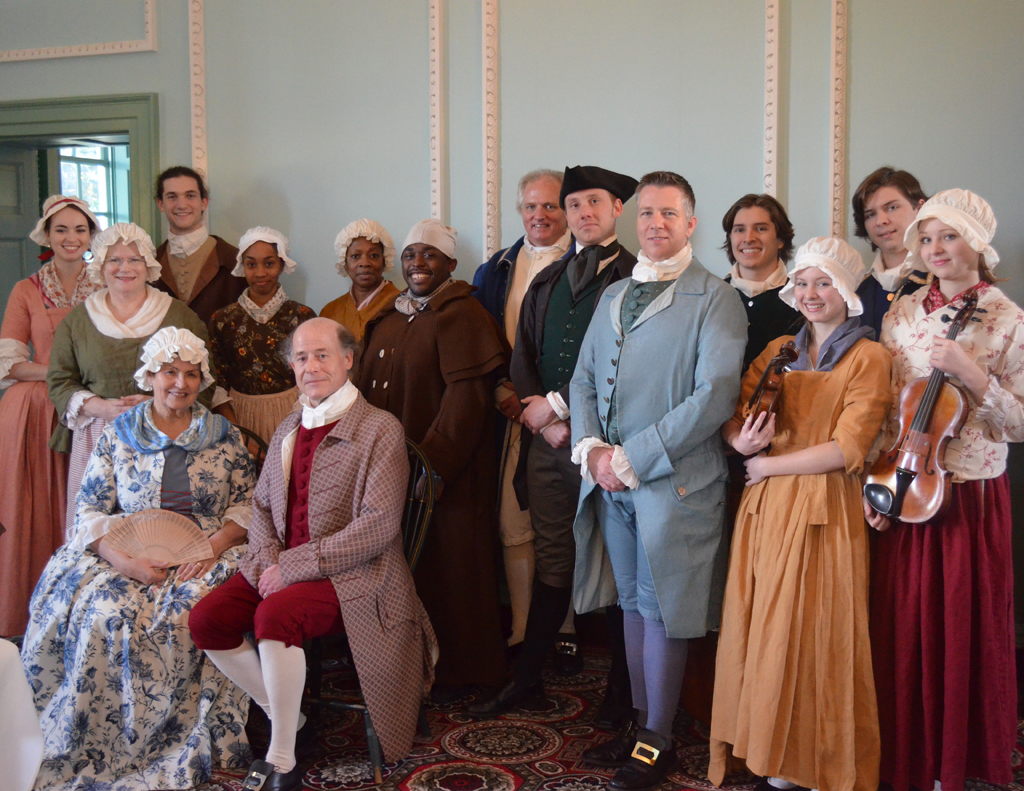
    Twelfth Night 2016 19
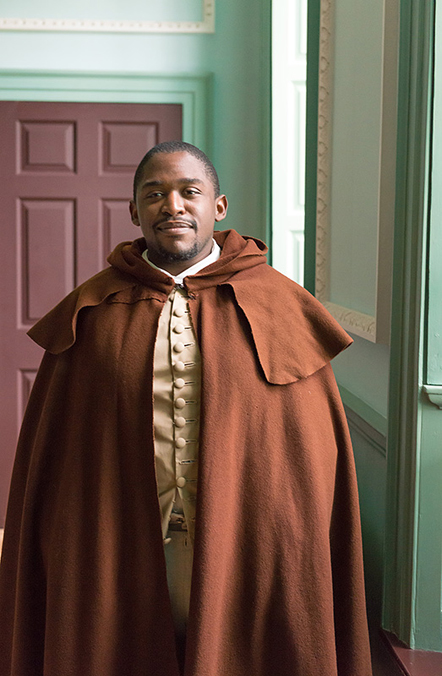
    The cast of Twelfth Night at Kenmore in their period clothing. In our educational programming, we must dress staff and actors of different body types who portray a variety of social classes and time periods.

    We have been working tirelessly to improve the accuracy of the costumes that actors and staff wear when performing for or interacting with the public at Historic Kenmore and George Washington’s Ferry Farm. This is no easy task, but it improves the visitor experience and helps them better understand the Washington and the Lewis families in the context of the 18th century.

    This blog post addresses some of the challenges and successes we’ll continue to experience as we expand our costuming after the reconstructed Washington house and the new historic landscape at Ferry Farm opens to the public.

    Some of the challenges we face are no different than what other sites face. The modern expense of this specialized clothing, the difficulty of fitting multiple wearers, questions of time period to portray and achieving the small true-to-life details of historic clothing are all important to the success of dressing the interpretive staff. But we’ve come a long way and are on the path to sustained success.  We’ve been working on all of the pitfalls mentioned above and have made great headway. Below is an examination of some of the difficulties we’ve faced and the ways we have met them straight on.

    Expense of this Historic Clothing

    Cloak
    Cloaks are necessary to keep actors and staff warm but they are among the more expensive pieces of clothing needed to properly dress as someone from the 18th century.

    The cost of well-made, accurate period clothing is one of the greatest hurdles we’ve or, for that matter, any historic site or museum experiences. Eighteenth century clothing is a highly specialized type of clothing that is often imitated with mixed success. For example, a good quality off-the-rack great coat costs about $325, while a custom-made high-end 18th century men’s great coat costs about $1,000. There were pieces in our costume stock that did not fit our criteria and had to be removed – meaning they had to be replaced with new (and more expensive) articles of clothing. Correcting past clothing choices is its own challenge, but it is far from insurmountable. We make very careful decisions about what was a priority and where we should spend resources first and we have begun acquiring garments that we deem priorities.

    One-Size-Fits-No One

    Because of the number of people we costume, we sometimes have to use the same costumes on different people (not at the same time, of course!). This is a challenge because both men’s and women’s 18th century clothing was fitted to the individual. A tailor would custom-make waistcoats, coats, and breeches to fit the wearer; even when the ensemble was fashioned out of a hand-me-down suit.  Mantua makers (dress makers) would custom-make women’s gowns and petticoats to fit snugly. We must make our clothing fit a variety of wearers.  We are now quite proficient in the art of pinning and mysteries of knot tying. It’s not perfect, but it goes a long way toward creating a more accurate fit.

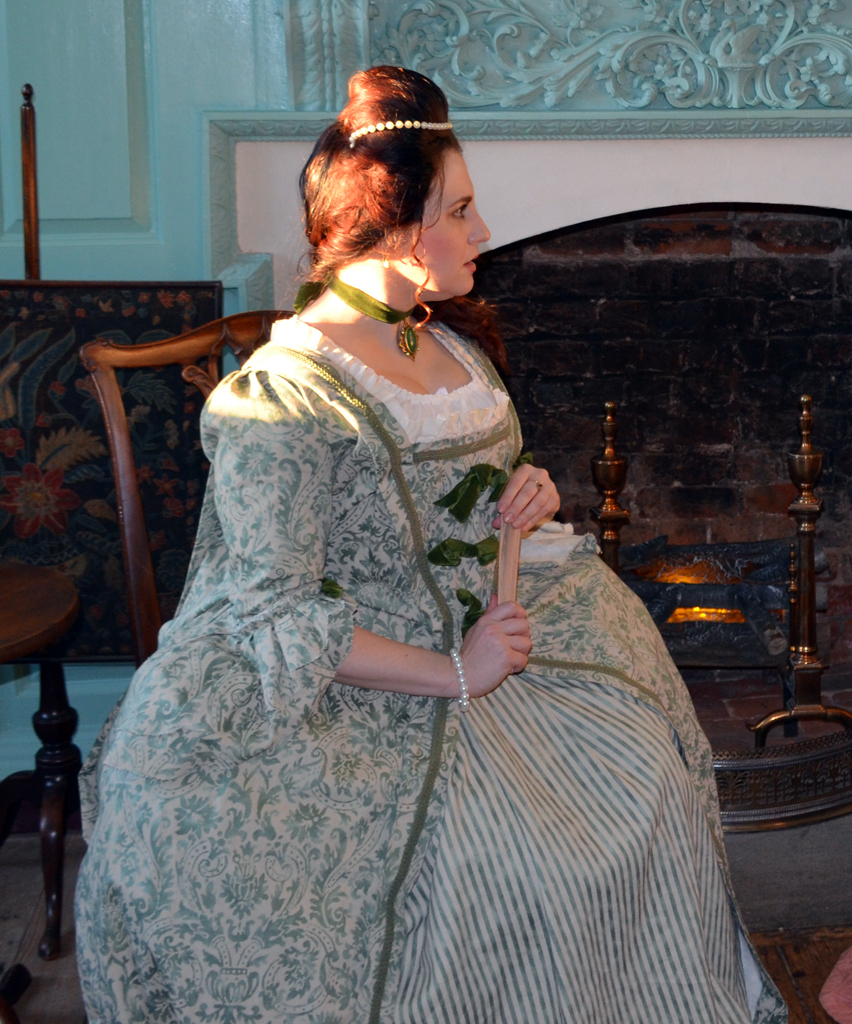
    Another important part of fit for women is the undergarments. Stays, bum rolls, and hoops create the ideal 18th century shape. Stays were 18th century support garments, much the way corsets were in the 19th century. We recently made acquiring stays a priority and purchased some in a variety of sizes.  This has improved the actor’s appearance in addition to helping her achieve the proper 18th century posture.  Bum rolls accentuate the behind (no, really!) and hoops accentuate the hips.  These help create a period appropriate look that we are now pleased to share with visitors.

    The True-to-Life Details

    Costume details
    Small details like the fan, necklace, brooch, and hair style create a fully realized character with a stronger connection to the past.

    Just as it is today, the small details make the 18th century outfit. Attention to men’s and women’s shoe buckles and hats, men’s knee buckles, and women’s jewelry and stays polishes the look that makes history come alive. Our men’s and women’s hats are correct to the period and we have a nice but limited collection of accouterments.  Because 18th-century-style shoes are expensive and we can’t exactly buy a pair of shoes in every size, we have been using buckles on plain black shoes to disguise their modernity. As we move forward, we are working on better solutions to best achieve the small details needed to make a costume fully 18th century.

    1750s vs. 1770s

    Another challenge we face as the Washington house and Ferry Farm’s new historic landscape gradually come on-line is that we’ll have to costume staff for both the 1750s – the period we interpret at Ferry Farm – and the 1770s – the period we interpret at Kenmore.  This is important for a number of reasons. First, we want to demonstrate clearly that the events that took place at the two sites took place in two different time periods. This sounds obvious, but visitors will better internalize the time difference between the sites with the aid of clothing. Secondly, it would be flat-out wrong to dress the staff portraying our historic figures at both places in clothing from the same period. As a museum, we have a responsibility to make the visitor experience as accurate as possible.

    Despite the challenges, our devotion to accuracy in the period clothing worn by our staff will improve the visitors’ experience and help them better understand the Washington and Lewis Families.

    Kelly Brennan Arehart
    Manager of Interpretation & Visitor Services

  • Paste Gems: It’s the Real Thing (Almost!)

    The majority of what crosses my desk everyday as I catalog artifacts are items that would be difficult, if not impossible, to ascribe to any one person who lived on the land we call Ferry Farm. Architectural debris (brick, mortar, plaster, nails), food remains (oyster shell, animal and fish bones, eggshells (!)), broken household objects (glass bottles, wineglasses, dinner plates, storage crocks), and modern garbage (plastic – so much of it!), when found on site, are all interesting artifacts in and of themselves and can answer specific research questions. At the same time, they all attest to the mundane, collective aspects of everyday life on a farm that has been occupied off and on for over 250 years.  Every once in a while, however, an artifact is caught in the field sifting screen or the lab wash bucket that puts a smile on your face and causes you to excitedly announce to the rest of the crew, “Look what I found – a gem!” Then, you think “I wonder who it belonged to?”

    sf1947
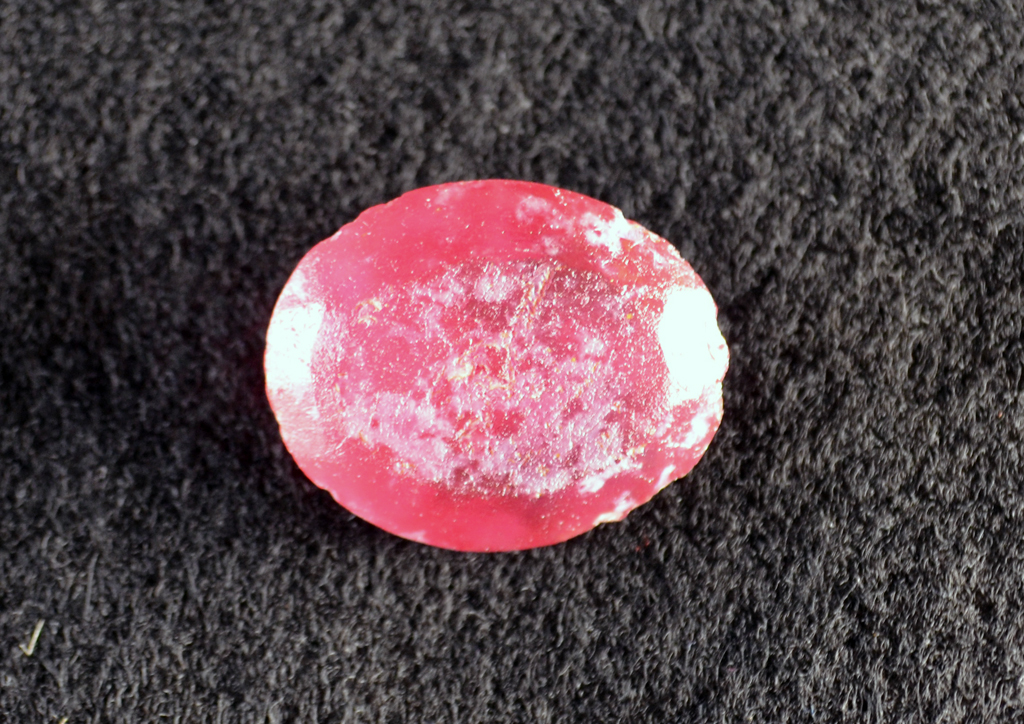
    An oval, faceted red paste gem that probably came from a piece of jewelry. (SF 1947)

    Gemstones and jewelry are definitely exciting finds on any archaeological site, but at Ferry Farm we are more likely to find bits of jewelry and clothing fasteners decorated with imitation or “paste” gems.  Paste gems are molten leaded glass pressed into gem-like molds and then polished to look like the real thing.  With the better quality pastes, the facets could even be cut and polished.  They were available in any color imaginable by adding metallic oxides during their manufacture. Their color could also be enhanced or changed by attaching colored foils to the undersides of the gem.   Paste gems were usually set in closed, versus open-backed, settings to protect the foil backing from tarnishing.

    sf1948
    This colorless paste gem is cut in a style similar to the “brilliant cut,” a popular diamond cut during the 18th century, and would have been set in a closed setting for either a piece of jewelry, a button, or a buckle. (SF 1948)

    The use of paste gems was popular from the 17th through the early 19th centuries because they were so versatile and economical. Pastes were available in a wide selection of colors that imitated any precious or semi-precious gemstone.  Because they were created in molds, they also came in a multitude of sizes and shapes, such as circles, triangles, squares, octagons and hexagons.  The jeweler could then cut the gems to fit together in closely-set arrangements not always possible with real stones.  Improvements in the quality of the glass during the 18th century heralded gems with added brilliance and allowed greater flexibility in cutting and using the paste stones in detailed settings. Despite being imitations, pastes were highly desired in and of themselves by both the middle class and the wealthy.

    sfs-212-215-230
    Three similar rectangular faceted gems in blue and green. (SFs 212, 215, 230)

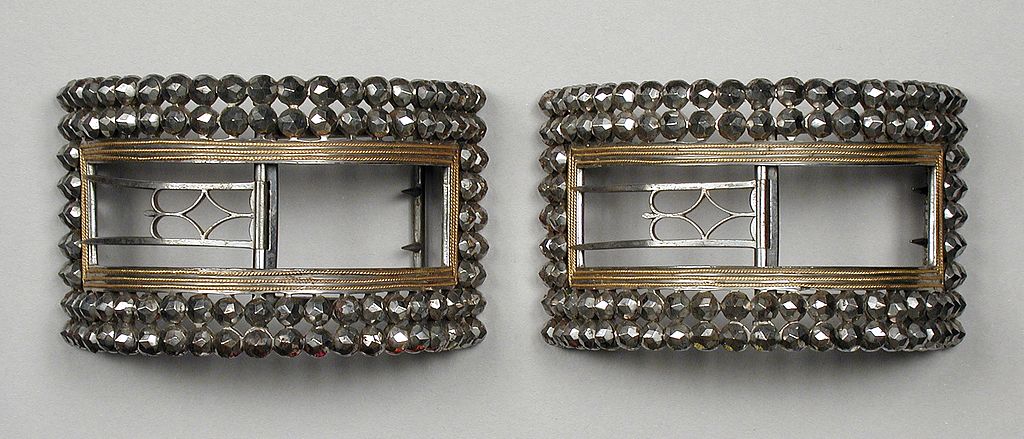
    Just like real stones, paste gems were set in all kinds of jewelry and items of personal adornment worn by both men and women.  Necklaces, brooches, rings, bracelets, and earrings were all decorated with paste gems.  Clothing fasteners, such as buckles, buttons, sleeve buttons, were also set with pastes.  Buckles used to fasten a wide variety of clothing articles, such as hats, shoes, girdles, stocks, and gloves, were very fashionable items to be set with paste gems.  One advantage of using pastes over real stones is that it was certainly easier to replace a lost buckle set with pastes than one set with real diamonds!

    mans-shoe-buckles-c-1777-1785
    Pair of man’s steel and gilt wire shoe buckles, England, circa 1777-1785. Public domain. Credit: Los Angeles County Museum of Art / Costume Council Fund / Wikipedia

    Paste gems found at Ferry Farm have come in a range of colors – green, red, pink, aqua, blue, black, and colorless – as well as shapes.  Figure (SF#1947) is an oval, faceted red paste gem that probably came from a piece of jewelry.  Figure (SF# 212, 215, 230) shows three similar rectangular faceted gems in blue and green.  The colorless paste gem in Figure (SF#1948), cut in a style similar to the “brilliant cut,” a popular diamond cut during the 18th century, would have been set in a closed setting for either a piece of jewelry, a button, or a buckle.

    sf234
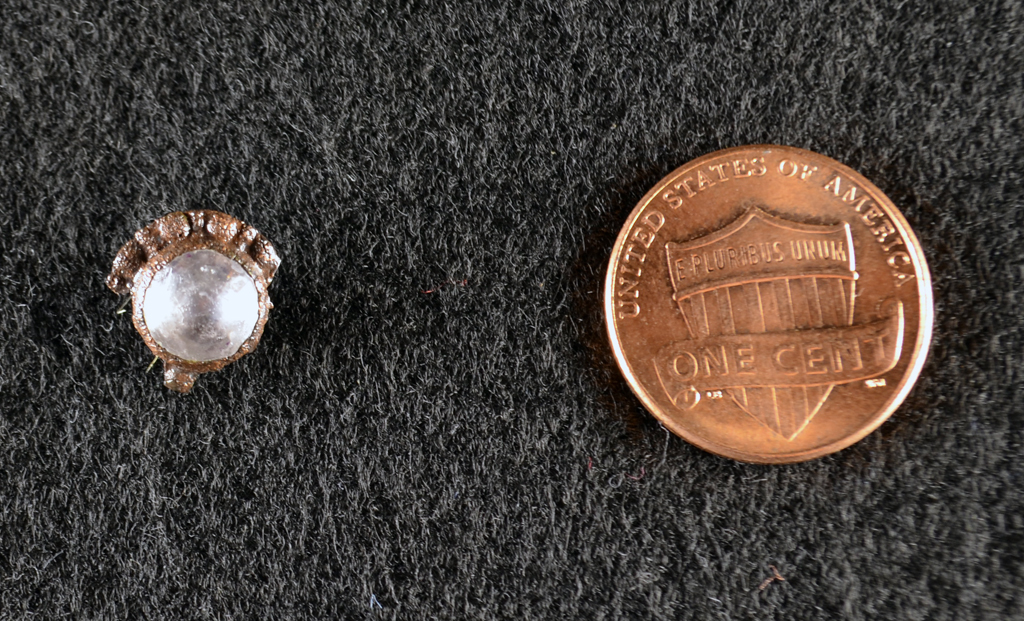
    Sleeve button with its colorless glass inset. (SF 234)

    Sometimes the paste gem is still found within its setting, such as the sleeve button with its colorless glass inset seen above (SF#234) but, more often than not, finding a paste gem in its original, complete setting is a rare occurrence. Figure (SF#1971) is a fragment of a copper alloy shoe buckle with two empty settings for paste gems.

    sf1971
    Fragment of a copper alloy shoe buckle with two empty settings for paste gems. (SF 1971)

    Who did these gems and their settings belong to?  Distinctive style changes in gem shapes and jewelry settings help establish when certain pieces were in fashion.  Knowing changes in clothing fashions through time and recognizing when certain types of clothing fasteners, such as shoe buckles and sleeve buttons, were popular also help us focus our research.   We can assume that whoever was sporting these gems was trying to be stylish and fashionable in their time by adding a little “bling” and glitter to their wardrobe.  For as long as people have been traditionally adorning themselves with real gemstones in jewelry, there has always been that goal to create comparable imitations to swap out the real thing.  These special artifacts found at Ferry Farm are a reflection of these stylistic changes.

    Judy Jobrack, Archaeologist
    Assistant Archaeology Lab Supervisor

    Further Reading

    Pointon, Marcia. Brilliant Effects: A Cultural History of Gem Stones & Jewelry.  New Haven: Yale University Press, 2009.

    White, Carolyn. American Artifacts of Personal Adornment, 1680-1820. Lanham: AltaMira Press, 2005.

  • Petticoats and Pink Lightning

    This week, we delve into our collections to investigate some fascinating fashions from across the centuries. London Fashion Week took place late last month while today marks the final day of Paris Fashion Week.  Just as they do in the 21st century, those two cities represented cultures that helped determine the height of fashion in the 18th century. To us today, fashions of the past may consist of strange terms, foreign garments, or archaic customs. In this post, Lives & Legacies contributors come together to salvage some fashions from the pages of history in an appreciation of both them and of the people who wore them.

    Petticoats

    To most of us today, the term “petticoat” refers to a ladies’ undergarment – a fabric support for a skirt, intended to give the skirt more fullness or volume.  Petticoats have essentially disappeared from our modern wardrobes but, for 400 years, petticoats were a staple of female dress and weren’t always hidden under skirts.

    The earliest references to petticoats show up in the Middle Ages.  Only they weren’t worn by women.  And they weren’t skirts.  A “petty coat” referred to a short (“petty”) robe (“coat”) that was padded and worn under a knight’s armor or chain mail.  Eventually, the term “skirt” was used to describe the tails of men’s petty coats (“the skirts of his petty coat hung so long they touched the ground”), and was also used to describe typical women’s attire, just as we use it today.  By the 16th century, somehow women’s skirts and men’s petty coats became synonymous, and as time went by and men ceased wearing petty coats, the word “petticoat” referred entirely to a woman’s skirt.  Petticoats could be worn as stand-alone skirts, or under open-front robes, creating a two-part dress. By the mid-19th century, petticoats were no longer seen and became an undergarment worn under an all-encompassing dress, mostly to add structure to the voluminous skirts that had become popular by then.[1]

    In the 1700s, women often wore quilted petticoats under those open-front robes or as stand-alone skirts.  In either case, the quilted petticoat was intended to showcase intricate handiwork in the quilted pattern.  Geometric patterns, birds, flowers and even pastoral scenes were all common themes for quilted petticoats, which had an added bonus of providing extra warmth.

    One quilted petticoat dating to approximately 1760 survives in our collection.  Made of peach satin silk with wool batting between the two layers, it is quilted in a chevron pattern above an undulating band, below which is an assortment of flowers and leaves.  Although it appears that this particular petticoat was made over several times in its life, there are indications that it was originally intended be worn over a dome-shaped hoop skirt, which probably means that it was worn under an open-front robe for a more formal dress.[2]  The wearer would have been at the height of 18th century fashion!

    Meghan Budinger
    Aldrich Director of Curatorial Operations

    Busk Boards

    Corsets have been a fashion mainstay in women’s clothing throughout history.  Like petticoats, they have changed their shape, material and purpose but, unlike petticoats, they have always been a very personal and private garment.  From the 15th to the 18th century, corsets contained a small sliver of stiff material called a busk or busk board.  The busk was made of wood, ivory, or bone and measured between 12 to 16 inches long and 1 to 2 inches wide.  They were inserted into a special narrow pocket in the front of the corset to keep the garment straight and upright.

    Given the intimate location of the busk they were often given as tokens from lovers and contained elaborate carvings.   Hearts, cupids, and initials were favorite and common motifs inscribed on the busk.  The board in our collection is made out of wood in a long rectangle shape with round end.  On the surface are etched a pinwheel, a fleur-de-lis, six flowers petal enclosed in a circle, and a square with a diamond carved design all surrounded by a cross-hatched edging.  At the end is inscribed “B.L. 1785” with a sprig of leaves.

    Heather Baldus
    Collections Manager

    Shoes

    Perhaps, unlike pretty petticoats and busk boards, when we today think of footwear in the colonial era, we often think of pedestrian black leather. This might have been sufficient for the puritans of New England, who were typically adverse to bright colors and flashy clothes. Here in Virginia, however, where London fashions were king, the style conscience demanded something more. Much like today, there were shoes meant for work and shoes meant to impress. Linen shoes, like the ones in our collection, would have certainly impressed.

    In our collection we have three versions of 18th century ladies’ shoes: black shoes from the late 1770s which have a pointed vamp and an Italian heel; a silk and linen pair from the 1760s; and, finally, an embroidered linen pair with a white rand and leather-covered English heel. All were the height of fashion in the 1700s and perfect for showing off at a fine evening of dance, a Sunday at church, or even at home while company was visiting. Like all shoes in the 1700s, a trained shoemaker made them by hand.  Although there were journeyman and master shoemakers in the colonies, the finest worked in London and shipped their merchandise across the Atlantic. While certain elements of these shoes are ubiquitous such as the thin leather soles, wooden heels, straps for fine buckles, and a linen base, eighteenth century shoes were like the shoes of today varying in style, color, material, and purpose.

    Personally, my favorite aspect of these shoes is how contemporary they truly are. While they seem like a foreign footwear from a bygone era, anyone who has splurged on the perfect pair of boots, fashionable flats, or even stylish sneakers can relate to the original owners of these beautiful artifacts.

    Joe Ziarko
    Manager of Interpretation & Visitor Services

    Lipstick

    Pink Lightning”!  Meteorogically speaking, it is a distinctive type of lightning that is exceptionally loud and generates a unique purple-pink color.  But in the world of fashion, “Pink Lightning” was the color name created by Revlon for a line of beauty products in 1944. Face powder, nail polish, and lipstick were available in this shade for women who wanted to sport a distinctive, high voltage color on their lips and nails.

    While most of this post has focused on 18th century fashion, both Historic Kenmore and George Washington’s Ferry Farm have long histories beyond the 1700s. We often unearth objects that span 300 years during archaeological excavations.  Indeed, during the summer of 2014, an intact tube of 20th century lipstick was excavated.  The product label – “Revlon – Pink Lightning”- was still legible on the base of the wartime-inspired bullet-shaped casing, and remnants of the crème lipstick still surprisingly survived inside the tube.  Someone, sometime, pulled out her lipstick tube, dabbed ‘Pink Lightning” on her lips, and promptly dropped it on the ground to be lost for nearly 70 years.

    Lipstick is the ultimate fashion accessory.  As the very last beauty product applied before heading out the door, it is usually the finishing touch to an outfit. The world of fashion is not only about clothing, but just as much about the hair and makeup created to complement and highlight fashionable outfits. Wearing “Pink Lightning” lipstick would certainly suggest a fashion image that was “electrifying!”

    Judy Jobrack, Archaeologist
    Assistant Lab Supervisor


    [1] https://whitepavilion.com/articles/petticoats Petticoats, White Pavillion Clothiers, 2014.

    [2] Baumgarten, Linda. Eighteenth Century Clothing at Williamsburg. The Colonial Williamsburg Foundation, 1986.