Lives and Legacies

Tag: Daughters of the American Revolution

  • The Last of Washington’s Horse Chestnut Trees?

    There once stood a large horse chestnut tree on the corner of Fauquier and Charles Street in Fredericksburg. It was noted as one of the thirteen legendary Washington horse chestnut trees planted by George himself. By the 1930s, it was becoming clear that the tree needed some help, so the Daughters of the American Revolution (DAR) took up the cause to protect this historic tree.

    The tree legend states that George, while visiting his mother in June 1788 in Fredericksburg, decided to plant thirteen horse chestnut trees from her house to his sister’s house, Kenmore, just a few blocks away. This provided a scenic path for his mother when she visited her daughter Betty. These trees commemorated the thirteen original states.

    It is a great story. It is patriotic and nostalgic, showing George as a man of the earth with his love of trees, gardening, and horticulture. He planted these trees for a future America to remember the struggles to create this country and the precious nature of our land that we must protect.
    But is it true? Did George plant that tree? What is the evidence?


    The horse chestnut tree is a native of the Balkans region (Albania, Bulgaria, Greece, and Northern Macedonia). It made its way to Europe and England during the seventeenth century, noted as growing in South Lambeth, London, and being planted by Sir Christopher Wren at Hampton Court.

    Horse chestnut trees Bush Park, Hampton Court, England planted by Christopher Wren in 1669-1670.

    There is documented evidence of some horse chestnut trees crossing the Atlantic to Mr. John Bartram, one of America’s first botanists in the 1740s. In a letter from Peter Collinson, an English botanist, dated September 16, 1741, he wrote to Bartram, “I have sent some Horse-Chestnuts which are ripe earlier than usual; hope they will come fit for planting.”. Bartram acknowledged receiving them and stated that most were blue-molded, and only one germinated and grew. Over twenty years later, Bartram updated Callison on the success of the lone seedling, writing, “But what delights me is that our horse chestnut has flowered. I think it must excel in America.”
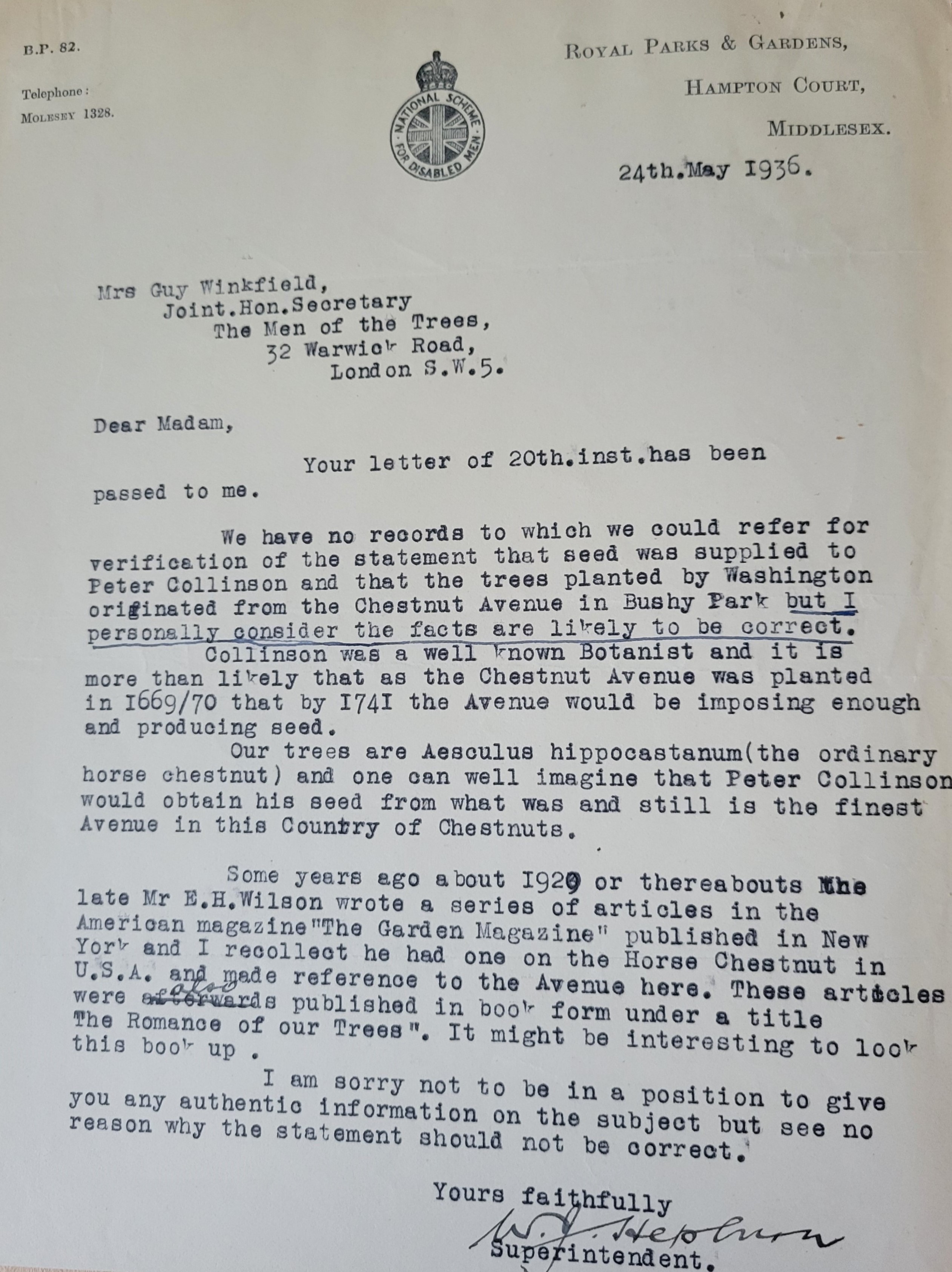
    Letter from Royal Parks and Gardens, Hampton Court, May 24 1936


    Bartram’s Gardens in Philadelphia was quite popular and visited by many founding fathers while working there. George visited the gardens twice in the summer of 1787 while in the town during the Constitutional Convention, noting, “Sunday, June 10, 1787, breakfasted at Mr. Powell’s and in company with him rid to see the Botanical Gardens of Mr. Bartram, which, though stored with many curious plants, shrubs, and trees, many of which are exotics, was not laid off with much taste, nor was it large.”
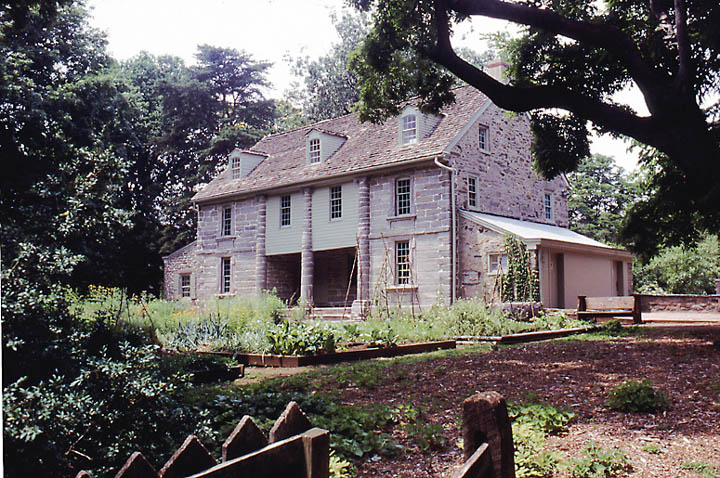
    John Bartram’s house and upper garden at Bartram’s Garden

    Why mention this? In some versions of the story, Washington got his horse chestnut trees from this garden, but there is no evidence that the legendary trees were obtained from this famous historic garden.
    George only made two diary entries about horse chestnut trees on April 13, 1785, writing, “Received from Col. Henry Lee of Westmoreland 12 horse chestnut trees (small) and an equal number of tree boxes. They appeared to have been some time out of the ground. Planted 4 of the Chestnuts on my serpentine walk – two on the east end and the rest in the vineyard.” And again, on April 2, 1788, wrote, “Transplanted from a box in the garden, thirteen plants of the horse chestnut into shrubberies by the garden walls.”

    The entry shows evidence of planting the famous Washington trees, right? No, because George was at Mount Vernon in April and didn’t leave for Fredericksburg to visit his mother until June 10, 1788.

    But could he have had them sent down and have them planted before he came to see his mother? Yes, but the story says that George planted these trees with his own hand. Additionally, it would be odd for George to mention planting the trees while in residence at Mount Vernon and not say that they were in his mother’s garden in Fredericksburg. Washington was a diligent diarist but never mentioned planting thirteen horse chestnut trees in his mother’s garden.
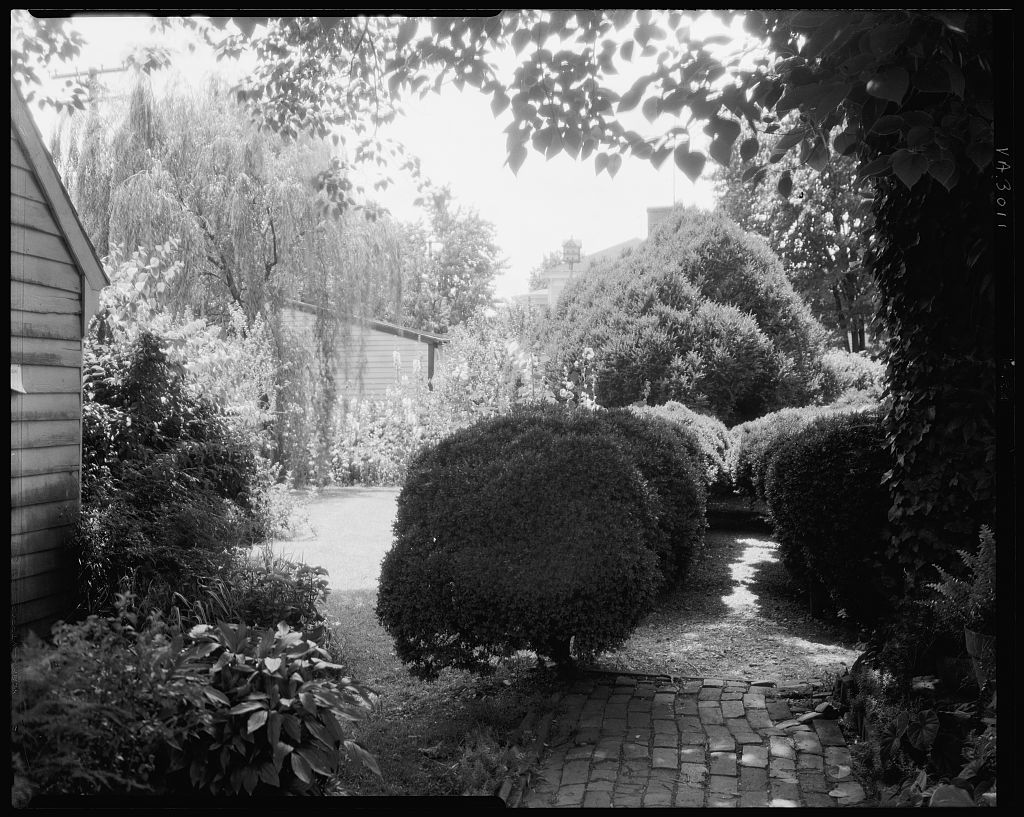
    Mary Washington’s house gardens, Fredericksburg.

    Further, no known letters from George, Mary, or Betty mention any horse chestnut trees between Mary’s gardens and Betty’s Kenmore.

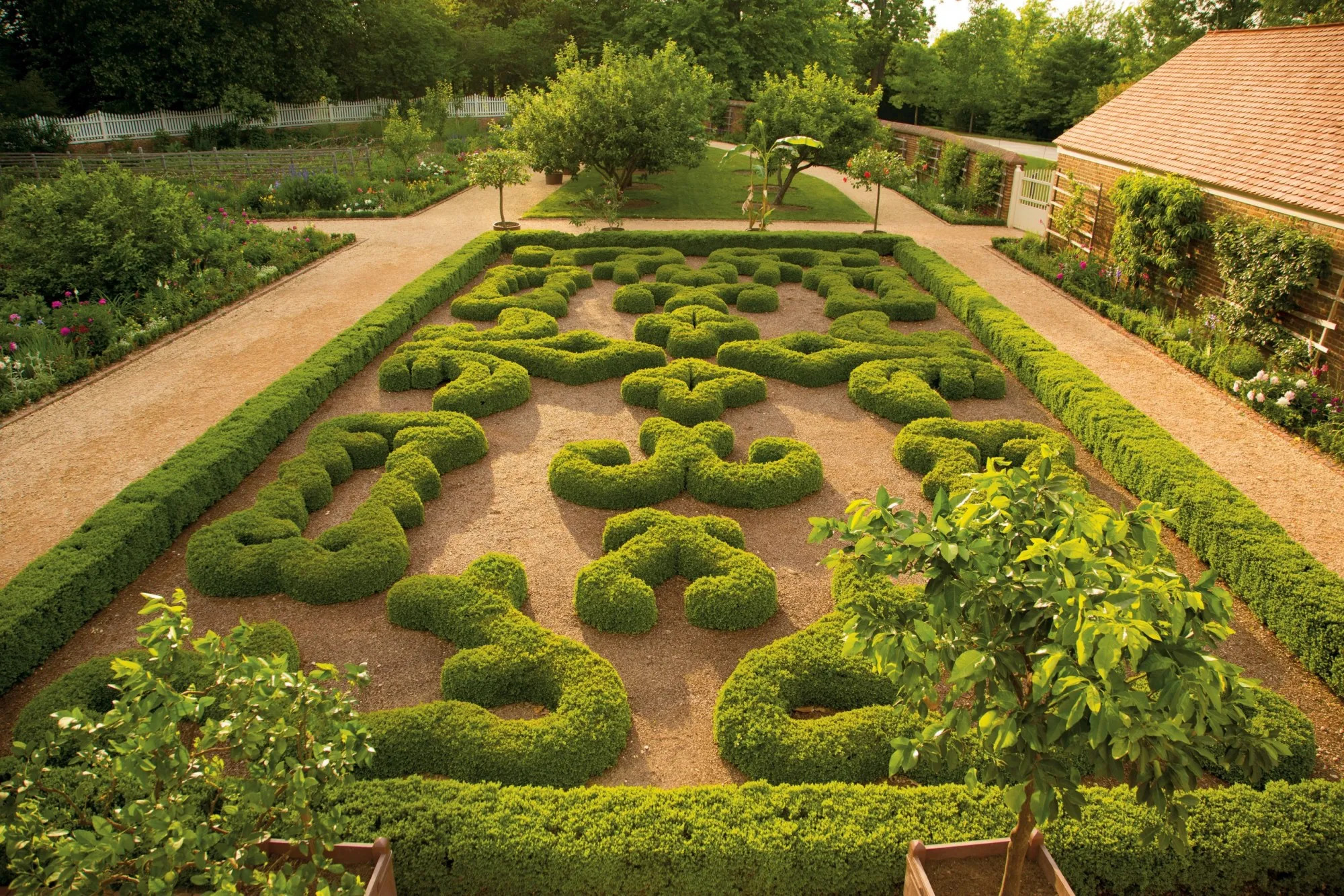
    Spring time in the gardens at Kenmore Plantation (can you spot the cat?)

    This was all the primary source evidence I could find relating to George and any horse chestnut trees. So, I looked further into the story to see what other evidence was being used to verify that this tree was indeed one of the thirteen Washington trees.

    As I said in the beginning, by the 1930s, many, including the DAR, were trying hard to save this lone surviving chestnut tree. With their extensive reach, they got Fred H. Arnold, the Assistant Forester for the National Park Service, to do an age-determination test on the tree in May of 1934. Mr. Arnold noted some issues with the test, stating that the lower twelve feet of the tree was filled with concrete, so the coring sample had to be taken above this “repaired defect”. Even then, a complete coring sample could not be extracted due to decay in the interior of the main stem. Additionally, Mr. Arnold said that it was very difficult to count the annual rings due to their obscurity because the texture difference between the springwood and summerwood for the horse chestnut tree (genus Aesculus) is very slight. Taking into account all this, Mr. Arnold estimated the tree to be around 139 years old with as much as 10% in error, either plus or minus, which would put the date it was planted somewhere between 1781 and 1809, which means that the tree is indeed old and could have been planted during Washington’s time in Fredericksburg.
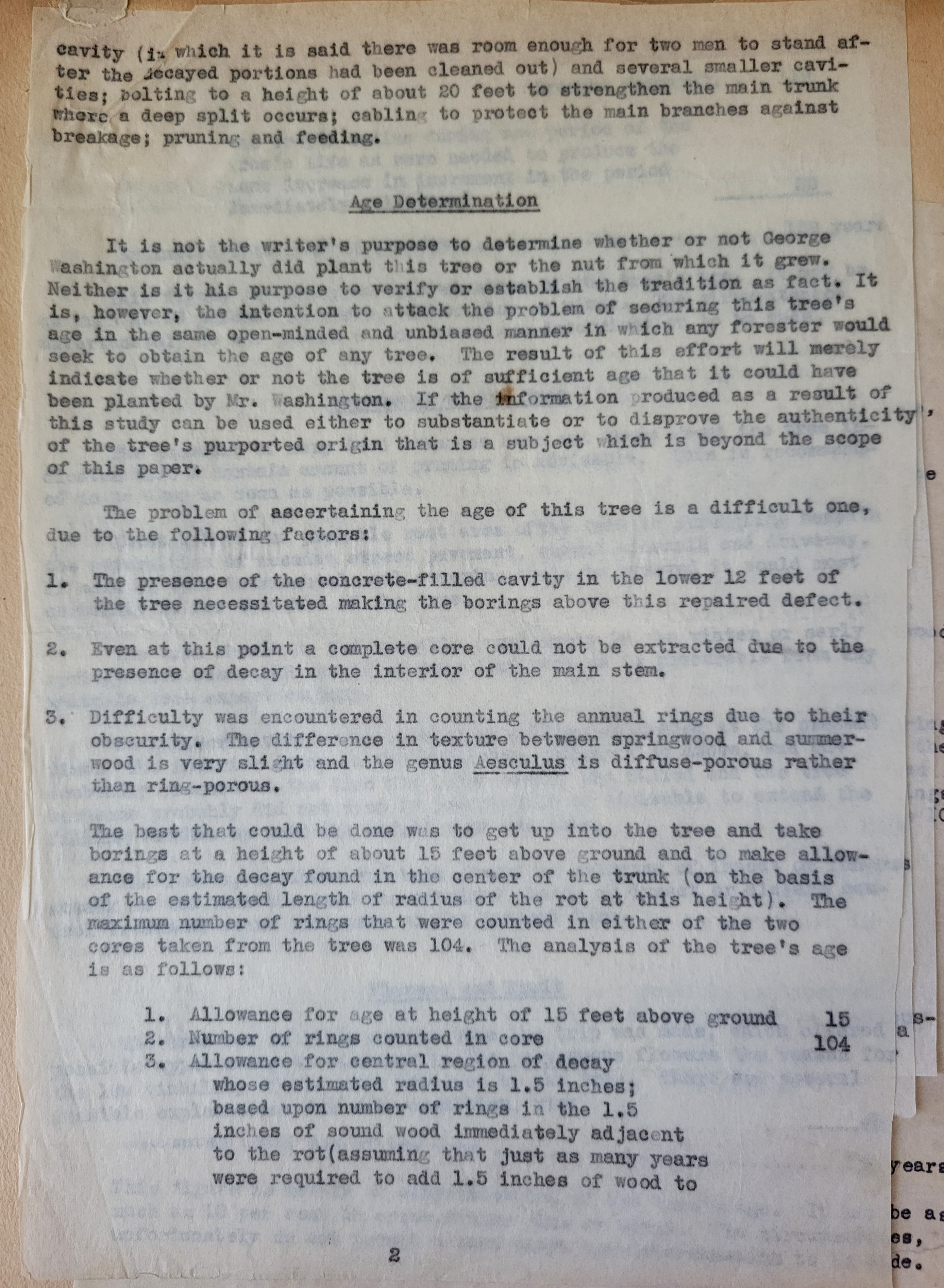
    Age Determination, May 6 1934

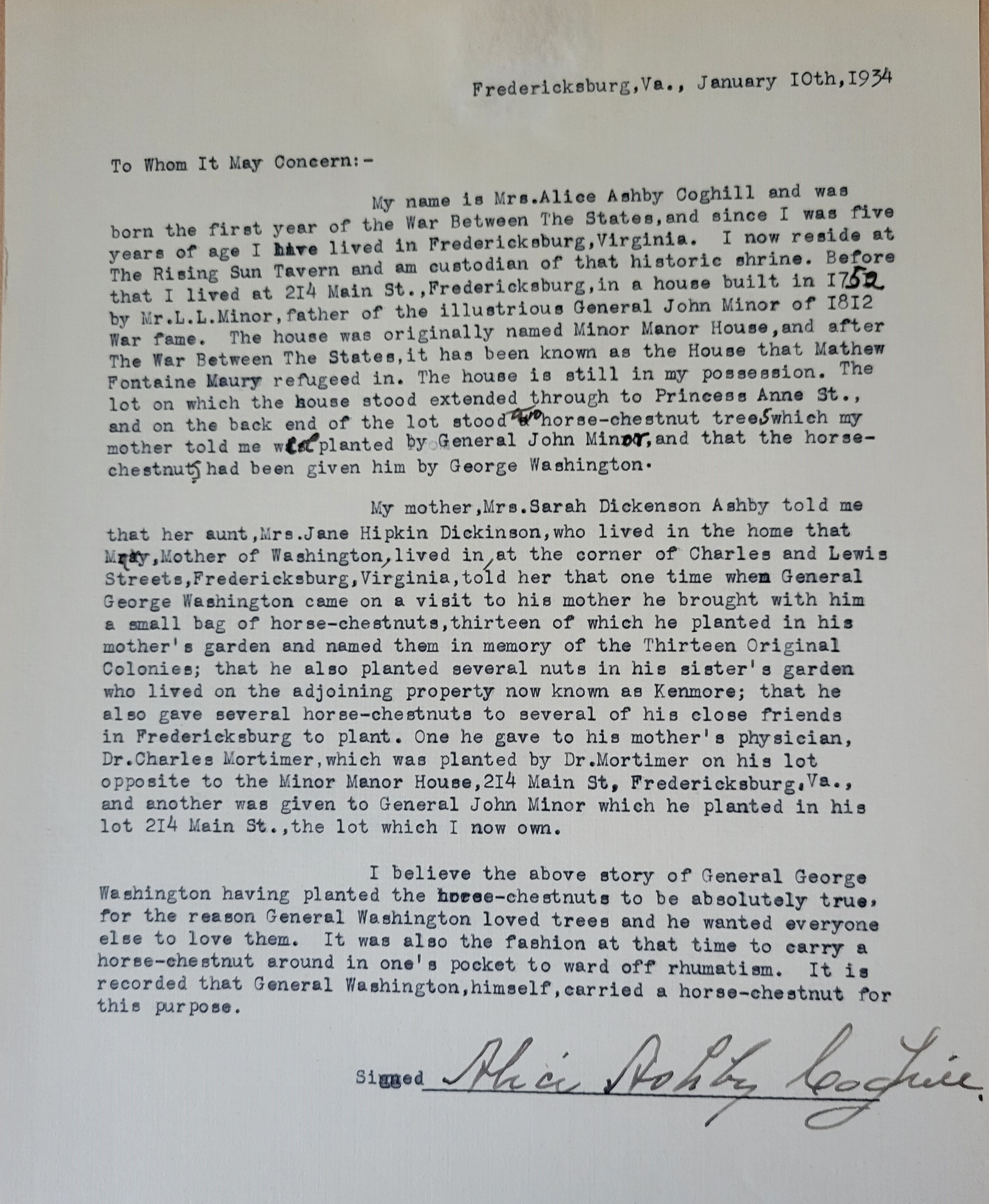
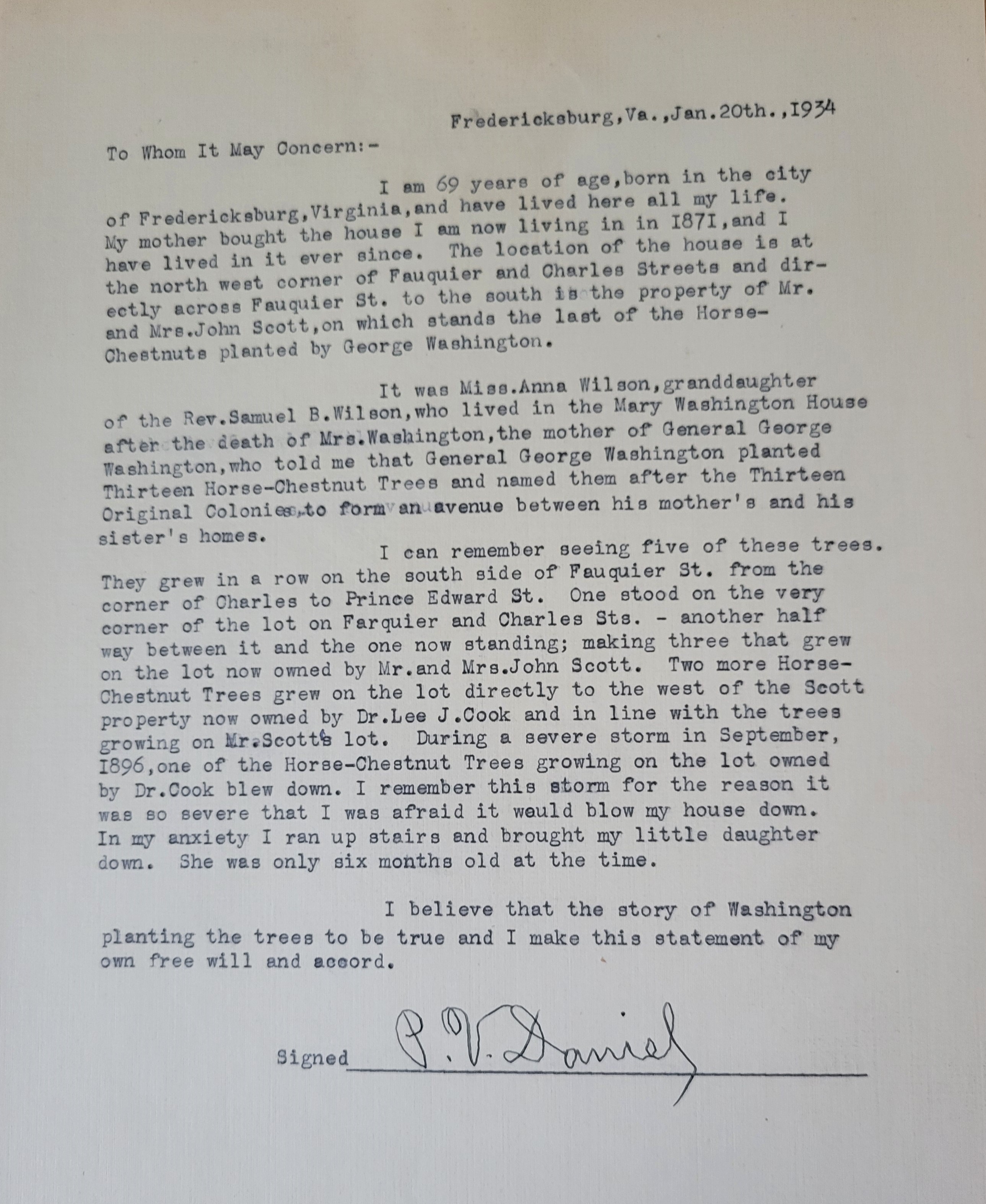
    Lastly, local historian James Henry Heron collected local citizens’ recollections of the tree and the story. Mrs. Lilias Hamilton Scott, the wife of Mr. John Scott, who owned the lot on which the tree stands, wrote that her grandmother (Mrs. Janet Scott Hamilton) stated her great-grandmother (Mrs. Francis Scott) resided in Fredericksburg in 1788 and was Mary Washington’s neighbor and intimate friend. She said the trees were planted by Washington.

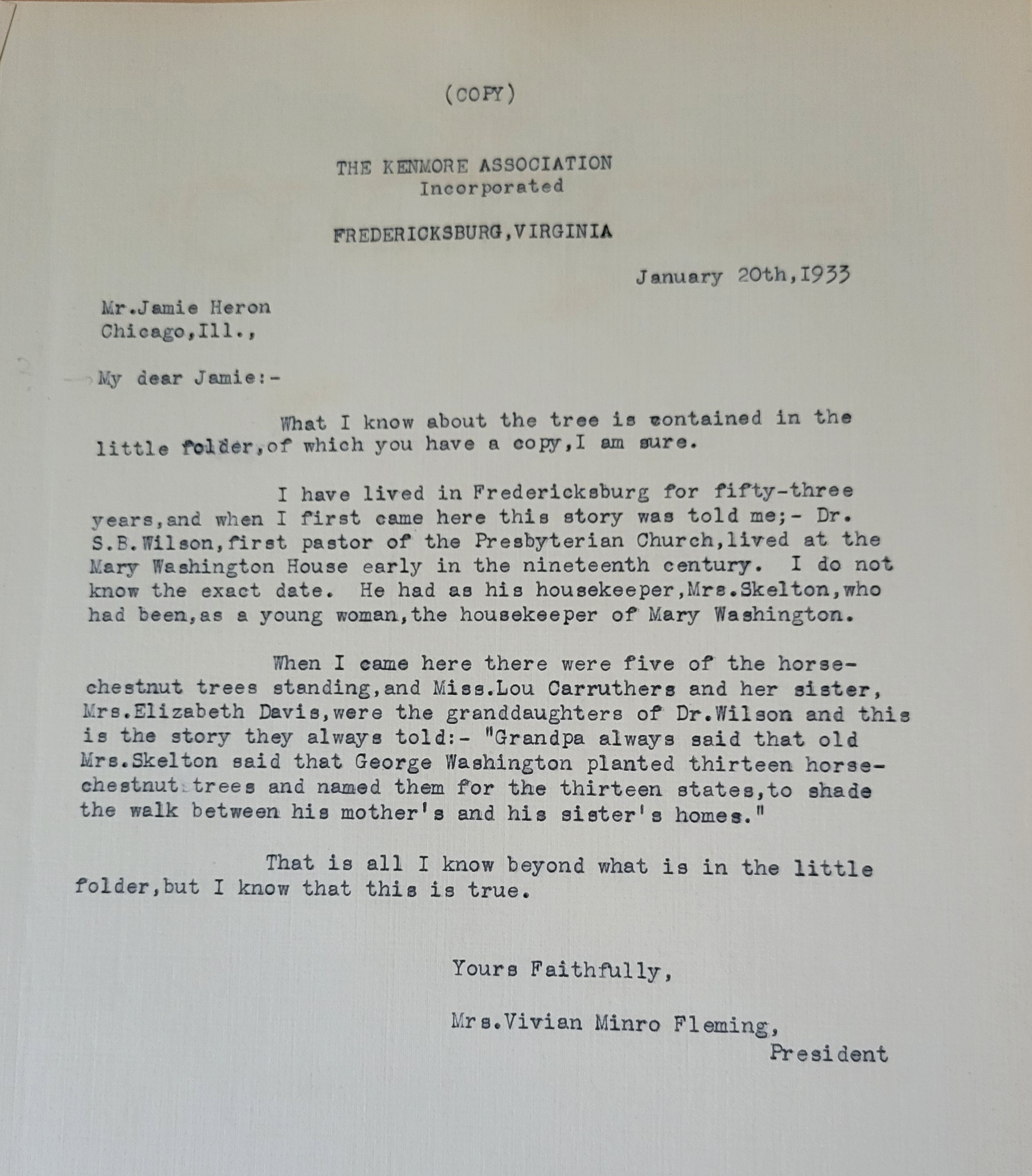
    Mrs. Vivian Minor Fleming traces the story back to Miss Lou Carruthers, her sister Mrs. Davis, and their grandfather Rev. S.B. Wilson’s housekeeper, Mrs. Polly Skelton, who had previously been a housekeeper for Mary.
    Mr. P.V. Daniel, who remembers five of the original thirteen trees, lived across the street from the remaining one for over sixty years and said Miss Anna Wilson, granddaughter of Rev. S.B. Wilson, told him the story.
    Mrs. Alice Ashby Coghill says her aunt, Mrs. James Hipkin Dickinson, who lived at Mary Washington House after Rev. S.B. Wilson said Washington planted the trees and passed out horse chestnuts to friends.
    While I have no doubt these people are truthful in their recollections, they do not offer any definite evidence. They merely document that the legend was a well-known story but not that it was true.

    Regardless, the much-loved old tree was rightfully given proper emergency care with a donation and service from Senator Martin L. Davey from Ohio and The Davey Tree Expert Company. The famous tree lived happily for over another half century before being taken down in 2004.
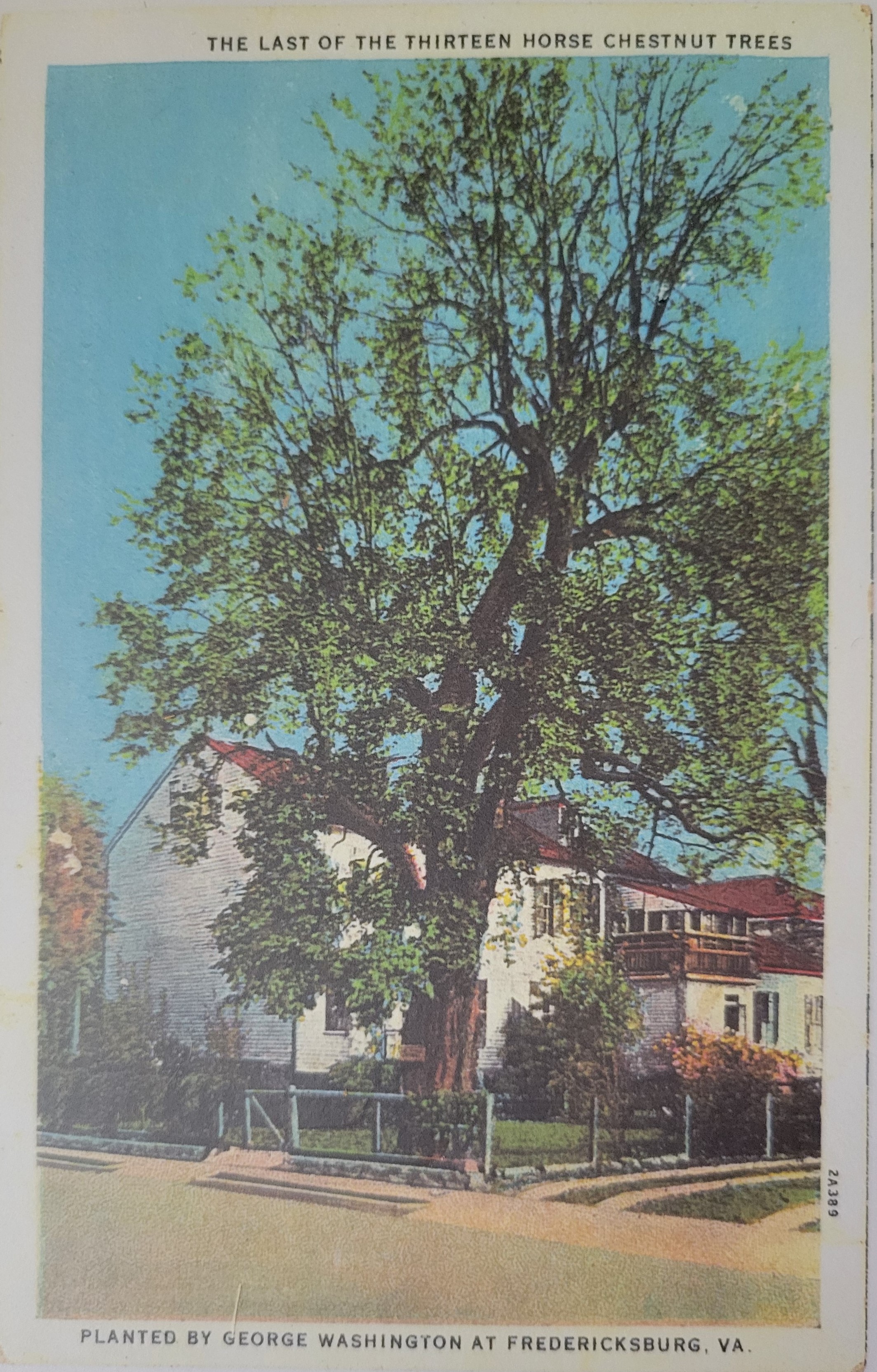
    Whether this tree was planted by George along with twelve others will probably never be conclusively proven. Were the people wrong to save the tree all those years ago without better evidence? Absolutely not. They saved a beautiful 200-year-old horse chestnut tree with a legendary attachment to George Washington, but they also saved a bit of their own past, nostalgia, and pride in their own town’s history.


    Heather Baldus

    Collections Manager
  • Slides That Saved Kenmore

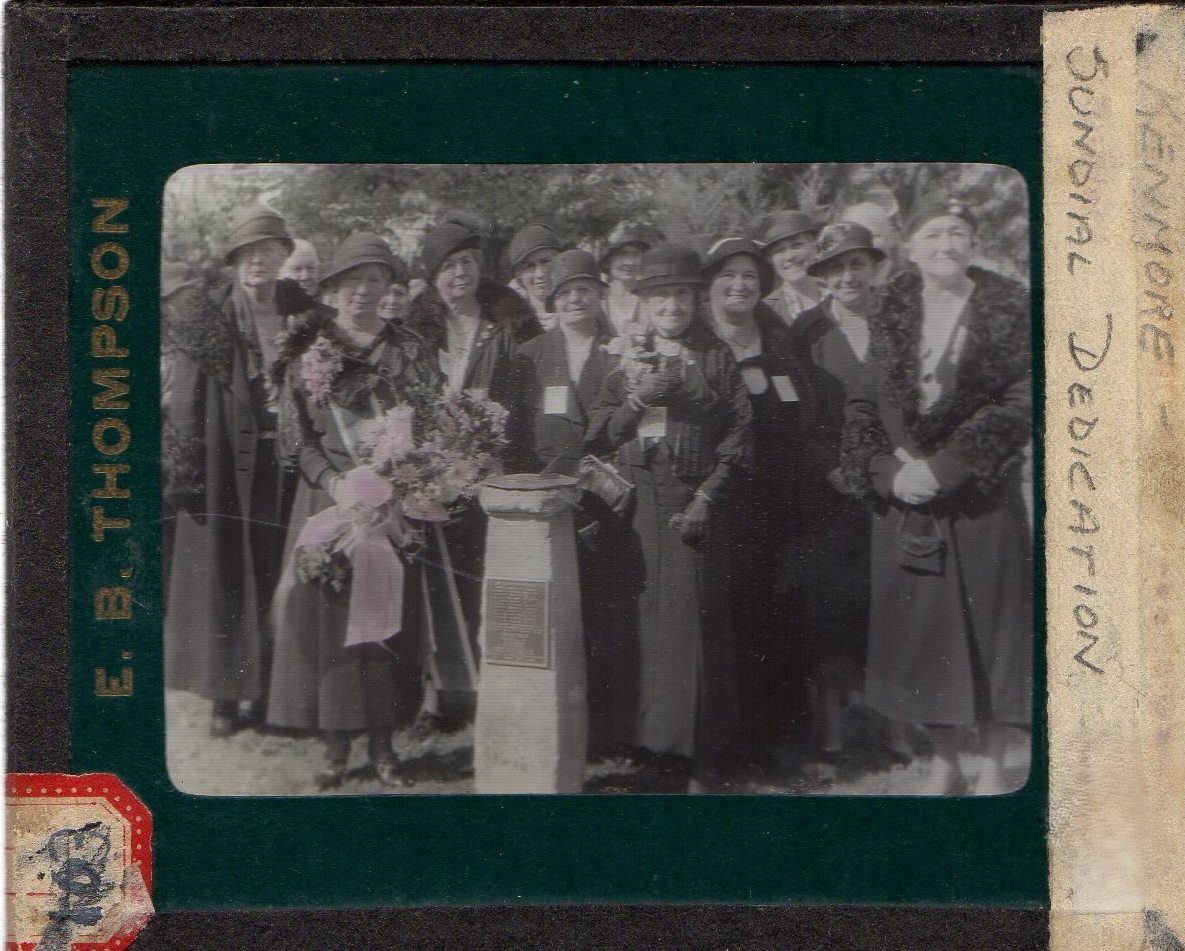
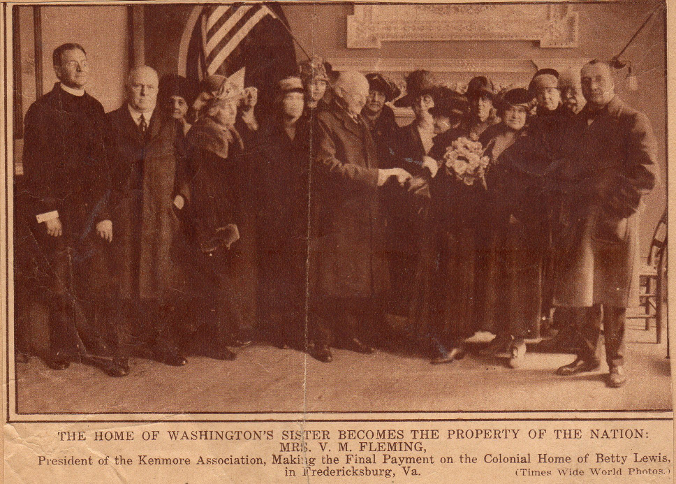
    On January 1, 1925, a group of well-dressed women in hats and long fur coats assembled at Kenmore to hand over the final $1,000 payment and gain full possession of the house and land.  This meeting was the culmination of thirty-two months of persistent work and determination by the ladies of The Kenmore Association to save the historic property from destruction.

    The incredible work in saving Kenmore was beginning for the ladies. Undoubtedly, a house as large and old as Kenmore would require a substantial amount of money for restoration and upkeep.   Until the sale to the Kenmore Association, the house had been a residence for several different families, each leaving a unique imprint on the building.  Unfortunately, these alterations needed to be reversed to restore Kenmore to its original state when Fielding and Betty Lewis first inhabited the house around 1775.

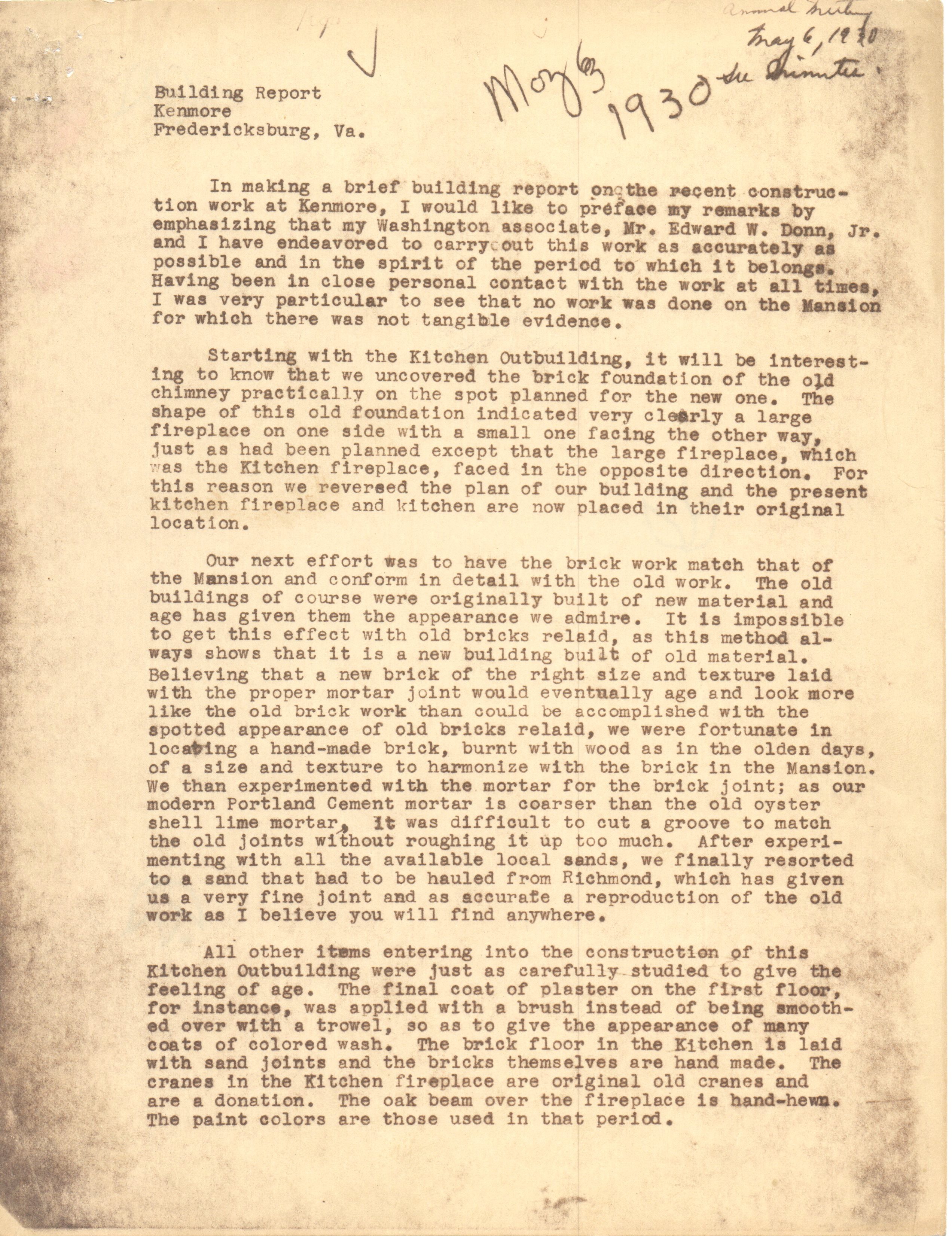
    By 1930, the Kenmore Association had made significant progress in restoring Kenmore. Major projects included removing the modern attached kitchen, updating wiring and plumbing, and restoring windows, brickwork, and ornamental plasterwork, all completed for $19,372.57. (Mesick, 1992) This figure did not include the ongoing refurnishing of the house, highlighting the scale of the task.

    How was the Kenmore Association able to finance this costly restoration and refurnishing? These ladies knew how to raise money. In 1927, they established a restoration fund and began soliciting contributions.  

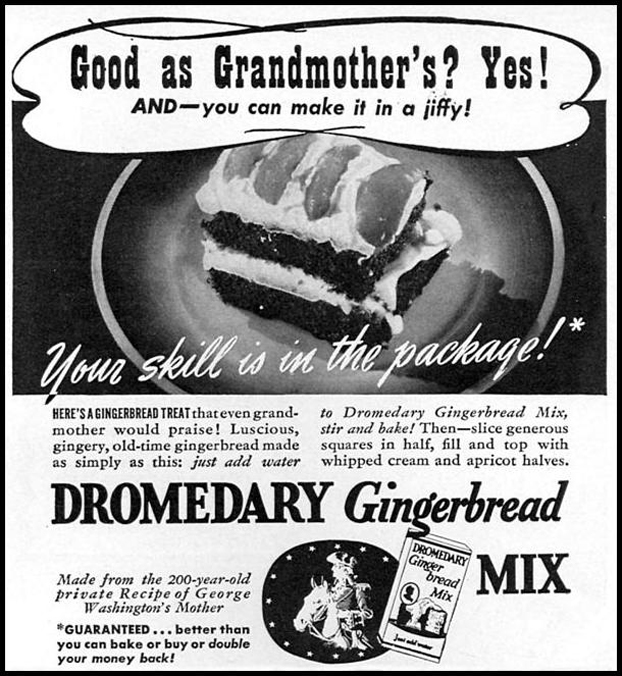
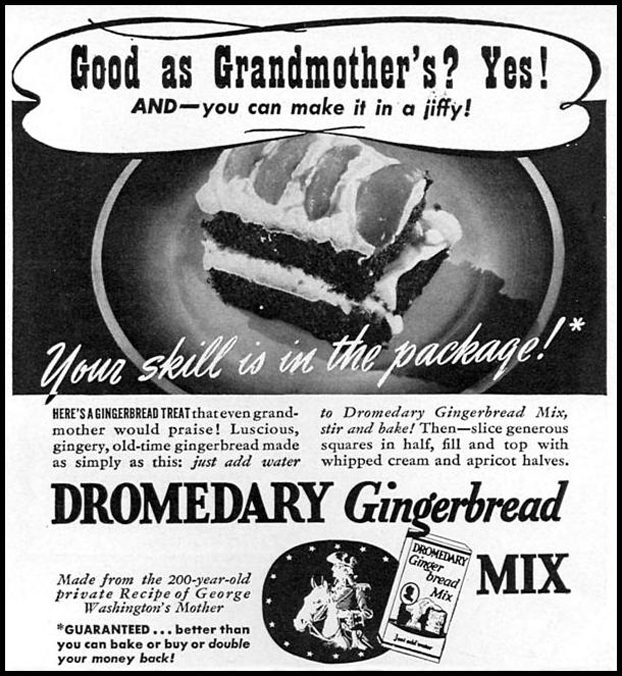
    We previously discussed the amazing partnership between Mrs. Smith secured with the Dromedary Cake Mix Company and their boxed gingerbread.   The arrangement allowed Dromedary to produce gingerbread mixes based on Mary Washington’s recipe.  In exchange, the Kenmore Association got all the gingerbread they could serve to visitors.  The company also donated mixes to be sold by the Association and various chapters of the Daughters of the American Revolution (DAR) for 25 cents a box.  The Association got half the money realized from these sales minus the shipping costs. 

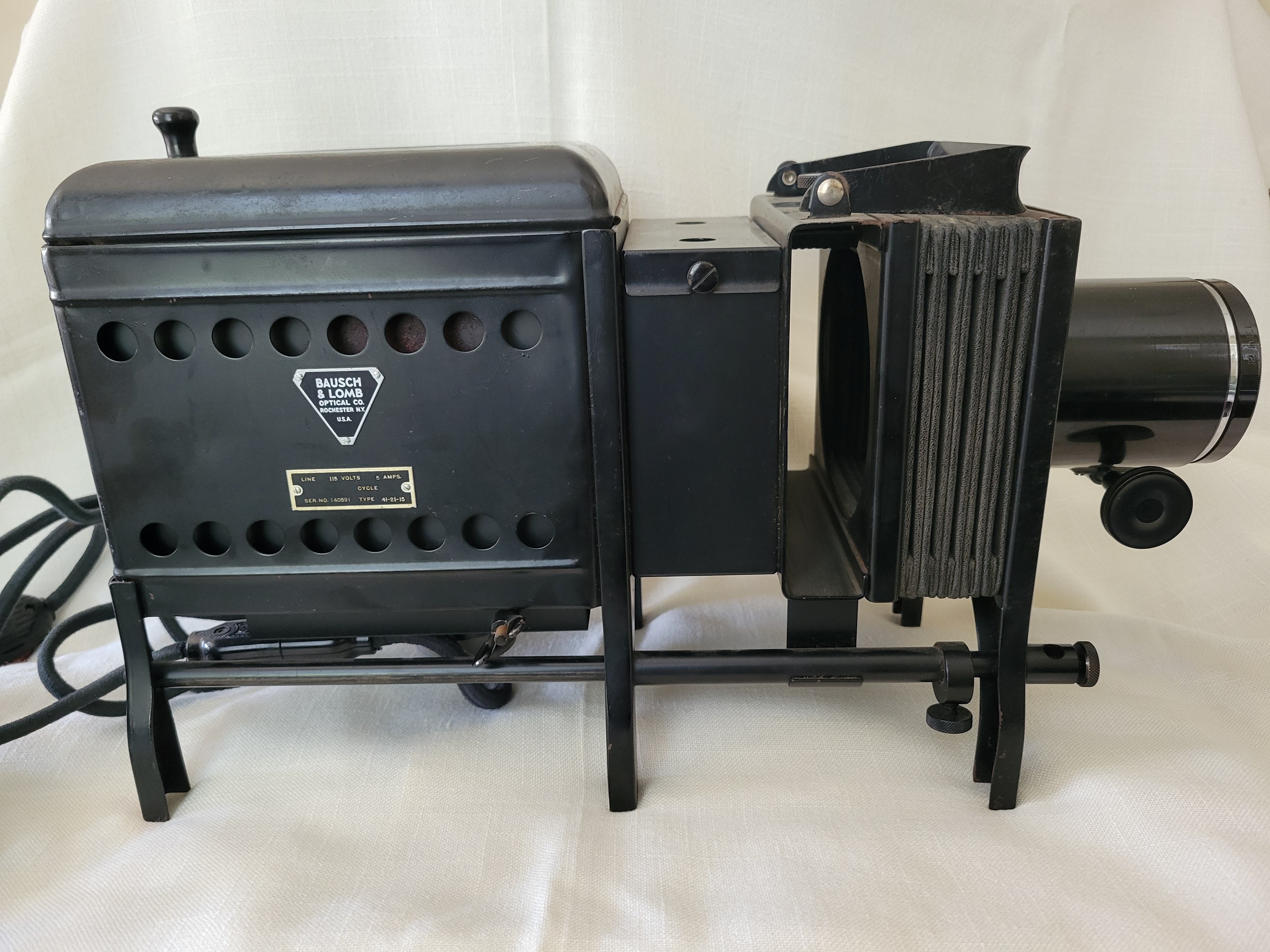
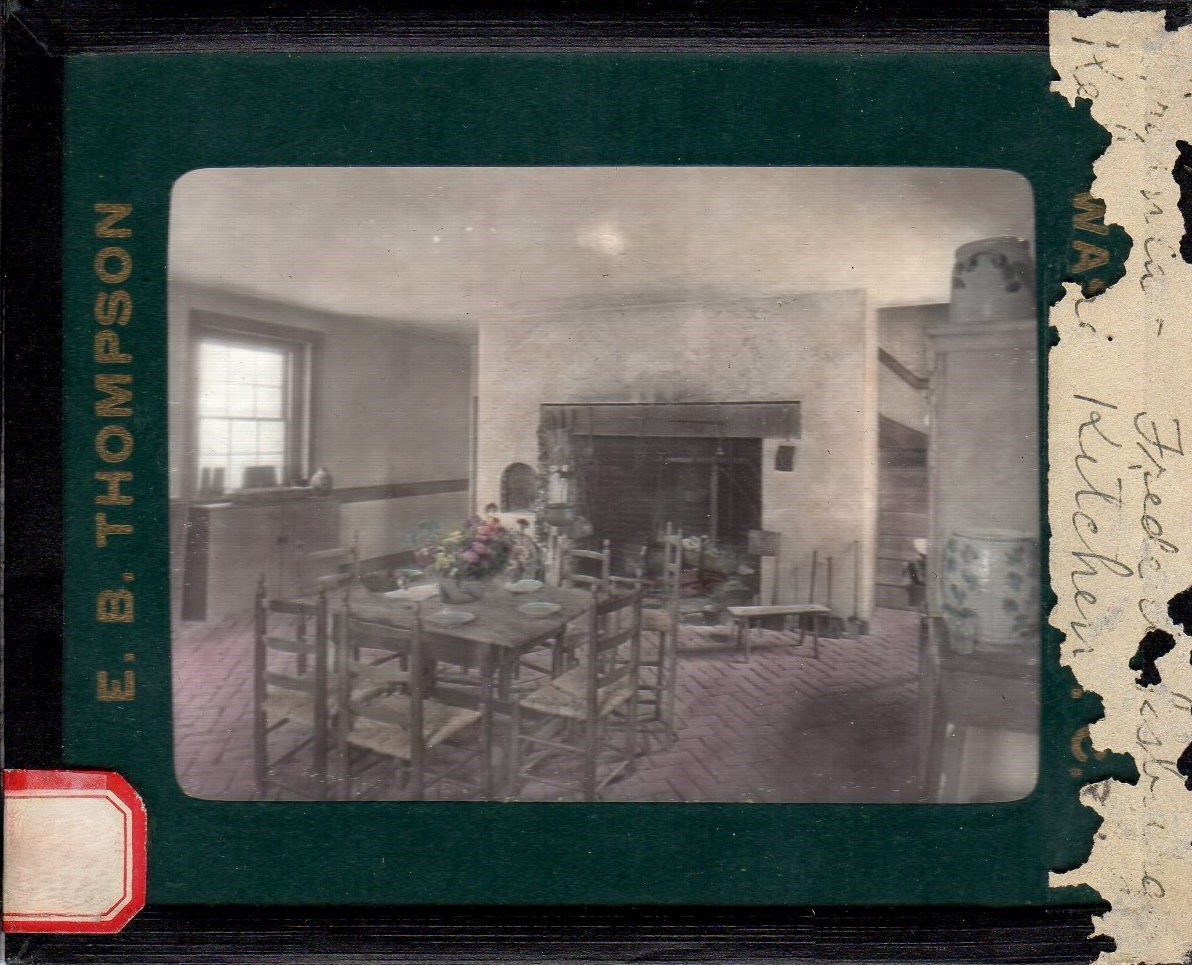
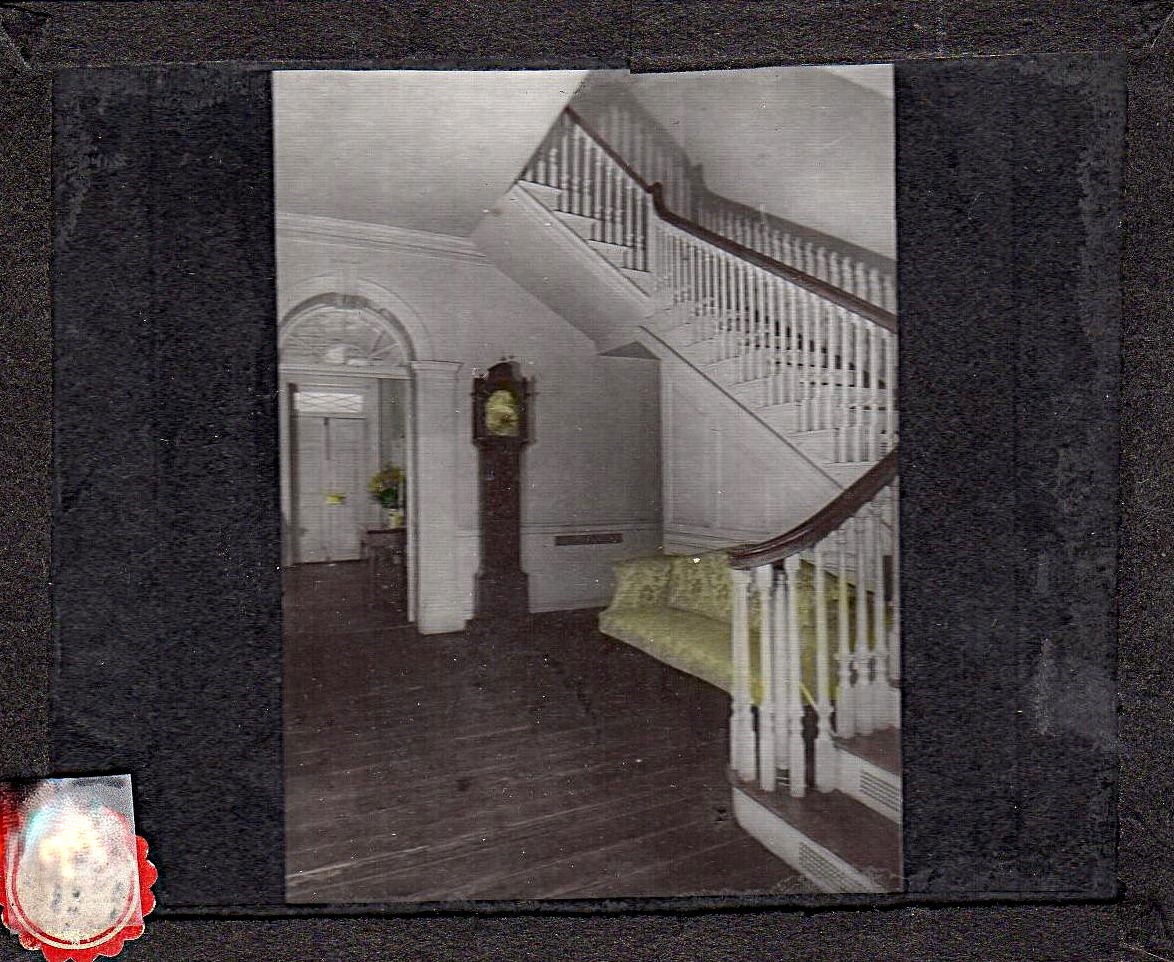
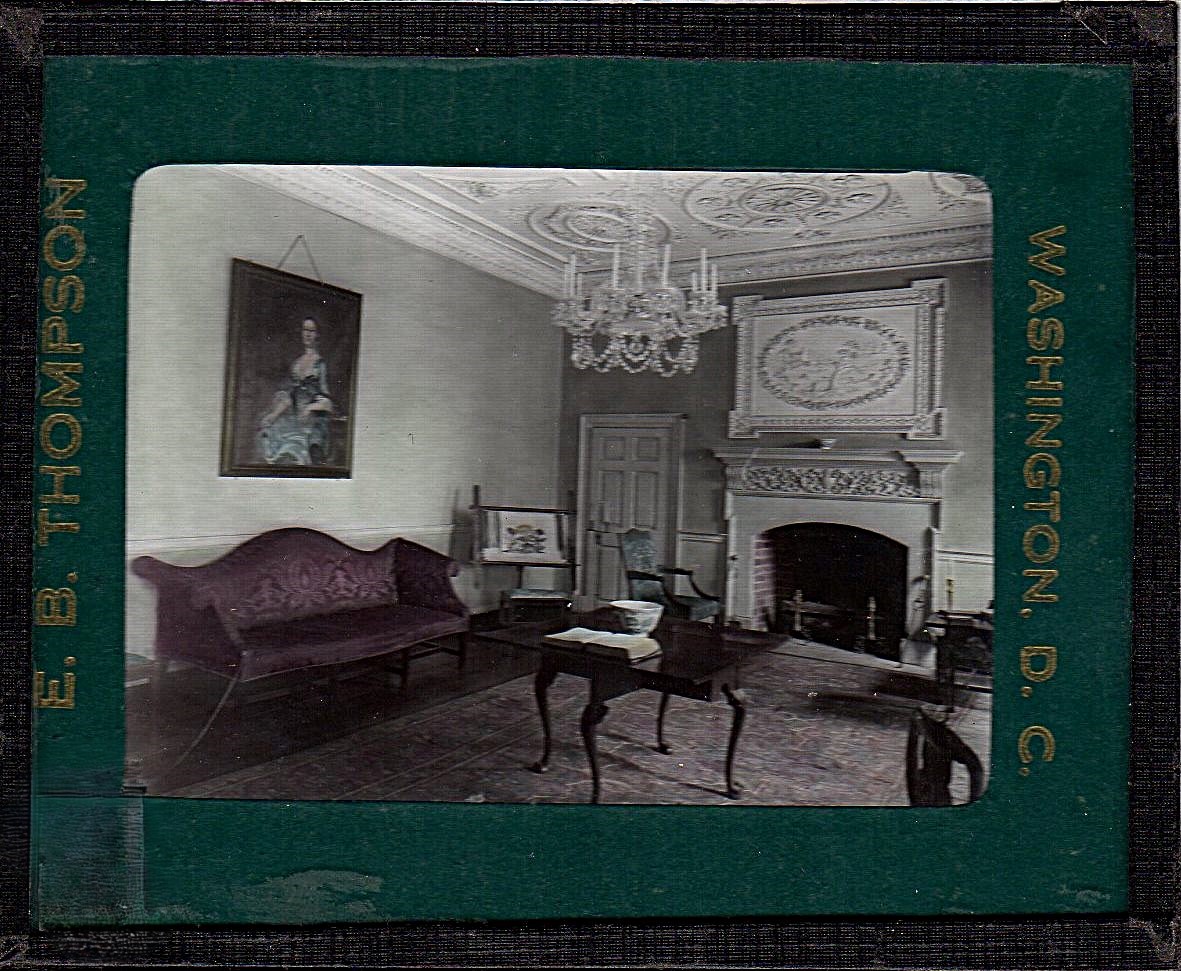
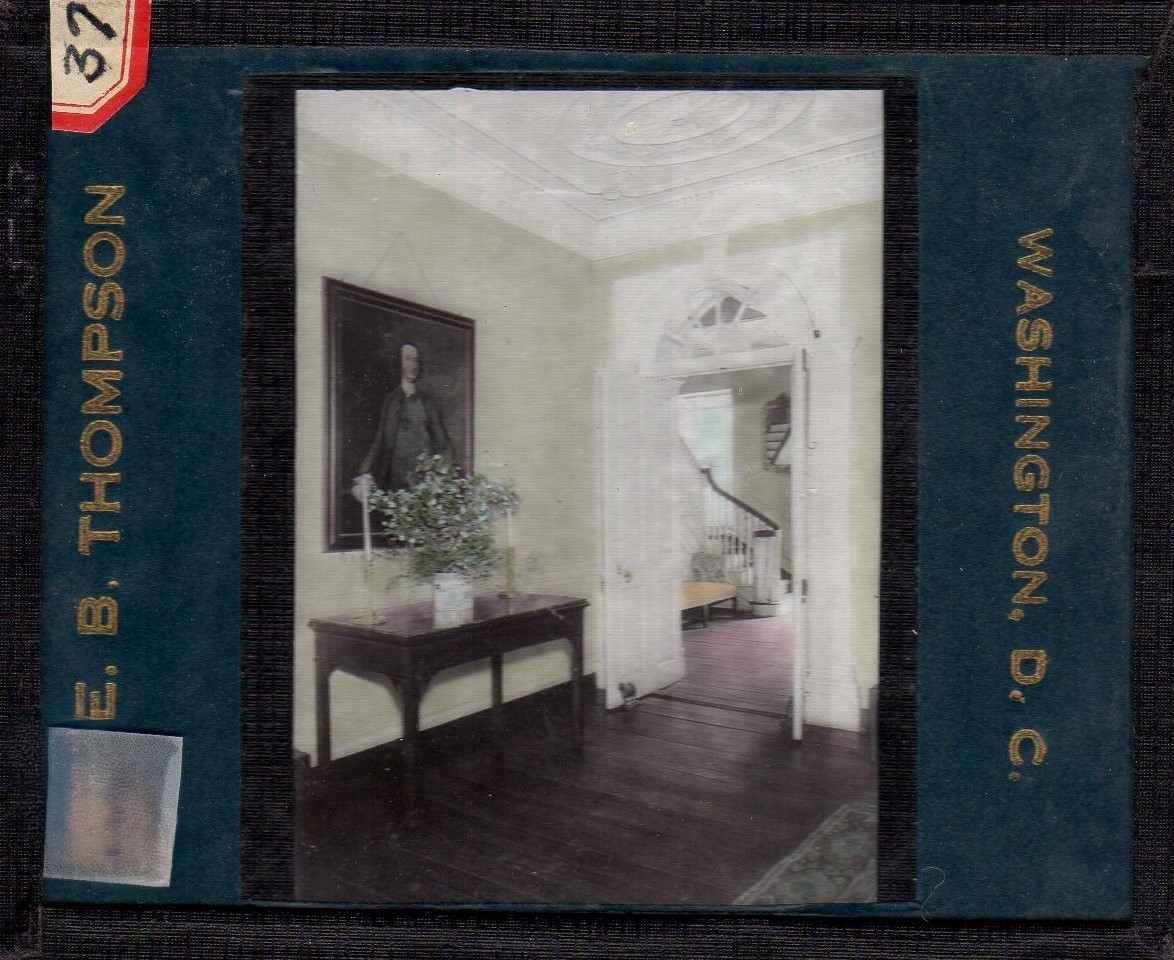
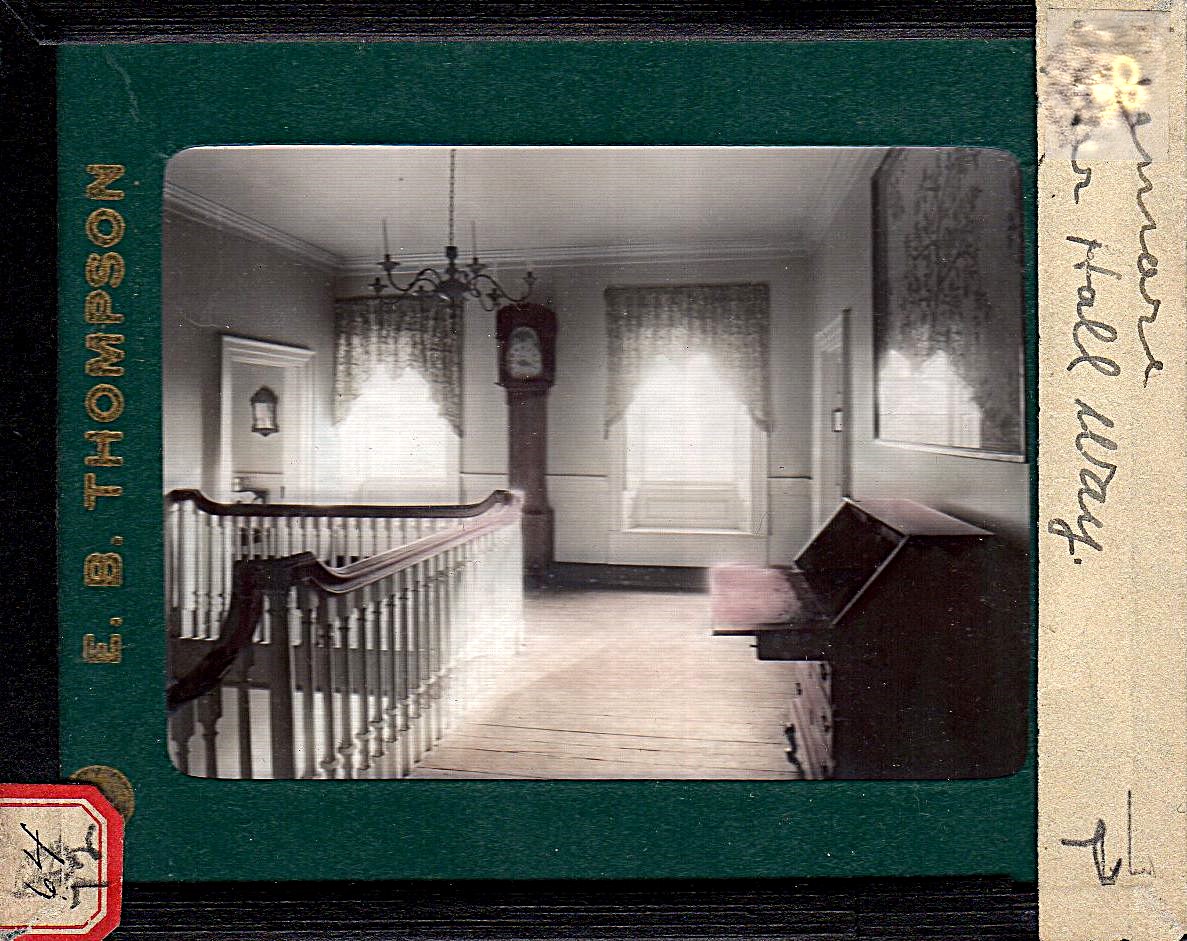
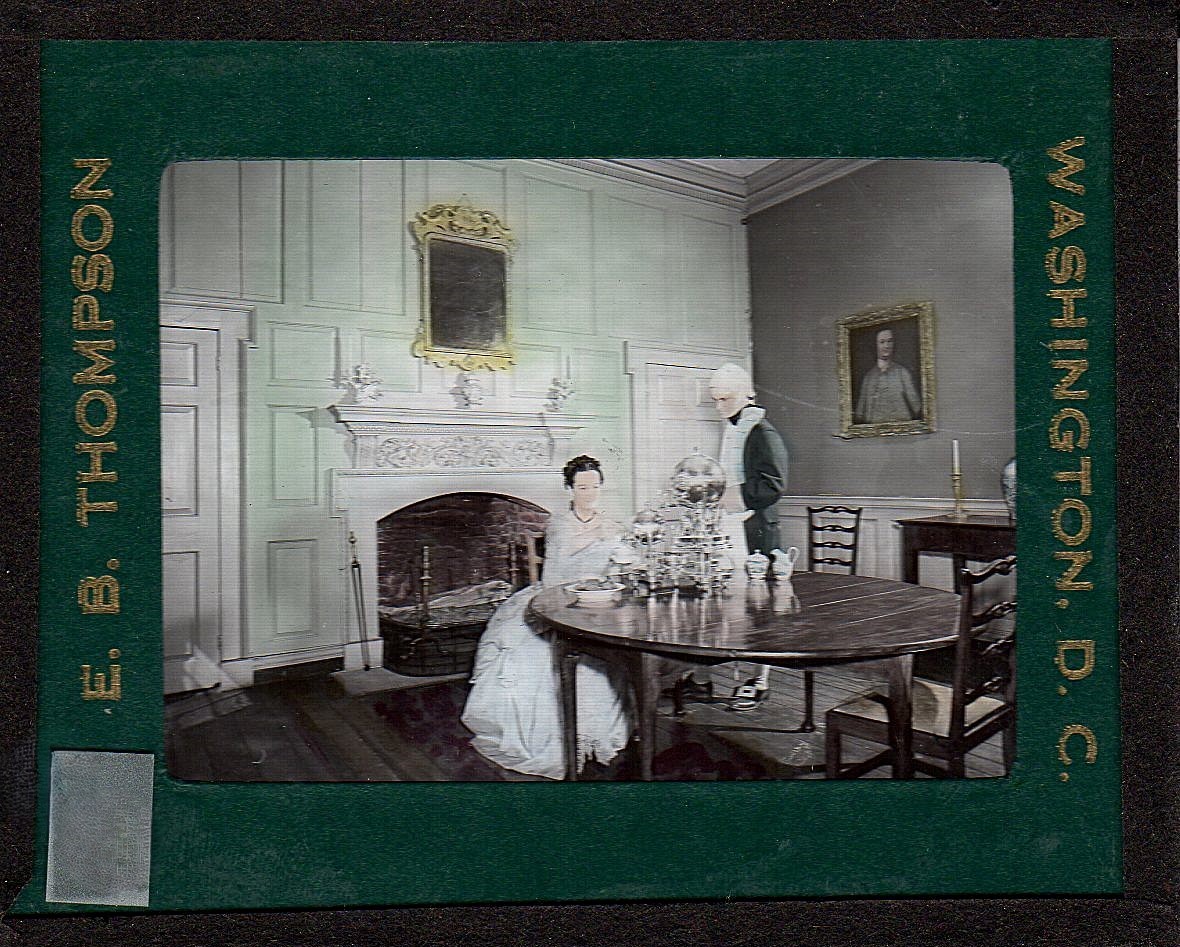
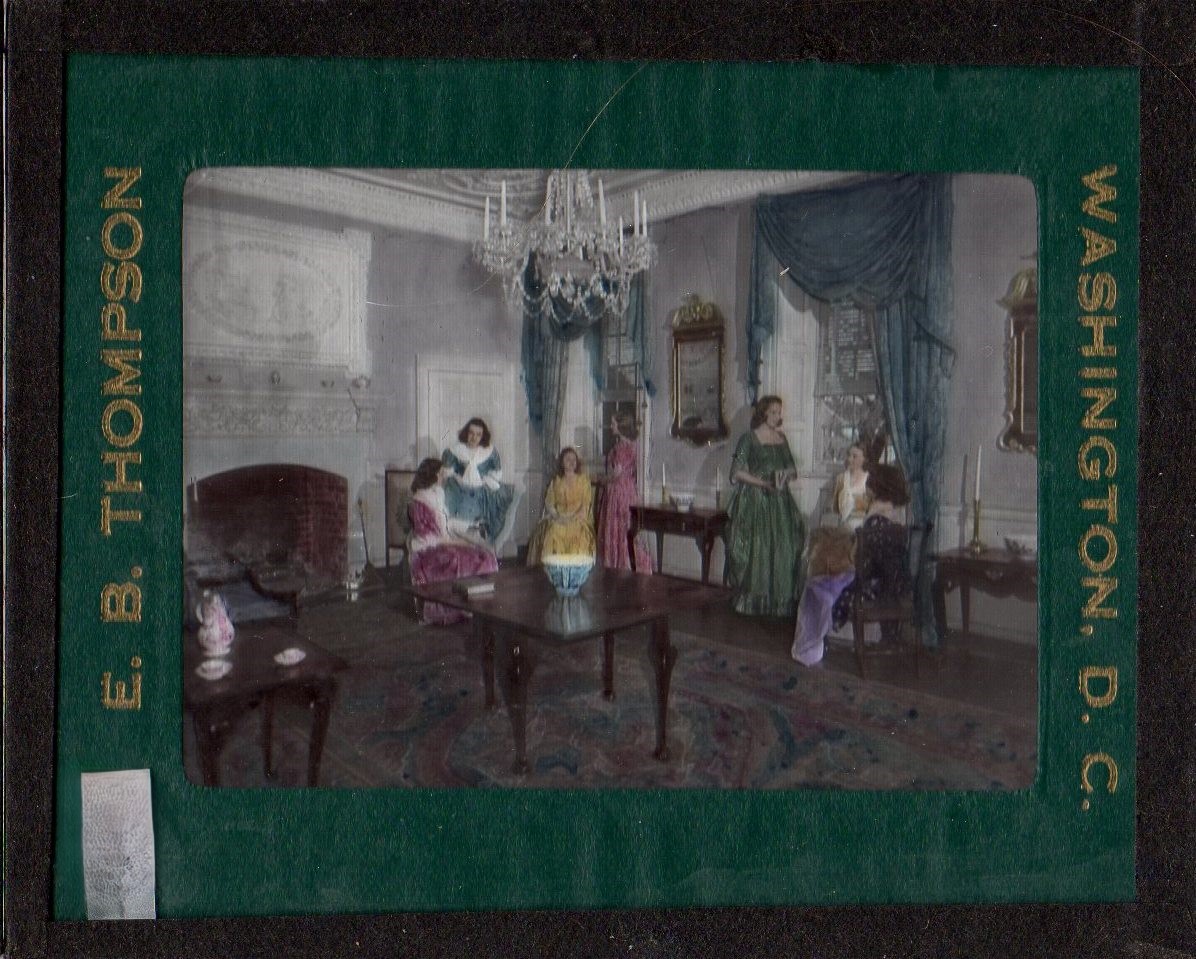
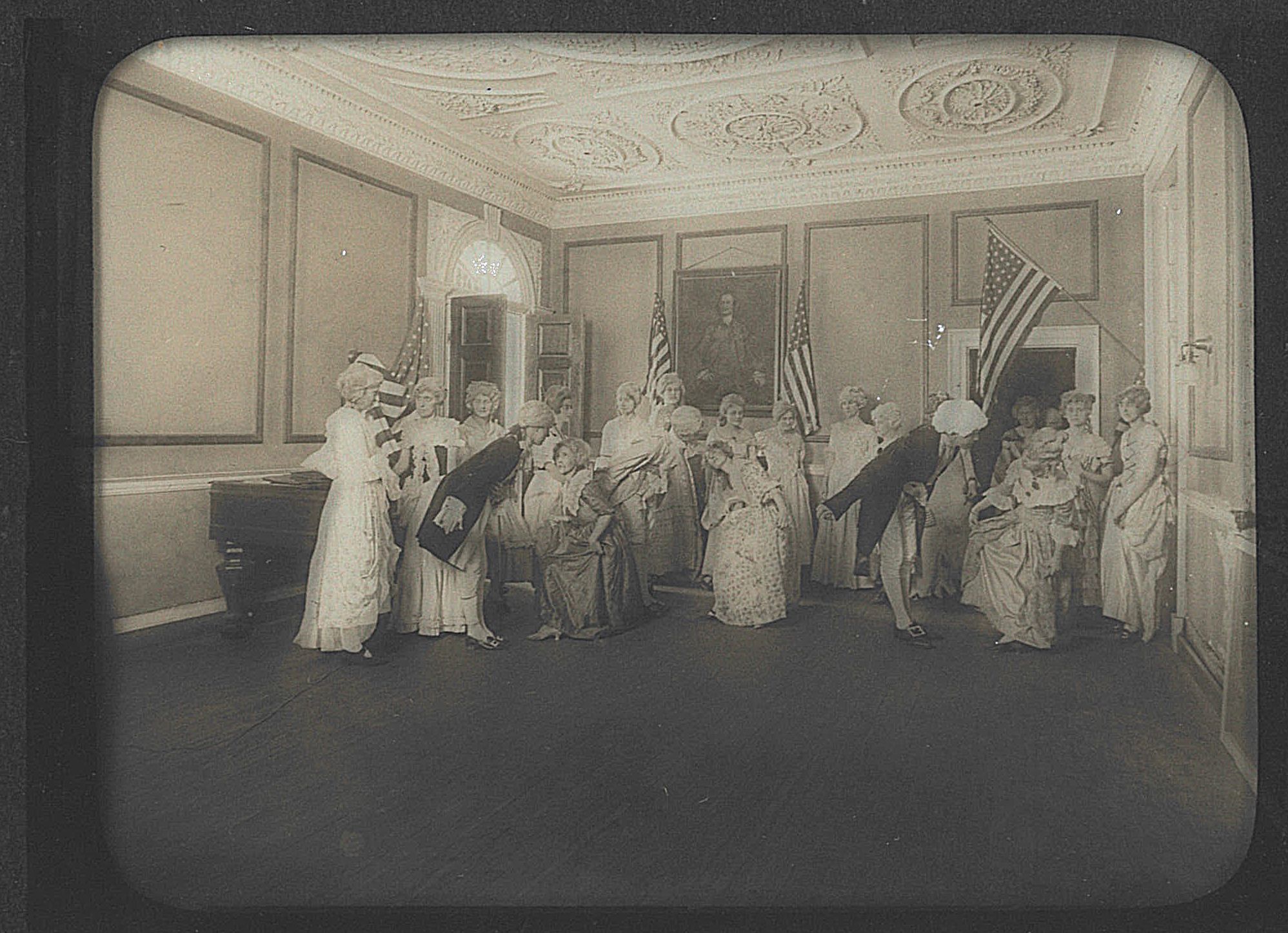
    To help the various DAR chapters across the U.S. sell gingerbread, the Kenmore Association developed a visual program using the Bauch & Lomb Balopticon and trays of glass slides. Mrs. Smith worked with Mrs. Louise du Pont Crowninshield to select various photographers to assist in the project, including the well-known E.B. Thompson of Washington, D.C.  This was no inexpensive program to develop with balopticons running around $77 a piece and slides costing $1 to $3 per slide of which we have over three hundred. 

    This program featured black-and-white and colored glass slides documenting the restoration and refurnishing of Kenmore and its gardens. Its goal was twofold. First, it showed the groups the product of their previous fundraising efforts, and second, it gave them an understanding of the house, property, and its goals for the future. Groups from all over the country wrote to Mrs. Smith requesting that she send out the program, which consisted of the balopticon and a set of glass slides for their meetings.  Sometimes, Mrs. Smith would even join the program herself, presenting and answering questions about upcoming projects. 

    These glass slide presentations were eventually updated into paper guidebooks, films, and postcards featuring up-to-date Kenmore images. The slides were packed away in the closet for the last eighty-plus years, and now offer us a great source of documentation for the early years of The Kenmore Association and the restoration of Kenmore.

    Heather Baldus

    Collections Manager


    Sources

    Mesick, C.W. (1992). Kenmore Historic Structure Report. Albany

  • Kenmore’s Famed Gingerbread

    Historic Kenmore was associated with gingerbread for decades.  Many people’s first memories of Kenmore involve the square of gingerbread and a cup of tea that used to be served at the end of every tour.    The dessert welcomed visitors to the world of colonial Fredericksburg, it comforted soldiers on their way to war in Europe or the Pacific, and, most important of all, it helped save the historic house itself.

    The ladies of the Kenmore Association, which owned and operated the historic home in the 20th century, took on a great challenge when they accepted stewardship of Kenmore.  Raising the money to purchase the house was not the only obstacle they faced.  They also needed funds to restore and staff the house. Unfortunately, the ladies drive to save Kenmore coincided with the Great Depression and the Second World War.  Led by Annie Fleming Smith or “Miss Annie,” the ladies triumphed, kept Kenmore running, and even used the grounds to assist Fredericksburg in the war effort.  They did all this with their indomitable drive and patriotism and with a little help from gingerbread.

    The beneficial partnership between gingerbread and Kenmore began in the early 1930s when the Dromedary Cake Mix Company launched a nationwide search for gingerbread recipes new and old.  In the search, Mary Washington’s personal recipe was found in a cookbook owned by the Washington-Lewis Chapter of the Daughters of the American Revolution. It was tried and well-liked.  The firm approached the chapter about producing the recipe as one of their mixes.  Because the Washington-Lewis Chapter worked closely with the Kenmore Association in saving, restoring, and caring for Kenmore, Miss Annie and the ladies, being astute business women, brokered a deal with the company to benefit the historic home.

    Dromedary Ad
    An 1940s-era advertisement for Dromedary gingerbread mix “made from the 200-year-old Recipe of George Washington’s Mother.”

    The arrangement allowed Dromedary to produce gingerbread mixes based on Mary Washington’s recipe.  In exchange, the Kenmore Association got all the gingerbread they could serve to visitors.  The company also donated mixes to be sold by the Association and various DAR chapters for 25 cents a box.  The Association got half of the money realized from these sales minus the shipping costs.  This agreement, in the end, earned the Kenmore Association over $38,000 – a hefty sum in the mid-20th century – and provided countless visitors with a yummy Washington family treat.

    In 1941, the United States entered World War II.  Fredericksburg became a hub of activity with thousands of soldiers stationed at the A.P. Hill Military Reservation in Bowling Green visiting town to get a break from military life.

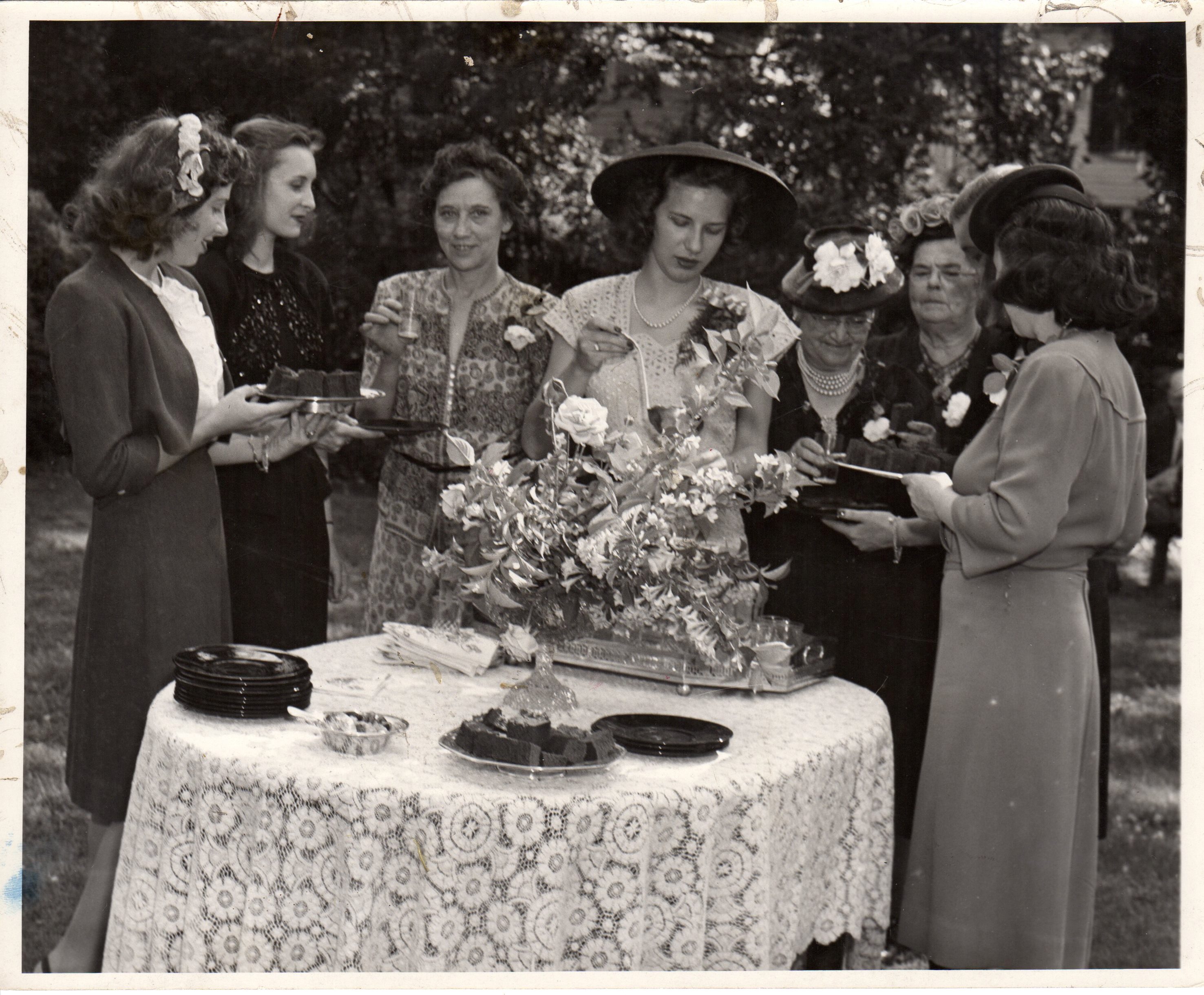
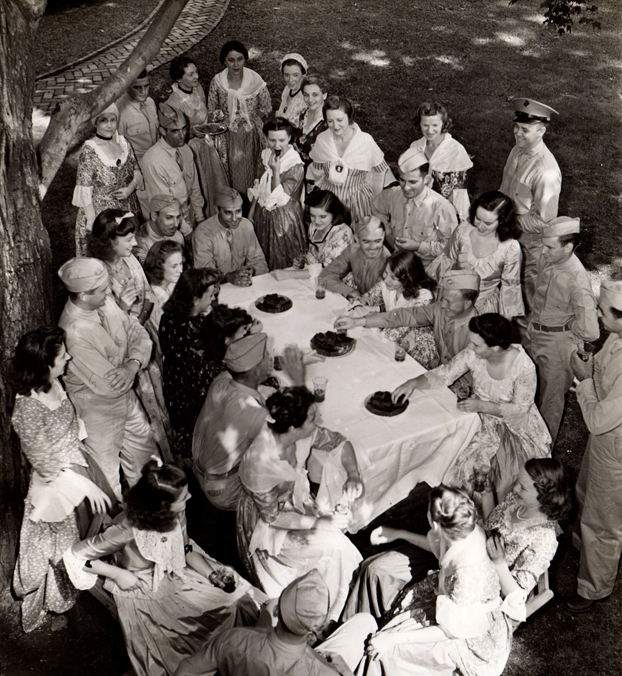
    The Association’s ladies knew that Kenmore, with its historical and patriotic legacy, had a unique opportunity to welcome soldiers who would be fighting for the country and ideals that the Lewis and Washington families helped create. So, they threw open the gates, set out the picnic tables, and recruited local women to put on their colonial best and greet the men of the United States military. At the heart of this hospitality was iced tea and Mary Washington’s gingerbread.

    Gingerbread (1)
    Servicemen enjoy gingerbread and tea on the grounds at Kenmore.

    During the war years, Kenmore hosted over 60,000 soldiers making sure each one was fed and knew his service was greatly cherished.  The ladies of the Washington-Lewis DAR even took time to write each serviceman’s mother, wife, or sweetheart about their loved ones.

    Gingerbread (2)
    C.R. Murphy, Sr. of Coolidge, Georgia wrote The Free Lance Star to express his gratitude for Annie Fleming Smith’s (identified in the letter as Mrs. H.H. Smith)  hospitality towards him and his son during a visit to Fredericksburg from a nearby military post where the son was stationed.

    The humble gingerbread recipe from Mary Washington’s cookbook gave Kenmore a perfect tangible link to its colonial past and bright future.  The gingerbread that resulted assisted the ladies in their community outreach, their historic preservation, and their national patriotic duty.   It was a sign of nostalgia, of hospitality, and most of all appreciation.

    Today, when you tour Kenmore, our guides will happily take you through the reconstructed colonial kitchen that functioned as the Kenmore Association’s tea room.  Regrettably, gingerbread and tea are no longer served to visitors because we do not have a fully-functioning kitchen.  Gingerbread mixes and teas specifically created for The George Washington Foundation are available for purchase by anyone who might wish to relive their first taste of Kenmore’s famed gingerbread.

    Heather Baldus
    Collections Manager