Lives and Legacies

Tag: dig season

  • It’s That Time of Year Again: 2025 Dig Preview

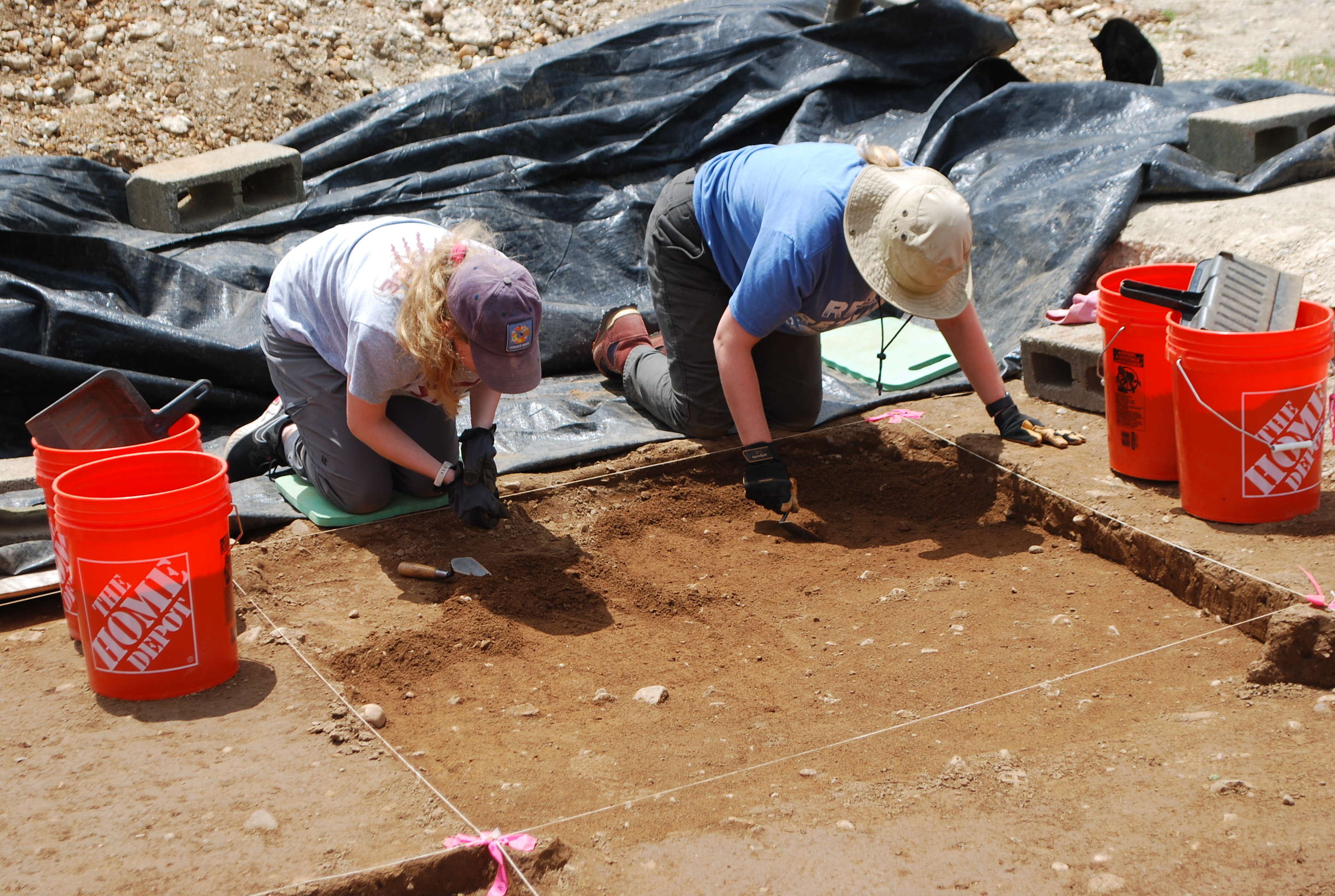
    It’s the most wonderful time of the year! There’ll be dirt out for screening, ceramics for cleaning, and lots of good cheer…. Okay, sorry, that might be a little too far. But it is a super exciting part of the year here at Ferry Farm, George Washington’s Boyhood Home. We have officially started this summer’s dig season!

    Building off of the previous two years’ exploration of the kitchen site, we are revisiting the 18th-century kitchen cellar again this year. While last year’s dig focused on locating and exposing the kitchen’s stone wall foundations, our focus this year will be excavating the fill within the cellar walls that had been deposited as a result of a fire sometime in the 1740s. The fire caused the building to collapse in on itself, filling the cellar space with ash and debris.

    Excavating sites like this are very exciting because they represent preserved moments in time, leaving the possibility to find artifacts left in situ or in place, when the fire occurred. It is likely that most of the artifacts excavated will have evidence of the extreme heat caused by the fire. Toasty artifacts from the 2023 preliminary kitchen exploration have been washed and catalogued, showing damage to artifacts, such as glass bottles and ceramic storage vessels, ranging from being slightly charred and burnt to being completely melted. Toasty or not, these artifacts will help us nail down the date of the fire and what was being stored in the kitchen cellar when it went up in flames.
    Our 18th-century kitchen, unfortunately, lies beneath the foundations of two farmhouses with full cellars dating from the 19th and 20th centuries. The construction of these homes severely impacted the kitchen structure and its burnt cellar fill, making it difficult for our archaeologists to accurately interpret the kitchen’s architectural features. A small portion of the kitchen cellar fill was also the subject of previous archaeological excavations in the 1990s, so we are not the first team to sample the fill. But in the interest of site preservation, the kitchen remnants were covered over twenty-five years ago with protective geofabric, and the farmhouse cellars backfilled completely with sand.

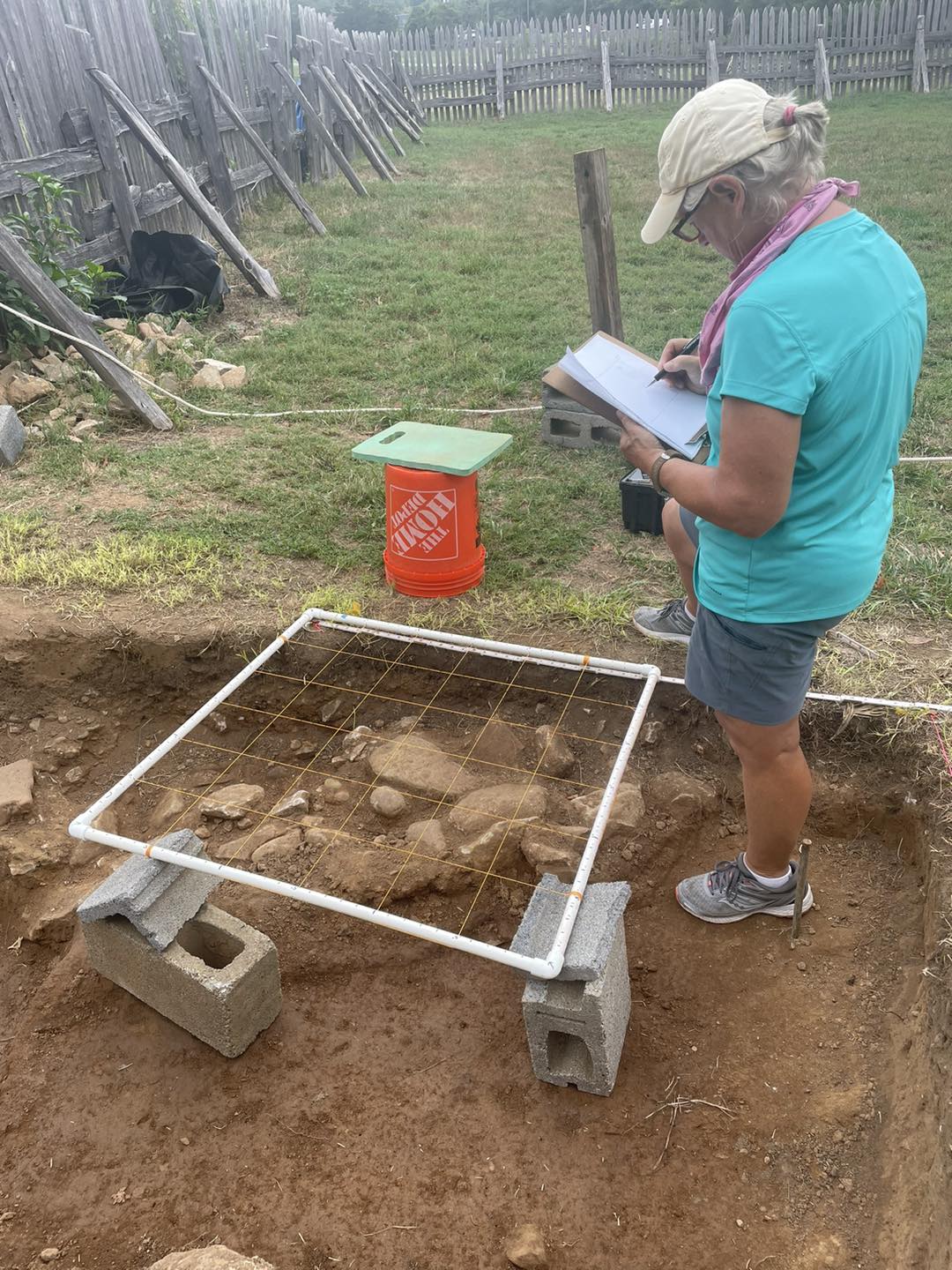
    Luckily, we had the help of an excavator at the beginning of this season to remove the five feet of protective sand covering the kitchen cellar fill so we could get to the fun stuff sooner! But our fun isn’t restricted to the cellar, as we still have multiple 5” x 5” units around the outside of the kitchen foundations to investigate. Our team is still trying to locate the midden (trash deposits) and fireplace associated with the kitchen, as well as additional architectural evidence that would give an idea of the overall form and dimensions of the complete kitchen structure.

    Every excavation year brings new and exciting finds as we sift through thousands of years of site habitation. Come visit us while we dig weekdays from opening until 3:30 pm through July 11th. Hope to see you there!


    Danielle Arens and Judy Jobrack
    GWF Archaeologists

  • That’s A Wrap! Ferry Farm’s Dig Season Recap

    October just happens to be Virginia Archaeology Month, and what better way to celebrate than to recap this summer’s excavation at George Washington’s Boyhood Home at Ferry Farm.

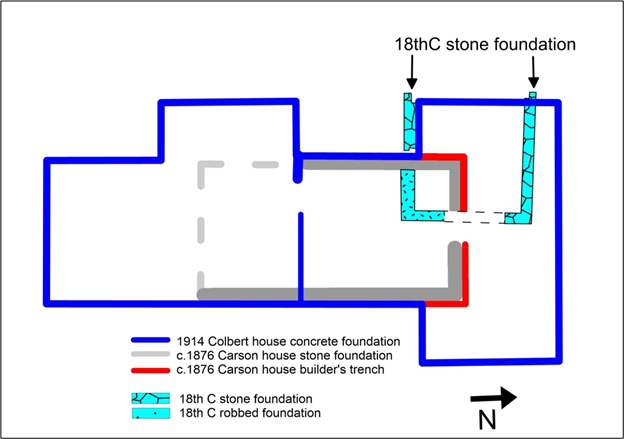
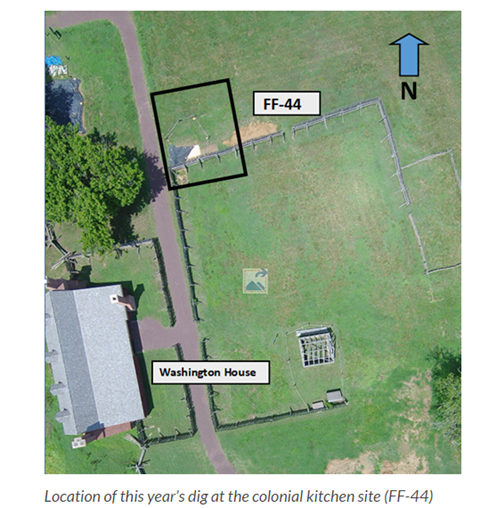
    You might remember from our dig preview, that this year’s dig (FF-44) focused on the continued exploration of the 18th-century kitchen site located just northeast of the main house. In 2023, our limited investigations uncovered just a small section of the kitchen’s stone foundation and cellar, giving us a sneak preview of the conditions and parameters of future site work. Armed with this knowledge, our aims this year were to uncover more of the original foundation walls of the kitchen cellar, to uncover additional architectural evidence of the kitchen outbuilding, and explore the surrounding landscape for features. So, did we do it?

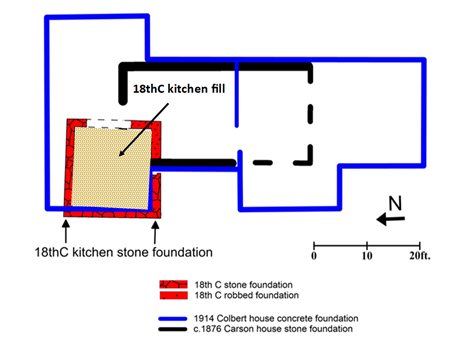
    Location of the 18th century kitchen foundation in relation to two later farmhouses dating to 1876 and 1914. 

    We did! But before we get to the fun discoveries, let’s go over how we got there. As far as sites go here at Ferry Farm, this one has been through a lot. Not only did the original 16’ by 16’ kitchen building burn and collapse in on itself in the middle of the 18th century, but it also had two subsequent farmhouses built on top of it that were either moved, damaged in a fire, or demolished all within the last 150 years. A previous archaeology project on the site introduced another element of complexity in understanding the depositional sequence of fills on the earlier 18th-century site, which had obviously been heavily disturbed by all these later events.

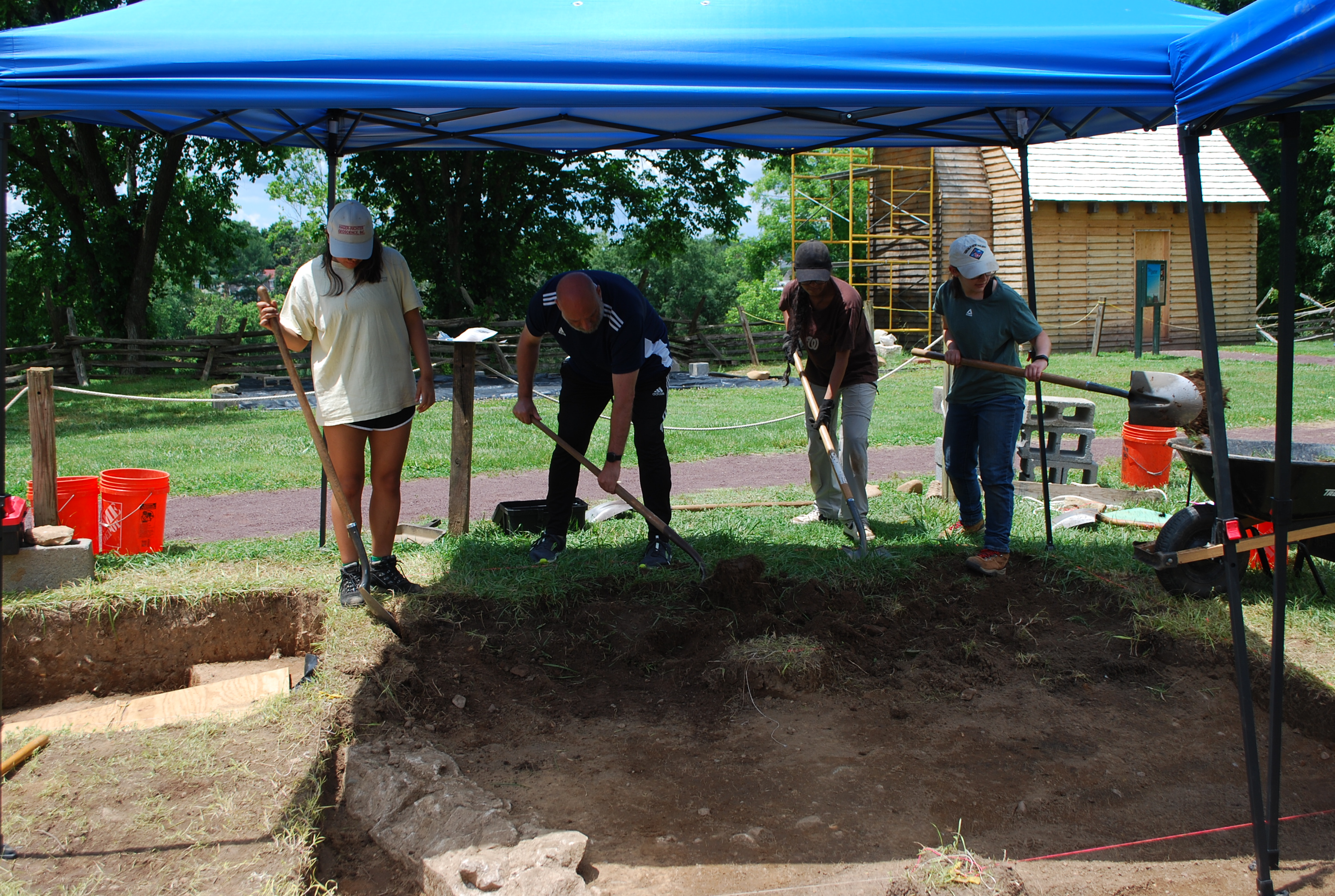
    All this led to an interesting excavation. Since a significant portion of the site had previously been excavated in the 1990s, a sizable amount of our site time was spent re-excavating backfilled archaeology units with the purpose of exposing unexcavated layers around the site. Not only would these unexcavated layers allow us to gather new data, but it would also give us the opportunity to better understand the findings as recorded in the earlier reports.

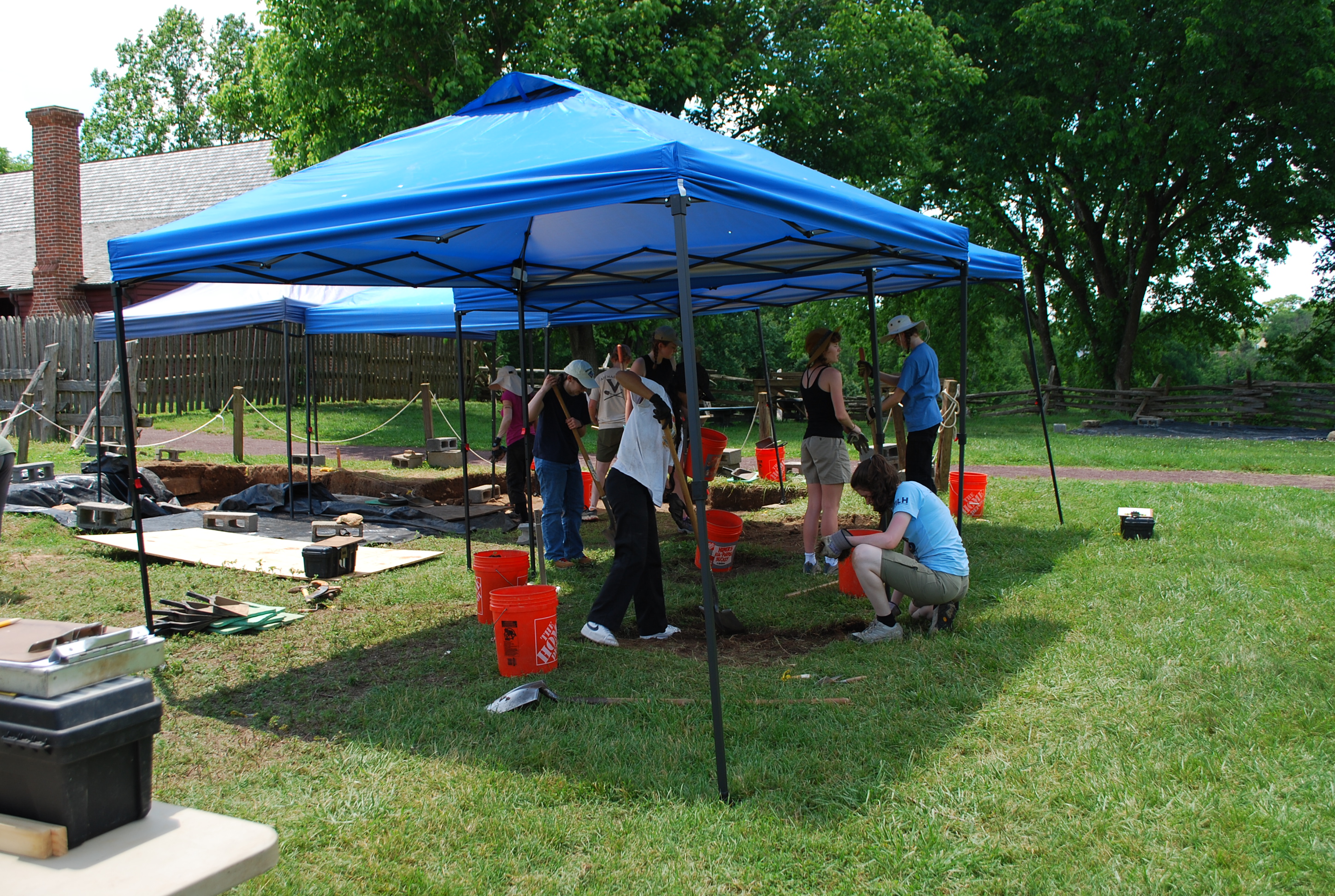
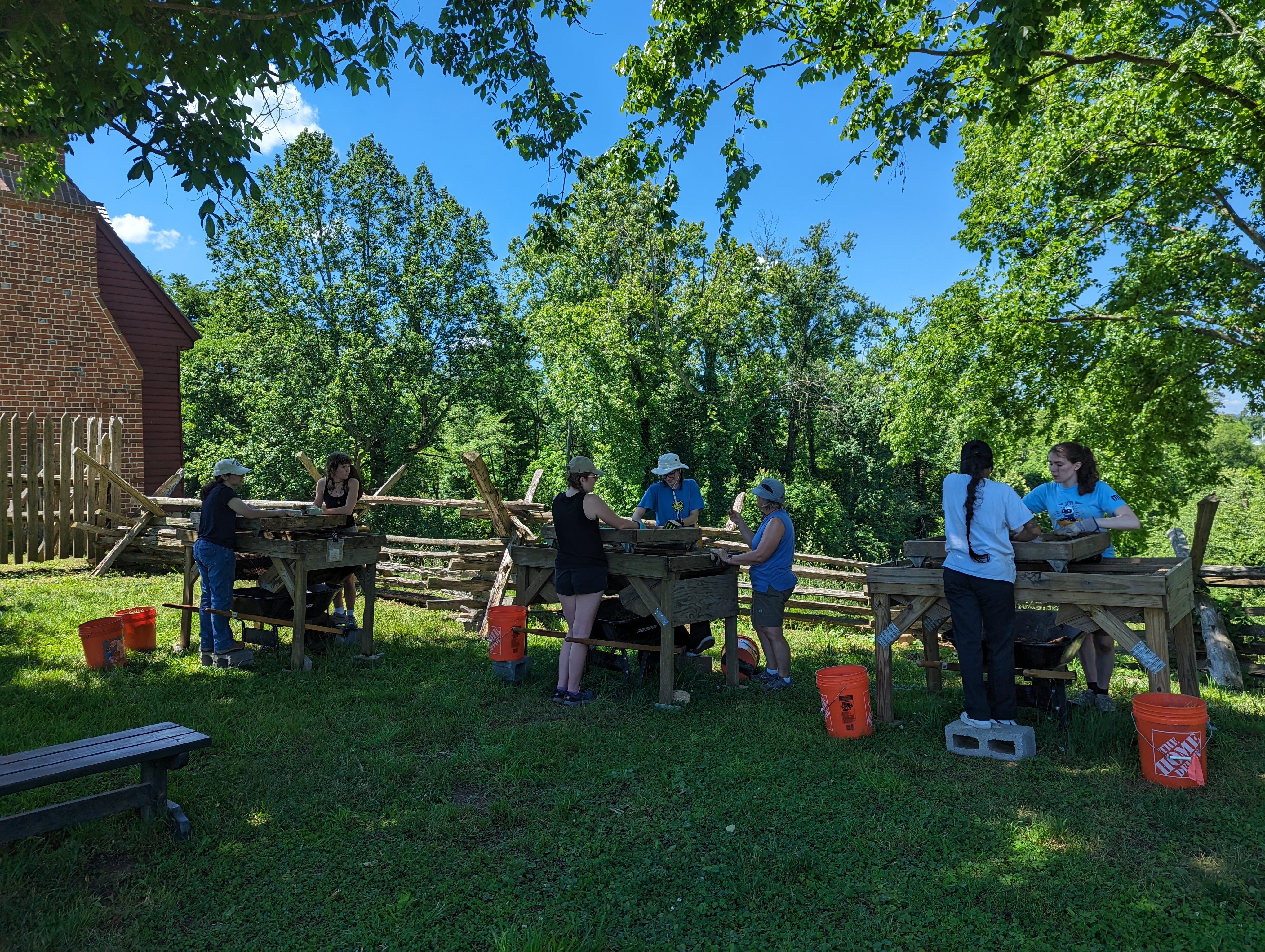
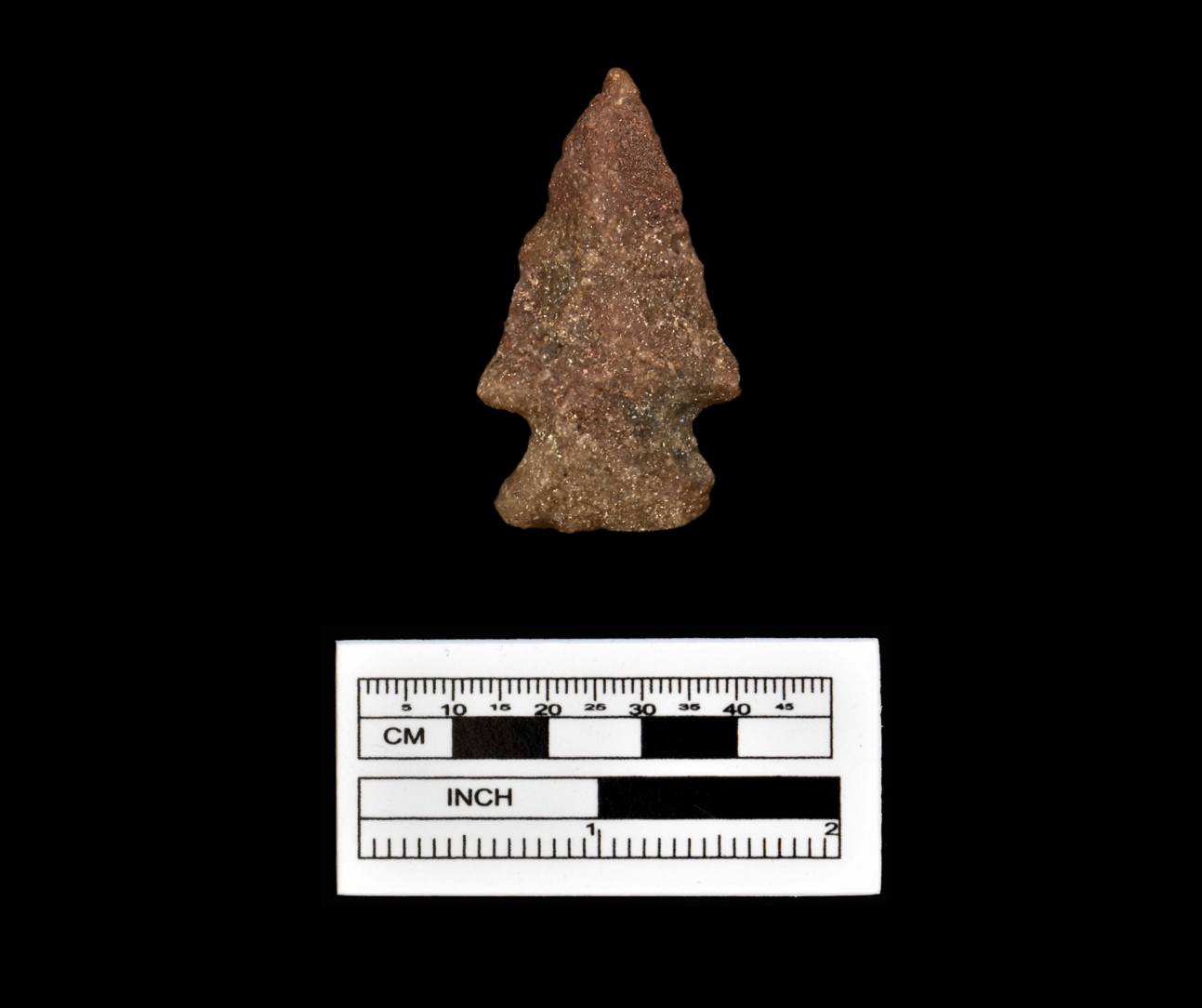
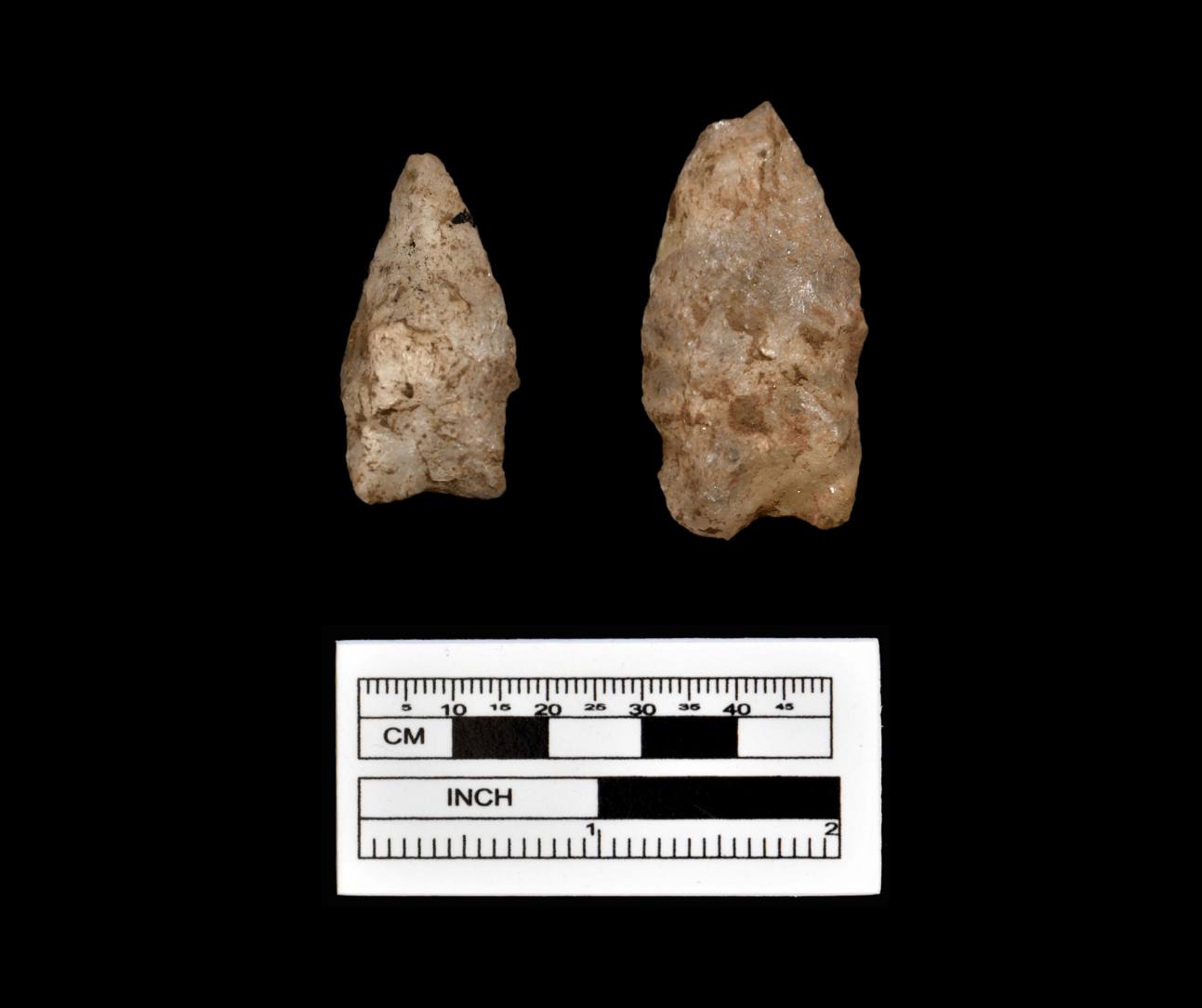
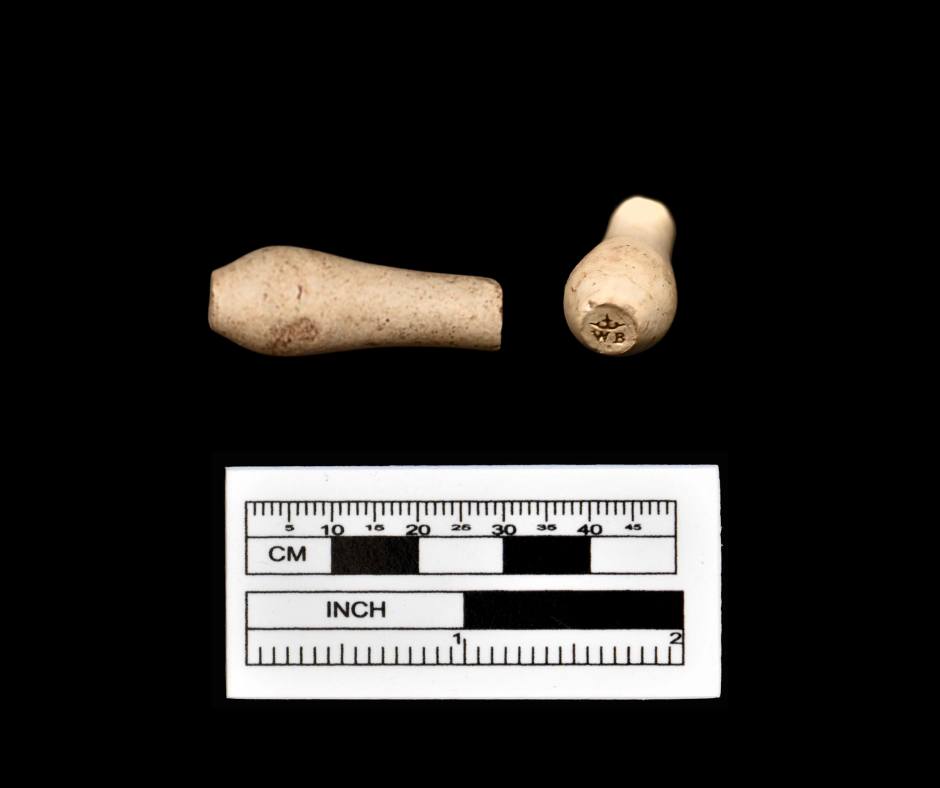
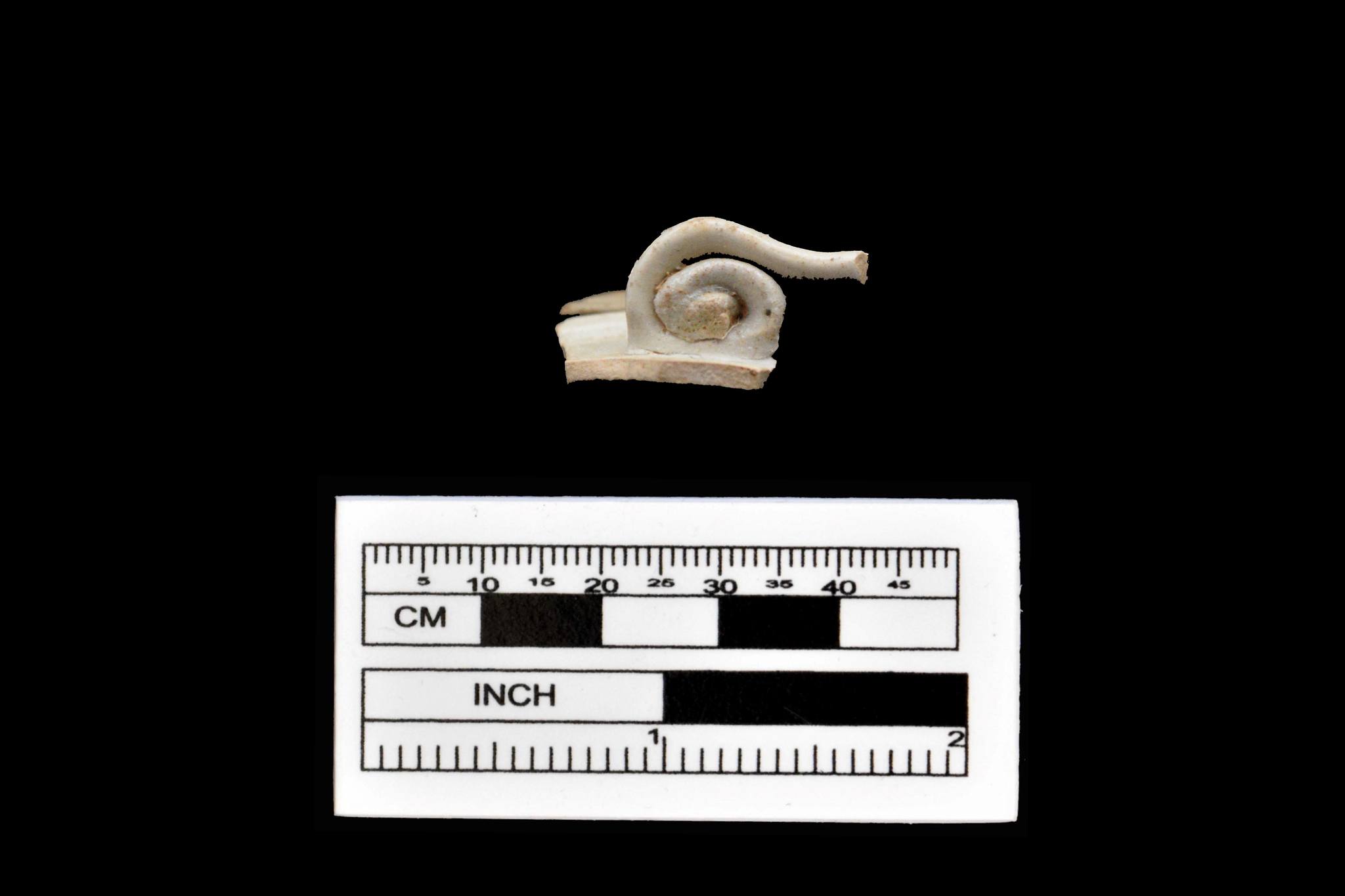
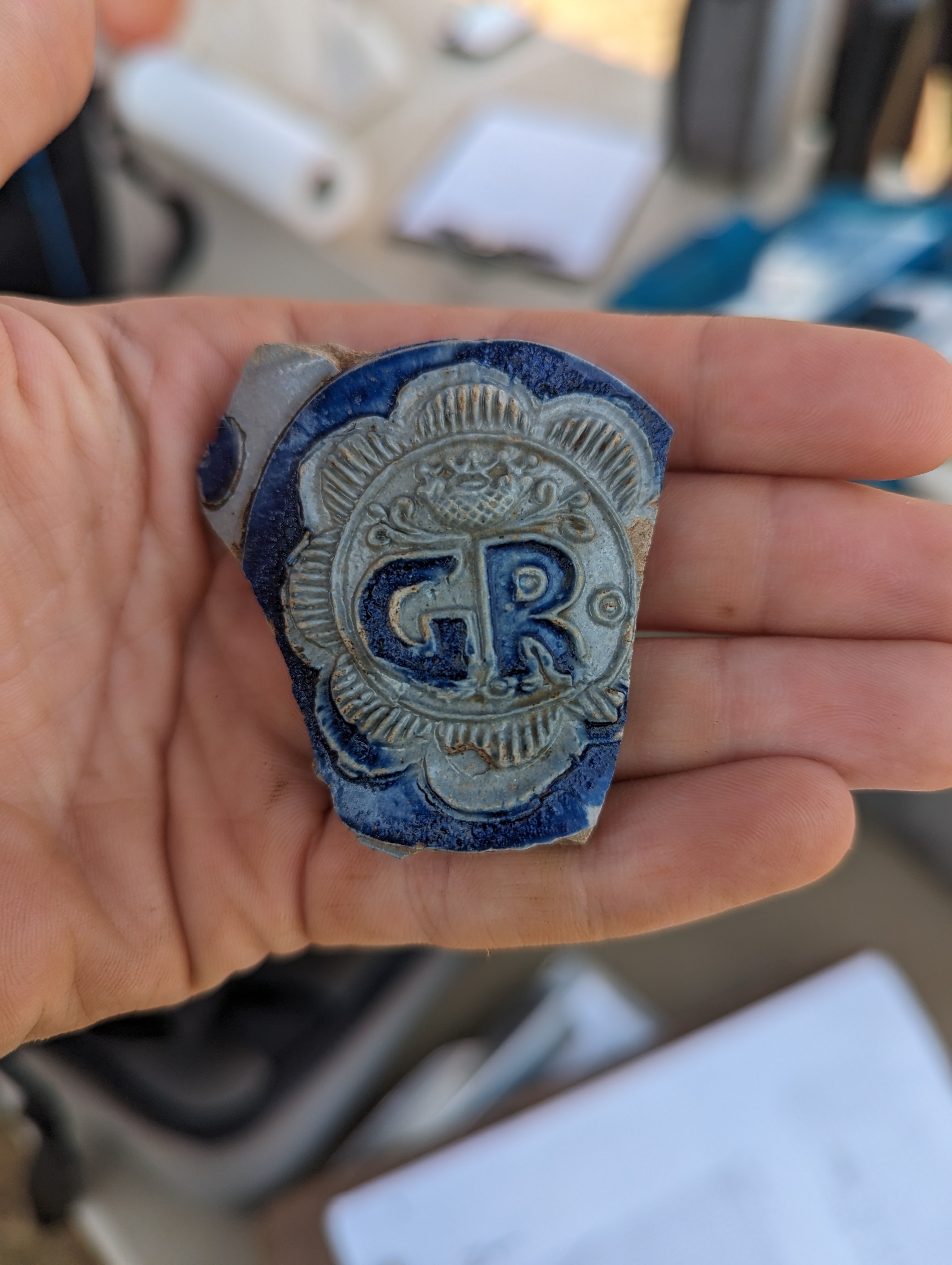
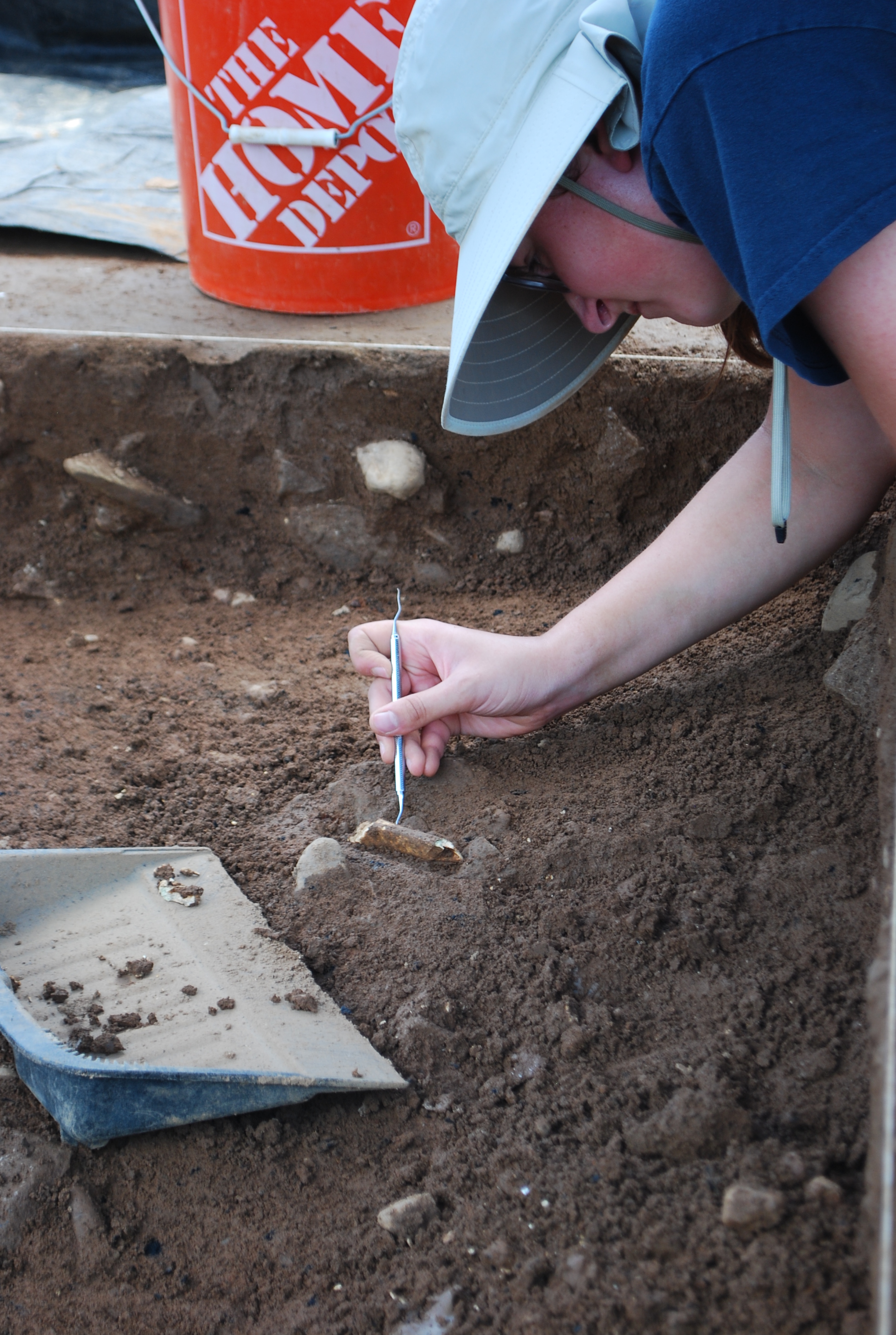
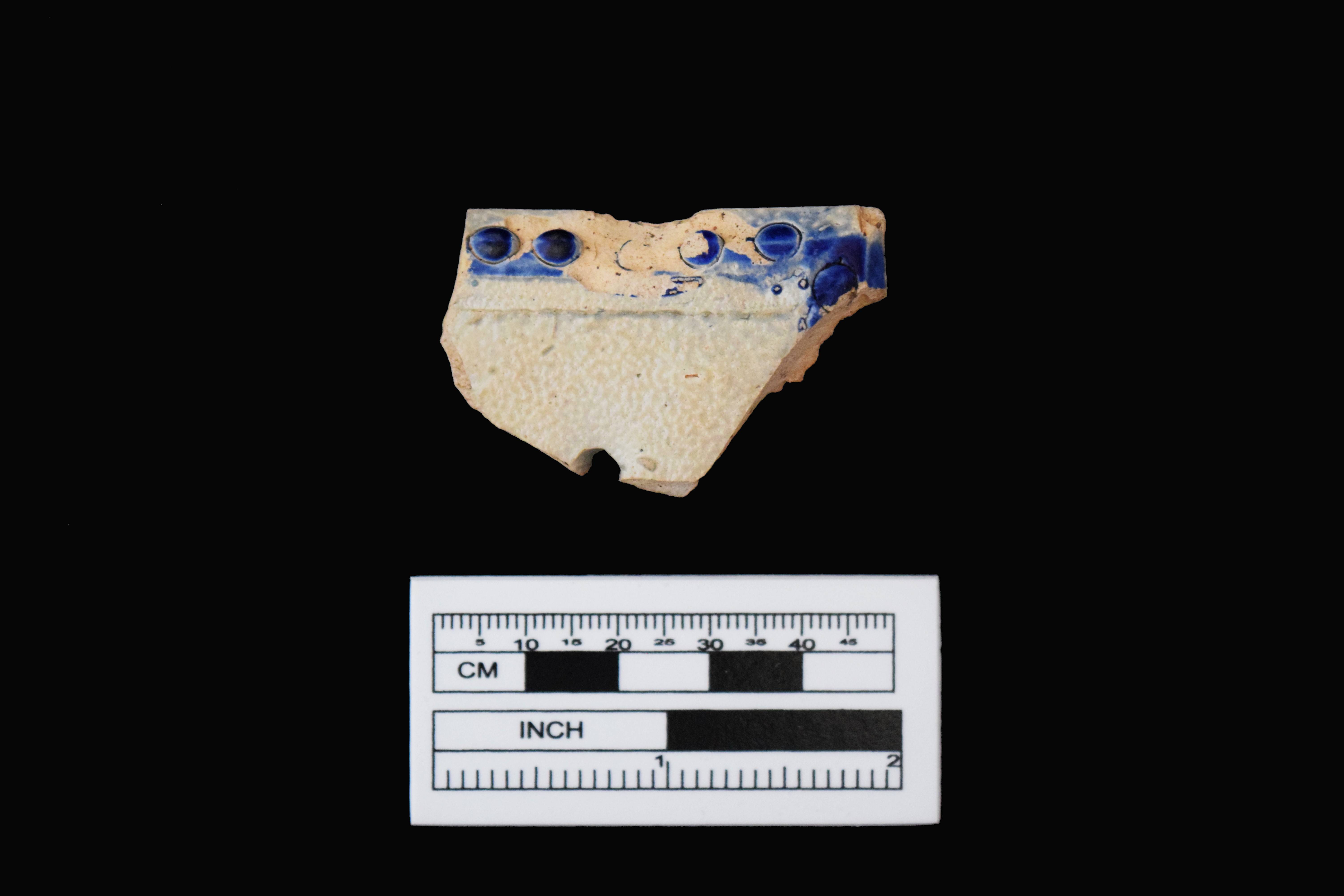
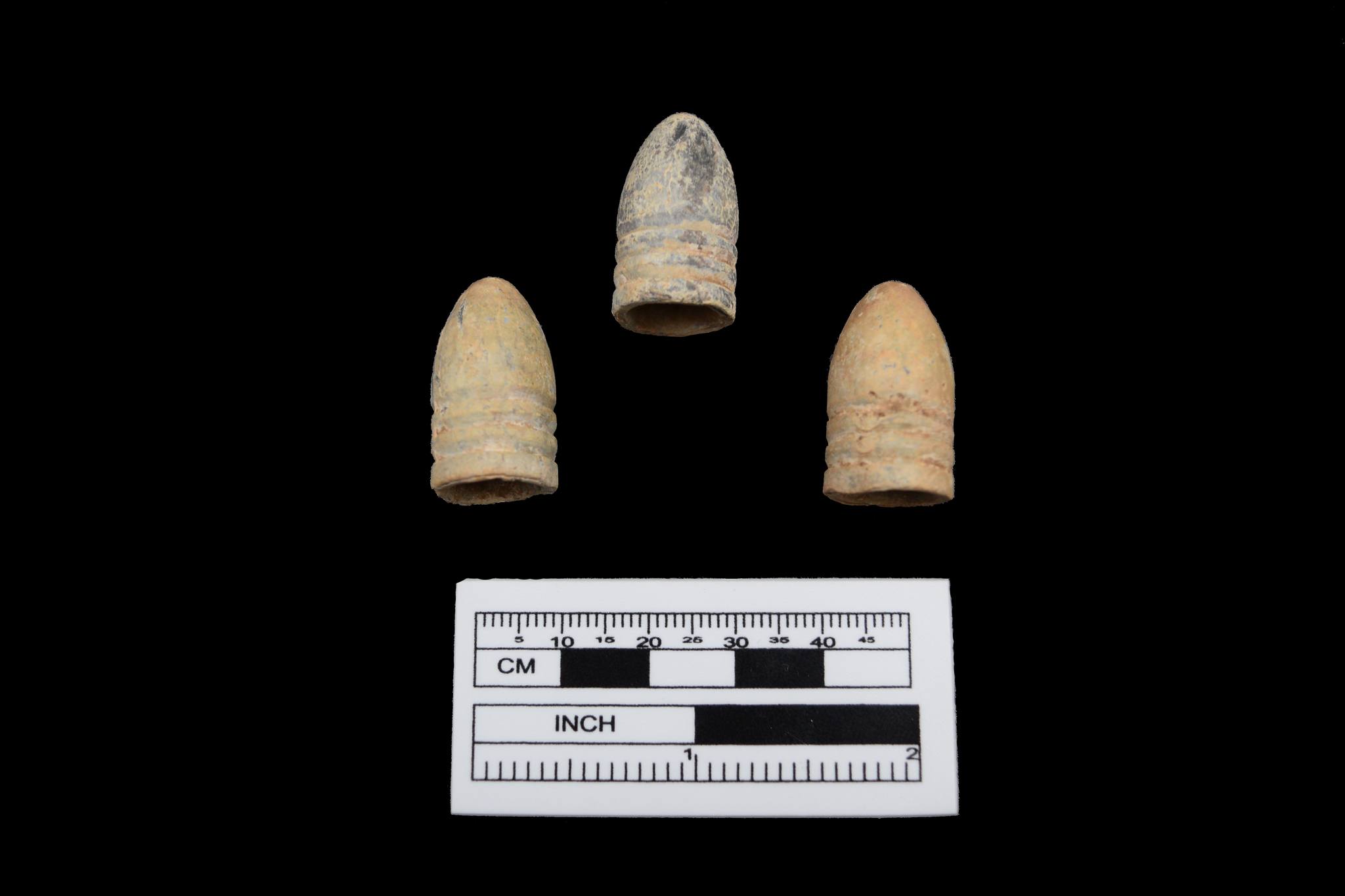
    With the help of our wonderful field school students and interns, we opened a total of twenty-seven 5’x5’ units across the kitchen site. Sifting through the dirt, hundreds of artifacts were found dating to all occupations of Ferry Farm. Super cool finds that date to the 18th-century period of use for the kitchen included tobacco pipe fragments, wine bottle sherds, and a variety of ceramics, including English stoneware, Chinese porcelain, and a German Westerwald ‘GR’ sherd. The prehistoric Native American occupations of the site were represented by an unusually high number of projectile points found (8 and counting!), dating to both the Early Archaic (8000 BC – 6500 BC) and Early Woodland (1100 BC – 500 BC) periods.  Civil War bullets came up in our screens, of course, as did 20th-century plastic, tools, toys, and bottle caps.

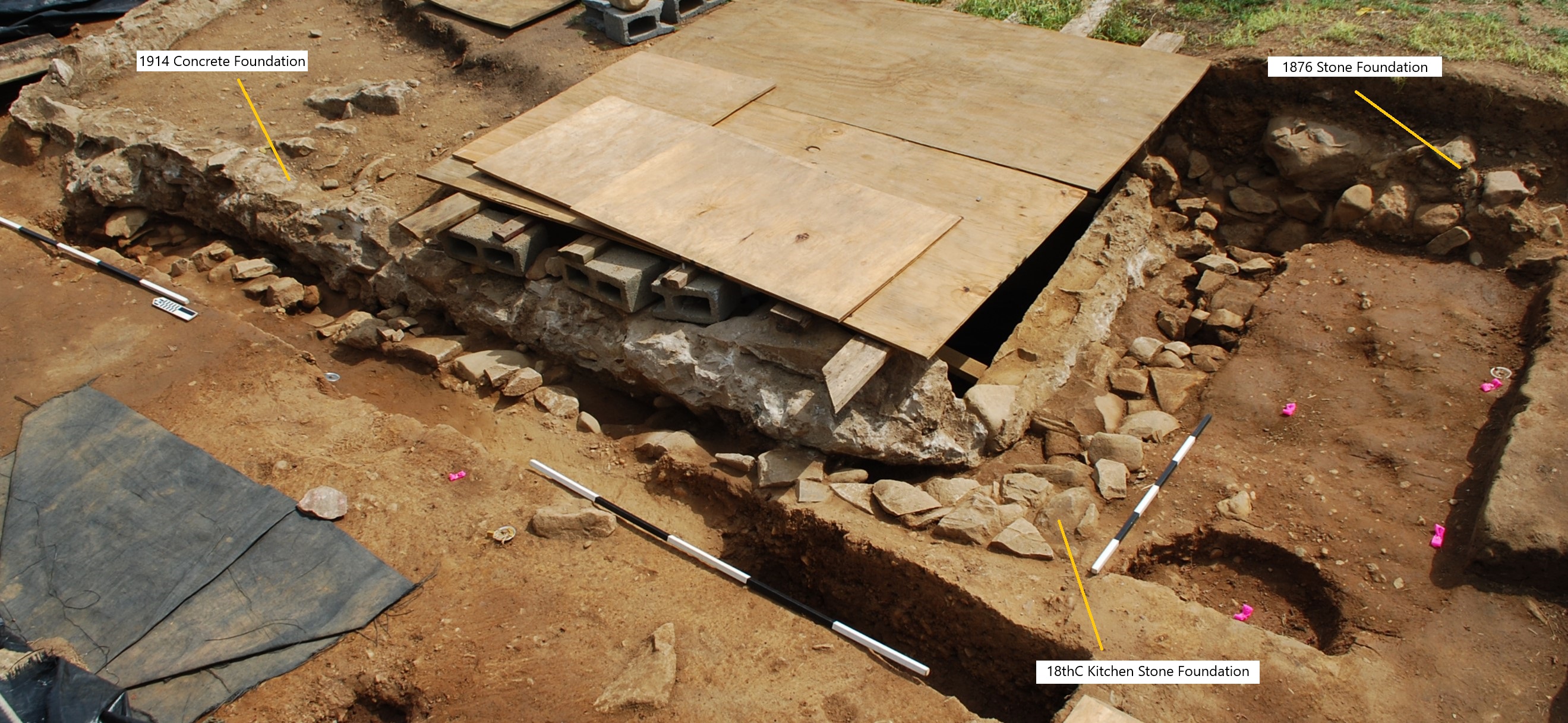
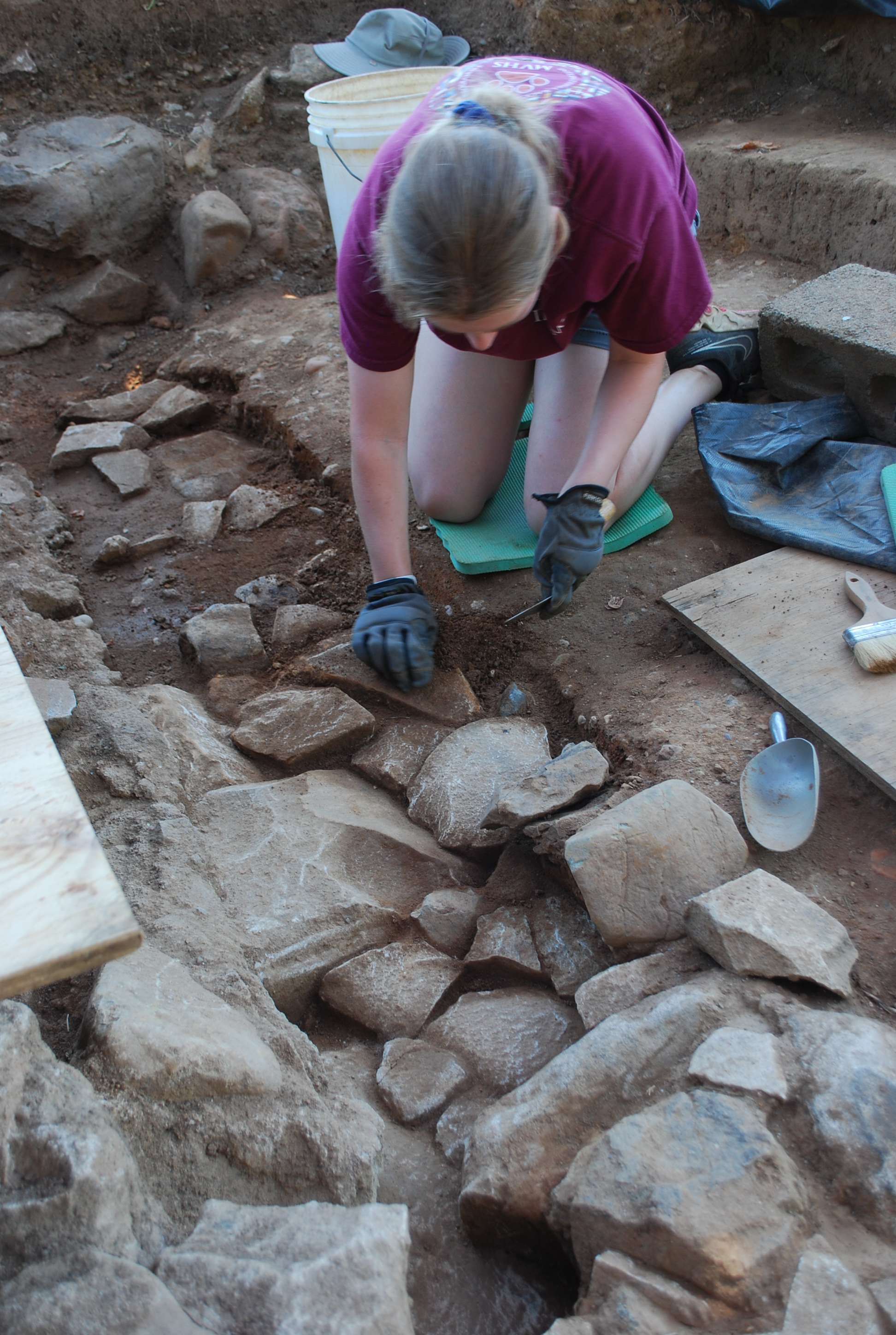
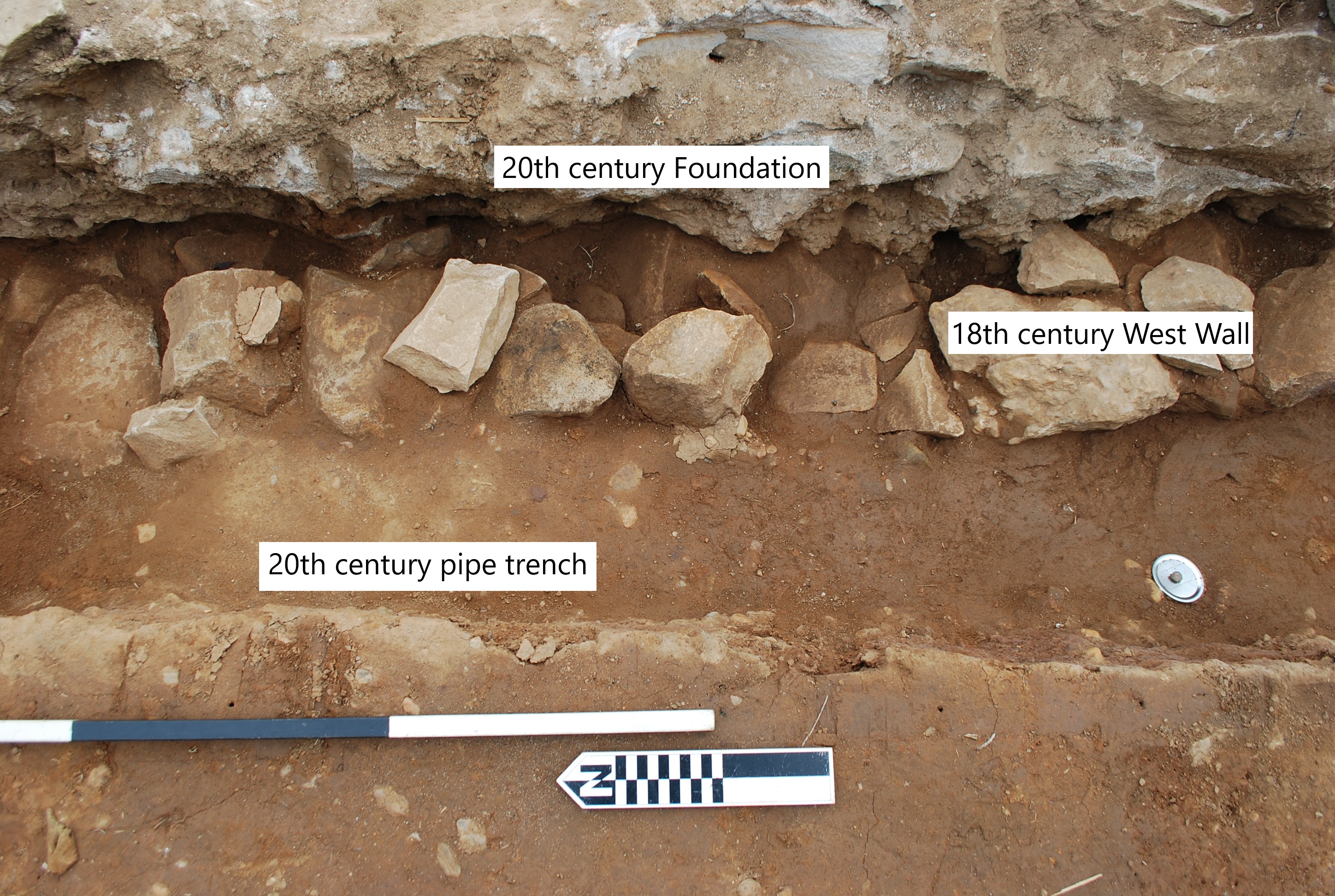
    But when it comes to finds, our most exciting discovery did not turn up in our sifting screens.  In fact, it was discovering that the western foundation wall of the kitchen cellar, thought to have been demolished, still survived!  During the 1990s excavations, the archaeologists did not see this portion of the stone foundation and assumed the construction of the 1914 Colbert house had destroyed it. Fortunately for us, it was hiding under a 20th century utility pipe and trench and lay directly adjacent to the Colbert concrete foundation. Now we have all four foundation walls that we hope to fully uncover next year.

    Exposed south and west stone walls of the colonial kitchen lie adjacent to and just outside of the 1914 concrete foundation wall.  
    West wall of colonial kitchen that was hiding under the pipe trench

    Our excavation units surrounding the kitchen foundation have not, as of yet, exposed additional building features associated with the kitchen outbuilding, such as foundations or fireplaces. That search will continue next year as we continue taking those units down and expanding our site area. Features exposed in the 1990s dig, but not excavated by them or us, such as possible post holes and trash middens, also await our return in 2025, when we plan on finishing their excavation.

    Each year’s excavation is built on the work accomplished in the previous years.  With the incredible amount of work done this past summer of exposing the original kitchen foundation, as well as the later farmhouse foundations, removing old fill, and opening up the adjacent landscape, we are looking forward to expanding our investigations of the kitchen site next year.  Stay tuned as we unravel the mysteries that are here at Ferry Farm, George Washington’s Boyhood Home.


    Danielle Arens and Judy Jobrack
    GWF Archaeology Field Directors

  • Meet the 2024 Field Crew

    The dig is in full swing, and we are a little over halfway through our 11-week dig season. Over the past few weeks, we have made lots of new exciting discoveries, and as you may have noticed, added quite a few new faces to our crew.

    Hosting a field school from the University of South Florida as well as interns from colleges and universities around the country has more than doubled our crew this season. While this is definitely awesome in itself, the fact that the entire field school and crew are women makes this year’s dig stand out even more. Now before we get into why an all women dig is so impressive, lets meet our crew.

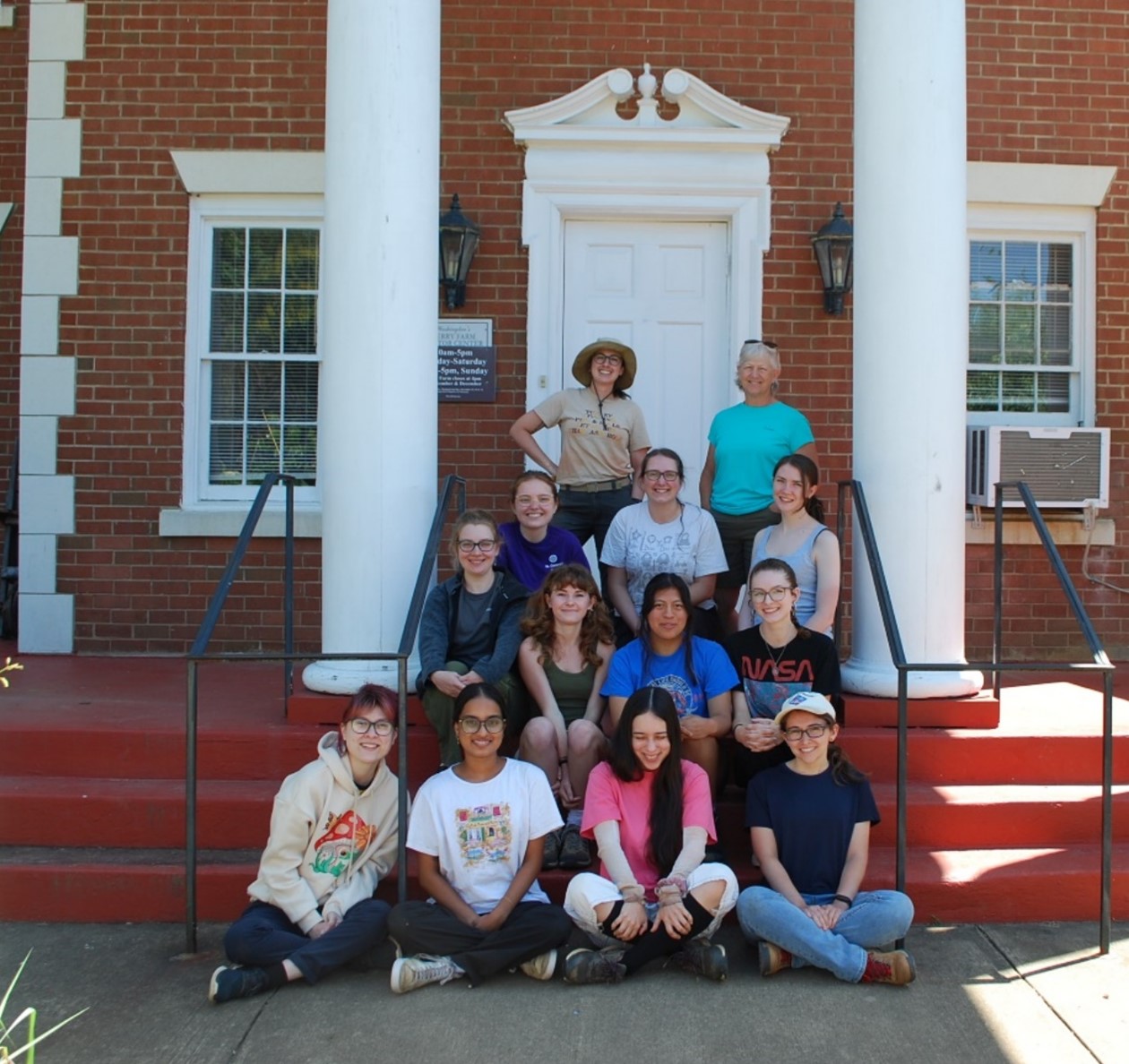
    Front Row Left to Right: Alaina, Srin, Sarah, Sofia. Second Row: Abbie, Amelie, Rosie, Lindsay. Third Row: Kate, Rachel, Kellina. Back Row: Danielle, Judy.

    Srinidhi

    “Srinidhi is from Lithia, Florida. She just recently graduated from the University of South Florida with a bachelor’s degree in history. She plans on attending graduate school sometime in the future. Outside of school, Srinidhi enjoys reading high fantasy novels, playing video games, and hanging out with her dog, Felix.”

    Lindsay Marrion

    “Lindsay Marrion, from Niceville, Florida, attends the University of South Florida for English and Art History. She hopes to continue her education in graduate school, with dreams of working in academia one day. Outside of school, Lindsay in as avid reader and writer, and she loves an adventure of any kind.”

    Alaina Scapicchio

    “Alaina Scapicchio is a doctoral student at the University of South Florida in Tampa. She did her first field school at Ferry Farm in 2018 and now she is the graduate assistant for this year’s field school. Her dissertation is focused on public memory and the commemoration of witch trials in colonial America. She is the owner of two senior citizen fat cats named Tazz and Amira who she misses very much.”

    Sofia Almeida

    “Sofia Almeida is an incoming History PhD student at the University of South Florida. She recently completed her MA thesis on the digitization of historic Black cemeteries in Florida. Moving forward she is interested in American history, historic archaeology, and memory. Outside of school, she enjoys reading, playing guitar, and going on adventures with friends.”

    Amelie

    “Amelie is from Tucson, Arizona and is studying Biology, French, and Anthropology at the University of Arizona. She enjoys reading, hiking, and weightlifting and aspires to travel the world.”

    Rosie Muraca

    “Rosie Muraca is from Fredericksburg, VA. This is her first time working as a field student. She plans to attend Mount Holyoke College in the spring. When she is not digging, she is spending time with her two cats.”

    Kellina

    “Kellina is a rising junior at Yale University. She is an anthropology major from Spotsylvania, VA and she hopes to work in museum conservation. Spending the summer at the Ferry Farm archaeological dig has given her a better understanding of artifacts prior to their museum life and deepened her understanding of American history.”

    Kate McDonald

    “Kate McDonald Yaun is a rising freshman at Sewanee: The University of the South. She is studying Environment Arts and Humanities. Her hobbies include playing her viola, reading, and spending time outdoors.”

    Abbie Wood

    “Abbie Wood graduated from UVA in 2023 with a B.S. in Anthropology and a B.S. in Archaeology. This is her second dig season at Ferry Farm and the fourth overall, following a collections management museum internship. She has a passionate interest in caring for artifacts and history.”

    Sarah

    “Sarah came to Ferry Farm as a student of Virginia Commonwealth University in the summer of 2014. She has participated in half a dozen summer digs as an intern at Ferry Farm since then. Her favorite artifacts consist of the more personal items people had such as buttons, beads, sewing pins and Ferry Farm’s famous and abundant collection of colonial wig hair curlers.”

    So back to why an all women crew is so awesome. Well, our crew illustrates how women are gaining ground in a previously male dominated field. Historically, many professional positions in archaeology were held by men, but times are changing.

    Hopefully we will see some of these faces again somewhere down the archaeology pipeline, or wherever their futures may take them.


    Danielle Arens

    GWF Archaeologist

  • 2023 Dig Season Recap!

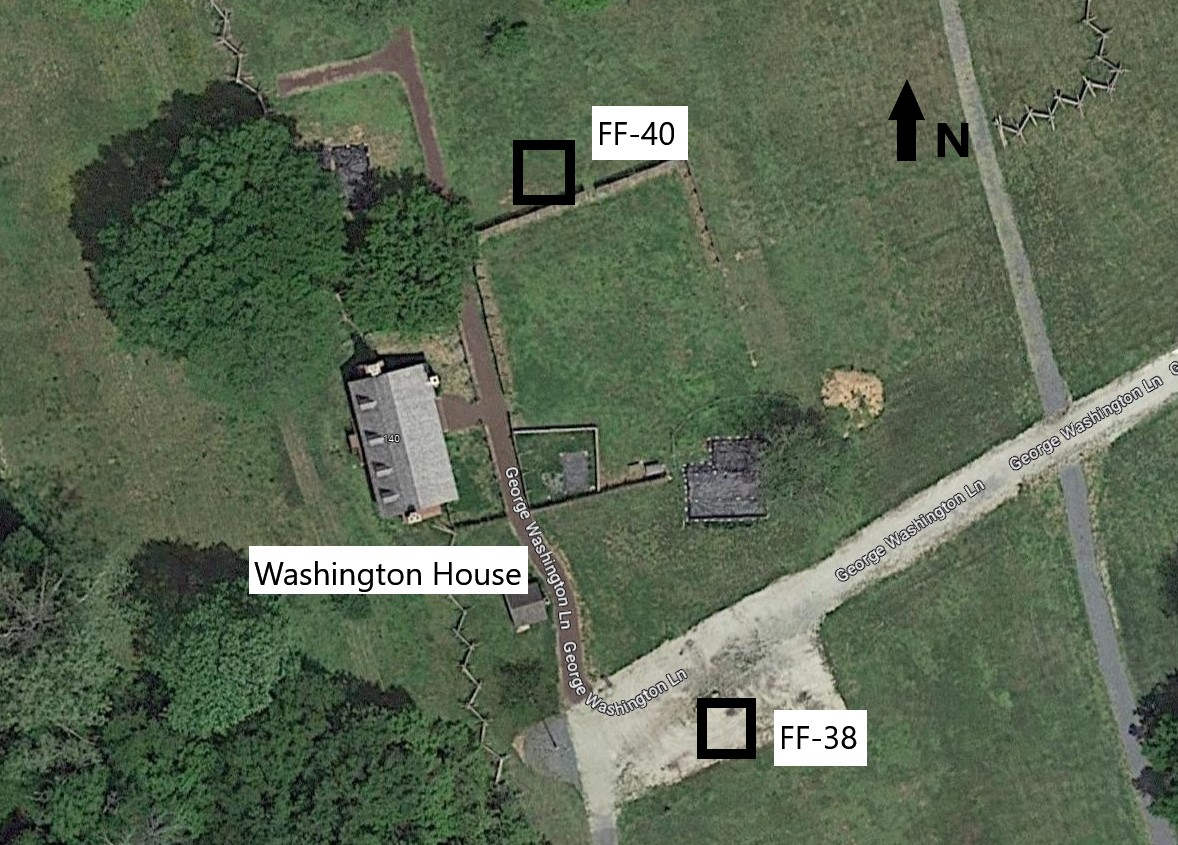
    It’s that time again! As we welcome Fall and the beautiful cool weather it brings, let’s take a look back at our Summer 2023 dig season here at Ferry Farm, George Washington’s Boyhood Home. This year’s dig actually involved excavating two separate areas, designated FF-38 and FF-40, within the historic area. 

    Location of the archaeological projects FF-38 and FF-40 at Ferry Farm.

    Project FF-38

    The FF-38 area contained a large, dark, soil stain that was discovered by accident during the monitoring of a utility trench in 2016.  Only a portion of this feature was visible at that time as it continued beneath the south wall of the trench. We had clues as to the approximate date of this partially-exposed feature, but we still needed to fully uncover the entire feature to establish its total dimensions and determine its age, function, and how it relates to the surrounding landscape.

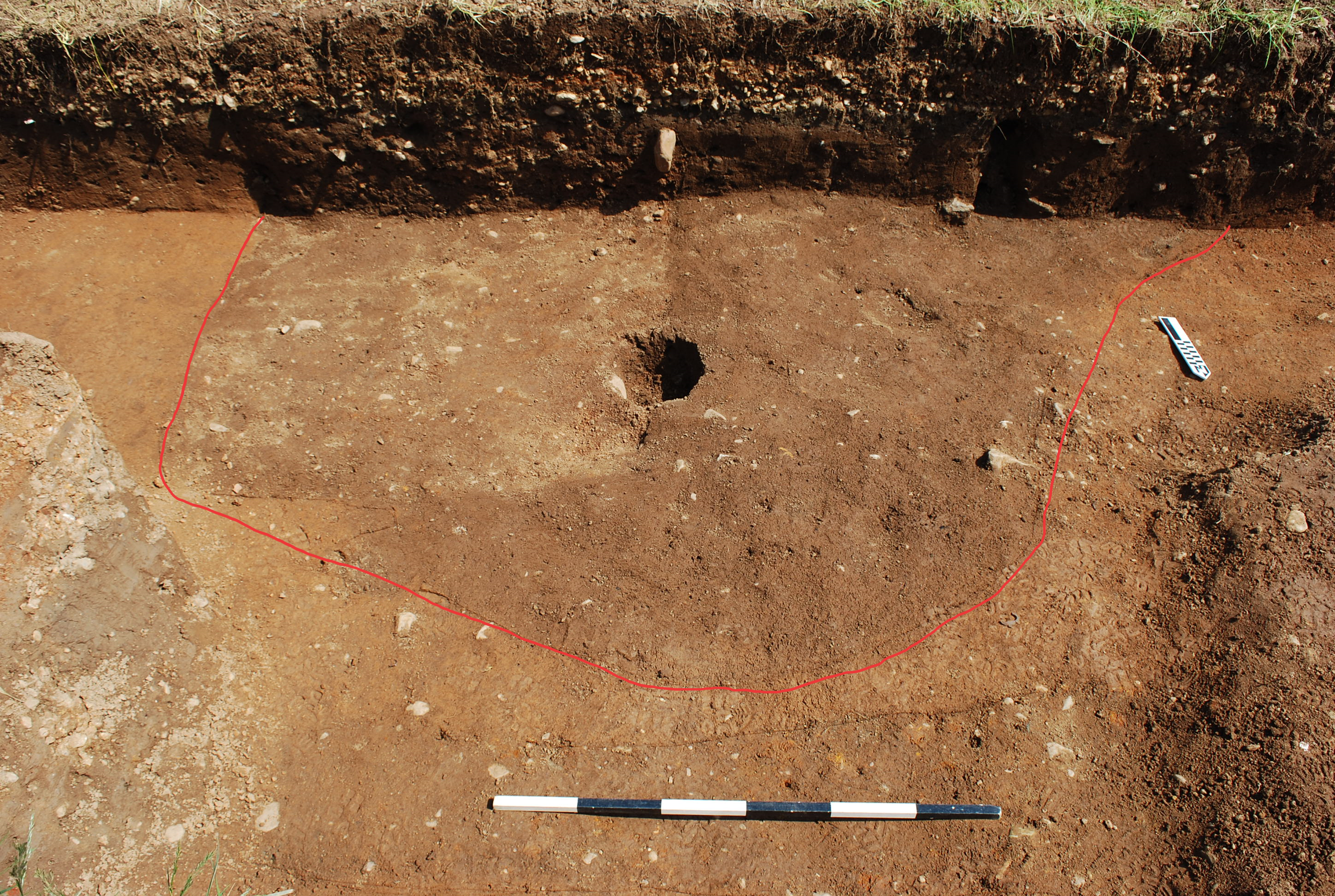
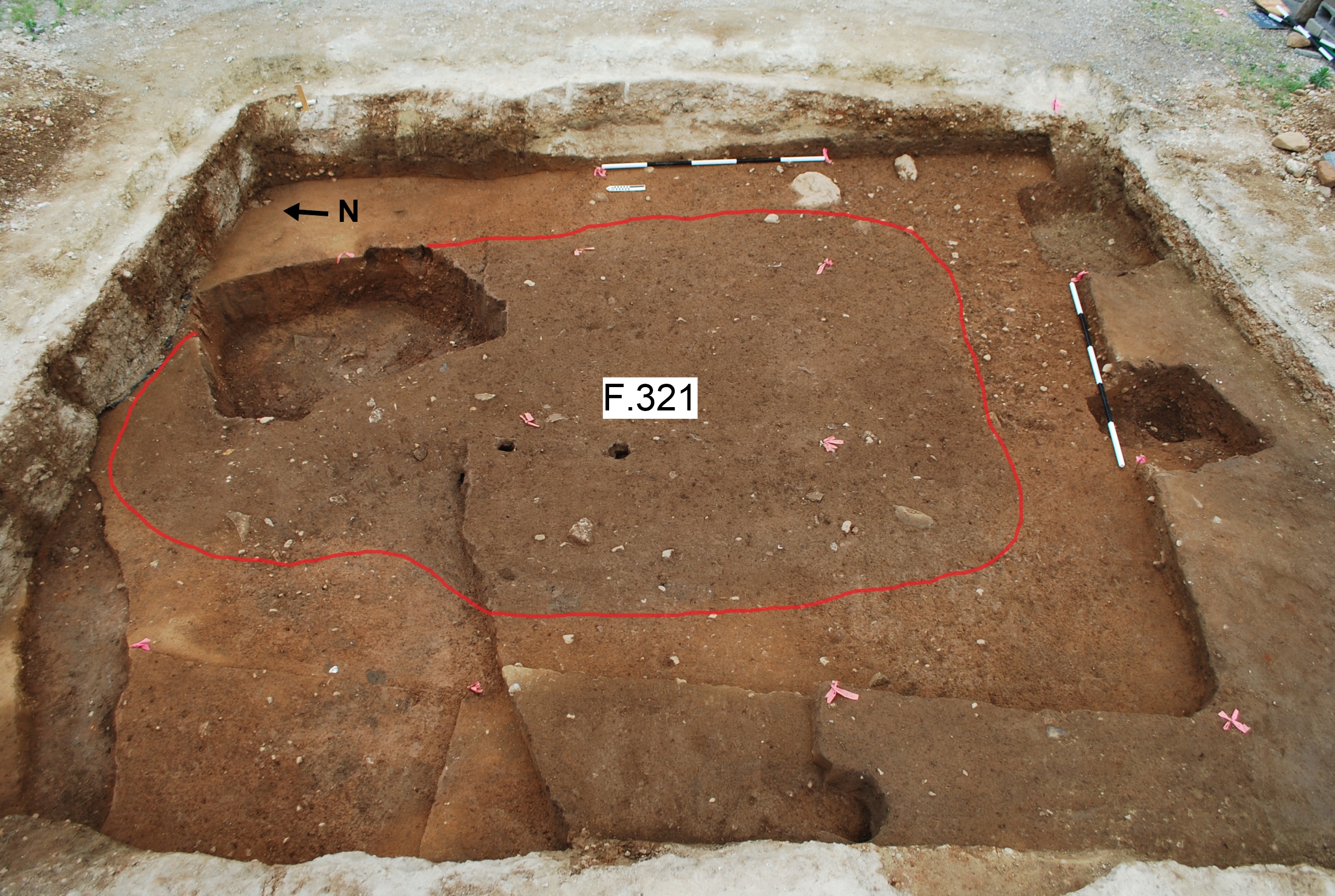
    F.321 as seen in 2016 within the utility trench. Only the northern portion of the feature was exposed at this time. F.321 is outlined in red, and is intruded by a square, lighter-colored 19th-century feature (F. 324).

    Our excavation began by the machine removal of two modern layers of gravel that overlay a thick 19th-century layer of plowed soil. The excavation area measured approximately 16 ft. by 20 ft. Our crew of archaeologists then slowly excavated down through the plowed layer until we could identify the boundaries of Feature 321. Fully uncovered, the exciting discoveries began.

    First and foremost, we discovered the feature was much bigger than originally thought! What initially appeared in 2016 to be a 5’x7’ roundish feature turned out to be the northern tip of a large rectangle measuring 10’ by 16’. The size and shape alone of the feature shifted our interpretation from a small pit to something larger.

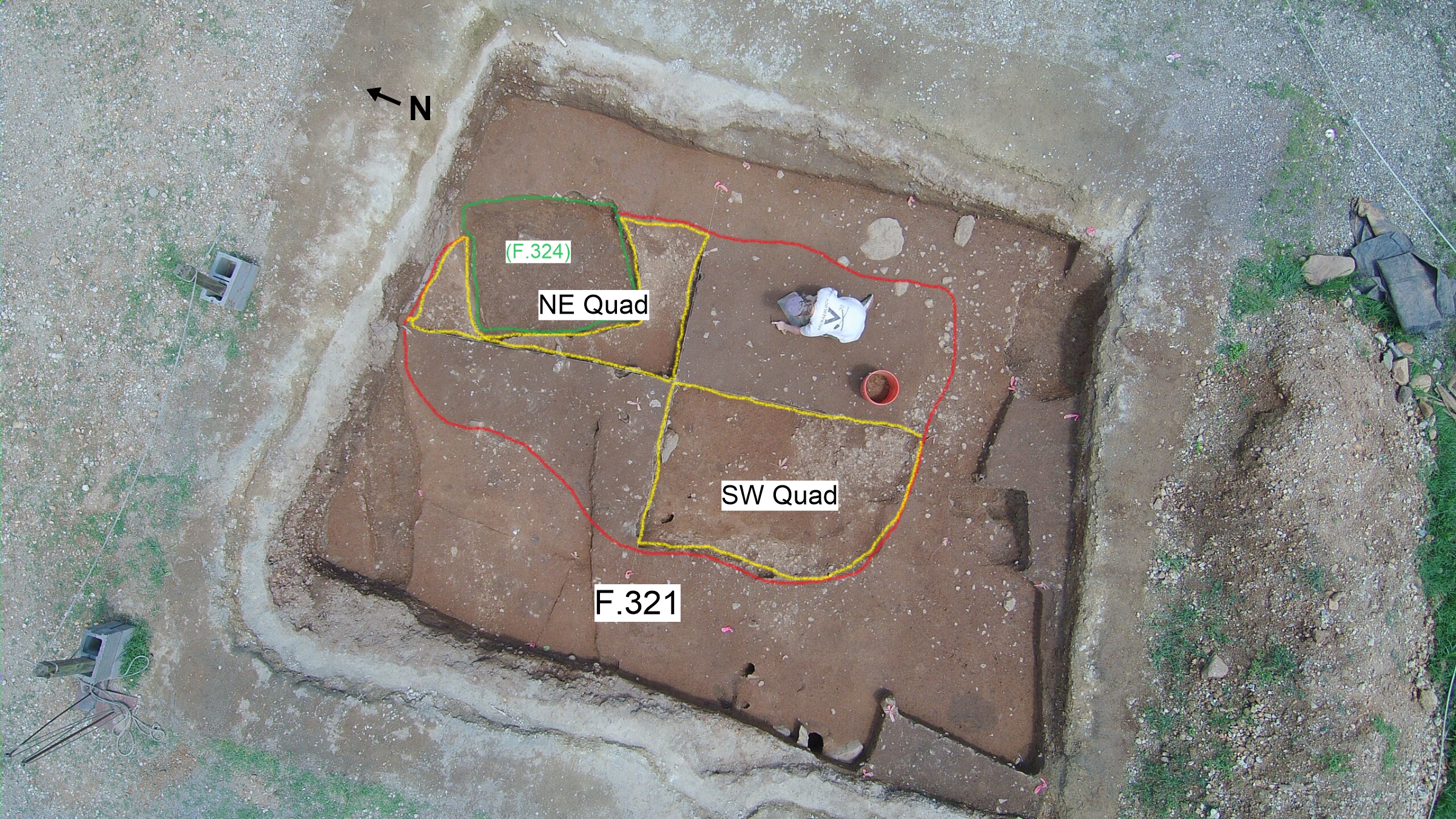
    F.321 fully exposed before excavation (outlined in red). The intrusive feature, F. 324, has been partially dug out at the north end of the site.

    Feature 321 was divided into four sections and our crew excavated both southwest and northeast quadrants. This excavation approach allowed us to determine that the feature was roughly 1’ deep at the center, with gently sloping sides, and filled with successive layers of soil and ash-filled deposits. These soil layers provided us with an awesome mix of artifacts which were used to nail down the feature’s end date to the middle of the 18th century.  But establishing a date is only part of the process: artifacts can further help us identify the function of the feature as well.

    F.321 after the southwest and northeast quadrants were excavated.  Intrusive Feature 324 is outlined in green.

    That being said, we are still unsure of what this feature actually is. Here is what we know so far.  There is no hearth of chimney remains. Lack of a fireplace suggests it wasn’t a domestic dwelling, but it could be another type of plantation outbuilding, such as a storage building, shed, or barn. The edges are almost vertical, and the floor is relatively flat.  There is no silt so the pit was covered while it was open.   It is too regular to be a quarry pit used to harvest clay as a building material.

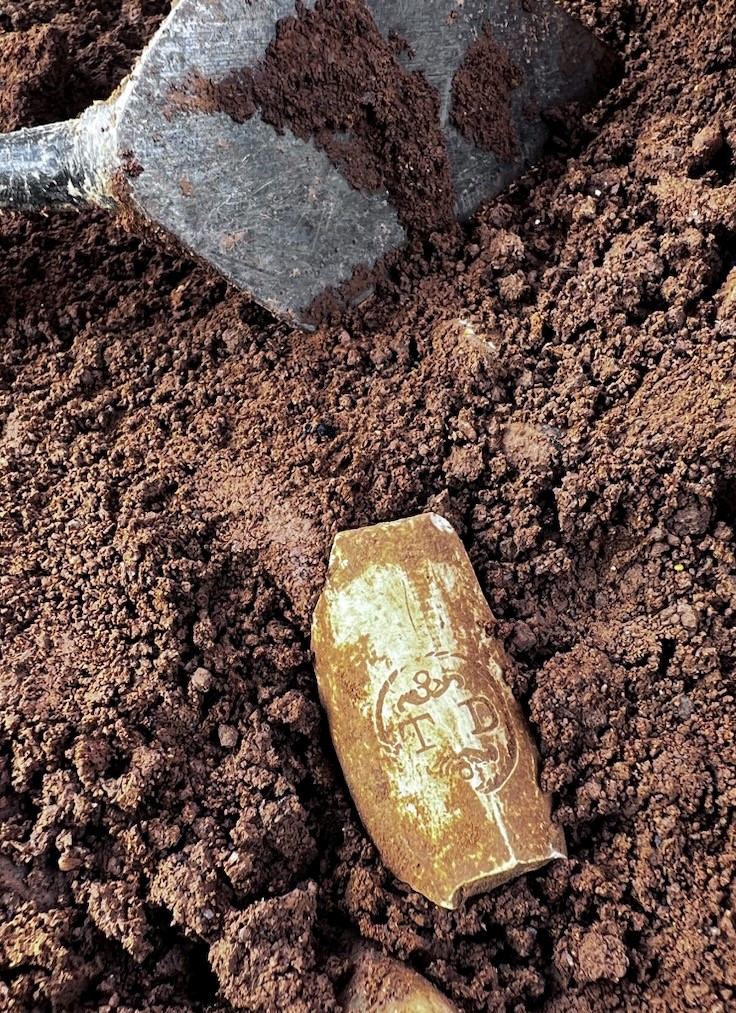
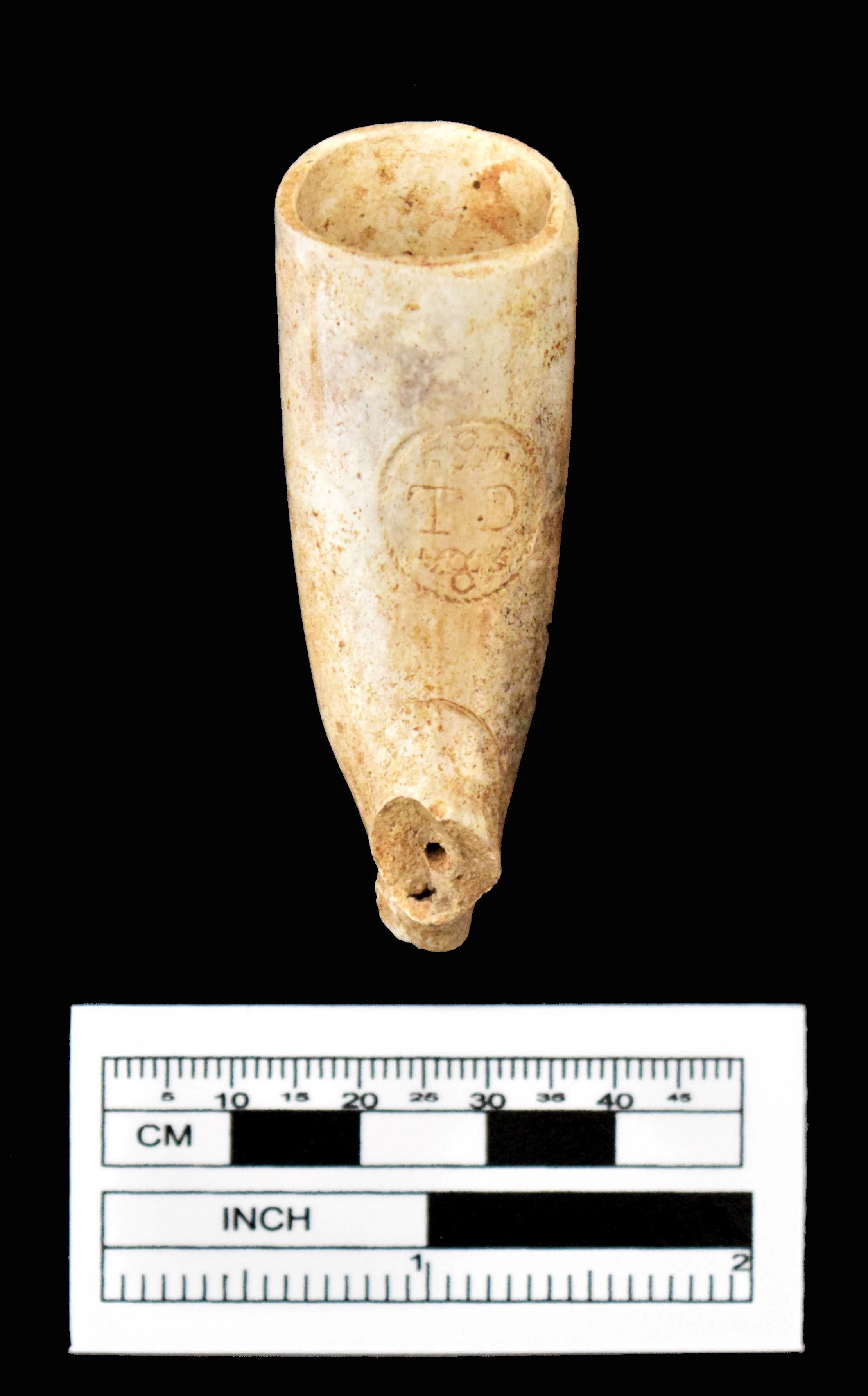
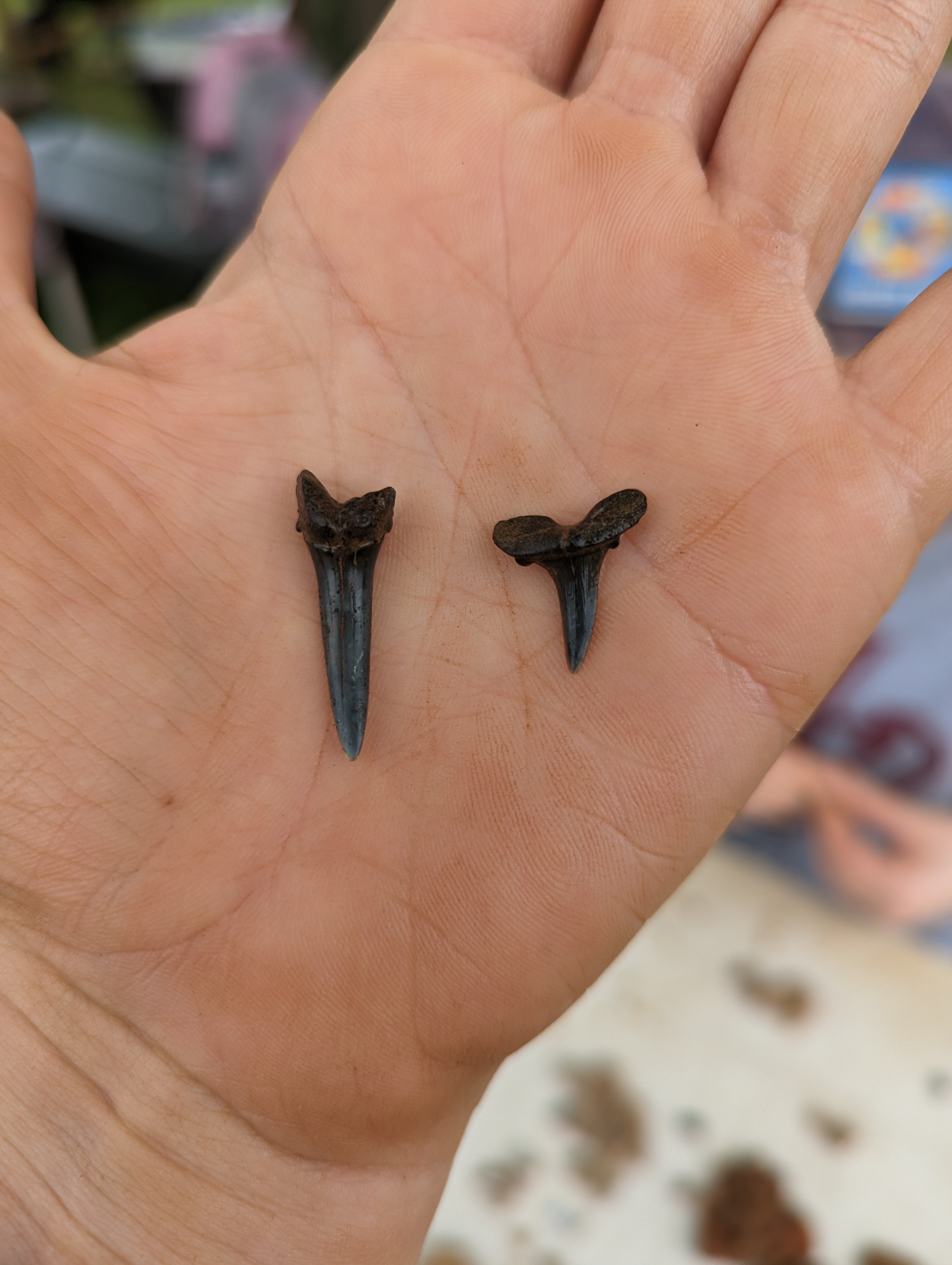
    Even though we are still in the early days of analyzing the artifacts, that doesn’t mean we can’t talk about a few great things we found. This feature had a little bit of everything: personal items, food-related items, architectural debris, domestic items, etc. The crowning glory of the excavation (in our humble opinion) would have to be the complete pipe bowl that was stamped with a maker’s mark that featured the letters “TD.” Other exciting finds include a clipped Spanish coin, sherds to a Westerwald ink well, shark teeth, and prehistoric pottery, just to name a few. This feature also contained a layer of ash that preserved delicate artifacts such as bone, fish scales, and straight pins – items that often don’t survive in the archaeological record.

    So what does this all mean? Well, this means that we will definitely be returning to the FF-38 site next season. While we have gathered a lot of information during this dig, there is still much left to find. Expanding our excavation beyond the limits of the feature and excavating one of the remaining two quadrants will help us interpret the feature’s function and how it relates to the 18th-century farm landscape of the Washington family.

    FF-40

    Wait, that’s not all for this year’s dig. Don’t forget that we had two excavation areas this year. Our second area was FF-40, which was the remains of an 18th century kitchen had experienced an intense fire. This kitchen was partially excavated in the 1990s, so this year’s excavation had more of an exploratory excavation designed to help us establish a game plan for future excavation. We knew the kitchen remains were below the foundations of two later farmhouses, and that the foundation walls of these farmhouses were still extant. Additionally, the interior of the foundations was filled with sand to protect the kitchen site. Our excavations confirmed the location of the farmhouse foundations and the existence of a protective layer of sand! Once our crew were able to get through this sandy fill, a quick clean of the kitchen fill uncovered artifacts that were absolutely toasty. Okay, toasty isn’t a technical term, but the artifacts showed evidence of a fire that burned at extremely high temperatures. This included a high number of architectural artifacts as well as charred ceramics and melted glass. Findings from this year will help guide the excavation in the future.

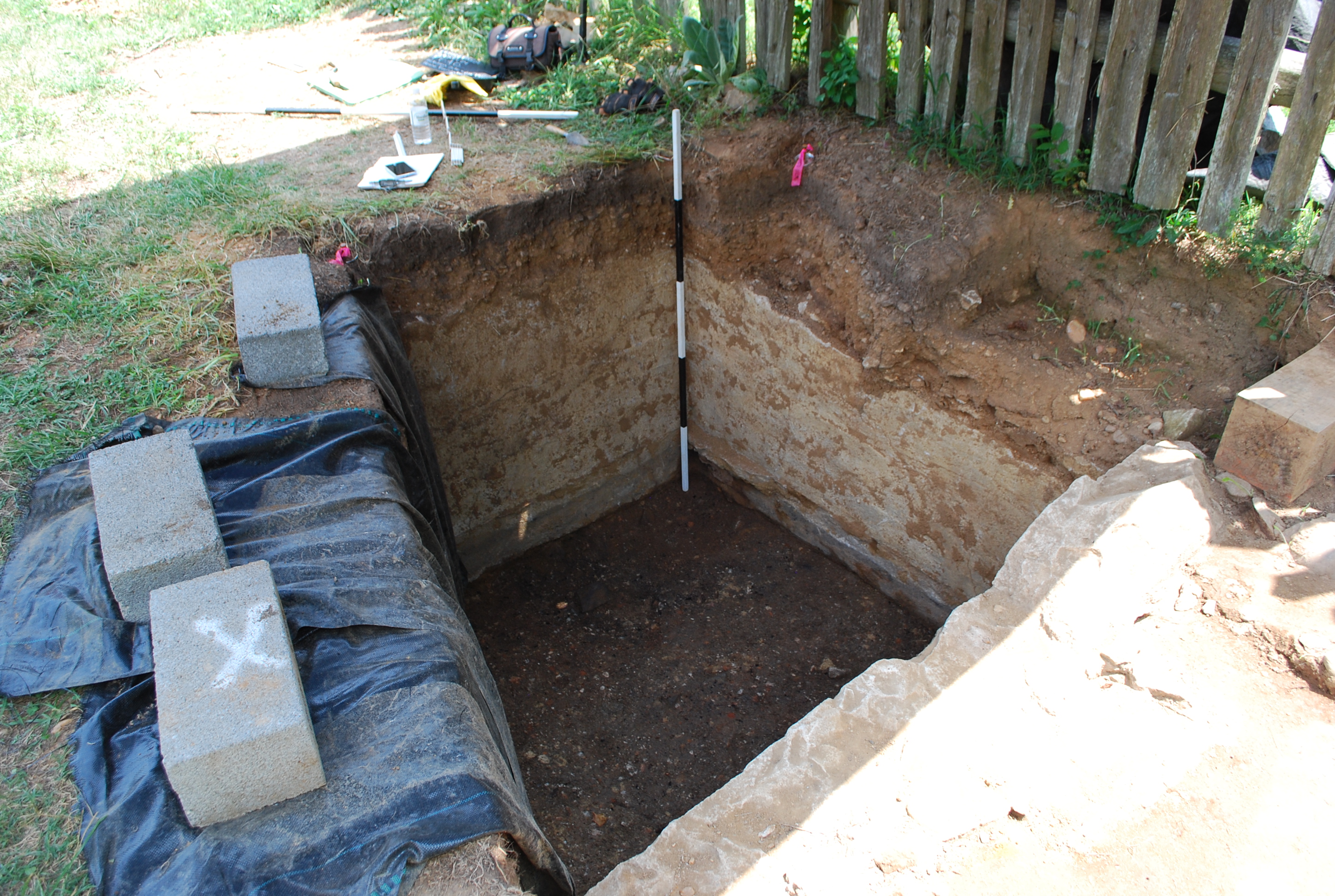
    The burned kitchen site is located beneath these concrete house foundations dating to 1914.  This picture was taken after protective sand fill was removed within the excavation unit.

    Phew, that was a lot! That sums up our 12-week dig season. We answered a lot of our initial questions and found many more questions to investigate. Archaeologists will be in the lab the rest of the year processing artifacts, researching our findings, planning next season’s dig, and enjoying the A/C. Stop by the lab in the Visitor’s Center and take a peek at what’s happening. See you all in the field next May!


    Danielle Arens

    GWF Archaeologist

  • Wrap Up of 2022 Dig!

    At the beginning of our 2022 dig, we were working with the assumption that a colonial-era building was located at the edge of our excavation site at Ferry Farm, the Boyhood Home of George Washington. At the southeastern edge of the work yard, four post-holes had been found and excavated during previous projects. All were similar in size, shape, and depth, and each one was 10 feet apart from another, forming a single line. 

    Figure 1. Location of the 2022 excavations at Ferry Farm.

    We presumed these features represented one side of a building and not a fence, mainly because of their size and distance from one another. Our objective was to find the rest of this structure and figure out what kind of building it was.

    Figure 2. Four post holes at the beginning of 2022 excavations, prompting us to look towards the south for the other side of the building.

    Our first goal was to ascertain if our -hole line extended further towards the east or west. Re-examination of previously excavated units to the west and the excavation of new units to the east revealed no additional posts, which meant our building was confirmed at 30 feet long on one side.

    The second objective was to find a parallel wall to our post-hole line, as would be expected if this line represented the remains of a structure. Because previous excavations in this area (2019, 2020, and 2021) showed no relatable line of posts to the north of our four post holes, we opened up new units and reopened previously excavated units to the south.

    What we found was not another line of post holes but a large stone pier and what appears to be two robbed stone pier features to the south of our four post-holes. This line of stone pier/robbed piers was located approximately 20 feet south of the post hole line. They were also spaced approximately 10 feet apart, and each corresponded with the placement of three of the four post-holes. 

    Figure 3. Alignment of four post-holes and three stone pier features on the site.

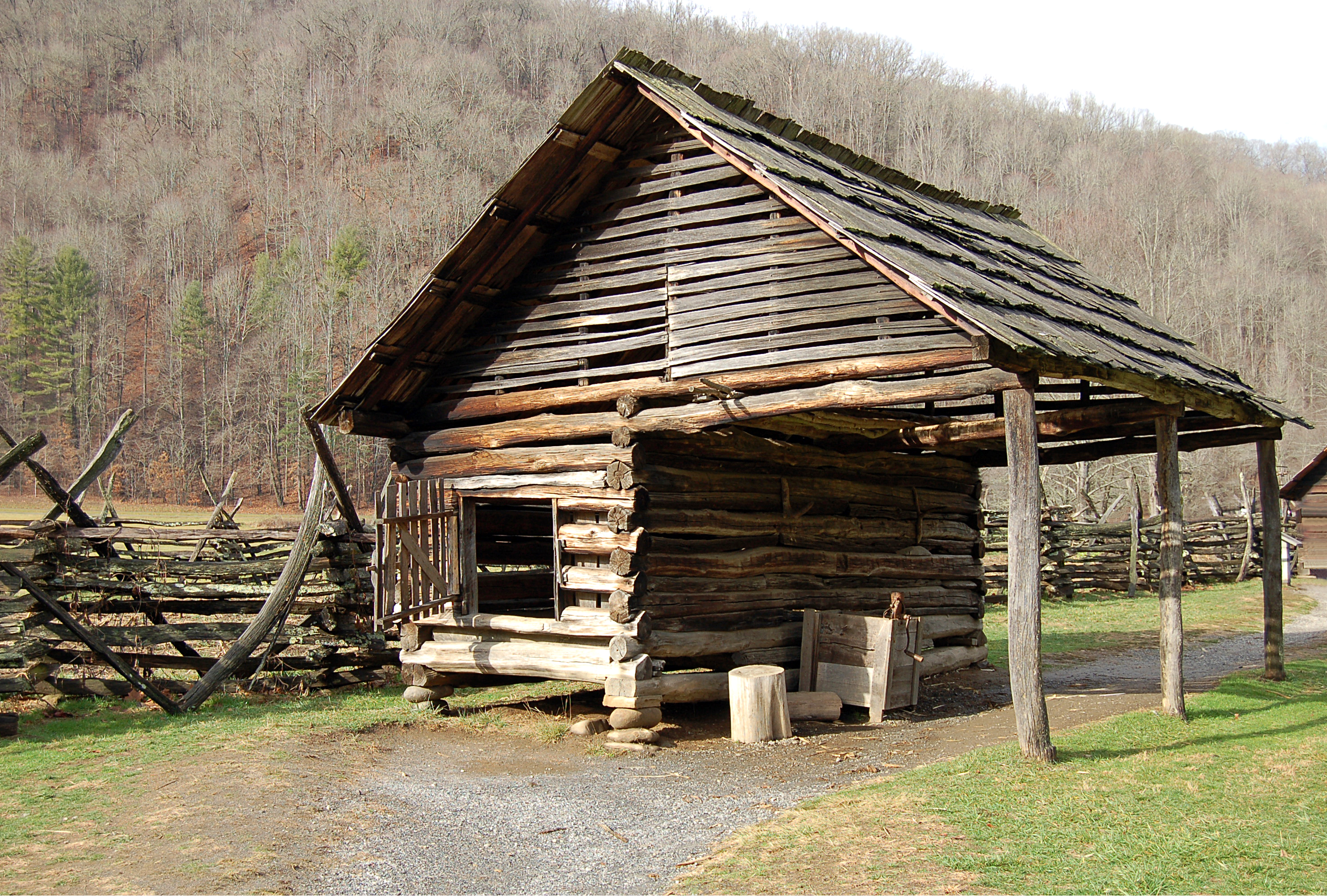
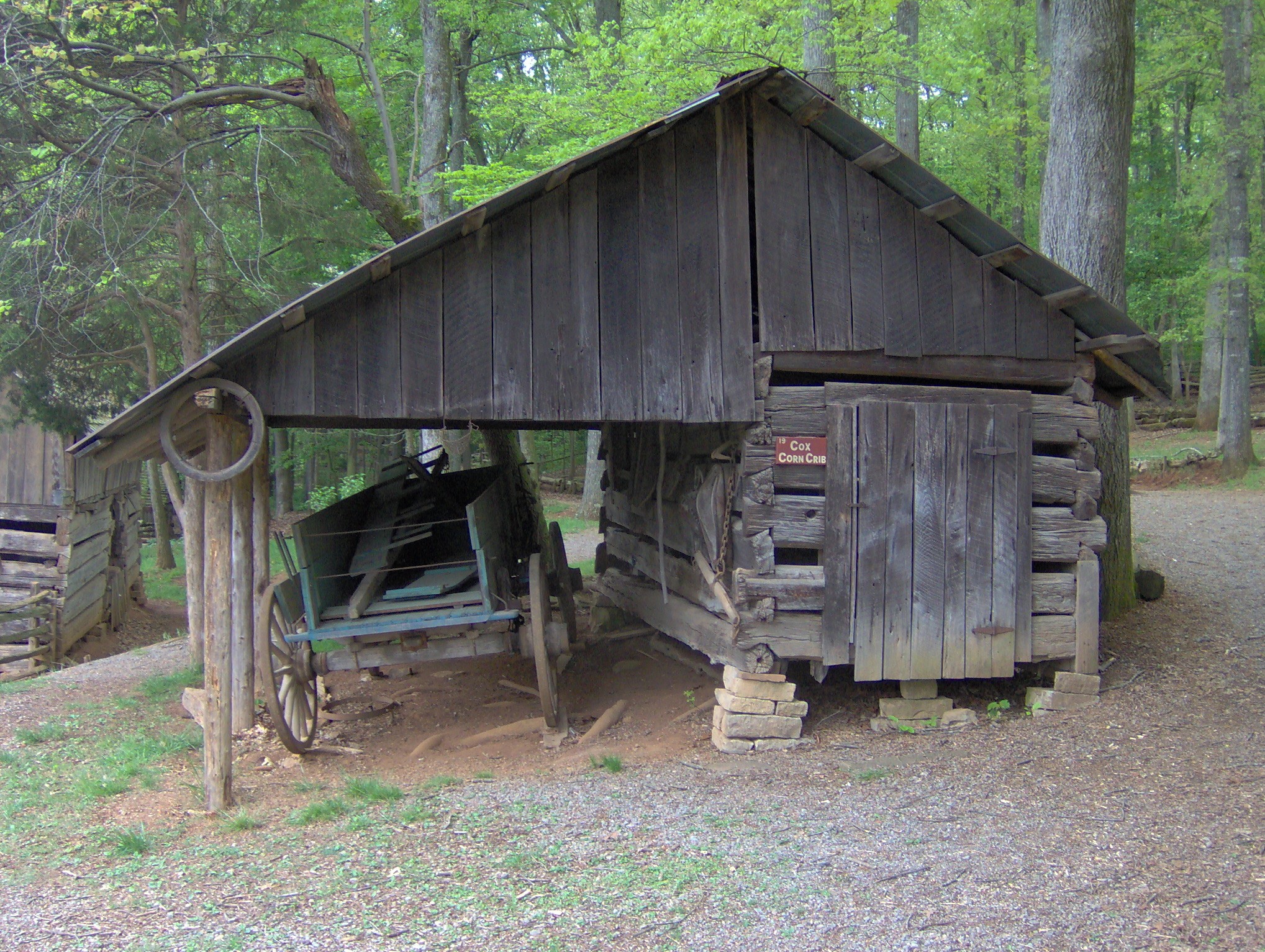
    We believe we have uncovered the partial remains of an agricultural building that employed a unique combination of wooden posts in the ground and stone piers for the foundation. A corn crib – a building found on every farm or plantation in every century – is such a structure that uses a combination of post in ground beams and stone piers in their construction. Stone piers would be used for the storage portion of the structure, and post in ground supports for the overhanging shed roof that affords protection to wagons offloading corn into the building. The corn crib examples below illustrate the use of two different foundation styles.

    Figure 4. An example of an old Corn Crib (North Carolina) using the same foundation system uncovered at Ferry Farm. The foundation features stone piers for the storage portion of the structure, with wooden post in ground beams that make up the protective shed roof that covered wagons being unloaded. (Wikimedia Commons)
    Figure 5. Corn Crib in Tennessee that uses post in ground supports for the shed portion of the building as well as stone piers for the storage portion of the structure. (Wikimedia Commons)

    The excavation of the entire structure, particularly the southernmost wall of the storage shed, was hindered by the existence of the emergency access road that was installed at Ferry Farm in 2018. So while we have the entire open shed portion of the corn crib, only half of the storage portion has been uncovered – the rest remains below the current entrance road.  

    Figure 6. Interpreted location of the corn crib on the site.

    Artifacts from this area have not yet been processed in our lab, but their preliminary analysis support the interpretation of this structure dating to the Washington period. 

    From historical documents, we know the Washington family was growing corn on their property, thus necessitating at least one, if not more, corn cribs on the farm. For example, in 1750, Mary Washington is paid £10 for selling corn to the Accokeek Furnace, a business originally started by her husband but then overseen by her stepson, Augustine Jr. Also, Washington’s survey of Ferry Farm in 1771 specifically mentions a cornfield on the property.

              Efforts of the last two dig seasons have centered around uncovering this building and determining its function. Having gone as far as we can in the field, our outside work on this structure is done. Work continues inside, processing the artifacts in the lab and refining our interpretation of this exciting new addition to the Washington landscape. 

    There will be another dig season this year at Ferry Farm, starting mid-May. Our focus will switch to different areas of the site, so be sure to visit this summer and allow us to tell you about our new projects. 

    Judy Jobrack
    Archaeology Field Director