Lives and Legacies

Tag: entertainments

  • Summertime Fun: Colonial June Fair

    Ask someone to list traditional summertime activities, and they will probably mention picnics, family reunions, beach vacations, mountain getaways, and baseball games. Their list is likely to include going to the fair as well.  The fair as a summer pastime is a long tradition and, like many American traditions, can be traced back to the age of Washington.

    In 1738, Augustine Washington moved his wife Mary and their five children, including six-year-old George, to Ferry Farm on the Rappahannock River opposite Fredericksburg, Virginia.  Coincidentally, in the same year, the colony’s General Assembly authorized two fairs to be held each year in Fredericksburg.[1]  This act built on an earlier ordinance passed in 1705, allowing for ‘markets and fairs’ as a necessary and civilizing element of early Virginian society.

    Although other cities held fairs, Fredericksburg was one of the few that had a fair in June.  Sometimes called June Fair, it was one of the oldest and largest in the colony.  June Fair and other fairs were “first and foremost a market ‘for the sale and vending of all manner of cattle, victuals, provisions, goods, wares, and merchandizes.’ Prizes, ‘or bounties,’ were sometimes offered for the best stock and poultry”.[2]
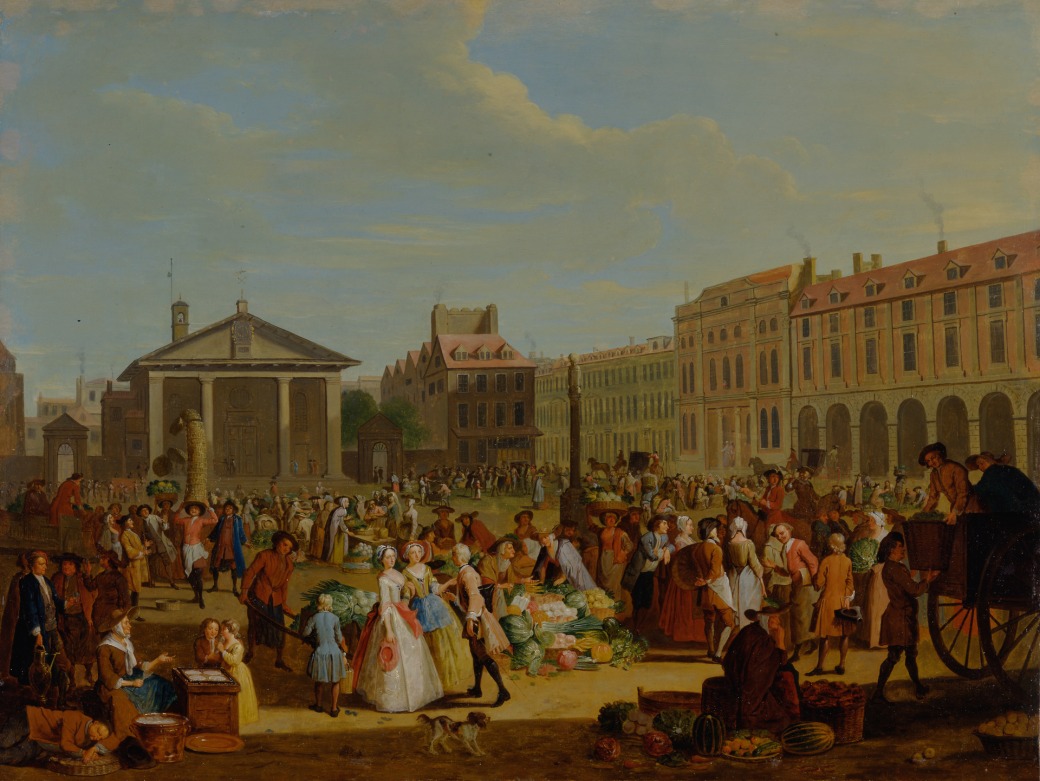
    Although this painting depicts a busy London agricultural market in the early 1700s, a similar hustle and bustle likely filled Fredericksburg during June Fair.  Covent Garden (1726) by Pieter Angillis, 1685–1734, Flemish, active in Britain (from ca. 1715), Oil on copper. Pubic domain. Credit: Yale Center for British Art, Paul Mellon Collection.

    Fairs were about more than agriculture, however. The importance of a summer fair was its ability to gather people from all over the surrounding counties to a single central location to conduct business and government and offer social interactions and entertainment.  In an agricultural colony such as Virginia, homes and plantations were very distant. People hardly saw anyone besides their immediate neighbors and family members for much of the year.  Most colonial Virginians traveled no more than fifty miles from home in their lifetimes. This made for an isolated existence focused on the constant attendance of crops. However, during natural seasonal breaks, farmers traveled to a town to sell those crops at the fair.

    Fairs were not just for farmers to sell. Court sessions, also known as ‘Public Times,’ often coincided with fairs. Soon merchants and entertainers saw the opportunity in the large numbers of people gathered together at the fair. Many people got paid or, more likely, an increase in credit and ready money made the fair a natural time to celebrate, entertain, gamble, and socialize.

    Among the amusements common to colonial-era fairs, “contests for prizes . . . in cudgeling, wrestling, manual-exercises, foot-racing, dancing, singing, violin-playing, greased-pig-chasing, etc. Prizes were offered to the most beautiful maid.  In towns large enough to warrant their attention, companies of actors sometimes arranged to give plays during fairs. Such plays, however, were held at the local playhouse or theatre, and not on the market square, where the fair usually took place”.[3]

    For example, in 1752, an acting troupe known as “THE Company of COMEDIANS, from the new Theatre at Williamsburg, propose[d] … to proceed to Fredericksburg, to play during the Continuance of June Fair.” The troupe hoped “That all Gentlemen and Ladies, who are Lovers of Theatrical Entertainments, will favour us with their Company.”[4]

    Advertisement in The Virginia Gazette announcing the appearance of the Company of Comedians at June Fair in 1752.

    The fair brought people together to conduct more than agricultural business.  Indeed, “the fair was also a place where men met to make and pay debts. Land, houses, storehouses, and personal property were offered for sale at fairs — privately and by public auction”.[5]

    During June Fair in 1751, 19-year-old George Washington auctioned off two of his lots in Fredericksburg.  His announcement of the sale in The Virginia Gazette offered the lots, “where Mr. Doncastle and Mr. Black lately kept Tavern, next June Fair, to the highest Bidder, for Cash or Bills. Eight Months Credit will be allow’d on giving Security, as usual” and was signed “George Washington.”[6]
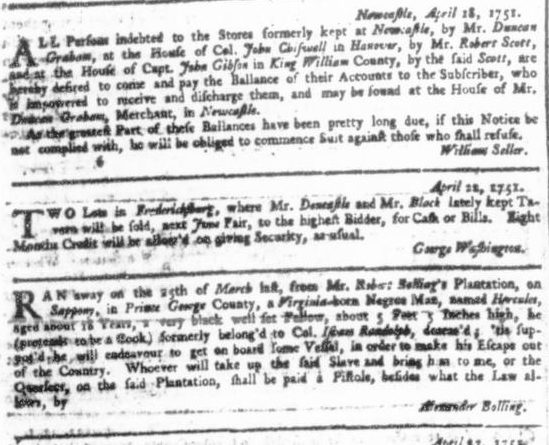
    Announcement placed in The Virginia Gazette by George Washington announcing his intention to auction off two lots of his land in Fredericksburg at June Fair in 1751.

    A decade later, at June Fair in 1760, George’s account ledger shows him paying Fielding Lewis £40.  Furthermore, just a few days before paying his debt to brother-in-law Fielding, George also race, both popular fair activities. [7]

    Indeed, “the most popular attractions of the fairs in Virginia and Maryland were the horse-races . . . held at race-tracks near the town. Purses were subscribed, and many gentlemen, who had no interest in the other activities, would attend the races”.[8]

    Gambling at the fair, mainly in the form of lotteries, even supported more noble pursuits.  At June Fair in 1769, a lottery was undertaken to raise £450 for building a new church and for purchasing an organ for that church.  The drawing was to take place on “the 7th day of JUNE next (being the first day of the Fredericksburg fair) at the town-house” and was supervised and supported by a host of the town’s luminaries including Charles Dick, Hugh Mercer, Charles Washington (George’s brother), George Weedon, and Fielding Lewis. [9]

    June Fair was a community event attended by Virginians from across the colony and brought George Washington back to his boyhood home on more than one occasion.  At the fair, Virginians sold farm goods and land, settled debts and tried court cases, enjoyed a play, and gambled on the horses.  June Fair, much like today’s summer pastimes, was a moment in the year to enjoy the summer weather and the company of neighbors, friends, and family before returning to isolated plantations and farms and the unending work of plowing, planting, and harvesting.

    Come and join our 18th-century colonial fair on Saturday, June 11, from 10:00 a.m. to 3:00 p.m. There will be magic, medicine, music, and more with Dr. Balthasar’s Marvelous Miracle Medicine Show, music by Colonial Fare, colonial games, and craft activities for the kids. Admission includes access to the grounds, performances, activities, and walk-through tours of the Kenmore House. Tickets are $5 for ages five and up, and under  five are free.

    Zac Cunningham, School Programs Educator, Hampton Roads Naval Museum at Naval History and Heritage Command


    Joe Ziarko, Actor Interpreter at Colonial Williamsburg Foundation


    [1] Eighteenth Century Fairs. Colonial Williamsburg Digital Library https://research.colonialwilliamsburg.org/DigitalLibrary/view/index.cfm?doc=ResearchReports%5CRR0069.xml, pg 35. Accessed 6 June 2022

    [2] Ibid, pg 18

    [3] Ibid, pg 19

    [4] The Virginia Gazette, April 30 1752.

    [5] Eighteenth Century Fairs. Colonial Williamsburg Digital Library https://research.colonialwilliamsburg.org/DigitalLibrary/view/index.cfm?doc=ResearchReports%5CRR0069.xml, pg 18. Accessed 6 June 2022

    [6] The Virginia Gazette, 1751.

    [7] Cash Accounts, May 1760.National Archives and Records Administration https://founders.archives.gov/documents/Washington/02-06-02-0226. Accessed 6 June 2022

    [8] Eighteenth Century Fairs. Colonial Williamsburg Digital Library https://research.colonialwilliamsburg.org/DigitalLibrary/view/index.cfm?doc=ResearchReports%5CRR0069.xml, pg 19. Accessed 6 June 2022

    [9] The Virginia Gazette, 1751.

  • Digging Up a Card Table

    Tantalizing evidence of historic furniture use exists within the soils of George Washington’s Ferry Farm and that evidence gives us a more complete view of how the Washington family lived in the 1700s. The hundreds of items archaeologists and students have uncovered represent the remains of furniture broken or embellishments lost. The ruthless outdoor elements leave scant vestiges of furniture’s former glory. Wood disintegrates into soil, so these relics typically include only iron and brass hardware, such as drawer pulls, casters, bolts, keyhole escutcheons, or hinges. Over half of the hardware found consists of brass tacks.  Such brass studs were often used in furniture upholstery, but were also popular for saddles, trunks, even antique wig stands: anytime a leather covering was added to a wooden frame or base.

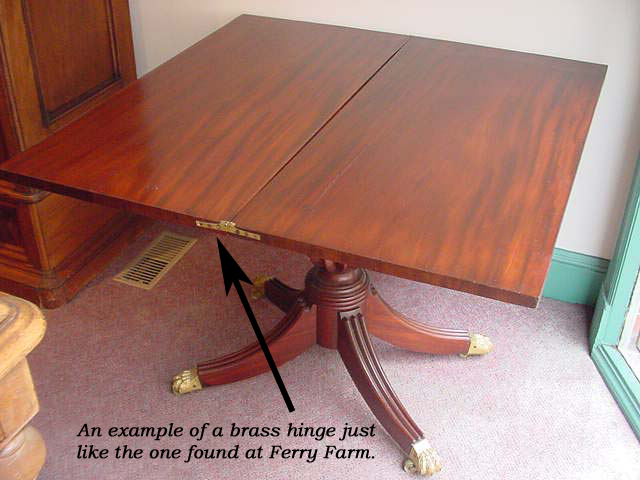
    One particularly interesting brass hinge was unearthed in 2007 and boasts an exciting past. This hinge, part of a folding card table, was a crucial element in the popular Virginia domestic pastime of playing games such as backgammon, chess, and cards. Card tables provided a luxurious accessory for popular social entertaining and were part of a well-appointed home.  Providing guests with such pleasant amusements reflected well upon the Washington family.

    card-table-hinge
    18th century card table hinge excavated at George Washington’s Ferry Farm.

    Archaeological investigations sponsored by The George Washington Foundation have uncovered evidence that demonstrates that the Washingtons’ mid-1700s home was filled with fashionable accessories to enhance social bonding.  These tools included tea wares, stemmed drinking glasses, glass decanters, fashionable dining utensils, and smoking pipes. The recovery of a card table hinge provides another element of their well-equipped home.

    cardtable-hinge-on-table

    Gentleman often played card games together, but occasionally women joined the amusement as well (Porter and Porter 1782:466-467). Playing cards allowed ladies and gentlemen a refined form of amusement in a convivial atmosphere, without raising critical eyebrows from discerning social commentators in Virginia.  These games were occasions in which mixed company – men and women – could enjoy companionship and pass the time in a genial way. It was one of the few entertainments in which men and women could directly compete (Sturtz 1996:169-171). Lucy Byrd’s acumen prompted her husband William to cheat on at least one occasion (Sturtz 1996:172-173, 175-176).

    Such benign competition also allowed players to showcase their skills. William Byrd II thought that such games provided an effective antidote to “disagreeable” company, as it allowed the time spent with tiresome guests to pass quickly (Sturtz 1996:175). Tea or stronger beverages might lubricate such gatherings, which enhanced social bonds.

    hogarths-wanstead-house
    Card playing (group at card table in painting’s center) and tea drinking (group at table at painting’s right) provided elegant entertainment as depicted in The Assembly at Wanstead House (1728-31) by William Hogarth. Public domain. Credit: Philadelphia Museum of Art / Wikipedia

    If card games included a little wager, they were all the more thrilling.  Self-assured gambling and an indifference to losing money demonstrated a gentleman’s independence from monetary anxiety (Isaac 1974:352; Koda and Bolton 2006:100; Sturtz 1996:166). Such competitive confidence went a long way towards refuting any rumors of financial stress from which a gentleman might be suffering in the community.

    In the years leading to the American Revolution, these occasions were increasingly viewed as a source of social disorder (Isaac 1974:358-359), but such amusements remained popular social events in Virginia.

    Cards were a popular Virginia pastime and specific furniture such as folding card tables existed as luxurious accessories to support this pasttime (Isaac 1974:352). Hospitality was an important part of these occasions (Isaac 1974:352) and the folding card table made the game and the hospitality possible.  Applying knowledge of the past to particular objects like a card table hinge excavated at Ferry Farm gives us a more complete picture of the lives led by the Washington family here in the 18th century.

    Laura Galke, Archaeologist
    Site Director/Small Finds Analyst

    References Cited

    Porter, James and William Porter
    1782 Letters Addressed to Two Young Married Ladies, on the Most Interesting Subjects. The Critical Review, or, Annals of Literature.  British Periodicals.  Printed for J. Dodsley, London.

    Goodison, Nicholas
    1975 The Victoria and Albert Museum’s Collection of Metal-Work Pattern Books.  Furniture History 11:1-30.

    Issac, Rhys
    1974  Evangelical Revolt: The Nature of the Baptists’ Challenge to the Traditional Order in Virginia, 1765-1775. The William and Mary Quarterly 31(3):345-368.

    Koda, Harold and Andrew Bolton
    2006  Dangerous Liaisons:  Fashion and Furniture in the Eighteenth Century.  The Metropolitan Museum of Art, New York.

  • Video: How to Play Whist

    Colonial Americans often played cards for leisure and enjoyment and one of the most popular card games of the period was Whist. In this video we show you how to play this game.

    You can read a bit about the history of playing cards themselves here.

  • How Washington Relaxed: A Short History of Playing Cards

    As modern people, we tend to assume the past is a foreign land where residents’ lives are alien to our own. Would the founding fathers balk at how we dither away our time? Or would they recognize that life without its moments of levity is foolish?

    Eighteenth century America was a time of growing leisure activities. Colonists enjoyed playing games, watching horseraces, or going to an evening of theatre. But for anyone who has ever passed the time with solitaire or gone all-in with a pair of Kings, you have passed the time in a way George Washington would recognize immediately.

    The entire history of playing cards is massive and sometimes convoluted. Opposing origins, numerous legends, and the lack of definitive documentation make a ‘brief history’ all but impossible. But a few things are known.

    Playing cards used strictly for games have been around for thousands of years but the oldest recognizable relatives to our modern playing cards appeared in Europe in the latter half of the 1300s. At this time, France saw a rise in the popularity of expensive and elaborate fortune-telling  Tarot cards, not the everyman game familiar to modern audiences.

    Around the same time, we find references to card games in Italy that speak most directly to our modern notion of cards. Here their earliest decks contain familiar features: cards numbered one to ten, four royal court cards, and four suits including cups/chalices (coppe), coins(denari), swords (spade), and club/baton (bastoni).

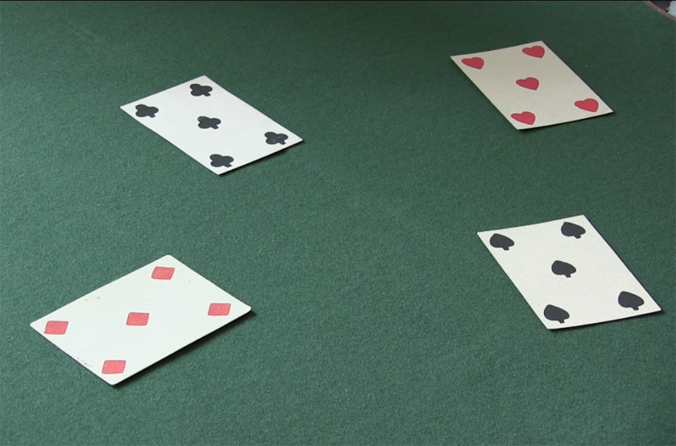
    Suits
    Suits in a reproduction set of 18th century playing cards seen in a screen capture from an upcoming Lives & Legacies video about how to play Whist, a game popular with colonial Americans.

    By the beginning of the new century, the 1400s, references to people playing ‘cards’ are seen all across Europe.  Card numbers, royalty, and suit continued to change across Europe for the next 200 years and featured plenty of regional differences.

    For the most part there were four suits, but what those suits were was debatable. Other suits in Europe (some even today) included roses, bells, acorns, shields, leaves, pikes, tiles, clovers, hearts, and of course diamonds.

    The royal cards varied from deck to deck, much like the royalty and ruling elite varied in the nations of Europe. Some decks had no queen, others included clergy, sometimes it was three royal cardsand other times there were four. There was one constant, however, there was always a King and he was the highest in the deck.

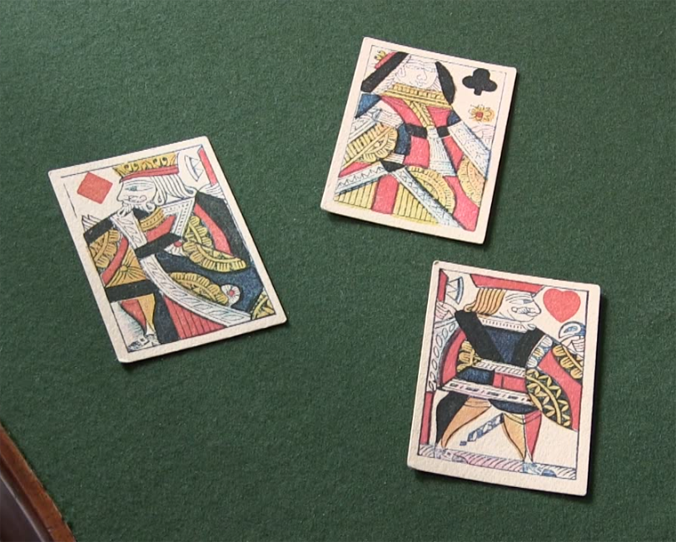
    RoyalCards
    The King, Queen, and Knave in a reproduction set of 18th century playing cards. When printed numbers and letters (K, Q, J) were added to cards, the Knave came to be called the Jack so it would not be mistaken for the King.

    By the early 17th century, England had a standardized deck (based on the ‘French’ deck) made up of the four suits we know, numeric cards one to ten, Knave, Queen, and King. This is the deck we still use today.

    By this time, cards even started to play a role in politics. In 1615, as an effort to cease the importation of foreign cards and raise revenue, King James I placed a duty on imported cards and appointed an office to inspect playing cards. Although initially unpopular with commoners who preferred the cheap foreign cards, ultimately the duty persisted. The King and Parliament tried to levy a similar duty with the Stamp Act 150 years later, which many credit with beginning American opposition to British taxation that ultimately led to Revolution.

    Those 150 years were incredibly important to the growth the Colonies and of Virginia. They grew from rugged outposts in a strange land to thriving cities and societies that weather the French and Indian War. The colonists earned their right to leisure and wanted to enjoy it!

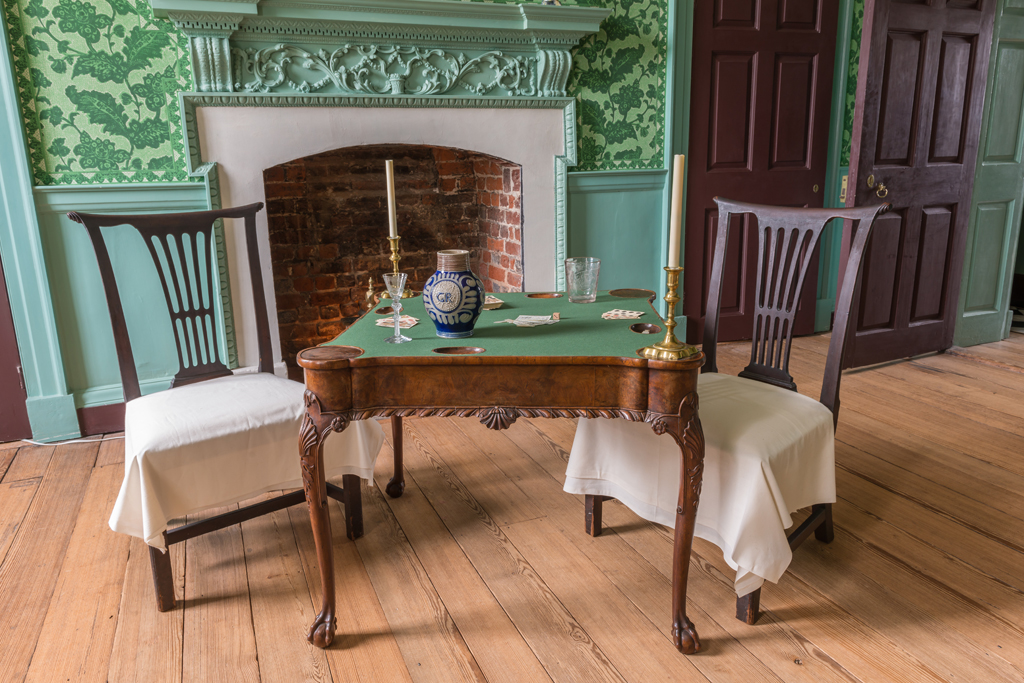
    Gaming Table (1)
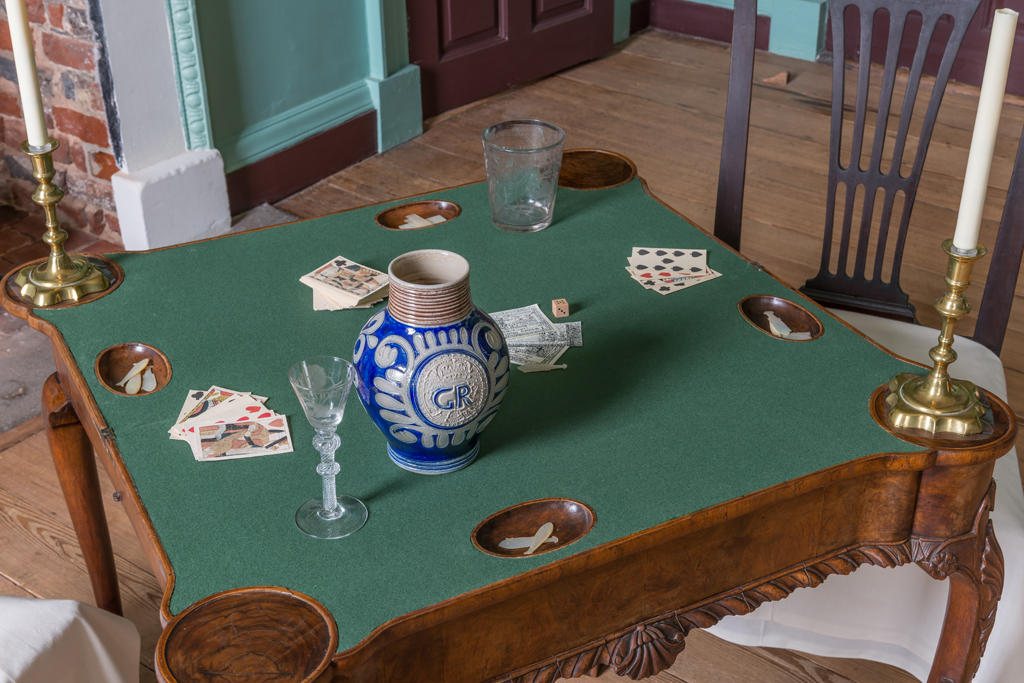
    The walnut gaming table in Historic Kenmore’s drawing room was made in England around the year 1760. The table top is covered in green baize (felted wool, similar to what you find on modern billiards tables) with wells to hold gaming chips and “turrets” at the corners to hold candlesticks.

    Gaming Table (2)
    The table has a possible connection to the Washington family, in that it might have descended through George Washington’s younger brother Charles’s family. That connection is still the subject of research, and it may be a while before we are able to conclusively prove or disprove that provenance.

    Prior to the Revolution, Virginians prided themselves in being British! They enjoyed British rights, food, drink, and pastimes like horseracing, dancing, and of course, playing cards. It would not be uncommon to see cards being played at the taverns or at gaming tables in drawing rooms, by all members of Virginia society. We only need to look at the probate inventory of Fielding Lewis to discover what games they played for among the books included in his library it lists ‘Hoyl 1 Vol’.

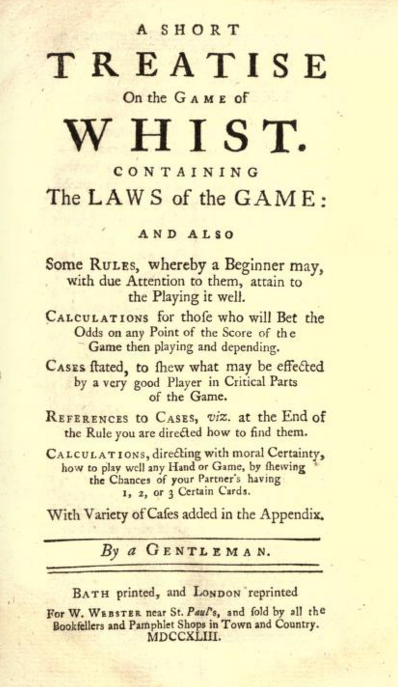
    In 1742, Edmond Hoyle published a Short Treatise on the Game of Whist. This pamphlet taught the rules to Whist as well as the best hands/plays  and was an immediate success! Hoyle continued to expand his Treatise to include other games such as back gammon and chess. Ultimately, the book’s 15 editions made it the standard instructional for card games in the English-speaking world. You can read a bit more about Hoyle and, more importantly, about gaming pieces used in the 1700s on The Rooms at Kenmore blog here.

    Hoyle
    Front page of Hoyle’s Short Treatise on the Game of Whist, published in 1743.

    And, finally, if there is any doubt to whether or not colonial men enjoyed the pastime of playing cards, we need only look at George Washington and Colonel Fielding Lewis. On December 23, 1769, George Washington stopped in Fredericksburg while returning home to Mt. Vernon. He would spend Christmas Day with his sister and brother-in-law and won ‘£2 5s at cards’. Whether George and Fielding both enjoyed that specific game may be lost to history, but how they spent that holiday is undeniable; they played cards.

    Whether for the game of Whist set out on Kenmore’s gaming table or the game of Hearts you play with your family at home, playing cards have a history that can be traced over the centuries and across the globe. It is a history that we share as directly with one another as well as with our founding fathers.

    Joe Ziarko
    Manager of Interpretation & Visitor Services

    Editor’s Note: Watch for an upcoming video about how to play the game of Whist coming soon!