Lives and Legacies

Tag: Ferry Farm kitchen fire

  • It’s That Time of Year Again: 2025 Dig Preview

    It’s the most wonderful time of the year! There’ll be dirt out for screening, ceramics for cleaning, and lots of good cheer…. Okay, sorry, that might be a little too far. But it is a super exciting part of the year here at Ferry Farm, George Washington’s Boyhood Home. We have officially started this summer’s dig season!

    Building off of the previous two years’ exploration of the kitchen site, we are revisiting the 18th-century kitchen cellar again this year. While last year’s dig focused on locating and exposing the kitchen’s stone wall foundations, our focus this year will be excavating the fill within the cellar walls that had been deposited as a result of a fire sometime in the 1740s. The fire caused the building to collapse in on itself, filling the cellar space with ash and debris.

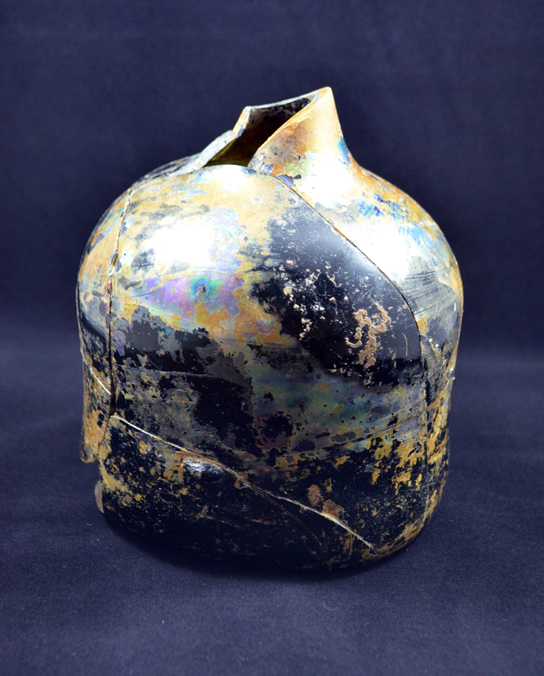
    Excavating sites like this are very exciting because they represent preserved moments in time, leaving the possibility to find artifacts left in situ or in place, when the fire occurred. It is likely that most of the artifacts excavated will have evidence of the extreme heat caused by the fire. Toasty artifacts from the 2023 preliminary kitchen exploration have been washed and catalogued, showing damage to artifacts, such as glass bottles and ceramic storage vessels, ranging from being slightly charred and burnt to being completely melted. Toasty or not, these artifacts will help us nail down the date of the fire and what was being stored in the kitchen cellar when it went up in flames.
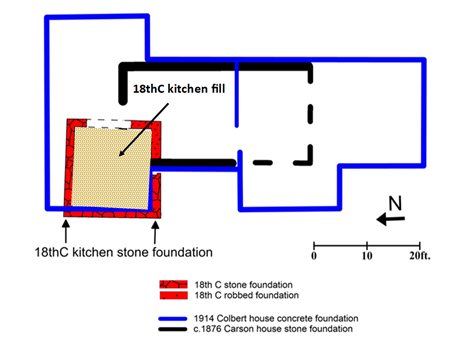
    Our 18th-century kitchen, unfortunately, lies beneath the foundations of two farmhouses with full cellars dating from the 19th and 20th centuries. The construction of these homes severely impacted the kitchen structure and its burnt cellar fill, making it difficult for our archaeologists to accurately interpret the kitchen’s architectural features. A small portion of the kitchen cellar fill was also the subject of previous archaeological excavations in the 1990s, so we are not the first team to sample the fill. But in the interest of site preservation, the kitchen remnants were covered over twenty-five years ago with protective geofabric, and the farmhouse cellars backfilled completely with sand.

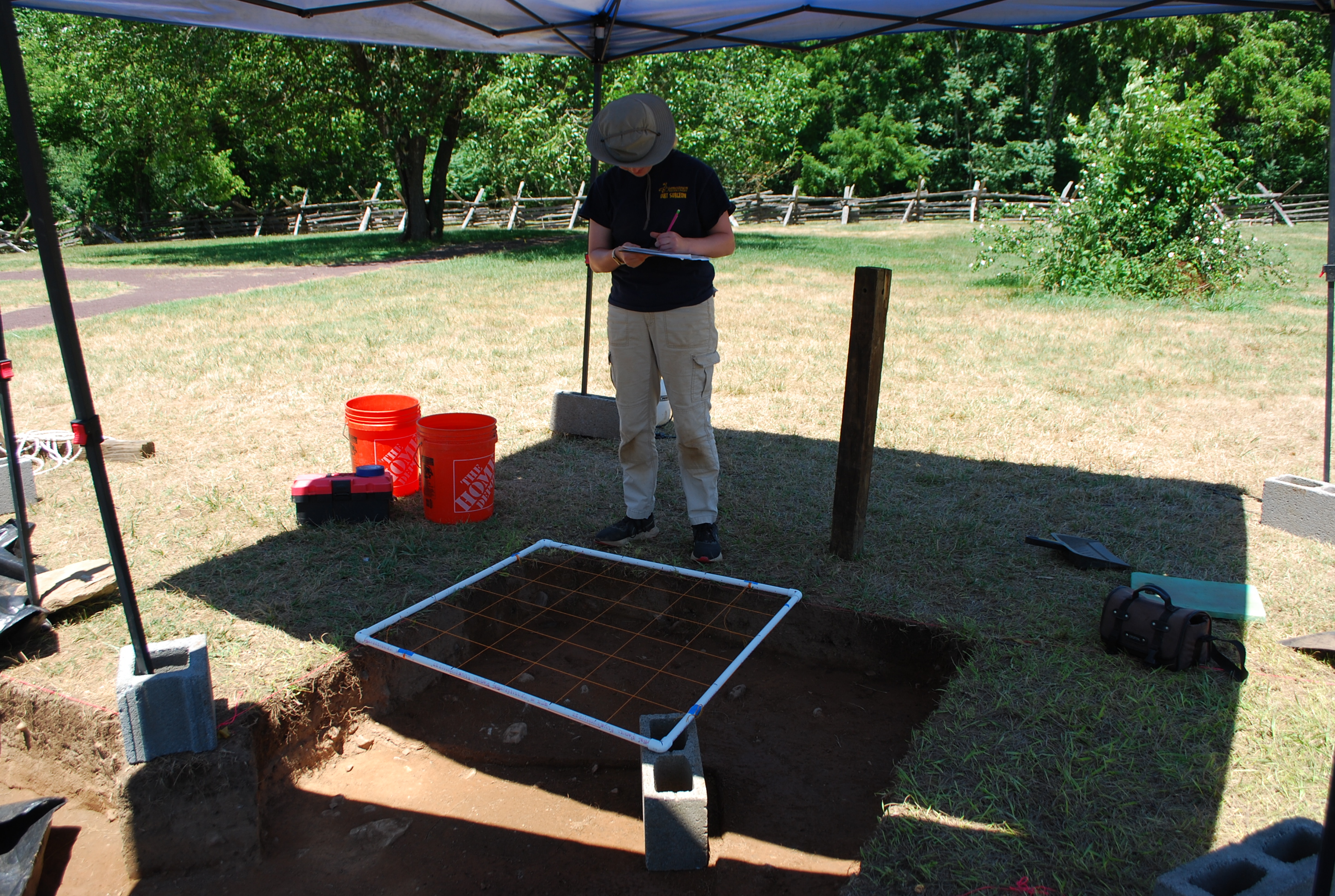
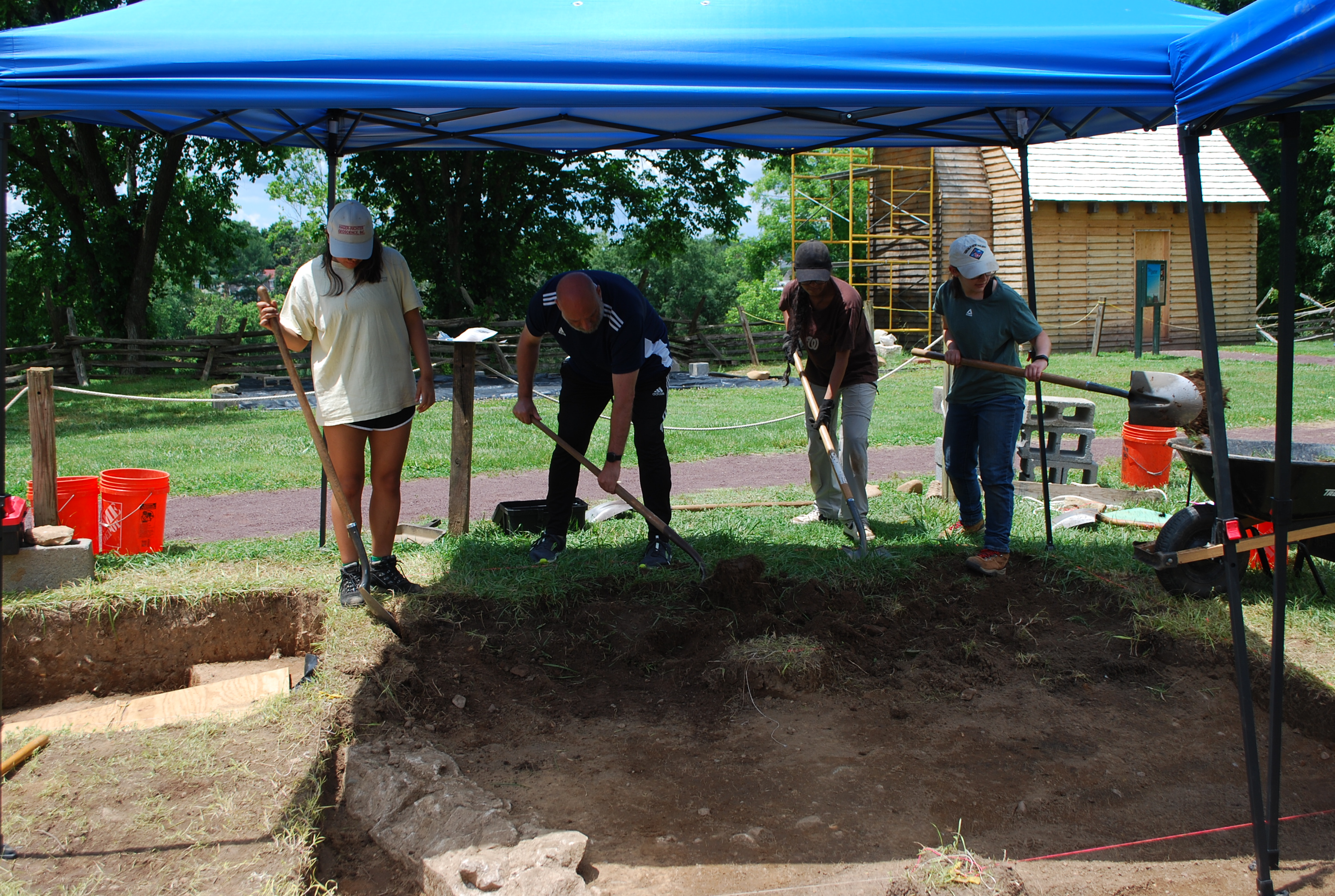
    Luckily, we had the help of an excavator at the beginning of this season to remove the five feet of protective sand covering the kitchen cellar fill so we could get to the fun stuff sooner! But our fun isn’t restricted to the cellar, as we still have multiple 5” x 5” units around the outside of the kitchen foundations to investigate. Our team is still trying to locate the midden (trash deposits) and fireplace associated with the kitchen, as well as additional architectural evidence that would give an idea of the overall form and dimensions of the complete kitchen structure.

    Every excavation year brings new and exciting finds as we sift through thousands of years of site habitation. Come visit us while we dig weekdays from opening until 3:30 pm through July 11th. Hope to see you there!


    Danielle Arens and Judy Jobrack
    GWF Archaeologists

  • That’s A Wrap! Ferry Farm’s Dig Season Recap

    October just happens to be Virginia Archaeology Month, and what better way to celebrate than to recap this summer’s excavation at George Washington’s Boyhood Home at Ferry Farm.

    You might remember from our dig preview, that this year’s dig (FF-44) focused on the continued exploration of the 18th-century kitchen site located just northeast of the main house. In 2023, our limited investigations uncovered just a small section of the kitchen’s stone foundation and cellar, giving us a sneak preview of the conditions and parameters of future site work. Armed with this knowledge, our aims this year were to uncover more of the original foundation walls of the kitchen cellar, to uncover additional architectural evidence of the kitchen outbuilding, and explore the surrounding landscape for features. So, did we do it?

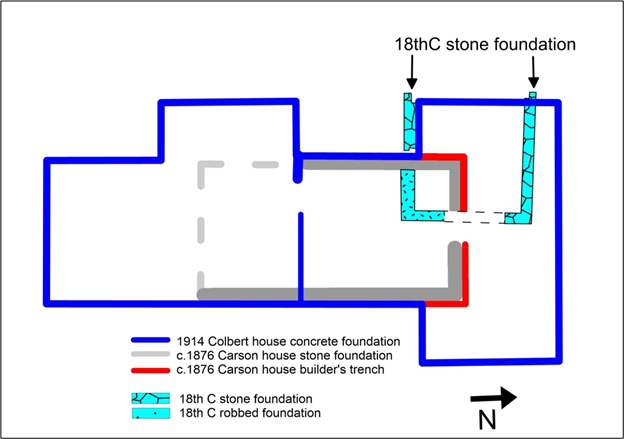
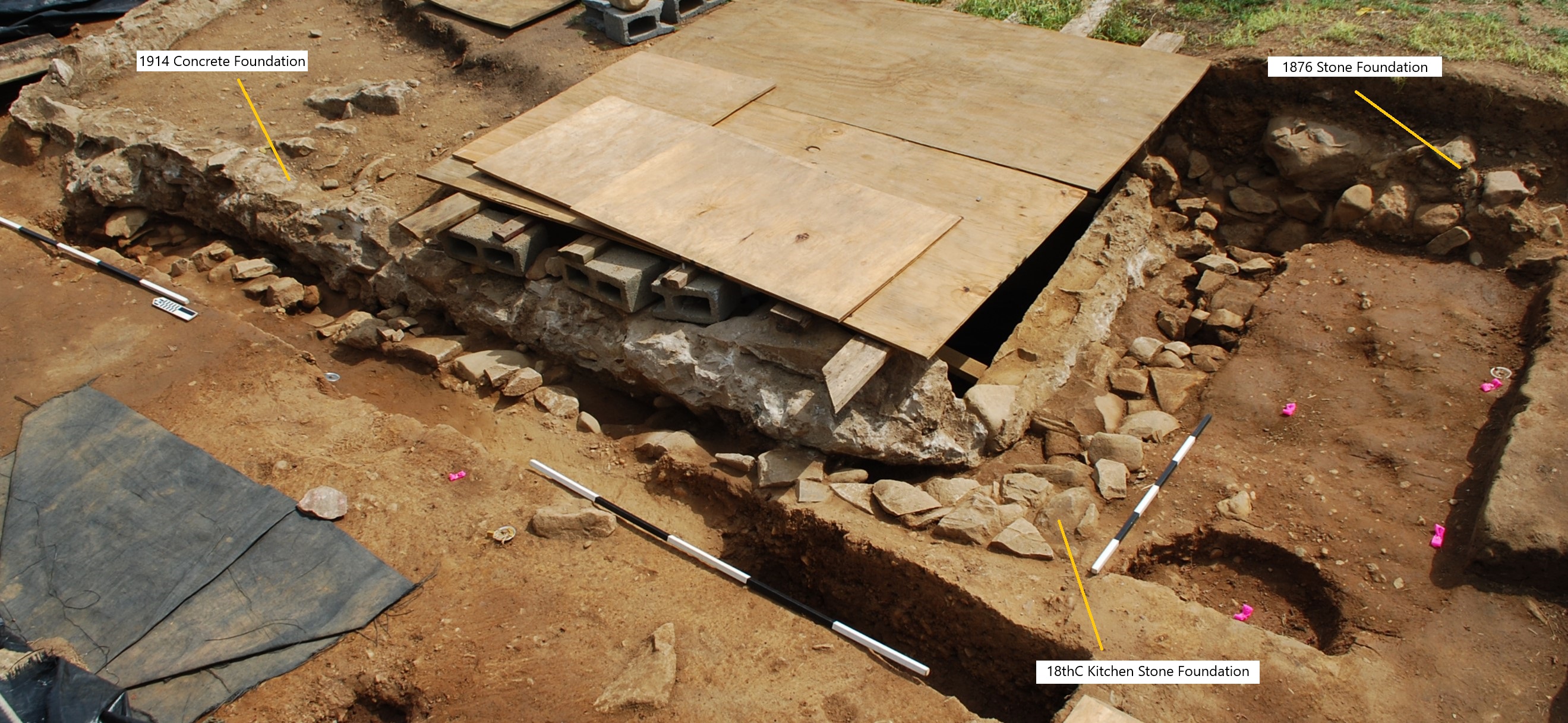
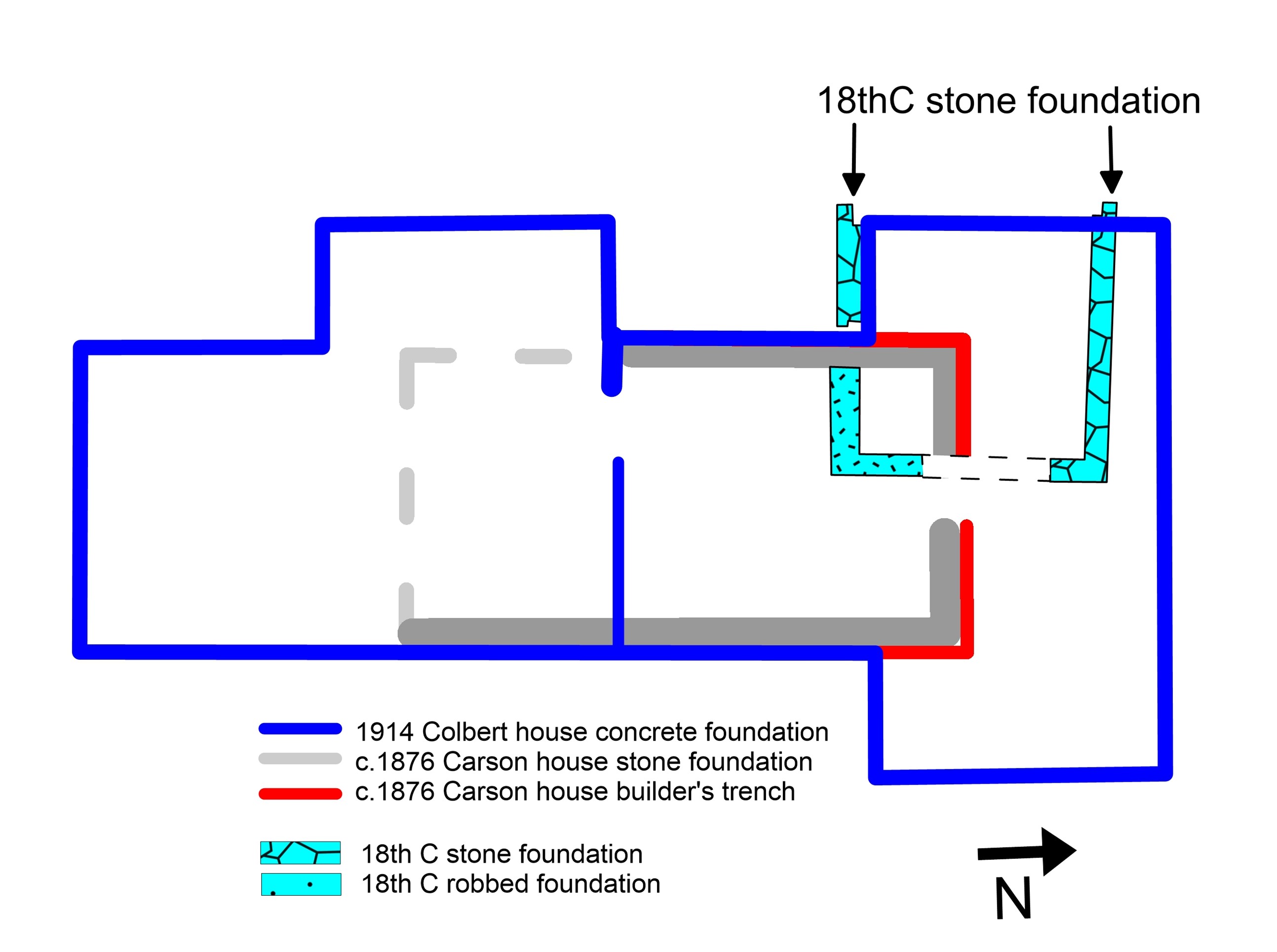
    Location of the 18th century kitchen foundation in relation to two later farmhouses dating to 1876 and 1914. 

    We did! But before we get to the fun discoveries, let’s go over how we got there. As far as sites go here at Ferry Farm, this one has been through a lot. Not only did the original 16’ by 16’ kitchen building burn and collapse in on itself in the middle of the 18th century, but it also had two subsequent farmhouses built on top of it that were either moved, damaged in a fire, or demolished all within the last 150 years. A previous archaeology project on the site introduced another element of complexity in understanding the depositional sequence of fills on the earlier 18th-century site, which had obviously been heavily disturbed by all these later events.

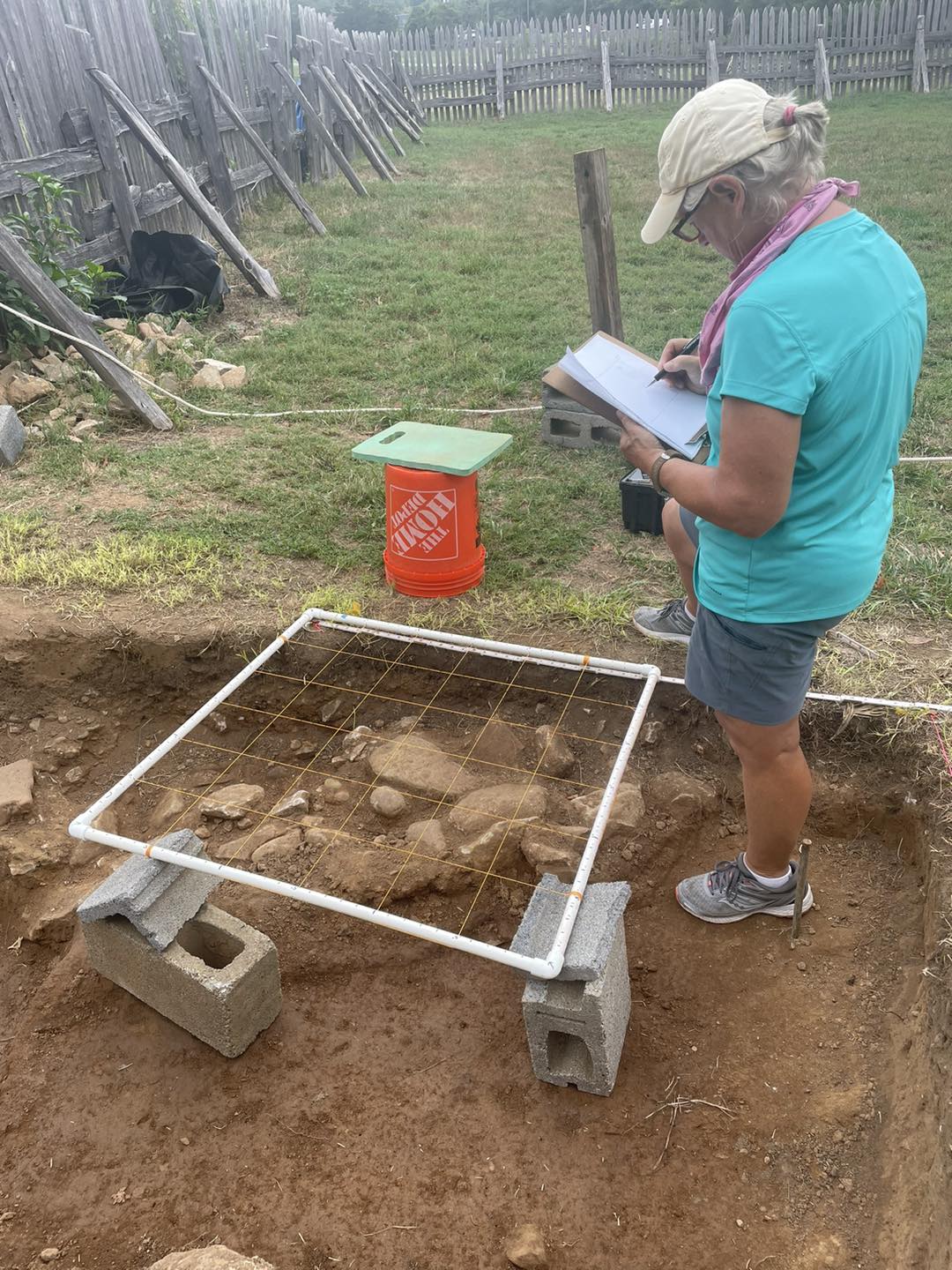
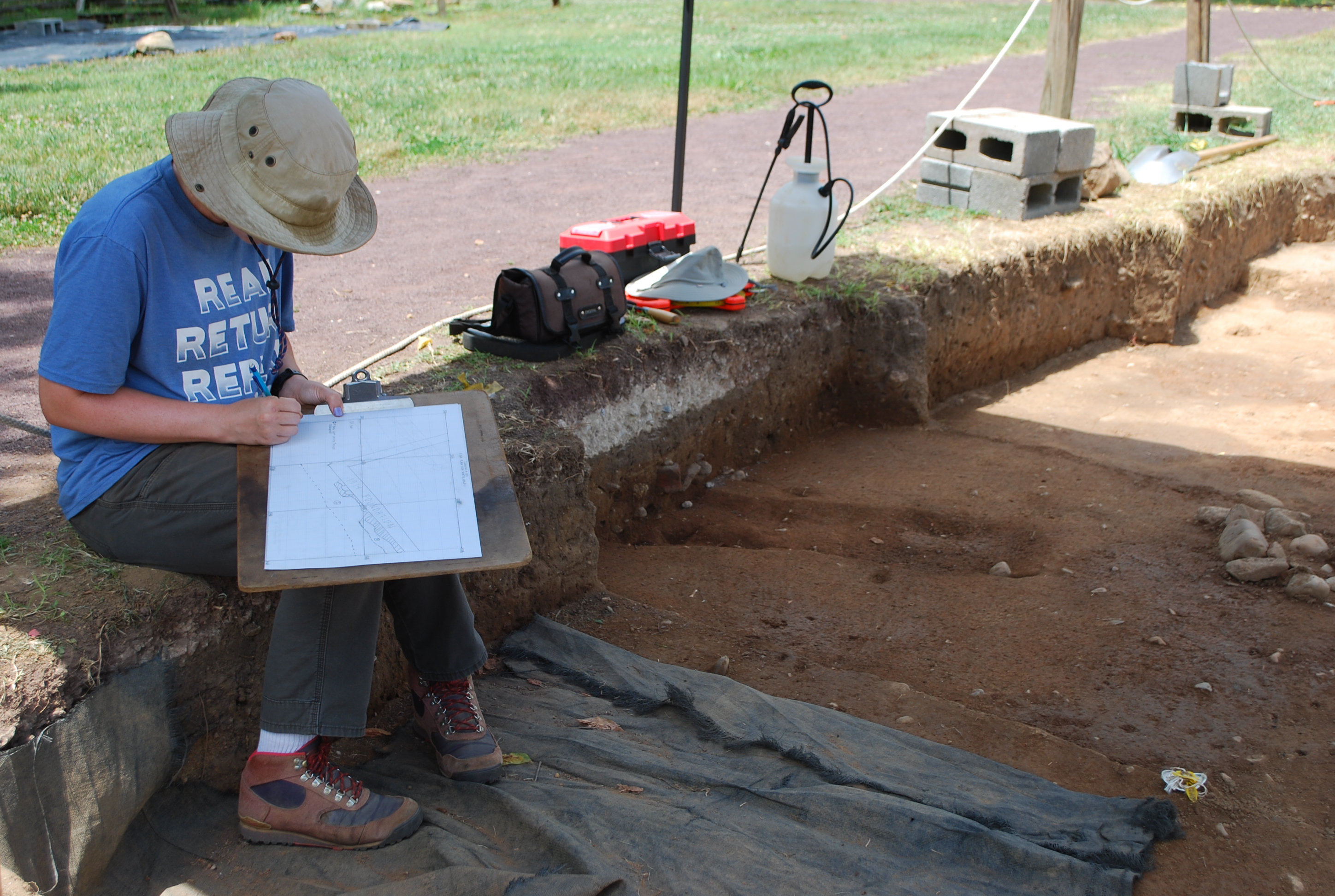
    All this led to an interesting excavation. Since a significant portion of the site had previously been excavated in the 1990s, a sizable amount of our site time was spent re-excavating backfilled archaeology units with the purpose of exposing unexcavated layers around the site. Not only would these unexcavated layers allow us to gather new data, but it would also give us the opportunity to better understand the findings as recorded in the earlier reports.

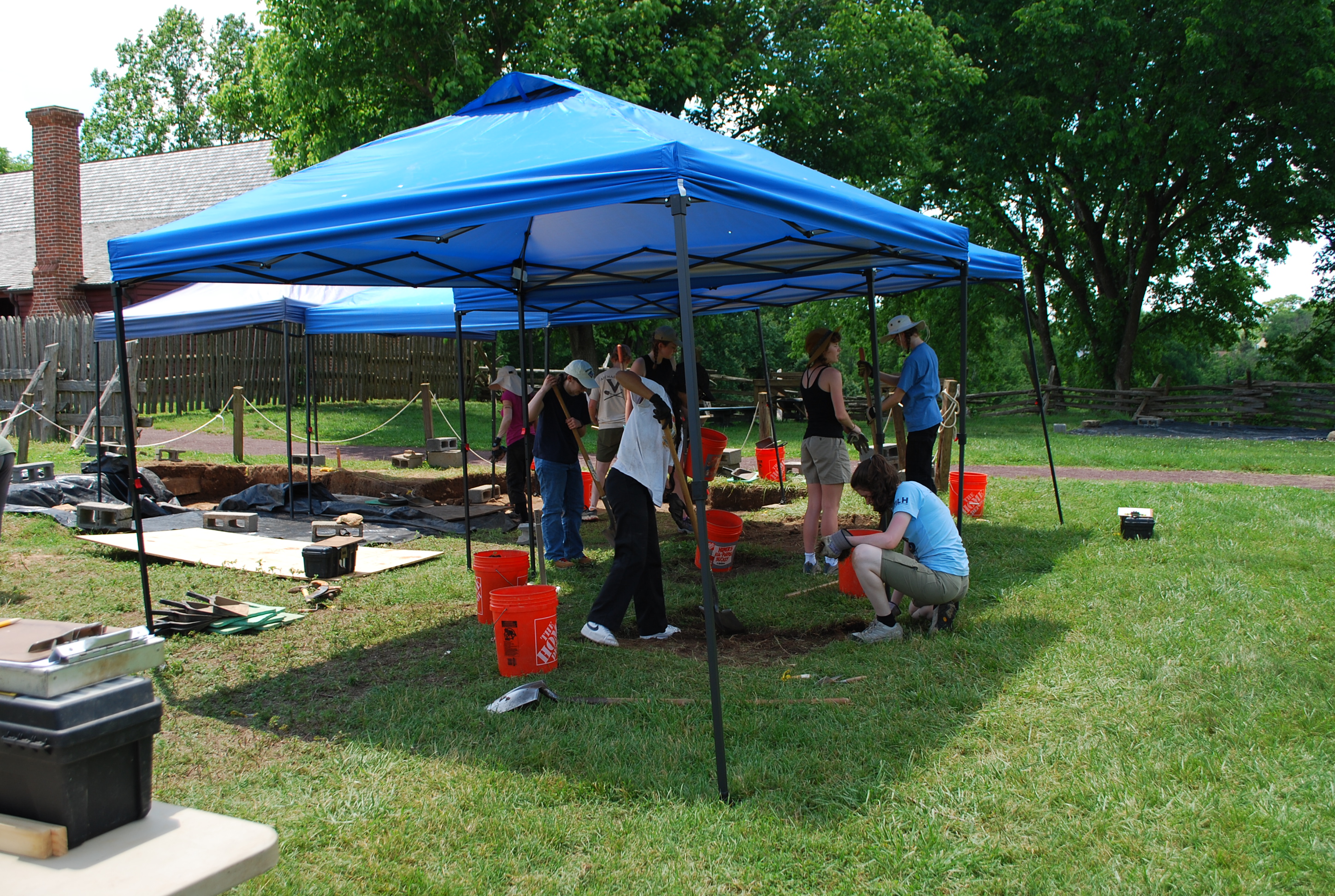
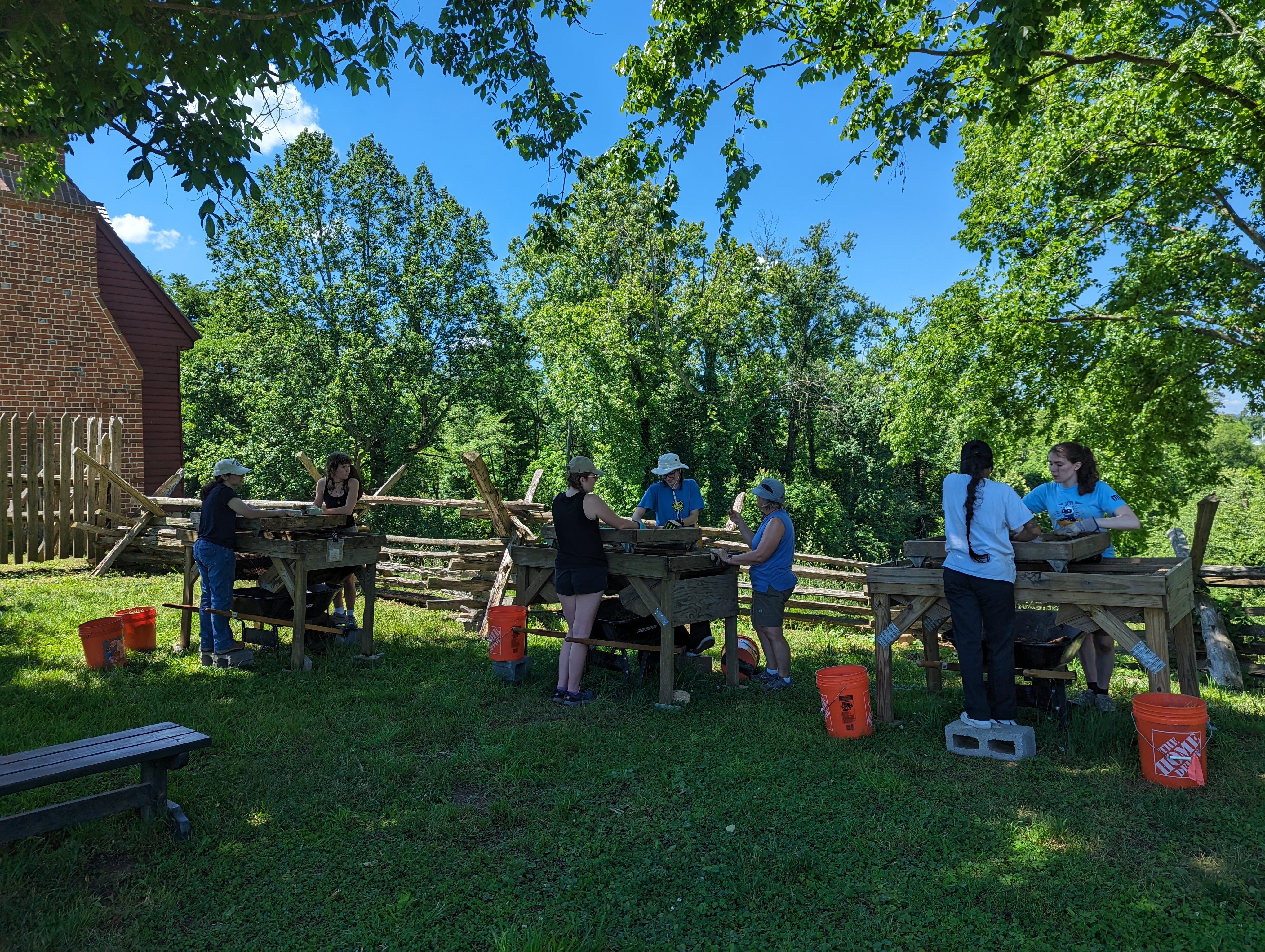
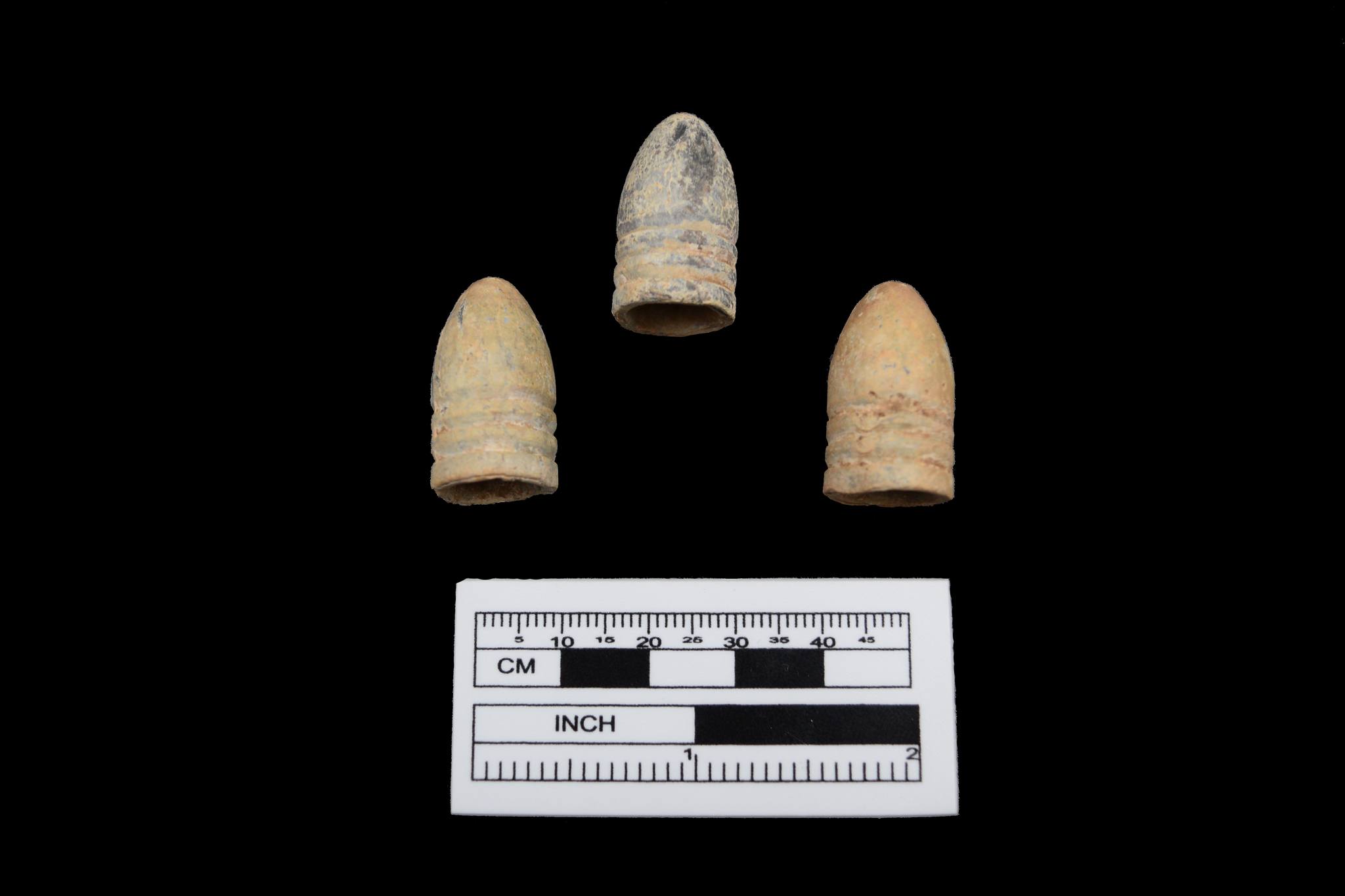
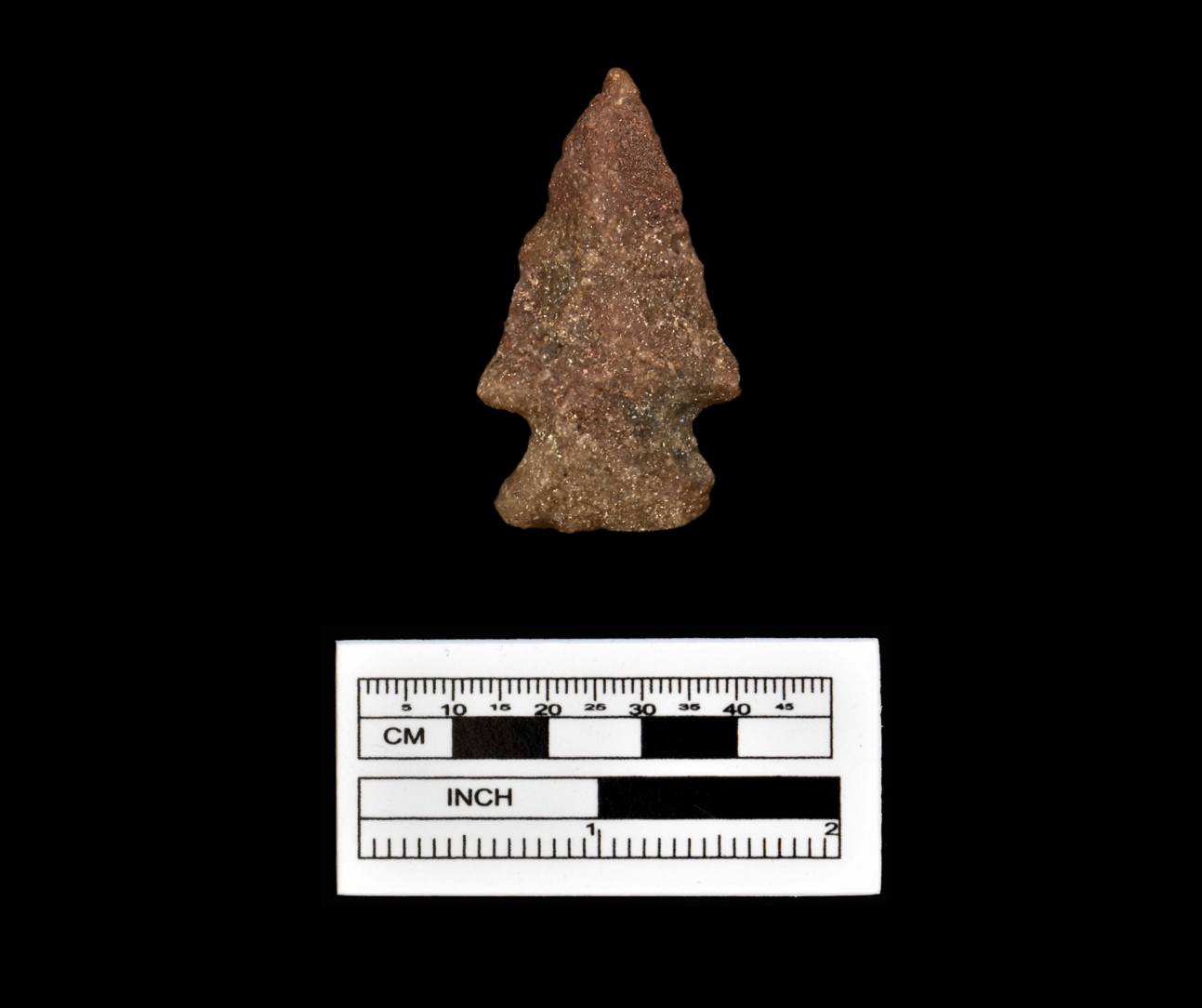
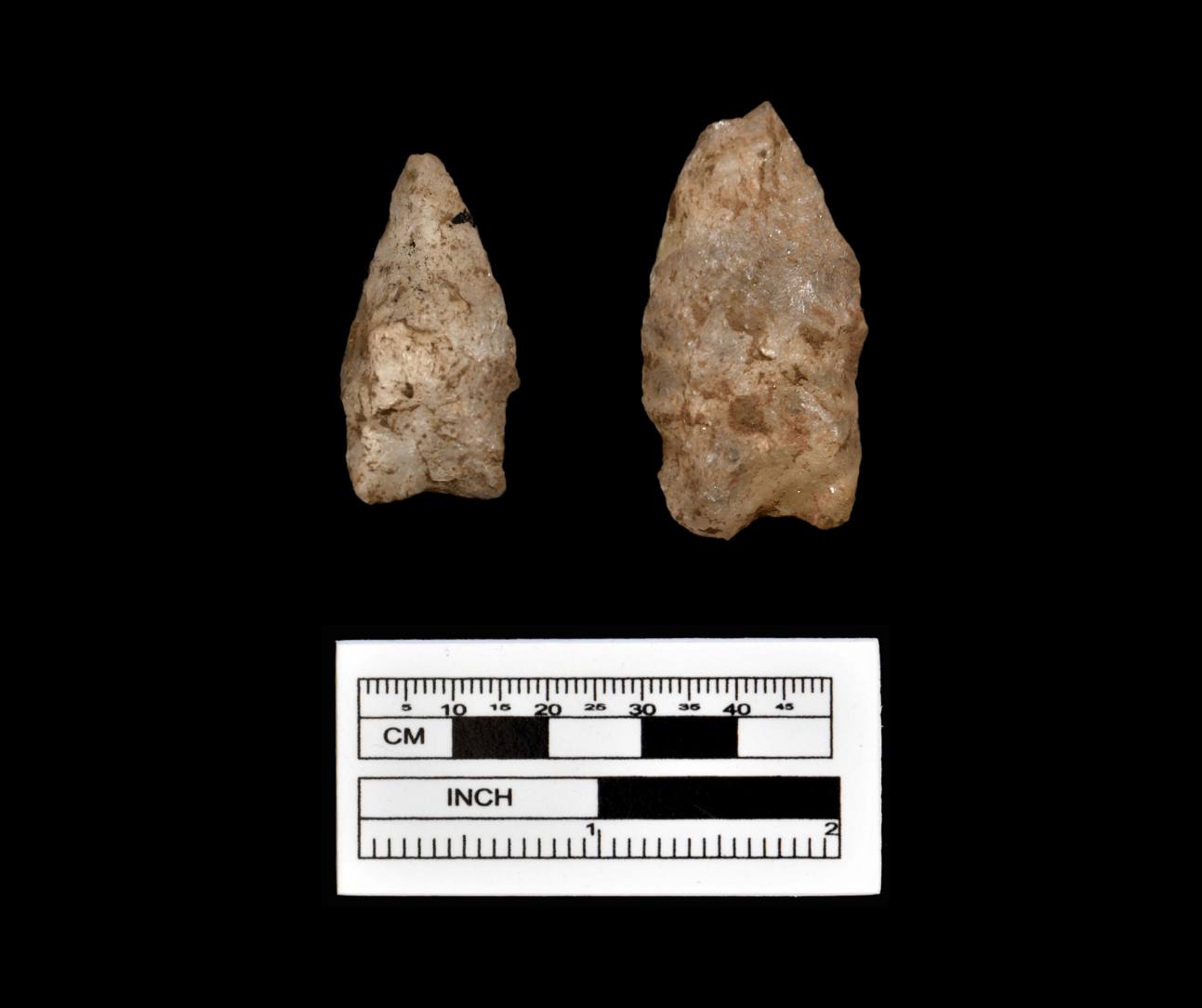
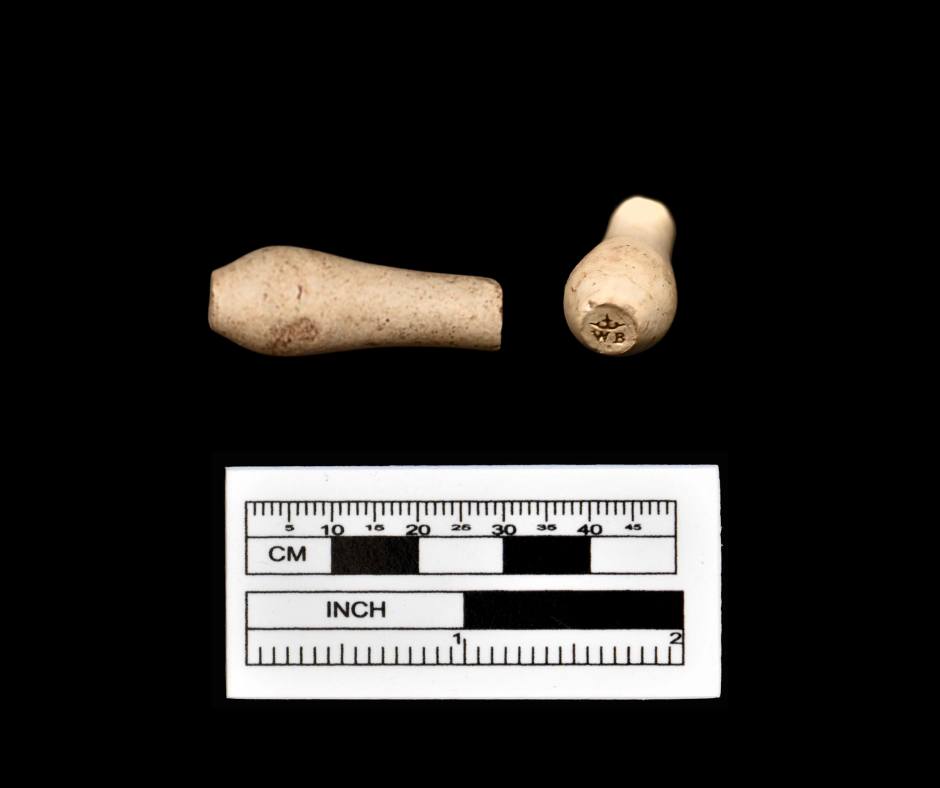
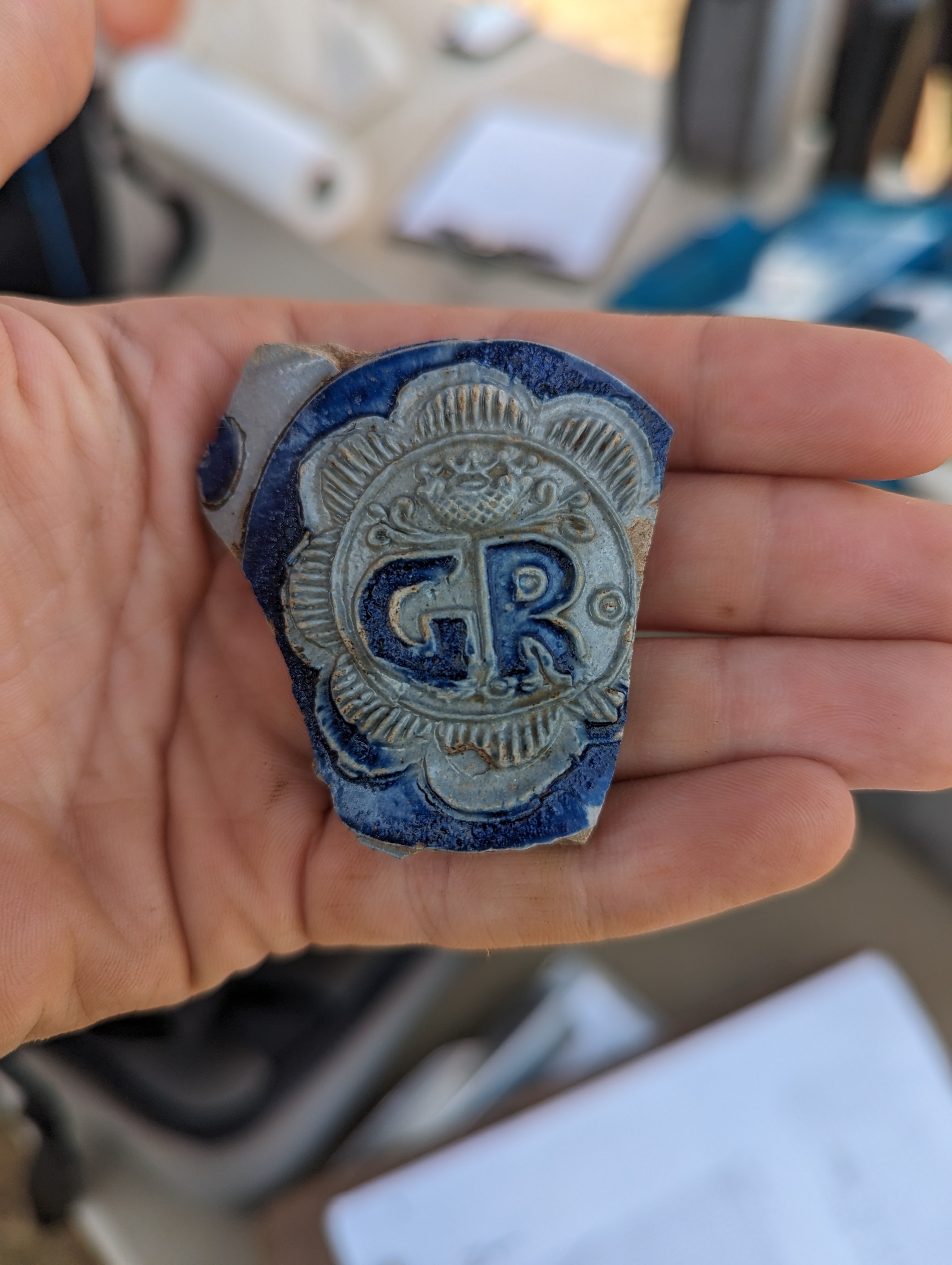
    With the help of our wonderful field school students and interns, we opened a total of twenty-seven 5’x5’ units across the kitchen site. Sifting through the dirt, hundreds of artifacts were found dating to all occupations of Ferry Farm. Super cool finds that date to the 18th-century period of use for the kitchen included tobacco pipe fragments, wine bottle sherds, and a variety of ceramics, including English stoneware, Chinese porcelain, and a German Westerwald ‘GR’ sherd. The prehistoric Native American occupations of the site were represented by an unusually high number of projectile points found (8 and counting!), dating to both the Early Archaic (8000 BC – 6500 BC) and Early Woodland (1100 BC – 500 BC) periods.  Civil War bullets came up in our screens, of course, as did 20th-century plastic, tools, toys, and bottle caps.

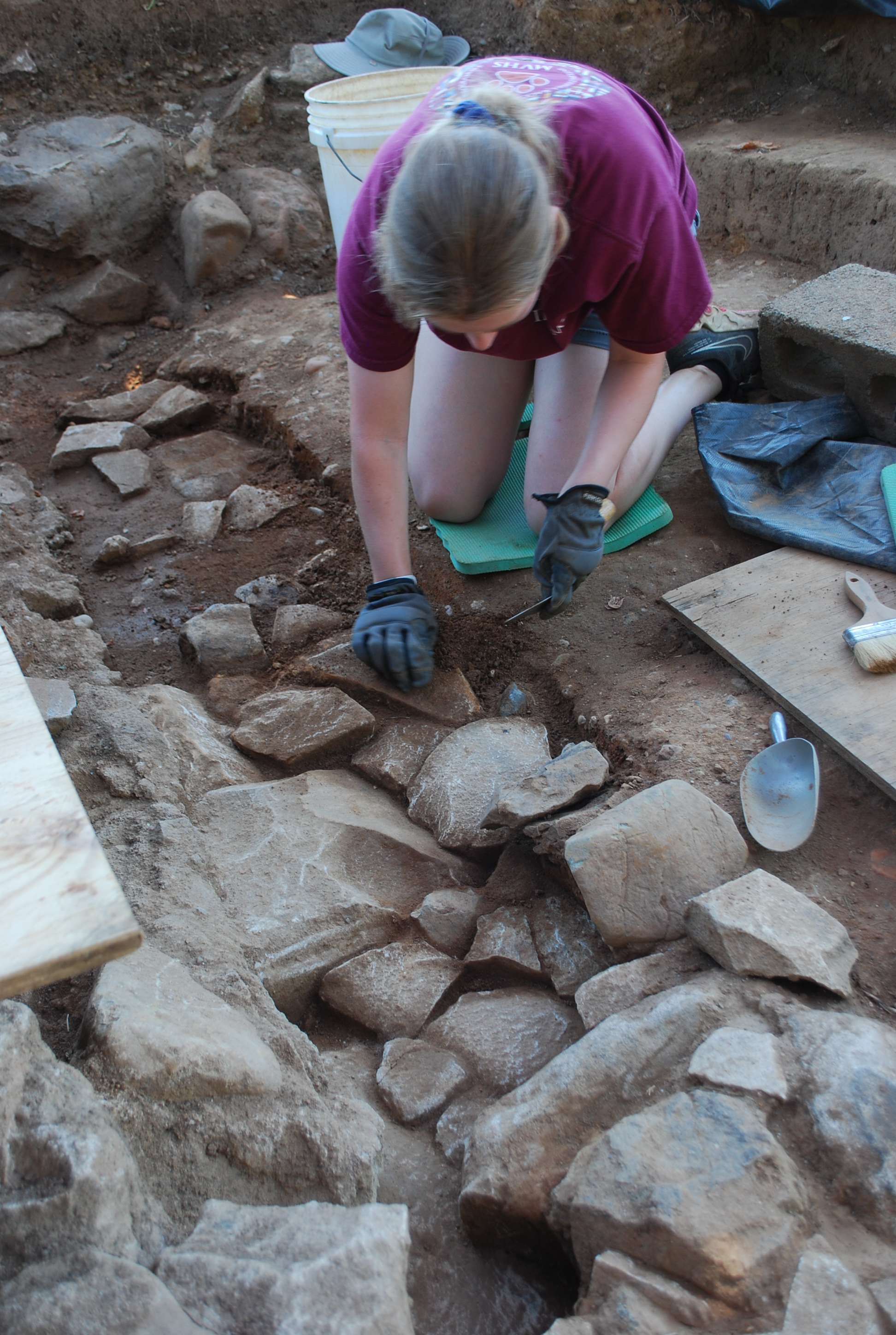
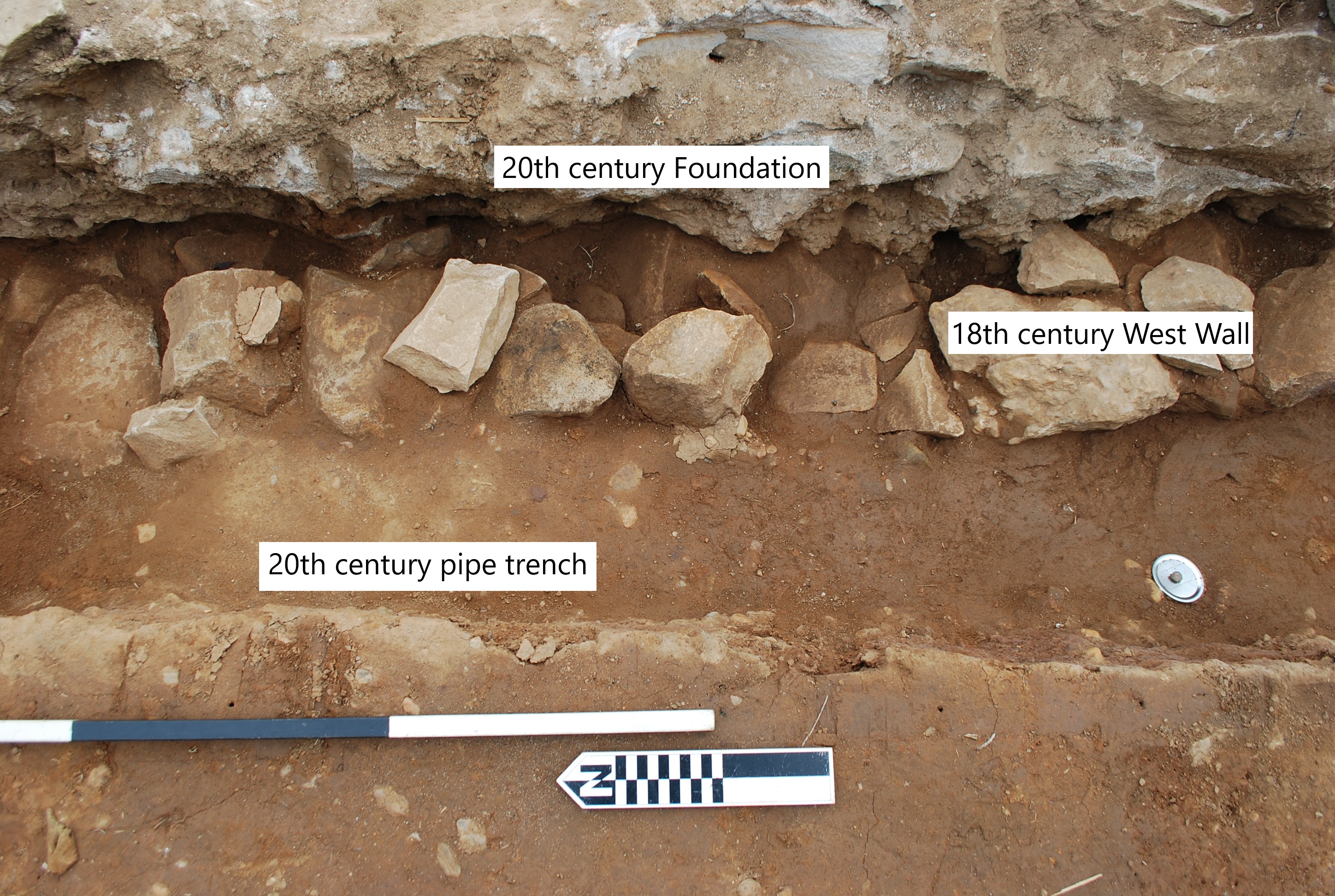
    But when it comes to finds, our most exciting discovery did not turn up in our sifting screens.  In fact, it was discovering that the western foundation wall of the kitchen cellar, thought to have been demolished, still survived!  During the 1990s excavations, the archaeologists did not see this portion of the stone foundation and assumed the construction of the 1914 Colbert house had destroyed it. Fortunately for us, it was hiding under a 20th century utility pipe and trench and lay directly adjacent to the Colbert concrete foundation. Now we have all four foundation walls that we hope to fully uncover next year.

    Exposed south and west stone walls of the colonial kitchen lie adjacent to and just outside of the 1914 concrete foundation wall.  
    West wall of colonial kitchen that was hiding under the pipe trench

    Our excavation units surrounding the kitchen foundation have not, as of yet, exposed additional building features associated with the kitchen outbuilding, such as foundations or fireplaces. That search will continue next year as we continue taking those units down and expanding our site area. Features exposed in the 1990s dig, but not excavated by them or us, such as possible post holes and trash middens, also await our return in 2025, when we plan on finishing their excavation.

    Each year’s excavation is built on the work accomplished in the previous years.  With the incredible amount of work done this past summer of exposing the original kitchen foundation, as well as the later farmhouse foundations, removing old fill, and opening up the adjacent landscape, we are looking forward to expanding our investigations of the kitchen site next year.  Stay tuned as we unravel the mysteries that are here at Ferry Farm, George Washington’s Boyhood Home.


    Danielle Arens and Judy Jobrack

    GWF Archaeology Field Directors

  • 2024 Dig Preview!

    Spring is in the air. The weather is warming up, flowers are blooming, bees are buzzing, and of course the dig season is about to start here at Ferry Farm, George Washington’s Boyhood Home.

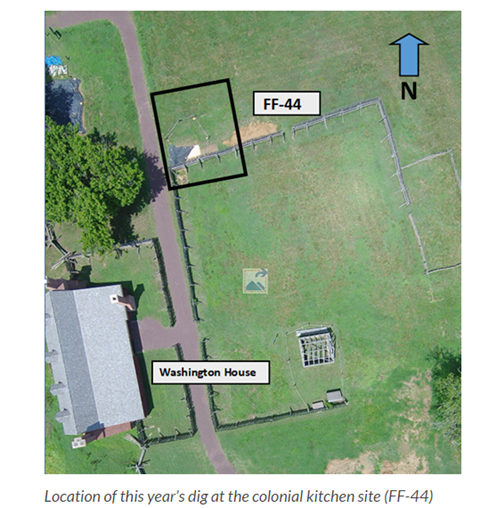
    As part of the 2023 dig season, our team revisited the site of a colonial-era kitchen that had experienced a particularly destructive fire sometime in the middle of the 18th century. The kitchen’s foundation, as well as the surrounding landscape, had been compromised by the construction, and subsequent destruction, of two farmhouses that were built directly on top of everything. This site (FF-44) is located about 50 feet from the northeast corner of the Washington House.

    Location of this year’s dig at the colonial kitchen site (FF-44)

    The 18thC kitchen site was initially explored as part of an archaeological assessment of the Ferry Farm historic property in the early 1990s. The structure and its contents were originally interpreted as a house, but a reevaluation of the excavation notes and artifacts several years later reinterpreted this site as a kitchen, not a primary domestic dwelling. But research queries still exist, such as narrowing down the dates of construction and destruction of the structure, as well as determining the possibility that meaningful artifact deposits and landscape features that might help bolster the interpretation of the building still exist outside of the foundation.

    Location of the 18thC kitchen in relation to later 19th and 20thC farmhouses

    With these questions in mind, our efforts last summer focused on working out a game plan for reexamining the site for our future excavations.  During our dig, we uncovered the southwest corner of the original kitchen as well as the foundation of the 20th-century farmhouse overlaying it. Re-locating the site and evaluating the amount and extent of fill were our primary goals. That completed, this year we will concentrate on investigating the landscape surrounding the foundation and reexamining the burnt fill within.

    Last year’s excavation. Red arrow points to area inside of the kitchen, white arrow points to area outside of the building. The stone and concrete wall is part of the 1914 farmhouse foundation, which sits atop the colonial kitchen fill.
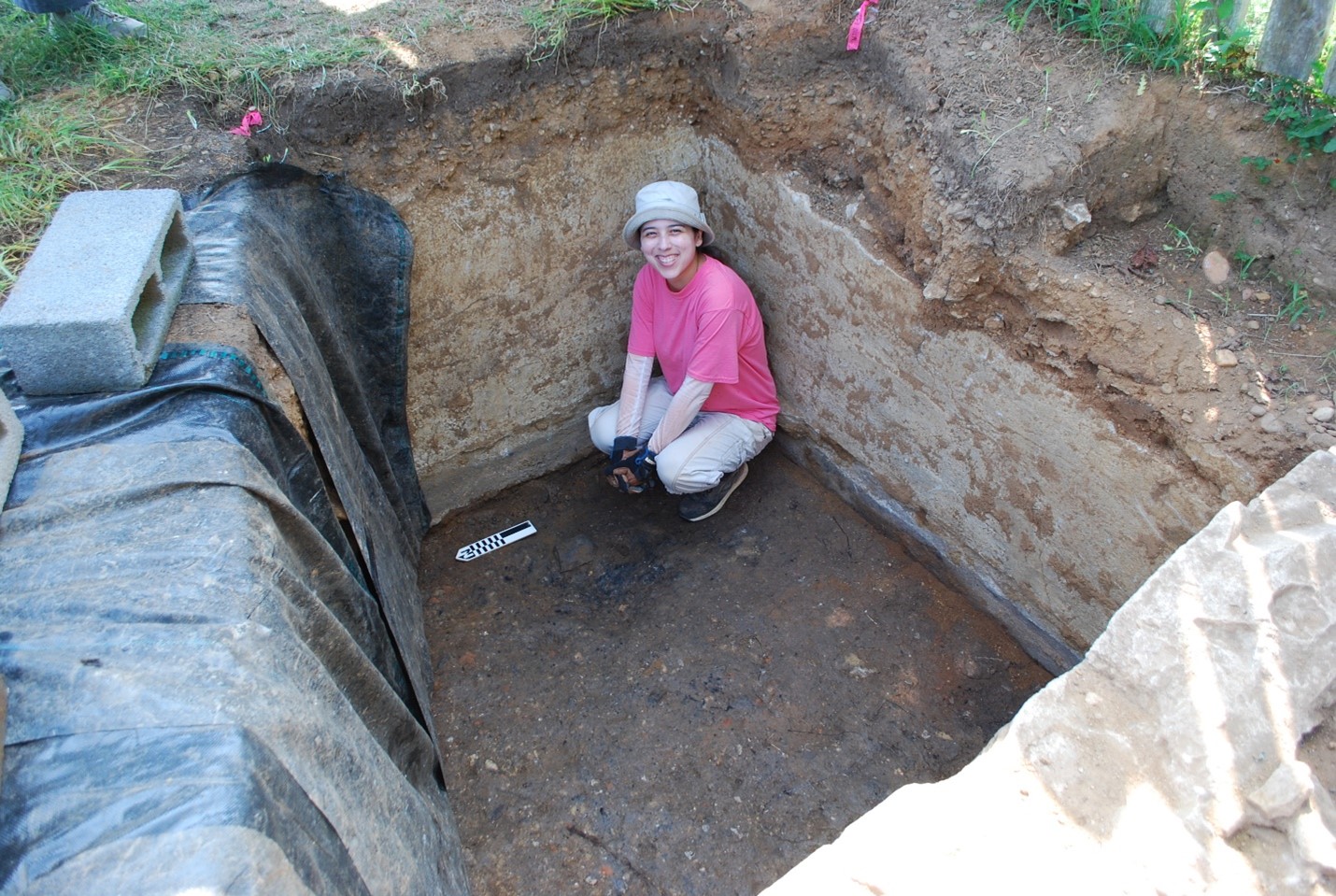
    Lead excavator Sarah on floor of kitchen cellar

    An honest question you might ask would be why would we want to learn more about what was outside of the foundation? Isn’t all the important stuff inside? In the archaeological world, a lot of valuable information can be learned from these outlying areas. Eighteenth-century trash middens are often found outside of a building because garbage was being thrown off of the porches and out the doors and windows. Studying this everyday disposal of trash can tell us how and when a building was being used, as well as traffic patterns by those using the building.

    Another interesting feature that can be found outside of a foundation is a builder’s trench. These trenches were dug by the individuals building the foundation, and as they worked and backfilled these trenches, items they were currently using were accidentally left behind. These artifacts can be excellent dating material and can really nail down a construction date.

    Other items we will be looking for are possible supplementary building features, such as post-in-the ground foundations and fences. Additionally, taking a second look at the site will help us better understand the previous archaeology that was done over thirty years ago.

    As for the exciting second site we started excavating last year, Feature 321, we are putting that project on hold for now and concentrating our efforts on the kitchen site. But work continues in the lab on all the interesting artifacts recovered during last summer’s dig.

    This year’s dig begins April 29thand ends July 12th.  Archaeologists are working on site from 8 am until 4 pm, Monday through Friday, and we gladly welcome questions from our site visitors.  So be sure to stop by and see what exciting things we uncover!

    Danielle Arens and Judy Jobrack
    George Washington Foundation Archaeologists


  • 2023 Dig Season Recap!

    It’s that time again! As we welcome Fall and the beautiful cool weather it brings, let’s take a look back at our Summer 2023 dig season here at Ferry Farm, George Washington’s Boyhood Home. This year’s dig actually involved excavating two separate areas, designated FF-38 and FF-40, within the historic area. 
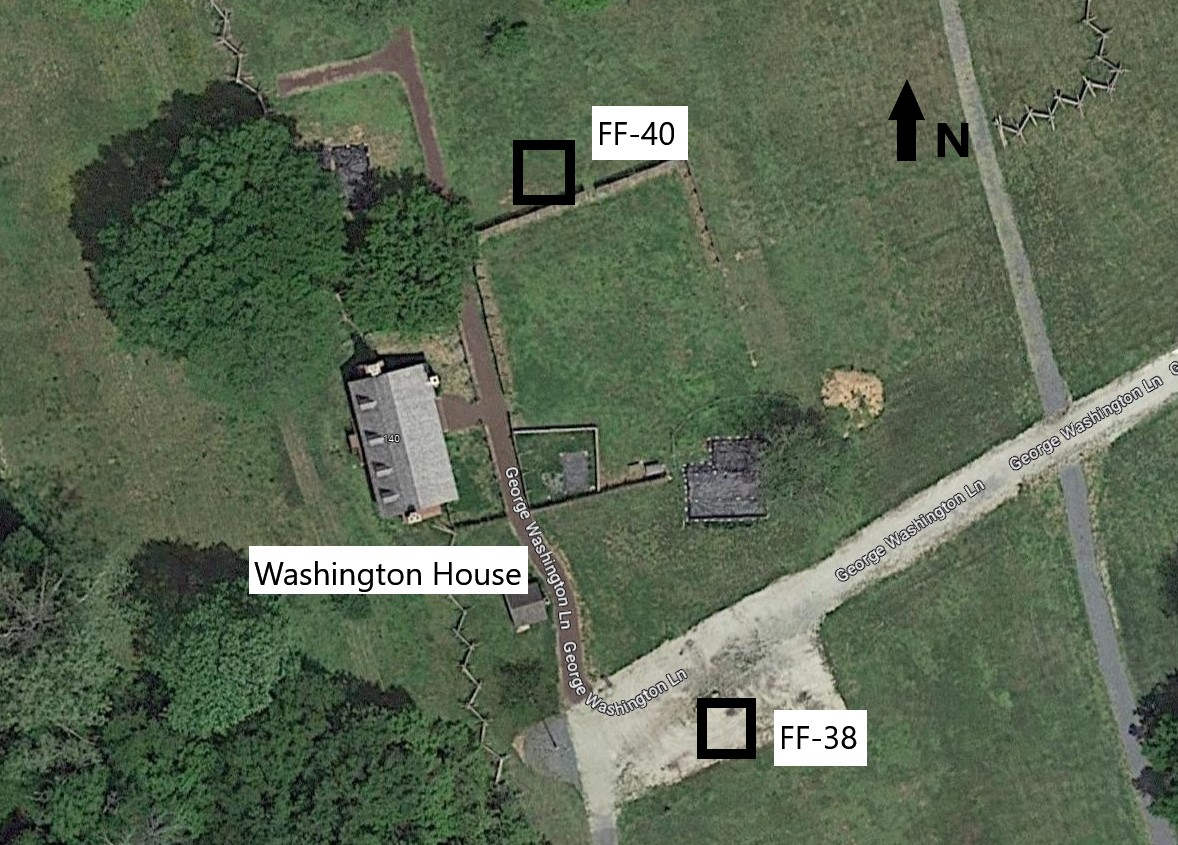
    Location of the archaeological projects FF-38 and FF-40 at Ferry Farm.

    Project FF-38

    The FF-38 area contained a large, dark, soil stain that was discovered by accident during the monitoring of a utility trench in 2016.  Only a portion of this feature was visible at that time as it continued beneath the south wall of the trench. We had clues as to the approximate date of this partially-exposed feature, but we still needed to fully uncover the entire feature to establish its total dimensions and determine its age, function, and how it relates to the surrounding landscape.

    F.321 as seen in 2016 within the utility trench. Only the northern portion of the feature was exposed at this time. F.321 is outlined in red, and is intruded by a square, lighter-colored 19th-century feature (F. 324).

    Our excavation began by the machine removal of two modern layers of gravel that overlay a thick 19th-century layer of plowed soil. The excavation area measured approximately 16 ft. by 20 ft. Our crew of archaeologists then slowly excavated down through the plowed layer until we could identify the boundaries of Feature 321. Fully uncovered, the exciting discoveries began.

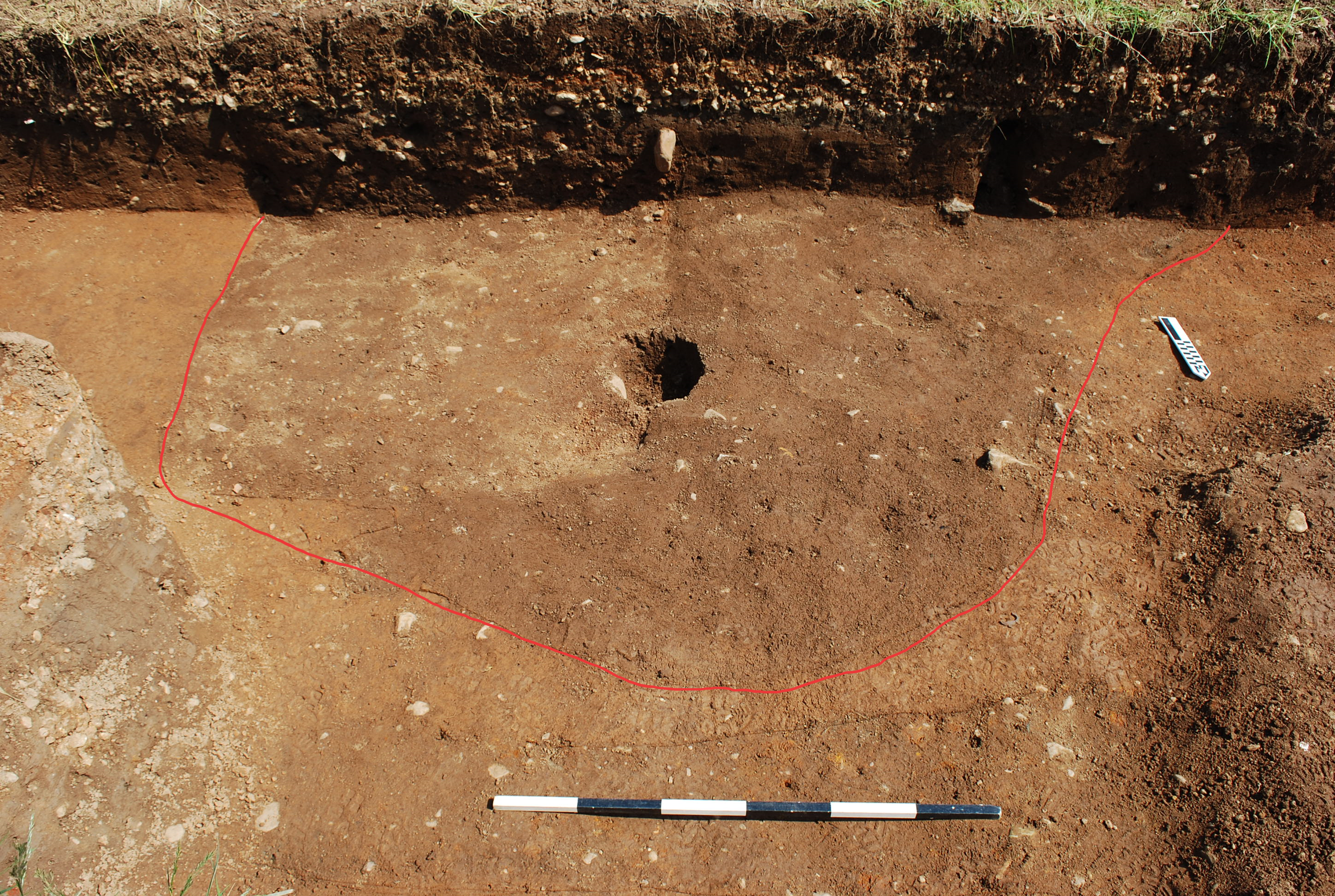
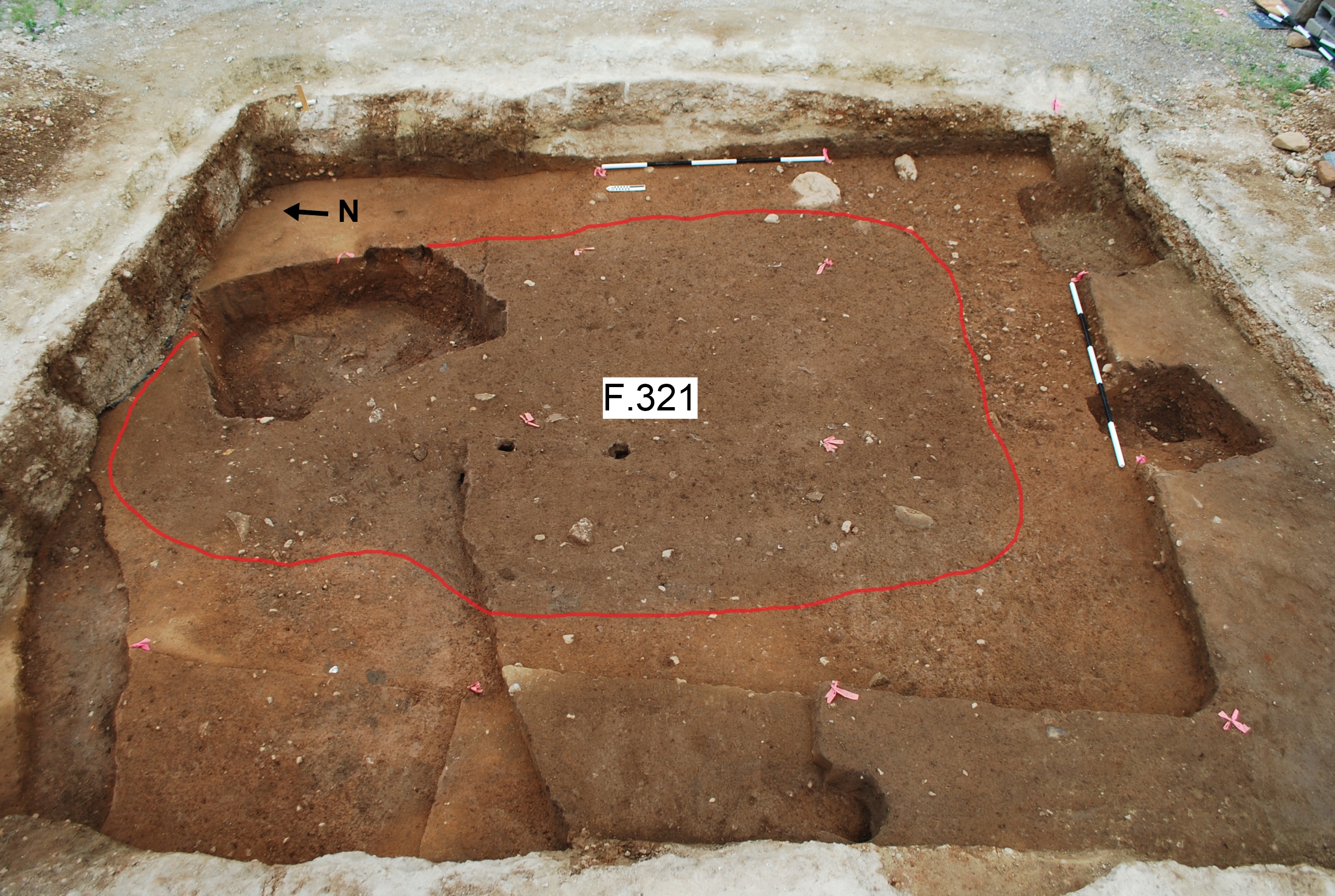
    First and foremost, we discovered the feature was much bigger than originally thought! What initially appeared in 2016 to be a 5’x7’ roundish feature turned out to be the northern tip of a large rectangle measuring 10’ by 16’. The size and shape alone of the feature shifted our interpretation from a small pit to something larger.

    F.321 fully exposed before excavation (outlined in red). The intrusive feature, F. 324, has been partially dug out at the north end of the site.

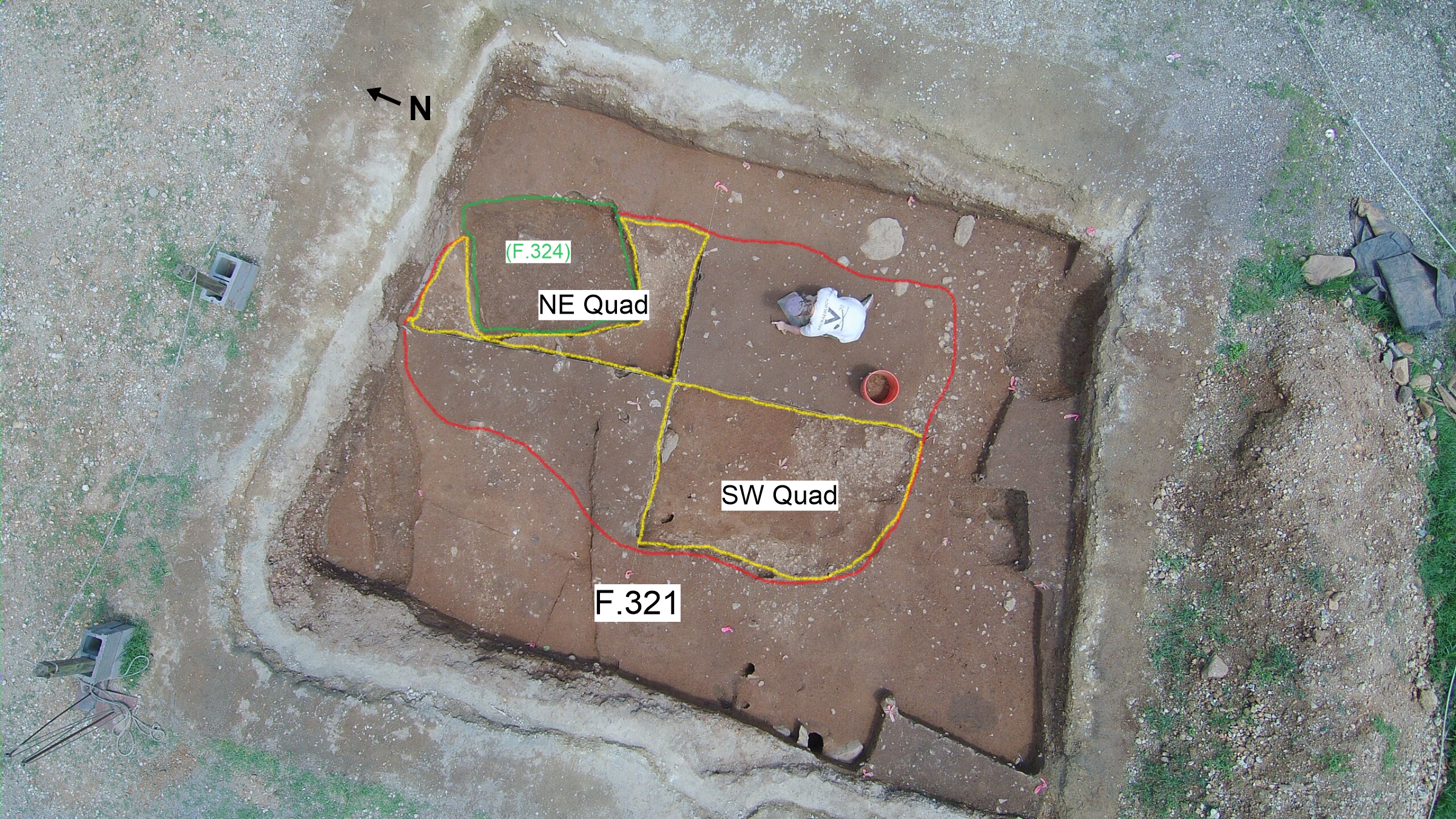
    Feature 321 was divided into four sections and our crew excavated both southwest and northeast quadrants. This excavation approach allowed us to determine that the feature was roughly 1’ deep at the center, with gently sloping sides, and filled with successive layers of soil and ash-filled deposits. These soil layers provided us with an awesome mix of artifacts which were used to nail down the feature’s end date to the middle of the 18th century.  But establishing a date is only part of the process: artifacts can further help us identify the function of the feature as well.

    F.321 after the southwest and northeast quadrants were excavated.  Intrusive Feature 324 is outlined in green.

    That being said, we are still unsure of what this feature actually is. Here is what we know so far.  There is no hearth of chimney remains. Lack of a fireplace suggests it wasn’t a domestic dwelling, but it could be another type of plantation outbuilding, such as a storage building, shed, or barn. The edges are almost vertical, and the floor is relatively flat.  There is no silt so the pit was covered while it was open.   It is too regular to be a quarry pit used to harvest clay as a building material.
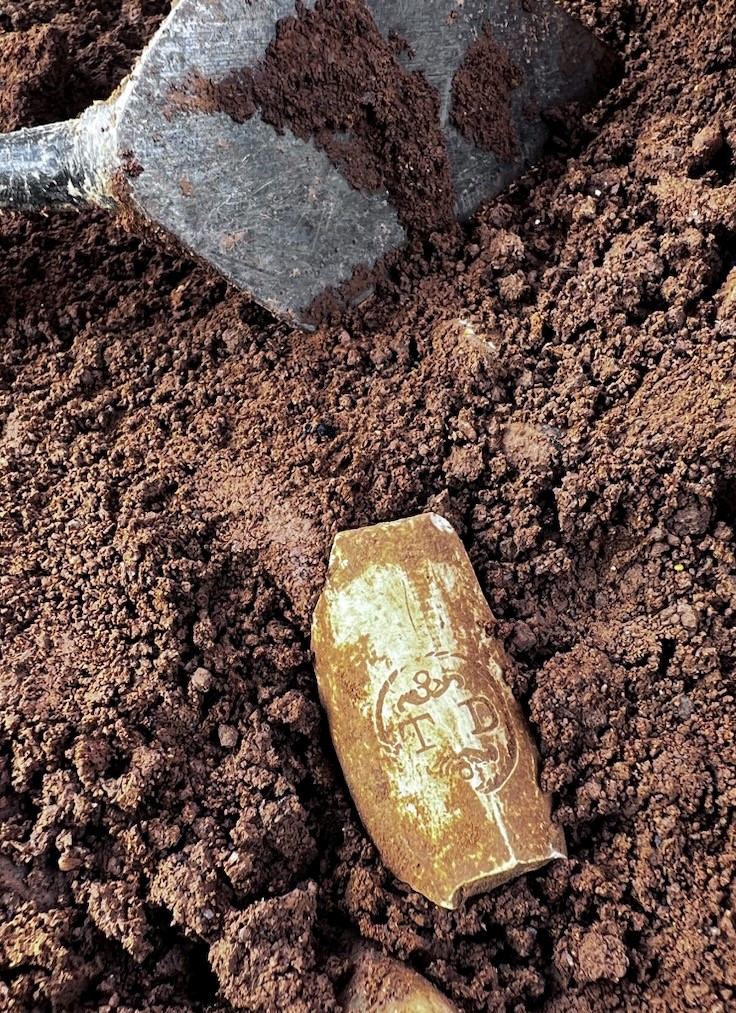
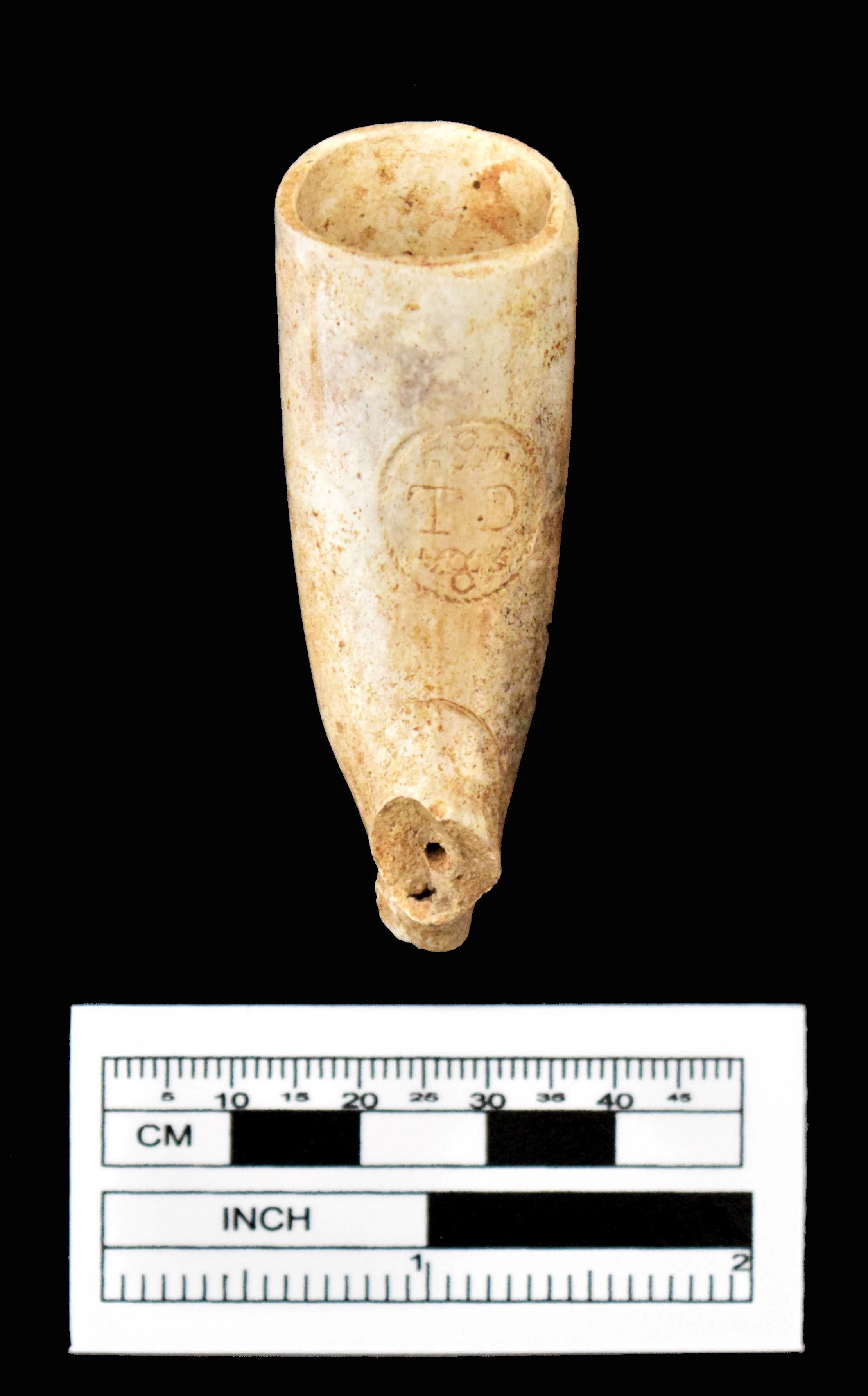
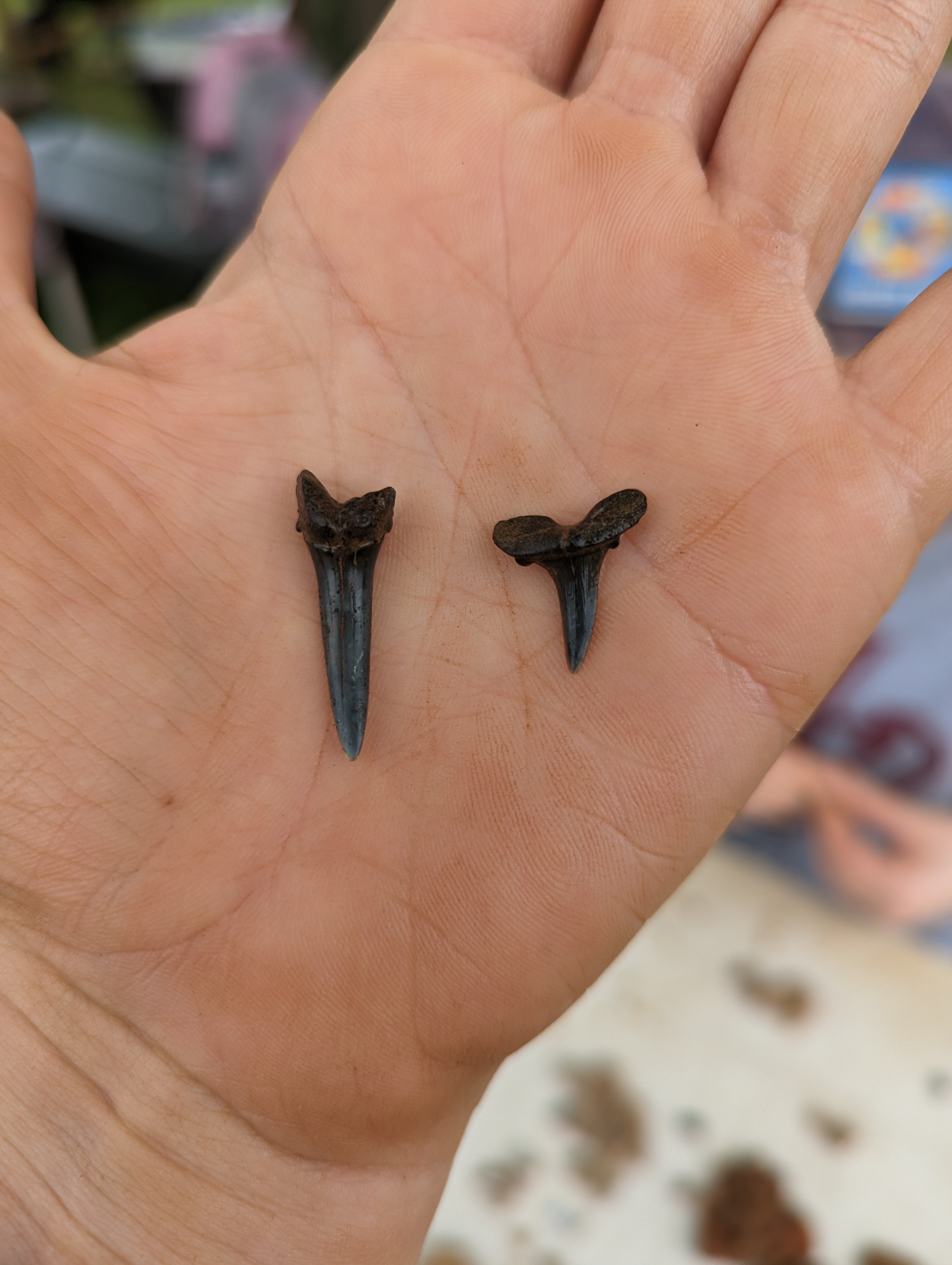
    Even though we are still in the early days of analyzing the artifacts, that doesn’t mean we can’t talk about a few great things we found. This feature had a little bit of everything: personal items, food-related items, architectural debris, domestic items, etc. The crowning glory of the excavation (in our humble opinion) would have to be the complete pipe bowl that was stamped with a maker’s mark that featured the letters “TD.” Other exciting finds include a clipped Spanish coin, sherds to a Westerwald ink well, shark teeth, and prehistoric pottery, just to name a few. This feature also contained a layer of ash that preserved delicate artifacts such as bone, fish scales, and straight pins – items that often don’t survive in the archaeological record.

    So what does this all mean? Well, this means that we will definitely be returning to the FF-38 site next season. While we have gathered a lot of information during this dig, there is still much left to find. Expanding our excavation beyond the limits of the feature and excavating one of the remaining two quadrants will help us interpret the feature’s function and how it relates to the 18th-century farm landscape of the Washington family.

    FF-40

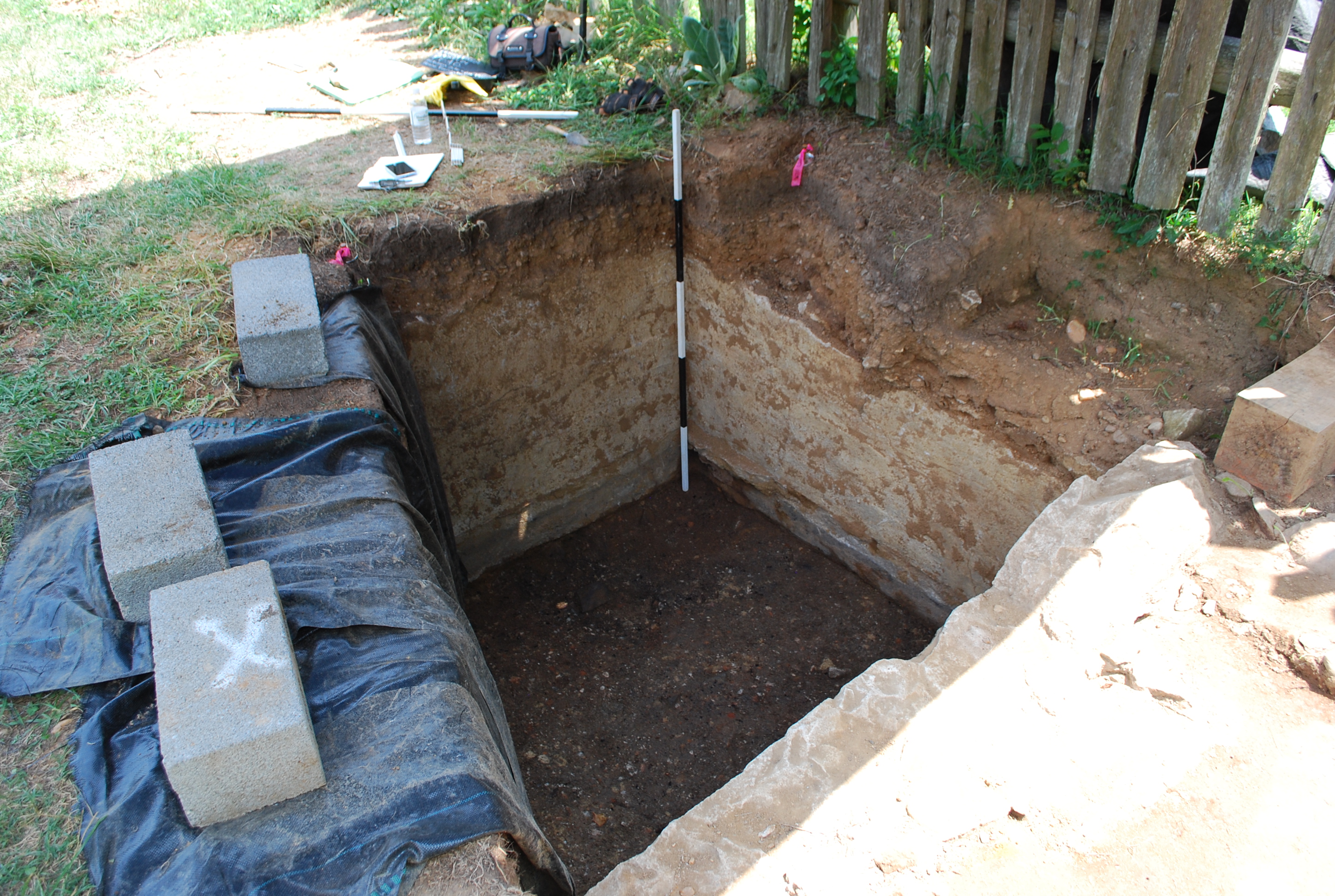
    Wait, that’s not all for this year’s dig. Don’t forget that we had two excavation areas this year. Our second area was FF-40, which was the remains of an 18th century kitchen had experienced an intense fire. This kitchen was partially excavated in the 1990s, so this year’s excavation had more of an exploratory excavation designed to help us establish a game plan for future excavation. We knew the kitchen remains were below the foundations of two later farmhouses, and that the foundation walls of these farmhouses were still extant. Additionally, the interior of the foundations was filled with sand to protect the kitchen site. Our excavations confirmed the location of the farmhouse foundations and the existence of a protective layer of sand! Once our crew were able to get through this sandy fill, a quick clean of the kitchen fill uncovered artifacts that were absolutely toasty. Okay, toasty isn’t a technical term, but the artifacts showed evidence of a fire that burned at extremely high temperatures. This included a high number of architectural artifacts as well as charred ceramics and melted glass. Findings from this year will help guide the excavation in the future.

    The burned kitchen site is located beneath these concrete house foundations dating to 1914.  This picture was taken after protective sand fill was removed within the excavation unit.

    Phew, that was a lot! That sums up our 12-week dig season. We answered a lot of our initial questions and found many more questions to investigate. Archaeologists will be in the lab the rest of the year processing artifacts, researching our findings, planning next season’s dig, and enjoying the A/C. Stop by the lab in the Visitor’s Center and take a peek at what’s happening. See you all in the field next May!


    Danielle Arens

    GWF Archaeologist

  • Some Like it Hot …But Probably Not This Hot: The Archaeology of a (BIG!) Fire

    Twenty years ago, archaeologists digging at George Washington’s Ferry Farm unearthed the remains of a mid-eighteenth century kitchen.  It was immediately obvious from the state of the artifacts that this kitchen had not simply fallen into to ruin and been abandoned – it had burned down.  While this is fairly interesting in and of itself, a reexamination of the kitchen fire artifacts this year revealed surprising information about the intensity of the fire.

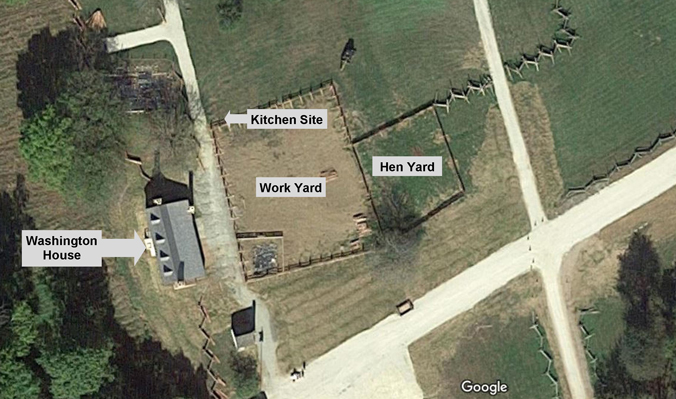
    Map of Kitchen Site
    Overhead image of George Washington’s Ferry Farm showing location of the kitchen that burnt down in the 18th century. Credit: Google

    What first struck us was the sheer density of artifacts in this kitchen. We recovered A LOT of artifacts.  Furthermore, these broken sherds could be mended to form almost whole bottles, crocks, jugs, pans, and such.  The number of artifacts and the fact they could be put together to form entire objects tell us that the Washington family and their slaves did not have much, if any, time to salvage what was inside the burning kitchen.  Food, wine bottles, food storage and preparation vessels and utensils, furniture, and more all destroyed exactly where they stood.  Think of this kitchen as a mini Pompeii or Titanic. Just about everything that the Washington’s had in their kitchen went down with the ship and was still there, just squished and burned.

    A preserved moment in time like this fire is a great opportunity for archaeologists to study the Washingtons but it comes with one big problem—most of the artifacts were totally cooked and absolutely toasted beyond recognition in some cases.  Soft metal artifacts made from lead and copper, for example, were reduced to melted blobs by the fire.  Ceramic vessels appear to have exploded from the heat and were reduced to blackened sherds.  Some of the glass bottles survived with a minimal amount of warping from heat but the majority were melted or even burned in a process called ‘devitrification’.  And oddly enough there was very little animal bone, which is usually ubiquitous in kitchens found archaeologically.

    To put the intensity of this kitchen fire in context here are some quick statistics (in Fahrenheit):

    • Lead melts at 621.4 degrees.
    • According to the National Institute of Fire and Safety Training, the average modern house fire tops out at around 1,100 degrees.
    • 1,400-1,800 degrees is the temperature at which bone will be destroyed
    • Copper melts at 1,984 degrees
    • Glass melts between 2,600 and 2,800 degrees.

    Since the Washington kitchen fire was hot enough to actually burn glass, not just melt it, we’re looking at a fire that likely exceeded 2,800 degrees.  That’s incredible!  It also explains why there was so little animal bone recovered. Most bone was probably completely destroyed by the flames.

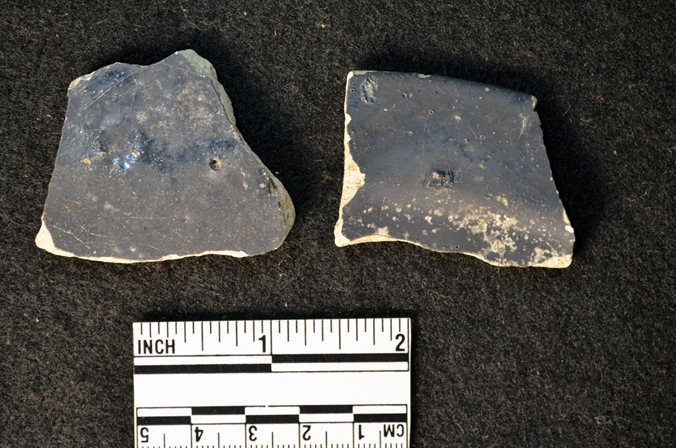
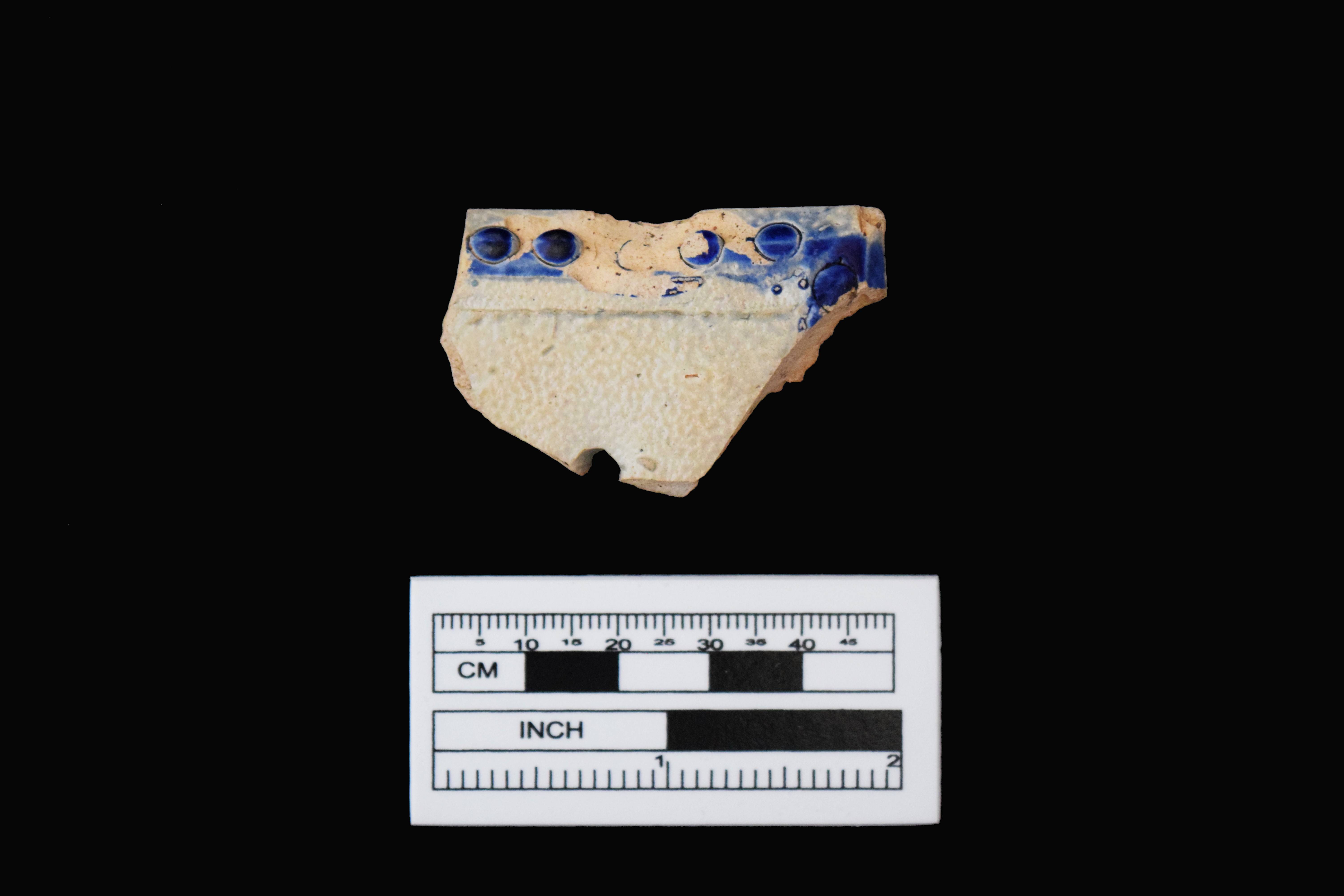
    Extremely Burned Tin Glaze
    Extremely burned tin glaze ceramic recovered from the kitchen site at Ferry Farm.

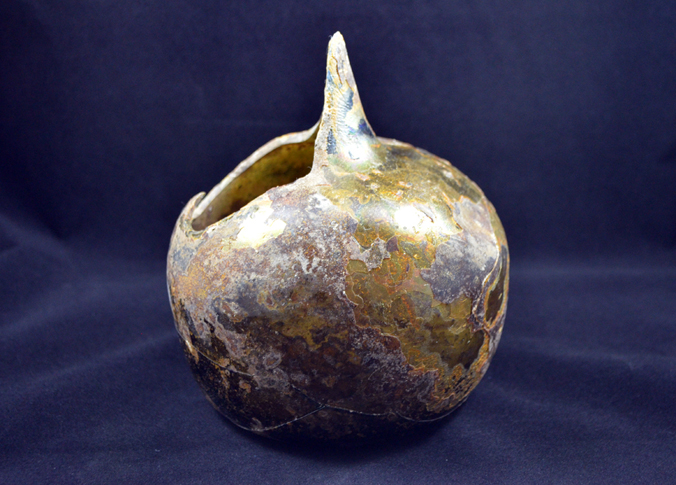
    Devitrified Glass
    Devitrified glass from the burnt Washington kitchen

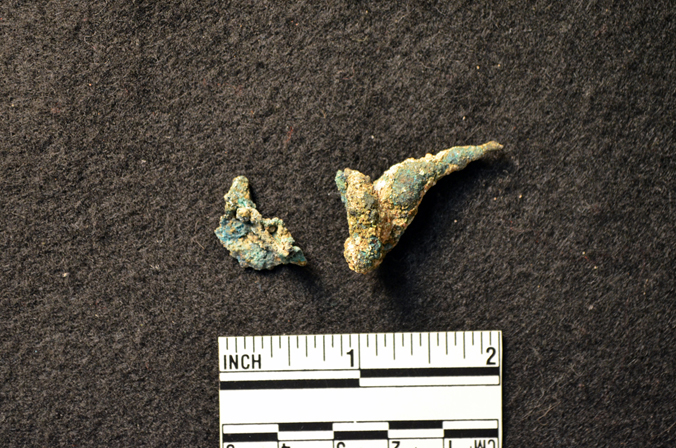
    Melted Cooper Alloy
    Melted copper alloy excavated from the Ferry Farm kitchen

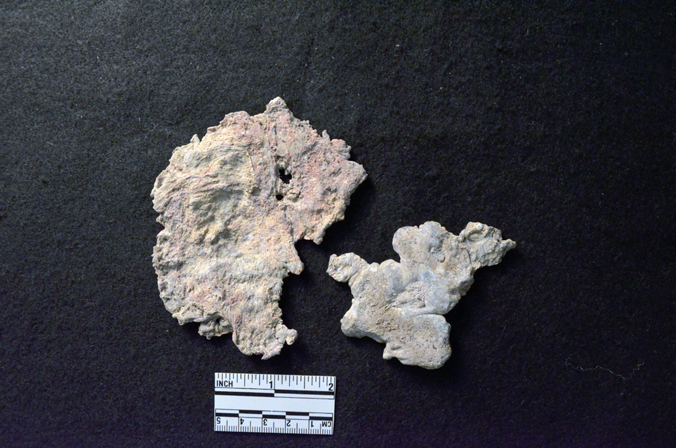
    Blob of Lead Alloy
    Blobs of lead alloy recovered from the kitchen site

    DSC_0006
    Slightly burned wine bottle from the kitchen

    DSC_0011
    A second slightly burned wine bottle

    So, how on earth did the fire get that hot?  We’ll probably never know, unfortunately.  Some possible explanations may be the environmental conditions at the time of the blaze – a hot dry day with high winds could produce a perfect storm for a wooden kitchen to turn into an inferno.  The fire also may have started at night when few people were awake to notice and try to put it out, although presumably the kitchen housed enslaved people, as was common for that time period.  Another culprit may have been what was kept in the kitchen.  There were dozens of wine bottles in there. While we call them ‘wine’ bottles today, they were actually all-purpose vessels that held any kind of spirituous liquid including harder alcohol like gin, whiskey, and rum, which are highly combustible.  Animal products such as lard, tallow, beeswax, and even whale oil for lamps were likely stored in the kitchen and all burn quite well for long periods of time.

    Regardless of the fire’s cause, it is clear from archaeological evidence that it happened quickly because not much within the structure could be saved, if anything.  We also know that it burned extremely hot and for a sustained period of time in order to have caused so much damage to the items within.

    Finally, perhaps, the last and the biggest mystery is where the replacement kitchen was located.  Kitchens were almost all outbuildings because, as you may have deduced, they tended to catch on fire easily.  A colonial household absolutely required a kitchen, however, and another would have been built almost immediately. Somewhere on the landscape at Ferry Farm, there is another kitchen waiting to be discovered archaeologically.

    In the meantime, The George Washington Foundation plans to reconstruct the original Washington era kitchen so visitors can experience the sights, sounds, and smells of an eighteenth century kitchen, minus the blazing inferno, of course.

    Mara Kaktins, Archaeologist
    Archaeology Lab Supervisor
    Ceramics & Glass Specialist