Lives and Legacies

Tag: fire

  • 2024 Dig Preview!

    Spring is in the air. The weather is warming up, flowers are blooming, bees are buzzing, and of course the dig season is about to start here at Ferry Farm, George Washington’s Boyhood Home.

    As part of the 2023 dig season, our team revisited the site of a colonial-era kitchen that had experienced a particularly destructive fire sometime in the middle of the 18th century. The kitchen’s foundation, as well as the surrounding landscape, had been compromised by the construction, and subsequent destruction, of two farmhouses that were built directly on top of everything. This site (FF-44) is located about 50 feet from the northeast corner of the Washington House.

    Location of this year’s dig at the colonial kitchen site (FF-44)

    The 18thC kitchen site was initially explored as part of an archaeological assessment of the Ferry Farm historic property in the early 1990s. The structure and its contents were originally interpreted as a house, but a reevaluation of the excavation notes and artifacts several years later reinterpreted this site as a kitchen, not a primary domestic dwelling. But research queries still exist, such as narrowing down the dates of construction and destruction of the structure, as well as determining the possibility that meaningful artifact deposits and landscape features that might help bolster the interpretation of the building still exist outside of the foundation.
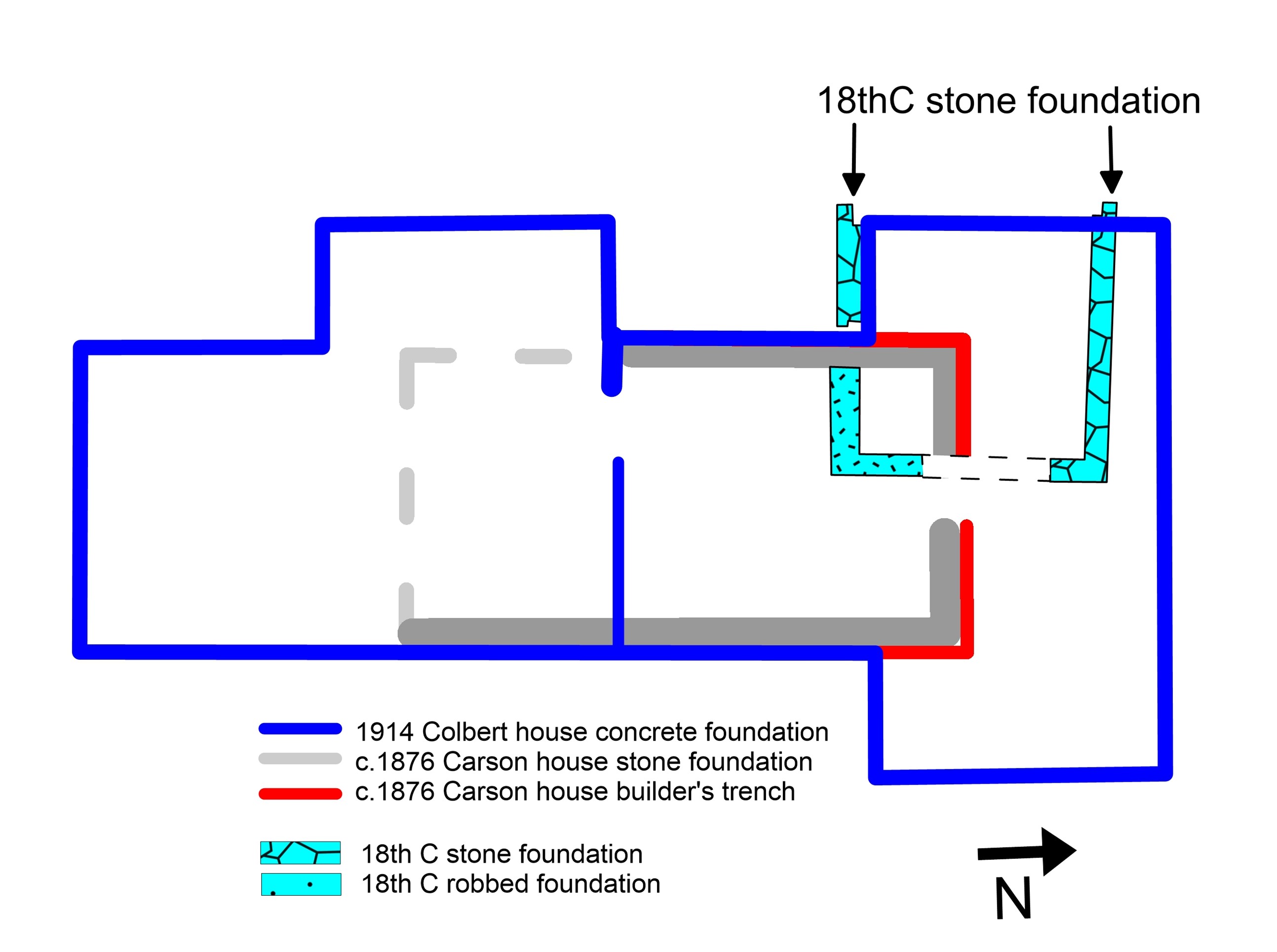
    Location of the 18thC kitchen in relation to later 19th and 20thC farmhouses

    With these questions in mind, our efforts last summer focused on working out a game plan for reexamining the site for our future excavations.  During our dig, we uncovered the southwest corner of the original kitchen as well as the foundation of the 20th-century farmhouse overlaying it. Re-locating the site and evaluating the amount and extent of fill were our primary goals. That completed, this year we will concentrate on investigating the landscape surrounding the foundation and reexamining the burnt fill within.

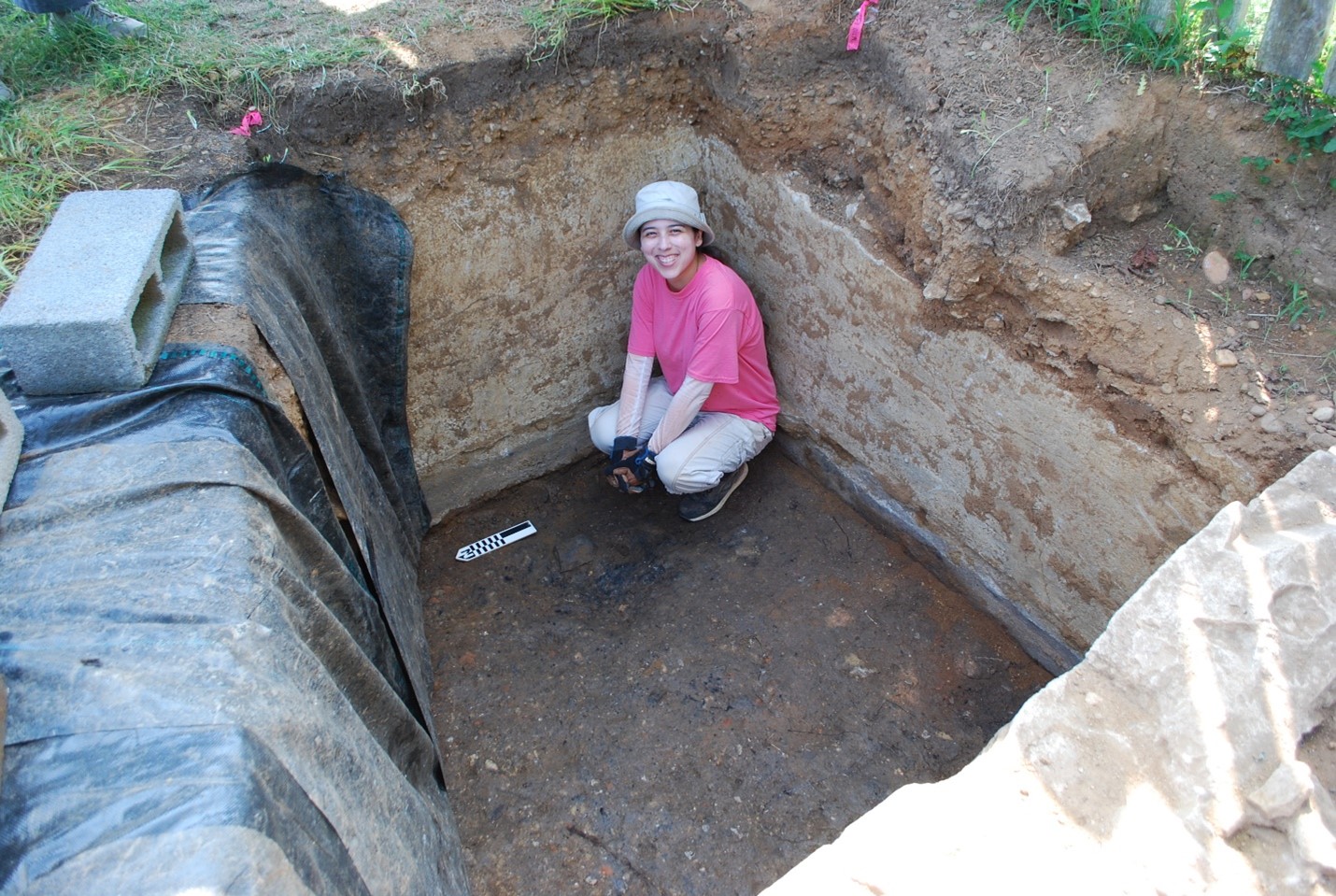
    Last year’s excavation. Red arrow points to area inside of the kitchen, white arrow points to area outside of the building. The stone and concrete wall is part of the 1914 farmhouse foundation, which sits atop the colonial kitchen fill.
    Lead excavator Sarah on floor of kitchen cellar

    An honest question you might ask would be why would we want to learn more about what was outside of the foundation? Isn’t all the important stuff inside? In the archaeological world, a lot of valuable information can be learned from these outlying areas. Eighteenth-century trash middens are often found outside of a building because garbage was being thrown off of the porches and out the doors and windows. Studying this everyday disposal of trash can tell us how and when a building was being used, as well as traffic patterns by those using the building.

    Another interesting feature that can be found outside of a foundation is a builder’s trench. These trenches were dug by the individuals building the foundation, and as they worked and backfilled these trenches, items they were currently using were accidentally left behind. These artifacts can be excellent dating material and can really nail down a construction date.

    Other items we will be looking for are possible supplementary building features, such as post-in-the ground foundations and fences. Additionally, taking a second look at the site will help us better understand the previous archaeology that was done over thirty years ago.

    As for the exciting second site we started excavating last year, Feature 321, we are putting that project on hold for now and concentrating our efforts on the kitchen site. But work continues in the lab on all the interesting artifacts recovered during last summer’s dig.

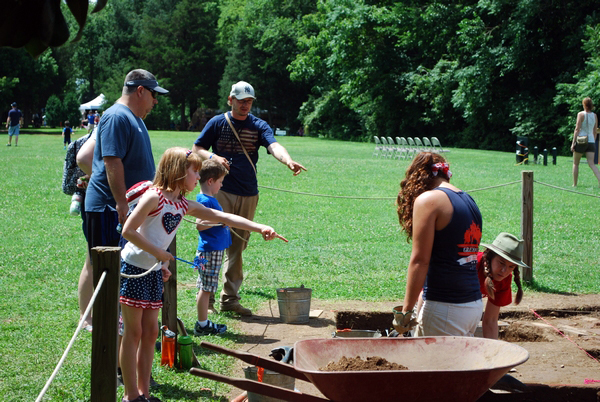
    This year’s dig begins April 29thand ends July 12th.  Archaeologists are working on site from 8 am until 4 pm, Monday through Friday, and we gladly welcome questions from our site visitors.  So be sure to stop by and see what exciting things we uncover!

    Danielle Arens and Judy Jobrack

    George Washington Foundation Archaeologists


  • 2023 Ferry Farm Dig Preview

    Spring is here, which means another season of exciting archaeological work at Ferry Farm is about to begin! Ferry Farm, the boyhood home of George Washington, has been conducting archaeological investigations for over 30 years with the aim of recreating and analyzing the 18th-century farm landscape that shaped George Washington during his formative years as a young man. Every season brings new discoveries, and this year will be no different.

    This season we will be investigating two separate areas within the historic site. The first (FF-38) is a feature discovered in 2018 when we monitored the excavation of a utilities trench for the reproduction Washington house. This large feature, approximately 5’ x 7’ and over 2.5’ deep, is filled with dark brown organic soil and contains 18th-century artifacts, including a wig curler, a signature find for our site. Our excavations will expose the entire plan view of the feature and how it relates to other possible features in the surrounding area.

    Figure 1. The location of our two summer projects in the historic area.

    The second area of investigation (FF-40) is the site of a colonial-era kitchen that burned early in the Washington family tenure of the farm. Though the building’s remains were the subject of previous archaeological studies in the 1990s, we are going to open the site up again to have a second look. Since we have been unable, so far, to locate the kitchen that would have replaced this one after it was destroyed in a very hot fire, we want to continue examining the one we do know about!

    The dig begins the week of May 8th and ends July 21st. The crew will be on-site Monday through Friday, 8 am to 4 pm. We are more than happy to answer questions about our work and show our visitors the artifacts that we find. Assistance is always welcome at our sifting screens, so come by and get your hands just a little bit dirty as we search for answers in the ground!

    Judy Jobrack

    Archaeology Field Director

  • Cooking up holiday treats: Gingerbread and Flip

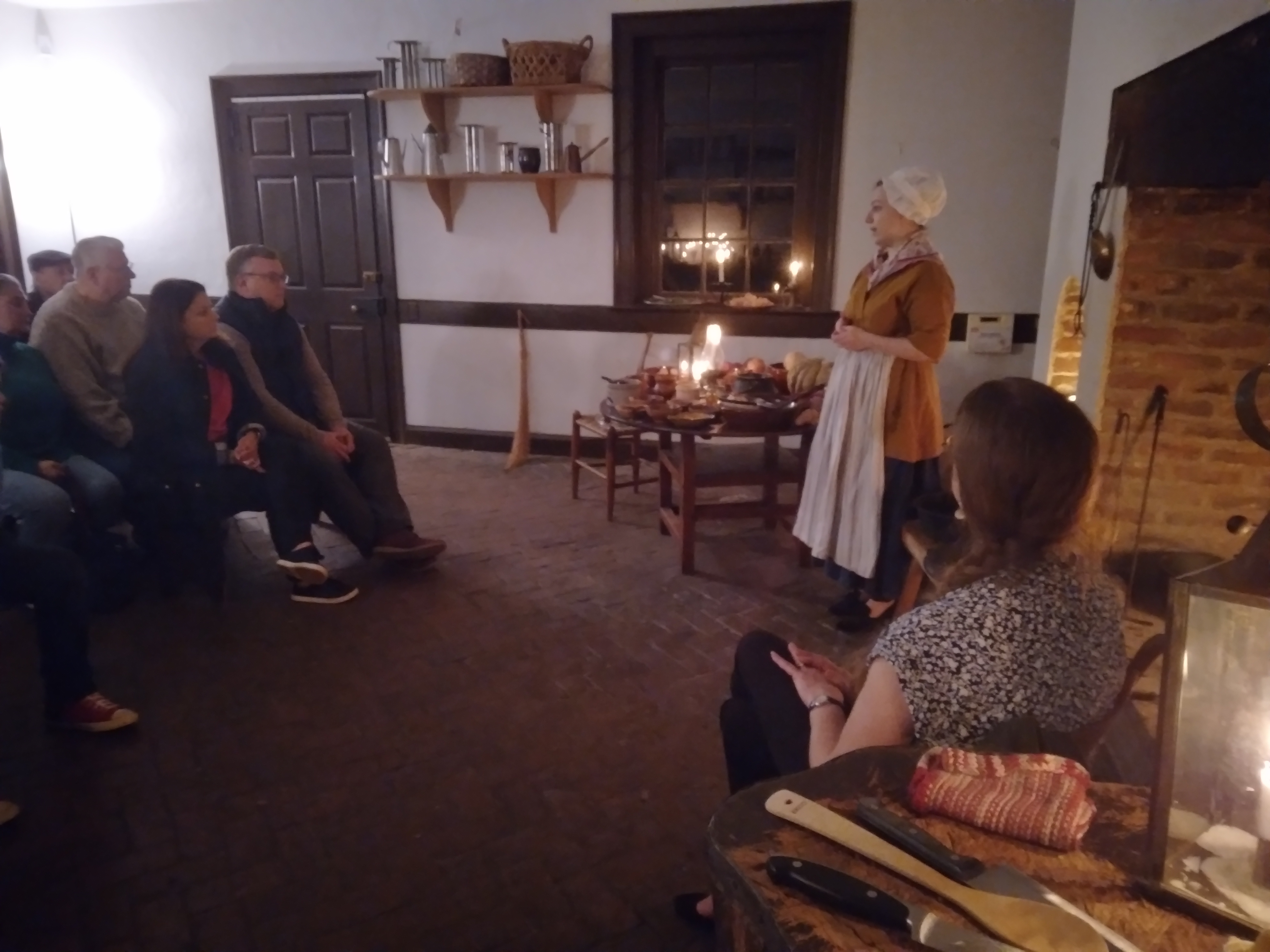
    This year at our annual Twelfth-Night celebrations, visitors could enter the kitchen for a short lecture and demonstration. The archaeology and curatorial teams gave the talks to explain two important food items that play a part in Kenmore’s history and the holiday, gingerbread and flip.

    Our first demonstration was done by Emma Schlauder, Research Archaeologist at the Foundation. She used a traditional recipe based on Mary Washington’s gingerbread. This is the recipe that the Kenmore Association and the Daughters of the American Revolution (DAR) would use in partnering with Hills Brothers Company to create the Dromedary Gingerbread Mix. The mix was sold in the gift shop and shipped around the country, raising money for the restoration of Kenmore.[1] 

    Emma Schlauder giving a presentation on gingerbread.

    Mary Washington’s Gingerbread Recipe

    3 cups all-purpose flour

    2 tablespoons ground ginger

    1 teaspoon cream of tartar

    1 teaspoon baking soda

    1 teaspoon ground cinnamon

    ¼ teaspoon ground nutmeg

    ⅛ teaspoon ground mace

    1 large orange

    ½ cup (1 stick) lightly salted butter, at room temperature

    ½ cup light brown sugar, firmly packed

    1 cup molasses

    ½ cup warm milk

    1 wineglass (2 ounces) brandy or coffee

    3 large eggs, beaten

    Gingerbread is a term applied to a wide-ranging selection of baked goods with combinations of spices such as ginger, cinnamon, cloves, and nutmeg and sweetened with honey, sugar, or molasses.[2]

    Ingredients and spices for gingerbread

    Emma’s gingerbread used the traditional American sweetener, molasses.[3]  Molasses was a commonly used sweetener in early American cooking until the increase of domestic sugar production. Molasses was cheap and a by-product of the refined white sugar produced for the wealthy.[4]

    After including all ingredients, it was mixed to create a runny batter. The batter was put into a cast-iron Dutch oven and hung over the fire to cook. Cooking and baking over the hearth was time-consuming and potentially dangerous. It was done with heavy cast-iron pots and pans, often hung over the fire by an iron bar in the back of the oven.[5]  Luckily for us, Emma had taken precautions for cooking over the open hearth and was able to bake the runny batter into a dense gingery cake. The cake was enjoyed by many and was determined to be a must-have for the season.

    Gingerbread cooking over the fire

    Flip

    Our next presentation was done by Mara Kaktins, our Archaeologist & Lab Manager, and explored the history and ingredients of a unique drink called flip that would have fit in quite well with the festive celebrations.

    The first known mention of flip is from a 17th-century play called “Love for Love” by William Congreve when a character mentions sailors, stating, “We’re merry folks, we sailors: we han’t much to care for. Thus, we live at sea; eat biscuit, and drink flip.”[6]  The play does not provide us with a recipe or ingredients for the drink.

    Flip –Universal Etymological English Dictionary

    Flip is mentioned in the Universal Etymological English Dictionary, first published in 1721. This definition offers more information about what the drink contains by stating, “Flip, a sort of Sailors Drink, made of Ale, Brandy and Sugar.”[7] Full recipes can be found in The Cook’s Oracle, published in 1822; How to Mix Drinks: Or The Bon-vivant’s Companion, published in 1862; and The Curiosity of Ale and Beer: An Entertaining History, published in 1889. These recipes contain spices and ingredients like eggs, rum, sugar, and orange juice.[8][9][10]

    Ingredients to make flip: Rum, Whiskey, Sugar, Nutmeg, Orange Juice, Eggs

    However, two things make flip different from other holiday drinks like eggnog. First, there is no cream used in the mixture[11] , and second, flip is traditionally mixed by pouring the drink between two different vessels to make sure all the eggs are combined with the alcohol and then plunging a hot iron into the drink to create froth.[12] [13] 

    Instructions state, “To make a quart of Flip: Put the Ale on the fire to warm, – and beat up three or four Eggs with four ounces of moist Sugar, a teaspoonful of grated Nutmeg or Ginger, and a quarters of good old Rum or Brandy. When the Ale is near boil, put it into one pitcher, and the Rum and Eggs, &c. into another; – turn it from one pitcher to another till it is as smooth as cream.”[14] After the mixture is properly combined, it is poured into a cup or tankard and finished off by plunging a hot iron which further mulled and froths the drink and gives it a slightly burnt taste.[15]

    Mara Kaktins finishing off a glass of flip with the hot poker

    This drink was mixed many times throughout the Twelfth night and was sampled by the staff. Unlike the gingerbread, the reviews for this frothy drink weren’t all that positive. Our modern palates might not be used to the amount of alcohol colonists use to consume. Sadly, while this drink was a hit during George’s festive season, traditional eggnog would be the best bet for the holidays. 

    These two demonstrations were quite a hit, with a sold-out crowd attending the show. With such a positive response, the archaeology and curatorial departments are looking for more ways to introduce living history to visitors. After gingerbread and flip, the possibilities are endless.       

    Heather Baldus, Collections Manager


    [1] Bryn, Ann. American Cake. Rodale Books, 2016, pg 26.

    [2] Goldstein, Darra. The Oxford Companion to Sugar and Sweets. Oxford University Press, 2015. pg 632

    [3] Bryn, Ann. American Cake. Rodale Books, 2016, pg 24.

    [4] Ibid, pg 12.

    [5] Ibid, pg 16.

    [6] Scene V, The Literature Network, http://www.online-literature.com/congreve/love-for-love/44/

    [7] Bailey, Nathan. Universal Etymological English Dictionary. London, T. Osborne, 1763

    [8] Kitchiner, William. The Cook’s Oracle and Housekeeper’s Manual. New York, J. & J. Harper, 1830

    [9] Thomas, Jerry. How to Mix Drinks: Or The Bon-vivant’s Companion. New York, Dick & Fitzgerald Publishers, 1862

    [10] Bickerdyke, John. The Curiosities of Ale and Beer: An Entertaining History. London, Swan Sonnenschein & Co., 1889

    [11] Garret, Dylan. The New York Flip, Wine Enthusiast, https://www.winemag.com/recipe/new-york-flip/

    [12] Thomas, Jerry. How to Mix Drinks: Or The Bon-vivant’s Companion. New York, Dick & Fitzgerald Publishers, 1862

    [13] Curtis, Wayne. And a bottle of rum: A history of the new world in ten cocktails. New York, Broadway Books, 2007

    [14] Kitchiner, William. The Cook’s Oracle and Housekeeper’s Manual. New York, J. & J. Harper, 1830

    [15] Curtis, Wayne. And a bottle of rum: A history of the new world in ten cocktails. New York, Broadway Books, 2007

  • The Hazards of Winter in Washington’s Day

    dsc_0042
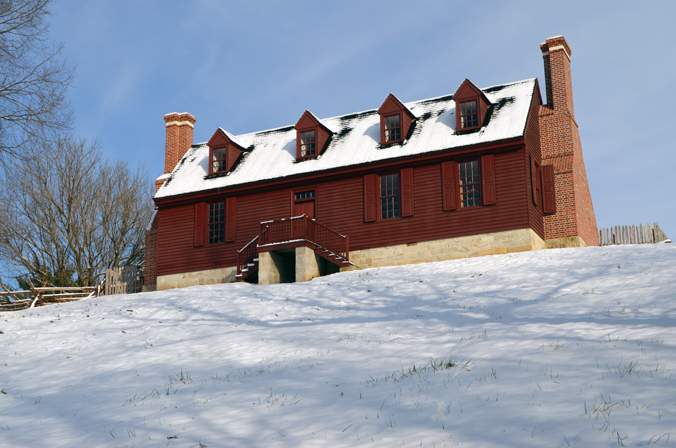
    Washington house replica at George Washington’s Ferry Farm after a December snow in 2018.

    Many people find winter miserable. It can be hard dealing with freezing temperatures, inclement weather, and long nights.  With much of the nation experiencing record-breaking cold and windchills today and the current temperature at George Washington’s Ferry Farm as we publish this post only 20 degrees Fahrenheit. it may not feel like it but our modern conveniences negate some of the brutality of the season. Colonial Americans did not have these luxuries.  For them, winter was not just difficult but deadly.

    OUTDOORS

    Winters outdoors in the 18th century were dangerous for many reasons that we take for granted.  Modern infrastructure and weather forecasting have reduced the dangers of winter for us today.

    Colonial Americans did not have a permanent network of solid roads and sidewalks they could rely upon.  Roads and walking paths were often dirt and subject to seasonal change.  When the weather turned icy and snowy, the road into town could disappear while a well-worn path through a forest became much more perilous.

    Furthermore, lakes and ponds vanished under layers of snow, which gave the impression of a solid surface and created the illusion of a quick but deadly shortcut.  It was common for people and sleds to venture across the frozen water sometimes with lethal results as newspaper reports show.

    Williamsburg, January 28. The Weather has been so excessive bad, for some Time past, that there has been scarce any passing the Rivers, for Ice, or travelling for Snow.  And we have Accounts from several Places, of Persons being frozen to Death, and others drowned, by attempting to cross the Rivers.  No Post has come from the Northward these 6 weeks; and we may reasonably conclude, that as the Weather is so severe here, it is worse there. – Virginia Gazette, January 28, 1738

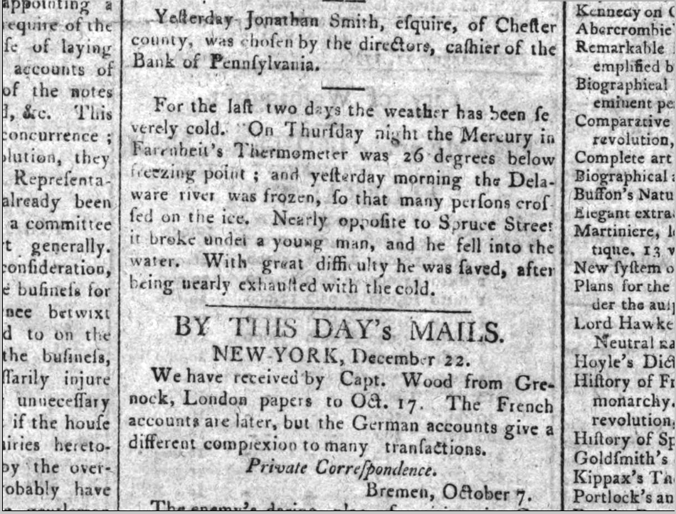
    For the last two days the weather has been severely cold. On Thursday night the Mercury in Fahrenheit’s Thermometer was 26 degrees below freezing point; and yesterday morning the Delaware river was frozen, so that many persons crossed on the ice.  Nearly opposite to Spruce Street it broke under a young man, and he fell into the water.  With great difficulty he was saved, after being nearly exhausted with the cold. — Gazette of the United States, & Philadelphia daily advertiser, December 24, 1796

    gazetteoftheusandphiladelphiadailyadvertiser2cdecember242c1796
    Gazette of the United States, & Philadelphia daily advertiser, December 24, 1796

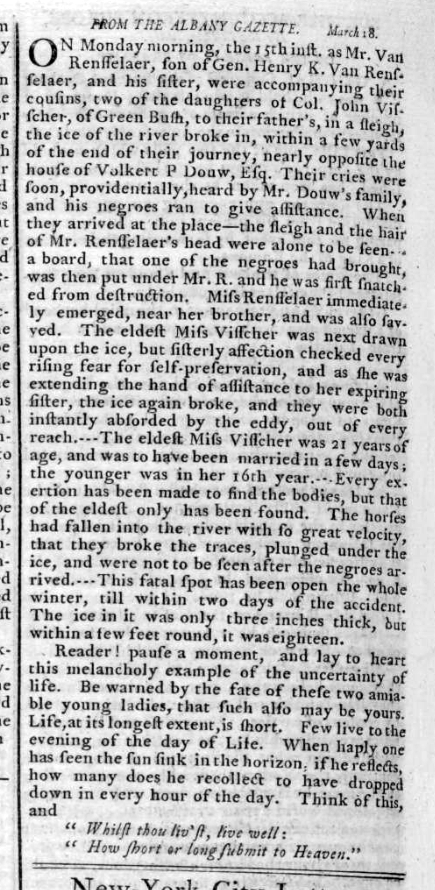
    A heartbreaking example of drowning after falling through ice happened in 1793 when a group of cousins tried to cross what was thought to be a solid frozen river in their sleigh.  The ice broke, taking all under the water.  Assistance was rendered by people on the shore but only one person could be saved.

    gazetteoftheunited-states.28new-york5bn.y.5d292c24march1790
    Gazette of the United-States, New York, NY, March 24, 1790

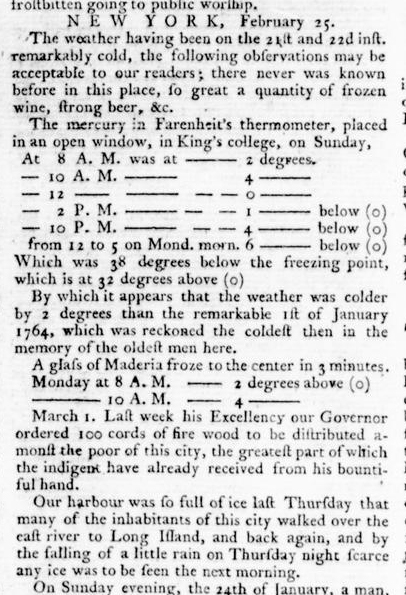
    Fluctuations in temperatures, unpredictable by the rudimentary weather forecasting available at the time, were also very dangerous.  Many underestimated just how quickly freezing temperatures could take their toll and suffered frostbite or succumbed to exposure while trying to carry on with daily life.  On one particularly cold February day in New York, frigid temperatures even froze wine and beer.   In Boston, during the same cold snap, “two or three persons were found frozen to death the beginning of this week, and … many people in the country had their ears and cheeks frostbitten going to public worship.”

    frozenbeer
    Virginia Gazette, March 25, 1773

    INDOORS

    Indoors, dealing with freezing temperatures in the 18th century was a constant struggle made more difficult because fire was the only source of heat.  Fire in the open hearth was not efficient, consumed copious amounts of fuel, and only provided warmth within a small area. Almost 90% of the heat produced by a fire in a traditional colonial fireplace escaped up through the chimney. Not only that, but chimneys were drafty, letting in cold air.  This ineffectiveness meant that a family’s living space became restricted and fires were kept going almost constantly.

    The quest for warmth lead to many house fires.  The Washington family even experienced a house fire first-hand sometime in the 1740s at Ferry Farm. A small fire began near the fireplace in the hall back room and did enough damage to ensure major repairs. The upper floor would have been well smoked and whole parts of the first floor ceiling were ruined. The home was damaged, but not lost, and repairs ensued.  Archaeological evidence of this fire includes a root cellar filled with fire related ash, burned artifacts, and fire-damaged plaster.

    Although it is unreliable, there is some documentary evidence, of a fire at Ferry Farm in a letter to George Washington from Robert Davis dated May 25, 1795.  Written 55 years after the fact, Davis’s memories are interesting but contradict the physical evidence found by archaeologists. He wrote…

    “I am not sure but I was once a play Mate of yours many years ago, was Colonel [Augustine] Washington who lived on Rappahannock & opposite to Fredericksburgh your Father, whos Estate Joined a Plantation of Mr Anthony Strathers on the River side—from Mr Strather, a Mr Robt Shadden had a Store house, with him I lived as a young Assistant in the Store, Colo. Washington was very kind and indeed a second Father to me and I Remember it well, that it give me a very sore Heart that on a Christmass Eve, his great house was burned down & that he was Obliged with his good family to go and live in the Kitchen.”

    A more contemporary letter hints at the fire as well but provides no real details other than some sort of fire happened.  Writing to Augustine Washington on October 9, 1741, Richard Yates opens his letter with “In the midst of your late calamity wch. you suffer’d by fire, for which I am sincerely concern’d…”[1]

    While the Washingtons’ fire was apparently not a newsworthy event at the time, colonial-era newspapers carried plenty of thrilling details about many other fires for their readers.

    For example in 1774, the Governor’s house at Fort George in New York City, caught fire and the Virginia Gazette, although far from New York, published stories of a narrow escape out a second story window, lost jewels and valuables, and the death of 16-year-old “servant girl” Elizabeth Garret.

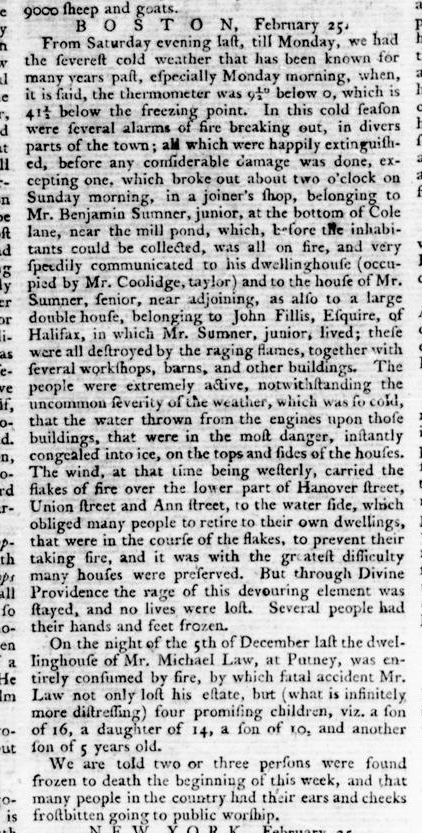
    Along with the increased danger of house fires, the cold also made fighting out of control fires much more difficult Another Virginia Gazette story discussed efforts to battle fires in freezing temperatures on an evening in Boston. The Gazette reported, “In this cold season were several alarms of fire breaking out which were happily extinguished before any considerable damage was done, excepting one…”  This was the joiner’s shop of Mr. Benjamin Sumner, “which before the inhabitants could be collected, was all on fire.”  People worked to extinguish the fire “notwithstanding the uncommon severity of the weather, which was so cold that the water thrown from the engines upon those building, that were in the most danger, instantly congealed into ice.”  Despite the difficulty with the extreme cold, the fire was put out, many houses were saved, no one died, and only a few people had their hands and feet frozen.

    bostonfire
    Virginia Gazette, March 25, 1773

    Some were not so fortunate.  The same newspaper dispatch about the Boston fire noted that on a December night in 1772 Michael Law of Putney lost not only his house but four children.

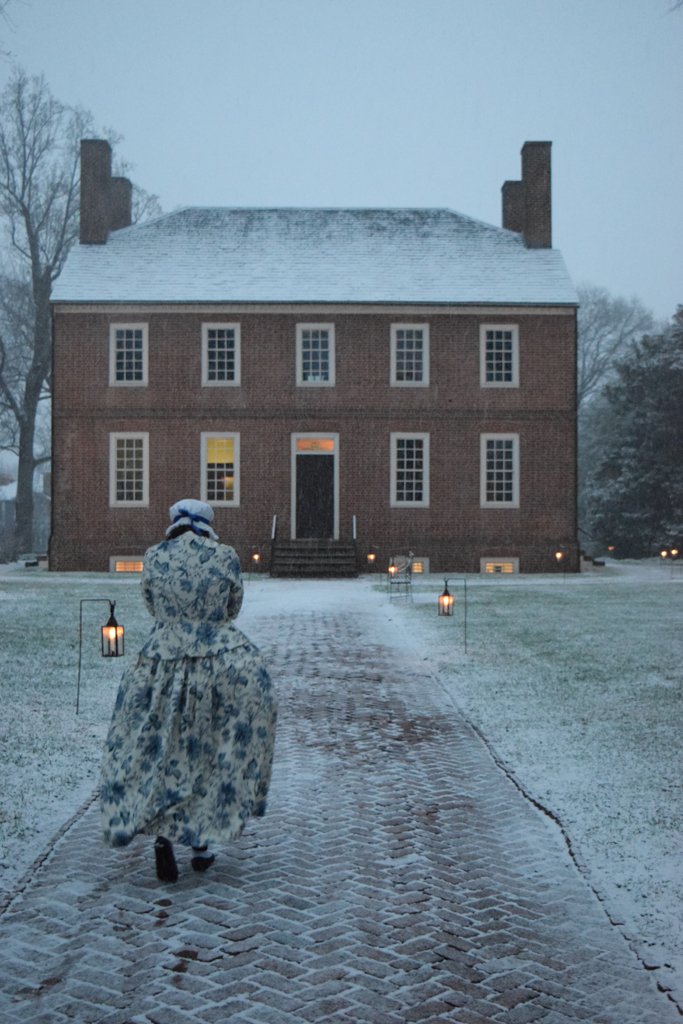
    twelfth night 2019 for blog (2)
    Snow begins to fall on Historic Kenmore on the evening of January 12, 2019.

    Winter has always been a difficult time for people. The constant battles with the cold and lethal dangers of the season were in the forefront of colonial Americans’ minds.  As Mary Palmer Tyler reminisced in the 19th century about the brutality of winter in her youth in the 18th century, “Truly the people of this age know little of the horrors of winter.” [PDF]

    Heather Baldus
    Collections Manager

    [1] Richard Yates to Augustine Washington, October 9, 1741, printed in Moncure D. Conway, Barons of the Potomack and the Rappahannock (New York, 1892), pgs 68-69.