Step onto the grounds of George Washington’s boyhood home and, notwithstanding its famous connection, there’s no mistaking the feeling of being in a special place. A National Historic Landmark, Ferry Farm stretches along the Rappahannock River across from downtown Fredericksburg’s City Dock. The land is varied and rich, with native woodlands, a native grass meadow, walking trails, riverbeds, springs, a garden, and scenic Virginia rail fences. It has seen a significant share of American history from the activities of Native Peoples, to the colonial inhabitants, to Civil War Union encampments, and more.
View of Fredericksburg from Ferry Farm
Historically significant land such as this ought to be carefully maintained and stewarded – and it is. With its variety of features, maintenance can become a challenge, as there is always the threat of erosion, the caring for trees, the need to ensure the grounds are safe and passable for visitors, and finding economical ways to use and reuse what’s available. Also, we cannot forget the residents that have first rights to be here – Ferry Farm’s numerous critters.
Leaving natural habitats for flora and fauna promotes a healthy ecosystem
“We try to keep a balanced ecosystem by only introducing native plants that would not interrupt the natural beauty of the site,” explains John Carmichael, Buildings and Grounds Director. “The land is kept as natural as possible to maintain a primitive ecosystem native to the area. Forests are kept healthy by mitigating the growth of invasives. Grasslands are maintained with tough turf, mainly natural growth. We’re not looking to keep up a pretty green lawn with no weeds; we maintain how it would have looked in Washington’s day, with natural growth, clover, and field grasses.”
The grass in front of the House leading to the riverfront gets mowed sparingly in order to protect all of the embankments from erosion. Growing large strong roots helps keep the soil in place. Underbrush on the riverbank remains in place, for the same reasons, and fencing keeps visitors off of the area since it is unsafe footing.
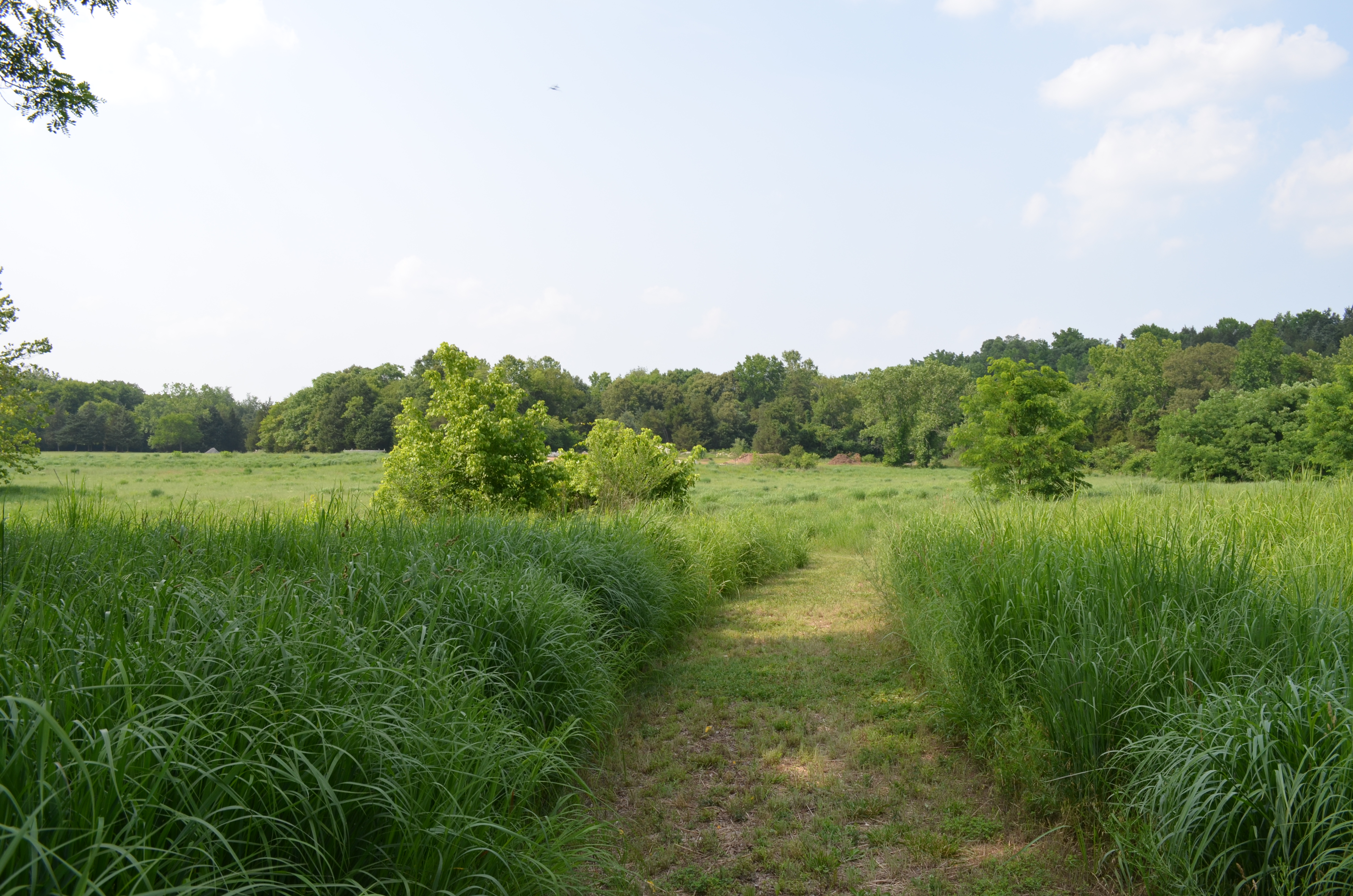
Grasses are kept long in front of the Washington House and along the Rappahannock River to protect the embankment from erosion.
The entire flat nearest the water was created by the Corps of Engineers shortly after the conclusion of the Civil War. Sediment from erosion was threatening to make the river too shallow to navigate. To relieve the problem, the Corps built wooden retaining walls along the river’s edge and then dredged a channel to allow ships to resume operating on the river. They used the sand from the dredge to fill in behind the wooden retaining walls. With sand not being optimal land for growing trees, trees that happen to grow there are left because they’ve already proven their hardiness.
Since no commercial fertilizers and minimal weed killers are used at Ferry Farm, composting and mulching are an essential part of stewardship. Large limbs, trimmings, and small branches are placed at the edges of woods to decompose and provide shelter for animals. Tree trimming partners will mulch downed limbs which in turn get spread onto walking paths and parking lots.
Composting at Ferry Farm is a three-year process. New grass clippings, greens, weeds, manure, wood ash, and leaves go into an initial pile for decomposition. In year two, everything gets turned and sifted regularly. By the third season, it’s ready to be spread throughout gardens and flower beds. Green and cost-effective, composting keeps useable nutrients out of the landfill.
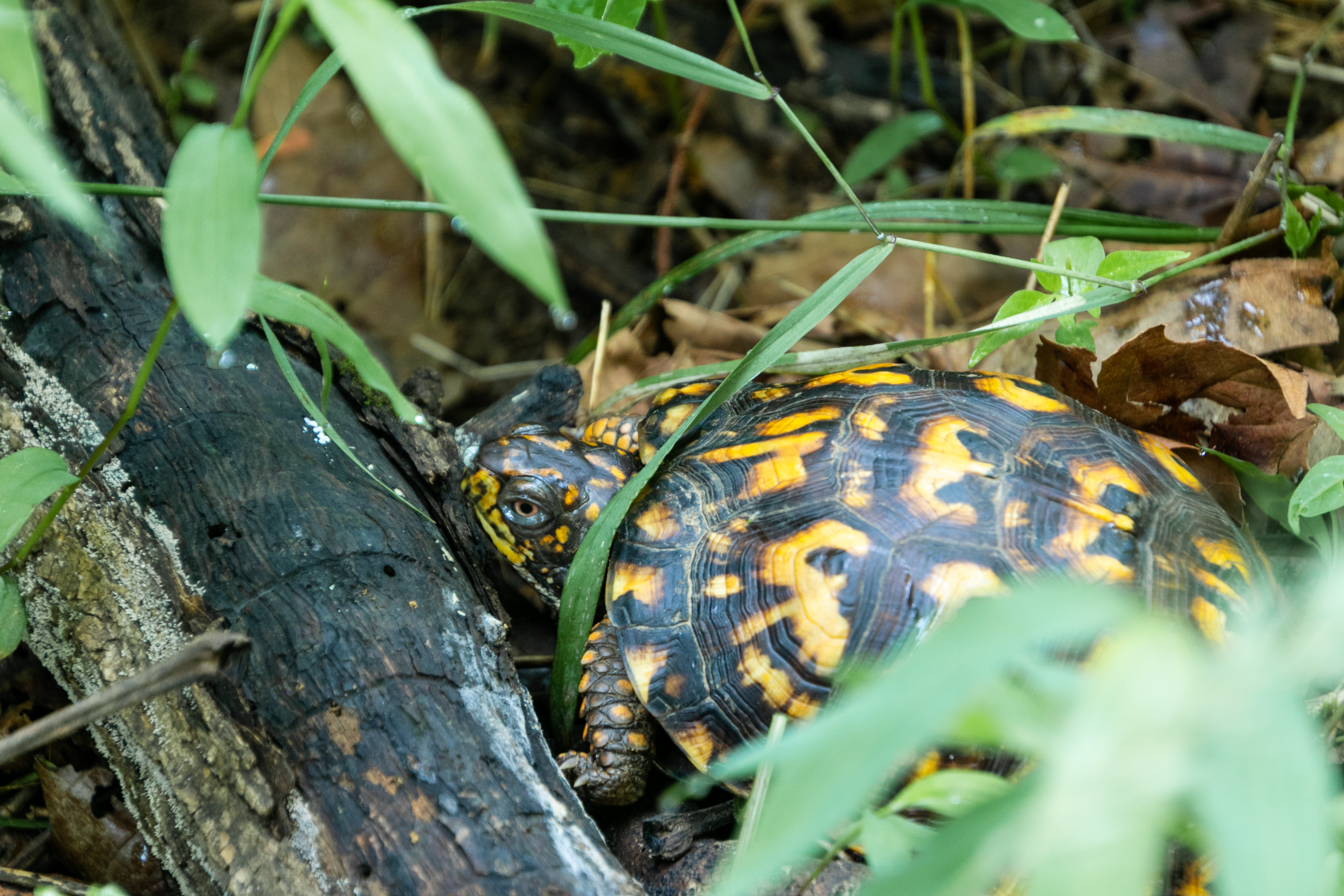
Box turtles thrive in tall grasses in front of the Washington House. Source: Sharon Houston
Surrounded by busy roads on two sides, Ferry Farm is a wild animal sanctuary for deer, rabbits, groundhogs, red and grey foxes, hawks, bald eagles, herons, opossums, raccoons, black and garter snakes, box turtles, bats, and hundreds of bird species. Leaving natural habitats for flora and fauna promotes a healthy ecosystem. The back meadow receives rejuvenate mowing in early spring to encourage it back to good health. It’s a birders’ paradise dotted with bluebird boxes along a mowed walking path. Over 125 different species of birds have been identified on the property over the years. Look closely, and flat patches of grass indicate where a deer has bedded for the night. Critters are welcome here. “As long as it poses no threat, it has a right to be here,” says Chris Lynn, Buildings and Grounds Technician.
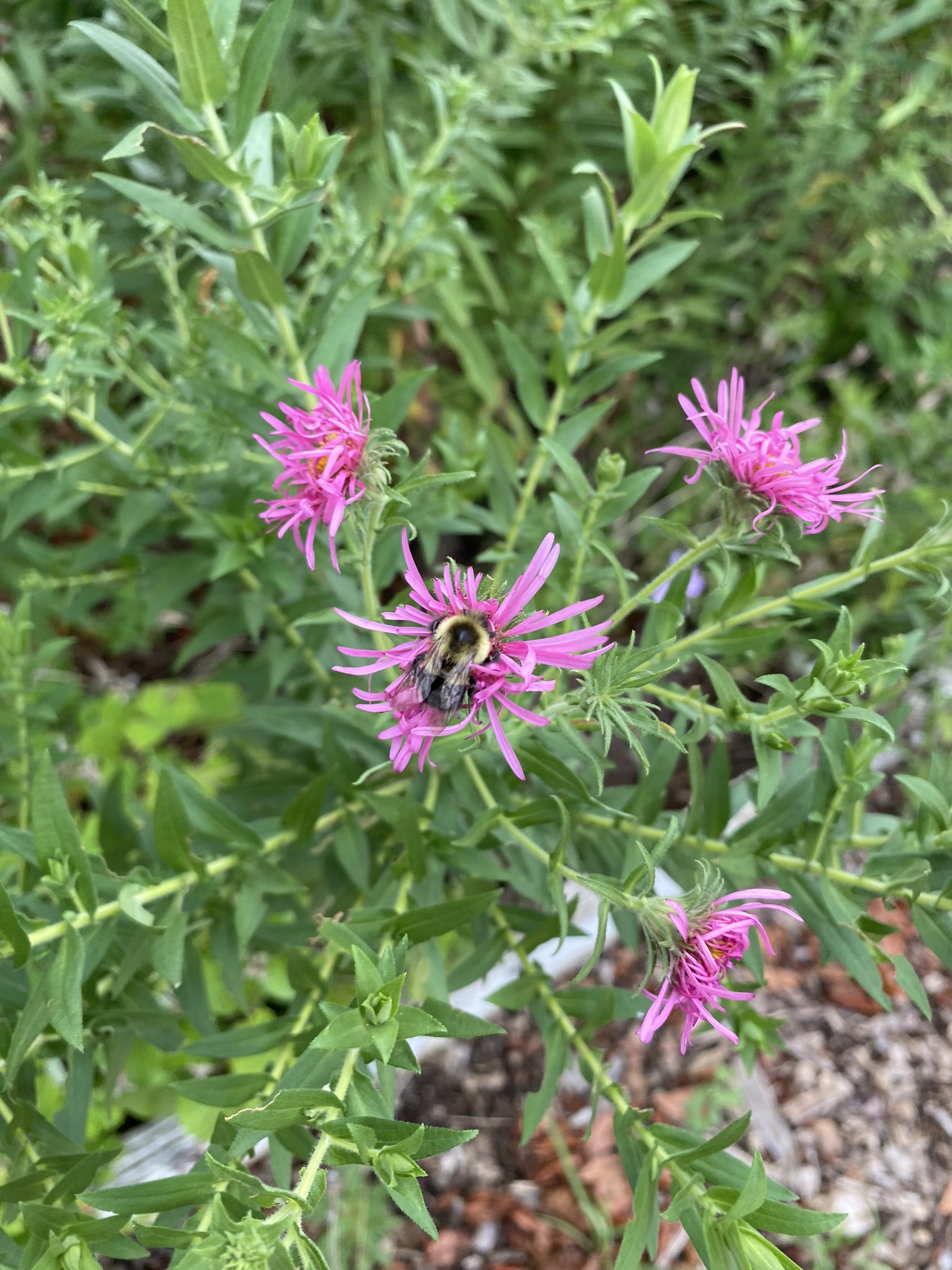
The flowers in the garden attract pollinators to the herbs and vegetables; fruit-bearing trees and shrubs do their part to attract as well. Gardens grow with the three sisters – corn, squash and beans – as well as tobacco, cotton, potatoes, and more.
A flower in the garden bed serves to attract pollinators for herbs and vegetables
Ferry Farm’s beauty conjures up days of natural grasslands, mature forests, and living in harmony with the land’s resources. Knowing that the “Father of our Country” spent his childhood here evokes moments of contemplation. Absorbing the sights and smells of wild flora and fauna while walking where young George walked is a step back in time, where the present awakens the past.
In April 1738, an advertisement in the Virginia Gazette described the 100 acres of land later purchased by Augustine Washington as “a beautiful situation” with “a very handsome dwelling house.” Located about 2 miles below the falls of the Rappahannock and near the public ferry, this unique landscape became George Washington’s boyhood home.
“The Old Mansion of the Washington Family” (1833) by John Gadsby Chapman shows the foundation stones of the Washington house and the surrounding river landscape.
Steeped in the legends of our nation’s first Founding Father, Ferry Farm is of course a popular destination for those looking to immerse themselves in history and walk in young George’s footsteps. At the same time, visitors to Ferry Farm have the unique opportunity to explore the natural landscape and learn more about local wildlife. Whether you are meandering along the wooded river trails, traipsing through the demonstration garden, or observing the drama of the Rappahannock from the river bluff, visitors can understand why this location was once described as a “beautiful situation.”
The front door of the Washington House overlooks the river flood plain on a sunny summer day.
Visitors to Ferry Farm can traverse through a variety of habitats during their visit, including the open lawns surrounding the Washington House, native plant and wildflower meadows, and hardwood bottomlands (ie. river swamps). These trails and natural features are home to a menagerie of wildlife, including commonly spotted critters like deer, groundhogs, foxes, and bald eagles.
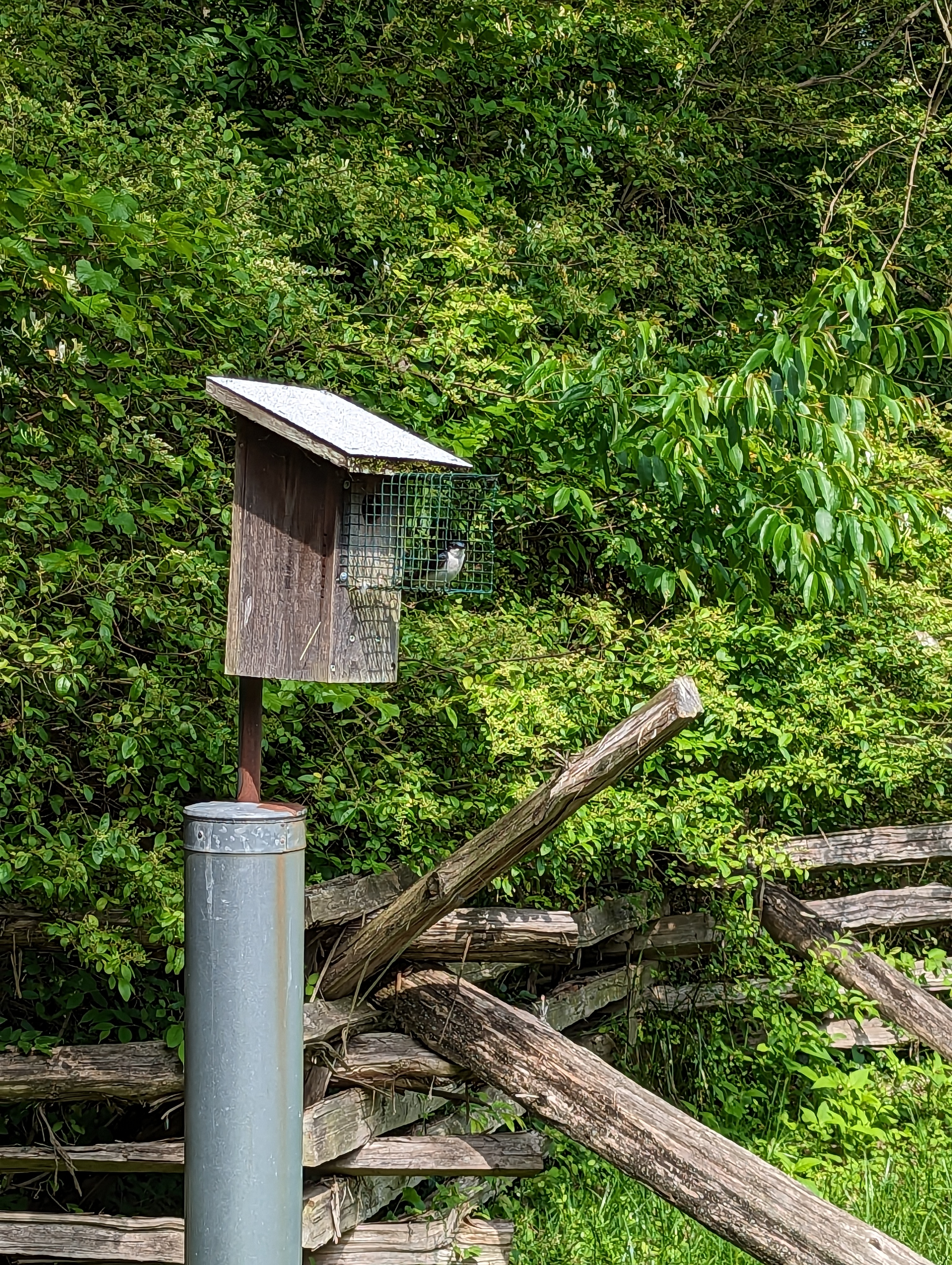
While bald eagles may be the most patriotic bird swooping over our property, Ferry Farm is a prime birding location for all kinds of species. Over the years, several local birding groups have surveyed the property. (Read more about past bird surveys at Ferry Farm here and here.) At Ferry Farm, we are lucky to also have a bluebird trail maintained by The Virginia Bluebird Society. While walking the grounds, guests can enjoy the sights and sounds of Eastern Bluebirds and other native bird species as they flit about the bluebird boxes.
The Virginia Bluebird Society (VBS) was founded in 1996 to help promote, protect, and support native cavity bird species in Virginia. What originally began as 3 trails and 47 nest boxes expanded to a network of trails that, in 2020, encompassed 431 trails and 4,752 nest boxes.VBS trains a dedicated force of volunteers who monitor the boxes and record invaluable data. From April to August, volunteers walk the Ferry Farm trails checking on our 10 boxes and monitoring nest activity. In addition to bluebirds, other native cavity nesters such as tree swallows, chickadees, and house wrens may also make their home in these boxes. Last year at Ferry Farm, 28 bluebirds and 8 tree swallows fledged. We are incredibly grateful to the Virginia Bluebird Society for all their hard work and are excited to see how many birds fledge at Ferry Farm this year!
Look closely and you’ll spot a tree swallow perched outside a Ferry Farm nest box! Two predator guards, a Snake Guard and a Cat/Raccoon Guard, are installed to help prevent predators from accessing the boxes. The metal mesh on the front of the box makes it harder for curious paws to reach inside the nest, and the metal cylinder covering the mounting post prevents snakes from scaling the post.
If you visit Ferry Farm this summer, make sure to bring your bird book and binoculars and keep an eye on the sky as you explore the natural landscape!
“There is no man who hates the power of the crown more, or who has a worse opinion of the Person to whom it belongs than I.” – Charles James Fox, letter to Edmund Burke, 24 January 1779. Quoted in L. G. Mitchell, Charles James Fox (1997:41).
“It is intolerable that it should be in the power of one blockhead to do so much mischief.” – Charles James Fox referring to King George III. From a letter to Mr. Fitzpatrick, 9 September 1781. Quoted in John Brooke, George III (1974:363-364).
The Right Honourable Charles James Fox, MP, wore buff and blue apparel for this 1782 portrait by Joshua Reynolds. Credit: Wikipedia.
Charles James Fox was contrary. He gambled excessively, drank heavily, and he was generally irreverent. He enjoyed resisting powerful people, supported unpopular causes, and expressed his disdain for high society by adopting a disheveled appearance later in life. His colorful British Parliamentary career spanned decades. He was a champion of liberty: including the abolition of slavery, religious freedom, the colonists’ struggles with King George III, and he supported the French people in their quest for democracy.
Fox questioned King George III’s policies toward the American colonies and feared that the monarch was becoming tyrannical. It was parliament’s job to guard against such corruption. Fox and his supporters often wore apparel in the colors of buff and blue – the colors of Washington’s army – to show their support for American concerns. The Americans, in turn, honored their parliamentary champion with their own fashion accessory: they wore buttons that featured a fox, an obvious – and often used – stand-in for the controversial orator.[1]
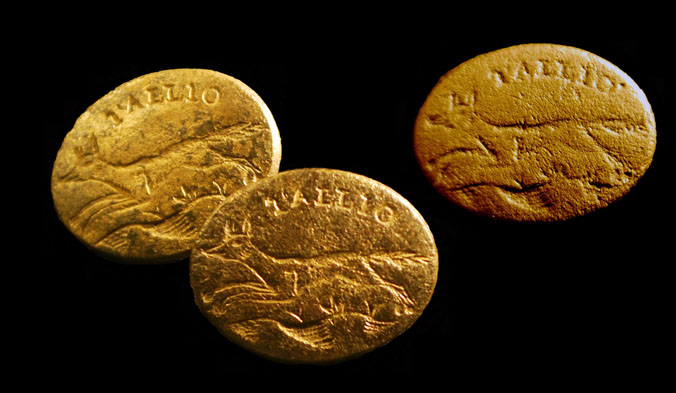
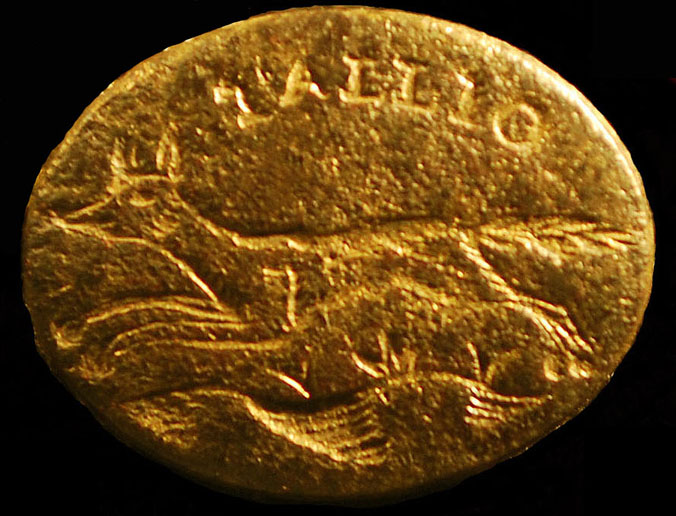
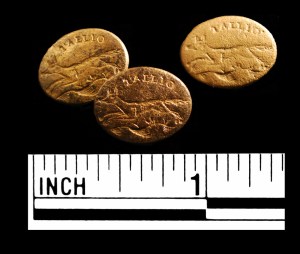
Buttons featuring a fox racing across the landscape with the word “TALLIO” were intensely popular from the 1770s through at least the first quarter of the 1800s and they are common discoveries at archaeological sites. “Tallio,” “talley-o,” “talley-oh,” “talleo” and “talley ho” were all acceptable spellings for the traditional huntsmen’s shout upon spotting the fox during a chase. But this exclamation dates from the 1770s: well over a century after the sport had been brought to the Chesapeake. [2]
A close-up of a “TALLIO” sleeve button from the Washingtons’ parlor cellar, c. 1766-1772.
Fox hunting enjoyed wide popularity among Chesapeake gentlemen. The English Brook family brought their foxhound pack to Prince George’s County, Maryland when they immigrated in 1655.[3] Fox hunting continued in the Brook family for generations, and the popularity of this privileged recreational activity spread. Fox hunting on horseback was an amusement of the leisure class and the chase was considered more important than the capture of the prey. By the late 1760s, Washington himself maintained a pack of fox hounds at Mount Vernon.
Additional TALLIO sleeve buttons from the antebellum-era plowzone at Washington’s boyhood home. They are notably more weathered from its increased exposure to the elements given its shallow soil burial environment.
Many who discover these buttons today attribute their imagery solely to the popularity of fox hunting as a sport. These buttons are often referred to as “hunt” buttons, a category that includes buttons which feature favored hobbies or athletic pursuits. Some assert that these sleeve links were widespread because fox hunting was so popular. And indeed, it was. These links – historically referred to as ‘sleeve buttons’ – enjoyed great popularity in the years surrounding the American Revolution, the Early Republic, and into the antebellum period.
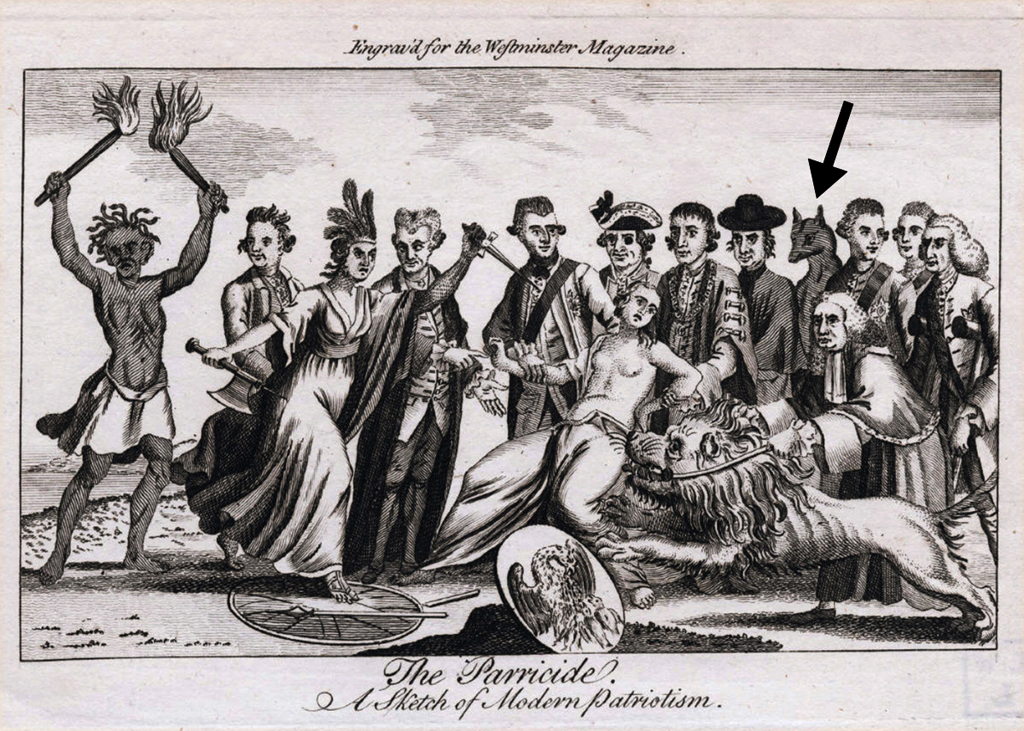
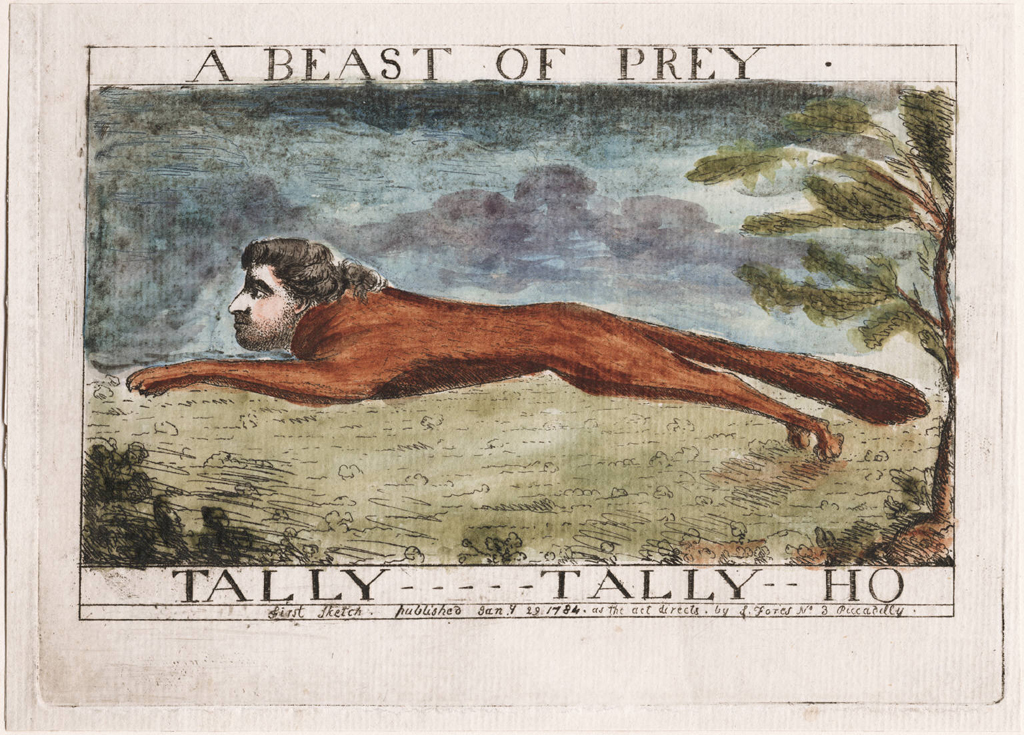
I believe these buttons also achieved a deeper, political meaning, however, especially in the years around the American Revolution. Due to the support by Charles James Fox of the American cause, fox imagery came to represent resistance to tyranny. A number of contemporary British political cartoons used a fox to symbolize this politician. In addition to this documentary evidence, I believe the fox imagery used on these buttons came to symbolize the fight for liberty. For those recovered buttons for which we have context, it is evident that they are especially prevalent at sites associated with the Revolutionary War and with American patriots.
Colonial discord is represented in this 1776 image showing America (symbolized as a woman in a feathered headdress, center left) attacking a defenseless Britannia (symbolized by the woman at center right). Charles James Fox is represented as a fox in the background (see arrow). Courtesy of the Lewis Walpole Library, Yale University.
As the political difficulties between the British Crown and the American colonies intensified, Fox’s outspoken support of colonial concerns attracted attention on both sides of the Atlantic. In Britain, some called Fox a traitor for his disrespectful rhetoric against the crown. In Britain’s North American colonies, his stoic support for their cause provided colonists a crucial ally in an unexpected, but politically powerful position. Patriots and revolutionaries enthusiastically incorporated these fox hunting-themed buttons into a celebration of Fox’s ardent support.
A 1784 image of a fox, featuring the head of British parliamentarian Charles James Fox. Courtesy of the Lewis Walpole Library, Yale University
Tallio/fox buttons have been recovered from several American Revolution-era and Early Republic era forts in Tennessee and New York. Two domestic sites associated with George Washington have yielded these buttons as part of their archaeological discoveries. Signer of the Declaration of Independence, William Paca, proudly wore a tallio/fox button. Colonial towns such as Dumfries, Virginia and Jacksonborough, South Carolina have yielded these buttons from layers dating from the Revolutionary era.
Anthropologists – scholars who study people – make special efforts to identify such symbols in societies, both in contemporary studies and in analyses of past people.[4] Symbols are especially powerful because viewers do not need to be able to read, to understand language, to hear, or to speak, in order to comprehend a symbol’s message. These messages can summon strong emotional responses. Think about how you feel when you see an American flag and how your responses might change depending on how a flag might be used at a protest, funeral, or baseball game. During the last quarter of the eighteenth century, the fox symbolized resistance to tyranny, freedom, and the pursuit of liberty. Wearing a fox button proclaimed your support for American independence.
The die struck fox image on these buttons was not originally created as a political symbol for Charles Fox, however. The meaning of these buttons was adapted to that purpose after their initial manufacture. As we have seen, fox hunting was indeed a common pastime for gentlemen, and these fashionable buttons were popular among those who “chased the hounds.” As tensions between Britain and her North American colonies increased, beginning by the 1760s, the fox symbolism present on tallio buttons was malleable[5], and provided a gentleman with leeway in a politically volatile climate: its meaning could change according to a gentleman’s situation. Among unfamiliar company, such a multivocal symbol would allow an adroit – or perhaps even a vacillating – patriot some political latitude. Uncertain if the person with whom you’re dining is a Tory? Your innocent little TALLIO sleeve link merely celebrates a popular, recreational activity, whose roots in the Middle Atlantic region went back generations. But, at the same time, comrades in the struggle for American Independence recognized their solidarity in the symbolism of the fox: honoring their parliamentary advocate of colonial resistance to the King George III.
Along with the tallio sleeve button, another apparel item as evidence for the Washington family’s burgeoning resistance to the Crown has been found at Ferry Farm. As I wrote in an earlier blog post, the Washingtons wore a mid-1700s William III sleeve button to display their resistance to George III: a monarch that many colonists deemed tyrannical in his exercise of power. On more than one occasion, Charles Fox himself compared America’s Declaration of Independence to William and Mary’s “Glorious Revolution,” and (fairly or not) drew parallels between the monarchical abuse of powers exercised by George III and James II. British subjects had the right to replace a tyrannical king with another: an example set by William and Mary, and an important precedent for the American colonists. The Washingtons’ support for the Leedstown Resolves in February 1766 provides documentary evidence for their concerns with Britain’s rule and (at the time) their loyalty to the Crown.[6]
Close-up of a mid-1700s sleeve button recovered at Ferry Farm. It features the image of King William III and reads “Gulielmus D. G.” which translates as “William by the grace of God King.” This button is another demonstration of growing resistance to George III from Washington’s boyhood home.
Together, the symbolism on each of these buttons and the Washington brothers’ participation in the Leedstown Resolves demonstrates a long and growing frustration among Virginians with Britain’s colonial policies. The material expression of these sentiments can be traced back to the mid-1700s-era male apparel buttons at Washington’s childhood home. These discoveries were possible thanks to the preservation of this site, the thorough excavation of its layers, and a contextual understanding of the social and political landscape of this period.
This fox/liberty symbolism apparently endured well into the 1800s in the United States. Archaeologists recovered a “TALLIO” sleeve button from the root cellar of a quarter for enslaved laborers in South Carolina:[7] strong circumstantial evidence that this symbol of the struggle for liberty and freedom continued beyond the American Revolution. As previous mentioned, Fox was an ardent abolitionist. The layer from which this particular button was recovered dated no earlier than 1845. In this context, this symbol of liberty underwent another change and now represented a reproach displayed by enslaved Americans to highlight the paradox of slavery in what was supposed to be a democracy. Though Charles James Fox died in 1806, the use of the fox as a symbol for the struggle for freedom endured.
Laura Galke, Archaeologist
Site Director/Small Finds Analyst
Sites where such TALLIO links have been recovered Collectors and archaeologists have found TALLIO buttons from at least New York to South Carolina, and westward to Tennessee,[8] where they occur at a number of United States military forts, late 1700s-era towns, and at sites associated with patriots.
Bledsoe’s Station, Tennessee (1783-1795) – “civilian fort” (Context dates from c. 1783-1795).
British Officer’s Revolutionary War Hut in New York (Calver and Bolton 1950: 225, 227).
Fitts, Mary Elizabeth, Ashley Peles, and R. P. Stephen Davis, Jr.
2012 Archaeological Investigations at the Vance Site on the University of North Carolina Campus, Chapel Hill, North Carolina. Research Report No. 34. The University of North Carolina, Chapel Hill.
Hastings, Anne M.
1997 Fox Hunting: History and Change in a Mountain Sport. Appalachian Journal 25(1):30-46.
Mitchell, Leslie George
1997 Charles James Fox. Penguin, London.
Noël Hume, Ivor
1961 Sleeve Buttons: Diminutive Relics of the Seventeenth and Eighteenth Centuries. In Antiques 79(4):380-383.
Polhemus, Richard R.
1979 Archaeological Investigations of the Tellico Blockhouse Site (40MR50): A Federal Military and Trade Complex. Report of Investigations 26, Department of Anthropology, University of Tennessee, Knoxville.
Reich, Jerome R.
1998 British Friends of the American Revolution. M. E. Sharpe, Armonk, New York.
Smith, Kevin E.
2000 Bledsoe Station: Archaeology, History, and the Interpretation of the Middle Tennessee Frontier, 1770–1820. Tennessee Historical Quarterly 59(3):175–187.
Smith, Samuel D., and Benjamin C. Nance
2000 An Archaeological Interpretation of the Site of Fort Blount, a 1790s Territorial Militia and Federal Military Post, Jackson County, Tennessee. Tennessee Dept. of Environment and Conservation, Division of Archaeology, Nashville, TN
Smith, Steven D., Audrey R. Dawson, and Tamara S. Wilson.
2008 The Search for Colonial Jacksonborough (38CN280) Colleton County, South Carolina. South Carolina Institute of Archaeology and Anthropology Report, Columbia. Presented to Lowcountry Council of Governments, Yemassee, and Francis Marion Trail Commission, Florence.
Sprouse, Deborah A.
1988 A Guide to Excavated Colonial and Revolutionary War Artifacts. Heritage Trails, Turbotville, Pennsylvania..
Steen, Carl
2008 Archaeology on the Great Pee Dee River: The Johannes Kolb Site. http://38da75.com/professional.htm, accessed July 31, 2012. Diachronic Research Foundation, Columbia, SC.
Notes
[1] A generation earlier Fox’s father, Henry Fox – also a member of parliament – found himself represented as a fox on multiple occasions in political satire.
[2] The recovery of this artifact from a layer created between 1766 and 1772 indicates that “tallio” was a term popular before it first appeared in print in 1773 (“tally-ho, int. and n.” OED Online. Oxford University Press, March 2017. Web. 31 May 2017). Since this “TALLIO” button was deposited before 1773, perhaps the Oxford University Press might consider updating their “tally-ho” entry.
[3] A nice history of fox hunting is provided in Anne M. Hastings, 1997 article “Fox Hunting: History and Change in a Mountain Sport.” Appalachian Journal 25(1):30-46.
[4] Archaeology is a subfield of anthropology. Archaeologists study past peoples.
[5] Political sleeve buttons that said “Liberty” (revolutionary) or portrayed a Crown (Loyalist) provided their gentlemen no political leeway: they betrayed the political sympathies of their gentlemen quite directly. Did gentlemen who elected to wear TALLIO buttons lack commitment, perhaps coveting the ambiguous – and potentially innocent – message of the fox imagery?
[6] Samuel, John Augustine, and Charles Washington all signed the Leedstown Resolves which, though it expresses concern, is nonetheless effusive in its expressed respect for the monarchy.
[7] Carl Steen, Personal Communication, 15 April 2013.
Although Fielding Lewis certainly built a home capable of hosting the elaborate Christmas celebrations popular in 18th century Virginia, Historic Kenmore probably never saw occasions on such a lavish scale, with the possible exception of the family’s first Christmas in the house in December 1775. If the family hosted the traditional Christmas celebration, Fielding and Betty would have welcomed lots of friends and family, serving them fancy dinners and entertaining them with dancing and music. They and their guests might have enjoyed fox hunts as well.
Virginians regularly included fox hunts as part of their Christmas celebrations.[1] In an era long before environmental conservation, colonial Virginians viewed foxes as pests that endangered livestock, which is why they hunted them so relentlessly.[2]Additionally, during hunts, gentry men like George Washington could show off their hunting dogs and their skill at horseback riding while chasing foxes through the countryside.
George Washington loved fox hunting. In the year 1768, for example, he went on fox hunts 40 different times. These hunts often lasted hours. On a March day in 1768, he caught “a fox with a bobd Tail & cut Ears, after 7 hours chase.”
George owned numerous hunting dogs and “helped develop the breed known as the American Foxhound.” These hounds chased the fox and hunters on horseback chased the hounds. The chase required galloping horses to jump over streams, bushes, and fences and riders to duck under low-hanging tree limbs. Fox hunting allowed wealthy Virginians to show-off their horse riding skills and George was widely considered an excellent horseman.
Hunters also wore special clothes. George went hunting in “a blue riding frock and scarlet waistcoat threaded with gold lace and topped by a black velvet cap. He wore high boots and carried a . . . riding crop.”[2] He wore cuff links that said “tallio” on them – that’s what hunters would shout when they found a fox. These cufflinks were unearthed by archaeologists at George Washington’s Ferry Farm and their discovery hint at George’s interest in fox hunting even in his younger years. He also hung paintings of fox hunts on the walls of his home at Mount Vernon.
Cufflinks discovered in the parlor root cellar and yard of the Washington House at Ferry Farm show a fox running across grassy rolling hills with the word “tallio” engraved above. This is a popular 18th century motif.
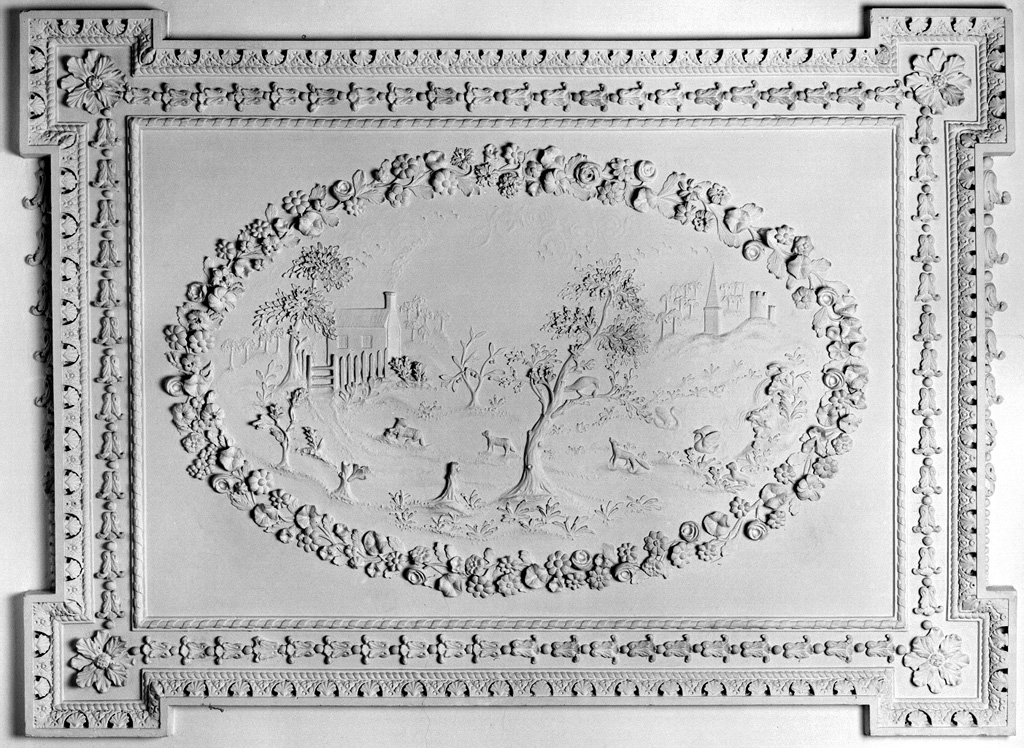
Like the George’s paintings at Mount Vernon, Fielding Lewis included foxes in the decor of his home. At Kenmore, the Lewis children were always reminded of the sneaky ways of foxes when they looked at a picture above the Dining Room fireplace. The plaster image illustrates the Aesop’s fable known as “The Fox and the Crow.”
This plaster over-mantle in Historic Kenmore’s dining room depicts the Aesop’s Fable known as “The Fox and the Crow.”
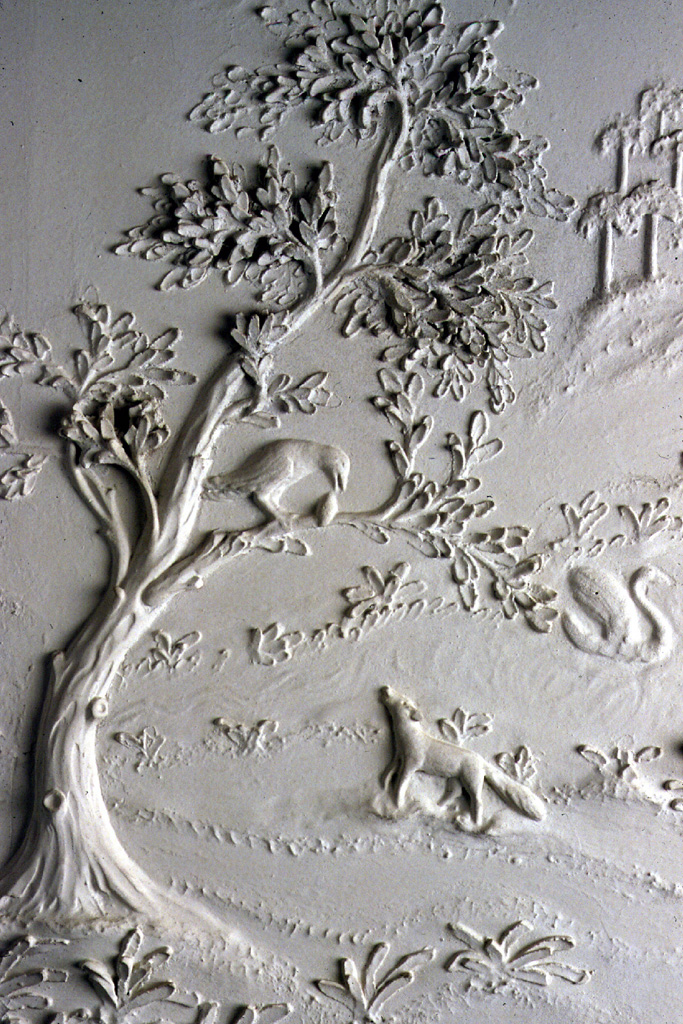
One day a fox saw a crow flying with a piece of cheese in its beak and settle on a branch of a tree. “That’s for me!’ said Master Fox, and he walked up to the foot of the tree.
“Good-day, Mistress Crow,” he cried, “How well you are looking today; how shiny your feathers; how bright your eyes. Your voice must be more beautiful than that of other birds. Won’t you, please, sing me a song that I may know you are the Queen of Birds?
The crow, quite happy to hear such praise, began to sing her best – “Caw, Caw, Caw”, but when she opened her beak, the piece of cheese dropped to the ground and was snapped up by Master Fox.
A close-up view of the over-mantle shows Mistress Crow dropping her cheese to be scooped up by Master Fox.
“Aha, Mistress Crow,” said he. “That was what I wanted. In exchange for your cheese I will give you some advice for the future: “Beware of false flattery.”
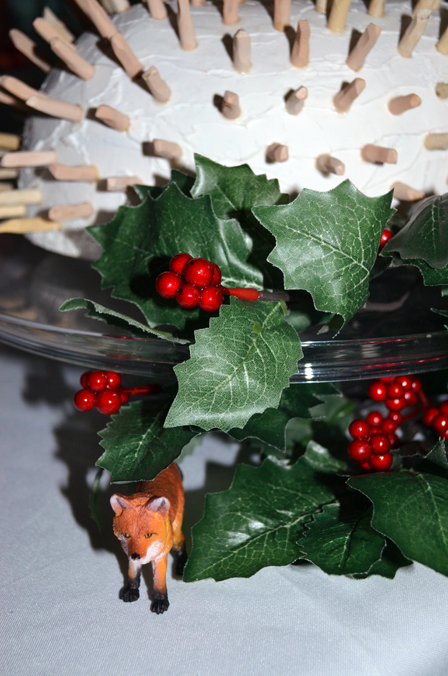
This Christmas, some sneaky foxes have found their way into Kenmore.
A sneaky fox hiding somewhere inside Kenmore.
During the holiday season, younger visitors can help us look for them in a special scavenger hunt and learn about the colonial Christmas custom of fox hunting.
Zac Cunningham
Manager of Educational Programs
[1] Philip Vickers Fithian, Journal & Letters of Philip Vickers Fithian, 1773-1774: A Plantation Tutor of the Old Dominion, ed Hunter Dickinson Farish (Williamsburg, Va., 1943), entry for Dec. 18, 1773: 44
[2] Jane Carson, Colonial Virginians at Play, Williamsburg, VA: Colonial Williamsburg Foundation, 1998: 62-64
[3] Ron Chernow, Washington: A Life, New York: Penguin Press, 2010: 124-5.







 Anthropologists – scholars who study people – make special efforts to identify such symbols in societies, both in contemporary studies and in analyses of past people.
 beginning by the 1760s, the fox symbolism present on tallio buttons was malleable