In 1824, the United States was approaching its national jubilee—50 years of independence. President James Monroe, looking to create a wave of patriotism and celebration, invited the last surviving General of the American Revolutionary War, an American hero and icon, to take a grand tour of the country revitalizing the “spirit of 1776.” That American hero was…a French aristocrat with a painfully long name of Marie-Joseph Paul Yves Roch Gilbert du Motier de La Fayette, the Marquis de Lafayette.
1824 portrait of Lafayette by Ary Scheffer is currently in the U.S. House of Representatives
I won’t go into General Lafayette’s exploits, heroism, and leadership during his time in the Continental Army, but the young man was impressive and quickly became an adopted countryman.
Lafayette being heroic at the Battle of Brandywine, artist Charles Henry Jeens
However, we will talk about his American tour, particularly his stop in Fredericksburg.
Lafayette arrived in New York on August 15, 1824, after setting sail on a merchant packet Cadmus from Le Havre with much disapproval from Louis XVIII, the King of France. But royal condemnation from Louis XVI (Louis XVIII’s elder brother) hadn’t stopped him from setting sail for America in 1777, and it didn’t stop him in 1824.
Lafayette arrived in Fredericksburg on the evening of November 20th. He was first received at the parade grounds by two companies of Riflemen, the Washington Guards, and the whole Marine Band from Washington. Then they all commenced in a long column toward town, gaining excited townspeople on horses as they continued down Hanover Street toward Caroline. (Merchant, 1824) (Levasseur, 1829)
Cover page of the book by Rufus B. Merchant documenting Lafayette visit, 1825
The procession made it to the Town Hall, which was festooned with evergreens and flowers. There, it was met by a battalion of little boys called Lafayette Cadets, dressed in sharp white uniforms with red trim. After a quick welcome speech from the mayor, the general was led into the Hall, where he was greeted by a group of garlanded young girls singing his praises.
Fredericksburg’s Town Hall, 1814-1816
The general was then whisked off to his accommodations provided by Mr. James Ross to enjoy refreshments and a “handsome” dinner. At nine o’clock, Lafayette, the Mayor, and Colonel Mercer were taken to the Farmer’s Hotel (west corner of Caroline and Hanover Streets) to partake in a grand welcome ball for a few hours until he retired, presumably exhausted from the day’s activities. (Merchant, 1824) (Crookshanks, 2018)
On Sunday, the general, his son, and Mr. La Vasseur visited the Freemasons at the Fredericksburg Lodge, No. 4. In addition to observing the solemn and profound ceremonies, Lafayette was elected an honorary member in the Old Lodge Room. (Masonic Lodge No. 4, 2024)
Masonic punch bowl used during the reception for the GeneralMasonic Lodge No. 4, about a hundred years after Lafayette’s visit.
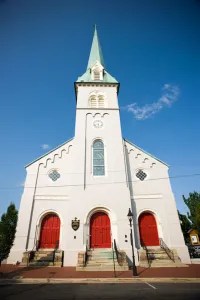
The assemblage of Masonic Brethren, civil authorities, military officers, Lafayette, and company was escorted to St. George’s Episcopal Church to enjoy an excellent discourse delivered by the Reverend Edward C. McGuire, also a Mason.
Interior of St. George’s Episcopal ChurchSt. George’s Episcopal Church, Established 1720
The general then spent the evening in the company of Washington relatives at Captain Robert Lewis’s, then retired to his lodging early at 9 o’clock. As Monday morning arrived, Lafayette was paraded to the town hall in a chariotee drawn by four white horses, where he was greeted by a crowd of ladies who occupied his time until he was led away for a sumptuous dinner at Mr. Gray’s Tavern. After a few hours of delicious food, songs, and speeches, the general was loaded into a carriage for the final time as he continued his journey to Washington. (Dovetail Cultural Resource Group, 2006)
Foundation of Mr. Gray’s tavern (Indian Queen Tavern) located on the current Marriott Hotel site.
Lafayette’s time in Fredericksburg might have been short this trip, but it gave the city a last chance to thank and honor a valued friend who had been a champion for America and helped fight for this country’s freedom.
The city will again celebrate General Lafayette’s visit with a Commemoration Weekend on November 23rd and 24th. The weekend will open with a recreation of Lafayette’s arrival at the Old Town Hall, including period music and costumed participants. A reception line with the General will follow it. There will also be a Lafayette Ball on Saturday night, where participants can dress in their finest Regency garb and dance the night away (until 9 p.m.) with the General and President Monroe.
Additional Saturday events include tours of the historic Masonic Lodge No. 4. Learn about the history of George Washington’s Mother Lodge and the fraternity’s importance to the general and see rare artifacts like the original punch bowl used during Lafayette’s visit. For more information and tour hours, visit the Masonic Lodge No. 4 website.
Sunday will start with recreating Lafayette’s Masonic welcome, with historical speeches and a unique ceremony. There will be additional Lodge tours from 1 to 4 p.m. At noon, a historic church service at St. George’s Episcopal Church will be reminiscent of that performed by Rev Edward McGuire. Lastly, back at the Masonic Lodge from 2 to 3 p.m., historian Chris Ruli will give a lecture discussing his forthcoming book, “Brother Lafayette,” which examines the Marquis’ connection to the ancient fraternity.
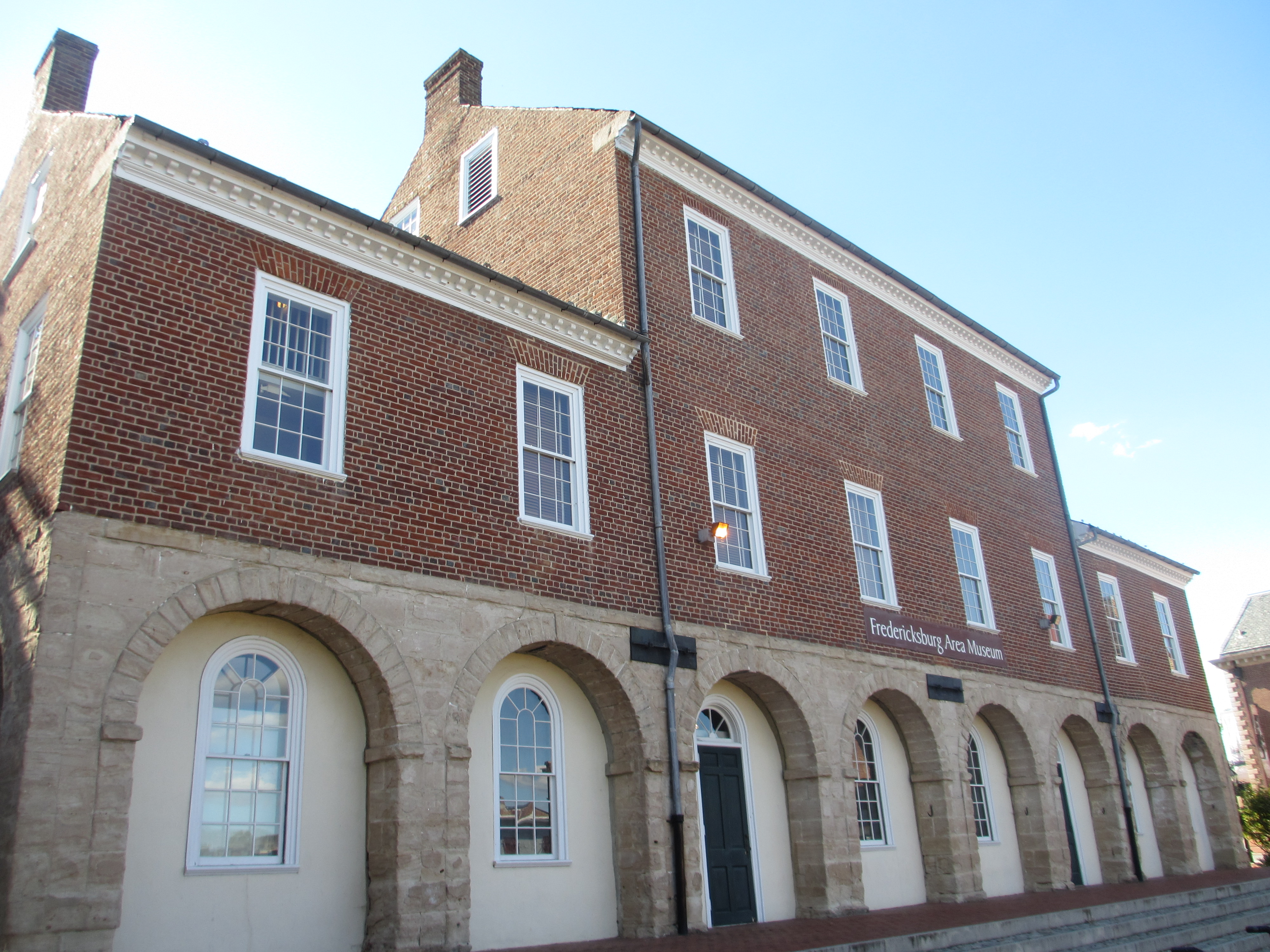
Finally, if you have some extra time on the weekend, stop by the Fredericksburg Area Museum and see their exhibit “Lafayette’s World: Revolutionary Ideals and the Limits of Freedom,” which explores Lafayette’s ideas on freedom, democracy, and abolitionism.
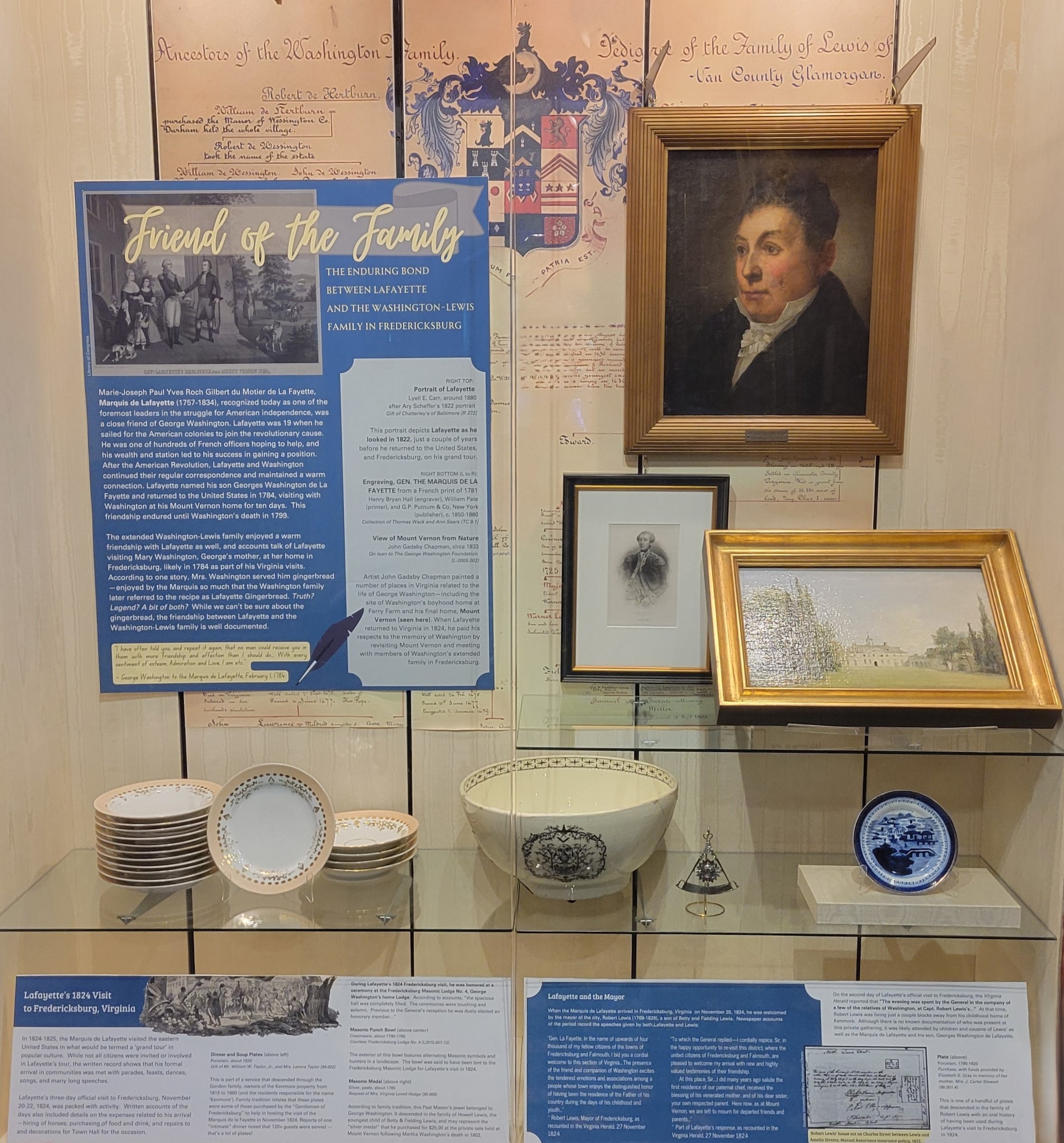
If you can’t attend the weekend events but still want to see exclusive artifacts related to Lafayette’s visit, including the extraordinary punch bowl of Masonic Lodge No. 4, stop by the Kenmore Visitor’s Center, check out our new exhibit, take a tour of the house and learn all about Fielding and Betty Lewis.
Friend of the Family – Lafayette’s Visit to America, Kenmore Visitor’s Center
Not every president gets their birthday celebrated every year with a federal holiday, but George Washington, a favorite of his countrymen and the first president, has had that privilege since 1879. But one year was a little different from the others: 1932. It marked Washington’s 200th birthday, and the United States was going to make a big deal about it.
In honor of the upcoming birthday, we decided to look at some of the memorabilia in our collection created to celebrate and educate the American public.
George Washington Bicentennial Commission
The planning for this celebration started early when Calvin Coolidge signed a joint resolution that established a commission to oversee the bicentennial ceremonies on Dec 2, 1924. The resolution was to mark the occasion of the birthday across the country and increase the understanding of Washington. (George Washington Bicentennial Commission, 1932) Under the direction of Representative Sol Bloom, an experienced entertainment promoter who got his start at the 1893 World’s Colombian Exposition, the committee initiated thousands of events, released educational resources for students, and had plays written in honor of Washington. (Larson, 2004)
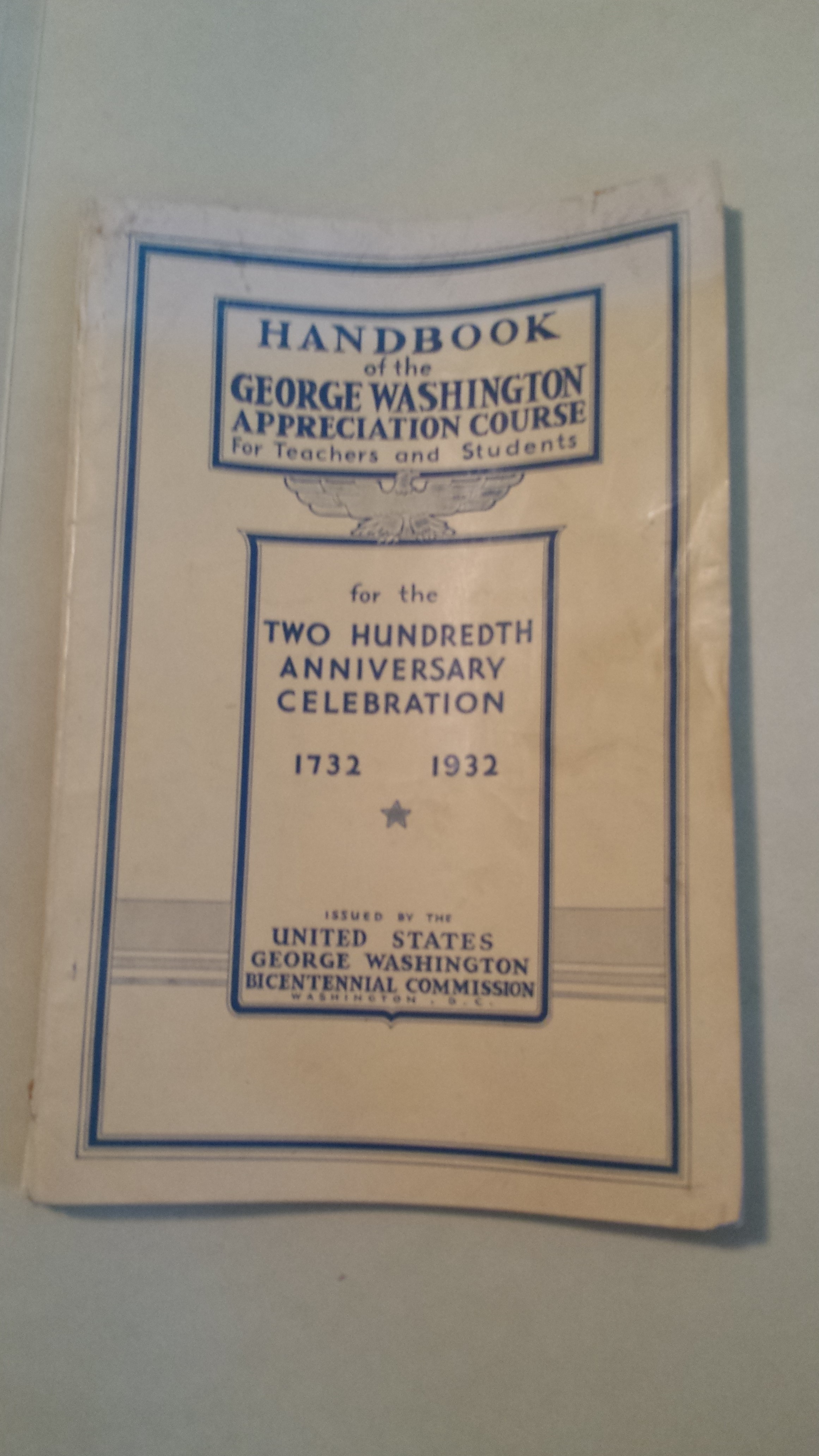
Handbook of the George Washington Appreciation Course for Teachers and Students“Washington Takes the Risk”, including George Washington, Fielding Lewis, and Betty Washington Lewis
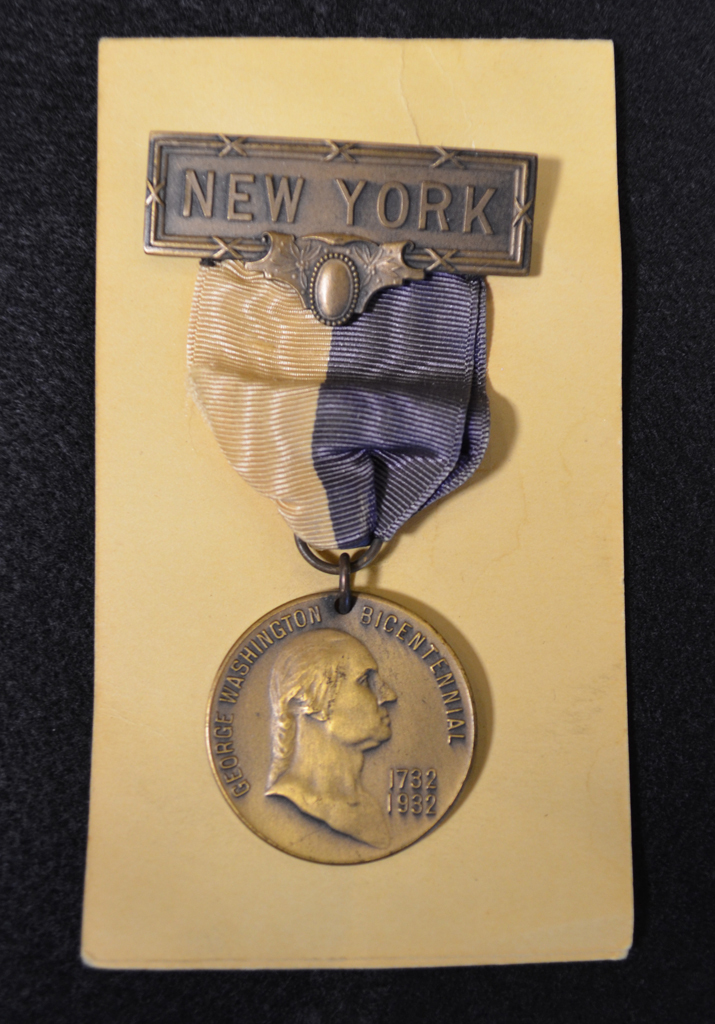
The commission additionally worked with over 250,000 local commissions to organize special events at not only a federal level but a state and city too. (The Washington Post, 1932) Special volunteers and prominent local people were often given commemorative metals as thanks for their service. We have one from the state of New York. It is a circular bronze medal attached to a blue and white ribbon. The back of the medal states, “1779 / Planned Sullivan / Clinton Campaign 1782 / Newburgh Temple Hill / Refused a crown / 1789 April 30th / New York City / Inaugurated first / President of the / United States.”
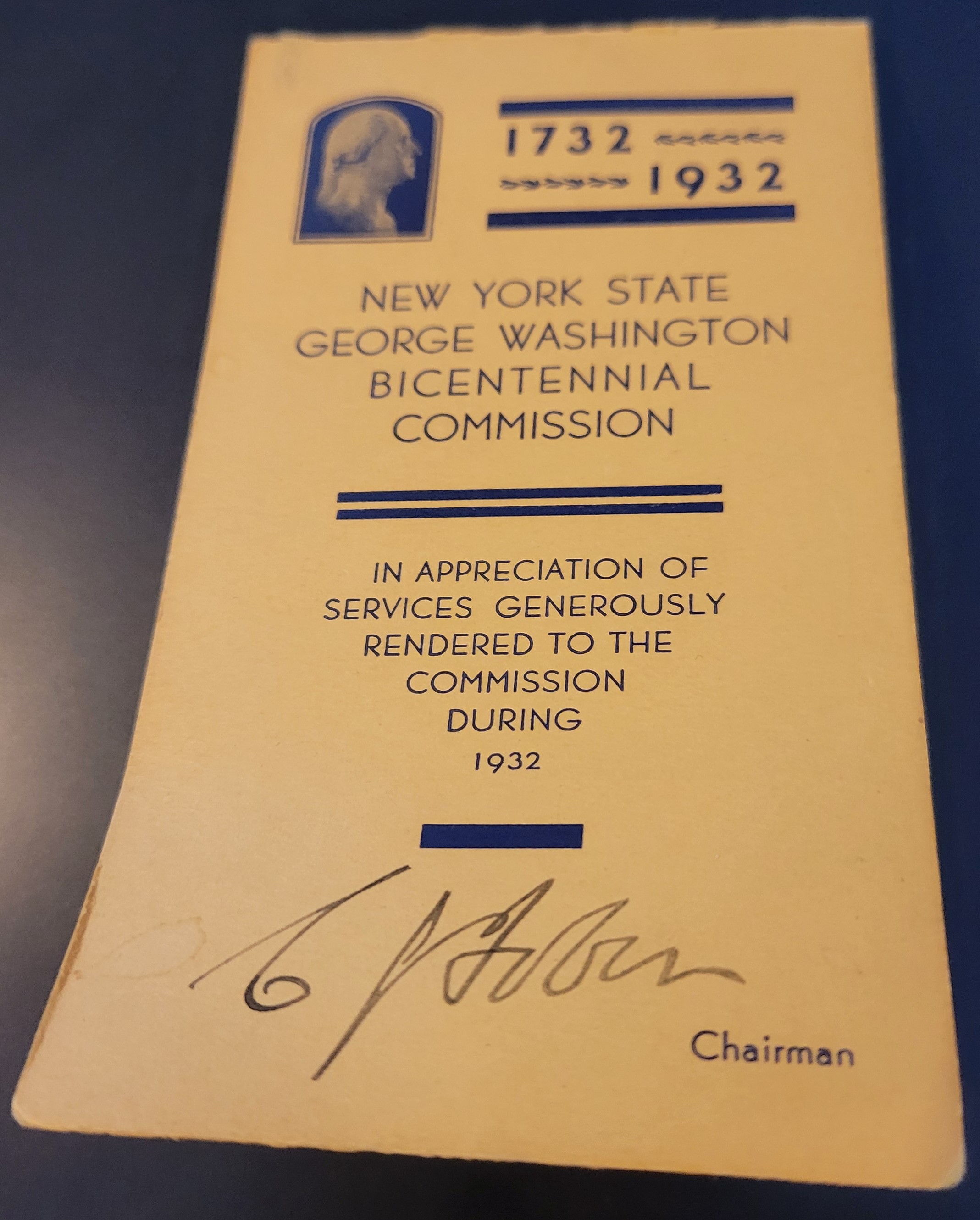
The medal is encased in a paper envelope with “New York State / George Washington Bicentennial Commission / In appreciation of / Services generously / Rendered to the / Commission / During / 1932” written on the front along with the signature Charles Tobin, chairman representing New York state on the Bicentennial Commission.
New York State George Washington Bicentennial Commission, 1932New York State George Washington Bicentennial Commission Medal, 1932New York State George Washington Bicentennial Commission Medal, 1932
Historical Context Help: The Sullivan-Clinton campaign was ordered by George Washington in response to the 1778 attacks by the Iroquois and British in central New York. Newburgh Temple Hill was a Continental Army encampment near Washington’s headquarters, where he gave a speech to quell the mass of soldiers who were getting ready to mutiny and attack Congress to get their promised back pay and pensions. Finally, in 1789, George was sworn in as President at Federal Hall in New York City.
The U.S. Post Office became involved in the commemoration of George with the release of a dozen stamps celebrating his life. The stamps were incredibly popular, and when they were first released for sale in D.C., there was a crowd of 50,000 people waiting to get their set of stamps. (The Washington Post, 1932)
Commemoration celebrating George Washington’s visit to Kenmore on April 8, 1791, as part of the birthday celebrations. Note the stamps. Commemoration of George Washington’s birth at Wakefield. Note the stamps.
Marketing George
Private companies even got in on Washington-mania by releasing all types of souvenirs like postcards, pins, coins, bottles, calendars, cigar box covers, books and pamphlets, hat stands, billheads, stationary, cartes-de-visite, playing cards, and puzzles. (Subseries 5.8. Washington’s Birthday, Bicentennial Souvenirs, 1931-1932 , 2024)
We have two bottles created for the Bicentennial celebration. The green water bottle has a likeness of George with “Washington/Bicentennial” underneath the image and 1732 and 1932 written on the sides. The water bottle was produced by the Hemingway Glass Company in Muncie, Indiana.
The clear pear-shaped bottle is embossed on one side with a cherry tree and the dates “1732 and 1932”. On the other, with a profile of Washington. It was created by the Owens-Illinois Glass Co. of Huntington, West Virginia.
Bicentennial bottle with George Washington profile. Owens-Illinois Glass Co., 1932. Bicentennial bottle with cherry tree. Owens-Illinois Glass Co., 1932
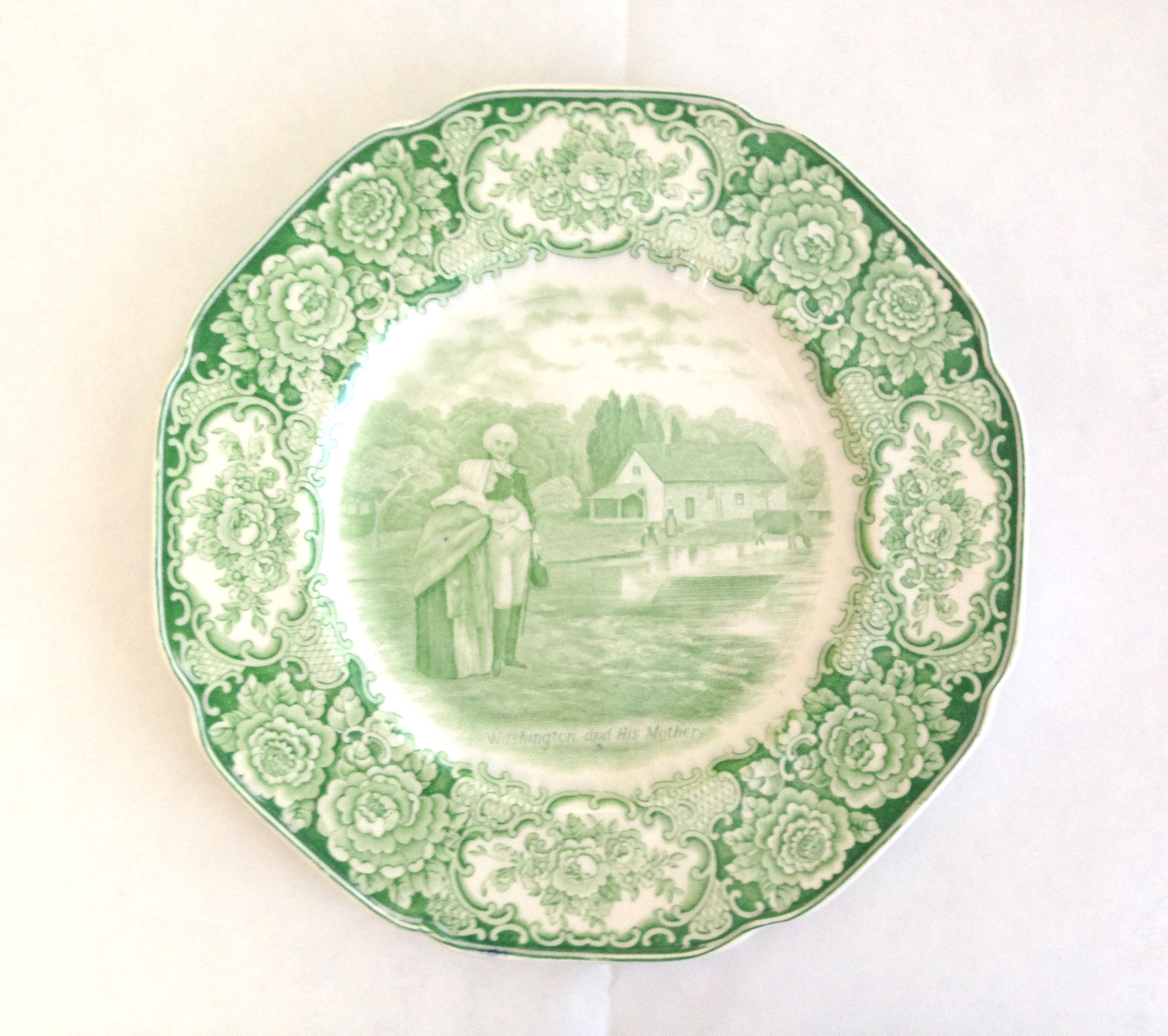
Plates were another big commemorative item. We have three plates issued by Crown Ducal, with the same scene of “Washington and his Mother” based on the print of the same name. On the back with the Crown Ducal crest, it says, “George Washington Bicentenary Memorial Plates / 1732-1932 / First in War / First in Peace / First in the hearts of his countrymen”. Crown Ducal released a series of twelve plates documenting Washington’s life. Of course, we are a little biased and like the one with his mother, Mary Ball Washington, the best.
Some companies even brought in Mrs. Martha Washington, like this set of plates from the Capital Souvenir Company. These are two round commemorative plates depicting George and Martha Washington, both with an elaborate floral gilded border.
George and Martha plate set, Capital Souvenir Company, 1932. George and Martha plate set, Capital Souvenir Company, 1932.
Fun Bicentennial Fact: On the eve of the birthday, Sears Roebuck was awarded a commission by the U.S. government to create a full-scale replica of Mount Vernon at the Exposition Coloniale Internationale in Paris. The agreed-upon price was around $75,000, and every detail of the home was reproduced from brass hardware, mantelpieces, and even cabinets. After the exposition, the house was bought by an American doctor working in Paris, and it was relocated to Vaucresson (a western suburb of Paris). It still stands today as a private residence and was even on the market in 2012 for 27 million dollars.
George Washington’s Mount Vernon in Paris, France,1932George’s Mount Vernon in Vaucresson, France today
Sears Roebuck also built the exact replica in Prospect Park, Brooklyn, NYC for the Bicentennial Commission. However, the house was not taken care of and boarded up and abandoned until it was eventually torn down. (The Brooklyn Daily Eagle, 1933)
Sears’ role in the reconstruction of Mount Vernon led to interest in their kit homes. In 1932, they offered a house in their catalog, loosely based on Mount Vernon. This model was oddly called “The Jefferson”.
Sears Roebuck house kit “The Jefferson” which strangely resembles Mount Vernon.
While we may not have as many George souvenirs, we are still putting on a big birthday party to celebrate George Washington and his time at Ferry Farm.
The party is on Monday, February 19th from 10am – 3 pm. While enjoying the grounds of Ferry Farm, you can take a selfie with “George Washington,” participate in our annual stone-throwing contest, play colonial games, and eat birthday cupcakes (while supplies last).
Additionally, guests can enjoy several educational stations, take an abbreviated Washington House tour, and talk with archaeologists, historians, and other experts to learn about Ferry Farm and the Washington Family.
Heather Baldus
Collections Manager
References
George Washington Bicentennial Commission. (1932). History of the George Washington Bicentennial Celebration. Washington D.C.
Larson, E. (2004). The Devil in the White City: Murder, Magic, and Madness at the Fair That Changed America. New York City: Knopf Doubleday Publishing Group.
The George Washington Foundation believes the Washington and Lewis families’ story is worth protecting for future generations. We are in contact with many descendants of the Washingtons and Lewises who have assisted the foundation in presenting the families’ legacies by adding to our collections and archives. We decided to explore the ancestors and descendants interesting tales and life accounts, using the artifacts and documents in our collections as a starting point.
The first person in our spotlight is Catherine Dangerfield Willis, who was born in Virginia, lived on the Florida frontier, became a historic preservationist, and became a Princess of the Second Empire because of her Washington relation.
Virginia Native and Washington Descendant
Catherine Daingerfield Willis was born in Fredericksburg in 1803. She was the daughter of Colonel Byrd Charles Willis and his wife Mary (née Lewis) Willis. From her maternal family side, Catherine was the great-granddaughter of Fielding and Betty Lewis and the great-grandniece of George Washington. (Glenn, 2014)
Catherine married Atcheson Gray at an early age, around 13 to 17 years old; accounts vary. The newlywed couple resided at their father-in-law’s house, Wakefield (yes, George’s birthplace). (Unknown, 2004) Sadly, their marriage was cut short when Atcheson died of malaria less than a year after their union, along with their first child. (Bellet, 1976)
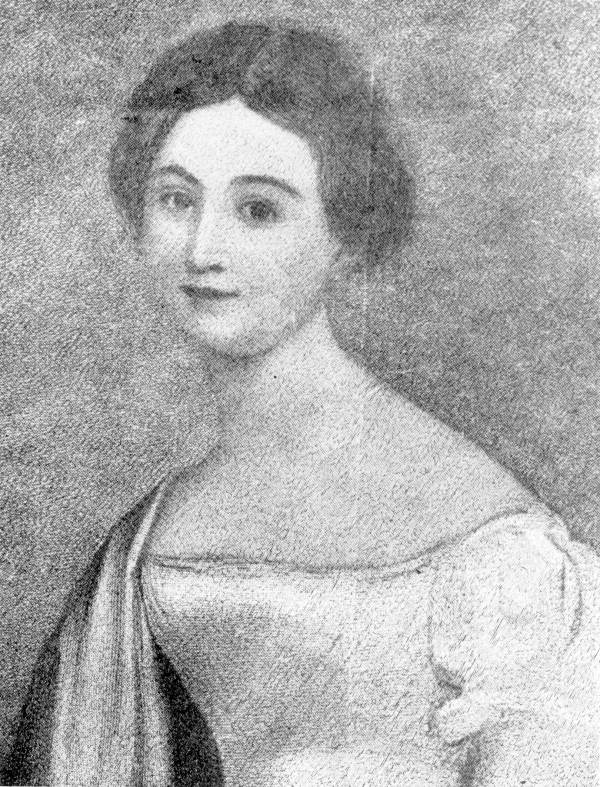
Catherine Daingerfield Willis Gray Murat, watercolor generously donated to GWF by Mrs. Lucy Robb Winston Works and family.
The Florida Frontier
After being widowed, Catherine and her family moved south to Tallahassee, the recently christened capital of the Florida Territory (Florida didn’t become a state until 1845) (Gannon, 2003). It had previously been an important Apalachee settlement which had been abandoned after it was burned to the ground by Andrew Jackson in 1818 during the first part of the Seminole Wars. (Smith, 2023) When Catherine and her family took up residence in Tallahassee in the 1820s, it was a rough place and had a reputation as an outlaw frontier town. Men carried guns and knives to protect themselves from the many duels, brawls, and knife fights that were common in the city. The eminent Ralph Waldo Emerson (a noted friend of Prince Murat) traveled to Tallahassee in 1827 and called it “a grotesque place…rapidly settled by public officers, land speculators, and desperadoes.” (Downes, 1956)
The less-than-stellar reviews of the city didn’t stop the Legislative Council from building three crude log huts for their official meetings. (Gannon, 2003) There was even the establishment of a city police force in 1826 to combat lawlessness. The police force consisted of only one guy, a City Marshal, but it still counts. (Tallahassee Police Department, 2023)
In this primitive but developing city, a love story blossomed between Catherine and an exiled French prince.
Portrait of Prince MuratCatherine Daingerfield Willis Gray Murat
A quick look at the tumultuous life of Charles Louis Napoleon Achille Murat
Achille Murat was born in the Hôtel de Brienne in Paris to Caroline Bonaparte, Grand Duchess of Berg, Queen of Naples, and sister to Napoleon Bonaparte, Emperor of the French By 1815, after his uncle’s second exile and the execution of his father Joachim Murat, the family fled to Austria. (Burnett, 1996)
Hôtel de Brienne, Paris, France where Prince Achille Murat was born.Achille (in uniform), with his brother, sisters and mother Caroline Bonaparte
When Achille turned twenty-one, he emigrated to the United States, landing in New York and immediately applying for naturalization. (Niles, 1823) Additionally, he renounced all European titles and citizenship. (Brandon, 1944) Before long, he made his way down to Florida to get in on some of the land deals in the newly acquired territory. His first stop was St. Augustine, where he purchased land and established a plantation called “Parthenope,” which utilized slave labor to grow oranges, sugar cane, cotton, and tobacco. (Roberts, 2004) (Bellet, 1976)
Prince Murat immediately on arrival in America applied for naturalization and renouncing his European titles.
While in St. Augustine, he developed a reputation for being a little eccentric. He liked to sit naked in the local Moses Creek during the sweltering Florida summers. (Hanna, 1948) He was obsessed with eating all different kinds of animals, like turkey buzzards, owls, alligators, and rattlesnakes. (Roberts, 2004) Finally, he disliked bathing and changing his clothes while living in a humid subtropical climate, and he “washed his feet only after he wore out his shoes.” (Hanna, 1948)
Home of Prince Murat, which was built around 1790 – Saint Augustine, Florida
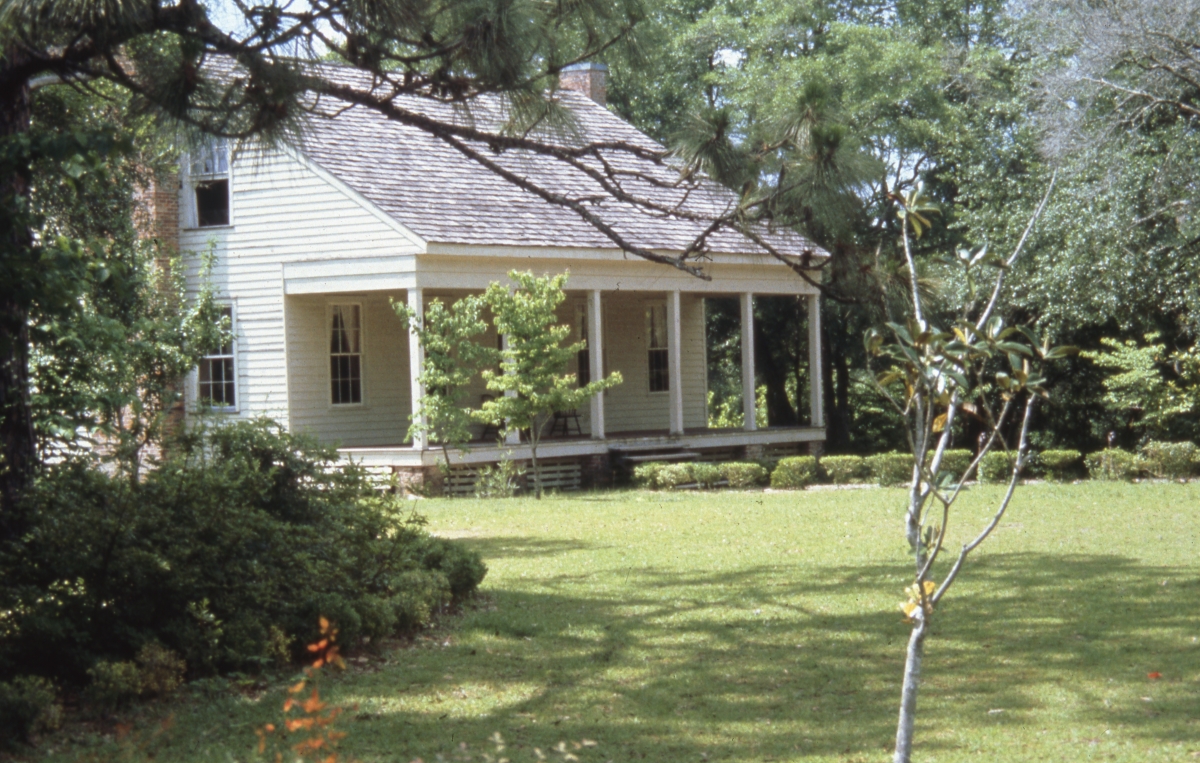
Shortly before he met and married Catherine, he purchased another plantation named “Lipona,” which would be his primary residence in the US until his death.
A Marriage Between the Bonaparte’s and Washington’s and Entertaining Europe
In 1826, Catherine Daingerfield Willis Gray married the ex-prince of Naples and nephew of Napoleon Bonaparte, Achille Murat. Catherine’s father was initially against the match because of the Bonaparte and Murat families’ opposition to the union. Luckily, the Bonaparte’s and Murat’s were made aware that Caroline was the great-grandniece of George Washington, and the family warmly welcomed her. (Bellet, 1976)
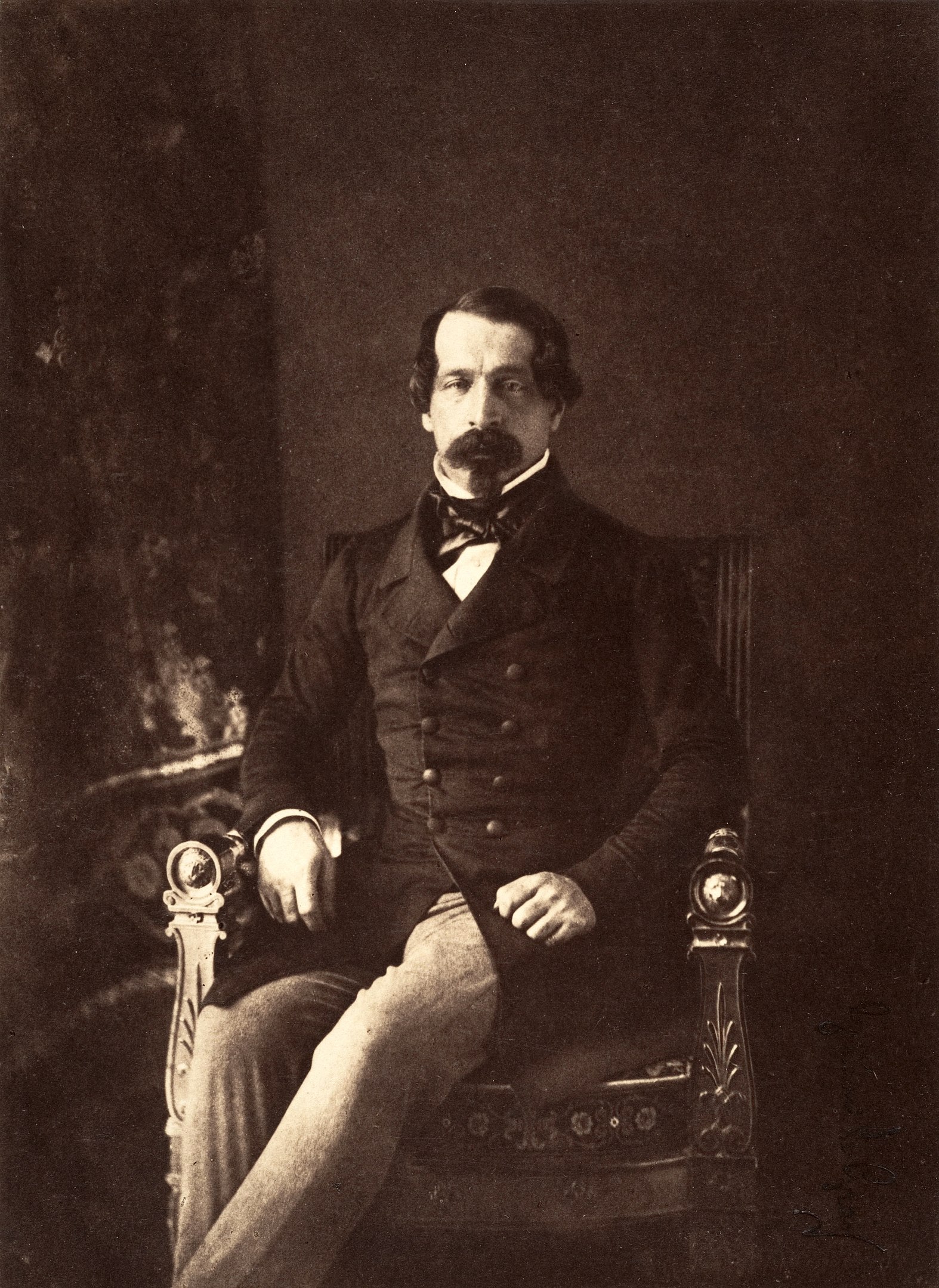
Louis Napoleon Bonaparte (Napoleon III), 1852Portrait of Prince Murat
The couple lived at Lipona outside of Tallahassee until the July Revolution of 1830 in Paris when Charles X abdicated, and Louis Philippe was selected as King. The Murats traveled to Europe as Achille tried to press claims to restore the families’ money and lands, but he failed. (Bellet, 1976) The couple moved to London, where they spent a few years in high society. Catherine became a favorite of Louis Napoleon (who would become the first President and then Emperor of France, Napoleon III). While in London, Catherine even attended and was given a seat in Westminster Abbey for the coronation of William IV of the United Kingdom. (Bellet, 1976)
Coronation of William IV, 8 September 1831
Return to America
Around 1835, the pair returned to America and set up residence just outside New Orleans, where Achille attempted to run a sugarcane plantation and practice law, both of which failed. (Hare, 2002) . They returned to Florida to their plantation Lipona, which he had mortgaged to the bank and subsequently lost due to nonpayment, requiring the couple to move to a smaller property. (Hanna, 1948)
Achille died in 1847, leaving his widow in a precarious financial situation, having acquired massive debt during his life. After the death of her husband, Catherine purchased a cotton plantation named Bellevue (now part of the Tallahassee Museum). She successfully managed the property and, after ten years, had paid all of Achille’s debts. (Sandler, 1999)
Bellevue Plantation
When Napoleon III became Emperor in 1852, Catherine was pronounced French royalty and Princess of the Second Empire, which granted her an annuity from the French government and allowed her to use the livery of France. (Bellet, 1976)
Catherine Daingerfield Willis Gray Murat, Princess of the Second Empire
Preservation and the Mount Vernon Ladies Association
In 1853, Ann Pamela Cunningham founded the Mount Vernon Ladies Association (MVLA) to preserve and restore George Washington’s Mount Vernon. There had been other failed attempts by owner John Augustine Washington to sell the property to the US government and the state of Virginia, and even vile rumors of it being looked at by “speculators” to turn it into a resort hotel. Seeing the state of the property belonging to one of the most beloved founding fathers, Cunningham was able to make a deal with Washington after much discussion to sell the property (house, outbuildings, and 202 acres) to the Association for $200,000 (around 7 to 8 million dollars today). (West, 1999)
Mount Vernon in 1858 before restoration by the MVLARecord of payment from MVLA, 1858
To raise money, Cunningham created a nationwide network of women by appointing one lady from each state as a vice regent to assist in fundraising. (Grabitske, 2004) In Florida, the daughter of the territorial governor, Ellen Call Long, was asked to become the state regent. She declined but suggested Catherine because of her family ties and influence. Catherine enthusiastically took on the role of vice-regent. She raised $3791.25, which was no small feat, with the entire population of Florida in 1860 being 144,424 people. (United States Census Bureau, 2021) The MVLA raised the funds and paid off the purchase price within two years despite The Panic of 1857 and the economic recession just before the beginning of the Civil War. (Casper, 2008) (Huston, 1987) Mount Vernon was saved and continues to be owned and maintained by the Association, as it is overseen by a board of regents of ladies from 27 states. (George Washington’s Mount Vernon, 2024)
Princess Catherine Murat died in August 1867 at her plantation, Bellevue. She is buried beside her husband, Prince Achille Murat, in the Tallahassee Episcopal Cemetery. They had no children.
Close up view of a plaque on the Prince and Princess Murat tombs – Tallahassee, Florida, ca 1900Graves of Prince and Princess Murat, 1949
Heather Baldus
Collections Manager
References
Bellet, L. P. (1976). Some Prominent Virginia Families, Volumes 1-2. Clearfield.
Brandon, E. E. (1944). A Pilgrimage of Liberty. Lawhead Press.
Burnett, G. (1996). Florida’s Past: People and Events That Shaped the State. Pineapple Press.
Casper, S. E. (2008). Sarah Johnson’s Mount Vernon : the forgotten history of an American shrine. New York: Hill and Wang.
Downes, A. J. (1956). The Legendary Visit of Emerson to Tallahassee. The Florida Historical Quarterly, 334-338.
Gannon, M. (2003). Florida A Short History. University Press of Florida.
George Washington’s Mount Vernon. (2024). About Mount Vernon. Retrieved from George Washington’s Mount Vernon: https://www.mountvernon.org/about/
Glenn, J. (2014). The Washingtons. Volume 1: Seven Generations of the Presidential Branch. Savas Publishing.
Grabitske, D. M. (2004). First Lady of Preservation: Sarah Sibley and the Mount Vernon Ladies Association. Minnesota History, 407-416.
Hanna, A. J. (1948). A Prince in Their Midst: The Adventurous Life of Achille Murat on the American Frontier. University of Oklahoma Press.
Hare, J. (2002). Tallahassee: A Capital City History. Arcadia Publishing.
Huston, J. L. (1987). The panic of 1857 and the coming of the Civil War. Baton Rouge: Louisiana State University Press.
Niles, H. (1823). Niles’ Weekly Register, p. 272.
Roberts, D. (2004). Dream state : eight generations of swamp lawyers, conquistadors, Confederate daughters, banana Republicans, and other Florida wildlife. New York City: New York: Free Press.
Sandler, R. (1999, October 23). The Princess Who Saved Mount Vernon. The Free-Lance Star, pp. 3-4.