Lives and Legacies

Tag: French and Indian War

  • “To Rendezvous at Fredericksburgh”: The Washington-Lewis Family, Fredericksburg, and the World War of 1754-1763: Part I

    Editor’s Note: As the two-hundred-sixty-ninth anniversary of the skirmish of Jumonville Glen approaches this Sunday, May 28th, some recent and exciting discoveries have occurred at the battlefield.  The National Park Service (NPS) released an announcement this week stating that after a four-week archeological investigation, objects have been found to verify the location of the first skirmish, Jumonville Glen, of the French and Indian War.  Archeologists found a multitude of artifacts, including several eighteenth-century musket balls.    

    Check out the links for more information:

    NPS :Recent archaeology project uncovers first shots of the French and Indian War

    Archaeological dig in Fayette confirms location of Jumonville Glen skirmish

    Scientists find 1754 ballistics of first shots fired in French and Indian War

    On to the the history…
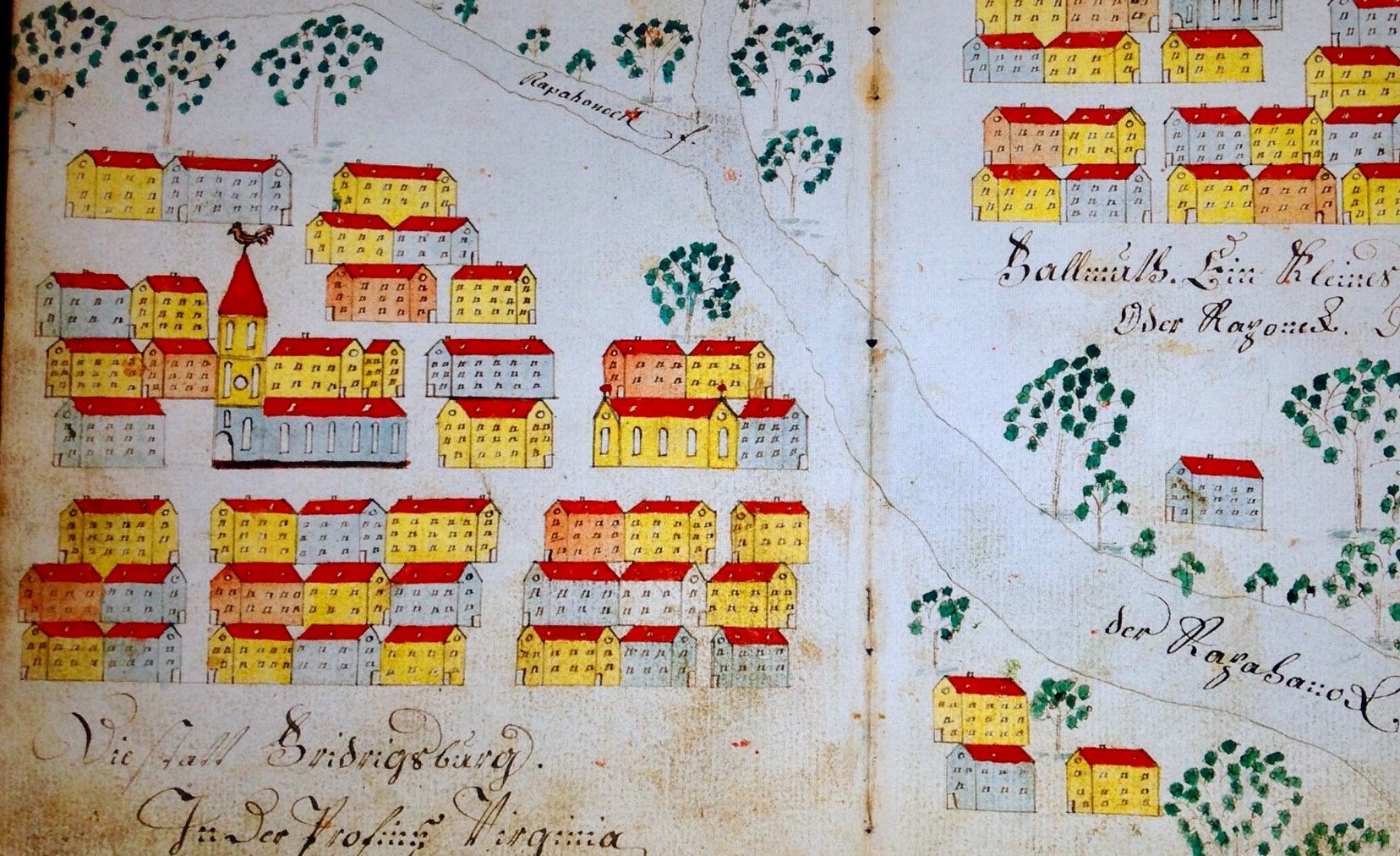

    Figure 1. Detail of a highly stylized depiction of Fredericksburg, VA by Fench soldier Georg Daniel Flohr, who visited in 1782. Despite the use of artistic license, the illustration conveys Flohr’s perception of the 18th Century town as a “rather large” port with “intense boat traffic.” Source: Account of the Land and Sea Expedition in America of the Acclaimed DeuxPonts Regiment from 1780 to 1784

    Crowding out the fresh spring air of a wooded countryside, the acidic scent of aerosolized gunpowder began to sting the interior of a nervous 22-year-old’s nostrils. His ears rang from the shock of dozens of nearby explosions. Smoke clouded his vision, and sensory overload likely clouded his judgment. Soon-to-be-familiar sounds followed rapidly: scurried movement, intense chatter, and groans of agony. Yet, the inexperienced youth had to make decisions on behalf of the crowd around him. He found himself at the center of a new form of chaos: the opening volleys of a world war.

    Lieutenant Colonel George Washington’s Virginia soldiers had just fired into a French military camp near the Monongahela River in western Pennsylvania at a moment (May 28th, 1754) when peace among European empires and Native American nations sat at a precarious equilibrium. Over the past several months, French forces had been busy erecting Fort Duquesne at the Forks of the Ohio River (the site of modern-day Pittsburgh, PA). Royal Governor Robert Dinwiddie of Virginia considered this commercially and strategically significant location part of the British Empire and sent Washington to the area to help re-establish British control. This was the context in which Washington’s Virginians and a party of Mingo warriors came upon the ill-fated French camp in a ravine soon to be known by the infamous moniker of “Jumonville’s Glen.”[1]

    After the first shots rang out around the glen, things only got worse. Washington’s cocommander, Tannagrison (a Seneca politician leading the party of Mingos), summarily executed the French officer in command, Ensign Joseph Coulon de Villiers, Sieur de Jumonville, and events escalated from there. In fact, this frontier skirmish grew into a world war that would not only give rise to the North America of the Revolutionary Era, but would forever alter the power dynamics of entire globe. Consider the growth of the British Empire, two centuries of exploitation and resistance in India, the birth of the United States, the creation of independent republics in Latin America, the French Revolution, English colonization of Australia, the American Civil War, the Assassination of Archduke Ferdinand, the rise of the Axis Powers, the Vietnamese independence movements of the 20th Century, and even the
    War on Terror. The conflict that Washington and Tannagrison started at Jumonville’s Glen, known as the“Seven Years’ War” or the “French and Indian War” (1754-1763), shaped all these events, along with countless others. And as residents of the Fredericksburg region, the Washingtons and Lewises sat at a crossroads of this worldwide upheaval.

    As the 250th anniversary of American nationhood approaches, understanding the Seven Years’ War’s social, martial, and political context is perhaps more important than ever. In anticipation of future posts related to this subject, I hope what is below will introduce you to how the stories of those associated with Kenmore and Ferry Farm intertwined with the larger story of the war.

    We’ll start with George. As an officer commissioned in the provincial (colonial) Virginia Regiment, George Washington not only helped initiate the Seven Years’ War but saw his first real military service at places like Fort Necessity or as a volunteer aid-de-camp in the ill-fated Braddock Expedition of 1755, where he nearly died during the famous British defeat at Battle of the Monongahela. Of course, historians have worn countless pens, pencils, and keyboards recording Washington’s involvement in the early stages of the war and documenting the future Commander-in-Chief’s first brushes with combat. However, George’s duties increasingly involved more independent responsibility after 1755. These events came on the heels of George’s formal relocation from his mother, Mary Washington’s, residence at Ferry Farm to his late half-brother’s estate at Mount Vernon.

    The two years that followed George Washington’s more well-known deeds at the Monongahela produced circumstances similar to those he would contend with during the American War for Independence (1775-1783). Throughout 1756 and 1757, the Virginia Regiment had to defend a string of small, isolated forts along Virginia’s vulnerable frontier to the west of the Blue Ridge Mountains.[3] The task of managing poorly-supplied posts that stretched from Winchester, VA, to the vicinity of modern-day Martinsville, VA, presented George with the opportunity to develop three aspects of leadership that would define his work in future years: military administration over vast geographical territory, long-term strategic planning, and the sustaining of volunteer troops despite strained logistical resources.
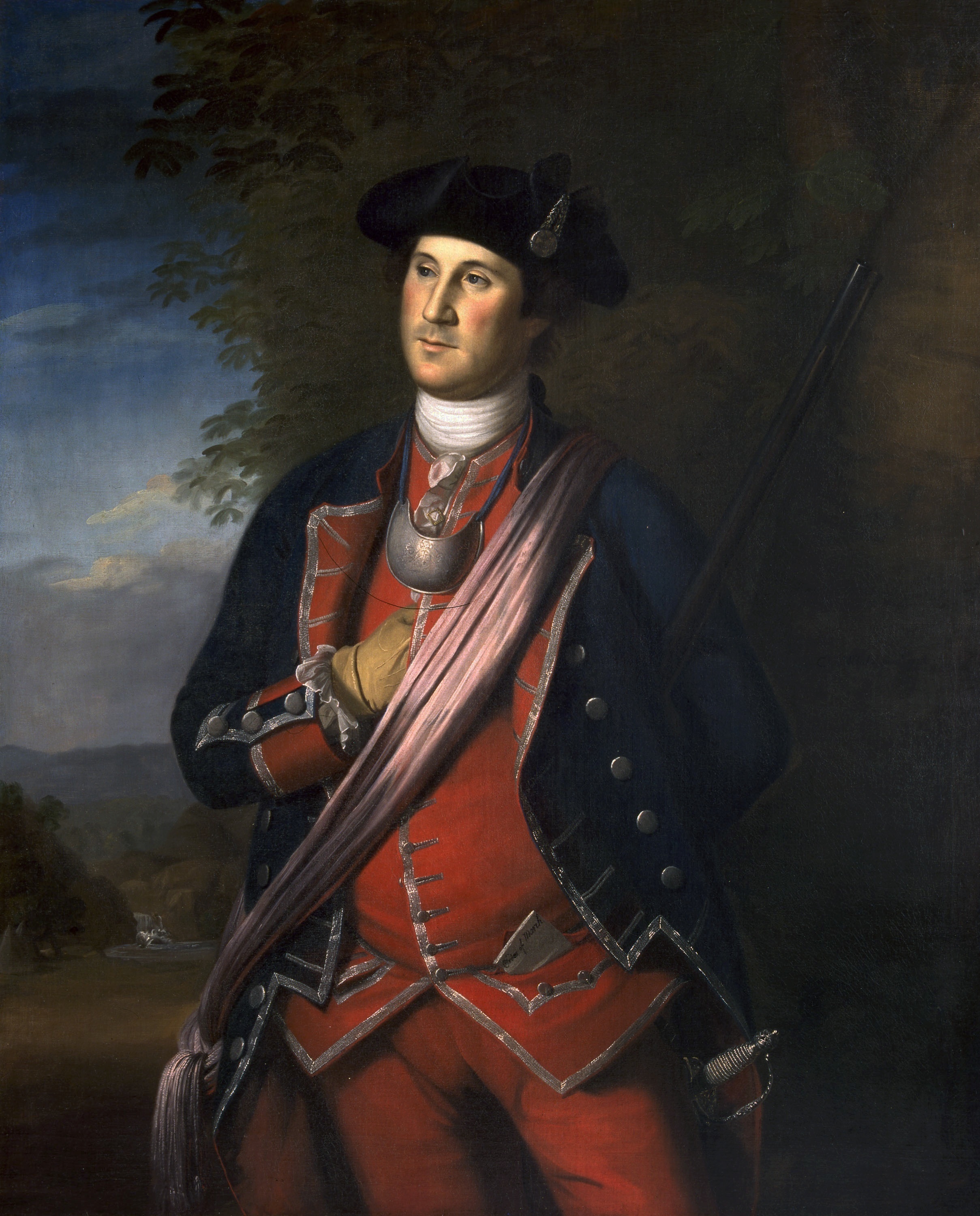
    Figure 2: a 1772 portrait Charles Wilson Peal depicting Washington in a uniform similar to those worn by officers of the Virginia Regiment Source:Washington and Lee University

    During a tour of Virginia’s frontier forts, the “bad regulation of the militia; the disorderly proceedings of the Garrisons; and the unhappy circumstances of the Inhabitants” shocked the young officer.[4] Washington filled his correspondence of this era with phrases such as “inconceivable trouble” and “unhappy Juncture” as he recorded innumerable instances of paucity, civilian death, and desertion.[5]

    Washington’s struggles continued into 1758 when the Virginia Regiment became involved in the Forbes Expedition, a laborious campaign that eventually resulted in the British capture of Fort Duquesne. Around that time, the needs of sick veterans of the past three years of fighting, marching, and garrison duty presented further challenges. None other than Fielding Lewis, a young Fredericksburg merchant and husband of George’s sister Betty, agreed to contract with his brother-in-law to provide for Virginia’s ill. That June, for instance, Lewis sent the material for 60 blankets to “Colo. Washington for the Country Dr.”[6]
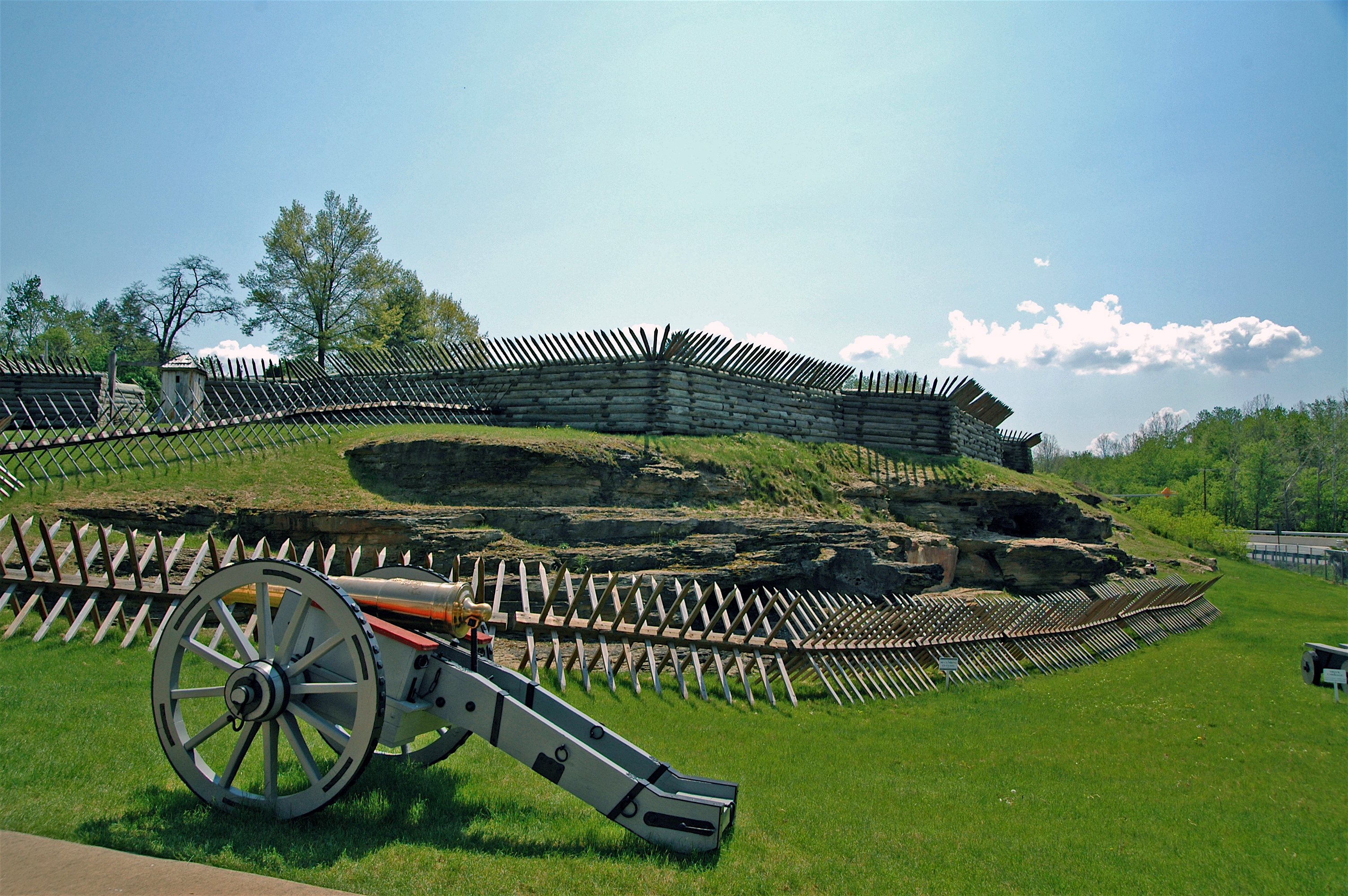
    Figure 3: View of reconstructed fortifications at Fort Ligonier, the centerpiece of the 1758 Battle of Loyalhanna, an important part of the Forbes Expedition. Source: Jeff Kubina via flickr

    As a businessman with a growing family, Fielding Lewis must have had more reason than most to fear the potential adverse effects of world war upon his trans-Atlantic commercial ventures. However, as British fortunes began to change for the better, Lewis reaped the benefits of citizenship in a growing empire. Before the war’s end, he was conducting a lucrative speculation business at a fair in Fredericksburg.[7] Lewis’s success eventually provided the means to commission the construction of Historic Kenmore.
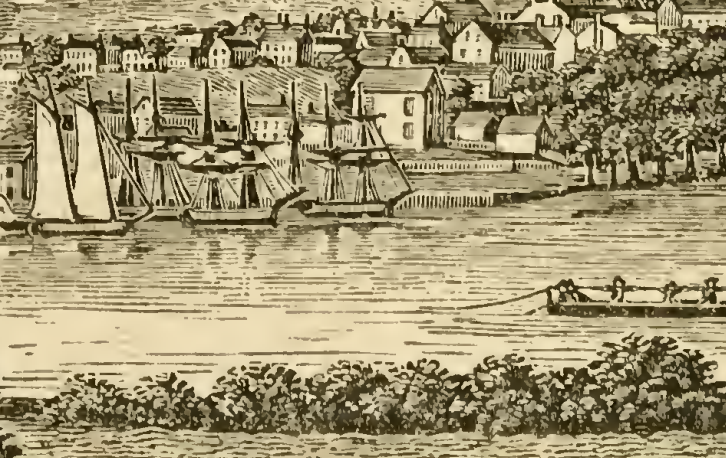
    Figure 4: Detail of an 1845 illustration of Fredericksburg as seen from Ferry Farm, showing tall ships by the town’s wharves.. Fielding and his father John invested in several merchant vessels, the towering masts of which were once common parts of Fredericksbrug’s cityscape. Source: Internet Archive

    Of course, learning about wealthy and influential men like Washington and Lewis is easy. However, countless individuals of all social standings played a part in the drama of the Seven Years’ War. Part II of this post will explore how those on the Homefront coped with world war and how the conflict transformed the community of Fredericksburg in ways still visible today.

    Stay tuned.

    Ethan Knick,

    School and Youth Programs Manager


    [1]David Lee Preston, Braddock’s Defeat: The Battle of the Monongahela and the Road to Revolution (Oxford University Press, 2015), 26-28.

    Fred Anderson, Crucible of War: The Seven Years’ War and the Fate of Empire in British North America, 1754-1766 (Knopf Doubleday Publishing Group, 2007), 18-23.

    [2] Preston, Braddock’s Defeat, 28-29.

    [3] George Washington, The Papers of George Washington: Colonial Series, vol. 4:November 1756 – October 1757, (University Press of Virginia, 1983).

    George Washington, The Papers of George Washington: Colonial Series, vol. 5: October 1757-September 1758, (University Press of Virginia, 1983).

    [4] George Washington, “Founders Online: From George Washington to Robert Dinwiddie, 9 November 1756” (University of Virginia Press), accessed February 7, 2023, http://founders.archives.gov/documents/Washington/02-04-02-0001-0001.

    [5] George Washington, “Founders Online: From George Washington to Robert Dinwiddie, 11 July 1757” (University of Virginia Press), accessed February 2, 2023, http://founders.archives.gov/documents/Washington/02-04-02-0193.

    [6] Fielding Lewis, “Founders Online: To George Washington from Fielding Lewis, 10 June 1758” (University of Virginia Press), accessed February 6, 2023, http://founders.archives.gov/documents/Washington/02-05-02-0154.

    [7] Martha Saxton, The Widow Washington: The Life of Mary Washington (Farrar, Straus and Giroux, 2019), 192.

    George Washington, “Founders Online: Cash Accounts, 1761” (University of Virginia Press), accessed January 30, 2023, http://founders.archives.gov/documents/Washington/02-07-02-0001.

  • Five International Influences on George Washington’s Early Life

    An Essay of a New and Compact Map, Containing the Known Parts of the Terrestrial Globe by Jacques-Nicolas Bellin was published in 1750 when George Washington was 18-years-old. Credit: Wikipedia.

    Ferry Farm was a unique place to live in the mid-1700s. Situated where farm, frontier, city, river, and road converged on the edge of English empire, young George Washington, his family, and the farm’s enslaved community found their daily lives governed by Britain’s global economy and imperial culture.  Ferry Farm, nearby Fredericksburg, and the colonies more broadly were international places made up of a host of different European, African, and Native American ethnicities and nationalities in the 18th century.  Accordingly, we present a list of “Five International Influences on George Washington’s Youth.” This is by no means an exhaustive list but each influence helped shape young Washington into a man capable of commanding the Continental Army and serving as the new nation’s first president.

    1) The Rappahannock River

    The Rappahannock River as viewed from a window in the Washington house replica at Ferry Farm.
    Voyages of British ships in the last half of the 18th century. Created by Geographer James Cheshire, PhD, on his Spatial.ly blog and used with permission.

    Young George could look from a window in the family home at Ferry Farm down the bluff to the Rappahannock River. He saw ocean-going, sailing vessels being loaded and unloaded at the wharves and warehouses of Fredericksburg. These vessels were part of a global trade network, which we’ve written about here and here, that stretched to Europe, Africa, the Caribbean, India and China. These vessels were not large but traveled the world nonetheless.  They took the corn, wheat, and timber of places like Ferry Farm to Europe or the Caribbean and returned with Westerwald mugs from Germany, tea from India, porcelain from China, and enslaved laborers from Africa. The sailors on these ships probably represented numerous ethnicities and nations. One easily can imagine young George, so prone to a thirst for adventure, finding any excuse he could to visit the docks and ships down on the river and, by doing so, traveling the world without leaving the Rappahannock.

    2) Westerwald stoneware

    Those ships carried numerous manufactured goods from all over the world to Ferry Farm. Westerwald ceramics were one such import. Produced in the Westerwald region of what is now Germany beginning in the 1500s, archaeologists have excavated numerous bits of decorated stoneware tankards, jugs, and other drinking vessels used in the 1700s at Ferry Farm.  Several of these excavated vessels sported the initials ‘G.R.’, meaning Georgius Rex, the Latin for King George. The three British kings of the 18th century were all named George and came from the House of Hanover, a German royal family placed on the British throne in 1714. A gentleman sporting a ‘G.R.’ on his Westerwald tankard or jug advertised his loyalty to the Crown with every draught of ale. The presence of these initialed drinking vessels at Ferry Farm show that, until the Revolution, Washington, like most Americans, viewed himself as a loyal subject of the British Crown (ironically worn by a German head).

    G.R. medallion on a Westerwald jug fragment.
    A nearly complete Westerwald drinking vessel in the collection at Historic Kenmore.

    3) Venetian glass

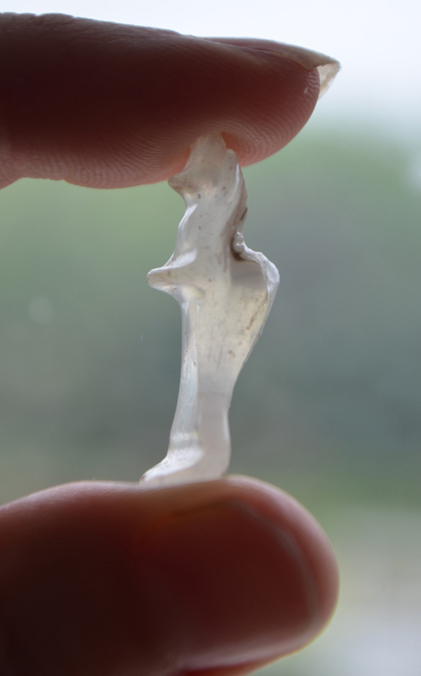
    The vast majority of ceramics in the Washington household came from England. The same can be said about the family’s table glass, but the fanciest glassware owned by the Washington family actually came from Venice, Italy.  Found by our archaeologists, this piece of a pincered and buttressed handle is likely part of an elaborate hand-blown Venetian piece, made of finely crafted colorless soda lime glass with a barely visible bead of opaque glass running through the center.  A Venetian glass goblet such as this was a show piece displayed prominently within the house to emphasize that, despite their colonial location, the Washington family strived to maintain a level of European refinement appropriate to their gentry status.

    Archaeologists excavated this small fragment of Venetian glass at Ferry Farm.
    Wine goblet made in the 16th century in Venice, Italy. Credit: The Metropolitan Museum of Art

    4) Barbados

    In 1751, George Washington made his only trip off the North American continent, traveling with his half-brother Lawrence to Barbados. Visiting the island’s fortifications and meeting members of its military garrison fed George’s growing desire for a military career. As Jack Warren concludes, “After returning to Virginia, he dedicated himself to advancement in the military more completely than any of his Virginia contemporaries. And unlike most of the prominent colonial militia officers of the 1750s, he sought a commission in the regular British military establishment – an ambition that was probably prompted, and undoubtedly stimulated, by his experience in Barbados.”

    Needham’s Point, Barbados. Credit: Reinhard Link.

    5) The Frontier

    Military service eventually took George into the frontier wilderness of the vast Ohio country. Tasked by Governor Dinwiddie with delivering a demand to the French to leave lands claimed by Virginia and the British Crown, young Major George Washington embarked on a thousand-mile, ten-week trek to and from Fort LeBoeuf on Lake Erie. He was accompanied by the Dutchman Jacob Van Braam, who served as his French interpreter, and by Tanacharison, known as Half-King, as well as other men from Native American nations. Along the way, he met several French officers and soldiers. Although confined to North America, this trip in late 1753 and early 1754 was, in reality, a foreign trip that exposed Washington to different peoples and cultures. It provided vital diplomatic, military, and intelligence gathering experience to the future Continental Army commander and first president. Washington, notes Paul Royster, “practiced diplomacy to keep the Native leaders allied to the English cause; he interviewed French deserters and reported on the extent of French military posts between New Orleans and the Great Lakes; he reconnoitered the Forks of the Ohio with an eye to the proper site for building a fort; and he inspected and reported on the construction of the new French forts and made estimates of their strength . . . .”

    Portrait of George Washington, 1772 by Charles Willson Peale. Credit: National Portrait Gallery
    The Ohio region from Cumberland to Fort LeBoeuf through which Washington journeyed, overlayed onto the famed map in Thomas Jefferson’s Notes on the State of Virginia (1787). Credit: Paul Royster / University of Nebraska.

    Conclusion

    Although a fourth generation American, George Washington grew up in a time and place – 18th century Ferry Farm and British North America — where international economic and cultural influences on his life were quite numerous. Through the five international influences we’ve briefly examined, we’ve seen how these influences helped Washington maintain his gentry status, which ultimately set him on a path to military and political greatness.

    Zac Cunningham
    Manager of Educational Programs

    Mara Kaktins, Archaeologist
    Ceramics & Glass Specialist

  • Little George Goes Back to Pittsburgh [Photos]

    A staff member who works at George Washington’s Ferry Farm and Historic Kenmore recently visited Pittsburgh.  Little George accompanied her and visited places related in some fashion to George Washington’s life in the 1700s, the world he lived at that time , or his long legacy as a historic figure national and internationally.  Here is a collection of photos documenting Little George’s travels!

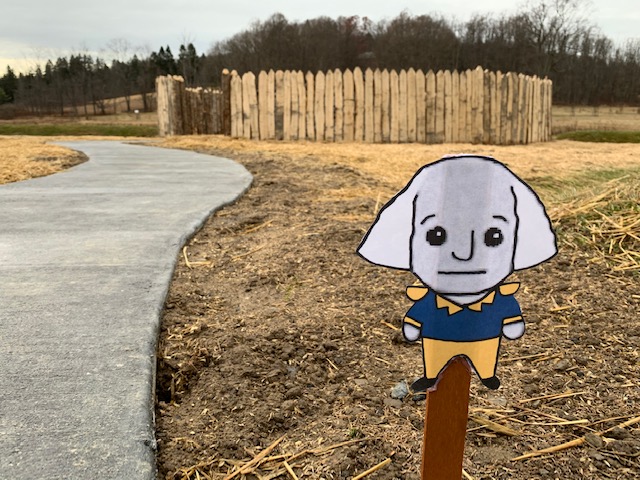
    First, on the road to Pittsburgh, Little George stopped a place that does not hold fond memories for him. The battle of Fort Necessity took place in 1754. Washington and a group of Virginia Militiamen were sent to the area to meet with Ensign Joseph Coulon de Jumonville, the leader of the French detachment of troops nearby. While there are not clear descriptions of what happened, there was clearly some miscommunication and Jumonville was killed. Within a few months, the French retaliated, attacking Colonial and British forces in this clearing known as Great Meadows. Washington had built Fort Necessity but the design, a circular fort surrounded by tree-lined high ground, led to a swift defeat.

    Fort Necessity
    A replica of Fort Necessity

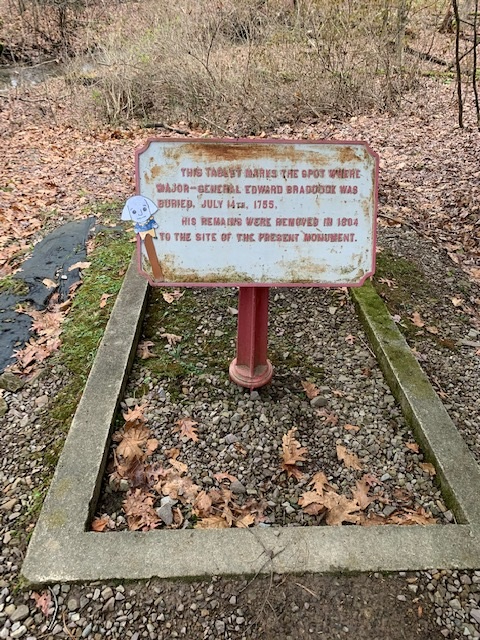
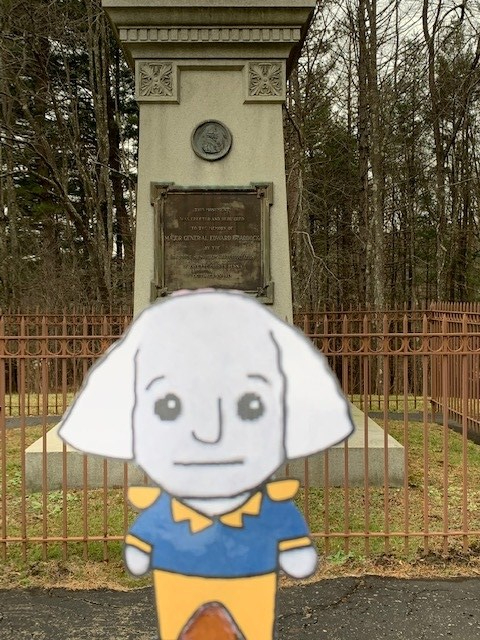
    A year after the disaster at Fort Necessity, George joined yet another expedition to “the Forks of the Ohio”, this time under the command of renowned British General Edward Braddock. During the march towards modern day Pittsburgh, the British were ambushed and after a three hour bloodbath, Braddock was carried from the field with fatal wounds. A few days later, Braddock was buried about a mile from the old site of Fort Necessity. Several years later, Braddock’s remains were moved to a nearby knoll. Little George decided to stop and pay respects to a man he admired, saying “…Thus died a man, whose good and bad qualities were intimately blended. He was brave even to a fault and in regular Service would have done honor to his profession. His attachments were warm, his enmities were strong, and having no disguise about him, both appeared in full force.”

    Braddock 1
    Original burial site of General Braddock.

    Braddock 2
    Current site of General Braddock’s grave.

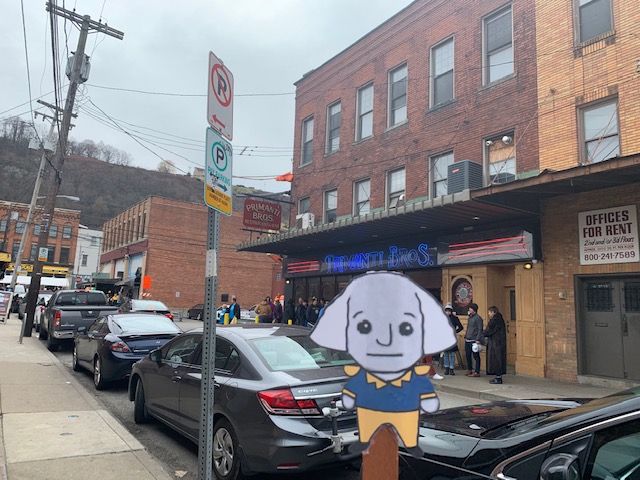
    After a few stops that tugged at Little George’s heartstrings, we decided to continue on into the city. Little George was looking a bit famished so I decided to take him to a place he hadn’t seen on his last trip to Pittsburgh. Little George thought Primanti Brothers was top notch!

    Pirmanti
    Pirmanti Brothers sandwich shop

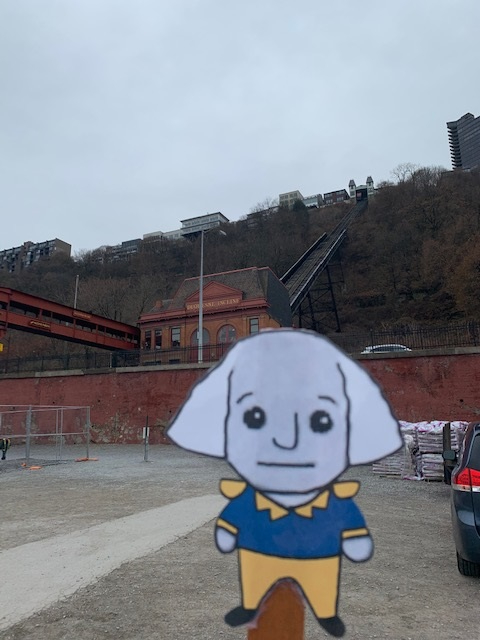
    Next, Little George thought a trip to the top of Mount Washington would make for a great view of the city. As he began to prepare for a hearty trek up the mountain, I drove us to another modern development. Little George decided that the Duquesne Incline would have been handy in the 1750s!

    Duquense Incline
    The Duquense Incline up Mount Washington

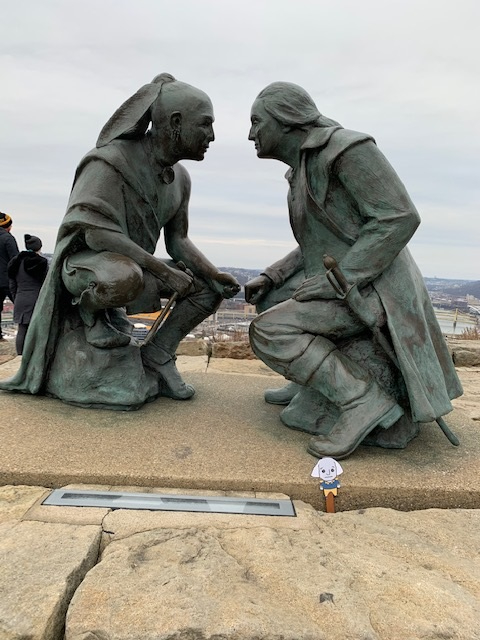
    As we got to the top of Mount Washington, we walked along, admiring the city and came to a spot where the people of Pittsburgh had memorialized George Washington and Guyasuta, a leader of the Seneca people who met and traveled with George Washington in 1753 but ultimately sided with the French during the French and Indian War. Later, he would take the side of the British during the American Revolution thus, making the two men constantly at odds with each other.

    George Washington and Guyasuta
    Statue of Guyasuta and Washington

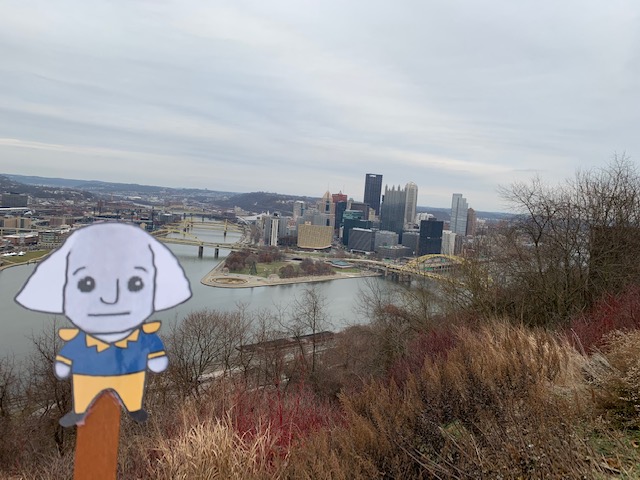
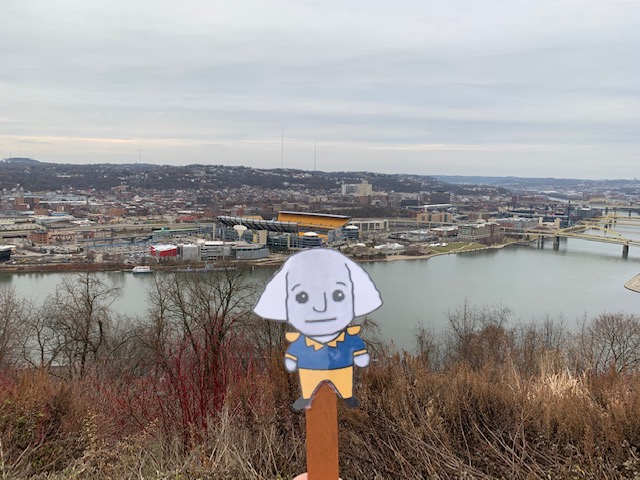
    Looking down over the confluence of the Alleghany and the Monongahela brought back a lot of memories for Little George. Even with the new buildings and bridges, he recalled his march to Fort Duquesne. However, he did seem very interested in this “football” that modern Americans seem to like so much. After I explained it a bit, he didn’t think he could pick a single team to root for, but thought the field of play here was in a beautiful location.

    Three Rivers
    Downtown Pittsburgh and the confluence of the Allegheny and, Monongahela Rivers, whose meeting forms the Ohio.

    Heinz Field
    A view of Heinz Field, home of the Pittsburgh Steelers

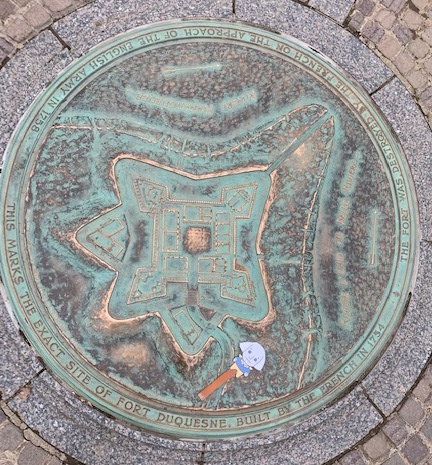
    After admiring the view from above, I took George down to the site of where Fort Duquesne once stood. He recalled the assault on Fort Duquesne. The battle was fierce, and despite the French victory, they withdrew from the area due to the fact that the British force was more than ten times the size of the French force. Thus, the British rebuilt the remains of Fort Duquesne and reinforced it, calling it Fort Pitt, in honor of the English Prime Minister at the time.

    Fort Duquense
    Site of Fort Duquense, later renamed Fort Pitt

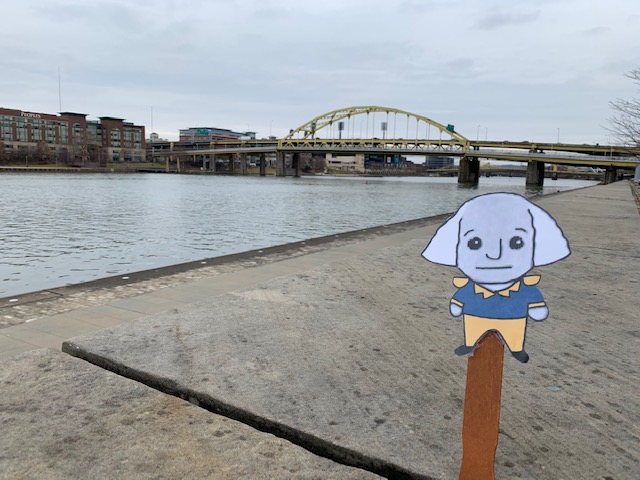
    While down by the water, I convinced Little George to also take a picture next to the River. He was a little nervous getting too close to the Allegheny River and I asked him why. He explained that in 1753, when travelling through the area, he attempted a crossing. At the time, the water was very cold with large chunks of ice flowing through it. George fell into the water and nearly froze to death overnight while waiting on a small island for the river to freeze and he could finally cross safely the next morning.  I told him not to worry as the river wasn’t that cold just yet.

    Allegheny
    The Allegheny River

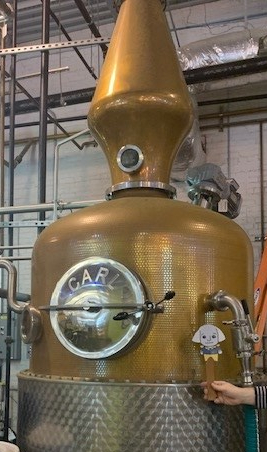
    Wigle's
    Visiting the Wigle Whiskey Distillery

    After all the talks of battles and falling in icy rivers, I decided we should warm up a bit. I remembered just down the river was a spot where Little George might also like to reminisce. During his Presidency, George Washington enacted a whiskey tax that led to the Whiskey Rebellion in western Pennsylvania. During this time, he sent representatives to attempt to collect the taxes, and even led organized troops to march against the insurrection. However, the rebels were no match and they folded. Only two of them were convicted of treason: John Mitchell and Philip Wigle. The men were sentenced to hang, but Washington later pardoned the men. In 2011, Wigle Whiskey was reopened to keep Philp Wigle’s legacy alive. Little George enjoyed the visit, noting that he too owned a whiskey distillery at the end of his life. He bragged only slightly to the folks at Wigle about producing 11,000 gallons in 1799. At the time, it was one of the largest distilleries in the country.

  • Ten Pivotal Moments in George Washington’s Boyhood

    George Washington did not experience what we would now consider a normal childhood.  Life at Ferry Farm was filled with excitement, sadness, intrigue, and tragedy for young George. Here we present a list of “Ten Pivotal Moments of George Washington’s Boyhood.” This is by no means an exhaustive list but each of these events definitely helped shape Washington into a man capable of commanding the Continental Army and serving as the new nation’s first president.

    Moving to Ferry Farm

    chapman_GW HOME_overlay3_day1
    “View from the Old Mansion House of the Washington Family Near Fredericksburg, Virginia” (1833) by John Gadsby Chapman modified to depict the location and approximate appearance of the Washington family home, which was actually a complete ruin when visited and painted by Chapman in the early 1830s.

    In 1738, Augustine Washington moved his family to Ferry Farm.   He appears to have chosen this plantation situated across from Fredericksburg to be nearer to his iron ore interests located about seven miles away.  Ferry Farm was very different than the other Washington properties.  The proximity of Fredericksburg made it more urban.  Ferry Farm was also surrounded by transportation routes including the Rappahannock River, and two roads that crossed the plantation.  The bustling nature of Ferry Farm and its surroundings played a critical role in George’s development.

    strother-ad
    Announcement in the Virginia Gazette in April 1738 advertising “100 acres, lying about 2 miles below the Falls of Rappahannock . . . with a very handsome Dwelling house.” The property was being sold by  William Strother’s estate, would be purchased by Augustine Washington, and eventually come to be know as Ferry Farm.

    The Deaths of Mildred and Augustine
    George’s youngest sister Mildred was born shortly after the family moved to Ferry Farm.  She lived only 18 months, and her death when George was just seven years old was the first significant death of his youth, but not his last.

    Augustine Washington, George’s father, followed Mildred in death on April 11, 1743. George inherited Ferry Farm and ten slaves from Augustine. His mother, Mary, managed this inheritance until George turned 21 years old. Augustine’s death began a period of financial hardship for the family and probably prevented George from being educated in England, a lost opportunity he remained self-conscious about for the rest of his life. It also meant George had to scramble to find a mentor to introduce him to the complex requirements associated with gentry life.

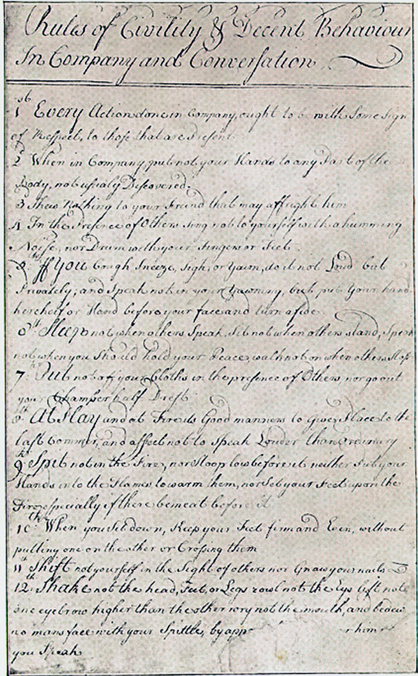
    rules-of-civility
    George Washington’s handwritten copy of The Rules of Civility and Decent Behavior in Company and Conversation.

    The Rules of Civility and Decent Behavior
    Young George copied The Rules of Civility and Decent Behavior, a guide to gentlemanly behavior in polite society, probably as a school assignment. This combination etiquette manual and moral code taught young George how to interact with his powerful and influential neighbors. By strictly following its advice, young Washington molded his character into that of a wealthy Virginia gentleman.

    His Gentry Education
    Washington’s diaries and accounts reveal how he mastered the pastimes of the gentry as a young man. He played for stakes at popular card games, took fencing lessons, and paid for his own dancing lessons. He frequented the theater in both Fredericksburg and Williamsburg. In a society obsessed with horse racing, equine bloodlines, and fox hunting, Mary Washington was well versed in horses and riding and appears to have been responsible for teaching George about riding.  By the time George was an adult, he was renowned as a “superb horseman.”  All of these skills, which remained with George for a lifetime, were acquired while he grew up at Ferry Farm.

    The Royal Navy Episode
    Following Augustine’s death, George’s eldest half-brother, Lawrence, took an interest in his future.  Lawrence conspired with Colonel William Fairfax, some of Augustine’s business associates, and George himself to convince Mary to allow 13-year-old George to join the Royal Navy. Mary eventually rejected the plan, a courageous act for a woman in male dominated colonial Virginia.  George turned to a career as a surveyor instead.  Imagine the future commander of the Continental Army serving on a King’s ship!

    schomberg-portrait
    Portrait of Frederick Herman  von Schomberg attributed to Adrian van der Werff. Public domain. Credit: Hampel Auctions / Wikipedia.

    Introduction to Military Adventurers
    On September 10, 1747, George purchased 3 books from his cousin Bailey for the combined price of 4 shillings 12 pence.  One of the books is listed as “Scomberg,” a reference to the 17th century German Protestant soldier of fortune, Duke Frederick Herman von Schomberg, who fought under the flags of France, Germany, Portugal, and England and died at the Battle of the Boyne fighting for William of Orange.  Schomberg wrote about his adventures which would have been of great interest and fascination to a young man of fourteen.  That George was willing to spend his hard earned money during a time of financial hardship reveals how enthralled he was by this subject.

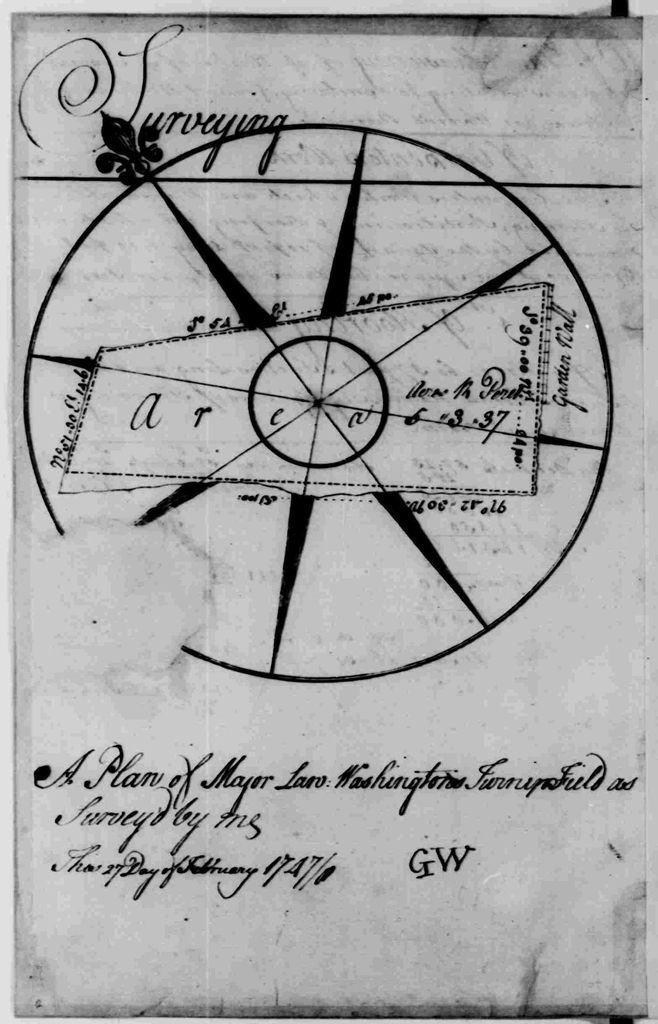
    turnip-patch-survey
    “A Plan of Major Law. Washington’s Turnip Field as surveyed by me this 27 Day of February 1747 GW” Credit: Library of Congress

    Surveying: His First Job
    George Washington began surveying at about age 15. His father’s probate inventory included a set of surveyor’s instruments. In 1748, at age 16, George went with Lord Fairfax’s surveying party on his first expedition into the wilds of western Virginia.  At age 17, George Washington was appointed to his first public office as surveyor of nearby Culpeper County. Surveying, like his skills in mathematics and keeping accounts, helped him manage his properties profitably throughout his life.

    1749 – More Hard Times
    The financial safety net set up for Augustine’s wife and minor children had almost completely collapsed by 1749.  Before the monetary struggles were over, half of Ferry Farm would have been sold, and Mary’s land near the Accokeek Iron Furnace had been lost for failing to pay taxes.  George Washington in a letter to his brother wrote “…my Horse is in very poor order to undertake such a journey, and is in no likelihood of mending for want of Corn sufficient to support him…” He remembered these hard times well into adulthood writing in 1788, during another period of financial stress, that “I never felt the want of money so sensibly since I was a boy of 15 years old as I have done for the last 12 Months.”

    washington-barbados-painting
    “George Washington” (1997) by Walter Kerr Cooper

    Trip to Barbados
    In 1751, George Washington made his only trip abroad, traveling with his half-brother Lawrence to Barbados. Lawrence, suffering from tuberculosis, hoped the warm climate would prove beneficial to his health. He died from the illness, however, just a few months after his return to Virginia. Lawrence’s death set up the eventual inheritance of Mount Vernon by George.  The tropical island did little good for George’s health either.  He contracted a severe case of smallpox that left his skin scarred for life.


     GWs Request to be Appointed as the Virginia Militia Adjutant

    washington-portrait-1772
    Portrait of George Washington (1772) by Charles Willson Peale. The earliest authenticated portrait depicts Washington in the Virginia Militia uniform he wore during the French and Indian War. Credit: Washington and Lee University / Wikipedia

    In 1752, George Washington wrote a letter from Ferry Farm requesting that the Governor of Virginia appoint him as the militia adjutant position vacancy created by his half-brother Lawrence’s death.  The governor declined at this time, but one year later he did appoint George.  The 21-year-old Washington had no military experience at the time of his appointment.  This appointment eventually resulted in Washington igniting the Seven Years War between Britain and her colonies and France.

    Dave Muraca
    Director of Archaeology

    Zac Cunningham
    Manager of Educational Programs