Lives and Legacies

Tag: gardening

  • The Last of Washington’s Horse Chestnut Trees?

    There once stood a large horse chestnut tree on the corner of Fauquier and Charles Street in Fredericksburg. It was noted as one of the thirteen legendary Washington horse chestnut trees planted by George himself. By the 1930s, it was becoming clear that the tree needed some help, so the Daughters of the American Revolution (DAR) took up the cause to protect this historic tree.

    The tree legend states that George, while visiting his mother in June 1788 in Fredericksburg, decided to plant thirteen horse chestnut trees from her house to his sister’s house, Kenmore, just a few blocks away. This provided a scenic path for his mother when she visited her daughter Betty. These trees commemorated the thirteen original states.

    It is a great story. It is patriotic and nostalgic, showing George as a man of the earth with his love of trees, gardening, and horticulture. He planted these trees for a future America to remember the struggles to create this country and the precious nature of our land that we must protect.
    But is it true? Did George plant that tree? What is the evidence?


    The horse chestnut tree is a native of the Balkans region (Albania, Bulgaria, Greece, and Northern Macedonia). It made its way to Europe and England during the seventeenth century, noted as growing in South Lambeth, London, and being planted by Sir Christopher Wren at Hampton Court.

    Horse chestnut trees Bush Park, Hampton Court, England planted by Christopher Wren in 1669-1670.

    There is documented evidence of some horse chestnut trees crossing the Atlantic to Mr. John Bartram, one of America’s first botanists in the 1740s. In a letter from Peter Collinson, an English botanist, dated September 16, 1741, he wrote to Bartram, “I have sent some Horse-Chestnuts which are ripe earlier than usual; hope they will come fit for planting.”. Bartram acknowledged receiving them and stated that most were blue-molded, and only one germinated and grew. Over twenty years later, Bartram updated Callison on the success of the lone seedling, writing, “But what delights me is that our horse chestnut has flowered. I think it must excel in America.”
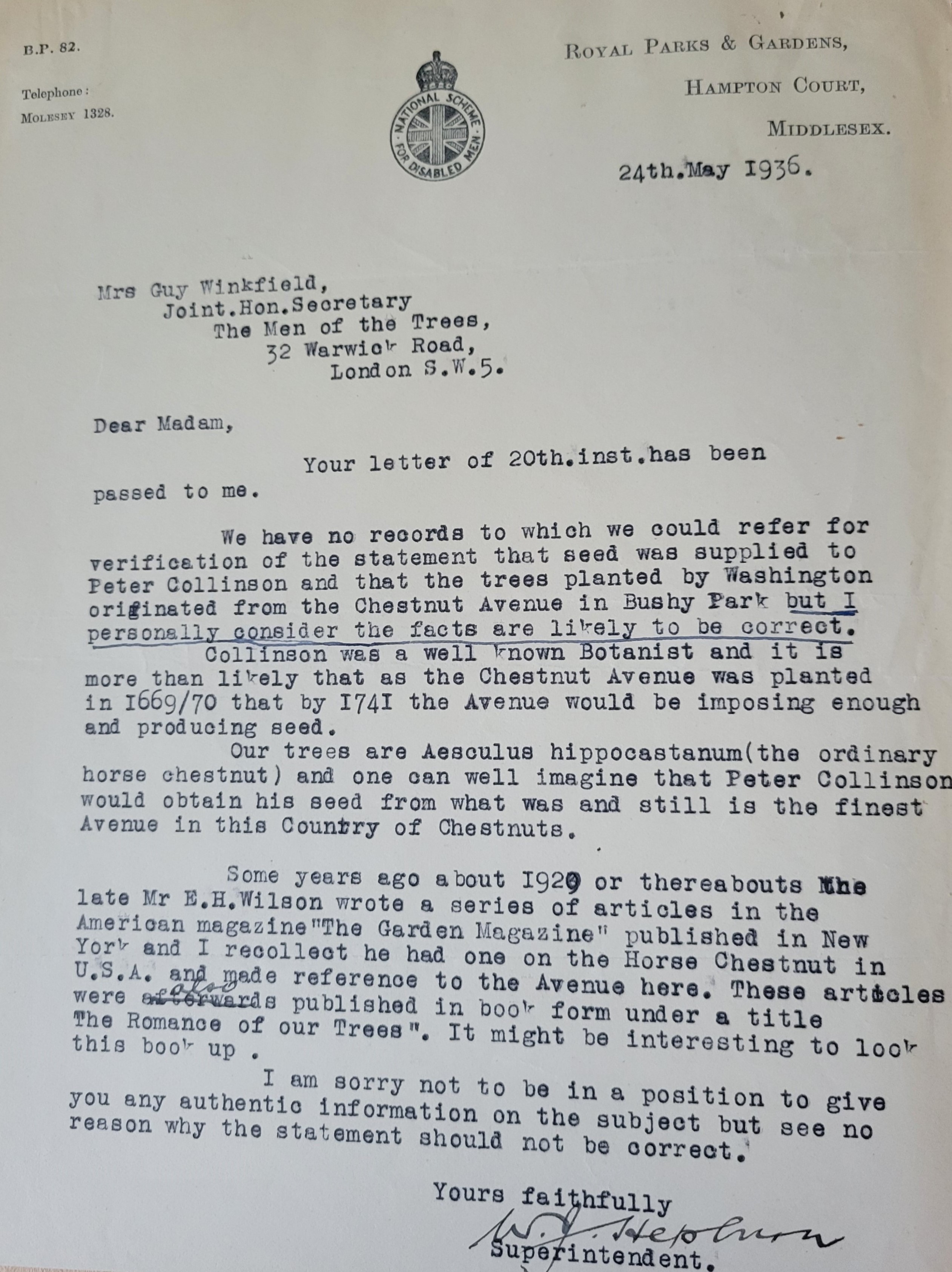
    Letter from Royal Parks and Gardens, Hampton Court, May 24 1936


    Bartram’s Gardens in Philadelphia was quite popular and visited by many founding fathers while working there. George visited the gardens twice in the summer of 1787 while in the town during the Constitutional Convention, noting, “Sunday, June 10, 1787, breakfasted at Mr. Powell’s and in company with him rid to see the Botanical Gardens of Mr. Bartram, which, though stored with many curious plants, shrubs, and trees, many of which are exotics, was not laid off with much taste, nor was it large.”
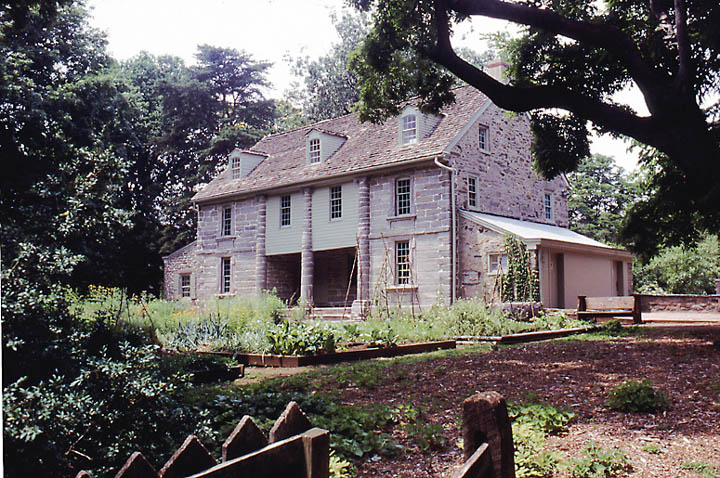
    John Bartram’s house and upper garden at Bartram’s Garden

    Why mention this? In some versions of the story, Washington got his horse chestnut trees from this garden, but there is no evidence that the legendary trees were obtained from this famous historic garden.
    George only made two diary entries about horse chestnut trees on April 13, 1785, writing, “Received from Col. Henry Lee of Westmoreland 12 horse chestnut trees (small) and an equal number of tree boxes. They appeared to have been some time out of the ground. Planted 4 of the Chestnuts on my serpentine walk – two on the east end and the rest in the vineyard.” And again, on April 2, 1788, wrote, “Transplanted from a box in the garden, thirteen plants of the horse chestnut into shrubberies by the garden walls.”

    The entry shows evidence of planting the famous Washington trees, right? No, because George was at Mount Vernon in April and didn’t leave for Fredericksburg to visit his mother until June 10, 1788.

    But could he have had them sent down and have them planted before he came to see his mother? Yes, but the story says that George planted these trees with his own hand. Additionally, it would be odd for George to mention planting the trees while in residence at Mount Vernon and not say that they were in his mother’s garden in Fredericksburg. Washington was a diligent diarist but never mentioned planting thirteen horse chestnut trees in his mother’s garden.
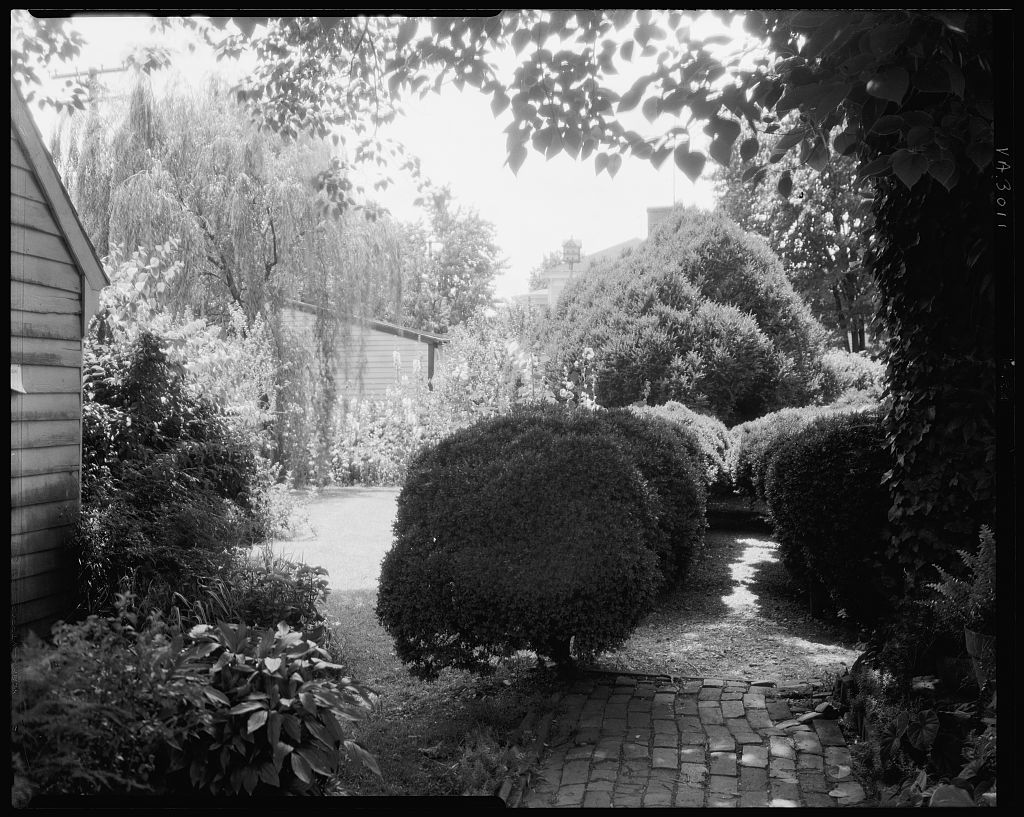
    Mary Washington’s house gardens, Fredericksburg.

    Further, no known letters from George, Mary, or Betty mention any horse chestnut trees between Mary’s gardens and Betty’s Kenmore.

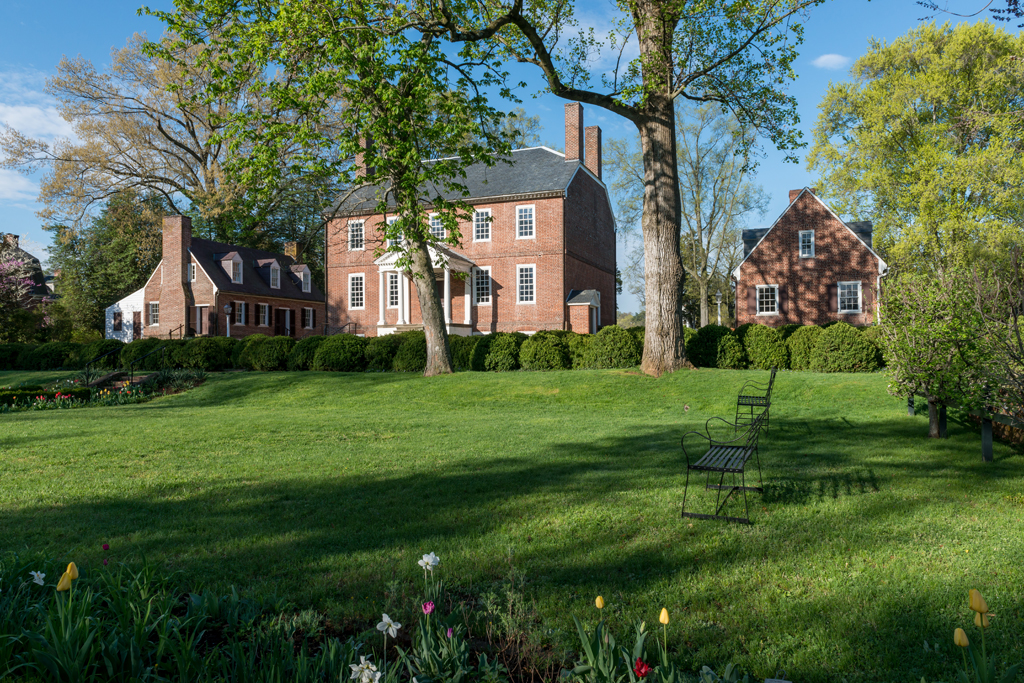
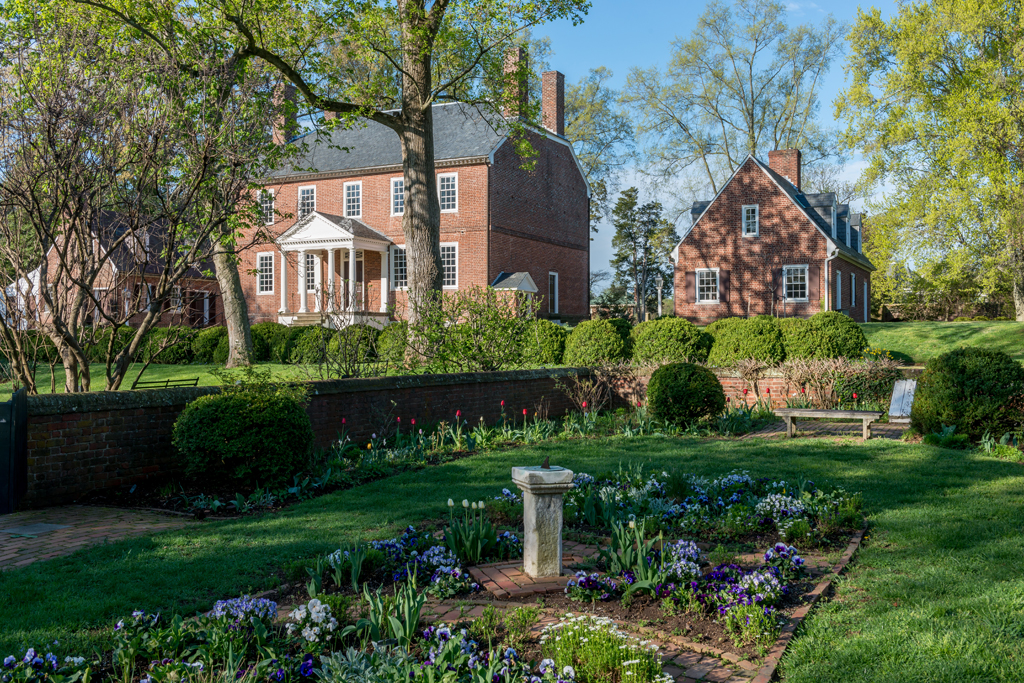
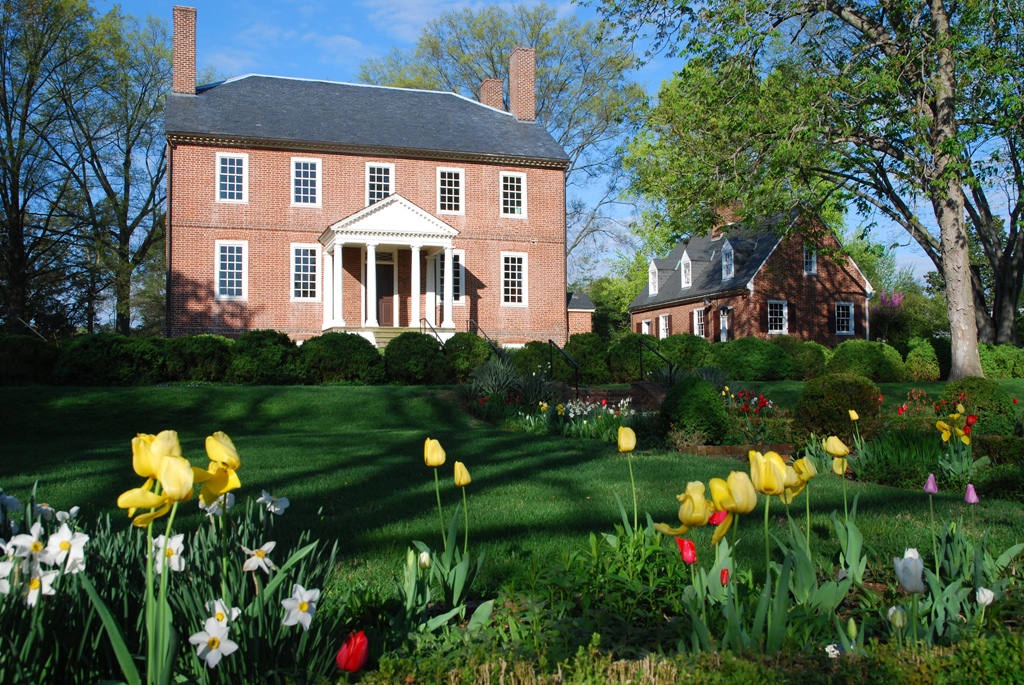
    Spring time in the gardens at Kenmore Plantation (can you spot the cat?)

    This was all the primary source evidence I could find relating to George and any horse chestnut trees. So, I looked further into the story to see what other evidence was being used to verify that this tree was indeed one of the thirteen Washington trees.

    As I said in the beginning, by the 1930s, many, including the DAR, were trying hard to save this lone surviving chestnut tree. With their extensive reach, they got Fred H. Arnold, the Assistant Forester for the National Park Service, to do an age-determination test on the tree in May of 1934. Mr. Arnold noted some issues with the test, stating that the lower twelve feet of the tree was filled with concrete, so the coring sample had to be taken above this “repaired defect”. Even then, a complete coring sample could not be extracted due to decay in the interior of the main stem. Additionally, Mr. Arnold said that it was very difficult to count the annual rings due to their obscurity because the texture difference between the springwood and summerwood for the horse chestnut tree (genus Aesculus) is very slight. Taking into account all this, Mr. Arnold estimated the tree to be around 139 years old with as much as 10% in error, either plus or minus, which would put the date it was planted somewhere between 1781 and 1809, which means that the tree is indeed old and could have been planted during Washington’s time in Fredericksburg.
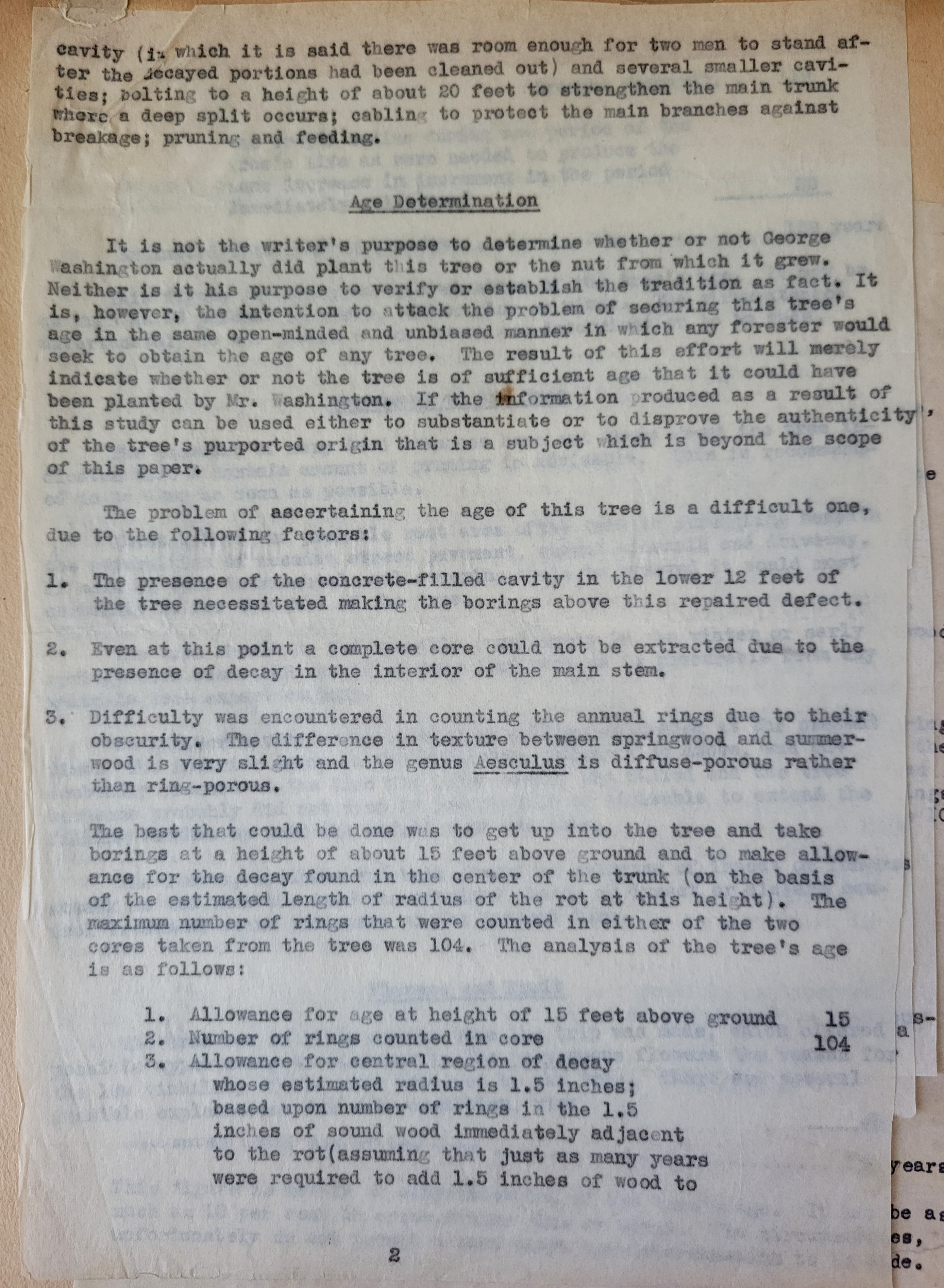
    Age Determination, May 6 1934

    Lastly, local historian James Henry Heron collected local citizens’ recollections of the tree and the story. Mrs. Lilias Hamilton Scott, the wife of Mr. John Scott, who owned the lot on which the tree stands, wrote that her grandmother (Mrs. Janet Scott Hamilton) stated her great-grandmother (Mrs. Francis Scott) resided in Fredericksburg in 1788 and was Mary Washington’s neighbor and intimate friend. She said the trees were planted by Washington.

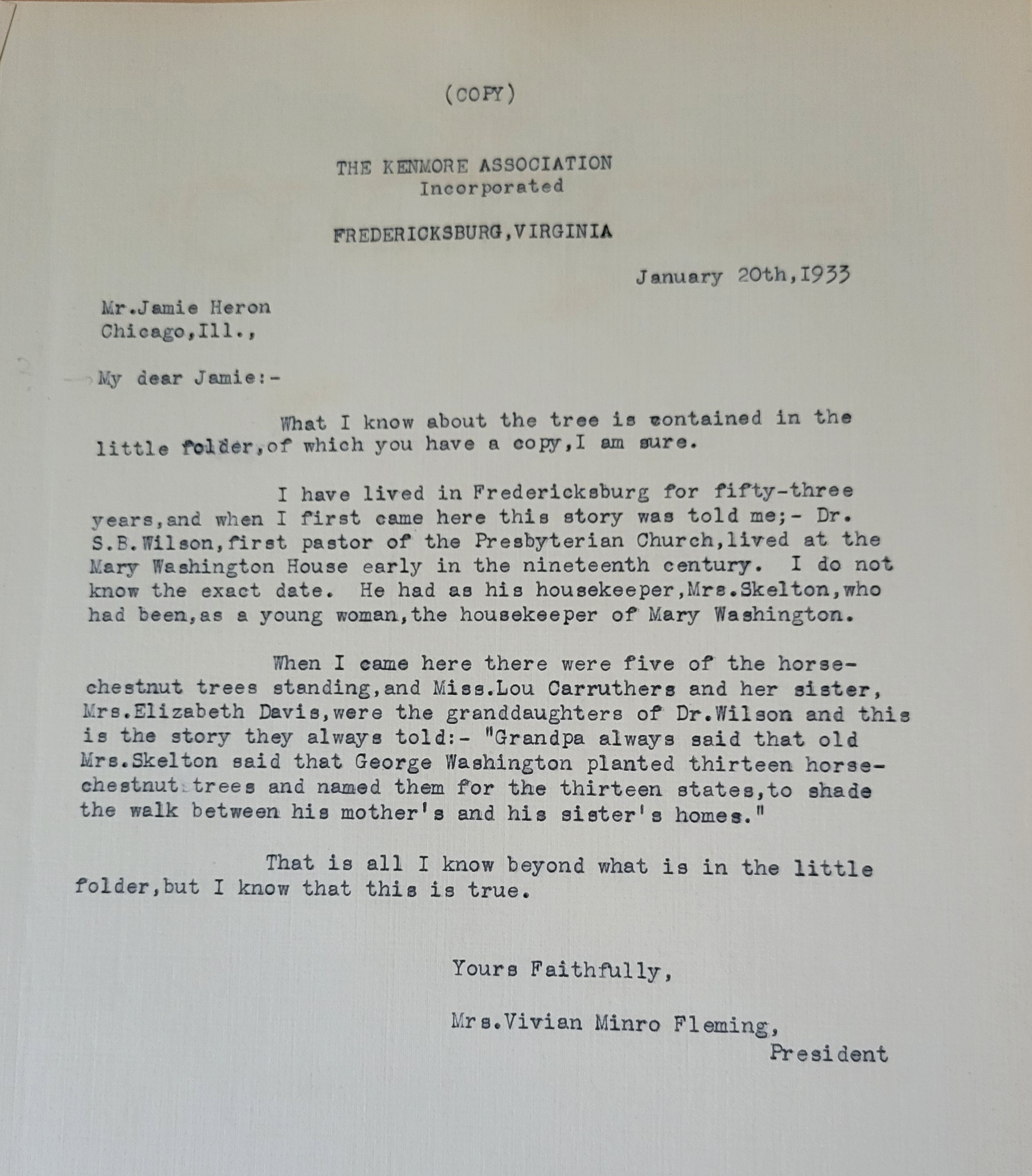
    Mrs. Vivian Minor Fleming traces the story back to Miss Lou Carruthers, her sister Mrs. Davis, and their grandfather Rev. S.B. Wilson’s housekeeper, Mrs. Polly Skelton, who had previously been a housekeeper for Mary.
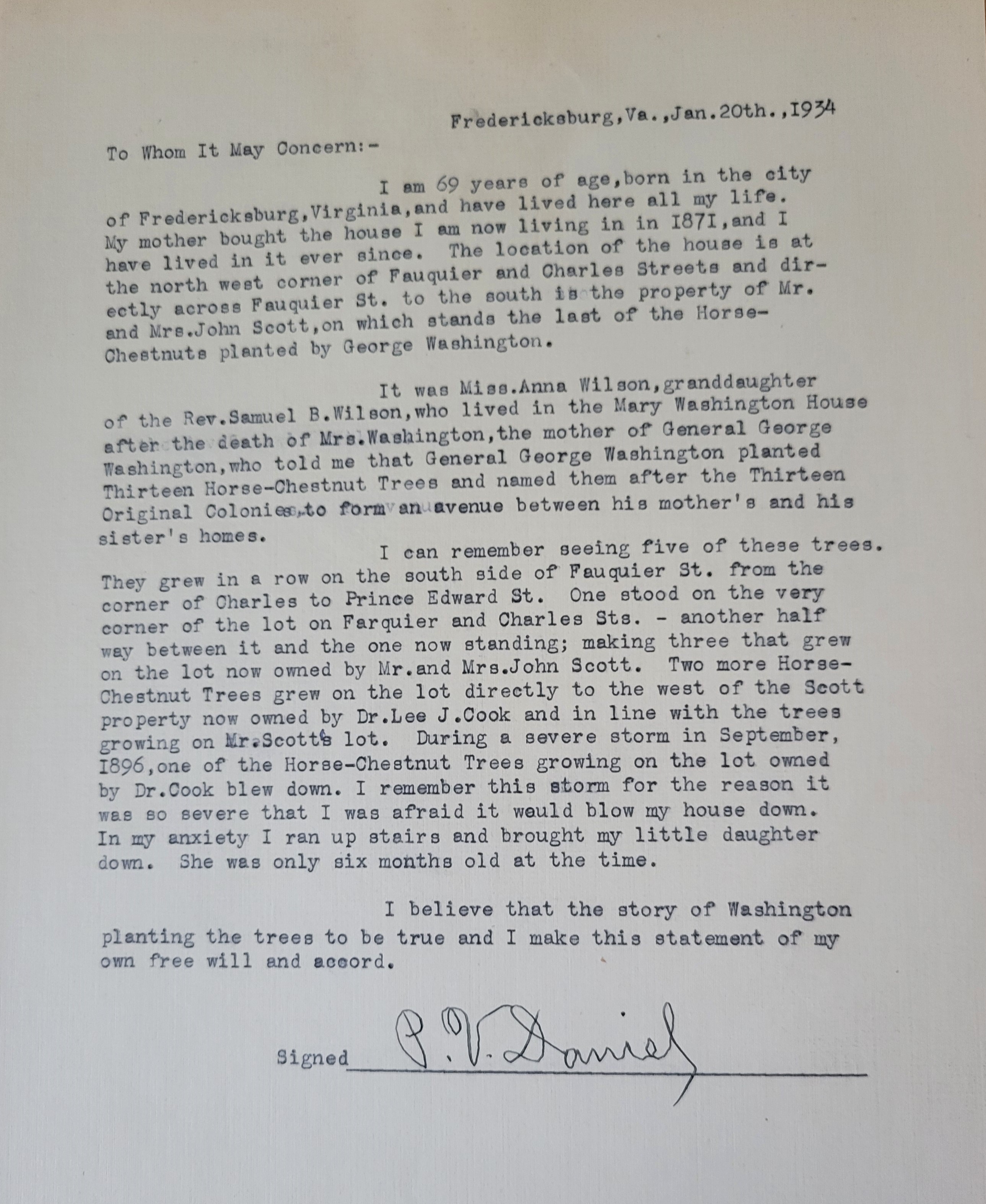
    Mr. P.V. Daniel, who remembers five of the original thirteen trees, lived across the street from the remaining one for over sixty years and said Miss Anna Wilson, granddaughter of Rev. S.B. Wilson, told him the story.
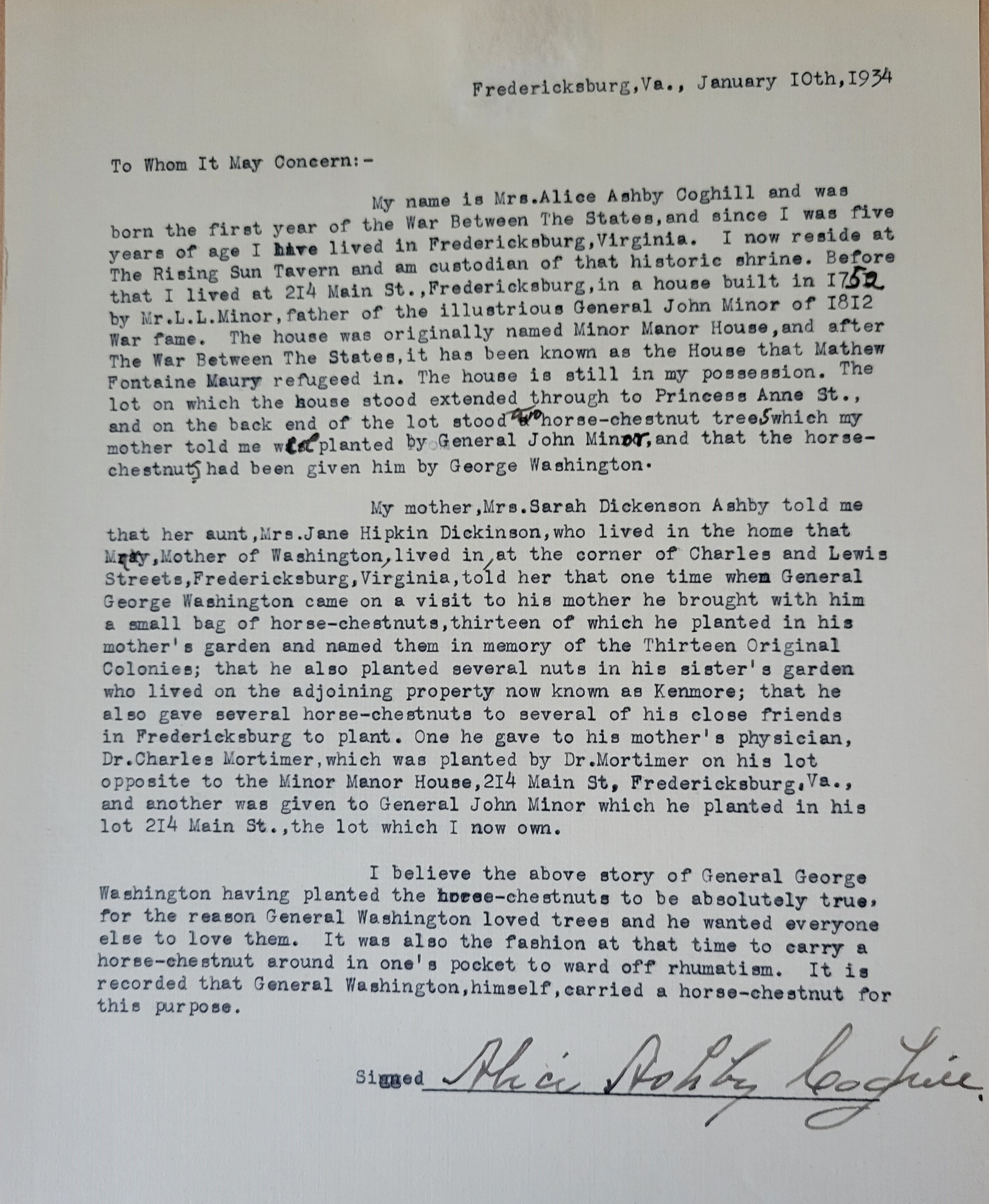
    Mrs. Alice Ashby Coghill says her aunt, Mrs. James Hipkin Dickinson, who lived at Mary Washington House after Rev. S.B. Wilson said Washington planted the trees and passed out horse chestnuts to friends.
    While I have no doubt these people are truthful in their recollections, they do not offer any definite evidence. They merely document that the legend was a well-known story but not that it was true.

    Regardless, the much-loved old tree was rightfully given proper emergency care with a donation and service from Senator Martin L. Davey from Ohio and The Davey Tree Expert Company. The famous tree lived happily for over another half century before being taken down in 2004.
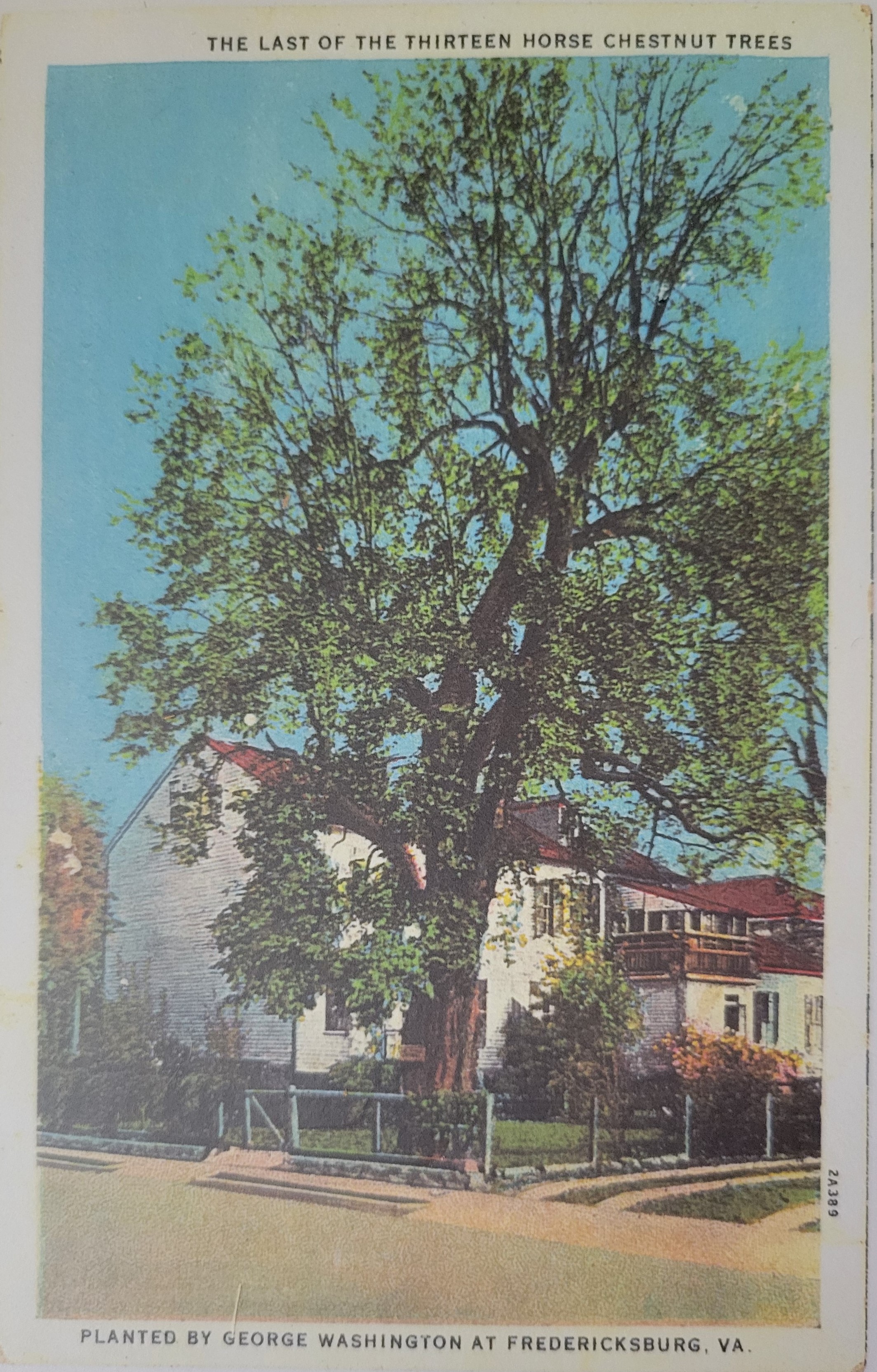
    Whether this tree was planted by George along with twelve others will probably never be conclusively proven. Were the people wrong to save the tree all those years ago without better evidence? Absolutely not. They saved a beautiful 200-year-old horse chestnut tree with a legendary attachment to George Washington, but they also saved a bit of their own past, nostalgia, and pride in their own town’s history.


    Heather Baldus

    Collections Manager
  • The Gardens of Historic Kenmore

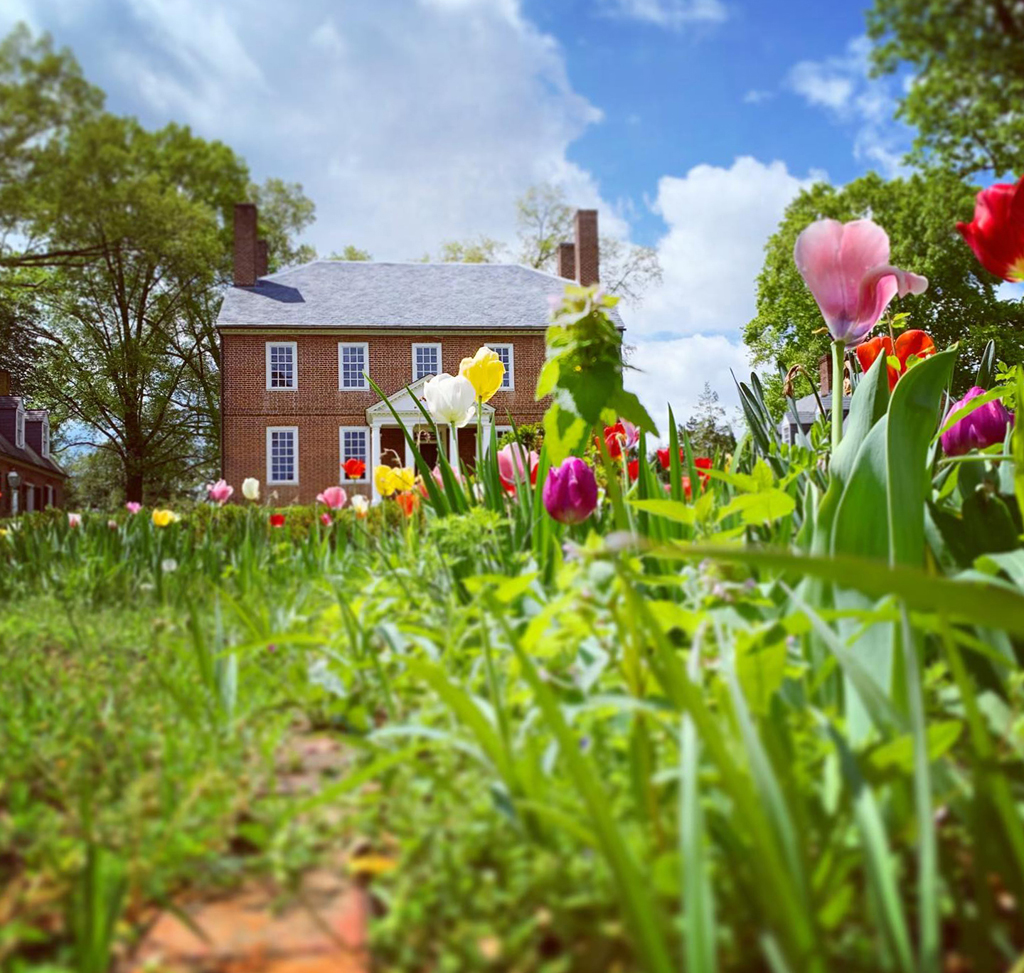
    Historic Kenmore is known for many things; for being the home of Fielding and Betty Washington Lewis, for its Georgian-style brick architecture, its famous ornate decorative plaster ceilings, and, last but not least, for its beautiful gardens. Unfortunately, today only three out of Kenmore’s nearly 1300 original acres remain but with the help of The Garden Club of Virginia, dedicated volunteers, and generous donors, the remaining landscape surrounding the house was cared for over the last century.

    There is a very exciting centennial celebration coming up for Kenmore. The Kenmore Association (presently known as The George Washington Foundation) was established in 1922 to save the historic home from destruction. Kenmore will celebrate its 100th anniversary as a historic house museum next year in 2022.

    Similarly, The Garden Club of Virginia was established when eight garden clubs across the Commonwealth of Virginia were invited to attend a conference in Richmond on May 13, 1920. Last year was the club’s 100th anniversary.

    Fielding and Betty Lewis, for whom Kenmore was built in the mid-1770s, left no historical records of what gardens they had or where they were located. Even though there is little archival or archaeological evidence of original garden plans or planting, we do know that tobacco, wheat, and corn were grown in Kenmore’s surrounding fields. Furthermore, the terraces on the river side of the house, which are still there today, were hand-built by enslaved laborers. Without precise archival and archaeological data, however, Kenmore’s gardens over the years were based on a general understanding of 18th century gardening styles.

    Terrace built by enslaved laborers in the 18th century visible in Kenmore’s gardens.

    The creation of the present-day gardens began in 1929 when The Garden Club of Virginia raised funds for their organization’s first project, Kenmore’s gardens. Indeed, as written about previously, Kenmore inspired Historic Garden Week in Virginia, which was held for the first time that same year.

    This initial establishment of Kenmore’s gardens was led by landscape architect Charles F. Gillette with contributions by James Greenleaf and Alden Hopkins. Colonial Revival-style gardens were planted with boxwoods around the foundation of the house, along paths, and on the terrace. The west lawn, which faces present-day Washington Avenue, was treated as the “front of house” since carriages entered from that side in the 19th century. This lawn was planted with stately trees. On the east lawn, at the rear of the property facing the Rappahannock River, a four-square garden edged in boxwoods was added.

    In 1941, The Garden Club of Virginia brought back Gillette to create what was called Betty Washington’s Flower Garden and to add an enclosing brick wall around the property.

    Kenmore’s gardens saw further changes throughout the 1980s and early 1990s, when a decision was made by the Kenmore Association to more accurately demonstrate general 18th century garden styles and ideas as well as to introduce more native plants. The boxwoods were removed from around the house’s foundation and from most paths.

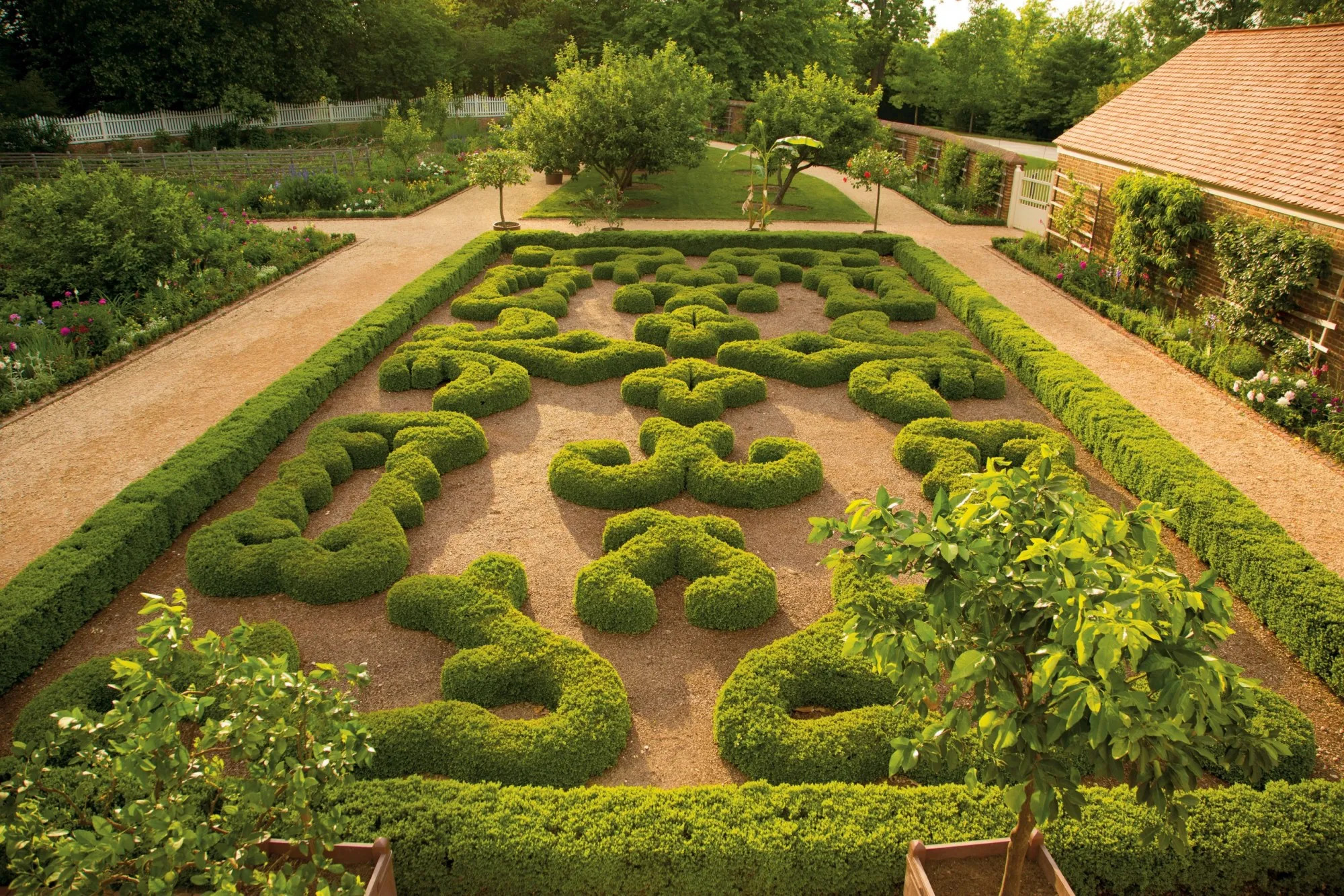
    On its 70th anniversary in 1992, The Garden Club of Virginia undertook another extensive redesign of Kenmore’s gardens with landscape architect Rudy Favretti. Included in this replanting was another revamping of what was called Betty Washington’s Garden, the creation of an Herb Demonstration Garden, the addition of the Wilderness Walk, and a refurbishment of the east terrace. A kitchen garden was added in 1993 and a redesign of the parterre was completed in 1994. A parterre, or four-square garden, means “on the ground” and indicates the geometrical arrangement of garden beds. The four-square arrangement is a reflection of the late 18th century move toward simplicity of design.

    Come visit the gardens of Historic Kenmore today, Tuesday, April 20 for Garden Day in Fredericksburg, part of Historic Garden Week in Virginia hosted by The Garden Club of Virginia.


    Jessica Burger
    Manager of Marketing, Communications, and Technology

  • Flowers of Kenmore [Photos]

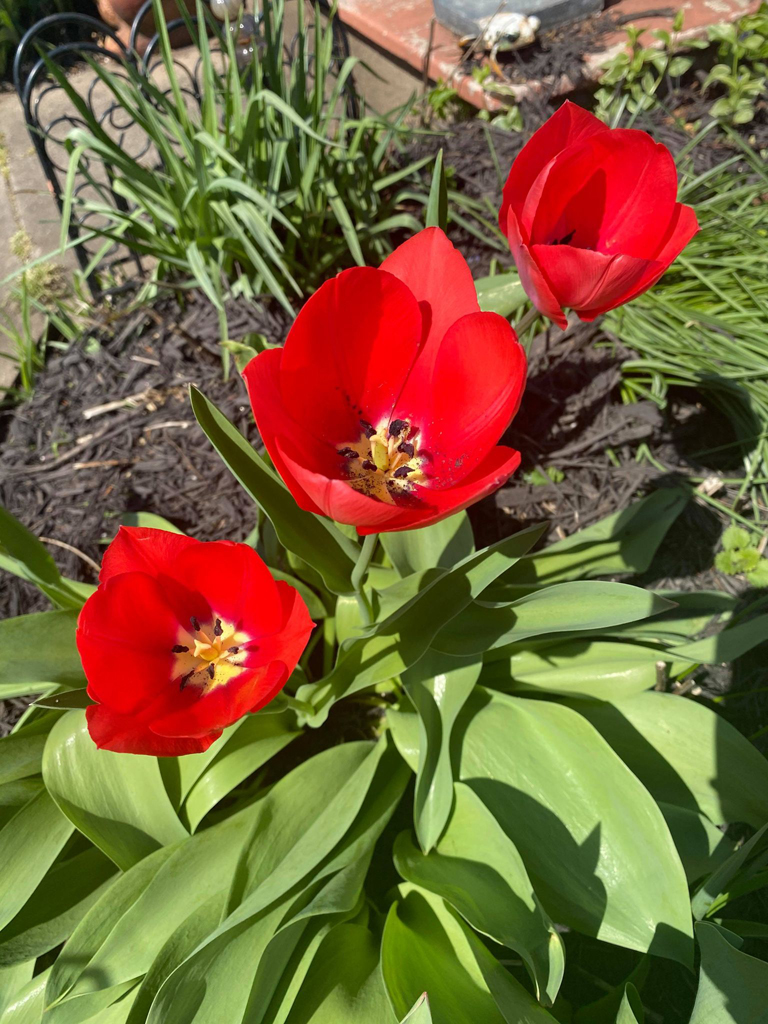
    While Historic Kenmore remains closed temporarily because of the COVID-19 coronavirus pandemic, nature’s seasons move forward as normal.  One of the highlights of spring in Kenmore’s gardens is the first blooms of our tulips and other flowers.  Since visitors cannot see the beauty of these flowers in person, we wanted to share some photos for everyone to enjoy.


  • What’s Growing in Ferry Farm’s Garden?

    As many of you know, the Washington house replica at George Washington’s Ferry Farm was reconstructed and furnished as accurately as possible using historic documents, paintings, letters, and, of course, archaeology. Now that the challenge of getting the house built and open to visitors has passed, it’s time to turn to the rest of our plan for interpreting Ferry Farm’s landscape. This will eventually include constructing outbuildings, finishing the work yard, and improving the garden.

    Even though the present garden is located at Ferry Farm’s Visitor Center and not yet near the Washington house replica, we used archaeological discoveries to decide what goes into the garden this spring. Using data from past excavations on Washington-era contexts, we drew some conclusions on what the Washington family and their enslaved workers cultivated here. While most organic material left behind over 250 years ago is long gone, as archaeologists, we sometimes get lucky and find biological and botanical remains that have withstood the time in the ground. We get especially lucky when we do find botanical remains like seeds and wood because, depending on the elements, they usually decompose easier and faster than bone.

    Visitor often ask how we find some of our tiniest artifacts such as seeds. For important contexts and Washington era features, we don’t want to miss a single (tiny) thing, so we use a water screen. Instead of the usual quarter-inch screen we use for dry sifting dirt, we use a gentle stream of water from a garden hose and spray away the dirt through a window screen. We then use tweezers to pick out the tiny artifacts left behind.  Objects like the straight pin in the photo below and seeds could otherwise fall through the standard quarter-inch screen.

    GWF_FF20-Waterscreen-Cate-Courtney-24May2013H
    Water screening

    GWF_FF20-Waterscreen-16May2013
    Picking out the artifacts after water screening.

    GWF_FF20-Waterscreen-StraightPin-17May2013
    Straight pin

    In 2015, we had flora remains from a mid-18th century storehouse cellar feature that had been captured by our fine mesh water screens sent to Justine McKnight, an archaeobotanical consultant for analysis.  Without getting extremely technical, I will say that we gained some very useful data to use to plant our garden this year. Seed specimens discovered archaeologically and used in cultivation consisted  of peas, green beans, wheat, and corn. Seeds included hackberry and, of course, cherry. The only nut uncovered was a hazelnut shell.

    Along with this archaeological evidence, we also know that some tobacco was grown on the Washington farm because of court records. In the 17th and 18th centuries, tobacco was Virginia’s premier export and most valuable cash crop but places along the Rappahannock River like Ferry Farm were not great tobacco land.  In these areas, as our excavated seeds show, planters moved onto corn, wheat, and other crops, knowing they would never get rich on tobacco.

    Using all of this information, we planted similar crops in the demonstration garden along with other crops widely grown in 18th century colonial America.

    While seemingly insignificant at first glance, these tiny charred remains of flora give us a snapshot in time of the diets of the Washington family and enslaved workers at Ferry Farm. These definitely are not the only plants they were eating, but we do know via archaeology that these were stored by the family in the mid-18th century. Using the other archival resources listed above, we will continue to fill in the gaps and enhance our garden and landscape according to the historical and archaeological records.

    Elyse Adams, Archaeologist
    Archaeology Lab Technician

  • Spring at Historic Kenmore! [Photos]

    Sunny days. Blue skies. Blooming flowers. Spring at Historic Kenmore is a beautiful time!

    To plan your next visit to Kenmore, go to kenmore.org/visiting.

  • Photos: Flowers at Kenmore

    Spring flowers blooming recently at Historic Kenmore!

  • Photos: Flowers at Ferry Farm

    Spring flowers are blooming at George Washington’s Ferry Farm!

  • Summer Greens from the Colonial Garden

    Typically, when modern Americans think of summer barbecue food, they think of meat grilled over an open flame. While that would certainly appeal to an eighteenth century audience, it is not necessarily what they considered ‘typical’ summer fare. Large livestock like pigs and cattle were usually slaughtered and butchered in the late fall/early winter when the weather was far more conducive to task. This meant that large roasts (like mentioned in our earlier blog) were not the norm in the warmer months. Instead, people of the 18th century looked to the seasonality of ingredients to inspire their summer time fare.

    Eighteenth century diets were very dependent on the growing seasons. Summer was a bounty of fruits, vegetables, greens, herbs, and anything else that could not be had in the dead of winter. Much like today, there were a variety of methods, styles, and recipes used to please the numerous palates.

    Garden (1)
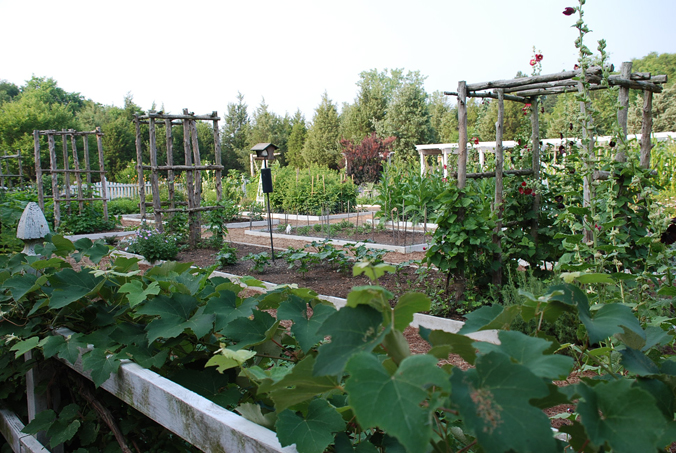
    The demonstration garden at George Washington’s Ferry Farm.

    With today’s weekend farmers markets and roadside stands, a salad seems the ubiquitous summer option. But what would our forefathers have thought of raw vegetables tossed in oil and vinegar? They certainly had all of the elements available to them but their tastes were different than ours. After all, we still have oysters and ice cream but most of us no longer enjoy oyster ice cream.

    While the oldest references to salad come from ancient Rome (usually referred to as sallet) it was not ubiquitous in English summer cuisine. While there are some references in cookbooks and menus of the time that called for ‘salad herbs’ like lettuce and spinach to be served raw, most of their English recipes called for cooking the vegetables in some way.

    The modern stereotype of English cooking insists that greens be boiled until no real flavor or texture remains. And while many of 18th century recipes for vegetables include boiling (and some for quite some time) there is also this warning in Hannah Glasse’s The Art of Cookery Made Plain and Easy.

    GardenThings2
    Hannah Glasse cautions her readers not to “over-boil” fresh garden greens.

    There was a clear appreciation for fresh vegetables even if they were prepared in some manner.  An appreciation that extended into George Washington’s own household. One recipe included in Martha Washington’s cookbook was for a ‘Lettis Tart’ which called for ‘cabbage lettis’ and prunes to be put in a crust with cinnamon and ginger and then baked like a pie.

    In addition to recipes calling for fresh fruits and vegetables, early Americans were very familiar with numerous preservation methods in order to enjoy vegetables and fruit out of season. In the summer they would pickle vegetables, dry herbs, and make preserves with fruits so they could enjoy them all year long.

    In September 1784, George Washington traveled west of the Allegany Mountains. He recorded some of his supplies in his diary and includeed a canteen filled with ‘Chery Bounce’. This was a drink made from cherries preserved in brandy and was a way for Washington to take the taste of Virginia summer with him on his travels.

    Cherries on the cherry trees in the Demonstration Garden.
    Cherries on the cherry trees in the Ferry Farm’s demonstration garden.

    This summer when you are contemplating your patriotic picnic options for your July Fourth festivities, don’t pass up the greener options. They have far more in common with the summer options of our founding fathers than you may have originally believed.

    Joe Ziarko
    Manager of Interpretation & Visitor Services

  • May Flowers

    Beautiful flowers are in bloom in the demonstration garden at George Washington’s Ferry Farm!

  • Restoring Kenmore’s Gardens

    Kenmore's Gardens 1

    While the various restorations of Kenmore itself over the years are usually the star attraction for visitors to the site, there was another restoration, equally as important, that occurred on the property in its early years as a museum.  Kenmore’s gardens are well-known for their beauty now, but when the Kenmore Association acquired the property in the 1920s, the grounds were in a sad state.  It would take generations of work and ingenuity from a variety of people and groups to return the gardens to their former glory.

    Perhaps the most important moment in the history of Kenmore’s gardens was when the Garden Club of Virginia decided to tackle them as their first-ever restoration project in 1929.  The Garden Club established Virginia Garden Week specifically to raise funds for the project.  Their success in both completing the first restoration of Kenmore’s gardens, and in creating a significant annual event across the Commonwealth of Virginia lead to more than 50 historic garden restorations since, and the celebration of its 83rd Historic Garden Week next week.

    In 1940, the next phase of Kenmore’s garden restoration began when the Garden Club agreed to fund the implementation of designs by the renowned Southern landscape architect Charles Gillette.  His plans included the “secret garden” area in the northeast corner of the grounds, the brick wall that currently surrounds the property, and Kenmore’s iconic brick gate on Winchester Street. Gillette would continue his work at Kenmore into the 1950s.

    Garden Letter 1
    Page 1 of a letter from Hetty Harrison to Annie Fleming Smith dated June 26, 1940 informing the Kenmore Association that the Garden Club of Virginia had selected Kenmore as its restoration project and that renowned Southern landscape architect Charles Gillette would provide the design.

    Garden Letter 2
    Page 2 of the Harrison-Smith letter

    Tree Planting
    Ceremonial tree-planting on the Kenmore grounds, 1938.

    Most recently, the Garden Club of Virginia undertook another restoration of the gardens in 1992.  The Club remains a vital supporter of Kenmore’s landscape efforts to this day.

    During Historic Garden Week, enjoy Kenmore’s gardens and experience the house in a new way! On Tuesday, April 26, try a specialty tour highlighting one of three topics—the restoration of Kenmore at 11:00 a.m. and 2:00 p.m., American Revolution at Noon and 3:00 p.m., and ceramics at 1:00 p.m. and 4:00 p.m.  For more information and to view the specialty tours monthly schedule, click here.

    Meghan Budinger
    Aldrich Director of Curatorial Operations