Lives and Legacies

Tag: Gardens

  • Caring for Ferry Farm’s Flora and Fauna

    Step onto the grounds of George Washington’s boyhood home and, notwithstanding its famous connection, there’s no mistaking the feeling of being in a special place. A National Historic Landmark, Ferry Farm stretches along the Rappahannock River across from downtown Fredericksburg’s City Dock. The land is varied and rich, with native woodlands, a native grass meadow, walking trails, riverbeds, springs, a garden, and scenic Virginia rail fences. It has seen a significant share of American history from the activities of Native Peoples, to the colonial inhabitants, to Civil War Union encampments, and more.

    View of Fredericksburg from Ferry Farm

    Historically significant land such as this ought to be carefully maintained and stewarded – and it is. With its variety of features, maintenance can become a challenge, as there is always the threat of erosion, the caring for trees, the need to ensure the grounds are safe and passable for visitors, and finding economical ways to use and reuse what’s available. Also, we cannot forget the residents that have first rights to be here – Ferry Farm’s numerous critters.

    Leaving natural habitats for flora and fauna promotes a healthy ecosystem

    “We try to keep a balanced ecosystem by only introducing native plants that would not interrupt the natural beauty of the site,” explains John Carmichael, Buildings and Grounds Director. “The land is kept as natural as possible to maintain a primitive ecosystem native to the area. Forests are kept healthy by mitigating the growth of invasives. Grasslands are maintained with tough turf, mainly natural growth. We’re not looking to keep up a pretty green lawn with no weeds; we maintain how it would have looked in Washington’s day, with natural growth, clover, and field grasses.”

    The grass in front of the House leading to the riverfront gets mowed sparingly in order to protect all of the embankments from erosion. Growing large strong roots helps keep the soil in place. Underbrush on the riverbank remains in place, for the same reasons, and fencing keeps visitors off of the area since it is unsafe footing.

    Grasses are kept long in front of the Washington House and along the Rappahannock River to protect the embankment from erosion.

    The entire flat nearest the water was created by the Corps of Engineers shortly after the conclusion of the Civil War. Sediment from erosion was threatening to make the river too shallow to navigate. To relieve the problem, the Corps built wooden retaining walls along the river’s edge and then dredged a channel to allow ships to resume operating on the river. They used the sand from the dredge to fill in behind the wooden retaining walls. With sand not being optimal land for growing trees, trees that happen to grow there are left because they’ve already proven their hardiness.

    Since no commercial fertilizers and minimal weed killers are used at Ferry Farm, composting and mulching are an essential part of stewardship. Large limbs, trimmings, and small branches are placed at the edges of woods to decompose and provide shelter for animals. Tree trimming partners will mulch downed limbs which in turn get spread onto walking paths and parking lots.

    Composting at Ferry Farm is a three-year process. New grass clippings, greens, weeds, manure, wood ash, and leaves go into an initial pile for decomposition. In year two, everything gets turned and sifted regularly. By the third season, it’s ready to be spread throughout gardens and flower beds. Green and cost-effective, composting keeps useable nutrients out of the landfill.
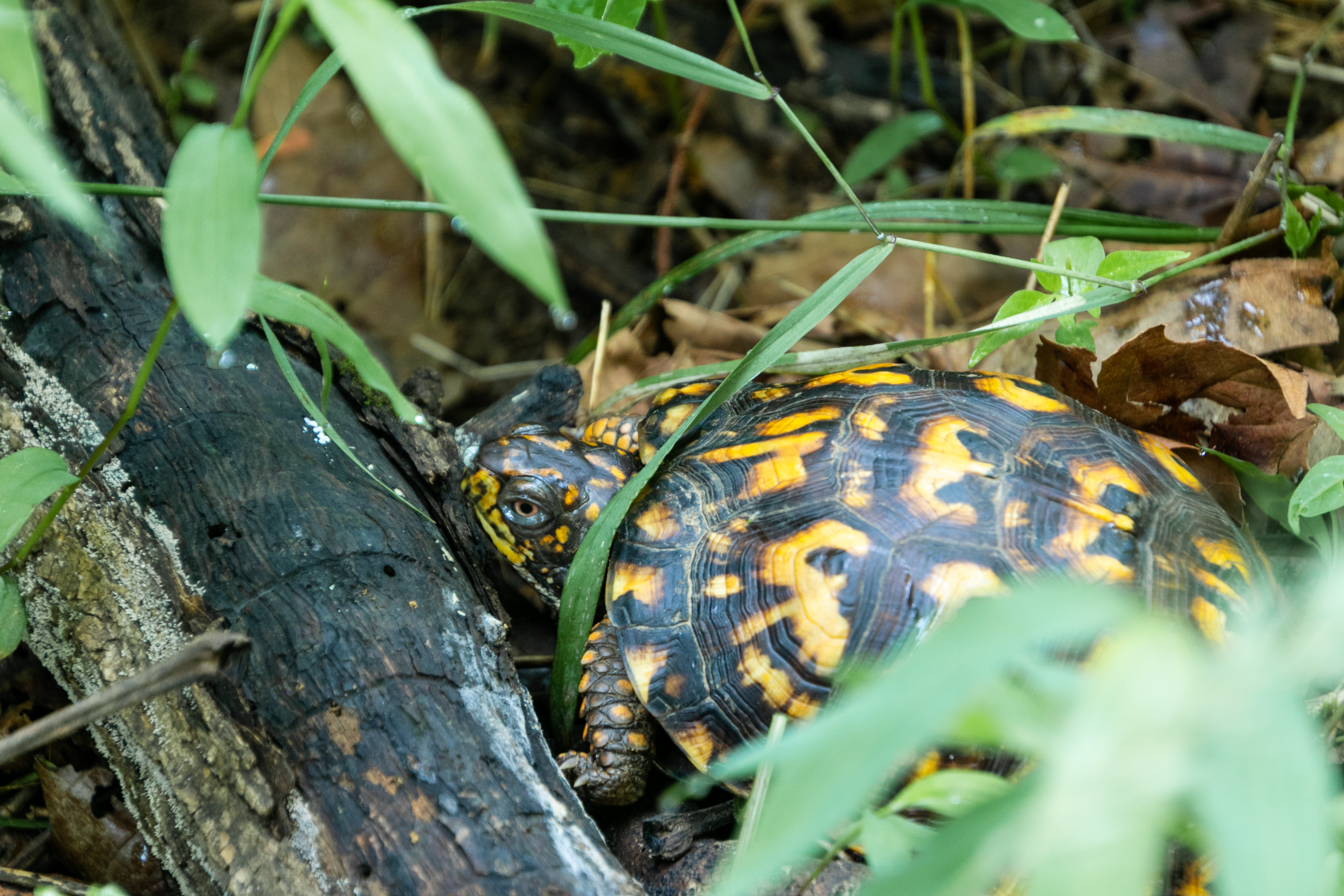
    Box turtles thrive in tall grasses in front of the Washington House. Source: Sharon Houston

    Surrounded by busy roads on two sides, Ferry Farm is a wild animal sanctuary for deer, rabbits, groundhogs, red and grey foxes, hawks, bald eagles, herons, opossums, raccoons, black and garter snakes, box turtles, bats, and hundreds of bird species. Leaving natural habitats for flora and fauna promotes a healthy ecosystem. The back meadow receives rejuvenate mowing in early spring to encourage it back to good health. It’s a birders’ paradise dotted with bluebird boxes along a mowed walking path. Over 125 different species of birds have been identified on the property over the years. Look closely, and flat patches of grass indicate where a deer has bedded for the night. Critters are welcome here. “As long as it poses no threat, it has a right to be here,” says Chris Lynn, Buildings and Grounds Technician.

    The flowers in the garden attract pollinators to the herbs and vegetables; fruit-bearing trees and shrubs do their part to attract as well. Gardens grow with the three sisters – corn, squash and beans – as well as tobacco, cotton, potatoes, and more.
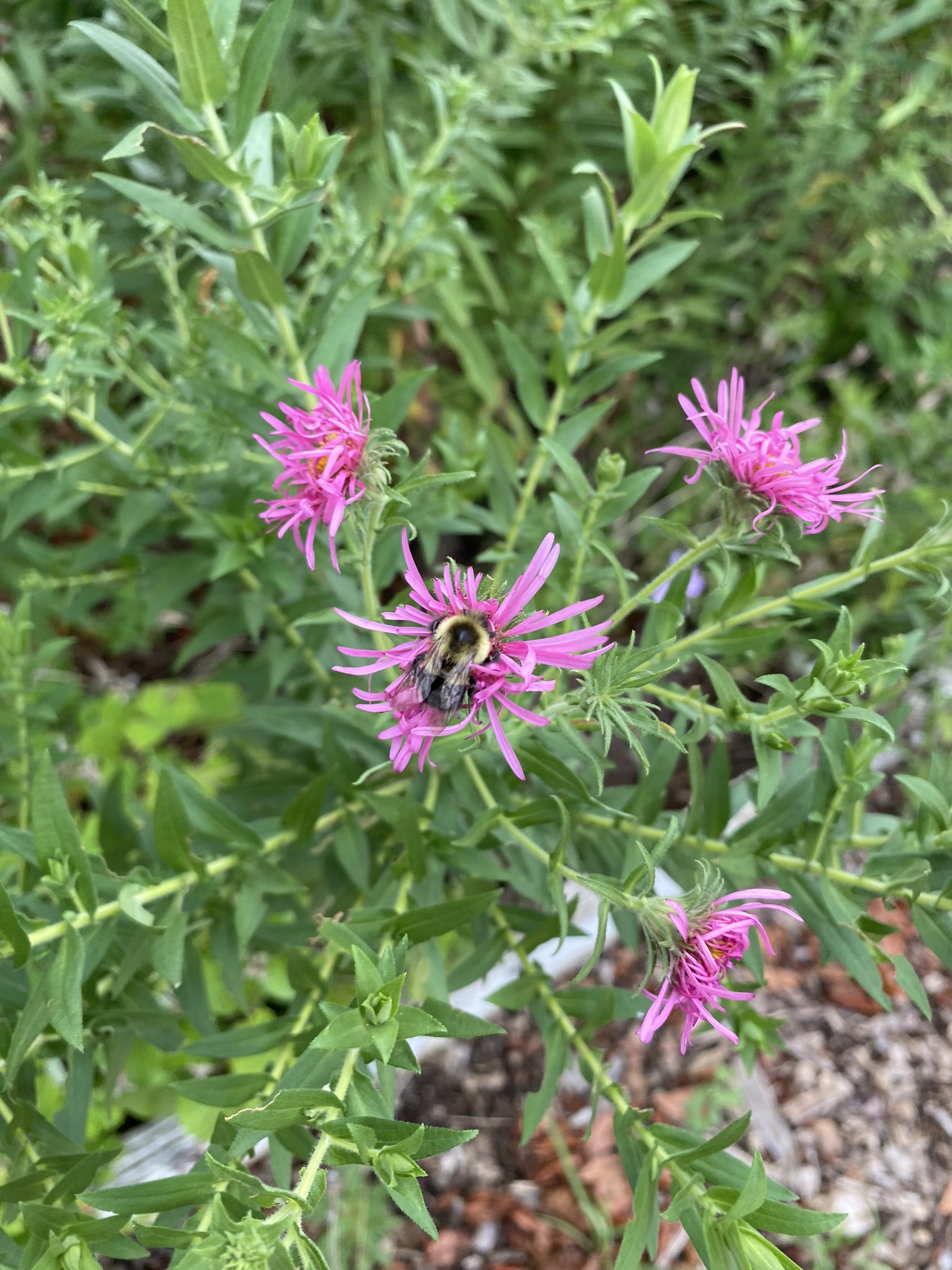
    A flower in the garden bed serves to attract pollinators for herbs and vegetables

    Ferry Farm’s beauty conjures up days of natural grasslands, mature forests, and living in harmony with the land’s resources. Knowing that the “Father of our Country” spent his childhood here evokes moments of contemplation. Absorbing the sights and smells of wild flora and fauna while walking where young George walked is a step back in time, where the present awakens the past.

    Lori Scott Pikkaart,

    Marketing & Communications Manager
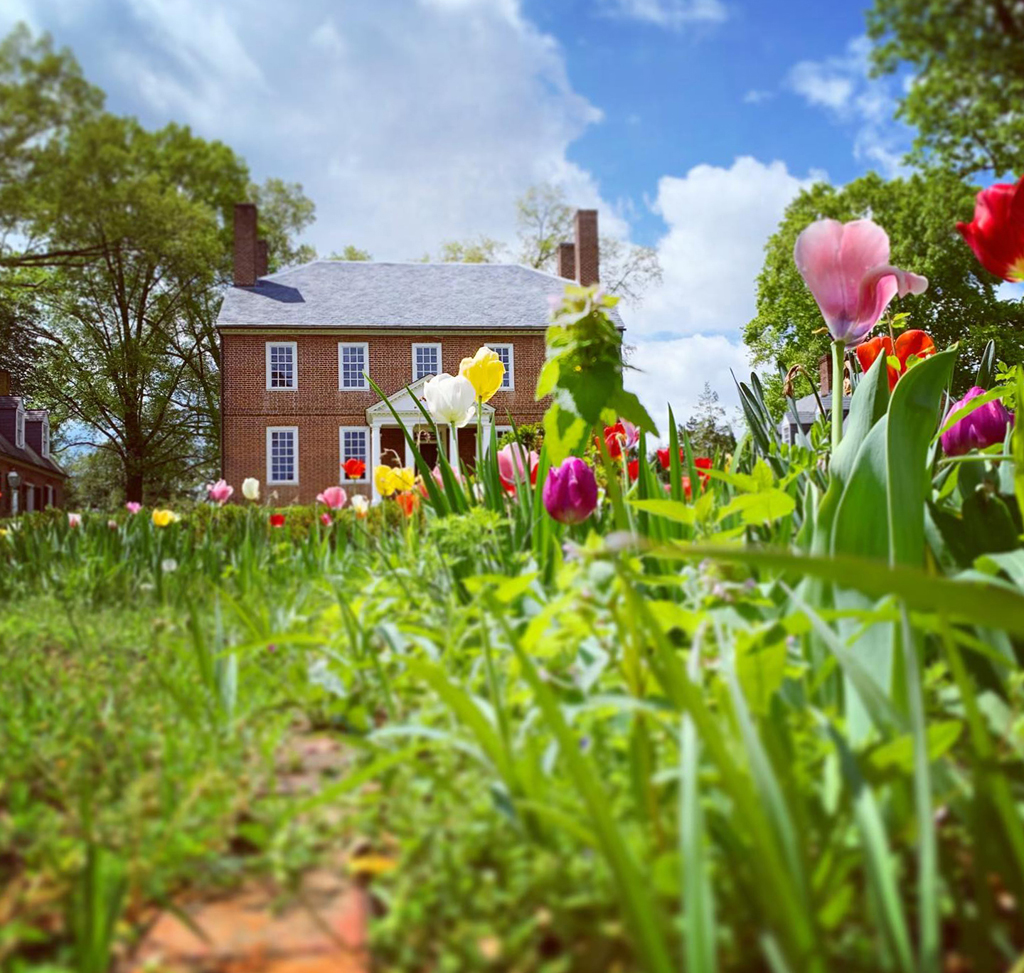
  • The Gardens of Historic Kenmore

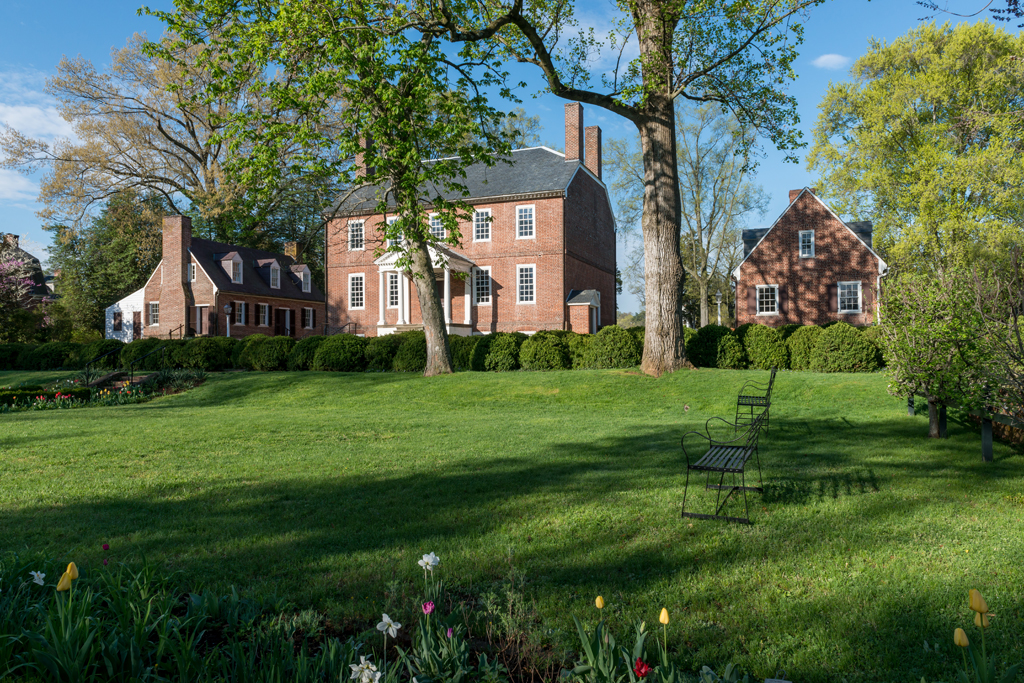
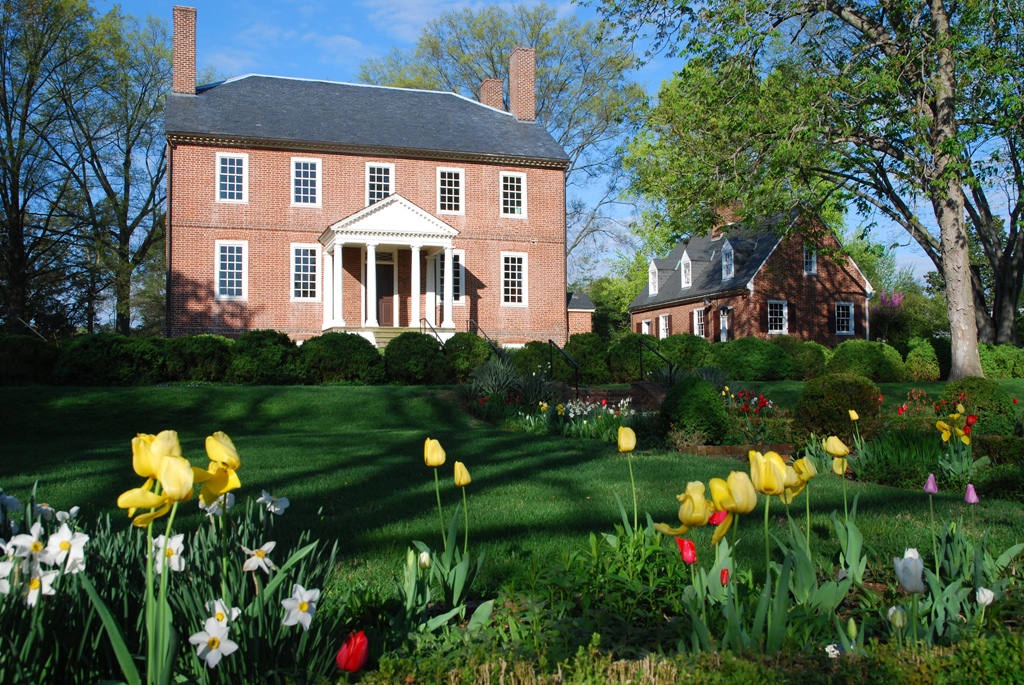
    Historic Kenmore is known for many things; for being the home of Fielding and Betty Washington Lewis, for its Georgian-style brick architecture, its famous ornate decorative plaster ceilings, and, last but not least, for its beautiful gardens. Unfortunately, today only three out of Kenmore’s nearly 1300 original acres remain but with the help of The Garden Club of Virginia, dedicated volunteers, and generous donors, the remaining landscape surrounding the house was cared for over the last century.

    There is a very exciting centennial celebration coming up for Kenmore. The Kenmore Association (presently known as The George Washington Foundation) was established in 1922 to save the historic home from destruction. Kenmore will celebrate its 100th anniversary as a historic house museum next year in 2022.

    Similarly, The Garden Club of Virginia was established when eight garden clubs across the Commonwealth of Virginia were invited to attend a conference in Richmond on May 13, 1920. Last year was the club’s 100th anniversary.

    Fielding and Betty Lewis, for whom Kenmore was built in the mid-1770s, left no historical records of what gardens they had or where they were located. Even though there is little archival or archaeological evidence of original garden plans or planting, we do know that tobacco, wheat, and corn were grown in Kenmore’s surrounding fields. Furthermore, the terraces on the river side of the house, which are still there today, were hand-built by enslaved laborers. Without precise archival and archaeological data, however, Kenmore’s gardens over the years were based on a general understanding of 18th century gardening styles.

    Terrace built by enslaved laborers in the 18th century visible in Kenmore’s gardens.

    The creation of the present-day gardens began in 1929 when The Garden Club of Virginia raised funds for their organization’s first project, Kenmore’s gardens. Indeed, as written about previously, Kenmore inspired Historic Garden Week in Virginia, which was held for the first time that same year.

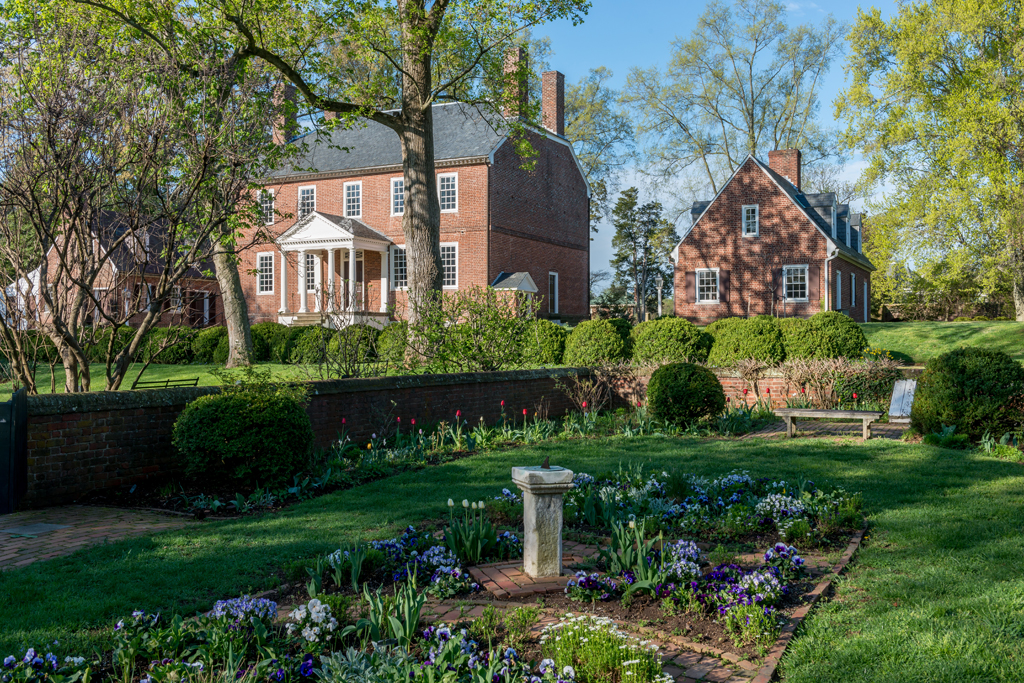
    This initial establishment of Kenmore’s gardens was led by landscape architect Charles F. Gillette with contributions by James Greenleaf and Alden Hopkins. Colonial Revival-style gardens were planted with boxwoods around the foundation of the house, along paths, and on the terrace. The west lawn, which faces present-day Washington Avenue, was treated as the “front of house” since carriages entered from that side in the 19th century. This lawn was planted with stately trees. On the east lawn, at the rear of the property facing the Rappahannock River, a four-square garden edged in boxwoods was added.

    In 1941, The Garden Club of Virginia brought back Gillette to create what was called Betty Washington’s Flower Garden and to add an enclosing brick wall around the property.

    Kenmore’s gardens saw further changes throughout the 1980s and early 1990s, when a decision was made by the Kenmore Association to more accurately demonstrate general 18th century garden styles and ideas as well as to introduce more native plants. The boxwoods were removed from around the house’s foundation and from most paths.

    On its 70th anniversary in 1992, The Garden Club of Virginia undertook another extensive redesign of Kenmore’s gardens with landscape architect Rudy Favretti. Included in this replanting was another revamping of what was called Betty Washington’s Garden, the creation of an Herb Demonstration Garden, the addition of the Wilderness Walk, and a refurbishment of the east terrace. A kitchen garden was added in 1993 and a redesign of the parterre was completed in 1994. A parterre, or four-square garden, means “on the ground” and indicates the geometrical arrangement of garden beds. The four-square arrangement is a reflection of the late 18th century move toward simplicity of design.

    Come visit the gardens of Historic Kenmore today, Tuesday, April 20 for Garden Day in Fredericksburg, part of Historic Garden Week in Virginia hosted by The Garden Club of Virginia.


    Jessica Burger
    Manager of Marketing, Communications, and Technology

  • Flowers of Kenmore [Photos]

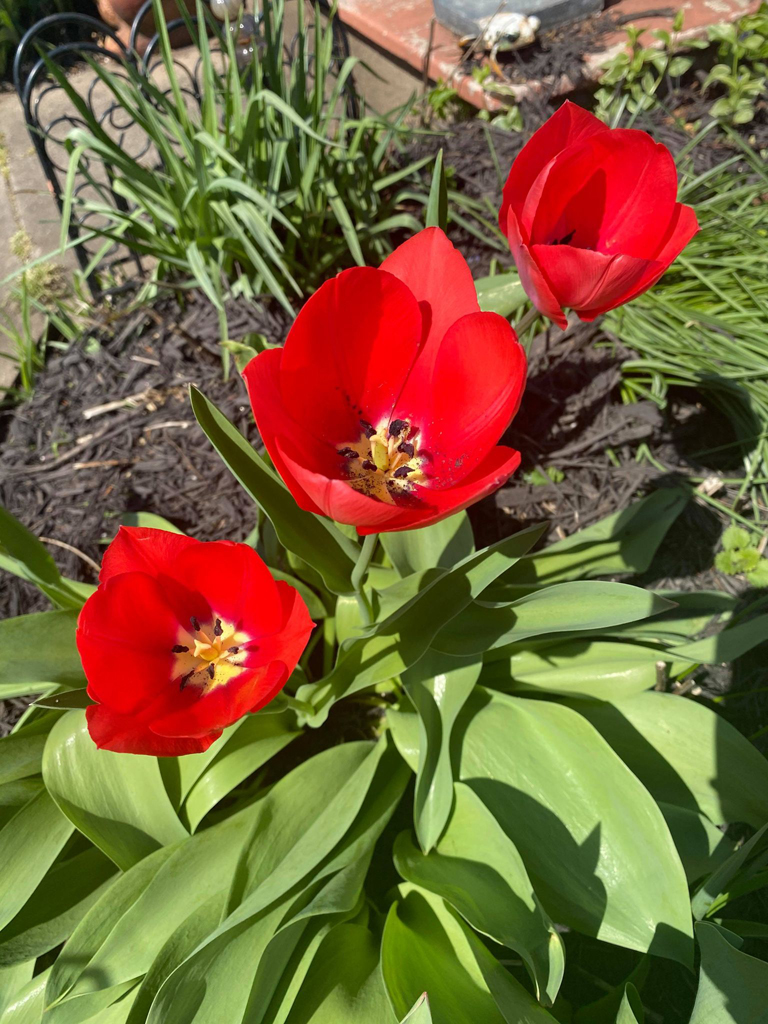
    While Historic Kenmore remains closed temporarily because of the COVID-19 coronavirus pandemic, nature’s seasons move forward as normal.  One of the highlights of spring in Kenmore’s gardens is the first blooms of our tulips and other flowers.  Since visitors cannot see the beauty of these flowers in person, we wanted to share some photos for everyone to enjoy.


  • Snow at George Washington’s Ferry Farm & Historic Kenmore

    Historic Kenmore and George Washington’s Ferry Farm experienced a snowstorm on Wednesday, March 21, 2018.  Our staff took these photos of the snowfall from around the Lewis and Washington homes.

    We also setup a timelapse camera at the Ferry Farm Visitors Center to capture the snowfall over the course of the storm. Closely watch the pine trees in the video below and you can see their branches droop down as the heavy wet snow weighs them down and then raise back up as the snow started to melt late in the day.

  • May Flowers

    Beautiful flowers are in bloom in the demonstration garden at George Washington’s Ferry Farm!

  • Restoring Kenmore’s Gardens

    Kenmore's Gardens 1

    While the various restorations of Kenmore itself over the years are usually the star attraction for visitors to the site, there was another restoration, equally as important, that occurred on the property in its early years as a museum.  Kenmore’s gardens are well-known for their beauty now, but when the Kenmore Association acquired the property in the 1920s, the grounds were in a sad state.  It would take generations of work and ingenuity from a variety of people and groups to return the gardens to their former glory.

    Perhaps the most important moment in the history of Kenmore’s gardens was when the Garden Club of Virginia decided to tackle them as their first-ever restoration project in 1929.  The Garden Club established Virginia Garden Week specifically to raise funds for the project.  Their success in both completing the first restoration of Kenmore’s gardens, and in creating a significant annual event across the Commonwealth of Virginia lead to more than 50 historic garden restorations since, and the celebration of its 83rd Historic Garden Week next week.

    In 1940, the next phase of Kenmore’s garden restoration began when the Garden Club agreed to fund the implementation of designs by the renowned Southern landscape architect Charles Gillette.  His plans included the “secret garden” area in the northeast corner of the grounds, the brick wall that currently surrounds the property, and Kenmore’s iconic brick gate on Winchester Street. Gillette would continue his work at Kenmore into the 1950s.

    Garden Letter 1
    Page 1 of a letter from Hetty Harrison to Annie Fleming Smith dated June 26, 1940 informing the Kenmore Association that the Garden Club of Virginia had selected Kenmore as its restoration project and that renowned Southern landscape architect Charles Gillette would provide the design.

    Garden Letter 2
    Page 2 of the Harrison-Smith letter

    Tree Planting
    Ceremonial tree-planting on the Kenmore grounds, 1938.

    Most recently, the Garden Club of Virginia undertook another restoration of the gardens in 1992.  The Club remains a vital supporter of Kenmore’s landscape efforts to this day.

    During Historic Garden Week, enjoy Kenmore’s gardens and experience the house in a new way! On Tuesday, April 26, try a specialty tour highlighting one of three topics—the restoration of Kenmore at 11:00 a.m. and 2:00 p.m., American Revolution at Noon and 3:00 p.m., and ceramics at 1:00 p.m. and 4:00 p.m.  For more information and to view the specialty tours monthly schedule, click here.

    Meghan Budinger
    Aldrich Director of Curatorial Operations

  • Photos: Fall at Ferry Farm

    Scenes from a recent autumn stroll around George Washington’s Ferry Farm. This semester’s Fleming-Smith Scholar Courtney Kuzemchak, a student at the University of Mary Washington, captured these seasonal images.  You can see photos of Ferry Farm in winter here and a video from summer here.

  • White Snow. Blue Skies.

    About a month ago on “Lives & Legacies,” we shared a gallery of photos showing snow-covered Historic Kenmore and George Washington’s Ferry Farm in years past.  That post especially focused on snowy scenes of Kenmore.  With snow from yesterday’s storm still on the ground under beautiful sun-filled blue skies, we thought we ought to share a few more snowy photos with special focus on Ferry Farm this time.

  • Snow Days

    This year, we’ve not had a particularly photographic snow at George Washington’s Ferry Farm or Historic Kenmore… yet.  Snow eventually will come but, until then, we’re sharing some of our best snowy photos from last year and from ten years ago.