Lives and Legacies

Tag: George Washington’s boyhood home

  • Pull Over!! The Virginia Highway Historical Markers of The George Washington Foundation

    As you drive down the road, sometimes, there are enough signs to make your head spin.  It can be tempting to just drive by these stark white cast iron road markers with black text when you see them.  Even so, sometimes you can’t help but let a word or a phrase catch your eye, sparking curiosity as you continue on with your travels.

    “Highway markers near Seven Pines, VA” courtesy of the Library of Virginia. (Virginia State Chamber of Commerce)

    The Virginia Highway Marker program is the oldest one of its kind in the United States (Virginia Department of Transportation, n.d.).  In 1927, State Route 1 was freshly paved and ready for new motor vehicles to coast down from Washington, DC to Richmond. (Virginia Department of Transportation, 2006).

    Drivers were given a red carpet to travel straight to what many viewed as the birthplace of our nation, George Washington’s Mount Vernon. Thousands began their pilgrimage. Hotels, motels, gas stations, and attractions began to pop up along the path.
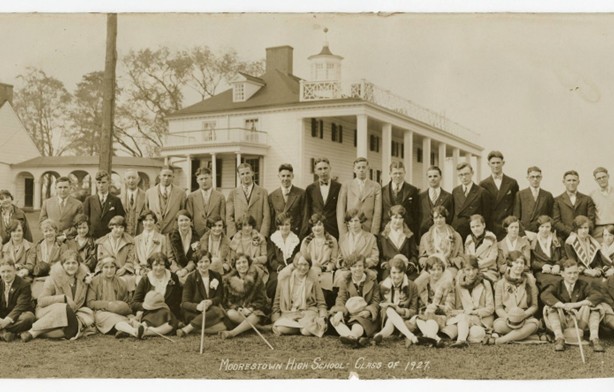
    “Moorestown High School Class of 1927” posing in front of Mount Vernon

    With all these new travelers who appreciated their state’s history, William E. Carson of the Conservation and Economic Development Commission erected several markers along the road, designating historic areas of interest and turning the roads into an attraction. (Virginia Department of Transportation, n.d.).

    Fabricating the markers was a beast to tackle since the traditional method of construction would have been granite.  Unfortunately, the stone was a bit too pricy and was also found to be difficult to read at the lightning-fast 25 mph speed limit.  Aluminum was an option for its lightweight and non-corrosive nature, and in fact, many early signs were manufactured from the metal, although they were quickly found to crack easily.  They were replaced with cast iron, and cast metal has been the preferred method of construction ever since (Rachal, 1949).

    Two of our three markers were first seen in the early years of the program. The oldest of our three was also the one that had the least amount of time in the light.  The Accokeek Iron Furnace marker (E-49) is located off Courthouse Rd in Stafford near an archaeological dig site owned by the George Washington Foundation. The modern iteration was erected in 1998.

    Accokeek Iron Furnace: The Principio Company constructed the Accokeek Iron Furnace nearby about 1726 on land leased from Augustine Washington (father of George Washington), who became a partner. After Washington’s death in 1743, his son Lawrence inherited his interest in the company and the furnace. When he in turn died ten years later, his share descended first to his brother Augustine Washington Jr. and later to William Augustine Washington. The archaeological site is a rare example of an 18th-century Virginia industrial enterprise. It includes the furnace location, the wheel pit and races, a retaining wall made of slag, an extensive slag dump, and mine pits.

    This text is not what was written prior to 1930. Those signs were brief, containing only a sentence or two for motorists to read as they drove by.  Between 1927 and 1930, though, cars sped up.  Where they were once going 25 mph, they were soon going 40 mph or even rocketing 50 mph down the highways!

    Trying to read the markers while driving quickly became impossible. The Commission’s solution? Publish a booklet with each highway marker printed and arranged neatly for passengers to read as they traveled.  All you had to remember was the marker’s number or title.  The first of these booklets were distributed in early 1930, free of charge (Rachal, 1949).

    This edition contains the earliest record of the Accokeek marker, then titled “Ancient Iron Furnace,” and reading only: “Here on Accokeek Run were iron mines and a furnace in which Augustine Washington, father of George Washington, began to smelt iron in 1727.”

    Unfortunately for our little marker, this was the last time it could be featured in the booklet. Disaster struck in late 1930. Engineer P. W. Snead wrote to the Commission on December 19th to report that the sign was found that morning, knocked from its post, and shattered.  The commission wrote back a few days later, asking for the aluminum pieces to be gathered and sent back since the factory would refund them for the parts.  (Library of Virginia Archives, 1930). The Accokeek marker was not restored until 1998, 68 years later, as part of a federal grant, according to the manager of the highway marker program, Jennifer Loux.

    The “Washington’s Boyhood Home” marker is also found in the booklet’s first edition, and its modern counterpart is now at the entrance to Ferry Farm.  Although there are no records of the sign being damaged prior to its replacement in 1997, after exposure to the elements for almost 70 years, it was probably time for a refresh.

    Alternatively, the motivation for the marker’s replacement (likely from the same federal grant) may have come from historical inaccuracies. The original text of the marker reads:

    “Washington’s Boyhood Home: At this place, the Ferry Farm, George Washington lived most of the time from 1739 to 1747. Here, according to tradition, he cut down the cherry tree. Washington’s father died here in 1743. The farm was his share of the paternal estate.”

    We now believe that the Cherry Tree story was likely an exaggeration or a myth, and so the verbiage was changed on the modern marker. Many old highway markers contained inaccurate information, as is often the case with many historical resources. As technology and research evolve over time, so does what we know. Another example of this never made it to the press, but early drafts of the marker’s text include his attendance at the “Old Field School.” We have since learned that there is no documentation of Washington ever attending a formal school in his life.

    The current marker was installed in 1997, the same year the George Washington Foundation obtained the property, and the sign continues to greet visitors to this day.
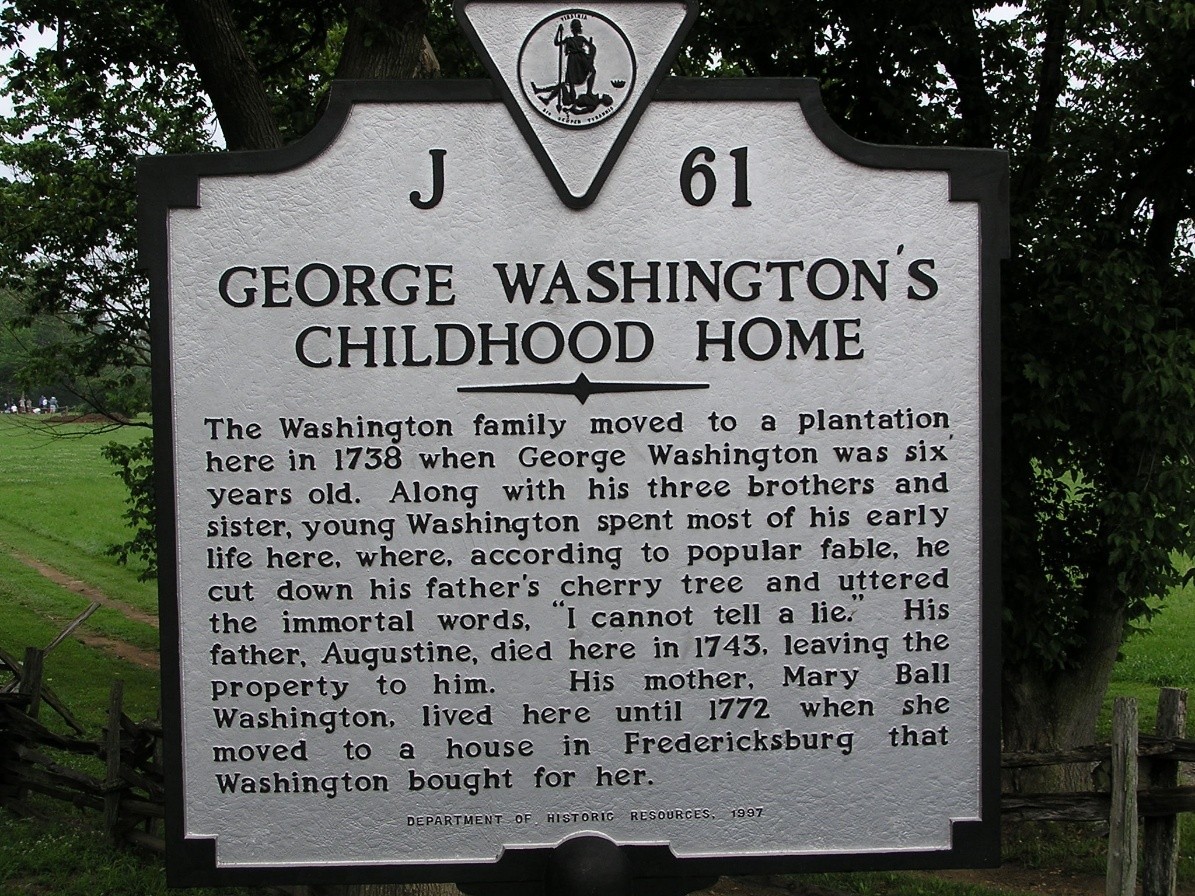
    George Washington’s Childhood Home: The Washington family moved to a plantation here in 1738 when George Washington was six years old. Along with his three brothers and sister, young Washington spent most of his early life here, where, according to popular fable, he cut down his father’s cherry tree and uttered the immortal words, “I cannot tell a lie.” His father, Augustine, died here in 1743, leaving the property to him. His mother, Mary Ball Washington, lived here until 1772 when she moved to a house in Fredericksburg that Washington bought for her.

    Our third marker is different, having not been placed until 1995.  At this point in time, the highway marker program had been passed around, with different organizations all bearing the burden of putting up new signs and maintaining the old ones.  It first passed hands in 1949 to the Virginia Department of Highways, who, after a year, handed the responsibility off to the Virginia State Library.  In 1966, it was traded again and is now operated by the Virginia Department of Historic Resources in collaboration with the Department of Transportation (Virginia Department of Historic Resources, n.d.).

    Former director of the Kenmore Association (now the George Washington Foundation) Vernon Edenfield wrote to the DHR proposing the marker. The Association paid for the manufacturing out of pocket. You can now visit it along Caroline St, four blocks from Kenmore, in front of Fielding Lewis’ storefront.

    Kenmore: Four blocks west stands Kenmore, built in 1775 by Col. Fielding Lewis for his wife, Betty, sister of George Washington. Near here, between Kenmore and the Rappahannock River, stood Lewis’s warehouses and docks. Kenmore’s intricate plasterwork is the finest in the country. Among 19th-century owners and occupants were Samuel Gordon, who named it Kenmore, and William Key Howard Jr., who restored and embellished the mansion’s plasterwork. Washington and other Revolutionary leaders often visited, and during the Civil War, Union troops used it as a hospital. The Garden Club of Virginia, starting in 1929, rehabilitated Kenmore’s gardens as its first restoration project.

    Although you might think after nearly 100 years of recording and presenting history that the Virginia Highway Marker program has run out of ideas, you can’t be further from the truth.  New markers are being planned constantly, and more gaps in history are being filled each year. In Fredericksburg alone, there are plenty more markers commemorating the city’s rich history.  If you feel there is an opportunity for a new marker somewhere, you can submit a proposal through the DHR’s website.
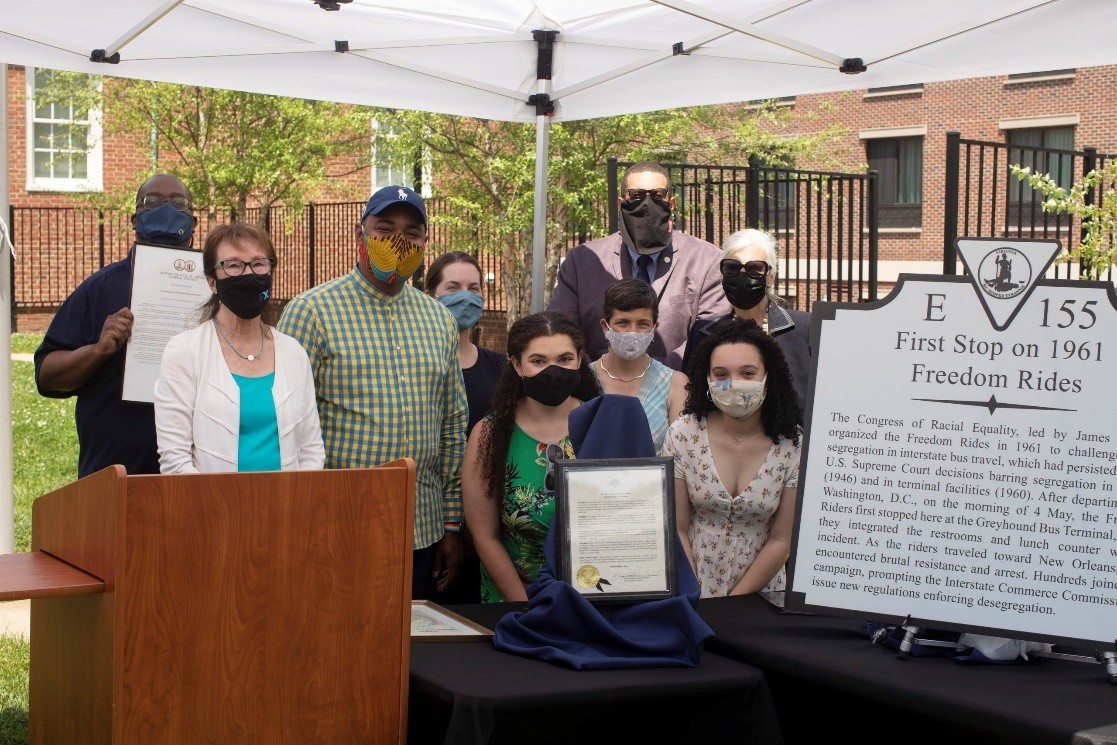
    The unveiling of the new Freedom Rides marker in 2021 at the site of the old Greyhound bus depot on Princess Anne St, which was proposed by staff and students from the University of Mary Washington

    History can be found anywhere if you know where to look, and the Virginia highway markers are a testament to that.  Be sure to keep an eye out for them on your next drive!

    Sarah Alden

    Manager of Visitor Services and Interpretation


    Bibliography

    Laiacona, J. (2021, May 4). Marker Furthers UMW Mission on Freedom Rides’ 60th Anniversary. Retrieved from University of Mary Washington: https://www.umw.edu/news/2021/05/04/marker-furthers-umw-mission-on-freedom-rides-60th-anniversary/

    Library of Virginia Archives. (1930). Virginia

    Mount Vernon. (n.d.). Historic Preservation at Mount Vernon. Retrieved from George Washington’s Mount Vernon: https://www.mountvernon.org/preservation/historic-preservation-at-mount-vernon#main-content

    Prats, J. J. (2010, October 23). State Historical Markers Numbering Plans. Retrieved from The Historical marker Database: https://www.hmdb.org/m.asp?m=2

    Rachal, W. M. (1949). Historical Markers on Virginia Highways. State and Local History News, 151-153.

    Virginia Department of Historic Resources. (n.d.). Historic Markers. Retrieved from Virginia Department of Historic Resources: https://www.dhr.virginia.gov/programs/highway-markers/

    Virginia Department of Transportation. (2006). A History of Roads in Virginia: “The Most Convenient Wayes”. Richmond: Virginia Department of Transportation Office of Public Affairs.

    Virginia Department of Transportation. (n.d.). Historical Markers. Retrieved from Directional Signing Program: https://vaidsp.com/historicalmarkers/

    Virginia State Chamber of Commerce, a. L. (n.d.). Highway markers near Seven Pines, Va. Picture Collection.

  • Exploring Nature at Ferry Farm

    In April 1738, an advertisement in the Virginia Gazette described the 100 acres of land later purchased by Augustine Washington as “a beautiful situation” with “a very handsome dwelling house.” Located about 2 miles below the falls of the Rappahannock and near the public ferry, this unique landscape became George Washington’s boyhood home. 

    “The Old Mansion of the Washington Family” (1833) by John Gadsby Chapman shows the foundation stones of the Washington house and the surrounding river landscape.

    Steeped in the legends of our nation’s first Founding Father, Ferry Farm is of course a popular destination for those looking to immerse themselves in history and walk in young George’s footsteps. At the same time, visitors to Ferry Farm have the unique opportunity to explore the natural landscape and learn more about local wildlife. Whether you are meandering along the wooded river trails, traipsing through the demonstration garden, or observing the drama of the Rappahannock from the river bluff, visitors can understand why this location was once described as a “beautiful situation.”

    The front door of the Washington House overlooks the river flood plain on a sunny summer day.

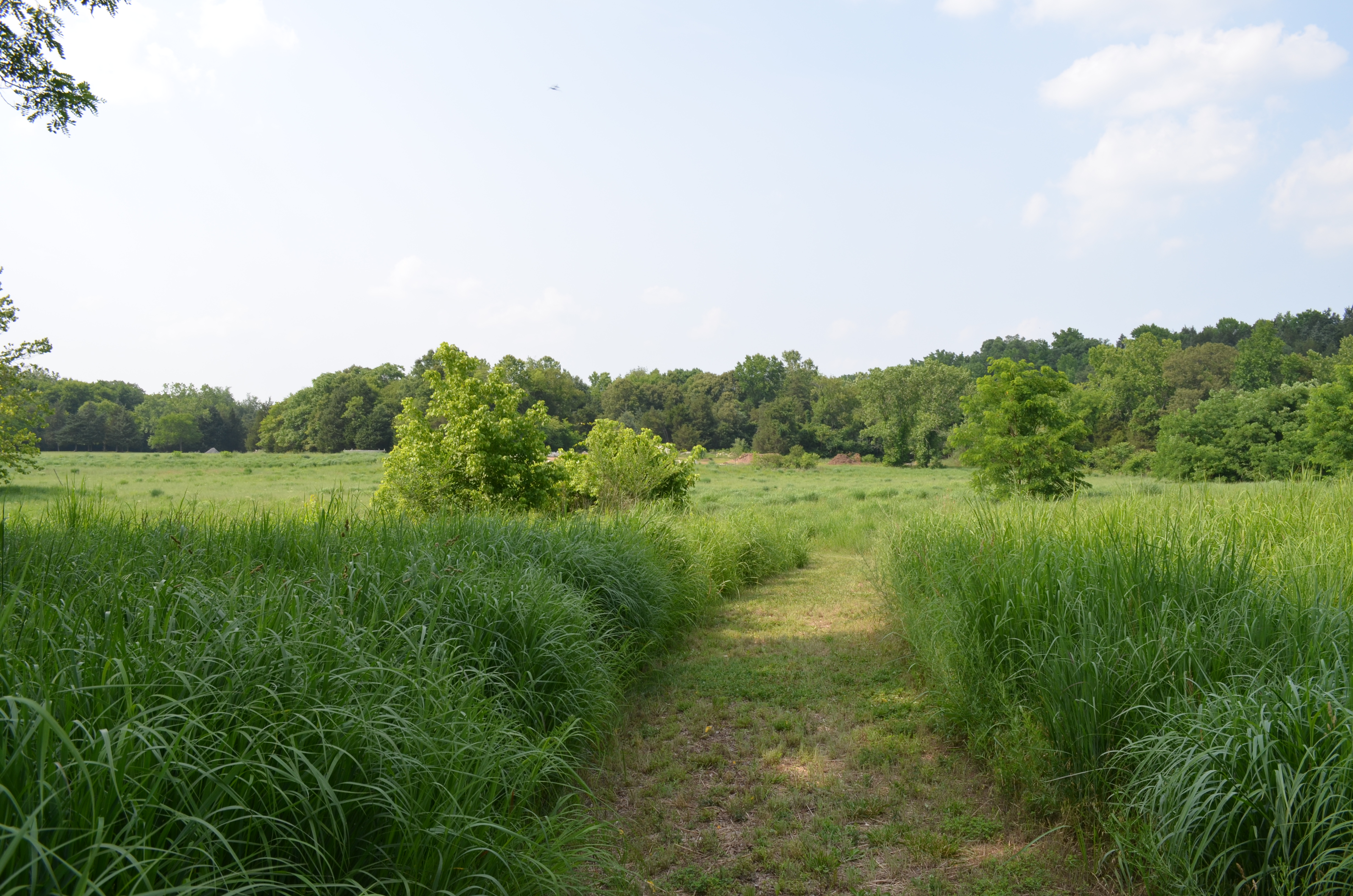
    Visitors to Ferry Farm can traverse through a variety of habitats during their visit, including the open lawns surrounding the Washington House, native plant and wildflower meadows, and hardwood bottomlands (ie. river swamps). These trails and natural features are home to a menagerie of wildlife, including commonly spotted critters like deer, groundhogs, foxes, and bald eagles. 

    While bald eagles may be the most patriotic bird swooping over our property, Ferry Farm is a prime birding location for all kinds of species. Over the years, several local birding groups have surveyed the property. (Read more about past bird surveys at Ferry Farm here and here.) At Ferry Farm, we are lucky to also have a bluebird trail maintained by The Virginia Bluebird Society. While walking the grounds, guests can enjoy the sights and sounds of Eastern Bluebirds and other native bird species as they flit about the bluebird boxes.

    An adult male Eastern Bluebird sporting his trademark blue feathers. Source: https://www.allaboutbirds.org/guide/Eastern_Bluebird/overview

    The Virginia Bluebird Society (VBS) was founded in 1996 to help promote, protect, and support native cavity bird species in Virginia. What originally began as 3 trails and 47 nest boxes expanded to a network of trails that, in 2020, encompassed 431 trails and 4,752 nest boxes.VBS trains a dedicated force of volunteers who monitor the boxes and record invaluable data. From April to August, volunteers walk the Ferry Farm trails checking on our 10 boxes and monitoring nest activity. In addition to bluebirds, other native cavity nesters such as tree swallows, chickadees, and house wrens may also make their home in these boxes. Last year at Ferry Farm, 28 bluebirds and 8 tree swallows fledged. We are incredibly grateful to the Virginia Bluebird Society for all their hard work and are excited to see how many birds fledge at Ferry Farm this year! 

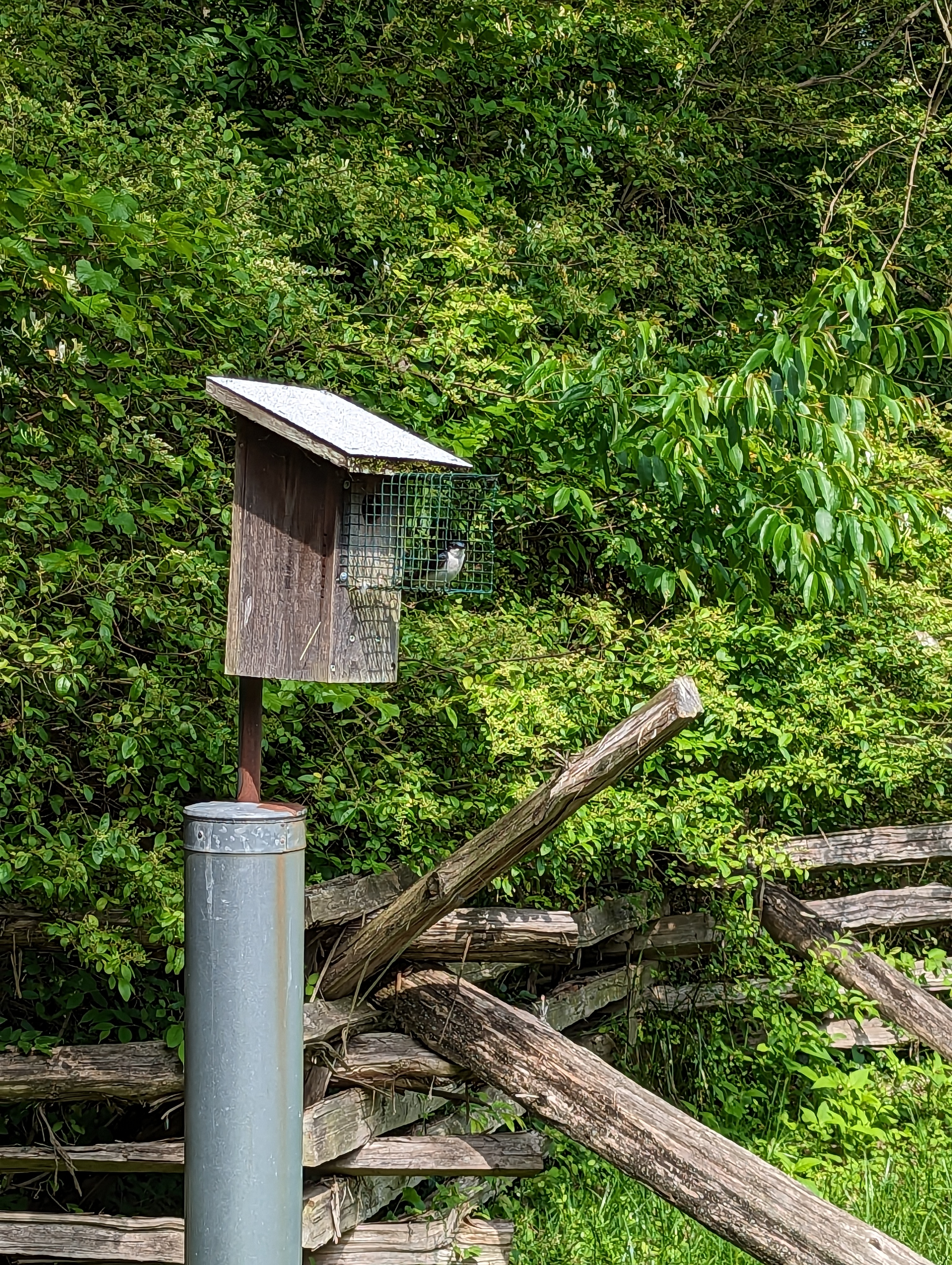
    Look closely and you’ll spot a tree swallow perched outside a Ferry Farm nest box! Two predator guards, a Snake Guard and a Cat/Raccoon Guard, are installed to help prevent predators from accessing the boxes. The metal mesh on the front of the box makes it harder for curious paws to reach inside the nest, and the metal cylinder covering the mounting post prevents snakes from scaling the post.

    If you visit Ferry Farm this summer, make sure to bring your bird book and binoculars and keep an eye on the sky as you explore the natural landscape!

    Ann Waters

    Director of Education

  • George Washington’s Ferry Farm: An Aerial View [Video]

    Aerial footage shot  Joe Brooks of EagleOne Aerial Photography: https://www.facebook.com/EagleOnePhotos.

    To learn more about George Washington’s Ferry Farm, visit http://ferryfarm.org/.

  • George’s Hometown: Kenmore

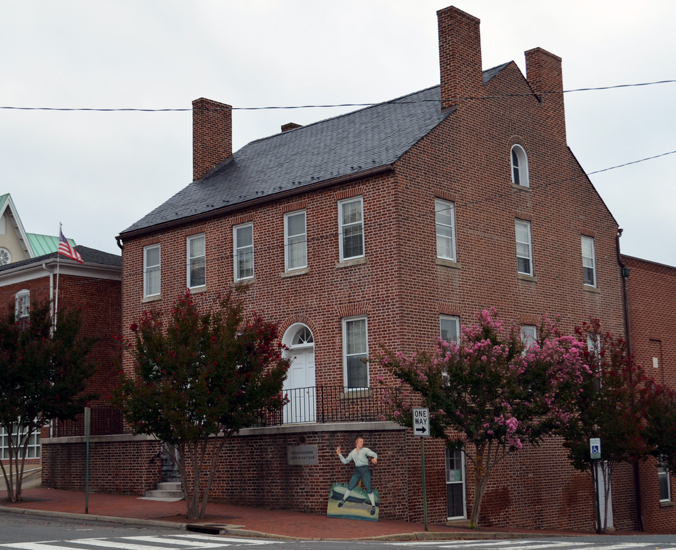
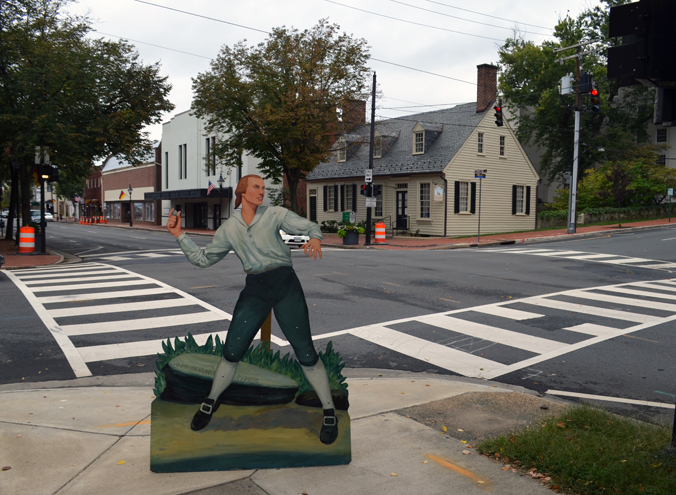
    As George Washington’s Ferry Farm prepares to celebrate the reconstruction of the Washington house, we traveled around George’s hometown – Fredericksburg, Virginia – to visit a few places important in the transformation of George from boy to man.

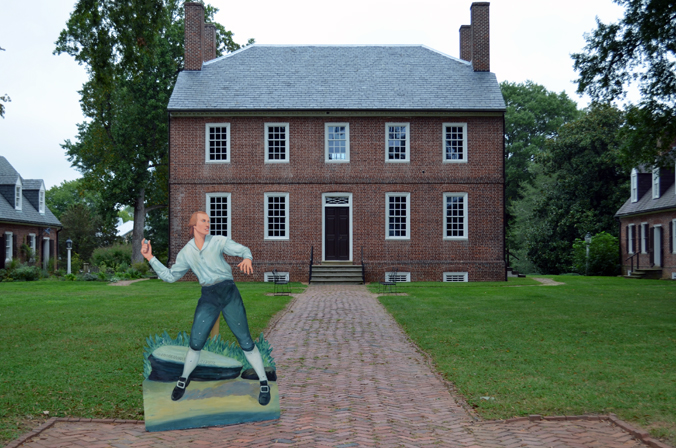
    Fredericksburg remained important to George Washington throughout his life. It was the home of Mary Ball Washington, his mother, until her death on August 26, 1789 at the age of 80 from breast cancer. It remained the home of Betty Washington Lewis, his sister, until 1795 when she was forced by financial circumstances to leave the grand house she and husband Fielding Lewis, a wealthy merchant, had built to live at Mill Brook, a farm in Spotsylvania County.  Washington visited his mother as well as his sister and brother-in-law regularly but, as the years passed, these visits became more and more infrequent as the Revolution and Presidency required all his time and attention.  George Washington visited Betty and Fielding at Kenmore once in 1784.

    George's Hometown 5
    Historic Kenmore

    Join us at the Washington House Celebration on Saturday, October 7, 2017 from 12:00 p.m. – 4:30 p.m. to celebrate the construction of the Washington house! A special ribbon-cutting ceremony will begin at 1:30 p.m. featuring notable speakers. After the ceremony, guests will be invited to view the reconstructed Washington house!

    Ferry Farm opens to visitors at noon on Saturday, October 7.

    DSC_3072
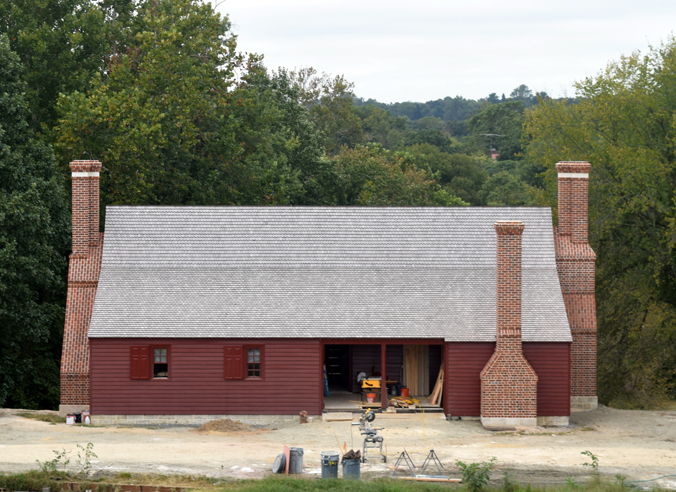
    The reconstructed Washington house at Ferry Farm.

    PLEASE NOTE: PARKING for the event is off site at the VRE Fredericksburg Park and Ride Lot G at the corner of Prince Edward Street and Frederick Street. Buses will transport guests to and from Ferry Farm—traveling from the VRE lot to Ferry Farm on a regular schedule from 11:45 a.m. to 1:15 p.m., and 3:00 p.m. to 4:15 p.m. Bus transportation will pause during the ribbon-cutting ceremony. The last bus will depart Ferry Farm at 5:15 p.m. Limited handicap parking is available at Ferry Farm.

  • George’s Hometown: Masonic Lodge

    As George Washington’s Ferry Farm prepares to celebrate the reconstruction of the Washington house, we traveled around George’s hometown – Fredericksburg, Virginia – to visit a few places important in the transformation of George from boy to man.

    In 1753, 21-year-old George Washington became a Master Mason having joined the Masonic Lodge in Fredericksburg the year prior.  In his encyclopedia on all things George, Frank Grizzard concluded that “For Washington, joining the Masons was a rite of passage, a formal entry into respectable and genteel if not elite society.”  The boy who arrived at Ferry Farm at the age of 6 was now an upper class Virginia gentleman.

    George's Hometown 4
    The Masonic Lodge of Fredericksburg at the intersection of Princess Ann and Hanover Streets.

    The Fredericksburg lodge formed in 1753, the year Washington joined.  Its current building (pictured) was built in 1816.

    Join us at the Washington House Celebration on Saturday, October 7, 2017 from 12:00 p.m. – 4:30 p.m. to celebrate the construction of the Washington house! A special ribbon-cutting ceremony will begin at 1:30 p.m. featuring notable speakers. After the ceremony, guests will be invited to view the reconstructed Washington house!

    Ferry Farm opens to visitors at noon on Saturday, October 7.

    PLEASE NOTE: PARKING for the event is off site at the VRE Fredericksburg Park and Ride Lot G at the corner of Prince Edward Street and Frederick Street. Buses will transport guests to and from Ferry Farm—traveling from the VRE lot to Ferry Farm on a regular schedule from 11:45 a.m. to 1:15 p.m., and 3:00 p.m. to 4:15 p.m. Bus transportation will pause during the ribbon-cutting ceremony. The last bus will depart Ferry Farm at 5:15 p.m. Limited handicap parking is available at Ferry Farm.

  • George’s Hometown: Julian’s Tavern

    As George Washington’s Ferry Farm prepares to celebrate the reconstruction of the Washington house, we traveled around George’s hometown – Fredericksburg, Virginia – to visit a few places important in the transformation of George from boy to man.

    Besides learning to survey and receiving his formal schooling, young George Washington also pursued an education in the social graces valued in gentry circles while a young man at Ferry Farm. These social graces included dancing, fencing, horseback riding, and gentlemen’s games like cards.  Card-playing was a popular pastime in the taverns that Washington frequented all across Virginia.

    On one occasion – Christmas Eve 1769 – adult George passed the evening at Julian’s Tavern in Fredericksburg with Edward Jones, the overseer of Ferry Farm.  This tavern was located at the corner of present-day Amelia and Caroline Streets.

    George's Hometown 3

    You can ready more about when Washington returned to his hometown for Christmas in 1769 by clicking here.

    Join us at the Washington House Celebration on Saturday, October 7, 2017 from 12:00 p.m. – 4:30 p.m. to celebrate the construction of the Washington house! A special ribbon-cutting ceremony will begin at 1:30 p.m. featuring notable speakers. After the ceremony, guests will be invited to view the reconstructed Washington house! Parking for the event is off site at the VRE Fredericksburg Park and Ride Lot G at the corner of Prince Edward Street and Frederick Street. Limited handicap parking is available at Ferry Farm. Buses will transport guests to and from Ferry Farm. The Washington House Celebration is a free event and RSVPs are not required.

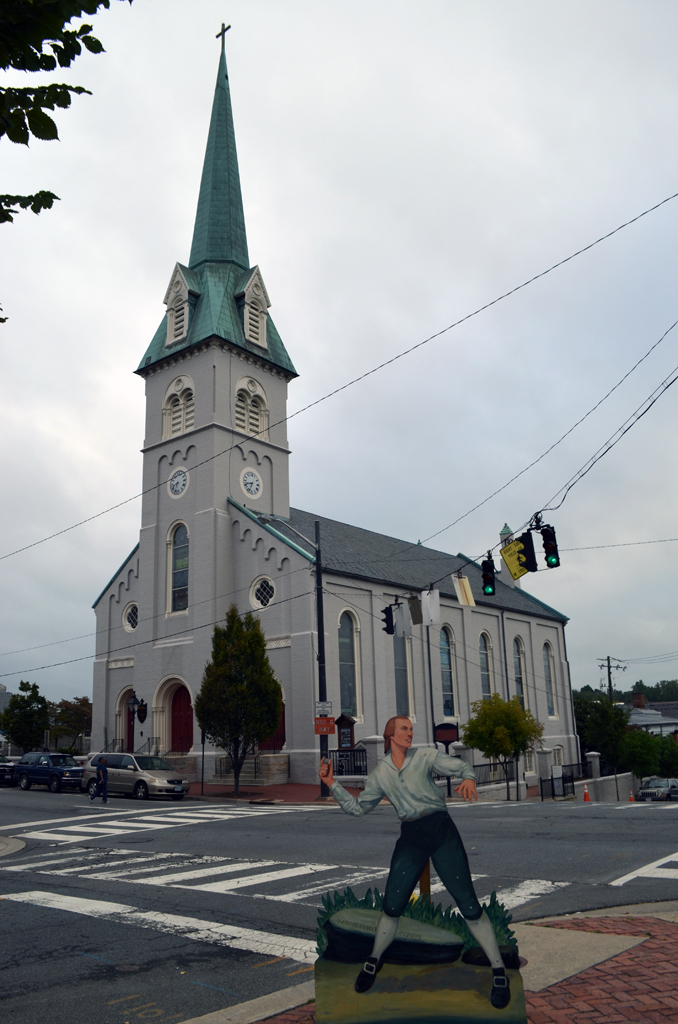
  • George’s Hometown: St. George’s Church

    As George Washington’s Ferry Farm prepares to celebrate the reconstruction of the Washington house, we traveled around George’s hometown – Fredericksburg, Virginia – to visit a few places important in the transformation of George from boy to man.

    George Washington’s education as a boy at Ferry Farm included copying The Rules of Civility and Decent Behavior in Company and Conversation to learn the correct etiquette and moral code of Virginia’s gentry class. By strictly following its advice, young Washington molded his character into that of a wealthy Virginia gentleman.  Unable to attend school in England after his father’s death, George possibly studied with the Rev. James Marye, rector of St. George’s Parish across the river in Fredericksburg.

    George's Hometown 2

    St. George’s Church built their first church building in the 1730s. The current church building (pictured) dates from 1849.

    Join us at the Washington House Celebration on Saturday, October 7, 2017 from 12:00 p.m. – 4:30 p.m. to celebrate the construction of the Washington house! A special ribbon-cutting ceremony will begin at 1:30 p.m. featuring notable speakers. After the ceremony, guests will be invited to view the reconstructed Washington house! Parking for the event is off site at the VRE Fredericksburg Park and Ride Lot G at the corner of Prince Edward Street and Frederick Street. Limited handicap parking is available at Ferry Farm. Buses will transport guests to and from Ferry Farm. The Washington House Celebration is a free event and RSVPs are not required.


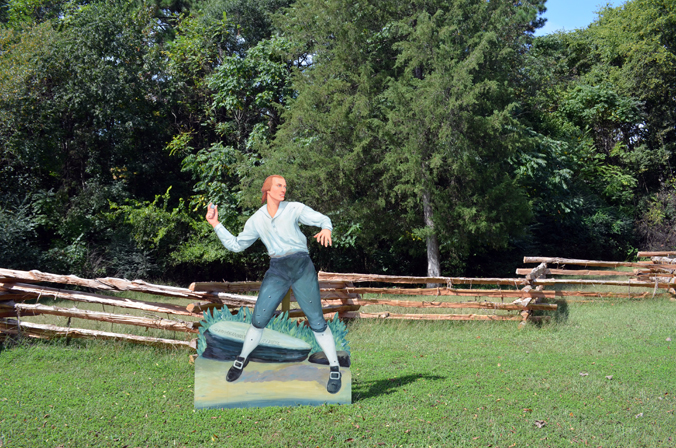
  • George’s Hometown: Ferry Farm

    As George Washington’s Ferry Farm prepares to celebrate the reconstruction of the Washington house, we traveled around George’s hometown – Fredericksburg, Virginia – to visit a few places important in the transformation of George from boy to man.

    George Washington lived at Ferry Farm from age 6 (1738) to around age 22 (~1754).  At Ferry Farm, he copied the Rules of Civility and Decent Behavior, read his first book about military adventures, joined the Masonic Lodge, and petitioned colonial Virginia’s British Governor for his first military office. Two hundred forty-six years ago, on September 13, 1771, George recorded in his diary that he “Returnd to my Mothers to Breakfast and Surveyd the Fields before Dinner, returnd to Town afterwards.”  The fields of Ferry Farm were pivotal to George Washington’s development into an extraordinary man.

    George's Hometown 1

    Join us at the Washington House Celebration on Saturday, October 7, 2017 from 12:00 p.m. – 4:30 p.m. to celebrate the construction of the Washington house! A special ribbon-cutting ceremony will begin at 1:30 p.m. featuring notable speakers. After the ceremony, guests will be invited to view the reconstructed Washington house! Parking for the event is off site at the VRE Fredericksburg Park and Ride Lot G at the corner of Prince Edward Street and Frederick Street. Limited handicap parking is available at Ferry Farm. Buses will transport guests to and from Ferry Farm. The Washington House Celebration is a free event and RSVPs are not required.

    We’ll have more from around George’s hometown over the next three weeks!

  • Meet the Archaeologists: Field School Edition

    Each summer. students from the University of South Florida attend a field school at George Washington’s Ferry Farm to learn practical aspects of archaeological excavations. This is what they said about their experience.

    On weekdays, see Ferry Farm’s archaeologists at work on the excavation site from now through mid-June.

  • Meet the Archaeologists

    Each summer, archaeologists from across the United States come to George Washington’s Ferry Farm for about two months of excavations on and around the site of Washington’s boyhood home. These are their stories.

    On weekdays, see Ferry Farm’s archaeologists at work on the excavation site from now through mid-June.