Lives and Legacies

Tag: glue

  • Mending Practice at Ferry Farm’s Archaeology Lab: A Photo Journal

    If you visited Ferry Farm on October 21, 2022, you may have heard a loud crash coming from the archaeology lab – don’t worry, it was on purpose! During my fall semester internship at the Ferry Farm Archaeology Department, I had the pleasure of learning how to mend ceramic vessels, and like any skill, practice makes perfect. I purchased a cheap ceramic bowl from Goodwill and purposefully shattered it so I could practice putting it back together again. Follow along as I take you through the process!
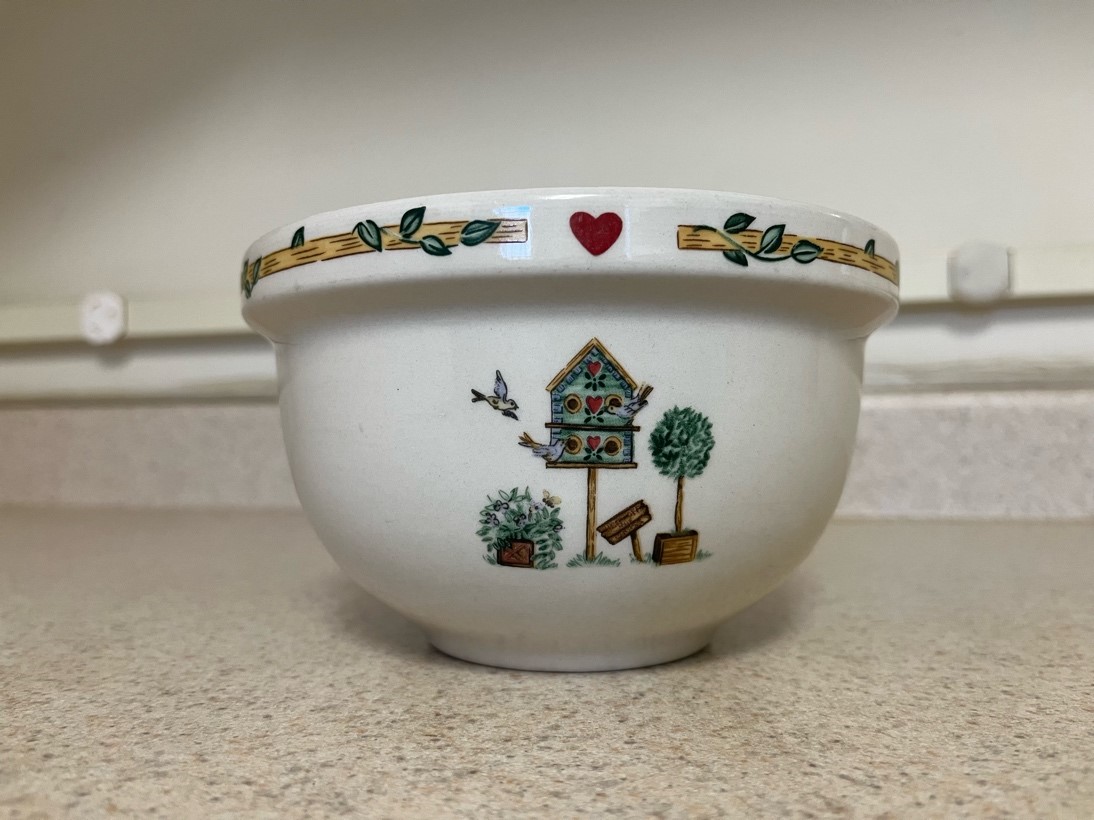
    Bowl in one piece before being broken

    Here is what the bowl looked like when I first bought it – in one piece! I chose this bowl because it was a good size: not too big where it would be too long of a project, but not too small where it would only take a few days to complete.
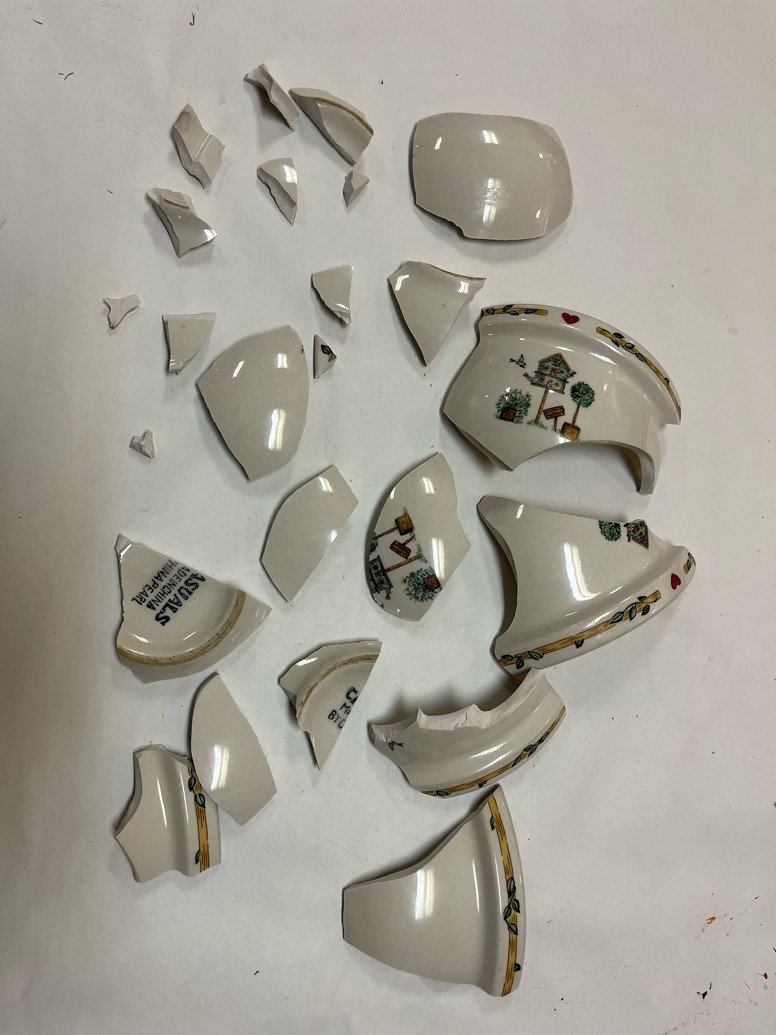
    Breaking the bowl

    Next came the fun part: breaking it! I placed the bowl inside a plastic bag so that all the pieces would stay together. Then, against my natural instinct, I threw the bag onto the ground and broke it into pieces!  Notice how some are larger than others- this means that I had to be very careful as to not accidentally exclude a small piece from the entire bowl.

    Taping sherds

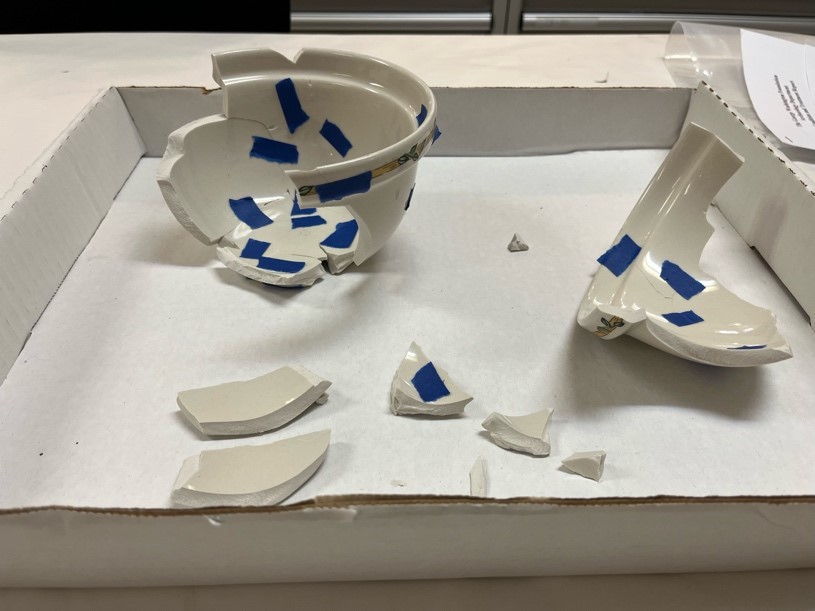
    After collecting all the sherds, my next step was to figure out where everything goes by taping the sherds together. This process allowed me to plan out the order in which the sherds would be glued together.  I used blue painter’s tape to do this because it doesn’t leave residual adhesive on the surface of the sherds. This same tape is used when mending the ceramics found archaeologically at Ferry Farm. 
    More taping

    More taping… it’s coming together!

    Here is the completed bowl after taping! Once all the sherds were back in their rightful places, it was time to carefully plan out how I wanted to glue them. When mending, you don’t want to just start gluing together the first pieces you know fit together. It is important to take into account the shape of the vessel so that you leave as few gaps between the sherds as possible. I developed a plan to start from the base and work my way up to the rim of the bowl. With this done, it was time to start gluing!

    It is protocol in the Archaeology Department to mend ceramics using a reversible method. The glue I used was a solution of 35% B72 in acetone, which is removable with acetone. I started by coating the broken edges of the sherds with a less concentrated solution of the glue, 5% B72 in acetone. This prepped the sherds to have glue applied to it. After this, I applied 35% B72 to only one sherd to be mended and then held it together with its neighbor. After 10 seconds of holding the sherds together, they were sticking quite nicely. I then placed a few pieces of painter’s tape to ensure the glue would hold, and placed the freshly glued sections into a bucket filled with glass beads.
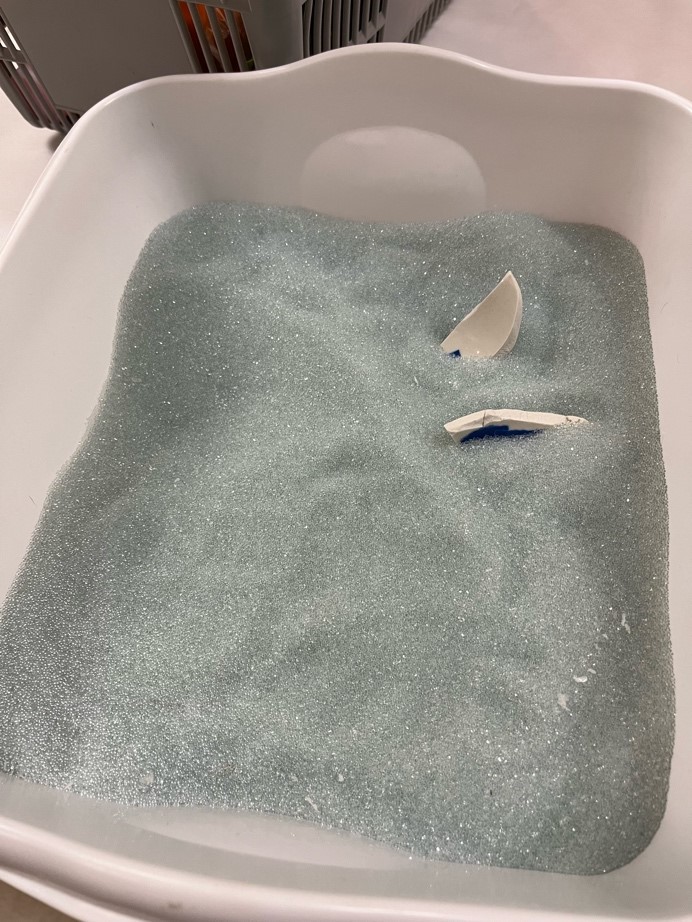
    Glass beads…yes, everyone who goes to the lab runs their fingers through them.

    The glass beads hold the glued sherds together and prevent them from shifting as the glue dries. I repeated this process for all the sherds over the course of a few days until…

    Finished glued bowl

    …the gluing was complete!

    Here is the final product! Now, no mend is ever going to be perfect. Once a vessel is broken, there will always be misaligned sherds in the vessel due to the tension of the entire piece being broken.

    So, why do we mend ceramics in the first place? It can help archaeologists understand what types of objects a site’s occupants would have used and what activities were taking place. It is also an important process in public interpretation: mended ceramics can help the public see what certain vessels would have looked like during a site’s target period of significance.

    Finally, keep in mind that what I did with this bowl was only practice: actual mending with sherds excavated from an archaeological site does not go as smoothly as this. Only a small percentage of a vessel is typically found and thus able to be mended. The reason why so few sherds of one vessel are found is because decades and centuries of being in the ground allows for sherds to get mixed up and moved due to bioturbation (movement of soil by animals such as rodents and insects), erosion, and in some cases, agricultural plowing.

    If you would like to see more on mending at Ferry Farm, be sure to check out past programs that we have done: mending | Lives & Legacies (livesandlegaciesblog.org)

    Katharine Bogen, UMW ‘23

    Fleming Smith Scholar
  • Photos: Glue Through a Microscope

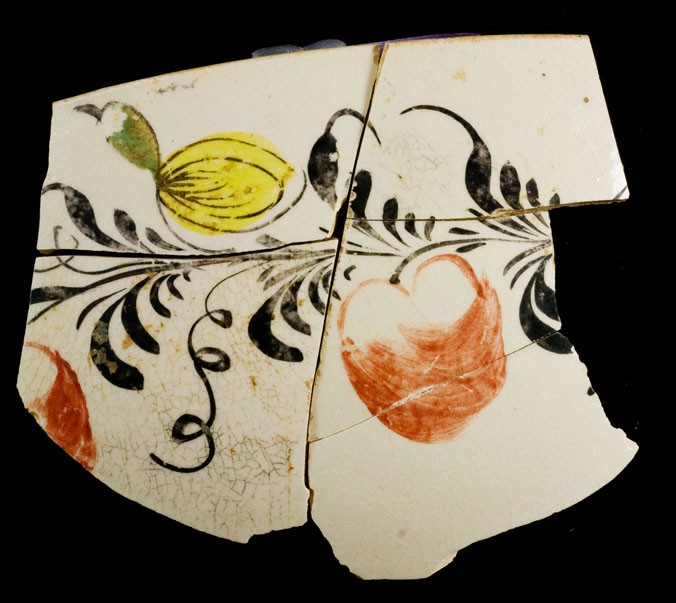
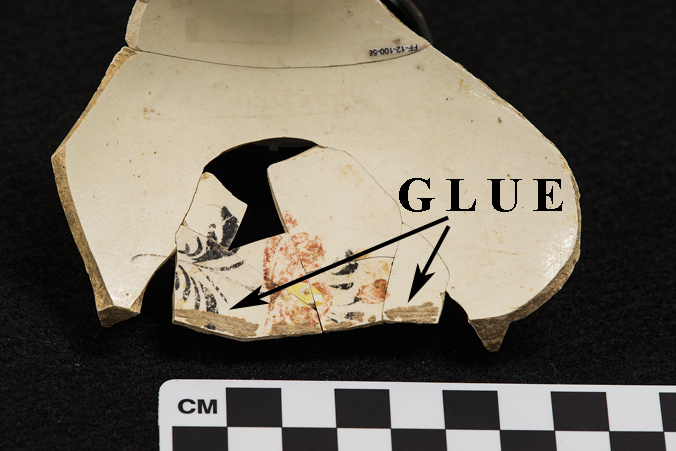
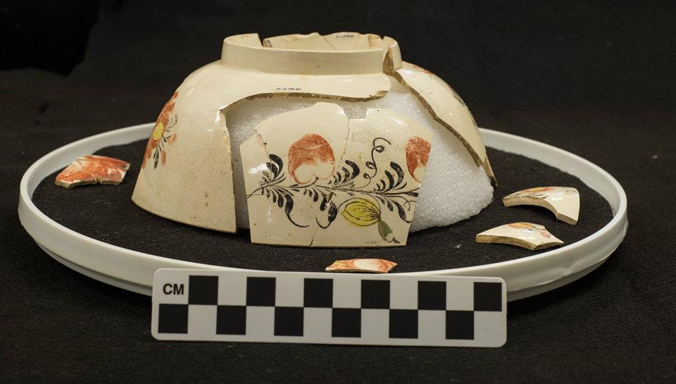
    While living at Ferry Farm, Mary Washington, mother of George, owned a creamware punch bowl with beautiful hand-painted enamel depicting a floral motif and cherry accents.  Archaeologists excavated pieces of this bowl from the cellar of the Washington home and subsequently discovered glue residue on the sherds.

    PunchBowl

    cherry-sherds

    interior-glue copy

    We’ve written about the importance of the bowl’s discovery here and even showed how we recreated a glue similar to the one used to repair the bowl here.

    As part of our continuing efforts to learn as much as we can about the punch bowl and these glue residues, we took the sherds to the archaeology lab at Dovetail Cultural Resource Group here in Fredericksburg, where they took photos using a microscope.

    Mara Kaktins, Archaeologist
    Ceramics & Glass Specialist

    Zac Cunningham
    Manager of Educational Programs


  • Glue: The Coolest Thing I’ve Ever Found

    As an archaeologist, I am often asked “What is the coolest thing you’ve ever found?”  The answer is complicated.  Although I’ve unearthed 10,000 year old Paleoindian hearths, elaborate porcelains, coins, long lost jewelry, and ancient stone tools, I say that the coolest thing I’ve ever found is …. glue.  This proclamation always elicits questioning looks from well-meaning folks who expect something a little more glamorous.  Let me tell you why, to date, glue is the “coolest thing I’ve ever found.”

    It’s not just the glue itself that is incredible but also the object on which the glue was found.  When I started working at George Washington’s Ferry Farm, my first assignment was to examine creamware associated with Mary Washington, George’s mother, which was excavated from the cellar of the Washington home.  I focused on a lovely punch bowl with beautiful hand-painted enamel depicting a floral motif with cherry accents.  Obviously, we adore cherries at Ferry Farm, being the setting of the fabled chopping down of a certain tree by young George, and we wanted to learn more about it.

    PunchBowl

    cherry-sherds

    The punch bowl was manufactured in the 1760s or early 1770s.  It exhibited a lot of use wear, indicating it was obviously a favorite of Mary’s.  The punch bowl was of a size designed to be passed around at a gathering for each guest to take a sip directly from it.  This was a time before germs were well understood.  Thankfully, for health’s sake, 18th century punch contained a hefty amount of alcohol.  This also meant that punch was not cheap.  Actually, the production and drinking of punch was very much a ceremonial form of conspicuous consumption.  Mary chose this special bowl as much for its beauty as for its function.

    After close inspection of the vessel, I noticed a strange substance adhering to many of the edges.  This unsightly brown stuff extended across the many breaks in the bowl and, upon microscopic examination, exhibited suspicious brush marks.  Furthermore, additional ceramics from the same cellar excavation revealed similar residues.  Could it be glue? If it were, this would shed light on a previously unknown behavior taking place in the Washington home – the breaking and subsequent repair of ceramics.  We had to know!  What followed was a multi-year study during which we tested the historic glue residue samples utilizing mass spectrometry courtesy of Eastern Michigan University. We spent months researching historic glues, replicating those glues, and then breaking and mending much thrift store pottery with the aforementioned glue in the name of science.  The conclusion?  We had indeed discovered eighteenth century glues!

    interior-glue copy

    While this may not seem like a ‘eureka’ moment, it was actually quite significant.  First of all, it’s amazing that 250-year-old glue survived in the ground for so long.  Second, the discovery improves our understanding of Mary Washington, a woman that gave birth to and shaped the young life of our first president.  By replicating period glues and mending modern pottery, we also learned that the vessels Mary had repaired probably were not used for anything other than display after mending.  They could not have held a liquid, which means that after it was broken and mended, the beloved punch bowl was probably relegated to mantle or shelf where the delicate hand-painted flowers and charming cherries could be admired but never used for its intended purpose ever again.

    We also concluded that Mary herself would probably not have made and applied the glues personally.  Turns out making eighteenth century glues involved a wide array of bizarre and often stinky ingredients including ox gall, animal hide, bull’s blood, garlic, eggs, cheese, isinglass (extracted from a fish’s swim bladder), and the slime from garden snails (yep). Watch the video below to see how colonial-era glue was made. You can also click here. It was a time consuming and messy endeavor that was likely undertaken by the enslaved people living at Ferry Farm rather than by the mistress of the house.

    To date, seven vessels belonging to Mary exhibit glue residue.  Interestingly, even though a professional mender was operating in the town of Fredericksburg just across the river from where she lived, Mary chose to have glue prepared at home with which to repair her ceramics. That, plus the fact that she had these pieces mended even though she could never use them again means Mary was a thrifty woman who saw the value in displaying the objects.  Perhaps demonstrating that she owned these highly fashionable ceramics took precedence over using them?

    What makes the glues even more exciting is that nowhere in the historic record does it mention that Mary was repairing ceramics at home.  Our only evidence for this activity is archaeological and it has revealed a previously unknown aspect of her life.  Perhaps now the question is not “Did George chop down the cherry tree?” but rather “Did George break the cherry punch bowl”?

    And all that is why glue is the coolest thing I’ve ever found.

    Mara Kaktins, Archaeologist
    Ceramics & Glass Specialist

  • The Science of History: Experimental Archaeology & Colonial Cheese Glue

    Archaeologists sometimes recreate technology from the past to understand how people lived. This is called experimental archaeology. When archaeologists at George Washington’s Ferry Farm found glue residue on sherds of Mary Washington’s china, they developed ways to recreate this glue. This video explains the glue making process and what recreating the glues revealed about Mary.