While the house at Historic Kenmore has been faithfully restored to its circa 1775 appearance, the road to that final result was a pretty dirty one. As in plaster dust, paint fumes, and all manner of dirt and debris. Back in the late 1980s and early 1990s, the first forays into the research for and the subsequent writing of a Historic Structure Report (HSR) took place. This project entailed a number of architectural historians selectively pulling up floorboards and peeking behind plaster walls to more fully understand how the house was originally built, its current condition, and its history of change over time. This important document provided us with a clear understanding of Kenmore’s architectural history, was the guiding document for a decade-long restoration of the structure, and also gave us a collection of architectural fragments and individual artifact finds that continue to help us understand the material world of those who lived and labored at Kenmore through the centuries.
In a past blog post, we learned a bit about rats as collectors and examined a rat’s nest that was discovered during that HSR investigative period. If you haven’t looked at the video of the unpacking of that nest, here it is. (In that nest, there were assorted papers, fibers, and other fluffy goodies dating to around the turn of the 20th century.) But the nest wasn’t the only thing uncovered during that HSR peeking and prodding process.
Enter the “Above Ground Archaeology” or “Interior Archaeology” collection. These eclectic artifacts were carefully collected, numbered according to their context or find location, bagged, documented on a list, and lovingly packed away in our ubiquitous Hollinger boxes. Over the years, some of the artifacts were pulled by curators for exhibition in the Kenmore galleries, but most were stowed away in their boxes for long-term preservation and research purposes.
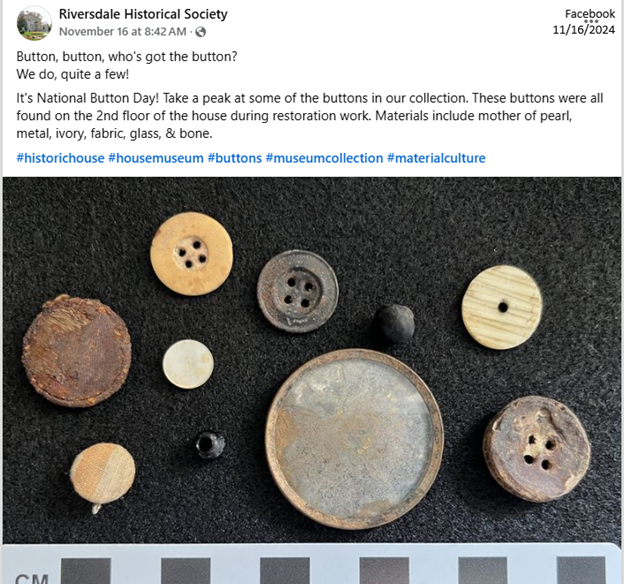
The use of found objects in historic structures to help illuminate the material world of the building’s residents and workers is not a revolutionary concept. Colonial Williamsburg, for instance, in their recent restoration of the historic Bray School, removed modern plaster walls, revealing not only structural information but also artifacts: “We are collecting building fragments and objects found in the walls…These items shed light on the building’s original finishes and various inhabitants since 1760.” Riversdale Historical Society has been showcasing some of their “found” artifacts on Facebook — most recently posting a set of buttons for National Button Day.
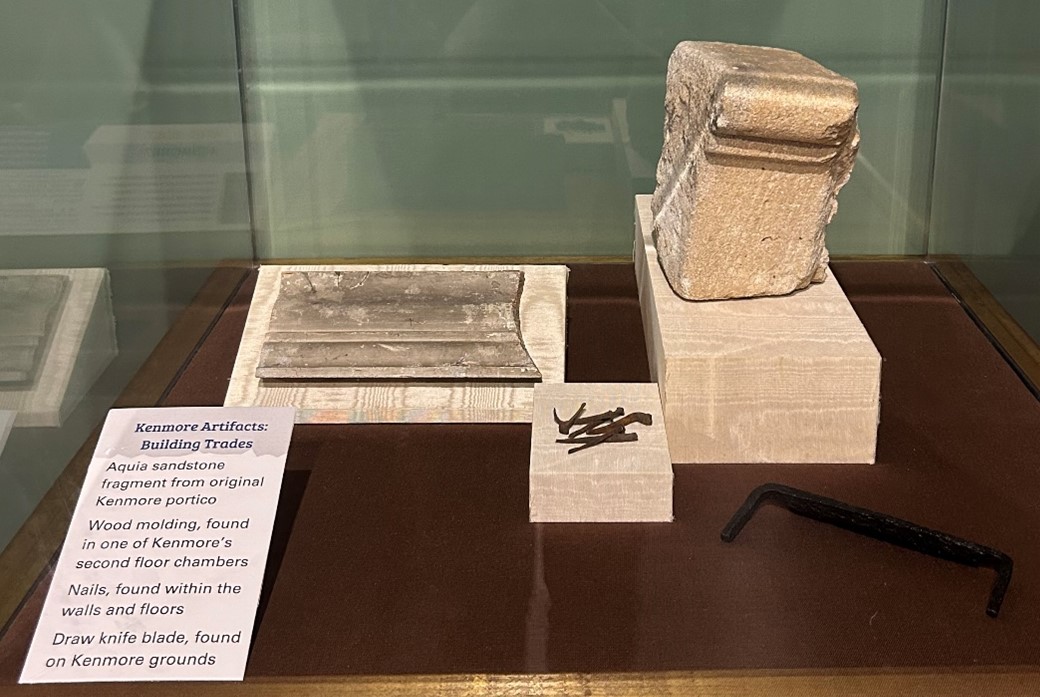
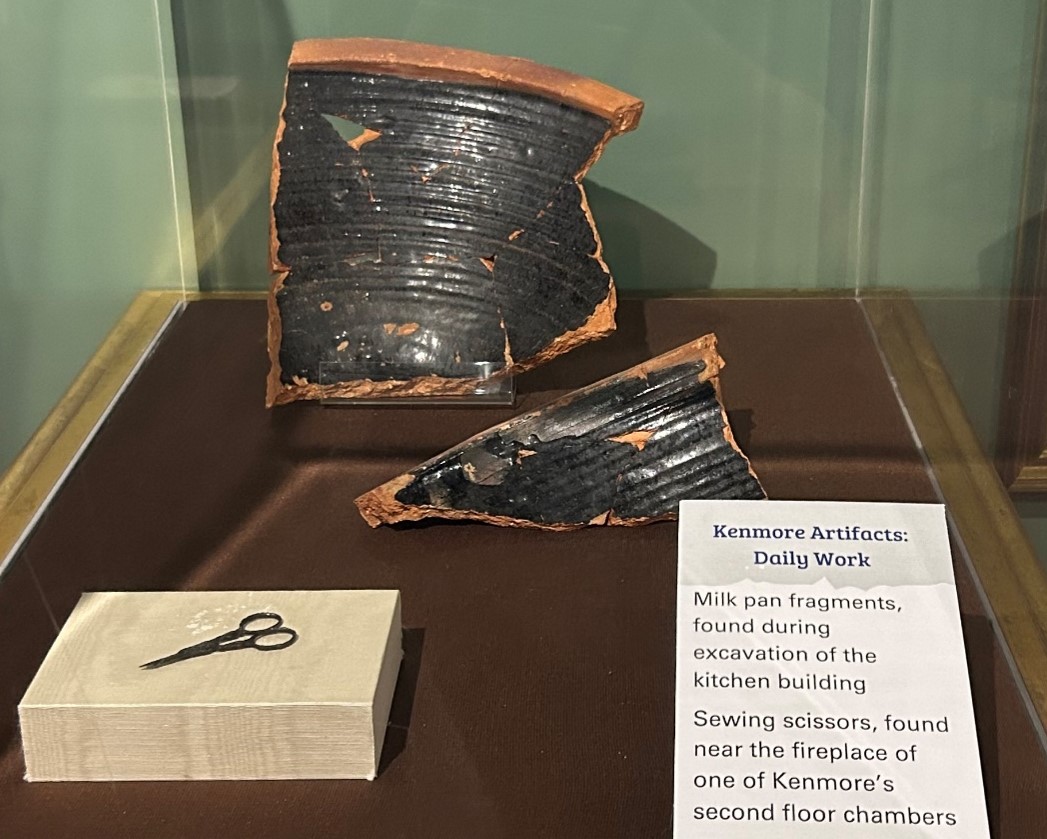
Recently, we pulled a few of Kenmore’s artifacts into exhibit cases in our refreshed orientation exhibit in the Bissell Gallery of the Crowninshield Education Center at Historic Kenmore. Together with in-ground archaeology, these exhibit cases help us illustrate the built environment and the wares known and used at the site.
Case in the orientation exhibit at Historic Kenmore – including molding fragments and nails found during the HSR investigationsCase in the orientation exhibit at Historic Kenmore – including the tiny (sewing) scissors found near one of the second-floor fireplaces.
In 2010, then Intern Ashley Dean (University of Mary Washington) was tasked with inventorying the three boxes of artifacts, and for that, we are extremely grateful. What resulted from that inventory project was a 12-page list of artifacts that formed the center of this rejuvenated research initiative. The artifacts in these boxes range from architectural elements (plaster fragments, nails, wallpaper bits) to broken household goods (bottle glass, ceramic pieces) to whole objects (beads and a pair of sewing scissors). When first bagged and numbered, these artifacts were recorded by location context—based on the mapping system then being used in the architectural investigations of the house, with room numbers ranging from B001 in the cellar (or basement level) to 301 being the attic (or 3rd floor) of the house.
Attic (Room 301) mapping
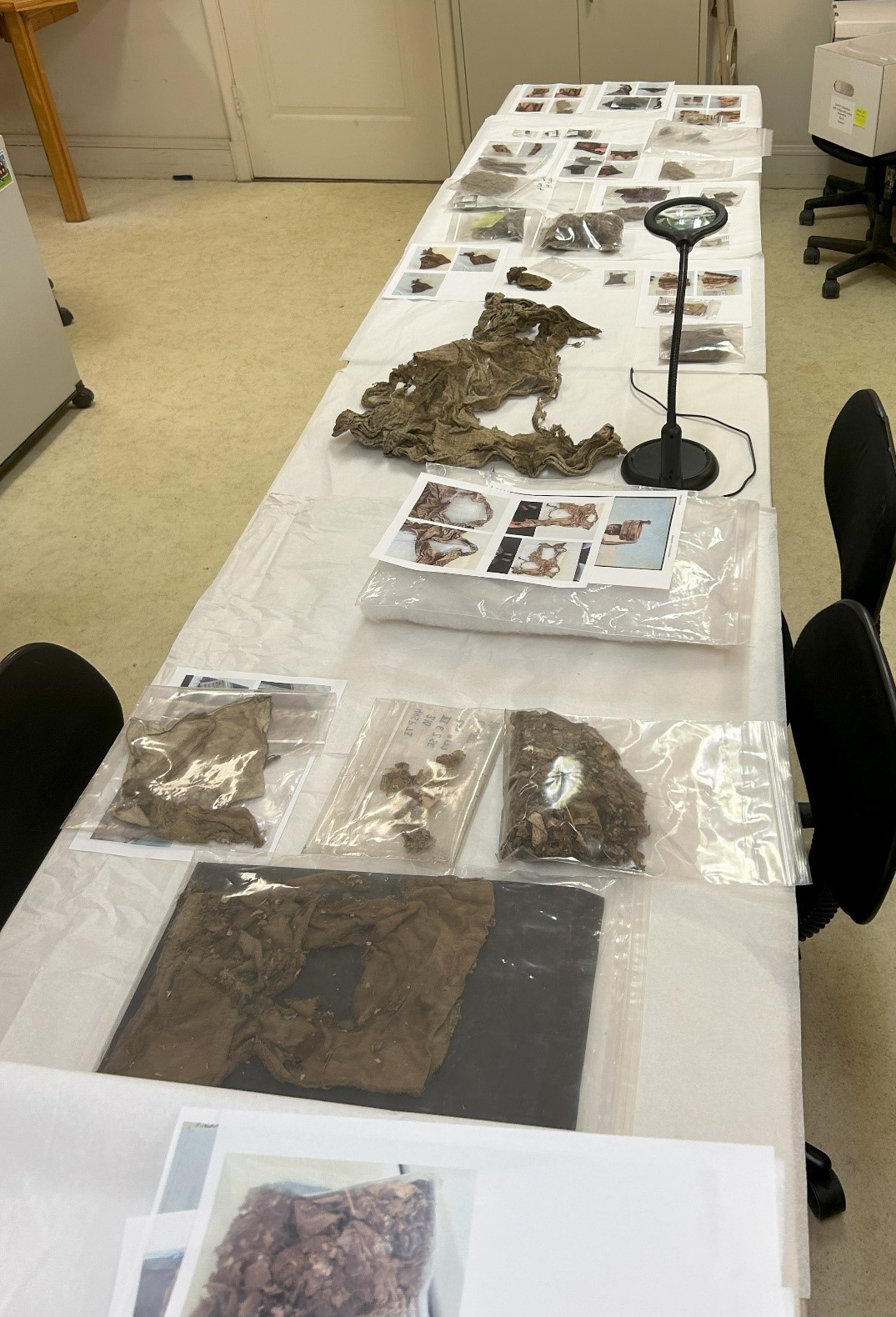
Fast forward to 2024, the artifacts were again reviewed, and the idea blossomed to plan a textile assessment of all the small scraps of fabrics that had been collected. According to our in-house review, we could tell that they dated to a variety of periods and ranged in their likely original use, from costumes to household linens.
Selection of textile fragments in the Kenmore Above Ground Archaeology collection (July 2024)
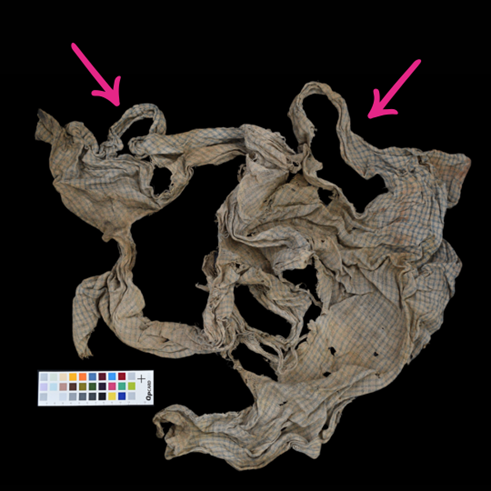
One particularly large artifact proved the most intriguing — a pile of blue and white check fabric. The indeterminate ball of checked fabric piqued the interest of staff and now serves as the starting point for a multi-year conservation assessment and interpretation project. A few months after our in-house assessment, we hosted a textile conservator who conducted a baseline review of the textile fragments and more fully examined the artifact for potential treatment. She had a rapt audience that morning!
Textile fragments in the archaeology lab, awaiting the arrival of the textile conservatorTextile conservator Colleen Callahan examining what we had determined to be a child’s full apron or pinafore
And just a few weeks ago, the textile artifact, which looks to be a full child’s apron or pinafore, was transported to the conservation lab for treatment and further research.
Check fabric before conservation. Armholes visible along upper portion.
The found artifacts from Historic Kenmore have not yet been able to fully share their stories. We look forward to beginning to delve more into their manufacture, use, and re-use by the generations of people who wore them, worked with them, saved them, hid them, and otherwise interacted with the artifacts and the spaces in which they were found.
Editor’s Note: Looking back in time, people’s personal hygiene, fashion choices, medical treatments, and more sometimes look, at the very least, bizarre, if not outright disgusting. When confronted with these weird or gross practices, our first reaction can be to dismiss our ancestors as primitive, ignorant, or just silly. Before such judgments, however, we should try to understand the reasons behind these practices and recognize that our own descendants will judge some of what we do as strange or gross. Here at George Washington’s Ferry Farm and Historic Kenmore, we’ve come to describe our efforts to understand the historically bizarre or disgusting as “Colonial Grossology.” The following is the latest installment in Lives & Legacies’ “Colonial Grossology” series.
Today, we would find trash disposal in the 18th century to be pretty horrifying. Garbage of all sorts – sharp-edged broken household objects, putrefying food scraps, and odoriferous human waste – was simply dumped in the street, the back yard, or, when available, nearby holes or ravines. Often, it was literally tossed out the nearest window or the back door.
Believe it or not, archaeology is very concerned with the garbage disposal habits of people in the past. Sites of disposal called middens are treasure troves of artifacts that excite archaeologists the most because people’s trash can reveal so much about their lives and sometimes even a bit about their personalities.
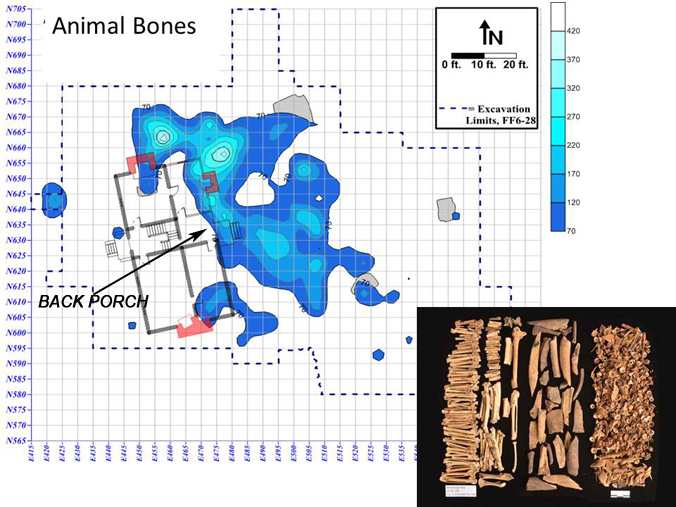
Archaeologists have excavated a sizable portion of George Washington’s Ferry Farm for decades. These excavations revealed how the Washington family and their enslaved workers disposed of household items, food scraps, and human waste in the area immediately behind the house. Color-coded maps showing the intensity of artifact concentrations illustrate how they simply stepped to the edge of the back porch and tossed trash into the back yard.
Map showing the concentration of animal bones excavated from the midden at the rear of the Washington house at Ferry Farm.
At Historic Kenmore, some archaeology has been done around the kitchen site and these excavations reveal more complex habits of trash disposal compared to Ferry Farm.
Fielding and Betty Washington Lewis successfully manipulated the landscape immediately surrounding the house and kitchen and designated certain areas for certain tasks.
An insurance plat of Kenmore from 1797 shows the house as well as the nearby outbuildings in relation to the house. In the 1700s, wood-built kitchen and laundry buildings stood on the spots were two recreated Colonial Revival-style brick outbuildings stand today.
A drawing done in 1797 for insurance purposes showing the location of outbuildings in relation to the main house at Kenmore.
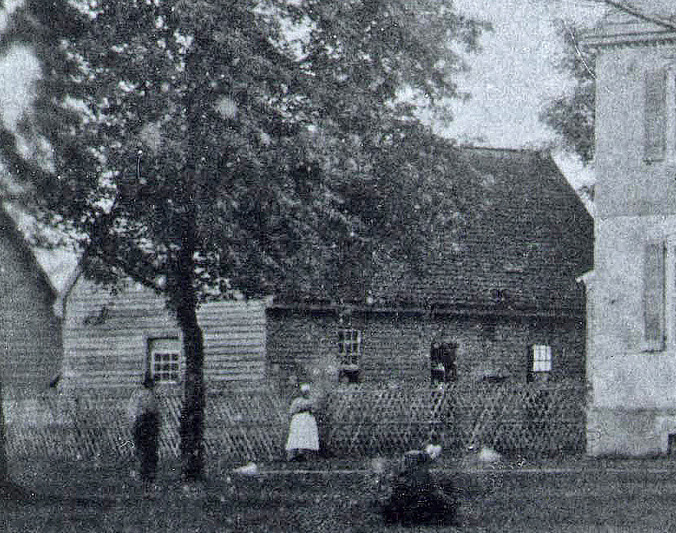
The earliest photo of the kitchen taken during the mid-1800s when Kenmore was owned the Harrison family shows a sizable wooden structure with two enslaved workers – a man named Cary and a woman named Brittania – in the front of the kitchen.
The earliest known photo of Kenmore’s wooden kitchen taken sometime in the mid-1800s and showing two enslaved workers believed to be a woman named Brittania and a man named Cary.
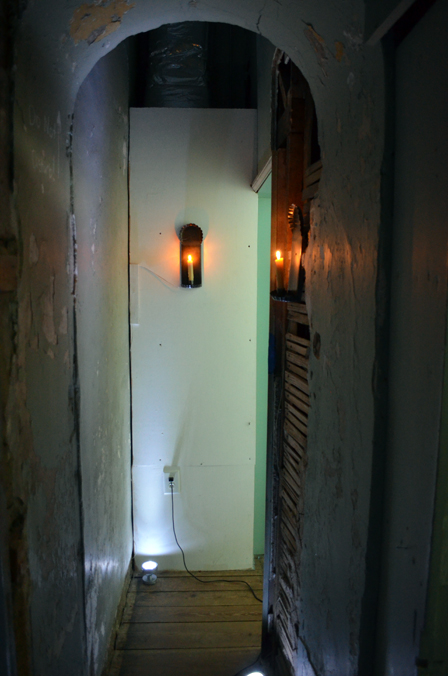
The kitchen was just 30 feet from the house. Rachel, an enslaved cook for the Lewises back in the late 1700s, carried food from the kitchen, across the kitchen yard, and entered the main house through an exterior door that opened into the slave passage, a short but extremely narrow hallway leading to both the master bedchamber and to the dining room. After a meal, enslaved house servants cleared the dining room table or wherever else in the house that the family might have taken their meal and reversed the trip, carrying food waste back outside through the slave passage.
Passage in Kenmore used by enslaved workers to travel between the kitchen, dining room, and master bedchamber.
As archaeology has shown us at Ferry Farm, it would not have been unusual for the enslaved workers to simply dump the food waste into the yard between the kitchen and the house. Excavations at Kenmore, however, show an extraordinarily clean kitchen yard with few artifacts. The things like animal bones and broken ceramic dishes or glass cups that you would normally find in an 18th century midden, or trash disposal area, are not there. The area is very clean, which indicates that it was kept very clean.
Yard at Kenmore between the kitchen (shown) and the house (behind photographer) under excavation.
The kitchen yard was relatively clean archaeologically.
Archaeologists at Kenmore did find the kitchen midden, however. It was located just to the west. While there is a window on the west side of the kitchen, there is no door. If the waste couldn’t be tossed out the window, enslaved workers walked over to that side of the building to dump it. This midden is full of artifacts: a pig jaw, for example, and an amazing amount of other animal bones, a knife with a bone handle, as well as architectural material and much more.
The midden discovered at Kenmore contained a large amount of architectural debris.
Pig jaw found in Kenmore’s midden.
Bone-handled knife found in Kenmore’s midden.
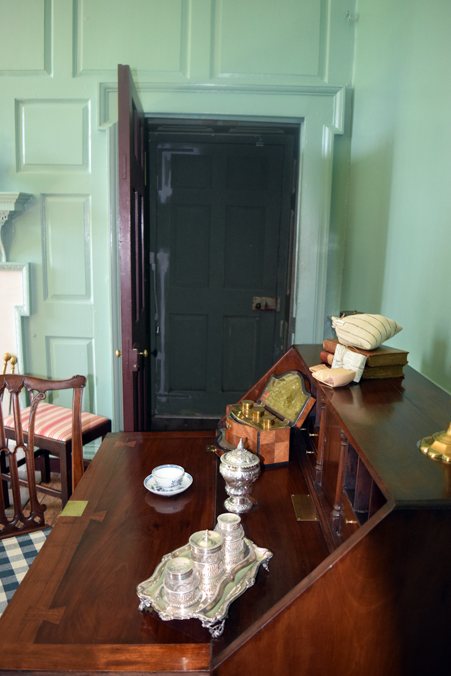
The relative lack of artifacts in the clean area between the house and kitchen along with the centralized location of artifacts in the midden gives some idea of the level of control and surveillance enslaved workers were subjected to by Fielding and Betty Lewis. Betty, for example, could sit at her desk in the master bedchamber (her “command central”) and with the slave passage doors open see directly into the kitchen yard. From her seat, she ran the household and, in Fielding’s absence and then after his death, the plantation itself.
View from Betty Washington Lewis’s desk into the slave passage. The closed door visible in the passage opened into the kitchen yard.
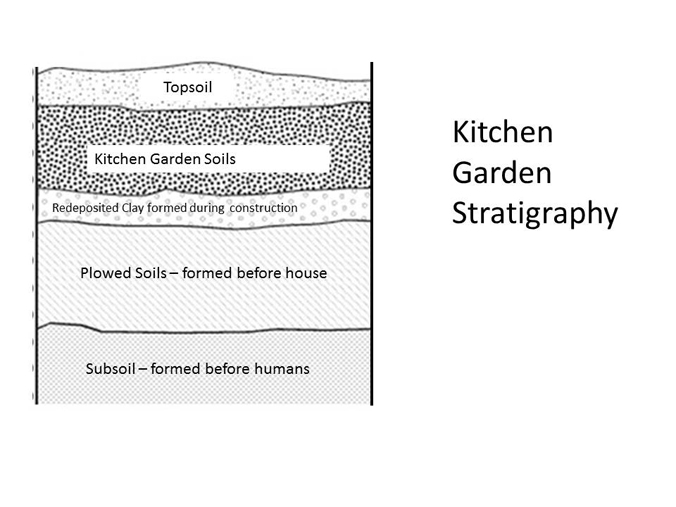
The land on the kitchen’s north side was used still another way. Excavations show it was a kitchen garden. A cutaway view of the soil layers or the soil stratigraphy reveal subsoil formed before humans, then plowed soil in a large field of corn before the house was built, followed by redeposited clay from the house construction between 1772 and 1775, and finally soil indicating a kitchen garden. Kitchen garden soil is marked by plow scars that go in all kinds of different directions as many different crops are planted over the years.
Diagram illustrating the soil layers excavated in the kitchen garden area at Kenmore.
Finally, the kitchen’s east side was dominated by the formal gardens and terrace. While the present garden at Kenmore is Colonial Revival in style, archaeological clues to what the original 18th century garden looked like remain under the soil.
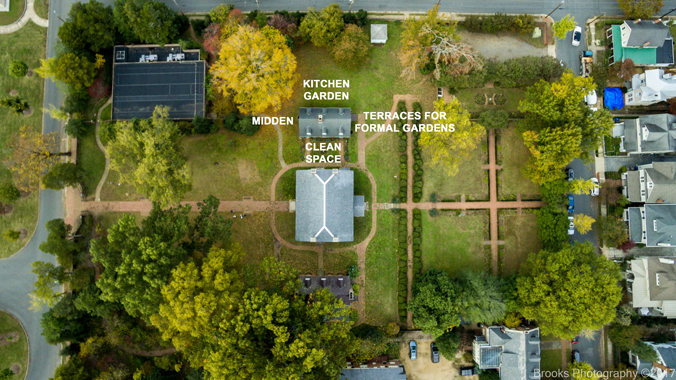
Archaeology has shown us that at Ferry Farm, the disposal of trash was something of a free-for-all within the area behind the Washington house. At Kenmore, however the yard on each side of the kitchen building was carefully controlled for a different use.
Aerial photo of Historic Kenmore with different land uses around the kitchen marked.
No matter where the garbage was disposed, however, finding the trash middens on the landscapes has revealed much about the free and enslaved residents of George Washington’s Ferry Farm and Historic Kenmore.
As many of you know, the Washington house replica at George Washington’s Ferry Farm was reconstructed and furnished as accurately as possible using historic documents, paintings, letters, and, of course, archaeology. Now that the challenge of getting the house built and open to visitors has passed, it’s time to turn to the rest of our plan for interpreting Ferry Farm’s landscape. This will eventually include constructing outbuildings, finishing the work yard, and improving the garden.
Even though the present garden is located at Ferry Farm’s Visitor Center and not yet near the Washington house replica, we used archaeological discoveries to decide what goes into the garden this spring. Using data from past excavations on Washington-era contexts, we drew some conclusions on what the Washington family and their enslaved workers cultivated here. While most organic material left behind over 250 years ago is long gone, as archaeologists, we sometimes get lucky and find biological and botanical remains that have withstood the time in the ground. We get especially lucky when we do find botanical remains like seeds and wood because, depending on the elements, they usually decompose easier and faster than bone.
Visitor often ask how we find some of our tiniest artifacts such as seeds. For important contexts and Washington era features, we don’t want to miss a single (tiny) thing, so we use a water screen. Instead of the usual quarter-inch screen we use for dry sifting dirt, we use a gentle stream of water from a garden hose and spray away the dirt through a window screen. We then use tweezers to pick out the tiny artifacts left behind. Objects like the straight pin in the photo below and seeds could otherwise fall through the standard quarter-inch screen.
Water screening
Picking out the artifacts after water screening.
Straight pin
In 2015, we had flora remains from a mid-18th century storehouse cellar feature that had been captured by our fine mesh water screens sent to Justine McKnight, an archaeobotanical consultant for analysis. Without getting extremely technical, I will say that we gained some very useful data to use to plant our garden this year. Seed specimens discovered archaeologically and used in cultivation consisted of peas, green beans, wheat, and corn. Seeds included hackberry and, of course, cherry. The only nut uncovered was a hazelnut shell.
Common bean (Phaseolus vulgaris) cotyledon half and fragment. Scale = 1mm grid. Credit: Justine McKnight.
Filbert (Corylus sp.) or hazelnut shell fragment recovered from Sample FF-22-00506. Scale = 1mm grid. Credit: Justine McKnight.
Along with this archaeological evidence, we also know that some tobacco was grown on the Washington farm because of court records. In the 17th and 18th centuries, tobacco was Virginia’s premier export and most valuable cash crop but places along the Rappahannock River like Ferry Farm were not great tobacco land. In these areas, as our excavated seeds show, planters moved onto corn, wheat, and other crops, knowing they would never get rich on tobacco.
Using all of this information, we planted similar crops in the demonstration garden along with other crops widely grown in 18th century colonial America.
While seemingly insignificant at first glance, these tiny charred remains of flora give us a snapshot in time of the diets of the Washington family and enslaved workers at Ferry Farm. These definitely are not the only plants they were eating, but we do know via archaeology that these were stored by the family in the mid-18th century. Using the other archival resources listed above, we will continue to fill in the gaps and enhance our garden and landscape according to the historical and archaeological records.
Before digging, archaeologists must survey the land and place a grid on their dig site so they can locate artifact discoveries on the landscape and make maps and other records. In this video, Archaeologist Joseph Blondino of Dovetail Cultural Resource Group explains how this survey is done, shows us the tools used, and then lays the grid for this year’s archaeological excavation at George Washington’s Ferry Farm.
It’s flu season again. And for most of us who get sick that means a trip to the doctor, perhaps some prescribed medicines, and lots of rest. But what did George Washington do when he got sick? Although most of us likely think of our first president as perpetually healthy and strong, he was actually stricken by quite a few serious illnesses in his lifetime, many of which occurred while he was growing up at Ferry Farm.
Mary, George’s mother, had a few options when caring for her sick children but a hospital was not one. They did not exist yet. The most expensive solution was to call a doctor (Back then, they came to you. You do not go to them). Most people could not afford a doctor’s visit, however, and many distrusted doctors as being worse than the diseases they cured. This fear of doctors was somewhat justified given that George ultimately died of an illness he could well have survived had he not been bled to death by his doctors.
“An ill man who is being bled by his doctor. Coloured etching by J. Sneyd, 1804, after J. Gillray.” by James Gillray. Credit: Wellcome Collection. CC BY
Option number two was to visit a pharmacy. Now, we’re not talking Walgreens. Think smaller and jars full of leeches. Anyone could visit an 18th century pharmacy without any kind of prescription or referral. If you had the money, you could purchase whatever ‘cure’ you wanted. The pharmacist was not necessarily a medical professional and may or may not have been good at diagnosing whatever illness you had. That didn’t mean you couldn’t walk out of a pharmacy with any and all manner of odd concoctions that cured you or did not cure you. For instance, folks were awfully fond of self-treating with mercury tinctures until well into the 19th century, which we now know to be a colossally terrible idea.
‘Michel Schuppach in his pharmacy examining a young woman’s urine who is seated opposite him awaiting the result. Line engraving by B. Hübner, 1775, after G. Locher, 1774.’ by Gottfried Locher. Credit: Wellcome Collection. CC BY
Another popular option was to make your own medicines at home. Recipes for cures were passed down through word of mouth and many households had herb gardens containing medicinal plants, many brought with colonists from Europe. There were also a number of books available that divulged the secrets of pharmacopoeia. Many of the medicines described in these books sound like things a storybook witch might brew up. One such tome available to Mary Washington was Thomas Fuller’s Pharmacopeia Extemporanea, published in 1710. It contains remedies such as ‘Pectoral Snail Water’, said to be good for “Erratic scorbutic Fevers, Flushings, flying Pains of the Joynts, hectic wasting of Flesh, and Night-sweats”. The delicious-sounding ingredients were as follows:
“Snails beaten to mash with their Shells 3 pound
Crumb of white Bread new bak’d 12 ounces
Nutmeg 6 drams
Ground-Ivy 6 handfuls
Whey 3 quarts; distil it in a cold Still, without burning
One half pint brandy”
One can only assume that the last ingredient was to help the mashed snails go down.
We do have evidence showing the use of home medicines at Ferry Farm in the form of numerous ointment pots. At least half a dozen have been identified thus far. Ointment pots were used for holding various medical or cosmetic unguents likely made at home. Generally, such pots were fairly plain with a rolled or flared lip used to secure a textile, hide, or paper lid with a string.
Three white salt glazed stoneware ointment pots excavated from the Washington house cellar at Ferry Farm.
Judging by their lack of use wear, the pots recovered at Ferry Farm were used for storage, not for actually manufacturing medicines. The act of stirring or grinding substances in the pots would have resulted in microscopic striations or scratches in the glaze and these are absent in the Washington family ointment pots. However, they do indicate the storage of medicines at Ferry Farm. Given the nature of home remedies in the 1700s, one’s imagination can run wild thinking of all the interesting concoctions that they may have held!
Mara Kaktins, Archaeologist
Archaeology Lab Supervisor
Further Reading
Fuller, Thomas. Pharmacopoeia extemporanea : or, a body of prescripts. In which forms of select remedies, accommodated to most intentions of cure, are propos’d. London. 1710.
Hume, Ivor Noel. A Guide to the Artifacts of Colonial America. University of Pennsylvania Press, Philadelphia. 2001.
Hume, Ivor Noel. Early English Delftware from London and Virginia. Colonial Williamsburg Foundation, Virginia. 1977.
Mellor, Maureen. Pots and People that Have Shaped the Heritage of Medieval and Later England.Ashmolean Museum, Oxford. 2000.
Skerry, Janine E. and Suzanne Findlen Hood. Stalt-Glazed Stoneware in Early America. University Press of New England, Hanover and London. 2009
On Tuesday, September 19, 2017, Meghan Budinger, Aldrich Director of Curatorial Operations at The George Washington Foundation, presented a lecture titled “The Rooms at Ferry Farm.” Meghan surveyed how we plan to furnish the reconstructed Washington house using traditional decorative arts scholarship but also adopted skills from genealogists, architectural historians, material cultural experts, scientists, and even investigative reporters. Meghan discussed how the Washington house and the effort to accurately furnish its rooms is a prime example of the synthesis of all of these vocations. The lecture was given at the Central Rappahannock Regional Library headquarters in Fredericksburg, Virginia.
Join us at the Washington House Celebration on Saturday, October 7, 2017 from 12:00 p.m. – 4:30 p.m to celebrate the construction of the Washington house! A special ribbon-cutting ceremony will begin at 1:30 p.m. featuring notable speakers. After the ceremony, guests will be invited to view the reconstructed Washington house! Parking for the event is off site at the VRE Fredericksburg Park and Ride Lot G at the corner of Prince Edward Street and Frederick Street. Limited handicap parking is available at Ferry Farm. Buses will transport guests to and from Ferry Farm. The Washington House Celebration is a free event and RSVPs are not required.
Learn more about the Washington House here and view other videos, photos, and blog posts about the project here.
On Tuesday, September 12, 2017, Laura Galke, archaeologist, small finds analyst and site director at The George Washington Foundation, presented a lecture titled “The Mother of the Father of Our Country.” Laura examined how historical documents and newly-unearthed artifacts indicate that Mary Washington, George’s mother, faced challenges, governed her home, and managed the family’s plantations with a skill and determination that recent biographers have not appreciated. Laura explored how the Washingtons’ investments in attire, furnishings, and landscape modification reflect their strategy for overcoming setbacks and exhibiting British colonial refinement. The lecture was given at the Central Rappahannock Regional Library headquarters in Fredericksburg, Virginia.
Join us at the Washington House Celebration on Saturday, October 7, 2017 from 12:00 p.m. – 4:30 p.m to celebrate the construction of the Washington house! A special ribbon-cutting ceremony will begin at 1:30 p.m. featuring notable speakers. After the ceremony, guests will be invited to view the reconstructed Washington house! Parking for the event is off site at the VRE Fredericksburg Park and Ride Lot G at the corner of Prince Edward Street and Frederick Street. Limited handicap parking is available at Ferry Farm. Buses will transport guests to and from Ferry Farm. The Washington House Celebration is a free event and RSVPs are not required.
Learn more about the Washington House here and view other videos, photos, and blog posts about the project here.
On Tuesday, September 5, 2017, Dave Muraca, director of archaeology and vice president of museum content at The George Washington Foundation, presented “Building George’s House: Introducing the New Ferry Farm,” his account of the last eighteen months as George Washington’s Ferry Farm witnessed the careful reconstruction of the Washington house using many traditional techniques. Dave reviewed the archaeology that made the reconstruction possible and recounted the work of the skilled craftsmen building George’s house. The lecture was given at the Central Rappahannock Regional Library headquarters in Fredericksburg, Virginia.
Join us at the Washington House Celebration on Saturday, October 7, 2017 from 12:00 p.m. – 4:30 p.m to celebrate the construction of the Washington house! A special ribbon-cutting ceremony will begin at 1:30 p.m. featuring notable speakers. After the ceremony, guests will be invited to view the reconstructed Washington house! Parking for the event is off site at the VRE Fredericksburg Park and Ride Lot G at the corner of Prince Edward Street and Frederick Street. Limited handicap parking is available at Ferry Farm. Buses will transport guests to and from Ferry Farm. The Washington House Celebration is a free event and RSVPs are not required.
Learn more about the Washington House here and view other videos, photos, and blog posts about the project here.
A recent aerial view of the Washington house in the midst of construction at George Washington’s Ferry Farm. Photo credit: Jimmy Cline
As construction of the Washington house at George Washington’s Ferry Farm nears completion, we want to share the many years of archaeology, historical research, scientific investigation, skilled craftsmanship, and hard work that made building this reconstruction possible. Next month, The George Washington Foundation will present a lecture series titled George Washington: Boy Before Legend – Introducing the New Ferry Farm over three consecutive Tuesdays.
First, on Tuesday, September 5, Dave Muraca, archaeologist and the Foundation’s vice president of museum content, will present “Building George’s House,” his account of the last eighteen months as Ferry Farm witnessed the careful reconstruction of the Washington House using many traditional techniques. Dave’s talk will review the archaeology that made our replica possible and recount the work of the skilled craftsmen building George’s house.
Second, on Tuesday, September 12, archaeologist and artifacts analysts Laura Galke will present “The Mother of the Father of Our Country.” Laura’s lecture will examine how historical documents and newly-unearthed artifacts indicate that Mary Washington, George’s mother, faced challenges, governed her home, and managed the family’s plantations with a skill and determination that recent biographers have not appreciated. Laura will also discuss how the Washingtons’ investments in attire, furnishings, and landscape modification reflected their strategy for overcoming setbacks and for exhibiting British colonial refinement.
Finally, on Tuesday, September 19, Meghan Budinger, director of curatorial operations, will survey how we plan to furnish the reconstructed Washington house in “The Rooms at Ferry Farm.” In recent years, accuracy in historic house museums has become a primary focus of the curator’s presentation to the public. How we know what we know about the past has become almost as interesting as the objects we curate. As such, curators are not only decorative arts scholars, but have adopted skills from genealogists, architectural historians, material cultural experts, scientists, and even investigative reporters. Meghan will discuss how the Washington house and the effort to accurately furnish its rooms is a prime example of the synthesis of all of these vocations.
Each lecture will begin at 7:00 p.m. and admission is free. The lectures will take place at Central Rappahannock Regional Library Headquarters, 1201 Caroline Street, Fredericksburg, Virginia 22401. For more information, call 540-370-0732 ext. 24 or email [email protected].
Then, in October, celebrate the construction of the Washington house at a special ribbon-cutting event at George Washington’s Ferry Farm. More details soon!
Jessica Burger
Manager of Marketing, Communications, and Technology
“There is no man who hates the power of the crown more, or who has a worse opinion of the Person to whom it belongs than I.” – Charles James Fox, letter to Edmund Burke, 24 January 1779. Quoted in L. G. Mitchell, Charles James Fox (1997:41).
“It is intolerable that it should be in the power of one blockhead to do so much mischief.” – Charles James Fox referring to King George III. From a letter to Mr. Fitzpatrick, 9 September 1781. Quoted in John Brooke, George III (1974:363-364).
The Right Honourable Charles James Fox, MP, wore buff and blue apparel for this 1782 portrait by Joshua Reynolds. Credit: Wikipedia.
Charles James Fox was contrary. He gambled excessively, drank heavily, and he was generally irreverent. He enjoyed resisting powerful people, supported unpopular causes, and expressed his disdain for high society by adopting a disheveled appearance later in life. His colorful British Parliamentary career spanned decades. He was a champion of liberty: including the abolition of slavery, religious freedom, the colonists’ struggles with King George III, and he supported the French people in their quest for democracy.
Fox questioned King George III’s policies toward the American colonies and feared that the monarch was becoming tyrannical. It was parliament’s job to guard against such corruption. Fox and his supporters often wore apparel in the colors of buff and blue – the colors of Washington’s army – to show their support for American concerns. The Americans, in turn, honored their parliamentary champion with their own fashion accessory: they wore buttons that featured a fox, an obvious – and often used – stand-in for the controversial orator.[1]
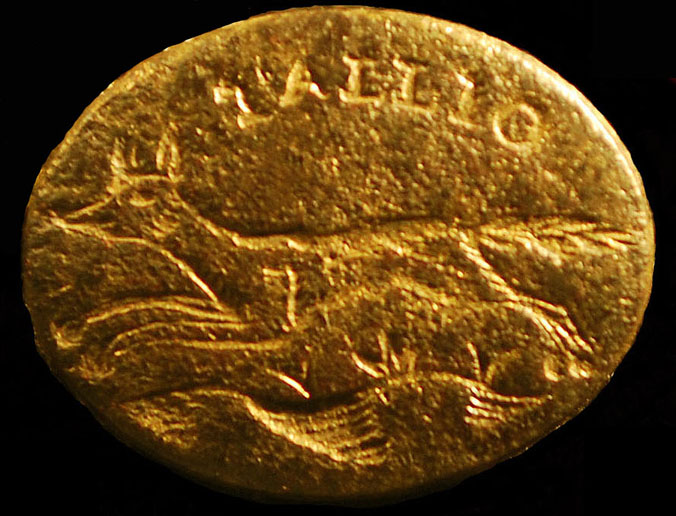
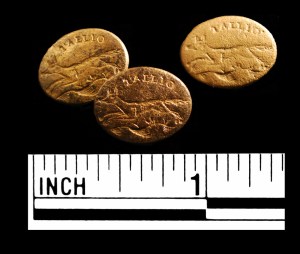
Buttons featuring a fox racing across the landscape with the word “TALLIO” were intensely popular from the 1770s through at least the first quarter of the 1800s and they are common discoveries at archaeological sites. “Tallio,” “talley-o,” “talley-oh,” “talleo” and “talley ho” were all acceptable spellings for the traditional huntsmen’s shout upon spotting the fox during a chase. But this exclamation dates from the 1770s: well over a century after the sport had been brought to the Chesapeake. [2]
A close-up of a “TALLIO” sleeve button from the Washingtons’ parlor cellar, c. 1766-1772.
Fox hunting enjoyed wide popularity among Chesapeake gentlemen. The English Brook family brought their foxhound pack to Prince George’s County, Maryland when they immigrated in 1655.[3] Fox hunting continued in the Brook family for generations, and the popularity of this privileged recreational activity spread. Fox hunting on horseback was an amusement of the leisure class and the chase was considered more important than the capture of the prey. By the late 1760s, Washington himself maintained a pack of fox hounds at Mount Vernon.
Additional TALLIO sleeve buttons from the antebellum-era plowzone at Washington’s boyhood home. They are notably more weathered from its increased exposure to the elements given its shallow soil burial environment.
Many who discover these buttons today attribute their imagery solely to the popularity of fox hunting as a sport. These buttons are often referred to as “hunt” buttons, a category that includes buttons which feature favored hobbies or athletic pursuits. Some assert that these sleeve links were widespread because fox hunting was so popular. And indeed, it was. These links – historically referred to as ‘sleeve buttons’ – enjoyed great popularity in the years surrounding the American Revolution, the Early Republic, and into the antebellum period.
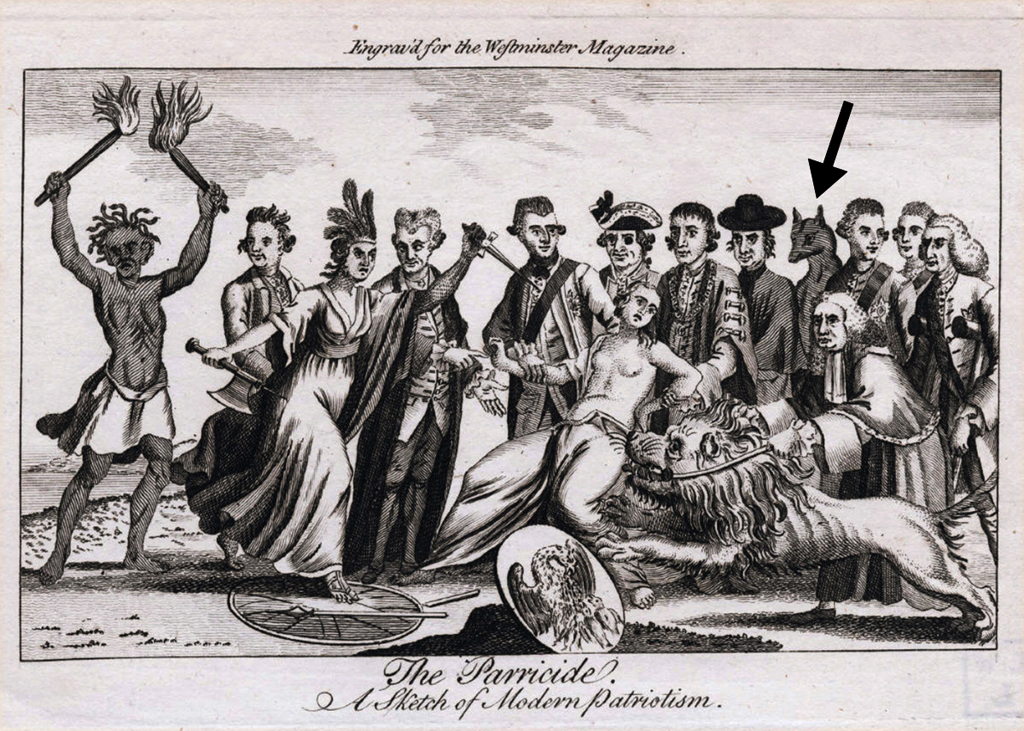
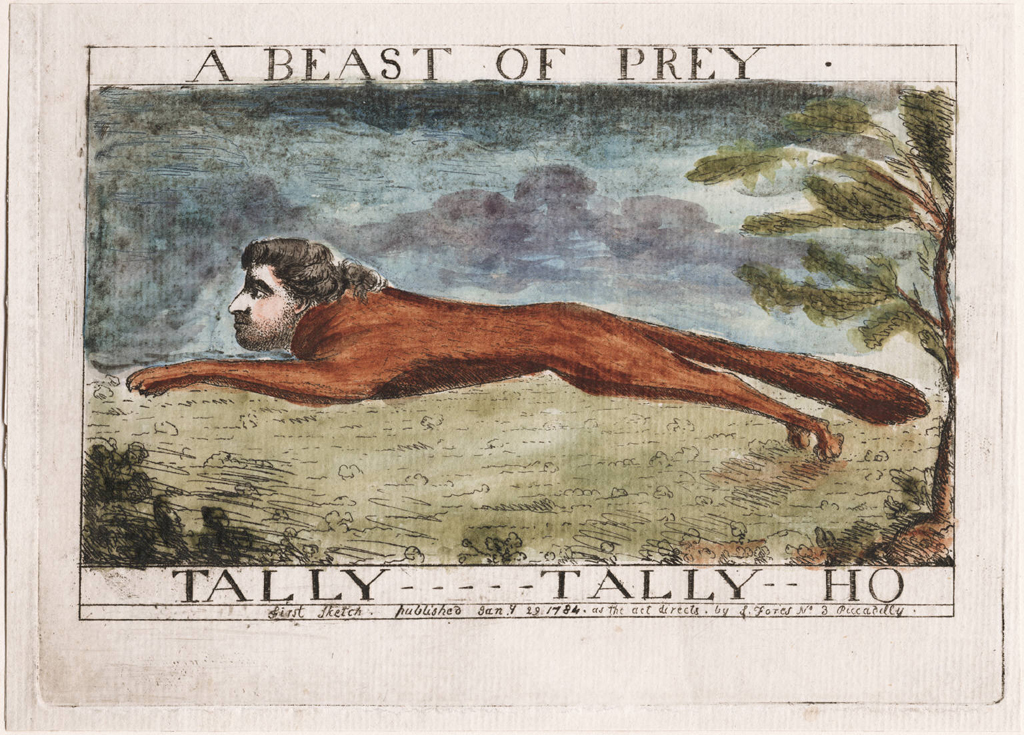
I believe these buttons also achieved a deeper, political meaning, however, especially in the years around the American Revolution. Due to the support by Charles James Fox of the American cause, fox imagery came to represent resistance to tyranny. A number of contemporary British political cartoons used a fox to symbolize this politician. In addition to this documentary evidence, I believe the fox imagery used on these buttons came to symbolize the fight for liberty. For those recovered buttons for which we have context, it is evident that they are especially prevalent at sites associated with the Revolutionary War and with American patriots.
Colonial discord is represented in this 1776 image showing America (symbolized as a woman in a feathered headdress, center left) attacking a defenseless Britannia (symbolized by the woman at center right). Charles James Fox is represented as a fox in the background (see arrow). Courtesy of the Lewis Walpole Library, Yale University.
As the political difficulties between the British Crown and the American colonies intensified, Fox’s outspoken support of colonial concerns attracted attention on both sides of the Atlantic. In Britain, some called Fox a traitor for his disrespectful rhetoric against the crown. In Britain’s North American colonies, his stoic support for their cause provided colonists a crucial ally in an unexpected, but politically powerful position. Patriots and revolutionaries enthusiastically incorporated these fox hunting-themed buttons into a celebration of Fox’s ardent support.
A 1784 image of a fox, featuring the head of British parliamentarian Charles James Fox. Courtesy of the Lewis Walpole Library, Yale University
Tallio/fox buttons have been recovered from several American Revolution-era and Early Republic era forts in Tennessee and New York. Two domestic sites associated with George Washington have yielded these buttons as part of their archaeological discoveries. Signer of the Declaration of Independence, William Paca, proudly wore a tallio/fox button. Colonial towns such as Dumfries, Virginia and Jacksonborough, South Carolina have yielded these buttons from layers dating from the Revolutionary era.
Anthropologists – scholars who study people – make special efforts to identify such symbols in societies, both in contemporary studies and in analyses of past people.[4] Symbols are especially powerful because viewers do not need to be able to read, to understand language, to hear, or to speak, in order to comprehend a symbol’s message. These messages can summon strong emotional responses. Think about how you feel when you see an American flag and how your responses might change depending on how a flag might be used at a protest, funeral, or baseball game. During the last quarter of the eighteenth century, the fox symbolized resistance to tyranny, freedom, and the pursuit of liberty. Wearing a fox button proclaimed your support for American independence.
The die struck fox image on these buttons was not originally created as a political symbol for Charles Fox, however. The meaning of these buttons was adapted to that purpose after their initial manufacture. As we have seen, fox hunting was indeed a common pastime for gentlemen, and these fashionable buttons were popular among those who “chased the hounds.” As tensions between Britain and her North American colonies increased, beginning by the 1760s, the fox symbolism present on tallio buttons was malleable[5], and provided a gentleman with leeway in a politically volatile climate: its meaning could change according to a gentleman’s situation. Among unfamiliar company, such a multivocal symbol would allow an adroit – or perhaps even a vacillating – patriot some political latitude. Uncertain if the person with whom you’re dining is a Tory? Your innocent little TALLIO sleeve link merely celebrates a popular, recreational activity, whose roots in the Middle Atlantic region went back generations. But, at the same time, comrades in the struggle for American Independence recognized their solidarity in the symbolism of the fox: honoring their parliamentary advocate of colonial resistance to the King George III.
Along with the tallio sleeve button, another apparel item as evidence for the Washington family’s burgeoning resistance to the Crown has been found at Ferry Farm. As I wrote in an earlier blog post, the Washingtons wore a mid-1700s William III sleeve button to display their resistance to George III: a monarch that many colonists deemed tyrannical in his exercise of power. On more than one occasion, Charles Fox himself compared America’s Declaration of Independence to William and Mary’s “Glorious Revolution,” and (fairly or not) drew parallels between the monarchical abuse of powers exercised by George III and James II. British subjects had the right to replace a tyrannical king with another: an example set by William and Mary, and an important precedent for the American colonists. The Washingtons’ support for the Leedstown Resolves in February 1766 provides documentary evidence for their concerns with Britain’s rule and (at the time) their loyalty to the Crown.[6]
Close-up of a mid-1700s sleeve button recovered at Ferry Farm. It features the image of King William III and reads “Gulielmus D. G.” which translates as “William by the grace of God King.” This button is another demonstration of growing resistance to George III from Washington’s boyhood home.
Together, the symbolism on each of these buttons and the Washington brothers’ participation in the Leedstown Resolves demonstrates a long and growing frustration among Virginians with Britain’s colonial policies. The material expression of these sentiments can be traced back to the mid-1700s-era male apparel buttons at Washington’s childhood home. These discoveries were possible thanks to the preservation of this site, the thorough excavation of its layers, and a contextual understanding of the social and political landscape of this period.
This fox/liberty symbolism apparently endured well into the 1800s in the United States. Archaeologists recovered a “TALLIO” sleeve button from the root cellar of a quarter for enslaved laborers in South Carolina:[7] strong circumstantial evidence that this symbol of the struggle for liberty and freedom continued beyond the American Revolution. As previous mentioned, Fox was an ardent abolitionist. The layer from which this particular button was recovered dated no earlier than 1845. In this context, this symbol of liberty underwent another change and now represented a reproach displayed by enslaved Americans to highlight the paradox of slavery in what was supposed to be a democracy. Though Charles James Fox died in 1806, the use of the fox as a symbol for the struggle for freedom endured.
Laura Galke, Archaeologist
Site Director/Small Finds Analyst
Sites where such TALLIO links have been recovered Collectors and archaeologists have found TALLIO buttons from at least New York to South Carolina, and westward to Tennessee,[8] where they occur at a number of United States military forts, late 1700s-era towns, and at sites associated with patriots.
Bledsoe’s Station, Tennessee (1783-1795) – “civilian fort” (Context dates from c. 1783-1795).
British Officer’s Revolutionary War Hut in New York (Calver and Bolton 1950: 225, 227).
Fitts, Mary Elizabeth, Ashley Peles, and R. P. Stephen Davis, Jr.
2012 Archaeological Investigations at the Vance Site on the University of North Carolina Campus, Chapel Hill, North Carolina. Research Report No. 34. The University of North Carolina, Chapel Hill.
Hastings, Anne M.
1997 Fox Hunting: History and Change in a Mountain Sport. Appalachian Journal 25(1):30-46.
Mitchell, Leslie George
1997 Charles James Fox. Penguin, London.
Noël Hume, Ivor
1961 Sleeve Buttons: Diminutive Relics of the Seventeenth and Eighteenth Centuries. In Antiques 79(4):380-383.
Polhemus, Richard R.
1979 Archaeological Investigations of the Tellico Blockhouse Site (40MR50): A Federal Military and Trade Complex. Report of Investigations 26, Department of Anthropology, University of Tennessee, Knoxville.
Reich, Jerome R.
1998 British Friends of the American Revolution. M. E. Sharpe, Armonk, New York.
Smith, Kevin E.
2000 Bledsoe Station: Archaeology, History, and the Interpretation of the Middle Tennessee Frontier, 1770–1820. Tennessee Historical Quarterly 59(3):175–187.
Smith, Samuel D., and Benjamin C. Nance
2000 An Archaeological Interpretation of the Site of Fort Blount, a 1790s Territorial Militia and Federal Military Post, Jackson County, Tennessee. Tennessee Dept. of Environment and Conservation, Division of Archaeology, Nashville, TN
Smith, Steven D., Audrey R. Dawson, and Tamara S. Wilson.
2008 The Search for Colonial Jacksonborough (38CN280) Colleton County, South Carolina. South Carolina Institute of Archaeology and Anthropology Report, Columbia. Presented to Lowcountry Council of Governments, Yemassee, and Francis Marion Trail Commission, Florence.
Sprouse, Deborah A.
1988 A Guide to Excavated Colonial and Revolutionary War Artifacts. Heritage Trails, Turbotville, Pennsylvania..
Steen, Carl
2008 Archaeology on the Great Pee Dee River: The Johannes Kolb Site. http://38da75.com/professional.htm, accessed July 31, 2012. Diachronic Research Foundation, Columbia, SC.
Notes
[1] A generation earlier Fox’s father, Henry Fox – also a member of parliament – found himself represented as a fox on multiple occasions in political satire.
[2] The recovery of this artifact from a layer created between 1766 and 1772 indicates that “tallio” was a term popular before it first appeared in print in 1773 (“tally-ho, int. and n.” OED Online. Oxford University Press, March 2017. Web. 31 May 2017). Since this “TALLIO” button was deposited before 1773, perhaps the Oxford University Press might consider updating their “tally-ho” entry.
[3] A nice history of fox hunting is provided in Anne M. Hastings, 1997 article “Fox Hunting: History and Change in a Mountain Sport.” Appalachian Journal 25(1):30-46.
[4] Archaeology is a subfield of anthropology. Archaeologists study past peoples.
[5] Political sleeve buttons that said “Liberty” (revolutionary) or portrayed a Crown (Loyalist) provided their gentlemen no political leeway: they betrayed the political sympathies of their gentlemen quite directly. Did gentlemen who elected to wear TALLIO buttons lack commitment, perhaps coveting the ambiguous – and potentially innocent – message of the fox imagery?
[6] Samuel, John Augustine, and Charles Washington all signed the Leedstown Resolves which, though it expresses concern, is nonetheless effusive in its expressed respect for the monarchy.
[7] Carl Steen, Personal Communication, 15 April 2013.





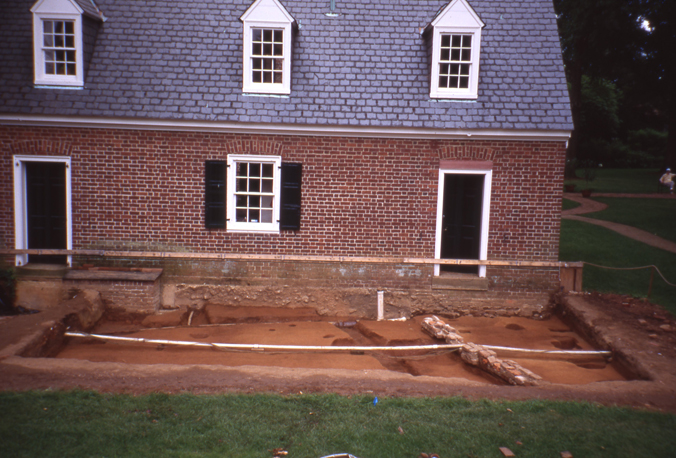
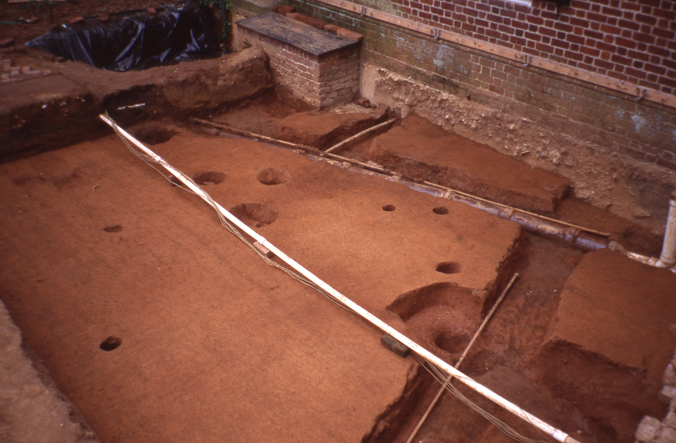
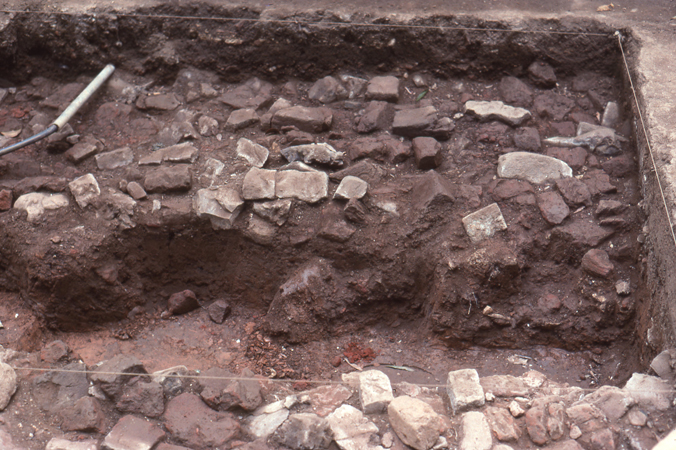

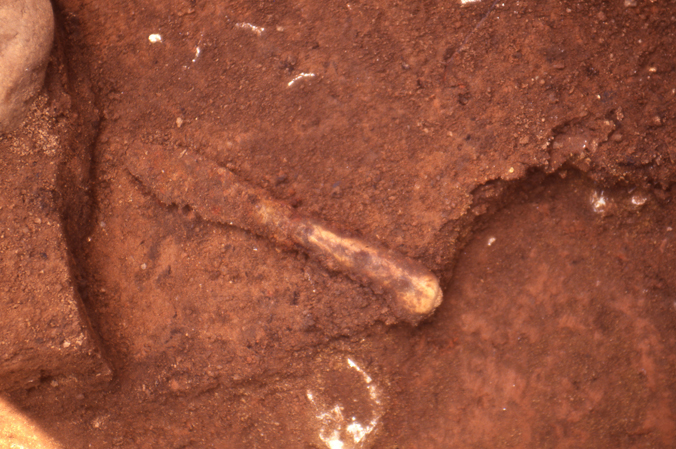


 On Tuesday, September 19, 2017, Meghan Budinger, Aldrich Director of Curatorial Operations at The George Washington Foundation, presented a lecture titled “The Rooms at Ferry Farm.” Meghan surveyed how we plan to furnish the reconstructed Washington house using traditional decorative arts scholarship but also adopted skills from genealogists, architectural historians, material cultural experts, scientists, and even investigative reporters. Meghan discussed how the Washington house and the effort to accurately furnish its rooms is a prime example of the synthesis of all of these vocations. The lecture was given at the Central Rappahannock Regional Library headquarters in Fredericksburg, Virginia.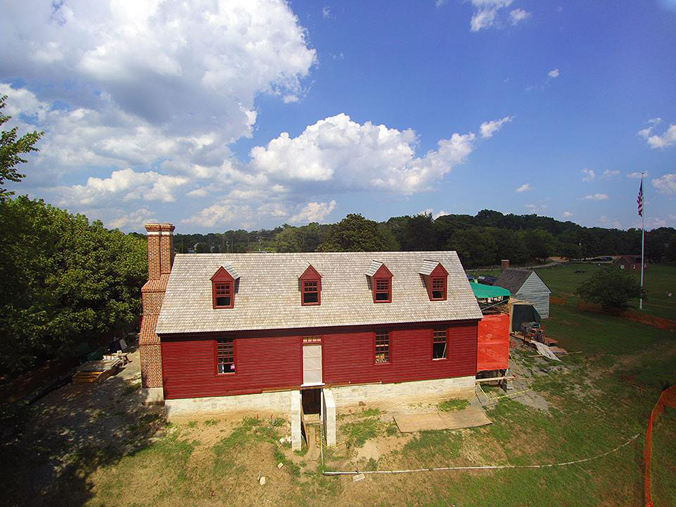

 Anthropologists – scholars who study people – make special efforts to identify such symbols in societies, both in contemporary studies and in analyses of past people.
 beginning by the 1760s, the fox symbolism present on tallio buttons was malleable

