Lives and Legacies

Tag: Kitchen

  • Meet the Crew 2025

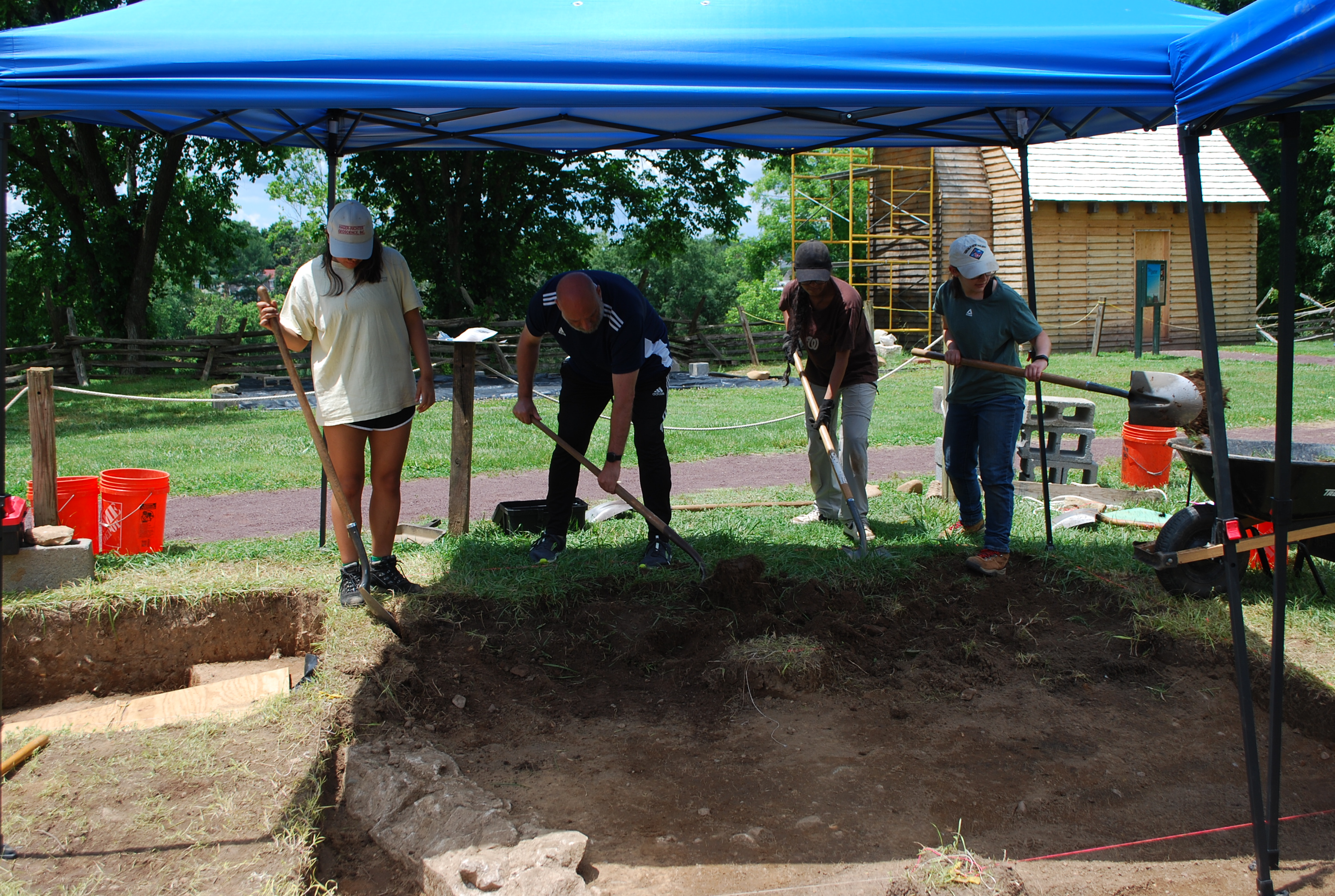
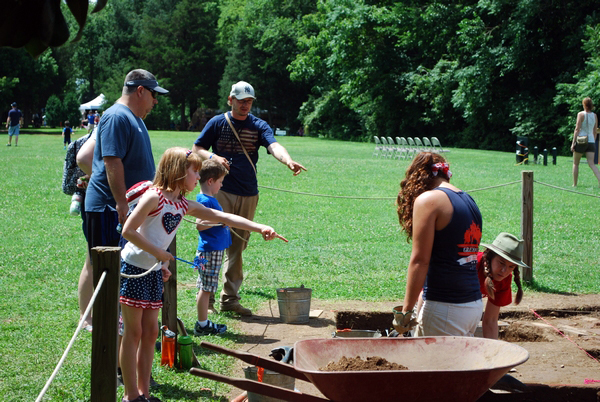
    We are heading into the final stretch of this year’s exploration of the 18th-century kitchen at George Washington’s Ferry Farm, and it definitely hasn’t disappointed! The finds are getting bigger and better as we continue excavating deeper into the cellar and expand our look into the surrounding area. We have made a ton of progress that wouldn’t have been possible without the help of our crew of the George Washington Foundation staff, interns, and University of South Florida field school students. While there are still a few weeks before the official end of the dig on July 11. Just in case you missed them, here are some quick introductions and fun finds from the 2025 field school and crew.

    Left to right: Judy, Danielle, Abby, Sarah, Alaina, Alaina S., Sofia, Addie

    Field School

    “Hi, my name is Alaina Scapicchio, and I am a Ph.D. candidate in the Department of History at the University of South Florida. This is my third summer digging at Ferry Farm. My favorite moment of the summer was excavating a partially intact pig jaw!” 

    -Alaina

    “Hi! My name is Addie, I am a history and anthropology student at the University of South Florida. My favorite artifact to find are the animal bones.”

    -Addie

    “Hi, my name is Alaina. I am studying history at USF. My favorite part of the field school was digging in the kitchen because of how many cool artifacts we found. My favorite artifact was the piece of the Bartmann jug!”

    -Alaina

    “Sofia Almeida is a first-year History PhD student at the University of South Florida. Her research focuses on historic cemeteries, public history, and memory. One of her favorite parts of field school was digging in the kitchen cellar. One of her favorite artifacts this season was a decorated fragment of Staffordshire ceramic.”

    -Sofia

    GWF Interns

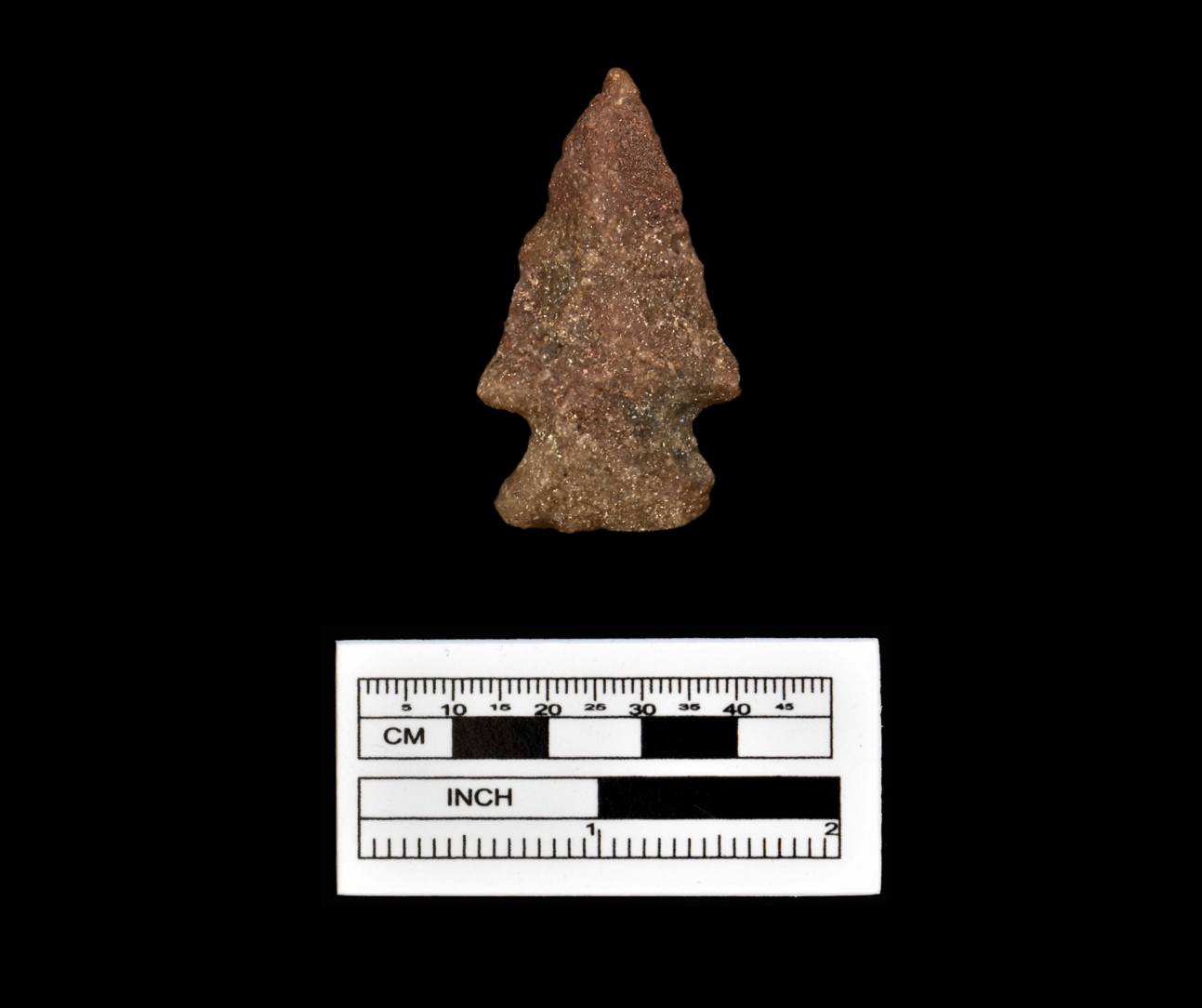
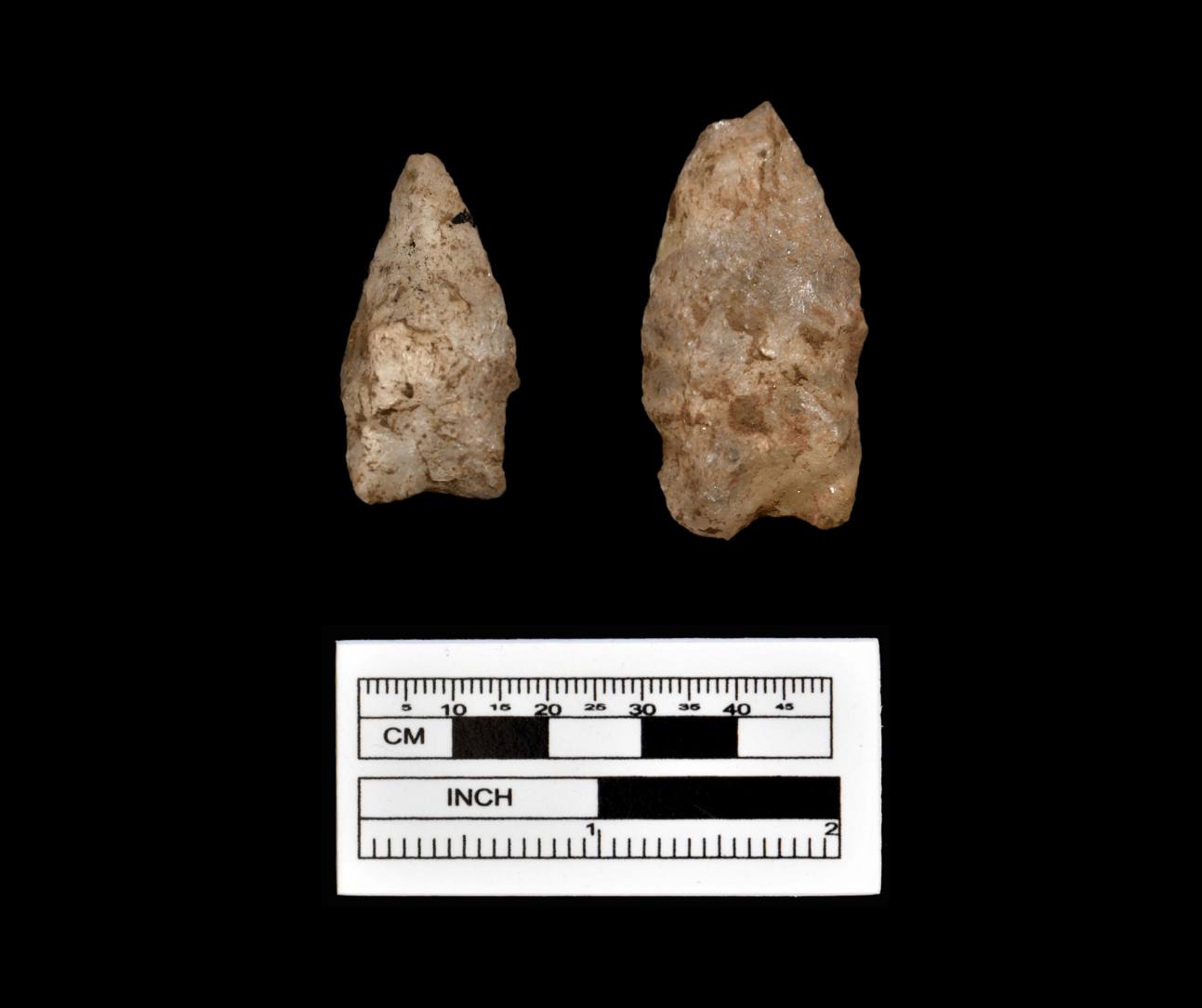
    “Hey! My name is Abby! I am a recent graduate from UVA and am planning to pursue a career in archaeology. I enjoy reading and playing Ultimate Frisbee in my free time. My favorite artifact that I helped find this season was a projectile point with jagged edges.”

    -Abby

    “Hey all, my name’s Max Puckett. I’m a senior at the University of Mary Washington, currently pursuing a BA in Historic Preservation. In my spare time, I like to cook, research, and read. I’ve really loved this field season so far- we are pulling out a ton of interesting and exciting artifacts.”

    -Max

    Sarah came to Ferry Farm as a VCU student in the summer of 2014 and has been in over half a dozen summer digs since then. This year’s dig is very special to her because it is focused on the cellar of the Washington kitchen. Her favorite artifacts from this dig are the ones that can actually be paired and mended with each other because much of what collapsed in the kitchen fire was left in place and not scattered or missing.

    -Sara

    GWF Staff  

    I have been involved with the Ferry Farm Archaeology Department since 2012, when my youngest twins graduated from high school. I started out as a volunteer but then took on a part-time position cataloguing artifacts from the summer digs, which then turned into a full-time job as a lab assistant.  I have been co-field director since 2019.  I have a BA in Anthropology and an MA in Historical Archaeology, with past jobs in cultural resource management and historic sites, such as Mount Vernon.  Though I really enjoy pulling out the handfuls of wine bottle necks and bases, I do find it more awe-inspiring when we pick out the tiniest and fragile eggshell fragments among the rubble and debris inside the kitchen cellar.

    -Judy Jobrack

    “Hello! I’m Danielle, and I have been at Ferry Farm since 2022, first as an intern and then lab assistant and co-field director. As a UMW Historic Preservation alum, I love all things old, both above ground and below, so this year’s dig has been particularly exciting with all the architectural bits we have been finding. With that said, I think my favorite artifact so far has been a brass/copper button –metal with verdigris is just so cool!”

    -Danielle Arens

    Though some of our crew is leaving, the rest of us will be digging every weekday until July 11, so be sure to come say hi and see what new things we have uncovered!


    Danielle Arens

    GWF Archaeologist

  • It’s That Time of Year Again: 2025 Dig Preview

    It’s the most wonderful time of the year! There’ll be dirt out for screening, ceramics for cleaning, and lots of good cheer…. Okay, sorry, that might be a little too far. But it is a super exciting part of the year here at Ferry Farm, George Washington’s Boyhood Home. We have officially started this summer’s dig season!

    Building off of the previous two years’ exploration of the kitchen site, we are revisiting the 18th-century kitchen cellar again this year. While last year’s dig focused on locating and exposing the kitchen’s stone wall foundations, our focus this year will be excavating the fill within the cellar walls that had been deposited as a result of a fire sometime in the 1740s. The fire caused the building to collapse in on itself, filling the cellar space with ash and debris.

    Excavating sites like this are very exciting because they represent preserved moments in time, leaving the possibility to find artifacts left in situ or in place, when the fire occurred. It is likely that most of the artifacts excavated will have evidence of the extreme heat caused by the fire. Toasty artifacts from the 2023 preliminary kitchen exploration have been washed and catalogued, showing damage to artifacts, such as glass bottles and ceramic storage vessels, ranging from being slightly charred and burnt to being completely melted. Toasty or not, these artifacts will help us nail down the date of the fire and what was being stored in the kitchen cellar when it went up in flames.

    Our 18th-century kitchen, unfortunately, lies beneath the foundations of two farmhouses with full cellars dating from the 19th and 20th centuries. The construction of these homes severely impacted the kitchen structure and its burnt cellar fill, making it difficult for our archaeologists to accurately interpret the kitchen’s architectural features. A small portion of the kitchen cellar fill was also the subject of previous archaeological excavations in the 1990s, so we are not the first team to sample the fill. But in the interest of site preservation, the kitchen remnants were covered over twenty-five years ago with protective geofabric, and the farmhouse cellars backfilled completely with sand.

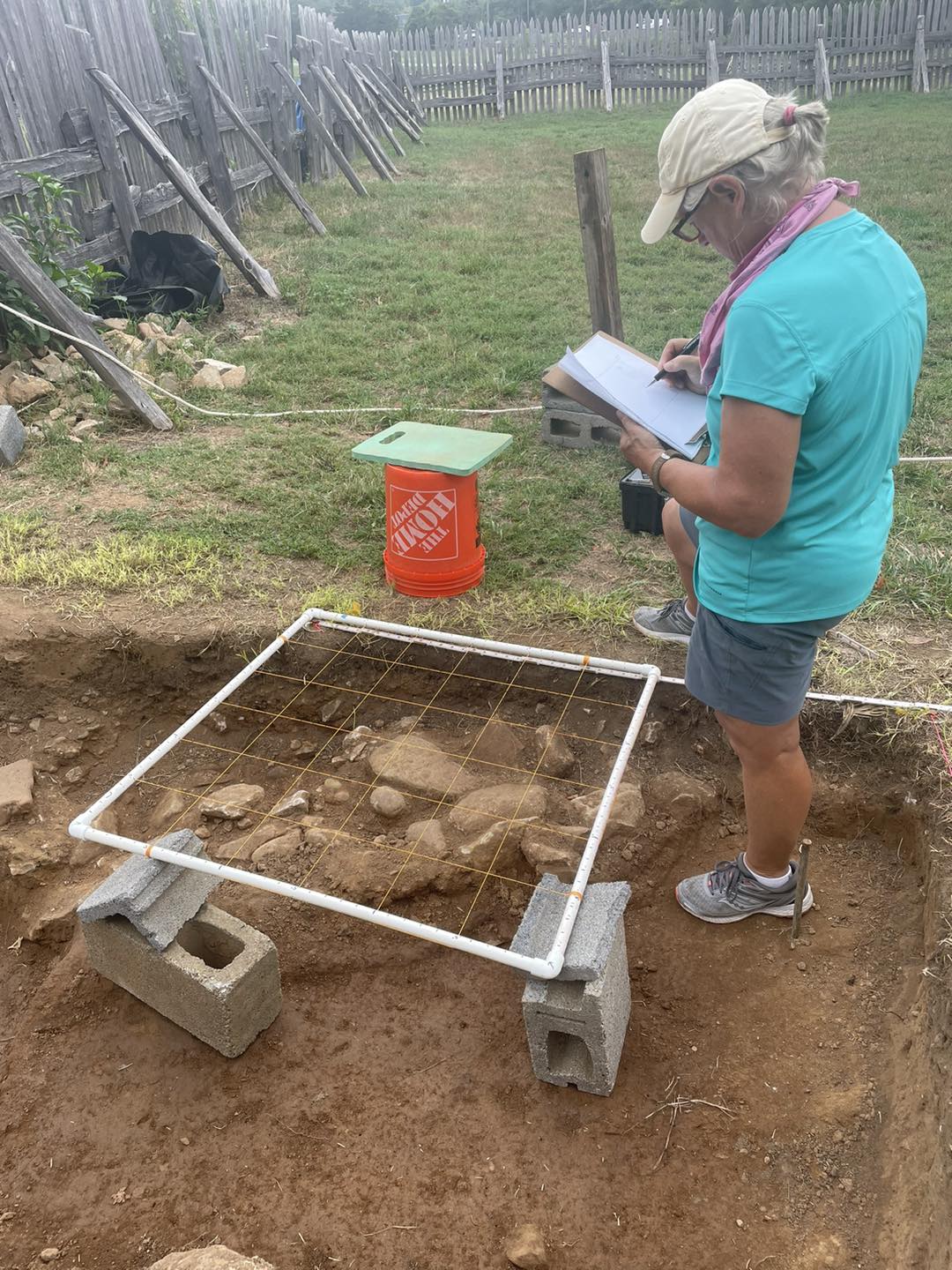
    Luckily, we had the help of an excavator at the beginning of this season to remove the five feet of protective sand covering the kitchen cellar fill so we could get to the fun stuff sooner! But our fun isn’t restricted to the cellar, as we still have multiple 5” x 5” units around the outside of the kitchen foundations to investigate. Our team is still trying to locate the midden (trash deposits) and fireplace associated with the kitchen, as well as additional architectural evidence that would give an idea of the overall form and dimensions of the complete kitchen structure.

    Every excavation year brings new and exciting finds as we sift through thousands of years of site habitation. Come visit us while we dig weekdays from opening until 3:30 pm through July 11th. Hope to see you there!


    Danielle Arens and Judy Jobrack

    GWF Archaeologists

  • That’s A Wrap! Ferry Farm’s Dig Season Recap

    October just happens to be Virginia Archaeology Month, and what better way to celebrate than to recap this summer’s excavation at George Washington’s Boyhood Home at Ferry Farm.

    You might remember from our dig preview, that this year’s dig (FF-44) focused on the continued exploration of the 18th-century kitchen site located just northeast of the main house. In 2023, our limited investigations uncovered just a small section of the kitchen’s stone foundation and cellar, giving us a sneak preview of the conditions and parameters of future site work. Armed with this knowledge, our aims this year were to uncover more of the original foundation walls of the kitchen cellar, to uncover additional architectural evidence of the kitchen outbuilding, and explore the surrounding landscape for features. So, did we do it?

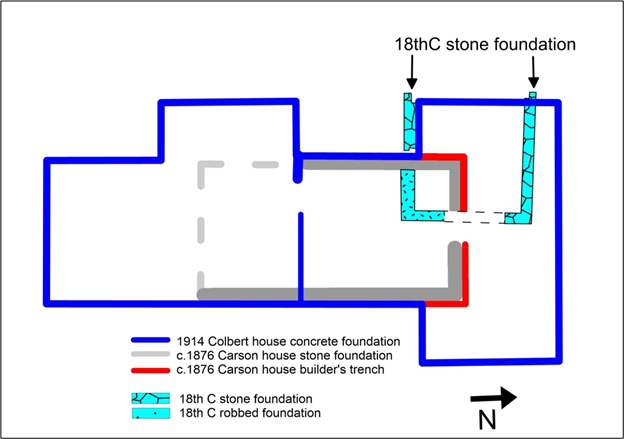
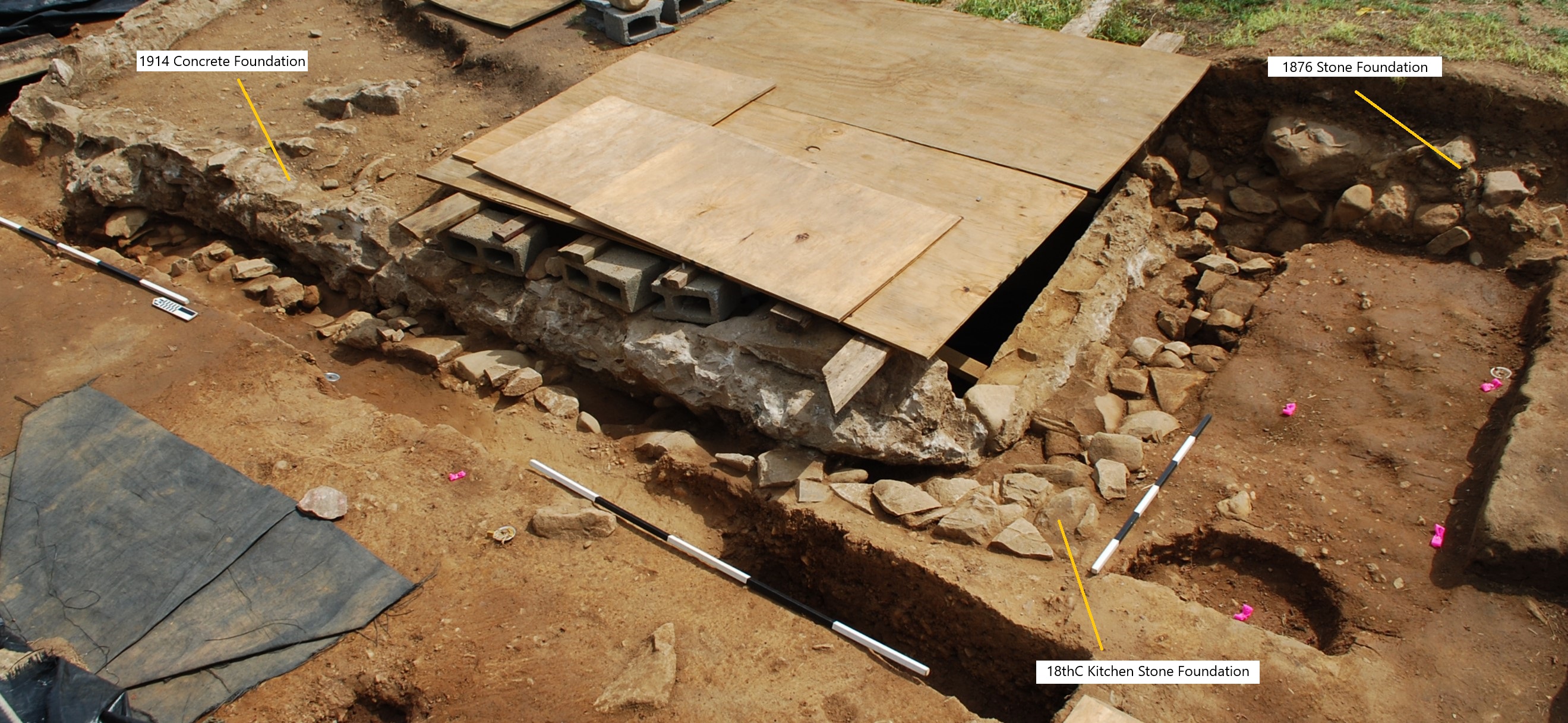
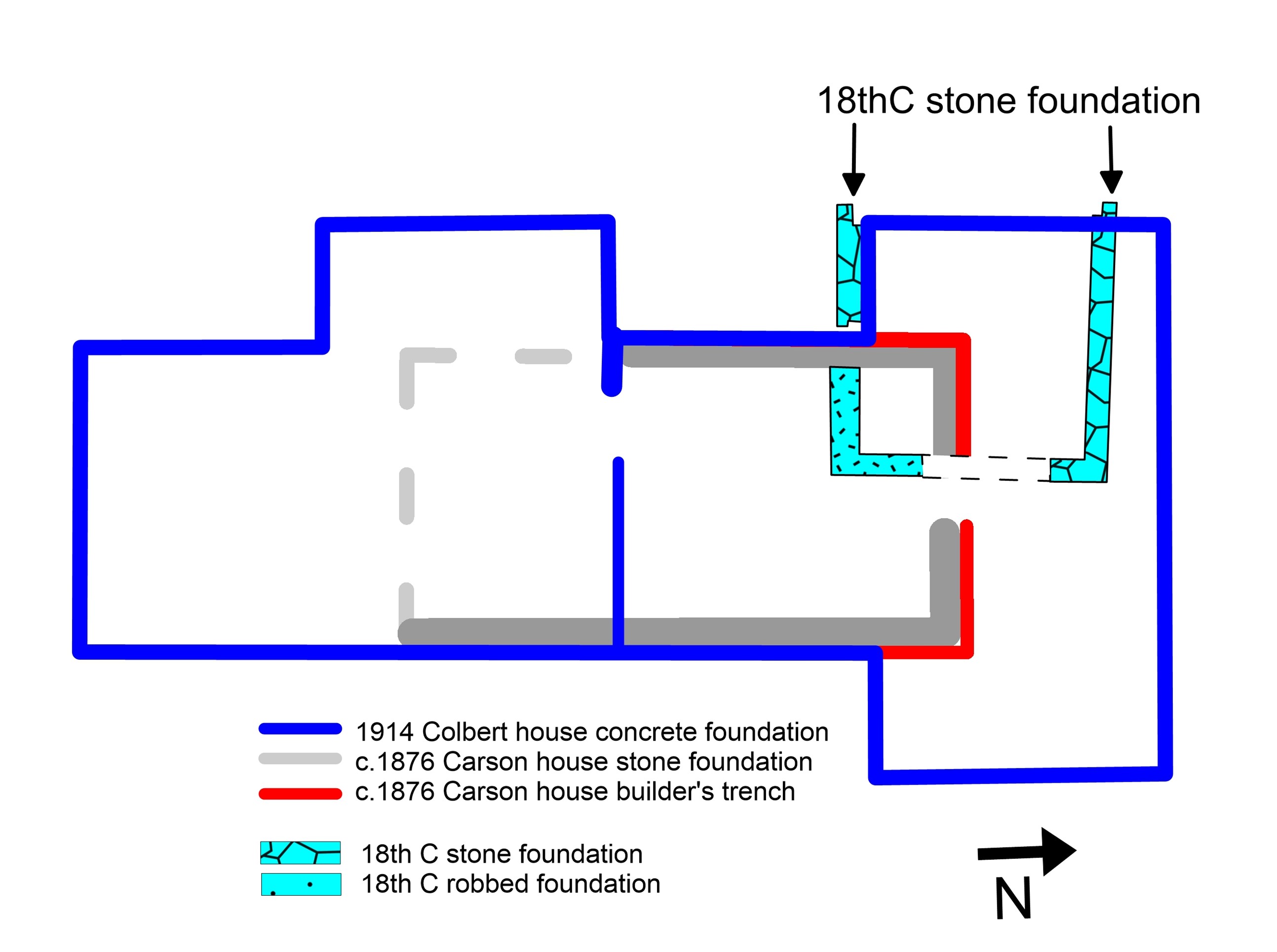
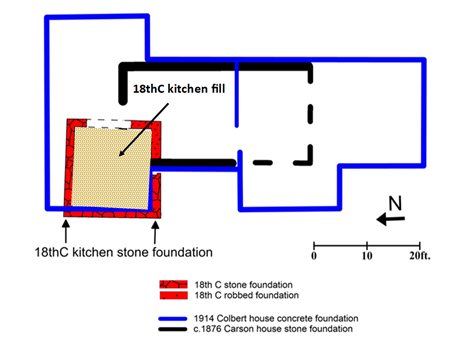
    Location of the 18th century kitchen foundation in relation to two later farmhouses dating to 1876 and 1914. 

    We did! But before we get to the fun discoveries, let’s go over how we got there. As far as sites go here at Ferry Farm, this one has been through a lot. Not only did the original 16’ by 16’ kitchen building burn and collapse in on itself in the middle of the 18th century, but it also had two subsequent farmhouses built on top of it that were either moved, damaged in a fire, or demolished all within the last 150 years. A previous archaeology project on the site introduced another element of complexity in understanding the depositional sequence of fills on the earlier 18th-century site, which had obviously been heavily disturbed by all these later events.

    All this led to an interesting excavation. Since a significant portion of the site had previously been excavated in the 1990s, a sizable amount of our site time was spent re-excavating backfilled archaeology units with the purpose of exposing unexcavated layers around the site. Not only would these unexcavated layers allow us to gather new data, but it would also give us the opportunity to better understand the findings as recorded in the earlier reports.

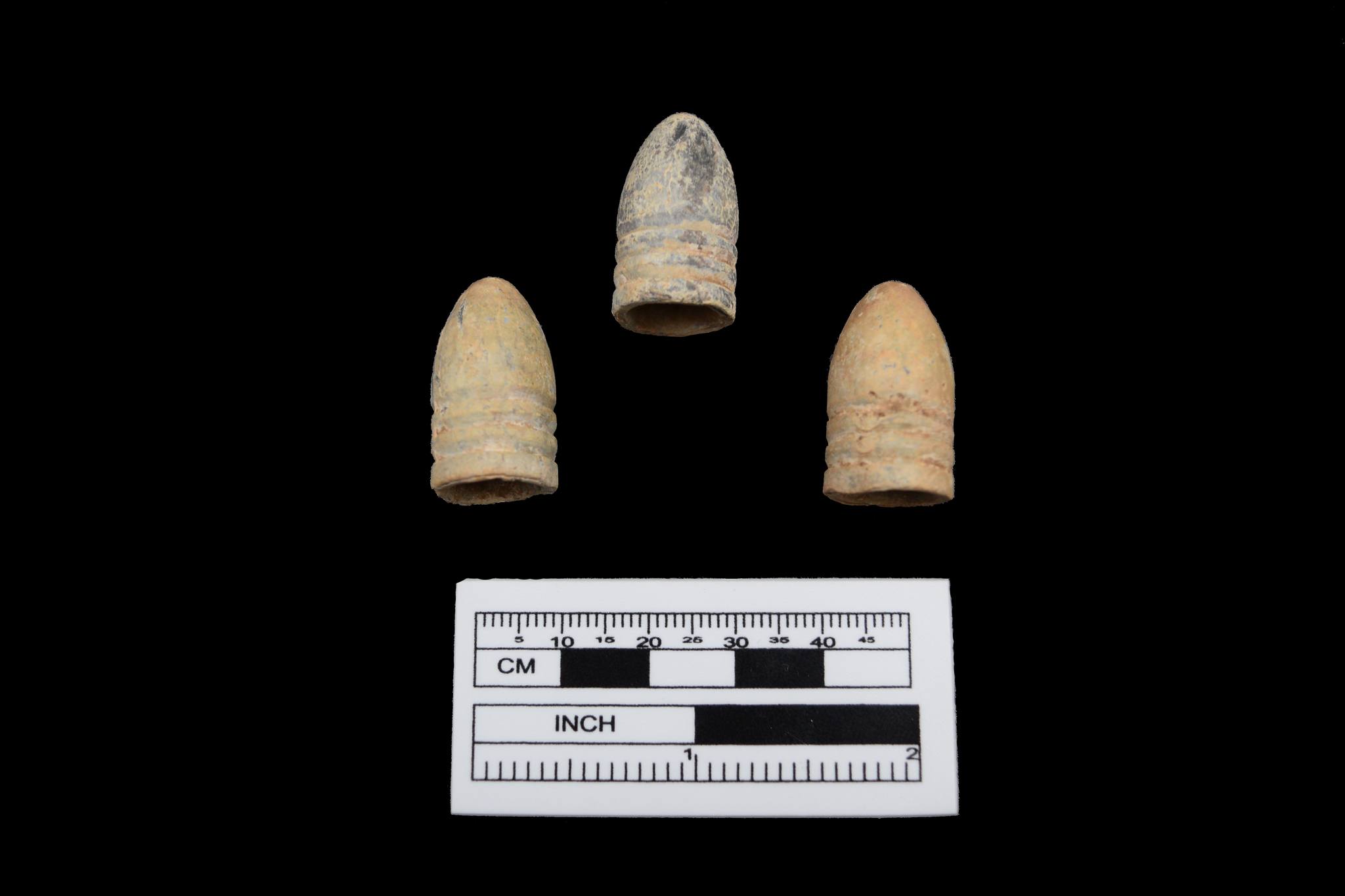
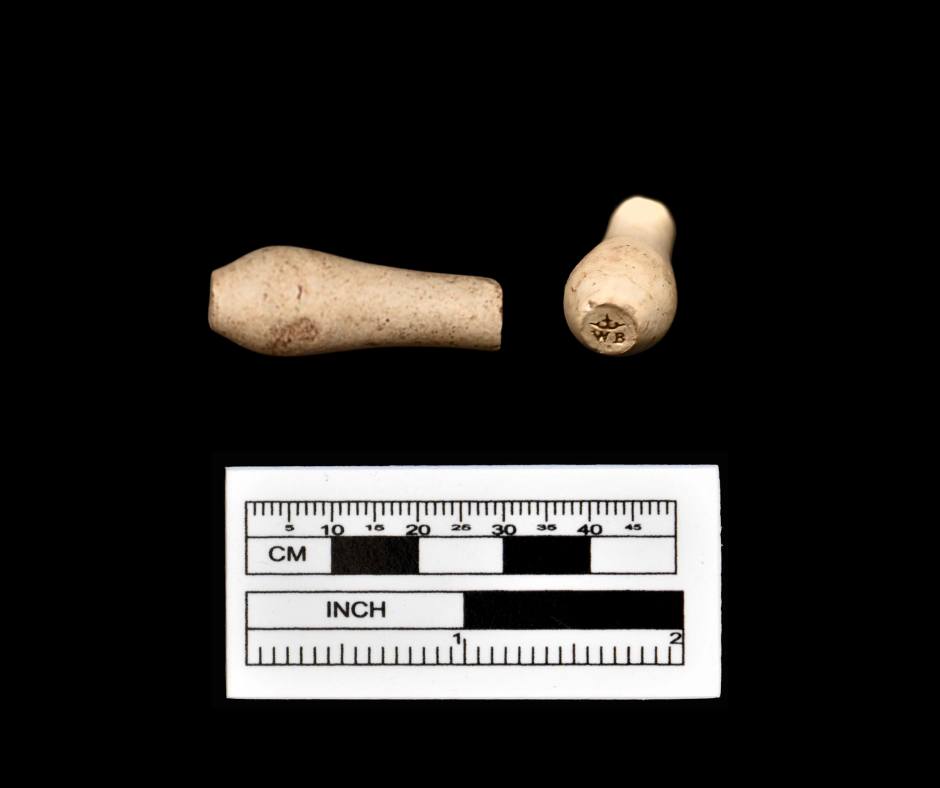
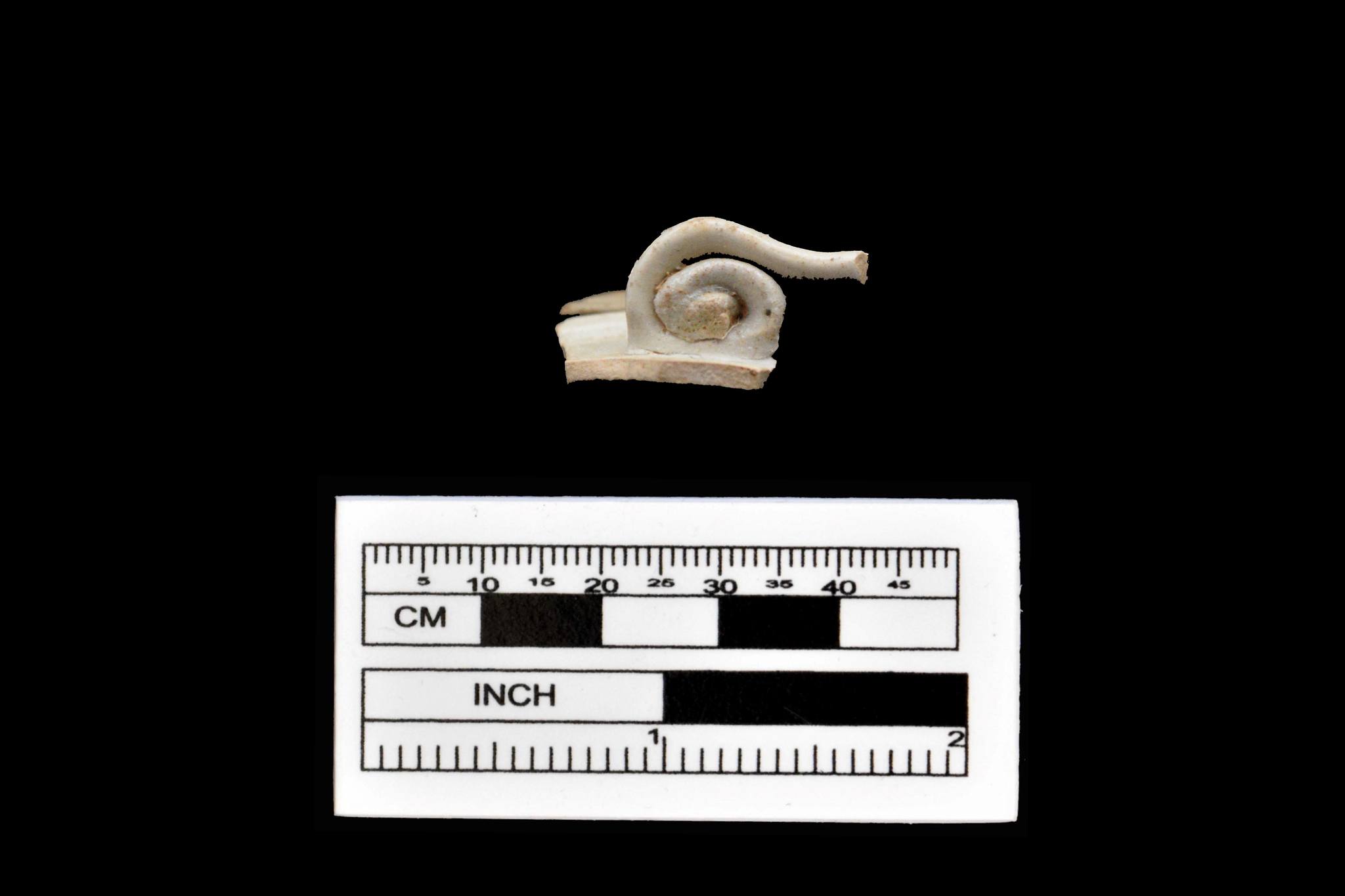
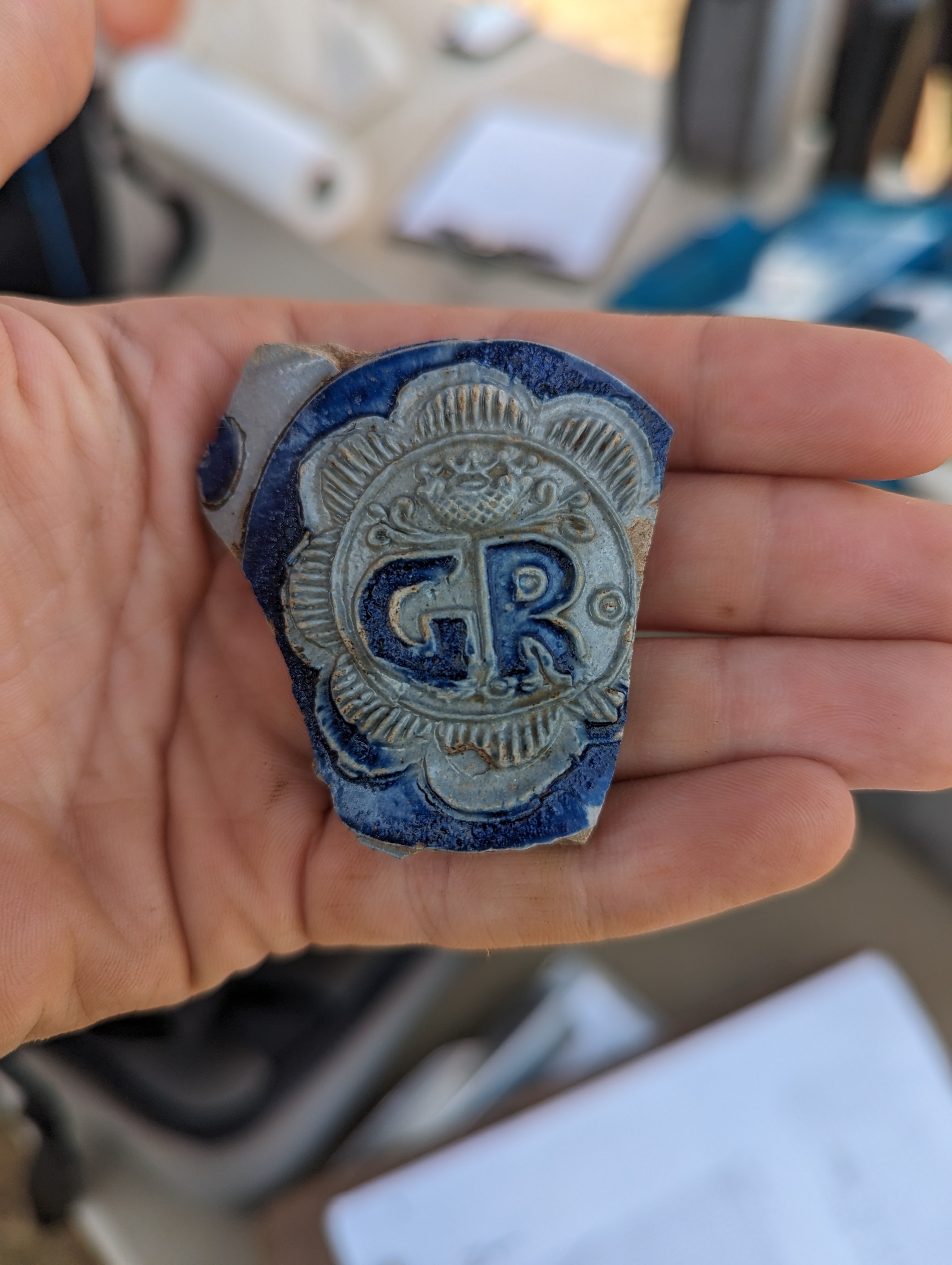
    With the help of our wonderful field school students and interns, we opened a total of twenty-seven 5’x5’ units across the kitchen site. Sifting through the dirt, hundreds of artifacts were found dating to all occupations of Ferry Farm. Super cool finds that date to the 18th-century period of use for the kitchen included tobacco pipe fragments, wine bottle sherds, and a variety of ceramics, including English stoneware, Chinese porcelain, and a German Westerwald ‘GR’ sherd. The prehistoric Native American occupations of the site were represented by an unusually high number of projectile points found (8 and counting!), dating to both the Early Archaic (8000 BC – 6500 BC) and Early Woodland (1100 BC – 500 BC) periods.  Civil War bullets came up in our screens, of course, as did 20th-century plastic, tools, toys, and bottle caps.

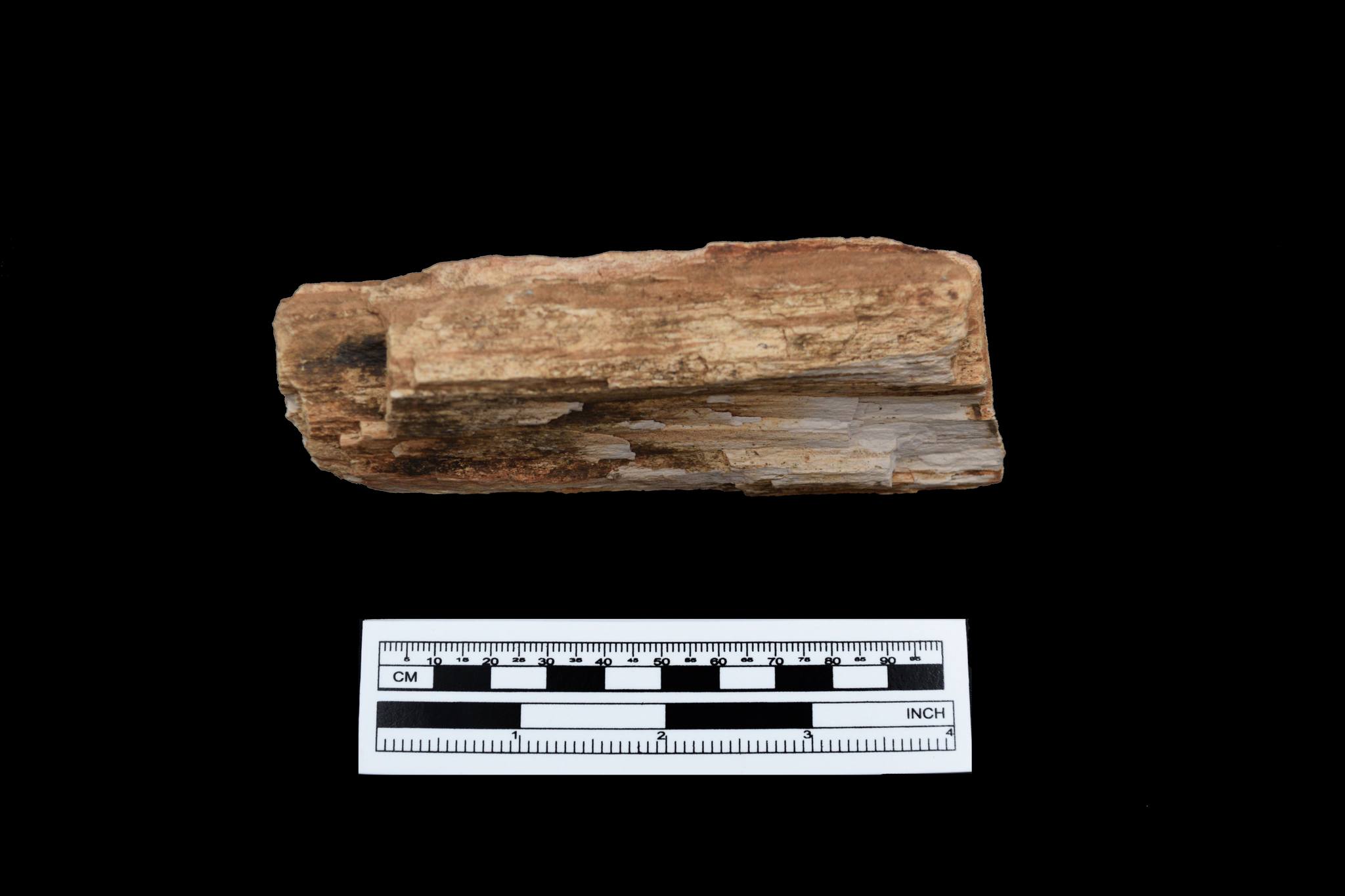
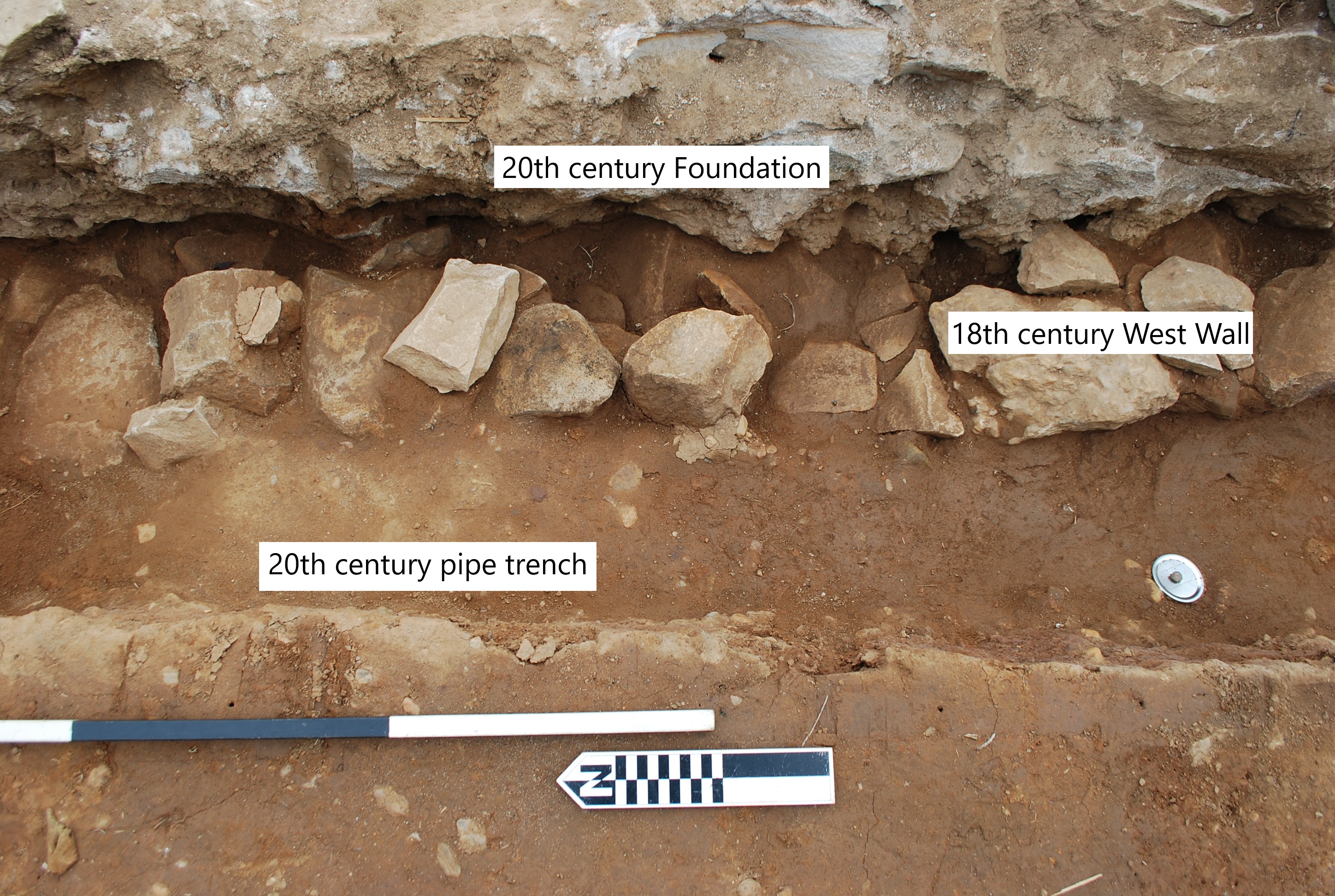
    But when it comes to finds, our most exciting discovery did not turn up in our sifting screens.  In fact, it was discovering that the western foundation wall of the kitchen cellar, thought to have been demolished, still survived!  During the 1990s excavations, the archaeologists did not see this portion of the stone foundation and assumed the construction of the 1914 Colbert house had destroyed it. Fortunately for us, it was hiding under a 20th century utility pipe and trench and lay directly adjacent to the Colbert concrete foundation. Now we have all four foundation walls that we hope to fully uncover next year.

    Exposed south and west stone walls of the colonial kitchen lie adjacent to and just outside of the 1914 concrete foundation wall.  
    West wall of colonial kitchen that was hiding under the pipe trench

    Our excavation units surrounding the kitchen foundation have not, as of yet, exposed additional building features associated with the kitchen outbuilding, such as foundations or fireplaces. That search will continue next year as we continue taking those units down and expanding our site area. Features exposed in the 1990s dig, but not excavated by them or us, such as possible post holes and trash middens, also await our return in 2025, when we plan on finishing their excavation.

    Each year’s excavation is built on the work accomplished in the previous years.  With the incredible amount of work done this past summer of exposing the original kitchen foundation, as well as the later farmhouse foundations, removing old fill, and opening up the adjacent landscape, we are looking forward to expanding our investigations of the kitchen site next year.  Stay tuned as we unravel the mysteries that are here at Ferry Farm, George Washington’s Boyhood Home.


    Danielle Arens and Judy Jobrack

    GWF Archaeology Field Directors

  • 2024 Dig Preview!

    Spring is in the air. The weather is warming up, flowers are blooming, bees are buzzing, and of course the dig season is about to start here at Ferry Farm, George Washington’s Boyhood Home.

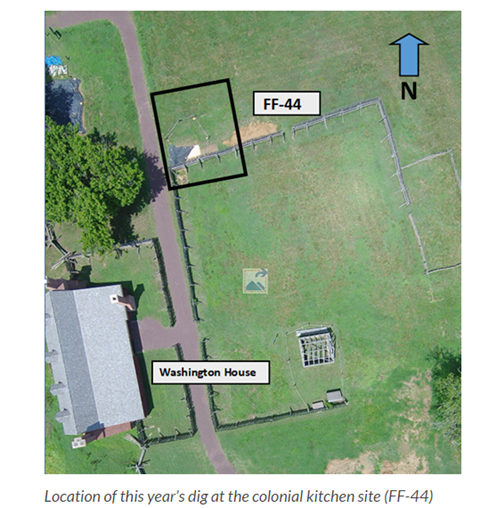
    As part of the 2023 dig season, our team revisited the site of a colonial-era kitchen that had experienced a particularly destructive fire sometime in the middle of the 18th century. The kitchen’s foundation, as well as the surrounding landscape, had been compromised by the construction, and subsequent destruction, of two farmhouses that were built directly on top of everything. This site (FF-44) is located about 50 feet from the northeast corner of the Washington House.

    Location of this year’s dig at the colonial kitchen site (FF-44)

    The 18thC kitchen site was initially explored as part of an archaeological assessment of the Ferry Farm historic property in the early 1990s. The structure and its contents were originally interpreted as a house, but a reevaluation of the excavation notes and artifacts several years later reinterpreted this site as a kitchen, not a primary domestic dwelling. But research queries still exist, such as narrowing down the dates of construction and destruction of the structure, as well as determining the possibility that meaningful artifact deposits and landscape features that might help bolster the interpretation of the building still exist outside of the foundation.

    Location of the 18thC kitchen in relation to later 19th and 20thC farmhouses

    With these questions in mind, our efforts last summer focused on working out a game plan for reexamining the site for our future excavations.  During our dig, we uncovered the southwest corner of the original kitchen as well as the foundation of the 20th-century farmhouse overlaying it. Re-locating the site and evaluating the amount and extent of fill were our primary goals. That completed, this year we will concentrate on investigating the landscape surrounding the foundation and reexamining the burnt fill within.

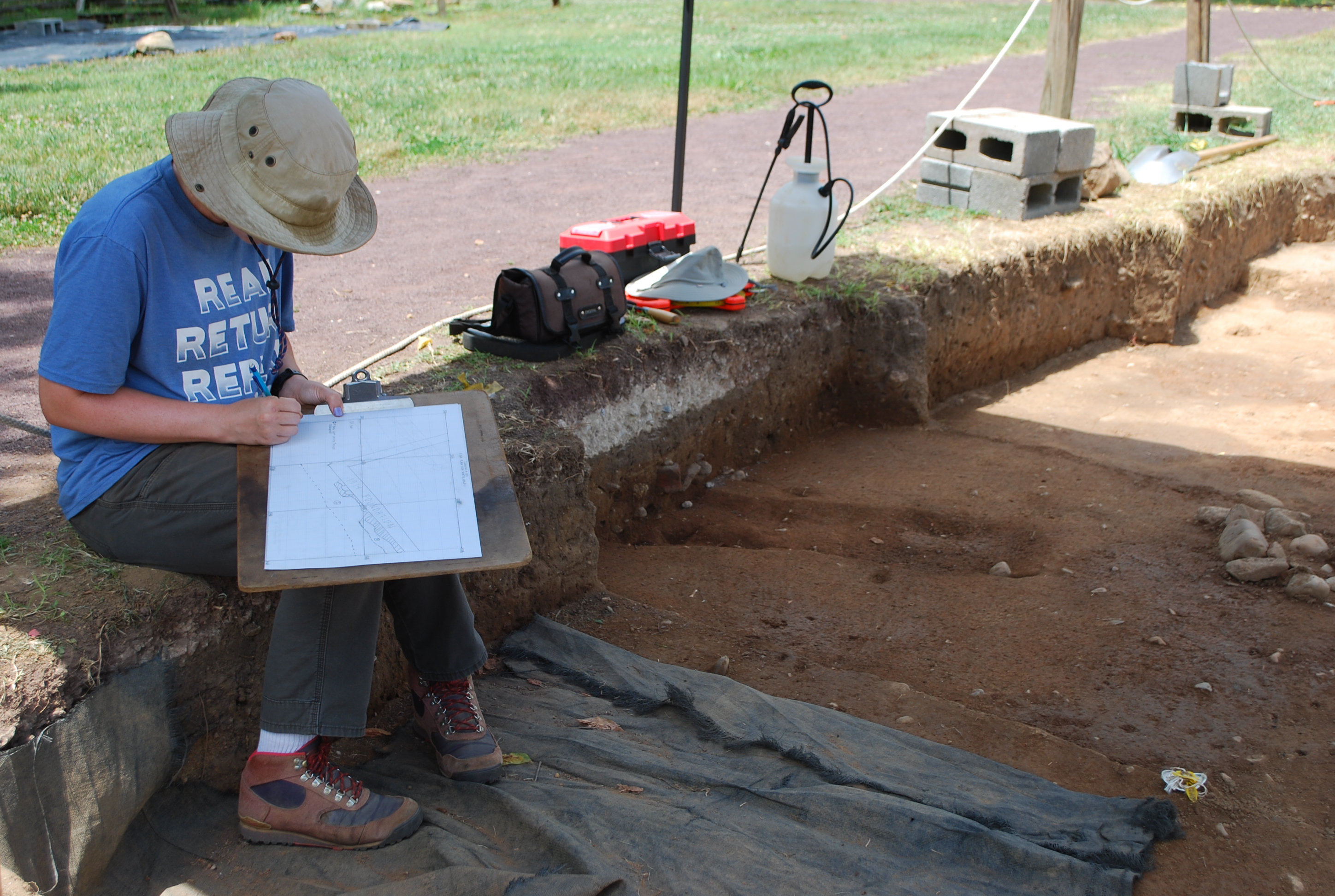
    Last year’s excavation. Red arrow points to area inside of the kitchen, white arrow points to area outside of the building. The stone and concrete wall is part of the 1914 farmhouse foundation, which sits atop the colonial kitchen fill.
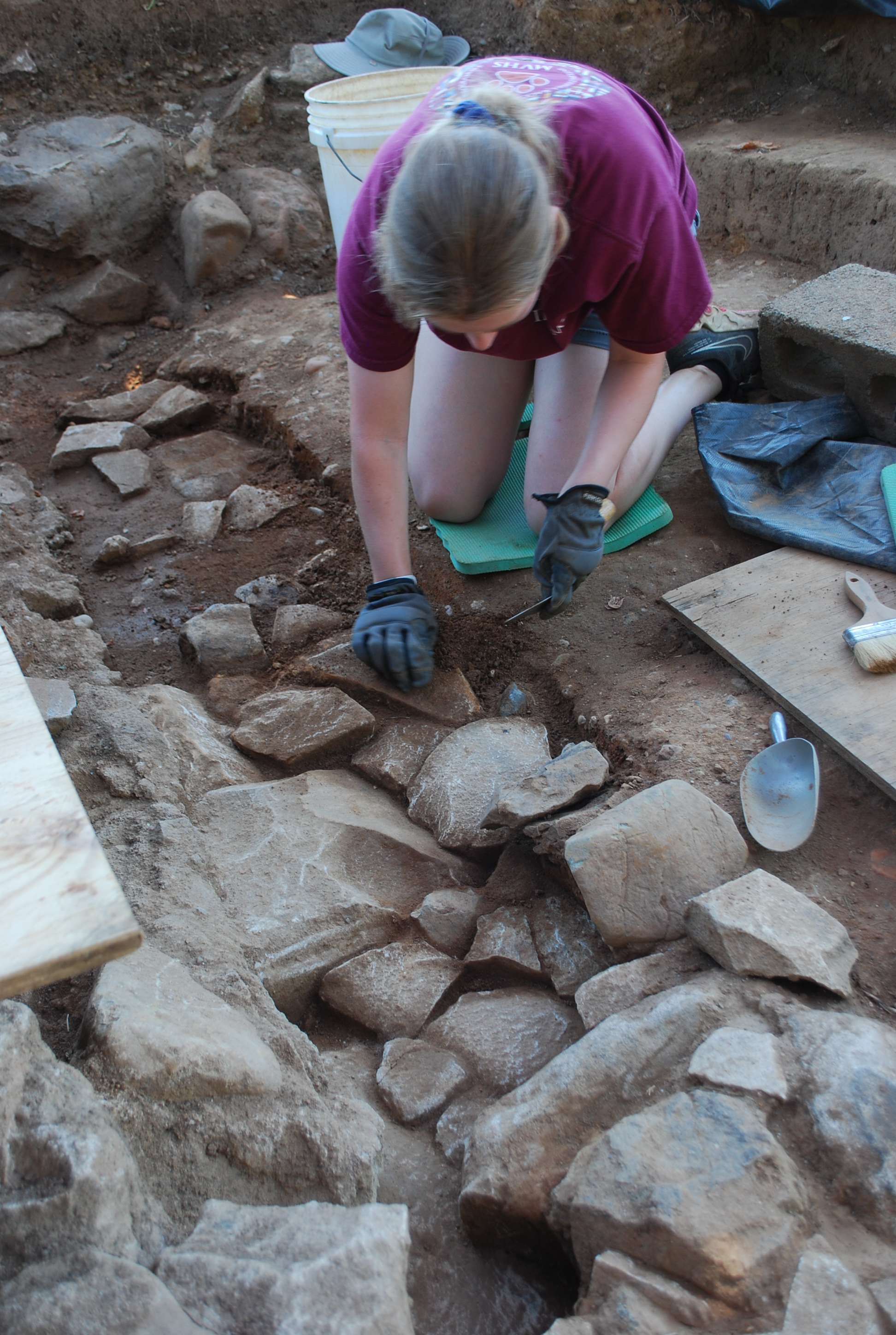
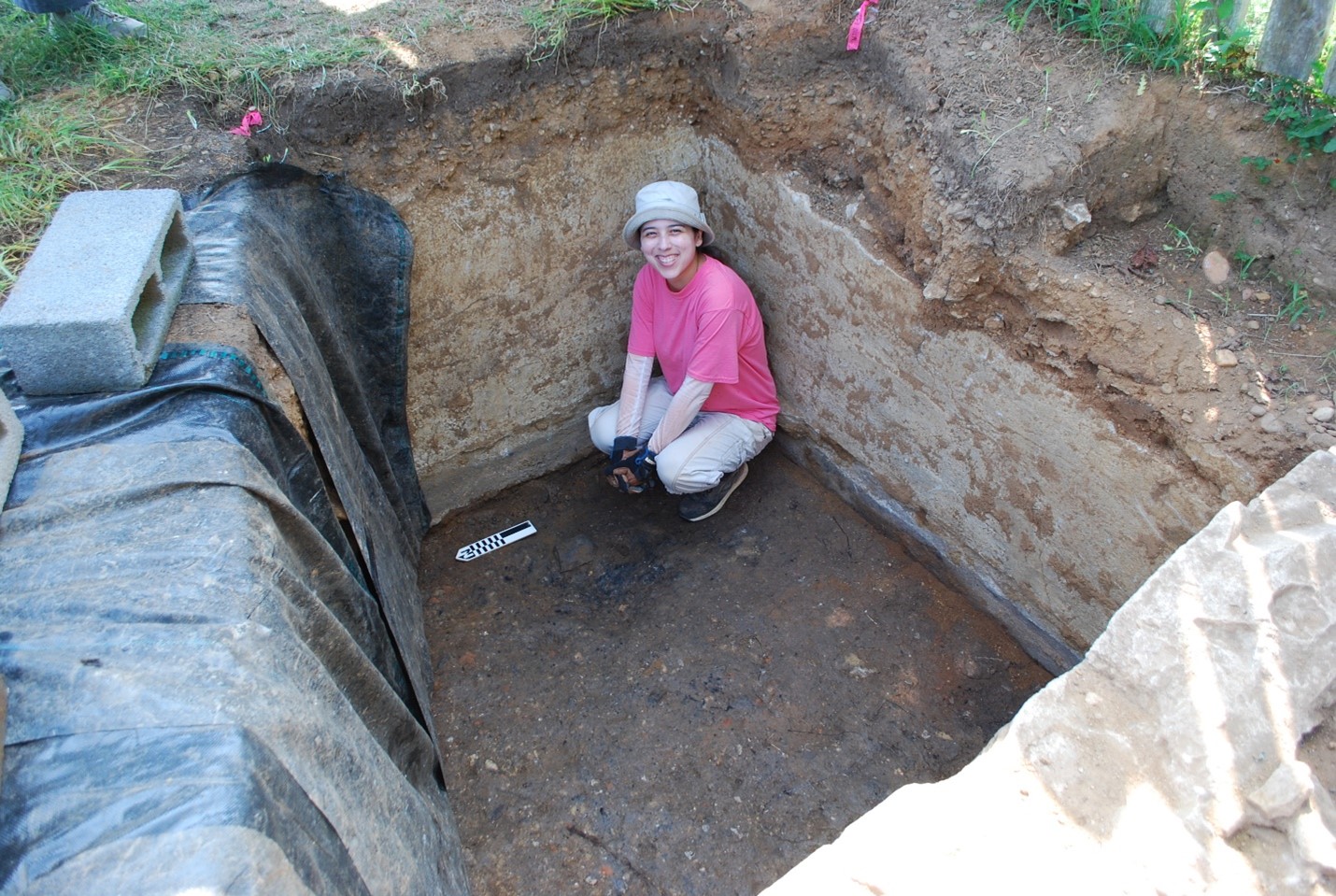
    Lead excavator Sarah on floor of kitchen cellar

    An honest question you might ask would be why would we want to learn more about what was outside of the foundation? Isn’t all the important stuff inside? In the archaeological world, a lot of valuable information can be learned from these outlying areas. Eighteenth-century trash middens are often found outside of a building because garbage was being thrown off of the porches and out the doors and windows. Studying this everyday disposal of trash can tell us how and when a building was being used, as well as traffic patterns by those using the building.

    Another interesting feature that can be found outside of a foundation is a builder’s trench. These trenches were dug by the individuals building the foundation, and as they worked and backfilled these trenches, items they were currently using were accidentally left behind. These artifacts can be excellent dating material and can really nail down a construction date.

    Other items we will be looking for are possible supplementary building features, such as post-in-the ground foundations and fences. Additionally, taking a second look at the site will help us better understand the previous archaeology that was done over thirty years ago.

    As for the exciting second site we started excavating last year, Feature 321, we are putting that project on hold for now and concentrating our efforts on the kitchen site. But work continues in the lab on all the interesting artifacts recovered during last summer’s dig.

    This year’s dig begins April 29thand ends July 12th.  Archaeologists are working on site from 8 am until 4 pm, Monday through Friday, and we gladly welcome questions from our site visitors.  So be sure to stop by and see what exciting things we uncover!

    Danielle Arens and Judy Jobrack

    George Washington Foundation Archaeologists


  • 2023 Ferry Farm Dig Preview

    Spring is here, which means another season of exciting archaeological work at Ferry Farm is about to begin! Ferry Farm, the boyhood home of George Washington, has been conducting archaeological investigations for over 30 years with the aim of recreating and analyzing the 18th-century farm landscape that shaped George Washington during his formative years as a young man. Every season brings new discoveries, and this year will be no different.

    This season we will be investigating two separate areas within the historic site. The first (FF-38) is a feature discovered in 2018 when we monitored the excavation of a utilities trench for the reproduction Washington house. This large feature, approximately 5’ x 7’ and over 2.5’ deep, is filled with dark brown organic soil and contains 18th-century artifacts, including a wig curler, a signature find for our site. Our excavations will expose the entire plan view of the feature and how it relates to other possible features in the surrounding area.

    Figure 1. The location of our two summer projects in the historic area.

    The second area of investigation (FF-40) is the site of a colonial-era kitchen that burned early in the Washington family tenure of the farm. Though the building’s remains were the subject of previous archaeological studies in the 1990s, we are going to open the site up again to have a second look. Since we have been unable, so far, to locate the kitchen that would have replaced this one after it was destroyed in a very hot fire, we want to continue examining the one we do know about!

    The dig begins the week of May 8th and ends July 21st. The crew will be on-site Monday through Friday, 8 am to 4 pm. We are more than happy to answer questions about our work and show our visitors the artifacts that we find. Assistance is always welcome at our sifting screens, so come by and get your hands just a little bit dirty as we search for answers in the ground!

    Judy Jobrack

    Archaeology Field Director