Lives and Legacies

Tag: Martha Washington

  • Kenmore Goes to Sea: Ship Naming in the US Navy

    On July 22, 1942, Annie Fleming Smith wrote a letter. Smith was a prolific letter writer—her innumerable missives had helped raise the funds that saved Kenmore two decades earlier—so it is not surprising that she put pen to paper on that summer day. What is surprising is that the intended recipient of that letter was not a prospective donor, a fellow regent of the Kenmore Association, or a friend. Instead, she addressed her epistle to Frank Knox, the Secretary of the Navy. Smith wanted “confirmation of the fact of the naming of the U.S.S. KENMORE” after the home and “any other information you can release” about the ship.[1]

    Letter that Annie Fleming Smith sent to Secretary of the Navy Frank Knox asking for confirmation that the first USS Kenmore had been named after the historic home. Smith, Annie Fleming to Frank Knox, July 22, 1942. The George Washington Foundation.

    Although there is no record that Knox responded to Smith (there was, after all, a war on), the USS Kenmore was, in fact, named for the historic estate. The Naval History and Heritage Command ship-naming file on Kenmore I (AP-62) includes an April 13, 1942, memo to the Secretary of the Navy from the chief of the Bureau of Navigation and prepared by Louis Emil Denfeld, then assistant chief of the Bureau of Navigation, recommending that the President Madison be renamed Kenmore, in honor of the “[h]ome of Betty Washington at Fredericksburg, Virginia, sister of George Washington who married Col Fielding Lewis.”[2] The recommendation was approved on April 16 of that year, and the newly renamed vessel was “commissioned at Baltimore, Md., on 5 August 1942, Cmdr. Myron T. Richardson in command.”[3]
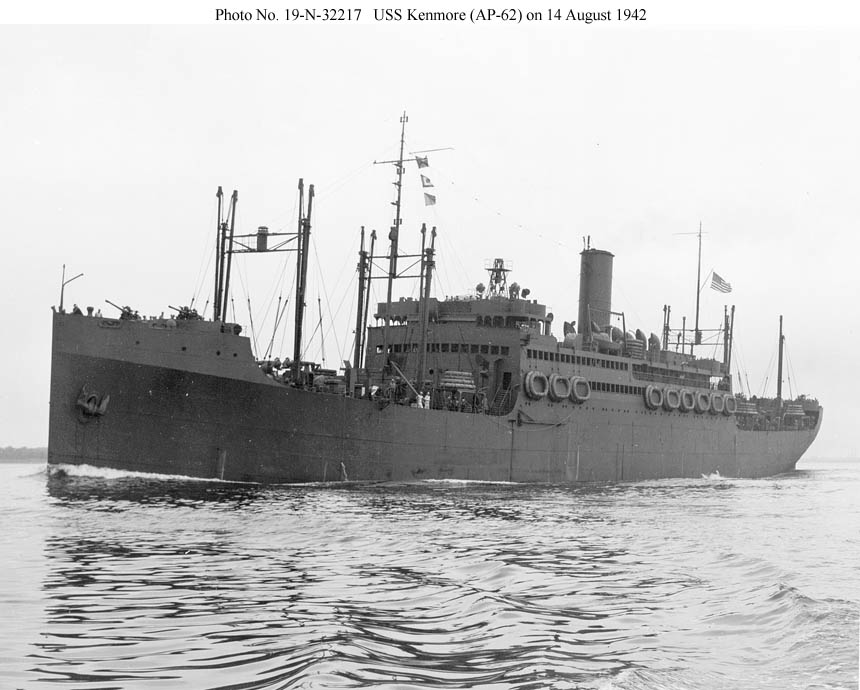
    USS Kenmore (AP-62) on trials in the Chesapeake Bay on August 14, 1942. Shipscribe

    Smith had learned of the ship during a mid-1942 visit to the estate from Lt. Commander William VanC. Brandt (USNR) of the Kenmore, who later wrote to “Miss Annie” to thank her for her hospitality.[4] “All the Officers of the Kenmore,” Brandt told Smith, “were most interested in learning the history and record of the beautiful estate for which our ship is named.”[5] Brandt planned to have framed and displayed in the ship’s wardroom photographs of the property given to him by Smith; later, the vessel’s captain requested a picture of the house for his room.[6] For her part, Smith was “thrilled” to meet Brandt and “to know about your ship,” although she was skeptical enough of the origin of the transport’s new name to write Knox.[7]
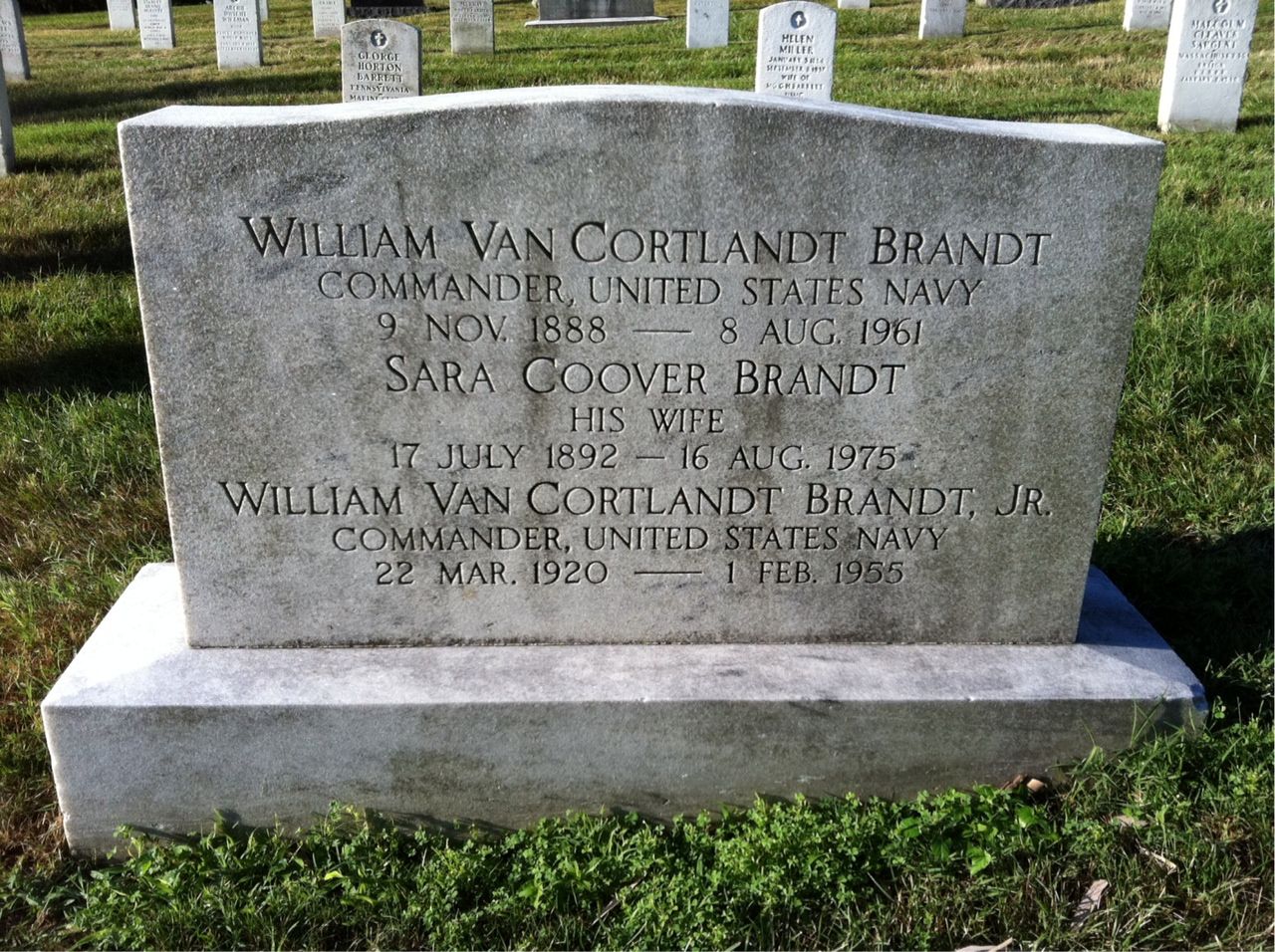
    The Arlington National Cemetery headstone of William VanC. Brandt, from whom Annie Fleming Smith learned that a Navy ship had been named after the historic home she had helped save from development in the 1920s.

    The Kenmore operated primarily in the Pacific until September 1943; she was then converted into a hospital ship and renamed Refuge.[8] The Navy must have liked the name Kenmore, as it was bestowed in October 1943 on another transport, originally called the James H. McClintock.[9] The Kenmore II also served in the Pacific Theater and, after “hostilities ended on 15 August 1945, [began] returning veterans to the U.S.”[10] She was decommissioned on February 1, 1946.[11]

    The Kenmores were not the only vessels named for properties associated with George Washington and his family. The Wakefield (AP-21) borrowed its name from the Westmoreland County birthplace of the first president, today owned by the National Park Service.[12] There have been five Mount Vernons; the first was built in 1859 and chartered by the Navy two years later, before they bought it later that year.[13] The most recent vessel named after Washington’s residence and plantation was a dock landing ship commissioned in 1972 and decommissioned in 2003.[14] The possible birthplace of Mary Ball, George Washington’s mother, lent its name to the Epping Forest, a dock landing ship launched in 1943.[15]

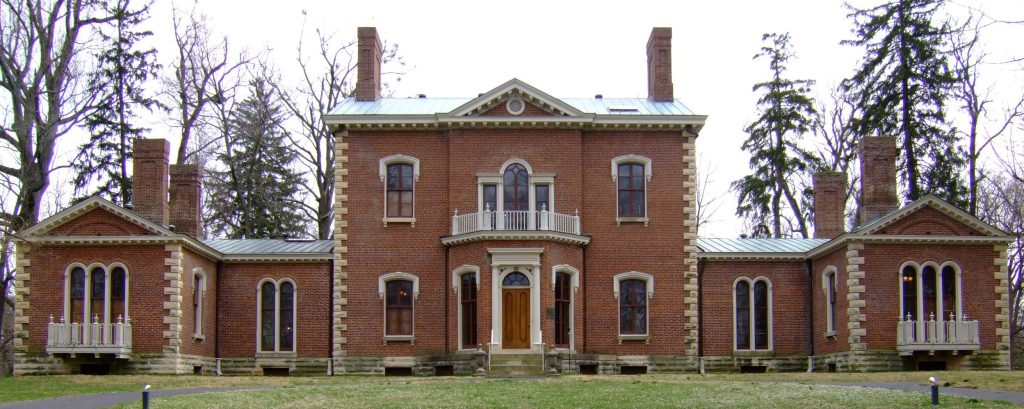
    The monikers of other ships are connected more tenuously to places tied to George Washington and his family. For example, a 1943 submarine chaser was rechristened the Abingdon in 1956.[16] The vessel’s new name came from the town of Abingdon, in Washington County, Virginia (named, yes, for George Washington).[17] According to the county’s official history, “myths claim that [the town] was named for Martha Washington’s ancestral home” in England.[18] While this may be a false etymology, were those who named the ship drawing on the tale when they chose to call the vessel Abingdon? Additionally, the many Arlingtons that have served the Navy over the years have each been named after Arlington County, which draws its appellation from Arlington House, built for George Washington Parke Custis, the step-grandson of his celebrated namesake.[19]

    Arlington Mansion was built by George Washington Parke Custis. Union soldiers posing on the lawn, June 28, 1864.

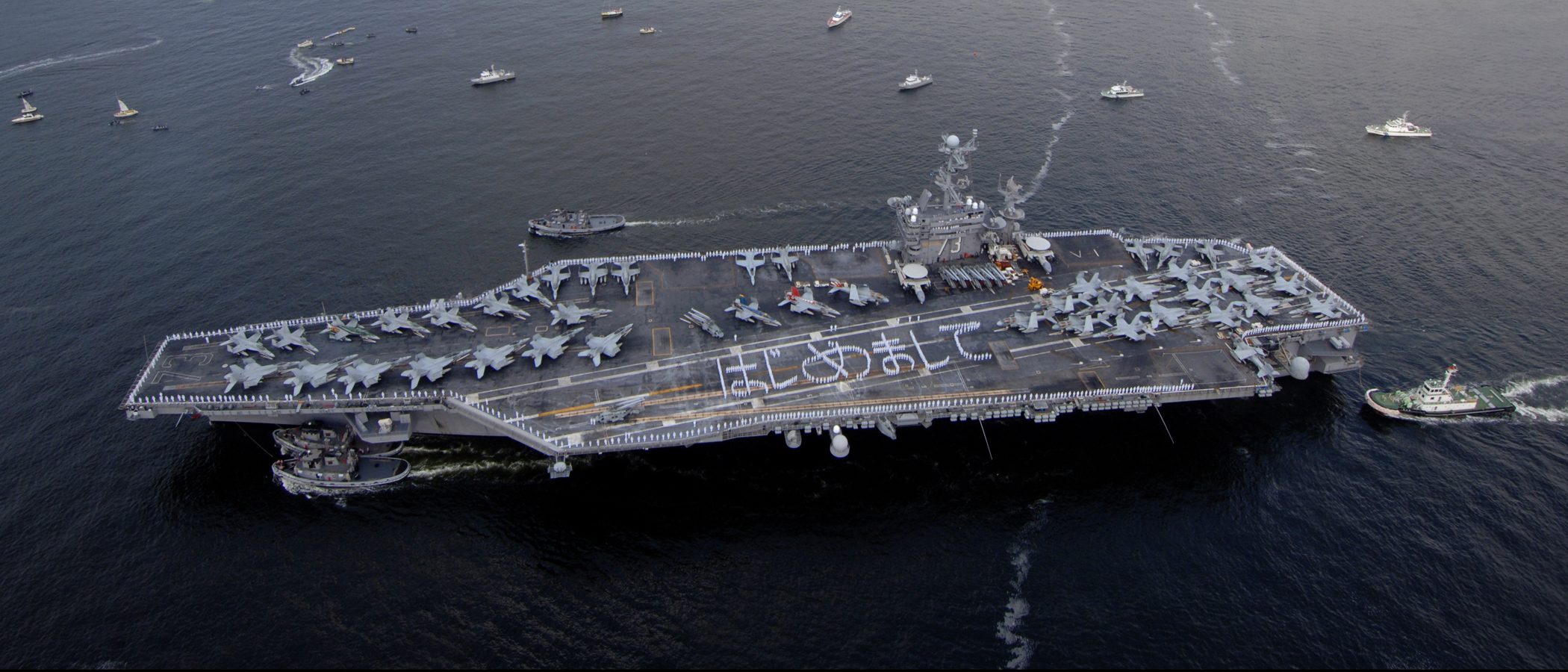
    The Navy’s infatuation with the commander in chief of the Continental Army has, of course, also been expressed by naming ships directly after Washington and his family, not just their properties. While a complete inventory of such vessels is beyond the scope of this post, it is worth noting that four ships have been named the George Washington, including CVN-73, an active nuclear-powered aircraft carrier, while several others have sailed under just his surname.[20] Martha, George’s wife and the nation’s first first lady, has inspired the names of at least two Navy ships: the Lady Washington and the Martha Washington.[21] Civilian shipbuilders have also found inspiration in the Washington family: the SS Mary Ball was a liberty ship active during World War II.[22]
    Who was responsible for naming these ships? As hinted at above, while final authority for ship names was (and still is) the responsibility of the Secretary of the Navy, during World War II, it was the Bureau of Navigation (renamed the Bureau of Personnel on May 21, 1942) that researched and recommend ship names based on the traditional naming conventions associated with each class of vessels.[23]

    Typically, it was dock landing ships, or LSDs, that were named for “cities and places of historical interest of same name, or places of historical interest only.” [24] Epping Forest, Gunston Hall I (named for George Mason’s home), Ashland (for the boyhood home of Henry Clay), Carter Hall (after the Virginia estate), Oak Hill (for the home of President James Monroe), and Shadwell (for the birthplace of Thomas Jefferson) are all examples of LSDs whose names aligned with this convention.[25]

    But the Kenmores, the Mount Vernon IV, and the Wakefield were not LSDs; they were transports, classified AP, and anyone seeking consistency in the Navy’s naming of troop transports during World War II is bound to be disappointed. Some vessels in the AP class were named after celestial bodies, others after Revolutionary War heroes, and others, as we have seen, after historic estates.

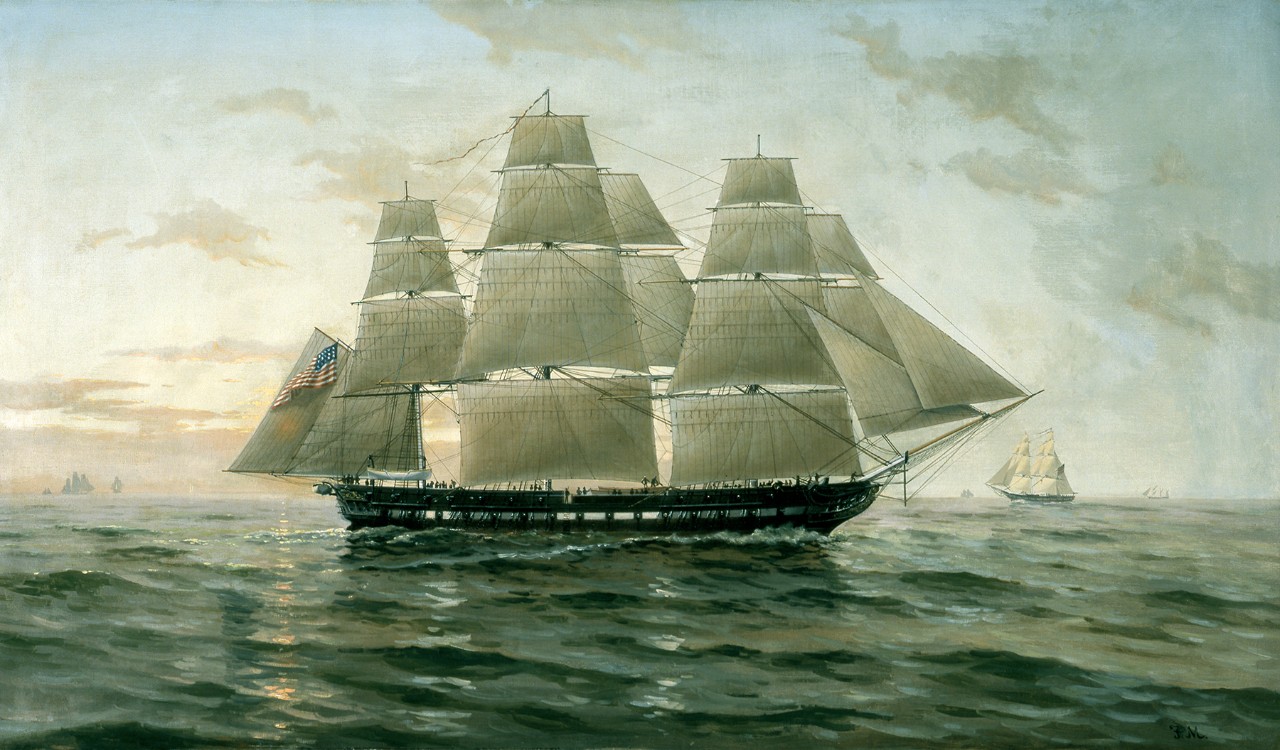
    This lack of consistency is not surprising. After all, when Benjamin Stoddert named the Navy’s sixth ship, a frigate, he chose to call it the Chesapeake, despite President George Washington’s agreement with the recommendation that frigates be named after “principles or symbols found in the US Constitution.” Therefore, “the very first naming decision by the very first Secretary of the Navy resulted in the ‘corruption’ of the established naming convention.”[26] This tradition of flexibility regarding ship names has endured, and ship names continue to excite interest (and occasionally strong feelings) from many parties, including those who propose denominations for new vessels. If you are such a person, here’s an idea: how about another Kenmore, or maybe a Ferry Farm?  


    Adam Nubbe

    Manager of School & Youth Programs


    [1] Smith, Annie Fleming to Frank Knox, July 22, 1942. The George Washington Foundation.

    [2] Naval History and Heritage Command, Kenmore I, ship-naming file, April 13, 1942.

    [3] Ibid; Cressman, R. J. (2020, March 31). Kenmore I (AP-62). https://www.history.navy.mil/research/histories/ship-histories/danfs/k/kenmore.html

    [4] Brandt, William VanC. to Annie Fleming Smith, June 30, 1942. The George Washington Foundation.

    [5] Ibid.

    [6] Ibid; Smith, Annie Fleming to William VanC. Brandt, July 10, 1942. The George Washington Foundation.

    [7] Smith, Annie Fleming to William VanC. Brandt, July 10, 1942. The George Washington Foundation.

    [8] Naval History and Heritage Command, Kenmore I, ship-naming file, April 13, 1942.

    [9] Cressman, R. J. (2020, March 31). Kenmore II (AP-162). https://www.history.navy.mil/research/histories/ship-histories/danfs/k/kenmore-ii–ap-162-.html

    [10] Ibid.

    [11] Ibid.

    [12] Cressman, R. J. (2022, April 1). Wakefield (AP-21). https://www.history.navy.mil/research/histories/ship-histories/danfs/w/wakefield.html

    [13] Naval History and Heritage Command. (2015, August 11). Mount Vernon I (Gbt). https://www.history.navy.mil/research/histories/ship-histories/danfs/m/mount-vernon-i.html

    [14] Pike, J. (n.d.). LSD 39 Mount Vernon. https://www.globalsecurity.org/military/agency/navy/lsd-39.htm

    [15] Naval History and Heritage Command. (2015, July 8). Epping Forest. https://www.history.navy.mil/research/histories/ship-histories/danfs/e/epping-forest.html

    [16] Mann, R. A., & Cressman, R. J. (2023, November 27). Abingdon (PC-1237). https://www.history.navy.mil/research/histories/ship-histories/danfs/a/abingdon.html

    [17] Ibid; Hagy, J. W. (2019, June 10). A Brief History of Washington County, Virginia. Washington County, Virginia. https://www.washcova.com/history/

    [18] Ibid.

    [19] Parsons, L., & Cressman, R. J. (2023, December 13). Arlington I (AP-174). https://www.history.navy.mil/research/histories/ship-histories/danfs/a/arlington-i.html; Arlington, Virginia. (n.d.). History of Arlington. https://www.arlingtonva.us/Government/Topics/Welcome-Kit/History-of-Arlington; National Park Service. (2023, January 12). George Washington Parke Custis. https://www.nps.gov/arho/learn/historyculture/george-custis.htm

    [20] Naval History and Heritage Command. (2020, May 5). Washington VIII (BB-56). https://www.history.navy.mil/research/histories/ship-histories/danfs/w/washington-viii.html; US Navy. (n.d.). USS George Washington (CVN 73). https://www.airpac.navy.mil/Organization/USS-George-Washington-CVN-73/

    [21]  Naval History and Heritage Command. (2016, February 9). Martha Washington. https://www.history.navy.mil/research/histories/ship-histories/danfs/m/martha-washington.html; Naval History and Heritage Command. (2015, July 28). Lady Washington. https://www.history.navy.mil/research/histories/ship-histories/danfs/l/lady-washington.html

    [22] Jobrack, J. (2020, September 10). True or False? Test Your Knowledge of Mary Washington. https://livesandlegaciesblog.org/2020/09/10/true-or-false-test-your-knowledge-of-mary-washington/.

    [23] Calkins, W. F. (1958, July). Down to the sea in ships’–names. U.S. Naval Institute. https://www.usni.org/magazines/proceedings/1958/july/down-sea-ships-names; Naval History and Heritage Command. (2020, June 29). Denfeld, Louis Emil. Louis Emil Denfeld. https://www.history.navy.mil/research/library/research-guides/modern-biographical-files-ndl/modern-bios-d/denfeld-louis-emil.html

    [24] Department of the Navy, A Report on Policies and Practices of the U.S. Navy for Naming the Vessels of the Navy (2012, November), 63. https://apps.dtic.mil/sti/tr/pdf/ADA569699.pdf

    [25] DANFS – Naval History and Heritage Command. Dictionary of American Naval Fighting Ships — Index. (n.d.). https://www.history.navy.mil/research/histories/ship-histories/danfs.html

    [26] Department of the Navy, A Report on Policies and Practices of the U.S. Navy for Naming the Vessels of the Navy (2012, November), 7. https://apps.dtic.mil/sti/tr/pdf/ADA569699.pdf

  • “Your Entire George Washington”: The Affection Between George and Martha

    After George Washington died on December 14, 1799, his wife, Martha, burned all of their correspondence. From the perspective of a historian, her decision devastates. However, it was a common 18th century practice for married couples to burn personal correspondence after the death of one spouse. Perhaps it was a way for the surviving spouse to keep a portion of their loved one to themselves, especially in couples where the public might have a keen interest. Nonetheless, the loss of letters that display affection can often lead to speculation. For example, George Washington never seems to escape rumors about his teenage-crush, Sally Fairfax, as well as the fallacy that he only married Martha for her money. These two claims have been debated by historians practically since George’s death.

    Despite Martha’s efforts to conceal the private life of her and her husband, whether on purpose or on accident, she missed two letters. These letters, both from George to Martha, were found caught behind a drawer in her desk by her granddaughter, Martha Parke Custis Peter, who received the desk as part of her inheritance. The letters were written within five days of each other.

    The Wedding of Washington and Martha Custis (1854) by Junius Brutus Stearns
    Painting in the 1850s, artist Junius Brutus Stearns imagined how the wedding of George Washington and Martha Custis on January  might have looked. Credit: Library of Congress

    In June of 1775, the marriage between George and Martha Washington entered the biggest challenge it ever faced. A month earlier, George had arrived in Philadelphia, after being persuaded to attend the meeting of the Second Continental Congress. While he contributed to several committees, by June the other members of Congress realized Washington’s true value lay in his previous military service during the French and Indian War. George’s fate to serve as Commander-in-Chief of the Continental Army was sealed even though the official announcement wouldn’t come until June 19.

    The day before, on June 18, 1775, George Washington penned a letter to Martha and informed her that, instead of returning to Mount Vernon, he would leave for Boston to take command of the army very soon. In the letter, he expressed his reservations about taking the position of Commander-in-Chief, but also pointed out that it was his duty. He assured Martha “that I should enjoy more real happiness and felicity in one month with you, at home, than I have the most distant prospect of reaping abroad, if my stay was to be Seven times Seven years.” The notion of desiring one month of marital bliss over 49 years anywhere else is certainly a window into George’s true feelings regarding his “dear Patsy”.

    Over the next few days, as he prepared for his departure, George must have thought about his wife and pondered how long it would be until he saw her again. For that reason, he wrote her again on June 23, 1775, only five days later.  A shorter letter, but one that also expressed his true feelings, George wrote “I retain an unalterable affection for you, which neither time or distance can change.” It might seem like poetry or a line from the latest RomCom but, as he penned these words, his country, marriage, and life were each in a precarious position. Perhaps all of this was weighing on his shoulders and he felt the need to express his adoration for his wife. He closed the letter “Yr entire Go:Washington”.

    Throughout history, George and Martha’s marriage has often been questioned. The lack of letters (due to the burning) left little evidence of any affection. Martha was a very wealthy widow when she agreed to marry the young upstart George. Many believe the marriage was strictly strategic. It was true that many marriages and many aspects of marriages in the 18th century were strategic. It was also true that, as a young man, George had eyes for Sally Fairfax. However, the two letters between George and Martha that survive demonstrate the real warmth and adoration George felt for his wife.

    If there is a lack of evidence in letters showing Martha reciprocating George’s affection, there is evidence in other places. Martha is said to have called him “my dearest” or sometimes “old man.” I imagine that during his more stressful moments, like many husbands, George turned to his wife for comfort, advice, and perhaps to just vent. There is evidence that Martha, who was publicly disinterested in politics, made a comment on the final presidential election of her life. Thomas Jefferson, who had been a thorn in George’s side throughout his presidency, stopped at Mount Vernon for the first and only visit he would ever make there. Martha referred to the visit as the “most painful occurrence of her life.” Furthermore, when Jefferson was elected president in 1800, she stated it was the “greatest misfortune our nation has ever experienced.” She despised Jefferson for his years of his opposition to her husband. A wife supposedly indifferent to her husband probably would not feel so strongly about one of his rivals.

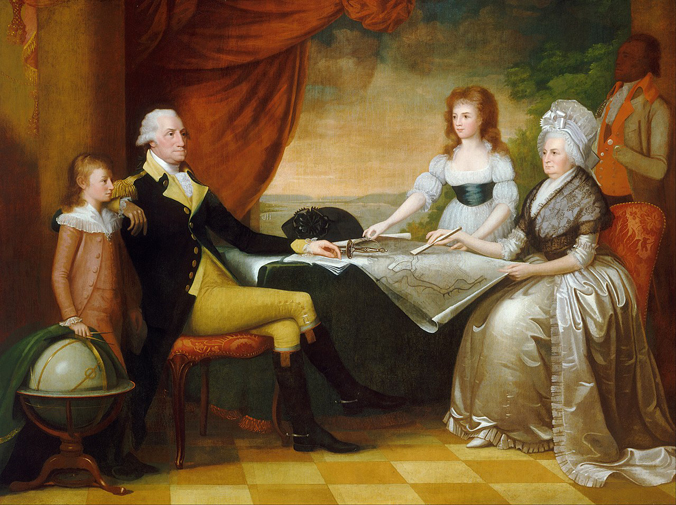
    The Washington Family (late 1790s) by Edward Savage
    The Washington Family (late 1790s) by Edward Savage showing George and Martha, of course. There is also George Washington “Washy” Parke Custis and Eleanor “Nelly” Parke Custis, Martha’s grandchildren and George’s adopted children, as well as an enslaved man, perhaps Billy Lee, George’s manservant or valet. Credit: National Gallery of Art

    The couple would be a little less than a month shy of their 41st wedding anniversary when George died on December 14, 1799.  When he died, he famously uttered the words “’Tis well.” After years of being asked to make sacrifices, years of being separated from her husband for long stretches of time, Martha echoed her husband saying “’Tis well, all is now over. I shall soon follow him. I have no other trials to pass through.”

    Whether you find the few letters and stories of their affection convincing or not, I think it can be agreed that George and Martha’s marriage was one of strength and balance. They completed each other in several ways even though their personalities were quite different. The 6 foot, 3 inch George was the yin to Martha’s 4 foot, 11 inch yang.

    Elizabeth Hosier
    Manager of Interpretation and Visitor Services

  • Introducing Caty: More Than “Merry Laugh…and Lively Wit”

    Editor’s Note: At George Washington’s Ferry Farm, we are always interested in reexaminations of accepted history.  Archaeology is creating new and more complete understandings of George’s Washington’s youth as well as of Mary Washington as a person.  Mary has been both revered and reviled by history but archaeological discoveries at Ferry Farm are painting a more complex picture of her as an independent and intelligent woman facing the world on her own after her husband’s death. Inspired by Mary, Lives & Legacies asked Carin Bloom, Museums Program Associate at Middleton Place Foundation in Charleston, South Carolina and a friend of the blog, to re-examine another independent, intelligent woman in the Washington family’s orbit: Catharine “Caty” Greene.

    George Washington is considered the Father of the United States of America, but long before he and his wife Martha became the parents of the nation, they were parents, both real and surrogate, to several prominent patriots and revolutionaries. For example, much is known of the relationship between General Washington and his Aide de Camp, the Marquis de Lafayette – the affection of a father and son are clear in their communications, both during and after the American War for Independence.

    Nathanael Greene
    Nathanael Greene (1783) by Charles Willson Peale

    The Marquis was not the only one to enjoy the mentorship, tutelage, and friendly affection of the great General Washington. So too did the only other man to hold the rank of General for the duration of the American Revolution: Nathanael Greene. Promoted from the rank of Private in the Kentish Guards, a militia unit raised in his home county in Rhode Island Colony, Greene became the Brigadier General of all three Rhode Island regiments of the Continental Army in the spring of 1775. He quickly became (in turns) a close friend, advisor, and student of General Washington. The two commanders’ relationship is perhaps less well-known outside of academic circles, but it is still well-documented.

    Those relationships aren’t what this blog post is about.

    This blog post began in very much the way that stories from the past often begin – with the great men of the Age and what they did, or how they interacted. Their wives are secondary (if mentioned at all) and are supporting characters in a drama of great ideals and noble causes. In reality, these women were so much more, and their stories are important. While Women’s History and Women’s Studies programs in academia became prominent around the time of the nation’s Bicentennial, there has been relatively little advance or innovation in the study of feminine experiences of historic eras. Now, however, modern social and political climates are bringing women’s stories into focus again, allowing the women of the past to be re-examined once more. Conspicuous among the women of the Revolutionary era being re-examined are the same names we’ve all heard since elementary school – Abigail Adams, Peggy Shippen, the fictional Molly Pitcher, and of course, Martha Washington.

    Incomplete Portrait of Martha Washington (1796) by Gilbert Stuart
    An unfinished portrait of Martha Washington begun in 1796 by Gilbert Stuart.

    Martha and George Washington are revered for many reasons, but little is spoken about their personal nurturing and encouragement of young patriots, the men and women with whom they were surrounded. In fact, they occupied the parental pedestals for both Nathanael and his wife Catharine Greene – but perhaps especially for “Caty”. Orphaned at a young age and raised by a somewhat eccentric aunt, Caty was 19 and newly married when the Revolution broke out. She was tutored and educated in the 18th century society that befit her station, but it seems she wasn’t ready to be a General’s wife. For tutelage she looked to Lady Washington.

    Their mother-daughter relationship blossomed quickly, and Catharine seemed to flourish under Martha’s indulgence. Caty is most often described in terms of her appearance and temperament, “She was a small brunette with high color, a vivacious expression, and a snapping pair of dark eyes.”[1] Her biographer adds, “To men her appeal, like that of her Aunt Catharine, was not simply a matter of flirtation that fed their masculine vanities; deep emotions were touched as well.”[2]

    Carin Bloom as Caty Greene (3)
    The blog post’s author Carin Bloom portraying Caty Green reading from Joe Miller’s Jests, or the Wit’s Vade-Mecum (1739) in the Washington house at Ferry Farm.

    With a description like that, I started to wonder, why don’t we know more about the young Catharine Greene? She was called Kitty as a girl, was known to her husband’s equals and subordinates as Lady Greene, and to her devoted husband as Caty – and no matter what she was called, she became a force to be reckoned with. Her biographers make careful note that she would have grown up in the cradle of the Revolution, listening to the great minds gathering in her uncle’s library discussing politics, self-governance, and eventually open rebellion. An enigma equal to her fighting Quaker husband for her indifference to religious leanings, she is described as a balm of good morale for dour officers and aides: “she laughed, danced, sipped Madeira wine and played cards and parlor games. She engaged in repartee…with perhaps a burst of unladylike glee at a slip of the tongue or double entendre that would have horrified her female counterparts but delighted their husbands.”[3]

    Many of these attributes came naturally to Caty or were self-taught, but her refinement as a true lady of the 18th century came from her time spent with her equals and betters. Specifically, she was looked after by Lady Washington; when other young officers’ wives felt threatened by Caty’s beauty, and exuberance, “Martha was secure in her place in her husband’s heart. Although she knew that the general looked at the beautiful Caty with deep male appreciation, she found no cause for disapproval. Caty was like a daughter to them both. She was accepted for what she was…”[4]

    Carin Bloom as Caty Greene (2)
    Caty Greene (Carin Bloom) pens a letter to husband Nathanael on the escritoire desk in the Hall of the Washington house.

    From the his occasional service as a personal courier for Caty and Nathanael’s letters to one another, to his own assurance of her safe arrival in camp during the Siege of Charleston early in 1782, General Washington’s own words and actions belied his affections not just for his best General, but for Caty as well. Likewise, Martha Washington opened her home at Mount Vernon to Caty, as well as to both Ladies Stirling, Lucy Knox, and a few other officers’ wives, when they could not be with their husbands. It was at these gatherings, presumably around a copious amount of tea, that Caty would have come to understand feminine refinement that would have served her well into old age, and long after Lady Washington was gone.

    Though only one nonfiction biography of the remarkable Catharine Greene has been written, she comes to life with alarming effervescence in its pages. Her abilities to both navigate her world as a cog in the wheel of 18th century society, as well as to stand apart from it and maintain utterly her own identity, were enough to cause me to delve into her world for over a year. As a young woman she was the subject of much gossip; everything from accusations of turning her husband from his Quaker faith in disgrace, to extramarital affairs with his subordinates – none of it managed to stick to her. In her later life Caty was a financier (and now suspected to have been a partner in design) of Eli Whitney and his Cotton Gin, as well as a property-holding single woman until she chose of her own accord to remarry.

    Catharine Littlefield Greene
    Catharine Greene (1809) attributed to James Frothingham

    All in all, this was a woman whose life could be the stuff of Hollywood legend, and yet, in every living history scenario that manages to feature a woman, she is always a Martha Washington, or an Abigail Adams, or a Molly Pitcher – and always in a vacuum. Surely Martha did not spend her days with only her husband and his men, or alone by herself? The past is populated with scores of women, and yet, we rarely see the majority of them come to life. That is my aim in portraying Catharine Greene – to use her life as a vehicle for an immersive experience of a multifaceted past, so much more complex than what we currently understand. George and Martha Washington, Nathanael and Catharine Greene, they weren’t so different from us; as we understand their stories, both individually and as participants in a community, a nation, and a world, we may find new enrichment in our own lives.

    Carin Bloom
    Museums Program Associate
    Middleton Place Foundation

    Trained as an archaeologist specializing in the American Revolution, Carin plans and executes programs at Middleton Place National Historic Landmark in Charleston, South Carolina. She holds a BA (University of Delaware) and two MAs (University of Pennsylvania and Temple University), all in Anthropology with a concentration in Historical Archaeology, and has been working at non-profit historic sites for over a decade.  She has studied Catharine Littlefield Greene extensively and enjoys bringing Caty to life at living history events up and down the east coast, as well as working in classroom settings with school programs and summer camps.

    Carin Bloom as Caty Greene (4)

    [1] 1871 – Greene, George Washington. The Life of Nathanael Greene, 3 vols, Cambridge. Vol 1, pg. 72.

    [2] 1977 – Stegeman, John F. and Janet A. Stegeman. Caty: A Biography of Catharine Littlefield Greene, pg. 8, University of Georgia Press.

    [3] 1977 – Stegeman, John F. and Janet A. Stegeman. Caty: A Biography of Catharine Littlefield Greene, pg. 26, University of Georgia Press.

    [4] 1977 – Stegeman, John F. and Janet A. Stegeman. Caty: A Biography of Catharine Littlefield Greene, pg. 58, University of Georgia Press.