Lives and Legacies

Tag: medicines

  • Winter Ailments (and how to endure them in the eighteenth century)

    As spring approaches in the Middle Atlantic and Northeastern states, we welcome the chance to spend more time outdoors in the fresh air instead of cooped up in our houses – getting sick.  Ailments such as colds and flu are contractible anytime, but we usually associate them with the wintertime as that’s when they seem to be more prevalent.
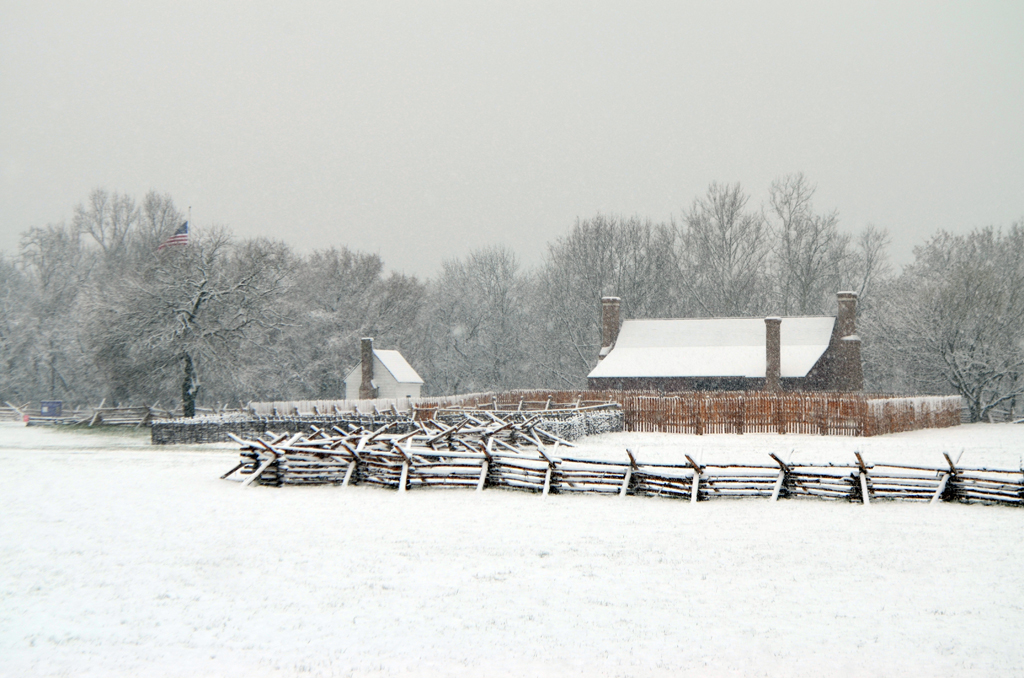
    Ferry Farm during winter storm

    With modern medicine, we can easily treat and overcome these and other more serious illnesses that rise up during the colder months.  People living in the eighteenth century, however, did not have the luxury of our scientific knowledge of modern medicines, and so what is easily treatable today could be, and often was, deadly during their lifetime. They had to deal with serious diseases, such as dysentery, measles, mumps, smallpox, rickets, typhus, typhoid, tuberculosis, and yellow fever, without the benefit of antibiotics. 

    Medical treatments for dealing with illnesses in the eighteenth century were primarily herbal remedies and traditions passed down over the centuries in medical books or as local knowledge. People like the Washington family probably relied on local healers, apothecaries, physicians, or midwives in the Fredericksburg area to prepare the medicines and treat their illnesses.  It is also very likely that Mary Washington would have had the knowledge herself to oversee the formulation of cough syrups, laxatives, and other tinctures using the herbs and flowers in her own garden. Betty Washington Lewis, Mary’s daughter, owned a copy of Eliza Smith’s 1739 The Compleat Housewife: or, Accomplished Gentlewoman’s Companion, a cookbook, in which are explicit medicinal recipes for dealing with hysterics, the vapours, pain from stones, the plague, upset stomachs, a cancerous breast, consumption, and for ‘preserving the lungs,’ among other things.[1]  The chances are pretty good her mother Mary also had access to this same recipe book.
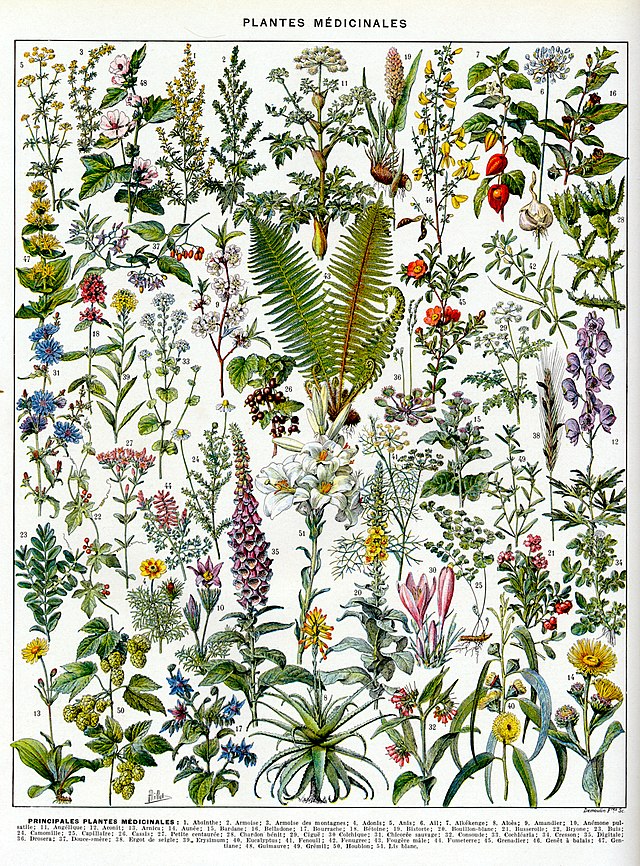
    We do not have any historical information on the childhood diseases or winter ailments that were present in the Washington home, but here are two that they might have experienced.

    Pneumonia
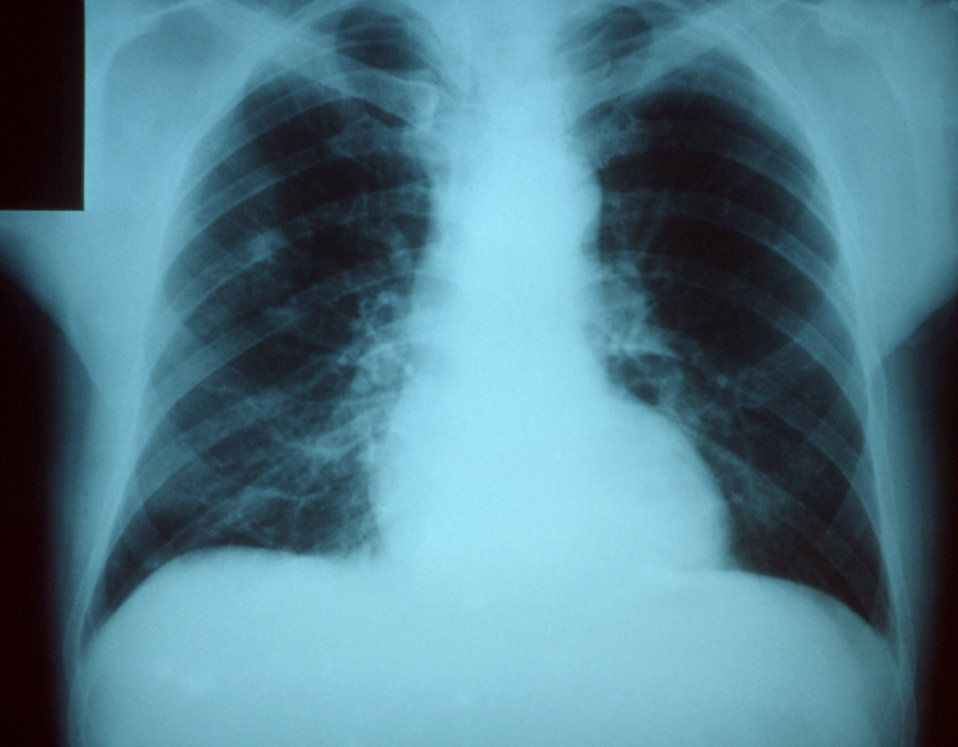
    Anteroposterior chest x-ray revealed right upper lobe pneumonia. Credit: Public Domain Files

    Pneumonia, a bacterial infection of the lungs, also known as ‘Winter Fever’, was a great concern in colonial Virginia.  Although it was not known as a disease in and of itself but rather a symptom of other illnesses until much later, the presence of this respiratory ailment was noted by colonists. 

    Pneumonia and many other such illnesses were prevalent in the winter months when conditions forced people inside with closed windows and doors.  Prior to modern home climate-control technology, windows and doors were opened in good weather to create a breeze that cooled down a house but also served to air it out.  Additionally, many activities we perform indoors today took place outside, such as laundry and food processing, which got people out in the open more.  When the weather turned cold, however, people were stuck inside with little ventilation and essentially stewing in their own germs.  As such, pneumonia spread rampantly throughout the winter, and with no antibiotics, it was often deadly especially for the young and elderly. 
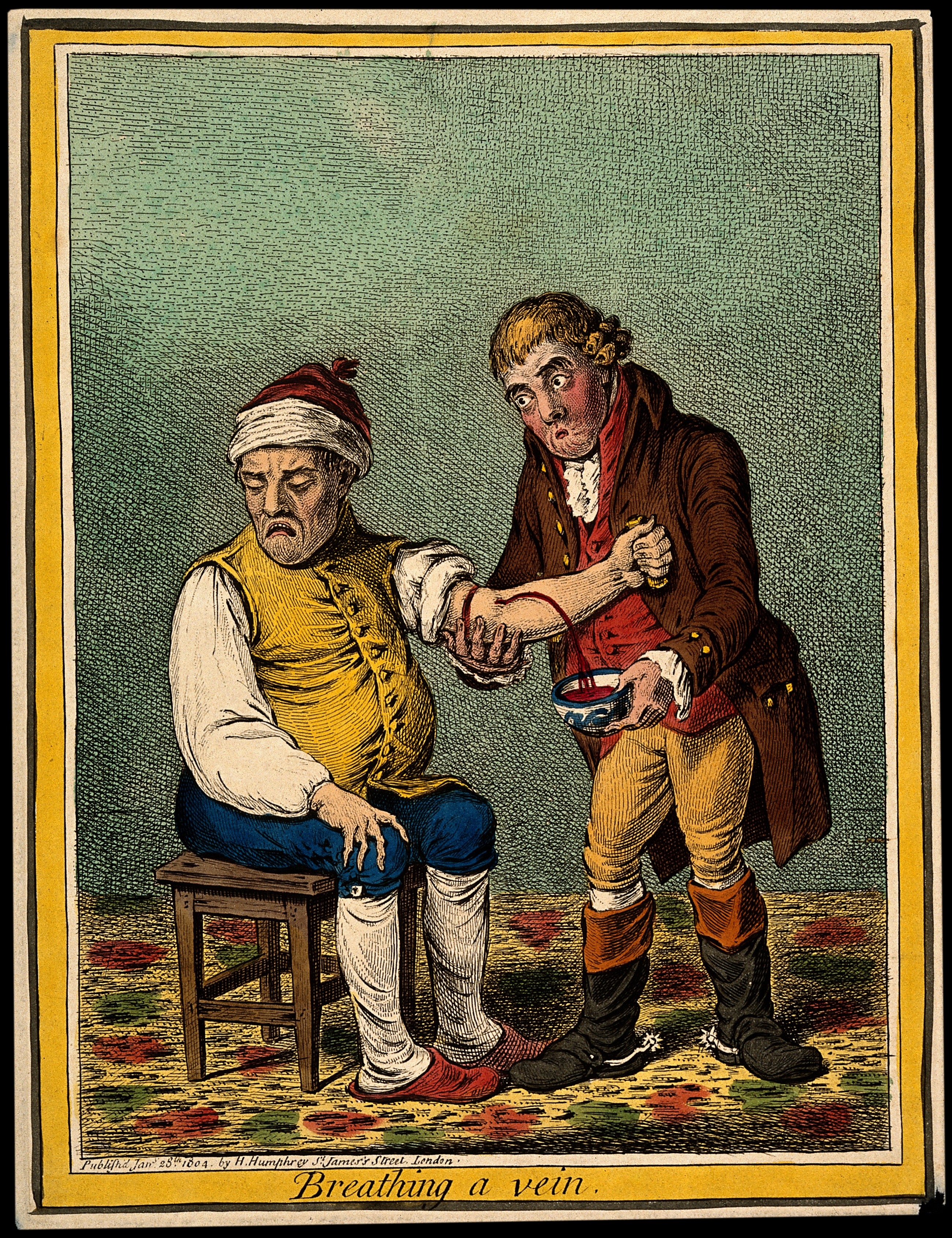
    An ill man who is being bled by his doctor. Credit: Wikimedia Commons

    The commonly incorrect assumption at the time was that many illnesses resulted from bad smells or miasma. Bloodletting, laxatives, and emetics were justified treatments for almost anything wrong with you because it was essential to purge and expel the bad blood and humours from one’s body.  In general, these treatments did more harm than good and, in some cases, killed the patient.

    In addressing the symptoms of pneumonia (fever, cough, inflammation of the lungs), a mixture of treatments would have been proscribed for the patient.  Cough syrups recipes were many and concocted from a wide variety of aromatic herbs infused in flavored waters, honey, or liquor. Opium in the form of poppy leaves was also a common ingredient.  Additional treatments included bloodletting “8 to 10 ounces if strong 12 ounces” and applying ‘blisters’ on the back of their neck to promote sweating and to help with a headache.[2]  Blistering was an aggressive treatment to the skin and essentially created pain in one spot to counteract pain elsewhere. A blistering agent, such as mustard, capsicum, or Spanish Fly, was applied in a poultice to the skin, causing redness and, in extreme cases, a raised pus-filled blister.[3] The cure might have been worse than the disease!

    Scientists have since made great breakthroughs in treating pneumonia, including the invention of penicillin by Alexander Fleming in 1928.  Yay science!

    Rickets
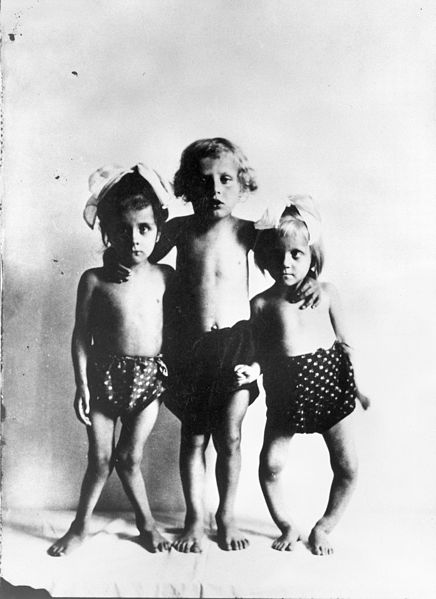
    Three children displaying signs of rickets. Credit: Wellcome Collection

    Bowed legs, thickened wrists and ankles, low weight, and deformities of the skull and pelvis are all signs of Rickets, a common disease of the 18th century and prevalent during the winter months.  Rickets is caused by a lack of Vitamin D in a child’s diet, leading to soft, weak bones that don’t mineralize properly. The symptoms of rickets usually appear between the ages of 3 to 18 months, and if caught early, the disease is reversible by ensuring a proper diet of Vitamin D-rich foods (fatty fish, egg yolks, fish oil) and exposure to sunlight.

    Eighteenth-century physicians knew about the disease and discussed the symptoms and possible remedies in their medical books, but they didn’t understand the actual cause (Vitamin D deficiency) and, therefore, how to cure it. And although Rickets is often associated with children living in poverty with limited diets or restricted to sunless living and working conditions, it affected children of all socio-economic levels.

    Mother holding a child with symptoms of rickets in Christ at the Pool of Bethesda by William Hogarth (1697–1764) Credit: Barts Heritage

    John Freke, in his 1748 book “An Essay on the Art of Healing,” felt that the diet of the children affected by Rickets was “in general too luxuriant” and should be scaled back to a more austere diet than ordinary.[4]  “Care should be taken to send this sort of Children into a sharp Air,” and “rousing their Blood by shaking and tossing them often, giving them now-and-then a little red Wine, and dipping them every Morning in cold Water.” He was spot on to suggest letting them play outside in the sun, but restricting their diet would certainly have had a deleterious effect on the patient.

    The 1710 Book of Physick was a recipe book of natural remedies using plants and minerals to cure the everyday ills and complaints of the sick.[5] The first step incurring rickets was to administer a “purge,” which was a drink that flushes everything out of your digestive system by either vomiting or diarrhea.  Purgatives were seen as a cure-all for many diseases because the prevailing thought was you had to expel whatever was making you sick out of your body.

    The recommended purge was made of a long list of plants, including liverwort, speedwell, and yarrow, mixed with fruits such as figs and raisins, all slowly simmered together in water. Dosage was three spoonful’s every morning and night for 14 days.

    Next on the list was bloodletting, of course! Just a prick on the ear would do the job, or leeches behind the ears! What is interesting is that this instruction was immediately followed by a reference to the page on how “to staunch bleeding.”

    Not all remedies had to come from physician’s books but could be found in publications geared towards laymen.  The Servants Directory, Improved; or House-Keepers Companion, published in1762, was an instruction manual on all things household, ranging from how to kill rats, clean furniture, wash silk stockings to the best way to cook parsnips.   Included in a chapter on the care of small children was a cure for a Rickety child.  The first suggestion was to give the child three doses of a gentle physic, or purge, similar to the 1710 Phisick book.  Next, rub the child with a concoction of smashed garden snails and liquor every day for a month.  Outside exercise was also recommended, thank goodness![6]

    If the 18th century rickety child could survive multiple purges, bloodletting, a restrictive diet, vigorous body rubs with bug juice, and occasional sun exposure, who’s to say which treatment was the one that was most effective (Just kidding)!  Progress in studying the causes and treatments of Rickets culminated in the early 20th century when it was clearly shown the benefits of using sources of Vitamin D, such as cod liver oil and sun exposure, in curing rickets.[7]
    If you are interested in medical history see our other blog posts on mercury, patent medications, Civil War medicines, Civil War hospitals, bad medicines, homemade medical remedies, dental care and smallpox.

    Judy Jobrack

    Staff Archaeologist

    Mara Kaktins, Archaeologist

    Ceramic & Glass Specialist


    [1] Eliza Smith, The Compleat Housewife: or, Accomplished Gentlewoman’s Companion, J. and J. Pemberton, 1739, pgs. 240-250.

    [2] A Book of Phisick. Made June 1710, p. 46. Wellcome Collection. Public Domain Mark

    [3] Souter, Keith. Bleed, Blister, Vomit and Purge. July 23, 2015. https://westernfictioneers.blogspot.com/

    [4] Freke, John. An Essay on the Art of Healing, p. 247-248. 1748. https://play.google.com/books/reader?id=H_o1AQAAMAAJ&pg=GBS.PA246&hl=en

    [5] A Book of Phisick, pg. 92-93.

    [6] The Servants Directory, Improved; or, House-Keepers Companion. H. Glass. Fourth Edition, 1762. Reprinted 2001 by United States Historical Research Service.

    [7] O’Riordan, Jeffrey and Olav Bijvoet. Rickets before the discovery of vitamin D. Published online 2014 Jan 8. https://www.ncbi.nlm.nih.gov/pmc/articles/PMC3899557/

  • Bad Medicines: Mercury and Self-Medication in the Civil War

    During the Civil War, George Washington’s Ferry Farm was the site of Union Army encampments that included some defensive works like a trench dug into the crest of the ridge overlooking the river.  In that trench and throughout Ferry Farm’s landscape, Union soldiers lost and threw away a wide array of military gear and personal belongings, which our archaeologists frequently excavate.

    Civil War Trench
    Excavated area containing the footprint of the 18th century Washington house at Ferry Farm and showing a 19th century Civil War trench running the length of the house and beyond.

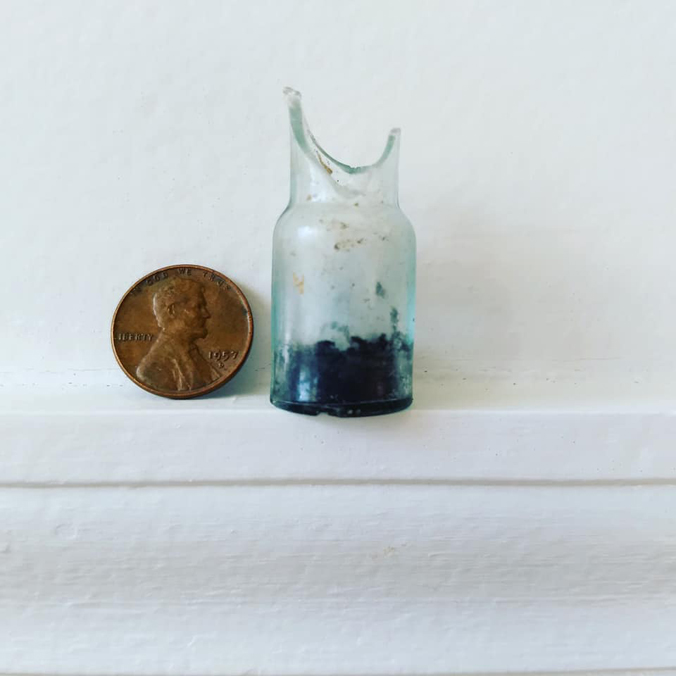
    This blog post highlights an intriguing artifact excavated from the trench: a diminutive glass bottle.  This bottle is not so much interesting because of what it is – it’s a very common medicine style bottle for the mid-19th century– but rather what’s inside.  Clearly visible within the bottle is a hard black substance and for years we’ve wondered what the substance may be.

    Medicine bottle containing mercury residue
    Medicine bottle excavated by archaeologists at George Washington’s Ferry Farm and containing an mystery residue.

    Enter Ruth Ann Armitage, our amazing chemist friend from Eastern Michigan University.  Over the years, she and her colleagues have generously used their extremely fancy equipment to analyze many of the residues we’ve recovered archaeologically. So we chipped off a little fragment of the substance in the bottle and sent it to her lab.

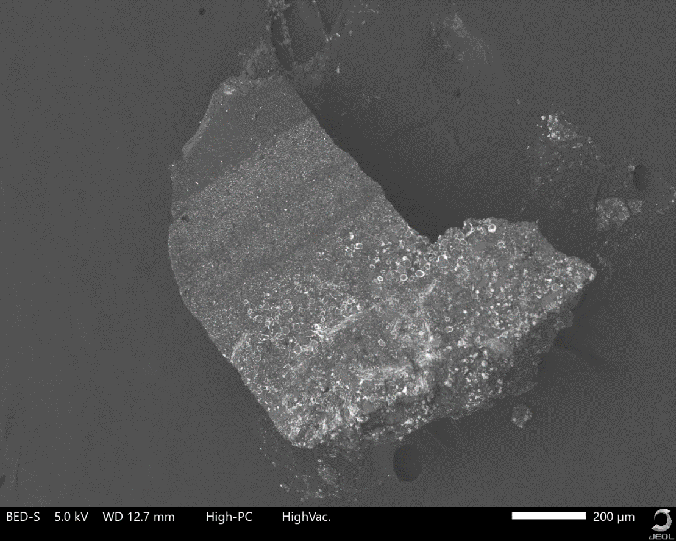
    The sample was analyzed using scanning electron microscopy (SEM).  SEM works by shooting a beam of electrons at the sample, which gives you an image of its surface topography.  Backscattered electrons (BSE), collected in a different detector, tell you about the elemental composition.  In a BSE image, the contrast in the image is related to the atomic number of the material, with brighter areas showing high number elements (usually metals) and darker areas representing low number elements (like carbon). X-rays are also produced when the electron beam hits the sample, so an x-ray detector allows the chemist to do energy dispersive x-ray spectroscopy (EDS) to map out specifically what elements are present in the sample.  To put it simply, all of these techniques are good at alerting the chemist to the elements within a residue.

    Our sample was also run through DART (direct in real time) mass spectrometry.  This technique is good at detecting organic components within a substance.  It’s important to note here that this is not an episode of CSI and a reading does not automatically tell you what is in the bottle.

    Mercury residue analysis 1
    A magnified image BED of sample, which is clearly stratified with darker low atomic number elements such as carbon at the top. The brighter areas represent higher atomic number elements, in this case, mercury.

    That being said, almost immediately, Ruth Ann responded and we weren’t disappointed: “Did you know there’s mercury in this?”  Nope, we did not.

    However, this discovery was not too surprising given the use of mercury in many medicines for thousands of years.  Now a days it’s common knowledge that you shouldn’t drink mercury…or touch it…or inhale it.  Believe it or not many people did not accept mercury’s dangers until well into the 20th century.  Some people born in the 1980s and before might even remember playing with the little balls of mercury from a broken thermometer, am I right?  As weird as it seems this wasn’t that dangerous because mercury is not toxic in such small concentrations.  However, if you were born a little further back you may remember a substance called calomel (mercury chloride), which was marketed as a cure all. Perhaps most tragically, it was as a common teething medication for children until the 1950s.  For a long time, mercury was seen as a potent healing metal and it was readily rubbed on skin, consumed, and vaporized for immediate effect on the lungs.

    And while all of these treatments using mercury did little to address the body’s medical problem, mercury still caused an immediate bodily response, which convinced people it was working to cure their ailments.  When applied topically, it burned. When introduced into the body, it caused a person to sweat, salivate, and have diarrhea. The mucous membranes also went into overdrive, leading many to believe that the bad stuff in your system making you sick was being purged by the mercury.   The reality, of course, was that the body was trying desperately to rid itself of poison, the mercury.  That being said, mercury does actually have a place in the medical world and can be useful, it just took a little while for people to learn how to properly utilize it.

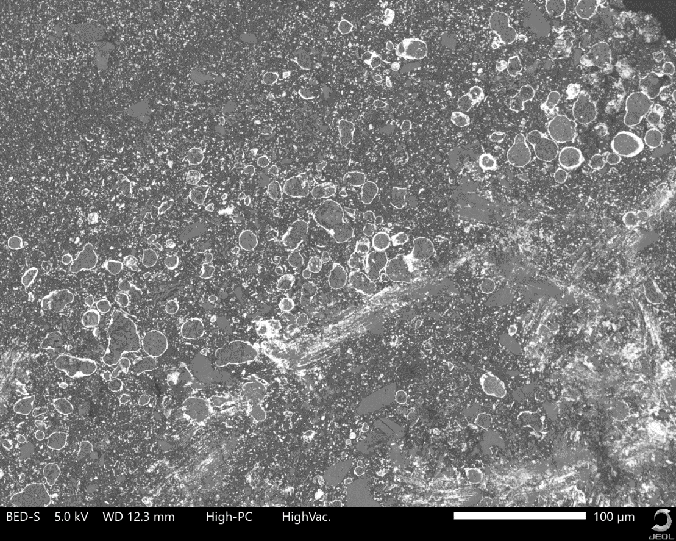
    So, if the residue inside our bottle was medicine, what medicine was it?  Initially our archaeology lab thought it was calomel but the chemical analysis didn’t show any chlorine.  The most interesting components were mercury and sulfur, which could possibly indicate cinnabar, the ore from which mercury is obtained.  The image below is a close up of the mercury and shows the sulfur (dark circles) surrounded by the brighter mercury.

    Mercury residue analysis 2

    Other elements detected include carbon, oxygen, and trace amounts of iron, silica, and aluminum.  A closer look at the DART analysis suggests that the mercury compound might be in the dried remains of a fat or oil based on the presence of substances that form when fats decompose over time.

    What does all this mean?  Unfortunately, without more research, it’s hard to say what was in the bottle other than the basic components already detected.  Because it’s a medicine bottle, our assumption is that the residue it contains was a treatment of some sort in which case we’re dealing with a soldier who had an ailment.  Common Civil War-era uses for mercury-based medicines were treating skin sores and lacerations, internal and external parasite infections, syphilis, and constipation, to name but a few.

    What is even more interesting is that a nearly identical bottle which also contained a hefty amount of mercury was recovered across the river just a few years ago by Dovetail Cultural Resource Group from another Civil War context.  Read more about their discovery here.

    Soldiers throughout history are known to have carried their own medicines with them so it’s very cool to see actual physical evidence of that.  As to the exact medicine, perhaps we’ll know someday but for now let’s just say it was definitely bad medicine.

    Mara Kaktins, Archaeologist
    Archaeology Lab Supervisor

  • Bad Medicines: Mrs. Winslow’s Soothing Syrup

    It’s hard to believe that there was once a time when products weren’t covered in labels listing all their ingredients in great detail. We are used to labels promising the absence of unhealthy chemicals. We are accustomed to labels warning when a product was packaged in the same facility as an allergen. Product safety is serious concern of manufacturers and customers. We, as a society, are growing increasingly aware of what is going into our bodies.

    Label with an allergen warning

    Before the creation of the Food and Drug Administration (FDA) in 1906, products did not carry ingredient labels. Regulations on medicines were especially lax, compared to today. In this blog, we begin exploring historic cases of “bad medicines” that were used by someone living or working either at Ferry Farm and Kenmore long before federal regulations came into play. Medical history is a profound example of how even well-intentioned people can make lasting and deadly mistakes.

    People have lived at or worked on Ferry Farm for over 300 years. We have archaeologically excavated hundreds of thousands of artifacts from the 18th and 19th centuries. Among these artifacts are fragments of glass in all shapes and sizes. Many are bottle fragments- 47,926 of them to be exact. We can’t always determine the function of a bottle from the fragments found, but when we do find enough pieces to identify the bottle’s function, we excitedly begin research into its use.

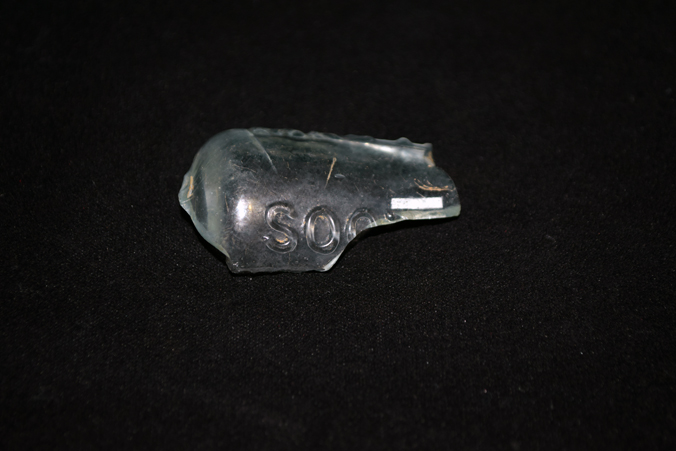
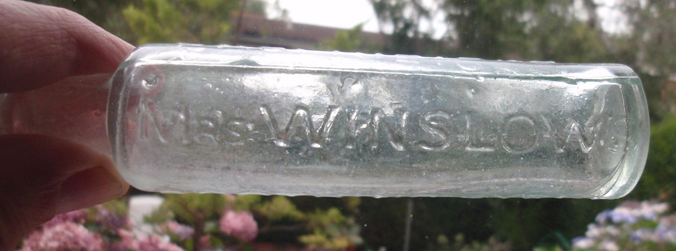
    One such artifact is a larger piece of a patent medicine bottle, one that was large enough to make out the embossed lettering on the side and identify its former ingredients. The bottle contained Mrs. Winslow’s Soothing Syrup, first marketed in 1849. Its basic contents were morphine and alcohol so, I suppose, the soothing part of the name was indeed correct.

    Fragment of Mrs. Winslow's Soothing Syrup bottle
    Mrs. Winslow’s Soothing Syrup bottle fragment excavated at George Washington’s Ferry farm.

    Complete Mrs. Winslow's Soothing Syrup bottle
    Complete Mrs. Winslow’s Soothing Syrup bottle. Credit: P0mbal / Wikipedia

    Today, Avinza® is a common morphine sulfate medication prescribed to patients suffering chronic pain. The FDA has covered its bases on the use of this medication, thoroughly describing how to take this medication without dying. One section very forcibly states:

    “Swallow AVINZA whole. Do not cut, break, chew, crush, dissolve, snort, or inject AVINZA because this may cause you to overdose and die.” [1]

    What is the recommended dosage for this medication, you ask? Around 60 mg of this morphine sulfate PER DAY for an adult. [2] Mrs. Winslow’s soothing syrup contained a whopping 65 mg of morphine PER OUNCE with slack rules on exactly how many drops to give to a teething infant.

    You read that correctly folks – a teething infant.

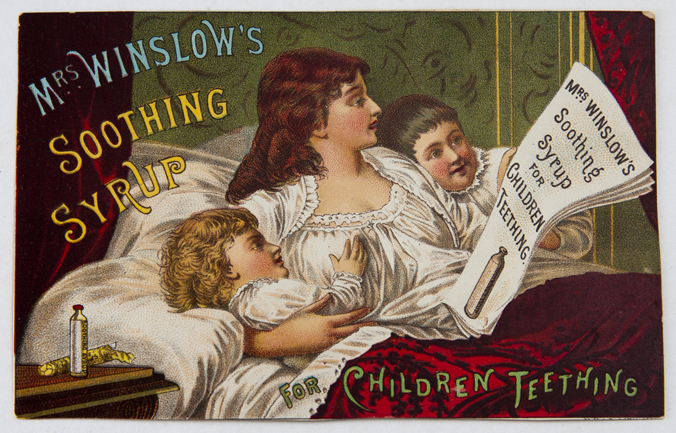
    Mrs. Winslow's Soothing Syrup advertisement 1
    Advertisement for Mrs. Winslow’s Soothing Syrup. Credit: Museum of Health Care at Kingston

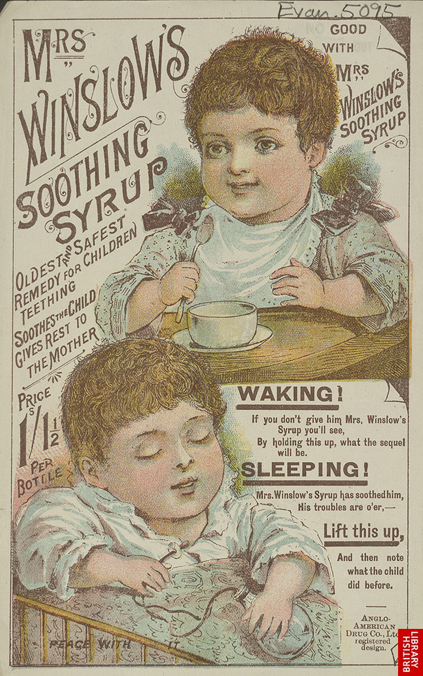
    Mrs. Winslow's Soothing Syrup advertisement 2
    Advertisement for Mrs. Winslow’s Soothing Syrup. Credit: The British Library

    Mrs. Winslow’s Soothing Syrups and other such 19th century medications led to the deaths of thousands of infants. Several children died from withdrawal symptoms after having taking the medication for an extended period of time, but most simply fell asleep never to wake up. Knowing little about drug reactions at the time, and due to the higher infant mortality rates in the 19th century, the cause of the deaths were often blamed on “crib death” (Sudden Infant Death Syndrome or SIDS) or whatever ailment that was causing the child to be fussy enough to drug in the first place.

    It wasn’t until 1905 when investigative journalist Samuel Hopkins Adams exposed the unregulated world of patent medicines in The Great American Fraud.

    This publication attacked every type of patent medicine with testimonies from doctors and patients as well as scientific reports from trusted sources. In the section aptly titled “Baby Killers”, Adams detailed how various “soothing syrups” led to infant deaths from the mid-1850s to 1905.

    Shockingly, Mrs. Winslow’s Soothing Syrup wasn’t the most deadly such syrup in terms of morphine content. Irreparable damage had been caused by all of the different morphine cocktails available on the market in the 1800s. As grieving parents began to realize what had actually happened to their children, these products were taken off the market.

    With an enraged public and 509 pages of proof from Samuel Hopkins Adams, Congress enacted the Pure Food and Drug Act in 1906, creating the FDA to ensure the safety of American food and medicines.  Still, reports of child death caused by soothing syrups persisted until 1910.

    [1] https://www.fda.gov/media/116920/download

    [2] https://www.rxlist.com/avinza-drug.htm#dosage

  • The Fly …uh, Snail… in the Ointment …Pot

    It’s flu season again.  And for most of us who get sick that means a trip to the doctor, perhaps some prescribed medicines, and lots of rest.  But what did George Washington do when he got sick?  Although most of us likely think of our first president as perpetually healthy and strong, he was actually stricken by quite a few serious illnesses in his lifetime, many of which occurred while he was growing up at Ferry Farm.

    Mary, George’s mother, had a few options when caring for her sick children but a hospital was not one. They did not exist yet.  The most expensive solution was to call a doctor (Back then, they came to you. You do not go to them).  Most people could not afford a doctor’s visit, however, and many distrusted doctors as being worse than the diseases they cured.  This fear of doctors was somewhat justified given that George ultimately died of an illness he could well have survived had he not been bled to death by his doctors.

    An ill man who is being bled by his doctor. Coloured etching by J. Sneyd, 1804, after J. Gillray
    “An ill man who is being bled by his doctor. Coloured etching by J. Sneyd, 1804, after J. Gillray.” by James Gillray. Credit: Wellcome Collection. CC BY

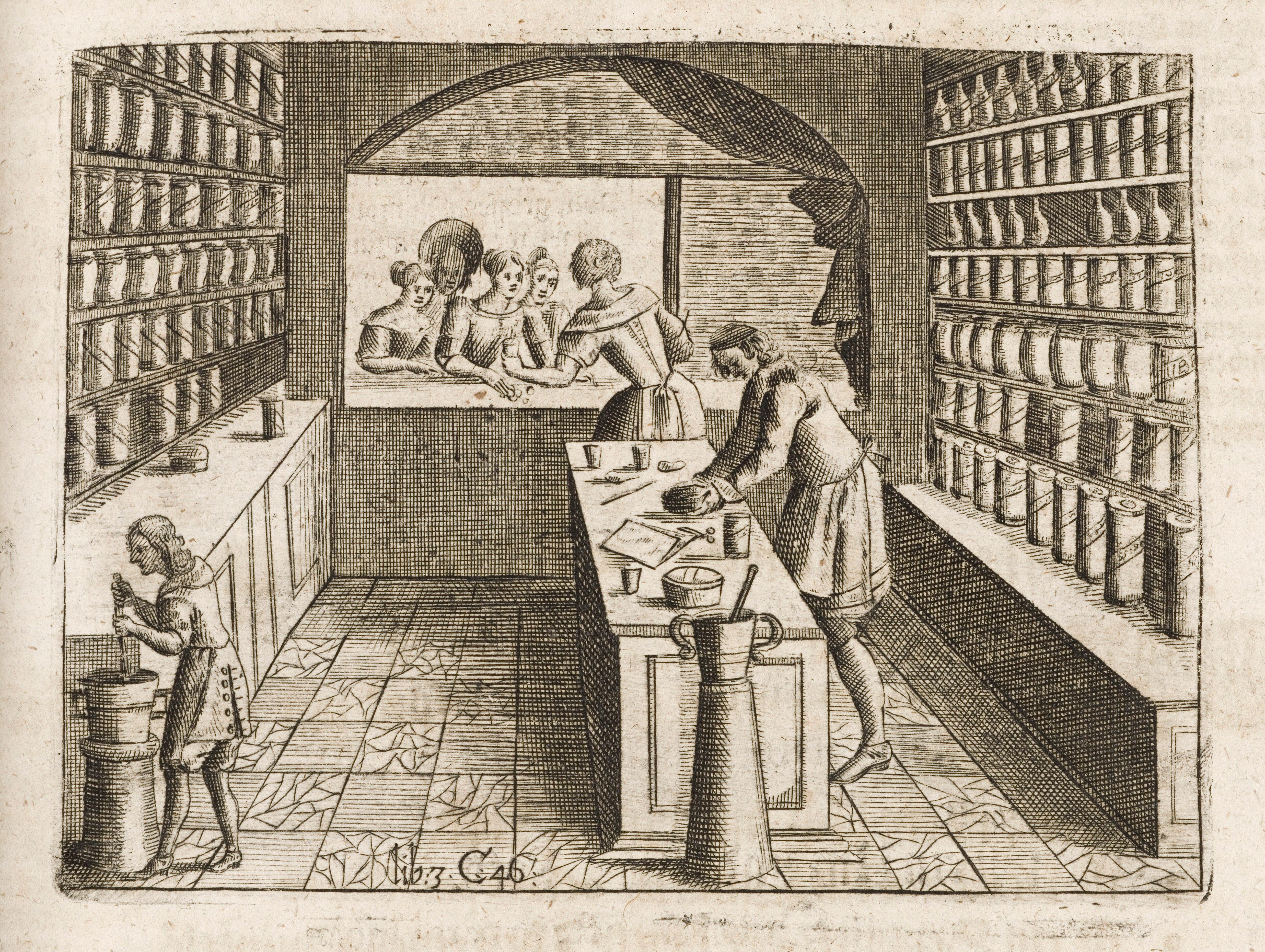
    Option number two was to visit a pharmacy.  Now, we’re not talking Walgreens.  Think smaller and jars full of leeches.  Anyone could visit an 18th century pharmacy without any kind of prescription or referral. If you had the money, you could purchase whatever ‘cure’ you wanted.  The pharmacist was not necessarily a medical professional and may or may not have been good at diagnosing whatever illness you had. That didn’t mean you couldn’t walk out of a pharmacy with any and all manner of odd concoctions that cured you or did not cure you.  For instance, folks were awfully fond of self-treating with mercury tinctures until well into the 19th century, which we now know to be a colossally terrible idea.

    Michel Schuppach in his pharmacy examining a young woman's urine who is seated opposite him awaiting the result. Line engraving by B. Hübner, 1775, after G. Locher, 1774
    ‘Michel Schuppach in his pharmacy examining a young woman’s urine who is seated opposite him awaiting the result. Line engraving by B. Hübner, 1775, after G. Locher, 1774.’ by Gottfried Locher. Credit: Wellcome Collection. CC BY

    Another popular option was to make your own medicines at home.  Recipes for cures were passed down through word of mouth and many households had herb gardens containing medicinal plants, many brought with colonists from Europe.  There were also a number of books available that divulged the secrets of pharmacopoeia.  Many of the medicines described in these books sound like things a storybook witch might brew up.  One such tome available to Mary Washington was Thomas Fuller’s Pharmacopeia Extemporanea, published in 1710. It contains remedies such as ‘Pectoral Snail Water’, said to be good for “Erratic scorbutic Fevers, Flushings, flying Pains of the Joynts, hectic wasting of Flesh, and Night-sweats”.  The delicious-sounding ingredients were as follows:

    “Snails beaten to mash with their Shells 3 pound
    Crumb of white Bread new bak’d 12 ounces
    Nutmeg 6 drams
    Ground-Ivy 6 handfuls
    Whey 3 quarts; distil it in a cold Still, without burning
    One half pint brandy”

    One can only assume that the last ingredient was to help the mashed snails go down.

    We do have evidence showing the use of home medicines at Ferry Farm in the form of numerous ointment pots.  At least half a dozen have been identified thus far.  Ointment pots were used for holding various medical or cosmetic unguents likely made at home.  Generally, such pots were fairly plain with a rolled or flared lip used to secure a textile, hide, or paper lid with a string.

    Judging by their lack of use wear, the pots recovered at Ferry Farm were used for storage, not for actually manufacturing medicines.  The act of stirring or grinding substances in the pots would have resulted in microscopic striations or scratches in the glaze and these are absent in the Washington family ointment pots.  However, they do indicate the storage of medicines at Ferry Farm.  Given the nature of home remedies in the 1700s, one’s imagination can run wild thinking of all the interesting concoctions that they may have held!

    Mara Kaktins, Archaeologist
    Archaeology Lab Supervisor

    Further Reading

    Fuller, Thomas. Pharmacopoeia extemporanea : or, a body of prescripts. In which forms of select remedies, accommodated to most intentions of cure, are propos’d. London. 1710.

    Hume, Ivor Noel.  A Guide to the Artifacts of Colonial America.  University of Pennsylvania Press, Philadelphia.  2001.

    Hume, Ivor Noel.  Early English Delftware from London and Virginia.  Colonial Williamsburg Foundation, Virginia.  1977.

    Mellor, Maureen.  Pots and People that Have Shaped the Heritage of Medieval and Later England.  Ashmolean Museum, Oxford.  2000.

    Skerry, Janine E. and Suzanne Findlen Hood.  Stalt-Glazed Stoneware in Early America.  University Press of New England, Hanover and London.  2009