Lives and Legacies

Tag: music

  • “We encampt here on the banks of the Rappahannock. Oh, it is beautiful country.”

    A Personal Look At Civil War Soldiers As Told Through Artifacts

    Ferry Farm is most well-known as the Boyhood home of George Washington. While our primary emphasis of interpretation and research has focused on young George and his family’s life on this farm, Ferry Farm has many other stories to tell. The American Civil War had a major impact on the Ferry Farm community, changing both the landscape and the lives of those who lived here. This blog will look at how our archaeological efforts have brought to light artifacts that reflect the experiences of the soldiers that were stationed on the “old Washington Farm.”   
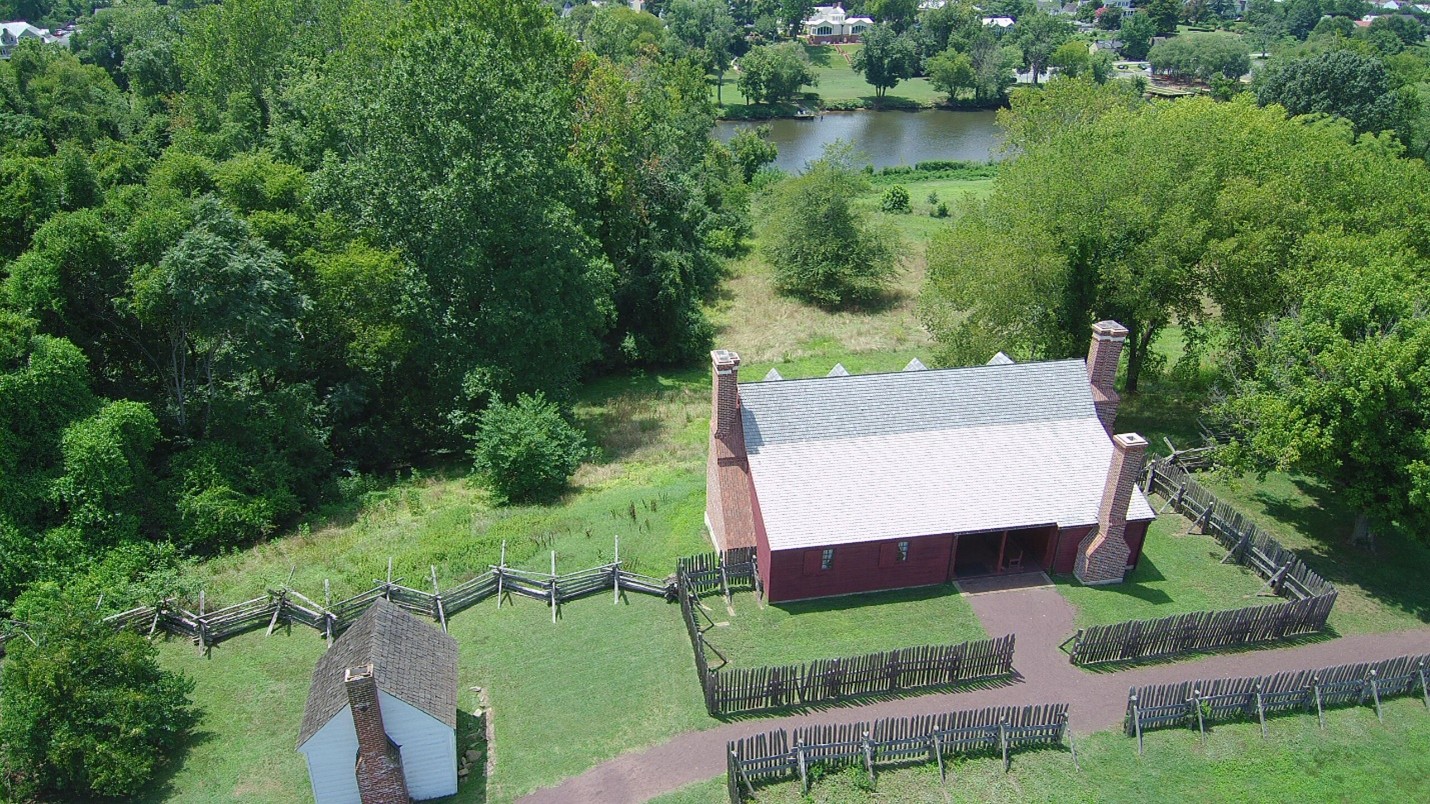
    The Washington house and its outbuildings gradually fell into disrepair until by the mid-1830s there was no trace of them on the landscape. But the soldiers still knew the significance of the site. In April 1862, the Civil War came full force to Fredericksburg and to Ferry Farm. Federal Forces took over and occupied the City of Fredericksburg behind the retreating Confederate Army.  Encampments and gun emplacements were established all along our side of the river and throughout Stafford County as the army set about maintaining control of the city across the river. Engineers were set to the task of rebuilding the railroad bridge and erecting pontoon bridges, including one at the end of Ferry Road.

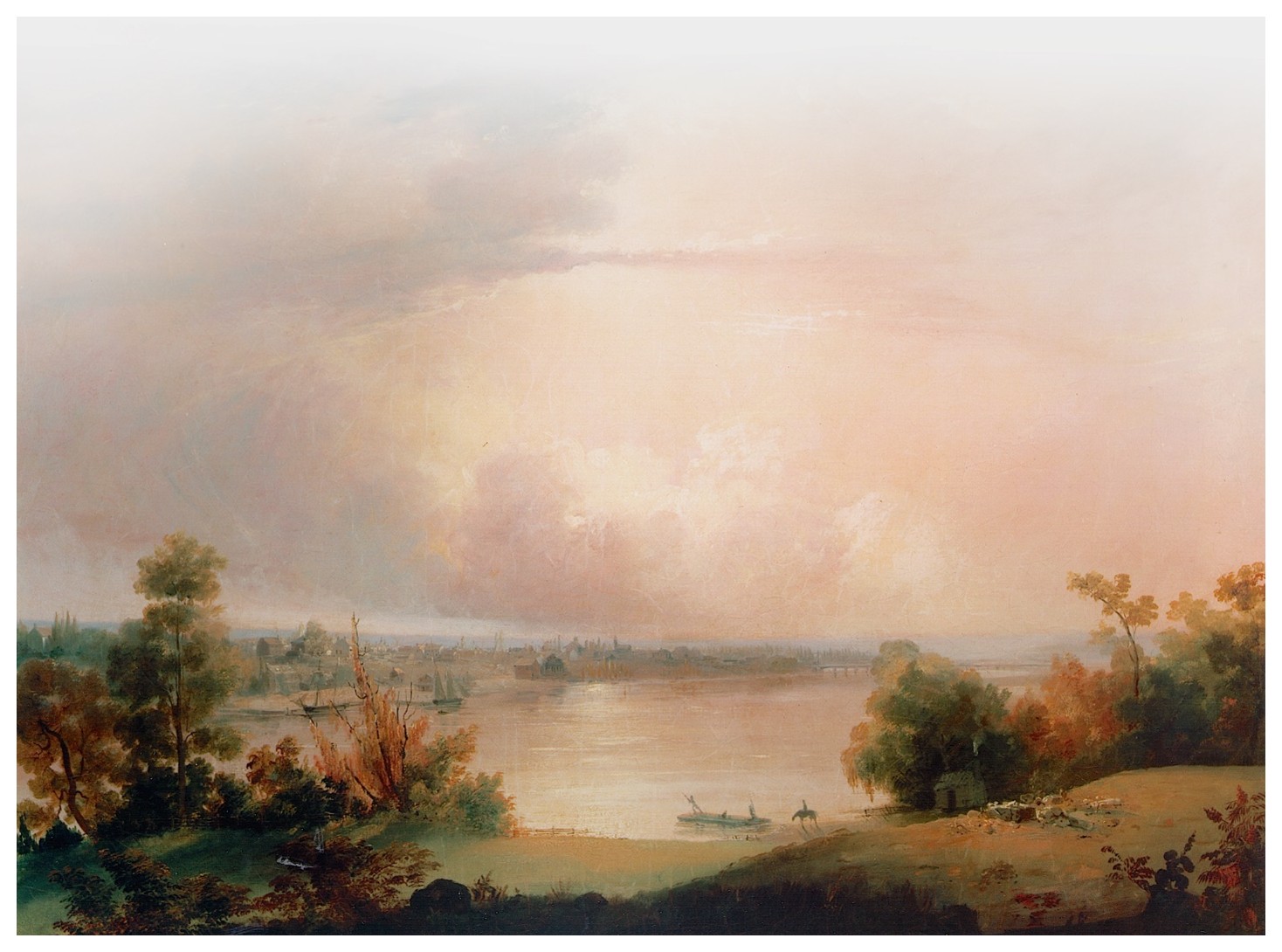
    Looking over Fredericksburg by Alfred R. Waud

    This spring deployment and the military occupation of Ferry Farm was relatively quiet and uneventful. There is no evidence of a large, formal camp at Ferry Farm, but soldiers were stationed here to protect one of the pontoon bridges that ran from the bottom land of Ferry Farm across to the city of Fredericksburg. In August of 1862, the army suddenly retreated from the city and the surrounding countryside to defend Washington, D.C.

    In November of the same year, the full force of the Union Army returned to Stafford County in preparation for the retaking of Fredericksburg and their expected march to take over Richmond. Instead, the Federals suffered a devastating defeat at the Battle of Fredericksburg in December and retreated to the north side of the river for winter camp. Now, Ferry Farm was being used more actively as a staging ground for multiple troop movements, bivouacs for soldiers guarding the pontoon bridges, and as a defensive line for the Federal troops.

      A defensive trench, or rifle pit, with an adjoining berm to protect soldiers from gunfire originating on the Fredericksburg side of the river, was dug across the edge of the upper river terrace, stretching north-south from the edge of the stream gully through the remains of the Washington house. A small extension on the south end of the trench was dug out to connect it to the now-exposed cellar.

    Artifacts found within the cellar trench fill reflect the extensive use of the house ruins by soldiers during both occupations. In the spring and summer, they used the farmhouse as their headquarters, writing on the plaster walls and leaving graffiti in pencil and charcoal on hundreds of plaster fragments that have been excavated and preserved.
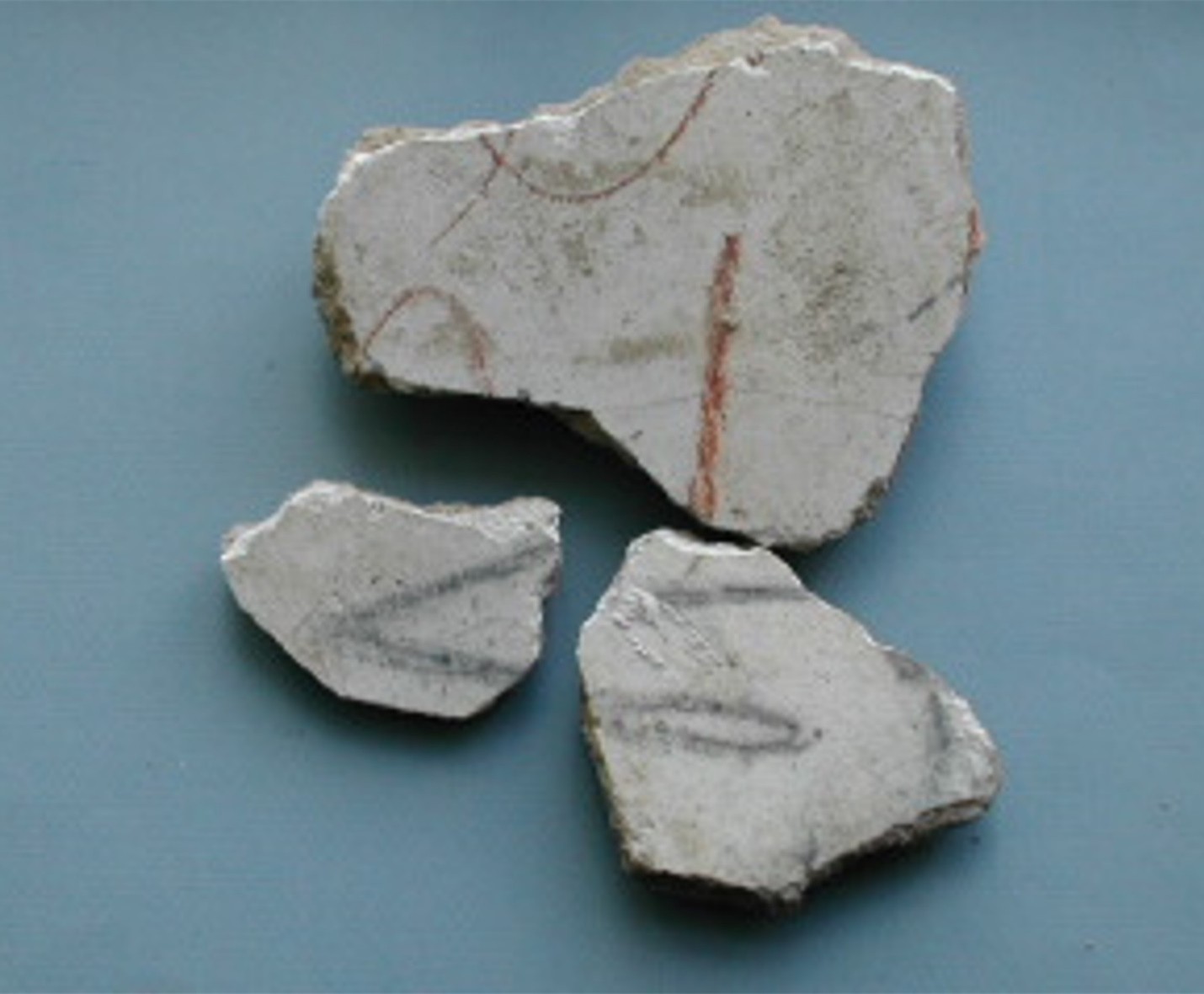
    Plaster fragments with graffiti

    Various artifacts were abandoned when they left, including canteens, bullets, gun parts, and writing tools. But this blog isn’t about buttons, bullets, and buckles. It’s about the items the soldiers found more dear. Objects they made or relied on for small comforts.

    So, on a more personal level, what was everyday life like for the Union soldiers stationed here during the Civil War? When they weren’t directly experiencing the brutal and intense combat fighting on the front, it was a routine-filled life of constant drilling, standing watches, maintaining equipment, and finding imaginative ways to entertain themselves in the camps. But camp life had its own struggles and hardships. Poor shelter, food, and hygiene, along with low immunity rates to communicable diseases, all contributed to high rates of sickness and disease. Add to that boredom and homesickness, and camp life was a private’s first test of survival.

    It was very important for the soldiers to recognize that they were standing on the very ground that their hero, George Washington, once stood on. Those sentiments were expressed in a speech by Private Edwin Jones of the 6th Wisconsin when he said, “We are assembled on sacred soil…It was while living on this plantation, under the direction and blessed with the teaching of a noble mother, that George Washington learned those lessons…fitting him for leadership in war and peace, to lay the foundation of the mighty Nation that we today are fighting to preserve.”

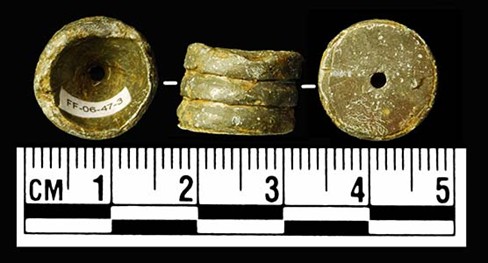
    On a more personal note, we know soldiers spent a lot of idle time playing games among themselves. Dice, card games, chess, checkers, and gambling were all very popular, and remnants of these activities are found on all Civil War sites. At Ferry Farm, we have a collection of gaming pieces, including this bone die and a gaming piece crafted from a Minié ball, which could have been used to play chess, checkers, or as markers in a game of chance.

    And we can’t forget about the importance of music in camp life. Music was a common and welcome pastime activity for troops. Fiddles, guitars, fifes, harmonicas, and accordions all came out at night to entertain the soldiers who relished listening to songs about home and the worries of war. Jaw harps were inexpensive and easily portable, which made them very popular with soldiers. Our jaw harps, one of which was recovered from the civil war trench, is of the style known as a Gloucester type, one of the most common designs in America during Colonial times and after the Revolution.
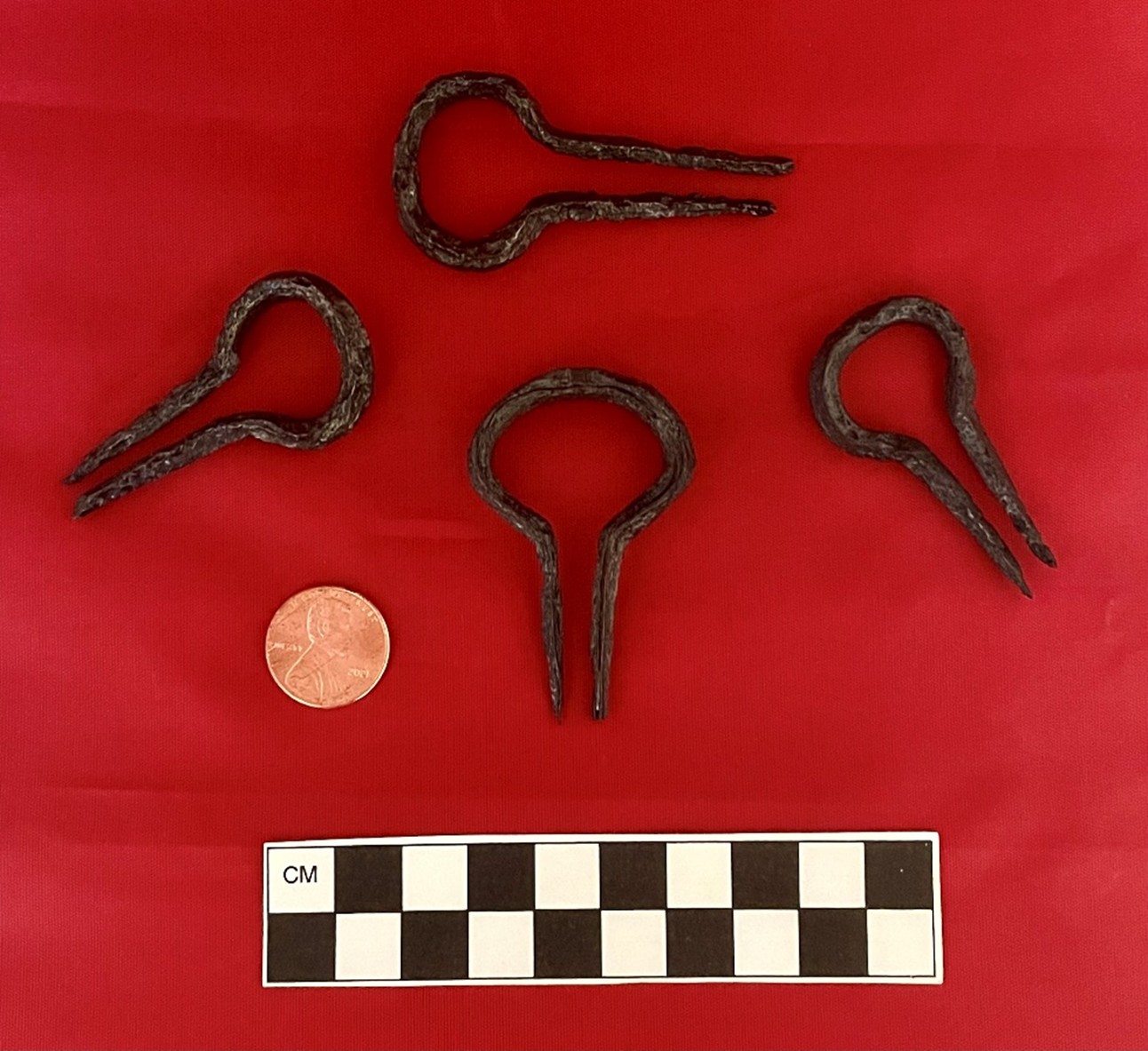
    “Gloucester type” jaw harp

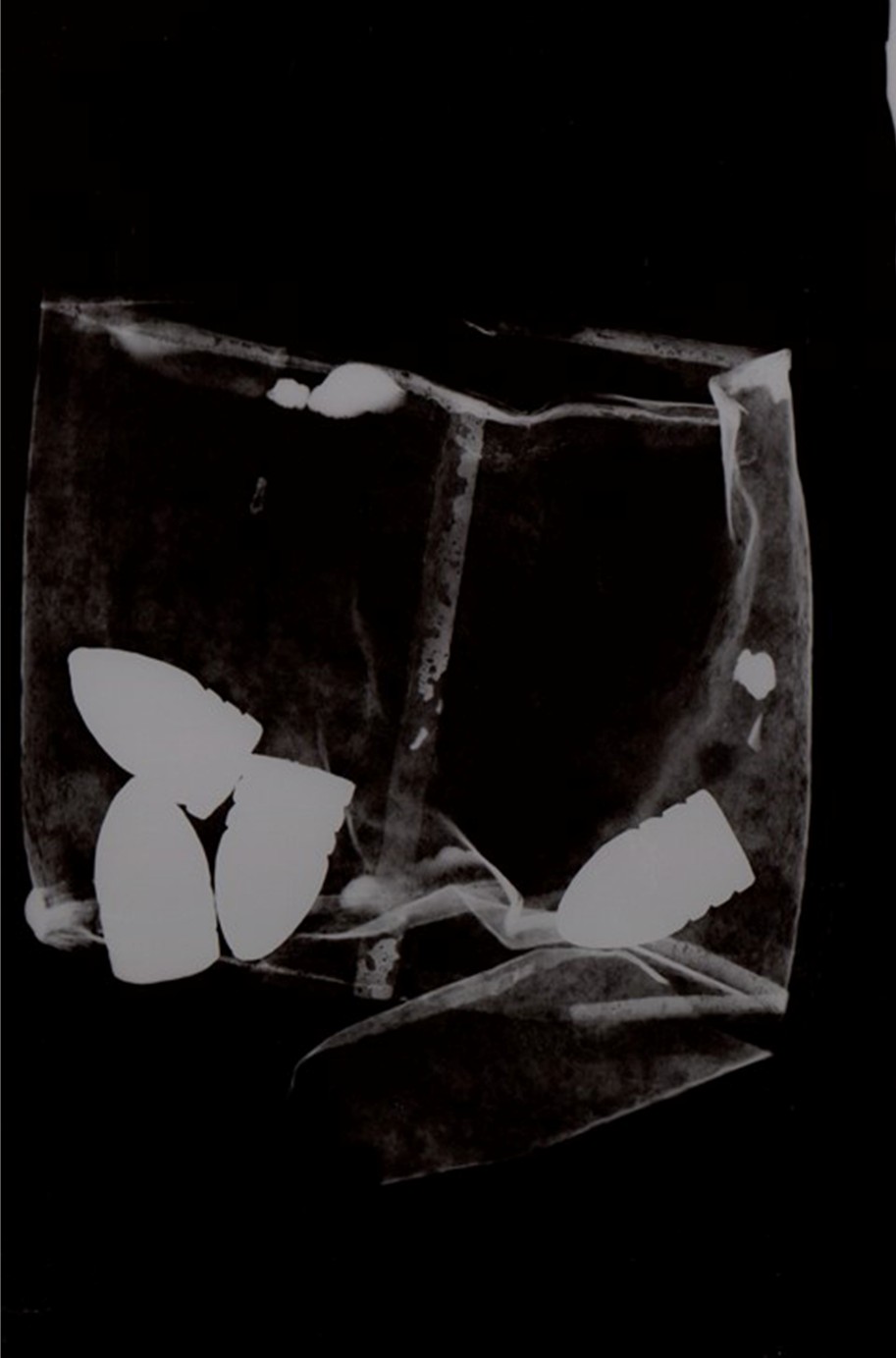
                Nothing is normal about wartime. Many people were forced to improvise, and it’s very hard to determine why a soldier placed four unfired Minié balls in this tin can, which was revealed through X-ray. Did he lose his ammo case? Was it just idle behavior? Were these bullets saved to be turned into gaming pieces? This is the type of artifact that raises more questions than answers.

    Literacy – Ink Bottle/Pen nib:

    Literacy among Civil War soldiers was very high, and much of what we know about daily camp life comes from the letters written and received by the soldiers themselves. Letter-writing to loved ones at home allowed the soldier to keep up with local news, forward monetary and business instructions to those left running the household or farm, and relay war news to their family.

                A complete ink bottle and pen nib recovered from the site evidences the desire for correspondence, both official and personal. The ink bottle itself was found in the Bray cellar hole, which the Union soldiers used as a defensive dugout to avoid Confederate sharp shooters. We can just picture a group of soldiers huddled down inside the cellar, building a small campfire to stay warm, and writing letters home to their families. Was it a hasty departure that left this bottle in the cellar, or perhaps the owner expected to return but didn’t. As archaeologists, we can’t answer all these questions, but we know it was used during the Civil War by a Union soldier and was found in a location many soldiers never wanted to be stuck in.

    This particular ink bottle is an ‘umbrella’ shape, one of the most ubiquitous ink bottle forms from this era. The bottle was typically meant for single use and would have been made in one of the numerous American glasshouses present during the 19th century. It was then filled with ink, affixed with a label, and marketed for single use.
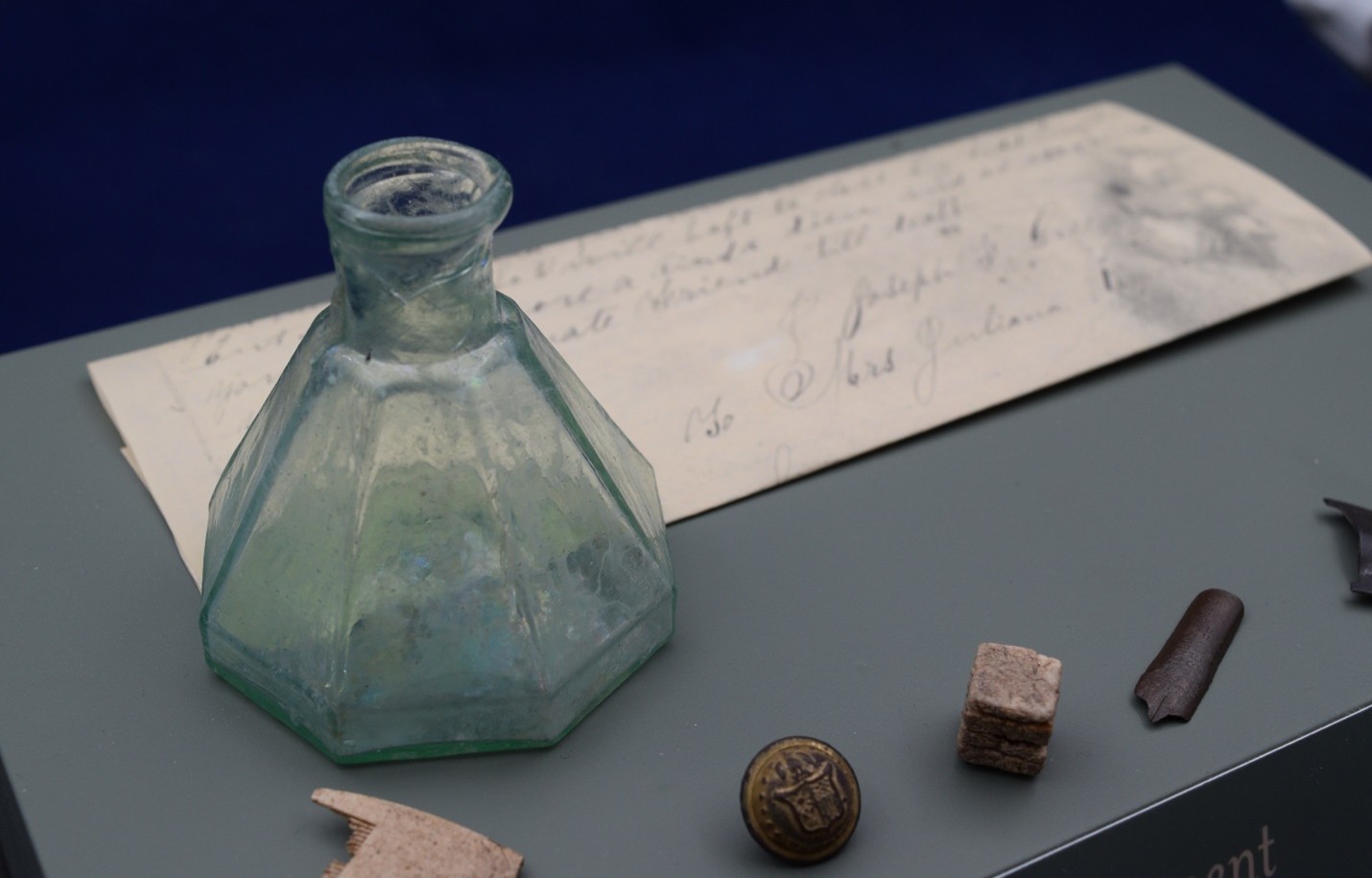
    “umbrella” shaped ink bottle and small pen nib

    This small pen nib is stamped with a maker’s mark and style name. The Esterbrook Company started making nibs, including the “Relief” style, in 1858 in Camden, New Jersey, and became one of the largest manufacturers of this product in the US. The nib was part of a dip pen, which consisted of a handle made of various materials and the replaceable nib.

    The first evidence of self-care in the trenches takes the form of a small double-sided bone comb. Combs were made from an assortment of materials, including bone, ivory, gutta perch, and steel, and were used for grooming the moustache and hair. But their fine teeth were also handy in capturing the pesky lice that were endemic to camp life among men marching and living together in close quarters. This comb would have been an essential component of any soldier’s personal kit.

    small double-sided bone comb

    Our second evidence of self-care is this intriguing bottle. It is not so much interesting because of what it is – it’s a very common medicine style bottle for the mid-19th century– but rather what’s inside. Clearly visible within the bottle is a hard black substance, and for years, we’ve wondered what the substance may be.
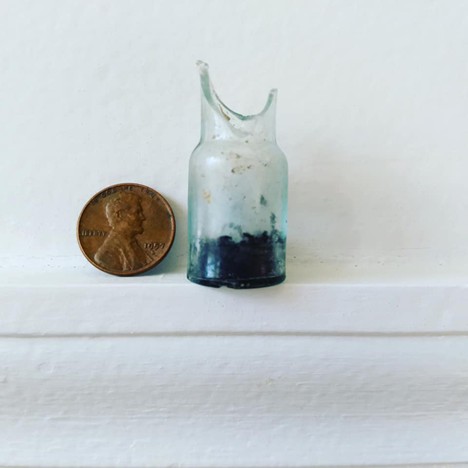
    Mercury bottle, mercury was used for a variety of medicinal reasons at the time

    So we chipped off a little fragment of the substance and sent it to Ruth Ann Armitage, our chemist friend at Eastern Michigan University. The sample was analyzed using scanning electron microscopy to map out specifically what elements were present in the sample. Our sample was also run through DART (direct in real time) mass spectrometry. This technique is good at detecting organic components within a substance.

                Almost immediately, Dr Armitage responded, and we weren’t disappointed: “Did you know there’s mercury in this?”  Nope, we did not.

    However, this discovery was not too surprising given the use of mercury in many medicines for thousands of years. Nowadays, it’s common knowledge that you shouldn’t drink mercury…or touch it…or inhale it, but for a long time, mercury was seen as a potent healing metal, and it was readily rubbed on skin, consumed, and vaporized for immediate effect on the lungs.

    And while all these treatments using mercury did little to address the body’s underlying medical problem, mercury did cause an immediate bodily response, which convinced people it was working to cure their ailments. When applied topically, it burned. When introduced into the body, it caused a person to sweat, salivate, and have diarrhea. The mucous membranes also went into overdrive, leading many to believe that the bad stuff in your system making you sick was being purged by the mercury. The reality, of course, was that the body was trying desperately to rid itself of poison.

    So, if the residue inside our bottle was medicine, what was its exact formula? All we can say at this point is that it was mercury-based and that it could have been in either liquid or pill form. Common Civil War-era uses for mercury-based medicines were for treating skin sores and lacerations, internal and external parasite infections, syphilis, and constipation, to name but a few. On a side note, an almost identical bottle also containing mercury was found across the river in Fredericksburg at a site that was well known to be a Union field hospital. It was found in a knapsack discarded in a trench that included amputated limbs.

    Lastly, we’d like to highlight one of our favorite artifacts, a tiny hatchet about two and a half inches long, recovered from the bottom of the Civil War trench. For such a diminutive object, it speaks quite loudly to our local history in Fredericksburg, Virginia. Initially, earlier archaeologists at Ferry Farm assumed it was a pewter toy souvenir given out or sold in 1932, when our country and Fredericksburg celebrated the 200th anniversary of George’s birth. Indeed, cheap pewter toys were very popular during this time period.

    A recent reexamination of all the artifacts from the context where the hatchet was found revealed that nothing from that stratum had any 20th-century artifacts in it, nor did the two strata above it. In fact, the youngest artifacts from these strata were all mid-19th century. Additionally, although the archaeologists who excavated the hatchet didn’t know it at the time, the excavation unit from which the hatchet came sat right inside the Civil War-era trench.

    This revelation shut the door on our ‘it’s a 20th-century souvenir’ narrative but opened the door to an even cooler one.  A close examination of the hatchet showed that it didn’t have mold seams, which are always present on cast pewter toys. Furthermore, for some reason, it had one smooth side and one textured side, leading us to believe that it was handmade, not machine-cast. This was supported by a thorough internet search to find an identical toy hatchet, which came up empty, further supporting our new theory that this piece was a one of a kind. The textured side resembled the grain of wood, so we surmised it had been cast in a simple hand-carved wooden mold. All of these clues, combined with its location within a Civil War trench, made us suspect that the hatchet was crafted by a soldier, likely from a lead Minié ball. The hatchet is likely ‘trench art’, which is defined as objects of art either made by soldiers, POWs, or by civilians to create mementos of the war experience.

    To further support our identification of the hatchet as trench art, we took the artifact to the Virginia Department of Historic Resources, where Katherine Ridgeway analyzed it using XRF, or X-ray fluorescence analysis. This non-destructive technique determines the composition of metal. We also brought along a few Minié balls recovered from the same unit for comparison. It turned out that what we thought was a pewter hatchet was actually a lead hatchet with a similar compositional profile to Minié balls, which are mostly lead with trace amounts of other metals such as tin and nickel.

    One can just imagine a bored Union soldier whittling the mold and then melting down some of his bullets to pour into it. He likely chose the hatchet form because of the famous cherry tree story, in which young George Washington owned up to hacking his father’s cherry tree with a hatchet by proclaiming, ‘I cannot tell a lie.’ The soldier would have been well-versed in the Washington cherry tree myth at Ferry Farm, created by Mason Locke Weems in his first biography of Washington, published in 1800. By the 1860s, the story was nationally known. Additionally, letters Union soldiers wrote while encamped at Ferry Farm indicate they knew the site’s connection to Washington. They even went so far as to send home cherry seeds for their families.
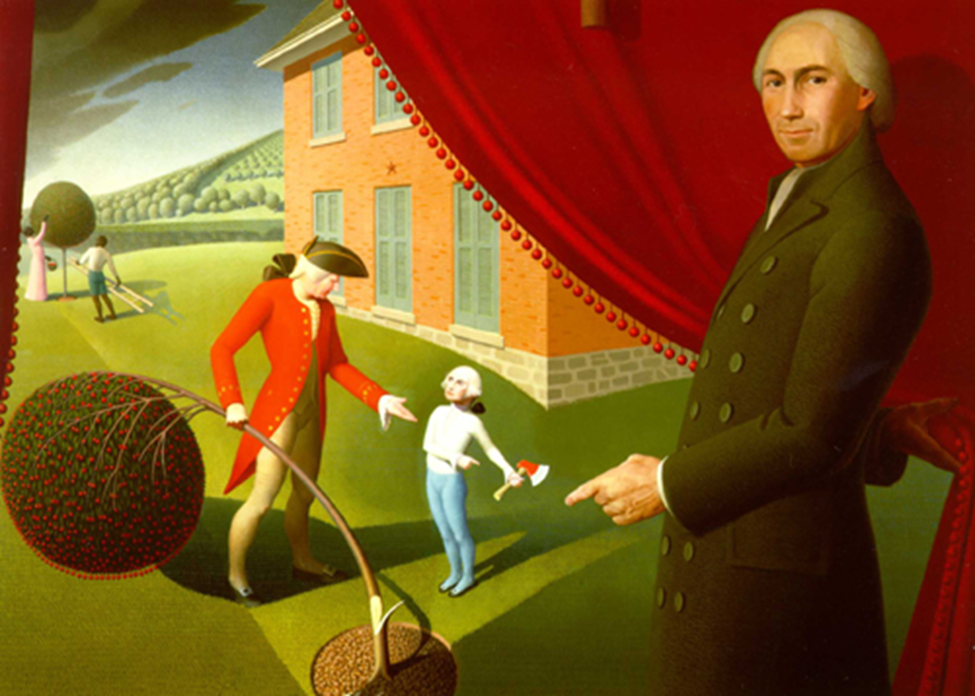
    Grant Wood — Parson Weems’ Fable (1939)

    While the identification of the hatchet is now secured, we have so many more questions. Who was this soldier? How many hatchets did he make, and why did this one come to be left behind in his trench? Was it a souvenir for himself, or did he send one home to his family, or share with fellow soldiers?  Did he survive the war? Unfortunately, these are mysteries that will likely never be solved, but that make for great pondering.

    Mara Kaktins, Archaeologist and Lab Manager

    Judy Jobrack, Archaeology Co-Field Director

  • Music from the Past: Jaw Harps and their Players

    What is a jaw harp, and what does it tell us? This little instrument likely looks familiar, but you may not know that much about it. That certainly proved the case for me when I decided to research the four we have in our collection.

    To start, a jaw harp is an extremely simple instrument to make and play. It only requires an iron or copper alloy frame and a flexible metal tongue, or lamella, which runs through the center. Manufacturing styles vary, but many undergo casting or forging to create the bow shape and arms. The lamella most often attaches by hammering it in place. This part is rarely preserved in the archaeological record, so only the frame remains for us to find.

    To play the instrument, one places it against their mouth and plucks the lamella while breathing out. Varying your breathing and the shape of your mouth cavity allows the sound to change. That said, while the instrument is easy to play, it proves difficult to play well, and many dislike its boings and buzzes. Those skilled at the jaw harp, however, went on to play for the likes of Frederick the Great and George IV. They even managed to play more than one jaw harp at once.

    Man playing a jaw harp (Mackinac State Historic Parks 2018)

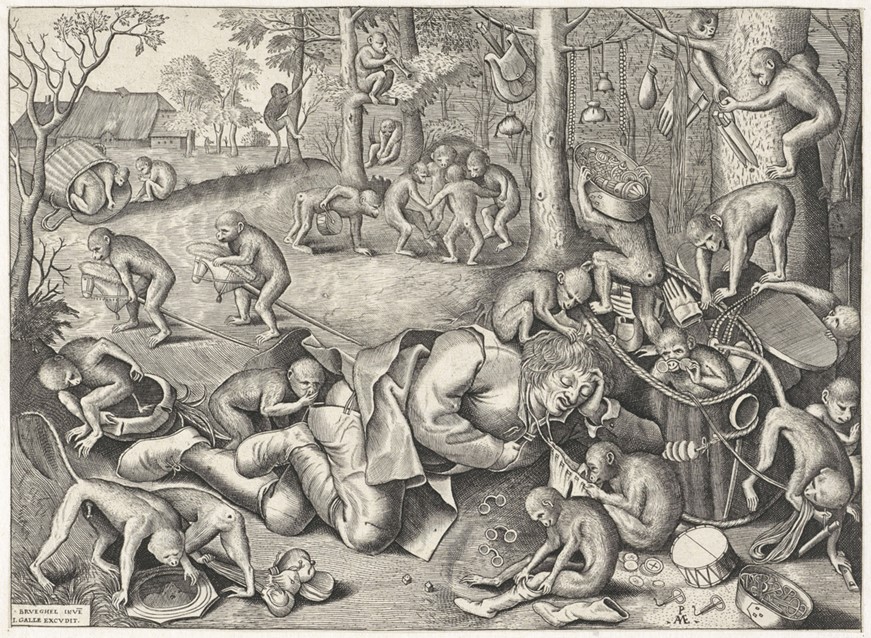
                The history of jaw harps dates beyond the fifth century BCE in Asia. Archaeological evidence places the instrument’s arrival in Europe around 1200, with the migration occurring along northern routes through the Baltic. Due to their mundane nature, jaw harps rarely appear in historic accounts or art. Two exceptions include Pieter Bruegel the Elder’s The Sleeping Peddler Robbed by Monkeys (1562), which helps identify peddlers as the main purveyors of jaw harps, and accounts of the North Berwick Witch Trials (1590-1592), where one of the accused performed for James VI of Scotland. Witches aside, the most common players at this time included the lower classes and soldiers.

                While jaw harps may not have generated the most attention, they played key roles in early trade deals in North America. Jaw harps likely first came to North America in the company of soldiers, but they soon gained popularity amongst indigenous groups, such as the Five Nations Iroquois. Confirmation of this occurred as early as 1595, with Robert Dudley reporting that the instrument made a successful trade item. As trade continued, the exchange of jaw harps frequently related to the fur trade, but some larger and more dubious, deals included the acquisitions of Staten Island and Maryland. That said, even the fur traders came under fire for using jaw harps of poor quality.

    Within established colonies, jaw harps appeared as an item frequently sold by merchants. Numerous adverts appeared in papers between the 1730s and 1780s. For Virginia, this included merchants in Williamsburg during the 1760s, as well as Alexandria and Gloucester in the 1770s. Production would have occurred in England with the then imported good available to all customers in the colonies. We know that soldiers played them during the French & Indian War and the American Revolution. This connection to soldiers would even continue through the Civil War. As for other players in Colonial times, a couple of adverts for runaway indentured servants placed in Benjamin Franklin’s Pennsylvania Gazette listed jaw harps as a special talent of the individual and amongst the items possibly carried by them.

    Aside from these individuals, the other most common players consisted of enslaved people. Evidence of this comes solely from the archaeological record. Excavations have uncovered jaw harps at a number of sites in Virginia, including Monticello, that date from the mid-1700s to early 1800s. In all of these cases, the instruments came from enslaved domestic quarters and work areas. Due to their nature, jaw harps would have proved an easy item for an enslaved person to hold on to, use, and share with others. In use, they would have been part of the enslaved music culture, which offered individuals a respite from work, a way to express themselves, and perhaps an outlet for the continuation of West African cultural practices.

    As I mentioned earlier, four jaw harps reside in our collection. Three came from the Washington cellar, while the fourth came from a Civil War trench that ran through the cellar. To understand their significance, an examination of the artifacts themselves and their contexts help us identify and date them.

    Physically, all four appear to reflect a design known as Gloucester. This means they consist of an iron frame and represent one of the most common designs in America during Colonial times and after the Revolution. We know that the ones that came directly from the cellar pre-date the 1830s due to the collapse of the house. A closer look at the artifacts accompanying them provide us with a range of the 1780s-1830s for the date of deposit.

    Depiction of a Gloucester-type jaw harp sans lamella

    As for the harp from the Civil War trench, while this may seem like an obvious identification, it remains tricky. A Union soldier may have played and discarded it while encamped here. However, when people filled the trench after the war, they may have used dirt that contained earlier artifacts from Ferry Farm. As the trench ran through the cellar, this harp ultimately lay close to the other three, and the dirt used to fill the trench may have come from that area. We may never know for sure on this particular piece, but it likely dates either to the war period or as a contemporary of the other three.

    Ferry Farm’s jaw harps

    While the dates provided occur after the Washington occupation of Ferry Farm, jaw harps existed on the market during their time, meaning the instrument may have had an earlier presence. As for who played them, these instruments likely reflect use by enslaved individuals. After the Battle of Princeton (1777) claimed the life of Hugh Mercer, who had purchased Ferry Farm from George Washington, the property passed through a series of renters. None occupied the site for long, but an enslaved population maintained a constant presence as each renter relied on enslaved labor. This continued up until the Civil War. With the evidence of enslaved people using jaw harps at other sites in Virginia and the fact that enslaved individuals constantly lived or worked at Ferry Farm, we can attribute these artifacts to them.

    One of our future projects involves reconstructing the enslaved quarters at Ferry Farm to better represent and tell the enslaved narrative. As jaw harps represents an activity that occurred during the limited down time allocated to enslaved people and reflects the importance of music in the culture, one will certainly be included upon completion of the project.  

    After all that history and archaeology, I leave those wondering what a jaw harp sounds like with the perfect piece. Fittingly titled “Washington’s Birthday,” this 1909 piece by Charles Ives utilizes the instrument to invoke the sound of country dances on a cold, dreary day in February. To hear the jaw harp, skip to 7:37. Enjoy!

    Emma Schlauder

    Research Archaeologist


    References

    Clyne, Anthony, 1928. The Jew’s Harp a Century Ago. The Musical Times 69(1024): 508-509.                                                                                        

    DAACS, 2022.Artifact Query 3, 8 August 2022. The Digital Archaeological Archive of Comparative Slavery (https://daacsrc.org/queries/aq_three_results).

    Kolltveit, Giermund, 2006. Jew’s Harps in European Archaeology. Archaeopress, Oxford, UK.

    2009, The Jew’s Harp in Western Europe: Trade, Communication, and Innovation, 1150-1500. Yearbook for Traditional Music 41: 42-61. 

    Samford, Patricia M.,1994. Searching for West African Cultural Meanings in the Archaeological Record. African Diaspora Archaeology Newsletter 1(3): 1-3.                                                                                                            

    Wright, Michael, 2008. The Jew’s Harp in the Law, 1590-1825. Folk Music Journal 9(3): 349-371.    

    2011, The Jew’s Harp Trade in Colonial America. The Galpin Society Journal 64: 209-218.


  • The Fifes & Drums of York Town at George Washington’s Ferry Farm [Video]

    The Fifes & Drums of York Town played and marched today at George Washington’s Ferry Farm. The group will also perform on the lawn at Historic Kenmore this Sunday, June 27. There will be three 15 minute performances between 12:30pm and 1:30pm. No admission required, but we encourage you to make a day of it and purchase a guided tour of Historic Kenmore. Buy tour tickets at kenmore.org/visit-kenmore.

  • “Rakes of Mallow/Yankee Doodle” by Colonial Faire [Video]

    Colonial Faire, an 18th century music group, recently performed at Historic Kenmore. In this video, they play a medley of “Rakes of Mallow” and “Yankee Doodle.” Read about the history behind “Yankee Doodle” in this blog post.

  • Agreeable Amusements: Music & Dancing in the Life of George Washington

    On September 10, 1748, sixteen-year-old George Washington paid 3 shillings, 9 pence to a “musick master for my entrance.” Young Washington recorded these sparse details in Ledger Book Zero, a personal account ledger listing credits and debits with family, friends, and business associates between 1747 and 1750. This, as far as we can tell, is the first reference to music in the life of George Washington. By no means, would it be the last. Music was an important part of Washington’s life, just as it is with many of us today.

    Ledger Book Zero, young George Washington’s personal account book, shows payment to a “musick master for my entrance.”

    What was teenage age George paying for when he paid the “musick master for . . . entrance”?  Well, the lack of details makes it impossible to say with certainty.  The most obvious possibility is that he was paying for music lessons.  However, letters written by George himself and a friend indicate that Washington had little to no musical talent. Francis Hopkinson, a colleague during the war, composed a series of songs for harpsichord or piano and dedicated them to Washington. In a letter to George dated December 1, 1788, Hopkins explained his dedication even though George could “neither play Musick nor sing Songs.”  In a reply on February 5, 1789, Washington agreed, writing “I can neither sing one of the songs, nor raise a single note on any instrument.” Despite a professed musical inability, it is still possible young George was paying for music lessons in 1748. Often, you might pursue lessons only to discover that you do not have the aptitude.

    Regardless, while apparently not musical himself, music surrounded Washington. As Mount Vernon research historian Mary V. Thompson notes, “Washington was the head of a household where his wife, her two children, and her four grandchildren (two of whom were raised by the Washingtons) all studied music.” In particular, granddaughter Eleanor (Nelly) Parke Custis became fairly skilled at the harpsichord, despite an apparent reluctance to learn. In the summer of 1798, a visiting Polish nobleman enthusiastically claimed that Nelly “plays the harpsichord, sings, draws better than any woman in America or even in Europe.”

    Another Washington family member with an interest in music was George’s niece Harriot Washington, daughter of Samuel. The first letter in the record between Harriot and her guardian and uncle George was written on April 2, 1790.  Harriot was 14-years-old and living at Mount Vernon while President Washington was in New York. The niece asked her uncle to send her a guitar since she wanted to take lessons for “all the young Ladyes are a learning musick.”  Harriot was confident “that five or six lessons would be sufficient for any body to learn.”  The records consulted reveal no response from Washington. Eventually, Harriot would come to Historic Kenmore to live with her aunt Betty Washington Lewis. She again asked uncle George for a guitar in May of 1792. About a month later, he paid $17 for one. Harriot’s capabilities with the instrument are unknown.

    Besides family, another major source of music in Washington’s life was the Continental Army. Music was crucial to 18th century militaries. Fifes and drums issued commands during battle and put a spring in the step during weary marches. Much like the army’s initially amateur soldiers, its fifers and drummers (who were often boys serving with their soldier-fathers) took time to practice and professionalize.

    On June 4, 1777, General Washington issued a set of orders. One order dealt with the army’s music, which the General bluntly lamented was “very bad.” He ordered “that the drum and fife Majors exert themselves to improve it, or they will be reduced, and their extraordinary pay taken from them: Stated hours to be assigned, for all the drums and fifes, of each regiment, to attend them, and practice.” Washington concluded, “Nothing is more agreeable, and ornamental, than good music; every officer, for the credit of his corps, should take care to provide it.”

    A notable musical moment in the army’s history was the birthday serenade for General Washington on February 22, 1778 at Valley Forge. The musicians of Proctor’s Artillery played outside the General’s headquarters. Washington’s expense account lists a payment of 1 pound, 5 shillings to Proctor’s band. Joseph Lee Boyle, longtime historian at Valley Forge, explains that “Colonel Proctor commanded an artillery regiment, and this was one of the few, perhaps the only, unit to have musicians besides fifers and drummers. In 1779 ten ‘musicians’ are listed in the band, but not what instruments they played.” Mount Vernon scholars note that this was “the first public recognition of [Washington’s] birthday.”

    We’ve seen that music was definitely a part of Washington’s life but it was played by others mostly. George could not play an instrument nor sing. He may have paid for music lessons only to discover his inability. Another reasonable theory, however, is that he paid the “musick master for my entrance” to dancing lessons. Later in life, Washington uses similar phrasing – “Mr McKay entrance to Dancing” – to record a payment of 10 shillings for lessons for stepson John Parke Custis.

    Dancing was the leisure time obsession of most Virginians but especially those in the wealthy gentry. For the upper class, explains Amy Stallings, “ being a skilled dancer was an indication of good breeding” and allowed one to “put one’s gentility, accomplishment, beauty, and economic means on display in hopes of impressing—or, in some cases, intimidating—”others. As Philip G. Smucker adds, “Dexterity on the dance floor maintained social status.”

    Maintaining social status and the appearance of good breeding skyrocketed in importance to George and the Washington family after the death of father Augustine in 1743. His death created financial hardship and jeopardized the family’s social standing. Without a father, George’s life changed radically. Assisted and supported by both mother Mary and half-brother Lawrence, George was forced to acquire the refined skills and customs of the upper class in Fredericksburg instead of in England while at boarding school.

    One of those skills was dancing and the mystery “musick master” perhaps taught teenage George that skill.  Over the course of the 18th century, as Stallings notes, “a market developed for professional instructors, or dance masters, who were expected to know the latest dances from Europe.”  Virginia’s urban centers with their greater populations and high number of visitors “often boasted multiple dancing schools . . . Dancing masters operated in at least Yorktown, Williamsburg, and Hampton by 1739.” Traveling dance instructors served Virginia’s far-flung rural population. These masters usually “taught the sexes separately, at different hours or different days of the week.”

    If Washington was schooled in dancing by the “musick master,” he probably learned the era’s popular minuets, allemandes, and hornpipes. These fancy dances typically began any ball and were the best opportunities to show off one’s dancing abilities and good breeding. The minuet was the most important. As Stallings explains, “A man’s prowess at the minuet—an especially complicated dance, requiring excellent balance and coordination with one’s partner—could buoy his social position, whereas a poor minuet might leave him out of favor.”

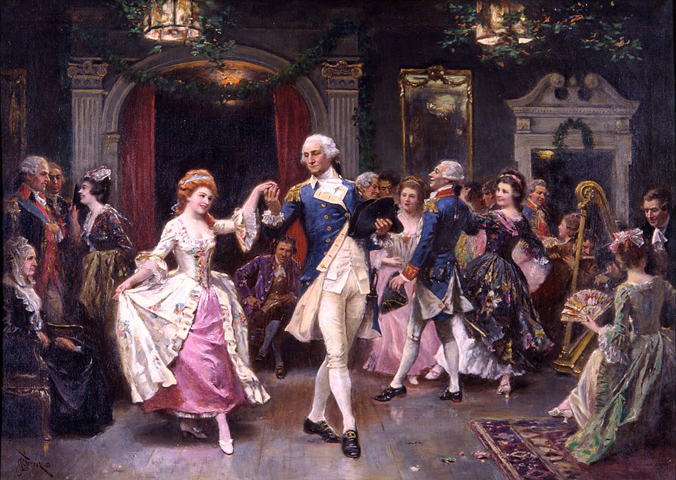
    A fanciful early 20th century painting by Jean Leon Gerome Ferris titled “The Victory Ball, 1781.” While Washington was a life-long and avid dancer, it is unlikely he attended any such “victory ball” or “peace ball” traditionally said to have taken place in Fredericksburg after the British defeat at Yorktown.

    Whether he was paying for dancing lessons in 1748 or not, young Washington learned to dance in some fashion, discovering both an extraordinary natural talent and life-long passion for it.  Numerous contemporaries recorded instances of Washington dancing and praised his abilities.

    “His Excellency . . .  and Mrs. Greene . . . danced upwards of three hours without once sitting down.” – General Nathanael Greene to Colonel Jeremiah Wadsworth, Middle Brook, New Jersey, March 19, 1779.

    “His Excellency General Washington was unusually cheerful. He attended the ball in the evening, and with a dignified and graceful air, having Mrs. Knox for his partner, carried down a dance of twenty couples in the arbor on the green grass.” – General Nathanael Greene to Joseph Reed, Morristown, New Jersey, Tuesday, February 29, 1780.

    “The General danced every set, that all the ladies might have the pleasure of dancing with him, or as it has since been handsomely expressed, get a touch of him.” – James Tilton to Gunning Bedford Jr., Annapolis, Maryland, December 25, 1783.

    “He . . . attended the ball of the 22nd of February; opened it by dancing a minuet with some lady, and then danced cotillions and country dances; was very gallant, and always attached himself, by his attentions, to some one or more of the most beautiful and attractive ladies at the balls.” – Judge Francis T. Brooke (1784).

    And finally a word on his dancing from George Washington himself, written on November 12, 1799, just a month prior to his death and turning down an invitation from to a grand function in Alexandria. He wrote,

    Gentlemen

    Mrs Washington and myself have been honoured with your polite invitation to the Assemblies in Alexandria, this Winter; and thank you for this mark of your attention. But alas! our dancing days are no more; we wish, however, all those whose relish for so agreeable, & innocent an amusement [emphasis added], all the pleasure the Season will afford them. and I am Gentlemen Your Most Obedient and Obliged Humble Servant

    Go: Washington

    George saw music and dancing both as “agreeable.” From the mostly taciturn Washington, this is high praise indeed.

    Join us on Saturday, April 10 for The Arts at Kenmore: Music on the Lawn and hear 18th century music group Colonial Faire performs music from all walks of colonial society – the music of the taverns, the manor houses, on the streets and on the battlefields. The evening’s opening act will include a short talk exploring the importance of music to George Washington and a theater scene depicting Washington’s first dancing lesson. For more information and tickets, visit kenmore.org/events.

    Zac Cunningham
    Manager of Educational Programs