October just happens to be Virginia Archaeology Month, and what better way to celebrate than to recap this summer’s excavation at George Washington’s Boyhood Home at Ferry Farm.
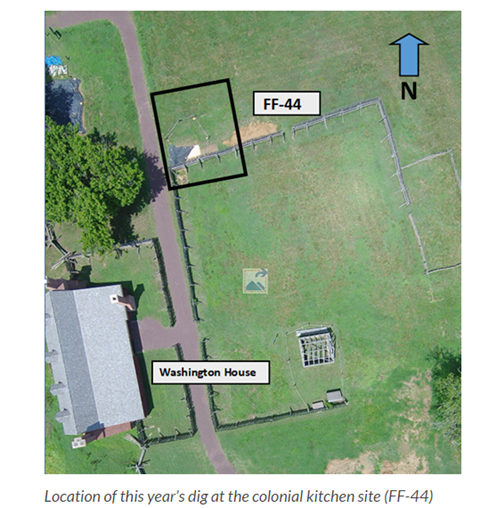
You might remember from our dig preview, that this year’s dig (FF-44) focused on the continued exploration of the 18th-century kitchen site located just northeast of the main house. In 2023, our limited investigations uncovered just a small section of the kitchen’s stone foundation and cellar, giving us a sneak preview of the conditions and parameters of future site work. Armed with this knowledge, our aims this year were to uncover more of the original foundation walls of the kitchen cellar, to uncover additional architectural evidence of the kitchen outbuilding, and explore the surrounding landscape for features. So, did we do it?
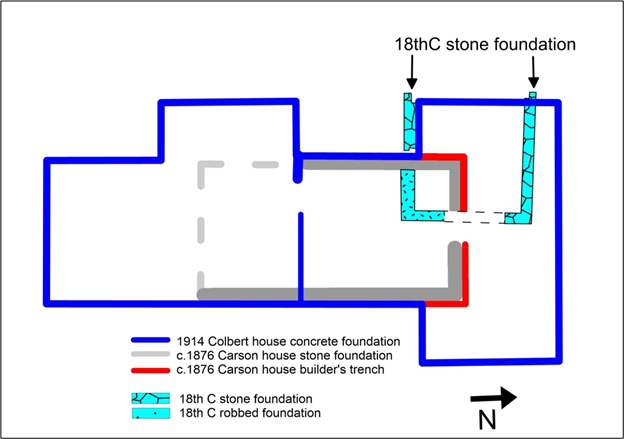
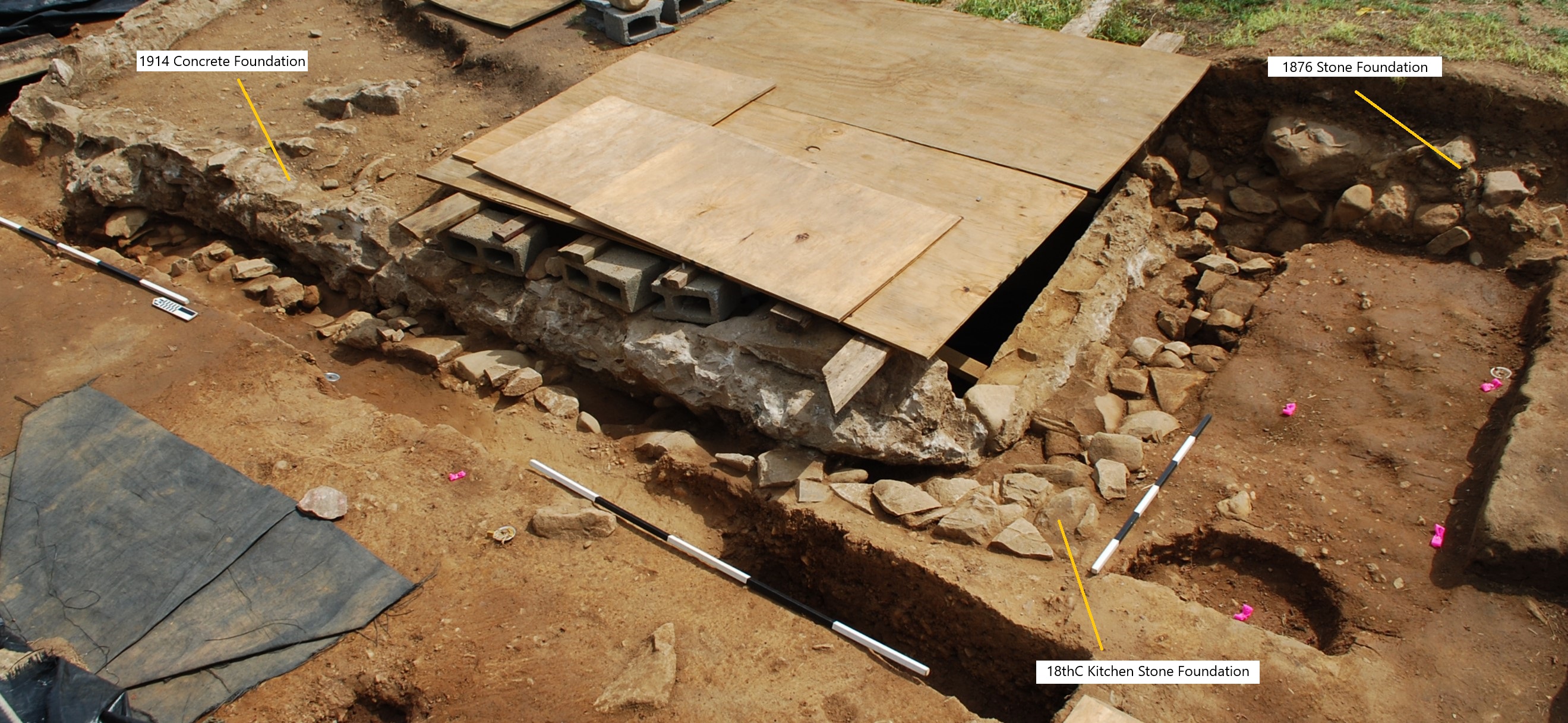
Location of the 18th century kitchen foundation in relation to two later farmhouses dating to 1876 and 1914.
We did! But before we get to the fun discoveries, let’s go over how we got there. As far as sites go here at Ferry Farm, this one has been through a lot. Not only did the original 16’ by 16’ kitchen building burn and collapse in on itself in the middle of the 18th century, but it also had two subsequent farmhouses built on top of it that were either moved, damaged in a fire, or demolished all within the last 150 years. A previous archaeology project on the site introduced another element of complexity in understanding the depositional sequence of fills on the earlier 18th-century site, which had obviously been heavily disturbed by all these later events.
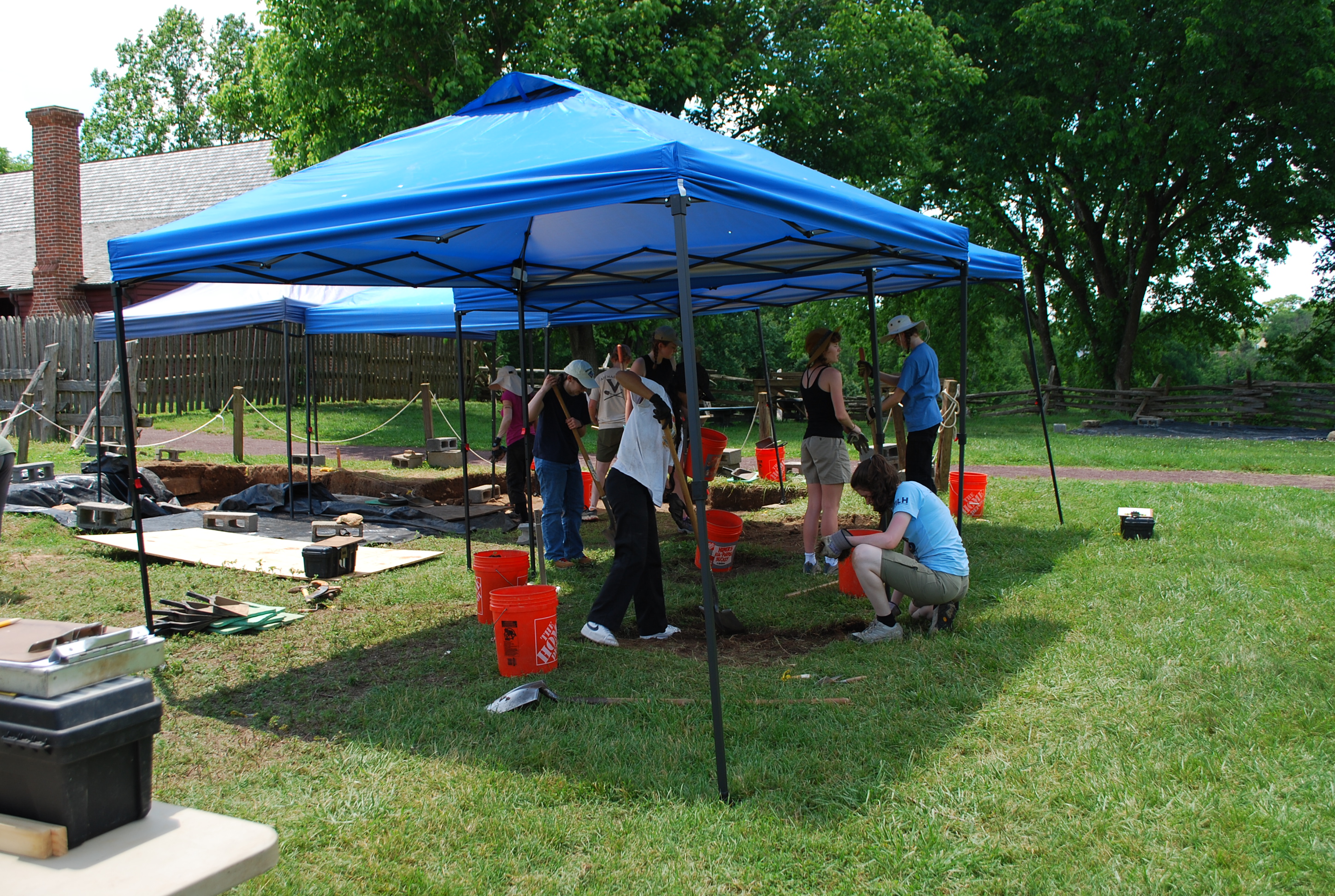
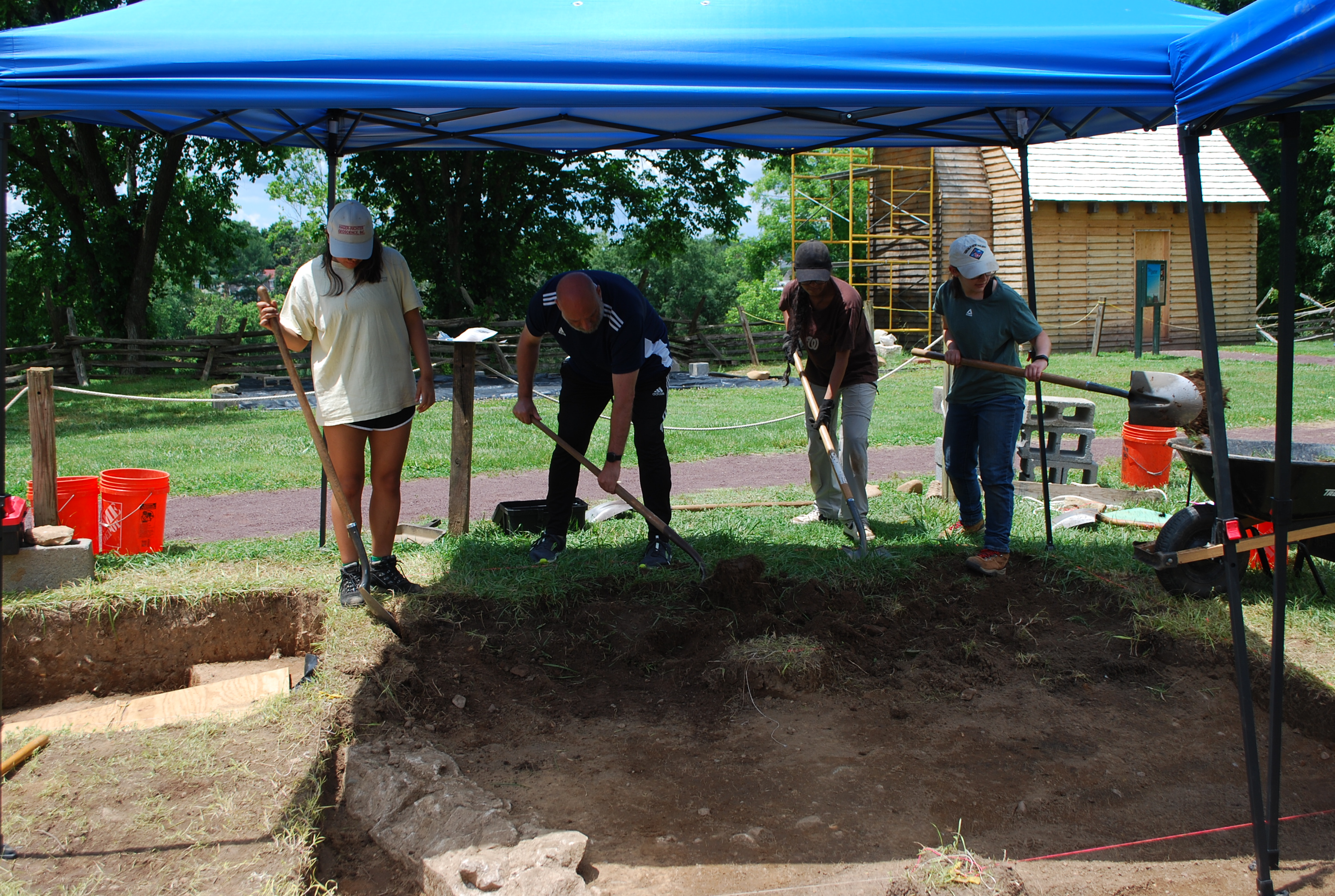
All this led to an interesting excavation. Since a significant portion of the site had previously been excavated in the 1990s, a sizable amount of our site time was spent re-excavating backfilled archaeology units with the purpose of exposing unexcavated layers around the site. Not only would these unexcavated layers allow us to gather new data, but it would also give us the opportunity to better understand the findings as recorded in the earlier reports.
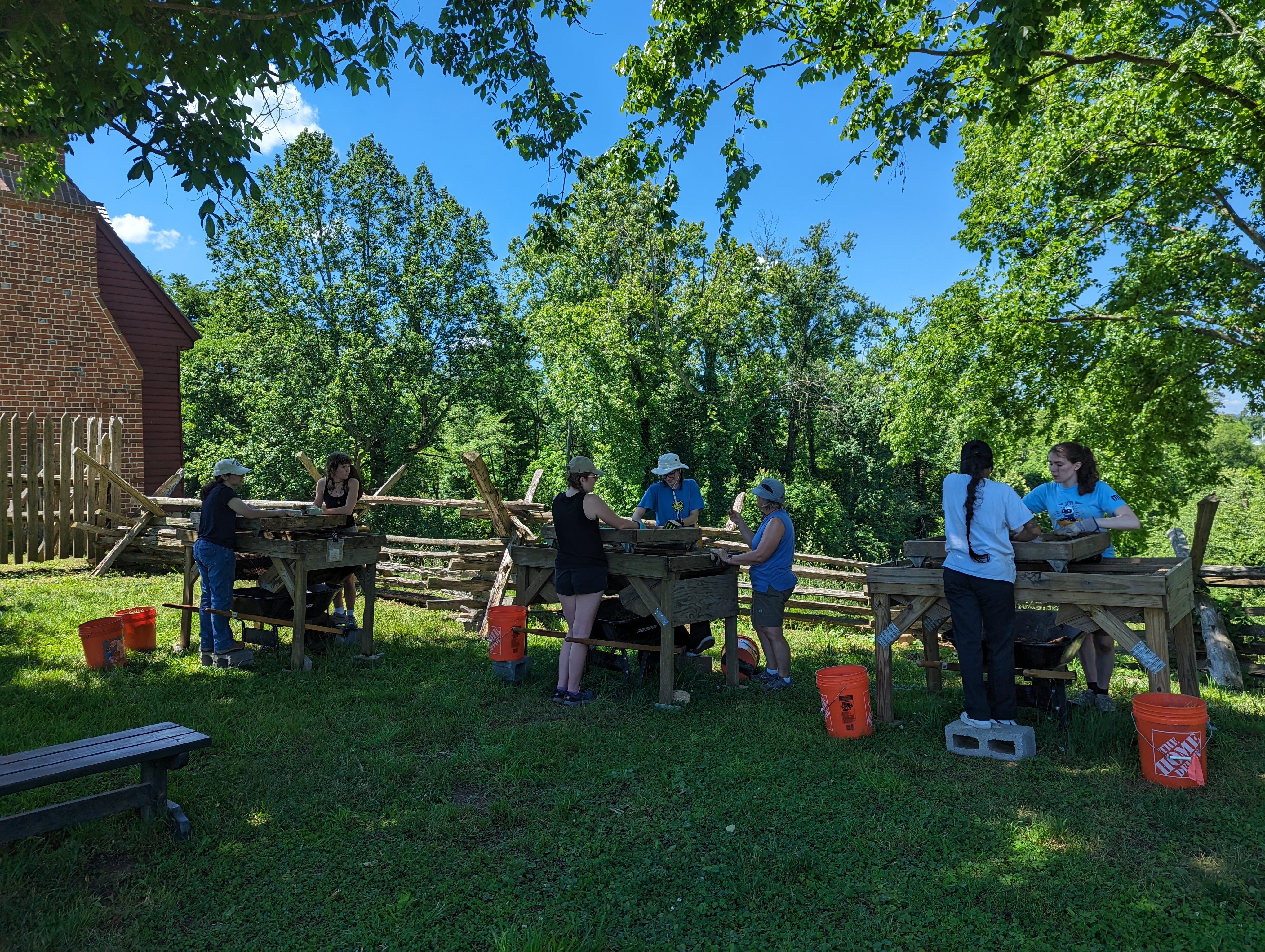
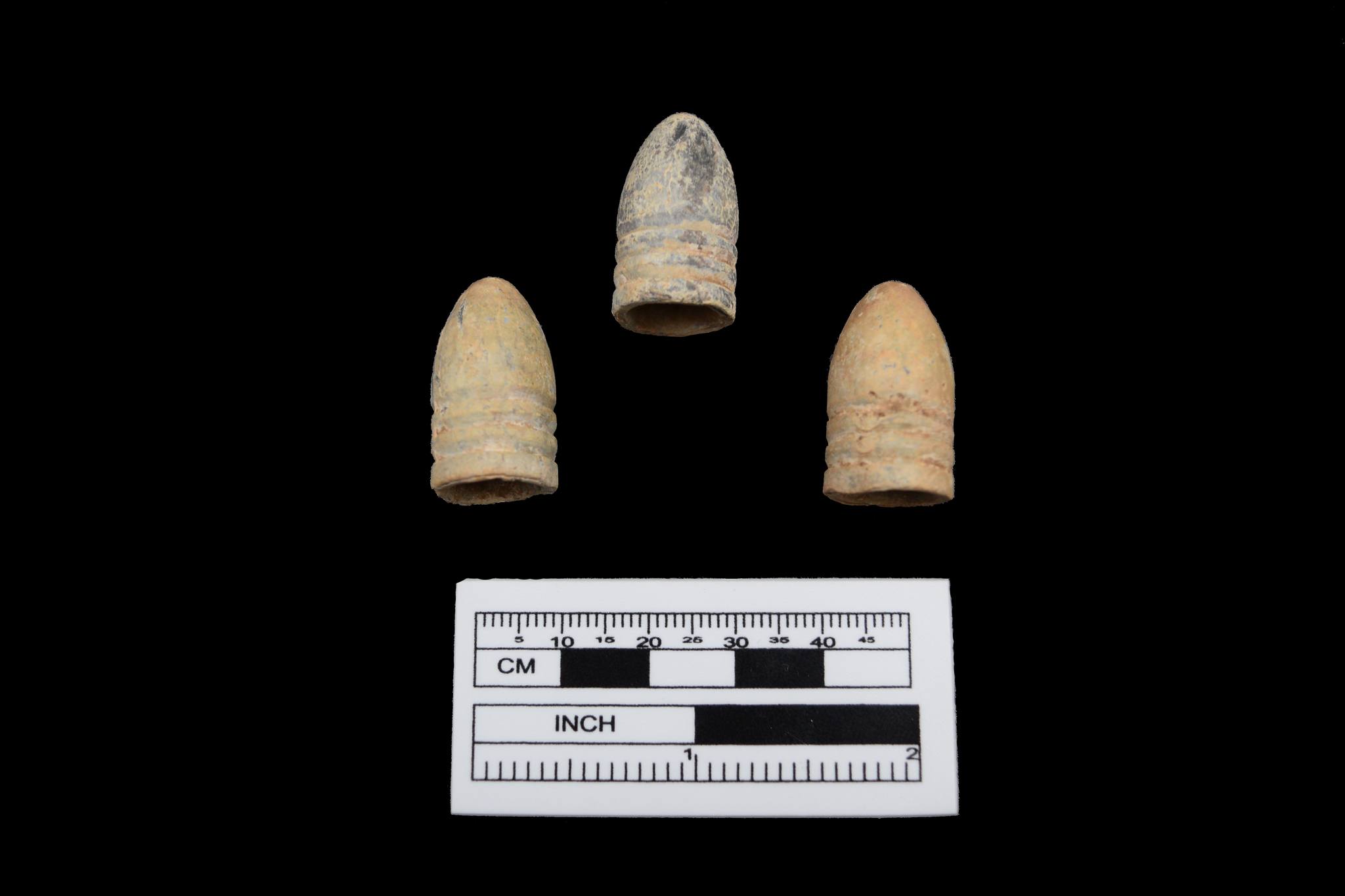
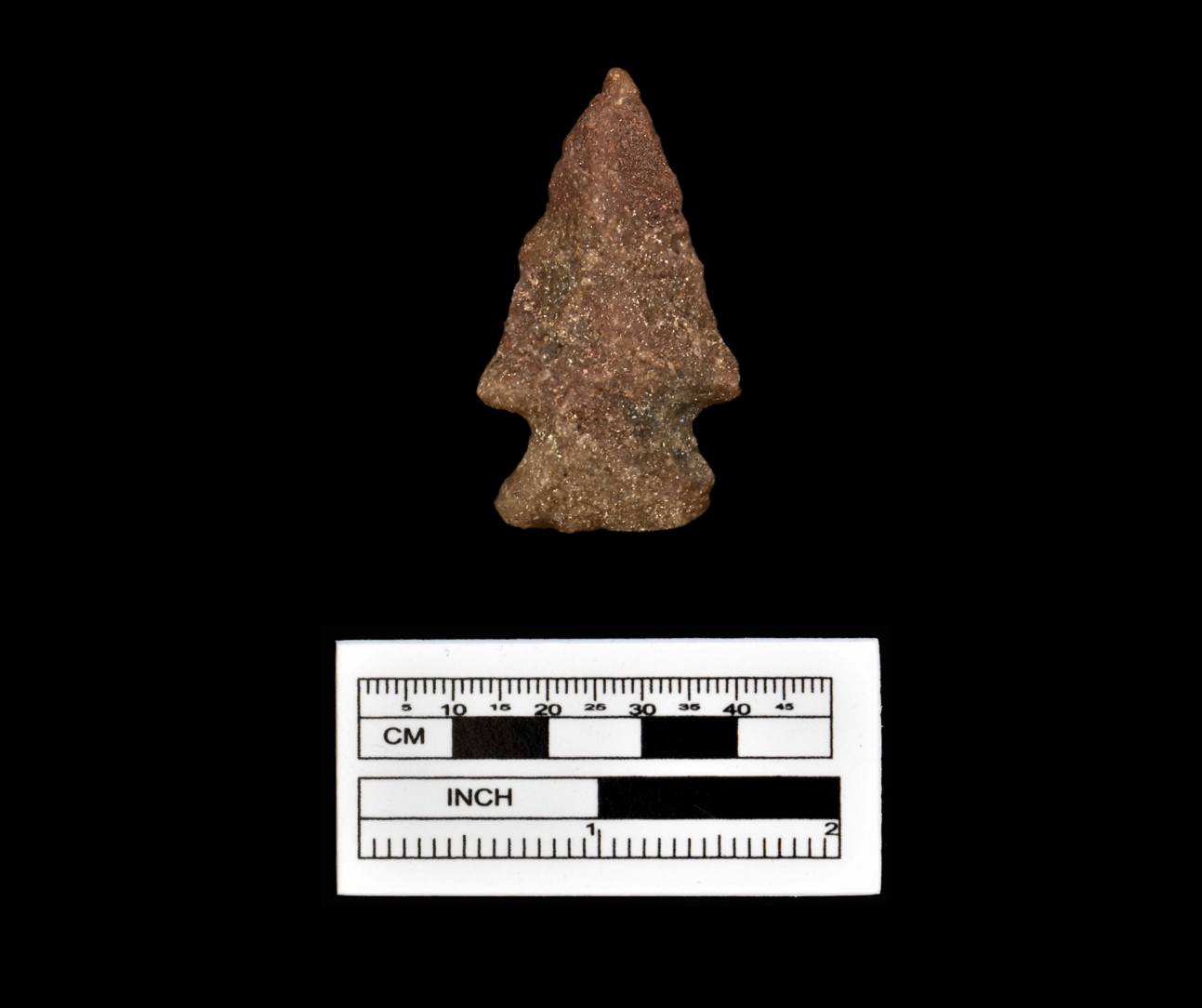
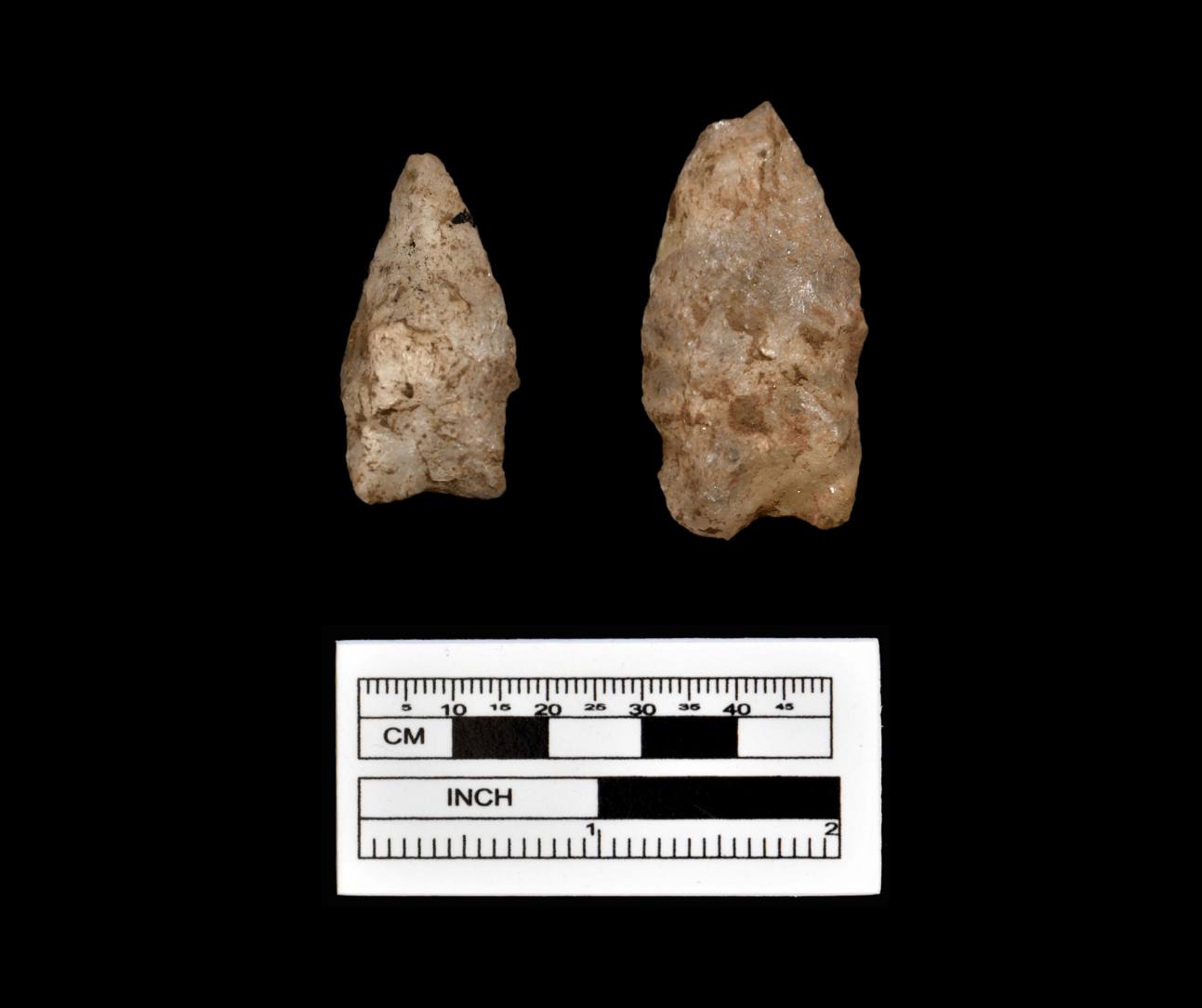
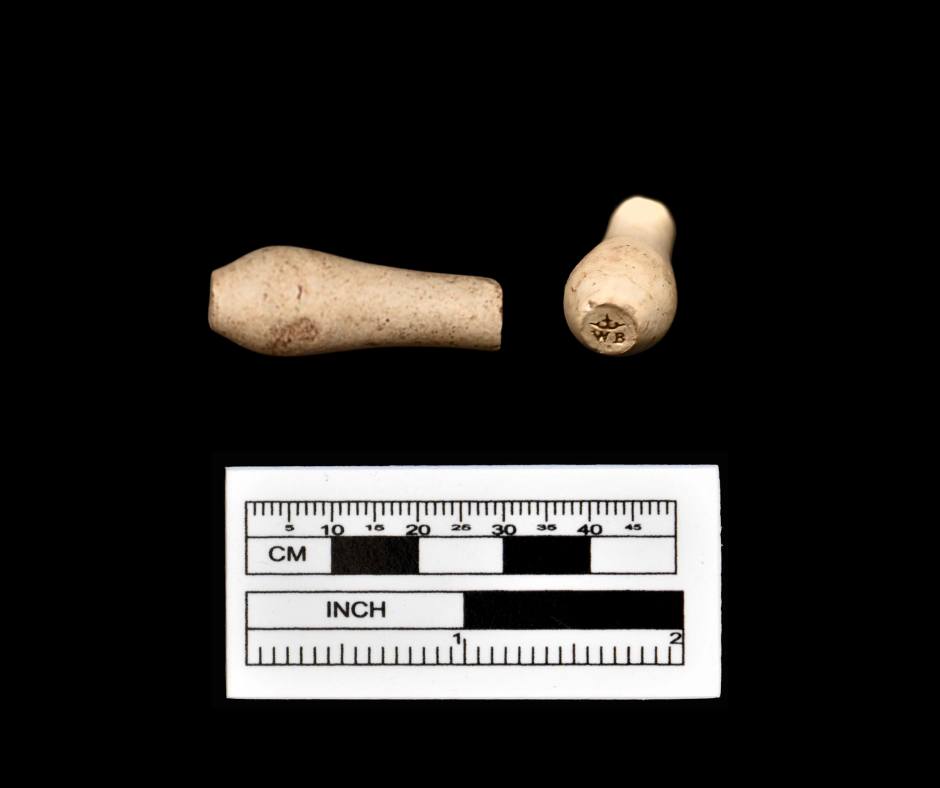
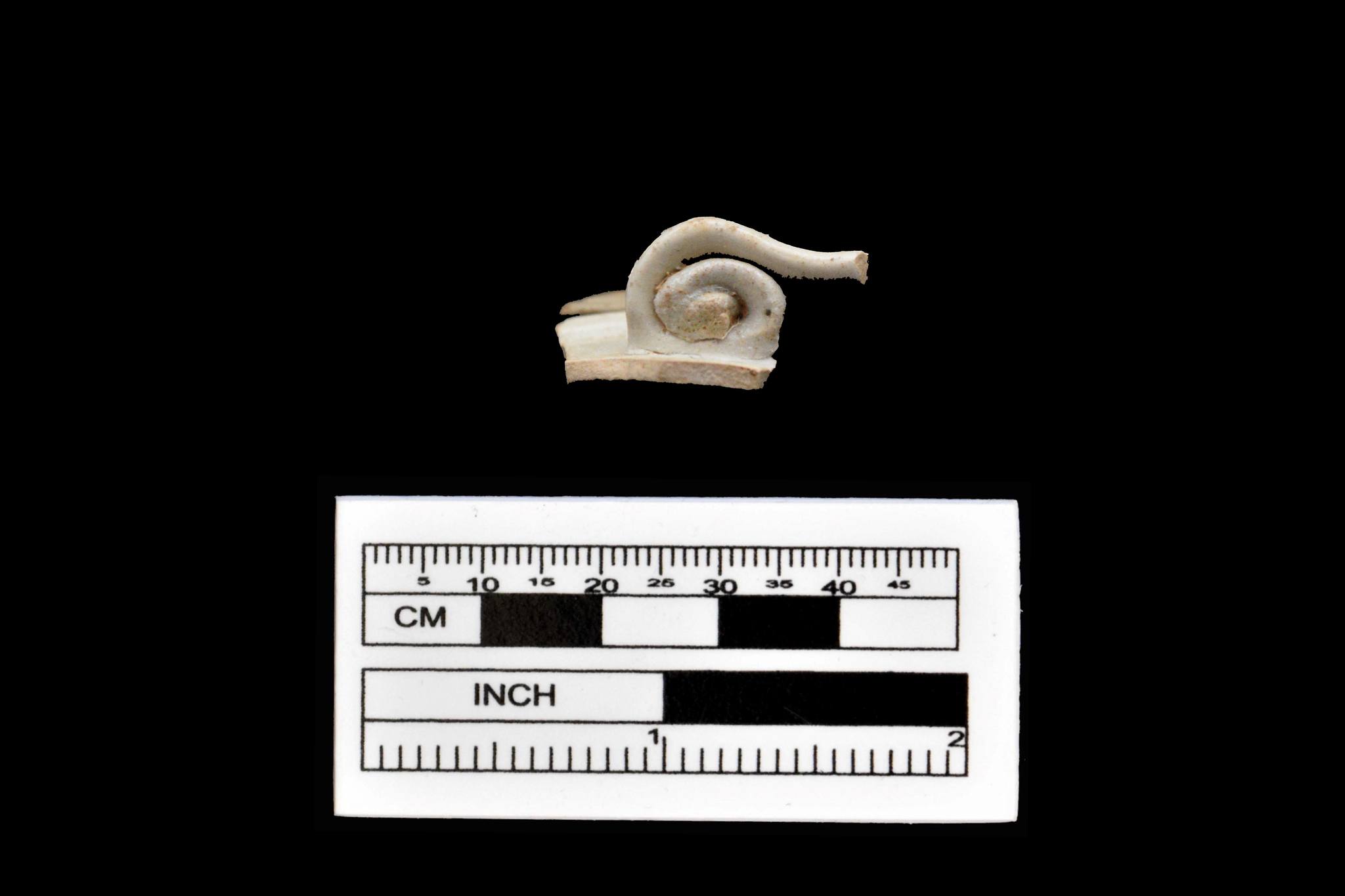
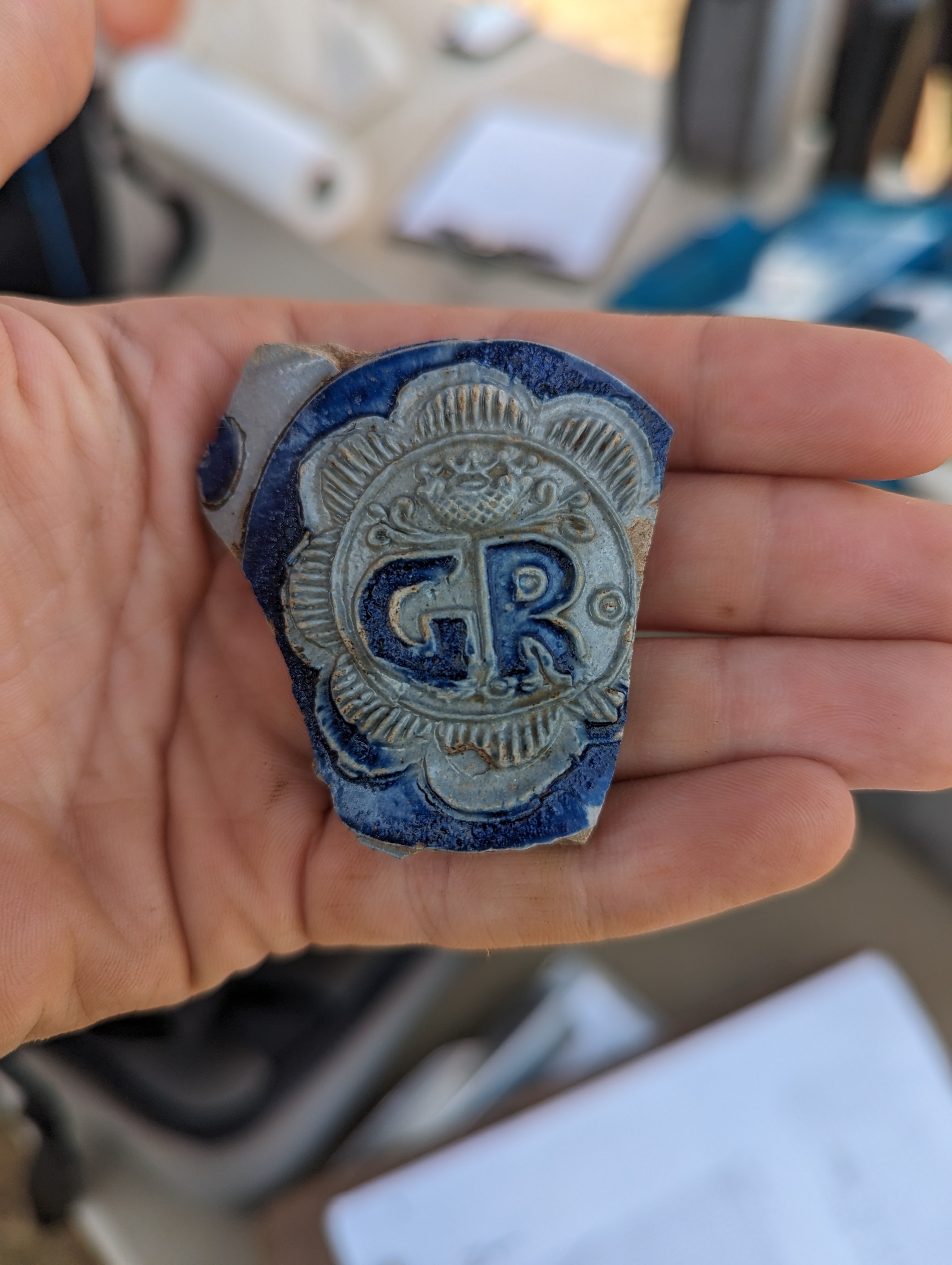
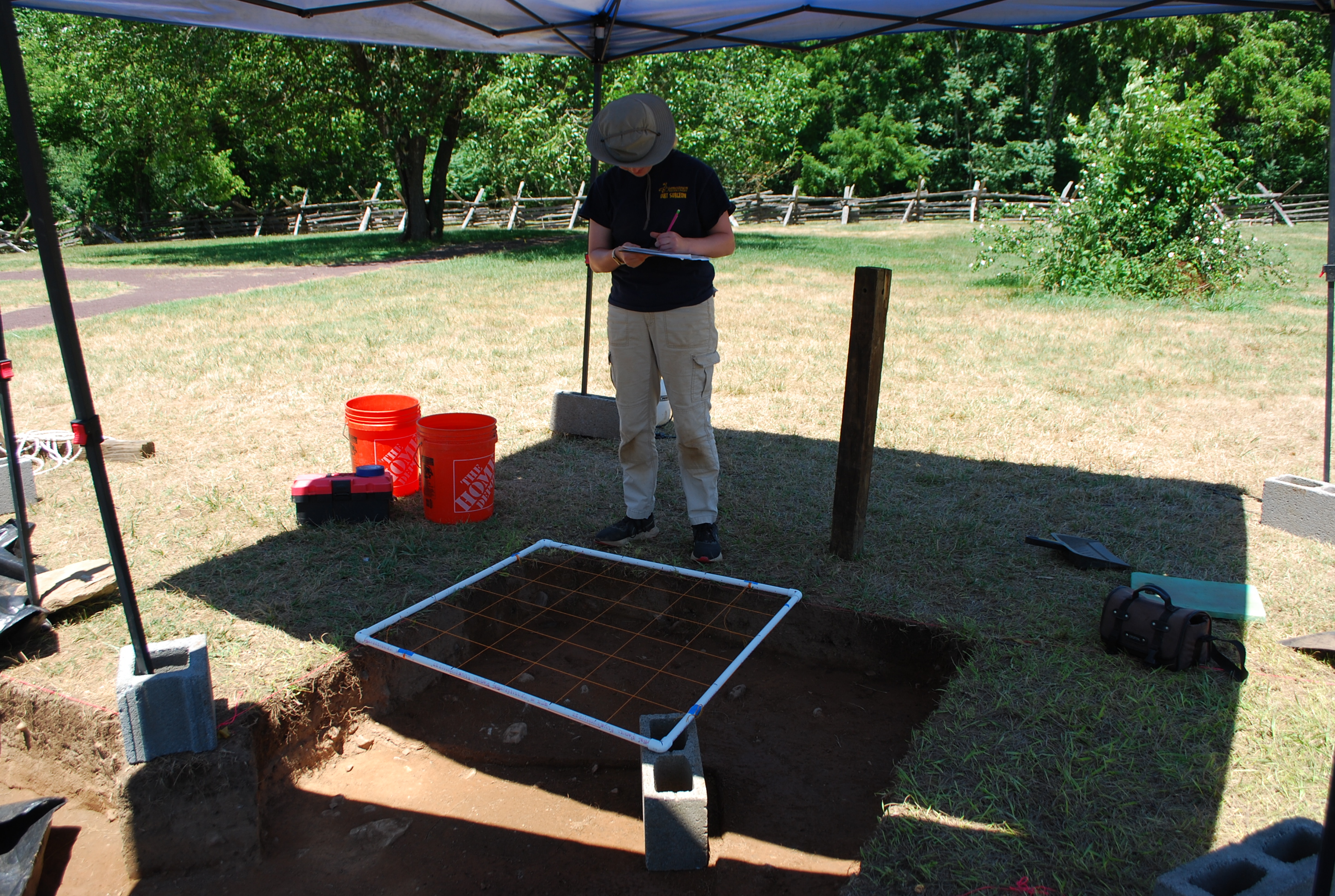
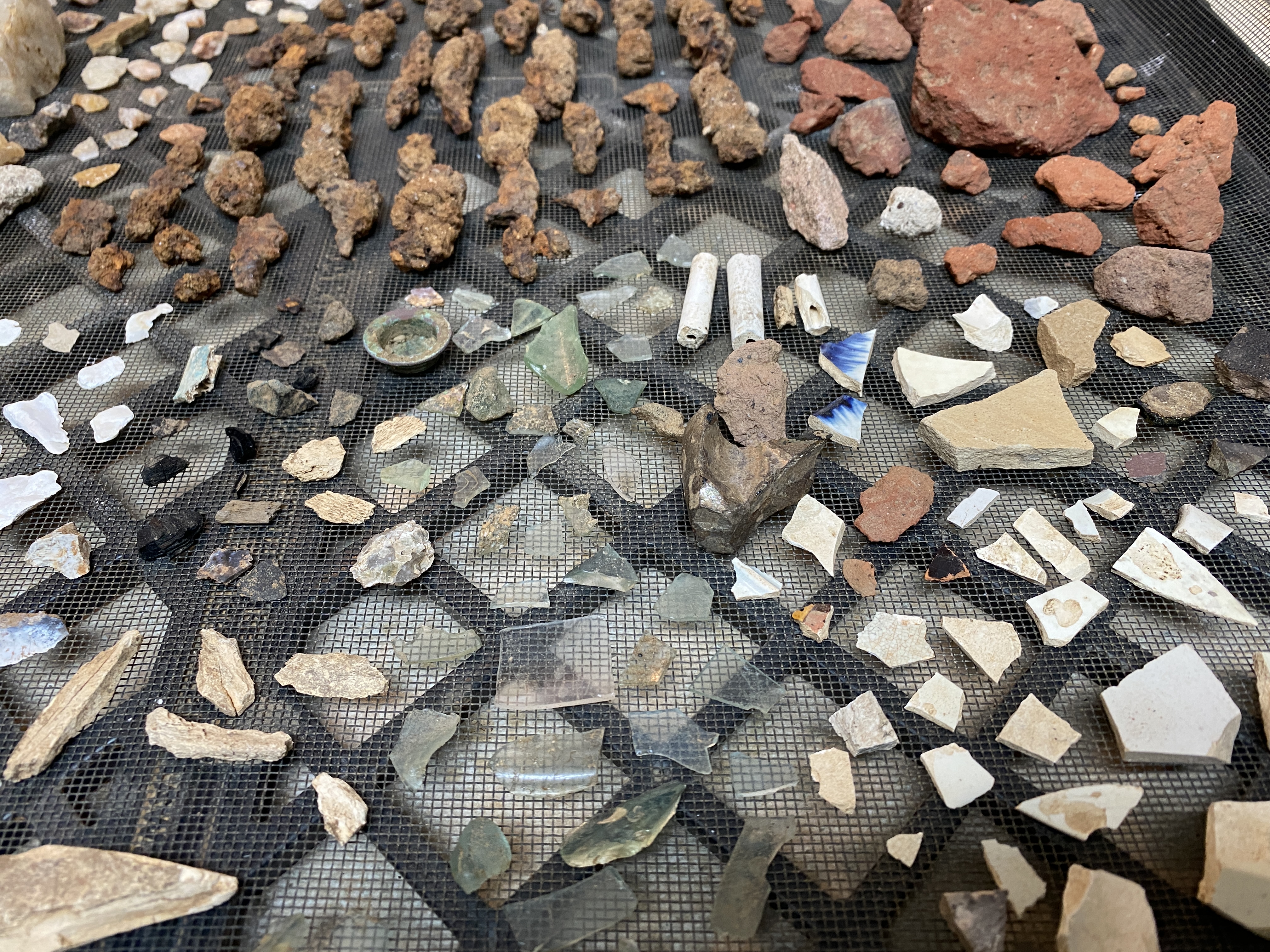
With the help of our wonderful field school students and interns, we opened a total of twenty-seven 5’x5’ units across the kitchen site. Sifting through the dirt, hundreds of artifacts were found dating to all occupations of Ferry Farm. Super cool finds that date to the 18th-century period of use for the kitchen included tobacco pipe fragments, wine bottle sherds, and a variety of ceramics, including English stoneware, Chinese porcelain, and a German Westerwald ‘GR’ sherd. The prehistoric Native American occupations of the site were represented by an unusually high number of projectile points found (8 and counting!), dating to both the Early Archaic (8000 BC – 6500 BC) and Early Woodland (1100 BC – 500 BC) periods. Civil War bullets came up in our screens, of course, as did 20th-century plastic, tools, toys, and bottle caps.
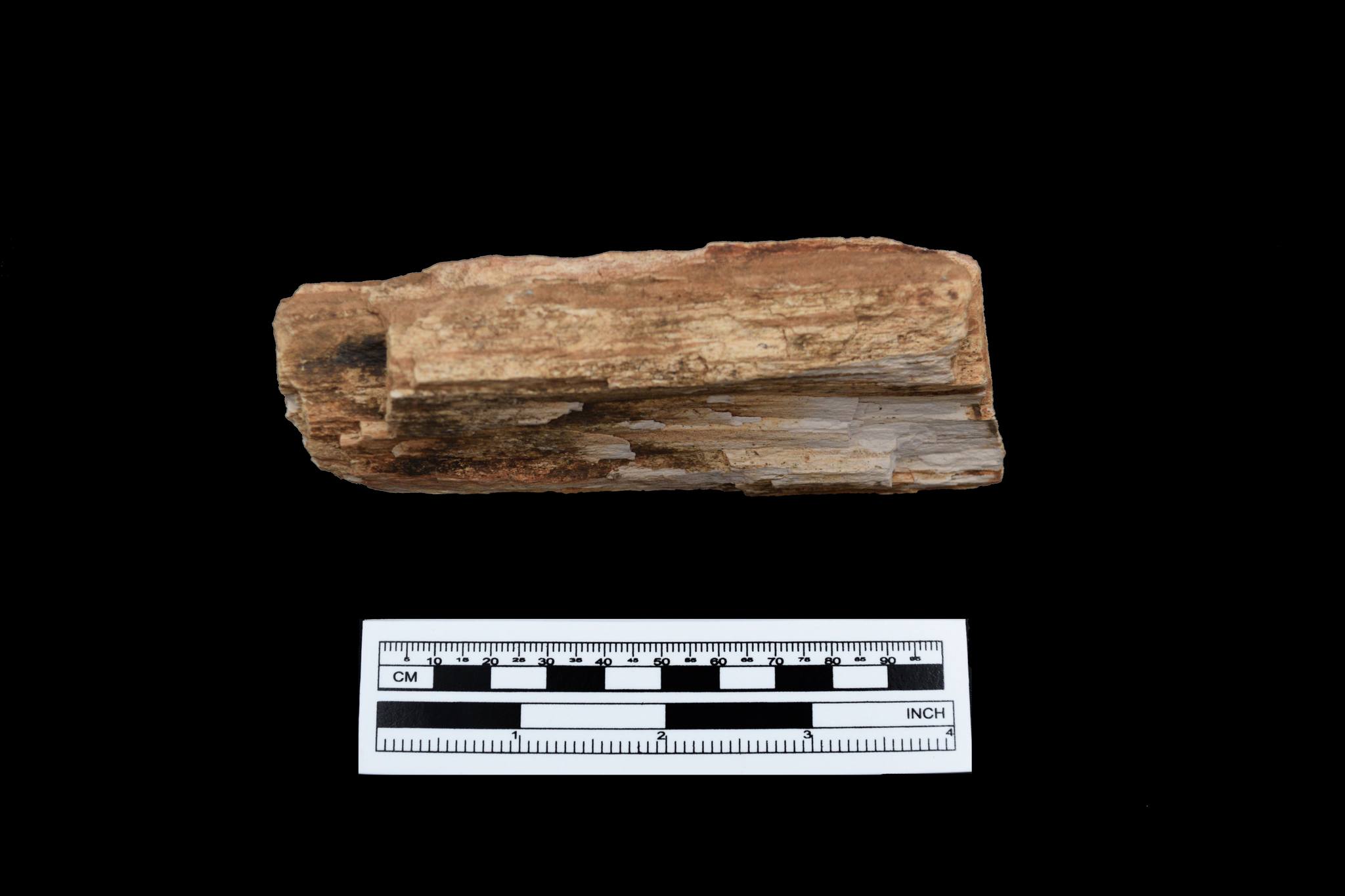
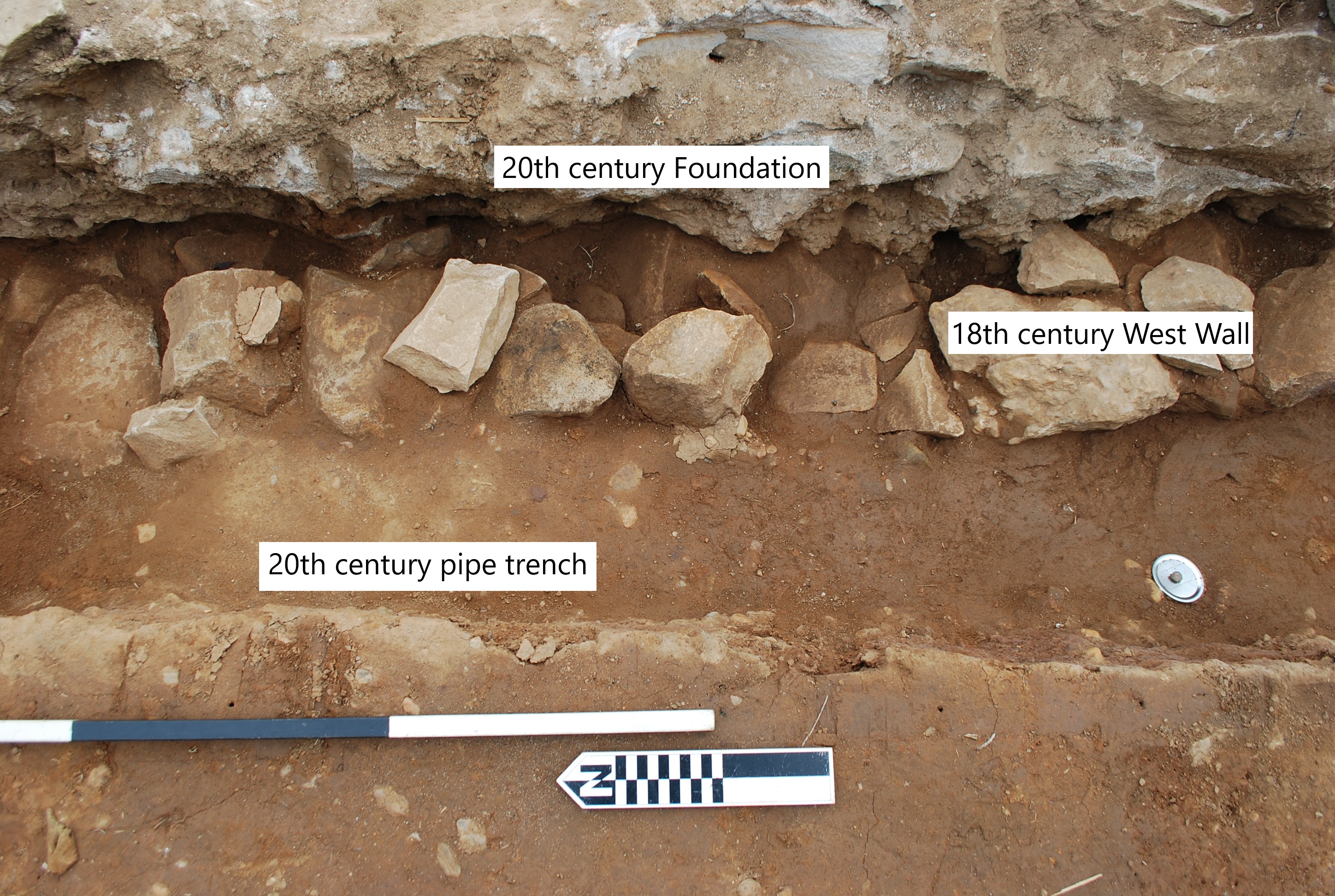
But when it comes to finds, our most exciting discovery did not turn up in our sifting screens. In fact, it was discovering that the western foundation wall of the kitchen cellar, thought to have been demolished, still survived! During the 1990s excavations, the archaeologists did not see this portion of the stone foundation and assumed the construction of the 1914 Colbert house had destroyed it. Fortunately for us, it was hiding under a 20th century utility pipe and trench and lay directly adjacent to the Colbert concrete foundation. Now we have all four foundation walls that we hope to fully uncover next year.
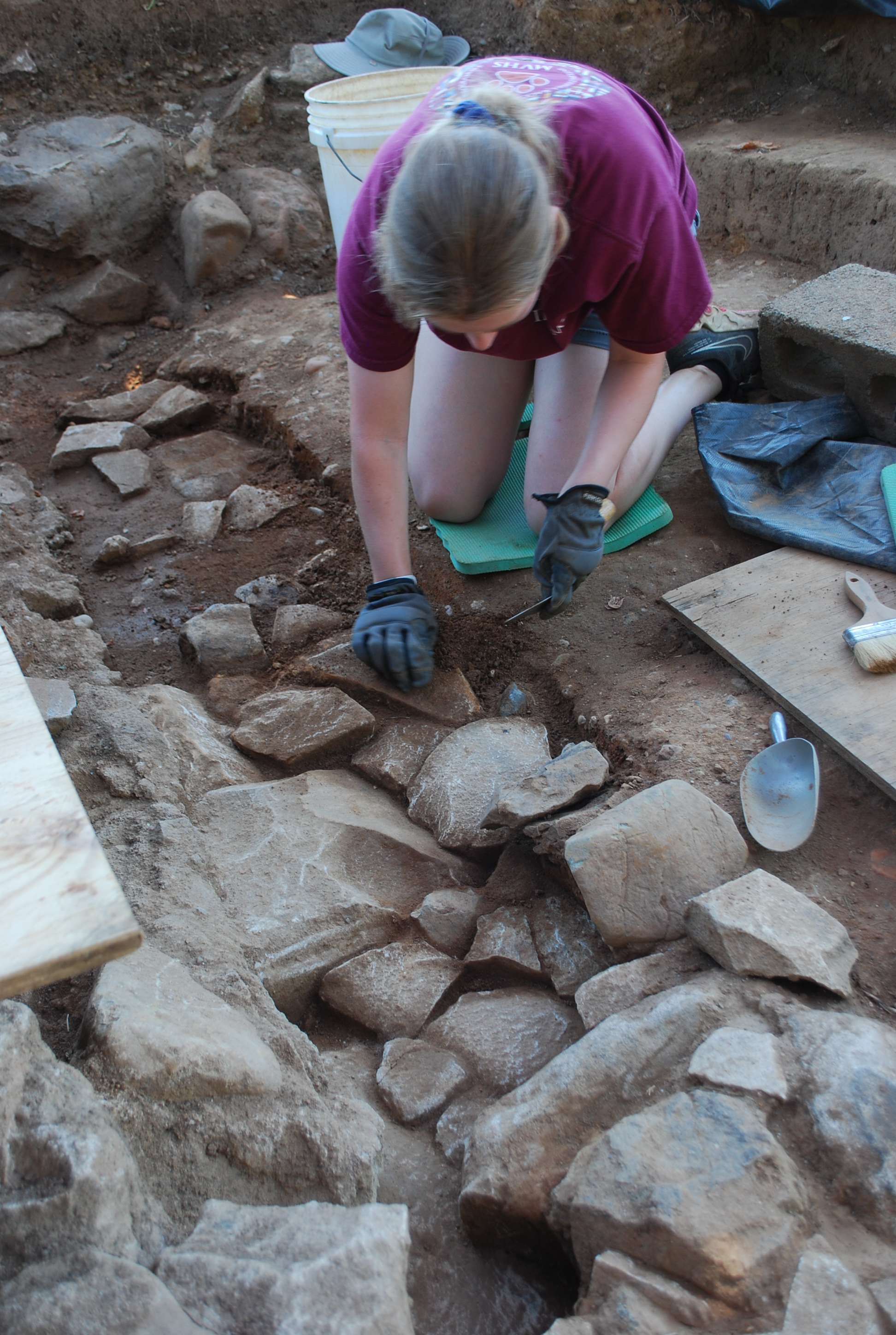
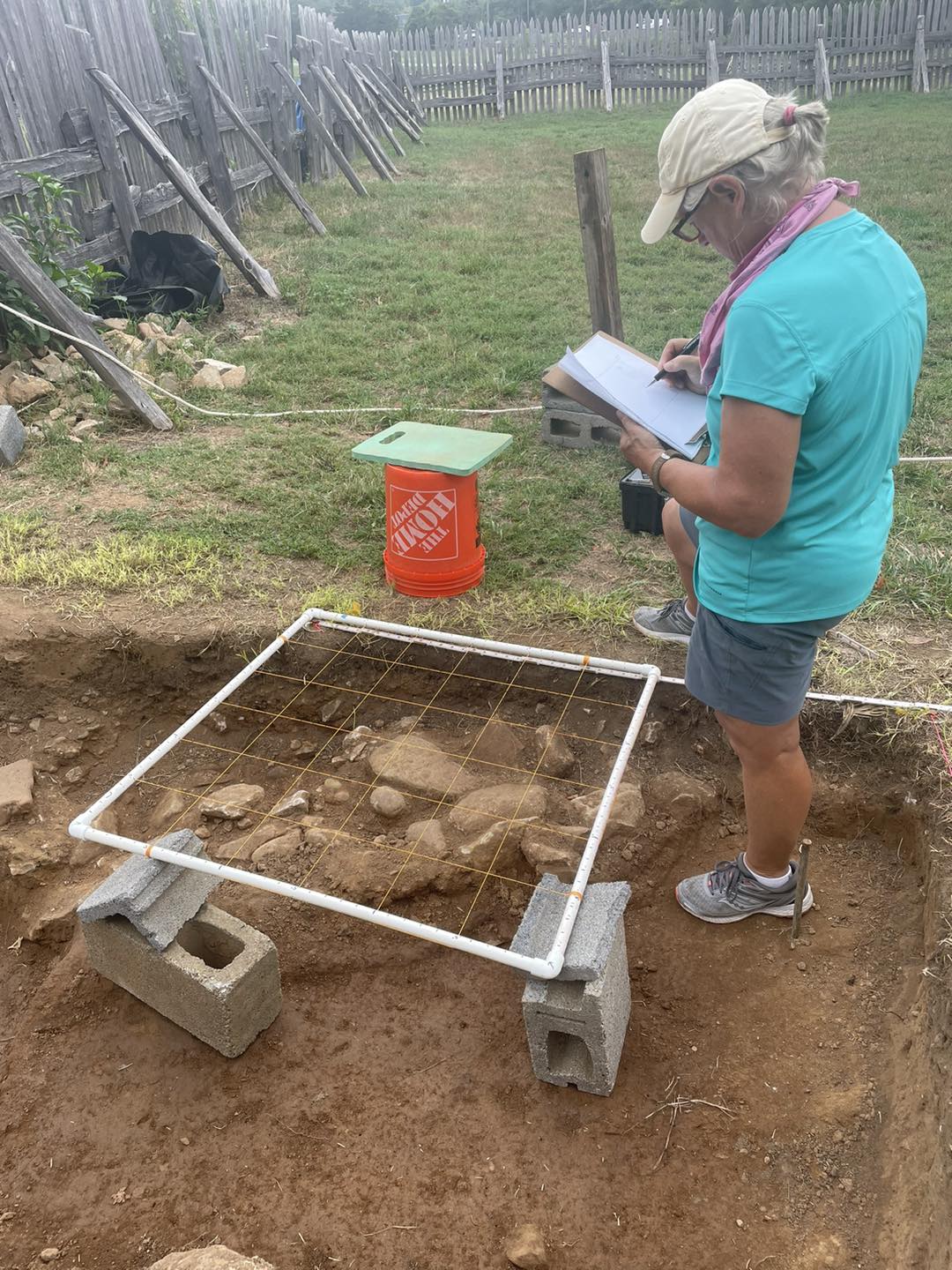
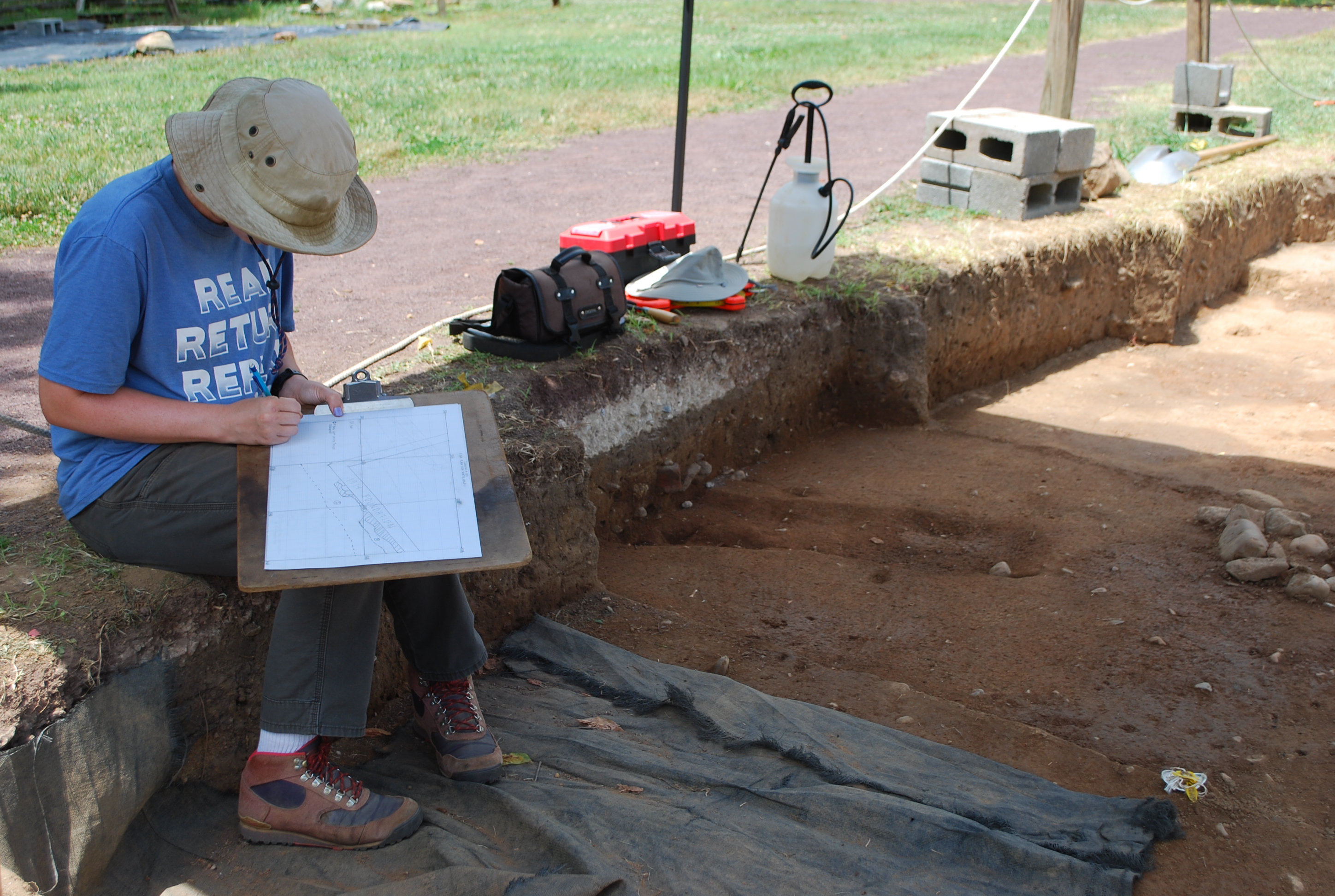
Exposed south and west stone walls of the colonial kitchen lie adjacent to and just outside of the 1914 concrete foundation wall. Judy Jobrack cleaning the newly exposed west wallAbbie Wood cleaning the south wall of the kitchenWest wall of colonial kitchen that was hiding under the pipe trench
Our excavation units surrounding the kitchen foundation have not, as of yet, exposed additional building features associated with the kitchen outbuilding, such as foundations or fireplaces. That search will continue next year as we continue taking those units down and expanding our site area. Features exposed in the 1990s dig, but not excavated by them or us, such as possible post holes and trash middens, also await our return in 2025, when we plan on finishing their excavation.
Each year’s excavation is built on the work accomplished in the previous years. With the incredible amount of work done this past summer of exposing the original kitchen foundation, as well as the later farmhouse foundations, removing old fill, and opening up the adjacent landscape, we are looking forward to expanding our investigations of the kitchen site next year. Stay tuned as we unravel the mysteries that are here at Ferry Farm, George Washington’s Boyhood Home.
The observer stands behind glass and watches. The one being watched picks up the object with her bare hands turns it carefully to see every angle, then sets it down to record data into her computer. Then she washes her hands, unwraps another object – and eats it!
Visitors to George Washington’s Ferry Farm can explore more than the museum gallery, or the Washington House replica, or newly constructed Quarter and Cellar outbuildings. They can tap into their people-watching curiosities and observe real archaeologists in a laboratory researching, washing objects, making labels, cataloguing, repairing ceramics – and even eating lunch!
One extraordinary thing about Ferry Farm is that its archaeology lab is viewable and accessible to the public. The mysteries of history lie out in the open, sitting out on tables or in trays ready to be washed and categorized. Like zoo-goers, visitors are mesmerized by the goings-on behind the glass, and likewise, our archaeologists love interacting with the public, glad to answer questions or even pose for a picture.
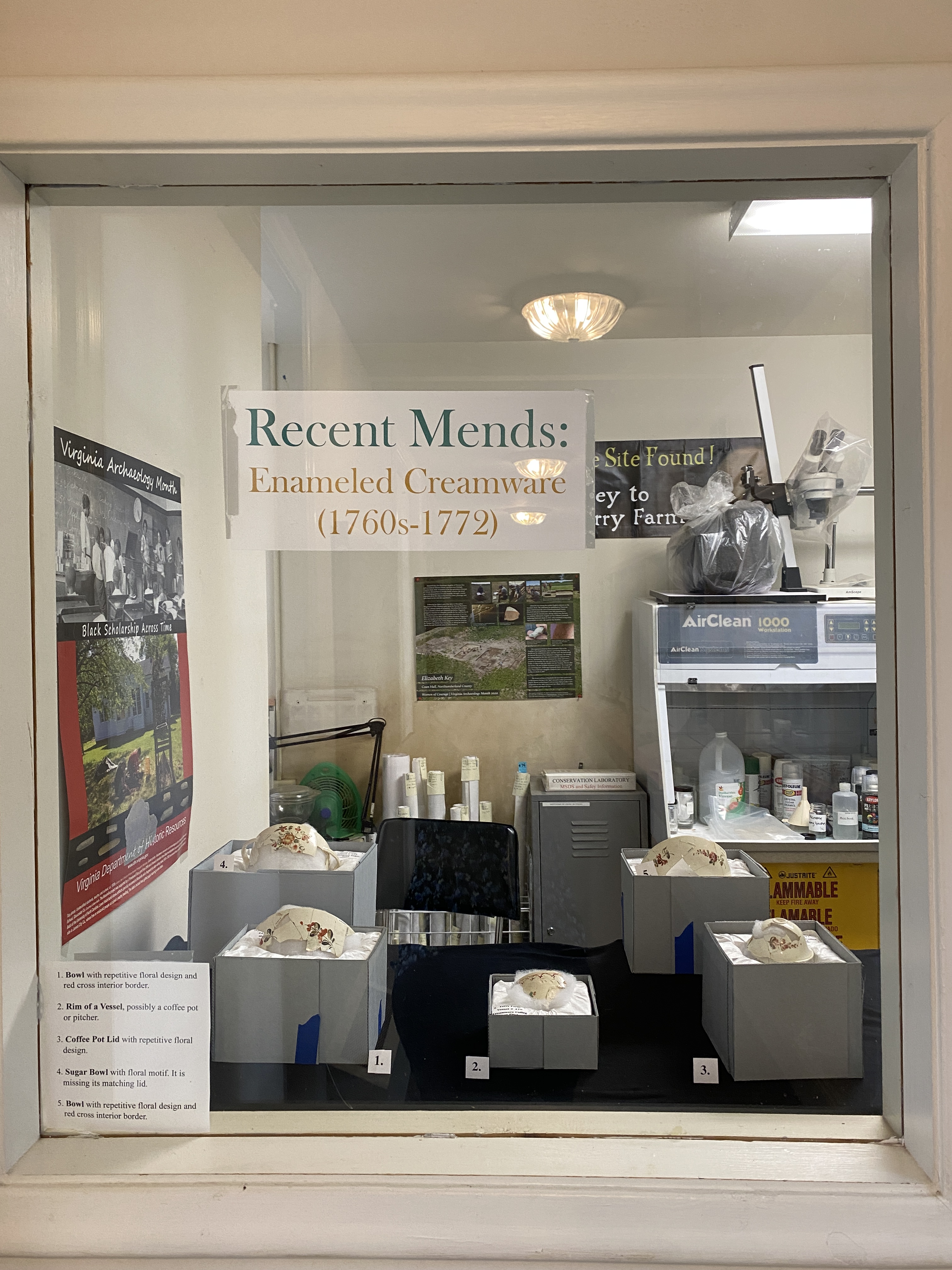
Recent mends of enameled creamware behind one of several Archaeology Lab observation windows.
It may be an interesting coincidence, but as Mary Washington drives the story of Ferry Farm and Historic Kenmore was saved by a group of intrepid women, Ferry Farm’s archaeology laboratory is also dominated by women who are passionate about what they do and more than willing to share their findings with guests and professional peers. Who are these interesting women, and what exactly happens in the lab? Its main inhabitants are Lab Supervisor Mara Kaktins and Field Directors Judy Jobrack and Danielle Arens. Also, part of the team (but not in the fishbowl) are Research Archaeologist Emma Schlauder and Director of Archaeology Dave Muraca. Dave, the only man in the department, led the team that discovered the foundation of the Washington House.
There would be no lab work if there was no field work, and every summer for about 11 weeks, a carefully planned dig occurs on the grounds of George Washington’s Boyhood Home. Rich in artifacts, the land has yielded over 800,000 since the 1990’s. Finds date from indigenous, colonial, Civil War, and a sequence of farms throughout the 20th century. As Dave Muraca has said, “I would never recommend having a Civil War battle on your archaeological site. There are five successive farms out there, one on top of each other. In that way, it’s very complicated and hard to take apart.” That said, the fieldwork is not easy, but incredibly, each season, they find thousands of artifacts that will need to be mapped, processed, washed, bagged, catalogued in the database, labeled, stored, and researched.
Washed artifacts waiting to be bagged and catalogued.
Typical finds include ceramic sherds, window glass shards, architectural pieces, household items, mortar, sandstone, personal items, pipes, wig curlers, buttons, personal adornment, and indigenous and faunal (animal remains). Objects popular with the public include a Masonic pipe bowl, cufflinks engraved with foxes and “Tally O,” a chamber pot, and even 20th-century items that indicate children used to live on-site, such as Matchbox cars, a toy motorcycle, or a doll’s head. Observers are also surprised to learn that 21st-century trash is catalogued because it was unearthed, and someday that too will be a part of Ferry Farm’s history.
It’s important to note that Ferry Farm doesn’t dig exhaustively. While archaeologists are certainly concerned with the past, they also make concessions for the future, leaving areas untouched for future generations to dig using as-yet not invented technology. Ground penetrating radar has not been used much because of all that has happened on the land since Washingtons’ time. The main emphasis is feature-chasing – looking for structures such as the Washington House, cellar, kitchen, the Quarter, and more. No land feature will be recreated without knowing exactly where it stood.
A unique quality of Ferry Farm’s Archaeology Department is that lab and field duties are not segregated; the same amazing team works both in the lab and field. This creates an intimacy with the artifacts that may not be present elsewhere. One day in the field equals three working days in the lab, processing, interpreting, and analyzing all the data from the artifacts. The first step is turning the field data into a format that’s digestible for record-keeping, end-of-year reports, and future Ferry Farm archaeologists. In the field, a site grid in five-foot increments is established and laid out to track where the finds are. Within that grid, context numbers are assigned to specific soil layers and features. A context is essentially a 5’ x 5’ address that notes the horizontal and vertical location of artifacts, noting spatial distribution where items are concentrated. In the lab, context maps are made from each grid unit, and the maps are put together to create the stratigraphy of a dig site.
Leaded glass takes on a blue hue under UV light.
Artifacts that come in are brought to the Wet Lab and washed with water in a tub or colander using tools such as toothbrushes, pipe cleaners, or dental picks. One might wonder if there are special precautions for handling artifacts, and interestingly, controversy swirls over whether artifacts should be handled with gloves or not. Rubber gloves are worn during lengthy washings to keep hands from getting too waterlogged. It turns out wearing gloves for analysis proves more damaging since touch sensitivity is reduced and gloves are prone to ripping. Items being examined have been surrounded by the elements for years, so oils from hands are not likely to harm artifacts any further.
Next to the Wet Lab is the Conservation Lab, where acetone might be used to remove glue from previously mended artifacts. It’s equipped with a vent hood for fumes and the archaeologists wear masks for safety. They often create tableware replicas for the Washington House display, which might require the use of spray paint.
Very well-designed and equipped, the lab was created by archaeologists for archaeologists. Their equipment includes a light table, a Dremel, a fine water screen for the field, and a UV light to identify leaded glass. For further testing, the department may contract out to other labs, such as the University of Eastern Michigan, with DART mass spectrometry capable of identifying organic materials.
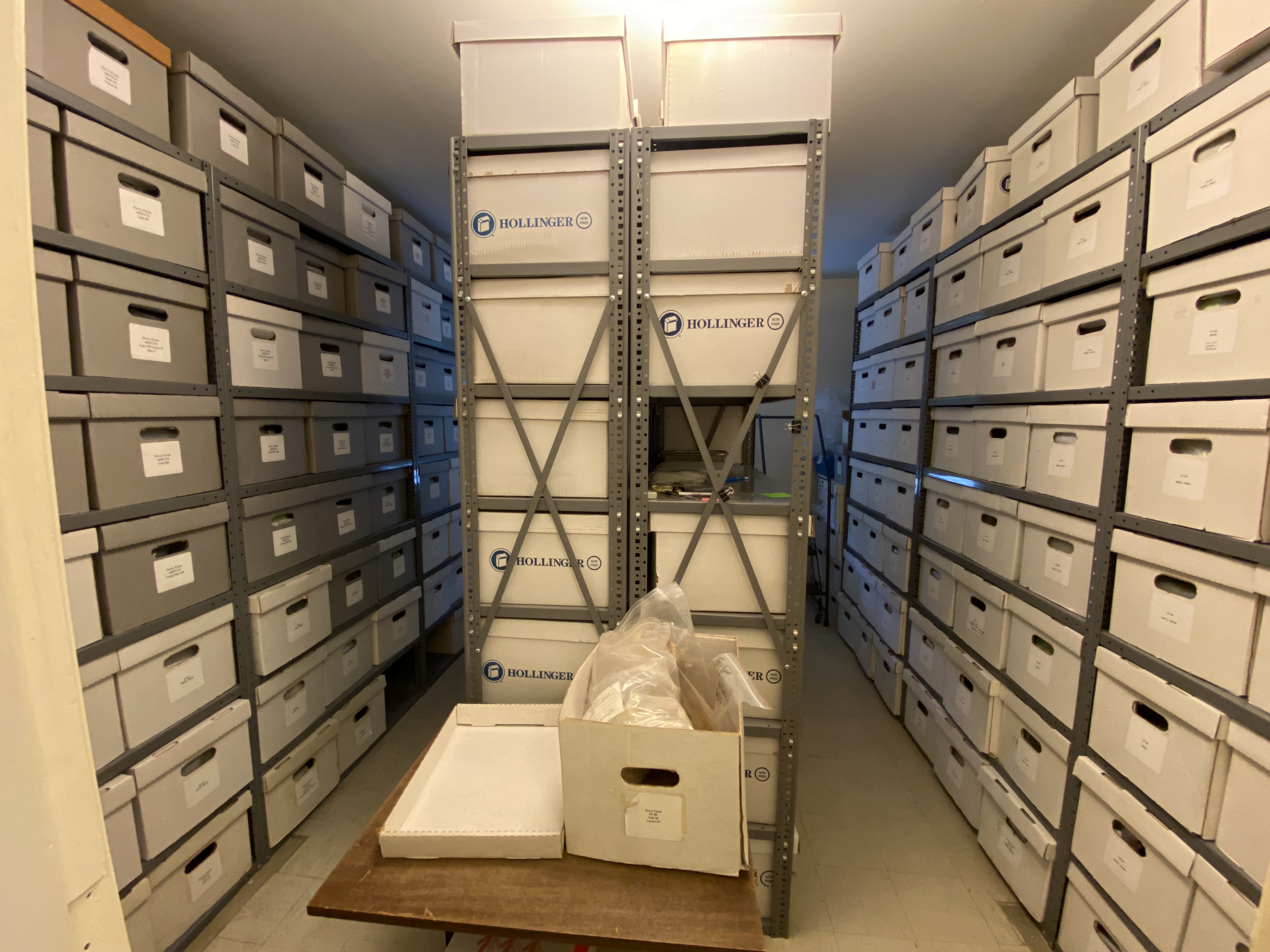
After artifacts are entered into the database and bagged with tiny labels indicating their project number and context, they are either put in the study collection or housed in cabinets or a storage room. With almost a million artifacts in the collection, the boxes stacked in the storage room resemble a miniature version of the ending scene in Raiders of the Lost Ark.
Boxes of artifacts stacked in the storage room resemble a miniature version of the ending scene in Raiders of the Lost Ark.
While one cannot put a value on tiny sherds of 18th-century ceramics, a rusted hinge, or an old button, Kaktins says, “Everything is priceless because of the information gleaned from it.” Archaeology at Ferry Farm is the driving force behind the stories shared with visitors. It informs where the buildings go, reveals the long-forgotten secrets of inhabitants, and intrigues visitors as they glimpse into the past.
If you have followed the news of our excavations, you will have kept up to date with our building finds. The past two summers helped uncover evidence of one such structure, which we now believe represents a corncrib. While the name may seem self-explanatory, we have frequently heard the question, “What is a corncrib?” To answer this, we thought we would dedicate our newest blog to it.
Long cultivated by Native Americans, early colonists quickly adopted corn into their agricultural repertoire. As a crop, corn proved easy to cultivate due to its hardy and adaptable nature, and its high yield to seed ratio made it a prosperous choice. The corn season lasted from planting in early May to the September-October harvest. After this, collected corn, counted as barrels, lay in corncribs. Husking and shelling occurred as needed since home consumption only required a small amount at a given time. This process continued throughout the winter months.
As a food staple, corn became an important part of free and enslaved diets in Colonial Virginia. Corn grew in such abundance that it reportedly fed everything. This led to Virginia husbandry relying on the crop and any decline in quantity led to a state of distress. As for the enslaved, records of food rations allotted to enslaved communities often refer to “pecks” or “bushels” of corn. Corn served as a useful ration since small amounts went far and multiple uses for it existed. It also provided better nutrition, which did not go unnoticed by enslavers. Instances of enslaved rations excluding corn resulted in a decline in health, energy, and production. This made the inclusion of the staple essential.
Despite their forced labor, enslaved communities integrated corn harvesting into their culture. Annual so-called corn shucking festivities proved frequent sights on plantations, especially as corn production expanded. During this time, the harvested corn lay in heaps next to the crib. As the size of the harvest required many people for husking, this event provided time for socializing. A moment filled with music and dance, even neighboring enslaved individuals and relatives not attached to the property could attend under the guise of providing extra labor. This latter detail explains why such gatherings went ahead. Enslavers often encouraged corn-shucking festivities to speed up the process and at times offered rewards to the person who could shuck the most corn.
The expansion of corn production lies in the decline of tobacco. While tobacco served as the original cash crop of Virginia, its cultivation damaged soils, resulting in increasingly poor crop cycles. Some planters, including George Washington at Mount Vernon, opted to plant grains to avoid this trend and thus have more return each year. As tobacco prices fell in the late 1700s, due in part to the Revolution, more Virginia planters turned their focus to grains. This led to an expansion in corn cultivation, as it became a central part of the economy.
No longer used for just animal feed or local consumption, corn became a cash crop. In doing so, more structures related to grains appeared or underwent expansion. Gristmills became more common as did grain stores near wharfs. On plantations, the land devoted to grains increased to sustain production with additional or larger storage buildings, such as corncribs, appearing to accommodate the harvest. Corncribs would soon rank amongst the most common structures to appear on farmlands. Apart from buildings, husking and shelling additionally underwent a change as this now occurred over the course of a few weeks, thus allowing for enslaved gatherings, rather than throughout the winter.
Corncrib
With corn holding such an important position in society, it required proper storage. Native Americans constructed the first corncribs with Europeans taking note of them shortly after arriving on the continent. The structure evidently held significance for indigenous tribes as many place and group names derive from the various words for a corncrib. Interestingly, our modern term “barbecue” comes from “barbacoa,” an indigenous term from present-day Georgia, which has several meanings including corncrib. Apart from ranging in size, the design of corncribs dating from pre-contact to present appear very similar, as several key elements remain consistent.
The main roles of a corncrib constitute storing harvested corn, protecting it, and keeping it dry. To that end, the most recognizable characteristic involves the floor of the structure resting at least a foot off the ground via posts or piles/piers. Raising the structure deterred vermin from accessing the crop and helped keep it dry. The design of the sides additionally helped with this latter desire as vertical slats or offset horizontal siding provided gaps for airflow. Vertical slats for “cribbing” proved the most common during the colonial period.
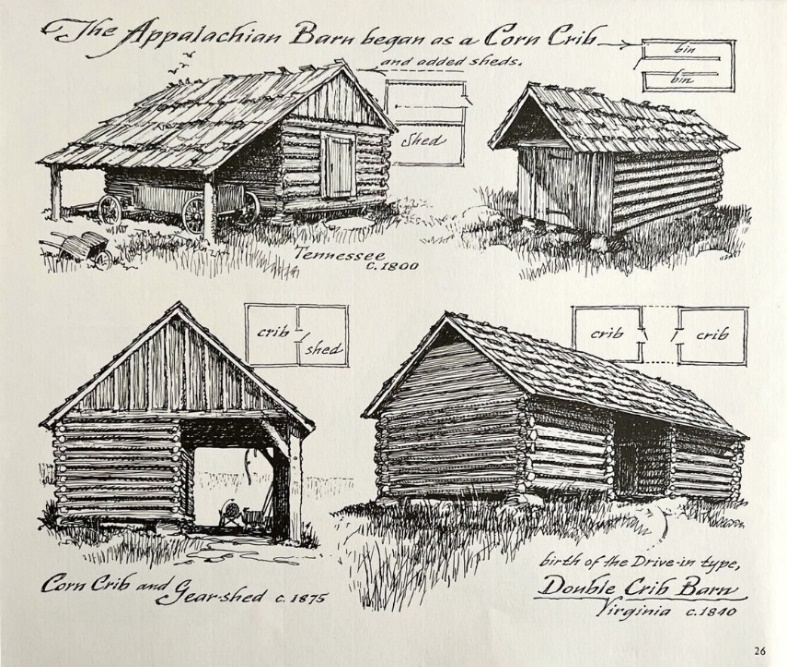
Overall, the structure required robust timbers and construction techniques that would allow it to carry dead loads and resist interior pressure. Once constructed, the building generally took on a rectangular shape with a gabled roof of shingles, boards, or thatch. This roof could extend over one or more sheds attached to the long sides of the building while a door, typically on a shorter side, provided interior access. The interior varied from an open plan to one with removable dividers to form cribs, hence the name of the structure. Post-colonial era designs could include an additional crib to form a double or “drive-thru” corncrib.
Corn Crib Designs Source: Sloane 1990: 26
Since its adoption by colonists, the building’s name has experienced some variation. While we have gone with “corncrib” at Ferry Farm, several other accurate terms exist. The most simple, and unhelpful for interpreting records, consists of “barn.” During colonial times, “barn” could refer to nearly any outbuilding, and corncribs fall under a barn style called “crib-barns.” This, in turn, may refer to the building. While no standard for outbuildings included on properties existed during this time, corncribs counted amongst the most common. Other name options include the similar “corn-house” and the term “stacks.” This latter term may or may not have “corn” attached to it, but referenced ability to relocate the structure. In the end, unless corn appears in the name, identifying the building requires context clues such as location, crop knowledge, structure design, and recorded narratives.
Our Findings
So what did we find to suggest we had a corncrib? To start, we know from documents dating to Washington occupation that corn constituted one of the crops grown at Ferry Farm. We knew little beyond this until archaeology provided an insight. Across our 2020 and 2021 field seasons, we uncovered four aligning postholes that each measured 10ft apart. At the same time, a decline in artifact count occurred, suggesting our dig lay on the outskirts of the work yard. In 2022, we expanded this dig area to determine if the postholes belonged to a fence or, as we hoped, a building. The low artifact count continued to support the theory of entering the agricultural world and we soon discounted a fence line, as our excavation revealed no further postholes on that line. Moving 20ft south from the postholes, we uncovered a line of three features, also 10ft apart, which aligned with the first three postholes. The issue? They came from piles/piers rather than posts, and one of the stones for that line remains in place (Fig. 5).
Image depicting the lines of 4 postholes and 3 pile/pier sites as of 2022
The two parallel lines evidently went together, but we now needed to identify a structure that used both building techniques. After perusing historic images and sources on 18th century agricultural buildings, we identified the corncrib as the only structure that fit this construction. While corncribs most often stand alone on piles/piers or posts, some examples include an open shed area for carts and temporary storage as discussed earlier. Neither part of the structure would have led to large artifact deposits as the crib merely stored corn while the shed area supported the act of storage.
So what did our corncrib look like? Well, apart from identifying the crib and shed portions, we can say the crib must have rested at least a foot off the ground. Furthermore, in keeping with standard construction, the siding, likely vertical slats, would have breaks in between to allow airflow. As for the basic dimensions of the corncrib, our emergency access road unfortunately runs through the unexcavated portion.
Since we cannot inhibit this access, we only have the complete outline of the shed and one side of the crib (Fig. 6). Still, we can make a few estimates for the structure’s dimensions. While we cannot determine height at this stage, the outline of the shed indicates this portion measured 20x30ft. This, in turn, tells us that the corncrib itself measures 30ft in length. As for the crib’s width, several details allow us to determine a range. One source stated that the length of a corncrib should be 2-3 times the width. Of the examples we identified, they generally had a length about twice the size of the width, with the widest one measuring 20ft. On top of this, shed portions do not appear much wider than the accompanying crib. With this in mind, our crib likely measures 15-20ft in width.
Overview of excavation site showing the 20x30ft shed outline and start of the crib
Future
By now, you must wonder when you will see a corncrib at Ferry Farm. One of our goals involves reconstructing the Washington landscape and this will include the corncrib. Currently, we have started construction on a root cellar and slave quarter. Once completed, these structures will be part of your visit and we will turn our attention to reconstructing more areas. This may include the corncrib, but will likely take a few years. In the meantime, continue to visit our ongoing construction projects and make sure to talk with the archaeologists and interpreters.
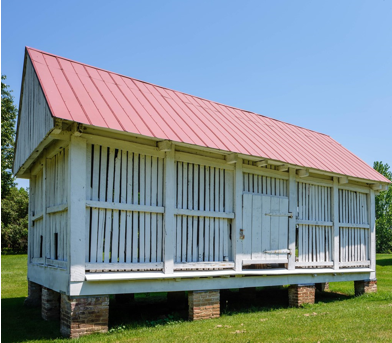
Our future corncrib may look similar to this small one at the Museum of Appalachia Source: Wikipedia
Historical Fact: Those familiar with the life of Harriet Tubman may recognize the term “corncrib” as she, her brothers, and several others briefly hid in one while she led them to freedom.
Emma Schlauder
Research Archaeologist
Belanger, Fergus & T. H. Warner 1934 Notes about Williamsburg and William and Mary College. The William and Mary Quarterly 14(3): 239-240.
Carson, Cary & Carl Lounsbury (editors) 2013 The Chesapeake House: Architectural Investigation by Colonial Williamsburg. The University of North Carolina Press, Chapel Hill, NC.
Carter, Landon 1908 Diary of Col. Landon Carter. The William and Mary Quarterly 16(3): 149-156.
Chandler, Dana 2000 The Prehistory of Randolph County, Alabama. Central States Archaeological Journal 47(1): 28-29.
Copeland, Pamela C. & Richard K MacMaster 1989 The Five George Masons. University of Virginia Press, Richmond, VA.
Harriet Tubman Underground Railroad Byway 2023 25. Choptank Landing: Site of Harriet Tubman’s Most Daring Rescues. Harriet Tubman Underground Railroad Byway < https://harriettubmanbyway.org/choptank-landing/>. Accessed 19 June 2023.
Herman, Bernard L. 1992 The Stolen House. University Press of Virginia, Charlottesville, VA.
Hollingsworth Jr., G. Dixon 1979 The Story of Barbecue. The Georgia Historical Quarterly 63(3): 391-395.
Katz-Hyman, Martha B. & Kym S. Rice (editors) 2011 World of a Slave: Encyclopedia of the Material Life of Slaves in the United States. Greenwood, Santa Barbara, CA.
Kimball, Fiske 1954 Gunston Hall. Journal of the Society of American History 13(2): 3-8.
Lanier, Gabrielle M. & Bernard L. Vlach 1997 Everyday Architecture of the Mid-Atlantic: Looking at Buildings and Landscapes. The John Hopkins University Press, Baltimore, MD.
Linebaugh, Donald W. 1994 “All the Annoyances and Inconveniences of the Country”: Environmental Factors in the Development of Outbuildings in the Colonial Chesapeake. Winterthur Portfolio 29(1): 1-18.
Lounsbury, Carl R. (editor) 1994 An Illustrated Glossary of Early Southern Architecture and Landscape. University Press of Virginia, Charlottesville, VA.
Morgan, Philip D. 1998 Slave Counterpoint: Black Culture in the Eighteenth-Century Chesapeake & Lowcountry. The University of North Carolina Press, Chapel Hill, NC.
NPS 2021 Barnyard Trail: Corn Crib. Fire Island National Seashore, NPS <https://www.nps.gov/ places/barnyard-trail-corn-crib.htm>. Accessed 24 May 2023.
Siener, William H. 1985 Charles Yates, the Grain Trade, and Economic Development in Fredericksburg, Virginia, 1750-1810. The Virginia Magazine of History and Biography 93(4): 409-425.
Sloane, Eric 1990 An Age of Barns, reprint of earlier edition. Henry Holt & Co., New York City, NY.
Speck, Frank G. 1907 Notes on the Chickasaw Ethnology and Folk-Lore. The Journal of American Folklore 20(76): 50-58.
Stilgoe, John R. 1982 Common Landscapes of America, 1580-1845. Yale University Press, New Haven, CT.
Wells, Camille 1993 The Planter’s Prospect: Houses, Outbuildings, and Rural Landscapes in Eighteenth Century Virginia. Winterthur Portfolio 28(1): 1-31.
Upton, Dell & John M. Vlach (editors) 1986 Common Places: Readings in American Vernacular Architecture. The University of Georgia Press, Athens, GA.
Vlach, John M. 1993 Back of the Big House: the Architecture of Plantation Slavery. The University of North Carolina Press, Chapel Hill, NC.
Washington, Augustine Jr. 1750 Record of Sale and Payment to Mary Ball Washington.
Washington, George 1749 Letter to Lawrence Washington dated 5 May 1749. Washington Papers, National Archives, Washington, DC.
Washington, George 1771 Survey of Ferry Farm.
Washington, Mary Ball Undated Letter to John Augustine Washington, undated no. 154. Box: 87, Folder: undated no. 154, Identifier: RM-904; MS-5404, The George Washington Presidential Library at Mount Vernon, Mount Vernon, VA.
Fredericksburg is famous for its colonial and Civil War history – but what about before that history? Decades of archaeological excavations at George Washington’s Ferry Farm have revealed millennia of human development and technology from pre-historic Native American Clovis spearpoints to 18th-century wig curlers and beyond. While our main focus rests on young George Washington’s story, nearly 25% of all artifacts ever found at Ferry Farm have actually been Native American in origin with many dating thousands of years into the past. Here are five cool ancient artifacts found at Ferry Farm…
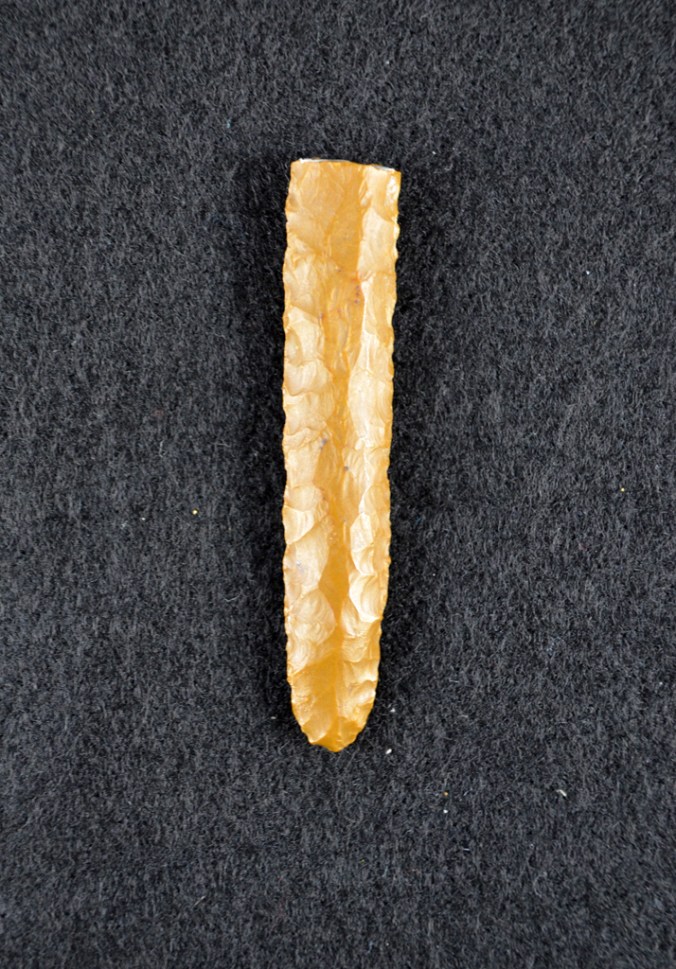
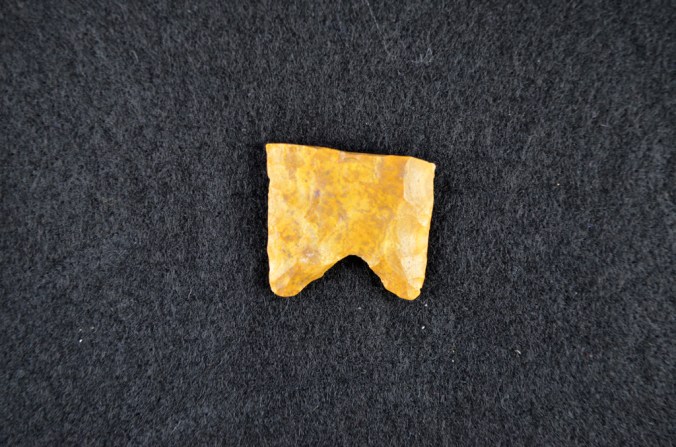
Jasper Drill: The above is the tip of a jasper drill. It may have been adapted from a spear point, which was not uncommon. When a spear point broke or became too short from re-sharpening sometimes they were turned into other tools. This particular drill likely dates to around 8,000 BCE to 6,000 BCE.
Clovis Point: Also, jasper, this spear point (shown above) is our oldest artifact and dates to between 13,500 BCE – 11,000 BCE. To learn more about it, visit our previous blog post here.
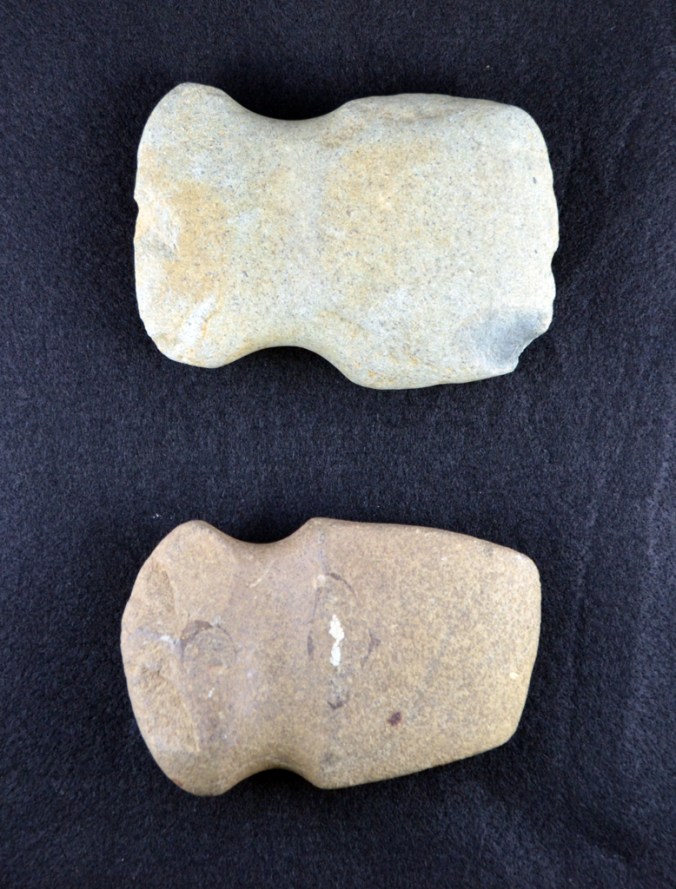
Ground Stone Axes: These two axes (depicted above) were found together. They’re made of Catoctin metabasalt, which is also often called ‘greenstone’. They were in use from 3000 BCE – 1000 BCE.
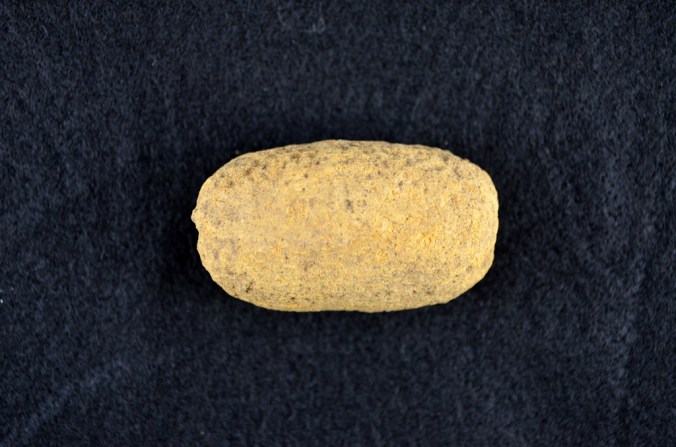
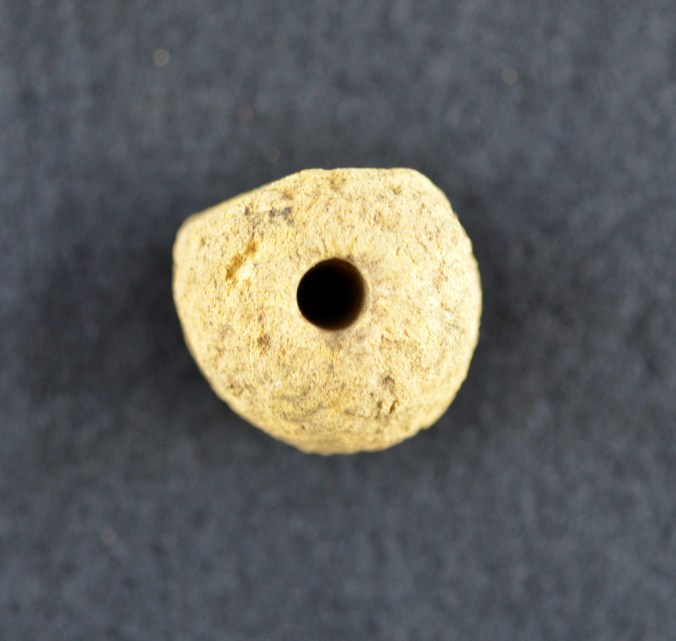
Mystery Bead: This large partial bead (shown in the two photos above) is a bit of a conundrum. It’s made from non-local sandstone and is heavily weathered. To further the mystery, it was found with the stone axes discussed above and the chunkey stone discussed below, leaving us to believe these artifacts were part an amateur archaeologist’s collection and may not have been brought here by people indigenous to Virginia.
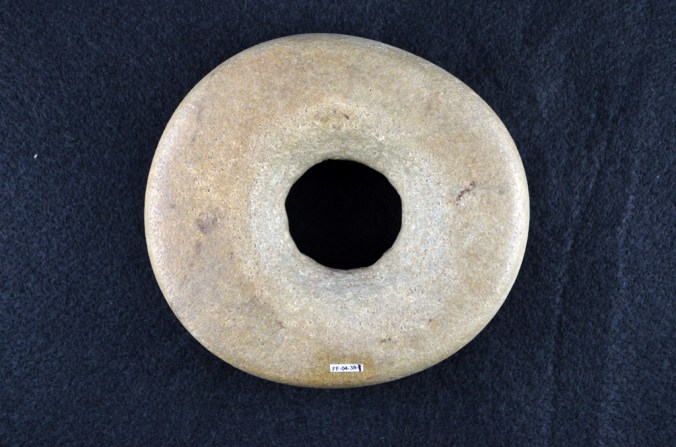
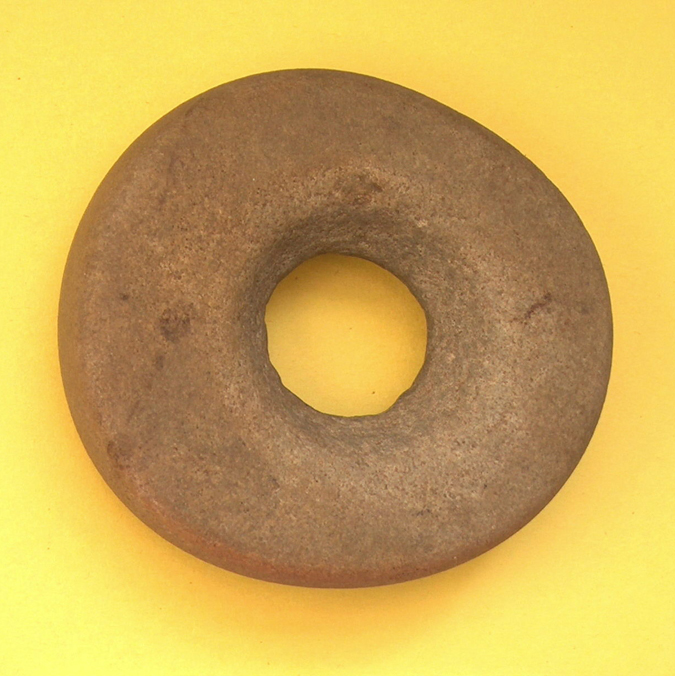
Chunkey Stone: The doughnut-shaped stone (in the above photo) is made from quartzite and is part of a game called chunkey which was invented around 600 CE. To learn more about our chunkey stone, check out our recent blog post here.
See these and other artifacts during ArchaeoFest: Exploring Ancient Techology at Ferry Farm this Saturday, October 26 from 10am-4pm. Enjoy a family-friendly day focused on early human technology! Scheduled demonstrations by members of EXARC, a global network of experimental archaeology professionals and other experts, include flint knapping, throwing spears using atlatls, making Viking glass beads, 18th century stone carving, and much more. Experimental Archaeology demonstrations begin at 11am. Dive into hands-on activities like an archaeological dig, see a sampling of the thousands of Native American artifacts excavated at Ferry Farm, and visit with members of the Patawomeck tribe. Admission is $9 for adults, $4.50 for students, and free for under age 6. To learn more, visit ferryfarm.org.
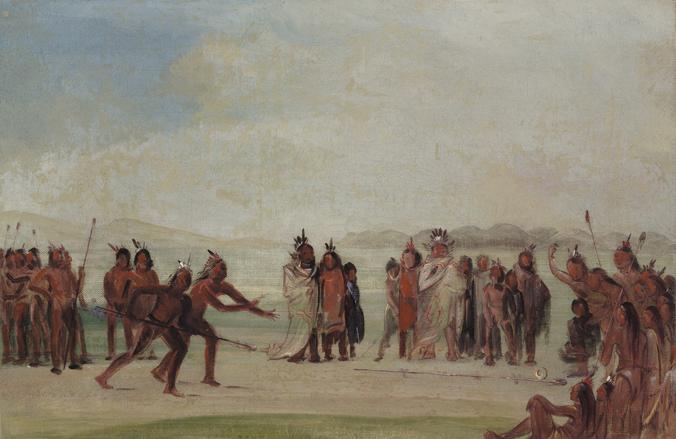
Sometimes games are just fun but sometimes games can make you or break you. This is the case with chunkey, a Native American game. Invented around 600 AD by indigenous peoples of the Cahokia region (near modern day St. Louis, Missouri), chunkey was a popular game that spread across much of North America. There were variations in the rules, depending on the cultures playing it, but the basic premise was that a large ground stone disc (a chunkey) was rolled across a level field by a player. One or multiple players from the opposing side would then throw sticks (also called chunkey) underhanded at the stone, aiming to get as close as possible or to touch the stone once it stopped rolling. Chunkey stones took time to make, were considered valuable, and were often communal property of a village.
Although the game could be played casually, Chunkey tournaments were a big deal with much pageantry and costumes, often drawing people from far away to participate and watch. Think of it as an ancient Super Bowl. Gambling was common at these events with players risking everything, including their honor, on the outcome. Reportedly some unfortunate defeated players killed themselves after a loss.
Chunkey continued to be played after Europeans arrived in North America and was subsequently documented by some who frequented the events. However, sometime in the mid-19th century, the game lost favor, likely as a result of the decimation of indigenous cultures by those same Europeans.
“Tchung-kee, a Mandan Game Played with a Ring and Pole” (1832-3) by George Catlin depicts Native Americans playing chunkey. Credit: Smithsonian American Art Museum
This brings us to the chunkey stone excavated at Ferry Farm. Visitors who see it immediately note that it looks like a stone doughnut. Personally I believe it to be one of our coolest artifacts.
Chunkey stone excavated at George Washington’s Ferry Farm.
Oddly enough, this chunkey was found suspiciously close to three other prehistoric artifacts, not all of which belong on an archaeological site in Virginia. Two stone axes and an odd bead were recovered right next to the chunkey in soils that were plowed which caused the mixing of artifacts from different time periods. The axes date to the late archaic period (3,000 BCE – 1,000 BC) while the chunkey stone, as stated above is thousands of years younger. Additionally, the bead, which is still a bit of a mystery, is a type of sandstone not found in Virginia.
So does this mean that indigenous peoples hundreds of years ago were playing chunkey on a site that would eventually be George Washington’s home? Maybe…but maybe not. When you add all of these factors together it starts to look more and more like these items were collected in the historic period and did not necessarily belong to any tribes living at Ferry Farm. The English and their colonists were prodigious collectors of natural and Native American artifacts. Famous colonial collectors include Benjamin Franklin and Thomas Jefferson.
The chunkey stone and these other Native American artifacts are still very cool finds but definitely a reminder that removing artifacts from their original location without preserving their context greatly limits how archaeologists can interpret them. And, in this case, may throw archaeologists a bit of a curve ball …er, a curve chunkey!
Play a version of chunkey during ArchaeoFest: Exploring Ancient Technology at Ferry Farm on Saturday, October 26 from 10am-4pm. For more details, visit kenmore.org.
Mara Kaktins, Archaeologist
Archaeology Lab Supervisor
In this video, archaeologist Mara Kaktins demonstrates how Native Americans used plant fibers to make rope.
See other experimental archaeology demonstrations during “ArchaeoFest: Exploring Ancient Technology” at George Washington’s Ferry Farm on Saturday, October 26. For event details, visit here.
Many visitors to George Washington’s Ferry Farm are surprised to learn that about a quarter of the 750,000 artifacts excavated by Ferry Farm’s archaeologists were created by Native Americans. However, given that indigenous people were living in the land we call Virginia for thousands of years prior to the arrival of Europeans, it makes perfect sense. The vast majority of these Native American artifacts are stone flakes that are the byproduct of stone tool manufacture (think sawdust or wood shavings from carpentry, but stone) and date to the Archaic period (or 10,000–3,200 years before the present day). A very few are even older. In fact, Ferry Farm’s oldest datable artifact is the basal fragment of an ancient jasper dart point made by a people belonging to what we call the Clovis culture.
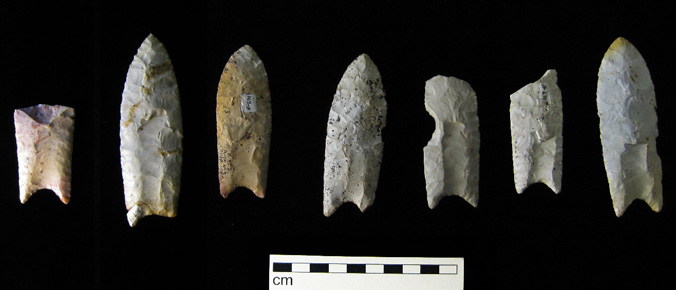
Clovis points from the Rummells-Maske Site in Iowa. These are in the collection of the Iowa Office of the State Archaeologist. Credit: Bill Whittaker / Wikipedia
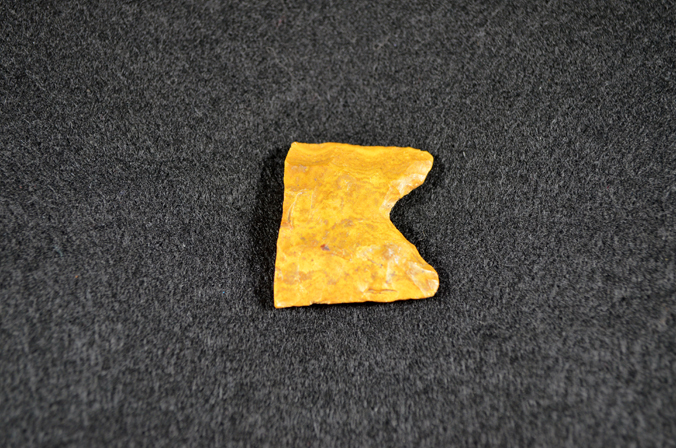
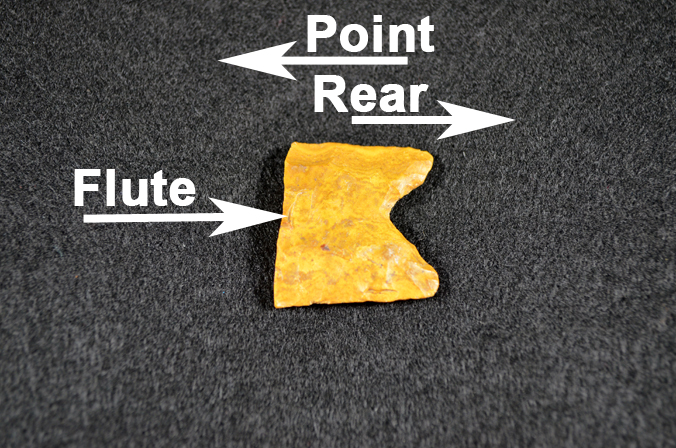
The Clovis culture were some of the earliest inhabitants of North America, and was named after the Clovis “type site” (an archaeological site where a certain culture or artifact type is first recognized) near the town of Clovis, New Mexico. The Clovis people made distinctive projectile points immediately recognizable by their lanceolate or narrow oval shape that tapers to a point at one end and the presence of “flutes” on their bases. These flutes are narrow channels where flakes of stone were carefully removed from both sides of the point to make it thinner. The fluted point could then easily be slid into a notched wooden or bone shaft- a process called hafting- to make a knife or dart (more on darts below). The sides of the point would be ground near the base to dull them so the point could be secured in its haft with sinew or cordage without cutting through these bindings.
Base or Proximal end of a Jasper Clovis point recovered archaeologically at George Washington’s Ferry Farm.
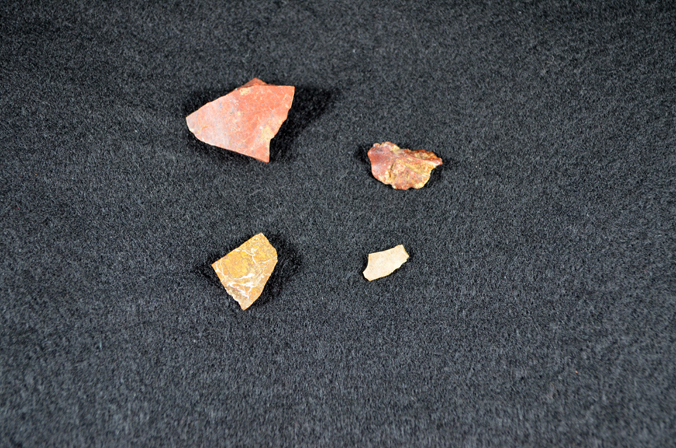
The Clovis people were well known for being picky about their lithic (stone) materials and traveled long distances to procure them. The closest quarry from which they could have obtained jasper to make Ferry Farm’s point is in Culpeper, at least 35 miles away. The people who made this dart point may have manufactured it here as we also have numerous flakes of this same jasper.
Jasper flakes similar to the material of the Clovis point — a byproduct of stone tool manufacture — that were excavated at Ferry Farm.
Clovis points date to a fairly narrow period from roughly 13,500 to about 12,800 years ago, and are found almost everywhere in North America, from the Southwest to New England. One of the interesting things about Clovis culture is that it is so widespread- no later cultures made artifacts that are found across such a vast area. It’s even more interesting to consider that these points got deposited all across North America in such a relatively short time span of maybe 700 years. This begs the question: What moved? Was it the people making the Clovis points? Or was it the technique of making the Clovis points? Was there a particular group of fluted-point-making people sprinting across the North American or were there already enough people on the pre-Clovis landscape that it the idea of making fluted points just spread from group to group? Archaeologists are working to answer these questions.
As mentioned, one use for Clovis points were in darts. These darts were not like you throw at a dartboard in a bar. In this context, a dart is like a spear but with a more flexible and lightweight shaft that can fly farther and with greater velocity. Greater distance and speed are achieved by launching the dart with a spear thrower called an atlatl (pronounced “at-lattle”). The atlatl essentially acts as an extension of the arm, creating a longer lever that pushes the dart farther and faster by applying more force with less energy. Although Clovis points were probably multi-purpose tools used as both knives and projectile points. As projectile points, they were likely used on atlatl darts for hunting. Although the extent to which Clovis people relied on meat from such huge creatures is debatable, they probably used their fluted points to bring down a few mammoths and mastodons, at least in the western United States.
What do you think the owner of the Ferry Farm Clovis point was doing with theirs when they lost it? We may never know, but what we do know is that it gives us evidence that people were living along the Rappahannock River nearly 13,000 years ago. We can still find their tools and those tools piece together the whole story of Ferry Farm’s landscape and people!
Archaeologists at Ferry Farm regularly find evidence of ‘expedient’ tool making by Native Americans. These quickly-made tools were created for a single, immediate job and, once used, just discarded. In this video, we break off a flake of obsidian and use it to fillet a fish.
Archaeologists sometimes recreate technology from the past to understand how people lived. This is called experimental archaeology. In this video, we recreate an earth oven and cook catfish in it.
Archaeologists sometimes recreate technology from the past to understand how people lived. This is called experimental archaeology. Native American occupation of Ferry Farm left behind many artifacts including fire-cracked rocks. This video shows how those rock artifacts were made through a cooking technique known as stoneboiling.
See the first video in our Science of History series here.