Lives and Legacies

Tag: Nature

  • The Last of Washington’s Horse Chestnut Trees?

    There once stood a large horse chestnut tree on the corner of Fauquier and Charles Street in Fredericksburg. It was noted as one of the thirteen legendary Washington horse chestnut trees planted by George himself. By the 1930s, it was becoming clear that the tree needed some help, so the Daughters of the American Revolution (DAR) took up the cause to protect this historic tree.

    The tree legend states that George, while visiting his mother in June 1788 in Fredericksburg, decided to plant thirteen horse chestnut trees from her house to his sister’s house, Kenmore, just a few blocks away. This provided a scenic path for his mother when she visited her daughter Betty. These trees commemorated the thirteen original states.

    It is a great story. It is patriotic and nostalgic, showing George as a man of the earth with his love of trees, gardening, and horticulture. He planted these trees for a future America to remember the struggles to create this country and the precious nature of our land that we must protect.
    But is it true? Did George plant that tree? What is the evidence?


    The horse chestnut tree is a native of the Balkans region (Albania, Bulgaria, Greece, and Northern Macedonia). It made its way to Europe and England during the seventeenth century, noted as growing in South Lambeth, London, and being planted by Sir Christopher Wren at Hampton Court.

    Horse chestnut trees Bush Park, Hampton Court, England planted by Christopher Wren in 1669-1670.

    There is documented evidence of some horse chestnut trees crossing the Atlantic to Mr. John Bartram, one of America’s first botanists in the 1740s. In a letter from Peter Collinson, an English botanist, dated September 16, 1741, he wrote to Bartram, “I have sent some Horse-Chestnuts which are ripe earlier than usual; hope they will come fit for planting.”. Bartram acknowledged receiving them and stated that most were blue-molded, and only one germinated and grew. Over twenty years later, Bartram updated Callison on the success of the lone seedling, writing, “But what delights me is that our horse chestnut has flowered. I think it must excel in America.”
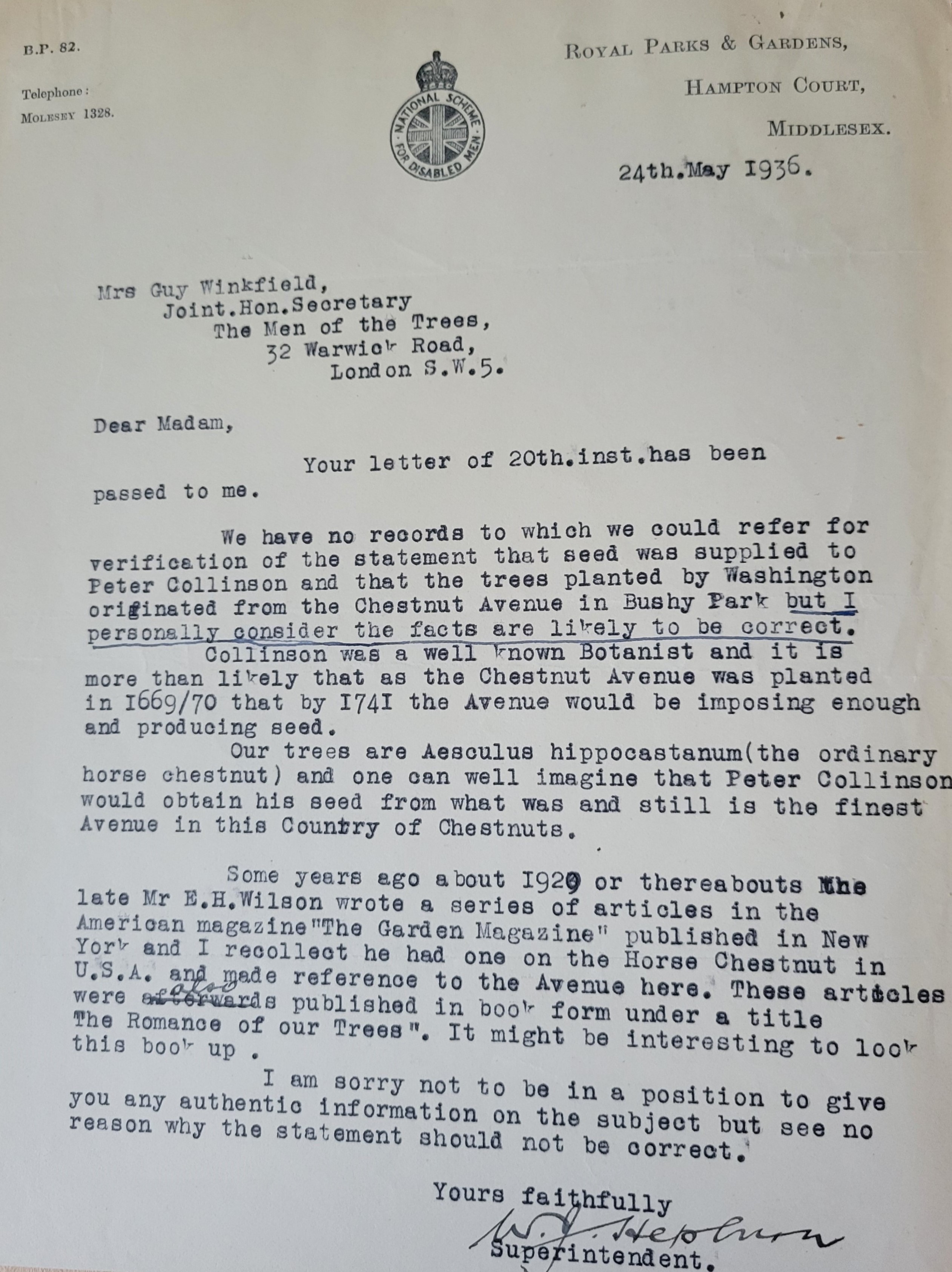
    Letter from Royal Parks and Gardens, Hampton Court, May 24 1936


    Bartram’s Gardens in Philadelphia was quite popular and visited by many founding fathers while working there. George visited the gardens twice in the summer of 1787 while in the town during the Constitutional Convention, noting, “Sunday, June 10, 1787, breakfasted at Mr. Powell’s and in company with him rid to see the Botanical Gardens of Mr. Bartram, which, though stored with many curious plants, shrubs, and trees, many of which are exotics, was not laid off with much taste, nor was it large.”
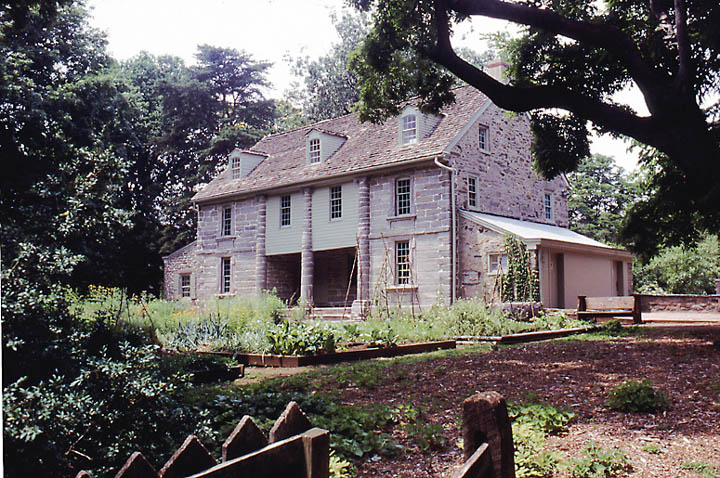
    John Bartram’s house and upper garden at Bartram’s Garden

    Why mention this? In some versions of the story, Washington got his horse chestnut trees from this garden, but there is no evidence that the legendary trees were obtained from this famous historic garden.
    George only made two diary entries about horse chestnut trees on April 13, 1785, writing, “Received from Col. Henry Lee of Westmoreland 12 horse chestnut trees (small) and an equal number of tree boxes. They appeared to have been some time out of the ground. Planted 4 of the Chestnuts on my serpentine walk – two on the east end and the rest in the vineyard.” And again, on April 2, 1788, wrote, “Transplanted from a box in the garden, thirteen plants of the horse chestnut into shrubberies by the garden walls.”

    The entry shows evidence of planting the famous Washington trees, right? No, because George was at Mount Vernon in April and didn’t leave for Fredericksburg to visit his mother until June 10, 1788.

    But could he have had them sent down and have them planted before he came to see his mother? Yes, but the story says that George planted these trees with his own hand. Additionally, it would be odd for George to mention planting the trees while in residence at Mount Vernon and not say that they were in his mother’s garden in Fredericksburg. Washington was a diligent diarist but never mentioned planting thirteen horse chestnut trees in his mother’s garden.
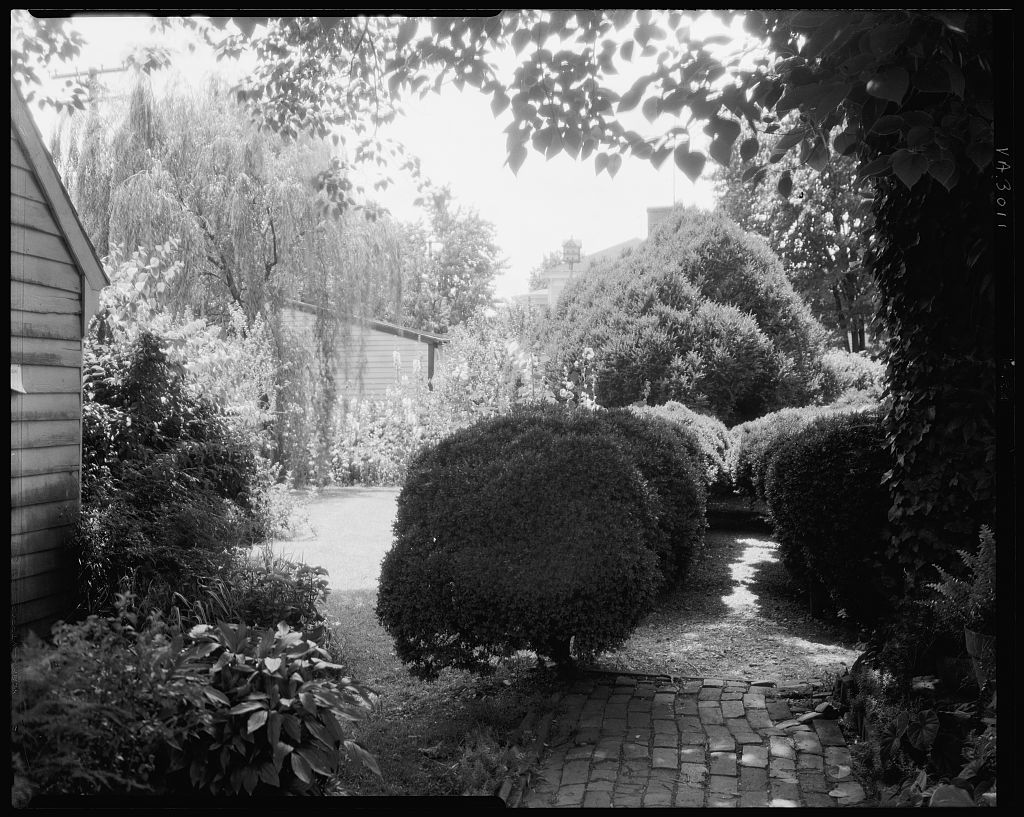
    Mary Washington’s house gardens, Fredericksburg.

    Further, no known letters from George, Mary, or Betty mention any horse chestnut trees between Mary’s gardens and Betty’s Kenmore.

    Spring time in the gardens at Kenmore Plantation (can you spot the cat?)

    This was all the primary source evidence I could find relating to George and any horse chestnut trees. So, I looked further into the story to see what other evidence was being used to verify that this tree was indeed one of the thirteen Washington trees.

    As I said in the beginning, by the 1930s, many, including the DAR, were trying hard to save this lone surviving chestnut tree. With their extensive reach, they got Fred H. Arnold, the Assistant Forester for the National Park Service, to do an age-determination test on the tree in May of 1934. Mr. Arnold noted some issues with the test, stating that the lower twelve feet of the tree was filled with concrete, so the coring sample had to be taken above this “repaired defect”. Even then, a complete coring sample could not be extracted due to decay in the interior of the main stem. Additionally, Mr. Arnold said that it was very difficult to count the annual rings due to their obscurity because the texture difference between the springwood and summerwood for the horse chestnut tree (genus Aesculus) is very slight. Taking into account all this, Mr. Arnold estimated the tree to be around 139 years old with as much as 10% in error, either plus or minus, which would put the date it was planted somewhere between 1781 and 1809, which means that the tree is indeed old and could have been planted during Washington’s time in Fredericksburg.
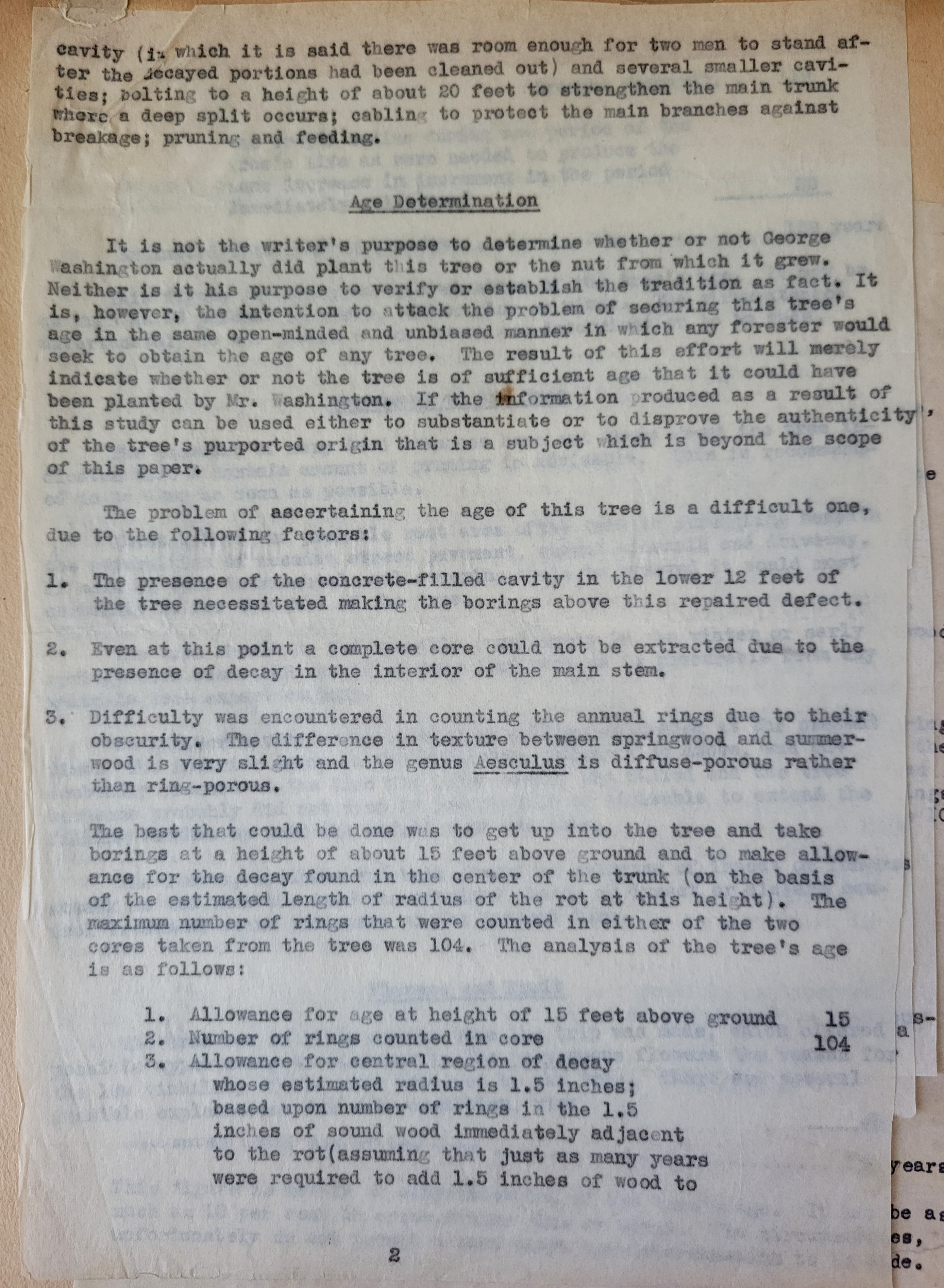
    Age Determination, May 6 1934

    Lastly, local historian James Henry Heron collected local citizens’ recollections of the tree and the story. Mrs. Lilias Hamilton Scott, the wife of Mr. John Scott, who owned the lot on which the tree stands, wrote that her grandmother (Mrs. Janet Scott Hamilton) stated her great-grandmother (Mrs. Francis Scott) resided in Fredericksburg in 1788 and was Mary Washington’s neighbor and intimate friend. She said the trees were planted by Washington.

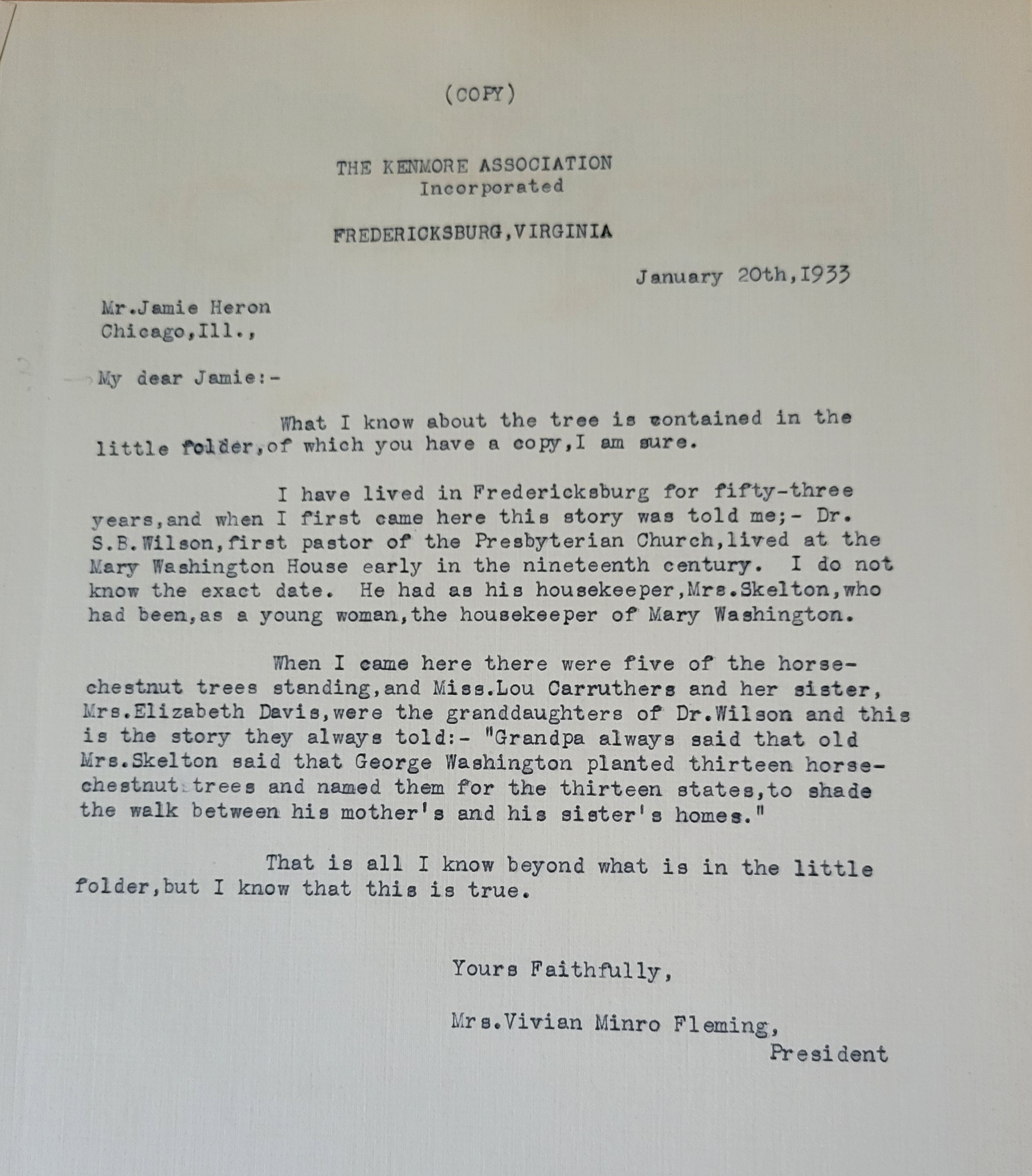
    Mrs. Vivian Minor Fleming traces the story back to Miss Lou Carruthers, her sister Mrs. Davis, and their grandfather Rev. S.B. Wilson’s housekeeper, Mrs. Polly Skelton, who had previously been a housekeeper for Mary.
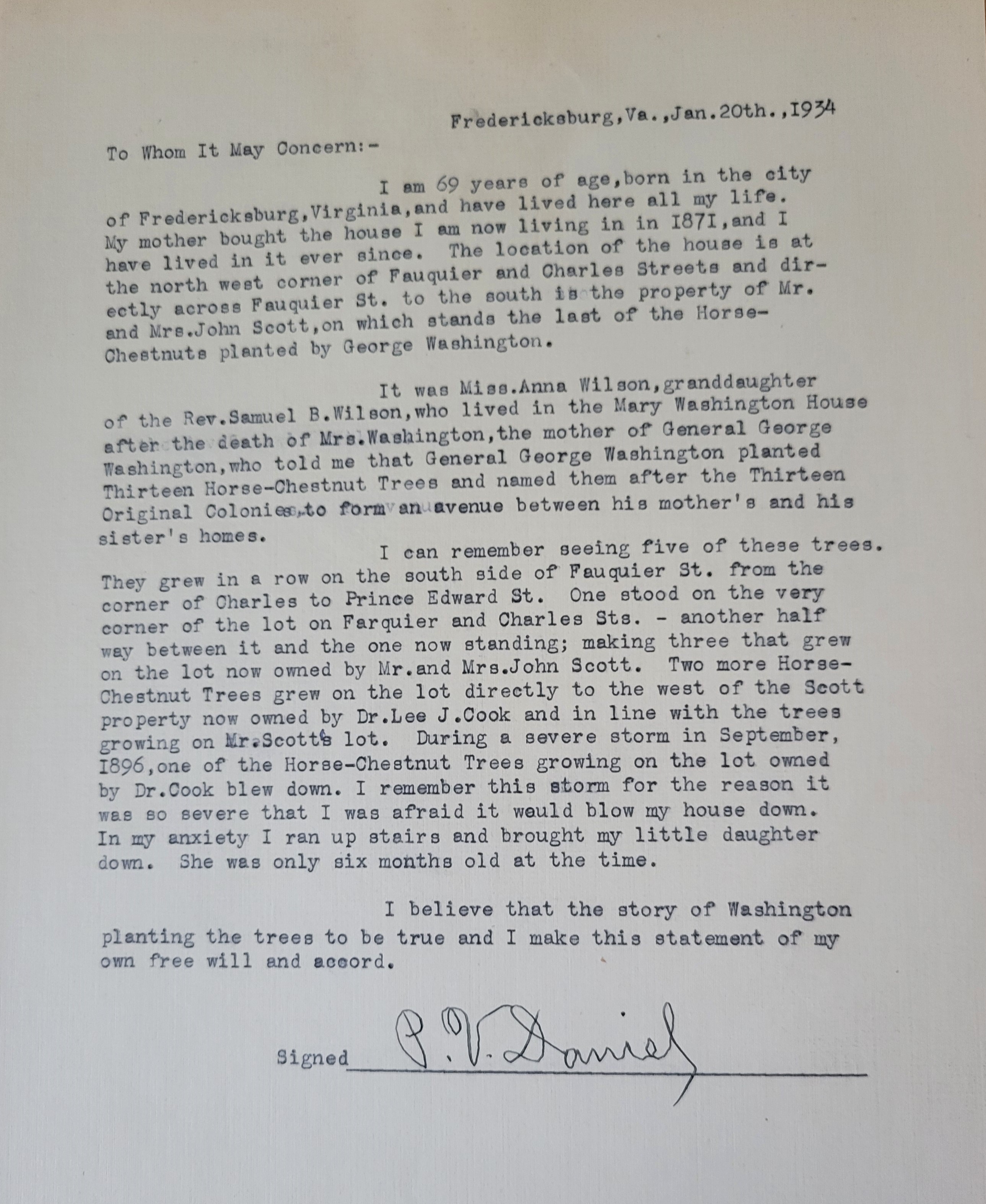
    Mr. P.V. Daniel, who remembers five of the original thirteen trees, lived across the street from the remaining one for over sixty years and said Miss Anna Wilson, granddaughter of Rev. S.B. Wilson, told him the story.
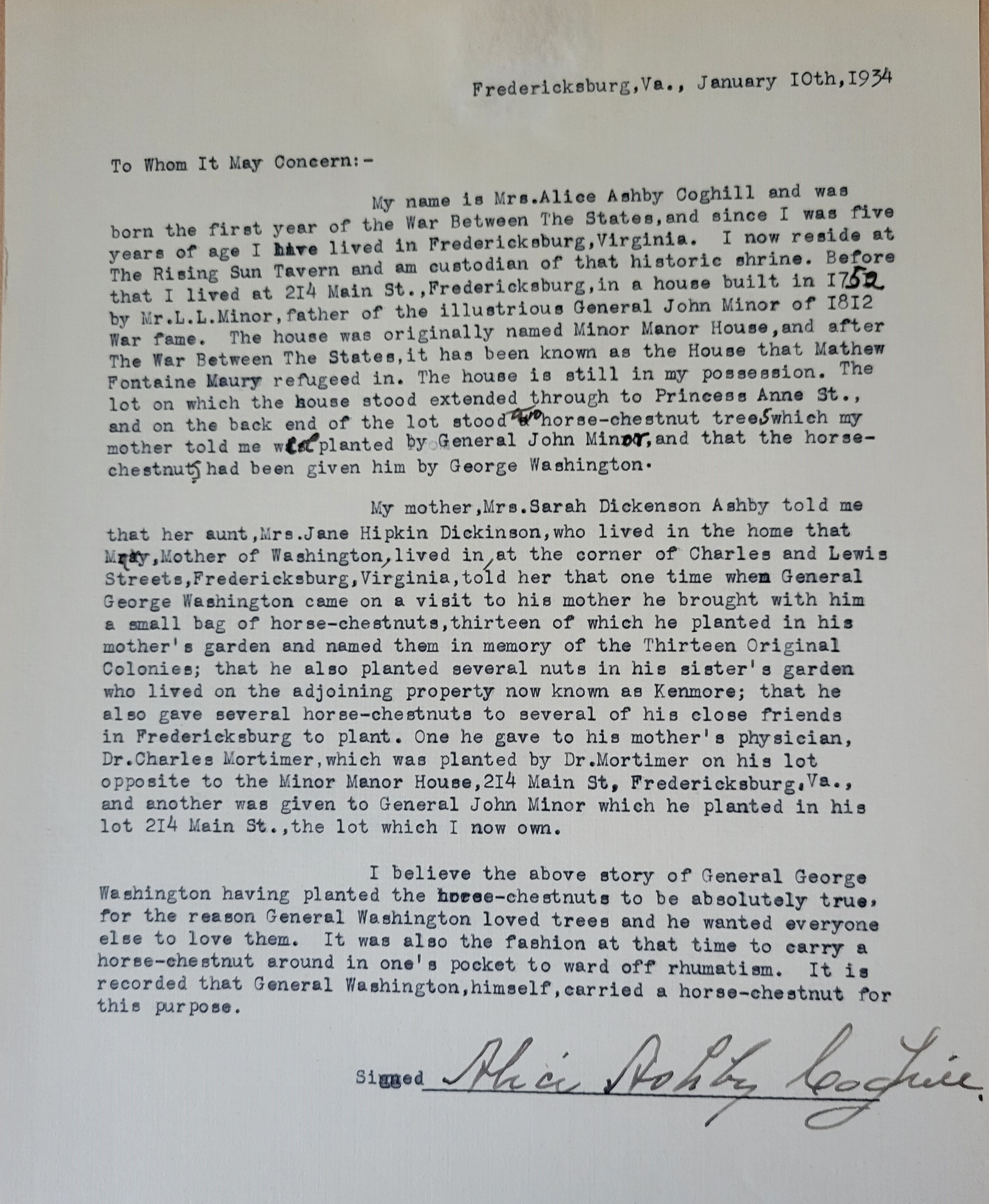
    Mrs. Alice Ashby Coghill says her aunt, Mrs. James Hipkin Dickinson, who lived at Mary Washington House after Rev. S.B. Wilson said Washington planted the trees and passed out horse chestnuts to friends.
    While I have no doubt these people are truthful in their recollections, they do not offer any definite evidence. They merely document that the legend was a well-known story but not that it was true.

    Regardless, the much-loved old tree was rightfully given proper emergency care with a donation and service from Senator Martin L. Davey from Ohio and The Davey Tree Expert Company. The famous tree lived happily for over another half century before being taken down in 2004.
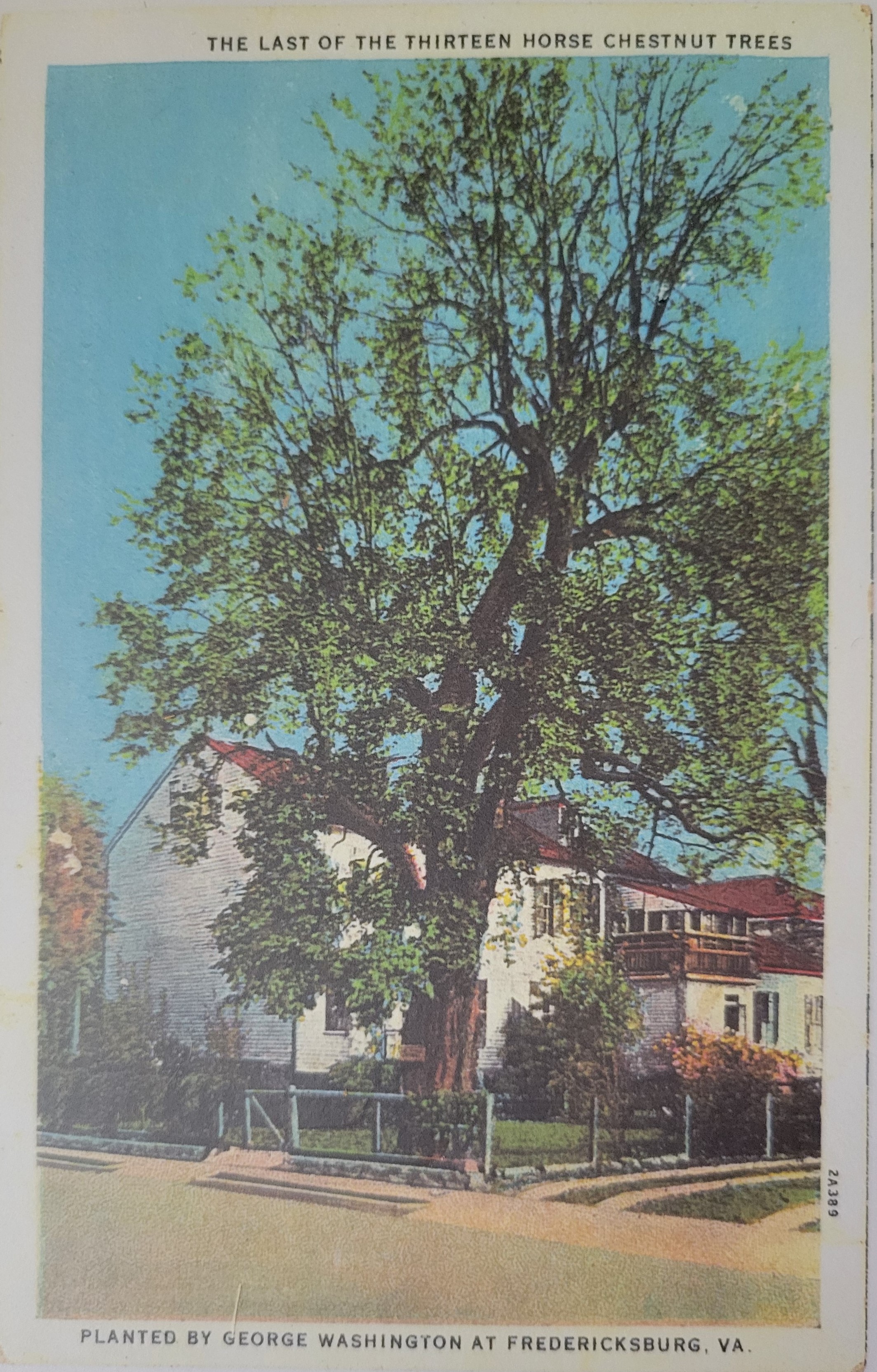
    Whether this tree was planted by George along with twelve others will probably never be conclusively proven. Were the people wrong to save the tree all those years ago without better evidence? Absolutely not. They saved a beautiful 200-year-old horse chestnut tree with a legendary attachment to George Washington, but they also saved a bit of their own past, nostalgia, and pride in their own town’s history.


    Heather Baldus

    Collections Manager

  • Exploring Nature at Ferry Farm

    In April 1738, an advertisement in the Virginia Gazette described the 100 acres of land later purchased by Augustine Washington as “a beautiful situation” with “a very handsome dwelling house.” Located about 2 miles below the falls of the Rappahannock and near the public ferry, this unique landscape became George Washington’s boyhood home. 

    “The Old Mansion of the Washington Family” (1833) by John Gadsby Chapman shows the foundation stones of the Washington house and the surrounding river landscape.

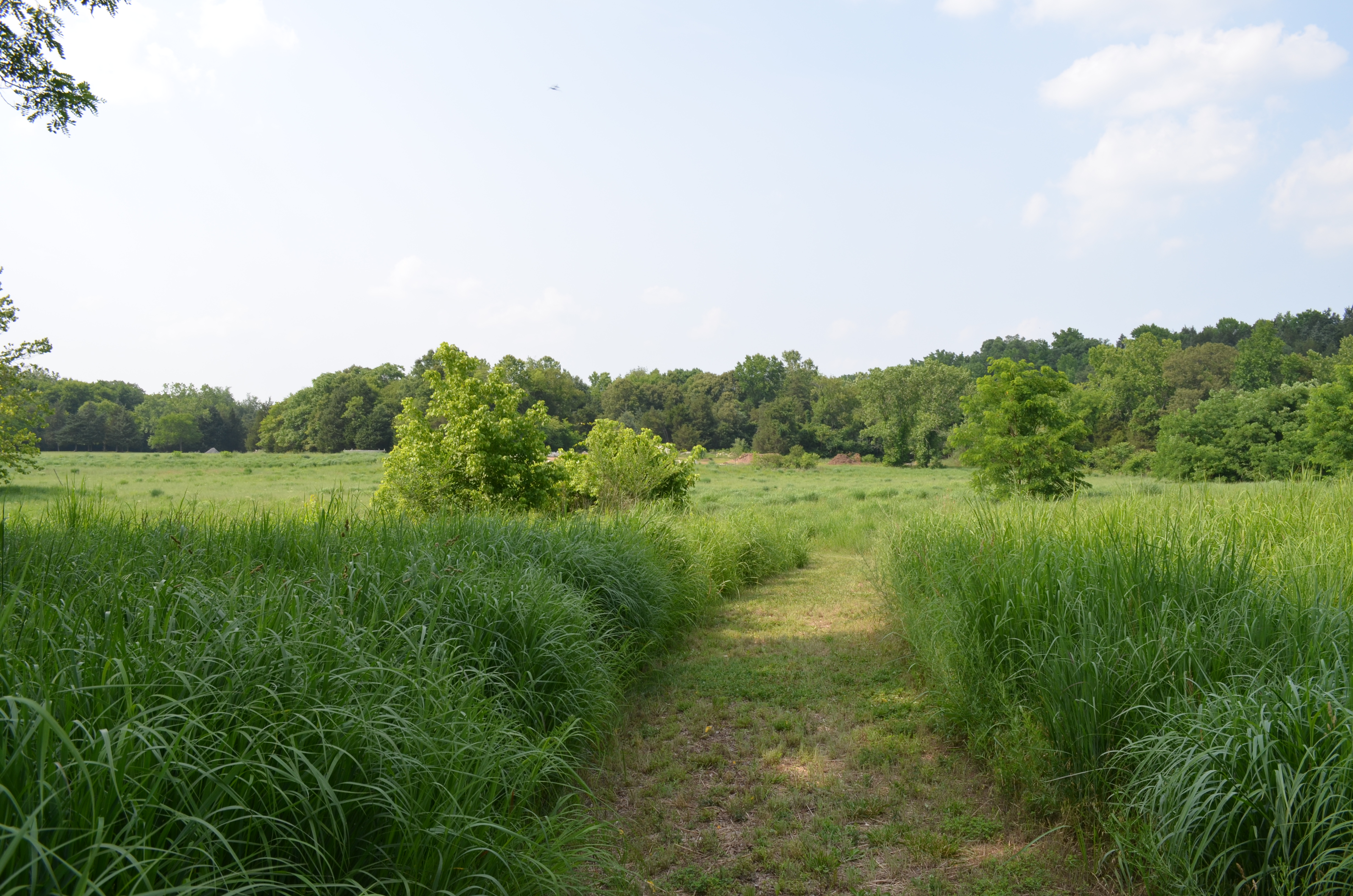
    Steeped in the legends of our nation’s first Founding Father, Ferry Farm is of course a popular destination for those looking to immerse themselves in history and walk in young George’s footsteps. At the same time, visitors to Ferry Farm have the unique opportunity to explore the natural landscape and learn more about local wildlife. Whether you are meandering along the wooded river trails, traipsing through the demonstration garden, or observing the drama of the Rappahannock from the river bluff, visitors can understand why this location was once described as a “beautiful situation.”

    The front door of the Washington House overlooks the river flood plain on a sunny summer day.

    Visitors to Ferry Farm can traverse through a variety of habitats during their visit, including the open lawns surrounding the Washington House, native plant and wildflower meadows, and hardwood bottomlands (ie. river swamps). These trails and natural features are home to a menagerie of wildlife, including commonly spotted critters like deer, groundhogs, foxes, and bald eagles. 

    While bald eagles may be the most patriotic bird swooping over our property, Ferry Farm is a prime birding location for all kinds of species. Over the years, several local birding groups have surveyed the property. (Read more about past bird surveys at Ferry Farm here and here.) At Ferry Farm, we are lucky to also have a bluebird trail maintained by The Virginia Bluebird Society. While walking the grounds, guests can enjoy the sights and sounds of Eastern Bluebirds and other native bird species as they flit about the bluebird boxes.

    An adult male Eastern Bluebird sporting his trademark blue feathers. Source: https://www.allaboutbirds.org/guide/Eastern_Bluebird/overview

    The Virginia Bluebird Society (VBS) was founded in 1996 to help promote, protect, and support native cavity bird species in Virginia. What originally began as 3 trails and 47 nest boxes expanded to a network of trails that, in 2020, encompassed 431 trails and 4,752 nest boxes.VBS trains a dedicated force of volunteers who monitor the boxes and record invaluable data. From April to August, volunteers walk the Ferry Farm trails checking on our 10 boxes and monitoring nest activity. In addition to bluebirds, other native cavity nesters such as tree swallows, chickadees, and house wrens may also make their home in these boxes. Last year at Ferry Farm, 28 bluebirds and 8 tree swallows fledged. We are incredibly grateful to the Virginia Bluebird Society for all their hard work and are excited to see how many birds fledge at Ferry Farm this year! 

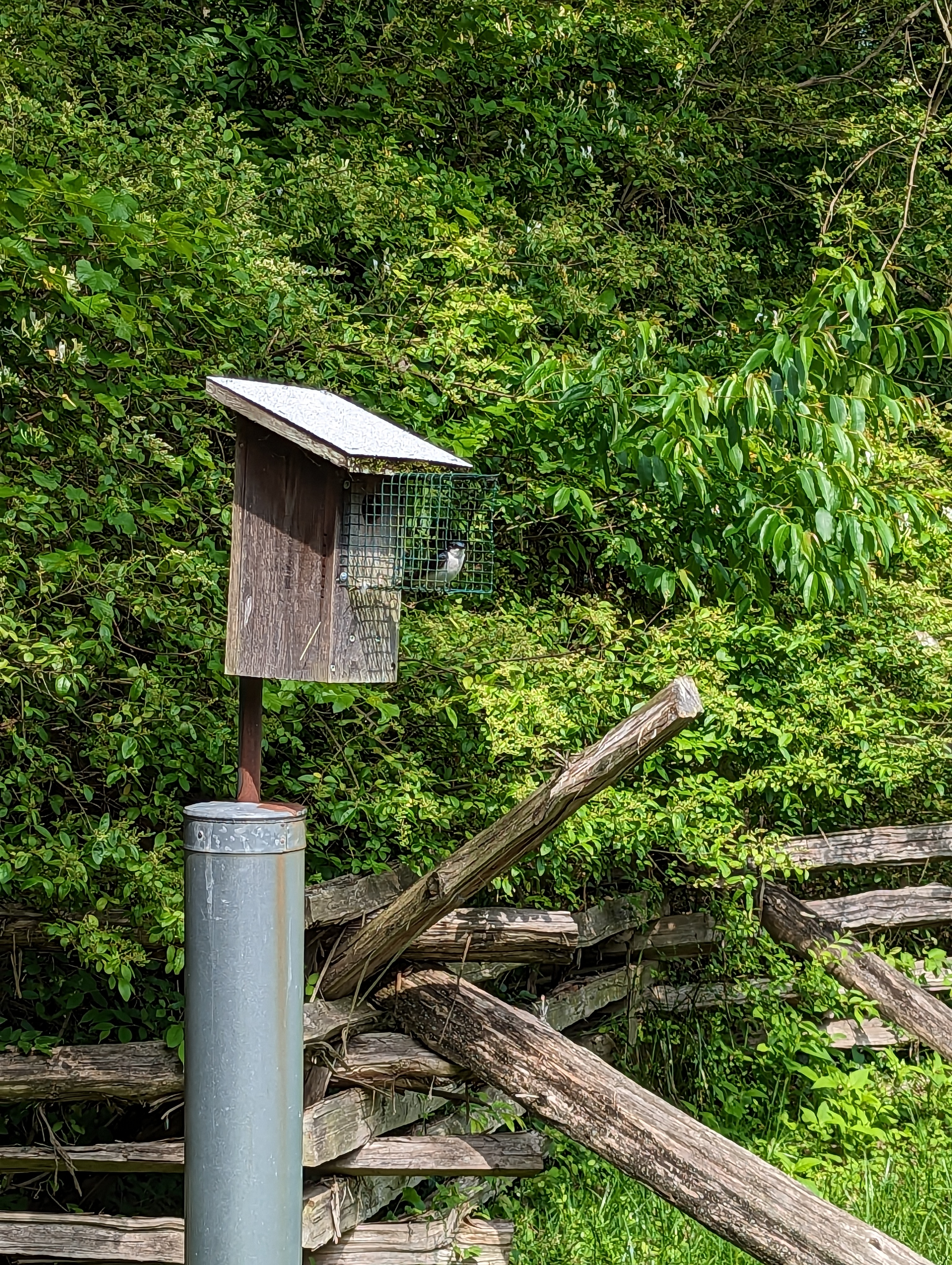
    Look closely and you’ll spot a tree swallow perched outside a Ferry Farm nest box! Two predator guards, a Snake Guard and a Cat/Raccoon Guard, are installed to help prevent predators from accessing the boxes. The metal mesh on the front of the box makes it harder for curious paws to reach inside the nest, and the metal cylinder covering the mounting post prevents snakes from scaling the post.

    If you visit Ferry Farm this summer, make sure to bring your bird book and binoculars and keep an eye on the sky as you explore the natural landscape!

    Ann Waters

    Director of Education

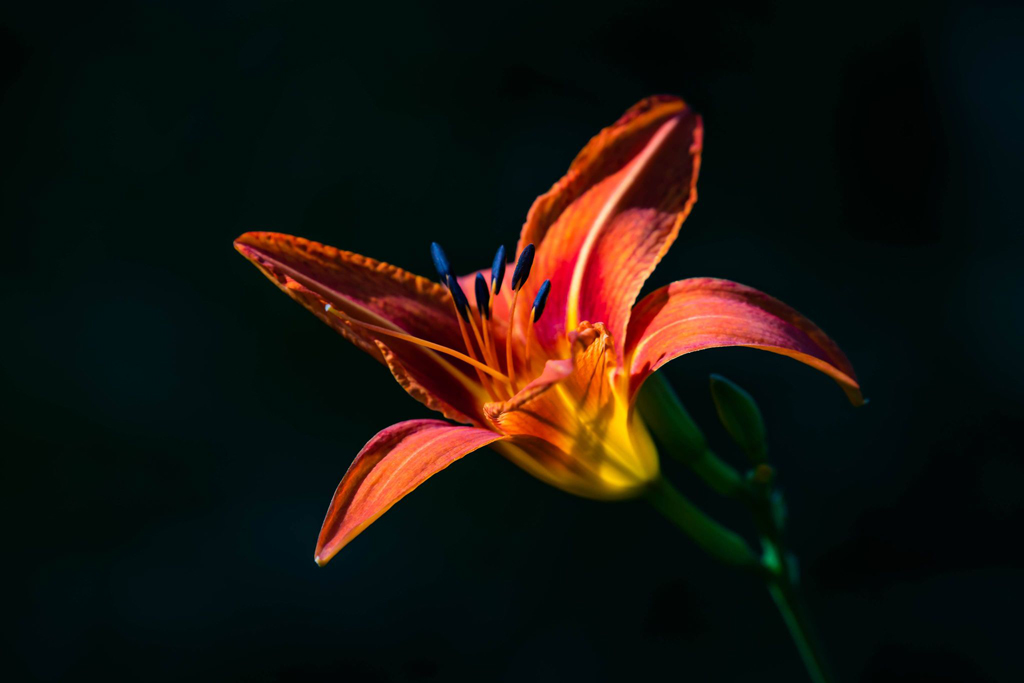
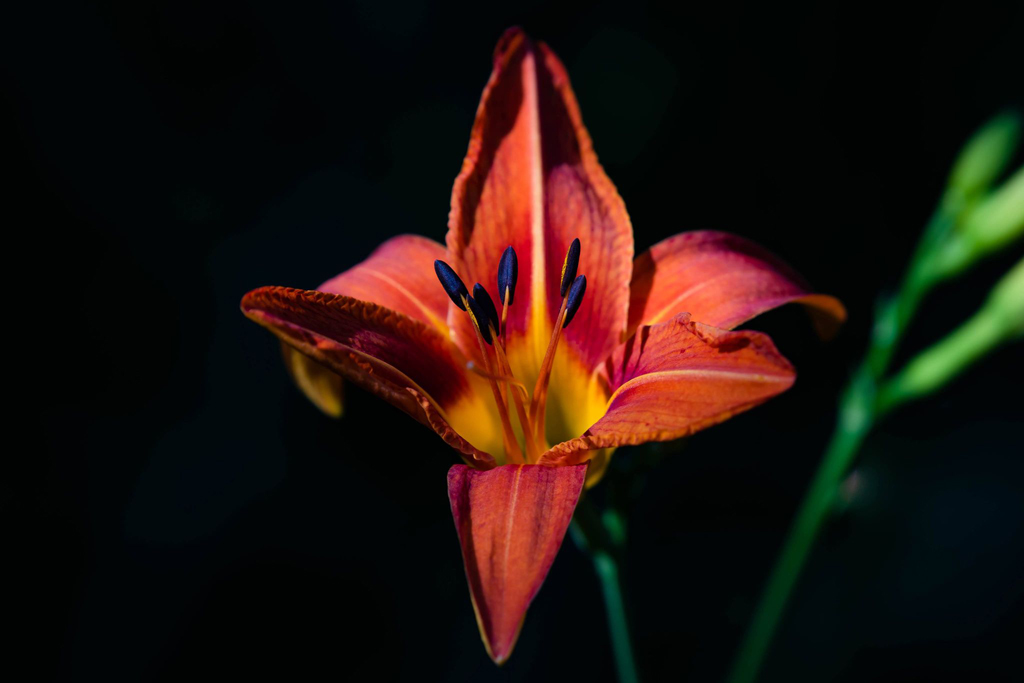
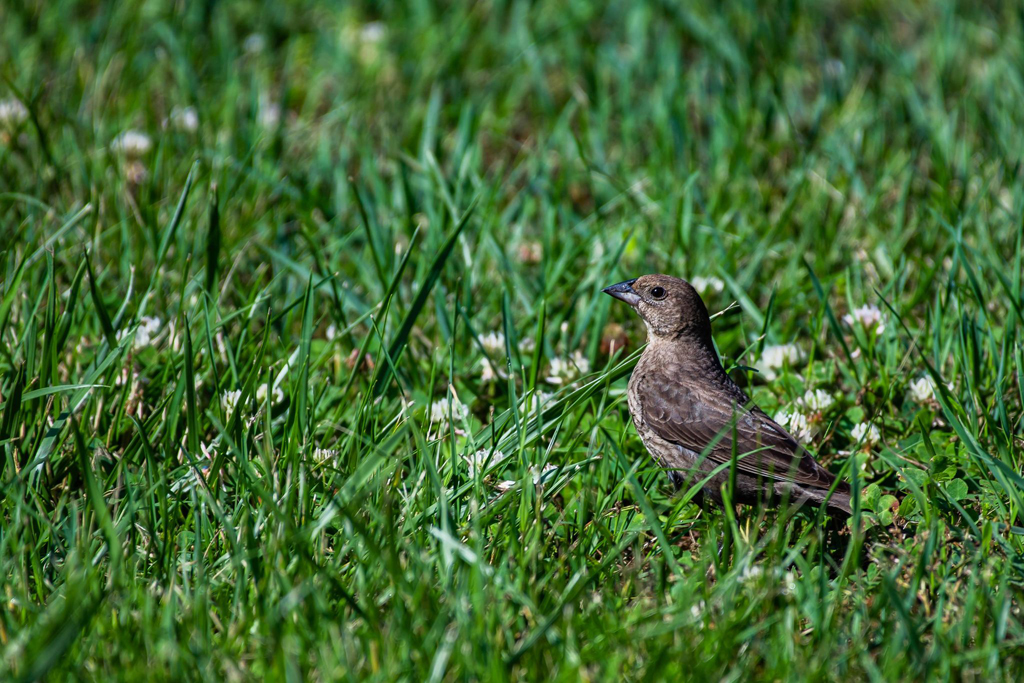
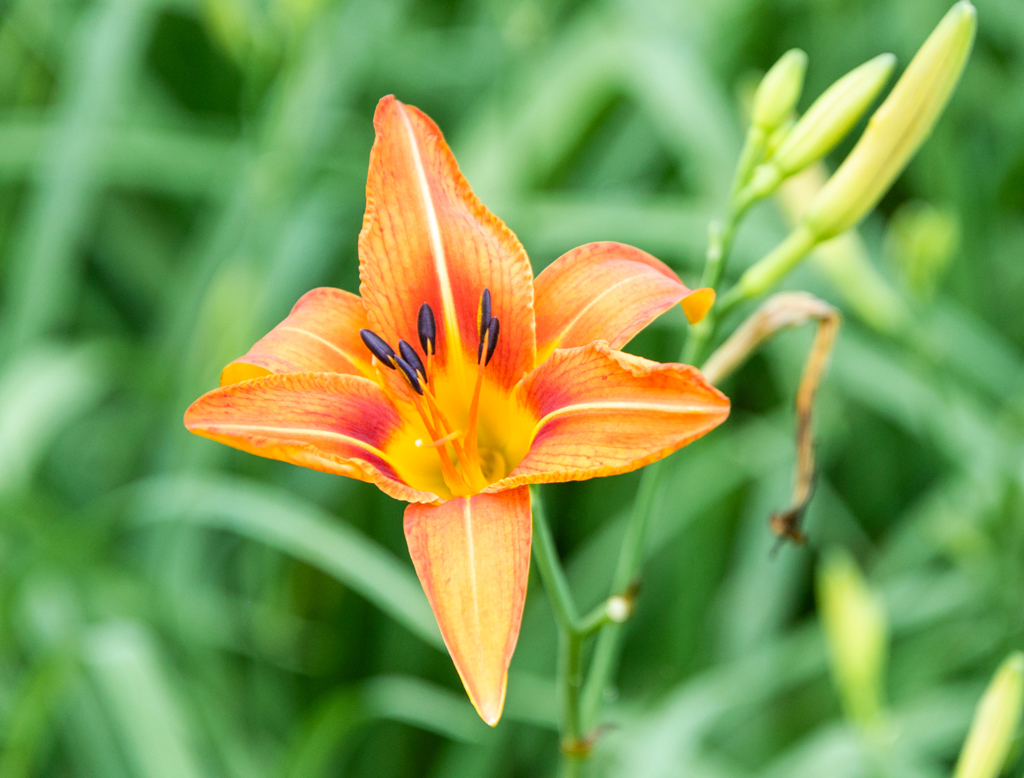
  • The Flora and Fauna of Ferry Farm [Photos]

    On a recent summer Saturday morning, a group of photographers came to George Washington’s Ferry Farm for a hike on the trails around the property. A lot of wildlife call Ferry Farm home, and we hoped to capture some of it. We saw many birds, a turtle, and a rabbit eating breakfast in the grass as well as plenty of beautiful flowers. Unfortunately, many animals – including the doe and fawn that have been spotted frequently on the property this year – seemed shy that morning, but we are planning another wild photography session at Ferry Farm in the fall.

    If you’d like to explore wilds of Ferry Farm yourself, you can purchase a self-guided grounds only tour upon arrival at the Ferry Farm Visitor Center. Ferry Farm is currently open from 10 a.m. to 5 p.m., Monday-Saturday and from Noon to 5 p.m., Sunday.

    Jessica Burger
    Manager of Marketing, Communications, and Information Technology

  • The Fossils of Ferry Farm

    Archaeologists have one pretty big hang up, and that is when people ask us if we dig for dinosaurs.  We’re so obsessed with making sure that people know we don’t dig dinosaurs that you can find shirts, coffee mugs, keychains, and other merchandise that all say “Archaeologists Don’t Dig Dinosaurs.” But we get it: dinosaurs and other prehistoric animals are super cool- just ask my 4-and-a-half-year-old son or my nine-year-old nephew.  Still, we archaeologists go to great lengths to emphasize that archaeology and paleontology are pretty different.  Archaeologists study historic and pre-historic human cultures by examining the artifacts they left behind.  Basically, we obsess over dead people’s broken stuff. Paleontologists, however, study ancient plants and animals using the fossil record.  Now, that being said, archaeologists do frequently happen to uncover fossils while excavating for artifacts. We’ve made our share of fossil finds while digging at George Washington’s Ferry Farm and we’re going to share some of those finds with you today.

    Archaeologists Don’t Dig Dinosaurs T-Shirt. Credit: cafepress

    First, it should be noted that what we call Virginia today looked a lot different when the creatures our fossil finds represent were alive.  During the Cretaceous and early Paleogene periods, which lasted from 145 to around 56 million years ago, much of this part of Virginia was at times completely underwater as part of the newly formed Atlantic Ocean, while inland areas were very swampy with high temperatures and humidity (Yes, even more so than today’s notorious Virginia climate. Back then, it got up to around 100 degrees most days).  Hence, most of the fossils we recover are from marine environments or swamps.

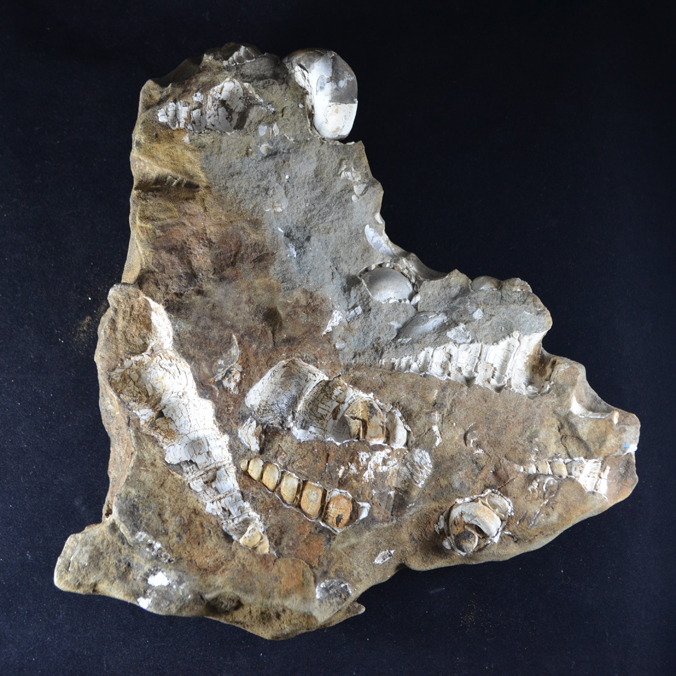
    Let’s start with one of my favorites: the turritella, a species of spiral-shaped gastropods or mollusks that still exist today. The turritella we find at Ferry Farm, however, are around 50 million years old.  We don’t usually find the shell, but rather the ‘cast’ which forms when sediment fills the inside of a dead mollusk’s shell and then turns to stone, leaving an impression of the inside of the animal.  The resulting fossil cast resembles a corkscrew.  They’re pretty common in this area.  In this picture, you can see a turritella that still has its shell and fragments of the interior case.  Usually they can be found in clusters, representing mass die-off events in which a lot of the turritella met their demise all at once.

    Conglomerate of turritella fossils.

    Bits of turritella excavated at Ferry Farm.

    Turritella casts from the author’s collection.

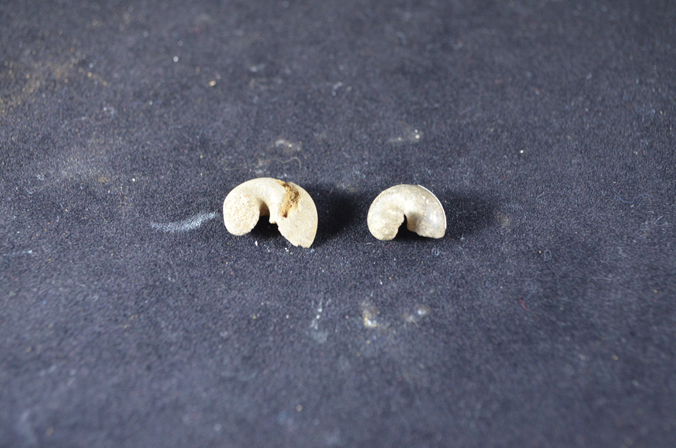
    Other marine fossils we’ve found include pelecypods.  These bivalves resemble modern day scallops and are estimated to be around 60 million years old.  We have two fragments found at Ferry Farm next to a whole example unearthed by my husband Joe Blondino, who is also an archaeologist, while on another excavation.  We believe these to be Chesapecten jeffersonius pelecypods, which is the Virginia state fossil. Tuck that back in your brain for future trivia nights!

    Fragments of Chesapecten jeffersonius found at Ferry Farm (foreground) next to whole examples from the author’s collection.
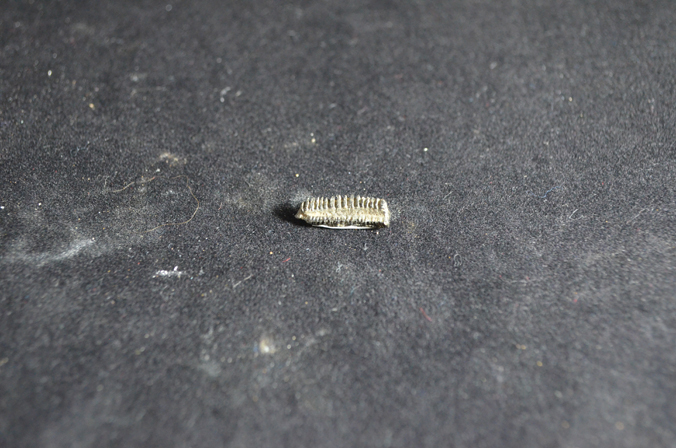
    Ray mouth plate fragment excavated at Ferry Farm.

    This little guy above is another one of my favorites.  It may not look like much, but this is a ray mouth plate fragment.  Rays, which also still exist today, used these specialized ‘teeth’ plates to crush the shells of their favorite prey.  It may have shared the waters with some of this fossilized coral, of which we’ve excavated only a few tiny pieces that are as yet unidentified with regard to species.

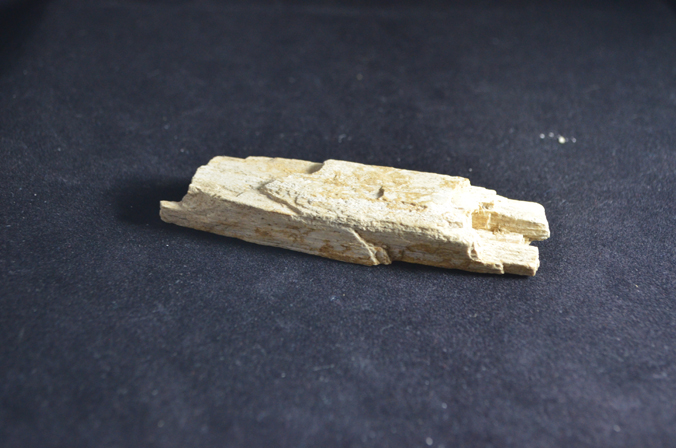
    We also uncover quite a bit of petrified wood.  These trees would have lived during the periods of the Cretaceous when Virginia was a hot and humid swamp.  After falling into the waters, they were covered and, over millions of years, petrified as the trees’ organic tissues were slowly replaced by minerals.  This example is our largest specimen.

    Petrified wood excavated at Ferry Farm.

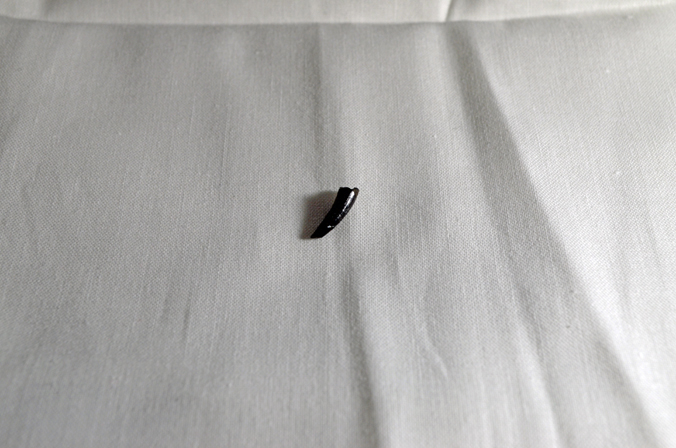
    Crocodiles also swam where the George Washington’s boyhood home replica now stands when the land was covered in a warm, shallow sea.  We think the tooth pictured below belongs to one of those crocs, although likely a juvenile one.  Unlike a shark tooth, it is conical, with a depression at the top.

    Crocodile tooth, like from a juvenile, found at Ferry Farm.

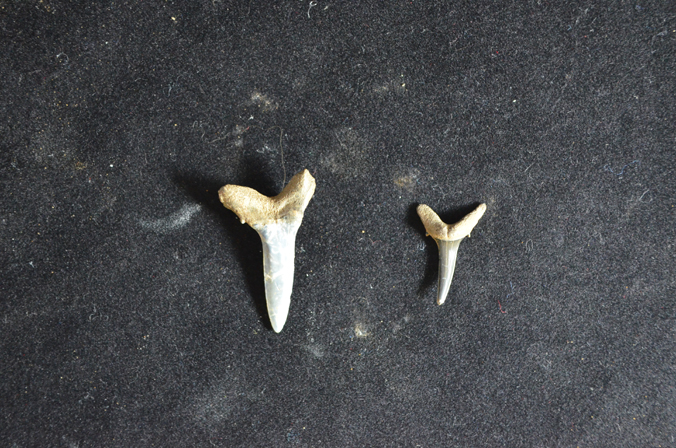
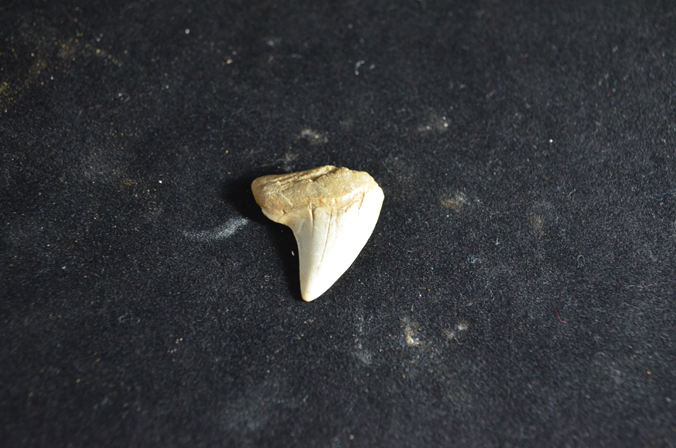
    We’ll end with everyone’s favorite: shark teeth!  They’re the most common fossil found at Ferry Farm due in no small part to the fact that sharks continuously shed their teeth throughout their lifetime. Some sharks go through up to 50,000 teeth in their lifetimes!  Most of our shark teeth belong to a species of sand tiger shark, which still exists today (they’re also called the gray nurse shark).  Starting at the beginning of the Cenozoic Era, approximately 66 million years ago, sand tiger sharks swam near the coast in the warm shallow sea waters that covered this part of Virginia.  Their teeth are not large, but quite numerous. They have a distinctive shape with a long very ‘pointy’ crown, small sharp bumps called cusplets on either side, and relatively long root lobes.  The only shark’s tooth we have that doesn’t resemble the sand tiger at all is one we think may be from a species of white shark (related to the great white).

    Sand tiger shark teeth excavated at Ferry Farm.
    Possible giant white shark’s tooth excavated at Ferry Farm.

    Even though archaeologists do not dig for dinosaurs, we certainly do find fossils in our excavations. Since we are obsessively focused on the human cultures of the past, these fossils are not our primary interest. We do not dig for dinosaurs but maybe we actually do sort of DIG them and all fossils from ancient times in a “Wow, fossils are really cool!” sort of way.

    Mara Kaktins, Archaeologist
    Archaeology Lab Supervisor

  • Ferry Farm’s Bird Life: An Update

    Fredericksburg Birding Club
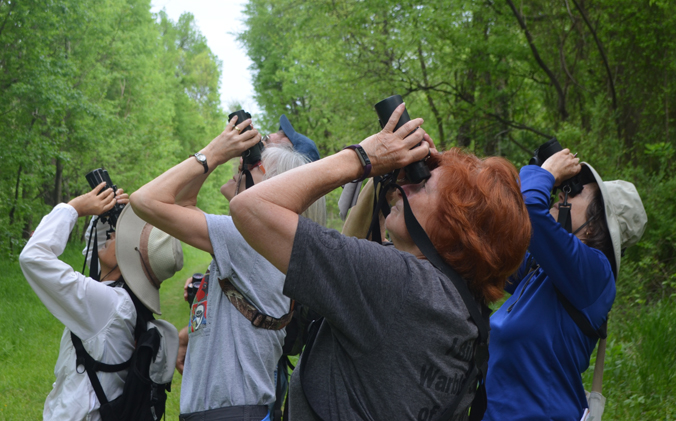
    Members of the Fredericksburg Birding Club at George Washington’s Ferry Farm.

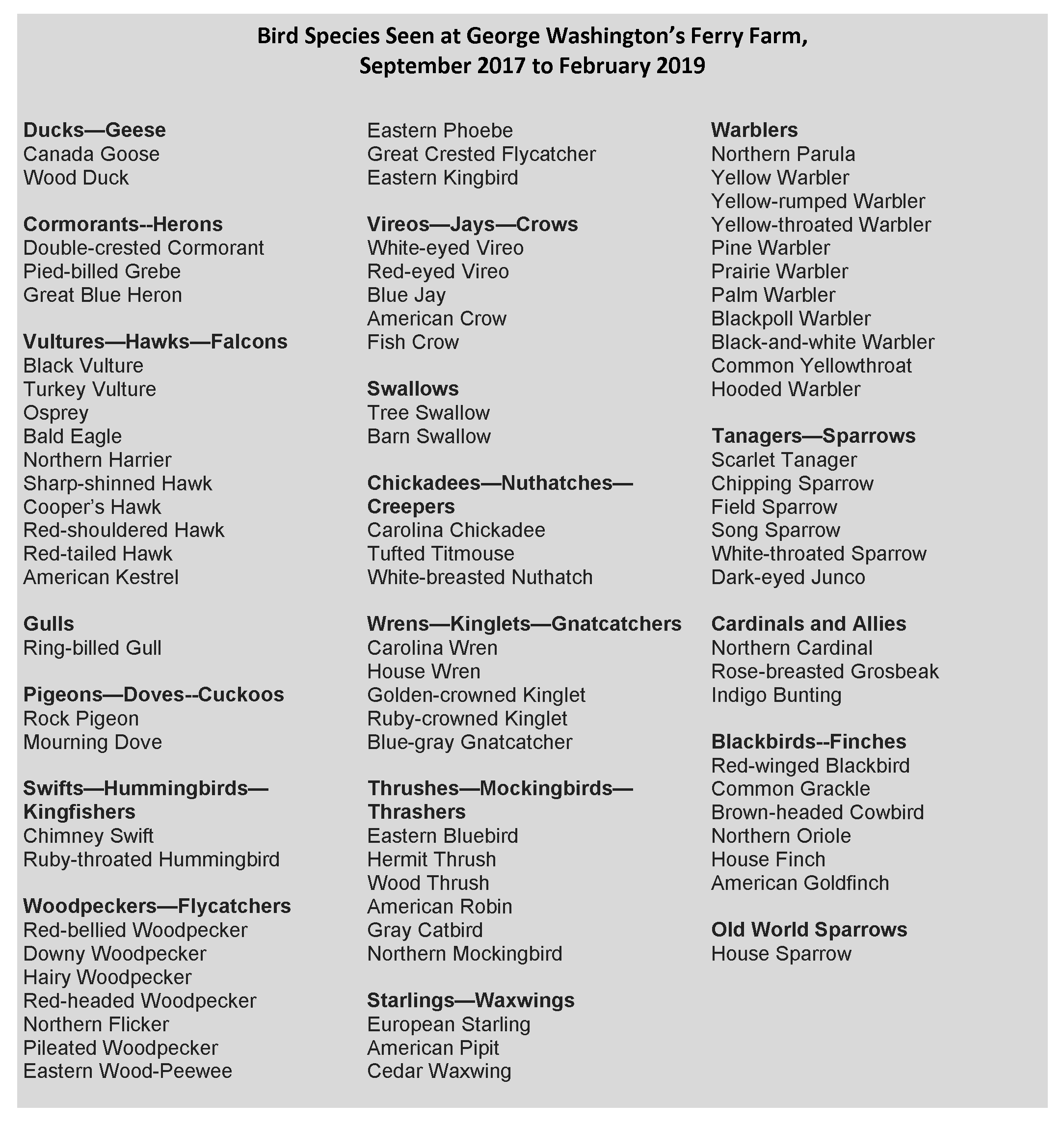
    Between September 2017 and February 2019, the Fredericksburg Birding Club (FBC) conducted 12 bird surveys at George Washington’s Ferry Farm.  We did three in spring, one in summer, three in fall, and five in winter.  During that time, we saw 78 of the 136 species listed in the “Checklist of Birds at Ferry Farm” pamphlet and saw 3 new species for a total of 81 species spotted.  All observations were recorded at ebird.org.[i] A full list of species observed by the FBC during this time follows.

    The chart below compares species listed in the “Checklist of Birds” with those seen by the FBC by abundance designations. Some species vary in abundance with season and, in those cases, these species were given the designation used during their most abundant season.  For example, Catbirds are uncommon in spring, common in summer and fall, and rare in winter.  Nonetheless, in the chart, they were designated as common because summer and fall are when they are encountered most, spring sightings are the “earlybirds” anxious for warm weather, and winter sightings are out-of-habit occurrences.

    Designation Definition # of species on “Checklist of Birds” # seen on FBC surveys
    Abundant


    Very numerous 16 16
    Common Likely to be seen or heard in suitable habitat 23 23
    Uncommon Present, but not certain to be seen 44 29
    Occasional Seen only a few times during a season 40 8
    Rare May be present but not every year 13 2
    New Not listed in checklist (3) 3


    Total


    139


    81

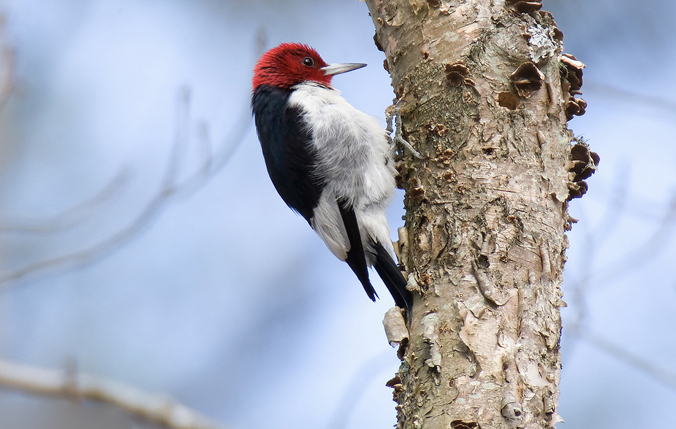
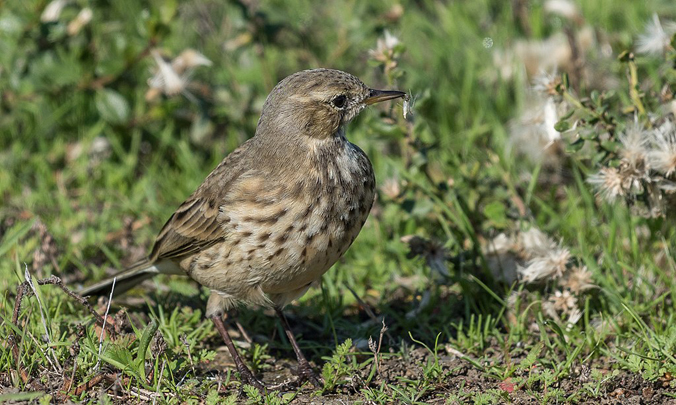
    As you can see, we observed all birds listed as abundant or common. In addition, we saw 29 of 44 listed as uncommon; eight of 40 species listed as occasional; and two of 13 as rare.  We also sighted three species not listed: the American Pipit, Red Headed Woodpecker, and Pied-billed Grebe.  These sightings bring the total of rare birds at Ferry Farm up to 16 and the total number of bird species seen to 139.

    American Pipit
    American Pipit. Credit: Becky Matsubara / Wikipedia

    Red-headed Woodpecker
    Red-headed Woodpecker. Credit: William J. Majoros / Wikipedia

    Pied-billed Grebe
    Pied-billed Grebe. Credit: Mdf / Wikipedia

    We don’t think the low numbers of uncommon, occasional or rare species indicate a trend as we are comparing 12 field days over 18 months with former Ferry Farm staff member Paul Nasca’s eight years of intense observation.

    However, we noted two differences in frequency of sightings compared with the “Checklist of Birds.”  We only sighted one Catbird and they are listed as common in spring and summer.  In contrast, we have seen Bald Eagles on five of our 12 outings and they are listed as occasional.  Again, at this point in our surveys, these are just interesting observations to follow, not necessarily trends. This year, we expect to pick up more uncommon species and hopefully some occasional species. We’ll see if any of rare ones show up.

    Bird Species List

    Four of the surveys were conducted during the breeding season — spring through summer — and that data was entered into the Virginia Breeding Bird Atlas 2 (VABBA2) database.  This atlas is the second for Virginia, the first being compiled from data collected between 1985 and 1989. VABBA2 will document breeding birds throughout the Commonwealth with data collected over five breeding seasons from 2016-2020.

    The VABBA2 database notes specific behavior observations that indicate breeding.  By those criteria, we confirmed breeding of four species: Tree Swallow, Northern Cardinal, Chipping Sparrow, and House Finch.  We also observed probable breeding of four additional species: American Crow, Eastern Bluebird, Common Yellowthroat, and Carolina Chickadee.  While we know these and other species breed at Ferry Farm, we have to observe behaviors or actual juvenile birds to document the breeding.

    Highway noise from State Route 3 and the Blue-Gray Parkway at the south end of the property may be a factor in bird observations for both birds and birders.  Studies have documented birds abandoning nesting areas or changing breeding songs so they can be heard.  Additionally, highway noise makes it difficult for birders to hear songs, which affects observations of both bird presence and breeding activity.

    The club’s major goal this year is to increase field days in the spring and summer both to document bird presence, particularly of uncommon and occasional species and to observe breeding behavior for VABBA2, increasing the number of confirmed breeding species at Ferry Farm.

    Maureen Daly Hamm
    Fredericksburg Birding Club

    [i] During the non-breeding season, all birding data is entered directly into ebird.org at “George Washington’s Ferry Farm” hotspot.  During the breeding season, the data must be entered through https://ebird.org/atlasva/home.  VABBA2 has split Virginia into geographical blocks and the breeding data must be entered in the block where the birds are observed. Unfortunately, Ferry Farm falls into two different blocks. The southern field area is in block 0380277C4SW, and the remainder of the property is block 0380277C4CW.  We submit data for the southern field area as “George Washington’s Ferry Farm 038077c4SW” The block 0380277C4CW data encompassing the majority of Ferry Farm property is listed simply as “George Washington’s Ferry Farm.”  We will investigate ways to make the data simpler to access, but it may not be possible until the breeding bird survey is complete.


  • The Hazards of Winter in Washington’s Day

    dsc_0042
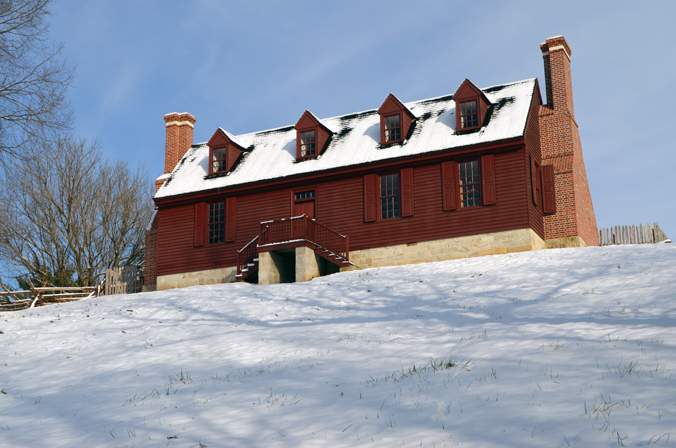
    Washington house replica at George Washington’s Ferry Farm after a December snow in 2018.

    Many people find winter miserable. It can be hard dealing with freezing temperatures, inclement weather, and long nights.  With much of the nation experiencing record-breaking cold and windchills today and the current temperature at George Washington’s Ferry Farm as we publish this post only 20 degrees Fahrenheit. it may not feel like it but our modern conveniences negate some of the brutality of the season. Colonial Americans did not have these luxuries.  For them, winter was not just difficult but deadly.

    OUTDOORS

    Winters outdoors in the 18th century were dangerous for many reasons that we take for granted.  Modern infrastructure and weather forecasting have reduced the dangers of winter for us today.

    Colonial Americans did not have a permanent network of solid roads and sidewalks they could rely upon.  Roads and walking paths were often dirt and subject to seasonal change.  When the weather turned icy and snowy, the road into town could disappear while a well-worn path through a forest became much more perilous.

    Furthermore, lakes and ponds vanished under layers of snow, which gave the impression of a solid surface and created the illusion of a quick but deadly shortcut.  It was common for people and sleds to venture across the frozen water sometimes with lethal results as newspaper reports show.

    Williamsburg, January 28. The Weather has been so excessive bad, for some Time past, that there has been scarce any passing the Rivers, for Ice, or travelling for Snow.  And we have Accounts from several Places, of Persons being frozen to Death, and others drowned, by attempting to cross the Rivers.  No Post has come from the Northward these 6 weeks; and we may reasonably conclude, that as the Weather is so severe here, it is worse there. – Virginia Gazette, January 28, 1738

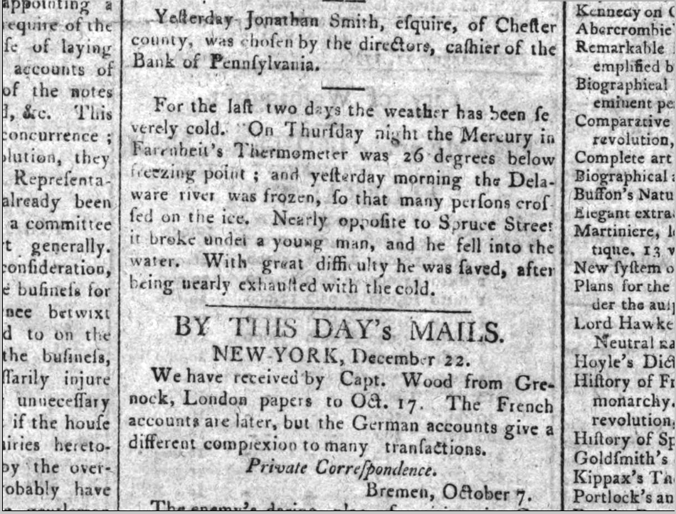
    For the last two days the weather has been severely cold. On Thursday night the Mercury in Fahrenheit’s Thermometer was 26 degrees below freezing point; and yesterday morning the Delaware river was frozen, so that many persons crossed on the ice.  Nearly opposite to Spruce Street it broke under a young man, and he fell into the water.  With great difficulty he was saved, after being nearly exhausted with the cold. — Gazette of the United States, & Philadelphia daily advertiser, December 24, 1796

    gazetteoftheusandphiladelphiadailyadvertiser2cdecember242c1796
    Gazette of the United States, & Philadelphia daily advertiser, December 24, 1796

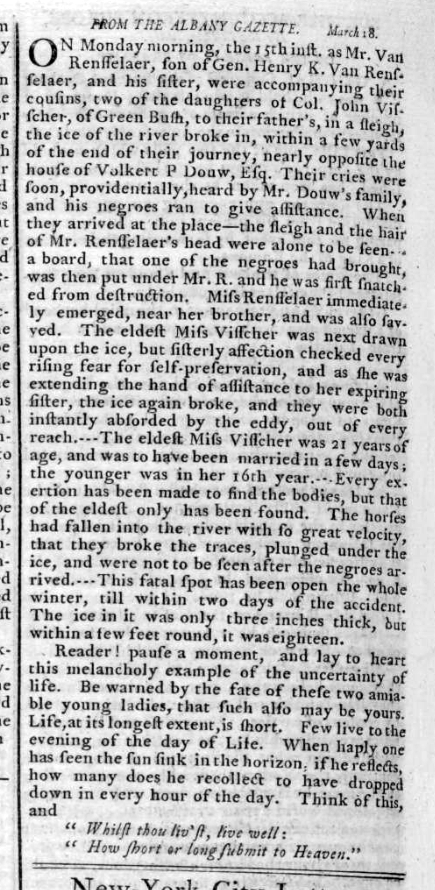
    A heartbreaking example of drowning after falling through ice happened in 1793 when a group of cousins tried to cross what was thought to be a solid frozen river in their sleigh.  The ice broke, taking all under the water.  Assistance was rendered by people on the shore but only one person could be saved.

    gazetteoftheunited-states.28new-york5bn.y.5d292c24march1790
    Gazette of the United-States, New York, NY, March 24, 1790

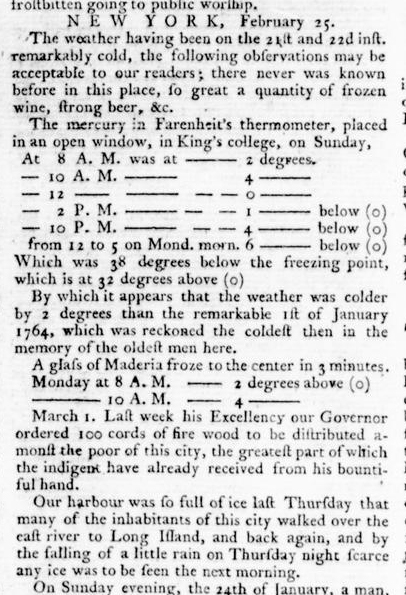
    Fluctuations in temperatures, unpredictable by the rudimentary weather forecasting available at the time, were also very dangerous.  Many underestimated just how quickly freezing temperatures could take their toll and suffered frostbite or succumbed to exposure while trying to carry on with daily life.  On one particularly cold February day in New York, frigid temperatures even froze wine and beer.   In Boston, during the same cold snap, “two or three persons were found frozen to death the beginning of this week, and … many people in the country had their ears and cheeks frostbitten going to public worship.”

    frozenbeer
    Virginia Gazette, March 25, 1773

    INDOORS

    Indoors, dealing with freezing temperatures in the 18th century was a constant struggle made more difficult because fire was the only source of heat.  Fire in the open hearth was not efficient, consumed copious amounts of fuel, and only provided warmth within a small area. Almost 90% of the heat produced by a fire in a traditional colonial fireplace escaped up through the chimney. Not only that, but chimneys were drafty, letting in cold air.  This ineffectiveness meant that a family’s living space became restricted and fires were kept going almost constantly.

    The quest for warmth lead to many house fires.  The Washington family even experienced a house fire first-hand sometime in the 1740s at Ferry Farm. A small fire began near the fireplace in the hall back room and did enough damage to ensure major repairs. The upper floor would have been well smoked and whole parts of the first floor ceiling were ruined. The home was damaged, but not lost, and repairs ensued.  Archaeological evidence of this fire includes a root cellar filled with fire related ash, burned artifacts, and fire-damaged plaster.

    Although it is unreliable, there is some documentary evidence, of a fire at Ferry Farm in a letter to George Washington from Robert Davis dated May 25, 1795.  Written 55 years after the fact, Davis’s memories are interesting but contradict the physical evidence found by archaeologists. He wrote…

    “I am not sure but I was once a play Mate of yours many years ago, was Colonel [Augustine] Washington who lived on Rappahannock & opposite to Fredericksburgh your Father, whos Estate Joined a Plantation of Mr Anthony Strathers on the River side—from Mr Strather, a Mr Robt Shadden had a Store house, with him I lived as a young Assistant in the Store, Colo. Washington was very kind and indeed a second Father to me and I Remember it well, that it give me a very sore Heart that on a Christmass Eve, his great house was burned down & that he was Obliged with his good family to go and live in the Kitchen.”

    A more contemporary letter hints at the fire as well but provides no real details other than some sort of fire happened.  Writing to Augustine Washington on October 9, 1741, Richard Yates opens his letter with “In the midst of your late calamity wch. you suffer’d by fire, for which I am sincerely concern’d…”[1]

    While the Washingtons’ fire was apparently not a newsworthy event at the time, colonial-era newspapers carried plenty of thrilling details about many other fires for their readers.

    For example in 1774, the Governor’s house at Fort George in New York City, caught fire and the Virginia Gazette, although far from New York, published stories of a narrow escape out a second story window, lost jewels and valuables, and the death of 16-year-old “servant girl” Elizabeth Garret.

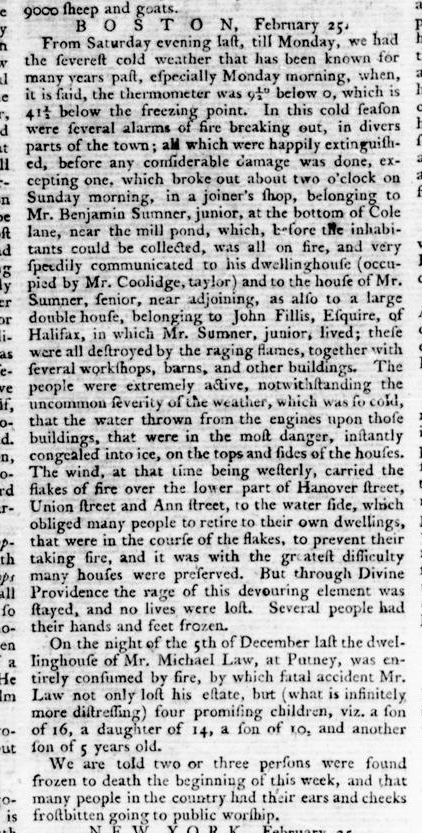
    Along with the increased danger of house fires, the cold also made fighting out of control fires much more difficult Another Virginia Gazette story discussed efforts to battle fires in freezing temperatures on an evening in Boston. The Gazette reported, “In this cold season were several alarms of fire breaking out which were happily extinguished before any considerable damage was done, excepting one…”  This was the joiner’s shop of Mr. Benjamin Sumner, “which before the inhabitants could be collected, was all on fire.”  People worked to extinguish the fire “notwithstanding the uncommon severity of the weather, which was so cold that the water thrown from the engines upon those building, that were in the most danger, instantly congealed into ice.”  Despite the difficulty with the extreme cold, the fire was put out, many houses were saved, no one died, and only a few people had their hands and feet frozen.

    bostonfire
    Virginia Gazette, March 25, 1773

    Some were not so fortunate.  The same newspaper dispatch about the Boston fire noted that on a December night in 1772 Michael Law of Putney lost not only his house but four children.

    twelfth night 2019 for blog (2)
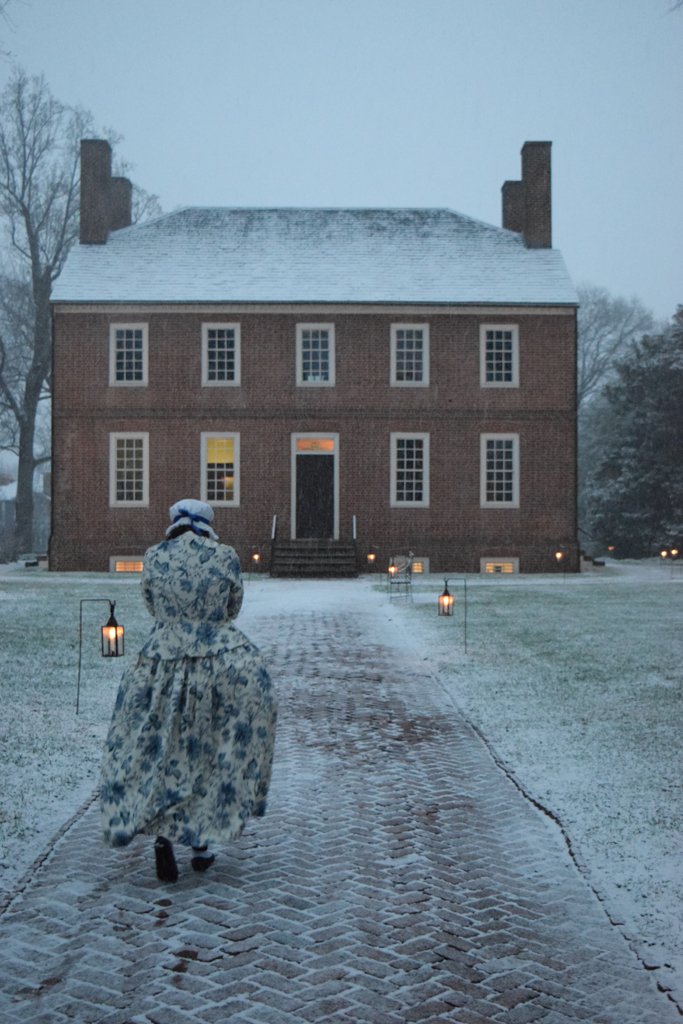
    Snow begins to fall on Historic Kenmore on the evening of January 12, 2019.

    Winter has always been a difficult time for people. The constant battles with the cold and lethal dangers of the season were in the forefront of colonial Americans’ minds.  As Mary Palmer Tyler reminisced in the 19th century about the brutality of winter in her youth in the 18th century, “Truly the people of this age know little of the horrors of winter.” [PDF]

    Heather Baldus
    Collections Manager

    [1] Richard Yates to Augustine Washington, October 9, 1741, printed in Moncure D. Conway, Barons of the Potomack and the Rappahannock (New York, 1892), pgs 68-69.

  • A History of Trees at Ferry Farm

    Cherry TreeThe moment anyone mentions trees and George Washington, you probably think of the famous Cherry Tree Story. However, this tale of young George taking a hatchet to his father’s cherry tree and, when confronted about the act, asserting “I cannot tell a lie” is probably just that — a story meant to demonstrate the integrity of the Father of Our Country. In reality, the trees of Ferry Farm have a much more fascinating history. Their story reflects, on a small local scale, vast environmental changes in eastern North America and shifting American attitudes toward the environment throughout the 18th, 19th, and 20th centuries.

    Today, we see wilderness as a good thing that needs protected and preserved. But in the 1700s, Europeans settlers saw wilderness as a bad thing. Preeminent environmental historian William Cronon notes, Europeans described wilderness as “’deserted,’ ‘savage,’ ‘desolate,’ ‘barren’—in short, a ‘waste,’.” People did not look at forests, deserts, or mountains as places to protect and visit. Instead, they were places to be feared and tamed.

    The opposite of wilderness was the managed landscape of Europe. In cities, towns, and farms, Europeans tried to control nature and make it follow humanity’s rules.  These efforts to tame the wilderness were transplanted to colonial plantations in the Americas.

    The first step in building a plantation and taming the wilderness was clearing the land for farming. Huge numbers of trees were cut down to do this.  On top of that, trees were cut down to make almost everything people of the 1700s and 1800s used and owned.  Furthermore, they were also cut down to do many everyday tasks.

    Throughout the 18th and 19th centuries, the wood from trees was…

    • used as the main architectural building material in houses, most other structures, farm buildings, fences, and more
    • used to build ships, boats, ferries, bridges, carriages and wagons that moved people and things from place to place
    • used to make everyone’s furniture (beds, chairs, tables, desks, cabinets, and trunks) as well as many household items and farming tools
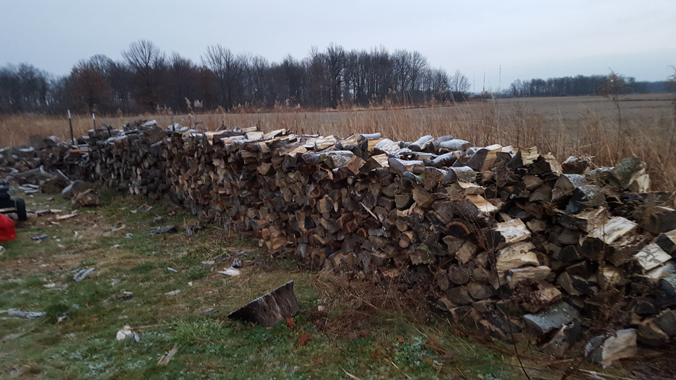
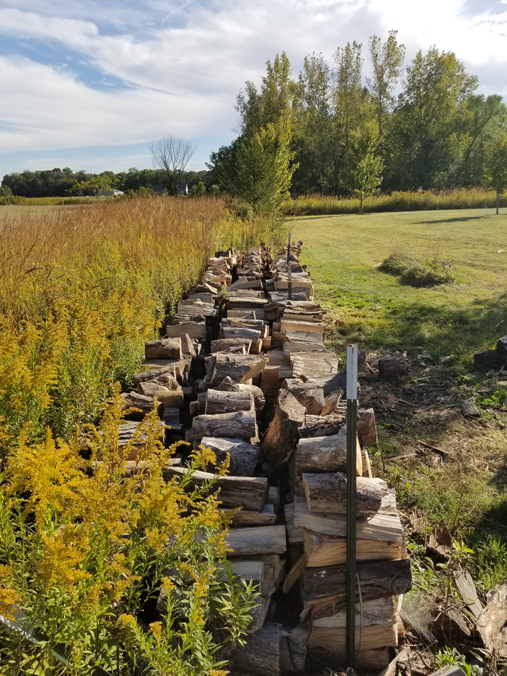
    • used as fuel for the fires needed to cook, heat, and even to make candles and soap. A colonial home needed at least 40 cords of wood for heating and cooking over the course of a year.

    5 cords of Firewood 1
    Five cords of firewood. A colonial home used 8 or 9 times this amount in a year for just heating and cooking. Credit: Chris Stevenson

    5 cords of Firewood 2
    Credit: Chris Stevenson

    According to the U.S. Forest Service, the area that would become the United States had just over 1 billion acres of forest before European settlement.  By 1910, the U.S. had a total of just over 700 million acres.  The 300 million acres of trees cut down was mostly in the eastern portion of the country.

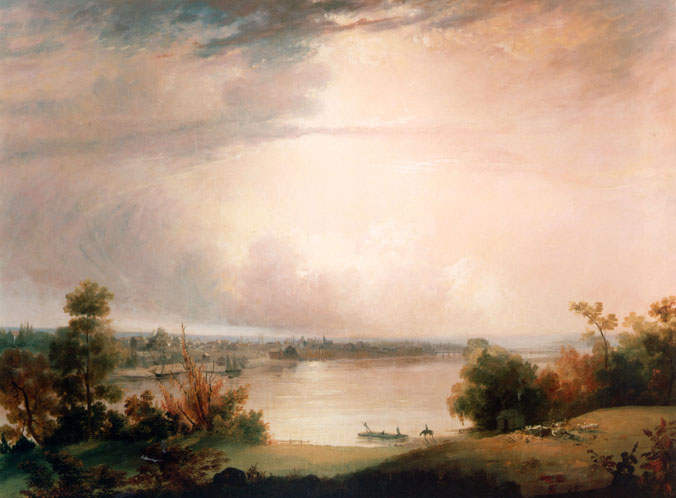
    These large scale trends can be seen on a small scale at Ferry Farm.  The European settlers who lived here, including the Washingtons, cut down a significant number of trees but not so many that there weren’t still quite a few standing when John Gadsby Chapman painted Ferry Farm’s landscape in 1833.

    1830s
    “The Old Mansion of the Washington Family” (1833) by John Gadsby Chapman shows the foundation stones of the house where George grew up at Ferry Farm and trees along the riverbank.

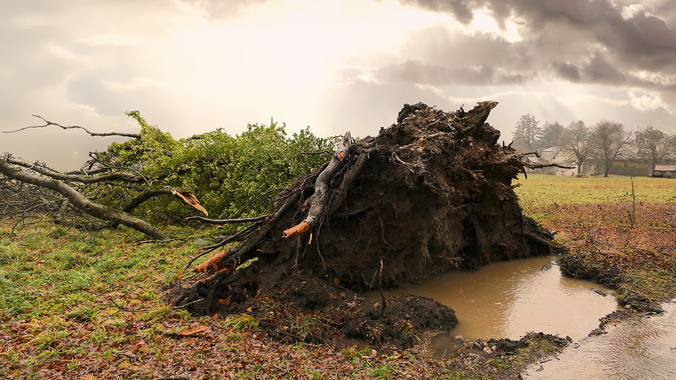
    We also have archaeological evidence showing the locations of trees during the Washington era.  This past summer in the yard north of the Washington house replica archaeologists uncovered “soil stains” left after trees fell in the past.  Soil stains are where the soil is a slightly different color than surrounding areas and indicate where people filled in holes created by uprooted trees. In other words, such soil stains indicate that a tree once stood there.

    Uprooted Tree
    A tree uprooted by a storm. Credit: ykaiavu / Pixabay

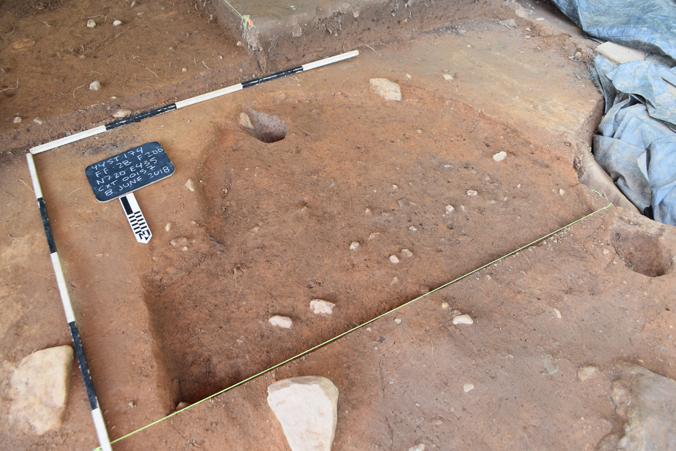
    In some cases, our archaeologists found that the holes were filled in multiple episodes, indicating that the soil settled and new dirt was later added or the person filling the hole borrowed different dirt of different colors from multiple locations. By excavating the soil from these soil stains and analyzing the artifacts, we can tell around when the holes were filled.

    Soil Stain
    Soil stain marking the site of an 18th and 19th century tree on the landscape at George Washington’s Ferry Farm.

    One very large tree left the sizable soil stain – almost 5ft x 5ft – pictured above.  Based on artifacts found in its soil, the hole was filled during the mid-19th century.  We can tell by the size of the stain that the tree was quite mature. Together, these facts are evidence of a tree that grew just 40 feet north of the original Washington house during the time George and his family lived at Ferry Farm. This discovery gives us another detail about the landscape so it can eventually be accurately recreated just as we did the main house.

    Finally, Ferry Farm archaeologists learned from these tree features and from the lack of other features in this yard that the area was well-kept. In the 18th century, this portion of the landscape was probably well-maintained because it was visible from Fredericksburg across the river.

    This tree fell sometime in the 19th century and it was not the only one at Ferry Farm or across the country. Indeed, deforestation at Ferry Farm and nationwide grew more rapid and widespread in the 1800s as “clearing of forest land in the East between 1850 and 1900 averaged 13 square miles every day for 50 years; the most prolific period of forest clearing in U.S. history.”

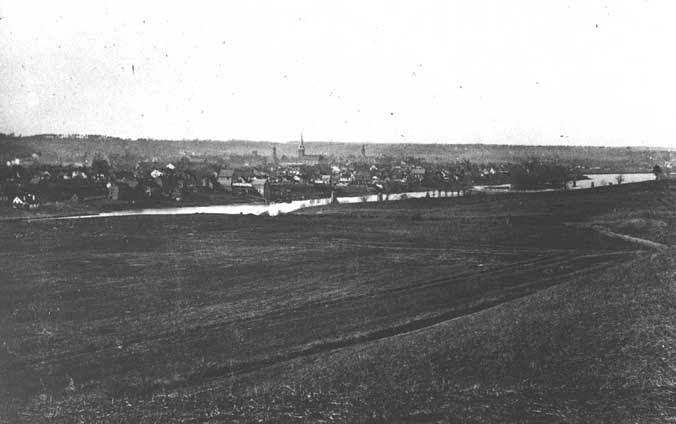
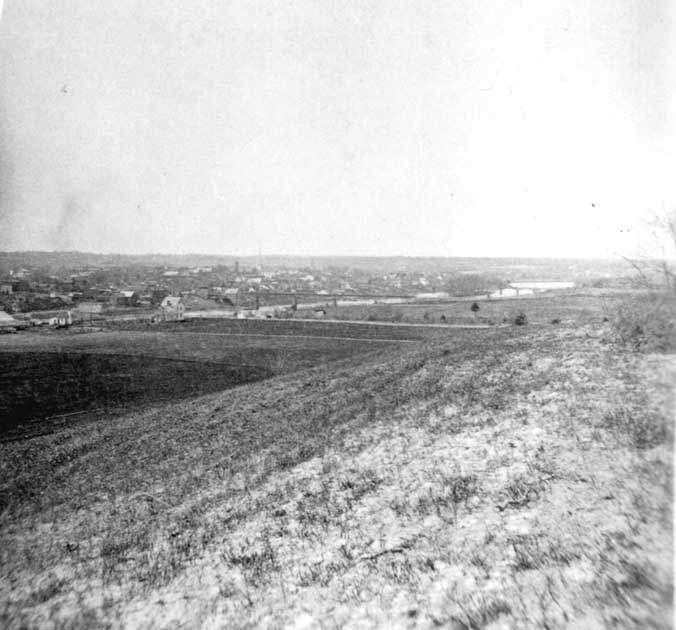
    In the 1860s, the Civil War exacerbated deforestation at Ferry Farm and throughout Stafford County.  Hundreds of thousands of Union Army soldiers radically altered the local environment to get the wood they needed for cooking and heating, to help build their fortifications and pontoon bridges, and even to build shelters.  During winter lulls in fighting, 18th and 19th century armies did not camp in tents. The soldiers built small log cabins.  By war’s end, Ferry Farm and Stafford County were nearly treeless as seen in the two photos of Ferry Farm below taken in the decades after the war ended.

    1870s
    View of Ferry Farm property in the 1870s.

    1880s
    View of the Ferry Farm property in the 1880s

    While deforestation sped up in the 1800s, that century also began a changing of people’s attitudes toward the environment.  As Cronon explains, “The wastelands that had once seemed worthless had for some people come to seem almost beyond price. That Thoreau in 1862 could declare wildness to be the preservation of the world suggests the sea change that was going on. Wilderness had once been the antithesis of all that was orderly and good—it had been the darkness, one might say, on the far side of the garden wall—and yet now it was frequently likened to Eden itself.” Wilderness was to be treasured, not feared.

    As the 19th century turned into the 20th, wilderness, nature, and the environment were increasingly seen as special and deserving of protection and preservation, sparking the creation of national and state parks, government agencies like the Forest Service, private conservation groups such as the Sierra Club, and, in 1872, the very first Arbor Day.

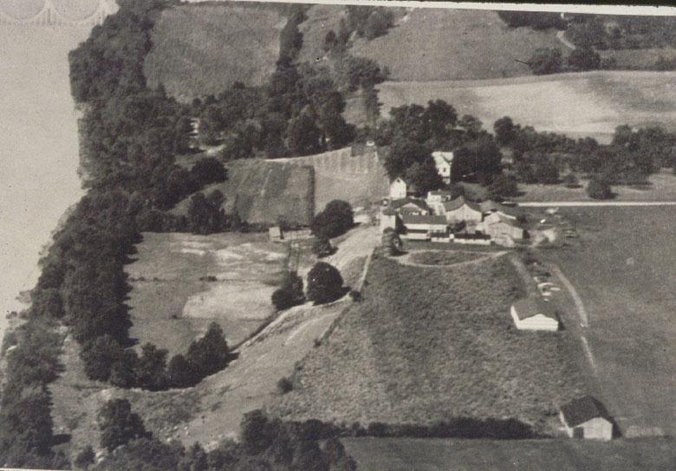
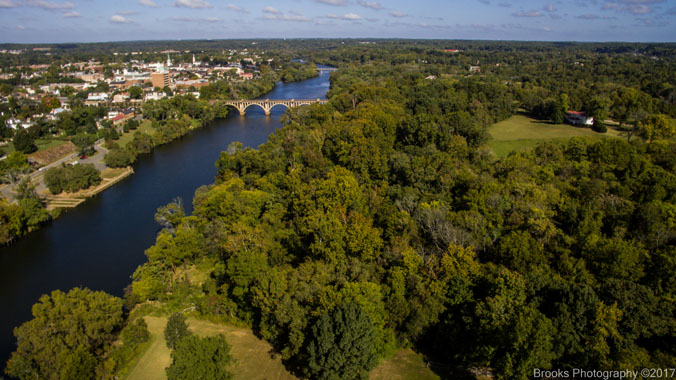
    We can see the impact of new attitudes toward the environment at Ferry Farm in photos below. The top one from the 1930s, a period of intense conservation efforts nationwide, shows trees starting to appear once again while the other from 2017 shows trees on a portion of Ferry Farm stretching out as far as the eye can see to the north.

    1930
    Aerial view of Ferry Farm taken in 1930.

    2017
    Aerial view of a portion of Ferry Farm and points north taken in 2017. Credit: Joe Brooks / Eagle One Photography

    The early 20th century saw the nadir of American deforestation in 1910. But since that year, forest acres in the U.S. have largely held steady [PDF].  The new conservation ethic symbolized in the practice of planting trees to replace those cut down, the reduced use of wood as a building material and fuel source, the need for less farm land, and the movement of people from rural to urban areas (all of which present their own challenges to the environment) have provided a reprieve for America’s forests.

    While George’s mythical chopping of the Cherry Tree is the most well-known tale about trees at Ferry Farm, the more important and fascinating story is how the 300 hundred year history of trees at Ferry Farm reflects broader post-settlement environmental changes in North America and how the Americans who made those changes grew to see the world differently.

    Zac Cunningham
    Manager of Educational Programs
    Elyse Adams, Archaeologist
    Archaeology Lab Technician

  • Spring at Historic Kenmore! [Photos]

    Sunny days. Blue skies. Blooming flowers. Spring at Historic Kenmore is a beautiful time!

    To plan your next visit to Kenmore, go to kenmore.org/visiting.

  • Surveying the Bird Life at George Washington’s Ferry Farm

    Recently, on a gray overcast March morning, four members of the Fredericksburg Birding Club bundled up against the unseasonable cold to trudge across the open fields and through the forests of George Washington’s Ferry Farm to conduct their latest bird survey. It was their fourth such survey in the past seven months.

    During these surveys birding club members spotted a total of 41 species.  They recorded each species observed and compared their observations to “A Checklist of the Birds at Ferry Farm,” a pamphlet available to visitors at Washington’s boyhood home. Club members noted that they saw all of the species listed on the “Checklist” as abundant or common.  They saw 13 uncommon species defined by the “Checklist” as “present, but not certain to be seen” as well as three species listed as occasional, meaning “seen only a few times during a season.” They spotted three rare species.  Most excitingly, they sighted the American Pipit, a species not yet included on Ferry Farm’s “Checklist.”  The pipit’s habitat is shorter grasses so it was probably attracted to a freshly mown field on the grounds.

    American Pipit
    American Pipit. Credit: Becky Matsubara / Wikipedia

    Club members also noted some early breeding activity as three tree swallows were inspecting some of the bluebird boxes in Ferry Farm’s wildflower meadow.

    Ferry Farm’s abundance of bird life is due to the many favorable micro-habitats available on the 80-acre property.  This includes native grasses and a wildflower meadow, hardwood bottomlands, fallow areas, open lawn, and the adjacent waters of the Rappahannock River.

    During the Fredericksburg Birding Club’s survey on March 27, club members spotted the species listed below in alphabetical order. The number following each species name represents the number of individuals seen.  This same data can also be found at ebird.org.

    American Crow – 6
    American Goldfinch – 6
    American Kestrel – 1
    American Pipit – 6
    American Robin – 33
    Bald Eagle – 2
    Black Vulture – 1
    Blue Jay – 3
    Canada Goose – 20
    Carolina Chickadee – 5
    Carolina Wren (heard only) – 2
    Cedar Waxwing – 9
    Common Grackle – 8
    Dark-eyed Junco – 14
    Double-crested Cormorant – 3
    Downy Woodpecker – 5
    Eastern Bluebird – 7
    Eastern Phoebe – 1
    European Starling – 23
    Hermit Thrush – 1
    Mourning Dove – 7
    Northern Cardinal – 20
    Northern Flicker – 1
    Northern Mockingbird – 2
    Osprey – 3
    Red-bellied Woodpecker – 3
    Ring-billed Gull – 15
    Rock Pigeon (Feral Pigeon) – 1
    Ruby-crowned Kinglet – 1
    Song Sparrow – 3
    Tree Swallow – 3
    Tufted Titmouse – 4
    Turkey Vulture – 6
    White-throated Sparrow – 4
    Yellow-rumped Warbler – 24

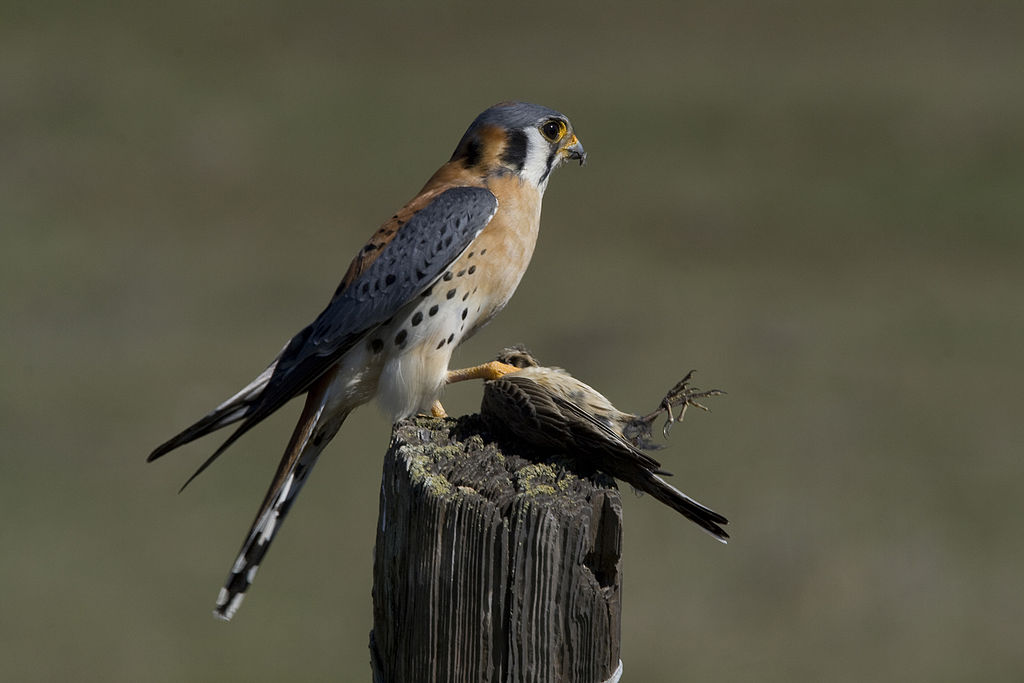
    American Kestral
    American Kestral with a freshly killed American Pipit. Credit: Gregory “Slobirdr” Smith / Wikipedia

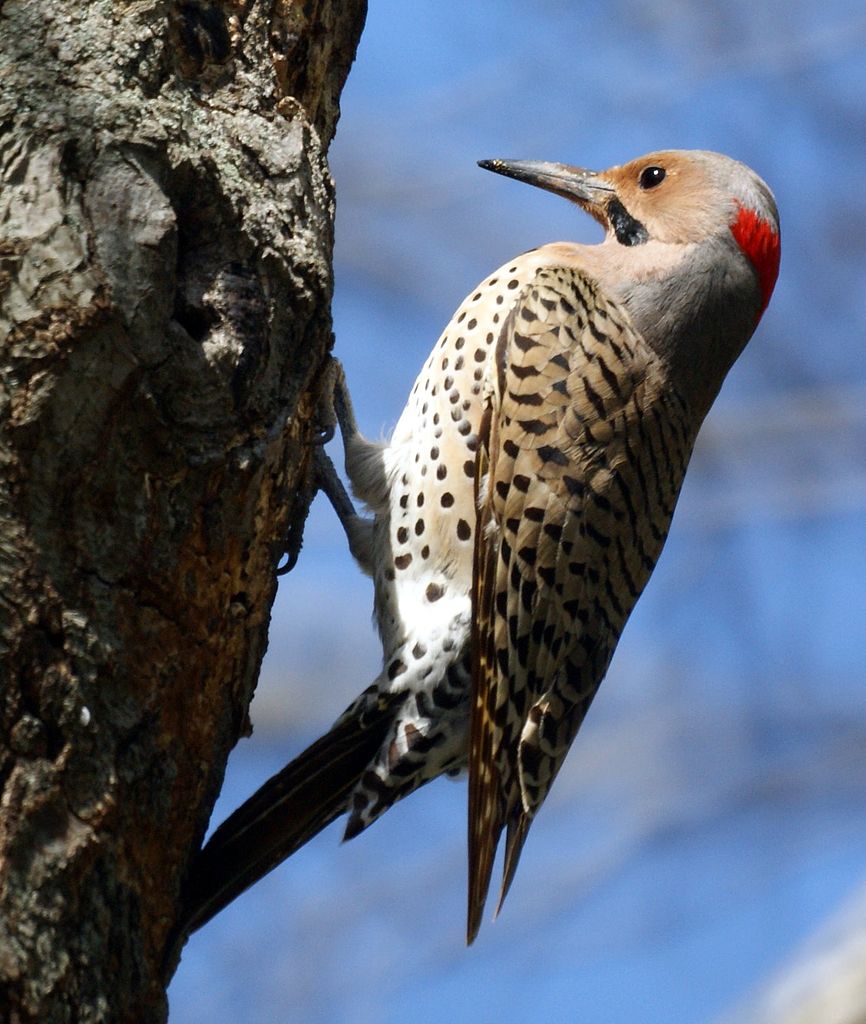
    Northern Flicker
    Northern Flicker. Credit: Mike’s Birds / Wikipedia

    You can observe birds yourself at Ferry Farm during regular operating hours, which are from 10:00 a.m. to 5:00 p.m. on Monday-Saturday and from Noon to 5:00 p.m. on Sunday.  Pay your admission inside the Visitors Center and ask for a copy of “A Checklist of the Birds at Ferry Farm.”

    Furthermore, on Saturday, May 5, you can join members of the Fredericksburg Birding Club for a Birding Tour of Ferry Farm, a morning walk through the grounds during spring migration. Participants will see birds that are passing through, as well as those who have arrived at Ferry Farm for the summer.  Bring your own binoculars.  The cost is regular admission: $9.00 adults, $4.50 students.  Reservations required.  For more information and reservations, please call (540) 370-0732 ext. 24 or email hayes@gwffoundation.org.

    Zac Cunningham
    Manager of Education Programs
  • Snow at George Washington’s Ferry Farm & Historic Kenmore

    Historic Kenmore and George Washington’s Ferry Farm experienced a snowstorm on Wednesday, March 21, 2018.  Our staff took these photos of the snowfall from around the Lewis and Washington homes.

    We also setup a timelapse camera at the Ferry Farm Visitors Center to capture the snowfall over the course of the storm. Closely watch the pine trees in the video below and you can see their branches droop down as the heavy wet snow weighs them down and then raise back up as the snow started to melt late in the day.