Lives and Legacies

Tag: pipe bowl

  • 2023 Dig Season Recap!

    It’s that time again! As we welcome Fall and the beautiful cool weather it brings, let’s take a look back at our Summer 2023 dig season here at Ferry Farm, George Washington’s Boyhood Home. This year’s dig actually involved excavating two separate areas, designated FF-38 and FF-40, within the historic area. 
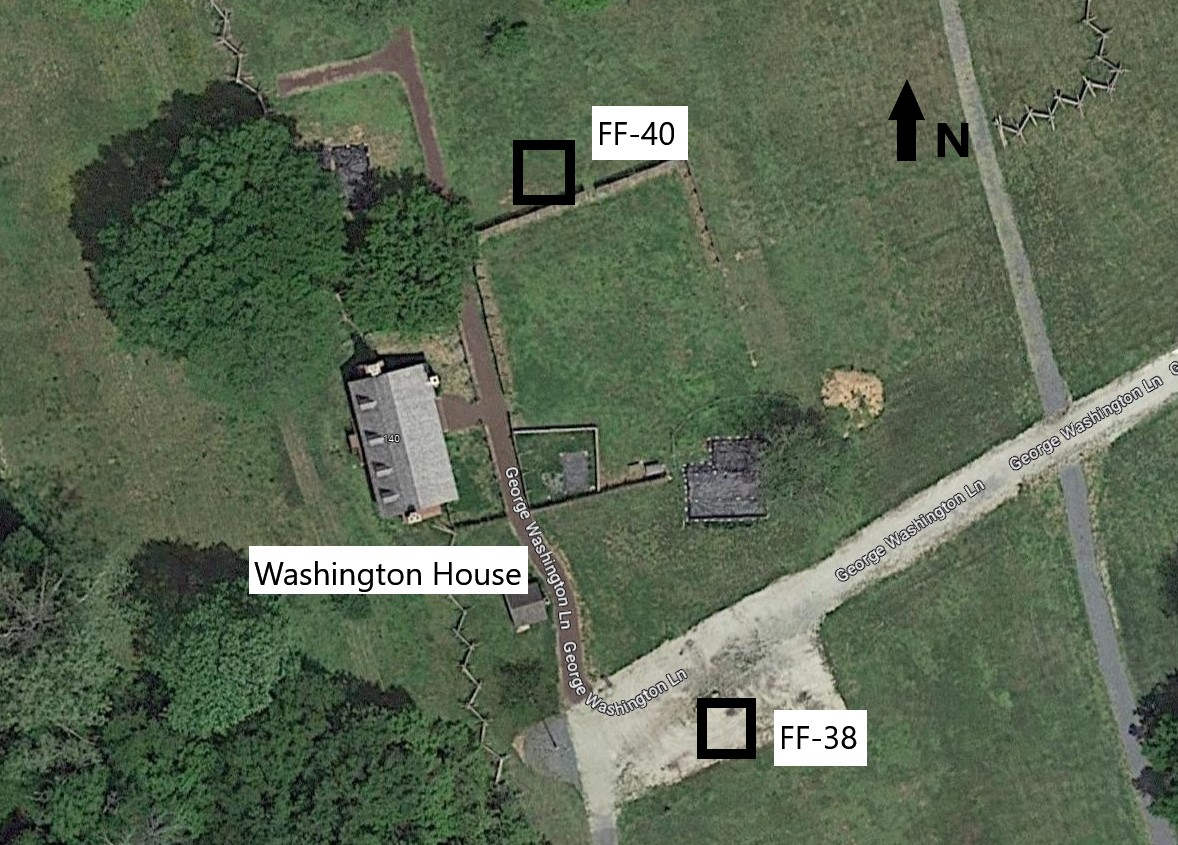
    Location of the archaeological projects FF-38 and FF-40 at Ferry Farm.

    Project FF-38

    The FF-38 area contained a large, dark, soil stain that was discovered by accident during the monitoring of a utility trench in 2016.  Only a portion of this feature was visible at that time as it continued beneath the south wall of the trench. We had clues as to the approximate date of this partially-exposed feature, but we still needed to fully uncover the entire feature to establish its total dimensions and determine its age, function, and how it relates to the surrounding landscape.
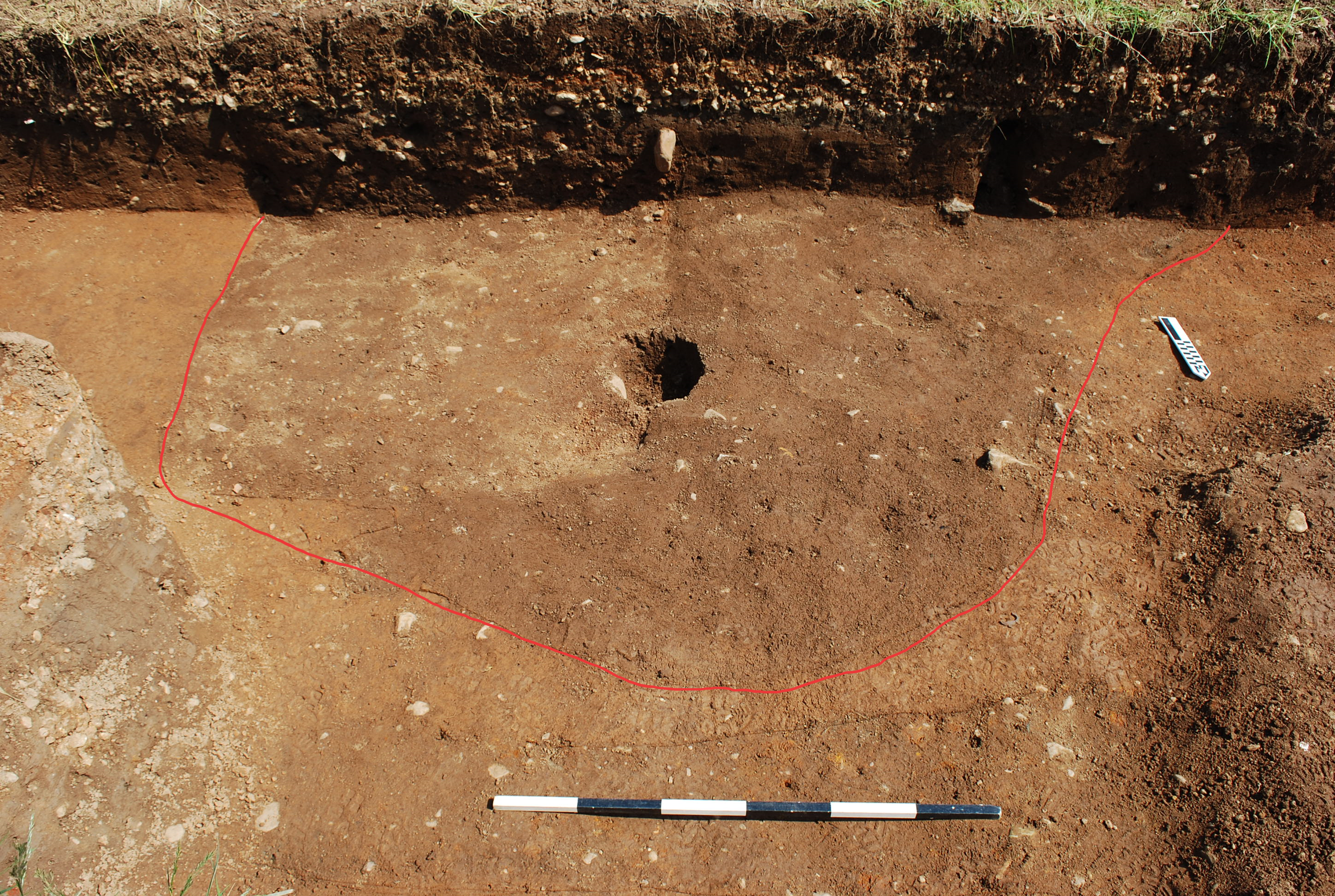
    F.321 as seen in 2016 within the utility trench. Only the northern portion of the feature was exposed at this time. F.321 is outlined in red, and is intruded by a square, lighter-colored 19th-century feature (F. 324).

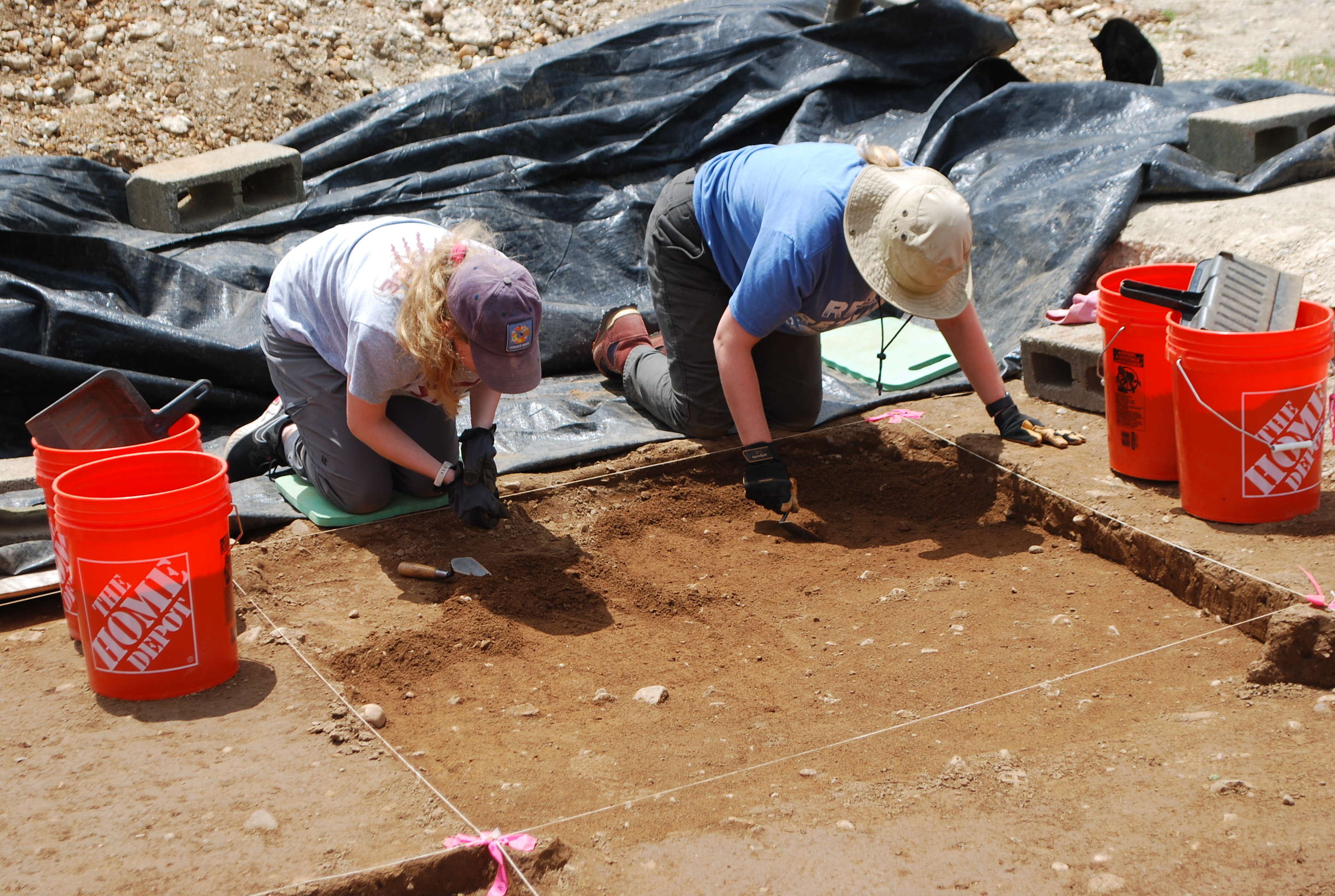
    Our excavation began by the machine removal of two modern layers of gravel that overlay a thick 19th-century layer of plowed soil. The excavation area measured approximately 16 ft. by 20 ft. Our crew of archaeologists then slowly excavated down through the plowed layer until we could identify the boundaries of Feature 321. Fully uncovered, the exciting discoveries began.

    First and foremost, we discovered the feature was much bigger than originally thought! What initially appeared in 2016 to be a 5’x7’ roundish feature turned out to be the northern tip of a large rectangle measuring 10’ by 16’. The size and shape alone of the feature shifted our interpretation from a small pit to something larger.
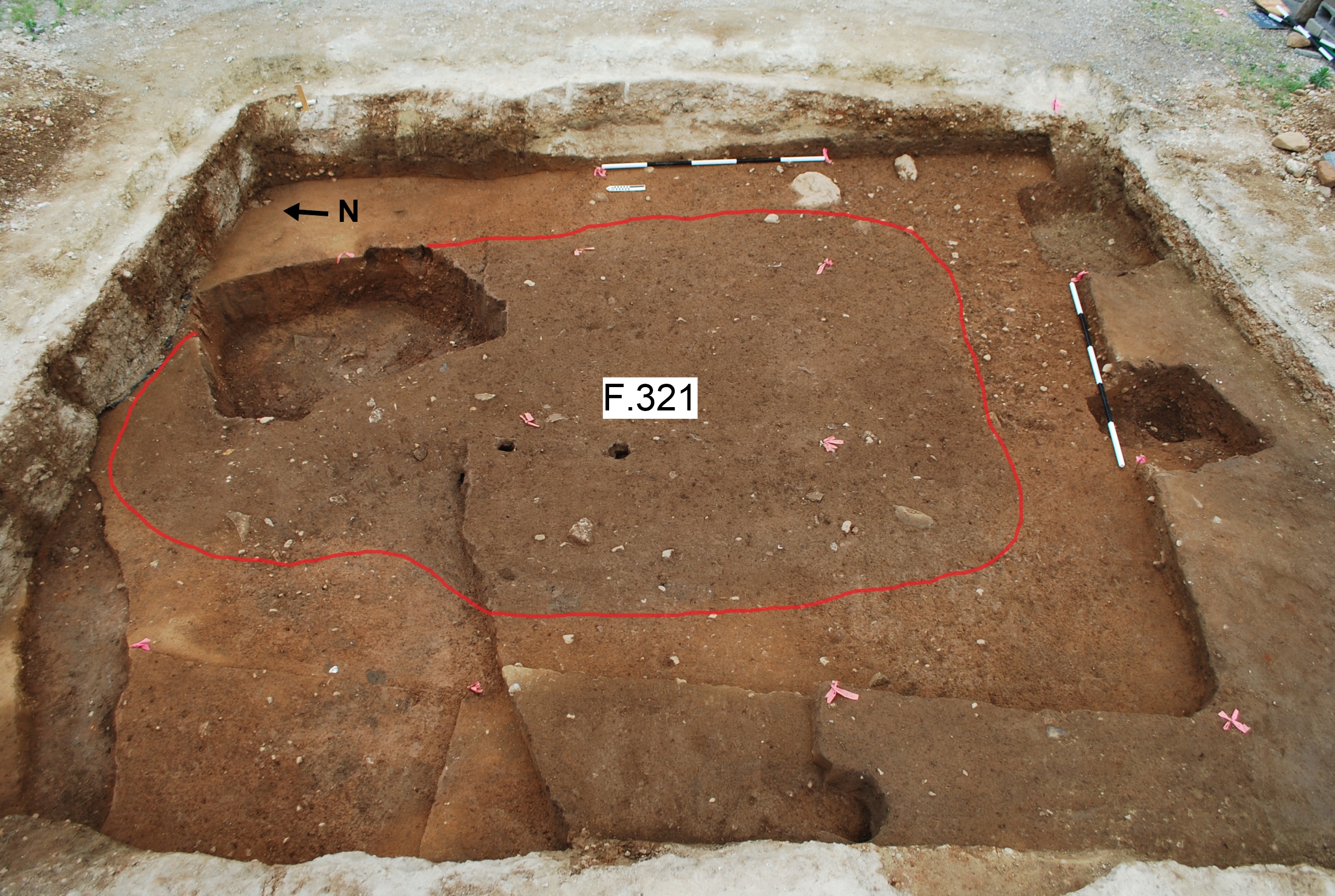
    F.321 fully exposed before excavation (outlined in red). The intrusive feature, F. 324, has been partially dug out at the north end of the site.

    Feature 321 was divided into four sections and our crew excavated both southwest and northeast quadrants. This excavation approach allowed us to determine that the feature was roughly 1’ deep at the center, with gently sloping sides, and filled with successive layers of soil and ash-filled deposits. These soil layers provided us with an awesome mix of artifacts which were used to nail down the feature’s end date to the middle of the 18th century.  But establishing a date is only part of the process: artifacts can further help us identify the function of the feature as well.
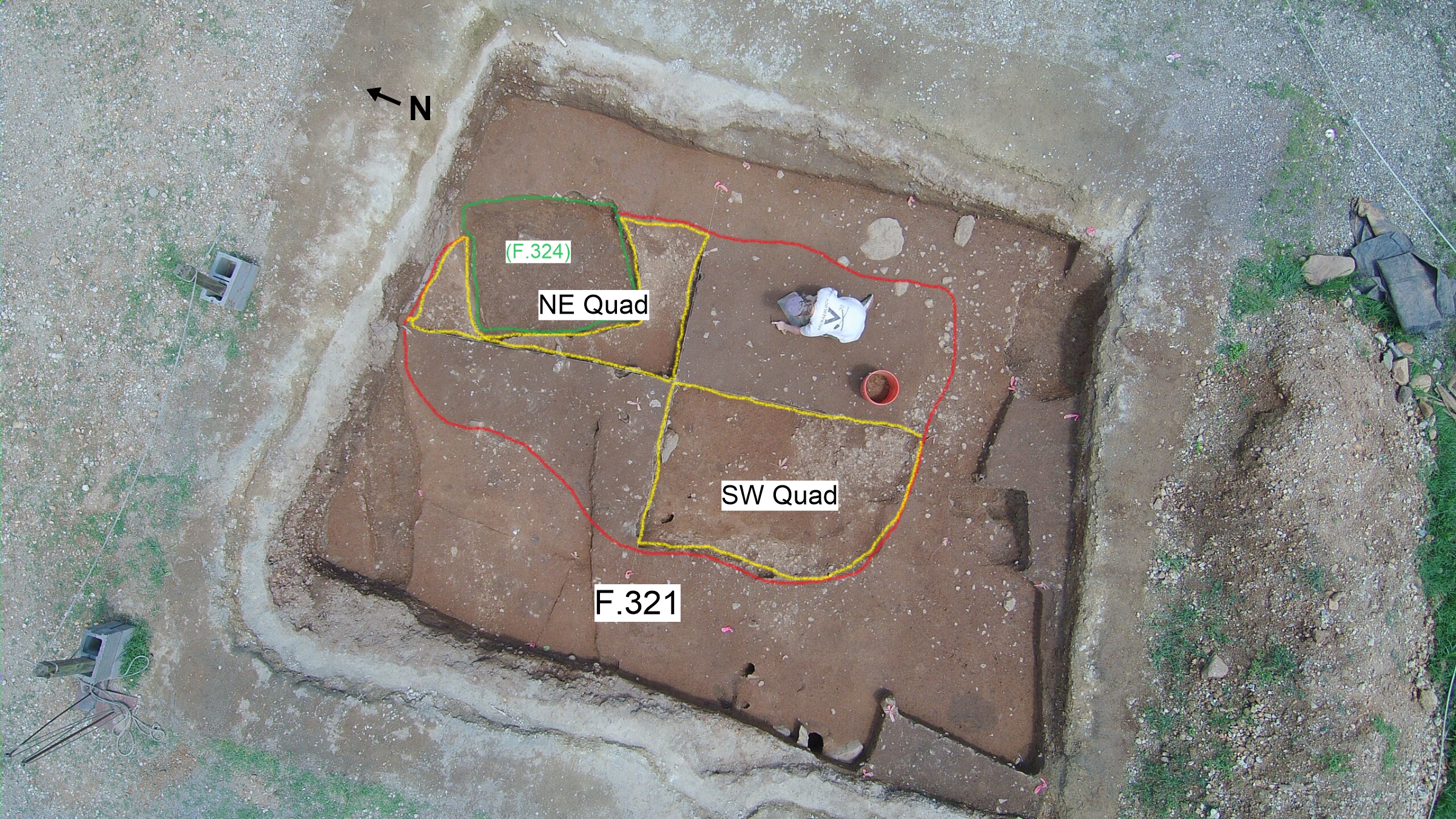
    F.321 after the southwest and northeast quadrants were excavated.  Intrusive Feature 324 is outlined in green.

    That being said, we are still unsure of what this feature actually is. Here is what we know so far.  There is no hearth of chimney remains. Lack of a fireplace suggests it wasn’t a domestic dwelling, but it could be another type of plantation outbuilding, such as a storage building, shed, or barn. The edges are almost vertical, and the floor is relatively flat.  There is no silt so the pit was covered while it was open.   It is too regular to be a quarry pit used to harvest clay as a building material.

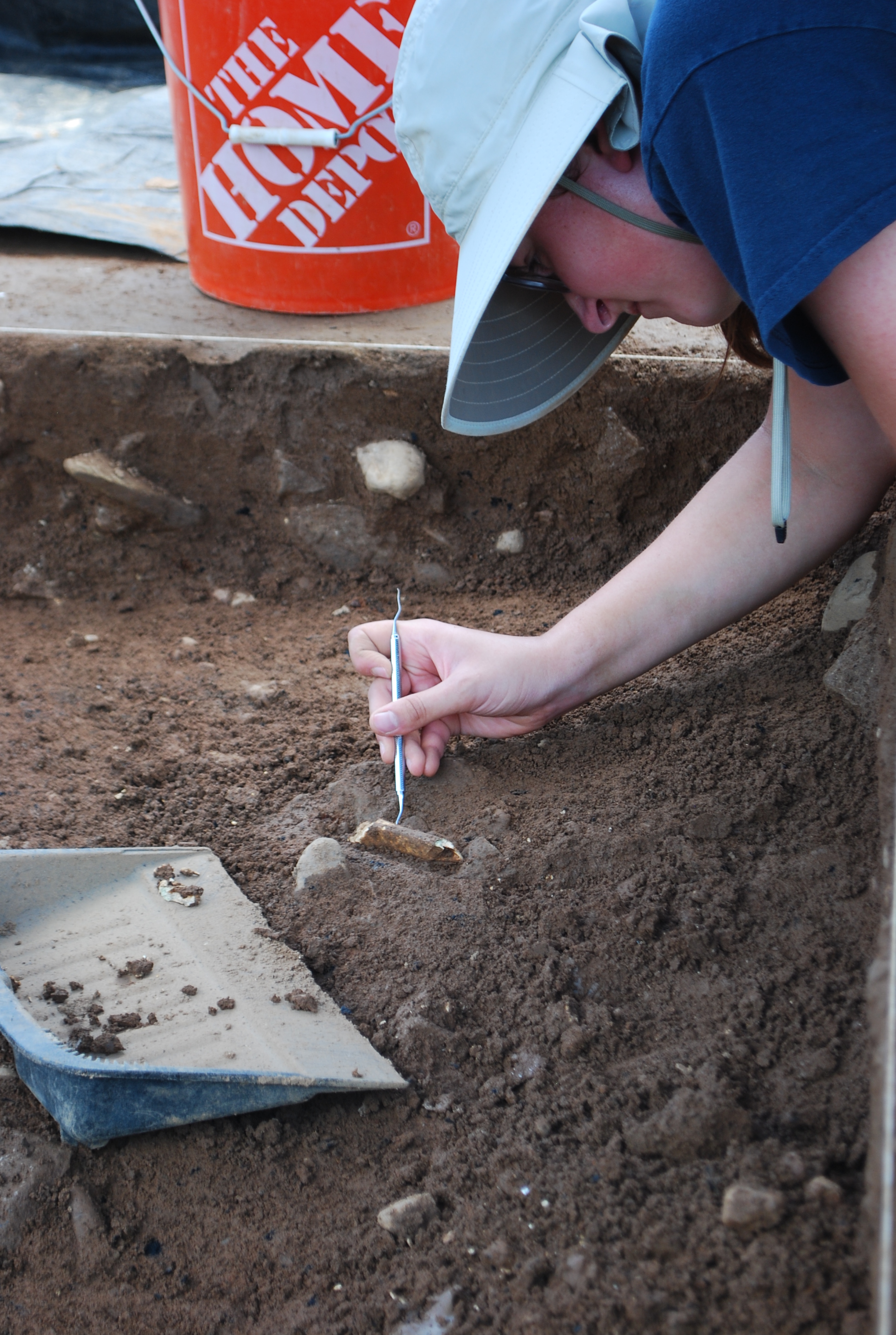
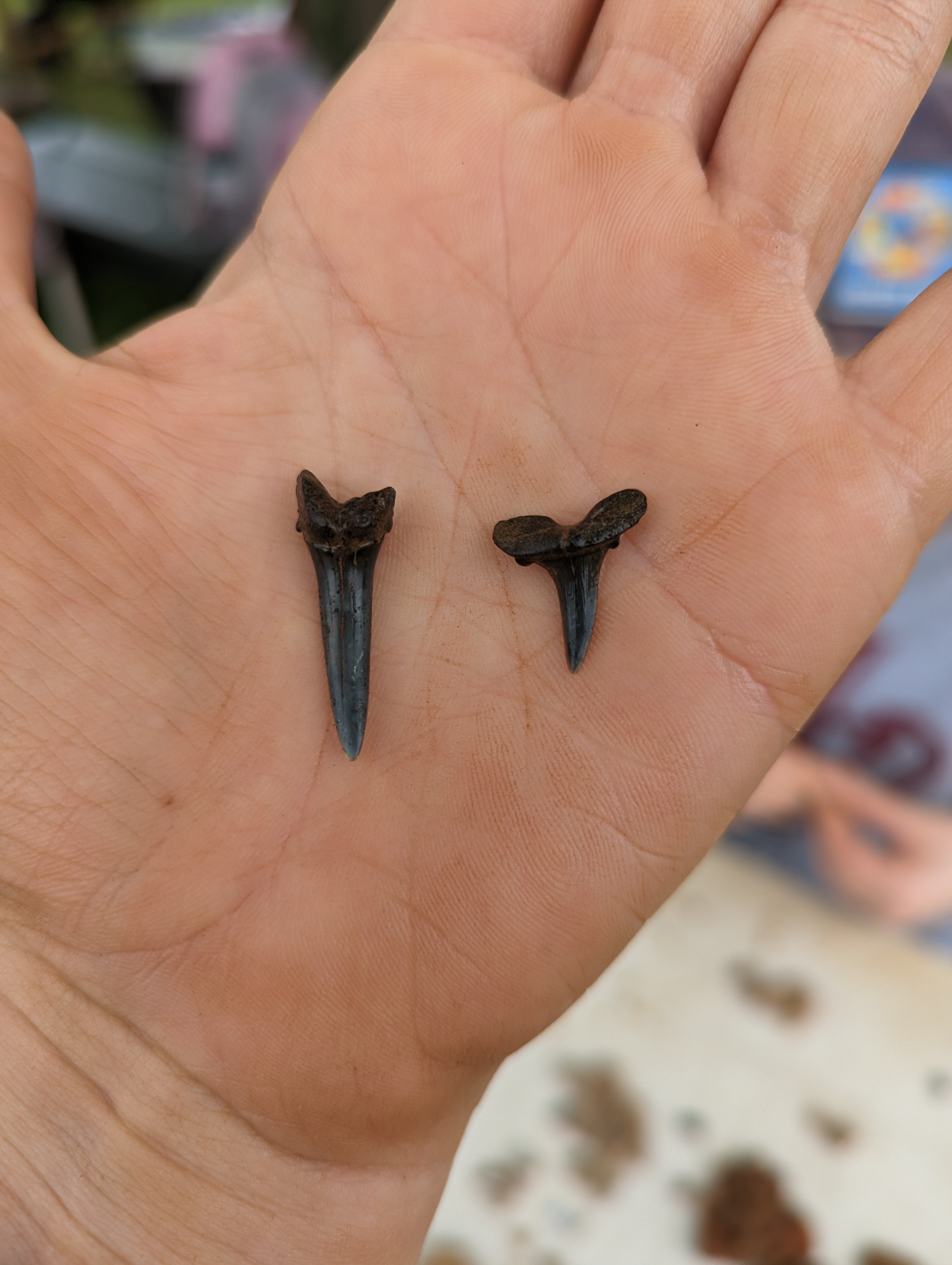
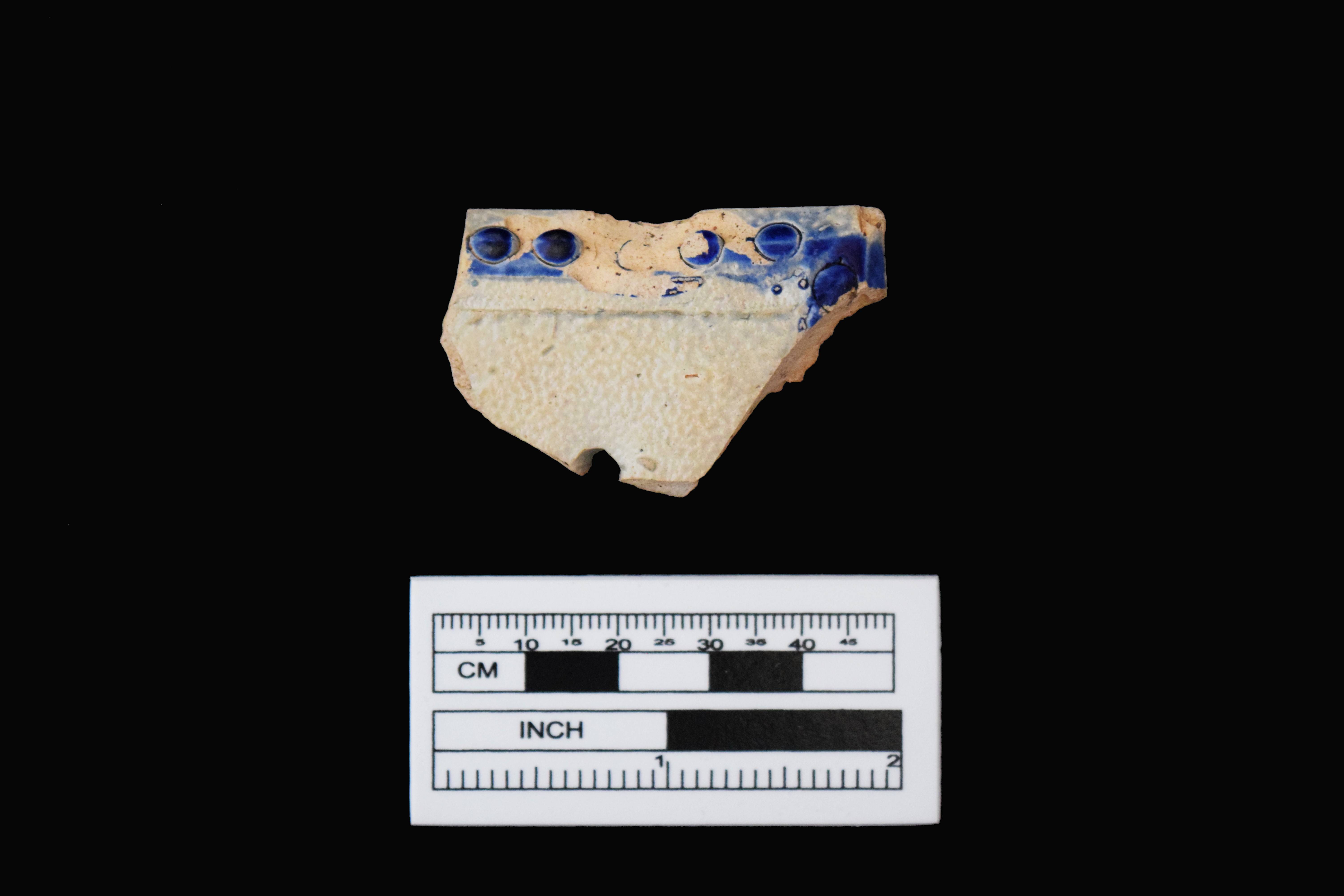
    Even though we are still in the early days of analyzing the artifacts, that doesn’t mean we can’t talk about a few great things we found. This feature had a little bit of everything: personal items, food-related items, architectural debris, domestic items, etc. The crowning glory of the excavation (in our humble opinion) would have to be the complete pipe bowl that was stamped with a maker’s mark that featured the letters “TD.” Other exciting finds include a clipped Spanish coin, sherds to a Westerwald ink well, shark teeth, and prehistoric pottery, just to name a few. This feature also contained a layer of ash that preserved delicate artifacts such as bone, fish scales, and straight pins – items that often don’t survive in the archaeological record.
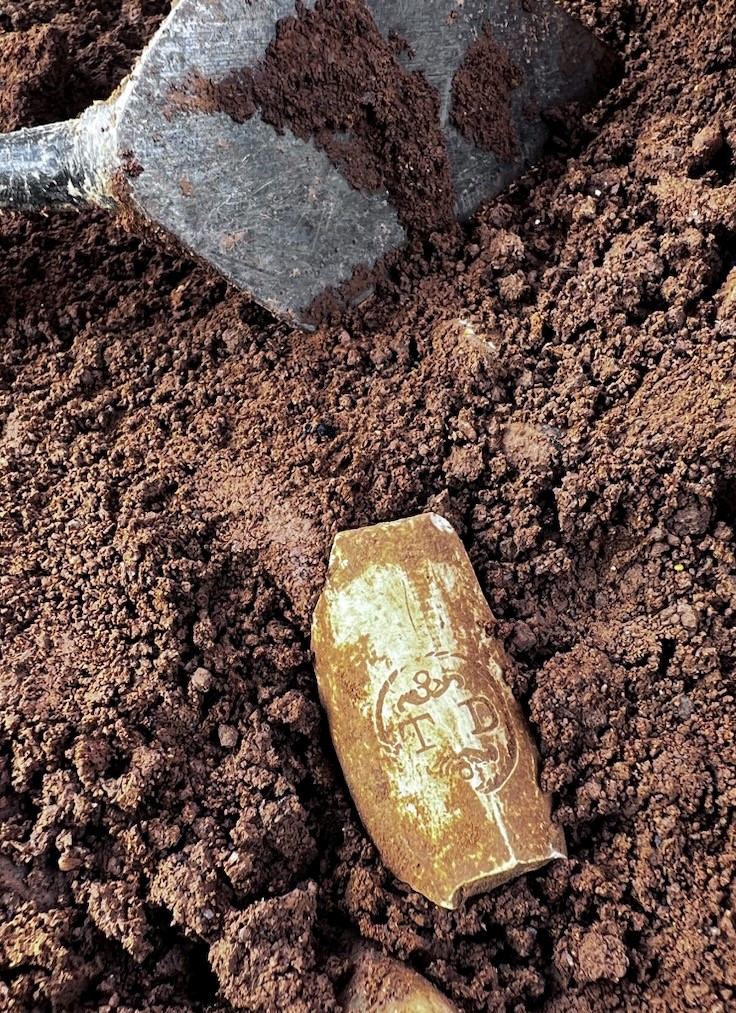
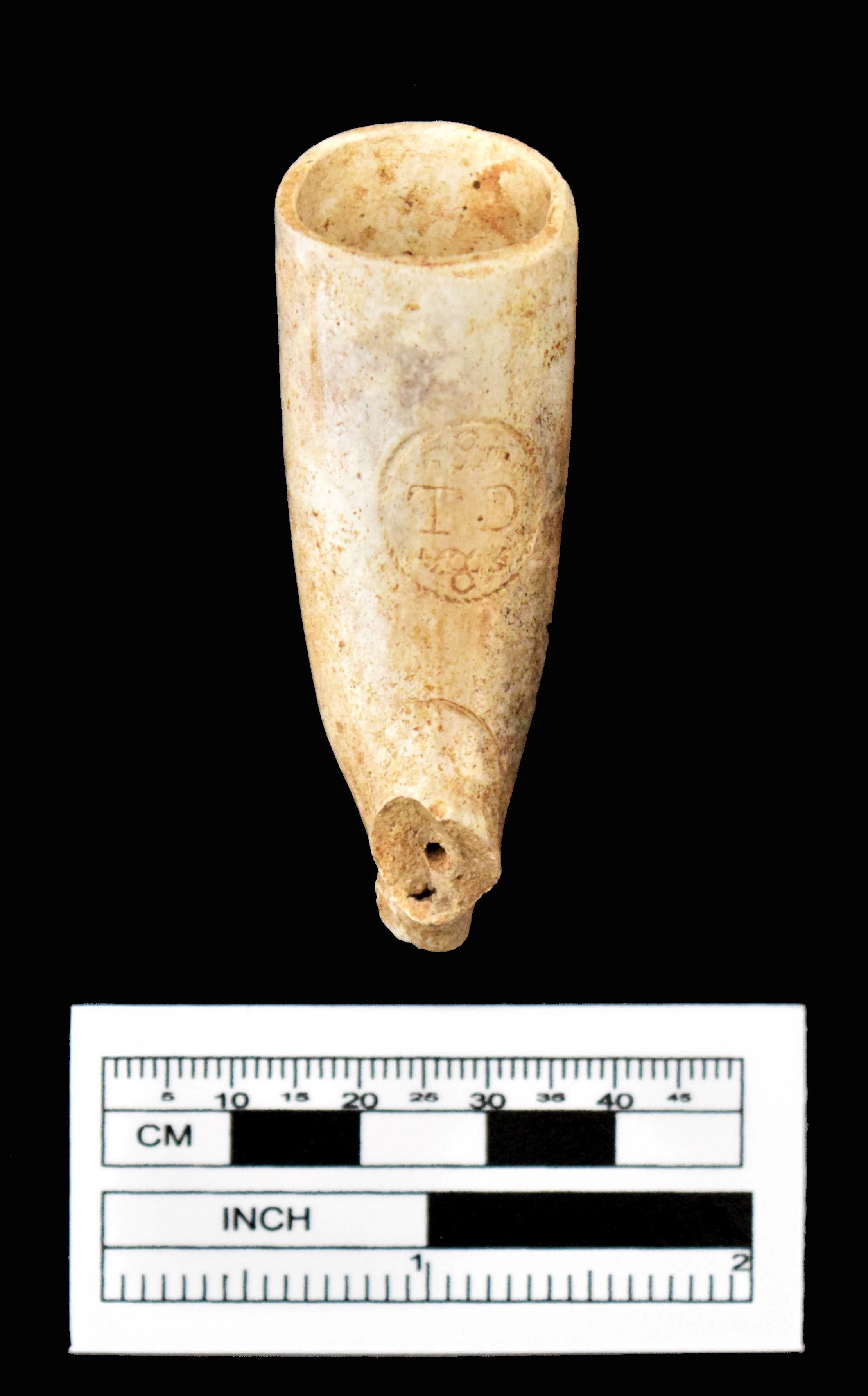
    So what does this all mean? Well, this means that we will definitely be returning to the FF-38 site next season. While we have gathered a lot of information during this dig, there is still much left to find. Expanding our excavation beyond the limits of the feature and excavating one of the remaining two quadrants will help us interpret the feature’s function and how it relates to the 18th-century farm landscape of the Washington family.

    FF-40

    Wait, that’s not all for this year’s dig. Don’t forget that we had two excavation areas this year. Our second area was FF-40, which was the remains of an 18th century kitchen had experienced an intense fire. This kitchen was partially excavated in the 1990s, so this year’s excavation had more of an exploratory excavation designed to help us establish a game plan for future excavation. We knew the kitchen remains were below the foundations of two later farmhouses, and that the foundation walls of these farmhouses were still extant. Additionally, the interior of the foundations was filled with sand to protect the kitchen site. Our excavations confirmed the location of the farmhouse foundations and the existence of a protective layer of sand! Once our crew were able to get through this sandy fill, a quick clean of the kitchen fill uncovered artifacts that were absolutely toasty. Okay, toasty isn’t a technical term, but the artifacts showed evidence of a fire that burned at extremely high temperatures. This included a high number of architectural artifacts as well as charred ceramics and melted glass. Findings from this year will help guide the excavation in the future.
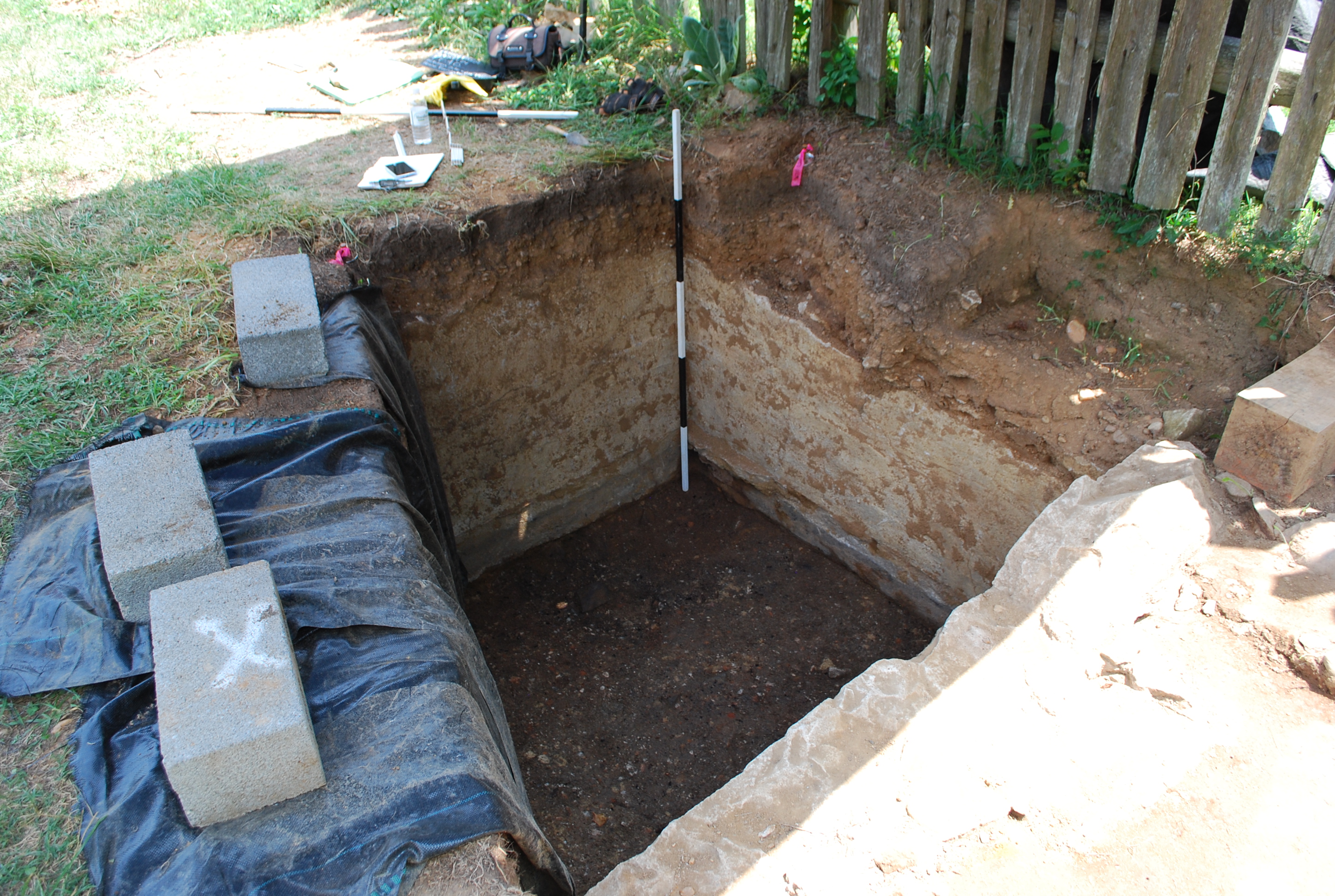
    The burned kitchen site is located beneath these concrete house foundations dating to 1914.  This picture was taken after protective sand fill was removed within the excavation unit.

    Phew, that was a lot! That sums up our 12-week dig season. We answered a lot of our initial questions and found many more questions to investigate. Archaeologists will be in the lab the rest of the year processing artifacts, researching our findings, planning next season’s dig, and enjoying the A/C. Stop by the lab in the Visitor’s Center and take a peek at what’s happening. See you all in the field next May!


    Danielle Arens

    GWF Archaeologist
  • Put That in Your Pipe and Smoke It: Tobacco & Politics in the 1700s

    Colonial American.  Think about that term.  What does it mean to you?  It refers to citizens of the American colonies prior to the Revolution.  In the minds of many of us in the present-day United States, however, it might denote a unique American identity, probably because our own identities as Americans are firmly set and celebrated.  But what if I told you that most of these colonial Americans considered themselves to be loyal British subjects for much of the colonial period and proudly displayed objects that confirmed their loyalty?

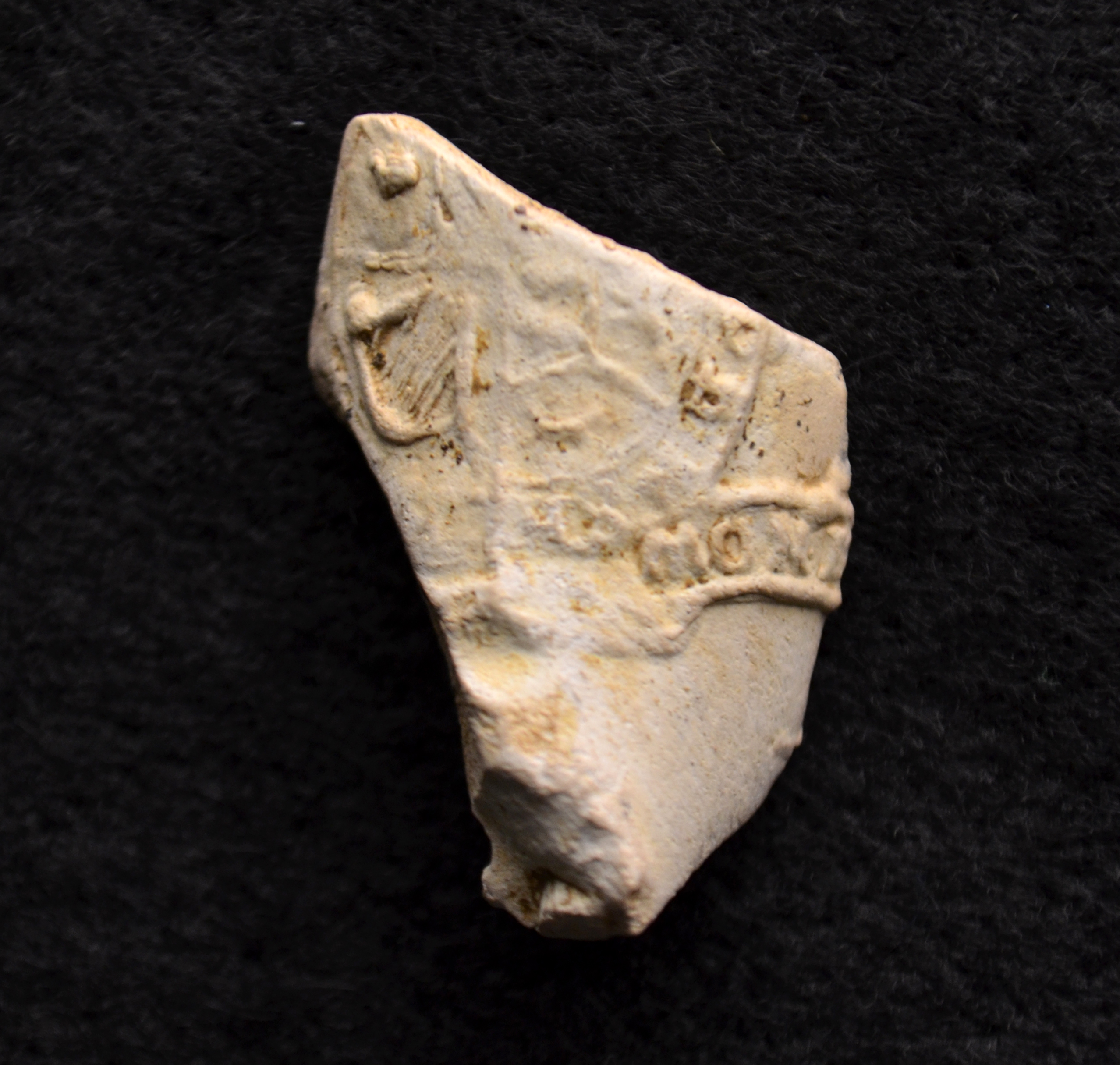
    One such object discovered at George Washington’s Ferry Farm is a small fragment from a white clay smoking pipe bowl.  The design on this tiny fragment includes a small harp and the letters “Mon D…”.

    Pipe Bowl Fragment
    Pipe bowl fragment excavated by archaeologists at George Washington’s Ferry Farm.

    Sometimes in archaeology we have genuine ‘Ah Ha!’ moments and, for me, this was one such instance.  I grew up with a suncatcher – a gift from an English family friend — in my bedroom that featured a rearing unicorn above the words ‘Mon Droit.

    Suncatcher

    I loved that suncatcher and, when I saw the pipe fragment, I recognized what the design was right away.  It was the British royal coat of arms!

    On pipe bowls like the one unearthed at Ferry Farm, the coat of arms wrapped around three quarters of the circular bowl. A lion, shield, and unicorn each filled their own quarter of the bowl above the full French phrase “Dieu Et Mon Droit” or “God and my right,” a claim that the right of the British monarch to govern was divine in nature.  This phrase has a long history in England.  It was first used as a battle cry by Richard I in the 12th century and picked up as a royal motto by King Henry V, who lived from 1386-1422.  The use of the French language for an English motto may seem odd but French was very fashionable and the official language of the English court.

    British Royal Coat of Arms
    The British royal coat of arms from 1714-1800 during the Hanover dynasty. Credit:  Sodacan/Wikipedia

    It is doubtful that anyone living at Ferry Farm after the America Revolution wanted to advertise their loyalty to the British crown so we can safely say this pipe was probably used between 1714, when the Hanover dynasty began under George I, and, at the latest, the 1770s. During most of this time period, the Washington family lived at Ferry Farm.The royal coat of arms is full of important symbols.  Grasping the center shield is a lion signifying England and a unicorn representing Scotland.  On the shield’s lower left is a harp symbolizing Ireland. The harp is clearly identifiable on the pipe fragment excavated at Ferry Farm.  The lower right section of the shield includes a columned monument and another lion. These symbols were added during the House of Hanover’s reign.  Monarchs regularly changed the coat of arms as each new king or queen sought to make their mark on the official emblem.  The monument and small lion were included on the shield to denote the Hanovers’ rule over their territory in what is now Germany.  The fragment found at Ferry Farm also contains these elements indicating that it was manufactured between 1714 and 1800.

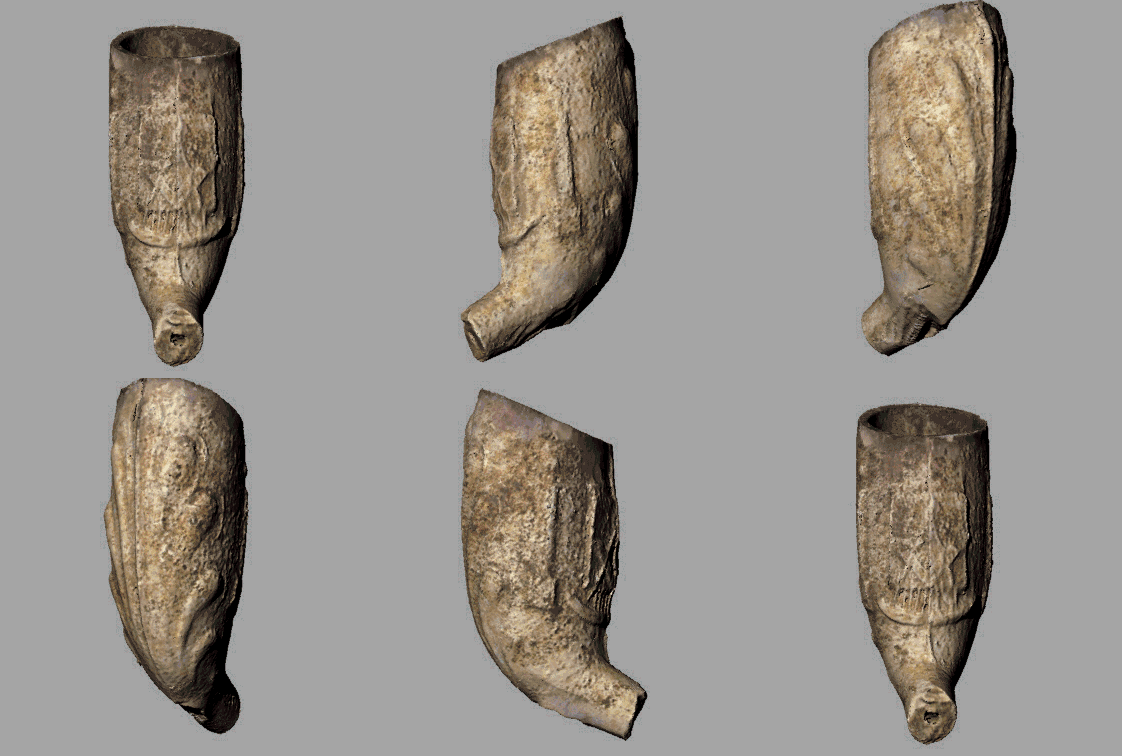
    139_Masonic_pipe_NO_SCALE
    Pipes featured more than political symbols. This is a 3D image of another smoking pipe bowl excavated at Ferry Farm decorated with a Masonic symbol. The pipe was probably made in the northeast of England between 1770-1810. You can read more about this pipe here.

    Why is this pipe fragment a big deal?  During the 18th century, smoking a pipe with a political symbol like the one we’ve found was the equivalent of slapping a candidate’s bumper sticker on your car, placing a political party’s sign in your yard, or sharing a favorite political meme on social media. The act was public, deliberate, and did not go without notice. The practice continued well into the 1800s when groups such as the Irish employed smoking pipes to advertise their support for causes such as a free Ireland.  It was a way to signal identity to others.

    During most of the colonial period in America, aligning yourself with the crown was not at all radical but rather what was expected of most subjects.  In fact, this pipe bowl fragment is not the only artifact excavated at Ferry Farm to hint at past occupants’ loyalty to Britain.  As noted in a previous blog, we have found several drinking vessels exhibiting the initials ‘G.R.’ for ‘George Rex’ or King George.  In another blog, we also discussed an artifact uncovered at Ferry Farm that points toward a growing resistance to the British crown. This mid-18th century sleeve button depicts William III, who, although he died decades before the button was manufactured, came to represent the right of subjects to resist a king who was abusing power.

    What we may be seeing in these three types of artifacts present at Ferry Farm is a fundamental shift of views within the Washington family as the political climate changed throughout the 1700s.  The objects hint at a swing from loyal British subjects to revolutionaries and the beginning of our identity as independent Americans.

    Mara Kaktins, Archaeologist
    Ceramics & Glass Specialist