Lives and Legacies

Tag: projectile points

  • That’s A Wrap! Ferry Farm’s Dig Season Recap

    October just happens to be Virginia Archaeology Month, and what better way to celebrate than to recap this summer’s excavation at George Washington’s Boyhood Home at Ferry Farm.
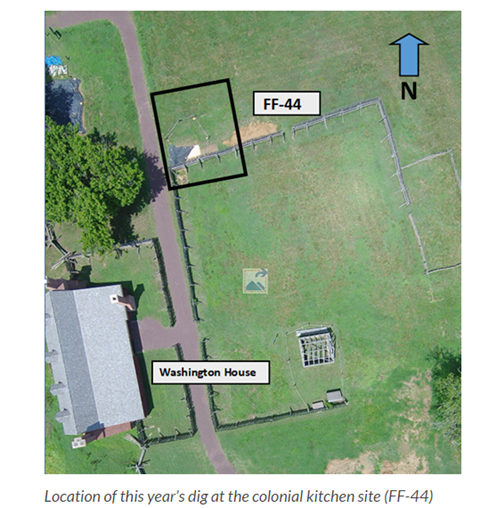
    You might remember from our dig preview, that this year’s dig (FF-44) focused on the continued exploration of the 18th-century kitchen site located just northeast of the main house. In 2023, our limited investigations uncovered just a small section of the kitchen’s stone foundation and cellar, giving us a sneak preview of the conditions and parameters of future site work. Armed with this knowledge, our aims this year were to uncover more of the original foundation walls of the kitchen cellar, to uncover additional architectural evidence of the kitchen outbuilding, and explore the surrounding landscape for features. So, did we do it?
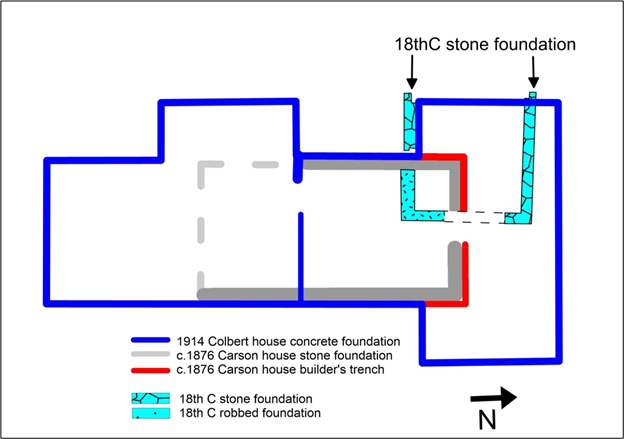
    Location of the 18th century kitchen foundation in relation to two later farmhouses dating to 1876 and 1914. 

    We did! But before we get to the fun discoveries, let’s go over how we got there. As far as sites go here at Ferry Farm, this one has been through a lot. Not only did the original 16’ by 16’ kitchen building burn and collapse in on itself in the middle of the 18th century, but it also had two subsequent farmhouses built on top of it that were either moved, damaged in a fire, or demolished all within the last 150 years. A previous archaeology project on the site introduced another element of complexity in understanding the depositional sequence of fills on the earlier 18th-century site, which had obviously been heavily disturbed by all these later events.

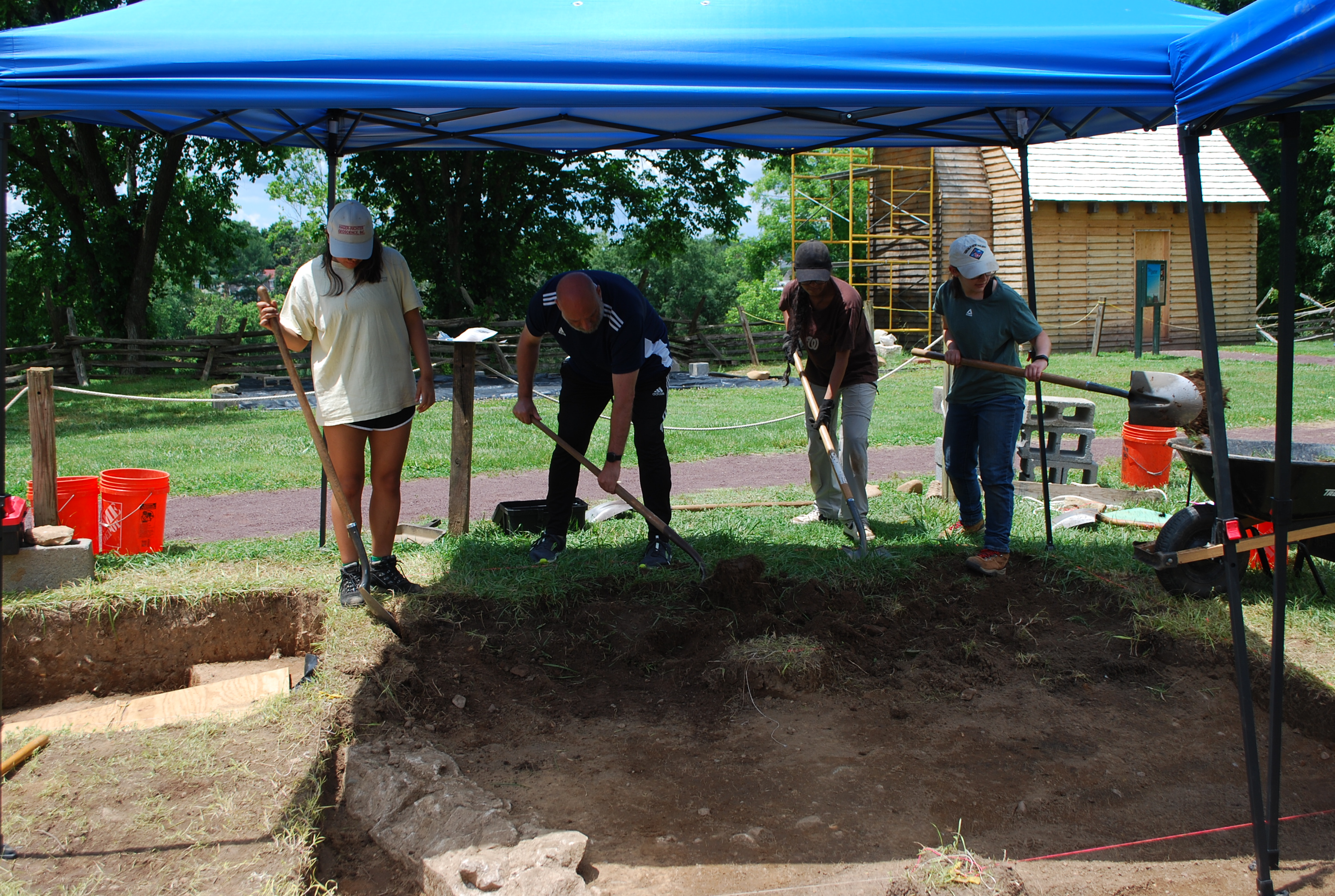
    All this led to an interesting excavation. Since a significant portion of the site had previously been excavated in the 1990s, a sizable amount of our site time was spent re-excavating backfilled archaeology units with the purpose of exposing unexcavated layers around the site. Not only would these unexcavated layers allow us to gather new data, but it would also give us the opportunity to better understand the findings as recorded in the earlier reports.
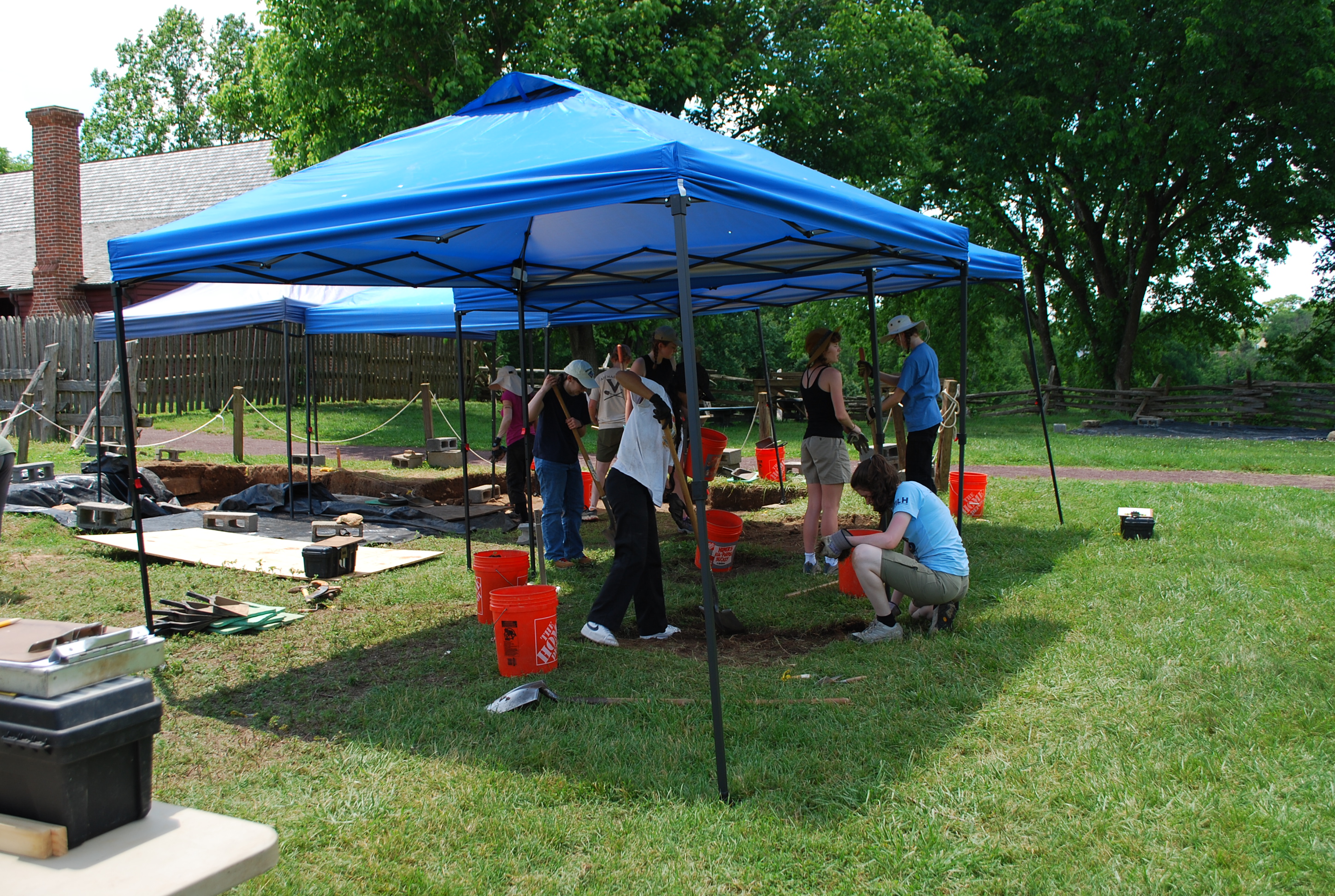
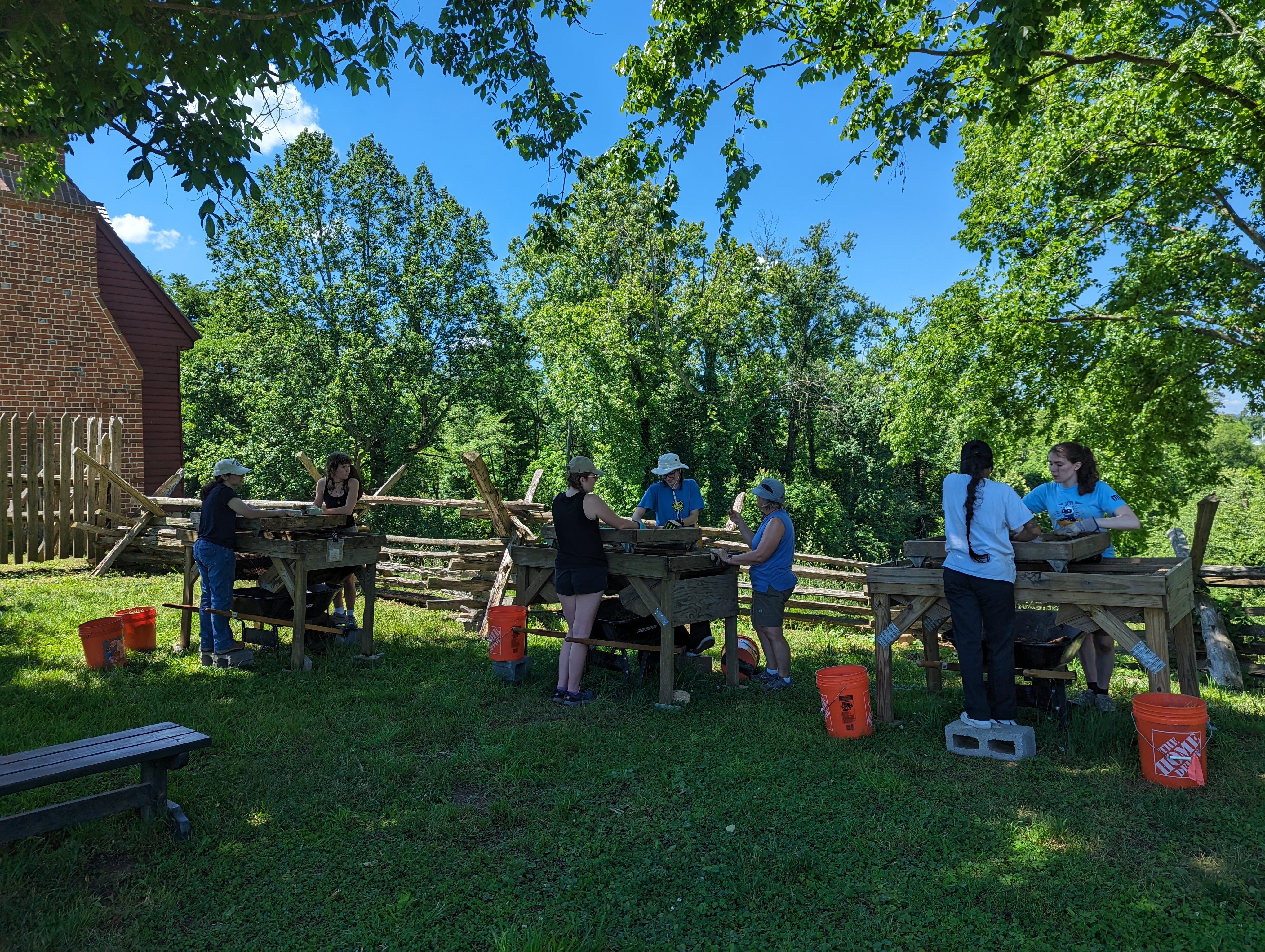
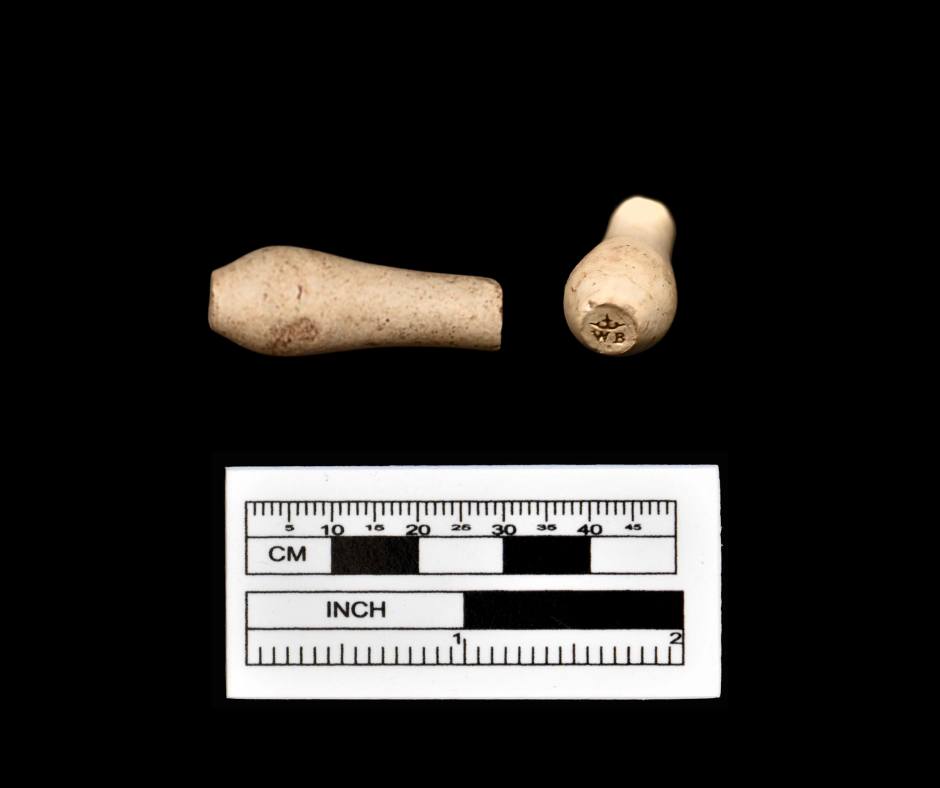
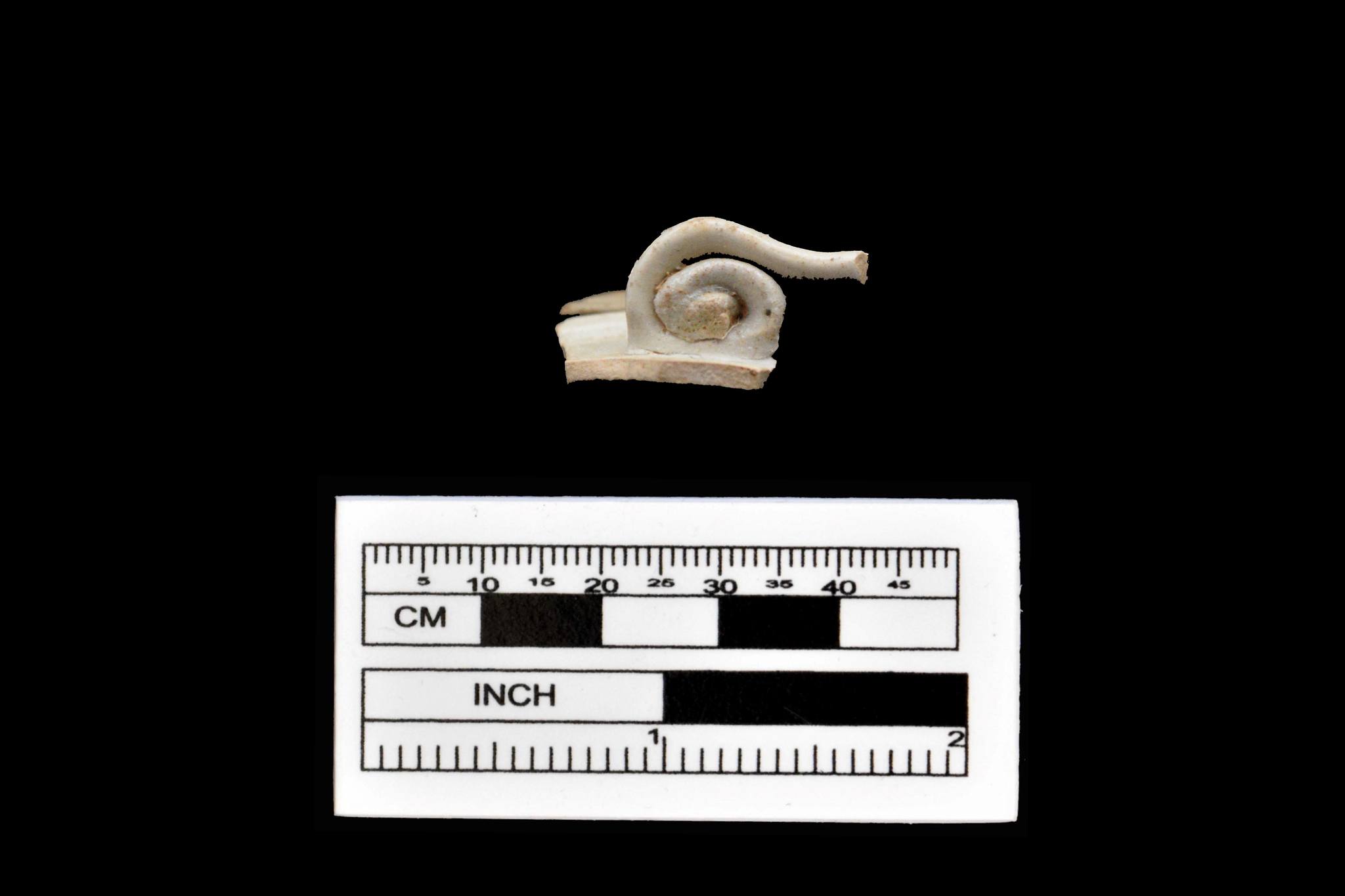
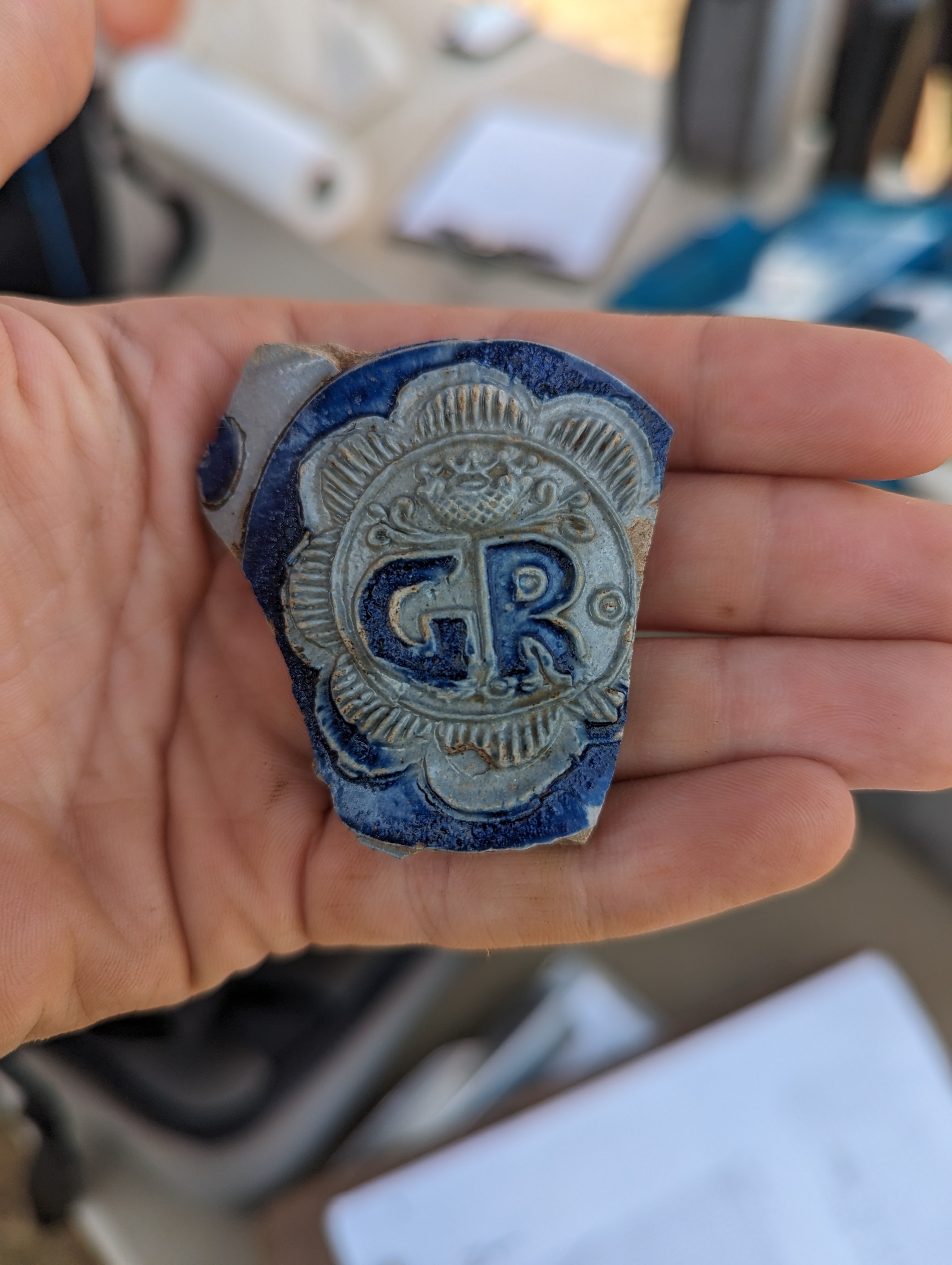
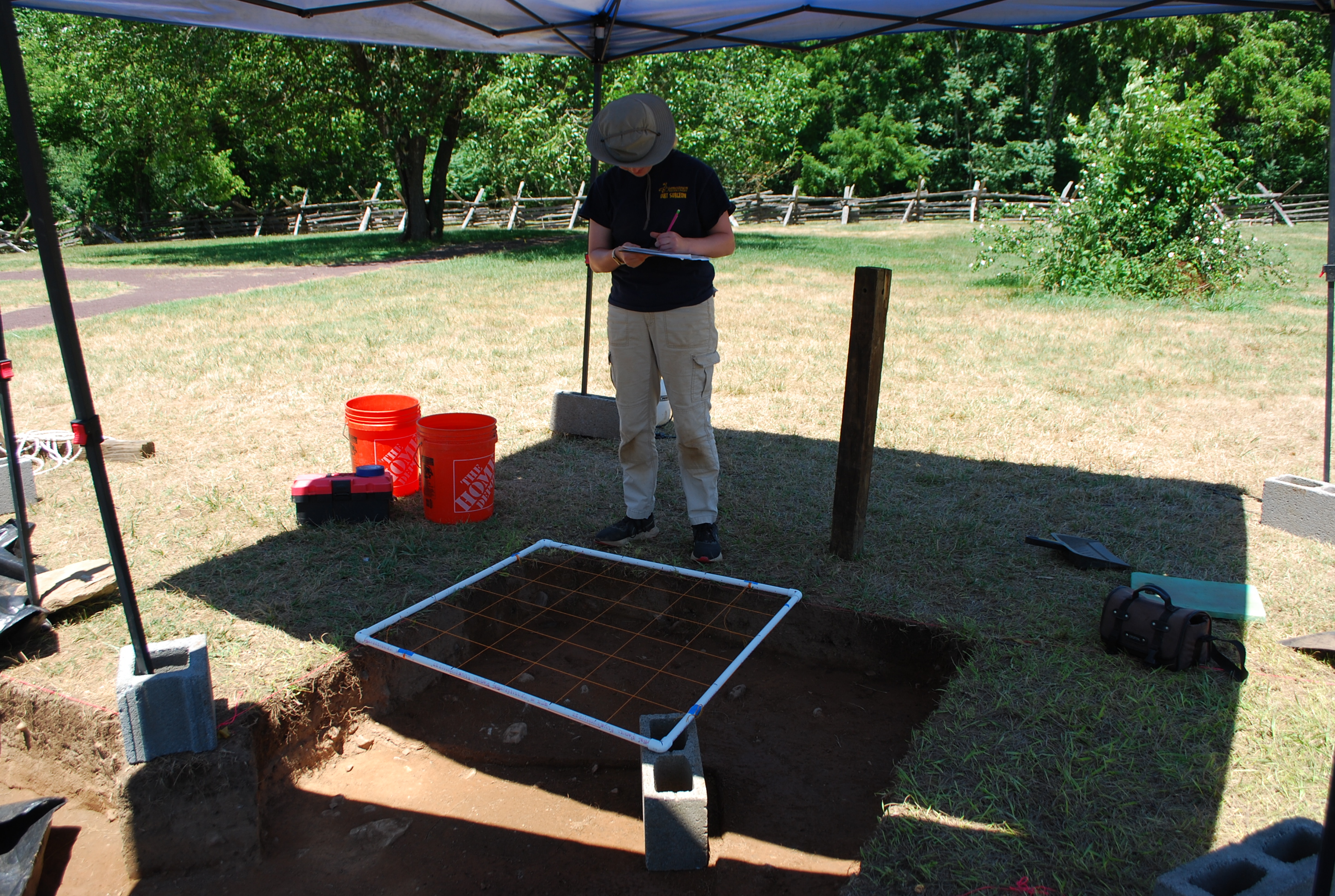
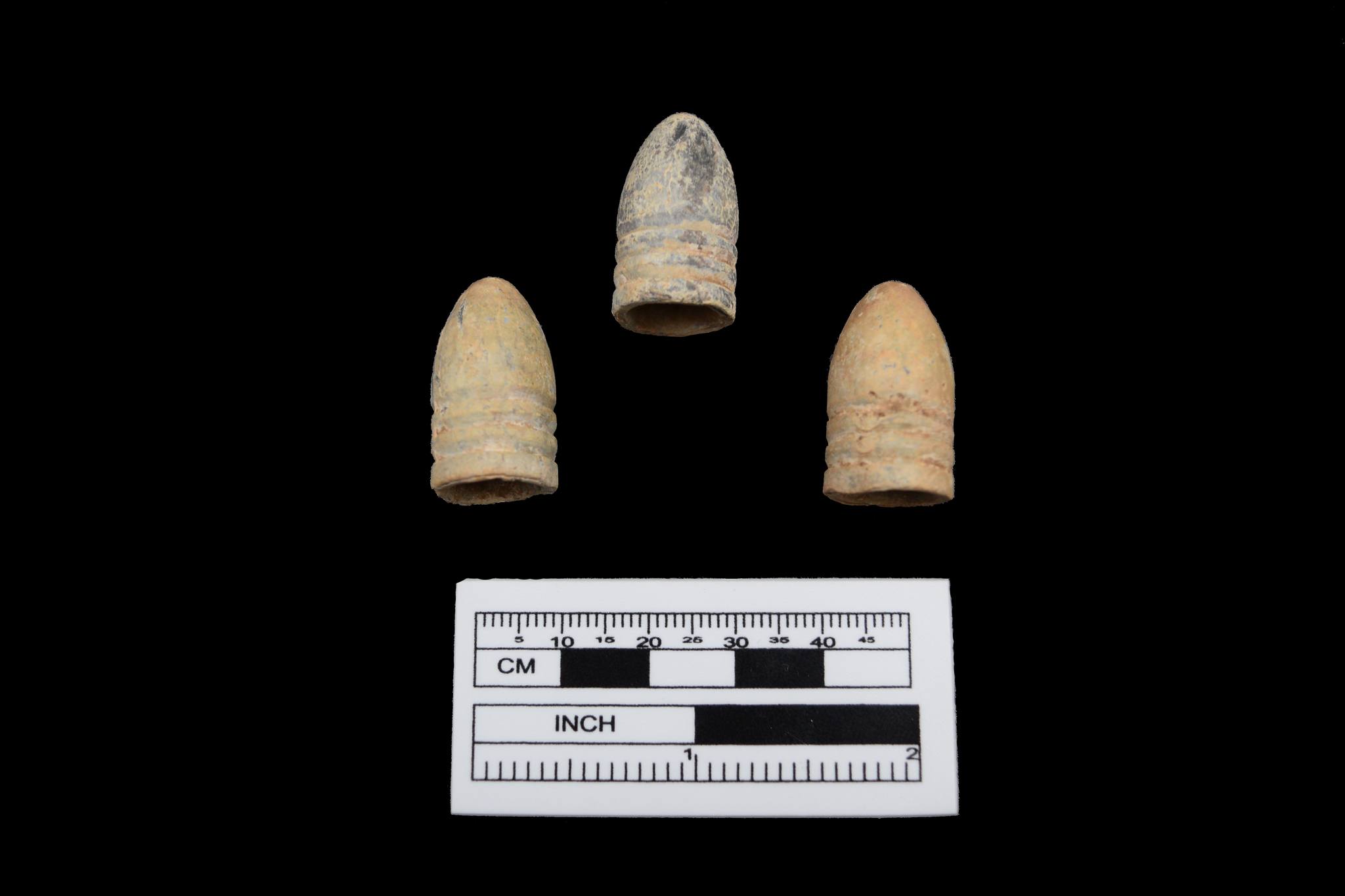
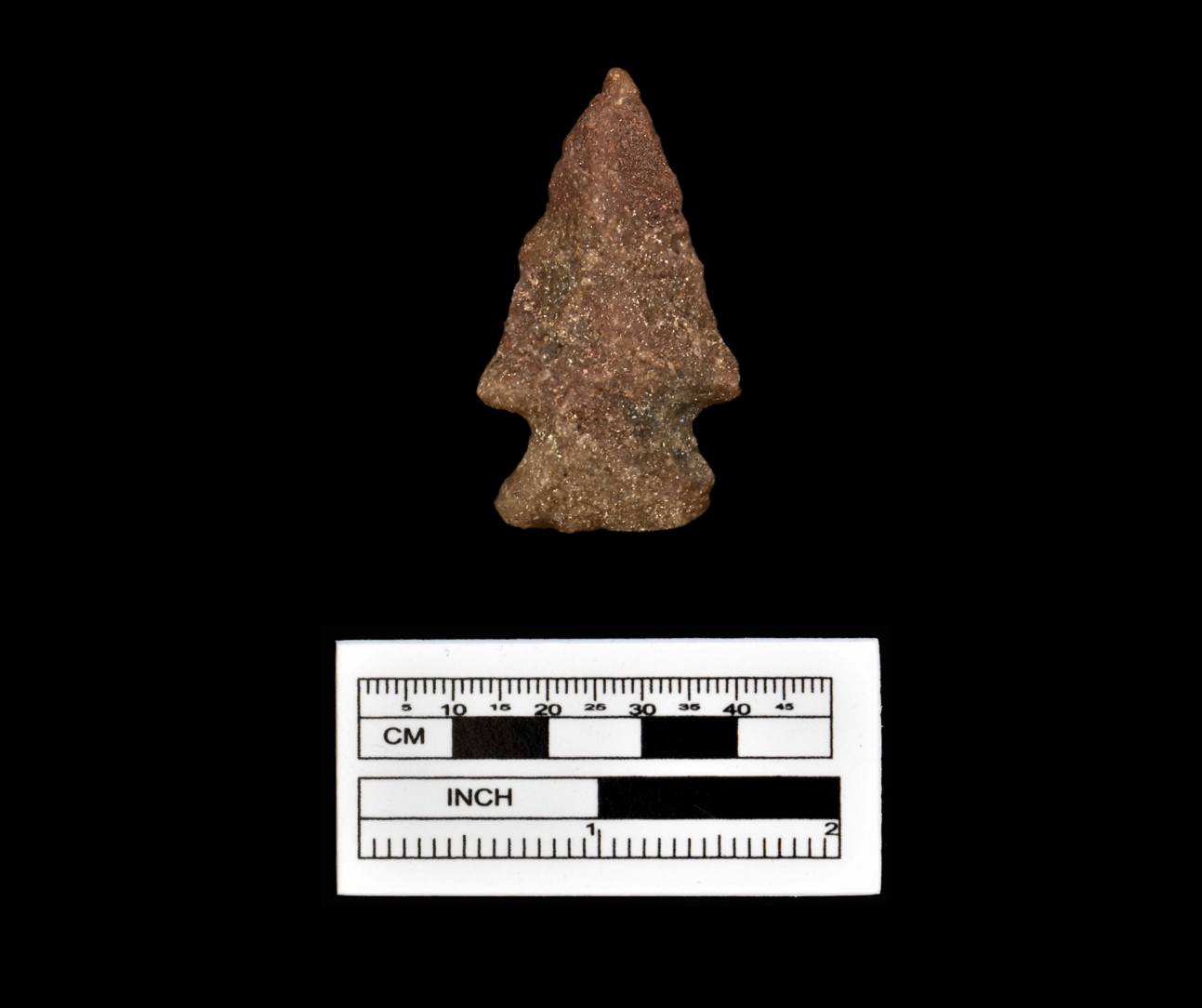
    With the help of our wonderful field school students and interns, we opened a total of twenty-seven 5’x5’ units across the kitchen site. Sifting through the dirt, hundreds of artifacts were found dating to all occupations of Ferry Farm. Super cool finds that date to the 18th-century period of use for the kitchen included tobacco pipe fragments, wine bottle sherds, and a variety of ceramics, including English stoneware, Chinese porcelain, and a German Westerwald ‘GR’ sherd. The prehistoric Native American occupations of the site were represented by an unusually high number of projectile points found (8 and counting!), dating to both the Early Archaic (8000 BC – 6500 BC) and Early Woodland (1100 BC – 500 BC) periods.  Civil War bullets came up in our screens, of course, as did 20th-century plastic, tools, toys, and bottle caps.
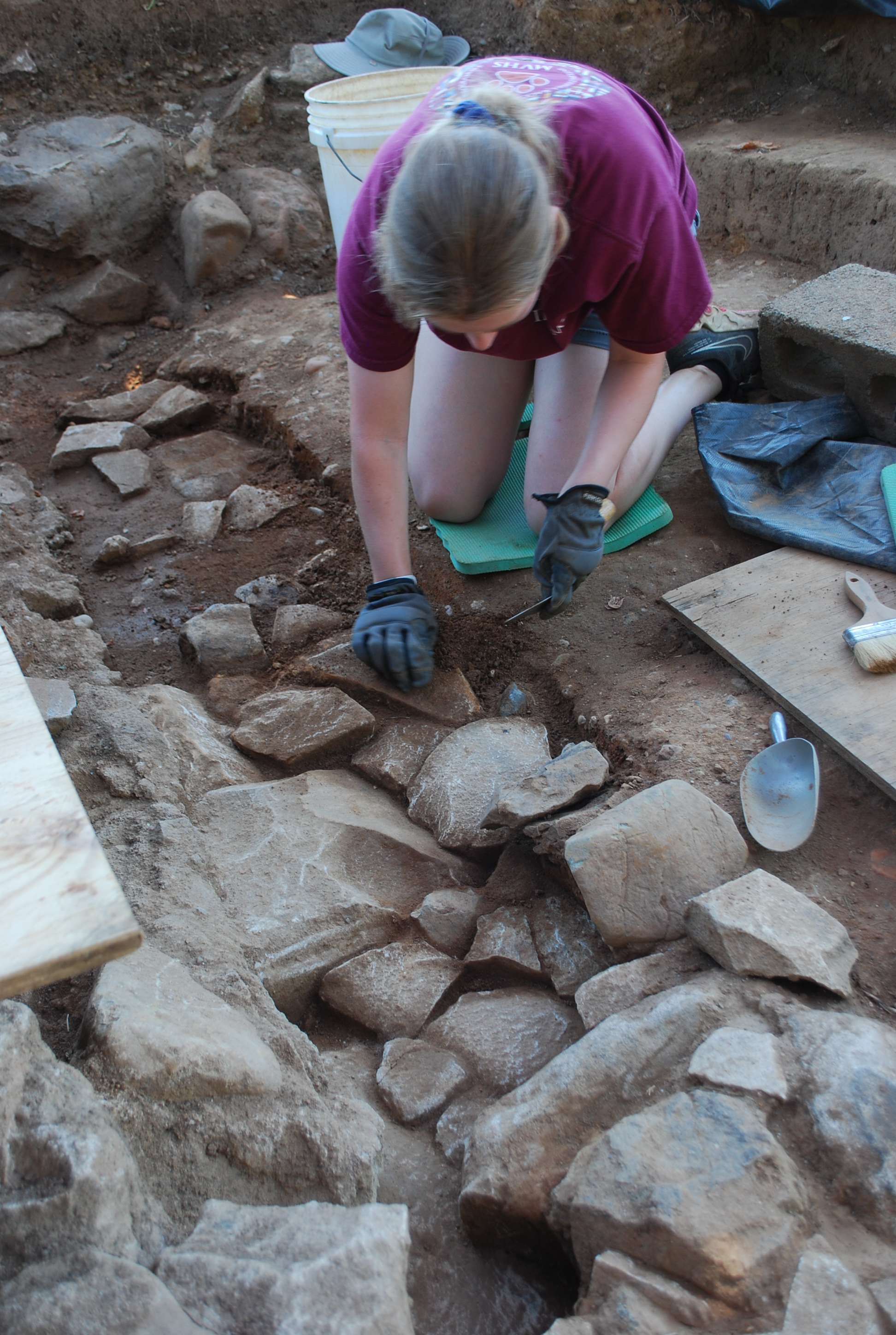
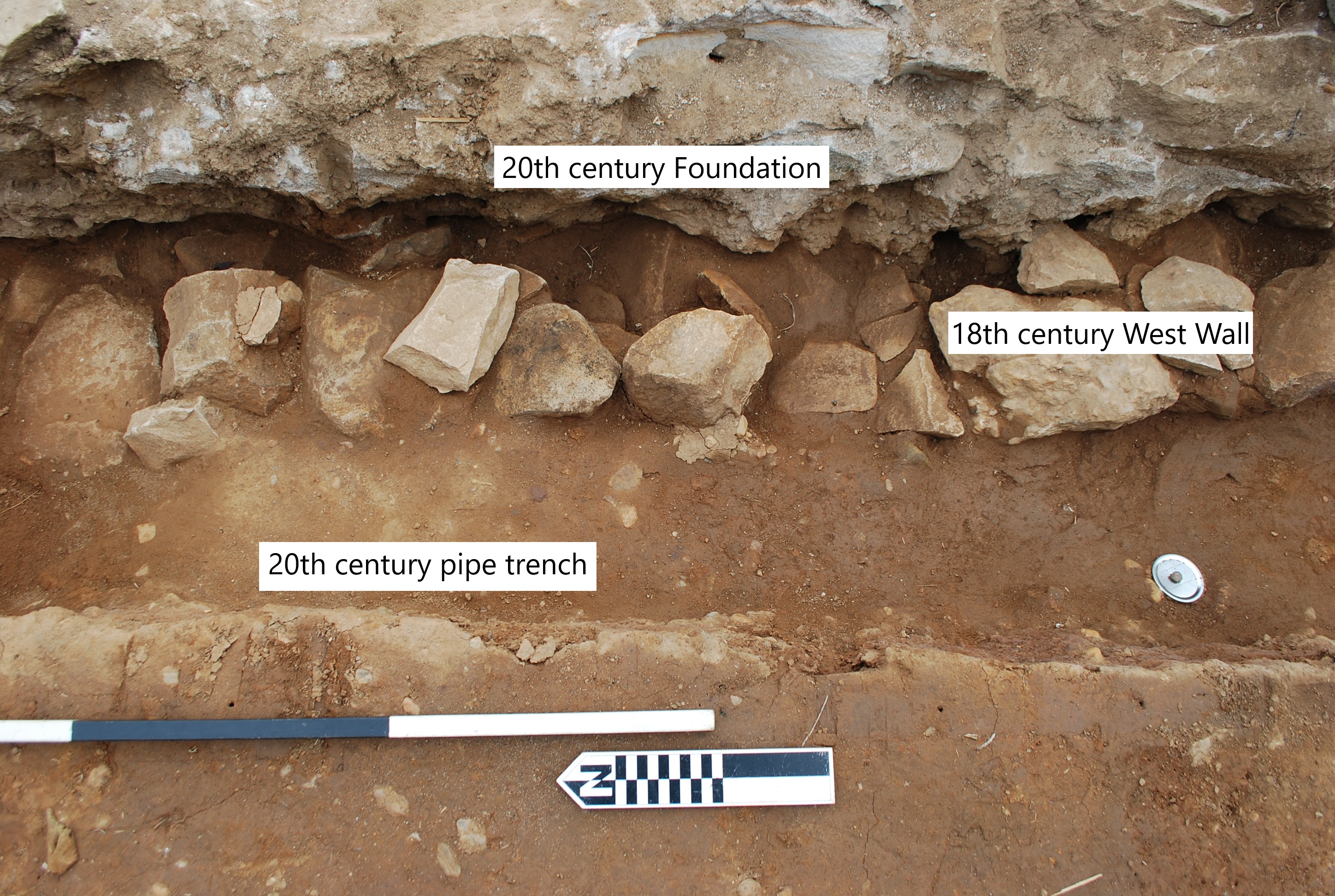
    But when it comes to finds, our most exciting discovery did not turn up in our sifting screens.  In fact, it was discovering that the western foundation wall of the kitchen cellar, thought to have been demolished, still survived!  During the 1990s excavations, the archaeologists did not see this portion of the stone foundation and assumed the construction of the 1914 Colbert house had destroyed it. Fortunately for us, it was hiding under a 20th century utility pipe and trench and lay directly adjacent to the Colbert concrete foundation. Now we have all four foundation walls that we hope to fully uncover next year.
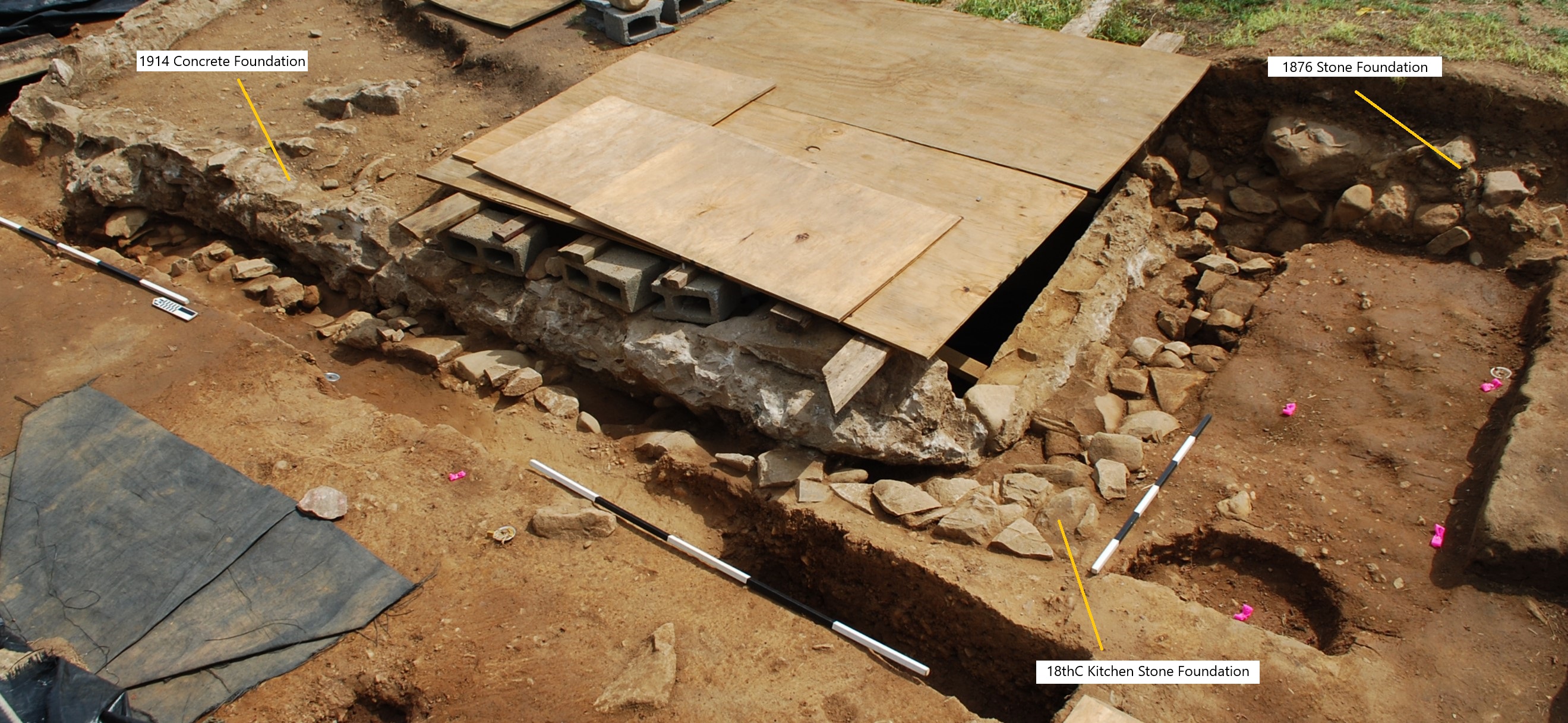
    Exposed south and west stone walls of the colonial kitchen lie adjacent to and just outside of the 1914 concrete foundation wall.  
    West wall of colonial kitchen that was hiding under the pipe trench

    Our excavation units surrounding the kitchen foundation have not, as of yet, exposed additional building features associated with the kitchen outbuilding, such as foundations or fireplaces. That search will continue next year as we continue taking those units down and expanding our site area. Features exposed in the 1990s dig, but not excavated by them or us, such as possible post holes and trash middens, also await our return in 2025, when we plan on finishing their excavation.
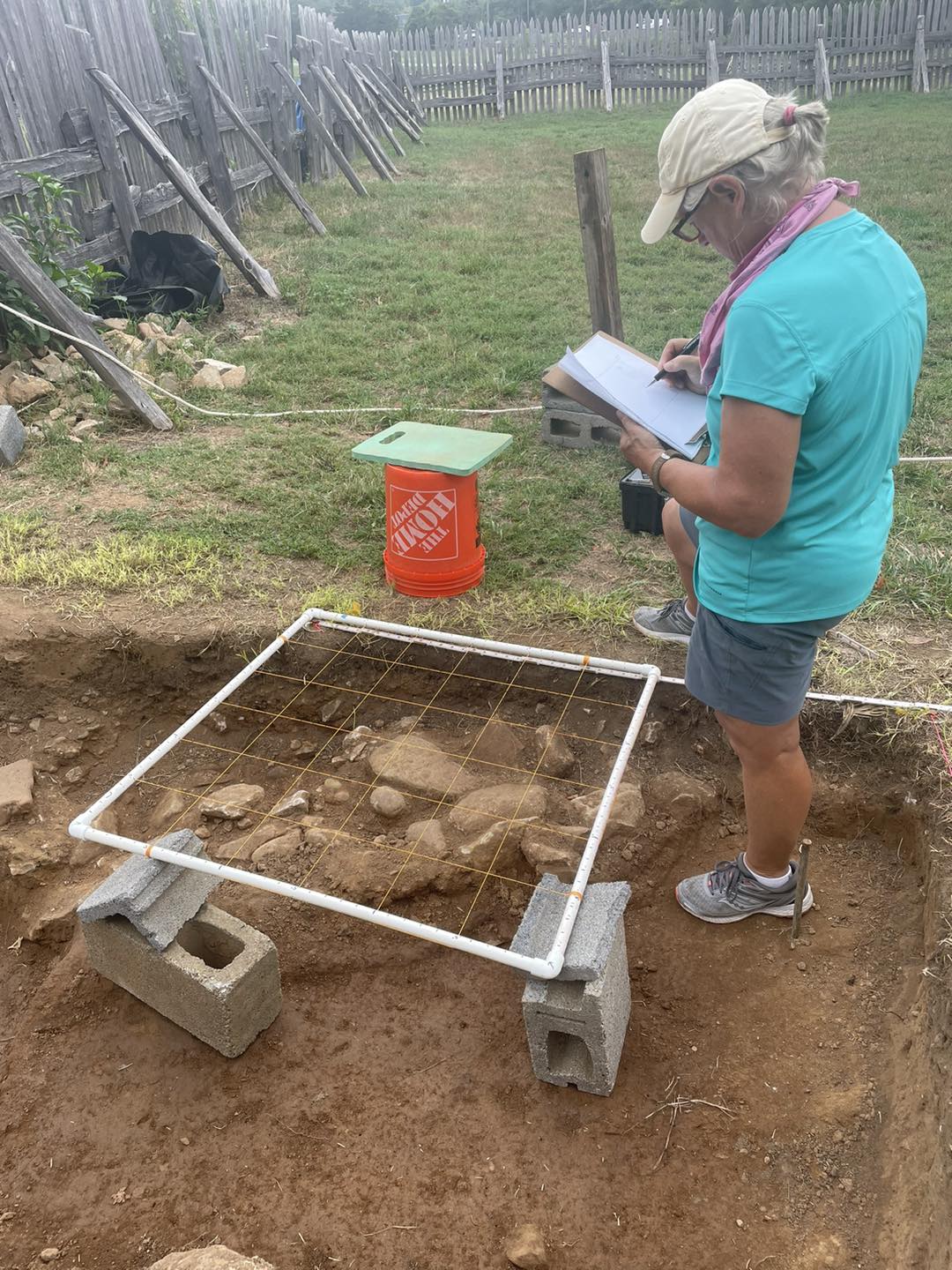
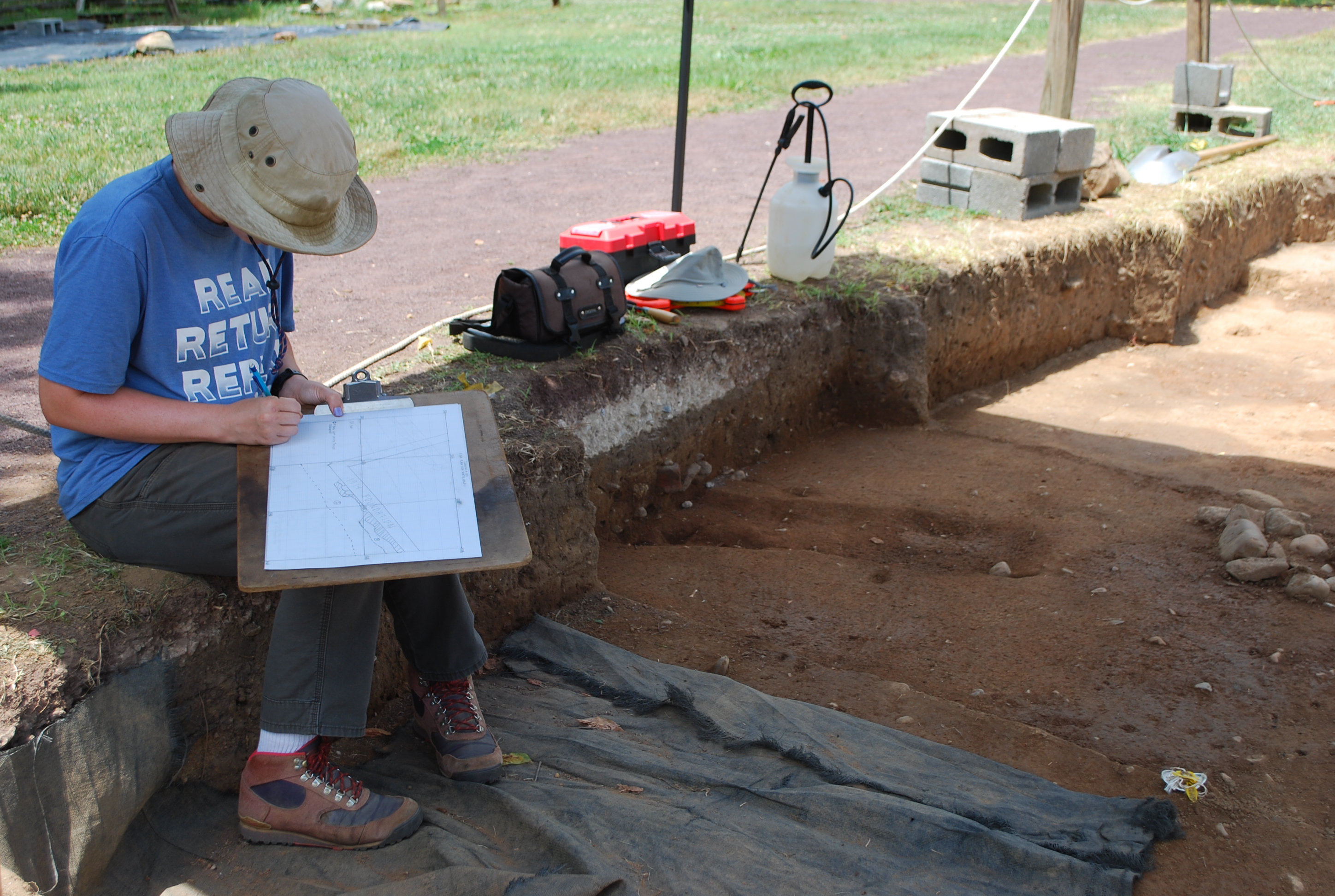
    Each year’s excavation is built on the work accomplished in the previous years.  With the incredible amount of work done this past summer of exposing the original kitchen foundation, as well as the later farmhouse foundations, removing old fill, and opening up the adjacent landscape, we are looking forward to expanding our investigations of the kitchen site next year.  Stay tuned as we unravel the mysteries that are here at Ferry Farm, George Washington’s Boyhood Home.


    Danielle Arens and Judy Jobrack

    GWF Archaeology Field Directors
  • When is a rock also an artifact?

    As archaeologists, we focus on studying the past by examining the items previous humans have left behind. Anything that has been made or changed by someone in the past is therefore considered to be an artifact.

    When you think of stone artifacts, the first thing that usually comes to mind are arrowheads. Arrowheads and spearheads are referred to by archaeologists as projectile points. In addition to projectile points, archaeologists also find a wide variety of other stone tools, including awls, scrapers, knives, axe heads, grinding stones, and fishing weights. All of these tools, and others, were used to procure and process food and for preparing items of clothing, storage, and shelter.

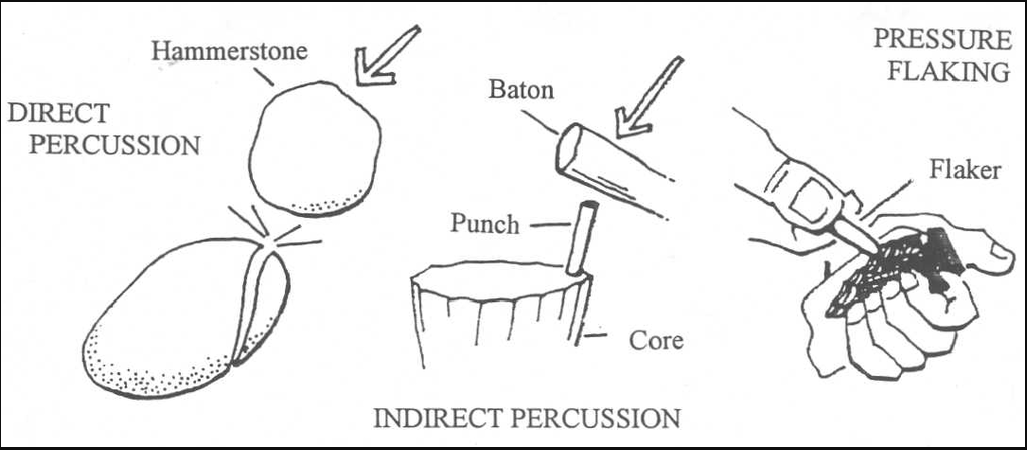
    Complete tools, however, are not the only evidence Native Americans left behind. Stone artifacts called flakes, shatter, and cores are evidence of the production of stone tools and are found in abundance on prehistoric Native American sites. A core is the first stage of lithic reduction, where the rock is considered an artifact. Typically a natural rock is broken into one or more lithic cores, which will be reduced to usable flakes and tools. Flakes are relatively thin shards of stone precisely removed from a stone core. Shatter consists of chunks of stone that come off the core in unintended or less predictable ways. To make a stone tool, flakes are removed from a core by striking them off with a hammerstone or antler baton. This is called percussion flaking. Each core would then be reduced through percussion flaking to a rough preform of the intended tool. Once that is complete, a lithic tool will be reduced to a finished shape and then sharpened. This is done through a process called pressure flaking. While percussion flaking makes bigger lithic flakes, pressure flaking makes very small flakes. Instead of hitting the stone, a narrow piece of bone or antler is firmly pressed against the side of the stone, breaking off a small flake and leaving a sharp and more robust edge.The best lithic tools are made from stones that break in predictable patterns. This quality is found in rocks that have a cryptocrystalline structure. Some examples of rock types we find lithic tools made from are: chert, flint, jasper, and quartz.

    Three methods of lithic reduction.
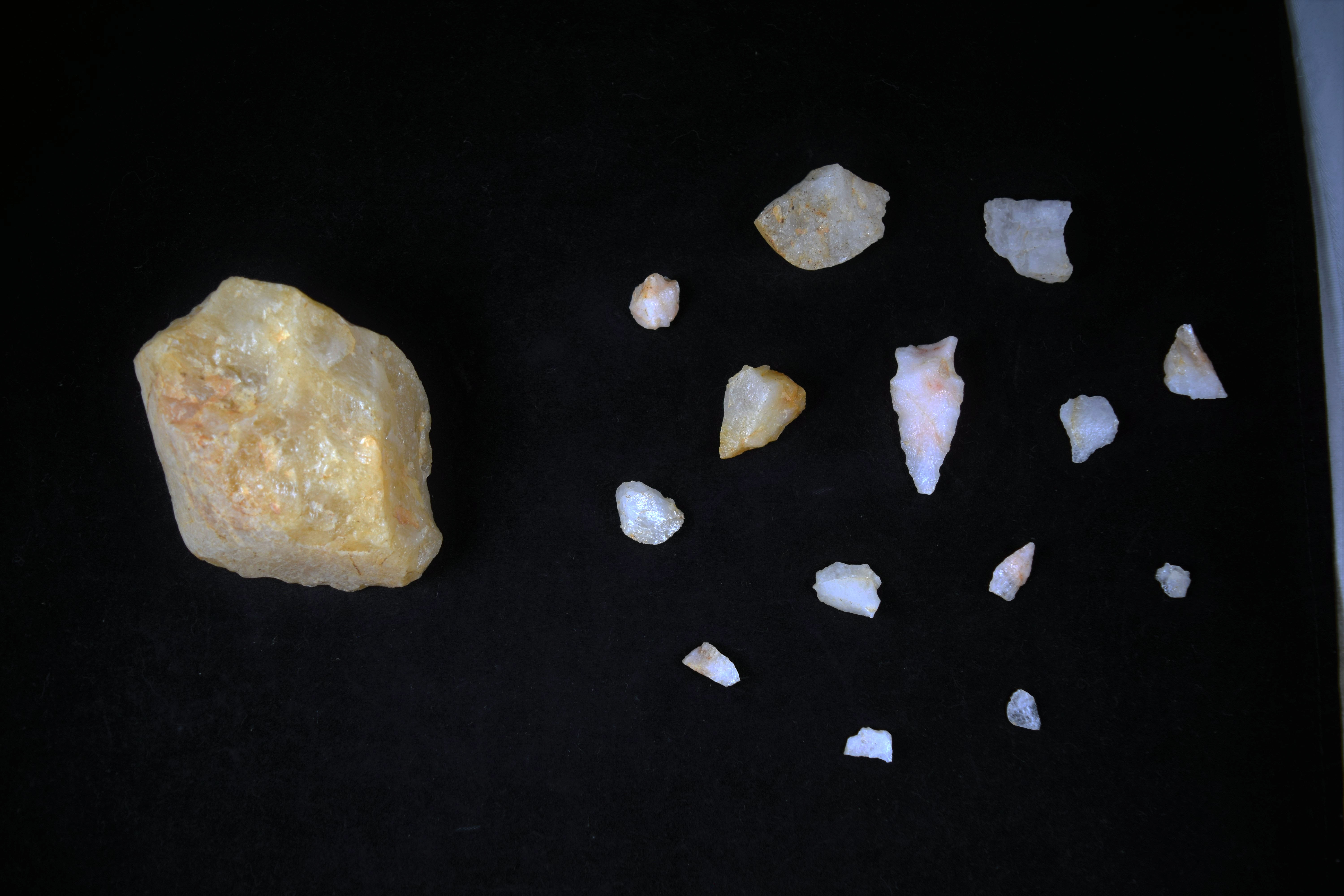
    Examples of lithics found at Ferry Farm, a core on the left and on the right a projectile point surrounded by flakes and shatter.

    While archaeologists can learn much from artifacts such as projectile points and tools, we are also interested in a category of stone artifacts called fire-cracked rock. Fire cracked rock, commonly abbreviated to FCR, is a byproduct of cooking at a time primarily before the creation and widespread use of ceramics more than 3000 years ago. In order to boil water for cooking, they would heat rocks in a fire and drop them into pots of water made from animal hides or wood. After doing this multiple times, the rocks would permanently turn red from the heat of the fire and shatter into small pieces from the rapid cooling and heating. By finding FCR here at Ferry Farm, we can deduce that people were cooking meals here before ceramic technology was widespread.

    Fire Cracked Rock found at Ferry Farm. Note the red color on the exterior caused by the heat of a fire.

    When lithic flakes and shatter are found, we know that at some point, someone made a stone tool there. By examining the type of stone, it is possible to determine where that material came from. Sometimes the local material available isn’t the best for making tools, and people would travel or trade for better materials. This is the case at Ferry Farm, where most of the lithics we find are made of quartz, but sometimes we find jasper or chert flakes that indicate travel or trade.

    There’s even more, we can learn from projectile points and some tools. Projectile points changed in shape, size, and form over time. These changes could be due to a change in purpose of the point or a change in maker. Archaeologists have grouped points together to create types that were made in a certain region during a given date range. We can use these groups to match points we find in our excavations and determine where it came from and when it could have been made.

    Native Peoples lived in the Rappahannock area, including what would become Ferry Farm, for thousands of years before Europeans arrived. The projectile points, tools, FCR, and lithic debris they left behind are some of the only artifacts that were able to survive until today. Being able to tell the difference between them and a natural rock becomes an important skill for archaeologists. Have you ever found a lithic?[1][2][3]

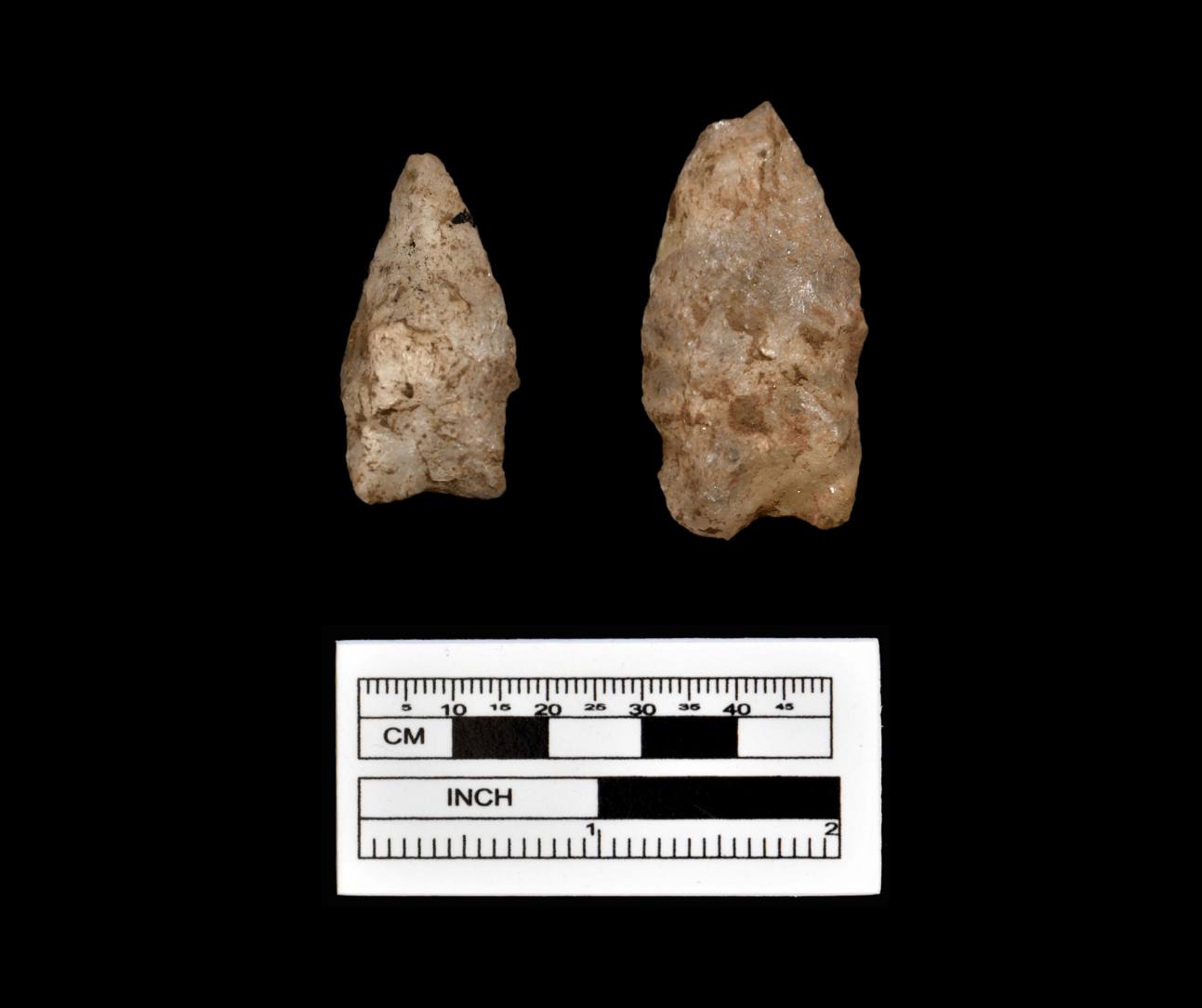
    Top and Bottom images: Examples of different types of points and the various materials they can be made from. All excavated at Ferry Farm.

    Mason Schultz

    Co-Field Director and Staff Archaeologist


    [1] “Diagnostic Artifacts in Maryland, Projectile Point Typology.” Jefferson Patterson Park and Museum, Maryland Archaeological Conservation Lab, 2002, https://apps.jefpat.maryland.gov/diagnostic/ProjectilePoints/AboutProjectilePoints/ProjectilePointTypology.html. Accessed 9 Aug. 2022.

    [2] “Diagnostic Artifacts in Maryland, How Are Points Made?” Jefferson Patterson Park and Museum, Maryland Archaeological Conservation Lab, 2002, https://apps.jefpat.maryland.gov/diagnostic/ProjectilePoints/AboutProjectilePoints/HowArePointsMade.html. Accessed 9 Aug. 2022.

    [3] Cullen, Darcy. “Methods of Flaking Stone.” Quizlet, https://quizlet.com/250350464/methods-of-flaking-stone-diagram /. Accessed 9 Aug. 2022.