Lives and Legacies

Tag: sewing

  • Making our mark…on the laundry

    18th-century household linen management and its 21st-century historic house equivalent

    For the modern historic house museum collections staff, the care and cleaning of our spaces and objects are some of the most important tasks we do.  Proper dusting and routine cleaning helps preserve historic objects, vacuuming floors and wiping down woodwork help to maintain our historic interiors, and rotation of sensitive works help to prolong their life through limited light exposure and other environmental impacts.

    In January and February each year, when the Historic Kenmore and Ferry Farm sites are typically closed to the public, the curatorial staff is able to access the spaces to conduct inventories and condition assessments of objects…and to clean. Spring cleaning at the Washington House this year involved quite a bit of teamwork between our curatorial and buildings & grounds staff—fresh coats of whitewash went up on high-traffic areas of this historic recreation, and the wooden floors were vacuumed, spot-cleaned, and mopped to remove built-up dirt from tours and other activities.

    Low-post bedstead in the Hall Back Room piled high with reproduction bedding.

    Maintaining the bedsteads of the Washington House is an ongoing task for our interpretive staff, as they tidy and straighten the sheets and pillows that are moved about by visitors (something we encourage and celebrate!) during their immersive tour experiences.  This year, as we (the curatorial staff) conducted our spring-cleaning routine, we tightened the bedstead ropes and refreshed the bedding to prep the house for another busy year.  But as we went about conducting our room-by-room inventories and pulling bedding out for washing or airing, we uncovered an issue: many of our modern museum object labels for the sheets and pillowcases had become unreadable.

    White linen reproduction bedsheet with its twill tape label (sans number).

    Marking textiles in a museum collection typically entails a small length of twill (woven cloth) tape, a handwritten or applied object number, and small stitches to attach the tape to the textile object.  But for our reproduction bed linens on the bedsteads of the Washington House, these labels no longer were readable due to laundering—the “permanent” number used just didn’t last.  So what are our options?

    As we like to do, we turned to the past for an understanding of what might be a better, but still historically accurate method for marking our linens.  One such resource we turned to was cookery and household books of the period.  The Workwoman’s Guide, for example, includes a number of receipts (or instructions) for making marking ink as well as detailed instructions for marking household linens with thread.  In marking of linens, according to the author (A Lady), the textile would be marked with either the husband’s initials or the wife’s first name along with husbands initials, followed by an abbreviation of the type of article, and finally by the number and a date marker (last two digits of the year, for instance). 

    Receipt for “Permanent Ink for Marking Linen.” from The workwoman’s guide : containing instructions to the inexperienced in cutting out and completing those articles of wearing apparel, &c. which are usually made at home : also, explanations on upholstery, straw- platting, bonnet-making, knitting, &c. By A Lady (1838) via Smithsonian Libraries and Archives on Archive.org

    Existing household linens in museum collections and references in the written record indicate that some were in fact marked with numbers or initials/names (or both) to enable the items to be tracked and inventoried, although the exact combination of numbers and letters seem to vary, likely based on a complexities of the household and its linen inventory. The probate inventory taken after Augustine Washington’s death in 1743 records a variety of household textiles at Ferry Farm, including tablecloths, napkins, pillowcases, sheets, and towels.  The appraisers, however, make no note of whether these textiles were marked in any way (just noting materials or other descriptors and quantity). 
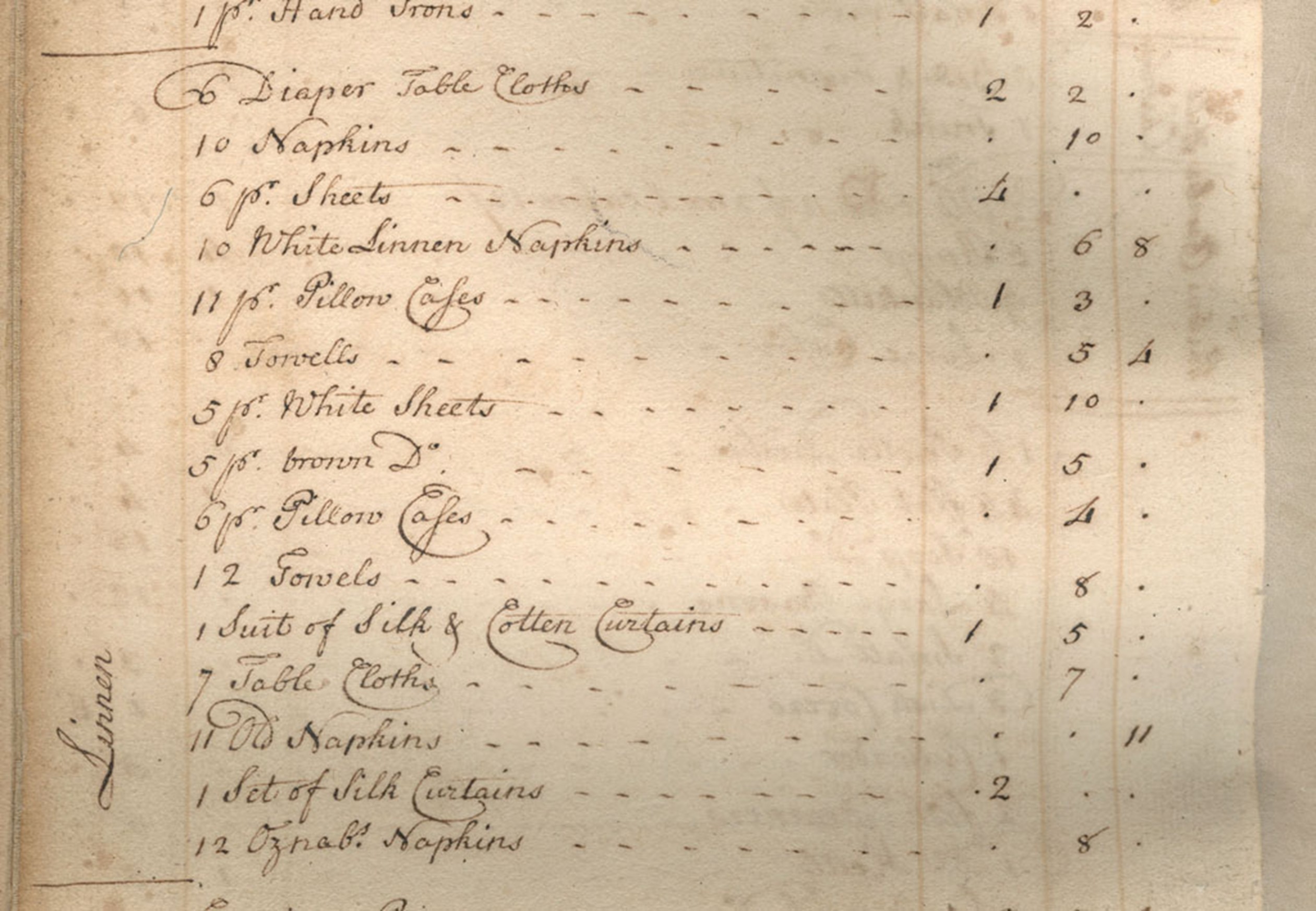
    Excerpt of 1743 probate inventory of Augustine Washington listing “Linnen,” including 6 Diaper Table Cloths, 10 Napkins, 6 pr Sheets, 10 White Linnen Napkins, 11 pr Pillow Cases, 8 Towells, 5 pr White Sheets, 5 pr brown Do. [Sheets], 6 pr Pillow Cases, 12 Towels, 7 Table Cloths, 11 Old Napkins, and 12 Oznabs Napkins. Inventory submitted 1 July 1743 to King George County court.

    The archaeological record of Ferry Farm includes a number of implements related to sewing, as touched upon in past blog posts such as this one or this one about thimbles.  Our own museum collections house a few 18th or early 19th century sheets or other household linens, some of which have been marked in ink or stitching with (unidentified) owners’ initials/names and dates, much in keeping with the instructions outlined in period references such as The Workwoman’s Guide and other household manuals.

    Sample layout and makeup of marks to include owner’s initials, item identification, number, and date. Excerpt from The workwoman’s guide (1838) via Smithsonian Libraries and Archives on Archive.org

    So, for our modern museum inventory management purposes, I think we’ll be skipping the caustic nitrate of silver or crunchy cochineal beetles for coloring and stick to the needle and thread method of marking our reproduction bedding and other textiles.  As suggested by A Lady, the Washington House marks will include both Mary and Augustine Washington’s initials along with notations of item type (such as WS for the five pairs of White Sheets listed in the 1743 inventory) and date of creation (for many of these reproduction linens, that would be 2018 or 2019).  I’ll be getting my needle and thread ready so that next year’s inventory and spring cleaning will hopefully be easy-breezy.

    Gretchen Goodell Pendleton

    Aldrich Director of Curatorial Operations
  • I Spy: Sewing

    Sewing was an important and necessary skill that all girls in the 18th century learned from a young age.  A family’s clothing, bed and table linens, and other items made of fabric were in constant need of repair. These repairs and other sewing tasks were considered women’s work. Along with practical applications, sewing skills included fancier needlework used to make decorative luxuries.

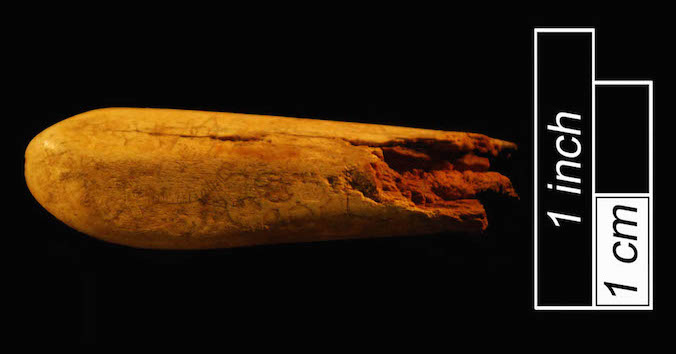
    To showcase these artistic needlework skills, girls and young women made samplers. One tool used to make such samplers was a special embroidery hook called a tambour hook. One of these hooks was found by archaeologists in the remains of the Washington house at Ferry Farm. Young Betty Washington probably used this special tool, made of a bone handle and a portion of a steel hook, to add decorative touches to fine needlework projects.

    Tambour Hook
    Tambour hook used for neddlework excavated by archaeologists from the reamains of the Washington house at Ferry Farm.

    Using the picture and list below to find sewing-related artifacts excavated at Ferry Farm!​ Click on the image to enlarge.

    Sewing I Spy
    Sewing tools

    Can you find these artifacts?

    • 3 gold military buttons
    • 2 ‘hook & eye’ hooks
    • 6 thimbles
    • A black button with a star
    • 3 pair of scissors
    • 7 button blanks (one hole)
    • 13 buckles
    • 2 sets of cufflinks
    • A wooden tambour hook handle
  • A Thimble of My Love

    FF06-Thimbles.copy
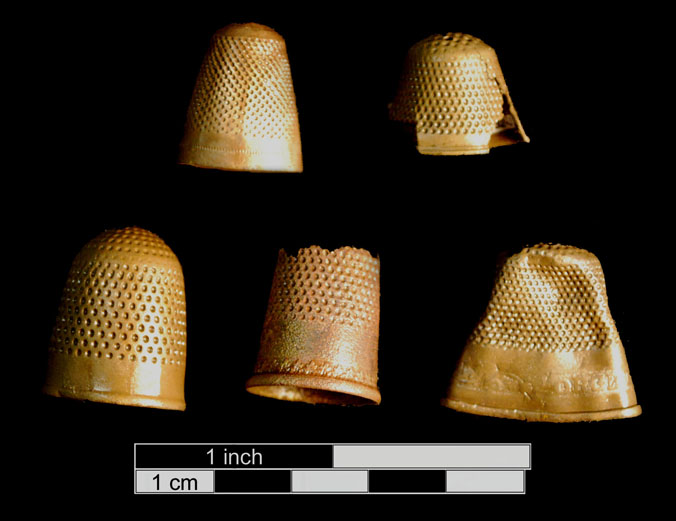
    A sample of the 30 historical thimbles found to date by archaeologists at George Washington’s Ferry Farm.

    Thimbles were once a popular token of affection given to ladies by family members, close acquaintances, or sanguine suitors. These essential tools formed an ideal gift for a beloved family member or an appropriate token of affection during those early, initial stages of a budding romance.  They were considered a less intimate gift than perfume or jewelry – all of which had more serious, romantic connotations. Gifting thimbles to cherished daughters or sweethearts developed as an esteemed tradition by the 1500s in Europe.

    Thimbles served as an emblem of female domesticity and skill.  Thimbles possessing a domed end were employed to protect the tip of the finger as a seamstress pushed a needle through cloth. Such thimbles typified domestic use, where tasks were dominated by sewing and mending. These duties were associated with a well-run home, and these skills grew to define womanhood.

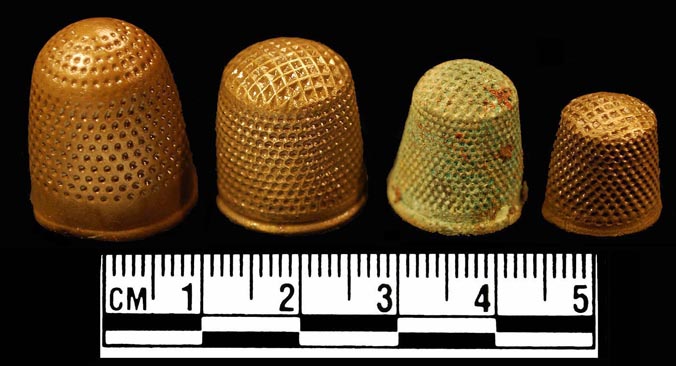
    Thimbles came in a variety of graduated sizes to accommodate the young as well as the experienced. Accomplished girls were expected to produce elaborate samplers and embroidery by the age of seven. The products of these young artisans were ostentatiously displayed throughout the house, where prospective suitors and visiting families could appreciate the budding skills and diligence of their daughters. Thimbles were such essential tools in the daily lives of women that they were part of everyday dress, often worn on the body as part of a chatelaine or belt-hung tool kit that included scissors, needles, and a thimble (think of Downton Abbey’s Mrs. Hughes).

    FF-Graduated Thimbles-shoptSmall
    A variety of sizes accommodated a child’s growth to adulthood. These examples were uncovered by archaeologists at Ferry Farm.

    Commercially-used thimbles were typically open ended and known as thimble rings. They proved to be popular amongst tailors who used these special thimbles “sideways” to protect the side of the finger. An open ended, ‘thimble ring’ provided a better option for use with thicker materials, such as leather. Such sturdy fabrics were associated with upholstery manufacture. Products that employed leather, such as saddles and tack, also required thimble rings. Tailors were often male, and many assert that thimble rings were used by men exclusively. Like all assumptions, they should be made with care: no doubt women who worked in industries associated with thicker materials employed thimble rings, and men who needed to mend their clothes in the absence of female family members made ready use of thimbles (soldiers in camp, for instance).

    Archaeologists have recovered over thirty functional (not souvenir) thimbles from the soils surrounding the Washington home. The majority date from the 18th and 19th centuries and – given their context – likely represent those used by women and girls for sewing hems, mending tears, and stitching. These historical examples from Ferry Farm were typically made from brass, reflecting both the popularity of that metal for manufacture, but also its durability and stability over time. A few examples feature copper sides with steel tips. Iron thimbles were also popular, but they decompose quickly and are rarely encountered by excavators.

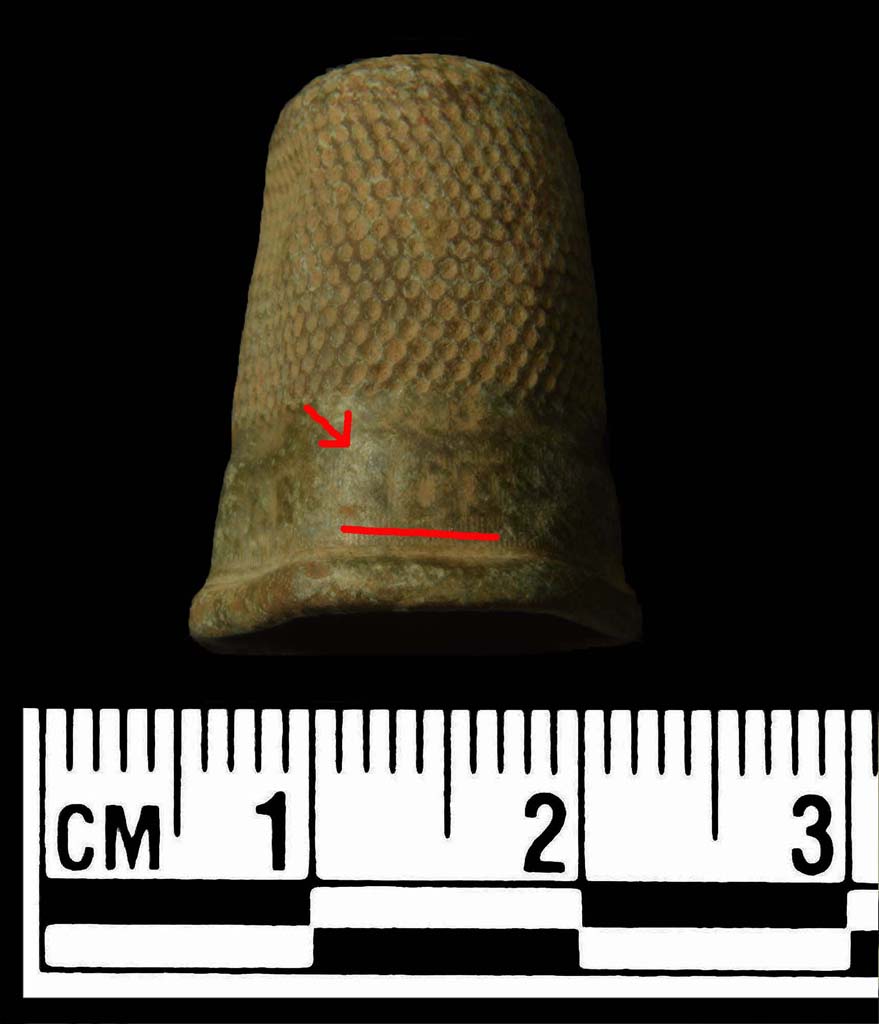
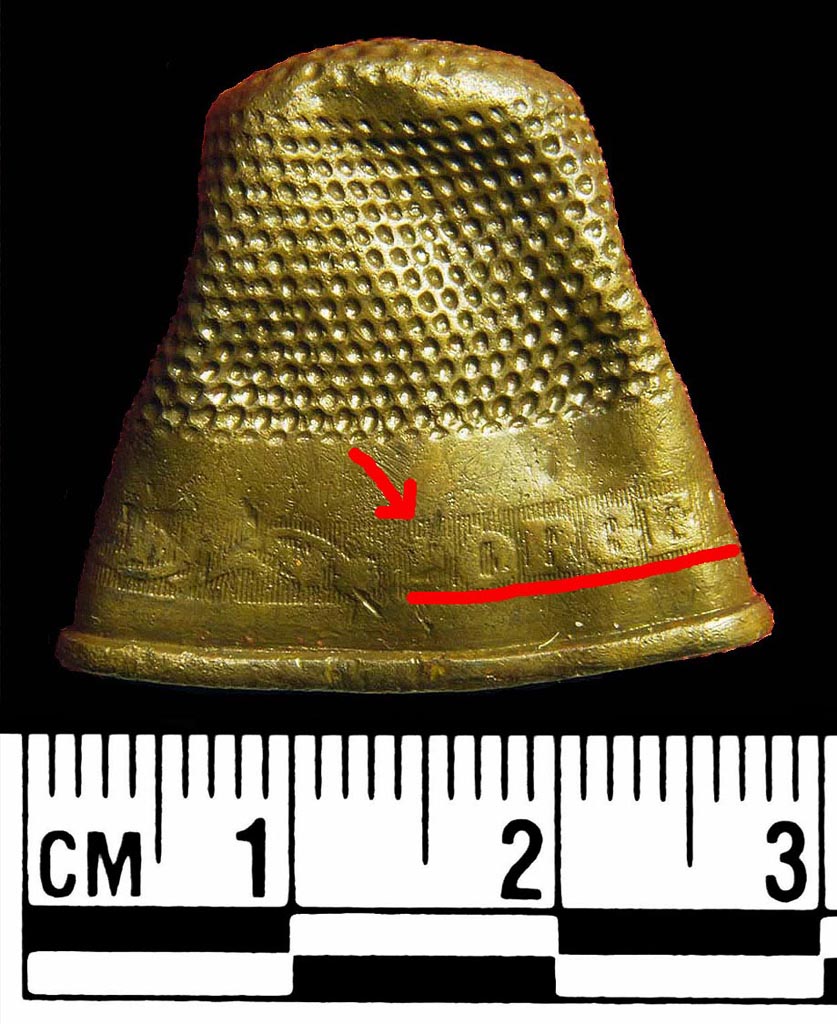
    Sometimes, when given as gifts, thimbles were enhanced with mottos, a tradition that was especially popular during the 1800s. They might be friendly, such as “Live Happy,” or didactic: “Pray and Work.” Slogans included “Remember Me,” “I Live to Die,” “A Friend’s Gift,” “Amor,” and “Pray and Prosper,” to mention a few. Two thimbles embossed with the sentimental idiom “Forget Me Not” were unearthed at Ferry Farm, each recovered from layers dating from the antebellum era (the time before the American Civil War). During this time, the ownership of the Ferry Farm lands was dynamic, and the property changed hands frequently.

    Chatham resident, and Commonwealth of Virginia Supreme Court of Appeals Judge, John Coalter purchased the property in 1829. However he never resided at Ferry Farm. Less than a decade later, in 1838, John Teasdale and Joseph Mann attained the property. Just five years after that, the land was transferred to Lewis G. Sutton. By mid-century, in 1846, John R. Bryan owned the farm and in December of that same year Winter Bray purchased Ferry Farm.

    FerryFarm20Dec1862
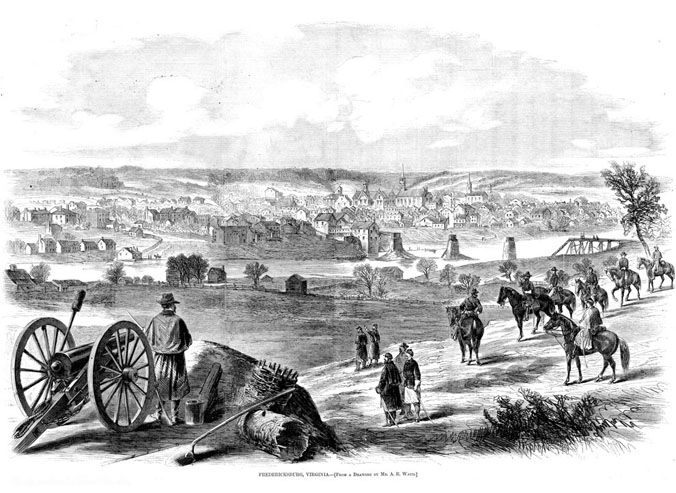
    “Fredericksburg, Virginia — [From a Drawing by Mr. A.R. Waud]” in the December 20, 1862 edition of “Harper’s Weekly.” This image was drawn on the Ferry Farm side of the Rappahannock looking across the river into Fredericksburg. Buildings of the Bray farmstead can be seen along the river bank in the image’s left middleground. Public domain.
    Bray engaged an overseer at Ferry Farm to manage the property. Importantly, they constructed a dwelling on the property in 1851, where the overseer resided. The George Washington Foundation’s archaeologists unearthed this structure as well as a kitchen related to this occupation in 2004. The construction of these dwellings is significant, since it demonstrates that people were residing on the land. Thimbles are more likely to derive from such a residential occupation as opposed to an absentee owner who devoted the land to pure farming.

    We know from their method of manufacture that the “Forget Me Not” thimbles date from the 1800s. Given the dynamic history of property ownership and occupation that characterizes Ferry Farm at this time, it might at first seem challenging to determine which land owner – or rather which land owner’s family of resident workers – purchased these touching thimbles. However one thimble was found in the center of one of the Bray era dwellings, from a stratum dating from sometime between 1800 and 1860. The other thimble was discovered in the yard east of the Bray era structures, recovered from a layer that also dated from the antebellum era. It’s possible that both of these thimbles relate to the Bray era of ownership, and specifically to the overseers who occupied the property on the Bray family’s behalf.

    FF.2794-NOT-2SmallLines
    Look closely and you can read the word “NOT” upon this unconserved “Forget Me Not” thimble found in 2014. It was found in the yard east of the Bray era structures in a layer dating from sometime between 1800-1860.

    FFForgetThimbleBlogLines
    It’s easier to see the letters “FORGE…” of the phrase “FORGET ME NOT” upon this conserved Ferry Farm thimble. It was found in 2004 in direct association with one of the Bray era dwellings.

    Over the centuries, sentimental tokens similar to the thimbles excavated from the Bray dwelling cemented relationships, expressed affection, and inspired diligence among sisters, daughters, and sweethearts.

    Laura Galke, Archaeologist
    Small Finds Analyst