Lives and Legacies

Tag: symbolism

  • More Than Meets the Eye: What Their Portraits Say About the Lewis Family

    On walls of the Historic Kenmore’s drawing room hang two large portraits of a man and a woman.  The man is an older gentleman in a serene outdoor setting, looking quite dignified and sober in a brownish knee-length jacket, knee breeches and long waistcoat. His eyes rest on the portrait viewer, one hand on moss-covered rocks, the other on his hip, and his head turned slightly to his left.  Across the room, the woman sits at a slight profile with her head turned to her left to face the portrait viewer. She wears a billowing blue and white dress and holds two pink roses in her right hand while her left arm casually sits on a marble top table. She is indoors with what appear to be some drapes billowing behind her. The man and woman are Fielding Lewis and Betty Washington Lewis, the owners of Kenmore.

    Fielding and Betty’s portraits were commissioned by the couple and painted by prolific colonial artist John Wollaston in the 1750s.  On the surface, these paintings are just two genial portraits that provide us with visual records of the heads of the family. Through the subtle symbolism, however, they also tell a larger story of how Fielding and Betty wished to be portrayed publically to their contemporaries as well as to posterity.

    Portraits first became a popular mode of expression for the aristocracy and the wealthy during the Renaissance.  These paintings were usually large scale affairs meant to be displayed and seen by the public.  The paintings depicted people with expensive goods, fine cloth, rare flowers, and exotic pets. Whether the portraits’ subjects actually owned these items was less important than the suggestion including the items made. In fact, these paintings were filled with symbolism–images, objects, or colors representing ideas and that allow the artist to go beyond the obvious to create links between otherwise different concepts.  A color can depict character, a flower personality and a fabric economic status.[1]

    Through symbolism, portraits were used to reflect social status, wealth, success, power and cultural refinement.  A portrait’s details were integral to the story of the painting and many factors had to be taken into account.  Aspects such as artist, style, background, color, fabric, and accessories all needed to be discussed to create the portrayal desired by the patron.[2]

    Centuries after the Renaissance, the importance of portraiture as a record of status and position in society had not changed and the custom had become more popular outside of the aristocracy as well as outside of Europe.  Even in faraway British North America, the wealth of the gentry, or upper class, desired portraits to show their status and position. Fielding Lewis and Betty Washington Lewis, members of the gentry with a wealthy business in Atlantic World trade, were no exception. Mr. and Mrs. Lewis wanted to portray themselves as socially refined not only to cement their place in the community but to allow for a continued rise in their status.  Accordingly, they sat for portraits by John Wollaston.
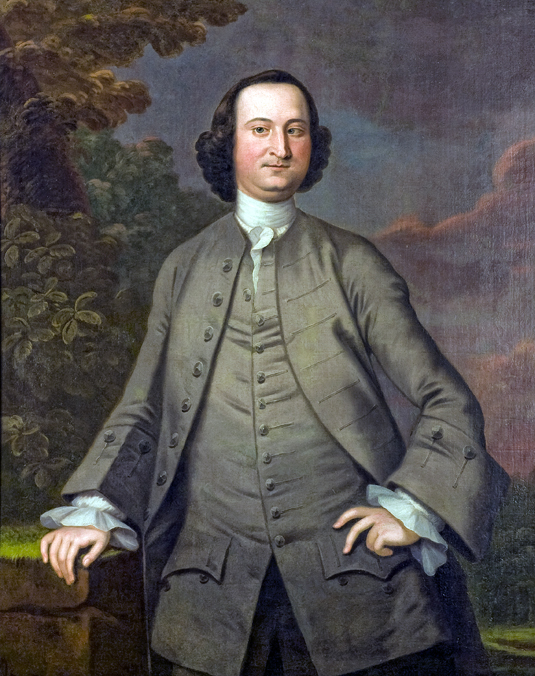
    Fielding Lewis (c. 1753-1758) by John Wollaston.

    The most noticeable thing about Fielding’s portrait is the muted colors used in the background and in his clothing.  One of the most visually striking symbols in portraits was the colors used to represent the subject.  While color may not have inherent meaning, it can be made meaningful through context.  The colors in the background, clothing, and accessories all relate to the overall message or story being told by the artist. The browns, greens, and beiges in Fielding’s portrait create a natural and relaxed atmosphere.  The nature background is a stylized classical bucolic setting that helps strike a balance between Fielding’s muted clothing palette and the landscape setting.  The woodland glen signifies a natural sincerity that, when mixed with the brown and beige of his ensemble, creates the feeling of calmness, reliability, dependability and an earthy richness.  All of these traits are important for a successful merchant.  Fielding was telling visitors to his house that he was a person they could do business with and trust.[3]
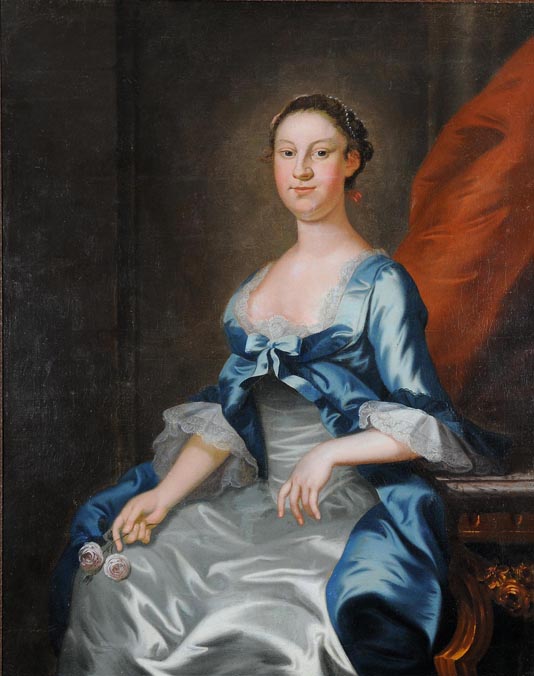
    Betty Lewis (1750) by John Wollaston. Credit: Mount Vernon Ladies’ Association.

    Betty’s portrait uses color, context, fabric and an accessory to illustrate her own geniality and her family’s affluence, for not only as a Lewis but as a Washington as well.  The background around Betty, who is at the center of the portrait, offers hints of this grandeur with brown walls and a heavy brown billowing curtain creating a frame of luxurious richness.  To add to the opulence, Betty is poised with her arm resting on an ornate Rococo-style marble top table with heavily carved gold legs.  The portrait conveys that she can afford such ornamental comforts.  Next to the table, Betty in her flowy blue and white satin dress with a pair of roses resting on her right knee is the focus.  Blue was a popular color for ladies and was common in many portraits painted by Wollaston. The color gives the sitter not only an air of peace and calmness but also of restraint and intelligence. The satin denotes a luxury and fashion available to only those with means. Meanwhile, the pink rose tells of Betty’s grace, beauty and gentility.  Overall, the portrait depicts a sophisticated and refined 18th century woman, a wife and mother who adds balance and depth to her husband’s trustworthiness and professionalism.[4]

    Fielding and Betty did not stop with portraits of themselves.  About twenty years after sitting for John Wollaston, they commissioned famed painter Charles Willson Peale to produce several portraits of their offspring.  There are two in Kenmore’s collection.

    John Lewis (c. 1775) by Charles Willson Peale.

    One of these Peale portraits depicts John Lewis, the eldest son of Fielding and his first wife, Catharine who sits with one hand on his hip and one hand on a book.  The posture gives John a sense of self-assurance and capability.  Unlike his father’s subdued color palette, John’s jacket and waistcoat are an amazing red with gold detailing.  The red paired with the gold creates warmth but also projects a sense of power, strength and confidence.  The book in his the left hand gives an air of knowledge and awareness.
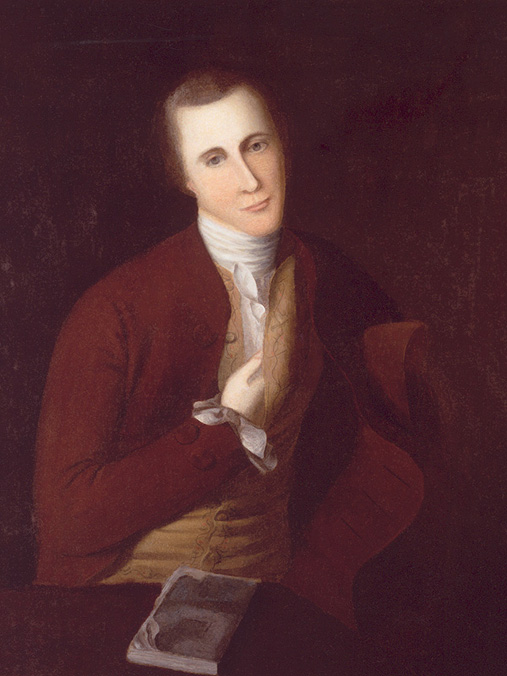
    Fielding Lewis Jr (c. 1775) by Charles Willson Peale.

    The second Peale portrait in the collection depcits Fielding Lewis Jr., the eldest son of Fielding and Betty, striking a very traditional pose with a hand tucked in his jacket and a slight tilt of the head.  The pose is welcoming, kind and is the embodiment of a thoughtful young gentleman.  Much like his father he chose a subdued color palette with an earthy reddish-brown jacket and goldish yellow waistcoat, which convey a sense of reliability, stability and affability.  The brown background adds a natural simplicity with soothing warmth.   Additionally, like his brother, there is a well-read book by his side indicating a sense of learning and mindfulness.  This portrait’s symbolism reflects the more aspirational messages in these paintings as Fielding, Jr. struggled with money problems for most of his life and even ended up in debtors’ prison.

    Later portraits in Kenmore’s collection contain other fascinating symbolism that tells the stories of the paintings’ subjects. These portraits visually record family history or emphasize familial connections.
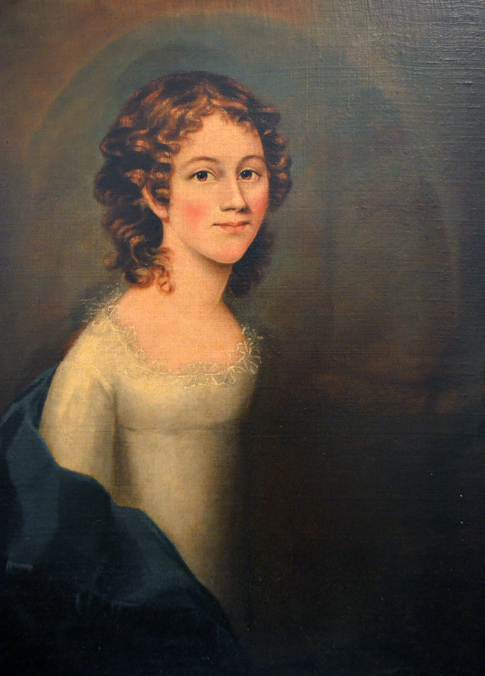
    Eleanor Rosalie Tucker (1818) by unknown artist.

    This 19th century portrait of Eleanor Rosalie Tucker, the great granddaughter of Fielding and Betty, is painted in characteristic neoclassical style with direct lighting, soft features, rosy cheeks and a roundness of the face.  The white muslin gown gives the young girl a purity and serenity beyond her years.  The halo surrounding the sitter represents her delicacy and gives her an otherworldliness. This is appropriate as, sadly, she was painted for this portrait on her deathbed in 1818.

    The Wallace Family (c. 1856-1862) by John Adams Elder. A loan courtesy of Mrs. W. Wallace Morton, Jr.

    Finally, this portrait of the Wallace family painted in the mid-Victorian period is quite a unique painting in our collection with a fascinating twist to its symbolism.  The portrait has a traditional composition but at the center is a large leashed bird in mid-flight.  This bird is a rebus, a puzzle device used to visually depict words and/or phrases.  They are used extensively in heraldry to hint at the name of the bearer.  This painting’s bird rebus is attached to a young girl named Mary Byrd Wallace, the great, great granddaughter of Fielding and Betty Lewis.

    Portraits are sometimes the only visual representation we may have of a historic figure.  These portraits do more than capture a person’s appearance, however.  The wealthy and socially important also used portraits and their symbolism to emphasize their wealth and high status.  Portraits also visually recorded family history or emphasized familial connections.  For the Lewis family, like everything in their house and like their house itself, their portraits revealed how they saw themselves and, perhaps more importantly, how they wanted others to see them whether in the 18th or the 21st centuries.

    Heather Baldus
    Collections Manager


    [1] “Faces of a New Nation: American Portraits of the 18th and early 19th centuries”, The Metropolitan Museum of Art Bulletin, Summer 2003: 11

    [2] Crown, Carol. The New Encyclopedia of Southern Culture, Vol. 23, University of North Carolina Press, 2013: 150-151.

    [3] Centeno, Carlos. “Lose the Color Symbolism Chart: The Unpredictable Meanings of Color,” July 6 2016. https://medium.com/@carlitocenteno/lose-the-color-symbolism-chart-the-unpredictable-meanings-of-color-edc81db6541e; “Faces of a New Nation,” 13

    [4] “British and American Grand Master Portraits of the 1700s”, National Gallery of Art. https://www.nga.gov/features/slideshows/british-and-american-grand-manner-portraits-of-the-1700s.html; Centeno; De la Tour, Charlotte. Le langage des fleurs, 1819: 58; Hooper, Lucy. The Lady’s Book of Flowers and Poetry, 1846: 248.

  • The Fox: A Bygone Symbol of Liberty

    There is no man who hates the power of the crown more, or who has a worse opinion of the Person to whom it belongs than I.” – Charles James Fox, letter to Edmund Burke, 24 January 1779. Quoted in L. G. Mitchell, Charles James Fox (1997:41).

    It is intolerable that it should be in the power of one blockhead to do so much mischief.” – Charles James Fox referring to King George III. From a letter to Mr. Fitzpatrick, 9 September 1781. Quoted in John Brooke, George III (1974:363-364).

    Charles_James_Fox00.ByJoshuaReynolds-1782jpg
    The Right Honourable Charles James Fox, MP, wore buff and blue apparel for this 1782 portrait by Joshua Reynolds. Credit: Wikipedia.

    Charles James Fox was contrary. He gambled excessively, drank heavily, and he was generally irreverent. He enjoyed resisting powerful people, supported unpopular causes, and expressed his disdain for high society by adopting a disheveled appearance later in life. His colorful British Parliamentary career spanned decades. He was a champion of liberty: including the abolition of slavery, religious freedom, the colonists’ struggles with King George III, and he supported the French people in their quest for democracy.

    Fox questioned King George III’s policies toward the American colonies and feared that the monarch was becoming tyrannical. It was parliament’s job to guard against such corruption. Fox and his supporters often wore apparel in the colors of buff and blue – the colors of Washington’s army – to show their support for American concerns. The Americans, in turn, honored their parliamentary champion with their own fashion accessory: they wore buttons that featured a fox, an obvious – and often used – stand-in for the controversial orator.[1]

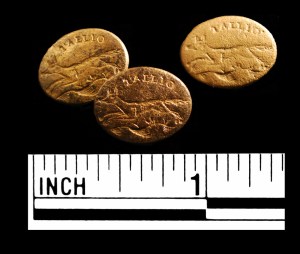
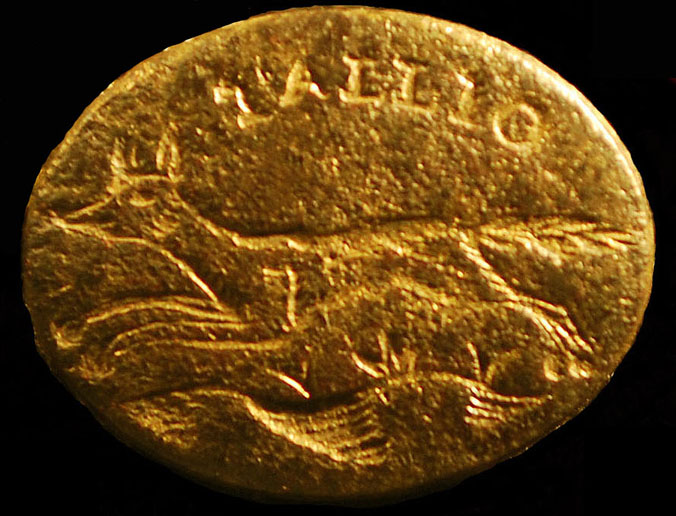
    Buttons featuring a fox racing across the landscape with the word “TALLIO” were intensely popular from the 1770s through at least the first quarter of the 1800s and they are common discoveries at archaeological sites. “Tallio,” “talley-o,” “talley-oh,” “talleo” and “talley ho” were all acceptable spellings for the traditional huntsmen’s shout upon spotting the fox during a chase. But this exclamation dates from the 1770s: well over a century after the sport had been brought to the Chesapeake. [2]

    TallioCLOSEUP
    A close-up of a “TALLIO” sleeve button from the Washingtons’ parlor cellar, c. 1766-1772.

    Fox hunting enjoyed wide popularity among Chesapeake gentlemen. The English Brook family brought their foxhound pack to Prince George’s County, Maryland when they immigrated in 1655.[3] Fox hunting continued in the Brook family for generations, and the popularity of this privileged recreational activity spread. Fox hunting on horseback was an amusement of the leisure class and the chase was considered more important than the capture of the prey. By the late 1760s, Washington himself maintained a pack of fox hounds at Mount Vernon.

    TallioLinksPC012a.300dpi
    Additional TALLIO sleeve buttons from the antebellum-era plowzone at Washington’s boyhood home. They are notably more weathered from its increased exposure to the elements given its shallow soil burial environment.

    Many who discover these buttons today attribute their imagery solely to the popularity of fox hunting as a sport. These buttons are often referred to as “hunt” buttons, a category that includes buttons which feature favored hobbies or athletic pursuits. Some assert that these sleeve links were widespread because fox hunting was so popular. And indeed, it was. These links – historically referred to as ‘sleeve buttons’ – enjoyed great popularity in the years surrounding the American Revolution, the Early Republic, and into the antebellum period.

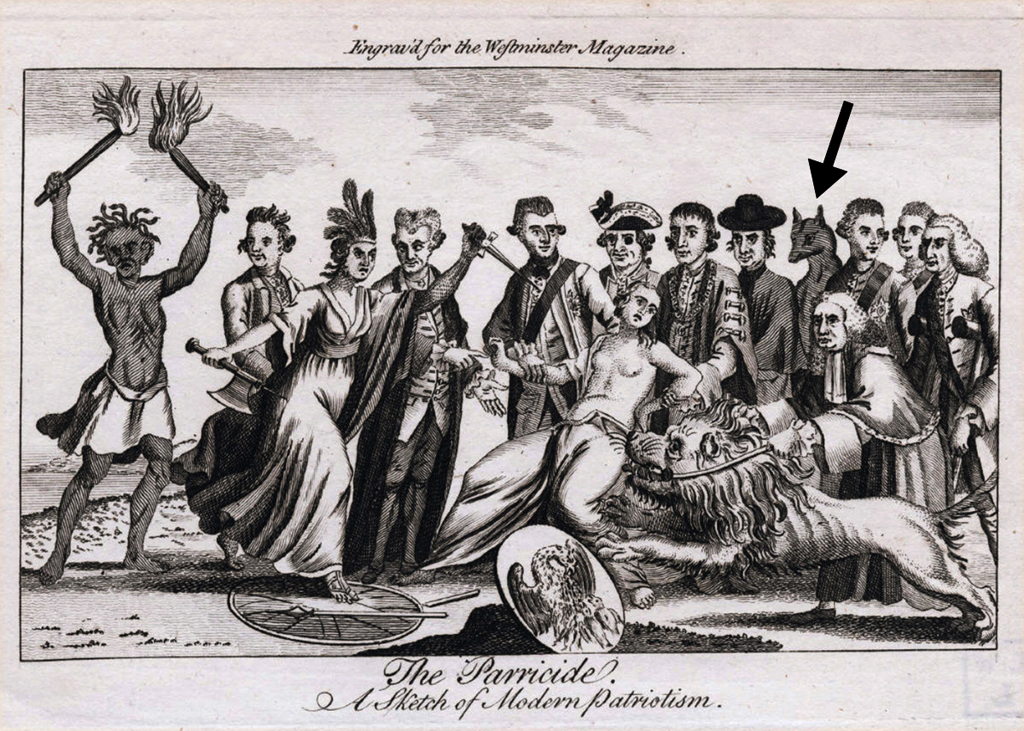
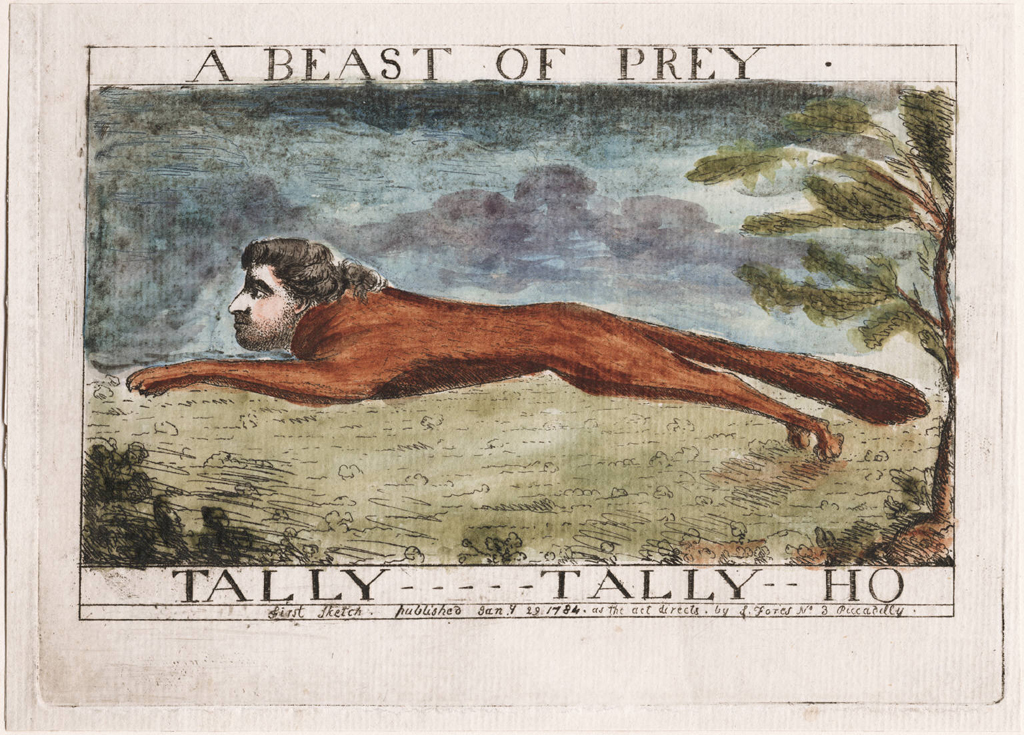
    I believe these buttons also achieved a deeper, political meaning, however, especially in the years around the American Revolution. Due to the support by Charles James Fox of the American cause, fox imagery came to represent resistance to tyranny. A number of contemporary British political cartoons used a fox to symbolize this politician. In addition to this documentary evidence, I believe the fox imagery used on these buttons came to symbolize the fight for liberty. For those recovered buttons for which we have context, it is evident that they are especially prevalent at sites associated with the Revolutionary War and with American patriots.

    LewisWalpoleLibrary.1776.TheParricideWithArrowAddedLJG
    Colonial discord is represented in this 1776 image showing America (symbolized as a woman in a feathered headdress, center left) attacking a defenseless Britannia (symbolized by the woman at center right). Charles James Fox is represented as a fox in the background (see arrow). Courtesy of the Lewis Walpole Library, Yale University.

    As the political difficulties between the British Crown and the American colonies intensified, Fox’s outspoken support of colonial concerns attracted attention on both sides of the Atlantic. In Britain, some called Fox a traitor for his disrespectful rhetoric against the crown. In Britain’s North American colonies, his stoic support for their cause provided colonists a crucial ally in an unexpected, but politically powerful position. Patriots and revolutionaries enthusiastically incorporated these fox hunting-themed buttons into a celebration of Fox’s ardent support.

    lwlpr05356-1784
    A 1784 image of a fox, featuring the head of British parliamentarian Charles James Fox. Courtesy of the Lewis Walpole Library, Yale University

    Tallio/fox buttons have been recovered from several American Revolution-era and Early Republic era forts in Tennessee and New York. Two domestic sites associated with George Washington have yielded these buttons as part of their archaeological discoveries. Signer of the Declaration of Independence, William Paca, proudly wore a tallio/fox button. Colonial towns such as Dumfries, Virginia and Jacksonborough, South Carolina have yielded these buttons from layers dating from the Revolutionary era.

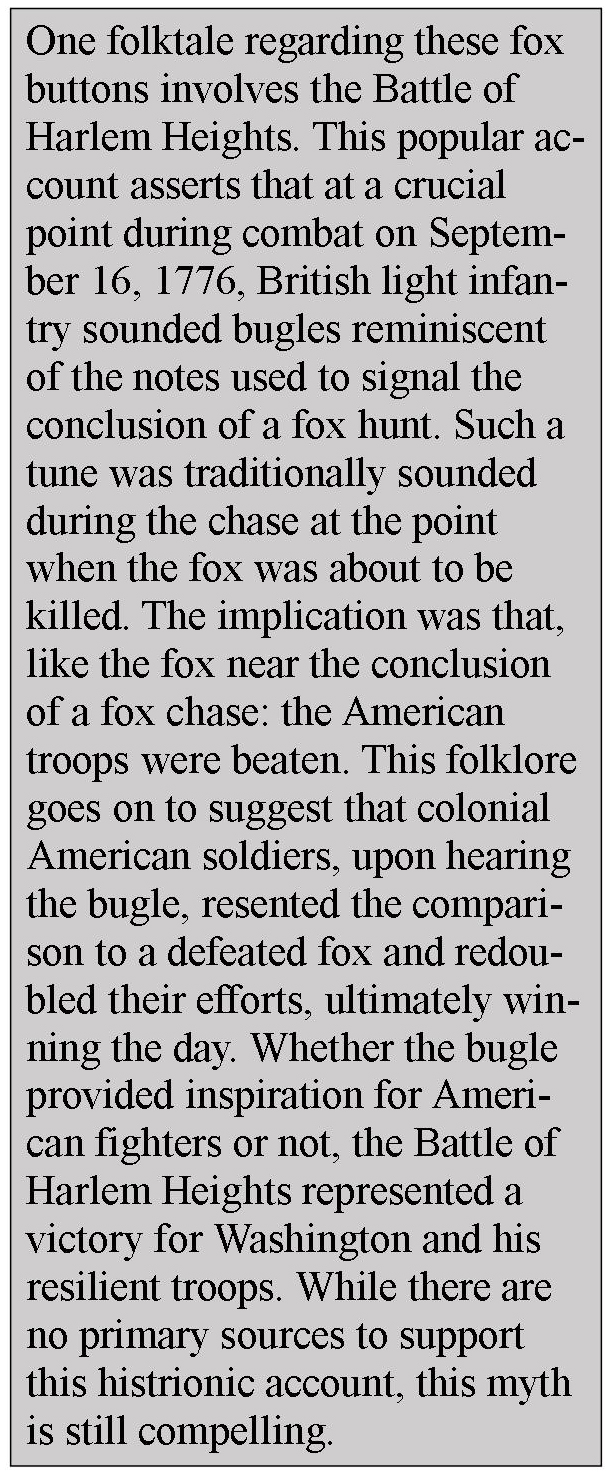
    Harlem Heights Fox FolktaleAnthropologists – scholars who study people – make special efforts to identify such symbols in societies, both in contemporary studies and in analyses of past people.[4] Symbols are especially powerful because viewers do not need to be able to read, to understand language, to hear, or to speak, in order to comprehend a symbol’s message. These messages can summon strong emotional responses. Think about how you feel when you see an American flag and how your responses might change depending on how a flag might be used at a protest, funeral, or baseball game. During the last quarter of the eighteenth century, the fox symbolized resistance to tyranny, freedom, and the pursuit of liberty. Wearing a fox button proclaimed your support for American independence.
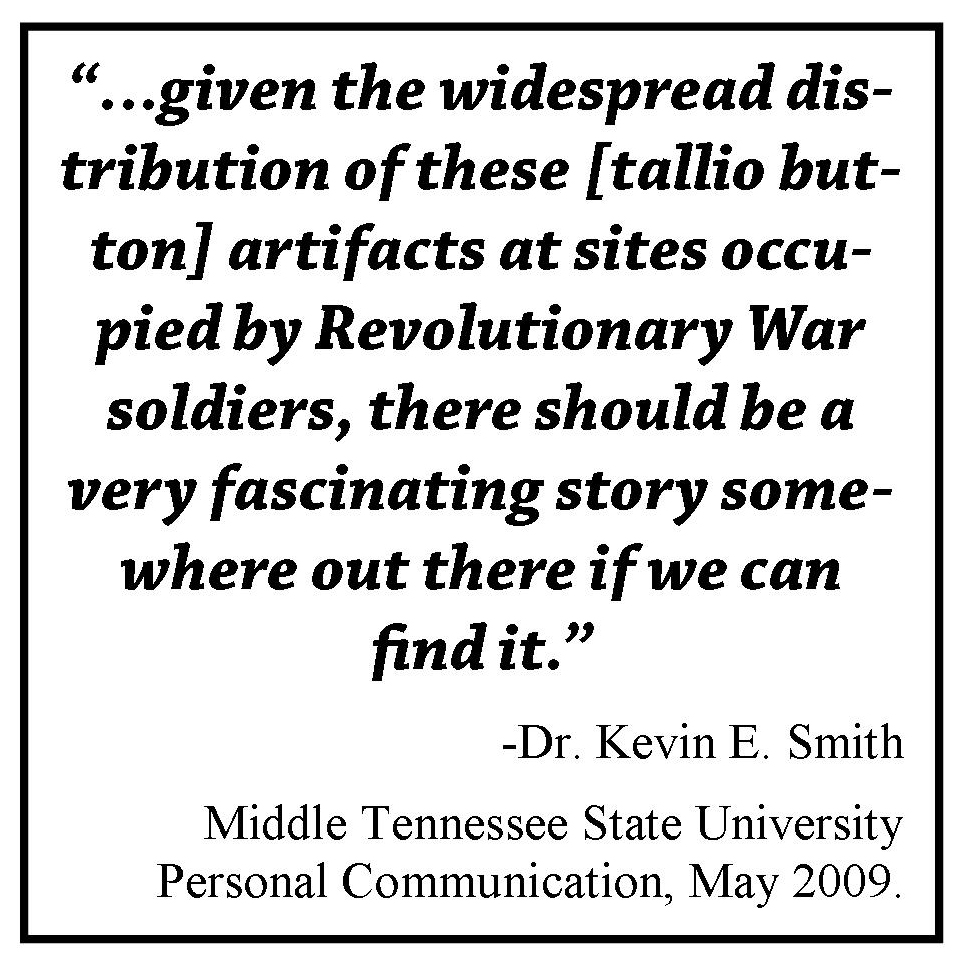
    The die struck fox image on these buttons was not originally created as a political symbol for Charles Fox, however. The meaning of these buttons was adapted to that purpose after their initial manufacture. As we have seen, fox hunting was indeed a common pastime for gentlemen, and these fashionable buttons were popular among those who “chased the hounds.”  As tensions between Britain and her North American colonies increased, Smith Quotebeginning by the 1760s, the fox symbolism present on tallio buttons was malleable[5], and provided a gentleman with leeway in a politically volatile climate: its meaning could change according to a gentleman’s situation.  Among unfamiliar company, such a multivocal symbol would allow an adroit – or perhaps even a vacillating – patriot some political latitude. Uncertain if the person with whom you’re dining is a Tory? Your innocent little TALLIO sleeve link merely celebrates a popular, recreational activity, whose roots in the Middle Atlantic region went back generations. But, at the same time, comrades in the struggle for American Independence recognized their solidarity in the symbolism of the fox: honoring their parliamentary advocate of colonial resistance to the King George III.

    Along with the tallio sleeve button, another apparel item as evidence for the Washington family’s burgeoning resistance to the Crown has been found at Ferry Farm. As I wrote in an earlier blog post, the Washingtons wore a mid-1700s William III sleeve button to display their resistance to George III: a monarch that many colonists deemed tyrannical in his exercise of power. On more than one occasion, Charles Fox himself compared America’s Declaration of Independence to William and Mary’s “Glorious Revolution,” and (fairly or not) drew parallels between the monarchical abuse of powers exercised by George III and James II. British subjects had the right to replace a tyrannical king with another: an example set by William and Mary, and an important precedent for the American colonists. The Washingtons’ support for the Leedstown Resolves in February 1766 provides documentary evidence for their concerns with Britain’s rule and (at the time) their loyalty to the Crown.[6]

    William III sleeve link
    Close-up of a mid-1700s sleeve button recovered at Ferry Farm. It features the image of King William III and reads “Gulielmus D. G.” which translates as “William by the grace of God King.” This button is another demonstration of growing resistance to George III from Washington’s boyhood home.

    Together, the symbolism on each of these buttons and the Washington brothers’ participation in the Leedstown Resolves demonstrates a long and growing frustration among Virginians with Britain’s colonial policies. The material expression of these sentiments can be traced back to the mid-1700s-era male apparel buttons at Washington’s childhood home. These discoveries were possible thanks to the preservation of this site, the thorough excavation of its layers, and a contextual understanding of the social and political landscape of this period.

    This fox/liberty symbolism apparently endured well into the 1800s in the United States. Archaeologists recovered a “TALLIO” sleeve button from the root cellar of a quarter for enslaved laborers in South Carolina:[7] strong circumstantial evidence that this symbol of the struggle for liberty and freedom continued beyond the American Revolution. As previous mentioned, Fox was an ardent abolitionist. The layer from which this particular button was recovered dated no earlier than 1845. In this context, this symbol of liberty underwent another change and now represented a reproach displayed by enslaved Americans to highlight the paradox of slavery in what was supposed to be a democracy. Though Charles James Fox died in 1806, the use of the fox as a symbol for the struggle for freedom endured.

    Laura Galke, Archaeologist
    Site Director/Small Finds Analyst

    Sites where such TALLIO links have been recovered

    Collectors and archaeologists have found TALLIO buttons from at least New York to South Carolina, and westward to Tennessee,[8] where they occur at a number of United States military forts, late 1700s-era towns, and at sites associated with patriots.

    Bledsoe’s Station, Tennessee (1783-1795) – “civilian fort” (Context dates from c. 1783-1795).

    British Officer’s Revolutionary War Hut in New York (Calver and Bolton 1950: 225, 227).

    Dumfries, Virginia, “Late 18th century.” (Sprouse 1988:119-120).

    Fort Southwest Point, Tennessee (1797-1807), federal military fort.

    Fort Blount, Tennessee – territorial militia post (1794-1797); federal post (1797-1798).

    George Washington’s Boyhood Home (1762-1772), parlor cellar and antebellum plowzone.

    H.M.S. DeBraak, Delaware (1798) shipwreck. (Cofield 2012:103-104, 113).

    Jacksonborough, South Carolina. Colonial town. (Smith, Dawson, and Wilson 2008:22-23, 30).

    Mount Vernon, Virginia, Washington’s home (1754-1799).  Recovered from a c. 1820s garden layer.

    Tellico Blockhouse, Tennessee – federal military post (1794-1807).

    University of North Carolina, Chapel Hill. Plowzone. (Fitts et al. 2012:35, 88-89).

    William Paca Garden, (c. 1763-1780) Annapolis, Maryland. http://annapoliscurator.blogspot.com/2014/09/william-pacas-sleeve-buttons_12.html

    Further Reading

    Boswell, James
    2008    Life of Johnson. Oxford University Press, Oxford.

    Calver, William L. and Reginald P. Bolton
    1950    History Written with a Pick and Shovel.  University of Virginia Press.

    Cofield, Sara Rivers
    2012    Linked Buttons of the Middle Atlantic, 1670-1800. Journal of Middle Atlantic Archaeology, 28:99-116. https://www.jefpat.org/diagnostic/SmallFinds/SleeveButtons-Cufflinks-Studs/Linked%20Buttons.pdf

    Fitts, Mary Elizabeth, Ashley Peles, and R. P. Stephen Davis, Jr.
    2012    Archaeological Investigations at the Vance Site on the University of North Carolina Campus, Chapel Hill, North Carolina. Research Report No. 34. The University of North Carolina, Chapel Hill.

    Hastings, Anne M.
    1997    Fox Hunting: History and Change in a Mountain Sport. Appalachian Journal 25(1):30-46.

    Mitchell, Leslie George
    1997    Charles James Fox. Penguin, London.

    Noël Hume, Ivor
    1961    Sleeve Buttons:  Diminutive Relics of the Seventeenth and Eighteenth Centuries.  In Antiques 79(4):380-383.

    Polhemus, Richard R.
    1979    Archaeological Investigations of the Tellico Blockhouse Site (40MR50): A Federal Military and Trade Complex. Report of Investigations 26, Department of Anthropology, University of Tennessee, Knoxville.

    Reich, Jerome R.
    1998    British Friends of the American Revolution. M. E. Sharpe, Armonk, New York.

    Smith, Kevin E.
    2000    Bledsoe Station: Archaeology, History, and the Interpretation of the Middle Tennessee Frontier, 1770–1820. Tennessee Historical Quarterly 59(3):175–187.

    Smith, Samuel D., and Benjamin C. Nance
    2000    An Archaeological Interpretation of the Site of Fort Blount, a 1790s Territorial Militia and Federal Military Post, Jackson County, Tennessee. Tennessee Dept. of Environment and Conservation, Division of Archaeology, Nashville, TN

    Smith, Steven D., Audrey R. Dawson, and Tamara S. Wilson.
    2008    The Search for Colonial Jacksonborough (38CN280) Colleton County, South Carolina. South Carolina Institute of Archaeology and Anthropology Report, Columbia. Presented to Lowcountry Council of Governments, Yemassee, and Francis Marion Trail Commission, Florence.

    Sprouse, Deborah A.
    1988    A Guide to Excavated Colonial and Revolutionary War Artifacts.  Heritage Trails, Turbotville, Pennsylvania..

    Steen, Carl
    2008    Archaeology on the Great Pee Dee River: The Johannes Kolb Site. http://38da75.com/professional.htm, accessed July 31, 2012. Diachronic Research Foundation, Columbia, SC.

    Notes

    [1] A generation earlier Fox’s father, Henry Fox – also a member of parliament – found himself represented as a fox on multiple occasions in political satire.

    [2] The recovery of this artifact from a layer created between 1766 and 1772 indicates that “tallio” was a term popular before it first appeared in print in 1773 (“tally-ho, int. and n.” OED Online. Oxford University Press, March 2017. Web. 31 May 2017). Since this “TALLIO” button was deposited before 1773, perhaps the Oxford University Press might consider updating their “tally-ho” entry.

    [3] A nice history of fox hunting is provided in Anne M. Hastings, 1997 article “Fox Hunting: History and Change in a Mountain Sport.” Appalachian Journal 25(1):30-46.

    [4] Archaeology is a subfield of anthropology. Archaeologists study past peoples.

    [5] Political sleeve buttons that said “Liberty” (revolutionary) or portrayed a Crown (Loyalist) provided their gentlemen no political leeway: they betrayed the political sympathies of their gentlemen quite directly. Did gentlemen who elected to wear TALLIO buttons lack commitment, perhaps coveting the ambiguous – and potentially innocent – message of the fox imagery?

    [6] Samuel, John Augustine, and Charles Washington all signed the Leedstown Resolves which, though it expresses concern, is nonetheless effusive in its expressed respect for the monarchy.

    [7] Carl Steen, Personal Communication, 15 April 2013.

    [8] http://annapoliscurator.blogspot.com/2014/09/william-pacas-sleeve-buttons_12.html; http://emuseum.history.org/view/objects/asitem/search@/0?t:state:flow=15c6b88c-4d16-46be-9dce-2bc1fc9f6420