Lives and Legacies

Tag: Washington house

  • Happy Birthday, Mr. President!

    Not every president gets their birthday celebrated every year with a federal holiday, but George Washington, a favorite of his countrymen and the first president, has had that privilege since 1879. But one year was a little different from the others: 1932.  It marked Washington’s 200th birthday, and the United States was going to make a big deal about it. 

    In honor of the upcoming birthday, we decided to look at some of the memorabilia in our collection created to celebrate and educate the American public.   

    George Washington Bicentennial Commission

    The planning for this celebration started early when Calvin Coolidge signed a joint resolution that established a commission to oversee the bicentennial ceremonies on Dec 2, 1924.  The resolution was to mark the occasion of the birthday across the country and increase the understanding of Washington. (George Washington Bicentennial Commission, 1932)  Under the direction of Representative Sol Bloom, an experienced entertainment promoter who got his start at the 1893 World’s Colombian Exposition, the committee initiated thousands of events, released educational resources for students, and had plays written in honor of Washington. (Larson, 2004)
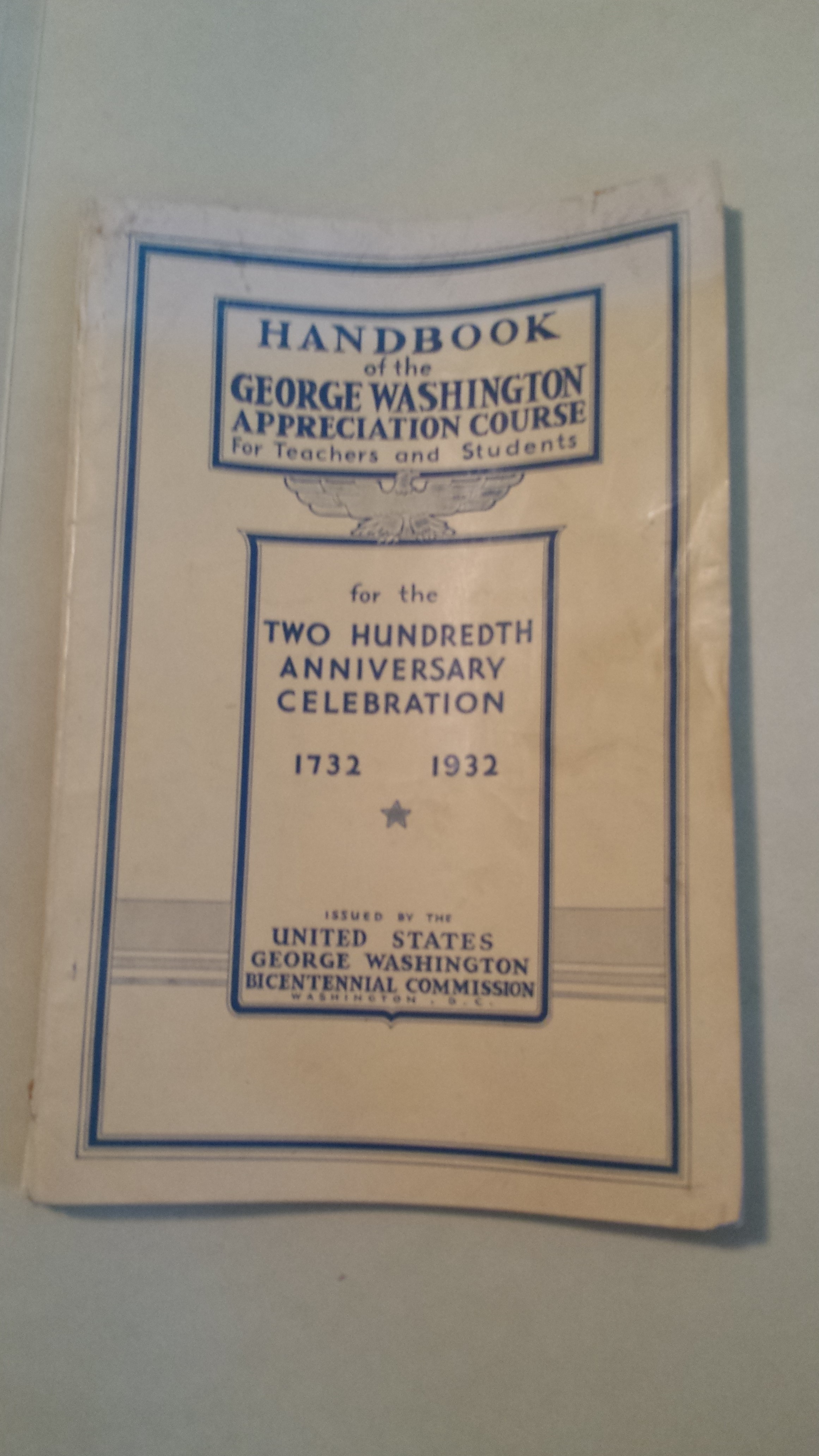
    Handbook of the George Washington Appreciation Course for Teachers and Students
    “Washington Takes the Risk”, including George Washington, Fielding Lewis, and Betty Washington Lewis

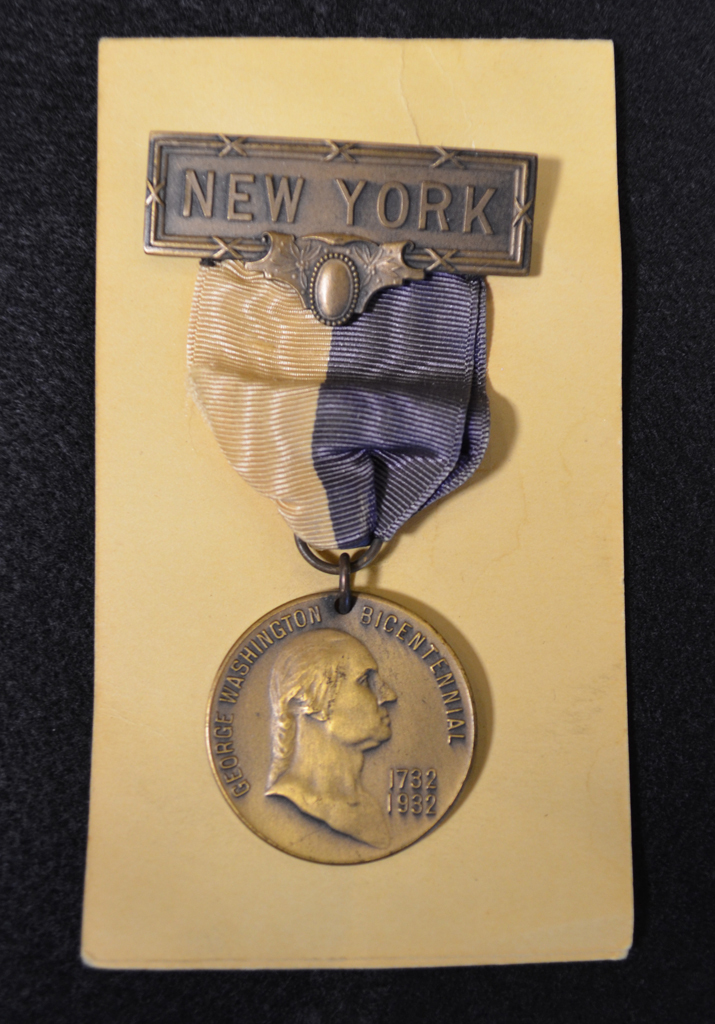
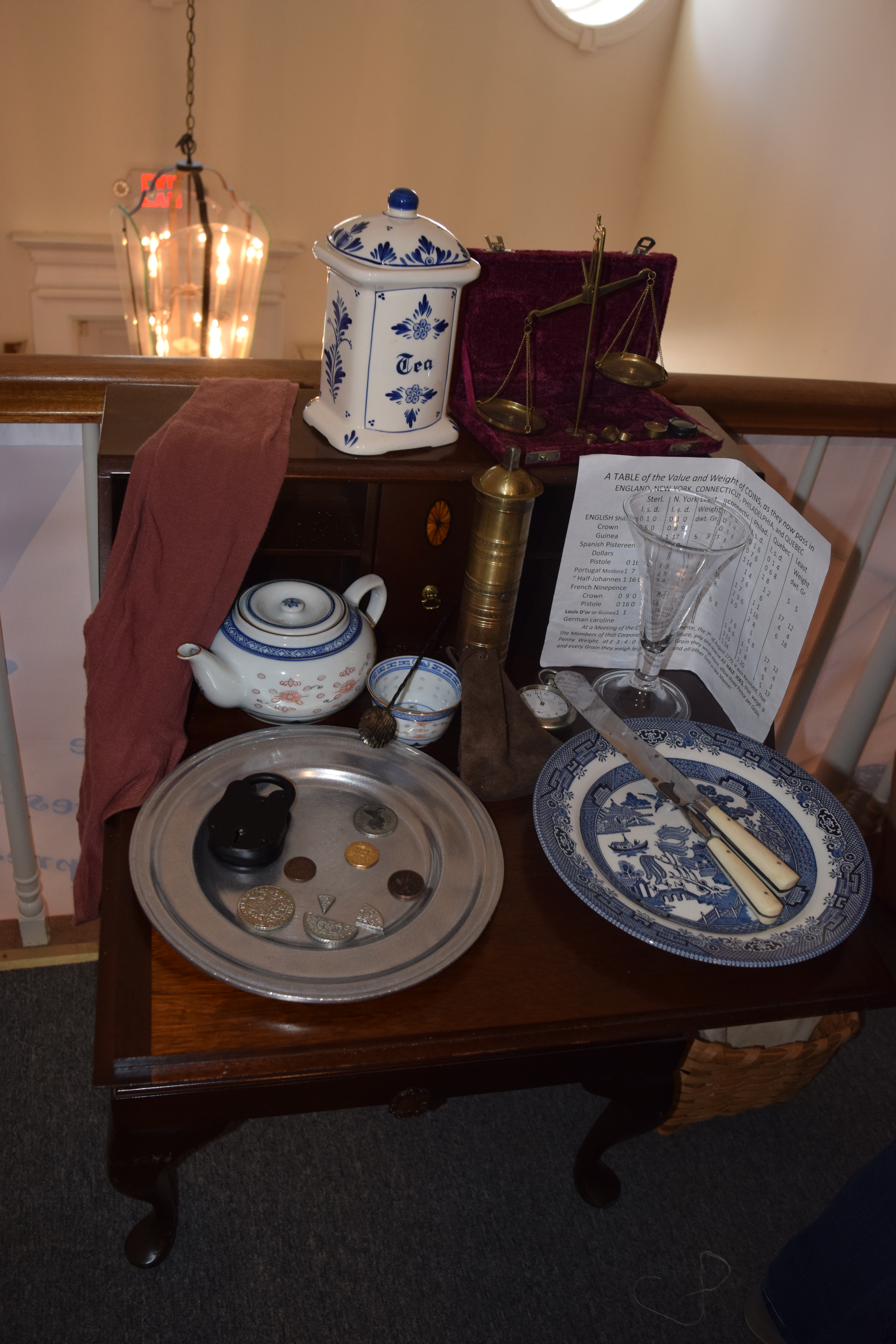
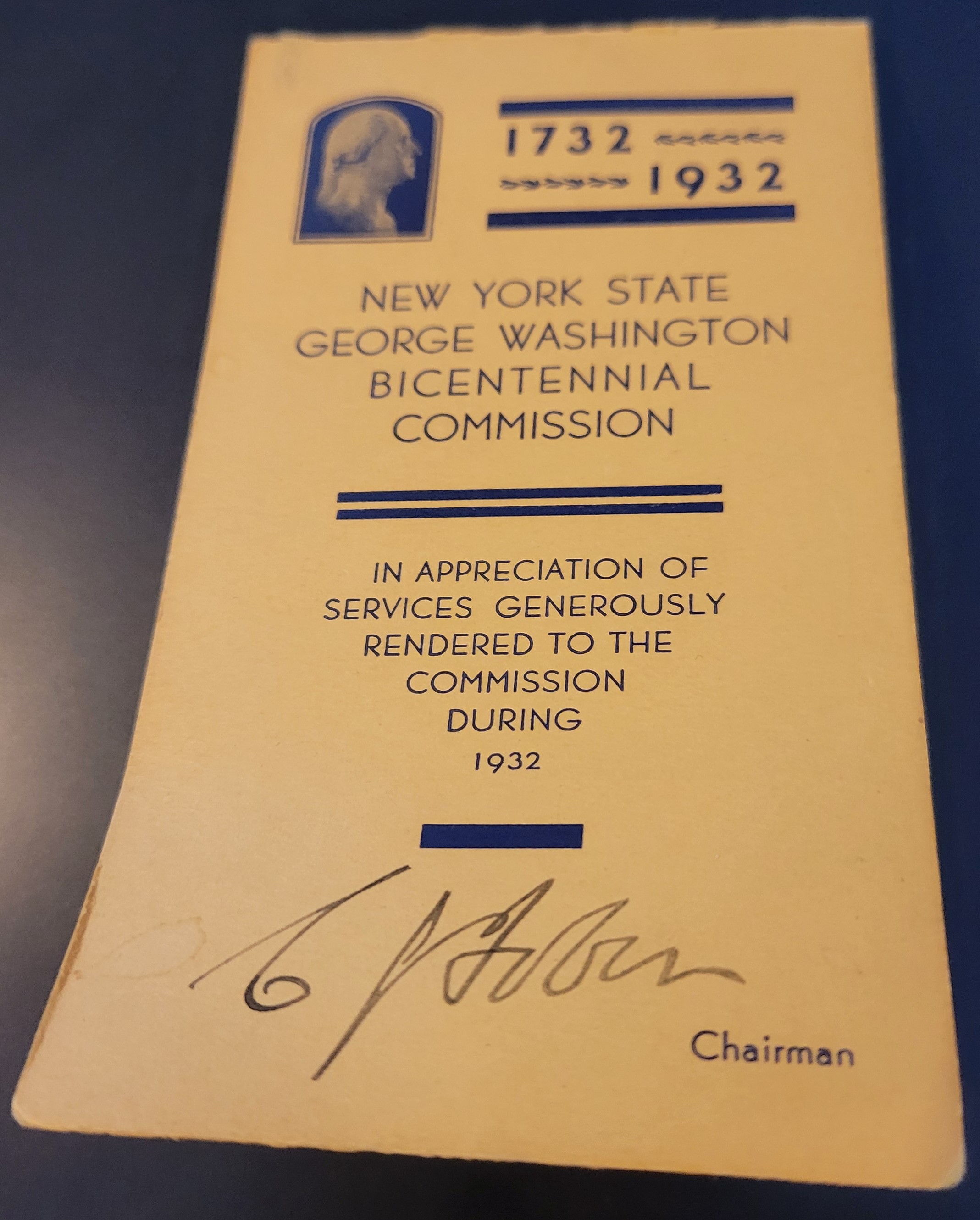
    The commission additionally worked with over 250,000 local commissions to organize special events at not only a federal level but a state and city too. (The Washington Post, 1932) Special volunteers and prominent local people were often given commemorative metals as thanks for their service.  We have one from the state of New York.  It is a circular bronze medal attached to a blue and white ribbon.  The back of the medal states, “1779 / Planned Sullivan / Clinton Campaign 1782 / Newburgh Temple Hill / Refused a crown / 1789 April 30th / New York City / Inaugurated first / President of the / United States.” 

    The medal is encased in a paper envelope with “New York State / George Washington Bicentennial Commission / In appreciation of / Services generously / Rendered to the / Commission / During / 1932” written on the front along with the signature Charles Tobin, chairman representing New York state on the Bicentennial Commission. 
    Historical Context Help: The Sullivan-Clinton campaign was ordered by George Washington in response to the 1778 attacks by the Iroquois and British in central New York.  Newburgh Temple Hill was a Continental Army encampment near Washington’s headquarters, where he gave a speech to quell the mass of soldiers who were getting ready to mutiny and attack Congress to get their promised back pay and pensions. Finally, in 1789, George was sworn in as President at Federal Hall in New York City.

    Calling All Philatelists

    Washington Post, Jan 2, 1932

    The U.S. Post Office became involved in the commemoration of George with the release of a dozen stamps celebrating his life.   The stamps were incredibly popular, and when they were first released for sale in D.C., there was a crowd of 50,000 people waiting to get their set of stamps. (The Washington Post, 1932)

    Marketing George

    Private companies even got in on Washington-mania by releasing all types of souvenirs like postcards, pins, coins, bottles, calendars, cigar box covers, books and pamphlets, hat stands, billheads, stationary, cartes-de-visite, playing cards, and puzzles. (Subseries 5.8. Washington’s Birthday, Bicentennial Souvenirs, 1931-1932 , 2024)

    We have two bottles created for the Bicentennial celebration.  The green water bottle has a likeness of George with “Washington/Bicentennial” underneath the image and 1732 and 1932 written on the sides.  The water bottle was produced by the Hemingway Glass Company in Muncie, Indiana. 

    The clear pear-shaped bottle is embossed on one side with a cherry tree and the dates “1732 and 1932”.  On the other, with a profile of Washington.  It was created by the Owens-Illinois Glass Co. of Huntington, West Virginia.

    Plates were another big commemorative item.  We have three plates issued by Crown Ducal, with the same scene of “Washington and his Mother” based on the print of the same name.  On the back with the Crown Ducal crest, it says, “George Washington Bicentenary Memorial Plates / 1732-1932 / First in War / First in Peace / First in the hearts of his countrymen”.  Crown Ducal released a series of twelve plates documenting Washington’s life.  Of course, we are a little biased and like the one with his mother, Mary Ball Washington, the best.
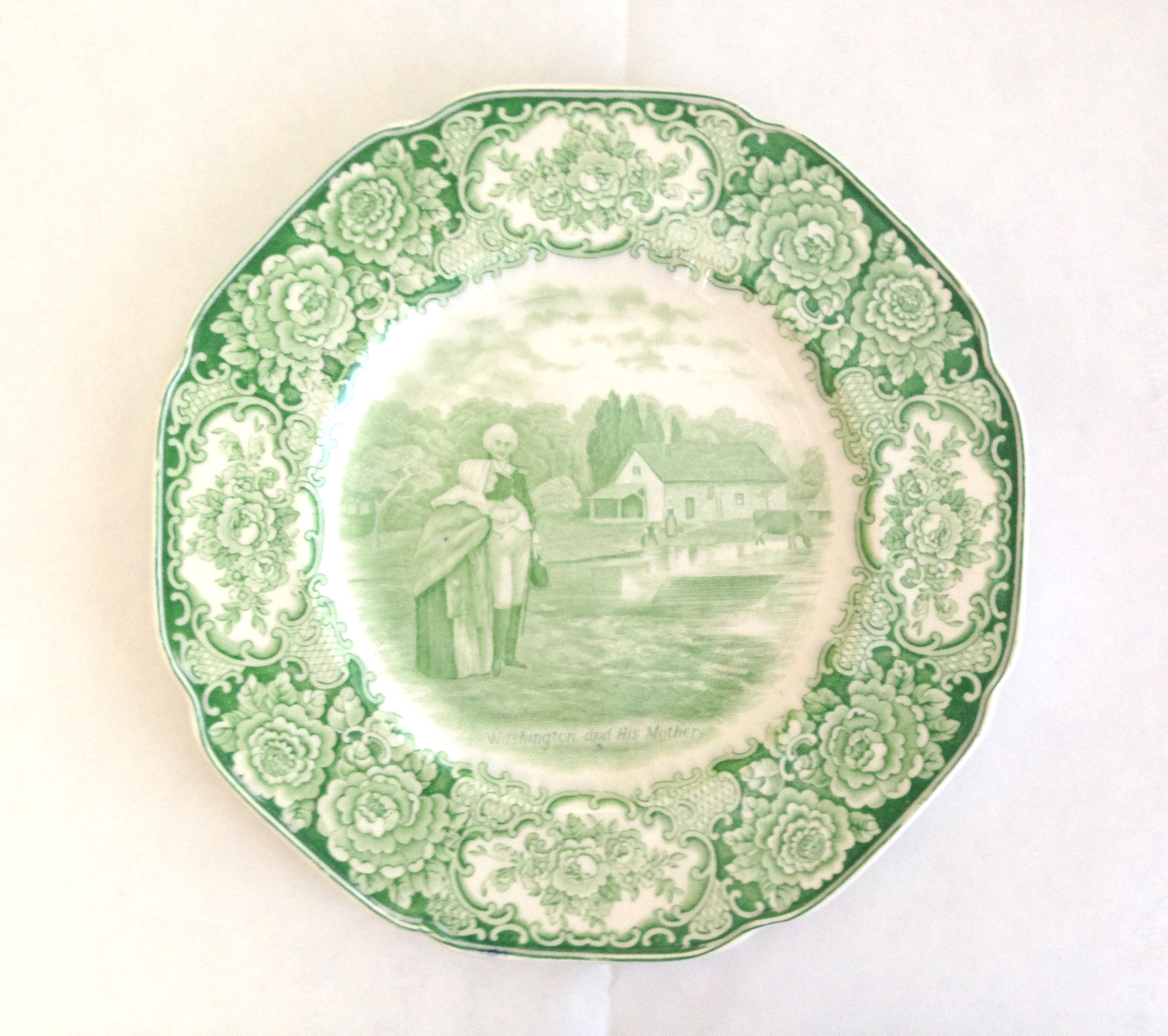
    Some companies even brought in Mrs. Martha Washington, like this set of plates from the Capital Souvenir Company.  These are two round commemorative plates depicting George and Martha Washington, both with an elaborate floral gilded border.

    Fun Bicentennial Fact:  On the eve of the birthday, Sears Roebuck was awarded a commission by the U.S. government to create a full-scale replica of Mount Vernon at the Exposition Coloniale Internationale in Paris.  The agreed-upon price was around $75,000, and every detail of the home was reproduced from brass hardware, mantelpieces, and even cabinets.  After the exposition, the house was bought by an American doctor working in Paris, and it was relocated to Vaucresson (a western suburb of Paris).  It still stands today as a private residence and was even on the market in 2012 for 27 million dollars.     

    Sears Roebuck also built the exact replica in Prospect Park, Brooklyn, NYC for the Bicentennial Commission. However, the house was not taken care of and boarded up and abandoned until it was eventually torn down. (The Brooklyn Daily Eagle, 1933) 

    Sears’ role in the reconstruction of Mount Vernon led to interest in their kit homes.  In 1932, they offered a house in their catalog, loosely based on Mount Vernon.  This model was oddly called “The Jefferson”.

    Sears Roebuck house kit “The Jefferson” which strangely resembles Mount Vernon.

    While we may not have as many George souvenirs, we are still putting on a big birthday party to celebrate George Washington and his time at Ferry Farm. 

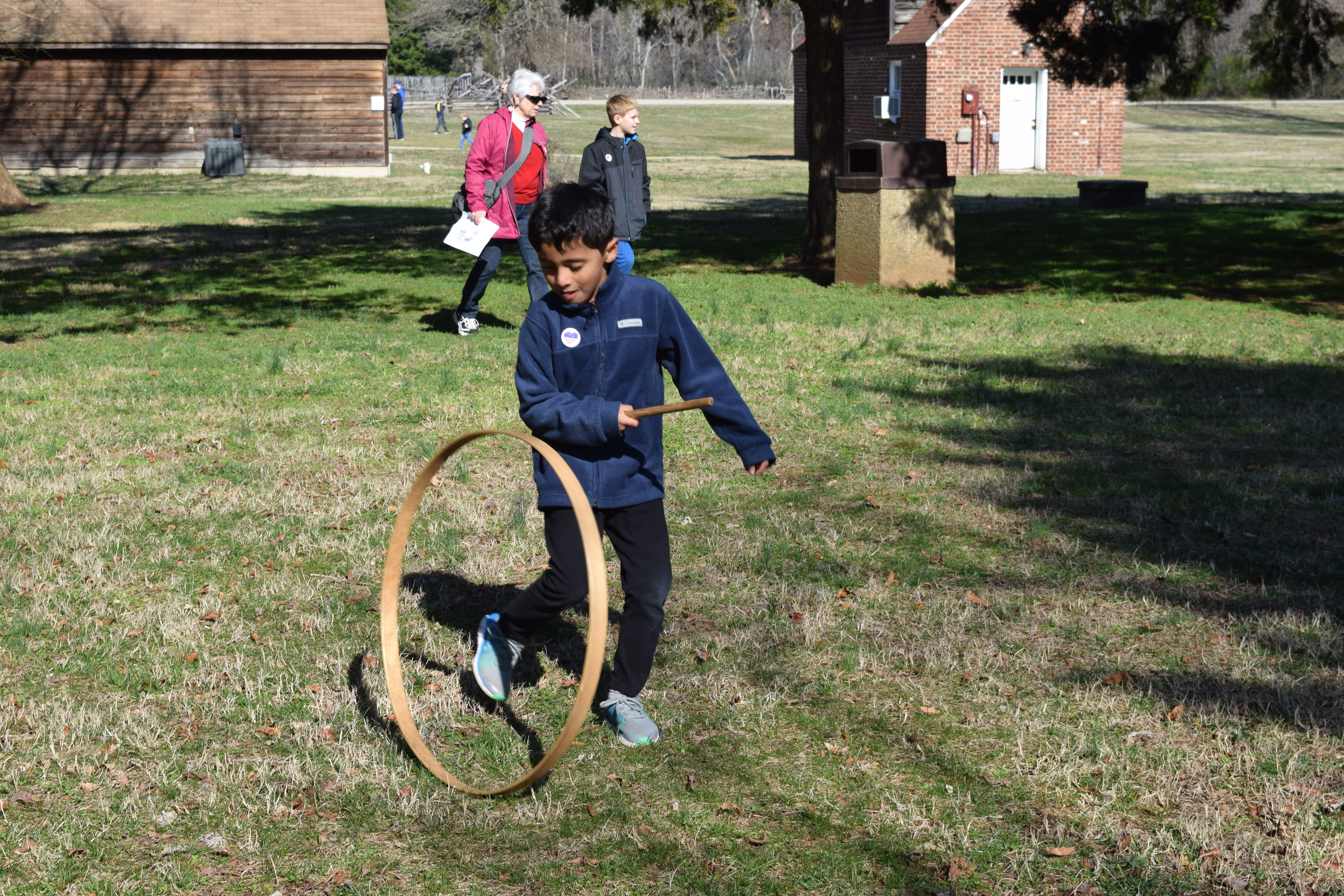
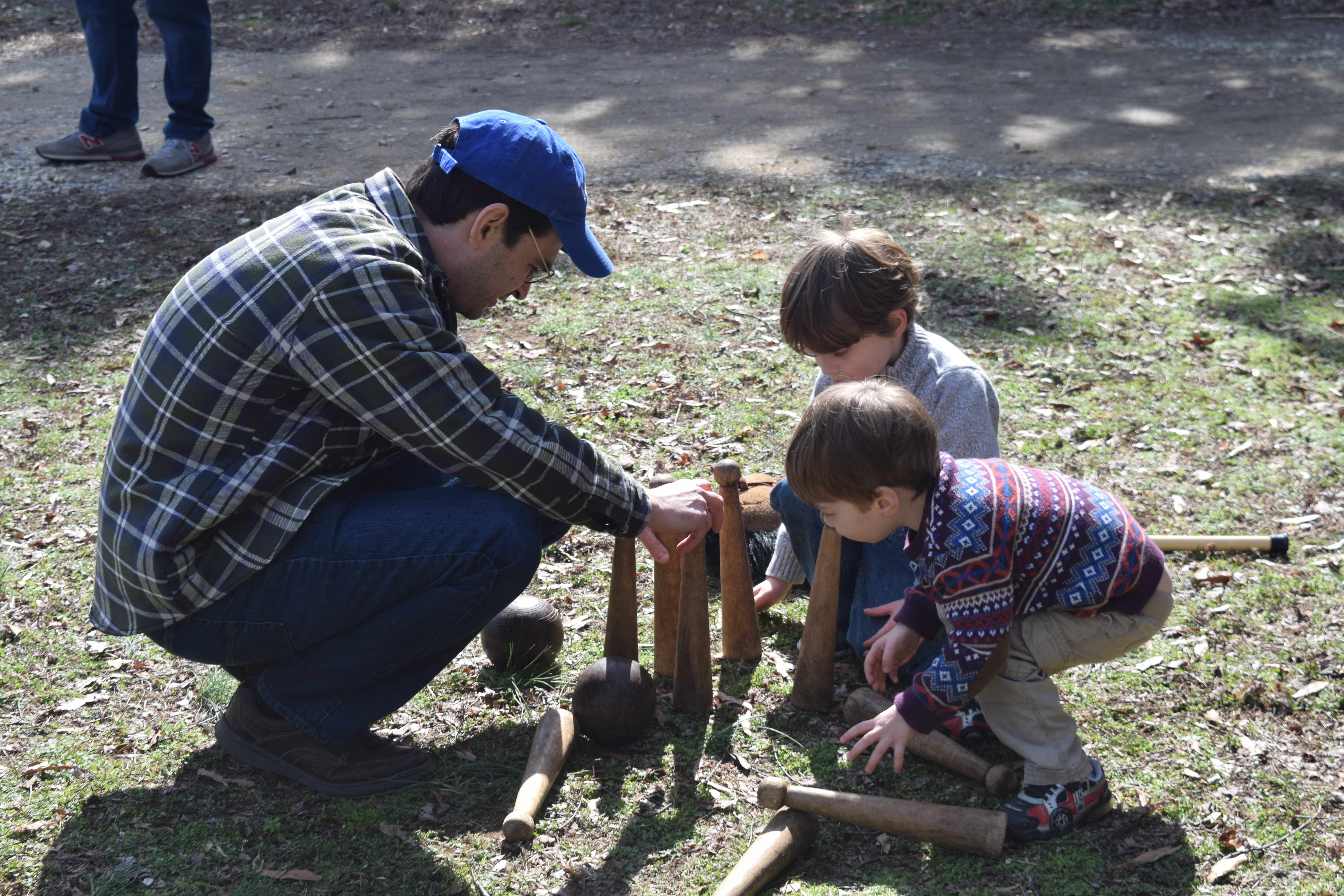
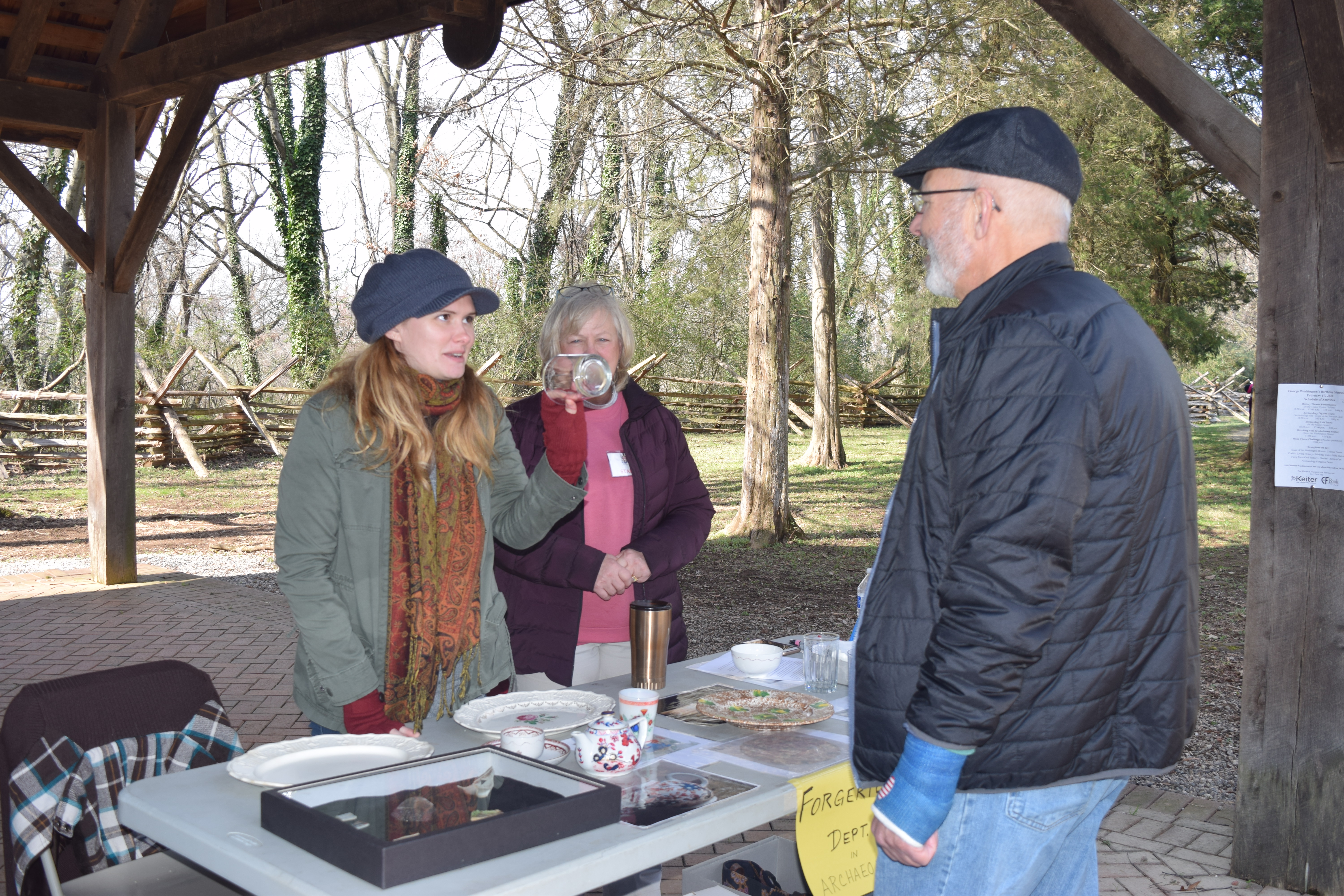
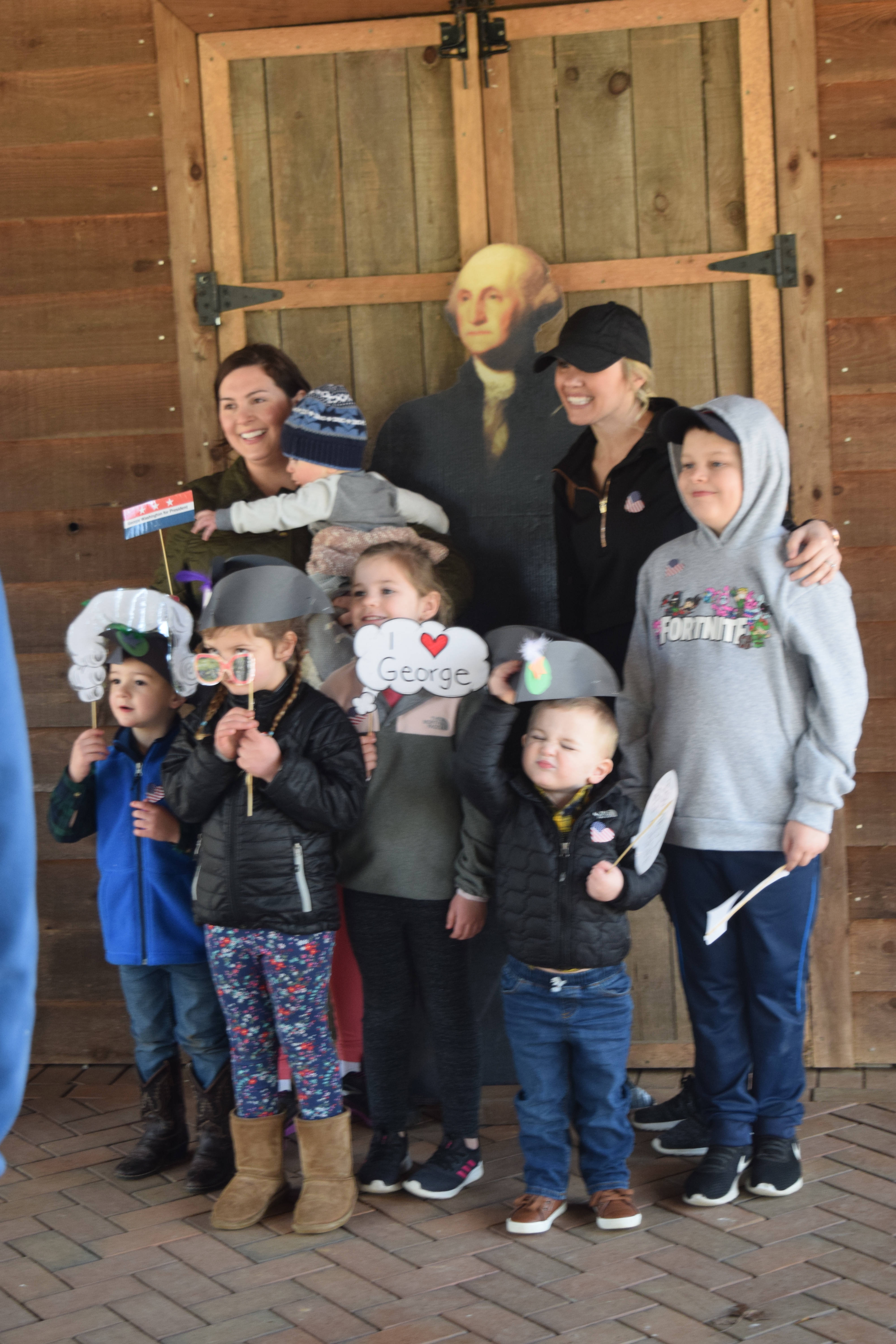
    The party is on Monday, February 19th from 10am – 3 pm.  While enjoying the grounds of Ferry Farm, you can take a selfie with “George Washington,” participate in our annual stone-throwing contest, play colonial games, and eat birthday cupcakes (while supplies last).

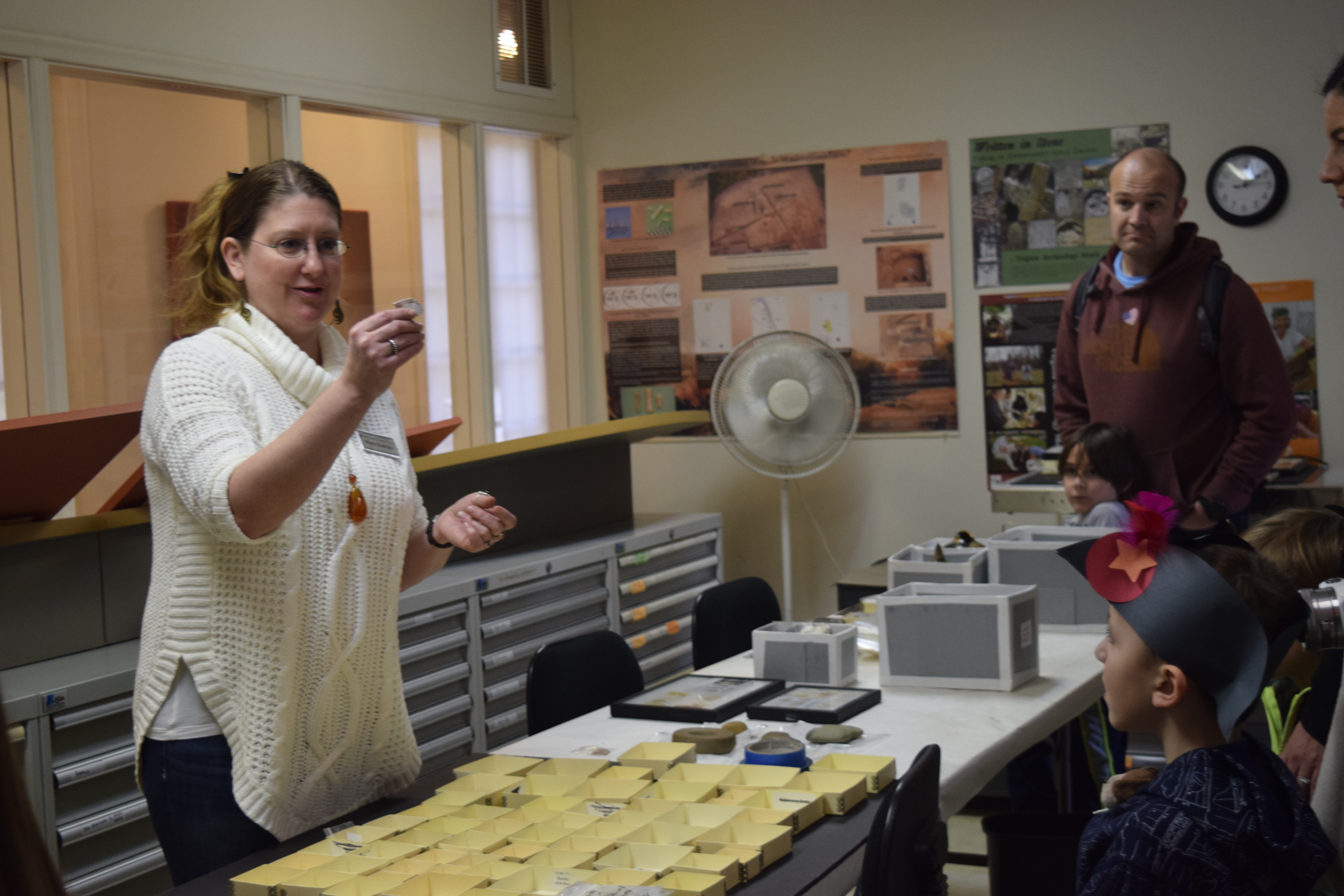
    Additionally, guests can enjoy several educational stations, take an abbreviated Washington House tour, and talk with archaeologists, historians, and other experts to learn about Ferry Farm and the Washington Family.


    Heather Baldus

    Collections Manager


    References

    George Washington Bicentennial Commission. (1932). History of the George Washington Bicentennial Celebration. Washington D.C.

    Larson, E. (2004). The Devil in the White City: Murder, Magic, and Madness at the Fair That Changed America. New York City: Knopf Doubleday Publishing Group.

    Subseries 5.8. Washington’s Birthday, Bicentennial Souvenirs, 1931-1932 . (2024). Retrieved from The George Washington Presidential Library at Mount Vernon: https://archives.mountvernon.org/repositories/3/archival_objects/14635

    The Brooklyn Daily Eagle. (1933, June 14). Fate in Doubt On Park Replica of Mt. Vernon. The Brooklyn Daily Eagle, p. 5.

    The Washington Post. (1932, January 2). 50,000 Stand In Line to Get New Stamps. The Washington Post, p. 1.

    The Washington Post. (1932, January 5). Bicentennial Stamps Profit. The Washington Post, p. 6.

  • Of Mice and Men: A brief exploration of rodents’ history in America

    A pest is a broad term for any organism that spreads disease, causes destruction, or is generally a nuisance. In the 21st century, we still constantly battle pests from squirrels who chew through your internet cables or spiders who set up house in the high corner of the ceiling, watching and judging you to evil mosquitoes that ruin outdoor activities and leave you with itchy red welts that no amount of calamine lotion will help. It is a fight as old as time. 

    I wanted to investigate one pest in particular: rodents. Why were mice and rats present in colonial homes? Why this was an issue? What were some of the methods the Washington’s would have used to combat these furry creatures? And how we know without a doubt that Kenmore and Mount Vernon had rodent tenants.

    The Suspects

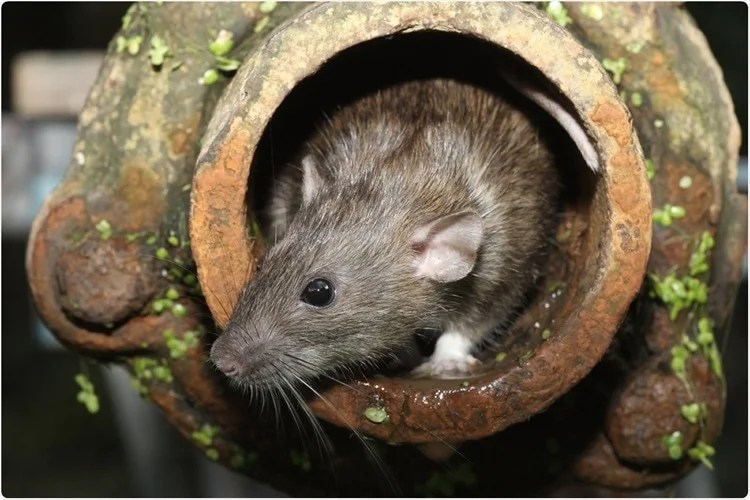
    The house mouse, or Mus Musculus, originating on the Asian and Indian subcontinent, has become the most successful invasive species in recent history. [1] They arrived in this country with the trading ships and settlers that came to the New World in the 16th century. [2][3]

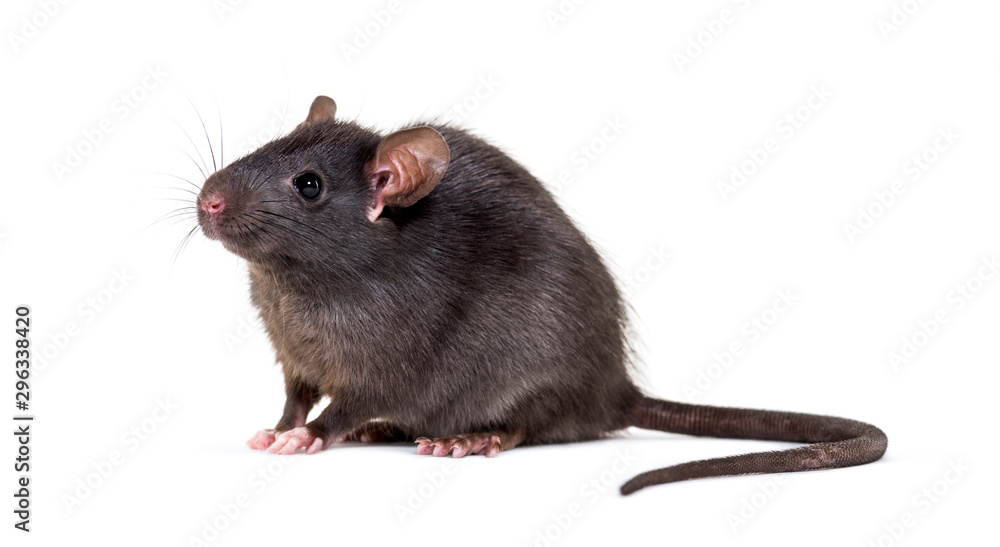
    Similarly, the black rat, aka roof rat, boarded ships for their westward journey around the same time as the seafaring mouse. [4]  Their presence is noted by the residents of Jamestown in November of 1608, stating, “When the shippes departed al the provision of the store but that the President had gotten was so rotten with the last somers rain, and eaten with rats and wormes” [5] The notorious brown rat or sewer rat, who seems to currently enjoy the cities of Chicago, Los Angeles, and New York, arrived a little later than their brethren setting foot in the new country around the 1750s.[6]

    America, the land of plenty…of garbage

    There is no nice way to say it, but living in colonial America was usually gross. Housing wasn’t always the greatest, sometimes being very rudimentary. Food storage was typically simple and easily accessible. But one of the biggest problems (or benefits if you are a rodent) was the lack of systematic waste disposal. [7] [8] Garbage (including human waste) was a personal problem often solved by opening the window and chucking out.

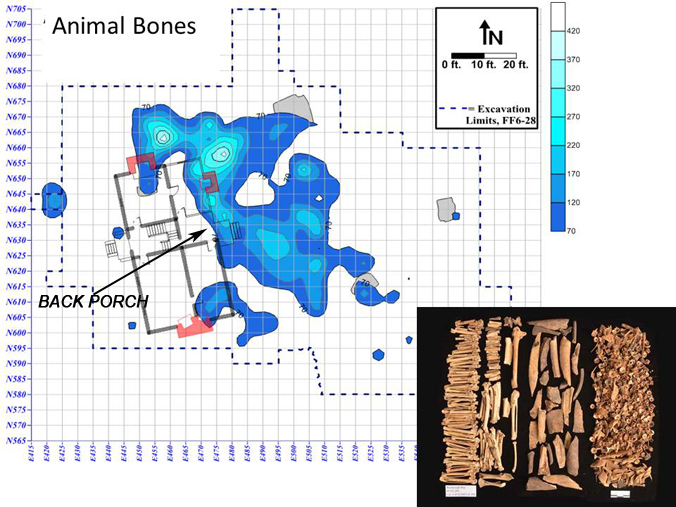
    We have abundant archeological information from Ferry Farm and Kenmore that supports these habits. A large part of Ferry Farm has been excavated over the decades, leaving clear evidence that the Washington family and their enslaved workers disposed of waste right in the backyard…off the porch.    Large amounts of artifacts were discovered and mapped, showing the proximity to the house, meaning the garbage was close, and rodents love trash.

    Map showing the concentration of animal bones excavated from the midden at the rear of the Washington house at Ferry Farm.

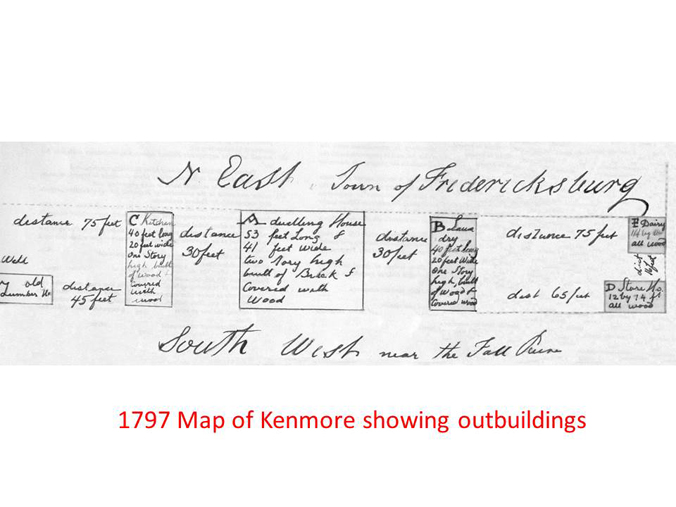
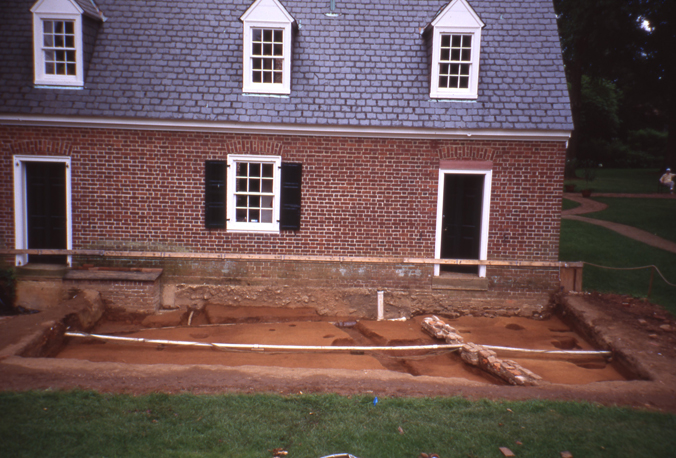
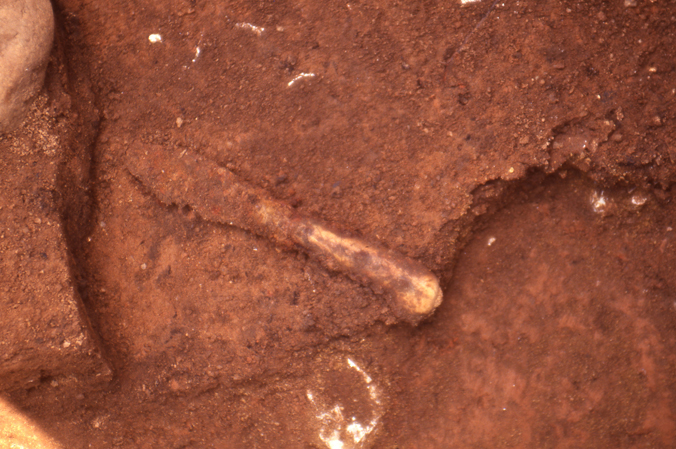
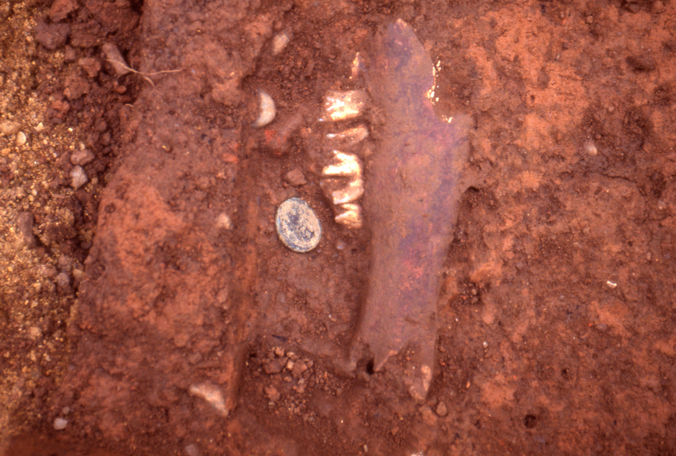
    At Kenmore, the garbage situation seemed to be a little more regulated because the grounds and buildings were planned. The main house was made of brick, surrounded by two wood-built structures containing the kitchen and laundry. During excavations of the kitchen yard (between the house and kitchen), there were minimal artifacts, but a dump site was found west of the kitchen. The location could be accessed by the window or by walking around the side of the building and contained a pig jaw, animal bones, bone-handled knife, and other objects. The kitchen is about 30 feet from the house, with the slave passage doors opening right onto the kitchen yard…plenty close enough for an enterprising rat or mouse. 

    Bad House-guests

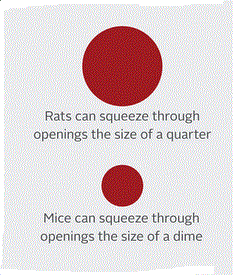
    So, why are rodents bad to have in your house? Disease, contamination, destruction, smells, and lots of poop. [9]  Rats can squeeze through an opening the size of a quarter. Mice only need the size of a dime…so they will be everywhere in your house and will bring friends. [10] Rats and mice are spreaders of disease from rat-bite fever that spreads through bacteria in the rodent’s saliva, urine, or droppings to the bubonic plague transmitted by the lice hitching a ride on their fluffy friend.[11][12]  While today, rodents are relatively low on the list of dangerous disease spreaders in an era of limited medical knowledge and treatments, it could be a matter of life or death.

    Contamination and destruction are these creatures’ modus operandi. They get into everything, period. They will eat almost any human food, chewing through any storage system, leaving behind chaos; they have even been known to eat soap and glue. [13]  While venturing through the house, they are constantly urinating and pooping, which is smelly, can create mold growth, and should never be consumed. [14] In their quest for food, they often destroy household items, eating books, chewing clothes, gnawing on mattresses, and even nesting in furniture. All of which is not only annoying but expensive to fix or replace. [15][16]

    But one of the most offensive things a mouse or rat can do is die in your walls. Take it from Colonel Landon Carter, who had to deal with a rat dying behind his wainscoting, informing everyone, “Wainscoted rooms have their conveniences [inconveniences?] as a dead rat has been stinking behind mine in the hall at least six days and is now intolerable in spite of burning tar…this dead rat stunk prodigiously.” [17] 

    Colonel Landon Carter, not too fond of rats. Source: Wikipedia

    Fighting Back

    Surprisingly, colonists used many of the same techniques we do today to eliminate these pests. Pesticides or chemical warfare was widespread, with many recommendations and recipes dating back to the 15th century. I found recipes containing helliberry leaves, bitter almonds, “seade of wild cowcumbers,” colluentida, hemlock seed, aconite or wolfsbane, and arsenic.[18]   I don’t know many of those ingredients, but apparently, they kill rodents nicely. 

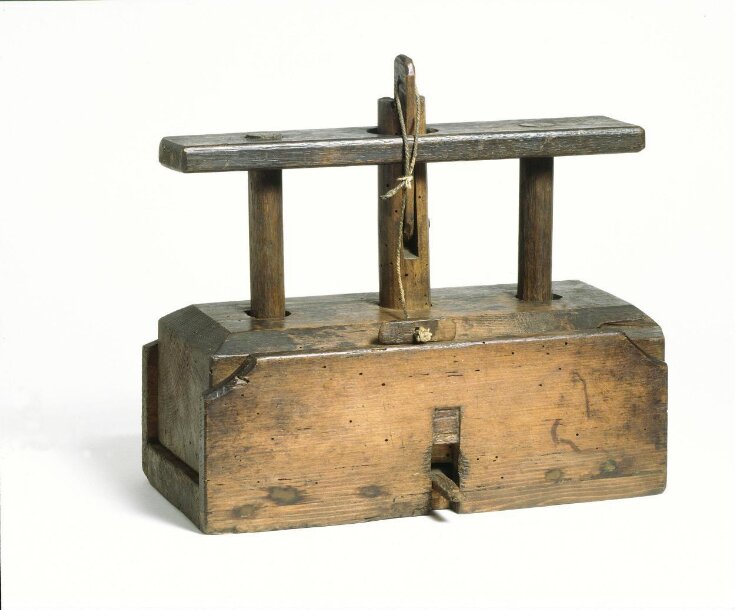
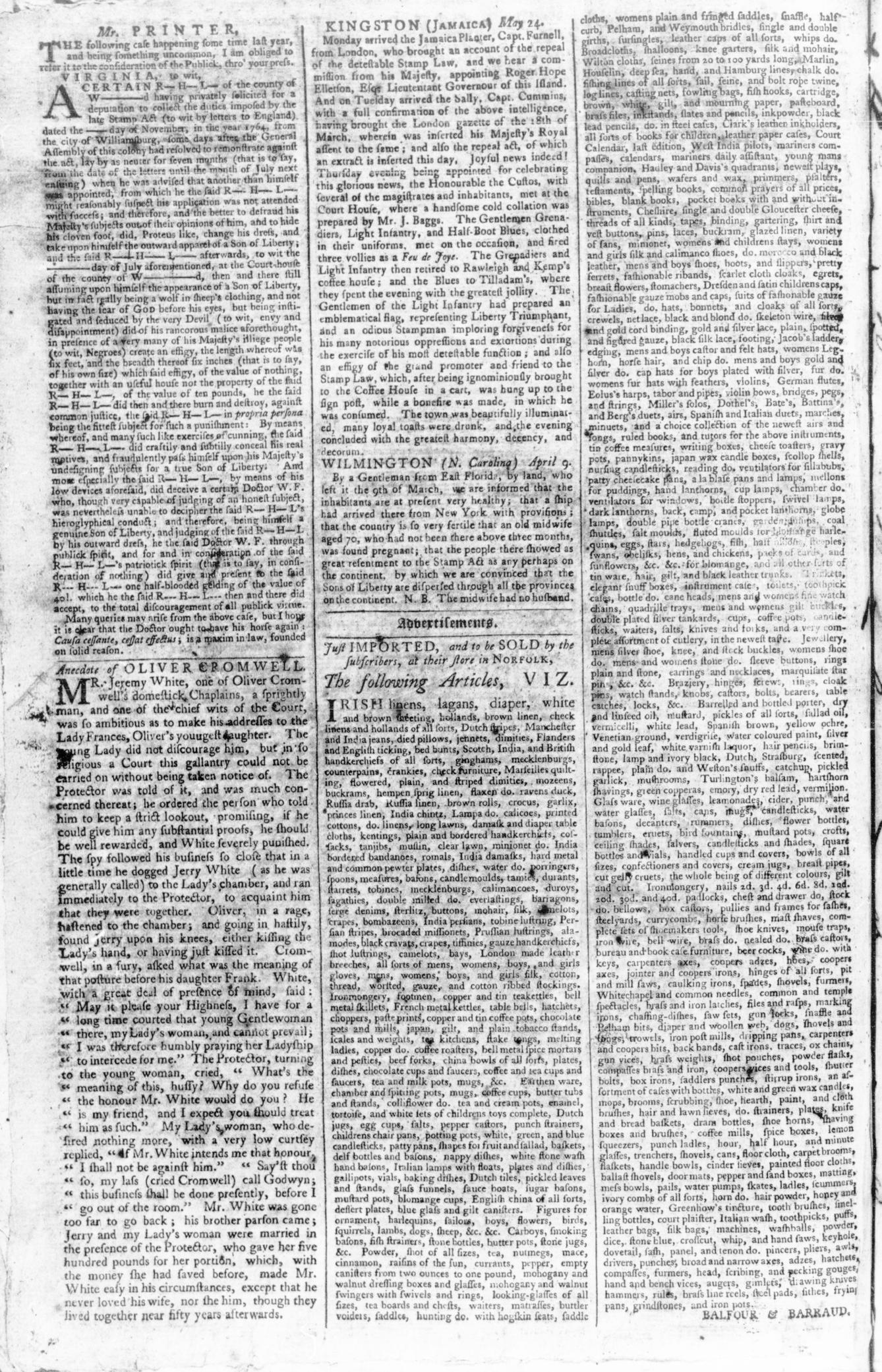
    Another method was traps, which are common today. They were pretty popular, and there were many advertisements in the Virginia Gazette from sellers touting that their mouse traps just arrived from England. [19] There are also many instructions for building easy mouse traps like the “deadfall” or “noose” traps, which are as horrible as you imagine. [20][21]

    Deadfall mouse trap, c. 1800-1850 Source: V&A Collection

    Lastly, one method that is making a comeback is animals, both cats and dogs.[22][23] Cats have been used for ages as rodent killers and are good at their job. [24]  A 14th-century manual suggests that if you have problems with vermin, “have as a good supply of cats.”[25]  The famous diarist Samuel Pepys wrote in December 1660, “my boy taking a catt home with him from my Lord’s, which Sarah hath given him for my wife, we being much troubled with mice.”[26]  There are even modern programs like Barn Buddies that save feral and skittish cats and adopt them out as “rodent control technicians.”[27]

    And dogs, mainly terriers, have been used to clear mice and rat infestations for centuries, just like cats. Ever the dog lover, George Washington had terriers at Mount Vernon, which probably helped immensely around the plantation.[28]  Today, cities like Chicago and New York use these canines in modern rat hunts.[29] It seems the skills of the terrier will always be in demand. 

    Little Historians

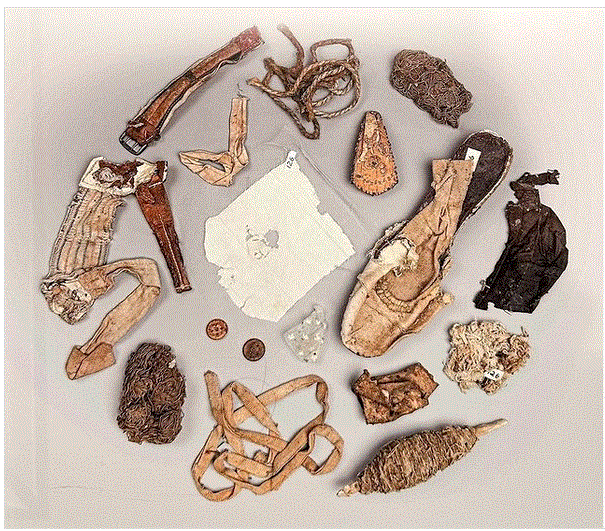
    Lastly, how do we, without a doubt, know that there were rodents at Kenmore and Mount Vernon? Rat nests. Rat nests are usually found in walls or under floorboards, and they not only prove these guys resided in the houses as long as the families themselves, but also provide a fascinating historical glimpse into the material lives of the occupants.

    Mount Vernon documented the finding of a rat nest in 1949 behind the wall in Washington’s bedchamber. When dissected, it included buttons, paper, rope, yarn, a whole woman’s shoe, and fabric matching Washington’s bed curtains.[30]  

    Objects from rat nest found in the wall of Washington’s bedchamber, 1949. Source: Mount Vernon Instagram

    Similarly, in 1989, a rat nest was found in Kenmore while investigating the walls and floorboards. We recently picked apart the bundle to find fabrics, fibers, thread, yarn, newspapers, bones, nutshells, and wood splinters. The remnants in the nest were dated no later than the early 20th century due to dates on newspaper fragments and the absence of plastics.

    In conclusion, rats and mice have been a constant annoyance since they first set foot in this country; unfortunately, that is still somewhat true. These enterprising rodents have adopted America as their own and we as fellow citizens must learn to live together despite our often distaste for each other.

    Fun Fact – We don’t want to malign rats more than they have been throughout history so we would like to add that rats make good pets.  They are quick learners, highly trainable, very clever, and have excellent memories.  They are now being trained to detect land mines, diseases like tuberculosis, and even rescue earthquake survivors.


    Heather Baldus

    Collections Manager


    [1] Agwamba, K. D., & Nachman, M. W. (2023). The demographic history of house mice (Mus musculus domesticus) in eastern North America. G3 Genes|Genomes|Genetics, 13(2). https://doi.org/February 2023

    [2] Agwamba, K.D., & Nachman, M.W. (2023)

    [3] Agwamba, K.D., & Nachman, M.W. (2023)

    [4] Newman, M. H. (2001). The vermin -killers: Pest control in the early Chesapeake [Doctoral Dissertation, Willam & Mary University]. https://scholarworks.wm.edu/etd/1539623387/, pg 111.

    [5] Newman, M.H. (2001), pg. 47.

    [6] Tapia, A. (2021, October 23). America’s 10 Most Rat-Infested Cities. Newsweek. Retrieved September 7, 2023, from https://www.newsweek.com/americas-10-most-rat-infested-cities-1638136

    [7] Newman, M.H. (2001), pg. 17.

    [8] Newman, M.H. (2001), pg. 46.
    [9] (2014, January 6). Of Mice and Men: Rodent Infestations Plague Nearly A Third of Americans. National Pest Management Association. Retrieved September 7, 2023, from https://www.pestworld.org/news-hub/press-releases/of-mice-and-men-rodent-infestations-plague-nearly-a-third-of-americans/

    [10] (2014, January 6). Of Mice and Men.

    [11] (2019, January 18). Transmission. Centers for Disease Control and Prevention. Retrieved September 7, 2023, from https://www.cdc.gov/rat-bite-fever/transmission/index.html

    [12] (2019, July 31). Ecology & Transmission. Centers for Disease Control and Prevention. Retrieved September 7, 2023, from https://www.cdc.gov/plague/transmission/index.html

    [13] Introduced Species Summary Project

    [14] (2022, December 27). How a Mouse Infestation Can Cause You Thousands in Damage. Spidexx. Retrieved September 7, 2023, from https://www.spidexx.com/blog/2022/december/5-things-you-need-to-know-about-mouse-infestatio/

    [15] Newman, M.H. (2001), pg. 17.

    [16] (2022, December 27). How a Mouse Infestation Can Cause You Thousands in Damage

    [17] Newman, M.H. (2001), pg. 84.

    [18] W, W. (1680). The Vermin-Killer (pp. 4-9). London: Samuell Lee.

    [19] Unknown, U. (1766, July 25). Just Imported and to be Sold by the subscribers at their store in Norfolk. Virginia Gazette. https://research.colonialwilliamsburg.org/CWDLImages/VA_GAZET/Images/PD/1766/0084hi.jpg

    [20] Newman, M.H. (2001), pg. 119.

    [21] Feild, Rachael. 1984. Irons in the Fire: A History of Cooking Equipment. Ramsbury,

    Marlborough, Wiltshire: The Cromwood Press

    [22] Pasley, J. (2023, March 18). How the rat population in New York City grew by 800% and infested the city in less than 65 years. Yahoo News. Retrieved September 7, 2023, from https://news.yahoo.com/rat-population-york-city-grew-143000754.html

    [23] Cass, J. (2017, November 10). Chicago needs good dogs to handle the rat epidemic The Chicago Way. Chicago Tribune. Retrieved September 7, 2023, from https://www.chicagotribune.com/columns/john-kass/ct-met-rats-terriers-kass-1112-story.html

    [24] Newman, M.H. (2001), pg. 115.

    [25] Bayard, T. (1991). A Medieval Home Companion Housekeeping in the Fourteenth Century (1st ed., pp. 97-98). Harper Collins Publishers.

    [26] Pepys, S. (1983). The diary of Samuel Pepys : A new and complete transcription (p. 325). London: Bell.

    [27] (n.d.). Adopt a Barn Cat. Barn Cat Buddies. https://www.barncatbuddies.org/

    [28] (n.d.). Dogs. George Washington’s Mount Vernon. http/www.mountvernon.org/library/digitalhistory/digital-encyclopedia/article/dogs/

    [29] Cass, J. (2017, November 10). Chicago needs good dogs to handle the rat epidemic The Chicago Way. Chicago Tribune. Retrieved September 7, 2023, from https://www.chicagotribune.com/columns/john-kass/ct-met-rats-terriers-kass-1112-story.html

    [30] Mount Vernon [mount_vernon]. “In 1949, preservation staff removed a rat’s nest from behind a wall in the Washingtons’ bedchamber..”* Instagram, May 19, https://www.instagram.com/p/CsbIc9sOO_2/.

  • Corncrib: A Building as Corny as it Gets

    If you have followed the news of our excavations, you will have kept up to date with our building finds. The past two summers helped uncover evidence of one such structure, which we now believe represents a corncrib. While the name may seem self-explanatory, we have frequently heard the question, “What is a corncrib?”  To answer this, we thought we would dedicate our newest blog to it.

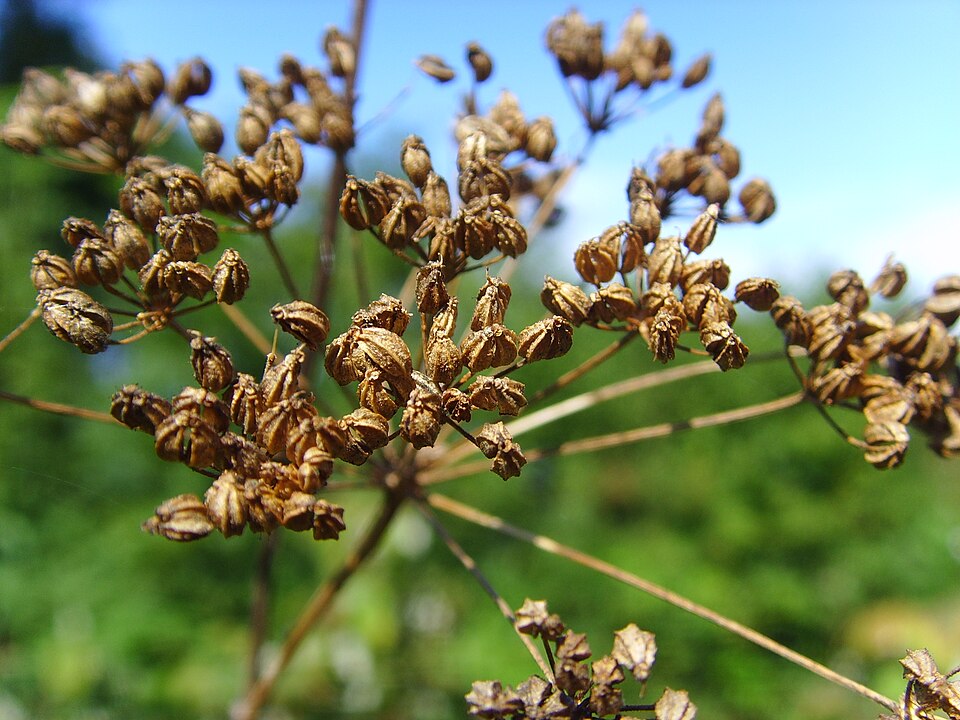
    Indian Corn Source: Wisconsin Horticulture

    Corn as a Crop

                Long cultivated by Native Americans, early colonists quickly adopted corn into their agricultural repertoire. As a crop, corn proved easy to cultivate due to its hardy and adaptable nature, and its high yield to seed ratio made it a prosperous choice. The corn season lasted from planting in early May to the September-October harvest. After this, collected corn, counted as barrels, lay in corncribs. Husking and shelling occurred as needed since home consumption only required a small amount at a given time. This process continued throughout the winter months. 

                As a food staple, corn became an important part of free and enslaved diets in Colonial Virginia. Corn grew in such abundance that it reportedly fed everything. This led to Virginia husbandry relying on the crop and any decline in quantity led to a state of distress. As for the enslaved, records of food rations allotted to enslaved communities often refer to “pecks” or “bushels” of corn. Corn served as a useful ration since small amounts went far and multiple uses for it existed. It also provided better nutrition, which did not go unnoticed by enslavers. Instances of enslaved rations excluding corn resulted in a decline in health, energy, and production. This made the inclusion of the staple essential.  

    Despite their forced labor, enslaved communities integrated corn harvesting into their culture. Annual so-called corn shucking festivities proved frequent sights on plantations, especially as corn production expanded. During this time, the harvested corn lay in heaps next to the crib. As the size of the harvest required many people for husking, this event provided time for socializing. A moment filled with music and dance, even neighboring enslaved individuals and relatives not attached to the property could attend under the guise of providing extra labor. This latter detail explains why such gatherings went ahead. Enslavers often encouraged corn-shucking festivities to speed up the process and at times offered rewards to the person who could shuck the most corn.

    Corn Shucking, Virginia, 1840s Source: Slavery Images

                The expansion of corn production lies in the decline of tobacco. While tobacco served as the original cash crop of Virginia, its cultivation damaged soils, resulting in increasingly poor crop cycles. Some planters, including George Washington at Mount Vernon, opted to plant grains to avoid this trend and thus have more return each year. As tobacco prices fell in the late 1700s, due in part to the Revolution, more Virginia planters turned their focus to grains. This led to an expansion in corn cultivation, as it became a central part of the economy.

    No longer used for just animal feed or local consumption, corn became a cash crop. In doing so, more structures related to grains appeared or underwent expansion. Gristmills became more common as did grain stores near wharfs. On plantations, the land devoted to grains increased to sustain production with additional or larger storage buildings, such as corncribs, appearing to accommodate the harvest. Corncribs would soon rank amongst the most common structures to appear on farmlands. Apart from buildings, husking and shelling additionally underwent a change as this now occurred over the course of a few weeks, thus allowing for enslaved gatherings, rather than throughout the winter.

    Corncrib

                With corn holding such an important position in society, it required proper storage. Native Americans constructed the first corncribs with Europeans taking note of them shortly after arriving on the continent. The structure evidently held significance for indigenous tribes as many place and group names derive from the various words for a corncrib. Interestingly, our modern term “barbecue” comes from “barbacoa,” an indigenous term from present-day Georgia, which has several meanings including corncrib. Apart from ranging in size, the design of corncribs dating from pre-contact to present appear very similar, as several key elements remain consistent.

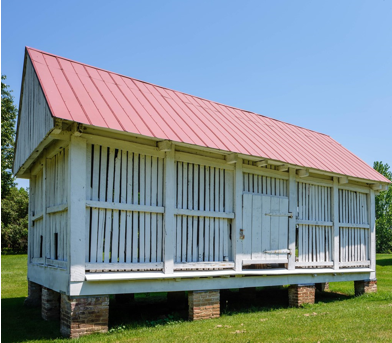
    The main roles of a corncrib constitute storing harvested corn, protecting it, and keeping it dry. To that end, the most recognizable characteristic involves the floor of the structure resting at least a foot off the ground via posts or piles/piers. Raising the structure deterred vermin from accessing the crop and helped keep it dry. The design of the sides additionally helped with this latter desire as vertical slats or offset horizontal siding provided gaps for airflow. Vertical slats for “cribbing” proved the most common during the colonial period.

    Corncrib raised on piers with vertical slats Source: Thomas Stone National Historic Site

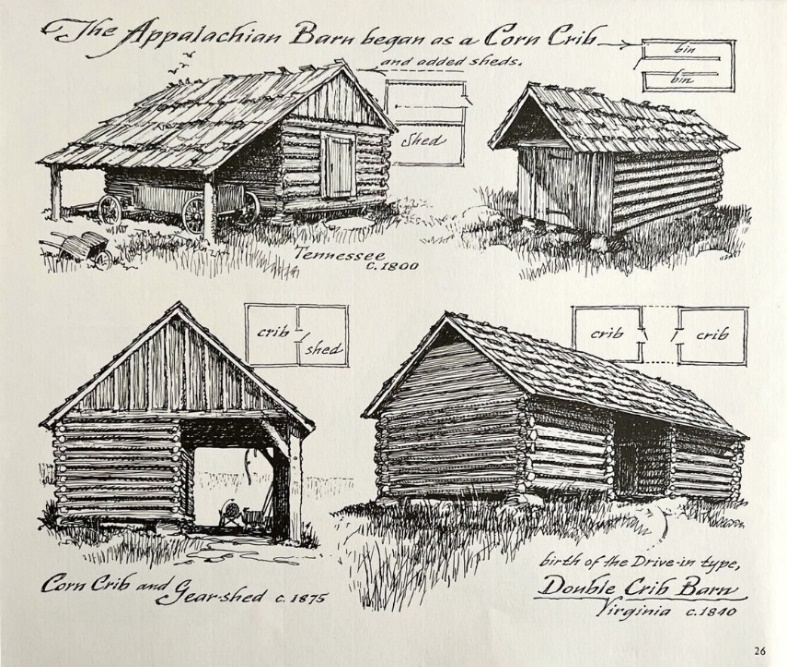
    Overall, the structure required robust timbers and construction techniques that would allow it to carry dead loads and resist interior pressure. Once constructed, the building generally took on a rectangular shape with a gabled roof of shingles, boards, or thatch. This roof could extend over one or more sheds attached to the long sides of the building while a door, typically on a shorter side, provided interior access. The interior varied from an open plan to one with removable dividers to form cribs, hence the name of the structure. Post-colonial era designs could include an additional crib to form a double or “drive-thru” corncrib.

    Corn Crib Designs Source: Sloane 1990: 26

    Since its adoption by colonists, the building’s name has experienced some variation. While we have gone with “corncrib” at Ferry Farm, several other accurate terms exist. The most simple, and unhelpful for interpreting records, consists of “barn.” During colonial times, “barn” could refer to nearly any outbuilding, and corncribs fall under a barn style called “crib-barns.” This, in turn, may refer to the building. While no standard for outbuildings included on properties existed during this time, corncribs counted amongst the most common. Other name options include the similar “corn-house” and the term “stacks.” This latter term may or may not have “corn” attached to it, but referenced ability to relocate the structure. In the end, unless corn appears in the name, identifying the building requires context clues such as location, crop knowledge, structure design, and recorded narratives.

    Our Findings

                So what did we find to suggest we had a corncrib? To start, we know from documents dating to Washington occupation that corn constituted one of the crops grown at Ferry Farm. We knew little beyond this until archaeology provided an insight. Across our 2020 and 2021 field seasons, we uncovered four aligning postholes that each measured 10ft apart. At the same time, a decline in artifact count occurred, suggesting our dig lay on the outskirts of the work yard. In 2022, we expanded this dig area to determine if the postholes belonged to a fence or, as we hoped, a building. The low artifact count continued to support the theory of entering the agricultural world and we soon discounted a fence line, as our excavation revealed no further postholes on that line. Moving 20ft south from the postholes, we uncovered a line of three features, also 10ft apart, which aligned with the first three postholes. The issue? They came from piles/piers rather than posts, and one of the stones for that line remains in place (Fig. 5).

    Image depicting the lines of 4 postholes and 3 pile/pier sites as of 2022

                The two parallel lines evidently went together, but we now needed to identify a structure that used both building techniques. After perusing historic images and sources on 18th century agricultural buildings, we identified the corncrib as the only structure that fit this construction. While corncribs most often stand alone on piles/piers or posts, some examples include an open shed area for carts and temporary storage as discussed earlier. Neither part of the structure would have led to large artifact deposits as the crib merely stored corn while the shed area supported the act of storage.

                So what did our corncrib look like? Well, apart from identifying the crib and shed portions, we can say the crib must have rested at least a foot off the ground. Furthermore, in keeping with standard construction, the siding, likely vertical slats, would have breaks in between to allow airflow. As for the basic dimensions of the corncrib, our emergency access road unfortunately runs through the unexcavated portion.

    Since we cannot inhibit this access, we only have the complete outline of the shed and one side of the crib (Fig. 6). Still, we can make a few estimates for the structure’s dimensions. While we cannot determine height at this stage, the outline of the shed indicates this portion measured 20x30ft. This, in turn, tells us that the corncrib itself measures 30ft in length. As for the crib’s width, several details allow us to determine a range. One source stated that the length of a corncrib should be 2-3 times the width. Of the examples we identified, they generally had a length about twice the size of the width, with the widest one measuring 20ft. On top of this, shed portions do not appear much wider than the accompanying crib. With this in mind, our crib likely measures 15-20ft in width.

    Overview of excavation site showing the 20x30ft shed outline and start of the crib

    Future

                By now, you must wonder when you will see a corncrib at Ferry Farm. One of our goals involves reconstructing the Washington landscape and this will include the corncrib. Currently, we have started construction on a root cellar and slave quarter. Once completed, these structures will be part of your visit and we will turn our attention to reconstructing more areas. This may include the corncrib, but will likely take a few years. In the meantime, continue to visit our ongoing construction projects and make sure to talk with the archaeologists and interpreters.

    Our future corncrib may look similar to this small one at the Museum of Appalachia Source: Wikipedia

    Historical Fact: Those familiar with the life of Harriet Tubman may recognize the term “corncrib” as she, her brothers, and several others briefly hid in one while she led them to freedom.


    Emma Schlauder

    Research Archaeologist


    Belanger, Fergus & T. H. Warner   1934     Notes about Williamsburg and William and Mary College. The William and Mary Quarterly 14(3): 239-240.

    Carson, Cary & Carl Lounsbury (editors)   2013     The Chesapeake House: Architectural Investigation by Colonial Williamsburg. The University of North Carolina Press, Chapel Hill, NC.

    Carter, Landon  1908     Diary of Col. Landon Carter. The William and Mary Quarterly 16(3): 149-156.

    Chandler, Dana 2000     The Prehistory of Randolph County, Alabama. Central States Archaeological Journal 47(1): 28-29.

    Copeland, Pamela C. & Richard K MacMaster 1989     The Five George Masons. University of Virginia Press, Richmond, VA.

    Harriet Tubman Underground Railroad Byway  2023     25. Choptank Landing: Site of Harriet Tubman’s Most Daring Rescues. Harriet Tubman Underground Railroad Byway < https://harriettubmanbyway.org/choptank-landing/&gt;. Accessed 19 June 2023.

    Herman, Bernard L.  1992     The Stolen House. University Press of Virginia, Charlottesville, VA.

    Hollingsworth Jr., G. Dixon  1979     The Story of Barbecue. The Georgia Historical Quarterly 63(3): 391-395.

    Katz-Hyman, Martha B. & Kym S. Rice (editors) 2011     World of a Slave: Encyclopedia of the Material Life of Slaves in the United States. Greenwood, Santa Barbara, CA.

    Kimball, Fiske  1954     Gunston Hall. Journal of the Society of American History 13(2): 3-8.

    Lanier, Gabrielle M. & Bernard L. Vlach  1997     Everyday Architecture of the Mid-Atlantic: Looking at Buildings and Landscapes. The John Hopkins University Press, Baltimore, MD.

    Linebaugh, Donald W. 1994     “All the Annoyances and Inconveniences of the Country”: Environmental Factors in the Development of Outbuildings in the Colonial Chesapeake. Winterthur Portfolio 29(1): 1-18.

    Lounsbury, Carl R. (editor) 1994     An Illustrated Glossary of Early Southern Architecture and Landscape. University Press of Virginia, Charlottesville, VA.

    Morgan, Philip D.  1998     Slave Counterpoint: Black Culture in the Eighteenth-Century Chesapeake & Lowcountry. The University of North Carolina Press, Chapel Hill, NC.

    NPS 2021     Barnyard Trail: Corn Crib. Fire Island National Seashore, NPS <https://www.nps.gov/ places/barnyard-trail-corn-crib.htm>. Accessed 24 May 2023.

    Siener, William H. 1985     Charles Yates, the Grain Trade, and Economic Development in Fredericksburg, Virginia, 1750-1810. The Virginia Magazine of History and Biography 93(4): 409-425.

    Sloane, Eric 1990     An Age of Barns, reprint of earlier edition. Henry Holt & Co., New York City, NY.

    Speck, Frank G. 1907     Notes on the Chickasaw Ethnology and Folk-Lore. The Journal of American Folklore 20(76): 50-58.

    Stilgoe, John R. 1982     Common Landscapes of America, 1580-1845. Yale University Press, New Haven, CT.

    Wells, Camille 1993     The Planter’s Prospect: Houses, Outbuildings, and Rural Landscapes in Eighteenth Century Virginia. Winterthur Portfolio 28(1): 1-31.

    Upton, Dell & John M. Vlach (editors)  1986     Common Places: Readings in American Vernacular Architecture. The University of Georgia Press, Athens, GA.

    Vlach, John M. 1993 Back of the Big House: the Architecture of Plantation Slavery. The University of North Carolina Press, Chapel Hill, NC.

    Washington, Augustine Jr. 1750  Record of Sale and Payment to Mary Ball Washington.

    Washington, George  1749 Letter to Lawrence Washington dated 5 May 1749. Washington Papers, National Archives, Washington, DC.

    Washington, George  1771 Survey of Ferry Farm.                 

    Washington, Mary Ball Undated     Letter to John Augustine Washington, undated no. 154. Box: 87, Folder: undated no. 154, Identifier: RM-904; MS-5404, The George Washington Presidential Library at Mount Vernon, Mount Vernon, VA.

  • 2023 Ferry Farm Dig Preview

    Spring is here, which means another season of exciting archaeological work at Ferry Farm is about to begin! Ferry Farm, the boyhood home of George Washington, has been conducting archaeological investigations for over 30 years with the aim of recreating and analyzing the 18th-century farm landscape that shaped George Washington during his formative years as a young man. Every season brings new discoveries, and this year will be no different.

    This season we will be investigating two separate areas within the historic site. The first (FF-38) is a feature discovered in 2018 when we monitored the excavation of a utilities trench for the reproduction Washington house. This large feature, approximately 5’ x 7’ and over 2.5’ deep, is filled with dark brown organic soil and contains 18th-century artifacts, including a wig curler, a signature find for our site. Our excavations will expose the entire plan view of the feature and how it relates to other possible features in the surrounding area.

    Figure 1. The location of our two summer projects in the historic area.

    The second area of investigation (FF-40) is the site of a colonial-era kitchen that burned early in the Washington family tenure of the farm. Though the building’s remains were the subject of previous archaeological studies in the 1990s, we are going to open the site up again to have a second look. Since we have been unable, so far, to locate the kitchen that would have replaced this one after it was destroyed in a very hot fire, we want to continue examining the one we do know about!

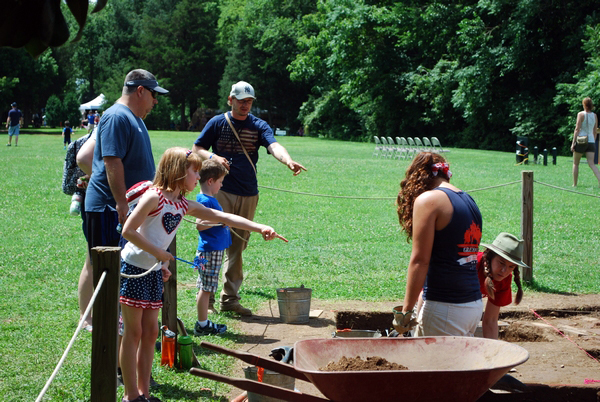
    The dig begins the week of May 8th and ends July 21st. The crew will be on-site Monday through Friday, 8 am to 4 pm. We are more than happy to answer questions about our work and show our visitors the artifacts that we find. Assistance is always welcome at our sifting screens, so come by and get your hands just a little bit dirty as we search for answers in the ground!

    Judy Jobrack

    Archaeology Field Director

  • Music from the Past: Jaw Harps and their Players

    What is a jaw harp, and what does it tell us? This little instrument likely looks familiar, but you may not know that much about it. That certainly proved the case for me when I decided to research the four we have in our collection.

    To start, a jaw harp is an extremely simple instrument to make and play. It only requires an iron or copper alloy frame and a flexible metal tongue, or lamella, which runs through the center. Manufacturing styles vary, but many undergo casting or forging to create the bow shape and arms. The lamella most often attaches by hammering it in place. This part is rarely preserved in the archaeological record, so only the frame remains for us to find.

    To play the instrument, one places it against their mouth and plucks the lamella while breathing out. Varying your breathing and the shape of your mouth cavity allows the sound to change. That said, while the instrument is easy to play, it proves difficult to play well, and many dislike its boings and buzzes. Those skilled at the jaw harp, however, went on to play for the likes of Frederick the Great and George IV. They even managed to play more than one jaw harp at once.

    Man playing a jaw harp (Mackinac State Historic Parks 2018)

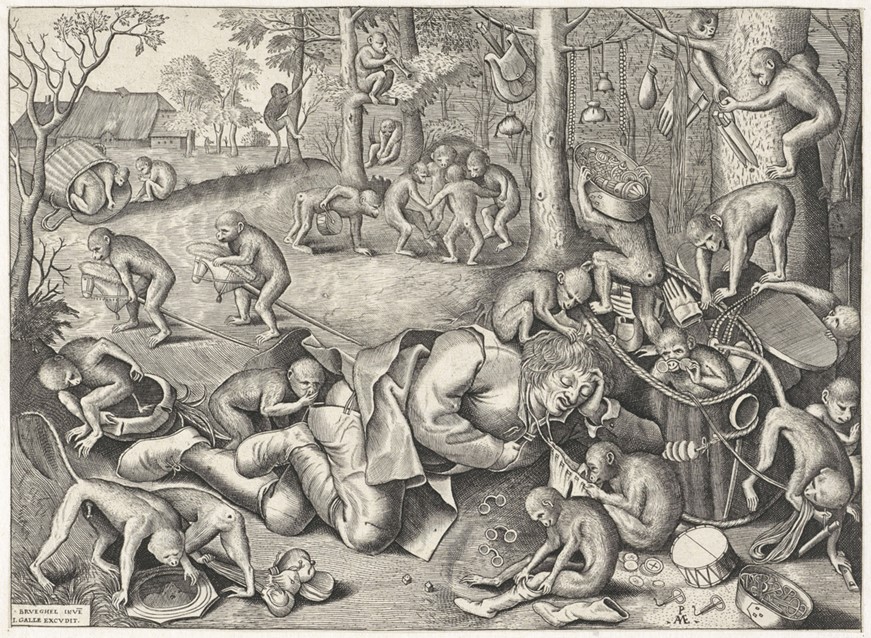
                The history of jaw harps dates beyond the fifth century BCE in Asia. Archaeological evidence places the instrument’s arrival in Europe around 1200, with the migration occurring along northern routes through the Baltic. Due to their mundane nature, jaw harps rarely appear in historic accounts or art. Two exceptions include Pieter Bruegel the Elder’s The Sleeping Peddler Robbed by Monkeys (1562), which helps identify peddlers as the main purveyors of jaw harps, and accounts of the North Berwick Witch Trials (1590-1592), where one of the accused performed for James VI of Scotland. Witches aside, the most common players at this time included the lower classes and soldiers.

                While jaw harps may not have generated the most attention, they played key roles in early trade deals in North America. Jaw harps likely first came to North America in the company of soldiers, but they soon gained popularity amongst indigenous groups, such as the Five Nations Iroquois. Confirmation of this occurred as early as 1595, with Robert Dudley reporting that the instrument made a successful trade item. As trade continued, the exchange of jaw harps frequently related to the fur trade, but some larger and more dubious, deals included the acquisitions of Staten Island and Maryland. That said, even the fur traders came under fire for using jaw harps of poor quality.

    Within established colonies, jaw harps appeared as an item frequently sold by merchants. Numerous adverts appeared in papers between the 1730s and 1780s. For Virginia, this included merchants in Williamsburg during the 1760s, as well as Alexandria and Gloucester in the 1770s. Production would have occurred in England with the then imported good available to all customers in the colonies. We know that soldiers played them during the French & Indian War and the American Revolution. This connection to soldiers would even continue through the Civil War. As for other players in Colonial times, a couple of adverts for runaway indentured servants placed in Benjamin Franklin’s Pennsylvania Gazette listed jaw harps as a special talent of the individual and amongst the items possibly carried by them.

    Aside from these individuals, the other most common players consisted of enslaved people. Evidence of this comes solely from the archaeological record. Excavations have uncovered jaw harps at a number of sites in Virginia, including Monticello, that date from the mid-1700s to early 1800s. In all of these cases, the instruments came from enslaved domestic quarters and work areas. Due to their nature, jaw harps would have proved an easy item for an enslaved person to hold on to, use, and share with others. In use, they would have been part of the enslaved music culture, which offered individuals a respite from work, a way to express themselves, and perhaps an outlet for the continuation of West African cultural practices.

    As I mentioned earlier, four jaw harps reside in our collection. Three came from the Washington cellar, while the fourth came from a Civil War trench that ran through the cellar. To understand their significance, an examination of the artifacts themselves and their contexts help us identify and date them.

    Physically, all four appear to reflect a design known as Gloucester. This means they consist of an iron frame and represent one of the most common designs in America during Colonial times and after the Revolution. We know that the ones that came directly from the cellar pre-date the 1830s due to the collapse of the house. A closer look at the artifacts accompanying them provide us with a range of the 1780s-1830s for the date of deposit.

    Depiction of a Gloucester-type jaw harp sans lamella

    As for the harp from the Civil War trench, while this may seem like an obvious identification, it remains tricky. A Union soldier may have played and discarded it while encamped here. However, when people filled the trench after the war, they may have used dirt that contained earlier artifacts from Ferry Farm. As the trench ran through the cellar, this harp ultimately lay close to the other three, and the dirt used to fill the trench may have come from that area. We may never know for sure on this particular piece, but it likely dates either to the war period or as a contemporary of the other three.

    Ferry Farm’s jaw harps

    While the dates provided occur after the Washington occupation of Ferry Farm, jaw harps existed on the market during their time, meaning the instrument may have had an earlier presence. As for who played them, these instruments likely reflect use by enslaved individuals. After the Battle of Princeton (1777) claimed the life of Hugh Mercer, who had purchased Ferry Farm from George Washington, the property passed through a series of renters. None occupied the site for long, but an enslaved population maintained a constant presence as each renter relied on enslaved labor. This continued up until the Civil War. With the evidence of enslaved people using jaw harps at other sites in Virginia and the fact that enslaved individuals constantly lived or worked at Ferry Farm, we can attribute these artifacts to them.

    One of our future projects involves reconstructing the enslaved quarters at Ferry Farm to better represent and tell the enslaved narrative. As jaw harps represents an activity that occurred during the limited down time allocated to enslaved people and reflects the importance of music in the culture, one will certainly be included upon completion of the project.  

    After all that history and archaeology, I leave those wondering what a jaw harp sounds like with the perfect piece. Fittingly titled “Washington’s Birthday,” this 1909 piece by Charles Ives utilizes the instrument to invoke the sound of country dances on a cold, dreary day in February. To hear the jaw harp, skip to 7:37. Enjoy!

    Emma Schlauder

    Research Archaeologist


    References

    Clyne, Anthony, 1928. The Jew’s Harp a Century Ago. The Musical Times 69(1024): 508-509.                                                                                        

    DAACS, 2022.Artifact Query 3, 8 August 2022. The Digital Archaeological Archive of Comparative Slavery (https://daacsrc.org/queries/aq_three_results).

    Kolltveit, Giermund, 2006. Jew’s Harps in European Archaeology. Archaeopress, Oxford, UK.

    2009, The Jew’s Harp in Western Europe: Trade, Communication, and Innovation, 1150-1500. Yearbook for Traditional Music 41: 42-61. 

    Samford, Patricia M.,1994. Searching for West African Cultural Meanings in the Archaeological Record. African Diaspora Archaeology Newsletter 1(3): 1-3.                                                                                                            

    Wright, Michael, 2008. The Jew’s Harp in the Law, 1590-1825. Folk Music Journal 9(3): 349-371.    

    2011, The Jew’s Harp Trade in Colonial America. The Galpin Society Journal 64: 209-218.


  • Camp George v. George: A Summer Camp to Travel Back to Colonial Virginia

    School is out for summer…almost! Students are counting down the days until they are free from homework, but the learning does not have to stop!. The George Washington Foundation has been busy preparing fun-filled summer camps to encourage critical thinking through exploring the past.

    In our Camp George v. George, students will be asked, “Would you be an American patriot or a British loyalist?” as they learn about George Washington and his family’s experience living under the rule of King George III.

    The camp will alternate between George Washington’s Ferry Farm, his boyhood home, and Historic Kenmore, his sister’s later-in-life house. George lived at Ferry Farm from six years old until 22 years old. This was where George learned how to survey, dance, and petitioned for his first military office at Ferry Farm. His time at Ferry Farm shaped him into the man who navigated the battlefield and the political arena to pursue the American cause.

    Similarly, George’s sister, Betty Washington Lewis, was shaped by her time at Ferry Farm. She was instructed in the customs of gentility, which included the tea ceremony.[1] While at Ferry Farm, her uncle, Joseph Ball, gifted a silver tea set and other tools so Betty could refine her skills as a future lady of the house. During this time, Betty was taught the expectations for young women in colonial Virginia.

    Washington’s Ferry Farm

    While Betty’s experience at Ferry Farm was significant, her story does not end there. The skills she acquired at Ferry Farm equipped her to marry Fielding Lewis, a wealthy merchant in town. Twenty-five years later, they moved into their new home at Kenmore in 1775. Fielding and Betty envisioned the mansion as the site of lavish social events filled with tea, dancing, and awe from their guests. However, that dream was never realized, and the couple sacrificed greatly for the American cause. Betty managed the household and attended to the needs of the Washington family, including her mother, Mary. Fielding could not fight in the war, but he voluntarily gave up his trading business with British merchants, donated supplies to the war effort, and financially supported a gunnery in Fredericksburg.[2] Fielding also collected debts and handled several land deals for his brother-in-law.[3] The stress of the financial strain took its toll on Fielding, and he passed on December 7, 1781. Betty struggled financially for the rest of her life due to Lewis’ sacrifices for the Patriot cause.

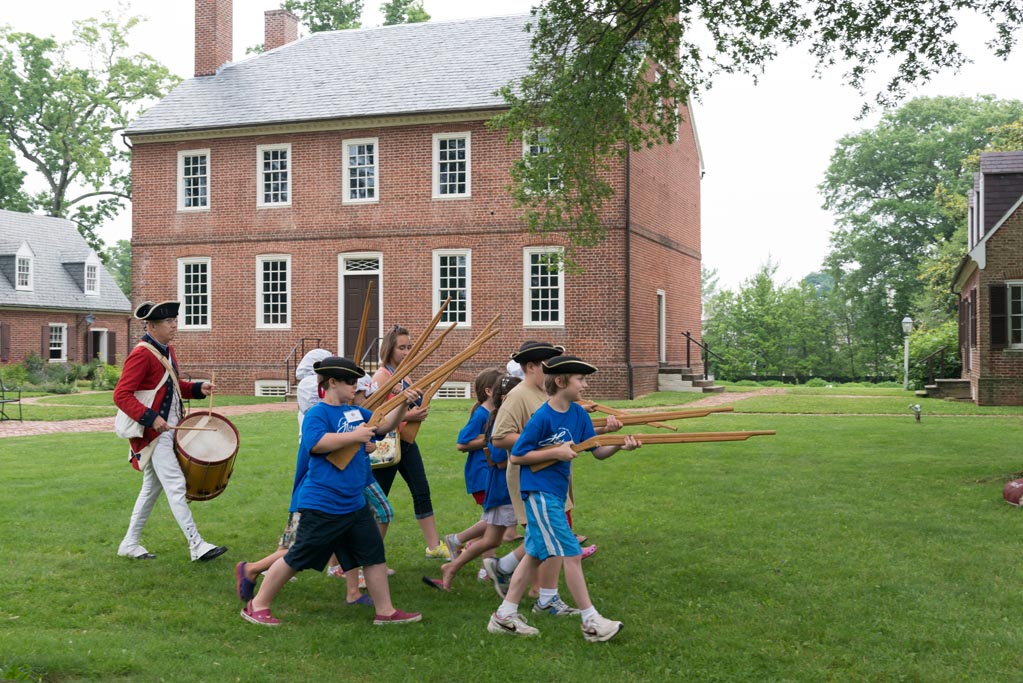
    Historic Kenmore and Ferry Farm will be the sites where campers will learn about life in colonial America. Archaeologists, socialites, dancers, surveyors, and soldiers are just a few of the roles that the campers will embody as they explore the cultural, social, and military life of colonists during the Revolutionary War era. Activities will include a mock archaeological dig, a surveying hike, dancing lessons, militia drills, and more! This experience will provide insight into life before, during, and after the American Revolution. George, Betty, and Fielding, along with many others, had their lives transformed by society, government, and friendships. What would you do in such instances? That is the question campers will think about during their experiences, but don’t worry, plenty of fun, games, and activities will be included!

    Camp George v. George will be offered in two sessions for families’ convenience. Session A will be June 13 – 17 from 9 am to 12 pm, and Session B will be from July 25 – 29 from 9 am to 12 pm. Please see our events page at Kenmore.org/events for more information!

    Kaylie E. Schunk

    Manager of School & Youth Programs


    [1] Laura J. Galke, “The Mother of the Father of Our Country: Mary Ball Washington’s Genteel Domestic Habits,” in Northeast Historical Archaeology 38 (2009): 33.

    [2] “Fielding Lewis;” Palmer, and McRae, eds. Calendar of Virginia State Papers, 456, 502-3; Duke, Kenmore and the Lewises, 94-96; Fleming, Story of Kenmore, 9; “To George Washington from Fielding Lewis, 14 November 1775,” Founders Online, National Archives, Source: The Papers of George Washington, Revolutionary War Series, vol. 2, 16 September 1775?–?31 December 1775, ed. Philander D. Chase (Charlottesville: University Press of Virginia, 1987), 371–373.

    [3] “From George Washington to Fielding Lewis, 20 April 1773,” Founders Online, National Archives, Source: The Papers of George Washington, Colonial Series, vol. 9, 8 January 1772?–?18 March 1774, ed. W. W. Abbot and Dorothy Twohig (Charlottesville: University Press of Virginia, 1994), 221–224; “To George Washington from Fielding Lewis, 8–9 May 1773,” Founders Online, National Archives, Source: ibid., 229–230. “To George Washington from Fielding Lewis, 24 May 1773,” Founders Online, National Archives, Source: ibid., 235.

  • Happy Birthday, George!

    We are excited to be celebrating George Washington’s 290th birthday (although it’s the day before his actual birth date) on President’s Day! On February 22, 1732, George was born in Westmoreland County, Virginia. Some interesting facts are associated with his birth-date and the subsequent birthday celebrations he would have as an adult. For instance, did you know that he technically has two birthdays? It’s true! Under the Julian calendar, his birth date would have been February 11, 1731. This means that his birthday was actually earlier in the month until the calendar switched to the Gregorian calendar in 1752. The Gregorian calendar added 11 days and one year to his date of birth!

    Just when did his birthday become so popular to celebrate? The earliest known date of his birthday being recognized (beyond his family) was actually during the American Revolution. It was the winter of 1778, and the soldiers were desperate to keep warm at their headquarters in Valley Forge, Pennsylvania. General Henry Knox planned the event. Clearly, General Knox did more than coordinate the movement of cannons from Canada to Boston; he apparently could also list “party planner” upon his resume.

    General Henry Knox aka “Party Planner”. Source: Wikimedia Commons

    The festivities of this inaugural birthday bash included a parade from an artillery band consisting of drums and fifes. Around this time, George was also becoming known as the “Father of his Country,” replacing King George III at every chance. For instance, the King’s birthday would no longer be listed in the Almanac. Instead, you would find the birth-date of George Washington. However, that doesn’t quite answer the question of when his birthday became an annual event on a broader scale.

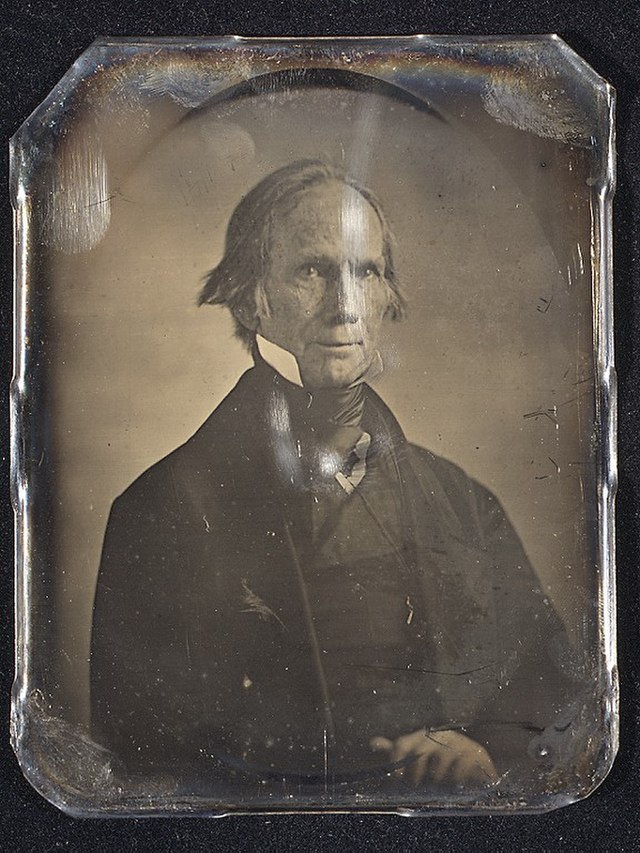
    For that, we turn to everyone’s favorite statesman, whose most significant accomplishment was never being elected President of the United States despite the number of times he ran for that office. The one, the only…Henry Clay. Senator Clay was part of a joint Congressional committee that wanted to recognize the centennial of George’s birth. They decided to do this by giving themselves the day off and adjourning Congress on February 22, 1832. While not the celebration you might have imagined, it did get the ball rolling for an expanded holiday that we celebrate today.

    Senator Henry Clay. Source: Wikimedia Commons

    As the years went by, cities, states, and even Congress realized they had to do more to commemorate George’s contribution to the Nation. In 1862, yes, in the midst of the Civil War, the Senate began to read Washington’s Farewell Address each year on his birthday. In 1879, Congress made the date a federal holiday for federal employees ONLY IN DC. Though this caused confusion among those employees as some were paid for that holiday and others were not… This discrepancy was amended in 1885 when the holiday became a paid one for all DC federal workers.

    Almost 100 years after the Senate began their annual tradition of reading the Farewell Address on February 22, Congress passed the Monday Holiday law to make federal holidays more uniform. So instead of celebrating George’s birthday on February 22, it was recognized on the third Monday of the month. There are two interesting things about this law when applied to George’s birthday. First, because of February’s shortened number of days, there is no possible way for the federally observed holiday to fall on his actual birthday. Second, the holiday we all know as “President’s Day” doesn’t actually exist. It has yet to be formally changed by Congress or the President from being first recognized as “Washington’s Birthday,” which is pretty fascinating!

    If you’re looking for a fun way to celebrate George’s birthday this year, I encourage you to check out our event at Ferry Farm. For the event, we are offering tours of the reconstructed Washington House, new (and returning) crafts, a chance to meet real archeologists and learn about what they’ve found at the site, the opportunity to see if you can throw a stone as far as George supposedly could, and obviously, we’re having cupcakes because it’s a birthday party!

    This year’s event will be held on Monday, February 21, from 10 am to 3 pm, and tickets can be purchased by visiting our website. Tickets are $5 per adult (age 18+) and FREE for children (17 & unders). We encourage you to purchase your tickets in advance.

    -Amy N. Durbin, Director of Education

  • Dig These Dishes! We Recreate an 18th Century Table Setting Using Only Artifacts.

    Dig These Dishes! We Recreate an 18th Century Table Setting Using Only Artifacts.

    On a typical day at George Washington’s Boyhood Home at Ferry Farm, visitors experiencing the house tour are ushered into the main hall upon which a dining table is set out before them with 18th-century reproductions of plates, glassware, wine bottles, and serving dishes. This setting creates an interactive experience for our visitors, transporting them back in time to the mid-18th century when the Washington family lived here on site.

    Last month, however, an unexpected sight greeted a tour group as they entered the hall. The dining table was set, not with reproductions, but actual plates, jugs, and serving dishes that could very well have graced the Washington family’s dinner table over 250 years ago.  The principal difference is that nothing on the table was complete – all were fragmented versions of the originals. 

    Dining table in Hall set up for dinner.

    The setting was a special photoshoot for The George Washington Foundation and an occasion to display and highlight the array of vessels, many mended, residing in the Archaeology Department’s collection.  Everything on the table was archaeologically recovered from either Ferry Farm or Historic Kenmore and represent vessels that date to the Washington family’s occupation of Ferry Farm or Betty Washington Lewis’ time at Kenmore. 

    The Archaeology Department at Ferry Farm has been mending vessels over the past couple of years for our museum displays at the Ferry Farm and Kenmore Visitor Centers. This mending was also done for research purposes as the curatorial department worked to furnish the replica house with accurate, period-relevant household items.

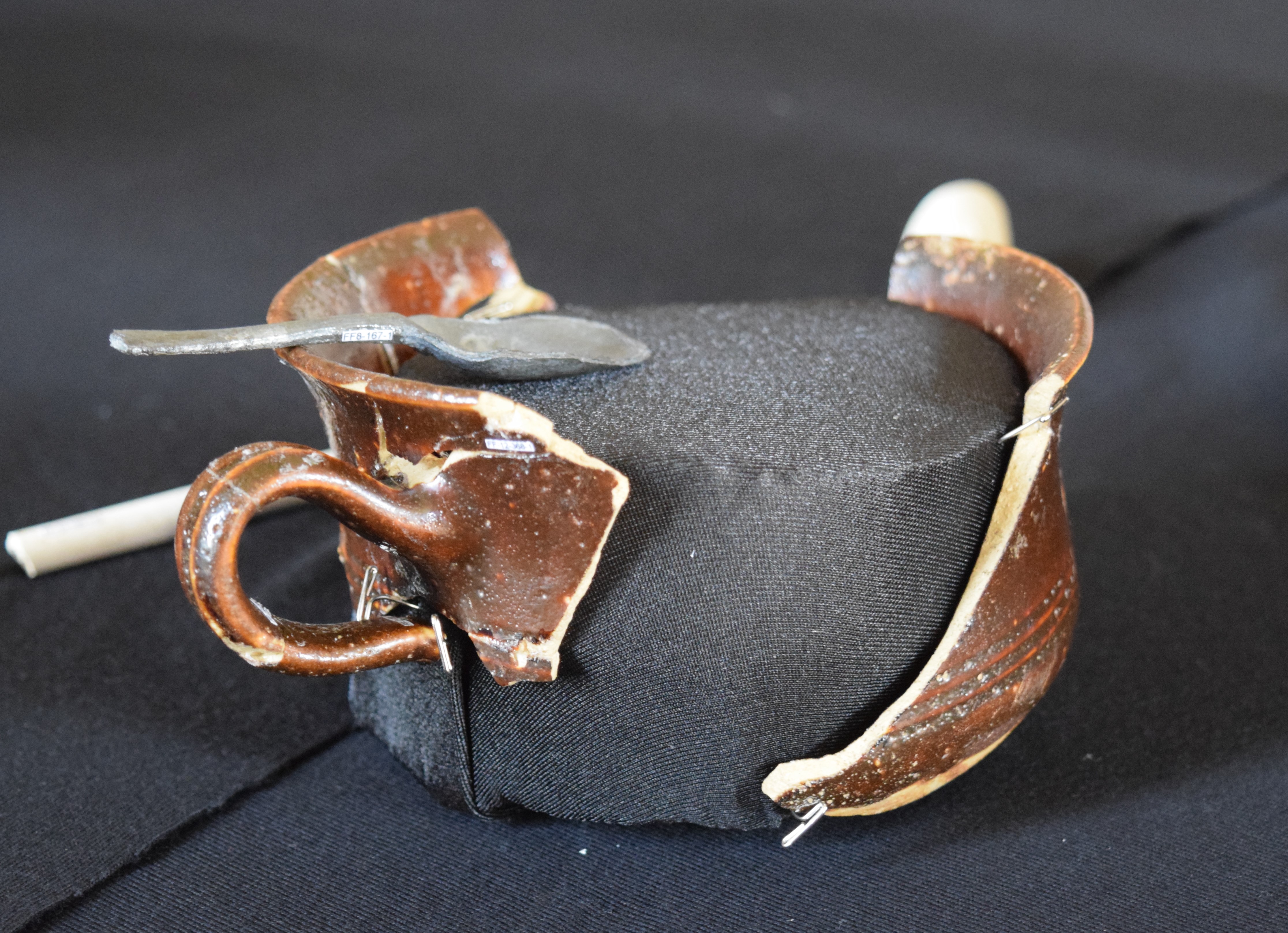
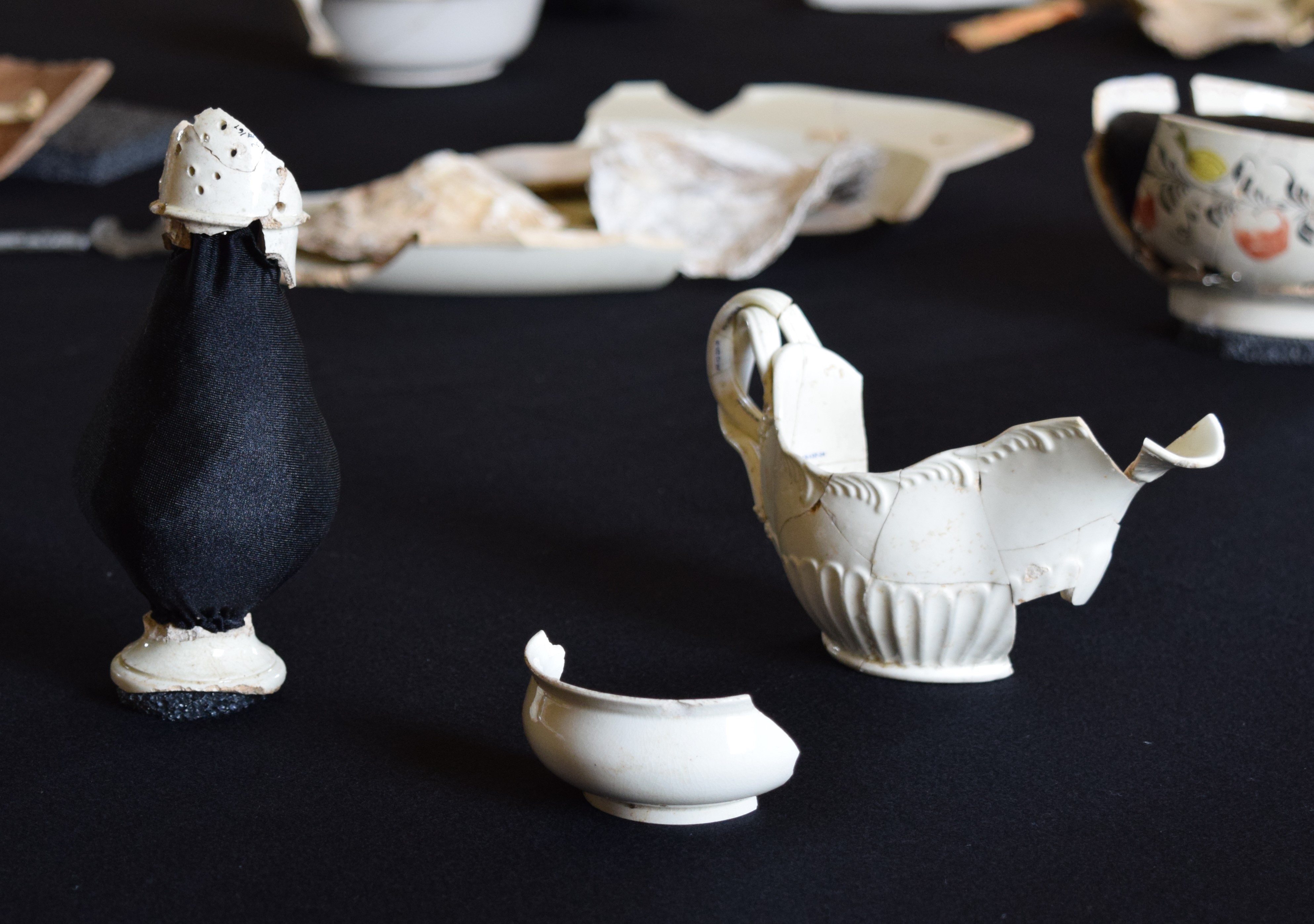
    So what is on the table? Creamware and white salt-glazed plates and serving dishes, glass tumblers and wine glasses, German stoneware jugs, dark green glass wine bottles, a porcelain teacup, coarse earthenware porringers, forks and knives with bone handles, silver spoons, and Mary Washington’s creamware enamel-painted punch bowl.  Many of the ceramic tablewares and a few of the glass tumblers were mended using archival glue.  Some of the objects were able to stand on the table unaided, while others needed mounts for support, such as the wine glass.

    Fragments of dinner and glasswares

    To help envisage the original shape of some of the fragmented vessels and make them recognizable, we first sculpted their shapes out of foam, covered them with fabric, and then attached the incomplete vessel fragments in their correct positions. This process allowed us to present a more “complete” and familiar view of some of the tablewares, such as the two large stoneware jugs, the creamware pepper pot, the glass tumbler, and the two wine bottles. All of these items would have been very difficult to display simply using the fragments themselves. 

    Having such an array of different ceramic styles on the table is more a function of what we have mended in our collection versus what Mary might have actually had on her table.  But for our purposes, we are happy showcasing all of the different ceramic types presently in our possession.

    Welcome to the Washington dining table! Enjoy!

    Judy Jobrack, Archaeologist
    Co-Field Director

  • The Seven Easy Pieces of Furniture – Episode 3: Blanket Chest Lid [Video]

    Furnishings posts logo finalIn this final video of this series, Fredericksburg, Virginia-based furniture maker Steve Dietrich demonstrates the methods he used to make the lid for a blanket chest in the reconstructed Washington house at Ferry Farm.
    Watch other videos and read more about rebuilding the Washington house here.

  • Washington House Blues

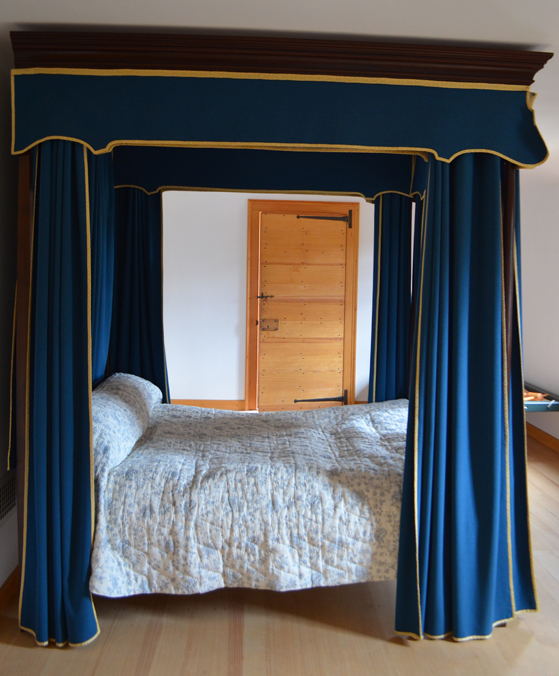
    Furnishings posts logo finalThe summer of 2019 was an especially hot one here in Virginia, but we managed to add some cool crispness to the Washington house interior.  It came in the form of some new textiles for the “best bed” in the Hall Back Room, in a refreshing blue and white color scheme.  As we’ve previously discussed here, blue and white bedroom textiles seemed to be a favorite of Mary Washington’s, throughout her life.  Both her will, written in 1788 many years after she had moved away from Ferry Farm and taken up residence in a cottage in downtown Fredericksburg, and the list of her belongings sold at vendu following her death in 1789 contain references to blue and white quilts, coverlets, counterpanes and curtains.

    Best Bed
    The “Best Bed” in the Hall Back Room of the Washington house at Ferry Farm.
    After the “best bed” arrived in 2018, we decked it out in blue wool bedcurtains and a white matelesse summer counterpane.  But for winter use, we really wanted to show the bed with the blue and white quilt that is mentioned several times in Mary’s documents, including a reference to it being willed to George Washington himself following Mary’s death.  Finding such a quilt turned out to be much more of a challenge than we anticipated, though.  The challenge was due to the increasing difficulty in finding ready-made period-appropriate fabric in our modern world.  And to understand that difficulty, we need to understand what Mary’s blue and white quilt (probably) looked like.

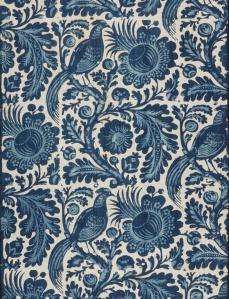
    The description of the quilt as being “blue and white” was not overly specific, but it was actually more descriptive detail than we have for most items in Mary’s household.  What could “blue and white” mean? First, it’s important to understand that a “quilt” in the 18th century is almost certainly NOT a patchwork quilt, or an appliqued quilt, both of which came into fashion much later.  Instead, an 18th century quilt was usually comprised of a solid piece of decorative fabric, on a layer of filler and a backing fabric, all of which was then quilted, or stitched with decorative patterns.  Sometimes the decorative fabric was a solid color, and the intricate stitching patterns were the real decoration, and sometimes the fabric itself had a pattern which was enhanced by the quilting.  The ‘blue and white” reference obviously indicates that the quilt was multi-colored, which indicates that the decorative fabric was patterned.  So what kind of blue and white patterns were available to Mary Washington in the mid-18th century?

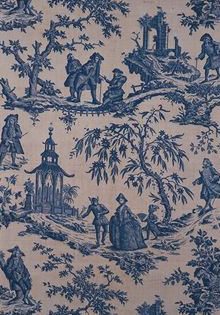
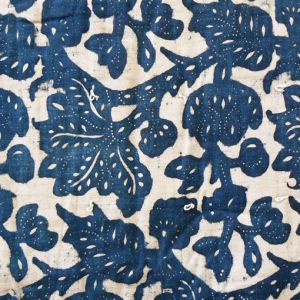
    By the mid-1700s, printed cotton textiles had become all the rage in England, and were being heavily imported into the American colonies.[1]  The technology for producing printed textiles at that point included resist dying, block printing with mordants and dyes, and copperplate printing (and combinations of all three).[2]  Resist dying (in which wax or some kind of dye-resistant substance was applied to sections of fabric meant to stay white, and then the entire fabric was submerged in dye) could produce bold colors and sharp contrast between dyed and undyed sections of fabric, but detail was hard to achieve.  Block printing improved the level of detail in patterns, but was still slow and tedious.  Copperplate printing allowed for great detail and eventually sped up the process of producing repeated patterns on yardage considerably.  Incorporating more than 1 color in the process was still hard to achieve, and so patterns are often monochromatic, with multiple layers of printing being used to create shades of color.  Most patterns, no matter the method of printing, involved floral and natural themes, sometimes including birds and other animals, and eventually entire landscape scenes.

    Quilt fabric resist
    Resist

    Quilt fabric resist block
    Block printed

    Quilt fabric copperplate
    Copperplate

    So, Mary’s blue and white quilt was most likely similar to one of these styles.  Our challenge was to find a modern fabric that accurately depicted one of these processes.  Unfortunately, not many modern fabrics are made using the same 18th century technologies, and are more likely to be machine printed using digital images.  As a result, these modern patterns usually look too perfect, without the minor imperfections of handmade textiles which actually reveal to us what type of historic process was used to make them.  The imperfections are a part of the overall look and feel of the pattern, and make the final product more authentic.  It’s a hard thing to achieve these days!

    The American textile industry is greatly reduced from what it once was in the early 20th century, and even in Europe, many of the textile factories that once created the patterns that Mary and her contemporaries used in their homes, are gone.  Most printed fabrics produced using historic methods these days are produced in small runs and come from small artisan shops – finding both the makers, and enough yardage (and at a price that isn’t prohibitive) of period-correct patterns, can be difficult.

    Quilt 1
    Quilt on the “best bed” in the Washington house.

    Quilt 2
    Close-up view of “best bed” quilt.

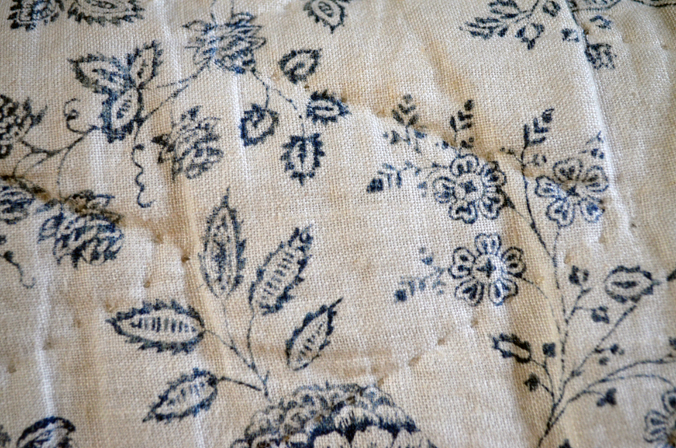
    After months of searching, we were lucky enough to locate a blue and white printed cotton, reproduced from a mid-18th century French pattern by Chelsea Textiles in New York.  The original version was block printed, but also used wax or paste in the resist method.  The result was a detailed repeated floral pattern that also had the rounded edges of resist dying.  It was perfect for our uses.  The fabric was quilted onto filler and backing, and the entire quilt was cut in a T-shape, to fit around the bedposts of the Washington “best bed”, creating a fitted look which was also typical of the time.  Visitors to the Washington house can now see Mary’s favorite blues on display in her bedchamber.

    Meghan Budinger
    Aldrich Director of Curatorial Operations

    [1] Eaton, Linda.  Printed Textiles, British and American Cottons and Linens, 1700 – 1850. The Monacelli Press, New York. Pg. 65.

    [2] Ibid, Pgs. 17 – 41.