Lives and Legacies

Tag: witchcraft

  • Colonial Scary Stories to Tell in the Dark

    We have reached the best time of the year. The summer heat has broken, the leaves are crispy, and the best holiday, Halloween, is coming up quickly. We all know Halloween was not celebrated in Colonial America, but that doesn’t mean we can’t incorporate a bit of Colonial America into Halloween. 

    To celebrate, I have compiled a list of scary stories, supernatural stories, ghost stories, folklore, and legends that were either written in or set in Colonial America.  This era provided a perfect setting for the development of American horror. Europe had ancient castles, ruins of abandoned abbeys, and moody wind-swept moors to inspire centuries of writers and storytellers.  America had isolated settlers, a strict, religiously controlled society, and an untamed wilderness where any evil could lurk. It was fertile ground for witches, devils, the supernatural, cryptids, and folklore. 

    Witches and the Devil

    The earliest stories date back to the start of America when Puritan communities were on constant guard for the devil, who was a very real and imminent threat.

    In his book Memorable Providences Relating to Witchcrafts and Possessions (1689), Cotton Mather tells stories about incidents involving witches, from the haunting of the children of Boston mason John Goodwin to the murder of Mr. Philip Smith to Mary Johnson and her dealings with the devil at Hartford. 

    Cotton Mather, Puritan minister, author, and no doubt a blast at parties. Columbia University

    Witch hysteria came to America while fading out across much of Europe, with the deadliest event being the notorious Salem Witch Trials in 1692/1693.   

    The Mather family (Father: Increase, Son: Cotton) again intervened after the trials to defend the judges’ actions, review the cases, and add further accounts of documented supernatural incidents. Cotton’s book Wonders of the Invisible World (1693) looks at the cases that eventually led to convictions and death and defends them by giving accounts of similar trials heard by Judge Sir Matthew Hale.
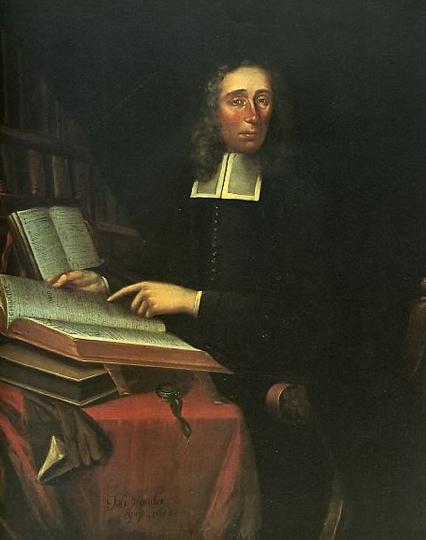
    Increase Mather, father of Cotton, a Puritan minister, Harvard graduate who is not mad just very disappointed in you celebrating Halloween. The University of Virginia

    Increase Mather’s An Essay for the Recording of Illustrious Providences (1694) provides a remarkable account of accidents, apparitions, and unaccountable phenomena.  Mather retells the tale of a woman being molested by spirits, a maid possessed by evil, and even a house haunted by a demon. 

    Lithobolia: or, the Stone-Throwing Devil (1698), written by Richard Chamberlayne, is a tale that is considered an early example of supernatural horror writing and what many say is the first documented incident of witchcraft in America. The story centers around incidents of witchcraft, demonic voices, and poltergeist activity that take place at a tavern in New Hampshire in 1682.  Increase Mather mentions the story in Illustrious Providence when documenting the spread of witchcraft before the Salem trials.

    The beginning of American supernatural horror

    Wieland: or, The Transformation: An American Tale (1798) by Charles Brockden Brown is often considered the first American “Gothic” novel.  Gothic means a story characterized by an atmosphere of fear, supernatural occurrences, and often a return of horrible past events and their effects on the present.

    Wieland takes place in Colonial America between the French and Indian War and the American Revolution.  It is a psychological horror story that involves religious fanaticism, family, the supernatural, mental illness, deception, and murder. 

    American Legends

    One of the most well-known legends often told at Halloween is Washington Irving’s The Legend of Sleepy Hollow (1820). Set in Sleepy Hollow, New York, in 1790, it involves pedagogue Ichabod Crane in his competition for the affections of Katrina Van Tassel.  After hearing the legend of the Headless Horseman at a harvest party, Crane makes his way home only to be confronted by the dead Hessian mercenary. 
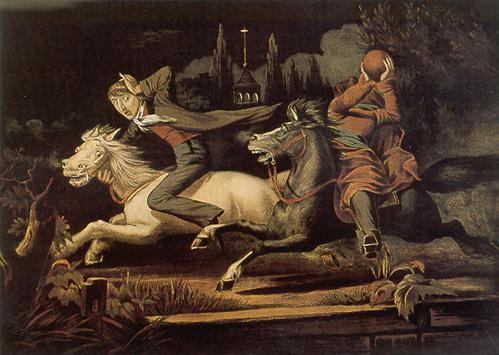
    Ichabod Crane being chased by the Headless Horseman. Historic Hudson Valley

    Another legend from Irving’s book Tales of a Traveller (1824) is that of Captain William Kidd. Captain Kidd was a Scottish privateer who lived in New York City. The governor of New York, Massachusetts Bay, and New Hampshire commissioned him to hunt down pirates and enemy French ships in the Indian Ocean.  Unfortunately, by the time he made it back to America, the political views had shifted, and he was arrested for piracy in Boston and shipped to England to stand trial.  There, in 1701, he was found guilty, hung not once but twice as the rope broke the first time, then gibbeted and displayed over the River Thames.  Kidd supposedly haunts many places around New York City, his beloved adopted city.
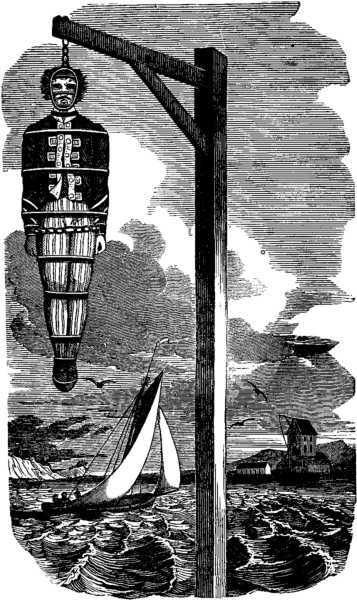
    Captain William Kidd gibbeted on London Dock. The Pirates Own Book

    Another of Irving’s tales, The Devil and Tom Walker, takes place in Massachusetts, where Captain Kidd supposedly buried some of his treasure.  In 1727, Tom Walker, the elderly miser, meets “Old Scratch” at the swamp while walking in an abandoned Wampanoag fortress.  “Old Scratch” offers Walker the riches in the swamp buried by Kidd for a price (his soul).  Then, it explores everything that happens when someone realizes their immortal soul no longer belongs to them and when it comes time to pay the price.
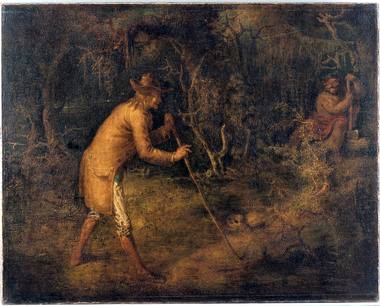
    The Devil and Tom Walker. The Cleveland Museum of Art

    Even George Washington is mentioned in one ghost story by Nathaniel Hawthorne in his book In Colonial Days when discussing the legends of Old Province House. Howe’s Masquerade follows Governor Howe as he throws a costume party on the eve of the siege of Boston (April 19, 1775)—guests dressed in rags representing Washington and his generals.  Howe and their guests are confronted with a ghostly funeral march of Puritan governors, illustrating the death knell of royal authority and a bad omen for the British in the upcoming battle.
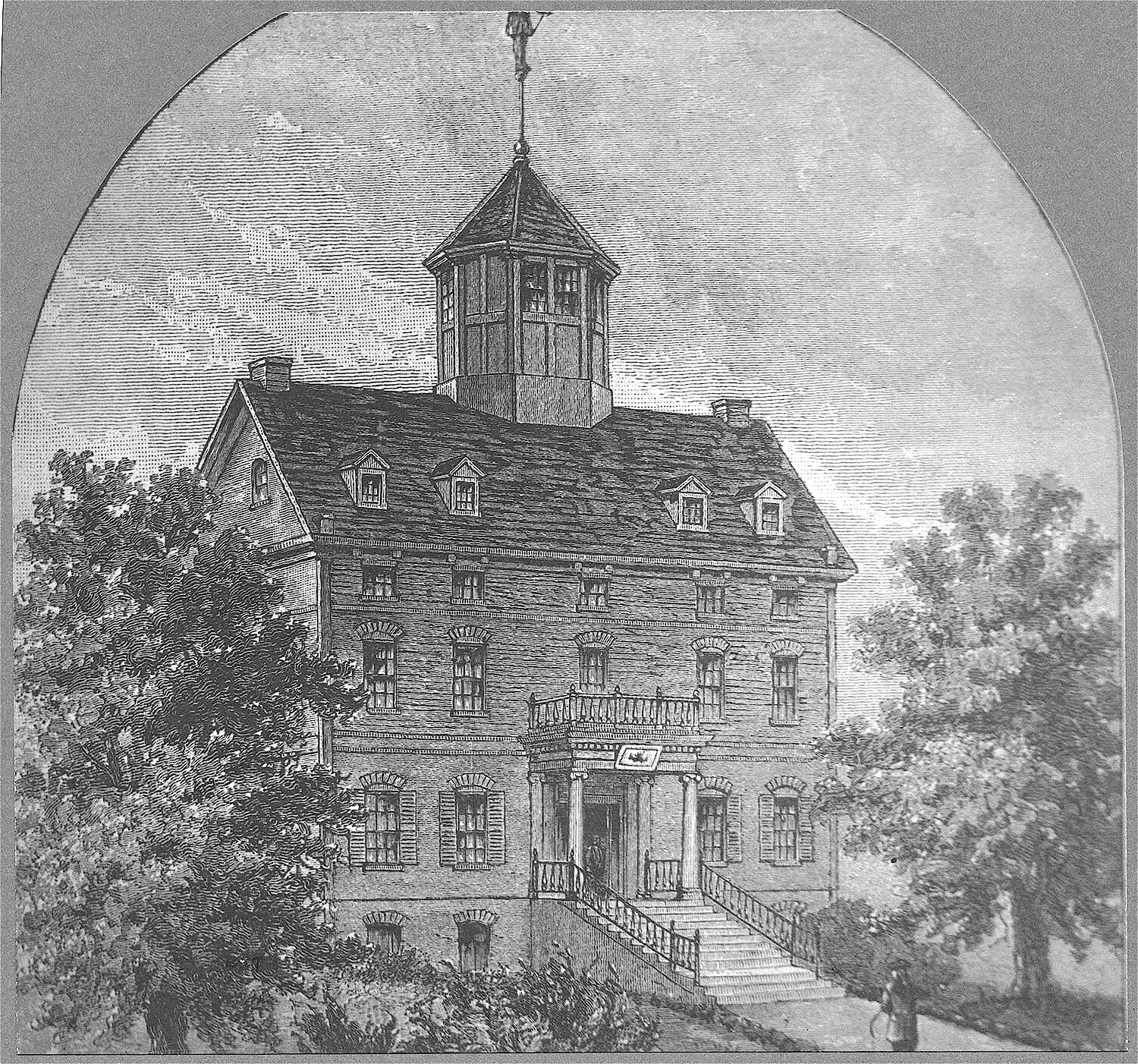
    Old Province House, Boston. The Memorial History of Boston

    American Cryptids

    W.F. Mayer’s In the Pines (1859) explores the beginnings of the Jersey Devil. Deborah Leeds’s thirteenth child was born in 1736 in the Pine Barrens in New Jersey. Soon after birth, the child suddenly turned into a horrible wyvern-like creature with a goat’s head, leathery bat-like wings, horns, small arms with clawed hands, legs with cloven hooves, and a forked or pointed tail.

    The Jersey Devil has haunted the Pine Barrens since being spotted in 1820, 1841, 1909, 1925, 1937, 1951, and as late as 1960.
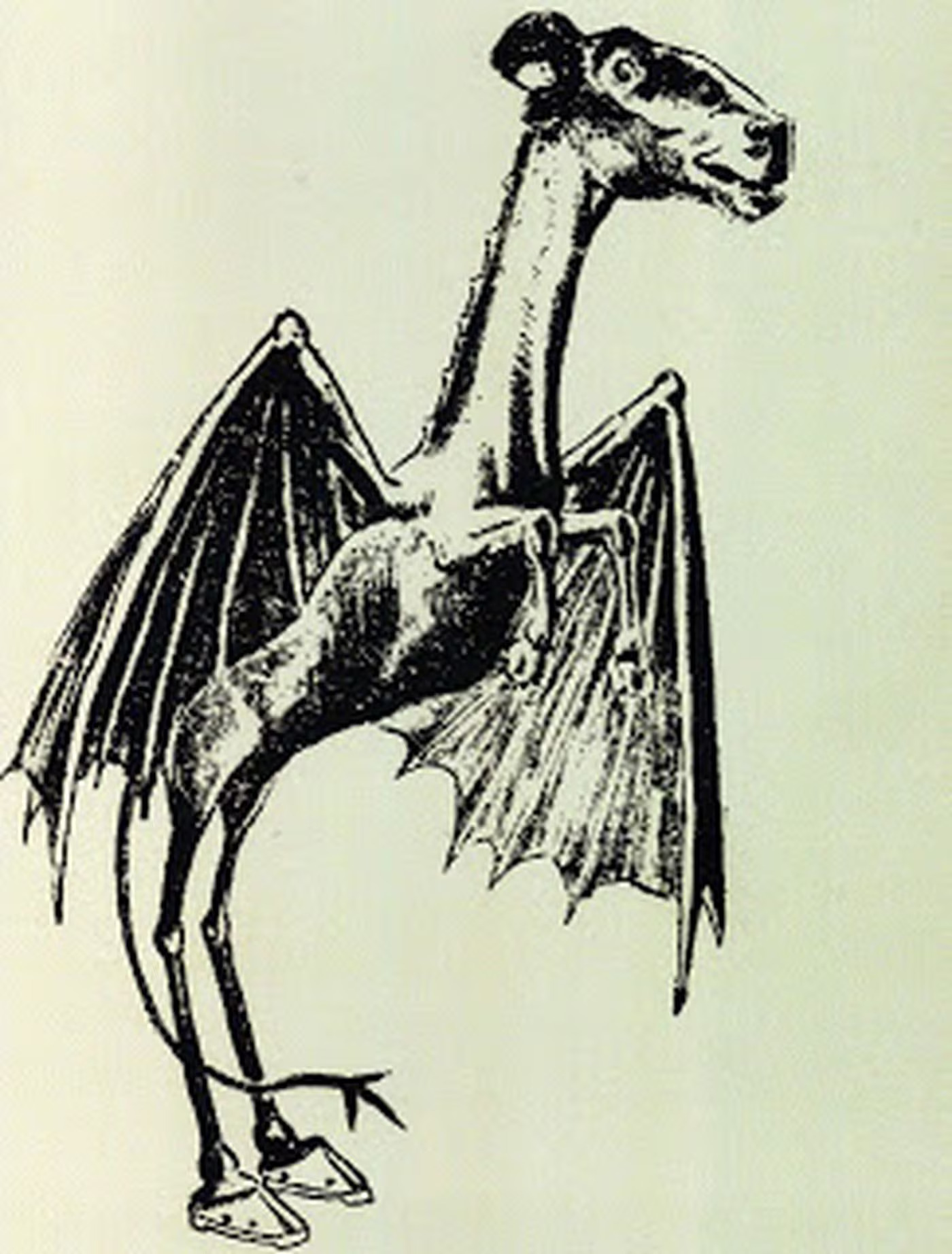
    The Jersey Devil as seen in 1904

    So, sit back with some Halloween candy and enjoy some scary colonial stories on this fine autumn evening. 


    Heather Baldus

    Collection Manager

  • Cunning Folk and Conjurors: Folk Magic in Colonial Virginia

    The use of folk magic may seem foreign and exotic to many of us in the 21st century. If we look closer, though, it is apparent that some modern Americans still practice it today – even if they don’t realize it. Have you ever hunted for a four-leaf clover? Have you ever hung a horseshoe over your door? If so, you’re participating in a kind of folk magic.

    Folk magic is (and was) thought to be a way to influence forces, seen and unseen, for good or for ill. It is sometimes referred to as “low” magic, not because it was seen as evil, but because it was passed down generation to generation rather than learned from books or formal tutors. “High” magic has its own fascinating history, but this blog post focuses on the everyday magic that 18th century Virginians, both black and white, practiced. Hoping to ward off evil and bring peace, prosperity, and abundance into their homes, some of these early Americans used magical means to their ends.

    Europeans and Africans in British North America brought with them the spiritual, religious, and magical traditions of their homelands. The blending of these traditions became the bedrock for future iterations of American folk magic. One modern archaeologist says that this blending process makes it hard to tell exactly who was using what folk tradition while creating some of the material culture of folk magic; it is not always clear from the archaeological record exactly who made an object and what that object’s intended purpose was.[1]

    One of the things that may have contributed to the cross-cultural blending is the similarities between English and African folk magic traditions.  Both groups recognized that there were some people who were “set apart” from the rest of the group.  These individuals were believed to possess special powers that made them respected, feared, or both. African and English traditions also shared a belief in magical objects, even everyday objects, that could be imbued with power. And lastly, both groups believed in the power of burying magical objects for protection – or for malice.

    People thought talented in the magical arts were known as “cunning folk” in the English/English-American tradition and as “conjurors” in the African/African-American tradition. Cunning folk were not witches, who were thought to inhabit the fringes of society, but rather “practitioners of magic who healed the sick and the bewitched, who told fortunes, identified thieves, [and] induced love.”[2] This description of cunning folk is very similar to W.E.B. Du Bois’s definition of the conjuror, “the healer of the sick, the interpreter of the Unknown, the comforter of the sorrowing, the supernatural avenger of wrong . . .”[3]

    The rest of Du Bois’s quote, however, highlights an essential difference between white cunning folk and the enslaved conjuror. The conjuror was also “. . . the one who rudely but picturesquely expressed the longing, disappointment, and resentment of a stolen and oppressed people.”[4] Despite their many similarities, enslaved conjurors and cunning folk operated in very different realities. In Du Bois’s estimation, the conjuror did more than just take care of the physical and spiritual needs of the enslaved; he or she took on the weight of slavery itself.

    Both conjurors and cunning folk created magical charms and charged objects with magical meaning. At George Washington’s Ferry Farm, we found an excellent example of an object charged with meaning. A carnelian bead excavated on the property may indicate that a powerful conjuror might have lived here during the Washington’s time. This bead is similar to two found in Barbados and Archaeologist Jerome Handler asserts that these carnelian beads were the product of Cambay, India and were indications of the status of the person with whom they were buried.[5] Dave Muraca, director of archaeology at Ferry Farm, describes “all three beads” as “generally reddish-orange color” with “tapered ends and cylindrical shapes. Each one has 8 longitudinal facets and 4 beveled facets at each end. The main difference between the Washington site bead and the Barbadian beads is size, with the Barbadian beads being almost twice as long as the one recovered at the Washington farm.”[6]

    carnelian-bead-01
    Multiple views of the Carnelian bead excavated at George Washington’s Ferry Farm.


    Cunning folk also made objects with magical meaning. Written charms, or amulets, were popular since they were easy to make and could be worn on the body. These charms often served as protection for people and livestock against witches’ attacks. An example of these charms can be found in Colonial Williamsburg’s Special Collections. This small piece of paper, dating to about 1700, promised to protect the wearer from “any mannor [sic] of Witchcraft or Evle [sic] spirit.” The amulet invokes the power of faith and the intervention of Jesus Christ on behalf of the afflicted woman. It closes with “amen, amen, amen,” and “fiat, fiat, fiat;” “fiat” being the Latin translation of ‘amen.” “Fiat” and “amen” had been used together since the 2nd century, particularly when the prayer it ended was one of condemnation.[7]

    SCMS2004.14; Witchcraft Amulet; 18th c. ?
    Witchcraft amulet, circa 18th century.  Credit: Special Collections, John D. Rockefeller,  Jr. Library, The Colonial Williamsburg Foundation

    It was not uncommon for black and white practitioners of magic, to bury magical objects for protection. The nature of these objects may have been different, but the intent was the same – warding off evil and restoring peace to the household. At Ferry Farm, archaeologists have discovered whole oysters deliberately buried in the stone-lined cellar of the Washington house. The act of burying the oysters, which were seen as magical objects in the African/African American community, was likely an effort to protect the home. They were often used in burial rituals and were associated with death and the afterlife; an association that makes the oyster shells found at Ferry Farm all the more intriguing.

    whole-oyster-shells-1
    Whole oyster shell excavated from the Washington house cellar at Ferry Farm.

    English/English-Americans also buried objects for protection, but some of the objects they buried were man-made rather than a product of the natural world. Witches bottles, often glass bottles filled with pins, nails, and even human urine, were designed to cure the afflicted of his or her bewitchment. A witch bottle found near in Virginia Beach, Virginia, known as the Great Neck witch bottle, dates to 1690-1750. Archaeologist M. Chris Manning describes it as being, “[a] small, narrow, light green glass medicine vial was found buried in an inverted [upside-down] position” containing 25 brass pins and 3 iron nails. It may have also contained the urine of the bewitched at some point.[8]   These bottles were designed to hurt witches; their pins and needles were thought to injure those who placed malevolent spells on the innocent. In both the African/African-American and the English/English-American tradition, these buried objects were tasked with banishing evil forces in an effort to bring in positivity and peace to the household.

    These are just a few examples of the similarities between the African and the English folk magic traditions. There are significant differences, in part because “magic” was part of African cosmology, meaning religion and magic were tied together, sometimes to the point where it’s hard to tell where one ended and the other began. This is different from the English tradition, where religion and folk magic were seen as separate, at least officially. Religious and secular authority figures in colonial America condemned the use of folk magic, but this did little to stem the tide of magic’s popularity.

    The next time you pick up a lucky penny or even cross your fingers, remember that you are participating in a tradition older than America itself. While we may not make witches bottles or bury oyster shells anymore, there are plenty of instances where we seek luck, protection, love, and other good vibes through essentially “magical” means.

    Kelly Arehart
    Manager of Interpretation & Visitor Services

    [1] Christopher C. Fennell, “Conjuring Boundaries: Inferring Past Identities from Religious Artifacts,” International Journal of Historical Archaeology, Vol. 4, No. 4, pp.284.

    [2] Owen Davies. Popular Magic: Cunning Folk in English History, (London: Continuum), 2007, p. VII.

    [3] W.E.B. Du Bois, Souls of Black Folk, Essays and Sketches, (Chicago: A.C. McClurg & Co.), 1903, 211.

    [4] Ibid. https://www.marinersmuseum.org/sites/micro/captivepassage/arrival/arr019.html Accessed 17 October 2016.

    [5] Jerome S. Handler, “An African-Type Healer/Diviner and His Grave Goods: A Burial from a Plantation Slave Cemetery in Barbados, West Indies,” International Journal of Historical Archaeology, Vol. 1, No.1, (June 1997), 91-130.

    [6] David Muraca, “Murder and Magic at the Washington Farm,” George Washington Foundation, Fredericksburg, VA, unpublished report, 9.

    [7] “amen amen, fiat fiat: theological, liturgical, bureaucratic”  Douglass Galbi, accessed October 24, 2016, http://www.purplemotes.net/2014/06/01/amen-amen-fiat-fiat/

    [8] M. Chris Manning, “Homemade Magic: Concealed Deposits in Architectural Contexts in the Eastern United States,” Master’s Thesis, Ball State, 2012, 114.