Historic Kenmore is decorated for the holidays, portraying what it may have looked like during the Christmas season of 1775. At that time, the Lewis family would have just moved into Kenmore a couple of months earlier, and it would have been their first Christmas in the new house. It was a time of some sadness, as well – their 15 year old son Charles had died that fall, of an unidentified illness. Although unknown at the time, it also would be the last “normal” holiday before the Revolution began in earnest.
The photos in the gallery below provide a glimpse of some traditional holiday decorations (a few have modern twists) and customs common to the 1700s.
Want to see Historic Kenmore in all of its holiday splendor? Seasonal tours are offered daily through December (Closed Christmas Eve, Christmas Day, and New Year’s Eve). Or reserve a spot for our dramatic theater presentation that re-creates a Twelfth Night celebration inside the house on Saturday, January 3 and Sunday, January 4. See the events page on www.kenmore.org for more information!
A wreath adorns Kenmore’s front gate.
Kenmore peaks through the center of a wreath.
A wreath on the door of an administrative building.
Kenmore’s garden volunteers created the amazing wreaths and swags hanging on our buildings this year.
A wreath on the door of an administrative building.
A close-up view of a wreath.
The garden gate.
The west front of Kenmore.
Festive doors.
Magnolia in an evergreen swag.
Inside of Kenmore, we bring out greenery to decorate the banister in the Passage.
Curatorial staff attach the greenery to the banister.
In the 1700s, evergreens and local plant material, like boxwood, magnolia and holly would be brought into the house, but in small quantities.
Colonial-era decorations were quite subdued.
Branches of pine or holly would be placed in clay jars and set on tables or mantels.
In the Passage, we re-create a dessert table Betty Lewis might have created to impress her holiday guests.
We carefully unwrap jelly glasses to be displayed on the table.
The table features plum pudding, miniature marzipan fruits, candied citrus, and syllabubs.
The desserts served as the centerpiece of a Twelfth Night ball.
The Christmas season lasted much longer than ours does, extending into January to Twelfth Night (a festive night marking the end of the Twelve Days of Christmas and celebrated much like New Year’s Eve is today).
During the ball, usually around midnight, guests were treated to the unveiling of the elaborate dessert table…
…filled to overflowing with sweets and confections arranged in imaginative ways and displayed on the best silver and glassware.
There is also a hedgehog cake, a favorite of Martha Washington’s at Mount Vernon.
The lady of the house would be severely judged on the creativity of her dessert table.
Among this year’s decorations are five tiny foxes, part of scavenger hunt for our younger visitors.
Fox hunts were a popular holiday custom with colonial Virginians and were much-loved by George Washington.
The completed decorations in the Passage.
Looking down into the Passage from above.
Holiday swags with modern lights on Kenmore’s doors.
Lives and legacies fascinate. How people lived and shaped the world in which we live today are what many find most compelling about the past.
Lives and legacies are on our minds daily at George Washington’s Ferry Farm and Historic Kenmore. Indeed, the mission of The George Washington Foundation, which operates these two historic sites in Fredericksburg, Virginia, is to enhance the public understanding and appreciation of the lives, values, and legacies of George Washington, Fielding and Betty Washington Lewis, and their families.
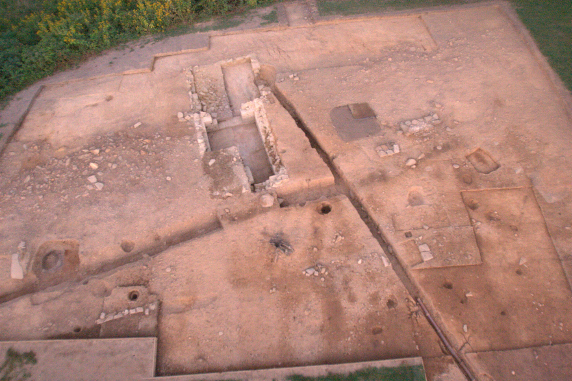
Foundation of the Washington family home at Ferry Farm, where George Washington spent his boyhood. The photo shows the foundation in 2008 when it was discovered by archaeologists.
George Washington lived on the land now known as Ferry Farm from the age of six until he was grown. It is here, under guidance from his mother Mary Ball Washington, that he developed the traits and skills that would propel him to greatness. The life he lived as a boy on this ground proved pivotal to his legacy as commanding general of the Continental Army and first president of a new nation.
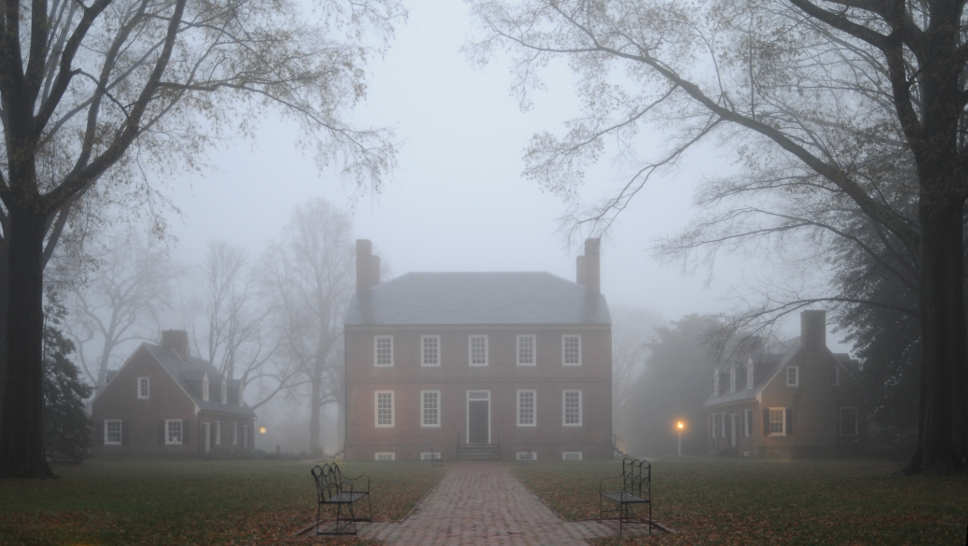
Historic Kenmore, home of Fielding and Betty Washington Lewis, on a foggy December morning.
George’s sister Betty Washington and her husband Fielding Lewis built Historic Kenmore in 1775, just as the American Colonies began their war of independence from England. Kenmore stands today as a fine example of an 18th-century, Georgian-style house and boasts some of the most elaborate plasterwork from colonial America. More than architecture and plaster, however, the house was the Lewis family’s home where they lived a life of happiness and then, with the onset of war, a life of sacrifice.
The lives and legacies of George Washington, Betty Washington, Fielding Lewis and their families are not the only ones with which we are concerned. Enslaved people, neighbors, Civil War soldiers, residents after the Washingtons, and Native Americans before the Washingtons all have valuable and fascinating lives and legacies to discover.
All of these people are why we have titled this blog “Lives & Legacies.” On this blog, we will share stories about their lives and explore the impact of their legacies down to the present day. We’ll examine archaeological artifacts uncovered during digs at Ferry Farm and historic objects on display at Historic Kenmore. We’ll discover how these artifacts and objects were used by people in the past and what they can tell us about their daily lives. We’ll delve into the role of nature and landscape in shaping lives and legacies and give you updates about native plants in Ferry Farm’s woods and what’s growing in Kenmore’s gardens. We’ll share thoughts and updates from our archaeologists, curators, and educators about the behind-the-scenes work that goes into our research and preservation efforts. Lastly, we’ll provide insight into our exhibits, programs, and special events.
Click the Follow button in the sidebar on the right (below The George Washington Foundation logo) and sign-up to receive an email whenever a new post goes up. You also might like to follow “The Rooms at Kenmore” blog, which documents the ongoing refurnishing of Historic Kenmore, at http://www.kenmore.org/wordpress. In the meantime, you can visit http://www.kenmore.org for a wealth of historic information about the lives and legacies of the Washingtons, Lewises, and more.