Lives and Legacies

Author: ferryfarmandkenmore

  • Perukes, Pomade, and Powder: Hair Care in the 1700s

    Editor’s Note: Looking back in time, people’s personal hygiene, fashion choices, medical treatments, and more sometimes look, at the very least, bizarre, if not outright disgusting.  When confronted with these weird or gross practices, our first reaction can be to dismiss our ancestors as primitive, ignorant, or just silly.  Before such judgments, however, we should try to understand the reasons behind these practices and recognize that our own descendants will judge some of what we do as strange or gross.  Here at George Washington’s Ferry Farm and Historic Kenmore, we’ve come to describe our efforts to understand the historically bizarre or disgusting as “Colonial Grossology.”  The following is the first in a series of “Colonial Grossology” posts that we’re offering on Lives & Legacies.

    Archaeologists at George Washington’s Ferry Farm have recovered a variety of hair care artifacts, including over 200 wig hair curlers.  These baked clay curlers were used exclusively to curl wig hair, and formed part of the Washington family’s regimen of wig maintenance.  The regimen included several practices that might seem strange or gross to us today.
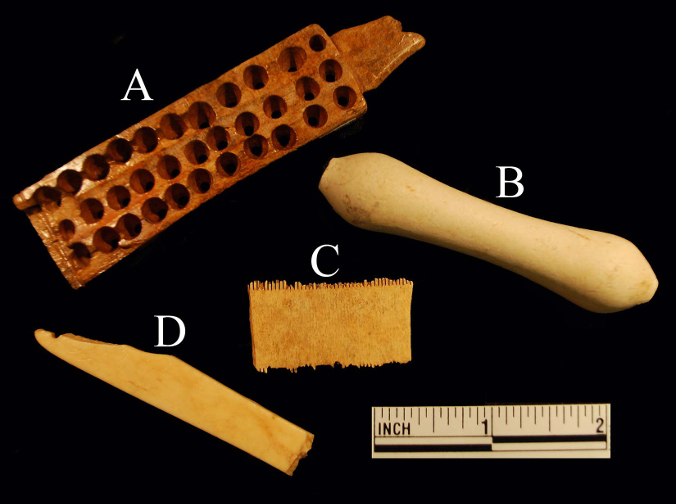
    Artifacts from Ferry Farm related to eighteenth-century hair care.  A) A woman’s bone hair brush, used on natural (not wig) hair.  B) An earthenware wig hair curler, made c. 1740-1780.  C)  A bone grooming or “lice” comb.  D)  A bone razor guard, used by men to shave their facial hair and to shave the head to accommodate a tight-fitting peruke.
    Artifacts from Ferry Farm related to eighteenth-century hair care. A) A woman’s bone hair brush, used on natural (not wig) hair. B) An earthenware wig hair curler, made c. 1740-1780. C) A bone grooming or “lice” comb. D) A bone razor guard, used by men to shave their facial hair and to shave the head to accommodate a tight-fitting wig.

    Powdered wigs, or ‘perukes’, were highly fashionable among gentlemen of the 1700s, and a few affluent households even insisted that their butlers and coachmen wear them.  Some gentlemen, including George Washington, opted not to wear a peruke.  To remain fashionable these men often styled their own hair to resemble a wig.

    George Washington, 1796, by Gilbert Stuart [Public Domain].  His hair was pomaded and powdered by his personal valet.
    George Washington, 1796, by Gilbert Stuart [Public Domain]. His own hair, not a wig, was pomaded and powdered by his personal valet to look as if he were wearing a wig.
    Human hair was often used to make these wigs, but horsehair, cow, goat, yak, and sheep hair provided economical options for consumers on a budget.  Owners of perukes made from human hair were often anxious about their quality:  it was a widespread concern that the hair of criminals, cadavers, prostitutes, or even plague victims was used to construct wigs.

    Throughout the 1700s, whether it was a person’s own hair or a peruke, pomade or pomatum was applied before wigs were powdered.  The word ‘pomade’ derives from the Latin word for apple, “pomum,” – since early recipes incorporated apples.   One recipe combined a pound of sheep suet (fat) with one pound of pig suet.  Sixteen rosewater-boiled apples were added.  Fragrance then enhanced this mixture, and might include some combination of rosewood oil, bay leaves, bergamot orange, or Macassar oil.  Such fragrances helped to lengthen the interval between hairdressing sessions and counteracted any rancid odors.

    Powder was typically made from wheat flour or dried white clay.  Beanmeal or cornflour was also used.  Powder was often enhanced by fragrances, such as those of orange flowers, rose petals, nutmeg, ambergris, jasmine, orris root, or lavender.

    A hairdresser or personal valet added the powder, which was freshly applied every morning, or each time a wig was donned.  The combination of lard and powder produced rigid curls and stiff hair styles.  Powder made hairstyles heavier: as much as two pounds heavier for the large periwigs popular until the 1730s[1]. A few households featured ‘powder rooms:’ a small room set aside for the application of powder.  A power bellows, a ‘carrot’[2], a swan-down puff, or comb was used to dust hair with powder.  White or grey powders were especially popular, but adventurous consumers might use black, blue, lavender, pink, red, or yellow.
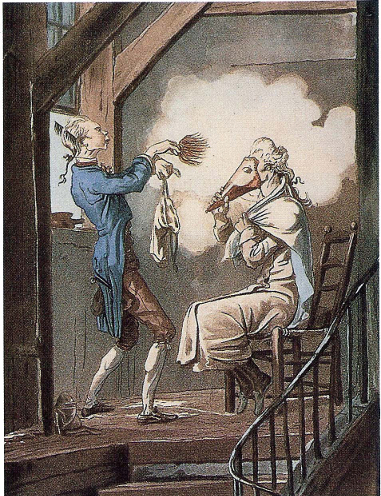
    A gentleman being powdered by his valet.  A cone protects the gentleman’s face during the process.  Powder was made from starch, often wheat flour, or powdered white clay.  The Toilette of the State Prosecutor’s Clerk, c. 1768 by Carle Vernet.
    A gentleman being powdered by his valet. A cone protects the gentleman’s face during the process. Powder was made from starch, often wheat flour, or powdered white clay. The Toilette of the State Prosecutor’s Clerk, c. 1768 by Carle Vernet.

    Hairdressers could remove wigs to apply pomade and powder in a separate space, a convenience for wig wearers that men who only wore their own hair likely envied.  Men who did wear their own hair used a hairnet to preserve their pomaded locks overnight.  Each morning[3], a valet combed out the previous day’s pomade and dirty powder, before applying fresh pomade and powder.  This process could take an hour or more.  Many hairstyles remained undisturbed for weeks.  Headscratchers were kept close at hand: they allowed people to itch their scalps without disturbing their hairstyle too dramatically.
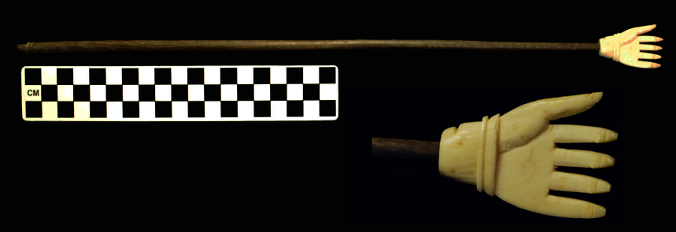
    An ivory-handled head scratcher and closeup [inset]. Personal collection. Used with permission
    The beginnings of this fashion trend were inspired by disease and lice.  Most people did not wash their hair very often.  Syphilis was rampant in Europe throughout the colonial period.  Symptoms such as hair loss, scabs, and rashes could be partially hidden beneath a voluminous wig.  The prevalence of highly contagious head lice, and the difficulty in exterminating them, also encouraged the adoption of false hairpieces.  In order to insure a good fit, gentleman shaved their heads, eliminating the hairs upon which lice thrived.  While cleaning lice from one’s own hair could be time-consuming, wigs could be conveniently removed – and boiled to eliminate pests and dirt.  However, if wigs were not properly maintained, they could become a haven for a variety of pests.

    To us today, the wearing of wigs covered in animal fat along with wheat flour or dried white clay may seem bizarre or disgusting or both.  Still, to the people of the time the reasons behind the practices made perfect sense.  Which of today’s perfectly sensible fashion choices might our descendants living 200 years in the future find strange or gross or both?

    Laura Galke
    Archaeologist, Site Director/Small Finds Analyst


    [1] Periwigs took as many as ten heads of hair to produce.
    [2] This was a carrot-shaped, wooden tube from which powder was blown onto the hair.
    [3] Ideally fresh pomade and powder were freshened each morning.  Frugal gentlemen might wait a week or more.

  • A Curator’s Culinary Secrets

    Here at Kenmore, we spent much of this week putting away all of the Christmas and Twelfth Night decorations that adorned the house throughout the holiday season. As we were carefully wrapping it all in tissue and putting it in boxes until next year, it occurred to me that our readers might be interested in a little behind-the-scenes glimpse at a “trick of the curatorial trade”. Most historic house museums use props to show things realistically in their displays. One of the most fun is what we call “faux” food, and it is shown off best during the holiday season, as food was such a big part of 18th century Christmas celebrations. We always like to put as many historical details as possible in our rooms, and we often come across references in historical documents to what was served at a particular event, or the recipe for a family’s favorite meal. Obviously, we can’t put real food in restored rooms filled with period antiques and furnishings, so we use a variety of fakes to stand in for period-correct food. Some of it we make in-house, and some of it is produced by professionals who actually specialize in making faux food for museums.

    There aren’t too many faux food-makers, and there is actually quite an art to it! Many of the dishes served in the 18th century are not common in the modern day, and even some of our fruits and vegetables look quite different than they did 200 years ago. The artists who produce faux food have to do the research to find out what a requested food was made out of, how it was prepared, and what it might have looked like in its final form. Then they have to make a fake version of it using materials that won’t harm historic objects that it might come in contact with.

    For our holiday display this year, we decided to show our newly refurnished Dining Room as though a Twelfth Night feast had just concluded. It was the first time we would be showing an actual dinner on the dining table, and therefore we needed quite a bit of faux food. Our display included a boiled beef (with slices!), roasted beets, string beans, and broccoli (all professionally made, and loaned to us by our friends at Stratford Hall).  We added our own roasted acorn squash, collard greens with bacon, and roasted game birds on spits from our small but growing collection of professionally made faux food. These items are all made from molded clay that is fired in a kiln and then hand painted. Resin is added on some of them to give the appearance of liquid sauces.

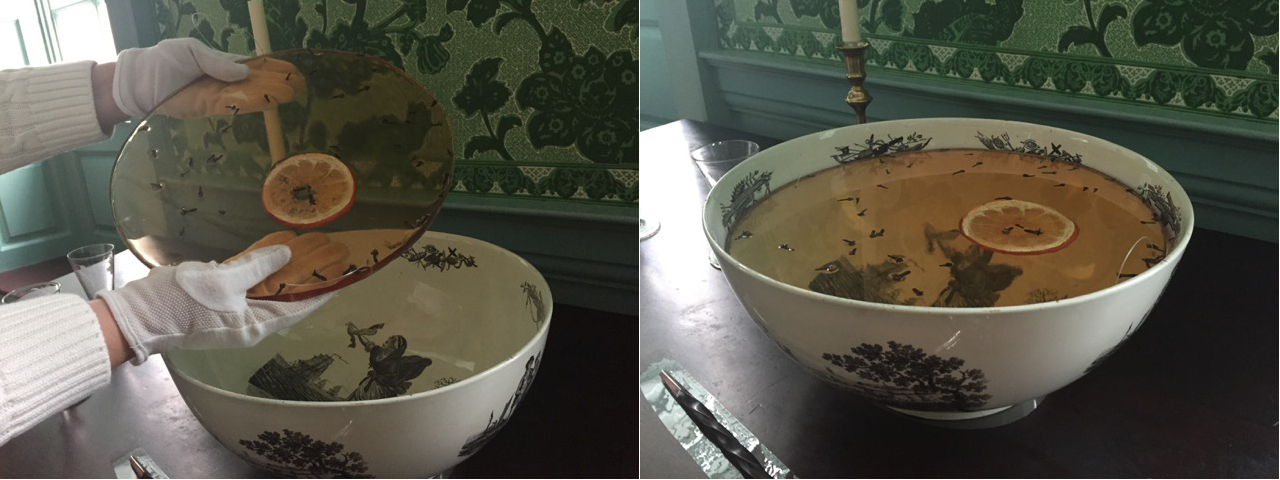
    The collard greens, however, are what is called a “lid” in the faux food world. From the top, it looks like a mound of food, but it’s actually just a round disk, that sets into a bowl. A similar trick is used for what looks like liquid in our punch bowl on display in the Drawing Room. From the top, it looks like a bowl of punch, with an orange slice and some cloves floating in it. It’s actually a thin disk made of resin that sits near the surface of the punch bowl. It’s pretty convincing from a couple steps away!

    Faux Food - Punch Bowl

    As you might imagine, professionally made faux food can get a little expensive, especially when trying to show large quantities, as we do on our 18th century dessert table display in the Passage. In those cases, we have to rely on our ingenuity. For instance, we made our syllabub glasses appear to be filled with a frothy concoction by filling balloons with sand and adding cream tops made from modeling clay that we fired in an oven ourselves. Many years ago, past museum employees tried a similar trick, using resin “caps” that sat on top of the syllabub glass, while a cone made out of the same resin was inserted into the glass to make it look full.

    Faux Food - Balloons

    Back in the Dining Room, you might notice that the salt cellars sitting next to each diner’s place are not filled with actual salt, but rather with tiny silicon beads. These beads actually came from a children’s bean bag. We also use red-colored Mylar from the craft store to make it look as though there is actually red wine in the wine glasses, and in some cases that the wine has spilled onto the tablecloth.

    Faux Food - Salt & Wine Spill

    So there you have it, a few culinary secrets from the curatorial world!

    Meghan Budinger
    Aldrich Director of Curatorial Operations

  • Kenmore’s New Beginning: How the Ladies of the Kenmore Association Saved the Lewis Family Home

    January and the start of the year are always a time of new beginnings.  Recently, while digging through archival material, I came upon an exciting collection of newspaper clippings and photographs that detailed the New Year’s purchase of Kenmore and the beginning of the old home’s transformation into a historic site to be enjoyed by all.

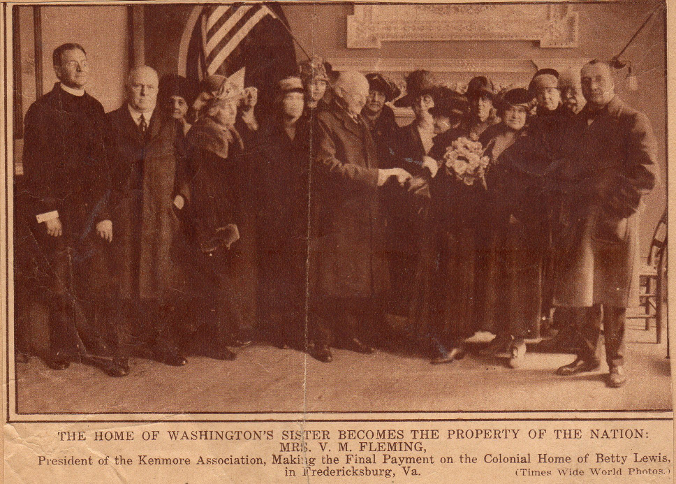
    On January 1, 1925 — ninety years ago — a group of well-dressed women in hats and long fur coats assembled at Kenmore to hand over the final $1,000 payment and gain full possession of the house and land.  This meeting was the culmination of thirty-two months of persistent work and determination by the ladies of The Kenmore Association to save the historic property from destruction.

    Emily White Fleming (identified in the newspaper caption by her husband Vivian Minor Fleming’s initials) makes the final payment to purchase Historic Kenmore on January 1, 1925.

    This crusade began four years earlier with a brief notice in the Fredericksburg Daily Star from Mr. E. G. Heflin, the owner of the Kenmore property.  The announcement stated: “I have decided to build at once…6 or more modern up-to-date residence [sic] on Kenmore.”  Built on a section of the plantation property, these houses prompted concern among many local citizens at the thought of further loss to the historic site.

    By 1922, the destruction of the old Lewis home seemed imminent.  Mr. Heflin placed an advertisement for the sale of the house itself and cut up much of the original estate into smaller building lots to be sold to developers.  If the house was sold, it might be remodel into apartments or just razed to the ground.  This escalation increased the alarm even more and some tried to raise funds to purchase Kenmore.  This attempt proved unsuccessful and the house did look to be lost.  However, salvation appeared in the form of Kate Waller Barrett and the National Society of the Daughters of the American Revolution (DAR).

    In March of that year, Mrs. Barrett, Virginia Regent of the DAR, came to Fredericksburg with the purpose of organizing a new chapter in the town.  She asked Emily White Fleming to lead the proposed chapter, which would work to save Kenmore.  Mrs. Fleming was 68 years old and, though seemingly small and fragile, she, in reality, had a tenacious and determined spirit.  She accepted the position and with the help of her daughter Annie Fleming Smith, known as “Miss Annie,” began their campaign to save the old Lewis house from destruction.

    The ladies approached Mr. Heflin and negotiated an agreement to the purchase the property.  The group had to make a first payment of $10,000 within four months or the deal would be off.  Furthermore, if Mr. Heflin got a satisfactory offer within those four months, he could go ahead and sell the property outright. It was a tough deal but the ladies rose to the challenge spectacularly.

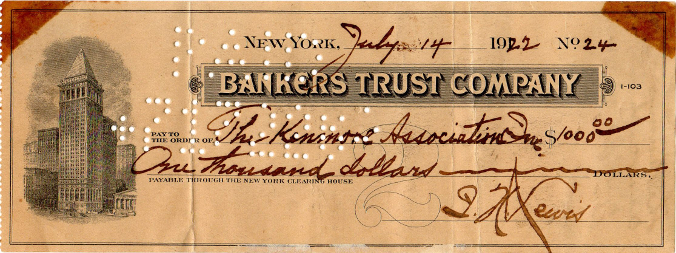
    Mrs. Fleming and Miss Annie began fundraising immediately.  They wrote hundreds of letters by hand, stating facts about Kenmore in simple, forceful style and then making appeals for help. Mrs. Fleming recalled, “I could write thirty-nine letters a day and Annie forty-nine. We never had a typewriter until the campaign was over.” In response to one of Mrs. Fleming’s letters, Colonel Isaac Newton Lewis, maker of the Lewis machine gun and a descendant of Fielding Lewis, contributed the first $1,000. Not to be outdone, The Colonial Dames of America in the State of Virginia gave a substantial donation of a $1,000 as well.

    Donation from Colonel Isaac Newton Lewis donated the first $1,000 to the Kenmore Association.

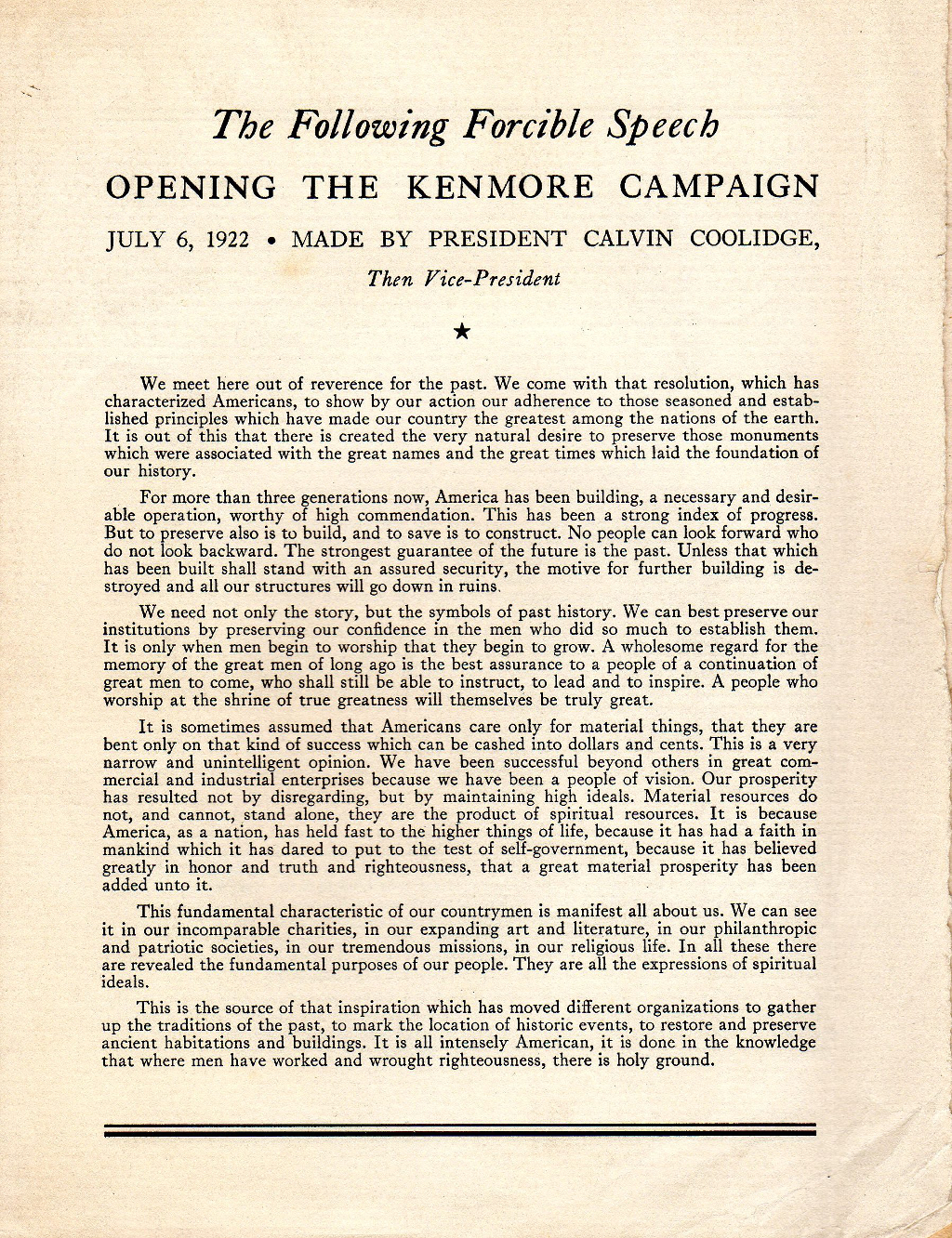
    In July 1922, the Kenmore Association launched a public fundraising drive with a host of distinguished men and women coming to Fredericksburg for the start of the campaign. Even Calvin Coolidge, then the vice president under Warren G. Harding, made a speech (see below) pleading for patriotic Americans to save this home that was so critical in the history of the country.  “It ought to be preserved for its own sake,” Coolidge demanded, “It must be preserved for the sake of patriotic America.”

    Speech made by Vice President Calvin Coolidge in support of the Kenmore Association’s effort to save the historic home.

    Through the efforts of this determined group of women, by the first of September 1922, they were able to pay an initial installment of $12,000 on the account.  Impressed with the Kenmore Association’s work, Mr. Heflin made his own gift of $2,000.   By New Year’s Day 1925, the hard work paid off and the ladies made the final payment and took possession of the property.  Historic Kenmore was saved!

    Although the purchase of Kenmore nine decades ago certainly marked a new beginning, transforming the house into a historic site for the public to enjoy required many more years of work.  Indeed, in many ways, the work begun by Mrs. Fleming, Miss Annie, and the Kenmore Association continues even as 2015 begins.  In the new year at Kenmore, we will focus on refurnishing Fielding’s office and will soon hang portraits of Fielding Lewis, Betty Washington Lewis, and other family members in the Drawing Room.  You can follow the year’s work here on the “Lives & Legacies” blog and on “The Rooms at Kenmore” blog, which is solely dedicated to the refurnishing project, at www.kenmore.org/wordpress.  Like 1925, the year 2015 should prove to be an exciting beginning!

    Heather Baldus
    Collections Manager

  • Photos: “Twelfth Night at Kenmore”

    Today – January 6 – marks the end of Christmas or, at least, it did two centuries ago.   If we lived in the days of George Washington, Betty Washington Lewis, and Fielding Lewis and moved within their social circle, we would all be preparing for the grandest celebration of the Twelve Days of Christmas, which began on December 25.  This grand event, known as Twelfth Night, was celebrated much in the same way that many of us mark New Year’s Eve with family and friends gathered together for food, drink, sweets, music, dancing, games, and conversation.

    This past weekend, Historic Kenmore hosted just such a celebration in the form of a theatrical presentation titled “Twelfth Night at Kenmore.”  Set in January 1776, as Fielding and Betty Washington Lewis end their first Christmas in their newly built home, “Twelfth Night at Kenmore” depicted an unusual seasonal celebration, as the growing American Revolution brings fear, doubt, and frustration to the Lewis family, their friends, and members of the enslaved community.

  • Historical Holiday Cheer

    In the colonial-era, the Christmas season lasted into January and concluded on Twelfth Night, a festive evening to mark the end of the Twelve Days of Christmas and celebrated much like our New Year’s Eve is today.  While the entire period featured frequent banquets and balls with much food and spirits, Twelfth Night was especially known for its revelry.

    Just as we do today, many colonial Americans got into the holiday ‘spirit’ with a glass of something special and warming on Twelfth Night.  Special drinks called for distinctive mugs, glasses, and containers that were both functional and designed to impress your party guests.  In these containers, early Americans enjoyed familiar festive beverages like eggnog, hot chocolate, hot toddies, and punch.  At the same time, some of their holiday drinks are now a thing of the past or perhaps only enjoyed by those imbibers with an appreciation for history.

    Many of these holiday beverages were created out of a desire to preserve the taste of fresh fruits harvested in the summer and fall so they could be enjoyed during the winter months.  Cherry ‘Bounce’ is a great example of this – in addition to being fun to say!  Easy to make, cherry bounce was started in the early summer when the fruit is ripe.  Fresh cherries (traditionally of the sour variety) were placed in bottles and topped off with brandy then stored for as long as you could stand to wait.  Leaving the fruit to infuse as long as possible increased the flavor and lent a lovely red color to the brandy.  The decanted off-flavored brandy was mixed with sugar and spices.  Martha Washington possessed a recipe for cherry bounce that included cloves, cinnamon and nutmeg and George Washington was said to have loved it so much that he took some in a canteen with him on a trip over the Allegheny Mountains in 1784.

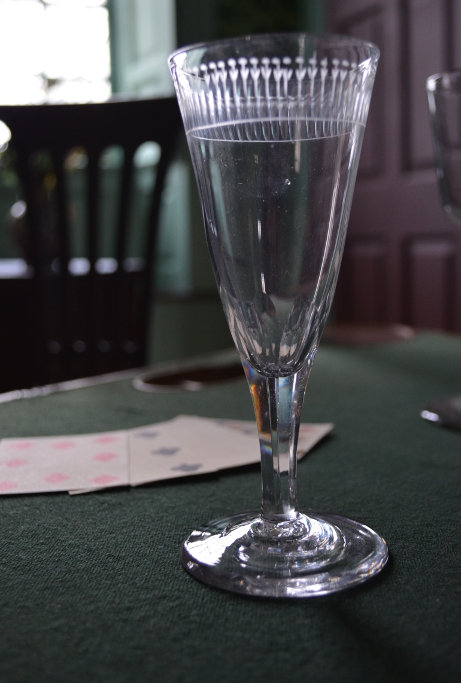
    Copper wheel engraved wine glass.
    Copper wheel engraved wine glass.

    Syllabub is another colonial beverage that has been forgotten.  Originating in England, this odd-sounding half-dessert, half-cocktail, was created by combining spirts such as wine, sherry, ale or cider with fresh milk – preferably so fresh that it had just come out of the cow and was still warm!  In fact, some recipes stated that a maid should milk the cow directly into a pan of your chosen spirit.  Unfortunately, this technique probably also resulted in some ‘barn yard’ material ending up in the concoction.  Sugar, spices and possibly citrus were then added.  While there are many versions of syllabubs, it often involved a frothy mixture of whipped egg whites, curd or cream that can be spooned off and eaten while you drink the liquid whey that separates beneath.  Served in a conical glass and sometimes displayed on a pyramid-shaped dessert tray with colorful jellies, syllabub made for a very festive holiday drink.

    A Copper Wheel engraved dessert/fortified wine glass used to serve syllabub.

    While many people may not have heard of syllabub and cherry bounce, wassail is a term that most are familiar with even if they’re not entirely sure what it is.  Actually, wassail was both a beverage and an activity.  Similar to today’s mulled ciders and wine, wassail was often served from a punch bowl passed around from person to person in an act of sharing and celebration.  The old Christmas carol “Here We Come A-Wassailing” describes the act of going from house to house singing and wishing good cheer while also sipping the punch-like drink composed of hot wine or ale mixed with spices, apples and sometimes topped with bread or toast.  But before you condemn our ancestors for drinking odd things, just think what future generations might think of what we consume today.  And perhaps try a colonial holiday beverage or two this Twelfth Night and evoke the spirit of holidays past!

    Hand-blown mug for hot beverages such as wassail.

    You can experience a dramatic theater presentation depicting a Twelfth Night celebration (minus the alcohol) at Historic Kenmore on Saturday, January 3 or Sunday, January 4.  Reservations are required and can be made by calling 540-370-0732 x24 or emailing [email protected].  Visit the events page on http://www.kenmore.org for more information!

    Mara Kaktins
    Archaeologist, Ceramics and Glass Specialist

  • Season’s Greetings


    The George Washington Foundation wishes everyone a joyous holiday season!  We here at Lives & Legacies are taking a break from publishing this week.  If you missed it, check out our most recent post “Christmas in Fredericksburg with George Washington, 1769”. We’ll be back next week.

  • Christmas in Fredericksburg with George Washington, 1769

    Six-year-old George Washington and his family moved to the land we call Ferry Farm late in 1738, perhaps even in time to mark Christmas in their new home.  If so, it was the first of many.  George lived at Ferry Farm into young adulthood.  Interestingly, the best documented Christmas he spent in Fredericksburg was actually in 1769, long after his boyhood years, and it paints a picture of the holiday as typically celebrated in Virginia, past and present.

    George Washington at age 40 in 1772, three years after the Christmas of 1769. By J.W. Paradise (engraving) from a picture by J.G. Chapman after Charles Wilson Peale [Public domain], via Wikimedia Commons.
    After the House of Burgesses recessed, 36-year-old George Washington left Williamsburg for home on December 21, 1769.  Instead of traveling all the way to Mount Vernon, he stopped in Fredericksburg on December 23 and stayed in town through Christmas.  He arrived at “4 Oclock in the Aftern.” and went to the home of his brother-in-law Fielding Lewis. In 1769, the Lewis family did not yet live in the brick home we call Kenmore.  Instead, they were located near the present-day corner of Princess Anne and Lewis Streets.  That evening, George “ding. [dined] at Colo. Lewis” and he and Fielding may have been joined by George’s sister Betty, his young nephews George, Charles, Samuel, Lawrence, Robert, and his niece Betty.  Christmas was a period of rest that Virginians used for long visits and large meals with family and friends.  The meals amounted to feasts and a Christmas meal at Mount Vernon once featured, for example, “an elegant variety of roast beef, veal, turkey, ducks, fowls, hams &c.; puddings, jellies, oranges, apples, nuts, almonds, figs, raisins, & a variety of wines & punch. . .”[1]

    On Christmas Eve, which was a Sunday, George “Went to Prayers, & dined afterwds. at Colo. Lewis.”  The prayer service he attended probably took place at St. George’s Church, an wooden structure located on the site of today’s St. George’s Episcopal Church. Many colonial Virginians combined the holiday’s religious nature with secular activities such as parties, much as we do today.  Washington was no different.  After his morning at church, he passed the evening in Julian’s Tavern with Edward Jones, the overseer of Ferry Farm, where George’s mother Mary still lived.  This tavern was located at the corner of Amelia and Caroline Streets.

    Christmas Day was spent with the Lewis family and George won 2 pounds and 5 shillings playing cards.  Card playing for money was another aspect of Christmas carousing enjoyed by Virginians, whether men, women, or children.  Popular games included whist (similar to bridge), and piquet (similar to rummy) and were great ways to pass the time when visiting family and friends during Christmas.

    On December 26, Washington prepared to continue his journey home by going to to the barber and paying for repairs to his carriage.  Before leaving, though, he again “Dined at Colo. Lewis” and then “went over the River and logd at my Mothers” for his final night in Fredericksburg.  After giving Mary 6 pounds in cash, George left Ferry Farm on the 27th and arrived home at Mount Vernon on December 28.

    The Christmas season of the colonial era lasted much longer than ours does, extending into January and concluding on Twelfth Night, a festive evening to mark the end of the Twelve Days of Christmas and celebrated much like our New Year’s Eve is today.  During the first days of 1770 at Mount Vernon, Washington and his family continued visiting friends and hosted two dinners, including one on Twelfth Night.  It appears to have been a relatively subdued affair with only immediate family and four or five neighbors.  Three years later, on January 6, 1773, he had at least fourteen guests, excluding his own family, at a Twelfth Night celebration.

    Christmas 1769 was one of many that George Washington spent in Fredericksburg.  It is the only one for which he recorded his activities, however.  He spent time with family, he enjoyed several good meals, he went to church, he drank at a local tavern, he won some money at cards, and he attended or hosted several celebratory gatherings.  All-in-all, his was a Christmas spent in ways not all that different from the ways many of us will spend our own holidays.

    Zac Cunningham
    Manager of Educational Programs

    [1] Theophilus Bradbury quoted in Laura F. Winner, A Cheerful & Comfortable Faith: Anglican Religious Practice in the Elite Households of Eighteenth-Century Virginia, New Haven, CT: Yale University Press, 2010: 130.

  • The Whimsical Worlds of Kenmore’s “A Wee Christmas”

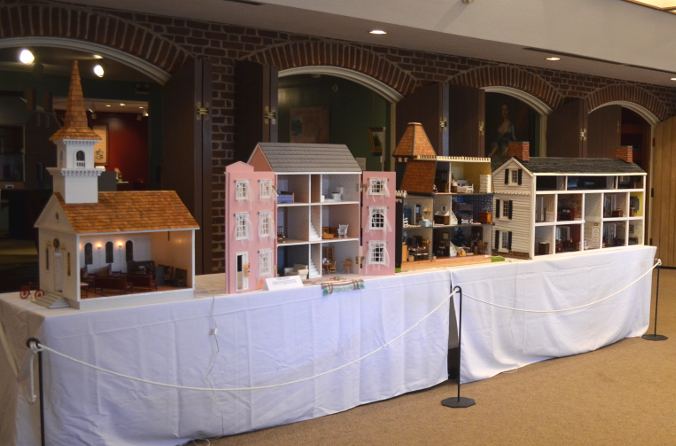
    This year is our first-ever “A Wee Christmas — Dollhouses and Miniatures Show” at Historic Kenmore! “A Wee Christmas” has brought together many different dollhouses, miniature scenes, and figurines loaned by friends, neighbors, and staff for visitors to Kenmore Plantation to enjoy.  The highly detailed, replica dollhouse of Kenmore on display in our Crowninshield Museum inspired this new holiday event. You can read a blog post about the history of the Kenmore dollhouse here.

    The photos in the gallery below show several of the whimsical dollhouses and miniatures on display. To enjoy all of them up close, visit Historic Kenmore before the exhibit ends on December 30. Check out the events page on http://www.kenmore.org for more information!

  • Ferry Farm is “Home Sweet Home” for the Holidays

    Tradition says that Mary Ball Washington, mother of George Washington, was well-known for her excellent gingerbread. The story goes that she even served her gingerbread to the Marquis de Lafayette when he visited Fredericksburg as part of his postwar tour of America in 1784. Inspired by this tale and as Mary’s home for three decades from 1738 to 1772, George Washington’s Ferry Farm hosts a Gingerbread Contest and Exhibit each December. This year’s event is the 28th annual and features the theme “Home Sweet Home.”

    The photos in the gallery below show just a few of this year’s contest entries representing a variety of ages and skill-levels. We’re also sharing some photos of Ferry Farm decked out for the holiday season and want to thank the Ann Page Garden Club for beautifully decorating this year.

    To see all the gingerbread creations and to vote for your favorite, visit Ferry Farm before the exhibit ends on December 30. Check out the events page on http://www.kenmore.org for more information!


  • ‘A Wee Christmas’ Display Inspired by a ‘Wee’ Kenmore

    History of Kenmore Dollhouse (5)
    Dollhouses on display as part of our first-ever “A Wee Christmas” Dollhouses & Miniatures Show.

    This holiday season, we’re excited to share with our visitors the many dollhouses and miniatures loaned by friends, neighbors, and staff to form our first-ever dollhouses and miniatures show that we’re calling “A Wee Christmas at Historic Kenmore”. A highly detailed, replica dollhouse of Kenmore on display in our Crowninshield Museum served as the inspiration behind this new exhibit. Like its real life counterpart, this unique Kenmore replica has a fascinating history all its own.

    While on a visit to Fredericksburg in the spring of 1984, Florence White, an enthusiast of Georgian architecture, fell in love with Kenmore. She had been searching for years to find just the right place to make into a grand historical dollhouse. Kenmore with its simple, symmetric windows and imposing brick walls was perfect.

    History of Kenmore Dollhouse (1)
    The dollhouse version of Historic Kenmore.

    However, Florence needed someone who would construct this dollhouse with the degree of detail and intricacy that would mimic the elegant original. After a long unsuccessful search there came a chance meeting with Jim Freytag, a retired railroad man turned miniature enthusiast, and she knew she had her builder.

    Jim’s first task was to visit the home that Florence wanted to replicate and gather as many details as he could. He wanted to make it as structurally authentic as possible from the number of bricks between the windows to the outside steps worn down with years of use. He toured the house taking notes on the particulars of each room, the furniture, the décor, and the layout. Photographs were not permitted inside the house so Jim purchased postcards in order to get better detail for the intricate plaster ceilings and mantels.

    Some 2700 hours of work, 18,929 bricks and over $4000 later Florence had her Kenmore dollhouse. Jim had completed four bedrooms, a dining room, living room, drawing room, and study. They are each equipped with miniature pieces of furniture from a large cherry-stained Queen Anne table in the dining room flanked by two portraits of Colonel Lewis and Mrs. Lewis to canopy beds, brass candlesticks and leather boots in the bedrooms.

    History of Kenmore Dollhouse (4)
    A view of the Chamber inside the Kenmore dollhouse.

    Over twenty-six years later, the dollhouse now sits in the museum gallery at Kenmore’s visitor center for all to view. Each room still has the exact furnishings so painfully and meticulously created by Jim and positioned to Florence’s specifications. The house is a time capsule which shows Kenmore before renovations completed nearly a decade ago. Visitors can see pieces of furniture that are no longer on display and can understand the dimensions of the upper floor rooms which are not currently open to the public.

    Florence’s devotion to detail and Jim’s immense skill leave us with a whimsical model of Kenmore which exudes all the elegance and beauty of the original that would have made the Colonel and Betty proud.

    You can see Florence and Jim’s replica of Kenmore as well as all the other wonderful dollhouses and miniatures that make up “A Wee Christmas at Historic Kenmore” until December 30.

    Heather Baldus
    Collections Manager