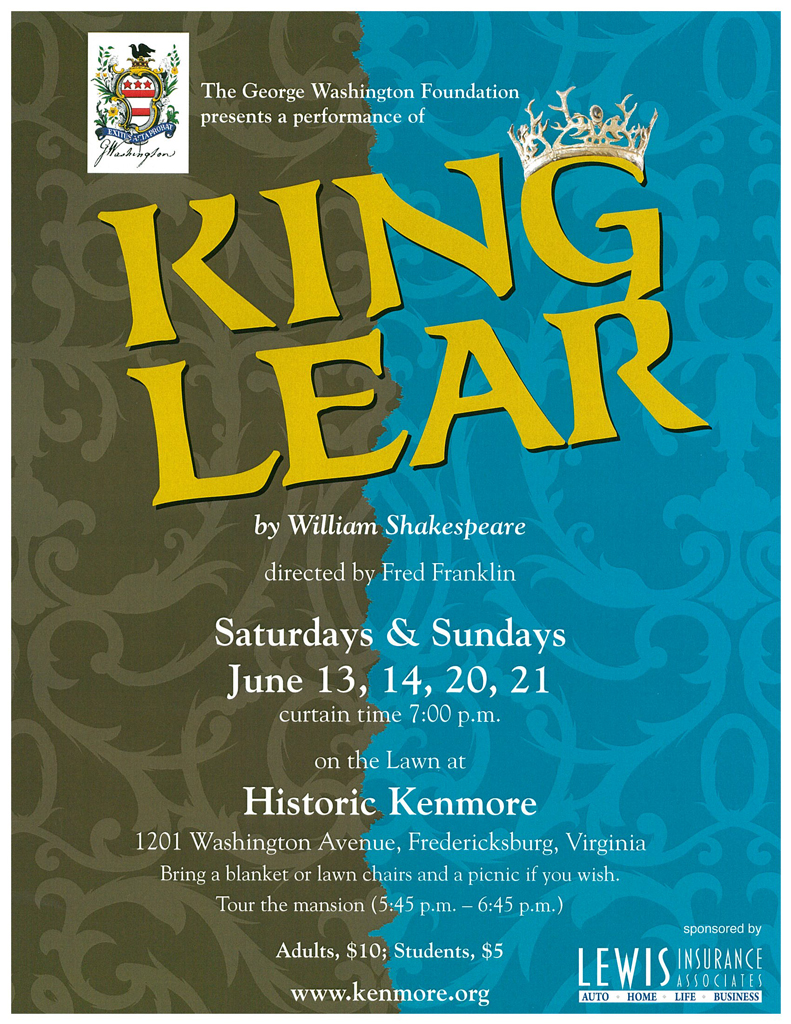
Shakespeare on the Lawn at Kenmore returns this June with four performances of the popular drama, King Lear, performed by The Fredericksburg Players and directed by Fred Franklin.
King Lear is one of Shakespeare’s most heart-breaking tragedies—the story of a father who puts his faith in his two treacherous, elder daughters while casting out his youngest daughter, the only one that he truly loves. The play features conniving relatives and secret plots. It concludes with the deaths of the King’s advisor, all three of his daughters, and of course, Lear himself.
As Kenmore prepares for another summer of the Bard, Lives & Legacies shares a few posters from past theatrical performances at Kenmore.
2014
2013
2011
2002
We occasionally present plays other than Shakespeare’s. Back in 2006, it was “A New Way to Pay Old Debts,” a satire popular in the 18th century.
Be sure to watch for forthcoming details about more summertime Shakespeare coming in August to Kenmore!
Master Stonemason Ray Cannetti and his crew split large sandstone boulders into smaller pieces that will then be dressed into foundation stones for an interpretive replica of George Washington’s boyhood home soon to be constructed at Ferry Farm.
The George Washington Foundation has begun a multi-year venture to building this interpretive replica of the Washington house on its archaeological footprint. The first phase of the project will also reconstruct the kitchen, the enslaved quarters structure, and an outbuilding as well as recreate the period landscape.
Nature shaped the lives of English colonists and enslaved Africans living and working at Kenmore Plantation 200 years ago. Over centuries, humans changed Kenmore’s natural world from a plantation setting into an urban green space. Yet, nature remains just outside the door.
This past Saturday at Historic Kenmore, visitors had a chance to explore humans’ dynamic relationship with nature through the years during Our Urban Nature. They discovered — in some cases, held — the wildlife living right in town with Fredericksburg Parks & Recreation. They explored the meaning behind the color of the river’s water with Friends of the Rappahannock. Visitors learned about worm composting with the Rappahannock Regional Solid Waste Management Board. They dug into the importance of dirt with the Tri-County/City Soil and Water Conservation District. Visitors also enjoyed a native plant and urban geology walk through the neighborhood and learned how to build terrariums from found objects and plants. Kids created a food web mobile, fairy houses, and built their own river.
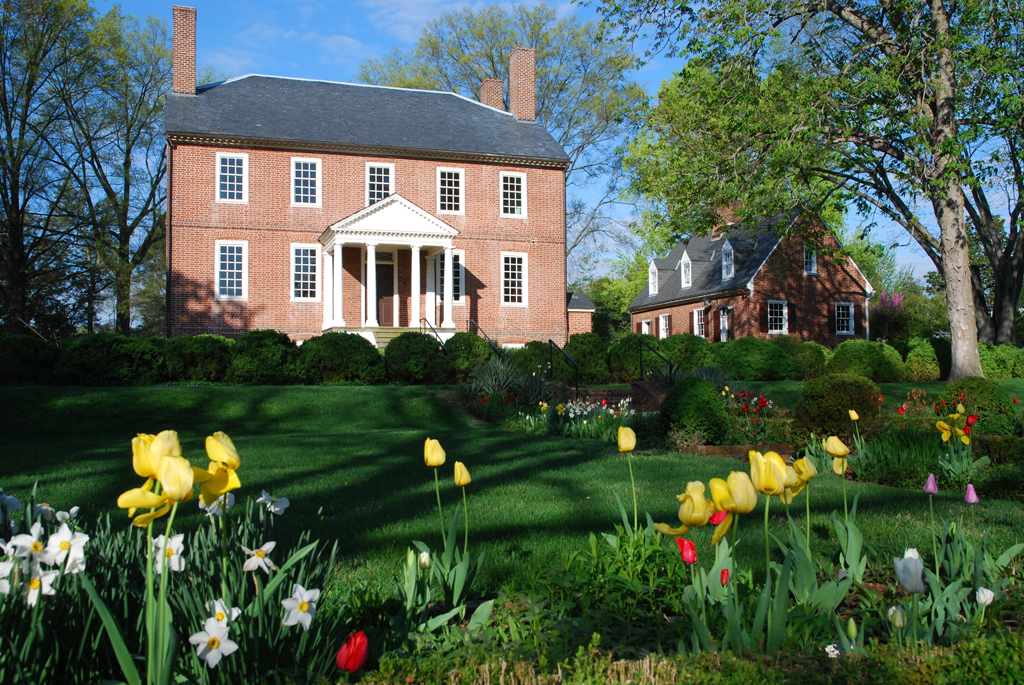
Kenmore’s lawn is an island of green in our beautiful city.
Holding a frog.
Learning about millipedes
A display of scat you may see in your very own neighborhood.
Several months ago, Historic Kenmore concluded the refurnishing effort in the Dining Room. After painstaking research and scientific investigation, that room has been returned to a state that would be immensely familiar to Fielding and Betty Washington Lewis.
It might look somewhat unfamiliar, however, to later occupants of Kenmore. The first picture below was taken sometime between 1880 and 1902 when the Howard family occupied the house.
When, in 1881, Kenmore was purchased by Mr. William Key Howard of Maryland, the place was in deplorable condition.
Kenmore suffered considerable damage to its ornamental plaster ceilings during the Civil War. Young William K. Howard, Jr. urged his father to allow him to repair them. When scaffoldings were built, the artistic lad worked long and patiently making his own molds for replacement elements when needed.
The Howards saved the ceiling but, naturally, their goal was not to return the building to its colonial-era appearance. When Kenmore became a historic house museum, changes still had to be made over many decades to achieve a historically accurate décor that closely resembles the one the Lewises would have known in the late 1700s.
The second picture shows the dining room as it appears today after meticulous restoration and refurnishing. Comparing the two photos, we see the biggest architectural change to the room was the removal of the gothic arched niches on each side of the fireplace. The arches were returned to the original square doors.
The narrow oak flooring, which replaced the original floor stained with the blood of Civil War soldiers who received medical treatment at Kenmore, was itself replaced with heart pine flooring. Late last year, the floor was covered with a beautiful replica 18th century carpet.
Decorative coal grating and surrounding bricks were removed from the fireplaces making them larger.
The wood molding put on the walls to create false panels was removed and replaced with plaster molding whose original location was found during removal of paint during restoration work.
Those are just a few of the changes both large and small that can be seen when comparing these two photos. The changes occurred over many decades and involved many dedicated people but each started, in many ways, with the Howards. They and all the rest of us who have spent our days at Kenmore have taken something old and made it new again.
Heather Baldus, Collections Manager
Zac Cunningham, Manager of Educational Programs
Humans are an inescapable part of nature. It shapes us and we shape it. Most of us can see this dynamic relationship when looking back 200 years. It is easier to appreciate the centrality of nature in the lives of 18th century planters, farmers, and enslaved people whose livelihoods and bellies depended on good weather for growing crops. Time was governed by the sun and the seasons. Commerce depended on domesticated animals to pull wagons and on wind to drive sailing ships.
At its most basic, history is the study of change over time. As we study, we tend to focus on the changes within the very human realms of politics, society, and culture. We relate more to the lives and stories of fellow human beings like George Washington, Betty Washington Lewis, or Fielding Lewis. These humans, however, sparked other more subtle changes far outside human realms. Human history has drastically altered the natural world while nature itself has actively shaped human history.
When Fielding Lewis finished building the mansion that would become Kenmore in 1775, it stood at the heart of a large plantation, an actively managed world of agricultural fields and livestock mixed with natural flora and fauna. Over two centuries, humans slowly changed Kenmore from a plantation into an urban green space now nestled in the midst of a dense residential neighborhood. Hundreds of houses rest where slaves once toiled, crops once grew, and cows once pastured.
Yet, nature hasn’t disappeared. It remains right outside all of our doors. We can find it in our beautiful flower gardens and backyard birdhouses, in the squirrel nests atop the oak tree across the street, and in the weeds pushing up through sidewalk cracks and overtaking the front lawn.
The term weed itself is an excellent example of the dynamic relationship between humans and nature. Today, weeds are plants we loath as undesirable nuisances. Yet, these weeds exist because at one time, we viewed them as useful and even desirable. Weeds and humans have fascinating interrelated histories.
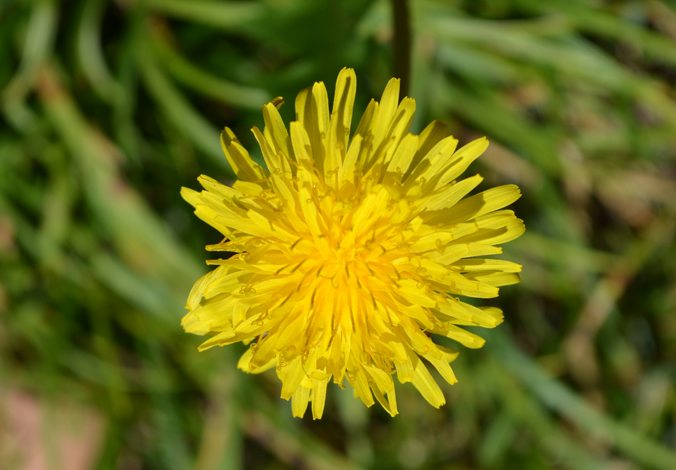
Dandelion is native to the Americas. Early Americans steeped teas from the dry root and desperate Civil War soldiers used roasted dandelion root as a coffee substitute. Even though it took a lot of time to gather them, people throughout history have used the flowers to make dandelion wine.
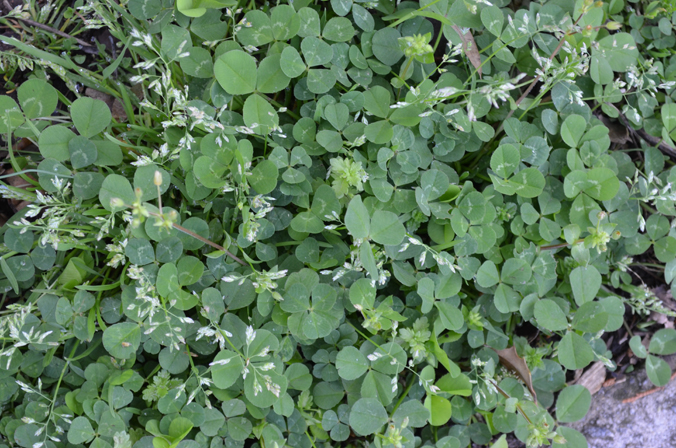
European colonists introduced Clover because it served as an excellent pasture crop for consumption by livestock.
Wild Garlic was introduced as a spice, which Native Americans quickly adopted.
Purple Deadnettle was found across Eurasia but it is not clear who exactly introduced it into the Americas. Colonial Americans valued deadnettle, in part, for its medicinal purposes as it could stop bleeding. Its flowers contain a lot of sweet nectar as well and, thus, people in the past often used them to make sweet teas.
If you want to learn more about native plants and other aspects of Our Urban Nature, join us from 10:00 a.m. to 1:00 p.m. on Saturday, May 16 at Historic Kenmore. Discover what wildlife are living right in town with Fredericksburg Parks & Recreation. Explore the meaning behind the color of the river’s water with Friends of the Rappahannock. Learn about worm composting with the Rappahannock Regional Solid Waste Management Board. Dig into the importance of dirt with the Tri-County/City Soil and Water Conservation District. Visitors can enjoy a native plant and urban geology walk and learn how to build a terrarium from found objects and plants. Kids can create a food web mobile, fairy houses, and build their own river.
Additionally, George Washington’s Ferry Farm will host native plant walks later this summer on June 6 and then again on September 18.
Mara Kaktins, Archaeologist/Ceramics and Glass Specialist
Zac Cunningham, Manager of Educational Programs
Historic Kenmore sometime before the end of 1862. The wooden structure to the mansion’s left is the kitchen, which would be destroyed during the Battle of Fredericksburg. An enslaved woman can be seen standing at the corner of the kitchen while an enslaved man is visible under the tree at the far left.
As the sesquicentennial of the Civil War draws to a close, we are remembering the war at Kenmore, and its aftermath. Although Kenmore is best known as a house of the colonial period, it had quite a history during the Civil War. Visitors to Kenmore have long heard that the house survived bombardment during the Battle of Fredericksburg in December, 1862. At least 11 cannon balls hit the house, with at least one penetrating the interior, damaging the famous plasterwork ceiling in the Drawing Room. While that battle was intense and destructive, the true lasting effects of the war on Kenmore came later, when the house was used as a Union field hospital during the early stages of the Overland Campaign.
Cannon ball hole in Kenmore’s roof.
In May of 1864, Union and Confederate forces clashed at The Wilderness just west of Fredericksburg, with further hostilities throughout the month at nearby Spotsylvania Courthouse. The wounded from these battles were evacuated from the front lines to Fredericksburg. The city was soon overwhelmed with soldiers in dire circumstances, needing far more medical attention and resources than were available.
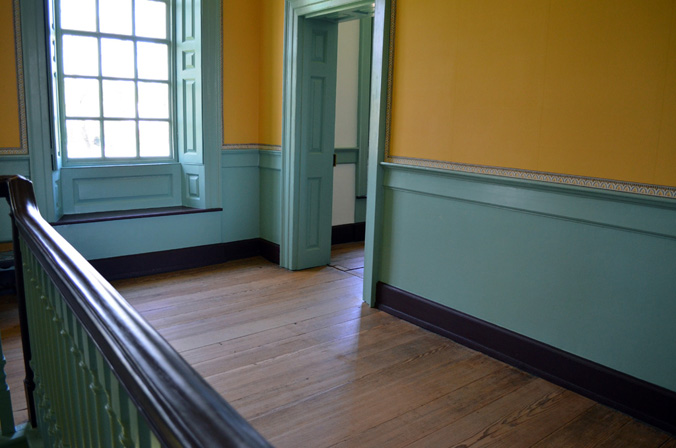
A memoir of experiences during the war written by Amos Rood, an officer in the 7th Wisconsin Infantry who was wounded at Spotsylvania, gives a vivid account of the situation in Fredericksburg and at Kenmore specifically (a transcription of the memoir is in the Kenmore manuscript collection). Rood writes, “…where to put the thousands who were being brot [sic] in! City already full: every house, barn, shop, factory, shed: all overcrowded and thousands laying on the sidewalks and gardens and fields!”[1] Rood was in a wagon which had been left on a crowded street in the city, but a chaplain who he knew happened by and helped him find shelter at Kenmore. He describes the scene upon his arrival, “…took me out of the rig and had me carried into Kenmore house and (no room on the ground floor so they toted me up one flight and laid my cot down on the floor by the bannister or balustrade) so I could see people (Drs & c.) coming up and going down…Surgeons noticed me…They gave me grog…and put me to sleep with opium pills.”
The second floor landing where Rood was given medical treatment.
Rood would stay at Kenmore, in increasingly dire circumstances, from May 14th through the 17th. Although he describes a serious leg wound that was obviously infected, he was given no medical treatment other than doses of opium and liquor. The fact that a man in such a condition did not rate top billing for treatment perhaps speaks to the situation of the other soldiers being brought into Kenmore by the hundreds every day. It has long been believed that Kenmore’s glorious dining room was used as the surgery, as evidenced by the fact that all of its original floorboards had to be ripped up and replaced after the war. War era graffiti left on the rafters of the attic attest to the fact that wounded soldiers were crammed into every available space in the house. Eventually, more than a hundred bodies and at least one horse were buried on Kenmore’s grounds, mostly in hastily dug shallow graves.
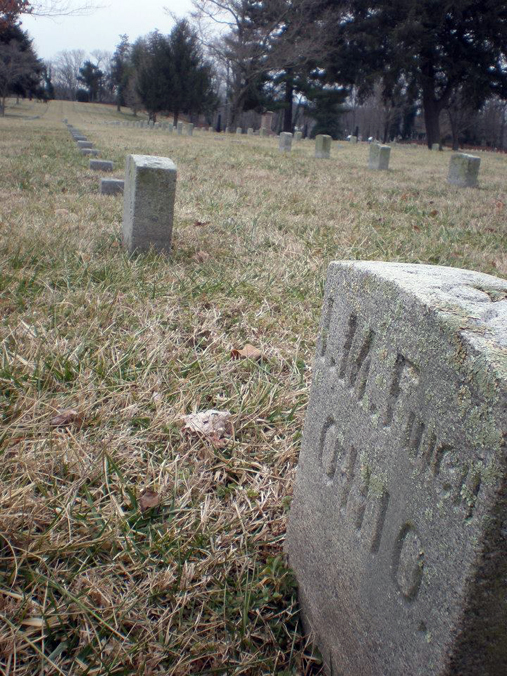
In 1868, the removal of soldiers’ remains from temporary graves all over the city began, when a national cemetery was established in Fredericksburg. Eventually more than 13,000 remains were re-interred. The process took decades. In fact, the last known grave of a soldier buried at Kenmore was discovered in December, 1929, when the Kenmore Association began excavations to rebuild the kitchen dependency. An article in the Free Lance-Star on December 5th said, “The finding of soldier’s [sic] remains in Fredericksburg and its environments is not unusual and often workmen engaged in digging ditches…or in excavating for new building projects, come across all that is left of a once youthful soldier.”[2] The ladies of Kenmore made arrangements with the American Legion to have the remains re-interred with full military honors on the 66th anniversary of the Battle of Fredericksburg on December 13th. An account of the ceremony reads, “…the cortege left ‘Kenmore’. The body had been placed in a new casket and this draped with a large United States flag, which often floated from the ‘Kenmore’ flagstaff.”[3]
Gravestones at Fredericksburg National Cemetery
With that last re-interrment, the war finally came to an end for Kenmore. 150 years later, we still remember its lasting effects.
Meghan Budinger
Aldrich Director of Curatorial Operations
[1] Rood, Amos. Memoirs of the War. Trans. Steven L. Acker. Kenmore Manuscript Collection.
[2] “Remains of Union Soldier are Found.” The Free Lance-Star [Fredericksburg, VA] 5 December, 1929: Kenmore Manuscript Collection.
[3] “Unknown Soldier Buried in Kenmore.” The Chattanooga Times 12 January , 1930: Kenmore Manuscript Collection.
The George Washington Foundation broke ground for The Washington House and the First Phase of Construction at Ferry Farm on Saturday, April 25. Doris Kearns Goodwin, world-renowned presidential historian and Pulitzer Prize-winning author, delivered keynote remarks. Read more about the ceremony and project in The Fredericksburg Free Lance-Starhere.
The large area of dirt encompasses the Washington House’s location. Preparations for the groundbreaking take place in the background.
Washington House cellar
Visitors await the ceremony’s start.
Doris Buffett, local philanthropist and sister of investor Warren Buffett, will serve as honorary national fundraising chairwoman of “The Future of Our Past Campaign.”
The Stafford Board of Supervisors present George Washington Foundation President Bill Garner with a check for $470,000 for the project.
Archaeologists sometimes recreate technology from the past to understand how people lived. This is called experimental archaeology. When archaeologists at George Washington’s Ferry Farm found glue residue on sherds of Mary Washington’s china, they developed ways to recreate this glue. This video explains the glue making process and what recreating the glues revealed about Mary.
Editor’s Note: Lives & Legacies continues to remember the Civil War as that conflict’s 150th anniversary concludes this April and May. During the Civil War, the homes of George Washington and Fielding Lewis – both indispensable to securing American freedom in the Revolution — served as campsite and hospital in a bloody struggle over the definition of that same freedom. This brief overview of Ferry Farm’s Civil War history is adapted from Report on the Excavation of the Washington Farm: The 2006 and 2007 Field Seasons by Dave Muraca, Paul Nasca and Phil Levy, Site No. 44ST-174, Department of Archaeology, George Washington Foundation, 2010, pg. 27-32.
On two separate campaigns in 1862, Union forces occupied the north bank of the Rappahannock River, including Ferry Farm, in an attempt to take control of Confederate Fredericksburg. The military objective of each campaign was the same; however, the circumstances under which the two were executed differed greatly. The first occupation employed the Union Army’s strategy of ‘peaceful’ occupation while the second employed ‘hard war,’ resulting in a major impact on the social and physical landscape of the area.
In late April 1862, the Army of the Rappahannock, under the command of Major General Irvin McDowell, advanced south from Warrenton, Virginia. His military objective was to take control of Fredericksburg. This move was intended to help protect Washington, D.C., located 50 miles to the north, while the main body of the Union Army pushed toward Richmond on the James and York River peninsula. McDowell’s forward cavalry encountered, and quickly defeated, the Confederate forces defending Fredericksburg. In retreat, the Confederates burned the two foot-traffic bridges spanning the Rappahannock, as well as a vital railroad bridge. The Mayor of Fredericksburg surrendered the city to the Union Army.
The occupying Federals quickly established their encampments on the north side of the Rappahannock, including the land at Ferry Farm, and set about the task of erecting two floating bridges across the river and constructing a new railroad bridge.
Union Army wagons cross the Rappahannock River on a floating pontoon bridge at Ferry Farm. This photograph was taken from the present-day City Dock on the Fredericksburg side of the river looking across to Ferry Farm.
The Union soldiers encamped at Ferry Farm were the muscle that enforced the occupation of Fredericksburg. Their officers ordered them to respect people and property, and the men – for the most part – followed their command. Still, local residents, like the overseer living at Ferry Farm, complained bitterly to Federal authorities about barnyards raided for livestock, hay stolen for bedding, and fences dismantled for firewood.
Federal regiments hailing from New York, Wisconsin, and Massachusetts passed the spring and summer at Ferry Farm performing drills pulling guard duty, and rebuilding the structures their fellow troops sometimes damaged. When off duty, the men had time to improve their camp, wash their clothes, write letters home, play games, and even go into town to shop and see the sights.
In August, newly-appointed Union General John Pope recalled Fredericksburg’s occupiers to defend Washington. Departing Union soldiers destroyed their pontoon bridges, the railroad bridge they had just finished rebuilding, and other new structures they feared would benefit the Confederates. Apart from the superficial harm caused by their three-month encampment, they left behind a landscape largely intact with Ferry Farm’s buildings still standing.
Four months later, Union General Ambrose Burnside brought the largest number of Federal troops ever amassed to the north bank of the Rappahannock. His plan was to cross the river and march victoriously on to Richmond. But he delayed his army’s crossing waiting for pontoon boats. This gave General Robert E. Lee time to fully entrench his Army of Northern Virginia on the opposite side of the river. Burnside’s delay set the stage for a fierce battle, which devastated Fredericksburg and ended in a staggering Union defeat. Badly mauled, the Federals withdrew, pulled up their pontoon bridges, and hunkered down for the winter, turning Ferry Farm into part of their defensive front line.
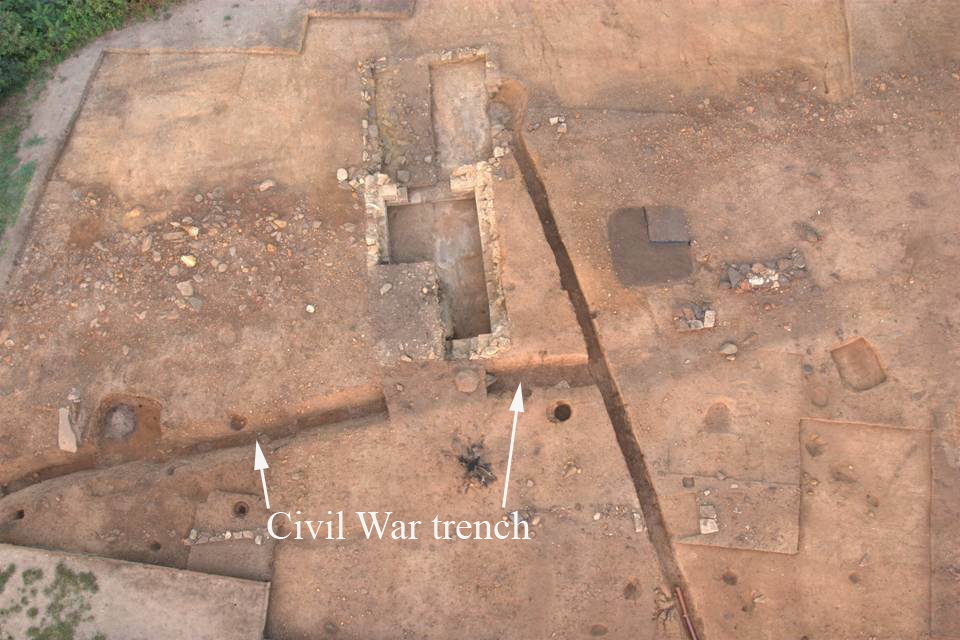
Although the Washington family’s house had disappeared by 1830, our excavations of its location have revealed not only the Washington’s cellar but also a Civil War-era trench passing within inches of the cellar.
The massive Union Army that arrived for battle in November was far different from the modest occupying force that had spent the summer here. Battle-hardened and irritated by a string of defeats, these soldiers cared little for local concerns about property. Burnside’s men did not hesitate to take whatever they wanted, including trees, fences, livestock, and homes. Anything useful was commandeered, stripped clean, or torn down over the ensuing months to sustain the winter camp – including Ferry Farm’s buildings.
William F. Draper, of the 36th Massachusetts Infantry, recalls his experience at Ferry Farm in late-November, 1862. “Our picket duty here was especially interesting from the associations connected with the spot where that duty was performed. The part of the line that it usually fell to my lot to hold was on the old Washington Farm, where General Washington passed most of his earlier years, and where he cut the cherry tree with his little hatchet but could not tell a lie.”
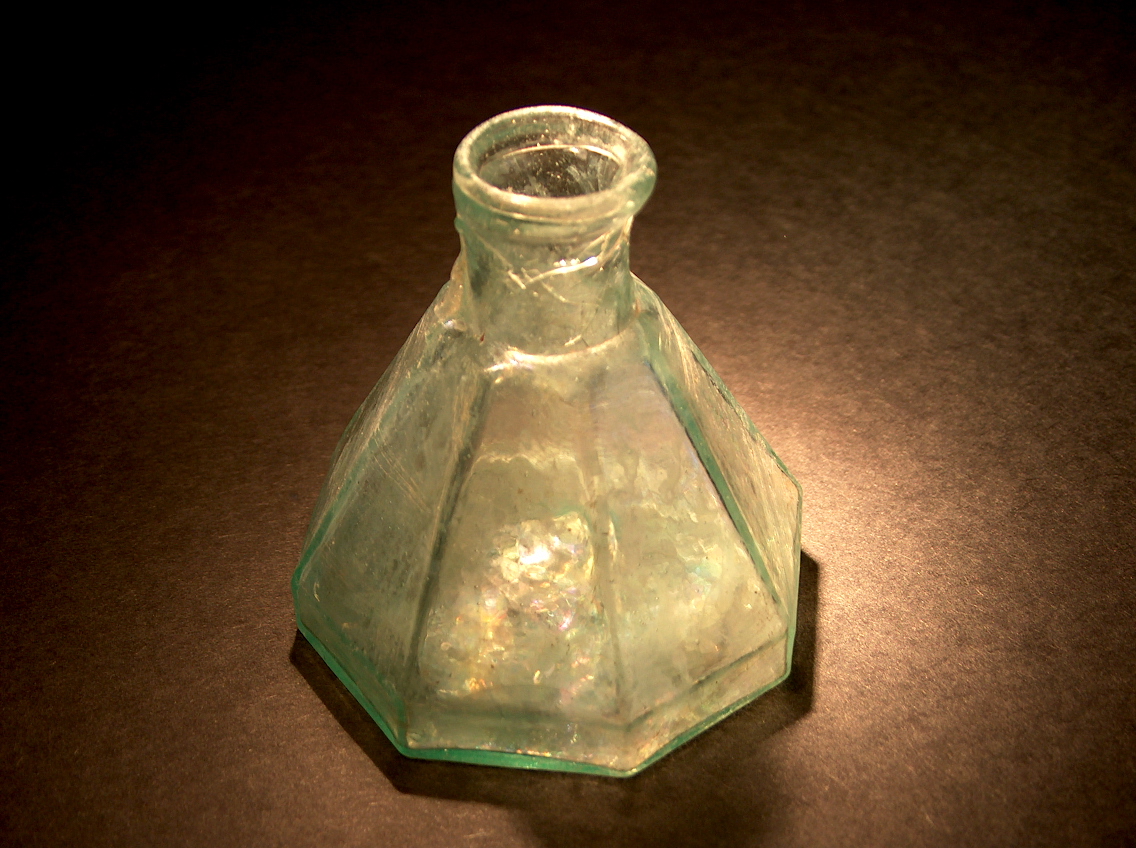
Inkwell dating from the Civil War excavated at Ferry Farm.
Military action was renewed in the spring of 1863, culminating at the Battle of Chancellorsville. During this engagement, Ferry Farm was again the location of a pontoon bridge, and the Federal guns overlooking it roared back to life. At Chancellorsville, the Union Army would yet again sustain a crippling defeat; however, Fredericksburg would ultimately come under Federal control. In May 1864, the last of the military pontoon bridges to span the Rappahannock at Ferry Farm was in place, and would remain in this location following the Battle of Spotsylvania Courthouse.
After the war, attempts to restore peace and prosperity started with Ferry Farm’s first post-war occupants, the Carson family. They filled in trenches, cleaned up debris, and built a new farmstead that stood into the twentieth century.
Along with churches across the city of Fredericksburg and historic sites, public buildings, schools, and more across the nation, Historic Kenmore marked the 150th anniversary of the symbolic end of the Civil War on April 9, 1865 by ringing a bell for four minutes at 3:15 p.m. today.
Interested in learning more about Kenmore’s Civil War history? Join us for River Jordan: Crossing to Freedom, a dramatic theater presentation at both Kenmore and George Washington’s Ferry Farm, and witness the challenges and hopes of families, soldiers, and enslaved persons as each faces a future made uncertain by the Civil War. The presentation takes place this weekend on Saturday and Sunday from 10:00 a.m. to 12:30 p.m. each day. Visit http://www.kenmore.org/events.html for all the details.