Lives and Legacies

Category: Archaeology

  • Cooking up holiday treats: Gingerbread and Flip

    This year at our annual Twelfth-Night celebrations, visitors could enter the kitchen for a short lecture and demonstration. The archaeology and curatorial teams gave the talks to explain two important food items that play a part in Kenmore’s history and the holiday, gingerbread and flip.

    Our first demonstration was done by Emma Schlauder, Research Archaeologist at the Foundation. She used a traditional recipe based on Mary Washington’s gingerbread. This is the recipe that the Kenmore Association and the Daughters of the American Revolution (DAR) would use in partnering with Hills Brothers Company to create the Dromedary Gingerbread Mix. The mix was sold in the gift shop and shipped around the country, raising money for the restoration of Kenmore.[1] 
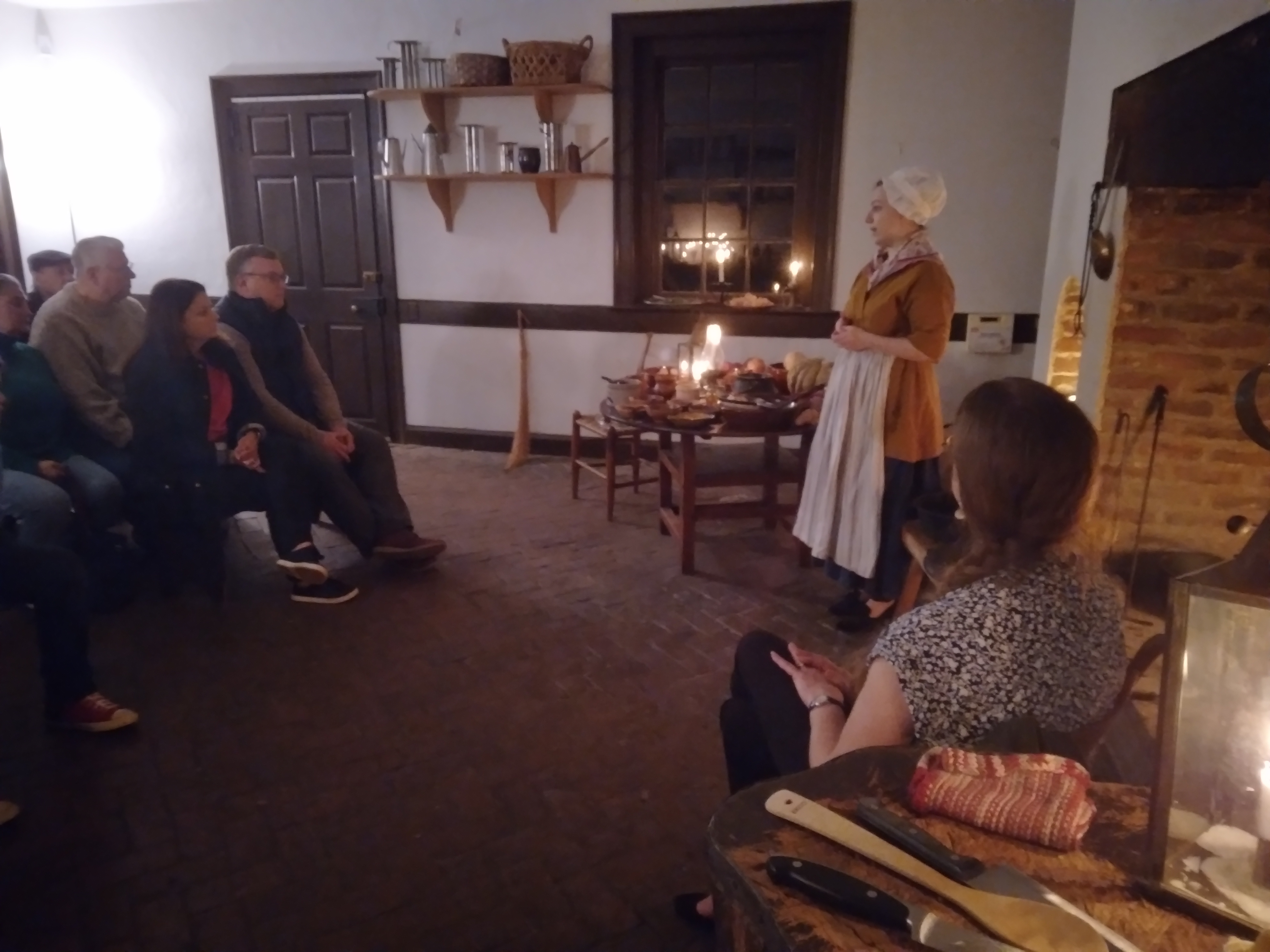
    Emma Schlauder giving a presentation on gingerbread.

    Mary Washington’s Gingerbread Recipe

    3 cups all-purpose flour

    2 tablespoons ground ginger

    1 teaspoon cream of tartar

    1 teaspoon baking soda

    1 teaspoon ground cinnamon

    ¼ teaspoon ground nutmeg

    ⅛ teaspoon ground mace

    1 large orange

    ½ cup (1 stick) lightly salted butter, at room temperature

    ½ cup light brown sugar, firmly packed

    1 cup molasses

    ½ cup warm milk

    1 wineglass (2 ounces) brandy or coffee

    3 large eggs, beaten

    Gingerbread is a term applied to a wide-ranging selection of baked goods with combinations of spices such as ginger, cinnamon, cloves, and nutmeg and sweetened with honey, sugar, or molasses.[2]

    Ingredients and spices for gingerbread

    Emma’s gingerbread used the traditional American sweetener, molasses.[3]  Molasses was a commonly used sweetener in early American cooking until the increase of domestic sugar production. Molasses was cheap and a by-product of the refined white sugar produced for the wealthy.[4]

    After including all ingredients, it was mixed to create a runny batter. The batter was put into a cast-iron Dutch oven and hung over the fire to cook. Cooking and baking over the hearth was time-consuming and potentially dangerous. It was done with heavy cast-iron pots and pans, often hung over the fire by an iron bar in the back of the oven.[5]  Luckily for us, Emma had taken precautions for cooking over the open hearth and was able to bake the runny batter into a dense gingery cake. The cake was enjoyed by many and was determined to be a must-have for the season.

    Gingerbread cooking over the fire

    Flip

    Our next presentation was done by Mara Kaktins, our Archaeologist & Lab Manager, and explored the history and ingredients of a unique drink called flip that would have fit in quite well with the festive celebrations.

    The first known mention of flip is from a 17th-century play called “Love for Love” by William Congreve when a character mentions sailors, stating, “We’re merry folks, we sailors: we han’t much to care for. Thus, we live at sea; eat biscuit, and drink flip.”[6]  The play does not provide us with a recipe or ingredients for the drink.

    Flip –Universal Etymological English Dictionary

    Flip is mentioned in the Universal Etymological English Dictionary, first published in 1721. This definition offers more information about what the drink contains by stating, “Flip, a sort of Sailors Drink, made of Ale, Brandy and Sugar.”[7] Full recipes can be found in The Cook’s Oracle, published in 1822; How to Mix Drinks: Or The Bon-vivant’s Companion, published in 1862; and The Curiosity of Ale and Beer: An Entertaining History, published in 1889. These recipes contain spices and ingredients like eggs, rum, sugar, and orange juice.[8][9][10]

    Ingredients to make flip: Rum, Whiskey, Sugar, Nutmeg, Orange Juice, Eggs

    However, two things make flip different from other holiday drinks like eggnog. First, there is no cream used in the mixture[11] , and second, flip is traditionally mixed by pouring the drink between two different vessels to make sure all the eggs are combined with the alcohol and then plunging a hot iron into the drink to create froth.[12] [13] 

    Instructions state, “To make a quart of Flip: Put the Ale on the fire to warm, – and beat up three or four Eggs with four ounces of moist Sugar, a teaspoonful of grated Nutmeg or Ginger, and a quarters of good old Rum or Brandy. When the Ale is near boil, put it into one pitcher, and the Rum and Eggs, &c. into another; – turn it from one pitcher to another till it is as smooth as cream.”[14] After the mixture is properly combined, it is poured into a cup or tankard and finished off by plunging a hot iron which further mulled and froths the drink and gives it a slightly burnt taste.[15]

    Mara Kaktins finishing off a glass of flip with the hot poker

    This drink was mixed many times throughout the Twelfth night and was sampled by the staff. Unlike the gingerbread, the reviews for this frothy drink weren’t all that positive. Our modern palates might not be used to the amount of alcohol colonists use to consume. Sadly, while this drink was a hit during George’s festive season, traditional eggnog would be the best bet for the holidays. 

    These two demonstrations were quite a hit, with a sold-out crowd attending the show. With such a positive response, the archaeology and curatorial departments are looking for more ways to introduce living history to visitors. After gingerbread and flip, the possibilities are endless.       

    Heather Baldus, Collections Manager


    [1] Bryn, Ann. American Cake. Rodale Books, 2016, pg 26.

    [2] Goldstein, Darra. The Oxford Companion to Sugar and Sweets. Oxford University Press, 2015. pg 632

    [3] Bryn, Ann. American Cake. Rodale Books, 2016, pg 24.

    [4] Ibid, pg 12.

    [5] Ibid, pg 16.

    [6] Scene V, The Literature Network, http://www.online-literature.com/congreve/love-for-love/44/

    [7] Bailey, Nathan. Universal Etymological English Dictionary. London, T. Osborne, 1763

    [8] Kitchiner, William. The Cook’s Oracle and Housekeeper’s Manual. New York, J. & J. Harper, 1830

    [9] Thomas, Jerry. How to Mix Drinks: Or The Bon-vivant’s Companion. New York, Dick & Fitzgerald Publishers, 1862

    [10] Bickerdyke, John. The Curiosities of Ale and Beer: An Entertaining History. London, Swan Sonnenschein & Co., 1889

    [11] Garret, Dylan. The New York Flip, Wine Enthusiast, https://www.winemag.com/recipe/new-york-flip/

    [12] Thomas, Jerry. How to Mix Drinks: Or The Bon-vivant’s Companion. New York, Dick & Fitzgerald Publishers, 1862

    [13] Curtis, Wayne. And a bottle of rum: A history of the new world in ten cocktails. New York, Broadway Books, 2007
    [14] Kitchiner, William. The Cook’s Oracle and Housekeeper’s Manual. New York, J. & J. Harper, 1830

    [15] Curtis, Wayne. And a bottle of rum: A history of the new world in ten cocktails. New York, Broadway Books, 2007

  • Mending Practice at Ferry Farm’s Archaeology Lab: A Photo Journal

    If you visited Ferry Farm on October 21, 2022, you may have heard a loud crash coming from the archaeology lab – don’t worry, it was on purpose! During my fall semester internship at the Ferry Farm Archaeology Department, I had the pleasure of learning how to mend ceramic vessels, and like any skill, practice makes perfect. I purchased a cheap ceramic bowl from Goodwill and purposefully shattered it so I could practice putting it back together again. Follow along as I take you through the process!

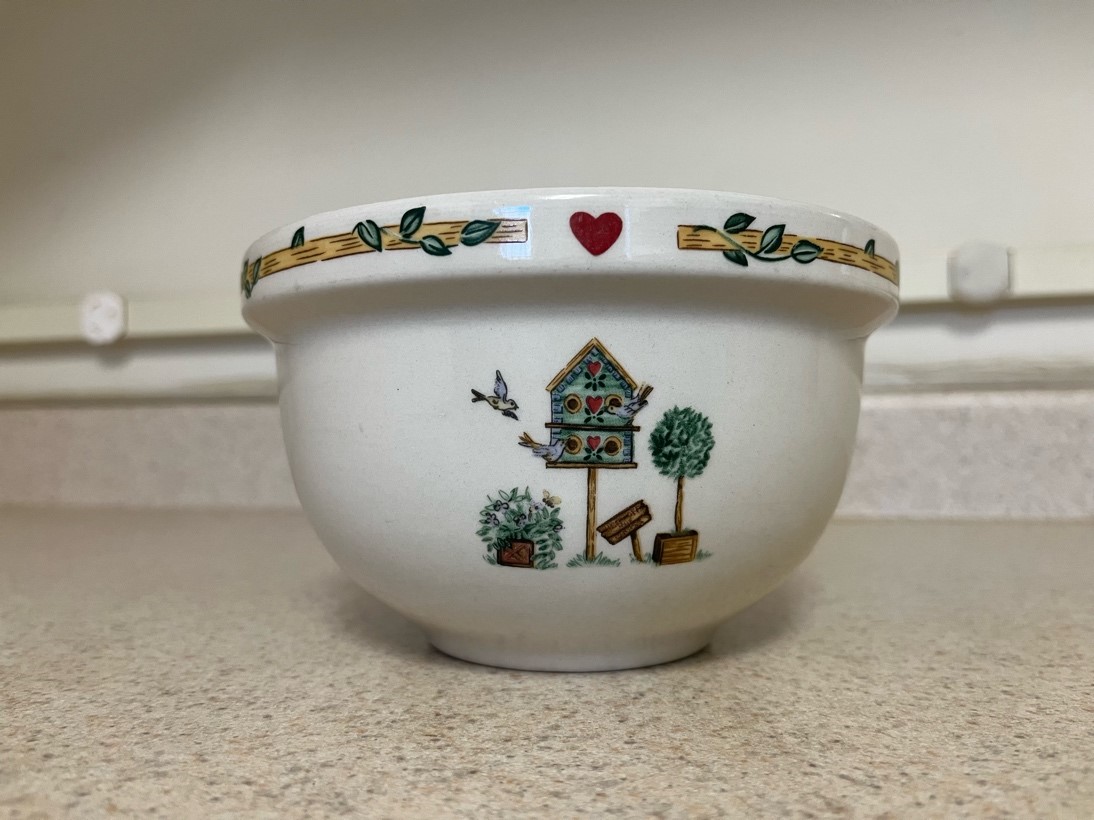
    Bowl in one piece before being broken

    Here is what the bowl looked like when I first bought it – in one piece! I chose this bowl because it was a good size: not too big where it would be too long of a project, but not too small where it would only take a few days to complete.

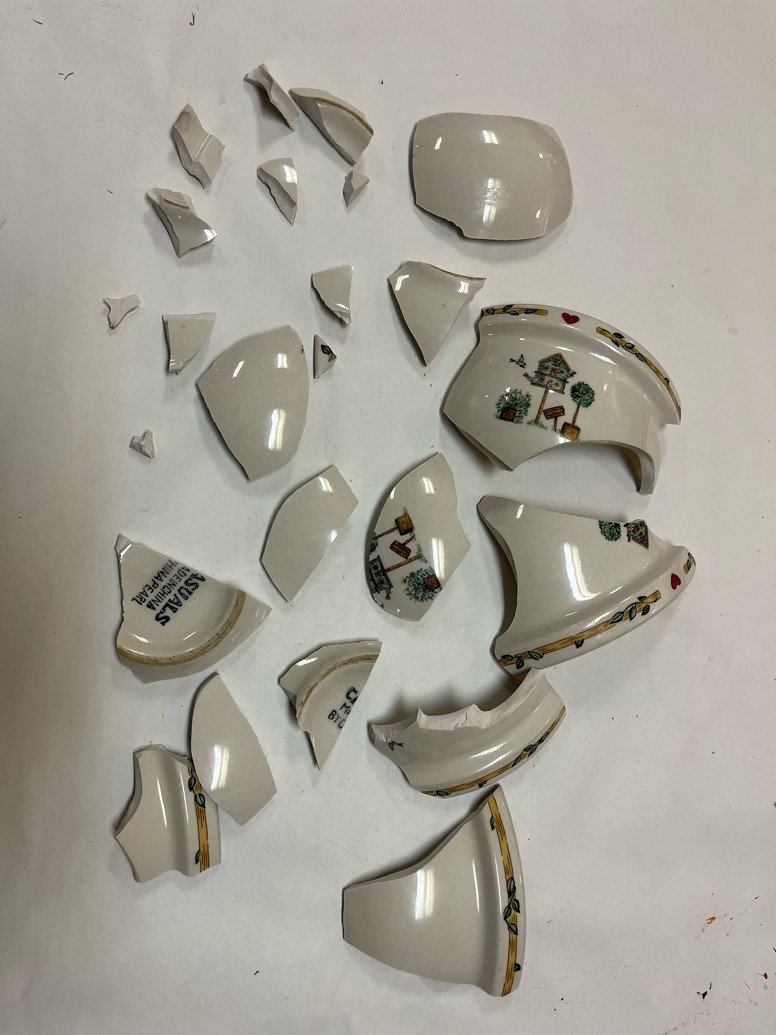
    Breaking the bowl

    Next came the fun part: breaking it! I placed the bowl inside a plastic bag so that all the pieces would stay together. Then, against my natural instinct, I threw the bag onto the ground and broke it into pieces!  Notice how some are larger than others- this means that I had to be very careful as to not accidentally exclude a small piece from the entire bowl.

    Taping sherds

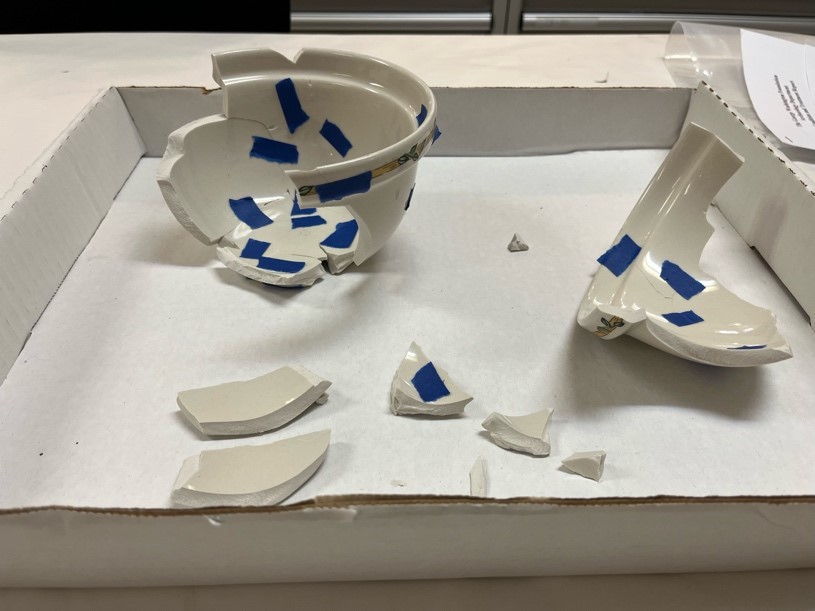
    After collecting all the sherds, my next step was to figure out where everything goes by taping the sherds together. This process allowed me to plan out the order in which the sherds would be glued together.  I used blue painter’s tape to do this because it doesn’t leave residual adhesive on the surface of the sherds. This same tape is used when mending the ceramics found archaeologically at Ferry Farm. 

    More taping

    More taping… it’s coming together!

    Here is the completed bowl after taping! Once all the sherds were back in their rightful places, it was time to carefully plan out how I wanted to glue them. When mending, you don’t want to just start gluing together the first pieces you know fit together. It is important to take into account the shape of the vessel so that you leave as few gaps between the sherds as possible. I developed a plan to start from the base and work my way up to the rim of the bowl. With this done, it was time to start gluing!

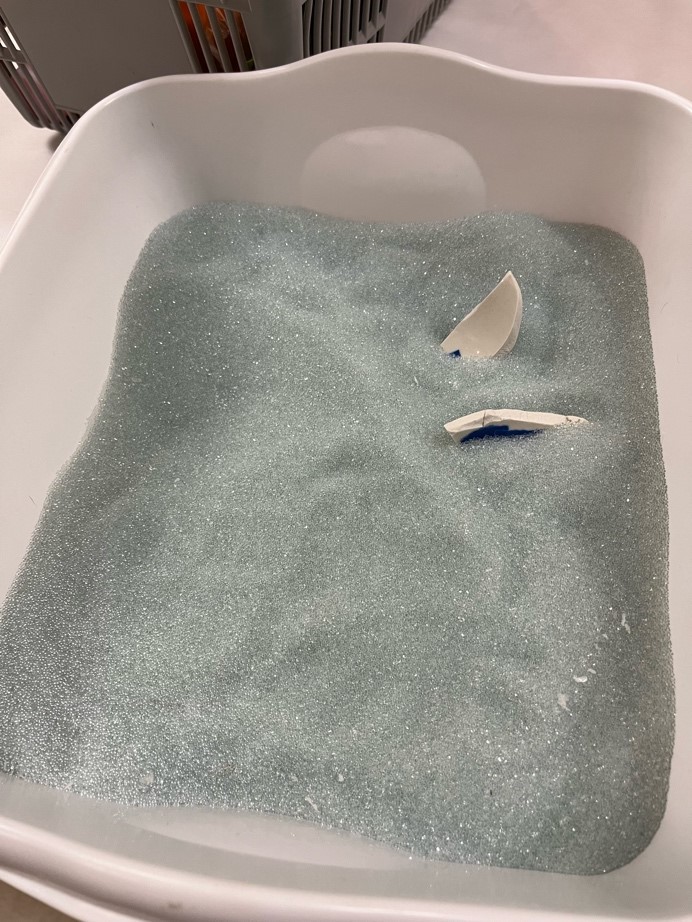
    It is protocol in the Archaeology Department to mend ceramics using a reversible method. The glue I used was a solution of 35% B72 in acetone, which is removable with acetone. I started by coating the broken edges of the sherds with a less concentrated solution of the glue, 5% B72 in acetone. This prepped the sherds to have glue applied to it. After this, I applied 35% B72 to only one sherd to be mended and then held it together with its neighbor. After 10 seconds of holding the sherds together, they were sticking quite nicely. I then placed a few pieces of painter’s tape to ensure the glue would hold, and placed the freshly glued sections into a bucket filled with glass beads.

    Glass beads…yes, everyone who goes to the lab runs their fingers through them.

    The glass beads hold the glued sherds together and prevent them from shifting as the glue dries. I repeated this process for all the sherds over the course of a few days until…

    Finished glued bowl

    …the gluing was complete!

    Here is the final product! Now, no mend is ever going to be perfect. Once a vessel is broken, there will always be misaligned sherds in the vessel due to the tension of the entire piece being broken.

    So, why do we mend ceramics in the first place? It can help archaeologists understand what types of objects a site’s occupants would have used and what activities were taking place. It is also an important process in public interpretation: mended ceramics can help the public see what certain vessels would have looked like during a site’s target period of significance.

    Finally, keep in mind that what I did with this bowl was only practice: actual mending with sherds excavated from an archaeological site does not go as smoothly as this. Only a small percentage of a vessel is typically found and thus able to be mended. The reason why so few sherds of one vessel are found is because decades and centuries of being in the ground allows for sherds to get mixed up and moved due to bioturbation (movement of soil by animals such as rodents and insects), erosion, and in some cases, agricultural plowing.

    If you would like to see more on mending at Ferry Farm, be sure to check out past programs that we have done: mending | Lives & Legacies (livesandlegaciesblog.org)

    Katharine Bogen, UMW ‘23

    Fleming Smith Scholar

  • Horror Artifacts of Ferry Farm: Myth, Disease, Vampires, and Dolls

    With Halloween just around the corner, we thought we would take our readers behind the scenes to look at some of the creepiest and macabre artifacts we have uncovered at Ferry Farm. Some may seem like obvious choices, but others have hidden connections and meanings. Be sure to let us know your favorite in the poll at the end.

    Bartmann Jug: The Wild Man and Witchcraft

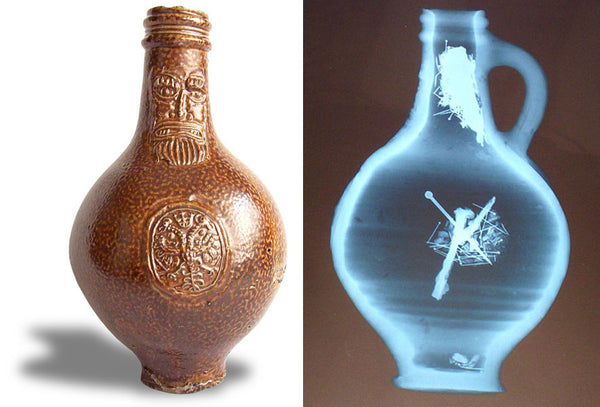
                This jug may look familiar to those who enjoy visiting Colonial sites. Made predominantly in Germany during the 16th and 17th centuries, these pieces of salt-glazed stoneware proved incredibly popular. Known as Bartmann Jugs, all pieces share the presence of a bearded face on the neck of the vessel. Some have additional designs, such as crests, on the body. The face lends the name to the jug as “Bartmann” translates from German to “bearded man.” Still, this begs the question of who the face belongs to?

    Bartmann Jugs
    Remnants of Bartmann Jug

                The bearded face depicts a figure known as the Wild Man. A character from Northern European folklore of the 14th-16th centuries, Wild Men reportedly flourished in remote, alpine regions. In characterization, Wild Men are similar to the satyrs and fauns of Greco-Roman tradition. They are covered in hair, hence the bearded face, and wear no clothes. The popular depiction of Wild Men began in the late Middle Ages when the figure became secular. They thus appeared in all art forms with males and females being depicted. The somewhat exaggerated face on the Bartmann Jug speaks the Wild Man’s untamed nature.

    Wild Man by Martin Schongauer, 1480s

                Aside from Wild Men, Bartmann Jugs have a role in witchcraft. At a time of religious turmoil and witch hunts, England saw a rise in the use of witch bottles in the 1600s. These bottles were white magic in nature and supposedly protected against black magic. Bartmann Jugs account for most witch bottles from this period and the abnormal face may have factored in to its use. To make a witch bottle, one filled the vessel with items such as nails, human hair, fingernail clippings, heart-shaped pieces of cloth, pins, and urine before sealing it. The bottle was then buried or submerged near the area it protected. No Bartmann witch bottles have been found in the America, but the Mathers of Massachusetts wrote about witch bottles in the late 1600s. Could ours have served such a purpose?

    X-Ray of Bartmann Witch Bottle

    Civil War Medicine

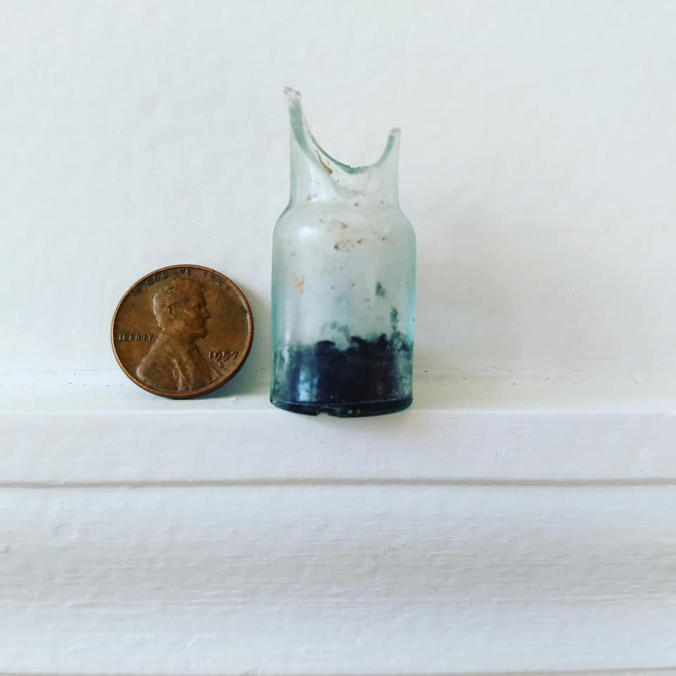
                Just the thought of Civil War medicine is typically enough to conjure scenes of horror, so this simple glass bottle may seem a bit disappointing. However, things are rarely what they seem. We recovered this artifact from a Civil War trench and quickly became interested in what it originally held. Scientific analysis of the remaining residue revealed that the bottle served a medicinal role and once contained liquid mercury. As mercury is known as extremely dangerous, this may come as a shock. Why would anyone have mercury on their person and how could it be medicinal? Believe it or not, mercury once served as a cure-all in the medical world and it was only in 20th century that its dangers were fully accepted. Those who used mercury medicinally viewed the topical burning, sweating, excess saliva, and diarrhea it produced as signs of successfully purging their body of their affliction. In reality, it was their body trying to rid itself of the mercury.

    Mercury Bottle

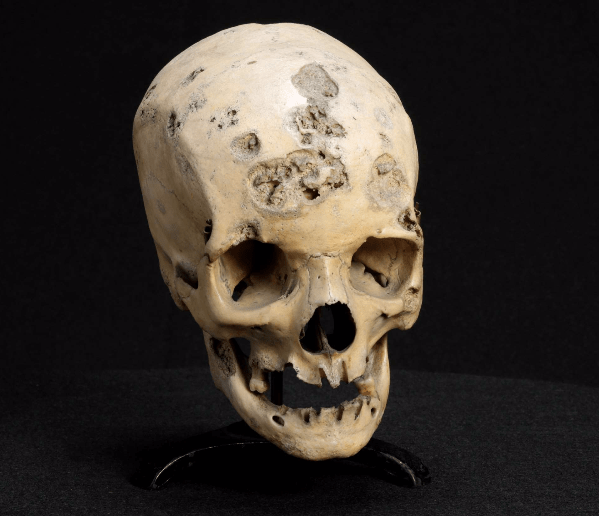
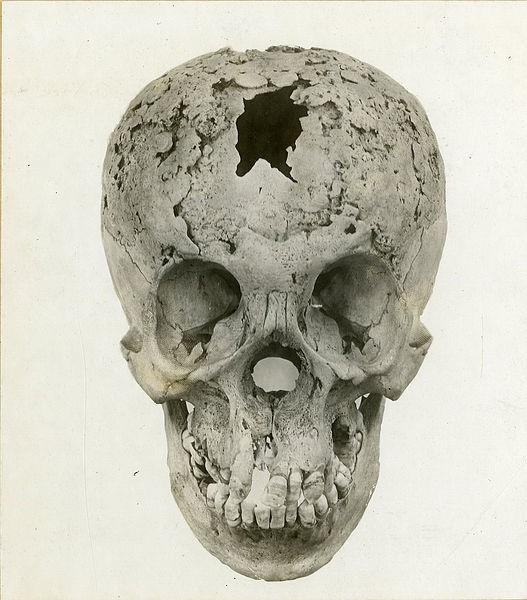
    As a cure all, people utilized mercury for all sorts of afflictions and pest control. Common uses in a Civil War camp may have included treatment for head lice, bed bugs, skin sores and lacerations, as well as parasitic infections. The most terrifying of all, however, would have been syphilis. The dominant strain of this disease is sexually transmitted, and was often ripe in military camps. A disease that did not kill quickly, a person could live with syphilis for years as it slowly ate away at the body. As it progressed, the afflicted would note rashes, open sores, and growths or bumps on their body. Neurological problems could occur and the loss of your nose was not uncommon. As the disease stayed with you until death, it had time to impact the skeleton, most notably leaving pitting on the skull, potentially an eaten away nose cavity, and other signs of deterioration. Overall, a horrible way to go and a wicked good topic for this blog.

    For further reading on this artifact and the scientific analysis, you can read a previous blog on it here.

    Dracula’s Jewelry

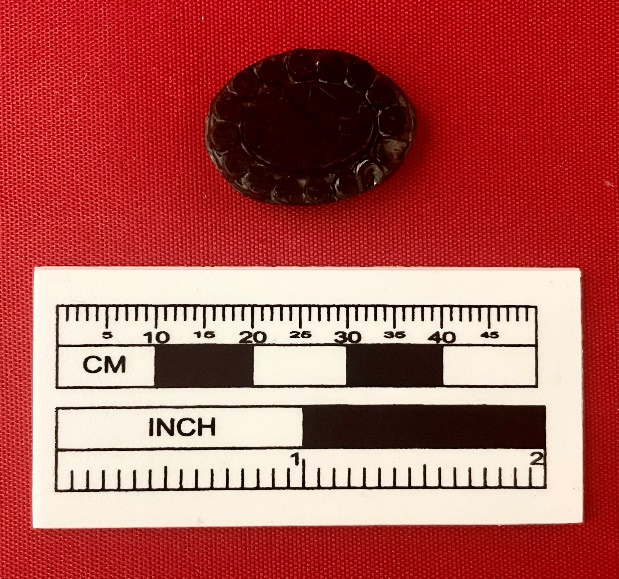
                Mourning jewelry became extremely popular during the mid to late 1800s. While pieces came in many forms, they mainly reflected somber colors, like black, or carried something of the deceased’s, such as hair. The rise in this trend first derived from Queen Victoria’s endless mourning for her husband Prince Albert in the United Kingdom. Her mourning set a fashion trend and, with the number of deaths that occurred in the American Civil War, Americans had a reason to adopt it. Alongside the somber tone of jewelry, the period approached the topic of death with a rise in the macabre, séances, and horror.

    Mourning Jewelry

                At Ferry Farm, we have uncovered a single piece of mourning jewelry, which connects to one of the most famous Gothic novels and literary monsters of all time, DRACULA! This small piece may have once been set in a necklace or bracelet and belonged to someone who inhabited the property or visited after the war. While that is all very interesting, I am sure you want to know where the King of Horror fits in. The answer lies in the material. The pendant is made of jet, which accounted for much of the 1800s’ mourning jewelry. Sources of jet exist in various parts of Europe and the American Southwest, but the most prosperous jet production existed in Whitby, England during Victorian times.

    A seaside, port town in the north of England, Whitby is noted for the ruins of an impressive abbey that dominate the landscape. Fans of Bram Stoker’s novel will recognize the town as the location where Count Dracula first arrives in England, and Whitby Abbey even appears in the novel. Stoker wrote much of the book in Whitby, and he reportedly first came across the story of Vlad the Impaler in the local library. Today, Whitby embraces its vampiric legacy (they currently hold the record for the largest gathering of vampires at 1,369 people) and the jet business has seen a resurgence in popularity by aligning itself with this tourist draw. So what do you think of our piece? We highly recommend it for lovers of death, horror, and literature. Please note: Vampire not included.

    Whitby Abbey

    Creepy Dolls

                It goes without saying the most people find dolls creepy. They frequently feature in ghost stories and many serve as the malevolent force in horror movies. Here at Ferry Farm, I am not sure which is worse, finding a full doll or severed doll parts.

                With people living on the property through the 1990s, we have plenty of potential to uncover dolls. In fact, we found a severed doll hand this summer that we previously featured as a #FridayFind. Other parts include ceramic legs, broken arms, heads, and faces. Perhaps this is the most obvious choice for a scary artifact blog, but, then again, dolls will never stop being creepy.

    Creepy Doll Parts

    Emma Schlauder (she/her/hers)

    Research Archaeologist

  • Music from the Past: Jaw Harps and their Players

    What is a jaw harp, and what does it tell us? This little instrument likely looks familiar, but you may not know that much about it. That certainly proved the case for me when I decided to research the four we have in our collection.

    To start, a jaw harp is an extremely simple instrument to make and play. It only requires an iron or copper alloy frame and a flexible metal tongue, or lamella, which runs through the center. Manufacturing styles vary, but many undergo casting or forging to create the bow shape and arms. The lamella most often attaches by hammering it in place. This part is rarely preserved in the archaeological record, so only the frame remains for us to find.

    To play the instrument, one places it against their mouth and plucks the lamella while breathing out. Varying your breathing and the shape of your mouth cavity allows the sound to change. That said, while the instrument is easy to play, it proves difficult to play well, and many dislike its boings and buzzes. Those skilled at the jaw harp, however, went on to play for the likes of Frederick the Great and George IV. They even managed to play more than one jaw harp at once.

    Man playing a jaw harp (Mackinac State Historic Parks 2018)

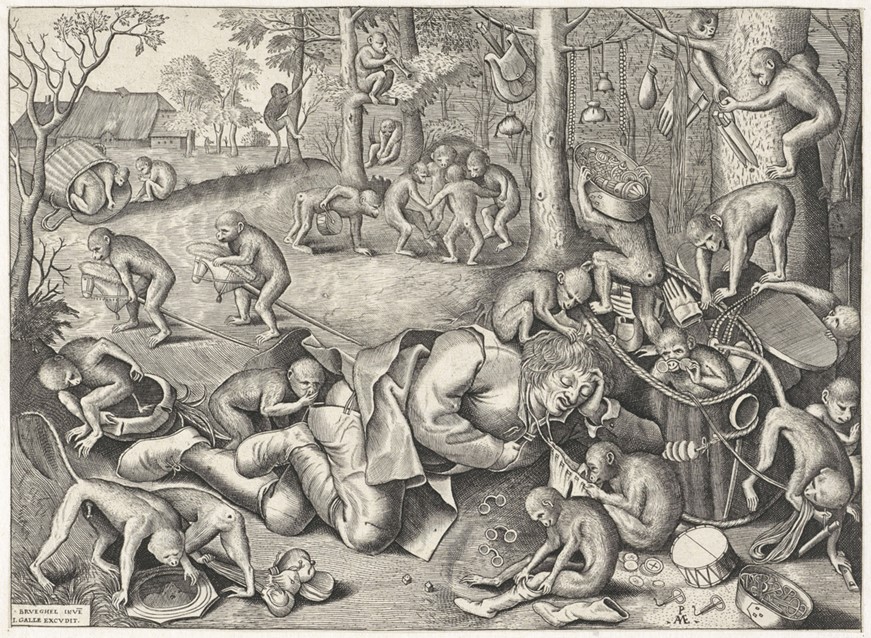
                The history of jaw harps dates beyond the fifth century BCE in Asia. Archaeological evidence places the instrument’s arrival in Europe around 1200, with the migration occurring along northern routes through the Baltic. Due to their mundane nature, jaw harps rarely appear in historic accounts or art. Two exceptions include Pieter Bruegel the Elder’s The Sleeping Peddler Robbed by Monkeys (1562), which helps identify peddlers as the main purveyors of jaw harps, and accounts of the North Berwick Witch Trials (1590-1592), where one of the accused performed for James VI of Scotland. Witches aside, the most common players at this time included the lower classes and soldiers.

                While jaw harps may not have generated the most attention, they played key roles in early trade deals in North America. Jaw harps likely first came to North America in the company of soldiers, but they soon gained popularity amongst indigenous groups, such as the Five Nations Iroquois. Confirmation of this occurred as early as 1595, with Robert Dudley reporting that the instrument made a successful trade item. As trade continued, the exchange of jaw harps frequently related to the fur trade, but some larger and more dubious, deals included the acquisitions of Staten Island and Maryland. That said, even the fur traders came under fire for using jaw harps of poor quality.

    Within established colonies, jaw harps appeared as an item frequently sold by merchants. Numerous adverts appeared in papers between the 1730s and 1780s. For Virginia, this included merchants in Williamsburg during the 1760s, as well as Alexandria and Gloucester in the 1770s. Production would have occurred in England with the then imported good available to all customers in the colonies. We know that soldiers played them during the French & Indian War and the American Revolution. This connection to soldiers would even continue through the Civil War. As for other players in Colonial times, a couple of adverts for runaway indentured servants placed in Benjamin Franklin’s Pennsylvania Gazette listed jaw harps as a special talent of the individual and amongst the items possibly carried by them.

    Aside from these individuals, the other most common players consisted of enslaved people. Evidence of this comes solely from the archaeological record. Excavations have uncovered jaw harps at a number of sites in Virginia, including Monticello, that date from the mid-1700s to early 1800s. In all of these cases, the instruments came from enslaved domestic quarters and work areas. Due to their nature, jaw harps would have proved an easy item for an enslaved person to hold on to, use, and share with others. In use, they would have been part of the enslaved music culture, which offered individuals a respite from work, a way to express themselves, and perhaps an outlet for the continuation of West African cultural practices.

    As I mentioned earlier, four jaw harps reside in our collection. Three came from the Washington cellar, while the fourth came from a Civil War trench that ran through the cellar. To understand their significance, an examination of the artifacts themselves and their contexts help us identify and date them.

    Physically, all four appear to reflect a design known as Gloucester. This means they consist of an iron frame and represent one of the most common designs in America during Colonial times and after the Revolution. We know that the ones that came directly from the cellar pre-date the 1830s due to the collapse of the house. A closer look at the artifacts accompanying them provide us with a range of the 1780s-1830s for the date of deposit.

    Depiction of a Gloucester-type jaw harp sans lamella

    As for the harp from the Civil War trench, while this may seem like an obvious identification, it remains tricky. A Union soldier may have played and discarded it while encamped here. However, when people filled the trench after the war, they may have used dirt that contained earlier artifacts from Ferry Farm. As the trench ran through the cellar, this harp ultimately lay close to the other three, and the dirt used to fill the trench may have come from that area. We may never know for sure on this particular piece, but it likely dates either to the war period or as a contemporary of the other three.

    Ferry Farm’s jaw harps

    While the dates provided occur after the Washington occupation of Ferry Farm, jaw harps existed on the market during their time, meaning the instrument may have had an earlier presence. As for who played them, these instruments likely reflect use by enslaved individuals. After the Battle of Princeton (1777) claimed the life of Hugh Mercer, who had purchased Ferry Farm from George Washington, the property passed through a series of renters. None occupied the site for long, but an enslaved population maintained a constant presence as each renter relied on enslaved labor. This continued up until the Civil War. With the evidence of enslaved people using jaw harps at other sites in Virginia and the fact that enslaved individuals constantly lived or worked at Ferry Farm, we can attribute these artifacts to them.

    One of our future projects involves reconstructing the enslaved quarters at Ferry Farm to better represent and tell the enslaved narrative. As jaw harps represents an activity that occurred during the limited down time allocated to enslaved people and reflects the importance of music in the culture, one will certainly be included upon completion of the project.  

    After all that history and archaeology, I leave those wondering what a jaw harp sounds like with the perfect piece. Fittingly titled “Washington’s Birthday,” this 1909 piece by Charles Ives utilizes the instrument to invoke the sound of country dances on a cold, dreary day in February. To hear the jaw harp, skip to 7:37. Enjoy!

    Emma Schlauder

    Research Archaeologist


    References

    Clyne, Anthony, 1928. The Jew’s Harp a Century Ago. The Musical Times 69(1024): 508-509.                                                                                        

    DAACS, 2022.Artifact Query 3, 8 August 2022. The Digital Archaeological Archive of Comparative Slavery (https://daacsrc.org/queries/aq_three_results).

    Kolltveit, Giermund, 2006. Jew’s Harps in European Archaeology. Archaeopress, Oxford, UK.

    2009, The Jew’s Harp in Western Europe: Trade, Communication, and Innovation, 1150-1500. Yearbook for Traditional Music 41: 42-61. 

    Samford, Patricia M.,1994. Searching for West African Cultural Meanings in the Archaeological Record. African Diaspora Archaeology Newsletter 1(3): 1-3.                                                                                                            

    Wright, Michael, 2008. The Jew’s Harp in the Law, 1590-1825. Folk Music Journal 9(3): 349-371.    

    2011, The Jew’s Harp Trade in Colonial America. The Galpin Society Journal 64: 209-218.


  • Catherine of Braganza: How the copy of a 17th-century plate tells the story of design, consumer consumption, and the Washington Family

    The concept of buying items to remember certain events or travels is commonplace today. Who goes abroad without bringing back a trinket naming the location? Is it possible to go antiquing without seeing an item that commemorates the wedding of Charles and Diana? Even the smallest item has the ability to tell a story through what it depicts. In our world of mass consumption, these items prove commonplace and relatively easy to obtain, but the concept is not new.

    Charles & Diana memorabilia

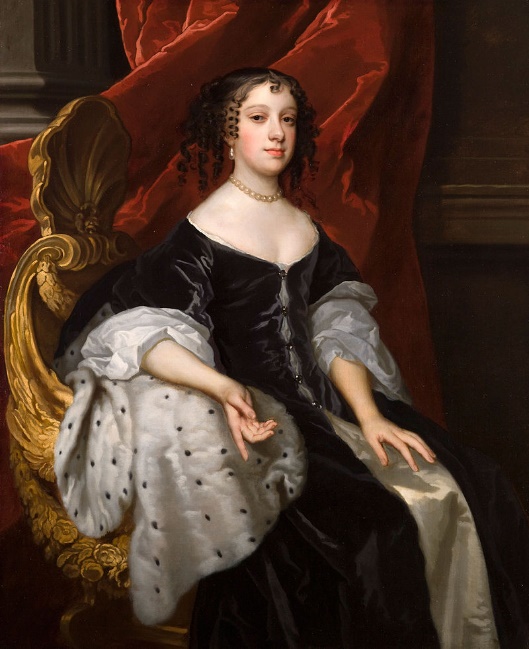
    Back in the mid to late 1600s, a potter by the name of Thomas Toft (d.1689) produced a series of plates depicting Charles II and his wife Catherine of Braganza. When Cromwell’s strict Puritan regime ended in 1660, the people of Great Britain rejoiced at the restoration of the monarchy. Charles II was an active king who enjoyed the arts and a good time. His marriage to Catherine, a Portuguese princess, in 1662 was a cause for further celebration, even if her Catholic faith raised concerns. Regardless, Toft had his market.

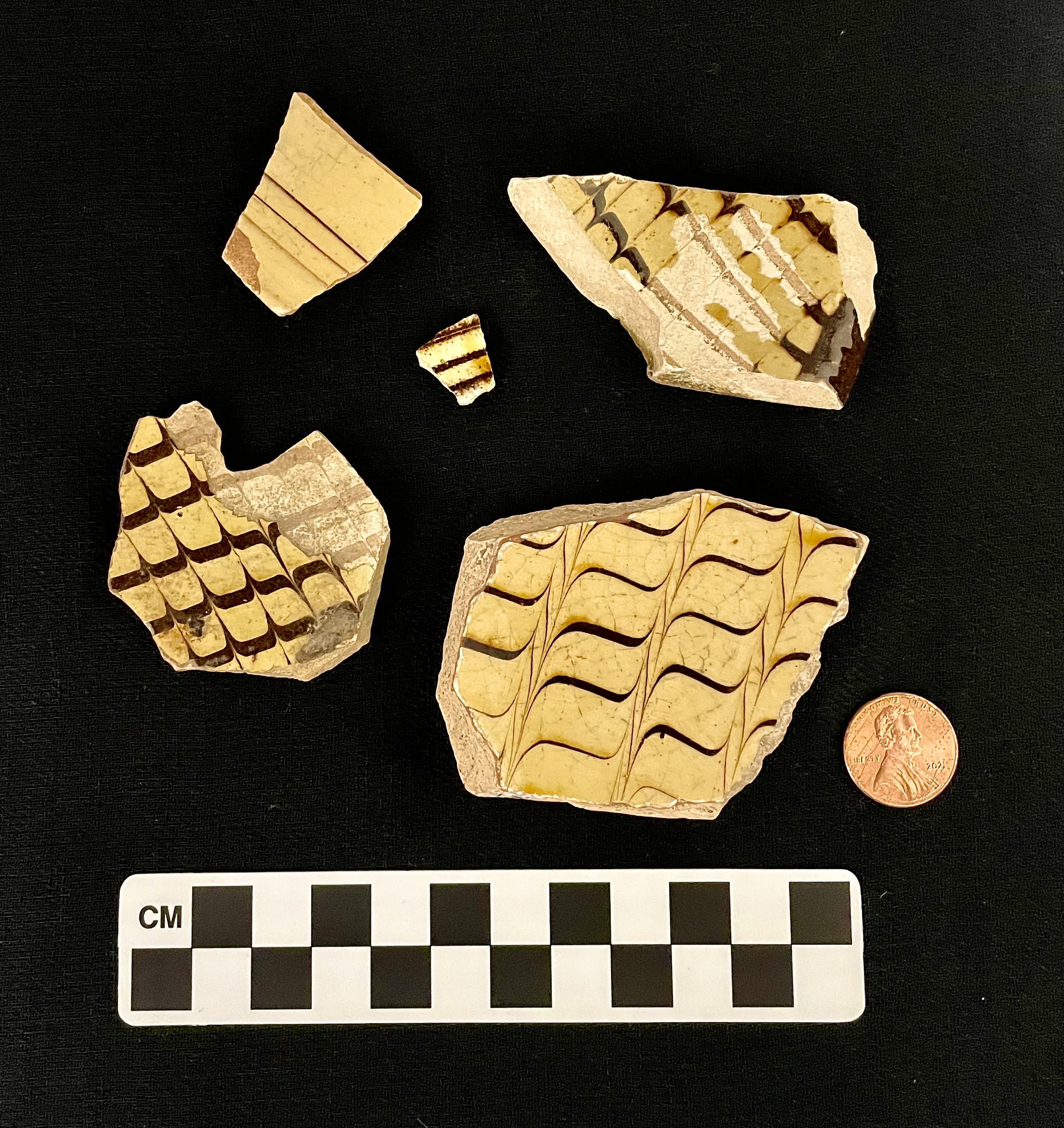
                A Scandinavian immigrant, Toft lived in Staffordshire, England, and specialized in slipware. Slipware involved the use of clay slips and a lead glaze to decorate a piece. Typically, a white clay slip, which is essentially, watered-down clay, covered the upper surface of a piece before the artist drew on the design. Dark brown and orange-red clay slips then helped bring the design to life. To complete the piece, the artist utilized a lead glaze to enrich the colors and seal it. Toft became one of the most famous slipware potters of the time due in part to his habit of prominently signing his works at the base of his cross-hatching border, which was unusual in the 17th century. He produced plates depicting the royals throughout his career. Toft’s pieces may not have undergone the mass production that they would today, but they fed a market that desired commemorative memorabilia.

    Slipware plate by Thomas Toft depicting Charles II and the Royal Oak

    You may be asking how talk of royals and artists from the 1660s connect to Ferry Farm? The answer comes from the desire to add a slipware plate to the house. As many will know, the items in the Washington house are replicas inspired by archaeological finds on site and pieces dating to the period. Until now, the slipware style did not appear in the house. Aiming to fix this, I went about choosing a design that would not only serve the desired purpose but also tell a story. In the end, I found a Toft plate that depicted Catherine, and the idea came to me.

    Pieces of slipware found at Ferry Farm

    John Washington (1631-1677), George’s great-grandfather, immigrated to Virginia in 1657. Motivation for this possibly derived from hardships faced by the Washington family after Cromwell came to power since the family had sided with the monarchy during the English Civil War (1642-1651) and business ties. With the restoration of the monarchy three years after their arrival, it seems likely that this would have been a cause for celebration in the Washington household. We know from finds at Ferry Farm and Kenmore that the Washington and Lewis families owned items depicting royal motifs up until the Revolution. So not only would the Washingtons of the 1660s have raised a toast to the King and later his bride, but they may have acquired items celebrating them. While we do not have evidence for the Washingtons’ owning a piece with this specific theme, items pass through generations, and we know the family brought older items with them to Ferry Farm in 1738.

    In making the replica, I aimed to keep it as close to the original as I could, though the cross-hatching border proved impossible to keep as tight. The imagery itself prompts the telling of the Washington-Royalist-immigration story, so nothing major needed changing. Keen viewers, looking at the images below, will notice the addition of a “Q” and a “K” to help identify Catherine. While Toft’s work rarely included royal monograms, they did appear on other designs of the time, making it a simple and fitting addition. In these other pieces, Catherine’s first initial always appears as a “K.” While we may spell Catherine’s name with a “C,” there was no standard of spelling in the 1600s, and this may have occurred since her husband’s name also starts with a “C.” After prepping the plate with a base coat of paint, I sketched the desired design and painted over it in a way that mimicked slipware techniques. A clear coat of spray paint then sealed the design in place of the lead glaze.

      The plate will go on display in the Visitor’s Center, where we display and explore the topics of our blog. Next time you visit, be sure to keep your eyes peeled and let Catherine tell you her story.

    Emma Schlauder

    Research Archaeologist

  • When is a rock also an artifact?

    As archaeologists, we focus on studying the past by examining the items previous humans have left behind. Anything that has been made or changed by someone in the past is therefore considered to be an artifact.

    When you think of stone artifacts, the first thing that usually comes to mind are arrowheads. Arrowheads and spearheads are referred to by archaeologists as projectile points. In addition to projectile points, archaeologists also find a wide variety of other stone tools, including awls, scrapers, knives, axe heads, grinding stones, and fishing weights. All of these tools, and others, were used to procure and process food and for preparing items of clothing, storage, and shelter.

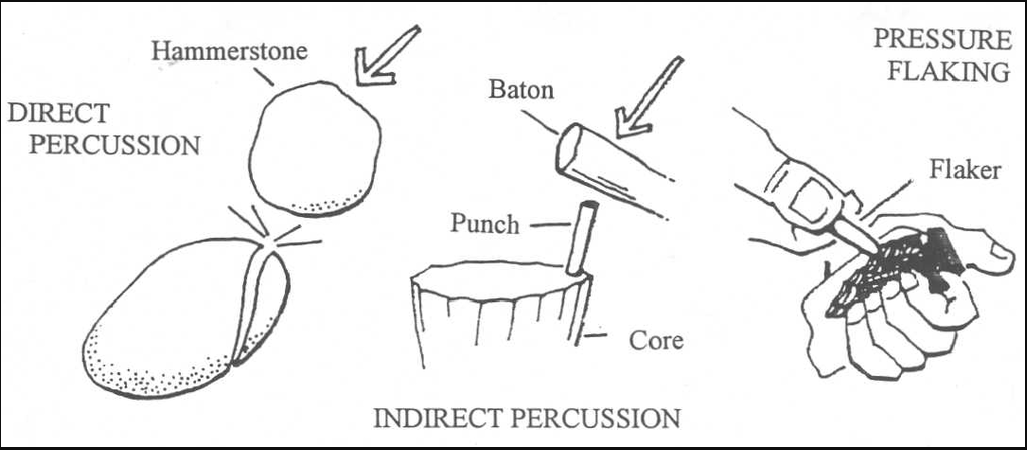
    Complete tools, however, are not the only evidence Native Americans left behind. Stone artifacts called flakes, shatter, and cores are evidence of the production of stone tools and are found in abundance on prehistoric Native American sites. A core is the first stage of lithic reduction, where the rock is considered an artifact. Typically a natural rock is broken into one or more lithic cores, which will be reduced to usable flakes and tools. Flakes are relatively thin shards of stone precisely removed from a stone core. Shatter consists of chunks of stone that come off the core in unintended or less predictable ways. To make a stone tool, flakes are removed from a core by striking them off with a hammerstone or antler baton. This is called percussion flaking. Each core would then be reduced through percussion flaking to a rough preform of the intended tool. Once that is complete, a lithic tool will be reduced to a finished shape and then sharpened. This is done through a process called pressure flaking. While percussion flaking makes bigger lithic flakes, pressure flaking makes very small flakes. Instead of hitting the stone, a narrow piece of bone or antler is firmly pressed against the side of the stone, breaking off a small flake and leaving a sharp and more robust edge.The best lithic tools are made from stones that break in predictable patterns. This quality is found in rocks that have a cryptocrystalline structure. Some examples of rock types we find lithic tools made from are: chert, flint, jasper, and quartz.

    Three methods of lithic reduction.
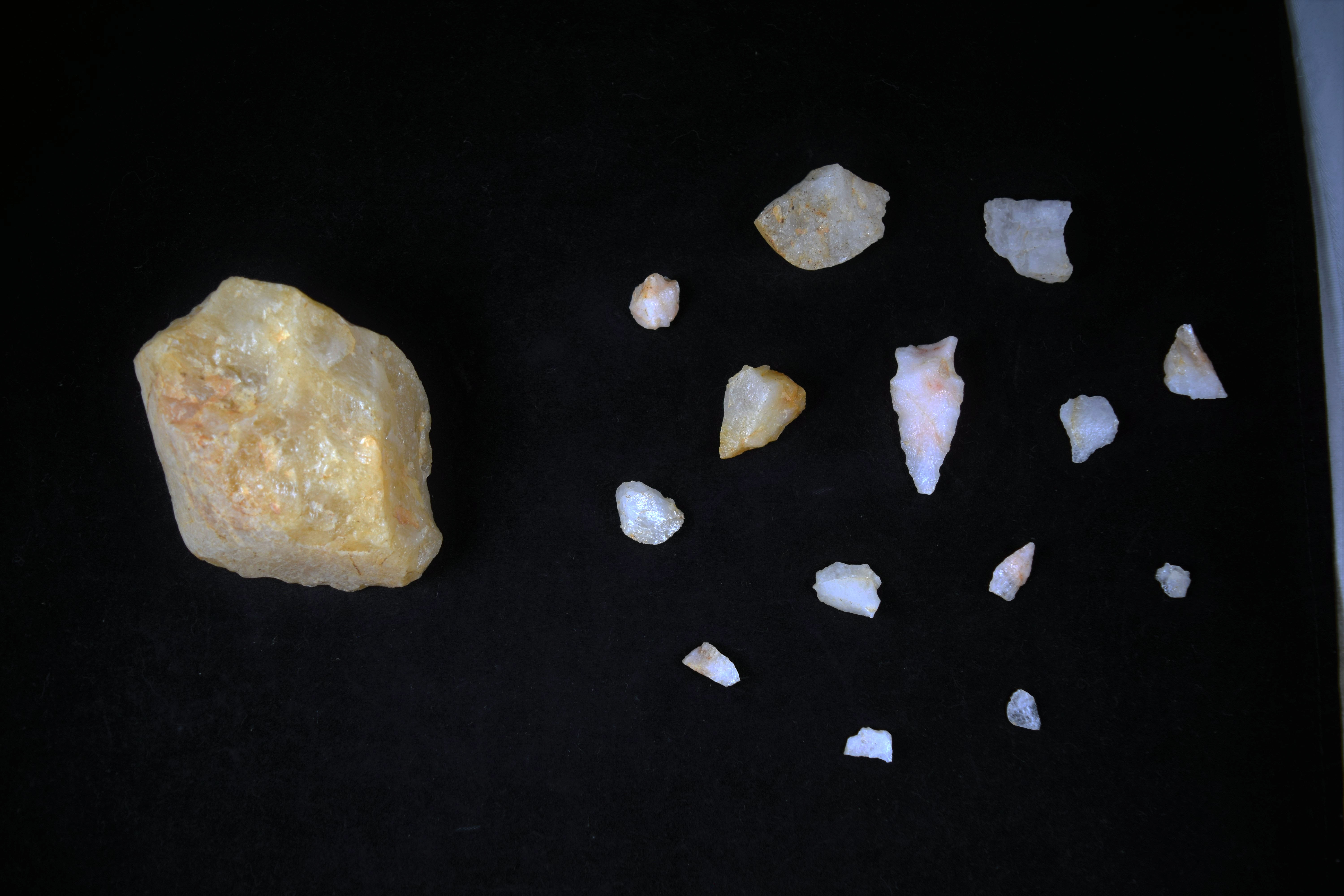
    Examples of lithics found at Ferry Farm, a core on the left and on the right a projectile point surrounded by flakes and shatter.

    While archaeologists can learn much from artifacts such as projectile points and tools, we are also interested in a category of stone artifacts called fire-cracked rock. Fire cracked rock, commonly abbreviated to FCR, is a byproduct of cooking at a time primarily before the creation and widespread use of ceramics more than 3000 years ago. In order to boil water for cooking, they would heat rocks in a fire and drop them into pots of water made from animal hides or wood. After doing this multiple times, the rocks would permanently turn red from the heat of the fire and shatter into small pieces from the rapid cooling and heating. By finding FCR here at Ferry Farm, we can deduce that people were cooking meals here before ceramic technology was widespread.

    Fire Cracked Rock found at Ferry Farm. Note the red color on the exterior caused by the heat of a fire.

    When lithic flakes and shatter are found, we know that at some point, someone made a stone tool there. By examining the type of stone, it is possible to determine where that material came from. Sometimes the local material available isn’t the best for making tools, and people would travel or trade for better materials. This is the case at Ferry Farm, where most of the lithics we find are made of quartz, but sometimes we find jasper or chert flakes that indicate travel or trade.

    There’s even more, we can learn from projectile points and some tools. Projectile points changed in shape, size, and form over time. These changes could be due to a change in purpose of the point or a change in maker. Archaeologists have grouped points together to create types that were made in a certain region during a given date range. We can use these groups to match points we find in our excavations and determine where it came from and when it could have been made.

    Native Peoples lived in the Rappahannock area, including what would become Ferry Farm, for thousands of years before Europeans arrived. The projectile points, tools, FCR, and lithic debris they left behind are some of the only artifacts that were able to survive until today. Being able to tell the difference between them and a natural rock becomes an important skill for archaeologists. Have you ever found a lithic?[1][2][3]

    Top and Bottom images: Examples of different types of points and the various materials they can be made from. All excavated at Ferry Farm.

    Mason Schultz

    Co-Field Director and Staff Archaeologist


    [1] “Diagnostic Artifacts in Maryland, Projectile Point Typology.” Jefferson Patterson Park and Museum, Maryland Archaeological Conservation Lab, 2002, https://apps.jefpat.maryland.gov/diagnostic/ProjectilePoints/AboutProjectilePoints/ProjectilePointTypology.html. Accessed 9 Aug. 2022.

    [2] “Diagnostic Artifacts in Maryland, How Are Points Made?” Jefferson Patterson Park and Museum, Maryland Archaeological Conservation Lab, 2002, https://apps.jefpat.maryland.gov/diagnostic/ProjectilePoints/AboutProjectilePoints/HowArePointsMade.html. Accessed 9 Aug. 2022.

    [3] Cullen, Darcy. “Methods of Flaking Stone.” Quizlet, https://quizlet.com/250350464/methods-of-flaking-stone-diagram /. Accessed 9 Aug. 2022.

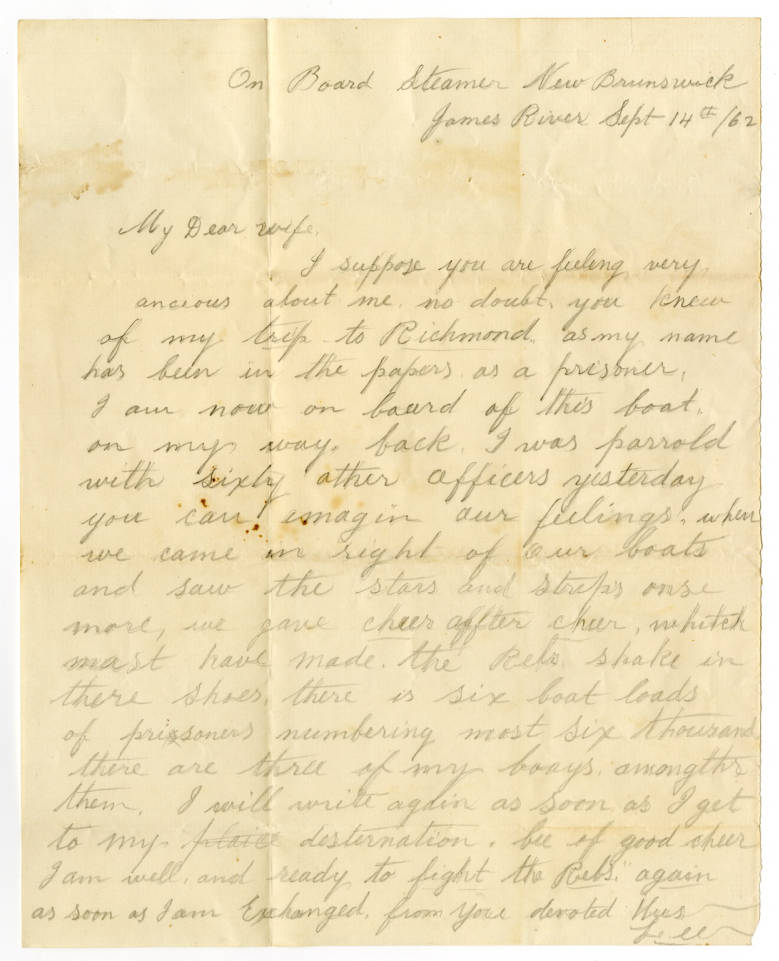
  • Letters from the Battlefield

    Such a tiny thing, a letter. What does it mean now? For many of us, a letter via ‘snail mail’ is a nuisance. Needless paper that litters our mailbox. Ads. Spam. Bills. Scams (most of which are electronic now and also a pain). Mail has been ruined for most of us with the sheer barrage of unimportant stuff that claims a box at the end of the driveway which once held so many wonders. Communications evolve rapidly throughout time, as well they should. But they change so fast that occasionally we forget just how important getting a letter was. Being delivered a letter was a moment of anticipation, perhaps dread or admiration, instead of the mundane. Many have written of the hopes or fear of a letter in the mail. In the iconic song ‘Mr. Postman’ by the Marvelettes, a lovelorn lady, yearns for word from her boyfriend. “So many days you passed me by, you saw the tears standin’ in my eye. Wait a minute, Mr. Postman.” Still, others have had to pen terrible letters they never wished to send, which informed families of what they feared most, the loss of a loved one.

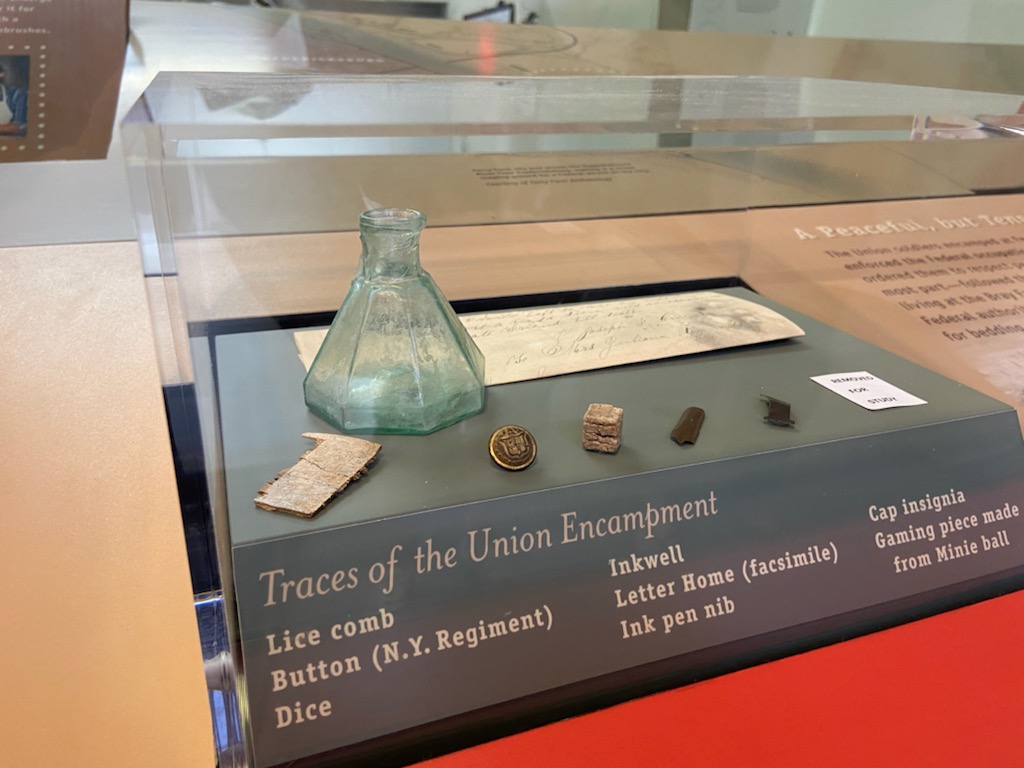
                Our artifact blog posts tend to focus on unique objects. However, this time I’m going to concentrate on a very commonplace ink bottle that dates to the mid-19th century. So many of these were made that they normally escape notice. Mere curiosities. Who doesn’t love an old bottle? However, the importance of a simple vessel such as this one should not be understated. This particular example is in an ‘umbrella’ shape, one of the most ubiquitous ink bottle forms from this era. However, this particular bottle has the distinction of having been located within a portion of a Union Civil War trench which extended through the cellar of the house George Washington grew up in.

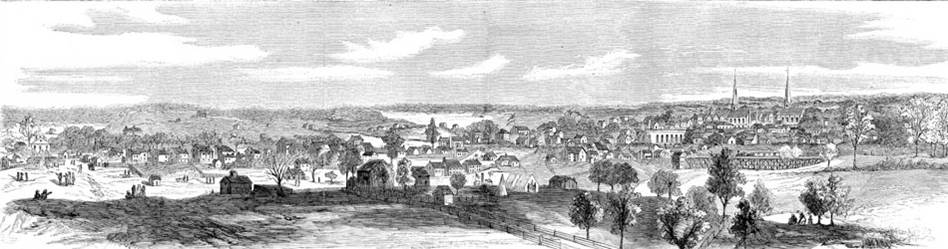
                Several units were assigned to Ferry Farm during the two occupations in 1862. The spring deployment was relatively quiet and uneventful except for the chaos of the hasty August withdrawal to defend Washington DC. The second occupation cumulated in the Battle of Fredericksburg. Union soldiers deployed at Ferry Farm include regiments from New York, the 7th Wisconsin, and the 36th Massachusetts. While no large encampments were established at Ferry Farm, soldiers did occasionally camp there and used the farm for picket duty and to provision themselves. The farm experienced combat only during the initial stages of the Battle of Fredericksburg.

                The Federals appear to have built no large, formal camps at Ferry Farm. No evidence of winter huts, latrine trenches, or clay borrow pits have been unearthed to date. That is not to say that soldiers were not stationed at Ferry Farm both before and after December 1862. Photographs of the farm show small groups of tents situated on the terrace overlooking the river. The terrace served as bivouacs for soldiers guarding or maintaining the pontoon bridges and later for pickets. These activities suggest that a small force was a relatively constant at the farm.  Artifacts associated with soldiers at Ferry Farm included buttons, knapsack hooks, grommets, cap letters, minie balls, percussion caps, exploded artillery shells, cutlery, and of course, one simple ink bottle. The ink held within probably penned many a letter with critical information that could have changed the tide of war and/or altered the lives of so many families expecting word from the front. 

    Military Encampment, Spring 1862. Credit: Unknown

                Really this bottle would be totally insignificant were it not for the location it was found in. We do know that the bottle was typically meant for single use and would have been made in one of the numerous American glasshouses present during the 19th century. It was then filled with ink, affixed with a label, and marketed for single use, which does not mean it wasn’t refilled from a ‘master ink’ bottle when the original contents were depleted. We’ll never know the exact history of this object, and there lies the mystery of it. As archaeologists, we can’t be privy to who owned it, what letters were written with the ink, or if those correspondences even made it out of the trench to the outside world. We’ll never know the travels of the bottle before it was deposited in the trench or the circumstances that led to it being abandoned. We only know that it was used during the Civil War by the Union and was found in a location many soldiers never wanted to be stuck in. Chances are, the soldier or soldiers who made use of the bottle never made it back home alive. The fact that it was discarded when the bottle still potentially retained at least some value and during a time when possessions were at a premium indicates a hasty departure, or perhaps the owner expected to return but didn’t. Regardless, letters were likely written using the ink from this humble bottle. Some may have had great importance in our country’s history, while some may have carried tidings of possible homecomings or hardships endured. Every ink bottle held the potential for countless correspondences, but this one has quite a history, the exact nature of which we’ll never know.

    Mara Kaktins, Archaeologist

    Archaeology Laboratory Manager

  • We’re Digging! – A Preview of 2022 Archeological Excavations at Ferry Farm

    Field archaeologists will once again be working outdoors at George Washington’s Boyhood Home at Ferry Farm from May 16th through July 29th.  Work hours will be Monday through Friday, 8 am to 4 pm.  The excavation site, located on the east side of the Washington House, is accessible to the public, and our staff will be happy to explain what we have been finding every day and what we hope to learn from this year’s dig.  Visitors can even help us sift our dirt and look for artifacts! 

    Visitors enjoy a turn at the sifting screen.

    The archaeological exploration of the Ferry Farm site has been ongoing for many years with great success.  The discovery of the two-story cellared home of the Washington family was announced in 2008, with its historic reconstruction completed in 2018.  Additional archaeological investigations around the house site have resulted in the identification of multiple outbuildings and work areas, adding to our analysis and recreation of the eighteenth-century farm landscape.  This summer, we will see two new outbuildings go up on the grounds – the enslaved quarters to the north of the house and a storage building in the work yard to the east.  Both buildings and their locations were found by means of our archaeological digs.

    Location of the 2022 archaeological dig at Ferry Farm.

    The site of this year’s dig is an extension of last year’s, during which we found a possible post-in-the-ground structure in the work yard area of the farm.  Opening up new units on the southern end of the dig site will allow us to determine the full size of this structure.   Artifacts found in the surrounding units are still being processed and analyzed and will help us determine the function of the building.

    Overall view of the 2021 dig shows modern utility trenches and eighteenth-century oval postholes.

    So be sure to stop by the dig when visiting Ferry Farm this summer and find out what we have learned so far from our excavations!

    Archaeologists cleaning the site in the Washington House workyard.

    Judy Jobrack

    Archaeology Field Director

  • Put A Lid On it: Mason Jars and Home Canning in America

    As a Historic Preservation major at the University of Mary Washington, I spend a lot of time studying objects from the past. Through my courses, I have learned that common, everyday objects are often able to reflect the values of the people that created and used them. I kept this in mind during my internship in the Archaeology Lab at Ferry Farm this semester. While looking through the collection, I came across one of these everyday items, an item that I use every day, the Mason Jar.

    Though there are many uses for Mason jars today, these glass jars were originally designed for home canning and have been preserving food in America for over 150 years. Using the idea that everyday objects such as the Mason jar are able to reflect the values of the people using them, let’s take a look at the evolution of home canning and the Mason jar throughout its 150-year history to see how the value of the Mason jar may have changed.

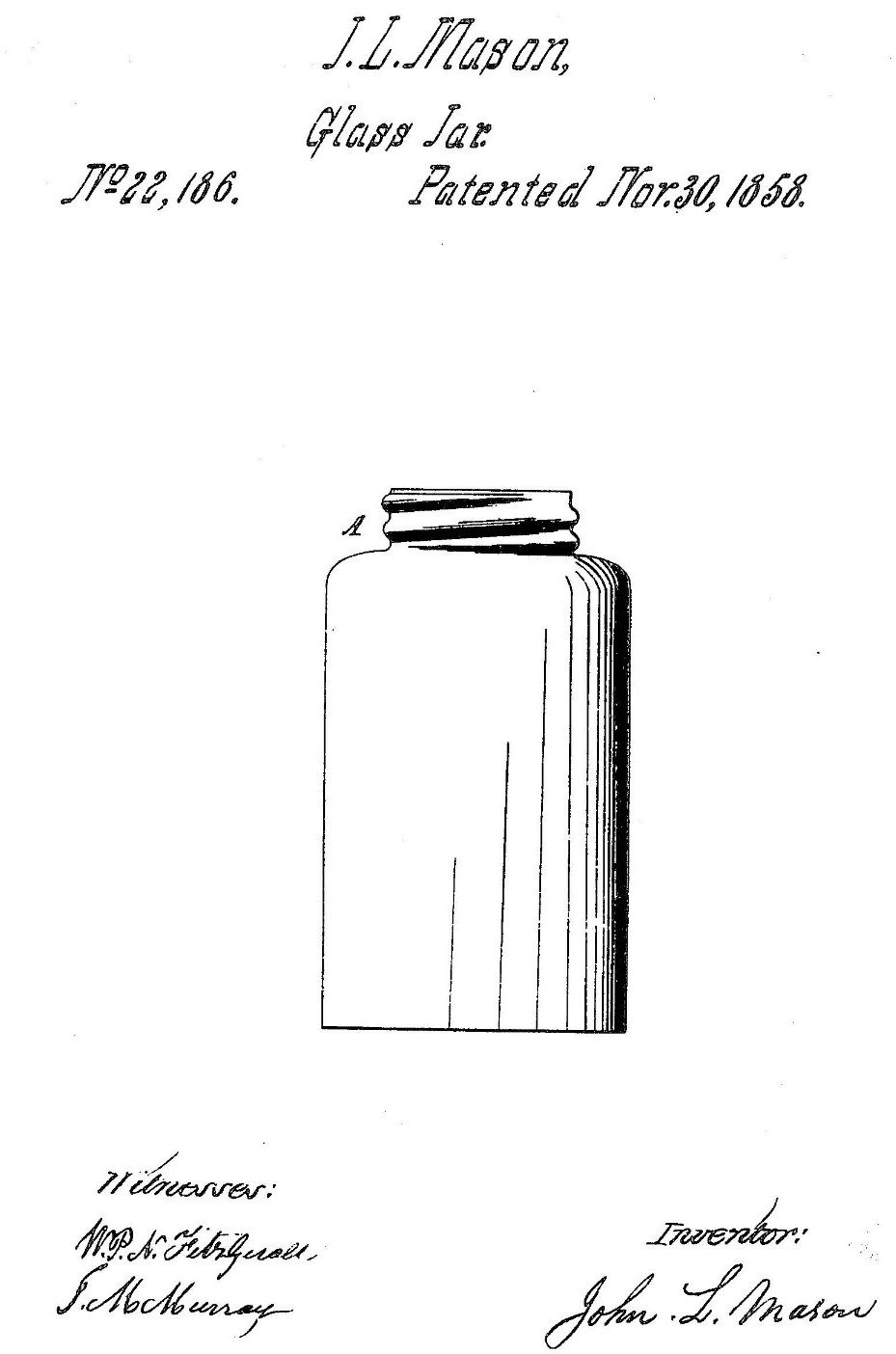
    Patent for Mason Jar, 1858. Source: Suiter Swantz IP

    The 1850s marked the beginning of home canning’s popularity in America, and the glass canning jar as we know it today was first patented by John Landis Mason in 1858.[1] Mason’s first jars were sealed using a zinc screw-on lid. With this design, the zinc was able to come into contact with the contents of the jar, affecting the food’s taste.[2] This issue was remedied in 1869 when Mason sold his patents to Lewis Boyd the creator of milk glass lid liners.[3] Together Mason’s glass jar and screw-on lid with Lewis Boyd’s patented milk glass lid liner created an affordable canning jar that was able to be sealed without interfering with taste. Here at Ferry Farm, we have a few examples of these milk glass lid liners in our collection.

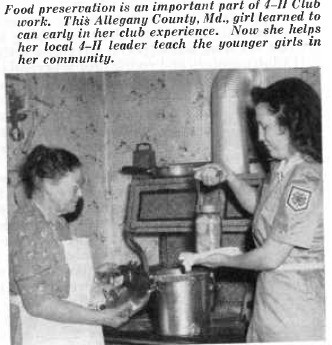
    Home Canning. Source: National Agricultural Library

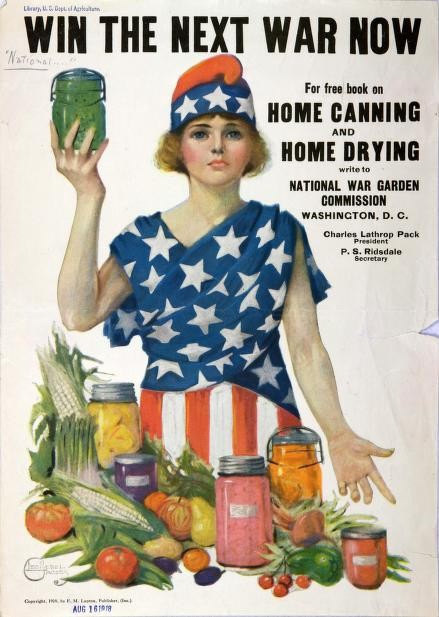
    While canning food during this early period served as a practical way to preserve surplus food, during the early 20th century its value shifted to something a bit more patriotic. During World War I and World War II, home canning became a way for American’s, primarily women, to support their country and troops on the home front.[4] By growing and preserving food at home in their ‘war gardens’ (or ‘victory gardens’ as they were called after the war), they were ensuring that the available food supplies were able to get to the troops.[5] This also became a way for communities to band together and help support one another during periods of rationing food supplies.[6]

    Home Canning During War. Source: National Agricultural Library

    After World War II, canning at home decreased in popularity due to the increased accessibility of home refrigeration and the rise of the supermarket.[7] Though it may have lost its widespread popularity, canning continued to serve as a way for gardeners to preserve their pickles, jams, and other produce. During the beginning of the 21st century, the Mason jar became widely popular once again, but for its looks rather than its use in canning.[8] It became the symbol for the ‘rustic farmhouse’ aesthetic and a popular do-it-yourself crafting item for everything from wedding decor to light fixtures. Mason jars also became a more sustainable, economic replacement for plastic food storage and even drinkware.

    Homemade Mason Jar Light Fixture. Source: Etsy

    Recently we have seen a revival in home canning in response to the pandemic. As people had more time at home, and supply issues caused produce scarcity in supermarkets, many turned to their gardens once again. The popularity of the Mason jar may ebb and flow, but it is an object that has been a staple for many Americans for over 150 years. Do you have a Mason jar at home? What do these canning jars mean to you?

    Danielle Arens

    Archaeology Intern


    [1] FRUIT JARS… A History Worth Remembering by Melissa Milner https://www.fohbc.org/PDF_Files/Milner_FruitJars.pdf

    [2] ibid

    [3] ibid

    [4] Making Sense of Mason Jars: A Qualitative Exploration of Contemporary Home Canning Pennington, P. Suzanne. https://www.proquest.com/docview/1474906609/fulltextPDF/5AF40FBE73384694PQ/1?accountid=12299

    [5] ibid

    [6] ibid

    [7] https://www.smithsonianmag.com/innovation/brief-history-mason-jar-180975546/

    [8] Ibid

  • Happy Birthday, George!

    We are excited to be celebrating George Washington’s 290th birthday (although it’s the day before his actual birth date) on President’s Day! On February 22, 1732, George was born in Westmoreland County, Virginia. Some interesting facts are associated with his birth-date and the subsequent birthday celebrations he would have as an adult. For instance, did you know that he technically has two birthdays? It’s true! Under the Julian calendar, his birth date would have been February 11, 1731. This means that his birthday was actually earlier in the month until the calendar switched to the Gregorian calendar in 1752. The Gregorian calendar added 11 days and one year to his date of birth!

    Just when did his birthday become so popular to celebrate? The earliest known date of his birthday being recognized (beyond his family) was actually during the American Revolution. It was the winter of 1778, and the soldiers were desperate to keep warm at their headquarters in Valley Forge, Pennsylvania. General Henry Knox planned the event. Clearly, General Knox did more than coordinate the movement of cannons from Canada to Boston; he apparently could also list “party planner” upon his resume.

    General Henry Knox aka “Party Planner”. Source: Wikimedia Commons

    The festivities of this inaugural birthday bash included a parade from an artillery band consisting of drums and fifes. Around this time, George was also becoming known as the “Father of his Country,” replacing King George III at every chance. For instance, the King’s birthday would no longer be listed in the Almanac. Instead, you would find the birth-date of George Washington. However, that doesn’t quite answer the question of when his birthday became an annual event on a broader scale.

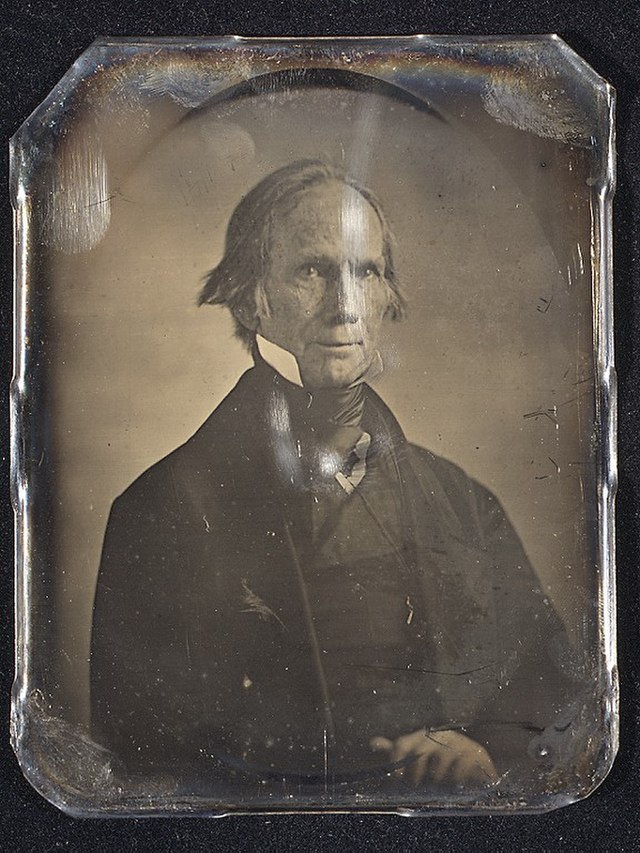
    For that, we turn to everyone’s favorite statesman, whose most significant accomplishment was never being elected President of the United States despite the number of times he ran for that office. The one, the only…Henry Clay. Senator Clay was part of a joint Congressional committee that wanted to recognize the centennial of George’s birth. They decided to do this by giving themselves the day off and adjourning Congress on February 22, 1832. While not the celebration you might have imagined, it did get the ball rolling for an expanded holiday that we celebrate today.

    Senator Henry Clay. Source: Wikimedia Commons

    As the years went by, cities, states, and even Congress realized they had to do more to commemorate George’s contribution to the Nation. In 1862, yes, in the midst of the Civil War, the Senate began to read Washington’s Farewell Address each year on his birthday. In 1879, Congress made the date a federal holiday for federal employees ONLY IN DC. Though this caused confusion among those employees as some were paid for that holiday and others were not… This discrepancy was amended in 1885 when the holiday became a paid one for all DC federal workers.

    Almost 100 years after the Senate began their annual tradition of reading the Farewell Address on February 22, Congress passed the Monday Holiday law to make federal holidays more uniform. So instead of celebrating George’s birthday on February 22, it was recognized on the third Monday of the month. There are two interesting things about this law when applied to George’s birthday. First, because of February’s shortened number of days, there is no possible way for the federally observed holiday to fall on his actual birthday. Second, the holiday we all know as “President’s Day” doesn’t actually exist. It has yet to be formally changed by Congress or the President from being first recognized as “Washington’s Birthday,” which is pretty fascinating!

    If you’re looking for a fun way to celebrate George’s birthday this year, I encourage you to check out our event at Ferry Farm. For the event, we are offering tours of the reconstructed Washington House, new (and returning) crafts, a chance to meet real archeologists and learn about what they’ve found at the site, the opportunity to see if you can throw a stone as far as George supposedly could, and obviously, we’re having cupcakes because it’s a birthday party!

    This year’s event will be held on Monday, February 21, from 10 am to 3 pm, and tickets can be purchased by visiting our website. Tickets are $5 per adult (age 18+) and FREE for children (17 & unders). We encourage you to purchase your tickets in advance.

    -Amy N. Durbin, Director of Education