Lives and Legacies

Category: Archives

  • 250 Years of Celebration

    250 Years of Celebration

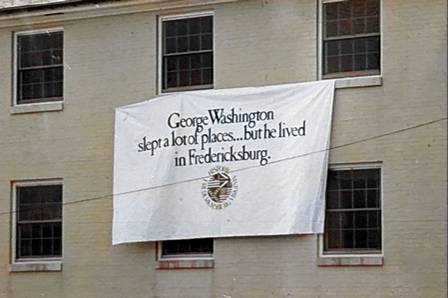
    A banner from the Market Square Fair of 1976, HFFI image collection.

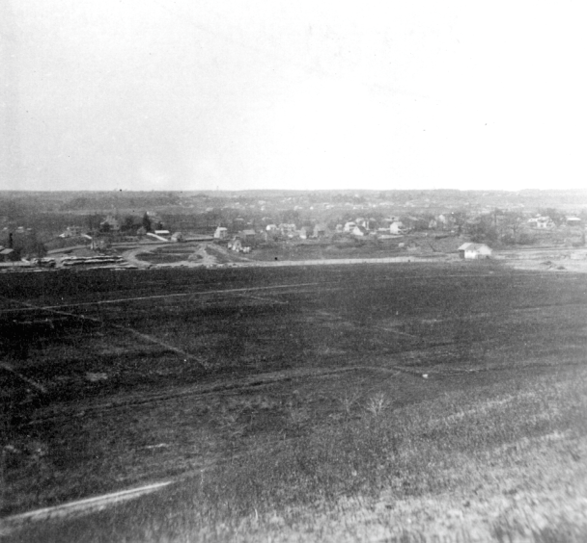
    View of Ferry Farm circa 1881. National Parks Service.

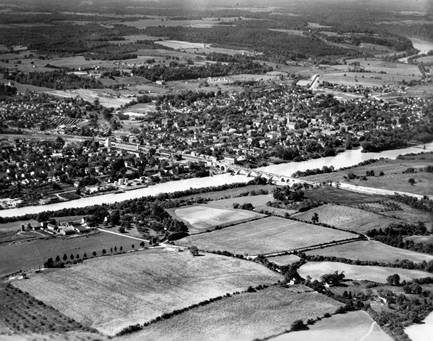
    Aerial view of Fredericksburg showing Ferry Farm in the lower left side, 1927. Fredericksburg Area Museum Collection.

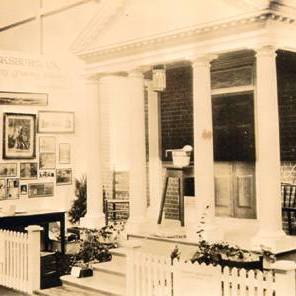
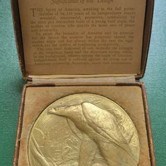
    Left: Kenmore’s exhibit at the Philadelphia Exposition, GWF Collection. Right: Kenmore’s medal of award, GWF Collection.

    American Revolution Bicentennial Logo, Wikimedia Commons.

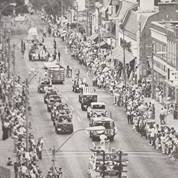
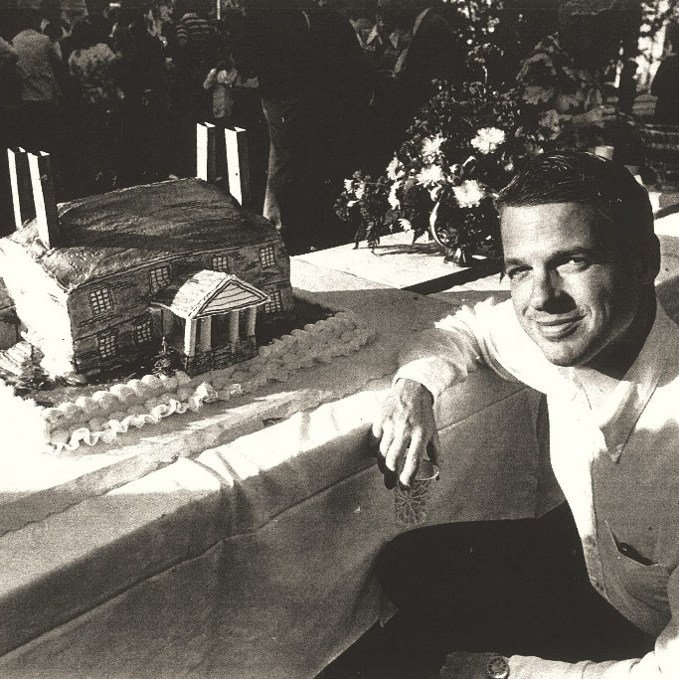
    Left: The Bicentennial Parade on Princess Anne Street, the Free Lance -Star. Right: Russell Bastedo, former director of the Kenmore Association, posing next to a Kenmore cake, Central Rappahannock Heritage Center collection.

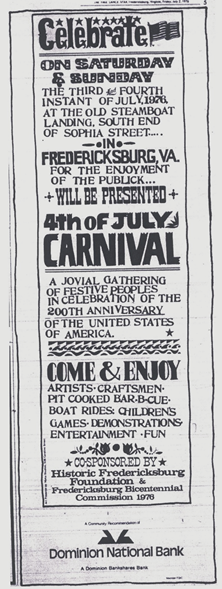
    Newspaper advertisement for the city dock carnival, The Free Lance-Star.

    America 250 logo.


    [1] (National Archives Foundation, 2025)

    [2] (The Fiftieth Anniversary of American Independence, 1826)

    [3] Mutual Assurance Society, plat for policy 4239, November or December 1822, to Samuel Gordon; plat for policy 6126, 31 December 1829, to Samuel Gordon; plat for policy 6126, 31 December 1829, to Samuel Gordon; and plat for policy 9313, 15 November 1836, to Samuel Gordon; Virginia State Library, Richmond, Virginia; reproduced in Troup, pp. 146-151.

    [4] (Chapman)

    [5] (National Archives Foundation, 2025)

    [6] (The Fourth of July, 1876, 1876)

    [8] (The Daily Star, 1926)

    [9] (Warren, 1999)

    [10] (National Archives Foundation, 2025)

    [11] (Nichols, 1976)

    [12] (Nichols, 1976)

    Special thanks to the team at Historic Fredericksburg Foundation, The Virginiana Room at the Fredericksburg Library, and Central Rappahannock Heritage Center for providing access to their collections and assisting in the research process.


  • New Kids on the Block: The 20th-Century Houses of Kenmore Court

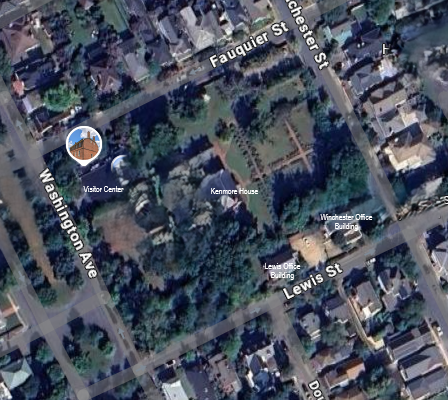
    When you visit Historic Kenmore today, you will find a preserved city block with gardens and pathways reaching from front to back. The tranquil estate is only interrupted by two other houses along Lewis Street, hidden behind a tree line. These buildings remain the only surviving evidence of a time when Kenmore’s block was almost swallowed up by modern developments.

    Although we have spoken at length on this blog about how Kenmore was saved from being turned into apartments (here, here, and here), we have not yet covered the houses that had, in fact, already gone up before Mrs. Emily Fleming and “Miss Annie” Fleming-Smith had even begun their fundraising.

    In 1914, Kenmore was sold by the Howard family, the last private residents of Kenmore, to Elmer “Peck” Heflin, a prolific land developer in Fredericksburg. By the end of the year, Heflin had already subdivided Kenmore into several lots and began to sell them off.

    A newspaper advertisement placed by Heflin in The Daily Star, November 1914.

    His goal was ultimately to turn the Kenmore block into a picturesque and modern housing development complete with single-family houses, apartments, driveways, and a parkway. This was illustrated for all of Fredericksburg to see in another newspaper ad from 1921 (Heflin, 1921). Heflin’s vision for the court was a 20th century city developer’s dream, squeezing as many lots as he could get into the space and ensuring that automobiles could have access to the entire area. Cutting edge, efficient, and shockingly modern.

    “Kenmore Court” plans with “Kenmore Residence” at the center, The Daily Star, January 1921

    By the time this advertisement ran, at least two of the proposed twenty lots had already been built on and three more had been sold to future homeowners. The earliest developments were done along the 1200 block of Winchester Street (which runs along the top of the illustrated plan).

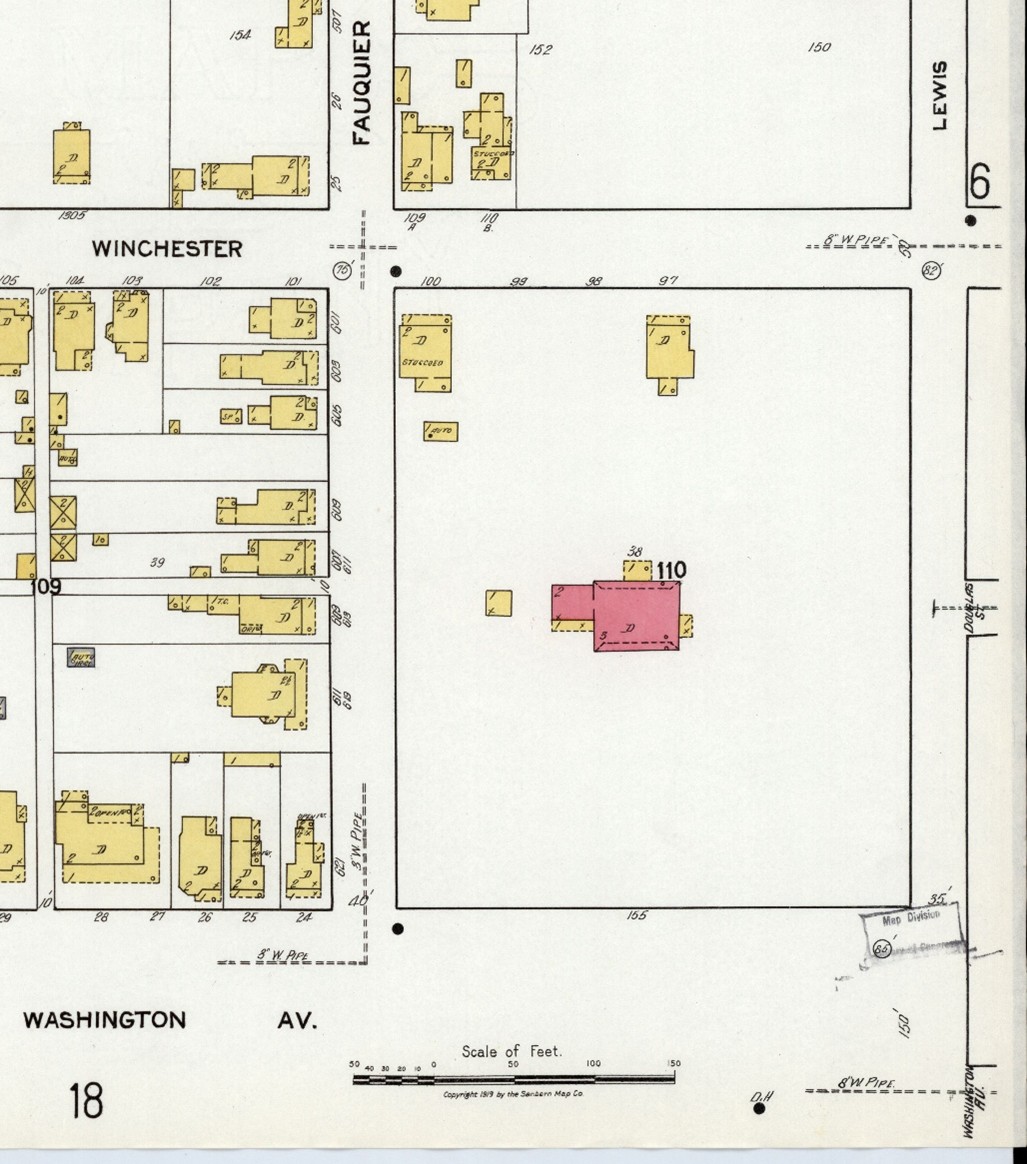
    A fire insurance map from 1919 showing the two new houses and Kenmore. (Sanborn Map Co., 1919).

    It was possibly this very newspaper ad with the proposed plan, seen by Mrs. Fleming and Miss Annie, that shocked them into action to save Kenmore before it was too late. However, even though they had finished their payments to Heflin by 1925 and officially owned the Kenmore mansion, they had yet to undo the sales that had already been made.

    Between 1919 and 1927, another five houses went up along Winchester St. and an additional one along Lewis St. The lots in the 1200 block of Winchester were now completely filled.

    A fire insurance map from 1927 showing the Kenmore block with nine total houses and a now preserved Kenmore listed as “(Shrine)”. (Sanborn Map Cp., 1927)

    Although the Kenmore Association now owned the Kenmore great house and had successfully saved it from demolition, they also valued the physical beauty that the surrounding land had potential for. The new houses were taking up space that could be gardens, reminiscent of what the original grounds may have looked like. But now, they only contained a view into several family’s backyards.

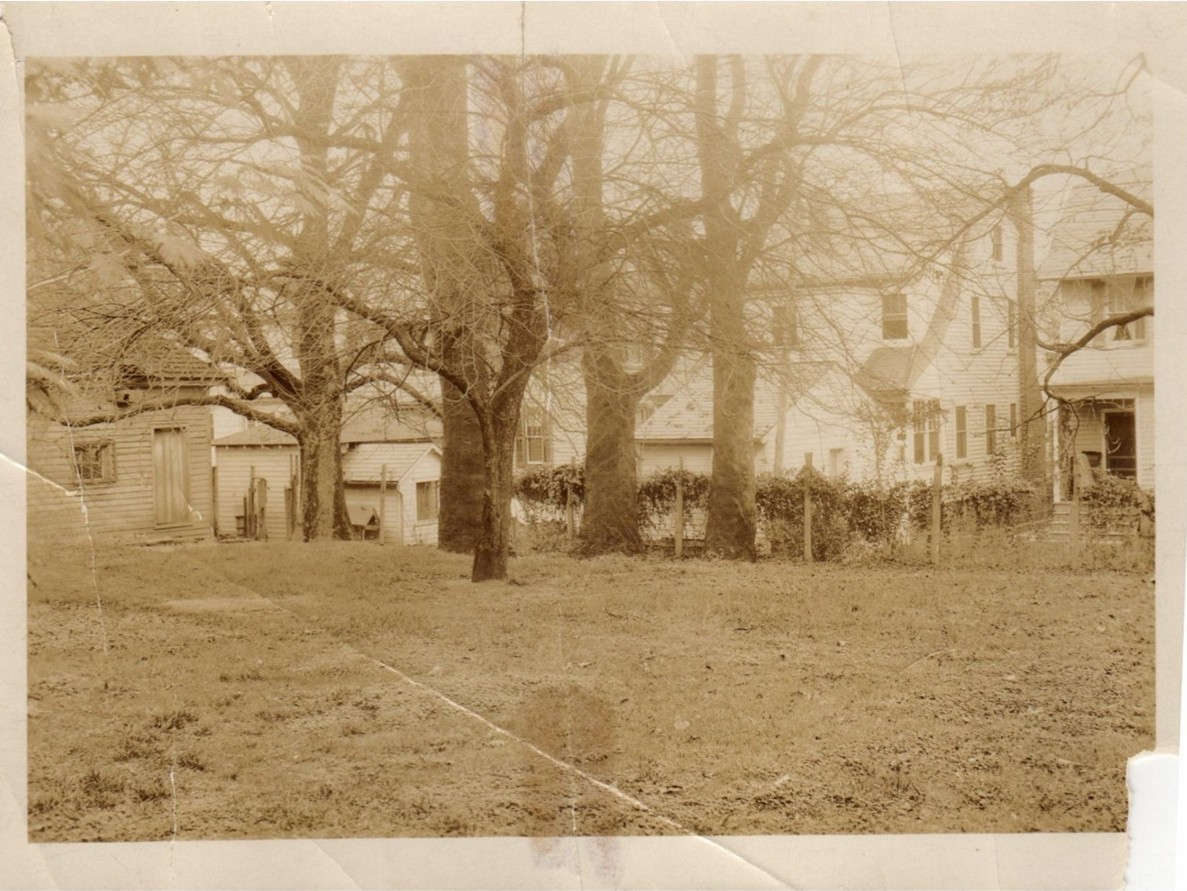
    Kenmore Gardens Pre-Restoration as seen from the portico of the Kenmore great house, photo from the George Washington Foundation Collection.

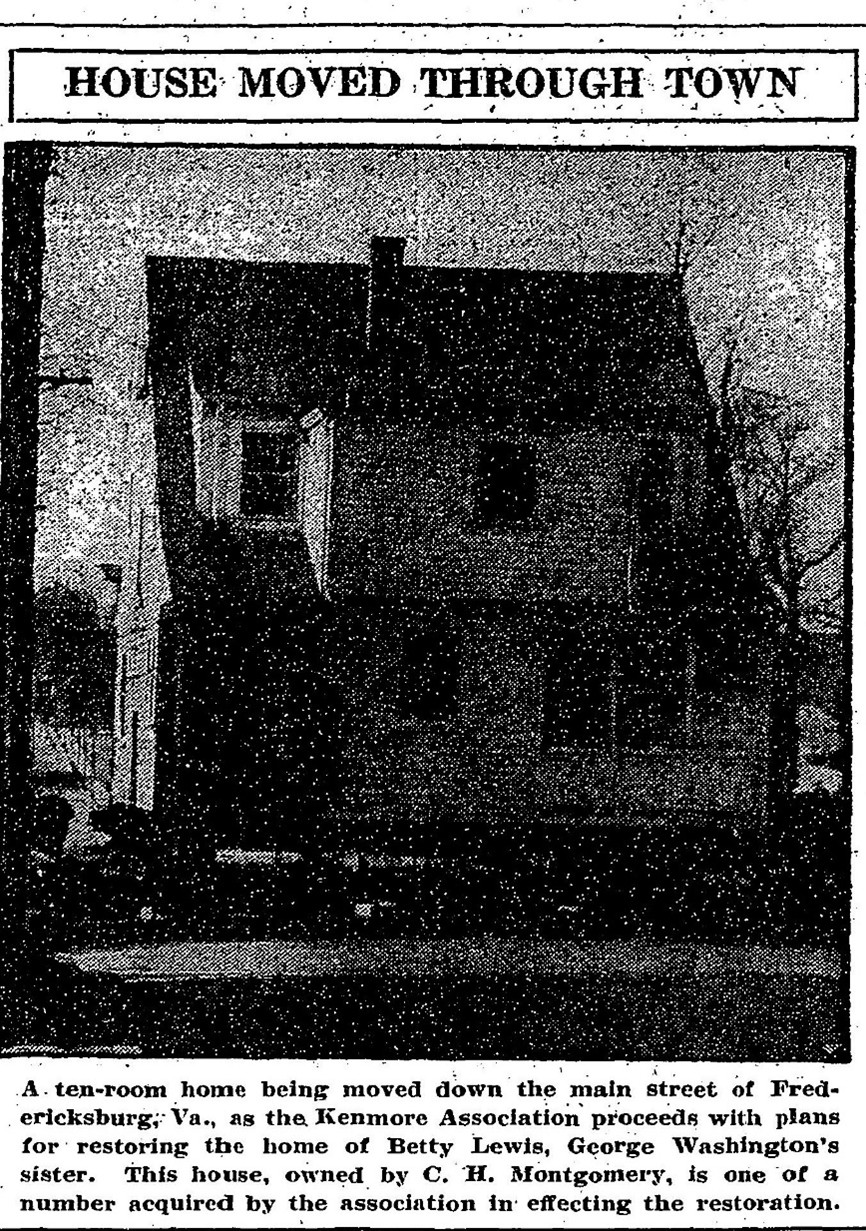
    The Kenmore Auxiliary for the Reclaiming of Land formed to buy back the sold lots (Whidden, 1972). By 1930 they had already purchased two of the houses, 1206 and 1208 Winchester, and two empty lots on Cornell Street, just a few blocks north. By 1931, the houses were physically moved from Winchester St. to Cornell St.

    “House Moved Through Town” article appeared in the Washington Post, Dec. 1930.

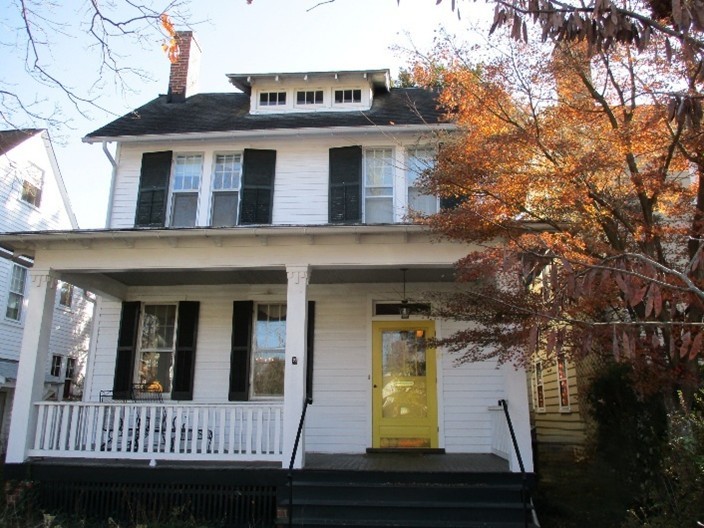
    The Kenmore Association continued to rent these houses out for some time to tenants, generating extra income to help with Kenmore’s preservation process, until they eventually sold the homes to private owners. These Cornell St. houses still exist to this day. Few changes have been made from their historical exteriors.

    With the assistance of donations from individuals and foundations all over the country, the Kenmore Association was able to raise enough money to make offers to three other homeowners along the 1200 block of Winchester St., all of whom accepted. Most of Winchester St. belonged to the Association by the end of the decade (Whidden, 1972). The houses continued to be rented out to tenants through 1940. Unfortunately, after that year we have not yet discovered what happen to the Winchester St. houses, but they no longer exist on the revised 1947 fire insurance map and are presumed to have been demolished around 1941 or ‘42.

    A fire insurance map from 1947 showing revisions made between 1927 and then. (Sanborn Map Co., 1948)

    You notice that there are still three houses remaining on the block alongside the Kenmore great house. These holdouts remained for many years as private residences. Two of these houses, 605 Lewis St. and 1200 Winchester St., can still be seen today.

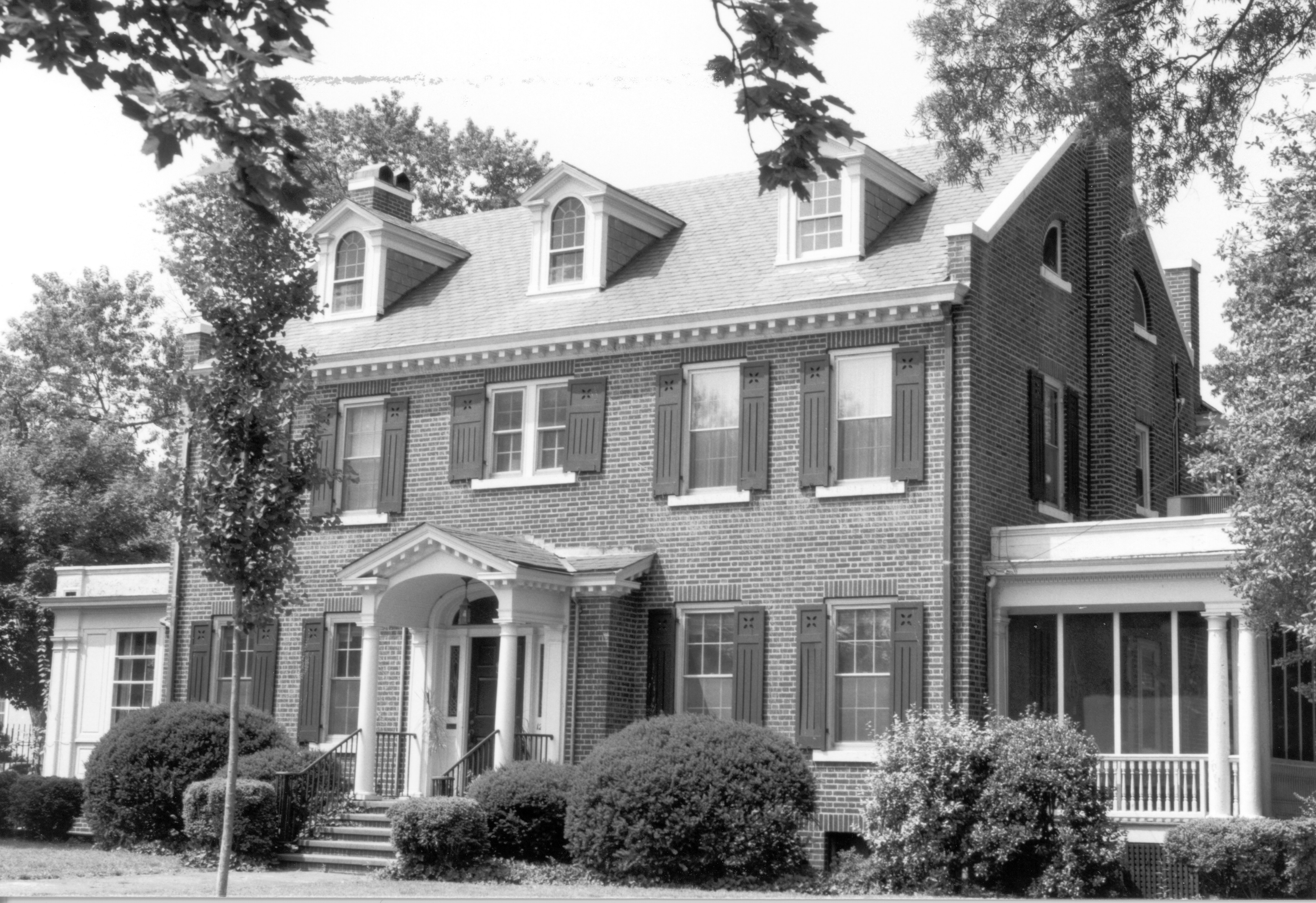
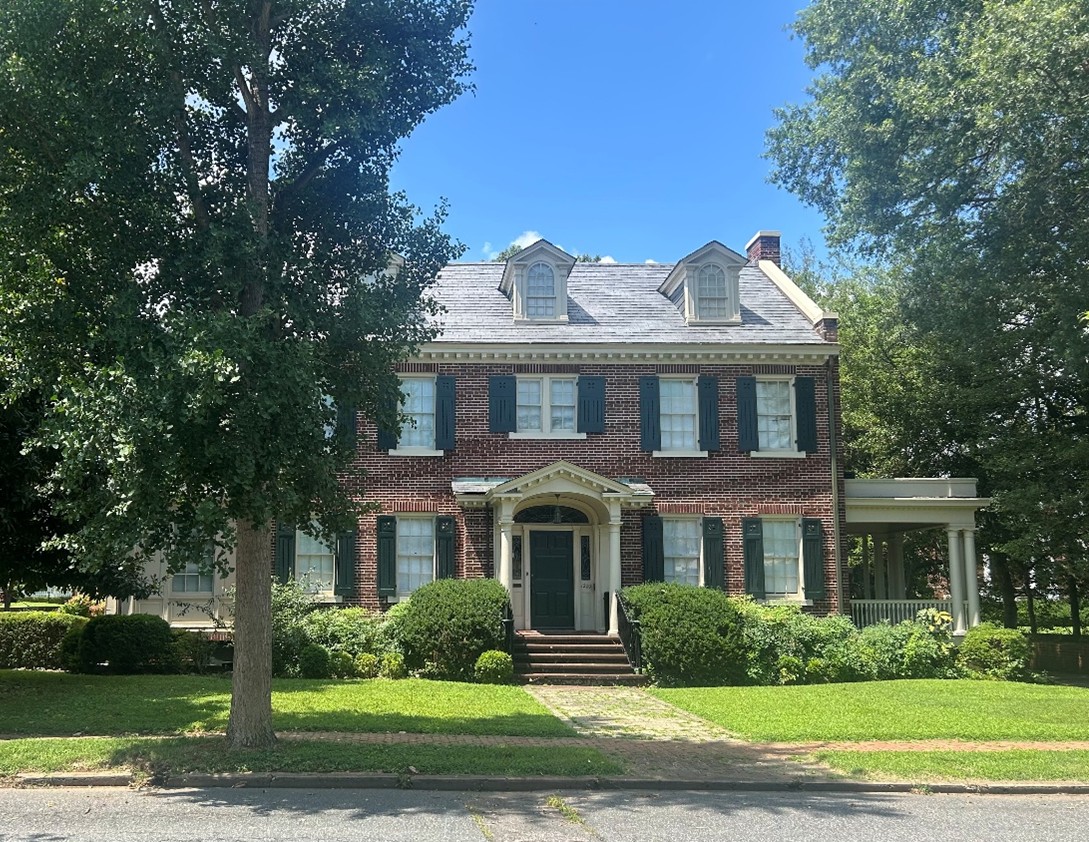
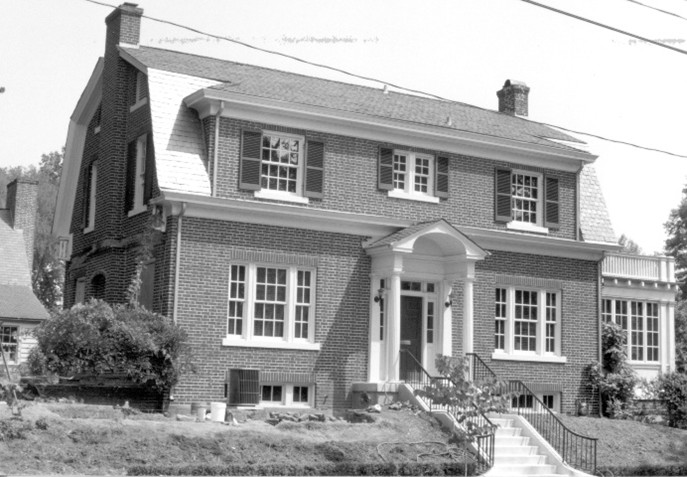
    1200 Winchester St. is a large brick façade building that was originally constructed for Dr. Frank Pratt. Dr. Pratt used to treat patients in the building’s basement and lived in the house until his passing in 1964. He founded the Pratt Medical Group in 1937, which still exists today with several locations in Fredericksburg and Spotsylvania (Obituary, 1969). His house was sold in 1991 by the last private owners, the Westfall family, to the Kenmore Association and has become one of the main office buildings on the site.

    605 Lewis St. has a very similar story to 1200 Winchester. Another brick structure, it was built for William Lacy who lived there with his wife Norah, daughter Celia, and sister-in-law Celia Goolrick. Lacy was a pharmacist who passed away in 1933, leaving his home to his wife. She and her sister continued living in the house until both had passed by 1965 (Obituary, 1965). The building was sold to the Kenmore Association in 1992 and converted to offices as well.

    The house I’ve saved for last has quickly become my favorite, since it’s the one that sparked my interest in this subject in the first place. While visiting a small antique shop in central New York of all places, I stumbled on a postcard with an image of 1216 Winchester St., also known as the Wilson House.

    The Wilson House on a postcard, circa 1921-1941. From the George Washington Foundation Collection.

    The Wilson house was the only Stucco house of the bunch, constructed in the prairie style. It was owned by Thomas Wilson, co-founder of Wilson Bros. Lumber. He, his wife Temple, Daughter Esther, and granddaughter Janet all lived in the house in 1930. By 1940, it had become a boarding house that rented out space to tenants and visitors. It had at least three units inside of it.

    The Wilson house sat on the corner of Fauquier and Winchester streets, blocking Kenmore’s new brick wall originally meant to extend around the block, until 1971. I don’t know what changed that year, whether it was a death or shift in the family or if the money finally became too good of an offer to refuse, but the Wilson family finally sold their home to the Kenmore Association, who promptly had it razed (Whidden, 1972). The brick wall was never full finished, and the area where this beautiful house once stood is now used as a service lot.

    There are countless other things that could be said about these missing structures that haunt the property. The stories of the people who lived in them. A debate about whether these modern homes were worthy of preservation as well. The archaeological damage that their construction likely caused. So on and so forth. One thing is certain though: the grounds of Kenmore hold history. Not just of the Lewis family, but of the Pratts, the Wilsons, the Lacys, the Franklins, the Coxes, the Joneses, and the countless others who once lived on this city block.

    Sarah Alden

    Manager of Visitor Services and Interpretation


    Bibliography

    City of Fredericksburg. (2025). 806 Cornell St. Fredericksburg: Fredericksburg Information Technology.

    City of Fredericksburg. (2025). 808 Cornell St. Fredericksburg: Fredericksburg Information Technology.

    Heflin, E. (1921, January 24). Modern Homes. The Daily Star, 28(180), 4.

    Lots on Beautiful Kenmore Court. (1914, November 12). The Daily Star, 22(119), 2. Fredericksburg, VA.

    Obituary. (1965, May 19). Mrs. W. J. Lacy Dies in Atlanta, Rites Thursday. The Free Lance-Star, p. 5.

    Obituary. (1969, May 10). Monday Rites for Mrs. Pratt. The Free Lance-Star.

    Sanborn Map Co. (1912, July 12). Fire Insurance Maps Online. Retrieved from Historical Information Gatherers: https://fims-historicalinfo-com.ezproxy.virginiamemory.com/FIMSSD.aspx?m=09021_1912

    Sanborn Map Co. (1919, October 31). Fire Insurance Maps Online. Retrieved from Historical Information Gatherers: https://fims-historicalinfo-com.ezproxy.virginiamemory.com/FIMSSD.aspx?m=09021_1919

    Sanborn Map Co. (1948, June 7). Fire Insurance Maps Online. Retrieved from Historical Information Gatherers: https://fims-historicalinfo-com.ezproxy.virginiamemory.com/FIMSSD.aspx?m=09021_1947

    Sanborn Map Cp. (1927, May 27). Fire Insurance Maps Online. Retrieved from Historical Information Gatherers: https://fims-historicalinfo-com.ezproxy.virginiamemory.com/FIMSSD.aspx?m=09021_1927

    Stanton, G. (2011, February 21). 15th US Census, 1930. Fredericksburg City Enumeration District 107-1 Upper Ward. Retrieved from Fredericksburg Research Resources: https://resources.umwhisp.org/Fredericksburg/census/fbg1930ED107-1.htm

    Stanton, G. (2014, November 28). 16th U. S. Census, Virginia, Fredericksburg (Upper Ward), S.D. 1, ED No. 107-3. Enumerated Beginning 2 April 1940. Retrieved from Fredericksburg Research Resources: https://resources.umwhisp.org/Fredericksburg/census/fbg1940ED107-3.htm

    Whidden, R. W. (1972). Kenmore 1752: Fifty Years as a National Shrine. Richmond, VA: Whittet & Shepperson.

  • From the Vaults: Rarely Seen Documents

    Some of the most delicate objects in our collection are our archives. Paper and other document materials like vellum and parchment are very sensitive materials that can be irreversibly damaged simply by light.  This makes it very difficult to display or put on exhibit for extended periods despite our comprehensive policies for conserving and preserving documents; exhibition has always been unfeasible.  To remedy this, we have been working on getting archival-safe, high-quality images of our important documents online for everyone to access.  So, while you might not see the documents in person, you can still explore, read, and learn about these important papers while we preserve them for future generations.     
    Until we launch our online archives, I wanted to give everyone a sneak peek at a few of our incredible pieces.

    One of our oldest documents in the collection is a Land Grant signed by William Gooch on September 28, 1730, written on vellum.  William Gooch was a colonial administrator who served as governor of Virginia from 1727 to 1749.  The grant is not in the best condition, but it reads that it grants 400 acres in Spotsylvania County to Paul Plunkepee.  This grant is officially recorded as Land Office Patents, No. 14, 1728-1732, page 40, and is available at the Library of Virginia.

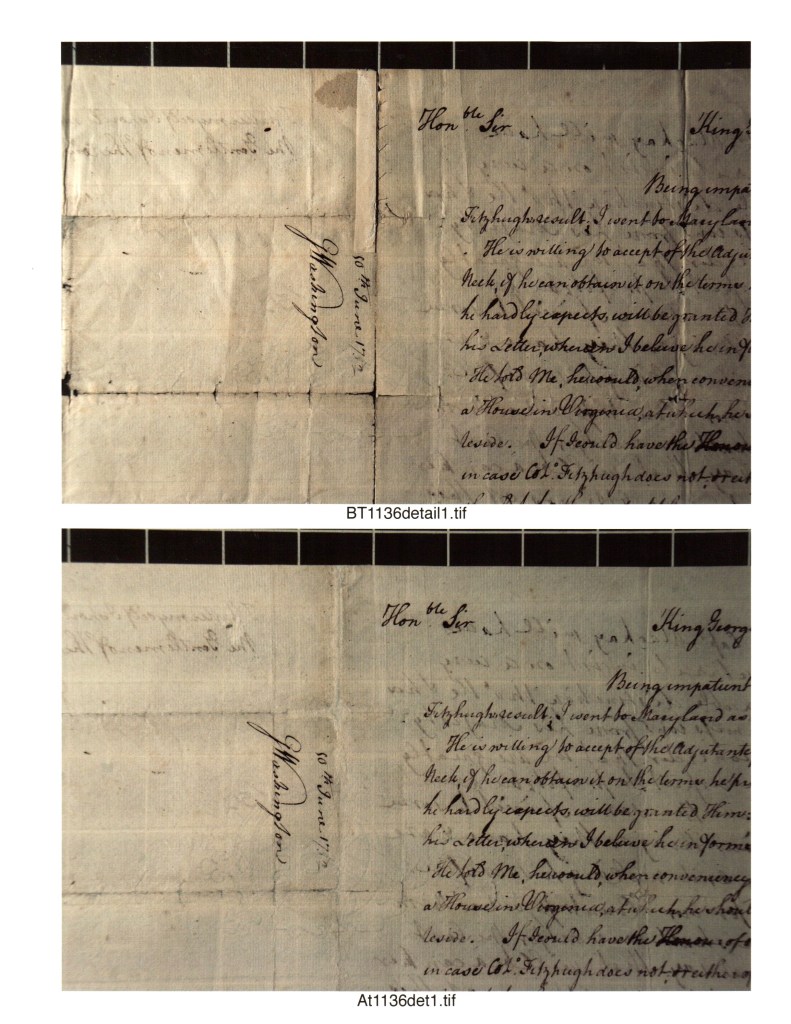
    One of our most unique documents is a letter from George Washington to Lieutenant Governor Robert Dinwiddie, written on June 10, 1752, when he was twenty.  Robert Dinwiddie served as Lieutenant Governor of Virginia from 1751 to 1758.  In the letter, George requests his first military appointment to the open adjutancy of the Northern Neck or other district.  George’s half-brother Lawrence had been appointed Adjutant General of the colony in 1743.  Due to his illness and eventual death, the adjutant was to be divided into smaller districts (i.e., Northern Neck).

    Dinwiddie declined the appointment but assigned George to an envoy position that winter to confront the French, who had recently built a fort on what Dinwiddie considered British land.  Additionally, George met with the Iroquois Confederacy to make peace and obtain intelligence about the French.  

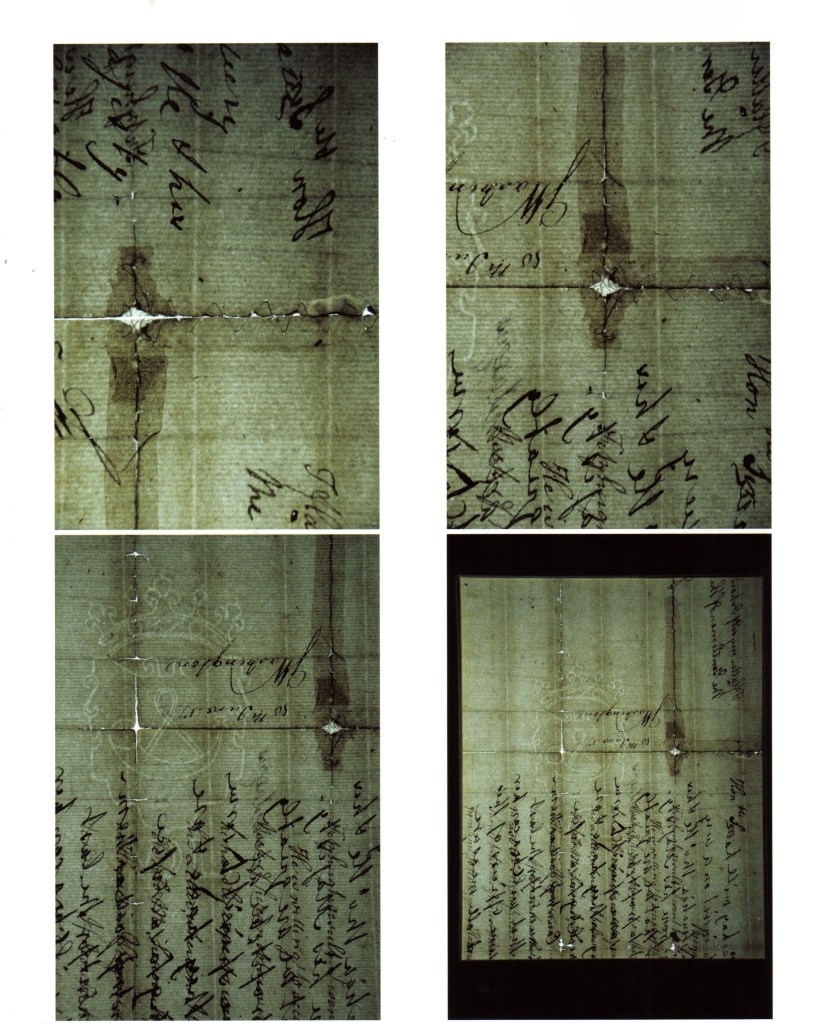
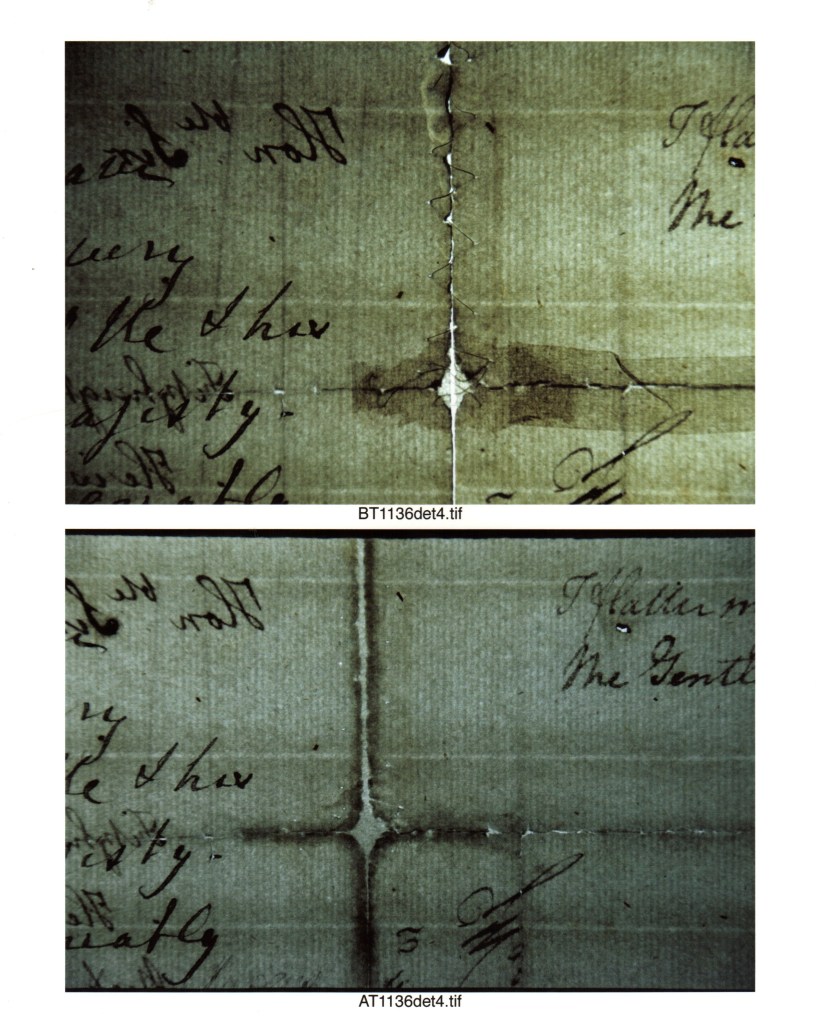
    This amazing letter pinpoints the beginning of George Washington’s illustrious military career, which would eventually culminate in him becoming the first President of the new United States of America.  The letter is in great condition after meticulous conservation work, which included repairs with Japanese tissue called tengucho and wheat starch paste called jin shofu.  It was then cleaned and flattened, and the iron gall ink stabilized.

    A transcript of the letter can be found on the National Archives website at Founders Online.

    Next are two letters between George Washington and Irish-born publisher Matthew Carey.  Matthew Carey moved to America in 1784 and settled in Philadelphia, where he established a publishing business and bookshop with $400 given to him by the Marquis de Lafayette.  Carey’s first publication was The Pennsylvania Herald in 1785, followed by two of the first successful American magazines, The Columbian Magazine and The American Magazine in 1786 and 1787.

    In George’s first letter to Carey in 1785, he requests a subscription to Carey’s newspaper but asks him to send the newspaper disguised as an ordinary letter because George has been having problems with the post office delivering his newspapers .  George thinks his papers may not have been delivered because “persons who wishing to read News Papers without being of the expence [sic] of paying for them, make free with those which are addressed to others.”

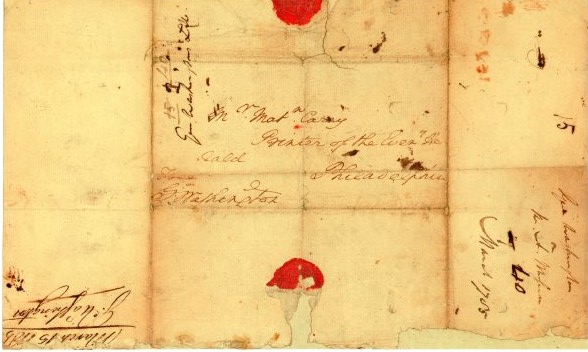
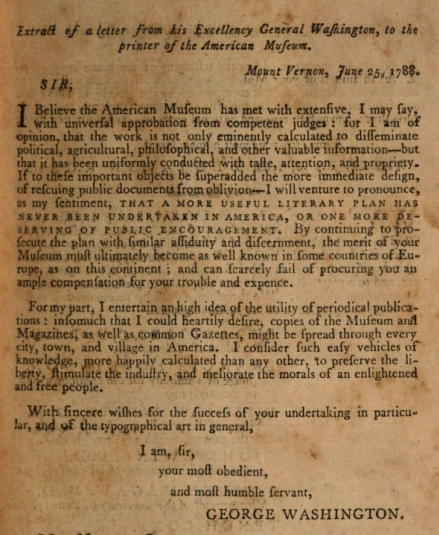
    The second letter between George and Matthew is dated June 25, 1788.  The year before, Carey launched “The American Museum” magazine.  It was a literary museum that reprinted significant historical documents on American history and original essays on politics, commerce, and culture.  The magazine got a positive response, but Carey was finding it expensive to distribute the magazine across the country, so he asked George, one of his first subscribers, to write an endorsement for the magazine that would help attract new subscribers.[2] 

    Washington responded immediately, seizing the opportunity offered by Carey to express his belief that the free dissemination of information and ideas was vital to preserving American liberty.  ‘I could heartily desire,’ Washington wrote, that ‘copies of the Museum and Magazines, as well as common Gazettes, might be spread through every city, town & village in America – I consider such easy vehicles of knowledge, more happily calculated that any other, to preserve the liberty, stimulate the industry and meliorate the morals of an enlightened and free People.”

    Carey published Washington’s endorsement in the next issue of his magazine—his marks for the typesetter can be seen in the original Washington letter.  The result was a flood of new subscriptions that allowed Carey to continue publishing The American Museum for another four years.

    Transcripts of the letters can be found on the National Archives website at Founders Online.

    These are just a few of the amazing documents in our collection, which we hope to bring you soon so that you can explore them yourself.  Check back often, and we will keep you updated on our progress with our digitization project.

    Heather Baldus

    Collections Manager


    Bibliography

    Edd Applegate (August 17, 2012). The rise of Advertising in the United States: A History of Innovation to 1960. Scarecrow Press. p.25.