Lives and Legacies

Category: Behind the Scenes

  • Wish You Were Here: Historical Documentation Through Postcards

    Postcards were a staple of vacations.  Collected and sent back to friends and family so they could be part of your adventures. Many of us can remember trying to pick up postcards on the first day of vacation to get them in the mail quickly so they would arrive back home before you. 

    Postcards were created in the mid-nineteenth century, and through the decades, they were mass-produced with popular scenic images and were inexpensive, so many people picked up postcards to document their vacations rather than taking pictures.    Their popularity and collectability mean that boxes and boxes of old postcards can be found in antique stores and flea markets. 

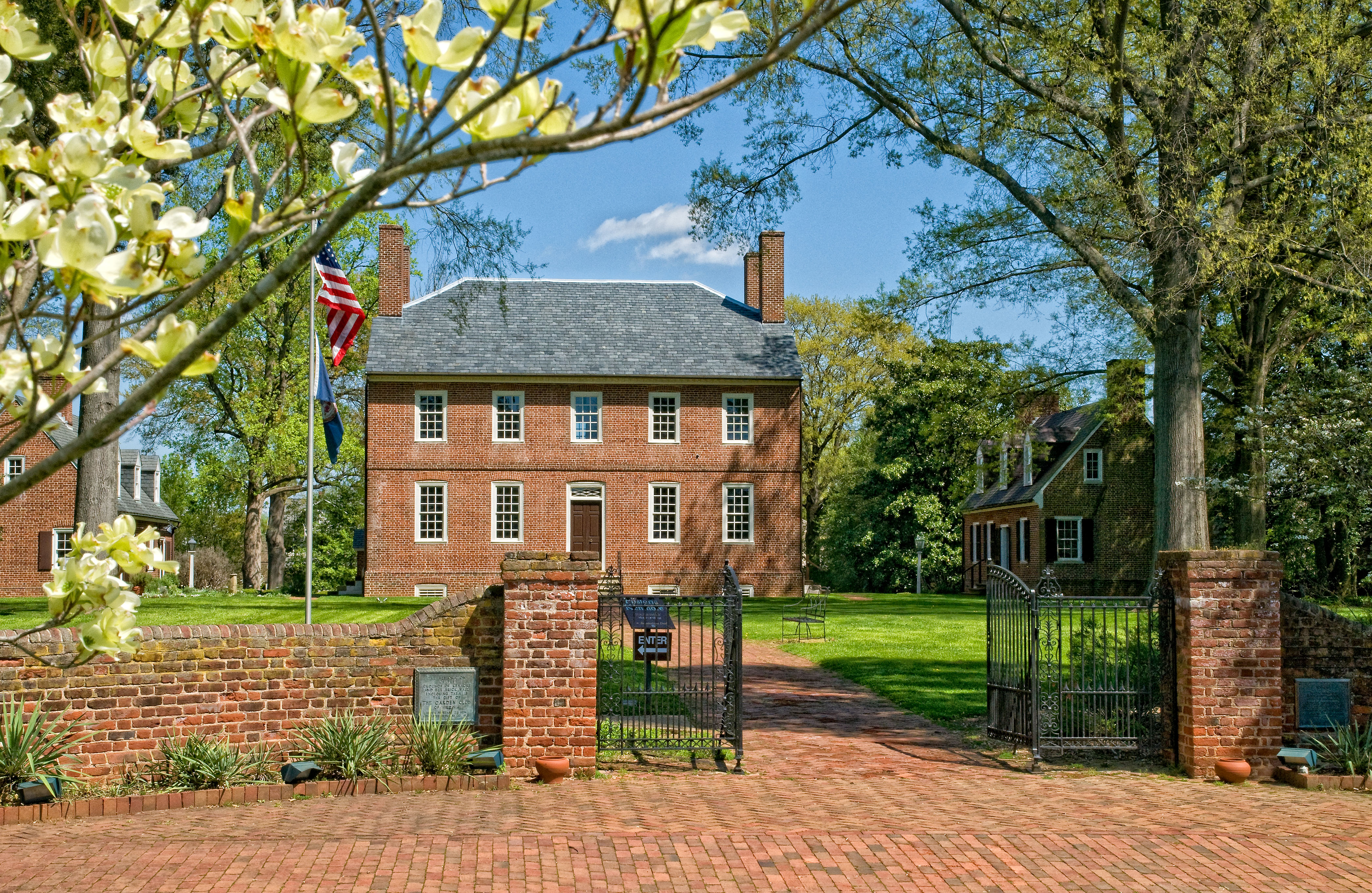
    While postcards are amusing souvenirs and a source of nostalgia, they can also offer us important insights into the evolution of historic sites and cities.  Postcards of Kenmore have helped us document the restoration of the house, the development of the property, and past interpretations, even providing documentation of collection items for which we may not have records.

    For your enjoyment, I’ve selected some of my favorite postcards to showcase how they’ve documented the historical restoration and interpretation of Kenmore.

    Exterior: Pre-Restoration

    Kenmore has always been quite the showpiece, even when it was privately owned.  One of the earliest postcards of Kenmore’s exterior is dated 1908, as indicated by the postmark.  The Howard family owned the house until it was acquired by E.G. Heflin around 1914. 

    The postcard shows the house from the Washington Avenue side (west elevation) and provides a glimpse of the properties before any restoration work.  The old kitchen can be seen on the north side of the house, while the exact date it was built is unknown; we know it was built in the late 1880s or early 1890s.  It was torn down in 1929. 
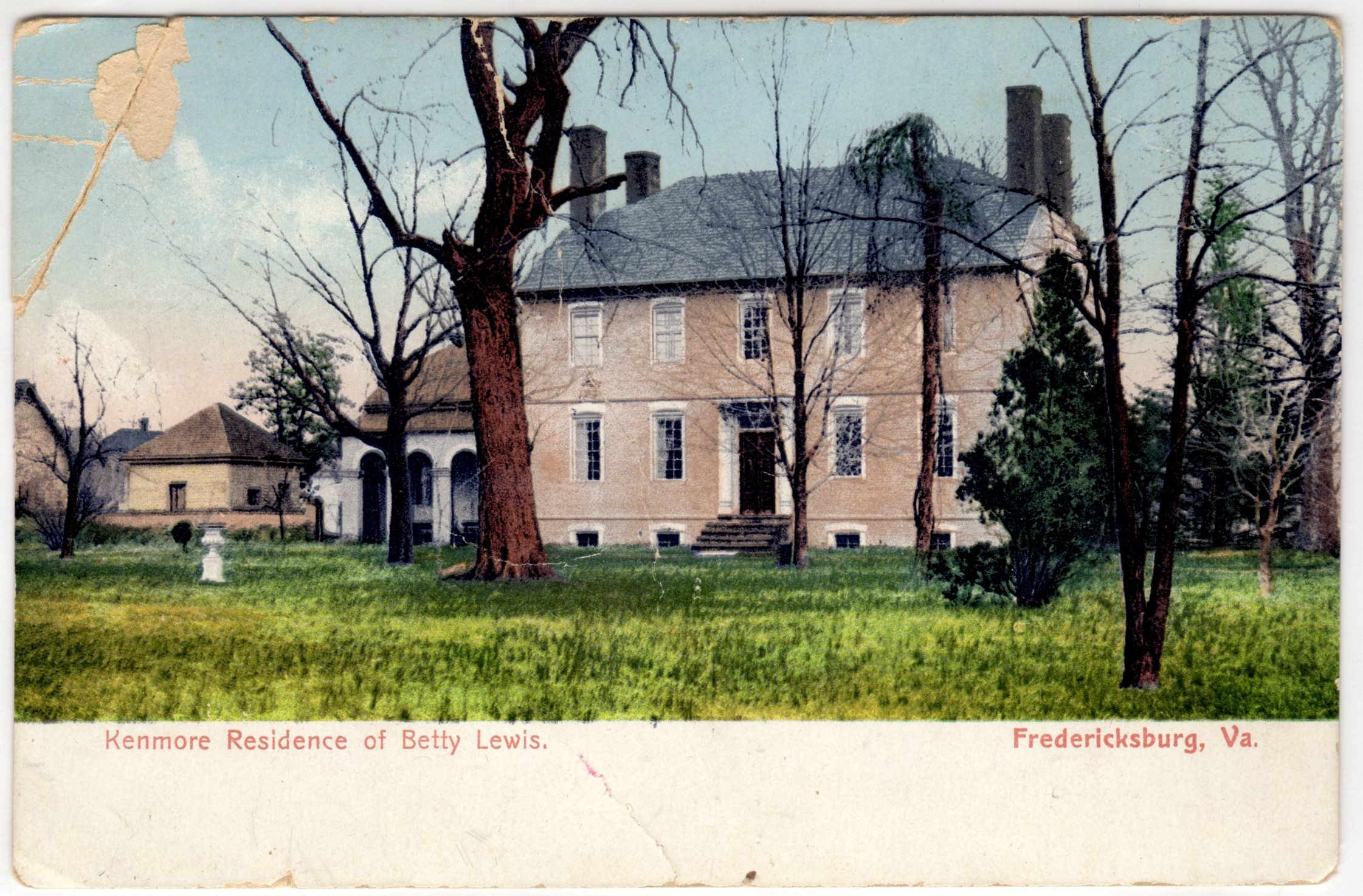
    Additionally, the exterior brick has been painted, along with the lintel, which was removed in 1929. We can see the paintwork better in the second color postcard. 

    Interior

    Entrance Hall

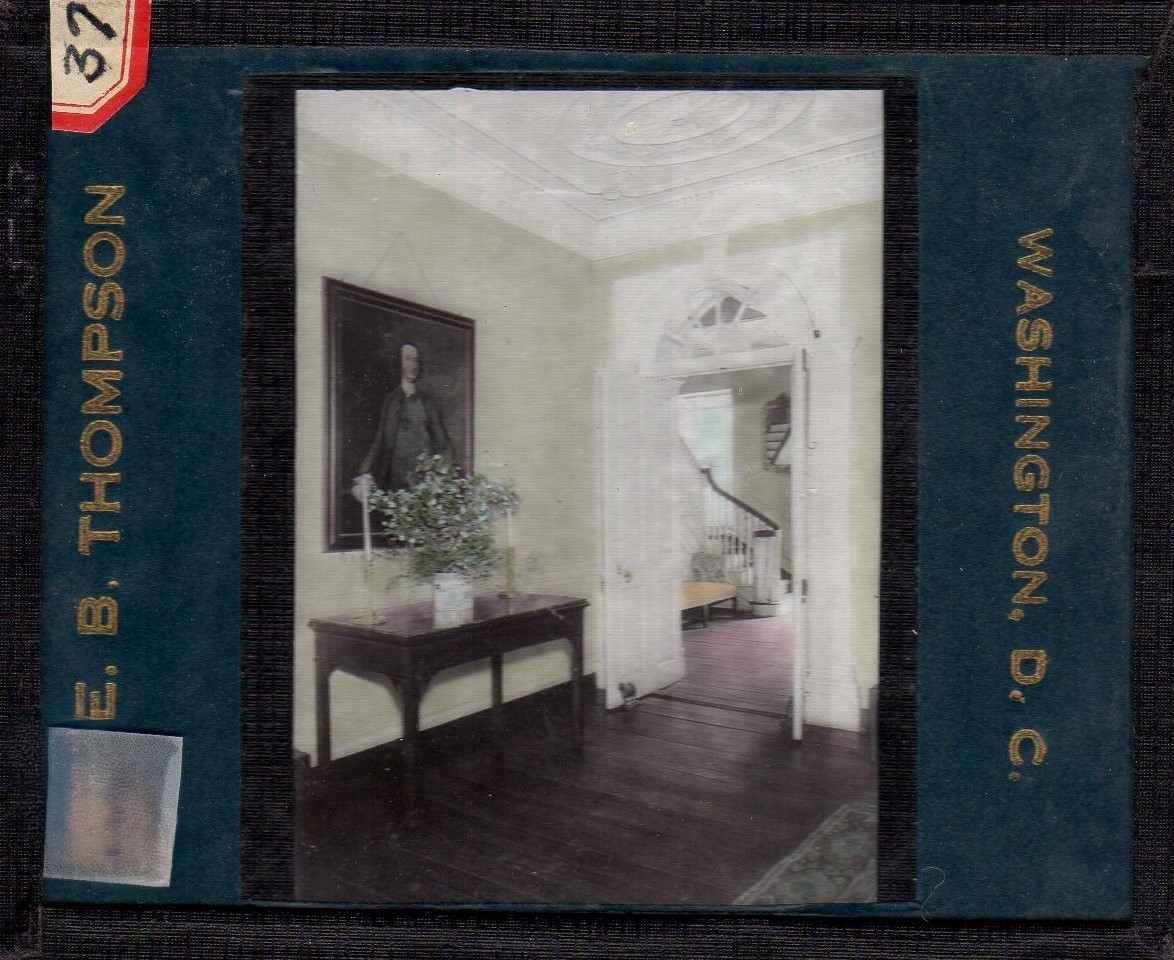
    One of the earliest postcards we have of the entrance hall, around 1923.    One of the most notable things is the plasterwork on the ceiling.  If you see current pictures of the entrance, you will notice that this plasterwork no longer exists.  The plasterwork was done by former resident William Key Howard, Jr., when he was restoring the original ceiling in the other rooms.    In 1930, the Association decided to remove the plasterwork because it was not original to the Lewis family.  Mr. Howard Jr. was not happy when he found out that the plasterwork had been destroyed and called it an act of vandalism. 

    Additionally, we can see next to the tall case clock a door that leads into the drawing room, which no longer exists.  It was decided that this was not the original placement, and the door was moved directly across from the office door in 1930. 

    Chamber/NW room, first floor

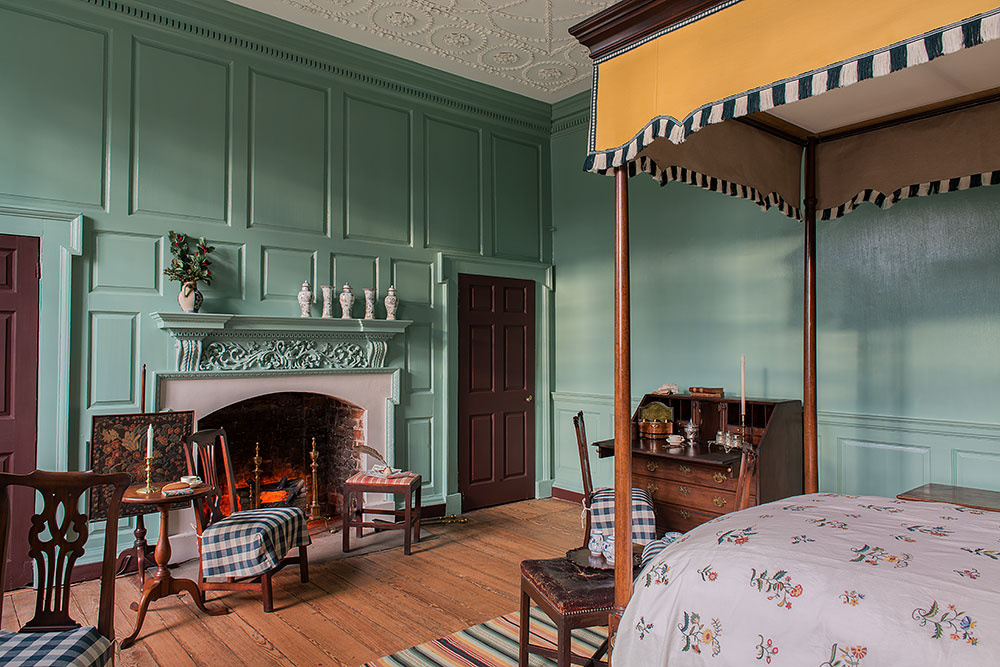
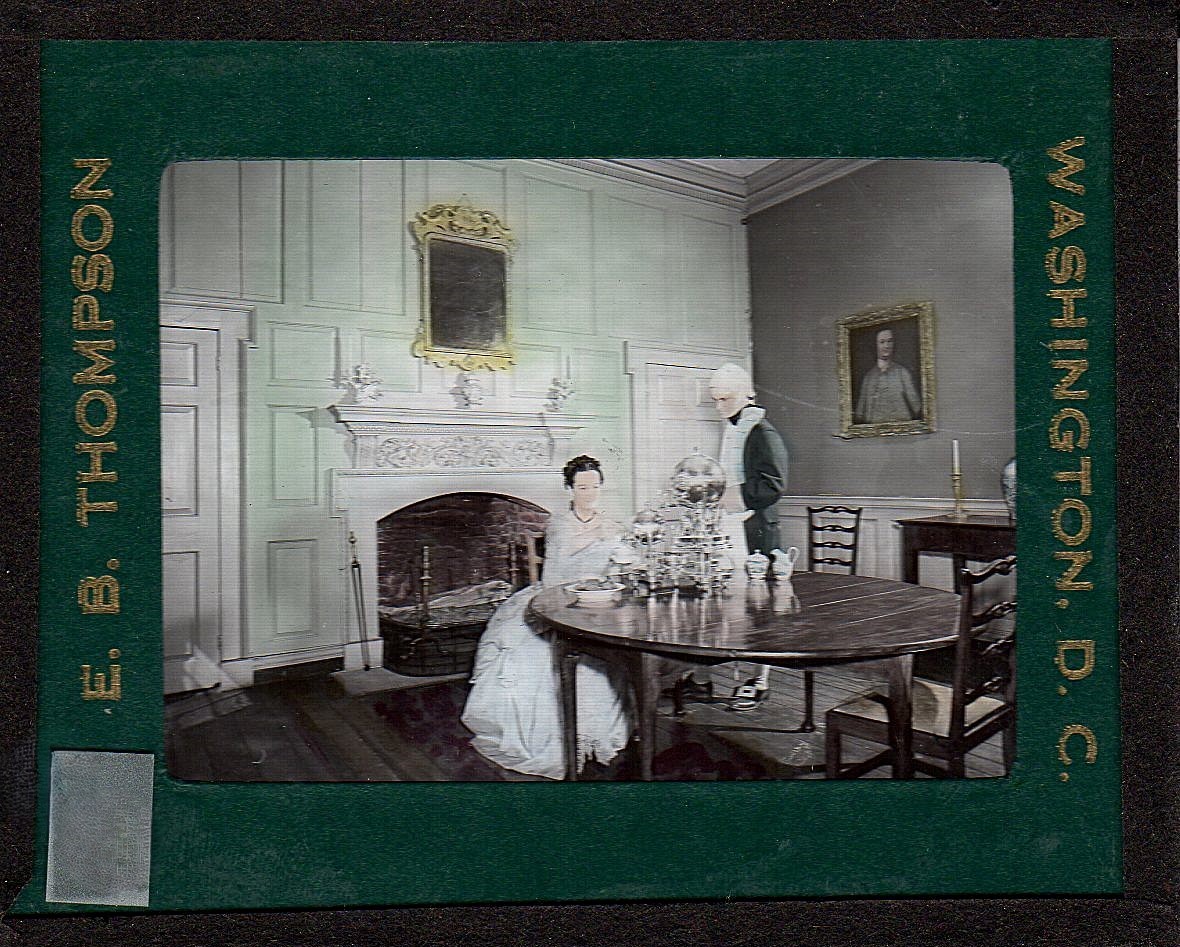
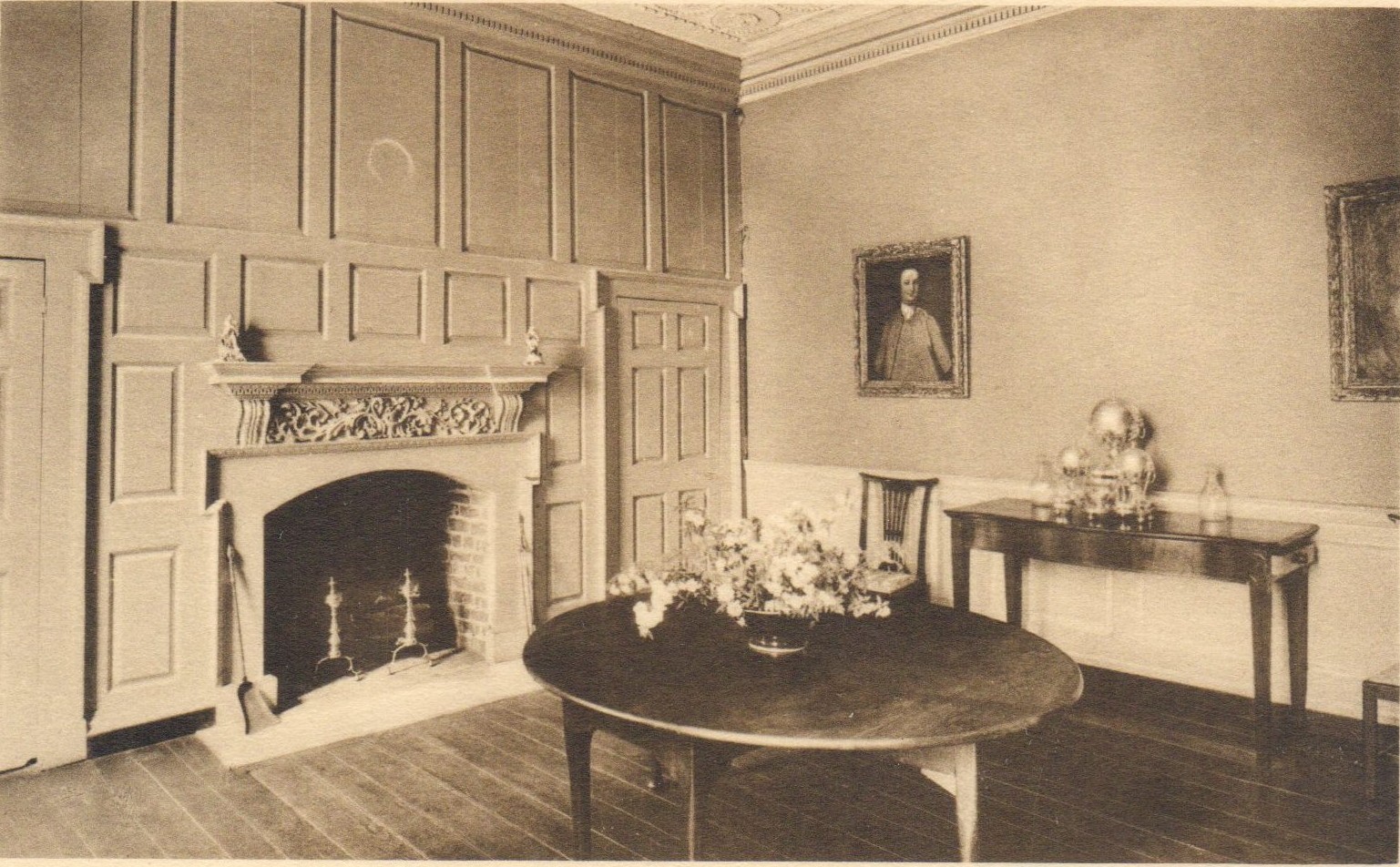
    While we currently interpret the NW room on the first floor as the chamber, the ladies referred to it as the Dining Room. We can see a round table, a sideboard, two chairs, and two portraits, plus a large silver tea urn.   The postcard dates from the late 1930s because we know from our records that most of these pieces were donated in 1935.  We still have all these objects in the collection, but the only things currently on display to the public are the round table in the dining room and the chairs in the drawing room.  All other pieces are in storage. 
    Dining Room/NE room, first floor

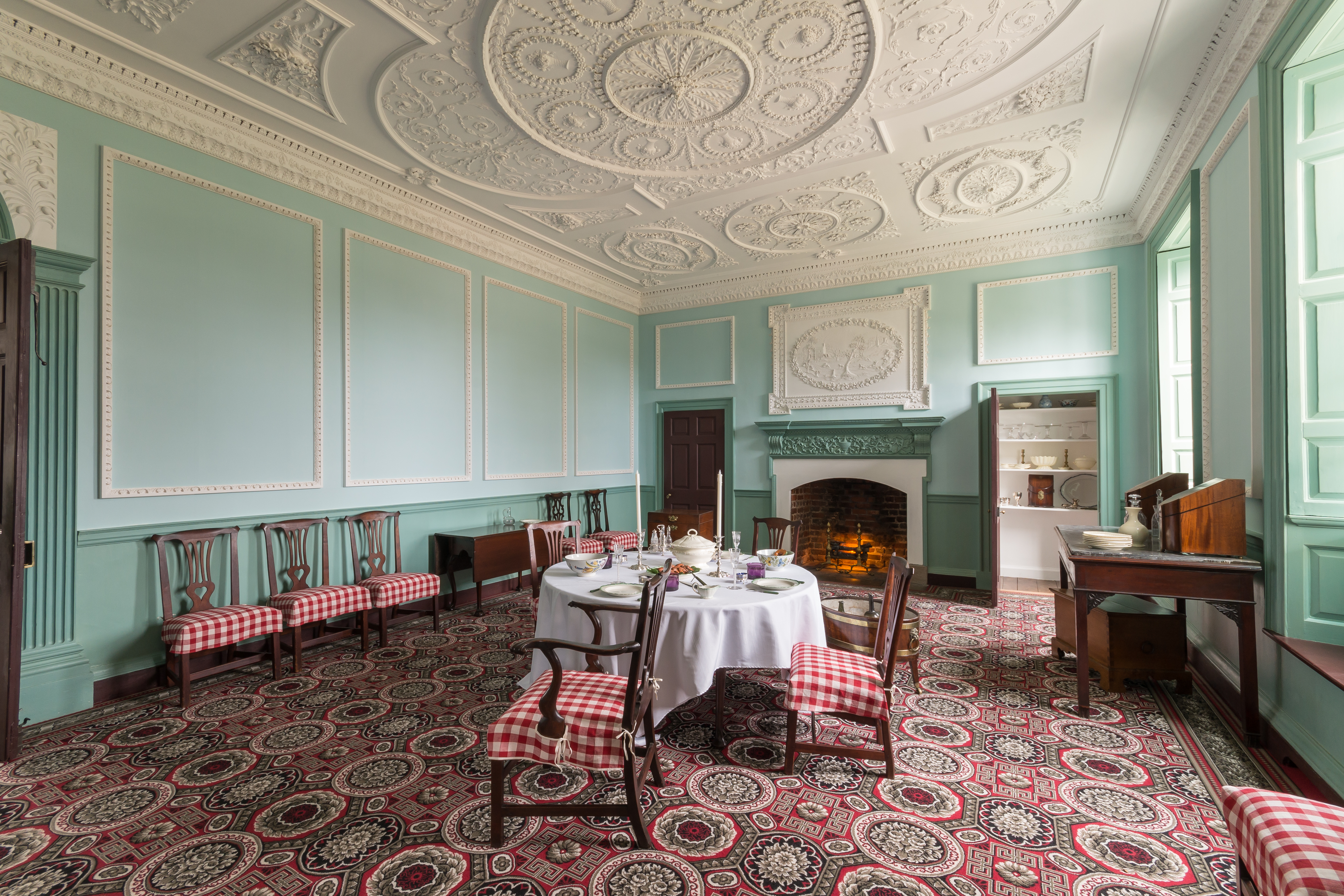
    We currently refer to the NE room on the first floor as the dining room.  It has undergone many changes, with Gothic arches added to the closets during the 19th century, and has been restored to its original shape.   Not everything in the postcard is still in our collection, but you can see the square table still on display in the dining room, and Betty’s portrait is now in the drawing room. 

    On the left is the Dining Room during the Howard occupation around the 1890s, and on the right, the Dining Room today
    The Dining Room after the Kenmore Association’s restoration, c. 1940s

    Drawing Room/SE room, first floor

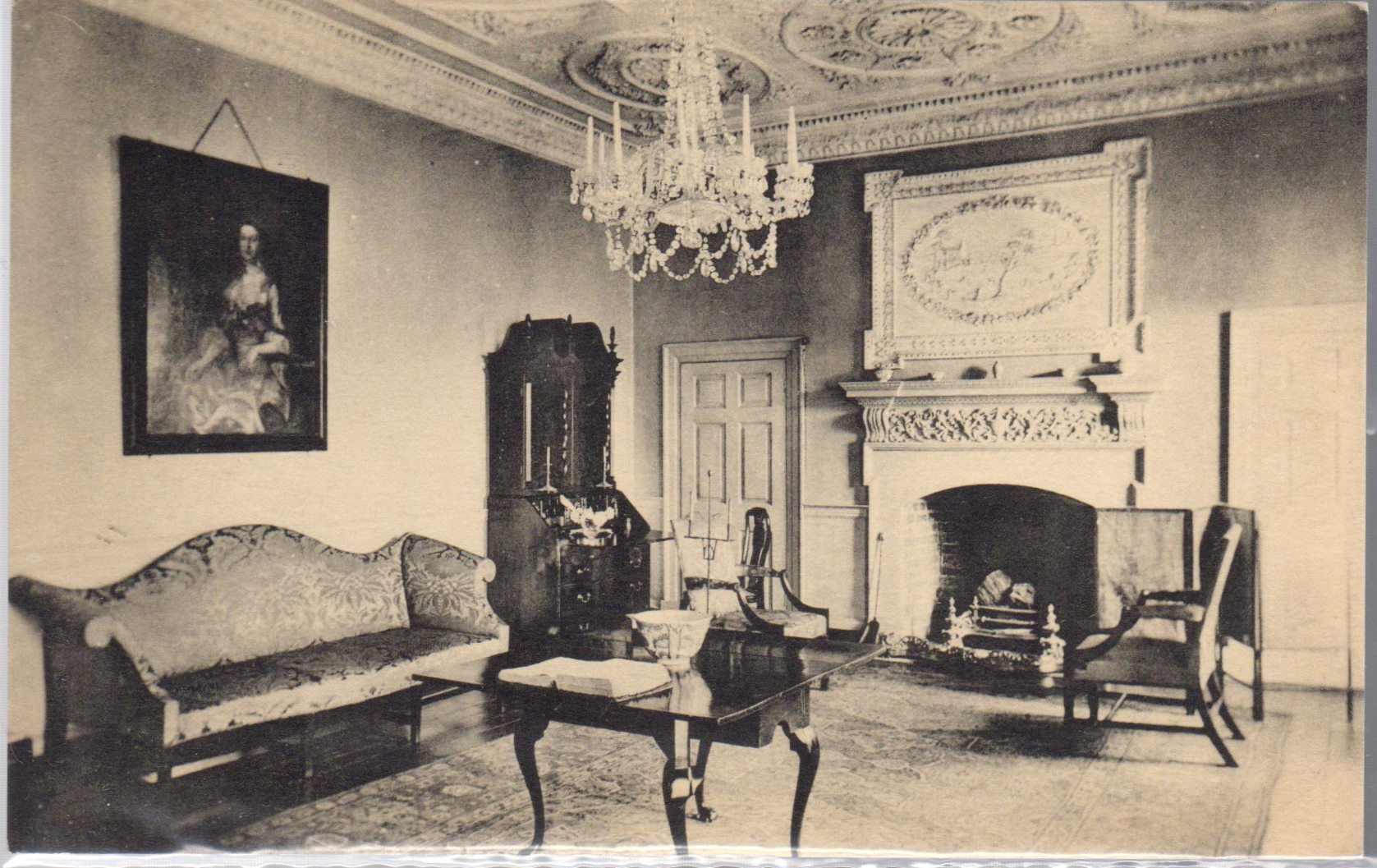
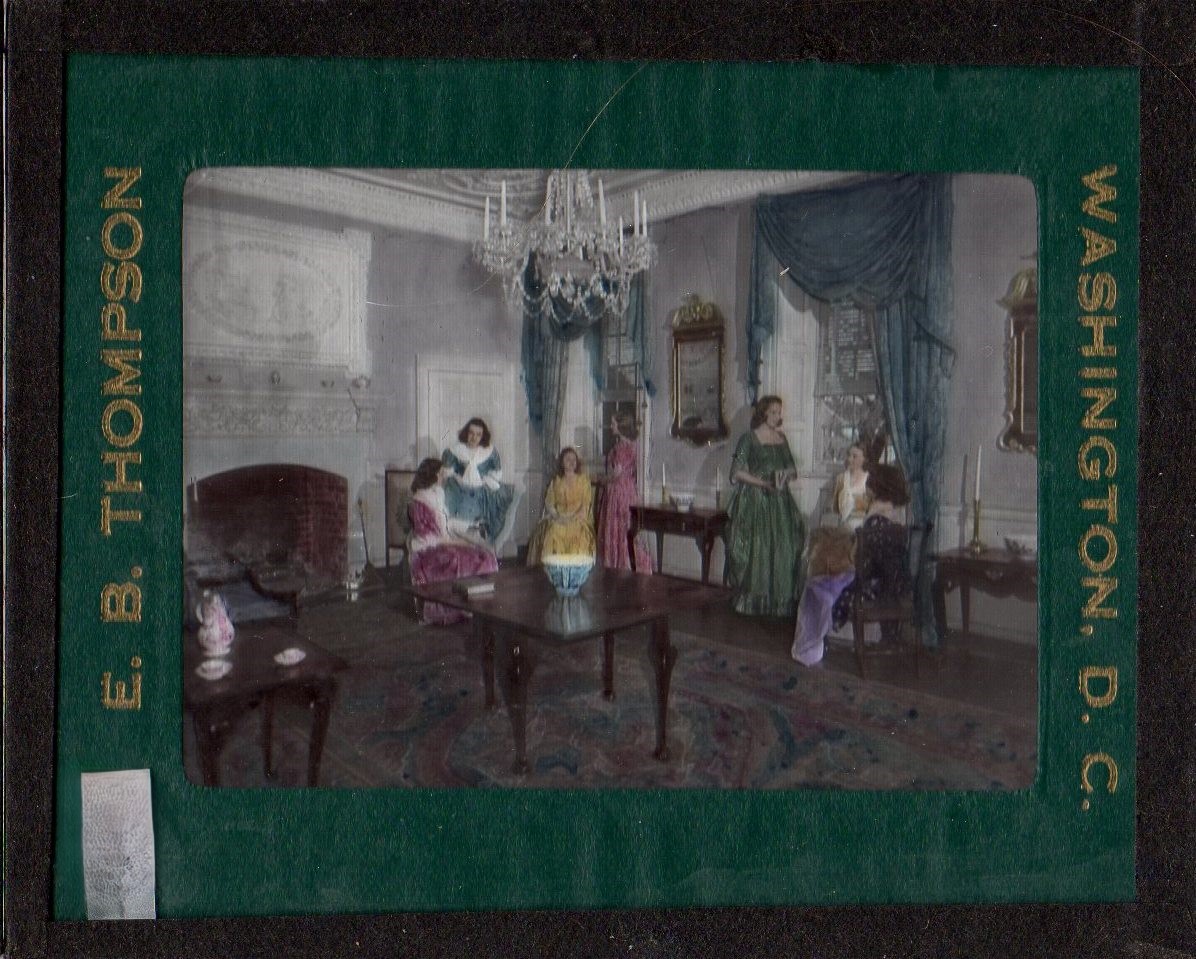
    The drawing room was previously known as the library and also served as a chamber for a while in the 1980s.  By the window, you can see Betty’s desk in the older postcard (c.1940s), which is still on display, but in the chamber.  We still have the tea set on display where it was in the chamber, but it is currently in storage.

    On the left is the Drawing Room during the Howard occupation around the 1890s, and on the right is the Drawing Room now

    Office/SW room, first floor

    Fielding’s office has been displayed as a sitting room and a kids’ room.  We don’t have many of the objects in the postcards still in the collection, except the corner chair, which now has a check seat, and the music stand, which is too fragile at the moment for display.
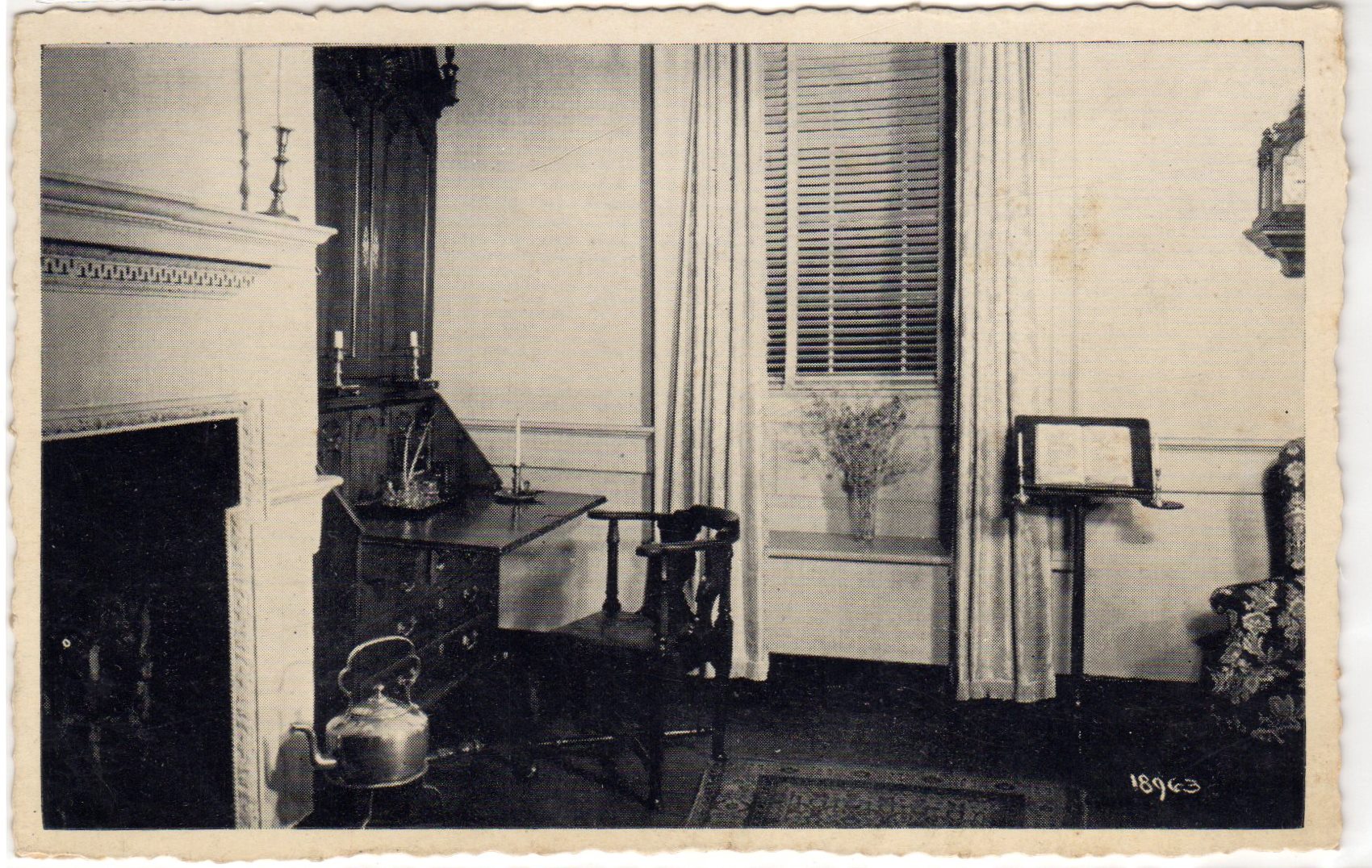
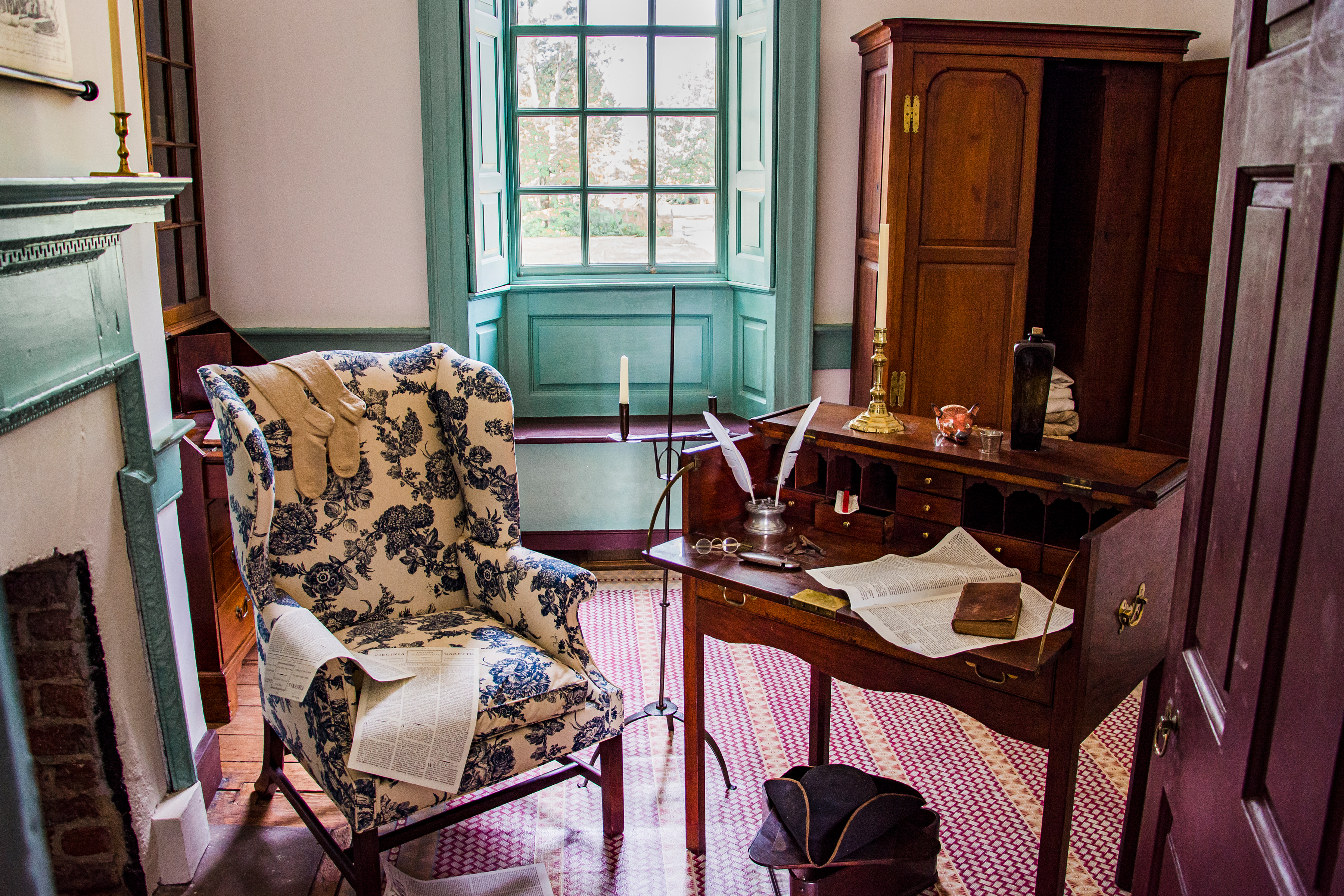
    2nd floor

    We currently do not offer tours of the upstairs area because we don’t put too much stress on our lovely plaster ceilings.  The Kenmore Association interpreted the upstairs as individual bedrooms for the family, which is not the most historically accurate version.

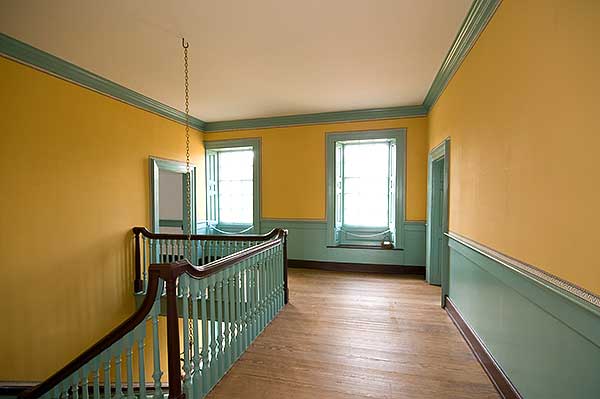
    Hallway/ 2nd floor

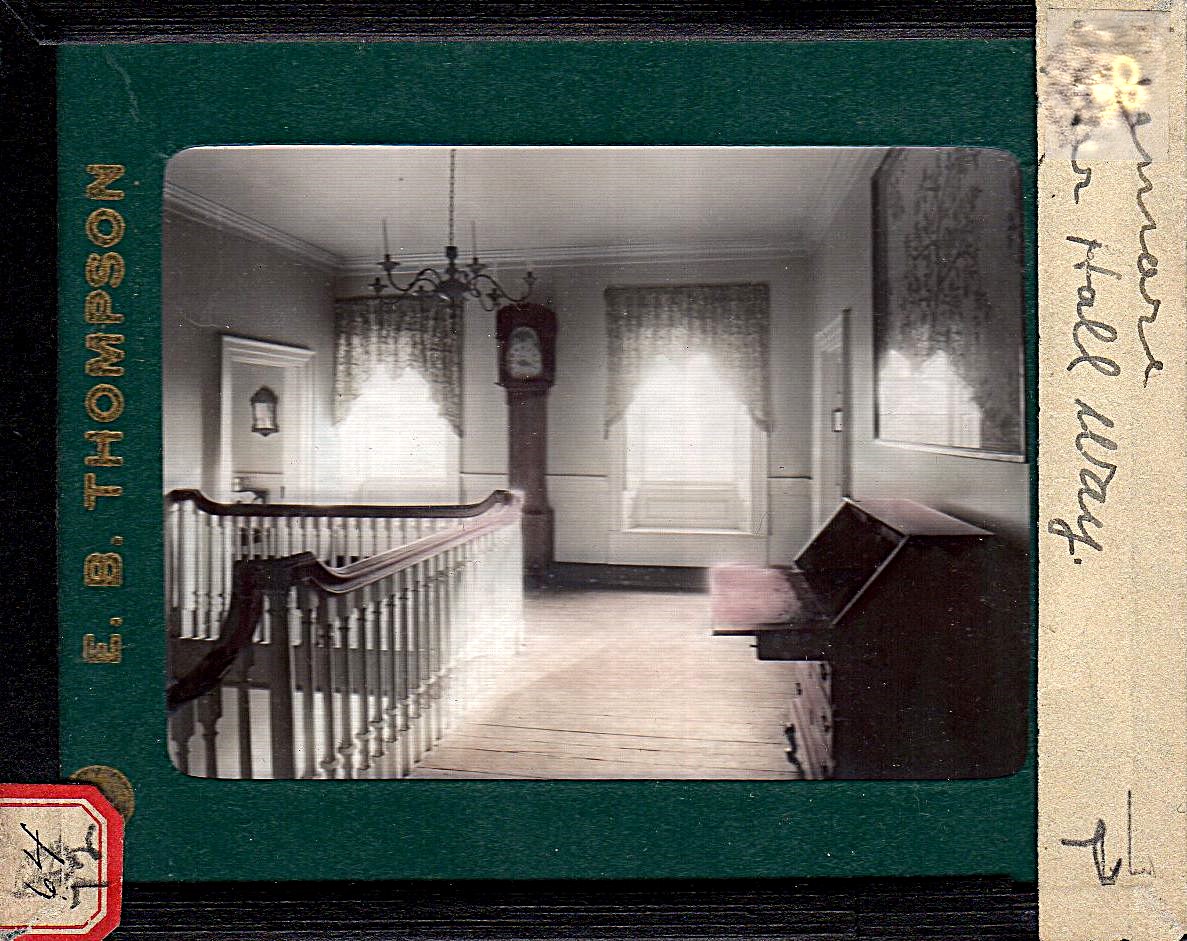
    Besides the paint color, the hallways upstairs remain structurally the same.  The ladies have Betty’s desk on display, with the Hammond quilt above.  We still have the Hammond quilt; fortunately, we removed it from the frame, but it is a massive quilt and is not currently on display. However, it is in excellent condition.  As for the tall case clock, chandelier, and curtains, they have been lost to history.

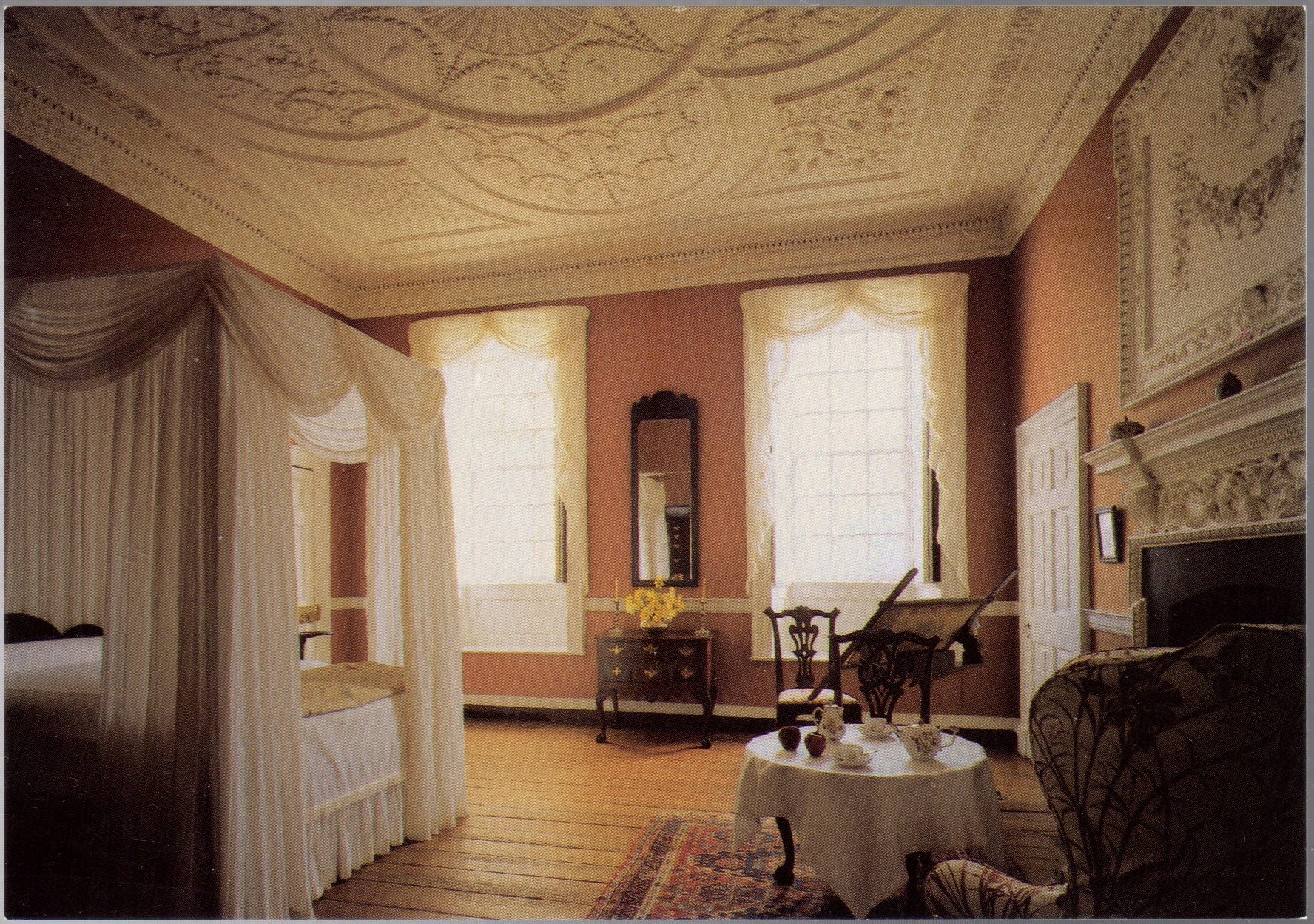
    “Mary Washington Bedroom”/NE room/2nd floor

    We have no evidence that Mary ever had a dedicated bedroom at Betty’s house, and it seems unlikely with the size of the Lewis family.  We do still have some of the pieces in the collection. The tea box is currently on display in the chamber, and the yellow tea set has been displayed intermittently over the years.  The two calendar prints hung on the wall are now downstairs in the drawing room.  Lastly, the chaise lounge was loaned to the foundation by the Metropolitan Museum of Art in the 1930s (subsequently purchased in 1968) and is currently in storage, as there is no evidence that the Lewis family owned many northern furniture pieces.
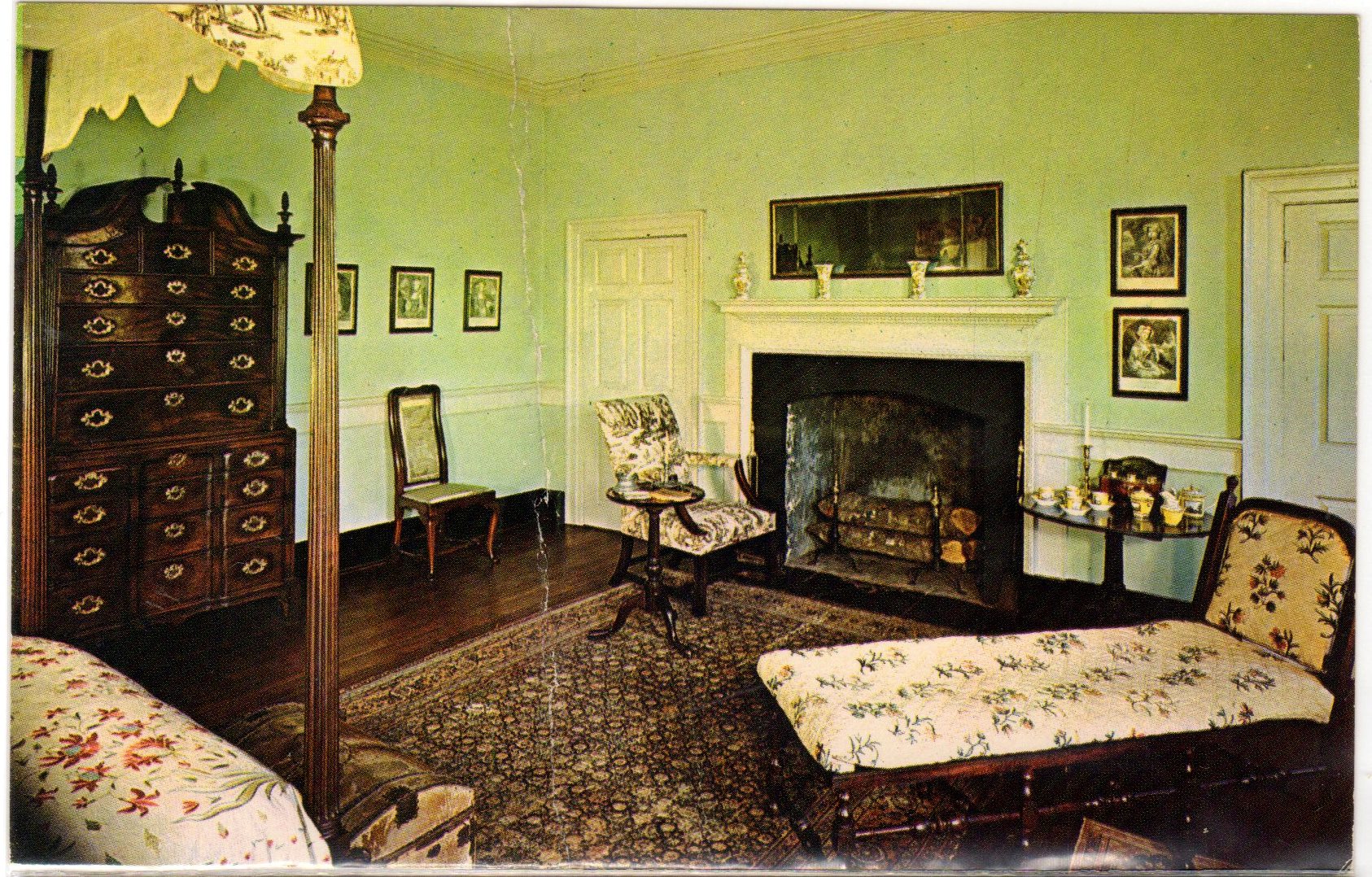
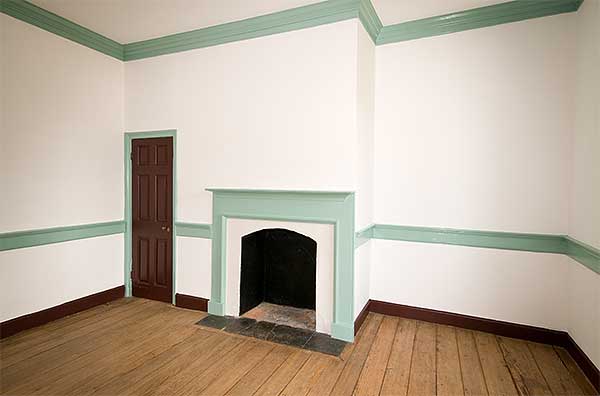
    “Mary’s Bedroom” is currently storage with temporary covering to protect the original floors.

    “Guest Bedroom”/NW room/2nd floor

    Much like “Mary’s bedroom,” it is very unlikely that the Lewis family had a “guest room,” with as large as the family was, it would have been a waste of space.  The bed still resides in our collection, disassembled and in storage. 

    “Betty’s bedroom”/SE room/2nd floor

    Again, during the Lewis occupation in the 18th century, individual bedrooms were not common, except for the head of the family.  Not many of the objects in the postcard are still in our collection, except for the bed, which is now in the chamber downstairs, and the William Walker, Jr. armchair, which is currently off display, but we do have another one in the dining room.
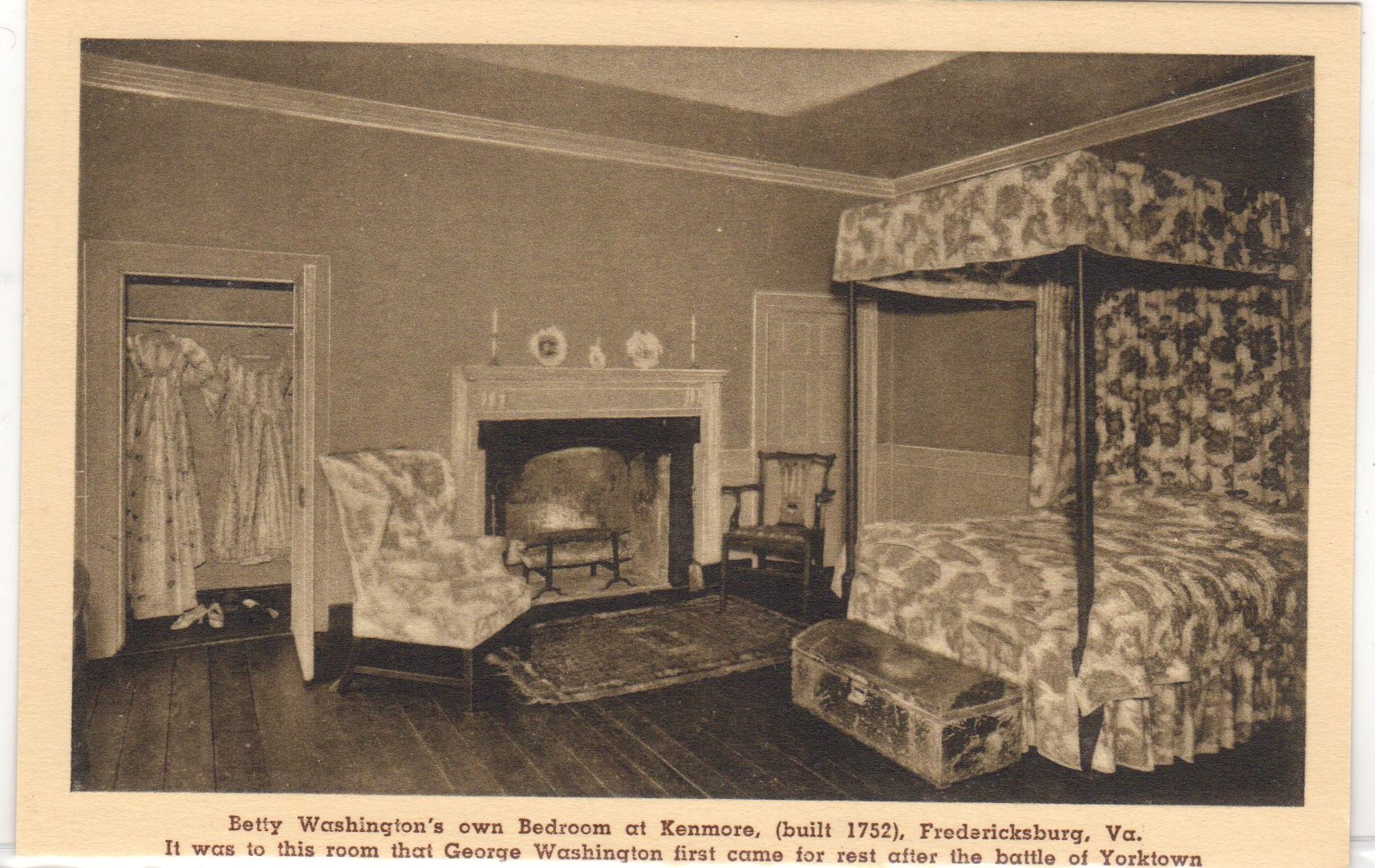
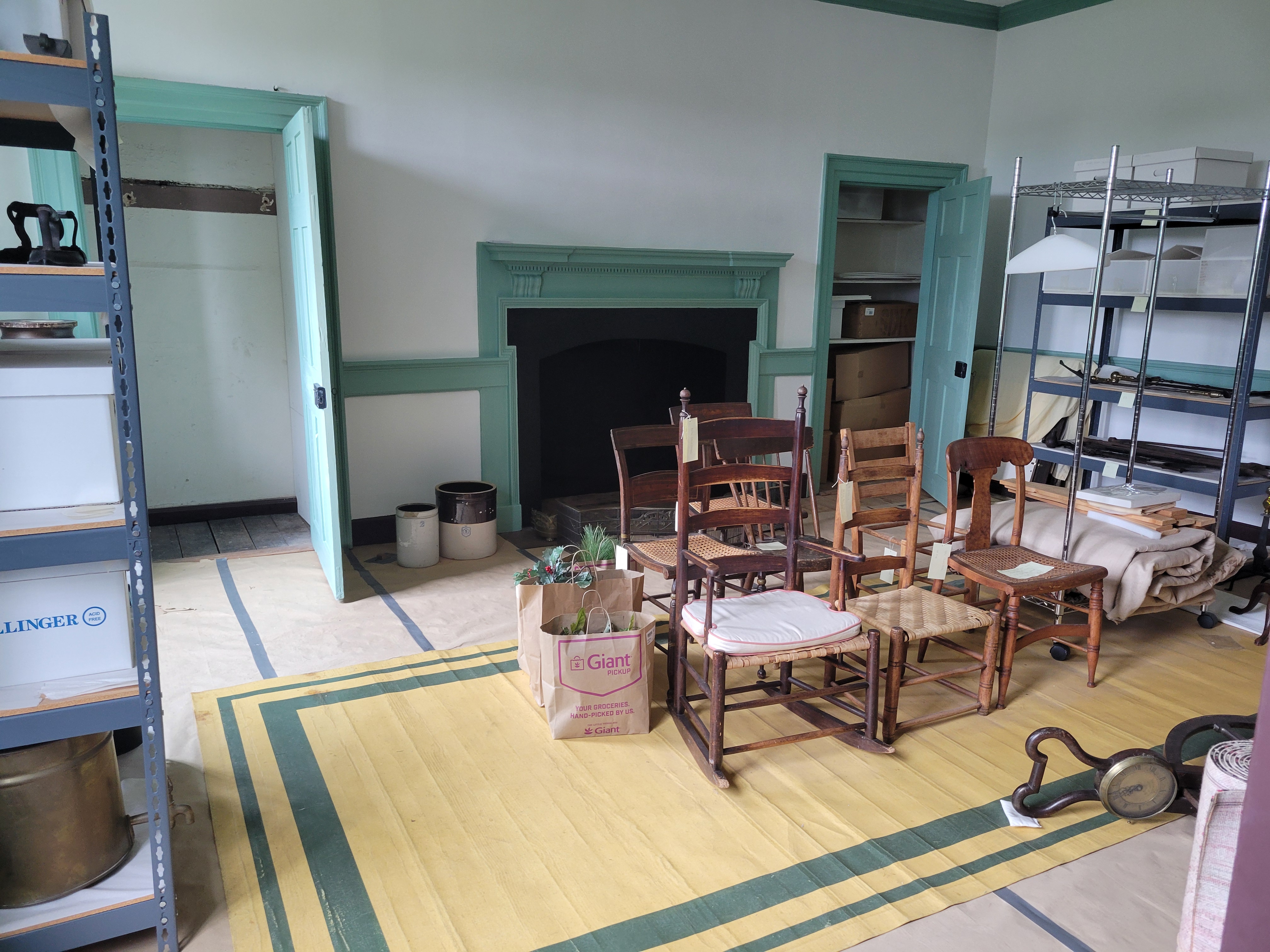
    “Betty’s bedroom (2nd floor SE) is currently used as storage…and some Twelfth Night decorations

    “Boy’s Room”/SW room/2nd floor

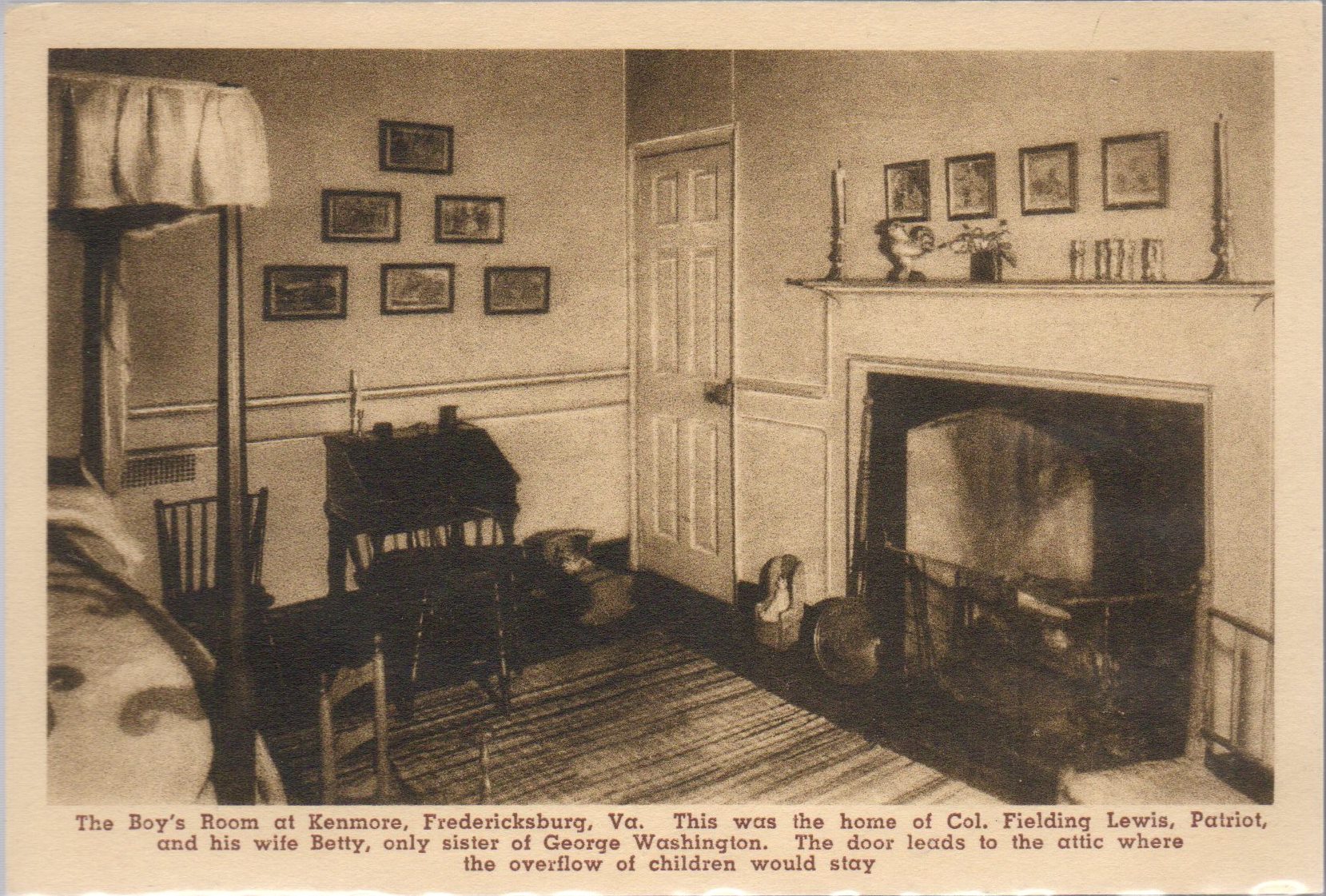
    The last room upstairs is smaller than the other rooms and has access to the attic.  The ladies used this as the boys’ room, but as we discussed, with the other rooms, it is unlikely that this was accurate.  We do still have many of the pieces’ pictures, but the only one currently on display is the slant-top desk in the Visitors Center. 

    Heather Baldus

    Collections Manager

  • Meet the Crew 2025

    We are heading into the final stretch of this year’s exploration of the 18th-century kitchen at George Washington’s Ferry Farm, and it definitely hasn’t disappointed! The finds are getting bigger and better as we continue excavating deeper into the cellar and expand our look into the surrounding area. We have made a ton of progress that wouldn’t have been possible without the help of our crew of the George Washington Foundation staff, interns, and University of South Florida field school students. While there are still a few weeks before the official end of the dig on July 11. Just in case you missed them, here are some quick introductions and fun finds from the 2025 field school and crew.

    Left to right: Judy, Danielle, Abby, Sarah, Alaina, Alaina S., Sofia, Addie

    Field School

    “Hi, my name is Alaina Scapicchio, and I am a Ph.D. candidate in the Department of History at the University of South Florida. This is my third summer digging at Ferry Farm. My favorite moment of the summer was excavating a partially intact pig jaw!” 

    -Alaina

    “Hi! My name is Addie, I am a history and anthropology student at the University of South Florida. My favorite artifact to find are the animal bones.”

    -Addie

    “Hi, my name is Alaina. I am studying history at USF. My favorite part of the field school was digging in the kitchen because of how many cool artifacts we found. My favorite artifact was the piece of the Bartmann jug!”

    -Alaina

    “Sofia Almeida is a first-year History PhD student at the University of South Florida. Her research focuses on historic cemeteries, public history, and memory. One of her favorite parts of field school was digging in the kitchen cellar. One of her favorite artifacts this season was a decorated fragment of Staffordshire ceramic.”

    -Sofia

    GWF Interns

    “Hey! My name is Abby! I am a recent graduate from UVA and am planning to pursue a career in archaeology. I enjoy reading and playing Ultimate Frisbee in my free time. My favorite artifact that I helped find this season was a projectile point with jagged edges.”

    -Abby

    “Hey all, my name’s Max Puckett. I’m a senior at the University of Mary Washington, currently pursuing a BA in Historic Preservation. In my spare time, I like to cook, research, and read. I’ve really loved this field season so far- we are pulling out a ton of interesting and exciting artifacts.”

    -Max

    Sarah came to Ferry Farm as a VCU student in the summer of 2014 and has been in over half a dozen summer digs since then. This year’s dig is very special to her because it is focused on the cellar of the Washington kitchen. Her favorite artifacts from this dig are the ones that can actually be paired and mended with each other because much of what collapsed in the kitchen fire was left in place and not scattered or missing.

    -Sara

    GWF Staff  

    I have been involved with the Ferry Farm Archaeology Department since 2012, when my youngest twins graduated from high school. I started out as a volunteer but then took on a part-time position cataloguing artifacts from the summer digs, which then turned into a full-time job as a lab assistant.  I have been co-field director since 2019.  I have a BA in Anthropology and an MA in Historical Archaeology, with past jobs in cultural resource management and historic sites, such as Mount Vernon.  Though I really enjoy pulling out the handfuls of wine bottle necks and bases, I do find it more awe-inspiring when we pick out the tiniest and fragile eggshell fragments among the rubble and debris inside the kitchen cellar.

    -Judy Jobrack

    “Hello! I’m Danielle, and I have been at Ferry Farm since 2022, first as an intern and then lab assistant and co-field director. As a UMW Historic Preservation alum, I love all things old, both above ground and below, so this year’s dig has been particularly exciting with all the architectural bits we have been finding. With that said, I think my favorite artifact so far has been a brass/copper button –metal with verdigris is just so cool!”

    -Danielle Arens

    Though some of our crew is leaving, the rest of us will be digging every weekday until July 11, so be sure to come say hi and see what new things we have uncovered!


    Danielle Arens

    GWF Archaeologist


  • It’s That Time of Year Again: 2025 Dig Preview

    It’s the most wonderful time of the year! There’ll be dirt out for screening, ceramics for cleaning, and lots of good cheer…. Okay, sorry, that might be a little too far. But it is a super exciting part of the year here at Ferry Farm, George Washington’s Boyhood Home. We have officially started this summer’s dig season!

    Building off of the previous two years’ exploration of the kitchen site, we are revisiting the 18th-century kitchen cellar again this year. While last year’s dig focused on locating and exposing the kitchen’s stone wall foundations, our focus this year will be excavating the fill within the cellar walls that had been deposited as a result of a fire sometime in the 1740s. The fire caused the building to collapse in on itself, filling the cellar space with ash and debris.

    Excavating sites like this are very exciting because they represent preserved moments in time, leaving the possibility to find artifacts left in situ or in place, when the fire occurred. It is likely that most of the artifacts excavated will have evidence of the extreme heat caused by the fire. Toasty artifacts from the 2023 preliminary kitchen exploration have been washed and catalogued, showing damage to artifacts, such as glass bottles and ceramic storage vessels, ranging from being slightly charred and burnt to being completely melted. Toasty or not, these artifacts will help us nail down the date of the fire and what was being stored in the kitchen cellar when it went up in flames.

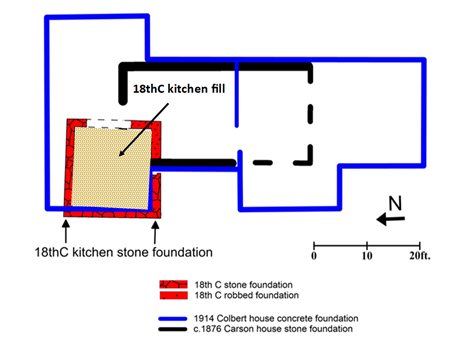
    Our 18th-century kitchen, unfortunately, lies beneath the foundations of two farmhouses with full cellars dating from the 19th and 20th centuries. The construction of these homes severely impacted the kitchen structure and its burnt cellar fill, making it difficult for our archaeologists to accurately interpret the kitchen’s architectural features. A small portion of the kitchen cellar fill was also the subject of previous archaeological excavations in the 1990s, so we are not the first team to sample the fill. But in the interest of site preservation, the kitchen remnants were covered over twenty-five years ago with protective geofabric, and the farmhouse cellars backfilled completely with sand.

    Luckily, we had the help of an excavator at the beginning of this season to remove the five feet of protective sand covering the kitchen cellar fill so we could get to the fun stuff sooner! But our fun isn’t restricted to the cellar, as we still have multiple 5” x 5” units around the outside of the kitchen foundations to investigate. Our team is still trying to locate the midden (trash deposits) and fireplace associated with the kitchen, as well as additional architectural evidence that would give an idea of the overall form and dimensions of the complete kitchen structure.

    Every excavation year brings new and exciting finds as we sift through thousands of years of site habitation. Come visit us while we dig weekdays from opening until 3:30 pm through July 11th. Hope to see you there!


    Danielle Arens and Judy Jobrack

    GWF Archaeologists

  • Making our mark…on the laundry

    18th-century household linen management and its 21st-century historic house equivalent

    For the modern historic house museum collections staff, the care and cleaning of our spaces and objects are some of the most important tasks we do.  Proper dusting and routine cleaning helps preserve historic objects, vacuuming floors and wiping down woodwork help to maintain our historic interiors, and rotation of sensitive works help to prolong their life through limited light exposure and other environmental impacts.

    In January and February each year, when the Historic Kenmore and Ferry Farm sites are typically closed to the public, the curatorial staff is able to access the spaces to conduct inventories and condition assessments of objects…and to clean. Spring cleaning at the Washington House this year involved quite a bit of teamwork between our curatorial and buildings & grounds staff—fresh coats of whitewash went up on high-traffic areas of this historic recreation, and the wooden floors were vacuumed, spot-cleaned, and mopped to remove built-up dirt from tours and other activities.

    Low-post bedstead in the Hall Back Room piled high with reproduction bedding.

    Maintaining the bedsteads of the Washington House is an ongoing task for our interpretive staff, as they tidy and straighten the sheets and pillows that are moved about by visitors (something we encourage and celebrate!) during their immersive tour experiences.  This year, as we (the curatorial staff) conducted our spring-cleaning routine, we tightened the bedstead ropes and refreshed the bedding to prep the house for another busy year.  But as we went about conducting our room-by-room inventories and pulling bedding out for washing or airing, we uncovered an issue: many of our modern museum object labels for the sheets and pillowcases had become unreadable.

    White linen reproduction bedsheet with its twill tape label (sans number).

    Marking textiles in a museum collection typically entails a small length of twill (woven cloth) tape, a handwritten or applied object number, and small stitches to attach the tape to the textile object.  But for our reproduction bed linens on the bedsteads of the Washington House, these labels no longer were readable due to laundering—the “permanent” number used just didn’t last.  So what are our options?

    As we like to do, we turned to the past for an understanding of what might be a better, but still historically accurate method for marking our linens.  One such resource we turned to was cookery and household books of the period.  The Workwoman’s Guide, for example, includes a number of receipts (or instructions) for making marking ink as well as detailed instructions for marking household linens with thread.  In marking of linens, according to the author (A Lady), the textile would be marked with either the husband’s initials or the wife’s first name along with husbands initials, followed by an abbreviation of the type of article, and finally by the number and a date marker (last two digits of the year, for instance). 

    Receipt for “Permanent Ink for Marking Linen.” from The workwoman’s guide : containing instructions to the inexperienced in cutting out and completing those articles of wearing apparel, &c. which are usually made at home : also, explanations on upholstery, straw- platting, bonnet-making, knitting, &c. By A Lady (1838) via Smithsonian Libraries and Archives on Archive.org

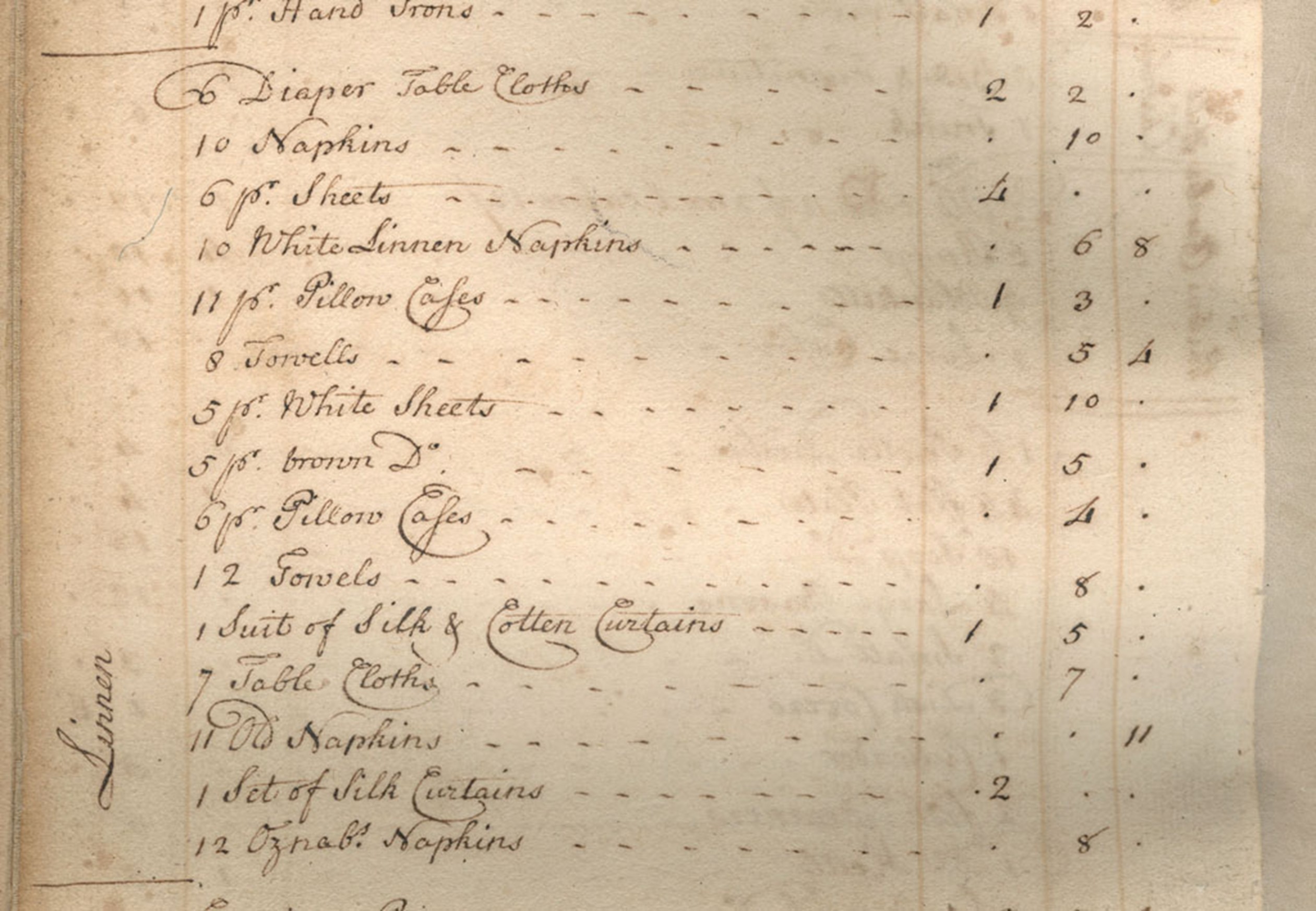
    Existing household linens in museum collections and references in the written record indicate that some were in fact marked with numbers or initials/names (or both) to enable the items to be tracked and inventoried, although the exact combination of numbers and letters seem to vary, likely based on a complexities of the household and its linen inventory. The probate inventory taken after Augustine Washington’s death in 1743 records a variety of household textiles at Ferry Farm, including tablecloths, napkins, pillowcases, sheets, and towels.  The appraisers, however, make no note of whether these textiles were marked in any way (just noting materials or other descriptors and quantity). 

    Excerpt of 1743 probate inventory of Augustine Washington listing “Linnen,” including 6 Diaper Table Cloths, 10 Napkins, 6 pr Sheets, 10 White Linnen Napkins, 11 pr Pillow Cases, 8 Towells, 5 pr White Sheets, 5 pr brown Do. [Sheets], 6 pr Pillow Cases, 12 Towels, 7 Table Cloths, 11 Old Napkins, and 12 Oznabs Napkins. Inventory submitted 1 July 1743 to King George County court.

    The archaeological record of Ferry Farm includes a number of implements related to sewing, as touched upon in past blog posts such as this one or this one about thimbles.  Our own museum collections house a few 18th or early 19th century sheets or other household linens, some of which have been marked in ink or stitching with (unidentified) owners’ initials/names and dates, much in keeping with the instructions outlined in period references such as The Workwoman’s Guide and other household manuals.

    Sample layout and makeup of marks to include owner’s initials, item identification, number, and date. Excerpt from The workwoman’s guide (1838) via Smithsonian Libraries and Archives on Archive.org

    So, for our modern museum inventory management purposes, I think we’ll be skipping the caustic nitrate of silver or crunchy cochineal beetles for coloring and stick to the needle and thread method of marking our reproduction bedding and other textiles.  As suggested by A Lady, the Washington House marks will include both Mary and Augustine Washington’s initials along with notations of item type (such as WS for the five pairs of White Sheets listed in the 1743 inventory) and date of creation (for many of these reproduction linens, that would be 2018 or 2019).  I’ll be getting my needle and thread ready so that next year’s inventory and spring cleaning will hopefully be easy-breezy.

    Gretchen Goodell Pendleton

    Aldrich Director of Curatorial Operations

  • One Man’s Trash is Another Man’s TPQ: Modern Materials in Archaeological Excavations

    Archaeology is trash. There, I said it. Before you call Mr. Jones and have me thrown in a pit of snakes, let me explain. Generally speaking, archaeology focuses on understanding the past through the items that people left behind, i.e., their trash.  Most of the things we find are left around because they were broken or no longer needed. Disposal of these items looked much different before modern garbage collection as we know it today. Rather than trashcans and landfills, trash was often thrown outside of the home or workspace near windows and doors or any other designated disposal areas. These areas, also known as middens, usually have a high number of artifacts and are top-tier when it comes to understanding a site. So, in other words, archaeology is trash, and we love it.

    Most people can get behind the archaeologists saving the trash that’s hundreds or thousands of years old, but things are a little different when it comes to saving more modern materials like plastic.  When visitors or volunteers see things like plastic bottle caps or food wrappers in our bags to bring back to the lab, they usually have a few questions. Like, “Did you mean to keep this?” Or “Why are you keeping this trash?” Here at Ferry Farm, we don’t pick favorites, every bit of trash can tell us something about the site and how it has been used.

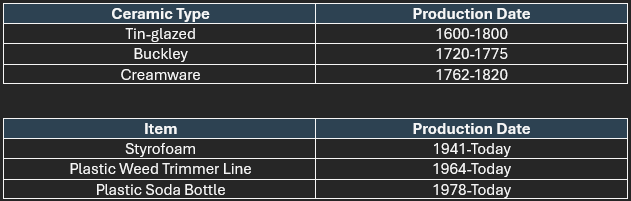
    One-way modern materials can help us understand a site is by helping us determine the Terminus Post Quem (TPQ), or “time after which,” of a layer. The TPQ is determined by identifying the earliest production date of the most recently produced item. For layers deposited before the widespread use of plastics, ceramics are usually used for determining the TPQ because they are datable (temporally, not romantically) since most have very specific production dates, and they also hold up pretty well under ground. For example, when looking at the ceramics in a layer with tin-glazed wares, Buckley, and creamware, the TPQ would be 1762 since that is the earliest production date of the most recently produced ceramic (creamware).  All the items in the layer had to have been deposited after that date.

    The same idea works with modern synthetic materials like plastics, which are usually found at sites that have been used within the last 100 years.  If there were to be some plastic soda bottles, weed eater line, and styrofoam in a layer, the TPQ would be 1978. While these materials may also be items you have in your home, not thought to be worth collecting and preserving, their presence in a layer helps provide a date. They can also tell us if an earlier layer was disturbed.

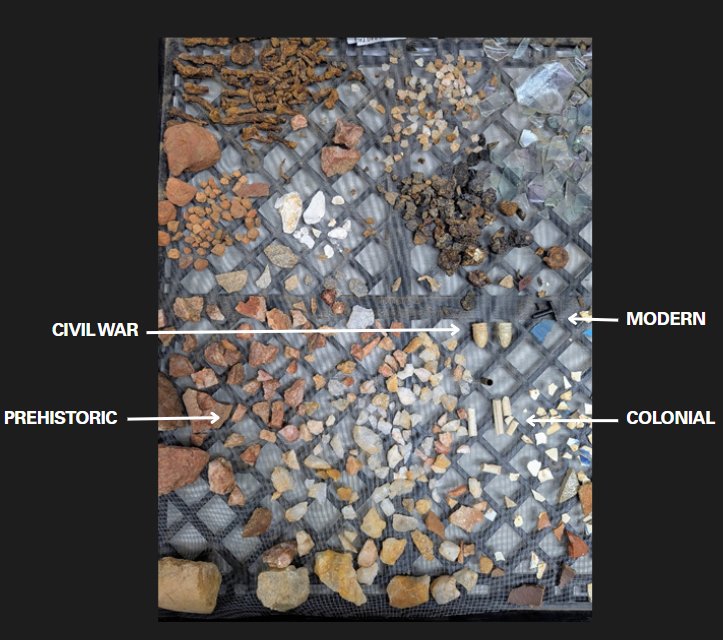
    When archaeologists talk about disturbed layers, we aren’t judging their emotional state or love of 2000s heavy metal.  Instead, when a layer is described as disturbed, that means there was some sort of activity happening after the initial deposition that affected that layer. During last season’s dig, there were layers with a mix of colonial, prehistoric, and modern materials that indicated that the area was disturbed by some subsequent activity. The information gathered by the presence of modern materials is important for the interpretation of the site and its use over time. 

    Example of a disturbed layer– Artifacts include prehistoric flakes and fire-cracked rock, colonial items like tobacco pipe stems, Civil War Minie balls, and modern-day plastics

    Now that we know why we keep this so-called modern trash.  Here are a few examples of how the presence of these items helped our archaeologists understand a part of our site.

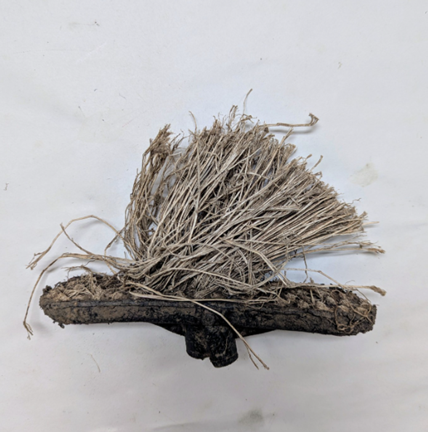
    My favorite example happened during last year’s dig. One of our crew, Abbie, was preparing a feature for photographs and had to keep clipping pesky hairlike roots that were in the way. After a bit of excavating, it turns out the “roots” were bristles from a plastic broom. The broom dated the feature fill to the late 20th century and got to the root of the hairy soil issue.

    Pesky broom in feature

    Our staff has numerous examples of these modern materials being used to help identify previous archaeology as well, from candy wrappers at the bottom of shovel test pits and trenches to an entire trowel! While things like plastic trash bags and food containers aren’t the most exciting to find, they play a part in interpreting the history of activities on the site.

    Once something is left behind, it becomes part of the archaeological record, whether it was 10,000 years ago or yesterday’s lunch.  What does your trash say about you?


    Danielle Arens

    GWF Archaeologist

  • Archaeology Is Not For The Faint Of Heart – But We Love It Anyway

    A lot of people have told me that they want or wanted to become archaeologists.  I always find this flattering.  Yours truly was only in my single digits when I declared the same to my family and anyone who would listen.  After reading every National Geographic magazine I could get my hands on, ‘excavating’ abandoned houses and bottle dumps on or near the property where I grew up, and too many years of schooling than I am willing to admit…. here I am today.  I am an archaeologist of 25 years.  That being said, it is not an easy profession to get into.  To wedge your way into this field, it is recommended you have an obsession with learning, stubbornness equal to a Black Friday shopper outside a Target in 20-degree temperatures at 3 am the night before, a hefty amount of luck, the willingness to obsess over dead people’s broken garbage, and just to be sure it would help if you’re at least a little bit mad. 

    Happy archeologists!

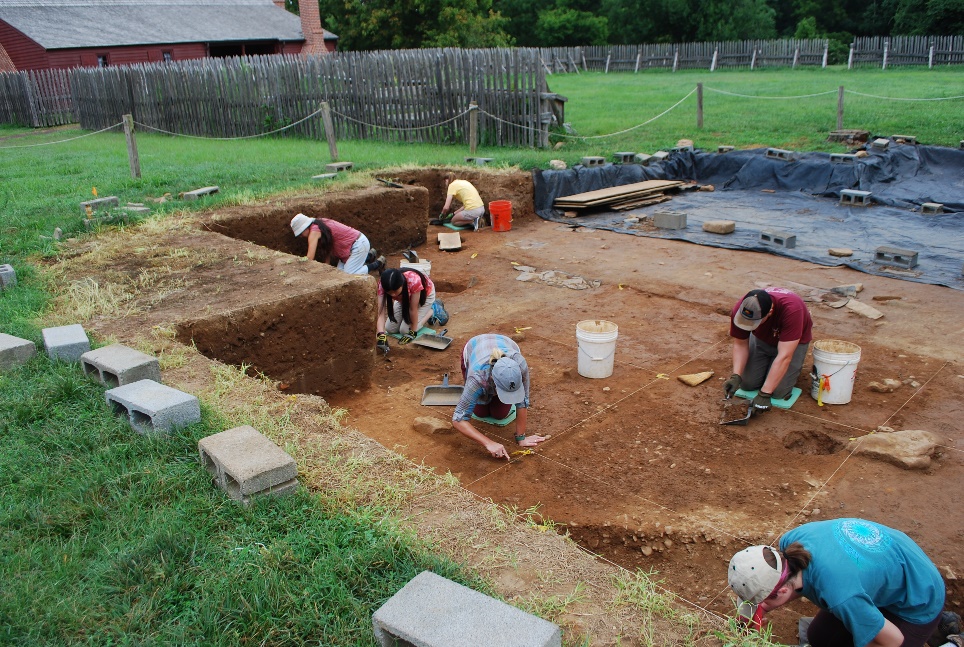
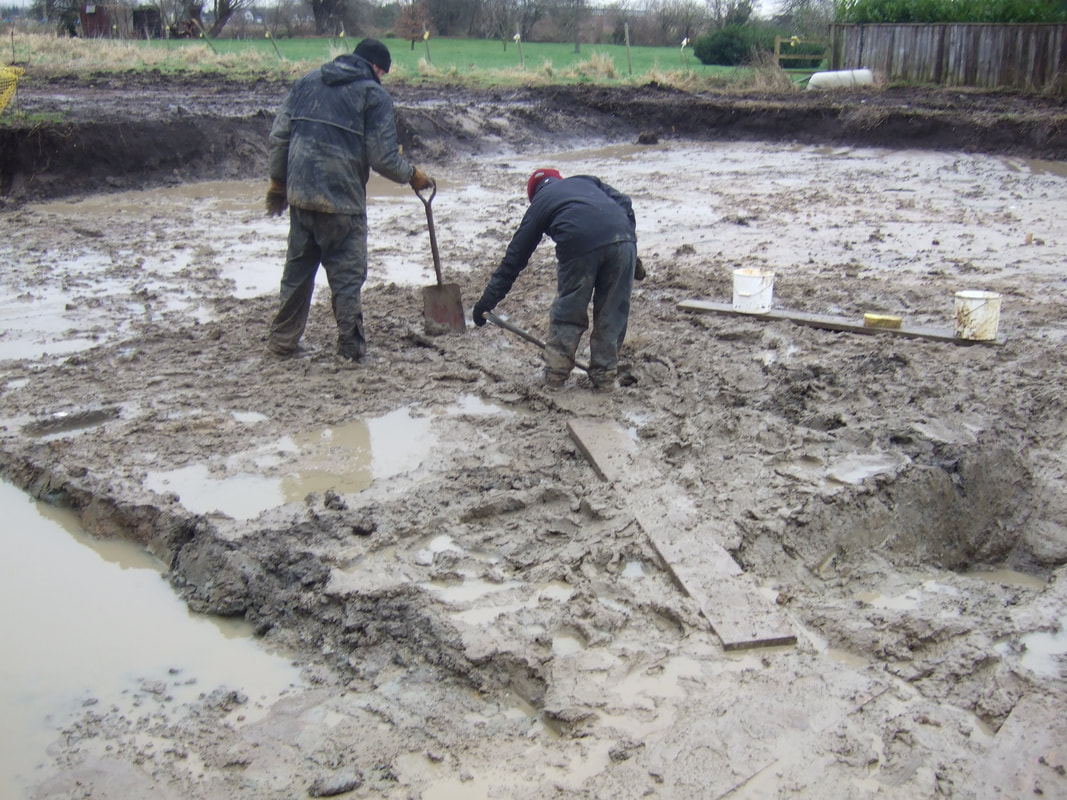
                    Now, I am an archaeology lab manager in our museum, which means I enjoy the comfort of climate control, access to bathrooms, an office, and a place to store my breakfasts and lunches.   But, like most archaeologists, I had to cut my teeth in the field (digging outside), which lacked all the above amenities.  This is where many archaeologists figure out if they genuinely want to go through with the folly they have embarked upon.  Many decide they do not and switch majors.  Good for them; they likely make more money than most archaeologists.   But could it really be that bad?  Isn’t it fun finding cool stuff?  Yes, of course.  But here are all the obstacles those noble field archaeologists face daily:

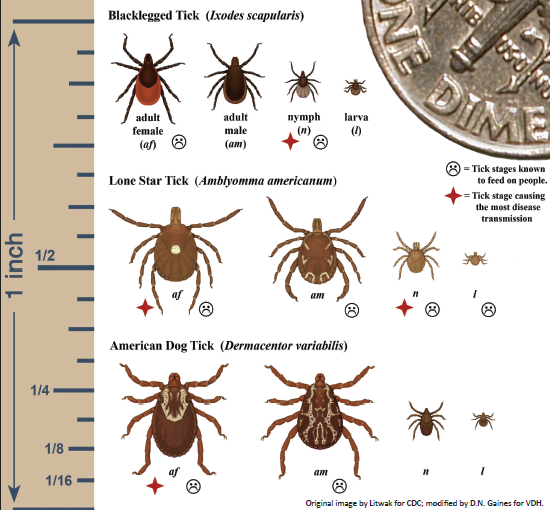
    • Bugs. Lots of them.  Bugs have taken down many of my brave colleagues.  Forget the snakes (Unlike Indiana Jones, most of us like snakes) and spiders.  I am talking about chiggers and ticks.  No one gets just one chigger bite.  They hang out in gangs of hundreds, and you will not know they have bitten you until they have had their fill of your yummy body juices and peace-ed out.  Hours later, you’ll notice around your ankles and waistband the unbelievable itching of dozens of bites that will haunt you for weeks.  Ticks are worse.  Way worse. Ticks carry diseases that can be very serious, including Lyme and Rocky Mountain Spotted Fever, both of which should be avoided at all costs. Don’t forget bees, hornets, and wasps.  No archaeologist worth their salt is without a harrowing tale of valiantly battling or running the heck away from a swam of ticked-off single-minded, murderous, flying, stingy wingy thingies.
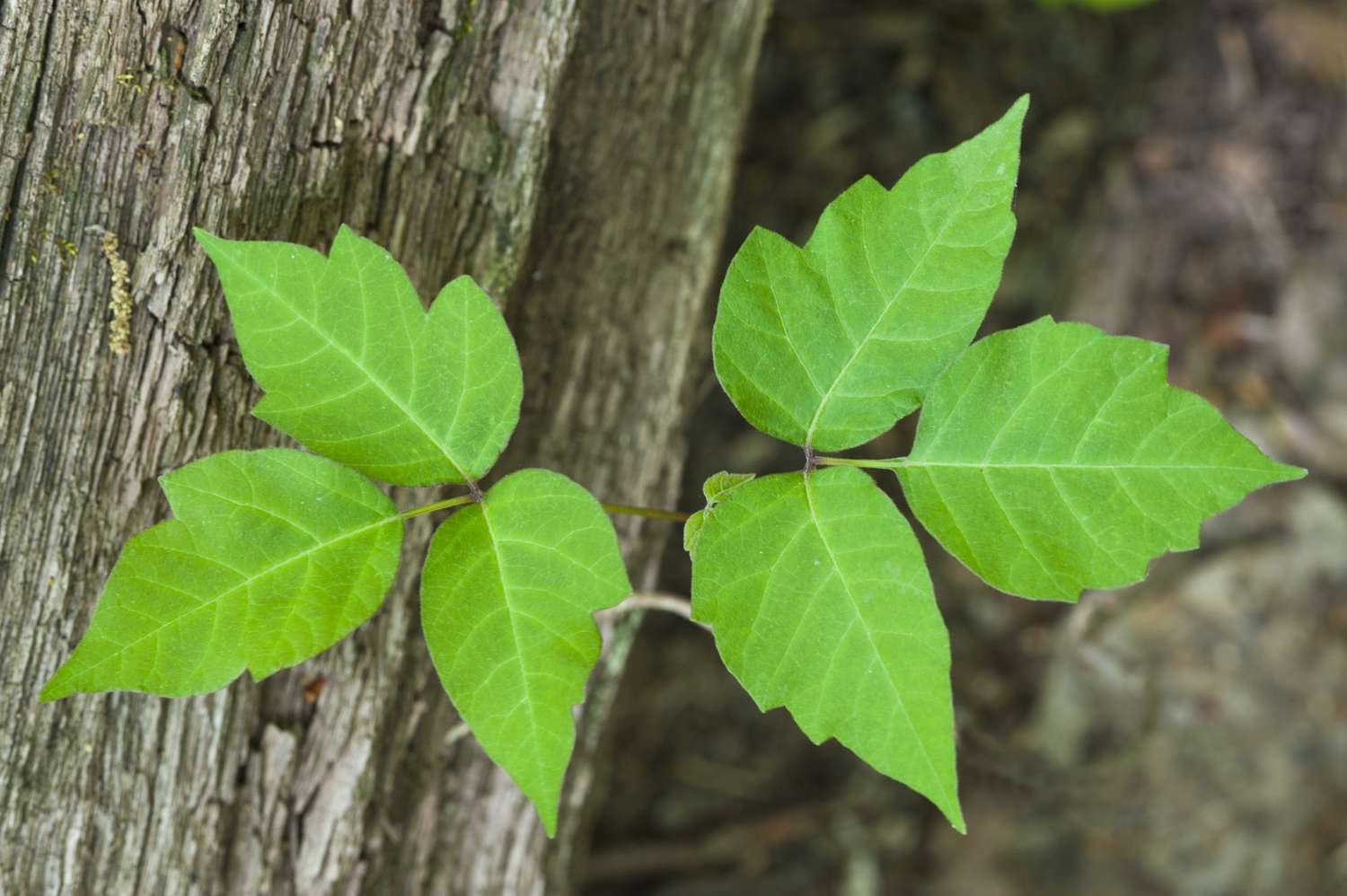
    • Plants that will make you wish you were never born.  Let’s start with some annoying and inconvenient but not diabolical plants: Those with thorns.  After being told by your crew chief that you need to hack your way through a six-foot-tall thicket of blackberries, multiflora rose, devil’s walking sticks (Yep, that’s a thing), cacti, or thistles in order to dig one tiny shovel test pit you WILL begin to question your life’s choices.  However, for those who are allergic to poison ivy, oak, and/or sumac (and it’s most of us), your field career will be a constant battle where your enemy has highly transmittable and very toxic poison juices in every single part of them (even the roots) while you are armed with a bottle of calamine lotion.  Those field archaeologists who do not get poison ivy will make fun of you and flaunt their superpowers, but just remember they’ll get theirs because the more you’re exposed to these plants, the more likely you are to feel their wrath. 
    • Ancient Curses.  No, you should NOT read that inscription on the 3,000-year-old tablet found in that tomb with all the warnings engraved on the entrance.  If I had a nickel every time I had to tell a member of my crew to drop that darn ancient idol that’s started to glow red inside and run, I’d be able to pay off my student debts.  Just kidding, that will never happen. 
    Unbroken seal of King Tut’s tomb…maybe just leave it.
    •  This one is very serious and should never be taken lightly by anyone working outdoors because they take anyone by surprise just like that. Dehydration, heat stroke/exhaustion, sunburn, and frostbite. Field archeologists must dig in almost all conditions and all seasons.  They are wind-worn and road-weary, and you should not mess with anyone who can dig dozens of holes a day in temperatures above 100 or below freezing. 
    •  Animals.  I’m not talking just about the wild ones.  I’ve only ever seen a bear in the woods once, just a few harmless snakes and maybe a couple of bucks that gave me the side eye.  But I have had years knocked off my life by pheasants or tiny fawns exploding out of the brush a foot away from me.  For the most part, pets are not an issue, and petting a friendly dog or cat is a welcome reprieve from digging holes.  Livestock, however, would scare my crews.  I grew up on a farm, so I knew what animals didn’t want to snuggle.  Here’s the thing, though.  Cows are bored and extremely curious when something or someone spices up their daily routine.  It’s hard for someone from the city to calmly stare down a herd of Holsteins weighing 1,500 pounds each while they barrel towards you.  But all they want is to sniff you, rifle through your dig kit, and lick your equipment because it’s salty.  Annoyingly, they will also eat the plastic flagging tape that you carefully tied up to mark your transect line.  So will deer, fun fact. 
    •  Unexploded ordinance (UXO).  Gunpowder does not necessarily become so old that it won’t go boom any longer.  It actually becomes less and less stable.  Sure, that cannonball you found is cool.  Sure, it’s super old.  Stay.  Away.  From.  It. Military bases and old battlefields are ripe with potentially dangerous mortars, shells, grenades, and bullets. Unfortunately, here in Virginia, there are cases of collectors who have brought finds home from Civil War battlefields only to find out the hard way that these artifacts can still do a lot of harm. That being said, you’d be surprised at all the places archaeologists have found things that can explode.  I worked on a project in a former neighborhood, so imagine our surprise when a pit in the backyard of a house was found to contain dozens of WWII live .50 caliber antiaircraft ammunition.  One thing you learn very quickly as an archaeologist is that some people are weird, and they do weird things you will never be able to explain.  The fancy word for this is idiosyncratic behavior, and it’s one of my favorite terms.  It’s the academic way to throw up your hands and say, “I got nothing.”  So, if you find any UXO, contact local law enforcement; they know what to do with it.
    Unexploded Parrott shell, Kennesaw Mountain National Battlefield Park, Georgia
    • Collapsed excavation units. Unstable excavation walls are no joke.  I’ve personally had one collapse on me, and while I was fine, it was still frightening.  Shoring up walls and expanding out before digging deeper can mitigate these issues, but there are many types of soils, and they’re not created equal, so never overestimate the strength of your walls.  Don’t become an artifact yourself. 
    •  Soil contamination/hazardous waste. Archaeologists occasionally run into hazardous waste, which is bad—enough said. Arsenic was a major embalming ingredient in the 19th century, and since archaeologists are frequently called in to identify and remove burials, arsenic is a significant consideration.  It was also used to make a beautiful green color called Scheel’s green, which was used in dying such things as fabric, book covers, and wallpaper.  Imagine wearing a gorgeous Victorian-era dress while reading a book and sitting in a wallpapered room all dyed green with copious quantities of poison. Green is my favorite color but hold the early death, please.  Mercury was considered a type of cure and used to treat various ailments such as syphilis, toothaches, melancholy, worms, tuberculosis, constipation, and apoplexy, to name a few.  It was in perfumes, lotions, soaps, hats, etc….and just like arsenic, it doesn’t go away in the soil.  And if you’re above a certain age, you definitely remember those mercury thermometers that, when broken, produced magical fun silver balls you could roll across the floor until your mother caught you.   Another principal offender is lead.  Humans discovered how awesome lead was thousands of years ago.  Please don’t personally verify this, but somehow, the Romans found that degraded lead was sweet, so they put it in substandard wine to jazz it up a bit.  Lead was also used in cosmetics until embarrassingly recently to produce that immaculate white complexion valued by the upper crust.  YOLO.  Lead was also used in water pipes, paint, glassware, ceramic glazes, and later in plastics and gasoline.  There is so much lead in our environment now that even non-archaeologists are in danger of exposure.  I could go on and on, but it’s time to move to…
    •  Enraged locals and/or property owners.  We get it.  No one wants that pipeline/highway/gas line/sewer to go through their property.  And when it does, the archaeologists have to test that area.  But please don’t run out of your house while visibly carrying a firearm and threaten the archaeologists.  We are the lowest entity on this unpleasant totem pole and unfortunately the first people you’ll see trapsing over your land and digging holes.  This was not our idea; it was our job.  Working on these projects is the worst because people are understandably angry and want to vent, but this is not the way to do it.  Ironically, one of the only things that can stop that pipeline from going through your horse pasture is if we find some amazing archaeological site with immense cultural significance.  This will force a rerouting of the project, so your neighbors will have to deal with the headache. 
    Dealing with enraged locals is a delicate situation

    This is not by any means intended as an exhaustive list, but I’ve already greatly exceeded my word count for this blog.  You get the idea.  So why, you may ask, does anyone become an archaeologist?  Quite simply put, every job has its hassles, some more than others, but most archaeologists really (and I mean REALLY) love archaeology.  The jobs in archaeology may not fit the stereotypes (full disclosure: most of us adore Indiana Jones, though).  Archaeology is rarely glamorous; it can be dangerous or frustrating, but it is, above all else, AWESOME.  Being a part of uncovering human history and sharing information never gets old, and I wouldn’t trade my job for any other. 


    Mara Kaktins

    Archaeologist & Lab Manager


  • Behind the Glass at Ferry Farm’s Archaeology Lab

    The observer stands behind glass and watches. The one being watched picks up the object with her bare hands turns it carefully to see every angle, then sets it down to record data into her computer. Then she washes her hands, unwraps another object – and eats it!

    Visitors to George Washington’s Ferry Farm can explore more than the museum gallery, or the Washington House replica, or newly constructed Quarter and Cellar outbuildings. They can tap into their people-watching curiosities and observe real archaeologists in a laboratory researching, washing objects, making labels, cataloguing, repairing ceramics – and even eating lunch!

    One extraordinary thing about Ferry Farm is that its archaeology lab is viewable and accessible to the public. The mysteries of history lie out in the open, sitting out on tables or in trays ready to be washed and categorized. Like zoo-goers, visitors are mesmerized by the goings-on behind the glass, and likewise, our archaeologists love interacting with the public, glad to answer questions or even pose for a picture.

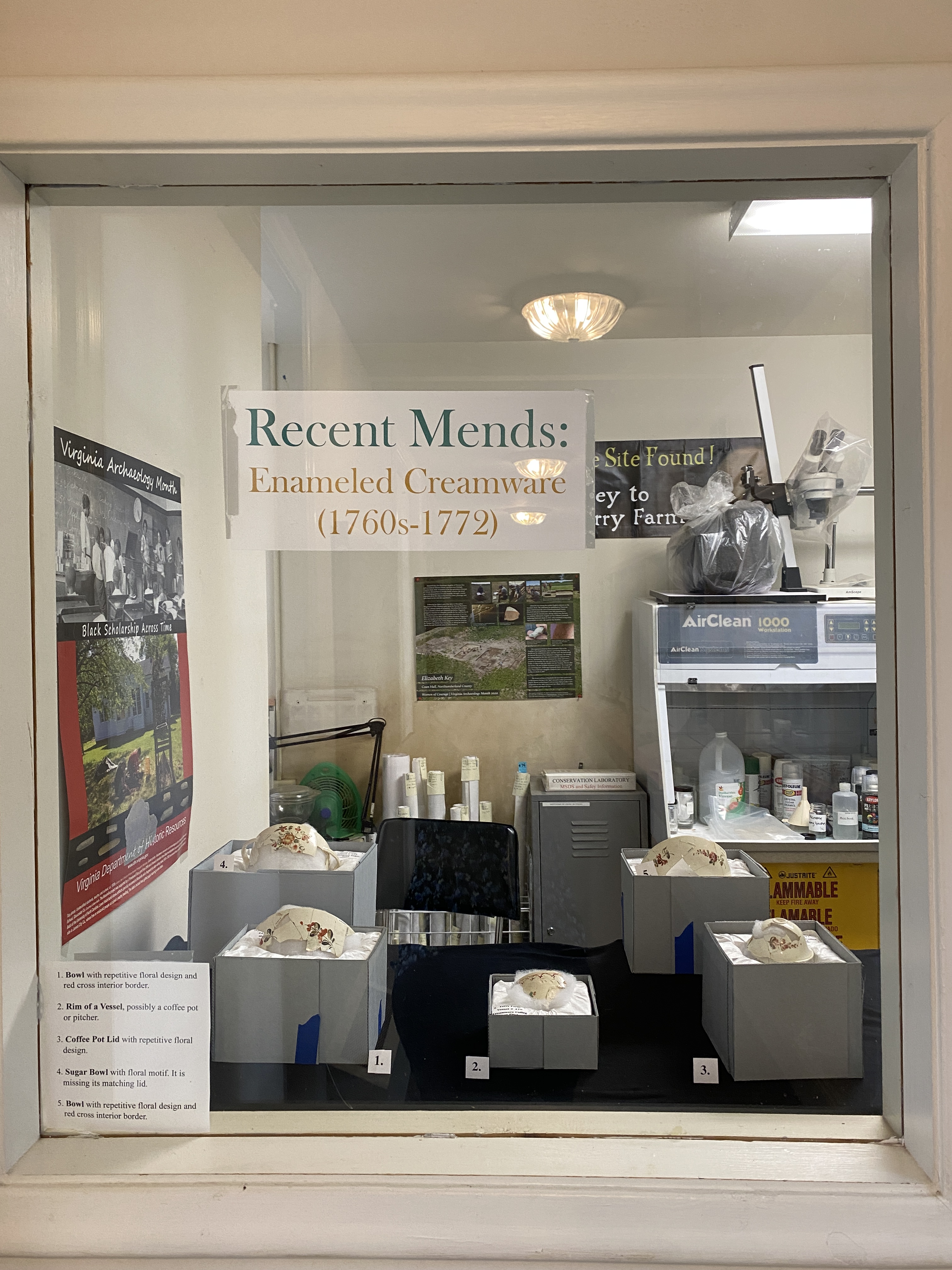
    Recent mends of enameled creamware behind one of several Archaeology Lab observation windows.

    It may be an interesting coincidence, but as Mary Washington drives the story of Ferry Farm and Historic Kenmore was saved by a group of intrepid women, Ferry Farm’s archaeology laboratory is also dominated by women who are passionate about what they do and more than willing to share their findings with guests and professional peers. Who are these interesting women, and what exactly happens in the lab? Its main inhabitants are Lab Supervisor Mara Kaktins and Field Directors Judy Jobrack and Danielle Arens. Also, part of the team (but not in the fishbowl) are Research Archaeologist Emma Schlauder and Director of Archaeology Dave Muraca. Dave, the only man in the department, led the team that discovered the foundation of the Washington House.

    There would be no lab work if there was no field work, and every summer for about 11 weeks, a carefully planned dig occurs on the grounds of George Washington’s Boyhood Home. Rich in artifacts, the land has yielded over 800,000 since the 1990’s. Finds date from indigenous, colonial, Civil War, and a sequence of farms throughout the 20th century. As Dave Muraca has said, “I would never recommend having a Civil War battle on your archaeological site. There are five successive farms out there, one on top of each other. In that way, it’s very complicated and hard to take apart.” That said, the fieldwork is not easy, but incredibly, each season, they find thousands of artifacts that will need to be mapped, processed, washed, bagged, catalogued in the database, labeled, stored, and researched.

    Washed artifacts waiting to be bagged and catalogued.

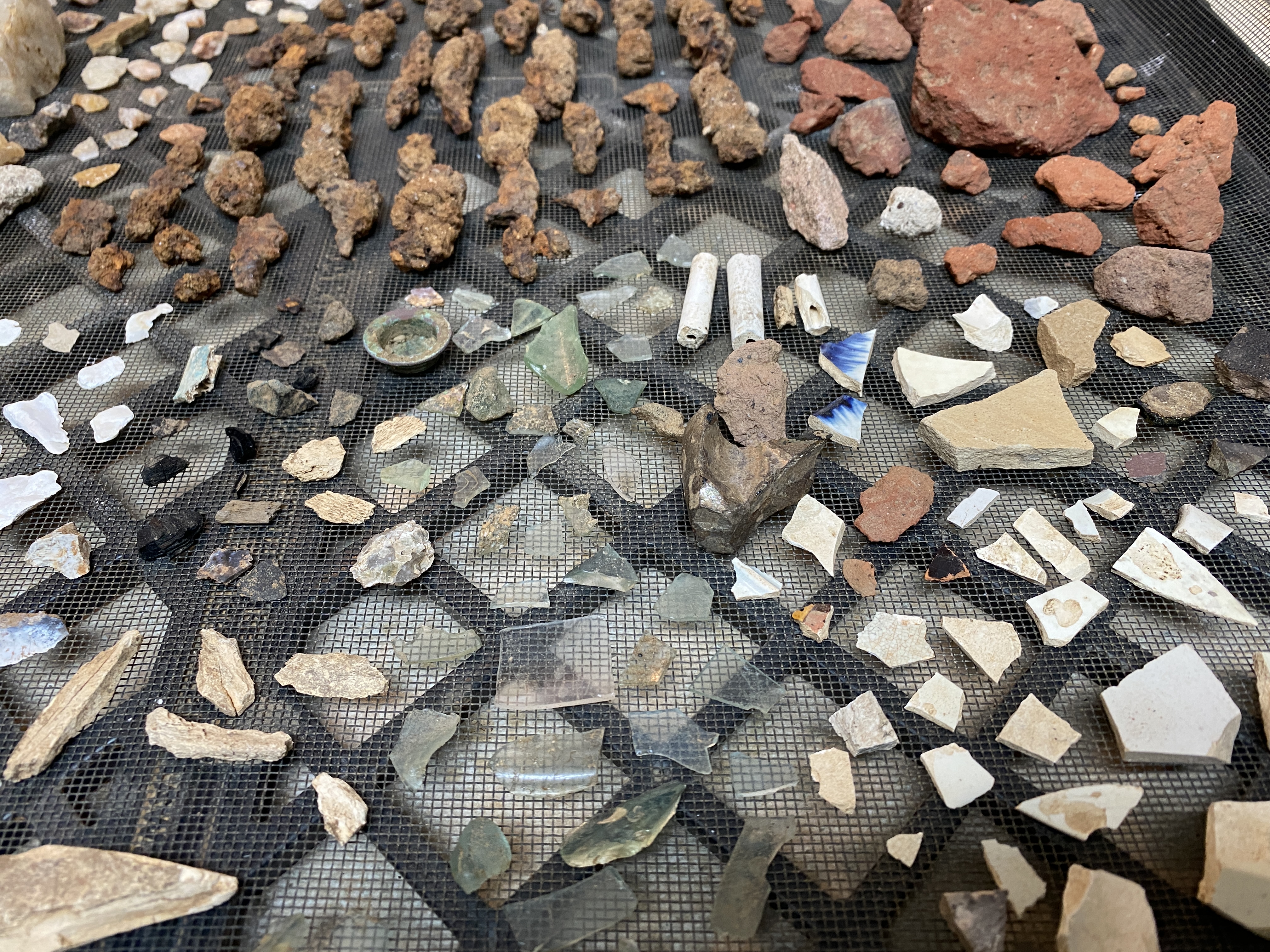
    Typical finds include ceramic sherds, window glass shards, architectural pieces, household items, mortar, sandstone, personal items, pipes, wig curlers, buttons, personal adornment, and indigenous and faunal (animal remains). Objects popular with the public include a Masonic pipe bowl, cufflinks engraved with foxes and “Tally O,” a chamber pot, and even 20th-century items that indicate children used to live on-site, such as Matchbox cars, a toy motorcycle, or a doll’s head. Observers are also surprised to learn that 21st-century trash is catalogued because it was unearthed, and someday that too will be a part of Ferry Farm’s history.

    It’s important to note that Ferry Farm doesn’t dig exhaustively. While archaeologists are certainly concerned with the past, they also make concessions for the future, leaving areas untouched for future generations to dig using as-yet not invented technology. Ground penetrating radar has not been used much because of all that has happened on the land since Washingtons’ time. The main emphasis is feature-chasing – looking for structures such as the Washington House, cellar, kitchen, the Quarter, and more. No land feature will be recreated without knowing exactly where it stood.

    A unique quality of Ferry Farm’s Archaeology Department is that lab and field duties are not segregated; the same amazing team works both in the lab and field. This creates an intimacy with the artifacts that may not be present elsewhere. One day in the field equals three working days in the lab, processing, interpreting, and analyzing all the data from the artifacts. The first step is turning the field data into a format that’s digestible for record-keeping, end-of-year reports, and future Ferry Farm archaeologists. In the field, a site grid in five-foot increments is established and laid out to track where the finds are. Within that grid, context numbers are assigned to specific soil layers and features. A context is essentially a 5’ x 5’ address that notes the horizontal and vertical location of artifacts, noting spatial distribution where items are concentrated. In the lab, context maps are made from each grid unit, and the maps are put together to create the stratigraphy of a dig site.

    Leaded glass takes on a blue hue under UV light.

    Artifacts that come in are brought to the Wet Lab and washed with water in a tub or colander using tools such as toothbrushes, pipe cleaners, or dental picks. One might wonder if there are special precautions for handling artifacts, and interestingly, controversy swirls over whether artifacts should be handled with gloves or not. Rubber gloves are worn during lengthy washings to keep hands from getting too waterlogged. It turns out wearing gloves for analysis proves more damaging since touch sensitivity is reduced and gloves are prone to ripping. Items being examined have been surrounded by the elements for years, so oils from hands are not likely to harm artifacts any further.

    Next to the Wet Lab is the Conservation Lab, where acetone might be used to remove glue from previously mended artifacts. It’s equipped with a vent hood for fumes and the archaeologists wear masks for safety. They often create tableware replicas for the Washington House display, which might require the use of spray paint.

    Very well-designed and equipped, the lab was created by archaeologists for archaeologists. Their equipment includes a light table, a Dremel, a fine water screen for the field, and a UV light to identify leaded glass. For further testing, the department may contract out to other labs, such as the University of Eastern Michigan, with DART mass spectrometry capable of identifying organic materials.

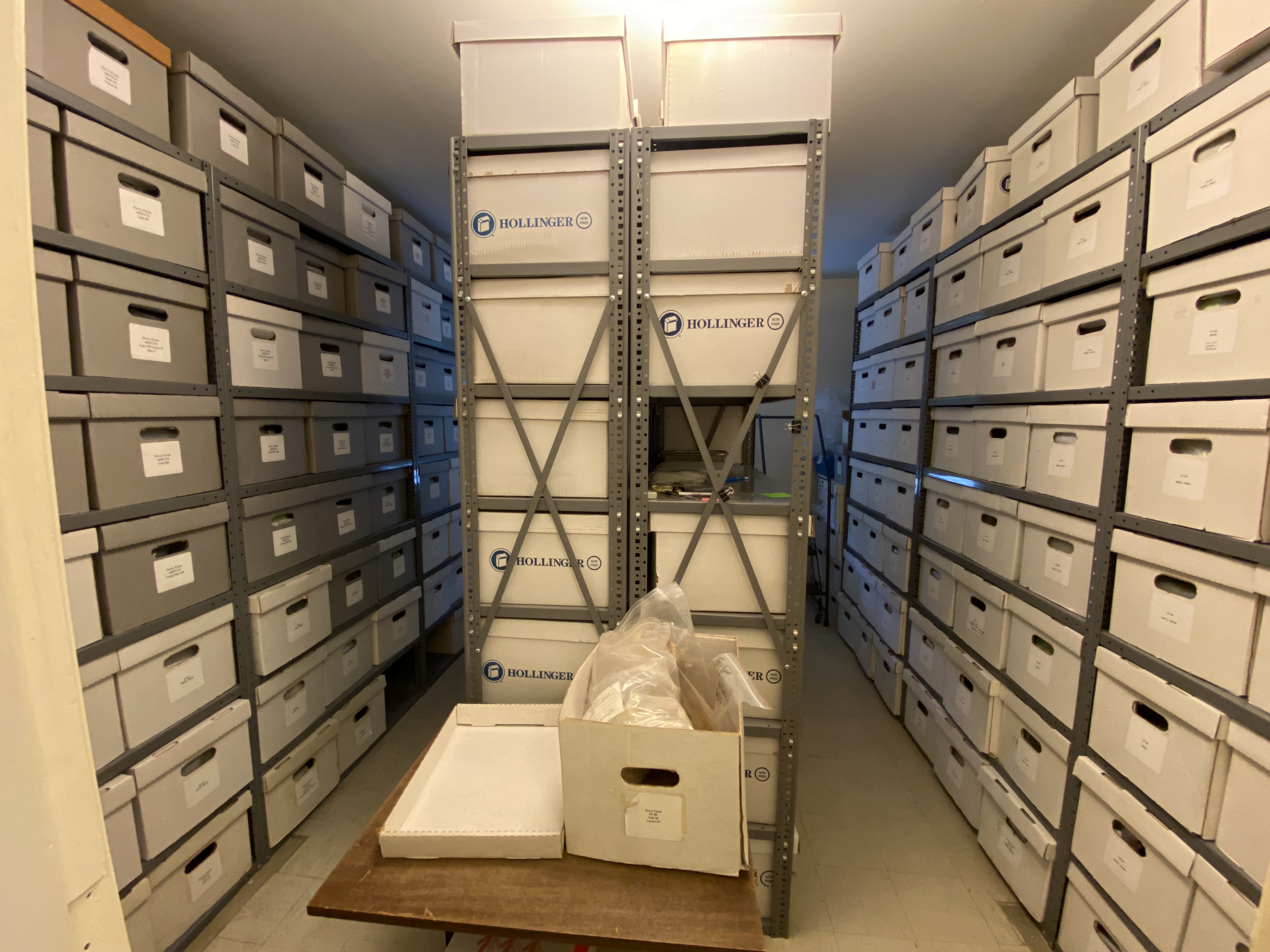
    After artifacts are entered into the database and bagged with tiny labels indicating their project number and context, they are either put in the study collection or housed in cabinets or a storage room. With almost a million artifacts in the collection, the boxes stacked in the storage room resemble a miniature version of the ending scene in Raiders of the Lost Ark.

    Boxes of artifacts stacked in the storage room resemble a miniature version of the ending scene in Raiders of the Lost Ark.

    While one cannot put a value on tiny sherds of 18th-century ceramics, a rusted hinge, or an old button, Kaktins says, “Everything is priceless because of the information gleaned from it.” Archaeology at Ferry Farm is the driving force behind the stories shared with visitors. It informs where the buildings go, reveals the long-forgotten secrets of inhabitants, and intrigues visitors as they glimpse into the past.

    Lori Pikkaart

    Marketing & Communications Manager

  • No Nails? No Problem! The Construction of the Great Oak Pavilion

    What do you get when you have a canoe, tools, and a dream team of builders? The Great Oak Pavilion! Okay, maybe the canoe wasn’t completely necessary, but it is a very interesting part of the construction of the Great Oak Pavilion. Many visitors at Ferry Farm have questions about this building and how it came to be.  Did George Washington build it? How did it get here? And what is it all about?

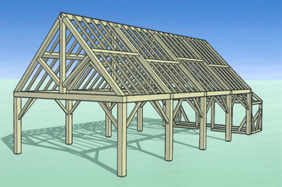
    The Great Oak Pavilion

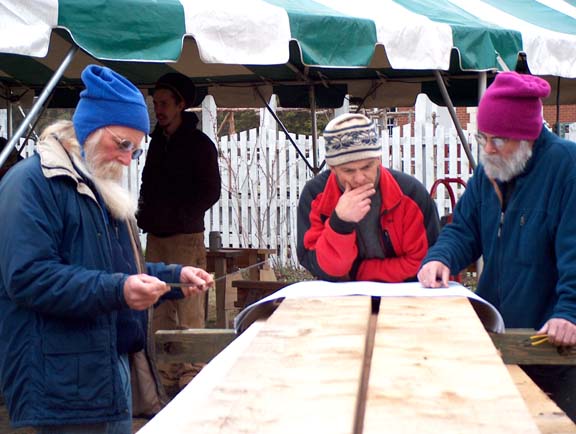
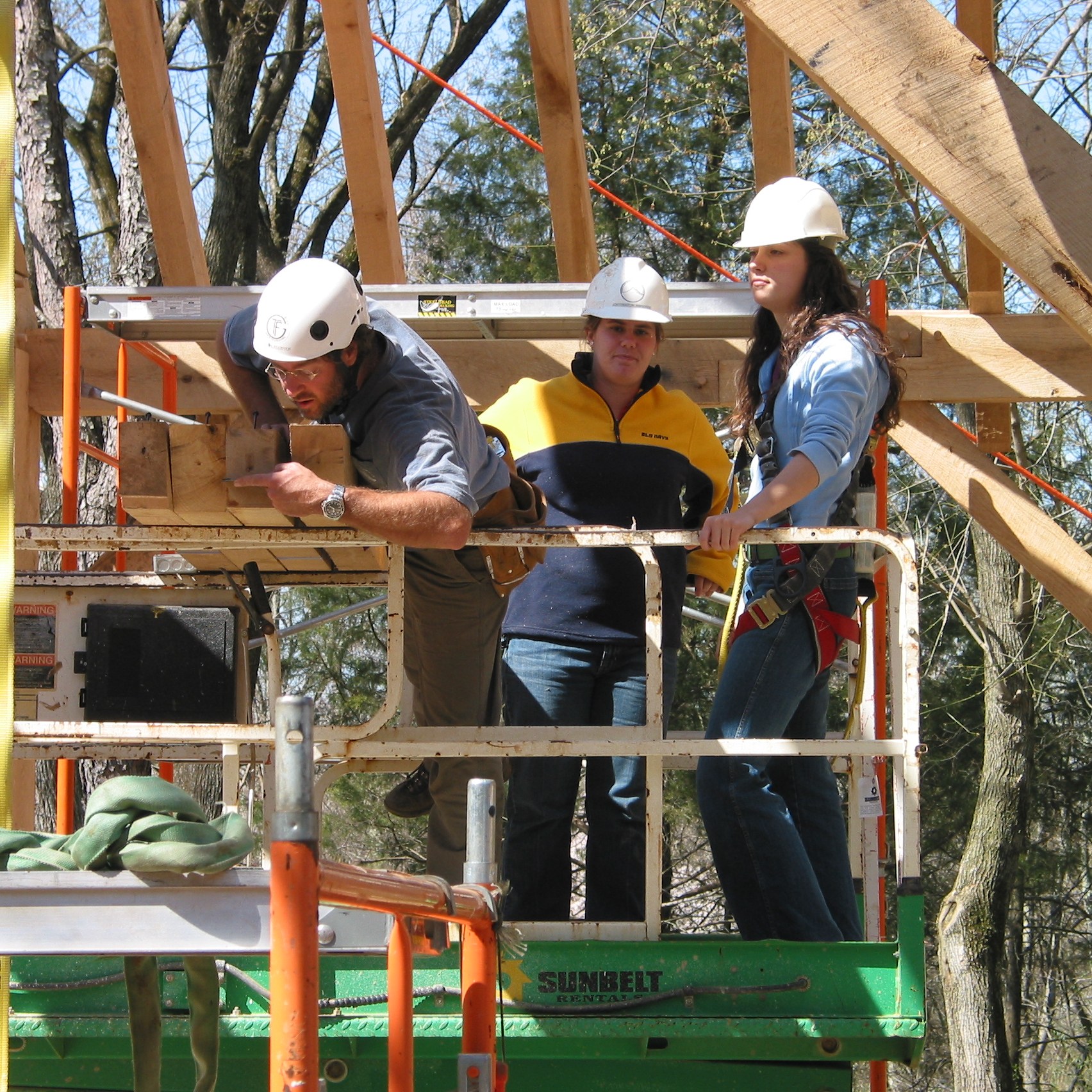
    For starters, contrary to popular belief (mostly by our younger visitors), George Washington did not build the Pavilion. Construction on the building began in 2005 through a collaborative effort of the Virginia Military Institute, Timber Framers Guild, and the George Washington Foundation, who together built a much-needed classroom space for the foundation. How, you might ask, did these forces come together? It just so happened that longtime foundation supporter Dr. Grigg Mullen was also a member of the Timber Framers Guild and a professor of Civil Engineering at VMI. Together with Matt Webster, the GWF Director of Architectural Restoration, Dr. Mullen and the team designed the Great Oak Pavilion. He even had his students help construct the building over their spring break!

    While it wasn’t built in the 18th century, many of the pavilion’s construction techniques reflect those that would have been used during that period. These techniques allow the pavilion to fit seamlessly within the landscape. As a self-proclaimed architecture nerd, I can’t just leave it at that, so let’s go over a few building techniques. Next time you visit, see if you can spot them!

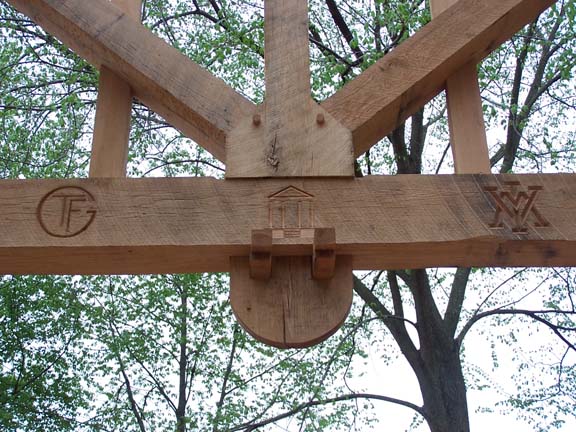
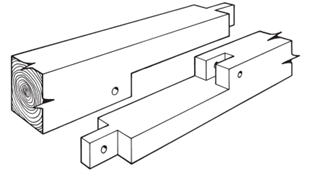
    One of the major things you may notice is that no nails or metal plates are used in constructing the building’s frame. In fact, nails are only used to attach the wooden shingles and siding, just as it would have been done in the colonial period. Instead, the timbers are connected using traditional joinery techniques, where each piece of wood is cut in a specific way so that the pieces fit snuggly together – sort of like a puzzle piece. The “puzzle pieces” can be very elaborate or simple, it all depends on the function of the joint.

    Mortise and tenon joints are commonly used joints throughout the Pavilion. They are created by cutting a slot (mortise) in one timber and then reducing the wood on another timber to create a tab (tenon). The tenon fits into the mortise to create a strong, stable compression joint.  

    Another type of joint, the halved and bridled scarf joint, is also used in the Pavilion. These connect timbers, increasing the length of a beam. Notches are cut into the beams in this joint, which then fit inside the overlapping timbers. Wooden pins provide extra security.

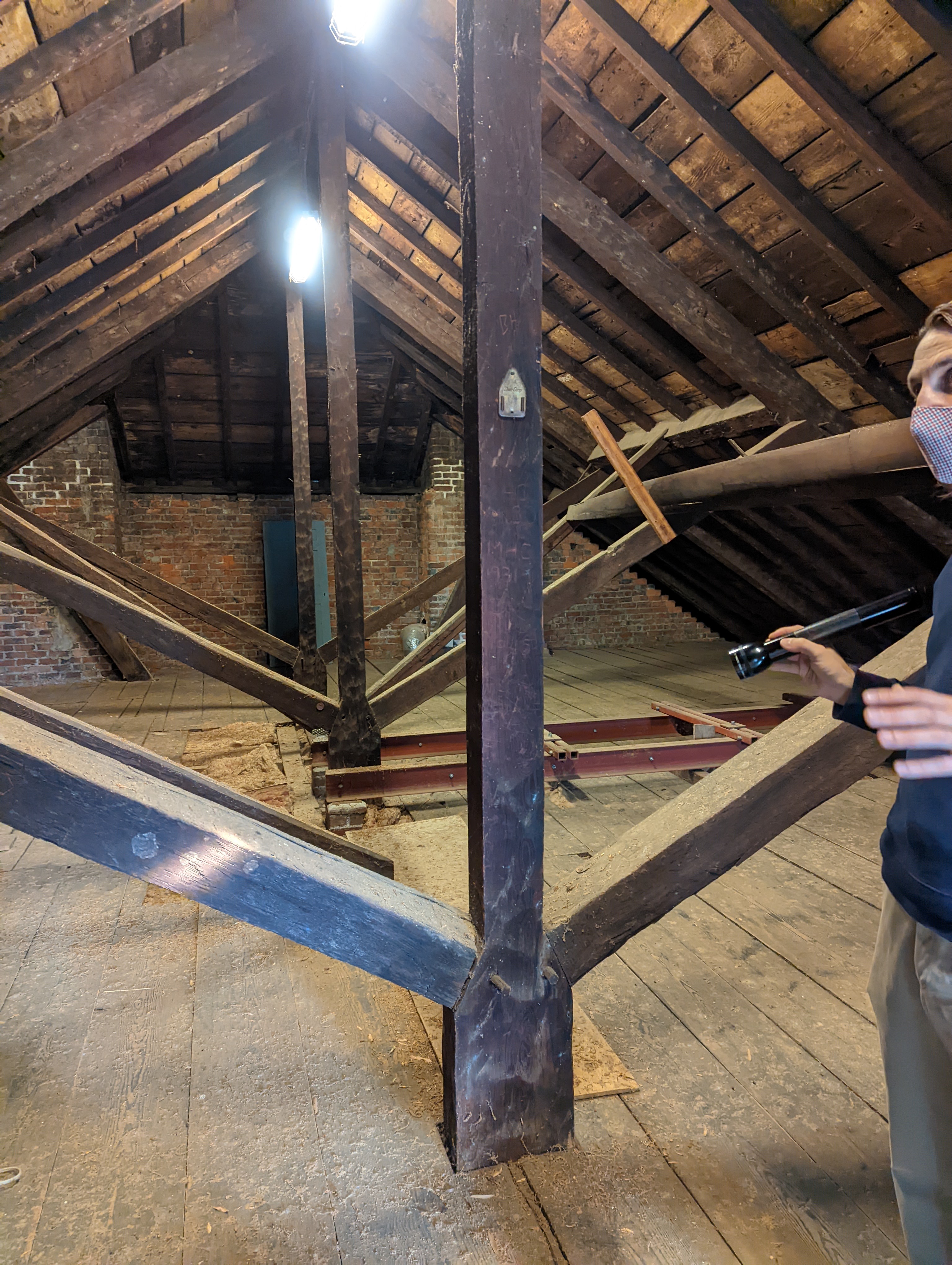
    The 18th-century techniques don’t stop there! The design of the Pavilion is modeled after Kenmore, using the same support system for the roof. The construction of the 2005 truss system, known as a king post truss, is the same system used at Kenmore when it was built in the early 1770s.

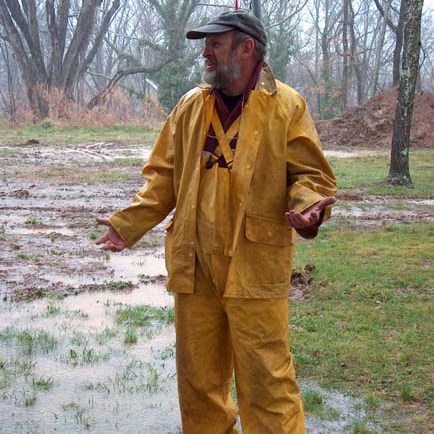
    Now, don’t think I forgot about the canoe part of the story. Remember how I mentioned the construction occurred over spring break? Well, it just so happened to be a very rainy spring. So rainy in fact, that the area where the builders were working and camping for the week flooded. That didn’t stop them, though. They just loaded up their wares in a canoe and paddled back and forth to the site. That’s dedication!

    While the Great Oak Pavilion may not have been built by George Washington, it demonstrates how the George Washington Foundation and its supporters can come together to make great things happen. In other words, teamwork does indeed make the dream work.

    Danielle Arens

    GWF Archaeologist


    References

    National Park Service (2001). Historic American Timber Joinery A Graphic Guide.

  • Expanding Ferry Farm: The Quarter

    If you have visited Ferry Farm recently or follow us on social media, you may have noticed the construction of two buildings near the Washington House. These new structures represent ones that stood in these spots during George Washington’s time. Identified through archaeology, their reconstructions allow us to better tell the stories of the people who lived and worked at Ferry Farm. For this blog, we will look at the structure adjacent to the Washington House along the embankment overlooking the Rappahannock: The Quarter.

    What’s in a Name?

                First, we need to define what we mean when we call the structure “the Quarter.” Regarding enslaved life, the term “quarter” can refer to several different situations. Generally, it refers to a structure that housed enslaved individuals with “quarter,” equating to a living space or personal quarters. The term has nothing to do with the number and makeup of the occupants or the appearance of the building. The other use for the term refers to a group of enslaved people. Augustine Washington’s probate inventory lists seven enslaved people at Ferry Farm’s “satellite quarter” (Fig. 1). In this use, it does not refer to a single physical structure but rather a group of people and their housing unit that moved around. “The Quarter” uses the term for a single structure, identified through archaeology, that housed an enslaved family in the heart of the Ferry Farm plantation.  

    Figure 1: Section of Augustine’s probate inventory listing individuals at the satellite “quarter”

    Enslaved Housing

                Living conditions varied widely across the Mid-Atlantic and even within a single plantation. Customarily, enslaved people lived where they worked. Work yard structures included living quarters above the workspace while the fields had structures akin to dormitories that housed people divided by biological sex. In certain cases, independent structures may have served as housing for single family units (Fig. 2). Those that lived within these spaces generally held high ranking positions within the hierarchy established by enslavers. Housing generally stood outside public view and in areas convenient to the work undertaken by the inhabitants. Quarters within sight of the public served as status symbols for the gentry.

    Figure 2: 1860 engraving depicting single quarters in South Carolina (Slavery Images)

                Identifying quarters today largely comes from historic records, oral history, archaeology, and architectural features. All of this can help establish a range of appearances for such structures. When a building no longer remains standing, these observations can be compared to artifacts uncovered at the site to determine its identity. Sub-floor storage pits, often located near hearths, serve as key architectural identifiers, while artifacts that reflect African diaspora culture, outdated items, and evidence of labor help pinpoint the identities of the inhabitants. Quarters served as the only personal spaces allotted to enslaved people, so any artifacts recovered can speak to their personal identities rather than those defined by Virginia colonials.

    Archaeological Evidence

                The excavation of the Quarter occurred in 2003, and research in successive years helped to identify its role and understand the lives of its inhabitants.

    • Architecture: When excavated, little remained of the Quarter, but the architectural elements present and absent provided enough information to understand its appearance. Archaeologists recovered small quantities of Aquia sandstone around the quarter indicating it may have had a light stone foundation and hearth. The main impact it had on the ground surface occurred through the creation of a sub-floor pit. These pits frequently appeared in quarters and served as storage areas for the occupants’ personal effects. Unfortunately, a tree later intruded a portion of the pit and the surrounding area thus making it difficult to study (Fig. 3). Other architectural elements included an abundance of nails and an absence of window glass (Fig. 4). This indicates the building had clapboard siding and likely shuttered windows in place of glass ones.
    Figure 3: Quarter Excavation Site
    Figure 4: Nail distribution around Quarter
    • Tableware (Fig. 5): Within the eighteenth-century contexts, we recovered many ceramics and utensils of European origin. White-salt glazed stoneware dishes and dog-nosed spoons represent styles in decline by the 1740s. This indicates that the enslaved occupants either received hand-me-downs from the Washingtons, a common practice, or purchased used items in the local market. A colonoware bowl served as an exception. A local ceramic type attributed to free and enslaved black communities, colonoware production mixed African ceramic techniques with European vessel forms.
    Figure 5: Tableware (L-R white salt glazed stoneware, dog-nosed spoon handle, colonoware bowl, table knives)
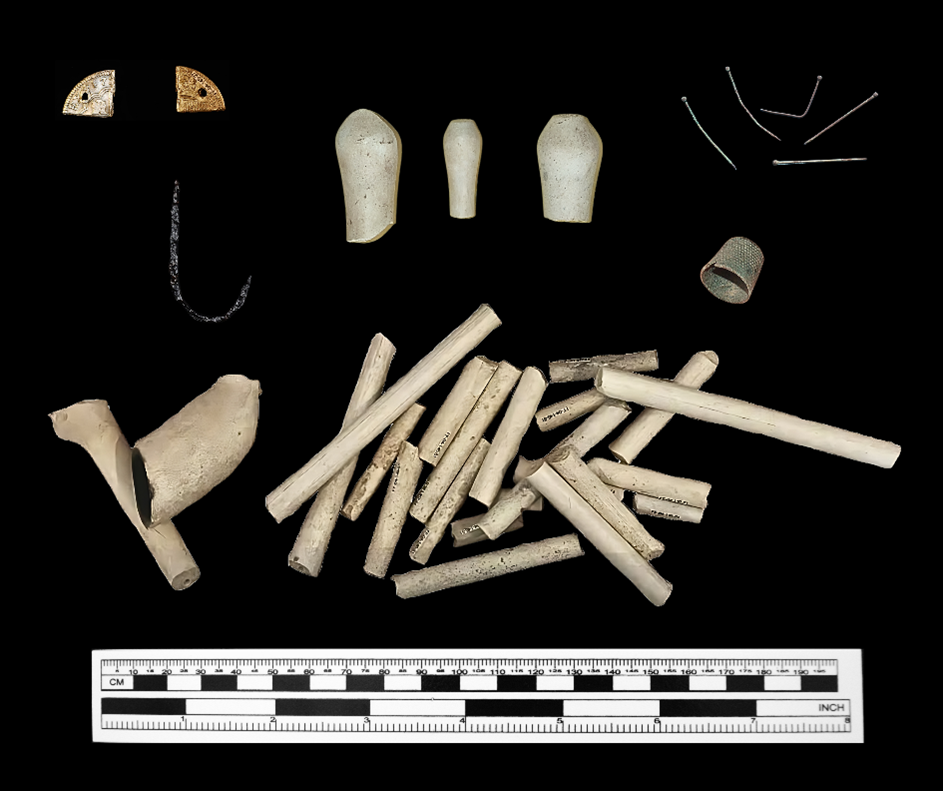
    • Small Finds (Fig. 6): Analysis of the artifacts revealed the personal effects of the occupants, their possible identities, and the labor they carried out. Wig curlers appear frequently throughout Ferry Farm, but the recovery of several at the Quarter indicates that the individual(s) tasked with maintaining the Washington wigs may have lived within. Sewing implements, such as thimbles, reflect labor carried out by enslaved women and girls either for the Washingtons or for themselves. A common practice in colonial Virginia saw each enslaved person receive a ration of cloth from which they fashioned their own clothing. Straight pins further indicate the presence of female occupants as these pins held their garments, such as bed gowns, together. Both genders used the numerous tobacco pipes recovered. The fishhook speaks to an entirely personal activity,  as enslaved communities often supplemented their food rations by fishing. The pierced coin serves as the artifact most indicative of enslaved culture. Piercing a coin allowed the owner to keep it on their person as a form of adornment. Such coins often served as talismans, though they could re-enter the economic world as needed.
    Figure 6: Small Finds (L-R mirrored pierced coin, fishhook, wig curlers, thimble, straight pins, tobacco pipe fragments)
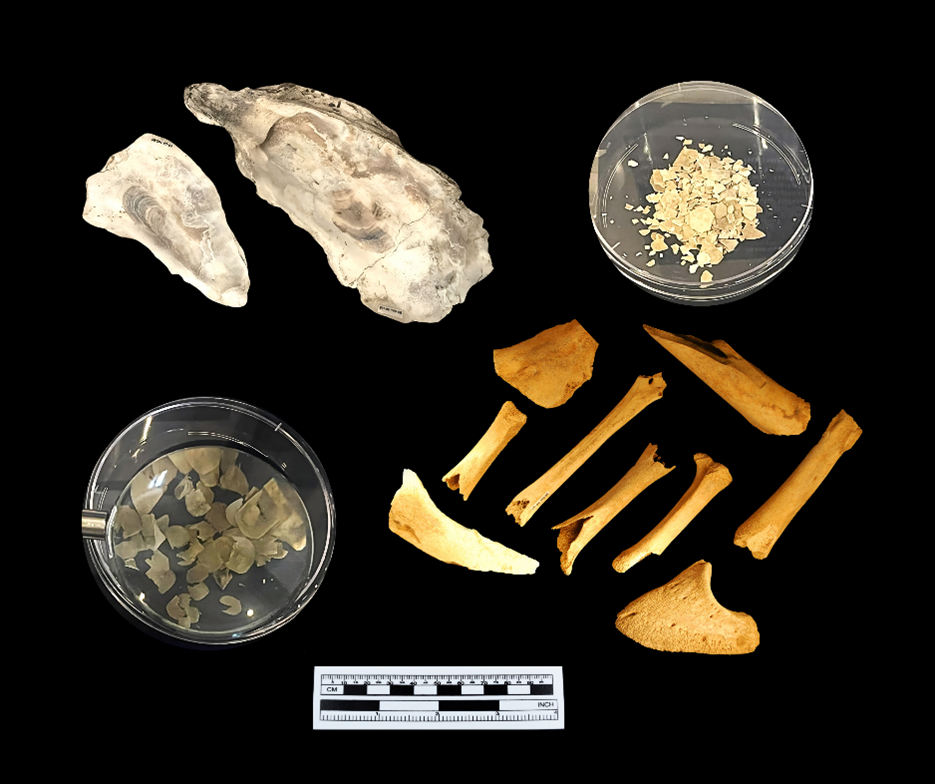
    • Diet (Fig. 7): Faunal remains found at the Quarter supplement the information provided by the fishhook. As expected, we identified several fish species including types of perch, catfish, and sunfish which lived in the Rappahannock at that time. Other animals included cattle, chickens, pigs, opossum, and shellfish, such as oysters. This mix of domestic and wild species indicates that the Quarter’s occupants supplemented the rations supplied by the Washingtons. The enslaved commonly achieved this by maintaining small gardens and raising chickens, hunting, fishing, and foraging. While we did not recover any plant remains, those consumed by the inhabitants likely reflected a similar mix of wild and domestic species.
    Figure 7: Faunal (L-R Oyster shells, eggshells under microscope, fish scales/bones under microscope, various mammal bones)

    Reconstruction and Interpretation

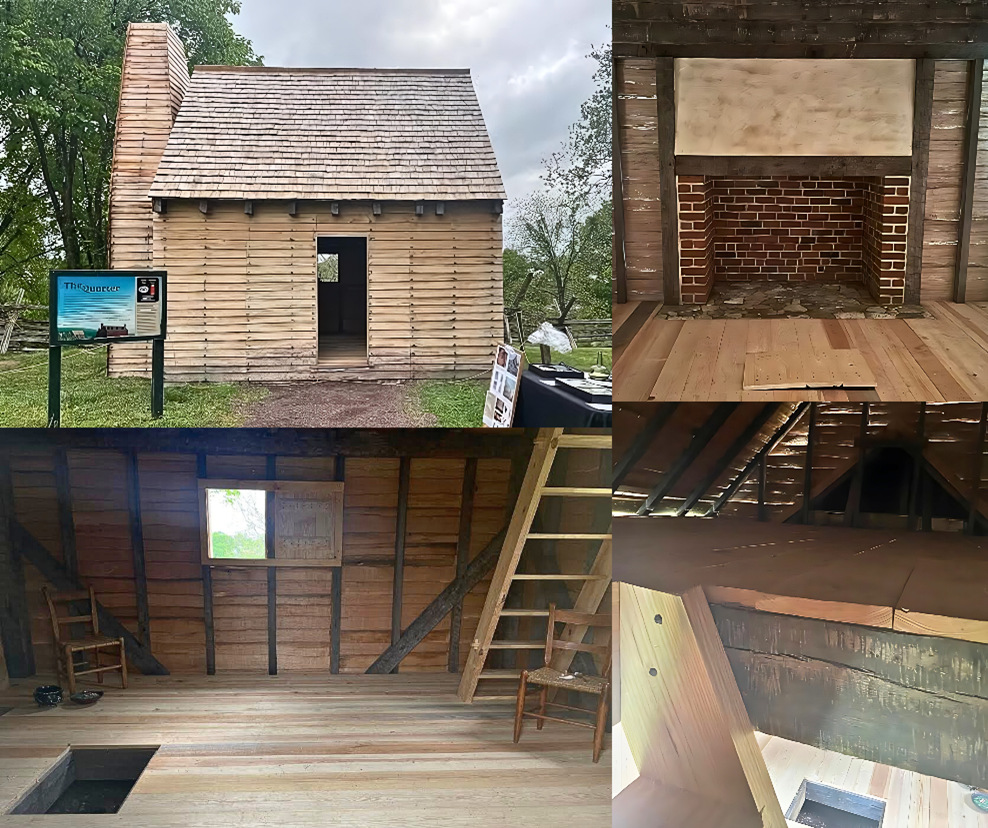
                The reconstruction of the Quarter combined our archaeological evidence with the historic knowledge of enslaved housing (Fig. 8). The finished Quarter measures 16’x14’ which aligns with standard measurements for single-family quarters. From our archaeology, it has clapboard siding, sliding shutters in place of glass windows, a subfloor pit, and sandstone hearth. Information on contemporary quarters led to the inclusion of a loft and a daub lined wood chimney. Architects used eighteenth-century techniques to reconstruct the building.

    Figure 8: The Quarter, various views

                From our findings, we concluded that the quarter housed a single family. At least one of these individuals held a high-ranking position within the labor hierarchy allotted these living arrangements (Fig. 9). The structure’s proximity to the Washington House and work yard indicates the occupants worked within these spaces. The position on the bluff overlooking the Rappahannock meant that this quarter, unlike others, lay in view of the public.  “The prominent placement of this structure on the landscape may mean that it was used to reinforce Washington’s prominent social standing in colonial Virginia.”     

    Figure 9: Portion of Augustine’s probate inventory listing individuals at Ferry Farm; some may have called the Quarter home

    The Quarter will open to visitors this fall, and visitors will be able to read about and visualize the lives of those who lived within. Like the Washington House, everything that furnishes the Quarter will be interactive and reflect archaeological finds. Planning remains ongoing for this, but when complete, visitors may find outdated tableware, evidence of meals, tools for labor, and personal effects.

    Emma Schlauder

    Research Archaeologist


    Bibliography
    
    Augustine Washington Probate Inventory, 1743
    
    Carson, Cary & Carl Lounsbury (editors)                                                                                                  2013     The Chesapeake House: Architectural Investigation by Colonial Williamsburg. The University of North Carolina Press, Chapel Hill, NC.
    
    Katz-Hyman, Martha B. & Kym S. Rice (editors)                                                                                       2011     World of a Slave: Encyclopedia of the Material Life of Slaves in the United States. Greenwood, Santa Barbara, CA.
    
    Lanier, Gabrielle M. & Bernard L. Vlach                                                                                                     1997     Everyday Architecture of the Mid-Atlantic: Looking at Buildings and Landscapes. The John Hopkins University Press, Baltimore, MD.
    
    Lounsbury, Carl R. (editor)                                                                                                                  1994     An Illustrated Glossary of Early Southern Architecture and Landscape. University Press of Virginia, Charlottesville, VA.
    
    Samford, Patricia                                                                                                                                       1996     The Archaeology of African-American Slavery and Material Culture. William & Mary Quarterly 53(1): 87-114.
    
    2000     Power Runs in Many Channels: Subfloor Pits and West African-Based Spiritual Traditions in Colonial Virginia. Doctoral Dissertation, Department of Anthropology, University of North Carolina, Chapel Hill. University Microfilms International, Ann Arbor, MI.                                                                                                                                           
    
    Stilgoe, John R.                                                                                                                                          1982     Common Landscapes of America, 1580-1845. Yale University Press, New Haven, CT.
    
    Wells, Camille                                                                                                                                        1993     The Planter’s Prospect: Houses, Outbuildings, and Rural Landscapes in Eighteenth Century Virginia. Winterthur Portfolio 28(1): 1-31.
    
    Vlach, John M.                                                                                                                                           1993     Back of the Big House: the Architecture of Plantation Slavery. The University of North Carolina Press, Chapel Hill, NC.
    
  • Slides That Saved Kenmore

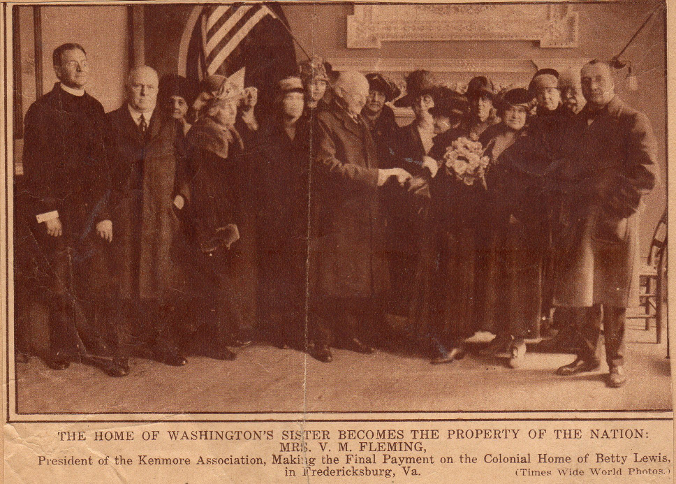
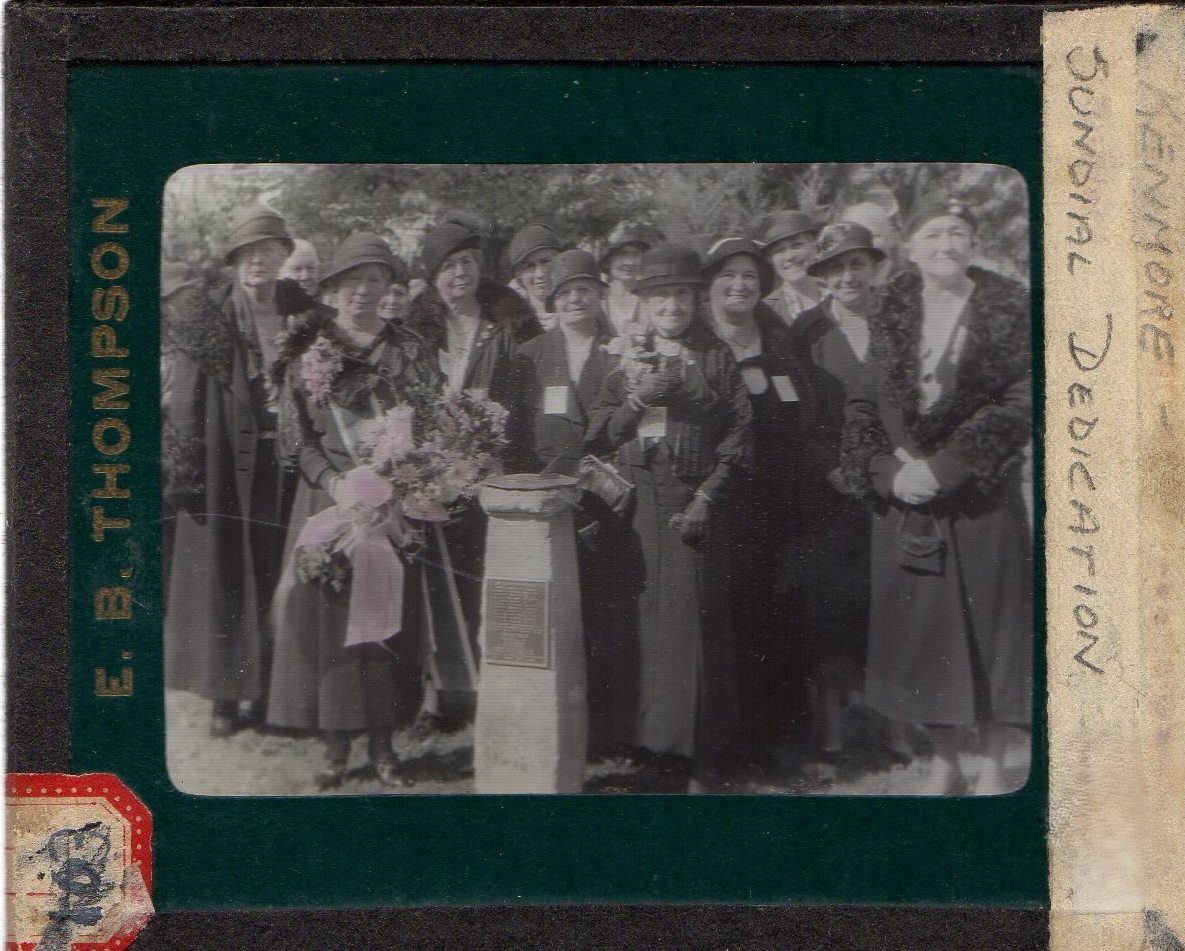
    On January 1, 1925, a group of well-dressed women in hats and long fur coats assembled at Kenmore to hand over the final $1,000 payment and gain full possession of the house and land.  This meeting was the culmination of thirty-two months of persistent work and determination by the ladies of The Kenmore Association to save the historic property from destruction.

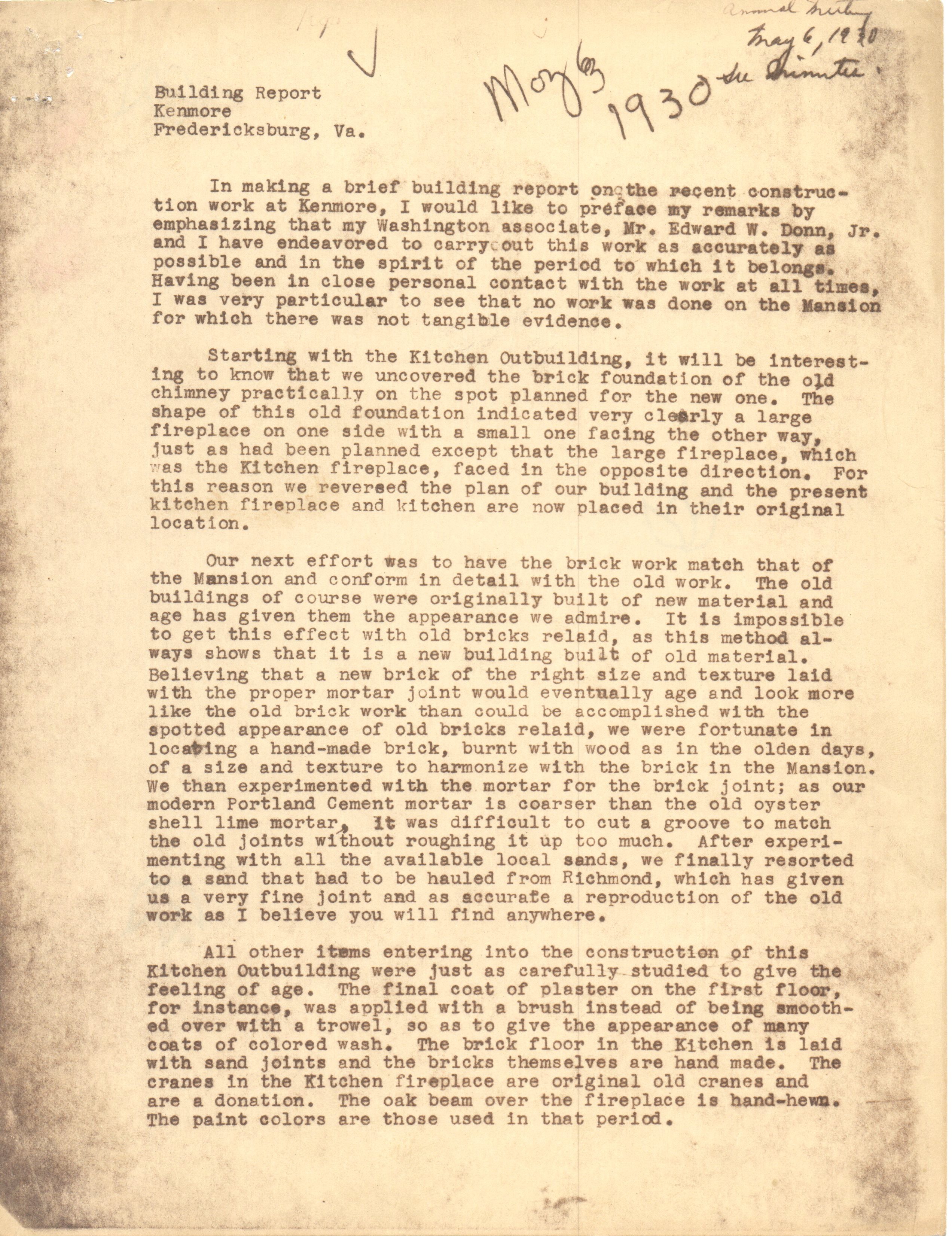
    The incredible work in saving Kenmore was beginning for the ladies. Undoubtedly, a house as large and old as Kenmore would require a substantial amount of money for restoration and upkeep.   Until the sale to the Kenmore Association, the house had been a residence for several different families, each leaving a unique imprint on the building.  Unfortunately, these alterations needed to be reversed to restore Kenmore to its original state when Fielding and Betty Lewis first inhabited the house around 1775.

    By 1930, the Kenmore Association had made significant progress in restoring Kenmore. Major projects included removing the modern attached kitchen, updating wiring and plumbing, and restoring windows, brickwork, and ornamental plasterwork, all completed for $19,372.57. (Mesick, 1992) This figure did not include the ongoing refurnishing of the house, highlighting the scale of the task.

    How was the Kenmore Association able to finance this costly restoration and refurnishing? These ladies knew how to raise money. In 1927, they established a restoration fund and began soliciting contributions.  

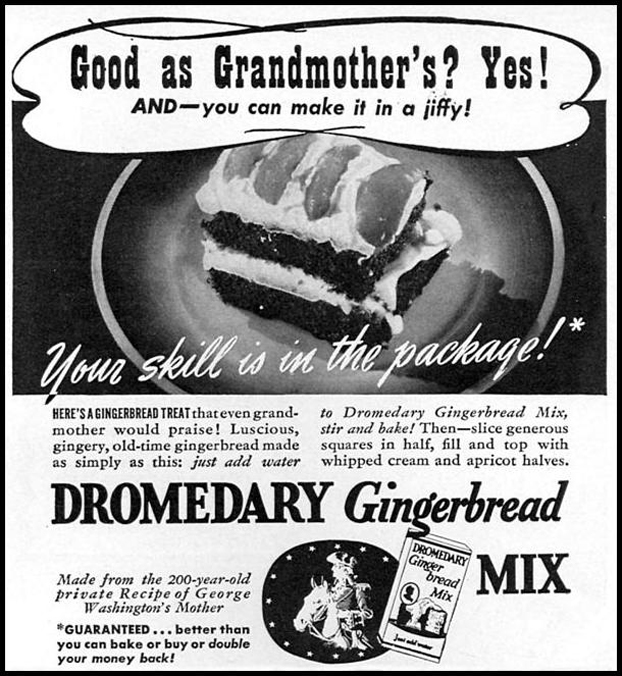
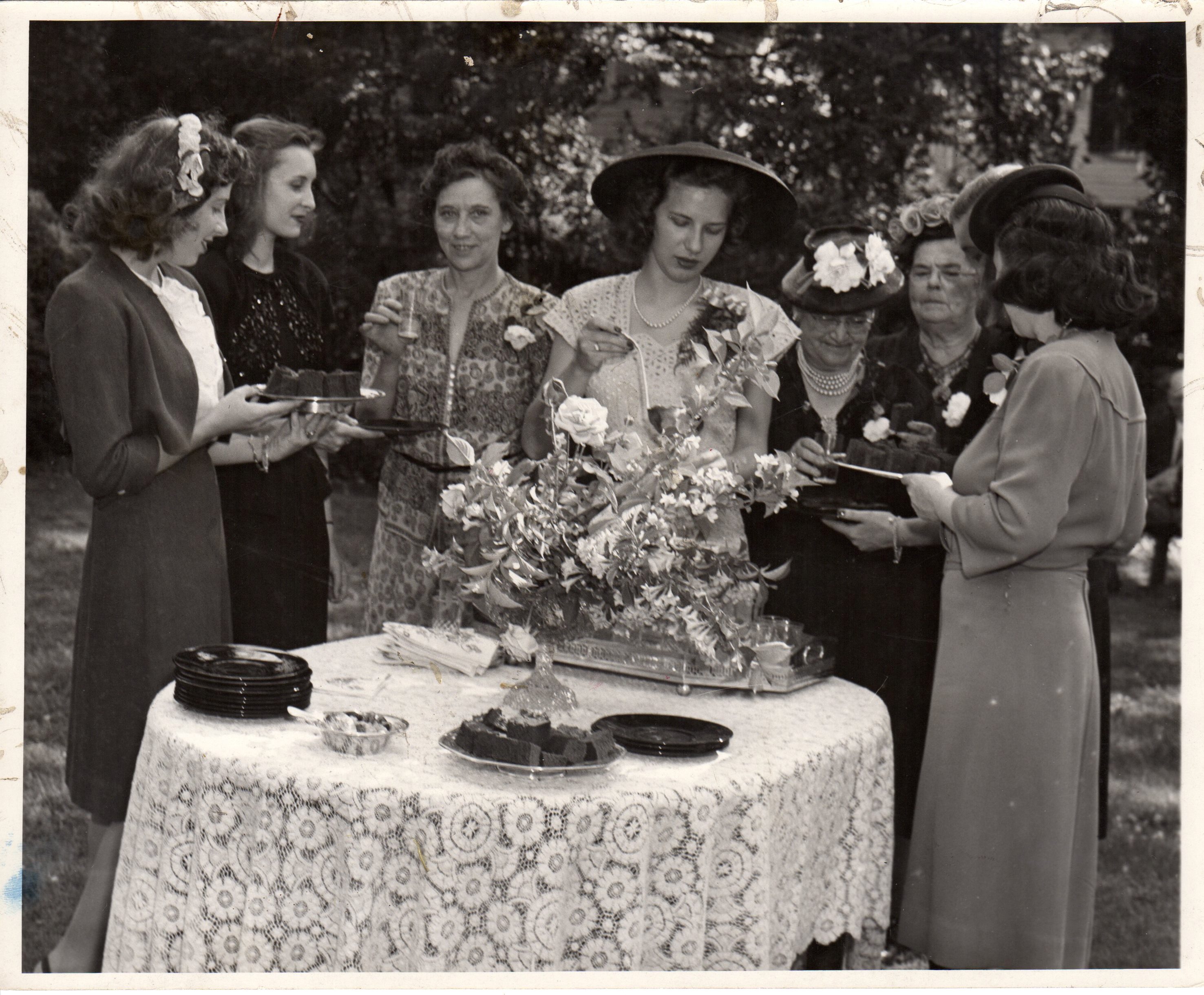
    We previously discussed the amazing partnership between Mrs. Smith secured with the Dromedary Cake Mix Company and their boxed gingerbread.   The arrangement allowed Dromedary to produce gingerbread mixes based on Mary Washington’s recipe.  In exchange, the Kenmore Association got all the gingerbread they could serve to visitors.  The company also donated mixes to be sold by the Association and various chapters of the Daughters of the American Revolution (DAR) for 25 cents a box.  The Association got half the money realized from these sales minus the shipping costs. 

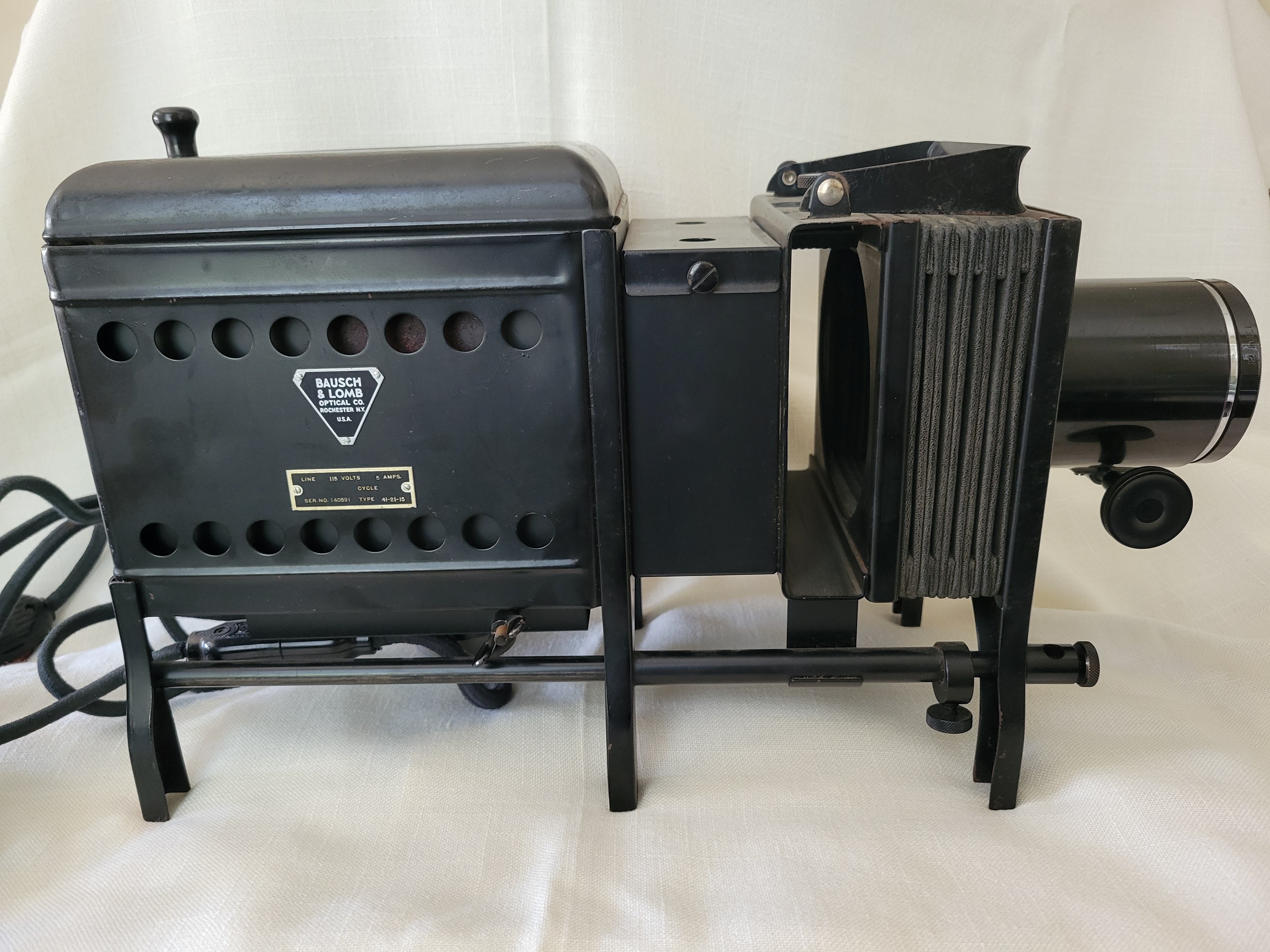
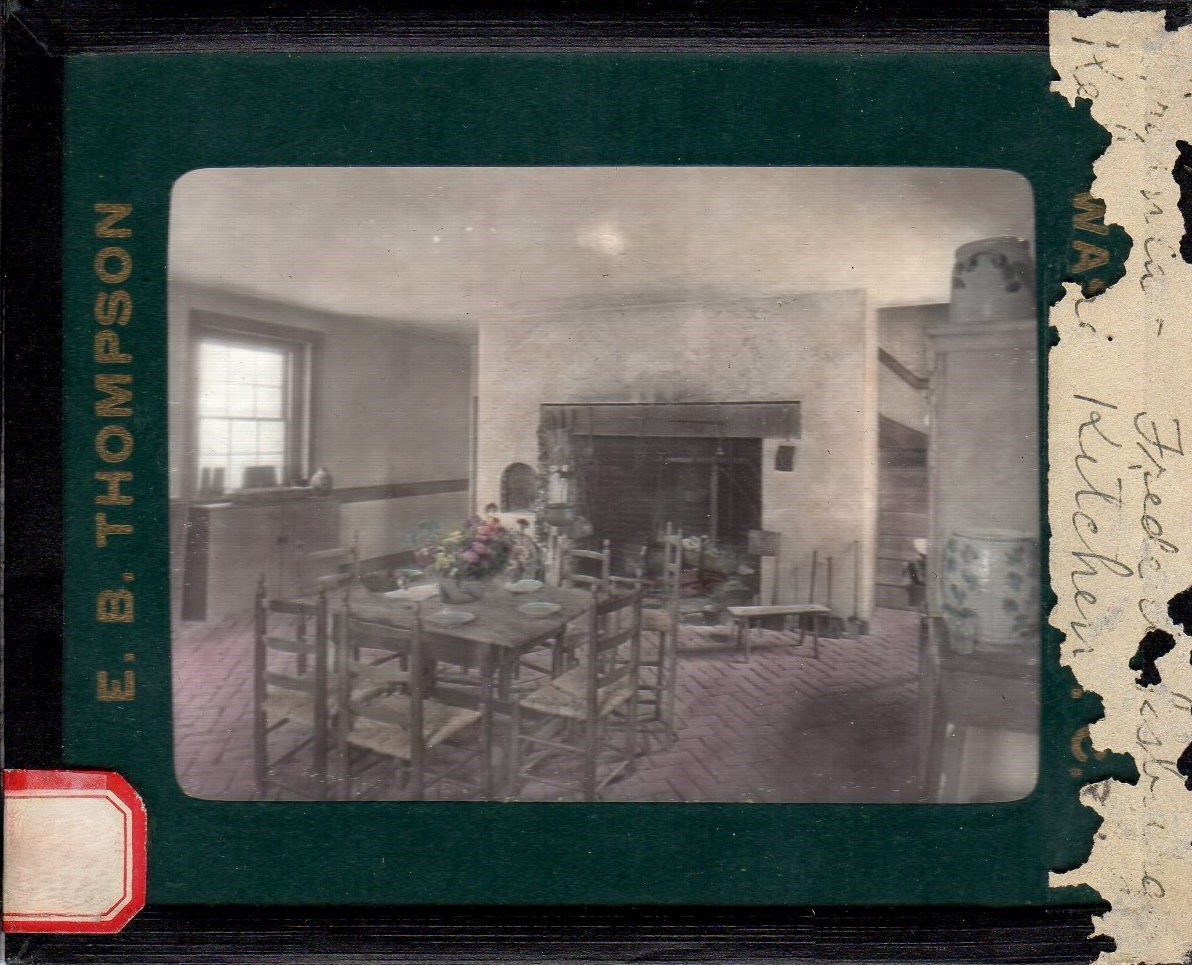
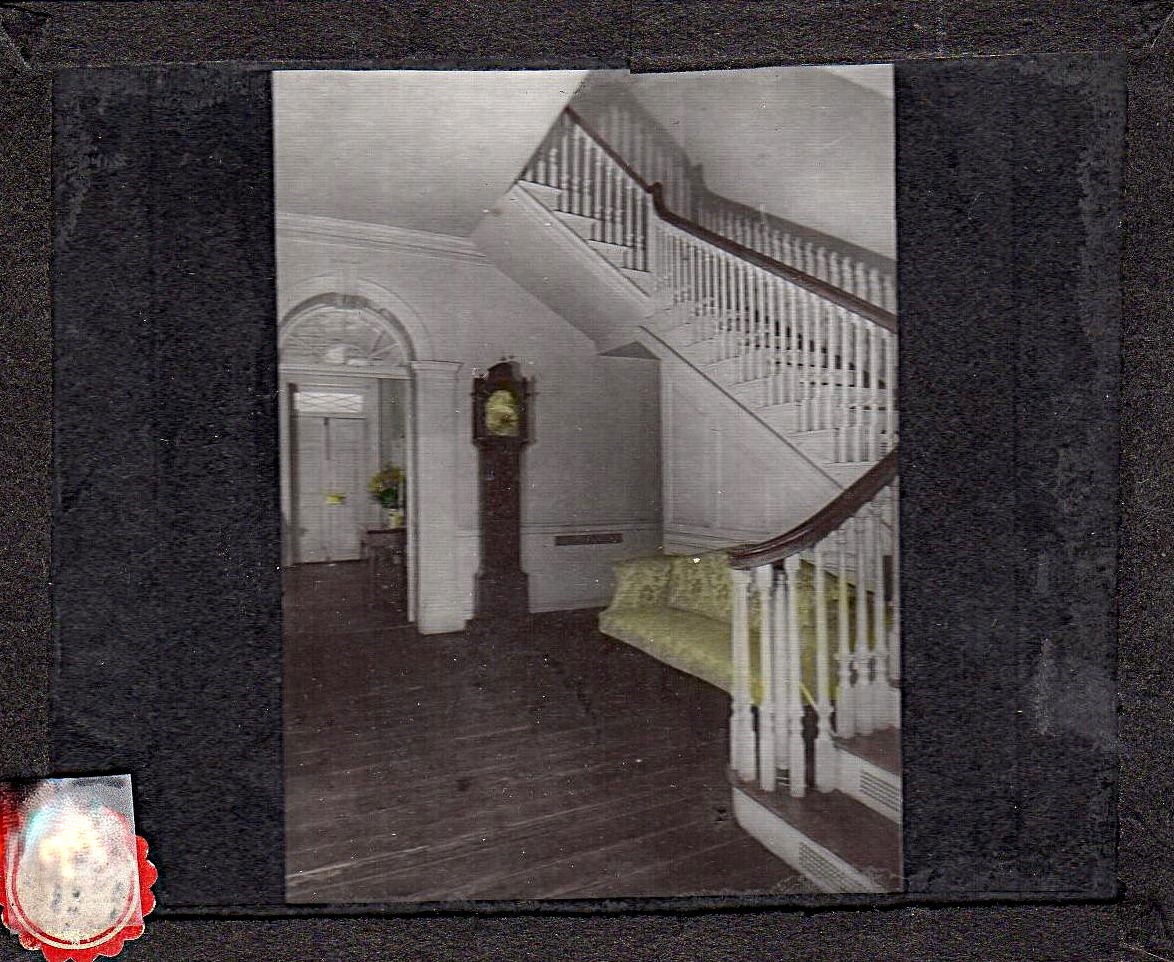
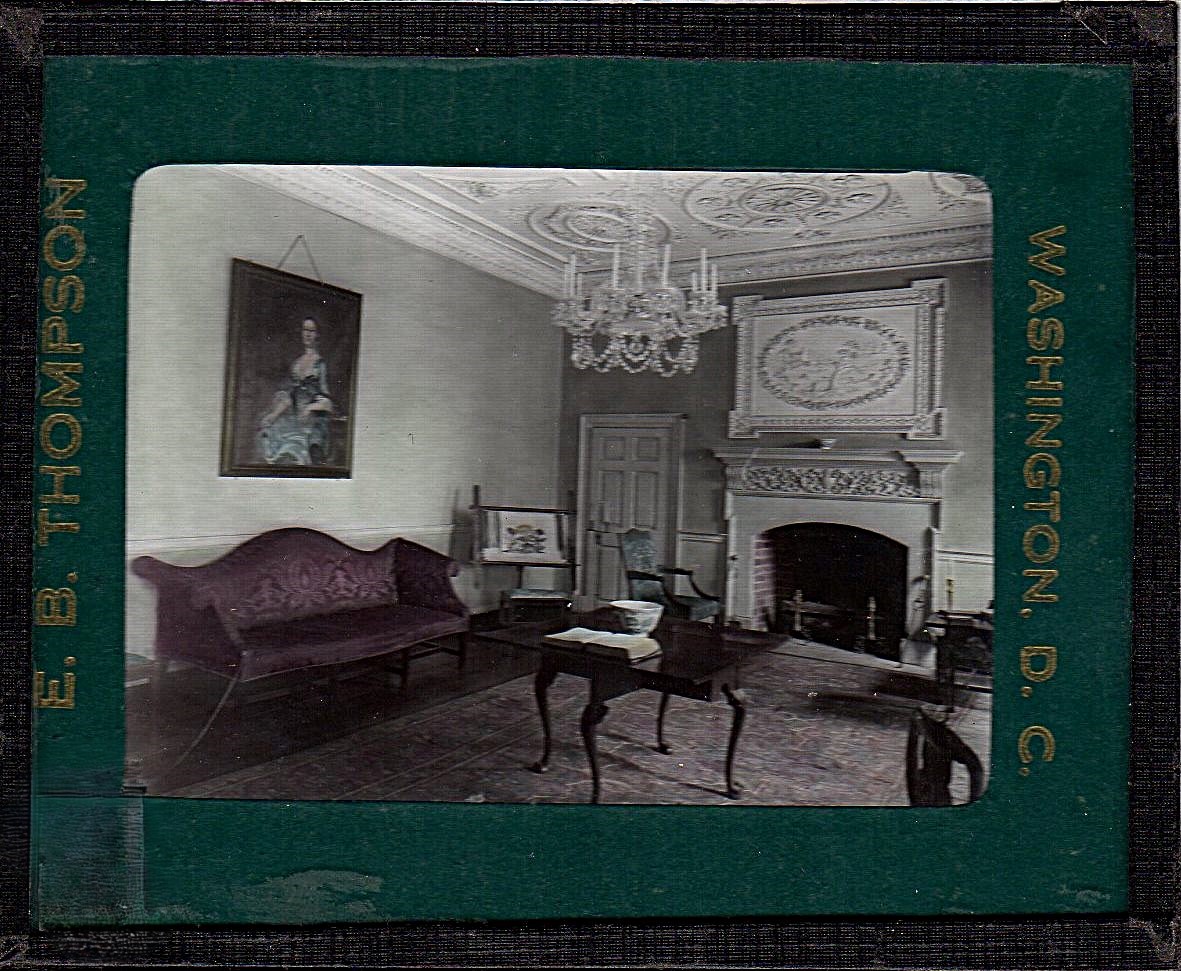
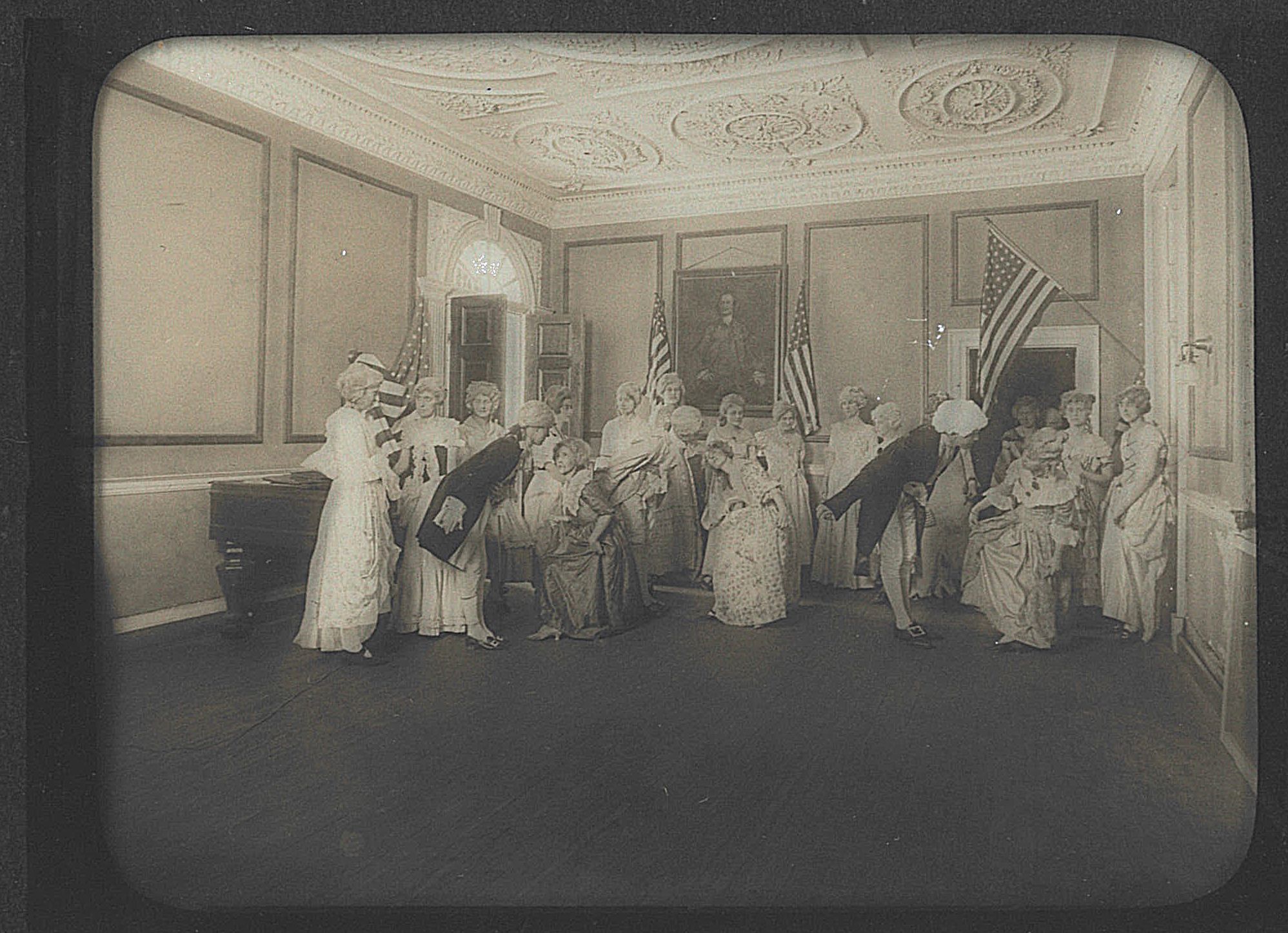
    To help the various DAR chapters across the U.S. sell gingerbread, the Kenmore Association developed a visual program using the Bauch & Lomb Balopticon and trays of glass slides. Mrs. Smith worked with Mrs. Louise du Pont Crowninshield to select various photographers to assist in the project, including the well-known E.B. Thompson of Washington, D.C.  This was no inexpensive program to develop with balopticons running around $77 a piece and slides costing $1 to $3 per slide of which we have over three hundred. 

    This program featured black-and-white and colored glass slides documenting the restoration and refurnishing of Kenmore and its gardens. Its goal was twofold. First, it showed the groups the product of their previous fundraising efforts, and second, it gave them an understanding of the house, property, and its goals for the future. Groups from all over the country wrote to Mrs. Smith requesting that she send out the program, which consisted of the balopticon and a set of glass slides for their meetings.  Sometimes, Mrs. Smith would even join the program herself, presenting and answering questions about upcoming projects. 

    These glass slide presentations were eventually updated into paper guidebooks, films, and postcards featuring up-to-date Kenmore images. The slides were packed away in the closet for the last eighty-plus years, and now offer us a great source of documentation for the early years of The Kenmore Association and the restoration of Kenmore.

    Heather Baldus

    Collections Manager

    Sources

    Mesick, C.W. (1992). Kenmore Historic Structure Report. Albany