Lives and Legacies

Category: Behind the Scenes

  • Bread Talk: A Slice of History in Colonial America

    In 2020, many of us spent a great majority of our time at home.  This gave us the opportunity to get creative and explore new hobbies.   One such hobby that became a viral sensation, plastered across social media, food blogs, and television news outlets, was that of baking bread.  Bread has been around in some form for nearly as long as human civilization, although before industrialization, it was a means to survive, not just a fun challenge for the amateur baker.  So here is a crumb of history on bread and what this glutinous baked good was like in Colonial America. 

    To start with the basics, bread is made up of 3 simple ingredients: Flour, water, and a leavening agent.  Typically salt and some kind of sweetening, like sugar or honey, are also added.  Everything else is extra.

    Wheat flour was (and still is) the most common ingredient used for bread.  Wheat quickly became a desirable crop in Colonial America.  We can infer wheat was grown on Lewis family land based on documentation of family members paying for goods in wheat.  Biological remains in the ground found by archaeologists at Ferry Farm suggest wheat was planted there too.  Wheat and other crops were planted, cared for, and harvested by enslaved laborers on both plantations.  Wheat specifically was a difficult crop to care for, requiring vast knowledge and careful timing to produce a fruitful harvest.  Wheat is a form of grass, usually not well digested or particularly nutritious to humans.  When wheat is ground into flour, put through the fermentation process of breadmaking, and baked, it becomes far more digestible, nutritious, and caloric for people to eat.  For most of Europe’s history, bread was about half of calorie intake for poorer classes, and wheat still makes up about 20% of people’s diets today. 

    Records of Betty Lewis’ accounts with Andrew Parks totaling £6.13.2. Payment by cash and wheat.
    Wheat kernel recovered from Ferry Farm.  Scale = 1mm grid. Credit: Justine McKnight.

    In the early 18th century, sieves made of fine Chinese silk that allowed for separating the bran from the wheat seed made whiter flour easier to obtain.  Although the bran is the most nutritious part of wheat, it quickly became associated with the poor and lower classes in many Western European cultures.  White bread was a sign of wealth.  This led to bakers putting additives like alum, lime, and chalk into bread to make it whiter.  Despite British Parliament passing laws regulating ingredients allowed in bread, it continued to be an ongoing issue throughout the 18th and 19th centuries.[1]  Even with contemporary knowledge about the benefits of whole grains, 70% of bread baked today is white, based on this century old principle of white flour’s superiority.[2]

    By the time Colonial America comes into the picture, bread is engrained into life.  This is so much so that most 18th century cookbooks do not have bread recipes in them as it is assumed everyone already knows how to make basic table bread. That’s right, Hannah Glasse does not have a simple bread recipe in The Art of Cookery.  It is just the three simple ingredients worked into a dough with the hands that is set aside to rise, then baked until a strong crust forms, after all.  This is something foreign to us in a time when sliced bread is $1.99 in the supermarket.  There is no need for us to spend hours baking bread ourselves in this modern age, but when you made bread every week or every day, it was something as simple as getting dressed or brushing our teeth is now. 

    Kneading bread dough in a wooden dough bowl.

    In urban areas, bakers were trained in the art of breadmaking, but in rural places, it was left to the individual household to make their own bread.  Trained or not, the science behind breadmaking on a molecular level was not understood until the 19th century.  What they did know was that they needed a leavening, or rising, agent in their bread to ensure it rose properly.  Leavened bread came into existence in Egypt about 6,000 years ago.  Bread could be made without a rising agent, but it would be a completely different texture.  In the 18th century, leavening agents came from a few different places.  Barm is the frothy substance on the top of beer after production and is the perfect rising agent for bread, making connections between bakers and brewers in urban areas imperative.  Also, just leaving dough to sit for a day or two to collect the bacteria in the air, from the kneader’s hands, and from the dough bowl with leftover dough bits can also be enough to leaven a batch of dough.[3]  This method of collecting bacteria from the dough’s surroundings is reminiscent of creating a sourdough starter.

    Loaves of bread were placed into a bake oven, a large cast iron Dutch oven, or on a hot hearth.  Regulating temperature was up to the expertise of the cook or baker, there was no temperature dial like we have on our modern oven.  And despite this, when the temperature is kept controlled, the baking process takes about the same amount of time as it does in a modern oven.  The physical baking process is about the same both ways. 

    Whether you prefer white or whole wheat bread, I hope this entry has given you a grain of insight on the importance of bread throughout history.  Breaking the bread down in this article may make it sound simple, but I will say from experience that getting the dough smooth, the crust tender, and the crumb coat correct is no easy task.  Put that loaf over coals from the hearth and you add a whole new element of challenge.  Reflect on the enslaved cook at Kenmore or Ferry Farm who was responsible for not only making bread, but three meals a day, along with planning and prepping ingredients for future meals.  Cooking and baking in an 18th century kitchen were physically and mentally challenging, making it one of many difficult jobs for those enslaved on southern plantations.  I suggest everyone try baking a loaf for themselves.  To me, it is a task that humanizes food production and reminds us of its delicate nature now and throughout time.

    Loaves of bread made on the hearth at Kenmore for Taste Through Time program.

    Allison Ellis

    Manager of Public Programs


    [1] Federation of Baking. “Fact Sheet No. 9 – the History of Bread.” Last modified 2011. https://www.fob.uk.com/wp-content/uploads/2017/01/FS-9-History-of-Bread.pdf.

    [2]  Pollen, Michael.  Cooked: A Natural History of Transformation. New York: Penguin Books, 2014.

    [3] Edlin, A. A Treatise on the Art of Bread-making. London: J/ Wright, St. John’s Square for Vernor and Hood Poultry, 1805.
  • Meet the 2024 Field Crew

    The dig is in full swing, and we are a little over halfway through our 11-week dig season. Over the past few weeks, we have made lots of new exciting discoveries, and as you may have noticed, added quite a few new faces to our crew.

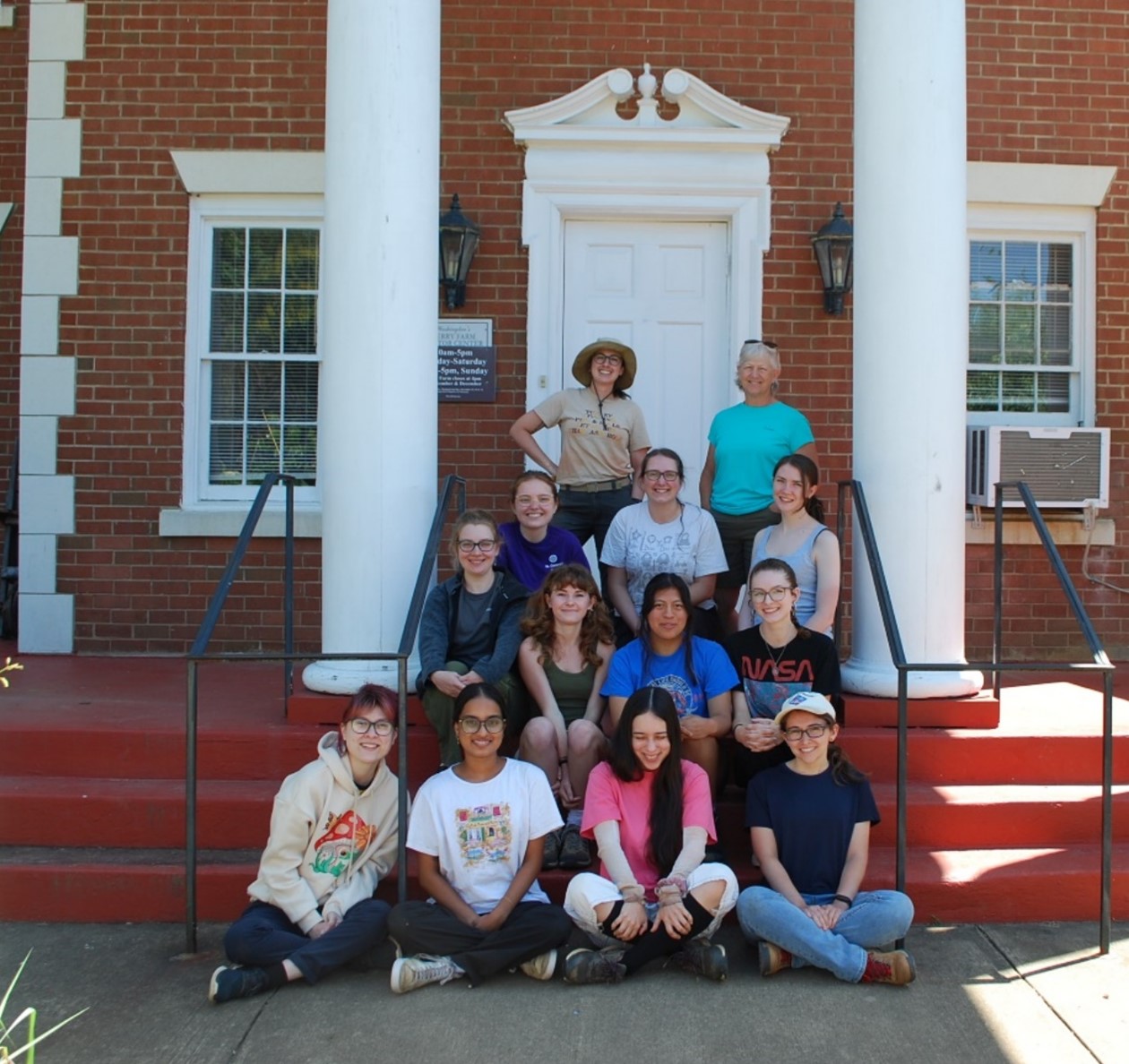
    Hosting a field school from the University of South Florida as well as interns from colleges and universities around the country has more than doubled our crew this season. While this is definitely awesome in itself, the fact that the entire field school and crew are women makes this year’s dig stand out even more. Now before we get into why an all women dig is so impressive, lets meet our crew.

    Front Row Left to Right: Alaina, Srin, Sarah, Sofia. Second Row: Abbie, Amelie, Rosie, Lindsay. Third Row: Kate, Rachel, Kellina. Back Row: Danielle, Judy.

    Srinidhi

    “Srinidhi is from Lithia, Florida. She just recently graduated from the University of South Florida with a bachelor’s degree in history. She plans on attending graduate school sometime in the future. Outside of school, Srinidhi enjoys reading high fantasy novels, playing video games, and hanging out with her dog, Felix.”

    Lindsay Marrion

    “Lindsay Marrion, from Niceville, Florida, attends the University of South Florida for English and Art History. She hopes to continue her education in graduate school, with dreams of working in academia one day. Outside of school, Lindsay in as avid reader and writer, and she loves an adventure of any kind.”

    Alaina Scapicchio

    “Alaina Scapicchio is a doctoral student at the University of South Florida in Tampa. She did her first field school at Ferry Farm in 2018 and now she is the graduate assistant for this year’s field school. Her dissertation is focused on public memory and the commemoration of witch trials in colonial America. She is the owner of two senior citizen fat cats named Tazz and Amira who she misses very much.”

    Sofia Almeida

    “Sofia Almeida is an incoming History PhD student at the University of South Florida. She recently completed her MA thesis on the digitization of historic Black cemeteries in Florida. Moving forward she is interested in American history, historic archaeology, and memory. Outside of school, she enjoys reading, playing guitar, and going on adventures with friends.”

    Amelie

    “Amelie is from Tucson, Arizona and is studying Biology, French, and Anthropology at the University of Arizona. She enjoys reading, hiking, and weightlifting and aspires to travel the world.”

    Rosie Muraca

    “Rosie Muraca is from Fredericksburg, VA. This is her first time working as a field student. She plans to attend Mount Holyoke College in the spring. When she is not digging, she is spending time with her two cats.”

    Kellina

    “Kellina is a rising junior at Yale University. She is an anthropology major from Spotsylvania, VA and she hopes to work in museum conservation. Spending the summer at the Ferry Farm archaeological dig has given her a better understanding of artifacts prior to their museum life and deepened her understanding of American history.”

    Kate McDonald

    “Kate McDonald Yaun is a rising freshman at Sewanee: The University of the South. She is studying Environment Arts and Humanities. Her hobbies include playing her viola, reading, and spending time outdoors.”

    Abbie Wood

    “Abbie Wood graduated from UVA in 2023 with a B.S. in Anthropology and a B.S. in Archaeology. This is her second dig season at Ferry Farm and the fourth overall, following a collections management museum internship. She has a passionate interest in caring for artifacts and history.”

    Sarah

    “Sarah came to Ferry Farm as a student of Virginia Commonwealth University in the summer of 2014. She has participated in half a dozen summer digs as an intern at Ferry Farm since then. Her favorite artifacts consist of the more personal items people had such as buttons, beads, sewing pins and Ferry Farm’s famous and abundant collection of colonial wig hair curlers.”

    So back to why an all women crew is so awesome. Well, our crew illustrates how women are gaining ground in a previously male dominated field. Historically, many professional positions in archaeology were held by men, but times are changing.

    Hopefully we will see some of these faces again somewhere down the archaeology pipeline, or wherever their futures may take them.


    Danielle Arens

    GWF Archaeologist

  • 2024 Dig Preview!

    Spring is in the air. The weather is warming up, flowers are blooming, bees are buzzing, and of course the dig season is about to start here at Ferry Farm, George Washington’s Boyhood Home.

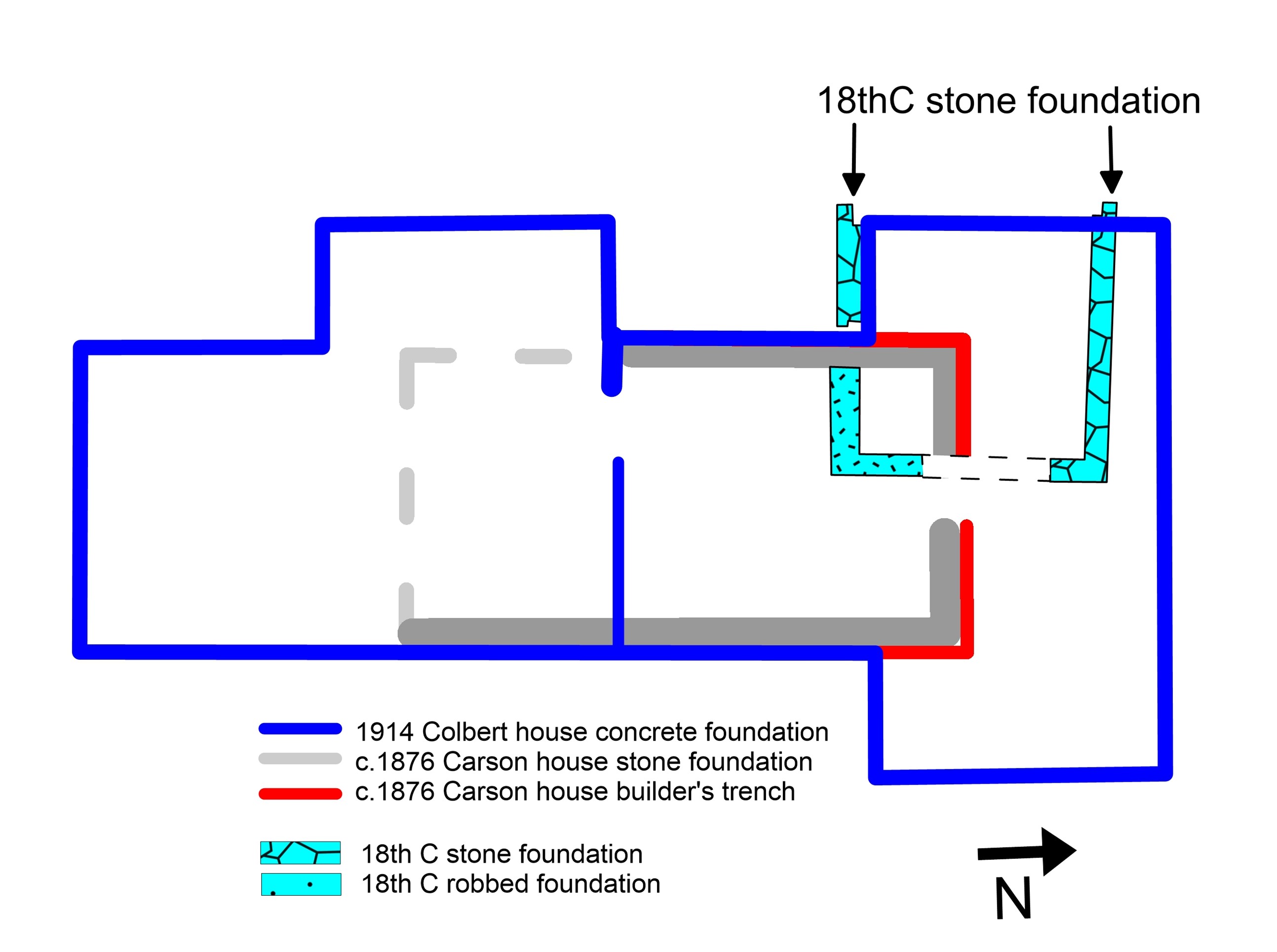
    As part of the 2023 dig season, our team revisited the site of a colonial-era kitchen that had experienced a particularly destructive fire sometime in the middle of the 18th century. The kitchen’s foundation, as well as the surrounding landscape, had been compromised by the construction, and subsequent destruction, of two farmhouses that were built directly on top of everything. This site (FF-44) is located about 50 feet from the northeast corner of the Washington House.

    Location of this year’s dig at the colonial kitchen site (FF-44)

    The 18thC kitchen site was initially explored as part of an archaeological assessment of the Ferry Farm historic property in the early 1990s. The structure and its contents were originally interpreted as a house, but a reevaluation of the excavation notes and artifacts several years later reinterpreted this site as a kitchen, not a primary domestic dwelling. But research queries still exist, such as narrowing down the dates of construction and destruction of the structure, as well as determining the possibility that meaningful artifact deposits and landscape features that might help bolster the interpretation of the building still exist outside of the foundation.

    Location of the 18thC kitchen in relation to later 19th and 20thC farmhouses

    With these questions in mind, our efforts last summer focused on working out a game plan for reexamining the site for our future excavations.  During our dig, we uncovered the southwest corner of the original kitchen as well as the foundation of the 20th-century farmhouse overlaying it. Re-locating the site and evaluating the amount and extent of fill were our primary goals. That completed, this year we will concentrate on investigating the landscape surrounding the foundation and reexamining the burnt fill within.

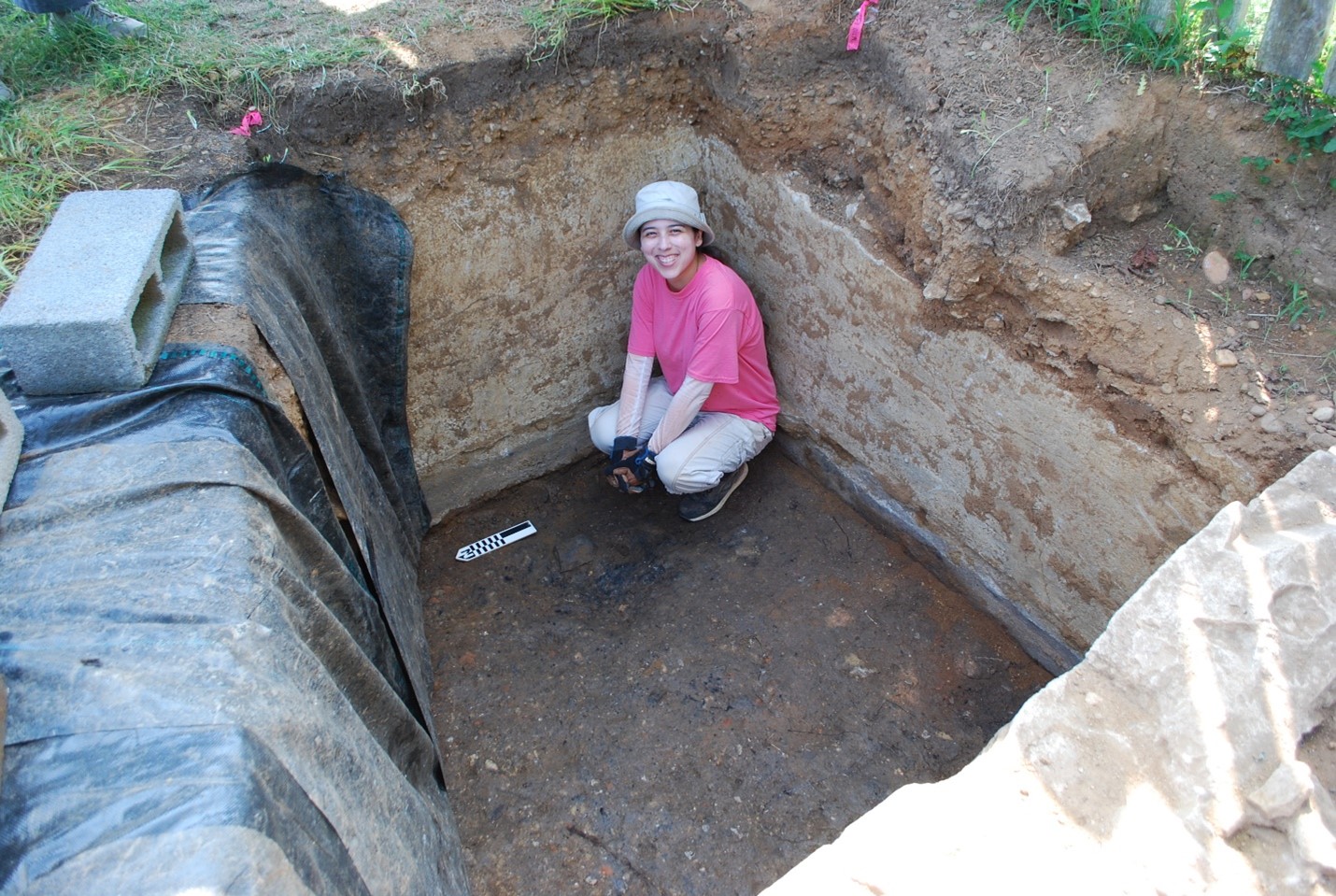
    Last year’s excavation. Red arrow points to area inside of the kitchen, white arrow points to area outside of the building. The stone and concrete wall is part of the 1914 farmhouse foundation, which sits atop the colonial kitchen fill.
    Lead excavator Sarah on floor of kitchen cellar

    An honest question you might ask would be why would we want to learn more about what was outside of the foundation? Isn’t all the important stuff inside? In the archaeological world, a lot of valuable information can be learned from these outlying areas. Eighteenth-century trash middens are often found outside of a building because garbage was being thrown off of the porches and out the doors and windows. Studying this everyday disposal of trash can tell us how and when a building was being used, as well as traffic patterns by those using the building.

    Another interesting feature that can be found outside of a foundation is a builder’s trench. These trenches were dug by the individuals building the foundation, and as they worked and backfilled these trenches, items they were currently using were accidentally left behind. These artifacts can be excellent dating material and can really nail down a construction date.

    Other items we will be looking for are possible supplementary building features, such as post-in-the ground foundations and fences. Additionally, taking a second look at the site will help us better understand the previous archaeology that was done over thirty years ago.

    As for the exciting second site we started excavating last year, Feature 321, we are putting that project on hold for now and concentrating our efforts on the kitchen site. But work continues in the lab on all the interesting artifacts recovered during last summer’s dig.

    This year’s dig begins April 29thand ends July 12th.  Archaeologists are working on site from 8 am until 4 pm, Monday through Friday, and we gladly welcome questions from our site visitors.  So be sure to stop by and see what exciting things we uncover!

    Danielle Arens and Judy Jobrack

    George Washington Foundation Archaeologists


  • Seeing The Big Picture:  How Excavated Ceramics Informed The George Washington Foundation’s Acquisition of Complete Pieces for Display

    The archaeology and curatorial departments for The George Washington Foundation have long worked together to furnish the reproduced Washington house with historically accurate items that resemble as closely as possible the ones that George and his family would have lived with daily. These pieces are not originals, which means visitors touring the house can handle them.

    Go ahead and touch everything.

    In our latest collaboration we’ve been examining sherds of ceramic vessels owned by the Washington’s to obtain actual eighteenth-century dishes. We want to display these dishes in our gallery to give visitors an idea of what the whole vessels looked like. Four such ceramics have recently been acquired at auctions by the Foundation and you can see them first here along with the excavated remnants they resemble.

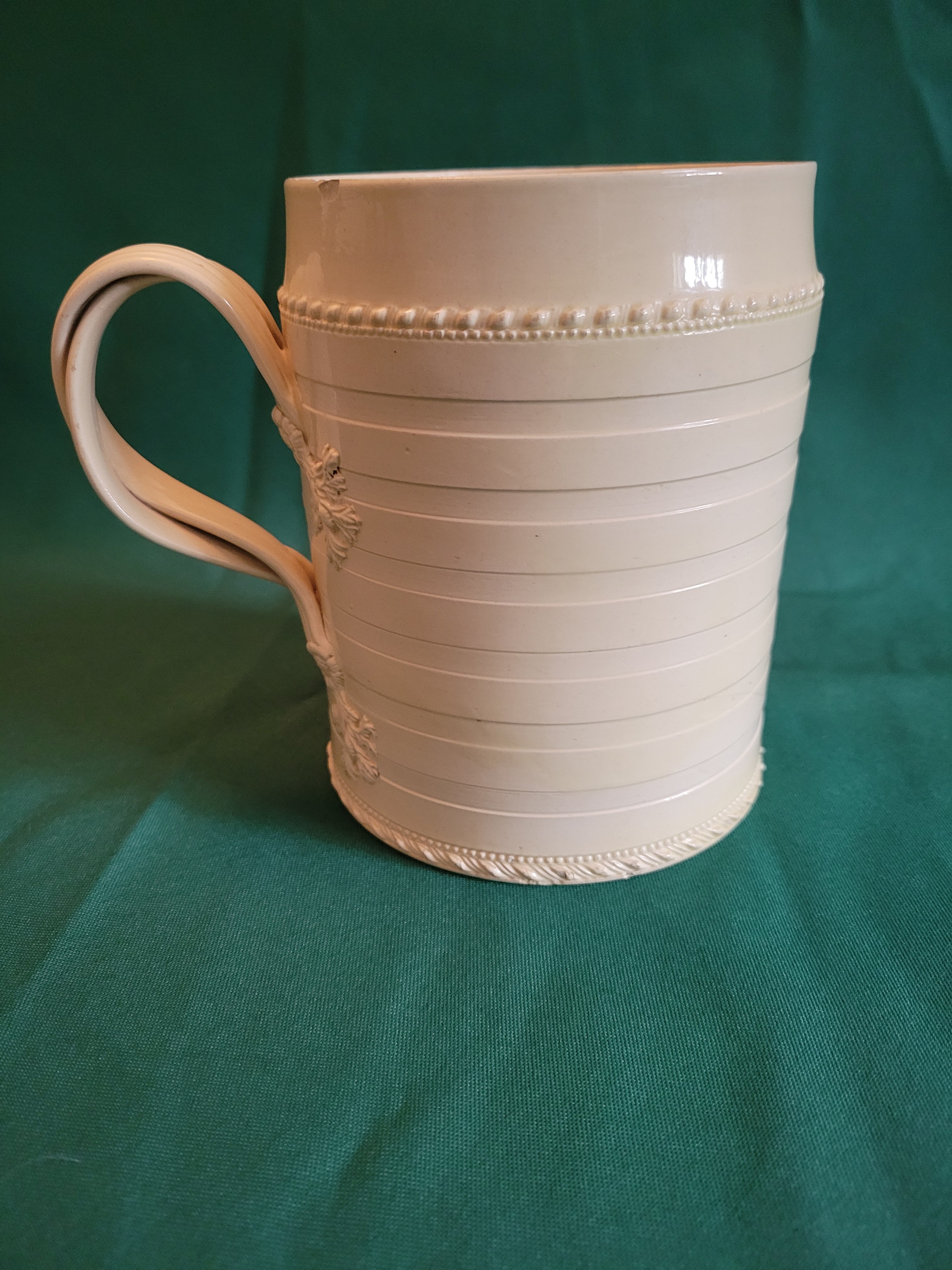
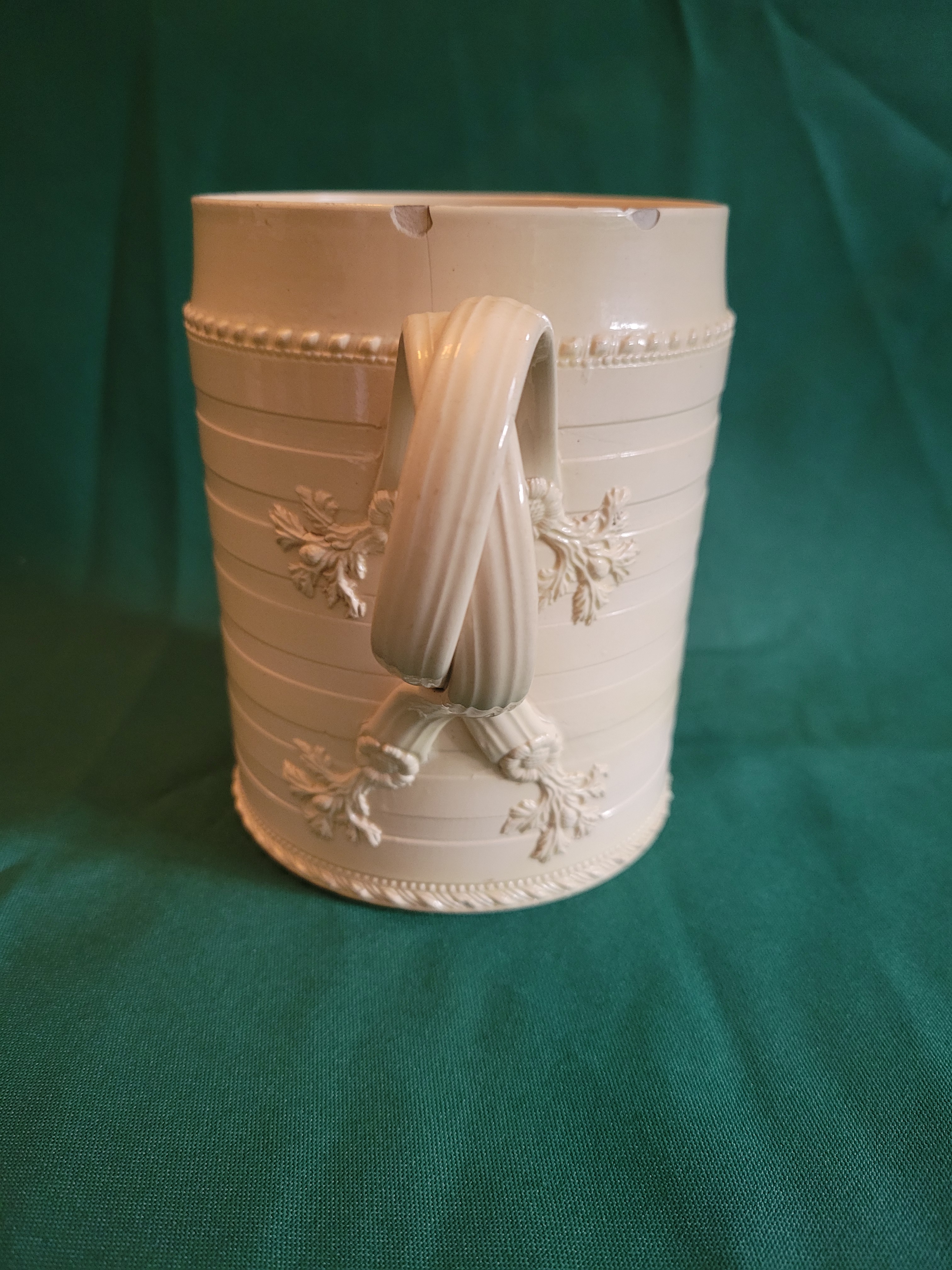
    Three of our acquisitions are a type of English ceramic called ‘creamware,’ which was invented in the early 1760’s and was very popular with George’s mother, Mary. Both this lovely pitcher and mug exhibit decorative elements represented by our excavated ceramics. Most prominent are the elegantly curved handles that terminate in delicate strawberry flowers. At least two vessels with these types of handles have been recovered at Ferry Farm. The first is a highly decorative creamware sauce boat and the second a petite teacup, both of which were considered quite fashionable for the time. The jug and teacup also share a common form of decoration called a ‘beaded rim.’

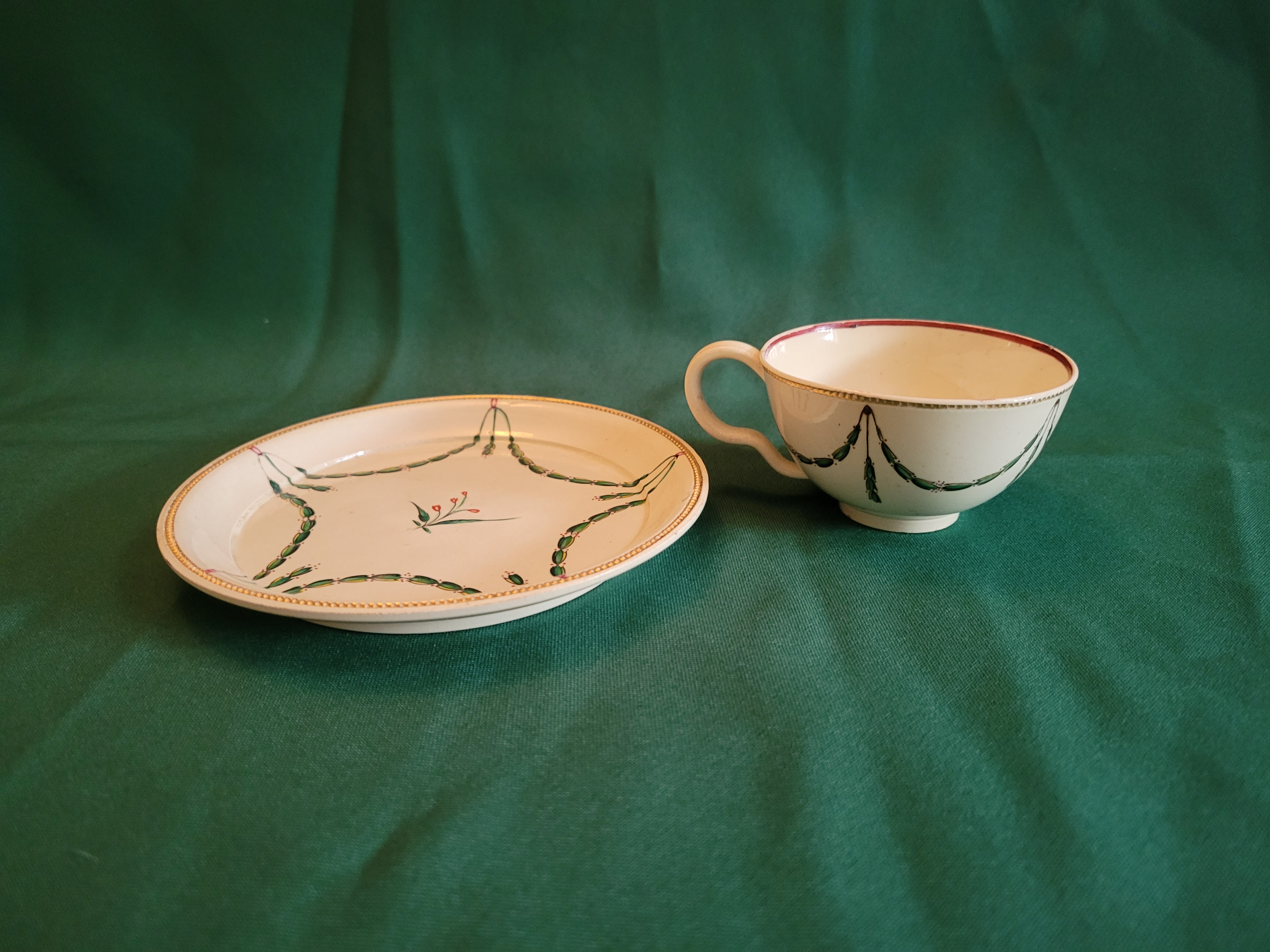
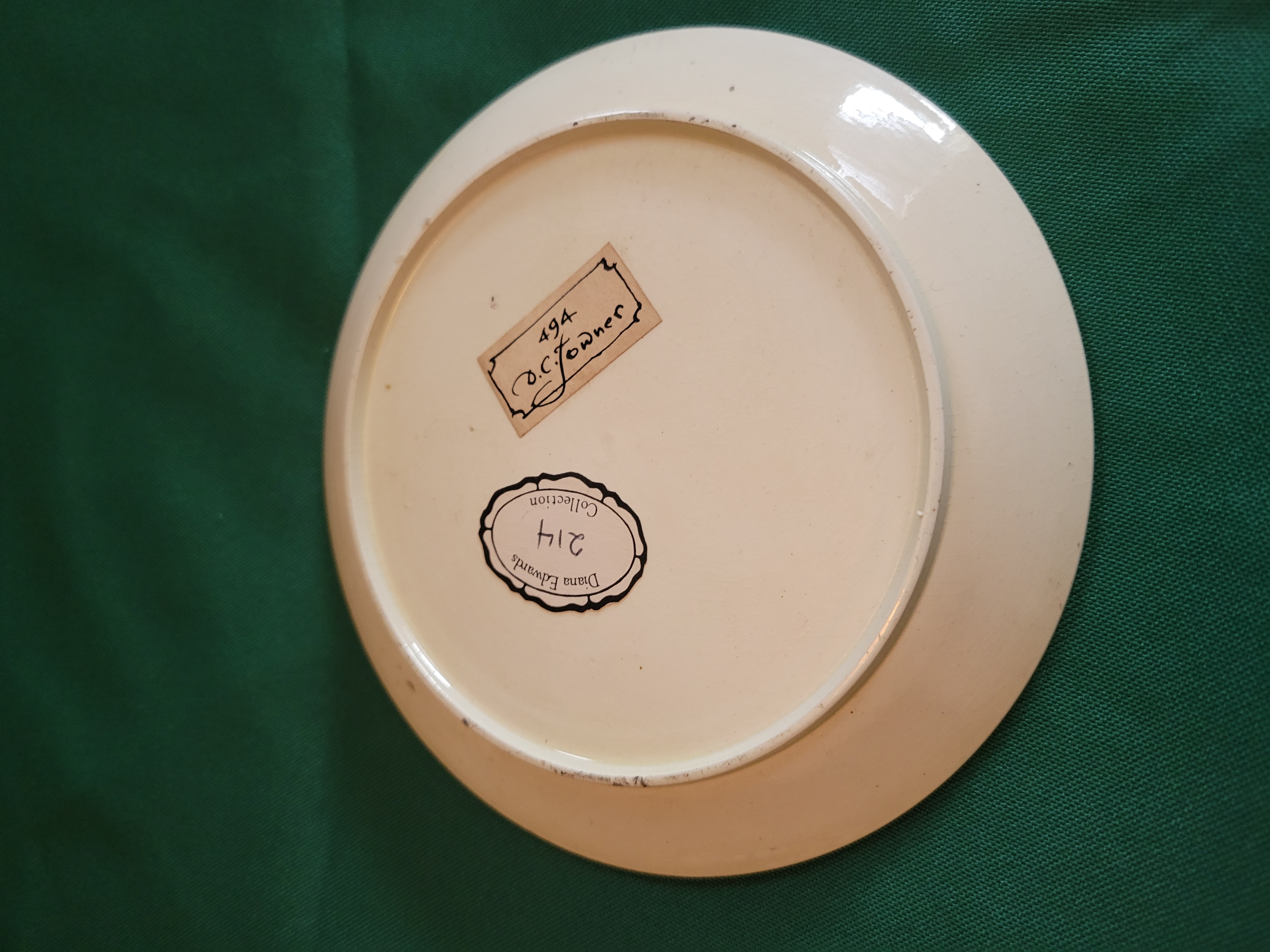
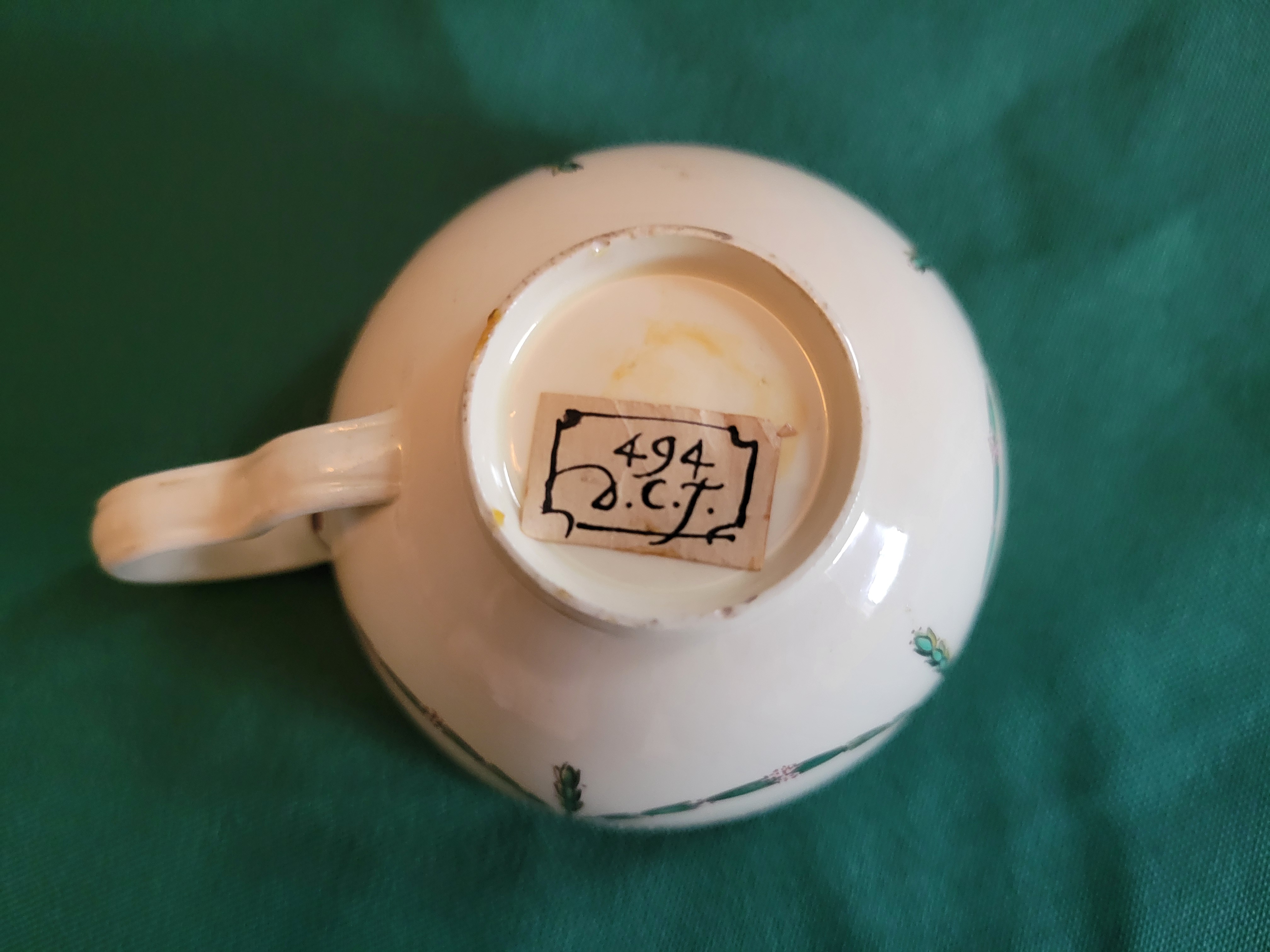
    Another teacup owned by Mary was this beautiful piece hand-painted with a detailed swag motif. But from the sherds it’s difficult to really appreciate how graceful this decoration is. Luckily, our curators hunted down a similar cup and saucer with the same decoration, which is unusual. The saucer also features a beaded rim that has been filled in with gold gilding, although we believe the gold to be a later addition to the piece. The cup and saucer also have handwritten tags affixed to the bases which indicate they had the distinction of having been in the collection of a well-known (at least to ceramics geeks like yours truly) collector of creamware. This man by the name of Donald Towner had written extensively on the topic of English ceramics and over his career had amassed a large study collection, of which this was one. His book on the Leeds Pottery in England features a catalogue from the pottery that includes many of the decorative elements and shapes discussed above (Towner, 1965).

    But my favorite is this delightfully potbellied creamer with three legs featuring lion’s heads and paws for feet. The ceramic type in question is called Whieldon and started to come on the market in England around 1749. Of note is the raised molded leaf decoration which resembles one sherd from our collection. While we may never know the exact type of vessel our leaf came from, the complete creamer gives one a better idea of how the decoration was placed and looked. Mary’s choice of ceramics played a large part in emphasizing her and her children’s place among the Virginia Gentry and we’re very pleased to have some whole examples now to help illustrate to visitors just how lovely some of these dishes were!

    Mara Kaktins, Archaeologist & Lab Manager


    Bibliography

    Towner, Donald.  The Leeds Pottery, 1965.  Taplinger Publishing Co., Inc., New York. 
  • Caring for Ferry Farm’s Flora and Fauna

    Step onto the grounds of George Washington’s boyhood home and, notwithstanding its famous connection, there’s no mistaking the feeling of being in a special place. A National Historic Landmark, Ferry Farm stretches along the Rappahannock River across from downtown Fredericksburg’s City Dock. The land is varied and rich, with native woodlands, a native grass meadow, walking trails, riverbeds, springs, a garden, and scenic Virginia rail fences. It has seen a significant share of American history from the activities of Native Peoples, to the colonial inhabitants, to Civil War Union encampments, and more.

    View of Fredericksburg from Ferry Farm

    Historically significant land such as this ought to be carefully maintained and stewarded – and it is. With its variety of features, maintenance can become a challenge, as there is always the threat of erosion, the caring for trees, the need to ensure the grounds are safe and passable for visitors, and finding economical ways to use and reuse what’s available. Also, we cannot forget the residents that have first rights to be here – Ferry Farm’s numerous critters.

    Leaving natural habitats for flora and fauna promotes a healthy ecosystem

    “We try to keep a balanced ecosystem by only introducing native plants that would not interrupt the natural beauty of the site,” explains John Carmichael, Buildings and Grounds Director. “The land is kept as natural as possible to maintain a primitive ecosystem native to the area. Forests are kept healthy by mitigating the growth of invasives. Grasslands are maintained with tough turf, mainly natural growth. We’re not looking to keep up a pretty green lawn with no weeds; we maintain how it would have looked in Washington’s day, with natural growth, clover, and field grasses.”

    The grass in front of the House leading to the riverfront gets mowed sparingly in order to protect all of the embankments from erosion. Growing large strong roots helps keep the soil in place. Underbrush on the riverbank remains in place, for the same reasons, and fencing keeps visitors off of the area since it is unsafe footing.

    Grasses are kept long in front of the Washington House and along the Rappahannock River to protect the embankment from erosion.

    The entire flat nearest the water was created by the Corps of Engineers shortly after the conclusion of the Civil War. Sediment from erosion was threatening to make the river too shallow to navigate. To relieve the problem, the Corps built wooden retaining walls along the river’s edge and then dredged a channel to allow ships to resume operating on the river. They used the sand from the dredge to fill in behind the wooden retaining walls. With sand not being optimal land for growing trees, trees that happen to grow there are left because they’ve already proven their hardiness.

    Since no commercial fertilizers and minimal weed killers are used at Ferry Farm, composting and mulching are an essential part of stewardship. Large limbs, trimmings, and small branches are placed at the edges of woods to decompose and provide shelter for animals. Tree trimming partners will mulch downed limbs which in turn get spread onto walking paths and parking lots.

    Composting at Ferry Farm is a three-year process. New grass clippings, greens, weeds, manure, wood ash, and leaves go into an initial pile for decomposition. In year two, everything gets turned and sifted regularly. By the third season, it’s ready to be spread throughout gardens and flower beds. Green and cost-effective, composting keeps useable nutrients out of the landfill.

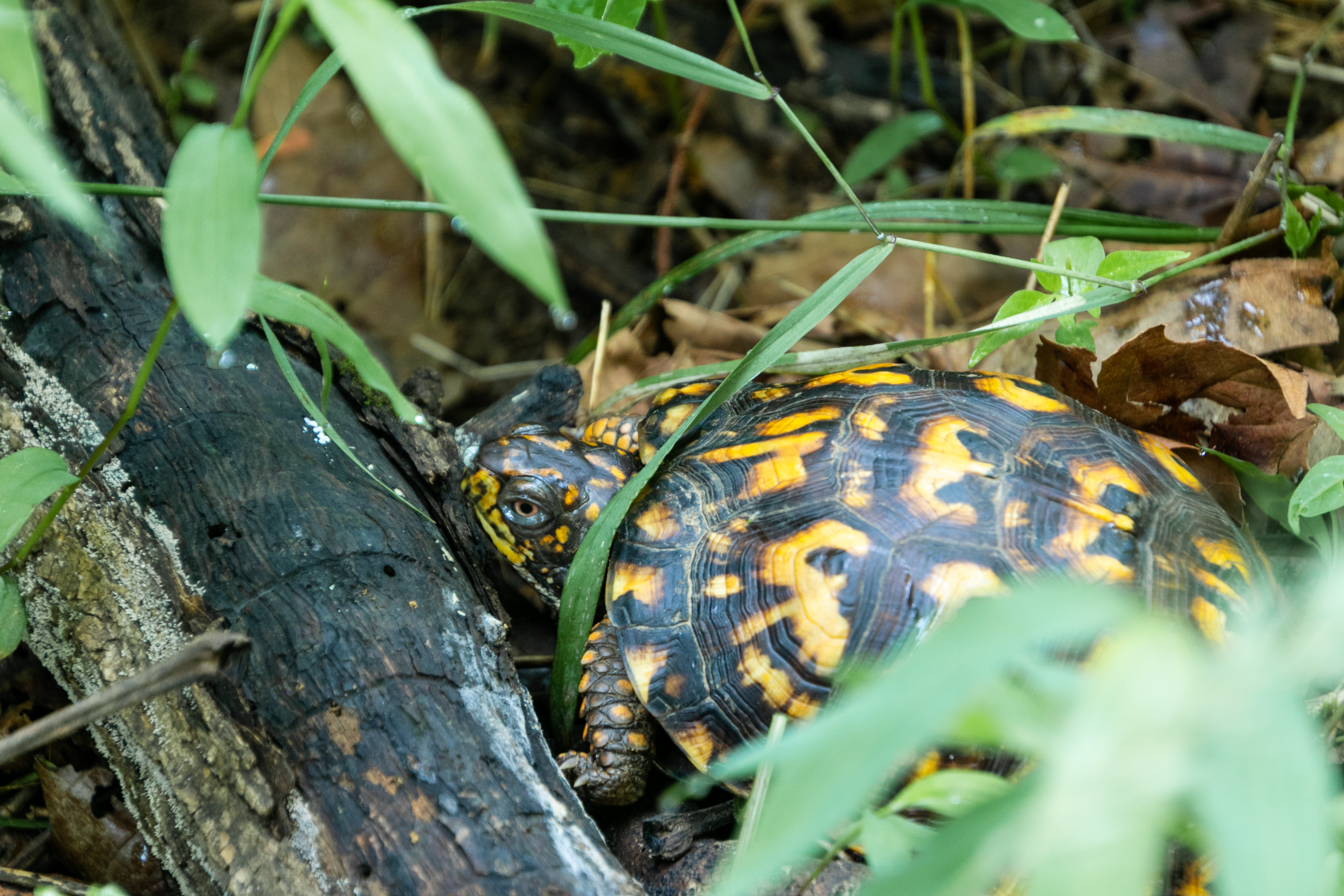
    Box turtles thrive in tall grasses in front of the Washington House. Source: Sharon Houston

    Surrounded by busy roads on two sides, Ferry Farm is a wild animal sanctuary for deer, rabbits, groundhogs, red and grey foxes, hawks, bald eagles, herons, opossums, raccoons, black and garter snakes, box turtles, bats, and hundreds of bird species. Leaving natural habitats for flora and fauna promotes a healthy ecosystem. The back meadow receives rejuvenate mowing in early spring to encourage it back to good health. It’s a birders’ paradise dotted with bluebird boxes along a mowed walking path. Over 125 different species of birds have been identified on the property over the years. Look closely, and flat patches of grass indicate where a deer has bedded for the night. Critters are welcome here. “As long as it poses no threat, it has a right to be here,” says Chris Lynn, Buildings and Grounds Technician.

    The flowers in the garden attract pollinators to the herbs and vegetables; fruit-bearing trees and shrubs do their part to attract as well. Gardens grow with the three sisters – corn, squash and beans – as well as tobacco, cotton, potatoes, and more.

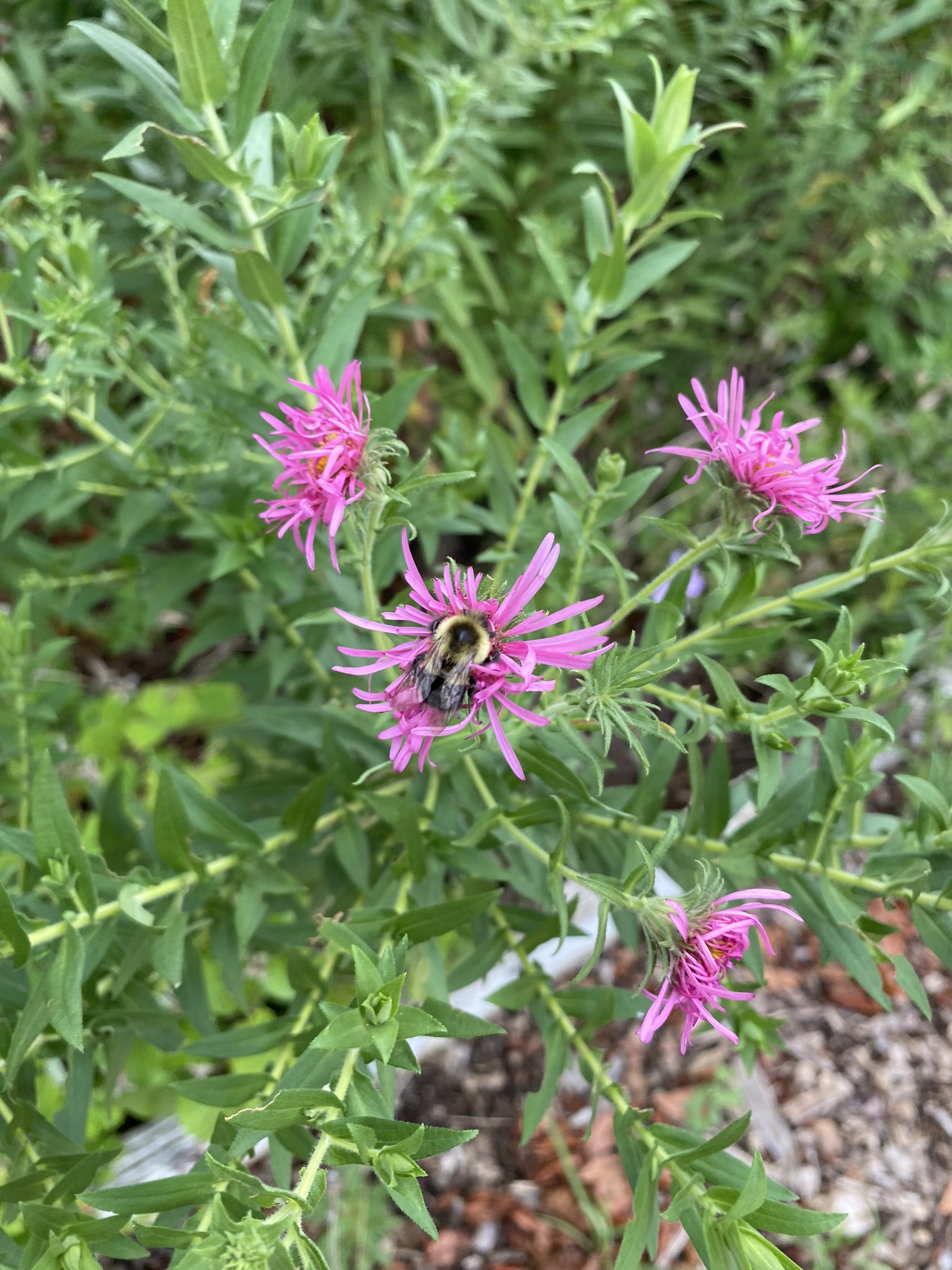
    A flower in the garden bed serves to attract pollinators for herbs and vegetables

    Ferry Farm’s beauty conjures up days of natural grasslands, mature forests, and living in harmony with the land’s resources. Knowing that the “Father of our Country” spent his childhood here evokes moments of contemplation. Absorbing the sights and smells of wild flora and fauna while walking where young George walked is a step back in time, where the present awakens the past.

    Lori Scott Pikkaart,

    Marketing & Communications Manager

  • 2023 Ferry Farm Dig Preview

    Spring is here, which means another season of exciting archaeological work at Ferry Farm is about to begin! Ferry Farm, the boyhood home of George Washington, has been conducting archaeological investigations for over 30 years with the aim of recreating and analyzing the 18th-century farm landscape that shaped George Washington during his formative years as a young man. Every season brings new discoveries, and this year will be no different.

    This season we will be investigating two separate areas within the historic site. The first (FF-38) is a feature discovered in 2018 when we monitored the excavation of a utilities trench for the reproduction Washington house. This large feature, approximately 5’ x 7’ and over 2.5’ deep, is filled with dark brown organic soil and contains 18th-century artifacts, including a wig curler, a signature find for our site. Our excavations will expose the entire plan view of the feature and how it relates to other possible features in the surrounding area.

    Figure 1. The location of our two summer projects in the historic area.

    The second area of investigation (FF-40) is the site of a colonial-era kitchen that burned early in the Washington family tenure of the farm. Though the building’s remains were the subject of previous archaeological studies in the 1990s, we are going to open the site up again to have a second look. Since we have been unable, so far, to locate the kitchen that would have replaced this one after it was destroyed in a very hot fire, we want to continue examining the one we do know about!

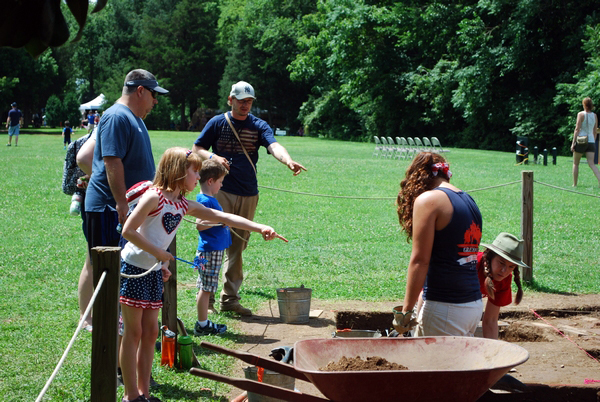
    The dig begins the week of May 8th and ends July 21st. The crew will be on-site Monday through Friday, 8 am to 4 pm. We are more than happy to answer questions about our work and show our visitors the artifacts that we find. Assistance is always welcome at our sifting screens, so come by and get your hands just a little bit dirty as we search for answers in the ground!

    Judy Jobrack

    Archaeology Field Director

  • Mending Practice at Ferry Farm’s Archaeology Lab: A Photo Journal

    If you visited Ferry Farm on October 21, 2022, you may have heard a loud crash coming from the archaeology lab – don’t worry, it was on purpose! During my fall semester internship at the Ferry Farm Archaeology Department, I had the pleasure of learning how to mend ceramic vessels, and like any skill, practice makes perfect. I purchased a cheap ceramic bowl from Goodwill and purposefully shattered it so I could practice putting it back together again. Follow along as I take you through the process!

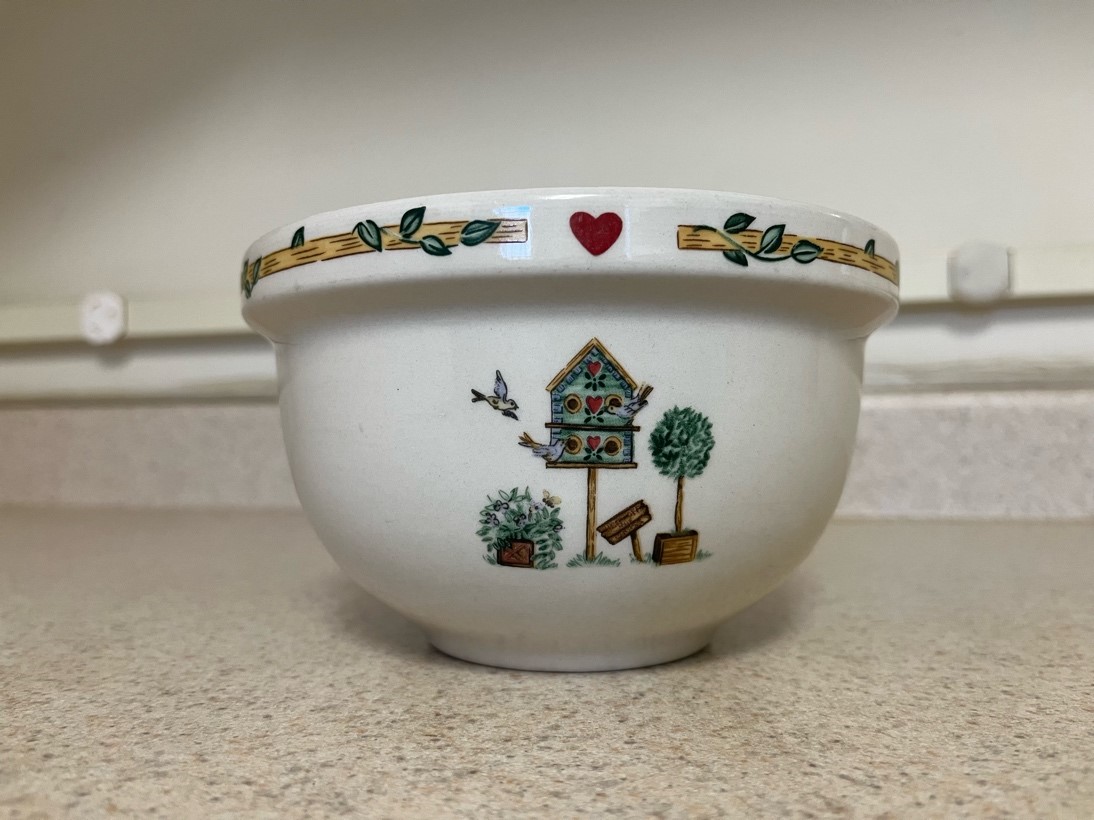
    Bowl in one piece before being broken

    Here is what the bowl looked like when I first bought it – in one piece! I chose this bowl because it was a good size: not too big where it would be too long of a project, but not too small where it would only take a few days to complete.

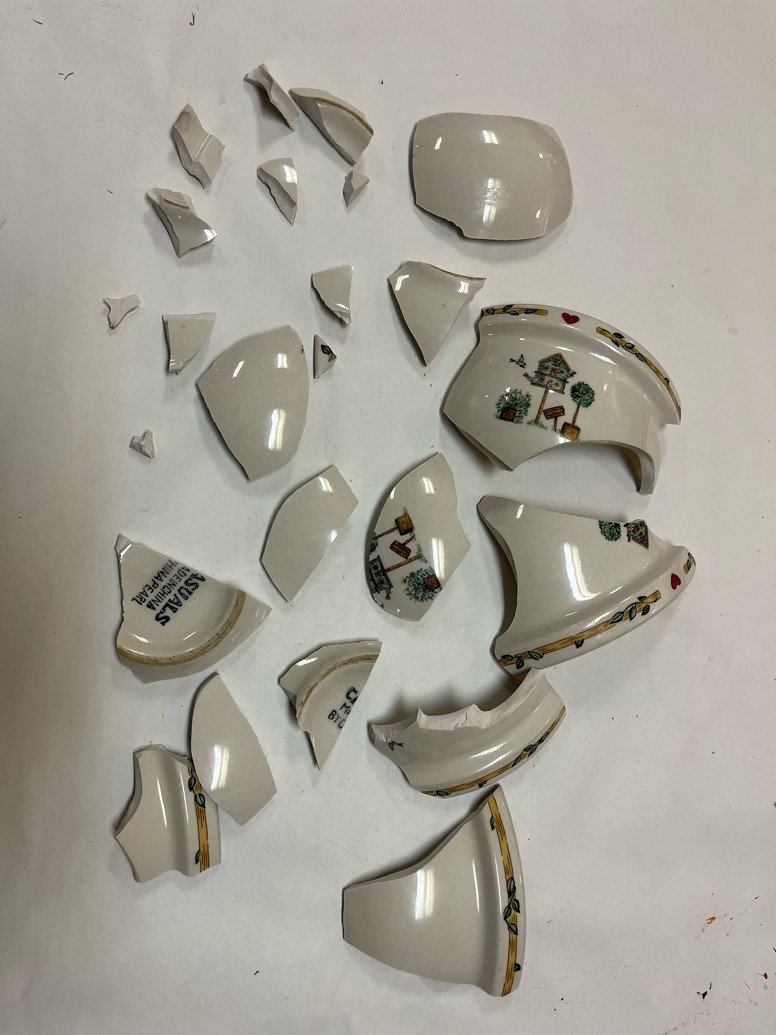
    Breaking the bowl

    Next came the fun part: breaking it! I placed the bowl inside a plastic bag so that all the pieces would stay together. Then, against my natural instinct, I threw the bag onto the ground and broke it into pieces!  Notice how some are larger than others- this means that I had to be very careful as to not accidentally exclude a small piece from the entire bowl.

    Taping sherds

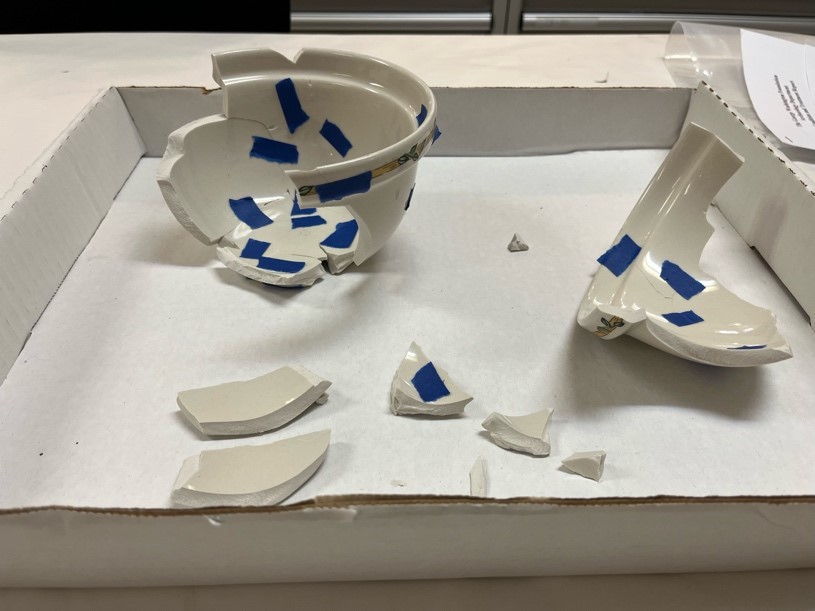
    After collecting all the sherds, my next step was to figure out where everything goes by taping the sherds together. This process allowed me to plan out the order in which the sherds would be glued together.  I used blue painter’s tape to do this because it doesn’t leave residual adhesive on the surface of the sherds. This same tape is used when mending the ceramics found archaeologically at Ferry Farm. 

    More taping

    More taping… it’s coming together!

    Here is the completed bowl after taping! Once all the sherds were back in their rightful places, it was time to carefully plan out how I wanted to glue them. When mending, you don’t want to just start gluing together the first pieces you know fit together. It is important to take into account the shape of the vessel so that you leave as few gaps between the sherds as possible. I developed a plan to start from the base and work my way up to the rim of the bowl. With this done, it was time to start gluing!

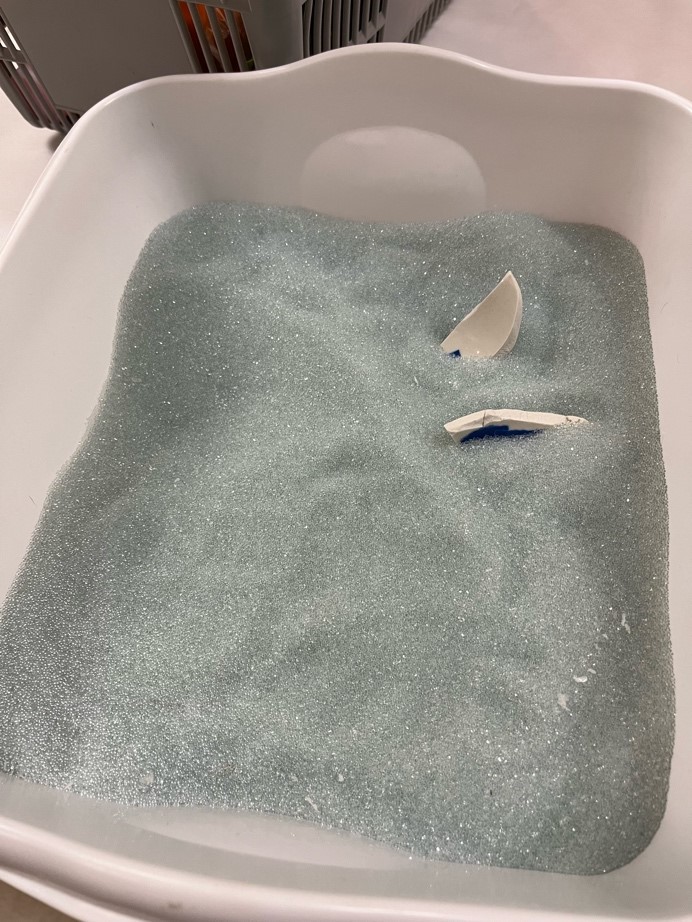
    It is protocol in the Archaeology Department to mend ceramics using a reversible method. The glue I used was a solution of 35% B72 in acetone, which is removable with acetone. I started by coating the broken edges of the sherds with a less concentrated solution of the glue, 5% B72 in acetone. This prepped the sherds to have glue applied to it. After this, I applied 35% B72 to only one sherd to be mended and then held it together with its neighbor. After 10 seconds of holding the sherds together, they were sticking quite nicely. I then placed a few pieces of painter’s tape to ensure the glue would hold, and placed the freshly glued sections into a bucket filled with glass beads.

    Glass beads…yes, everyone who goes to the lab runs their fingers through them.

    The glass beads hold the glued sherds together and prevent them from shifting as the glue dries. I repeated this process for all the sherds over the course of a few days until…

    Finished glued bowl

    …the gluing was complete!

    Here is the final product! Now, no mend is ever going to be perfect. Once a vessel is broken, there will always be misaligned sherds in the vessel due to the tension of the entire piece being broken.

    So, why do we mend ceramics in the first place? It can help archaeologists understand what types of objects a site’s occupants would have used and what activities were taking place. It is also an important process in public interpretation: mended ceramics can help the public see what certain vessels would have looked like during a site’s target period of significance.

    Finally, keep in mind that what I did with this bowl was only practice: actual mending with sherds excavated from an archaeological site does not go as smoothly as this. Only a small percentage of a vessel is typically found and thus able to be mended. The reason why so few sherds of one vessel are found is because decades and centuries of being in the ground allows for sherds to get mixed up and moved due to bioturbation (movement of soil by animals such as rodents and insects), erosion, and in some cases, agricultural plowing.

    If you would like to see more on mending at Ferry Farm, be sure to check out past programs that we have done: mending | Lives & Legacies (livesandlegaciesblog.org)

    Katharine Bogen, UMW ‘23

    Fleming Smith Scholar

  • Catherine of Braganza: How the copy of a 17th-century plate tells the story of design, consumer consumption, and the Washington Family

    The concept of buying items to remember certain events or travels is commonplace today. Who goes abroad without bringing back a trinket naming the location? Is it possible to go antiquing without seeing an item that commemorates the wedding of Charles and Diana? Even the smallest item has the ability to tell a story through what it depicts. In our world of mass consumption, these items prove commonplace and relatively easy to obtain, but the concept is not new.

    Charles & Diana memorabilia

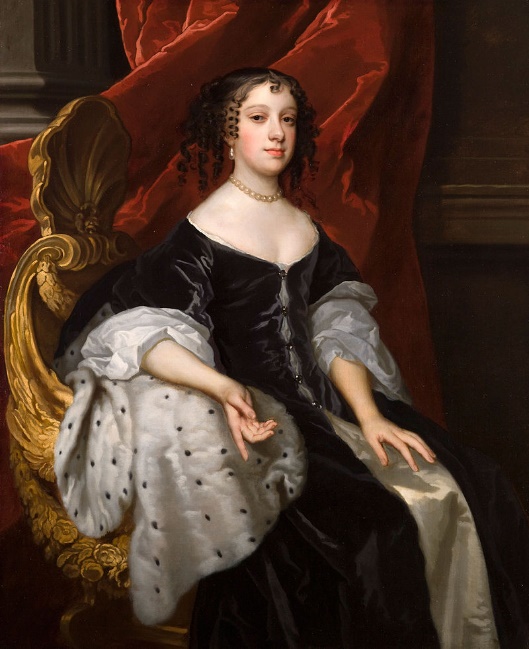
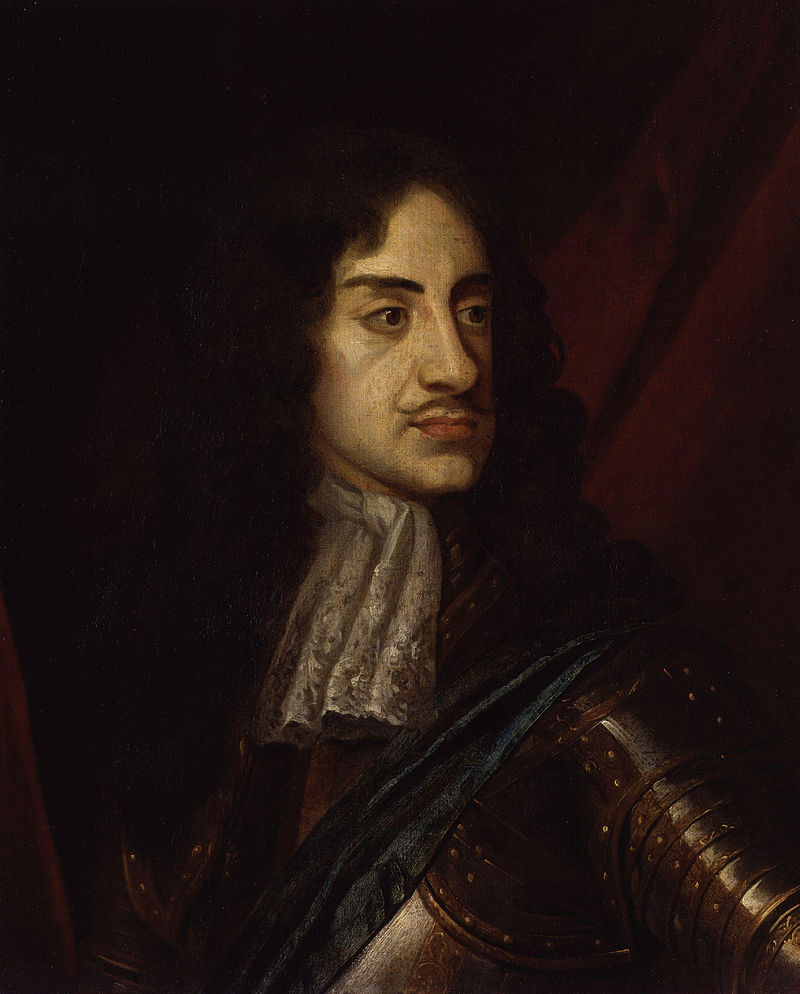
    Back in the mid to late 1600s, a potter by the name of Thomas Toft (d.1689) produced a series of plates depicting Charles II and his wife Catherine of Braganza. When Cromwell’s strict Puritan regime ended in 1660, the people of Great Britain rejoiced at the restoration of the monarchy. Charles II was an active king who enjoyed the arts and a good time. His marriage to Catherine, a Portuguese princess, in 1662 was a cause for further celebration, even if her Catholic faith raised concerns. Regardless, Toft had his market.

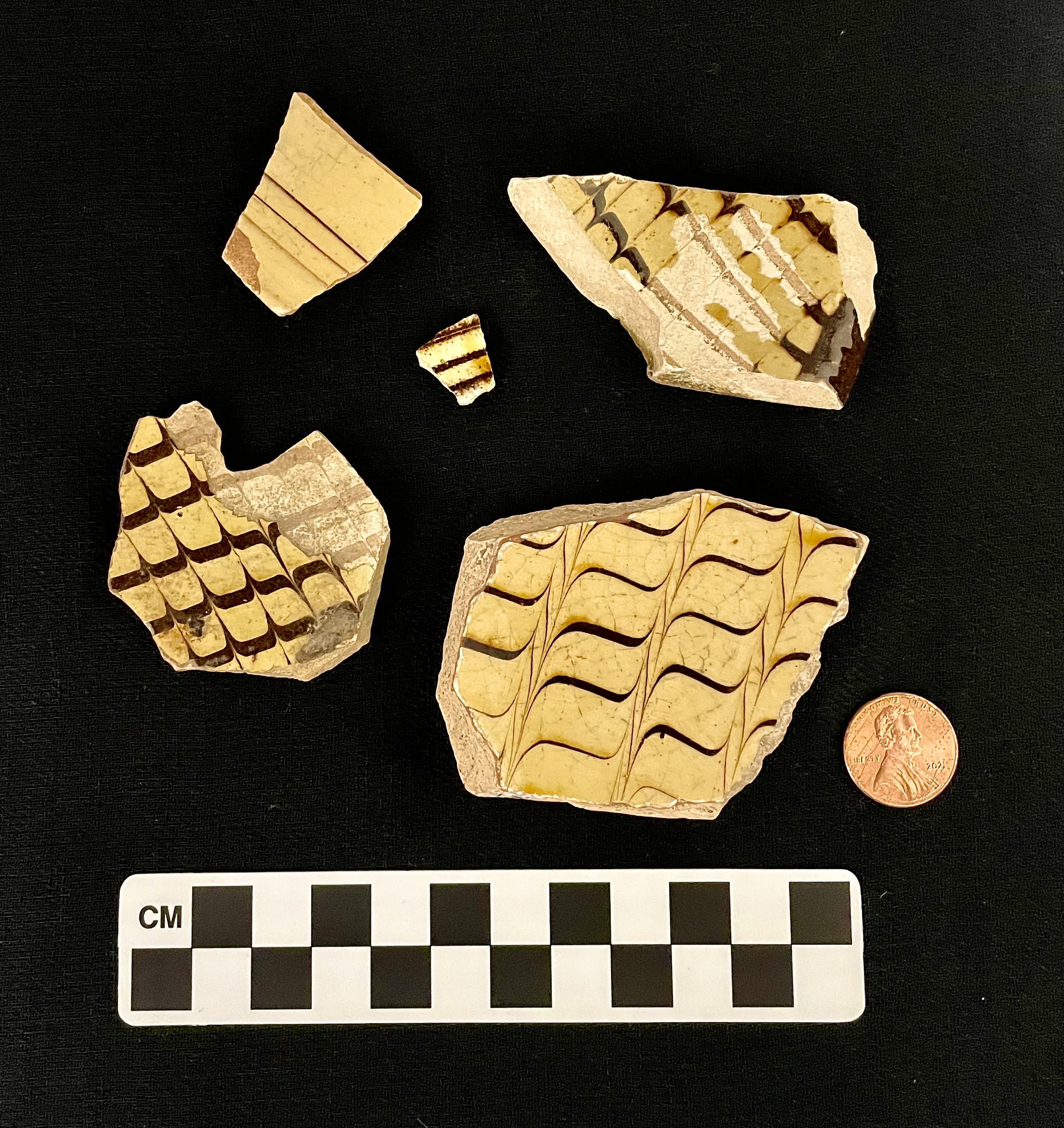
                A Scandinavian immigrant, Toft lived in Staffordshire, England, and specialized in slipware. Slipware involved the use of clay slips and a lead glaze to decorate a piece. Typically, a white clay slip, which is essentially, watered-down clay, covered the upper surface of a piece before the artist drew on the design. Dark brown and orange-red clay slips then helped bring the design to life. To complete the piece, the artist utilized a lead glaze to enrich the colors and seal it. Toft became one of the most famous slipware potters of the time due in part to his habit of prominently signing his works at the base of his cross-hatching border, which was unusual in the 17th century. He produced plates depicting the royals throughout his career. Toft’s pieces may not have undergone the mass production that they would today, but they fed a market that desired commemorative memorabilia.

    Slipware plate by Thomas Toft depicting Charles II and the Royal Oak

    You may be asking how talk of royals and artists from the 1660s connect to Ferry Farm? The answer comes from the desire to add a slipware plate to the house. As many will know, the items in the Washington house are replicas inspired by archaeological finds on site and pieces dating to the period. Until now, the slipware style did not appear in the house. Aiming to fix this, I went about choosing a design that would not only serve the desired purpose but also tell a story. In the end, I found a Toft plate that depicted Catherine, and the idea came to me.

    Pieces of slipware found at Ferry Farm

    John Washington (1631-1677), George’s great-grandfather, immigrated to Virginia in 1657. Motivation for this possibly derived from hardships faced by the Washington family after Cromwell came to power since the family had sided with the monarchy during the English Civil War (1642-1651) and business ties. With the restoration of the monarchy three years after their arrival, it seems likely that this would have been a cause for celebration in the Washington household. We know from finds at Ferry Farm and Kenmore that the Washington and Lewis families owned items depicting royal motifs up until the Revolution. So not only would the Washingtons of the 1660s have raised a toast to the King and later his bride, but they may have acquired items celebrating them. While we do not have evidence for the Washingtons’ owning a piece with this specific theme, items pass through generations, and we know the family brought older items with them to Ferry Farm in 1738.

    In making the replica, I aimed to keep it as close to the original as I could, though the cross-hatching border proved impossible to keep as tight. The imagery itself prompts the telling of the Washington-Royalist-immigration story, so nothing major needed changing. Keen viewers, looking at the images below, will notice the addition of a “Q” and a “K” to help identify Catherine. While Toft’s work rarely included royal monograms, they did appear on other designs of the time, making it a simple and fitting addition. In these other pieces, Catherine’s first initial always appears as a “K.” While we may spell Catherine’s name with a “C,” there was no standard of spelling in the 1600s, and this may have occurred since her husband’s name also starts with a “C.” After prepping the plate with a base coat of paint, I sketched the desired design and painted over it in a way that mimicked slipware techniques. A clear coat of spray paint then sealed the design in place of the lead glaze.

      The plate will go on display in the Visitor’s Center, where we display and explore the topics of our blog. Next time you visit, be sure to keep your eyes peeled and let Catherine tell you her story.

    Emma Schlauder

    Research Archaeologist

  • Behind the Glass of the Archaeology Lab: Creating an Exhibit

    It can be daunting to look at a blank space and realize you are in charge of filling it. And not just filling it, you need to create something that will leave a lasting impression on the public. The process of creating an exhibit is much more complicated than it seems. From the initial idea to the final product, there are many steps that require careful attention.

    With countless artifacts in the Archaeology Lab, finding inspiration for a topic was easy. Once I settled on 18th Century tea practices, everything seemed to fall into place. There were many subjects I could have focused on from this topic. In order to connect the idea to Ferry Farm and the Washington legacy, I chose to focus on Betty Washington and what she would have learned from her mother growing up at Ferry Farm.

    This inspiration came from an archaeologically excavated pewter teaspoon handle with the initials ‘BW’ stamped into it. It is clear that Miss Betty Washington was the owner of this spoon. The spoon was likely part of a children’s tea set that Betty was given in order to teach her the intricacies of the American Tea Ceremony. This education was Mary’s legacy for Betty; it taught her how to be a proper gentry lady and interact with the upper-class circles in Virginia.

    Teaspoon handle with “BW” initials.

    Once I picked my topic, it was time to begin researching. Research is the backbone of any exhibit, though it might not be the most exciting part. I was able to obtain an understanding of the Tea Ceremony from my research that I applied to my specific topic. The biggest question on my mind throughout my research was: Why was this important for Betty?

    While working on research, I was simultaneously creating a reproduction 18th Century creamware teapot. With the help of the Archaeology Lab Forgeries Department, I quickly transformed a Goodwill find into delicate creamware with a rose motif. The pot is the centerpiece of the exhibit on 18th Century tea practices. Many scholars wrote that the teapot is the literal and figurative center of the ceremony, bringing people together and initiating the ceremony. This concept inspired my placement of the teapot for the exhibit.

    Hand painting of reproduction teapot.

    After concluding my research, writing the signs for the exhibit, and finishing the replica pot, I had to choose the artifacts to include in the exhibit. Throughout this process, I kept my thoughts on Betty. The BW teaspoon handle was set aside for the exhibit as well as the replica teapot. Including teaware from Ferry Farm and Kenmore displayed the continuity of Betty’s gentry practices throughout her life. A slop bowl excavated from Kenmore, as well as a teacup and a saucer excavated from Ferry Farm were both chosen for the exhibit in order to support that point.

    Once this was all completed, the excitement truly began. I saw my work come to fruition when I set up the display in the conservation window of the Archaeology Lab. Being able to share what I had learned with the public was an excited prospect. The exhibit is currently on display and can be seen in the Ferry Farm Visitor Center.

    Intern Gillian Both standing behind her exhibit.

    This process has taught me a lot about exhibit design and the research process. I couldn’t have completed the exhibit without the Archaeology Lab staff helping me along every step of the way. I encourage you to go and visit the lab to see the exhibit and learn more about archaeology at Ferry Farm.

    Gillian Both

    Fleming Smith Scholar, UMW Class of 2022

  • A Day in the Life of a Historic Interpreter at Ferry Farm [Video]

    In this video, we meet historic interpreter Gary Haynes and follow him during his workday at George Washington’s Ferry Farm.