Lives and Legacies

Category: British Empire

  • The Women of Silver: 18th-century English Silversmiths

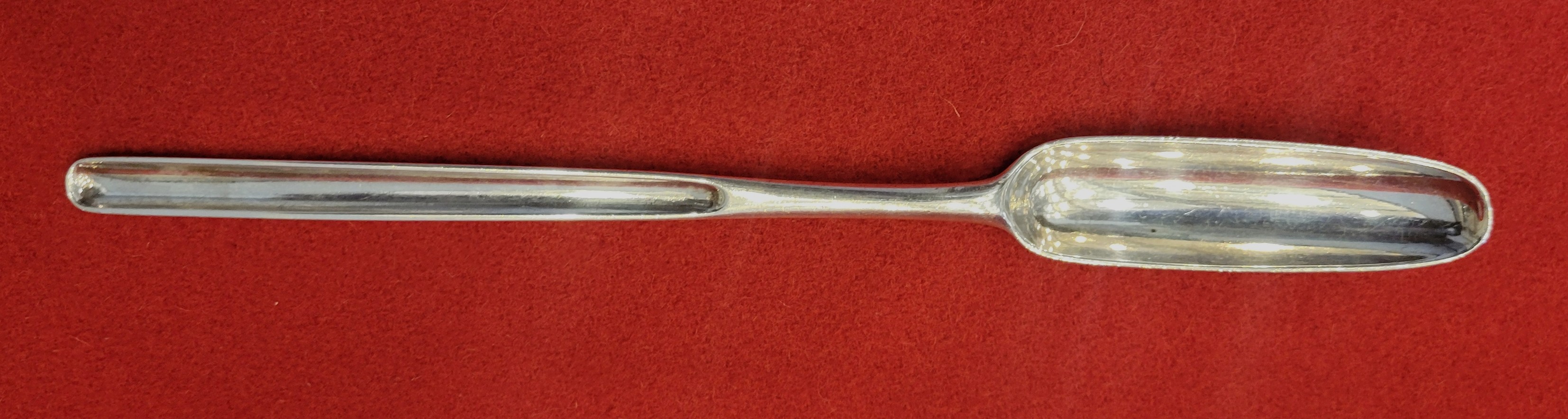
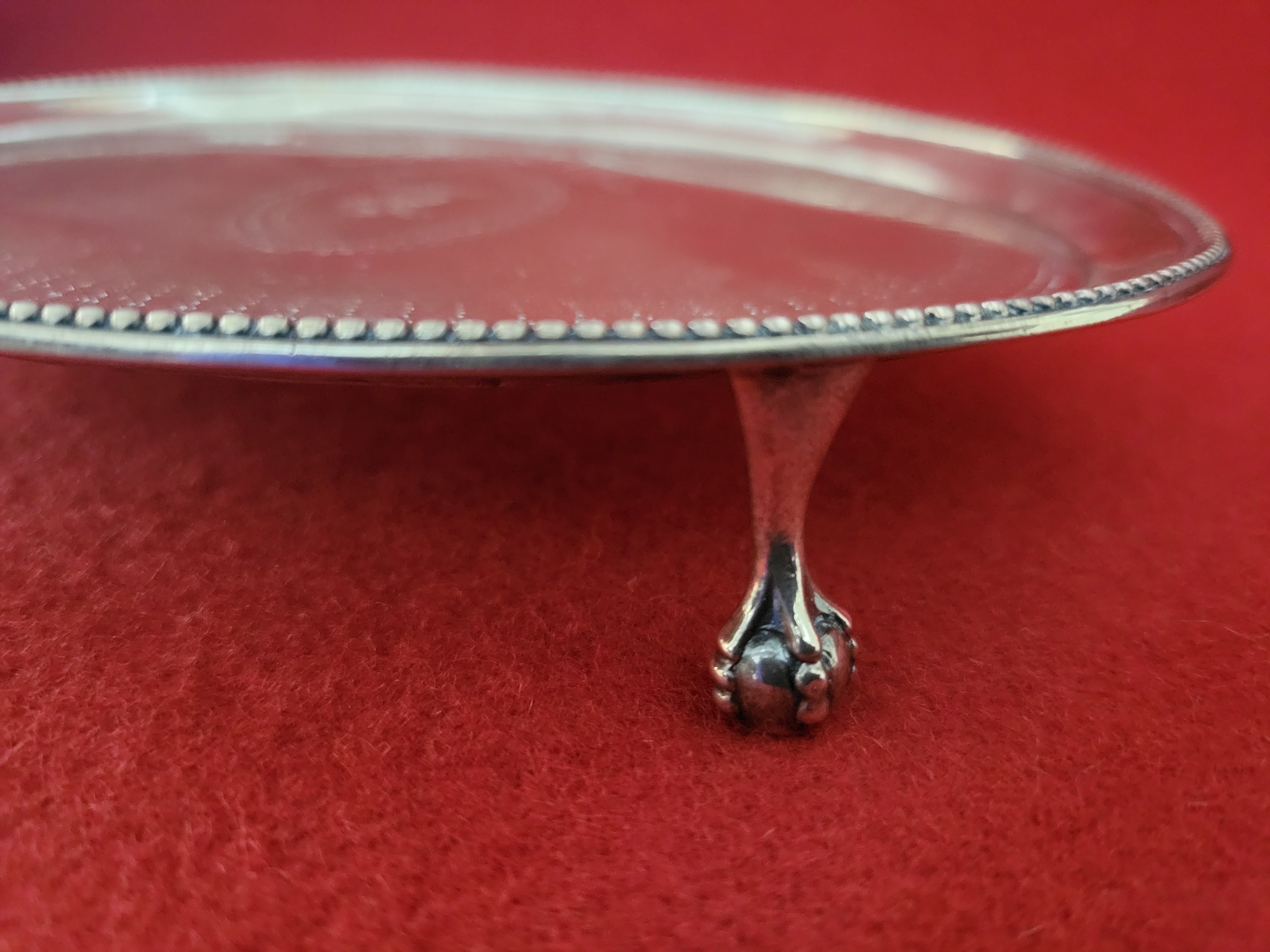
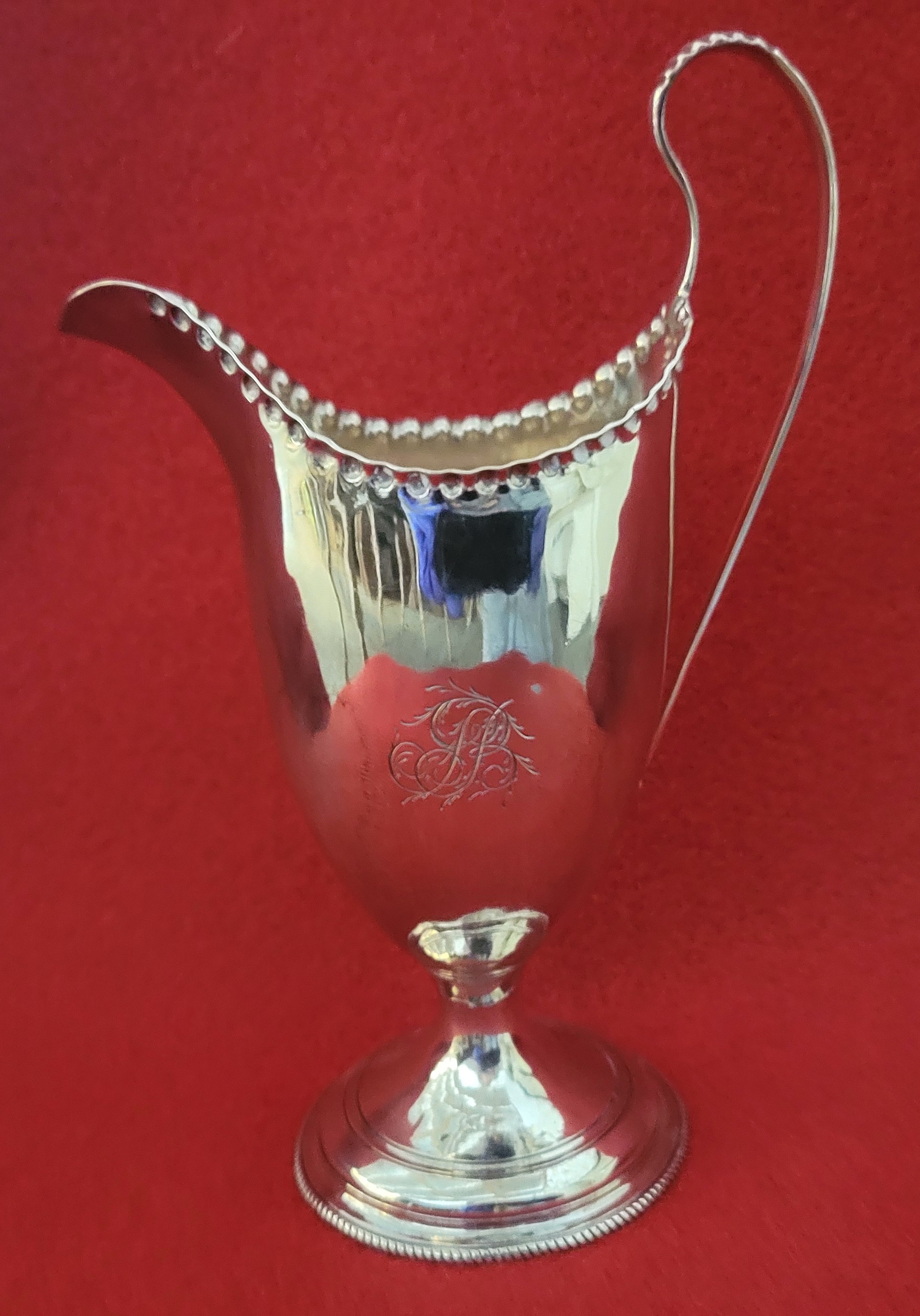
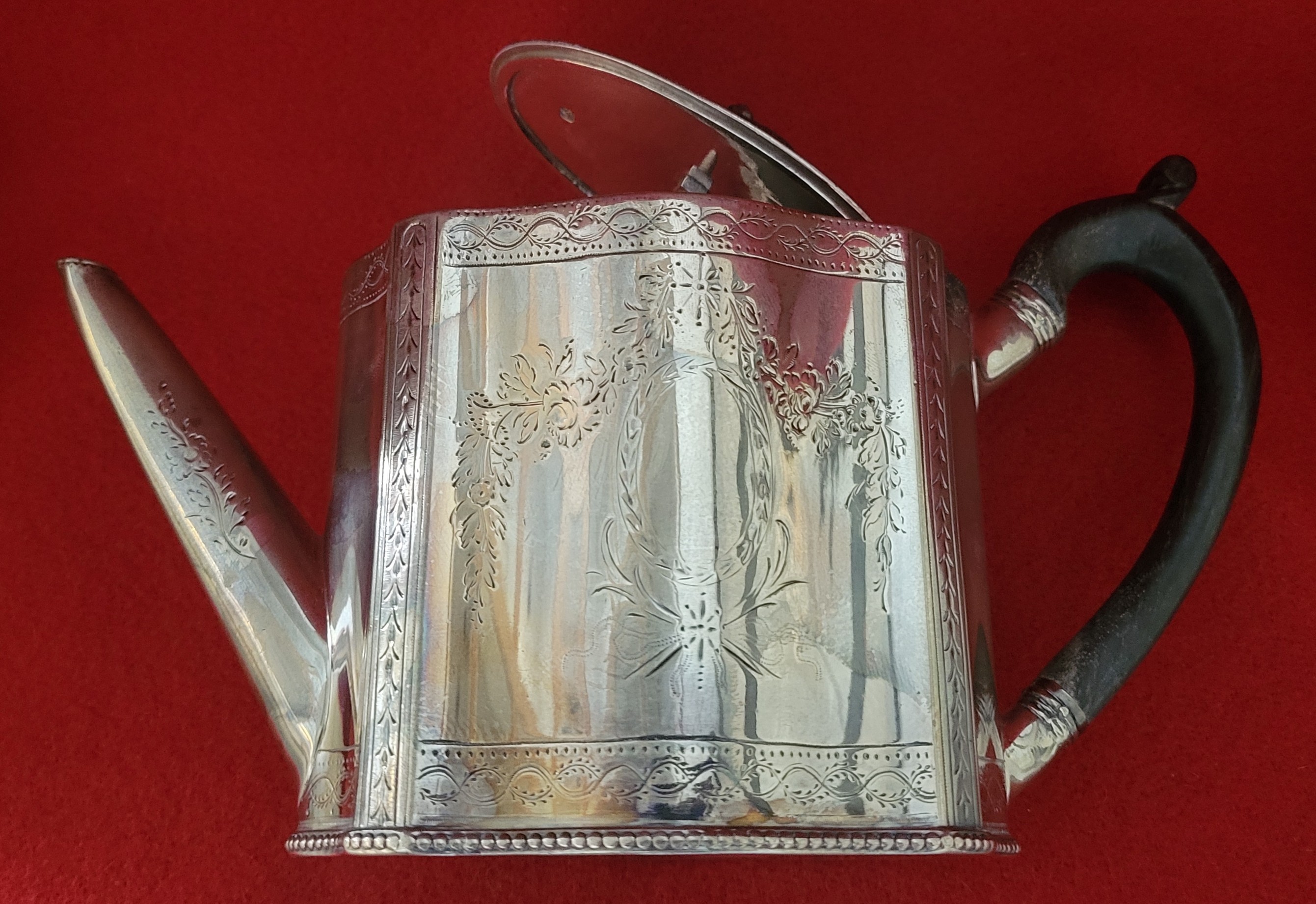
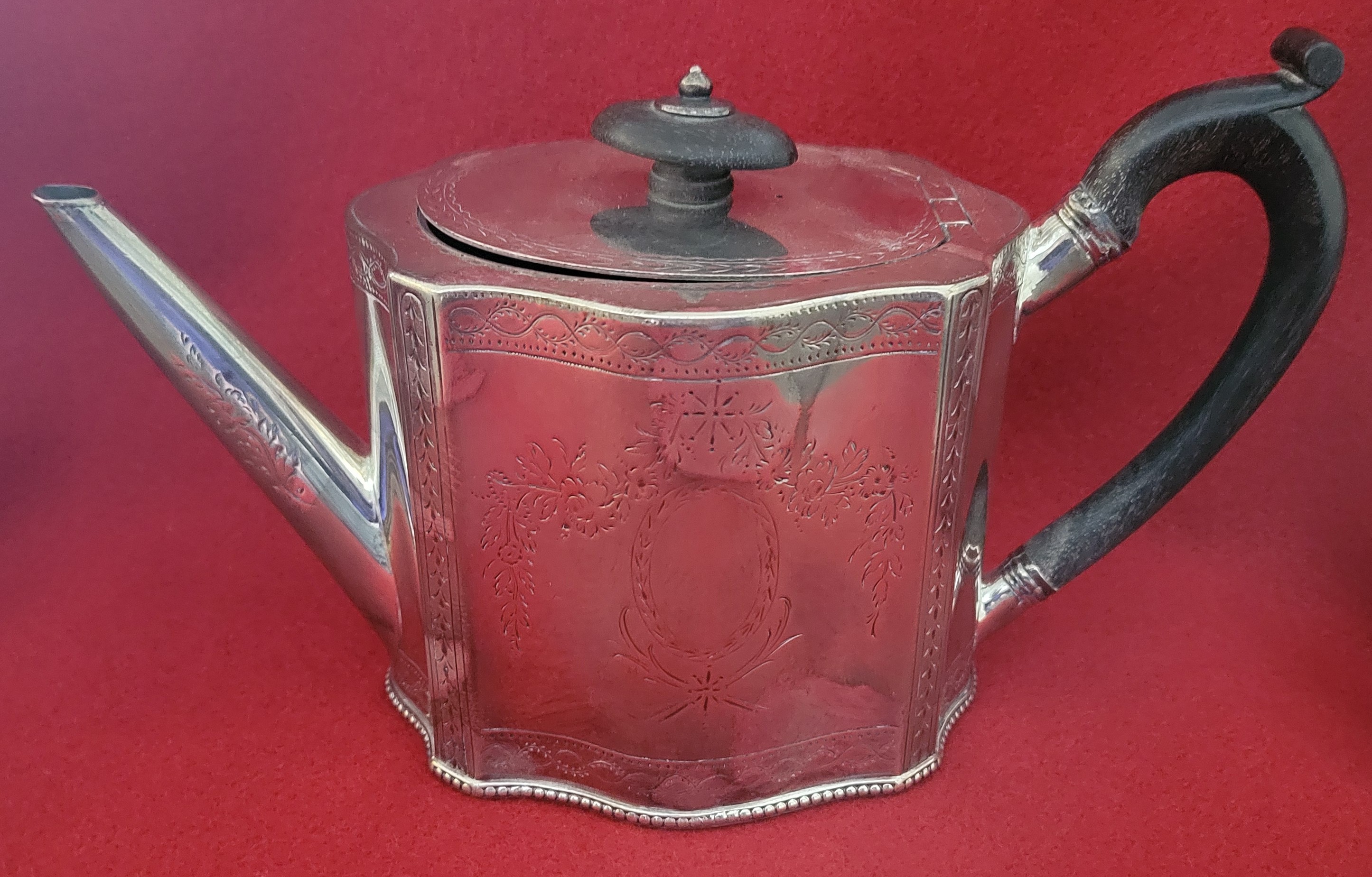
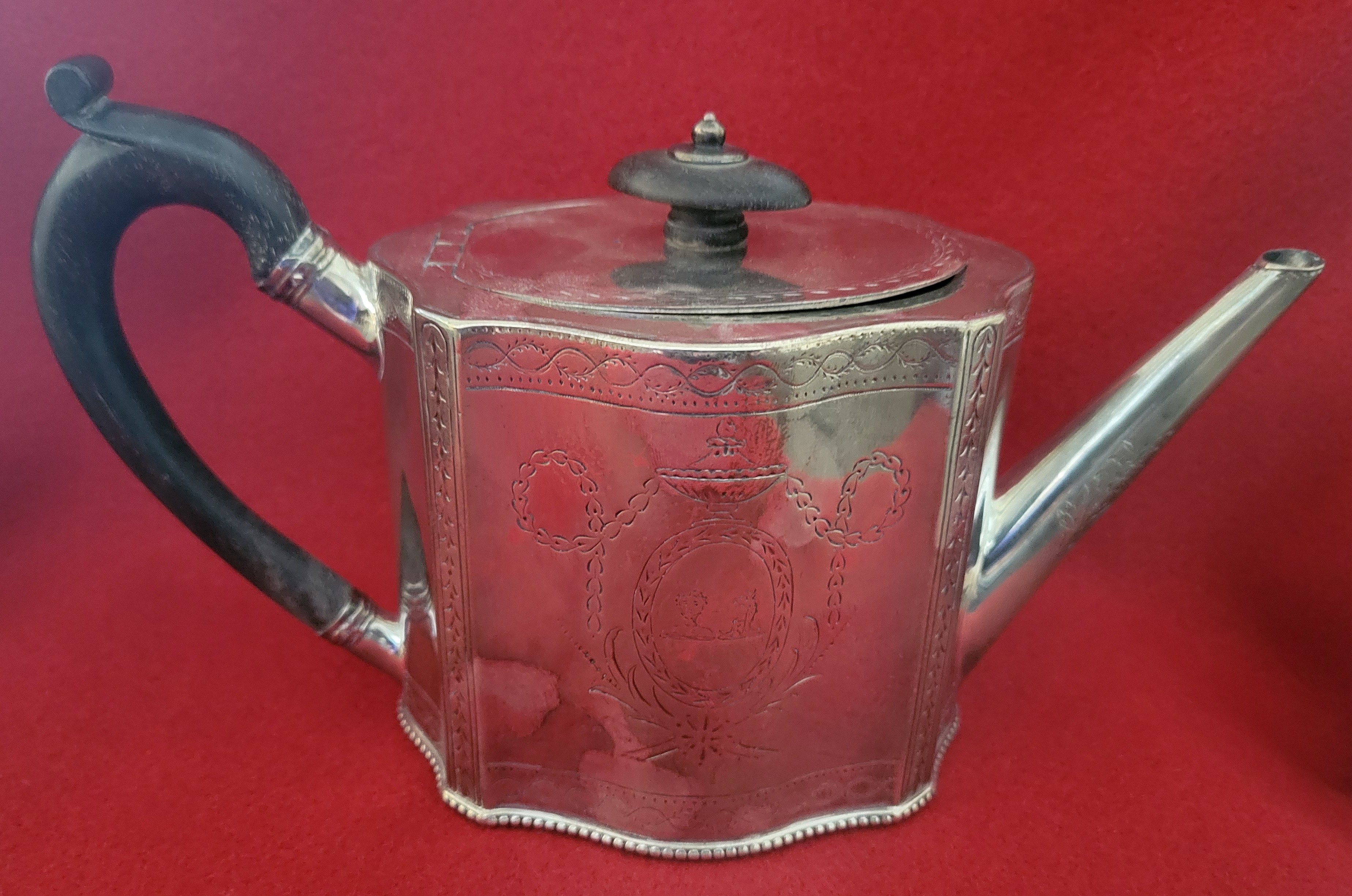
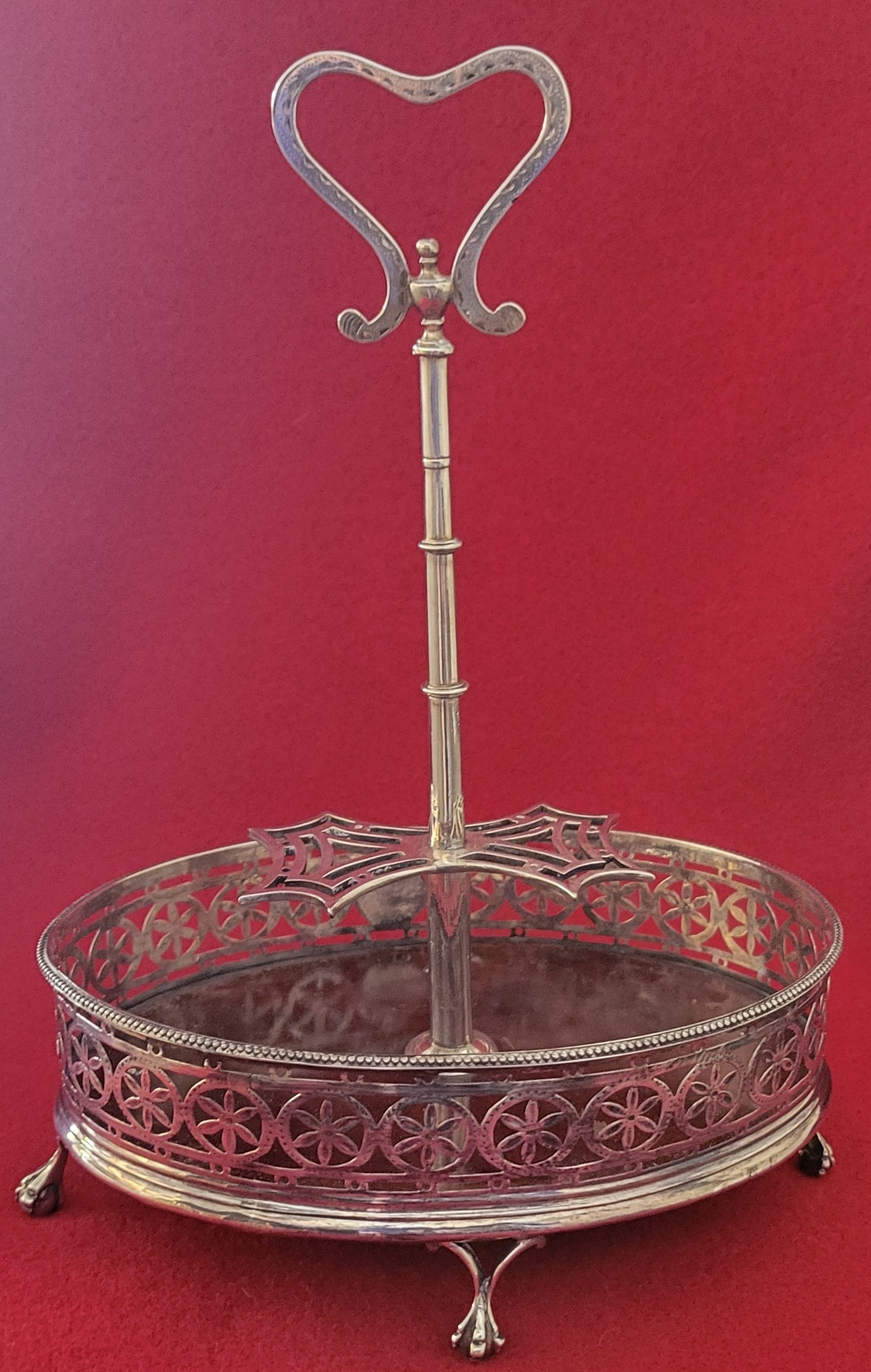
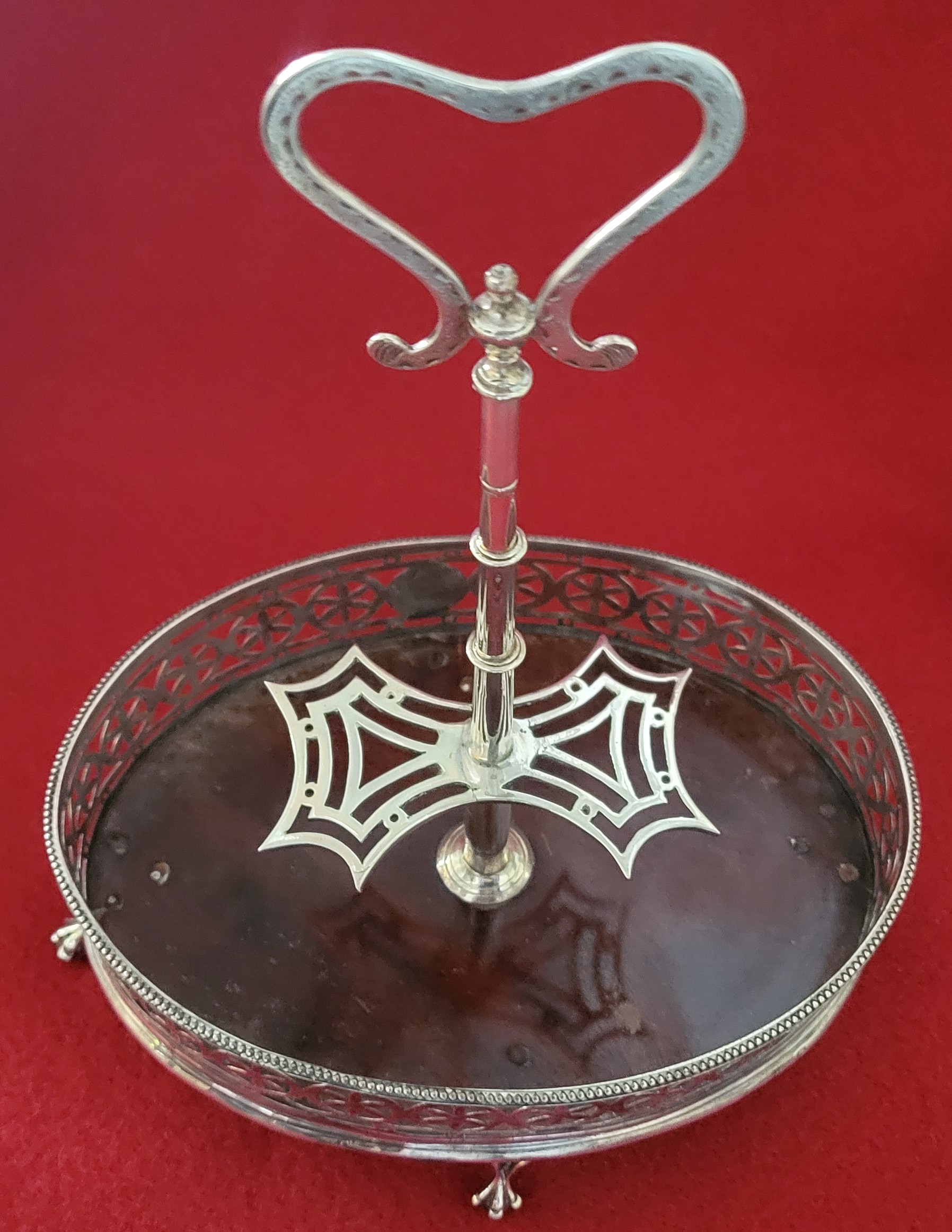
    We have a lot of silver in our collections, ranging from candlesticks to teapots to spoons.  With all the silver, I have become familiar with eighteenth-century silversmith marks, but I have never explored the artisans behind the marks. 

    I was pleasantly surprised to find at least four women silversmiths represented through various pieces.  These four women were all London-based traders within an active community of women artisans in luxury trades.  I wanted to discover how these women entered this male-dominated trade and registered their marks. (City Women, 2025)

    First, we need a little background to understand how the silversmith trade worked in eighteenth-century England. 

    The Trade

    In the eighteenth century, English silversmiths were much more regulated than American silversmiths due to having around a four-hundred-year head start in establishing trade organization.  However, no one on either side of the ocean would have been considered a master craftsman without a long multi-year apprenticeship. 

    Silver plating workshop from Diderot’s Encyclopédie

    While this was a rare path for girls, these four women were introduced to silversmith work through their families without formal apprenticeships.  However, that doesn’t mean they didn’t spend years becoming expert artisans and learning to run a successful business from their fathers, brothers, and husbands. 

    When a silversmith obtained their “free” status, it meant they could sell their ware in the city of London.  To earn this status, the silversmith had to be granted a hallmark from a Livery, like the Goldsmith’s Company.  Women were only granted a mark if they were the widows of a silversmith. (Rue Pigalle, 2025)
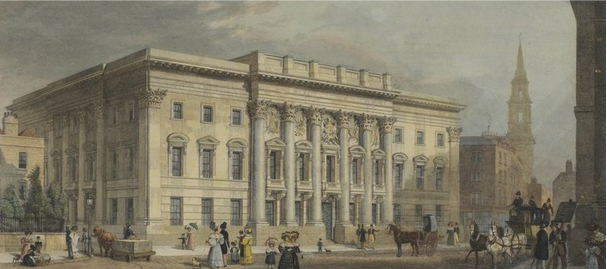
    Worshipful Company of Goldsmith in the city of London, current building in late 19th century. The company has been occupying this spot since 1339.

    The Marks

    In eighteenth-century England, the silversmith could sell the articles they made only after the pieces had been assayed and stamped with appropriate hallmarks. (Ford, 2018)
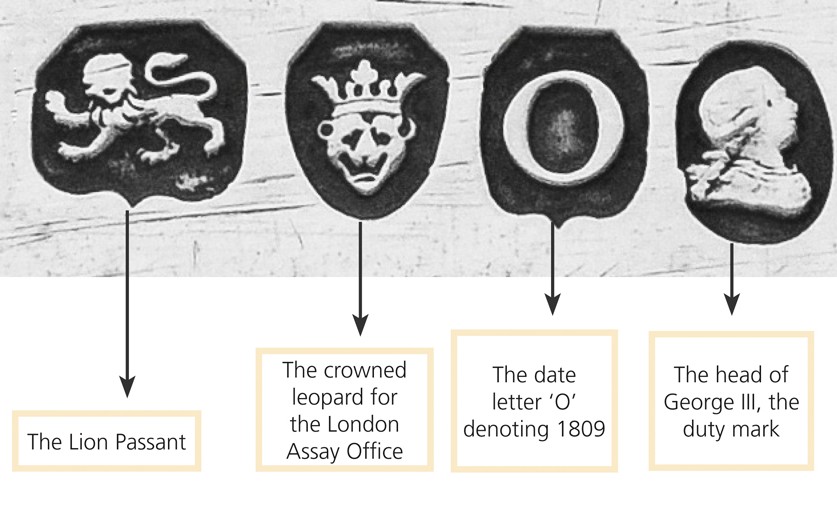
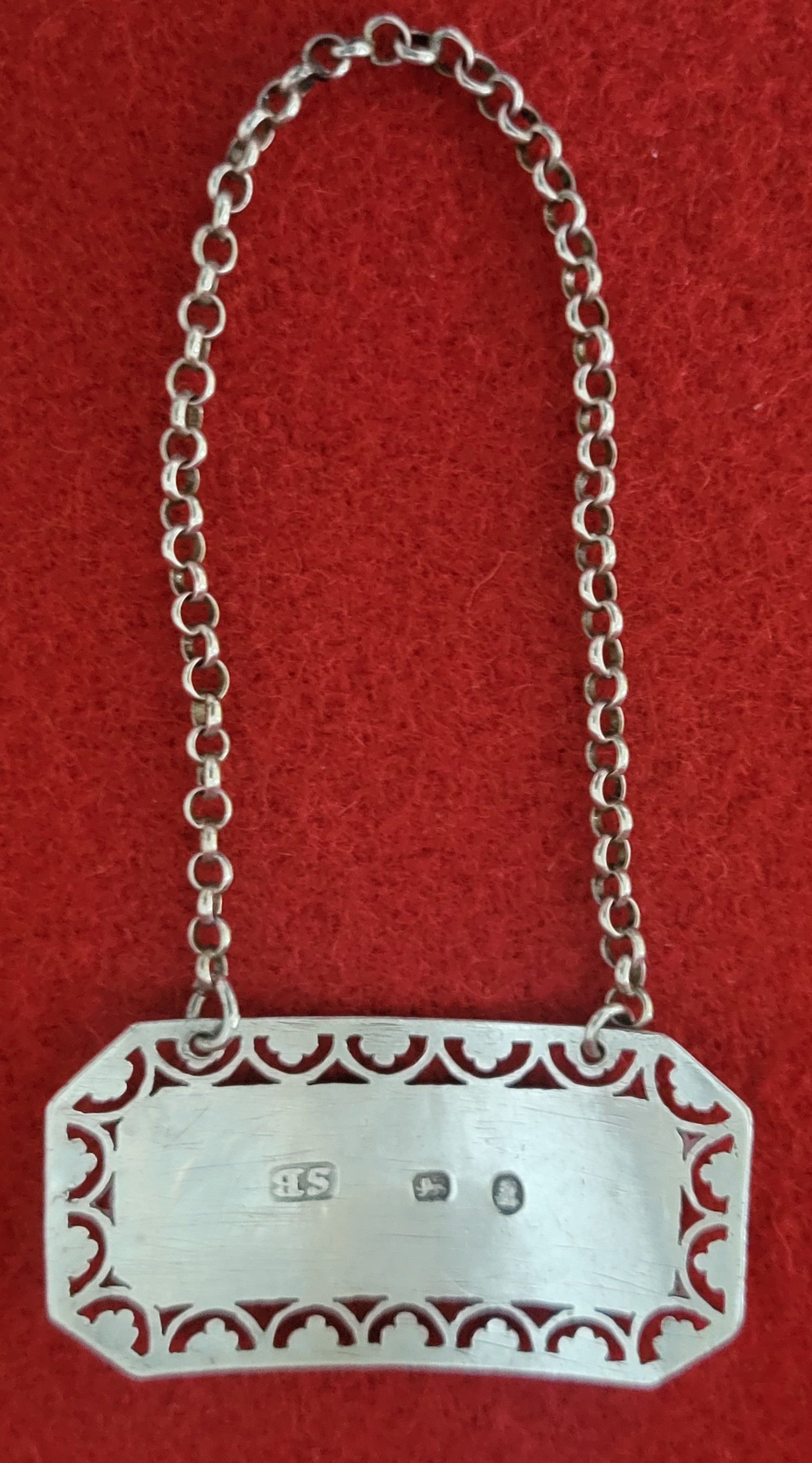
    Explanation of silver marks

    One hallmark is the symbol of the guildhall where it was assayed.  Each location had a different image, like a London goldsmith guild’s head of a leopard, and has been used for over seven centuries. 

    Another is the maker’s mark, which has been required since 1363.  This mark is now always the marker’s initials, but one was more often a trade symbol.

    The mark of English sterling standard fineness—a lion passant—has been used since 1544 to certify that the metal is 92.5 percent pure silver. (Ford, 2018)

    There is also a date mark indicated by a letter representing a year.

    Finally, duty marks on silver from 1784 to 1890 reflect the tax on precious metals with the profile of George III or Victoria.  (Arkell, 2025)

    The Silversmiths

    Hester Bateman

    One of the most well-known eighteenth-century London silversmiths is Hester Bateman.  She became the matriarch of the renowned Bateman family silversmithing company. 

    She was born Hester Nedem in London in 1708. She grew up poor with little formal education.  In 1732, she married John Bateman, a goldsmith and chain maker.  John died in 1760 of tuberculosis and left Hester his tools in his will.  Hester took over the shop located at 107 Bunhill Row and registered her mark at London Goldsmith’s Hall on April 16, 1761. (Bly, 2008)
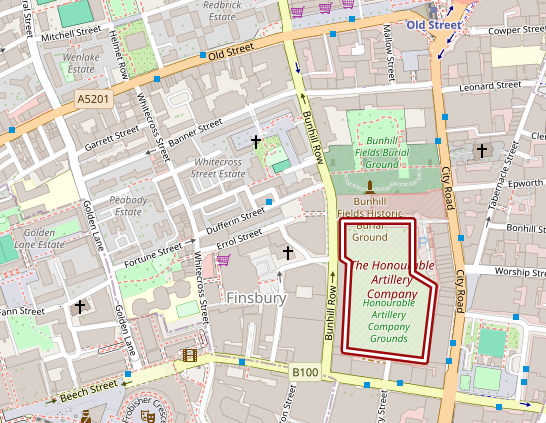
    Hester Bateman’s shop was located at 107 Bunhill Row, Islington, London

    She continued to run the business for over thirty years, bringing two sons, one daughter (Letitia Clarke), and a daughter-in-law (Ann Bateman) into it. (Eagle and Pearl, 2025)  The Bateman silversmith company specialized in household silver, such as flatware, cruet stands, and fashionable tea and coffee sets. (Slavid, 2021)  The company’s work is characterized by bright-cut engraving and piercing in the neoclassical style.

    The key to Hester’s success was adopting and integrating modern technologies, taking advantage of new cost-effective manufacturing processes to supply elegant wares to the middle class. (Slavid, 2021)  One of the new cost-effective processes they used was the “Sheffield Plate,” developed in the 1740s.  It is a fusion of copper and sterling silver to create gauge sheet silver, which can be punched and pierced by machines and is cheaper to produce than solid silver.  (Campbell, 2006)

    Hester retired in 1790 and was succeeded by her sons, who registered their hallmarks in December 1790.  The Bateman family company continued for another fifty years, closing under William Bateman in 1843. (Campbell, 2006)

    Ann Bateman

    One of the renowned Bateman silversmith family members was Ann Bateman, daughter-in-law of Hester, who was married to her son Jonathan. 

    Better look at maker’s mark by Peter and Ann Bateman

    She registered her first mark in 1791, the year her husband died. She then worked in partnership with her brother-in-law Peter and eventually her son in 1800.  Her works were popular tableware in fashionable neoclassical styles. (Bly, 2008)

    Elizabeth Godfrey

    Elizabeth was born in London, the daughter of Simon Pantin, a prominent silversmith.  She was believed to have been trained in her father’s workshop.  She married two silversmiths; her first husband was Abraham Buteux, a French goldsmith.
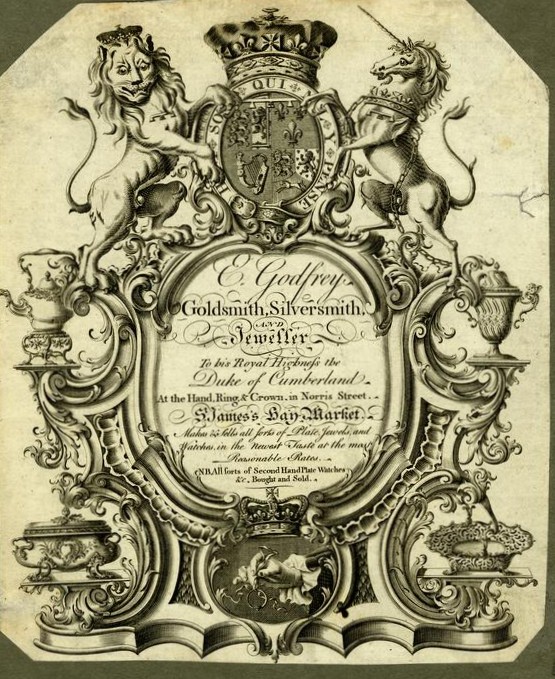
    Abraham died in 1731, and she registered her first mark as Elizabeth Buteux for her shop in Norris Street.  She continued her first husband’s business until her marriage to Benjamin Godfrey in 1732.  Upon Benjamin’s death in 1741, she registered a second mark as Elizabeth Godfrey. (Arts, 2025)  She is described on her trade card as “Goldsmith, Silversmith, Jeweller, [who] makes and sells all sorts of plates, jewels, and watches, in the newest taste at the most reasonable rates.” (Mrkusic, 2014)

    After her second husband’s death, she took charge of the company and began producing silver pieces in the fashionable Rococo style.  This earned her many loyal patrons, including the Duke of Cumberland.  (Skerry, 2018)
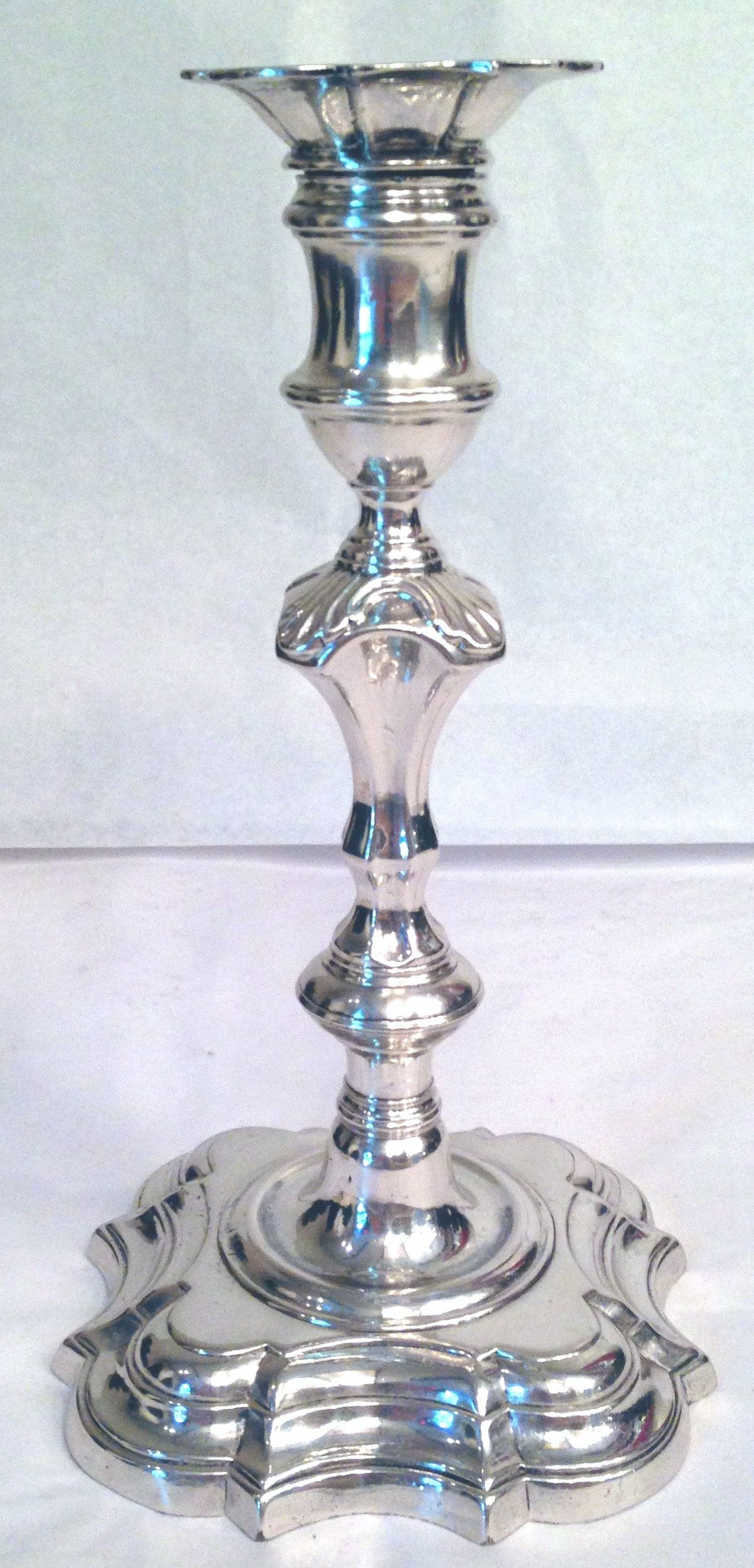
    Elizabeth Godfrey passed away in London around 1758. (NMWA, 2025)

    Susanna Barker

    Our last silversmith is Susanna Barker.  Unfortunately, little information about her life exists, and only a few museums have her works.  Barker was classified as a small worker, which means she produced small-scale pieces of precious metals. (The Goldsmiths’ Centre, 2025)

    She worked at 29 Gutter Lane and registered her first mark on 25 June 1778, second on 12 August 1789, and third on 26 August 1778.

    Women’s work throughout history has sometimes been overshadowed, undervalued, or not recorded.  However, with these solid silver markings, the ladies cemented themselves into the history of the arts. 

    If you want to learn more about women in the arts, visit the National Museum of Women in the Arts.

    Heather Baldus

    Collections Manager


    Bibliography

    Arkell, R. (2025, January 22). Hallmarks. Retrieved from Antiques Trade Gazette: http://www.antiquestradegazette.com

    Arts, N. M. (2025, January 21). Elizabeth Godfrey. Retrieved from National Museum of Women in the Arts: https://nmwa.org

    Bly, J. (2008). Discovering Hallmarks on English Silver. London: Shire Publications.

    Campbell, G. (2006). The Gove Encyclopedia of Decorative Arts, Volume 1. Oxford: Oxford University Press.

    City Women. (2025, January 21). City Women in the 18th Century: An Outdoor Exhibition of Women Traders in Cheapside. Retrieved from City Women: https//citywomen.hist.cam.ac.uk

    Eagle and Pearl. (2025, January 21). Our Story. Retrieved from Eagle and Pearl: http://www.eagleandpearl.com

    Ford, T. K. (2018). The Silversmith in Eighteenth Century Williamsburg. Williamsburg: Colonial Williamsburg.

    Mrkusic, P. (2014, July 7). Antiques Today. Retrieved from The South African Antique, Art & Design Association: http://www.saada.co.za/antiques-today-september-2011/

    NMWA. (2025, January 22). Elizabeth Godfrey. Retrieved from National Museum of Women in the Arts: https://nmwa.org/art/artists/elizabeth-godfrey/

    Rue Pigalle. (2025, January 21). Goldsmith’s Jewelry Series Part 2: The Women of Silversmithing. Retrieved from Rue Pigalle: https://www.ruepigalle.ca/blog-posts/goldsmiths-jewelry-series-part-2-sophia-tobin

    Skerry, J. E. (2018). Beyond the working dates: reconstructing the life and career of Elizabeth Patin Buteux Godfrey. Silver Studies. The Journal of the Silver Society, 75-88.

    Slavid, S. (2021, April 16). Hester Bateman: Domestic Silver in 18th Century England. Retrieved from Bonhams Skinner: https://www.skinnerinc.com/news/blog/hester-bateman-domestic-silver-in-18th-century-england/

    The Goldsmiths’ Centre. (2025, January 22). Smallworker. Retrieved from The Goldsmiths’ Centre: http://www.goldsmiths-centre.org

  • Cowrie Shells: Cultural and Economic Ties in the 18th-Century Atlantic World 

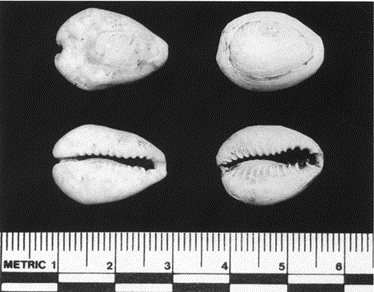
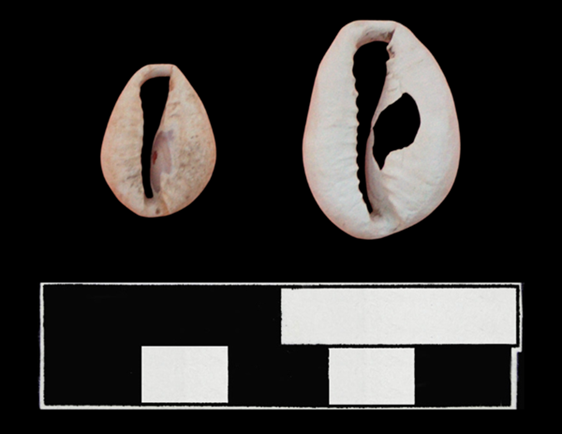
    Figure 1: Ferry Farm cowries

    Many readers will undoubtedly recognize these two artifacts (Fig. 1). Known as cowrie shells, these artifacts have become synonymous with slavery and serve as identifiers for the presence of free and enslaved Black individuals in the Americas. Still, the role of cowries in the 18th century goes far beyond that of a marker.  

    Origin 

    Cowries (Cypraeidae), a taxonomic family of sea snail, live throughout the world (Fig. 2). However, the species with the most relevance to the 1700s reside in the Indo-Pacific region, particularly in the waters around the Maldives. They include Monetaria annulus (alt. Cypraea annulus, Annulus Linnaeus) and Monetaria moneta (Fig. 3). Even if your Latin proves non-existent, each species’ genus, along with M. moneta’s epithet, easily identifies the original role cowries played in human hands – money.  

    Figure 2: Monetaria monetaKwajalein Underwater
    Figure 3: M. moneta (L) and M. annulus (R) shells in their natural forms
    Barabara Heath

    Economics and Culture in West Africa 

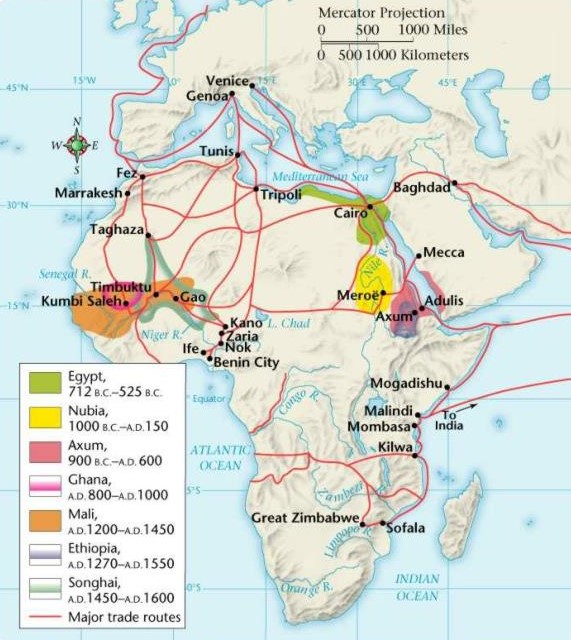
    Centuries before the 1700s, West Africa thrived as a region of independent kingdoms and tribes. With these groups engaged in trade, they required a shared currency that served as a medium of exchange and a store of value. In choosing cowries as currency in the fourteenth century, West Africa continued a long history of groups throughout the world using shell money. Through pre-existing trade routes to the Indo-Pacific, West Africans could easily import the shells via other parts of Africa and had them transported across the Sahara. As the cowries used did not reside in West Africa and proved difficult to forge, the market had built in protections against hyperinflation and counterfeits.  

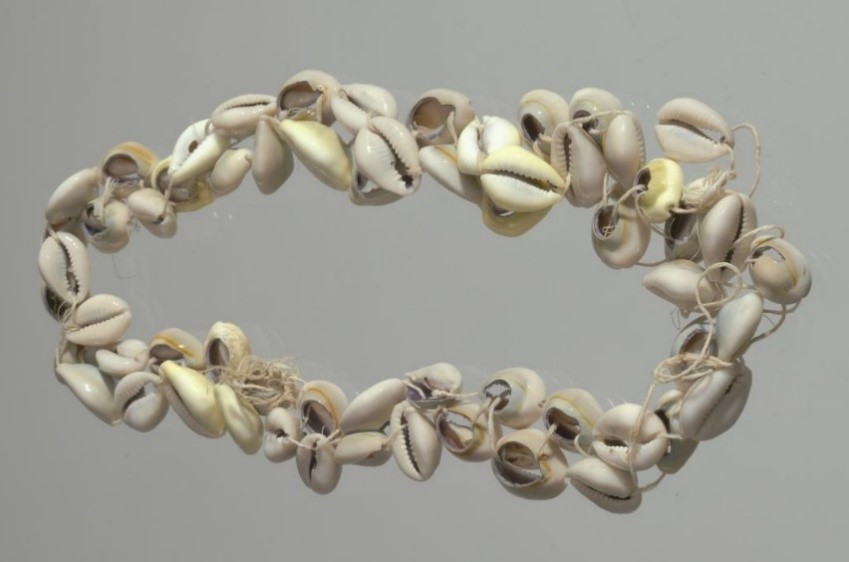
    Figure 4: Modified cowries strung togetherNational Museum of African American History & Culture

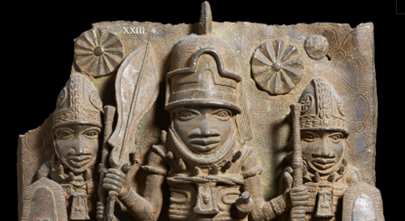
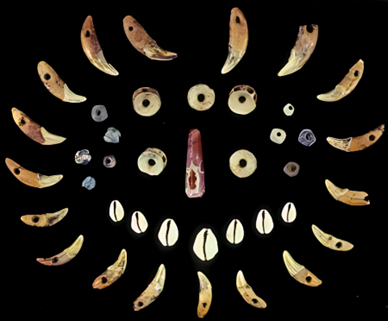
    Once in West Africa, the shells served as the basis of the region’s economies. Still, the shells took on several cultural roles. To keep cowries on hand, the shells often underwent modifications, including slicing off the rounded side of the shell or piercing them (Fig. 4). This allowed for stringing them together and weaving into hair or onto clothing. While done for practical reasons, this led cowries to enter the world of personal adornment. With this, their role expanded to symbols of status, fertility, and beauty while further appearing on ceremonial garb (Fig. 5). 

    Figure 5: Benin Bronze plaque; 16th-17th century. The warriors on either side of the central figure wear helmets decorated with cowries
    British Museum

    Atlantic Trade Routes 

    Europe and Africa had a long history of trade and exchange networks prior to the late 1400s, but the boom of global exploration led to an immediate escalation of these market connections. With European nations expanding their territories abroad and seeking to gain resources not found within their borders, they developed a need to break into the African markets while establishing permanent trade posts in the region. To achieve this, Europeans needed to supply goods that were in demand, and their minds set upon cowries.  

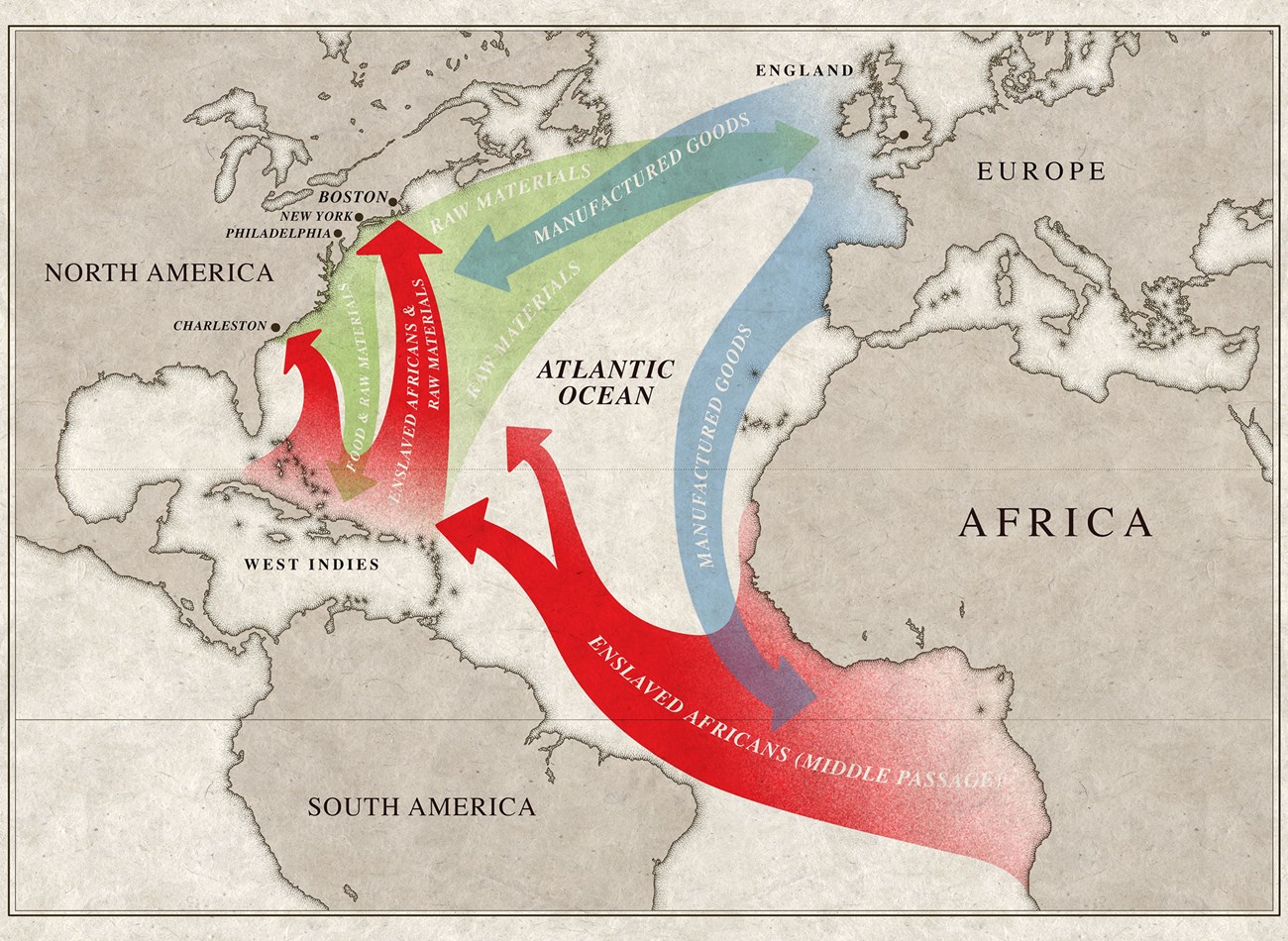
    While an item of currency and self-adornment to West Africans, cowries became a commodity in the hands of European, and later American, merchants. With cowries, merchants could navigate the local economy and barter for desired goods. Inevitably, this included kidnapped Africans. In his memoir, Olaudah Equiano (c. 1745-1797), a famed writer and abolitionist, recalled how one enslaver sold him to another for 172 “little white shells” while still in Africa. An examination of eighteenth-century shipping records reveals that cowries ranked amongst the most common goods transported to West Africa and used to trade for captives (Fig 6). For Africans who then faced the Middle Passage, they forcibly traveled aboard these same ships that in turn provided West Africa with the currency driving the economy and their enslavement — cowries.   

    Figure 6: List of goods imported to the Isle of Man via Rotterdam for trade in Africa, 1761
    Manx National Heritage

    Cowries in the Americas 

    Indo-Pacific cowries arrived in the Americas through several carriers, but ultimately all traveled on slave ships. In trading cowries to West Africa, foreign merchants supplied both types even though the market preferred M. moneta. As such, they often had leftover M. annulus which remained onboard as cargo and ballast when the ships continued their trans-Atlantic journeys. Once in the Americas, some captains elected to dump or sell off the remaining cowries rather than transport them back across the Atlantic. Cowries additionally arrived in the Americas on the bodies of kidnapped Africans. While common practice involved stripping captives in Africa, primary accounts report individuals retained beads and shells in their hair and as necklaces. Enslavers further distributed beads, and likely shells, as pacifiers during the Middle Passage. 

    Once in the Americas, cowries largely remained within Black communities though they did face geographical restrictions. For Virginia, archaeological distribution of the shells, mainly M. annulus, places them within the Tidewater region. Higher counts of shells appear in urban areas (Yorktown = 252) while plantations typically only have a few. Although Virginia’s current archaeological cowrie count falls above 353, this remains too few to support the traditional role as currency. Instead, the shells continued in roles of adornment and ritual with added symbolism of cultural loss, memory, and survival. Outside random finds in areas associated with enslavement, cowries recovered in the Americas have derived from burials, spirit caches, and sub-floor pits (Fig. 7). 

    Figure 7: Necklace recovered from an enslaved burial ground at Newton Plantation, BarbadosJerome Handler

    At Ferry Farm 

    Over the course of our twenty-plus year excavation, two cowries have appeared at Ferry Farm. Found in contexts located around the Washington House, including one in a root cellar, our shells represent M. annulus and have undergone modification to allow for stringing or weaving (Fig. 8). As with findings in previous studies, we believe these shells took on cultural roles through self-adornment. Despite not knowing the identity of the shells’ owner(s), the cowries provide enough information to form an interpretation of who they belonged to and how they arrived at Ferry Farm. 

    Figure 8: Ferry Farm cowries with modifications visible

    As their contexts of origin line up with the Washington House, the enslaved individuals who left them behind likely lived and worked close to the Washington family. This places them within the working realm of the house or the nearby work yard. For accommodation, the owner(s) may have occupied the Quarter adjacent to the Washington house or lived in one of the work yard’s support buildings. 

    Regarding the arrival of cowries on the plantation, this likely happened through the movement and exchange of people and goods. To provide the labor required to meet their goals, enslavers moved those they enslaved between different plantations as needed and expanded their workforce through the enslavement of more people or hiring of persons enslaved by others. This could account for the arrival of cowries at Ferry Farm. Alternatively, Ferry Farm’s proximity to the (port) city of Fredericksburg meant the enslaved community had access to a regional economy and trans-Atlantic vessels. Either network may have transported cowries to the city, but it additionally meant that Fredericksburg served as a meeting and trade point for those enslaved in the region. 

    Legacy 

    Cowries have a long and nuanced history in the Atlantic World. Beginning as a unit of currency and cultural symbol, cowries fell prey to the demands of the market, taking on a new role in the hands of foreign merchants. What once served to strengthen economies and nations suddenly worked to strip away the very people who inhabited West Africa. For those who endured enslavement, the cowries that accompanied them became symbols of a stolen home, a continuation of culture, and a determination to survive. Today, cowries remain important items in African and African American cultures by symbolizing their history as currency, continuing in self-adornment and ritual roles, and appearing prominently in works of art (Fig. 9-11).  

    Figure 9-11: Left: The Central Bank of West African States (BCEAO) tower in Cotonou, Benin, features cowrie shells on its facade Creative Commons Attribution-Share Alike 4.0 International; ReThink Quarterly Center: 20-cedi coin from Ghana. Cedi, the Akan word for cowrie, is Ghana’s unit of currency Michael C. Carlos Museum
    Right: Beyoncé donning a cowrie headdress by Ivorian designer Lafalaise Dion Design Indaba

    Emma Schlauder

    Research Archaeologist


    Bibliography 

    Alpern, Stanley B.                                                                                                                                                  1995     What Africans Got for Their Slaves: A Master List of European Trade Goods. History in Africa 22: 5-43

    Equiano, Olaudah 1789 The Interesting Narrative of the Life of Olaudah Equiano, Or Gustavus Vassa, The African. Written By Himself. London, UK

    Handler, Jerome S. 2006 On the Transportation of Material Goods by Enslaved Africans During the Middle Passage: Preliminary findings from Documentary Sources. African Diaspora Archaeology Newsletter 9 (4): 1-22 (Article 16).

    2007 From Cambay in India to Barbados in the Caribbean: Two Unique Beads from a Plantation Slave Cemetery. African Diaspora Archaeology Newsletter 10(1): 1-10 (Article 1)

    Heath, Barbara J. 2016 Cowrie Shells, Global Trade, and Local Exchange: Piecing Together the Evidence for Colonial Virginia. Historical Archaeology 50 (2): 17-46.

    National Museum of African American History & Culture n.d. Cowrie Shells and Trade Power. National Museum of African American History & Culture, Smithsonian, Washington D.C. <https://nmaahc.si.edu/cowrie-shells-and-trade-power>. Accessed 3 June 2024.

    Ogundiran, Akinwumi 2002 Of Small Things Remembered: Beads, Cowries, and Cultural Translations of the Atlantic Experience in Yorubaland. The International Journal of African Historical Studies 35 (2/3): 427-457.

    Pallaver, Karin 2023 Cowries, the currency that powered West Africa. ReThink Quarterly 7 <https://rethinkq.adp.com/artifact-cowries-west-africa/>. Accessed 3 June 2024.

    Pearce, Laurie E. 1992 The Cowrie Shell in Virginia: A Critical Evaluation of Potential Archaeological Significance. Master’s thesis, Department of Anthropology, College of William & Mary. University Microfilms International, Ann Arbor, MI.

    Radburn, Nicholas J. 2009 William Davenport, the Slave Trade, and Merchant Enterprise in Eighteenth-Century Liverpool. Master’s thesis, Department of History, Victoria University of Wellington, Wellington, New Zealand.

    Samford, Patricia 1994 Searching for West African Cultural Meanings in the Archaeological Record. African Diaspora Newsletter 1 (3): 1-3 (Article 2).
  • Stop Collaborate and Listen TD is Back with a Brand New Edition

    A quick refresher from part one of the TD marked pipe saga – Clay tobacco pipes with the mark TD are a ubiquitous item at historical archaeology sites dating from the mid-18th through the 20th century. While at one point the mark represented a specific maker, it later became a mark synonymous with clay tobacco pipes themselves. So, it’s not surprising that archaeologists and historians have been looking to identify the origin of the mark for years. These efforts led to the naming of Thomas Dormer as the maker most likely to have begun the rise of the TD mark, though this identification was less than certain (Walker, 1966).

    Now that we are all caught up, let’s pick up the quest once again.

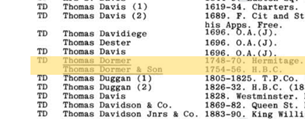
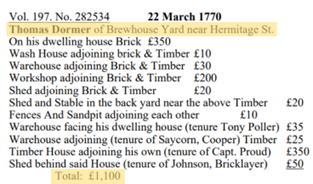
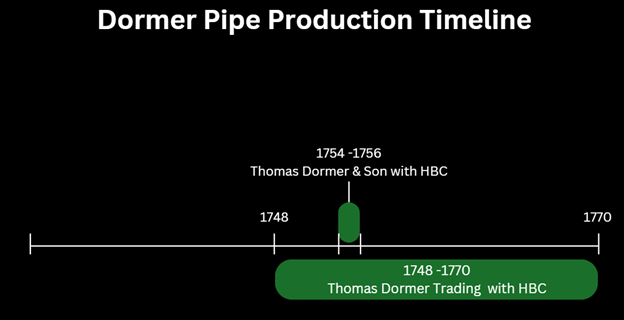
    Adrian Oswald’s (1975) index of pipe makers lists Thomas Dormer as one of the only London-based pipe makers with the initials TD trading with the Hudson’s Bay Company (HBC) in the years 1748-1770. HBC records also mention that Dormer went into business with his son for a brief time from 1754-1756. Oswald built on this by looking at the insurance policies of pipe makers of the time, which shows that the value of Thomas Dormer’s estate was nearly five times that of other pipe makers (Alexander, 1978). In the 18th century, pipe makers and the pipe making industry were often relegated to the lower class and the poorer parts of town (Walker, 1981). Dormer’s large estate implies he stood out at the time.

    So, we know that Thomas Dormer produced and imported his pipes into North America around the time TD marked pipes started popping up at sites, and that he was doing well for himself. We can call it a day and say Thomas Dormer was the original TD, right? While that does sound pretty enticing, there still needs to be more evidence supporting Dormer’s claim to the TD mark. At the time of the previous research there was very little historical documentation of Dormer and his life available, which left some questions unanswered: Why did Dormer stop exporting pipes in 1770? What is the reason behind the brief mention of this son in the mid 1750’s? And why did these pipes continue to be produced beyond 1770 with the TD mark, if not by Dormer himself? These questions made it difficult to confirm that Thomas Dormer was the TD.

    Previous timeline of Dormer pipe production

    This opens the door for my research as I attempt to fill in the blanks surrounding Dormer and his life. Since a trip to London to begin my research was off the table, much of my investigation was done through online archival research. Yay for digitization efforts and increased access to information!

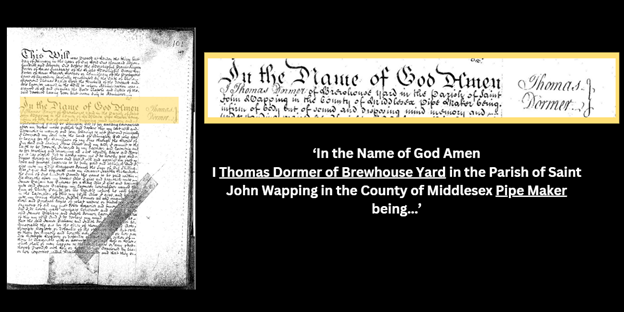
    One of the first items identified was Thomas Dormer’s will dated January 1771 (National Archives). It gives his occupation as a pipe maker and his location at Brewhouse Yard, confirming this to be the correct Thomas Dormer. Finding this document provided information that would further the investigation including a probable death date and the names of family members.

    Thomas Dormer’s will 1771 (National Archives)

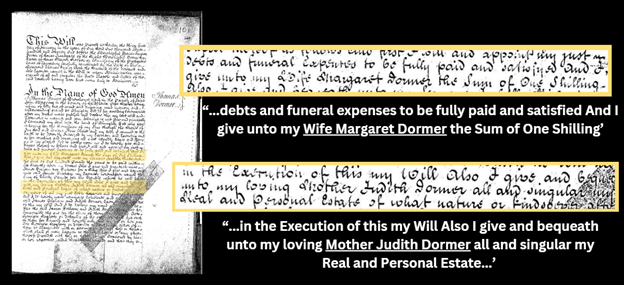
    Speaking of family members, Thomas Dormer chose to leave the entirety of his vast estate to his “loving mother Judith.” On the other hand, he left his wife Margaret one single shilling. Hold up, just one shilling? This led me down a mini rabbit hole where I found that Thomas and Margaret had been married for 11 years. Indeed, long enough for her to have a fair share of the estate. Additionally, it wasn’t uncommon for wives to take over their husband’s pipe making business after their death, yet Dormer left things to his mother instead. Ouch!

    Dormer’s division of his estate (National Archives)

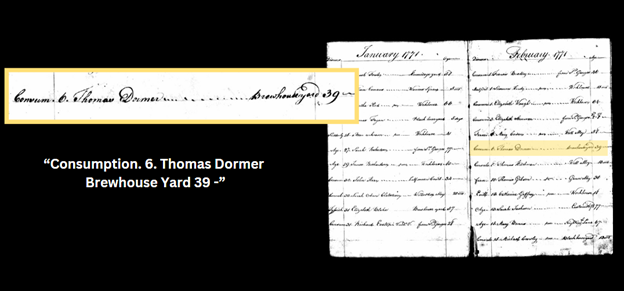
    Anyway, back to the investigation. Using 1771 as a probable death date I was able to find a Burial Notice dated February 1771 stating Thomas Dormer died at the age of 39 due to consumption, or tuberculosis as we know it today (London Metropolitan Archives [LMA]). An age at death gave me the ability to estimate his birthday to sometime around 1731 or 1732 and identified a Christening Record for Dormer dated 1731(LMA). It lists his mother as Judith Dormer which fits with previous records, and it also lists his father who is, wait for it, Thomas Dormer, a pipe maker. This uncovers the fact that there were two Thomas Dormers producing pipes in 18th century London, father and son.

    Dormer’s Burial Notice 1771 (London Metropolitan Archives)
    Dormer’s Christening Record 1731 (London Metropolitan Archives)

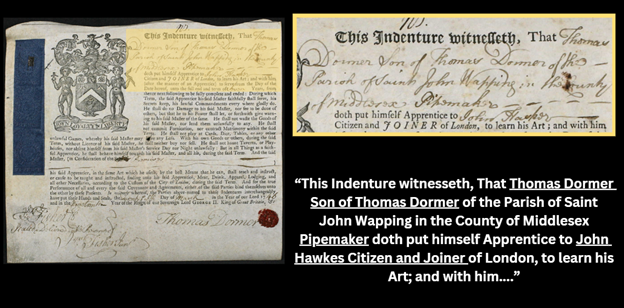
    After finding that fun fact I switched gears to see if I could find information about Thomas Dormer Sr. Given the birthdate of Thomas Jr., I figured Thomas Sr. was probably born some time in the early 1700s. Using that date, I identified his Burial Notice dated December 1756. It listed Thomas Dormer Sr. dying at the age of 56 due to asthma (LMA). Additionally, an apprenticeship indenture for Thomas Jr. was located (LMA). Dated 1746, it lists his seven-year apprenticeship under John Hawkes. Now, an apprenticeship in itself isn’t too exciting, but this was an apprenticeship for a joiner, not a pipe maker. Considering Jr. did go on to be a pipe maker, and a popular one at that, makes his previous foray into joinery an unexpected plot twist.

    Dormer Sr.’s Burial Notice 1756 (London Metropolitan Archives)
    Dormer Jr.’s Indenture Record 1746 (London Metropolitan Archives)

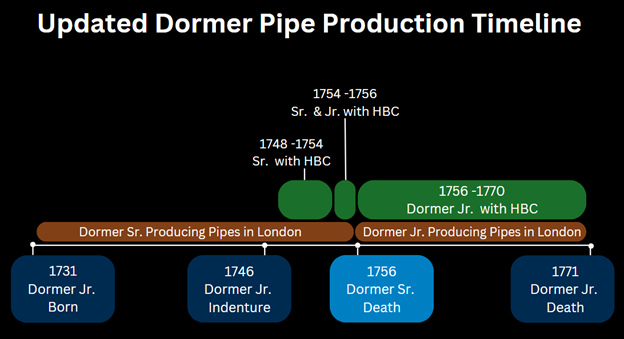
    Let’s put all of this information together. Cue the timeline! The newly discovered documentary evidence now allows me to create an updated chronology of the Dormer pipe production. Thomas Dormer Sr. began producing pipes in the London area some time prior to 1731. By 1748 Dormer Sr. was doing well enough in the business to begin exporting pipes into North America. Indenture records suggest that Dormer Jr. was not always intending to take over the business, but perhaps his father’s health prompted this, or the incoming wealth from overseas changed his mind. Nonetheless, sometime in the year 1754, or the years leading up to it, Thomas Dormer Jr. came into the family business. This partnership was short lived due to Thomas Dormer Sr.’s death in 1756, explaining the brief mention of their partnership in the HBC records. Following Dormer Sr.’s death, his son Thomas Dormer Jr., continued to produce and export pipes to North America until his death in 1771.  

    Updated Dormer pipe production timeline with new information

    This timeline helps put all the previous information into context and more fully supports Thomas Dormer Sr. and then Jr. as the originators of the TD mark.

    But wait there’s more! I also located Judith Dormer’s (Thomas Jr.’s mom) will dated 1782 (LMA). In her will she mentions her properties and its association with Tidy & Evans pipe makers (LMA). During my look into the HBC records I found that Tidy & Evans take over the London pipe export a few years after Dormer Jr.’s death. Now remember, Jr gave her all his estate which included his warehouse and workshop (LMA). Perhaps Tidy & Evans occupied his workshop and continued making TD marked pipes using Dormer’s molds after his death. Using the molds of other pipe makers was not unheard of at the time (Walker, 1981). But why would they want to make pipes with a mark other than their own?

    Mention of Tidy & Evans in HBC records and Judith’s will

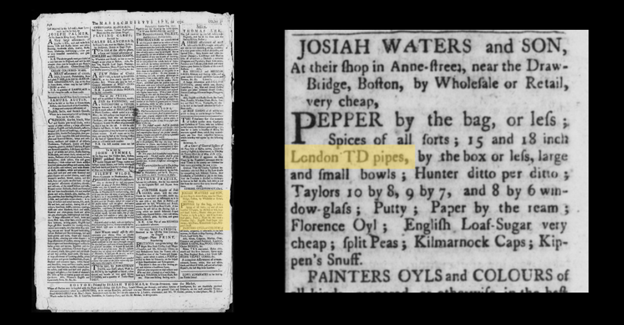
    Well, a search on the Library of Congress’s Chronicling America located a 1771 Massachusetts Spy advertisement that specifically lists London TD pipes (LOC). Not only does this solidify that TD pipes were based out of London, it also supports that the popularization of these pipes occurred during the Dormers’ lifetimes. For these pipes to be advertised by name it can be assumed that their popularity had already been established by this point. Whether this popularity had to do with the quality or the quantity of Dormer’s pipes being imported into North America remains unknown. The resulting name recognition may have caused a continued demand for these pipes, leading Tidy & Evans and others to continue producing them.

    1771 Massachusetts Spy article (LOC)

    These new findings present a solid case for Thomas Dormer being the originator of the TD mark. We can now see that TD pipes were based out of London and popularized during the period when Dormer produced and exported pipes. After 1771 the TD mark stopped representing pipes made by Dormer, and the mark was then used by other makers, perhaps Tidy & Evans, representing tobacco clay pipes themselves rather than a specific maker.

    Research such as this illustrates the importance of revisiting past theories. Whether it be trying to answer questions about a mark representing nearly 300 years of tobacco smoking culture, or looking to find interesting insight into the life of the pipe maker that created it, there is more information out there, we just need to keep looking.

    So, what do you think? Did I solve the mystery of the man behind the mark?

    Danielle Arens

    GWF Archaeologist


    References

    Alexander, L. T. (1978) ‘Clay Tobacco Smoking Pipes from the Caleb Pusey House, The Archaeological Society of Delaware9, 35pp.

    London Metropolitan Archives; London, England; London Church of England Parish Registers; Reference Number: P69/Gis/A/002/Ms06419/016

    London Metropolitan Archives; London, England; London Church of England Parish Registers; Reference Number: P93/JN2/025

    London Metropolitan Archives; London, England; London Church of England Parish Registers; Reference Number: P93/JN2/026

    London Metropolitan Archives; London, England; London Church of England Parish Registers; Reference Number: P93/JN2/026

    London Metropolitan Archive; Reference Number: COL/CHD/FR/02/0778-0-785

    Manitoba Archives. Merchandise exported to HBC posts [microfilm]. H1-16-2 ( A.25/2 )

    National Archives, Kew, Will of Thomas Dormer, Pipe Maker of Saint John Wapping , Middlesex, PROB 11/963/352

    Oswald, A. (1975) Clay Pipes for the Archaeologist, British Archaeological Reports, British Series 14, Oxford, 207pp

    Walker, I. (1966, June). TD Pipes – A Preliminary Study. Quarterly Bulletin Archeological Society of Virginia, pp. 86-102.

    Walker, S. (1981). The Clay Pipe Industry of the Parish of St Olave’s Southwark, in P Davey, The Archaeology of the Clay Tobacco Pipe 6, Pipes and Kilns in the London Region, B97, 173–82

    Woollard, P, (2001) Some Clay Tobacco Pipemakers with Fire Insurance Policies in the Sun Assurance Company 1710-1844, The Society for Clay Pipe Research, 62

  • You Down with Old TD? Yeah, You Know Me!  

     TD Marked Tobacco Pipes That Is! 

    Clay tobacco pipes are a hallmark of historical archaeology. Grandma smoked, the enslaved smoked, the elite smoked, children smoked, just about everyone smoked. Smoking was one of America’s favorite pastimes, and there are plenty of pipes left in the archaeological record to prove it. Tobacco pipes were not only a vessel for a leisurely activity, they could also be a way to display one’s identity or beliefs.  

    Figure 1: A Smoking Club (NYPL)

    Because of this, the motifs and marks on tobacco pipes can tell us a lot about the people who used them.  

    Tobacco pipes can also be valuable tools for dating a site by using pipe bore diameters, typologies, and maker’s marks. This last one helps set the stage for our question of the hour.  

    Some makers would mark their pipes to indicate a product as theirs.  These marks can be found on different parts of a pipe, such as the bowl, heel, or stem. Finding a pipe with a maker’s mark can be very exciting as it allows a pipe to be attributed to a specific pipe maker and, thus, a time period. But that is not always the case. One of the more common maker’s marks in many archaeological sites is the mark “TD.” Remember the two we found during last summer’s dig?  

     So, you’re probably thinking, what’s the question again? Just go look up a pipe maker with the initials TD, and you will have your maker. Well, unfortunately, it’s not always that easy. 

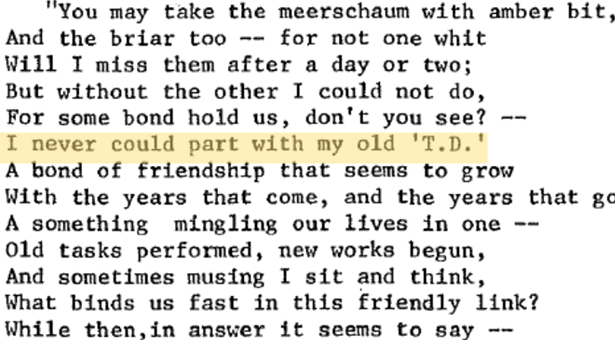
    There are multiple pipe makers with those initials, and the pipes with variations of the TD mark have been found at sites with occupation dates suggesting the mark was being produced from the mid-18th century all the way into the 20th century. At some point, the mark stopped representing a single maker and instead became a symbol used on pipes throughout the years, reflecting clay tobacco pipes themselves. Think of it as the Kleenex or Q-tip of its time. TD became synonymous with clay tobacco pipes. This can be seen in written records like a catalog from 1892 that touts their rendition of “the Celebrated “T.D.” pipe” (Zorn). An early 20th-century song referencing “the Old TD” also supports the lasting influence of the mark (Cooper, 1907, as cited by Walker, 1966).  

    Since there is no solid end date to help frame who the possible maker could be, archaeologists and historians have focused on looking at beginning dates to help find the original maker of the TD pipes, settling on a date in the middle of the 18th century. Archaeologists Adrian Oswald and Iain Walker are often cited as laying the foundations of the current TD lore. The combination of their findings identifies 18th-century London-based pipemaker Thomas Dormer as the most likely originator of the TD mark (Walker, 1966). With that said, Walker (1966) states that more information will have to be found to definitively give Dormer credit for originating the mark. 

    So, that brings us to the start of my research and a revisiting of the foundation of this theory, which was laid out as early as the 1930s.  Who is Thomas Dormer, and is he the original TD? Why were TD pipes so popular that they were copied and made for centuries? And can we find new information to crack the case of the elusive TD mark? 

    The first step of the investigation is reviewing the literature and identifying current thoughts on TD pipes and their maker. One of the earliest deep dives into TD pipe origins can be found in the article “A Theory Regarding TD pipes” in the November 1937 printing of Antiques magazine. In this article, Alfred Hopkins expresses the mystery surrounding the mark and suggests its possible meaning. At the time, Hopkins (1937) and his contemporaries were unable to find potential pipe makers with the initials TD that would indicate the mark was referring to a maker. Instead, he states that it was a trademark of sorts to identify a quality product (Hopkins, 1937). He also mentions that TD may represent the beginning of the Christian hymn Te Deum Laudamus (Hopkins, 1937). Now remember, folks, this was written in the 1930s, and at the time, they didn’t have easy access to information. While more information has since been shared, we now know that there were indeed pipe makers with these initials and look more toward a maker rather than a hymn; Hopkins’ article plays an integral part in our quest by illustrating that there was an interest in the TD mark as early as the 1930s.  

    Figure 7: 1937 Alfred Hopkins article 

    Moving away from the 1930s and into the 1960s, Adrian Oswald compiled an index of pipe makers, which Iain Walker (1966) refined to find three possible English pipe makers that could be the originator of the mark: Thomas Dennis, Thomas Darkes, and Thomas Dormer. Walker (1966) continued this search and identified London-based pipemaker Thomas Dormer as the most likely of the three. Nailing down their sources became the next part of the puzzle in an attempt to confirm this information through primary source research and examination of any sources referred to in support of the theory.  

    This is where the quest to find new information about Thomas Dormer begins. Through this investigation, I was able to identify the “OG TD,” some juicy 18th-century family drama, and the possible first plagiarizers of the TD mark. There are twists, turns, and, unfortunately, too much to tell you in just one blog, so be sure to check out part two, where we get to the bottom of this mystery that began nearly 100 years ago. 

    Danielle Arens

    GWF Archaeologist


    ​​References 

    ​​(2022). Retrieved from George-M-Woodward-mavcor.yale.edu.jpg 

    ​George Zorn & Co. (1892). Pipes & Smokers Articles. Philadelphia. 

    ​Hopkins, A. (1937, November). A Theory Regarding TD Pipes. Antiques, pp. 234-235. 

    ​National Pipe Archive. (n.d.). Retrieved from http://www.pipearchive.co.uk/images/how%20to/pipe_figure_1.jpg&nbsp;

    ​Walker, I. (1966, June). TD Pipes – A Preliminary Study. Quarterly Bulletin Archeological Society of Virginia, pp. 86-102. 

    ​​​ 

  • Spilling the Tea: The Boston Tea Party at 250

    Author’s Note: This blog contains hyperlinks to primary documents related to the event.

    Figure 1: 250th Logo (Boston Tea Party Ships and Museum)

    Intro

    This year marks the 250th anniversary of the Boston Tea Party (Figure 1). Hailed as a defining moment in the quest for American independence and an act of patriotism, the event has inspired commemorations in many forms, and it remains a vital part of the American History curriculum. I, for one, thought it the epitome of achievement that I had the date memorized in kindergarten. Like much of our founding history, however, the story retains an element of myth. So, what exactly is the truth behind this event?  

    The Story

    A general account of the Boston Tea Party tells how patriotic Bostonians, angered by unfair taxes, boarded three ships in Boston Harbor on December 16, 1773. Disguised as members of the Mohawk or Narragansett tribes, Samuel Adams led the Sons of Liberty in protest by throwing crates of the King’s tea overboard. This act helped unite the colonies against Britain and started the chain of events that ended in the “Shot Heard Round the World” on Lexington Green on the morning of April 19, 1775, following Paul Revere’s ride.

    Sound familiar? In truth, this account covers the basics. It provides the “who,” “what,” “when,” “where,” and “why.” Nonetheless, it only scratches the surface of the complex event we know as the Boston Tea Party. To unpack this, let us look at what led to the event, how it happened, and the initial response.

    Truth of the Tax

    Taxes and tea sit at the heart of this story. The taxes that the colonies took issue with went into effect starting in the 1760s, with the ultimate goal of lessening the debt incurred by Britain during the Seven Years’ War. However, this set a new precedence as Britain had never taxed the colonists directly, and the passing of these tax laws occurred without consulting the colonies. The formal chant of “no taxation without representation” first appeared in 1768, and while the lack of representation presented a key reason for displeasure, the impact of taxes on merchants served as another.

    While the Tea Act of 1773 served as the catalyst for the Boston Tea Party, the Tea Tax had existed since 1767. Introduced under the Townshend Acts, the tax remained the only one in effect upon the Act’s repeal in 1770. General dislike for the tax persisted, but the Tea Act took the issue to another level. In an aim to bail out the East India Company (EIC), the Act granted a monopoly over the tea trade by opening the colonial market to the company as the sole supplier, waived their tax payment in favor of those paid by colonists, and mandated that only EIC company agents (consignees) could sell the tea (Figure 2). Many perceived this as a restriction on business, as merchants could no longer source tea from Britain and smugglers, freedom of choice and rights.  In truth, the protests against the tax and Tea Act occurred as a matter of principle since the cost of tea actually dropped, with consumers now able to buy directly from a supplier who faced no additional costs.

    Figure 2: EIC Seal (East India Company)

    Build Up

    With the Boston Tea Party story often told in a bubble, it appears as an impulsive act, but far more happened behind the scenes. By the end of 1773, displeasure with the Tea Act made attempts of preventing the unloading of tea and boycotts of its purchase common. When DartmouthBeaver, and Eleanor anchored at Griffin’s Wharf (November 28-December 15), locals had expected their arrival since October and had spent November demanding the resignations of the consignees. Many foresaw the risk of tensions coming to a head, including Abigail Adams, who, on December 5, wrote that “the Tea that bainfull weed is arrived…The flame is kindled…Great will be the devastation if not timely quenched or allayed by some more Lenient Measures.”

    After successfully chasing the consignees out of town, Bostonians urged Francis Rotch, whose family owned two of the ships, to depart without unloading the cargo. The Sons of Liberty stationed a guard at the docks to ensure that the tea remained onboard while Rotch decided. In response, Royal Governor Thomas Hutchinson ordered Rotch to unload the cargo within the standard twenty days of arrival or forfeit it and the ships. Rotch thus found himself in an impossible situation as Hutchinson and customs refused to let him leave while the Sons would accept nothing less.

    December 16th

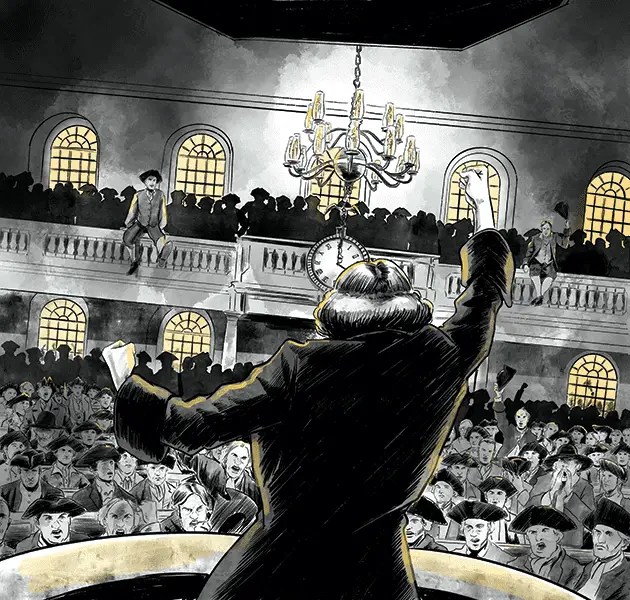
    Many awoke on December 16, knowing the crisis would come to a head. The date marked the deadline for unloading Dartmouth’s cargo, and Rotch would make one final attempt to plead his case to both sides. Hutchinson and customs refused to budge, which further incensed Bostonians when Rotch reported that the tea would not be leaving. This announcement came as Samuel Adams headed a meeting at the Old South Meeting House (Figure 3).

    Figure 3: Adams’ Speech at Old South (Revolutionary Spaces)

    Serving as a leading figure within the Sons of Liberty, Adams had led many of the meetings and attacks that occurred almost daily in the buildup to the 16th. This particular meeting drew 5,000-7,000 people who clamored to hear the latest developments in the tea crisis. When Rotch’s news broke, Adams stated, “This meeting can do nothing further to save the country.” While often billed as a signal to start the Tea Party, doubt remains over the statement’s significance. According to eyewitness accounts, many stayed another 15 minutes, and Adams tried to prevent people from leaving before the meeting concluded.

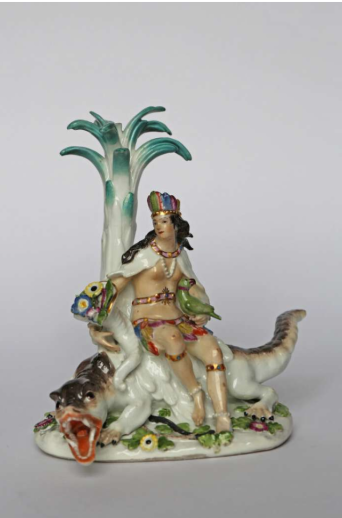
    Regardless of intent, hundreds of people made their way to Griffin’s Wharf. Along the way, some donned disguises that mimicked Native Americans. These disguises served both practical and symbolic purposes. First, donning a disguise shielded the identity of individuals carrying out the illegal acts, even if no one mistook them for actual tribal members. Secondly, the choice of a Native American-inspired look embraced an allegory of America and linked Indigenous resistance to colonization with the colonists’ struggle against Britain (Figure 4).

    Figure 4: “Allegory of the Continent of America,” c. 1750 (The Clark Museum)

    Interestingly, Adams never claimed or denied involvement with the Tea Party, yet, in contrast to popular depictions, he did not appear at the harbor that night. Instead, he remained at Old South. Of the participants, only the identities of 116 are known, and only one faced arrest.

    The day after, Samuel’s cousin, John Adams, described the event as “the most magnificent Movement of all. There is a Dignity, a Majesty, a Sublimity in this last Effort of the Patriots that I greatly admire. The People should never rise without doing something to be remembered—something notable And striking. This Destruction of the Tea is so bold, so daring, so firm, intrepid and inflexible, and it must have so important Consequences, and so lasting, that I cant but consider it as an Epocha in History.

    Reactions

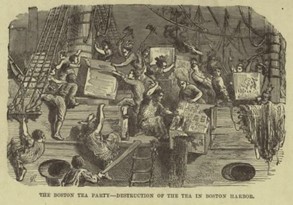
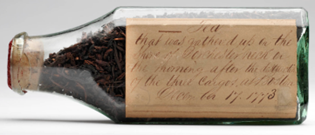
    Despite a post-independent America enshrining the Boston Tea Party in glory, most initial reactions proved far less enthusiastic than that of John Adams. The name “Boston Tea Party” did not emerge until the 1820s, and even then, “Party” referred to a group of people rather than something celebratory. Instead, mentions of the event usually identified it by what happened, such as “the destruction of the tea” (Figure 7).

    Figure 7: “Tea that was gathered up on the shore of Dorchester Neck on the morning after the destruction of the three cargos at Boston; December 17, 1773” (MHS)

    While Parliament’s taxes made many colonists unhappy, they also valued their right to private property. In the case of the Boston Tea Party, the ships that the Sons of Liberty trespassed on belonged to Americans, while the EIC owned the destroyed tea. The King and Parliament had no direct connection to the ships or their cargo. As such, many viewed the attack as one on private property rather than a true strike against Parliament. Those who spoke out against it included Founding Fathers. Benjamin Franklin felt “truly concern’d…that there should seem to any a Necessity for carrying Matters to such Extremity, as, in a Dispute about Publick Rights, to destroy private Property.” Meanwhile, George Washington supported taking a stand against taxation and felt the cause of Boston equated to the cause of America, but ultimately could not “approve their cond[uc]t in destroyg the Tea.”

    Impact

    In the short run, the Boston Tea Party did little to fan the flames of independence. It inspired a few more boycotts (i.e., the Annapolis, Edenton, and Yorktown Tea Parties) and furthered a decline in consumption, but the British response to the event served as the primary catalyst. By punishing all of Boston, and by extension, Massachusetts Bay Colony, rather than just those responsible, the British infringed upon the rights of the colonists. Under the Coercive (nicknamed “Intolerable”) Acts, the British closed the harbor, demanded Bostonians pay damages to the EIC, imposed martial law, and required citizens to house, or quarter, members of the military on their property at their own expense (Figure 8).

    Figure 8: “The Bostonians in Distress;” 1774 Satire of the Boston Port Act (LoC)

    Those living in the twelve other colonies did not take well to this, as they feared the implementation of these acts in their homes. In response, the First Continental Congress met in Philadelphia from September to October 1774. While some delegates saw the issue as a Massachusetts one, others pressed the need to take a stand against the overreaches of Parliament and sympathized with Massachusetts. They concluded Congress by issuing their Declaration and Resolves, which listed objections to Parliament and confirmed their commitment to a trade boycott. However, when news of Lexington & Concord broke in April 1775, and Massachusetts found itself at war, the other colonies quickly had to decide which side they would take.

    Legacy

    Two hundred fifty years on, the Boston Tea Party remains an iconic event in American history and a pivotal moment in the founding of the country (Figure 9). While not wholly embraced as such upon its occurrence, the retelling of the event over time came to enshrine it in lore and leave out details that complicated the narrative. This shows that one cannot study a singular event without contextualizing it within the bigger picture. Nevertheless, John Adams’ belief that the “Destruction of the Tea” would become an epoch in history proved correct.

    Figure 9: Robinson Tea Chest – 1 of 2 surviving chests (Boston Tea Party Ships and Museum)

    Emma Schlauder

    Research Archaeologist


    Bibliography

    Adams, Abigail. Abigail Adams to Mercy Otis Warren, 5 December 1773. Letter. From National Archives, Adams Papershttps://founders.archives.gov/documents/Adams/04-01-02-0065 (accessed Nov 13, 2023).

    Adams, John. [December 1773]. Diary. From National Archives, Adams Papers. https://founders.archives.gov/documents/Adams/01-02-02-0003-0008 (accessed Nov. 13, 2023).

    “Boston Tea Party History.” Boston Tea Party Ships & Museum (website). https://www.bostonteapartyship.com/boston-tea-party-history (accessed Nov. 14, 2023).

    Cooper, Samuel. To Benjamin Franklin from Samuel Cooper, 17 December 1773. Letter. From National Archives, Franklin Papershttps://founders.archives.gov/documents/Franklin/01-20-02-0266 (accessed Nov. 13, 2023).

    “Declaration and Resolves of the First Continental Congress.” American Battlefields Trust (website). https://www.battlefields.org/learn/primary-sources/declaration-and-resolves-first-continental-congress (accessed Nov. 14, 2023).

    Franklin, Benjamin. From Benjamin Franklin to the Massachusetts House Committee of Correspondence, 2 February 1774. Letter. From National Archives, Franklin Papers. https://founders.archives.gov/documents/Franklin/01-21-02-0023 (accessed Nov. 13, 2023).

    ““Made one of the celebrated Tea Party in Boston harbor:” Remembering the Boston Tea Party in 1826.” American Battlefields Trust (website). https://www.battlefields.org/learn/primary-sources/made-one-celebrated-tea-party-boston-harbor (accessed Nov. 14, 2023).

    ““No Taxation Without Representation:” The Evolution of the Historic Phrase.” American Battlefields Trust (website). https://www.battlefields.org/learn/articles/no-taxation-without-representation (accessed Nov. 14, 2023).

    “Participants in the Boston Tea Party.” Boston Tea Party Ships & Museum (website). https://http://www.bostonteapartyship.com/participants-in-the-boston-tea-party#participant-list (accessed Nov. 14, 2023).

    Schiff, Stacy. The Revolutionary Samuel Adams. New York: Little, Brown and Company, 2022. “Tea Act.” American Battlefields Trust (website). https://www.battlefields.org/learn/primary-sources/tea-act (accessed Nov. 14, 2023).

     “The Boston Tea Party.” Massachusetts Historical Society (website). https://www.masshist.org/revolution/teaparty.php (accessed Nov 14, 2023).

    “The Final Straw.” Boston Tea Party Ships & Museum (website). https://www.bostonteapartyship.com/the-final-straw (accessed Nov 14, 2023).

    “The Intolerable Acts.” Boston Tea Party Ships & Museum (website). https://www.bostonteapartyship.com/the-intolerable-acts (accessed Nov 14, 2023).

    The Massachusetts Gazette; and the Boston Post-Boy and Advertiser. “Philadelphia, September 29. Extract of a letter from London, August 4.” From Massachusetts Historical Society. https://www.masshist.org/database/viewer.php?pid=2&old=1&mode=nav&ft+Coming% &nbsp 20of%20the%20American%20Revolution&item_id=434 (accessed Nov. 13, 2023).

    “The Secret Plan.” Boston Tea Party Ships & Museum (website). https://www.bostonteapartyship.com/the-secret-plan (accessed Nov 14, 2023).

    “Townshend Act.” American Battlefields Trust (website). https://www.battlefields.org/learn/primary-sources/townshend-act (accessed Nov. 14, 2023).

    Washington, George. From George Washington to George William Fairfax, 10–15 June 1774. Letter. From National Archives, Washington Papershttps://founders.archives.gov/documents/Washington/02-10-02-0067 (accessed November 13, 2023).

  • “To Rendezvous at Fredericksburgh”: The Washington-Lewis Family, Fredericksburg, and the World War of 1754-1763: Part I

    Editor’s Note: As the two-hundred-sixty-ninth anniversary of the skirmish of Jumonville Glen approaches this Sunday, May 28th, some recent and exciting discoveries have occurred at the battlefield.  The National Park Service (NPS) released an announcement this week stating that after a four-week archeological investigation, objects have been found to verify the location of the first skirmish, Jumonville Glen, of the French and Indian War.  Archeologists found a multitude of artifacts, including several eighteenth-century musket balls.    

    Check out the links for more information:

    NPS :Recent archaeology project uncovers first shots of the French and Indian War

    Archaeological dig in Fayette confirms location of Jumonville Glen skirmish

    Scientists find 1754 ballistics of first shots fired in French and Indian War

    On to the the history…


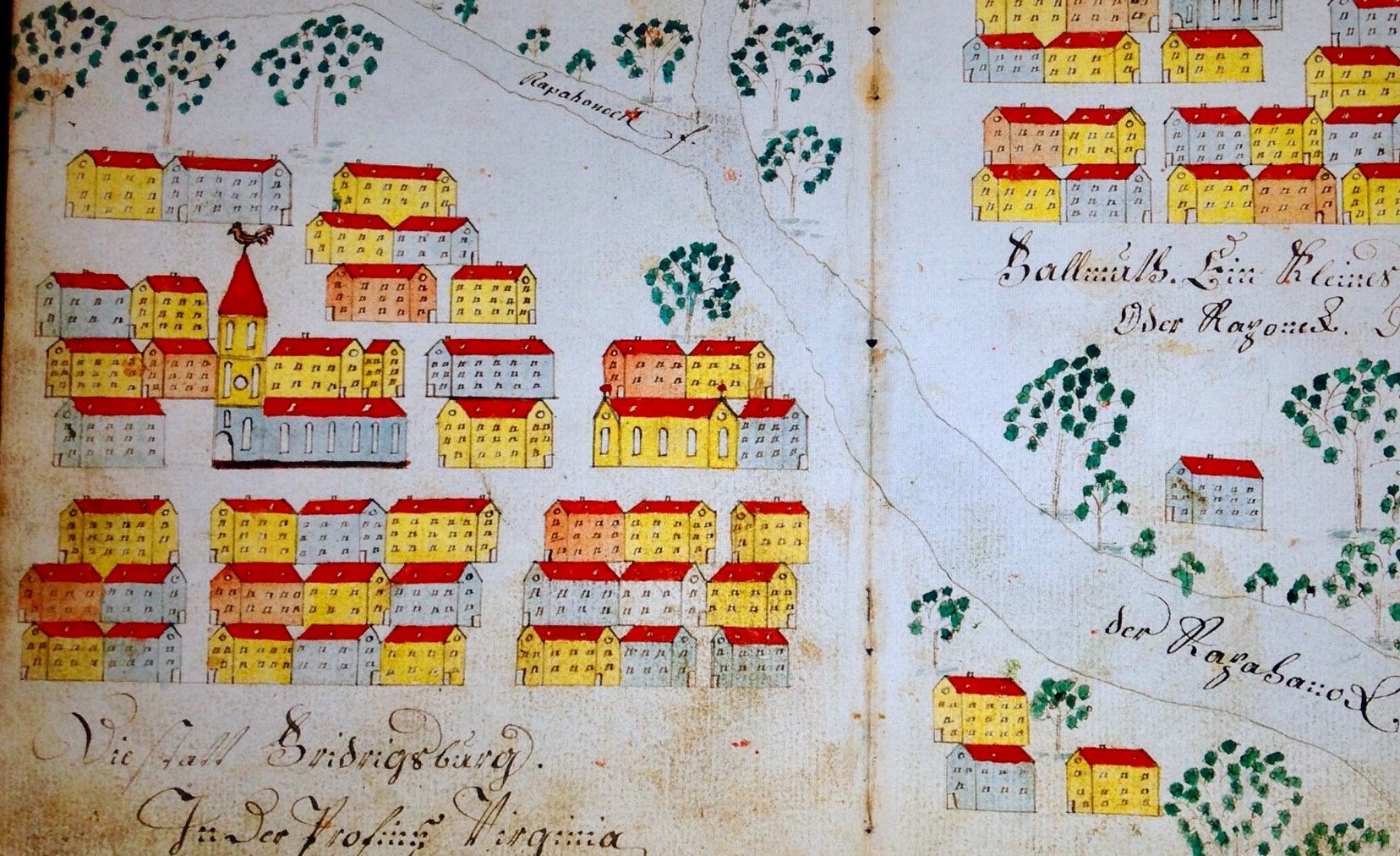
    Figure 1. Detail of a highly stylized depiction of Fredericksburg, VA by Fench soldier Georg Daniel Flohr, who visited in 1782. Despite the use of artistic license, the illustration conveys Flohr’s perception of the 18th Century town as a “rather large” port with “intense boat traffic.” Source: Account of the Land and Sea Expedition in America of the Acclaimed DeuxPonts Regiment from 1780 to 1784
    Crowding out the fresh spring air of a wooded countryside, the acidic scent of aerosolized gunpowder began to sting the interior of a nervous 22-year-old’s nostrils. His ears rang from the shock of dozens of nearby explosions. Smoke clouded his vision, and sensory overload likely clouded his judgment. Soon-to-be-familiar sounds followed rapidly: scurried movement, intense chatter, and groans of agony. Yet, the inexperienced youth had to make decisions on behalf of the crowd around him. He found himself at the center of a new form of chaos: the opening volleys of a world war.

    Lieutenant Colonel George Washington’s Virginia soldiers had just fired into a French military camp near the Monongahela River in western Pennsylvania at a moment (May 28th, 1754) when peace among European empires and Native American nations sat at a precarious equilibrium. Over the past several months, French forces had been busy erecting Fort Duquesne at the Forks of the Ohio River (the site of modern-day Pittsburgh, PA). Royal Governor Robert Dinwiddie of Virginia considered this commercially and strategically significant location part of the British Empire and sent Washington to the area to help re-establish British control. This was the context in which Washington’s Virginians and a party of Mingo warriors came upon the ill-fated French camp in a ravine soon to be known by the infamous moniker of “Jumonville’s Glen.”[1]

    After the first shots rang out around the glen, things only got worse. Washington’s cocommander, Tannagrison (a Seneca politician leading the party of Mingos), summarily executed the French officer in command, Ensign Joseph Coulon de Villiers, Sieur de Jumonville, and events escalated from there. In fact, this frontier skirmish grew into a world war that would not only give rise to the North America of the Revolutionary Era, but would forever alter the power dynamics of entire globe. Consider the growth of the British Empire, two centuries of exploitation and resistance in India, the birth of the United States, the creation of independent republics in Latin America, the French Revolution, English colonization of Australia, the American Civil War, the Assassination of Archduke Ferdinand, the rise of the Axis Powers, the Vietnamese independence movements of the 20th Century, and even the
    War on Terror. The conflict that Washington and Tannagrison started at Jumonville’s Glen, known as the“Seven Years’ War” or the “French and Indian War” (1754-1763), shaped all these events, along with countless others. And as residents of the Fredericksburg region, the Washingtons and Lewises sat at a crossroads of this worldwide upheaval.
    As the 250th anniversary of American nationhood approaches, understanding the Seven Years’ War’s social, martial, and political context is perhaps more important than ever. In anticipation of future posts related to this subject, I hope what is below will introduce you to how the stories of those associated with Kenmore and Ferry Farm intertwined with the larger story of the war.

    We’ll start with George. As an officer commissioned in the provincial (colonial) Virginia Regiment, George Washington not only helped initiate the Seven Years’ War but saw his first real military service at places like Fort Necessity or as a volunteer aid-de-camp in the ill-fated Braddock Expedition of 1755, where he nearly died during the famous British defeat at Battle of the Monongahela. Of course, historians have worn countless pens, pencils, and keyboards recording Washington’s involvement in the early stages of the war and documenting the future Commander-in-Chief’s first brushes with combat. However, George’s duties increasingly involved more independent responsibility after 1755. These events came on the heels of George’s formal relocation from his mother, Mary Washington’s, residence at Ferry Farm to his late half-brother’s estate at Mount Vernon.

    The two years that followed George Washington’s more well-known deeds at the Monongahela produced circumstances similar to those he would contend with during the American War for Independence (1775-1783). Throughout 1756 and 1757, the Virginia Regiment had to defend a string of small, isolated forts along Virginia’s vulnerable frontier to the west of the Blue Ridge Mountains.[3] The task of managing poorly-supplied posts that stretched from Winchester, VA, to the vicinity of modern-day Martinsville, VA, presented George with the opportunity to develop three aspects of leadership that would define his work in future years: military administration over vast geographical territory, long-term strategic planning, and the sustaining of volunteer troops despite strained logistical resources.

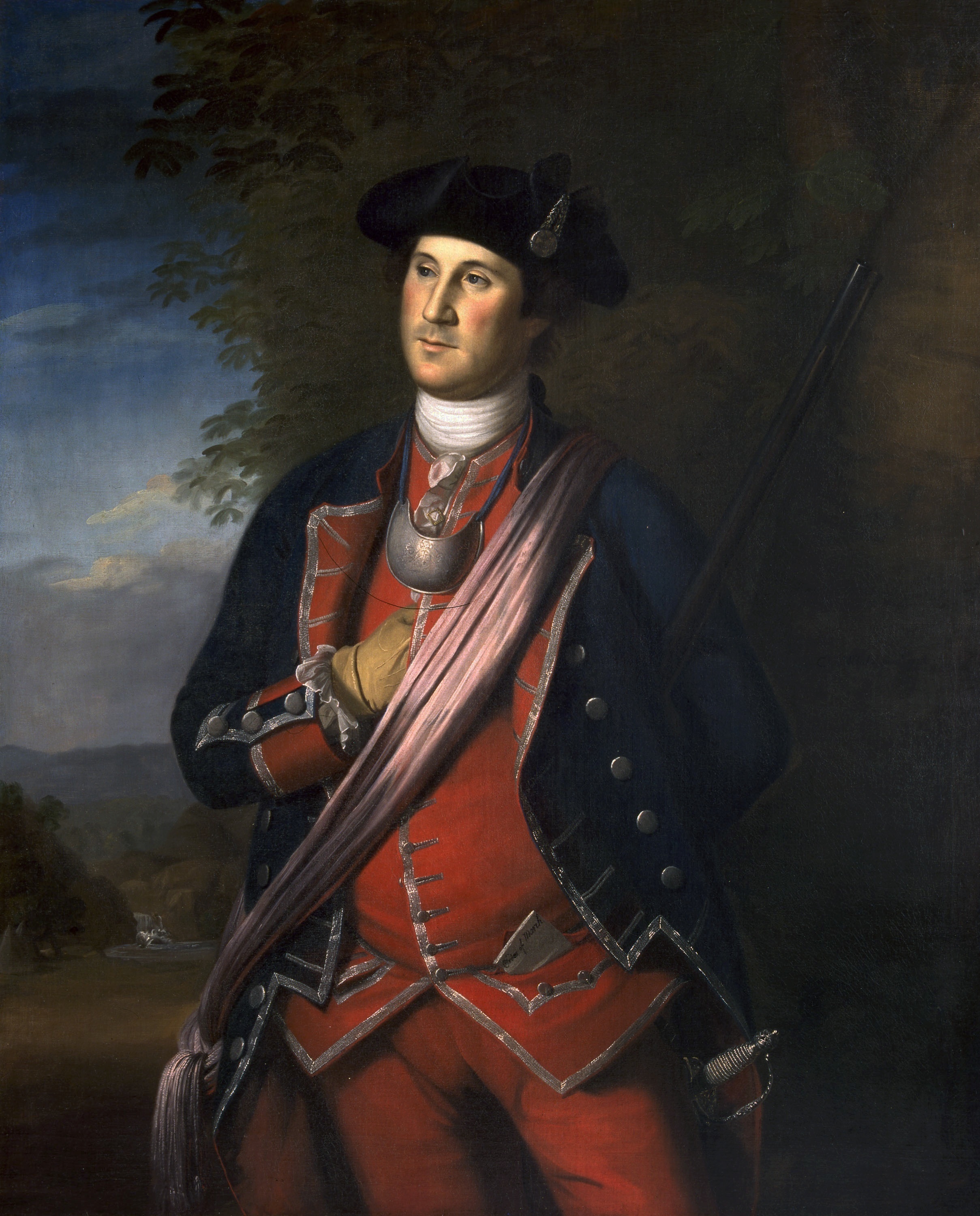
    Figure 2: a 1772 portrait Charles Wilson Peal depicting Washington in a uniform similar to those worn by officers of the Virginia Regiment Source:Washington and Lee University

    During a tour of Virginia’s frontier forts, the “bad regulation of the militia; the disorderly proceedings of the Garrisons; and the unhappy circumstances of the Inhabitants” shocked the young officer.[4] Washington filled his correspondence of this era with phrases such as “inconceivable trouble” and “unhappy Juncture” as he recorded innumerable instances of paucity, civilian death, and desertion.[5]

    Washington’s struggles continued into 1758 when the Virginia Regiment became involved in the Forbes Expedition, a laborious campaign that eventually resulted in the British capture of Fort Duquesne. Around that time, the needs of sick veterans of the past three years of fighting, marching, and garrison duty presented further challenges. None other than Fielding Lewis, a young Fredericksburg merchant and husband of George’s sister Betty, agreed to contract with his brother-in-law to provide for Virginia’s ill. That June, for instance, Lewis sent the material for 60 blankets to “Colo. Washington for the Country Dr.”[6]

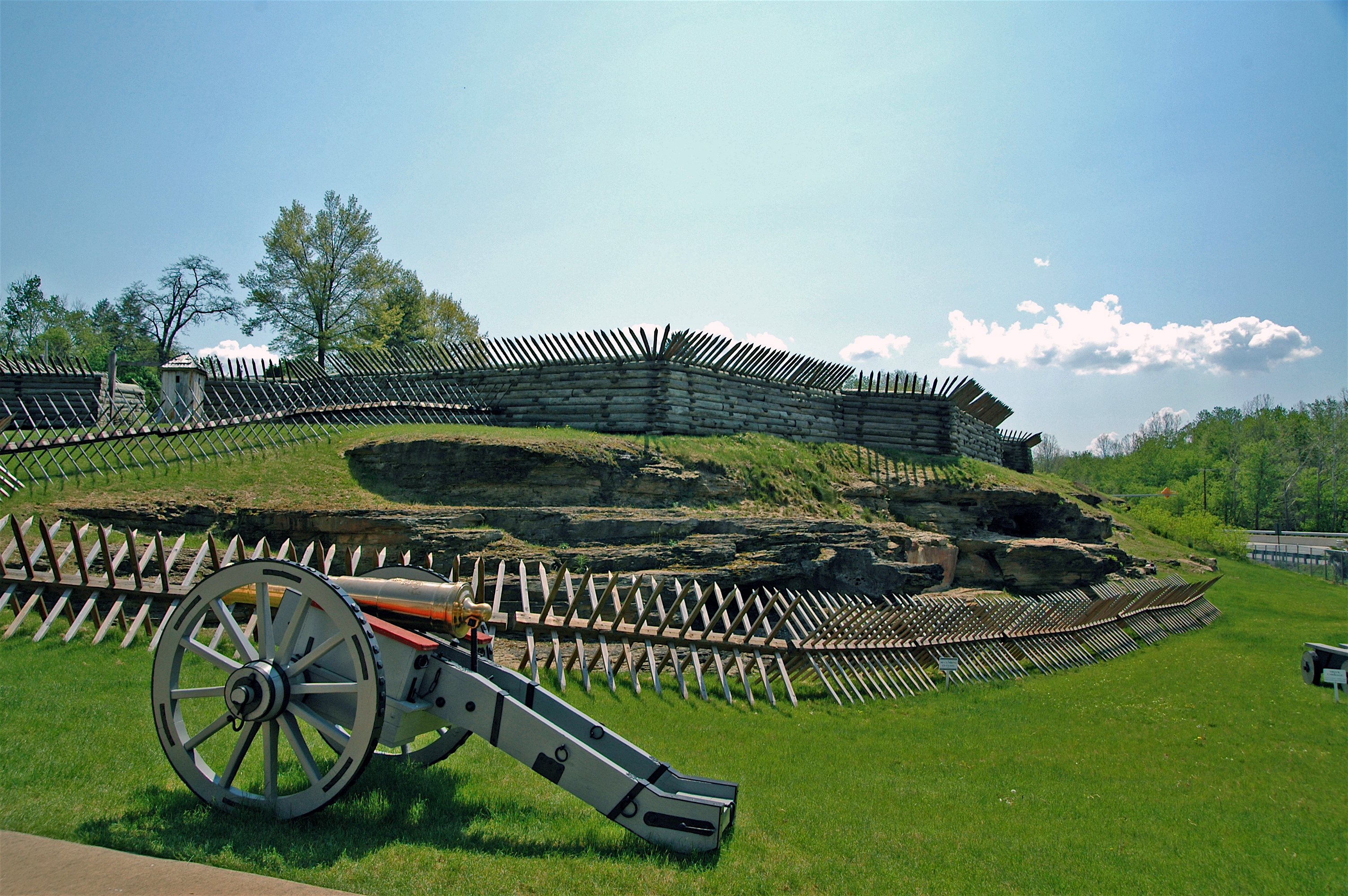
    Figure 3: View of reconstructed fortifications at Fort Ligonier, the centerpiece of the 1758 Battle of Loyalhanna, an important part of the Forbes Expedition. Source: Jeff Kubina via flickr

    As a businessman with a growing family, Fielding Lewis must have had more reason than most to fear the potential adverse effects of world war upon his trans-Atlantic commercial ventures. However, as British fortunes began to change for the better, Lewis reaped the benefits of citizenship in a growing empire. Before the war’s end, he was conducting a lucrative speculation business at a fair in Fredericksburg.[7] Lewis’s success eventually provided the means to commission the construction of Historic Kenmore.

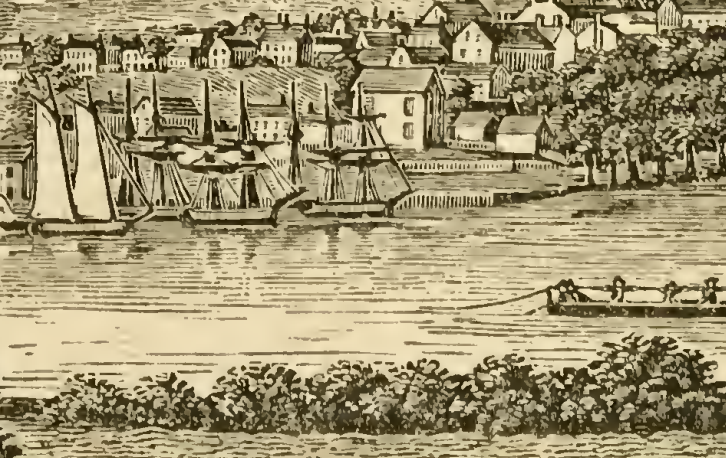
    Figure 4: Detail of an 1845 illustration of Fredericksburg as seen from Ferry Farm, showing tall ships by the town’s wharves.. Fielding and his father John invested in several merchant vessels, the towering masts of which were once common parts of Fredericksbrug’s cityscape. Source: Internet Archive

    Of course, learning about wealthy and influential men like Washington and Lewis is easy. However, countless individuals of all social standings played a part in the drama of the Seven Years’ War. Part II of this post will explore how those on the Homefront coped with world war and how the conflict transformed the community of Fredericksburg in ways still visible today.

    Stay tuned.

    Ethan Knick,

    School and Youth Programs Manager


    [1]David Lee Preston, Braddock’s Defeat: The Battle of the Monongahela and the Road to Revolution (Oxford University Press, 2015), 26-28.

    Fred Anderson, Crucible of War: The Seven Years’ War and the Fate of Empire in British North America, 1754-1766 (Knopf Doubleday Publishing Group, 2007), 18-23.

    [2] Preston, Braddock’s Defeat, 28-29.

    [3] George Washington, The Papers of George Washington: Colonial Series, vol. 4:November 1756 – October 1757, (University Press of Virginia, 1983).

    George Washington, The Papers of George Washington: Colonial Series, vol. 5: October 1757-September 1758, (University Press of Virginia, 1983).

    [4] George Washington, “Founders Online: From George Washington to Robert Dinwiddie, 9 November 1756” (University of Virginia Press), accessed February 7, 2023, http://founders.archives.gov/documents/Washington/02-04-02-0001-0001.

    [5] George Washington, “Founders Online: From George Washington to Robert Dinwiddie, 11 July 1757” (University of Virginia Press), accessed February 2, 2023, http://founders.archives.gov/documents/Washington/02-04-02-0193.

    [6] Fielding Lewis, “Founders Online: To George Washington from Fielding Lewis, 10 June 1758” (University of Virginia Press), accessed February 6, 2023, http://founders.archives.gov/documents/Washington/02-05-02-0154.

    [7] Martha Saxton, The Widow Washington: The Life of Mary Washington (Farrar, Straus and Giroux, 2019), 192.

    George Washington, “Founders Online: Cash Accounts, 1761” (University of Virginia Press), accessed January 30, 2023, http://founders.archives.gov/documents/Washington/02-07-02-0001.