In all this excitement I thought it would be a compelling trip down memory lane to uncover how the nation celebrated July 4th through the years, and how our sites, Ferry Farm and Historic Kenmore, joined in on the festivities.
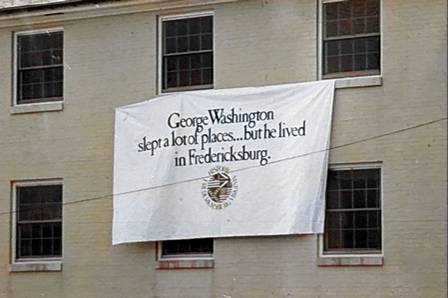
A banner from the Market Square Fair of 1976, HFFI image collection.
1826 marked the 50th anniversary of the signing of the Declaration of Independence. Nationwide, celebrations were small and consisted of mostly military parades and private dinners. Charlottesville, Virginia and Quincy, Massachusetts had sad news to report, though. Both Thomas Jefferson and John Adams passed away that day within hours of one another.[1]
In Fredericksburg, Virginia, the celebration echoed the others—a military salute in the morning and a large dinner at Sligo, a mansion located on the south side of town.[2]
A man named Samuel Gordon owned Kenmore at the time.[3] Their family had recently experienced some happiness when the future owners William and Eliza Gordon married on May 8th of that year. Although we do not know what their family plans were on the 4th, we can assume that it was a pleasant day.
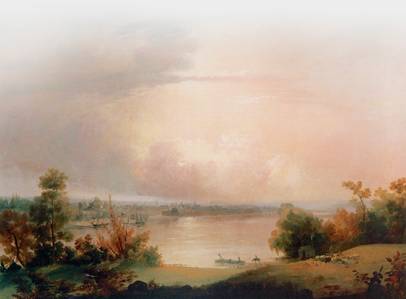
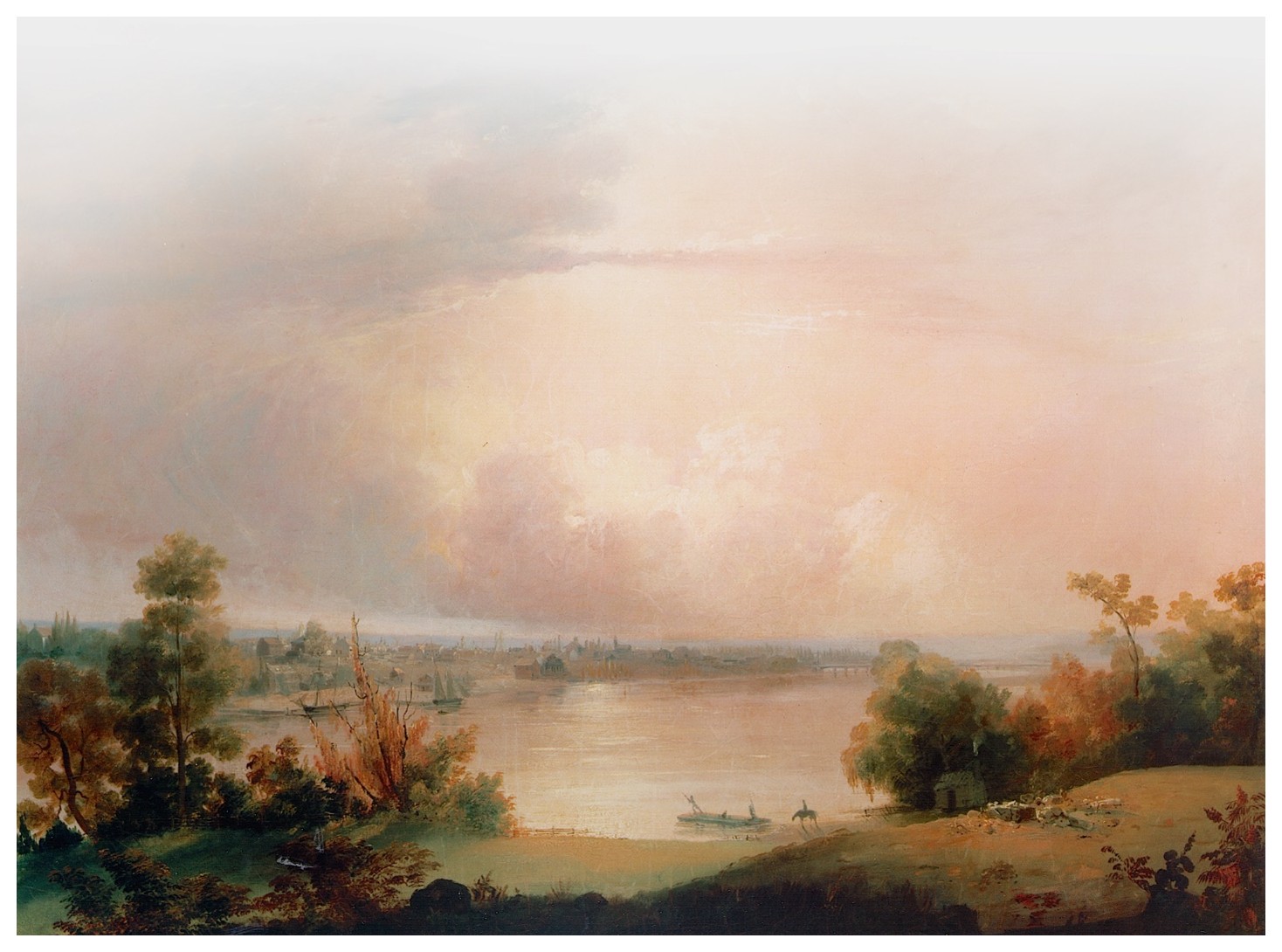
Across the river, the Mercer family owned Ferry Farm and rented the property out to tenants. Although we have no known depictions of what it looked like in 1826, seven years later the artist John Gadsby Chapman would paint the foundations of the Washington house, reclaimed by nature.[4] That year in September, the Mercers listed Ferry Farm for sale.
“View from the Old Mansion House of the Washington Family Near Fredericksburg, Virginia” (1833) by John Gadsby Chapman. Mount Vernon Ladies Association.
July 4th, 1876: 100 Years Old
Our 100th anniversary also coincided with the first year that the US was the host of a World’s Fair– the Centennial Exposition. Tourists from across the 38 states flocked to Philadelphia, Pennsylvania to celebrate year-round.[5]
Because the country was celebrating together in Philadelphia, many local celebrations were relaxed, Fredericksburg included. Social organization the Knights of Pythias hosted a large picnic on Scotts Island, today beneath the Chatham Bridge. The Virginia Herald called it “a festive day of rare delight, nothing occurring to… disturb the era of good feeling”.[6]
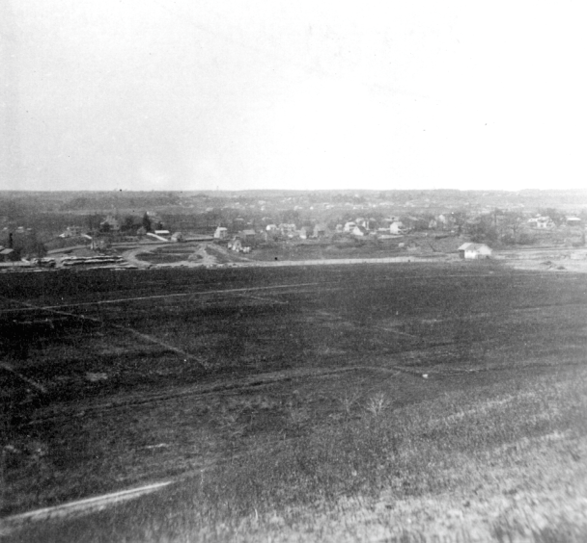
Unfortunately, both Ferry Farm and Kenmore have a gap in their history on this date, both left marred by the Civil War. Kenmore was bloodstained due to its use as a hospital and Ferry Farm was barren after the union camp burnt what few dwellings were left for firewood. Although our nation was trying to move on a decade later, plenty of scars remained.
View of Ferry Farm circa 1881. National Parks Service.
July 4th, 1926: 150 Years Old
The roaring 20s were in full swing and once again Philadelphia was the place to be! Another World’s Fair, 50 years after the first, was held to celebrate the Sesquicentennial.
Locally, it seems almost nothing was organized to mark the day, aside from a few baseball games. During what ended up being a rainy weekend, the people of Fredericksburg kept it lowkey.[8]
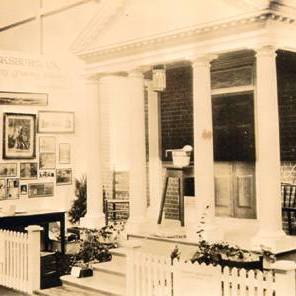
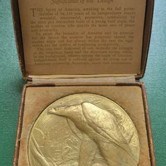
Left: Kenmore’s exhibit at the Philadelphia Exposition, GWF Collection. Right: Kenmore’s medal of award, GWF Collection.
July 4th, 1976: 200 Years Old
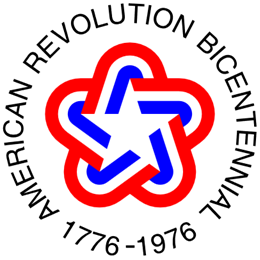
We’re now reaching the point that some of our readers can recall, the nation’s bicentennial in 1976. Instead of one large exposition, the American Revolution Bicentennial Administration was founded to spread the commemoration across the country.[10]
American Revolution Bicentennial Logo, Wikimedia Commons.
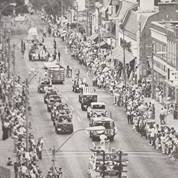
Fredericksburg was no exception, festivities were planned for the whole year leading up to the fourth, and a massive weekend celebration took place across town. A parade stretched down Princess Anne Street and many organizations, clubs, and local figures marched in it. Historic sites like Kenmore were open all day for tours, showcasing local history intertwining with the nation’s.[11]
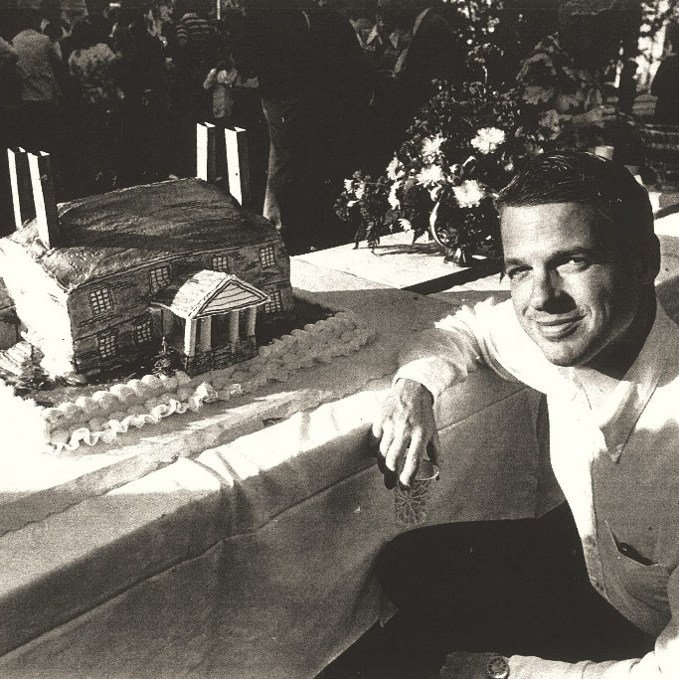
Left: The Bicentennial Parade on Princess Anne Street, the Free Lance-Star. Right: Russell Bastedo, former director of the Kenmore Association, posing next to a Kenmore cake, Central Rappahannock Heritage Center collection.
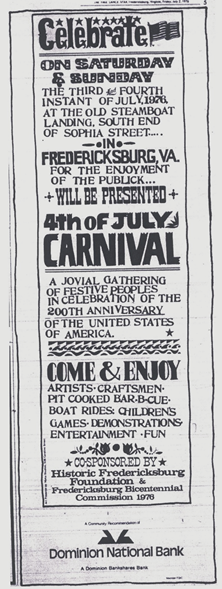
After the parade, folks headed down to the city dock where the Historic Fredericksburg Foundation and the Fredericksburg Bicentennial Commission hosted a carnival.
Newspaper advertisement for the city dock carnival, The Free Lance-Star.
This year is perhaps one of the most celebrated milestones yet, since the excitement seems to increase with each passing decade. We are all coming together to commemorate the birth of our United States once more, and this time much of the focus is on elevating voices that have previously been ignored and celebrating histories that were once forgotten. We’ve come a long way from the private and solemn affairs of 200 years ago!
America 250 logo.
I’m happy to say that, finally, Ferry Farm will get its place in the sun on this holiday. Our foundation’s Fourth of July celebration will be taking place on Saturday, July 4th at the boyhood home of George Washington, the land that shaped who he became. For those of you reading this today, we hope to see you there. For those of you reading this in the future, let’s do it all again for 2076!
Sarah Alden, Manager of Visitor Services and Interpretation
[2] (The Fiftieth Anniversary of American Independence, 1826)
[3] Mutual Assurance Society, plat for policy 4239, November or December 1822, to Samuel Gordon; plat for policy 6126, 31 December 1829, to Samuel Gordon; plat for policy 6126, 31 December 1829, to Samuel Gordon; and plat for policy 9313, 15 November 1836, to Samuel Gordon; Virginia State Library, Richmond, Virginia; reproduced in Troup, pp. 146-151.
Special thanks to the team at Historic Fredericksburg Foundation, The Virginiana Room at the Fredericksburg Library, and Central Rappahannock Heritage Center for providing access to their collections and assisting in the research process.
A Personal Look At Civil War Soldiers As Told Through Artifacts
Ferry Farm is most well-known as the Boyhood home of George Washington. While our primary emphasis of interpretation and research has focused on young George and his family’s life on this farm, Ferry Farm has many other stories to tell. The American Civil War had a major impact on the Ferry Farm community, changing both the landscape and the lives of those who lived here. This blog will look at how our archaeological efforts have brought to light artifacts that reflect the experiences of the soldiers that were stationed on the “old Washington Farm.”
Washington House at Ferry Farm“The Old Mansion of the Washington Family” (1833) by John Gadsby Chapman shows the foundation stones of the house where George grew up at Ferry Farm and trees along the riverbank.
The Washington house and its outbuildings gradually fell into disrepair until by the mid-1830s there was no trace of them on the landscape. But the soldiers still knew the significance of the site. In April 1862, the Civil War came full force to Fredericksburg and to Ferry Farm. Federal Forces took over and occupied the City of Fredericksburg behind the retreating Confederate Army. Encampments and gun emplacements were established all along our side of the river and throughout Stafford County as the army set about maintaining control of the city across the river. Engineers were set to the task of rebuilding the railroad bridge and erecting pontoon bridges, including one at the end of Ferry Road.
Looking over Fredericksburg by Alfred R. Waud
This spring deployment and the military occupation of Ferry Farm was relatively quiet and uneventful. There is no evidence of a large, formal camp at Ferry Farm, but soldiers were stationed here to protect one of the pontoon bridges that ran from the bottom land of Ferry Farm across to the city of Fredericksburg. In August of 1862, the army suddenly retreated from the city and the surrounding countryside to defend Washington, D.C.
In November of the same year, the full force of the Union Army returned to Stafford County in preparation for the retaking of Fredericksburg and their expected march to take over Richmond. Instead, the Federals suffered a devastating defeat at the Battle of Fredericksburg in December and retreated to the north side of the river for winter camp. Now, Ferry Farm was being used more actively as a staging ground for multiple troop movements, bivouacs for soldiers guarding the pontoon bridges, and as a defensive line for the Federal troops.
A defensive trench, or rifle pit, with an adjoining berm to protect soldiers from gunfire originating on the Fredericksburg side of the river, was dug across the edge of the upper river terrace, stretching north-south from the edge of the stream gully through the remains of the Washington house. A small extension on the south end of the trench was dug out to connect it to the now-exposed cellar.
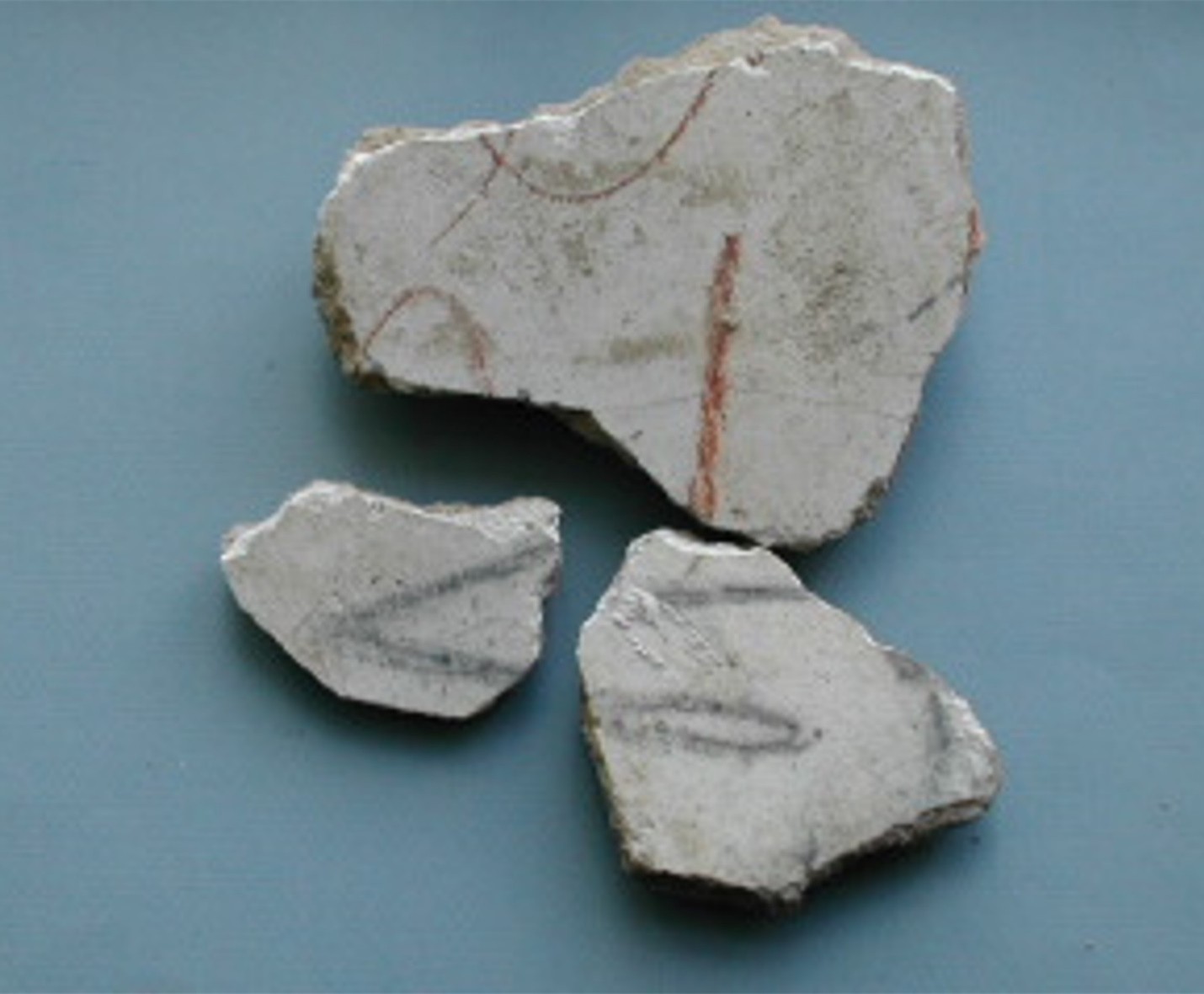
Artifacts found within the cellar trench fill reflect the extensive use of the house ruins by soldiers during both occupations. In the spring and summer, they used the farmhouse as their headquarters, writing on the plaster walls and leaving graffiti in pencil and charcoal on hundreds of plaster fragments that have been excavated and preserved.
Plaster fragments with graffiti
Various artifacts were abandoned when they left, including canteens, bullets, gun parts, and writing tools. But this blog isn’t about buttons, bullets, and buckles. It’s about the items the soldiers found more dear. Objects they made or relied on for small comforts.
So, on a more personal level, what was everyday life like for the Union soldiers stationed here during the Civil War? When they weren’t directly experiencing the brutal and intense combat fighting on the front, it was a routine-filled life of constant drilling, standing watches, maintaining equipment, and finding imaginative ways to entertain themselves in the camps. But camp life had its own struggles and hardships. Poor shelter, food, and hygiene, along with low immunity rates to communicable diseases, all contributed to high rates of sickness and disease. Add to that boredom and homesickness, and camp life was a private’s first test of survival.
It was very important for the soldiers to recognize that they were standing on the very ground that their hero, George Washington, once stood on. Those sentiments were expressed in a speech by Private Edwin Jones of the 6th Wisconsin when he said, “We are assembled on sacred soil…It was while living on this plantation, under the direction and blessed with the teaching of a noble mother, that George Washington learned those lessons…fitting him for leadership in war and peace, to lay the foundation of the mighty Nation that we today are fighting to preserve.”
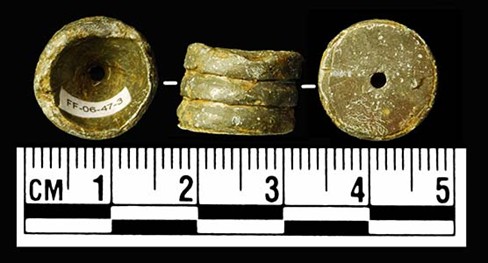
On a more personal note, we know soldiers spent a lot of idle time playing games among themselves. Dice, card games, chess, checkers, and gambling were all very popular, and remnants of these activities are found on all Civil War sites. At Ferry Farm, we have a collection of gaming pieces, including this bone die and a gaming piece crafted from a Minié ball, which could have been used to play chess, checkers, or as markers in a game of chance.
Bone die, one of the many gaming pieces uncoveredGaming pieces crafted from a Minié ball
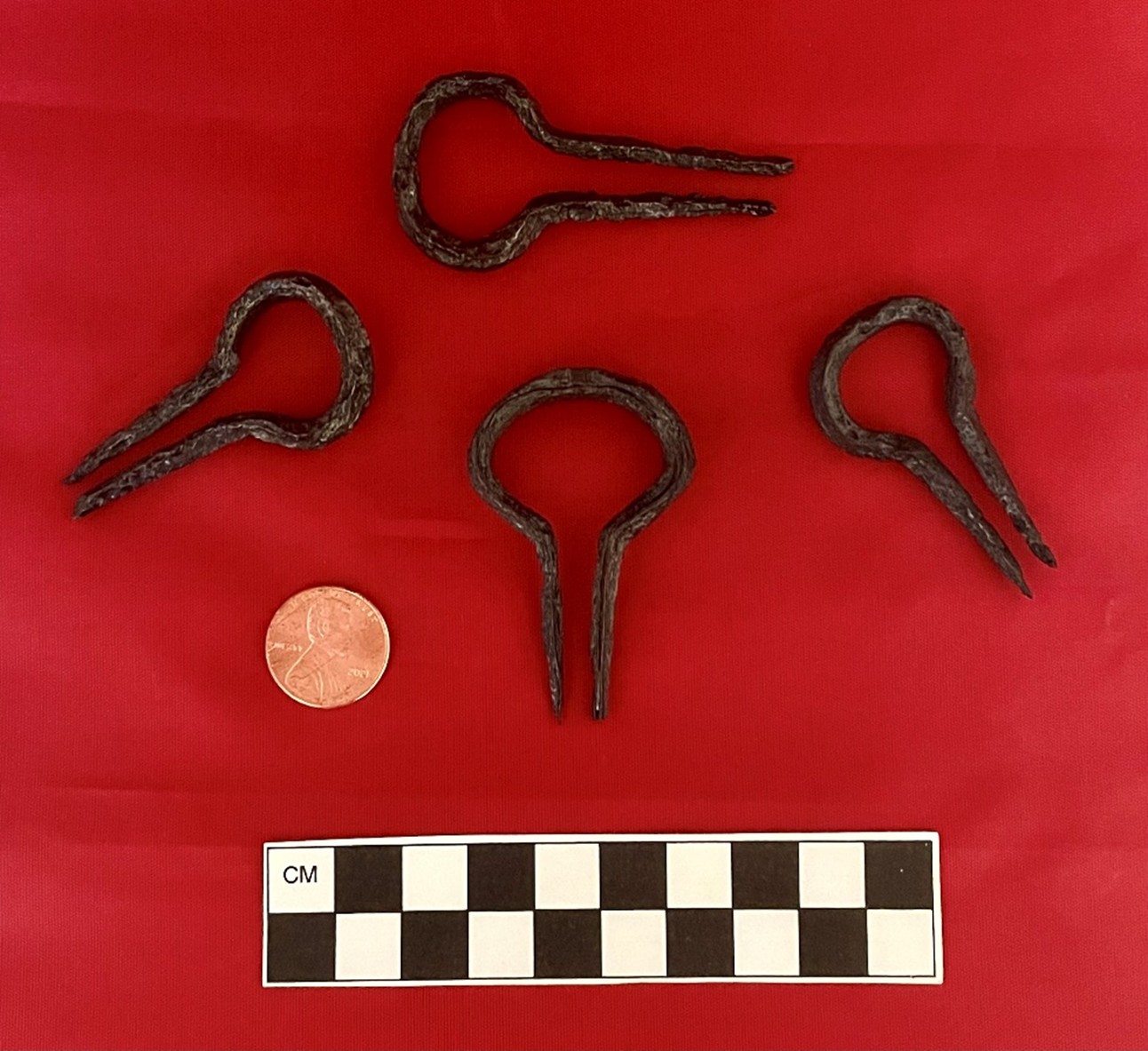
And we can’t forget about the importance of music in camp life. Music was a common and welcome pastime activity for troops. Fiddles, guitars, fifes, harmonicas, and accordions all came out at night to entertain the soldiers who relished listening to songs about home and the worries of war. Jaw harps were inexpensive and easily portable, which made them very popular with soldiers. Our jaw harps, one of which was recovered from the civil war trench, is of the style known as a Gloucester type, one of the most common designs in America during Colonial times and after the Revolution.
“Gloucester type” jaw harp
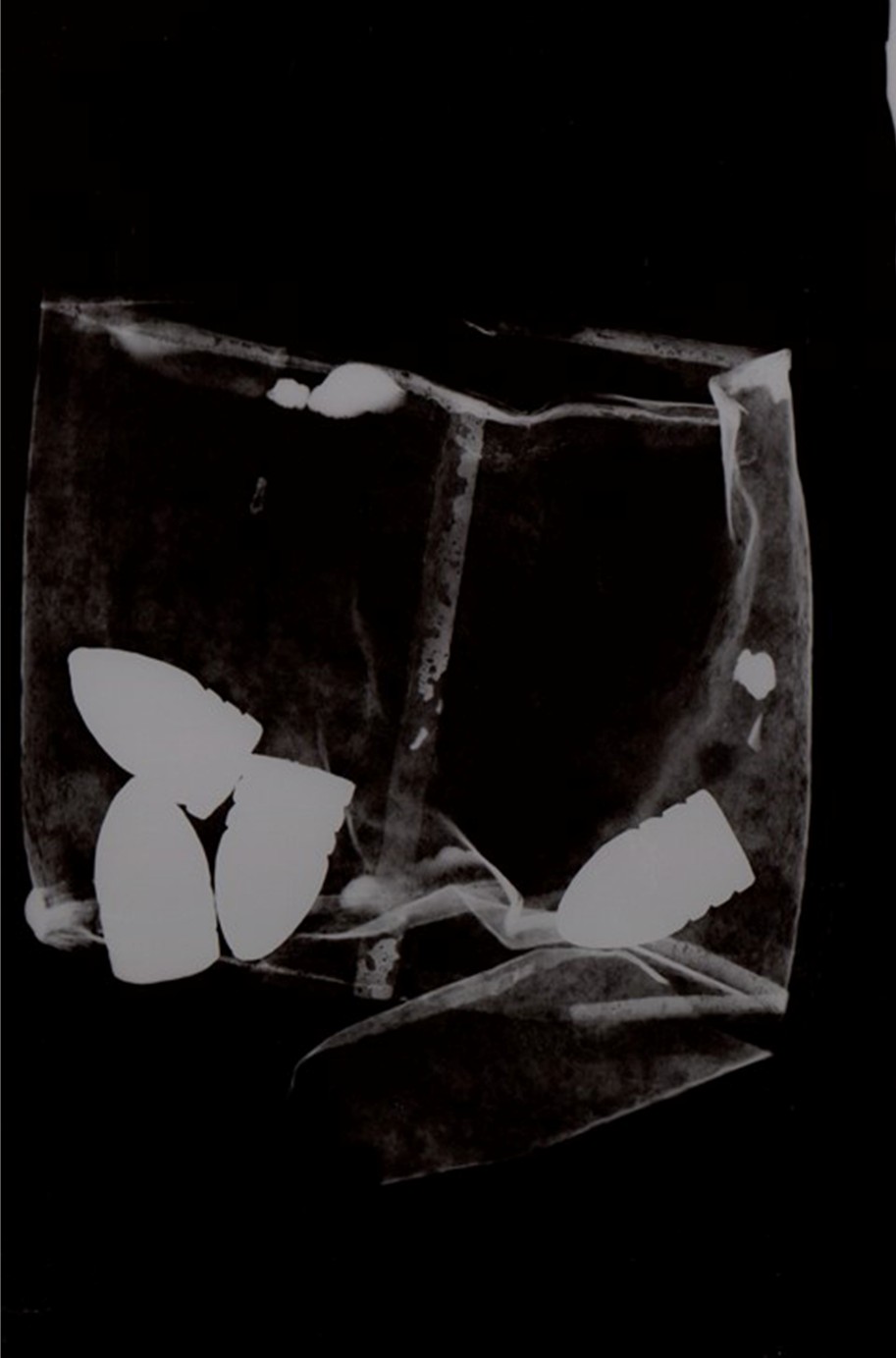
Nothing is normal about wartime. Many people were forced to improvise, and it’s very hard to determine why a soldier placed four unfired Minié balls in this tin can, which was revealed through X-ray. Did he lose his ammo case? Was it just idle behavior? Were these bullets saved to be turned into gaming pieces? This is the type of artifact that raises more questions than answers.
A tin can filled with four unfired Minié balls, X-Ray of tin can with four unfired Minié balls
Literacy – Ink Bottle/Pen nib:
Literacy among Civil War soldiers was very high, and much of what we know about daily camp life comes from the letters written and received by the soldiers themselves. Letter-writing to loved ones at home allowed the soldier to keep up with local news, forward monetary and business instructions to those left running the household or farm, and relay war news to their family.
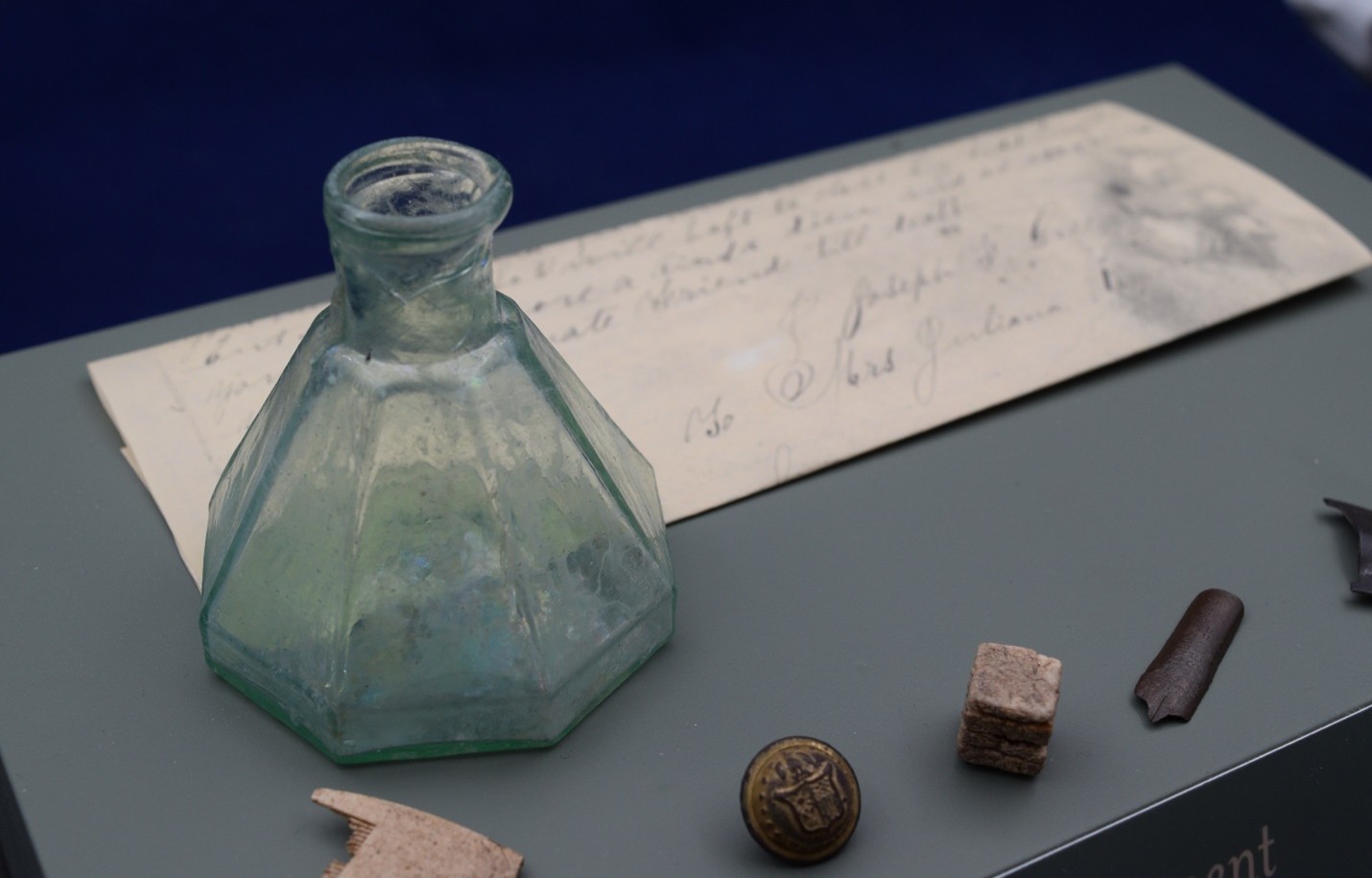
A complete ink bottle and pen nib recovered from the site evidences the desire for correspondence, both official and personal. The ink bottle itself was found in the Bray cellar hole, which the Union soldiers used as a defensive dugout to avoid Confederate sharp shooters. We can just picture a group of soldiers huddled down inside the cellar, building a small campfire to stay warm, and writing letters home to their families. Was it a hasty departure that left this bottle in the cellar, or perhaps the owner expected to return but didn’t. As archaeologists, we can’t answer all these questions, but we know it was used during the Civil War by a Union soldier and was found in a location many soldiers never wanted to be stuck in.
This particular ink bottle is an ‘umbrella’ shape, one of the most ubiquitous ink bottle forms from this era. The bottle was typically meant for single use and would have been made in one of the numerous American glasshouses present during the 19th century. It was then filled with ink, affixed with a label, and marketed for single use.
“umbrella” shaped ink bottle and small pen nib
This small pen nib is stamped with a maker’s mark and style name. The Esterbrook Company started making nibs, including the “Relief” style, in 1858 in Camden, New Jersey, and became one of the largest manufacturers of this product in the US. The nib was part of a dip pen, which consisted of a handle made of various materials and the replaceable nib.
The first evidence of self-care in the trenches takes the form of a small double-sided bone comb. Combs were made from an assortment of materials, including bone, ivory, gutta perch, and steel, and were used for grooming the moustache and hair. But their fine teeth were also handy in capturing the pesky lice that were endemic to camp life among men marching and living together in close quarters. This comb would have been an essential component of any soldier’s personal kit.
small double-sided bone comb
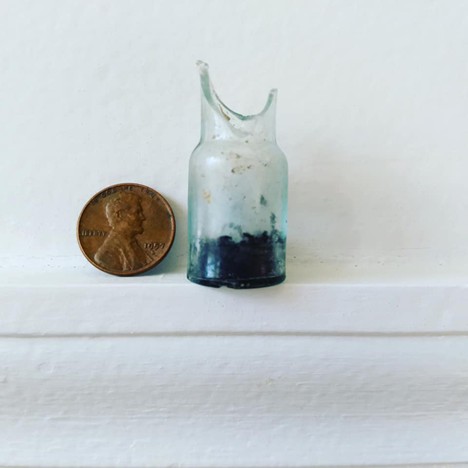
Our second evidence of self-care is this intriguing bottle. It is not so much interesting because of what it is – it’s a very common medicine style bottle for the mid-19th century– but rather what’s inside. Clearly visible within the bottle is a hard black substance, and for years, we’ve wondered what the substance may be.
Mercury bottle, mercury was used for a variety of medicinal reasons at the time
So we chipped off a little fragment of the substance and sent it to Ruth Ann Armitage, our chemist friend at Eastern Michigan University. The sample was analyzed using scanning electron microscopy to map out specifically what elements were present in the sample. Our sample was also run through DART (direct in real time) mass spectrometry. This technique is good at detecting organic components within a substance.
Almost immediately, Dr Armitage responded, and we weren’t disappointed: “Did you know there’s mercury in this?” Nope, we did not.
However, this discovery was not too surprising given the use of mercury in many medicines for thousands of years. Nowadays, it’s common knowledge that you shouldn’t drink mercury…or touch it…or inhale it, but for a long time, mercury was seen as a potent healing metal, and it was readily rubbed on skin, consumed, and vaporized for immediate effect on the lungs.
And while all these treatments using mercury did little to address the body’s underlying medical problem, mercury did cause an immediate bodily response, which convinced people it was working to cure their ailments. When applied topically, it burned. When introduced into the body, it caused a person to sweat, salivate, and have diarrhea. The mucous membranes also went into overdrive, leading many to believe that the bad stuff in your system making you sick was being purged by the mercury. The reality, of course, was that the body was trying desperately to rid itself of poison.
So, if the residue inside our bottle was medicine, what was its exact formula? All we can say at this point is that it was mercury-based and that it could have been in either liquid or pill form. Common Civil War-era uses for mercury-based medicines were for treating skin sores and lacerations, internal and external parasite infections, syphilis, and constipation, to name but a few. On a side note, an almost identical bottle also containing mercury was found across the river in Fredericksburg at a site that was well known to be a Union field hospital. It was found in a knapsack discarded in a trench that included amputated limbs.
Lastly, we’d like to highlight one of our favorite artifacts, a tiny hatchet about two and a half inches long, recovered from the bottom of the Civil War trench. For such a diminutive object, it speaks quite loudly to our local history in Fredericksburg, Virginia. Initially, earlier archaeologists at Ferry Farm assumed it was a pewter toy souvenir given out or sold in 1932, when our country and Fredericksburg celebrated the 200th anniversary of George’s birth. Indeed, cheap pewter toys were very popular during this time period.
Lead toy hatchet found in Civil War-era trench with traces of tin and nickel. Lead toy hatchet found in Civil War-era trench with traces of tin and nickel.
A recent reexamination of all the artifacts from the context where the hatchet was found revealed that nothing from that stratum had any 20th-century artifacts in it, nor did the two strata above it. In fact, the youngest artifacts from these strata were all mid-19th century. Additionally, although the archaeologists who excavated the hatchet didn’t know it at the time, the excavation unit from which the hatchet came sat right inside the Civil War-era trench.
This revelation shut the door on our ‘it’s a 20th-century souvenir’ narrative but opened the door to an even cooler one. A close examination of the hatchet showed that it didn’t have mold seams, which are always present on cast pewter toys. Furthermore, for some reason, it had one smooth side and one textured side, leading us to believe that it was handmade, not machine-cast. This was supported by a thorough internet search to find an identical toy hatchet, which came up empty, further supporting our new theory that this piece was a one of a kind. The textured side resembled the grain of wood, so we surmised it had been cast in a simple hand-carved wooden mold. All of these clues, combined with its location within a Civil War trench, made us suspect that the hatchet was crafted by a soldier, likely from a lead Minié ball. The hatchet is likely ‘trench art’, which is defined as objects of art either made by soldiers, POWs, or by civilians to create mementos of the war experience.
To further support our identification of the hatchet as trench art, we took the artifact to the Virginia Department of Historic Resources, where Katherine Ridgeway analyzed it using XRF, or X-ray fluorescence analysis. This non-destructive technique determines the composition of metal. We also brought along a few Minié balls recovered from the same unit for comparison. It turned out that what we thought was a pewter hatchet was actually a lead hatchet with a similar compositional profile to Minié balls, which are mostly lead with trace amounts of other metals such as tin and nickel.
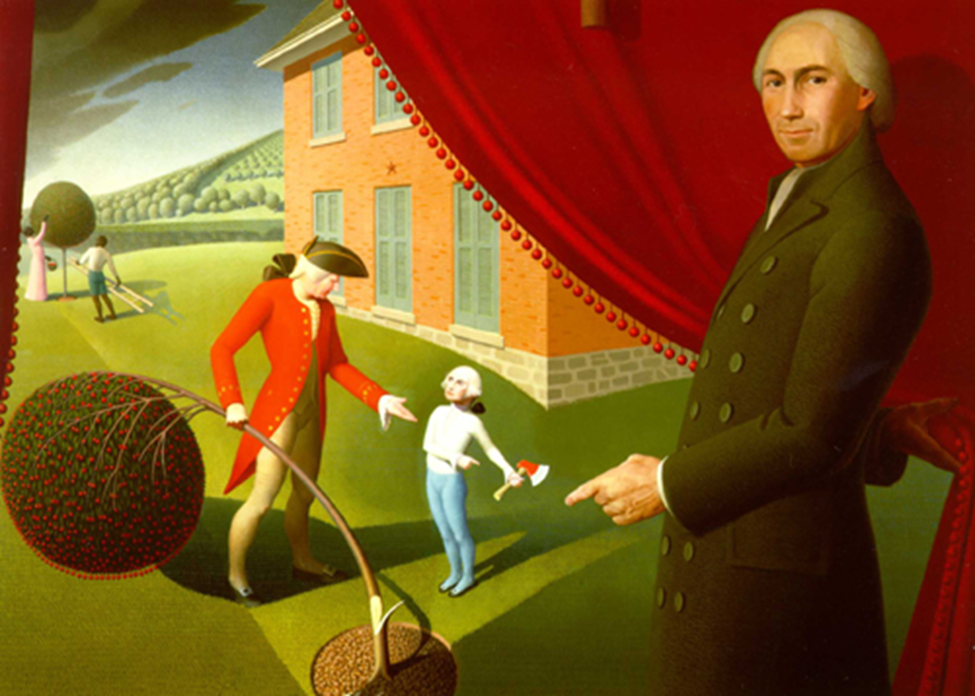
One can just imagine a bored Union soldier whittling the mold and then melting down some of his bullets to pour into it. He likely chose the hatchet form because of the famous cherry tree story, in which young George Washington owned up to hacking his father’s cherry tree with a hatchet by proclaiming, ‘I cannot tell a lie.’ The soldier would have been well-versed in the Washington cherry tree myth at Ferry Farm, created by Mason Locke Weems in his first biography of Washington, published in 1800. By the 1860s, the story was nationally known. Additionally, letters Union soldiers wrote while encamped at Ferry Farm indicate they knew the site’s connection to Washington. They even went so far as to send home cherry seeds for their families.
Grant Wood — Parson Weems’ Fable (1939)
While the identification of the hatchet is now secured, we have so many more questions. Who was this soldier? How many hatchets did he make, and why did this one come to be left behind in his trench? Was it a souvenir for himself, or did he send one home to his family, or share with fellow soldiers? Did he survive the war? Unfortunately, these are mysteries that will likely never be solved, but that make for great pondering.
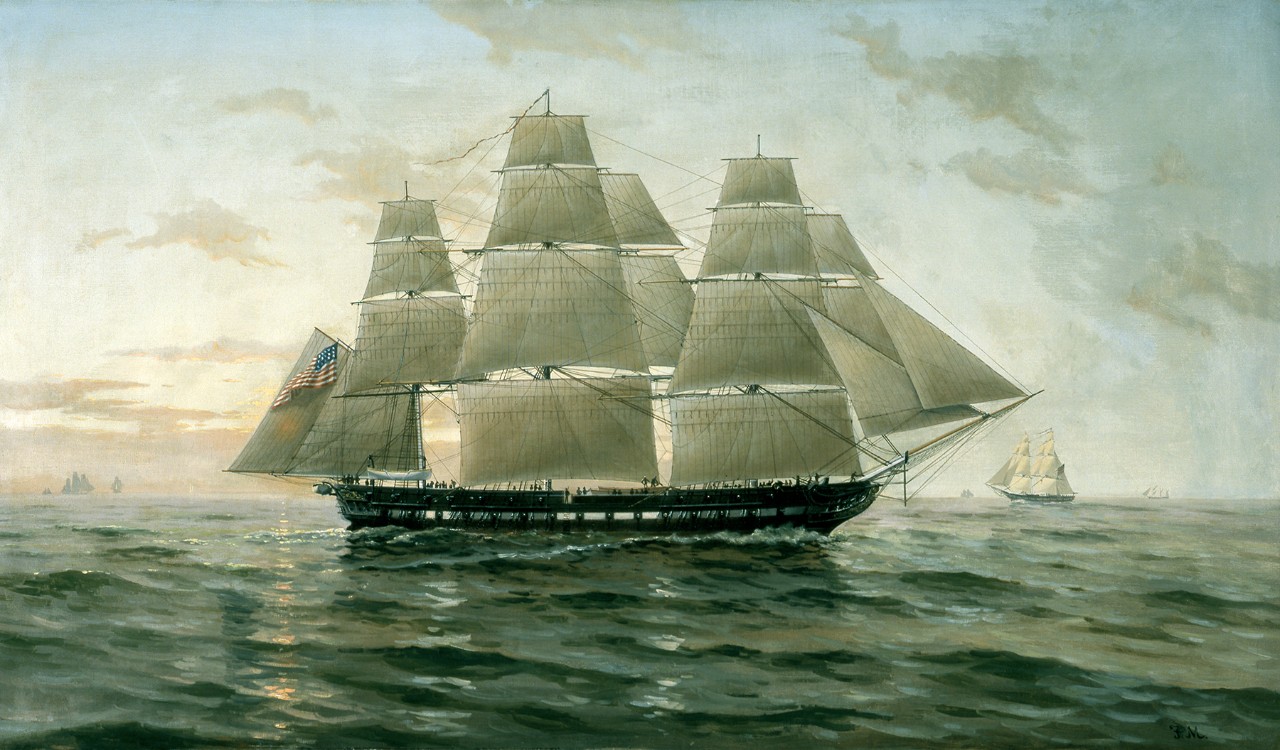
On July 22, 1942, Annie Fleming Smith wrote a letter. Smith was a prolific letter writer—her innumerable missives had helped raise the funds that saved Kenmore two decades earlier—so it is not surprising that she put pen to paper on that summer day. What is surprising is that the intended recipient of that letter was not a prospective donor, a fellow regent of the Kenmore Association, or a friend. Instead, she addressed her epistle to Frank Knox, the Secretary of the Navy. Smith wanted “confirmation of the fact of the naming of the U.S.S. KENMORE” after the home and “any other information you can release” about the ship.[1]
Letter that Annie Fleming Smith sent to Secretary of the Navy Frank Knox asking for confirmation that the first USS Kenmore had been named after the historic home. Smith, Annie Fleming to Frank Knox, July 22, 1942. The George Washington Foundation.
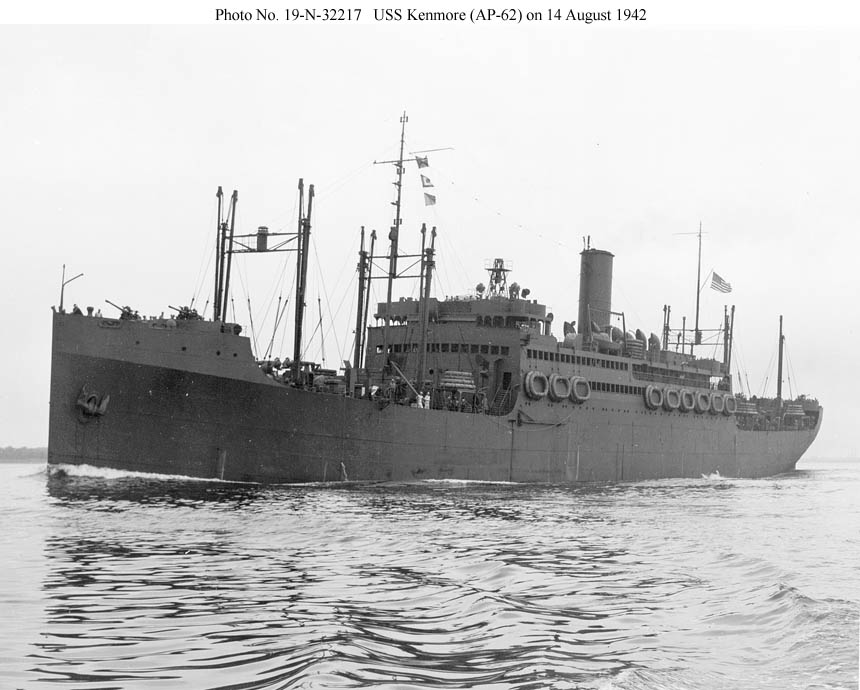
Although there is no record that Knox responded to Smith (there was, after all, a war on), the USS Kenmore was, in fact, named for the historic estate. The Naval History and Heritage Command ship-naming file on Kenmore I (AP-62) includes an April 13, 1942, memo to the Secretary of the Navy from the chief of the Bureau of Navigation and prepared by Louis Emil Denfeld, then assistant chief of the Bureau of Navigation, recommending that the President Madison be renamed Kenmore, in honor of the “[h]ome of Betty Washington at Fredericksburg, Virginia, sister of George Washington who married Col Fielding Lewis.”[2] The recommendation was approved on April 16 of that year, and the newly renamed vessel was “commissioned at Baltimore, Md., on 5 August 1942, Cmdr. Myron T. Richardson in command.”[3]
USS Kenmore (AP-62) on trials in the Chesapeake Bay on August 14, 1942. Shipscribe
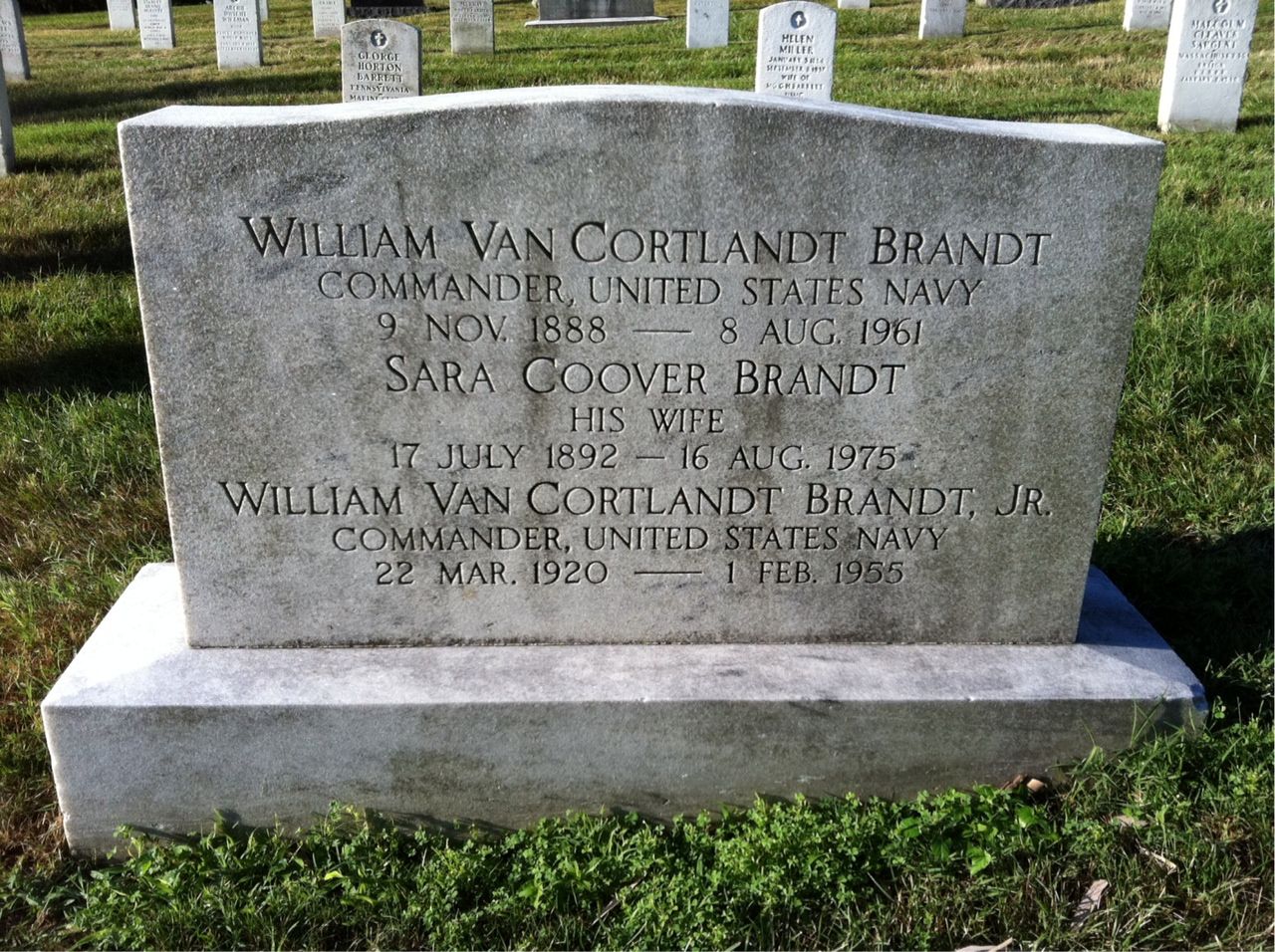
Smith had learned of the ship during a mid-1942 visit to the estate from Lt. Commander William VanC. Brandt (USNR) of the Kenmore, who later wrote to “Miss Annie” to thank her for her hospitality.[4] “All the Officers of the Kenmore,” Brandt told Smith, “were most interested in learning the history and record of the beautiful estate for which our ship is named.”[5] Brandt planned to have framed and displayed in the ship’s wardroom photographs of the property given to him by Smith; later, the vessel’s captain requested a picture of the house for his room.[6] For her part, Smith was “thrilled” to meet Brandt and “to know about your ship,” although she was skeptical enough of the origin of the transport’s new name to write Knox.[7]
The Arlington National Cemetery headstone of William VanC. Brandt, from whom Annie Fleming Smith learned that a Navy ship had been named after the historic home she had helped save from development in the 1920s.
The Kenmore operated primarily in the Pacific until September 1943; she was then converted into a hospital ship and renamed Refuge.[8] The Navy must have liked the name Kenmore, as it was bestowed in October 1943 on another transport, originally called the James H. McClintock.[9]The Kenmore II also served in the Pacific Theater and, after “hostilities ended on 15 August 1945, [began] returning veterans to the U.S.”[10] She was decommissioned on February 1, 1946.[11]
USS Refuge (AH-11), formerly the Kenmore (AP-62), photographed in February 1944 in Baltimore after her conversion from transport to hospital ship. Shipscribe.The second USS Kenmore (AK-221, ex AP-162) in San Francisco Bay around December 1945. Shipscribe.
The Kenmores were not the only vessels named for properties associated with George Washington and his family. The Wakefield (AP-21) borrowed its name from the Westmoreland County birthplace of the first president, today owned by the National Park Service.[12] There have been five Mount Vernons; the first was built in 1859 and chartered by the Navy two years later, before they bought it later that year.[13] The most recent vessel named after Washington’s residence and plantation was a dock landing ship commissioned in 1972 and decommissioned in 2003.[14] The possible birthplace of Mary Ball, George Washington’s mother, lent its name to the Epping Forest, a dock landing ship launched in 1943.[15]
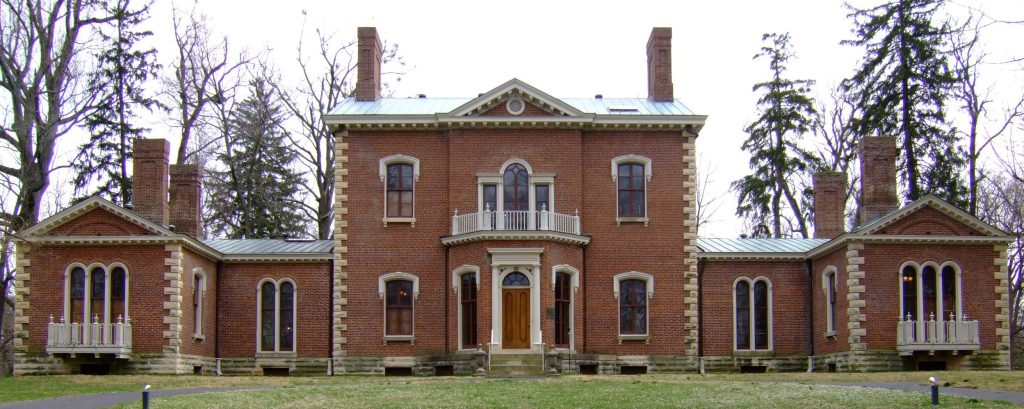
The monikers of other ships are connected more tenuously to places tied to George Washington and his family. For example, a 1943 submarine chaser was rechristened the Abingdon in 1956.[16] The vessel’s new name came from the town of Abingdon, in Washington County, Virginia (named, yes, for George Washington).[17] According to the county’s official history, “myths claim that [the town] was named for Martha Washington’s ancestral home” in England.[18] While this may be a false etymology, were those who named the ship drawing on the tale when they chose to call the vessel Abingdon? Additionally, the many Arlingtons that have served the Navy over the years have each been named after Arlington County, which draws its appellation from Arlington House, built for George Washington Parke Custis, the step-grandson of his celebrated namesake.[19]
Arlington Mansion was built by George Washington Parke Custis. Union soldiers posing on the lawn, June 28, 1864.
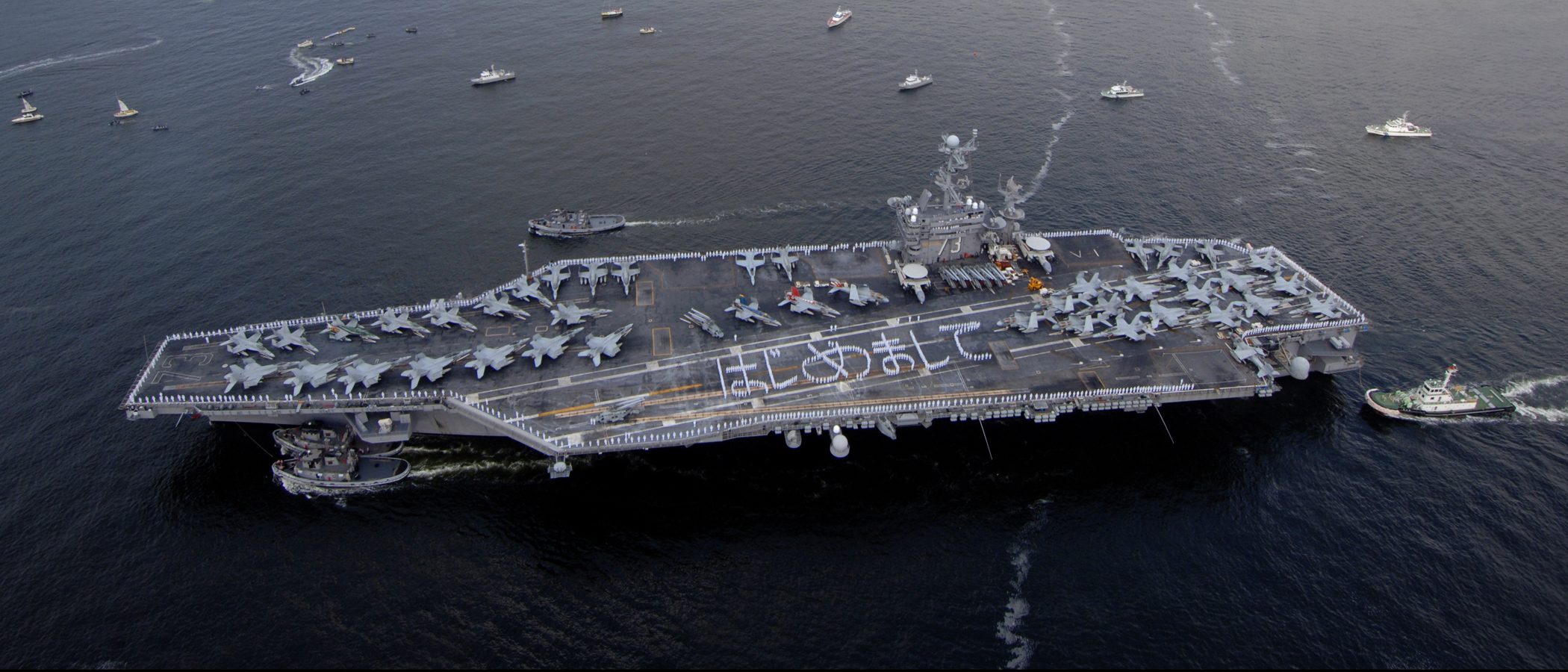
The Navy’s infatuation with the commander in chief of the Continental Army has, of course, also been expressed by naming ships directly after Washington and his family, not just their properties. While a complete inventory of such vessels is beyond the scope of this post, it is worth noting that four ships have been named the George Washington, including CVN-73, an active nuclear-powered aircraft carrier, while several others have sailed under just his surname.[20] Martha, George’s wife and the nation’s first first lady, has inspired the names of at least two Navy ships: the Lady Washington and the Martha Washington.[21] Civilian shipbuilders have also found inspiration in the Washington family: the SS Mary Ball was a liberty ship active during World War II.[22]
U.S.S. George Washington in Yokosuka, Japan in 2008. Four boats shared the name “Lady Washington.” The first was commissioned by the Continental Congress in 1776.USS Martha Washington inbound to Hampton Roads, Virginia, from Brest, France, 1918.
Who was responsible for naming these ships? As hinted at above, while final authority for ship names was (and still is) the responsibility of the Secretary of the Navy, during World War II, it was the Bureau of Navigation (renamed the Bureau of Personnel on May 21, 1942) that researched and recommend ship names based on the traditional naming conventions associated with each class of vessels.[23]
Typically, it was dock landing ships, or LSDs, that were named for “cities and places of historical interest of same name, or places of historical interest only.” [24]Epping Forest, Gunston Hall I (named for George Mason’s home), Ashland (for the boyhood home of Henry Clay), Carter Hall (after the Virginia estate), Oak Hill (for the home of President James Monroe), and Shadwell (for the birthplace of Thomas Jefferson) are all examples of LSDs whose names aligned with this convention.[25]
But the Kenmores, the Mount Vernon IV, and the Wakefield were not LSDs; they were transports, classified AP, and anyone seeking consistency in the Navy’s naming of troop transports during World War II is bound to be disappointed. Some vessels in the AP class were named after celestial bodies, others after Revolutionary War heroes, and others, as we have seen, after historic estates.
Dang it, Ben, you had one rule.One of the original six frigates whose construction was authorized by the Naval Act of 1794.
This lack of consistency is not surprising. After all, when Benjamin Stoddert named the Navy’s sixth ship, a frigate, he chose to call it the Chesapeake, despite President George Washington’s agreement with the recommendation that frigates be named after “principles or symbols found in the US Constitution.” Therefore, “the very first naming decision by the very first Secretary of the Navy resulted in the ‘corruption’ of the established naming convention.”[26] This tradition of flexibility regarding ship names has endured, and ship names continue to excite interest (and occasionally strong feelings) from many parties, including those who propose denominations for new vessels. If you are such a person, here’s an idea: how about another Kenmore, or maybe a Ferry Farm?
Adam Nubbe
Manager of School & Youth Programs
[1] Smith, Annie Fleming to Frank Knox, July 22, 1942. The George Washington Foundation.
[2] Naval History and Heritage Command, Kenmore I, ship-naming file, April 13, 1942.
Figure 1: Washington’s words to the Newport congregation (George Washington Institute for Religious Freedom)
The quote, “To Bigotry, No Sanction, To Persecution No Assistance” appears in a 1790 letter written by George Washington to the Hebrew Congregation in Newport, RI (Fig 1). Of all the words Washington committed to paper, these rank amongst the most important, yet he merely adapted them from a letter sent by the Congregation itself.
By 1790, Jewish communities in the newly formed United States desired to confirm their place in society and the freedoms promised under the founding documents. Washington’s visit to Newport, RI, that year allowed direct access to a government representative for a community seeking reassurance. Their letter moved Washington, yet he was no stranger to the lives and likely concerns of the wider Jewish American community.
The Jewish Diaspora and Settlement in the Americas
For those unfamiliar with the Jewish diaspora (Def: the dispersion of a people from their original homeland, in this case, Israel, through forced or voluntary migration), the current Jewish population of the United States largely consists of Ashkenazi Jews whose ancestors settled in central and eastern Europe before immigrating to the States. While some Ashkenazim moved to the Americas during the colonial period, the majority emigrated during the late 1800s and early 1900s. Nonetheless, Jews have lived in the Americas since the 1500s, they simply belonged to another sect of the diaspora.
Sephardic Jews descend from those who settled on the Iberian Peninsula. Infamously pushed out of the region or forced to convert during the Inquisition, many initially sought refuge in Portugal (briefly), North Africa, the Ottoman Empire, and the Netherlands. As restrictions in some of these areas increased, numerous families forged proof of Christian ancestry to emigrate to Brazil and the Spanish colonies before seeking more religious freedom in British territories.
Here, those who had seemingly converted, but continued to practice as Crypto-Jews, shed their Catholic personas and openly embraced their ethnoreligious identity. Aaron Lopez (1731-1782), called the “Merchant Prince of Newport,” serves as one example (Fig 2). Born Duarte Lopez in Portugal, he moved his wife Anna and daughter Catherine to Newport, RI, in 1752, where they reclaimed their Jewish identities under the names Aaron, Abigail, and Sarah.
Several organized Jewish communities ultimately emerged in New York City, Newport, Philadelphia, Charleston, and Savannah. These areas proved ideal due to their nature as trade centers and rules, allowing more religious, political, and business freedom for non-Christians. Still, Jews lived and worked throughout the thirteen colonies as active members of the wider community, and many crossed paths with George Washington and those he knew.
Colonial Virginia
Jewish history in Virginian territory began when Joachim Gaunse, a Bohemian metallurgist, joined the Roanoke Colony in 1585. However, he escaped the fate of the Lost Colony by returning to England in 1586. A later instance of Jewish settlement occurred when Elias Legarde/o arrived in the Jamestown area in 1621. After that, small, scattered groups emerged throughout the colony, and the first Jews in the greater Fredericksburg area arrived by 1652. Nonetheless, they could not hold citizenship or public office as these statuses required oaths invoking the Christian faith.
Jewish presence in Fredericksburg and other cities meant that Washington and his associates lived and worked alongside Jewish community members all their lives. In staying active in the community, many Jewish men, including the majority mentioned in this blog, joined the Masons. Specifically, (H)ezekiel Levy appears in Fredericksburg Lodge No. 4’s records as the sole Jewish member in 1776. As Washington maintained a life membership with his mother lodge from 1752 onwards, the two men potentially knew each other (Fig. 3).
Figure 3: Masonic Lodge #4 – founded 1753, built 1816
Other Jewish residents of Fredericksburg and businessmen likely crossed paths with Fielding Lewis. The Gratz brothers of Philadelphia, Barnard, and Michael, built a business network that spread across the colonies (Fig 4). They supplied Virginian troops during the French & Indian War and set up trade in Fredericksburg by 1776, where their associate Joseph Myers handled business affairs. Henry Mitchell, a one-time friend of the Lewises, counted amongst those who did business with the Gratzes and Myers. Like their gentile counterparts, however, Jewish merchants engaged in all aspects of the economy. This included the Atlantic and domestic slave trade, from which they profited, advanced, and purchased individuals.
Figure 4: Barnard Gratz (Michael Jesselson) & Michael Gatz (Rosenbach Museum and Library)Figure 4: Barnard Gratz (Michael Jesselson) & Michael Gatz (Rosenbach Museum and Library)
As Washington’s career took off, he came into closer contact with Jewish Virginians. Jacob Myer and Michael Franks served alongside Washington in the build-up to the French & Indian War, and the latter fought at the Battle of Fort Necessity (July 3, 1754). In 1769, Washington sought the services of Williamsburg’s Dr. John de Sequeyra for his stepdaughter Patsy Custis’ epilepsy (Fig. 5). Sequeyra, a well-respected physician, arrived in Virginia in 1745, wrote about diseases found in the region and served as the first visiting physician at, and later director of, Williamsburg’s Public Hospital. While Thomas Jefferson often receives credit for popularizing tomatoes as edible, Jefferson himself credited Sequeyra.
Figure 5: Dr. John de Sequeyra (Winterthur Museum)
American Revolution
Like the colonists typically pictured during the war, the American Revolution brought turmoil to Jewish communities. The majority supported the cause of independence, with leading merchants voicing dissent from the 1765 imposition of the Stamp Act. Others remained loyal to the crown as they knew where they stood in society. Regardless of which side they chose, Jews aided their cause as soldiers, merchants, and suppliers. Still, the war brought division, death, and poverty to many families.
Figure 6: Issac Touro (Peabody Essex Museum) and Moses Michael Hays (Freemason Grand Lodge of Massachusetts) Figure 6: Issac Touro (Peabody Essex Museum) and Moses Michael Hays (Freemason Grand Lodge of Massachusetts)
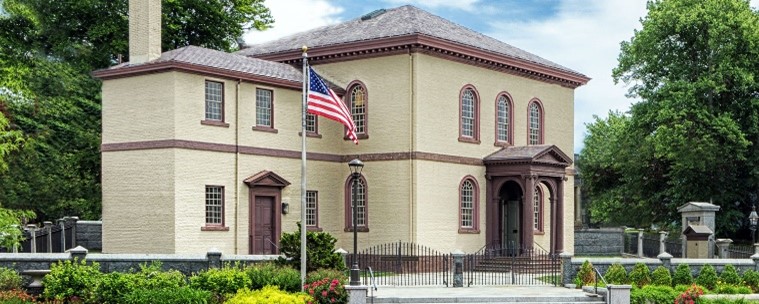
The Touro-Hays family illustrates one such division. Issac Touro, head of the Newport Congregation, remained loyal to the British while his brother-in-law, merchant-banker Moses Michael Hays, sided with the Patriots (Fig 6). Despite holding opposing views, the two men used their positions to take a stand for the larger Jewish community. In 1775, Hays refused to sign a declaration of loyalty to the patriot cause until the authors removed the phrase “upon the true faith of a Christian.” When the British occupied Newport the following year, Hays, along with most of the congregation, fled while Issac remained behind. Using his connections, Touro ensured that the British left Newport’s synagogue largely untouched. Today, it stands as the oldest surviving synagogue in North America and answers to the name “Touro Synagogue” (Fig. 7). When it became clear that the British would lose, however, Touro moved his family to the Caribbean. The two sides of the family would only reunite after 1783, when Issac died, and his widow Reyna returned from Jamaica with their children to live with her brother Michael.
Figure 7: Touro Synagogue (Touro Synagogue)
In all, approximately a third of the Jewish population served during the American Revolution from Bunker Hill to Yorktown. This included the lowest positions up to the rank of Lieutenant-Colonel, which Solomon Bush of Philadelphia held. This period additionally saw public office open to Jews, with numerous individuals serving on committees. The first known Jewish fatality of the war occurred on August 1, 1776, in South Carolina when Francis Salvador fell to the British-allied Cherokee during a skirmish. Two years prior, the colony elected him a delegate to the Provincial Congress; the highest political position held by a Jew at the time.
Many who served as merchants and financiers devoted their assets, like Fielding Lewis, to the cause. As ship owners, many outfitted privateers and helped run blockades. Haym Salomon, a Polish-born Jew from Philadelphia, served as the Continental Congress’ main financier, an agent to the French consul, paymaster for the French forces, and worked closely with Superintendent of Finance, Robert Morris (Fig. 8). Salomon committed his entire fortune to the war effort, and his most significant contribution came when he raised the funds for the Yorktown campaign at the personal request of Washington. Like many individuals, he never received reimbursement from the government and ultimately died penniless.
Figure 8: Haym Salomon (U.S. National Archives and Records Administration)
Early America
In the wake of independence, the United States faced uncharted territory. For minority groups, these uncertainties proved even more concerning. The arguments for revolution and documents written to establish the new nation spoke to religious freedom and social equality, but how far that stretched remained debatable.
In 1786, Thomas Jefferson took steps to ensure these freedoms by writing the Virginia Statute for Establishing Religious Freedom. Passed into law, the bill affirmed the right to choose one’s faith along with the separation of church and state in Virginia. Several years later, in 1789, Kahal Kadosh Beth Shalome became Virginia’s first established Jewish congregation. Jefferson’s stance on religious freedom would ultimately inspire Commodore Uriah Levy to purchase and preserve Monticello.
At this time, we return to where we started. In 1790, Washington made a trip to Rhode Island to acknowledge their ratification of the Constitution. On August 18, while Washington met officials and residents of Newport, Moses Seixas of the Jewish congregation read aloud a letter expressing gratitude to the President and government while expressing hope for tolerance and equality (Fig. 9). Its key passage reads:
“…erected by the Majesty of the People – a Government, which to bigotry gives no sanction, to persecution no assistance – but generously affording to all Liberty of conscience, and immunities of Citizenship: deeming every one, of whatever Nation, tongue, or language equal parts of the great governmental Machine…”
Figure 9: Letter from the Hebrew Congregation of Newport (Library of Congress)
In writing the letter, the congregation wished to express their hopes for the future and receive assurance from their head of state that this future existed. On August 21, Washington replied to the letter thanking them for the “cordial welcome [he] experienced…from all…citizens” while reflecting on the difficulties of the past and how the future promised security. Then, using the congregation’s own words, he wrote that:
“It is now no more that toleration is spoken of as if it were the indulgence of one class of people…for, happily, the Government of the United States…gives to bigotry no sanction, to persecution no assistance…”
Washington closed his letter by wishing that “every one shall sit in safety under his own vine and fig tree and there shall be none to make him afraid.” The following year saw the ratification of the Bill of Rights, which further solidified religious freedom and equality.
Despite efforts made during the founding era and successive periods, antisemitism has never gone away. Now, more than ever, we must work to uphold that the wishes, freedom, and security of those who served the United States since its founding.
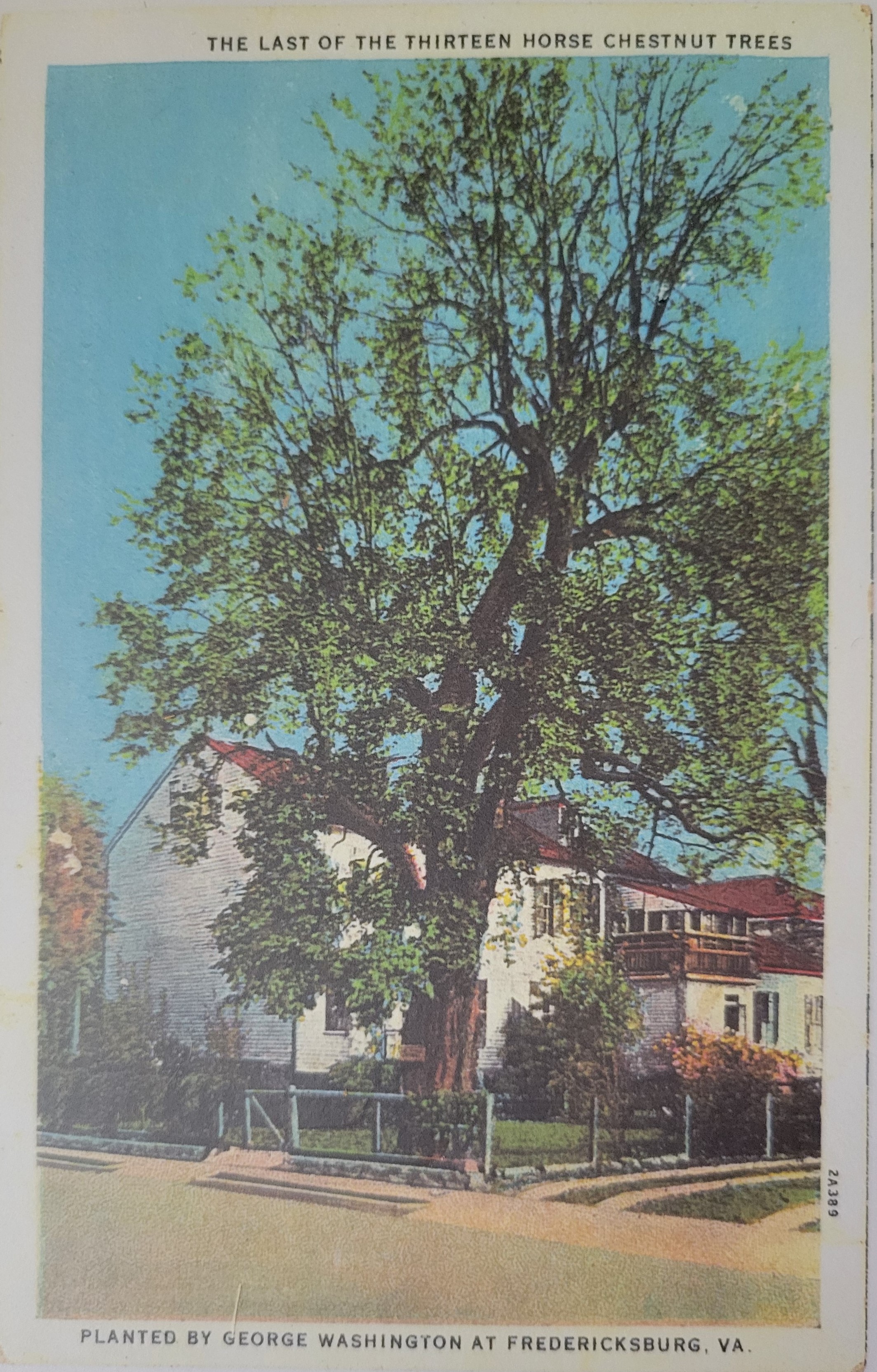
There once stood a large horse chestnut tree on the corner of Fauquier and Charles Street in Fredericksburg. It was noted as one of the thirteen legendary Washington horse chestnut trees planted by George himself. By the 1930s, it was becoming clear that the tree needed some help, so the Daughters of the American Revolution (DAR) took up the cause to protect this historic tree.
Washington’s Horse Chestnut TreeGroup of ladies and small child posing in front of horse chestnut tree, ca. 1930s
The tree legend states that George, while visiting his mother in June 1788 in Fredericksburg, decided to plant thirteen horse chestnut trees from her house to his sister’s house, Kenmore, just a few blocks away. This provided a scenic path for his mother when she visited her daughter Betty. These trees commemorated the thirteen original states.
Mary Washington’s House, c. 1930sAmerica’s Historic Horse-Chestnut TreeMap showing the distance between Mary Washington’s house and Kenmore…following the potential path of the horse chestnut trees.
It is a great story. It is patriotic and nostalgic, showing George as a man of the earth with his love of trees, gardening, and horticulture. He planted these trees for a future America to remember the struggles to create this country and the precious nature of our land that we must protect. But is it true? Did George plant that tree? What is the evidence?
The horse chestnut tree is a native of the Balkans region (Albania, Bulgaria, Greece, and Northern Macedonia). It made its way to Europe and England during the seventeenth century, noted as growing in South Lambeth, London, and being planted by Sir Christopher Wren at Hampton Court.
Horse chestnut trees Bush Park, Hampton Court, England planted by Christopher Wren in 1669-1670.
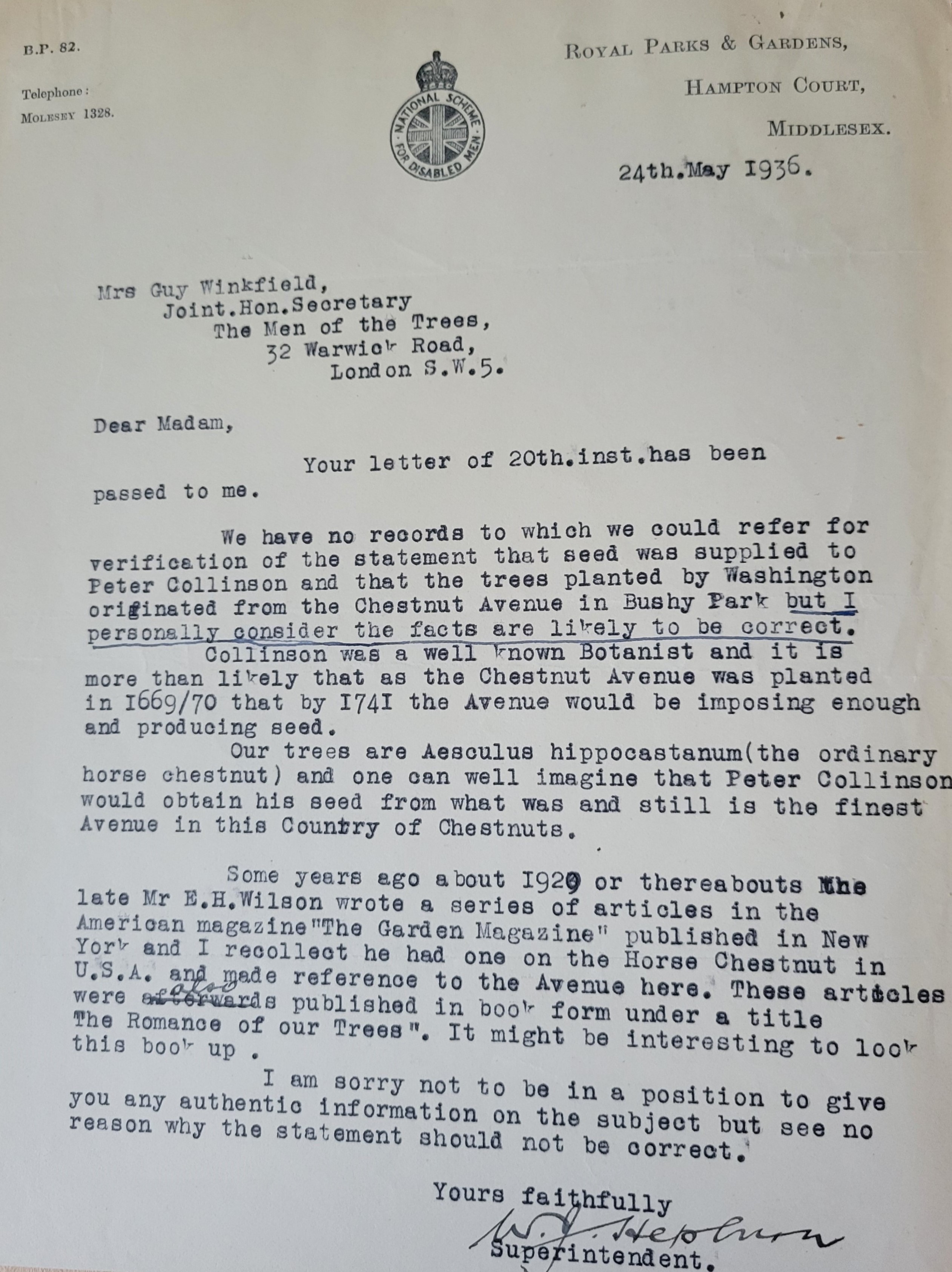
There is documented evidence of some horse chestnut trees crossing the Atlantic to Mr. John Bartram, one of America’s first botanists in the 1740s. In a letter from Peter Collinson, an English botanist, dated September 16, 1741, he wrote to Bartram, “I have sent some Horse-Chestnuts which are ripe earlier than usual; hope they will come fit for planting.”. Bartram acknowledged receiving them and stated that most were blue-molded, and only one germinated and grew. Over twenty years later, Bartram updated Callison on the success of the lone seedling, writing, “But what delights me is that our horse chestnut has flowered. I think it must excel in America.”
Letter from Royal Parks and Gardens, Hampton Court, May 24 1936
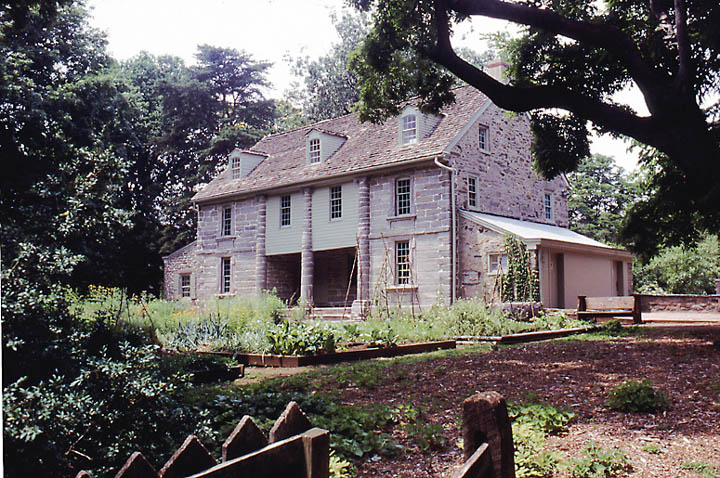
Bartram’s Gardens in Philadelphia was quite popular and visited by many founding fathers while working there. George visited the gardens twice in the summer of 1787 while in the town during the Constitutional Convention, noting, “Sunday, June 10, 1787, breakfasted at Mr. Powell’s and in company with him rid to see the Botanical Gardens of Mr. Bartram, which, though stored with many curious plants, shrubs, and trees, many of which are exotics, was not laid off with much taste, nor was it large.”
John Bartram’s house and upper garden at Bartram’s Garden
Why mention this? In some versions of the story, Washington got his horse chestnut trees from this garden, but there is no evidence that the legendary trees were obtained from this famous historic garden. George only made two diary entries about horse chestnut trees on April 13, 1785, writing, “Received from Col. Henry Lee of Westmoreland 12 horse chestnut trees (small) and an equal number of tree boxes. They appeared to have been some time out of the ground. Planted 4 of the Chestnuts on my serpentine walk – two on the east end and the rest in the vineyard.” And again, on April 2, 1788, wrote, “Transplanted from a box in the garden, thirteen plants of the horse chestnut into shrubberies by the garden walls.”
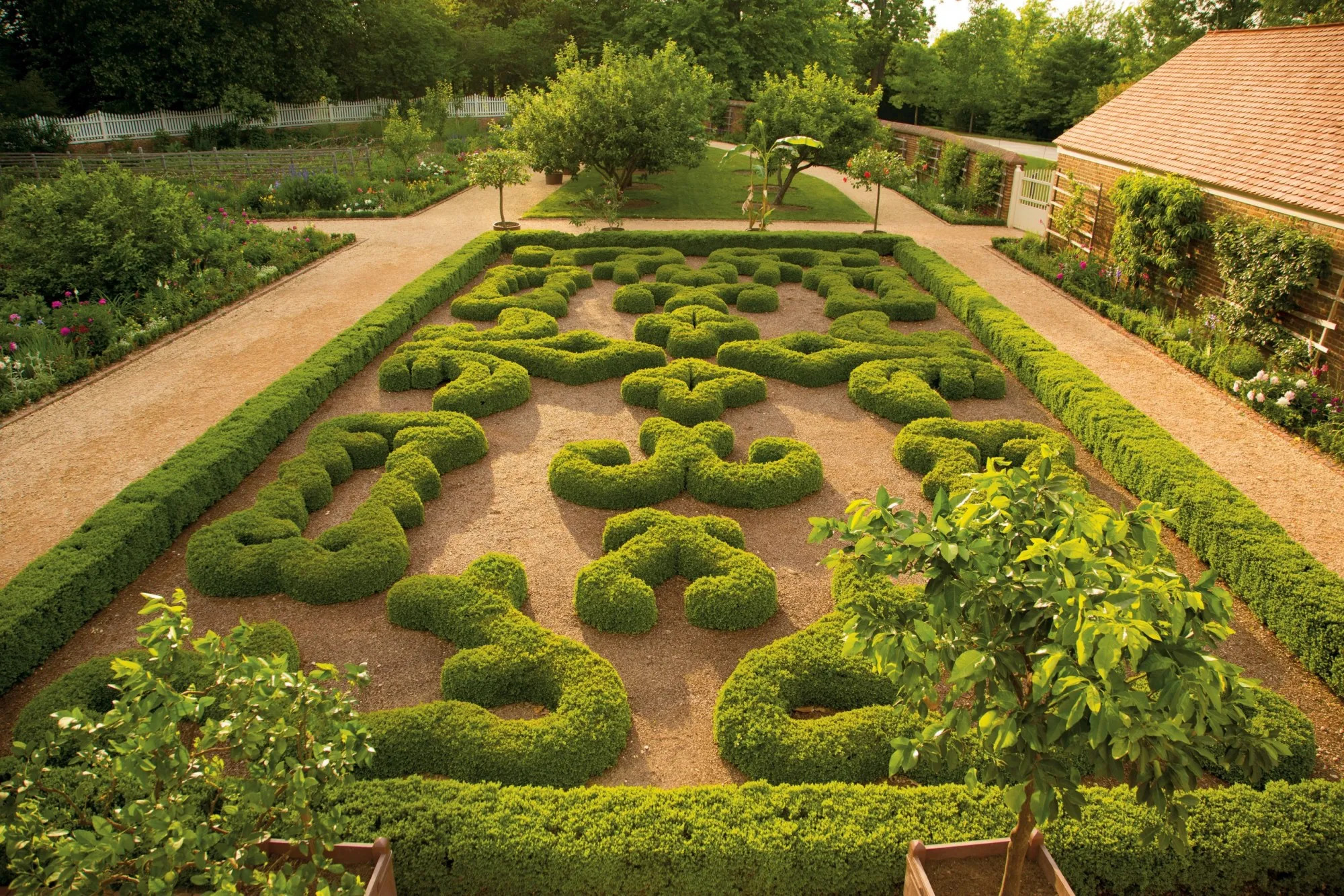
Fruit Garden and nursery at Mount VernonSmall botanical garden at Mount VernonUpper garden at Mount Vernon
The entry shows evidence of planting the famous Washington trees, right? No, because George was at Mount Vernon in April and didn’t leave for Fredericksburg to visit his mother until June 10, 1788.
But could he have had them sent down and have them planted before he came to see his mother? Yes, but the story says that George planted these trees with his own hand. Additionally, it would be odd for George to mention planting the trees while in residence at Mount Vernon and not say that they were in his mother’s garden in Fredericksburg. Washington was a diligent diarist but never mentioned planting thirteen horse chestnut trees in his mother’s garden.
Mary Washington’s house gardens, Fredericksburg.
Further, no known letters from George, Mary, or Betty mention any horse chestnut trees between Mary’s gardens and Betty’s Kenmore.
Spring time in the gardens at Kenmore Plantation (can you spot the cat?)
This was all the primary source evidence I could find relating to George and any horse chestnut trees. So, I looked further into the story to see what other evidence was being used to verify that this tree was indeed one of the thirteen Washington trees.
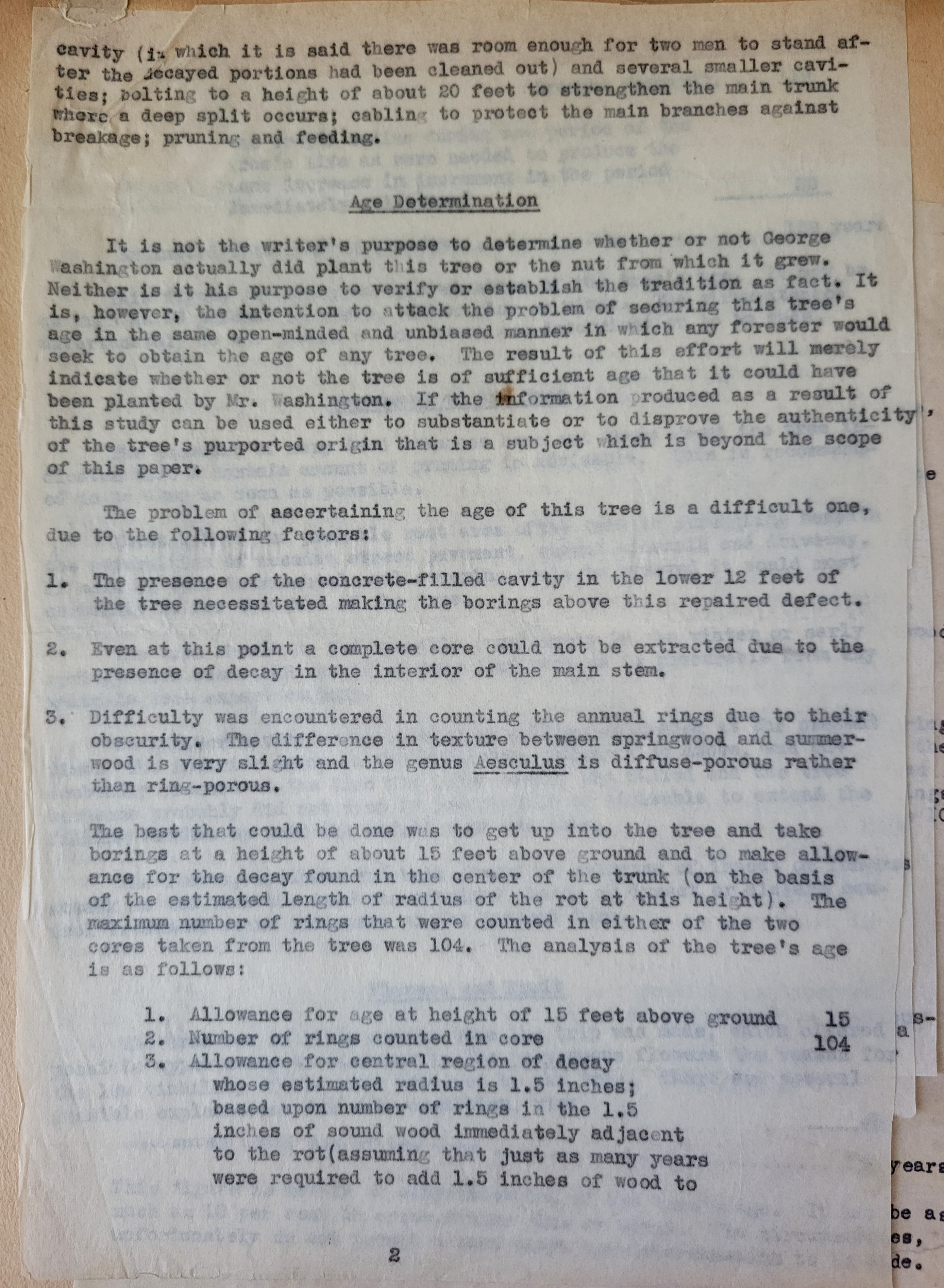
As I said in the beginning, by the 1930s, many, including the DAR, were trying hard to save this lone surviving chestnut tree. With their extensive reach, they got Fred H. Arnold, the Assistant Forester for the National Park Service, to do an age-determination test on the tree in May of 1934. Mr. Arnold noted some issues with the test, stating that the lower twelve feet of the tree was filled with concrete, so the coring sample had to be taken above this “repaired defect”. Even then, a complete coring sample could not be extracted due to decay in the interior of the main stem. Additionally, Mr. Arnold said that it was very difficult to count the annual rings due to their obscurity because the texture difference between the springwood and summerwood for the horse chestnut tree (genus Aesculus) is very slight. Taking into account all this, Mr. Arnold estimated the tree to be around 139 years old with as much as 10% in error, either plus or minus, which would put the date it was planted somewhere between 1781 and 1809, which means that the tree is indeed old and could have been planted during Washington’s time in Fredericksburg.
Age Determination, May 6 1934
Lastly, local historian James Henry Heron collected local citizens’ recollections of the tree and the story. Mrs. Lilias Hamilton Scott, the wife of Mr. John Scott, who owned the lot on which the tree stands, wrote that her grandmother (Mrs. Janet Scott Hamilton) stated her great-grandmother (Mrs. Francis Scott) resided in Fredericksburg in 1788 and was Mary Washington’s neighbor and intimate friend. She said the trees were planted by Washington.
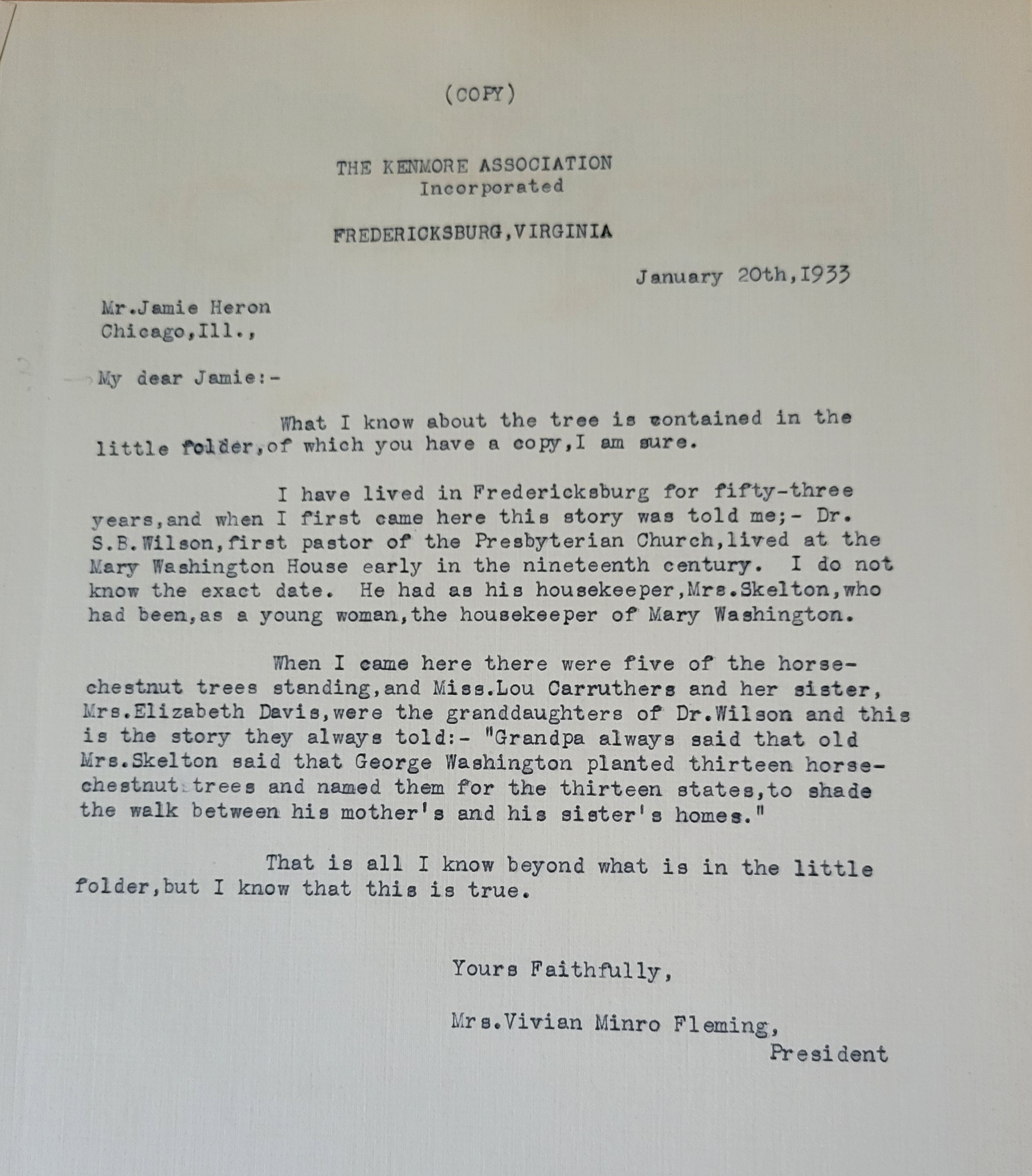
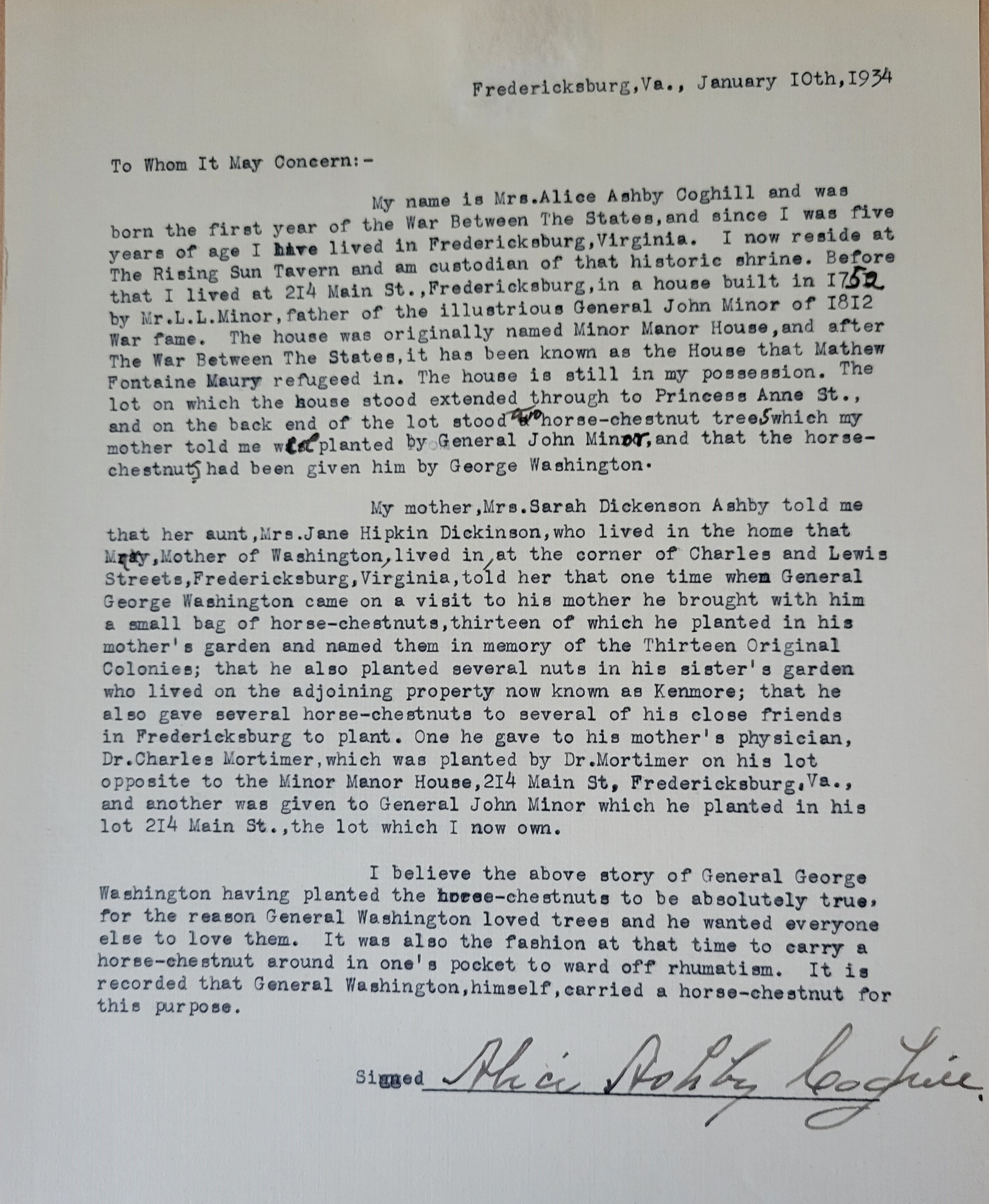
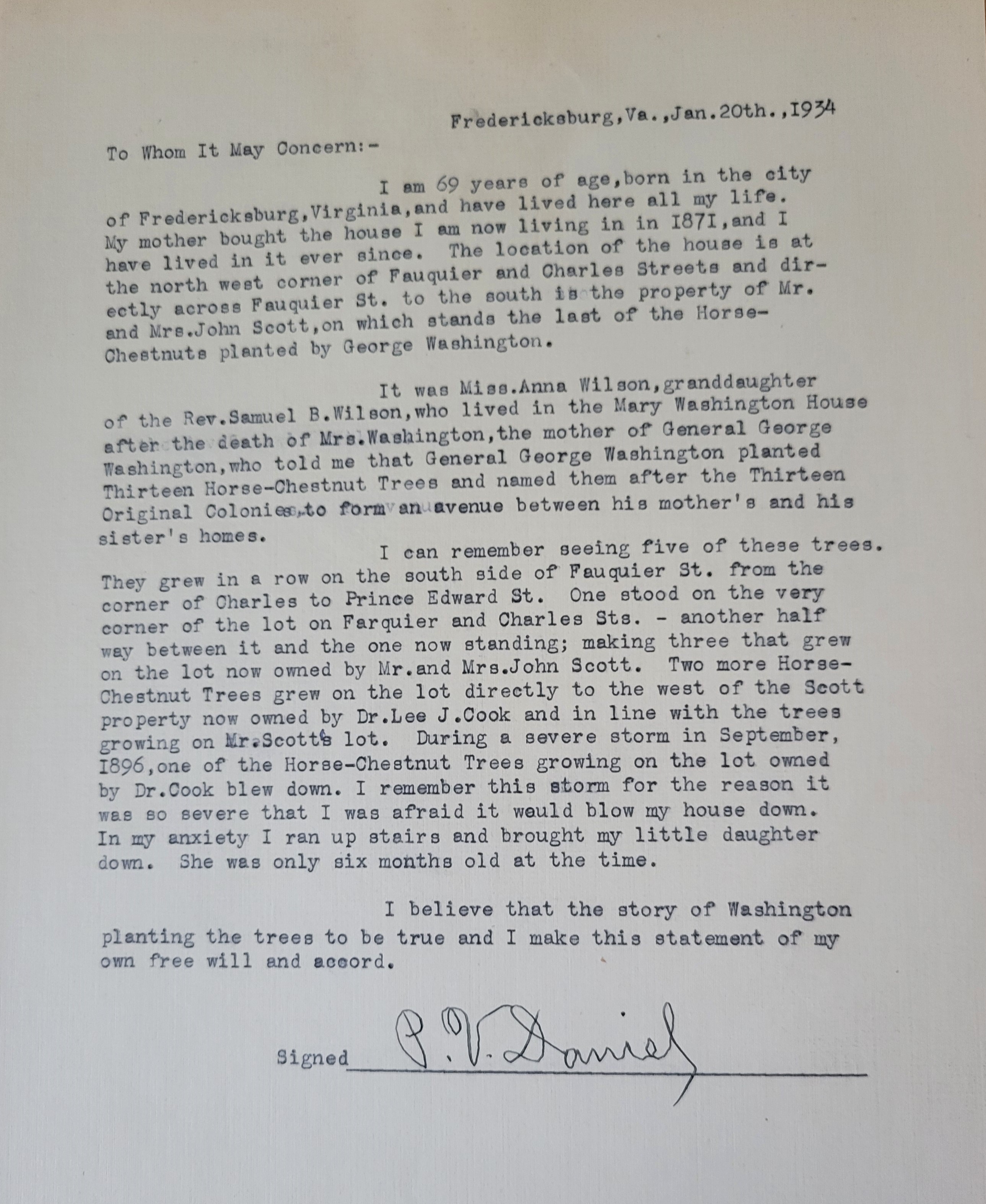
Letter from Mrs. Lilias Hamilton Scott, January 10 1934Letter from Mrs. Vivian (Emily) Fleming Smith, January 20 1933Letter from Mrs. Alice Ashby Coghill, January 10 1934Letter from PV Daniel, January 1- 1934
Mrs. Vivian Minor Fleming traces the story back to Miss Lou Carruthers, her sister Mrs. Davis, and their grandfather Rev. S.B. Wilson’s housekeeper, Mrs. Polly Skelton, who had previously been a housekeeper for Mary. Mr. P.V. Daniel, who remembers five of the original thirteen trees, lived across the street from the remaining one for over sixty years and said Miss Anna Wilson, granddaughter of Rev. S.B. Wilson, told him the story. Mrs. Alice Ashby Coghill says her aunt, Mrs. James Hipkin Dickinson, who lived at Mary Washington House after Rev. S.B. Wilson said Washington planted the trees and passed out horse chestnuts to friends. While I have no doubt these people are truthful in their recollections, they do not offer any definite evidence. They merely document that the legend was a well-known story but not that it was true.
Regardless, the much-loved old tree was rightfully given proper emergency care with a donation and service from Senator Martin L. Davey from Ohio and The Davey Tree Expert Company. The famous tree lived happily for over another half century before being taken down in 2004.
The Last of the Thirteen Horse Chestnut Trees postcard, ca. 1930sWashington’s horse chestnut tree being removed, 2004
Whether this tree was planted by George along with twelve others will probably never be conclusively proven. Were the people wrong to save the tree all those years ago without better evidence? Absolutely not. They saved a beautiful 200-year-old horse chestnut tree with a legendary attachment to George Washington, but they also saved a bit of their own past, nostalgia, and pride in their own town’s history.
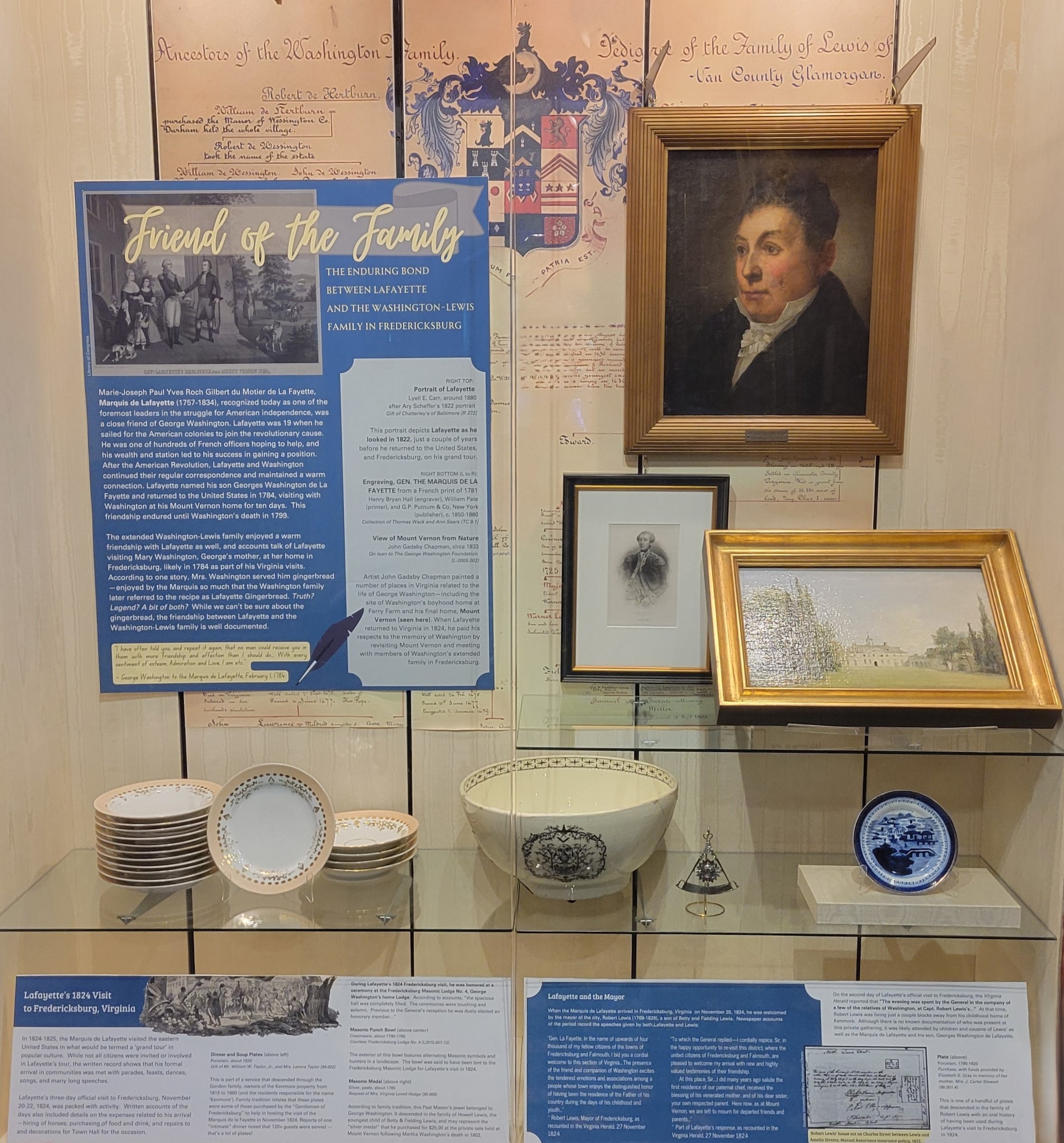
In 1824, the United States was approaching its national jubilee—50 years of independence. President James Monroe, looking to create a wave of patriotism and celebration, invited the last surviving General of the American Revolutionary War, an American hero and icon, to take a grand tour of the country revitalizing the “spirit of 1776.” That American hero was…a French aristocrat with a painfully long name of Marie-Joseph Paul Yves Roch Gilbert du Motier de La Fayette, the Marquis de Lafayette.
1824 portrait of Lafayette by Ary Scheffer is currently in the U.S. House of Representatives
I won’t go into General Lafayette’s exploits, heroism, and leadership during his time in the Continental Army, but the young man was impressive and quickly became an adopted countryman.
Lafayette being heroic at the Battle of Brandywine, artist Charles Henry Jeens
However, we will talk about his American tour, particularly his stop in Fredericksburg.
Lafayette arrived in New York on August 15, 1824, after setting sail on a merchant packet Cadmus from Le Havre with much disapproval from Louis XVIII, the King of France. But royal condemnation from Louis XVI (Louis XVIII’s elder brother) hadn’t stopped him from setting sail for America in 1777, and it didn’t stop him in 1824.
Lafayette arrived in Fredericksburg on the evening of November 20th. He was first received at the parade grounds by two companies of Riflemen, the Washington Guards, and the whole Marine Band from Washington. Then they all commenced in a long column toward town, gaining excited townspeople on horses as they continued down Hanover Street toward Caroline. (Merchant, 1824) (Levasseur, 1829)
Cover page of the book by Rufus B. Merchant documenting Lafayette visit, 1825
The procession made it to the Town Hall, which was festooned with evergreens and flowers. There, it was met by a battalion of little boys called Lafayette Cadets, dressed in sharp white uniforms with red trim. After a quick welcome speech from the mayor, the general was led into the Hall, where he was greeted by a group of garlanded young girls singing his praises.
Fredericksburg’s Town Hall, 1814-1816
The general was then whisked off to his accommodations provided by Mr. James Ross to enjoy refreshments and a “handsome” dinner. At nine o’clock, Lafayette, the Mayor, and Colonel Mercer were taken to the Farmer’s Hotel (west corner of Caroline and Hanover Streets) to partake in a grand welcome ball for a few hours until he retired, presumably exhausted from the day’s activities. (Merchant, 1824) (Crookshanks, 2018)
On Sunday, the general, his son, and Mr. La Vasseur visited the Freemasons at the Fredericksburg Lodge, No. 4. In addition to observing the solemn and profound ceremonies, Lafayette was elected an honorary member in the Old Lodge Room. (Masonic Lodge No. 4, 2024)
Masonic punch bowl used during the reception for the GeneralMasonic Lodge No. 4, about a hundred years after Lafayette’s visit.
The assemblage of Masonic Brethren, civil authorities, military officers, Lafayette, and company was escorted to St. George’s Episcopal Church to enjoy an excellent discourse delivered by the Reverend Edward C. McGuire, also a Mason.
Interior of St. George’s Episcopal ChurchSt. George’s Episcopal Church, Established 1720
The general then spent the evening in the company of Washington relatives at Captain Robert Lewis’s, then retired to his lodging early at 9 o’clock. As Monday morning arrived, Lafayette was paraded to the town hall in a chariotee drawn by four white horses, where he was greeted by a crowd of ladies who occupied his time until he was led away for a sumptuous dinner at Mr. Gray’s Tavern. After a few hours of delicious food, songs, and speeches, the general was loaded into a carriage for the final time as he continued his journey to Washington. (Dovetail Cultural Resource Group, 2006)
Foundation of Mr. Gray’s tavern (Indian Queen Tavern) located on the current Marriott Hotel site.
Lafayette’s time in Fredericksburg might have been short this trip, but it gave the city a last chance to thank and honor a valued friend who had been a champion for America and helped fight for this country’s freedom.
The city will again celebrate General Lafayette’s visit with a Commemoration Weekend on November 23rd and 24th. The weekend will open with a recreation of Lafayette’s arrival at the Old Town Hall, including period music and costumed participants. A reception line with the General will follow it. There will also be a Lafayette Ball on Saturday night, where participants can dress in their finest Regency garb and dance the night away (until 9 p.m.) with the General and President Monroe.
Additional Saturday events include tours of the historic Masonic Lodge No. 4. Learn about the history of George Washington’s Mother Lodge and the fraternity’s importance to the general and see rare artifacts like the original punch bowl used during Lafayette’s visit. For more information and tour hours, visit the Masonic Lodge No. 4 website.
Sunday will start with recreating Lafayette’s Masonic welcome, with historical speeches and a unique ceremony. There will be additional Lodge tours from 1 to 4 p.m. At noon, a historic church service at St. George’s Episcopal Church will be reminiscent of that performed by Rev Edward McGuire. Lastly, back at the Masonic Lodge from 2 to 3 p.m., historian Chris Ruli will give a lecture discussing his forthcoming book, “Brother Lafayette,” which examines the Marquis’ connection to the ancient fraternity.
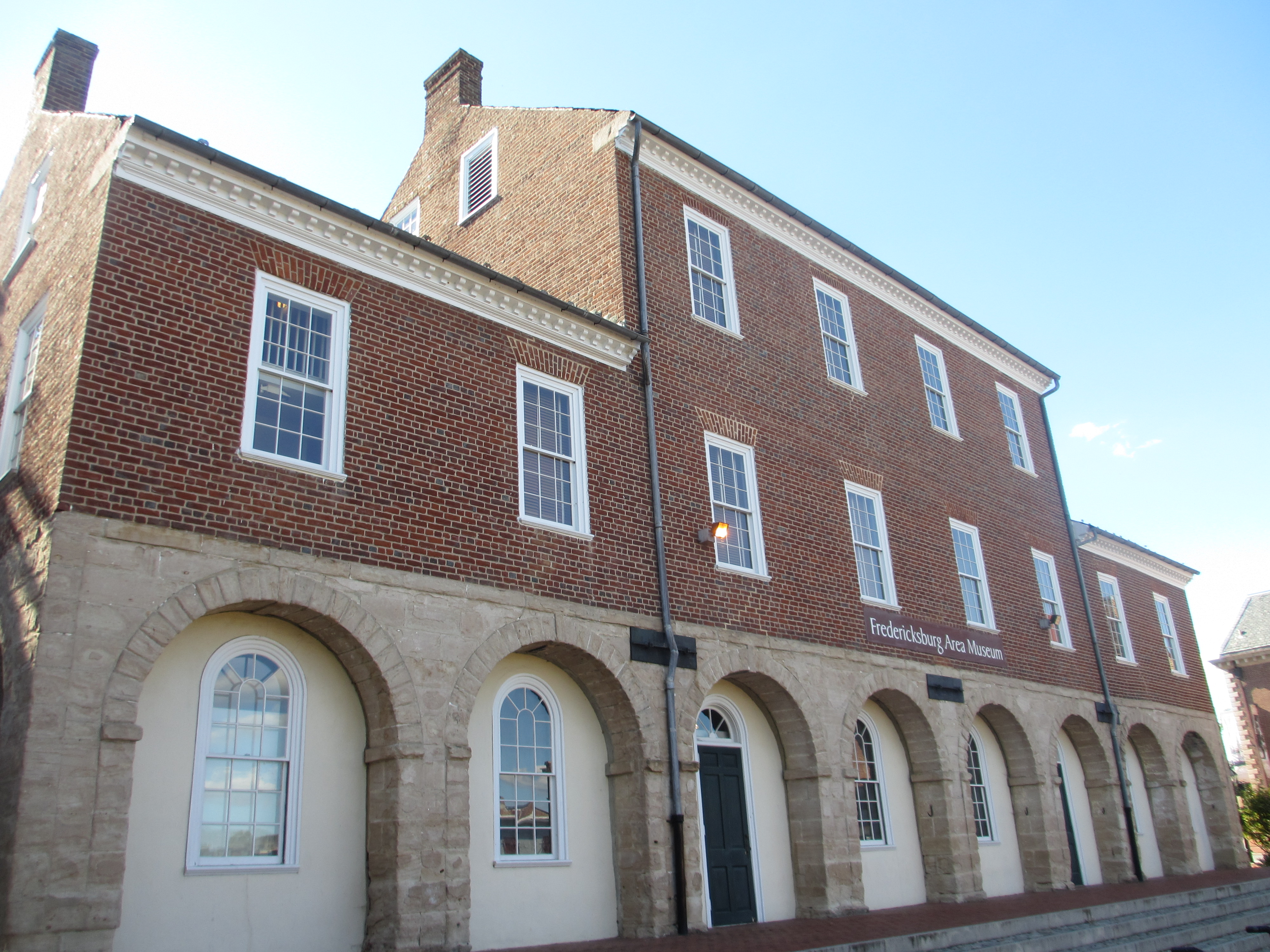
Finally, if you have some extra time on the weekend, stop by the Fredericksburg Area Museum and see their exhibit “Lafayette’s World: Revolutionary Ideals and the Limits of Freedom,” which explores Lafayette’s ideas on freedom, democracy, and abolitionism.
If you can’t attend the weekend events but still want to see exclusive artifacts related to Lafayette’s visit, including the extraordinary punch bowl of Masonic Lodge No. 4, stop by the Kenmore Visitor’s Center, check out our new exhibit, take a tour of the house and learn all about Fielding and Betty Lewis.
Friend of the Family – Lafayette’s Visit to America, Kenmore Visitor’s Center
If you have visited Ferry Farm recently or follow us on social media, you may have noticed the construction of two buildings near the Washington House. These new structures represent ones that stood in these spots during George Washington’s time. Identified through archaeology, their reconstructions allow us to better tell the stories of the people who lived and worked at Ferry Farm. For this blog, we will look at the structure adjacent to the Washington House along the embankment overlooking the Rappahannock: The Quarter.
What’s in a Name?
First, we need to define what we mean when we call the structure “the Quarter.” Regarding enslaved life, the term “quarter” can refer to several different situations. Generally, it refers to a structure that housed enslaved individuals with “quarter,” equating to a living space or personal quarters. The term has nothing to do with the number and makeup of the occupants or the appearance of the building. The other use for the term refers to a group of enslaved people. Augustine Washington’s probate inventory lists seven enslaved people at Ferry Farm’s “satellite quarter” (Fig. 1). In this use, it does not refer to a single physical structure but rather a group of people and their housing unit that moved around. “The Quarter” uses the term for a single structure, identified through archaeology, that housed an enslaved family in the heart of the Ferry Farm plantation.
Figure 1: Section of Augustine’s probate inventory listing individuals at the satellite “quarter”
Enslaved Housing
Living conditions varied widely across the Mid-Atlantic and even within a single plantation. Customarily, enslaved people lived where they worked. Work yard structures included living quarters above the workspace while the fields had structures akin to dormitories that housed people divided by biological sex. In certain cases, independent structures may have served as housing for single family units (Fig. 2). Those that lived within these spaces generally held high ranking positions within the hierarchy established by enslavers. Housing generally stood outside public view and in areas convenient to the work undertaken by the inhabitants. Quarters within sight of the public served as status symbols for the gentry.
Figure 2: 1860 engraving depicting single quarters in South Carolina (Slavery Images)
Identifying quarters today largely comes from historic records, oral history, archaeology, and architectural features. All of this can help establish a range of appearances for such structures. When a building no longer remains standing, these observations can be compared to artifacts uncovered at the site to determine its identity. Sub-floor storage pits, often located near hearths, serve as key architectural identifiers, while artifacts that reflect African diaspora culture, outdated items, and evidence of labor help pinpoint the identities of the inhabitants. Quarters served as the only personal spaces allotted to enslaved people, so any artifacts recovered can speak to their personal identities rather than those defined by Virginia colonials.
Archaeological Evidence
The excavation of the Quarter occurred in 2003, and research in successive years helped to identify its role and understand the lives of its inhabitants.
Architecture: When excavated, little remained of the Quarter, but the architectural elements present and absent provided enough information to understand its appearance. Archaeologists recovered small quantities of Aquia sandstone around the quarter indicating it may have had a light stone foundation and hearth. The main impact it had on the ground surface occurred through the creation of a sub-floor pit. These pits frequently appeared in quarters and served as storage areas for the occupants’ personal effects. Unfortunately, a tree later intruded a portion of the pit and the surrounding area thus making it difficult to study (Fig. 3). Other architectural elements included an abundance of nails and an absence of window glass (Fig. 4). This indicates the building had clapboard siding and likely shuttered windows in place of glass ones.
Figure 3: Quarter Excavation SiteFigure 4: Nail distribution around Quarter
Tableware (Fig. 5): Within the eighteenth-century contexts, we recovered many ceramics and utensils of European origin. White-salt glazed stoneware dishes and dog-nosed spoons represent styles in decline by the 1740s. This indicates that the enslaved occupants either received hand-me-downs from the Washingtons, a common practice, or purchased used items in the local market. A colonoware bowl served as an exception. A local ceramic type attributed to free and enslaved black communities, colonoware production mixed African ceramic techniques with European vessel forms.
Figure 5: Tableware (L-R white salt glazed stoneware, dog-nosed spoon handle, colonoware bowl, table knives)
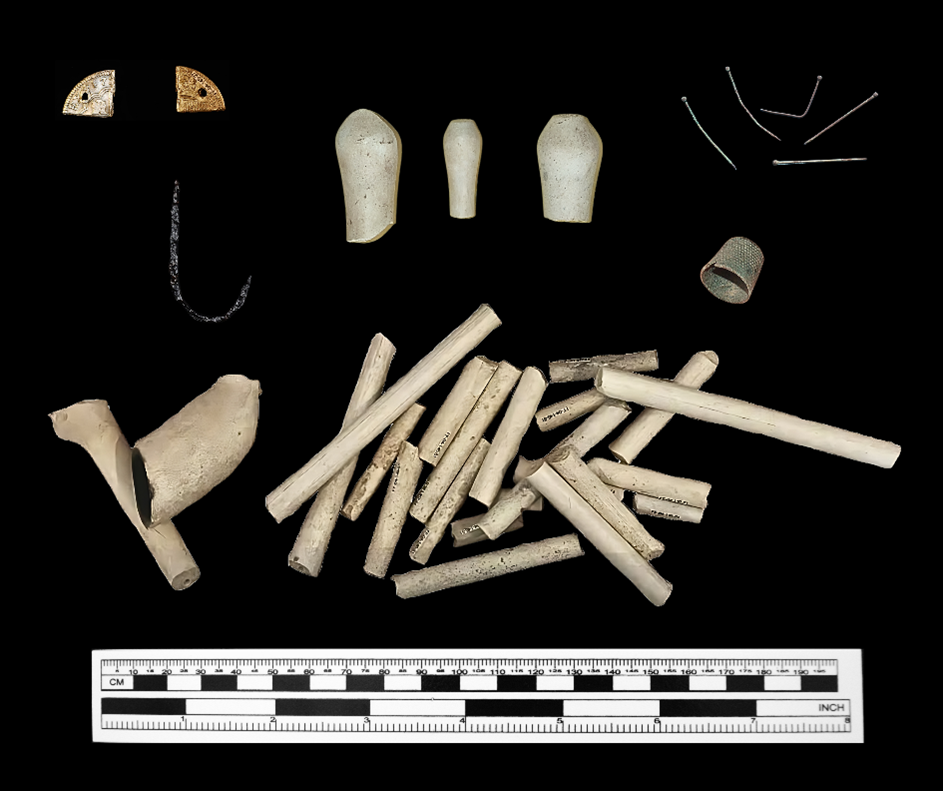
Small Finds (Fig. 6): Analysis of the artifacts revealed the personal effects of the occupants, their possible identities, and the labor they carried out. Wig curlers appear frequently throughout Ferry Farm, but the recovery of several at the Quarter indicates that the individual(s) tasked with maintaining the Washington wigs may have lived within. Sewing implements, such as thimbles, reflect labor carried out by enslaved women and girls either for the Washingtons or for themselves. A common practice in colonial Virginia saw each enslaved person receive a ration of cloth from which they fashioned their own clothing. Straight pins further indicate the presence of female occupants as these pins held their garments, such as bed gowns, together. Both genders used the numerous tobacco pipes recovered. The fishhook speaks to an entirely personal activity, as enslaved communities often supplemented their food rations by fishing. The pierced coin serves as the artifact most indicative of enslaved culture. Piercing a coin allowed the owner to keep it on their person as a form of adornment. Such coins often served as talismans, though they could re-enter the economic world as needed.
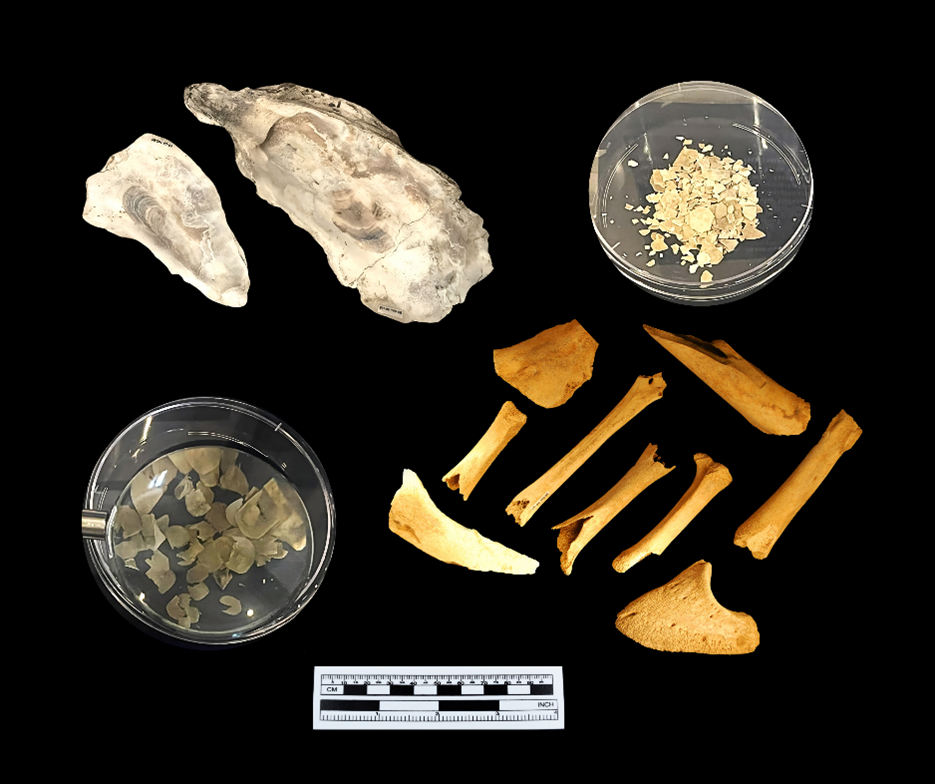
Diet (Fig. 7): Faunal remains found at the Quarter supplement the information provided by the fishhook. As expected, we identified several fish species including types of perch, catfish, and sunfish which lived in the Rappahannock at that time. Other animals included cattle, chickens, pigs, opossum, and shellfish, such as oysters. This mix of domestic and wild species indicates that the Quarter’s occupants supplemented the rations supplied by the Washingtons. The enslaved commonly achieved this by maintaining small gardens and raising chickens, hunting, fishing, and foraging. While we did not recover any plant remains, those consumed by the inhabitants likely reflected a similar mix of wild and domestic species.
Figure 7: Faunal (L-R Oyster shells, eggshells under microscope, fish scales/bones under microscope, various mammal bones)
Reconstruction and Interpretation
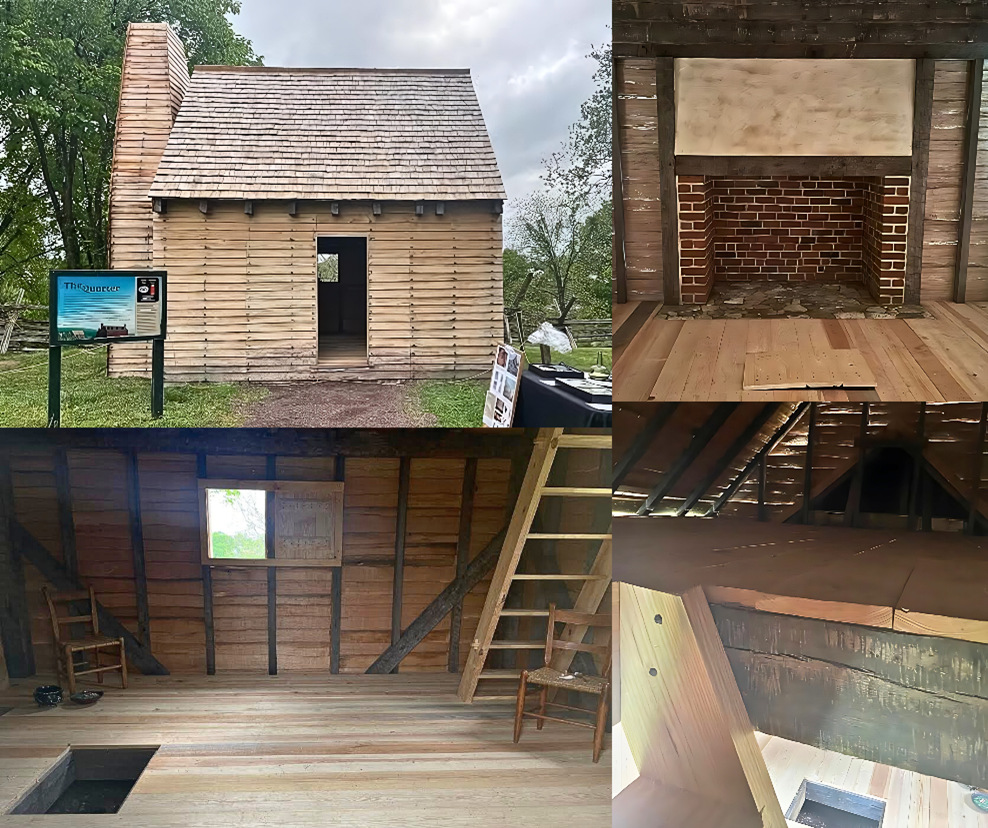
The reconstruction of the Quarter combined our archaeological evidence with the historic knowledge of enslaved housing (Fig. 8). The finished Quarter measures 16’x14’ which aligns with standard measurements for single-family quarters. From our archaeology, it has clapboard siding, sliding shutters in place of glass windows, a subfloor pit, and sandstone hearth. Information on contemporary quarters led to the inclusion of a loft and a daub lined wood chimney. Architects used eighteenth-century techniques to reconstruct the building.
Figure 8: The Quarter, various views
From our findings, we concluded that the quarter housed a single family. At least one of these individuals held a high-ranking position within the labor hierarchy allotted these living arrangements (Fig. 9). The structure’s proximity to the Washington House and work yard indicates the occupants worked within these spaces. The position on the bluff overlooking the Rappahannock meant that this quarter, unlike others, lay in view of the public. “The prominent placement of this structure on the landscape may mean that it was used to reinforce Washington’s prominent social standing in colonial Virginia.”
Figure 9: Portion of Augustine’s probate inventory listing individuals at Ferry Farm; some may have called the Quarter home
The Quarter will open to visitors this fall, and visitors will be able to read about and visualize the lives of those who lived within. Like the Washington House, everything that furnishes the Quarter will be interactive and reflect archaeological finds. Planning remains ongoing for this, but when complete, visitors may find outdated tableware, evidence of meals, tools for labor, and personal effects.
Emma Schlauder
Research Archaeologist
Bibliography

Augustine Washington Probate Inventory, 1743

Carson, Cary & Carl Lounsbury (editors)                                                                                                  2013     The Chesapeake House: Architectural Investigation by Colonial Williamsburg. The University of North Carolina Press, Chapel Hill, NC.

Katz-Hyman, Martha B. & Kym S. Rice (editors)                                                                                       2011     World of a Slave: Encyclopedia of the Material Life of Slaves in the United States. Greenwood, Santa Barbara, CA.

Lanier, Gabrielle M. & Bernard L. Vlach                                                                                                     1997     Everyday Architecture of the Mid-Atlantic: Looking at Buildings and Landscapes. The John Hopkins University Press, Baltimore, MD.

Lounsbury, Carl R. (editor)                                                                                                                  1994     An Illustrated Glossary of Early Southern Architecture and Landscape. University Press of Virginia, Charlottesville, VA.

Samford, Patricia                                                                                                                                       1996     The Archaeology of African-American Slavery and Material Culture. William & Mary Quarterly 53(1): 87-114.

2000     Power Runs in Many Channels: Subfloor Pits and West African-Based Spiritual Traditions in Colonial Virginia. Doctoral Dissertation, Department of Anthropology, University of North Carolina, Chapel Hill. University Microfilms International, Ann Arbor, MI.

Stilgoe, John R.                                                                                                                                          1982     Common Landscapes of America, 1580-1845. Yale University Press, New Haven, CT.

Wells, Camille                                                                                                                                        1993     The Planter’s Prospect: Houses, Outbuildings, and Rural Landscapes in Eighteenth Century Virginia. Winterthur Portfolio 28(1): 1-31.

Vlach, John M.                                                                                                                                           1993     Back of the Big House: the Architecture of Plantation Slavery. The University of North Carolina Press, Chapel Hill, NC.
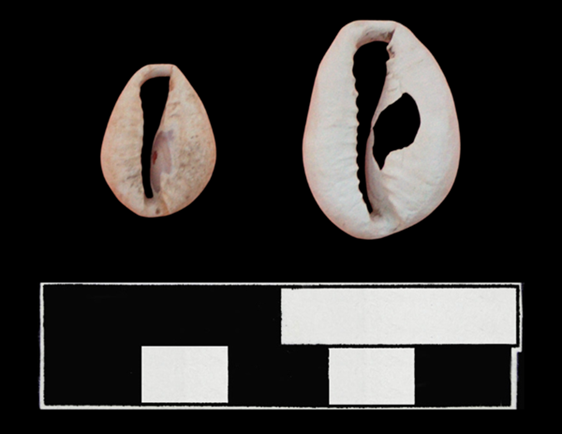
Many readers will undoubtedly recognize these two artifacts (Fig. 1). Known as cowrie shells, these artifacts have become synonymous with slavery and serve as identifiers for the presence of free and enslaved Black individuals in the Americas. Still, the role of cowries in the 18th century goes far beyond that of a marker.
Origin
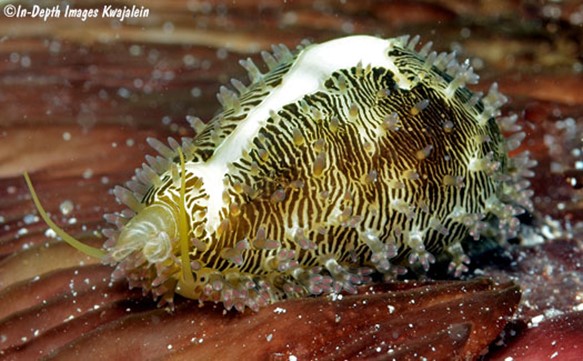
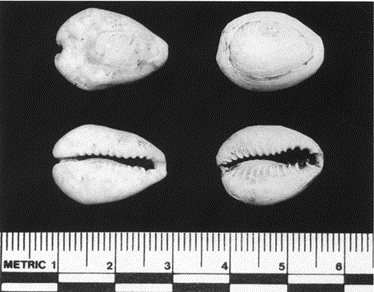
Cowries (Cypraeidae), a taxonomic family of sea snail, live throughout the world (Fig. 2). However, the species with the most relevance to the 1700s reside in the Indo-Pacific region, particularly in the waters around the Maldives. They include Monetaria annulus (alt. Cypraea annulus, Annulus Linnaeus) and Monetaria moneta (Fig. 3). Even if your Latin proves non-existent, each species’ genus, along with M. moneta’s epithet, easily identifies the original role cowries played in human hands – money.
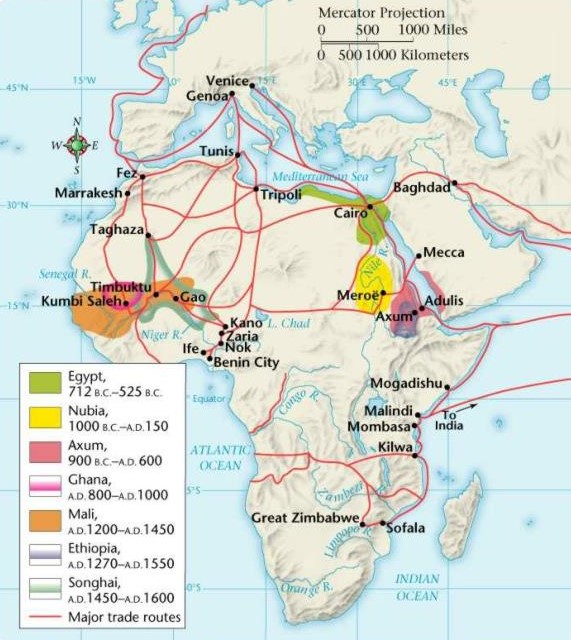
Centuries before the 1700s, West Africa thrived as a region of independent kingdoms and tribes. With these groups engaged in trade, they required a shared currency that served as a medium of exchange and a store of value. In choosing cowries as currency in the fourteenth century, West Africa continued a long history of groups throughout the world using shell money. Through pre-existing trade routes to the Indo-Pacific, West Africans could easily import the shells via other parts of Africa and had them transported across the Sahara. As the cowries used did not reside in West Africa and proved difficult to forge, the market had built in protections against hyperinflation and counterfeits.
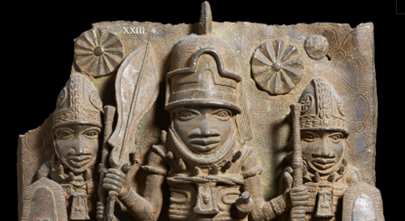
Once in West Africa, the shells served as the basis of the region’s economies. Still, the shells took on several cultural roles. To keep cowries on hand, the shells often underwent modifications, including slicing off the rounded side of the shell or piercing them (Fig. 4). This allowed for stringing them together and weaving into hair or onto clothing. While done for practical reasons, this led cowries to enter the world of personal adornment. With this, their role expanded to symbols of status, fertility, and beauty while further appearing on ceremonial garb (Fig. 5).
Figure 5: Benin Bronze plaque; 16th-17th century. The warriors on either side of the central figure wear helmets decorated with cowries British Museum
Atlantic Trade Routes
Europe and Africa had a long history of trade and exchange networks prior to the late 1400s, but the boom of global exploration led to an immediate escalation of these market connections. With European nations expanding their territories abroad and seeking to gain resources not found within their borders, they developed a need to break into the African markets while establishing permanent trade posts in the region. To achieve this, Europeans needed to supply goods that were in demand, and their minds set upon cowries.
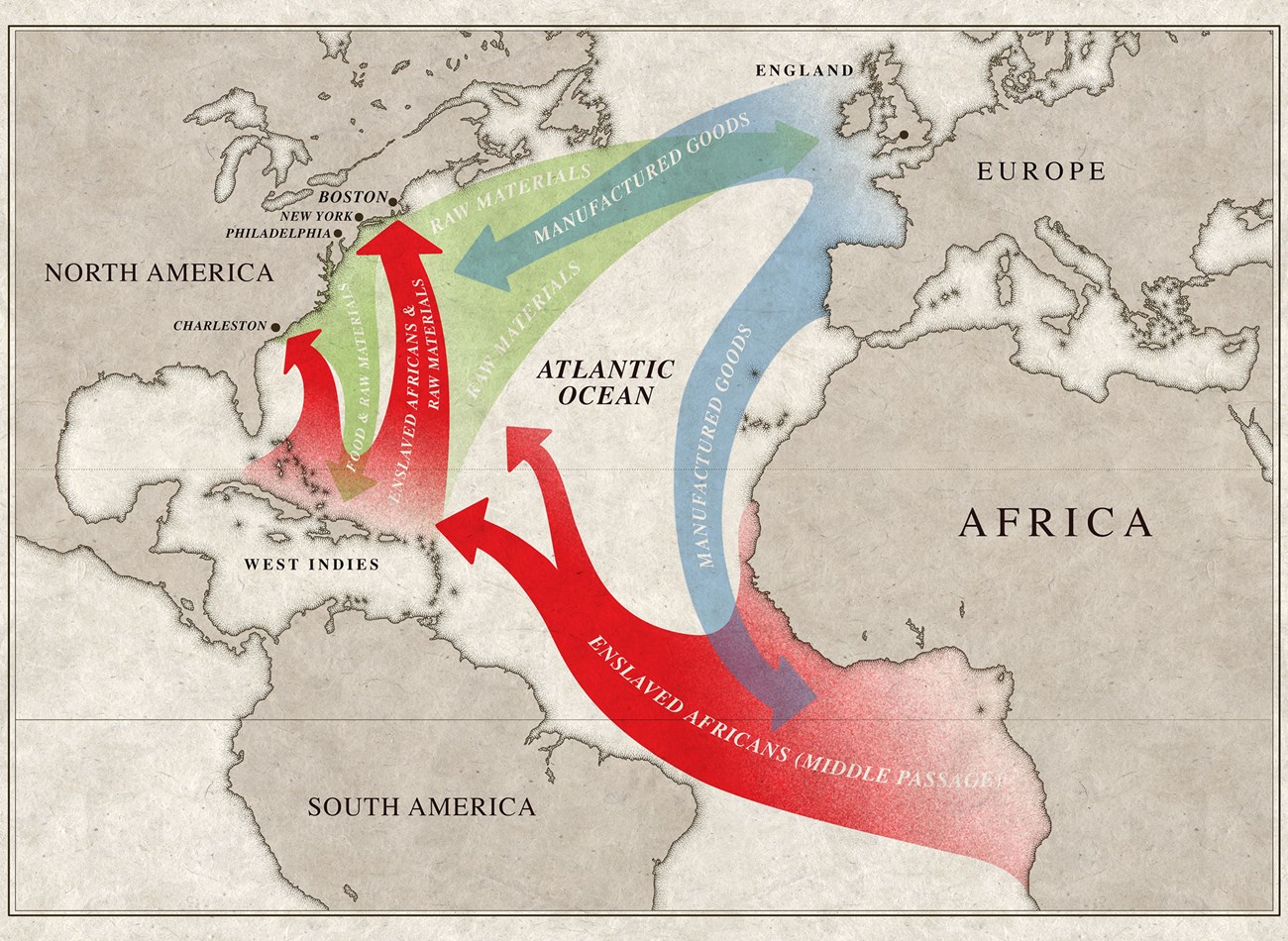
Map by Adrian Kitzinger from Sahel: Art and Empires on the Shore of the Sahara West African Kingdoms and Trading StatesMap centered on the Atlantic Ocean with colored arrows showing movement of Enslaved Africans to the Americas, Raw Materials from Americas, and Manufactured goods from Europe Map showing the primary movement of Enslaved Africans, raw materials, and manufactured goods
While an item of currency and self-adornment to West Africans, cowries became a commodity in the hands of European, and later American, merchants. With cowries, merchants could navigate the local economy and barter for desired goods. Inevitably, this included kidnapped Africans. In his memoir, Olaudah Equiano (c. 1745-1797), a famed writer and abolitionist, recalled how one enslaver sold him to another for 172 “little white shells” while still in Africa. An examination of eighteenth-century shipping records reveals that cowries ranked amongst the most common goods transported to West Africa and used to trade for captives (Fig 6). For Africans who then faced the Middle Passage, they forcibly traveled aboard these same ships that in turn provided West Africa with the currency driving the economy and their enslavement — cowries.
Figure 6: List of goods imported to the Isle of Man via Rotterdam for trade in Africa, 1761 Manx National Heritage
Cowries in the Americas
Indo-Pacific cowries arrived in the Americas through several carriers, but ultimately all traveled on slave ships. In trading cowries to West Africa, foreign merchants supplied both types even though the market preferred M. moneta. As such, they often had leftover M. annulus which remained onboard as cargo and ballast when the ships continued their trans-Atlantic journeys. Once in the Americas, some captains elected to dump or sell off the remaining cowries rather than transport them back across the Atlantic. Cowries additionally arrived in the Americas on the bodies of kidnapped Africans. While common practice involved stripping captives in Africa, primary accounts report individuals retained beads and shells in their hair and as necklaces. Enslavers further distributed beads, and likely shells, as pacifiers during the Middle Passage.
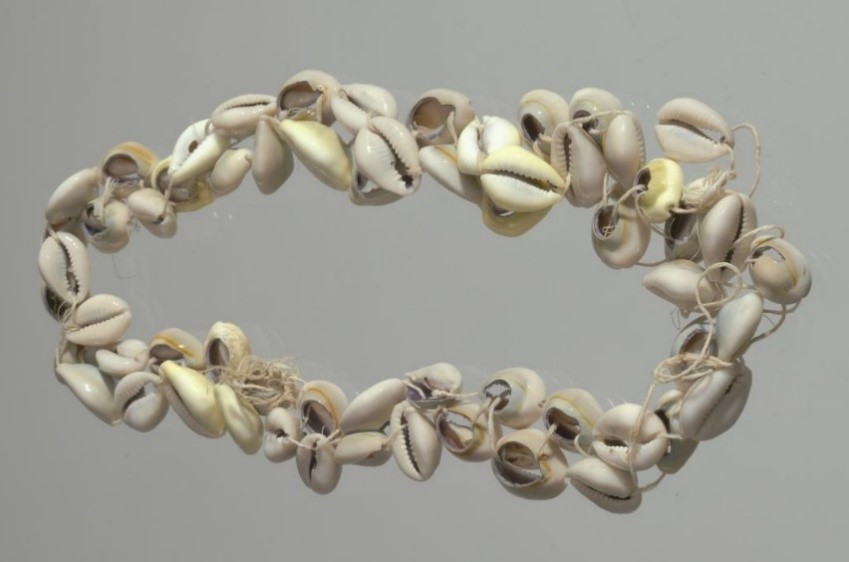
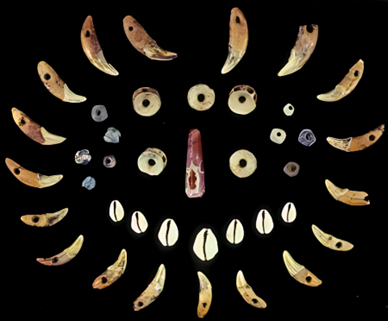
Once in the Americas, cowries largely remained within Black communities though they did face geographical restrictions. For Virginia, archaeological distribution of the shells, mainly M. annulus, places them within the Tidewater region. Higher counts of shells appear in urban areas (Yorktown = 252) while plantations typically only have a few. Although Virginia’s current archaeological cowrie count falls above 353, this remains too few to support the traditional role as currency. Instead, the shells continued in roles of adornment and ritual with added symbolism of cultural loss, memory, and survival. Outside random finds in areas associated with enslavement, cowries recovered in the Americas have derived from burials, spirit caches, and sub-floor pits (Fig. 7).
Figure 7: Necklace recovered from an enslaved burial ground at Newton Plantation, BarbadosJerome Handler
At Ferry Farm
Over the course of our twenty-plus year excavation, two cowries have appeared at Ferry Farm. Found in contexts located around the Washington House, including one in a root cellar, our shells represent M. annulus and have undergone modification to allow for stringing or weaving (Fig. 8). As with findings in previous studies, we believe these shells took on cultural roles through self-adornment. Despite not knowing the identity of the shells’ owner(s), the cowries provide enough information to form an interpretation of who they belonged to and how they arrived at Ferry Farm.
Figure 8: Ferry Farm cowries with modifications visible
As their contexts of origin line up with the Washington House, the enslaved individuals who left them behind likely lived and worked close to the Washington family. This places them within the working realm of the house or the nearby work yard. For accommodation, the owner(s) may have occupied the Quarter adjacent to the Washington house or lived in one of the work yard’s support buildings.
Regarding the arrival of cowries on the plantation, this likely happened through the movement and exchange of people and goods. To provide the labor required to meet their goals, enslavers moved those they enslaved between different plantations as needed and expanded their workforce through the enslavement of more people or hiring of persons enslaved by others. This could account for the arrival of cowries at Ferry Farm. Alternatively, Ferry Farm’s proximity to the (port) city of Fredericksburg meant the enslaved community had access to a regional economy and trans-Atlantic vessels. Either network may have transported cowries to the city, but it additionally meant that Fredericksburg served as a meeting and trade point for those enslaved in the region.
Legacy
Cowries have a long and nuanced history in the Atlantic World. Beginning as a unit of currency and cultural symbol, cowries fell prey to the demands of the market, taking on a new role in the hands of foreign merchants. What once served to strengthen economies and nations suddenly worked to strip away the very people who inhabited West Africa. For those who endured enslavement, the cowries that accompanied them became symbols of a stolen home, a continuation of culture, and a determination to survive. Today, cowries remain important items in African and African American cultures by symbolizing their history as currency, continuing in self-adornment and ritual roles, and appearing prominently in works of art (Fig. 9-11).
Alpern, Stanley B.                                                                                                                                                  1995     What Africans Got for Their Slaves: A Master List of European Trade Goods. History in Africa 22: 5-43

Equiano, Olaudah                                                                                                                                    1789     The Interesting Narrative of the Life of Olaudah Equiano, Or Gustavus Vassa, The African. Written By Himself. London, UK

Handler, Jerome S.                                                                                                                                                            2006     On the Transportation of Material Goods by Enslaved Africans During the Middle Passage: Preliminary findings from Documentary Sources. African Diaspora Archaeology Newsletter 9 (4): 1-22 (Article 16).

2007     From Cambay in India to Barbados in the Caribbean: Two Unique Beads from a Plantation Slave Cemetery. African Diaspora Archaeology Newsletter 10(1): 1-10 (Article 1)

Heath, Barbara J.                                                                                                                                                2016     Cowrie Shells, Global Trade, and Local Exchange: Piecing Together the Evidence for Colonial Virginia. Historical Archaeology 50 (2): 17-46.

National Museum of African American History & Culture                                                                        n.d.     Cowrie Shells and Trade Power. National Museum of African American History & Culture, Smithsonian, Washington D.C. <https://nmaahc.si.edu/cowrie-shells-and-trade-power>. Accessed 3 June 2024.

Ogundiran, Akinwumi                                                                                                                                                            2002     Of Small Things Remembered: Beads, Cowries, and Cultural Translations of the Atlantic Experience in Yorubaland. The International Journal of African Historical Studies 35 (2/3): 427-457.

Pallaver, Karin                                                                                                                                                 2023     Cowries, the currency that powered West Africa. ReThink Quarterly 7 <https://rethinkq.adp.com/artifact-cowries-west-africa/>. Accessed 3 June 2024.

Pearce, Laurie E.                                                                                                                                              1992     The Cowrie Shell in Virginia: A Critical Evaluation of Potential Archaeological Significance. Master’s thesis, Department of Anthropology, College of William & Mary. University Microfilms International, Ann Arbor, MI.

Radburn, Nicholas J.                                                                                                                                       2009     William Davenport, the Slave Trade, and Merchant Enterprise in Eighteenth-Century Liverpool. Master’s thesis, Department of History, Victoria University of Wellington, Wellington, New Zealand.

Samford, Patricia                                                                                                                                              1994     Searching for West African Cultural Meanings in the Archaeological Record. African Diaspora Newsletter 1 (3): 1-3 (Article 2).
Author’s Note: This blog contains hyperlinks to primary documents related to the event.
Figure 1: 250th Logo (Boston Tea Party Ships and Museum)
Intro
This year marks the 250th anniversary of the Boston Tea Party (Figure 1). Hailed as a defining moment in the quest for American independence and an act of patriotism, the event has inspired commemorations in many forms, and it remains a vital part of the American History curriculum. I, for one, thought it the epitome of achievement that I had the date memorized in kindergarten. Like much of our founding history, however, the story retains an element of myth. So, what exactly is the truth behind this event?
The Story
A general account of the Boston Tea Party tells how patriotic Bostonians, angered by unfair taxes, boarded three ships in Boston Harbor on December 16, 1773. Disguised as members of the Mohawk or Narragansett tribes, Samuel Adams led the Sons of Liberty in protest by throwing crates of the King’s tea overboard. This act helped unite the colonies against Britain and started the chain of events that ended in the “Shot Heard Round the World” on Lexington Green on the morning of April 19, 1775, following Paul Revere’s ride.
Sound familiar? In truth, this account covers the basics. It provides the “who,” “what,” “when,” “where,” and “why.” Nonetheless, it only scratches the surface of the complex event we know as the Boston Tea Party. To unpack this, let us look at what led to the event, how it happened, and the initial response.
Truth of the Tax
Taxes and tea sit at the heart of this story. The taxes that the colonies took issue with went into effect starting in the 1760s, with the ultimate goal of lessening the debt incurred by Britain during the Seven Years’ War. However, this set a new precedence as Britain had never taxed the colonists directly, and the passing of these tax laws occurred without consulting the colonies. The formal chant of “no taxation without representation” first appeared in 1768, and while the lack of representation presented a key reason for displeasure, the impact of taxes on merchants served as another.
While the Tea Act of 1773 served as the catalyst for the Boston Tea Party, the Tea Tax had existed since 1767. Introduced under the Townshend Acts, the tax remained the only one in effect upon the Act’s repeal in 1770. General dislike for the tax persisted, but the Tea Act took the issue to another level. In an aim to bail out the East India Company (EIC), the Act granted a monopoly over the tea trade by opening the colonial market to the company as the sole supplier, waived their tax payment in favor of those paid by colonists, and mandated that only EIC company agents (consignees) could sell the tea (Figure 2). Many perceived this as a restriction on business, as merchants could no longer source tea from Britain and smugglers, freedom of choice and rights. In truth, the protests against the tax and Tea Act occurred as a matter of principle since the cost of tea actually dropped, with consumers now able to buy directly from a supplier who faced no additional costs.
Figure 2: EIC Seal (East India Company)
Build Up
With the Boston Tea Party story often told in a bubble, it appears as an impulsive act, but far more happened behind the scenes. By the end of 1773, displeasure with the Tea Act made attempts of preventing the unloading of tea and boycotts of its purchase common. When Dartmouth, Beaver, and Eleanor anchored at Griffin’s Wharf (November 28-December 15), locals had expected their arrival since October and had spent November demanding the resignations of the consignees. Many foresaw the risk of tensions coming to a head, including Abigail Adams, who, on December 5, wrote that “the Tea that bainfull weed is arrived…The flame is kindled…Great will be the devastation if not timely quenched or allayed by some more Lenient Measures.”
After successfully chasing the consignees out of town, Bostonians urged Francis Rotch, whose family owned two of the ships, to depart without unloading the cargo. The Sons of Liberty stationed a guard at the docks to ensure that the tea remained onboard while Rotch decided. In response, Royal Governor Thomas Hutchinson ordered Rotch to unload the cargo within the standard twenty days of arrival or forfeit it and the ships. Rotch thus found himself in an impossible situation as Hutchinson and customs refused to let him leave while the Sons would accept nothing less.
December 16th
Many awoke on December 16, knowing the crisis would come to a head. The date marked the deadline for unloading Dartmouth’s cargo, and Rotch would make one final attempt to plead his case to both sides. Hutchinson and customs refused to budge, which further incensed Bostonians when Rotch reported that the tea would not be leaving. This announcement came as Samuel Adams headed a meeting at the Old South Meeting House (Figure 3).
Figure 3: Adams’ Speech at Old South (Revolutionary Spaces)
Serving as a leading figure within the Sons of Liberty, Adams had led many of the meetings and attacks that occurred almost daily in the buildup to the 16th. This particular meeting drew 5,000-7,000 people who clamored to hear the latest developments in the tea crisis. When Rotch’s news broke, Adams stated, “This meeting can do nothing further to save the country.” While often billed as a signal to start the Tea Party, doubt remains over the statement’s significance. According to eyewitness accounts, many stayed another 15 minutes, and Adams tried to prevent people from leaving before the meeting concluded.
Regardless of intent, hundreds of people made their way to Griffin’s Wharf. Along the way, some donned disguises that mimicked Native Americans. These disguises served both practical and symbolic purposes. First, donning a disguise shielded the identity of individuals carrying out the illegal acts, even if no one mistook them for actual tribal members. Secondly, the choice of a Native American-inspired look embraced an allegory of America and linked Indigenous resistance to colonization with the colonists’ struggle against Britain (Figure 4).
Figure 4:“Allegory of the Continent of America,” c. 1750 (The Clark Museum)
Interestingly, Adams never claimed or denied involvement with the Tea Party, yet, in contrast to popular depictions, he did not appear at the harbor that night. Instead, he remained at Old South. Of the participants, only the identities of 116 are known, and only one faced arrest.
Figure 5: The Boston Tea Party, 1789, (LoC)Figure 6: The Boston Tea Party, c. 1872, (NYPL)
Despite a post-independent America enshrining the Boston Tea Party in glory, most initial reactions proved far less enthusiastic than that of John Adams. The name “Boston Tea Party” did not emerge until the 1820s, and even then, “Party” referred to a group of people rather than something celebratory. Instead, mentions of the event usually identified it by what happened, such as “the destruction of the tea” (Figure 7).
Figure 7: “Tea that was gathered up on the shore of Dorchester Neck on the morning after the destruction of the three cargos at Boston; December 17, 1773” (MHS)
While Parliament’s taxes made many colonists unhappy, they also valued their right to private property. In the case of the Boston Tea Party, the ships that the Sons of Liberty trespassed on belonged to Americans, while the EIC owned the destroyed tea. The King and Parliament had no direct connection to the ships or their cargo. As such, many viewed the attack as one on private property rather than a true strike against Parliament. Those who spoke out against it included Founding Fathers. Benjamin Franklin felt “truly concern’d…that there should seem to any a Necessity for carrying Matters to such Extremity, as, in a Dispute about Publick Rights, to destroy private Property.” Meanwhile, George Washington supported taking a stand against taxation and felt the cause of Boston equated to the cause of America, but ultimately could not “approve their cond[uc]t in destroyg the Tea.”
Impact
In the short run, the Boston Tea Party did little to fan the flames of independence. It inspired a few more boycotts (i.e., the Annapolis, Edenton, and Yorktown Tea Parties) and furthered a decline in consumption, but the British response to the event served as the primary catalyst. By punishing all of Boston, and by extension, Massachusetts Bay Colony, rather than just those responsible, the British infringed upon the rights of the colonists. Under the Coercive (nicknamed “Intolerable”) Acts, the British closed the harbor, demanded Bostonians pay damages to the EIC, imposed martial law, and required citizens to house, or quarter, members of the military on their property at their own expense (Figure 8).
Figure 8: “The Bostonians in Distress;” 1774 Satire of the Boston Port Act (LoC)
Those living in the twelve other colonies did not take well to this, as they feared the implementation of these acts in their homes. In response, the First Continental Congress met in Philadelphia from September to October 1774. While some delegates saw the issue as a Massachusetts one, others pressed the need to take a stand against the overreaches of Parliament and sympathized with Massachusetts. They concluded Congress by issuing their Declaration and Resolves, which listed objections to Parliament and confirmed their commitment to a trade boycott. However, when news of Lexington & Concord broke in April 1775, and Massachusetts found itself at war, the other colonies quickly had to decide which side they would take.
Legacy
Two hundred fifty years on, the Boston Tea Party remains an iconic event in American history and a pivotal moment in the founding of the country (Figure 9). While not wholly embraced as such upon its occurrence, the retelling of the event over time came to enshrine it in lore and leave out details that complicated the narrative. This shows that one cannot study a singular event without contextualizing it within the bigger picture. Nevertheless, John Adams’ belief that the “Destruction of the Tea” would become an epoch in history proved correct.
Figure 9: Robinson Tea Chest – 1 of 2 surviving chests (Boston Tea Party Ships and Museum)
Franklin, Benjamin. From Benjamin Franklin to the Massachusetts House Committee of Correspondence, 2 February 1774. Letter. From National Archives, Franklin Papers. https://founders.archives.gov/documents/Franklin/01-21-02-0023 (accessed Nov. 13, 2023).
Thanksgiving is next week, and families and friends across the United States will gather again to celebrate the past year’s blessings.
Days for giving thanks have been proclaimed throughout history for many reasons – most often to celebrate a bountiful summer or fall harvest, the end of a war, or even the beginning of a new nation. George Washington proclaimed a one-time day of Thanksgiving on Thursday, November 26, 1789, “to be devoted by the People of these States to the service of that great and glorious Being, … for the civil and religious liberty with which we are blessed, and the means we have of acquiring and diffusing useful knowledge; and in general for all the great and various favors which he hath been pleased to confer upon us.”.
The 1769 Thanksgiving Day Proclamation by George Washington
Individual states have proclaimed specific Thanksgiving days throughout the nation’s early years. Still, it wasn’t until 1863 when President Abraham Lincoln issued a proclamation designating the last Thursday of November “as a day of Thanksgiving” to be observed by all “fellow citizens in every part of the United States.” The nation was still suffering through the Civil War. Lincoln included a remembrance of “all those who have become widows, orphans, mourners or sufferers in the lamentable civil strife in which we are unavoidably engaged, and fervently implore the interposition of the Almighty Hand to heal the wounds of the nation and to restore it as soon as may be consistent with the Divine purposes to the full enjoyment of peace, harmony, tranquillity, and Union.”
1863 Thanksgiving Day Proclamation by President Abraham Lincoln
As the traditional vision of Thanksgiving is based upon the 1621 New England harvest feast shared by the Pilgrims of Plymouth, Massachusetts, and their new friends, the Wampanoag tribe, the November holiday is associated with an abundance and display of fall harvest foods. A table laden with a wide spread of traditional foodstuffs is the norm, but what’s underneath all that food is what I’m interested in!
Jennie Brownscombe’s 1925 very idealized version of the first Thanksgiving
Our best china! Sometimes, it’s Grandma’s china, brought out of the basement, dusted, and cleaned off for the occasion. Other times, it’s our wedding china, if you are of that generation that still wants or received wedding china. Other times, it’s unique dishes made and decorated for the occasion (think turkey-shaped plates!). Dinner plates, salad and butter plates, serving platters and bowls, condiment vessels, punch bowls, sauceboats for the gravy, dessert plates, tea, and coffee services, crustal wine glasses – the variety can be tremendous, and the different table wares are utilized to display and serve specific foods and finished dishes.
Turkey Plate if that’s your thing.Turkey shaped gravy boat and cranberry sauce dish…an absolute necessity on a Thanksgiving table
Mary Washington, as a member of the gentry class in Colonial Virginia, would have been well-versed in setting a stylish dinner table for family and guests. Formal dining habits during the 18th century slowly evolved to dinners consisting of multiple courses of food prepared and served in a more elaborate and complicated fashion. Cookbooks of the age detailed the possible menus for different seasons and even produced drawings of how each course’s dishes were laid out on the table. Elizabeth Rafferty’s 1769 The Experienced English Housekeeperincludes a copperplate drawing illustrating one such arrangement for the second course of a dinner. Hours could be spent looking up how some of her dishes were prepared, such as “Pistacha Cream,” “Potted Lampreys,” or “Transparent Pudding Covered With a Silver Web.”
Second course dinner layout from The Experienced English Housekeeper, 1769
Fragments of highly specialized ceramics excavated at Ferry Farm, the plantation Mary called home for much of her life, speak to her efforts to set a stylish table for guests. Numerous highly decorated (molded or painted) creamware vessels, including sauceboats, plates, platters, oval and round serving bowls, condiment bowls, casters, serving spoons, and tea wares, are in our collection and speak to the refinement of her table. Porcelain was the most desirous of tablewares, but its sheer expense was prohibitive for Mary except for limited items, such as teawares. Creamware, however, was within her budget and was extremely fashionable during the third quarter of the eighteenth century in English society.
Mary also had a fancy white salt-glazed stoneware fruit dish in her collection. This dish, and possibly an accompanying pierced bowl, would serve local and non-local produce such as grapes, figs, oranges, pineapples, apples, peaches, and pears. Fresh fruit, especially during off-season times, was expensive as it had to be shipped in from warmer climates. However, its presence on the table indicated a measure of wealth and, consequently, status within the gentry lifestyle. Mary needed to maintain her gentry status for herself, but more importantly, for her children and their future success in the stratified society in which they lived.
Dish, 1760-1775 in Kenmore Collection
Fragments of a white salt-glazed fruit dish excavated at Ferry Farm