Lives and Legacies

Category: Founding Figures

  • Kenmore Goes to Sea: Ship Naming in the US Navy

    On July 22, 1942, Annie Fleming Smith wrote a letter. Smith was a prolific letter writer—her innumerable missives had helped raise the funds that saved Kenmore two decades earlier—so it is not surprising that she put pen to paper on that summer day. What is surprising is that the intended recipient of that letter was not a prospective donor, a fellow regent of the Kenmore Association, or a friend. Instead, she addressed her epistle to Frank Knox, the Secretary of the Navy. Smith wanted “confirmation of the fact of the naming of the U.S.S. KENMORE” after the home and “any other information you can release” about the ship.[1]

    Letter that Annie Fleming Smith sent to Secretary of the Navy Frank Knox asking for confirmation that the first USS Kenmore had been named after the historic home. Smith, Annie Fleming to Frank Knox, July 22, 1942. The George Washington Foundation.

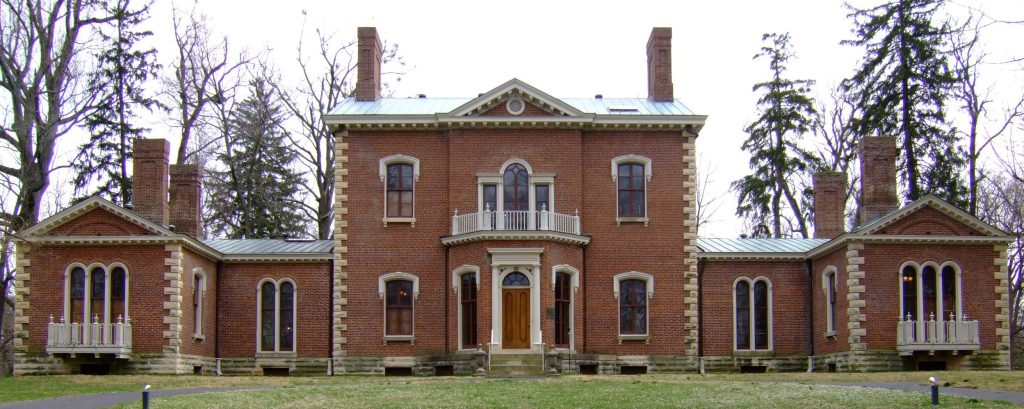
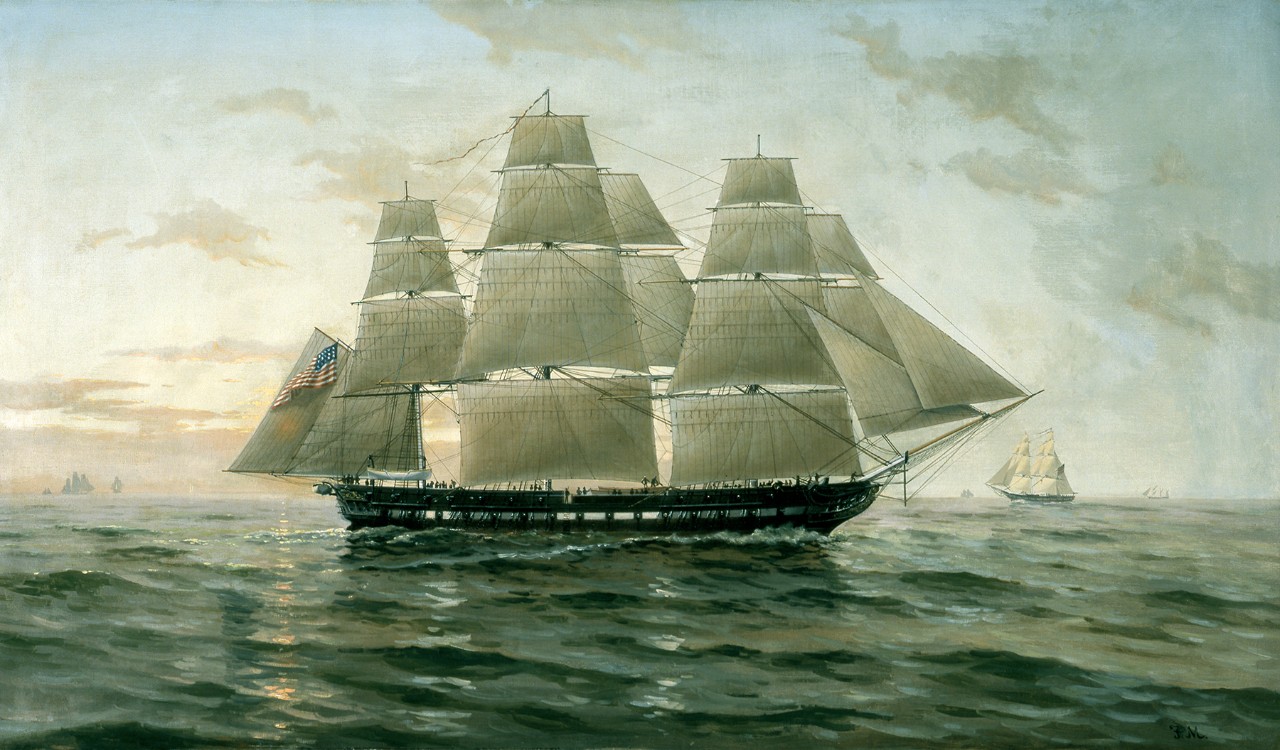
    Although there is no record that Knox responded to Smith (there was, after all, a war on), the USS Kenmore was, in fact, named for the historic estate. The Naval History and Heritage Command ship-naming file on Kenmore I (AP-62) includes an April 13, 1942, memo to the Secretary of the Navy from the chief of the Bureau of Navigation and prepared by Louis Emil Denfeld, then assistant chief of the Bureau of Navigation, recommending that the President Madison be renamed Kenmore, in honor of the “[h]ome of Betty Washington at Fredericksburg, Virginia, sister of George Washington who married Col Fielding Lewis.”[2] The recommendation was approved on April 16 of that year, and the newly renamed vessel was “commissioned at Baltimore, Md., on 5 August 1942, Cmdr. Myron T. Richardson in command.”[3]
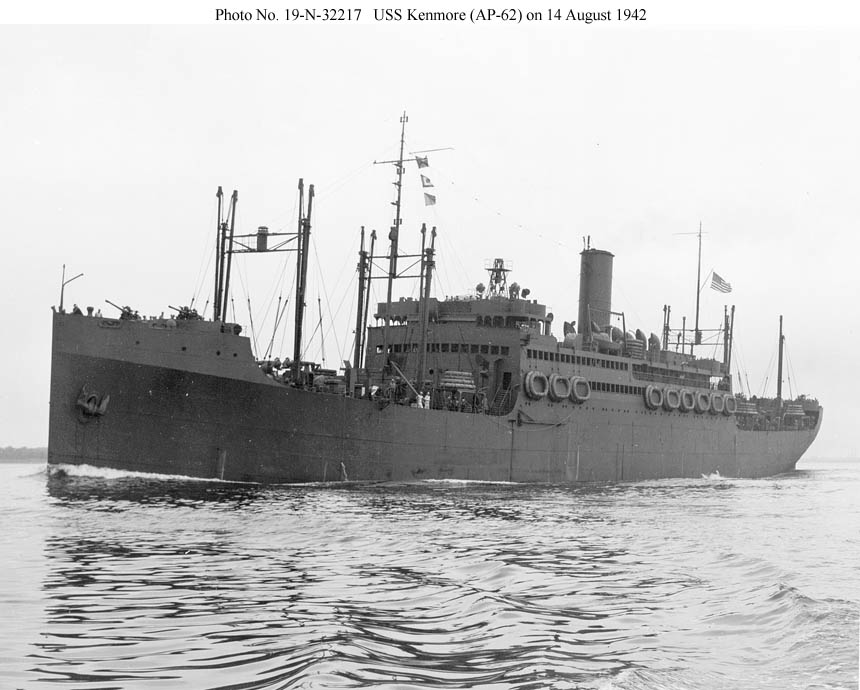
    USS Kenmore (AP-62) on trials in the Chesapeake Bay on August 14, 1942. Shipscribe

    Smith had learned of the ship during a mid-1942 visit to the estate from Lt. Commander William VanC. Brandt (USNR) of the Kenmore, who later wrote to “Miss Annie” to thank her for her hospitality.[4] “All the Officers of the Kenmore,” Brandt told Smith, “were most interested in learning the history and record of the beautiful estate for which our ship is named.”[5] Brandt planned to have framed and displayed in the ship’s wardroom photographs of the property given to him by Smith; later, the vessel’s captain requested a picture of the house for his room.[6] For her part, Smith was “thrilled” to meet Brandt and “to know about your ship,” although she was skeptical enough of the origin of the transport’s new name to write Knox.[7]
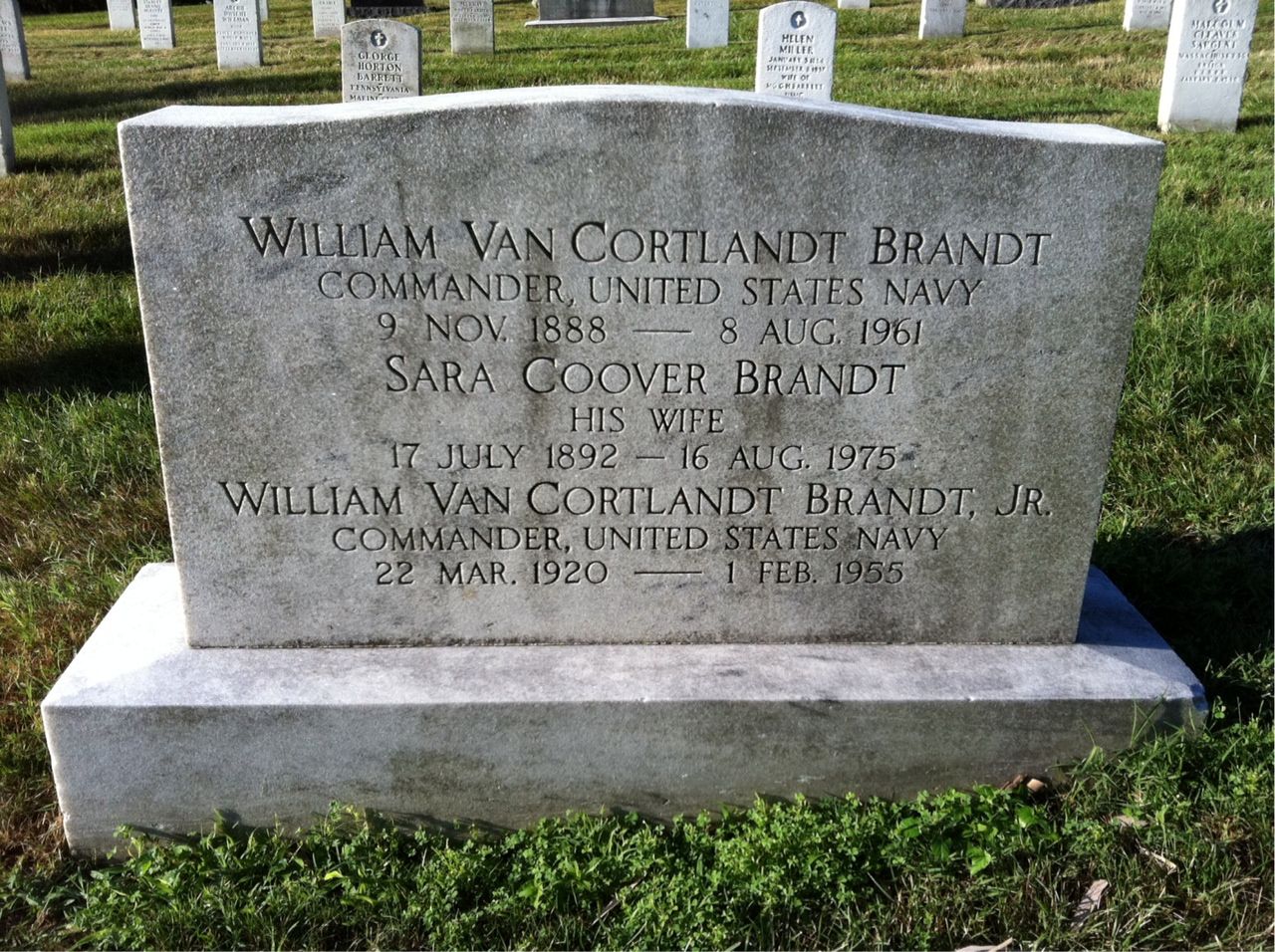
    The Arlington National Cemetery headstone of William VanC. Brandt, from whom Annie Fleming Smith learned that a Navy ship had been named after the historic home she had helped save from development in the 1920s.

    The Kenmore operated primarily in the Pacific until September 1943; she was then converted into a hospital ship and renamed Refuge.[8] The Navy must have liked the name Kenmore, as it was bestowed in October 1943 on another transport, originally called the James H. McClintock.[9] The Kenmore II also served in the Pacific Theater and, after “hostilities ended on 15 August 1945, [began] returning veterans to the U.S.”[10] She was decommissioned on February 1, 1946.[11]

    The Kenmores were not the only vessels named for properties associated with George Washington and his family. The Wakefield (AP-21) borrowed its name from the Westmoreland County birthplace of the first president, today owned by the National Park Service.[12] There have been five Mount Vernons; the first was built in 1859 and chartered by the Navy two years later, before they bought it later that year.[13] The most recent vessel named after Washington’s residence and plantation was a dock landing ship commissioned in 1972 and decommissioned in 2003.[14] The possible birthplace of Mary Ball, George Washington’s mother, lent its name to the Epping Forest, a dock landing ship launched in 1943.[15]

    The monikers of other ships are connected more tenuously to places tied to George Washington and his family. For example, a 1943 submarine chaser was rechristened the Abingdon in 1956.[16] The vessel’s new name came from the town of Abingdon, in Washington County, Virginia (named, yes, for George Washington).[17] According to the county’s official history, “myths claim that [the town] was named for Martha Washington’s ancestral home” in England.[18] While this may be a false etymology, were those who named the ship drawing on the tale when they chose to call the vessel Abingdon? Additionally, the many Arlingtons that have served the Navy over the years have each been named after Arlington County, which draws its appellation from Arlington House, built for George Washington Parke Custis, the step-grandson of his celebrated namesake.[19]

    Arlington Mansion was built by George Washington Parke Custis. Union soldiers posing on the lawn, June 28, 1864.

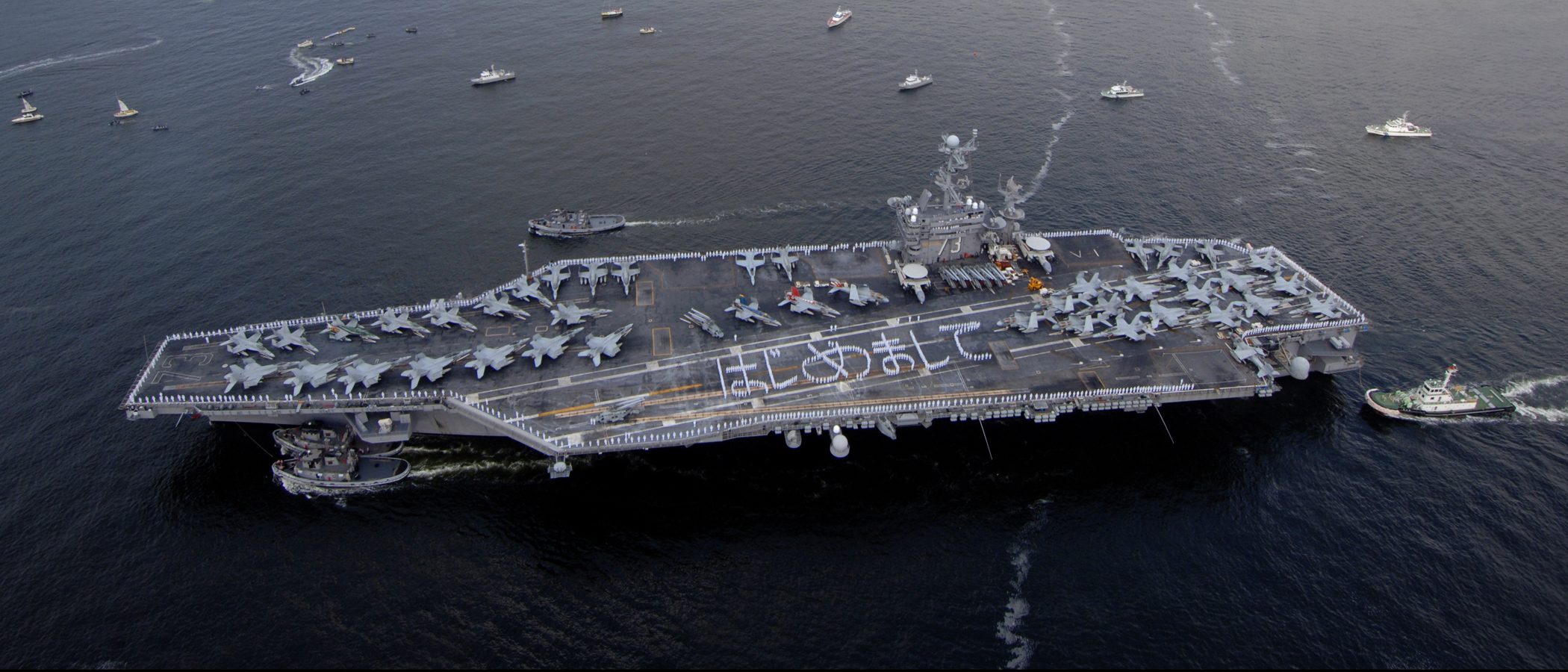
    The Navy’s infatuation with the commander in chief of the Continental Army has, of course, also been expressed by naming ships directly after Washington and his family, not just their properties. While a complete inventory of such vessels is beyond the scope of this post, it is worth noting that four ships have been named the George Washington, including CVN-73, an active nuclear-powered aircraft carrier, while several others have sailed under just his surname.[20] Martha, George’s wife and the nation’s first first lady, has inspired the names of at least two Navy ships: the Lady Washington and the Martha Washington.[21] Civilian shipbuilders have also found inspiration in the Washington family: the SS Mary Ball was a liberty ship active during World War II.[22]
    Who was responsible for naming these ships? As hinted at above, while final authority for ship names was (and still is) the responsibility of the Secretary of the Navy, during World War II, it was the Bureau of Navigation (renamed the Bureau of Personnel on May 21, 1942) that researched and recommend ship names based on the traditional naming conventions associated with each class of vessels.[23]

    Typically, it was dock landing ships, or LSDs, that were named for “cities and places of historical interest of same name, or places of historical interest only.” [24] Epping Forest, Gunston Hall I (named for George Mason’s home), Ashland (for the boyhood home of Henry Clay), Carter Hall (after the Virginia estate), Oak Hill (for the home of President James Monroe), and Shadwell (for the birthplace of Thomas Jefferson) are all examples of LSDs whose names aligned with this convention.[25]

    But the Kenmores, the Mount Vernon IV, and the Wakefield were not LSDs; they were transports, classified AP, and anyone seeking consistency in the Navy’s naming of troop transports during World War II is bound to be disappointed. Some vessels in the AP class were named after celestial bodies, others after Revolutionary War heroes, and others, as we have seen, after historic estates.

    This lack of consistency is not surprising. After all, when Benjamin Stoddert named the Navy’s sixth ship, a frigate, he chose to call it the Chesapeake, despite President George Washington’s agreement with the recommendation that frigates be named after “principles or symbols found in the US Constitution.” Therefore, “the very first naming decision by the very first Secretary of the Navy resulted in the ‘corruption’ of the established naming convention.”[26] This tradition of flexibility regarding ship names has endured, and ship names continue to excite interest (and occasionally strong feelings) from many parties, including those who propose denominations for new vessels. If you are such a person, here’s an idea: how about another Kenmore, or maybe a Ferry Farm?  


    Adam Nubbe

    Manager of School & Youth Programs


    [1] Smith, Annie Fleming to Frank Knox, July 22, 1942. The George Washington Foundation.

    [2] Naval History and Heritage Command, Kenmore I, ship-naming file, April 13, 1942.

    [3] Ibid; Cressman, R. J. (2020, March 31). Kenmore I (AP-62). https://www.history.navy.mil/research/histories/ship-histories/danfs/k/kenmore.html

    [4] Brandt, William VanC. to Annie Fleming Smith, June 30, 1942. The George Washington Foundation.

    [5] Ibid.

    [6] Ibid; Smith, Annie Fleming to William VanC. Brandt, July 10, 1942. The George Washington Foundation.

    [7] Smith, Annie Fleming to William VanC. Brandt, July 10, 1942. The George Washington Foundation.

    [8] Naval History and Heritage Command, Kenmore I, ship-naming file, April 13, 1942.

    [9] Cressman, R. J. (2020, March 31). Kenmore II (AP-162). https://www.history.navy.mil/research/histories/ship-histories/danfs/k/kenmore-ii–ap-162-.html

    [10] Ibid.

    [11] Ibid.

    [12] Cressman, R. J. (2022, April 1). Wakefield (AP-21). https://www.history.navy.mil/research/histories/ship-histories/danfs/w/wakefield.html

    [13] Naval History and Heritage Command. (2015, August 11). Mount Vernon I (Gbt). https://www.history.navy.mil/research/histories/ship-histories/danfs/m/mount-vernon-i.html

    [14] Pike, J. (n.d.). LSD 39 Mount Vernon. https://www.globalsecurity.org/military/agency/navy/lsd-39.htm

    [15] Naval History and Heritage Command. (2015, July 8). Epping Forest. https://www.history.navy.mil/research/histories/ship-histories/danfs/e/epping-forest.html

    [16] Mann, R. A., & Cressman, R. J. (2023, November 27). Abingdon (PC-1237). https://www.history.navy.mil/research/histories/ship-histories/danfs/a/abingdon.html

    [17] Ibid; Hagy, J. W. (2019, June 10). A Brief History of Washington County, Virginia. Washington County, Virginia. https://www.washcova.com/history/

    [18] Ibid.

    [19] Parsons, L., & Cressman, R. J. (2023, December 13). Arlington I (AP-174). https://www.history.navy.mil/research/histories/ship-histories/danfs/a/arlington-i.html; Arlington, Virginia. (n.d.). History of Arlington. https://www.arlingtonva.us/Government/Topics/Welcome-Kit/History-of-Arlington; National Park Service. (2023, January 12). George Washington Parke Custis. https://www.nps.gov/arho/learn/historyculture/george-custis.htm

    [20] Naval History and Heritage Command. (2020, May 5). Washington VIII (BB-56). https://www.history.navy.mil/research/histories/ship-histories/danfs/w/washington-viii.html; US Navy. (n.d.). USS George Washington (CVN 73). https://www.airpac.navy.mil/Organization/USS-George-Washington-CVN-73/

    [21]  Naval History and Heritage Command. (2016, February 9). Martha Washington. https://www.history.navy.mil/research/histories/ship-histories/danfs/m/martha-washington.html; Naval History and Heritage Command. (2015, July 28). Lady Washington. https://www.history.navy.mil/research/histories/ship-histories/danfs/l/lady-washington.html

    [22] Jobrack, J. (2020, September 10). True or False? Test Your Knowledge of Mary Washington. https://livesandlegaciesblog.org/2020/09/10/true-or-false-test-your-knowledge-of-mary-washington/.

    [23] Calkins, W. F. (1958, July). Down to the sea in ships’–names. U.S. Naval Institute. https://www.usni.org/magazines/proceedings/1958/july/down-sea-ships-names; Naval History and Heritage Command. (2020, June 29). Denfeld, Louis Emil. Louis Emil Denfeld. https://www.history.navy.mil/research/library/research-guides/modern-biographical-files-ndl/modern-bios-d/denfeld-louis-emil.html

    [24] Department of the Navy, A Report on Policies and Practices of the U.S. Navy for Naming the Vessels of the Navy (2012, November), 63. https://apps.dtic.mil/sti/tr/pdf/ADA569699.pdf

    [25] DANFS – Naval History and Heritage Command. Dictionary of American Naval Fighting Ships — Index. (n.d.). https://www.history.navy.mil/research/histories/ship-histories/danfs.html

    [26] Department of the Navy, A Report on Policies and Practices of the U.S. Navy for Naming the Vessels of the Navy (2012, November), 7. https://apps.dtic.mil/sti/tr/pdf/ADA569699.pdf


  • From the Vaults: Rarely Seen Documents

    Some of the most delicate objects in our collection are our archives. Paper and other document materials like vellum and parchment are very sensitive materials that can be irreversibly damaged simply by light.  This makes it very difficult to display or put on exhibit for extended periods despite our comprehensive policies for conserving and preserving documents; exhibition has always been unfeasible.  To remedy this, we have been working on getting archival-safe, high-quality images of our important documents online for everyone to access.  So, while you might not see the documents in person, you can still explore, read, and learn about these important papers while we preserve them for future generations.     
    Until we launch our online archives, I wanted to give everyone a sneak peek at a few of our incredible pieces.

    One of our oldest documents in the collection is a Land Grant signed by William Gooch on September 28, 1730, written on vellum.  William Gooch was a colonial administrator who served as governor of Virginia from 1727 to 1749.  The grant is not in the best condition, but it reads that it grants 400 acres in Spotsylvania County to Paul Plunkepee.  This grant is officially recorded as Land Office Patents, No. 14, 1728-1732, page 40, and is available at the Library of Virginia.

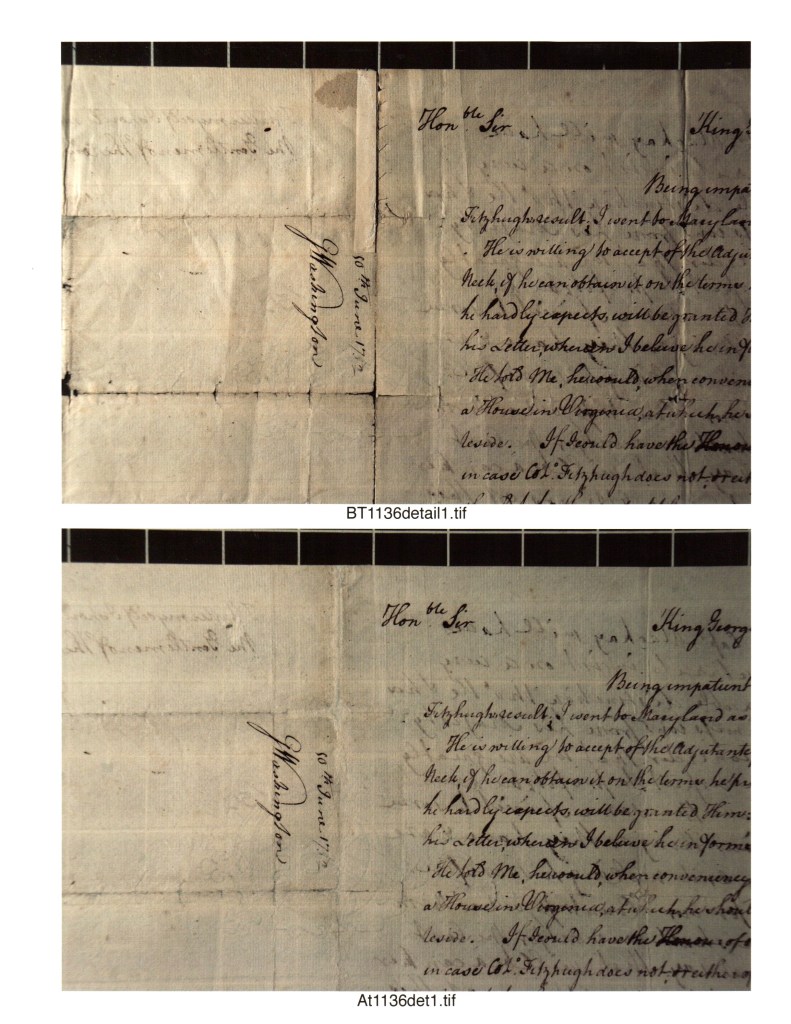
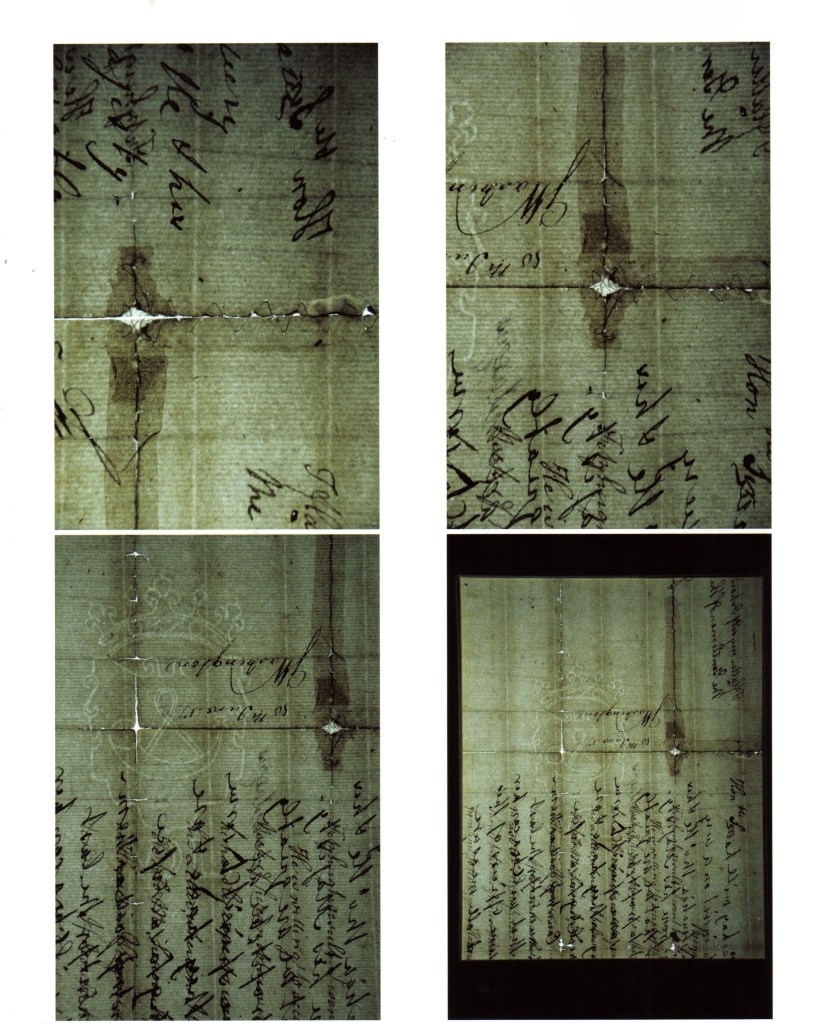
    One of our most unique documents is a letter from George Washington to Lieutenant Governor Robert Dinwiddie, written on June 10, 1752, when he was twenty.  Robert Dinwiddie served as Lieutenant Governor of Virginia from 1751 to 1758.  In the letter, George requests his first military appointment to the open adjutancy of the Northern Neck or other district.  George’s half-brother Lawrence had been appointed Adjutant General of the colony in 1743.  Due to his illness and eventual death, the adjutant was to be divided into smaller districts (i.e., Northern Neck).

    Dinwiddie declined the appointment but assigned George to an envoy position that winter to confront the French, who had recently built a fort on what Dinwiddie considered British land.  Additionally, George met with the Iroquois Confederacy to make peace and obtain intelligence about the French.  

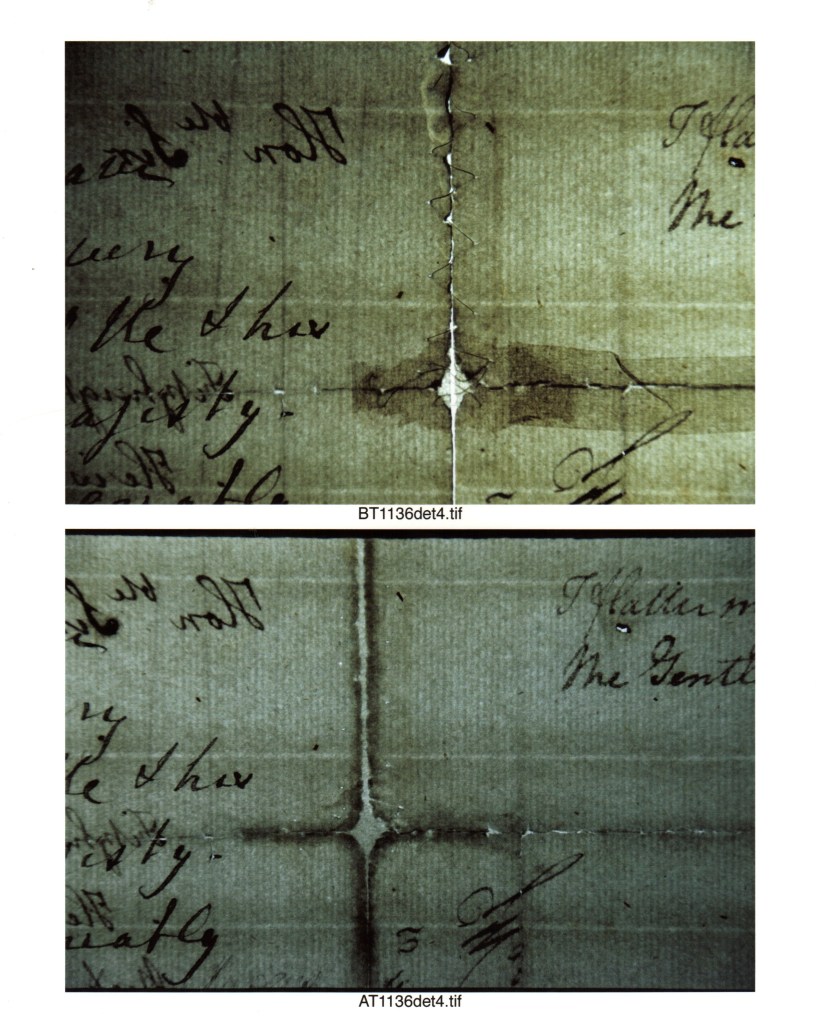
    This amazing letter pinpoints the beginning of George Washington’s illustrious military career, which would eventually culminate in him becoming the first President of the new United States of America.  The letter is in great condition after meticulous conservation work, which included repairs with Japanese tissue called tengucho and wheat starch paste called jin shofu.  It was then cleaned and flattened, and the iron gall ink stabilized.

    A transcript of the letter can be found on the National Archives website at Founders Online.

    Next are two letters between George Washington and Irish-born publisher Matthew Carey.  Matthew Carey moved to America in 1784 and settled in Philadelphia, where he established a publishing business and bookshop with $400 given to him by the Marquis de Lafayette.  Carey’s first publication was The Pennsylvania Herald in 1785, followed by two of the first successful American magazines, The Columbian Magazine and The American Magazine in 1786 and 1787.

    In George’s first letter to Carey in 1785, he requests a subscription to Carey’s newspaper but asks him to send the newspaper disguised as an ordinary letter because George has been having problems with the post office delivering his newspapers .  George thinks his papers may not have been delivered because “persons who wishing to read News Papers without being of the expence [sic] of paying for them, make free with those which are addressed to others.”

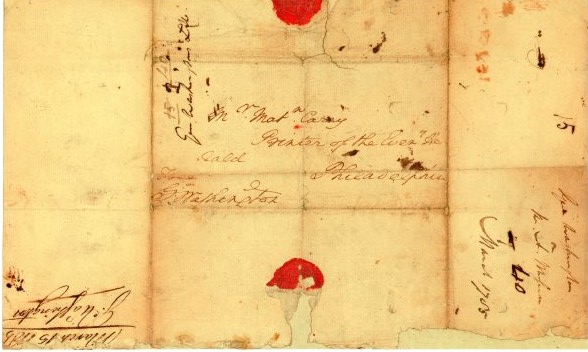
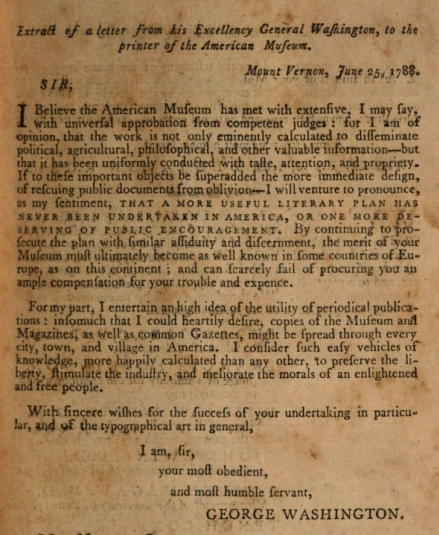
    The second letter between George and Matthew is dated June 25, 1788.  The year before, Carey launched “The American Museum” magazine.  It was a literary museum that reprinted significant historical documents on American history and original essays on politics, commerce, and culture.  The magazine got a positive response, but Carey was finding it expensive to distribute the magazine across the country, so he asked George, one of his first subscribers, to write an endorsement for the magazine that would help attract new subscribers.[2] 

    Washington responded immediately, seizing the opportunity offered by Carey to express his belief that the free dissemination of information and ideas was vital to preserving American liberty.  ‘I could heartily desire,’ Washington wrote, that ‘copies of the Museum and Magazines, as well as common Gazettes, might be spread through every city, town & village in America – I consider such easy vehicles of knowledge, more happily calculated that any other, to preserve the liberty, stimulate the industry and meliorate the morals of an enlightened and free People.”

    Carey published Washington’s endorsement in the next issue of his magazine—his marks for the typesetter can be seen in the original Washington letter.  The result was a flood of new subscriptions that allowed Carey to continue publishing The American Museum for another four years.

    Transcripts of the letters can be found on the National Archives website at Founders Online.

    These are just a few of the amazing documents in our collection, which we hope to bring you soon so that you can explore them yourself.  Check back often, and we will keep you updated on our progress with our digitization project.

    Heather Baldus

    Collections Manager


    Bibliography

    Edd Applegate (August 17, 2012). The rise of Advertising in the United States: A History of Innovation to 1960. Scarecrow Press. p.25.


  • “To Bigotry, No Sanction…:” Jewish Identity in Early America and Relations to Washington

    Figure 1: Washington’s words to the Newport congregation (George Washington Institute for Religious Freedom)

    The quote, “To Bigotry, No Sanction, To Persecution No Assistance” appears in a 1790 letter written by George Washington to the Hebrew Congregation in Newport, RI (Fig 1). Of all the words Washington committed to paper, these rank amongst the most important, yet he merely adapted them from a letter sent by the Congregation itself.

                By 1790, Jewish communities in the newly formed United States desired to confirm their place in society and the freedoms promised under the founding documents. Washington’s visit to Newport, RI, that year allowed direct access to a government representative for a community seeking reassurance. Their letter moved Washington, yet he was no stranger to the lives and likely concerns of the wider Jewish American community.

    The Jewish Diaspora and Settlement in the Americas

                For those unfamiliar with the Jewish diaspora (Def: the dispersion of a people from their original homeland, in this case, Israel, through forced or voluntary migration), the current Jewish population of the United States largely consists of Ashkenazi Jews whose ancestors settled in central and eastern Europe before immigrating to the States. While some Ashkenazim moved to the Americas during the colonial period, the majority emigrated during the late 1800s and early 1900s. Nonetheless, Jews have lived in the Americas since the 1500s, they simply belonged to another sect of the diaspora.

                Sephardic Jews descend from those who settled on the Iberian Peninsula. Infamously pushed out of the region or forced to convert during the Inquisition, many initially sought refuge in Portugal (briefly), North Africa, the Ottoman Empire, and the Netherlands. As restrictions in some of these areas increased, numerous families forged proof of Christian ancestry to emigrate to Brazil and the Spanish colonies before seeking more religious freedom in British territories.

                Here, those who had seemingly converted, but continued to practice as Crypto-Jews, shed their Catholic personas and openly embraced their ethnoreligious identity. Aaron Lopez (1731-1782), called the “Merchant Prince of Newport,” serves as one example (Fig 2). Born Duarte Lopez in Portugal, he moved his wife Anna and daughter Catherine to Newport, RI, in 1752, where they reclaimed their Jewish identities under the names Aaron, Abigail, and Sarah.

    Figure 2: Aaron Lopez (American Jewish Historical Society)

                Several organized Jewish communities ultimately emerged in New York City, Newport, Philadelphia, Charleston, and Savannah. These areas proved ideal due to their nature as trade centers and rules, allowing more religious, political, and business freedom for non-Christians. Still, Jews lived and worked throughout the thirteen colonies as active members of the wider community, and many crossed paths with George Washington and those he knew.

    Colonial Virginia

    Jewish history in Virginian territory began when Joachim Gaunse, a Bohemian metallurgist, joined the Roanoke Colony in 1585. However, he escaped the fate of the Lost Colony by returning to England in 1586. A later instance of Jewish settlement occurred when Elias Legarde/o arrived in the Jamestown area in 1621. After that, small, scattered groups emerged throughout the colony, and the first Jews in the greater Fredericksburg area arrived by 1652. Nonetheless, they could not hold citizenship or public office as these statuses required oaths invoking the Christian faith.

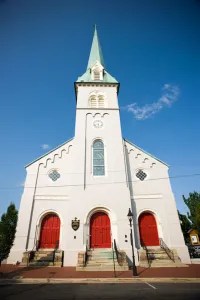
    Jewish presence in Fredericksburg and other cities meant that Washington and his associates lived and worked alongside Jewish community members all their lives. In staying active in the community, many Jewish men, including the majority mentioned in this blog, joined the Masons. Specifically, (H)ezekiel Levy appears in Fredericksburg Lodge No. 4’s records as the sole Jewish member in 1776. As Washington maintained a life membership with his mother lodge from 1752 onwards, the two men potentially knew each other (Fig. 3).

    Figure 3: Masonic Lodge #4 – founded 1753, built 1816

    Other Jewish residents of Fredericksburg and businessmen likely crossed paths with Fielding Lewis. The Gratz brothers of Philadelphia, Barnard, and Michael, built a business network that spread across the colonies (Fig 4). They supplied Virginian troops during the French & Indian War and set up trade in Fredericksburg by 1776, where their associate Joseph Myers handled business affairs. Henry Mitchell, a one-time friend of the Lewises, counted amongst those who did business with the Gratzes and Myers. Like their gentile counterparts, however, Jewish merchants engaged in all aspects of the economy. This included the Atlantic and domestic slave trade, from which they profited, advanced, and purchased individuals.

    As Washington’s career took off, he came into closer contact with Jewish Virginians. Jacob Myer and Michael Franks served alongside Washington in the build-up to the French & Indian War, and the latter fought at the Battle of Fort Necessity (July 3, 1754). In 1769, Washington sought the services of Williamsburg’s Dr. John de Sequeyra for his stepdaughter Patsy Custis’ epilepsy (Fig. 5). Sequeyra, a well-respected physician, arrived in Virginia in 1745, wrote about diseases found in the region and served as the first visiting physician at, and later director of, Williamsburg’s Public Hospital. While Thomas Jefferson often receives credit for popularizing tomatoes as edible, Jefferson himself credited Sequeyra.

    Figure 5: Dr. John de Sequeyra (Winterthur Museum)

    American Revolution

                Like the colonists typically pictured during the war, the American Revolution brought turmoil to Jewish communities. The majority supported the cause of independence, with leading merchants voicing dissent from the 1765 imposition of the Stamp Act. Others remained loyal to the crown as they knew where they stood in society. Regardless of which side they chose, Jews aided their cause as soldiers, merchants, and suppliers. Still, the war brought division, death, and poverty to many families.         

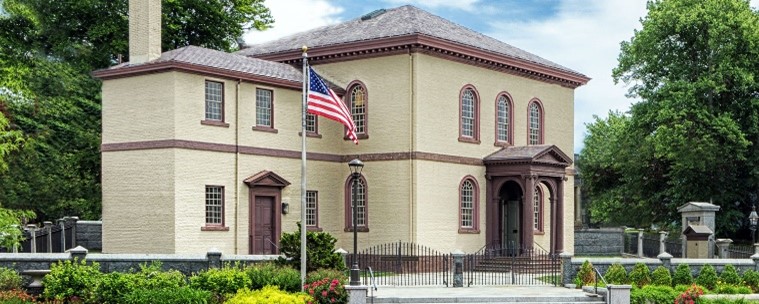
    The Touro-Hays family illustrates one such division. Issac Touro, head of the Newport Congregation, remained loyal to the British while his brother-in-law, merchant-banker Moses Michael Hays, sided with the Patriots (Fig 6). Despite holding opposing views, the two men used their positions to take a stand for the larger Jewish community. In 1775, Hays refused to sign a declaration of loyalty to the patriot cause until the authors removed the phrase “upon the true faith of a Christian.” When the British occupied Newport the following year, Hays, along with most of the congregation, fled while Issac remained behind. Using his connections, Touro ensured that the British left Newport’s synagogue largely untouched. Today, it stands as the oldest surviving synagogue in North America and answers to the name “Touro Synagogue” (Fig. 7). When it became clear that the British would lose, however, Touro moved his family to the Caribbean. The two sides of the family would only reunite after 1783, when Issac died, and his widow Reyna returned from Jamaica with their children to live with her brother Michael.

    Figure 7: Touro Synagogue (Touro Synagogue)

                In all, approximately a third of the Jewish population served during the American Revolution from Bunker Hill to Yorktown. This included the lowest positions up to the rank of Lieutenant-Colonel, which Solomon Bush of Philadelphia held. This period additionally saw public office open to Jews, with numerous individuals serving on committees. The first known Jewish fatality of the war occurred on August 1, 1776, in South Carolina when Francis Salvador fell to the British-allied Cherokee during a skirmish. Two years prior, the colony elected him a delegate to the Provincial Congress; the highest political position held by a Jew at the time.  

                Many who served as merchants and financiers devoted their assets, like Fielding Lewis, to the cause. As ship owners, many outfitted privateers and helped run blockades. Haym Salomon, a Polish-born Jew from Philadelphia, served as the Continental Congress’ main financier, an agent to the French consul, paymaster for the French forces, and worked closely with Superintendent of Finance, Robert Morris (Fig. 8). Salomon committed his entire fortune to the war effort, and his most significant contribution came when he raised the funds for the Yorktown campaign at the personal request of Washington. Like many individuals, he never received reimbursement from the government and ultimately died penniless.

    Figure 8: Haym Salomon (U.S. National Archives and Records Administration)

    Early America

                In the wake of independence, the United States faced uncharted territory. For minority groups, these uncertainties proved even more concerning. The arguments for revolution and documents written to establish the new nation spoke to religious freedom and social equality, but how far that stretched remained debatable.

                In 1786, Thomas Jefferson took steps to ensure these freedoms by writing the Virginia Statute for Establishing Religious Freedom. Passed into law, the bill affirmed the right to choose one’s faith along with the separation of church and state in Virginia. Several years later, in 1789, Kahal Kadosh Beth Shalome became Virginia’s first established Jewish congregation. Jefferson’s stance on religious freedom would ultimately inspire Commodore Uriah Levy to purchase and preserve Monticello.

                At this time, we return to where we started. In 1790, Washington made a trip to Rhode Island to acknowledge their ratification of the Constitution. On August 18, while Washington met officials and residents of Newport, Moses Seixas of the Jewish congregation read aloud a letter expressing gratitude to the President and government while expressing hope for tolerance and equality (Fig. 9). Its key passage reads:

    “…erected by the Majesty of the People – a Government, which to bigotry gives no sanction, to persecution no assistance – but generously affording to all Liberty of conscience, and immunities of Citizenship: deeming every one, of whatever Nation, tongue, or language equal parts of the great governmental Machine…”

    Figure 9: Letter from the Hebrew Congregation of Newport (Library of Congress)

    In writing the letter, the congregation wished to express their hopes for the future and receive assurance from their head of state that this future existed. On August 21, Washington replied to the letter thanking them for the “cordial welcome [he] experienced…from all…citizens” while reflecting on the difficulties of the past and how the future promised security. Then, using the congregation’s own words, he wrote that:

    “It is now no more that toleration is spoken of as if it were the indulgence of one class of people…for, happily, the Government of the United States…gives to bigotry no sanction, to persecution no assistance…”

     Washington closed his letter by wishing that “every one shall sit in safety under his own vine and fig tree and there shall be none to make him afraid.” The following year saw the ratification of the Bill of Rights, which further solidified religious freedom and equality.

    Despite efforts made during the founding era and successive periods, antisemitism has never gone away. Now, more than ever, we must work to uphold that the wishes, freedom, and security of those who served the United States since its founding.


    Emma Schlauder

    Research Archaeologist


    Bibliography


    Encyclopedia Virginia 2024 Virginia Statute for Establishing Religious Freedom (1786). https://encyclopediavirginia.org/entries/virginia-statute-for-establishing-religious-freedom-1786/#:~:text=As%20part%20of%20the%20revisal,physics%20or%20geometry.%E2%80%9D%20Jefferson%20was. Accessed 10 December 2024.
    Fort Necessity: National Battlefield Park 2015 Roster of Virginia Regiment. https://www.nps.gov/fone/learn/historyculture/roster.htm. Accessed 12 December 2024.
    Goldring/Woldenberg Institute of Southern Jewish Life N.D. Encyclopedia of Southern Jewish Communities – Virginia. https://www.isjl.org/virginia-encyclopedia.html. Accessed 9 December 2024.
    N.D. Encyclopedia of Southern Jewish Communities – Fredericksburg, Virginia. https://www.isjl.org/virginia-fredericksburg-encyclopedia.html#:~:text=Although%20there%20were%20Jews%20living,1850s%20and%20opened%20mercantile%20stores. Accessed 9 December 2024.
    Immigrant Entrepreneurship: German-American Business Biographies, 1720 to the Present 2018 Michael Gratz (1739-1811). https://www.immigrantentrepreneurship.org/entries/michael-gratz/. Accessed 11 December 2024.
    Jewish Virtual Library N.D. Virtual Jewish World: Virginia, United States. https://www.jewishvirtuallibrary.org/virginia-jewish-history. Accessed 9 December 2024.
    John L. Loeb, Jr.: Database of Early American Jewish Portraits N.D. Barnard Gratz. https://loebjewishportraits.com/biography/barnard-gratz/. Accessed 11 December 2024.
    N.D. Michael Gratz. https://loebjewishportraits.com/biography/michael-gratz/. Accessed 11 December 2024.
    N.D. Aaron Lopez. https://loebjewishportraits.com/biography/aaron-lopez/. Accessed 11 December 2024.
    My Jewish Learning N.D. The Revolutionary War and the Jews. https://www.myjewishlearning.com/article/the-revolutionary-war-and-the-jews/. Accessed 12 December 2024.
    National Jewish Outreach Program 2016 Revolutionary Doctors. https://njop.org/revolutionary-doctors/. Accessed 12 December 2024.
    The American Council for Judaism 1999 An Exploration of Four Hundred Years of Jewish History in Virginia. http://www.acjna.org/acjna/articles_detail.aspx?id=367>. Accessed 9 December 2024.
    Touro Synagogue: National Historic Site N.D. Jews in Early America. https://tourosynagogue.org/history/jews-in-early-america/#early-jews-american-history. Accessed 9 December 2024.
    N.D. George Washington Letter, 1790. https://tourosynagogue.org/history/george-washington-letter/. Accessed 10 December 2024.

  • “The Spirit of ’76”: Lafayette’s Visits Fredericksburg on His American Tour

    In 1824, the United States was approaching its national jubilee—50 years of independence. President James Monroe, looking to create a wave of patriotism and celebration, invited the last surviving General of the American Revolutionary War, an American hero and icon, to take a grand tour of the country revitalizing the “spirit of 1776.” That American hero was…a French aristocrat with a painfully long name of Marie-Joseph Paul Yves Roch Gilbert du Motier de La Fayette, the Marquis de Lafayette.

    1824 portrait of Lafayette by Ary Scheffer is currently in the U.S. House of Representatives

    I won’t go into General Lafayette’s exploits, heroism, and leadership during his time in the Continental Army, but the young man was impressive and quickly became an adopted countryman.

    Lafayette being heroic at the Battle of Brandywine, artist Charles Henry Jeens

    However, we will talk about his American tour, particularly his stop in Fredericksburg.

    Lafayette arrived in New York on August 15, 1824, after setting sail on a merchant packet Cadmus from Le Havre with much disapproval from Louis XVIII, the King of France.  But royal condemnation from Louis XVI (Louis XVIII’s elder brother) hadn’t stopped him from setting sail for America in 1777, and it didn’t stop him in 1824.

    Lafayette arrived in Fredericksburg on the evening of November 20th. He was first received at the parade grounds by two companies of Riflemen, the Washington Guards, and the whole Marine Band from Washington. Then they all commenced in a long column toward town, gaining excited townspeople on horses as they continued down Hanover Street toward Caroline.    (Merchant, 1824) (Levasseur, 1829)

    Cover page of the book by Rufus B. Merchant documenting Lafayette visit, 1825

    The procession made it to the Town Hall, which was festooned with evergreens and flowers. There, it was met by a battalion of little boys called Lafayette Cadets, dressed in sharp white uniforms with red trim. After a quick welcome speech from the mayor, the general was led into the Hall, where he was greeted by a group of garlanded young girls singing his praises. 

    Fredericksburg’s Town Hall, 1814-1816

    The general was then whisked off to his accommodations provided by Mr. James Ross to enjoy refreshments and a “handsome” dinner. At nine o’clock, Lafayette, the Mayor, and Colonel Mercer were taken to the Farmer’s Hotel (west corner of Caroline and Hanover Streets) to partake in a grand welcome ball for a few hours until he retired, presumably exhausted from the day’s activities. (Merchant, 1824) (Crookshanks, 2018)

    On Sunday, the general, his son, and Mr. La Vasseur visited the Freemasons at the Fredericksburg Lodge, No. 4. In addition to observing the solemn and profound ceremonies, Lafayette was elected an honorary member in the Old Lodge Room.  (Masonic Lodge No. 4, 2024)

    The assemblage of Masonic Brethren, civil authorities, military officers, Lafayette, and company was escorted to St. George’s Episcopal Church to enjoy an excellent discourse delivered by the Reverend Edward C. McGuire, also a Mason. 

    The general then spent the evening in the company of Washington relatives at Captain Robert Lewis’s, then retired to his lodging early at 9 o’clock.  As Monday morning arrived, Lafayette was paraded to the town hall in a chariotee drawn by four white horses, where he was greeted by a crowd of ladies who occupied his time until he was led away for a sumptuous dinner at Mr. Gray’s Tavern.  After a few hours of delicious food, songs, and speeches, the general was loaded into a carriage for the final time as he continued his journey to Washington. (Dovetail Cultural Resource Group, 2006)  

    Foundation of Mr. Gray’s tavern (Indian Queen Tavern) located on the current Marriott Hotel site.

    Lafayette’s time in Fredericksburg might have been short this trip, but it gave the city a last chance to thank and honor a valued friend who had been a champion for America and helped fight for this country’s freedom.

    The city will again celebrate General Lafayette’s visit with a Commemoration Weekend on November 23rd and 24th. The weekend will open with a recreation of Lafayette’s arrival at the Old Town Hall, including period music and costumed participants. A reception line with the General will follow it. There will also be a Lafayette Ball on Saturday night, where participants can dress in their finest Regency garb and dance the night away (until 9 p.m.) with the General and President Monroe. 

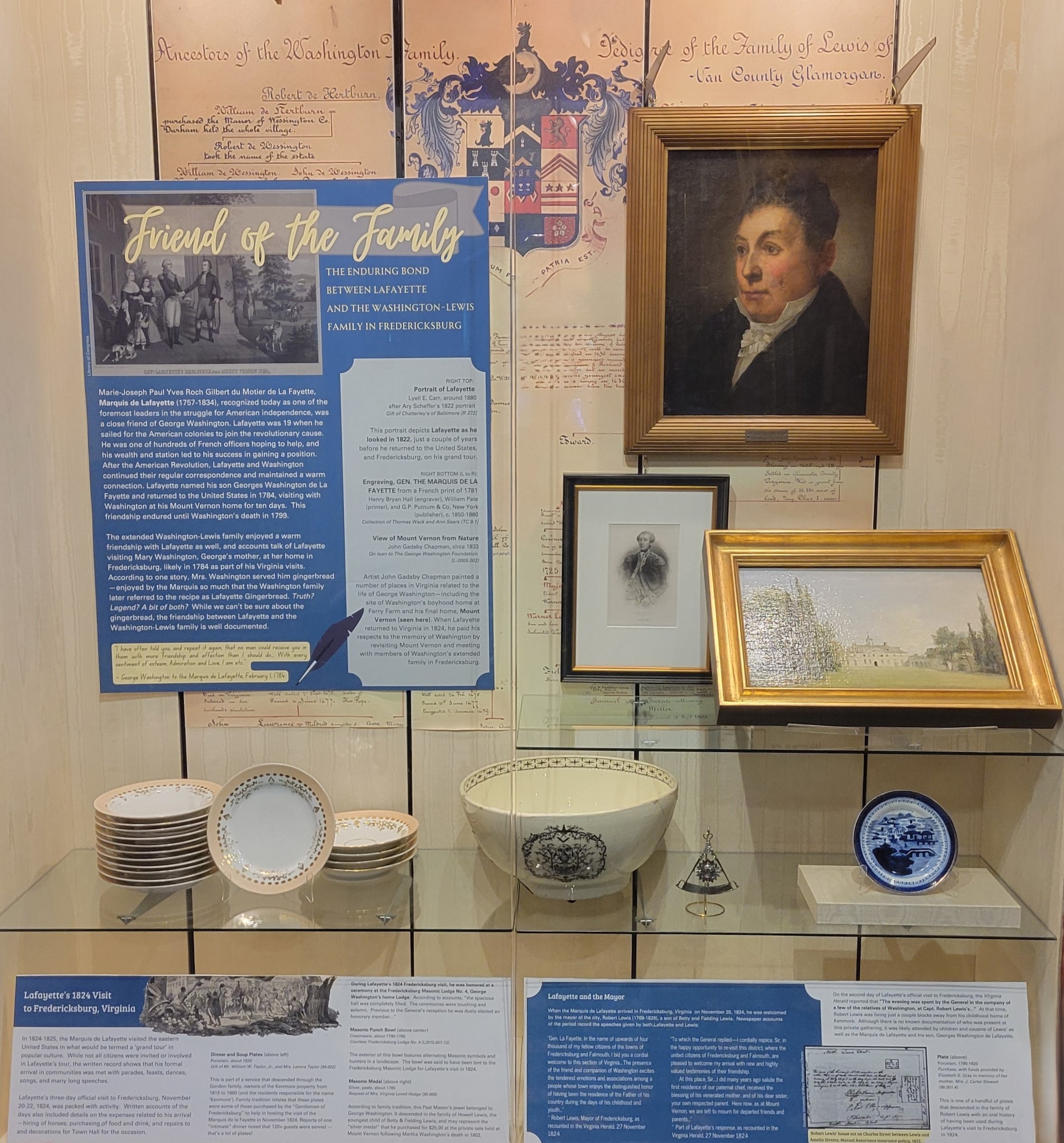
    Additional Saturday events include tours of the historic Masonic Lodge No. 4.  Learn about the history of George Washington’s Mother Lodge and the fraternity’s importance to the general and see rare artifacts like the original punch bowl used during Lafayette’s visit.  For more information and tour hours, visit the Masonic Lodge No. 4 website

    Sunday will start with recreating Lafayette’s Masonic welcome, with historical speeches and a unique ceremony. There will be additional Lodge tours from 1 to 4 p.m. At noon, a historic church service at St. George’s Episcopal Church will be reminiscent of that performed by Rev Edward McGuire. Lastly, back at the Masonic Lodge from 2 to 3 p.m., historian Chris Ruli will give a lecture discussing his forthcoming book, “Brother Lafayette,” which examines the Marquis’ connection to the ancient fraternity.

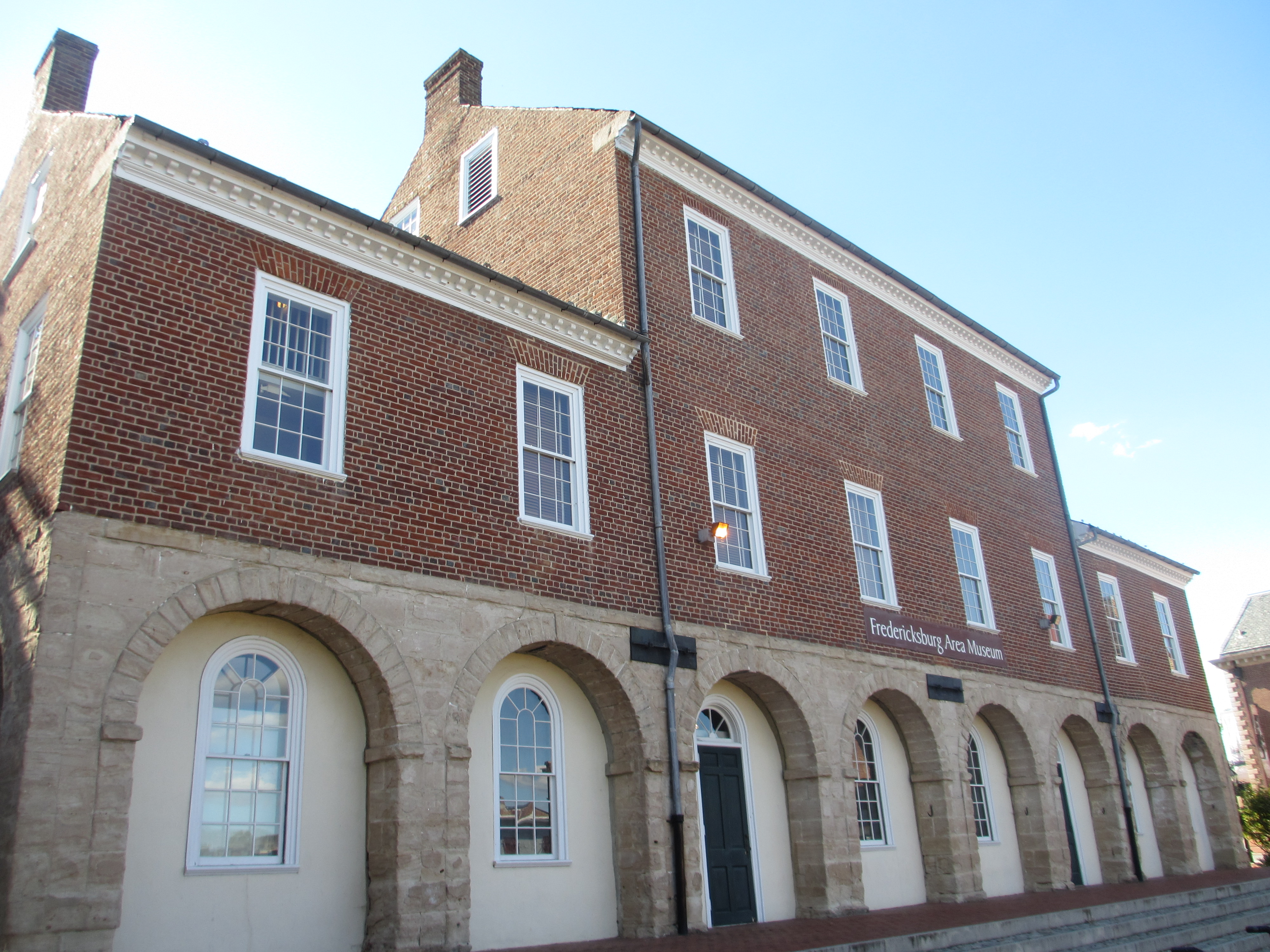
    Finally, if you have some extra time on the weekend, stop by the Fredericksburg Area Museum and see their exhibit “Lafayette’s World: Revolutionary Ideals and the Limits of Freedom,” which explores Lafayette’s ideas on freedom, democracy, and abolitionism. 

    If you can’t attend the weekend events but still want to see exclusive artifacts related to Lafayette’s visit, including the extraordinary punch bowl of Masonic Lodge No. 4, stop by the Kenmore Visitor’s Center, check out our new exhibit, take a tour of the house and learn all about Fielding and Betty Lewis. 

    Friend of the Family – Lafayette’s Visit to America, Kenmore Visitor’s Center

    Heather Baldus

    Collections Manager

  • Happy Birthday, Mr. President!

    Not every president gets their birthday celebrated every year with a federal holiday, but George Washington, a favorite of his countrymen and the first president, has had that privilege since 1879. But one year was a little different from the others: 1932.  It marked Washington’s 200th birthday, and the United States was going to make a big deal about it. 

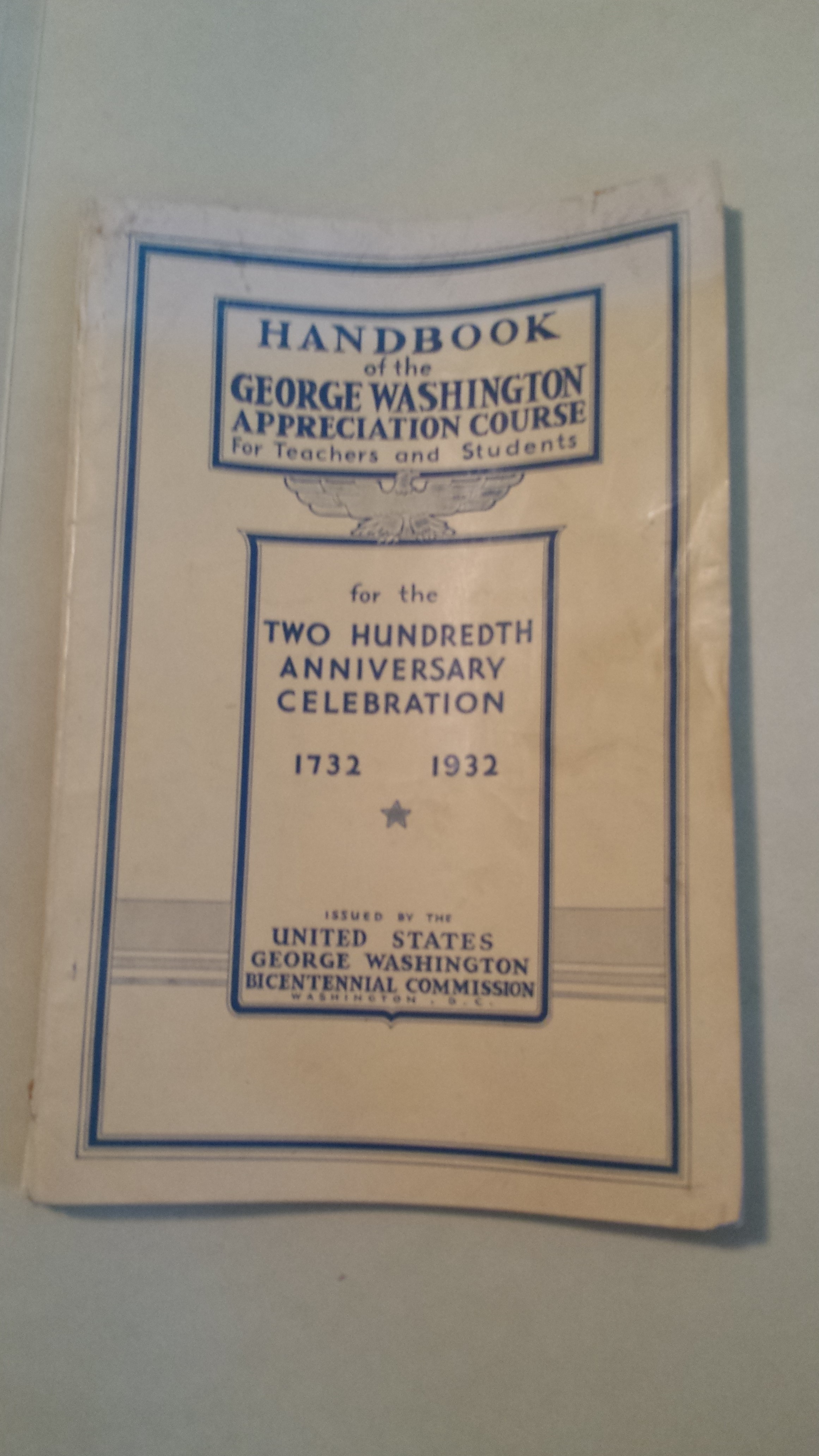
    In honor of the upcoming birthday, we decided to look at some of the memorabilia in our collection created to celebrate and educate the American public.   

    George Washington Bicentennial Commission

    The planning for this celebration started early when Calvin Coolidge signed a joint resolution that established a commission to oversee the bicentennial ceremonies on Dec 2, 1924.  The resolution was to mark the occasion of the birthday across the country and increase the understanding of Washington. (George Washington Bicentennial Commission, 1932)  Under the direction of Representative Sol Bloom, an experienced entertainment promoter who got his start at the 1893 World’s Colombian Exposition, the committee initiated thousands of events, released educational resources for students, and had plays written in honor of Washington. (Larson, 2004)

    Handbook of the George Washington Appreciation Course for Teachers and Students
    “Washington Takes the Risk”, including George Washington, Fielding Lewis, and Betty Washington Lewis

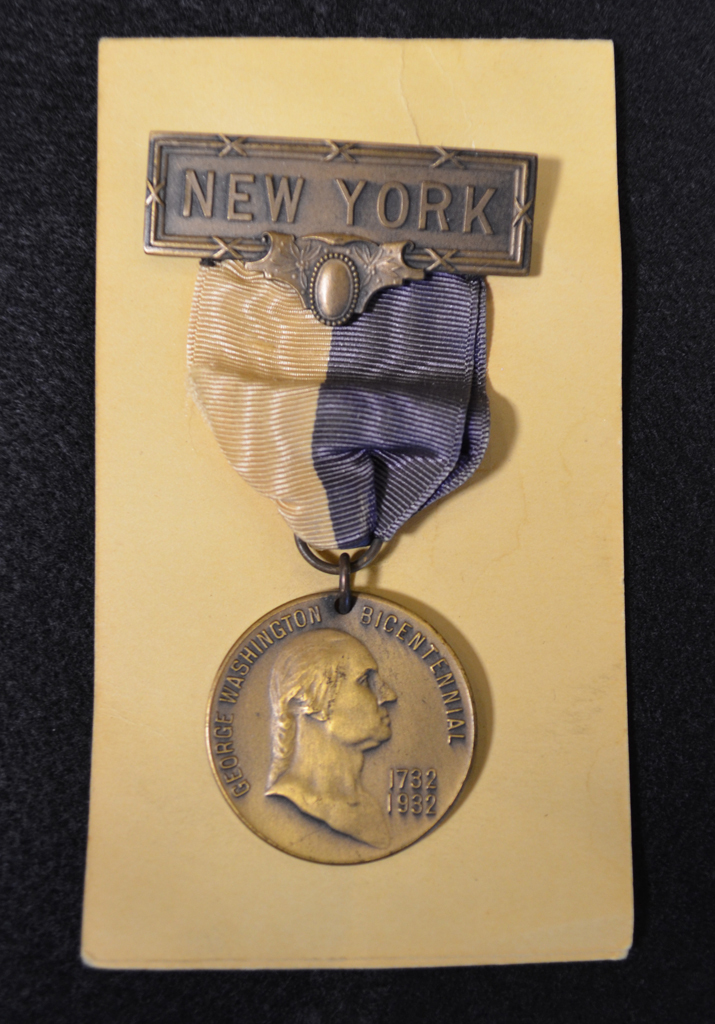
    The commission additionally worked with over 250,000 local commissions to organize special events at not only a federal level but a state and city too. (The Washington Post, 1932) Special volunteers and prominent local people were often given commemorative metals as thanks for their service.  We have one from the state of New York.  It is a circular bronze medal attached to a blue and white ribbon.  The back of the medal states, “1779 / Planned Sullivan / Clinton Campaign 1782 / Newburgh Temple Hill / Refused a crown / 1789 April 30th / New York City / Inaugurated first / President of the / United States.” 

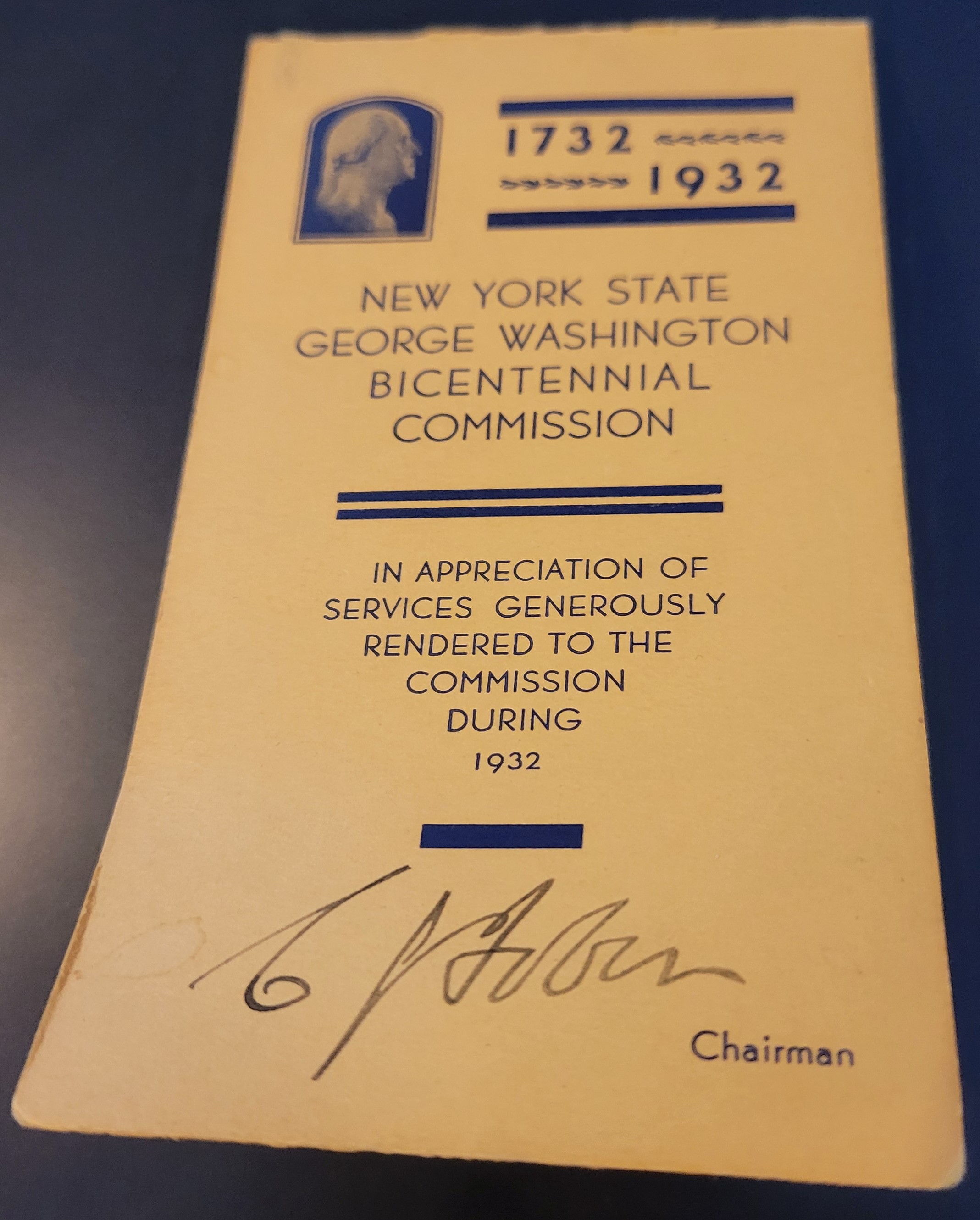
    The medal is encased in a paper envelope with “New York State / George Washington Bicentennial Commission / In appreciation of / Services generously / Rendered to the / Commission / During / 1932” written on the front along with the signature Charles Tobin, chairman representing New York state on the Bicentennial Commission. 

    Historical Context Help: The Sullivan-Clinton campaign was ordered by George Washington in response to the 1778 attacks by the Iroquois and British in central New York.  Newburgh Temple Hill was a Continental Army encampment near Washington’s headquarters, where he gave a speech to quell the mass of soldiers who were getting ready to mutiny and attack Congress to get their promised back pay and pensions. Finally, in 1789, George was sworn in as President at Federal Hall in New York City.

    Calling All Philatelists

    Washington Post, Jan 2, 1932

    The U.S. Post Office became involved in the commemoration of George with the release of a dozen stamps celebrating his life.   The stamps were incredibly popular, and when they were first released for sale in D.C., there was a crowd of 50,000 people waiting to get their set of stamps. (The Washington Post, 1932)

    Marketing George

    Private companies even got in on Washington-mania by releasing all types of souvenirs like postcards, pins, coins, bottles, calendars, cigar box covers, books and pamphlets, hat stands, billheads, stationary, cartes-de-visite, playing cards, and puzzles. (Subseries 5.8. Washington’s Birthday, Bicentennial Souvenirs, 1931-1932 , 2024)

    We have two bottles created for the Bicentennial celebration.  The green water bottle has a likeness of George with “Washington/Bicentennial” underneath the image and 1732 and 1932 written on the sides.  The water bottle was produced by the Hemingway Glass Company in Muncie, Indiana. 

    The clear pear-shaped bottle is embossed on one side with a cherry tree and the dates “1732 and 1932”.  On the other, with a profile of Washington.  It was created by the Owens-Illinois Glass Co. of Huntington, West Virginia.

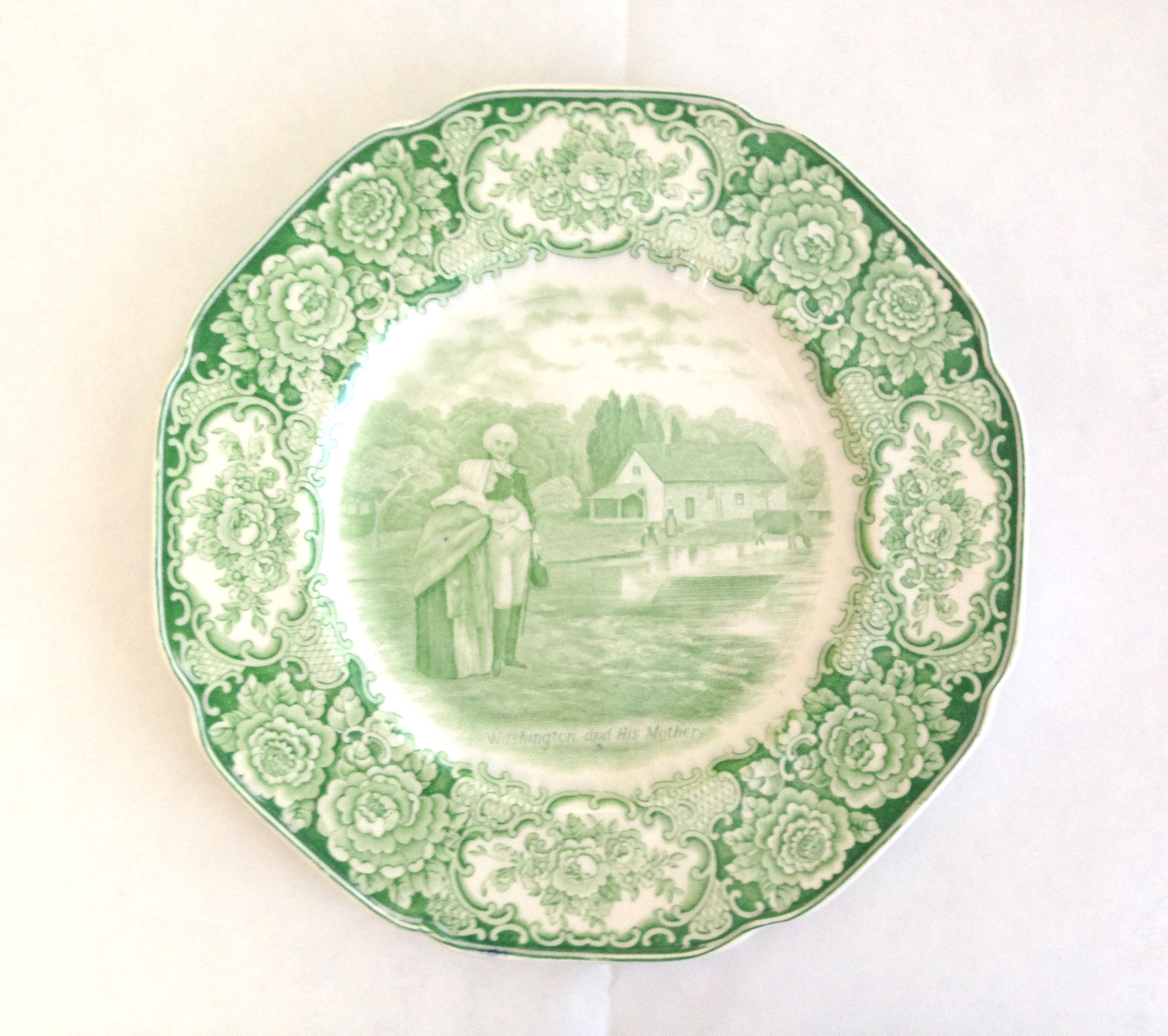
    Plates were another big commemorative item.  We have three plates issued by Crown Ducal, with the same scene of “Washington and his Mother” based on the print of the same name.  On the back with the Crown Ducal crest, it says, “George Washington Bicentenary Memorial Plates / 1732-1932 / First in War / First in Peace / First in the hearts of his countrymen”.  Crown Ducal released a series of twelve plates documenting Washington’s life.  Of course, we are a little biased and like the one with his mother, Mary Ball Washington, the best.

    Some companies even brought in Mrs. Martha Washington, like this set of plates from the Capital Souvenir Company.  These are two round commemorative plates depicting George and Martha Washington, both with an elaborate floral gilded border.

    Fun Bicentennial Fact:  On the eve of the birthday, Sears Roebuck was awarded a commission by the U.S. government to create a full-scale replica of Mount Vernon at the Exposition Coloniale Internationale in Paris.  The agreed-upon price was around $75,000, and every detail of the home was reproduced from brass hardware, mantelpieces, and even cabinets.  After the exposition, the house was bought by an American doctor working in Paris, and it was relocated to Vaucresson (a western suburb of Paris).  It still stands today as a private residence and was even on the market in 2012 for 27 million dollars.     

    Sears Roebuck also built the exact replica in Prospect Park, Brooklyn, NYC for the Bicentennial Commission. However, the house was not taken care of and boarded up and abandoned until it was eventually torn down. (The Brooklyn Daily Eagle, 1933) 

    Sears’ role in the reconstruction of Mount Vernon led to interest in their kit homes.  In 1932, they offered a house in their catalog, loosely based on Mount Vernon.  This model was oddly called “The Jefferson”.

    Sears Roebuck house kit “The Jefferson” which strangely resembles Mount Vernon.

    While we may not have as many George souvenirs, we are still putting on a big birthday party to celebrate George Washington and his time at Ferry Farm. 

    The party is on Monday, February 19th from 10am – 3 pm.  While enjoying the grounds of Ferry Farm, you can take a selfie with “George Washington,” participate in our annual stone-throwing contest, play colonial games, and eat birthday cupcakes (while supplies last).

    Additionally, guests can enjoy several educational stations, take an abbreviated Washington House tour, and talk with archaeologists, historians, and other experts to learn about Ferry Farm and the Washington Family.


    Heather Baldus

    Collections Manager


    References

    George Washington Bicentennial Commission. (1932). History of the George Washington Bicentennial Celebration. Washington D.C.

    Larson, E. (2004). The Devil in the White City: Murder, Magic, and Madness at the Fair That Changed America. New York City: Knopf Doubleday Publishing Group.

    Subseries 5.8. Washington’s Birthday, Bicentennial Souvenirs, 1931-1932 . (2024). Retrieved from The George Washington Presidential Library at Mount Vernon: https://archives.mountvernon.org/repositories/3/archival_objects/14635

    The Brooklyn Daily Eagle. (1933, June 14). Fate in Doubt On Park Replica of Mt. Vernon. The Brooklyn Daily Eagle, p. 5.

    The Washington Post. (1932, January 2). 50,000 Stand In Line to Get New Stamps. The Washington Post, p. 1.

    The Washington Post. (1932, January 5). Bicentennial Stamps Profit. The Washington Post, p. 6.

  • Spilling the Tea: The Boston Tea Party at 250

    Author’s Note: This blog contains hyperlinks to primary documents related to the event.

    Figure 1: 250th Logo (Boston Tea Party Ships and Museum)

    Intro

    This year marks the 250th anniversary of the Boston Tea Party (Figure 1). Hailed as a defining moment in the quest for American independence and an act of patriotism, the event has inspired commemorations in many forms, and it remains a vital part of the American History curriculum. I, for one, thought it the epitome of achievement that I had the date memorized in kindergarten. Like much of our founding history, however, the story retains an element of myth. So, what exactly is the truth behind this event?  

    The Story

    A general account of the Boston Tea Party tells how patriotic Bostonians, angered by unfair taxes, boarded three ships in Boston Harbor on December 16, 1773. Disguised as members of the Mohawk or Narragansett tribes, Samuel Adams led the Sons of Liberty in protest by throwing crates of the King’s tea overboard. This act helped unite the colonies against Britain and started the chain of events that ended in the “Shot Heard Round the World” on Lexington Green on the morning of April 19, 1775, following Paul Revere’s ride.

    Sound familiar? In truth, this account covers the basics. It provides the “who,” “what,” “when,” “where,” and “why.” Nonetheless, it only scratches the surface of the complex event we know as the Boston Tea Party. To unpack this, let us look at what led to the event, how it happened, and the initial response.

    Truth of the Tax

    Taxes and tea sit at the heart of this story. The taxes that the colonies took issue with went into effect starting in the 1760s, with the ultimate goal of lessening the debt incurred by Britain during the Seven Years’ War. However, this set a new precedence as Britain had never taxed the colonists directly, and the passing of these tax laws occurred without consulting the colonies. The formal chant of “no taxation without representation” first appeared in 1768, and while the lack of representation presented a key reason for displeasure, the impact of taxes on merchants served as another.

    While the Tea Act of 1773 served as the catalyst for the Boston Tea Party, the Tea Tax had existed since 1767. Introduced under the Townshend Acts, the tax remained the only one in effect upon the Act’s repeal in 1770. General dislike for the tax persisted, but the Tea Act took the issue to another level. In an aim to bail out the East India Company (EIC), the Act granted a monopoly over the tea trade by opening the colonial market to the company as the sole supplier, waived their tax payment in favor of those paid by colonists, and mandated that only EIC company agents (consignees) could sell the tea (Figure 2). Many perceived this as a restriction on business, as merchants could no longer source tea from Britain and smugglers, freedom of choice and rights.  In truth, the protests against the tax and Tea Act occurred as a matter of principle since the cost of tea actually dropped, with consumers now able to buy directly from a supplier who faced no additional costs.

    Figure 2: EIC Seal (East India Company)

    Build Up

    With the Boston Tea Party story often told in a bubble, it appears as an impulsive act, but far more happened behind the scenes. By the end of 1773, displeasure with the Tea Act made attempts of preventing the unloading of tea and boycotts of its purchase common. When DartmouthBeaver, and Eleanor anchored at Griffin’s Wharf (November 28-December 15), locals had expected their arrival since October and had spent November demanding the resignations of the consignees. Many foresaw the risk of tensions coming to a head, including Abigail Adams, who, on December 5, wrote that “the Tea that bainfull weed is arrived…The flame is kindled…Great will be the devastation if not timely quenched or allayed by some more Lenient Measures.”

    After successfully chasing the consignees out of town, Bostonians urged Francis Rotch, whose family owned two of the ships, to depart without unloading the cargo. The Sons of Liberty stationed a guard at the docks to ensure that the tea remained onboard while Rotch decided. In response, Royal Governor Thomas Hutchinson ordered Rotch to unload the cargo within the standard twenty days of arrival or forfeit it and the ships. Rotch thus found himself in an impossible situation as Hutchinson and customs refused to let him leave while the Sons would accept nothing less.

    December 16th

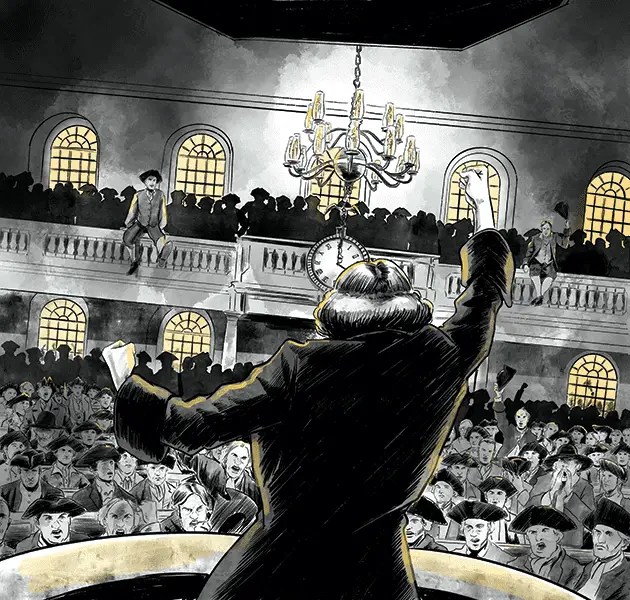
    Many awoke on December 16, knowing the crisis would come to a head. The date marked the deadline for unloading Dartmouth’s cargo, and Rotch would make one final attempt to plead his case to both sides. Hutchinson and customs refused to budge, which further incensed Bostonians when Rotch reported that the tea would not be leaving. This announcement came as Samuel Adams headed a meeting at the Old South Meeting House (Figure 3).

    Figure 3: Adams’ Speech at Old South (Revolutionary Spaces)

    Serving as a leading figure within the Sons of Liberty, Adams had led many of the meetings and attacks that occurred almost daily in the buildup to the 16th. This particular meeting drew 5,000-7,000 people who clamored to hear the latest developments in the tea crisis. When Rotch’s news broke, Adams stated, “This meeting can do nothing further to save the country.” While often billed as a signal to start the Tea Party, doubt remains over the statement’s significance. According to eyewitness accounts, many stayed another 15 minutes, and Adams tried to prevent people from leaving before the meeting concluded.

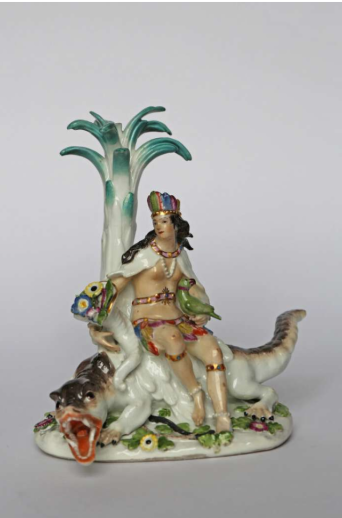
    Regardless of intent, hundreds of people made their way to Griffin’s Wharf. Along the way, some donned disguises that mimicked Native Americans. These disguises served both practical and symbolic purposes. First, donning a disguise shielded the identity of individuals carrying out the illegal acts, even if no one mistook them for actual tribal members. Secondly, the choice of a Native American-inspired look embraced an allegory of America and linked Indigenous resistance to colonization with the colonists’ struggle against Britain (Figure 4).

    Figure 4: “Allegory of the Continent of America,” c. 1750 (The Clark Museum)

    Interestingly, Adams never claimed or denied involvement with the Tea Party, yet, in contrast to popular depictions, he did not appear at the harbor that night. Instead, he remained at Old South. Of the participants, only the identities of 116 are known, and only one faced arrest.

    The day after, Samuel’s cousin, John Adams, described the event as “the most magnificent Movement of all. There is a Dignity, a Majesty, a Sublimity in this last Effort of the Patriots that I greatly admire. The People should never rise without doing something to be remembered—something notable And striking. This Destruction of the Tea is so bold, so daring, so firm, intrepid and inflexible, and it must have so important Consequences, and so lasting, that I cant but consider it as an Epocha in History.

    Reactions

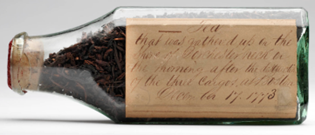
    Despite a post-independent America enshrining the Boston Tea Party in glory, most initial reactions proved far less enthusiastic than that of John Adams. The name “Boston Tea Party” did not emerge until the 1820s, and even then, “Party” referred to a group of people rather than something celebratory. Instead, mentions of the event usually identified it by what happened, such as “the destruction of the tea” (Figure 7).

    Figure 7: “Tea that was gathered up on the shore of Dorchester Neck on the morning after the destruction of the three cargos at Boston; December 17, 1773” (MHS)

    While Parliament’s taxes made many colonists unhappy, they also valued their right to private property. In the case of the Boston Tea Party, the ships that the Sons of Liberty trespassed on belonged to Americans, while the EIC owned the destroyed tea. The King and Parliament had no direct connection to the ships or their cargo. As such, many viewed the attack as one on private property rather than a true strike against Parliament. Those who spoke out against it included Founding Fathers. Benjamin Franklin felt “truly concern’d…that there should seem to any a Necessity for carrying Matters to such Extremity, as, in a Dispute about Publick Rights, to destroy private Property.” Meanwhile, George Washington supported taking a stand against taxation and felt the cause of Boston equated to the cause of America, but ultimately could not “approve their cond[uc]t in destroyg the Tea.”

    Impact

    In the short run, the Boston Tea Party did little to fan the flames of independence. It inspired a few more boycotts (i.e., the Annapolis, Edenton, and Yorktown Tea Parties) and furthered a decline in consumption, but the British response to the event served as the primary catalyst. By punishing all of Boston, and by extension, Massachusetts Bay Colony, rather than just those responsible, the British infringed upon the rights of the colonists. Under the Coercive (nicknamed “Intolerable”) Acts, the British closed the harbor, demanded Bostonians pay damages to the EIC, imposed martial law, and required citizens to house, or quarter, members of the military on their property at their own expense (Figure 8).

    Figure 8: “The Bostonians in Distress;” 1774 Satire of the Boston Port Act (LoC)

    Those living in the twelve other colonies did not take well to this, as they feared the implementation of these acts in their homes. In response, the First Continental Congress met in Philadelphia from September to October 1774. While some delegates saw the issue as a Massachusetts one, others pressed the need to take a stand against the overreaches of Parliament and sympathized with Massachusetts. They concluded Congress by issuing their Declaration and Resolves, which listed objections to Parliament and confirmed their commitment to a trade boycott. However, when news of Lexington & Concord broke in April 1775, and Massachusetts found itself at war, the other colonies quickly had to decide which side they would take.

    Legacy

    Two hundred fifty years on, the Boston Tea Party remains an iconic event in American history and a pivotal moment in the founding of the country (Figure 9). While not wholly embraced as such upon its occurrence, the retelling of the event over time came to enshrine it in lore and leave out details that complicated the narrative. This shows that one cannot study a singular event without contextualizing it within the bigger picture. Nevertheless, John Adams’ belief that the “Destruction of the Tea” would become an epoch in history proved correct.

    Figure 9: Robinson Tea Chest – 1 of 2 surviving chests (Boston Tea Party Ships and Museum)

    Emma Schlauder

    Research Archaeologist


    Bibliography

    Adams, Abigail. Abigail Adams to Mercy Otis Warren, 5 December 1773. Letter. From National Archives, Adams Papershttps://founders.archives.gov/documents/Adams/04-01-02-0065 (accessed Nov 13, 2023).

    Adams, John. [December 1773]. Diary. From National Archives, Adams Papers. https://founders.archives.gov/documents/Adams/01-02-02-0003-0008 (accessed Nov. 13, 2023).

    “Boston Tea Party History.” Boston Tea Party Ships & Museum (website). https://www.bostonteapartyship.com/boston-tea-party-history (accessed Nov. 14, 2023).

    Cooper, Samuel. To Benjamin Franklin from Samuel Cooper, 17 December 1773. Letter. From National Archives, Franklin Papershttps://founders.archives.gov/documents/Franklin/01-20-02-0266 (accessed Nov. 13, 2023).

    “Declaration and Resolves of the First Continental Congress.” American Battlefields Trust (website). https://www.battlefields.org/learn/primary-sources/declaration-and-resolves-first-continental-congress (accessed Nov. 14, 2023).

    Franklin, Benjamin. From Benjamin Franklin to the Massachusetts House Committee of Correspondence, 2 February 1774. Letter. From National Archives, Franklin Papers. https://founders.archives.gov/documents/Franklin/01-21-02-0023 (accessed Nov. 13, 2023).

    ““Made one of the celebrated Tea Party in Boston harbor:” Remembering the Boston Tea Party in 1826.” American Battlefields Trust (website). https://www.battlefields.org/learn/primary-sources/made-one-celebrated-tea-party-boston-harbor (accessed Nov. 14, 2023).

    ““No Taxation Without Representation:” The Evolution of the Historic Phrase.” American Battlefields Trust (website). https://www.battlefields.org/learn/articles/no-taxation-without-representation (accessed Nov. 14, 2023).

    “Participants in the Boston Tea Party.” Boston Tea Party Ships & Museum (website). https://http://www.bostonteapartyship.com/participants-in-the-boston-tea-party#participant-list (accessed Nov. 14, 2023).

    Schiff, Stacy. The Revolutionary Samuel Adams. New York: Little, Brown and Company, 2022. “Tea Act.” American Battlefields Trust (website). https://www.battlefields.org/learn/primary-sources/tea-act (accessed Nov. 14, 2023).

     “The Boston Tea Party.” Massachusetts Historical Society (website). https://www.masshist.org/revolution/teaparty.php (accessed Nov 14, 2023).

    “The Final Straw.” Boston Tea Party Ships & Museum (website). https://www.bostonteapartyship.com/the-final-straw (accessed Nov 14, 2023).

    “The Intolerable Acts.” Boston Tea Party Ships & Museum (website). https://www.bostonteapartyship.com/the-intolerable-acts (accessed Nov 14, 2023).

    The Massachusetts Gazette; and the Boston Post-Boy and Advertiser. “Philadelphia, September 29. Extract of a letter from London, August 4.” From Massachusetts Historical Society. https://www.masshist.org/database/viewer.php?pid=2&old=1&mode=nav&ft+Coming% &nbsp 20of%20the%20American%20Revolution&item_id=434 (accessed Nov. 13, 2023).

    “The Secret Plan.” Boston Tea Party Ships & Museum (website). https://www.bostonteapartyship.com/the-secret-plan (accessed Nov 14, 2023).

    “Townshend Act.” American Battlefields Trust (website). https://www.battlefields.org/learn/primary-sources/townshend-act (accessed Nov. 14, 2023).

    Washington, George. From George Washington to George William Fairfax, 10–15 June 1774. Letter. From National Archives, Washington Papershttps://founders.archives.gov/documents/Washington/02-10-02-0067 (accessed November 13, 2023).

  • Bane of the Washingtons Part II: The Deaths of Lawrence, Fielding, and Samuel

    Welcome back to our 3-Part Blog charting tuberculosis in the extended Washington Family. If you are new to this series, Part I examined how the disease works, charted its history, and explained standard courses of treatments in the 1700s. You can find the blog here, and we encourage a review of the “Treatment” section. In Part II, we will begin to look at the family members who suffered from the disease and how this impacted their lives and those around them.

    Lawrence Washington (1718-1752, aged 33/34):

    Lawrence Washington Source: Mount Vernon

    Perhaps the best-known case of tuberculosis in the Washington family pertains to Lawrence Washington. George’s eldest half-brother, credited as serving as a role model, died of the disease in 1752, which subsequently laid the foundations for George to inherit Mount Vernon and become the Father of His Country. Behind this, however, lies one of the more clear timelines for the devastation the disease.

                Lawrence may have contracted tuberculosis during his service in the War of Jenkins’ Ear (served 1740-1742) or after his return to Virginia in 1742. Certainly, he had developed severe enough symptoms, particularly a cough, by the end of 1748, to cause him to take a leave of absence from the House of Burgesses. He resumed his duties in the spring of 1749, but his illness forced him home for a final time in May. That same month, George wrote hoping for news that his brother’s cough had improved and that he had “given over the thoughts of leaving Virginia.”1 Lawrence could not provide his brother with the news he desired, and sailed to England in the summer of that year to consult with physicians. Lawrence returned in November with little encouragement, but set out for Berkeley Springs in July 1750, to take the waters. George accompanied his brother on this venture, but they did not stay long.

    By 1751, Lawrence had exhausted any hope of finding a cure at home and his doctors recommended visiting a warmer climate. Following this advice, Lawrence and George sailed for Barbados on 25 September and arrived on 2 November. Shortly after their arrival, George recorded that a doctor came “to pass his opinion on [his] brother’s disorder, which he did in a favorable light, giving great assurances that…a cure might be effectually made.”2 George mentions little else of Lawrence’s condition in his journal, a month of course went undocumented as George had smallpox, and he returned to Virginia alone in December.

    Lawrence, having not found the relief he hoped for, decided to try Bermuda and journeyed there after George left. In an April 1752, letter to a friend, Lawrence referred to Bermuda as his “last refuge, where [he] must receive [his] final sentence.”3 Describing himself as “a criminal condemned, though not without hopes of a reprieve,”4 Lawrence followed his doctor’s treatment plan by “abstaining from flesh of every sort, all strong liquors, and by riding as much [he] could bear.”5 His doctor advised to take what benefit he could from the climate as another winter in Virginia would surely kill him. While Lawrence remained somewhat hopeful in this letter, he soon wrote again about his “unhappy state of health”6 and expressed the belief that, if it should worsen, he would “hurry home to [his] grave.”7 Evidently, Lawrence soon resigned himself to his impending death as he returned to Mount Vernon and set his affairs in order with the aid of his half-siblings and stepmother. He died on 26 July 1752.

    Upon Lawrence’s death, he left behind his wife Anne Fairfax and daughter Sarah. Three other children had already died all under the age of two. Infant mortality frequently occurred in the 1700s, so it proves impossible to know what caused each death. However, it remains a possibility that they contracted tuberculosis from their father, which then killed them quicker due to their age and weaker immune systems, or left them vulnerable to secondary infections. Sarah would suffer a similar fate in 1754, aged four, and her mother, having married into the Lee family, would die in 1761, aged thirty-three. These deaths allowed George to inherit Mount Vernon.

    Fielding Lewis (1725-1781, aged 56):

    Fielding Lewis

    The husband of Betty Washington and the mind behind Kenmore, Fielding Lewis served his country during the war by funding various supply and defense lines. One of the richest men in Virginia, Fielding had the ability to provide aid and, as the brother-in-law of the commander-in-chief, could hardly stay out of the conflict. While his efforts did much for the cause, Fielding drew the short straw by spending nearly all of his money. Accounts of Fielding Lewis’ death often insinuate a connection to the stress of losing his fortune. While this certainly put him under strain, and would not have helped his health, Fielding’s case of tuberculosis meant that he would have died regardless of his financial status.

    Tracing tuberculosis in Fielding’s life proves more difficult than that of Lawrence. Mentions of Fielding as ailing exist for several years prior to his death. However, with no description, one can hardly say if this references tuberculosis or some other affliction. Like many, he frequented Berkeley Springs and even purchased property there. Fielding recorded little of his visits, but his interests lay in the spring’s supposed medicinal benefits and, to that end, undertook an annual August trip from 1772 onwards. Throughout the war, Fielding held the rank of colonel and, though he never received a formal posting, oversaw Fredericksburg’s gun manufactory and the defense of the Rappahannock. This position required no military action and had strong connections to his background as a merchant. However, the choice of assignment may have derived from knowledge that he would never be well enough to effectively command troops. Then again, Fielding was in his fifties and had no military experience. In any case, the position reflected a strategic choice that played to Fielding’s strengths and lessened the impact of field inexperience and ill health.

    If Fielding hoped for a peaceful death, he would not receive it. In the summer of 1781, with the British encroaching on Fredericksburg, the Lewis household and Mary Washington fled. At this stage, Fielding’s health had significantly deteriorated, leaving him an invalid confined to his home. A sudden evacuation by carriage would have done little to ease his discomfort as the household hurried to another property in Frederick County, Virginia. Once there, Fielding focused on putting his affairs in order and likely did not have the strength to visit nearby Berkeley Springs. The news of the Yorktown victory undoubtedly brought some emotional respite, but it proved short-lived as Fielding died mid-December 1781. The location of his burial site on the Frederick County property remains unknown. Fielding’s death brought immense grief to his widow, Betty Washington, who had lost her brother Samuel to the same disease only three months earlier.   

    Samuel Washington (1734-1781, aged 46):

     Samuel Washington Source: Mount Vernon

    The second son of Augustine Washington and Mary Ball, Samuel grew up at Ferry Farm with his full-siblings. Said to have suffered from tuberculosis for most of his life, it remains unknown where, when, and from whom he contracted it. However, by visiting Lawrence in July 1752, to help put his half-brother’s affairs in order, seventeen-year-old Samuel certainly faced exposure. Samuel died at his home Harewood, near Charles Town, West Virginia, in September 1781, shortly before the victory at Yorktown. The home itself lies conveniently close to Berkeley Springs, which may indicate that its location and Samuel’s move from Stafford County, Virginia, derived from a desire for easy access to the springs and their reputed health benefits.

    Despite dying just shy of age forty-seven, Samuel famously married five times. His final wife, Susannah Perrin Holden (1753–1783, m. 1778), survived him, and the fourth, Anne Steptoe (1737–1777, m. 1764), died of complications from a smallpox inoculation. However, the deaths of his first three wives, Jane Champe (1724–1755, m. 1754), Mildred Thornton (roughly 1741–1762, m. 1756), and Lucy Chapman (1743–1763, m. 1762), have long been associated with tuberculosis.

    All three experienced rapid declines in health after their marriages to Samuel, and in correlation with several pregnancies. Pregnancy and childbirth proved extremely dangerous during this period, so these deaths could simply be tragic examples. However, as pregnancy exacerbates tuberculosis, the common interpretation remains that the women contracted the disease from Samuel, saw it worsen at an alarming rate due to pregnancy, and the strain of one or more births on top of the disease made it impossible to recover. Regarding his children, several died quite young, which may mirror the fate of Lawrence’s children, and three of his sons who reached adulthood would ultimately die of the disease. 

    Coming Up

                In our final blog on tuberculosis, we will be taking a look at how the disease impacted the next generation of the extended Washington family and those they enslaved. This will be coming out on June 28th.

    Emma Schlauder

    Research Archaeologist


    Bibliography

    2-7 Anderson, Alicia K. & Lynn A. Price (editors) 2018     George Washington’s Barbados Diary: 1751-52. University of Virginia Press, Charlottesville, VA.

    1 Chernow, Ron 2010     Washington: A Life. Penguin Books Ltd, London, UK.

    Felder, Paula S. 1998     Fielding Lewis and the Washington Family: A Chronicle of 18th Century Fredericksburg. The American History Company.

    Glen, Justin 2014     The Washingtons: A Family History, Vol 1, Seven Generations of the Presidential Branch. Savas Beatie LLC, El Dorado Hills, CA.

  • My Date with a Founding Figure

    The staff at the George Washington Foundation posited the idea of what it would be like to go on a date with a Founding Figure. We use the term “Founding Figure,” because a couple of dates are with the ladies of the American Revolutionary period and not just the “fathers.”  Although, fun fact, the term “Founding Father” was supposedly coined by then-Senator (later President) Warren Harding in 1916. A founding figure is a person who was instrumental during the Revolution, the creation of the Republic, and the early years of said Republic.

    While some traditional figures have been classified as “lesser-known” or the “last of,” we have chosen those who are pretty well known (and if not, should be!). Each date is set in the 21st century but is tailored to that person’s 18th and 19th-century interests. The following paragraphs are fictional, sadly, but contain threads of facts.

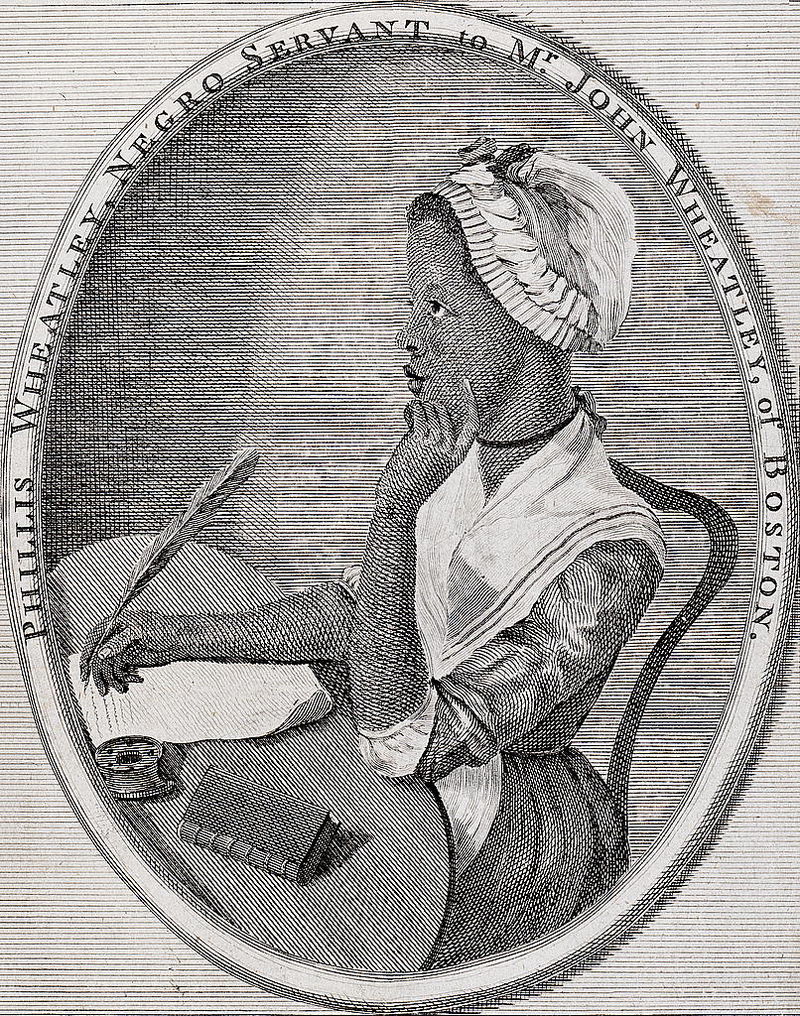
    Phillis Wheatley

    Phillis Wheatley. Credit: Wikipedia

    My dream date with Phillis Wheatley would involve a lot of active listening on my part. I would ask her whether she remembers her time as a child in West Africa before she was enslaved and brought to the British North American Colonies. We both are familiar with Boston, so we’d talk a lot about our favorite places around that city while having tea at Hyperion in downtown Fredericksburg.

    Phillis was a great fan of General George Washington and famously wrote him a poem which resulted in George inviting her to his headquarters in Cambridge, Massachusetts, so I would offer her a tour of Ferry Farm and show her some of the artifacts we have that relate to the Washington family’s time here. From Ferry Farm, we would head to D.C. to check out the museums. I think Phillis would be interested in how history has progressed.

    Over dinner, we would talk about the Revolutionary War, a cause she adamantly supported. At the end of the evening, we would go to a late-night café and sip coffee during a poetry open mic night. Phillis would take the stage and wow everyone with her amazing talent. 

    For those interested in learning more about Phillis, take a look at the Poetry Foundation’s information on her and her work by clicking here

    -Mara Kaktins, Archaeology Lab Supervisor

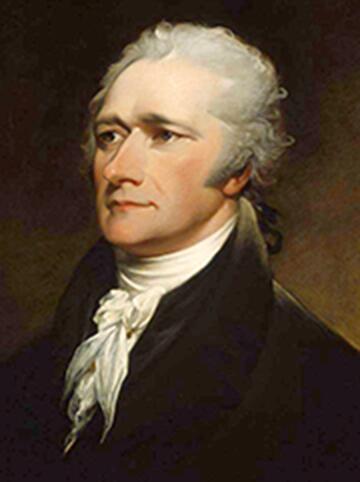
    Alexander Hamilton

    Alexander Hamilton. Credit: Wikimedia Commons

    A day-long date with Alexander Hamilton in Fredericksburg, VA would start early. First, we would head out in search of some lively morning debate at a local coffee shop. Alex is well known for his oratory and debate skills; I would enjoy listening to him engage with local folks in discussing the politics and page one issues printed in our morning newspaper. The conversation might also veer into the topic of the newspaper industry itself as Alex was a founder of the New-York Evening Post in 1801, now called the New York Post.

    After breakfast, we would take a walk following the Trail to Freedom, a Civil War-era tour that retraces the routes of freedom-seeking enslaved men, women, and children through the City of Fredericksburg and the County of Stafford. Alex opposed slavery and vocally supported abolitionist causes. He would be very interested in learning the story of John Washington, enslaved for 24 years in Fredericksburg before escaping to freedom during the Civil War.

    As a side note, we would definitely avoid going past the James Monroe Museum and Memorial Library (too bad, since it’s a great museum!). Monroe and Hamilton had a serious falling out over the public disclosure of Hamilton’s affair with Maria Reynolds and accusations of financial malfeasance. Hamilton and Monroe nearly ended up as a duel over the situation!

    Lunch is at one of two Jamaican-themed restaurants in town in honor of his Caribbean roots. Over the meal, we would discuss our afternoon plans to tour the Civil War battlegrounds in and around the city. I’d be interested to hear his views on military history and tactics. Hamilton loved all things military and even resigned as Washington’s aide-de-camp to take an active role in the Revolutionary fight.

    The day ends with dinner and good conversation at the Rising Sun Tavern. This local landmark is a suitable replacement for the George Weedon Tavern, once a popular gathering spot for patriots in Fredericksburg during the Revolutionary War. Located at the northwest corner of Caroline and William Streets, the tavern unfortunately burned down in 1807. Many important American patriots met here during the War to discuss politics and design policies. The tavern was the setting of the Peace Ball on November 11, 1781, following the defeat of Cornwallis at Yorktown. Weedon hosted many important dignitaries at this event, including George Washington himself and the Marquis de Lafayette. Alex and I would spend a pleasant evening convening with the ghosts of his compatriots of the Revolutionary War.

    -Judy Jobrack, Archaeologist, Co-Field Director

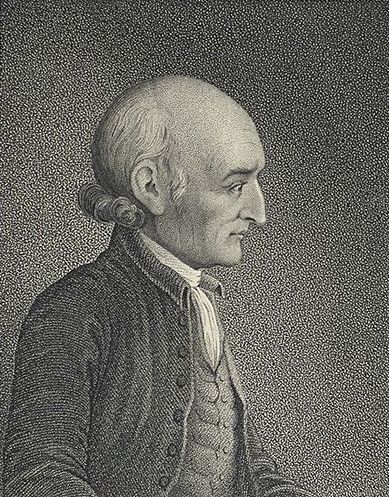
    George Wythe

    George Wythe. Credit: Wikipedia

    On my date with George Wythe, a lesser-known Founding Figure, we would spend an afternoon strolling along Duke of Gloucester Street in Colonial Williamsburg. For those of you who might not know George, he was a prominent lawyer and Williamsburg local. He taught law at the College of William & Mary (in fact, he’s considered America’s first law professor!), so perhaps we would start our day with a leisurely walk around campus and a tour of the Wren Building.

    Next, we’d stop in the aptly named Wythe Candy & Gourmet Shop (I’d probably need to explain the modern sales tax to him, though…) to buy a snack before wandering down to the capitol building. Since he was a member of the House of Burgesses and a signer of the Declaration of Independence, we might debate colonial politics while we tour the building and as we continue our walk along the Palace Green. (Maybe I could convince him to toss a Frisbee on the lawn?)

    On our drive home from the ‘Burg, we’d queue up a true-crime podcast for the road. Wythe himself had quite the connection to true crime. The events surrounding his death, namely, a suspected poisoning, caused quite the scandal in 1806. I probably shouldn’t bring that up during our date, though.

    -Ann Waters, Manager of Interpretation & Visitor Services

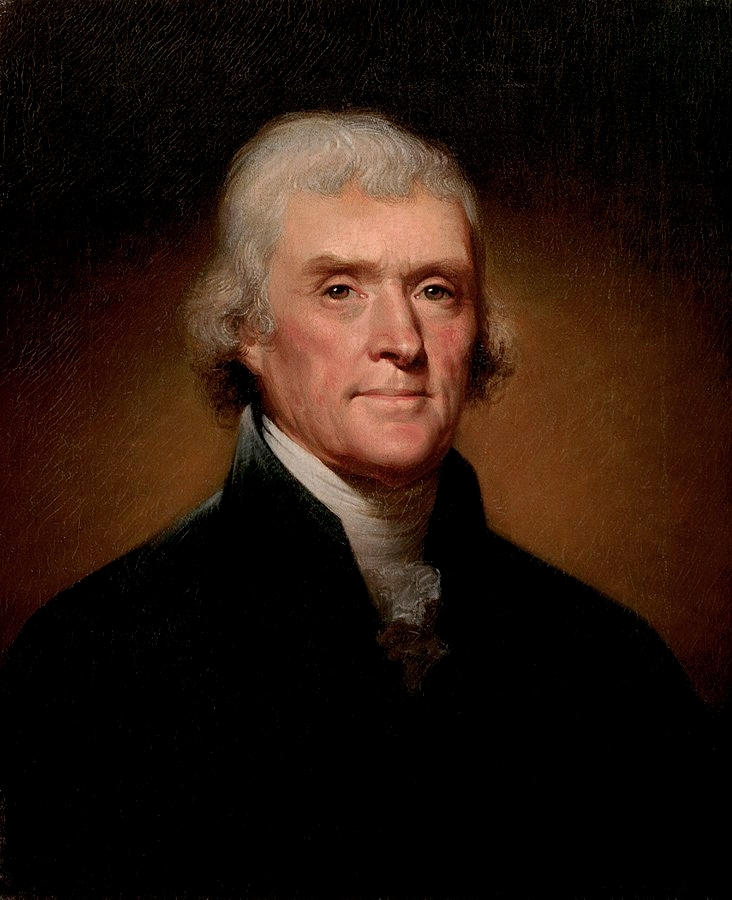
    Thomas Jefferson

    Thomas Jefferson. Credit: Wikipedia

    A date with Thomas Jefferson, the 3rd President of the United States, would be an all-day affair. How could we possibly browse bookstores and discuss literature in only a few hours? A good date must start with coffee. After stopping in Agora (in Fredericksburg, VA) and skimming their used book collection, I would insist on bringing Tom to Riverby Books. Since he was an avid reader, we would likely spend most of the day browsing their shelves. I imagine we would gather a large number of books to peruse.

    The rest of our day-date would be spent reading at the window seat in Riverby and discussing the novels we’ve found. We would leave the bookstore with a few tote bags of books and continue our conversation as we strolled down Caroline Street. The day would end with me gifting Tom a copy of Pride and Prejudice, and I doubt the author of the Declaration of Independence has that on his shelves. Though I wonder, do you think he’d appreciate a Kindle?

    -Gillian Both, University of Mary Washington Fleming-Smith Scholar 2021-22

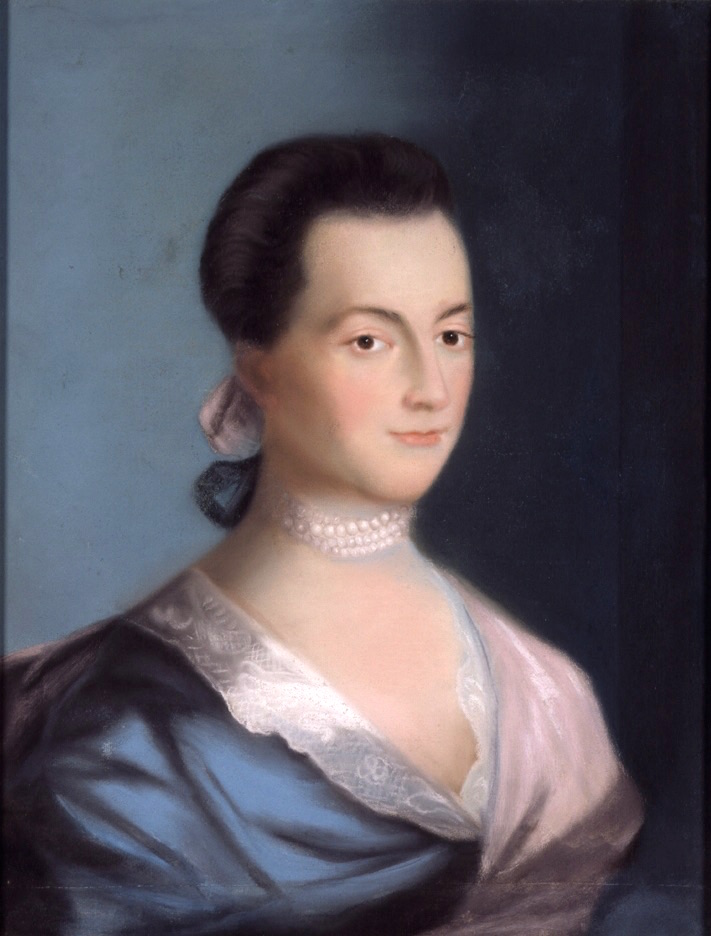
    Abigail Adams

    Abigail Adams. Credit: Wikipedia

    My date would be with Abigail Adams, but I’m hoping I get to call her “Abby.” We would probably go for tea in downtown Fredericksburg. In her letters to John during his absence on crucial government business, she often wrote about the rights of women in the new nation. One aspect of women’s rights that seems to be most important to her was the ability of women to own property and make their own money. With this in mind, I would suggest the woman-owned Freedom Society tea room for our date. Over tea, we would discuss the political progress of women’s rights since the 18th century.

    After tea, since she was also an avid reader, I’m sure she would be happy to visit Riverby bookstore where she could explore the many books unavailable to her in the 18th and 19th centuries, and then I would be happy to hear her opinions on those books, and what she thinks of 21st century Fredericksburg. 

    -Mason Shultz, Assistant Lab Archaeologist

    George Washington

    George Washington. Credit: Wikimedia Commons

    A date with George Washington, Stafford’s boy who grew up to be the 1st President of the United States, would be an evening affair of dinner, dancing, and conversation, of the most respectful sort. Dinner would be a restaurant in downtown Fredericksburg, maybe Sammy T’s? After dinner, considering the incivility of modern-day clubs, George and I would attend a prom—as overly enthusiastic chaperones.

    We would revel in bopping our heads to the D.J. while remaining a respectful 6 feet apart. Furthermore, George would take this date as an opportunity to educate the youth. He would separate students who were not dancing with the purest intentions and would read them excerpts from Rules of Civility, which, while entertaining, would also probably get us removed from future chaperone lists.

    After the prom, George would make sure that I arrived safely home. While I would certainly find George to be charming and honorable, I will forever remember the students’ groans that reverberated off the gymnasium’s walls.

    -Kaylie Schunk, School & Youth Programs Coordinator

    James Monroe

    James Monroe. Credit: Wikipedia

    Fredericksburg is the perfect setting for a date with James Monroe. Did you know? He actually had a law office in town, and his descendants turned it into a museum in the 1920s! While it would be interesting to take him to his own museum, I think we’d leave that for a second date.

    First, we would peruse newspapers for yard and garage sales. I can see us at Agora, on the back patio, sipping coffee, James with the newspapers opened, and me on my smartphone, plotting the location of the sales. James was quite the thrifty furniture finder in his day. One time, while President, he purchased furniture from the Russian ambassador who was having a sale of his things before moving back to Russia.

    After a successful morning of thrifting, we would relax over lunch at La Petite Auberge. I would ask James to tell me all about his time in France as the ambassador during George Washington’s administration. The fact that he sent his wife on a diplomatic mission during the French Revolution is something I really want to hear more about. Additionally, I also want to know more about his trips to England and Spain. Being a diplomat to many places during the late 1790s and early 1800s must have been thrilling!

    -Amy N. Durbin, Director of Education

    Marquis de Lafayette

    Marie-Joseph Paul Yves Roch Gilbert du Montier a.k.a Marquis de Lafayette. Credit: Wikipedia

    Oh, la la! What comes to mind when you think of Marie-Joseph Paul Yves Roch Gilbert du Motier? Êtes-vous confus? He’s better known by his title, Marquis de Lafayette! Our daylong date would begin mid-morning, as the Marquis would have arrived late the night before. The last time he was in the United States was 1824 so, it’s been a minute. He’s currently on the U.S. leg of his college speaking tour.

    As a person who grew up in a small town in France, traveled overseas, fought for liberty here, and also in his own country, was arrested during his home country’s Revolution, survived, sought to end slavery, and to keep the ideals of the American Revolution alive, the University jumped at the chance to have him encourage the graduating students. So, after his fiery speech to get the students ready to live their dreams, I’d present him with some donuts from Paul’s, and we’d grab some coffee from Hyperion. Taking our treats down to the waterfront, we would spend the afternoon discussing his views on the right and wrong of humankind.

    In the early evening, we’d walk through Hurkamp Park, taking in the sounds of a local band. He probably wouldn’t care to dance as he wasn’t the most graceful dancer, but it’s 2022, dance moves are whatever a person wants them to be, right? After the park, we would end the day over dinner from Juan More Taco. I think he would like how much the restaurant gives back to the community.

    -Amy N. Durbin, Director of Education

    And so, we ask you, what do a poet, an accountant, a professor, an architect, an advocate, a surveyor, a diplomat, and an idealist have in common? They all paved the way for others to also grow up and to make their mark on the world. What they accomplished, be it good, not-so-good, or even unknown to many, can still be educational. What founding figure would you date?

    -GWF Archaeology & Education Staff