Lives and Legacies

Category: Kenmore Assoication

  • Wish You Were Here: Historical Documentation Through Postcards

    Postcards were a staple of vacations.  Collected and sent back to friends and family so they could be part of your adventures. Many of us can remember trying to pick up postcards on the first day of vacation to get them in the mail quickly so they would arrive back home before you. 

    Postcards were created in the mid-nineteenth century, and through the decades, they were mass-produced with popular scenic images and were inexpensive, so many people picked up postcards to document their vacations rather than taking pictures.    Their popularity and collectability mean that boxes and boxes of old postcards can be found in antique stores and flea markets. 

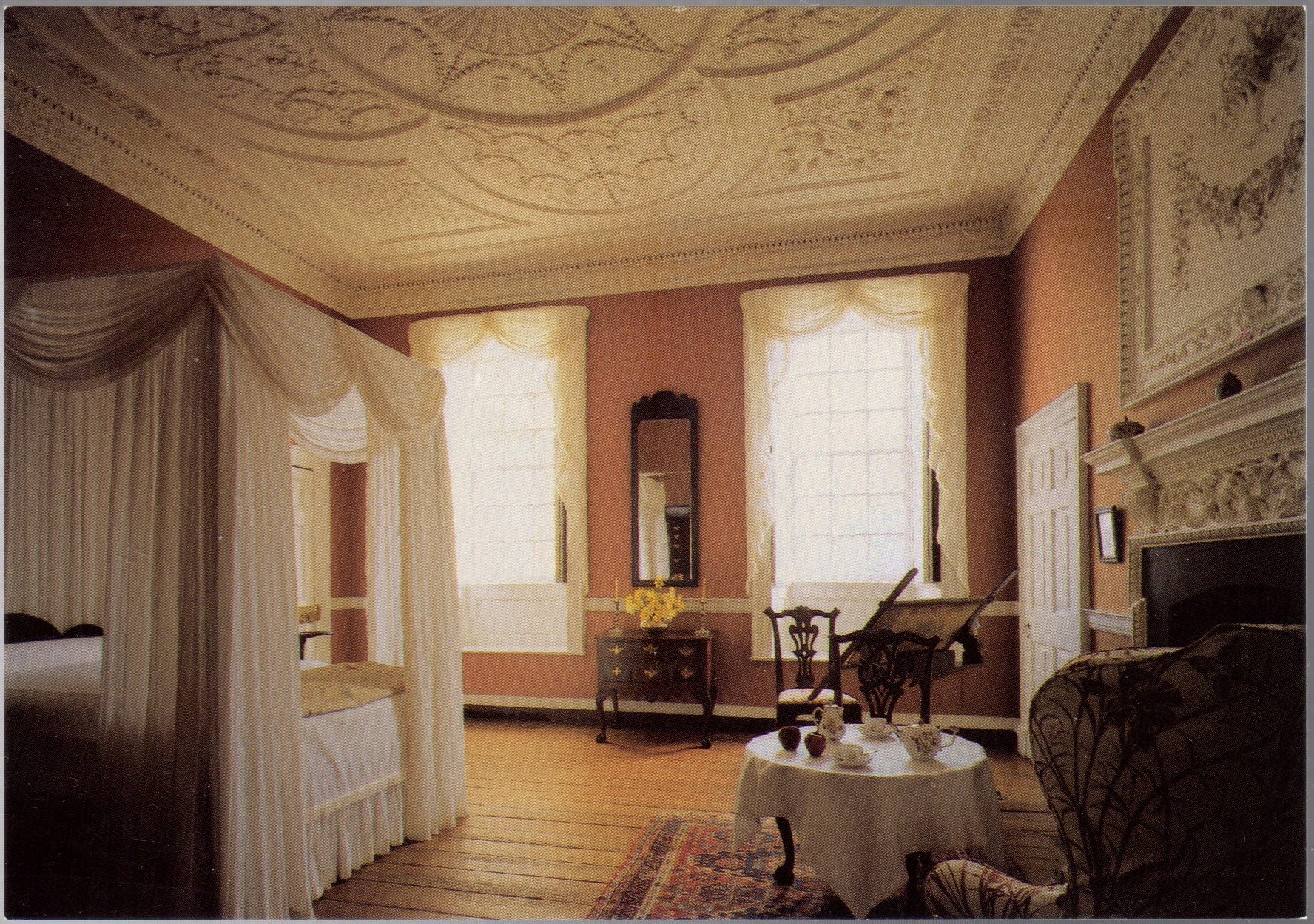
    While postcards are amusing souvenirs and a source of nostalgia, they can also offer us important insights into the evolution of historic sites and cities.  Postcards of Kenmore have helped us document the restoration of the house, the development of the property, and past interpretations, even providing documentation of collection items for which we may not have records.

    For your enjoyment, I’ve selected some of my favorite postcards to showcase how they’ve documented the historical restoration and interpretation of Kenmore.

    Exterior: Pre-Restoration

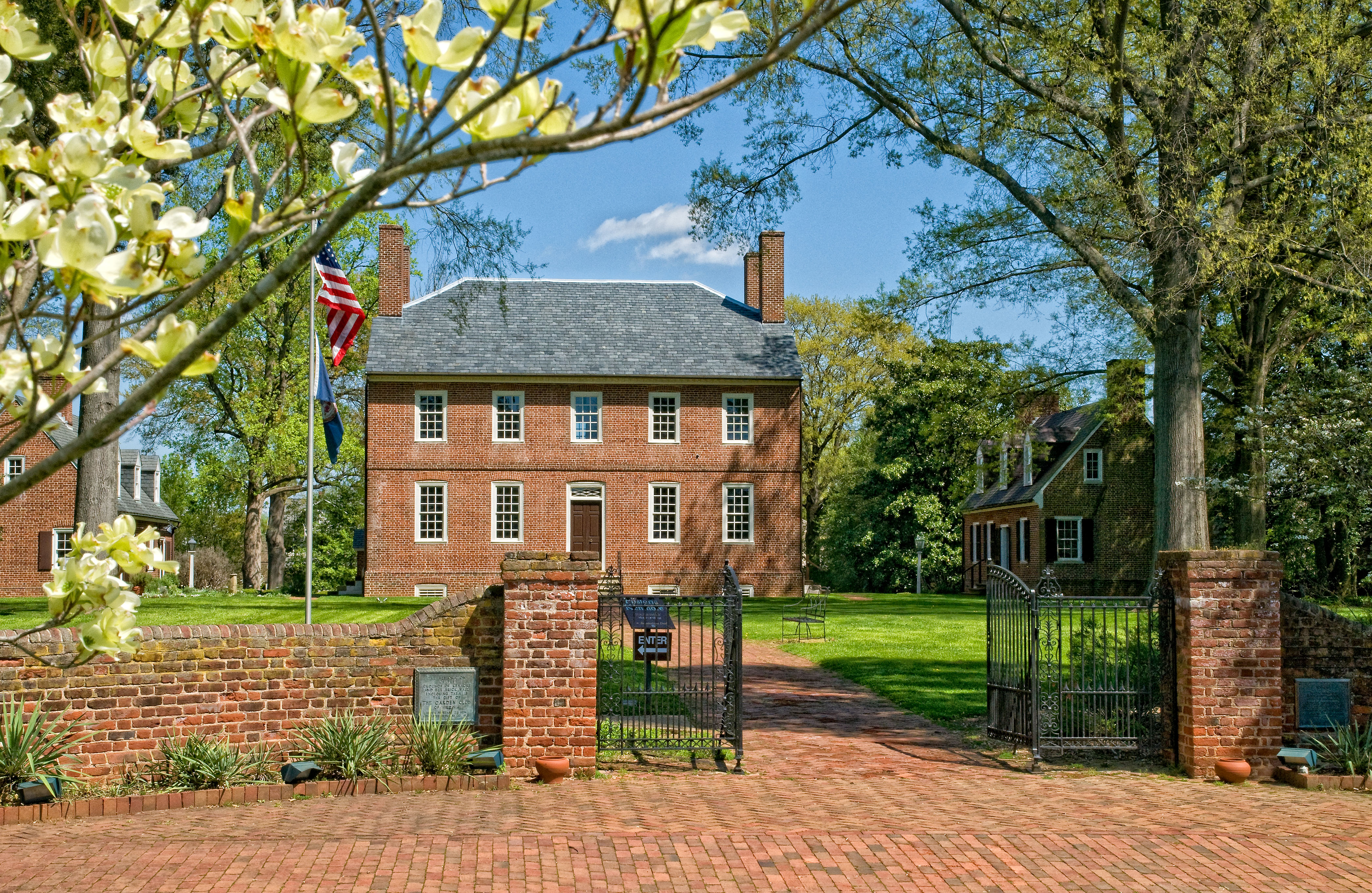
    Kenmore has always been quite the showpiece, even when it was privately owned.  One of the earliest postcards of Kenmore’s exterior is dated 1908, as indicated by the postmark.  The Howard family owned the house until it was acquired by E.G. Heflin around 1914. 

    The postcard shows the house from the Washington Avenue side (west elevation) and provides a glimpse of the properties before any restoration work.  The old kitchen can be seen on the north side of the house, while the exact date it was built is unknown; we know it was built in the late 1880s or early 1890s.  It was torn down in 1929. 
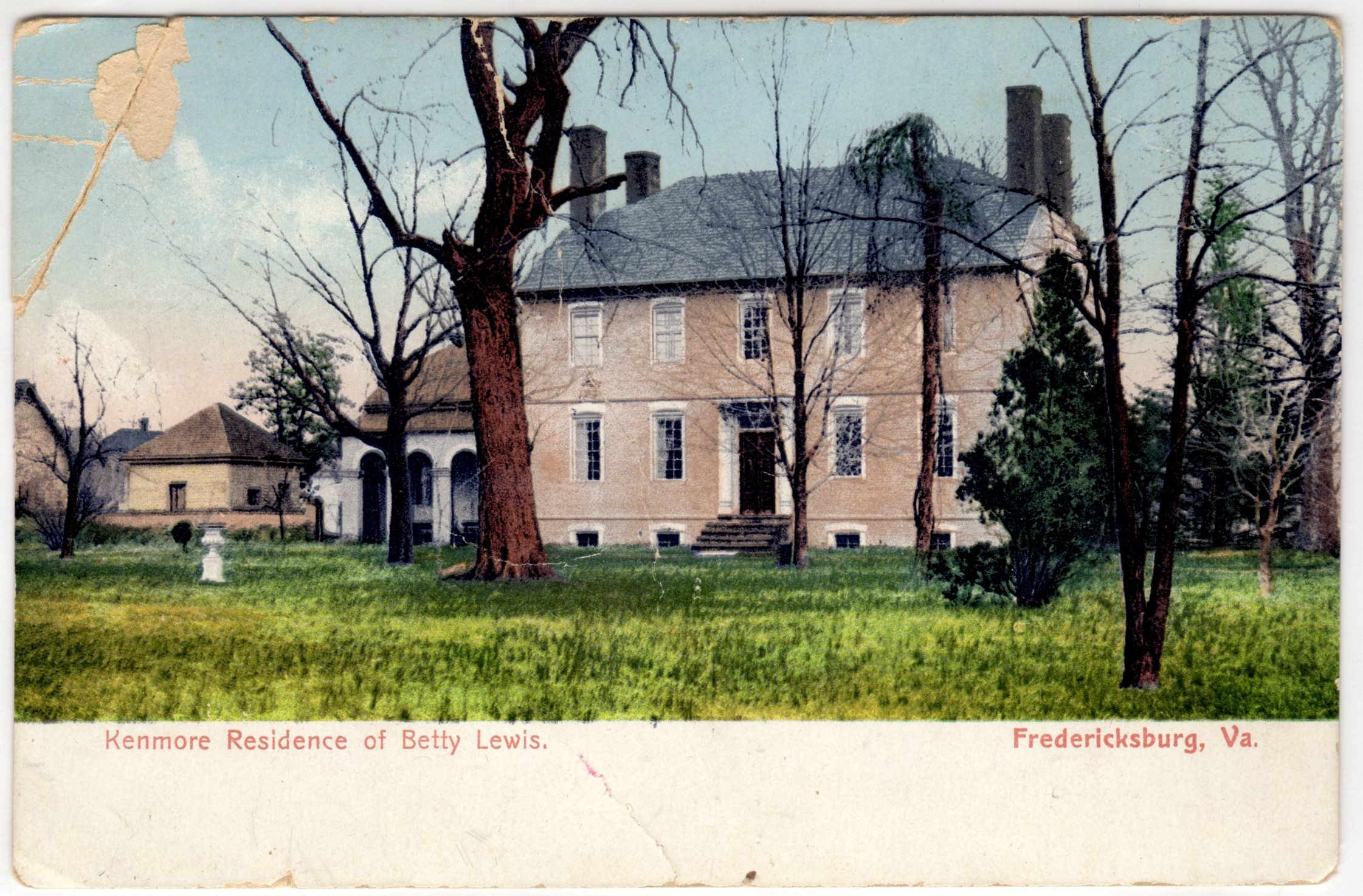
    Additionally, the exterior brick has been painted, along with the lintel, which was removed in 1929. We can see the paintwork better in the second color postcard. 

    Interior

    Entrance Hall

    One of the earliest postcards we have of the entrance hall, around 1923.    One of the most notable things is the plasterwork on the ceiling.  If you see current pictures of the entrance, you will notice that this plasterwork no longer exists.  The plasterwork was done by former resident William Key Howard, Jr., when he was restoring the original ceiling in the other rooms.    In 1930, the Association decided to remove the plasterwork because it was not original to the Lewis family.  Mr. Howard Jr. was not happy when he found out that the plasterwork had been destroyed and called it an act of vandalism. 

    Additionally, we can see next to the tall case clock a door that leads into the drawing room, which no longer exists.  It was decided that this was not the original placement, and the door was moved directly across from the office door in 1930. 

    Chamber/NW room, first floor

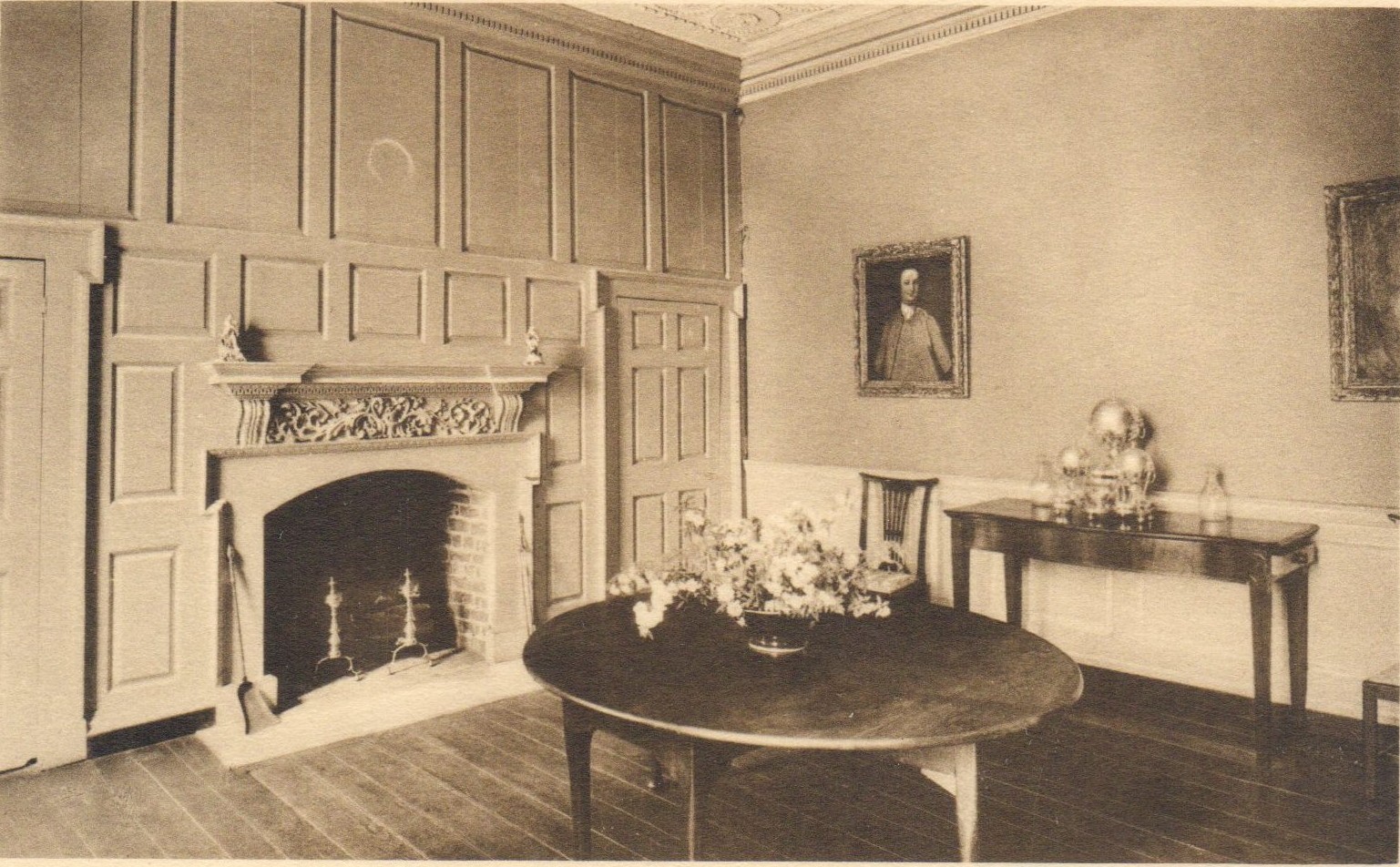
    While we currently interpret the NW room on the first floor as the chamber, the ladies referred to it as the Dining Room. We can see a round table, a sideboard, two chairs, and two portraits, plus a large silver tea urn.   The postcard dates from the late 1930s because we know from our records that most of these pieces were donated in 1935.  We still have all these objects in the collection, but the only things currently on display to the public are the round table in the dining room and the chairs in the drawing room.  All other pieces are in storage. 
    Dining Room/NE room, first floor

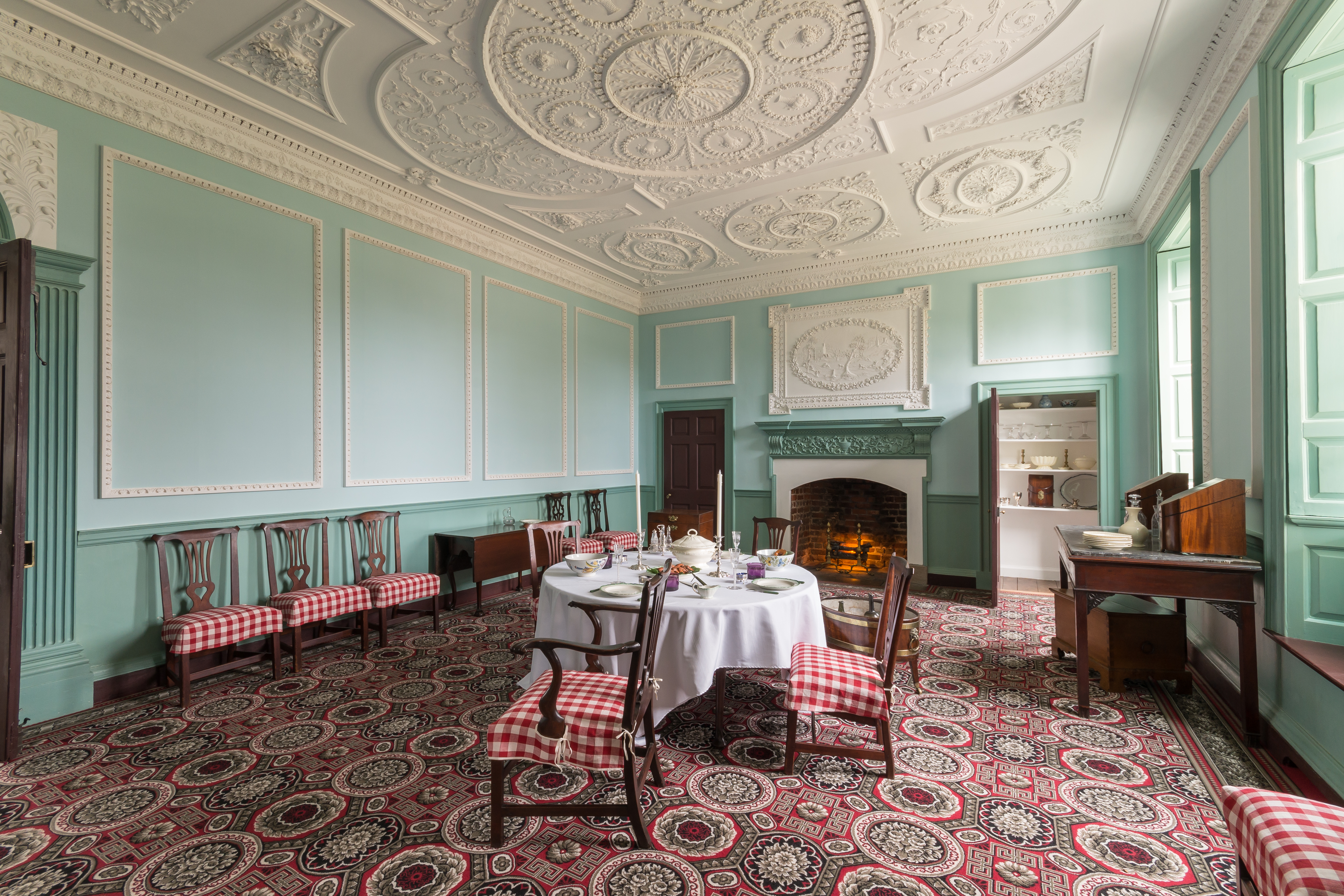
    We currently refer to the NE room on the first floor as the dining room.  It has undergone many changes, with Gothic arches added to the closets during the 19th century, and has been restored to its original shape.   Not everything in the postcard is still in our collection, but you can see the square table still on display in the dining room, and Betty’s portrait is now in the drawing room. 

    On the left is the Dining Room during the Howard occupation around the 1890s, and on the right, the Dining Room today
    The Dining Room after the Kenmore Association’s restoration, c. 1940s

    Drawing Room/SE room, first floor

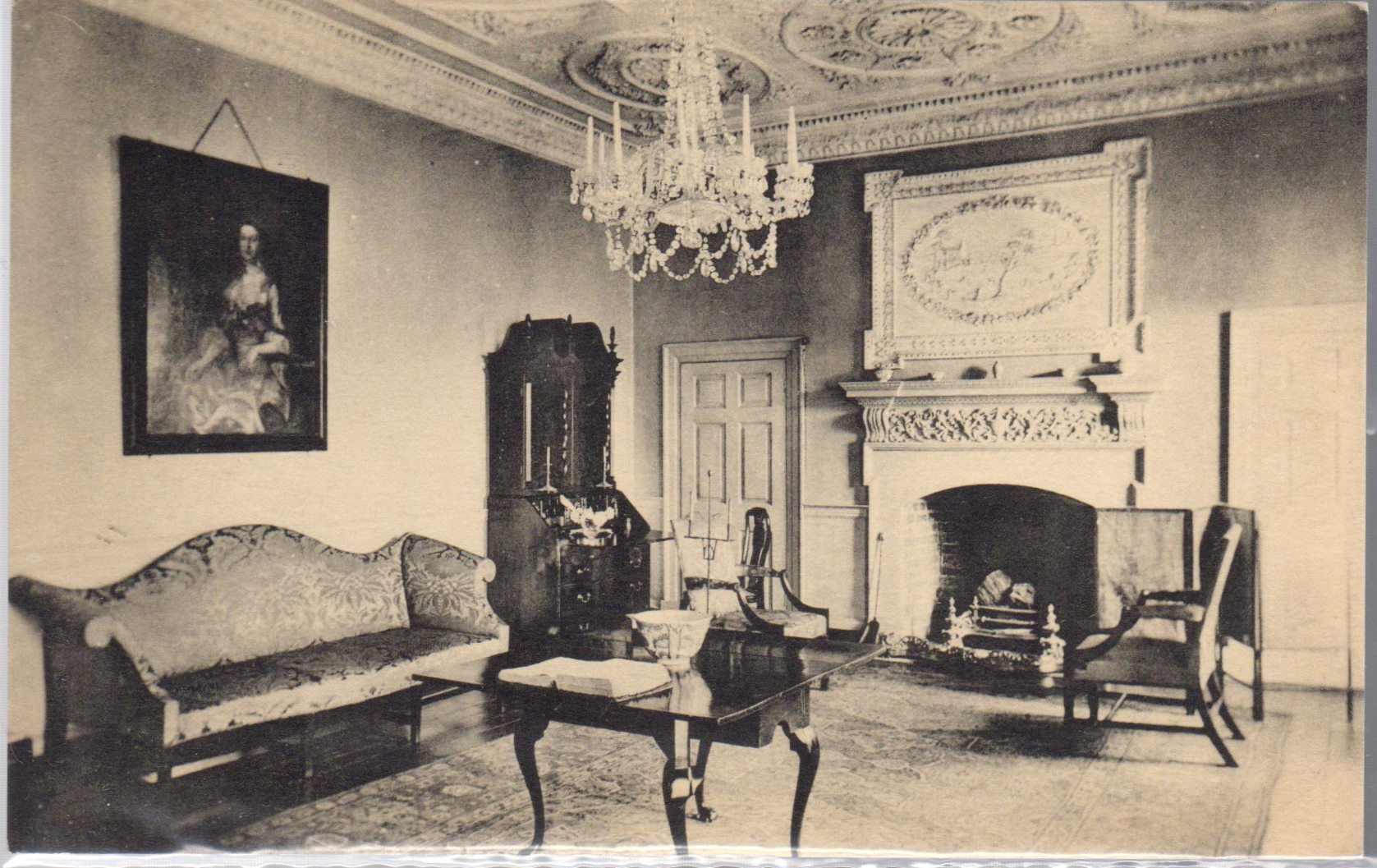
    The drawing room was previously known as the library and also served as a chamber for a while in the 1980s.  By the window, you can see Betty’s desk in the older postcard (c.1940s), which is still on display, but in the chamber.  We still have the tea set on display where it was in the chamber, but it is currently in storage.

    On the left is the Drawing Room during the Howard occupation around the 1890s, and on the right is the Drawing Room now

    Office/SW room, first floor

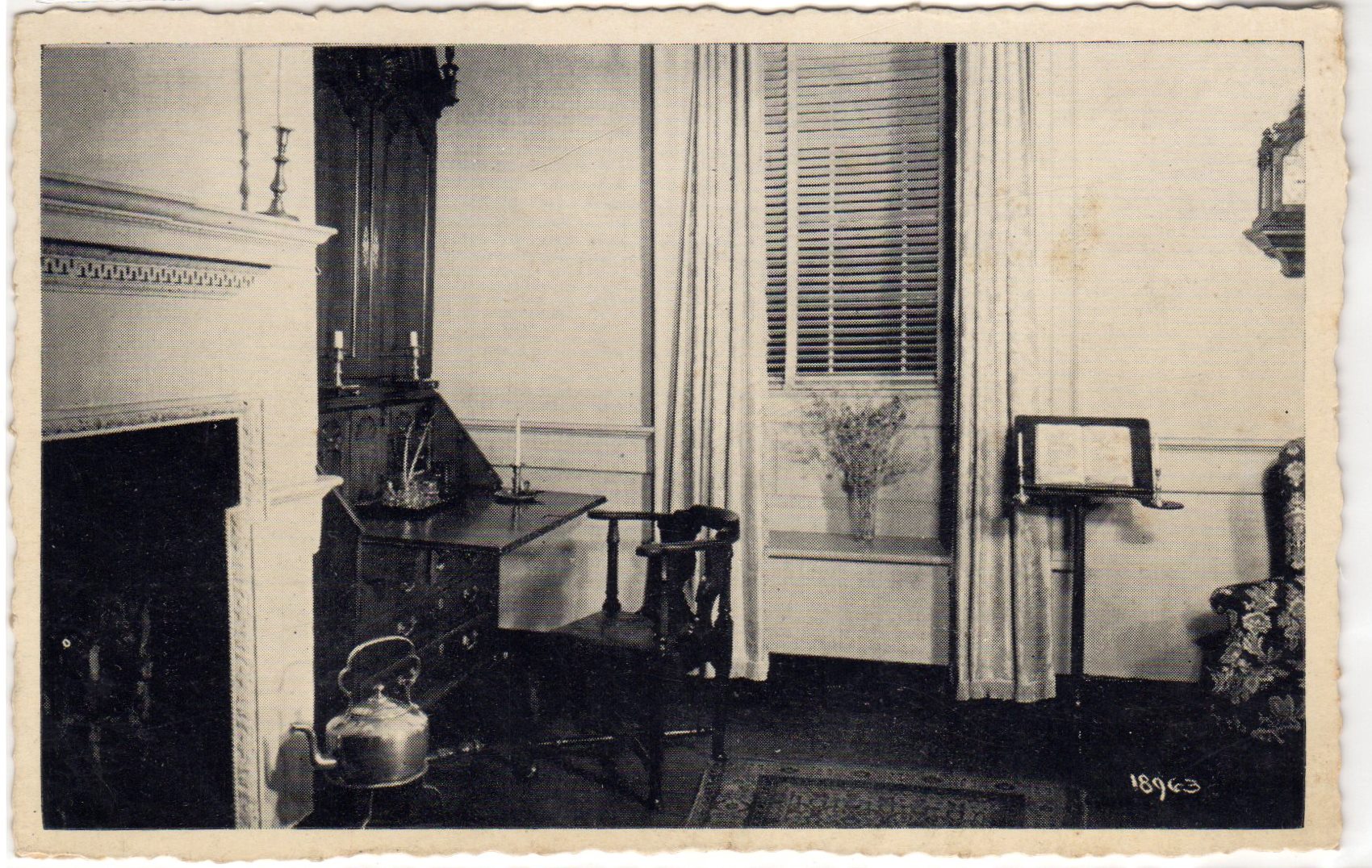
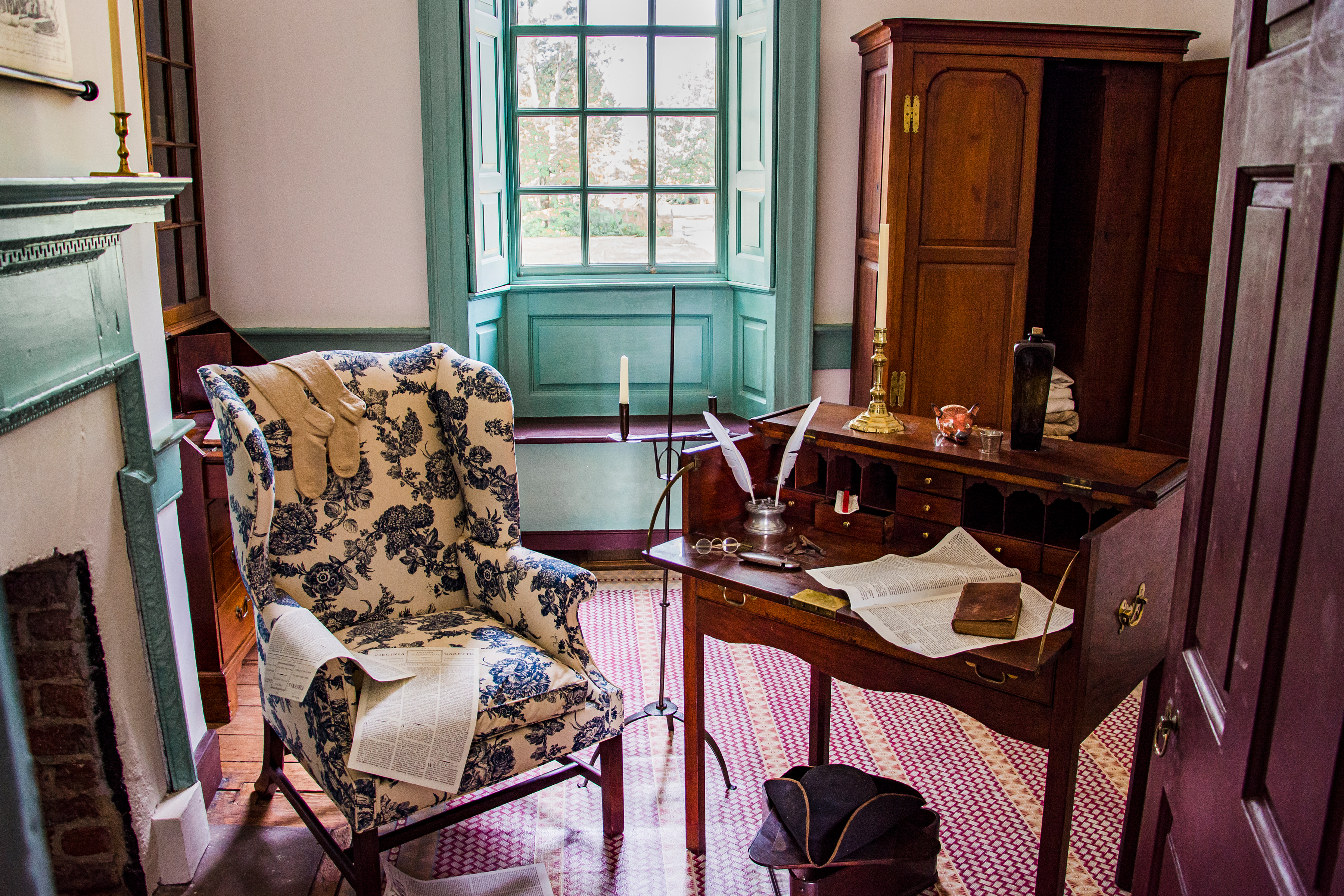
    Fielding’s office has been displayed as a sitting room and a kids’ room.  We don’t have many of the objects in the postcards still in the collection, except the corner chair, which now has a check seat, and the music stand, which is too fragile at the moment for display.
    2nd floor

    We currently do not offer tours of the upstairs area because we don’t put too much stress on our lovely plaster ceilings.  The Kenmore Association interpreted the upstairs as individual bedrooms for the family, which is not the most historically accurate version.

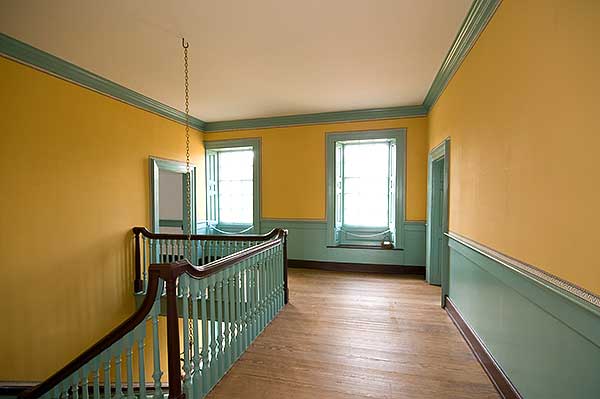
    Hallway/ 2nd floor

    Besides the paint color, the hallways upstairs remain structurally the same.  The ladies have Betty’s desk on display, with the Hammond quilt above.  We still have the Hammond quilt; fortunately, we removed it from the frame, but it is a massive quilt and is not currently on display. However, it is in excellent condition.  As for the tall case clock, chandelier, and curtains, they have been lost to history.

    “Mary Washington Bedroom”/NE room/2nd floor

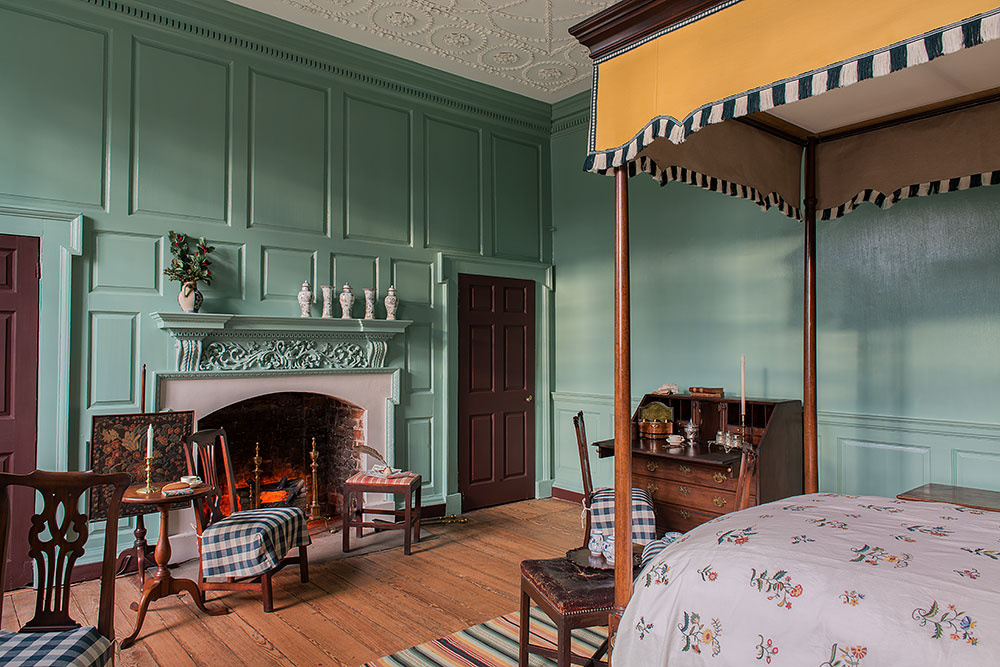
    We have no evidence that Mary ever had a dedicated bedroom at Betty’s house, and it seems unlikely with the size of the Lewis family.  We do still have some of the pieces in the collection. The tea box is currently on display in the chamber, and the yellow tea set has been displayed intermittently over the years.  The two calendar prints hung on the wall are now downstairs in the drawing room.  Lastly, the chaise lounge was loaned to the foundation by the Metropolitan Museum of Art in the 1930s (subsequently purchased in 1968) and is currently in storage, as there is no evidence that the Lewis family owned many northern furniture pieces.
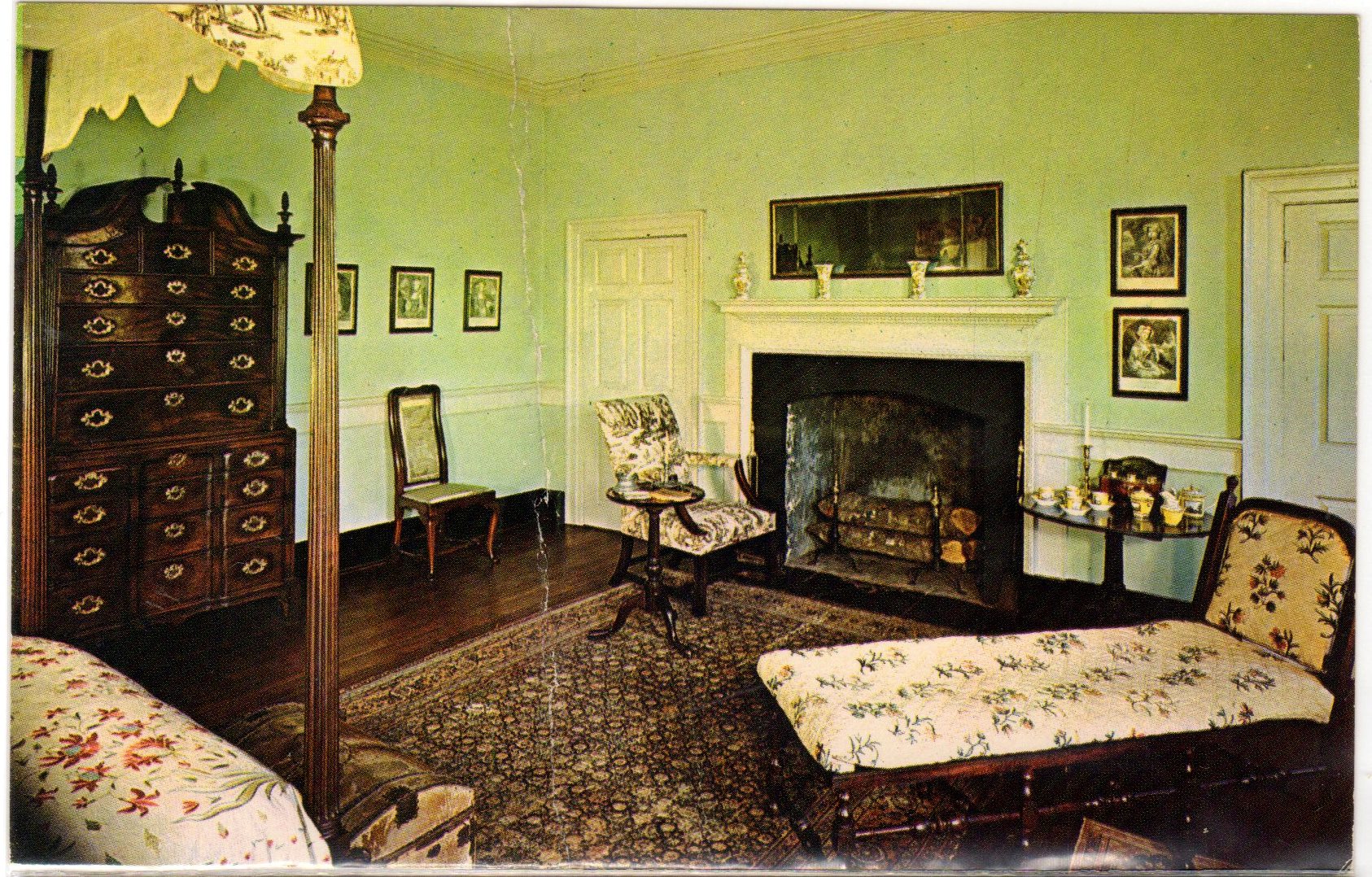
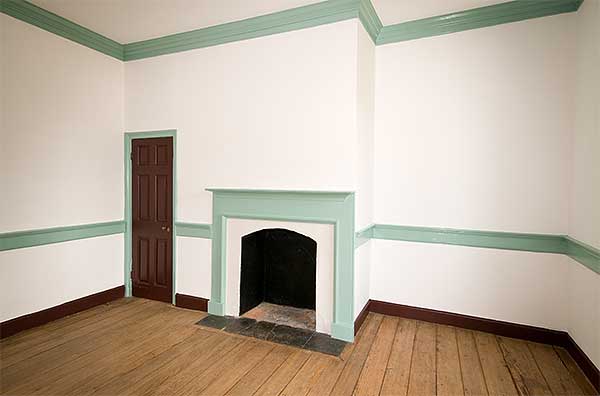
    “Mary’s Bedroom” is currently storage with temporary covering to protect the original floors.

    “Guest Bedroom”/NW room/2nd floor

    Much like “Mary’s bedroom,” it is very unlikely that the Lewis family had a “guest room,” with as large as the family was, it would have been a waste of space.  The bed still resides in our collection, disassembled and in storage. 

    “Betty’s bedroom”/SE room/2nd floor

    Again, during the Lewis occupation in the 18th century, individual bedrooms were not common, except for the head of the family.  Not many of the objects in the postcard are still in our collection, except for the bed, which is now in the chamber downstairs, and the William Walker, Jr. armchair, which is currently off display, but we do have another one in the dining room.
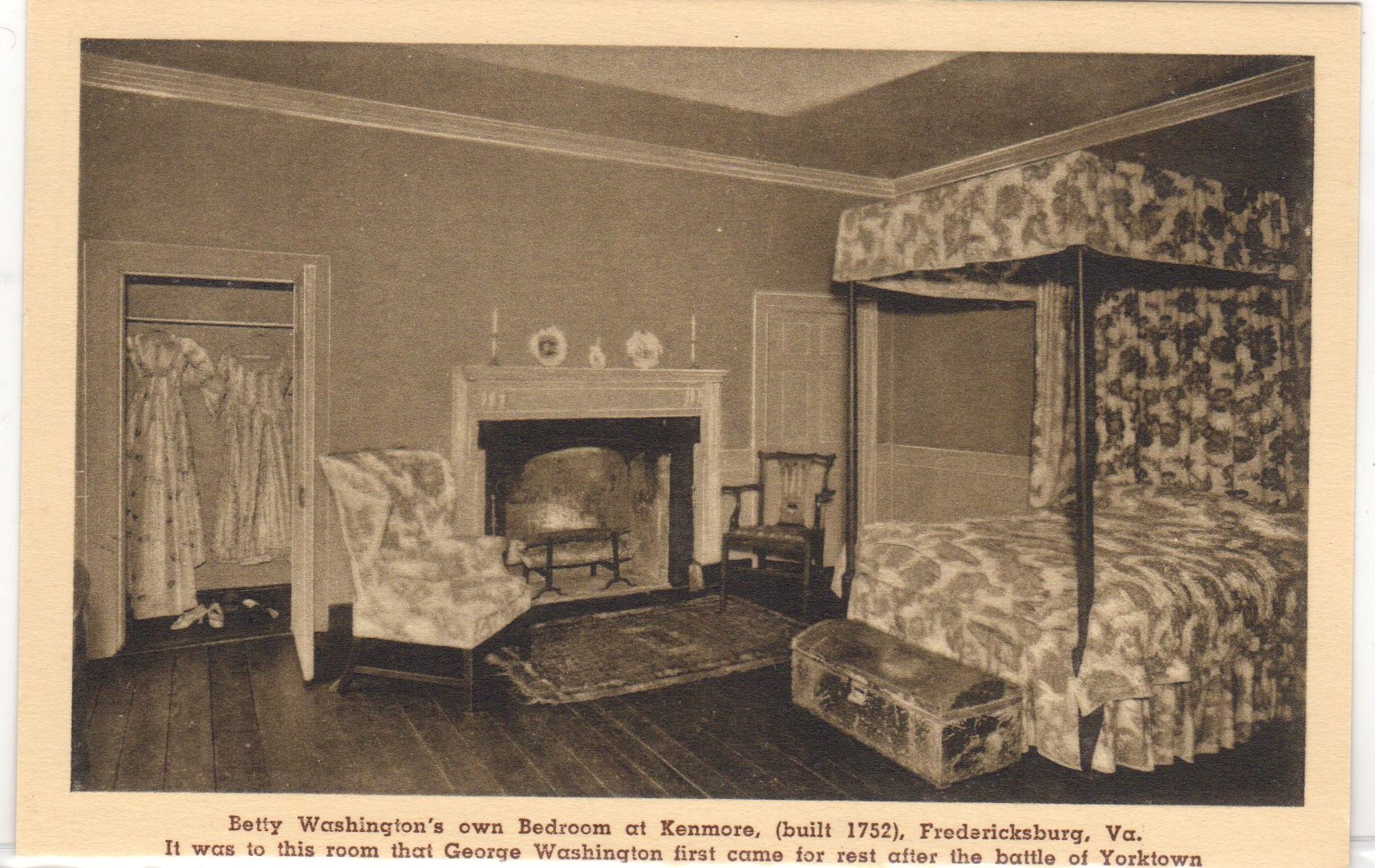
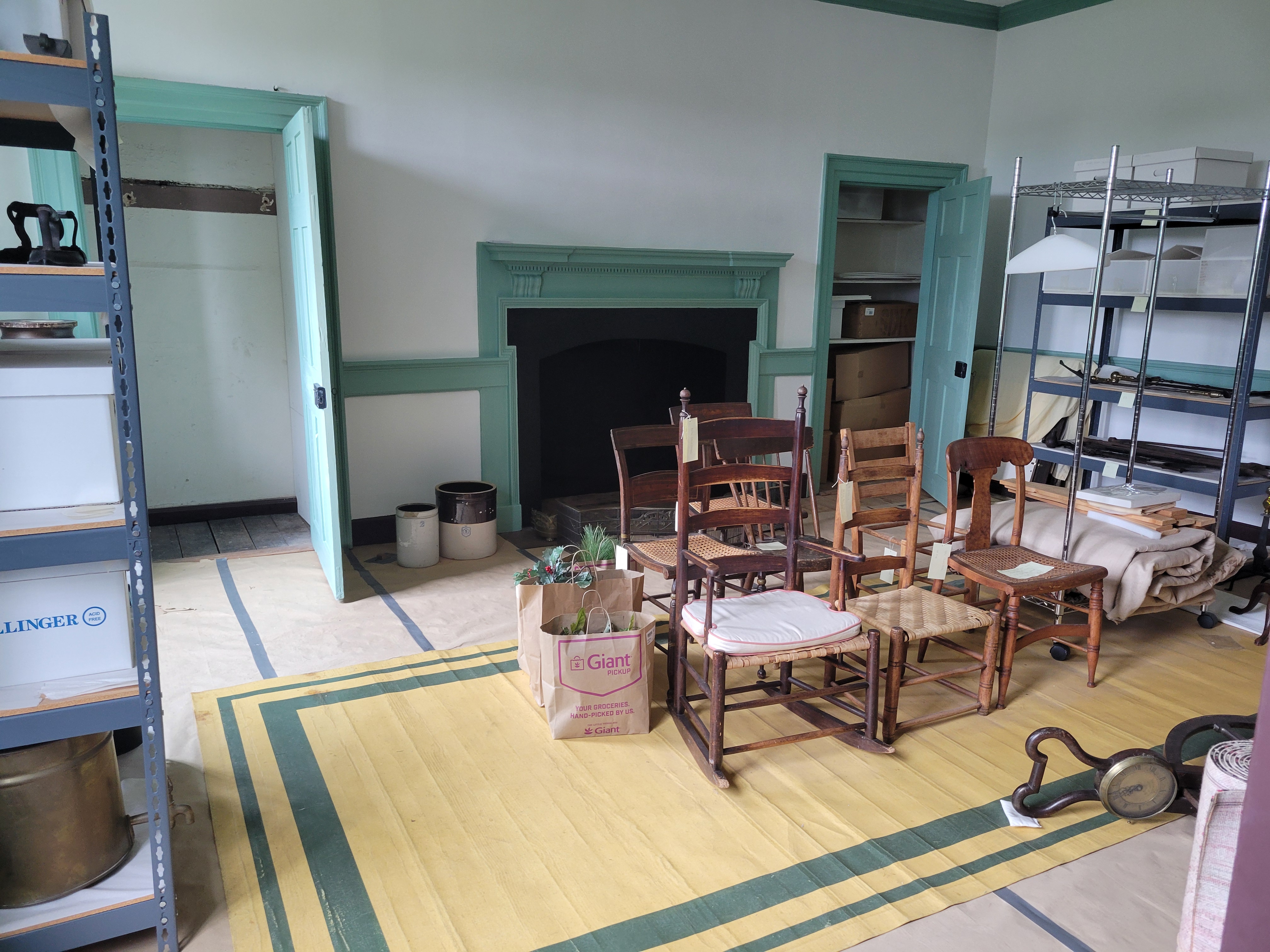
    “Betty’s bedroom (2nd floor SE) is currently used as storage…and some Twelfth Night decorations

    “Boy’s Room”/SW room/2nd floor

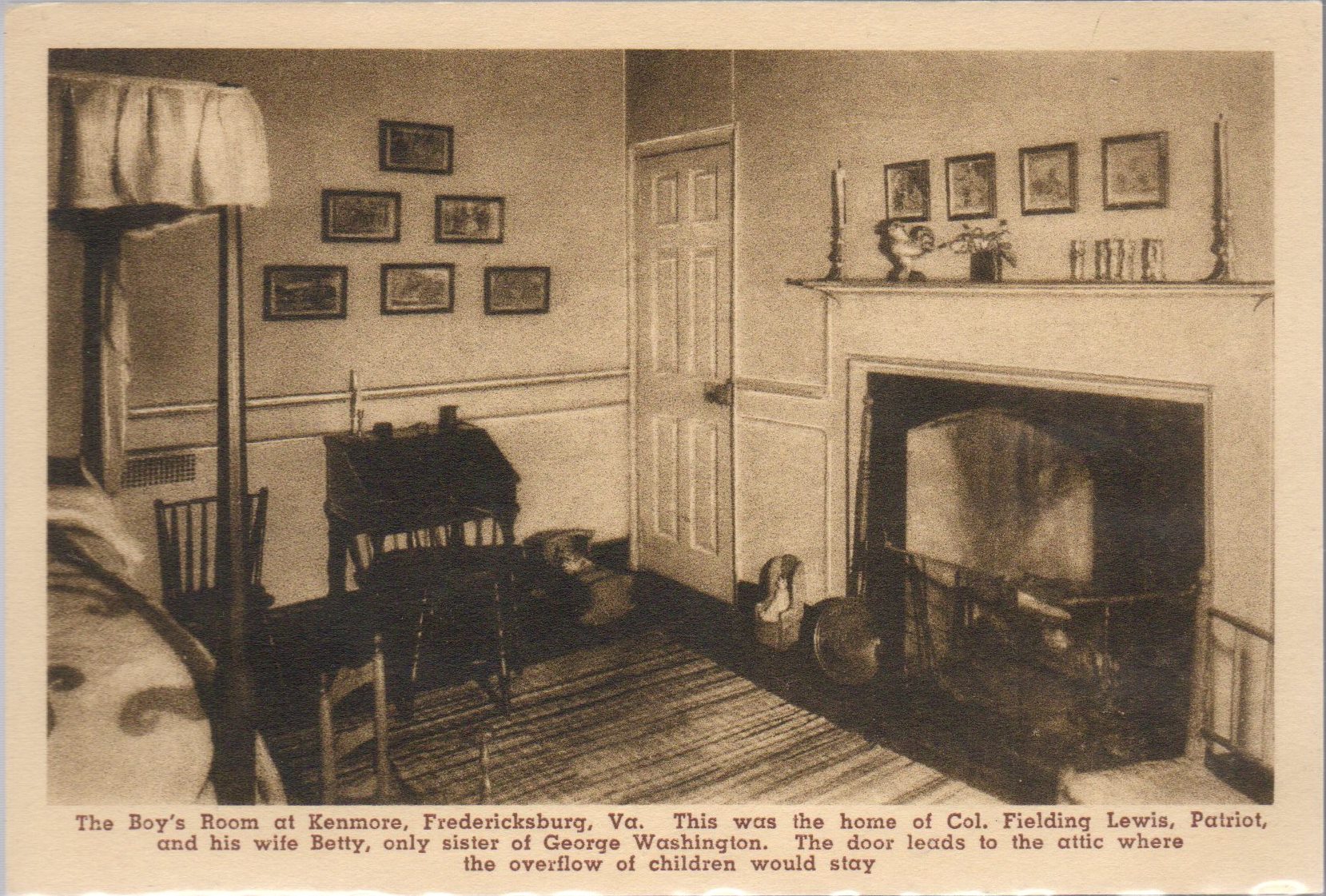
    The last room upstairs is smaller than the other rooms and has access to the attic.  The ladies used this as the boys’ room, but as we discussed, with the other rooms, it is unlikely that this was accurate.  We do still have many of the pieces’ pictures, but the only one currently on display is the slant-top desk in the Visitors Center. 

    Heather Baldus

    Collections Manager
  • New Kids on the Block: The 20th-Century Houses of Kenmore Court

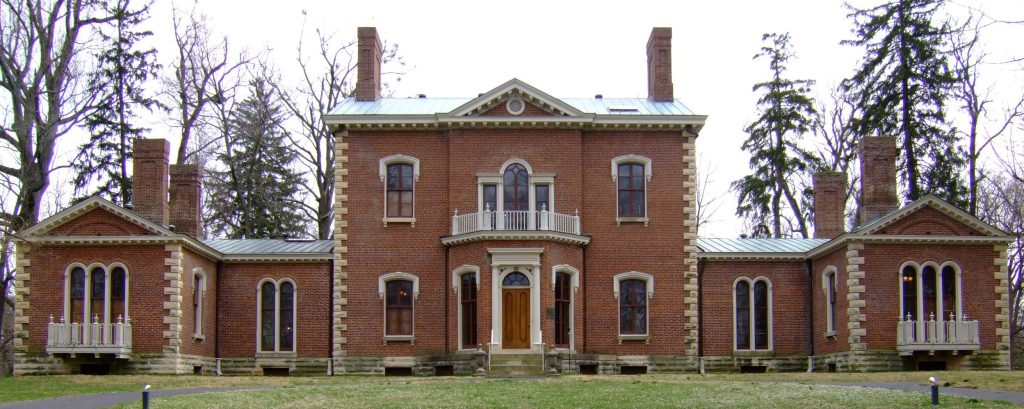
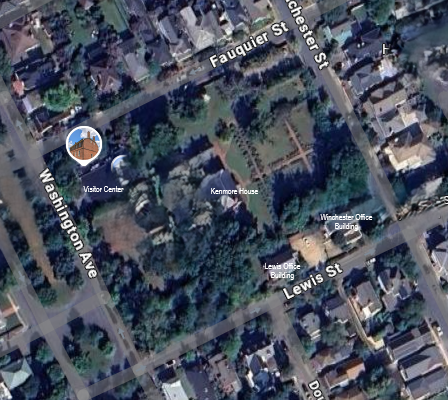
    When you visit Historic Kenmore today, you will find a preserved city block with gardens and pathways reaching from front to back. The tranquil estate is only interrupted by two other houses along Lewis Street, hidden behind a tree line. These buildings remain the only surviving evidence of a time when Kenmore’s block was almost swallowed up by modern developments.

    Although we have spoken at length on this blog about how Kenmore was saved from being turned into apartments (here, here, and here), we have not yet covered the houses that had, in fact, already gone up before Mrs. Emily Fleming and “Miss Annie” Fleming-Smith had even begun their fundraising.

    In 1914, Kenmore was sold by the Howard family, the last private residents of Kenmore, to Elmer “Peck” Heflin, a prolific land developer in Fredericksburg. By the end of the year, Heflin had already subdivided Kenmore into several lots and began to sell them off.

    A newspaper advertisement placed by Heflin in The Daily Star, November 1914.

    His goal was ultimately to turn the Kenmore block into a picturesque and modern housing development complete with single-family houses, apartments, driveways, and a parkway. This was illustrated for all of Fredericksburg to see in another newspaper ad from 1921 (Heflin, 1921). Heflin’s vision for the court was a 20th century city developer’s dream, squeezing as many lots as he could get into the space and ensuring that automobiles could have access to the entire area. Cutting edge, efficient, and shockingly modern.

    “Kenmore Court” plans with “Kenmore Residence” at the center, The Daily Star, January 1921

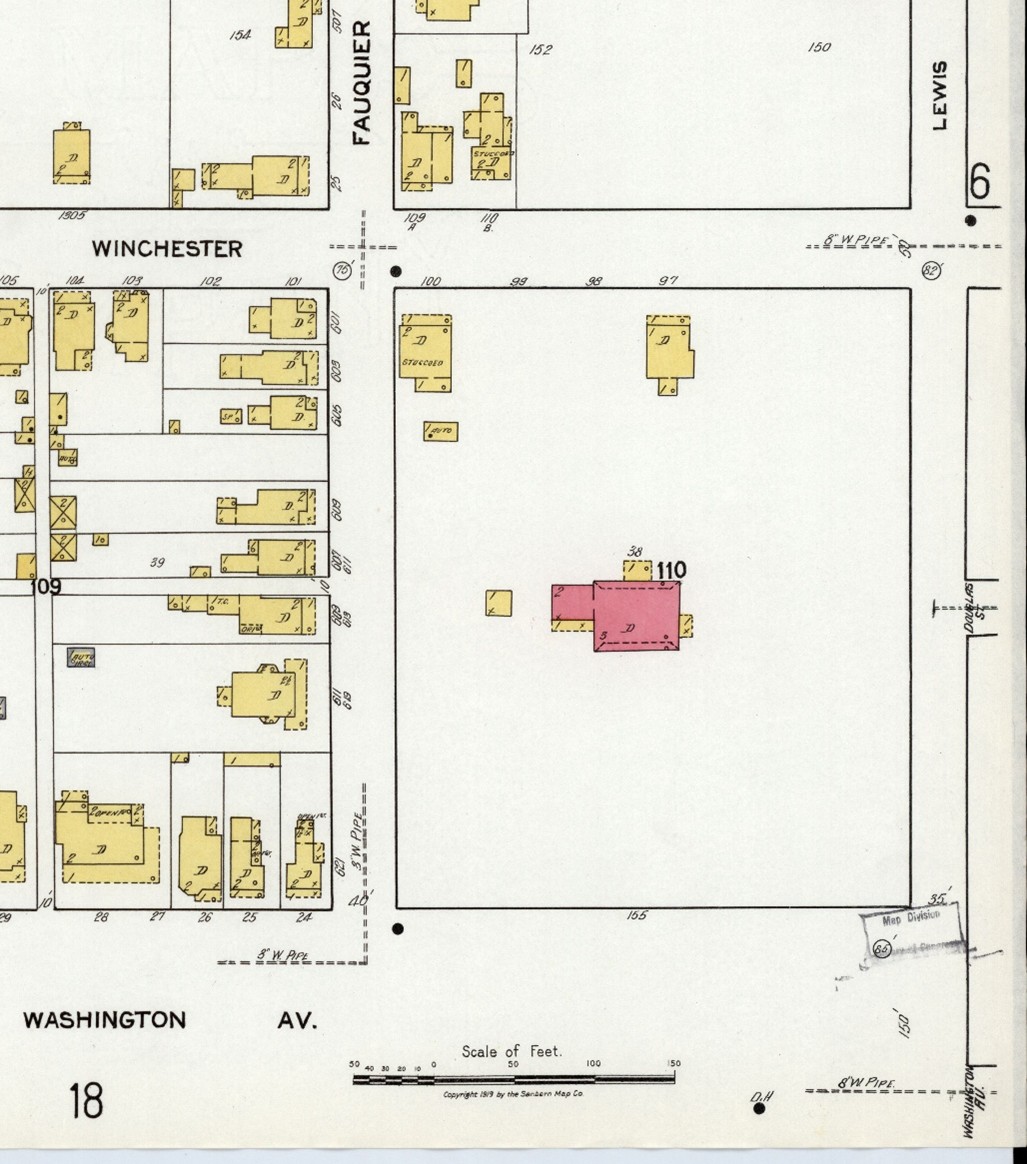
    By the time this advertisement ran, at least two of the proposed twenty lots had already been built on and three more had been sold to future homeowners. The earliest developments were done along the 1200 block of Winchester Street (which runs along the top of the illustrated plan).

    A fire insurance map from 1919 showing the two new houses and Kenmore. (Sanborn Map Co., 1919).

    It was possibly this very newspaper ad with the proposed plan, seen by Mrs. Fleming and Miss Annie, that shocked them into action to save Kenmore before it was too late. However, even though they had finished their payments to Heflin by 1925 and officially owned the Kenmore mansion, they had yet to undo the sales that had already been made.

    Between 1919 and 1927, another five houses went up along Winchester St. and an additional one along Lewis St. The lots in the 1200 block of Winchester were now completely filled.

    A fire insurance map from 1927 showing the Kenmore block with nine total houses and a now preserved Kenmore listed as “(Shrine)”. (Sanborn Map Cp., 1927)

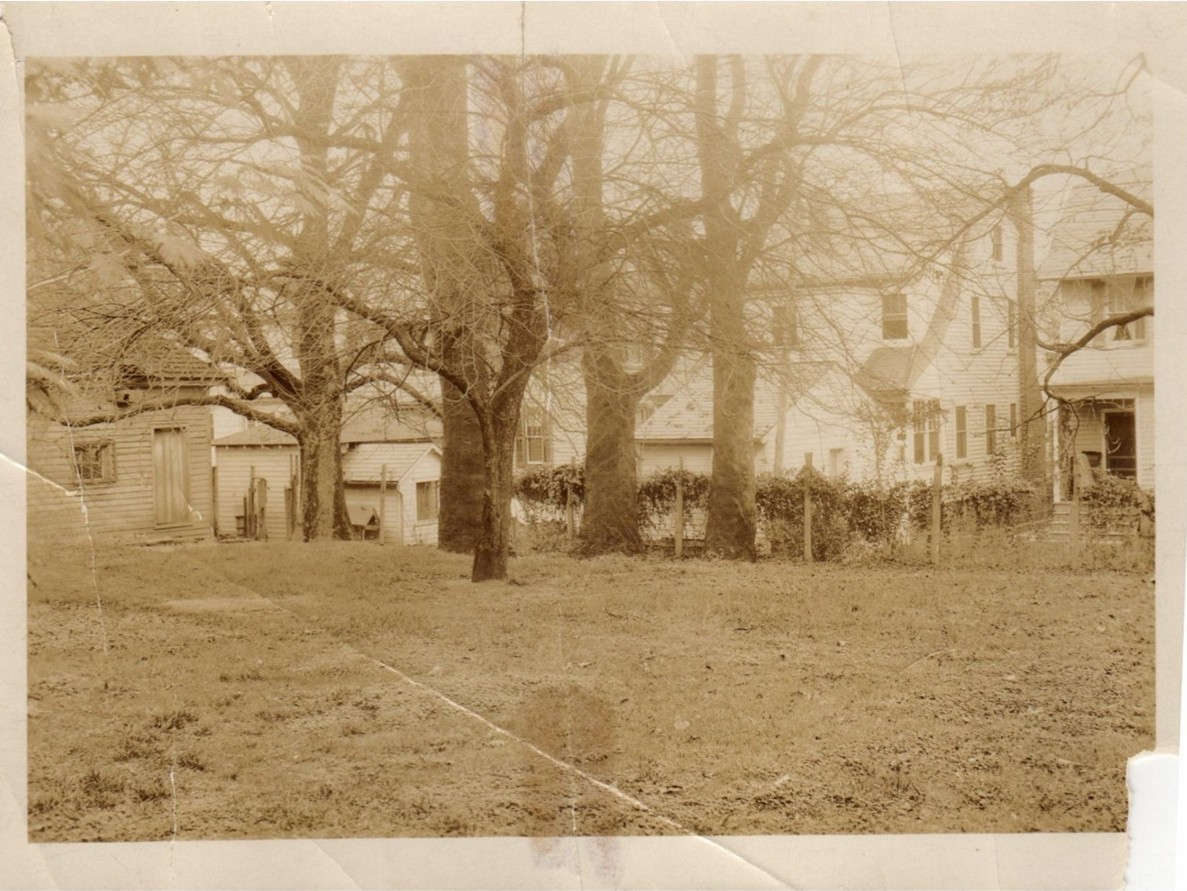
    Although the Kenmore Association now owned the Kenmore great house and had successfully saved it from demolition, they also valued the physical beauty that the surrounding land had potential for. The new houses were taking up space that could be gardens, reminiscent of what the original grounds may have looked like. But now, they only contained a view into several family’s backyards.

    Kenmore Gardens Pre-Restoration as seen from the portico of the Kenmore great house, photo from the George Washington Foundation Collection.

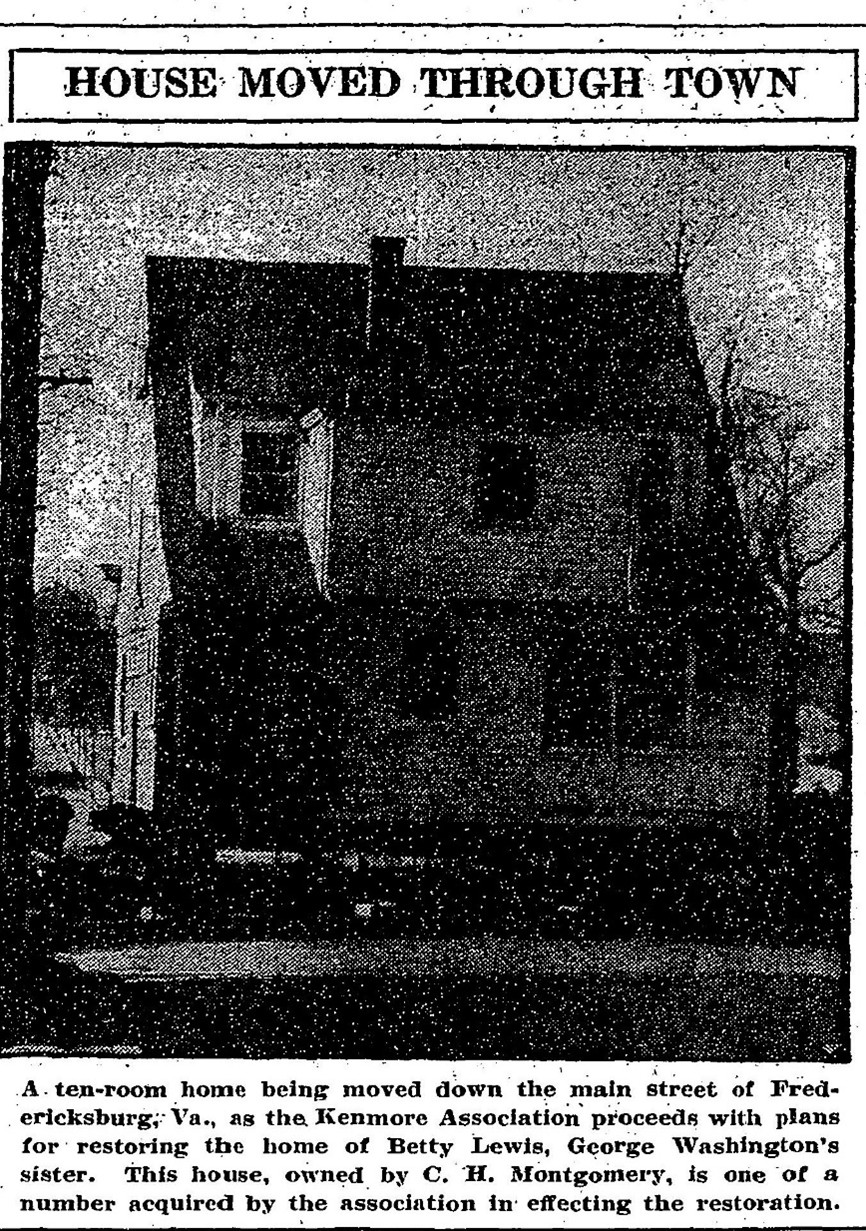
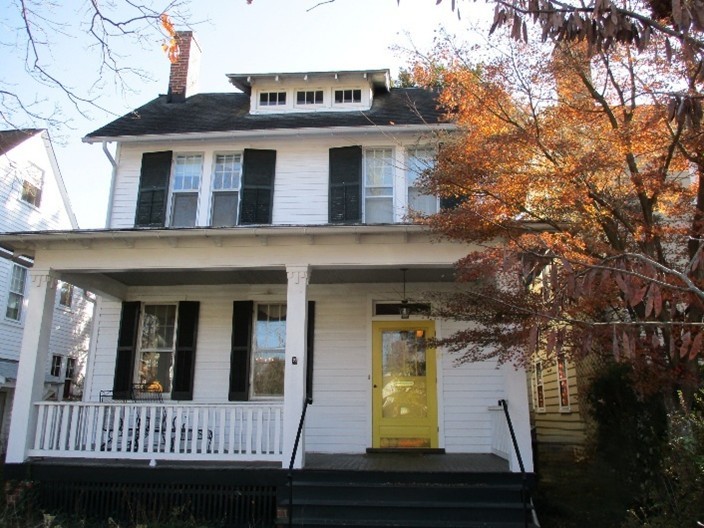
    The Kenmore Auxiliary for the Reclaiming of Land formed to buy back the sold lots (Whidden, 1972). By 1930 they had already purchased two of the houses, 1206 and 1208 Winchester, and two empty lots on Cornell Street, just a few blocks north. By 1931, the houses were physically moved from Winchester St. to Cornell St.

    “House Moved Through Town” article appeared in the Washington Post, Dec. 1930.

    The Kenmore Association continued to rent these houses out for some time to tenants, generating extra income to help with Kenmore’s preservation process, until they eventually sold the homes to private owners. These Cornell St. houses still exist to this day. Few changes have been made from their historical exteriors.

    With the assistance of donations from individuals and foundations all over the country, the Kenmore Association was able to raise enough money to make offers to three other homeowners along the 1200 block of Winchester St., all of whom accepted. Most of Winchester St. belonged to the Association by the end of the decade (Whidden, 1972). The houses continued to be rented out to tenants through 1940. Unfortunately, after that year we have not yet discovered what happen to the Winchester St. houses, but they no longer exist on the revised 1947 fire insurance map and are presumed to have been demolished around 1941 or ‘42.

    A fire insurance map from 1947 showing revisions made between 1927 and then. (Sanborn Map Co., 1948)

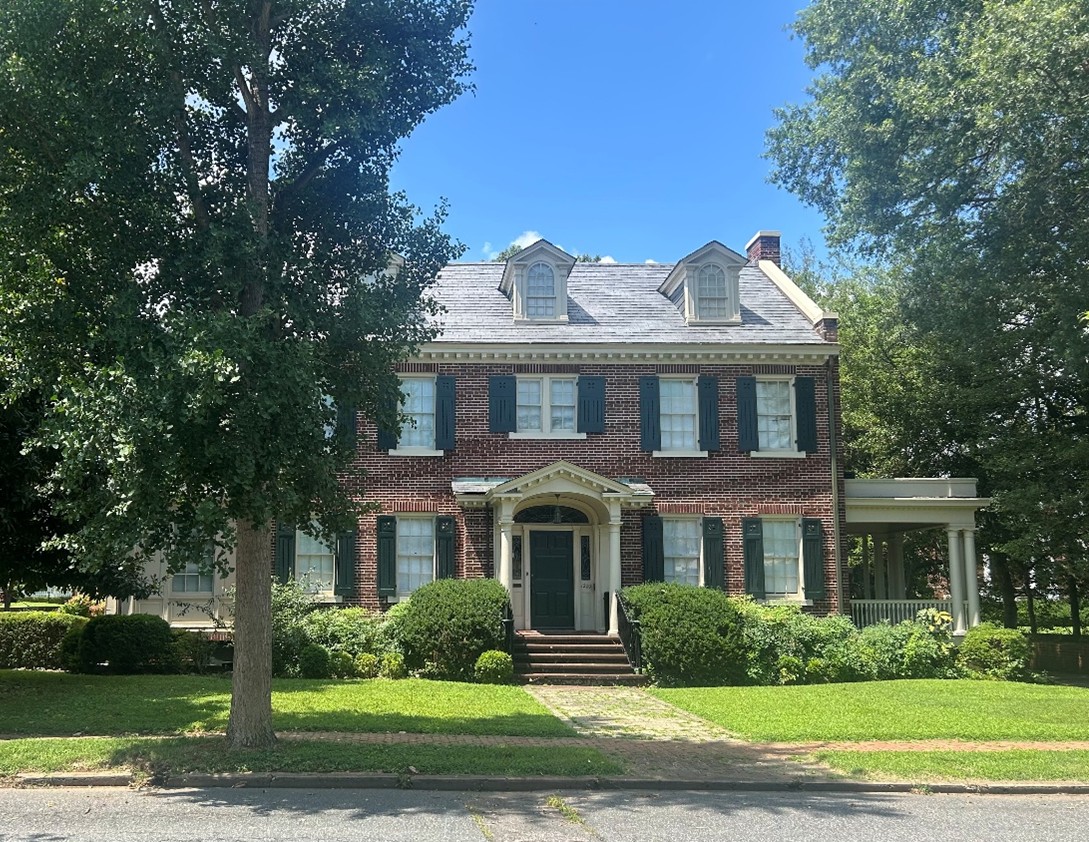
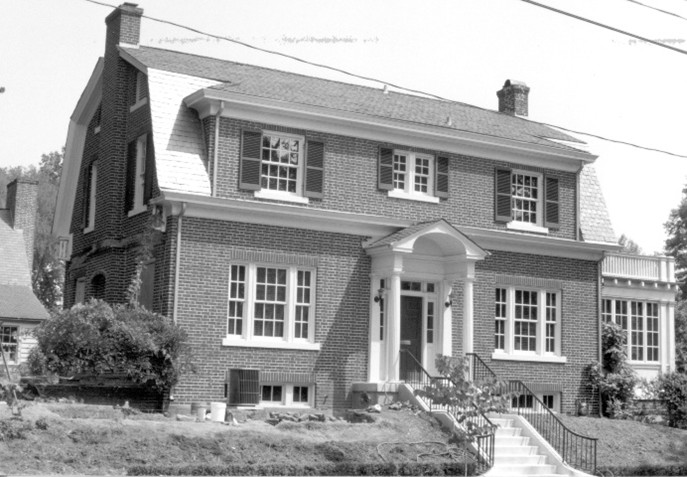
    You notice that there are still three houses remaining on the block alongside the Kenmore great house. These holdouts remained for many years as private residences. Two of these houses, 605 Lewis St. and 1200 Winchester St., can still be seen today.

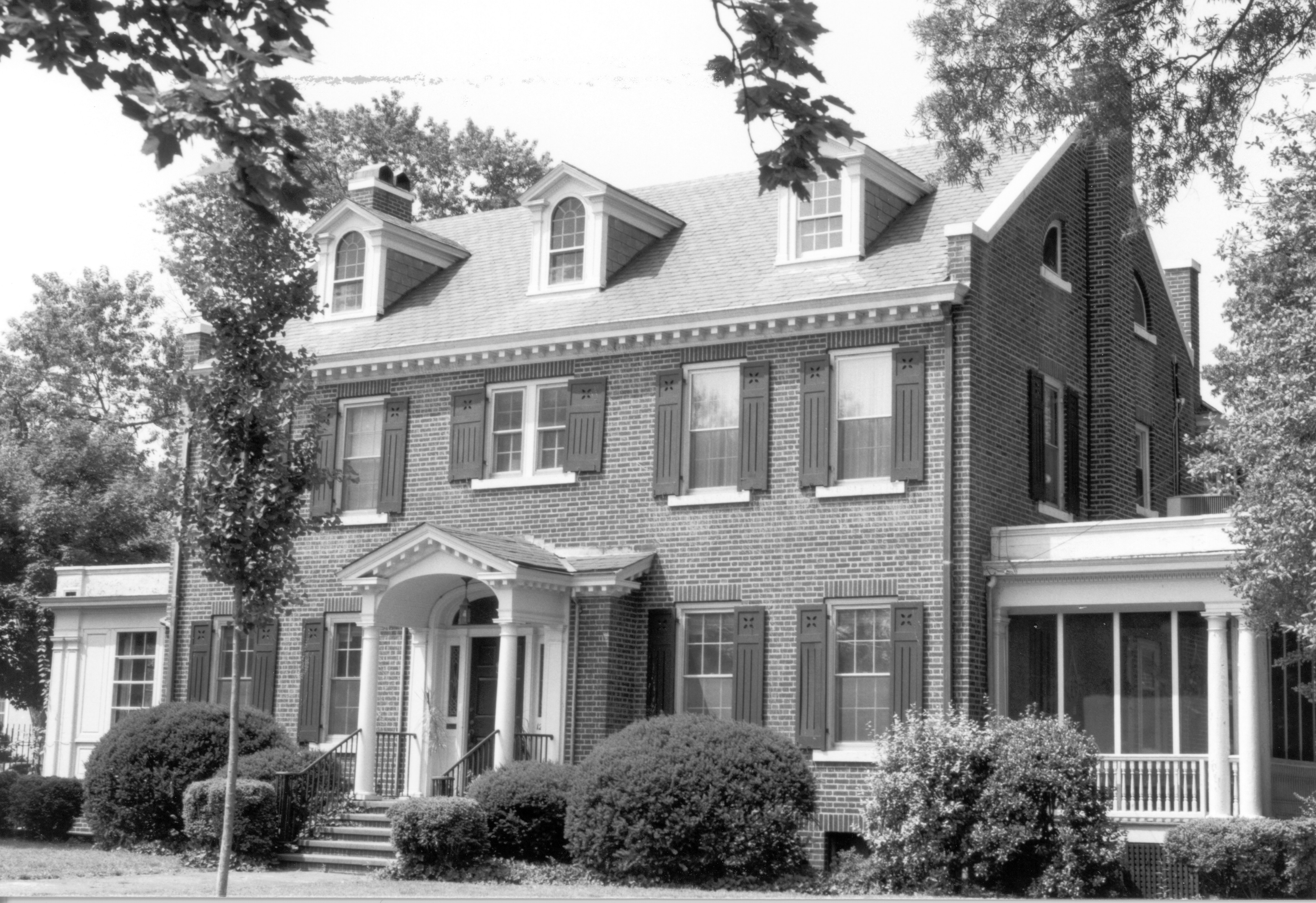
    1200 Winchester St. is a large brick façade building that was originally constructed for Dr. Frank Pratt. Dr. Pratt used to treat patients in the building’s basement and lived in the house until his passing in 1964. He founded the Pratt Medical Group in 1937, which still exists today with several locations in Fredericksburg and Spotsylvania (Obituary, 1969). His house was sold in 1991 by the last private owners, the Westfall family, to the Kenmore Association and has become one of the main office buildings on the site.

    605 Lewis St. has a very similar story to 1200 Winchester. Another brick structure, it was built for William Lacy who lived there with his wife Norah, daughter Celia, and sister-in-law Celia Goolrick. Lacy was a pharmacist who passed away in 1933, leaving his home to his wife. She and her sister continued living in the house until both had passed by 1965 (Obituary, 1965). The building was sold to the Kenmore Association in 1992 and converted to offices as well.

    The house I’ve saved for last has quickly become my favorite, since it’s the one that sparked my interest in this subject in the first place. While visiting a small antique shop in central New York of all places, I stumbled on a postcard with an image of 1216 Winchester St., also known as the Wilson House.

    The Wilson House on a postcard, circa 1921-1941. From the George Washington Foundation Collection.

    The Wilson house was the only Stucco house of the bunch, constructed in the prairie style. It was owned by Thomas Wilson, co-founder of Wilson Bros. Lumber. He, his wife Temple, Daughter Esther, and granddaughter Janet all lived in the house in 1930. By 1940, it had become a boarding house that rented out space to tenants and visitors. It had at least three units inside of it.

    The Wilson house sat on the corner of Fauquier and Winchester streets, blocking Kenmore’s new brick wall originally meant to extend around the block, until 1971. I don’t know what changed that year, whether it was a death or shift in the family or if the money finally became too good of an offer to refuse, but the Wilson family finally sold their home to the Kenmore Association, who promptly had it razed (Whidden, 1972). The brick wall was never full finished, and the area where this beautiful house once stood is now used as a service lot.

    There are countless other things that could be said about these missing structures that haunt the property. The stories of the people who lived in them. A debate about whether these modern homes were worthy of preservation as well. The archaeological damage that their construction likely caused. So on and so forth. One thing is certain though: the grounds of Kenmore hold history. Not just of the Lewis family, but of the Pratts, the Wilsons, the Lacys, the Franklins, the Coxes, the Joneses, and the countless others who once lived on this city block.

    Sarah Alden

    Manager of Visitor Services and Interpretation


    Bibliography

    City of Fredericksburg. (2025). 806 Cornell St. Fredericksburg: Fredericksburg Information Technology.

    City of Fredericksburg. (2025). 808 Cornell St. Fredericksburg: Fredericksburg Information Technology.

    Heflin, E. (1921, January 24). Modern Homes. The Daily Star, 28(180), 4.

    Lots on Beautiful Kenmore Court. (1914, November 12). The Daily Star, 22(119), 2. Fredericksburg, VA.

    Obituary. (1965, May 19). Mrs. W. J. Lacy Dies in Atlanta, Rites Thursday. The Free Lance-Star, p. 5.

    Obituary. (1969, May 10). Monday Rites for Mrs. Pratt. The Free Lance-Star.

    Sanborn Map Co. (1912, July 12). Fire Insurance Maps Online. Retrieved from Historical Information Gatherers: https://fims-historicalinfo-com.ezproxy.virginiamemory.com/FIMSSD.aspx?m=09021_1912

    Sanborn Map Co. (1919, October 31). Fire Insurance Maps Online. Retrieved from Historical Information Gatherers: https://fims-historicalinfo-com.ezproxy.virginiamemory.com/FIMSSD.aspx?m=09021_1919

    Sanborn Map Co. (1948, June 7). Fire Insurance Maps Online. Retrieved from Historical Information Gatherers: https://fims-historicalinfo-com.ezproxy.virginiamemory.com/FIMSSD.aspx?m=09021_1947

    Sanborn Map Cp. (1927, May 27). Fire Insurance Maps Online. Retrieved from Historical Information Gatherers: https://fims-historicalinfo-com.ezproxy.virginiamemory.com/FIMSSD.aspx?m=09021_1927

    Stanton, G. (2011, February 21). 15th US Census, 1930. Fredericksburg City Enumeration District 107-1 Upper Ward. Retrieved from Fredericksburg Research Resources: https://resources.umwhisp.org/Fredericksburg/census/fbg1930ED107-1.htm

    Stanton, G. (2014, November 28). 16th U. S. Census, Virginia, Fredericksburg (Upper Ward), S.D. 1, ED No. 107-3. Enumerated Beginning 2 April 1940. Retrieved from Fredericksburg Research Resources: https://resources.umwhisp.org/Fredericksburg/census/fbg1940ED107-3.htm

    Whidden, R. W. (1972). Kenmore 1752: Fifty Years as a National Shrine. Richmond, VA: Whittet & Shepperson.

  • Kenmore Goes to Sea: Ship Naming in the US Navy

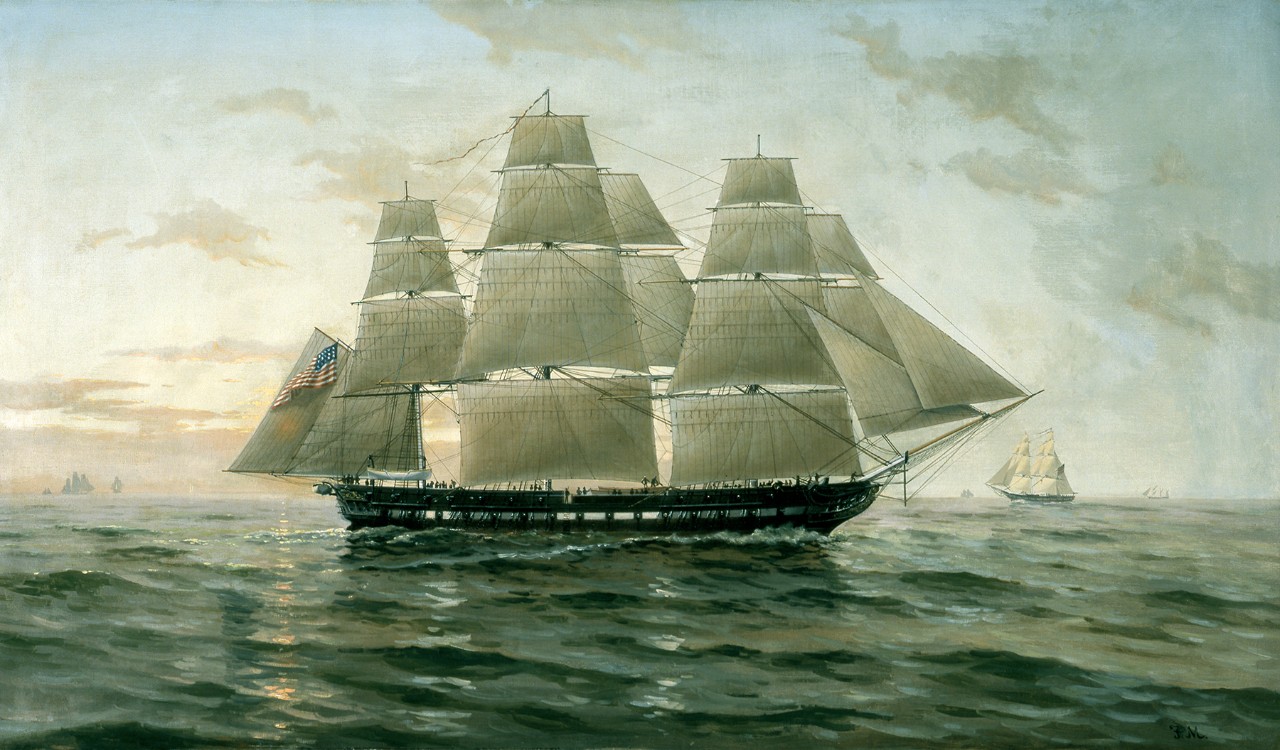
    On July 22, 1942, Annie Fleming Smith wrote a letter. Smith was a prolific letter writer—her innumerable missives had helped raise the funds that saved Kenmore two decades earlier—so it is not surprising that she put pen to paper on that summer day. What is surprising is that the intended recipient of that letter was not a prospective donor, a fellow regent of the Kenmore Association, or a friend. Instead, she addressed her epistle to Frank Knox, the Secretary of the Navy. Smith wanted “confirmation of the fact of the naming of the U.S.S. KENMORE” after the home and “any other information you can release” about the ship.[1]

    Letter that Annie Fleming Smith sent to Secretary of the Navy Frank Knox asking for confirmation that the first USS Kenmore had been named after the historic home. Smith, Annie Fleming to Frank Knox, July 22, 1942. The George Washington Foundation.

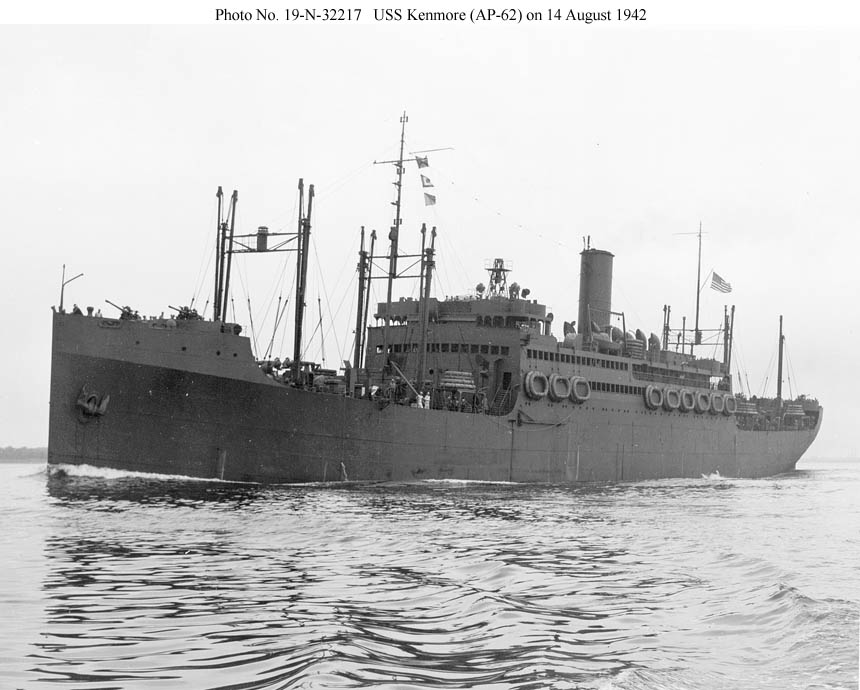
    Although there is no record that Knox responded to Smith (there was, after all, a war on), the USS Kenmore was, in fact, named for the historic estate. The Naval History and Heritage Command ship-naming file on Kenmore I (AP-62) includes an April 13, 1942, memo to the Secretary of the Navy from the chief of the Bureau of Navigation and prepared by Louis Emil Denfeld, then assistant chief of the Bureau of Navigation, recommending that the President Madison be renamed Kenmore, in honor of the “[h]ome of Betty Washington at Fredericksburg, Virginia, sister of George Washington who married Col Fielding Lewis.”[2] The recommendation was approved on April 16 of that year, and the newly renamed vessel was “commissioned at Baltimore, Md., on 5 August 1942, Cmdr. Myron T. Richardson in command.”[3]

    USS Kenmore (AP-62) on trials in the Chesapeake Bay on August 14, 1942. Shipscribe

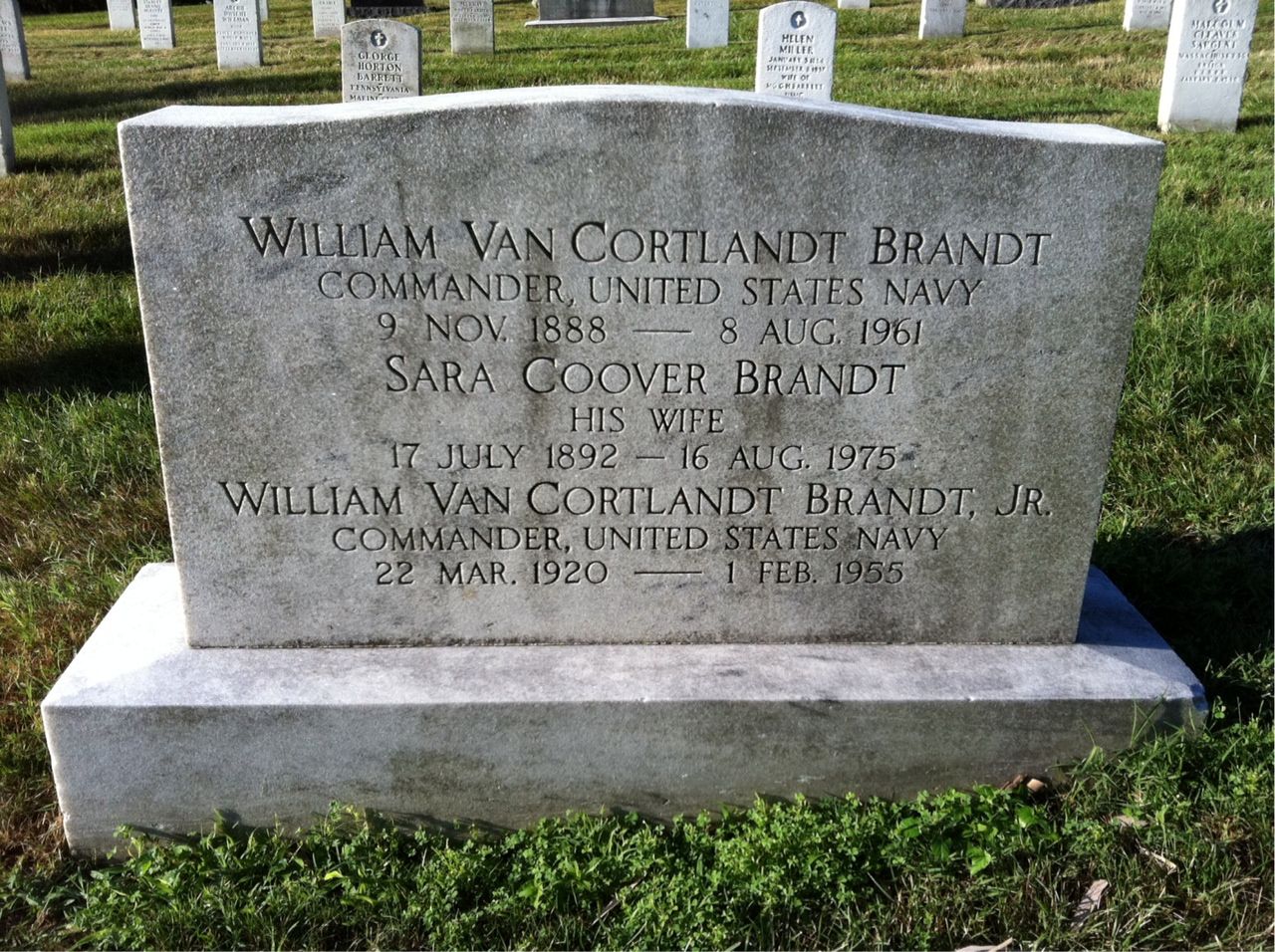
    Smith had learned of the ship during a mid-1942 visit to the estate from Lt. Commander William VanC. Brandt (USNR) of the Kenmore, who later wrote to “Miss Annie” to thank her for her hospitality.[4] “All the Officers of the Kenmore,” Brandt told Smith, “were most interested in learning the history and record of the beautiful estate for which our ship is named.”[5] Brandt planned to have framed and displayed in the ship’s wardroom photographs of the property given to him by Smith; later, the vessel’s captain requested a picture of the house for his room.[6] For her part, Smith was “thrilled” to meet Brandt and “to know about your ship,” although she was skeptical enough of the origin of the transport’s new name to write Knox.[7]

    The Arlington National Cemetery headstone of William VanC. Brandt, from whom Annie Fleming Smith learned that a Navy ship had been named after the historic home she had helped save from development in the 1920s.

    The Kenmore operated primarily in the Pacific until September 1943; she was then converted into a hospital ship and renamed Refuge.[8] The Navy must have liked the name Kenmore, as it was bestowed in October 1943 on another transport, originally called the James H. McClintock.[9] The Kenmore II also served in the Pacific Theater and, after “hostilities ended on 15 August 1945, [began] returning veterans to the U.S.”[10] She was decommissioned on February 1, 1946.[11]

    The Kenmores were not the only vessels named for properties associated with George Washington and his family. The Wakefield (AP-21) borrowed its name from the Westmoreland County birthplace of the first president, today owned by the National Park Service.[12] There have been five Mount Vernons; the first was built in 1859 and chartered by the Navy two years later, before they bought it later that year.[13] The most recent vessel named after Washington’s residence and plantation was a dock landing ship commissioned in 1972 and decommissioned in 2003.[14] The possible birthplace of Mary Ball, George Washington’s mother, lent its name to the Epping Forest, a dock landing ship launched in 1943.[15]

    The monikers of other ships are connected more tenuously to places tied to George Washington and his family. For example, a 1943 submarine chaser was rechristened the Abingdon in 1956.[16] The vessel’s new name came from the town of Abingdon, in Washington County, Virginia (named, yes, for George Washington).[17] According to the county’s official history, “myths claim that [the town] was named for Martha Washington’s ancestral home” in England.[18] While this may be a false etymology, were those who named the ship drawing on the tale when they chose to call the vessel Abingdon? Additionally, the many Arlingtons that have served the Navy over the years have each been named after Arlington County, which draws its appellation from Arlington House, built for George Washington Parke Custis, the step-grandson of his celebrated namesake.[19]

    Arlington Mansion was built by George Washington Parke Custis. Union soldiers posing on the lawn, June 28, 1864.

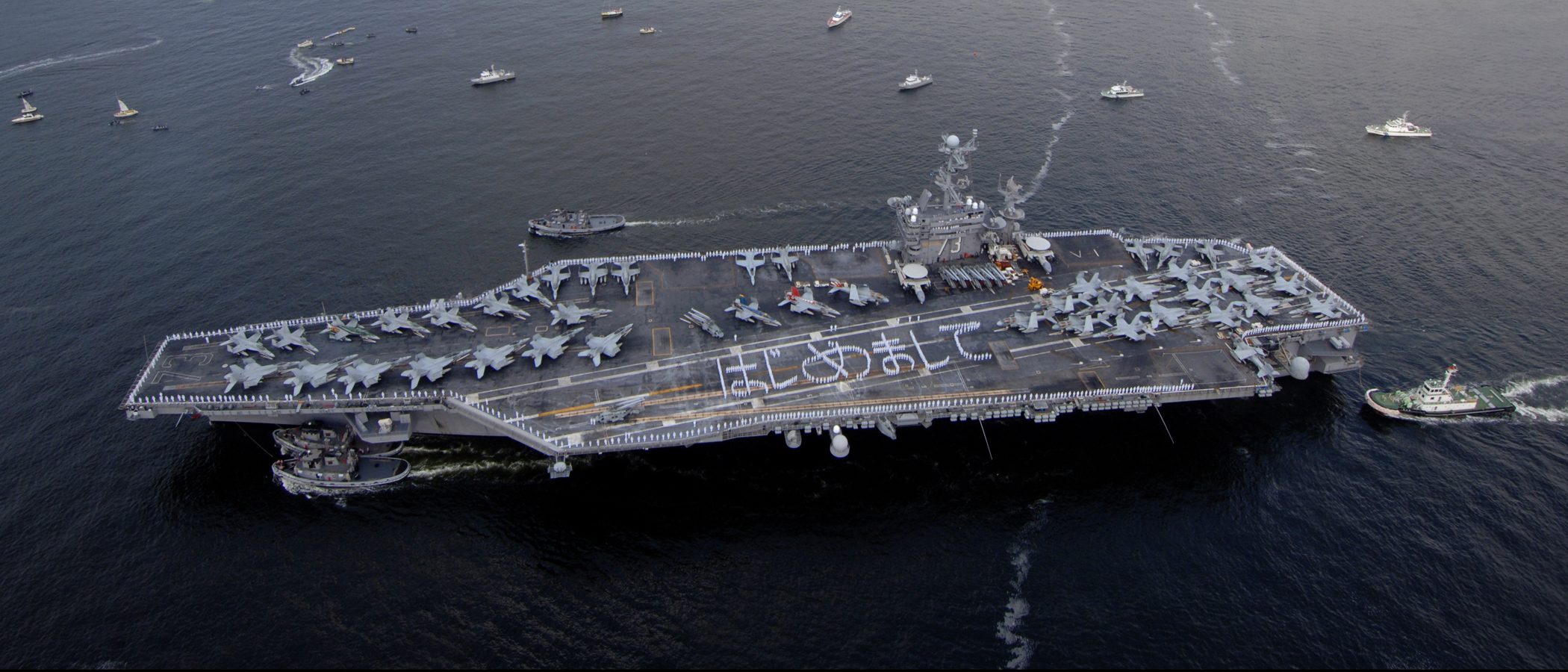
    The Navy’s infatuation with the commander in chief of the Continental Army has, of course, also been expressed by naming ships directly after Washington and his family, not just their properties. While a complete inventory of such vessels is beyond the scope of this post, it is worth noting that four ships have been named the George Washington, including CVN-73, an active nuclear-powered aircraft carrier, while several others have sailed under just his surname.[20] Martha, George’s wife and the nation’s first first lady, has inspired the names of at least two Navy ships: the Lady Washington and the Martha Washington.[21] Civilian shipbuilders have also found inspiration in the Washington family: the SS Mary Ball was a liberty ship active during World War II.[22]

    Who was responsible for naming these ships? As hinted at above, while final authority for ship names was (and still is) the responsibility of the Secretary of the Navy, during World War II, it was the Bureau of Navigation (renamed the Bureau of Personnel on May 21, 1942) that researched and recommend ship names based on the traditional naming conventions associated with each class of vessels.[23]

    Typically, it was dock landing ships, or LSDs, that were named for “cities and places of historical interest of same name, or places of historical interest only.” [24] Epping Forest, Gunston Hall I (named for George Mason’s home), Ashland (for the boyhood home of Henry Clay), Carter Hall (after the Virginia estate), Oak Hill (for the home of President James Monroe), and Shadwell (for the birthplace of Thomas Jefferson) are all examples of LSDs whose names aligned with this convention.[25]

    But the Kenmores, the Mount Vernon IV, and the Wakefield were not LSDs; they were transports, classified AP, and anyone seeking consistency in the Navy’s naming of troop transports during World War II is bound to be disappointed. Some vessels in the AP class were named after celestial bodies, others after Revolutionary War heroes, and others, as we have seen, after historic estates.

    This lack of consistency is not surprising. After all, when Benjamin Stoddert named the Navy’s sixth ship, a frigate, he chose to call it the Chesapeake, despite President George Washington’s agreement with the recommendation that frigates be named after “principles or symbols found in the US Constitution.” Therefore, “the very first naming decision by the very first Secretary of the Navy resulted in the ‘corruption’ of the established naming convention.”[26] This tradition of flexibility regarding ship names has endured, and ship names continue to excite interest (and occasionally strong feelings) from many parties, including those who propose denominations for new vessels. If you are such a person, here’s an idea: how about another Kenmore, or maybe a Ferry Farm?  


    Adam Nubbe

    Manager of School & Youth Programs


    [1] Smith, Annie Fleming to Frank Knox, July 22, 1942. The George Washington Foundation.

    [2] Naval History and Heritage Command, Kenmore I, ship-naming file, April 13, 1942.

    [3] Ibid; Cressman, R. J. (2020, March 31). Kenmore I (AP-62). https://www.history.navy.mil/research/histories/ship-histories/danfs/k/kenmore.html

    [4] Brandt, William VanC. to Annie Fleming Smith, June 30, 1942. The George Washington Foundation.

    [5] Ibid.

    [6] Ibid; Smith, Annie Fleming to William VanC. Brandt, July 10, 1942. The George Washington Foundation.

    [7] Smith, Annie Fleming to William VanC. Brandt, July 10, 1942. The George Washington Foundation.

    [8] Naval History and Heritage Command, Kenmore I, ship-naming file, April 13, 1942.

    [9] Cressman, R. J. (2020, March 31). Kenmore II (AP-162). https://www.history.navy.mil/research/histories/ship-histories/danfs/k/kenmore-ii–ap-162-.html

    [10] Ibid.

    [11] Ibid.

    [12] Cressman, R. J. (2022, April 1). Wakefield (AP-21). https://www.history.navy.mil/research/histories/ship-histories/danfs/w/wakefield.html

    [13] Naval History and Heritage Command. (2015, August 11). Mount Vernon I (Gbt). https://www.history.navy.mil/research/histories/ship-histories/danfs/m/mount-vernon-i.html

    [14] Pike, J. (n.d.). LSD 39 Mount Vernon. https://www.globalsecurity.org/military/agency/navy/lsd-39.htm

    [15] Naval History and Heritage Command. (2015, July 8). Epping Forest. https://www.history.navy.mil/research/histories/ship-histories/danfs/e/epping-forest.html

    [16] Mann, R. A., & Cressman, R. J. (2023, November 27). Abingdon (PC-1237). https://www.history.navy.mil/research/histories/ship-histories/danfs/a/abingdon.html

    [17] Ibid; Hagy, J. W. (2019, June 10). A Brief History of Washington County, Virginia. Washington County, Virginia. https://www.washcova.com/history/

    [18] Ibid.

    [19] Parsons, L., & Cressman, R. J. (2023, December 13). Arlington I (AP-174). https://www.history.navy.mil/research/histories/ship-histories/danfs/a/arlington-i.html; Arlington, Virginia. (n.d.). History of Arlington. https://www.arlingtonva.us/Government/Topics/Welcome-Kit/History-of-Arlington; National Park Service. (2023, January 12). George Washington Parke Custis. https://www.nps.gov/arho/learn/historyculture/george-custis.htm

    [20] Naval History and Heritage Command. (2020, May 5). Washington VIII (BB-56). https://www.history.navy.mil/research/histories/ship-histories/danfs/w/washington-viii.html; US Navy. (n.d.). USS George Washington (CVN 73). https://www.airpac.navy.mil/Organization/USS-George-Washington-CVN-73/

    [21]  Naval History and Heritage Command. (2016, February 9). Martha Washington. https://www.history.navy.mil/research/histories/ship-histories/danfs/m/martha-washington.html; Naval History and Heritage Command. (2015, July 28). Lady Washington. https://www.history.navy.mil/research/histories/ship-histories/danfs/l/lady-washington.html

    [22] Jobrack, J. (2020, September 10). True or False? Test Your Knowledge of Mary Washington. https://livesandlegaciesblog.org/2020/09/10/true-or-false-test-your-knowledge-of-mary-washington/.

    [23] Calkins, W. F. (1958, July). Down to the sea in ships’–names. U.S. Naval Institute. https://www.usni.org/magazines/proceedings/1958/july/down-sea-ships-names; Naval History and Heritage Command. (2020, June 29). Denfeld, Louis Emil. Louis Emil Denfeld. https://www.history.navy.mil/research/library/research-guides/modern-biographical-files-ndl/modern-bios-d/denfeld-louis-emil.html

    [24] Department of the Navy, A Report on Policies and Practices of the U.S. Navy for Naming the Vessels of the Navy (2012, November), 63. https://apps.dtic.mil/sti/tr/pdf/ADA569699.pdf

    [25] DANFS – Naval History and Heritage Command. Dictionary of American Naval Fighting Ships — Index. (n.d.). https://www.history.navy.mil/research/histories/ship-histories/danfs.html

    [26] Department of the Navy, A Report on Policies and Practices of the U.S. Navy for Naming the Vessels of the Navy (2012, November), 7. https://apps.dtic.mil/sti/tr/pdf/ADA569699.pdf


  • Recreation and Racism: Fredericksburg’s Reception of Black Servicemen during WWII

    As the United States and historic sites across the country, including the George Washington Foundation, prepare to commemorate the nation’s 250th anniversary next year, it might be easy for the eightieth anniversary of the end of World War II to become an afterthought. After all, the interpretation of Historic Kenmore focuses on the Revolutionary era; the home was already the better part of 200 years old in 1945.  But the histories of Kenmore and Fredericksburg are as intricately intertwined with the Second World War as they are with the War of Independence, and the legacies of both conflicts resonate today.

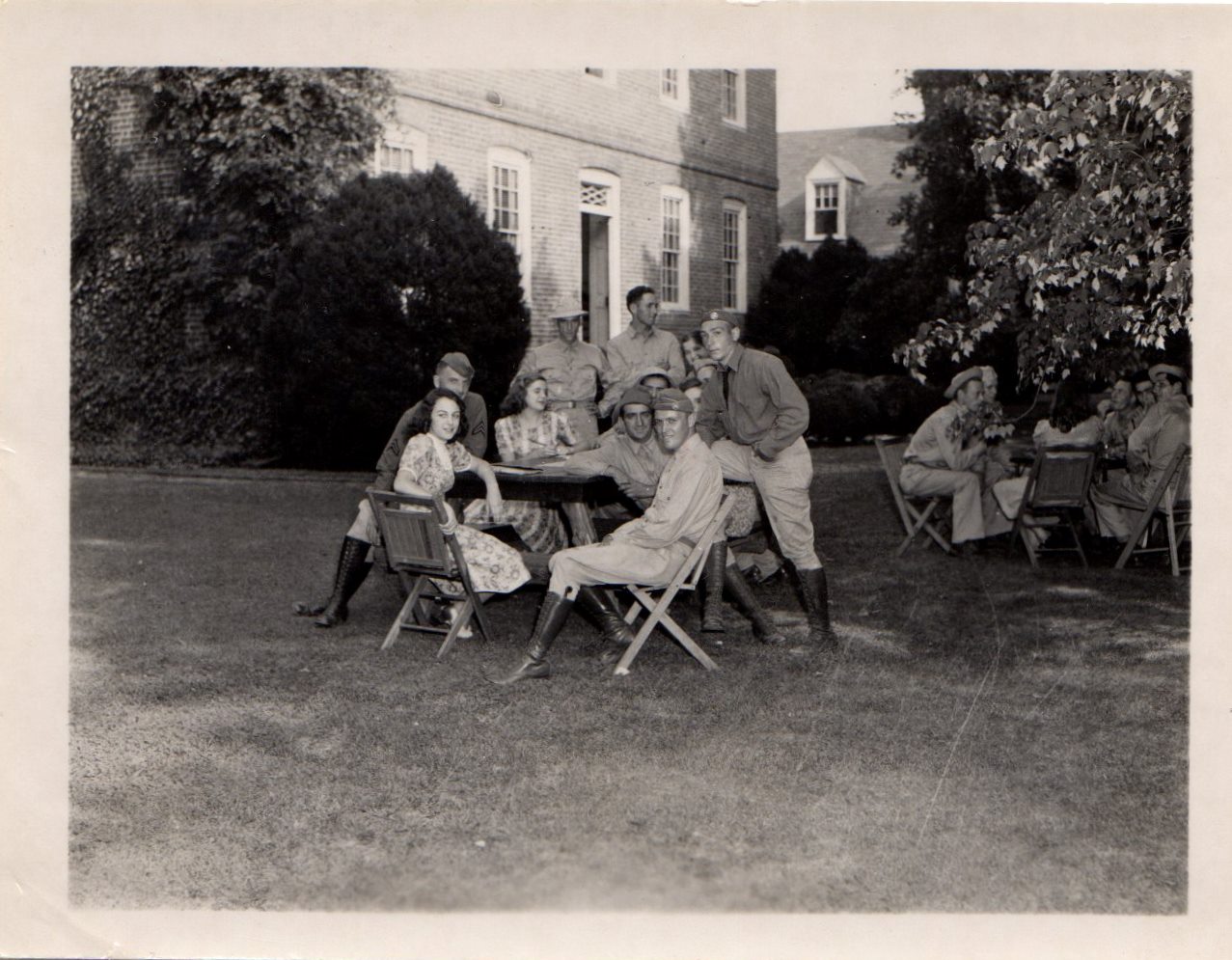
    Soldiers being hosted on lawn of Kenmore

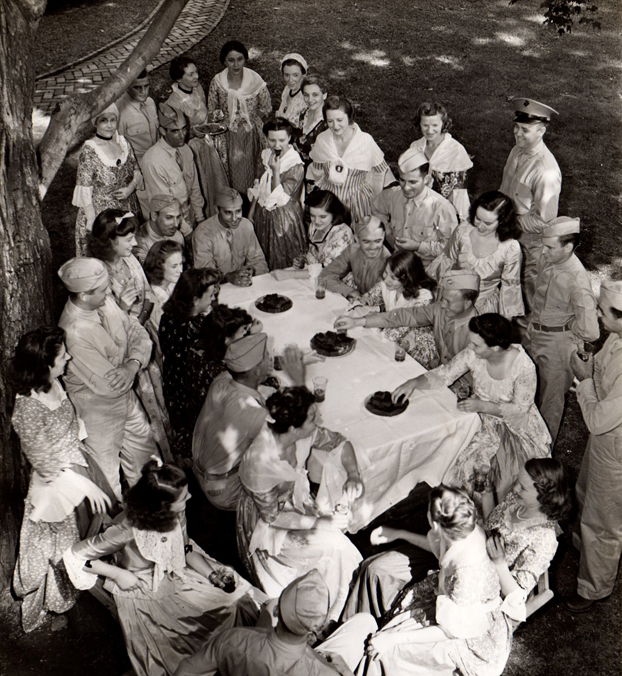
    Like many Americans, the women of the Kenmore Association sought during the war years to demonstrate pride in their nation and support for its troops. Annie Fleming Smith, then national secretary of the Association, showed her appreciation for the country’s military by opening Kenmore’s doors to thousands of service members stationed in the Fredericksburg area. The Association took them “through the mansion and served them iced tea and gingerbread.” It hosted lawn parties and entertained soldiers early in the day and late at night. Hosts told everyone in uniform “who passed over the Kenmore steps…about George Washington, and other great men, passing over these very same steps.”

    Kenmore hosted soldiers with gingerbread and iced tea.

    Smith regarded the Association’s commitment to “making our American boys feel at home in a home of the Washingtons” as Kenmore’s way of contributing “to the defense of the nation.” She also hoped that visits to Kenmore would crystalize in servicemen a commitment to the U.S. ideals of freedom and democracy.

    The commitment to helping the recently transplanted soldiers feel comfortable in town was admirable; however, there are no records of Smith or Kenmore welcoming Black servicemen, stationed along with their white counterparts at what was then A.P. Hill Military Reservation and other nearby military installations.  Smith and other members of the Kenmore Association, along with whites across Fredericksburg, the South, and the country, apparently did not see any conflict between simultaneous support for liberty, as embedded in the founding documents of the United States, and a racist social system.

    The 366th Infantry Regiment

    So how, in segregated Fredericksburg, did Black service members spend their leisure time? If the city’s white-led institutions, including Kenmore, did not welcome African Americans serving their country, Black Fredericksburgers proved happy to host the men fighting the Double V campaign—victory over fascism abroad and victory over racism and discrimination at home. Indeed, at least two Black fraternal organizations in Fredericksburg provided recreational opportunities to African American soldiers during World War II.

    The 366th Infantry Regiment choir at Camp Atterbury, Indiana, on December 17, 1943. Source: Indiana State Library

    The city’s Black Odd Fellows lodge (located at 301 Charles Street), “under auspices of the Citizens Committee of Local Negros,” hosted at least one dance for African American soldiers from A.P. Hill. This dance, held in February 1942, came shortly after white officials implicated Black servicemen stationed at A.P. Hill and Fort Belvoir in a “near-riot” that began after a Fredericksburg police officer attempted to arrest a Black soldier for public intoxication. 

    Following the altercation between the soldiers and the city’s police, during which white officers beat a Black soldier and threw a tear gas grenade, the Free Lance-Star published a letter to the editor from local NAACP leaders calling for the establishment of a Black USO—since the white USO barred Black soldiers from entering— and more leisure opportunities for African American soldiers in the city.

    Other efforts to make the city more welcoming to Black service members followed. In May of that year, a group of Black Fredericksburgers requested that “the city furnish recreational facilities, showers, soap and towels for colored troops stationed at Camp A. P. Hill.” According to the letter containing this request submitted to the City Council, “there were slightly over a hundred colored soldiers now stationed at Camp A. P. Hill and that there were no recreational facilities at Camp A. P. Hill or in the City of Fredericksburg for these colored troops.”

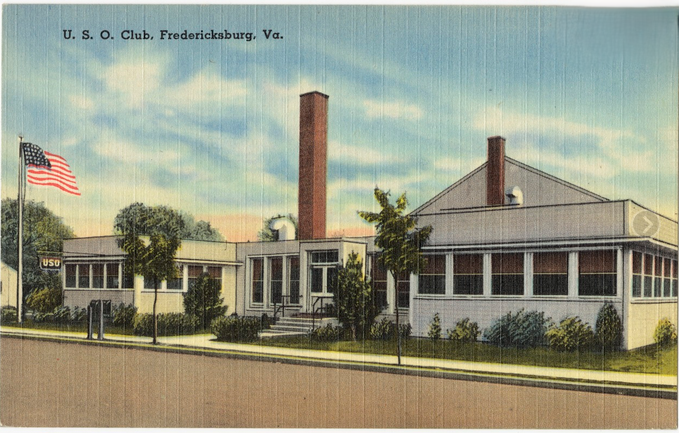
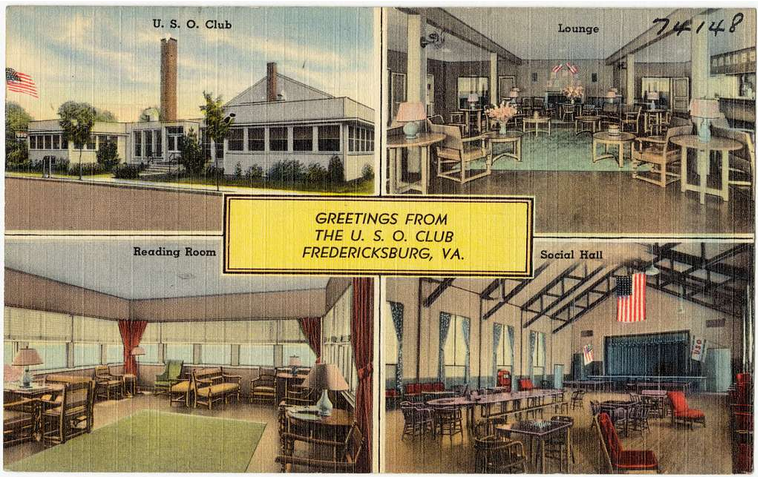
    Eventually, the efforts of Black soldiers’ advocates succeeded: The Black USO sought by the NAACP leaders opened in June 1943 at Rappahannock Lodge 229 of the Independent Benevolent Protective Order Elks of the World (otherwise known as the African American Elks). Lodge 229 was at 1103 Winchester Street, just a block from Historic Kenmore. Across the world, USOs gave “troops somewhere to play cards, dance and socialize while taking a break from their duties.” Each USO facility was supposed to be “open to all men in uniform,” regardless of race, but in practice, centers were often segregated. Fredericksburg’s white USO opened in January 1942 at 408 Canal Street, which is today the Dorothy Hart Community Center.

    Although Fredericksburg’s Black USO closed the following April, reportedly because of low attendance, another Black USO was completed in Caroline County in December of 1943 and was still operating in 1945.

    However, the presence of these recreational facilities did not resolve tensions between white area residents and visiting Black service members. In the fall of 1943, while the Fredericksburg USO was open, A.P. Hill Military Reservation was home to the 366th Infantry Regiment, a Black unit. When members of the 366th chaffed against racism—for instance, by evicting the driver of a bus who instructed the soldiers to move to the back of the vehicle and finishing the drive back to A.P. Hill from Fredericksburg themselves—local whites reacted with fear. By November, the city’s white residents worried that the soldiers planned to “‘clean up the town on the first’” of December in objection to Jim Crow laws and segregation. Whites expressed relief when the unit shipped out before that date. 

    During World War II, the Kenmore Association opened its doors to white soldiers to share the stories of those Americans “who planned the principles, which is the beacon light of the world today.” Eight decades ago, the world’s democracies fought for those principles and defeated the forces of totalitarianism abroad, but racism endured at home.  While progress has been made in the United States regarding the assertion “that all men are created equal,” the struggle against inequality continues.


    Adam Nubbe

    Manager of School & Youth Programs

    Bibliography

    Fredericksburg City Council. (1942, January). Fredericksburg City Council Minutes Vol 28. Fredericksburg, Virginia, USA.

    Hall, D. (1943, November 27). Fearful Whites Relieved as 366th Leaves Virginia. Baltimore Afro-American, p. 21.

    Johnson, S. (2022, February 7). How the USO Served a Racially Segregated Military Throughout World War II. Retrieved from USO: https://www.uso.org/stories/3001-how-the-uso-served-a-racially-segregated-military-throughout-world-war-ii

    Salter, K. (2014). The Story of Black Military Officers, 1861-1948. London: Routledge.

    Smith, A. F. (1941, December 26). Letter to Mrs. Barnum. Fredericksburg, Virginia, USA.

    Smith, A. F. (1941, November 4). Letter to Mrs. Mitchell. Fredericksburg, Virginia, USA.

    Smith, A. F. (1941, November 21). Letter to Mrs. Stone. Fredericksburg, Virginia, United States of America.

    The Baltimore Afro-American. (1942, March 31). Soldier, On Furlough, Finds Vs. Prejudice Ignores War. The Baltimore Afro-American, p. 9.

    The Free Lance-Star. (1942, February 9). Dance Friday Night for Negro Soldiers. The Free Lance-Star, p. 6.

    The Free Lance-Star. (1942, January 31). Soldiers Causing Disorder Jailed. The Free Lance-Star, p. 1.

    The Free Lance-Star. (1942, January 29). Tear Gas Quells Near-Riot Here. The Free Lance-Star, p. 1.

    The Free Lance-Star. (1943, December 2). Colored USO in Caroline Completed. Fredericksburg, Virginia, USA.

    The Free Lance-Star. (1943, June 3). New Colored USO is Dedicated Here. Fredericksburg, Virginia, USA.

    The Free Lance-Star. (1944, November 14). USO Club in City To Be Withdrawn. The Free Lance-Star. Fredericksburg, Virginia, USA.

    The Free Lance-Star. (1944, April 29). USO Cuts $7,200 Off Budget Here. Fredericksburg, Virginia, USA.

    Woodfork Genealogy. (2025, January 27). USO Highway Number 2 Club. Retrieved from Woodfork Genealogy: https://woodforkgenealogy.com/caroline-county-virginia/uso-highway-number-2-club/

    Wyatt, P. E. (1942, February 6). Negro USO is Seen as Need for City. The Free Lance-Star, p. 4.

  • The Last of Washington’s Horse Chestnut Trees?

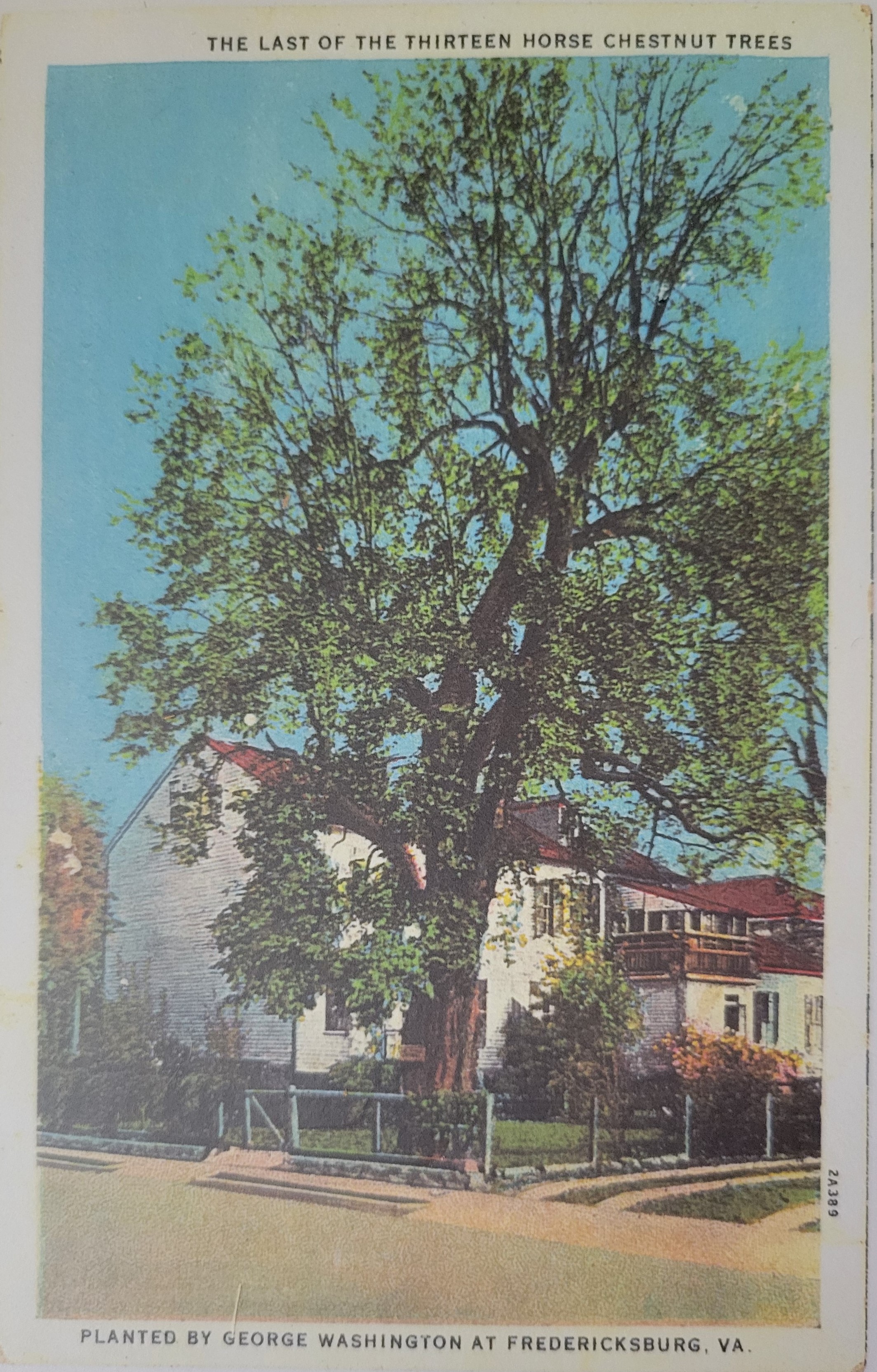
    There once stood a large horse chestnut tree on the corner of Fauquier and Charles Street in Fredericksburg. It was noted as one of the thirteen legendary Washington horse chestnut trees planted by George himself. By the 1930s, it was becoming clear that the tree needed some help, so the Daughters of the American Revolution (DAR) took up the cause to protect this historic tree.

    The tree legend states that George, while visiting his mother in June 1788 in Fredericksburg, decided to plant thirteen horse chestnut trees from her house to his sister’s house, Kenmore, just a few blocks away. This provided a scenic path for his mother when she visited her daughter Betty. These trees commemorated the thirteen original states.

    It is a great story. It is patriotic and nostalgic, showing George as a man of the earth with his love of trees, gardening, and horticulture. He planted these trees for a future America to remember the struggles to create this country and the precious nature of our land that we must protect.
    But is it true? Did George plant that tree? What is the evidence?


    The horse chestnut tree is a native of the Balkans region (Albania, Bulgaria, Greece, and Northern Macedonia). It made its way to Europe and England during the seventeenth century, noted as growing in South Lambeth, London, and being planted by Sir Christopher Wren at Hampton Court.

    Horse chestnut trees Bush Park, Hampton Court, England planted by Christopher Wren in 1669-1670.

    There is documented evidence of some horse chestnut trees crossing the Atlantic to Mr. John Bartram, one of America’s first botanists in the 1740s. In a letter from Peter Collinson, an English botanist, dated September 16, 1741, he wrote to Bartram, “I have sent some Horse-Chestnuts which are ripe earlier than usual; hope they will come fit for planting.”. Bartram acknowledged receiving them and stated that most were blue-molded, and only one germinated and grew. Over twenty years later, Bartram updated Callison on the success of the lone seedling, writing, “But what delights me is that our horse chestnut has flowered. I think it must excel in America.”

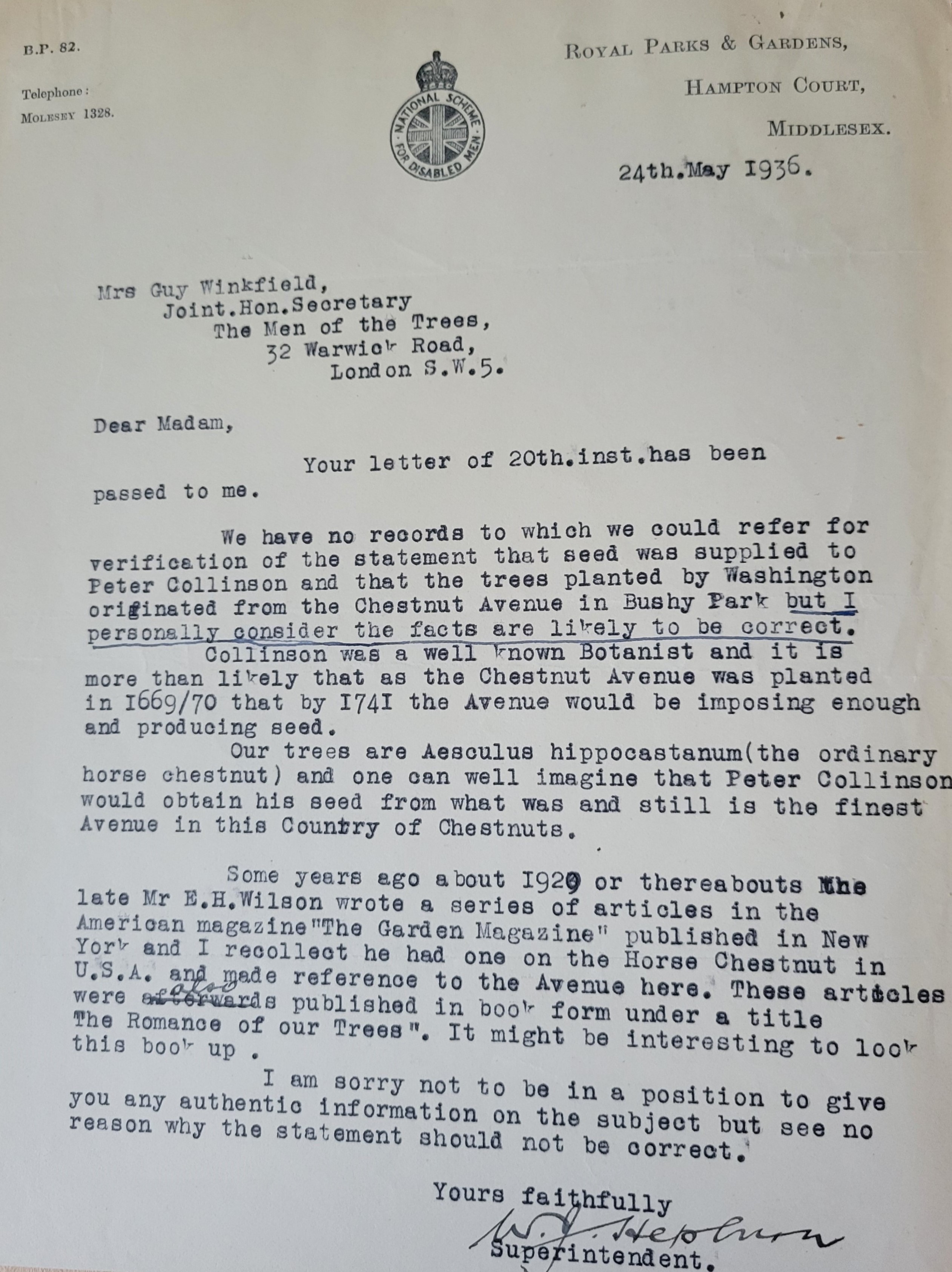
    Letter from Royal Parks and Gardens, Hampton Court, May 24 1936


    Bartram’s Gardens in Philadelphia was quite popular and visited by many founding fathers while working there. George visited the gardens twice in the summer of 1787 while in the town during the Constitutional Convention, noting, “Sunday, June 10, 1787, breakfasted at Mr. Powell’s and in company with him rid to see the Botanical Gardens of Mr. Bartram, which, though stored with many curious plants, shrubs, and trees, many of which are exotics, was not laid off with much taste, nor was it large.”

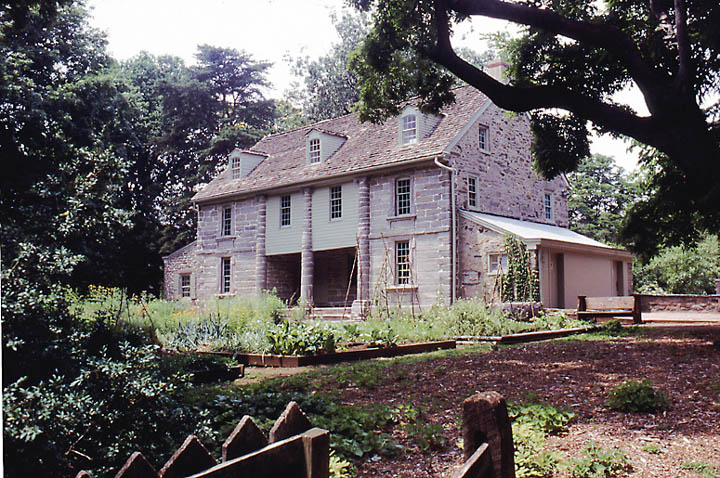
    John Bartram’s house and upper garden at Bartram’s Garden

    Why mention this? In some versions of the story, Washington got his horse chestnut trees from this garden, but there is no evidence that the legendary trees were obtained from this famous historic garden.
    George only made two diary entries about horse chestnut trees on April 13, 1785, writing, “Received from Col. Henry Lee of Westmoreland 12 horse chestnut trees (small) and an equal number of tree boxes. They appeared to have been some time out of the ground. Planted 4 of the Chestnuts on my serpentine walk – two on the east end and the rest in the vineyard.” And again, on April 2, 1788, wrote, “Transplanted from a box in the garden, thirteen plants of the horse chestnut into shrubberies by the garden walls.”

    The entry shows evidence of planting the famous Washington trees, right? No, because George was at Mount Vernon in April and didn’t leave for Fredericksburg to visit his mother until June 10, 1788.

    But could he have had them sent down and have them planted before he came to see his mother? Yes, but the story says that George planted these trees with his own hand. Additionally, it would be odd for George to mention planting the trees while in residence at Mount Vernon and not say that they were in his mother’s garden in Fredericksburg. Washington was a diligent diarist but never mentioned planting thirteen horse chestnut trees in his mother’s garden.

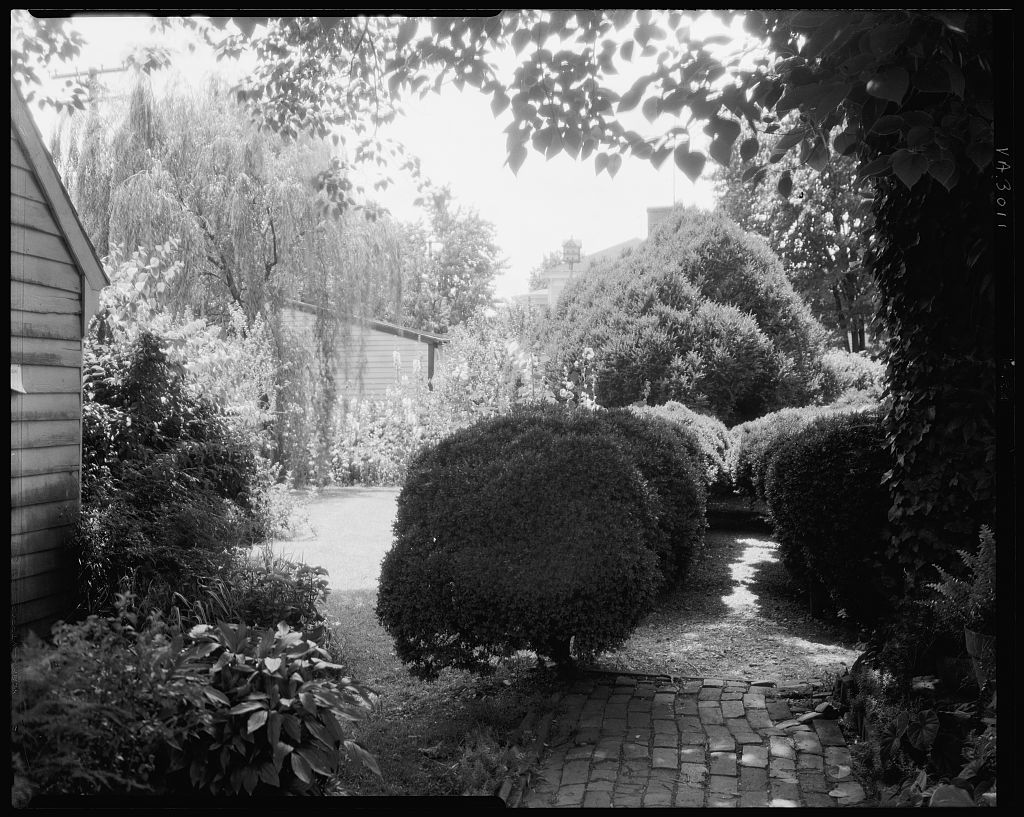
    Mary Washington’s house gardens, Fredericksburg.

    Further, no known letters from George, Mary, or Betty mention any horse chestnut trees between Mary’s gardens and Betty’s Kenmore.

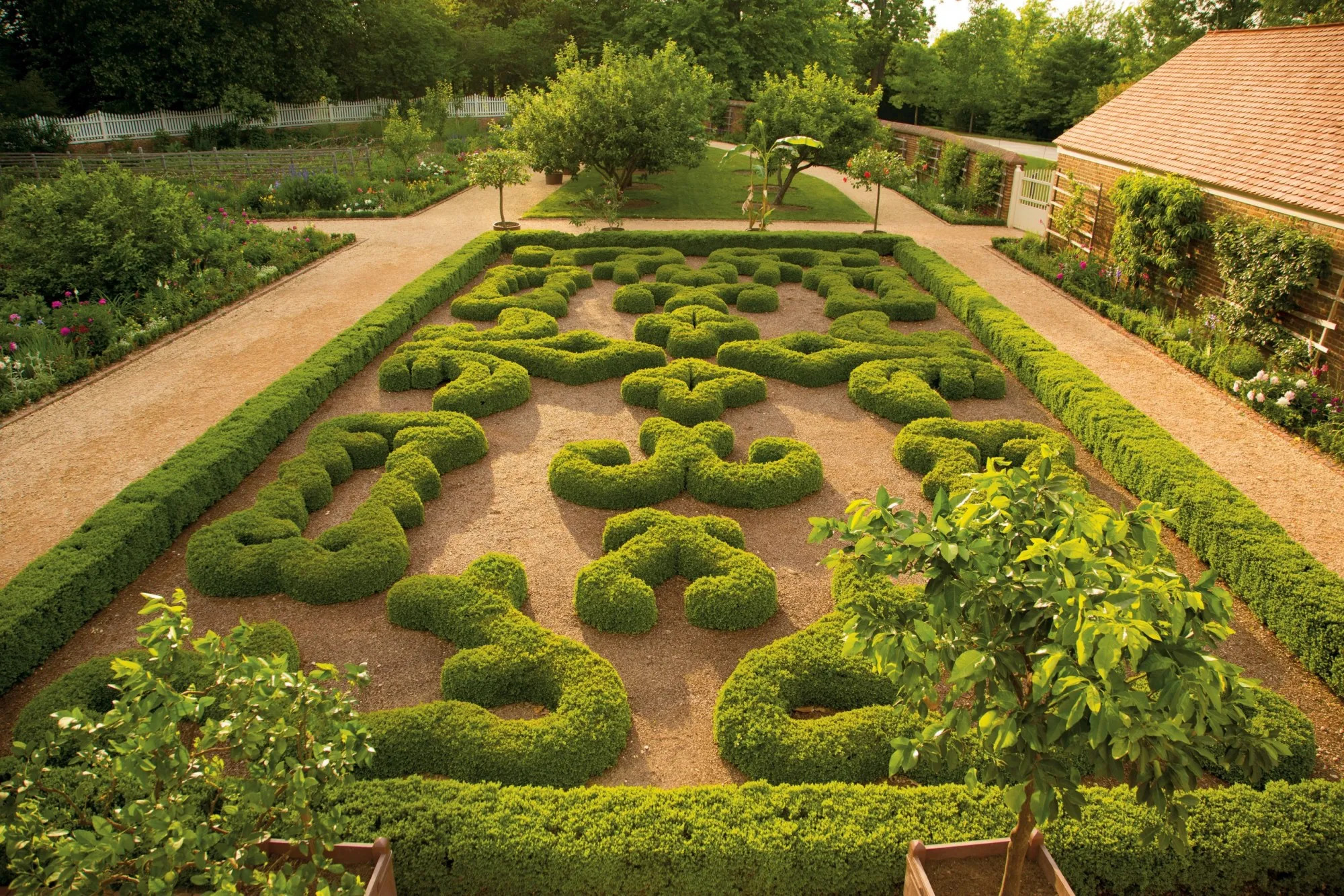
    Spring time in the gardens at Kenmore Plantation (can you spot the cat?)

    This was all the primary source evidence I could find relating to George and any horse chestnut trees. So, I looked further into the story to see what other evidence was being used to verify that this tree was indeed one of the thirteen Washington trees.

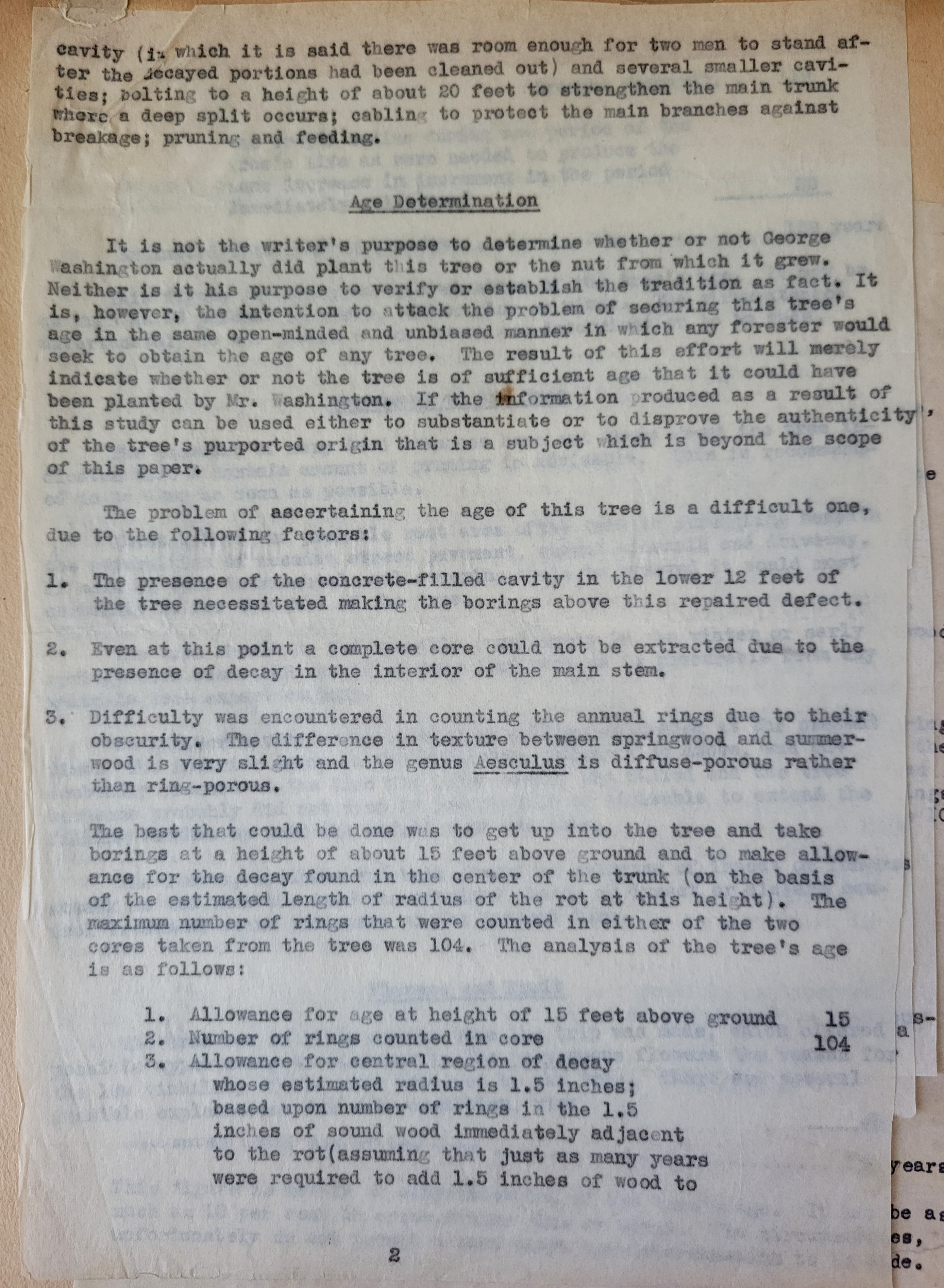
    As I said in the beginning, by the 1930s, many, including the DAR, were trying hard to save this lone surviving chestnut tree. With their extensive reach, they got Fred H. Arnold, the Assistant Forester for the National Park Service, to do an age-determination test on the tree in May of 1934. Mr. Arnold noted some issues with the test, stating that the lower twelve feet of the tree was filled with concrete, so the coring sample had to be taken above this “repaired defect”. Even then, a complete coring sample could not be extracted due to decay in the interior of the main stem. Additionally, Mr. Arnold said that it was very difficult to count the annual rings due to their obscurity because the texture difference between the springwood and summerwood for the horse chestnut tree (genus Aesculus) is very slight. Taking into account all this, Mr. Arnold estimated the tree to be around 139 years old with as much as 10% in error, either plus or minus, which would put the date it was planted somewhere between 1781 and 1809, which means that the tree is indeed old and could have been planted during Washington’s time in Fredericksburg.

    Age Determination, May 6 1934

    Lastly, local historian James Henry Heron collected local citizens’ recollections of the tree and the story. Mrs. Lilias Hamilton Scott, the wife of Mr. John Scott, who owned the lot on which the tree stands, wrote that her grandmother (Mrs. Janet Scott Hamilton) stated her great-grandmother (Mrs. Francis Scott) resided in Fredericksburg in 1788 and was Mary Washington’s neighbor and intimate friend. She said the trees were planted by Washington.

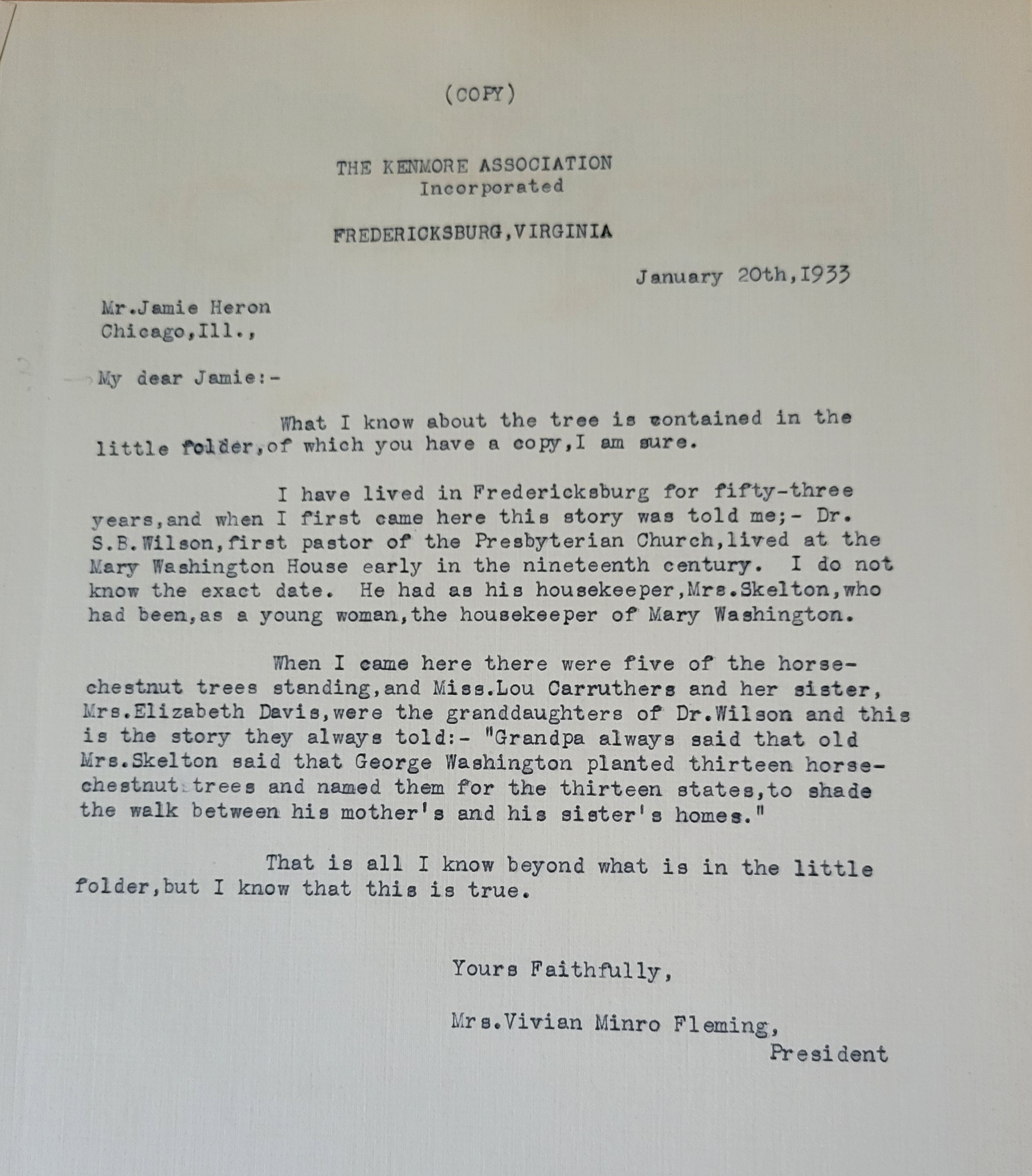
    Mrs. Vivian Minor Fleming traces the story back to Miss Lou Carruthers, her sister Mrs. Davis, and their grandfather Rev. S.B. Wilson’s housekeeper, Mrs. Polly Skelton, who had previously been a housekeeper for Mary.
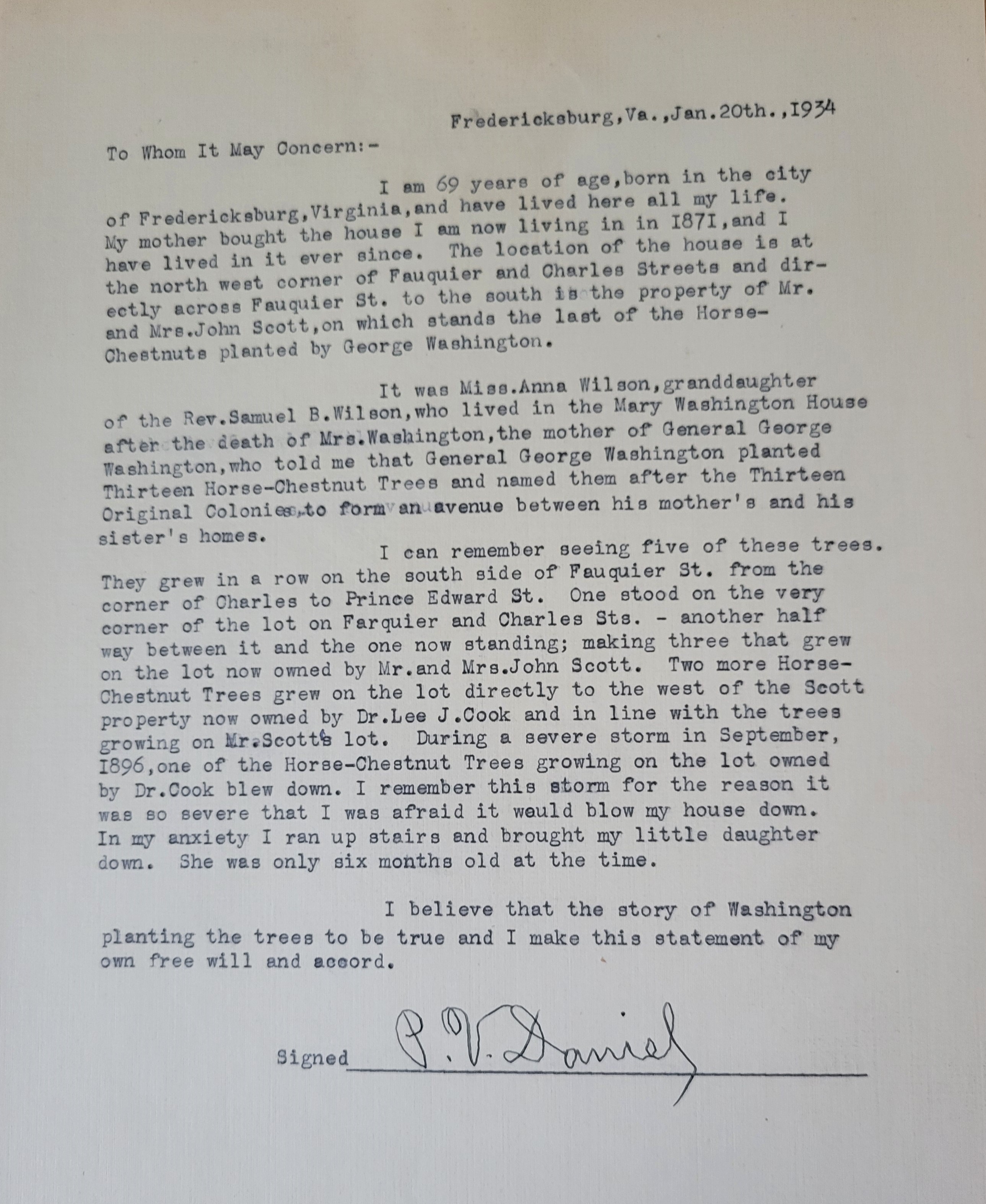
    Mr. P.V. Daniel, who remembers five of the original thirteen trees, lived across the street from the remaining one for over sixty years and said Miss Anna Wilson, granddaughter of Rev. S.B. Wilson, told him the story.
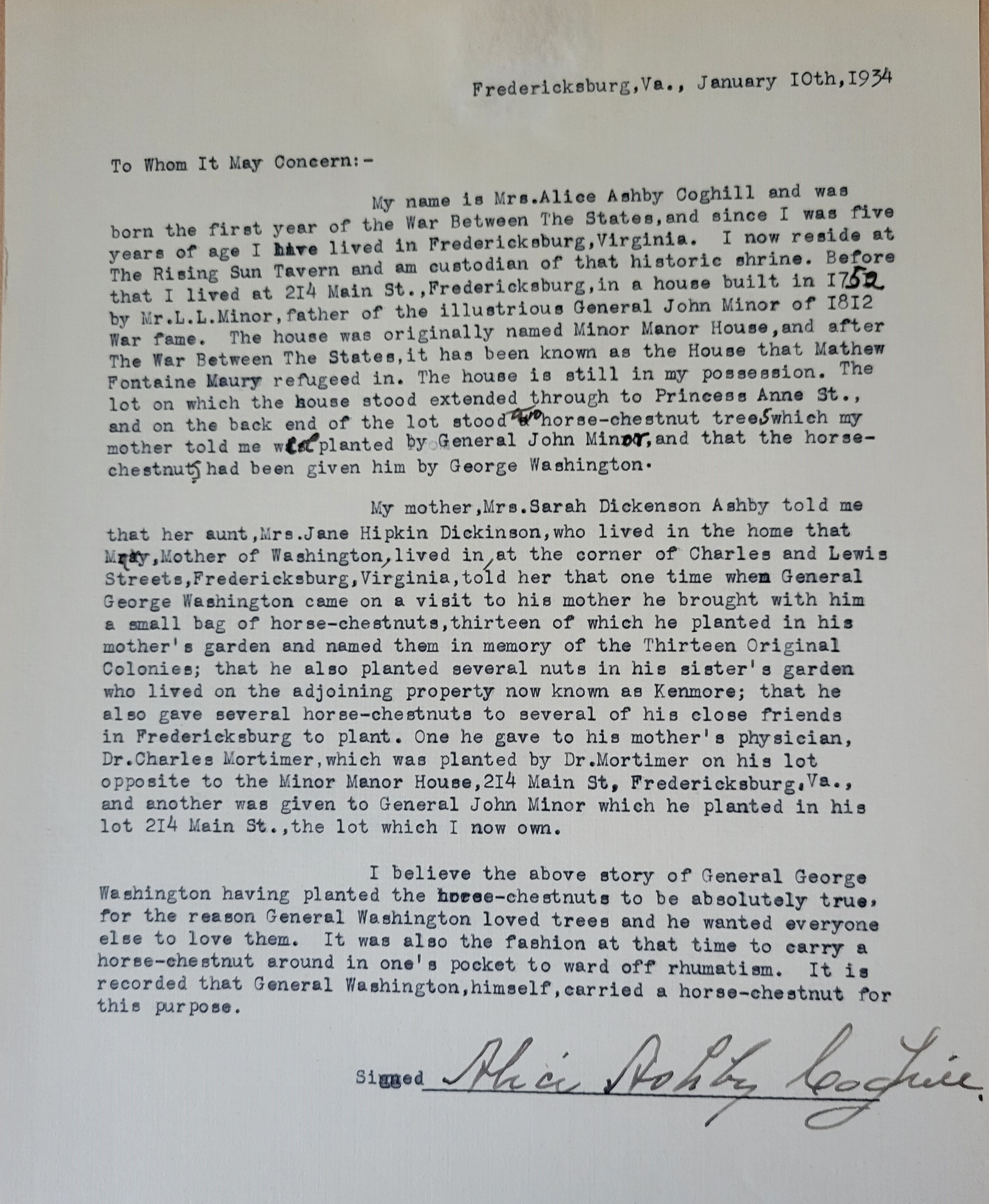
    Mrs. Alice Ashby Coghill says her aunt, Mrs. James Hipkin Dickinson, who lived at Mary Washington House after Rev. S.B. Wilson said Washington planted the trees and passed out horse chestnuts to friends.
    While I have no doubt these people are truthful in their recollections, they do not offer any definite evidence. They merely document that the legend was a well-known story but not that it was true.

    Regardless, the much-loved old tree was rightfully given proper emergency care with a donation and service from Senator Martin L. Davey from Ohio and The Davey Tree Expert Company. The famous tree lived happily for over another half century before being taken down in 2004.

    Whether this tree was planted by George along with twelve others will probably never be conclusively proven. Were the people wrong to save the tree all those years ago without better evidence? Absolutely not. They saved a beautiful 200-year-old horse chestnut tree with a legendary attachment to George Washington, but they also saved a bit of their own past, nostalgia, and pride in their own town’s history.


    Heather Baldus

    Collections Manager