Lives and Legacies

Category: Twelfth Night

  • Cooking up holiday treats: Gingerbread and Flip

    This year at our annual Twelfth-Night celebrations, visitors could enter the kitchen for a short lecture and demonstration. The archaeology and curatorial teams gave the talks to explain two important food items that play a part in Kenmore’s history and the holiday, gingerbread and flip.

    Our first demonstration was done by Emma Schlauder, Research Archaeologist at the Foundation. She used a traditional recipe based on Mary Washington’s gingerbread. This is the recipe that the Kenmore Association and the Daughters of the American Revolution (DAR) would use in partnering with Hills Brothers Company to create the Dromedary Gingerbread Mix. The mix was sold in the gift shop and shipped around the country, raising money for the restoration of Kenmore.[1] 
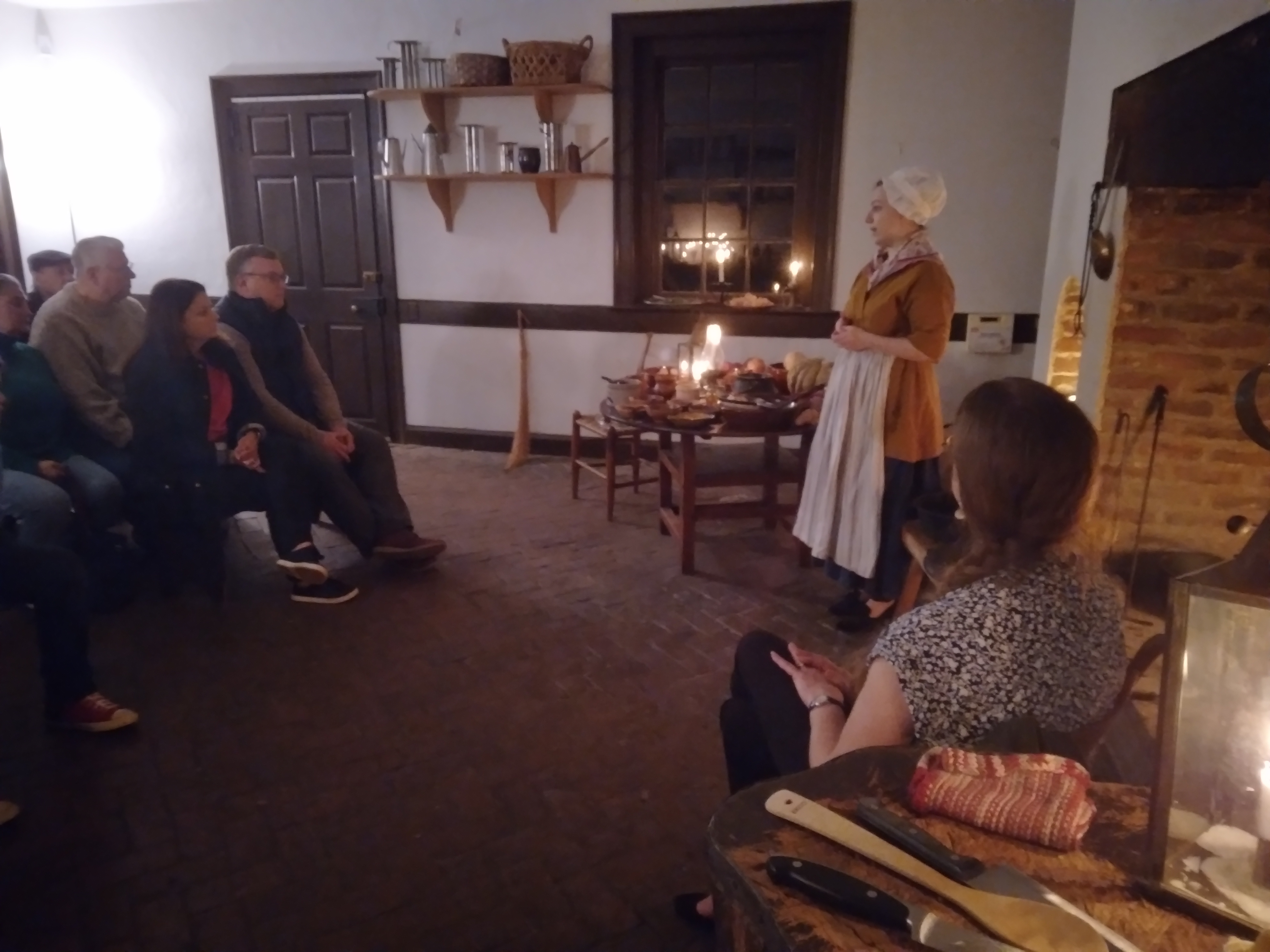
    Emma Schlauder giving a presentation on gingerbread.

    Mary Washington’s Gingerbread Recipe

    3 cups all-purpose flour

    2 tablespoons ground ginger

    1 teaspoon cream of tartar

    1 teaspoon baking soda

    1 teaspoon ground cinnamon

    ¼ teaspoon ground nutmeg

    ⅛ teaspoon ground mace

    1 large orange

    ½ cup (1 stick) lightly salted butter, at room temperature

    ½ cup light brown sugar, firmly packed

    1 cup molasses

    ½ cup warm milk

    1 wineglass (2 ounces) brandy or coffee

    3 large eggs, beaten

    Gingerbread is a term applied to a wide-ranging selection of baked goods with combinations of spices such as ginger, cinnamon, cloves, and nutmeg and sweetened with honey, sugar, or molasses.[2]

    Ingredients and spices for gingerbread

    Emma’s gingerbread used the traditional American sweetener, molasses.[3]  Molasses was a commonly used sweetener in early American cooking until the increase of domestic sugar production. Molasses was cheap and a by-product of the refined white sugar produced for the wealthy.[4]

    After including all ingredients, it was mixed to create a runny batter. The batter was put into a cast-iron Dutch oven and hung over the fire to cook. Cooking and baking over the hearth was time-consuming and potentially dangerous. It was done with heavy cast-iron pots and pans, often hung over the fire by an iron bar in the back of the oven.[5]  Luckily for us, Emma had taken precautions for cooking over the open hearth and was able to bake the runny batter into a dense gingery cake. The cake was enjoyed by many and was determined to be a must-have for the season.

    Gingerbread cooking over the fire

    Flip

    Our next presentation was done by Mara Kaktins, our Archaeologist & Lab Manager, and explored the history and ingredients of a unique drink called flip that would have fit in quite well with the festive celebrations.

    The first known mention of flip is from a 17th-century play called “Love for Love” by William Congreve when a character mentions sailors, stating, “We’re merry folks, we sailors: we han’t much to care for. Thus, we live at sea; eat biscuit, and drink flip.”[6]  The play does not provide us with a recipe or ingredients for the drink.

    Flip –Universal Etymological English Dictionary

    Flip is mentioned in the Universal Etymological English Dictionary, first published in 1721. This definition offers more information about what the drink contains by stating, “Flip, a sort of Sailors Drink, made of Ale, Brandy and Sugar.”[7] Full recipes can be found in The Cook’s Oracle, published in 1822; How to Mix Drinks: Or The Bon-vivant’s Companion, published in 1862; and The Curiosity of Ale and Beer: An Entertaining History, published in 1889. These recipes contain spices and ingredients like eggs, rum, sugar, and orange juice.[8][9][10]

    Ingredients to make flip: Rum, Whiskey, Sugar, Nutmeg, Orange Juice, Eggs

    However, two things make flip different from other holiday drinks like eggnog. First, there is no cream used in the mixture[11] , and second, flip is traditionally mixed by pouring the drink between two different vessels to make sure all the eggs are combined with the alcohol and then plunging a hot iron into the drink to create froth.[12] [13] 

    Instructions state, “To make a quart of Flip: Put the Ale on the fire to warm, – and beat up three or four Eggs with four ounces of moist Sugar, a teaspoonful of grated Nutmeg or Ginger, and a quarters of good old Rum or Brandy. When the Ale is near boil, put it into one pitcher, and the Rum and Eggs, &c. into another; – turn it from one pitcher to another till it is as smooth as cream.”[14] After the mixture is properly combined, it is poured into a cup or tankard and finished off by plunging a hot iron which further mulled and froths the drink and gives it a slightly burnt taste.[15]

    Mara Kaktins finishing off a glass of flip with the hot poker

    This drink was mixed many times throughout the Twelfth night and was sampled by the staff. Unlike the gingerbread, the reviews for this frothy drink weren’t all that positive. Our modern palates might not be used to the amount of alcohol colonists use to consume. Sadly, while this drink was a hit during George’s festive season, traditional eggnog would be the best bet for the holidays. 

    These two demonstrations were quite a hit, with a sold-out crowd attending the show. With such a positive response, the archaeology and curatorial departments are looking for more ways to introduce living history to visitors. After gingerbread and flip, the possibilities are endless.       

    Heather Baldus, Collections Manager


    [1] Bryn, Ann. American Cake. Rodale Books, 2016, pg 26.

    [2] Goldstein, Darra. The Oxford Companion to Sugar and Sweets. Oxford University Press, 2015. pg 632

    [3] Bryn, Ann. American Cake. Rodale Books, 2016, pg 24.

    [4] Ibid, pg 12.

    [5] Ibid, pg 16.

    [6] Scene V, The Literature Network, http://www.online-literature.com/congreve/love-for-love/44/

    [7] Bailey, Nathan. Universal Etymological English Dictionary. London, T. Osborne, 1763

    [8] Kitchiner, William. The Cook’s Oracle and Housekeeper’s Manual. New York, J. & J. Harper, 1830

    [9] Thomas, Jerry. How to Mix Drinks: Or The Bon-vivant’s Companion. New York, Dick & Fitzgerald Publishers, 1862

    [10] Bickerdyke, John. The Curiosities of Ale and Beer: An Entertaining History. London, Swan Sonnenschein & Co., 1889

    [11] Garret, Dylan. The New York Flip, Wine Enthusiast, https://www.winemag.com/recipe/new-york-flip/

    [12] Thomas, Jerry. How to Mix Drinks: Or The Bon-vivant’s Companion. New York, Dick & Fitzgerald Publishers, 1862

    [13] Curtis, Wayne. And a bottle of rum: A history of the new world in ten cocktails. New York, Broadway Books, 2007
    [14] Kitchiner, William. The Cook’s Oracle and Housekeeper’s Manual. New York, J. & J. Harper, 1830

    [15] Curtis, Wayne. And a bottle of rum: A history of the new world in ten cocktails. New York, Broadway Books, 2007
  • What in the World is Twelfth Night?: A Visit with the Ghost of Twelfth Night Past

    Usually, at this time of year preparations are well underway for our annual Twelfth Night at Kenmore: A Dramatic Performance.  The play takes place in January 1776, during the first Christmas season celebrated at Kenmore. Unfortunately, this year’s celebration of Twelfth Night at Kenmore is canceled due to winter weather.  However, if you are familiar with the performance, or have read some of our past blog posts, you might already know a thing or two about this once popular Christmastide holiday. While traces of Twelfth Night still exist today, the celebration is much diminished, if not entirely eclipsed, by Christmas and New Year’s. Why is this, exactly? When did we stop celebrating Twelfth Night?

    There is no single, short answer as to why Twelfth Night celebrations fell out of fashion. Rather, attitudes surrounding the Christmas season changed throughout history, and old traditions were often absorbed or re-imagined into something new. A very brief look into the history of the season sheds some light on why today’s Christmas traditions rose in popularity, while Twelfth Night celebrations became part of Christmas Past.

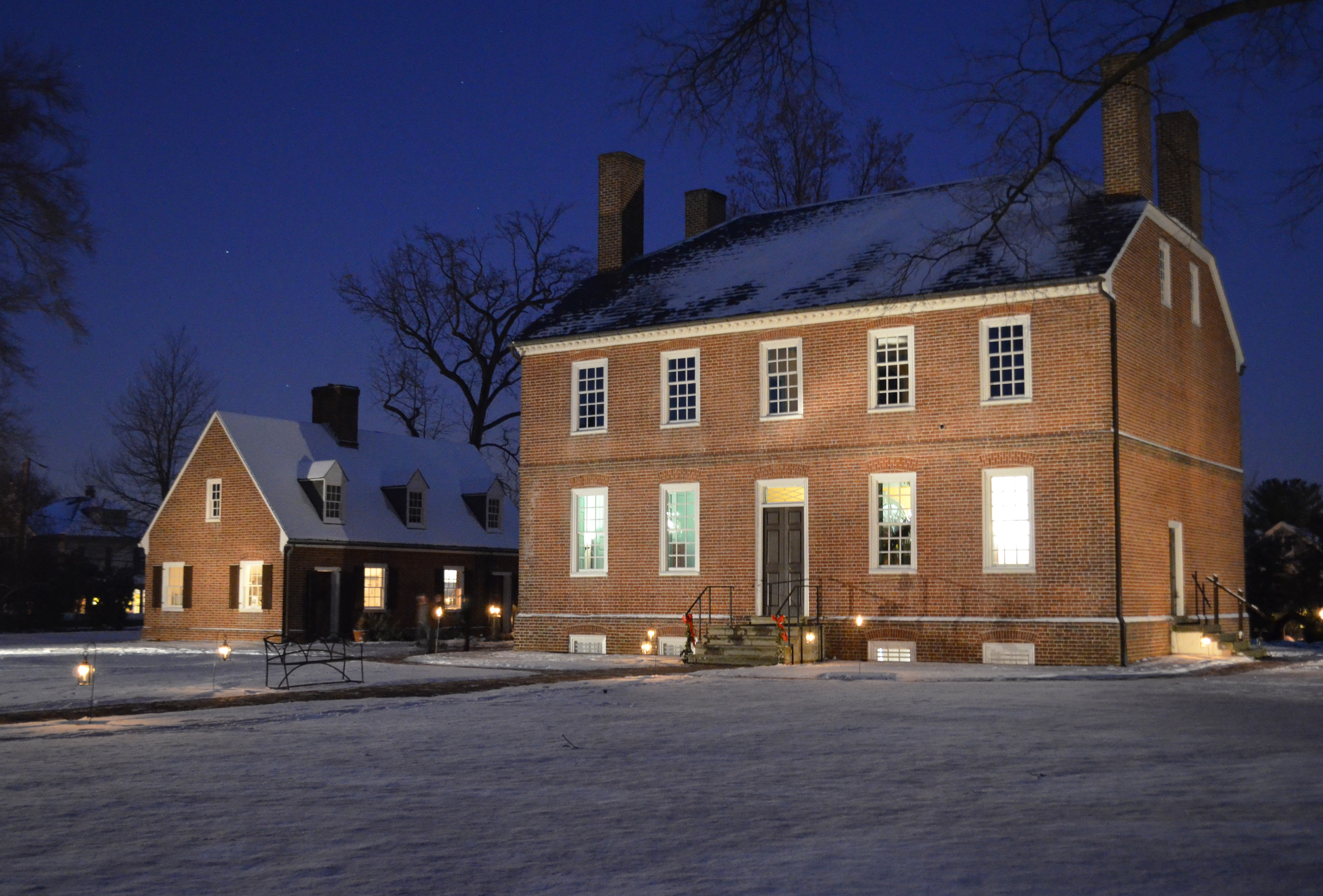
    Historic Kenmore on the eve of Twelfth Night. Credit: GWF Photo

    Many Christmas and Twelfth Night traditions are rooted in holidays celebrating the winter solstice. For example, Saturnalia, a holiday honoring the Roman god Saturn, took place in mid-December. During Saturnalia, the normal social order was temporarily overturned. Romans closed schools and businesses, held grand feasts, and in some families, a king or “Lord of Misrule” was chosen to rule over the household’s festivities.[1] In Scandinavia, people celebrated the winter solstice during the Nordic festival, Yule. Festivities included bonfires (or yule logs), evergreen decorations, and feasts. It wasn’t until the 4th century that the Roman church officially observed December 25th as Jesus’s birth date. Historians speculate that church officials chose this date precisely because so many popular winter celebrations occurred around that same time.[2]

    Saturnalia by Antoine Callet. Credit: Wikipedia

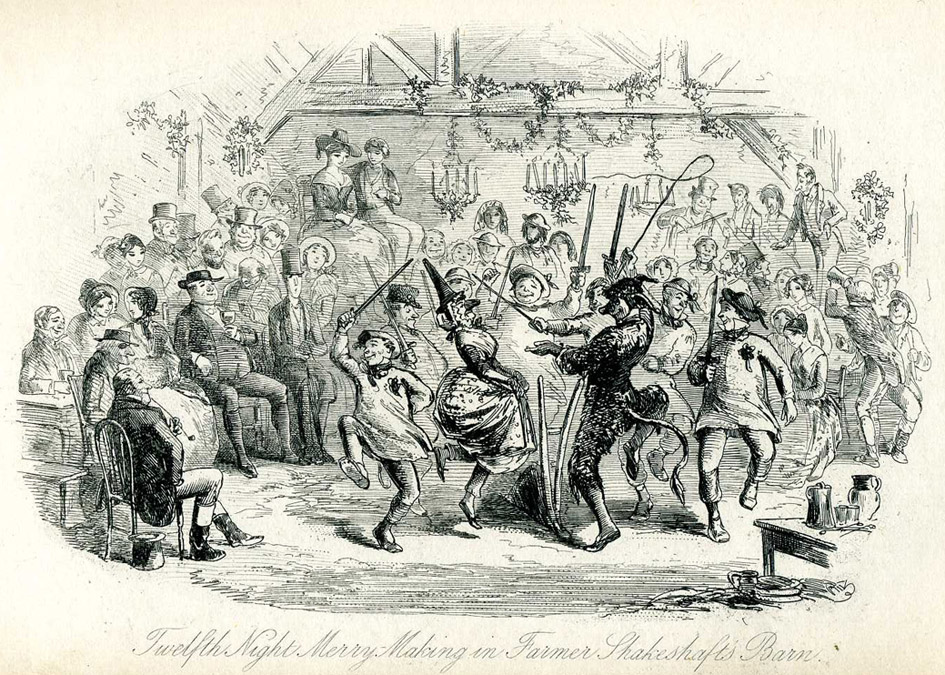
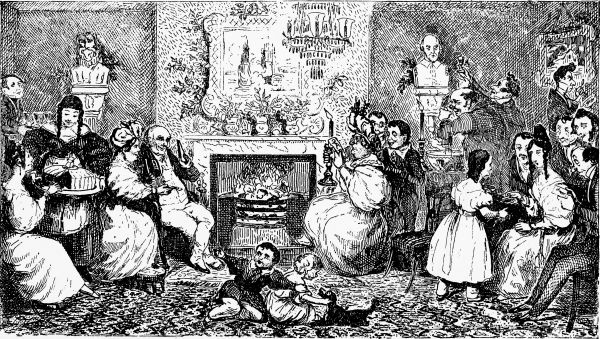
    If we fast forward in time, we see how some of these winter rituals were absorbed into the festivities of Twelfth Night. But first- what exactly is Twelfth Night? Typically celebrated on either January 5th or 6th, Twelfth Night, or Epiphany, is a Christian holiday that marks the end of the Twelve Days of Christmas and commemorates the Magi’s visit to Jesus. During the colonial era, the holiday season kicked off on December 25th and culminated on Twelfth Night. The twelve days after Christmas were full of games, music, dancing, feasts, and visiting with family and friends. Families often celebrated the season with a Twelfth Night Cake. Recipes called for a dried bean and pea to be baked into an elaborately decorated fruit filled cake. The man who found the bean was declared King for the night, while the woman who found the pea was declared Queen.

    Illustration of a Twelfth Night party by Robert Seymour. The woman on the far left serves pieces of a large Twelfth Cake. Credit: The Project Gutenberg

    Of course, there has always been debate surrounding how the Christmas season should be celebrated, and practices varied from place to place and person to person. In the 17th century, New England Puritans (echoing sentiments from Cromwellian England) viewed Christmastime celebrations as rowdy, excessive, and downright bacchanalian. Massachusetts went as far as to outlaw celebrations between 1659 and 1691.[3]

    The Twelfth Night party’s “King” and “Queen” sit on chairs overlooking the crowd. Dancing, drinking, and mumming (costumed acting) are in full swing. Puritans disapproved of these festive antics. Credit: Wikipedia

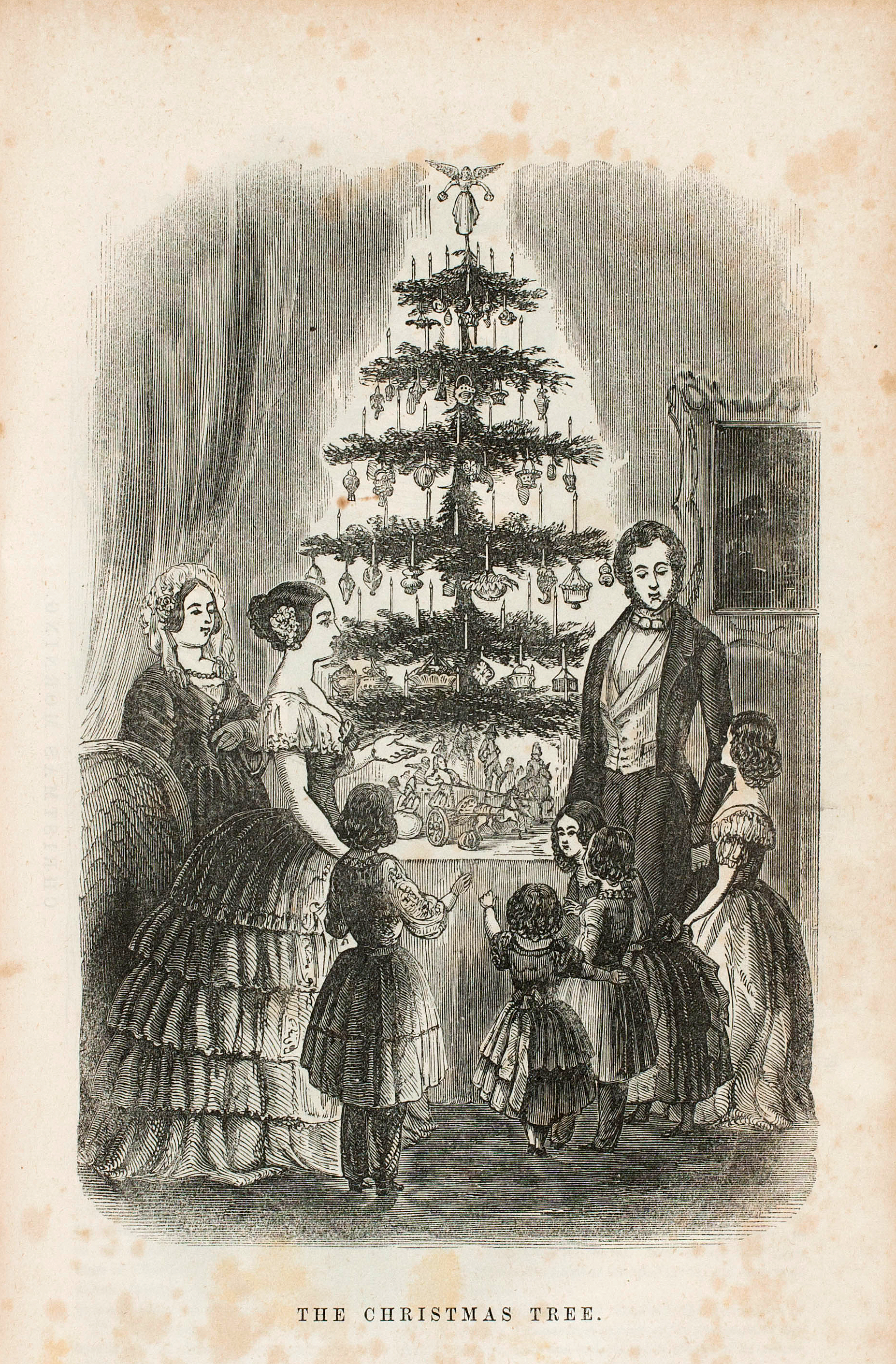
    During the 19th century, Queen Victoria influenced a shift in popular opinion towards a more family-focused Christmas season. In 1850, Godey’s Lady’s Book, a popular American magazine, published an image of the royal family gathered around a Christmas tree. While German immigrants had already introduced the Christmas tree tradition to America, this image fascinated the English and American public alike, and it further popularized the practice. In the American version of the print, editors removed Victoria’s tiara and Albert’s royal sash, and the group came to embody the ideal American family at Christmas.[4]

    Godey’s Lady’s Book illustration. Credit: Wikimedia Commons

    These changing ideals shaped the Christmas season during the Victorian era, and combined with rapid industrialization and commercialization, they sparked the beginning of a number of now familiar traditions. For example, improvements in mass printing technology popularized the practice of sending Christmas cards. In 1843, Charles Dickens published A Christmas Carol, a tale promoting charity, good will, and the virtues of a domestic family Christmas. Thomas Nast, who made popular the modern image of Santa Claus, published his first Santa cartoons in the 1863 edition of Harper’s Weekly.

    You might be asking, where then, does this leave the Twelve Days of Christmas and our Twelfth Night celebrations? As we’ve seen, changing ideals during the 19th century promoted a holiday season focused on children and family. Modern industry and commercialization further bolstered shopping and gift giving habits, and a twelve day holiday certainly didn’t fit within the parameters of the new industrialized era. The once twelve day celebration now culminated on one, and it was celebrated with visits from Santa and gifts for children, rather than with feasts and parties for adults.

    However, some Twelfth Night traditions live on during the modern Christmas season, albeit under new guises. Between Christmas and New Year’s, people may decorate their homes with greenery, raise a toast with a glass of wassail, or host extravagant parties with family and friends. If you visit New Orleans during the carnival season (beginning with Epiphany and ending on Mardi Gras) you might celebrate by eating “King Cake,” where the lucky person who finds the plastic baby figurine inside their piece of cake is crowned “king” for the day! That sounds a little familiar, doesn’t it?

    Ann Waters

    Manager of Interpretation and Visitor Services


    [1]“Saturnalia,” HISTORY, A&E Television Networks, Last modified December 18, 2020, Accessed December 22, 2021, https://www.history.com/topics/ancient-rome/saturnalia

    [2] Stephen Nissenbaum, The Battle for Christmas (New York: Knopf Doubleday Publishing Group, 2010), 4.

    [3] Bruce David Forbes,“Christmas,” In America’s Favorite Holidays: Candid Histories, 1st ed. (University of California Press, 2015), 28.http://www.jstor.org/stable/10.1525/j.ctv1wxrr3.5

    [4] Ibid., 34.