Lives and Legacies

Tag: Twelfth Night

  • What in the World is Twelfth Night?: A Visit with the Ghost of Twelfth Night Past

    Usually, at this time of year preparations are well underway for our annual Twelfth Night at Kenmore: A Dramatic Performance.  The play takes place in January 1776, during the first Christmas season celebrated at Kenmore. Unfortunately, this year’s celebration of Twelfth Night at Kenmore is canceled due to winter weather.  However, if you are familiar with the performance, or have read some of our past blog posts, you might already know a thing or two about this once popular Christmastide holiday. While traces of Twelfth Night still exist today, the celebration is much diminished, if not entirely eclipsed, by Christmas and New Year’s. Why is this, exactly? When did we stop celebrating Twelfth Night?

    There is no single, short answer as to why Twelfth Night celebrations fell out of fashion. Rather, attitudes surrounding the Christmas season changed throughout history, and old traditions were often absorbed or re-imagined into something new. A very brief look into the history of the season sheds some light on why today’s Christmas traditions rose in popularity, while Twelfth Night celebrations became part of Christmas Past.
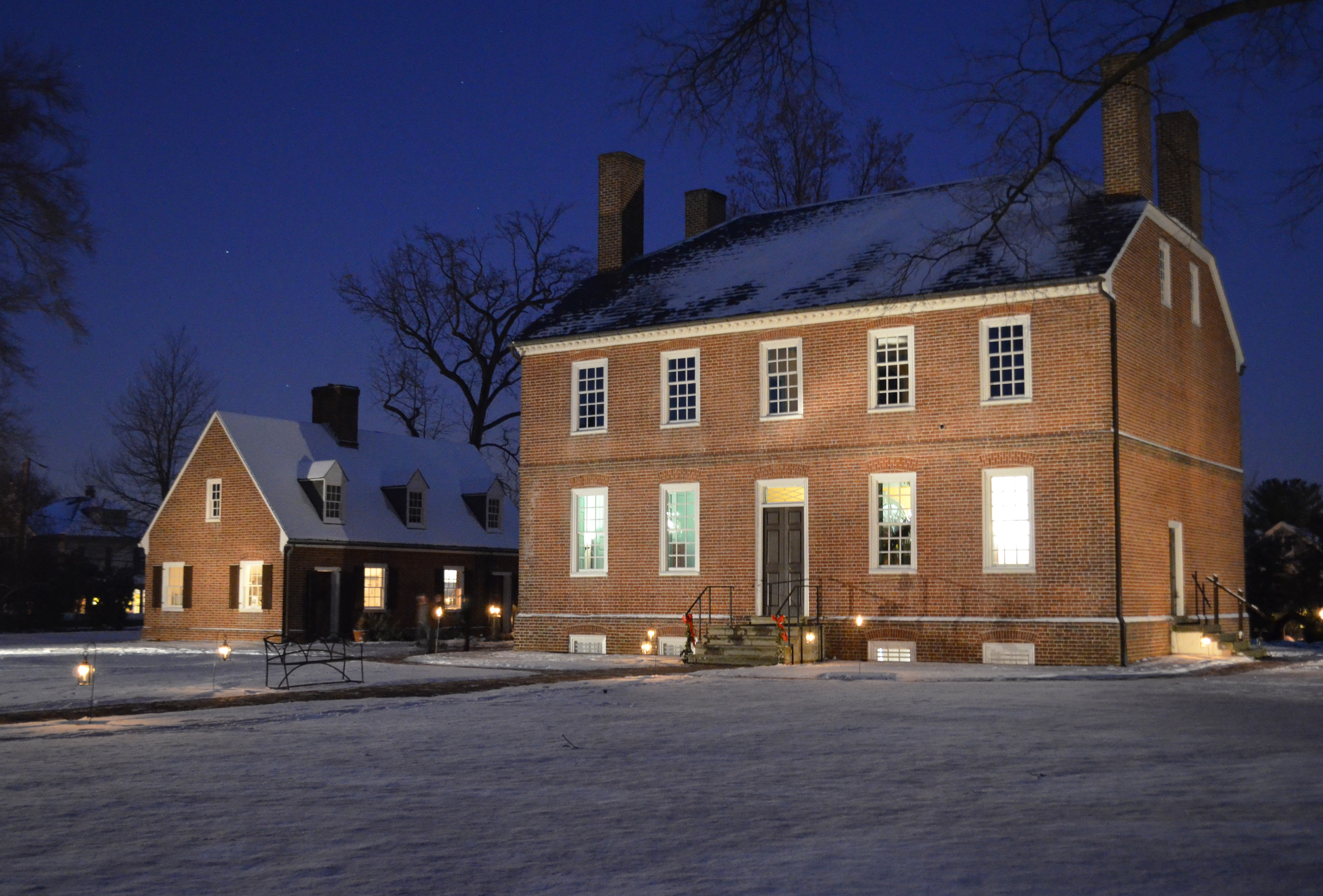
    Historic Kenmore on the eve of Twelfth Night. Credit: GWF Photo

    Many Christmas and Twelfth Night traditions are rooted in holidays celebrating the winter solstice. For example, Saturnalia, a holiday honoring the Roman god Saturn, took place in mid-December. During Saturnalia, the normal social order was temporarily overturned. Romans closed schools and businesses, held grand feasts, and in some families, a king or “Lord of Misrule” was chosen to rule over the household’s festivities.[1] In Scandinavia, people celebrated the winter solstice during the Nordic festival, Yule. Festivities included bonfires (or yule logs), evergreen decorations, and feasts. It wasn’t until the 4th century that the Roman church officially observed December 25th as Jesus’s birth date. Historians speculate that church officials chose this date precisely because so many popular winter celebrations occurred around that same time.[2]

    Saturnalia by Antoine Callet. Credit: Wikipedia

    If we fast forward in time, we see how some of these winter rituals were absorbed into the festivities of Twelfth Night. But first- what exactly is Twelfth Night? Typically celebrated on either January 5th or 6th, Twelfth Night, or Epiphany, is a Christian holiday that marks the end of the Twelve Days of Christmas and commemorates the Magi’s visit to Jesus. During the colonial era, the holiday season kicked off on December 25th and culminated on Twelfth Night. The twelve days after Christmas were full of games, music, dancing, feasts, and visiting with family and friends. Families often celebrated the season with a Twelfth Night Cake. Recipes called for a dried bean and pea to be baked into an elaborately decorated fruit filled cake. The man who found the bean was declared King for the night, while the woman who found the pea was declared Queen.
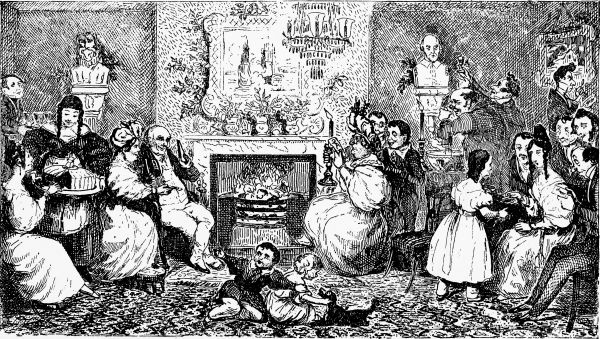
    Illustration of a Twelfth Night party by Robert Seymour. The woman on the far left serves pieces of a large Twelfth Cake. Credit: The Project Gutenberg

    Of course, there has always been debate surrounding how the Christmas season should be celebrated, and practices varied from place to place and person to person. In the 17th century, New England Puritans (echoing sentiments from Cromwellian England) viewed Christmastime celebrations as rowdy, excessive, and downright bacchanalian. Massachusetts went as far as to outlaw celebrations between 1659 and 1691.[3]
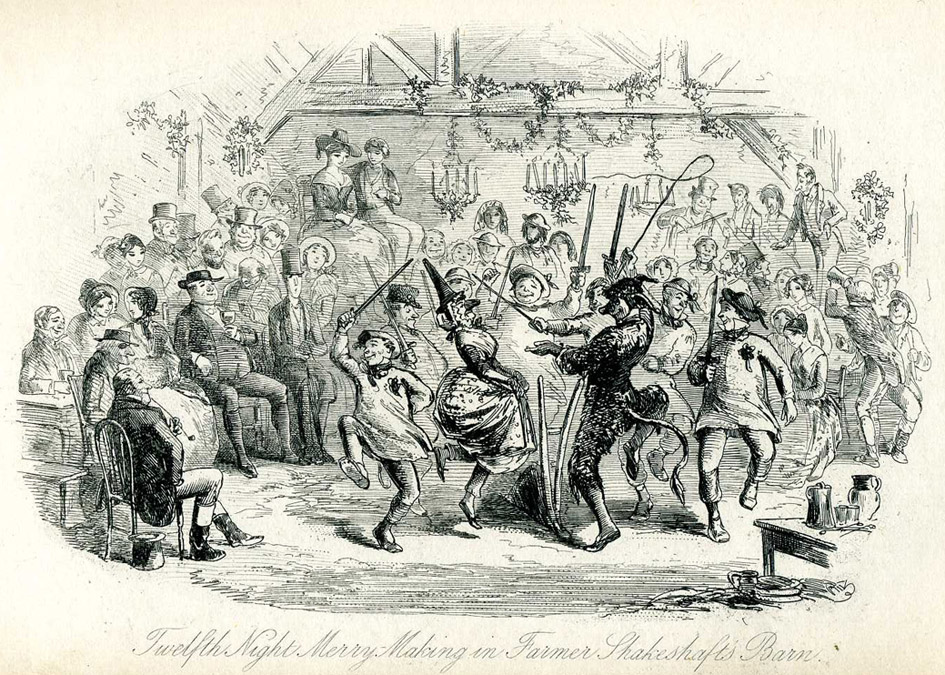
    The Twelfth Night party’s “King” and “Queen” sit on chairs overlooking the crowd. Dancing, drinking, and mumming (costumed acting) are in full swing. Puritans disapproved of these festive antics. Credit: Wikipedia

    During the 19th century, Queen Victoria influenced a shift in popular opinion towards a more family-focused Christmas season. In 1850, Godey’s Lady’s Book, a popular American magazine, published an image of the royal family gathered around a Christmas tree. While German immigrants had already introduced the Christmas tree tradition to America, this image fascinated the English and American public alike, and it further popularized the practice. In the American version of the print, editors removed Victoria’s tiara and Albert’s royal sash, and the group came to embody the ideal American family at Christmas.[4]
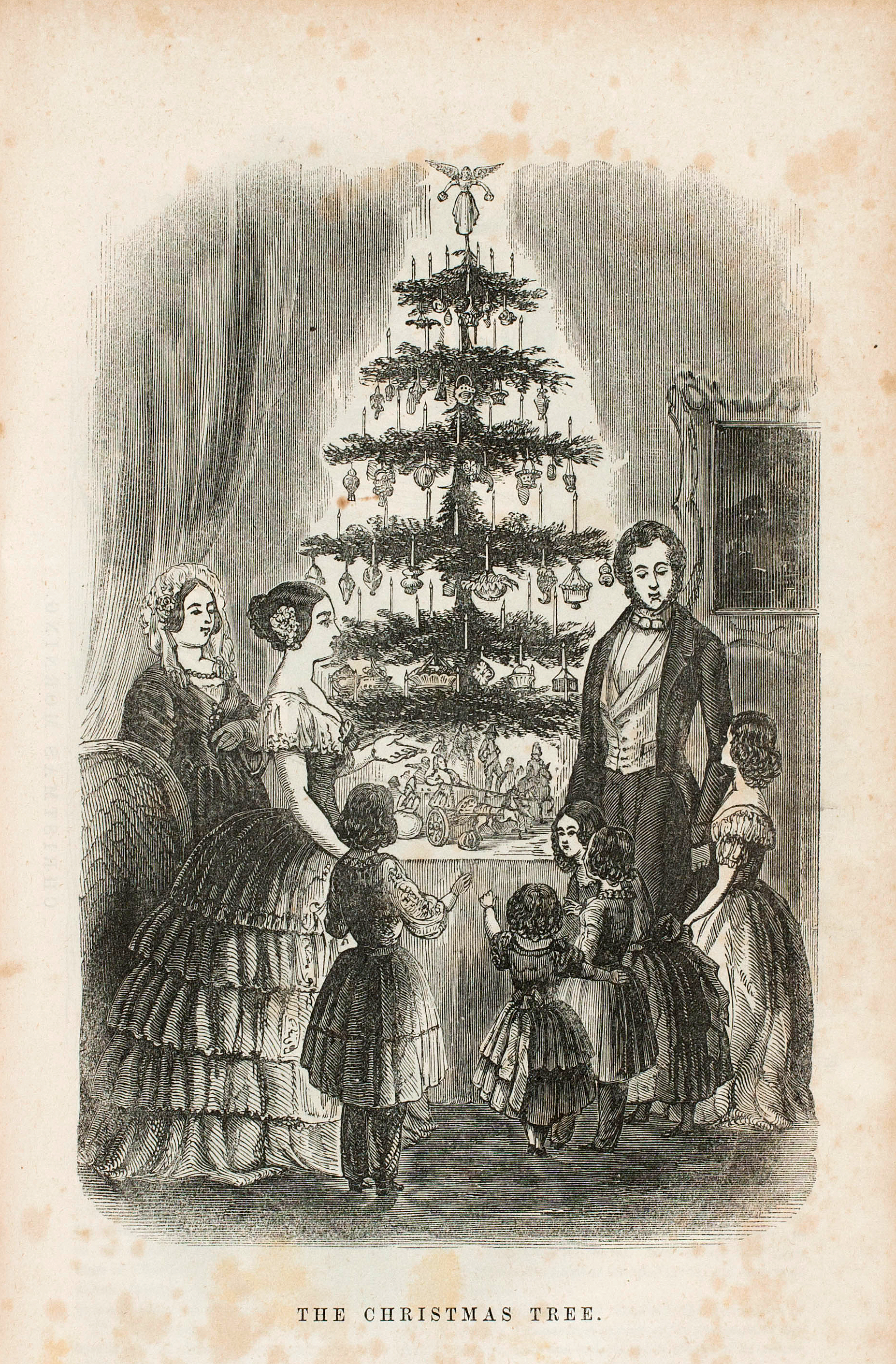
    Godey’s Lady’s Book illustration. Credit: Wikimedia Commons

    These changing ideals shaped the Christmas season during the Victorian era, and combined with rapid industrialization and commercialization, they sparked the beginning of a number of now familiar traditions. For example, improvements in mass printing technology popularized the practice of sending Christmas cards. In 1843, Charles Dickens published A Christmas Carol, a tale promoting charity, good will, and the virtues of a domestic family Christmas. Thomas Nast, who made popular the modern image of Santa Claus, published his first Santa cartoons in the 1863 edition of Harper’s Weekly.

    You might be asking, where then, does this leave the Twelve Days of Christmas and our Twelfth Night celebrations? As we’ve seen, changing ideals during the 19th century promoted a holiday season focused on children and family. Modern industry and commercialization further bolstered shopping and gift giving habits, and a twelve day holiday certainly didn’t fit within the parameters of the new industrialized era. The once twelve day celebration now culminated on one, and it was celebrated with visits from Santa and gifts for children, rather than with feasts and parties for adults.

    However, some Twelfth Night traditions live on during the modern Christmas season, albeit under new guises. Between Christmas and New Year’s, people may decorate their homes with greenery, raise a toast with a glass of wassail, or host extravagant parties with family and friends. If you visit New Orleans during the carnival season (beginning with Epiphany and ending on Mardi Gras) you might celebrate by eating “King Cake,” where the lucky person who finds the plastic baby figurine inside their piece of cake is crowned “king” for the day! That sounds a little familiar, doesn’t it?

    Ann Waters

    Manager of Interpretation and Visitor Services


    [1]“Saturnalia,” HISTORY, A&E Television Networks, Last modified December 18, 2020, Accessed December 22, 2021, https://www.history.com/topics/ancient-rome/saturnalia

    [2] Stephen Nissenbaum, The Battle for Christmas (New York: Knopf Doubleday Publishing Group, 2010), 4.

    [3] Bruce David Forbes,“Christmas,” In America’s Favorite Holidays: Candid Histories, 1st ed. (University of California Press, 2015), 28.http://www.jstor.org/stable/10.1525/j.ctv1wxrr3.5

    [4] Ibid., 34.

  • “Twelfth Night at Historic Kenmore” 2019 [Photos]

    Each January, Historic Kenmore presents Twelfth Night at Kenmore, a dramatic theater presentation that imagines the first Christmas that Fielding and Betty Washington Lewis spent in their newly built home. The play is set in January 1776 and that year is not a time for the usual celebration. War brings fear, doubt, and frustration to the Lewis family and their friends.

    The 2019 edition of Twelfth Night at Kenmore took place January 11 and 12. Here are a few photos from the performances.

  • Coming Soon! “Twelfth Night at Kenmore” [Photos]

    On Friday, January 11, Saturday, January 12, and Sunday, January 13, Historic Kenmore will again present Twelfth Night at Kenmore, a dramatic theater presentation set in 1776.

    This production depicts the first Christmas that Fielding and Betty Washington Lewis celebrate in their newly built home. It is not the usual joyous atmosphere, however. The Revolutionary War brings fear, doubt, and frustration to the Lewis family, their friends, and Kenmore’s enslaved community.  Here are some photos from last year’s performance.

    Performance dates: Friday, January 11, Saturday, January 12, Sunday, January 13
    Performance times: 3:30 p.m., 4:00 p.m., 4:30 p.m., 5:30 p.m., 6:00 p.m. and 6:30 p.m.

    Reservations required. Call 540-370-0732 x24 or email hayes@gwffoundation.org

    Cost: $12.00 adults, $6.00 ages 3-17; under age 3 free.

  • Photos: “Twelfth Night at Kenmore” 2018

    Each January, Historic Kenmore presents Twelfth Night at Kenmore, a dramatic theater presentation that imagines the first Christmas that Fielding and Betty Washington Lewis spent in their newly built home. The play is set in January 1776 and that year is not a time for the usual celebration. War brings fear, doubt, and frustration to the Lewis family and their friends.

    The 2018 edition of Twelfth Night at Kenmore took place January 5, 6, and 7. Here are a few photos from the performances.

  • Video – Coming Soon: “Twelfth Night at Kenmore”

    A preview of “Twelfth Night at Kenmore,” a dramatic theater presentation at Historic Kenmore on January 5, 6, 7. Visit kenmore.org for event details.

  • Photos: “Twelfth Night at Kenmore” 2017

    Each January, Historic Kenmore presents Twelfth Night at Kenmore, a dramatic theater presentation that imagines the first Christmas that Fielding and Betty Washington Lewis spent in their newly built home. The play is set in January 1776 and that year is not a time for the usual celebration. War brings fear, doubt, and frustration to the Lewis family and their friends.

    The 2017 edition of Twelfth Night at Kenmore took place this past weekend. Here are a few photos from that performance.

  • Photos: Last Year’s “Twelfth Night at Kenmore”

    On Friday, January 6, Saturday, January 7, and Sunday, January 8, Historic Kenmore will again present Twelfth Night at Kenmore, a dramatic theater presentation set in January 1776. It is the first Christmas that Fielding and Betty Washington Lewis celebrate in their newly built home. It is not the usual celebration, however. War brings fear, doubt, and frustration to the Lewis family and their friends.  Immerse yourself in the experience the candlelight, music, and decorations of an eighteenth-century Christmas!

    Performance times: 3:30 p.m., 4:15 p.m., 5:15 p.m., and 6:00 p.m.
    Reservations required. Call 540-370-0732 x24 or email hayes@gwffoundation.org
    Cost: $12.00 adults, $6.00 ages 3-17; free ages 3 and under.

    Here is a collection of photos from the last performance way back in January.

  • Yes, Virginia, there is a Christmas Hedgehog!

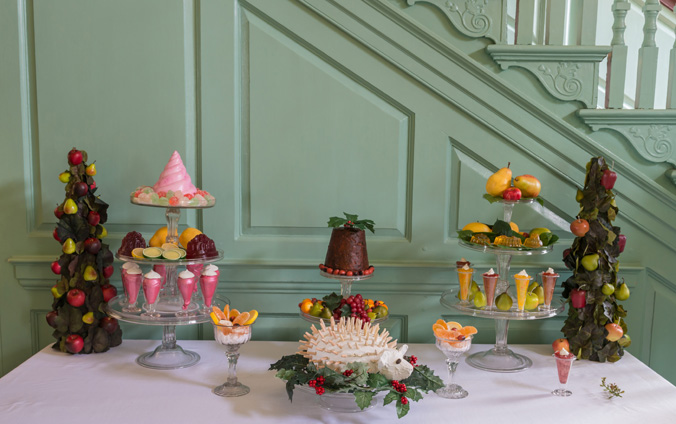
    During the holidays, it’s the curatorial team’s job to festoon Historic Kenmore in period-appropriate holiday swag to celebrate the Christmas season.  Greenery is brought in to cheer up the rooms and a table of special desserts is laid out as if ready for Christmas guests.  These sweet treats are a pretty traditional fare but one particular dessert garners far more attention and questions than the others: the hedgehog sitting at the center of the table.

    hedgehog-1
    The Christmas dessert table complete with faux marzipan hedgehog in the Passage at Historic Kenmore.

    “What is it?” and “Why a hedgehog?” are heard from visitors again and again.  I decided to investigate to see if I could find out how and why this spiny confection graced Betty Lewis’s table during the holidays.  Unfortunately, my research raised more questions than answers and ultimately lead me to an interesting but ambiguous conclusion based mainly on my own conjecture.

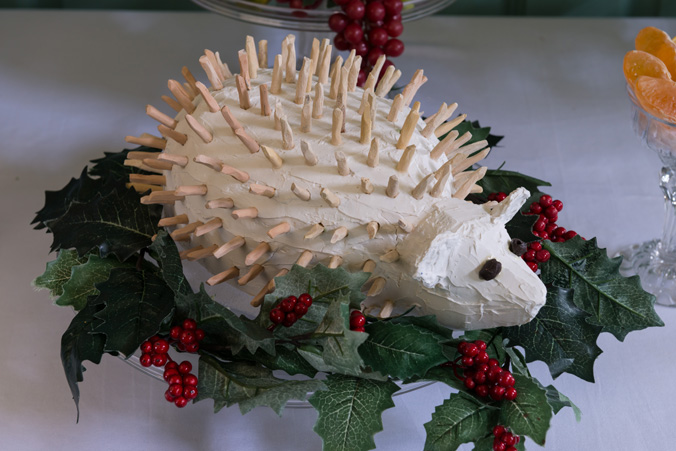
    First, I have often heard the hedgehog referred to as a “cake” but it is not a cake.  It is made out of marzipan; a sweet created using sugar or honey and ground almonds.  Marzipan can be flavored, contain fruit and nuts, or even covered in chocolate …the possibilities are endless!  It is often shaped into miniature fruits, vegetables, or animals and colored with dyes.  The confection is usually eaten on special days or for special events.

    Hedgehog 2.JPG
    A closer view of the faux marzipan hedgehog.

    No one knows for sure where marzipan was first created but it likely originated in the Middle East around the ninth-century.[1] It made its way to Europe through trade and immigration. Each country personalized the candy by adding its own unique ingredients and traditions.

    Regardless of which country has the honor of creating this particular delicious dessert, it became quite popular. Recipes for marzipan began to show up in various cookbooks dating from the sixteenth century onward.   The two books most important to my investigation were The Compleat Housewife or, Accomplished Gentlewoman’s Companion by Eliza Smith published in 1727 and Hannah Glasse’s The Art of Cookery Made Plain and Easy published in 1747.  We know Betty owned both of these books because they are listed in the 1781 probate inventory. [2]

    In Mrs. Smith’s The Compleat Housewife, the chapter “All Sorts of Cakes” includes a recipe for ‘march-pane’ which is an old English word for marzipan.[3]  The recipe is a traditional non-baked marzipan that includes ground almond, refined sugar and orange-flower water for flavoring. [4] Twenty years after Mrs. Smith published her book, Mrs. Glasse published The Art of Cookery and, by this time, the hedgehog had made its debut.  The Art of Cookery does not list marzipan specifically but in chapter sixteen titled “Cheesecakes, creams, jellies, whipt syllabubs” there is a recipe “To make a hedge-hog”.[5]  This is a cooked marzipan recipe that instructs the baker to form the almond paste into the shape of a hedge-hog with little slivered almond spines.

    How did the hedgehog become associated with this almond dessert? The short answer is I’m not sure.  I researched hedgehogs trying to discover any relation to the holiday season, to winter, or to the New Year. I was unable to find any.

    Hedgehogs are native to England, where both cookbooks were published, but not to the Americas.[6]  Colonial Americans would likely never have seen a hedgehog.   There is not a lot of positive symbolism or folklore associated with the little creatures besides being industrious and cute.[7]  They have been used medicinally for a variety of ailments and were a food source in many cultures.[8]  None of this provides a reason why these little creatures were immortalized in almond meal and sugar at Christmas.

    hedgehog-3
    A photo of a real hedgehog because it’s so cute! Credit: Wikimedia/AlmaGz

    I think the most likely development of this holiday treat was a combination of coincidence and novelty. Someone made the marzipan for the holidays,shaped it into a dome, and then decorated it with almonds. Eventually maybe someone else thought this resembled a hedgehog and added a little hedgehog face because it was clever and cute.

    Why would Betty choose a marzipan hedgehog to sit on her holiday dessert table in colonial Virginia? As previously noted, marzipan was an established treat used to celebrate special days. The cost of the ingredients, which included two pounds of almonds, orange-flower water, canary wine, cream, butter and sugar, was substantial and illustrated to guests the effort and expense the family lavished on the party.  While the table would probably have smaller bite-sized marzipan pieces in the more traditional fruit shapes, the novel hedgehog with the slivered almond spines created a visually appealing and attention-grabbing dish. The Christmas hedgehog was a great conversation starter then!  The Christmas hedgehog is a great conversation starter now!

    Heather Baldus
    Collections Manager

    [1] Habeeb Salloum, Muna Salloum, and Leila Salloum, Sweet Delights from A Thousand and One Nights: The Story of Traditional Arab Sweets, (London: I.B. Tauris & Co. Ltd, 2013), 168: Sidney W. Mintz, “Color, Taste and Purity: Some Speculations on the Meanings of Marzipan”, Etnofoor, Jaarg. 4, Nr.1 (1991): 103-108.

    [2] Fielding Lewis Probate Inventory, 1781

    [3] Thomas Dawson, The Good Huswifes Jewell (London: John Wolfe, 1587), 23; Thomas Dawson, The good Huswifes Handmaide for the Kitchin. (London: Richard Jones, 1594), 37b.

    [4] Eliza Smith, The Compleat Housewife or, Accomplished Gentlewoman’s Companion, (Williamsburg: William Parks, 1742), 73.

    [5] Hannah Glasse, The Art of Cookery, Made Plain and Easy (London: A. Millar and R. Tonson, 1765), 288.

    [6] Mazin B. Qumsiyeh, Mammals of the Holy Land (Texas: Texas Tech University Press, 1996), 63.

    [7] Jacqueline Simpson and Stephen Roud, A Dictionary of English Folklore (Oxford: Oxford University Press, 2000); Tatjana Civjan and Dainius Razauskas, “Hedgehog in Cosmogonic and Etiological Legends of the Balto-Balcanic Area,” Tautosakos darbai, no. XXI (2004): 79-91.

    [8] Mazin B. Qumsiyeh, Mammals of the Holy Land (Texas: Texas Tech University Press, 1996), 64; Vincent Nijman and Daniel Bergin, “Trade in Hedgehogs in Morocco,” Journal of Threatened Taxa, (2015): 7132-7136.

  • Photos: “Twelfth Night at Kenmore” 2016

    Each January, Historic Kenmore presents Twelfth Night at Kenmore, a dramatic theater presentation that imagines the first Christmas that Fielding and Betty Washington Lewis spent in their newly built home. The play is set in January 1776 and that year is not a time for the usual celebration. War brings fear, doubt, and frustration to the Lewis family and their friends.

    The 2016 edition of Twelfth Night at Kenmore took place this past weekend. Here are photos from that performance.

  • Photos: Last Year’s “Twelfth Night at Kenmore”

    This coming weekend — Friday, January 8, Saturday, January 9, or Sunday, January 10 — Historic Kenmore again presents Twelfth Night at Kenmore, a dramatic theater presentation set in January 1776. It is the first Christmas that Fielding and Betty Washington Lewis celebrate in their newly built home. It is not the usual celebration, however. War brings fear, doubt, and frustration to the Lewis family and their friends.

    Here is a collection of photos from last year’s performances.

    Immerse yourself in the experience the candlelight, music, and decorations of an eighteenth-century Christmas!

    Performance Times: 3:00, 3:45, 4:45 and 5:30 p.m.
    Reservations required. Call 540-370-0732 x24 or email hayes@gwffoundation.org
    Cost: $12.00 adults, $6.00 ages 3-17; free ages 3 and under.