Lives and Legacies

Category: Uncategorized

  • Ice Cream: A Scoop of History

    This time of year, I find it difficult not to reach into my freezer after dinner to get a cold, sweet dairy treat.  Ice cream in cartons and scooped from behind a counter has become a part of the American experience. Ice cream was not always so easy to come by, however, as the ingredients and tools to make it were reserved for the most elite part of the population. 

    Ice cream has a complicated past that is often exaggerated, misinterpreted, and associated with individuals that probably have nothing to do with the creation of the icy treat.  In the 20th century, companies fabricated a great deal of these origin stories to help sell this delicacy.  Stories range from Ancient Rome to Martha Washington and Dolley Madison, some of which contain bits of truth, but are now inflated into full blown myths.
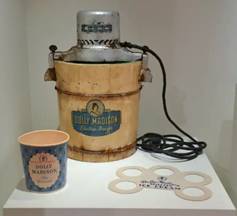
    Dolly Madison electric ice cream freezer on display

    Moving forward to Colonial North America, ice cream recipes were not hard to come by as even Hannah Glasse had a recipe “To Make Ice-Cream” in her popular book The Art of Cookery Made Plain and Easy.[ii]  Thomas Jefferson, extensive traveler that he was, even  recorded a recipe for vanilla ice cream, helping to establish its popularity in the English American colonies and new republic.[iii]  Ice cream flavors usually depended on seasonal fruits that were easy to mash, but more interesting and savory flavors like parmesan and oyster also made their way into recipe books of the period.
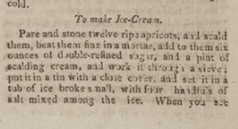
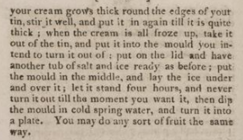
    text of how to make ice cream
    printed text of how to make ice cream

    “To Make Ice-Cream” from The Art of Cookery Made Plain and Easy by Hannah Glasse  Source: Library of Congress.
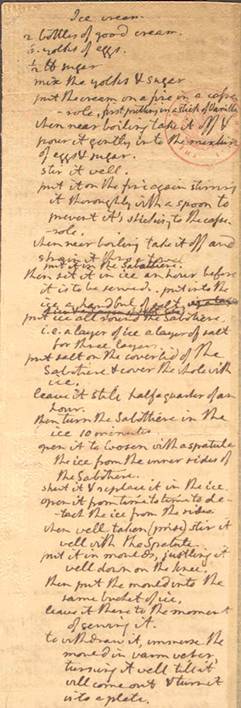
    Thomas Jefferson's written ice cream recipe

    Thomas Jefferson’s recipe for ice cream. Written in his hand.  Source: Library of Congress.

    So, if it wasn’t availability of recipes and the concept of freezing the cream to make the dessert that stopped Americans from making this treat to cool off in the summer, then what was it?  It was the capability of keeping ice, the labor it took to churn the cream by hand, the expensive imported ingredients, and the specialty serving pieces needed to put the frozen delight on the table for guests. 

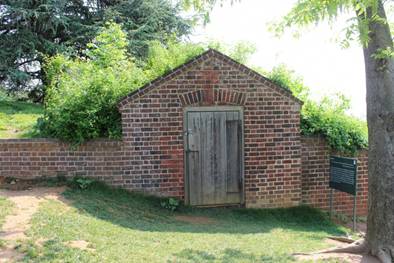
    At this time, if you wanted ice, you had to harvest it from frozen lakes, ponds, or rivers in the winter. Anyone could do that, but preserving it was the challenge. Underground ice houses specifically built to preserve the ice until the warmer months were reserved for the elite.

    Also remember that colonists had to typically import both the sugar to sweeten the cream and the salt for the ice.  Both white sugar and salt were used sparingly.  So, a recipe meant to show off using a liberal amount of both was something many could not afford to waste resources on. 
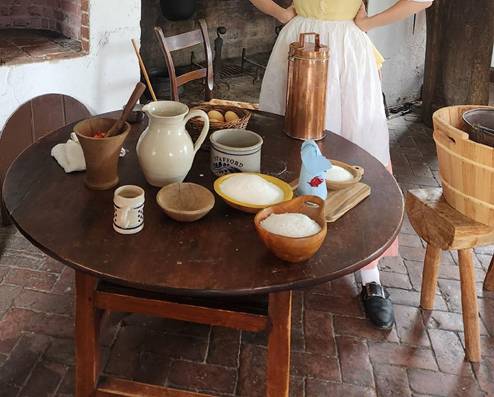
    ingredients laid on on a table for making ice cream

    Ingredients used to make strawberry ice cream.  Source: The George Washington Foundation.

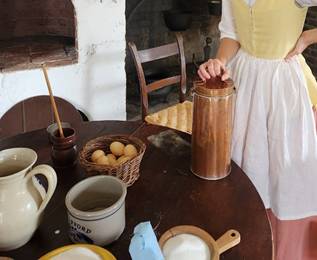
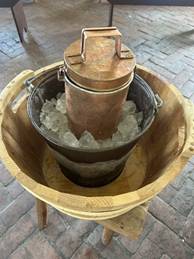
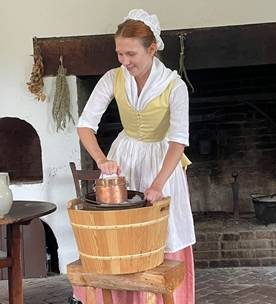
    Ice cream could be made using either a pewter vessel or a specialty sorbetiere.  A sorbetiere was a French invention made specifically for ice cream production that was essentially just a copper container with a lid.  Either the sorbetiere or pewter bowl with the ice cream mixture was placed into a container of ice and salt.  The container was then churned, occasionally stopping to scrape the mixture off the sides when it began to freeze.  This process is not unlike what happens in both hand crank and electric ice cream makers from modern times, but all done by hand.  On a Southern plantation wealthy enough to afford the ice, sugar, salt, and tools to make the ice cream, they’d also have to spare the time of an enslaved laborer for an hour or more to churn the dessert by hand. 
    woman hand churning ice cream in 18th century clothing
    a copper sorbetiere on table with ingredients
    copper sorbetiere sitting in bucket of ice

    (Left) Churning the ice cream. Source: Emma Schlauder. (Center & Right) Copper sorbetiere. Source: The George Washington Foundation.

    George and Martha Washington were possibly introduced to ice cream by the Royal Governor of Virginia, Lord Botetourt in 1770 at the Governor’s Palace in Williamsburg, where there is evidence of an ice house and ice molds used in the production of ice cream.[iv]  Following George’s introduction to ice cream, he ordered an ice house to be built at Mount Vernon  and he acquired a “cream machine for ice” and other items to help make and serve ice cream to guests.[v]  Martha Washington was known for hosting gatherings during George’s presidency where she served prestigious treats like Lemonade and ice cream, as noted by Abigail Adams  in 1789.[vi]
    Mount Vernon Ice House

    Ice house at Mount Vernon. Source: Mount Vernon Ladies’ Association.

    When I prepare for Taste Through Time Programs, I always look for evidence of what I am making at both Kenmore and Ferry Farm. Unfortunately, there is really no evidence of ice cream being served at either property during the occupation of the Washington and Lewis families. Despite the presence of The Art of Cookery Made Plain and Easy in Fielding Lewis’ probate inventory and loaves of white sugar in Betty Lewis’, there is currently no evidence of ice houses or ice cream making and serving equipage at either Kenmore or Ferry Farm from this period.

    Allison Burgess

    DAR Director of Education


    [i] Theobald, M. M. (Winter 2010). Some Cold, Hard Historical Facts about Good Old Ice Cream. Colonial Williamsburg Journal. https://research.colonialwilliamsburg.org/Foundation/journal/Spring10/icecream.cfm

    [ii] Glasse, H., Katherine Golden Bitting Collection On Gastronomy & Elizabeth Robins Pennell Collection. (1805) The Art of Cookery Made Plain and Easy; Excelling Any Thing of the Kind Ever Yet Published … Also, the Order of a Bill of Fare for Each Month in the Manner the Dishes Are to Be Placed Upon the Table, in the Present Taste. Alexandria: Printed by Cottom and Stewart, and sold at their Book-Stores, in Alexandria and Fredericksburg. [Pdf] Retrieved from the Library of Congress, https://www.loc.gov/item/05005034/.

    [iii] Berkes, A. (2013, June 28). Ice Cream. Monticello.org. https://www.monticello.org/research-education/thomas-jefferson-encyclopedia/ice-cream/

    [iv] Theobald, M. M., Some Stone Cold Historical Facts.

    [v] Ledger B (photostat, Mount Vernon Ladies’ Association), 198a.

    [vi] “Abigail Adams to Mary Smith Cranch, 9 August 1789,” Founders Online, National Archives, https://founders.archives.gov/documents/Adams/04-08-02-0214. [Original source: The Adams Papers, Adams Family Correspondence, vol. 8, March 1787 – December 1789, ed. C. James Taylor, Margaret A. Hogan, Jessie May Rodrique, Gregg L. Lint, Hobson Woodward, and Mary T. Claffey. Cambridge, MA: Harvard University Press, 2007, pp. 397–401.]
  • 2026 Dig season begins at Ferry Farm, Boyhood Home of George Washington 

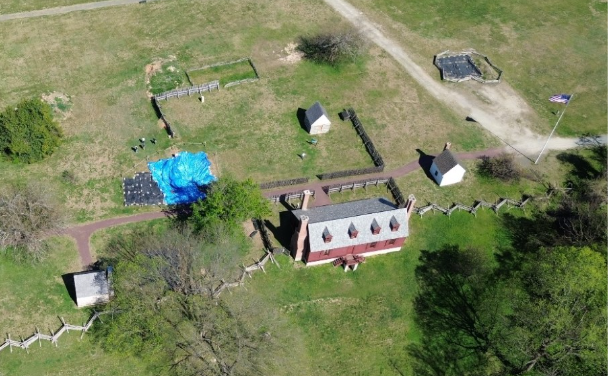
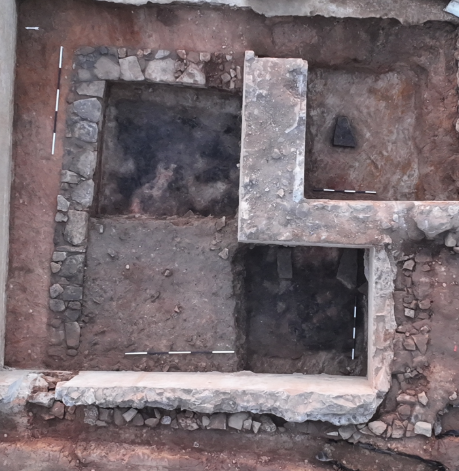
    Beginning on Monday, April 27th and continuing for the next 11 weeks, archaeologists will once again be outside working onsite at Ferry Farm, George Washington’s Boyhood Home. Our current excavations are centered on an eighteenth-century kitchen located on the north side of the work yard approximately 50 feet from the main house.  This wood-framed building, 16’ by 16’ in plan with an Aquia stone foundation and full cellar, would have been a hub of activity on the farm landscape and understanding its place within this landscape is important to our interpretation of life on the Washington farm.  

    Figure 1. Our kitchen site is located beneath the blue tarp just northeast of the main house.

    We began last year’s excavation season by uncovering and exposing the entirety of the site, which had been sealed 28 years ago with a protective layer of sand. Exposed was a 16’ square stone foundation to a cellar filled with burnt household and architectural debris. For our excavation plan, we divided the cellar fill into four quadrants and were able to excavate two of them down to the level of the cellar floor over the course of our season. One of the quadrants had previously been excavated in the 1990s, leaving one more quadrant to dig this summer.  

    Figure 2. The eighteenth-century kitchen stone wall foundation, intruded upon by twentieth- century concrete foundations.

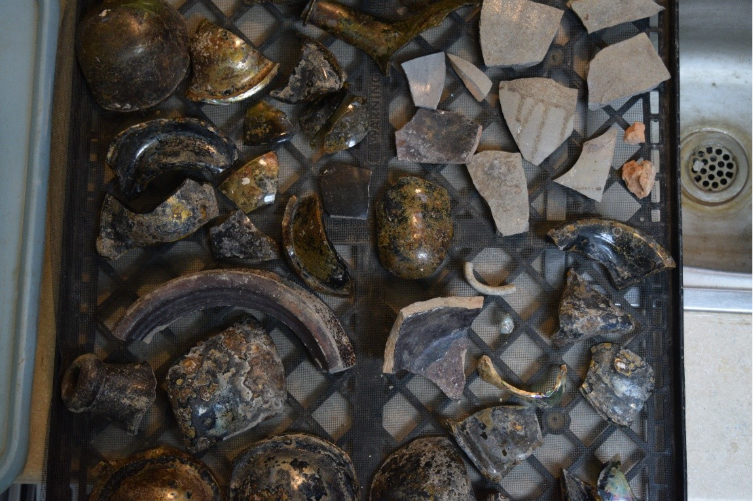
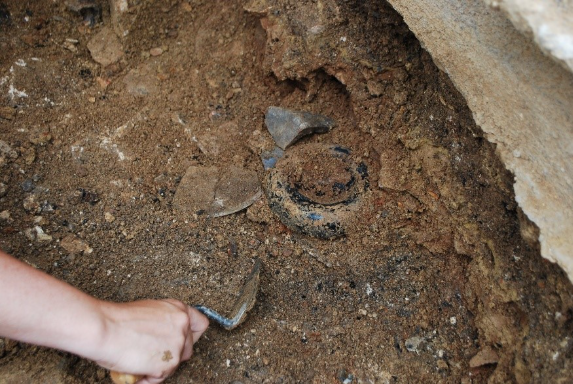
    From the burned fill came an unexpected bounty of artifacts. Hundreds of fragments of glass wine bottles and ceramic storage containers were sifted through our screens, along with buckets of burned architectural debris such as plaster, mortar, and wrought nails of all sizes.  A smaller number of more delicate artifacts also surprisingly survived, such as straight pins, animal bones, leaded tableware glass, buttons, box hinges, small copper drawer pulls, and even a concentrated deposit of eggshells! 

    Figure 3. A large wine bottle base being excavated out of the kitchen cellar fill. 

    Excavation also continued outside of and around the kitchen foundation as we searched for additional clues to the architectural footprint of the building. From these units we found artifacts ranging in age from 6500 BC to modern day. Native American projectile points and flint-knapping debitage, colonial-era ceramics, Civil War bullets, and twentieth-century household remains were all dug up in the various soil layers covering this part of the site.      

    Our archaeology lab has been very busy for the last nine months cleaning and sorting all the artifacts that were found last summer.  Understanding the types of artifacts found will aid in our interpretation of how the building was used, its construction details, its role in the farm landscape, and, hopefully, the date it burned down! 

    Figure 4. Glass wine bottles and stoneware crocks are washed and dried in the lab before being sorted and catalogued. 

    Our field crew will be on site weekdays from April 27th to July 10th.  Once again students from the University of South Florida will be here to learn the basics of archaeology field work during the months of May and June. We welcome all visitors to ask questions and enjoy the opportunity to help us sift for artifacts!  

    Judy Jobrack and Danielle Arens

    GWF Archaeologists

  • New Kids on the Block: The 20th-Century Houses of Kenmore Court

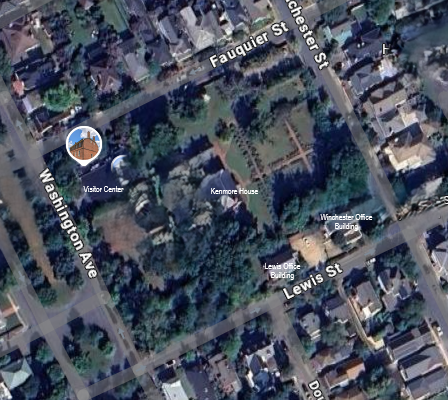
    When you visit Historic Kenmore today, you will find a preserved city block with gardens and pathways reaching from front to back. The tranquil estate is only interrupted by two other houses along Lewis Street, hidden behind a tree line. These buildings remain the only surviving evidence of a time when Kenmore’s block was almost swallowed up by modern developments.

    Although we have spoken at length on this blog about how Kenmore was saved from being turned into apartments (here, here, and here), we have not yet covered the houses that had, in fact, already gone up before Mrs. Emily Fleming and “Miss Annie” Fleming-Smith had even begun their fundraising.

    In 1914, Kenmore was sold by the Howard family, the last private residents of Kenmore, to Elmer “Peck” Heflin, a prolific land developer in Fredericksburg. By the end of the year, Heflin had already subdivided Kenmore into several lots and began to sell them off.

    A newspaper advertisement placed by Heflin in The Daily Star, November 1914.

    His goal was ultimately to turn the Kenmore block into a picturesque and modern housing development complete with single-family houses, apartments, driveways, and a parkway. This was illustrated for all of Fredericksburg to see in another newspaper ad from 1921 (Heflin, 1921). Heflin’s vision for the court was a 20th century city developer’s dream, squeezing as many lots as he could get into the space and ensuring that automobiles could have access to the entire area. Cutting edge, efficient, and shockingly modern.

    “Kenmore Court” plans with “Kenmore Residence” at the center, The Daily Star, January 1921

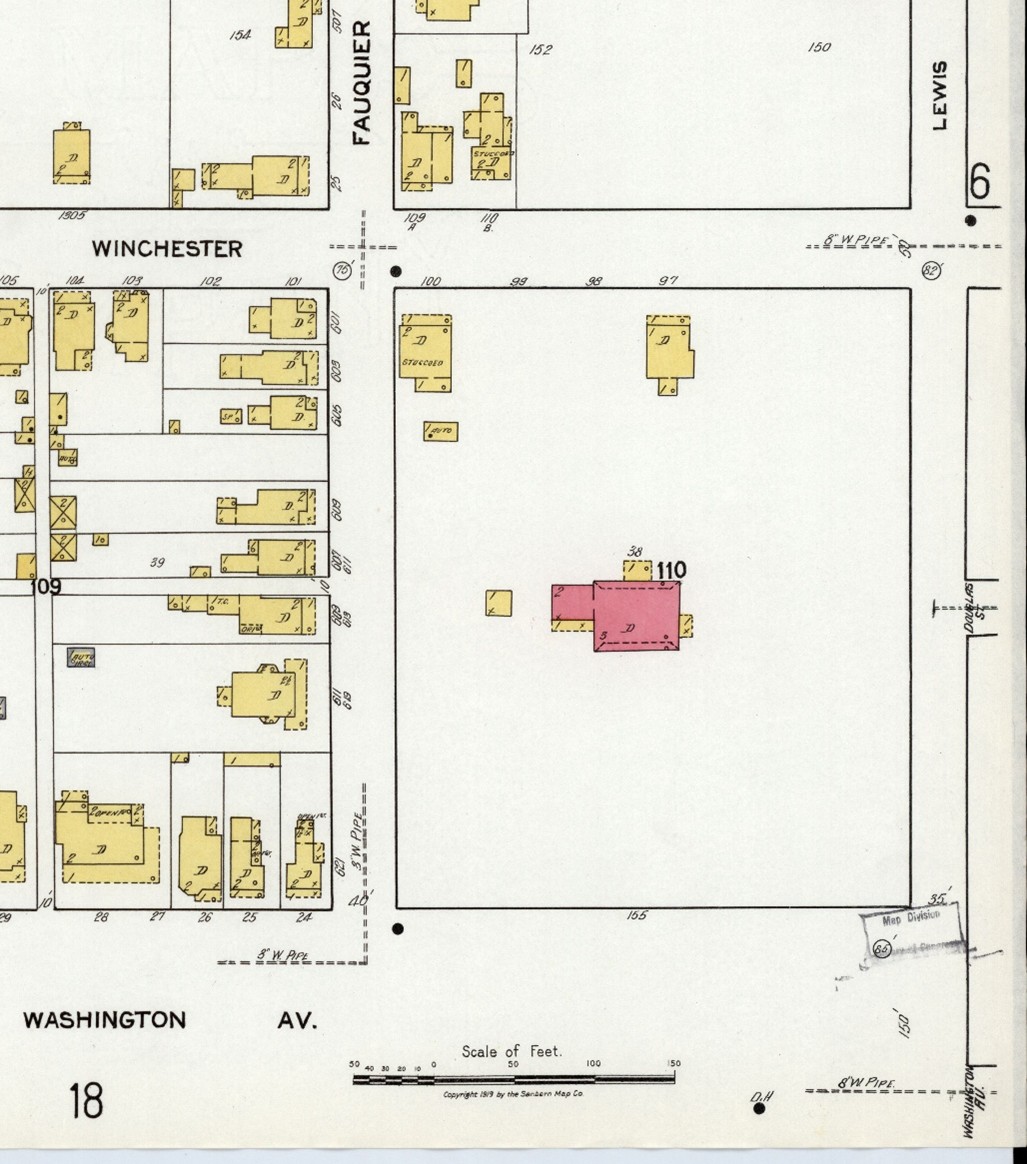
    By the time this advertisement ran, at least two of the proposed twenty lots had already been built on and three more had been sold to future homeowners. The earliest developments were done along the 1200 block of Winchester Street (which runs along the top of the illustrated plan).

    A fire insurance map from 1919 showing the two new houses and Kenmore. (Sanborn Map Co., 1919).

    It was possibly this very newspaper ad with the proposed plan, seen by Mrs. Fleming and Miss Annie, that shocked them into action to save Kenmore before it was too late. However, even though they had finished their payments to Heflin by 1925 and officially owned the Kenmore mansion, they had yet to undo the sales that had already been made.

    Between 1919 and 1927, another five houses went up along Winchester St. and an additional one along Lewis St. The lots in the 1200 block of Winchester were now completely filled.

    A fire insurance map from 1927 showing the Kenmore block with nine total houses and a now preserved Kenmore listed as “(Shrine)”. (Sanborn Map Cp., 1927)

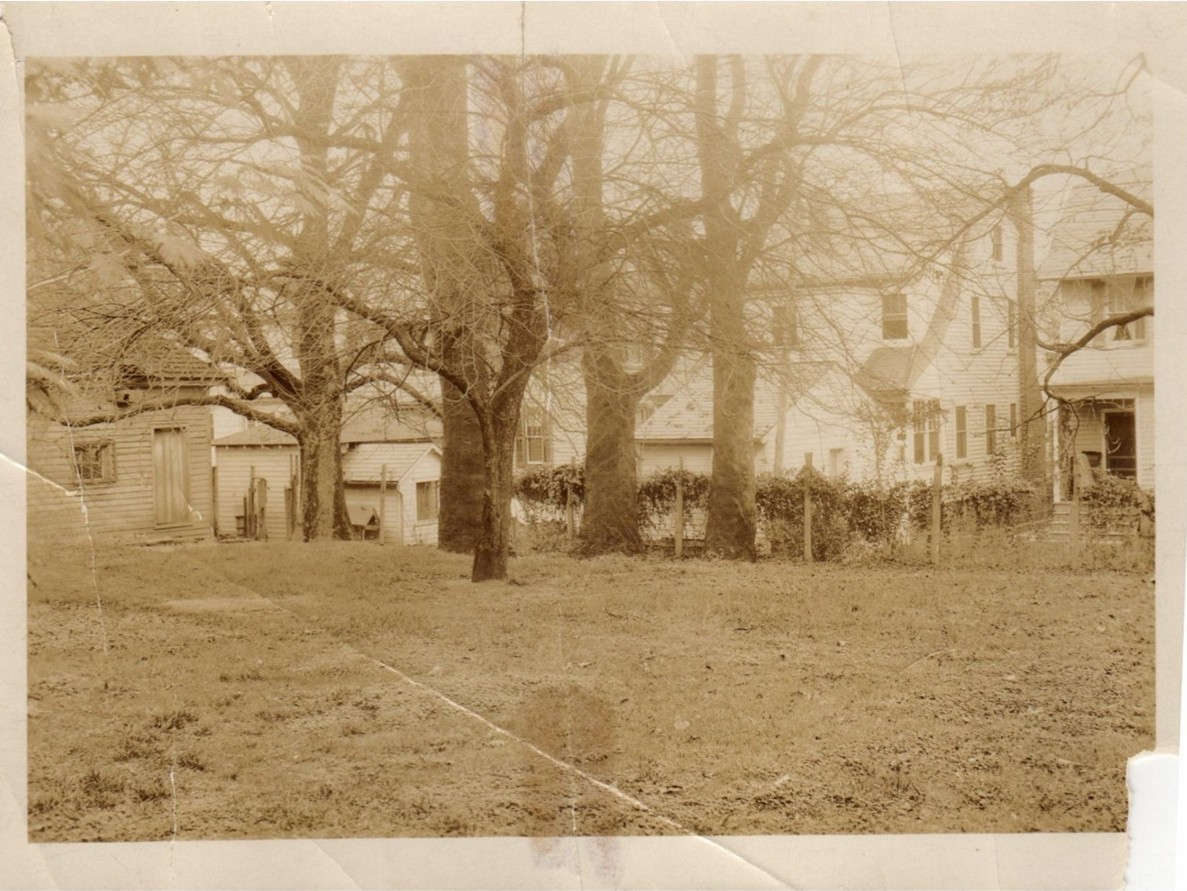
    Although the Kenmore Association now owned the Kenmore great house and had successfully saved it from demolition, they also valued the physical beauty that the surrounding land had potential for. The new houses were taking up space that could be gardens, reminiscent of what the original grounds may have looked like. But now, they only contained a view into several family’s backyards.

    Kenmore Gardens Pre-Restoration as seen from the portico of the Kenmore great house, photo from the George Washington Foundation Collection.

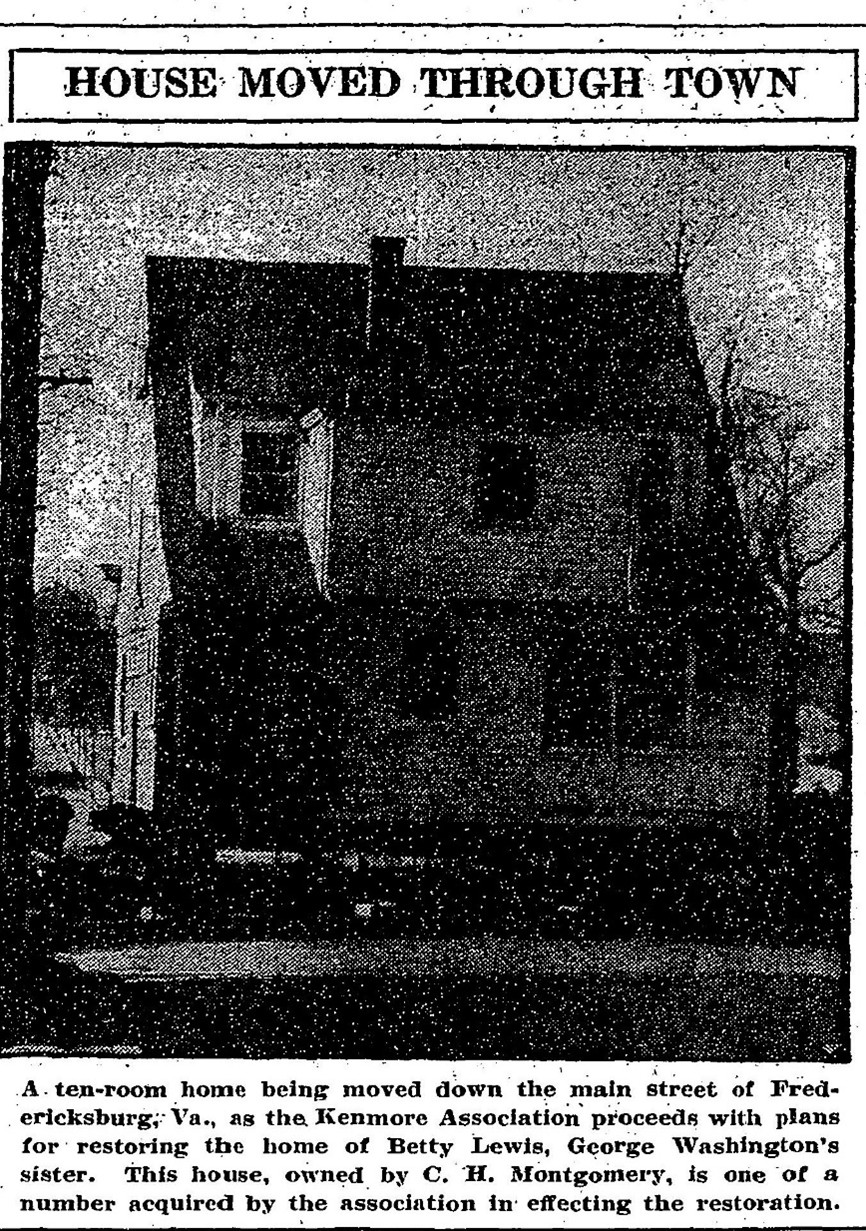
    The Kenmore Auxiliary for the Reclaiming of Land formed to buy back the sold lots (Whidden, 1972). By 1930 they had already purchased two of the houses, 1206 and 1208 Winchester, and two empty lots on Cornell Street, just a few blocks north. By 1931, the houses were physically moved from Winchester St. to Cornell St.

    “House Moved Through Town” article appeared in the Washington Post, Dec. 1930.

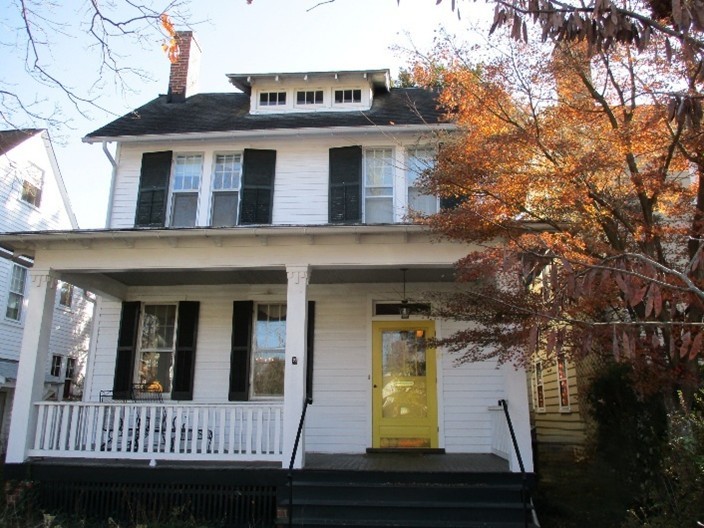
    The Kenmore Association continued to rent these houses out for some time to tenants, generating extra income to help with Kenmore’s preservation process, until they eventually sold the homes to private owners. These Cornell St. houses still exist to this day. Few changes have been made from their historical exteriors.

    With the assistance of donations from individuals and foundations all over the country, the Kenmore Association was able to raise enough money to make offers to three other homeowners along the 1200 block of Winchester St., all of whom accepted. Most of Winchester St. belonged to the Association by the end of the decade (Whidden, 1972). The houses continued to be rented out to tenants through 1940. Unfortunately, after that year we have not yet discovered what happen to the Winchester St. houses, but they no longer exist on the revised 1947 fire insurance map and are presumed to have been demolished around 1941 or ‘42.

    A fire insurance map from 1947 showing revisions made between 1927 and then. (Sanborn Map Co., 1948)

    You notice that there are still three houses remaining on the block alongside the Kenmore great house. These holdouts remained for many years as private residences. Two of these houses, 605 Lewis St. and 1200 Winchester St., can still be seen today.

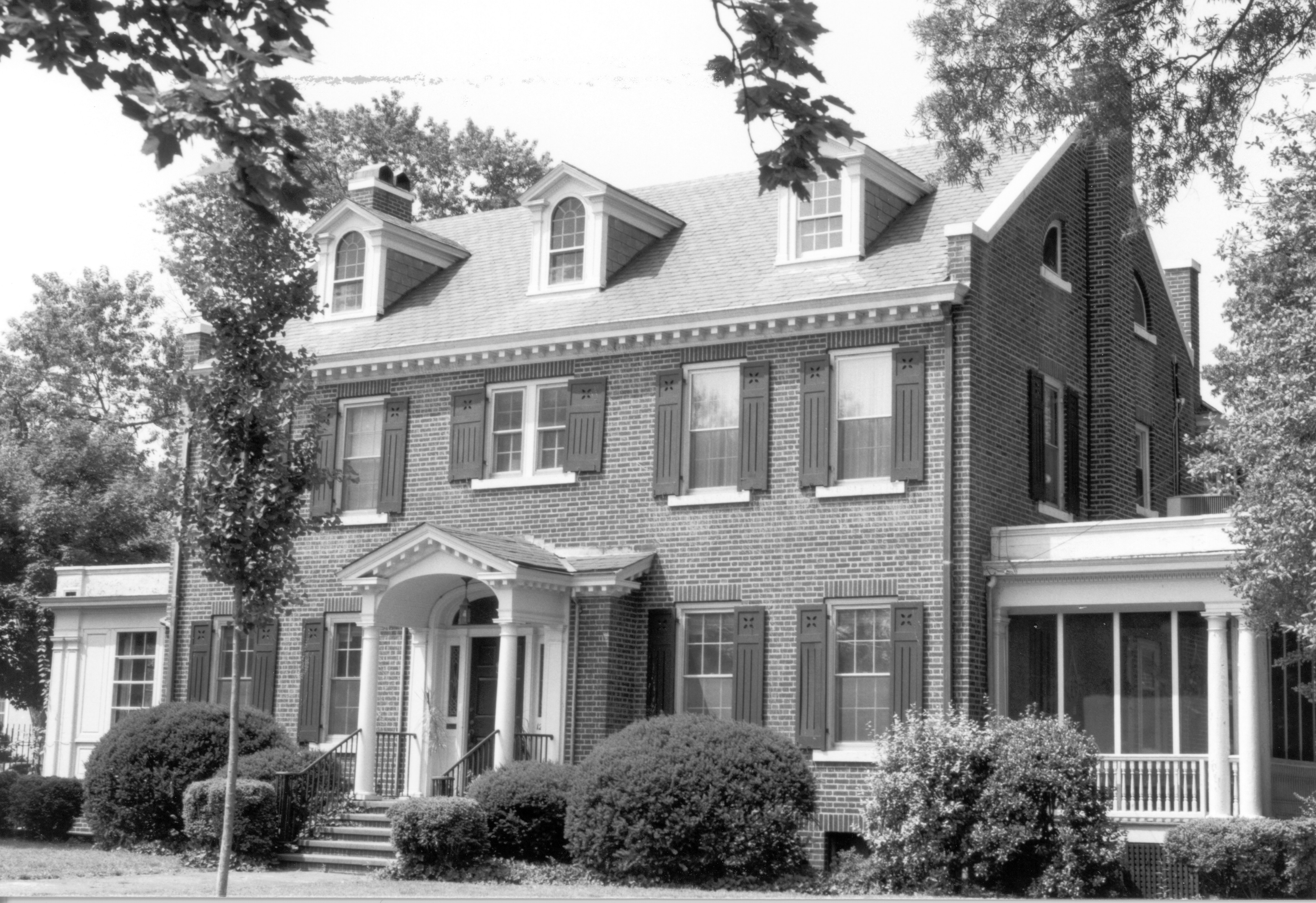
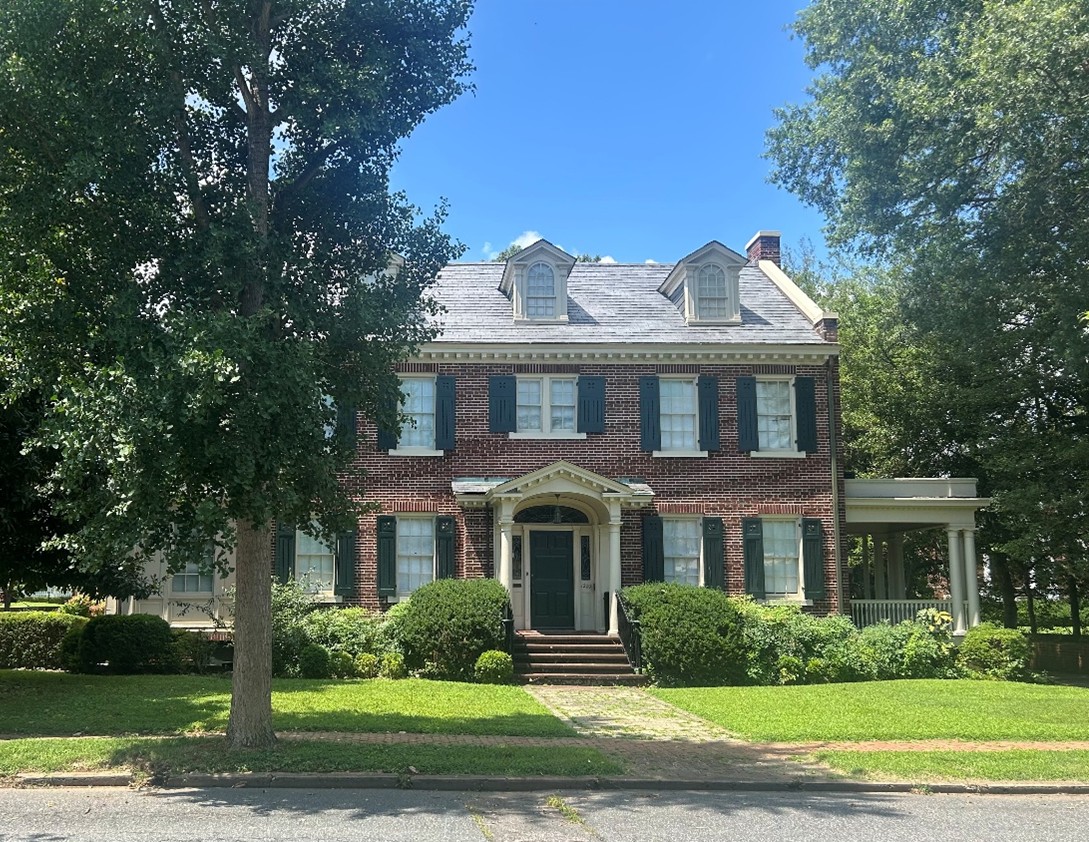
    1200 Winchester St. is a large brick façade building that was originally constructed for Dr. Frank Pratt. Dr. Pratt used to treat patients in the building’s basement and lived in the house until his passing in 1964. He founded the Pratt Medical Group in 1937, which still exists today with several locations in Fredericksburg and Spotsylvania (Obituary, 1969). His house was sold in 1991 by the last private owners, the Westfall family, to the Kenmore Association and has become one of the main office buildings on the site.

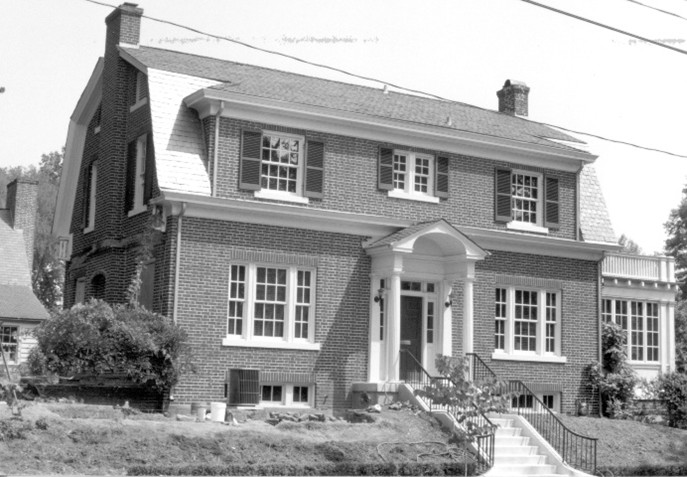
    605 Lewis St. has a very similar story to 1200 Winchester. Another brick structure, it was built for William Lacy who lived there with his wife Norah, daughter Celia, and sister-in-law Celia Goolrick. Lacy was a pharmacist who passed away in 1933, leaving his home to his wife. She and her sister continued living in the house until both had passed by 1965 (Obituary, 1965). The building was sold to the Kenmore Association in 1992 and converted to offices as well.

    The house I’ve saved for last has quickly become my favorite, since it’s the one that sparked my interest in this subject in the first place. While visiting a small antique shop in central New York of all places, I stumbled on a postcard with an image of 1216 Winchester St., also known as the Wilson House.

    The Wilson House on a postcard, circa 1921-1941. From the George Washington Foundation Collection.

    The Wilson house was the only Stucco house of the bunch, constructed in the prairie style. It was owned by Thomas Wilson, co-founder of Wilson Bros. Lumber. He, his wife Temple, Daughter Esther, and granddaughter Janet all lived in the house in 1930. By 1940, it had become a boarding house that rented out space to tenants and visitors. It had at least three units inside of it.

    The Wilson house sat on the corner of Fauquier and Winchester streets, blocking Kenmore’s new brick wall originally meant to extend around the block, until 1971. I don’t know what changed that year, whether it was a death or shift in the family or if the money finally became too good of an offer to refuse, but the Wilson family finally sold their home to the Kenmore Association, who promptly had it razed (Whidden, 1972). The brick wall was never full finished, and the area where this beautiful house once stood is now used as a service lot.

    There are countless other things that could be said about these missing structures that haunt the property. The stories of the people who lived in them. A debate about whether these modern homes were worthy of preservation as well. The archaeological damage that their construction likely caused. So on and so forth. One thing is certain though: the grounds of Kenmore hold history. Not just of the Lewis family, but of the Pratts, the Wilsons, the Lacys, the Franklins, the Coxes, the Joneses, and the countless others who once lived on this city block.

    Sarah Alden

    Manager of Visitor Services and Interpretation


    Bibliography

    City of Fredericksburg. (2025). 806 Cornell St. Fredericksburg: Fredericksburg Information Technology.

    City of Fredericksburg. (2025). 808 Cornell St. Fredericksburg: Fredericksburg Information Technology.

    Heflin, E. (1921, January 24). Modern Homes. The Daily Star, 28(180), 4.

    Lots on Beautiful Kenmore Court. (1914, November 12). The Daily Star, 22(119), 2. Fredericksburg, VA.

    Obituary. (1965, May 19). Mrs. W. J. Lacy Dies in Atlanta, Rites Thursday. The Free Lance-Star, p. 5.

    Obituary. (1969, May 10). Monday Rites for Mrs. Pratt. The Free Lance-Star.

    Sanborn Map Co. (1912, July 12). Fire Insurance Maps Online. Retrieved from Historical Information Gatherers: https://fims-historicalinfo-com.ezproxy.virginiamemory.com/FIMSSD.aspx?m=09021_1912

    Sanborn Map Co. (1919, October 31). Fire Insurance Maps Online. Retrieved from Historical Information Gatherers: https://fims-historicalinfo-com.ezproxy.virginiamemory.com/FIMSSD.aspx?m=09021_1919

    Sanborn Map Co. (1948, June 7). Fire Insurance Maps Online. Retrieved from Historical Information Gatherers: https://fims-historicalinfo-com.ezproxy.virginiamemory.com/FIMSSD.aspx?m=09021_1947

    Sanborn Map Cp. (1927, May 27). Fire Insurance Maps Online. Retrieved from Historical Information Gatherers: https://fims-historicalinfo-com.ezproxy.virginiamemory.com/FIMSSD.aspx?m=09021_1927

    Stanton, G. (2011, February 21). 15th US Census, 1930. Fredericksburg City Enumeration District 107-1 Upper Ward. Retrieved from Fredericksburg Research Resources: https://resources.umwhisp.org/Fredericksburg/census/fbg1930ED107-1.htm

    Stanton, G. (2014, November 28). 16th U. S. Census, Virginia, Fredericksburg (Upper Ward), S.D. 1, ED No. 107-3. Enumerated Beginning 2 April 1940. Retrieved from Fredericksburg Research Resources: https://resources.umwhisp.org/Fredericksburg/census/fbg1940ED107-3.htm

    Whidden, R. W. (1972). Kenmore 1752: Fifty Years as a National Shrine. Richmond, VA: Whittet & Shepperson.

  • Cooking up holiday treats: Gingerbread and Flip

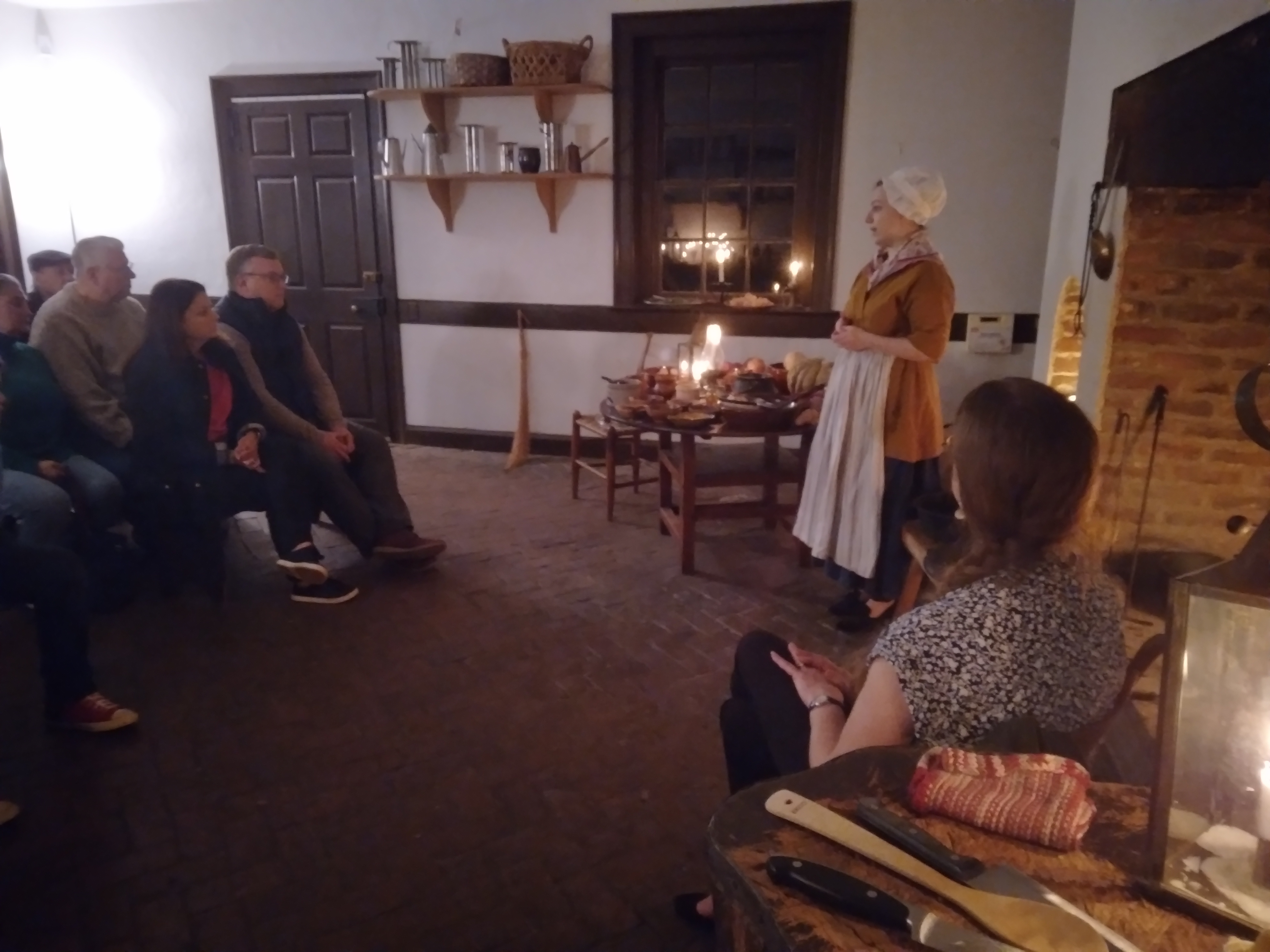
    This year at our annual Twelfth-Night celebrations, visitors could enter the kitchen for a short lecture and demonstration. The archaeology and curatorial teams gave the talks to explain two important food items that play a part in Kenmore’s history and the holiday, gingerbread and flip.

    Our first demonstration was done by Emma Schlauder, Research Archaeologist at the Foundation. She used a traditional recipe based on Mary Washington’s gingerbread. This is the recipe that the Kenmore Association and the Daughters of the American Revolution (DAR) would use in partnering with Hills Brothers Company to create the Dromedary Gingerbread Mix. The mix was sold in the gift shop and shipped around the country, raising money for the restoration of Kenmore.[1] 

    Emma Schlauder giving a presentation on gingerbread.

    Mary Washington’s Gingerbread Recipe

    3 cups all-purpose flour

    2 tablespoons ground ginger

    1 teaspoon cream of tartar

    1 teaspoon baking soda

    1 teaspoon ground cinnamon

    ¼ teaspoon ground nutmeg

    ⅛ teaspoon ground mace

    1 large orange

    ½ cup (1 stick) lightly salted butter, at room temperature

    ½ cup light brown sugar, firmly packed

    1 cup molasses

    ½ cup warm milk

    1 wineglass (2 ounces) brandy or coffee

    3 large eggs, beaten

    Gingerbread is a term applied to a wide-ranging selection of baked goods with combinations of spices such as ginger, cinnamon, cloves, and nutmeg and sweetened with honey, sugar, or molasses.[2]

    Ingredients and spices for gingerbread

    Emma’s gingerbread used the traditional American sweetener, molasses.[3]  Molasses was a commonly used sweetener in early American cooking until the increase of domestic sugar production. Molasses was cheap and a by-product of the refined white sugar produced for the wealthy.[4]

    After including all ingredients, it was mixed to create a runny batter. The batter was put into a cast-iron Dutch oven and hung over the fire to cook. Cooking and baking over the hearth was time-consuming and potentially dangerous. It was done with heavy cast-iron pots and pans, often hung over the fire by an iron bar in the back of the oven.[5]  Luckily for us, Emma had taken precautions for cooking over the open hearth and was able to bake the runny batter into a dense gingery cake. The cake was enjoyed by many and was determined to be a must-have for the season.

    Gingerbread cooking over the fire

    Flip

    Our next presentation was done by Mara Kaktins, our Archaeologist & Lab Manager, and explored the history and ingredients of a unique drink called flip that would have fit in quite well with the festive celebrations.

    The first known mention of flip is from a 17th-century play called “Love for Love” by William Congreve when a character mentions sailors, stating, “We’re merry folks, we sailors: we han’t much to care for. Thus, we live at sea; eat biscuit, and drink flip.”[6]  The play does not provide us with a recipe or ingredients for the drink.

    Flip –Universal Etymological English Dictionary

    Flip is mentioned in the Universal Etymological English Dictionary, first published in 1721. This definition offers more information about what the drink contains by stating, “Flip, a sort of Sailors Drink, made of Ale, Brandy and Sugar.”[7] Full recipes can be found in The Cook’s Oracle, published in 1822; How to Mix Drinks: Or The Bon-vivant’s Companion, published in 1862; and The Curiosity of Ale and Beer: An Entertaining History, published in 1889. These recipes contain spices and ingredients like eggs, rum, sugar, and orange juice.[8][9][10]

    Ingredients to make flip: Rum, Whiskey, Sugar, Nutmeg, Orange Juice, Eggs

    However, two things make flip different from other holiday drinks like eggnog. First, there is no cream used in the mixture[11] , and second, flip is traditionally mixed by pouring the drink between two different vessels to make sure all the eggs are combined with the alcohol and then plunging a hot iron into the drink to create froth.[12] [13] 

    Instructions state, “To make a quart of Flip: Put the Ale on the fire to warm, – and beat up three or four Eggs with four ounces of moist Sugar, a teaspoonful of grated Nutmeg or Ginger, and a quarters of good old Rum or Brandy. When the Ale is near boil, put it into one pitcher, and the Rum and Eggs, &c. into another; – turn it from one pitcher to another till it is as smooth as cream.”[14] After the mixture is properly combined, it is poured into a cup or tankard and finished off by plunging a hot iron which further mulled and froths the drink and gives it a slightly burnt taste.[15]

    Mara Kaktins finishing off a glass of flip with the hot poker

    This drink was mixed many times throughout the Twelfth night and was sampled by the staff. Unlike the gingerbread, the reviews for this frothy drink weren’t all that positive. Our modern palates might not be used to the amount of alcohol colonists use to consume. Sadly, while this drink was a hit during George’s festive season, traditional eggnog would be the best bet for the holidays. 

    These two demonstrations were quite a hit, with a sold-out crowd attending the show. With such a positive response, the archaeology and curatorial departments are looking for more ways to introduce living history to visitors. After gingerbread and flip, the possibilities are endless.       

    Heather Baldus, Collections Manager


    [1] Bryn, Ann. American Cake. Rodale Books, 2016, pg 26.

    [2] Goldstein, Darra. The Oxford Companion to Sugar and Sweets. Oxford University Press, 2015. pg 632

    [3] Bryn, Ann. American Cake. Rodale Books, 2016, pg 24.

    [4] Ibid, pg 12.

    [5] Ibid, pg 16.

    [6] Scene V, The Literature Network, http://www.online-literature.com/congreve/love-for-love/44/

    [7] Bailey, Nathan. Universal Etymological English Dictionary. London, T. Osborne, 1763

    [8] Kitchiner, William. The Cook’s Oracle and Housekeeper’s Manual. New York, J. & J. Harper, 1830

    [9] Thomas, Jerry. How to Mix Drinks: Or The Bon-vivant’s Companion. New York, Dick & Fitzgerald Publishers, 1862

    [10] Bickerdyke, John. The Curiosities of Ale and Beer: An Entertaining History. London, Swan Sonnenschein & Co., 1889

    [11] Garret, Dylan. The New York Flip, Wine Enthusiast, https://www.winemag.com/recipe/new-york-flip/

    [12] Thomas, Jerry. How to Mix Drinks: Or The Bon-vivant’s Companion. New York, Dick & Fitzgerald Publishers, 1862

    [13] Curtis, Wayne. And a bottle of rum: A history of the new world in ten cocktails. New York, Broadway Books, 2007

    [14] Kitchiner, William. The Cook’s Oracle and Housekeeper’s Manual. New York, J. & J. Harper, 1830

    [15] Curtis, Wayne. And a bottle of rum: A history of the new world in ten cocktails. New York, Broadway Books, 2007

  • Mending Practice at Ferry Farm’s Archaeology Lab: A Photo Journal

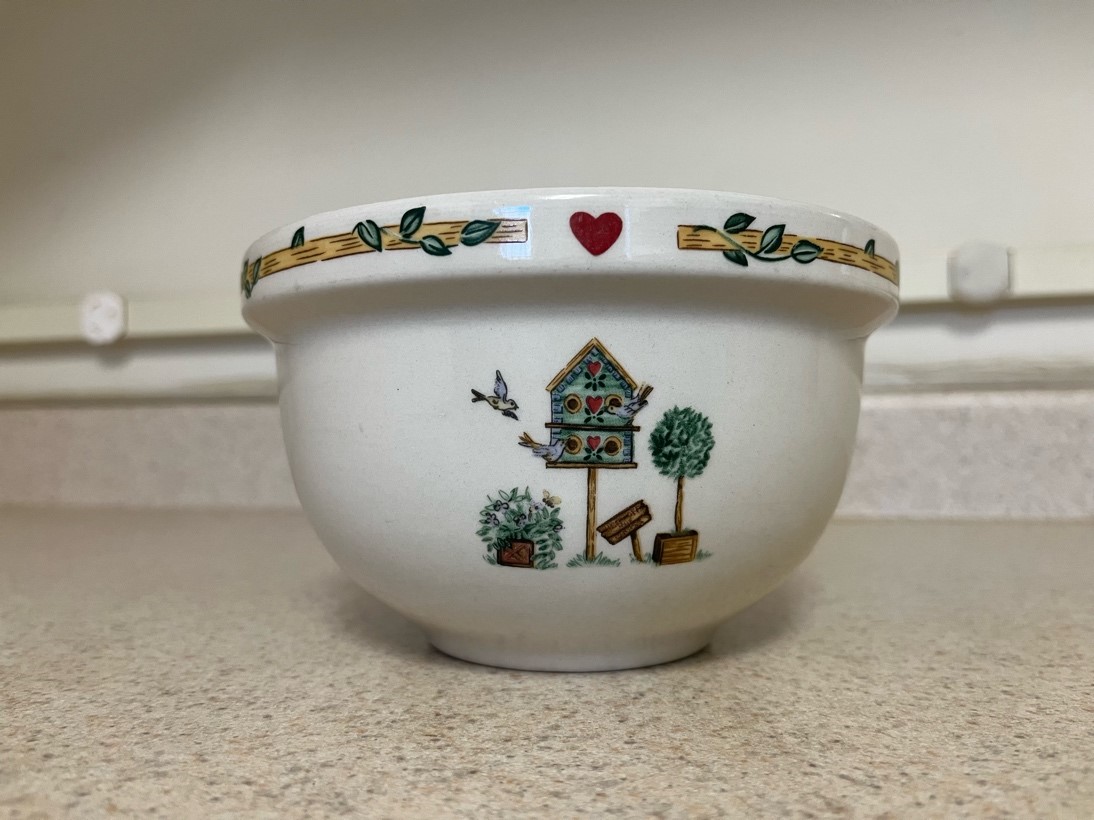
    If you visited Ferry Farm on October 21, 2022, you may have heard a loud crash coming from the archaeology lab – don’t worry, it was on purpose! During my fall semester internship at the Ferry Farm Archaeology Department, I had the pleasure of learning how to mend ceramic vessels, and like any skill, practice makes perfect. I purchased a cheap ceramic bowl from Goodwill and purposefully shattered it so I could practice putting it back together again. Follow along as I take you through the process!

    Bowl in one piece before being broken

    Here is what the bowl looked like when I first bought it – in one piece! I chose this bowl because it was a good size: not too big where it would be too long of a project, but not too small where it would only take a few days to complete.

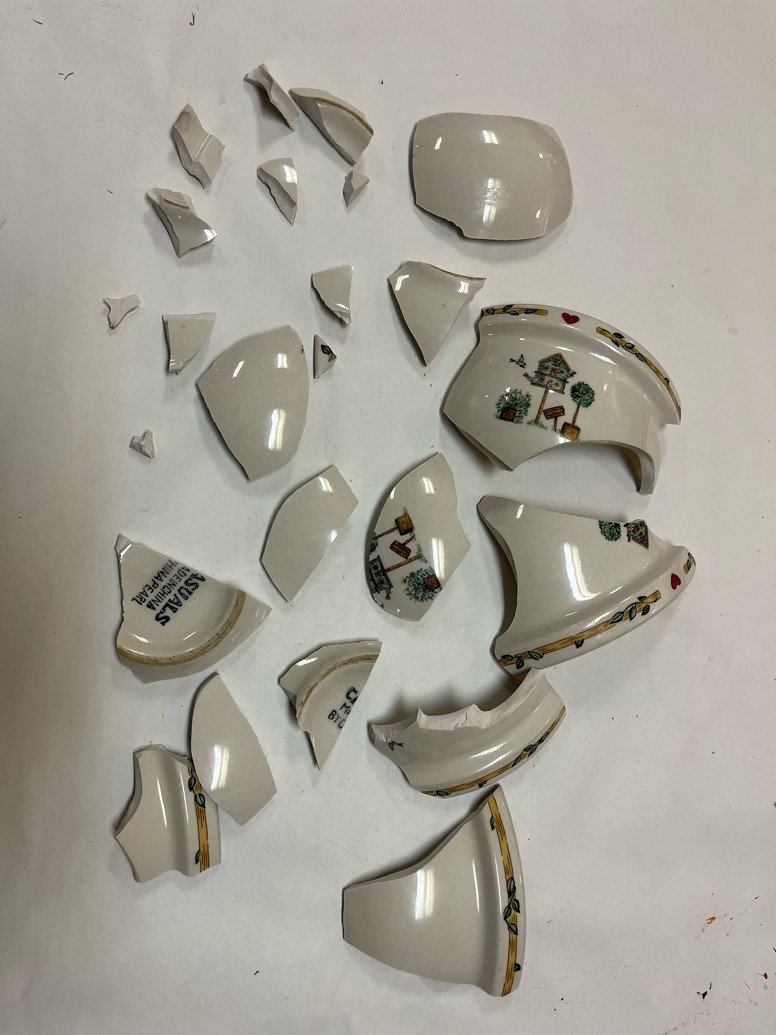
    Breaking the bowl

    Next came the fun part: breaking it! I placed the bowl inside a plastic bag so that all the pieces would stay together. Then, against my natural instinct, I threw the bag onto the ground and broke it into pieces!  Notice how some are larger than others- this means that I had to be very careful as to not accidentally exclude a small piece from the entire bowl.

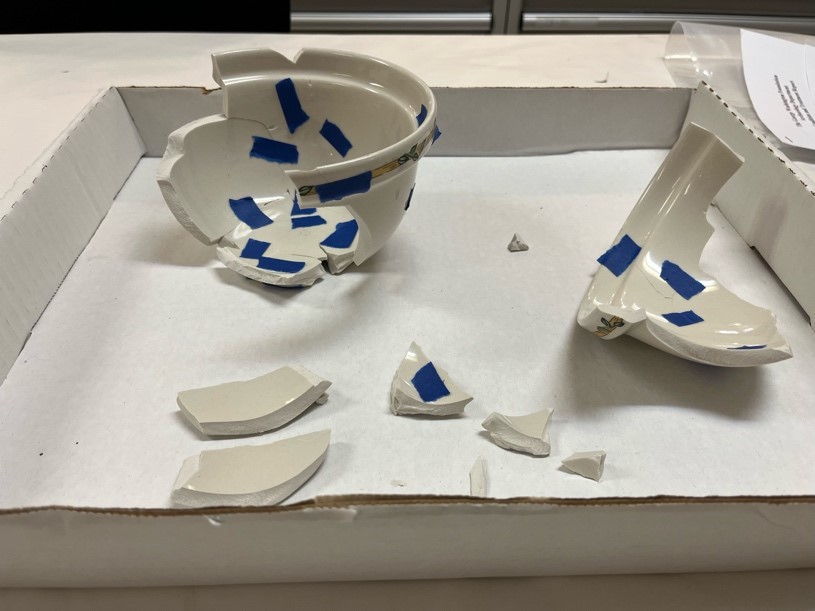
    Taping sherds

    After collecting all the sherds, my next step was to figure out where everything goes by taping the sherds together. This process allowed me to plan out the order in which the sherds would be glued together.  I used blue painter’s tape to do this because it doesn’t leave residual adhesive on the surface of the sherds. This same tape is used when mending the ceramics found archaeologically at Ferry Farm. 

    More taping

    More taping… it’s coming together!

    Here is the completed bowl after taping! Once all the sherds were back in their rightful places, it was time to carefully plan out how I wanted to glue them. When mending, you don’t want to just start gluing together the first pieces you know fit together. It is important to take into account the shape of the vessel so that you leave as few gaps between the sherds as possible. I developed a plan to start from the base and work my way up to the rim of the bowl. With this done, it was time to start gluing!

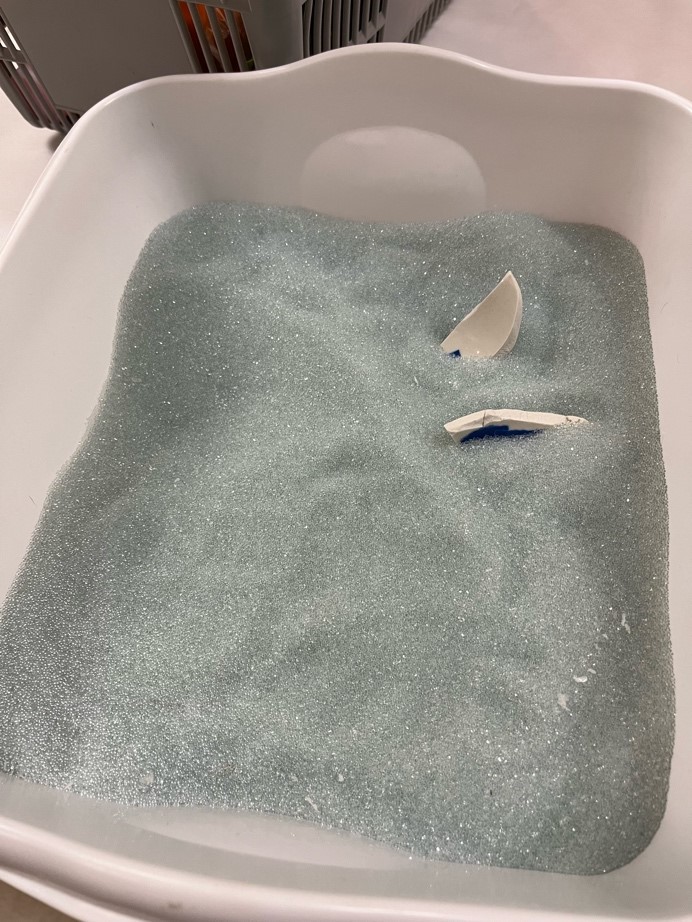
    It is protocol in the Archaeology Department to mend ceramics using a reversible method. The glue I used was a solution of 35% B72 in acetone, which is removable with acetone. I started by coating the broken edges of the sherds with a less concentrated solution of the glue, 5% B72 in acetone. This prepped the sherds to have glue applied to it. After this, I applied 35% B72 to only one sherd to be mended and then held it together with its neighbor. After 10 seconds of holding the sherds together, they were sticking quite nicely. I then placed a few pieces of painter’s tape to ensure the glue would hold, and placed the freshly glued sections into a bucket filled with glass beads.

    Glass beads…yes, everyone who goes to the lab runs their fingers through them.

    The glass beads hold the glued sherds together and prevent them from shifting as the glue dries. I repeated this process for all the sherds over the course of a few days until…

    Finished glued bowl

    …the gluing was complete!

    Here is the final product! Now, no mend is ever going to be perfect. Once a vessel is broken, there will always be misaligned sherds in the vessel due to the tension of the entire piece being broken.

    So, why do we mend ceramics in the first place? It can help archaeologists understand what types of objects a site’s occupants would have used and what activities were taking place. It is also an important process in public interpretation: mended ceramics can help the public see what certain vessels would have looked like during a site’s target period of significance.

    Finally, keep in mind that what I did with this bowl was only practice: actual mending with sherds excavated from an archaeological site does not go as smoothly as this. Only a small percentage of a vessel is typically found and thus able to be mended. The reason why so few sherds of one vessel are found is because decades and centuries of being in the ground allows for sherds to get mixed up and moved due to bioturbation (movement of soil by animals such as rodents and insects), erosion, and in some cases, agricultural plowing.

    If you would like to see more on mending at Ferry Farm, be sure to check out past programs that we have done: mending | Lives & Legacies (livesandlegaciesblog.org)

    Katharine Bogen, UMW ‘23

    Fleming Smith Scholar

  • A Short and Sweet History of the Gingerbread House

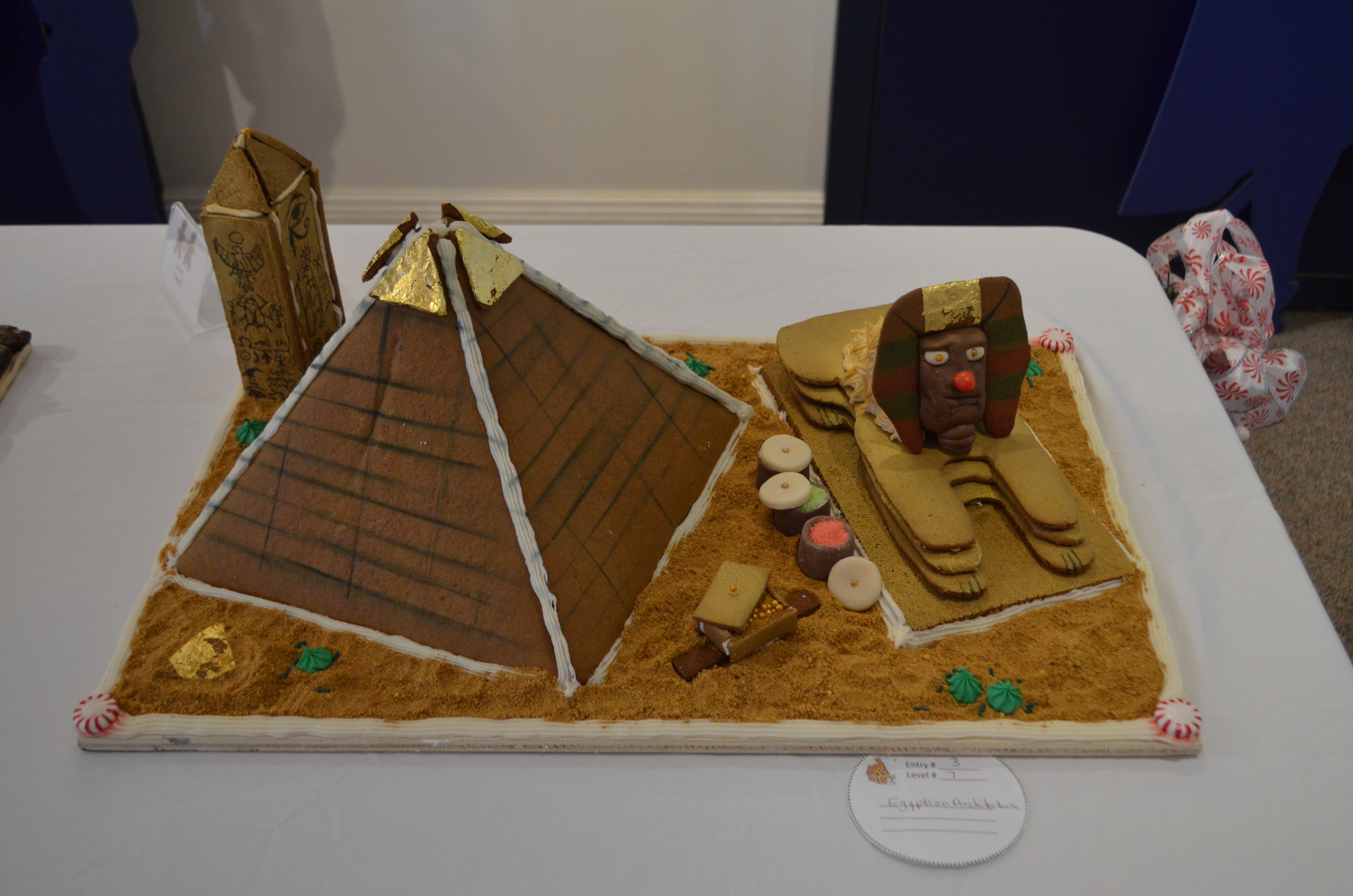
    If you visit George Washington’s Ferry Farm this December, you’ll be greeted by the sweet smell of spiced gingerbread as soon as you walk through the door! During our annual Gingerbread House Contest and Exhibit, our gallery space is transformed into a showroom with entries reflecting this year’s theme: “architectural wonders of the world.” Unlike their real-life counterparts, these architectural wonders are all baked out of gingerbread and creatively decorated with icing and candies. Baking gingerbread is a great way to get in the holiday spirit, and in many cultures, gingerbread has long been associated with the holiday season. But where, exactly, did these gingerbread traditions originate?

    The Tower Bridge on display at Ferry Farm

    According to The Oxford Companion to Sugar and Sweets, the term “gingerbread” refers to a wide variety of baked goods ranging from rolled cookies to dense cakes that are “flavored with a combination of spices such as ginger, cinnamon, cloves, and nutmeg, and sweetened with honey, sugar, or molasses.” Some gingerbread variations can be traced back to antiquity, like the honey-sweetened cakes baked in ancient Egypt and Greece. Variations closer to what we consider gingerbread today (think gingerbread men and gingerbread loaves) became popular in northern Europe during the Middle Ages. Germany, in particular, became well known for its spiced gingerbreads, or lebkuchen.

    Nuremberg Lebkuchen

    German lebkuchen can trace its origins as far back as the 14th century, when gingerbread baking was associated with local monasteries and, later, professional bakers’ guilds. In Nuremberg, now world famous for its lebkuchen, honey was a locally accessible sweetener due to the city’s abundant forests and honeybee population. The medieval city was also at the crossroads of trade, which meant imported spices were readily available to Nuremberg monks and bakers. Before the invention of metal molds and cookie cutters, bakers used wooden molds carved with elaborate patterns to make and decorate gingerbread. Bakers shaped the cookies into different figures like animals and saints, and when intended as gifts for nobility, even added gilded decoration!

    Today, although recipes vary, lebkuchen ingredients often incorporate some variation of honey, nuts, coriander, cloves, ginger, nutmeg, and candied fruit. “Nuremberg lebkuchen” has a higher nut content than any other variety. “Lebkuchenherzen” (or “Lebkuchen hearts”) are heart-shaped gingerbread decorated with written icing inscriptions. The hearts can be hung as decoration and are often sold at Christmas markets and during Oktoberfest.

    Lebkuchenherzen on display at a market.

    By the 1800s, making gingerbread houses was a popular activity in Germany. Perhaps unsurprisingly, a tale involving a candy-coated house also began to circulate during this time. Originally published in 1812 by the brothers Jacob and Wilhelm Grimm, Hansel and Gretel tells the story of two children lost in the woods who stumble upon a witch’s house made of bread, cakes, and sugar. The evil witch captures the children when she discovers them munching on her house!

    1909 Illustration by Arthur Rackham, Hansel and Gretel encounter the witch outside her house.

    The story of Hansel and Gretel has remained popular to this day, and many different iterations of the tale exist. It’s unclear exactly which event precipitated the other (did the fairytale popularize gingerbread houses, or was an existing gingerbread house tradition simply incorporated into the story?) What is clear, however, is that gingerbread houses had become popular in Germany! When Germans immigrated to new places, they took these traditions with them, and the baking and making of gingerbread houses became popular elsewhere too. Today, whether created from a store-bought kit or handmade dough, gingerbread house-making is a popular activity for adults and children alike and is closely tied to the Christmas season.

    This “real life” witch’s house inspired by Hansel and Gretel is located in Efteling, a fairy tale theme park in the Netherlands.

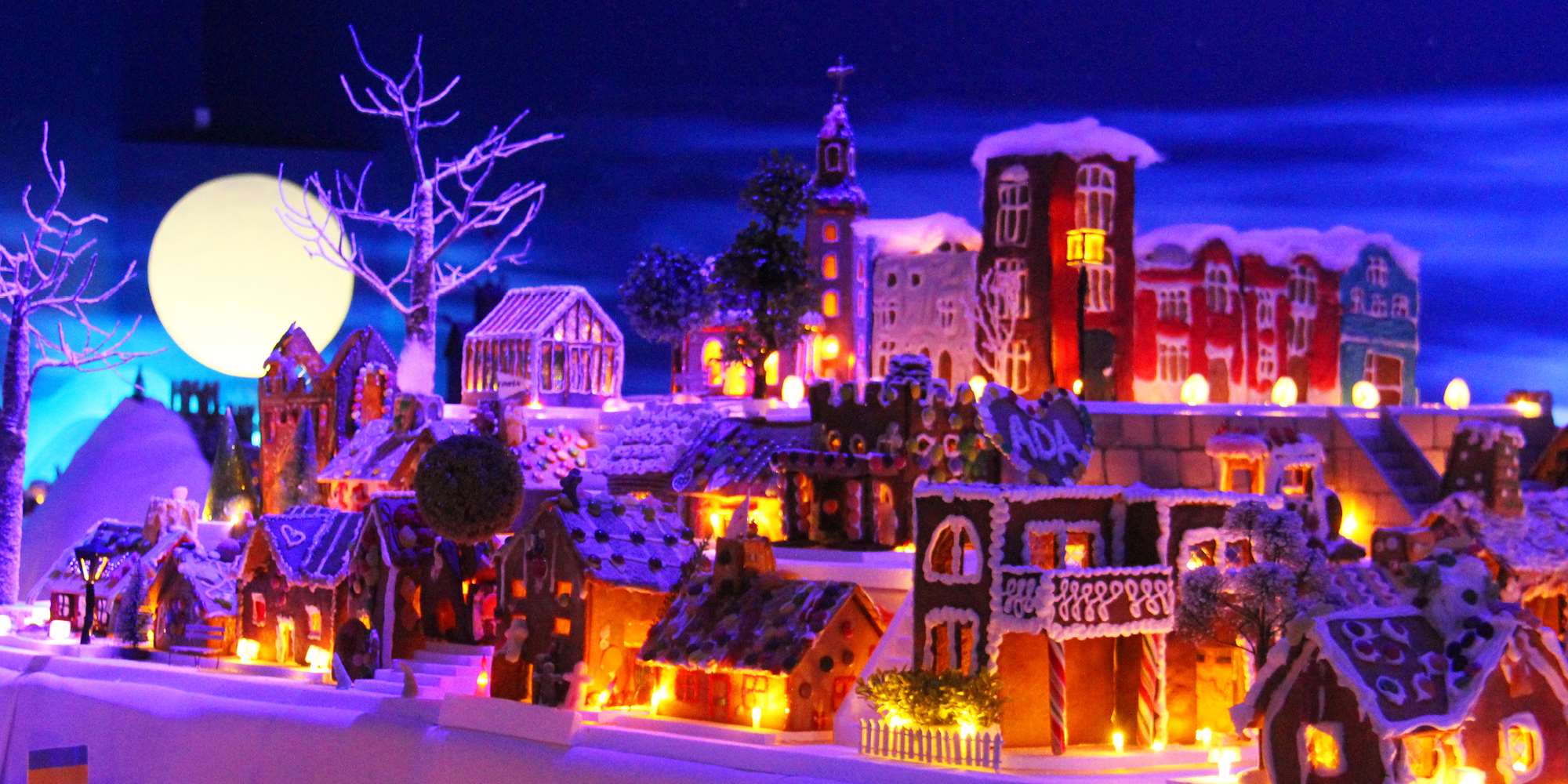
    Beginning in 1991, the city of Bergen, Norway, constructed an entire city…out of gingerbread! The display is made up of more than 2000 gingerbread houses and buildings. Called pepper cookies or “pepperkaker” in Norwegian, the “Pepperkakebyen” Gingerbread Town is made up of pieces constructed by local school children, businesses, and volunteers. The city landscape includes local landmarks, trains, cars, and even boats. While not the only gingerbread town in existence, it is certainly one of the largest and is a testament to the enduring popularity of the gingerbread house!

    The Pepperkakebyen Gingerbread Town

    If you’re interested in delving further into the history of gingerbread, check out two of our past Lives & Legacies blog posts where we’ve written about Mary Washington serving gingerbread to Lafayette and the Kenmore Association’s ties to the sweet treat. If you’re interested in seeing Ferry Farm’s own Gingerbread House Contest and Exhibit, be sure to stop in before the exhibit closes on December 30th and also vote on your favorite entry!

    A pyramid and sphynx made of gingerbread on display at Ferry Farm

    Further Reading: The Oxford Companion to Sugar and Sweets. (2015). United Kingdom: Oxford University Press.

    Ann Waters

    Manager of Interpretation & Visitor Services

  • To Instruct and Amuse: Fun & Games in George’s Day

    The fall season at George Washington’s Ferry Farm and Historic Kenmore is finally upon us! This is a busy time of year for the education team because as cooler temperatures roll in, so do the school buses! Students who take field trips to our sites learn about the Washington and Lewis families, archaeology, and daily life in the 18th century. A favorite activity during field trips (for students and chaperones alike!) is learning how children in the past entertained themselves by playing a few popular eighteenth-century games. Our youngest visitors especially love learning what life was like for George and Betty Washington when they were children at Ferry Farm.

    Ferry Farm Field Trip

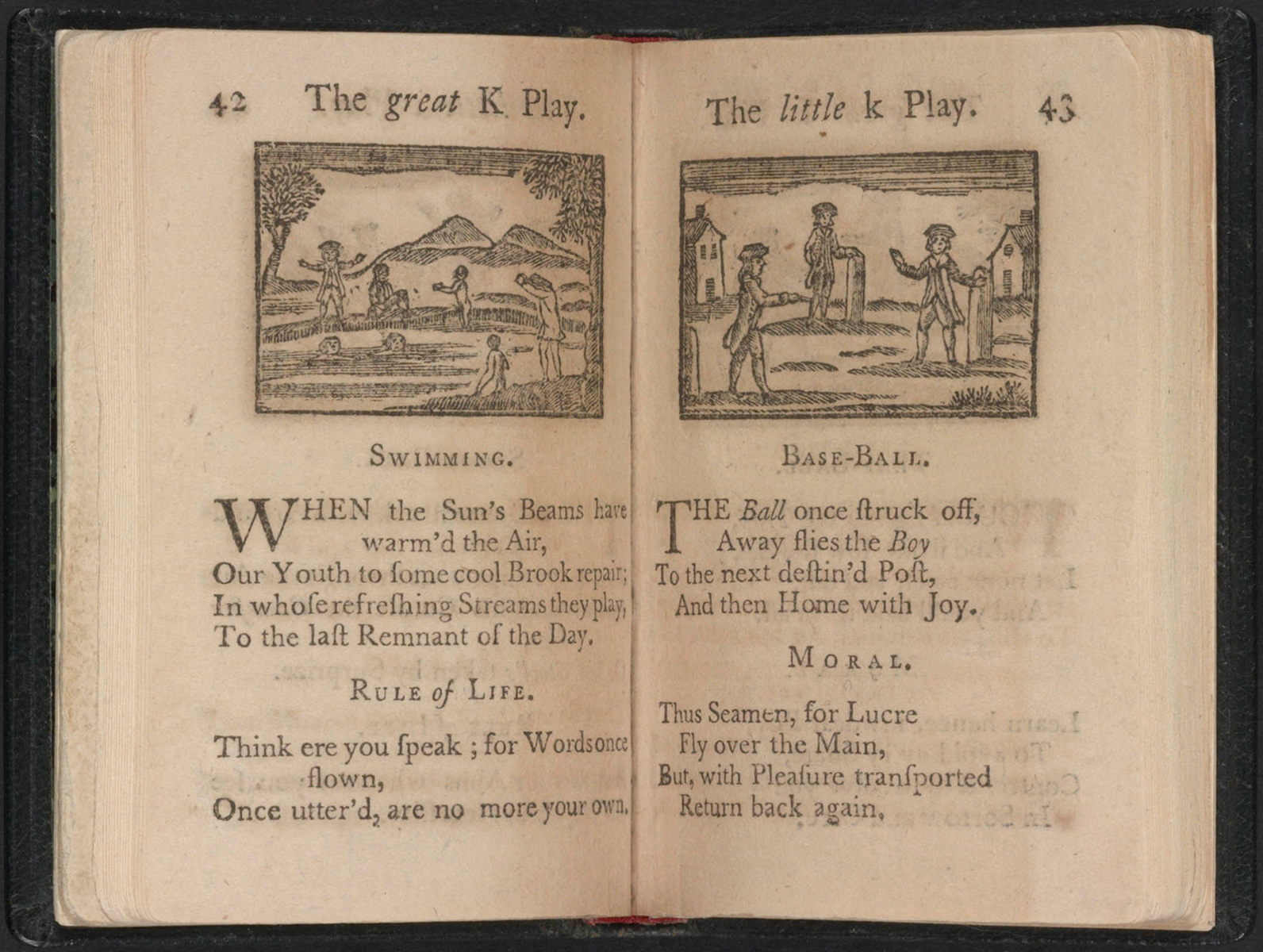
    A Little Pretty Pocket-Book, a children’s book published in 1744 by John Newbery, depicts some games and activities from the 18th century that today’s children are likely still familiar with, like flying kites, hopscotch, and leapfrog. Other games may be less familiar to some readers, such as “Tip Cat,” a game similar to cricket where a large stick is used to strike a smaller piece of wood into the air, and “Peg Farthing,” a game involving wooden spinning tops. An interesting fact for sports fans is that Newbery’s little book contains what is believed to be the first printed reference to baseball. The Pocket Book’s illustration for “base ball” depicts three boys standing next to their “post” or base.

    A page from A Little Pretty Pocket Book depicting swimming and “Base Ball.” Source: Library of Congress

    Each game or activity is presented as a rhyme, a letter of the alphabet, and a “Rule of Life” or moral lesson. Interestingly, the book was also marketed with either a ball or pincushion gift to further help children understand good morals. Boys and girls were to track their good or bad deeds by sticking a pin in either the black (bad) or red (good) side of their toy. The book speaks to the practical element of many children’s games at this time; it was intended to instruct as well as amuse. The Library of Congress has a copy of A Little Pretty Pocket Book printed in Massachusetts by Isaiah Thomas in 1787. Clearly, the popularity of the book was long-lived.

    Opening pages of A Little Pretty Pocket Book. Source: British Library

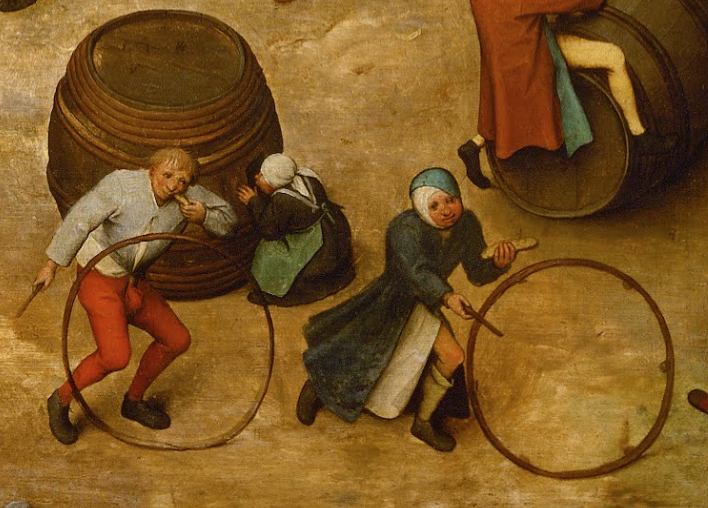
    Two popular games today’s students can play at Ferry Farm and Kenmore are hoop rolling (or trundling) and Graces. Hoop rolling has a long history across many different cultures. Images from ancient Greek and Roman art depict youth playing with hoops. Dutch painter Peter Bruegel’s, Children’s Games was painted in 1560 and showed 230 children playing 83 different games, one of which was hoop rolling. In George Washington’s time, the stick and hoop were made of wood, and the goal was to push the hoop along with the stick without it falling over.

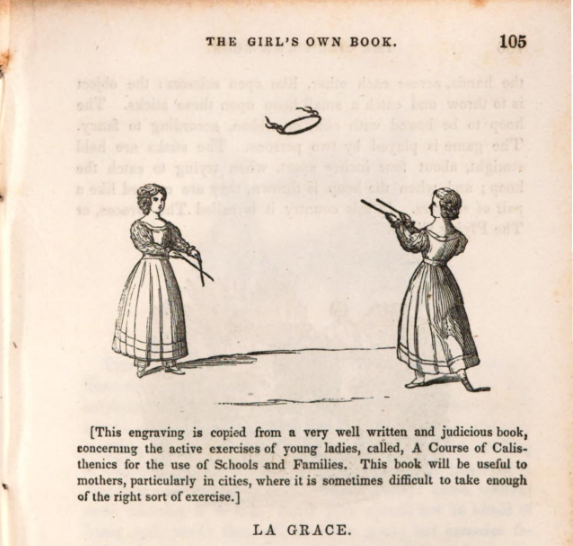
    Graces, or French Hoops, was a popular game in the early 1800s and was said to have been introduced to England from France. It was considered an appropriate pastime for young girls, as the game was supposed to inspire graceful movement in the players. The game requires two players, two sets of sticks, and one hoop (or two for added difficulty!) One player holds the sticks crossed in front of themselves with their hoop hanging off the end. To toss the hoop, they pull the sticks apart. The second player has to catch the hoops on their sticks. Each player gains one point when they catch the hoop, and the goal is not to let it hit the ground.

    Two books published in the 19th century illustrate the game of graces: American Girl’s Book by Eliza Leslie, published in 1831, and The Girl’s Own Book by Lydia Maria Child, published in 1833. Both authors mention particular benefits of the game, such as encouraging healthy exercise, graceful movements, dexterity and coordination, and of course, fun!

    Today, students who visit Ferry Farm and Kenmore might try their hand at graces or hoop rolling or play with other 18th-century toys. These games, along with those depicted in children’s books like Newbury’s, may have been familiar to children like George and Betty Washington. Often, these children’s games were seen as having some kind of practical instructional value.

    While some games have withstood the test of time and others have faded from popularity, it’s clear that children across time have always found ways to amuse and entertain themselves! [1][2][3]

    Ann Waters

    Manager of Interpretation & Visitor Services


    [1] Child, L. M. (1833). The Girl’s Own Book. Ireland: Clark Austin & Company.

    [2] Leslie, E. (1863) The American girl’s book: or, Occupation for play hours. New York: J. Miller. [Image] Retrieved from the Library of Congress, https://www.loc.gov/item/76355554/.

    [3] Thomas, I. & Miniature Book Collection. (1787) A little pretty pocket-book: intended for the instruction and amusement of little Master Tommy, and pretty Miss Polly: with two letters from Jack the giant-killer, as also a ball and pincushion, the use of which will infallibly make Tommy, a good boy, and Polly a good girl: to which is added, A little song-book, being a new attempt to teach children the use of the English alphabet, by way of diversion. Printed at Worcester, Massachusetts: by Isaiah Thomas, and sold, wholesale and retail, at his bookstore. [Pdf] Retrieved from the Library of Congress, https://www.loc.gov/item/22005880/.

  • Oyster Ice Cream: The Enigma

    This past week the curatorial and archaeology departments came together to fulfill a long-held dream to make oyster ice cream. Many people asked “why?” others said “gross,” and many just shook their heads at our endeavor. But we are not easily put off by odd things in history. In fact, many of us seek them out, and oyster ice cream is indeed an oddity.

    But before we dive into oysters and ice cream, there are some common myths that need to be cleared up. Oyster ice cream was not mentioned in The Adventures of Tom Sawyer. Dolley Madison did not serve it during her time in the White House. Oyster ice cream was not served at the “first” Thanksgiving. And finally, no, it was not George Washington’s favorite creamy treat; in fact, there is no connection between the two.[1]

    Now that we are all on the same page, let us begin because this will be a long one.

    History of Oysters

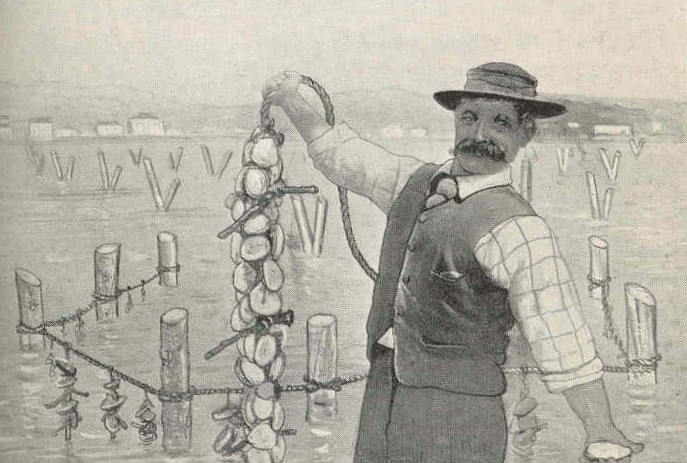
    Oysters have been an easy and plentiful source of protein for humans since humans began. Prehistoric middens have been found in Australia containing the remnant of oysters used for food. They have been cultivated in Japan since at least 2000 BCE, and farming beds have been found in England since Roman times.[2]  The period between the eighteenth and nineteenth centuries was known as the Golden Age of Oysters as an increase in production made them extremely affordable for the working class in the US and Europe.[3][4]

    Oyster Culture in the Bay of Spezia, Italy. Wikicommons

    The invention of railroad transportation, canning, and refrigeration in the nineteenth century meant that oysters could now be shipped to markets all over Europe and the US. With the growth in production oysters became a cheap source of protein compared to the pricier meat, poultry and fish. Soon cities like New York City, Philadelphia, Baltimore and New Orleans became hubs of large oyster markets.[5]

    Oyster stands in Fulton Market. Wikicommons

    History of Ice Cream

    The history of ice cream is a bit obscure, but ice cream, as we would know, was not possible until the discovery of the endothermic effect. The endothermic effect is where a substance, like cream, can be made to freeze by immersing or surrounding it with a mixture of ice and salt. Surrounding the cream with ice alone only chills but does not freeze the cream. Adding salt to ice lowers the melting point and draws the heat out of the cream causing it to freeze. This process was described as early as the thirteenth century by Arab medical historian Ibn Abu Usaybia.[6] But it wasn’t until the latter part of the seventeenth century that Europeans made soberts and ice cream using this process.[7]

    The first English recipe for ice cream was published in Mrs. Mary Eale’s Receipts in London in 1718[8]. It was again published in our blog’s favorite cookbook, The Art of Cookery made Plain and Easy, by Hannah Glasse.[9]  How and when it came to America can be debated, but the Found Fathers regularly enjoyed it, with Washington, in the summer of 1790, purchasing around $200 worth of ice cream.[10]  This did not mean that the common man or woman in the street would necessarily enjoy the frozen treat as it was still time-consuming and expensive to make, needing ice to be cut and stored in winter for use in summer.

    By the nineteenth century, developments in ice cream production, like the hand-cranked churn and industrial refrigeration, allowed manufacturers to produce ice cream on a large scale. Mass production lowered the cost of ice cream, and its popularity has soared ever since.   

    So oyster ice cream, where did that come from?

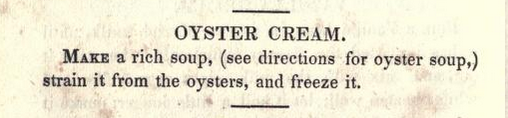
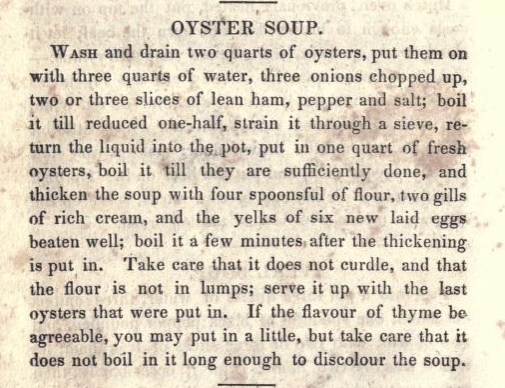
    The first and only recipe for oyster ice cream was printed in Mrs. Randolph’s book The Virginia Housewife, published in 1824. The Virginia Housewife was a singular work focused on Virginia produce and cooking practice. It became a model of nineteenth-century Southern American cookery.[11] But the publication of the recipe and the subsequent disappearance of it from history has confused historians for ages. No one is sure why oyster ice cream or where it would be served during dinner. Was it a dessert or a palette cleanser, was it served in place of soup? Was it popular, and if not, then why include it in the cookbook?

    Those are questions that will probably never be answered. However, through our little experiment, we could at least answer a few, like is it easy to make, what does it taste like, and should this be revived for our modern palettes?   Note: we did pare down the recipe because, unfortunately, oysters are not as cheap as they once were, and we didn’t want gallons of oyster ice cream. 

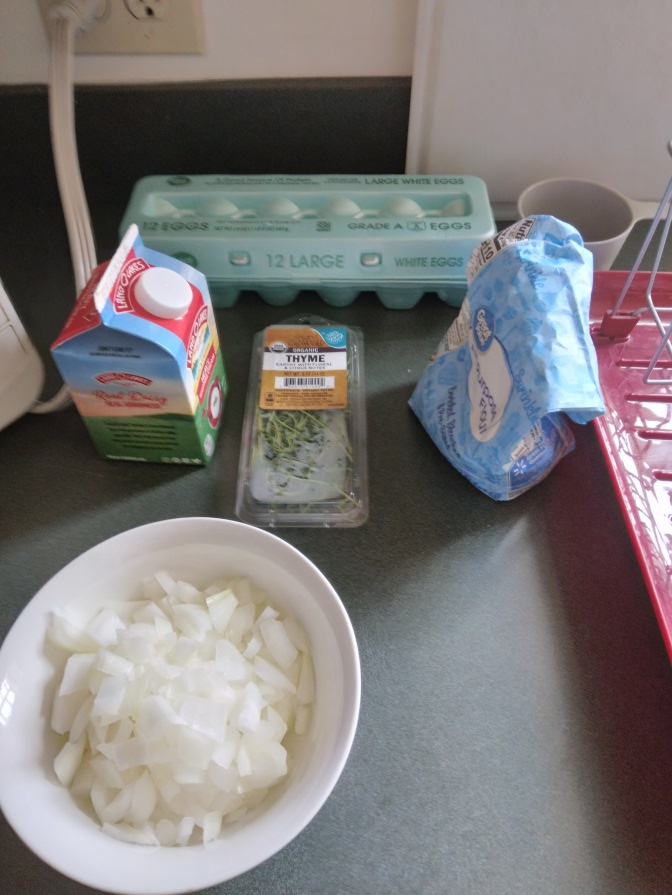
    First Step: we gathered our ingredients, including onions, cream, flour, eggs, and oysters

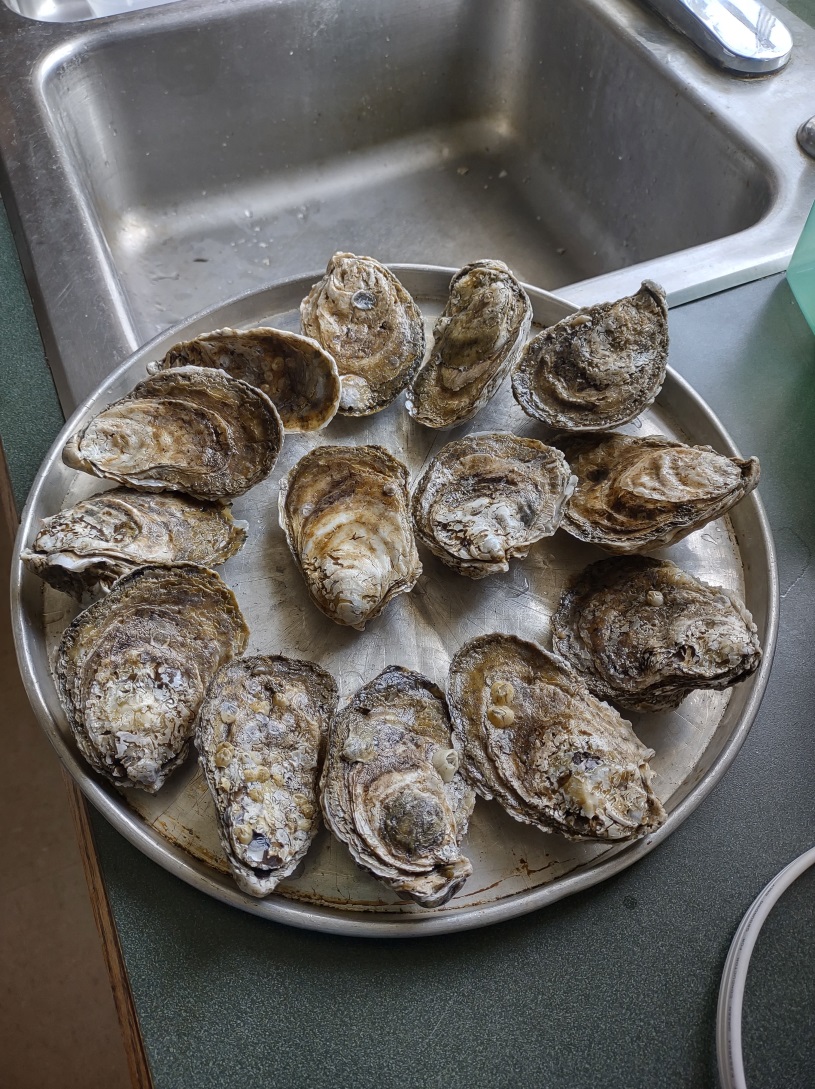
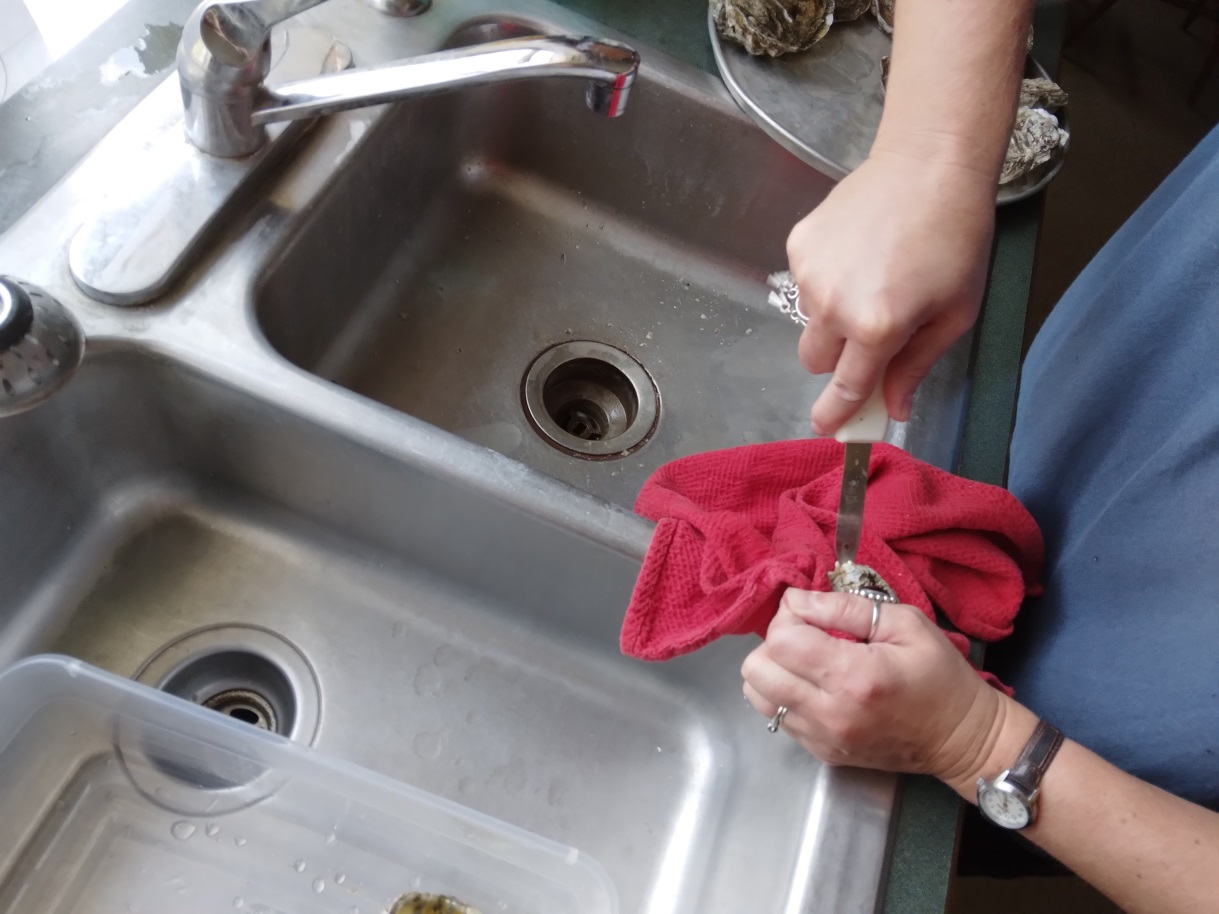
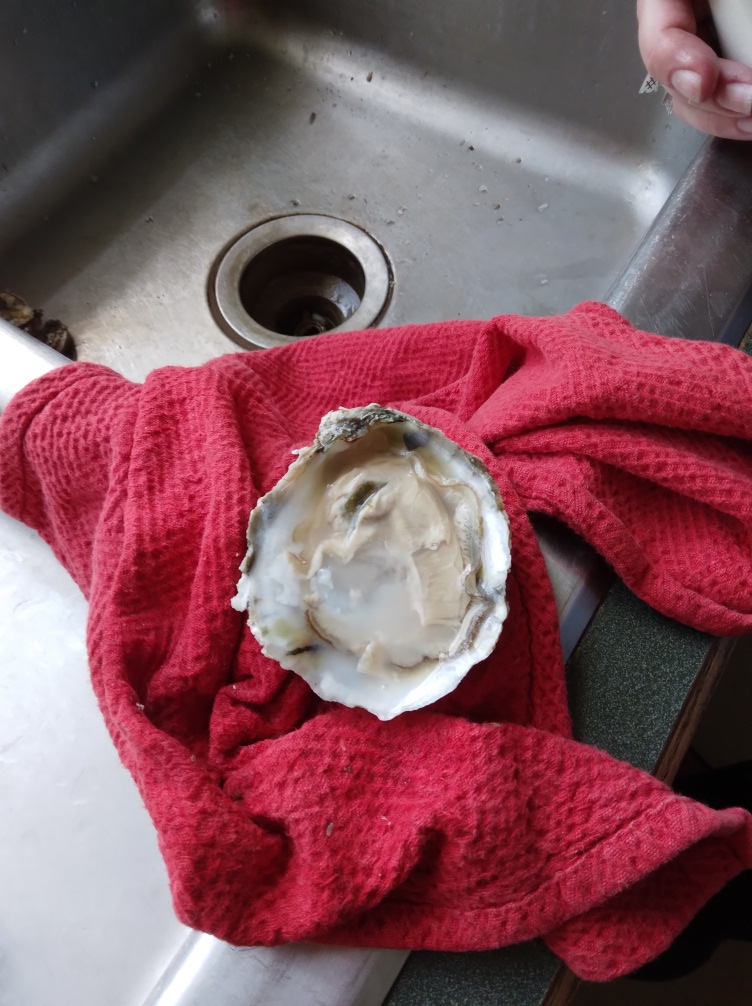
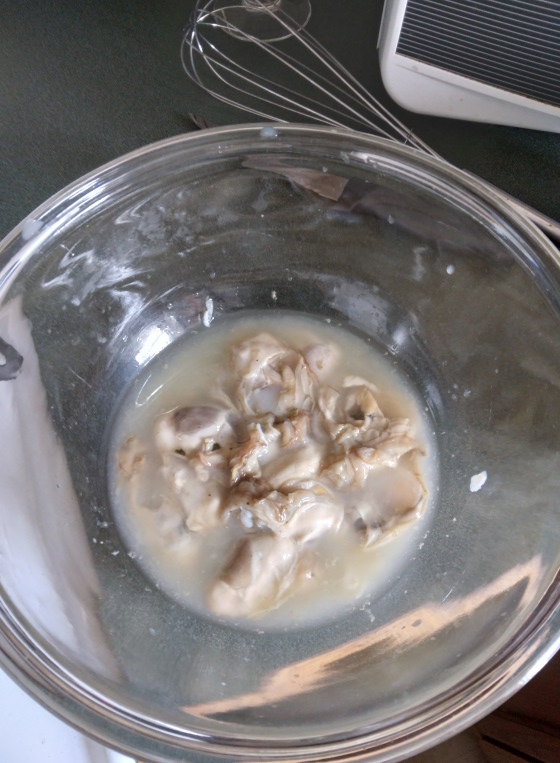
    Second Step: shuck oysters. Luckily our fearless Archaeology Lab Manager and super fan of oysters, Mara Kaktins, and her deft hands were able to shuck the oysters in minutes.  

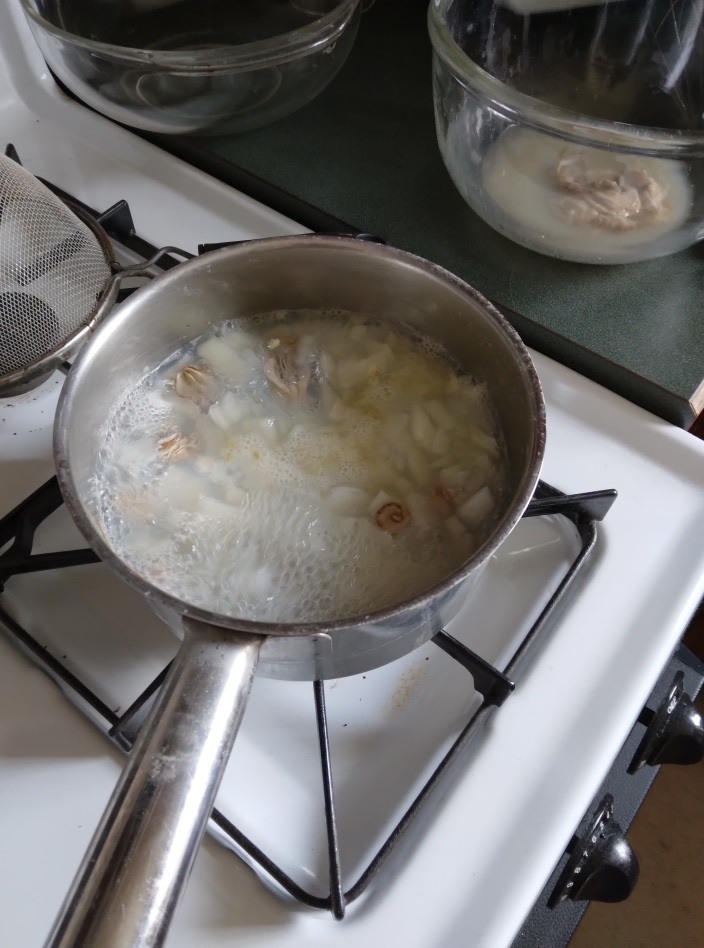
    Third Step: We put 2/3 of the oysters in a boiling pot of water with ½ a yellow onion and let that simmer until the water was reduced by ½.

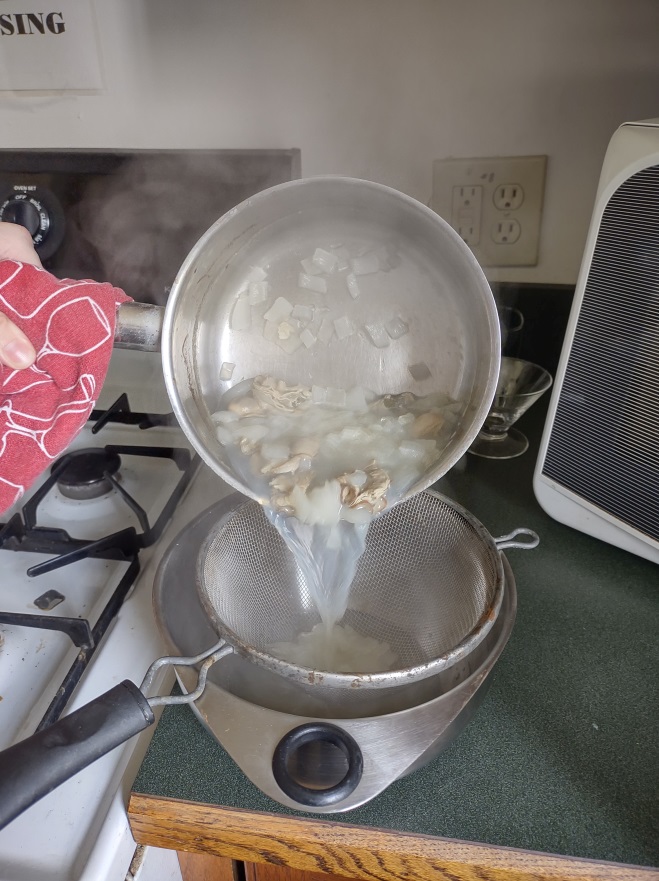
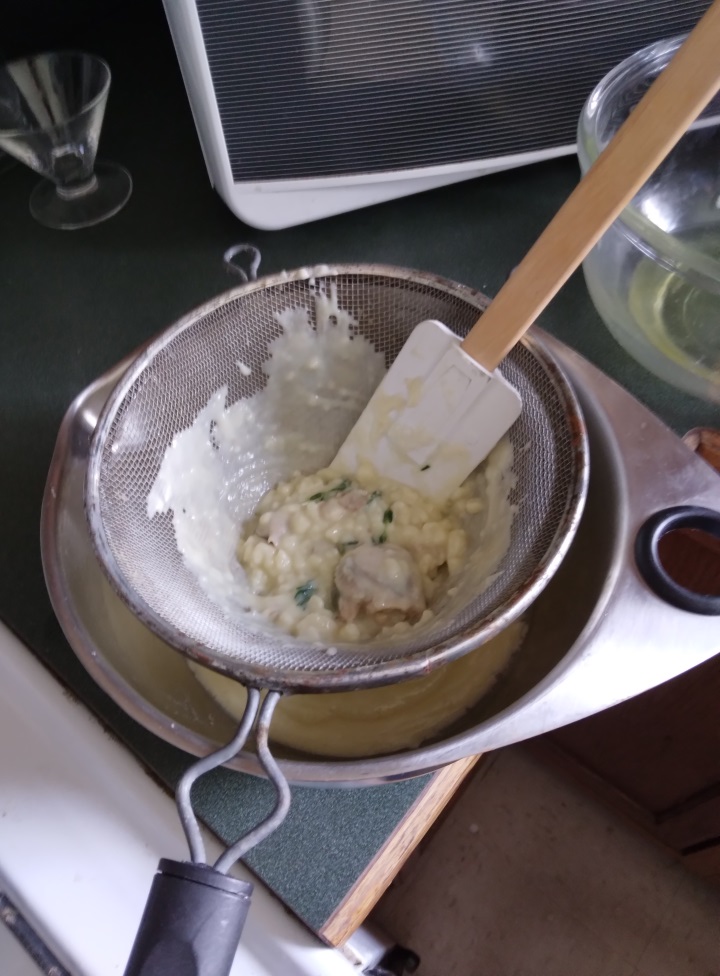
    Fourth Step: Drain liquid, removing cooked oysters and chopped onions. Keep liquid and return it to the pot for the next Step.

    Straining oysters and onion mix

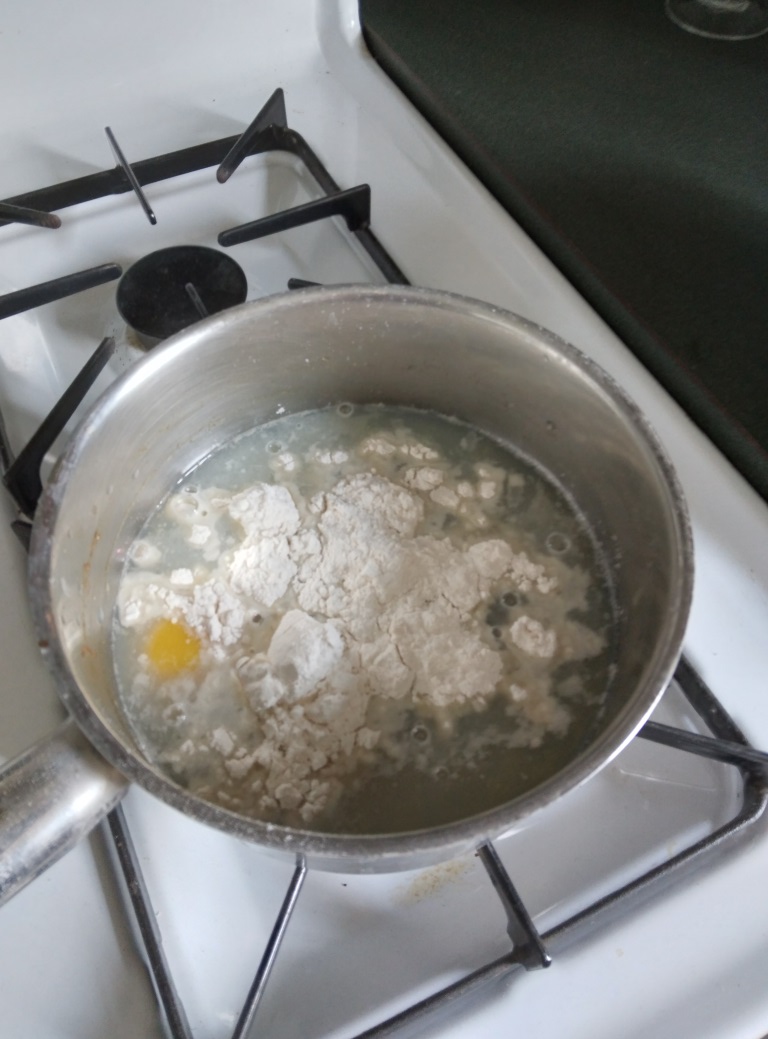
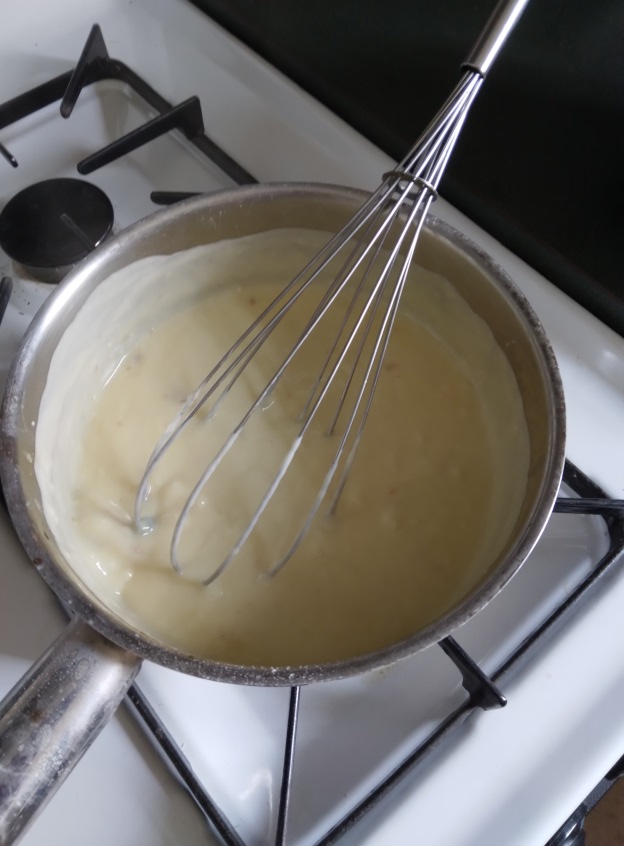
    Fifth Step: add the other 1/3 of the oysters to the liquid, along with a few tablespoons of flour, eggs, and cream. Simmer until it thickens but make sure not to burn or let it curdle.


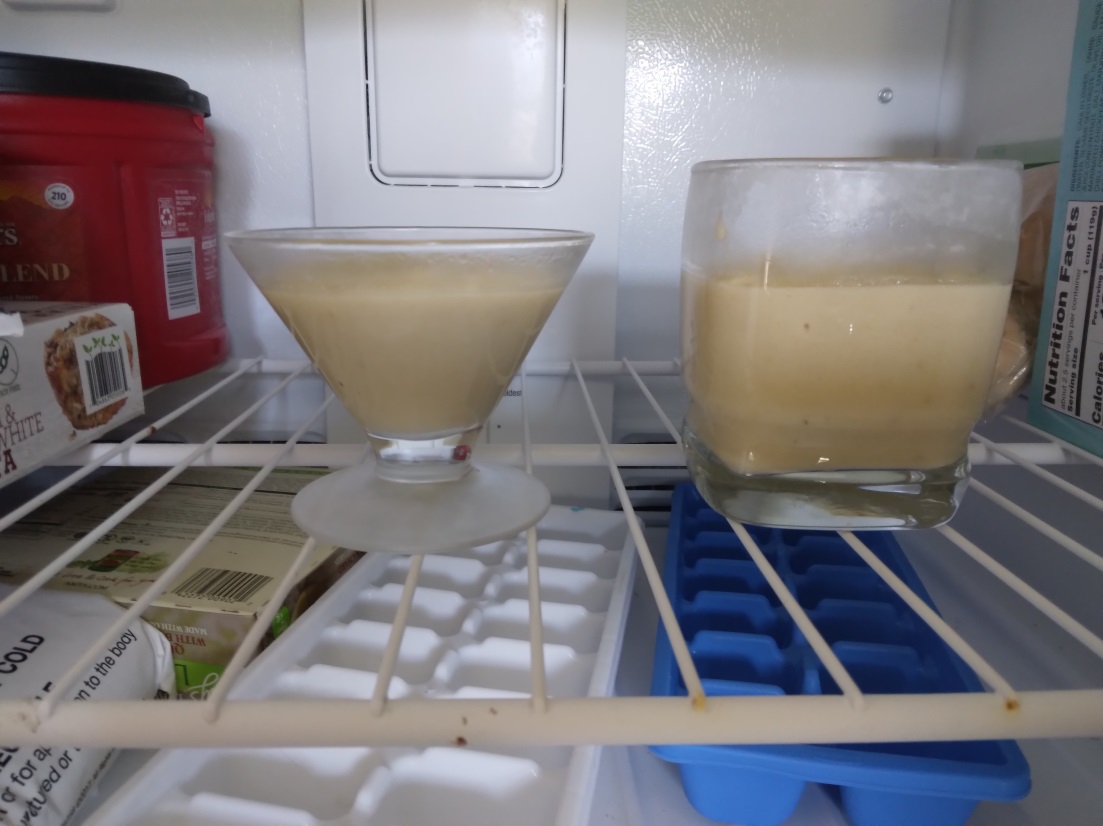
    Sixth Step: Sieve the creamy soup, remove the last of the oysters and put into glasses, and freeze for a few hours.

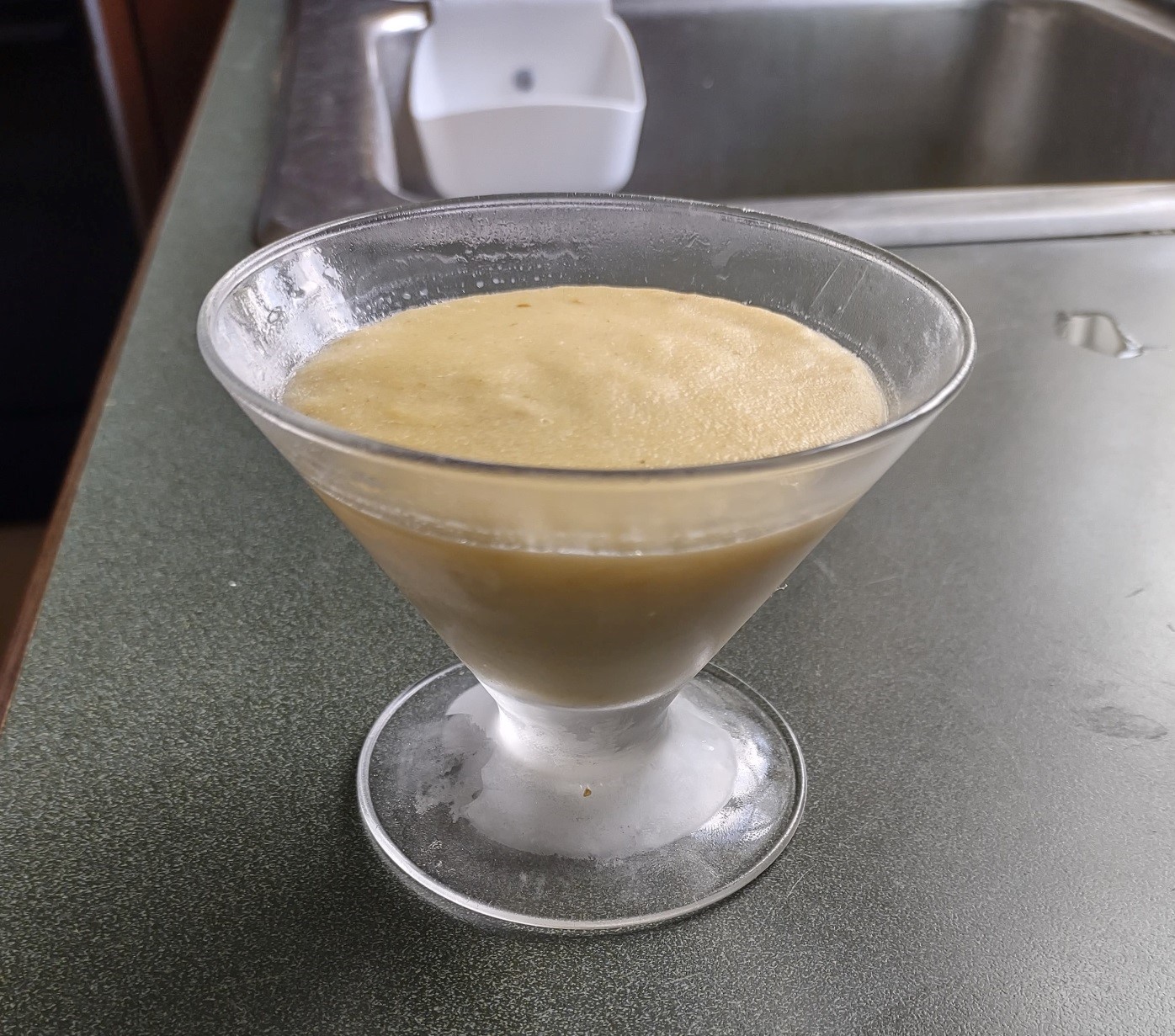
    Last Step: remove from freezer and enjoy?        

    Finished ice cream

    Needless to say, after it was ready, we proceeded to run around the offices, and made everyone try a bit. Surprisingly, the reviews were mixed and pretty even, with slightly positive reviews at four and negative reviews at 4.   Positive reviews overwhelmingly stated that “it was not as bad as I thought it would be” or “it’s not awful but would be better as a warm soup.” The negative reviews were a little more critical, with “ew, it tastes like oysters” being the primary feedback. 

    So what have we learned from this experiment? What were our conclusions? We discovered that it is easy, if expensive, to make. It requires neither specialty tools nor any particularly rare ingredients. We also concluded that it indeed tasted like frozen oyster soup, which many would have actually preferred. Not surprisingly, if the person did not like fresh oysters, they weren’t too keen on them frozen. But the most important question is, should this be revived for modern palettes? Does the world need oyster ice cream? I believe we answered that with a resounding “No.” It seemed to most that the ice cream basically ruined some delicious fresh oysters or spoiled a warm, comforting oyster stew.

    Oyster ice cream will always be an enigma; it combines two things people enjoy: oysters and ice cream. But, while it may have worked for peanut butter and chocolate, sometimes two wonderful things just shouldn’t be mixed. And with that, we bid a fond farewell to oyster ice cream hoping that Mrs. Randolph’s The Virginia Housewife is the last we will ever see of this peculiar concoction.

    Mara Kaktins, Archaeologist & Lab Manager

    Heather Baldus, Collections Manager


    [1] Swerdloff, Alex. “The Long, Weird History and Mythology of Oyster Ice Cream.” Vice Magazine, November 18 2016.  https://www.vice.com/en/article/nzkewm/the-long-weird-history-and-mythology-of-oyster-ice-cream

    [2] Unknown. “Oyster Industry in NSW”. https://web.archive.org/web/20151222111017/http://www.dpi.nsw.gov.au/fisheries/aquaculture/publications/oysters/industry/oyster-industry-in-nsw

    [3] Swerdloff, Alex. “The Long, Weird History and Mythology of Oyster Ice Cream.” Vice Magazine, November 18 2016.  https://www.vice.com/en/article/nzkewm/the-long-weird-history-and-mythology-of-oyster-ice-cream

    [4] Unknown. “The History of Oysters: Its Rise as a Delicacy and a Staple Food Beloved by Many.” Food Worth Writing For, July 31 2018. https://foodworthwritingfor.com/2018/07/31/the-history-of-oysters-its-rise-as-a-delicacy-and-a-staple-food-beloved-by-many/

    [5] Ibid

    [6] Goldstein, Darra. The Oxford Companion to Sugar and Sweets. Oxford University Press, 2015.

    [7] Day, Ivan. Cooking In Europe 1650-1850. Greenwood Press. 2009.

    [8] Eales, Mary. Mrs. Mary Eale’s receipts. J. Brindley. 1733

    [9] Glasse, Hannah. The Art of Cookery, made plain and easy. A. Millar, and J. and R. Tonson, 1765

    [10] Jacob, Matthew. “America’s Unwavering Passion for Ice Cream.” Huffington Post, May 25 2011. https://www.huffpost.com/entry/americas-unwavering-passi_b_652268

    [11] Egerton, John. Southern Food: At Home, on the Road, in History. The University of North Carolina Press, 1987, pg 19

  • Music from the Past: Jaw Harps and their Players

    What is a jaw harp, and what does it tell us? This little instrument likely looks familiar, but you may not know that much about it. That certainly proved the case for me when I decided to research the four we have in our collection.

    To start, a jaw harp is an extremely simple instrument to make and play. It only requires an iron or copper alloy frame and a flexible metal tongue, or lamella, which runs through the center. Manufacturing styles vary, but many undergo casting or forging to create the bow shape and arms. The lamella most often attaches by hammering it in place. This part is rarely preserved in the archaeological record, so only the frame remains for us to find.

    To play the instrument, one places it against their mouth and plucks the lamella while breathing out. Varying your breathing and the shape of your mouth cavity allows the sound to change. That said, while the instrument is easy to play, it proves difficult to play well, and many dislike its boings and buzzes. Those skilled at the jaw harp, however, went on to play for the likes of Frederick the Great and George IV. They even managed to play more than one jaw harp at once.

    Man playing a jaw harp (Mackinac State Historic Parks 2018)

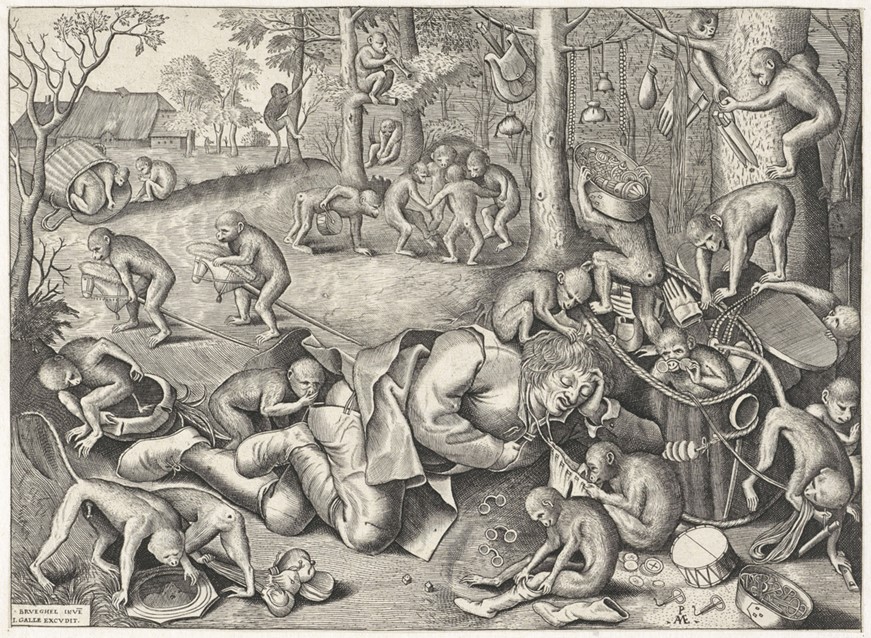
                The history of jaw harps dates beyond the fifth century BCE in Asia. Archaeological evidence places the instrument’s arrival in Europe around 1200, with the migration occurring along northern routes through the Baltic. Due to their mundane nature, jaw harps rarely appear in historic accounts or art. Two exceptions include Pieter Bruegel the Elder’s The Sleeping Peddler Robbed by Monkeys (1562), which helps identify peddlers as the main purveyors of jaw harps, and accounts of the North Berwick Witch Trials (1590-1592), where one of the accused performed for James VI of Scotland. Witches aside, the most common players at this time included the lower classes and soldiers.

                While jaw harps may not have generated the most attention, they played key roles in early trade deals in North America. Jaw harps likely first came to North America in the company of soldiers, but they soon gained popularity amongst indigenous groups, such as the Five Nations Iroquois. Confirmation of this occurred as early as 1595, with Robert Dudley reporting that the instrument made a successful trade item. As trade continued, the exchange of jaw harps frequently related to the fur trade, but some larger and more dubious, deals included the acquisitions of Staten Island and Maryland. That said, even the fur traders came under fire for using jaw harps of poor quality.

    Within established colonies, jaw harps appeared as an item frequently sold by merchants. Numerous adverts appeared in papers between the 1730s and 1780s. For Virginia, this included merchants in Williamsburg during the 1760s, as well as Alexandria and Gloucester in the 1770s. Production would have occurred in England with the then imported good available to all customers in the colonies. We know that soldiers played them during the French & Indian War and the American Revolution. This connection to soldiers would even continue through the Civil War. As for other players in Colonial times, a couple of adverts for runaway indentured servants placed in Benjamin Franklin’s Pennsylvania Gazette listed jaw harps as a special talent of the individual and amongst the items possibly carried by them.

    Aside from these individuals, the other most common players consisted of enslaved people. Evidence of this comes solely from the archaeological record. Excavations have uncovered jaw harps at a number of sites in Virginia, including Monticello, that date from the mid-1700s to early 1800s. In all of these cases, the instruments came from enslaved domestic quarters and work areas. Due to their nature, jaw harps would have proved an easy item for an enslaved person to hold on to, use, and share with others. In use, they would have been part of the enslaved music culture, which offered individuals a respite from work, a way to express themselves, and perhaps an outlet for the continuation of West African cultural practices.

    As I mentioned earlier, four jaw harps reside in our collection. Three came from the Washington cellar, while the fourth came from a Civil War trench that ran through the cellar. To understand their significance, an examination of the artifacts themselves and their contexts help us identify and date them.

    Physically, all four appear to reflect a design known as Gloucester. This means they consist of an iron frame and represent one of the most common designs in America during Colonial times and after the Revolution. We know that the ones that came directly from the cellar pre-date the 1830s due to the collapse of the house. A closer look at the artifacts accompanying them provide us with a range of the 1780s-1830s for the date of deposit.

    Depiction of a Gloucester-type jaw harp sans lamella

    As for the harp from the Civil War trench, while this may seem like an obvious identification, it remains tricky. A Union soldier may have played and discarded it while encamped here. However, when people filled the trench after the war, they may have used dirt that contained earlier artifacts from Ferry Farm. As the trench ran through the cellar, this harp ultimately lay close to the other three, and the dirt used to fill the trench may have come from that area. We may never know for sure on this particular piece, but it likely dates either to the war period or as a contemporary of the other three.

    Ferry Farm’s jaw harps

    While the dates provided occur after the Washington occupation of Ferry Farm, jaw harps existed on the market during their time, meaning the instrument may have had an earlier presence. As for who played them, these instruments likely reflect use by enslaved individuals. After the Battle of Princeton (1777) claimed the life of Hugh Mercer, who had purchased Ferry Farm from George Washington, the property passed through a series of renters. None occupied the site for long, but an enslaved population maintained a constant presence as each renter relied on enslaved labor. This continued up until the Civil War. With the evidence of enslaved people using jaw harps at other sites in Virginia and the fact that enslaved individuals constantly lived or worked at Ferry Farm, we can attribute these artifacts to them.

    One of our future projects involves reconstructing the enslaved quarters at Ferry Farm to better represent and tell the enslaved narrative. As jaw harps represents an activity that occurred during the limited down time allocated to enslaved people and reflects the importance of music in the culture, one will certainly be included upon completion of the project.  

    After all that history and archaeology, I leave those wondering what a jaw harp sounds like with the perfect piece. Fittingly titled “Washington’s Birthday,” this 1909 piece by Charles Ives utilizes the instrument to invoke the sound of country dances on a cold, dreary day in February. To hear the jaw harp, skip to 7:37. Enjoy!

    Emma Schlauder

    Research Archaeologist


    References

    Clyne, Anthony, 1928. The Jew’s Harp a Century Ago. The Musical Times 69(1024): 508-509.                                                                                        

    DAACS, 2022.Artifact Query 3, 8 August 2022. The Digital Archaeological Archive of Comparative Slavery (https://daacsrc.org/queries/aq_three_results).

    Kolltveit, Giermund, 2006. Jew’s Harps in European Archaeology. Archaeopress, Oxford, UK.

    2009, The Jew’s Harp in Western Europe: Trade, Communication, and Innovation, 1150-1500. Yearbook for Traditional Music 41: 42-61. 

    Samford, Patricia M.,1994. Searching for West African Cultural Meanings in the Archaeological Record. African Diaspora Archaeology Newsletter 1(3): 1-3.                                                                                                            

    Wright, Michael, 2008. The Jew’s Harp in the Law, 1590-1825. Folk Music Journal 9(3): 349-371.    

    2011, The Jew’s Harp Trade in Colonial America. The Galpin Society Journal 64: 209-218.


  • Catherine of Braganza: How the copy of a 17th-century plate tells the story of design, consumer consumption, and the Washington Family

    The concept of buying items to remember certain events or travels is commonplace today. Who goes abroad without bringing back a trinket naming the location? Is it possible to go antiquing without seeing an item that commemorates the wedding of Charles and Diana? Even the smallest item has the ability to tell a story through what it depicts. In our world of mass consumption, these items prove commonplace and relatively easy to obtain, but the concept is not new.

    Charles & Diana memorabilia

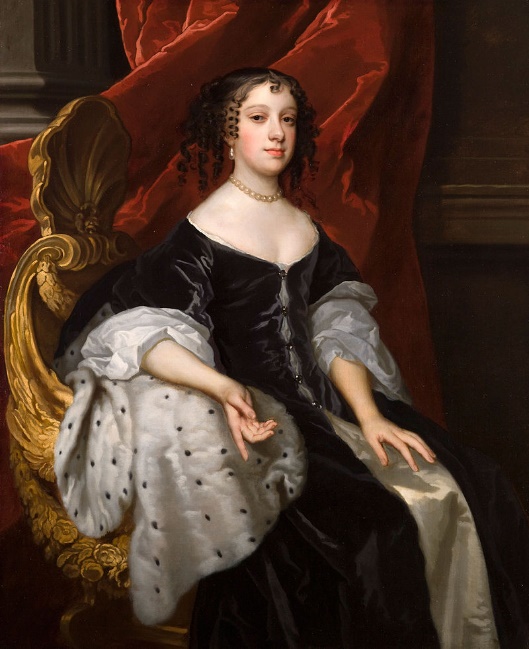
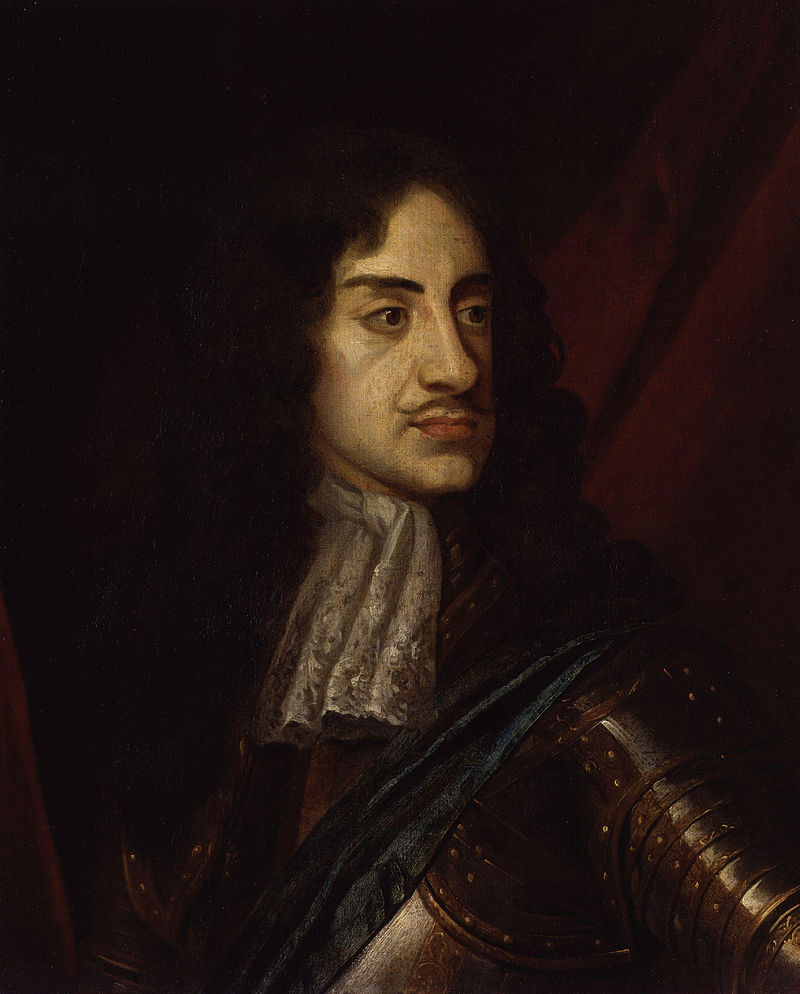
    Back in the mid to late 1600s, a potter by the name of Thomas Toft (d.1689) produced a series of plates depicting Charles II and his wife Catherine of Braganza. When Cromwell’s strict Puritan regime ended in 1660, the people of Great Britain rejoiced at the restoration of the monarchy. Charles II was an active king who enjoyed the arts and a good time. His marriage to Catherine, a Portuguese princess, in 1662 was a cause for further celebration, even if her Catholic faith raised concerns. Regardless, Toft had his market.

                A Scandinavian immigrant, Toft lived in Staffordshire, England, and specialized in slipware. Slipware involved the use of clay slips and a lead glaze to decorate a piece. Typically, a white clay slip, which is essentially, watered-down clay, covered the upper surface of a piece before the artist drew on the design. Dark brown and orange-red clay slips then helped bring the design to life. To complete the piece, the artist utilized a lead glaze to enrich the colors and seal it. Toft became one of the most famous slipware potters of the time due in part to his habit of prominently signing his works at the base of his cross-hatching border, which was unusual in the 17th century. He produced plates depicting the royals throughout his career. Toft’s pieces may not have undergone the mass production that they would today, but they fed a market that desired commemorative memorabilia.

    Slipware plate by Thomas Toft depicting Charles II and the Royal Oak

    You may be asking how talk of royals and artists from the 1660s connect to Ferry Farm? The answer comes from the desire to add a slipware plate to the house. As many will know, the items in the Washington house are replicas inspired by archaeological finds on site and pieces dating to the period. Until now, the slipware style did not appear in the house. Aiming to fix this, I went about choosing a design that would not only serve the desired purpose but also tell a story. In the end, I found a Toft plate that depicted Catherine, and the idea came to me.

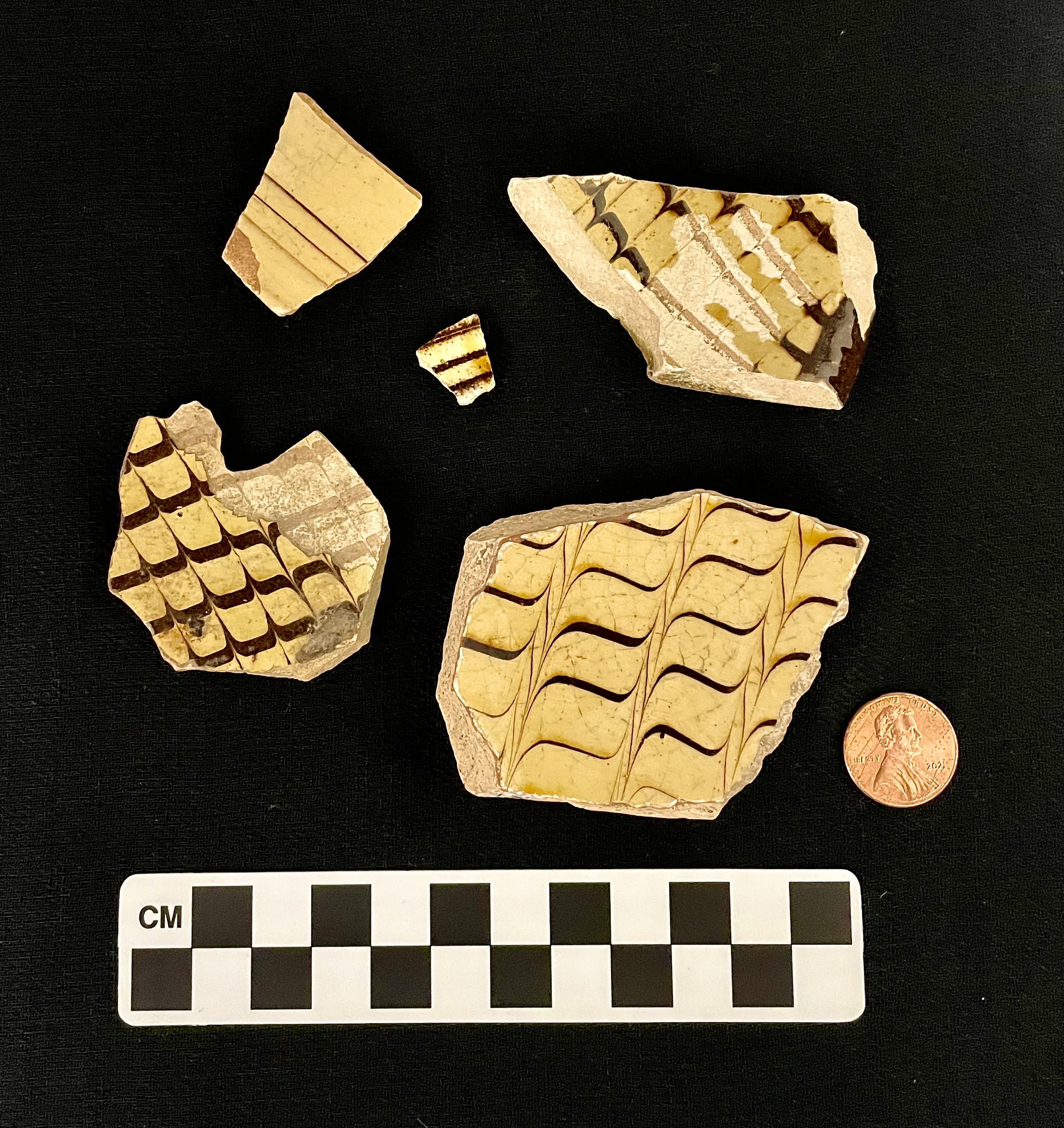
    Pieces of slipware found at Ferry Farm

    John Washington (1631-1677), George’s great-grandfather, immigrated to Virginia in 1657. Motivation for this possibly derived from hardships faced by the Washington family after Cromwell came to power since the family had sided with the monarchy during the English Civil War (1642-1651) and business ties. With the restoration of the monarchy three years after their arrival, it seems likely that this would have been a cause for celebration in the Washington household. We know from finds at Ferry Farm and Kenmore that the Washington and Lewis families owned items depicting royal motifs up until the Revolution. So not only would the Washingtons of the 1660s have raised a toast to the King and later his bride, but they may have acquired items celebrating them. While we do not have evidence for the Washingtons’ owning a piece with this specific theme, items pass through generations, and we know the family brought older items with them to Ferry Farm in 1738.

    In making the replica, I aimed to keep it as close to the original as I could, though the cross-hatching border proved impossible to keep as tight. The imagery itself prompts the telling of the Washington-Royalist-immigration story, so nothing major needed changing. Keen viewers, looking at the images below, will notice the addition of a “Q” and a “K” to help identify Catherine. While Toft’s work rarely included royal monograms, they did appear on other designs of the time, making it a simple and fitting addition. In these other pieces, Catherine’s first initial always appears as a “K.” While we may spell Catherine’s name with a “C,” there was no standard of spelling in the 1600s, and this may have occurred since her husband’s name also starts with a “C.” After prepping the plate with a base coat of paint, I sketched the desired design and painted over it in a way that mimicked slipware techniques. A clear coat of spray paint then sealed the design in place of the lead glaze.

      The plate will go on display in the Visitor’s Center, where we display and explore the topics of our blog. Next time you visit, be sure to keep your eyes peeled and let Catherine tell you her story.

    Emma Schlauder

    Research Archaeologist