Lives and Legacies

Tag: Bartmann jug

  • Meet the Crew 2025

    We are heading into the final stretch of this year’s exploration of the 18th-century kitchen at George Washington’s Ferry Farm, and it definitely hasn’t disappointed! The finds are getting bigger and better as we continue excavating deeper into the cellar and expand our look into the surrounding area. We have made a ton of progress that wouldn’t have been possible without the help of our crew of the George Washington Foundation staff, interns, and University of South Florida field school students. While there are still a few weeks before the official end of the dig on July 11. Just in case you missed them, here are some quick introductions and fun finds from the 2025 field school and crew.

    Left to right: Judy, Danielle, Abby, Sarah, Alaina, Alaina S., Sofia, Addie

    Field School

    “Hi, my name is Alaina Scapicchio, and I am a Ph.D. candidate in the Department of History at the University of South Florida. This is my third summer digging at Ferry Farm. My favorite moment of the summer was excavating a partially intact pig jaw!” 

    -Alaina

    “Hi! My name is Addie, I am a history and anthropology student at the University of South Florida. My favorite artifact to find are the animal bones.”

    -Addie

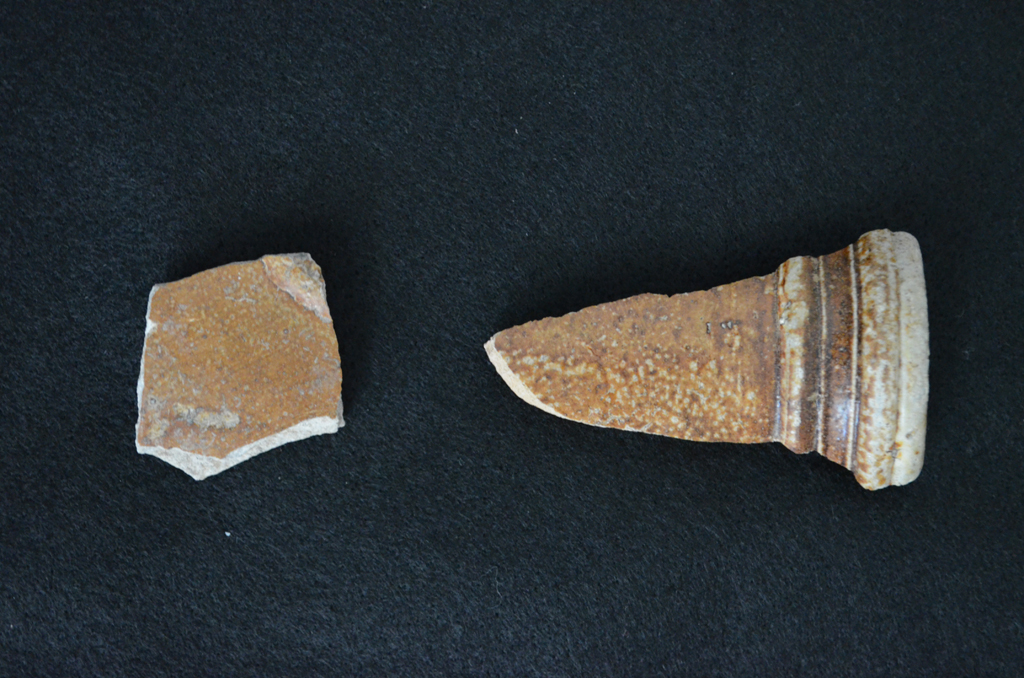
    “Hi, my name is Alaina. I am studying history at USF. My favorite part of the field school was digging in the kitchen because of how many cool artifacts we found. My favorite artifact was the piece of the Bartmann jug!”

    -Alaina

    “Sofia Almeida is a first-year History PhD student at the University of South Florida. Her research focuses on historic cemeteries, public history, and memory. One of her favorite parts of field school was digging in the kitchen cellar. One of her favorite artifacts this season was a decorated fragment of Staffordshire ceramic.”

    -Sofia

    GWF Interns

    “Hey! My name is Abby! I am a recent graduate from UVA and am planning to pursue a career in archaeology. I enjoy reading and playing Ultimate Frisbee in my free time. My favorite artifact that I helped find this season was a projectile point with jagged edges.”

    -Abby

    “Hey all, my name’s Max Puckett. I’m a senior at the University of Mary Washington, currently pursuing a BA in Historic Preservation. In my spare time, I like to cook, research, and read. I’ve really loved this field season so far- we are pulling out a ton of interesting and exciting artifacts.”

    -Max

    Sarah came to Ferry Farm as a VCU student in the summer of 2014 and has been in over half a dozen summer digs since then. This year’s dig is very special to her because it is focused on the cellar of the Washington kitchen. Her favorite artifacts from this dig are the ones that can actually be paired and mended with each other because much of what collapsed in the kitchen fire was left in place and not scattered or missing.

    -Sara

    GWF Staff  

    I have been involved with the Ferry Farm Archaeology Department since 2012, when my youngest twins graduated from high school. I started out as a volunteer but then took on a part-time position cataloguing artifacts from the summer digs, which then turned into a full-time job as a lab assistant.  I have been co-field director since 2019.  I have a BA in Anthropology and an MA in Historical Archaeology, with past jobs in cultural resource management and historic sites, such as Mount Vernon.  Though I really enjoy pulling out the handfuls of wine bottle necks and bases, I do find it more awe-inspiring when we pick out the tiniest and fragile eggshell fragments among the rubble and debris inside the kitchen cellar.

    -Judy Jobrack

    “Hello! I’m Danielle, and I have been at Ferry Farm since 2022, first as an intern and then lab assistant and co-field director. As a UMW Historic Preservation alum, I love all things old, both above ground and below, so this year’s dig has been particularly exciting with all the architectural bits we have been finding. With that said, I think my favorite artifact so far has been a brass/copper button –metal with verdigris is just so cool!”

    -Danielle Arens

    Though some of our crew is leaving, the rest of us will be digging every weekday until July 11, so be sure to come say hi and see what new things we have uncovered!


    Danielle Arens

    GWF Archaeologist


  • Horror Artifacts of Ferry Farm: Myth, Disease, Vampires, and Dolls

    With Halloween just around the corner, we thought we would take our readers behind the scenes to look at some of the creepiest and macabre artifacts we have uncovered at Ferry Farm. Some may seem like obvious choices, but others have hidden connections and meanings. Be sure to let us know your favorite in the poll at the end.

    Bartmann Jug: The Wild Man and Witchcraft

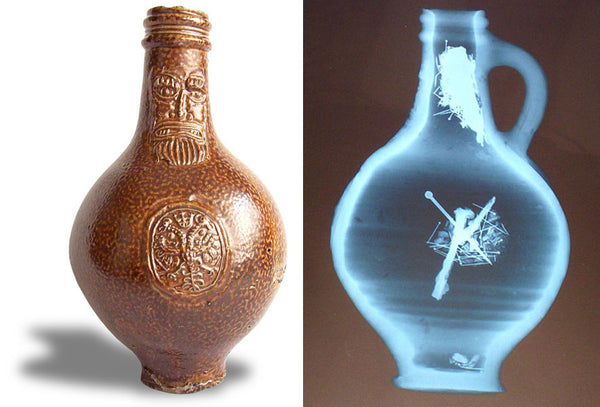
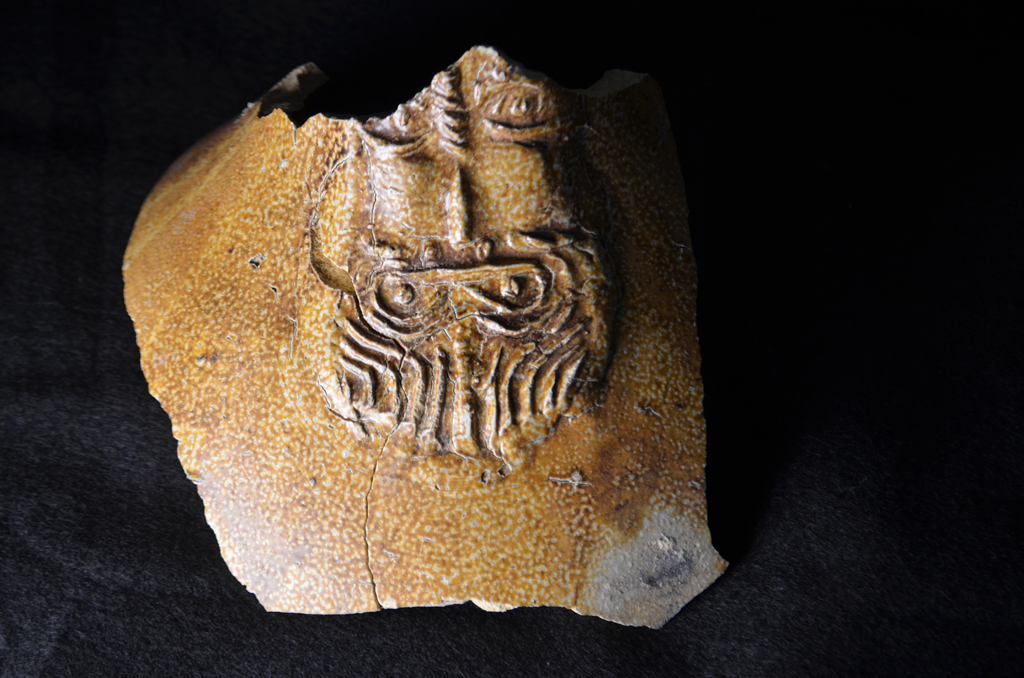
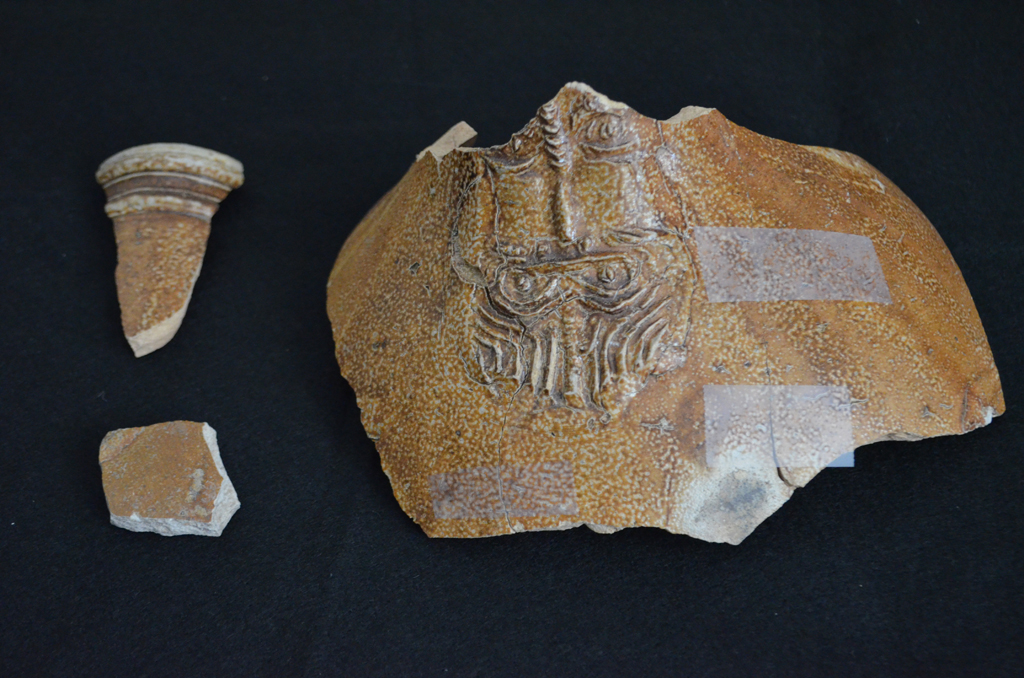
                This jug may look familiar to those who enjoy visiting Colonial sites. Made predominantly in Germany during the 16th and 17th centuries, these pieces of salt-glazed stoneware proved incredibly popular. Known as Bartmann Jugs, all pieces share the presence of a bearded face on the neck of the vessel. Some have additional designs, such as crests, on the body. The face lends the name to the jug as “Bartmann” translates from German to “bearded man.” Still, this begs the question of who the face belongs to?

    Bartmann Jugs
    Remnants of Bartmann Jug

                The bearded face depicts a figure known as the Wild Man. A character from Northern European folklore of the 14th-16th centuries, Wild Men reportedly flourished in remote, alpine regions. In characterization, Wild Men are similar to the satyrs and fauns of Greco-Roman tradition. They are covered in hair, hence the bearded face, and wear no clothes. The popular depiction of Wild Men began in the late Middle Ages when the figure became secular. They thus appeared in all art forms with males and females being depicted. The somewhat exaggerated face on the Bartmann Jug speaks the Wild Man’s untamed nature.

    Wild Man by Martin Schongauer, 1480s

                Aside from Wild Men, Bartmann Jugs have a role in witchcraft. At a time of religious turmoil and witch hunts, England saw a rise in the use of witch bottles in the 1600s. These bottles were white magic in nature and supposedly protected against black magic. Bartmann Jugs account for most witch bottles from this period and the abnormal face may have factored in to its use. To make a witch bottle, one filled the vessel with items such as nails, human hair, fingernail clippings, heart-shaped pieces of cloth, pins, and urine before sealing it. The bottle was then buried or submerged near the area it protected. No Bartmann witch bottles have been found in the America, but the Mathers of Massachusetts wrote about witch bottles in the late 1600s. Could ours have served such a purpose?

    X-Ray of Bartmann Witch Bottle

    Civil War Medicine

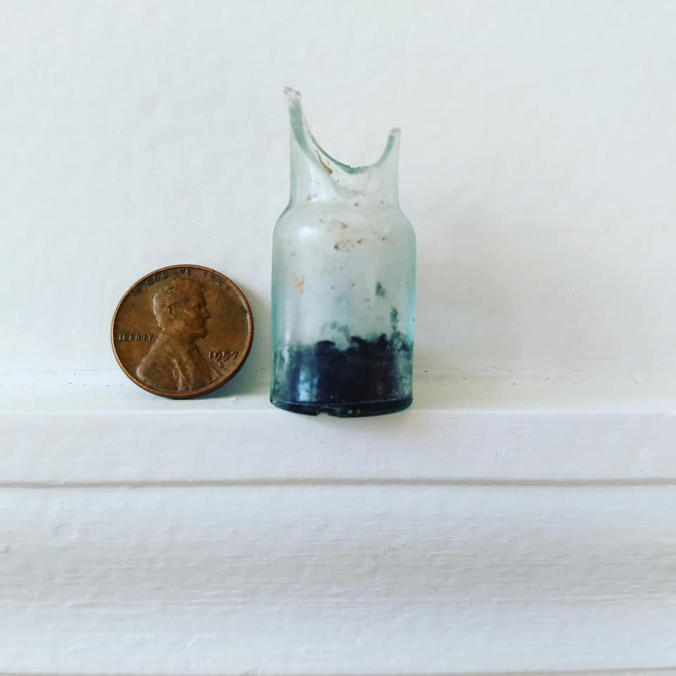
                Just the thought of Civil War medicine is typically enough to conjure scenes of horror, so this simple glass bottle may seem a bit disappointing. However, things are rarely what they seem. We recovered this artifact from a Civil War trench and quickly became interested in what it originally held. Scientific analysis of the remaining residue revealed that the bottle served a medicinal role and once contained liquid mercury. As mercury is known as extremely dangerous, this may come as a shock. Why would anyone have mercury on their person and how could it be medicinal? Believe it or not, mercury once served as a cure-all in the medical world and it was only in 20th century that its dangers were fully accepted. Those who used mercury medicinally viewed the topical burning, sweating, excess saliva, and diarrhea it produced as signs of successfully purging their body of their affliction. In reality, it was their body trying to rid itself of the mercury.

    Mercury Bottle

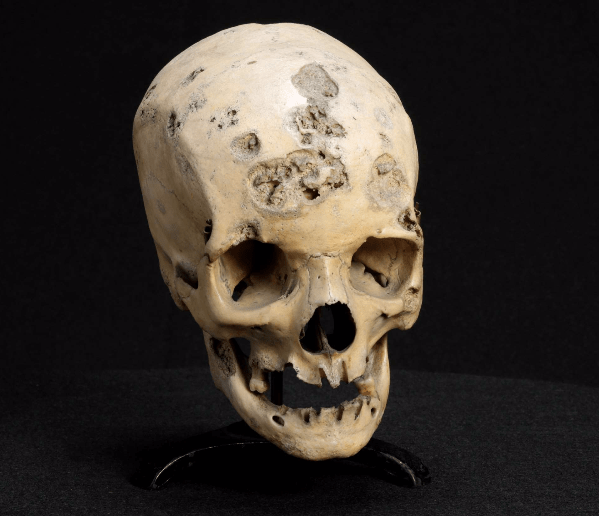
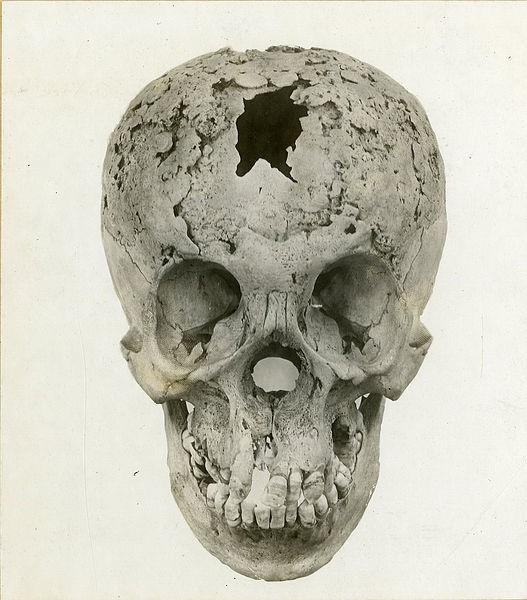
    As a cure all, people utilized mercury for all sorts of afflictions and pest control. Common uses in a Civil War camp may have included treatment for head lice, bed bugs, skin sores and lacerations, as well as parasitic infections. The most terrifying of all, however, would have been syphilis. The dominant strain of this disease is sexually transmitted, and was often ripe in military camps. A disease that did not kill quickly, a person could live with syphilis for years as it slowly ate away at the body. As it progressed, the afflicted would note rashes, open sores, and growths or bumps on their body. Neurological problems could occur and the loss of your nose was not uncommon. As the disease stayed with you until death, it had time to impact the skeleton, most notably leaving pitting on the skull, potentially an eaten away nose cavity, and other signs of deterioration. Overall, a horrible way to go and a wicked good topic for this blog.

    For further reading on this artifact and the scientific analysis, you can read a previous blog on it here.

    Dracula’s Jewelry

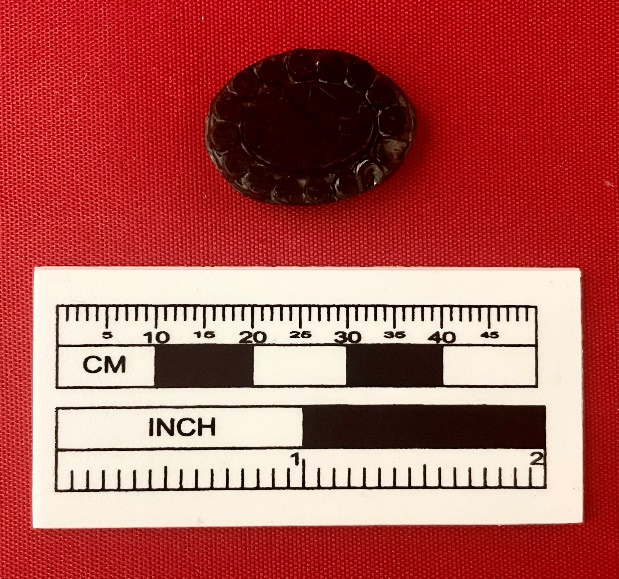
                Mourning jewelry became extremely popular during the mid to late 1800s. While pieces came in many forms, they mainly reflected somber colors, like black, or carried something of the deceased’s, such as hair. The rise in this trend first derived from Queen Victoria’s endless mourning for her husband Prince Albert in the United Kingdom. Her mourning set a fashion trend and, with the number of deaths that occurred in the American Civil War, Americans had a reason to adopt it. Alongside the somber tone of jewelry, the period approached the topic of death with a rise in the macabre, séances, and horror.

    Mourning Jewelry

                At Ferry Farm, we have uncovered a single piece of mourning jewelry, which connects to one of the most famous Gothic novels and literary monsters of all time, DRACULA! This small piece may have once been set in a necklace or bracelet and belonged to someone who inhabited the property or visited after the war. While that is all very interesting, I am sure you want to know where the King of Horror fits in. The answer lies in the material. The pendant is made of jet, which accounted for much of the 1800s’ mourning jewelry. Sources of jet exist in various parts of Europe and the American Southwest, but the most prosperous jet production existed in Whitby, England during Victorian times.

    A seaside, port town in the north of England, Whitby is noted for the ruins of an impressive abbey that dominate the landscape. Fans of Bram Stoker’s novel will recognize the town as the location where Count Dracula first arrives in England, and Whitby Abbey even appears in the novel. Stoker wrote much of the book in Whitby, and he reportedly first came across the story of Vlad the Impaler in the local library. Today, Whitby embraces its vampiric legacy (they currently hold the record for the largest gathering of vampires at 1,369 people) and the jet business has seen a resurgence in popularity by aligning itself with this tourist draw. So what do you think of our piece? We highly recommend it for lovers of death, horror, and literature. Please note: Vampire not included.

    Whitby Abbey

    Creepy Dolls

                It goes without saying the most people find dolls creepy. They frequently feature in ghost stories and many serve as the malevolent force in horror movies. Here at Ferry Farm, I am not sure which is worse, finding a full doll or severed doll parts.

                With people living on the property through the 1990s, we have plenty of potential to uncover dolls. In fact, we found a severed doll hand this summer that we previously featured as a #FridayFind. Other parts include ceramic legs, broken arms, heads, and faces. Perhaps this is the most obvious choice for a scary artifact blog, but, then again, dolls will never stop being creepy.

    Creepy Doll Parts

    Emma Schlauder (she/her/hers)

    Research Archaeologist

  • Ten Cool But Rarely-Exhibited Artifacts Found at Ferry Farm

    When you enter a museum you’re surrounded by cool stuff.  Be it paintings, fossils, or ancient artifacts, they’re all special items that you’d be hard pressed to find elsewhere.  But what if I told you that the cool objects you see on display in a museum are a mere fraction of what most museums actually have in their collections?  There is just never enough room, even for the biggest museums, to display everything.  Additionally, some items are just too delicate to make available to the public.  This is one of the reasons I love my job.  My fellow archaeologists and I get a daily backstage pass to all the incredibly cool things excavated at George Washington’s Ferry Farm.  Here’s our list of “Ten Cool But Rarely-Exhibited Artifacts Found at Ferry Farm.” Be sure to click on any of the photos for more detailed views of the artifacts.

    Wine Bottle Seal
    wine-bottle-seal
    Starting in the 17th century if you were a wealthy gentleman or tavern owner chances are you ordered at least a few custom wine bottles complete with your personal seal.  The seals were stamped in various ways, such as with names, initials, symbols, crests, and dates.  Archaeologists love them because they’re ‘talky,’ meaning the artifact yields lots of information.  A fragmentary bottle seal was found here in 2004 and bears the incomplete name of its owner. The letters visible are either a capital “I” or “J” (the English used the letter I for J), and below that are the letters “-bin”.   These few letters might refer to someone in the Corbin family, an extensive Virginia family with local ties. With a little investigation, perhaps we can flush out who was the mystery guest that brought his own bottle of wine for a visit to Ferry Farm!

    Lead Whistle
    lead-whistle
    Instruments and toys tend to grab our imagination because they make us think about who used them and how the object got lost to time and archaeology.  In our collection we have a simple lead whistle, measuring 1 7/8” long and 3/8” in diameter, with “U.S.A.” stamped on the side.  It’s cheaply made out of lead, which was a very inexpensive material that has, for obvious reasons, been phased out of the toy industry.  In the “Good Ol’ Days”, no one thought twice about making an instrument you put in your mouth out of lead.  Maybe it’s a good thing that the person who owned the whistle lost it.

    Chunkey Stone
    chunkey-stone
    Fun to say.  Fun to play.  Basically a prehistoric rock doughnut, this hand-ground stone was used in a Mississippian Indian game called “Chunkey.”  Warriors rolled disc-shaped stones across the ground and threw spears as close to the stone as possible.  Similar to the Italian game of bocce, but unlike the Italians who threw wooden balls, Chunkey players threw spears, which is pretty awesome.  It’s a bit of a mystery as to how it got to Ferry Farm because there is no evidence that Chunkey was played in eastern Virginia, however some of these gaming stones have been excavated in Maryland and Northern Virginia.   It is also possible that one of Ferry Farm’s colonial inhabitants collected this exotic looking artifact for their cabinet of curiosities.

    “Joseph” bottle fragment
    joseph-bottle-fragment
    Normally broken bottle glass would have trouble finding its way onto any top ten list, but this fragment is one of a kind.  Its owner inscribed his name “Joseph” and the date “174?” into the body of the bottle. That’s not an easy or common thing to do.  The inscription is carved in an elegant and beautiful form indicating a gentry status for its owner.  While no occupant of Ferry Farm was named Joseph, Mary Ball Washington’s older brother bore that name.

    Joseph Ball, though living in England, was heavily involved with Ferry Farm.  He absentee owned and operated a neighboring plantation.  Joseph was lavish in both his gifts and advice to the Washingtons.  He gave Betty, George’s sister, a beautiful silver tea set just before she married.  He offered Mary advice on how to keep George out of the Royal Navy when a plan was hatched to put the then 13-year-old onboard a ship. And maybe, just maybe, he sent over a special bottle of wine with his name engraved on it for the Washington family.

    Lead Toy Hatchet
    toy-hatchet
    More lead toys?  Yep.  This little beauty has special significance to Ferry Farm because of the cherry tree myth.  The 3-inch lead hatchet appears to be a souvenir made during the 20th century, possibly dropped during 1932’s anniversary celebration of George Washington’s birth.  Keepsakes associated with George and the cherry tree abound in Fredericksburg.  Previous private owners of Ferry Farm were known to capitalize on the history of the property, often selling fragments of the ‘original cherry tree’ and cherry seeds to visitors. This hatchet is an obvious symbol recalling the cherry tree story that is so closely associated with Washington’s childhood.

    Milk Glass Darning Egg
    darning-egg
    Recovered completely intact from an old burrow belonging to a groundhog, this artifact had multiple uses on a 19th and 20th century homestead.  The glass egg was a darning aid used to fill out a sock while it was repaired or could be placed in a henhouse to encourage the ladies to lay eggs in a particular spot. There is also a persistent myth that these eggs were used to kill snakes. The snake would eat the glass egg, it was believed, which would then shatter inside them.  This line of reasoning ignores the fact that snakes hunt by detecting chemical signatures of their prey and that snakes can’t really see the egg-like shape of our artifact because of their poor vision.  But it’s a story that highlights the mythology that surrounds some objects once they fade into obscurity.

    Tambour Hook
    tambour-hook
    The tambour hook falls into the category of artifacts that are a little too fragile to display.  Made of carved bone and metal, this exceptional object was used by a gentlewoman, probably George’s sister Betty, to adorn fabric with elaborate embroidery.  Recovered from the bottom-most soil level of the Washingtons’ root cellar where it was deposited sometime between 1741 and 1760, the carved designs that cover the bone handle feature a parrot, leaves, flowing vines, and numerous flowers and represent some of the most popular embroidery themes of the time.  This hook helps demonstrates the fashionability of the Washington women, which contradicts the portrait painted by many modern biographers.

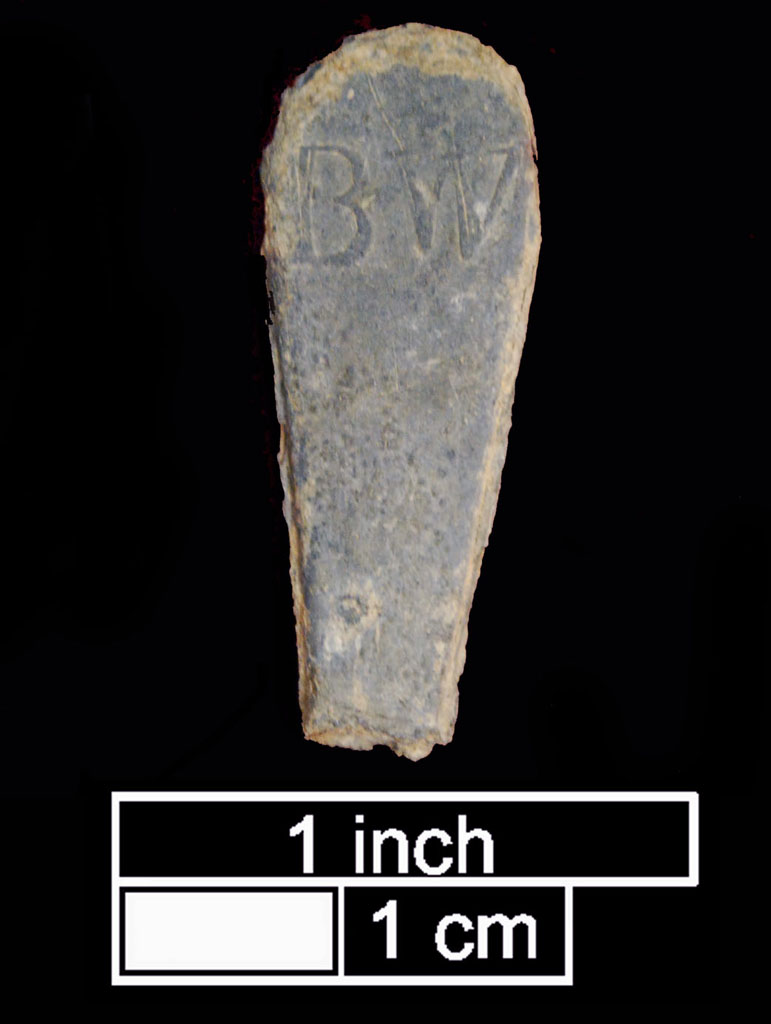
    Pewter Teaspoon with Betty Washington’s Initials
    teaspoon-fragment-with-betty-initials-1
    Betty had some of the coolest artifacts and this one literally has her name on it.  It was customary for tea to be dispensed by the wife or by the oldest daughter in the house and Betty, as the only daughter, was clearly groomed in this ceremony as is evidenced by her own teaspoons.  Pewter, an alloy containing a number of different metals including lead (yes, more lead), wasn’t as fancy as silver but the fact that it’s customized makes it special.  This tea set appears to be part of a “practice” set that Betty used before her uncle gave her a silver tea set  around her 16th birthday.

    Bartmann or Bellarmine Jug/Bottle
    bartmann-bottle-1
    Who doesn’t want to drink out of a jug exhibiting the large face of a crazy bearded man?  I do, and if you were a colonist in the 1700s and early 1800s, you did as well.  Originating in Germany, these face jugs depicted a ‘wild man’ of the woods character popular in Eastern European folklore. By the time these vessels made it to the English market that aspect seems to have been forgotten.  Subsequently, the English created their own story behind the bearded man revolving around their dislike for a similarly-bearded and unpopular anti-protestant cardinal by the name of Robert Bellarmine.  For more about this artifact, read this blog post.

    Repaired Creamware Cherry and Flower Punchbowl
    punchbowl
    This artifact is cool for so many reasons.  A beautiful bowl adorned with graceful hand painted flowers and cherries (remember, we love those here), it also exhibits a complicated and tortured use-life while highlighting the importance of punch drinking in the eighteenth century.  Written about here, this bowl was owned by Mary Washington, George’s mother.  Punch bowls vary in size and this one would have been called a ‘sneaker’, which denotes a bowl small enough for guests to take turns sipping out of it before passing it to the next person.  Mary clearly loved the bowl so much that, when it broke sometime between 1765 and 1772, she had it repaired with glue.  Although the hide or cheese-based glue used would not have resulted in a vessel capable of holding punch again, she could display it on her mantle or in her china cabinet…Oh, and the glaze? It has lead in it.

    Laura Galke, Site Director/Small Finds Analyst
    Judy Jobrack, Assistant Lab Supervisor
    Mara Kaktins, Ceramics & Glass Specialist
    Melanie Marquis, Lab Supervisor
    Dave Muraca, Director of Archaeology

  • Bartmann Bottle: The Coolest Thing We’ve Ever Found

    We excavate hundreds of artifacts every day during the field season at George Washington’s Ferry Farm and occasionally one or two really stand out.  For me, the most interesting artifacts uncovered during the past few years are fragments of a Bartmann Jug.  The combination of an animated human face and fascinating symbolism makes this particular ceramic vessel unique among the hundreds of other vessels excavated from our archaeological site.  Just imagine the excavator’s surprise when the intense bearded face emerges as the dirt gets brushed off. That intense face and the story behind it make this object, in my view, the coolest thing we’ve ever found.

    Bartmann Bottle (1)

    The bottle itself would have had a solid sturdy base and a round, bulbous body with a cylindrical mouth.  It may have had a pewter lid, but these rarely survive archaeologically.  Pewter was fairly valuable and would have been melted down and reused after the vessel was broken, rather than discarded with the rest of it.  The bottle was medium sized, holding approximately a liter of low-alcohol beverage such as beer or cider.  The face of the bottle itself features a raised applied decoration known as a sprig mold, which is made by pressing wet clay into a mold, letting it dry to a point where it could be peeled out of the mold, and then attaching it to the unfired bottle.

    Establishing when the bottle was actually manufactured can be challenging for these vessels.  They were produced in Germany between 1550 and 1770.  The British Navigation Acts made foreign imports increasingly rare in the colonies after the early 18th century.  Knowing that the make-up of the ceramic body and glaze is German lets up narrow down the dates for this bottle to the early years of the 18th century.  It is decidedly part of the pre-Washington era material culture here are Ferry Farm.

    Bartmann Bottle (3)

    When looking at these bottles with their somewhat grotesque faces, one can’t help but wonder why people decorated their drinking vessels this way for some two hundred years?  What did it mean to their culture?

    These Bartmann Bottles were not just made in Germany. They were also shaped by German culture.  Their molded faces were sometimes elaborate and detailed and sometimes crudely executed. They were always male and always sported a large bushy beard.  This references German folklore’s “wild man of the woods.”  He was thought to live just beyond the bounds of civilization and run feral in the wilderness, living almost like an animal.  Perhaps rather appropriate to adorn a container of alcohol with?  However, these bottles were also widely exported. When they were brought to England, they became divorced from this folklore context.  Subsequently, the English created their own story about what the face on these Bartmann Bottles meant.

    Bartmann Bottle (2)

    In England around 1634, the bottles began to be called Bellarmines after Cardinal Robert Bellarmine.  Superficially, the wild face was said to resemble him. On a deeper level, the name was used as a way to mock the Catholic Church and its wider anti-protestant movement that Cardinal Bellarmine headlined.  This is following the monumental split of England from papal control and its moves farther towards Protestantism.   The colonists who brought this bottle to the new world thought of themselves as English so, if they gave any thought to the grimacing man who adorned their bottle of beer, they would have likely seen the figure as Bellarmine.

    This fascinating and drastic change in meaning as the object moves from culture to culture combined with the striking human features is what makes it, in my view, the coolest thing we’ve ever found.

    Lauren Jones, Archaeologist
    Archaeology Lab Technician